Scorpion’s Quill
Scorpion’s Quill
A Texas Southmost College Journal of Literature and the Arts
Issue No. 2
A joint venture of the Departments of Communication & Language and Arts, Music, & History
Contents © 2026.
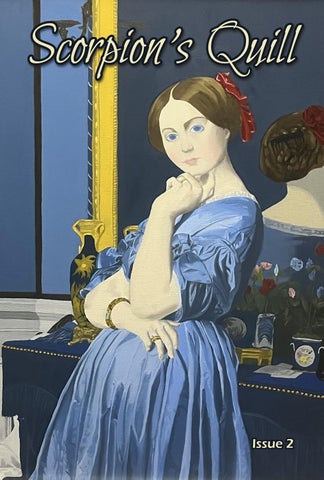
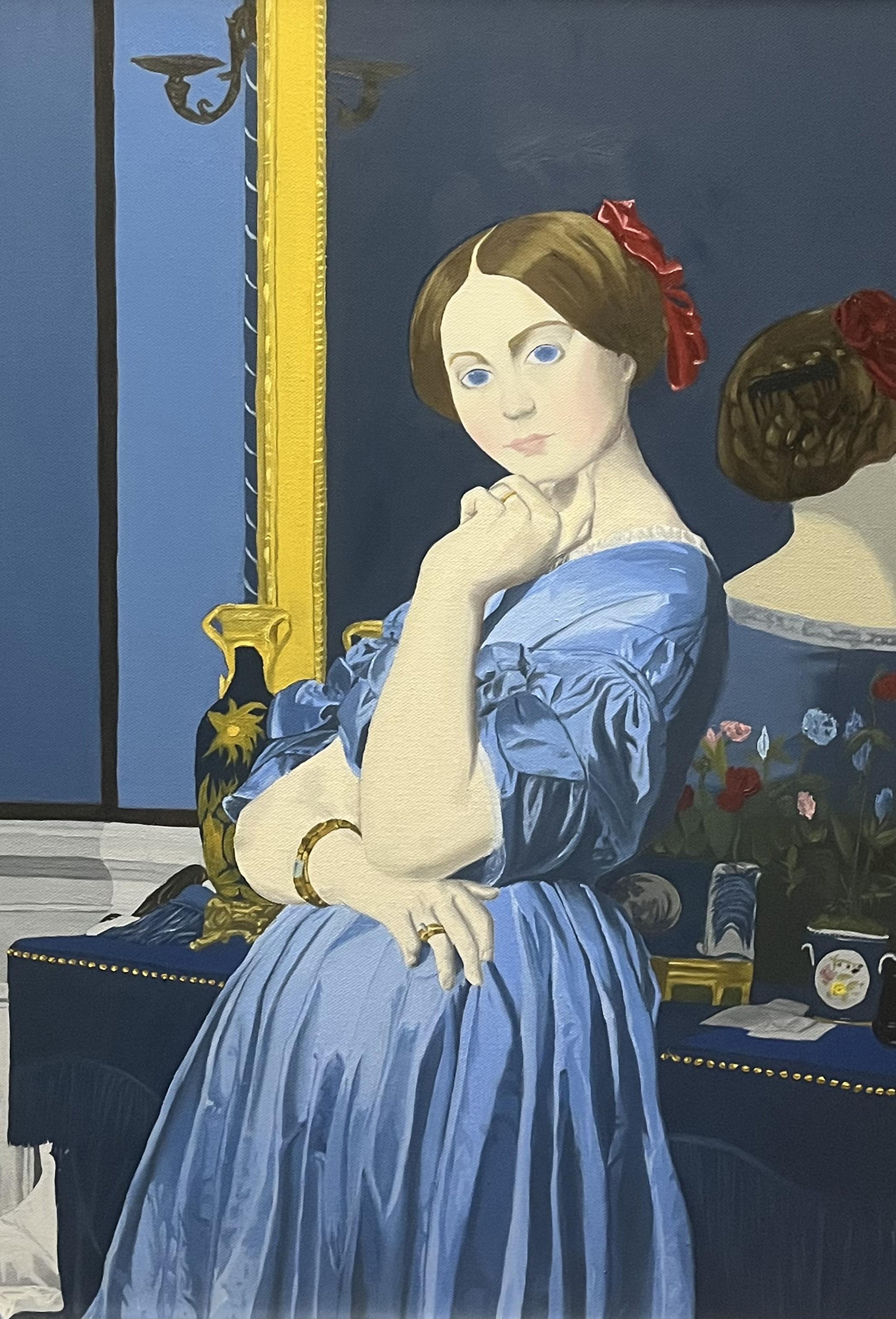
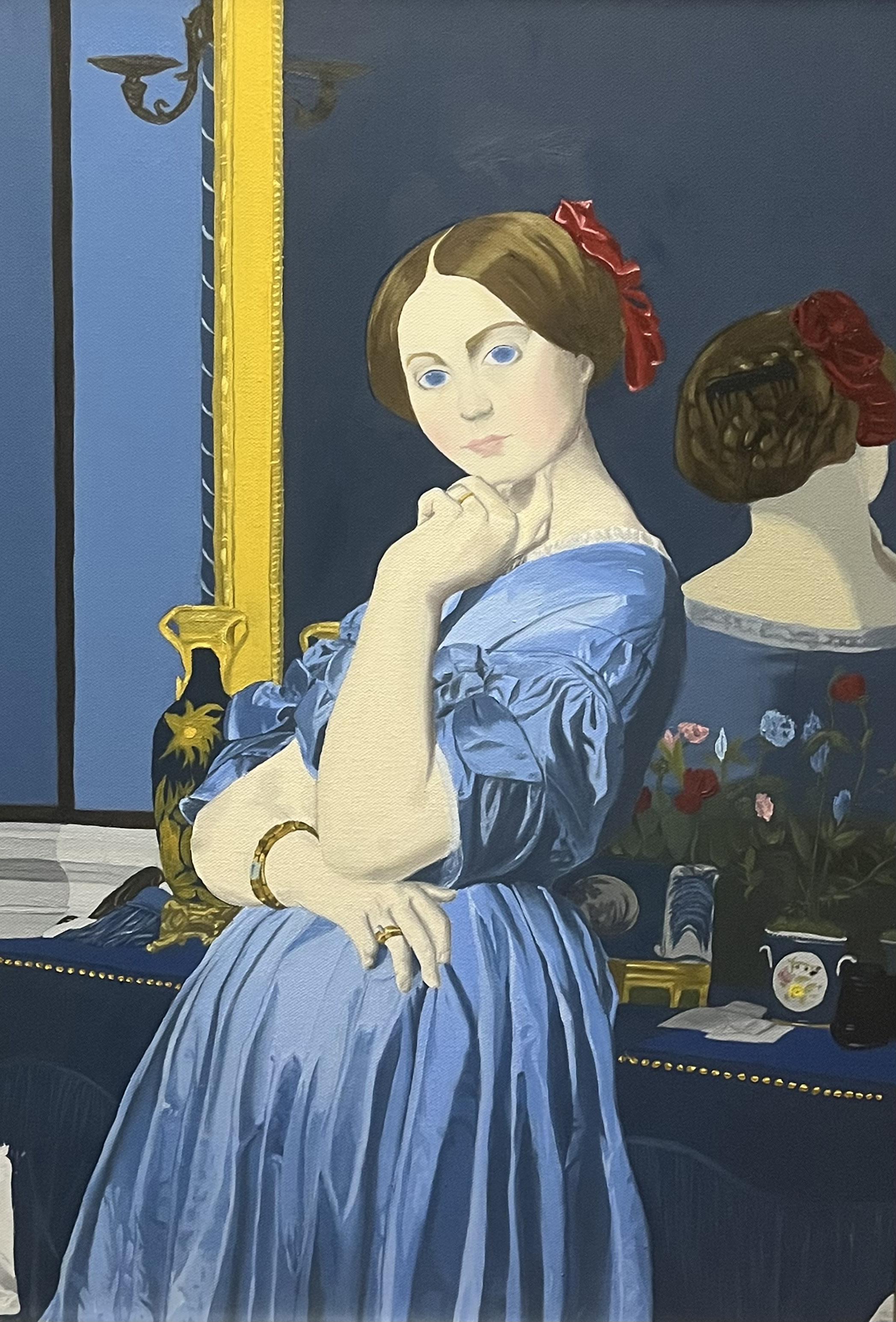
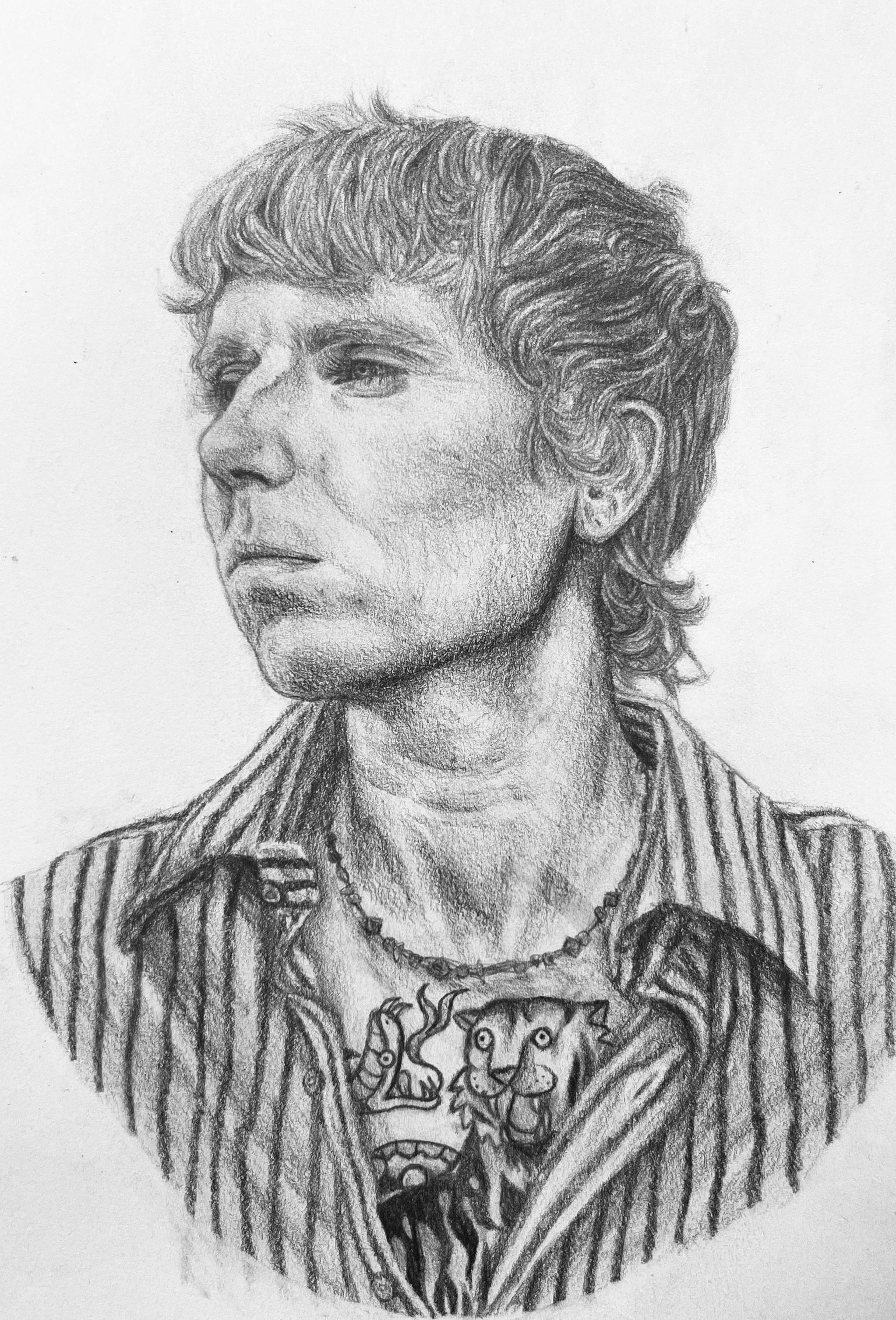
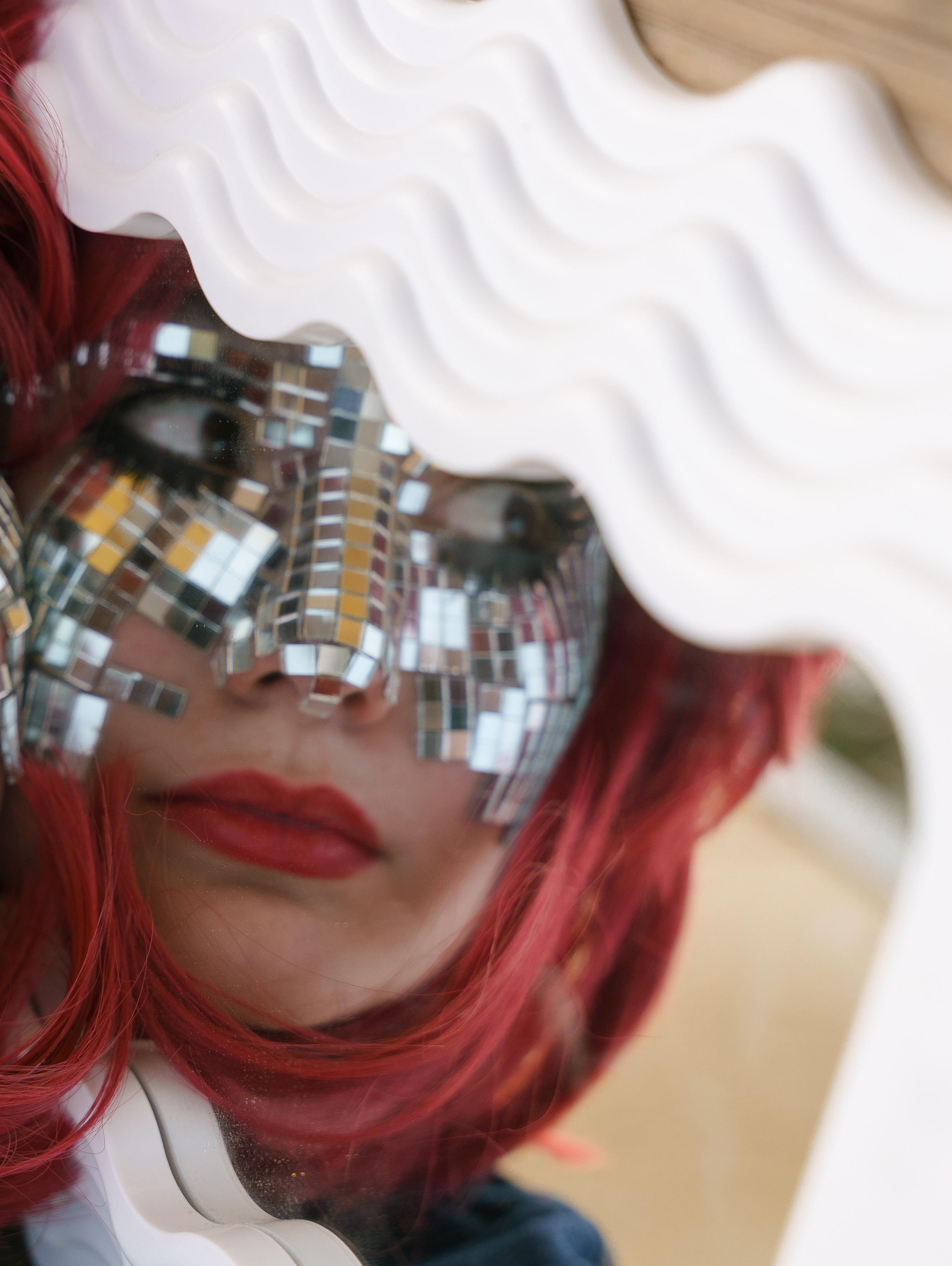
Cover: “Comtesse d’Haussonville after Jean-Auguste-Dominique Ingres” by Angel Marie Herrera, pg. 20
Logo design by Evelyn Hernandez | Page design by Jesus Pecina
Foreword
In 2026, Texas Southmost College is celebrating its 100th anniversary, an incredible milestone for the first institution of higher education in the Rio Grande Valley. While the campus commemorates this hallmark, we also have the opportunity to reflect on the long traditions of excellence and creativity at TSC that our students continue to contribute to today–a culmination of 100 years of academic rigor and achievement. Representing our institution’s rich history of innovation and artistry, the students, faculty, and staff whose work is exhibited in this edition of the journal truly encapsulate the spirit of Texas Southmost College which has endured for a century. We are deeply honored to be able to bring you this edition of the journal during TSC’s centennial anniversary, and we hope that as you enjoy the phenomenal artwork and writing contained within, you will see it not only as a testament to current accomplishments, but also as a sign of great things still to come.
At this time, we would also like to thank Texas Southmost College’s administration for their continuing support of the Scorpion’s Quill project. Without the attention and efforts of our institution’s president, Dr. Jesús Roberto Rodríguez, and all our TSC Board of Trustees members: Madam Chair Ms. Adela Garza, Vice Chair Delia Sáenz, Secretary Dr. Norma Lopez-Harris, and Trustees Ms. Alejandra Aldrete, Dr. Tony Zavaleta, Mr. Edgar Garcia, and Mr. Edward Camarillo, we would not be able to bring this incredible showcase of student, staff, and faculty work to life, so we would like to recognize the president’s and board’s patronage of the arts and their dedication to creating wonderful opportunities for all TSC community members.
Here is to another 100 years of academic excellence, creativity, and expression!
Sincerely,
The Scorpion’s Quill Editorial Team
Acknowledgments
We are thrilled to be able to bring all our readers and viewers the second edition of Scorpion’s Quill, a literary and arts journal dedicated to showcasing the incredible talent and creativity of Texas Southmost College’s students and employees.
This second issue would not have come to fruition without the joint efforts of our dedicated faculty and students. We would like to take the time to acknowledge the efforts of the journal’s 2026 editorial team: Ms. Amanda Utzman, Mr. Jonathan Baker, Ms. Kathryn O’Neil, Ms. Monica Mejia, Ms. Maria Pacheco, Mr. Robert Andes, Mr. David Ransom, and Mr. David Guerra. Each of these faculty members played vital roles in planning, organizing, and preparing the journal for publication.
This issue would also not have been possible without the contributions of many TSC students, particularly our Fall 2026 Creative Writing and Design students, who served as our selection committees, taking the time to closely review all submissions to find excellent works to showcase. We would also like to thank Evelyn Hernandez, winner of the Fall 2024 Scorpion’s Quill logo design contest, whose lovely logo design now graces our opening page and back cover, as well as Jesus Pecina, who designed the excellent new layout and artwork accompanying the text pages of this second edition of the journal.
Finally, we would like to take the time to thank all students, staff, and faculty who submitted to the journal, giving us the opportunity to view so many spectacular works of writing, painting, drawing, and photography. With nearly 200 submissions this fall, our TSC community demostrated the unbelievable level of artistry present in the valley today. This journal would not have been possible without all of you, and we cannot wait to share your works with the world.
Sincerely,
The Scorpion’s Quill Editorial Team

Grasshopper Tendencies
by Carina Gaona
Ever get super into something then suddenly want to try something totally different and new? I do it all the time with hobbies and interests! I call them my grasshopper tendencies. Today I want to share some of the fun things I have tried and created. My grasshopper tendencies are tufting and air-dry clay. Lastly, I will explain why it is okay to be a hobby hopper like I am.
First up Tufting, also known as rug making. I got really into using what’s called a tufting gun to make rugs, keyboard covers, coasters, and more. It takes a lot of focus and patience, but in the end, it is worth it for the end results. I remember all the research I did to ensure it was something I wanted to do: I purchased all the supplies and tools to create my very first rug, which was Kuromi. I did end up completing the rug and gifting it to a family member for her birthday. The experience taught me to be patient and appreciate handmade creations more.
Next, I hopped on over to the wonderful world of air-dry clay. As with any hobby, I always ensure I research and gather any and all materials that are needed. Thankfully, this hobby that caught my eye was inexpensive. I made tray trinkets for jewelry based on Cosmo from the TV show, Fairly Odd Parents. (Wanda is pending a creation date.) I also created lighter cases based on the film series Scream, and even a fish. This hobby taught me to be creative and not worry about imperfections. The rolling out of the clay one minute to the next, creating a unique piece of art, is therapeutic. Of course, being the grasshopper that I am, I couldn’t stop there at tufting and air-dry clay art. I then moved onto painting and resin creations. I’m sure everyone is familiar with painting, so I’ll spare you the details.

But with resin, the best I can describe is that it is like a clear acrylic plastic that can be used to coat various items or molded into new items. These hobbies allow me to express myself through art rather than words, and each one was a new, fun experience.
Why do I jump hobby to hobby? I don’t know, but I don’t think I am the only one. I have learned so much from each hobby and discovered new things about myself. The sky is the limit. So, if you feel like trying a bunch of different things, I encourage you to go for it!
You never know what you are capable of creating until you try.
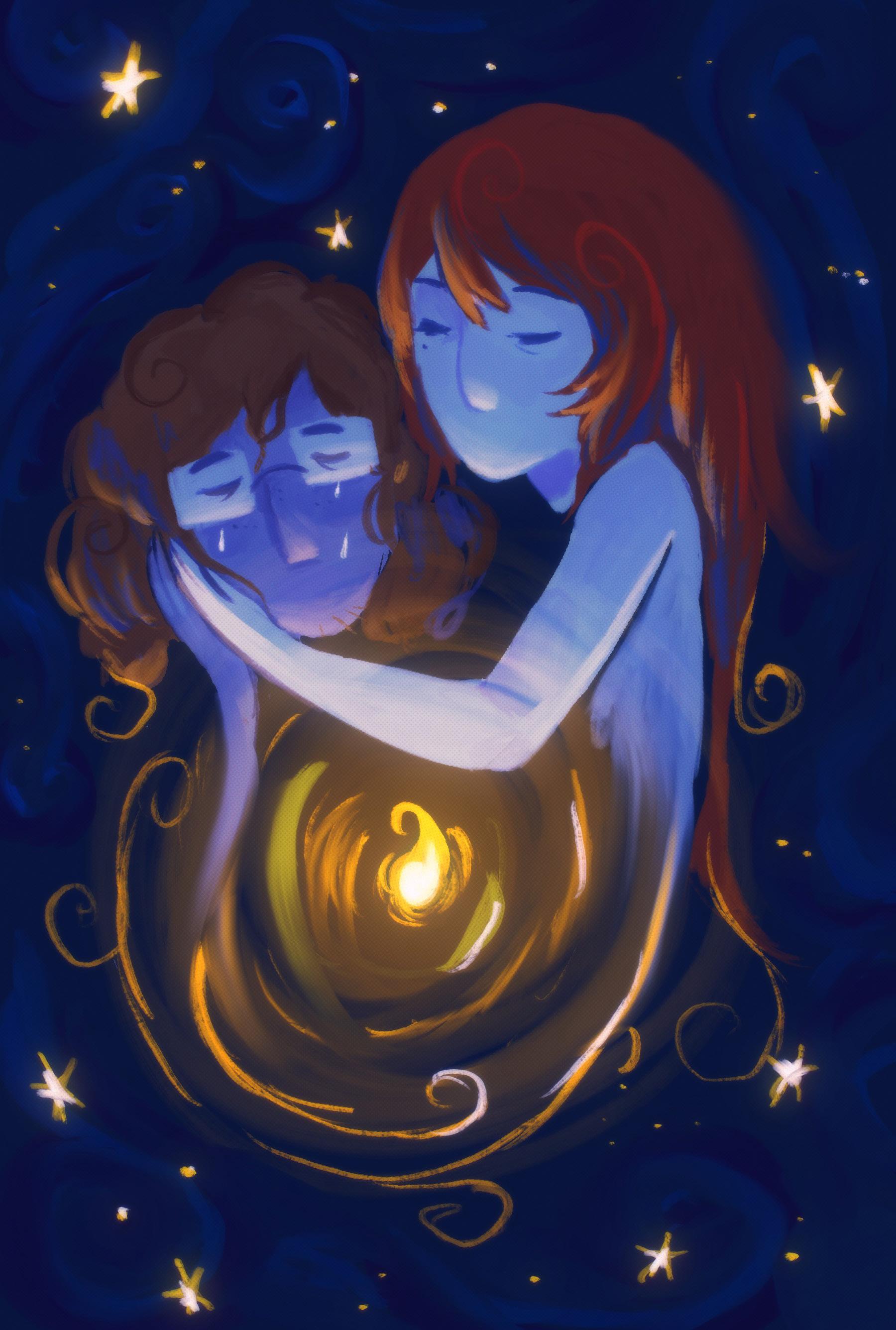
Dreamscapes by Damaris
Hernandez
A poem from Emma to Julian:
To my sweet,
The day it is seen is the day that it is known.
But who is one to know before the day it shows?
Your heart and it’s glowing core leave me in soothing peace
A gentle breeze that stays in me
No one knows the day or night, yet you made it clear
My dear Julian you showed me exactly just how it feels
Your star in the dead of night, I will guide you the way I will help you come what may
Until our dawn strikes your midnight with such might
Until our match brings your candle life tonight
Until your heart strives to beat through every storm
I’ll be sure to guard your light forevermore
Navegante by Valeria Soto
Te busco en cada lugar al que voy
Te busqué ayer y te busco hoy
Te busco en mis sueños
Te busco en momentos grandes y pequeños
Lo que en verdad quiero decir es que te extraño
El irte a mi corazón le hizo daño
Le grito al sol que te regrese
Y le ruego a la luna que en la frente te bese
Luego entendí que ya no eras algo que podía alcanzar
Así que tú y tu recuerdo en mi mente tendré que guardar
Under the Green Lamp
by Uacire Elula
The first thing this city gave me was the smell. Not the sharp, green rot of swamp water, nor the sweet reek of magnolia sagging over muddy banks. New York, this northern beast, smelled of coal breath and hot metal, of a million worries sweating through wool coats. The smog didn’t float so much as sit on the streets, heavy as a curse, making the night glow sickly under the lamps. That first week, I stood under one of those lamps, collar stabbing into my jaw as I hunched against a drizzle that scorched my skin with industrial filth. My cigarette burned fierce between white knuckles. The tram shrieked down Cherryline. Then, across the narrow street, a venomous green lamp blazed to life in a second-floor window, cutting through the dark like a witch’s eye. There she was. A shadow behind glass. Dissecting me.
I grinned up at her and exhaled a plume of smoke that writhed upward like a summoned spirit. My fingers slid into my pocket, clutching the gris-gris my mère had bound in blood-red thread. The gingham bundle burned against my skin as I kneaded it, feeling chicken bones crack and scrape inside their prison of lavender, salt, and darker things she never named. The bones knew me. They clicked softly as I rolled them between my fingers, promising protection, promising power. I had come north for “opportunity.” That was the word they used at the station. “Bigger market, Mr. Marlowe,” the manager back in Baton Rouge had said, patting my shoulder like I was a prize steer. “WKLB in New York. Prime slot. You’ll be the voice they go to bed with.”
A promotion, they called it. A raise folded into a telegram, a contract with embossed letterhead. More money, bigger studio, better equipment. A whole engineer just for my program. He slid my new schedule
across the desk like a tarot card promising a brighter future. The paper didn’t interest me. People did. New city, new voices. New flavors of fear.
I took the job, of course. It would’ve been rude not to accept such a generous… buffet. The streets near my boarding house were damp and shining in the weak gaslight, the air buzzing with stray radio static leaking from open windows. When I rounded the corner onto my block, I saw it again: that sickly green lamp catching the rim of her spectacles as she turned, a brief flash like a distant lighthouse signal cutting through fog. The pen in her hand paused mid-stroke. I didn’t grant her the satisfaction of eye contact. I stood under the lamp, adjusted my tie, flicked ash from my cigarette, the picture of a man wrapped in private thoughts. But I lingered longer than necessary in that ring of light. When you grow up with a woman who whispers to bones and reads futures in coffee grounds, you learn early that the unseen audience is the only one that matters. I walked on, counted to ten, then glanced back. She was closer to the window now, half in shadow, half in that melancholic green, watching. Curious little thing.
Weeks slid by. Spring loosened winter’s grip, humidity seeping into the bricks. The station threw itself into my debut like a nervous lover: posters on tram stops, my name in heavy ink, advertisements promising “Sevise Marlowe—The Golden Hour LIVE on WKLB.” My photograph stared back, all serious eyes and the hint of a smirk. One evening, I paused by a tram stop where my own face flapped in the wind. Across the street, the green lamp cast its halo against her window. I could feel her gaze drop to the poster, then back to me. I let myself look up, counting oneMississippi, two-Mississippi before lowering my eyes again. She didn’t flinch away. Most people do. That alone bought her a fraction of my attention, though I despised myself for giving it. At first, she was simply… amusing. No, disturbing. A solitary woman with ink-stained fingers and a spine too straight for this slumping city.

I saw her in the mornings, too, when I left early for the station. If the hour was right, she’d be at that desk, half-finished toast cooling beside her, spectacles low on her nose. Sometimes she’d lean back and stare not at the street, but past it, eyes unfocused, as though she were tracing invisible constellations. And she kept looking anyway. In places like this, secrets have short lives. I was washing a teacup in the communal kitchen when I heard my landlady’s voice drifting from the pantry, sticky with the pleasure of judgment. She didn’t know I lingered just beyond the doorframe.
“That woman with the spectacles?” she murmured. “Dr. Jessibelle. Used to be some kind of professor ‘til they showed her the door. Scratches in those notebooks all hours, watching the street like it’ll vanish if she blinks. Not a gentleman caller in years.” A chuckle, the scrape of a pan. “Delivery boys call her Loony Belle. Quite the tragedy.” I dried my hands and smiled, unseen. Dr. Jessibelle. Doctor. The word clung to her like a borrowed coat, too big for this bitter wind. I pictured empty lecture halls, chalk dust, a voice that made sense only to itself. The discarded always draw me closer. Perhaps because I know the weight of being seen, but never understood.
The first time I killed in this city, it was almost disappointing how easy it was. He found me, as they often do: eyes too bright, desperation thinned at the elbows of his coat. He cornered me by the alley beside our building, smelling of cheap gin and cheaper regret, hand twitching near the knife under his lapel. “Wallet,” he muttered. “I ain’t askin’ twice.” If he’d simply begged, I might’ve given him a dollar and walked on. Charity has its place. But threat? Threat is presumptuous. The gris-gris sat heavy in my pocket, bones knocking together like teeth chattering in anticipation. Lightning flickered once, just enough to sketch his face in sharp relief: worry lines, missing tooth, stubble catching raindrops like dew.

His whole life was written on skin. “Last chance,” I told him softly. He lunged. There’s a peace that descends when a decision is made. The mind quiets; the body remembers. The blade slid into my hand like a thought. I stepped aside, turned, pulled. My mère taught me you don’t hack, you don’t saw. You glide. Clean. Precise. He made a sound, half gasp, half prayer, and dropped. Rain washed around him in little rivers tinged the faintest pink. Only then did I allow myself to look up. There she was. Pressed close to the window, breath fogging the glass. Her hand still held mid-stroke above the page. Her eyes were wide, reflecting the lightning-torn sky, fixed on me, on the arc of my arm, on the man at my feet. I lifted one gloved finger to my lips. Shhh. An indulgence, that gesture. A flourish. But when you have an audience, you owe them a performance. She did not scream.
Did not yank the curtains closed.
She simply… stared. Horror lived in the set of her mouth, the stiffness of her shoulders. But beneath it, glimmering faintly, was something else. Curiosity. I smiled, slow and deliberate, letting rain bead on my lashes like tears I’d never shed. Then I bent to my work, arranging him as the city preferred its dead: tidy. Muggings gone wrong. Unfortunate misunderstandings. Across the street, the green lamp burned on. A silhouette bent over a desk, writing furiously. From then on, I knew I had a companion. It is a lonely thing, being what I am. Most who sense the wrongness in you shiver, cross the street, avert their eyes. No one wants to study the monster too closely; they might recognize something. But Jessibelle looked.
Each night, I felt her gaze sweep the street before I even stepped under the lamp. Some evenings I delayed my exit, savoring the thought of her pacing, checking the clock, that tightness in her chest as she wondered if I would appear. If the experiment would continue. When I did appear, she was always ready. The lamp angled so her face was half in shadow. Notebook open. Pen poised.
I began to let my routes brush closer to her field of vision. A pause beneath the lamppost. A glance up at the tram-stop poster bearing my face. A laugh thrown into the night for no one, knowing she could see the curve of my mouth, the flash of teeth.
At the station, my audience multiplied. Thousands of unseen listeners let my voice slip through wires into their bedchambers. But none of them mattered quite like the solitary figure under the green lamp.
“One hears truth,” I said one night into the microphone, eyes on the red ON AIR sign as if it were her window, “through the clarity of glass.” The engineer shifted. I didn’t explain.“To the watchful few…” I let my tone drop, intimate, as though speaking to a single person. I imagined her leaning closer, radio light warming her face. “Your silence echoes THUNDER.” On that last word, I let my voice crack the air, sharp and sudden. I could almost hear her gasp across the street. It pleased me.
The second man was not a mugger. He was a rail-thin vagrant haunting the corner by the bakery, eyes like empty cups. People passed him with the exhausted cruelty of those who have nothing left to give. Sometimes I dropped a coin into his hand. Sometimes I didn’t. On the night I chose him, the rain was only a suggestion. Jazz floated from an open window, the city restless and feverish.
“You look hungry, mon ami,” I said, offering a cigarette. Suspicion flickered, but hunger is a louder voice than caution. He took it, fingers trembling, drawing the smoke like sacrament. “You ever wonder,” I asked, leaning against the wall, “how some got so much, and others nothin’?”
“All the time,” he rasped.
“It’s an imbalance,” I mused. “A sickness. Nature hates imbalance.” I tapped my chest where the gris-gris rested. “Back home, they say when things tilt too far one way, something rises to correct it.”
“Yeah? What’s that?” he said.
I smiled. “Fate.” I gave him a way out, a word, a gesture, a scrap of humility.
He chose pride instead, spitting, “You don’t know nothin’ about me.” True. But I could see enough. Later, when he lay cooling on the cobblestones in another neat line of my making, I felt her gaze again. This time, she bit her lip. You can tell a great deal by how someone responds to horror. Some look away. Some lean in.
And then there are the rare ones whose minds ignite at the rupture in the ordinary, who feel that twin surge of revulsion and… awakening. She was one of those. There were nights she hated herself for it. I saw it in the mornings, curtains half-open, hair in disarray, eyes ringed with sleeplessness. She’d stand clutching a stack of papers, staring as if they might bite. Twice I watched her march toward the little stove, notes in hand, only to stop, arms shaking. The second time, she flung them to the floor and collapsed into a chair, palms pressed over her eyes. She was trying to burn me. Burn her complicity. Burn the hunger. But flame is greedy, and she has always looked like a woman reluctant to feed anything she cannot control.
By August, the heat pressed on the city like a hand on a fevered brow. Breadlines stretched. Men dropped from windows on Wall Street. The papers called my offerings “unfortunate muggings.” I found the phrase charming in its cowardice. At the station, they told me The Golden Hour’s ratings had tripled. I nodded, smiled for the manager, let him gush about numbers and sponsors. I wondered instead how many pages she’d filled with me.
At first, I meant to kill her. It was the natural conclusion: any witness is a liability, an observant one doubly so. I imagined the stairwell, the feel of wood beneath my knuckles, the surprise in her eyes when she opened the door. I was curious which category she’d fall into, bargainer, beggar, fighter. But then, she surprised me. The night after the second killing, she sat at her desk, notebook open.
Before she wrote, she looked down at the alley where the stain still bled dark against the cobbles. Her fingers went to her throat, tracing the hollow as if feeling an invisible blade. Then, slowly, she smiled. Not a pleasant smile. Brittle. Self-directed. The expression of someone standing on a cliff edge, terrified to fall and equally terrified to step back and live the rest of their life wondering what the fall might have felt like. She dipped her pen and began to write with renewed ferocity. Whatever she was recording, it wasn’t just my anatomy anymore. She was dissecting herself, too. That kind of honesty, however warped, deserved… more time. Better to keep her. To see how far she’d follow. You ask, little doctor, though never aloud, whether I am revolting. Your eyes ask it every time you see red on my gloves, every time a body is dragged from the alley and you rush to the window, notebook already open, breath already quickening. Am I revolting? Or am I simply what happens when your “observations” widen to include hungers you don’t dare name? To you, it’s ink and paper. To me, knife and bone. Different instruments. Same impulse.
The night I went to her door, the air tasted of rain that hadn’t yet fallen. The city felt tuned just off the correct frequency, static crawling along my skin. I climbed the stairs past my own dark floor, continuing upward. The green lamp glowed above, the notebook open, but she couldn’t sit. Good. It meant she wouldn’t be entirely composed when I arrived. My fingers closed around the gris-gris, feeling the rough fabric, the tiny bones pressing through. I rolled it once, then thumbed the knot of red thread my mère had tied so many years ago. Three raps. Deliberate, spaced. Pause. Two more. Rhythm matters. People respond to patterns even when they don’t know why.
On the other side, silence crashed against the wood. Her footsteps froze. Somewhere in that nest of paper and ink, a pen rolled and fell.
“Dr. Jessibelle?” I let my voice unfurl, velvet-smooth, the same tone I used to coax secrets from late-night callers. I heard her breathing, shallow, quick. She moved closer. I pictured her standing just out of sight, fingers splayed over her ledger like it might protect her. She knew my voice. It had been slipping into her room for months, borne on radio waves. To hear it now, in the raw stairwell air, would shake her. Good. She’d earned that thrill. We both had. You want to live, little doctor. But you also want to know. As the door began to open, I smiled and straightened my tie, every inch the gracious host arriving for a private engagement rather than the monster at the threshold. After all, we’ve been courting for months. It’s only polite I finally introduce myself properly.

The text printed in this edition of Scorpion’s Quill is an excerpt of a longer work. To view the full text, feel free to scan the QR code included here. Please note before reading that this story includes murder and other dark content.
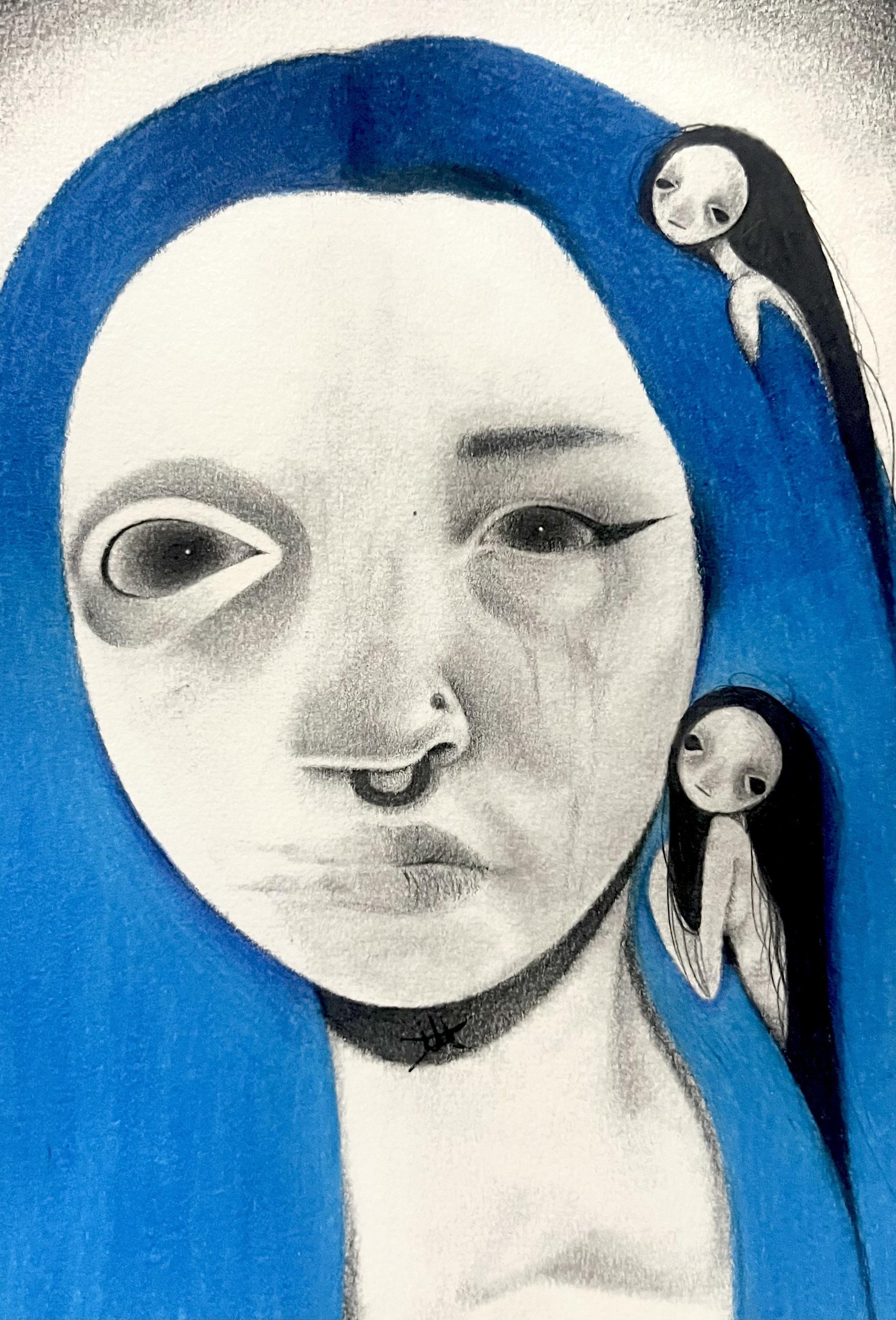
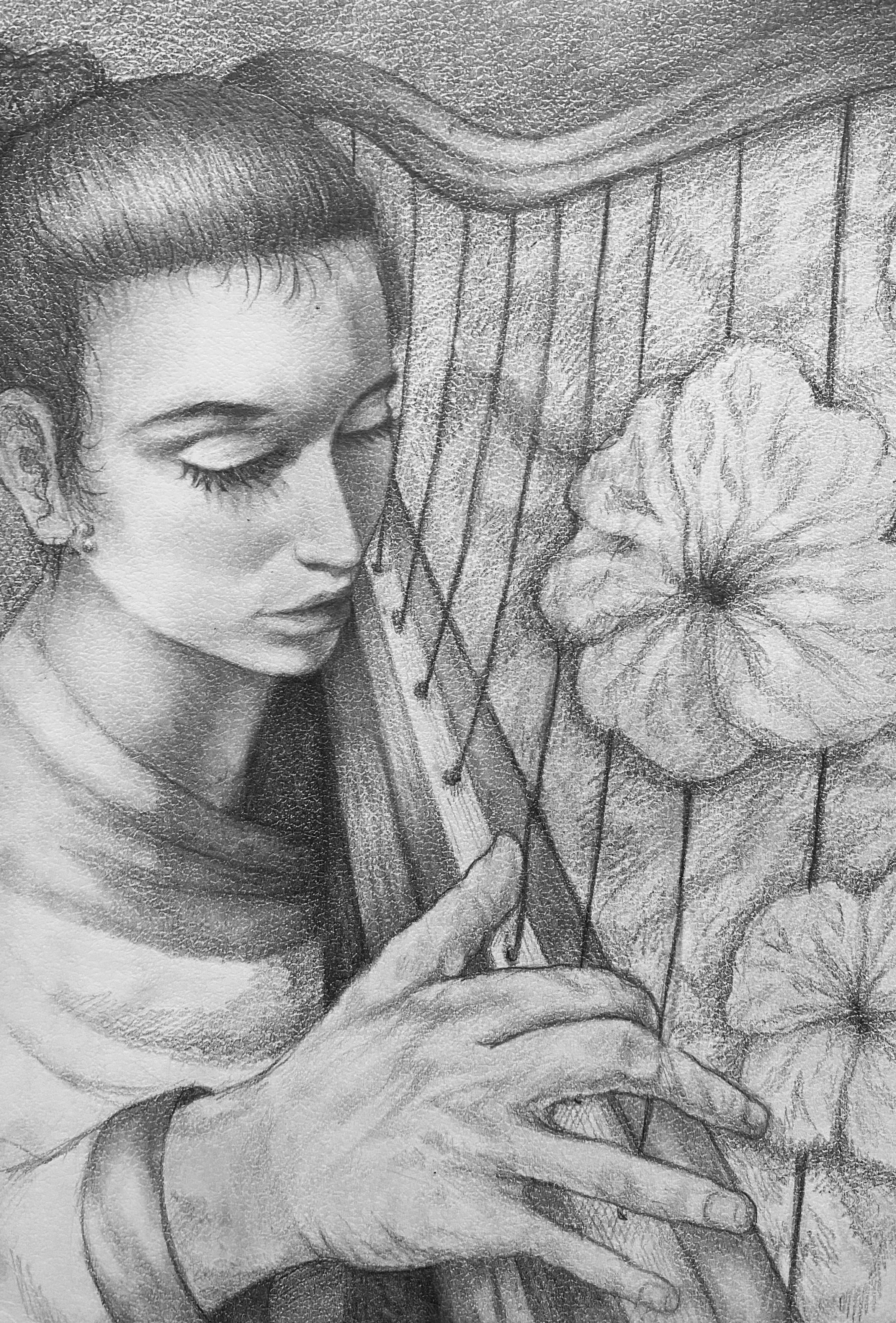
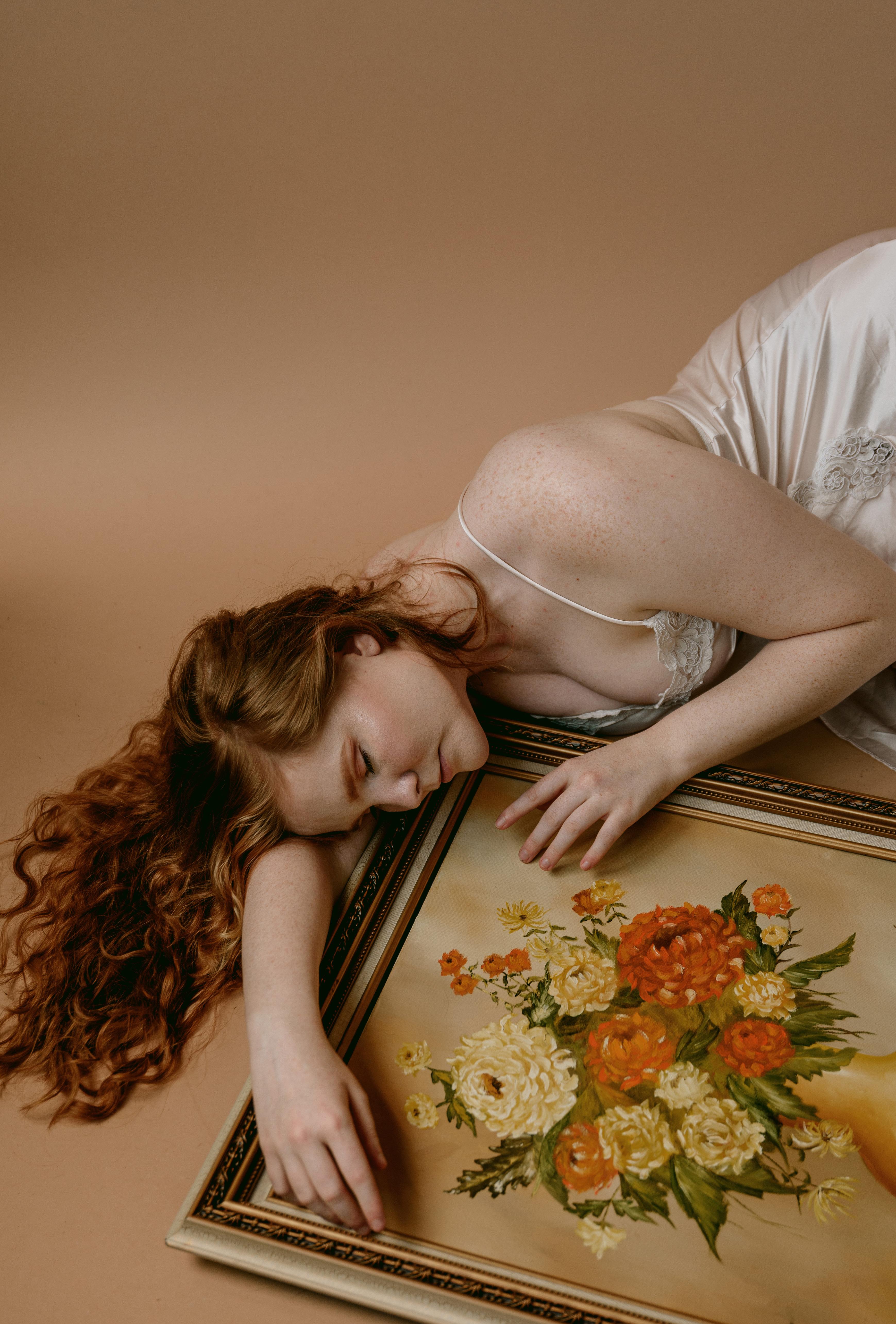
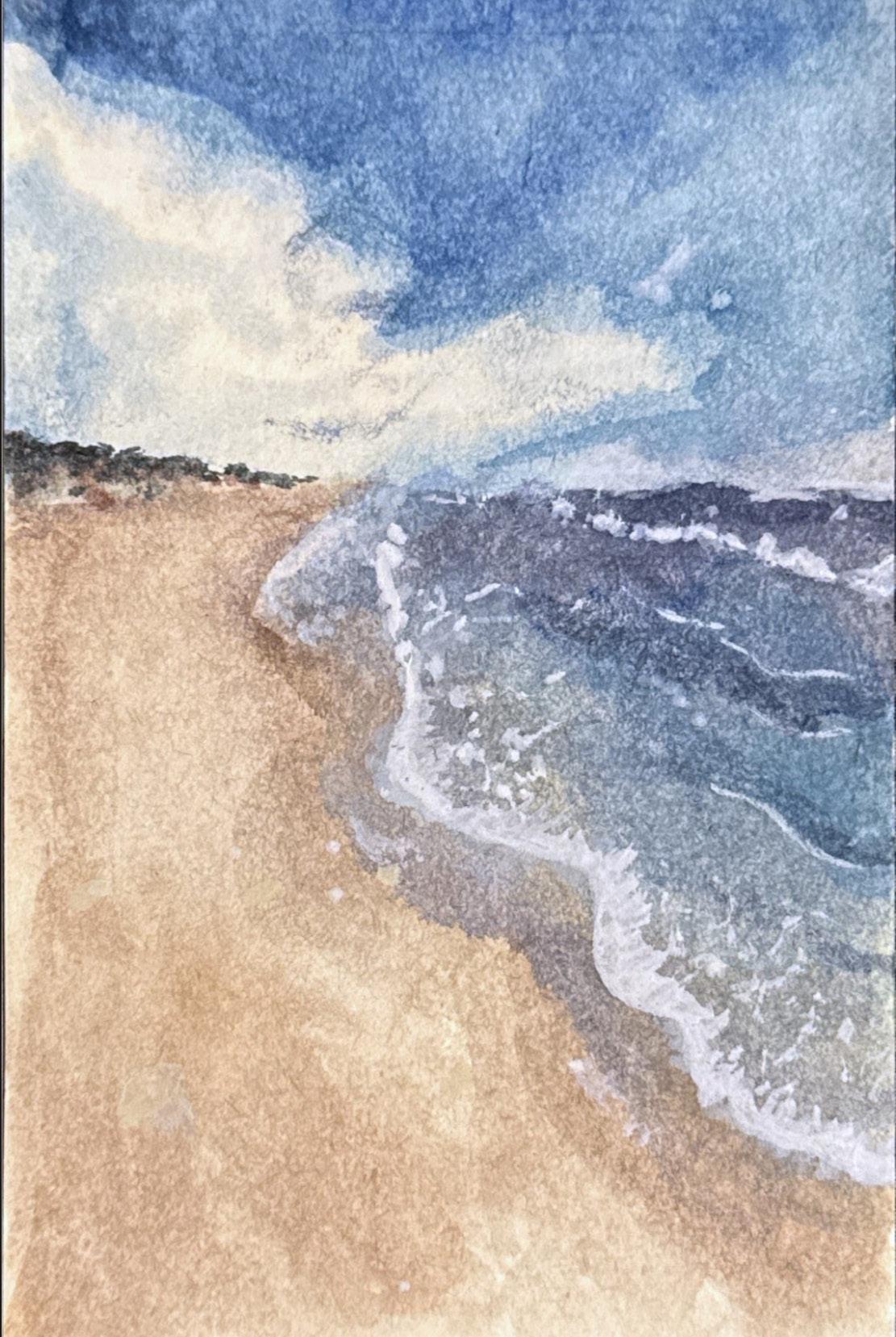
Ocean by S. L.
You remind me of the ocean. A clear view that brings you peace in life, but as you approach it you realize those crashing waves can easily turn violent. That is what I feel sometimes when I look at you. When I do, that peace gets stained with fear, making me run away.
Girl with the Mud-Cake Shoes
by Roberto Vela Jr.
Steps Through the Barrio:
Cradled by a relentless vein, pulsing with the rhythm of passing trains, Yolanda lived in a barrio–a neighborhood stitched together by hope and hardship. Her family could only afford a pair of shoes each year, and by the end of the school year, the shoes were at the last leg of their life. Despite these hardships, Yolanda was determined to attend school because it was a pathway out of poverty–a lesson her parents instilled in her, hoping she would have a chance for a better future. Although her family’s love and support were her true riches, Yolanda often felt distracted by the constant pursuit of more. This drive, however, set her apart but did not define her views. This is the story of a young girl and her continued resilience with her difficult circumstances. Throughout her childhood, Yolanda juggled life and walked through the dirt road that became muddy after every rainfall; it was a wet, messy road. For Yolanda, it was not just about her shoes covered in mud; it was a symbol of her resilience and her difficult circumstances waiting to come. Yolanda’s shoes set her apart from her other classmates; in fact, about a quarter of them had easier lives and cleaner shoes. When Yolanda’s classmates reacted by laughing out of curiosity, this only motivated the young girl to find joy and purpose in her learning. As time passed, Yolanda, began to progress into adolescence, and her transition to her teenage years brought new challenges, making her feel out of place, creating an internal conflict…
Part Two:
Lessons from Home:
As she entered her teenage years, Yolanda, driven by her earlier experiences, began working a part-time job at a local mall hamburger joint called Smacks. Although mud-caked shoes were no longer a daily reality, they remained a potent memory that fueled her ambition. Yolanda faced challenges and often felt out of place, particularly with her aged old boss. Fortunately, her co-workers helped her out. After some soul-searching, Yolanda began to question if she truly belonged on the path she had chosen, which did not understand her.
With the guidance of her parents, she decided to give her two weeks’ notice. Choosing not to burn bridges, she left on good terms and began to focus on what is profoundly important to her and her family: education. Throughout this period, the memory of the muddy path, and the shame she once felt from her classmates and former boss, served as a source of quiet strength and motivation, shaping her into someone who could persevere through uncertainty.
As Yolanda matured, the meaning of the mud-caked shoes shifted. They no longer represented hardship; instead, they symbolized perseverance. The muddy shoes became a part of her personal history, one she could look back on with pride. In retrospect, a meaningful review of the life of the little girl with the mud-cake shoes conveyed a sense of her past which came to life in an instant. The lessons from home–love, courage, and hope–became her foundation, guiding her towards a future she could finally see for herself.
Yolanda had found her own path, and her story was just beginning. With the passing of her father after graduating high school, and her mother two decades after Yolanda got married, she world felt heavier, but her spirit remained unbroken. Now, married, the girl with the mud-cake shoes had the supportive partner–the engine–the power needed, critical for her success…
Part Three: Finding Her Own Path
At this point in her life, Yolanda is married and is finishing her college degree. After years of hard work and sacrifice, the young girl with the mud-caked shoes has earned a “clean slate,” but she is still fundamentally the person who walked the muddy path to school every day it rained.
As she reflected on her journey, Yolanda realized the significance of the mud-caked shoes and how they helped shape her success. Remarkably, Yolanda’s story serves as an inspiration, proving that the past shaped her but did not define her destiny. Her journey stands as a testament to determination and the power of believing in oneself, no matter the obstacles.
Now, the girl with the mud-cake shoes as she walks on her path, clear and full of promise. Her story serves as an inspiration and symbol of resilience, a living testament to how even the heaviest steps through hardship can lead to a future bright with hope and possibility.
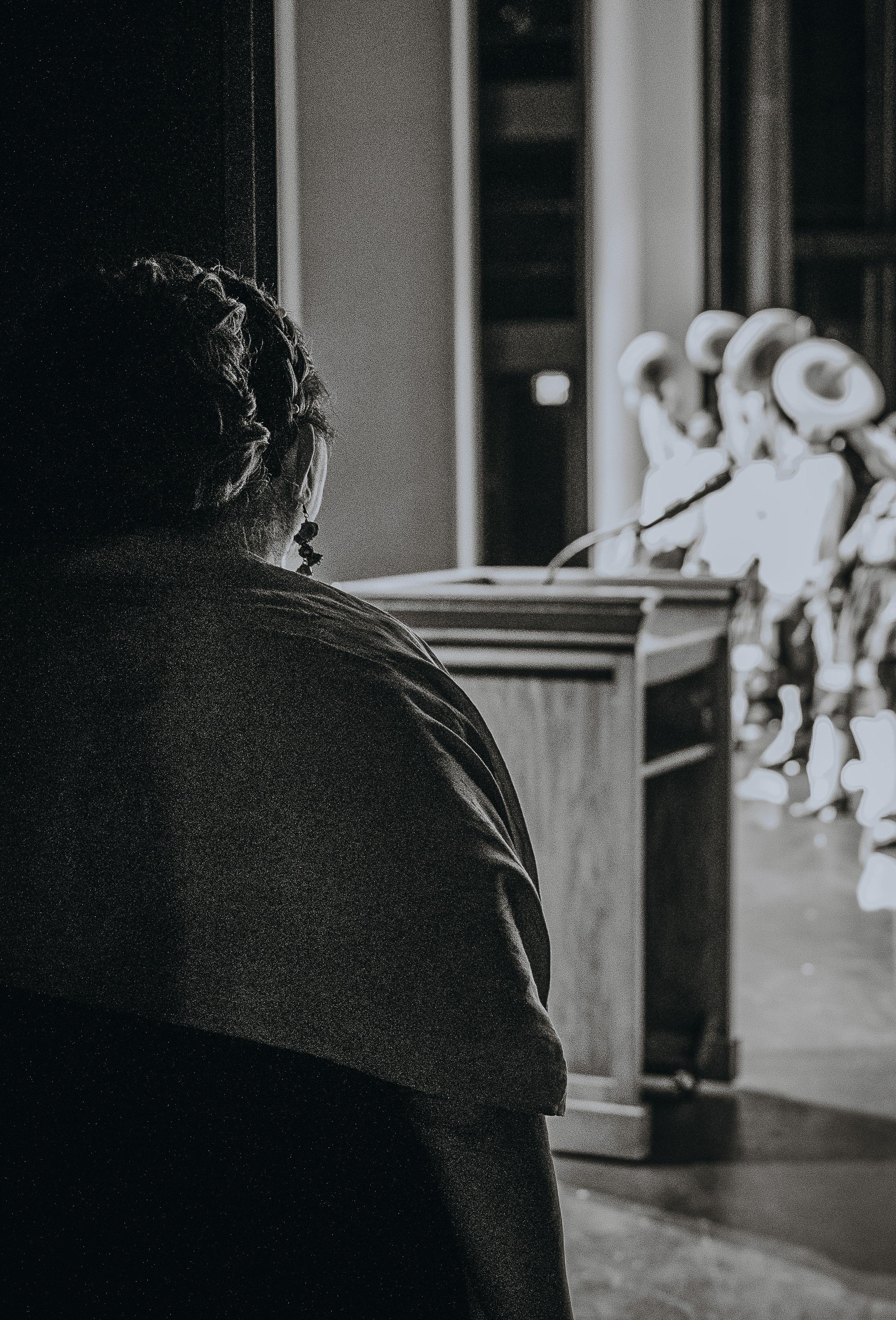
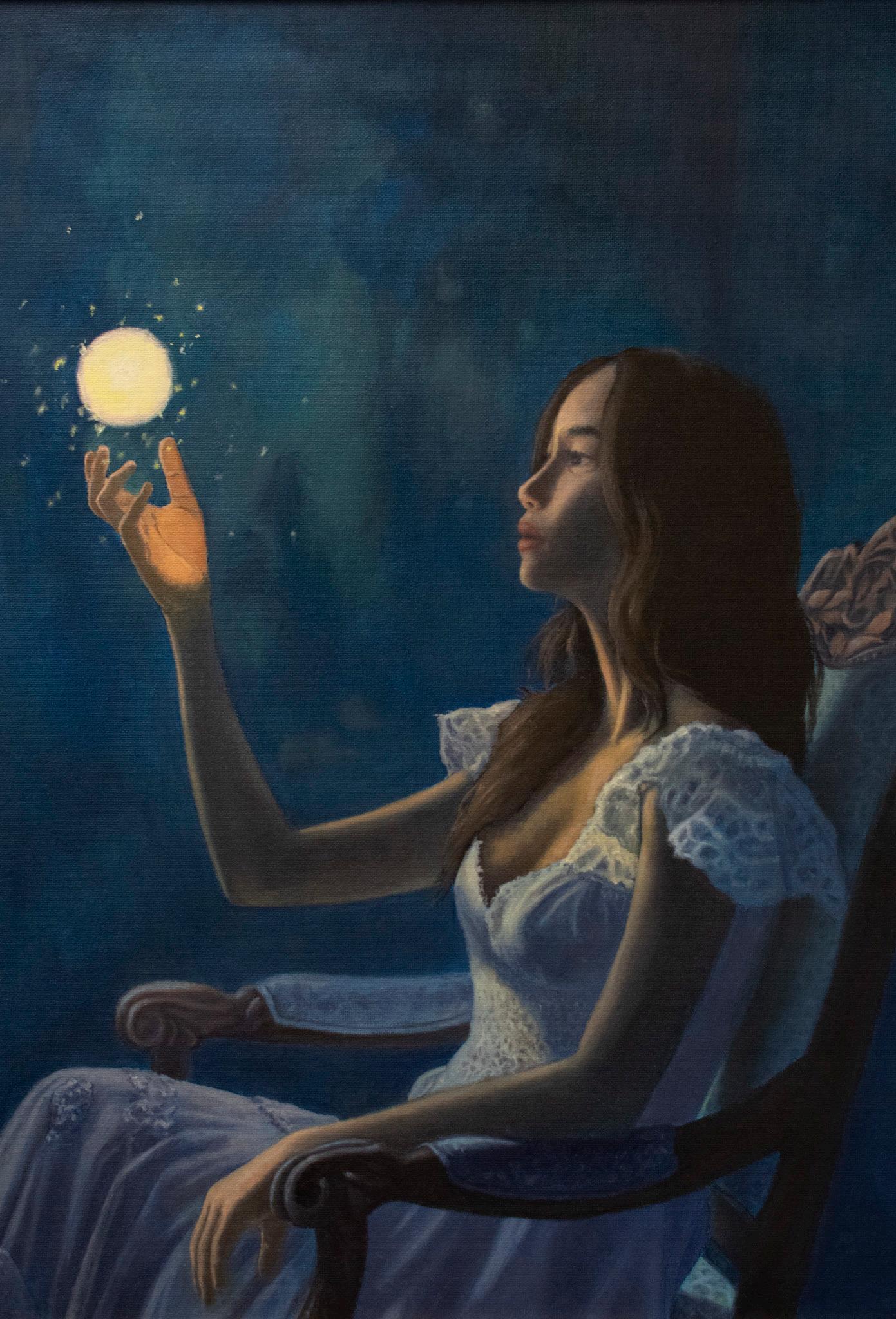
Mark Cruz Eternamente bailaremos
by
Dame tu mano, vamos a seguir la música nos dejaremos llevar que esta noche siga. Uno. Dos. Tres.
Seguiremos este ritmo. sostén bien mi mano sé que no es lo más cómodo un poco empapada sudor con nerviosismo
Corazón en las manos
Latidos sincronizados
Pupilas encontradas Respiración agitada. Cuatro. Cinco. Seis.
Sigamos sonrientes que el vals continúe la bella noche sobre nosotros, la luna bendiciéndonos las estrellas iluminándonos calcando múltiples pasos una velada eterna un son de los dos.
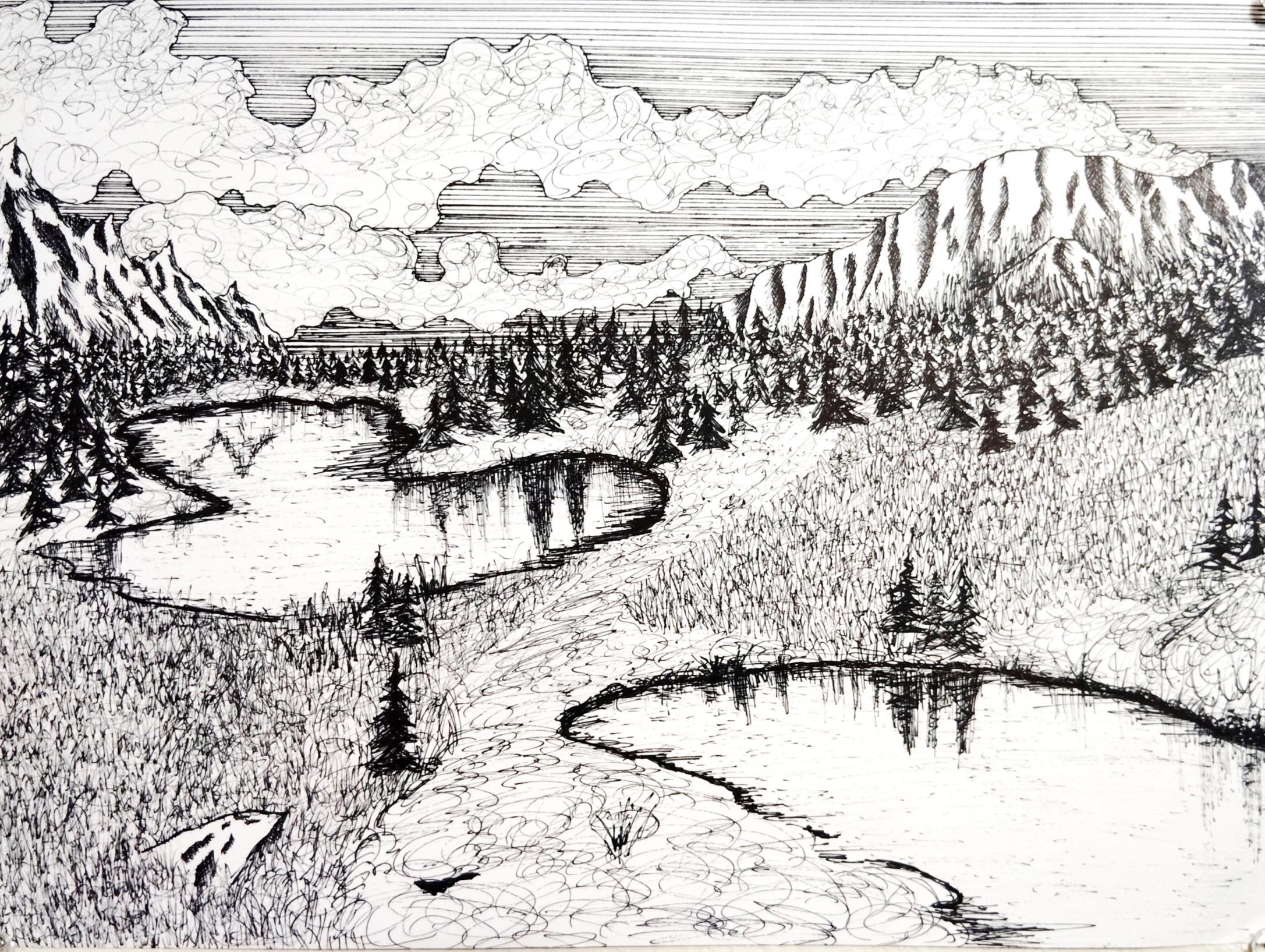
The Secret Life of Teachers: Black Death Breaking
by Jessica Carlos
They were the plague. Anyone who happened upon them in the hallways turned heel and fled, hurling themselves into the nearest classroom with an open door, slamming it shut, and sprinting through a hasty Sign of the Cross to beg the good God above for mercy. Please, Lord, don’t let them take me now. I’m too young to die.
Vile creatures, those auditors. Barely human, some would say. And yet some compassionless dolt had thrown the doors of the school wide open and said, “Come on in. We’re dying to have you.”
Dying indeed.
A select group of us had been ordered to attend a welcome dinner for the group of suck-joys all set to rain on our parade and then launch a twister over it. Doc had reserved a private room at Antonio’s for twenty, which included her, our fearless principal, the two secretaries, our bookkeeper, the counselor, and ten of us lucky ducks specially chosen for the occasion. Yay.
The last five seats went to them. They sat at one end of the long table, one at the head with two to each side of her. She wasn’t smiling, just observing, her hawkeyed gaze completely unobstructed by her raven hair pulled tight in a bun. I’d arrived late when my little-used heel had snapped halfway to the car and had had the misfortune of having to claim one of the empty spots right next to them. Julio Cisneros was the other unfortunate, the only one to arrive after me. Nothing new there.
I could feel the main bacterium studying me after my late arrival, judging me as lazy, irresponsible, What a pathetic excuse for a pedagogue.
“Eh hem,” Lucy Simmons cleared her throat beside me. “Ellie Dane.”
I’d leaned so far over in my seat I was practically on top of her. I smiled at her sheepishly and straightened slightly. “Sorry.”
Why I’d been chosen for this illustrious affair, I didn’t know, but Lucy was the ringer. You could’ve thrown knives at her, and she wouldn’t have flinched. I know. I’d tried it once. She was regal, elegant as always, hair done to perfection, and I, on the other hand, had pulled out some random dress I’d kept hidden in my closet for the past six years and put it through the delicate cycle to wash the dusty bunnies off of it.
Doc went through the motions, greetings and introductions. She wasn’t worried in the slightest. That made one of us. Most of the school staff were at best uncomfortable and at worst…having nervous breakdowns in the teacher’s lounge between classes. “Breathe into the paper bag, Sandra. You can’t hyperventilate right now. There’s thirty-two freshmen waiting for you to fill their heads with knowledge!”
In the end, it was Jody Castañeda who’d actually cracked first. A student in her 3rd period class had stuck his entitled little nose in the air and refused to read. The auditors had looked her up and down, clucked a few times like a couple of chic chickens, and scribbled something damning on their clipboards. Jody had run out of the room crying, and Doc had taken her into her office. Only God knows what was said behind closed doors because an hour and a half later, Jody exited, collected her things, and left the school. Doc’s expression was unreadable. “No one will contact Jody for the rest of the week.”
Typically, the school atmosphere was holly jolly July, hot as heck and yet festive, regardless of the time of year. Doc was itching for an impromptu picnic day, to just ring the bell and let everyone reconvene in the gym, sitting on her private supply—a true hoard—of blankets, saved and collected for that very purpose.
But she’d have to wait because right then, the plague was sweeping through the hallways, claiming the life of anyone not forged in years of angry parents and petulant teenagers.
So really, it had only been a matter of time before they got to me, too. The main disease, whose name I’d refused to learn, swept into my classroom followed by a couple of its sister cells. I was wearing a wolf hood, warpaint, and a colorful shawl over my shoulders. The lights were off in my room, and my juniors were seated around a paper fire with flickering tealights. Back to the door, I didn’t see them come in. “…And the pale-faced, hairless biped? We’ll rip him to pieces with our bare teeth!” I howled up at the glow-in-the-dark moon I’d stuck to my ceiling.
By the time I emerged from the lunar song, my students were no longer looking at me but past me. The fleas were whispering to each other, the words “cultural appropriation” and “cannibalism” flittering between them.
I went completely red. “Wait—”
But they were already heading out the door.
I cried like a baby in Lucy’s room the following period. “I’m getting fired, aren’t I?”
“Ellie.”
“I’ll never teach again.”
“Ellie.”
“What if they take my certification?!”
“Ellie!”
I sniffled pathetically. “What?”
“What was your lesson even about?”
“I was teaching Le Guin,” I told her matter-of-factly. “Best reverse werewolf story ever.”
“You read the weirdest stuff.” She shook her head in exasperation. “Just track Mrs. Lattimer down and explain it to her.”
“Who?”
She sighed. “The head of the auditors.”
As if I had the guts for that. “I think you’re confusing me with you.”
Lucy rolled her eyes. “You can ninja roll through the corridor, but you can’t talk to a couple of overdressed pencil pushers.”
Doc entered then. “I heard there was an incident.”
“It’s not what you think,” I told her quickly.
She quirked a brow. “So you weren’t teaching Le Guin with the most over-the-top visual representation ever?”
My eyes widened in surprise. “How did you know?”
Her face twisted in elation. “It’s one of my all-time favorite reverse werewolf stories!”
“You have more than one?” muttered Lucy under her breath.
“Anyways, it’s going to be fine, little Miss Dane,” said Doc. “Isn’t that right, Lucy?”
“That’s what I’ve been trying to tell her.”
“I realize your fire was a little underdone, so next year, I’m bringing you a firepit. We’ll set it up in the back lawn.” Doc was the best principal ever.
“What’s the point of a firepit if it’s during the day?” asked Lucy, ever the realist.
“You’re absolutely right.” Thinking for a spell, Doc snapped. “We can put it in the gym!”
“That can’t be legal,” said Lucy. Then she shrugged. “I’ll bring the marshmallows.”
“Why wait?” I threw in. “I’ve got chocolate, marshmallows, and graham crackers in my classroom, and we’ve got a stove in the cafeteria kitchen.”
“Now you’re thinking,” said Doc. “Why do you have the ingredients for—” she cut herself off. “Never mind. You’re Ellie Dane. Why wouldn’t you?” Lucy came around her desk and joined us in the hallway. Side by side with two of the most resolute women I’d ever met, I finally started to relax. Doc’s hips were swaying in count with some rhythm only she could feel, hands up, shifting back and forth. “Our house, du du, in the middle of our street.”
I shared a look with Lucy behind her. Then we both busted out the moves. “Our house, du du, in the middle of our street.” Coach Garza shared a hip bump with Lucy as he passed.
The scourge of the earth caught us halfway through our second round of s’mores, jamming to the sound of Sister Sledge. We froze midpose. All five auditors had entered the kitchen. Four of them were staring at us aghast. Mrs. Lattimer’s lips pressed into a thin line, and she glowered like we’d just sat on her 10th birthday cake.
Doc wasn’t quite sure what to say, though the excited smile never left her ruby lips. Lucy just continued munching on her treat. Fed up with tension, I did the only thing I could think of. I stuck out the untasted s’more in my hand and asked, “Want one?”
The plague swelled into a legion of flea-riddled rats. Then, with fury coloring her every word, the woman snarled, “What is wrong with you people?!” She took a deep breath. “Everyone here is so ridiculously concerned with being good teachers that they make themselves sick with worry, and the kids actually pay attention, and Doctor, you sent Castañeda on a spa trip after her massive meltdown just so she could relax, and you three are dancing down the hallway like one big happy family, making s’mores in the middle of the school day. It’s not normal!”
I worried my lip, shared a glance with Doc and Lucy, then said, “So, is that a yes?”
“Of course, it’s a yes!” She snatched the s’more out of my hand and swallowed half in one bite. Around the chocolatey marshmallowed graham cracker, she grumbled, “Why can’t all the schools we audit be this much fun?”
Doc just smirked. “Because then you wouldn’t have a job.”
A Love Letter to Writing
by Alejandra Moreno
Am I going to get through this road?
I’ve been here before.
A long, bumpy, and endless road.
Where am I going? Is it the right place?
Stop, and check, and see again.
Is that a sign I see?
The road is still bumpy, but the sign is shining as bright as can be.
Start again with a new perspective.
This time I know where I need to go.
Sabanas negras
by Mark Cruz
Quiero volver a verte un poco más,
Sin embargo, no estoy en lo correcto.
Anhelo un poco más de tiempo,
Odio la idea de no sostener tus manos.
No fueron suficientes los momentos juntos, He de estar loco para pensar lo contrario.
Mi cordura no es algo impensable,
Pero tu tierno tacto me sana.
Ya no podré verte jamás
Yaces posada en una cama.
Con sábanas negras alrededor de ti,
Rodeándote lo que alguna vez fue blanco.
Estás en una paz repleta, quiero suponer,
Eso me ayuda con esta carga.
Mantén tus ojos cerrados, por favor,
Con esto podré despedirme de ti.
Mi bella dama de los sueños,
Guía de mi vida, ya no estás.
No estás en el más allá,
Pero es mejor no pensar en ti.
Tu color blanco lo marchitaste, ¿Tuviste otras opciones? No lo sé.
Algo de lo que sí estoy seguro,
Nunca me quisiste, tú me traicionaste.
A Flyboy’s Final Flight
by Aldo Araujo
The bell begins to ring, waking me and the rest of the men up. It’s four in the morning, but we have a job to do. The only thing that keeps me going is my dear Susie, my wife. We got married around the time Pearl was struck by the Japanese, the reason everyone got dragged into this war. At least I wasn’t fighting on the muddy battlefield, although I still had it rough in the great blue high above. Before I could continue thinking about my wife and Pearl Harbor, I already made my way to the ready room. Me and my fellow flyboys slab on our electrical heated suits, our flight jumpsuits, and our sheep-wool jackets. To top the get-up, I slip on my leather flight helmet with goggles. Once we finish dressing up, we make our way to get trucks headed for out B-17s (our bomber planes). This was the same routine I had been doing for the whole year. We flyboys were so used to it, we didn’t need our alarms at all.
Soon we arrive before our mighty flying fortress named “The Striker.” The crew named her that after striking a German factory a few missions ago. This is my twenty-fifth mission, meaning after this one I could finally go back home. I need to hold on a little longer to see Susie, who I’m sure is waiting eagerly for me to get home. Me and the rest of my boys jump on the plane and got into position. I had the worst position on the whole plane. We had about five gunners to protect the plane, but one was placed at the bottom of the plane in a ball-turret. The ball is where I had been serving for twenty-five missions. My back and neck may have been messed up, but the turret has kept me safe. I say a prayer asking God to look after me and the boys, as well as to give us the courage to make it to the end. “The Striker” revs her engines and slowly leads the flight of B-17s off the runway and into the skies.
I look out the window, witnessing the ground crew and base blur upon ascension. The lights from the base slowly dim as our plane makes it way to the heart of Germany: Berlin.
I slowly climb into the ball-turret, and I connect my oxygen mask and electrical heated suit to the armored sphere. I sit in the turret for about what seems like an eternity, just looking down at the cotton floating aside and below us. Eventually the sun comes up, and the navigator gets on the comms.
“Keep an eye out for flak or for ‘109’s’, we’re just entering Germany.” My heart pounds so much it sounds like it is in my head. My head starts to spin crazy, but I start to think about Susie. I calm down; the thought of her brings me back to the mission at hand. I grab onto the turret controls and spin around in the sphere. I scan the white wall below us until I see them: German fighters. “Fighters on our left,” I shout into the comms to alert the crew. The other B-17s showered the enemy aircraft with bright, golden streaks. One breaks into a ball of fire and sinks into the clouds. I pull out a photo of Susie, give it a kiss, and proceed to open fire on the attackers. I witness one of our own planes exploding in mid-air. Hoping to spot survivors, I search for chutes. Sadly, the entire crew of that aircraft seems to be going down with the plane. To not end up like them, I try my best to shoot as many of these fighters down as possible.
Amongst the chaos, one Bf-109, the German fighter aircraft, spots my plane. Knowing what I have to do with bravery, I pour lead into the attacker. It’s as if we lock eyes at one another in a clash destined to be. I see the silhouette of the pilot, knowing very well he is going to strike at any moment. I get a few hits on him, but he still keeps flying. I see his barrels blast and the beams head straight to me.
Time slows down and my moments of my life zoom across my mind. Pictures of life before the war, simple times, come up: Playing catch with my dad and eating dinner with my parents. The day I graduated
from college, where I got a degree in engineering. Meeting Susie for the first time and falling in love with her. My life felt short, but it was surely great.
The rounds shatter the glass of my fortified ball and pierce my body. I lose grip of the controls and struggle to breathe. Blood is all over my sphere and my chest. I remove my oxygen mask to breathe with ease and enter the radio on comms. “I’ve been hit; someone get me out of here!” I shout into the oxygen mask for the crew to hear. Unfortunately, I think everyone is too busy to pay attention or hear me. I sit in the ball trying to stop the bleeding, but there is too much. I can’t just crawl out of the turret due to my weakness, so I do what many men do in this war—fight until the last breath.
With all my strength I grab control of the turret, and I fire at the enemy. I spot the same aircraft that made me bleed, and I retaliate. I aim at the golden streaks in the path of the plane, eventually bursting it into flames. The plane falls back to the soil in flames and smoke. I won the duel, but at what cost? The engagement dies down and our squadron of B-17s reach the target. The bomb bay doors of all the aircraft open, and the payloads are released. Tube shaped tins whistle on their way down the factories below. Balls of fire erupt, followed by streaks of large smoke screens.
My final mission is done; I can finally go home. My crewmates open the hatch door and drag me out. I’m alive but barely kicking and breathing. I take out the photo of my wife, knowing the next time I see her face I would be seeing her again. I’m bandaged up and taken care of on the way back to England. I close my eyes for the rest of the ride after the exhausting day.
Two months pass and I’m finally given the green light to return
home. I ironically fly back to the U.S. after surviving the war in the air. Upon landing, me and other returning airmen step out of the aircraft and onto the runway. Some of them kiss the dirty runway and some are greeted by relatives. I scan the crowd, hoping to see her face after two years of service in the Air Corps. I spot her beautiful blonde hair, her brown eyes, and her bright smile. She runs to me and gives me a big hug. She cries in my arms and tells me how much she has missed me since I had left for war. As we hold each other in our arms, I shed a tear of joy and internal agony. We can finally settle down and enjoy the peace after this period of struggling.

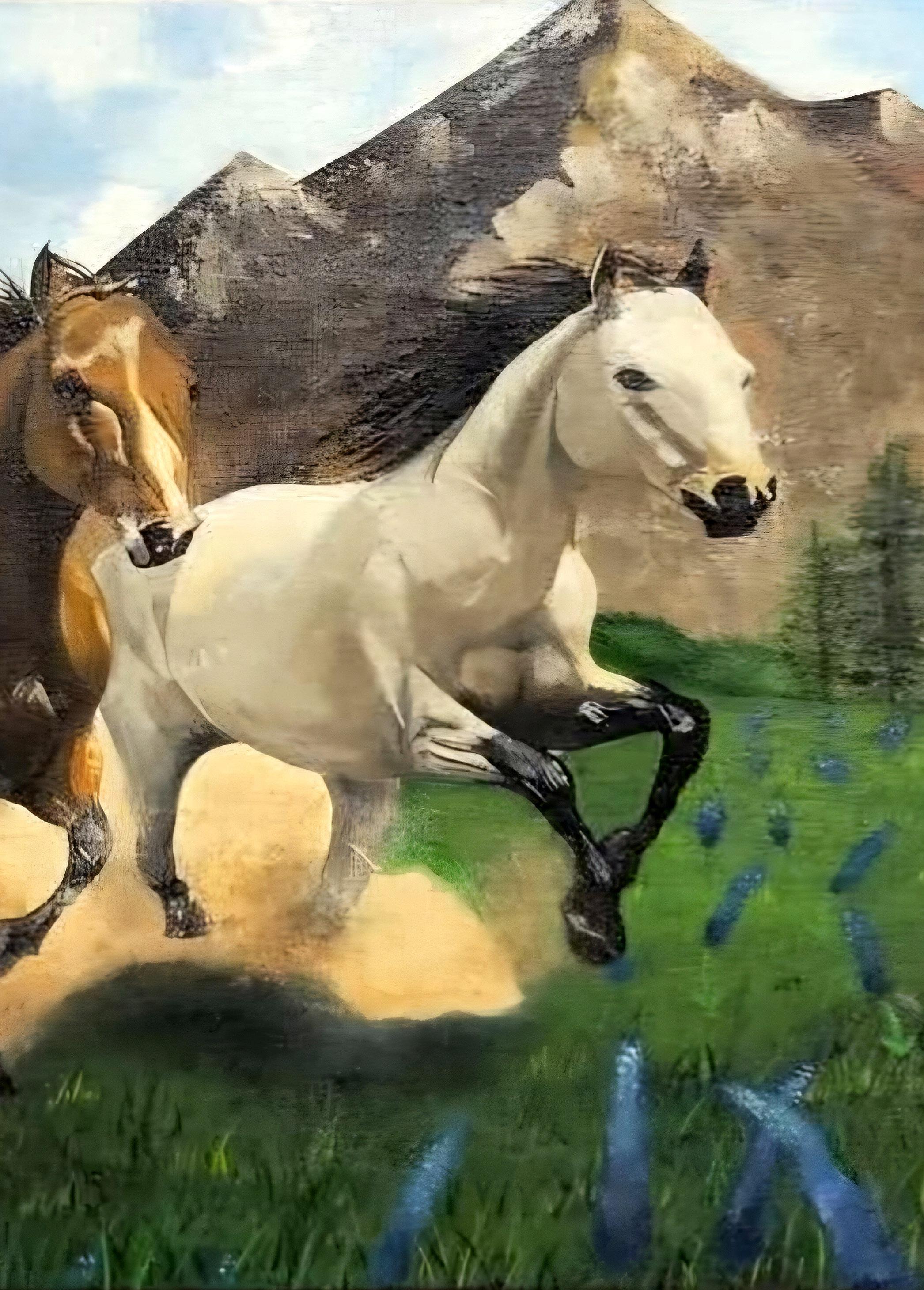
by Amerique Lopez
Junk Journal
I swear life lately feels like a never-ending to-do list. Bills. Car repairs. Court dates. Groceries. Money, money, money—like it’s the only language anyone speaks. And now Christmas is creeping in with its glittery claws. Do I really need to buy someone a $25 gift just to prove I love them? Who decided that love had a price tag? When did quality time and acts of service get pushed to the clearance rack?
It’s wild how fast the “I love yous” start to feel like they’re losing value the closer we get to December 25th. Like unless it’s wrapped in shiny paper, it doesn’t count. In a perfect world, money wouldn’t mean a thing. We’d trade hugs, stories, playlists, and long walks under blinking lights. We’d sit on porches and talk about dreams instead of debt.
But here I am, still buying the gifts. Still wrapping them with care. Because when I see someone’s face light up—when they smile like the world just got softer—it hits me. That moment, that joy, that connection... yessss. That’s what I live for. Not the receipt. Not the stress. Just the spark. The reminder that even in the chaos, love still finds a way to show up. Then boom! Rent due...
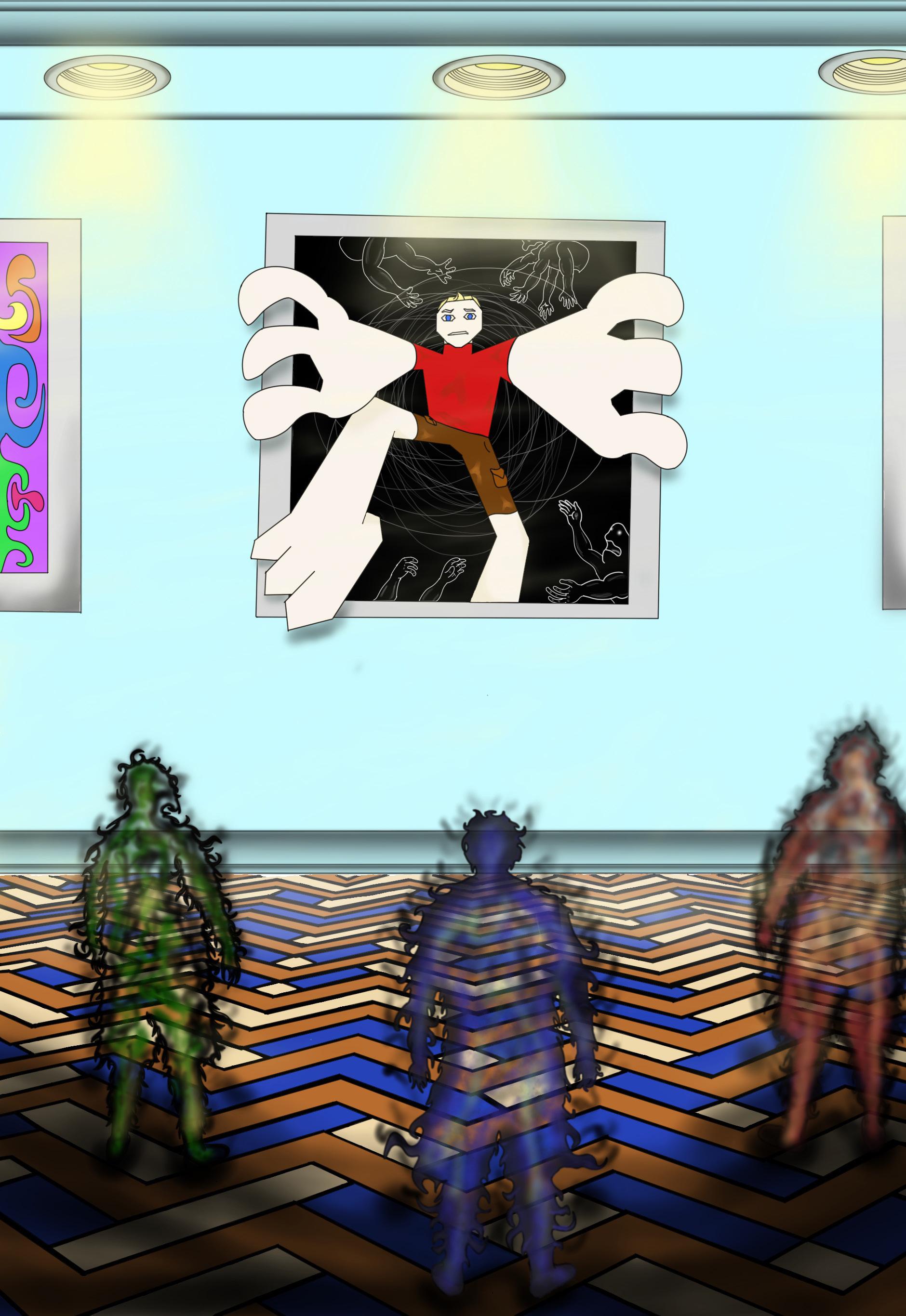
Right Person, Wrong Time
by Gabriela Moreno
We said we’d try, we said we’d mend, like broken things could start again. But neither of us had faced the pain, the first mistake still left a stain.
We smiled, we laughed, we kissed, we cried, but silent wounds ran deep inside. You hadn’t healed, I hadn’t grown,
I thought love could fix what I had done We built a bridge on shattered stone, a fragile path we walked alone.
I slipped again, the cracks gave way, and shadows spoke the truth that day: love cannot thrive on guilt or fear, or ghosts that whisper we’re not clear.
Now I see it, clear and true, The work I need is overdue. I must repair the self I hide, before I stand with you beside.
Perhaps someday, if we’re whole, two healed hearts can meet, console. But for now, the lesson sounds love must start on solid ground.
Syntax Error by
Katie Sikes
Did x² ever cry over y?
Has the unit circle experienced grief?
Is there pain in being divided by zero?
If the odds are against you, is an even a relief?
Can linear and quadratics be friends? Or are they segregated by their degrees?
My calculator is a therapist to numbers: Helping find their roots to put them at ease. I tried calculating continuities today, But why try—they’ll never touch infinity.
Adorned with closed circles and brackets, A gaping line of fallibility. Is finding your derivative like seeing a psychic Who predicts the slope you have yet to take?
If I could find my own graph and assign it a number, Could I then understand my complex make?
With Extraordinary Care
by Roberto Vela Jr.

She’s faithful & she’s loyal having empathy and compassion
She’s a champion of repair exceeding ≥ it’s regular; respecting one’s opinions With extraordinary care
She finds justice with humility has a heart that’s filled with gold a love that’s unconditional just traits beyond the means, devoted and supportive and it’s never on the hold
A consequence of acceptance for better or for worse a vow that is committed her love is forever, eternal with commitment, and that is, of course!
When trouble is brewing, with kindness and affection she’ll be ready for that fight supporting in the worst moment, without judgment and assistance, she’ll be showing her true light
Validating her true value with affection & fulfillment the life we both have truly shared She makes me a better man; she’s the crown best to my heart……….
Expressing how she handles with extraordinary care
Recìproco
by Perlita Salazar
I
Miro tus ojos almendrados y lentamente me acerco a ti.
Percibo tu pecho agitarse, sube y baja de tu respiración.
II
Inesperadamente mis brazos se despegan de mi cuerpo... no los puedo detener.
Te pasa lo mismo... Nos fundimos en un abrazo.
Tu rostro frente al mío… cercanos, muy cercanos... peligrosamente cercanos.
III
Acaricio tus ojos.
Mi mirada navega por tu rostro, explorando un territorio conocido.
Me detengo en tus labios… los míos no obedecen las señales que envía mi cerebro.
Mi corazón les da licencia de seguir y se funden con los tuyos…
IV
Mmmm…, un beso, como agua fresca en el desierto.
Nos besamos los labios, la mirada, el corazón… Bendita reciprocidad… termina la espera y la necesidad.


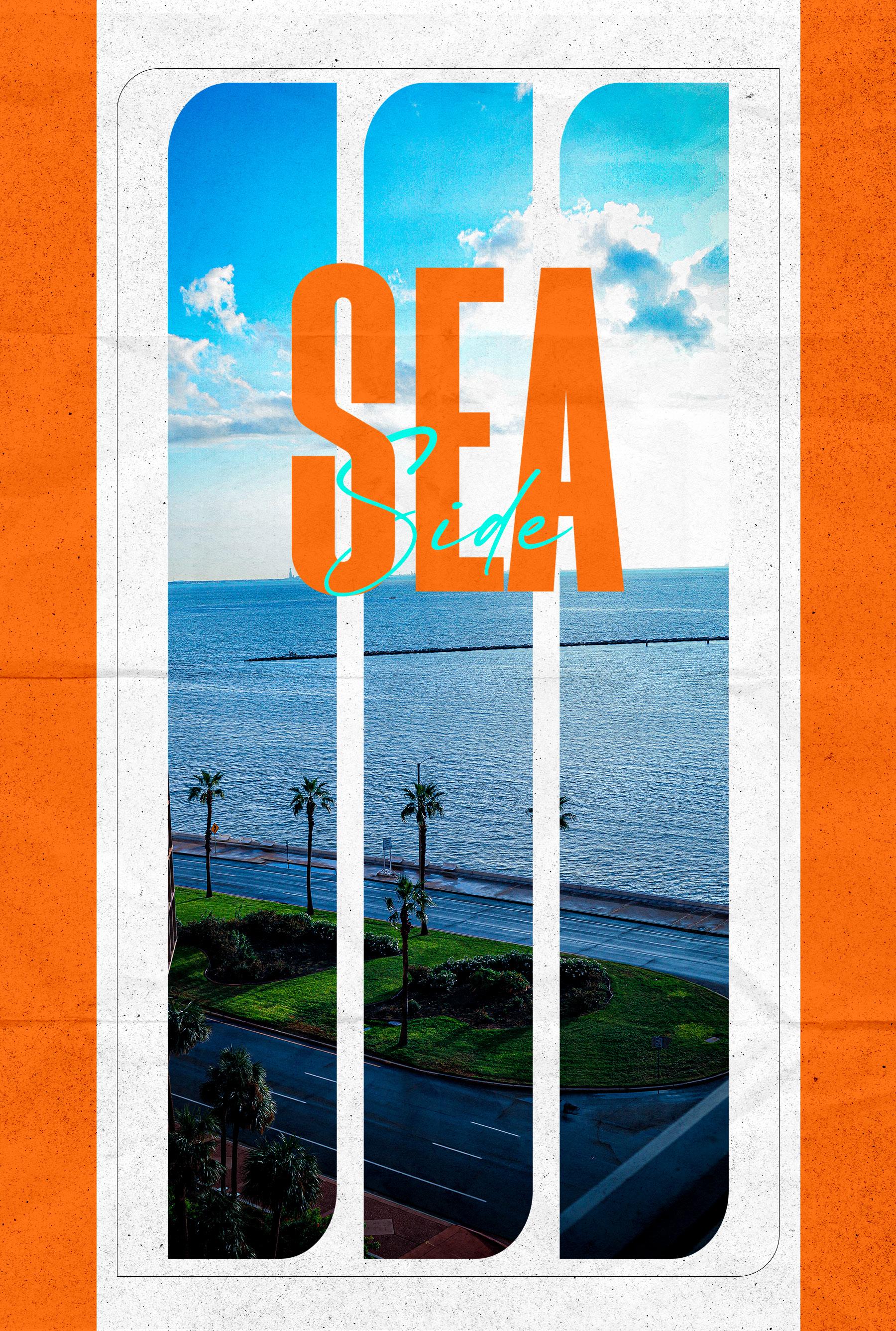

Amanecer
by Mark Cruz
No te veo a menudo, debería observarte más. Eres algo tan bello, comienzo del día portador del sol principio diurno despertador anaranjado guía del trabajador final de la luna inicio del sol.
Te ignoro sin quererlo empiezas a iluminar y no te apreciamos te hemos abandonado guía de los girasoles son de la vida inspiración espiritual radiante despertador del humano director de los gallos. Y tú aquí sigues no te importa ser olvidado eres nuestra esperanza Y te estamos ignorando.

The Ex Machina Chronicles
by Elijah O’Rien
The following is an excerpt from the unpublished work The Ex Machina Chronicles: Atiri.
CHAPTER 4: Orpheus Sings His Heart
Out
“Her very loss was the death of me. My ever fair Eurydice.”
A young man emerged from a hallway, his long black robe hiding his tall and thin stature, and ink-black hair tangled like a bird’s nest. He yawned before rubbing his eyes and saying, “What is going o-”
Seeing what was happening, the young man flashed a look of indifference and annoyance before disappearing into the kitchen.
“A sweetest dream, a flying glee. This very night she married me.
But through the dance and through the fest, She stumbled through a serpent’s nest.
And at the moment she had left, her perfect soul was laid to rest.
At rest she never liked to be, which brings the story back to me.”
Atiri puts her hands together and pulls them apart, producing a tissue box — taking one and discreetly wiping her eyes.
“I’ve come to ask what no man would dare, For you to grant her soul repair. So that we may return to earth, for a life — or even an hour!”
Orpheus’s voice rose as he sang the final line — the line seeming to silence every other ambient noise in the room.
Atiri rose to her feet. “Bravo! Bravo!” she cried in delight. “By the Gods, that was amazing!”
Orpheus quickly walked off stage and took a knee in front of Atiri —hiding his face. “Everlasting Goddess of the Dead, please hear my plea!”
Atiri flashed a look of confusion and discomfort. “What? Oh that was literal?”
Orpheus raised his head to look at her. “Y-yes, madam,” he responded.
Atiri thought for a moment before responding, “Uhh, I don’t know how to tell you this, but I don’t just resurrect anyone.”
“With all due respect, madam, Eurydice wasn’t just anyone.”
“I’m sure you believe that,” Atiri said as she lowered the stage with the wave of a hand, “but everyone has their time. tonight just happened to be hers.”
“Madam... please,” Orpheus’s voice broke.
Atiri sighed and approached him, her tone gentle as a feather. “Look, I understand that loss hurts, but if I just let anyone waltz into my home and sing songs in my living room to get their loved ones back — well, everyone would be a musician. No offense to you...but I won’t do it.”
Orpheus grew panicked and frustrated. “Madam, please, she’s my everything, my other half. What is life without her?”
“I’m sorry... I can’t,” Atiri said — pity bleeding into her voice. Orpheus stood up without a word, his eyes locked to the ground, clipping his lyre back to his belt. He knew better than to argue with a Goddess.
“Cassian,” Atiri said while gesturing to the young man in the kitchen, who was now eating a fruit-filled pastry straight from a foil packet. “Can you escort Orpheus here back to the mortal world, please?” Atiri asked.
“Why?” Cassian said through his chews. “He got here on his own; he can get back out.”
Atiri’s face turned to surprise. “Really? Where are your manners?”
“All right fine, sis,” Cassian said as he threw the pastry onto the counter, “but you owe me one.” His tone was annoyed.
“Fine. Just go.”
Cassian pointed his head in the direction of the door. Orpheus followed, hiding his face as he did.
“Oops, almost forgot,” Atiri interjected.
She made a grabbing gesture, removing Orpheus’s outfit and replacing his old clothes, before doing the same for herself. “Off you go… Sorry... The song was lovely by the way,” Atiri said as she opened the door to let Orpheus and Cassian out.
The two walked back into the hot, dark cave—Orpheus now audibly weeping—leaving behind the only hope he had of seeing his wife again.
The door creaked behind them — closing with a loud bang. Despite having a guide, he felt more alone than ever.
Orpheus stood there weeping with his eyes shut, suddenly he felt a hand firmly grip the back of his head.
“All right... Here’s what’s gonna happen...”


Years OldCancer Survivor
by Viviana Vasquez
My husband told me about his friend. He is on his way to a Houston hospital because he thinks his cancer might be back. Leukemia. He is at an age where he fully understands LIFE.
To me, it’s a clear blurry memory of the past.
I was 7 years old and all my mom said was that I had to leave school for a while. I loved school, I loved my second-grade teacher Mrs. Otero, and I loved my friends. Why did I have to leave?
I was 7 years old; I did not quite understand. No one will until they actually live it or care for someone who is living it. That was my mother and I. I was diagnosed at the age of 7 and I remember vivid memories that have a blur. I remember living in a hospital with more sick people. I remember everyone feeling sorry for me. I remember being isolated and living in fear of always being sick.
We all live a life that might be very similar but never identical. We all have our loved ones, our struggles, our happiness. We all live and we all die. How does a 7-year-old connect and look forward to more if at 7 she or he has not really learned about appreciating or about the important things in life to want to LIVE more.
Unlike my husband’s friend: he is at an age where he knows the things that matter and he knows what he wants for himself and the people that surround him. He has something to fight for and keep living.
I gave up. In a hospital bed, with zero energy, being fed by a tube and bathed in bed. I gave up.
Untitled
by Sandra Valentina
Slamming the front door shut behind me, I donned my coat and looked at the excuse of a street before me. It was a narrow stretch of cracked pavement, gleaming yellow under the faint, aged street light. It had poured earlier, so I hadn’t bothered going out into the swamp the storm left behind. But, once the weather subsided and moved on to torment a different city, I braved what was once my neighborhood’s roads. It’s been almost a decade since the “Xolos” arrived, almost ten years since they wiped out most of the continent’s population. I walked in long strides, making sure to avoid the myriad potholes and broad cracks scattered across the roads I tread on. Knowing what waited for me at the post office, I walked with a spring in my step. Only fifteen minutes passed before I made it to the front doors. Stepping into the foyer, I breathed in the traces of mold lingering in the office that radiated from its stained yellow walls. The carpet did a poor job at muffling my steps as I approached my mailbox. Sure enough, inside was a large package. The eagerness I previously felt for my new belonging quickly faded as it grew too cumbersome to carry on the way back home. Nevertheless, I made it back to my welcoming abode. Making it not two inches away from the doorway, I let the package fall to the ground and slipped out of my coat. Setting down the dented box on my broken coffee table, I began to tear the tape withholding what sat inside. I pulled the box’s flaps down, revealing a small vial. It’s exactly what I needed for my trip to the Xolos’s headquarters: the Empire State Building.
It had taken me several days to cross the perilous network of roads once known as the city that never slept. Now, all it does is sleep, with no civilians to drive on its streets and no one to work in the cubicles that
infest its towers. Over the past ten years, the city slowly morphed into a grotesque entanglement of thick, thorny vines with a color similar to flesh weaving around each of its skyscrapers. A poke from one of these thorns is enough to send the human body into a series of convulsions before it finally goes limp. I’m not sure what they are, but simply tripping on them alerts the Xolos of your presence. Now, two weeks after I retrieved my package from the mail, I found myself standing before the Empire State Building’s entrance, its dirty pillars and opaque windows towering over me. There were no lights emanating from the building’s windows, since the creatures it harbored mainly functioned in the dark. Fortunately, I came prepared and had packed night vision contacts, which, archaic as they sound, work quite well and are ten times more functional than goggles. Despite its broken down appearance, the Empire State Building never fails to amaze me with its vast splendor. After soaking in the skyscraper’s glory for a few minutes, I quickly turned to my right and traced the building’s border until I reached the back part of it. There, I began my ascent to the second highest floor.
By the time I reached the 102nd floor, it was around two hours after midnight. Beginning 50 floors below, thick wires wrapped around the building until they finally tangled together and formed a knot at the top. I had used these wires to my advantage, pulling on them to heave myself up inch by inch. Each time I grabbed them, I could feel the pulses of energy coursing upwards through them. Clinging to the 102nd floor’s exterior, I perched myself on one of the window sills and peeked in through the vast window panes. The room inside stretched to the extent of the building’s width, and the only source of light in it was the huge generators and screens placed at calculated intervals from one another, each emanating a sickly green hue. Like a heart and its arteries, the generators were the source of the thick wires that snaked around them. A stark contrast to the foreign technology that adorned the room, mounds of bloody
flesh could be seen scattered around each corner. Faces still distinguishable enough to be identified peeked through each fleshy mound, seeming to cry out in pain with the grimaces imprinted on them forever. Shaking out of the trance the room’s appearance had me in, I placed three different stones in a circular shape on the window, liquifying it immediately and allowing me to pass through with ease. It felt like slipping through a thin sheet of water, yet I emerged completely dry. I pulled the stones from the window and placed them back into my pocket before creeping deeper into the room. Resembling the tall corn stalks of a maze, the room’s generators loomed over me and polluted my vision with their piercing green light. I had to snake through the thin gaps between the generators before I reached their very lifeline: a tub full of thick green ooze. This was the fuel the Xolos utilized for anything and everything, and the vial I had received two weeks prior was the key to cutting that lifeline. As I was about to pour the vial’s contents into the pool, the elevator door dinged and I quickly hid behind the tub. Out of the elevator came two elongated figures. Their bodies were completely hairless, and the muscles beneath their grey skin shone under the elevator’s light. Trills and clicks emerged from the silhouettes, but they lacked any traces of a face. They stalked through the room, their tall figures peeking over the generators. The Xolos stopped in front of a screen where they began to fiddle with its buttons and levers, and from time to time they’d interrupt the silence with clicks. Panicking, I began to crawl towards the window I had come in through, opposite from where they stood. When I was only six feet away from it, I struck my knee on a fractured bone and felt it pierce my skin deep into my leg. I tried stifling my yelp, but I could hear the Xolos’ thick skin stretch as they turned to look in my direction. They let out a few clicking noises before they lunged to the ground on all fours and crept towards me. Nearly immobile, I frantically dragged myself away from
them to the elevator. As the doors were about to close, they pried them open and accompanied me on the way down. After what seemed like hours, they dragged me out of the elevator bloodied and bruised. They flung me into a huge, warm pile and I felt my head strike something hard. Vision fading and ears ringing, I watched the slender figures through the halfway closed elevator doors as they taunted me with their trilling sounds. Once the doors closed fully, I stared into the penetrating darkness and felt a searing pain in my right knee. The haunting silence of the room ringed in my ears as I tried to crawl around the warm mound that lay below me. After a few minutes, I collapsed at the elevator’s doors and felt myself black out.
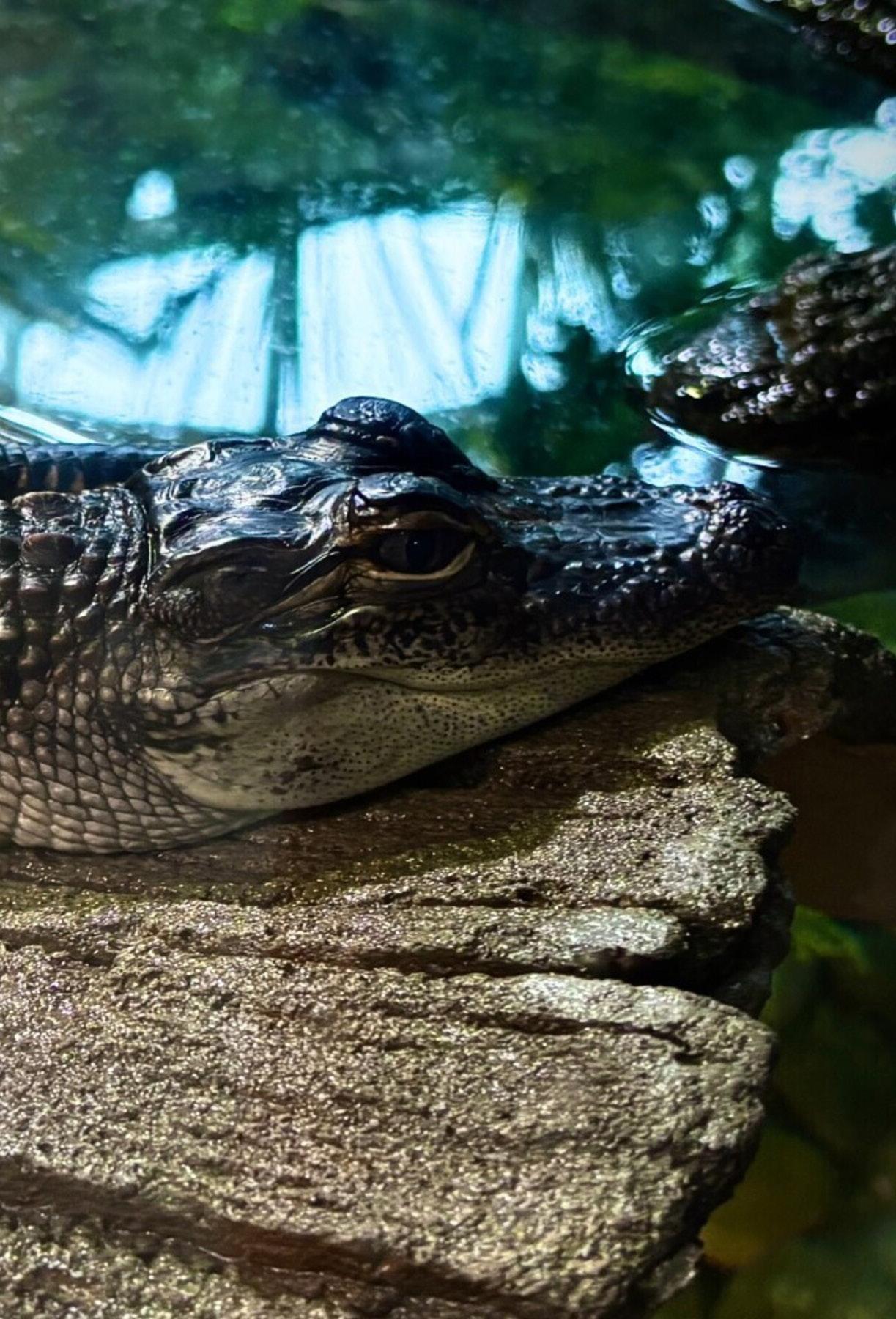


by Marco A. Pardo-Orduna Joyous Dawn
Delight, was the first time he saw her smile.
Of course, these emotions were familiar.
Like the water running into my toes.
Like a brush of cool air against your face.
Like the morning smell of dark roast coffee.
Delightful, the first time he was not vile.
His heart was ice. His thoughts open satire.
It was a faint warm feel he recognized.
He did not know what she brought him. A home?
Perhaps his obscure heart was rid of ice.
Could one as lost as he with good reprise?
She made it feel like he could stop his roam.
She calmed his storm; she too replaced his vice.
Was it just luck he had a girl to wife?
Or should he check his back. For what? A knife?
Was it too much to dare to live a life?
He paused and thought, “Surely trust once ran rife.”
He was confused. Heartache but not heartbreak?
He had been numb to all matters of heart.
Slightest emotions spark. Could they be fake?
He was concerned but also less afraid.
This Cursed Heart, Part II
by Rosalynn
this Cursed Heart is finally Stone
I am now Alone I hate the color Red I wish she was Dead I should have Plead I’m Stuck in my head will I ever feel like my own I don’t want to be stone He took all I had only I am no longer sad or mad I finally see that I am Free I can finally be Me this Cursed Heart is still stone I found a hammer it shows the glamor she didn’t take my Throne she is simply a clone that hair of red looks so Dead she didn’t steal My love for if he was My love then no amount of red could have bled
I see now that this heart of stone Saved my throne
this Cursed Heart is now whole
I know see my soul she might have “stole” that love of mine but she’ll never be fine wine
I should have seen he was so childish I almost acted selfish but I will not tarnish I found my throne
I found my happiness
I found my freedom and I found myself I see now that this Cursed Heart was never a curse but simply a protection to show me true affection through rejection with the tears I shed
I’m glad I fled this Cursed Heart is finally free I am finally me

The Lark
by Alondra Garza
A barrel worker searched for the sun. A mile he decided to run, Through an endless field of thorns. He felt so torn.
His feet grew tired, and his mind ran wild, He began to tread, and through his boots he bled. Nothing held him back but a simple ledgeFrom a distance, his ears were filled with song. Oh, was he so wrongA Lark came from afar, In search of the stars.
Nonetheless, she rested on the ledge, Wisely she pretended to know where she went.
So she spoke:
“I came from a far, and became so small, when did my wings start to fall?”
Her words, like the wind, passed by his ears, “Chirp, Chirp, Chirp”
The barrel workers’ ears felt at ease, For the lark came with what sounded like peace. Her heart was full of hope that the sun would not show. So, as she stood on the ledge, she felt deep regret, Hoping the sky would be in her favor that night.
They both waited an hour or two, He waited to see if the bird flew, But she didn’t- because the sun wasn’t coming up, And the lark got ready to rest.
Day turned to night, and they felt no sun.
The lark saw the stars as she once wasBeautiful and glad to be part of a flock.
But the world started to buzz, and they both dosed off. And when the lark woke up, she flew, And the barrel worker saw the sun-
Happy to be far from the chemicals, With his lungs filled with air, He was happy to be more aware.

Excerpt from a novel:
The Chapter of Us
by Isabel Cabrera
Dedication
For Faith Victoria — my little heartbeat. Your short existence changed everything. Every word in this book carries your memory.
Author’s Note
This story is based on true events. Certain names and details were changed for privacy, but the emotions remain faithful to what was lived. This novel explores love, loss, healing, and the quiet strength found in surviving moments that should have broken a person. It is not a tragedy — but a testament to resilience, hope, and the courage it takes to begin again.
Chapter One
They met in January 2024, just classmates at first. She noticed him almost instantly—Leroy, the quiet boy with the calm voice and soft expression. He had a girlfriend then, so she tucked her little crush behind a polite smile.
Months later, fate placed them in the same nursing program. And the first morning of Spring 2025, when she walked into class and saw him sitting just one chair away, something gentle stirred inside her. They grew close unintentionally—late study sessions, laughter, teasing. Friendship blurred into something tender. He said he didn’t want anything serious, but his eyes told another truth. Spring break changed everything. Music. Drinks. His favorite Paloma in her hand. Their connection sparked into something breathless— five times—with an honesty she wasn’t prepared for.
But after break, the distance began—shorter messages, longer silences. And after finals, when she confronted him, he only shrugged.
“Yeah,” he said.
That night she cried in her car. Weeks passed. Then her symptoms began—nausea, exhaustion, intuition. A test confirmed it: Pregnant.
She placed a hand on her abdomen. “We’ll figure this out… just you and me.”
And for the first time in weeks, she didn’t feel completely alone.
Chapter Two
She entered finals week carrying two hearts. In the sterile lab, she repeated: Check order. Verify patient. Breathe. Every movement felt heavier. Seeing him laughing with classmates stung, but she stayed strong for the life inside her.
After the exam, she rested her hand over her abdomen—realizing she wasn’t holding herself together anymore, but someone else.
Days later, she told him. His reaction was cold. He wasn’t ready. Not the right time. His rejection echoed for nights.
Her parents were furious, disappointed. She felt trapped between shame and survival.
She stared at an old anxiety medication bottle. The first pill felt like defeat; the second, surrender. She wondered if needing help made her weak.
Rumors spread. Leroy stayed silent. Then the detective called—he accused her of harassment. She needed proof—not for him, but for herself.
The ultrasound room smelled of lavender. When the wand touched her abdomen, silence… then a soft rhythm. A heartbeat.
She whispered, “Hi. I’m your mom.” As she held the ultrasound printout, the world felt heavy—but her steps felt steadier. Something inside her had finally become real.
Chapter Three
Her doctor visits had a rhythm. Every heartbeat brought peace. But around week 18, a subtle ache appeared. She blamed stress and exhaustion.
At 18 weeks and 3 days, she saw spotting. Her mom rushed her to the hospital.
Everything blurred—tests, monitors, whispers. They gave her something for the pain, not the fear.
When she woke, her first words trembled: “Was the medicine safe for my baby?”
The doctor reassured her it was safe. But reassurance didn’t reach her heart—she blamed herself.
Then she saw her parents’ faces tense with dread.
The doctor inhaled deeply.
The truth was coming.
Chapter Four
She had suffered a hemorrhage. Sudden. Severe. Dangerous.
They saved her life.
But they couldn’t save the baby.
Faith didn’t survive.
The room blurred. Her cry began as a broken whisper and grew into something raw.
Her mother held her tightly. Her father cried quietly.
The days that followed were fog—sleep in fragments and breathing painful.
Every ultrasound. Every whispered goodnight. Every heartbeat replayed in her mind.
And in her grief, she thought of Leroy—not because she needed him, but because he would never know.
He didn’t know she kept the baby. He didn’t know the heartbeat. The love.
He had disappeared long before. As if the earth swallowed him whole. Her daughter existed. She lived. She was loved. And that love would never leave her.
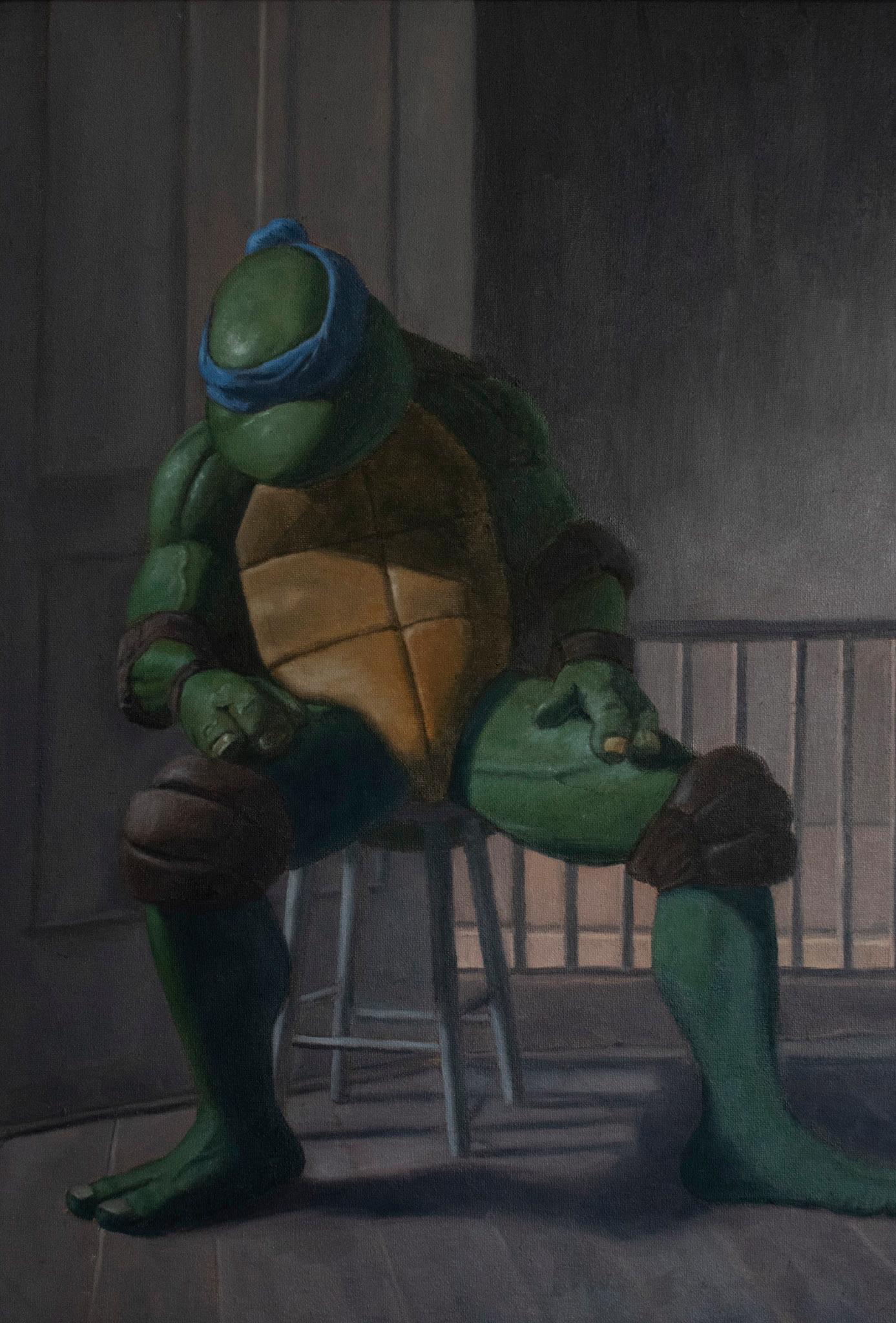
You
by S. L.
You whose name I have adored for years before I even found out you existed. You who’s music makes me at last cherish life the way I did once before. You who share my passion for art expression like no other. You who’s hair I have loved since I was 5 years old. You who match my humor and tell me words that make my heart adore you even more than it already does while insisting we stay the purest of friends. You who I love.
But also you who I can never have.
El hermoso descenso by Jesus Velez
Y justo ahí cuando quise brillar a tu lado, entendí lo que ya temía por dentro, metiendo mis pies al agua, sumergido en tus encantadoras corrientes, vi lo diferentes que somos, yo una roca destinada a hundir, y tú que con cautivadoras aletas lograste nadar un baile tan divertido, tan contagioso, y tan feliz, que a pesar de lo tanto que me ahogaba conseguiste hacerme sonreír, así que al final no le reclamaré a la vida del haberte conocido, porque al caer por tu lado, aunque solo fue un viaje corto, pude yo también sentir lo que es ser tan feliz.
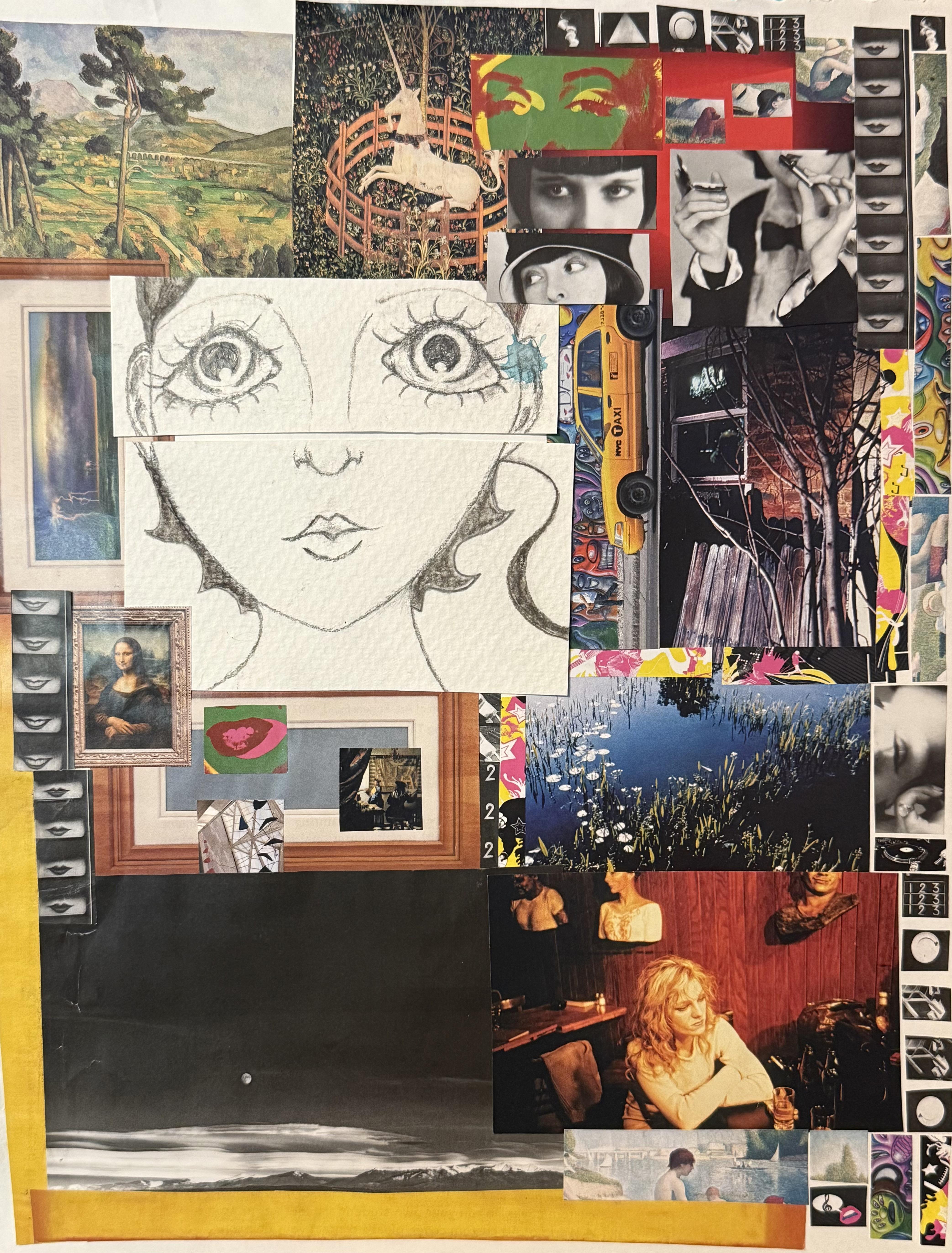
Moving Pictures
by Jacob Elijah Vargas
As the people sit down
And the room starts to dim,
The seats fill up, Fill up to the brim.
And with many others, I sit and await
To witness the story
That one can create.
The sights, the sounds,
The colors, the lighting,
The audio, the visuals, It’s all so exciting!
When a character is lit
Differently than the rest,
When a line is said
That you never would’ve guessed,
Or when a song starts playing
That puts throbbing in your chest, It’s how one can know
That a film’s at its best.
It’s all those small details
Like background and foreground
That make a great story
So great, it’s profound.
So when the credits start rolling
And people start to leave, I’ll sit there in silence
And question what I believe.
While most entertain
And some aren’t so smart, There are many films
That I’d consider art.
Though for many it’s simply a pastime
And for some not even that,
For me, film’s an art
And its one that I hold dear
To my movie-loving heart.
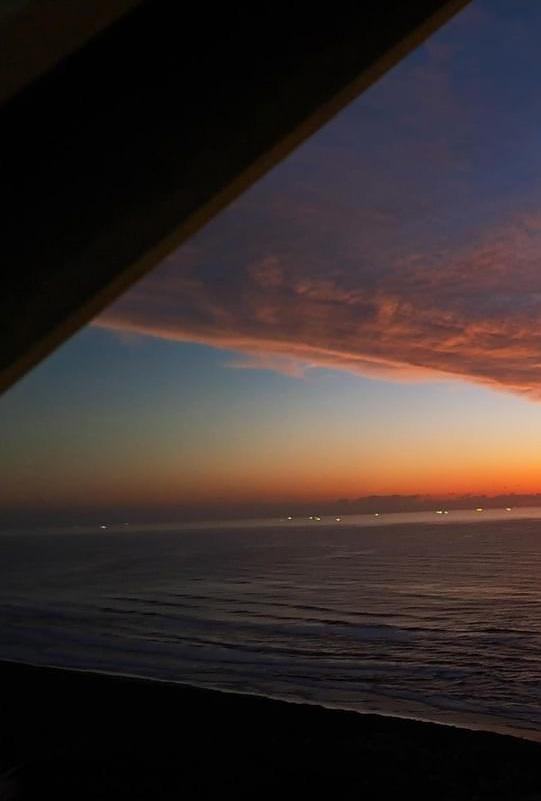
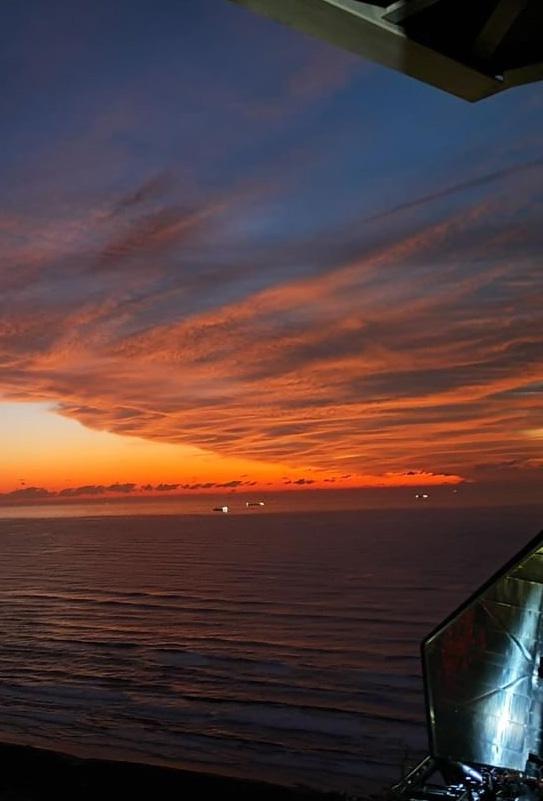
Comfort Zone by
Vale Soto

I lay there at midnight
With my phone in bed
Nothing but silence
And your voice on the other end
Your words so comforting
Easily make worries disappear
Although you’re not even aware
People like you are rare
You turn quiet into music
And grow a garden on dry land
You’re the sun after a hurricane
One look feels like you’re holding my hand
I lay awake before this
But you’re my safe space
Comfortable, I’m dozing off to sleep
With you I found my place

Supper of the Lamb
by Emma Ramos
We fell to sin, our hearts undone, Yet still He sent His only Son. When all seemed lost, when hope grew dim, The cross became our path to Him.
We ran from grace, yet He pursued, With mercy vast and love renewed. No wound too deep, no soul too late— His heart still knocks at every gate.
He stands and knocks; His love is true, Oh Holy Lord, we turn to You. The Church made pure by Spirit’s flame, Not by our worth, but by His name.
The Mass—each word, each prayer, each song, Reminds us where our hearts belong.
“Behold the Lamb,” the priest declares, “Lord, I’m not worthy,” each soul shares.
Yet still He calls, through dust and shame, And crowns us gently, just the same. For God remembers what we’re from— and loves us still, though we are dust.
Grace to Give to the Humble Allowing
by Roberto Vela Jr.
Grace to give to the humble allowingBe gentle, & avoid angerwith a peaceful state of mindCortisol, will make you kinder-
Give grace to the humble, focus less on egocentricI just give thanks for the blessingsrather than grounded- self-perceptionrevealed through actions-no formal addressing
Through life experiences, faith during trialscontinuous humility, persistent human failingstoicism, genuine injusticecultivate humbleness, even while trailing.
(The importance of humility and grace in this poem encourages being gentle and avoiding anger, maintaining a peaceful state of mind and focusing less on self-centered thoughts. Through life experiences and faith trials, continuous humility can be developed. In challenging situations, self-control and fair justice can develop humbleness.)

A Hero’s Duty
by j7
In a far away land, there once lived a hero and his companions. This group, led by the hero, had fought and protected people for many years, until finally the demon king and all of his forces were defeated. Finally his world was at peace; finally they could rest. After so many years of fighting, of protecting people, the hero at last felt that his mission was complete. He did his duty, he saved the world, but something felt wrong. He couldn’t quite place his finger on it, but he sensed in his very core a certain dread, as if all of his struggle to save people, to save the planet was for nothing. The hero felt that the world was still going to end.
Of course he tried to ignore it at first, convincing himself that it was all in his head, that it was nothing more than his own insecurities. Of course as the hero, his days were always filled with worry, with thoughts like, “Could he win the next fight?”, “How could he save the most lives?”, and “What could he have done differently?” But this dread was different, and as time went on, it only felt like it was getting worse, like whatever disaster he was fearing was coming closer and closer as time passed by.
So, as was his duty, the hero searched for what caused this fear. Whatever it was, he would make sure it wouldn’t cost the lives of anyone he held dear. He began searching; he looked anywhere and everywhere. His companions tried to stop him, worried he had gone mad--and they were right, he was going mad.
Every day his fear grew and grew, until finally he found the truth. On the lowest floor of the oldest library in the kingdom, there was a book. This book was unlike anything he had ever read before. It was like someone had written all of his life story into this book--his troubles, his companions, everything. In the end, his whole life was nothing more
than a story for someone to read, and as shocking as this was to discover, what was worse is that this book had a very clear ending: Shortly after the demon king is defeated, the book simply ends, and with it, so do the characters who lived in it. For what point is there to a book with no story?
He had done his duty, he had completed his mission, good had won, but where does that leave those who live in the book? What happens to them? As he thought this, a person who called himself the author introduced himself to the hero.
“So you found out the truth, huh?” he said.
The hero replied, “Why? Why would you do this? Why would you make us just to watch us suffer, and why throw us away when we finally achieved our peace?”
The author replied, “For entertainment, of course. Do you know how much people enjoy the story of good versus evil, the hero versus the demon king? But now that the evil is gone, it’s time to put the final period in this story.”
The hero screamed, “Wait! What if, what if--I give you another story, a way to continue this one? Could the people I care for live?”
Even though the hero knew he was nothing more than a character in a story, nothing more than ink on paper, he needed to protect everyone, he needed to do his duty as the hero and save everyone. To him, it didn’t matter if none of it was real; it didn’t matter if he only acted this way because he was made to. What mattered was that it was real to him, and he would fight to his last breath to keep everyone safe.
The author replied, “In that case, of course I would keep writing, and this world would keep going. But what do you have in mind?”
The hero said, “I’ll do it, I’ll become a traitor. I will play the part of the great evil, and someone else will come and vanquish me. That way, this story can keep going, that way my friends can keep living.”
The author replied, “Very well then. In order to save as many lives as you can, in order to fulfill your duty, you will become the object of everyone’s hatred. You will become the villain.”
Five Years Later
The hero’s former companions finally defeated the ex-hero, and as he was dying, as he was laying in a pool of his own blood, they screamed at him: “Why?! Why would you do this! We were happy, we won, so why did you do this?!”
Fighting to speak, fighting to stay alive if even for one more second, the ex-hero replied, “I was just doing my duty.” With this, the once loved hero met his very unloving demise.
The author watched this all unfold and said, “Well done. This was truly a beautiful and tragic story.”
With this, he ended the story. But this time, the world would continue. Out of respect for the hero, the author kept writing, even if it was no longer entertaining. Even if there was no more story, the world and its characters would live on.
Truly, the hero had done his duty, even if no one would ever know.
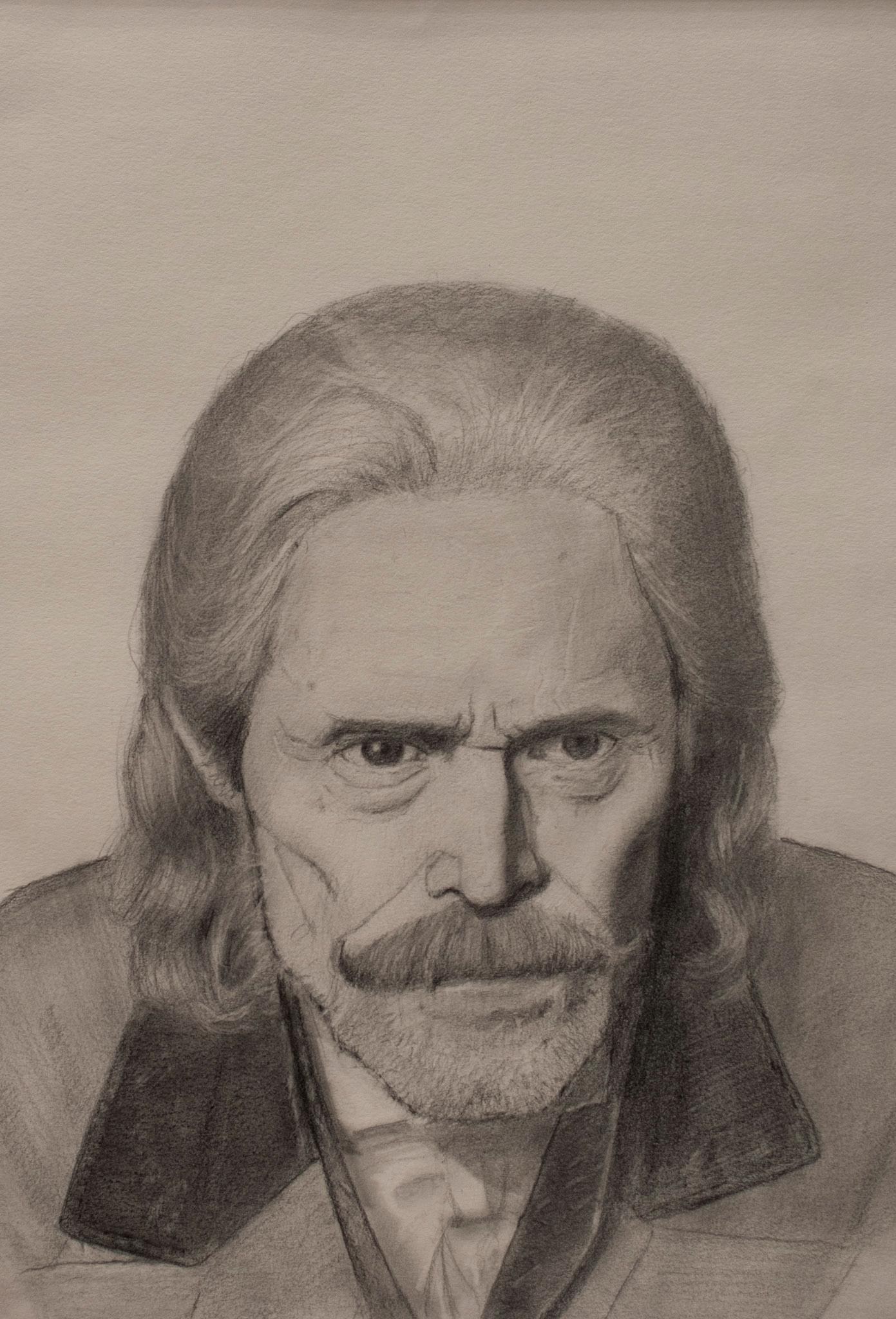
Be An Ant
by Myriam Anahi
“En la vida solo hay hormigas,” or “In life, there are only ants.” It’s what my father would say to an eight-year-old me whenever I complained about measly issues like losing a competition or not getting the toy I wanted. To the rest of my family and I, it was simply a passing joke meant to make fun of us for exaggerating over the smallest things. But the older I get, the closer I feel to grasping what he truly meant. Life is like an anthill buzzing with countless people, each carrying their own burdens and victories, and what we do, how we connect, how we contribute—no matter how small or large that may be—matters.
Some ants march tirelessly everyday to gather food, some guard the colony, always steadfast, while others care for the young, tending to lives not even their own. Then there’s the queen ants, whose role is central yet unseen in its quiet perspective. Life gives us the freedom to choose our role, and even though that may not be the case because of certain circumstances, those choices still matter. I have been a red ant, bold and impatient, charging headfirst into my ambitions and never looking back because of the fear my confidence may not be what it seems, only to then realize my efforts were futile if not shared. I have been a black ant, steady, quietly supporting those around me and sometimes at my best, I have been a queen ant, holding space for others, shaping the colony through patience and presence.
But, life is not always gentle. Sometimes we are stepped on, overlooked, or brushed aside, as easily as a human walks over an ant. Those moments can sting, they remind us how small we truly are in the vastness of the world. Yet, even when going unnoticed our presence still matters. Even the ant, crushed underneath a foot leaves behind a trace— a path, a scent, a tiny impact we may never see. Life can be unforgiving, but it can also be beautiful, so that it proves its resilience, even in invisibility.
I think what strikes me the most is that no ant exists alone. Every individual contributes to the greater whole, and the reason the anthill thrives is only because its members are just so completely different. Life is the same in that aspect. Some relationships are loud and colorful, while others may be so quiet to the point they’re invisible. The late-night moments with pure laughter that come to mind when I think of my siblings and I all under one roof, my grandmother’s stories of her rocking me to sleep as a baby (though I don’t remember), my mother preparing my plate out of a quiet act of service after I reassure her not to, and my father’s recognizable life lessons. Those who have drifted in and out of my life, people I knew to be my friends, have shaped me into the person I am today. Even strangers leave marks whether through a smile, a kind word, or a gesture of patience that impacts outward far longer than we notice. Each connection, no matter how fleeting, is a thread in an intricate web of shared existence.
So, I’ve learned it’s okay if some dreams remain unfulfilled, if some chapters of life go unwritten. What matters is what we bring back to the anthill: love, attention, care, and effort. Each of us has something unique to contribute, even if it seems small. Life is not measured solely by the amount of victories or possessions a person may have, but by the impact we have on the colony—the warmth we create, the hands we hold, the lives we touch. In life, we may be different types of ants and we may carry different burdens, trying to pursue different goals while also trying to march in the direction we’ve been told we need to. Some days we are red, racing with passion against the challenge of time; some days, black, steady; some days, if only in spirit, we are queens. No matter our role, no matter how often we feel stepped on or unseen, we are all bound together, The anthill thrives because every ant matters, and so does every act of love.
“En la vida solo hay hormigas.” Life may be vast and we may be small, but together in our shared efforts, our struggles, and our care, we carry something meaningful back. Perhaps that is the truest measure of a life “well-lived”—not the heights we reach individually, but the ways we nurture, support, and intertwine with the lives of others.
Wickie
by Jessica Carlos
Paprika had caused this nightmare.
Matt had not known that he’d had an allergy until he’d given into his mother’s pressure to try deviled eggs for the first time. Stupid. He’d had no desire to try deviled eggs, and thanks to his acquiescence, he’d wound up lying on his back in the middle of the student union, coughing and sputtering and clawing at his throat like if he could split the skin enough, blessed oxygen would finally reach his lungs.
It hadn’t.
An unnamed someone’s EpiPen had saved his life. At least, that’s what he’d been told. At some point, his low oxygen levels had put his sight to sleep and, looking back now, probably his brain, too, because hallucinations post anaphylaxis couldn’t be normal.
Oddly, he hadn’t noticed them at first. He’d seen shadow figures for most his life, dark shapes out of the corners of his eyes that would vanish immediately when he turned his attention to them. But now, now they weren’t vanishing. Now they were staring back at him, if their blackened faceless features were capable of staring. He’d run into a wall the first time he’d seen one in full, cracked his head on the brick and tile and paid another visit to the ER for the potential concussion. Thankfully, he hadn’t had one, and he’d kept very quiet about the reason for his sudden inexplicable fright because he knew what would happen if he spoke, and he had no intention of spending the rest of the semester locked in a white room in some institution, surrounded by people who had dubbed him insane. Maybe he was, but that wasn’t any of their business.
The shadow figures didn’t always stare back. Sometimes they simply carried along with their business…which wasn’t any less terrifying. They’d sit with a companion, a very normal, tangible, visible companion and just…do nothing. The sight sent goosebumps down his arms. The figures wouldn’t do anything, but the shadow cast a shadow on its human
attachment that seemed to sap the life right out of them.
The girl Matt was looking at now seemed duller than normal. She laughed with her lunch dates, but there was just something a little off about her smile that Matt had never noticed before. The shade she’d found beneath that monstrous humanoid gave her no relief, only drained her of her spark. It leaned towards her, and despite its lack of discernable features, Matt could tell it was whispering in her ear, darkening the overcast, pushing along lazy lies to—
“Dorothy? Dorothy Givens!” The girl had to have been just out of high school, with kinky black hair and caramel-colored skin that complimented the deep hue of her eyes. Matt couldn’t understand what he was seeing. She looked just like everyone else, except physically brighter, which made less sense to him the more his mind made it obvious.
“Ann?” Dorothy asked, slipping out of her chair. “Oh my gosh, how long’s it been?” The other two young adults kept their own conversation, while the shadow shifted the weight of its gaze onto the new girl. Naturally, she didn’t notice.
“Too long,” answered Ann. “We’re definitely not middle-schoolers anymore.” Her smile widened. “Mind if I join you?”
“Not at all.”
Matt rose to his feet, bowed over the table in anticipation on the other side of the student union, unsure what would happen when the girl made contact with the seat’s current occupant. He’d never actually witnessed anything like this before, and his body shivered in anticipation.
Smoke. The figure dispelled like a puff of smoke, almost like a magic trick. Ta-da! There one second. Poof the next. Matt was eating alone at his table, and he dropped back into his own chair with a decisive thunk. What the heck had he just seen?
Dorothy twisted a long strand of hair between her fingers. Her companions weren’t paying them any mind, so the conversation ricochetted between only the two of them. Ann’s side was faster, but Dorothy’s was gaining speed. That is, until it hit a slight speedbump.
“I’m not kidding you. His risotto’s to die for. You have to try it.”
Dorothy shook her head, a small little gesture. “No, I’m okay.”
“Oh, c’mon, Dorothy, I insist, just a bite.”
She tapped Dorothy’s side with her elbow amiably. “It’s not as if you can’t afford it.”
Reluctantly, Dorothy took a spoonful. “Wow, that is amazing.”
“You have it,” said Ann. “I’ve got the rest of the dish back home.”
“Oh, I couldn’t.”
“Yes, you can,” said Ann, sliding the Tupperware over to her.
Dorothy accepted it warily.
Despite being in the student union, Dorothy hadn’t actually been eating anything, just watching her friends eat. Matt got that. Money could get a little tight at times for a college student, and a missed meal here or there while waiting for his next check was nothing new.
Speaking of which…
Matt refixed his attention on his half-eaten fish tacos and, once finished, began pouring over a tome on astronomical anomalies, trying to block out the shadow figure that seemed to be waiting to take an order.
Unexpectedly, a shadow from behind Matt fell over his text. He stiffened, innately afraid. They’d never approached him before, just stared. He turned slowly, fighting his fear.
“Hey.” Ann’s hair was frizzier now than an hour ago, and her wide smile had shrunk, though was no less bright.
“Hey?” he responded warily.
She tilted her head. “How long have you been able to see them?”
“See…who?” he asked, holding his tongue.
She pointed at the shadow figure still hugging the cafeteria counter. “I saw you watching the one stalking Dorothy.”
He wasn’t sure whether he should admit to anything. Her question seemed like a test, but he didn’t think he really wanted to pass it.
“Mind if I sit?”
“Uh…”
The corners of her smile lifted slightly, and she answered the question for him. “I’m Ann, although I guess you heard.”
“Matthew,” he answered at last, reaching out for the customary shake, “but everyone calls me Matt.”
She returned the gesture. “So, how long have you seen them?”
With a great deal of reservation, he gave her the simple answer. She nodded. “That’s pretty normal after a near death experience.”
“It is?” he asked incredulously.
“Sure.”
“Then how come no one’s ever mentioned it before?”
“How come you haven’t?”
She had a point there.
They stared at each other a long minute.
“I’ve seen them since I was young, just not this pronounced.”
She looked at him in surprise. Then her eyes softened. “I guess that’s pretty normal in some circles.”
He didn’t ask her what circles.
“Kids grow out of it a lot of times. Their lives become too busy. They stop looking out, so wrapped up in their own little worlds. As for near death experiences, that’s entirely up to you. If you want to stop seeing, just ignore them. The sight will fade away eventually.”
“I…don’t understand what it is. Why does nearly dying make me special?”
“It doesn’t,” she answered honestly. “You just started looking at the world differently. Anyone could, at any point in time. Near death experiences tend to cause that shift in perception. Like I said before, it’ll fade away if you let it.”
“Why shouldn’t I?”
Ann studied Matt for a moment. Then she stood up, walked over to the counter, right in front of the shadow figure, and said, “Ma’am.”
The woman working the register turned to her.
“I just have to say, your hospitality today was incredible. Thank you for all you do.”
Immediately, the figure vanished, leaving behind a beaming look of gratitude on the face of the middle-aged cashier.
Ann turned to Matt, gave him a twinkling wink, and left right out the double doors.
That’s why.
by Marco A. Pardo-Orduna Blinded Blissful Noon
With grace She grew some wings, and spread them wide, So dark, deep in the night she took her flight, Beauty and love like hers is scarce on earth, Without her love I’ll be a fiend, a fool. She was just mine so fair, my pair since birth, Her wings so wide they spread with love, yet cruel, For she had aimed to reach the sky, not I.
I heard her song, her joy, and tears I shed. Empty was I, for it was then, the pain; I knew had yet to end. How well she fled! My love a cage, and she so great. A bird? No bird. Angel perhaps? Deprive my soul. To take my pain, my hurt, with her I begged.
Nor gold nor silver but peace and love I gave, Like dirt, a lot there is of me, a man. But she wanted the sky. No man. No Dirt. Instead, a land distant away. No man. A god. Not I. No scrub. No dirt. Just hurt.
Beauty and grace, not mine but hers to give. To whom? Perhaps I will not know tonight. She was my life, my love, my rib, my flesh. And I a man, simple and poor. Just dirt. I see her wings with grace up in the sky.
The moon so bright just shines and lights her flight. It shines, as if the moon enticed her flirt. Yet I, a man, so poor so sad and hurt. My tears of mud the wind will blow away. My love, my bird, what wings angel of mine. Take flight, be free, this night be led astray. From love, my cage, not pain, I set you free.
The Candlemaker
by Uacire Elula
Fog clung to the crooked tower like a guilty truth, swallowing the solitary flame flickering behind her high window. From that height, the candlemaker watched the city below shudder with the glare of electric lights, cold, relentless, piercing as a blade. She felt the death of wax and wick in her bones: the long pauses where heartbeats hung in silence, the vanished crackle of struck matches. Behind her, hundreds of unlit tapers stood like pale revenants on wooden shelves, waiting for hands that would never return. Only moths stirred in the gloom, their ghostly wings brushing the glass in obsessive longing for a fire they could never touch. By day she moved at the pouring table with a priestly calm, summoning molten wax until it flowed like quicksilver from ladle to mold. She tested each wick as one might test a lover, pressing the thread to her lip, tasting the promise of steadfast union between flame and cord. The air around her smelled of beeswax, rosemary, and the faint patience of smoke yet to rise. Sometimes a traveler, a widow, a sailor, or a shy bride-to-be would ascend the hill, speak in hushed tones as though the tower demanded reverence, exchange heavy coins for tapers bound in white. Then they would vanish, and the silence they left behind would make the rafters groan as though in grief.
At dusk she lit a single test candle and carried it to the sill. It had become her ritual and her vigil. She set it there and watched her flame tremble against the new electric glare, fragile warmth in a world grown starkly cold. Moths appeared: first one, then another, drifting like ash in a dead room. They fluttered toward the light, recoiled, and tried again in endless devotion. She told herself it was to check drafts or study the flicker, but her hand always hovered over the snuffer, always paused, then withdrew.
One night, while lamplighters wrestled with poles the city outgrew by the hour, a single moth alighted on the glass, its wings dusted silver, a pinprick of pale blue in the dark. It settled where the candle’s reflection burned the strongest. It orbited the flame with a
measured grace, as if it understood the fragile heartbeat of fire. The candlemaker pressed her palms to the sill. “You again,” she whispered, voice intimate in the hush. The moth’s antennae quivered; she raised the flame a notch, and it followed, spellbound.
Night after night it returned. She mapped each silent step, its wide arc of approach, the precise thumb-width above the latch where it paused, the instant it withdrew, always after the flame curved and steadied. She never named it; names tether, and moths belonged to the drifting air.
The city wrapped itself in cables like a corpse in strings. Fewer customers came. Curious fingers brushed the molds; murmurs of “old methods” trailed after them. She replied with gentle politeness, wrapped candles in brown paper and string, pressed her palm to the draft of each departing door, felt years slip through her fingers like melting wax.
On the first frost, the silver moth brushed the candle’s glass so lightly a spark of soot printed the candle’s side. It hovered, then landed, weightless as a sigh. She leaned her forehead to the cold pane and spoke in the careful tone she used when trimming wicks. “You needn’t burn. It is enough to know where the warmth is.” Perhaps it heard. Perhaps it only trembled, content to rest where flame and chill collided.
Snow came late and furious, sealing cracks in the tower with ice. She made slender tapers now as if thrift could shape survival. One cruelly bright winter day she retrieved a packet of blue dye, a hue she had not touched in years, and crushed last summer’s forget-me-nots into the wax until an ache of sunbaked air seeped through the cold. “Only for testing,” she murmured, though no one watched.
That night she placed the shy blue candle on the sill. The moth arrived late, wings heavy with frost. It alighted and circled, a tiny halo of promise. The room grew quieter as the wind’s cry dulled. When the moth did not appear the next night, she blamed the cold. On the second night she resisted her urge to snuff. On the third, she unhooked a small brass frame, once home to a traveler’s sketch, and left it empty, perfect for love that comes and goes without fanfare.
On the fourth morning she found the moth pinned by frost against the glass, its silver wings rigid as prayer. She lifted its fragile body, dusted
its wings with camel-hair brush until the air shimmered celestial, and laid it on black paper. Inside the brass frame it became an altar of loss.
Now, when a door gusted open or the wind pressed at the seams, she felt the frame tug at her light, a memory bidding her to remember flame.
She began her final work: the deepest church mold, the smallest knot of wick, the shaving of blue wax stirred with forget-me-not oil until the tower brimmed with ghostly summer. As she poured, the shelves receded into a silent nave, the window glowed like a moon reborn, the brass frame stood as her silent congregation. The candle cooled. She did not light it; some vows demand an interval to learn their weight.
Spring crept back. The city donned electric tatters of brightness. A man in a bowler laid an electric coil on her counter, boastful as a child. She smiled, wished him safety, and watched him go; the coil’s hollow shape lingered behind. The blue candle waited on the sill, unlit. Dust gathered on the frame’s upper rail as though its captive moth drew the air inward.
When she finally struck flint and coaxed flame, it rose with a small, dry sigh, like forgotten bones knitting. The blue wax glowed gradually until, looking away and back, she saw five minuscule petals of forget-menot bloom beneath the surface. Light washed across rafters and lifted the frame in a reverent glow. For a heartbeat the moth’s shape inside seemed to stir, wings arching.
She did not start. Fear lay broken behind her. She whispered as to a sleeping child and a silent saint: “I remember.” The draft faltered; the rafters stilled. Outside, wires hummed, but at her window the flame held a softer chord. Light that had always reached outward now curved inward, warming her hidden hollow.
Travelers spoke of the old tower’s new serenity: not a brazen beacon, but a steady parish lamp refusing the city’s cold rites. Some swore
moths gathered there even in rain. A boy passing home said his own shadow felt gentler beneath its glow. A seamstress carried a long-lost tenderness across five steps.
She sold little, only to those who still believed flames could listen. Coins that clinked in her hand sounded true. Silence fell without cruelty on the furniture. Each night the blue candle watched over the pouring table, the window, the brass frame, and the hand that learned at last it could be warmed.
In late summer she awoke to wings at the pane, moths arrayed in the shape of a bloom. She did not open the window; devotion needs no breach. She only set the candle closer and let its light hum its exact note. One moth tilted as though to gaze at its framed kin. “Forgive me,” she breathed, not for preserving but for ever doubting the nobility of such fragile flight.
That autumn, the city paraded its wires in bunting and brass, children crowned like electric stars. From her high place the candlemaker watched, admiring the neat spectacle of other lives. She knew hers would never be so orderly: some things demand tending, not switching on. Some fires require nothing but a struck match and steadfast patience.
The blue candle burned lower. With ancestral scissors she trimmed its wick until the flame burned truer. Finally, when the glass pool of wax held the wick like a minnow asleep, the candle went out of its own accord, softly, with a sigh only the closest ear could catch. She left the cooled flower there, smaller than memory, larger than sorrow, unveiled in its ring of blue. The brass frame stood watch as if tutoring silence.
Some nights, in that slender gap between dusk and the city’s first switch, a moth brushed the pane, a tremor of faith expressed in lofted wings. She touched the glass with two fingers, as one might thread a blessing on a departing child. “Fly safely,” she whispered, and her voice shone with the warmth of someone who had finally come home.
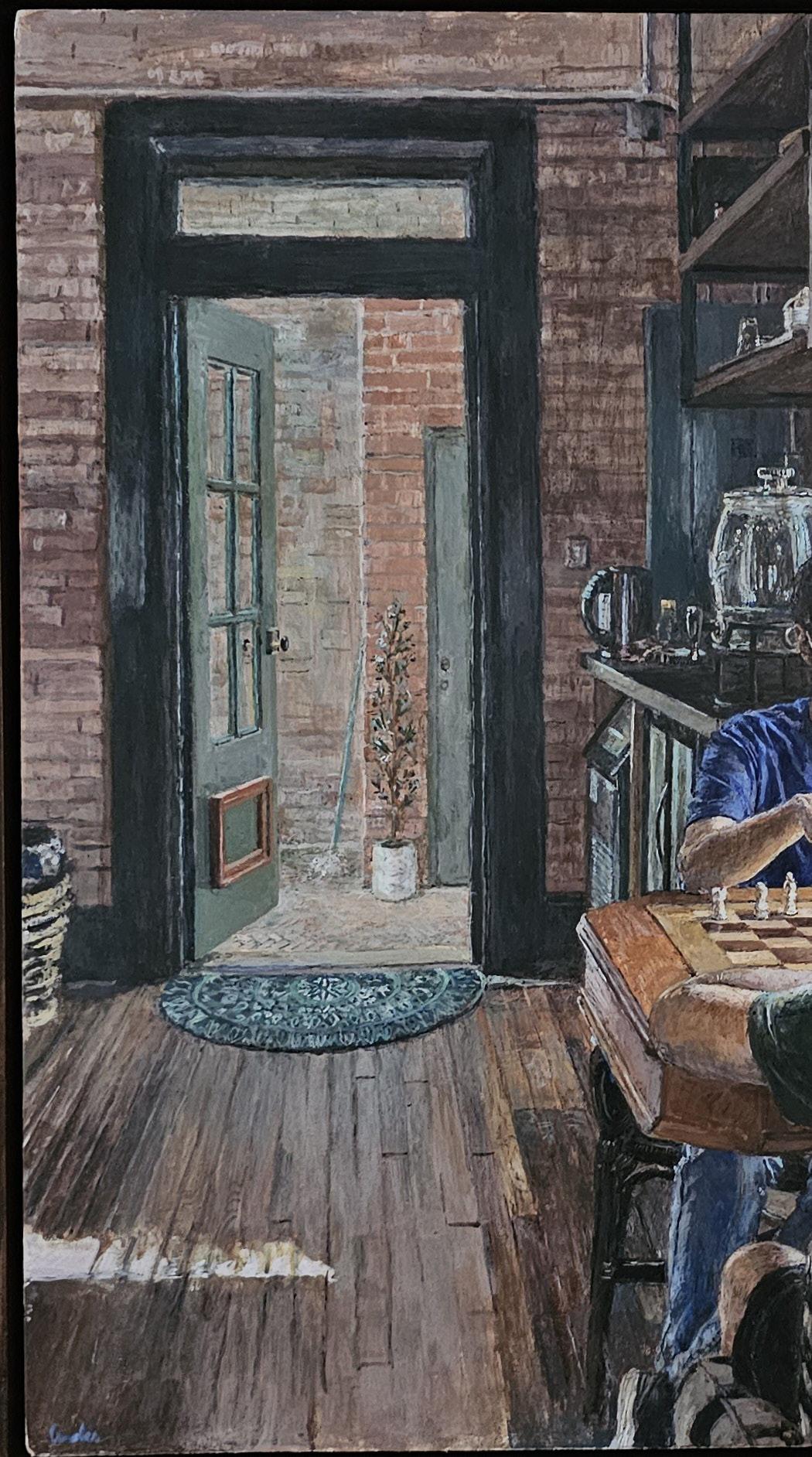
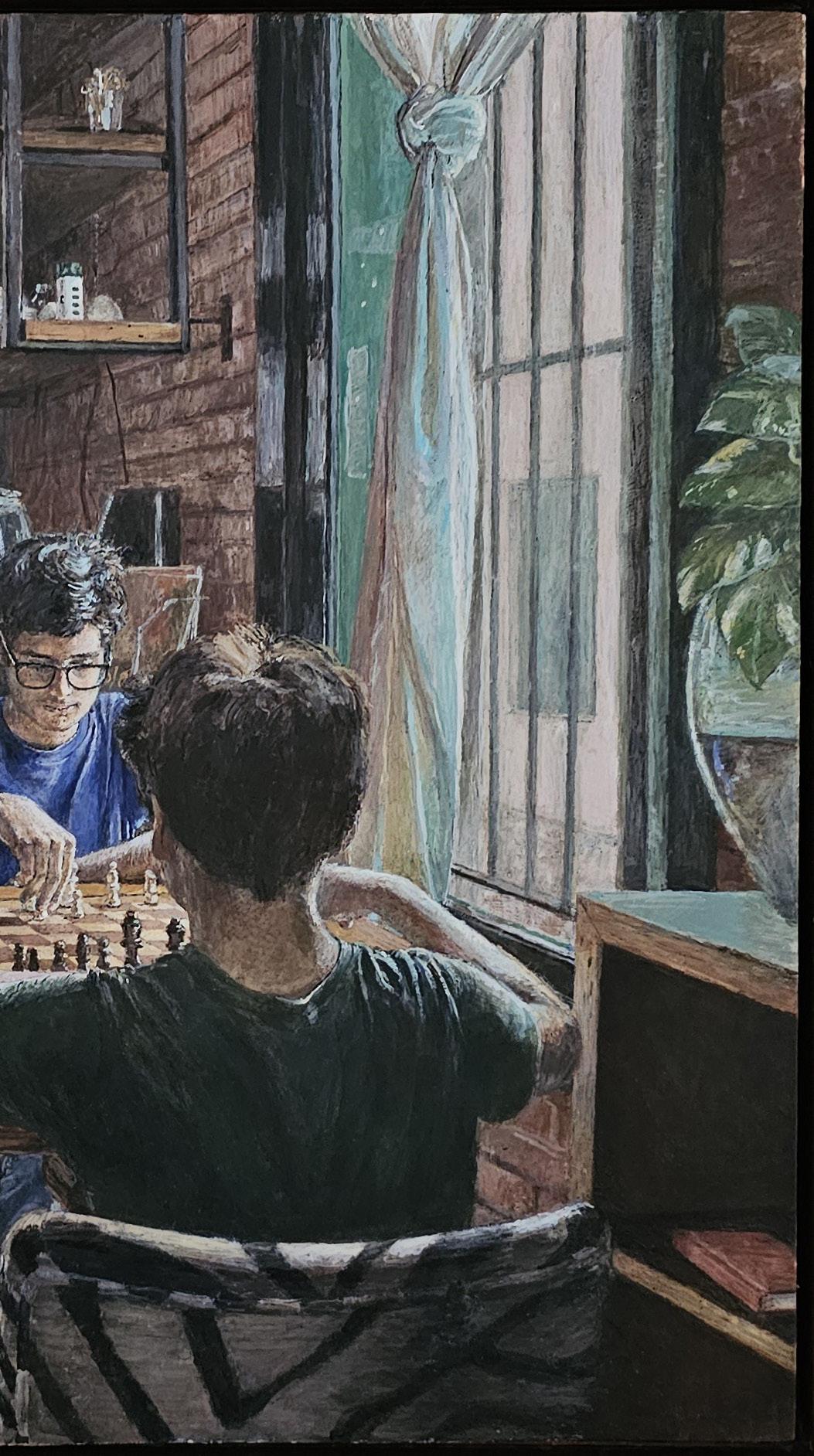
Our Contributors: Artists
Alessandra Cetina - Page 52
Hi, my name is Alessandra Cetina. I am a student at TSC and a senior at La Villa ECHS. I worked on this piece at the start of January and completed it in March. What inspires me to create art is knowing the true meaning behind the piece and having a personal connection with it.
Alexandra Villafranca - Page 8
My name is Alexandra Villafranca, and I am a student at TSC. I enjoy expressing myself through writing and art, and I’m always looking for new ways to grow creatively. Much of my inspiration comes from my personal experiences and the people around me. I hope to continue improving my craft and sharing work that others can connect with.
Angel Marie Herrera - Cover, Page 20 & 86
My name is Angel Marie Herrera, and I am an art major. I worked hard on my artwork, and I am so glade for people to be able to see my work. I always try to improve my skill and make art that I am proud of. I have always had a passion for art, and I want to pursue art so that I can become an art professor.
Brianna - Page 89
My name is Brianna Carrizales, and I am a TSC dual enrollment student. I’m currently attending Brownsville Early College High School. I am planning to major in mechanical engineering after graduation. What inspired me to draw this artwork were the birds I would often see after school or during lunch. Most of the time the birds were either Grackles or Sparrows. After a while I would start seeing them eat around each other and it would become a habit to take pictures of their interactions. Most of the times they would fight over the food with the Grackles winning and that’s what inspired me to draw the birds. I would say the art took me more than 3 hours and was mainly referenced from the pictures I would take in my free time.
C.S. - Page 50
My name is Carolina Salazar. I am a dual enrollment student attending Texas Southmost College, pursing an Associates degree. My inspiration comes from the simple but meaningful things that happen around us in the valley.
Our Contributors: Artists
Cesar Robles - Page 120
My name is Cesar Robles and I’m a dual enrollment student at Texas Southmost College. I love taking pictures of sunsets, sunrises, or anything that catches my attention. Photography allows me to capture the beauty in everyday moments and express how I see the world. I’m inspired by nature and the small details that often go unnoticed.
Damaris Hernandez - Page 4 & 5
My name is Damaris Hernandez and I have been drawing since I was about 4 years old. I have many inspirations for all I make, but what has kept me going is thinking how people will feel with my work. I strive to make something of my art, and I really hope I can get there someday.
David Guerra - Page 28, 95, & 111
I am an instructor of art here at TSC. I prefer to work in traditional mediums such as drawing and painting.
David Ortega Navarro - Page 30
My name is David Ortega Navarro and I love doing art and architecture. Making up designs from my own ideas and seeing them come to life on paper has always been such a fascinating concept that I thoroughly enjoy. I always love to push myself into exploring situations in which I’m unfamiliar, and growing my own skills and knowledge as a person.
Esteban Del Angel - Page 6, 27, & 114
I’m Esteban Del Angel, a photographer and cinematographer who thrives on capturing the world in its most authentic form. My work blends wedding, event, and the street photography, always chasing those unguarded, fleeting moments that tell real stories. I’m drawn to vibrant colors and dramatic lighting, tools that help me translate raw emotion into something visually powerful. I aim to create images that feel both intimate and alive.
Our Contributors: Artists
Evelyn Ayala - Page 51
My name is Evelyn Grace Ayala, and ever since I was a child, I have always wanted my life to revolve around art. Because of this passion, I aim to become an art teacher and help others, like myself, achieve more than they currently envision for themselves when it comes to the realm of art.
Fernando Gutierrez - Page 78
Hi, my name is Fernando Gutierrez. I am 17 years old and a dual enrollment student at TSC. This photograph was taken on a vacation in New Orleans, at the Audubon Aquarium. It was a fun trip, and I enjoyed taking many picture of the variety of animals.
Frine V. Sierra - Page 19
I was inspired to make drawings because seeing others be passionate about things they love makes me want to express that. #Bringbackwhimsy! Anyway I need to go finish my stats assignment right now--see ya!
Gabriel Gonzalez - Page 1
My name is Gabriel Gonzalez I am a senior at Lyford High School while taking courses at TSC. I plan to major in Animal Science and obtain my Doctorate of Veterinary Medicine. This snake rising boldly with its tongue out captures strength and spirit with the determination to thrive no matter what.
Opal - Page 18, 82, & 103
My name is Opal, I am a student from Rivera ECHS taking TSC classes, I’ve been drawing for the longest time and improved by drawing a favorite musician of mine, I hope to pursue art in my life.
Jay A. Valdivia - Page 55
Hello my name is Jay. I used to live in Omaha, Nebraska, but now I live here in Brownsville, Texas. I know that my art is pretty bad, but I make up for the slack with lots of details, precise marks, and lots of time and dedication. I am a TSC student.
Our Contributors: Artists
Jesus Pecina - Page Design & Page 43
My name is Jesus Pecina; I am a student at TSC and my major is currently General Studies. I have always enjoyed drawing but I did not start to attempt to learn more about it until I was 16. Despite this, I lacked direction for an extremely long time and it wasn’t until I took a drawing class out of curiosity that it reignited my interest to be great at it. The thing that inspires me the most is the drive to be great.
Jesus Roberto Rodriguez Jr. - Page 40
My name is Jesus Rodriguez, but people call me Chuy. My motivation for my art was capturing the essence of the time, emotion, and connection to the world around me. This photograph took me a total of two weeks to take because of the preparation that was needed in order to snap the perfect shot. I hope yall liked it!
JRG
- Page 62 & 63
I’ve always liked capturing moments and also with that I love to make graphics. I’ve done them since high school. I enjoy making them because just looking back at your work really does make your day, and I always know I did a good job when I keep going back to it and admire it. I plan to make it into a career, hopefully.
Liz Valenzuela - Page 58 & 80
My name is Liz Valenzuela, and I work in the TSC Marketing Department. My photography is inspired by film, nostalgia, and the quiet poetry in ordinary spaces, like a cat in the sunlight, a street that feels like memory, or a dreamy moment abroad.
Leila De la Cruz - Page 21, 65, & 106
My Name is Leila De La Cruz, and I work in the TSC Marketing Department. I have been doing photography since I was a kid. It is such a privilege to be able to work on my art with the support of my family and friends.
Nicholas R. - Page 32
My name is Nicholas Rebolledo. I’m studying Audio and Visual Production. I focus on video editing, and photography has been a hobby of mine for a while. I’ve always felt like I want to capture everything I see in my day to day life; the best I dedicate into making them akin to a piece of art.
Our Contributors: Artists
Nailea Gonzalez - Page 70
My name is Nailea Gonzalez. I am from Los Fresnos, Texas. I am a Marine Corps Veteran and now I am a TSC student. I am majoring in Sonography. I captured this beautiful picture in Hawaii at Kualoa Ranch while on a family trip. I chose this picture because it was a moment in time where I felt like I had made it far into my goals. I was filled with joy along with having my family that supported me the entire time. I am inspired by people who can juggle so much and meet the standards of a positon. Hard working people inspire me.
Natalia Carpio - Page 44
My name is Natalia Carpio and I am a 17-year-old high school student attending Brownsville Early College High School. I am attending dual enrollment classes as well at TSC & UTRGV. One of my passions is photography, especially of landscapes and this is one of my best works I have done of the South Padre Island beach at sunset.
Noe C.Cardenas - Page 94
Hi I’m Noe. I enjoy drawing artwork of kaiju or fantasy. I also enjoy gaming, fishing and I love nature.
Robert Andes - Page 126
I am a member of the full time faculty at TSC. I teach several classes including painting and drawing. I have an MFA degree from the University of Arkansas.
Sam Cortez - Page 69
My name is Saraí, but I prefer to be called “Sam.” I’m currently studying art to later take animation. The photo I took was because I liked how the clouds looked.
Sophia - Page 98
Hi, my name is Sophia. This is my second year at TSC as a student. I am currently doing General Studies and plan on going to UTRGV after. I have been working on art for all my life and have always had an interest in it and I find music to be my biggest inspiration.
Our Contributors: Artists
Theodore Hernandez - Page 100
My name is Theodore Hernandez and I am studying my AA in business. I play music for fun and hope to one day be part of a famous band. One of my other goals is to one day be a business owner.
Vidal Garza - Page 73
My name is Vidal Garza, a dual enrollment student in TSC from BECHS. Painting for me has always been a form of comfort to distract myself from stress. I usually paint landscape views of nature here in Brownsville, Texas.
Lou - Page 22 & 87
My name is Lou and I am a TSC dual enrollment student who has been working on bettering my art skills by working with different mediums for the past five years or so.
Interested in applying?
Scorpion’s Quill is an annual publication aligning with the academic year. We open for submissions during fall semesters and publish during spring semesters. Information about how to apply will be shared with faculty, staff, and students during the upcoming Fall 2026 semester and will be announced via TSC email. Keep your eyes peeled for the opening day!
Our Contributors: Writers
Aldo Araujo - Page 46
I am a dual enrollment student at Simon Rivera Early College High School. I’m also a Junior in AFJROTC (Air Force Junior Reserve Officer Training Corps), who likes to study military history. I believe keeping history alive is important to pass down the memories and stories from those who served. I also believe it’s important to remember how far we came from, because of the sacrifices of those believing in causes.
Alejandra Moreno - Page 41
Hi! My name is Alejandra Moreno, and I am from Harlingen, Texas. I am currently a TSC student, and I hope to be able to apply to the Respiratory Care program. Writing has not always been my strongest subject, but I am proud to say that my composition class has helped me out a lot.
Alondra Garza - Page 88
My name is Alondra Garza, and I am a student at TSC. I have been writing for approximately five years now, and I still have a lot to learn. I enjoy reading other people’s work because it tells me a lot about them and teaches me new ideas. I believe that writing can help one with regulating their emotions and figuring themselves out, so I hope you read something you liked and become inspired to do so too.
Amerique Lopez - Page 54
I write with joy because I know how heavy life can feel.
Carina Gaona - Page 2
Hi, I’m Carina Gaona, and I’m in my first semester at TSC. I’m looking forward to applying to the Radiology program. When I’m not studying, I’m really into my artistic hobbies – they’re a great way for me to relax and get creative!
Emma Ramos - Page 104
My name is Emma Ramos. I am a student at Brownsville Early College High School and at Texas Southmost College, as well as University of Texas - Rio Grande Valley. I am pursing a general Associate’s and will later pursue a Bachelor’s in Sociology. This poem is a synthesis of many writings I have done in regards to my Catholic faith.
Our Contributors: Writers
Gabriela Moreno - Page 56
My name is Gabriela Moreno and I am a dual enrollment student with TSC. I plan to major in criminal justice once I graduate from high school, and I have been working on my poem for about 2-3 days now. My inspiration for this poem was a personal relationship that did not end up working out and over time I began to realize many things that I was so oblivious to while in the relationship. It is not about anger or hatred but more about reflection, realization and trying to become better.
Isabel Cabrera - Page 90
My name is Isabel Cabrera, and I’m a dedicated student working toward my nursing career while balancing school, motherhood, and everything life brings my way. I’ve always loved writing journals and poems ever since middle school, but for years I didn’t have the courage to truly share my voice. That changed when my English Composition professor, Mrs. Maria Luisa Pacheco, inspired me, guided me, and encouraged me to let my passion flourish. I’m passionate about helping others, learning new things, and growing into the version of myself I’ve always envisioned. Even through challenges, I stay motivated by my children and the future I want to build for them, and I’m proud of how far I’ve come as I continue moving forward one step at a time.
Jacob Elijah Vargas - Page 99
My name is Jacob Elijah Vargas. I’ve been a student at TSC for about 3 and a half semesters now, but fortunately I should be graduating in a month with my Associate’s in psychology. As for my poetry, I do write a little bit here and there. I like to write poems when I find something that I’m very passionate about or when I want to express a strong emotion about a certain topic to others in a fun and creative way.
j7 - Page 108
My inspiration for this short story comes from the long list of books I’ve read, where you can see good vs evil, and the journey as they fight against each other.
Our Contributors: Writers
Jessica Carlos - Page 34 & 116
I was born and raised in the Rio Grande Valley. Currently, I teach English at Texas Southmost College and Rivera Early College High School. I’ve been a writer for most of my life, but I usually stick to writing novels, as descriptive writing tends to be my favorite. So far, I’ve published four novels, the latest of which is the first book in my Fireflies Saga, called Sons of Thunder.
Jesus Velez - Page 97
My name is Jesus Velez I am a TSC Criminal Justice student. I don’t write often but thought this poem I made was good enough to submit; I thought of it in my sleep, and I was inspired by an emotional dream and a good book.
Katie Sikes - Page 57
My name is Katie Sikes, and I am a dual enrollment student at Veterans Memorial. In my free time, I love reading classic literature and writing poetry. After high school, I hope to continue my passion of writing by pursuing journalism.
Marco A. Pardo-Orduna - Page 83 & 121
My name is Marco A. Pardo-Orduna. I am an Enrollment Coach here at TSC with the Office of Strategic Enrollment. The majority of my poetic creations serve as a vessel for self-expression, drawing inspiration from life’s myriad experiences and my unique interpretation of their essence.
Mark Cruz - Page 29, 42, & 64
I’m Mark Cruz, and my passion for writing began when I was just six years old. My personal mission is to showcase the simplicity of writing. Originally from Houston, Texas, my personal background has influenced my writing thanks to my understanding of different cultures. I’m currently studying for an Associate in Electrical Technician. My greatest inspiration for writing is nature itself and the simplicity, yet complicated, of the common day.
Uacire Elula - Page 10 & 122
My name is Sonia Garza. I love to create stories and entertainment. Hm, what inspires me to write is the role models I have followed and read through my life. I want to be like them and have stories under my belt.
Our Contributors: Writers
Myriam Anahi - Page 112
My name is Myriam Anahi and I am a TSC dual enrollment student. I enjoy writing creatively from my own experiences and what I’ve been able to learn from meeting different people. I hope to someday evoke the same emotions that I had while writing for those reading.
Perlita Salazar - Page 61
Perlita Salazar es egresada de la Universidad de Texas en Brownsville, donde obtuvo una Maestría en Literatura Latinoamericana. Desde hace 16 años se desempeña como maestra de español, comprometida con la enseñanza y la difusión de la lengua. Su interés por la escritura creativa surgió alrededor de 2005, inspirado por su experiencia en el Congreso Binacional Letras en el Estuario organizado en Texas Southmost College. Desde entonces, ha cultivado una sensibilidad literaria que acompaña tanto su labor docente como su trabajo creativo.
Roberto Vela Jr. - Page 24, 60, & 105
My name Roberto Vela Jr., and I am a TSC student. I have been working on several short stories and other poems since I took a Creative Writing class several semesters ago. Inspiration can come in different ways, but I feel connecting with people reading my short stories or poem inspires me to write some more.
Rosalynn - Page 84
My name is Rosalynn Gonzalez I am a junior attending Tsc as a dual enrollment student. Writting as always been a strong practice of mine and has grown throughout the years. I once heard this quote and it said, “The best authors draw from life.” I like to practice this by turning my raw emotions into deep poems.
Elijah O’Rien - Page 66
Hello everyone! My name is Elijah O’Rien, I’m a dual enrollment student at Rivera High School, and I’m an aspiring writer and creative. Funnily enough, my original specialty was in screenplays; however, in my quest to adapt one of my screenplays into novelette format for this very journal, I discovered my love for writing novels. My creativity and imagination are nothing new, I’ve had ideas for a continuous media franchise in my head for nearly three years now; however, I’d be nothing were it not for my inspirations, such as the Percy Jackson series.
Our Contributors: Writers
Sandra Valentina - Page 74
My name is Sandra Ramirez and I’m a TSC and Rivera ECHS student. It took me about two weeks to work on this piece, and I’m heavily inspired by works like Resident Evil, I Am Legend, Serial Experiments Lain, War of the Worlds, and The Last Kids on Earth. The short excerpt I wrote is the product of my own science fiction story that I’ve been working on for a few years now and hope to publish one day.
S. L. - Page 23 & 96
My name is Sofia and I love to express myself through various forms of art. I am currently a student at TSC and enjoy writing poetry on my free time. The pieces that I have submitted were worked on for, at the most, one day. I hope you like them!
Vale Soto - Page 8 & 102
My name is Valeria Soto but those who know me call me Vale. I am currently a dual student at San Benito High School-TSC and although I enjoy playing sports, primarily soccer, I like writing for fun! A fun fact about me is that I like to live by the motto “Shoot for the moon and even if you miss, you’ll land on the stars.”
V. I. Vasquez - Page 72
I always write/type and trash. I love expressing my thoughts in paper, not because I am good at it, but because I can’t do it verbally. I am an English high school teacher and I have a Master’s in communication. I know, ironic. I am 35 years old, my parents are Mexican, I am a cancer survivor, I was a teen mom, and I love and appreciate people and life.