

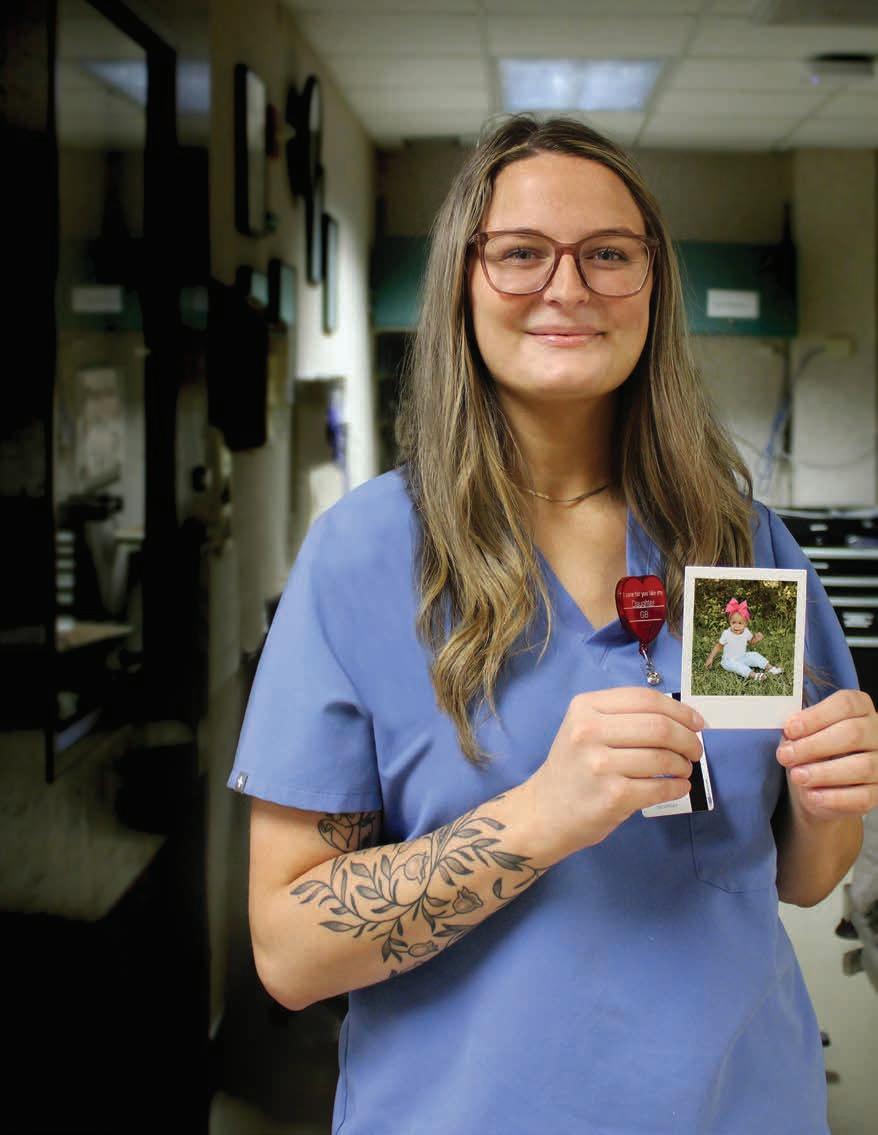
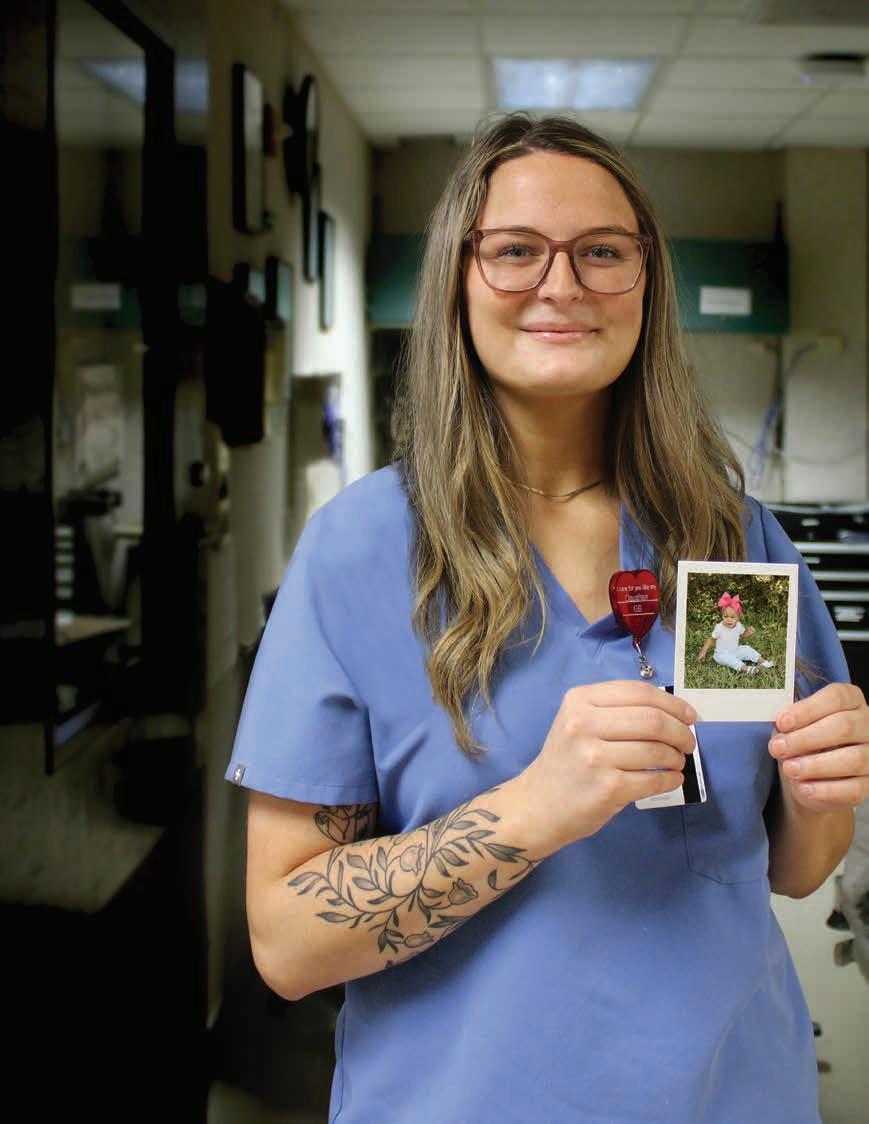
We treat every patient like family. Our heart badges symbolize our commitment to providing expert care with uncommon compassion. We understand that every patient is someone’s parent, friend, or loved one, and we care for them with that in mind. Every day, AdventHealth ER nurse, Taylor, wears her commitment to caring for patients like she would her daughter, with love and expertise.
We’re here to deliver personalized, lifesaving care when every minute counts.


Linda List, Writer and Photographer
Linda List’s career was spent in the food industry, often surrounded by chocolate and candy. Retirement and the Tryon Daily Bulletin have provided the opportunity for her to share her writing. Growing up in New York on the Canadian border, she lived most of her adult life at the foot of the Rockies in Golden, Colo. And is now enjoying life in Landrum the foot of the Smokies.

Kirk Gollwitzer, Writer and Photographer
Kirk Gollwitzer is a freelance writer, musician, photographer, videographer, and real estate broker specializing in buying and selling homes and horse properties. A former key figure and co-founder of the Tryon International Film Festival, he has done several documentaries and has written two novels.

Storme Smith, Writer and Photographer
Storme Smith is a writer who lives in the Foothills of North Carolina. He is the co-founder and publisher of Buno Books, and has a passion for the arts. He also enjoys writing about the history, sports and unique people and places of our area.

Pebbles, Writer
Pebbles is the “spokespony” for HERD, or Helping Equines Regain Dignity, a local nonprofit that saves equines from dire conditions and in many cases slaughter. She dictates her monthly columns about her adventures, and what a rescue organization does, to Heather Freeman. Pebbles and Heather can be reached through HerdRescue.org


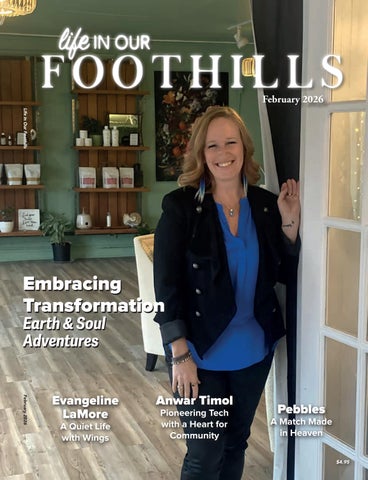
February in the Foothills is a month of steadiness. The holidays are well behind us, winter has settled in, and daily life resumes its familiar pace. There’s comfort in that rhythm—neighbors checking in on one another, landscapes holding still, and a shared understanding of what makes our communities feel rooted and enduring.
In this month’s edition of Life in Our Foothills, we visit with local folks who are dedicated to helping others in one form or another—showcasing one of the many reasons our area is so special.
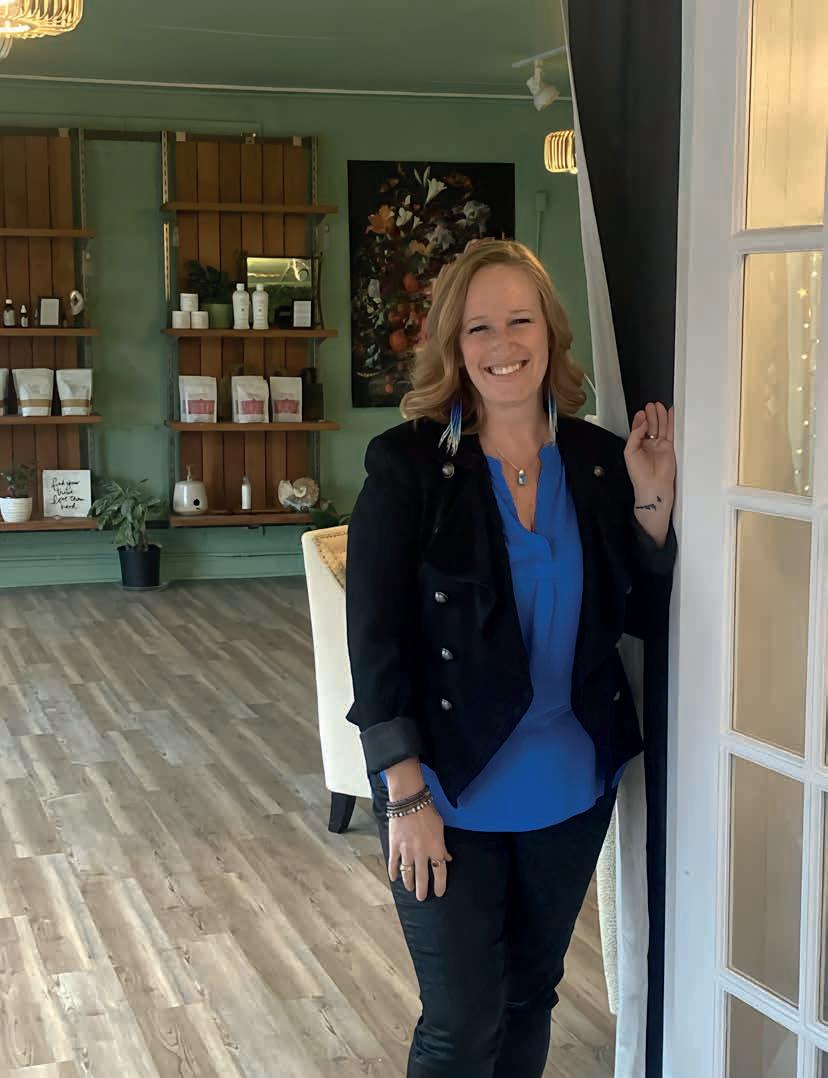
This month, we spoke with Rachel Mango of Earth & Soul Adventures, a wellness-centered space in downtown Tryon that embraces transformation. We also spend time with Vange LaMore, an artist and wildlife rehabilitator with an interesting story to share.
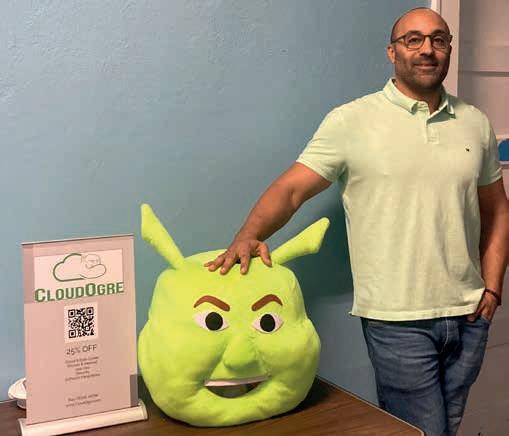
Additionally, we meet Anwar Timol, owner of the Mill Spring Ag Center and CloudOgre, as he focuses on pioneering technology with a heart for community.
And of course, we hear from our resident “spokespony,” Pebbles!
You’ll find all of this and more in this month’s edition of Life in Our Foothills. We hope this issue brings warmth and a sense of connection as you turn each page. As always, I encourage you to share your thoughts, story ideas, and local highlights with me at jeff.allison@tryondailybulletin. com.
Thanks for reading!
(Story on page 12)
Jeff Allison Editor
Publisher & General Manager
Jeff Allison
Graphic Design
Nathalie Adams
Marketing
Lynn Cromer
Stacey Cullen
Distribution
Jamie Lewis
Austin Heffner
Administration
Jennifer Sattler





Life in Our Foothills is published monthly by Tryon Newsmedia LLC. Life in Our Foothills is a registered trademark. All contents herein are the sole property of Tryon Newsmedia LLC. No part of this periodical may be reproduced without written permission from the publisher. Please address all correspondence (including, but not limited to, letters, story ideas and requests to reprint materials) to Manager, Life in Our Foothills, 16. N. Trade St., Tryon, NC 28782, or email to jeff.allison@ tryondailybulletin.com. Life in Our Foothills is available free of charge at locations throughout Polk County and Upstate South Carolina, and online at www.tryondailybulletin.com. Subscriptions are available for $30 per year by calling 828-859-9151. To advertise, call 828-859-9151.



Foothills Memory Café
February 6, 2:00- 3:00 pm Landrum Library
111 Asbury Dr., Landrum
Columbus Indoor Market
February 7 & 21, 10 am to 1 pm
Iron Key Brewery
135 Locust St., Columbus
TFAC at the Movies - To Kill a Mockingbird
February 10, 7 pm
Tryon Fine Arts Center
34 Melrose Ave., Tryon
Conserving Carolina Speaker Series - The Monarchs of Michoacan
February 10, 2 to 3:30 pm
Saluda Library
44 W. Main St., Saluda
Annual Award Dinner and Gala
February 12, 5:30 to 8 pm
Foothills Chamber of Commerce
34 Melrose Ave., Tryon
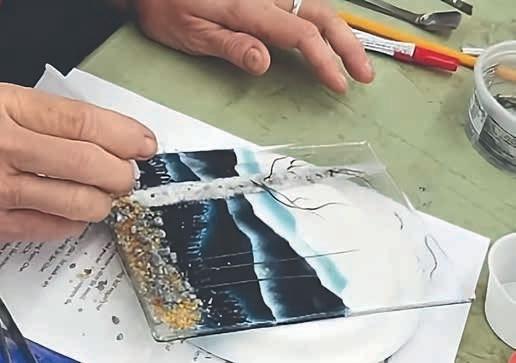
FuseFest - A Fused Glass Symposium
February 13-15, All Day
Tryon Arts & Crafts School
373 Harmon Field Rd, Tryon

Tryon Hounds Centennial Fashion Show
February 15, 2 to 5 pm Sunnydale
334 S. Trade St., Tryon
Conserving Carolina Speaker Series - Food-Climate Change Nexus
February 17, 6 to 7:30 pm Landrum Library 111 Asbury Dr., Landrum
FEBRUARY 19
Ji Su Jung, Marimba & Timothy Chooi, Violin
February 19, 7:30 pm
Tryon Concert Association
34 Melrose Ave., Tryon
Carolina Foothills Chamber of Commerce - Business After Hours
February 19, 5:30 to 6:30 pm
White Oak Medicine
155 W. Mills St., Columbus
Opening Reception - Warhol Polaroids
February 27, 5 to 7 pm
Tryon Fine Arts Center Pavilion 34 Melrose Ave., Tryon
Landrum Farmers Market - Pop-Up Market
February 28, 8 am to noon
Landrum Farmers’ Market
221 W. Rutherford St., Landrum
27
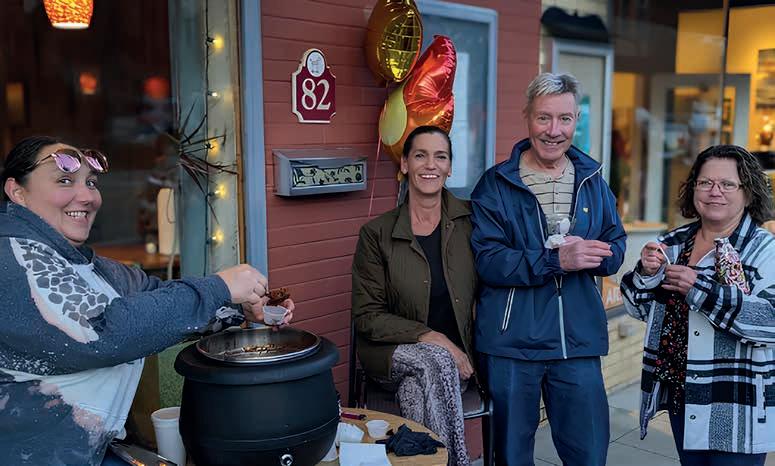
TDDA Fourth FridayChili Cookoff
February 27, 5 to 7 pm
Downtown Tryon
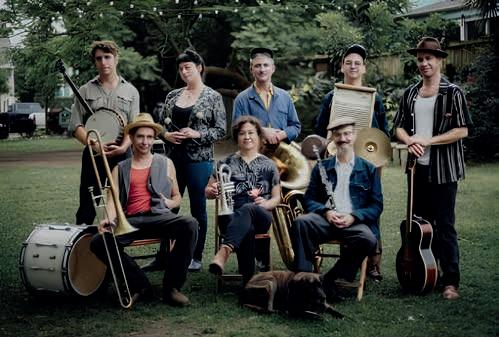
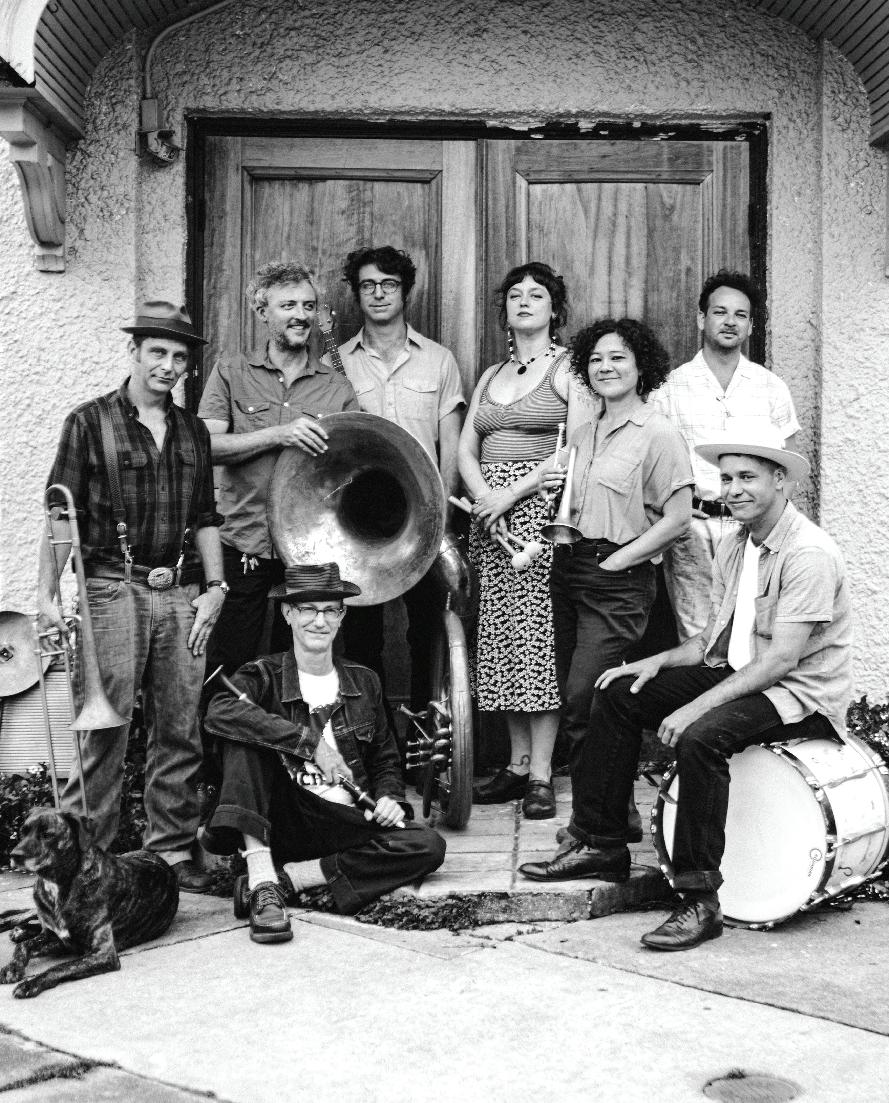
Tuba Skinny
February 21, 7:30 pm
Tryon Fine Arts Center 34 Melrose Ave., Tryon
By Storme Smith
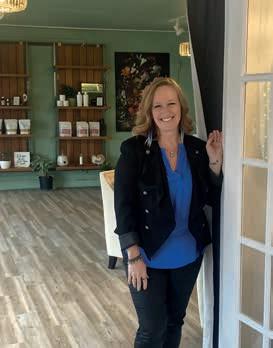
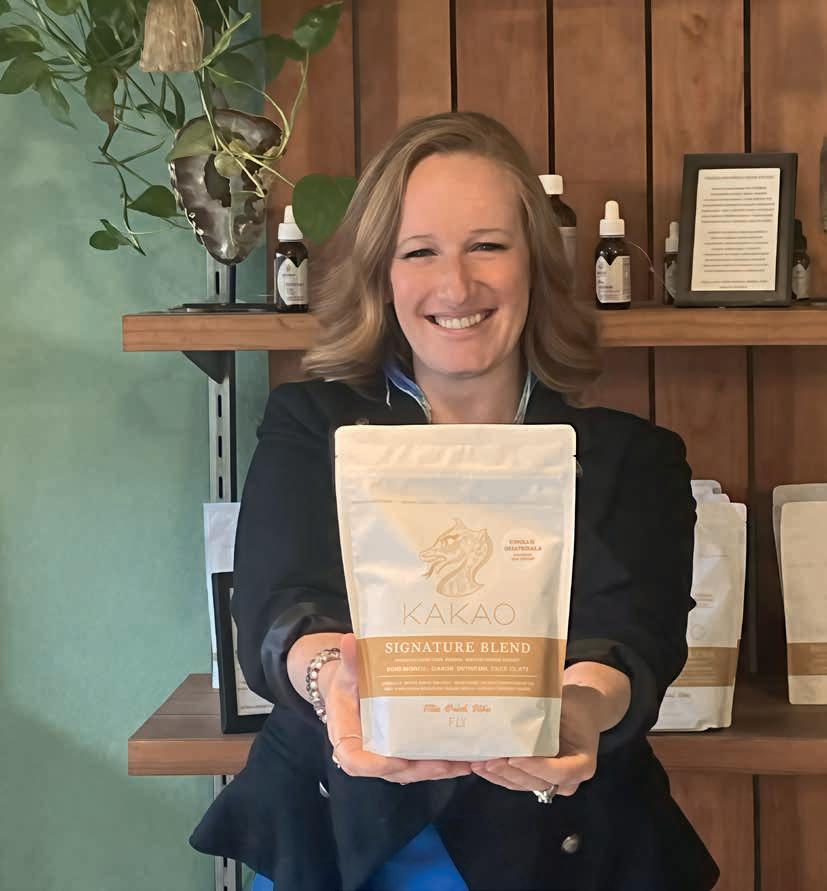
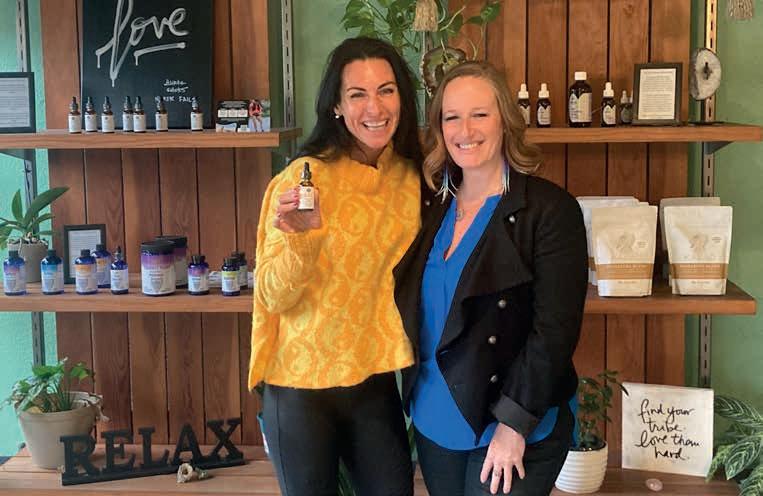
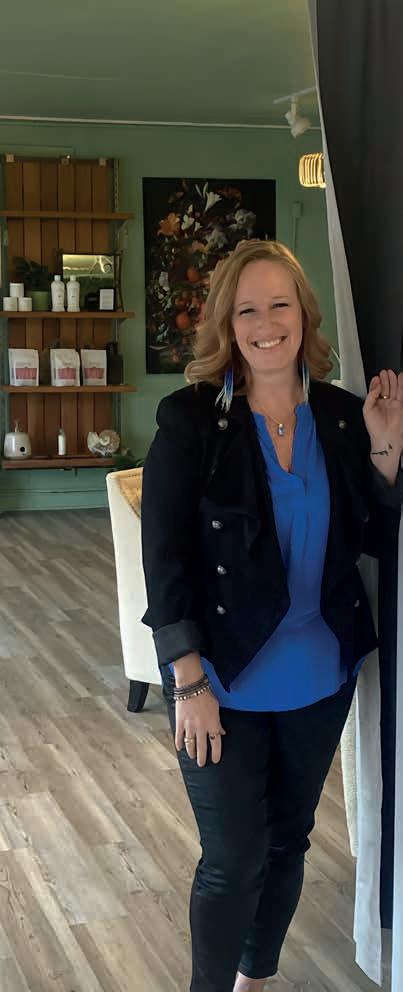
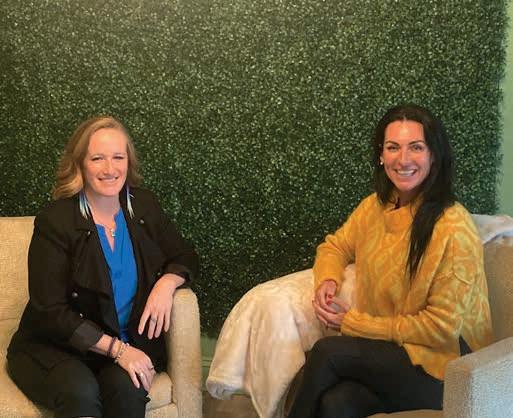
In the Foothills, there exists a quiet doorway that invites pause, reflection, and renewal. It is a place where the pace slows and the noise of daily life softens. Crossing that threshold leads to Earth & Soul Adventures, a wellness-centered space in downtown Tryon guided by holistic health and life coach Rachel Mango. Located at 157 N. Trade Street, Earth & Soul Adventures is not simply a fitness studio or coaching office. It is a thoughtfully designed environment where physical movement, emotional awareness, and personal growth are treated as interconnected parts of a whole. Rachel’s philosophy centers on the belief that true wellness cannot
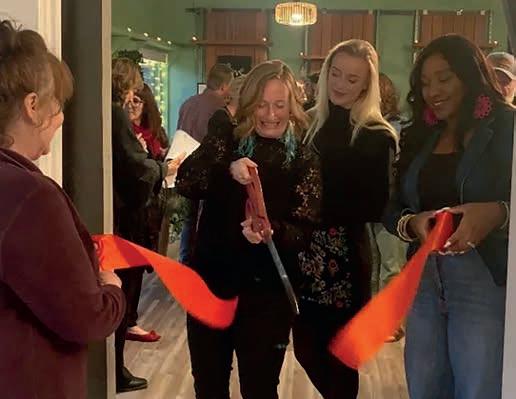



be compartmentalized—it must address the full human experience.
Rachel’s journey into holistic wellness has been shaped by both professional training and deeply personal life experiences. She holds certifications in Neuro-Linguistic Programming, Certified Personal Training, and Integrated Body-Rhythm Therapy, credentials that reflect her commitment to a well-rounded approach. Yet her path was never conventional. “I’ve always had this little bit of a rebel spirit, wanting to carve my own path,” she says.
That independent streak first took shape through entrepreneurship. Rachel once owned and operated a pet resort in Lake Wylie, South Carolina, a venture rooted in her love for animals. While
successful, it did not provide the fulfillment she was seeking. “That wasn’t very rewarding or different for me,” she recalls, sensing that something more meaningful was calling her forward. It was motherhood that ultimately prompted a profound shift. After becoming a mother of three, Rachel found herself facing many of the same challenges that affect women everywhere—putting her own health last while managing the demands of family and work. Determined to reclaim her vitality, she joined a gym and began focusing on her physical health. As the changes became visible, so did the curiosity of those around her. “I started losing weight and getting in shape, and people in the gym started coming to me, asking, ‘What have you done?’” she says. That moment marked the beginning of her career in personal training. Rachel earned her certification and opened her own fitness studio, quickly building a loyal client base. But success came at a cost. Balancing multiple businesses, motherhood, and an
















intense coaching schedule eventually pushed her body beyond its limits. “I had three businesses, three kids, and was coaching a lot. My body just said, ‘Enough is enough,’” she says. The resulting health crisis became a turning point—one that reshaped her understanding of wellness. As she recovered, Rachel recognized the toll that emotional stress had taken alongside physical overexertion. “I learned about the underlying emotional stress that I was dealing with on top of pushing my body to the max. Addressing these emotional issues is vital for true wellness,” she explains.
From that realization, Earth & Soul Adventures began to take form. Rachel’s personal story became a cornerstone of her work, allowing her to connect authentically with clients navigating their own challenges. “Telling my story is really going to help others understand their journeys,” she says.
Over time, Rachel noticed a recurring pattern among those she worked with. Clients often






arrived focused on weight loss or fitness goals, but deeper needs quickly surfaced. “People would come in wanting to lose weight, but they really needed life coaching. They would talk about their emotions and a lot of underlying stress.” That insight helped shape the holistic foundation of Earth & Soul Adventures, where emotional health is treated as inseparable from physical well-being.
Today, Rachel offers a range of programs designed to support transformation on multiple levels. Her signature six-week program immerses participants in intentional practices that often include time spent outdoors, tapping into the restorative power of nature. “We’re creating the full program for what they need to take their life from where it is right now and cross over into where they want to be,” she says.
Looking ahead, Rachel envisions expanding her offerings to include international adventure experiences.
“Eventually, I’d like to get back into international adventure travel,” she shares, drawing on memories of past journeys to Italy, Thailand, France, and Iceland.
These adventures reflect her belief that stepping outside
one’s comfort zone can unlock powerful personal growth. “It’s literally for somebody who wants to create their ideal life, whether it’s in health or whatever it is,” she explains.
In addition to coaching programs, Earth & Soul Adventures offers a carefully curated selection of wellness products. These include high-quality cacao products known for their antioxidant properties, which may support mood and cardiovascular health, as well as mineral supplements designed to assist with remineralization and immune support. Rachel also provides CBD products—oils, tinctures, edibles, and topicals—often used by clients seeking relief from pain, inflammation, or stress.
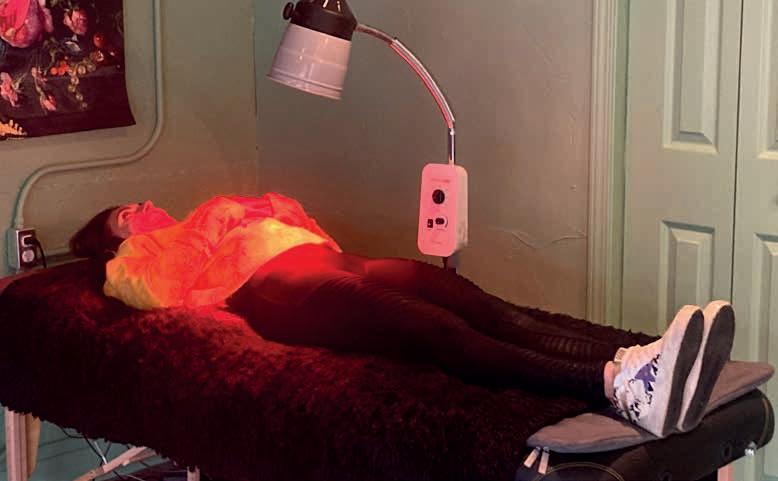
Rachel incorporates innovative wellness technology into her practice as well. One such offering is a magnetic pulsed table combined with red light therapy, designed to enhance circulation, reduce inflammation, and support cellular regeneration. This tool aligns with her integrative approach, offering clients another pathway to physical recovery and relaxation.
Beyond programs and products, community remains a


defining element of Earth & Soul Adventures. “The community aspect of it is just a bonus,” Rachel says. Participants often find encouragement in shared experiences, building connections with others who are seeking meaningful change. Many are entrepreneurs or creatives who feel called to push beyond limitations and redefine what is possible. Rachel believes that confronting fear is central to growth. “You didn’t think you could do it, but now you have a reference point that you just did something that you didn’t think you could do,” she says. She often hears from former clients years later, reflecting on breakthroughs they once thought impossible. “I just did this X Y Z that I didn’t think

I could ever do before,” one past client shared with her—an affirmation of the long-lasting impact of her work.
At the heart of Rachel’s mission is a belief that many people settle for less than they are capable of achieving. “I want amazing, I want extraordinary, I want people to feel liberated and free,” she says. Her programs emphasize that overcoming challenges can rewire expectations and create new mental pathways for confidence and resilience.
As she reflects on the purpose behind Earth & Soul Adventures, Rachel remains grounded in service and inspiration. “I hope to inspire people to live their ‘most audacious, extraordinary’ lives,” she says. Through a blend of coaching, community, and experiential growth, she continues to guide others toward deeper connection and lasting transformation. Earth & Soul Adventures is more than a wellness practice. It is a space for reflection, courage, and renewal—a sanctuary where individuals are invited to step beyond the ordinary and into a fuller version of themselves.
For more information, visit earthandsouladventures.com.

Evangeline
By Kirk Gollwitzer
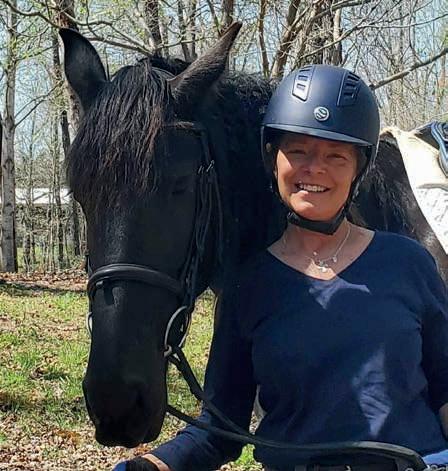
Imet Evangeline “Vange” LaMore nearly eighteen years ago, shortly after I arrived in Tryon. Like many early connections in a new place, she entered my life through horses. Vange was an equestrian, a longtime client of my beloved partner Lydia, and part of a small circle that quietly defined the rhythms of barn life in these foothills. Horses were the common language then. What I did not yet understand was that birds, far more than horses, were the enduring throughline of her life.
Even early on, there was a familiarity between us that had nothing to do with Tryon. We were both from Cleveland, Ohio, close enough in geography and memory that we could talk about the same neighborhoods, the same winters, the same long-gone department stores. We shared
memories of places that shaped us before either of us knew we would eventually end up here. That shared Midwest past formed a quiet bond.
There was another connection as well. Vange is of Greek heritage, and years earlier, I had been married into a Greek family. While that chapter of my life has passed, my affection for Greek culture never has. It surfaces naturally between us, from time to time slipping into Greek phrases, familiar expressions, and shared laughter over memories that feel both specific and timeless. Over the years, I knew Vange as a rider, as an artist who painted birds in watercolor, and as someone who seemed to know more about wildlife than most people I had ever met. I knew she had a deep interest in birds, but I never pressed her on it. Not really. Not until I sat down with her recently and let her talk.
What emerged was not simply a story about birds, but about a life shaped by observa-








and
and
define
tion, patience, and restraint, work done quietly, often out of public view.
“I’ve always loved being outdoors,” she told me. “Nature in general, but birds especially.”
Vange was born in 1957 at Fairview Hospital in Cleveland and grew up in Rocky River, not far from the airport. Like many children of that era, she spent most of her days outside. What
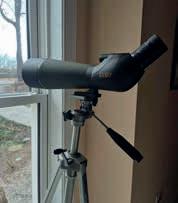
A spotting scope positioned near a window, used for close, sustained observation of birds without disturbance—an essential tool in Vange’s practice of learning by watching. (Photo courtesy of Evangeline LaMore)
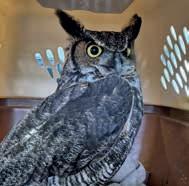
require calm, controlled handling and minimal human interaction to ensure a successful recovery and release.
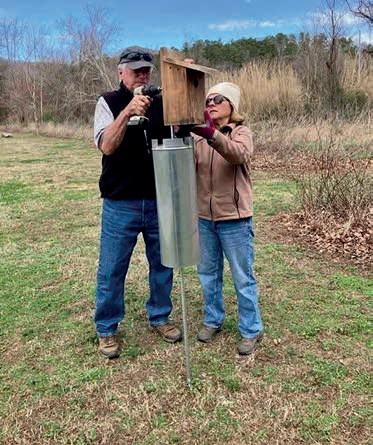
she remembers now is not a single defining moment but a gradual awakening, an attentiveness that deepened over time.
“I didn’t realize how interested I was when I was really young,” she said. “But I was always outside. I was one of those kids.”
There was an early moment she remembers clearly, not as a source of shame, but as instruction. As a child, she and a cousin damaged a robin’s nest that held eggs. It was not malicious, more a moment of careless curiosity, but the response mattered.
“My grandmother was upset,” Vange recalled. “She loved birds. She embroidered them. She had birds everywhere. And she made sure we
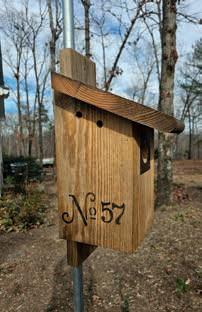
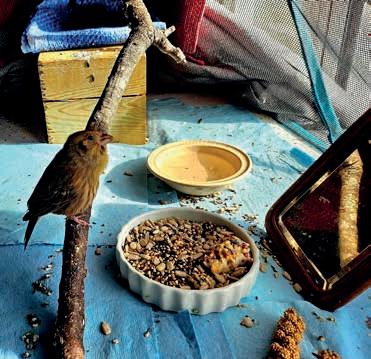

understood what that nest meant.”
The lesson stayed.
“I never did anything like that again,” she said. “It made me stop and think. I learned from it.”
By the time she was twelve, she was memorizing bird flashcards and studying field guides, learning species not as abstractions but as living beings she saw regularly. She learned birds not by checking off names, but by watching what they did. “That was never my thing,” she said of checklist birding. “I don’t care about counting. I want to see them. I want to know what they’re doing.”
She birdwatched alone, almost always, walking near her home, standing quietly in her yard, watching feeders. She used her father’s old binoculars, heavy and awkward by modern standards, but they were enough.
“I just wanted to observe,” she said. “Where they go. How they behave. What kind of bird they actually are, not just the name.”
That way of seeing, slow, patient, attentive, would eventually define the rest of her life.
Vange attended the Cooper School of Art in Cleveland, a three-year program focused on commercial art. She learned drawing, portraiture, composition, and design. But her professional life took a different turn. Instead of illustration or graphic work, she became a floral designer, working in wholesale flower shops for nearly a decade.
“It was still art,” she said. “Just a different train on the same track.”
Her family background was similarly grounded. Her mother was a driver’s education teacher who loved art. Her father owned a bar in Cleveland before selling cars later in life. Her grandfather was a butcher. These were practical people, working people. There was creativity, but there was also responsibility. Birds, meanwhile, remained constant. In her forties, after moving with her husband Terry to Connecticut, Vange began volunteering at what was then the Westport Nature Center, later called Earthplace. There, she found herself in the wildlife rehabilitation center.
“At first, it was cleaning cages,” she said. “Owls, hawks, songbirds, whatever came
in injured.”
Many volunteers came and went. Few stayed long enough to learn more. Vange stayed.
Eventually, she was allowed to work under the center’s federal permit, a responsibility granted only after years of experience. It allowed her to provide hands-on care for injured birds under strict oversight.
“The whole purpose,” she said, “was to get them back out into the wild.”
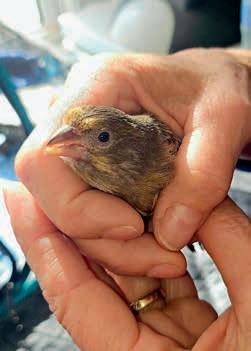
Bird rehabilitation, she explained, is not romantic work. Birds arrive stunned by window strikes, hit by cars, attacked by cats, or weakened by toxins. Early care is about stabilization, quiet, warmth, hydration, medication prescribed by veterinarians, and restraint.
“Behavior tells you everything,” she said. “That’s how you know whether a bird is healing or just surviving.”
As birds recover, they move into an outdoor aviary where they rebuild muscle strength and relearn flight. Birds cannot be released from small cages. They must recondition, practice sustained flight, and reacclimate to weather and light.
“If you don’t use it, you lose it,” she said. “Birds are no different than people.”
One of the most memorable experiences during her rehabilitation work involved prolonged observation rather than intervention. A young bird in her care, difficult to identify at first, underwent a slow, visible transformation.
“Baby birds can be incredibly hard to identify,” she explained. “They often don’t look anything like the adults.”
Over time, she watched as awkward juvenile feathers gave way to more defined plumage, then again to fuller adult coloring. Patterns emerged. What once looked indistinct and clumsy became unmistakable.
“You really see it if you’re paying attention,” she said. “They go through this awkward stage, almost like teenagers. Then suddenly, they’re something else.” That process reinforced how much patience matters, not only in rehabilitation,
but in understanding birds at all. “They’re smart,” she said. “But people think birds just know everything instinctively. That’s not always true.”
Many birds, she explained, must be taught how to forage, how to respond to danger, how to function independently. In some species, older siblings help care for younger birds, assisting parents and modeling behavior.
“Bird families aren’t always just mom and dad,” she said. “There’s more going on than people realize.”
Release is never casual. Birds are returned to their familiar habitat whenever possible, near where they were found.
“You open the enclosure,” she said, “and you let them decide.”
One bird from that period stands out still, a bald eagle named Kishi, injured by electrocution and unable to fly. He became an education bird. Vange painted him and donated the painting to the


center.
By the time she and Terry began thinking about retirement, birds were no longer a hobby. They were a calling.
They wanted warmth. Terry wanted golf. Vange wanted horses at home. Years earlier, she had read about Tryon in a horse magazine. They drove south from Cleveland and landed here almost by chance. They moved in 2005.
Horses had been part of Vange’s life since she was twelve, when she rode at public stables in Cleveland Metroparks. She bought her first horse at twenty-one and has owned seven or eight over the years. But once settled in Tryon, her attention returned, inevitably, to birds.
She applied for and received her own federal and state permits authorizing her to rehabilitate migratory songbirds. These permits are not symbolic. Without them, it is illegal to possess a wild bird.
“You’re not allowed to keep birds just




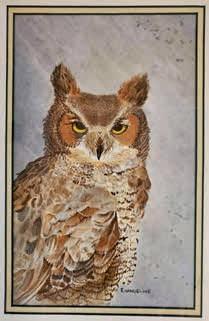
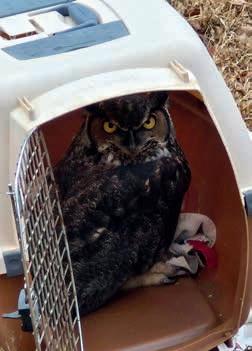
A framed watercolor of a Great Horned Owl by Vange, inspired by birds she encountered during years of rehabilitation work. (Photo courtesy of Evangeline LaMore)
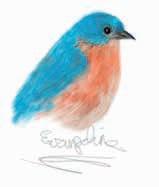
A painted Eastern Bluebird by Vange, a species central to her conservation and education efforts. (Photo courtesy of Evangeline LaMore)

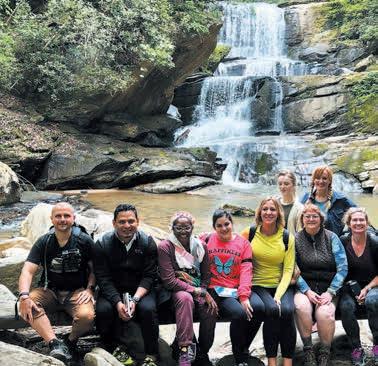
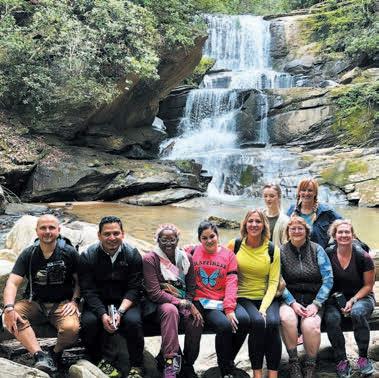


Earth and Soul Adventures is a private membership community for those who refuse to settle for half lived lives. Through transformational adventure travel, immersive wilderness experiences, hiking, coaching, and holistic wellness, we guide individuals from stuck to fully alive physically, emotionally, and spiritually. This isn’t a travel company. It’s a catalyst for people ready to reclaim their vitality, who know they are meant to live a bigger life, and adventure with others who believe living boldly is non-negotiable.
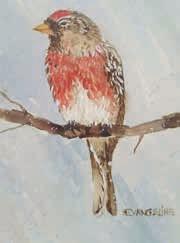
A watercolor of a songbird perched in winter light, painted by Vange. Her artwork often reflects species she has observed closely over time. (Photo courtesy of Evangeline LaMore)
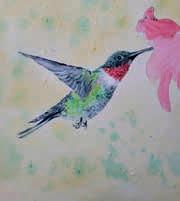
A watercolor hummingbird by Vange, capturing motion and color with the same attentiveness she brings to field observation and rehabilitation. (Photo courtesy of Evangeline LaMore)
because you want to,” she said. “And you shouldn’t.”
For years, she took in injured birds quietly, without advertising. Birds stayed only as long as necessary, typically no more than a few months. If release was not possible, decisions were made carefully and ethically.
Over time, she made a deliberate choice to step back from raising baby birds.



“You can’t live a life doing that,” she said. “And you can’t afford to get it wrong.”
Today, she still holds her permits but limits her work to cases she can manage responsibly, often coordinating with veterinarians or wildlife centers. Increasingly, her focus has shifted toward educa-
tion and conservation, especially where bluebirds are concerned. If there is one bird that brings Vange’s long, quiet commitment into sharp focus, it is the bluebird.
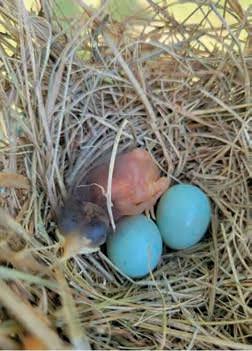
She speaks comfortably about many species, but bluebirds occupy a different space. They represent a conscious narrowing of focus that came with experience and an understanding of limits. “Bluebirds need people,” she said. “They always have.”
Bluebirds are cavity nesters. They rely on holes in aging trees, fence posts, and deadwood, features increasingly erased by development and land clearing.
“People don’t realize what they’re removing,” she said. “They don’t see it as habitat.”
For a time, bluebirds nearly vanished from large parts of the country. Their decline was gradual, quiet, and easy to miss. Their recovery has depended on people willing to notice.
Today, Vange serves as the Polk County coordinator for the North Carolina Bluebird Society, a role rooted in education and availability rather than authority. Her phone rings with questions about nest boxes, placement, and monitoring. Sometimes it’s about an injured bird. Sometimes it’s simply curiosity.
“If someone puts up a box and doesn’t know what they’re seeing,” she said, “I can help.”
Her rehabilitation permit strengthens that role. When a bluebird is injured by a car strike, window collision, or cat, she can legally intervene. She can stabilize the bird, provide care, and determine whether release is possible.
But bluebirds, for Vange, are not about rescue alone. They are about awareness.
“Most problems birds face come from us,” she said. “Not predators. People.”
When I asked Vange what the future holds for her with respect to birds, she paused.
“I don’t really think that far ahead,” she said. “I just keep watching.”
That watching, she believes, is enough. Birds change if you give them time. Feathers shift. Colors emerge. What once looks awkward or uncertain becomes clear. Others learn not by instinct alone, but by following, by watching siblings, by being shown.
Her role now is less about intervention and more about understanding. Knowing when to step in and when to step back. Helping people recognize the difference.
Bluebirds remain at the center of that work. They return when conditions are right. They disappear quietly when they are not. “They tell you how you’re doing,” she said. “If you’re willing to notice.”
Before we finished talking, Vange added one more thought, offered not as a lecture, but as a reminder. She hopes people will consider keeping their cats indoors. Even barn cats, she says, do far more than hunt mice. They stalk birds. They disturb nests. They leave behind injuries that are rarely seen, but often fatal. “It’s not that cats are bad,” she said. “They’re just doing what cats do.”
For Vange, the future looks much like the past, steady, attentive, and guided by care. To keep noticing. To keep learning. And to remember that the smallest choices, made close to home, often matter most.
For readers with questions or general curiosity about bluebirds and their welfare, Evangeline “Vange” LaMore can be reached at vardis2@aol.com or 828-863-4248.




Story
Photography by Storme Smith
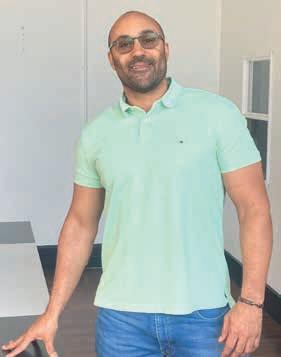
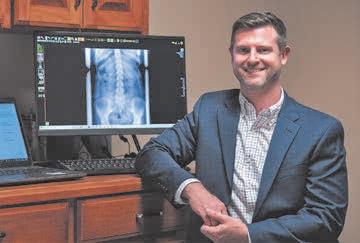
In the ever-evolving landscape of technology, few individuals intertwine innovation with a genuine commitment to community betterment like Anwar Timol, who stands out for his work blending cutting-edge solutions with a heart for social impact. “My mission,” Timol says, “is to use technology not just to connect, but to uplift the people in my community.”
Headquartered in Mill Spring, Timol’s enterprise, CloudOgre, is more than a consultancy; it’s a pioneering force in communications. CloudOgre features a range of offerings from custom app development to cloud services. Timol emphasizes, “CloudOgre is here to meet the diverse technological needs of our clients. We believe in creating solutions that genuinely serve people.”
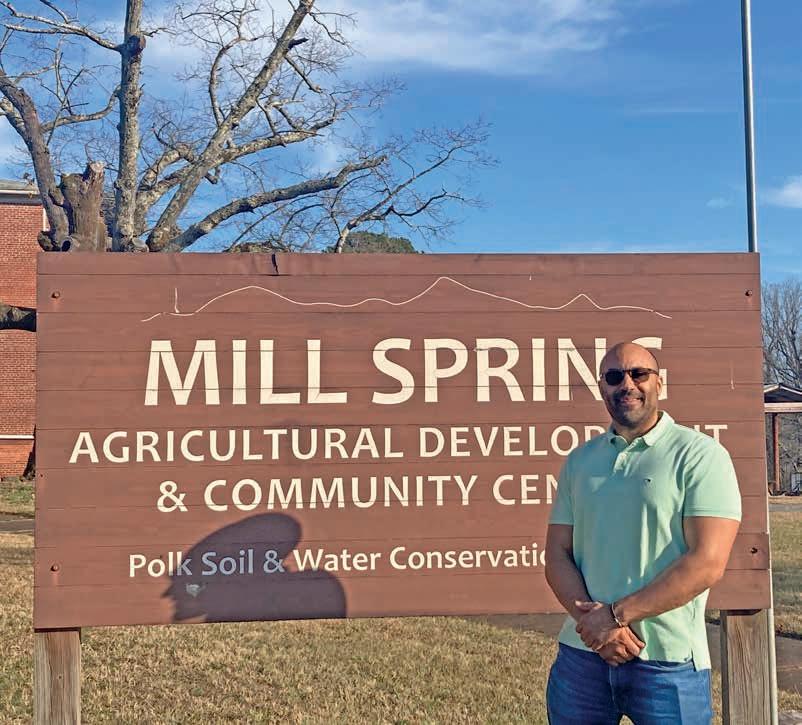
In 2019, he purchased and refurnished the Mill Spring Agriculture Center, located at 156 School Road, highlighting his commitment to fostering creativity and collaboration. “This space serves as a hub for innovation, where local artists and small businesses can thrive. It’s about creating an environment where ideas flourish,” he says.
Among his first projects was AlzApp, a free application tailored for caregivers of Alzheimer’s patients, which was followed by the app

CloudOgre is a technology consulting and managed service provider specializing in enterprise-grade cloud infrastructure, missioncritical connectivity, and unified communications.
Hike Asheville.
“Understanding the emotional and logistical challenges faced by caregivers has inspired me to develop tools that can ease their burden, Timol explains. “We need technology that shows empathy and serves real human needs.” Timol studied Sociology at Stony Brook University, and says his educational background and hands-on experience set the stage for his future endeavors. “My education allowed me




a special needs equine sanctuary in the foothills of North Carolina





Question:
My back always hurts, but
I don’t
I’ve been dealing with TMJ pain for a while and can’t seem to find lasting relief. Can acupuncture help? : Q
want surgery. Can acupuncture help? I’ve been dealing with TMJ pain for a while and can’t seem to find lasting relief. Can acupuncture help? : Q
Acupuncture, a cornerstone of traditional Chinese medicine, has garnered increasing attention in Western healthcare for its potential to alleviate back pain. Recent studies provide evidence supporting its efficacy. Here are five scientifically backed ways acupuncture can help manage back pain:
1. Reduces Pain Intensity
2. Improves Mobility
Absolutely! TMJ pain—whether it’s jaw tightness, clicking, headaches, ear pain, or just a constant ache, can be exhausting. Caused by tension, inflammation, or misalignment of the jaw joint, TMJ can be incredibly uncomfortable—making it hard to talk, eat, or even relax. Many people struggle for months or years before finding a solution. Acupuncture is an effective, drug-free way to manage this challenging condition. Finding relief for my own TMJ pain is what first led me to acupuncture. The difference it made in my life was so profound that it inspired me to become an acupuncturist and help others find the same kind of healing.
Absolutely! TMJ pain—whether it’s jaw tightness, clicking, headaches, ear pain, or just a constant ache, can be exhausting. Caused by tension, inflammation, or misalignment of the jaw joint, TMJ can be incredibly uncomfortable—making it hard to talk, eat, or even relax. Many people struggle for months or years before finding a solution. Acupuncture is an effective, drug-free way to manage this challenging condition. Finding relief for my own TMJ pain is what first led me to acupuncture. The difference it made in my life was so profound that it inspired me to become an acupuncturist and help others find the same kind of healing.
•Boosts Blood Flow – Increased circulation brings fresh oxygen and nutrients to the area, speeding healing and reducing pain.
•Boosts Blood Flow – Increased circulation brings fresh oxygen and nutrients to the area, speeding healing and reducing pain.
effects by modulating the release of certain neurotransmitters. Research has shown that acupuncture can influence the release of adenosine, a neurotransmitter that acts as a potent antiinflammatory agent .
5. Offers Long-Term Relief
•Calms the Nervous System – Stress is a major trigger for jaw clenching and grinding. Acupuncture helps balance the nervous system, reducing stress and preventing flare-ups.
Acupuncture has been shown to significantly decrease pain levels in individuals with chronic low back pain. A systematic review and meta-analysis found that acupuncture led to a clinically meaningful reduction in pain both immediately after treatment and in the intermediate term .
Beyond pain relief, acupuncture contributes to improved physical function. Studies indicate that acupuncture provides clinically relevant improvements in functional measures for chronic low back pain .
Here’s how it works:
Here’s how it works:
•Calms the Nervous System – Stress is a major trigger for jaw clenching and grinding. Acupuncture helps balance the nervous system, reducing stress and preventing flare-ups.
The benefits of acupuncture may extend beyond immediate symptom relief. A randomized controlled trial found that acupuncture had beneficial and persisting effects on chronic low back pain, with significant improvements observed at both 8 and 48 weeks post-treatment.
•Supports Long-Term Relief – Unlike temporary fixes like pain medication or mouth guards, regular acupuncture sessions address the root causes of TMJ pain, helping prevent recurrences and improving overall jaw health.
•Supports Long-Term Relief – Unlike temporary fixes like pain medication or mouth guards, regular acupuncture sessions address the root causes of TMJ pain, helping prevent recurrences and improving overall jaw health.
If you’re seeking a natural, non-invasive solution, acupuncture offers a holistic, evidence-based solution for TMJ pain.
Acupuncture presents a multifaceted approach to managing back pain, offering benefits that range from immediate pain reduction to long-term functional improvements. Its integration into care plans should be considered for back pain treatments.
If you’re seeking a natural, non-invasive solution, acupuncture offers a holistic, evidence-based solution for TMJ pain.
•Reduces Inflammation – By stimulating specific points, acupuncture helps trigger anti-inflammatory responses in the body, reducing swelling and easing joint irritation.
•Reduces Inflammation – By stimulating specific points, acupuncture helps trigger anti-inflammatory responses in the body, reducing swelling and easing joint irritation.
3. Enhances Effectiveness of Standard Treatments
When combined with conventional treatments, acupuncture can amplify their therapeutic outcomes.
4. Modulates Neurochemical Activity
•Calms Jaw Muscle Tension – Tight jaw, neck, and facial muscles often drive TMJ pain. Acupuncture targets these trigger points, helping muscles relax and restoring natural jaw movement.
•Calms Jaw Muscle Tension – Tight jaw, neck, and facial muscles often drive TMJ pain. Acupuncture targets these trigger points, helping muscles relax and restoring natural jaw movement.

Acupuncture exerts analgesic (pain-relieving)
to understand human behavior better, which is crucial in tech,” he reflects. “We must remember that technology is ultimately about people.”
His journey began with a creative education at LaGuardia High School and advanced computing skills honed in an Intermediate School for gifted students in Brooklyn. “I was fortunate to have early exposure to technology,” he recalls. “It allowed me to develop an interest that has shaped my entire career.” He also dabbled early in his career in the entertainment industry, working in transportation and production on reality shows such as The Apprentice and Comic Book Men, as well as on the film We Own the Night starring Christopher Walken. “Those experiences sharpened my skills in a competitive environment, but my heart always pulled me toward technology,” Timol admits.
Timol has a decade of experience in deploying fiber networks for publicly traded companies in and around New York City and Palm Beach County, Florida. There, he developed an expertise in providing reliable data infrastructure for both businesses and consumers. His move to the Foothills, originally Tryon, represented a necessary slowdown from corporate life, drawing him closer to community-oriented initiatives. “After years of corporate work, I realized the importance of making


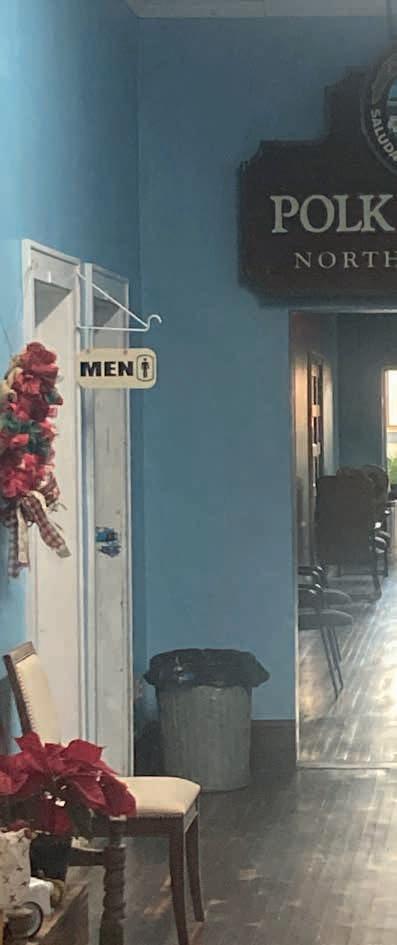
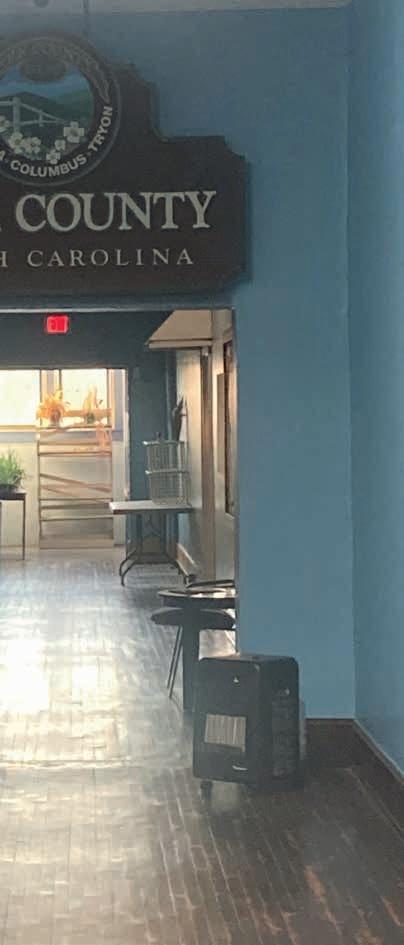






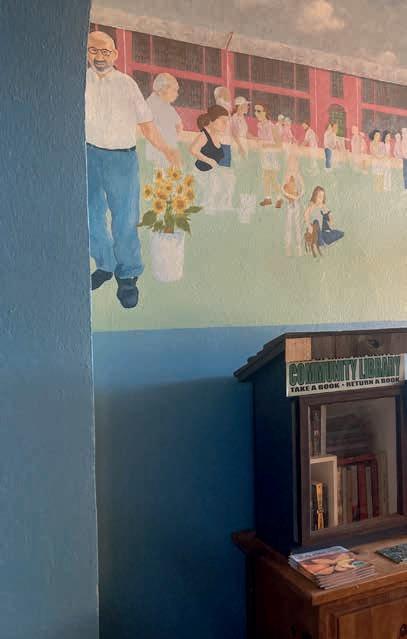
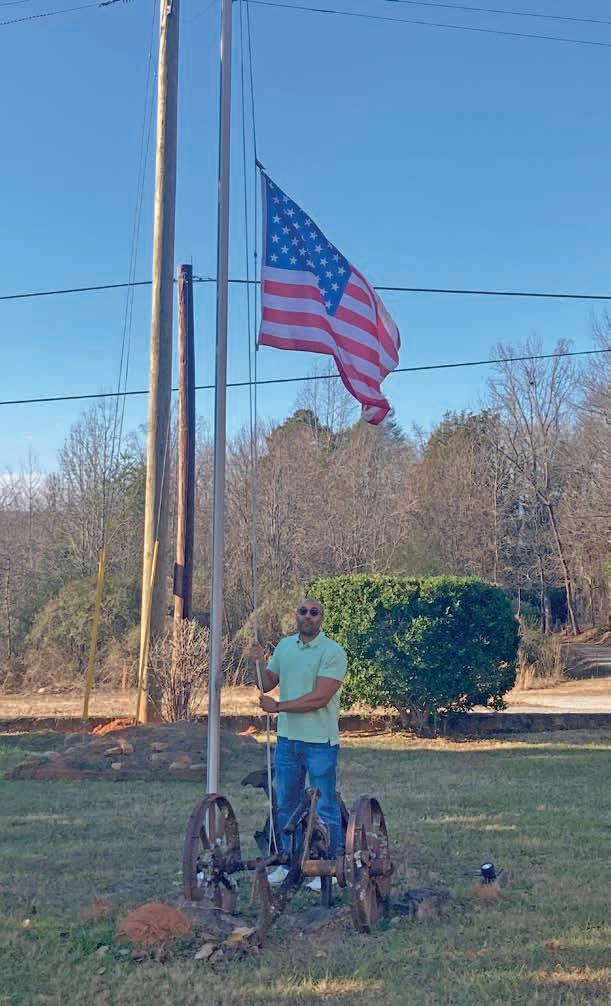
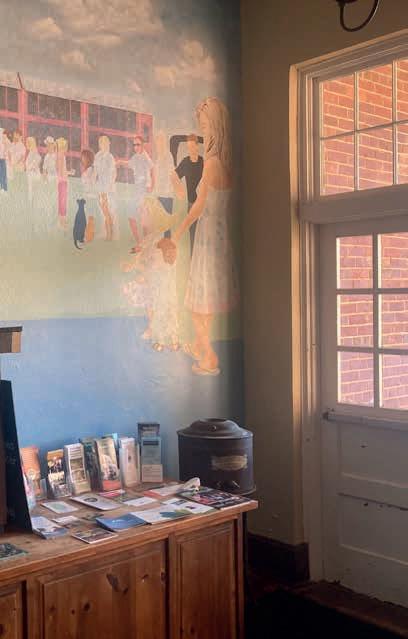
Timol supports the arts and community in various ways.
views community collaboration as essential to success. Timol underscores the importance of community involvement in every facet of his work. He says engagements with local leaders are more than business interactions; they are about building relationships and enhancing the community’s well-being. As technological advancements continue to surge, Timol remains acutely aware of their implications. “Real-time communication and data exchange are becoming increasingly pivotal. With the rise of AI and autonomous vehicles, we need to ensure our infrastructure can support these changes,” he warns. As the world navigates an increasingly interconnected world, Timol remains optimistic. “The demand for technology solutions that prioritize user experience will only grow,” he states. “We need infrastructure that supports





not just current demands but anticipates future innovations, especially with smart technologies and autonomous vehicles on the rise.”
His forward-thinking approach positions CloudOgre at the forefront of the tech industry, ready to tackle future challenges and innovate solutions that meet community needs. “By blending technology with empathy, we can enhance lives while driving business success. We have to build systems that can adapt as technology evolves. If we merely react, we’ll be left behind.”
Anwar Timol’s journey exemplifies the power of leveraging technology for the greater good. Through CloudOgre, Timol’s dedication to integrating technological innovation with community support marks him as a true visionary in the telecommunications sector. His insights are a reminder that the heart of any technological advancement lies in its ability to serve and empower individuals and communities.
“I believe that as we advance, we must never lose sight of the human element. That’s where the real magic happens.”
For more information on Timol’s endeavors, visit cloudogre.com or millspringagcenter.com.






ABy Pebbles
well-suited pairing resulting in an excellent outcome, which was quite possibly pre-destined, that is a “Match made in heaven!” Well, I should know, as my arrival at HERD Rescue was a perfectly positive outcome for all parties. After all, heartfelt decisions are made largely because of the power of attraction. Some of us are simply irresistible.
“Were you ever so in love, you couldn’t wait to get to sleep and dream about the one you wish was there beside you,” penned songwriter John Oates. Let’s examine a few matches that have transpired thanks to Cupid’s arrows, those dreamy, horsey unions.
First in line was the pairing of long-standing HERD volunteer, Bill McClelland, with his handsome gelding, Joe Black. Bill had first been matched
with another black gelding HERD had saved, named Tuxedo. This striking black equine had been a trail horse in Tennessee. He had run through an auction, ending up in a dire situation in North Carolina. Our rescue saved him and sent him to recover and get some updated riding experience in the Tryon community with trainer Calvin Halford. Bill was excited to welcome Tuxedo in the spring of 2020 as his new horse. Tuxedo was
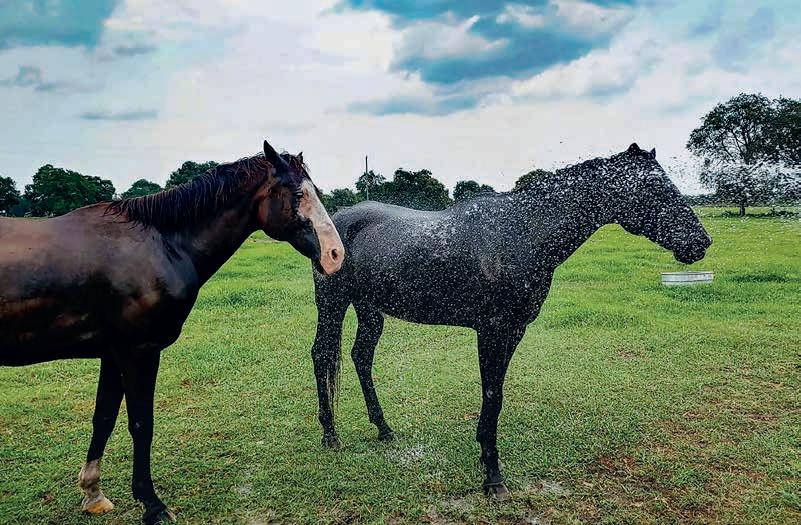
one sweet, gentle horse. However, with regular riding, he began limping, and our vet was summoned. Although this horse had nice, big feet, he had been repeatedly shod in smaller-than-required shoes for years, while living in Tennessee. This resulted in his developing navicular disease as a middle-aged horse. Otherwise, this horse was healthy with many good years left to enjoy life. It was determined that Tuxedo would be relocated to a sanctuary home to live out his years as a pasture pal. Meanwhile, we had to find Bill a new trail horse.
As fate would have it, Joe Black became available. He had been trained for HERD in North Carolina by volunteer Alene Harfmann. Joe was adopted in 2019. He was an excellent trail and obstacle riding equine for his owner. However, a year later, his new home decided to stop riding due to the costs of equine expenses and her job situation. She donated Joe back to our rescue. Alene notified HERD, and
got her started under saddle, and the two
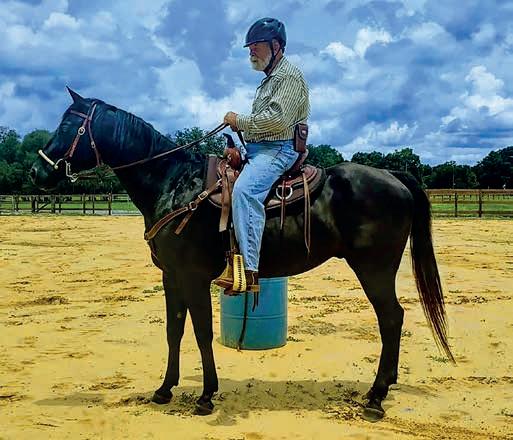
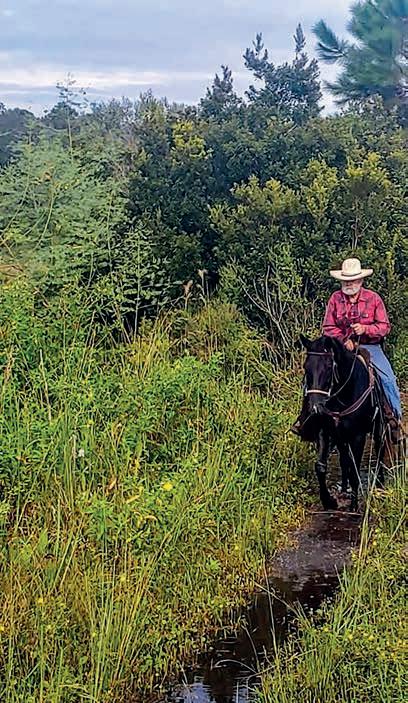
it was decided that he would be a good fit for Bill as his new partner.
“Call it luck, call it fate, call it a shame we met so late,” according to Oates, but at last, in 2020, Bill had met his match for hitting the trails. The saga does not end here. Bill developed crippling hip pain in 2024. He feared he needed to find Joe a new home. Bill did not want this horse to languish in his pasture if he could not ride him. However, the next ideal situation for Joe did not materialize. Then, Bill decided to undergo hip replacement surgery. His horse waited patiently for his return. Months later, the two hit the trails again as if they had never
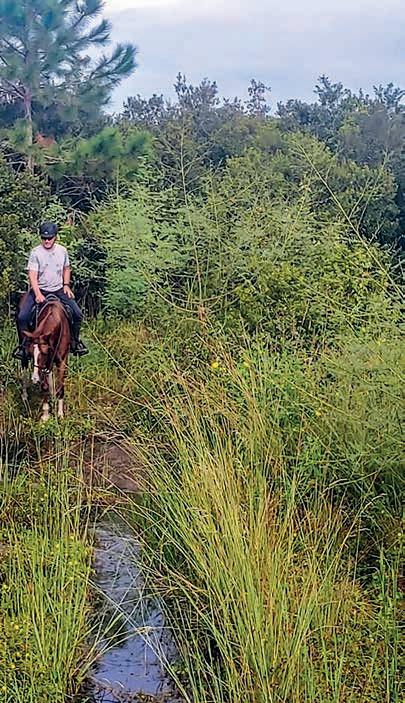
been apart. Joe was true to his nature and was more whoa than go as the two started riding out on adventures together this winter.
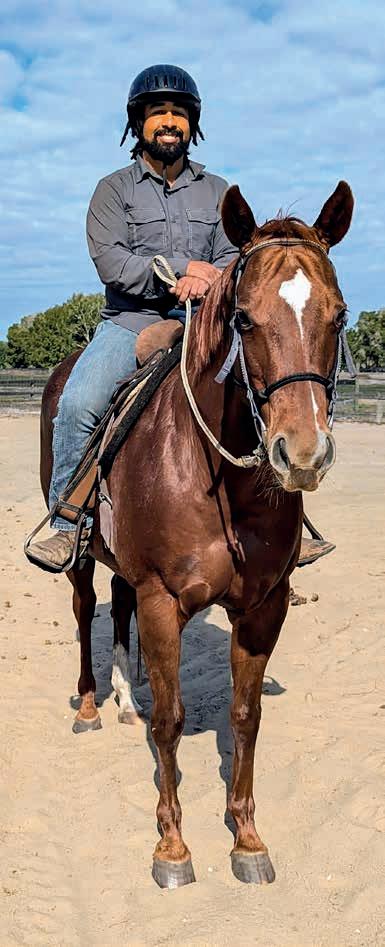
Next up is the story of Night Lark. My mistress, Heather Freeman, saved her from slaughter as an unhandled yearling. Heather saw this filly in a small corral packed with too many horses in North Carolina. A stallion had grabbed this copper-colored beauty. He had bitten a large hole through her neck, which was bleeding profusely. She could not ship to Mexico in this condition. The kill buyer let Heather purchase her for $250. At this point, Night Lark was not touchable,




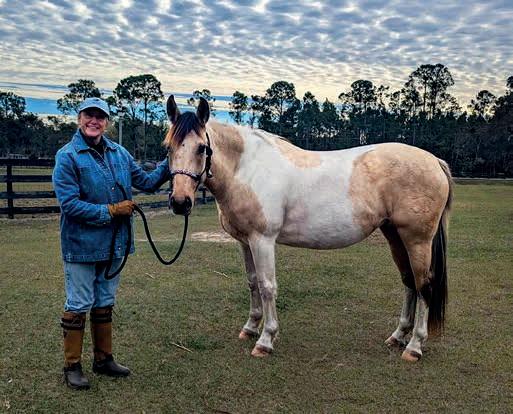
mare for riding. Night Lark was so good that any guest visiting who wanted to go riding could depend on this young mare for a safe experience.
So, it was an incredibly awful turn of events when one day, coming in from a relaxing ride, Night Lark did the unthinkable. She spooked unexpectedly. Heather was thrown off hard and shattered her femur, from above the knee up to the hip socket. It took three years and four surgeries before Heather could resume a somewhat normal walking gait. Night Lark was not ridden, nor were Heather’s other prized horses, Promise, Sophie, and Inca. Heather could visit and brush them, but she could not exercise them or even do groundwork safely.
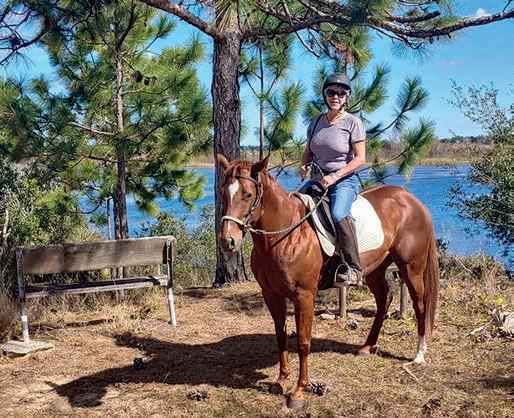
Then along came a new HERD volunteer, Mark Augustine. He began riding Night Lark for Heather while his friend Cathy Miles focused on getting Inca into condition. Mark developed a deep bond with



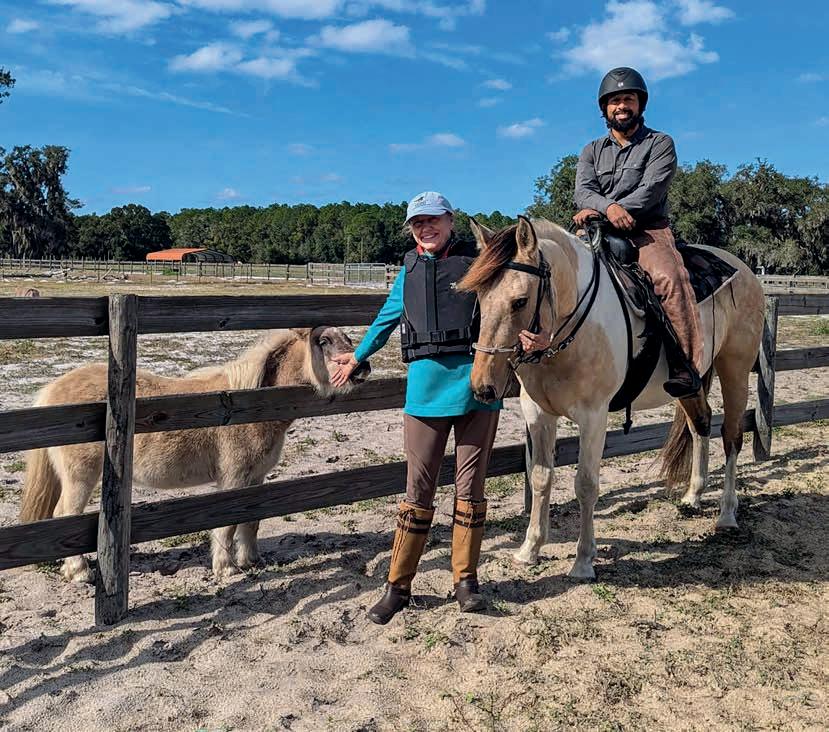
Night Lark. He asked Heather if he could adopt her. The answer was yes, and now Mark and Night Lark are riding the forest trails together as true partners. The next most recent match is with Jody Schwartzman and the young HERD mare, Utah’s Topaz, who had grown up in foster care with Kathleen Foster in Rutherfordton. This mare was saved as a starved, unhandled filly who had come from out west. Jody is a devoted volunteer for HERD. She has been working with Utah and has fallen hard for this uniquely patterned buckskin pinto mare. The adoration is mutual. Mark has also been helping by riding Utah to give her a stronger foundation under saddle. Jody is taking it slowly this winter, building a rapport with this horse. She has high hopes of trail riding next summer. And while the ink is barely dry on her adoption papers, our fingers are crossed that this, too, will be a match made in heaven.




Ice cream is a beloved dessert. The extraordinary number of flavor combinations that can be achieved simply by mixing together a few ingredients undoubtedly contributes to its popularity.
For those partial to cherries and almonds, there’s nothing better than combining those flavors in this recipe for “No-Churn Cherry Bakewell Ice Cream” from Jane’s Patisserie (Sourcebooks) by Jane Dunn.



No-Churn Cherry Bakewell Ice Cream Serves 10
• 200 grams pitted cherries (about 1 cup)
• 450 milliliters double (heavy) cream (about 2 cups)
• 397 grams condensed milk (14 ounces)
• 1 teaspoon almond extract
• 1/2 teaspoon pink food coloring (optional)
• Cherries and toasted flaked almonds, to serve


1. Add the pitted cherries to a blender and blitz until smooth. Pass through a sieve to remove any lumps and set aside.
2. Pour the cream into a bowl and whip to soft peaks.
3. Put the condensed milk, almond extract, pink food coloring (if using), and puréed cherries into a separate bowl and stir to combine. Pour the mixture into a container, such as a large loaf tin.
4. Freeze for at least 5 to 6 hours, or preferably overnight, so it has time to reach the correct texture. Remove from the freezer about 20 minutes before serving to allow it to soften slightly. Scoop into bowls and serve topped with fresh cherries and toasted flaked almonds.
Cookies are a treat any time of day, and many find biscotti particularly appealing. These crunchy cookies are equally at home with a morning cup of coffee as they are with an evening mug of hot cocoa.
Biscotti are hard, crunchy Italian cookies that are baked twice. In fact, their name comes from the Latin bis, meaning “twice,” and coctus, meaning “cooked.” Al-
though they can be enjoyed on their own, their dry, crunchy nature allows them to hold up well when dunked into a beverage. Biscotti were even once commonly dipped into red wine.
Though they might seem complicated, biscotti generally are easy to make. Try this recipe for “Semolina and Almond Biscotti” from Butter, Flour, Sugar, Joy (Sourcebooks) by Danielle Kartes.
Semolina and Almond Biscotti Yields 12 to 16 cookies
• 1 cup sugar
• 1/2 cup melted butter
• 3 eggs
• 1 teaspoon vanilla extract
• 1 pinch salt
• 2 3/4 cups all-purpose flour
• 1 cup sliced almonds
• 1/2 cup semolina flour
• 1 teaspoon baking powder
Optional: 10 ounces dark chocolate, melted, for dipping
1. Preheat oven to 325°F. Line a baking sheet with parchment paper.
2. In a stand mixer, cream the sugar, butter, and eggs until light and creamy, about 2 to 3 minutes. Add the vanilla and salt, mixing to incorporate.
3. Add the all-purpose flour, almonds, semolina flour, and baking powder. Mix until well combined, but don’t overmix.
4. Turn the dough out onto the prepared baking sheet. Pat gently to form one long loaf of dough roughly 14 to 16 inches long and 5 to 6 inches wide. Bake for 30 minutes.
5. Remove the loaf from the oven and allow it to cool for 5 to 6 minutes before using a long knife to gently cut the loaf into 12 to 16 cookies. Lay each cookie on its side and bake for another 20 minutes, flipping the cookies midway through.
6. Cool completely to achieve that signature crunch. The centers will be a bit soft if eaten warm. These are perfect for dunking in coffee, tea, or hot chocolate.
7. Optional: Melt the chocolate in the microwave in 30-second bursts and gently dip half of each biscotti into it lengthwise. Flip the biscotti chocolate-side up onto a sheet tray and allow the chocolate to set.







With over 500 rented spaces, the Tryon Antique Mall & Marketplace makes the perfect shopping experience. We are a one stop shop for all! We offer vintage, antique, and primitive items, and much more!
Some of the retailers available in the mall include Wet-It, Danica Designs, RADA, Umgee, Smoky Mountain Roasters, and Skinny Syrups, along with many more!

Valentine’s Day is an opportunity to lavish love and attention on a special person in your life. Exchanging gifts, enjoying dinner out, and snuggling with your sweetheart are commonplace on this mid-February holiday devoted to love. It is equally common to enjoy a sweet dessert to cap off this romantic day.
Food allergies and intolerances do not take a holiday when Valentine’s Day rolls around. For those who live gluten-free, finding a dessert that suits their diet might prove a tad challenging. Luckily, it is relatively easy to whip up a gluten-free dessert and ensure that Valentine’s treats can be enjoyed by all. This recipe for “Snickerdoodles” from Cozy Kitchen Allergy-Friendly Cooking (Umbrella Sky) by Jeanette Smerina is gluten-, soy-, and dairy-free, but certainly not free of delicious flavor. What’s fun about these cookies is that cooks can use colored sugar to customize them for any occasion. Use red and pink for Valentine’s Day.
Your dream. Our mission.
If you are a resident of Polk County or Rutherford County, your tuition could be free with the Powers Promise!





Snickerdoodles Makes 25 to 30 cookies
• 2 1/2 cups gluten-free flour, 1-to-1 blend
• 1 teaspoon cream of tartar
• 1/2 teaspoon baking soda
• 1/4 teaspoon salt
• 1 cup granulated sugar
• 1/2 cup olive oil
• 2 eggs
• 1 tablespoon vanilla extract
• 3 tablespoons almond milk
For rolling and coating:
• 1/4 cup granulated sugar (or colored sugar)
• 2 tablespoons cinnamon
1. In the bowl of a stand mixer, add the flour, cream of tartar, baking soda, and salt. Mix on low just to combine.
2. In a small bowl or large measuring cup, whisk together the oil, eggs, sugar, and vanilla extract until thickened.
3. Add the egg and sugar mixture to the dry ingredients and mix until just combined. Then add the almond milk and blend once more.
4. Cover and chill dough for 30 minutes or more. Meanwhile, preheat oven to 400°F. Line two cookie sheets with parchment paper or use silicone baking mats.
5. In a shallow bowl, combine the sugar and cinnamon. Scoop small balls of the cookie dough (about 1 inch in diameter) and roll in the cinnamon-sugar mixture. Place each ball 2 inches apart on the cookie sheets. Repeat until all dough is used. The cookies will puff and enlarge while cooking.
6. Press down slightly on all cookie balls to flatten them a bit. Bake cookies for 8 to 10 minutes, or until the edges look set.
7. Cool cookies on racks. Store in covered containers for up to one week.
Bill the painter for all your painting needs! Also do drywall repair and wood repair! 32 years experience. Like Bill the Pinter on Facebook 828-899-2647
Home for Sale Oneof-a-kind sanctuary situated on 21 secluded acres with pond. 5,200 suare foot gated estate. $1,850,000 Lane Robbat 828.817.4663
Specializing in small repairs, Water Heaters, Well Pumps. Serving Polk County for 34 Years Licensed and Insured NC & SC 828-817-1327
• Your HVAC Service & Repair Expert • Serving the Tryon area for 30+ years. Call (828)8630555
Epperson’s Tree Service
• Complete Tree Service •Dangerous removals •View Cutting •Lot Clearing •Tree Trimming •Crane Removals Serving NC for 25yrs Fully Insured ISA Certified Arborist (828)606-4980
GOCO Contracting Trusted.Reliable.Local. residential upgrades, repairs and restorations. Serving Western NC and Upsate SC. Based out of Tryon NC Call GOCOThe Contractor You Can Trust. 828-899-7290
Stump Removal Quantity Discounts on 50+ Stumps! As low as $10 each! Call for pricing.
Fully insured. Free Quotes! Call Ron at 828447-8775
SPECIALIZING IN DECKS, PAINTING, CARPENTRY, AND HOME MAINTENANCE. “1 CALL DOES IT ALL.” CALL CHRIS AT (828)388-2503
PAINTING FLOORING AND MORE! CALL TODAY 828-9990302 Serving Columbus, Tryon, and Hendersonville Lake Pointe Landing, A Century Park Community. Lake Pointe Landing is not just a great place to live, but a great place to work as well! We are currently looking for nursing staff including CNAs, RNs and LPNs, offering competitive pay and benefits. Visit www. centurypa.com today to explore available positions and apply online! Or stop by out facility to fill out a paper application.
Residential Painting
•Interior & Exterior
•Ceiling Texturing •Light Carpentry Free Estimates Please Call: 864-4943397
Manuel Flores
Construction •Stucco •Block •Brick •Tile •Concrete •Stone Work 864-361-1794
Nice Guys Yard Clean
Up Serving Foothill Mountain Area: Tree Trimming, Brush Pile
Burning, Hauling, Shrubbery, Weedeating, Weed and Brush Spraying, Garage/ Shed/Barn Clean Out. Competitive Prices Hourly or By the Job! Call The Nice Guys Today! Ask for Charles 864-285-8486
Philco’s Pressure Washing Get all the Mold, Mildew, & Oxidation off your house! •Clean Vinyl Siding •Driveways
•Sidewalks •Stain & Seal Decks & More! Liability & Workers Comp 31 years Experience Call
To Clean Today! Phil Tolleson 864-599-1978 or 864-304-8463
POLK COUNTY
SCHOOLS Visit https:// polkschools.org/ personnel/ to apply Or Call:828-894-1001
$10 Off Fall Preventative Maintenance (Reg $75)
Rutherford Heating and Air 828-287-2240
ALL types of plumbing repairs • Installations
• Emergency plumbing issues • Driveway repairs
| Call David Cothran 864-266-8267
STEPS TO HOPE Thrift Barn • Landrum, SC • FT Donation Assistant FT Donation Assistant/ Driver Duties include but not limited to:
•Greet donors, accept donations, provide tax receipts •Sort/separate donations •Unload truck after pickups
•High School diploma/ equivalent •Ability to stand for long periods & lift heavy items •Backup Driver must have valid driver’s license PTO, Healthcare Benefits included. Send resume to retail@stepstohope. org