


What does it take to create lasting change?
This is a question we’ve been coming back to over the past year.
Since launching our 2030 strategy in 2024, we’ve shifted our focus more firmly to the root causes of poverty. For us, that means backing work that can change policy, shift power and challenge the structures that keep people in poverty.
We know that this comes with trade-offs. This kind of change is slower and often less visible. And it’s meant stepping back from work that mainly responds to immediate need.
This wasn’t an easy decision. The pressures people are facing across London haven’t gone away. For many, things are getting worse. But if we keep focusing most of our resources on
dealing with the consequences, the underlying problems won’t shift.
This longer-term focus means funding more campaigning and influencing work, and shifting how we think about our role as a funder. It means working even more closely with our funded partners.
As part of our commitment to being a relational funder, we’re spending more time talking with and listening to organisations and being flexible. We recognise that the organisations closest to the issues are best placed to lead change – and that our role is to support organisations and their leaders, not direct them.
This report shares some of what that looks like in practice. It brings together stories from the organisations we work with, and the people driving change every day. We’re grateful for their work, and for the trust they place in us to support it.
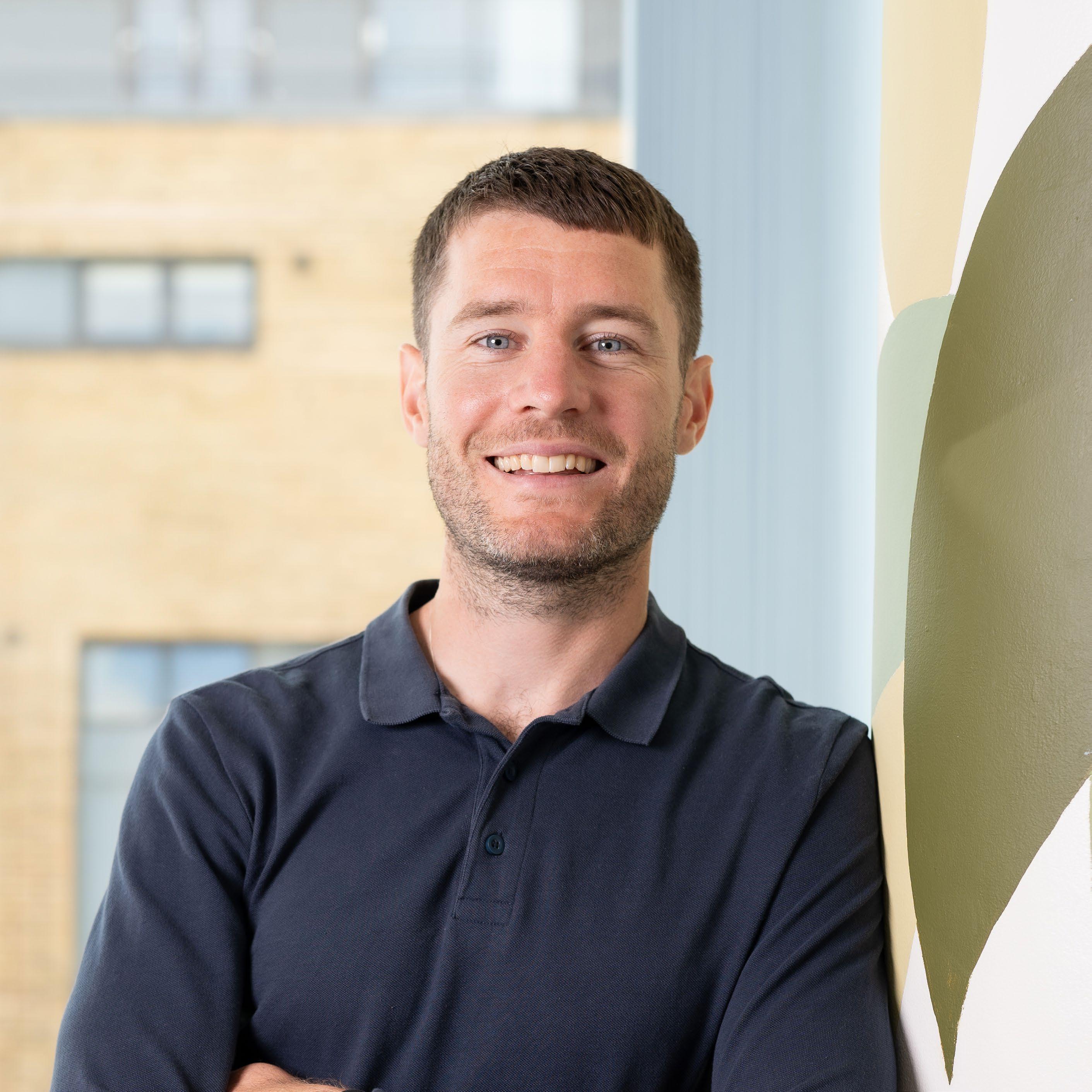
By Klara Skrivankova and Rebekah Delsol, directors of grants

Our mission is to tackle poverty and inequality in London. We do this by funding long-term change work in a few different ways. We give grants to organisations through our open application process, as well as providing one-off funding for strategic projects including things like campaigning and research. Alongside this, social investment is a core part of work, through which we give out low-cost loans to organisations with a social mission.
Over the past year, our thinking about how we fund has continued to evolve.
For a long time we’ve long supported organisations providing vital services to Londoners experiencing poverty. That work
remains essential. But we’re also looking more closely at the practices and power structures that trap people in poverty and create unequal outcomes.
We know that individual projects can make a real difference, but lasting progress also depends on changing the wider systems that shape lives. So we’re putting even more emphasis on work that addresses the causes of poverty, not just its consequences. This means we can focus our limited resources where they can add most value, and on areas where collective effort contributes to meaningful change.
Millions of Londoners are in poverty. This isn’t because of choices those people make, but because of the systems all around us.
Systems are not fixed or abstract. They’re made up of people, institutions, relationships and decisions — and these can be changed.
For us, long-term change is about creating conditions for fairer outcomes. That might mean shaping policy, shifting public narratives, strengthening community power, changing institutional practice or building new alliances around shared goals.
This kind of change doesn’t happen in a straight line and the early stages can be messy. Major reforms are often built on years of research, organising, coalition-building and advocacy.
We fund community organising, policy advocacy, research, campaigning and movement-building. We support organisations that help people in poverty to influence decisions that affect their lives, and work that connects frontline advice with policy change.
Progress can look like a new voice being heard in a policy debate, stronger alliance between organisations or a shift in how decision-makers understand an issue.These developments lay the foundations for larger changes in the future.
Good funding depends on strong relationships. Being a truly relational funder means building partnerships based on trust, openness and mutual learning. And it means valuing diverse contributions.
Organisations working closest to communities bring invaluable understanding of people’s experiences and opportunities for change. People working in research and advocacy can help shift policy and public debate. Both are needed.
This is also true in our social investment work. Becoming investment ready takes time, and we support organisations during each stage of their journey.In practice, being a relational funder means having conversations before and during the funding journey. We ask organisations to speak to us before applying to help us understand their ideas and to make sure we’re the right funder for the work.
“This kind of change doesn’t happen in a straight line and the early stages can be messy. Major reforms are often built on years of research, organising, coalitionbuilding and advocacy.”
It also means continuing open conversations about what’s working, what’s not and what we’re learning. This matters because the work we fund can be complex and unpredictable. Work to influence policy, build power or strengthen movements often needs to adapt as opportunities and challenges emerge.
A relational approach creates space for that flexibility. It helps us focus on learning and progress, not just fixed outcomes.
It also helps shift traditional power dynamics in philanthropy. Funders bring resources and a broad view. Partners bring expertise, relationships and lived experience. Strength comes from valuing and combining both.
Our headline funding data reflects this journey and our growing commitment to work to influence systems and structures. It highlights the importance of flexible, longer-term funding for organisations pursuing ambitious social change goals. And at times, shorter and more responsive grants to help opportunities for change move quickly.
At the same time, the data only tells part of the story. It can’t fully capture the collective efforts that underpin lasting change.
That is why we see data as one important source of insight, rather than the whole picture. Alongside numbers, we continue to learn from partners and peers about what drives meaningful change and where we can make the greatest contribution. And to share stories of the work.
We’ll continue to shift to the evolving challenges being faced by Londoners experiencing poverty, and the opportunities for change.
What remains constant is our belief that tackling poverty needs both immediate action and longterm change. To do this, we’ll keep supporting organisations to build power, influence decisions and challenge the systems that drive inequality, so that London is somewhere everyone can thrive.
Our funding reaches every borough
75 grants £6.8m awarded £955k in social investment £89k average grant amount
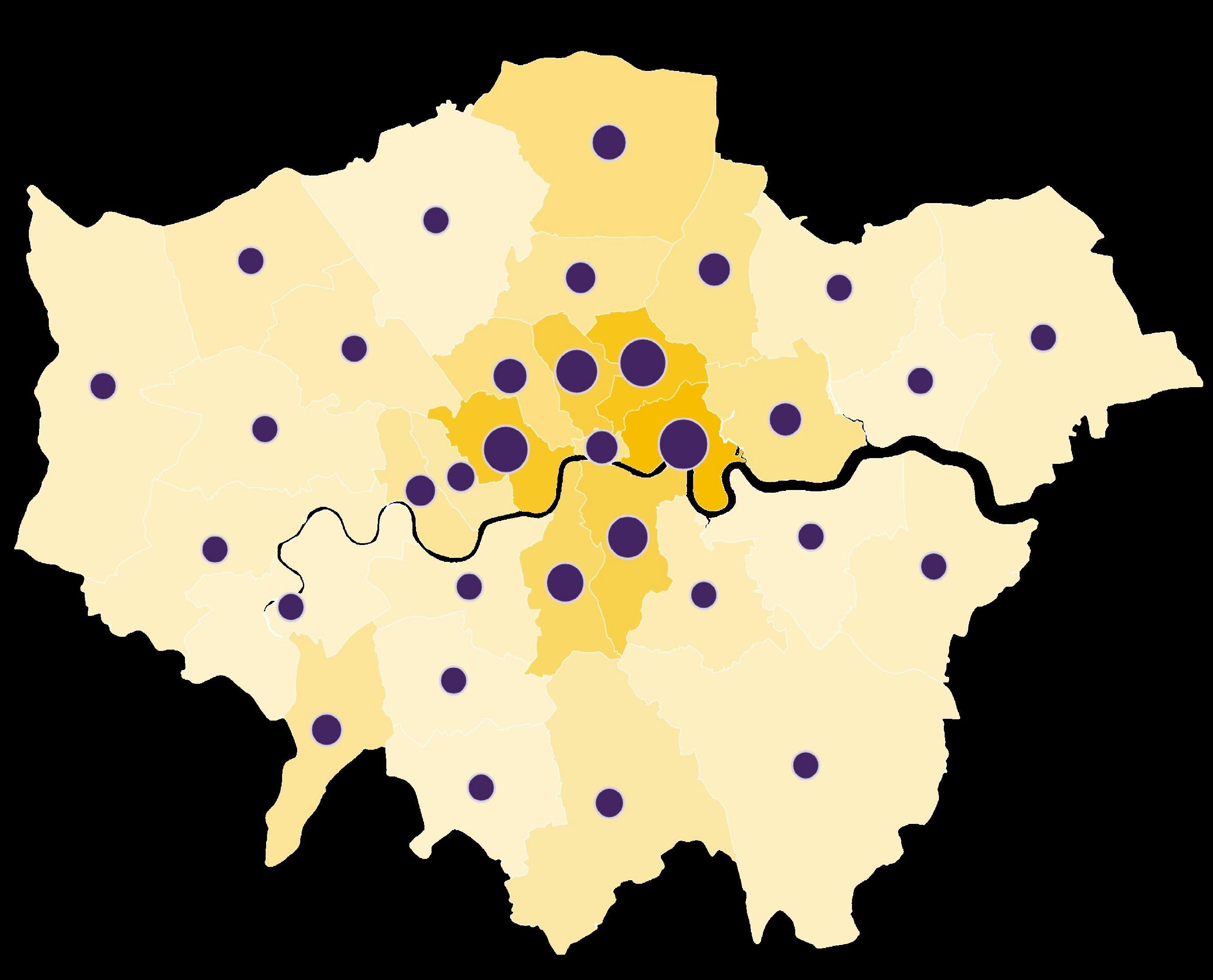
Trust for London exists to make London fairer for everyone. We fund more than 200 organisations across all 33 London boroughs working towards long-term change.
Together, we’re building a more equal London where everyone can thrive.

To really tackle poverty, we need to understand who it’s impacting, where and how. And in times of increasing pressures on the most vulnerable households, reliable, independent evidence is more essential than ever. London’s Poverty Profile is the definitive source for understanding poverty in the capital.
English Index of Multiple Deprivation, rebased for London (2025)
of Black and minoritised Londoners in poverty
1 in 2
adult Londoners in poverty are in work
by Tripta Virdee, grants manager
A recent day in my role centred on the new Fair Work Agency, which has amazing potential to better protect workers in insecure and low-paid jobs. It’s a moment that could shape how employment rights are enforced for years to come.
The day began refining a briefing developed through the ELAN network, where we’ve brought together five organisations into a Fair Work Agency Coalition. Over 25 organisations have now signed the briefing. Together, we’re calling for an Agency that is properly resourced, trusted by migrant workers and transparent in how it operates.
Throughout the day, I was in conversation with partners - testing ideas against what organisations are seeing on the ground, and bringing different perspectives together into something shared. By the afternoon, I was coordinating feedback across the coalition, while also speaking to organisations thinking about applying for funding.

So much of this work is about relationships. It’s not just about making grants, but about listening and supporting groups through networks and opportunities that can have a lasting impact on organisational strength and sustainability.
That same approach carries through when things are difficult. When one organisation I funded lost key staff and struggled to keep up with reporting, we reset expectations and focused on what they needed to stay afloat. Creating that space for honesty felt just as important as the funding itself.
Building trust and relationships so organisations feel safe to be honest about both progress and challenge.
by Luke Kavanagh, social investment manager
What might surprise people about your role?
A lot of the support we give happens long before anything turns into an actual investment. For every deal we end up doing, there are probably 15–20 conversations that don’t.
We try not to treat those as dead ends. Even if we’re not the right fit, we’ll always aim to leave organisations in a better position than when they came to us, whether that’s through a follow-up call to talk things through, pointing them towards other funders or support, or sharing training and resources that might help.
For me, being a relational funder is really about treating it as a partnership from the very start, not a transaction. We try to be upfront about that by making it clear we’re not a bank, and while we have to be responsible with how we lend, we’ll always look for ways to be as flexible and supportive as we can.
I feel like I’ve made a difference when...
I’m always quite conscious not to overstate my role in any of this. The real credit sits with the charities and social enterprises doing the work day in, day out, often in pretty tough economic and political conditions. At best, I’m there to help open up options or make things a bit easier, but the impact is entirely theirs.
What does feel meaningful, though, is being part of a wider shift in how investment is reaching organisations that haven’t typically had access to it.
When you start to see organisations that might previously have been overlooked getting the support they need to grow or sustain their work, that’s the bit that stays with me.
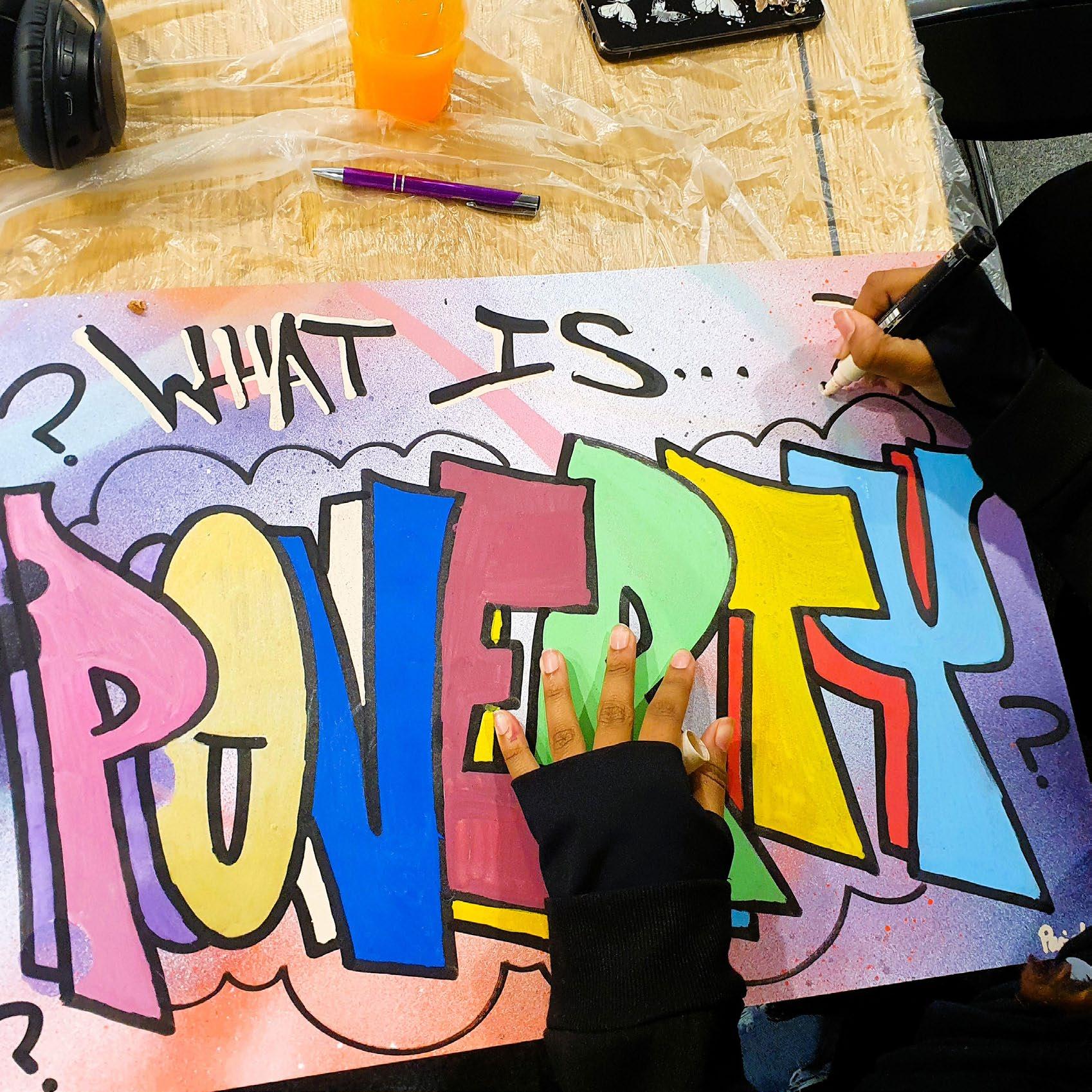
The impact of long-term change work can be difficult to measure year-to-year. Sometimes the work is specific and has a clear outcome – like helping create a new Fair Work Agency that really works for Londoners.
Other times it’s incremental changes leading to a longerterm goal – like better conditions for people living in temporary accommodation today, while we campaign for a permanent end tomorrow. Numbers can help paint a wider picture, but it’s the stories that matter most.
Funded partner spotlight
Priority area:
Funded partner:
Improving social security
Child poverty
Changing Realities
Priority area:
Funded partners:
Improving social security
4 in 10Changing Realities
Child poverty Participatory change Participatory change
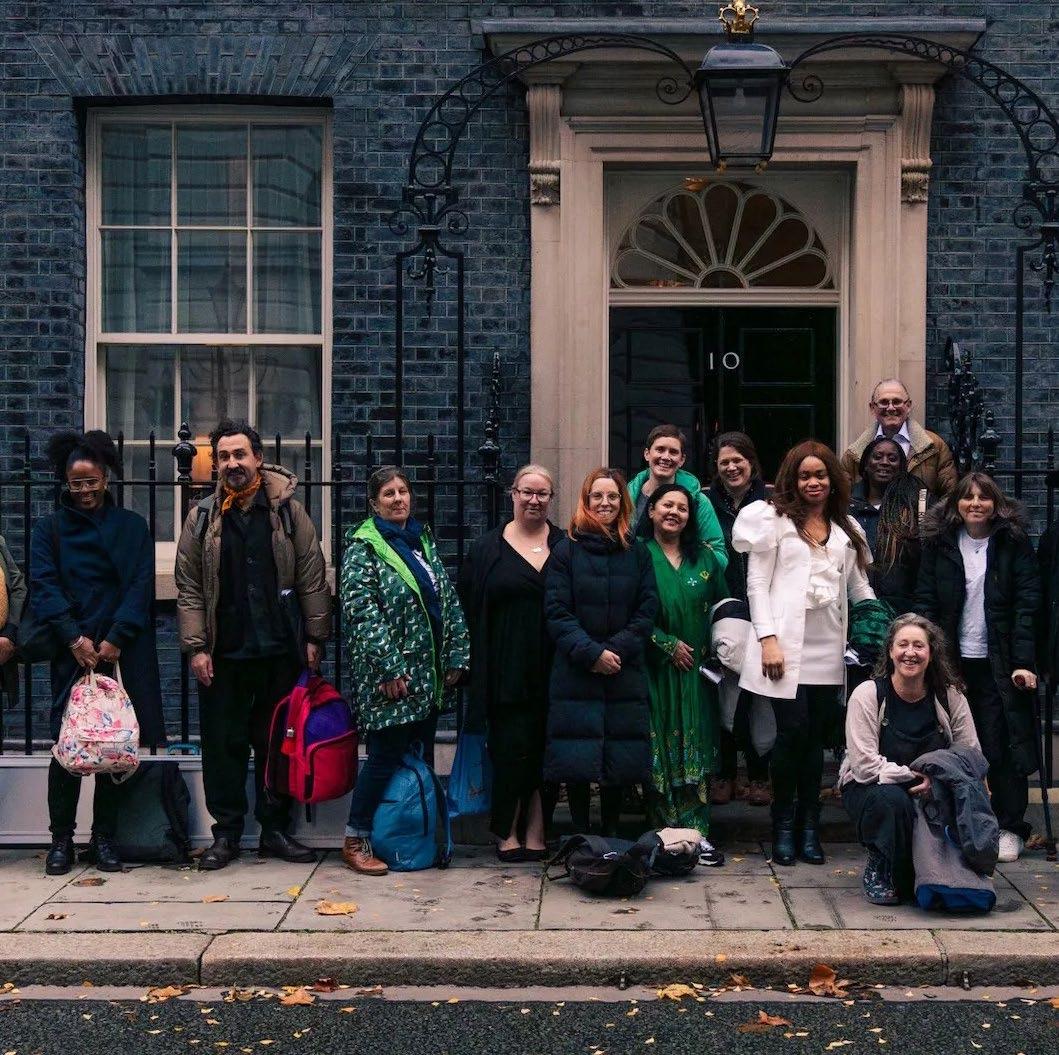
Changing Realities is a collaboration between almost 200 parents and carers on low-incomes, researchers at the University of York and Salford and the Child Poverty Action Group. Together they’re working to document life in poverty and to help design policies by providing recommendations for change.
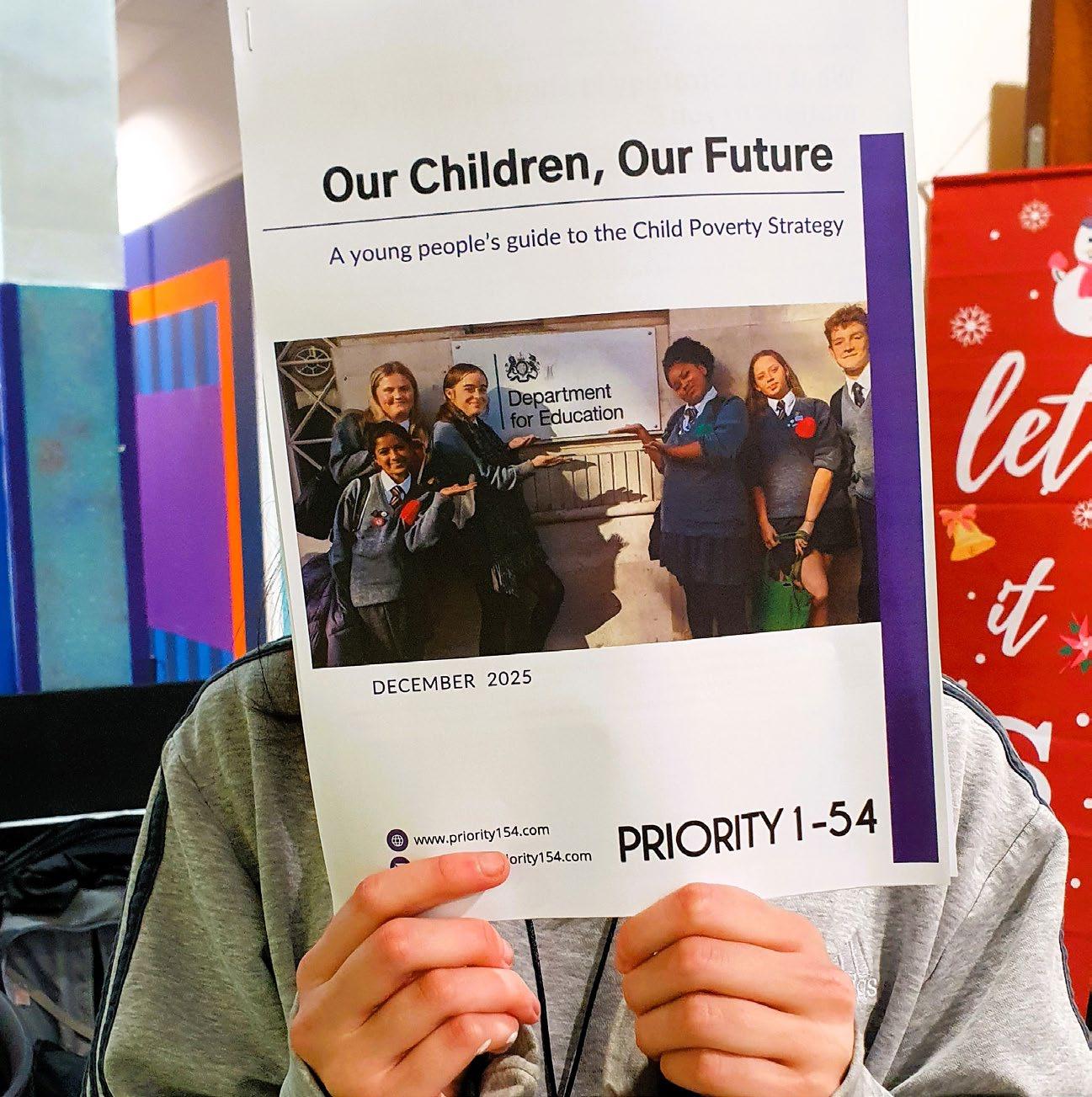
Their advice and input directly fed into the Government’s Child Poverty Strategy - showing how projects supporting lived experience can lead to real, tangible change.
Convening
“Your voices and ideas have helped us design policies that are practical, effective, and compassionate.”
-Keir Starmer, in a letter to Changing Realities
The government published its much-anticipated child poverty strategy in December 2025. Following the publication, we brought together representatives from across London’s local and regional government to explore the question: how can we make the strategy work for London -and how can we better work together to do so?
Key stats:
“Changing Realities gives me hope. I feel like being a part of this community gives me a voice that I wouldn’t have had otherwise. It provides a sense of community, highlighting that we aren’t alone and I genuinely feel positive things will come from this.”
-Cindy, member of Changing Realities
briefing emails sent to the London boroughs 32 personal letters sent to high profile policy makers including GLA and the Department of Education 12 response from the Department of Education formally logging our letter and acknowledging the potential for a meeting 1
“The event and the briefing that followed highlighted the urgent need for a stronger enabling environment to support effective action on child poverty, and identified clear, practical conditions for success. We are already seeing how these conversations are helping to shape thinking and strengthen collaboration across London.”
-Katherine Hill, 4in10
Funded partner spotlight
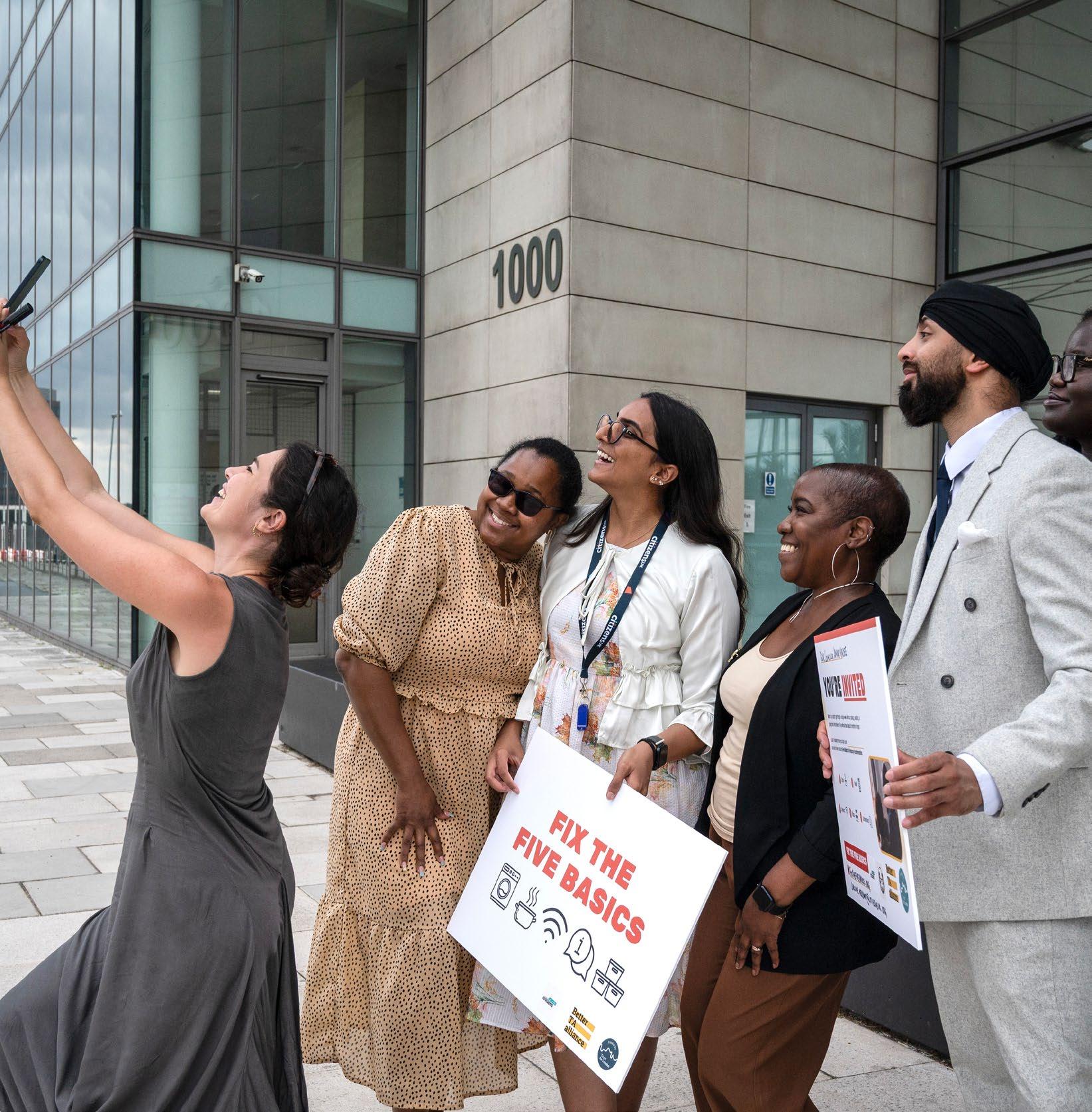
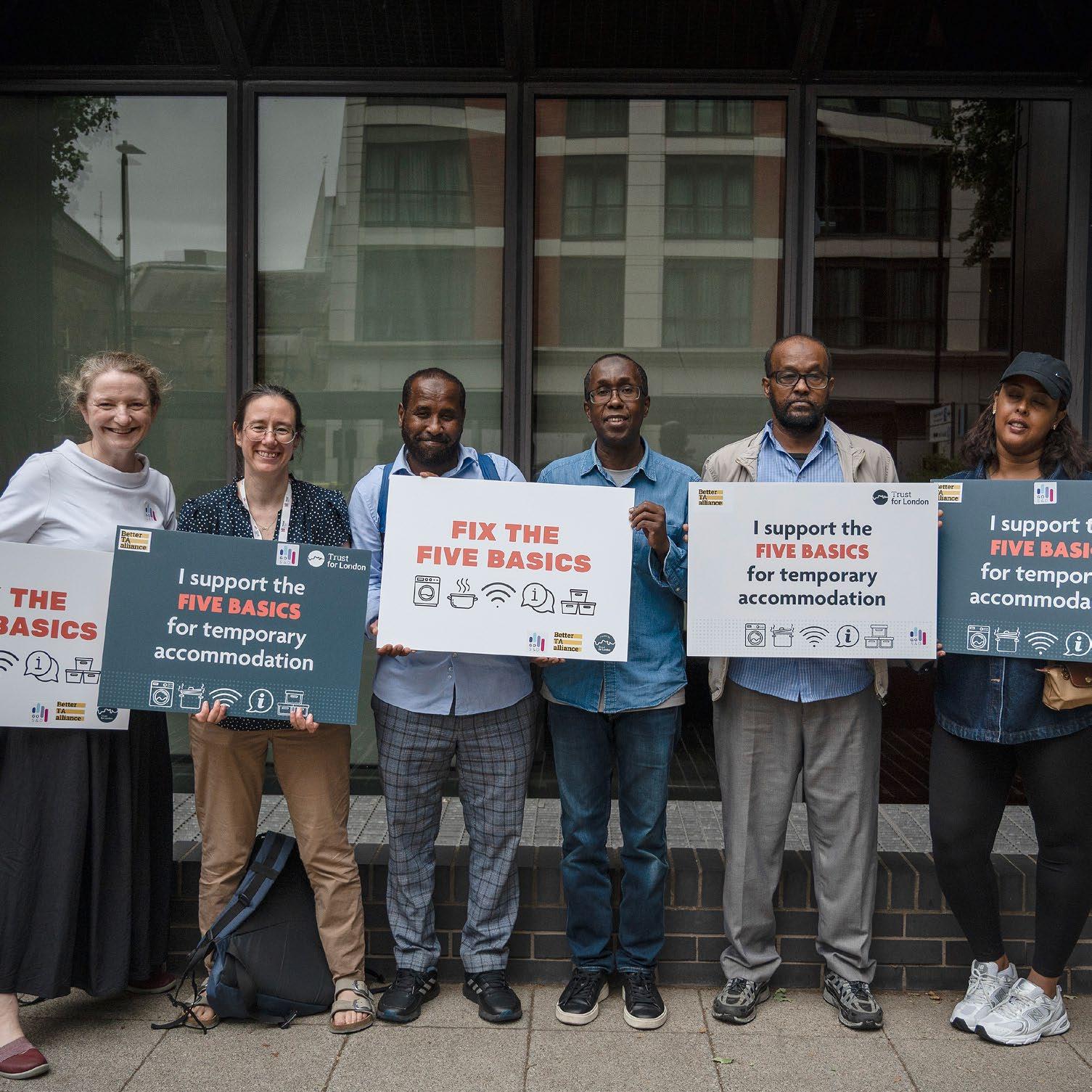
London’s homelessness crisis is worsening every year: currently, 1 in 50 Londoners are in temporary accommodation. Fix the Five Basics grew out of a coalition that came together to identify practical ways to improve conditions for these thousands of households. Made up of 19 grassroots organisation and frontline services, it was shaped by people with lived experience of temporary accommodation.
The campaign has secured tangible improvements from Westminster, Greenwich, Southwark and other councils, engaged representatives from every major party, and won manifesto commitments in several boroughs.
Key stats:
“Fix the Five Basics has shown what’s possible when organisations come together around practical, achievable asks rooted in lived experience. It’s already leading to tangible improvements in the everyday lives of Londoners. It also showed how a locally rooted campaign and national policy partners can work together to raise an issue up the national agenda.”
-Albinia Stanley, campaign lead
As living costs surge, more Londoners are struggling to pay essential bills. This partnership between Policy in Practice, Thames Water and two London boroughs piloted auto-enrolment to social tariffs – discounted water rates for low-income households, which typically have low uptakes.
Over 1,200 eligible households were found in these two boroughs not currently receiving this much needed support. The pilot had such a level of impact it’s being rolled out across more areas.
Key stats:
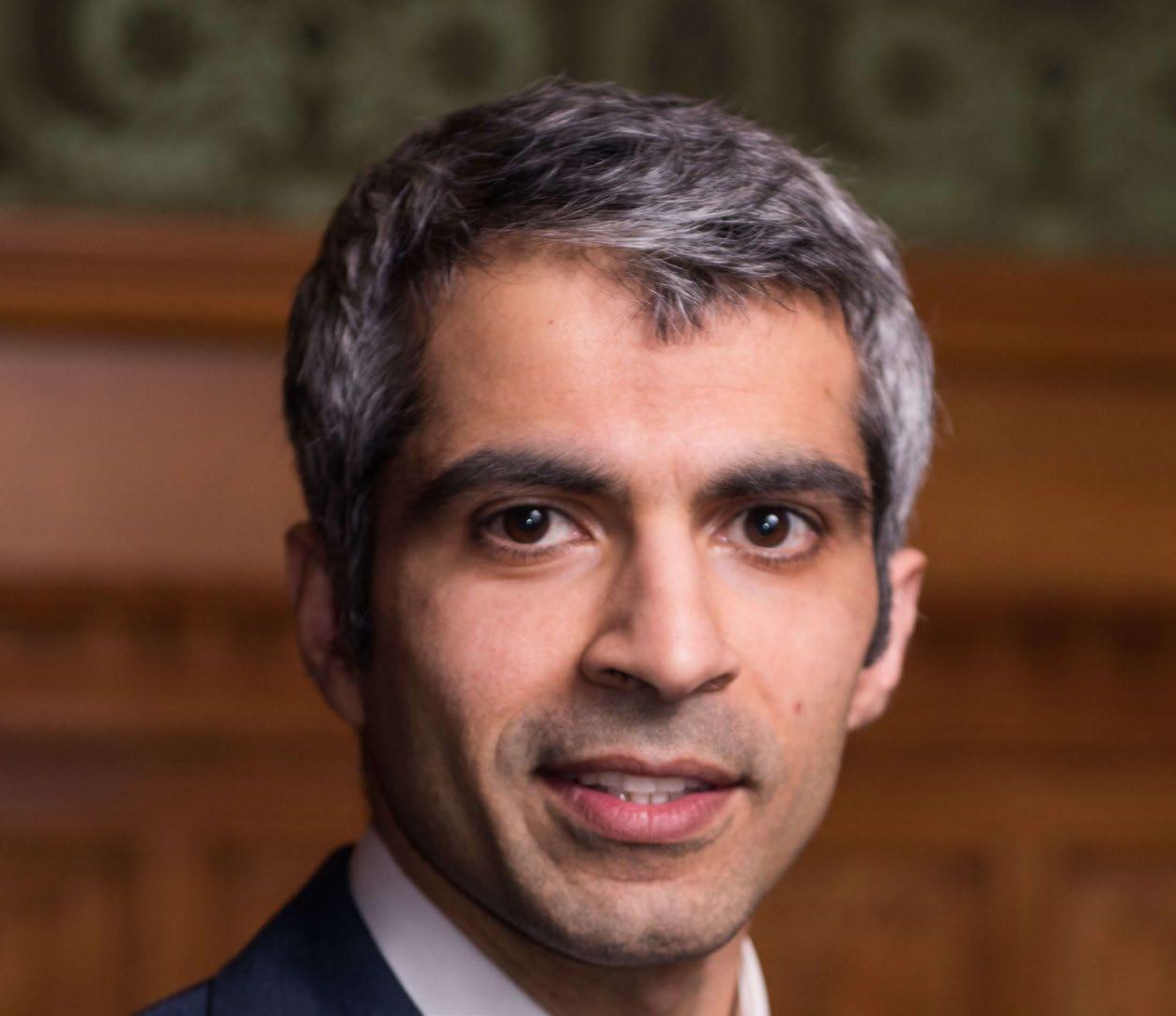
“When we apply data to helping people, we find it can take the pressure off people often when they are struggling the most. At Policy in Practice we believe there is huge potential to use data much more intelligently in the benefit system. Our autoenrolment, project supported by Trust for London, means 30,000 Londoners are now getting 50% off their water bills without lifting a finger.”
-Deven Ghelani, Director of Policy in Practice pilot boroughs 2
When a household falls behind on council tax payments, some boroughs use bailiffs to collect the debt. The use of bailiffs causes huge levels of distress, and the cost for authorities is high. That cost is ultimately passed onto households –trapping people in a cycle of debt.
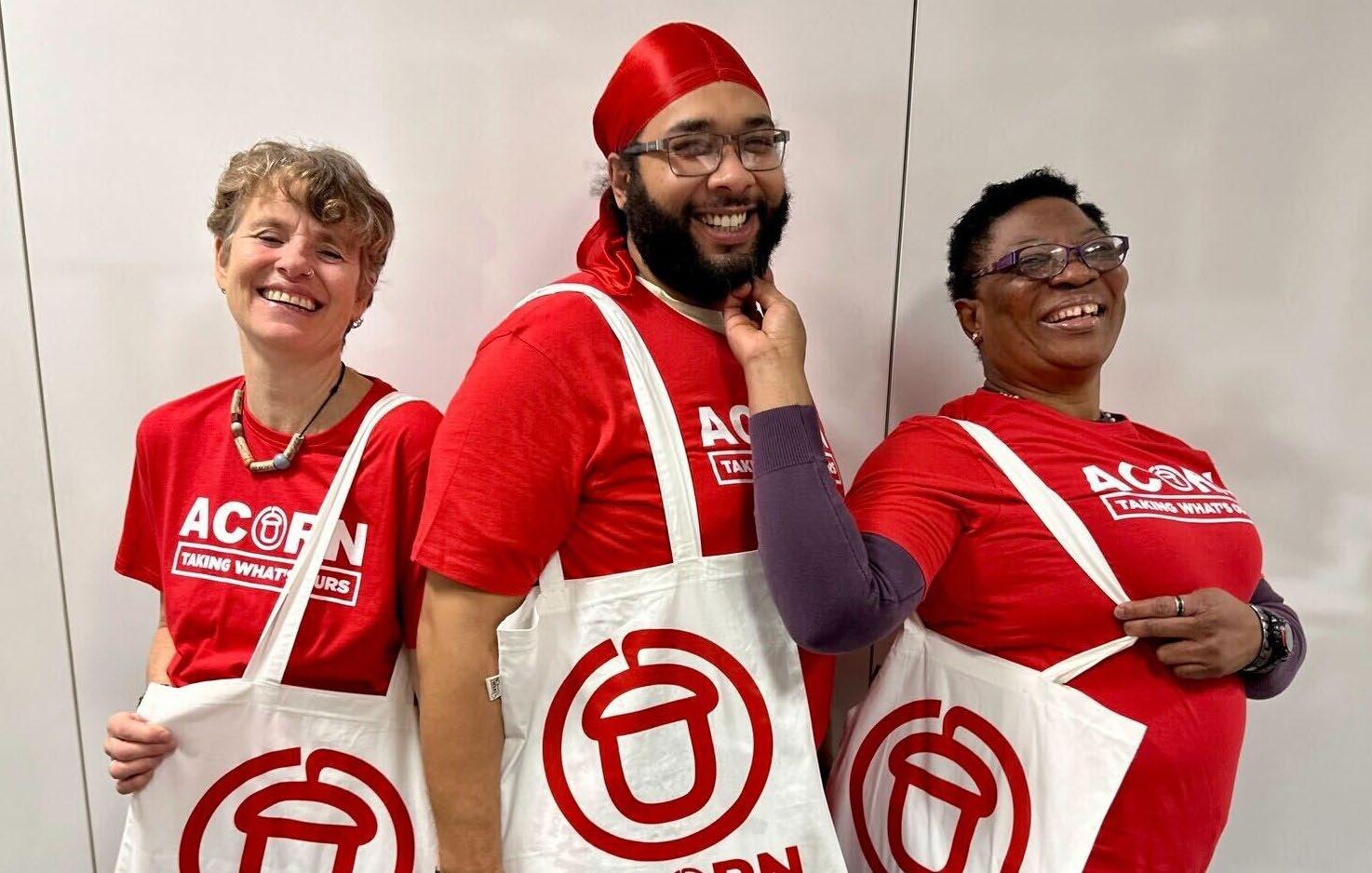
ACORN is a community union building the power of marginalised communities to give them a fair say over the systems and decisions that affect their lives. It’s campaigning across five boroughs to end the use of bailiffs to collect council tax debt.
A Lambeth member, James spent his early life in care, exempt from council tax. Now, struggling to keep up with payments, and despite many attempts to contact the council, he was repeatedly ignored. Instead of support, Lambeth council were sending threatening letters and bailiffs to his home. Members came together and attended a council meeting to speak directly to councillors about the impact bailiffs were having on community members like James.
“Can you tell me what it was like going to that meeting and having your experience relayed to the council?”
James:
“In a nutshell, liberating. Just being there and hearing my story, and looking at all of the faces of those councillors, and some of those who were really quite receptive and sympathetic. It was absolutely a dream come true, and I would do it again.”
The Employment Rights Act introduced a new single enforcement body for employment rights –the Fair Work Agency (FWA). This represents a major opportunity to improve employment rights for the most vulnerable Londoners, but only if it’s set up to succeed.
In July 2025, we brought together government, civil society and employers to identify the core principles needed to ensure the FWA works effectively for the most marginalised workers. The session led to a briefing with key recommendations, followed by ongoing influencing work. The partners remain close to the development of the FWA and the chief executive of the Work Rights Centre has been appointed to the advisory board.
Key stats:
“Trust for London’s convening work around the Fair Work agency, facilitated by the Centre for London, has initiated the future work of the Fair Work Agency coalition work which continues today. The follow up briefing from the event was a real success since it explained our position and opened the door to future conversations and influencing opportunities, which the ELAN coalition has benefited from.”
-Emma
Wilkinson, Director, ELAN
Social investment
Priority area:
Racial justice
Economic justice
Social investment
Funder partnerships
Beyond Barriers is a bold new £1.5 million initiative designed to support Black and minoritised-led community enterprises. It responds to longstanding barriers faced by Black and minoritised enterprises and brings a relationship-led approach to social investment.
Through a partnership between Sumerian Foundation, Trust for London, Esmeé Fairbairn Foundation, City Bridge Foundation and BUD Leaders, a group of Black and Global Majority-led community businesses will benefit from business and leadership support.
BUD Leaders – itself a Black-led, female led organisation based in South London – will also receive support to become a social investor itself, ultimately creating more inclusive funding pathways for underrepresented entrepreneurs.
“At BUD Leaders, we are proud to be part of this transformative initiative that aligns with our mission to empower Black and Global Majority-led enterprises. This pilot programme takes bold action to dismantle systemic barriers and create more opportunities for minority-led social enterprises to thrive”
-Georgina Wilson, Founder and CEO of BUD Leaders,

Priority area:
Funded partner:
Disability justice
Disability justice
People First
Funded partner spotlight
Self-advocacy Collective campaigns
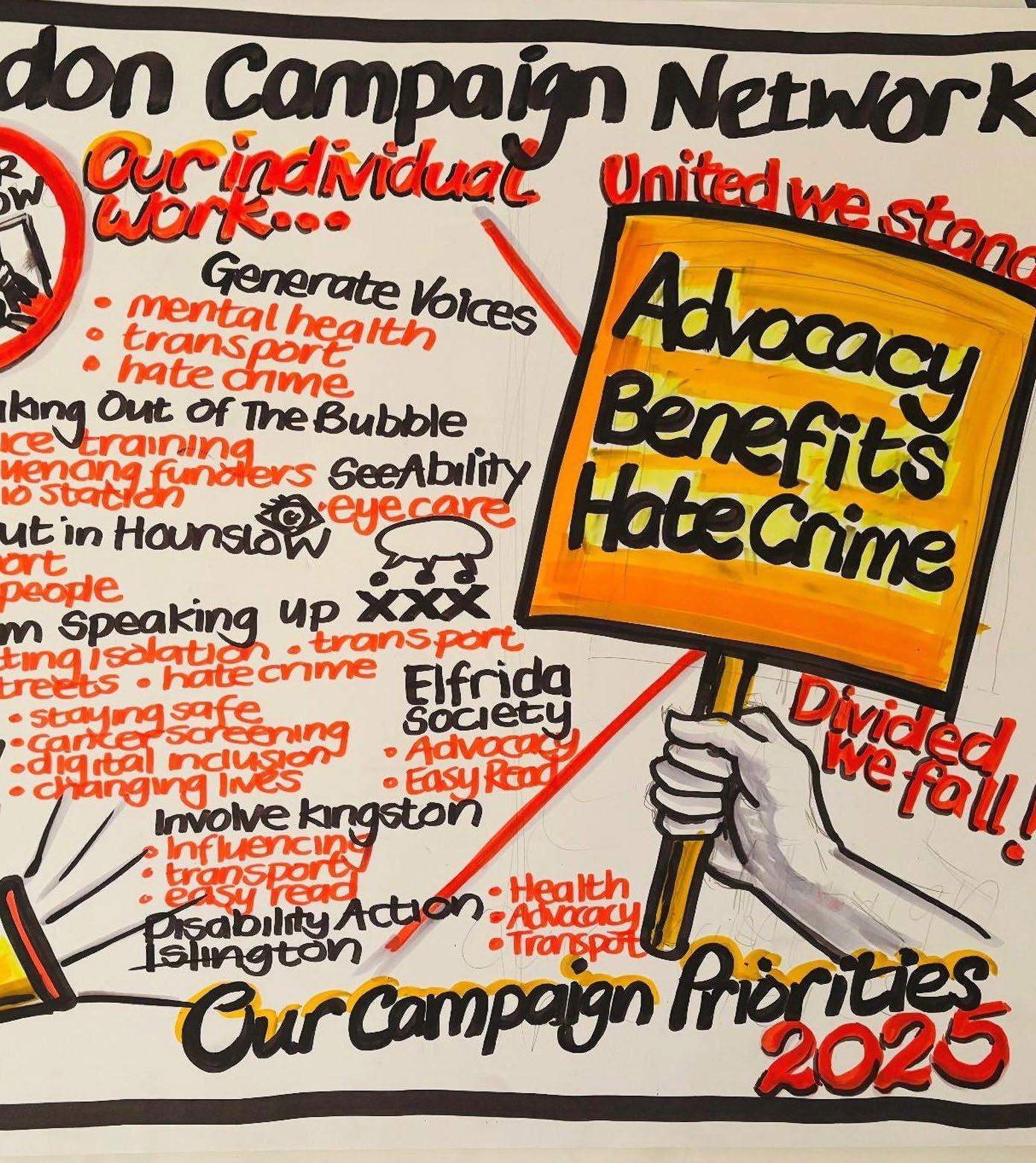
People First is a national self-advocacy organisation, run by and for people with learning difficulties. Their London Campaign Network brings together groups from across the capital to campaign collectively on the issues that matter most to them.
The network is helping people with learning disabilities build a louder voice and collaborate on campaigns. Currently, it’s feeding into the Mayor of London’s Disability Plan. By building collective power among organisations led by people with learning disabilities, it’s creating the kind of organised, sustained movement needed to achieve change that lasts.
DDPOs
Black and minoritised workers in the UK are more likely to be in low-paid jobs than their white counterparts. And even when they do the same work, they are often paid less. This is called the ethnicity pay gap, and it contributes to high levels of poverty among Black and minoritised Londoners.
We fund a collaborative project to campaign for mandatory ethnicity pay gap reporting. It’s coordinated by ShareAction, and developed jointly alongside Action for Race Equality and Dianne Greyson from the Ethnicity Pay Gap Campaign.
The project has helped keep ethnicity pay gap reporting on the political agenda, contributing to the Government’s pledge to make reporting mandatory through the forthcoming Equality (Race and Disability) Bill.
The campaign is now focused on holding the government to its commitments.
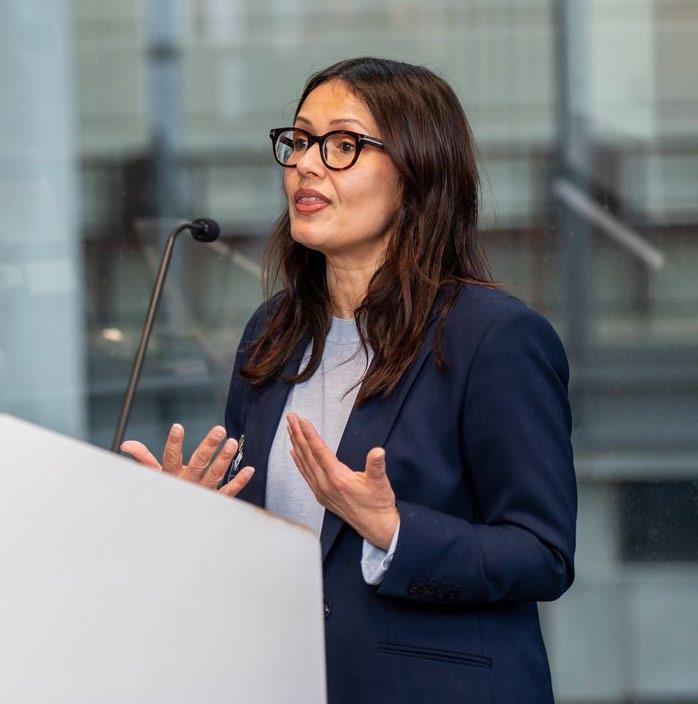
Shpresa is one of London’s most established migrant-led organisations, set up to support Albanian Londoners. Through their education and training work, the group has supported thousands of people to build lives in the UK, access their rights and become community leaders.
Our social investment support has helped the group secure their long-term base and community centre, the first of its kind in the UK.
Over time, the space will aim to provide a space to community and social organisations more widely.
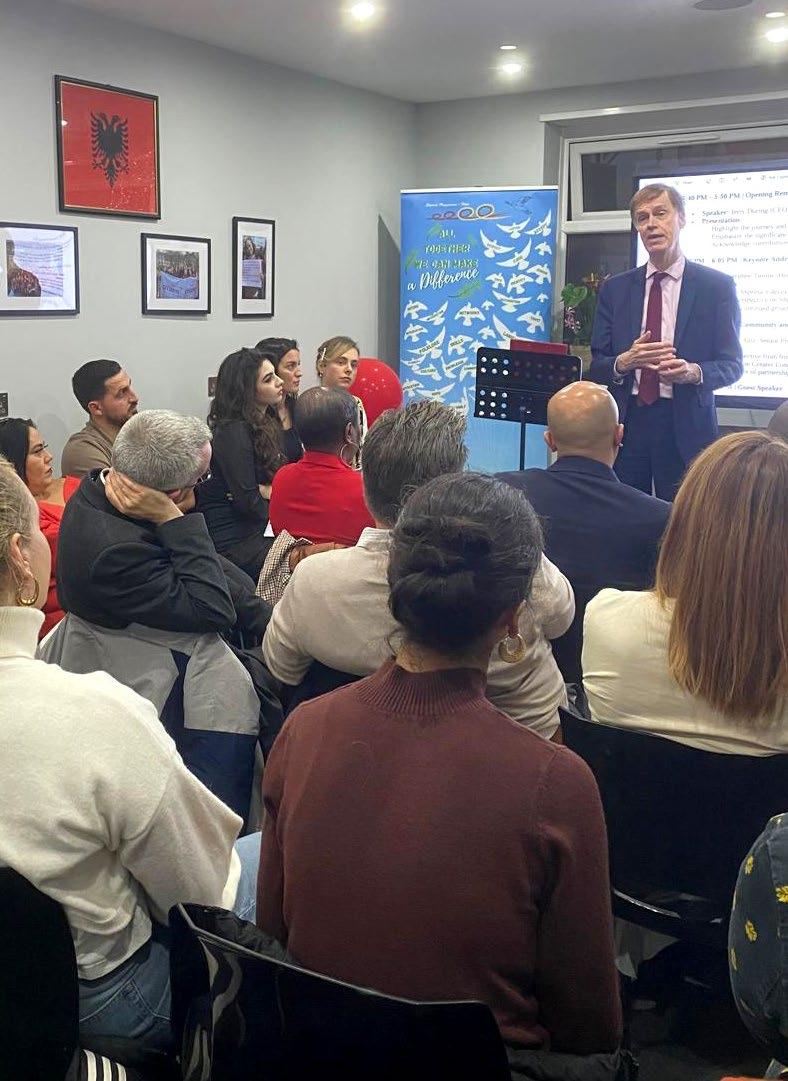
We know that the organisations we support need more than just funding. Our flexible FUNDER PLUS offer is designed to help our funded partners build skills, navigate tricky periods and strengthen their impact.
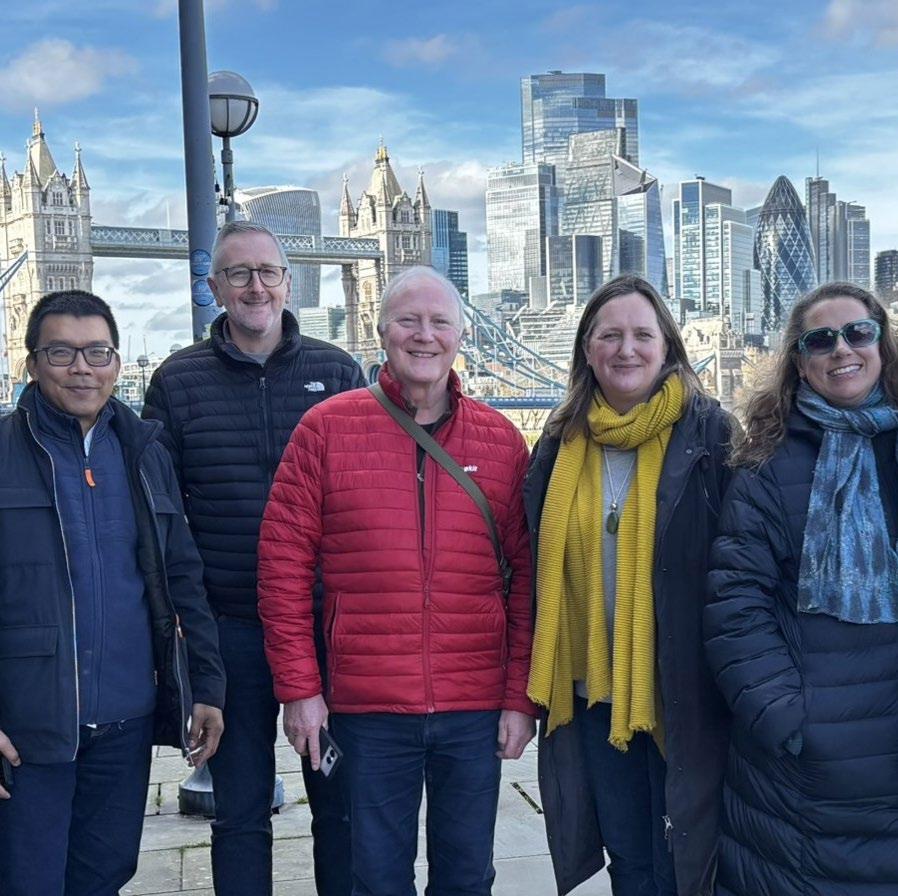
Endings and transitions happen every day, from projects finishing and leadership changes to mergers and closures. But they’re rarely discussed openly, making them harder to navigate and often leaving important legacies unrecognised. The Decelerator helps organisations and the people in them manage endings and transitions. Through online resources, research and a free, confidential Decelerator Hotline, it provides practical support for anyone planning or facing organisational change.
Good use of data and digital tools can be powerful for the charity sector. They help us to tell better, more engaging stories, to evidence impact, and to influence for change.
But especially for small charities, digital tools and skills can feel daunting and out of reach.
Superhighways helps to close that gap. They run practical training sessions on everything from Excel and data collection to mapping and video storytelling, alongside one-to-one advice for more tailored support.
In doing so, they’re helping us build a stronger, more effective sector, and ultimately a fairer society. hotline calls in 2025
“Thank you for creating this space of learning. It is quietly creating and expanding capacity in small organisations like ours.”
“I thought the session was exceptional. Inclusive, informative, interactive and pitched at exactly the right level.”
- Feedback from funded partners
unique organisations supported in 2025 469 have an annual income under £100k 30%
We normally accept applications on a rolling basis Decisions typically take around 3 months
Read our guidelines
Find out if we’re the right funder for your work.
Our team will read your application to see if we can shortlist your proposal.
Submit an expression of interest
Share more details about your proposal and organisation.
Speak to a grants manager
Organisations that talk to us first are more likely have successful applications.
This stage asks for some more details including more about your organisation’s finance and governance.
Attend an assessment meeting
We’ll meet with you to talk about your work and ask any final questions.
Decision
We’ll let you know if you’ve been successful.
Thrive
Leaders
Community organising
Migrant destitution
Londoners Workers Fairer
Housing
Social security
Campaigning
Economic justice
Dece nt work
Social justice
Movement building
Voice
Povert y premium
Disability justice