33
'DANGEROUS COMPETITORS' The Dutch Ethical Policy (1901) and the Establishment of Craft Schools in East Java Marjolein van Pagee
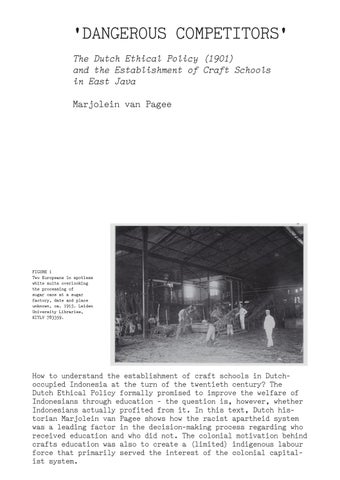
FIGURE 1 Two Europeans in spotless white suits overlooking the processing of sugar cane at a sugar factory, date and place unknown, ca. 1915. Leiden University Libraries, KITLV 783359.
How to understand the establishment of craft schools in Dutchoccupied Indonesia at the turn of the twentieth century? The Dutch Ethical Policy formally promised to improve the welfare of Indonesians through education – the question is, however, whether Indonesians actually profited from it. In this text, Dutch historian Marjolein van Pagee shows how the racist apartheid system was a leading factor in the decision-making process regarding who received education and who did not. The colonial motivation behind crafts education was also to create a (limited) indigenous labour force that primarily served the interest of the colonial capitalist system.