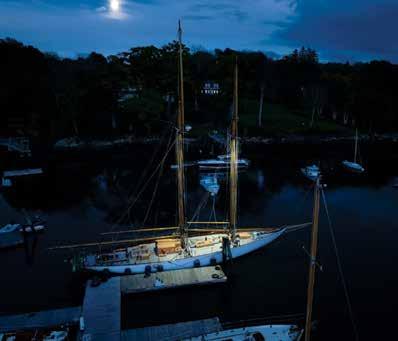
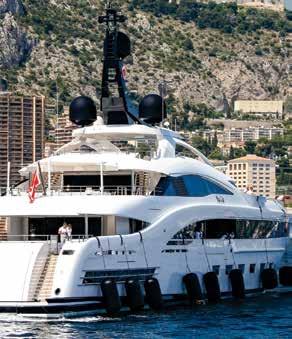
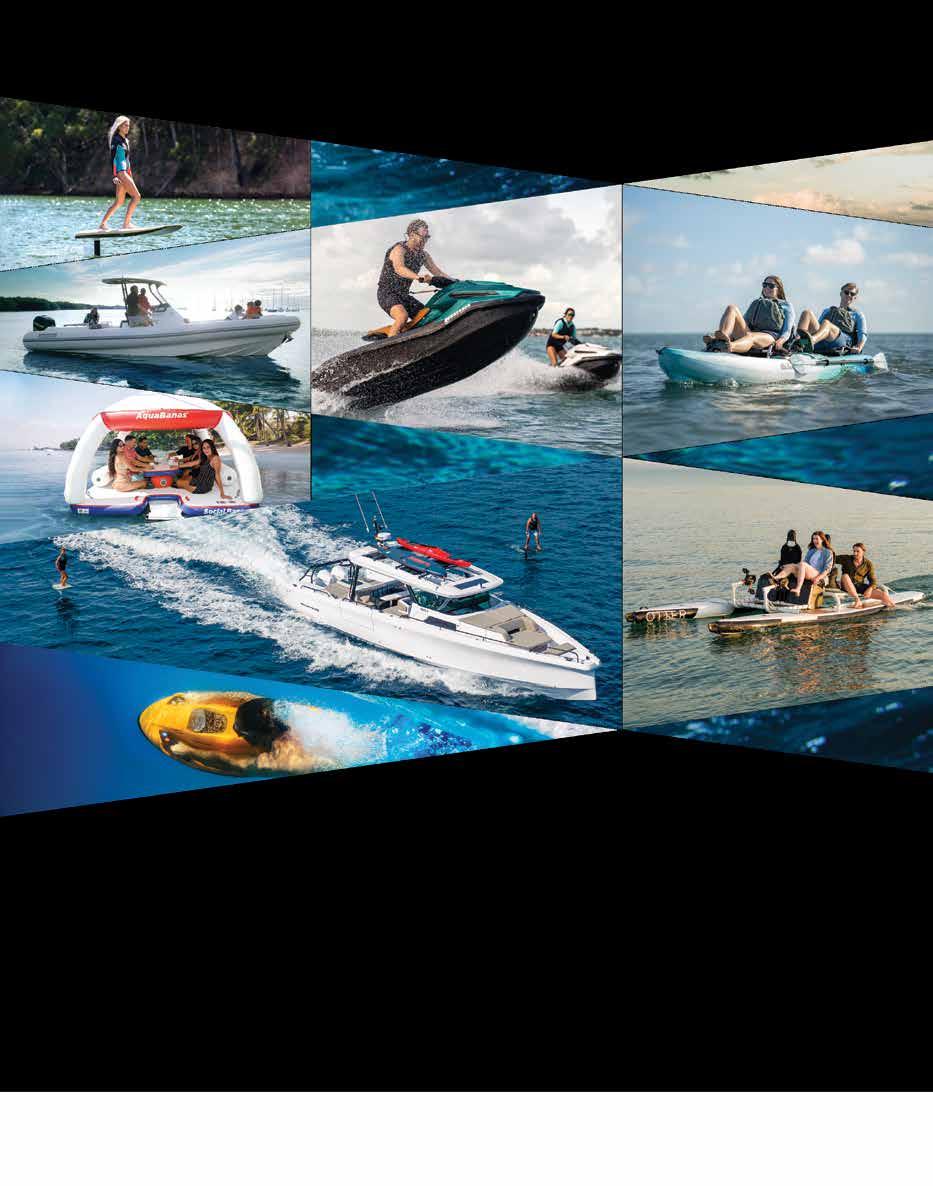
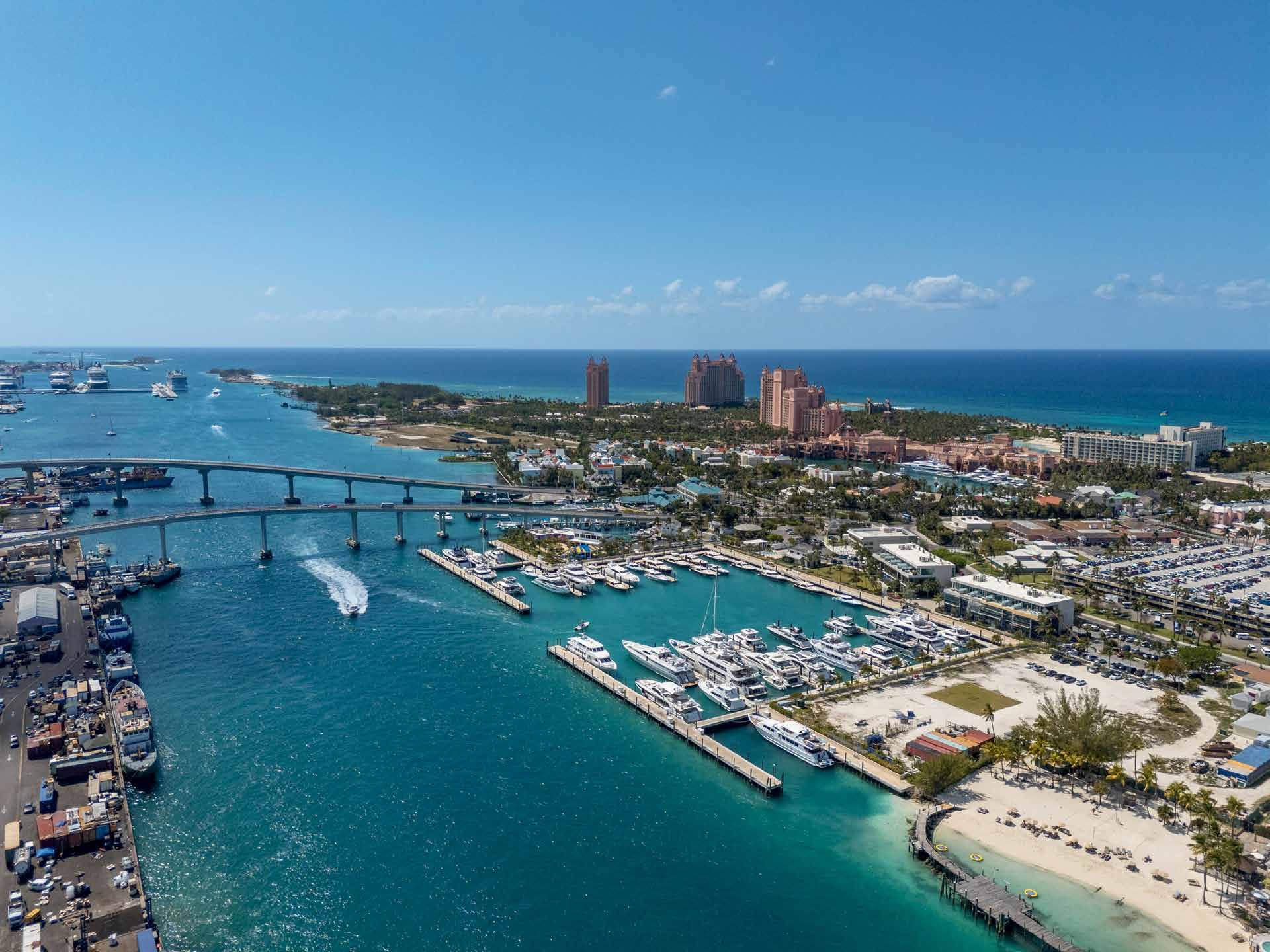
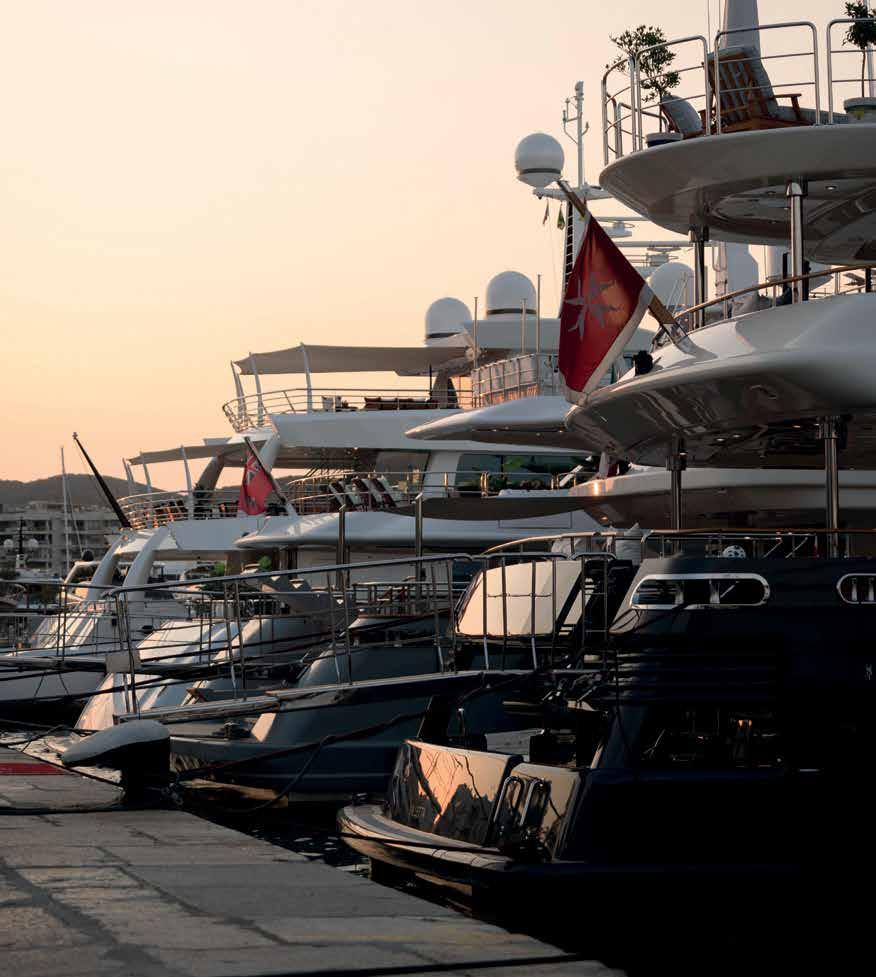
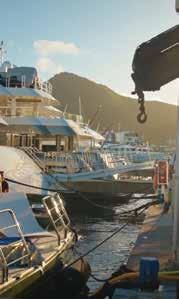
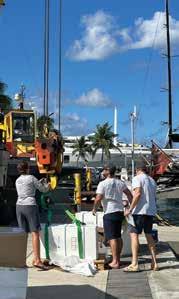
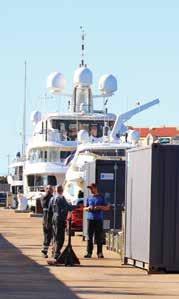
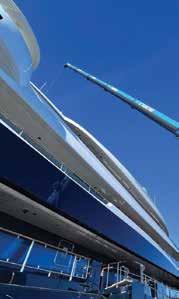
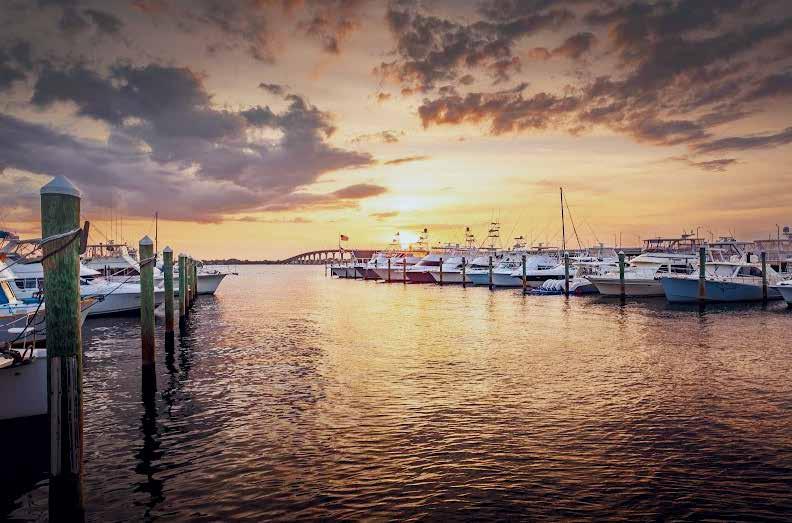
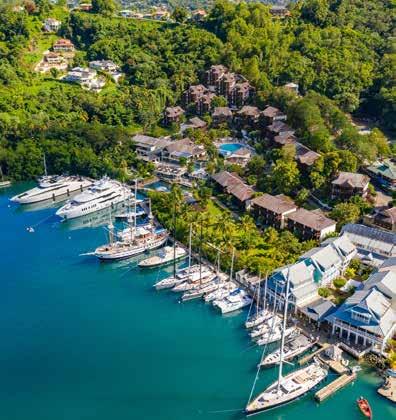
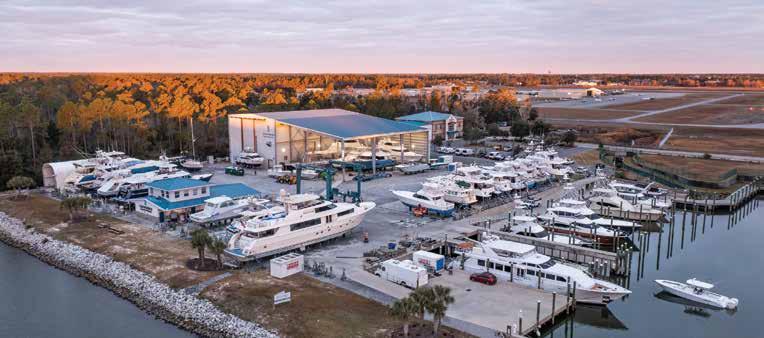
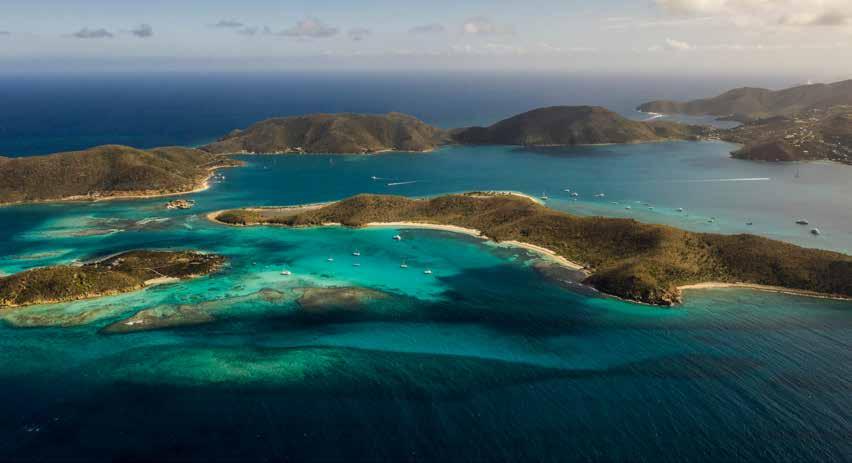
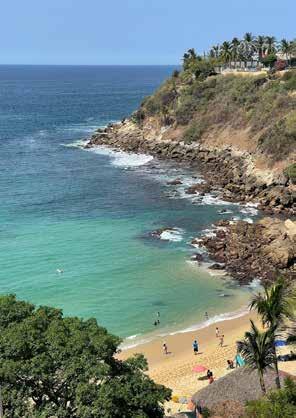
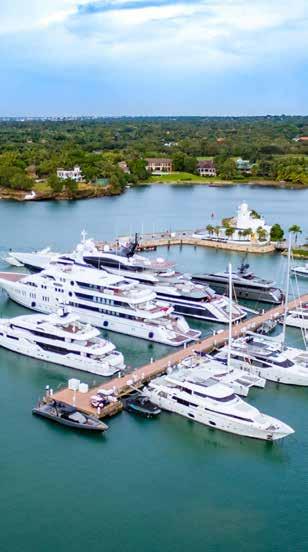
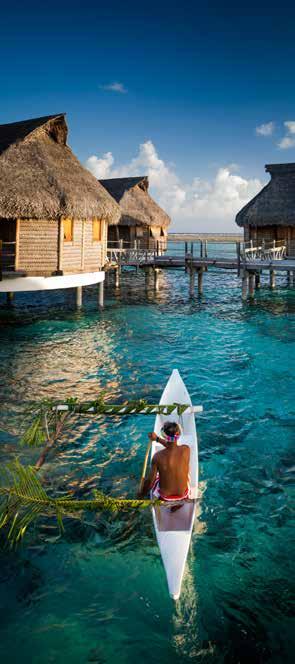
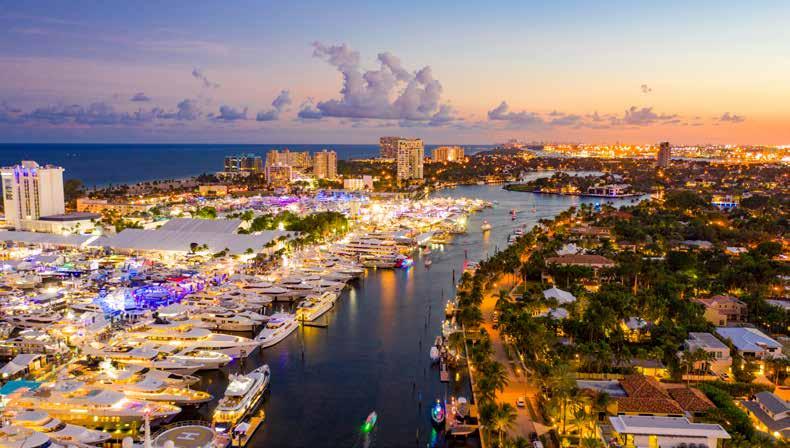
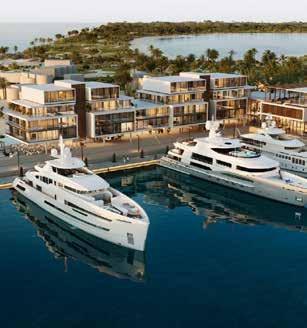
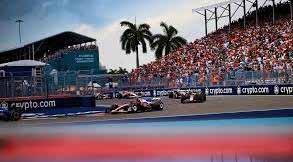
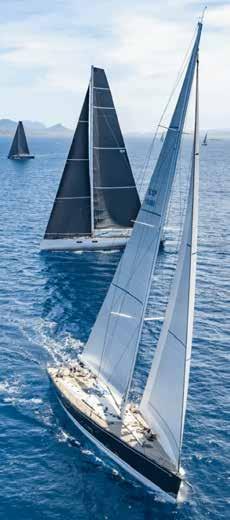
Cruising destinations gaining attention across the global fleet
YACHT CREW HEALTH GUIDE
Vaccines, travel risks, and prevention for crew
Refit on the Rise
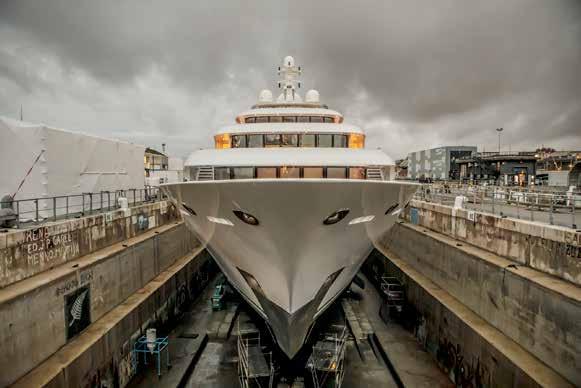
The latest from shipyards, industry and design challenges, plus a yacht donation tale
SERVICE CAPABILITIES
Canvas Shop
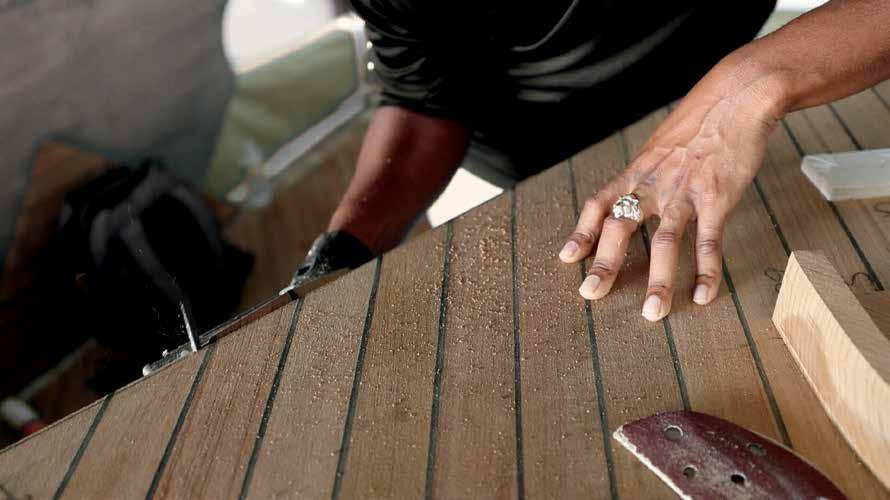
Carpentry & Joinery
Detailing
Electrical Systems
Electronics Installation & Diagnostics
Engine & Propulsion
Engineering & Design
Fiberglass & Composites
Hydraulics
Mast & Rigging
Metalworks & Welding
Paintwork & Refinishing
Plumbing & Sanitation Systems
Refrigeration, Heating & A/C
Vessel Condition Inspections
Winterization & Commissioning
FACILITIES & EQUIPMENT
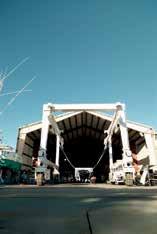
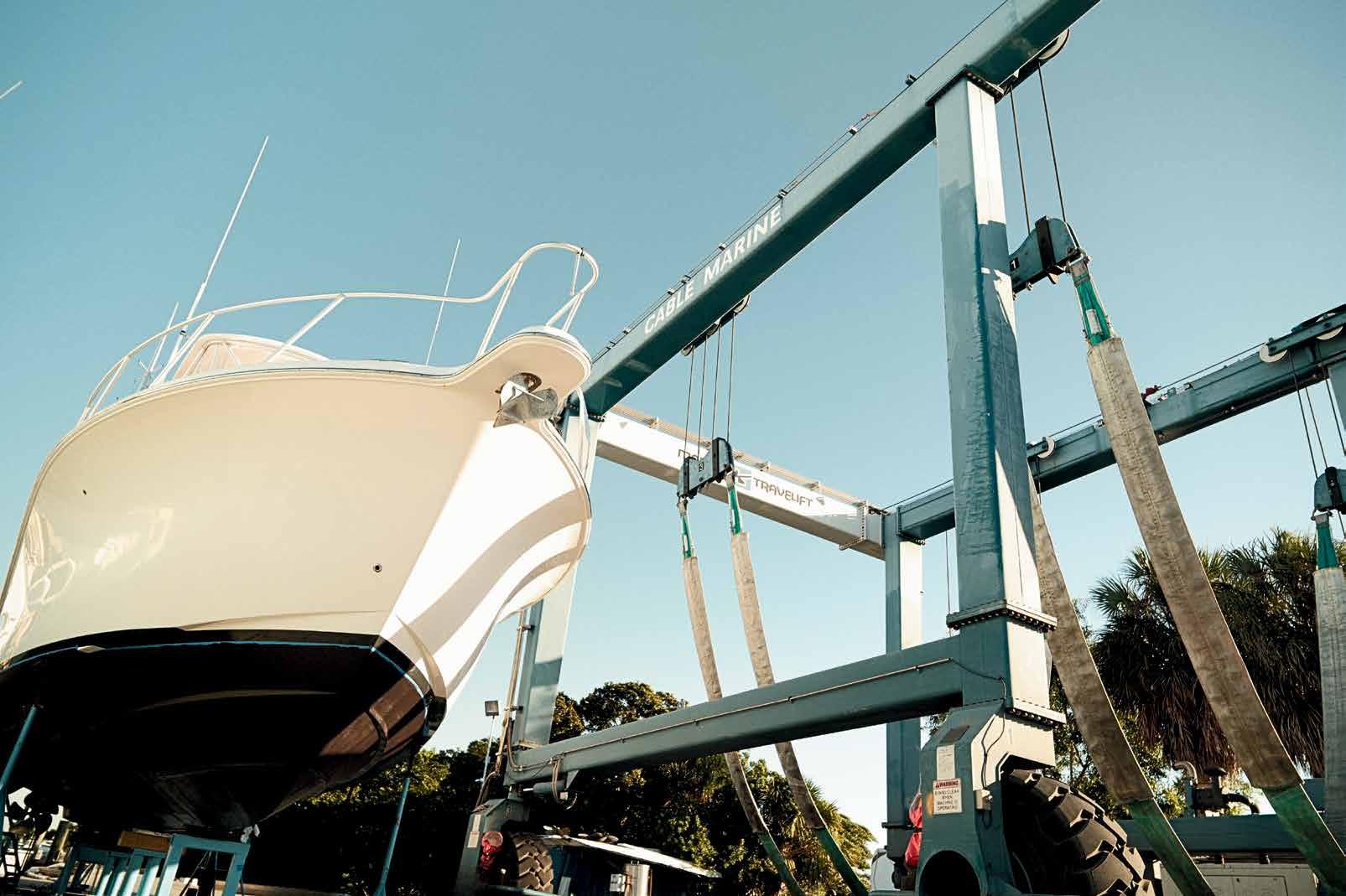
Crane
Hoists & Lifts
ONSITE CONTRACTORS
Scan to view full directory
OFFSITE CONTRACTORS
We maintain a network of 500+ approved offsite contractors
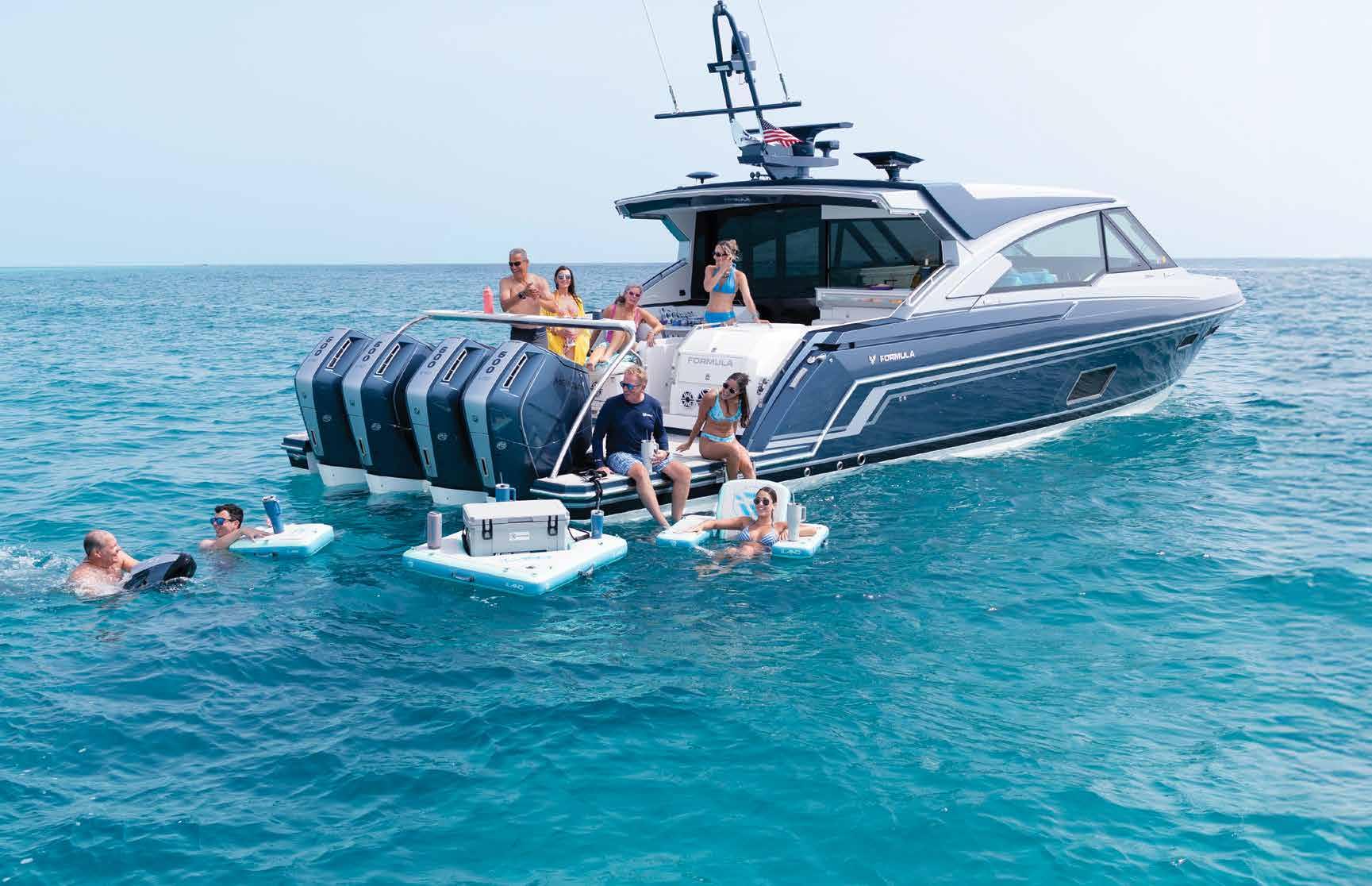
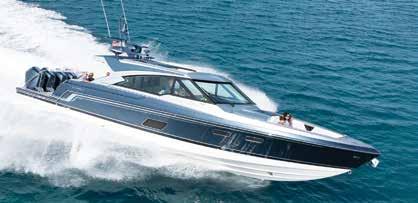
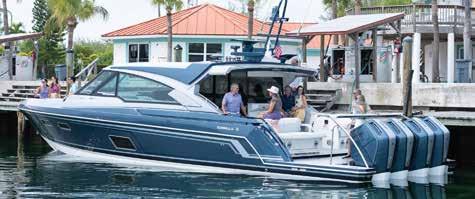
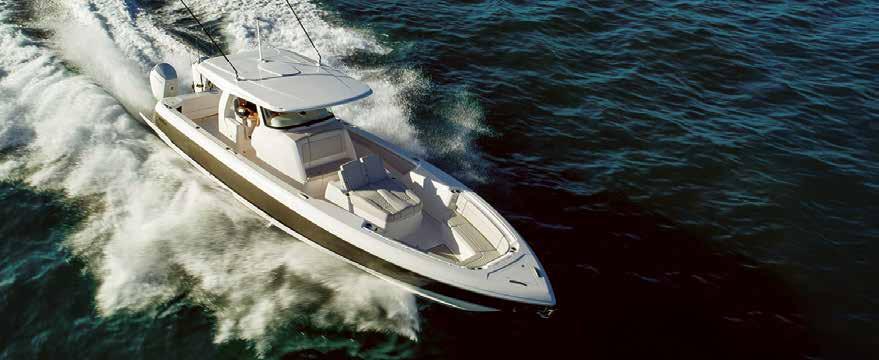
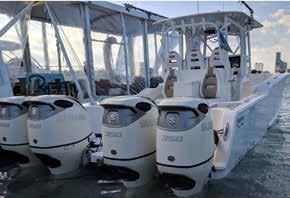
WITH THE FORMULA 500 SUPER SPORT CROSSOVER , your best days are finally here! Now celebrating 70 years, this fifty-foot Formula Flagship combines the commanding offshore ride with unprecedented amenities and luxury. The 500 SSC offers the Formula Crossover heritage of a wide-open, single-level bowrider, inviting open station-to-station wandering.
From the enclosed coupe-top salon to the aft lounge bar, the 500 SSC is a true evolution and culmination of the Formula SmartZone™ concept. From the full bow lounge forward to the expansive extended swim platform aft, you will find air-conditioned comfort, entertainment and innovation. A full-width motorized glass salon bulkhead allows you to choose your degree of separation or shared fun with the aft cockpit lounge and bar areas.
The 500 SSC amenities below offer a respite from the outside world with a true cabin experience. A complete galley at the cabin entry stairs, the large convertible U-lounge forward, a head
with Corian surfacing, vanity sink and spacious shower create a residential feel. Slip aft to the separate stateroom with queen-size berth, sofa and complete entertainment suite The proven, surefooted double-step FAS3Tech® hull will take your complement of guests to dinner across the bay or on far-flung offshore journeys in speed and comfort with the confidence and might of the revolutionary quad Mercury V12, 600 horsepower Verado outboards. The horizons are limitless in your spectacular 500 SSC!
The Formula Flagship 500 SSC –70 Years of Delivering the Best!
FROM THE PUBLISHERS
So… How Did that Prediction Work Out??
This time last year, in the April 2025 issue, I wrote a column about uncertainty. At the time, tariffs were the new buzzword. We didn’t know what impacts might happen. We thought markets could go up … or down. Yacht owners might pull back on spending … or they might keep cruising along as usual.
The conclusion was that predicting the short-term future had become nearly impossible.
One year later, we’re pleased to report that the prediction has held up perfectly. The world today feels more unpredictable than ever!
Over the past year, we’ve watched interest rates swing, political tensions rise, and economists argue about whether we’re headed for growth, recession, or something in between. And now, as of this writing, the war in Iran has caused huge uncertainty for fuel prices.
Naturally, that raises the question: what does all this mean for yachting? The answer is, so far, not as much as you might expect. That is good!
Yes, there’s caution out there. Some owners are watching their portfolios a little more carefully. Boat sales are a bit slower. A few refit projects might shrink a bit. Charter clients may take a little longer to confirm plans.
But walk the docks in Fort Lauderdale, Monaco, or Palma and you’ll notice something familiar.
The boats are still there. The shipyards are still busy. Crew are still looking for their next position, their next crossing, or their next season.
In other words, the yachting industry continues to do what it has always done: adapt.
We have always said that yachting is a trickle-down business. When owners feel confident, everyone benefits — from shipyards to suppliers to crew. That basic truth hasn’t changed.
What also hasn’t changed is the passion behind the industry. People don’t get into yachting because it’s predictable. Owners love the freedom. Guests love the experiences. And crew are still the backbone that keeps it all humming along.
So yes, the world may feel a little chaotic right now. But the yachts are still moving, the crew are still hustling, and two-thirds of the world is still covered with water. So get out there and enjoy it!
KEVIN QUIRK Co-publisher
Publishers
Jim Bronstien | JimB@TritonNews.com
Kevin Quirk | KQ@TritonNews.com
Editor-in-Chief
Kevin Maher | Kevin@TritonNews.com
Art Director
Debbie Reznik | Production@TritonNews.com
Senior Editor
Lauren Beck | Lauren@TritonNews.com
Sales Director
Edward Ibarra | Sales@TritonNews.com
Marketing & Sponsorship Sales Manager
Flavia Patino-Paul | Flavia@TritonNews.com
Business Controller
Katherine Urdaneta | Kat@usmarinagroup.com
Contributors
Patricia Clark, Dorie Cox, Steve Davis, Jake DesVergers, Lisa Gould, Gemma Harris, Sam Moen, Oriana Schneps, Laura Shaughnessy, Ollie Thompson
Contact us Triton Magazine +01 954-525-0029 1881 SE 17th Street, 17th Street Yacht Basin Fort Lauderdale, FL 33316
Follow us thetritonnews | tritonnews tritonnews | tritonnews
Vol. 5, No. 3
Triton is a free bimonthly magazine owned by YATCO, LLC
Reproduction in whole or in part without written permission is prohibited.
Contributor Guidelines
Triton welcomes content from captains, crew, and industry professionals to be considered for publication. Please email queries to Editor@TritonNews.com.
INDUSTRY UPDATES
12–16 News from around the industry
SOCIAL SENSATIONS
28 The viral videos from Triton’s social platforms
BUILDING A SMARTER SYSTEM
30–32 How Emery Wallerich is modernizing crew placement
A GUIDE TO CREW VACCINATIONS AND TRAVEL HEALTH
34 MedAire shares its latest recommendations and updates
MARITIME MADNESS
36 Wacky news from the nautical world
AN OCEAN OF HOPE
38–40 The realities of today’s ocean health with Director Toby Nowlan
MAKE A DIFFERENCE
42 Get off the boat and give back
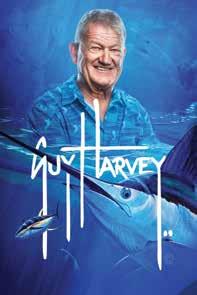
THE GREAT GUY HARVEY
44 The Fort Lauderdale International Film Festival spotlights the Guy Harvey documentary
A NAVIGATOR’S LIFELINE
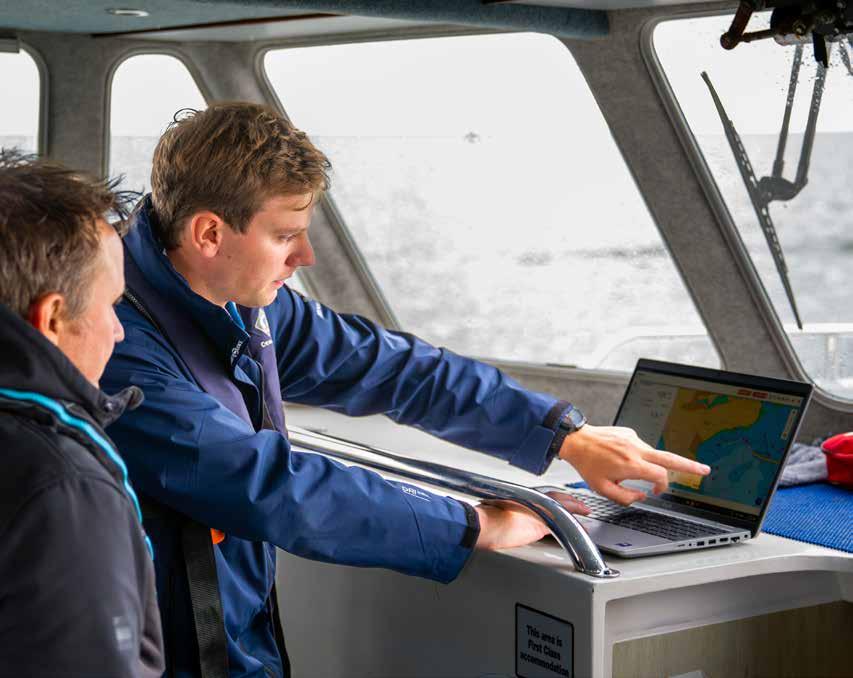
46 Artificial intelligence and the modern bridge
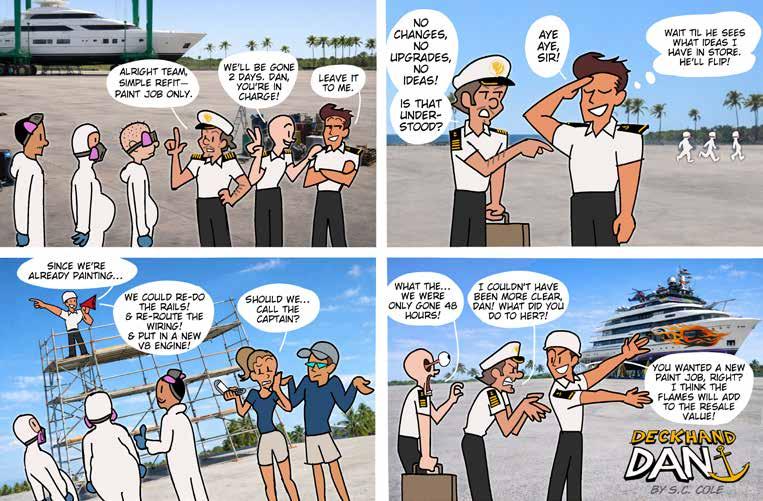
DECKHAND DAN
76 Dan unexpectedly takes control of a refit
FLEET ON THE MOVE
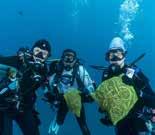
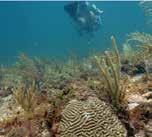
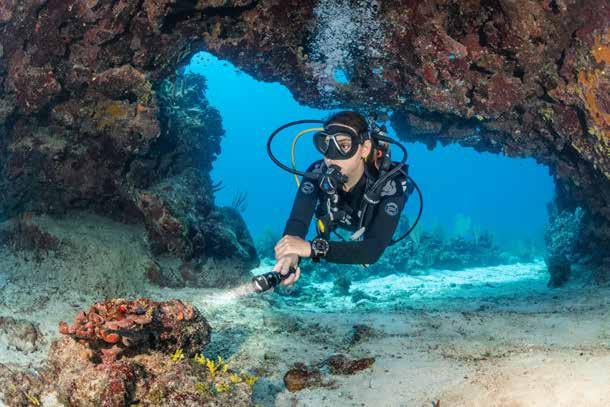
88–92 Top cruising destinations from the YATCO Destination Forum
CALENDAR
96 Triton and industry events in April and May
TRITON DOUBLE TAKE
98 Test your powers of observation!
Refit Feature Section
THE REFIT ROUNDUP
50–53 Updates from yards around the globe
A LOOK AT THE U.S. REFIT INDUSTRY
56–58 How American refit can bounce back
RED FLAGS
60 Refit warning signs a surveyor says not to ignore
SHIFTING TIDES
62 South Florida yards under pressure THE YACHT THAT NEVER LEFT THE YARD
64–66 How scope creep can prolong the work
THE INSIDE STORY
68 Minimizing interior waste during refit can be complicated
DESIGN FOR LIFE ON THE WATER
72 Translating home elegance to marine environments
NEW REFIT REALITIES
74 The looming year-round work cycle
MODERN REFITS
78 Designing for crew and guests
RESET & REFINE
80 How to enhance interior operations during refit.
REFIT = REVENUE
82 Turning yard time into a marketing win
REVIVING A DONATED YACHT
84 The two-week transformation of M/Y Serenity ON THE COVER
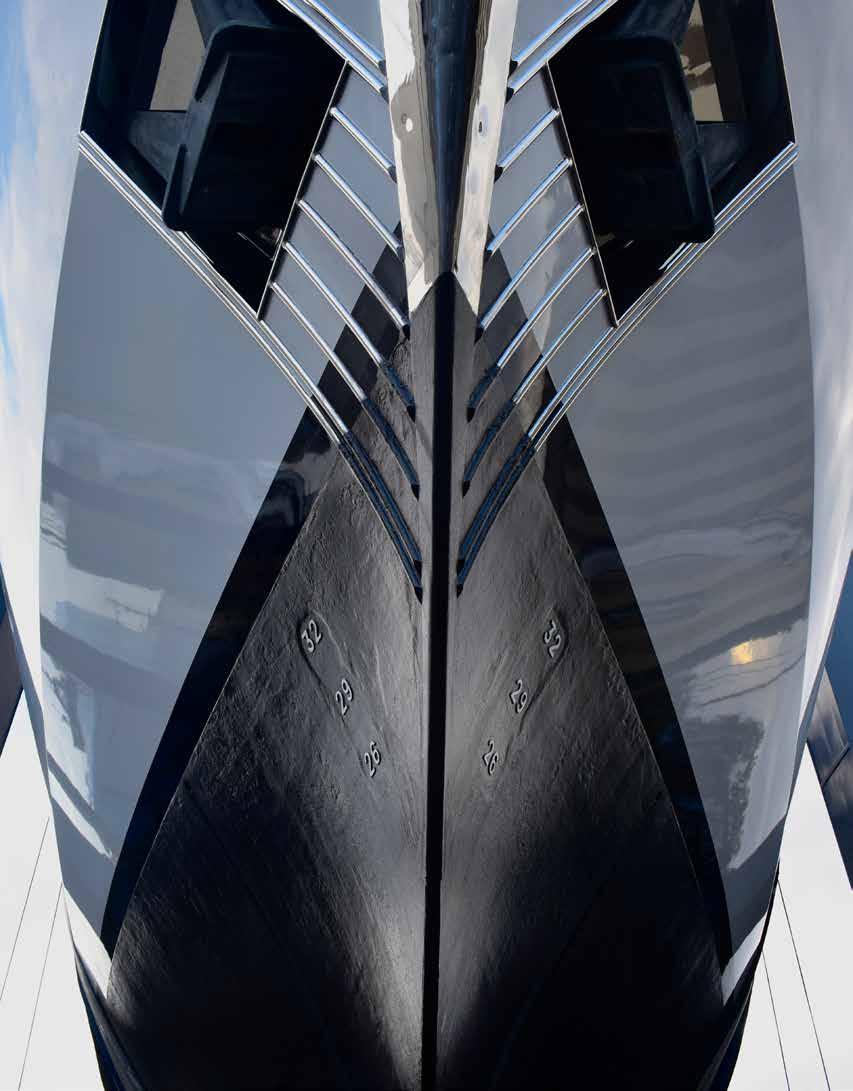
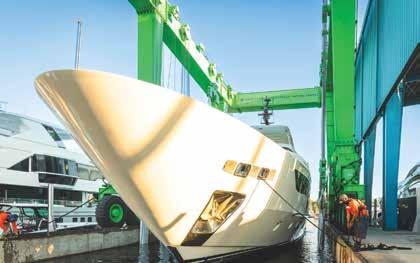
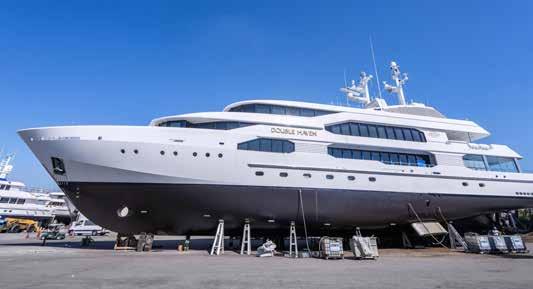
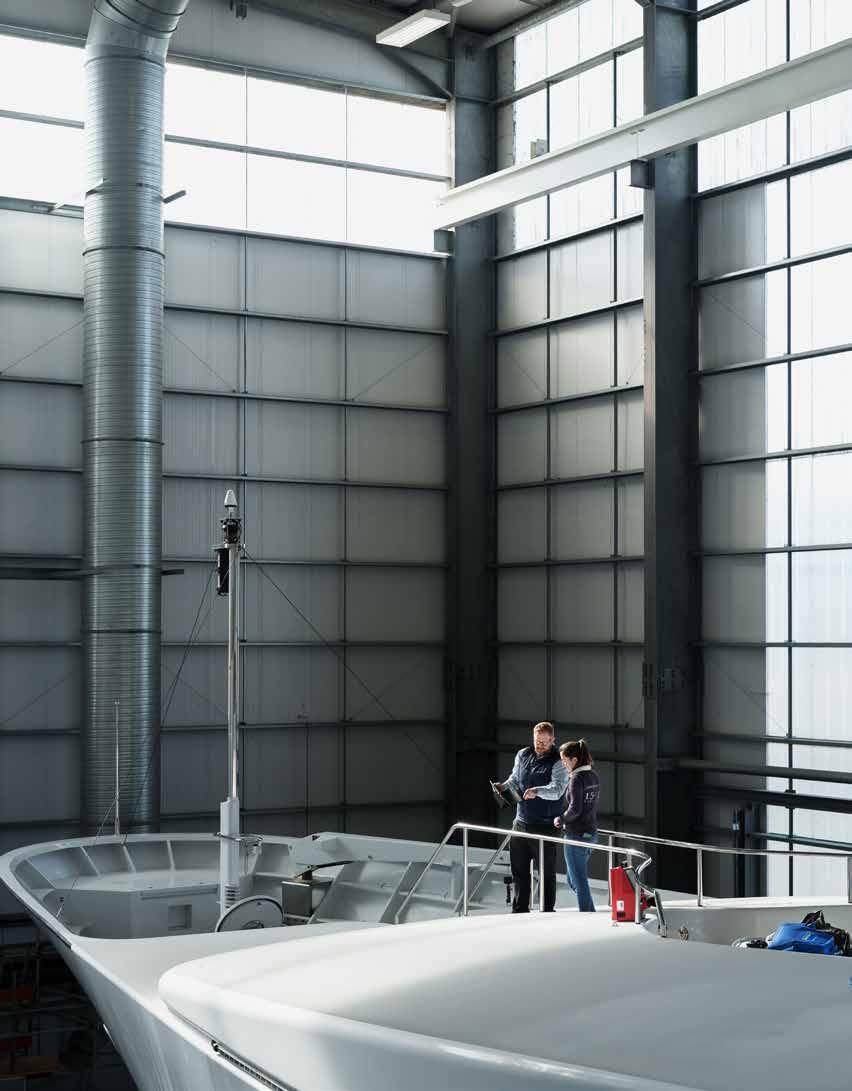
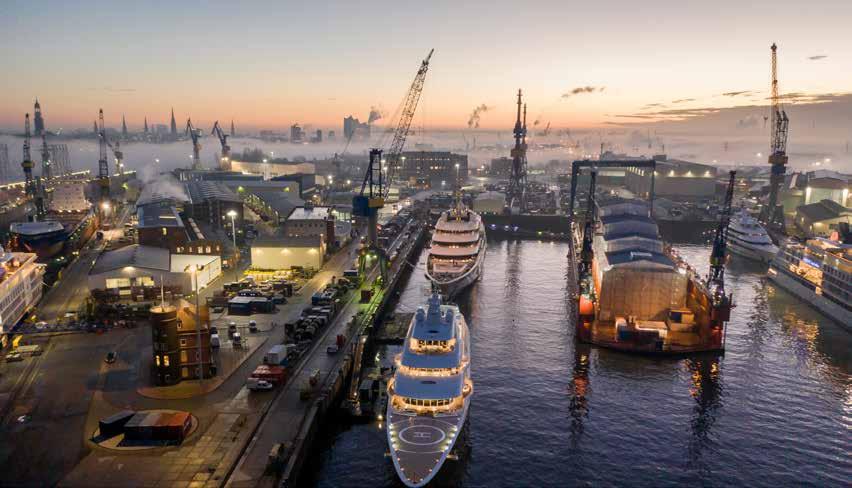
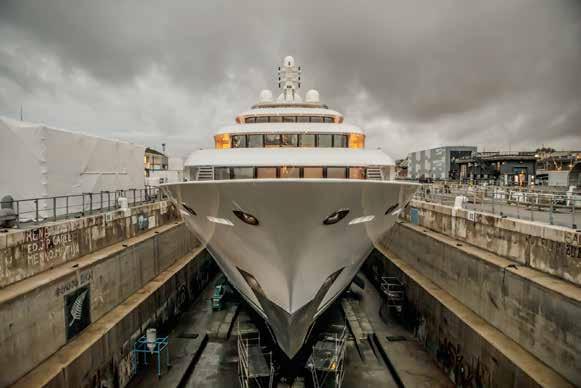
The 51-meter Feadship Double Haven is pictured at Derecktor Shipyards pre-launch. The project included a full bottom paint along with fabrication and installation of new structural supports for an upgraded stabilizer system. Image by Rachel Rainford.
PHOTO BY PENDENNIS SHIPYARD
EDITOR’S LETTER
Refit Revolution
As I started working on our annual refit issue, I thought I understood that the refit sector in the United States needed more skilled workers, but I didn’t realize quite how important the need for unity among refit companies really is. The yachting industry is competitive, which is amazing. Competition makes the industry thrive, but according to stakeholders I spoke to for this issue, it’s not enough for the U.S. industry to succeed in the future.
Another point raised in my discussions was the appreciation some countries have for yachts built or refitted there. These yachts are treated almost like homegrown heroes, with people lining the shores to see the newly built vessel off in celebration, or welcoming them back with open arms and anticipation for the changes on the return for refit. It happens in the Carolinas with their sportfishers, but stakeholders insist it’s a culture that needs to spread throughout the yachting industry for long-term success.
So how do unity and appreciation for yacht building or refitting work together? Well, if the U.S. refit industry wants to become a powerhouse once again, it needs to do so united. Whether it be different companies coming together to work in a centralized location to make a more attractive refit destination or industry stalwarts sharing their tricks of the trade and investing in the future, if the U.S. refit industry is going to successfully continue, stakeholders believe a joint effort is required.
What stood out most while reporting this issue wasn’t just the challenges, it was the sense that the industry recognizes them and is ready to respond. Across South Florida and beyond, organizations, shipyards, and project managers are beginning to have the same conversations about workforce development, standards, and collaboration. That shared awareness may be the most important step of all. The question now isn’t whether the industry can change, but how quickly it can turn those conversations into action.
KEVIN MAHER Kevin@TritonNews.com
ACREW Crew Award Nominations Open
Nominations for the 2026 ACREW Crew Awards are now open, as the premier event celebrating and recognizing excellence in the superyacht industry returns. Captains, crew, and industry professionals can nominate their peers in 14 award categories that highlight their dedication, talent, and professionalism. The 14 award categories include:
• Best Superyacht Crew Award
• Best Captain Master Unlimited Award
• Best Captain Master 3000GT Award
• Best Captain Master 500GT Award
• Best First Officer/Mate Crew Award
• Best Chief Stew/Purser Crew Award
• Best Chef Crew Award
• Best Environmental and Sustainability Crew Award
• Best Engineer and ETO Crew Award
• Best Lifetime Achievement Crew Award
• Best Lead Deckhand/Bosun Crew Award
• Best Social Influencer/Content Creator Crew Award
• Best Junior Crew Award
• Best Crew Mentor Crew Award
The Crew Awards nominations close May 31, with nominees announced on June 26. The judging phase will take place from July through September, with the Crew Awards Weekend starting on Oct. 25 in Fort Lauderdale, Florida. This year’s Crew Awards ceremony will include a Roaring 20s — Speak Easy theme, with guests invited to dazzle in elegant evening wear infused with the glamour of the Roaring ’20s.
More details will be revealed soon, so stay tuned to ACREW’s social media for updates, sneak peeks, and the latest information about the weekend.
NOMINATE YOUR PEERS HERE!
Lloyd’s Register Releases Yacht Safety Culture and Wellbeing Survey
Lloyd’s Register (LR) released a Yacht Safety Culture and Wellbeing Survey that found avoidable risks are being created across the yacht sector due to inconsistent leadership and variable safety priorities, along with indications that formal procedures are not always followed. The survey gathered input from crew and shore-based professionals working across a broad range of yacht sizes and operating models.
“The survey indicates that although safety-critical rules, checklists, and safety meetings are in place, their effectiveness is frequently diminished by financial, operational, and guest-driven pressures, as well as by crewing levels and workload demands,” LR’s announcement stated.
LR’s survey found that engagement is a critical area that requires attention. The culture around reporting, challenging decisions, and speaking up without fear of negative decisions is poor according to LR’s findings, with engagement notably lower on yachts
YachtAid Global Releases Update on Operation Beagle
In 2018, YachtAid Global opened the first public library, Biblioteca Galápagos, in Puerto Ayora on Santa Cruz Island in the Galápagos Islands, Ecuador. Their work included renovations, standardizing operations, a small computer lab, and a collection of 1,500 books.
Since then, the library has helped the Ecuadorian community become educated, increased literacy, hosted scientific lectures and literature events, and provided emergency preparedness and support. In the fall of 2025, YachtAid Global was able to remodel
under 500 GT and among longtenured crew. Owner and management priorities paired with onboard leadership behaviors were found to be a decisive factor in engagement levels on board.
A common finding was reports of fatigue and workload pressures, with engineers and senior officers recording the lowest wellbeing scores. Missed opportunities in learning from incidents was also reported, with crew saying excessive reporting of minor issues dilutes meaningful learning and reduces confidence in reporting systems.
“The findings underline the need for stronger leadership behaviors, more effective fatigue management, and a reporting culture that encourages early intervention,” said Engel-Jan de Boer, LR’s global yacht segment director. “Without action, the industry risks higher underlying safety exposure and the loss of experienced crew.” lr.org
and expand the library’s footprint by 50%, including a new monitoring system and a handicap lift.
Operation Beagle is just one of the many missions that YachtAid Global has undertaken since its founding in 2006. As the organization continues to promote yachting industry-wide engagement and collaboration for disaster relief and recovery, humanitarian aid, and conservation efforts, they are always looking for help from the industry.
yachtaidglobal.org
Seahub Awards 2026 Engineering Grants
Seahub has once again announced the winners of its 2026 Engineering Grants. According to comments on Seahub’s Facebook page about the winners, “We were blown away by the quality of applicants this year.”
According to their recent post, “We heard stories of how supportive mentorship can have a profound impact on a person’s career, how being a good crewmember is more than just doing your own job well, and how the sharing of experiences is so valuable in a crewmember’s development.”
Seahub previously told Triton that they focus on offering positive mentorship and support to younger crewmembers, with the goal to help them build successful yachting careers.
This year’s winners are Charlie Armstrong, Jake Hutchinson, and Morné van Rooyen. “To our winners — we’re proud to support what you’re building and can’t wait to see where you take it next. The future of marine engineering is in good hands.”
The grant is awarded to an engineer who shows dedication to learning and improving their engineering skills, as judged by the industry submissions. Eligible applicants include current crewmembers, day workers, and individuals interested in pursuing a career in engineering.
Seahub partners with Hill Maritime Group to fund these annual awards, which are valued at more than $10,000. The prize package includes $2,000 for engineering courses, a complimentary placement for a junior engineer (up to Y4) through Hill Maritime Group, a Seahub Prime level license with a Kick-Start Account Setup worth more than $2,500, access to Seahub’s OEM manuals and technical data sheets database, and two tickets to Palma’s Superyacht Technology Forum.
Congratulations to the winners! seahubsoftware.com
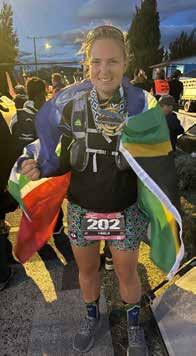
Former Chief Stew Carla Annas Raises R110,017 Through Patagonman for Charity
Carla Annas completed the Patagonman while raising R110,017 for a bursary fund at The Honeybush Collective Primary School in Somerset West, South Africa. The Patagonman included a 3.8-kilometer swim in an icy fjord, a 180-kilometer cycle with challenging elevation, and a 42-kilometer trail run in the mountains of Southern Chile.
“There is no event I have ever done that I could remotely compare it to. It is the longest, most intense, extreme event I have ever done,” Annas said.
“I have never spent as much time and energy on the training and prep or flown halfway around the world to race like I did for Patagonman.”
Annas retired from the yachtie lifestyle after 12 years and created Community in Action, a charity movement supporting education in South Africa through sport. Access to quality education remains one of the pressing challenges in South Africa, so she decided to support a primary school to help children attend. She eventually exceeded her goal of R100,000, and received gratitude and
lots of notes from students and staff.
“I was at the school before I left for the race and after the race. I received the most beautiful ‘good luck’ cards from all the children and from the staff,” Annas said. “During race week, many people from the school followed along with the WhatsApp group I had created for updates and they loved every moment. After the race, I received an endless amount of gratitude from the school and the school’s community for all the funds I had raised. I have since been told two students are already benefiting from the funds and more will soon, too.”
While Annas will focus on smaller, more local races until she decides on her next event, the power of community shown through her experience in the Patagonman has her ready for more racing and fundraising.
“Patagonman was the most lifechanging year for me, focusing on me and my training, while at the same time having this incredible community build around me during training, fundraising and racing, showing me what the power of a collective can do,” Annas said.
Former Crewmember Launches Pure Botany for Yacht Plant Care
Former crewmember Alice Krzeminska has launched Pure Botany, a specialized service dedicated to the design, installation, and maintenance of living plants on yachts.
During her time as crew, Krzeminska was also completing professional floristry training. Floristry was the closest she could get to working with plants in yachting, and she was fortunate enough to work on some of the industry’s largest private yachts, many of which featured extensive natural greenery. She also began studying plant science, which she continues today.
Her clients now range from individual yachts and fleet operators to shipyards, design studios, project managers, and yacht agents. The goal remains the same: “to deliver end-to-end solutions for incorporating and maintaining living plants at sea,” Krzeminska said.
Her expertise spans a wide range of plant species, including tropical and ornamental plants, bonsai, orchids, and exterior varieties. She also advises on cultivation systems for herbs, microgreens, and edible leaves, as well
as on planting formats ranging from beds to pots to vertical living walls.
“I offer precise, science-based guidance on plant selection, planters, soil composition, lighting, watering, fertilization, pest management, and overall plant health,” she said.
The idea for Pure Botany came from a gap Krzeminska noticed while on board.
“I realized that most shoreside landscaping companies, though highly skilled in their own environments, rarely understood how yachts actually operate. The interior conditions on board — light, airflow, humidity, and maintenance realities — are completely different from those of a house or hotel,” Krzeminska said.
Pure Botany was created to bridge that gap. “It’s a service created specifically for yachts, rooted in scientific plant knowledge, operational awareness, and real onboard experience, delivering solutions that actually work.”
Krzeminska begins with a consultation
Dubai International Boat Show Reschedules
The Dubai International Boat Show has announced that this year’s show will be rescheduled to Nov. 25–29 at Dubai Harbour. The decision comes after news that organizers were expected to issue an announcement regarding the show following escalating regional tensions.
The revised date aligns the event with the start of the Middle East’s prime boating season, according to the announcement. The change in date is a permanent shift, with all future show dates expected to be in November. The show was scheduled to take place April 8–12 before the announcement.
to evaluate onboard conditions before making recommendations for improvements. She also offers crew training programs for the entire crew, specific departments, or designated crewmembers responsible for plant care. After training is complete, yachts can enroll in her ongoing care program, which is fully customizable and can even be managed remotely.
“Pure Botany is unique in that it combines scientific plant expertise with a deep understanding of yacht operations and life on board,” Krzeminska said. “Maintaining healthy plants at sea is genuinely challenging.”
Her aim, she adds, is to make plant care approachable.
“My goal is to make plant care enjoyable rather than stressful, and to help crew feel confident and competent. Being surrounded by healthy plants should enhance wellbeing, not add pressure during an already demanding season.” pure-botany.com
CREW, CAPTAINS, & COCKTAILS AT BRADFORD MARINE
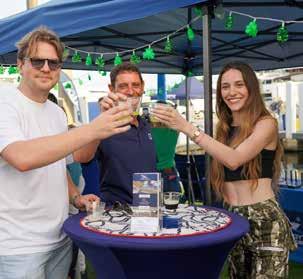
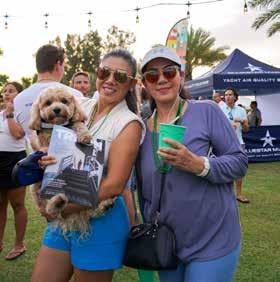
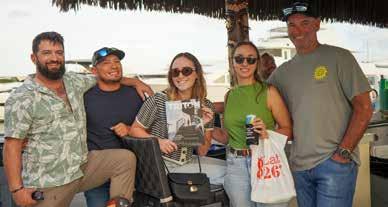
More than 500 captains, crew, and industry professionals brought their St. Patrick’s Day cheer to Triton’s Crew, Captains, & Cocktails at Bradford Marine on March 12. Yachties enjoyed light bites provided by Bush Brothers, festive drinks, and plenty of networking at Bradford’s crew lounge while listening to Irish tunes and snapping photos at their photo booth.
Photos by Brenda Ortiz
49th ANNUAL BROWARD COUNTY WATERWAY CLEANUP
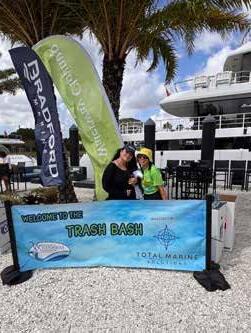
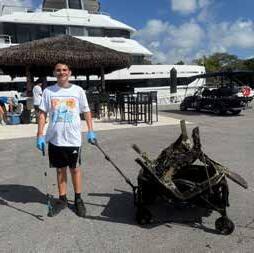
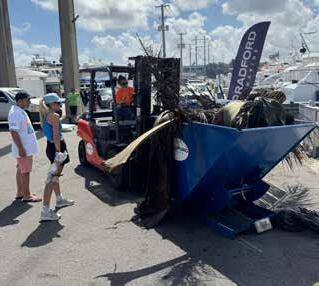
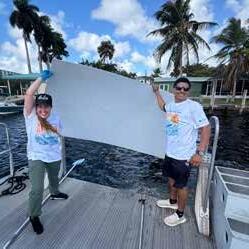
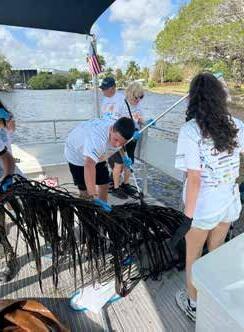
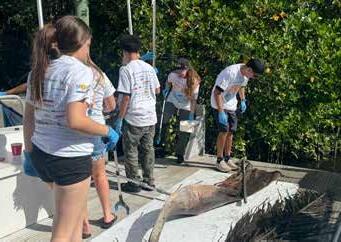
The Triton team volunteered at the 49th Annual Broward County Waterway Cleanup on March 7 at the Bradford Marine site. Organized by the Marine Industries Association of South Florida (MIASF), the event brought together more than 1,300 volunteers across 30 sites, removing over 20 tons of trash from Broward County waterways in a single day.
TRITON'S CREW NIGHT AT LAUDERALE BREWERY & TAPROOM
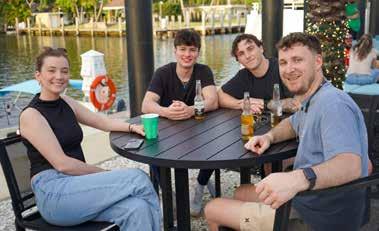
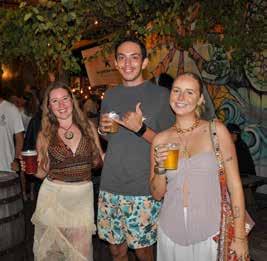
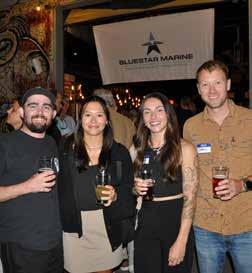
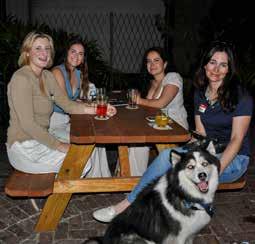
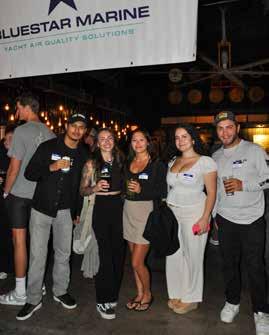
The crew showed up, the beer was cold, and the vibes were unmatched during Triton’s Crew Night at LauderAle Brewery & Taproom on Jan. 22. Special thanks to our Triton Crew Night sponsor, Bluestar Marine, for making this night happen and to LauderAle for their incredible lineup of unique craft brews that kept the good times flowing.
MIAPBC CELEBRATES 40 YEARS IN PALM BEACH
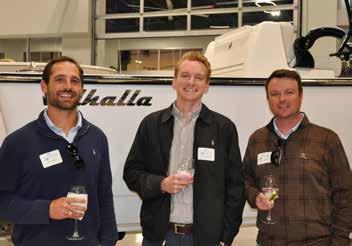
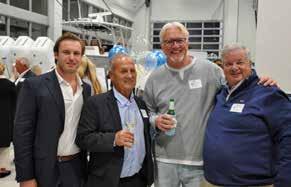
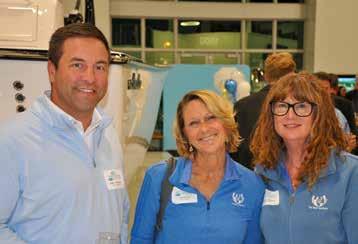
Members of the Marine Industries Association of Palm Beach County celebrated the organization’s 40th anniversary with an evening of networking, light bites, and an open bar at Valhalla Yacht Sales in Riviera Beach on Feb. 24. The event highlighted MIAPBC’s four decades of supporting and advocating for the local marine industry while bringing together professionals who help drive its continued growth.
Online
These standout clips shared on Triton ’s social media channels sparked conversation among our audience.
H&CO Incident
The 30-meter Ferretti motor yacht H&CO was lost following a crash near Elafonisos, Greece, on Feb. 11. The Hellenic Coast Guard rescued all four crewmembers without injury, and the cause — reportedly linked to a mechanical failure and flooding — remains under investigation.
La Perla 4 Sinking
Dramatic footage sent to Triton shows La Perla 4 sinking off the coast of Panama on Jan. 1. Fortunately, everyone aboard was safely rescued and no injuries were reported.
M/Y Arrow Dock Collision
The 245-foot Feadship M/Y Arrow struck the concrete dock at Sailfish Club shortly after departing Safe Harbor Rybovich in West Palm Beach. Following the impact, the yacht reportedly ran aground, according to video shared online by @mackdaddydeals.
A Day in the Life of a Deckhand
Wiping down railings, restoring teak furniture, and cleaning the yacht toys — @Eleishaondeck lays out what a deckhand’s day really entails.
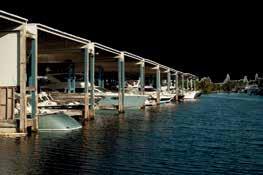
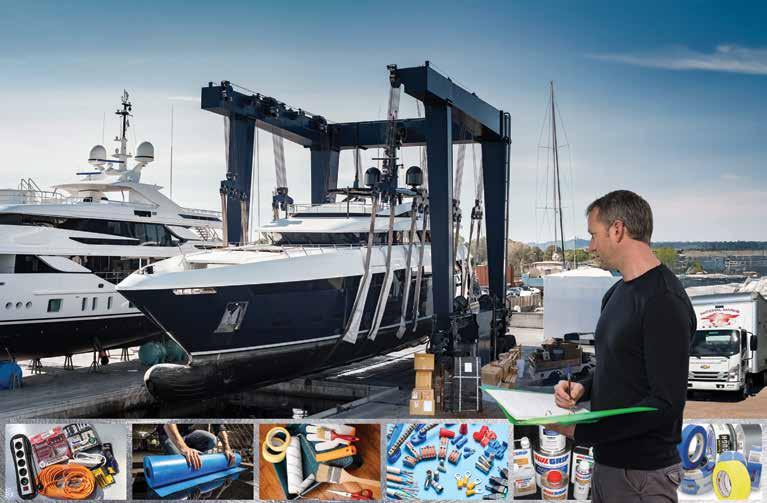
Captains benefit from access to a wide network of authorized contractors, flexible project scheduling, direct contractor engagement, and full coordination from a dedicated IGY Project Coordinator, without relocation or downtime.
IGY’s Shipyard Services Program delivers authorized in-water services within world-class marinas. *
How Emery Wallerich is Modernizing Crew Placement
By Kevin Maher
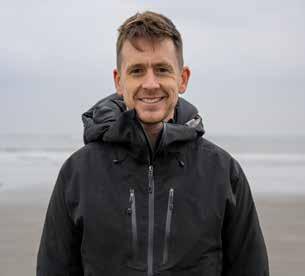
For seven years, Emery Wallerich lived the demanding life of yacht crew — working long days as a deck/stew while traveling some of the most remote waters in the world. Along the way, she experienced firsthand something many crewmembers eventually encounter: finding the right boat is often more luck than system. Job boards list positions, but they rarely reflect what life on board is actually like.
Today, Wallerich is trying to change that.
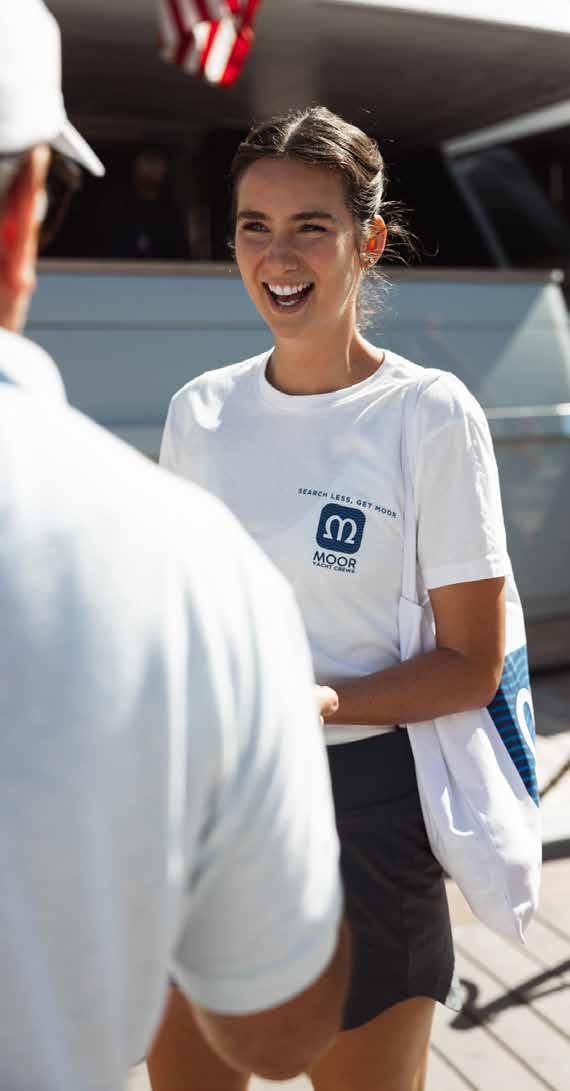
The former crewmember and 2019 Oregon State University graduate is the founder of MOOR Crew, a global hiring platform designed to bring smarter technology and better transparency to how yachts and crewmembers connect.
Triton spoke with Wallerich about her time in the industry, the inspiration behind MOOR Crew, and how she hopes to reshape the future of crew hiring.
What made you join the yachting industry?
What first drew me in was the travel. I had a family friend telling me about all the places she’d been and the type of work they do, and I just found it to be really unique and a good fit for my personality.
The first boat I worked on, I was a sole deck/stew, so it was a lot of work, but I had a captain who was there to teach me. On that first trip we took, I saw a pod of orcas breaching over in Canada, and that moment hooked me. That experience really pulled me into the industry and into the next seven years of my career.
What is MOOR Crew?
MOOR Crew is a technology-driven hiring platform built specifically for the realities of life onboard yachts. Traditional job boards usually focus on positions and certifications. Those things are important, of course, but they don’t always tell the full story of what it’s actually like to live and work on a yacht.
What we built with MOOR Crew goes a bit deeper. The platform helps match crew and employers not only by experience and qualifications, but also by the type of program, work environment, itinerary, and onboard culture. Everyone in yachting knows that you’re living with the same people you work with. If the personalities and expectations don’t align, it can make life on board difficult. We wanted to integrate more of that real-world compatibility into the hiring process.
How does it work for crew?
It’s free for crew to join, but there are a couple of different options depending on what level of visibility they want. With the free profile, crew start by filling out their position, certifications, and uploading their CV. Then the platform walks them through additional questions that help paint a better picture of the kind of program they’re looking for.
We ask things like what they enjoy doing after work, whether they’re looking for a more social crew environment or something quieter, and what kind of itinerary they’re interested in.
The interface itself is designed to be really simple and quick — kind of like an Airbnbstyle experience. The idea is that the questions help reveal a little more about who you are as a crewmember, which helps connect you with the right boat. There’s also a Spotlight option that allows crew to increase their visibility to employers who are actively searching.
Was there a hole in the industry that made you want to create MOOR Crew?
Yes! A lot of the job boards — especially when I first started yachting — felt very surface level. You would apply for a job based on the position and maybe a few details, but when you arrived on board it sometimes turned out to be a totally different environment than what you expected.
The industry talks a lot about longevity, and it should. If you want crew to stay longer, you need to create better alignment between crew and programs from the beginning. Adding more insight into lifestyle, expectations, and personality helps both sides make better decisions before someone steps on board.
A lot of hiring in yachting still happens through systems that were built years ago. We wanted to build something that reflects how the industry actually works today.
Lots of crewmembers deal with fake job postings when looking for work. How does MOOR Crew approach that?
Verification and transparency are big conversations in yachting right now, and they should be.
Our onboarding process asks employers to provide more detailed information about the yacht and the program itself. At the same time, we partnered with a company called Crewdentials, which allows crew to securely store and share important documentation like certifications and identification.
We don’t want to create a false sense of security with a simple badge that says a yacht is “approved,” because that’s subjective. Instead, we focus on providing clearer information about the program so crew can make their own informed decisions.
At the end of the day, crew and employers still need to do their own due diligence, but better information helps everyone start from a stronger place.
Were there any defining moments or lessons in your crew career that pushed you toward entrepreneurship?
A lot of it came from the connections I made and the conversations I had with people in the industry.
I kept hearing the same frustrations from crew, captains, and recruiters about the hiring process. At the same time, I’m still in my twenties and I had this strong feeling that I wanted to build something that could help the people I care about in this industry.
I can’t fully explain it, but I just had this burning feeling that creating MOOR was the direction I was supposed to go.
What was the most difficult part of launching your company?
When you launch something you’ve created to the world, you’re going to get feedback and hit some snags.
Right after launch we had hundreds of people signing up, which was amazing, but it also revealed some technical bugs that only show up once real users start
interacting with the platform. That was stressful in the moment, but it was also really helpful because it allowed us to fix issues quickly and improve the experience.
What have been some of your biggest success stories so far?
One that stands out was when we helped place a chief stew onto a yacht. I had actually met the boat earlier at the Newport Charter Show. Later the mate told us they had hired a chief stew through MOOR Crew.
Eventually I was able to visit her in Antigua and hear about how well the position was working out. She’s still on the boat today and really enjoying the program, so seeing the platform create that connection was incredibly rewarding.
What’s your advice to crewmembers looking to build a business?
Honestly, just go for it. You might have an idea that no one else has thought of, and even if you try something and it doesn’t work, that’s part of the process. Trial and error is how you learn.
One of the great things about yachting is that you can always go back and pick up freelance work or another charter if you need to. So putting your ideas out there and trying something new can be really valuable.
What does success and the future look like for you and MOOR Crew?
Success for us would be seeing crewmembers and employers using MOOR Crew as their main way of finding jobs and hiring crew. We want to continue growing the platform and building tools that help the entire industry — crewmembers, captains, heads of department, and brokers — connect more efficiently.
The goal is to make hiring in yachting more transparent, more compatible, and a better experience for everyone involved. ‹ Moorcrew.com @moorcrew | @emerywallerich
These “Quantums” Changed my Life
TAKE CHARGE & EXPLORE THE WORLD!
No matter what the mission, consider the popular XT™ Fin Stabilizer. Incredible technology — a fin that extends for zero speed, and retracts for underway. Ok, time to go get ‘em!
A Guide to Crew Vaccinations and Travel Health
Staying vigilant (and vaccinated) can help protect you as you travel. The medical team at MedAire provided Triton with guidance for captains and crew on vaccinations, health advisories, and the risks to watch for in the coming months. Staying ahead of preventable illnesses is one of the easiest ways to protect both crew health and yacht operations.
What core vaccinations should all crew have?
There are no universally mandated vaccines for yacht crew, as individual risk profiles and itineraries vary. However, MedAire strongly recommends that all crew maintain routine immunizations typically completed in childhood and adulthood:
• Tetanus, Diphtheria, Pertussis/Polio (Tdap/DTP)
• MMR (Measles, Mumps, Rubella)
• Influenza
• Hepatitis A
• Hepatitis B
Depending on the yacht’s itinerary and crew shore leave plans, additional protection may be advisable:
• Typhoid: for regions with inconsistent sanitation or water quality
• Rabies: especially in areas where it is prevalent, where shore excursions are common, and post-exposure treatment may be difficult to access
• Meningitis (MenACWY & MenB)
• Yellow Fever: sometimes mandatory when arriving from endemic regions;
port authorities may require proof via an International Certificate of Vaccination (ICVP)
What to prepare for in the Caribbean
The Caribbean requires heightened focus on tropical diseases, mosquito-borne disease, and food- and waterborne illness. MedAire reports that Hepatitis A and Typhoid vaccinations are especially important in the Caribbean due to variable food-handling and water standards. There is a regional initiative to eliminate viral hepatitis, so crew may find increasing emphasis on Hepatitis B vaccinations. While the region is largely non-endemic for Yellow Fever, some islands require proof of vaccination for vessels arriving from high-risk areas.
MedAire reports that the Caribbean is currently experiencing a significant spike in mosquito-borne illnesses, largely due to warmer-than-average temperatures and shifting rainfall patterns in early 2026, with a significant increase in alerts for the region.
As of early 2026, dengue fever remains a significant concern, particularly in Cuba, Puerto Rico, and the Dominican
Republic. The Centers for Disease Control and Prevention (CDC), World Health Organization (WHO), and the Pan American Health Organization (PAHO) also updated travel notices in mid-February 2026 for Cuba, Martinique, and Guadeloupe. Brazil has reported more than 130,000 cases since January, and the surge is trickling down the Caribbean chain.
The Qdenga vaccine is available in some areas but is generally reserved for adults with prior infection, given the increased risk of recurrent infections. For most crew, prevention still centers on strict mosquito control and eliminating standing water on board, where possible. Make sure to check travel notices.
Chikungunya and Zika currently have no widely used routine vaccines, making personal protection essential. Chikungunya has experienced a resurgence in Guyana, Suriname, and Cuba, which have previously been quiet. The Public Health Agency of Canada issued a Level 2 alert for these regions on Feb. 19, 2026.
Zika may be less prevalent than Dengue, but MedAire reports it remains a persistent baseline risk.
MedAire recommends using DEET-based repellents, Permethrintreated clothing, and eliminating standing water on board, especially in marina environments.
What to prepare for in the Mediterranean
Not surprisingly, the Mediterranean generally presents a lower risk of tropical diseases. The focus shifts toward maintaining routine boosters and managing localized environmental threats. There are a few areas of concern, MedAire notes, with an ongoing multicountry Hepatitis A outbreak extending into early 2026, prompting stronger recommendations for the full two-dose series. Specifically, more than 6,000 cases have been reported in Austria, Hungary, and Slovakia. MedAire also reports that Hepatitis A vaccinations are no longer merely precautionary but highly recommended in Eastern Med ports such as Croatia, Greece, and Turkey.
Tick-Borne Encephalitis (TBE) may be a consideration for crew spending time ashore in wooded areas along the Adriatic coast or northern Italy. Otherwise, keeping Tdap and MMR current is key, particularly given heavy international transit through European ports and airports. There are measles clusters being monitored in major transit hubs, and seasonal Norovirus spikes affecting guestfacing operations.
Emerging health concerns
Based on MedAire case data, dermatological and gastrointestinal illnesses continue to account for the most medical calls.
• Skin issues (14% of cases): rashes remain most common, with a notable rise in shingles. Pre-travel vaccination may be worth considering, particularly for crew working closely with families and children.
• Gastrointestinal illness (10%): more than half involve diarrhea or vomiting unrelated to seasickness. Many stem from foodborne illness or traveler’s diarrhea, underscoring the importance of strict food and water hygiene.
• Animal bites and rabies exposure: increasing cases highlight the value of pre-exposure vaccination. Post-exposure treatment is complex and often difficult to source while underway.
• Sexually transmitted infections: rising incidence reinforces the need for routine screening and safe-sex practices.
There has been a global surge in measles infections across all continents since the start of 2026. Public health experts note that global vaccination rates have fallen below the 95% threshold required for herd immunity. As a result, the risk is higher in nearly every major port city. Additionally, MedAire notes that the upcoming World Cup could affect the maritime industry. While the tournament is hosted by the U.S., Canada, and Mexico, the ripple effects in the Caribbean could be significant. Make sure crew MMR boosters are current.
With constantly shifting routes and health landscapes, prevention remains the most reliable protection. Keeping vaccinations current and monitoring regional advisories helps ensure both crew safety and uninterrupted operations. Because crew regularly cross borders, “routine” vaccines remain critical even in seemingly low-risk regions. MedAire notes that guidance evolves frequently, with public health authorities such as the CDC, WHO, and PAHO issuing updates throughout the year. ‹
What about COVID-19?
There are still a few fleets with strict COVID-19 policies, MedAire said, but COVID-19 is now a smaller issue. Generally, boosters are not being offered by public health authorities, and the typical yacht crewmember is not in a high-risk group. Check with your doctor if you have questions.
Practical planning tips
• Consult a travel physician before deployment for a personalized risk assessment.
• Begin vaccinations at least six weeks before joining a vessel, as some require multiple doses.
• Maintain records, including ICVP (“Yellow Book”), for ports requiring proof of immunization.
• Practice onboard prevention: mosquito control, safe food handling, and hygiene protocols.
medaire.com
By Kevin Maher
Nutty Nautical News
Check out some of the strangest stories in the maritime world!
English Beach Covered in French Fries and Onions
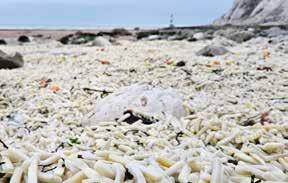
Uncooked French fries and onions littered the coastline of East Sussex in Southeast England after containers from two cargo ships went overboard in late 2025 and early 2026. The raw vegetables eventually washed ashore, but the plastic bags in which the onions were packaged posed a risk to local marine life.
A cleanup operation began with groups like Plastic Free Eastbourne asking residents to volunteer to clean up “thousands of bags of chips and onions over this vulnerable stretch of land.” Seals and other marine life inhabit East Sussex’s coastline, and often mistake plastic for food like jellyfish. Brighton and Hove City Council announced that 1.9 tons of waste was collected from the beach in one day during cleanup efforts.
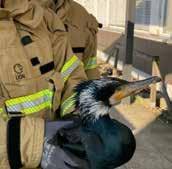
Injured Seabird Taps ER Door for Help
Do Sharks Hold the Cure for Human Blindness?
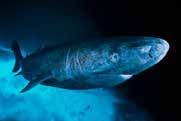
The University of California, Irvine, identified a DNA mechanism in Greenland sharks that enables them to maintain their vision over centuries. The identification could help uncover new ways to prevent age-related vision loss or cure diseases like macular degeneration and glaucoma, according to Dorota Skowronska-Krawczyk, an associate professor of physiology and biophysics at UC Irvine.
Greenland sharks were previously thought to have impaired or degenerated vision due to their extreme lifespan and harsh environmental conditions, but the opposite was found. Despite being more than a century old, examined specimens showed no obvious signs of retinal degeneration and a robust expression of DNA repair-associated genes was found in the retina, which could help support long-term maintenance of retinal integrity in the shark’s lifespan.
Frozen Sea Turns into Highway
Citizens of Estonia can now drive across a 12.5-mile stretch of frozen sea that links the country’s two main islands, as freezing temperatures in northern Europe have persisted. Authorities decided to open the ice road after residents of Saaremaa and Hiiumaa began driving across the frozen sea despite the risk. Ferries have struggled to operate in the icy waters, so residents on the smaller island of Hiiumaa have opted to drive across the sea for groceries or to drop off their kids at school.
An injured cormorant pecked at the door of an emergency room at Klinikum Links der Weser Hospital in Bremen, Germany, seeking help for its injuries. According to AP, the bird had a triple fishing hook lodged in its beak.
Medical staff eventually noticed the bird pecking at the glass door and called the Bremen fire department to help. The medical staff and firefighters removed the fishhook and treated the wounds, releasing the bird back into nature shortly after.
Ocean of Hope
Toby Nowlan on Film, Recovery, and Real Change
BY KEVIN MAHER
SILVERBACK FILMS AND OPEN PLANET STUDIOS/DOUG ANDERSON
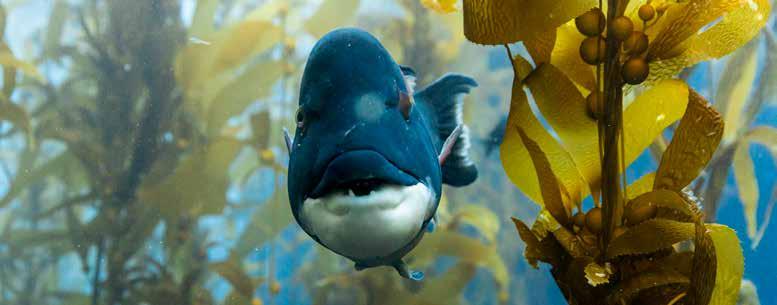
“Ocean, with David Attenborough” takes viewers on an underwater journey, showing the realities and challenges our oceans are facing around the world. From destructive fishing techniques like bottom trawling to coral reef bleaching, Ocean shows first-of-its-kind footage of the devastation occurring around the globe. Yet, the film is optimistic, with Attenborough delivering what he believes is his greatest message: the ocean can recover to a glory beyond anything anyone alive has ever seen. Triton spoke to Ocean’s Director Toby Nowlan to learn more about how the film was made and how the yachting industry can help make change for the better.
How did your ocean and filmmaking journey inspire you to create a film addressing the ocean’s problems?
I’ve been obsessed with wildlife since I can remember — it’s what’s driven me more than anything to help make a difference in its survival and future. It’s always been my dream to contribute to the conservation movement and film brings these two things together.
I had a dream to create films that made a difference in the natural world. Ocean brought the greatest opportunity for that — a dream come true, it had the potential and power to drive real change, which was the dream from the beginning. The ocean draws me, especially sea birds, whales, and dolphins — they intrigue
me and represent a sense of wildness and wilderness like nothing else.
How did you research and uncover these ocean issues?
I read up about the ocean from great authors, including Callum Roberts and Dr. Helen Czerski. I realized that we have an incredible story to tell: the idea that if you protect an area of the ocean, the process of recovery is completely different than on land. On land, you protect just the life within that area, in the ocean you protect that life within it, but then life recovers in a much more dramatic and spectacular way — quicker than we’d ever dreamed possible. It floods out into surrounding areas of the ocean, filling them with life again. By protecting some areas of the ocean, we can fill it with life again and live in a world that doesn’t just survive, but thrives.
Given Ocean’s breathtaking visuals, what challenges did you face when shooting underwater, filming various marine species, and documenting activities such as bottom trawling?
There are lots of different issues you could focus on with the ocean, but I wanted to focus on something big, clear, tangible, and fixable that could make a huge difference. That’s where you get the most impactful story as opposed to just trying to cover everything. One of
the great missions of the film became to capture bottom trawling cinematically and clearly on screen for the very first time. It took two years of development; technologically there’s a lot to overcome. There is a process that happens at depth, and on screen, it’s very violent, turbulent, and a lot of people don’t want that very common process to be seen on screen.
Because it happens out of sight below the waves, it’s why we need the great power of film. We released a bottom trawling clip just before the film went out and it has been seen by more than 800 million people now — it’s definitely had an effect.
One great moment from filming in the Atlantic near the Azores was filming
PHOTO BY OLLY SCHOLEY
SILVERBACK FILMS AND OPEN PLANET STUDIOS/ALEX WARHAM
where to watch
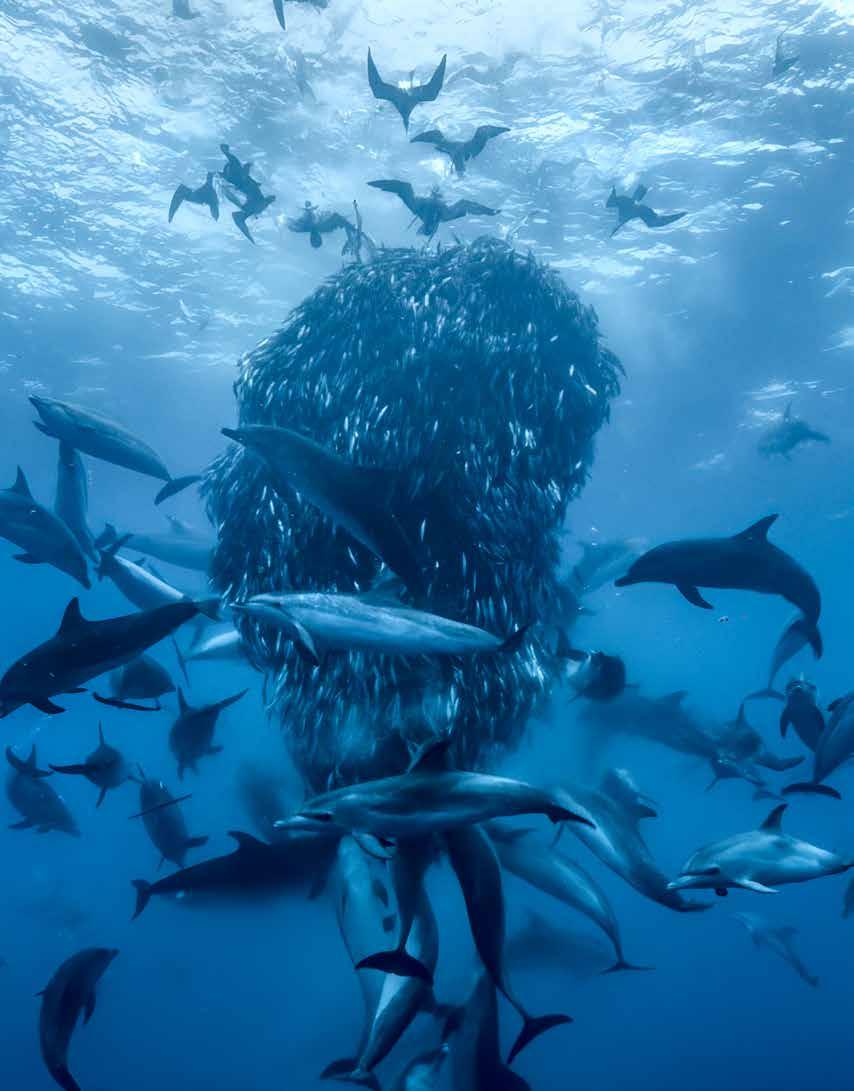
bait balls. Weeks would go by and you wouldn’t see anything and suddenly you see the distant tornado of birds. If we got there in time suddenly we’d have these huge bluefin tuna the size of small cars rocketing over my shoulder slamming into the bait. It was wonderful just knowing that these spectacles, these scenes are still unfolding somewhere in the ocean.
Many people are curious how David Attenborough became involved in the film. What was it like working with him, and how did his full commitment shape or elevate the project?
It’s important to say that a huge number of people came together for this film, to make a difference for the ocean. A number of NGOs, filmmakers, funders, philanthropists — they all wanted to create a seminal film to make a difference and create an opportunity to enact great change for our ocean.
Who better to front it than the greatest front man himself: Sir David
Attenborough. I’ve been working with David for 18 years, but nothing has come close to the privilege and honor of making Ocean. I have treasured memories of sitting on a beach filming the opening and closing lines to the film when he talked about how, after living nearly 100 years on Earth, he realized there’s nowhere more important than the sea, and that if we save the sea, we save our world. When I hear that final line in the film even now, it still chokes me up. I get an incredible emotional power from it and for me they are the most powerful words I've ever heard the great man say.
When you were creating this film, what was the reaction you hoped it would have? Have you seen any changes or progress in ocean protection that you had hoped for? If so, what have they been?
I’ve been doing screenings and speeches in parliament to prime ministers and presidents, the Icelandic president, the U.K. parliament, and the EU parliament. In all these places, it’s had an effect. We’ve been seeing it — it’s been brought up in front of politicians and used by politicians to try to change policy, and in some cases, it has changed policy. That’s always the dream.
What do you hope captains, crew, and yacht owners take from it — especially when it comes to protecting the oceans?
The yachting industry has this wonderful opportunity because of their exposure
to the ocean. The yacht industry is a really important player and I hope they bring their opinions and voices to this movement. I hope they are shocked and surprised by the commonality of these most destructive processes happening across the ocean.
Hope is the most important story here and that's for the yacht professionals as much as anyone else. What was so wonderful about making the film is that you have these huge beacons of hope around the world, the recovery in the ocean is so quick and it happens even in the most devastated areas. I know that your professionals know that this is an ocean planet because their lives are tied to it and they have this great love for the ocean. If we love the ocean and we want it to have a future, for all of us to have a future, we need to go down this path of ocean protection.
What does the future look like for you as a filmmaker and an ocean and wildlife conservationist?
Overall, the future for me is one of hope. There’s been a lot of doom and gloom the last few years, but this really is a story of hope. Recovery is already happening if you look at the examples in the film, like Papahānaumokuākea. I think we have to hold on to this, hold on to the success stories because they are inspirational. The most important thing going forward as a conservationist is hope; if we don’t have hope, what’s the point in doing any of our work? ‹
TOBY NOWLAN PHOTO BY CONOR MCDONNELL
PHOTO BY OLLY SCHOLEY
Long-term
Long-term
Feeling Philanthropic?
Catalyst Bahamas
Catalyst Bahamas, created by teacher Sebastian Purvis, hosts day and multi-day camping events for local Bahamian children during school holidays in the Bahamas. Volunteers can help with activities, teach a skill, or educate the children about yachts. Background checks are required when working with children. Reach out to Purvis to learn more at seb@catalystbahamas.com.
Dates: ongoing through the year.
catalystbahamas.com
Coralpalooza
Each year around World Oceans Day on June 8, the Coral Restoration Foundation gathers volunteers for a global, three-day effort to restore threatened coral reefs in Florida and beyond. Recognized as an official United Nations Ocean Decade event, the initiative highlights the urgent need for reef conservation. This year’s public Dive Days take place June 4–6 in the Upper and Lower Keys and are open to certified Open Water scuba divers. Sign up for alerts to register for the event.
Dates: June 4–6, 2026
coralrestoration.org
Loggerhead Marinelife Center
Love ocean life? You could help Loggerhead Marinelife Center in Juno Beach, Florida, in a variety of ways, but volunteers must commit to one 3.5-hour shift per week for at least six months, with seasonal summer roles available. Sea turtle rehabilitation volunteers must be 18 and high school graduates. No experience is required, and training is provided. A $25 onboarding fee helps support supplies and ongoing marine conservation efforts.
Dates: ongoing through the year
marinelife.org/volunteer
The monthly Fort Lauderdale Beach Sweep is held every second Saturday from 8–11 a.m. at the intersection of Las Olas Boulevard and A1A, where volunteers gather to help keep the shoreline clean and protect local wildlife. The event provides clean-up tools, welcomes individuals and groups, and offers community service hours. Participants are limited to 100, and they should wear closed-toe shoes, dress for the outdoors, and bring water.
Dates: monthly volunteercleanup.org
Fort Lauderdale Beach Sweep
This third annual underwater reef cleanup brings together divers, local dive operators, and volunteers from Miami up to Stuart to help remove debris and protect the reefs. The cleanup is sponsored by the National Save the Sea Turtle Foundation. More than 450 volunteers have participated over the years, removing 1,945 pounds of debris and 145 miles of fishing line from the ocean.
Dates: April 24, 2026
reelitinforthereefs.org
If you’re looking to get out of your superyacht bubble and do a little good in the world, consider spending some of your hard-earned downtime giving back. Volunteer opportunities are usually available in most areas that yachts visit — it might just take a little time to find the ones that best suit your availability and interests.
Rescue Readers
Missing animal cuddles? The Humane Society of Broward County on Griffin Road can help with that while you’re helping them out. Rescue Readers offers a reading program that allows volunteers to bring a book and a blanket, then cuddle up with a shelter dog or cat for an hour of reading aloud. Reading helps alleviate stress (in both humans and animals), so it’s win-win. Select dates only, and you must preregister to participate.
Dates: monthly
humanebroward.com
South Florida Reef Cleanup
Celebrate World Ocean Day with Friends of Our Florida Reefs by joining a morning clean-up dive on June 6. Certified Open Water divers can take part at sites across South Florida, including Palm Beach, Broward, and MiamiDade Counties. Clean-up gear will be provided, though some participating dive shops may require Advanced or Nitrox certification. The cost is $30 per diver, not including tanks, personal gear, or gratuity. Registration is not yet open, but email subscribers will be the first to receive sign-up information.
Dates: June 6
floridareef.org
Surfrider
If you’re looking to make your downtime meaningful, Surfrider can help you coordinate your own clean-up event, wherever you may be in Europe and the U.S. Options include on-foot or kayak cleanups in cities, beaches, and riverbanks. All events are overseen by a Surfrider expert familiar with the local area. Each item collected is sorted, categorized, and counted. The data is entered into Surfrider Foundation Europe's analysis platform, supporting advocacy efforts at the European level.
Dates: Your choice
Location: Worldwide surfrider.eu
•• By Lauren Beck ••
Reel It In for the Reefs
Fort Lauderdale International Film Festival Spotlights
Guy
Harvey Documentary
By Lauren Beck
Most people know Guy Harvey for his marine wildlife art — the distinctive paintings that appear in galleries, on clothing, and even on cruise ships around the world. However, beyond his artwork is a career rooted in science, research, and conservation.
That story took center stage this year when the Fort Lauderdale International Film Festival honored Harvey at its 40th annual closing-night film gala, with the premiere of the new documentary, “Guy Harvey,” on the IMAX screen. The film explores how Harvey transformed his passion for the ocean into a global movement for education and conservation.
Directed and produced by Nick Nanton, a 24-time Emmy Award winner, the documentary follows Harvey’s life from his early days in Jamaica to his studies in Scotland and his return to the Caribbean and Florida. Filmed in the Cayman Islands, California, and Florida, it features stunning underwater cinematography and interviews with
Harvey’s family, colleagues, and fellow conservationists.
“I’ve grown up with Guy Harvey — the brand — being a part of everyday life. Literally every day I see someone wearing one of his signature shirts,” Nanton said. “What I became enamored with was Dr. Guy Harvey, the artist, and his love for the ocean and incredible dedication to conservation through his research. Guy Harvey bridges worlds — he’s as much a scientist as he is an artist, and his work has changed how millions of people see the ocean. This film celebrates not just his achievements, but the movement he’s inspired to preserve our planet’s most vital resource.”
While art might have been his first love and garnered him recognition, science shaped his influence. He earned a doctorate in fisheries management and fish biology — knowledge that informs his scientifically accurate art and conservation efforts.
The film also spotlights the work of the Guy Harvey Foundation, which collaborates with local, national, and international organizations to conduct scientific research, support researchers, and develop educational programs. A longstanding partnership with the Oceanographic Center at Nova Southeastern University resulted in the creation of the Guy Harvey Research Institute.
The film also featured appearances by fellow artist and conservationist Robert Wyland, wildlife sculptor Kent Ullberg, photographer Jim Abernethy, and Harvey’s children, Alex and Jessica Harvey, who both work with him and shared their thoughts on his legacy.
“I applaud Nick Nanton and his team for artfully capturing and highlighting four decades of exploration, research, fishing, diving, education, and conservation into such a powerful film about what has become, and still is, an unforgettable journey,” Dr. Harvey said. ‹
MARITIME AI AND THE LIMITS OF ATTENTION ON THE MODERN BRIDGE
By Ollie Thompson
Artificial intelligence is often framed as the next wave in maritime technology, and that is especially true when it comes to cognitive load. AI and machine learning are beginning to change how information is filtered, prioritized, and acted upon on the bridge, and that matters because attention is a finite resource.
At its best, maritime AI is a navigator’s lifeline. It takes on high-frequency monitoring and micro-adjustments that demand relentless concentration and returns mental space to the bridge team for judgment, coordination, and command. This is the point that often
gets lost in debates about autonomy. The future is not a bridge without mariners; it is a bridge where humans and intelligent systems share cognitive responsibility more effectively.
You see the value most clearly when conditions are at their worst. In heavy weather, an AI-enabled control system can continuously recalculate heading and engine output, making fine corrections far more frequently than a human ever could. Meanwhile, the officer remains in charge of the wider picture: traffic, deck safety, damage reports, and crew welfare. The result is cognitive calm in chaos.
On long ocean passages, the problem can invert. Vigilance fatigue creeps in when nothing appears to happen, and that is when humans are least well suited to sustained monitoring. A tireless digital watchkeeper that scans sensors and flags genuine anomalies helps crew conserve attention for the moments that really matter.
WHERE THE PROMISE CAN BE UNDERMINED
The catch is that the modern bridge is already cognitively saturated. Radar, AIS, ECDIS, alarms, and VHF all compete for limited attentional bandwidth, particularly in congested European waters where decisions compress quickly. In the Dover Strait and the southern North Sea, traffic density and mixed behavior continuously test situational awareness. In a major port approach, add pilotage, tug assistance, restricted waters, and crossing traffic, and the operating window shrinks to minutes, not hours. In those settings, the limiting factor is rarely the availability of data; it is the navigator’s capacity to interpret it and act.
Some workload is unavoidable because the situation is genuinely complex. The rest is self-inflicted, created by poor interfaces, excessive alerting, and systems that force the bridge team to perform the machine’s interpretation for it. Good AI
AI should not be judged by how much it detects, but by whether it organizes complexity into usable priorities that support human judgment.
—Ollie Thompson
strips out that avoidable burden without deskilling the navigator.
THE STANDARD TO HOLD IT TO
If AI is to reduce cognitive load in the real world, there are a few basics that ought to be non-negotiable.
Prioritization comes first. Modern bridges can generate hundreds of alerts per watch, and the resulting alarm avalanche can fragment attention and drive fatigue. AI should improve that situation by acting as an intelligent filter: grouping signals, suppressing transients and elevating only what demands a response now. The bridge team should see a small number of ranked concerns that align with real port and coastal decisions, not a widening list of flags.
Uncertainty must also be readable. These systems deal in likelihoods, not absolutes. That is acceptable, provided confidence is expressed clearly and the underlying limitations are visible. Navigators can work with uncertainty. What erodes trust is false precision.
Then there is the question of degraded conditions. Ports and approaches are not clean data environments. Targets drop in and out; AIS is incomplete; sensors are affected by clutter and weather; behavior can be inconsistent. A cognitively supportive system is explicit about what it can and cannot see, and it degrades gracefully rather than becoming noisy or misleading.
Done properly, this improves both safety and the lived experience of watchkeeping. Cognitive load has measurable physiological effects. In simulator research, high cognitive demand correlates with spikes in stress indicators, while automation that absorbs workload reduces those indicators and improves reported clarity and confidence. Well-designed AI supports steadier decisions under pressure and a more sustainable working environment at sea.
Regulators are moving in the same direction. The IMO’s Human Element, Training, and Watchkeeping work has recognized cognitive workload assessment as part of fatigue management, and future regimes for autonomous and semi-autonomous shipping are expected to include measurable cognitive performance criteria, not just mechanical reliability. That matters because it brings the conversation back onto the bridge. Autonomy succeeds or fails in practice at the handover, in poor visibility, with imperfect data, and with a human who still has to make the call.
Maritime history is full of technologies that endured because they respected how humans think and act under pressure. AI has the same opportunity, not by adding another informational layer, but by preserving the navigator’s capacity for judgment when conditions are least forgiving. ‹
• Floating electric dive systems (Nomad, Sealion)
• Scuba gear sales & service
• Scuba training
• Tankfill systems (Nitrox & Helium)
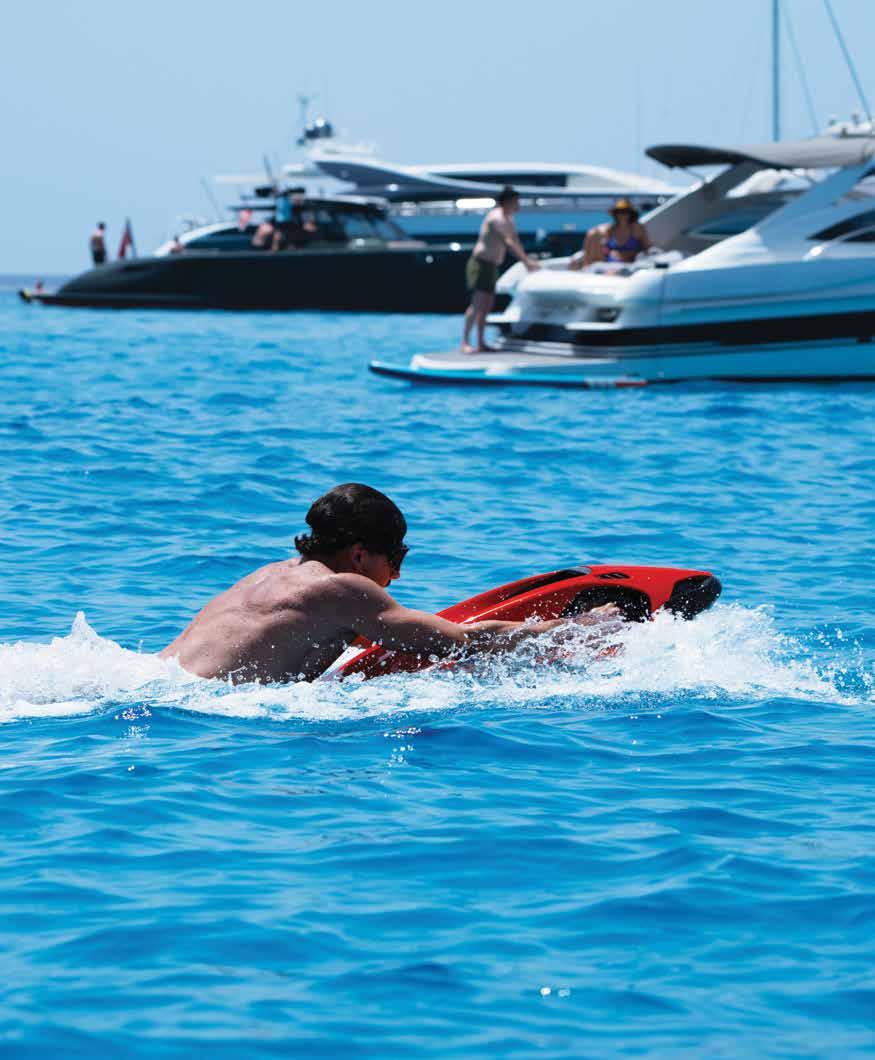
• Water toys (Seabob, Fliteboard eFoil & more)
• Spearguns
• Freediving gear
• Medical kits & service
Across the Refit Network
AN UPDATE FROM SUPERYACHT YARDS AROUND THE WORLD
As the superyacht fleet continues to grow and age, demand for refit work is intensifying across the industry. New investments, expanded facilities, and specialized services are a common theme for shipyards around the world as they match industry demand.
Triton reached out to a number of shipyards across the global refit network for updates on their latest developments; the following represents a sampling of the responses received.
By Kevin Maher and Lauren Beck
LÜRSSEN YACHT
REFIT
REPORTS FULL SEASON AND EXPANDS GLOBAL SUPPORT
“It has been another very busy season. We have recently welcomed close to half a kilometer of yachts, with a total volume exceeding 25,000 GT – comparable to the scale of Milan’s Galleria Vittorio Emanuele II,” said York Ilgner, managing director of Lürssen Yacht Refit.
Lürssen was at full occupancy last season, according to Ilgner. Alongside the work Lürssen does in northern Germany, they also offer extended support through their Fast Operations and Repair Unit (FORU), a dedicated team that is available 24/7 and deployable worldwide to all vessels regardless of where they were originally built.
“We are also uniquely positioned in that our refit teams have direct access to the latest research and development from their new-build colleagues,” Ilgner said. “While both divisions operate independently, a strong culture of knowledge sharing runs across the entire group.”
Lürssen recently hosted the second edition of Lürssen Chiefs’ Day, an annual gathering where chief engineers and key suppliers are invited for a focused knowledge exchange. This year’s central theme was data — how much should be recorded, how it can be securely protected, and how it can be best used to improve their end-to-end services. Lürssen will also relaunch a program on paint application to better understand its potential.
lurssen.com
MB92 GROUP EXPANDS REFIT NETWORK AND DIGITAL PLATFORM
MB92 Group had an eventful 2025 that started with the acquisition of Pinmar, Pinmar Yacht Supply, and Technocraft. They followed that by appointing Remy Millot, CEO of GYG Group – Pinmar and Technocraft, to the MB92 Group board. Now in 2026, MB92 continues to drive growth.
MB92 delivered 61 projects in Golfe-Juan, 103 in La Ciotat, and 82 in Barcelona in 2025. The group now employs around 400 full-time staff, overseeing around 2,000 indirect employees operating across their shipyards. They also welcomed 68 yachts over 78 meters. MB92’s custom digital platform, The Bridge, continues to add new features to improve the refit experience for clients. It has now been implemented on more than 470 projects in the past two years.
Most recently, MB92 Golfe-Juan was officially inaugurated after a major upgrade in January, following a major investment to modernize the site. The investment’s objective was to raise technical standards and ensure full compliance with health, safety, and environmental regulations. Key upgrades include the complete resurfacing of the entire site, the installation of a high-performance water treatment system, and the renovation of all workshops and offices.
MB92 Barcelona recently received the ISO 45001 certificate, representing compliance with international standards in Occupational Health and Safety Management Systems. Their Barcelona site was also awarded the 2025 Macià Placa de Treball, presented by the Government of Catalonia recognizing the company’s economic and social impact locally through
its investments and various environmental and labor initiatives. The group also helped develop the crew guidelines for the Water Revolution Foundation and supports SEA Index.
mb92.com
PORT 32 GROWS SOUTH FLORIDA REFIT CAPACITY
PORT 32, which opened its Fort Lauderdale location in 2023, is located along the New River just off Marina Mile. The yard provides new repair and refit capabilities in South Florida’s marine service corridor. In-water slips are available for yachts, cruisers, and sportfishing vessels up to 150 feet, with a wide range of services from mechanical overhauls and engine work to hull refinishing, paint, teak restoration, and full refit scopes.
PORT 32’s Fort Lauderdale location is expanding its infrastructure with a new upland boatyard currently coming online. It is designed for vessels up to 120 feet and will be anchored by a new 150-ton travel lift. A vendor vetting program has also been implemented within its operating models — all marine service professionals working within the facility must be pre-approved, ensuring that technicians across various disciplines are qualified.
The facility serves captains, owners, and service professionals with a self-service model, a deliberate departure from traditional full-service yards. PORT 32’s self-service model provides owners and crew flexibility in how projects are executed while maintaining access to the yard’s pre-approved marine vendors on site.
port32fortlauderdale.com
LÜRSSEN
PORT 32
MARINE GROUP BOAT WORKS
EXPANDS FACILITIES AND SERVICES
Marine Group Boat Works (MGBW) spans more than 15 acres in San Diego Bay, California, with a second facility in San Jose del Cabo, Mexico. MGBW is a full-service yard specializing in refit, repair, and new construction of boats up to 220 feet, offering 2,000 feet of dockage and a new 820-ton lift in San Diego. The yard is also known for its 665-ton variable-width boat lift. The Mexico location has a 660-ton, 150-ton, and 75-ton Travelift. Upgrades underway include increasing electrical capacity, installing a 750kW solar system, and conducting an environmental review to start dredging and reconfiguring a new floating dock system.
MGBW has introduced several new initiatives, including a Marine Group Global Services division that specializes in maritime consulting, superyacht agent services, and marina and vessel management and operations. MGBW promoted Leah Yam Jones to vice president of the new division and Dawn Stofberg to director of superyacht services.
The company also launched Vessel Assist Cabo in Mexico, offering 24/7 on-water help to those dealing with mechanical problems or breakdowns. The new service operates from Marina Puerto Los Cabos in San José del Cabo and provides towing, battery jumps, and fuel delivery. It covers vessels within a 20-mile radius of Marina Puerto Los Cabos.
The yard has also received a Navy Grant to develop a maritime welding program that aims to expand the skilled labor force needed to support the U.S. Navy’s needs. The grant’s goal is to increase the number of certified welders who meet NAVSEA standards. MGBW partnered with the Maritime Institute in San Diego to create and deliver the customized curriculum, then offers a scholarship to new and existing eligible employees to learn the skill while covering course costs. Graduates can move into full-time welding positions at MGBW. marinegroupboatworks.com marinegroupglobalservices.com
A HISTORIC RMK YACHTS LAUNCH AND NEW FACILITY
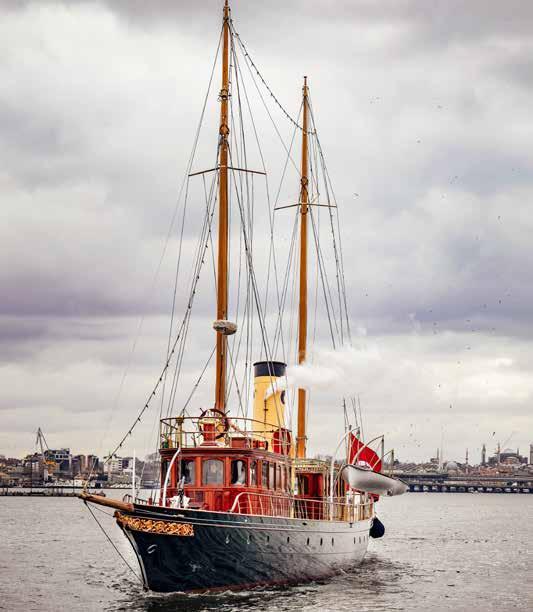
RMK Yachts has relaunched the 38-meter historic steam yacht Cangarda following an extensive restoration at its Istanbul shipyard. Originally built in the United States in 1901, the yacht represents early 20th-century naval architecture and steam propulsion.
Rather than modernizing the vessel, RMK Yachts approached the project as a preservation effort, carefully conserving original features such as Cuban mahogany joinery, brass and bronze fittings, and key mechanical components while restoring structural integrity and steam systems. Cangarda has now been transferred to the Rahmi Koç Museum in Haliç, Istanbul, where it will serve as a permanent exhibit celebrating maritime heritage and engineering craftsmanship.
“From the very beginning, we approached Cangarda not as a refit project, but as a responsibility towards global maritime heritage. Our goal was to protect her spirit, not to reinterpret her,” said Cuneyt Okcu, director of RMK Yachts.
RMK Marine has also begun construction on a new 70,000-square-meter yacht-building campus in Yalova, just outside Istanbul. Designed as a fully specialized facility, the shipyard will feature energy-efficient infrastructure and LEED-oriented design, reflecting a longterm, low-carbon vision for the industry. Once complete, RMK Yachts will relocate its yacht operations to the site while the company’s Tuzla yard focuses on commercial and military projects, expanding overall production capacity. The move to Yalova is expected to begin in late 2026, with full operations planned for 2027. rmkyachts.com
RMK YACHTS
PALUMBO SUPERYACHTS REFIT
EXPANDS NETWORK AND COMPLEX REFIT PIPELINE
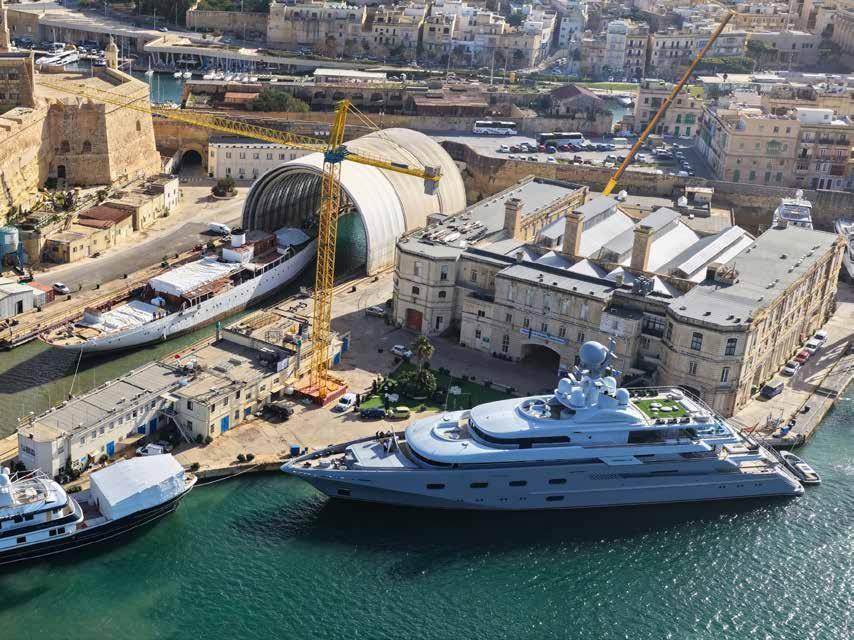
All seven of Palumbo’s shipyards — located in Naples, Marseille, Malta, Messina, Ancona, Savona, and Rijeka — are operating at full capacity, supported by a strong pipeline of confirmed projects underway. Bookings are nearly secured for the next two refit seasons as the Palumbo teams across all locations meet the rising demand for more complex projects, major upgrades, conversion works, and long-term rebuild programs rather than routine maintenance.
Investments of €55 million have enabled Palumbo to add a floating dock up to 250 meters across the shipyard’s network, along with new cranes and ecofriendly logistics equipment. The group has recently signed a partnership with a company specializing in high-end interiors to strengthen its ability to deliver fully customized projects from start to finish.
Palumbo is working towards a significant milestone: the progression of what is set to become the largest refit ever undertaken in the industry, a project that has taken more than five years. Recently completed is the technical refit of M/Y TITANIA, while other projects underway include M/Y Sarastar ’s full-scale refit, painting and refinishing of M/Y La Blanca, a two-year refit of S/Y Sea Cloud , an extension of M/Y New Dream, and the 15-year survey of M/Y Lady Moura
Sustainability remains a central pillar of Palumbo’s strategy, as the company continues to adopt updated industry standards. Palumbo has integrated recycling initiatives and responsible resource management into its daily operations. The company is also set to participate in the Palm Beach and Dubai International Boat Shows for the first time as it prepares to expand its network beyond Naples to strengthen its presence and offer solutions to meet increasing customer demand. palumbosy.com
DERECKTOR SHIPYARDS EXPANDS CAPABILITIES AND STREAMLINES REFIT SERVICES
Derecktor Shipyards is improving its facilities and services at its Fort Pierce, Florida, location while expanding into new construction. A $4 million yard improvement initiative, in partnership with St. Lucie County, will include full yard paving, expanded heavy-lift zones, and upgraded stormwater drainage to improve vessel capacity, equipment movement, safety, and staff and client accessibility. The project will double the yard’s hauling and blocking capacity on land.
The yard also launched Derecktor One, a new client-focused initiative designed to streamline the refit experience through a single, coordinated point of oversight. Project management, purchasing, scheduling, and billing is now aligned into a more unified framework, providing captains and owners with clearer visibility into project scope, timelines, and costs. Complementing this, Phase One of an Odoo ERP integration has streamlined workflow across estimating, sales, and project oversight.
Recent refits include the 96-foot Coastal Drifter, which received mechanical, cosmetic, and air-conditioning upgrades; the research vessel R/V AHTI, which was transformed with custom deck and interior modifications for advanced operations; and Double Haven, outfitted with structural work for new stabilizer appendages. In April, Fort Pierce will begin a major 60-meter Benetti refit, including a full exterior repaint, engine rebuilds, and interior renovations.
derecktor.com
AMICO & CO ENHANCES INTERIOR REFIT
OPERATIONS
Amico & Co., one of the Mediterranean’s largest refit hubs, has brought on experts to enhance interior operations. “Interior refits deserve a dedicated and highly specialized approach,” said Amico’s Manuel Di Tillio. “They require a team capable of combining design sensitivity with strong technical and project management expertise.” To strengthen this focus, Amico has added Martina Bressan, who brings both design expertise and shipyard experience, and formed a partnership with interior refit specialist Silvia Iraghi, who has more than 15 years of experience across the yachting and luxury real estate sectors. Together, the additions allow Amico to offer owners a more seamless interior refit process, aligning design vision, technical execution, and project management. amicoshipyard.com
AMICO & CO
AMERICA’S REFIT CHALLENGE
Talent, Competition, and the Road Ahead
By Kevin Maher
PHOTOS BY PALUMBO YACHTS
PHOTO
“Americans, historically, are a pretty competitive bunch. Let’s make sure we’re competing. We’ve got bonus depreciation, sales tax cap on refit and repair, no currency exchange — we’ve got so many advantages here. All we have to do as a group is sit down, work together, and put a deck together that lists these things and remind people it’s a great place to do business.”
– Phil Purcell
The refit industry in the United States has an issue. A personnel problem, according to Alyssa Freeman, executive director of the Marine Industries Association of Palm Beach County (MIAPBC).
“We’re losing a lot of our skilled laborers just because they’re retiring,” Freeman said. “That’s going to be a big problem for us as a country if we don’t fill the gap on that talent pipeline and get more people to work in these trades.”
A significant portion of Freeman’s duties include filling that talent pipeline. She coordinates field trips with schools around Palm Beach County to visit refit facilities and see jobs in action. If kids can’t leave school, she’ll go to them — setting up tables with information on campus, often meeting students who believe a four-year degree is the only way forward.
“There’s still this mindset that you need a four-year degree, and students are opting to go into careers that are not skilled trades jobs — there’s not a lot of education around it,” Freeman said. “It’s not because they don’t necessarily want to, I just don’t think they know about it.”
Freeman isn’t the only person who believes the lack of training is an issue for the U.S. refit industry.
“The U.S. has kind of let its guard down a little bit. Europe and other parts of the world have caught up, if not overtaken America,” said Colin Lord, senior project manager at Maritime Project Solutions. “I believe a lot of it is to do with training, apprenticeship programs, the labor rates, and general working conditions.”
However, it’s not all doom and gloom, according to Lord. Instead, it’s an
opportunity for the industry to examine the problem and change opinions, training, education, and generally catch up. The U.S. isn’t shy to compete in a race for success, according to Phil Purcell, president and CEO of the Marine Industries Association of South Florida (MIASF).
“Americans, historically, are a pretty competitive bunch. Let’s make sure we’re competing,” Purcell said. “We’ve got bonus depreciation, sales tax cap on refit and repair, no currency exchange — we’ve got so many advantages here. All we have to do as a group is sit down, work together, and put a deck together that lists these things and remind people it’s a great place to do business.”
On April 9, 2025, President Donald Trump signed an executive order called “Restoring America’s Maritime
Dominance.” The order aimed to rebuild America’s maritime manufacturing capabilities, make U.S.-flagged and -built vessels commercially competitive, and improve recruitment, training, and retention of the relevant workforce. While the original executive order focused on commercial vessels and includes many components that have yet to be passed by Congress, Purcell believes it has real potential for Florida’s refit capabilities if it gets approved.
America’s Maritime Action Plan, the full plan behind Trump’s executive order, was released in February 2026. One of its main goals is to revive U.S. shipbuilding and repair facilities while growing the marine workforce of tomorrow. Purcell believes that companies along the Dania Cut Canal, Miami River, in Fort Pierce, and throughout Florida should take a
“We are all working towards the same goal — ALIGNMENT. “If you want to go fast, go alone. If you want to go far, go together.”
Maria Pierce Schoenheit
hard look at the plan — as it could help unlock the potential of these refit areas.
“Why can’t we work on the bigger boats when they’re here? Why not make sure we have the infrastructure in place that can service these things?” Purcell said.
Purcell also believes that the U.S. maritime workforce needs more support, but not due to lack of skill. Instead, he compares the appreciation of craftsmanship in Europe — whether it be historic buildings or superyachts — to the lack of appreciation he sees in the U.S. However, he says society is beginning to take note.
“You can’t AI the guys working in an engine room. Every one of those jobs requires people to get into spaces that a robot is probably not going to be able to get into in a functional way,” Purcell
said. “We have the skill set here; we’re just not built like Europe in terms of the community embracing it as much.”
However, the effort to increase the industry’s embrace of skilled trades workers is currently underway. From Freeman’s work in Palm Beach, to MIASF’s Salty Jobs, and Sea the World’s maritime industry storefront at Junior Achievement of South Florida, the industry is reacting.
“The next thing is how to keep that person within your organization,” Lord said. “Unfortunately, I’ve seen it so many times where an employee isn’t really encouraged, and that person would leave for a couple dollars more.”
Another recent development is the launch of the American Refit Platform and Leadership Council, an initiative
announced by Maria Pierce Schoenheit, founder of Maritime Project Solutions.
“The American Refit Platform focuses on elevating execution standards across the U.S. refit market through structured planning, defined scope of works with realistic expectations, vetted cost analysis, disciplined reporting, and transparent coordination between stakeholders,” Schoenheit wrote in her announcement.
Lord has also joined Schoenheit in the initiative, with the two aiming to continue ongoing discussions on how to improve the U.S. refit ecosystem with shipyards, project managers, owners, captains, and others.
“We are all working towards the same goal — ALIGNMENT,” Schoenheit wrote. “If you want to go fast, go alone. If you want to go far, go together.” ‹
PHOTO BY PALUMBO YACHTS
Derecktor has refit the refit. With Derecktor One you get one schedule, one scope of work, one bill, and one partner. In short, one simplified and efficient project. Whether you bring your preferred contractors to the job, or leverage our vetted subs and expert in-house craftsmen, every trade is integrated under a defined plan and disciplined execution model. All coordinated by our renowned Project Managers.
From strategic upgrades to full-scale transformations, Derecktor One is ready to deliver a refit with clarity, coordination, and control.
Derecktor One is available at our Derecktor Shipyards facilities in Dania Beach and Fort Pierce, Florida. Contact George Whitehouse at gwhitehouse@derecktor.com | 561234-6024 or Joel Shine at jshine@derecktor.com | 772-6337923 - and take the first step towards One better refit.
The Flag Surveyor’s Refit Warnings When a Project Should Pause — Before Risk Escalates
BY CAPT. JAKE DESVERGERS
Refits don’t usually fail because of a catastrophic mistake. They fail because small warning signs were dismissed along the way.
As a flag-state inspector, I see predictable moments in major refits when a project should pause — or reset — before cost, delay, and regulatory exposure compound. The problem is that these moments often appear after money has been spent and contractors are mobilized. By then, momentum is powerful. No one wants to say, “Stop.”
That is exactly when discipline matters most.
WARNING #1: STRUCTURAL CHANGES WITHOUT ENGINEERING TRACEABILITY
Structural modifications are common in refits: bulkheads adjusted, foundations relocated, deck penetrations added. Each change may seem minor, but yachts are engineered structures, not floating renovations.
When structural members are altered without updated calculations, drawings, and approval traceability, the project shifts from controlled modification to assumption-based construction. Even small changes can affect load paths, fire boundaries, or watertight integrity.
The phrase I hear too often is, “It’s just a small adjustment.” There is no “just” in structure. If documentation lags behind physical work, that is a pause point. What appears efficient in the yard can become expensive rework once class or flag review begins.
WARNING #2: MACHINERY UPGRADES IN ISOLATION
Refits frequently include propulsion upgrades, generator replacements, hybrid integrations, or expanded hotel loads. These can be valuable improvements when properly engineered. Problems arise when upgrades are evaluated independently rather than systemically:
• A new generator may fit, but has shortcircuit capacity been reviewed? Is it MARPOL approval?
• An exhaust reroute may clear equipment, but does it affect fire protection boundaries?
• A stabilizer upgrade may improve comfort, but has added weight been reconciled in stability documentation? Engineering is interdependent. Systems rarely operate in isolation, even if installed that way.
At one inspection, a propulsion upgrade led to “minor” fuel and exhaust routing changes that altered fire
boundaries and insulation clearances, requiring revised fire plans and approvals. The schedule slipped not because of the engines, but because the secondary impacts weren’t evaluated upfront. When decisions are made incrementally, secondary impacts are deferred rather than resolved. If supporting calculations and documentation are not updated, the project should pause.
WARNING #3: SAFETY SYSTEMS MODIFIED WITHOUT HOLISTIC REVIEW
Fire detection, suppression, escape routes, and ventilation are compliance-sensitive; small changes can have disproportionate consequences. A galley change may affect hood coverage; an engine-room reconfiguration may alter detector spacing; a stairway relocation may impact escape travel distances; new upholstery may require fire treatment.
These are measurable requirements embedded in class and flag frameworks. Each contractor may justify changes independently: layout, access, aesthetics. No one intends to create non-compliance, but compliance is not accidental, it requires coordinated oversight.
At a recent inspection, what began as a simple generator replacement evolved into relocated ventilation
trunks, an exhaust modification, and a structural access adjustment. None of the changes were improper on their own, but together they required revised fire plans, structural review, and updated stability confirmation. The delay was not complexity, it was drift.
WHY THIS HAPPENS
Most refit failures are not technical incompetence. They are momentum failures. The yacht is opened up. Access is available. Budgets have expanded. Additional improvements seem efficient while systems are exposed.
There is also a persistent misunderstanding that privately operated yachts are not subject to the same scrutiny or engineering rigor as commercial vessels. While operational requirements may differ, structural integrity, stability, fire protection, and machinery safety do not change based on charter status. Physics is indifferent to registration category, and flag administrations still expect compliance with applicable safety frameworks.
“While you’re in there…”
Individually logical. Collectively destabilizing as drawings fall behind, weight estimates drift, and fire plans no longer match reality. What began as a defined refit becomes a moving target. Inspection shifts from confirmatory to corrective. That is when cost escalates.
THE DISCIPLINE OF THE RESET
Pausing feels counterproductive — yards are scheduled, contractors are mobilized, and owners expect progress. Yet the most expensive projects are those that refused to pause when early warning signs appeared.
A reset restores control:
• Update drawings before proceeding.
• Reconcile weight and stability impacts.
• Validate machinery integration.
• Reconfirm fire and safety compliance.
• Align contractors under a single technical authority.
Refits succeed when scope is disciplined and documentation keeps pace with execution. They fail when incremental decisions outpace validation.
The role of the flag or class surveyor is not to slow progress, but to recognize when progress is outrunning control. If you hear “while you’re in there,” pause long enough to ask: What does this change affect?
That question has prevented more refit failures than any corrective action applied after the yacht leaves the yard. ‹
South Florida Refit Yards Navigate Shifting Tides
Change is the constant for the South Florida sector facing economic, labor, and policy pressures
The yacht refit industry is navigating conflicting currents. Some South Florida shipyards report strong growth, while others are experiencing a slowdown. Yet, all feel pressure from several trends and shifting market dynamics.
At Universal Marine Center in Fort Lauderdale, Marina Manager Bernard Calot points to a full yard as evidence of continued demand. The facility is operating at 96% capacity, with record performance in 2025 and a recordsetting January, yet growth has come with complications.
Supply chain disruptions and escalating prices are straining budgets, particularly for imported components subject to new duties of 20 to 50%.
Calot says captains are often shocked
by the cost of European and Asian parts, and the unpredictability of tariffs makes planning difficult. Some owners are opting to complete refits in Europe, where labor and tax burdens can be lower.
“It’s the guy paying at the end who decides, do I pay or do I go somewhere else?” Calot said.
At Lauderdale Marine Center, Foster’s Yacht Services has operated under five different shipyard owners. Company President Dennis Foster says that kind of change reflects the industry’s resilience and cyclical nature.
“This is a luxury-driven sector, and luxury markets are often the first to feel economic shifts,” he said.
Foster noted that rising operating expenses, workforce housing shortages,
by Dorie Cox
and market volatility are pressuring marine service providers, sometimes forcing difficult staffing decisions.
“We’re seeing increased competition internationally, particularly from European yards, while domestic operators are navigating rising costs and tighter margins,” Foster said.
At the same time, companies cannot simply cut prices without compromising quality, he said.
Photos taken at Universal Marine Center, Fort Lauderdale
Foster also highlights a generational transition, with veteran tradespeople retiring faster than younger workers entering the field. While skilled technicians can be recruited from related industries, such as automotive, they still require significant retraining for yachtspecific systems.
Labor shortages extend across the sector. At Derecktor Shipyards, Chief Commercial Officer Joel Shine says the company is actively hiring shipfitters and pipefitters to support both refit and new construction work.
“While we have a strong team in place, the industry continues to face a shortage of highly specialized trades as demand outpaces the experienced labor pipeline. Our focus remains on retention and workforce development,” he said.
Planning is key to meeting today’s yacht owner expectations.
“The earlier the yard is involved, the more efficiently all contractors can operate,” Shine said. “Owners want predictability — fixed timelines, disciplined cost control, and fewer surprises. Achieving that requires shifting the mindset from ‘book vendors first, pick a yard later’ to ‘select the yard early and build the project around a coordinated execution plan.’”
Inland, Indiantown Marine Center is investing in both its workforce and refit and yacht service operations. President Dan Romence says the yard has room to grow and is working to attract additional marine businesses. The company recently donated 11 acres to Indian River State College to support the development of a marine trade school.
The Marine Industries Association of the Treasure Coast is also working to address what it calls a workforce shortage, supporting initiatives aimed at entrylevel wage earners to help rebuild a labor pipeline that has dried up, said Executive Director Rob Mac Keen.
While some see increased efficiency, Mac Keen is concerned about industry consolidation, pointing to acquisitions by companies such as Safe Harbor Marinas, Suntex Marinas, and MarineMax. Aggregation, he argues, can limit
competition and weaken the personal relationships that traditionally helped bring refit projects to individual yards, putting smaller, independent operators at a disadvantage.
At Marina Mile Yachting Center, General Manager David Hole says the Fort Lauderdale refit market has evolved significantly over the past decade. Work that was once largely relationship-driven is now defined by structured project management. Facilities that combine
“While we have a strong team in place, the industry continues to face a shortage of highly specialized trades as demand outpaces the experienced labor pipeline. Our focus remains on retention and workforce development.”
—Joel Shine
more organized in a highly competitive local market, while crew expectations increasingly emphasize safety, environmental standards, and overall yard professionalism.
For smaller technical firms, the environment feels uncertain. DFD, based at Lauderdale Marine Center, maintains a lean and adaptable team to keep pace with rapidly advancing onboard technologies. The shop typically has interns, including naval architects, but this year it’s too slow.
Owner-operator Sean Hodgson says that where a yacht once required a general electrician, today it may require specialists in audio-visual systems, IT, navigation and communications, surveillance, and more.
He also observes changes in ownercaptain dynamics. Where relationships were once more personal, yachts are now frequently managed through corporate structures and accounting departments. In some cases, captains and crew bring less experience than in previous decades.
operational discipline with flexibility are the ones staying competitive, Hole said.
“Owners are more asset-focused and expect refits to be managed with clearer scopes, better reporting, and fewer surprises, driven in part by the growth of yacht management companies that have added structure to planning and documentation,” Hole said.
Captains are operating with greater accountability around budgets and timelines, which has pushed yards to be
Hodgson describes the current market as a “perfect storm.” He recalls the boom of 2006–07 followed by the 2008 financial crisis, then the surge during the COVID-19 years and what he calls today’s “cleansing.”
Still, like many long-established marine businesses, the company intends to ride out the cycle, as it has since 1993.
“It feels like we are standing by,” Hodgson said. ‹
The Yacht That Never Left the Yard
By Sam Moen
Every refit yard has one.
The yacht that arrived for a winter paint job and interior refresh and is still sitting in the shed years later. The scaffolding has become part of the skyline. The crew list has changed. The projected completion date has quietly disappeared from conversation.
Across the superyacht sector, long-term refits are an open secret. Most begin with disciplined intentions: a defined scope, a fixed budget, and a return-toservice target. But once work begins, timelines can stretch in ways few anticipate. What was meant to be six months becomes 18. Eighteen becomes three years.
Industry professionals say the shift usually starts with discovery. Unlike new construction, refits expose history. Corrosion hidden behind joinery. Outdated wiring. Structural fatigue never previously addressed. Aesthetic updates trigger mechanical overhauls. Mechanical upgrades prompt regulatory reviews. Each adjustment expands the project footprint.
Scope creep is rarely dramatic, it accumulates. An owner approves upgraded stabilization while the engine room is accessible. That leads to electrical load reassessment, which prompts generator replacement. New generators trigger exhaust modifications to meet updated emissions standards. All decisions are logical. Collectively, they extend the schedule by months no one budgeted for.
As one U.S.-based yard manager who asked to remain anonymous put it: “Once you open the boat up, you see everything. And once you see it, you’re not going to close it back up without fixing it.”
The Domino Effect
At the heart of most prolonged refits is a project management breakdown that seasoned crew recognize immediately. One veteran crewmember, who logged significant time at Rybovich Shipyard in West Palm Beach and preferred to stay anonymous, puts it plainly: “Project management is the main hold-up of boats getting stuck in the yard longer than anticipated. If a vital task runs behind, like engine servicing or parts availability,
it delays a whole lot of different aspects. It’s a whole domino effect.”
Vendor management compounds the problem. Qualified specialists are scarcer than they appear, and the most capable gravitate toward the largest, highestvalue projects. When a contractor underdelivers or disappears mid-job, the fallout is severe. “Trying to get another vendor to work on someone else’s job and sign it off is an absolute nightmare,” the crewmember said. “If something goes wrong, it’s on whoever finished it. No worry about the guy who started it. That guy’s long gone.”
The sequencing problem is equally punishing. Electrical work must precede carpentry. Carpentry must precede finishing. When one trade slips, every trade behind it waits.
“Once you open the boat up, you see everything. And once you see it, you’re not going to close it back up without fixing it.”
When Communication Breaks Down
A less-discussed driver of refit dysfunction is the breakdown between captains and owners. When owners lack a dedicated management infrastructure, captains are often given broad authority, including approval of yard work, without
explicit sign-off for each line item. When invoices arrive and expectations diverge, disputes follow.
“The captain wasn’t transparent with the owner, got everything done, and then the owner turns around: ‘I didn’t want that done. Why should I be paying for this?’” the crewmember said. In more extreme cases, invoices are padded and the difference quietly redirected. “I’ve seen it where captains say, ‘Send me an invoice for X amount,’ but the job was only worth half that.” The short-term gain rarely survives.
Refit as Legal Limbo
In rare cases, stalled refits escalate entirely. M/Y Anodyne is often cited as an extreme example, a yacht that entered a yard for significant work and instead
PHOTO BY PALUMBO GROUP
became embroiled in litigation over scope, payment, and performance that lasted more than 15 years. A 50-meter Trinity built in the U.S. tells a similar story: ownership complications and a mounting work list left the vessel effectively abandoned in refit, a modern yacht turned long-term yard fixture. A veteran crewmember recalled observing a comparable situation at Lauderdale Marine Center.
“The owner basically abandoned the boat. Boat management handled everything thereafter,” the crewmember said. “To abandon it? It’s insane.”
The Crew Left Behind
Crew are often the first to absorb the uncertainty. Some find the yard period a welcome reprieve from the unrelenting pace of charter. Others grow restless quickly. As timelines extend, owners typically move to skeleton crew, retaining only essential personnel. “Instead of three deckhands, you’ll
Charter seasons are missed, professional advancement is delayed, and morale quietly erodes when no return date is in sight.
now only have one. A lot of crew get antsy. They want to start moving,” the crewmember said.
Financially, the picture is more stable than many assume. “Your salary doesn’t decrease at all in a longer shipyard period,” he noted. Some skeleton arrangements even net modest gains through food allowances when a chef is off the books. Still, career disruption is real. Charter seasons are missed, professional advancement is delayed, and
morale quietly erodes when no return date is in sight.
Discipline as the Sole Safeguard
Not every prolonged refit represents failure. Some yachts relaunch in significantly improved condition, effectively reborn via comprehensive systems renewal and redesign. Owners willing to absorb prolonged schedules can achieve transformative results. But industry veterans are consistent on the prescription: clearly defined scope, structured change-order management, and firm operational deadlines are the strongest safeguards against drift. Without them, a targeted upgrade quietly becomes an open-ended undertaking.
In an industry built on motion, the yachts that remain behind shed doors year after year are a quiet counterpoint. They entered for a season and for a time, sometimes far longer than anyone expected, they never left the yard. ‹
PHOTO BY PALUMBO GROUP
Photos: Luke Pearson
By Lauren Beck
Refits signify renewal, but minimizing interior waste is often complicated.
“Sadly, much of what is removed is discarded if the removal process damages items,” said designer Patrick Knowles of Patrick Knowles Designs (PKD). “We often see damage in the removal of mirrors, glass works, marble, and cabinetry that are screwed and glued to the vessel.”
Leah Yam Jones, VP of Global Services at Marine Group Boat Works (MGBW), shared a similar experience. “A lot of the furnishings on yachts are custom and tough to reuse anywhere,” Jones said. “The strong adhesives also make it hard to remove in one piece, so much of it is destroyed in demo, and the chemicals in the adhesives on the intact pieces simply make the furnishings unusable.”
WASTE NOT SUSTAINABILITY
IN THE INTERIOR REFIT PROCESS
As Amico & Co. shared, materials and furnishings remain the property of the owner. “As such, decisions regarding reuse, relocation, or disposal remain entirely under the owner’s control.”
RECYCLING
MGBW has a strong recycling program. Metals like steel, aluminum, and bronze are recycled and melted down, although copper can be more difficult.
“You would think [stone, tile, and marble] would be easy to recycle or repurpose, but it’s not,” Jones said. “They tend to break apart when you’re demoing it and taking it out. You would want to find a way to repurpose them because they’re earthly materials, but you just can’t, so it ends up being discarded.”
Plastic can also be complicated. Not all plastic is recyclable, and sorting affects what recycling trucks will collect, Jones said.
At MB92, metals, wood, paper, glass, cardboard, oils, and other hazardous waste are recycled through specialized providers, while industrial plastics often require specialized recycling due to additives and pollutants. The yard has partnered with Carbon Blue to recycle plastic tarps used
during refits, turning them into furniture and equipment, including benches at Barcelona’s CF Barceloneta stadium.
“Marble is quite complicated because it could have really good reuse,” Marc Hervas, sustainability manager at MB92, said. “But it is the client’s property, and they may want to keep it for future repairs.”
The shipyard cannot reuse or donate them unless ownership is relinquished. Customs and import regulations may also restrict donations or transfers of imported items unless taxes are paid or the items are designated for educational use.
Amico & Co. noted woods and metals are integrated into established recycling streams. “Other materials — such as glass, carpets, and upholstery — remain more complex to recycle,” the yard said, adding that they follow appropriate disposal routes.
REUSE
In some cases, items removed during refit are kept or repurposed.
“High-value items are carefully safeguarded and typically reallocated within the owner’s portfolio, ensuring continuity of use and protection of the owner’s investment,” Amico said.
Knowles has seen owners passing items to family members. In one case, pieces from a yacht furnished a relative’s dorm room; another gifted salon furniture for a grandchild’s wedding.
“When items are gifted, [they] are in immaculate condition, designer brands, and very costly,” Knowles said. “This should not be confused with handed-down furniture, art, or accessories.”
“[Owners sometimes] request helm chairs or compasses to repurpose as décor in homes or offices,” Jones said.
Some pieces may return to the yacht. Knowles said PKD has restored heirloom area rugs, artwork, sculptures, light fixtures, and loose furniture. Occasionally, china, crystal, and hollowware make their way back on board.
MGBW has donated scrap metal to a local welding school and is exploring ways to share removed textiles with fashion design schools.
DONATIONS
“When reuse is not appropriate, charitable donation is frequently chosen as a responsible and increasingly appreciated alternative to disposal,” Amico said.
Soft goods, textiles, and crew uniforms are often easier to donate. PKD has donated items to Women in Distress and Habitat for Humanity.
MGBW works with local charities and nonprofits to donate tableware, serving platters, utensils, and small appliances. The yard also partners with a nearby culinary school, which gets first choice on kitchen items. Some items are donated
“High-value items are carefully safeguarded and typically reallocated within the owner’s portfolio, ensuring continuity of use and protection of the owner’s investment”
–Amico & Co.
across the border to churches, nonprofits, and community organizations in Mexico. Occasionally, teak or wooden items will go to local antique stores.
Sometimes items find second lives within the yachting community. As one former U.S.-based chief stewardess said, “My apartment is basically all from a yacht
— chairs, tables, décor, lamps, bedding, pillows, plates, and wine glasses. And it’s all because the vessel was going through a refit, changeover, or the bosses just changed their minds one day.”
RESELL AND STORAGE
When items are too valuable to discard, resale or storage may be an option.
PKD has organized auctions for several yachts. “We once refitted a 200-foot yacht that was 100% Fendi,” Knowles said. PKD coordinated the auction of all Fendi items.
Capt. Shawn Hardman manages Yacht Refit Storage in Fort Lauderdale. “I think people forget about storage,” he said. “They just don’t have a place to put things, but they don’t want to get rid of them.”
Occasionally, items stored at the facility are passed to him for reselling. What he can’t sell, he donates to organizations such as Habitat for Humanity, veterans’ groups, or communities in the Bahamas.
“I hate throwing things away,” Hardman said. “If I can reduce, reuse, recycle, I’m going to do it.”
LOOKING AHEAD
Shipyards and designers are also working to cut waste. Knowles said PKD offers sustainably sourced options and estimates material quantities for reuse elsewhere.
Carpet is one example. “In a suite in which there is a separate closet or changing area, we would use carpeting that would have been under the bed,” Knowles said, provided the bed is mounted to the deck.
Suppliers are also starting to close the loop. Hervas highlighted a carpet manufacturer that takes back used carpeting from yachts and transforms it into new carpet. He also noted a shift toward “repair more, replace less,” with companies providing crew training and repair kits for certain products.
“It’s just a matter of time before every large company has someone dedicated to sustainability because it pays for itself,” Hervas said.
“There is a clear and growing awareness among owners regarding the environmental impact of refit projects,” Amico said. ‹
This
Isn’t Your Living Room:
Designing Luxury for Life at Sea
By Patricia Clark
During refit, owners often see an opportunity to refresh a vessel’s appearance and style. Many turn to their home interior designer, someone who understands their tastes, to create what they expect will be a seamless visual renovation. On the surface, the logic makes sense: luxury materials are luxury materials. At sea, however, it rarely translates so simply.
Yacht interiors operate under a different set of constraints than residential spaces. What works in a luxury home can become impractical on board.
One of the most overlooked differences between residential and yacht interiors is structural. From curved bulkheads to sun and humidity, marine environments demand a level of technical planning that residential design rarely requires. While homes are largely static environments built
around fixed walls, yachts are dynamic systems that must remain serviceable long after delivery. Patrick Knowles, founder of Patrick Knowles Designs, notes a fundamental distinction.
“Yachts are mobile and homes are not,” Knowles said. “Designing around that simple fact impacts virtually every aspect of the yacht design process.”
Wood applications illustrate this clearly. According to Lothar Onfiani, managing director of TABU, an Italian company specializing in wood veneer dyeing, the material is rarely the limiting factor.
“The biggest adjustment is not the veneer itself, but the construction logic behind the panels,” Onfiani said. “On yachts, wall and ceiling cladding must be designed for rapid access and removability while preserving structural integrity and avoiding vibration related issues.”
This requirement alone separates marine interiors from residential ones.
PHOTO BILLY BLACK
Panels that appear seamless must often be removable — a reality land-based designers do not initially anticipate.
Onfiani explains that “the most challenging factors for wood are UV exposure, heat, and humidity, and on a yacht you typically encounter all three at elevated levels, often simultaneously.” Tighter material control, rigorous testing, and careful long-term planning during the refit phase are required.
Material selection during a refit is also influenced by geography. Where refit occurs can shape what is practical, cost effective, and timely to install.
Yacht refits operate on compressed timelines with complex logistics, so shipping delays, customs, and supplier proximity factor into final decisions.
Motion affects how objects are secured. Knowles explains that details rarely considered in residential design become critical on board. Storage systems require fitted holders to keep
glassware, tableware, and decorative objects secure while underway. Decorative chandeliers must be rigidly mounted and table lamps are bolted into cabinetry to prevent movement.
If hard materials reveal the structural differences between yacht and residential design, textiles often expose the operational ones. Kim DiMarco, founder of Los Angelesbased Somato Textiles, sees a strong parallel between luxury hospitality and yachting environments.
“Yachting mirrors hospitality in both experience and operational demands, which makes commercial performance textiles the smartest specification choice,” DiMarco said.
Outdoor spaces expose the limitations of residential fabrics. Marine environments demand materials that can withstand UV exposure, moisture, and constant use.
“Solution dyed yarns are the best choice because the color is saturated
all the way through the fiber,” DiMarco said. “This construction improves UV resistance and cleanability.”
While residential textiles often follow short seasonal trend cycles, contract grade collections are designed for longevity.
“Performance finishes such as stain resistant nanotechnology and PFAS free protective coatings allow interiors to maintain a luxury appearance while still tolerating spills, frequent cleaning, and heavy guest use,” DiMarco said.
Ensuring that residential designers’ aesthetic vision is translated through a marine lens early avoids costly revisions later. When materials, access requirements, and environmental realities are addressed from the outset, the result is a beautiful and functional multi-season experience. ‹
PHOTO CHRISTINE STROBEL
Refit Realities Inside the Industry’s New Year-round Cycle
By Gemma Harris
PHOTOS BY PENDENNIS YACHTS
The superyacht refit season has followed a predictable pattern for years. For most yachts, the typical summer charters in the Mediterranean were followed by a winter refit period. Today, that model is increasingly blurring.
The refit sector’s dynamics are shifting; it is no longer a season but a continuous state of maintenance, repair, and upgrades that spans the year. Fleet expansion, larger yachts requiring more space, more complex projects, and owners cruising across multiple regions are all contributing to the changes across the landscape.
What were once predictable maintenance windows have now become a near-continuous cycle, with shipyards typically busier throughout the year. Joan Rosselló, general manager at STP Shipyard in Palma, notes: “In recent years, driven by strong demand for maintenance and repair works, the shipyard has been operating at consistently high occupancy levels throughout most of the year.”
Moving away from seasonal interruptions to more structured refit activities, Rosselló adds: “As a result, the conventional refit calendar has become far less seasonal, with scheduling remaining robust and steady year-round.”
The sustained pressure on refit infrastructure is increasingly evident, with even more yachts, many larger than older builds, competing for limited yard space. Many of the yachts also require longer haul-out periods and more specialized work.
Owners’ itineraries, which now cruise multiple regions, require refits to be scheduled whenever and wherever space is available. Fleet ownership models further stretch space and resources.
Meanwhile, yacht charter demand continues to grow, leaving limited downtime between bookings and
The refit sector’s dynamics are shifting; it is no longer a season but a continuous state of maintenance, repair, and upgrades that spans the year.
further compressing maintenance windows. This dynamic is not new, but the intensity has increased.
Refit periods have always demanded resiliency from yacht crew, and these changing developments have further consequences. Work in shipyards is less operationally dynamic than charter work and typically more physically demanding.
As winter downtime used to allow for personal leave, fragmented refit schedules can now make organizing leave more complicated. Longer, more complicated refits also mean extended periods living and working in a shipyard, often with the uncertainty typical of larger projects — timelines can shift, and unexpected issues may arise.
When it comes to crew wellbeing, extended yard stays introduce further
pressures. Living aboard a yacht in refit, without the usual spaces and routines, is a challenge that most crew recognize and should work to manage accordingly.
“Establishing a clear, detailed timeline in advance helps minimize delays, avoid overlaps, and ensure the refit schedule remains as accurate and efficient as possible,” Rosselló said. “Strong communication, realistic planning, and proactive coordination are fundamental to reducing disruption and ensuring a smooth and productive refit process for all parties involved.”
These clearly defined project scopes, organized contractor schedules, and realistic timelines can reduce uncertainty and help maintain yacht crew morale.
Amongst the challenges, there may be an overlooked opportunity during more complex or longer refit periods: the chance for professional development. When a yacht is in a yard, the crew often encounters some of the most specialized contractors in the industry, which is a benefit if the crew takes advantage of it.
Realistic timelines and greater consideration for crew wellbeing during yard stays will all help play an increasingly important role in this sector’s shifting dynamics. Refit periods are becoming increasingly integral to crew life. For yacht crew, this is not a temporary development but the new normal — one that demands more foresight, flexibility, and a better approach to refit management ‹
Largest yachts* sold in January & February
MARGUERITE
IDYLLIC
REFITS REIMAGINED: Designing for Crew and Guests
By Steve Davis
There are many reasons for a yacht to go into the shop, particularly for maintenance issues, but does a yacht ever go into a refit with a focus specifically on crew and guests? Beyond the required maintenance, modern refits are showing trends to enhance both guest and crew experiences on board. Refits are focusing on enhancing both guest and crew comfort through expanded, versatile, eco-conscious spaces, and modernizing electronic technology, upgrading engineering systems, and improving living standards, efficiency, and operational safety.
FOR THE GUEST
Beach clubs are more popular than ever due to their direct sea access off the swim platform.
“Extending the transom area from a swim platform into a beach club is a winner,” said Sacha Williams, Northrop & Johnson’s (N&J) charter marketing director. “This should house not only sheltered seating and a shower, but also a bar to service guests properly and an additional head to ensure guests can linger longer in this area.”
Modern refits prioritize multifunctional clubs that include a spa or gym by day and transform into a bar or dance floor at night. Some refits add three to 10 meters to the hull to extend the stern. Tender garages are also giving up space for beach clubs. Additionally, many yachts are adding hydraulic fold-out terraces in the main salon and cabins to expand exterior space directly over the water.
Health and wellness spaces are becoming more common to nurture physical and mental wellbeing trends and rejuvenation. Yoga and massage rooms, onboard gyms, and cold plunge pools allow guests to feel their
best as they travel the globe. Onboard recovery centers and telemedicine are also incorporated for a complete healthcare program.
Pools, hot tubs, and water access have always been staples, but due to increased demand, infinity pools with glass walls are a big hit. Submersible swim platforms with steps for easy, walk-in/out access to swim or reach water toys, have also been in demand.
“The owner of the Oceanco 62-meter Ludzie had taken off the jacuzzi when he purchased the yacht,” said N&J’s Charter Marketing Manager Lauren Littlejohn Sergey. “Now that it’s going into charter, they are headed back to the shipyard to add the Jacuzzi — bigger and better — back to the yacht.”
Growing families mean multigenerational guests, so accessibility is key, whether for the water or the cabins.
“If charter is in mind, I find the refits often include thinking of versatility, such as making a twin stateroom convertible or adding Pullmans to accommodate more guests,” Williams said.
FOR THE CREW
“Some of the pressure points I’ve heard from crew is that owners may want to open up spaces, which then take away from storage, whether this be interior storage or toy storage,” Sergey said. “I once had an owner that chose to add an additional guest stateroom, but it took away from the crew quarters. The boat still needed the same [number of ] crew to run a successful program, so they basically took the crew dining table and made it into a Murphy-style bed for an extra crewmember.”
However, refits are increasingly prioritizing crew welfare. Owners are investing in spaces that treat crew as professionals and recognize that a happy, well-rested crew translates into a better guest experience. Upgrading cabins with better mattresses, improved storage, and enhanced climate control systems are a start, but refits are also adding dedicated crew gyms, upgrading galleys with specialized appliances, adding digital switching on the bridge to simplify vessel management and enhance safety, replacing outdated deck gear, and redesigning lounge areas — all to make tasks easier.
“A clear underlying trend across the industry is improving operational efficiency and crew workflows,” said Chiara Pastore, senior yacht interior designer at Milan-based design studio Hot Lab. “Crew-to-guest ratios and service delivery, maintaining a near one-to-one crew-to-guest ratio, along with specialized onboard
guides that reflects the industry’s move to support highly personalized service. Projects increasingly consider upgrades that enable smoother provisioning, logistics, and maintenance, including improved crew zones, storage solutions, and circulation spaces, aspects that may not be visible to guests but fundamentally enhance service and operational performance.”
“Modern refits are no longer about paint, carpet, or minor refreshes alone,” Pastore said. “They are comprehensive transformations aimed at elevating guest experience, expanding onboard capabilities, and supporting crew performance, whether through the addition of high-end wellness facilities, flexible adventure spaces, or optimized social layouts.”
New builds are incorporating these trends right from the start. Wellness facilities, adaptable social spaces, office spaces, and layouts that support extended time on board are becoming the norm.
“Keeping a yacht updated goes far beyond mechanical performance,” said N&J Charter Broker Diana Meza. “A well-maintained yacht that functions flawlessly, feels fresh on board, and reflects contemporary design standards is key to delivering a greater guest experience.”
The same goes for the crew. ‹
A REFIT ISN’T JUST A YARD JOB. IT’S AN OPERATIONAL RESET.
BY LISA GOULD, ON DECK YACHTING
When a yacht goes into the yard, the conversation turns to paint schedules, teak replacement, air duct remediation, new tenders, or interior design changes. Budgets get approved, contractors get booked, and everyone’s watching the calendar like it’s a live sport.
Refit may make the yacht look and feel new again: paint, teak, interiors, the works. However, the value of a refit isn’t just what the yard delivers, it’s what the crew resets behind the scenes: the systems, standards, and routines that protect the guest experience and make the yacht run smoothly. A refit doesn’t just change what the yacht is made of. It creates a rare gap in the schedule where we can actually fix how the yacht functions day to day.
During charter season or owner trips, crew are in constant motion. Standards stay high, but inefficiencies get tolerated because there’s no time to stop. Workarounds turn into routine, and friction between departments gets absorbed just to keep the day moving. Refit is the moment to stop and actually dissect what isn’t working. This is where the HODs come in to reset the standard, tighten the system, and lead the operational cleanup. HODs should set time aside to review operational breakdowns, identify friction points, and implement improvements while the yacht is still in reset mode.
Where are the gaps in communication?
Does the vessel actually have SOPs and if so, are they current, clear, and being followed? Where does tension consistently arise between interior and exterior? What inventory systems are reactive instead of proactive? Which recurring issues have been “band-aided” instead of solved?
If those conversations don’t happen in refit, the yacht may return polished and modernized but the internal friction and inefficiencies remain.
An operational reset during refit should include:
1. SOP REFINEMENT
Every department should review, tighten, and document procedures. Not to create paperwork for the sake of it, but to reduce ambiguity. Clear systems reduce stress. Precision reduces friction. Luxury is felt most when execution is seamless.
2. INVENTORY MAPPING AND COST CONTROL
Refit is the ideal time to audit storage, reorganize provisioning flow, assess par levels, and eliminate waste. When the boat returns to service, provisioning should be streamlined, not chaotic.
3. ROLE CLARITY AND LEADERSHIP ALIGNMENT
Crew turnover often exposes structural weaknesses. Refit is the moment to clarify expectations, reset standards, and align leadership across departments. The higher the standard, the clearer the communication must be.
4. HONEST FRICTION REVIEW
Every yacht has operational friction. It might be communication breakdowns, unclear authority, reactive budgeting, or inconsistent guest prep routines. Refit is when those issues can be addressed without the pressure of guest eyes on board.
“The goal is simple: When the yacht leaves the yard, it should not only look better. It should run better.”
Guests should feel the difference immediately. Not because they see new upholstery, but because service flows more smoothly. Crew move with confidence. Communication feels coordinated. The energy on board is calm rather than reactive.
Owners invest heavily in refits to protect asset value, but asset value is not only measured in hull condition or resale projections, it’s measured in consistency of onboard experience, crew retention, and operational efficiency.
New finishes don’t fix old strain. If the operation is heavy, the yacht will still feel off no matter how beautiful it looks. Refit season is the chance to upgrade the yacht and how it runs.
When the physical reset and the operational reset happen together, the result is more than a refreshed vessel. It becomes a refined machine: structured, aligned, and capable of delivering luxury through precision. A refit is never just a yard job, it is the moment to reset the standard. ‹
BY LÜRSSEN YACHTS
PHOTO
REFIT = REVENUE
HOW TO TURN YARD PERIOD DOWNTIME INTO YOUR MOST PROFITABLE MARKETING SEASON
By Oriana Schneps
For captains and crew, a refit period is usually viewed as downtime. That mindset leaves serious money on the table. In reality, it is one of the few moments in the year where the pace slows. With the focus on overseeing yard operations, crew finally have space to be creative. A yard period is one of the most valuable marketing windows you will have.
A yacht in refit is undergoing transformation: new systems, new finishes, and modern updates. That process is compelling. It’s authentic content that charter clients, brokers, and future owners want to see. In a market driven by visibility and credibility, refit season can directly translate into future revenue.
Here is why.
First, refits build trust. Charter clients and buyers want to understand how a yacht is maintained, how seriously the crew approaches operations, and what truly differentiates one vessel from another. Showcasing the refit process, not just the finished result, highlights professional project management and
genuine pride in the work being done on board. Captains and crew are central to any yard period, and their expertise, decision making, and attention to detail become powerful selling points when made visible.
Second, refit content positions the yacht ahead of the market. Most yachts go quiet during yard periods. When you stay visible while others disappear, you win attention by default. Progress updates, behind the scenes explanations, crew insights, and before and after reveals keep the yacht top of mind for brokers and charter managers planning future seasons.
Third, this content works long after the refit ends. A well documented yard period becomes a library of assets. These can be used for charter listings, sales materials, social media, press features, and broker presentations. One refit can fuel an entire season’s worth of marketing if it is captured correctly.
As yacht crew, this is also a personal branding opportunity. Captains and senior crew who are visible during refits build personal credibility within the
industry. That visibility matters when it comes to future programs, career progression, and building the owner’s trust. You are not just maintaining a yacht. You are demonstrating leadership and showcasing how you work in the best interest of the owner and program.
The key to this content is intention. Random phone videos and occasional posts are not enough. Refit marketing needs a strategy.
What upgrades matter most to clients?
What stories should be told?
How often should content be released?
How does this content align with charter goals, sales positioning, and the yacht’s long term brand?
I have worked with enough programs to say this clearly. The yachts that treat refit as a marketing season consistently outperform those that go dark. More inquiries. Stronger charter rates. Better resale narratives.
Refit equals revenue if you let it. Yard time is not a pause. It is your chance to control the story, elevate the yacht, and set up a profitable season ‹
Unsure how to approach marketing a yard period, or perhaps you need a dedicated filming and editing team to support it? Feel free to reach out. We are always here to help.
Oriana@yachtedit.com
FROM NEGLECT TO FLIBS
The Two-Week Transformation of M/Y Serenity
By Laura Shaughnessy
Two weeks before the 2025 Fort Lauderdale International Boat Show, Norma Trease stood on the dock staring at a lost cause.
“You have never seen a dirtier or nastier boat than this one,” recalls Trease, CEO of Yacht Knowledge and board member of The International SeaKeepers Society.
The 120-foot M/Y Serenity, built in 1993 by award-winning Designer Jon Overing, had been sitting idle in Florida without power or A/C. Mold crept across surfaces, dirty water pooled in the bilge, and the engine room looked as though it hadn’t been cleaned in years.
“We take possession of this vessel that stunk to high holy hell,” said Chief Steward James Stravinos, who emptied out and cleaned everything.
Despite the condition — and looming deadline — SeaKeepers accepted the yacht as its 68th donation. The not-for-profit uses donated yachts as platforms for ocean research, leasing them to end users who support marine science initiatives before taking ownership.
TURNING A WRECK INTO A SHOWPIECE
Mold abatement crews treated the interior while Engineer Fred Wennberg inspected the vessel. Although he discovered airconditioning leaks, he determined the yacht would remain safe once the bilge and engine room were cleaned.
Capt. Brandon Freeland recruited
friends to clean the hull rather than spend $30,000 on professionals, while Trease and SeaKeepers colleague Mary Moore purchased décor and supplies — often using personal credit cards while the yacht’s accounts were being established.
Beneath the grime was a well-designed yacht with mahogany joinery, a full-beam salon, and four spacious cabins. Stravinos led the interior overhaul, washing uniforms, bedding, linens, and napkins.
“I washed and ironed everything and wiped out all the cabinets and we put everything back in,” he said.
Trease refreshed the décor while Stravinos filled the yacht with fresh flowers before Serenity moved to Las Olas Marina. Showings began immediately — more than 30 in total — as brokers and prospective buyers toured the newly refreshed yacht.
A HIDDEN PEDIGREE REVEALED
During a cocktail party aboard Serenity at FLIBS, Overing arrived.
“We found out why this boat was able to survive so successfully and cross oceans,”
Trease said. “Because that boat was built like a freaking tank.”
Overing began his career designing commercial and military vessels — Serenity was his first yacht design.
“Turns out she's not a dog at all. She just needed a good clean, she needed TLC, she needed people to pay attention to it,” Trease said.
By Monday of the boat show, Serenity had found a buyer.
ALL HANDS ON DECK
The SeaKeepers donation ultimately led to a deal brokered through Mark Elliott of IYC and Reel Deal, representing the end user, in a three-year lease arrangement that allows the yacht to participate in ocean research initiatives before ownership transfers.
“There wasn’t any, ‘Well, that’s not my job. You need to do that.’ Everybody rolled up their sleeves,” Stravinos said.
“This is such a great story of teamwork makes the dream work,” Trease said. “But it was nonstop work from the minute we accepted that donation.” ‹
DESTINATIONS
Where the Fleet Is Headed Cruising Grounds Featured at the YATCO Destination Forum
BY KEVIN MAHER
Captains and crew are always seeking destinations that combine dependable services, safe cruising grounds, and memorable experiences ashore. From the Caribbean to the Mediterranean and the South Pacific, some destinations stand out not only for their scenery, but also for the infrastructure and expertise that support visiting yachts.
The YATCO Destination Forum, held within the YATCO Flagship Lounge during this year’s Palm Beach International Boat Show, brought together several global cruising destinations. Destination representatives connected with captains, charter brokers, yacht managers, and other industry professionals through thought leadership sessions, one-toone meetings, and high-quality networking opportunities. Triton took a closer look at the featured destinations to offer captains and crew a glimpse at some of the cruising grounds gaining attention across the global fleet.
The British Virgin Islands
Few cruising grounds rival the accessibility and beauty of the British Virgin Islands. With consistent trade winds, short cruising distances, and line-of-sight navigation between islands, the territory has long been considered one of the most captain-friendly charter destinations in the Caribbean.
The archipelago includes more than 60 islands and cays scattered across warm, turquoise waters. Each island offers its own character. Tortola serves as the territory’s commercial center, with provisioning, nightlife, and marine services readily available. Virgin Gorda draws visitors to The Baths, where giant granite boulders form tidal pools and caves that make for a memorable afternoon ashore. Meanwhile, Jost Van Dyke remains famous for its laid-back beach bars and legendary New Year’s celebrations.
YACHTING IN THE BVI
KTM BVI’s Yacht Support supports vessels cruising the islands, assisting visiting yachts with a range of logistical
needs. From port clearance and provisioning to itinerary coordination and concierge services, experienced local guidance can simplify operations for captains navigating the busy Caribbean season.
The company also works closely with captains and crew to arrange dockage, organize guest excursions, and source last-minute provisions or technical support across the islands. Their on-theground presence allows visiting yachts to navigate the territory efficiently while ensuring both operational needs and guest experiences are seamless.
The BVI offers numerous protected anchorages and marinas capable of accommodating large yachts. Road Town, Tortola, remains a primary hub, while North Sound in Virgin Gorda has become a gathering point for superyachts thanks to its deep-water access and well-protected moorings. With short cruising legs and dependable infrastructure, the territory continues to rank among the Caribbean’s most reliable yachting destinations.
ktmbvi.com
DESTINATIONS
Puerto Escondido, Mexico
Along the Pacific coast of Mexico lies Puerto Escondido, a destination that blends rugged coastline, vibrant culture, and a growing presence in the yachting world.
Long known as one of the world’s premier surf towns, Puerto Escondido draws international attention for Playa Zicatela, often referred to as the “Mexican Pipeline.” Beyond the powerful waves lies a coastal town filled with character. Markets and street vendors showcase Oaxaca’s famous cuisine, while small beachfront restaurants serve fresh seafood caught just hours earlier.
Crew stepping ashore can explore hidden coves, watch sunsets along the Pacific horizon, or venture inland to experience the rich traditions and cuisine that define Oaxaca’s culture.
YACHTING IN PUERTO ESCONDIDO
Puerto Escondido itself has increasingly welcomed visiting yachts seeking quieter cruising grounds along Mexico’s Pacific coast. While historically associated with surf culture and sportfishing, the region is gaining more visibility among yachts cruising between the Mexican Riviera and Central America.
The Puerto Escondido team works with visiting vessels to highlight local cruising opportunities, from offshore sportfishing excursions to exploring nearby secluded beaches accessible only by boat. Their growing engagement with the yachting community reflects the region’s ambition to become a more recognized stop for captains traveling along Mexico’s Pacific coast.
Italy’s Amalfi Coast
Few places in the Mediterranean capture the imagination quite like the Amalfi Coast. Stretching along the southern edge of Italy’s Sorrentine Peninsula, the coastline is defined by steep cliffs, pastel villages, and winding roads carved into the mountains above the sea.
For crew fortunate enough to spend time ashore, the towns along the coast offer distinct experiences. Positano cascades down the hillside in a colorful display of boutiques and beach clubs. Amalfi, the historic maritime republic that gives the region its name, features a striking cathedral and lively piazzas. High above the coastline, Ravello offers gardens and panoramic views that have inspired artists and musicians for centuries.
Cuisine plays a central role in the region’s appeal. Fresh seafood, handmade pasta, and local limoncello — made from lemons grown on the terraced hillsides — make every meal ashore memorable.
YACHTING ALONG THE AMALFI COAST
Ryacht supports visiting yachts throughout Italy, working closely with captains navigating some of the Mediterranean’s most sought-after cruising grounds.
Ryacht provides a range of services, including yacht management, charter support, operational logistics, and assistance with marina reservations across
The surrounding waters offer excellent fishing opportunities and seasonal whale sightings, while the coastline provides wide-open anchorages with far fewer crowds than more established yachting hubs. For captains and crew looking to explore a more authentic side of Mexico’s Pacific coast, Puerto Escondido offers both adventure and cultural depth.
the Italian coastline. For captains planning busy Mediterranean itineraries, their local connections can help secure dockage, arrange guest experiences, and coordinate services in destinations where demand often exceeds availability.
The Amalfi Coast sees a constant flow of superyachts during the summer season, particularly between Capri, Positano, and the Bay of Naples. Anchorages can become busy, and marina space is often limited during peak months, making local knowledge essential for smooth operations.
Many yachts anchor offshore and run guests ashore by tender, allowing captains and crew to enjoy the dramatic scenery while avoiding the region’s tight harbor spaces. ryachtmanagement.com
The Dominican Republic
Tucked between Puerto Rico and Cuba, the Dominican Republic offers one of the Caribbean’s most diverse cruising experiences. The island combines historic cities, pristine beaches, and lush mountains, giving captains and crew plenty to explore beyond the marina.
Santo Domingo’s Zona Colonial is the oldest European settlement in the Americas and a UNESCO World Heritage Site, filled with cobblestone streets and centuries-old architecture. Farther east, Punta Cana and La Romana offer long stretches of white sand and luxury resorts that frequently welcome visiting yachts.
For those looking to venture inland, the country features waterfalls, national parks, and mountain ranges that provide a dramatic contrast to days spent on the water.
YACHTING IN THE D.R.
The country’s growing visibility in the yachting community is supported in part by Superyachts.com, which highlights
The United States
The United States offers captains and crew a diverse range of cruising grounds, from tropical waters in Florida to the rugged Pacific Northwest. With thousands of miles of navigable coastline, modern marinas, and easy access to international airports, the U.S. remains a major hub for both private and charter yachts.
In the Southeast, South Florida continues to serve as the gateway to American yachting. Fort Lauderdale, Palm Beach, and Miami are home to bustling marinas, shipyards, and yacht service providers, while the nearby Florida Keys offer scenic cruising, worldclass fishing, and island stops just a short run offshore. Farther north, destinations such as Charleston, Savannah, and Newport provide historic harbors and charming towns, perfect for longer coastal cruises. In the summer, yachts often migrate to New England, where sheltered bays and classic seaside villages create ideal seasonal itineraries.
emerging cruising destinations and developments across the global fleet.
Through its global audience and industry connections, Superyachts.com helps showcase the Dominican Republic’s potential as a Caribbean cruising destination while connecting captains, crew, and yacht owners with relevant industry news and opportunities. The platform frequently features destination insights, marina developments, and charter opportunities that help bring greater attention to locations such as the Dominican Republic.
Strategically positioned along major Caribbean cruising routes, the Dominican Republic often serves as a convenient stop for refueling, provisioning, and crew rest. Modern marinas and international airports make logistics relatively straightforward, while the island’s culture and nightlife provide a lively change of pace for crew spending time ashore. superyachts.com
On the West Coast, cities such as San Diego, Los Angeles, and Seattle offer gateways to scenic cruising routes and expedition-style voyages toward Alaska. The Pacific Northwest, with its fjords, wildlife, and forested coastlines, has become an increasingly popular destination for adventure-oriented yachts.
YACHTING IN THE UNITED STATES
Pacific Yacht Management supports yachts navigating these waters, assisting captains and crew with operations, regulatory guidance, charter coordination, and logistical planning throughout the country. The company often helps vessels move between major cruising hubs, arranging dockage, provisioning, and local services to keep itineraries smooth. Their experience with U.S. maritime regulations and port operations is especially valuable for international yachts, making longdistance cruises or seasonal relocations far easier to manage.
The United States Superyacht Association is also active in promoting and connecting the U.S. yachting community. The association works closely with marinas, service providers, and industry partners to highlight cruising opportunities, share best practices, and advocate for standards that support superyacht operations. Captains and crew benefit from their guidance on U.S. cruising regulations, marina networks, and industry developments, helping yachts make the most of their time along both coasts and beyond.
With a combination of top-tier infrastructure, varied cruising grounds, and active industry support, the United States offers captains and crew both convenience and adventure, establishing it as a destination that continues to draw yachts from around the world.
pacificyachtmanagement.com ussuperyacht.com
MARINA CASA DE CAMPO
Tahiti and French Polynesia
For captains and crew seeking a more remote cruising experience, few destinations compare to Tahiti in the South Pacific. Part of the wider region of French Polynesia, Tahiti serves as a gateway to a vast network of islands surrounded by turquoise lagoons and coral reefs.
Life moves at a slower pace here. Crew on shore leave can explore vibrant markets in Papeete, hike through rainforest-covered valleys, or relax along white-sand beaches framed by volcanic peaks.
Beyond Tahiti itself lie some of the world’s most famous cruising destinations, including Bora Bora and Moorea, where calm lagoons and dramatic scenery create unforgettable anchorages.
YACHTING IN TAHITI
Tahiti Tourism promotes travel and maritime tourism throughout the islands,
showcasing the region’s natural beauty and cultural heritage.
Tahiti Tourism collaborates with international travel and maritime partners to highlight cruising routes, local experiences, and sustainable tourism initiatives throughout the islands. Their efforts help position French Polynesia as a premier destination for long-range yachts seeking adventure, natural beauty, and authentic Polynesian culture.
The waters of French Polynesia have become increasingly popular among longrange cruising yachts and expedition vessels thanks to their expansive cruising grounds and relatively uncrowded anchorages. Navigating coral passes requires careful planning, but once inside the lagoons, captains often find calm waters surrounded by spectacular scenery.
tahititourisme.com
FORT LAUDERDALE
DESTINATIONS
Anguilla
The Caribbean island of Anguilla may be small, but it consistently ranks among the region’s most beautiful destinations. Known for its powdery white-sand beaches and crystal-clear turquoise waters, the island offers a relaxed atmosphere that contrasts with some of the Caribbean’s busier hotspots. Its low-key charm, paired with a growing luxury hospitality scene, has made Anguilla increasingly appealing to visiting yachts seeking a quieter base in the northeastern Caribbean.
Crew stepping ashore will find a thriving culinary scene, with beachfront restaurants serving fresh seafood and Caribbean specialties. Anguilla has built a reputation as one of the Caribbean’s food capitals, where casual beach bars sit alongside upscale dining destinations overlooking the sea. With nearby islands such as St. Martin and
St. Barthélemy only a short cruise away, Anguilla also serves as a convenient stop within one of the Caribbean’s most popular cruising circuits.
YACHTING IN ANGUILLA
A major development shaping the island’s yachting future is Port Nimara, a new luxury marina and waterfront destination currently under development. Designed to accommodate superyachts of roughly 240 feet, the project will include more than 100 berths along with a yacht club, crew facilities, and on-site customs and immigration to streamline arrivals.
Once complete, Port Nimara will be managed by U.S. Marina Group, which brings experienced operational oversight from one of the largest marina management
Panama
Situated at the crossroads of the Americas, Panama has long been a strategic destination for yachts cruising between the Caribbean and the Pacific. Best known as the home of the Panama Canal, the country plays a critical role in global maritime travel, offering vessels the rare opportunity to transit between two oceans while exploring diverse cruising grounds on both coasts.
Beyond the canal, Panama offers a wide range of cruising destinations. On the Pacific side, yachts departing from Panama City can explore nearby islands such as Taboga Island or venture farther to the remote anchorages and pearl-dotted waters of the Pearl Islands. On the Caribbean
coast, captains often head toward the stunning San Blas Islands, where crystalclear water, coral reefs, and the culture of the Guna people create one of the region’s most unique cruising experiences.
YACHTING IN PANAMA
Located at the Pacific entrance of the Panama Canal, Port Amador is an important hub for visiting yachts navigating the region. Situated along the scenic Amador Causeway just minutes from downtown Panama City, the marina offers convenient access to provisioning, international airports, and a wide range of marine services for vessels preparing for canal transits or Pacific voyages.
companies in the United States. The development will also feature a five-star resort, private residences, restaurants, and retail spaces, creating a full-service waterfront hub designed to support visiting yachts and their crew.
Located just a short cruise from major yachting hubs such as St. Martin and St. Barths, the project is positioned to become an important new stop for vessels navigating the northeastern Caribbean—pairing Anguilla’s laid-back island atmosphere with modern marina infrastructure.
portnimara.com
Port Amador provides dockage for superyachts along with fueling, technical support, and concierge-style assistance for captains and crew. Its proximity to canal authorities and government offices also simplifies the logistics involved in scheduling and completing a canal transit— an experience that remains one of the most iconic passages in global yachting.
With its strategic location, growing marina infrastructure, and access to both remote island cruising and a vibrant capital city, Panama remains a key stop for yachts traveling between the Caribbean, Central America, and the Pacific.
Process: Clean-Exhaust’s dosing pump injects the specifically formulated ecoBrew into the generator/engine raw water cooling system before the spray ring. The ecoBrew emulsifies the diesel particulate matter and soot as it passes through the piping and muffler, much like the agitation action in a washing machine. No back pressure is created in the process. Result: The exhaust gas is expelled with little or no particulate, facilitating cleaner air, cleaner harbors, cleaner oceans, cleaner hulls and boot stripes with no floating sheen or sludge.
One Captain, One Engineer, One Great Idea!... clean-exhaust
Captain Ted Sputh
Tel: +1 317-445-3873
Email: info@clean-exhaust.com
Rodger Stone
Tel: +1 518-378-6546
Email: res2itrmarine@gmail.com
www.clean-exhaust.com
APR
April 3–5
Tortuga Music Festival
FORT LAUDERDALE, FLORIDA
Rock the Ocean’s Tortuga Music Festival brings together country, rock, and pop artists to raise awareness of ocean issues and support scientific research, education, and conservation efforts.
tortugamusicfestival.com
April 5–13
Miami Beach Pride
MIAMI BEACH, FLORIDA
Bringing together LGBTQ+ community members, friends, allies, and supporters to honor the community’s spirit and culture.
miamibeachpride.com
April 10 – May 5
St. Maarten Carnival
PHILIPSBURG, ST. MAARTEN
The event encourages visitors to “Experience Life” the St. Maarten way, offering parades, concerts by local and international artists, and a variety of food. sxm-carnival.com
April 10–12 & 17–19
Coachella Valley Music and Arts Festival
INDIO, CALIFORNIA
The desert festival is back, showcasing live performances by more than 100 artists across two weekends. The 2026 show includes Sabrina Carpenter, Justin Bieber, Teddy Swims, The Strokes, and more.
coachella.com
April 15–20
Antigua Classic Yacht Regatta
ANTIGUA YACHT CLUB, ANTIGUA
Classic yachts gather in Antigua for several days of competitive racing, hosted by the Antigua Yacht Club. antiguaclassics.com
April 17–19
Bay Bridge Boat Show
STEVENSVILLE, MARYLAND
The Chesapeake Bay show features powerboats of various sizes and signals the start of the boating season. annapolisboatshows.com
April 22
FORT LAUDERDALE, FLORIDA
The annual Triton Expo at Pier 66 showcases yachting companies highlighting the products and services available to yacht captains and crew. The event also includes entertainment, food, and drinks.
tritonnews.com
April 23–26
Singapore Yachting Festival
ONE°15 MARINA SENTOSA COVE
Showcasing leading yacht builders, toys, and lifestyle brands, reflecting the growth of the yachting industry and rising demand across Singapore and Asia.
singaporeyachtingfestival.com
April 24
Las Olas Wine & Food Festival
FORT LAUDERDALE, FLORIDA
Check out South Florida’s culinary delights while supporting a good cause at the participating restaurants, wineries, breweries, and spirits brands. lasolaswff.com
April 24–25
UIM E1 World Championship Race
LAKE COMO
This all-electric powerboat championship arrives in Italy for its first race on freshwater for the E1 Lake Como GP 2026. e1series.com
April 24–26
Annapolis Spring Sailboat Show
ANNAPOLIS, MARYLAND
Visit the Annapolis show to explore a variety of boats, including new and brokerage options such as catamarans, monohulls, cruisers, daysailers, and inflatables.
annapolisboatshows.com/springsailboat-show
April 26 – May 2
St. Thomas Carnival
ST. THOMAS, USVI
This yearly celebration includes a waterfront J’ouvert street dance, bands, parades and pageants for children and adults, along with a food fair and carnival village. visitusvi.com
April 27–30
MYBA Charter Show
PORTOSOLE MARINA, SAN REMO
The show features a fun entertainment program, including a Superyacht Chefs’ Competition with the theme “A Flower Feast for Breakfast,” plus an “All Hands on Deck” competition. mybashow.com
April 28–29
Mediterranean Superyacht Forum
PALMA DE MALLORCA
Join the dialogue and collaborate on how to strengthen the Mediterranean as the world’s most connected and forwardthinking hub for superyachts. mediterraneansuperyachtforum.com
April 29 – May 2
Palma International Boat Show
MOLL VELL, PALMA
The Palma International Boat Show, which includes the Palma Superyacht Village, marks the start of the Mediterranean season. palmainternationalboatshow.com
May 1–3
F1 Miami Grand Prix
MIAMI, FLORIDA
The 19-turn, 5.41-kilometer Miami International Autodrome around Hard Rock Stadium hosts the Formula 1 Crypto.com Miami Grand Prix.
f1miamigp.com
May 2
Cinco de Mayo 5k
HOLLYWOOD, FLORIDA
The 6th annual Cinco de Mayo 5k brings festive energy to Charnow Park in Hollywood. cincodemayo5kpresented bylime.com
MAY
May 2–6
Mediterranean Yacht Show
NAFPLION, GREECE
More than 100 charter super-yachts will be showcased for brokers, owners, captains, and crew.
mediterraneanyachtshow.gr
May 6–8
54th Annual Bluewater Tournament
ST. AUGUSTINE, FLORIDA
Captains and crew fish under a captain’s choice format targeting billfish and gamefish out of Camachee Cove Yacht Harbor. nefma.com/bluewater-tournament
May 6–9
Baker’s Bay Invitational
ABACOS, THE BAHAMAS
Participants will compete in a two-day offshore fishing tournament and a one-day golf tournament over the course of four days. bakersbayinvitational.com
May 7–11
TYBA Yacht Charter Show
MARMARIS MUTTAS MARINA, TURKEY
Returning for its seventh edition, the show features an array of charter yachts available on the market. tybachartershow.com
May 9–10
Air Dot Show
FORT LAUDERDALE, FLORIDA
The U.S. Air Force Thunderbirds perform heart-pounding aerial performances and perfectly synchronized maneuvers for attendees on Fort Lauderdale beach. air.show/fortlauderdale
May 12–23
Cannes Film Festival
CANNES, FRANCE
The premier global film event returns to France’s Côte d'Azur. festival-cannes.com
May 15–17
EDC
LAS VEGAS, NEVADA
The Electric Daisy Carnival takes place at the Las Vegas Motor Speedway. lasvegas.electricdaisycarnival.com
May 18 – June 7
French Open (Roland-Garros)
PARIS, FRANCE
The second Grand Slam of the year, and the only one played on clay, returns to the Stade Roland Garros. rolandgarros.com
May 20–23
Gulf Coast Masters Tournament
ORANGE BEACH, ALABAMA
The 49th annual offshore fishing tournament in Orange Beach features anglers competing over multiple days for top catches and big prizes along Alabama’s Gulf Coast. classicfishingevents.com/gulfcoast-masters-home
May 21–24
Sanctuary Cove International Boat Show
QUEENSLAND’S GOLD COAST, AUSTRALIA
Australia’s largest boating showcase returns to the Gold Coast. sanctuarycoveboatshow.com
May 26–30
Giorgio Armani Superyacht Regatta
SARDINIA, ITALY
The Mediterranean superyacht season opener includes an elite fleet in the waters of the Costa Smeralda. yccs.it
May 27–31
Venice Boat Show
VENICE, ITALY
The Salone Nautico Venezia returns for its seventh edition and showcases luxury yachts, motor and sailing boats, and new technologies. salonenautico.venezia.it
Test your powers of observation! There are five things different in the second photo — can you find them? Look for answers on Instagram @thetritonnews