Australian Conveyancer welcomes feedback about any aspect of its activities and appreciates suggestions for future editorial coverage.
Contact the team: editorial@australianconveyancer.com.au
Contact the publisher: tony.gillies@australianconveyancer.com.au +61 414 320 487
LinkedIn: linkedin.com/australiancoveyancer
What does Powered by triSearch really mean?
Australian Conveyancer strenuously preserves its editorial independence. We engage experienced editors, journalists and freelancers not afraid to ask the difficult questions and report without fear or favour. Our editorial charter of independence is formulated in the spirit of balance, fairness and accuracy. We think we owe that to the industry.
The involvement of triSearch allows this privilege by providing the resources needed – the financial and technical infrastructure. It does not expect or receive editorial favouritism in return. If it matters to the industry and if it promotes a constructive conversation, then we will report it.
Advertising
Australian Conveyancer incorporates paid advertising in its publication and other media entities as a part of its business model. Advertisements from all parts of the sector are welcomed into this environment. Advertising and editorial in this publication are separate functions, meaning an advertiser is not given preferential editorial considerations because it has a separate commercial arrangement. Editorial content is treated solely on news value and public interest.
Scan QR
including all data, information, images, commentary and content. All rights reserved.
A COUNTRY ROAD TO GLORY
One of the most heartbreaking jobs I had as editor of a large regional daily newspaper in the late 1980s and early 1990s was having to send reporters and photographers to the scenes of fatal road accidents. I am sorry to say there were plenty of them.
The national road toll then was a staggering 2800 deaths. In 2025, it was 1314 – still way too high … and senseless.
I was at The Northern Daily Leader, which circulated through Tamworth, New England and the north-west of NSW.
In 1989, on a notoriously bad, narrow and winding stretch of the Pacific Highway near Kempsey, two buses met head-on and killed 35 people.
It was a massive story for us, not just because it unfolded in a neighbouring region, but because it elevated the national conversation about making country roads safer.
Long stretches of dual carriageway highways were key to the solution. The structural clean-up that followed also meant that many regional centres would be bypassed by the highway network.
More than 30 years on, I still clearly remember the resistance from small towns, as each seemed to rely on travellers passing through to keep local businesses afloat.
Decades on, bypasses run around towns up and down the eastern seaboard and inland, so many of those small towns have reinvented themselves – providing reasons for road travellers to pause their journeys and savour the local tourism.
Getting from place to place is both faster and safer, and the towns themselves are more liveable. It’s great for local businesses.
At a time when our population is spreading out, and families are looking outside metro areas to buy homes – well, that’s also a great opportunity for real estate firms and conveyancers.
For this edition, Australian Conveyancer took its own journey up the road to see the work that has been done and how businesses have not only survived but thrived.
Our special 10-page Spotlight report begins on page 16.
Tony Gillies, Publisher
Your Australian Conveyancer team:
Tony Gillies Publisher
Richard Cunningham Associate Editor
Tony
Thomas Production Editor
James Dore
Marketing Manager
Neil
Alana Landsberry
In focus: Antonia Mercorella
The REIQ CEO outlines key solutions to Queensland’s housing supply issues 10
Up close and personal
Leading conveyancers reflect on why authentic human interaction is crucial
Kochie: Start with yourself
Finance guru urges practitioners to put themselves front and centre
Conflict impacts construction
Major developers warn of housing slowdown as war disrupts supply chain
On the road to success
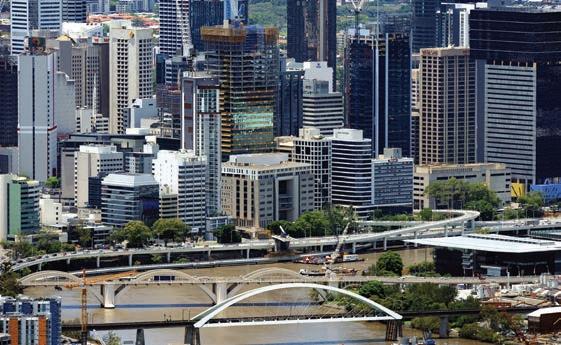
Highway bypasses present business opportunities as communities adapt
AUSTRAC issues warning Regulator will clamp down on those who don’t comply with AML/CTF laws
Figures that moved the dial Game-changing words and numbers that impacted the industry this month
Grace Munro: The time is now
A near-death experience as a child put this 26-year-old on the fast track
14
15
16
30
32
34
Smart technology, including the responsible use of AI, is making the conveyancing process more efficient and has shortened the property sale and settlement process. However, it’s not an invitation to churn and burn through clients.
Good tech can enrich the customer experience by allowing practitioners the bandwidth to get closer to buyers and sellers, and offer stronger advice.
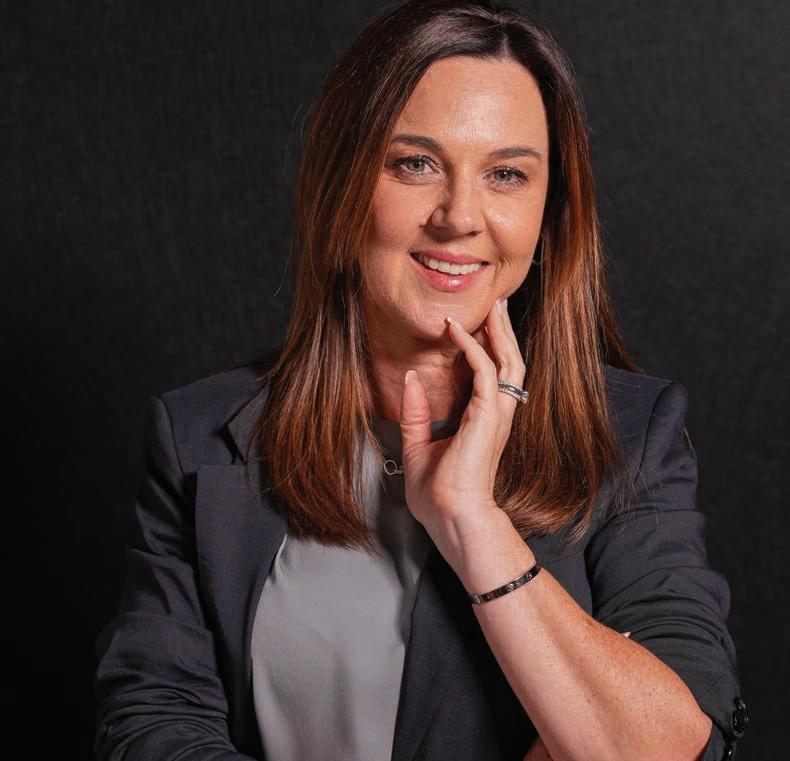
Di Cooke (pictured left and on our cover) is the principal at Verve Conveyancing, a Newcastlebased sole trader. She’s passionate about the personal touch, using plain language and making regular home visits to put clients at ease, especially older ones. “Who doesn’t love a cuppa and a bikkie?” asks Di. In a special five-page report starting on page 10, we uncover the value provided by conveyancers who favour a people-first approach.
By LEIGH REINHOLD
Photos LUKE MARSDEN
WHAT’S REALLY GOING ON BACK OF HOUSE?
At first glance, the core issue in real estate is supply and demand of housing and the impact on pricing. In the first instalment in AC’s real estate focus series, REIQ boss Antonia Mercorella says we need to look well beyond the problem to find a long-term solution
Desperate supply and demand issues, cumbersome compliance obligations and staffing shortages are the key concerns for the Queensland real estate industry in 2026, according to Real Estate Institute of Queensland (REIQ) CEO Antonia Mercorella.
“It’s tempting to say that the top three issues facing Queensland’s real estate industry this year are supply, supply and supply because that’s how significant and serious an issue our significant housing shortfall is,” she said. “It impacts us all.”
Additionally, Mercorella said the Sunshine State’s supply constraints are met with the equally pressing issue of demand.
“In the years following the pandemic, Queensland has led the country for population growth driven by incredibly strong migration – likely attracted to our enviable lifestyle, opportunity and subtropical climate,” Mercorella told AC
Figures from Cotality show that between Q1 2020 and Q3 2025, Queensland accounted for more than 25 per cent of the national population growth compared with less than 20 per cent of dwelling completions.
“We’re not expecting the housing demand pressure from migration to go away anytime soon – South East Queensland’s population is projected to reach 4.5 million by the time Brisbane hosts the Olympics in 2032 and may get as high as five million by
2036,” Mercorella said. “All of these people flocking to Queensland are going to need roofs over their heads and the question on everyone’s lips is: Where are we going to house them?”
The REIQ said there are various solutions to the supply issues in Queensland’s cities and towns, including:
Creating greater housing density – more than 600 people move to Brisbane every week yet it remains one of the least dense cities of its size in the world;
Better adoption of modern methods of construction, including modular housing and 3D-printed homes; Greater construction productivity – building faster and cheaper, and providing incentives to attract more tradies to Queensland; Streamlining local Government approvals to increase supply, including structural reform and smarter financial incentives to drive productivity and delivery; and Empowering people with technology tools so they know what they can do with their land or property. Mercorella points to the soaring cost of construction in Queensland as the biggest bottleneck to new supply – with the state experiencing the highest increases in residential construction costs of all the
“All of these people flocking to Queensland are going to need roofs over their heads and the question on everyone’s lips is: Where are we going to house them?”
– Antonia Mercorella
“We recognise that these additional financial and administrative burdens could be the straw that breaks the camel’s back for many small businesses.”
– Antonia Mercorella
mainland states between 2024 and 2025 (ABS).
“Build costs impact the bottom line which flows through to what developers can viably sell the new housing for, and it doesn’t always stack up,” she said.
“That’s why the properties we do have in the pipeline are heavily skewed towards high-end product such as luxury apartments.”
Mercorella believes construction for
infrastructure and the Olympic Games is also pushing up build prices around the state.
“A key driver of recent elevated costs is a significant labour shortage of construction workers and tradespeople, especially in the context of a huge pipeline of infrastructure projects, including those related to the Olympics,” she said.
“Another driver is low productivity in the construction industry. And, while we’re
all feeling the impact of global conflict at the petrol pump, the flow-on inflationary impact to manufacturing and construction, through higher transport and logistics costs, couldn’t come at a worse time.”
Meanwhile, on industry-related matters, Mercorella anticipates new and “extensive” Anti-Money Laundering and Counter-Terrorism Financing (AML/CTF) compliance obligations, which begin taking effect on July 1, will impose a “significant time and expense impost on agencies, buyers and sellers”.
“These are new legal obligations and tasks for Queensland real estate businesses – often small, independent operations –and, as such, they are likely to require new expertise, systems, tools and resources to meet them,” she said. “We recognise that these additional financial and administrative burdens could be the straw that breaks the camel’s back for many small businesses.”
Real Estate Institute of Queensland CEO Antonia Mercorella.
Adding extra pressure on real estate businesses is the challenge of finding staff, training and retaining them.
“Property management is a sector increasingly relied on by real estate businesses for its revenue contribution,” she said.
“However, there’s also been an increase in the number of experienced property managers leaving or intending to leave the profession due to the high-stress nature of the sector.”
Mercorella said REIQ continues to recognise the important role conveyancers play in the real estate chain and their work should not be undervalued.
“While we are a state peak body for real estate professionals, REIQ is also committed to providing education and support to the broader Queensland community on real estate related matters,” she said.
“The REIQ often strongly recommends that sellers and buyers engage the services of conveyancing professionals to seek advice about buying property before entering into a contract and to undertake the conveyancing process.”
Mercorella said purchasers of property need to know the costs of failing to employ a conveyancer.
“We understand the need for quality conveyancing advice and we see time and time again that skimping on quality can be costly,” she added.
“Using a conveyancing professional from the outset ensures the seller’s and buyer’s best interests are protected and provides peace of mind when making what may be the largest single financial transaction of one’s life.
“We would encourage the conveyancing community to articulate and demonstrate their value – and the potential cost of not appointing a conveyancing professional – wherever possible in order to help justify the costs they wish to charge for their services.”
Mercorella said the REIQ is currently championing the simplification of the Sellers Disclosure regime, which they believe is costly and unclear.
“While the REIQ supports the intent of a uniform statutory disclosure regime to provide consistent information to all property buyers in Queensland, we are advocating for the urgent review and resolution of several shortcomings and flaws in the current regime to make it clearer, simpler and less expensive,” she said.
“As the peak body for real estate professionals, REIQ has written to, and met with, the Attorney-General Deb Frecklington and her department to raise and discuss our concerns about the regime and there is an active consultation process underway.
“We are quietly optimistic that through this review we can improve the document and improve the process.”
THE UPSHOT: Brisbane on the map as Olympics approach
Queensland’s capital remains a premier market to watch, with property prices still growing at a steady pace
The Real Estate Institute of Queensland (REIQ) believes Brisbane is experiencing a surge in popularity and remains the one to watch for both owner-occupiers and investors, despite eroding affordability and supply issues.
“Brisbane’s a city that’s really on the map now,” REIQ CEO Antonia Mercorella said. “We’ve got southern neighbours banging our door down.”
With Brisbane’s economy surpassing $200 billion – making it one of the fastest-growing urban economies in Australia and the Asia Pacific – it’s a city of excitement and opportunity.
“The face of Brisbane has already dramatically changed with the development of the Howard Smith Wharves, Queen’s Wharf, QPAC [the largest arts culture centre in the country] and the recently opened Glasshouse Theatre,” Mercorella said.
“However, Brisbane is still going through a transformation/ modernisation phase with another $100.6 billion in the pipeline of major infrastructure projects for Greater Brisbane to further reshape and connect the city for the future.
“These include major private sector projects like Waterfront Brisbane, major transport upgrades and regional
connectivity projects like Cross River Rail, Brisbane Metro, The Wave to the Sunshine Coast and Gold Coast rail upgrades.
“And the 2032 Olympic Games brings with it so much excitement and more infrastructure including the stadium at Victoria Park and new National Aquatic Centre.”
Yet Mercorella said Brisbane could soon be “a victim of its own success” and canny buyers are already looking further afield to Greater Brisbane.
“There’s simply not enough housing supply in the city to meet the demand and it’s putting pressure on prices,” she added.
“That’s driving more and more people to cast the net a bit wider and move to Greater Brisbane, where their dollar goes further. Those areas are certainly ones to watch.
“After becoming a milliondollar-median market last quarter, the Redlands LGA recorded the highest quarterly growth for median house prices in the December quarter at 7.37 per cent to $1,115,000.
“And, in the unit market, it was Moreton Bay LGA – one of the fastest growing regions in Queensland – where prices grew the most in the December quarter, rising 12.14 per cent to $729,500.”
Up close and PERSONAL TOP CONVEYANCERS OUTLINE WHAT YOU NEED TO SUCCEED
By RICHARD CUNNINGHAM
As technology transforms our industry at a rapid pace, authentic human interaction is as crucial as ever. AC speaks to several experienced practitioners to get their tips on building trust and connection with clients
At first glance, conveyancing is a data-driven industry. Contracts, searches, titles, legal considerations, disbursements, much of it handled electronically.
But for the client, especially a homebuyer, it’s an intensely personal experience.
It’s often the biggest purchase they’ll ever make. The greatest risk. A huge, nerve-wracking step into the unknown.
And a time when they likely appreciate a bit of hand holding. Maybe even a hug or a cuppa.
That, say successful conveyancers, is a vital part of their business – in danger of being overlooked in the rush to settlement.
As one practitioner told AC, finding a place to call home can be a very daunting and stressful journey.
“If we can ease that burden, then everyone’s lives are so much better,” she said.
Her regional practice makes a point of meeting clients in person and hearing their stories.
“Conversations are a big part of putting a client at ease,” she said.
“Conversations about everyday things such as lack of rain affecting the veggie patch or the hay season.
“The woes of the older folk about downsizing … and, oh, the cleanouts from farm to town.”
AC approached several experienced conveyancers, city and country, for their tips. We distilled their shared wisdom here:
ON PAGE 12
The Impero Conveyancing team, from left, Lila Christopher, Brenna Scifleet, Isabella Ninevski and Felicity Weston.
Toni Walsh, East St Conveyancing
“I find first-home buyers need the security of being able to talk through everything as much as possible,” Toni Walsh said.
“I will take calls from them day and night to help alleviate the stress they feel going into the first big purchase of their lives.
“Seniors, I find, like to do things face to face, so I will go to them or meet for a coffee so they get to know me and feel comfortable.”
Jacki Adams, JLA Conveyancing
Jacki Adams also has empathy for firsthome buyers.
“They’re so unfamiliar with the process and often an equal mix of excited, nervous and stressed,” she said.
“My role is to hold their hand, guide them, make them feel empowered.”
At the other end of the age range are retirees, often “a mix of excitement and grief”.
“All clients of JLA are constantly reassured that there is no such thing as a silly question,” Adams added.
“I do hundreds of transactions a year, this might be something they only ever do once or twice in their life. And I certainly don’t want them awake at 3am asking ChatGPT for legal advice.”
“[First-home buyers] are so unfamiliar with the process and often an equal mix of excited, nervous and stressed. My role is to hold their hand, guide them, make them feel empowered.”
– Jacki Adams, JLA Conveyancing
Susanne Mosely, Hunter Legal & Conveyancing
“I pride myself on service that treats you like an individual, not just another file number,” Susanne Mosely said.
“We walk alongside clients every step of the way, so they feel valued, listened to and understood.”
Mosely’s all-female staff are dedicated to making transactions stress-free.
“Their love for customer service is
unending,” she added. “That passion is felt by every client, referrer and community group we engage with.”
Di Cooke, Verve Conveyancing
Di Cooke is a sole trader but, if she had staff, she would still have just one conveyancer handing a matter from “go to whoa”.
“I feel this instils a level of trust and assurance,” she said. “One person, managing the biggest transaction of their lifetime, from start to finish.”
Cooke urges a quick assessment of language and tone: many clients are uncomfortable with jargon.
“I really try to use plain English to explain technical and complex matters. Explaining things in a way that’s easy to understand.”
Similarly, is the client capable of completing all aspects electronically?
Cooke is happy to see them at home for VOI checks or signings.
“Elderly clients in particular love this approach,” she said. “And who doesn’t love a decent cuppa and a bikkie?”
Di has also followed David Koch’s dictum (see sidebar on page 14) about posting a personal video, with a three-minute clip on verveconveyancing.com.au detailing her Hunter Valley childhood, work experience and passion for the job.
Christie Murphy, Convey Online
As the name implies, Convey Online has no shopfront. But that doesn’t stop Christie Murphy offering the personal touch.
“I’m on the phone most of the day
Key takeaways:
Meet face to face, especially with first-time customers and seniors
Instil trust and establish a good relationship
Appreciate their concerns and life experiences
Be prepared to take and make calls after hours
Anticipate problems and solve them in advance
Use plain language and provide regular updates
Remember: this might be their biggest transaction
speaking to clients, explaining the processes and answering questions,” she said.
“It’s good to have a chat with the client and build trust and rapport.”
Murphy’s team replies to emails at least within half a day but usually within an hour. Phone calls are also returned inside 60 minutes.
They offer video calls and remind clients there are no “silly questions”.
“We encourage that all questions are asked, so that we can be on the same page,” Murphy added.
Craig Radford, Paul Denny Conveyancing
Craig Radford also calls for clear communication.
“We avoid legal jargon and use plain, straightforward language,” he said.
He finds clarity helps overcome stress and anxiety.
“We highlight potential risks as early as possible and offer practical solutions,” he said. “This helps clients feel informed rather than alarmed.”
Clients are rigorously updated. “If we
Clockwise from far left, Christie Murphy (Convey Online), Susanne Mosely (Hunter Legal & Conveyancing), Craig Radford (Paul Denny Conveyancing), Di Cooke (Verve Conveyancing), Jacki Adams (JLA Conveyancing) and Toni Walsh (East St Conveyancing).
touch the file, we call the client,” he said. “This reassures them that progress is being made.”
The firm likes to “buy in” to a customer’s level of experience. First property? Third? “Some need a little more hand holding, some need to talk things through,” he explained. “Some just want to know when it’s settled. Those clients are a gift.”
Brenna Scifleet, Impero Conveyancing
Brenna Scifleet is another who stresses the value of relationships.
“A small part of what we do is conveyancing. The remainder is that hand on your client’s shoulder, letting them know everything is going to be OK.”
–
Brenna Scifleet, Impero Conveyancing
START WITH YOURSELF, SAYS KOCHIE
Finance guru and former Sunrise TV host David “Kochie” Koch agrees that applying the personal touch will help grow your business, but emphasised that you need to start with yourself.
Speaking on the March episode of AC’s podcast Settlement Day, Kochie said conveyancers need to be someone clients like, admire, trust and want to do business with.
“A lot of people think a small business is a smaller version of a big business,” he said. “That’s not so. It’s all about that single, living, breathing human being that runs it because they’re the ones who set the dynamism, the culture, the processes within the business. They’re the leaders. The secret is getting you under control.”
It’s a challenge he’s thrown out at countless seminars: to accept that you are the face of your business.
However, many people reply that it’s not their bag or they’re too shy.
“I say ‘Get over it’ because customers want to build a relationship with you.” Kochie said an essential tool is a promotional video on your website. Not about the business or its products, but about the person who runs the shop.
“That’s your showroom to the world … explaining why you started the business, why you’re passionate about it and what you can do for customers. So that a potential customer goes, ‘Hey, I really like that person. I feel comfortable that they’re going to look after me’.”
You can film it on a smartphone. “It’s easy and it doesn’t have to be fancy,” Kochie added.
At the time of publication, Kochie’s episode of AC’s podcast Settlement Day had more than one million views on various online platforms.
“A small part of what we do is conveyancing,” she said. “The remainder is that hand on your client’s shoulder, letting them know everything is going to be OK.”
Impero has a “phone-first” policy, where calls take priority over less personal communication.
Note-taking is automated so that the client has the conveyancer’s full attention.
And no question goes unanswered.
“Clients aren’t left wondering what’s happening,” Scifleet added.
Amanda Richardson, RM Property Conveyancing
Amanda Richardson stresses clarity, confidence, communication and support.
“In an environment where efficiency and automation are increasingly emphasised, maintaining a personal connection remains central,” she said.
Direct access and timely updates are important but also that personal rapport.
“Much of our work comes from repeat clients and referrals,” Richardson said, “which reflects the value clients place on feeling known, understood and supported.
“In a profession built on trust, it’s this personal connection – combined with technical competence – that ultimately defines the quality of the service we provide.”
From left, Amanda Richardson (RM Property Conveyancing) and Brenna Scifleet (Impero Conveyancing).
By MELISSA IARIA
IT’S A SLOW BUILD: HOW THE MIDDLE EAST CONFLICT IS AFFECTING HOME CONSTRUCTION
Developers warn of housing slowdown due to supply chain shocks caused by the Iran war
The Middle East conflict is driving up housing construction costs and pushing the sector towards a significant slowdown, major developers warn.
Frasers Property Australia CEO Cameron Leggatt said instability from the conflict is disrupting supply chains, with impacts including shipping delays, higher fuel costs and reduced availability of key construction materials.
“For an industry already navigating tight margins and long lead times, this matters,” he told a Property Council of Australia national housing summit in Melbourne.
Ahead of the federal budget, Leggatt cautioned any changes to capital gains tax and negative gearing must be done carefully to avoid deterring investment in housing.
Stockland CEO Tarun Gupta said the war had sent construction cost inflation
“all over the shop”. “The outlook’s now pretty murky,” he said. “Costs are rising and feasibilities will come under pressure. If prices rise … we, across our sectors, don’t have the ability to pass it over, which means activity is going to slow.
“Fiscal and monetary policy settings this time around have to work together to avoid a major, major slowdown, because that’s what we’re facing. The consumer does not have capacity to absorb price increases.”
Mirvac Group CEO Campbell Hanan said the key challenge is building homes faster and more cheaply, while tackling the sector’s heavy cost burden. About 35 to 40 per cent of the cost of building a house or apartment came from government taxes or levies.
Hanan said the housing system was balancing intergenerational inequality, the need for more supply, rising demand for rental accommodation for the 35 per cent of Australians who now rent, as well
as affordability. “We just need to be very careful as we think about intergenerational opportunity, that we have settings which keep the balance between the amount of residential rental stock, affordability and that it’s concentrated on future supply as well as intergenerational inequality,” he said. “It’s a really challenging one for governments.”
Hanan said Mirvac would focus on modular construction and procurement over the next year, including sourcing more construction materials directly from overseas and standardising designs to improve efficiency.
The federal government’s housing agency has warned the Middle East conflict could cut 33,000 homes from the 1.2 million National Housing Accord target by mid-2029.
Federal Housing Minister Clare O’Neil told the audience the upcoming budget would be a “housing budget for the country, and that’s a damn good thing”.
“For 40 years, we have not been building enough homes,” she said.
“Our government is fiercely prosupply, and whatever decisions we make, the end result is that we need to see more housing, not less.”
O’Neil added the sector is in a stronger position than after Covid to deal with headwinds.
“When we arrived in office, construction costs were increasing at 17 per cent a year in 2022,” she said. “More recently, that number is actually below inflation, sitting at closer to 2 per cent so that matters a lot. It doesn’t take all the pain away, but we’re in a stronger position to respond to what’s coming at us.”
Stockland CEO Tarun Gupta speaks at the national housing summit alongside The Living Company CEO Anouk Darling, Mirvac Group CEO Campbell Hanan and ANZ general manager for institutional property Jo Scotney.
ON THE ROAD SUCCESSTO
By SAM McKEITH
Photos TOBY ZERNA
Highway bypasses create a unique property shift in regional towns, presenting significant business opportunities for real estate firms and conveyancers as the community adapts to the new infrastructure
Maurice Collison is a big fan of his town’s highway bypass.
Opened in 2020, the two-lane road bypassing Scone, in the NSW Upper Hunter region, has taken about 500 trucks per day off the town’s main street.
Scone is one of many regional towns in Australia grappling with the pros and cons of highway bypasses – roads that divert vehicles from town CBDs to improve traffic flow.
According to official research, the economic impact of bypasses on property tends to be positive although that’s not always the case, with factors such as the character of the town – commercial or residential –traffic volumes and proximity to the bypass playing a part.
There’s a school of thought that taking away the busy through-traffic can see a small town weakened and its economy suffer.
However, there is growing evidence bypasses can see an affected town thrive in other ways, with it becoming more desirable for property investors and home buyers. And this is to the benefit of
conveyancers in these areas as their businesses grow with more investment in the towns.
Collison, the Scone mayor and a longtime resident of the area, says the project has led to a local revitalisation and more visitors to the “horse capital of Australia”.
“Originally when the designs came out, everyone was concerned – business, households and people,” Collison told AC
“But I always thought it was a great thing. Because in Scone, it was very dangerous with truck movements and the amount of traffic, so when the bypass was opened, it was a great celebration.
“Our bypass – I call it a slip lane – is not that far around the town. It’s very easy to get into the town and get back out. I don’t think it’s hurt our trade at all.”
While the impact on Scone property is tough to assess, Collison’s view is the $137 million project has brought an influx of new residents, lured by the faster commute to Newcastle.
“The feel of the town has changed,” he said. “Once it was the through-traffic that characterised the town. Now it is a residential destination for many.”
Scone mayor Maurice Collison says the project has revitalised the area.
Bypass impact: Short-term pain for long-term gain, research finds
Studies are mostly positive about the economic effect of infrastructure on regional communities, but urge
caution for smaller towns
Official research, although scant, is cautiously positive on the economic impact of bypasses around urban centres.
A NSW government study, which looked at the effect of bypasses on the Southern Tablelands towns of Yass, Goulburn and Gunning, found population size, economic base and distance from a larger economic centre were main indicators of post-bypass performance.
Towns with fewer than 2500 residents are more at risk of adverse economic impacts than bigger centres, it also found.
Across the three towns, it found the economic downside of a bypass was short-term –confined to within the first year of the project opening.
Longer term, it assessed Yass and Gunning as “vibrant, growing and full of business potential as a result of the bypass”, while Goulburn had “economic development potential” despite static population and employment growth.
Another paper, commissioned by the federal government, looked at the bypassed towns of Berrima and Mittagong, south of Sydney. It, too, was broadly positive about the results.
It found Berrima, which saw a lift in tourism after the bypass, was an example of how “towns can profit from the improvement in their environment after being bypassed”.
The bypass enhanced the town’s tourist appeal by reducing the level of traffic and eliminated almost all heavy vehicle traffic, it found.
Mittagong, meanwhile, had
“Towns can profit from the improvement in their environment after being bypassed.”
– A federal government paper
fared less well due to a loss of traffic-serving business but “the net economic effects may still be small”.
“To these cheerful messages must be added some words of caution. Profiting from the improved environment takes initiative and a tolerance for risk,” it concluded.
“Moreover, even with optimal adjustments, bypasses may harm the economies of some towns, especially small towns highly dependent on traffic-serving business.”
“Moreover, even with optimal adjustments, bypasses may harm the economies of some towns, especially small towns highly dependent on traffic-serving business.”
Singleton set to surge as bypass opens up a wealth of opportunity
Community
remains upbeat as long-awaited $700 million, 8km project promises to transform the local property market and town centre
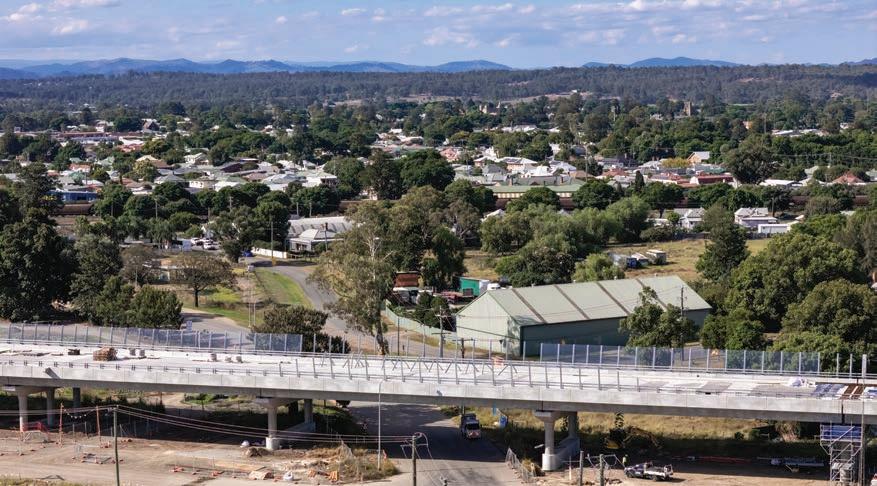
In the NSW Upper Hunter area, the town of Singleton has worked for more than a decade to get a bypass approved.
Later this year, their efforts come to fruition when the road opens.
Some $700 million has been invested by state and federal governments on the project – an 8km stretch of road that avoids five sets of traffic lights in the town.
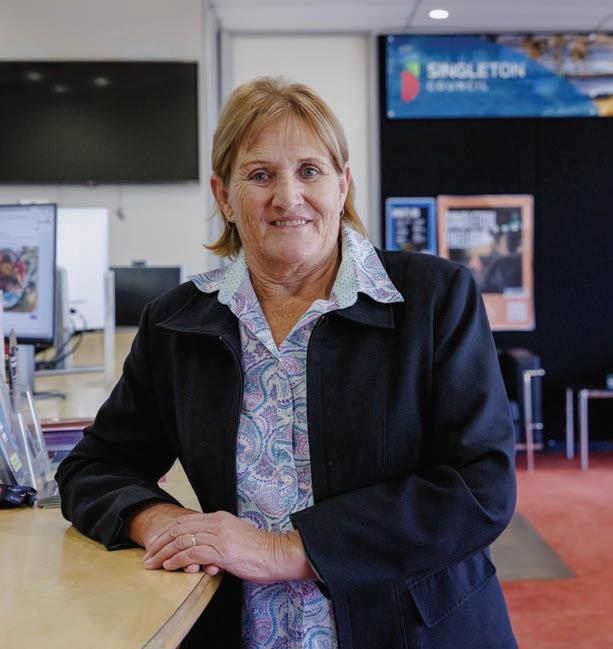
Mayor Sue Moore, an advocate of the bypass, said it has been a big community effort.
The genesis was the local chamber of commerce complaining about motorists not stopping in town “because they can’t get back on to the highway once they get off”.
In a bid to help, Moore said the council backed a bypass that would stay as close to town as possible, have good access on and off the main street, and ample signage.
“They were the real essential things that we started working for,” Moore said.
After being let down by initial plans, the town “stuck to our guns and luckily the deputy premier at the time saw our reasoning and added another smaller roundabout that allows better access to the CBD”, Moore added.
Moore remains upbeat about the project’s potential as its opening looms.
“We see that the bypass will open Singleton up for all sorts of development, particularly housing as we’ve got lots of stock available and rezoned ready to go,” she said.
“It’s been selling pretty steadily but, once the bypass is finished, people will see that Singleton is in easy reach to Maitland and Cessnock, which are booming areas.
“It’ll be easier to get on the highway and get to the areas of the Lower Hunter and potentially the Upper Hunter as well.”
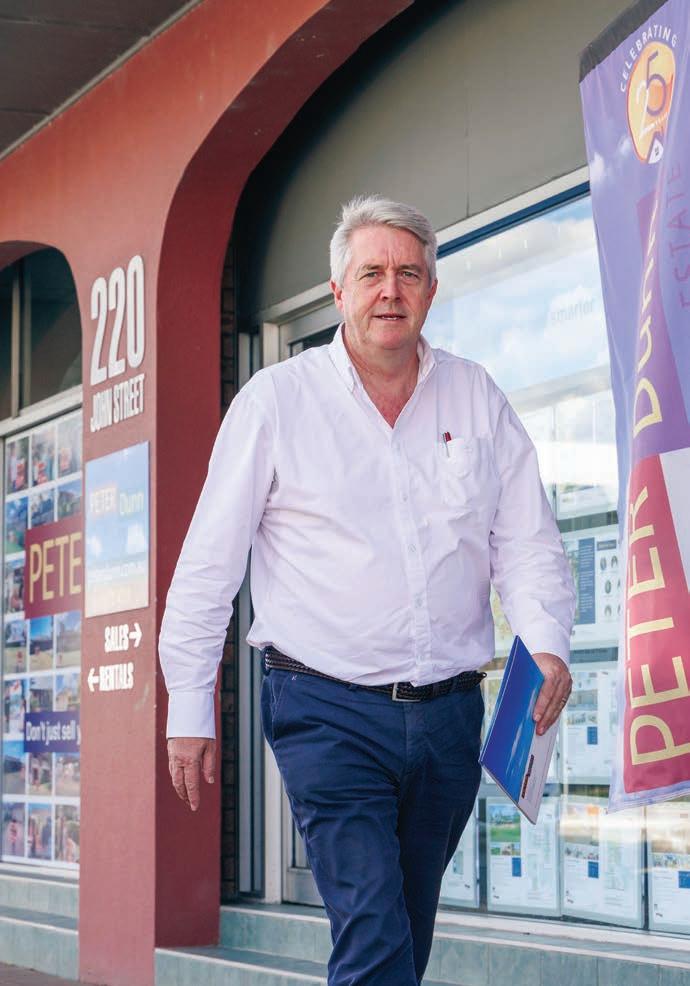
Peter Dunne, principal of Singleton’s Peter Dunne Real Estate, is also bullish.
He predicts the bypass to lift buyer interest in the area given it will drastically reduce the number of heavy vehicles moving through town.
“Fifteen thousand vehicles go through here a day,” said Dunne, who has been a real estate agent in the town since 1981.
“It’s mainly coal-industry related. So, if you were here between 5.30am and 6.30am and didn’t know what was going on, you wouldn’t believe it – it’s a line of car lights probably 8km either side of Singleton.”
The trucks resume in the afternoon, which again “just chokes up the whole place”.
Additionally, the bypass will highlight Singleton as an up-and-coming town, he said.
“Once you get a bypass it’s a sign of how busy you are and that certainly sits well with any investor looking to put their money somewhere,” Dunne said. “To be honest, geographically, within a 170km radius of Sydney, you wouldn’t get anywhere better value right now than Singleton.”
Once the new road opens, Dunne predicts Singleton to experience the same surge
in growth as nearby Maitland, which has had a bypass in place for more than a decade.
“We see that the bypass will open Singleton up for all sorts of development, particularly housing as we’ve got lots of stock available and rezoned ready to go.”
– Sue Moore
Maitland’s reputation was improved by the bypass and the town has gone on to become one of the most thriving hubs in the region.
“We’ll become a service provider, labour wise, for Maitland and Newcastle. We’re seeing some action from the Central Coast as well,” Dunne said.
“Geographically, it’s positioned ideally, and the bypass is going to ease the town pressures of traffic – it doesn’t get any better.
“The council will be able to put their money into other
“To be honest, geographically, within a 170km radius of Sydney, you wouldn’t get anywhere better value right now than Singleton.”
– Peter Dunne
areas because they won’t be spending so much on the roads.”
While highway-focused businesses such as pubs and fast food outlets will likely take a hit, Dunne said that’s outweighed by the prospect of a surging Singleton property market.
He sees big upside for both investors and owner occupiers, especially families.
“There’s a lot of green space, the schools are good, accessibility to other areas, the hospital is good and you’ve got a central regional hospital in Maitland half an hour away,” he said. “It’s a well-appointed country town on the up.”
Singleton mayor Sue Moore and real estate agent Peter Dunne.
Road projects aim to reshape the landscape for the better
The construction of bypasses in Queensland, such as those at Tiaro and Gympie, seeks to improve flood resilience and enhance local liveability
In Queensland, “futureproofing” for natural disasters is prompting bypasses.
In one case, the state government said a bypass at the town of Tiaro, north of Gympie – part of a multibillion-dollar upgrade of the Bruce Highway – will curb the impact of floods.
The area, when flooded, has a significant impact on the national road transport network and can result in the prolonged isolation of Tiaro. Climate change has been cited as a driver.
Nearby, Jo Yates, of Queensland-based Vendee Property Buyers, is already seeing positive results from the Gympie Bypass, located about 175km from Brisbane.
Opened in 2024, the $1.2 billion project comprises a 26km, four-lane section
of highway and marked the final stage of upgrades to the Bruce Highway.
“In my experience, buying in Gympie before and after the bypass, owner-occupier buyers viewed the bypass positively due to the reduction in traffic which they perceived as safer and quieter,” Yates told AC, adding she has seen an uptick in buyer interest.
“For owner-occupiers, this is due to the increased perceived liveability and for investors this is due to the price growth that the area has seen and is expected to see,” she said.
“Day to day, the traffic is reduced which makes moving around the town easier and quicker. It also feels more like a town to live in rather than pass through.”
Yates said the new road
has also made it realistic to commute to Brisbane for work, especially for those who only need to drive to the state capital a couple of times weekly.
“It has made Gympie
“Day to day, the traffic is reduced which makes moving around the town easier and quicker. It also feels more like a town to live in rather than pass through.”
– Jo Yates
attractive to buyers who might not have considered it before.”
On the downside, Yates pointed to a fall in trade at local petrol stations, tourist stops and truck stops as fewer motorists pass through.
When it comes to property prices, she said it’s tricky to gauge the impact.
“It’s hard to isolate bypass impact from broader Queensland market dynamics as there has been such a huge migration into South East Queensland,” she said.
“However, if we compare it to a town which is a similar demographic and also on the Bruce Highway like Nambour, Gympie has been outperforming Nambour in recent capital growth on houses. Some of this could be contributed to improved connectivity post-bypass.”
A BYPASS CAN FAST-TRACK A TOWN’S ISSUES
Alex Haddad, principal of Property Services Agency, warns that property values in some towns can slide as a result of being bypassed.
Haddad, a real estate industry veteran, highlights the town of Peats Ridge, north of Sydney, which was bypassed by the M1 motorway, removing it as a stop on the way to Newcastle.
“Commercial properties will drop a fair bit through the main road when a bypass is built and sometimes residential properties will drop also,” he said.
In his view, a key factor on values is if the bypassed town has a train station.
If there is rail access, then property prices will tend to go up, he suggests, pointing to the Dapto area, near Wollongong.
Dapto has a train station and has experienced a resilient property market post the Albion Park Rail Bypass, opened in 2021.
“In a nutshell, if it has a train station, it [prices] generally tends to go up when a bypass is built as it does become a more quiet town,” Haddad said.
“But if it is a bypass town with no train station, no one knows about the town, and prices drop as demand for the town drops. The town sort of gets dropped off the map, with no one passing through and no one knowing a town exists.”
Buyer’s agent Rasti Vaibhav, principal of Get Rare Properties, goes further, saying that in some cases a “bypass doesn’t kill a regional town. It just makes the diagnosis official”.
He described towns built on passing trade – fuel, fast food and convenience retail – as “structurally fragile” and said these vulnerabilities get exposed when a bypass goes in.
“The bypass accelerates an existing decline; it doesn’t create one,” Vaibhav told AC
That’s not the case with towns offering healthcare, agriculture, education and commuter employment. They “typically experience a 12 to 18-month sentiment dip before values recover as liveability lifts and through-traffic disappears”.
“The pattern is consistent enough to be predictable: what a bypass exposes matters more than what it removes,” he said.
Vaibhav added that one element often missed in the discussion is that “experienced regional investors treat bypass announcements as a buying signal in economically sound towns”.
“Sentiment falls before reality catches up and that gap has been quietly profitable for those who understand the difference between a town in transition and a town in decline,” Vaibhav said.
Bypass boom or bust: It depends on the town
Streamlined road infrastructure typically improves liveability and property appeal, though long-term market strength is not always guaranteed
Nat Gordon, principal of property consultancy Propoholic, cautions that the impact of highway bypasses on property markets varies from town to town.
Hence, buyers should assess the impact when looking at local infrastructure pre-purchase.
“A bypass will reduce road and foot traffic and noise through a town centre. That often improves liveability and appeal for owner-occupiers and investors. However, it can also have negative impacts,” Gordon told AC
“If major gentrification of an area is undertaken as part of the bypass project, this will naturally improve the market appeal of the township as a whole.
“If a bypass enhances connectivity to employment hubs while improving local liveability, prices will usually strengthen. If it diverts trade without the town having an alternate economic driver, demand can soften.”
She points, for instance, to some bypassed towns, such as Coffs Harbour on the NSW mid-north coast, being primarily driven by tourism.
In these cases, a bypass may detrimentally impact business and employment, but it may also boost
“Towns heavily dependent on highway trade, such as fuel stops and convenience retail, may experience an economic decline if they do not adapt.”
– Nat Gordon
desirability for tourists due to decreased congestion. Such “lifestyle markets” with established tourism appeal, strong schooling or coastal access are generally more price resilient.
By contrast, towns such as Hexham, in the NSW Hunter region, are close to hubs of industry meaning the bypass could help increase regional productivity, while denting the town.
“Towns heavily dependent on highway trade, such as fuel stops and convenience retail, may experience an economic decline if they do not adapt,” she said.
At all times, Gordon said a key consideration needs to be whether the bypassed town has a distinct reason for people to stop, not just pass through.
“A great example of this is Berry, which is a historic lifestyle town in its own right. The bypass has been beneficial for Berry and its surrounding areas,” Gordon said, referring to the town in NSW’s Southern Highlands region.
On property, the short-term impact is that prices “generally stagnate” due to uncertainty.
“In that period, sellers will seek to gain an understanding of the effects. This will usually decrease supply. Demand from buyers may decrease but could also increase due to the perception created by the announcement,” she said.
Subsequently, the nature of the town comes into play and impacts values differently.
“If the bypass shifts the town from a traffic corridor to a lifestyle or destination market, that can be positive for long-term capital stability and growth. If it exposes a fragile local economy, the risk profile increases,” she said.
“While infrastructure and town planning principles can alter the dynamics of an area, it will generally serve to amplify the underlying fundamentals of a town rather than completely changing property markets.”
Propoholic principal Nat Gordon.
Moving the dial
Game-changing words and numbers that impacted the industry this month
$20,000
Instant asset write-off for small business will be made permanent from July 1.
“If we continue to kick the can down the road on some of these difficult policy changes … then that would make life harder and lock more Australians out of the system.”
– Treasurer Jim Chalmers
4.35%
The RBA’s monetary policy board voted 8-1 to raise the official cash rate by 25 basis points to 4.35 per cent on May 5.
“This will help rebalance a system which is more generous to assets than it is to labour and help rebalance a system where house prices have decoupled from incomes.”
– Treasurer Jim Chalmers
Australia’s median dwelling value at April 30
$940,048
4.6%
Inflation rate
The minimum tax to be imposed on families with discretionary Trusts that are often used to split incomes between family members.
“THE HOUSING MARKET WAS LOSING MOMENTUM… AS AFFORDABILITY AND SERVICEABILITY CONSTRAINTS WEIGHED ON DEMAND. NOW WE HAVE THE ADDITIONAL DOWNSIDE PRESSURE OF HIGHER INTEREST RATES, SENTIMENT HAS FALLEN OFF A CLIFF, AND RISING INFLATION IS SET TO DRIVE THE COST OF DEBT EVEN HIGHER.”
– Cotality Research Director Tim Lawless
“THIS WAR COULD DRIVE INFLATION UP EVEN HIGHER BEFORE IT COMES BACK DOWN AGAIN.”
Treasurer Jim Chalmers
“They [the changes] are no silver bullet. It is still supply, relative to population growth, that will determine house prices and housing affordability over time.”
– Commonwealth Bank chief economist Luke Yeaman
“Negative gearing and capital gains tax changes will alter investor behaviour. Modelling to date does not show this supporting demand for new homes.”
– Property Council of Australia chief executive Mike Zorbas
“No changes to superannuation, no changes to taxation. This government lies, and we can never believe anything they say again.”
– Liberal Senator Jane Hume
“The budget papers show that the changes around negative gearing, capital gains and the trusts will dampen investment.”
– Opposition leader Angus Taylor reacting to the changes
“These changes are contentious. There’s no use pretending otherwise, but it’s the right thing to do.”
– Treasurer Jim Chalmers speaking about negative gearing and CGT changes
“The grandfathering of existing holdings means that the implications for the housing market will be drawn out.”
– Westpac chief economist Luci Ellis
32.8%
Rise in fuel costs in March
The claimed boost to the nation’s coffers over the next 11 years after the clamp-down on negative gearing and a winding-back of the 50 per cent discount on capital gains tax.
$77 billion
“The budget failed to deliver on Labor’s commitment to do everything it could to increase new housing supply. The opportunity that exists to turbocharge housing supply has been lost.”
– Master Builders Australia chief executive Denita Wawn
“Targeted reform to negative gearing and the CGT discount is a measured and practical way forward.”
– National Shelter chief executive Jackson Hills
2,000
The number of partpre-fabricated homes to be delivered each year in a $100 million Wesfarmers venture involving Bunnings and Kmart. They claim homes will be 20 per cent cheaper than the average home, and delivered twice as fast.
4.1%
The increase in mortgage demand compared to the same three months in 2025, according to the Equifax Market Pulse report.
“It’s the equivalent of continually mopping the floor while ignoring the leaking tap – we need the Commonwealth to show some resolve and turn the tap off.”
– Retirement Living Council executive director Daniel Gannon on the lack of budget reforms for older Australians.
“We’ve said we’ll support measures around hospital funding. We said we’ll support income tax offsets on earned income. But when it comes down to the measures of broken trust built on bad faith that this government is putting forward, which is going to kneecap young Australians, then let’s be very clear about just how bad it is.”
– Shadow Treasurer Tim Wilson
“We do not believe that these measures will do much to improve housing affordability near term.”
– National Australia Bank chief economist Sally Auld
“The solution to a housing shortage is to build more homes. This budget does the opposite.”
– Housing Industry Australia chief economist Tim Reardon
CONVEYANCERS WHO ARE ‘WILFULLY BLIND’ WILL BE FIRST TARGETS
Financial crime regulator will clamp down on practitioners who don’t comply with new AML/CTF laws
By SAM McKEITH
Conveyancers knowingly disregarding tough new AML-CTF laws will be among initial targets of enforcement action by financial crime agency AUSTRAC, according to chief executive Brendan Thomas.
The so-called Tranche 2 reforms, which apply to conveyancers, real estate agents, buyers’ agents, developers and lawyers, take effect from July 2026.
The revamp has been described as the biggest regulatory shake-up to hit the nation’s conveyancing industry in decades.
Thomas said enforcement efforts from July would focus on “businesses that are complicit or wilfully blind to illicit money in their business, or who are wilfully ignoring their obligations”.
The agency would not conduct audits but could deploy “a range of regulatory tools, including a power to appoint an external auditor and conducting investigations into possible breaches of the AML-CTF Act” when the laws took effect, he said.
“We have clearly outlined what our expectations are – be enrolled, have an AML/CTF program and compliance officer, have trained staff and be ready to report to AUSTRAC.”
Under the reforms, designed to bring Australia into line with international financial crime standards, conveyancers must register with AUSTRAC, conduct due diligence on clients, note large cash transactions, keep records and report suspicious activity.
Practitioners who commonly deal with high value cash transactions are among those most at risk of falling foul of the new legislation which gives courts power to impose civil penalties on companies of $33 million and up to $6.6 million on individuals. Australian Conveyancer previously highlighted that fines for breaches could amount to $19,000 a day.
Graeme Hughes, a Queensland-based strategic consultant, said once AUSTRAC
education efforts ended, enforcement would likely start with infringement notices.
“While the reforms aim to scrub dirty money out of the Australian economy, the transition is creating a perfect storm for consumer privacy, service costs and transaction friction,” said Hughes, founder of Hughes Group.
He warned that, with the overhaul looming, many conveyancers faced skyrocketing compliance costs to ensure they stayed out of AUSTRAC’s initial sights.
Government estimates have shown businesses with a turnover under $200,000 a year will face upfront costs of $4040 and annual fees of $6020. “With compliance now a multi-million-dollar industry for a mid-sized firm, the costs of AUSTRAC enrolment, mandatory staff training and the requirement for independent audits are immense,” Hughes said.
Griffith University financial crime expert Andreas Chai urged conveyancers to prioritise their risk assessment and AML/ CTF programs before July.
“A key part of the risk mitigation process is to conduct customer due diligence before onboarding new clients if they are considered high risk and reporting any suspicious behaviour to the authorities,” Chai said.
“Conveyancers need to be trained about what is financial crime, what is suspicious behaviour and, when deemed appropriate, ask questions about where the money is coming from. “If there are reasonable grounds for suspicion, a suspicious matter report needs to be lodged with AUSTRAC.”
On conduct that could attract large fines, Chai said conveyancers should stay on top of customer due diligence.
Most conveyancers are not ready for the changes, with concerns including time, workload and compliance costs, according to recent research by digital property platform Pexa.
Dwelling values
Date range 12 months to April 2026
Home value growth has eased nationwide, led by declines in Sydney and Melbourne. Cotality’s national home value index rose just 0.3 per cent in April, the slowest since January 2025.
Research director Tim Lawless said the easing had been building since late last year. “Now we have higher interest rates, sentiment has fallen off a cliff, and rising inflation is set to drive the cost of debt even higher.” The nation’s median dwelling price sits at $940,048.
Sydney’s median dwelling price is now $1,292,157, down 0.6 per cent over the month and 1.0 per cent below the November peak. The median house is $1,600,301, a unit $907,431.
Melbourne residential property values are 2.3 per cent below their March 2022 peak. The median price of a dwelling is now $822,969, a house $972,734, a unit $641,690.
Brisbane dwelling values were up 1.2 per cent in April. The median price for a Brisbane dwelling was $1,116,180, a house $1,222,906 and a unit $876,474.
Adelaide property also saw slowing growth, with dwelling values up 1.1 per cent in April. A dwelling sold for a median $944,673, a house for $1,006,099 and a unit $692,676.
Perth remains the strongest for monthly and annual home price growth. A median dwelling is $1,039,949, up 2.1 per cent in April, a house $1,087,507 and a unit $759,687.
Hobart values are now 2.1 per cent down on their March 2022 peak. A median dwelling is $744,296, a median house $796,682 and a unit $574,548.
Darwin remains the most affordable capital city, with annual growth slipping behind Perth and Brisbane. A median dwelling is $619,35, a house $732,769 and a unit $462,633.
A median dwelling price in the nation’s capital was $898,242 at the end of April. A house was a median $1,049,789 and a unit $593,303.
Grace Munro Principal, Munro & Associates
Why I’m making the most of every moment
Grace Munro is the founder and principal conveyancer of Munro & Associates Conveyancing, with offices in the regional Victorian cities of Ballarat and Shepparton. Grace started at 18 as assistant to a property lawyer, became office manager at another firm and started her own business in 2023
At 26, I may seem young to be running a conveyancing business — but there’s nothing like a near-death experience to accelerate your perspective.
Growing up in central Victoria, I suffered a heart attack at the age of nine and flatlined. It wasn’t due to a congenital condition but septicaemia following a ruptured appendix. After 19 operations in 21 days, I survived — and that experience has shaped everything: how I live, how I lead and how I run my business.
I left school with a strong interest in law but chose not to pursue university. Instead, I entered the industry at 18 as an assistant to a property lawyer, progressed to office manager, became a licensed conveyancer at 22 and established my own business before turning 23.
My mindset is simple: you might not be here tomorrow, so take the opportunity today.
That perspective carries through to how I lead my team. As a young female business owner leading an allfemale team, I’m deeply aware of the responsibility and opportunity that comes with that. I hold my staff in high regard — they deserve recognition and investment, something often overlooked in the pursuit of growth. Experience isn’t everything. I look for people who are willing to have a go. Technical skills can be taught. We focus strongly on empathy.
Many of our clients are first-home buyers and sometimes they need a little extra guidance and reassurance. Being personable isn’t just a value, it’s a differentiator. And the response from clients reflects that many times over.
The motto I live by, and reinforce with my team, is: “pressure is a privilege”. It’s something I often say in our toolbox meetings. In a competitive industry, it’s a privilege to be trusted with our clients’ most significant assets.
When I speak with my accountant, we often reflect on how the business operates with the maturity of one established for many years.
I attribute much of that to my early life experience. It gave me perspective, resilience and a sense of urgency that continues to drive me.
I sometimes think of myself as an old soul. I wasn’t expected to survive that moment in childhood, yet here I am, building something meaningful.
I’m proud of what I’ve achieved, though it hasn’t come easily. It has required grit, determination and mental toughness, especially through adversity.
My advice is simple: don’t let challenges define or defeat you.
Keep going. Keep showing up for yourself. Being a young female in business will never define my limits.
It’s part of my strength and it’s reflected in the team I’m proud to lead.