Australian Conveyancer welcomes feedback about any aspect of its activities and appreciates suggestions for future editorial coverage.
Contact the team: editorial@australianconveyancer.com.au
Contact the publisher: tony.gillies@australianconveyancer.com.au +61 414 320 487
LinkedIn: linkedin.com/australianconveyancer
What does Powered by triSearch really mean?
Australian Conveyancer strenuously preserves its editorial independence. We engage experienced editors, journalists and freelancers not afraid to ask the difficult questions and report without fear or favour. Our editorial charter of independence is formulated in the spirit of balance, fairness and accuracy. We think we owe that to the industry.
The involvement of triSearch allows this privilege by providing the resources needed – the financial and technical infrastructure. It does not expect or receive editorial favouritism in return. If it matters to the industry and if it promotes a constructive conversation, then we will report it.
Advertising
Australian Conveyancer incorporates paid advertising in its publication and other media entities as a part of its business model. Advertisements from all parts of the sector are welcomed into this environment. Advertising and editorial in this publication are separate functions, meaning an advertiser is not given preferential editorial considerations because it has a separate commercial arrangement. Editorial content is treated solely on news value and public interest.
Scan QR code
35 million hours: Precious time returned to families
There’s a moment, somewhere beneath the streets of Sydney, Melbourne or Brisbane, when you realise the city has quietly changed around you.
You’re moving faster than you should be able to. The surface chaos - the traffic lights, the intersections, the school zones - has simply ceased to exist. You’re underneath all of it and, somewhere above you, a city carries on without you in it.
That, in essence, is what tunnels have given us.
Australia’s capital cities are being transformed by a generation of infrastructure that is, quite literally, shrinking them.
Sydney’s NorthConnex has removed up to 9,000 trucks a day from Pennant Hills Road. Melbourne’s North East Link tunnels aim to take 15,000 trucks off local roads and cut travel times by up to 35 minutes. Sydney’s Metro West will double rail capacity between Parramatta and the CBD, creating 10,000 direct jobs and opening the door to tens of thousands of new homes along its corridor.
These are not marginal improvements. They are city-shaping decisions that determine where people can afford to live, how long they spend away from their families, and whether outer suburbs feel connected or forgotten.
As Transurban’s own data shows, its customers collectively saved 35 million hours in a single half-year period. That’s time returned to people’s lives.
None of it comes cheaply, and the toll debate, particularly for outersuburban families with few alternatives, is a legitimate and unresolved tension this issue addresses directly.
But the direction of travel is clear: our cities are getting smaller, in the best possible way.
We dig beneath the surface of this issue in a special report on pages 12 to 21.
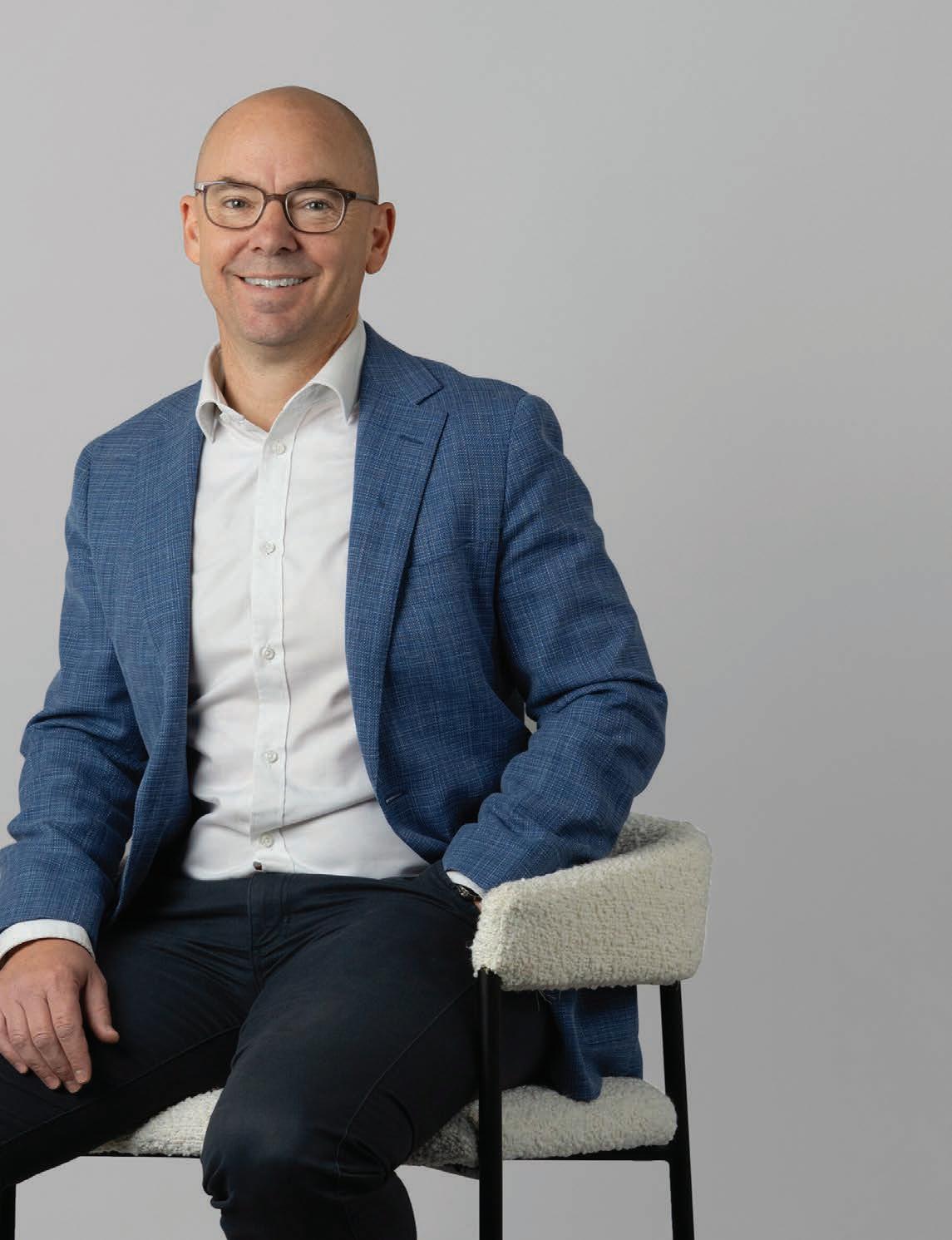
Tony Gillies, Publisher
Your Australian Conveyancer team:
Tony Gillies Publisher
Richard Cunningham Associate Editor
Tony Thomas Production Editor
James Dore Marketing Manager
Naomi Green Events & Partnerships
Chloe Goodwin Marketing Assistant
STORIES
Leigh Reinhold
David Simon
Dr Sherman Chan
PHOTOS
Toby Zerna
Neil Bennett
Foundations for the future
REIV CEO Toby Balazs underlines critical issues ahead of the Victorian election
Sloane sets sights on housing
NSW opposition leader Kellie Sloane makes property a top priority
Australia’s tunnel vision
The major road and rail projects changing our urban centres
Learning curve
What it takes to become a conveyancing professional
Figures that moved the dial Game-changing words and numbers that impacted the industry this month
Title tasks without the hassle
How franchising is changing the business landscape
A confident outlook
Laing+Simmons CEO Leanne Pilkington leads by example
REIV lays its foundations for the future
Before Victorians head to the polls in November, REIV CEO Toby Balazs underlines the importance of the property sector to the state’s prosperity
By LEIGH REINHOLD
Stronger relationships will be forged between conveyancers and real estate agents as Tranche 2 of the Anti Money Laundering and Counter-Terrorism Financing Amendment Act takes effect in July, predicts Toby Balazs, the CEO of the Real Estate Institute of Victoria (REIV).
“The AML/CTF obligations are likely to bring the two professions closer as there will be synergies and workflow benefits for both,” Balazs told AC.
“The Reliance Rules allow agents to rely on the buyer’s conveyancer for some aspects of the process. This creates opportunities for improving alignment and simplifying the buying experience for the consumer.
“The REIV will continue to engage with the Australian Institute of Conveyancers [AIC] to build stronger relationships across the sector.”
Balazs said the REIV is striving to work “collaboratively” with all government agencies and stakeholders to ensure informed regulatory policy is developed to provide “certainty and fairness for all”.
“As the peak representative body for real estate practitioners in Victoria, the Real Estate Institute of Victoria is deeply invested in helping to ensure the ongoing prosperity of the state’s property sector,” he said.
And with the Victorian state elections coming up in November, the REIV is lobbying hard for change.
“The REIV’s vision for a successful property sector would be a robust, resilient and professionally led sector, to inspire confidence, attract investment, support sustainable economic growth, deliver stable and accessible housing outcomes, and strengthen Victoria’s long-term prosperity,” Balazs said. “From our perspective, the critical issue is about attracting and retaining investment in Victorian real estate. This is fundamental to building a sustainable pipeline of housing supply.”
Like healthcare, education and sport, Balazs said the state of the property sector remains fundamental to the Victorian experience.
“In serving to both reflect and shape the lives of Victorians, and the state’s economic fortunes more generally, property’s importance cannot be overstated,” he said.
“After all, real estate – whether in the form of a home, workplace, retail premises, investment asset or community space –touches every Victorian, and decisions relating to first-home ownership, family homes, investment properties and intergenerational wealth have material economic and social implications.
“Not to mention that this is a sector that continues to contribute nearly half of the state’s total tax revenue and, as such, represents a foundational pillar of Victoria’s economic and fiscal stability.”
The REIV believes the relative health CONTINUED ON PAGE 06
Real Estate Institute of Victoria CEO Toby Balazs.
“This is a sector that continues to contribute nearly half of the state’s total tax revenue and, as such, represents a foundational pillar of Victoria’s economic and fiscal stability.”
– Toby Balazs
of the property market is not only a subject of industry interest, but a matter of broader public significance. Not least when taken against the backdrop of an ongoing costof-living crisis, soaring state debt and an increasingly fraught geopolitical landscape abroad.
“A stable, confident and well-functioning property market underpins employment, investment, infrastructure delivery and essential government services across the state, balancing fiscal objectives, regulatory integrity, market confidence and community outcomes,” Balazs said.
“Central to this ongoing public interest is the question of property policy reform, particularly from a tax and regulatory perspective – key to which is how to fairly balance the competing interests of the sector’s different stakeholders in a way that makes a positive difference for all Victorians.”
The REIV believes the question of policy reform takes on even more importance in the lead-up to the state election and is seizing the opportunity to positively shape government policy.
Recently publishing its election manifesto, Fixing the Foundations, the REIV’s objective is to provide “critical insights” into the lived experiences of Victorians and their preferences for property sector reform.
The report, supported by an independent survey of 1000 Victorians from key residential real estate sector cohorts, including property owners, renters and rental providers, informed the basis of the REIV’s current recommendations to those in government.
“The research-driven recommendations of our Election Priorities Document are clear,” Balazs said.
1. Advance a modern, equitable and transparent property market framework that builds enduring consumer trust and market confidence.
2. Create stable and competitive regulatory and taxation policy settings that enable investment in housing supply and support a healthy rental ecosystem.
3. Restore the competitiveness of Victoria’s commercial and industrial property sectors to drive enterprise, productivity and economic growth.
4. Reform first home buyer support mechanisms to better enable entry into home ownership for younger Victorians.
5. Embed higher standards of professionalism and accountability across the property sector to enhance outcomes for the community and the economy.
During its research, the REIV also identified a “significant vote of no-confidence” in the state government’s proposed response to underquoting.
“Ninety-four per cent of Victorian property owners told us they would fundamentally change their selling strategy if forced to disclose their reserve price seven days before an auction,” Balazs said.
“The government’s proposal, in its current form, is counterproductive and will not achieve its intended objective. In fact, it is likely to compromise transparency by triggering inflated reserve prices, a fall in clearance rates and an increase in offers prior to auction, as indicated in the survey results.
holding costs for rental providers, while failing to materially improve rental affordability and access for renters.”
AREAS TO WATCH
Metro - The City of Melton
Among Victoria’s metropolitan areas, the City of Melton has been the fastest-growing municipality over the past five years.
The number of house sales more than quadrupled in the year ending March 2026, compared to March 2021.
A similar trend was seen in the unit market, with volumes also nearly quadrupling over the same period.
Six of the municipality’s suburbs recorded double-digit growth in median house prices over the year, led by Melton West at 15.2 per cent.
“Ironically, the relentless 10-year period of rental regulation and property tax increases we have seen play out in Victoria has served to increase complexity and holding costs for rental providers, while failing to materially improve rental affordability and access for renters.”
– Toby Balazs
“What’s more, the survey showed one in four Victorians believe the proposed law gives the government undue say in how much property owners sell their property for, while over a quarter (27 per cent) said it takes control of the decision to sell out of the owner’s hands.
“For Victorians seeking to sell what is likely to be their biggest financial asset, the proposed law is too heavily weighted against property owners.”
Meanwhile, Balazs said he reiterates the Institute’s “longstanding calls” for more evenly balanced tax and regulatory settings to “ensure a healthier rental market ecosystem and deliver better outcomes for the sector’s key stakeholders”.
“Ironically, the relentless 10-year period of rental regulation and property tax increases we have seen play out in Victoria has served to increase complexity and
The municipality also saw Melbourne’s highest population growth, with its estimated resident population rising by 5.8 per cent in 2025 compared to the previous year, adding over 12,000 new residents.
Regional - Buloke Shire
Buloke Shire is one of the fastest-growing regional municipalities, with house sales increasing tenfold since 2021.
It was also the top-performing municipality for annual house price growth, recording a 37 per cent increase, the highest in regional Victoria.
The riverside town of Donald stood out within the region, with median house prices rising 12.3 per cent over the March 2026 quarter and 24.3 per cent annually to $320,000, making it one of the 10 most affordable towns over the period.
Regional - Ballarat
As far as popularity goes, the suburb of Delacombe in Ballarat added more than 1,000 new residents in 2025 compared to the previous year. Its 7.3 per cent population growth ranked third for all regional areas.
Another Ballarat suburb, Alfredton, ranked fifth with 3.7 per cent population growth in that period.
Delacombe also saw rapid house price growth over the last 12 months with median house prices rising by 14.1 per cent to $599,000.
The attractiveness of these Ballarat suburbs can be seen in their falling dayson-market statistics, showing that buyer demand is leading to quick sales.
Delacombe homes spent 30 days-onmarket in April 2026, compared to 50 days in April 2025. Alfredton saw similarly faster turnover as average days on the market fell from 58 to 35 days over the same timeframe.
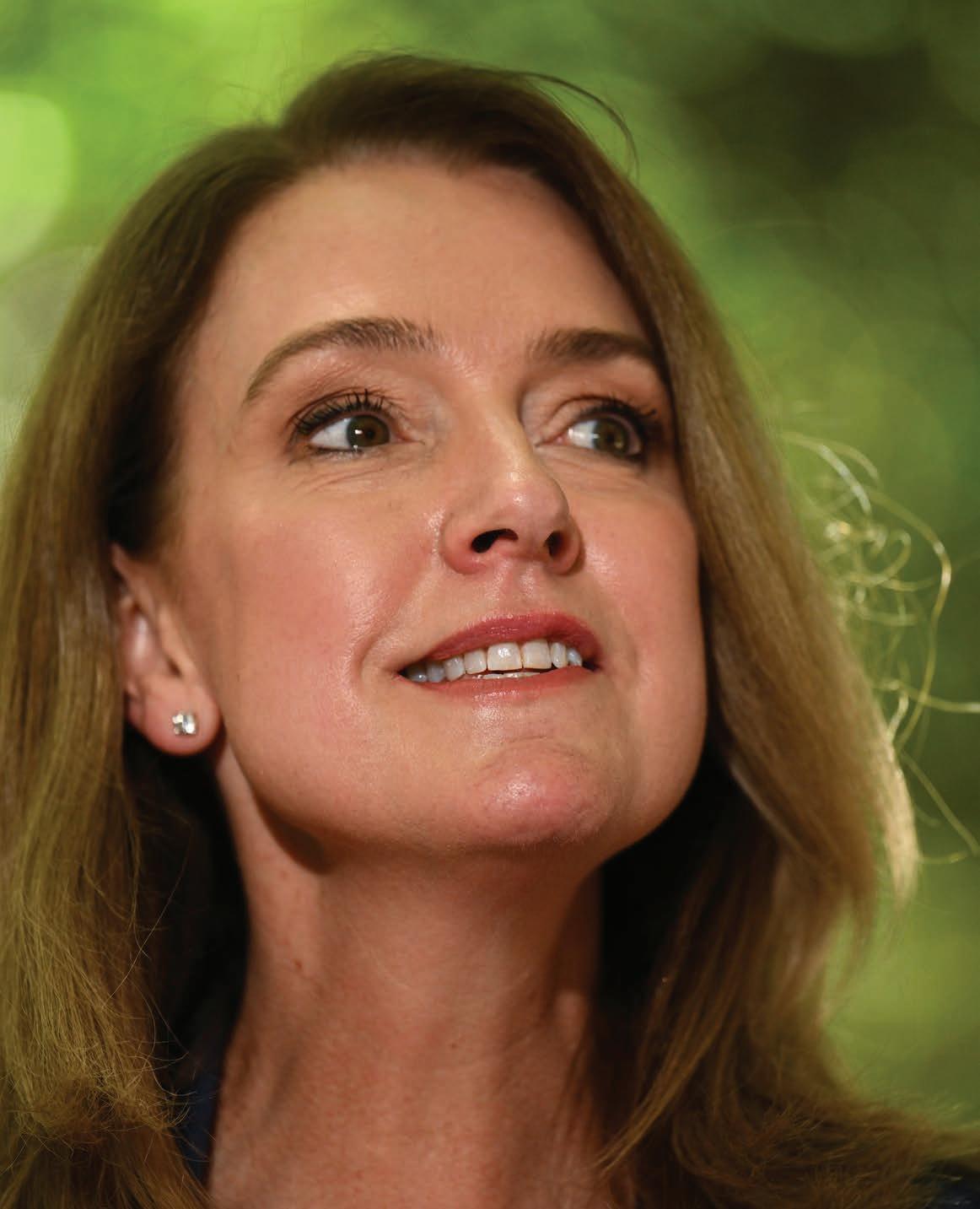
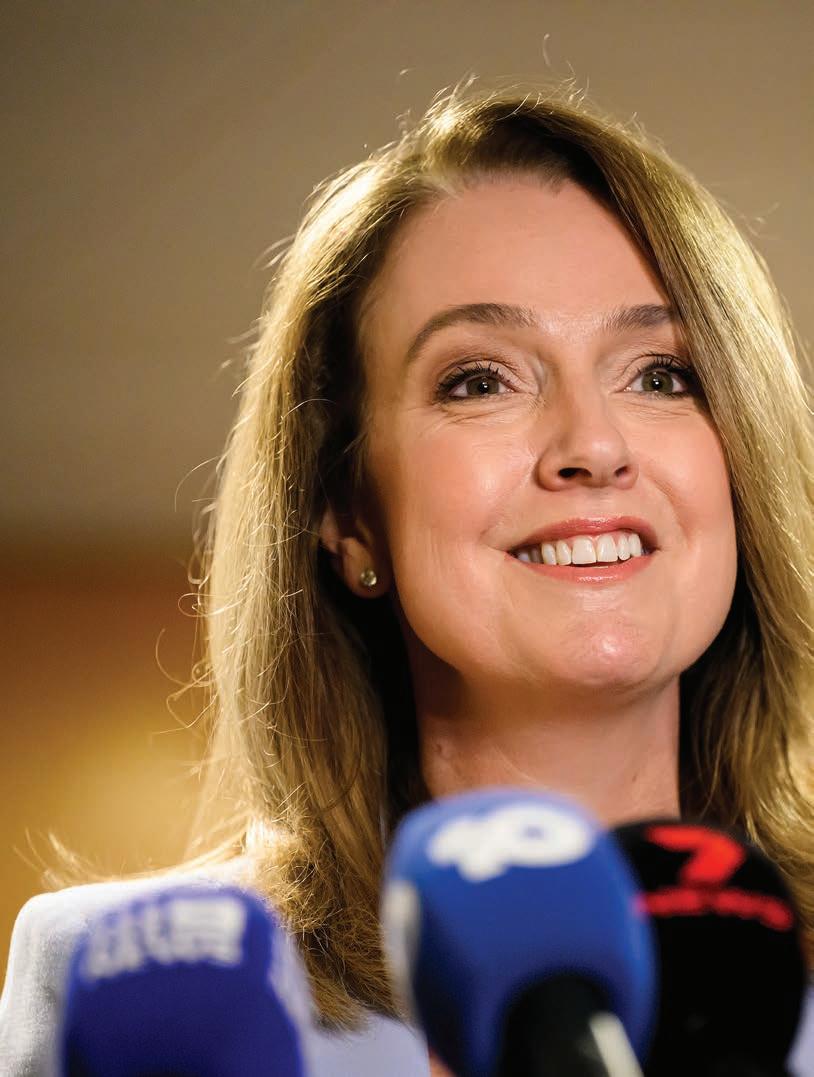
NSW Liberal Party leader Kellie Sloane.
BATTLE READY SLOANE SETS HER SIGHTS ON HOUSING CHALLENGE
By RICHARD CUNNINGHAM
Facing her first election as NSW opposition leader, Kellie Sloane outlines what her government’s priorities will be in terms of property, infrastructure and regional growth
By her own admission, NSW opposition leader Kellie Sloane faces a monumental task.
Elected unopposed as leader of the NSW Liberals last November, she now has just nine months before the next state election.
No first-term NSW opposition leader has won an election since the 1930s, and the Coalition needs to claw back a dozen seats to form a majority government.
History is against her but, as 53-yearold Sloane declared after taking over from Mark Speakman, “I’m here to make history.”
Her team, she said, has the right mix of youth and experience to oust Labor premier Chris Minns.
Almost one-third of the shadow cabinet, including Sloane’s deputy Natalie Ward, are women.
“We’re match fit, we’re ready to govern and we’re highly motivated,” she told AC’s Face to Face podcast.
“I would argue that NSW has gone backwards in the past three years. We’ve gone from the top-performing state… now we’re right at the bottom of the pack.”
Key issues include the cost of living and housing.
The latter is certainly a priority for the Minns government, but Sloane claimed it’s been “a big fat fail”.
“They’ve talked a big game on housing,” she said, “but they haven’t delivered. We’re 40 per cent behind our Housing Accord target.”
That target is 377,000 new homes by mid-2029.
“There’s been 44,000 approvals this year,” Sloane said. “In the peak just before Covid, with the Coalition, it was getting close to 80,000.
FOCUS ON FUTURE
Kellie Sloane has dismissed suggestions of a preference deal with One Nation for the March 2027 NSW election.
She says the NSW Coalition is determined to win “on our own terms, in our own right.”
One Nation has no representation in NSW. But its surge in federal support, Sloane feels, is a symptom of voter discontent.
“It’s come from a loss of economic opportunity, where they feel like they are working harder, even taking on an extra job, but still falling behind,” she told Face to Face.
“Where they worry that their kids will never be able to own a home.
“I want to restore hope and opportunity. I want to be for individuals, small business, and enterprise, ahead of government.
“These are [the] reasons I joined the Liberal Party: the foundations of our belief system.
“But we need to have policies that demonstrate that: to turbocharge small and medium business, to attract business to our state.”
The Liberals claim state taxes are up 31 per cent since Labor came to power.
Economic growth is forecast at 1 per cent while population increase is forecast at 1.1 per cent: what the Opposition is calling a “per capita recession.”
“Families are working harder than ever but too many are going backwards,” Sloane said.
“There’s a been lot of circles on maps where they [Labor] want uplift, without having to invest in infrastructure.”
While city infrastructure might be satisfactory, she said regional housing plans can be frustrated by inadequate roads, water, sewage and power.
“If we were returned to government, we’d have an infrastructure guarantee outside of Sydney,” Sloane said.
“A quarter of all government spend on infrastructure would be in regional NSW.”
Six days after Face to Face, Sloane again hammered the housing theme in her response to the June 23 NSW Budget.
“This is a bad Budget,” she told
reporters shortly after Treasurer Daniel Mookhey’s delivery.
“It is a Budget that lacks vision… in fact, their vision is so bad, they need to go to Specsavers.”
Sloane’s vision includes reducing the impact of government fees and red tape on construction costs.
“Almost 50 per cent of the cost of a new home is government taxes and charges,” she told Face to Face. “For a unit it’s about 40 per cent.”
Many developers also decry the NSW Housing and Productivity Contribution: in Greater Sydney, about $13,000 per new dwelling lot. Ironically, it’s meant to fund infrastructure.
“We would remove that tax for the Housing Accord period: the next couple of years.” Sloane said.
“After that, the Productivity Contribution would be paid on completion of a dwelling, rather than up-front.”
Sloane grew up in country towns including SA’s Tanunda and Port Lincoln.
She attended Nuriootpa High School, and completed a Bachelor of Arts at the University of South Australia.
Her father Bob Sloane was mayor of Barossa Council from 2014 to 2018.
“I know how isolated and forgotten you can feel,” she said. “For the ageing, it’s so much harder to get to doctor’s appointments.”
She’s keen to encourage more professionals to settle in regional centres, especially health workers.
Sloane conceded the NSW government is trying to tackle the housing crisis.
As Minns said back in April, “We genuinely believe we’ve still got Everest to climb. But we like to think we’re at Base Camp.”
“Credit where it’s due,” Sloane told Face to Face. “There have been some important reforms the government has tried to progress. We’ve sat at the table and worked with them on that. We want this to be a success; we don’t want this to be a political issue. We want housing to cross all party divides.”
“Maybe you can’t buy close to your parents. But I would still encourage young people to invest wherever they can. Perhaps in a country area or the outer suburbs. Make a start: property is still a worthwhile investment.”
– Kellie Sloane
But, for example, she disagrees with the government’s reluctance to commit to further Sydney Metro lines, which would drive more housing.
They are staggeringly expensive. The 24km, nine-station Metro West line from the city to Parramatta will cost at least $30 billion and won’t open before 2032.
However, Sloane said given the long construction time, they should be on the drawing board.
At the moment, the government is only funding business cases to identify future extensions.
“You need to plan for the future,” she said. “By saying a hard ‘no’ now, you’re depriving the next generation of young people of those important transport connections.”
In her Budget reply speech, she promised to “progress” a south-west Sydney Metro extension.
Sloane feels NSW badly needs a revival of economic activity and confidence. She said 6,200 NSW businesses have failed in the past year, many in the building sector.
“Something is going terribly wrong,” she added. “For all the talk, there’s been very little delivery from Labor.”
Among the complaints heard from employers is payroll tax. In NSW, it’s 5.45 per cent on wages that exceed a $1.2 million threshold.
“It’s fixed,” she said. “So as wages have grown, businesses have gone backwards. That’s something we as Liberals would address.”
They’ve vowed to lift the threshold to $1.5 million and cut the tax to 4.75 per
cent for businesses with a total payroll below $10 million.
She also said new Labor legislation gives unions access to a company’s digital systems, which can include HR files, payroll systems, and internal emails, “to reward their union mates”.
“This is unprecedented access that you don’t have in any other state,” Sloane added. “It’s undermining business certainty.”
A former TV journalist and charity CEO, Sloane is pragmatic. She doesn’t claim to have a magic wand and admits “this housing crisis is complex.”
Like Labor, she supports affordable housing for community workers, higher density around transport hubs, adaptive re-use, modular and pre-fab housing.
And she agrees with city lobbyists who want a greater Sydney CBD population.
“It’s a ghost town!” she said. “After working hours, it’s dead. And that’s a real shame.”
Also a shame: the challenge of high prices, high interest rates and crippling mortgage repayments.
When Sloane bought her first apartment, prices were around three times average income. Now it’s 11 times.
“A young me today, working just as hard and making as many sacrifices, couldn’t get a [foot in the door],” she said.
But, she added, young home-seekers shouldn’t despair.
“Maybe you can’t buy close to your parents. But I would still encourage young people to invest wherever they can.
“Perhaps in a country area or the outer suburbs. Make a start: property is still a worthwhile investment.”
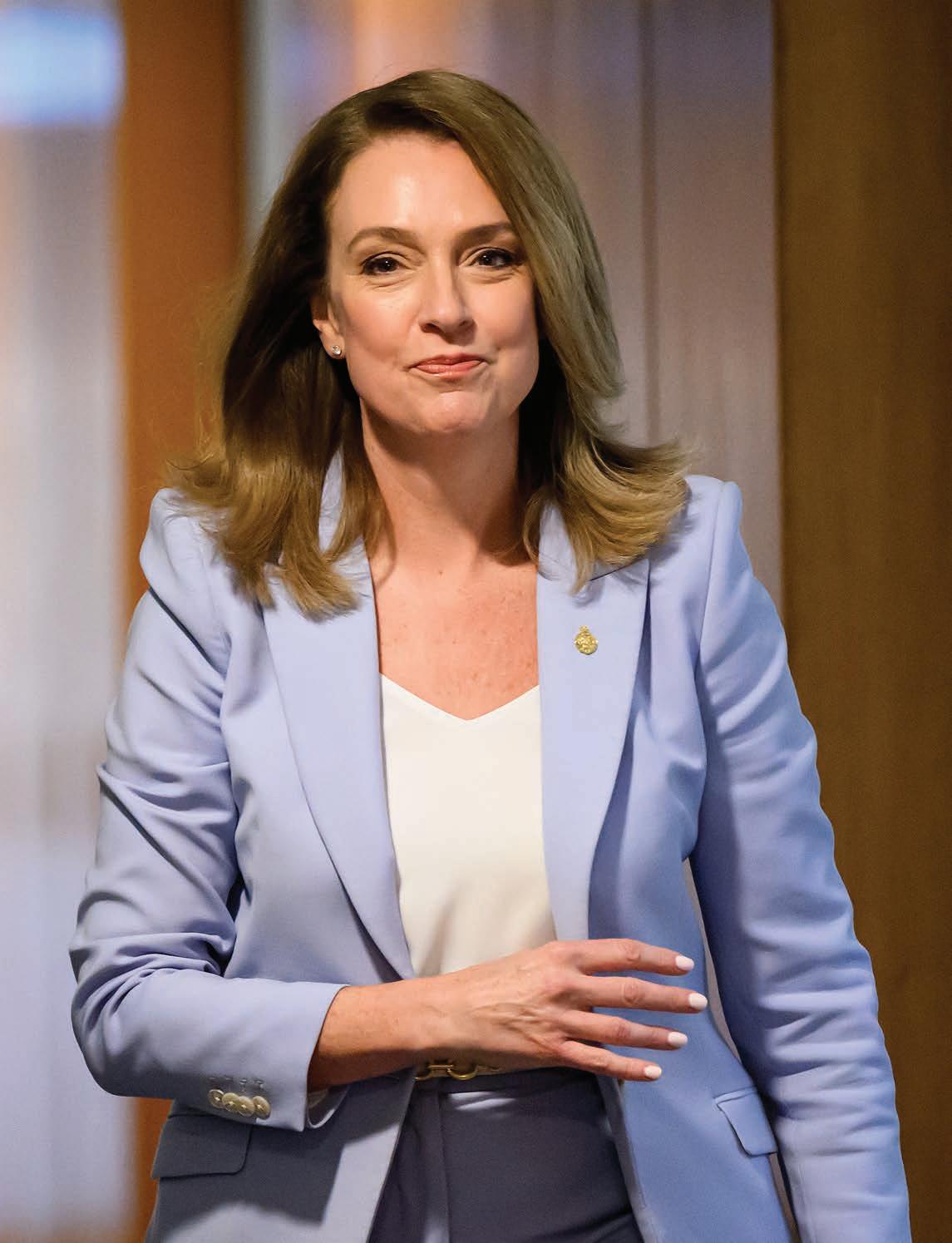
Kellie Sloane, NSW opposition leader and member for Vaucluse.
AUSTRALIA’S TUNNEL VISION
NEW ROADS, NEW RAIL: THE UNDERGROUND EMPIRE
By RICHARD CUNNINGHAM
Beneath the surface of Australia’s urban centres, there’s a revolution underway as major tunnel projects transform the way we move. Of course, such substantial progress comes at a cost
Many Australian urban dwellers have had their dreams disturbed at some stage by a dull rumbling sensation, barely audible, more felt than heard.
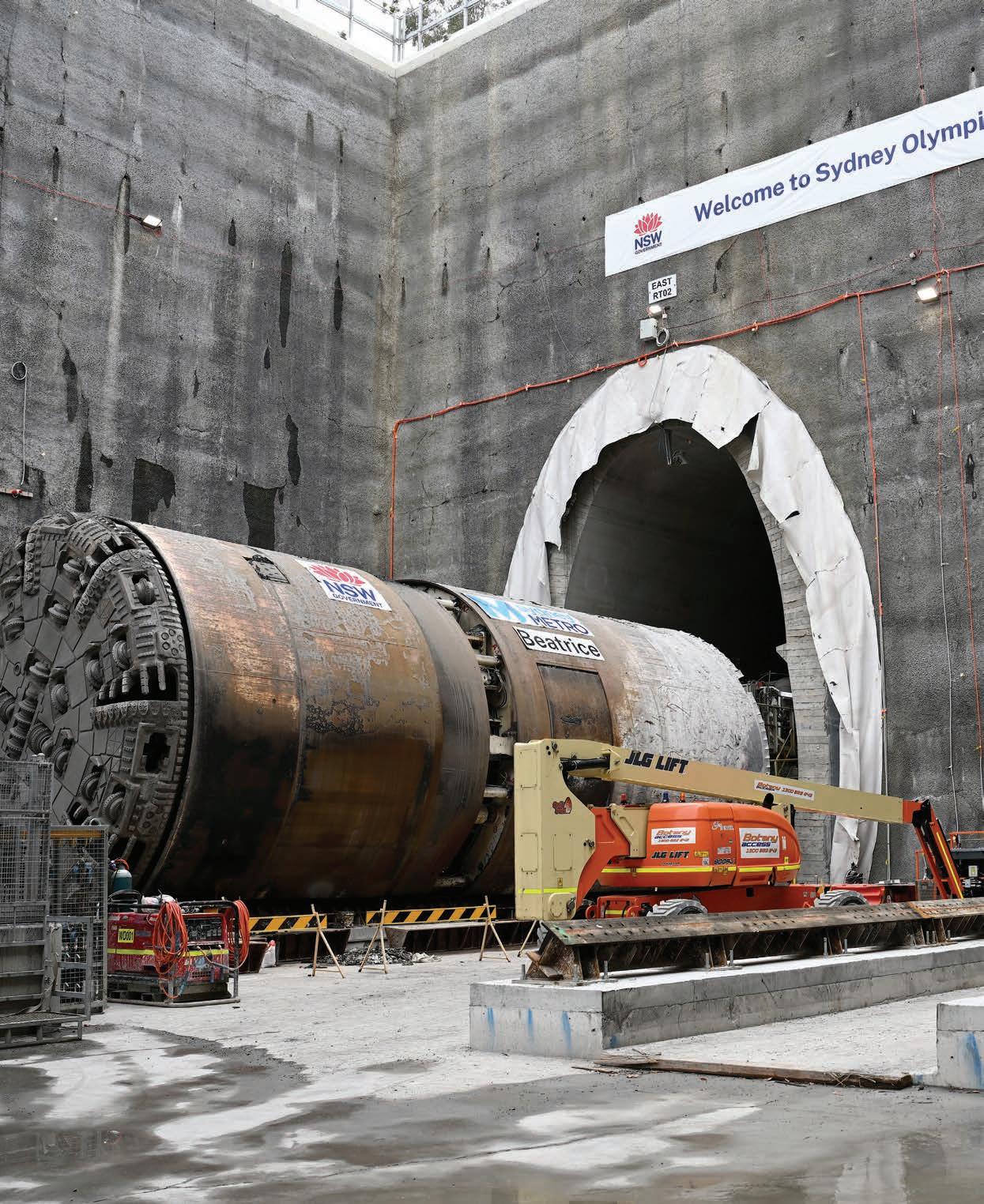
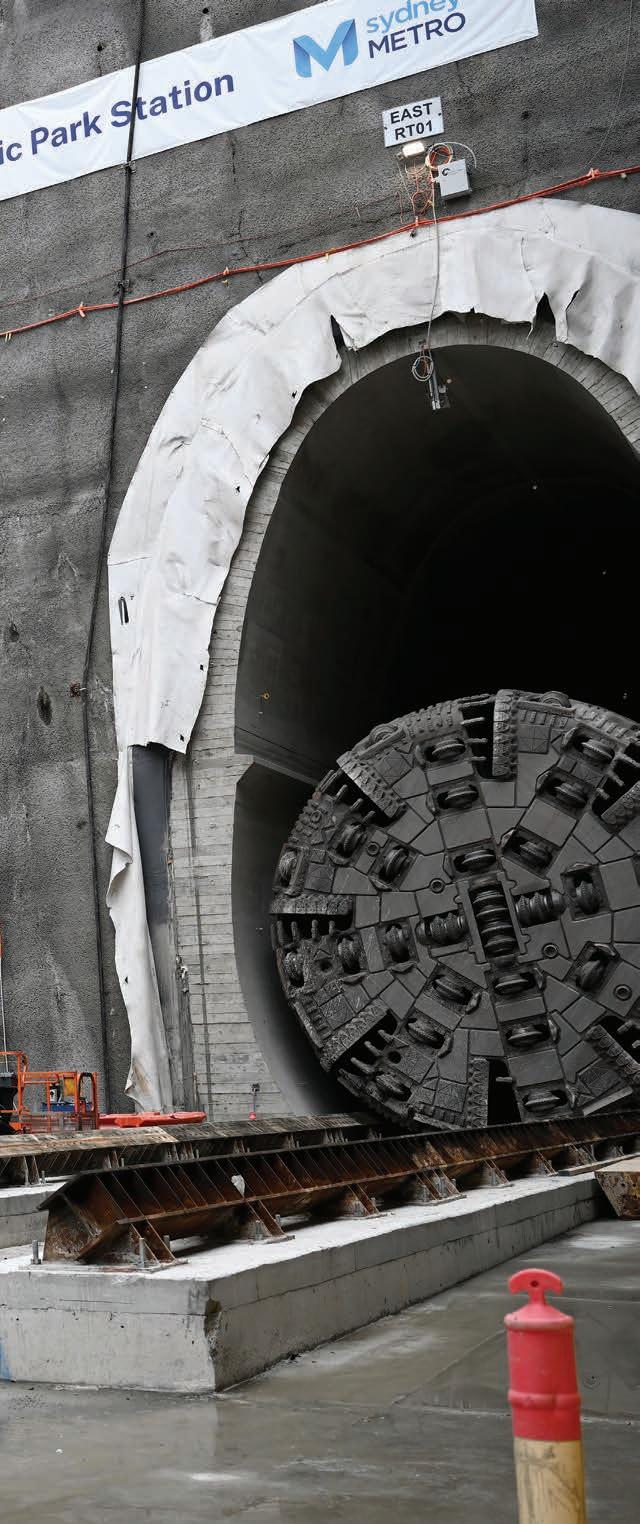
If not something you ate, spousal snoring or nocturnal teeth-gnashing, it’s most likely the tremor of a TBM, or tunnel boring machine.
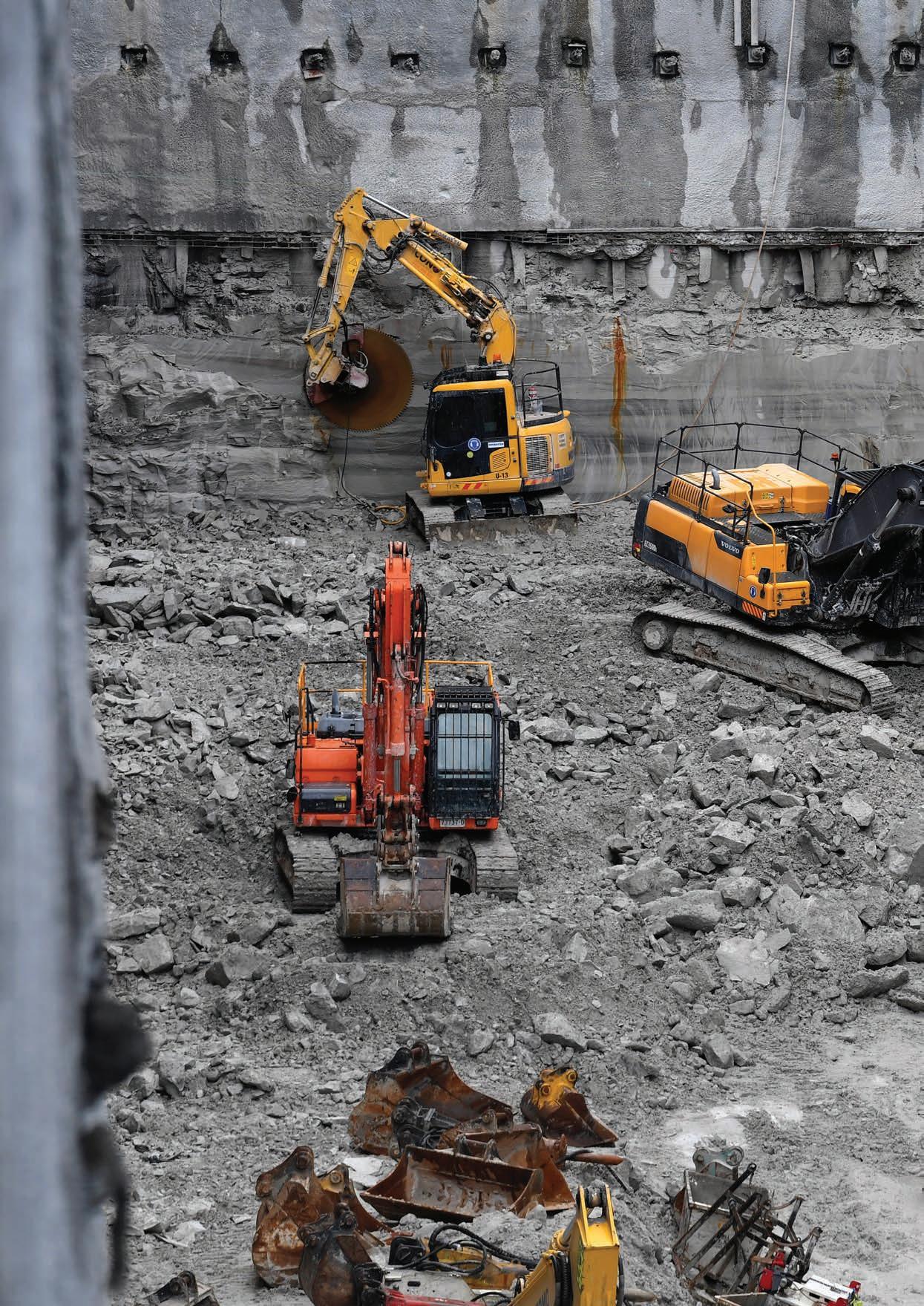
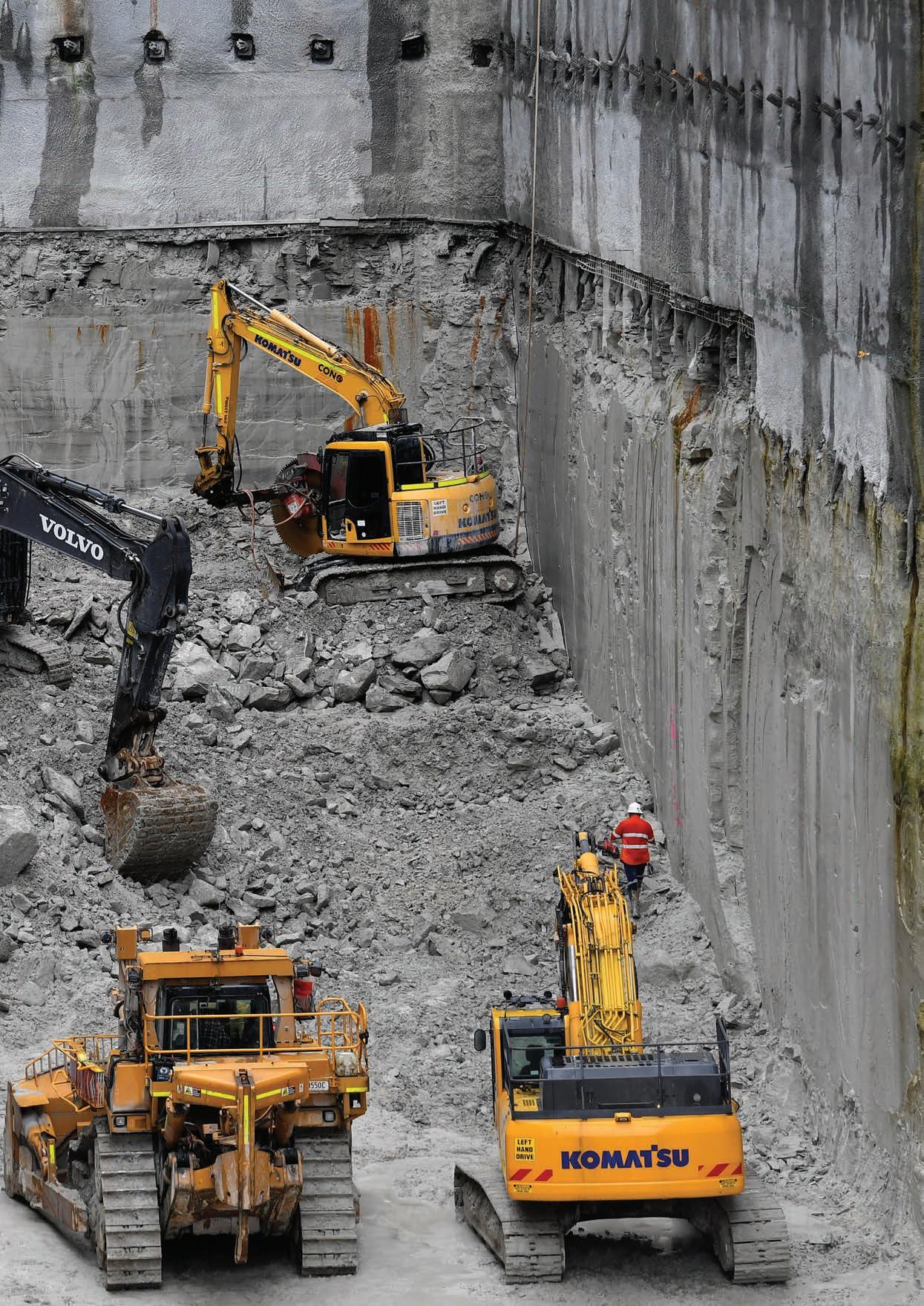
Our cities are being criss-crossed by these massive mechanical moles, burrowing 24/7 at up to 700 metres a week and turning solid rock into
geological Swiss cheese. Sydney, Melbourne, Brisbane, Adelaide and Perth now boast hundreds of kilometres of road and rail tunnels. They’re transforming the way we move and the way we live.
Obvious benefits include improved travel times and reduced surface congestion.
“Major road and rail tunnels compress distance,” said Nicole Bennetts, national head of advocacy for the Planning Institute Australia.
“They effectively bring places closer together, which
“Our members have told us if the tunnel gets them home to their families quicker, then they’re prepared to pay.”
– Peter Khoury
can unlock redevelopment in underutilised precincts, and make higher-density housing viable where it previously was not.”
Motorway operator
Transurban hails tunnel transport as efficient, safe and reliable.
“In the first half of this financial year alone, our customers saved a collective 35 million hours by using our roads,” it said.
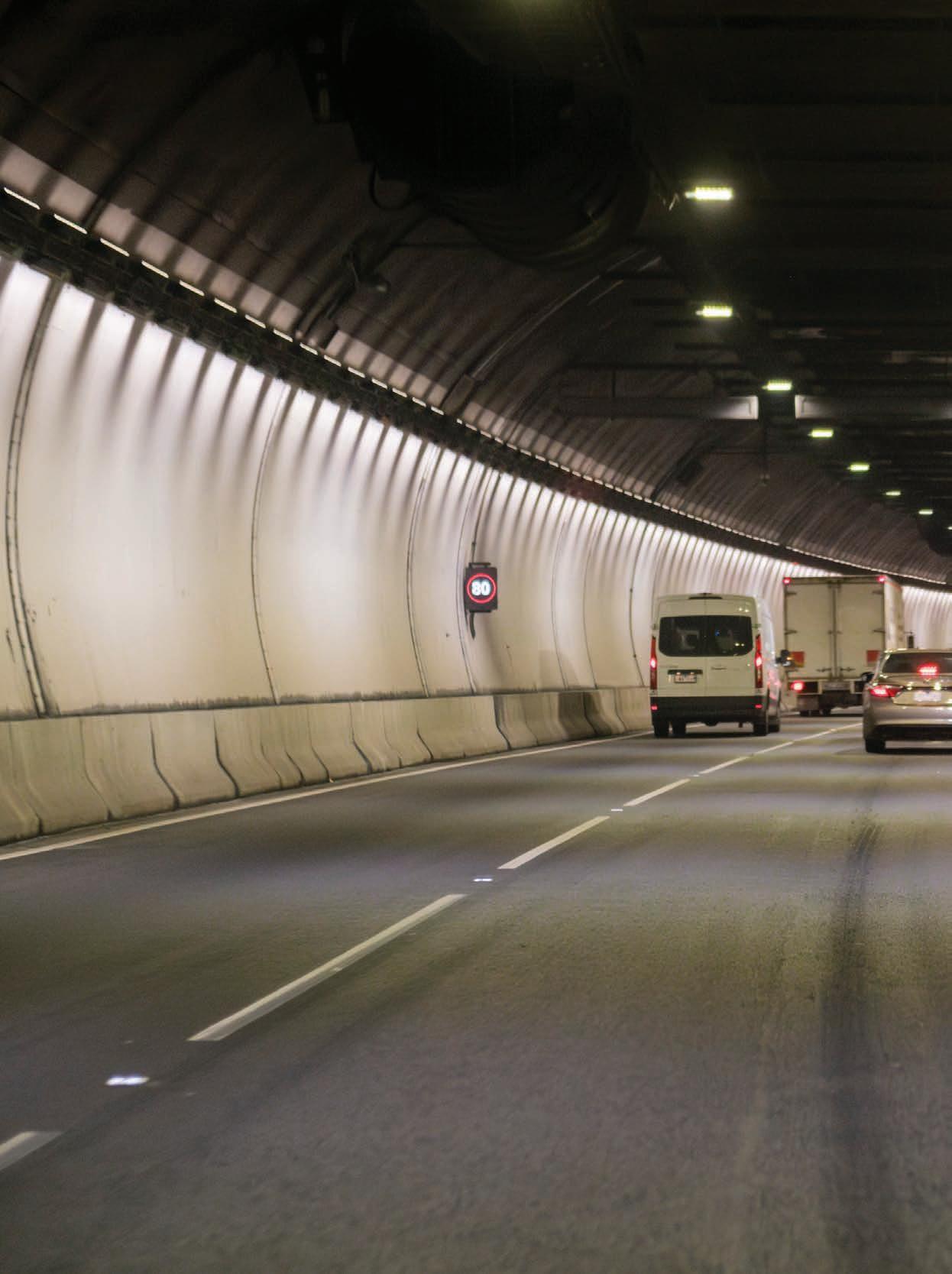
Sydney’s NorthConnex (Australia’s deepest tunnel at 90m) has bumped up to 9,000 trucks a day off Pennant Hills Road, significantly
improving local noise levels and air quality.
“Independent air quality studies show NOx (nitrogen oxides) concentrations at the roadside are approximately onethird lower,” Transurban added.
It also saves about 20 minutes in morning peak, avoiding 21 sets of traffic lights and theoretically enabling travel from Newcastle to Melbourne without a single stop.
Melbourne’s 6.5km North East Link tunnels aim to take 15,000 trucks a day off local roads and reduce travel times
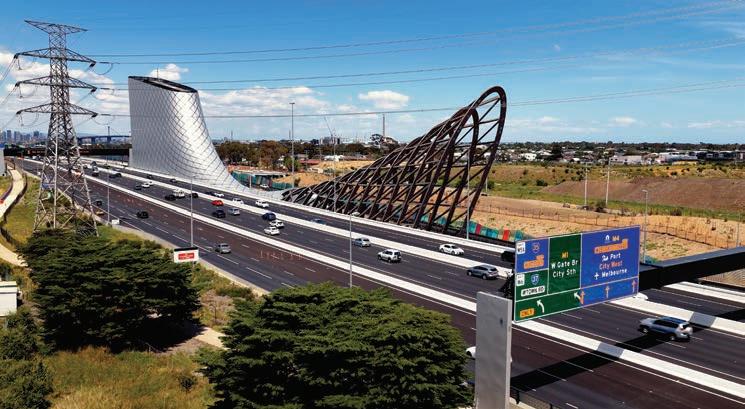
by up to 35 minutes. The West Gate Tunnel, an alternative to the West Gate Bridge, promises to take 9,000 trucks a day off local roads.
Australian motoring bodies generally support tunnel infrastructure.
“We know it comes at a cost,” said NRMA spokesman Peter Khoury, “but our members have told us if the tunnel gets them home to their families quicker, then they’re prepared to pay.”
It’s a similar win for train travel: Sydney’s 24km Metro
West project will double rail capacity between Parramatta and the CBD, with fast and frequent services.
There’ll be nine new underground stations. They have already seen a boom in surface redevelopment, including new high-rise apartments, with 10,000 direct and 70,000 indirect jobs created.
The downside is the cost: for example, the Metro West is estimated at $30 billion, courtesy of taxpayers.
“These projects can be expensive,” Bennetts agreed, “so
the public value must extend beyond faster commute times.
“The return comes when infrastructure is integrated with strategic land-use planning.”
Road tunnels and surface routes are largely funded by tolls. Melbourne’s CityLink is Australia’s most expensive with car journeys capped at time of writing at $12.38.
Sydney has eight of the nation’s 10 most expensive. The WestConnex M4 is capped for cars at $10.79, the Hills M2 at $10.49.
Those last two are mainly surface roads. Of the tunnels, the NorthConnex is $10.79 for cars, the Cross City Tunnel $7.31.
In Brisbane the Airportlink M7 is $7.16 for cars, Legacy Way $7 and Clem7 tunnel $6.77.
Perth has a 1.6km tunnel on the Graham Farmer Freeway. However, there’s no toll.
It’s not cheap for East Coast drivers, but we’re told most believe the cost is worthwhile.
Transurban’s polling suggests 77 per cent of customers spend less than $10 a week, with tolls only 16th among their top 20 budget concerns.
But the Australian Automobile Association’s 2025 Affordability Index shows a typical household spends an average of $37 a week.
Sydney (“the most tolled city on Earth”) was hardest hit
at $60 a week, Brisbane $26 and Melbourne $25.84.
“It’s not an insignificant cost,” said the NRMA’s Khoury. “We know that. But for some families it just works better. And certainly, it works for businesses.”
It’s argued that tolls hurt most in outer suburbs, where drivers have few realistic alternatives to using a motorway.
“Tolls create a clear ‘winners and losers’ dynamic,” said Stewart Bunn, of First National Real Estate.
Bunn also noted that road tunnels can shift congestion, rather than remove it.
There is some relief, in NSW at least. The M5 SouthWest cashback scheme allows users to claim back the cost of those tolls on a quarterly basis.
And since early 2024 the government has run a $60-aweek toll cap that allows eligible
PITFALLS AND ROCK FALLS
The advent of those multimillion dollar, remotely controlled TBMs have made tunnelling a lot safer since the days of picks, shovels and dynamite.
But construction is not without its dangers. One of the more spectacular incidents was Sydney’s M6 tunnel collapse at Rockdale in March 2024.
A 10-metre wide sinkhole appeared in the carpark of an industrial complex, causing the partial collapse of a building.
About a week later, another hole opened about 150 metres away. The collapses were attributed to “adverse ground conditions”.
The site remains waterlogged with broken pipes and machines buried under rubble. But a government wrangle with
the contractors appears to have been settled, with work set to re-commence.
In November 2005, a section of Sydney’s Lane Cove Tunnel collapsed during excavation, causing the partial collapse of an apartment building above.
No one was injured, but more than 40 residents had to be evacuated and over 1,000 cubic metres of concrete were needed to stabilise the block.
Two years ago, part of Melbourne’s West Gate Tunnel shut down after a 3am collapse in a crosspassage 25 metres below ground.
Faults sometimes appear long after completion of a tunnel.
Last year, Sydney’s M4 tunnel was closed for repairs to bulging “shotcrete”, or sprayed concrete lining the roof.
“These projects can be expensive, so the public value must extend beyond faster commute times. The return comes when infrastructure is integrated with strategic land-use planning.”
– Nicole Bennetts
How cities are digging beneath the surface to become more liveable
Sydney tunnels
Sydney boasts one of the world’s most extensive urban road tunnel networks, featuring more than 30km of underground motorways designed to bypass CBD congestion. This network relies heavily on the region’s stable sandstone geology to carve massive routes beneath the city and harbour.
Sydney tunnel depths
These underground routes are colossal, with some sections reaching up to 34m wide and 8m high.
The iconic Sydney Harbour Tunnel is 2.3km long and sits up to 25m below the harbour floor. It was built using a mix of land boring and eight massive precast concrete units lowered into a dredged trench.
The Longest Tunnel: The WestConnex motorway scheme features twin road tunnels stretching approximately 9km from Kingsgrove to St Peters (the M8), making it one of the longest continuous road tunnels in Australia.
Heavy Excavation: The massive WestConnex M4-M5 Link Tunnels utilised 28 roadheaders simultaneously – the most ever used on a single project in the country. These machines can excavate 1,000 tonnes of rock per day.
Graphic: Will Pearce WestConnex
The WestConnex twin tunnels connect Kingsgrove to St Peters.
Melbourne tunnels
West Gate Tunnel
The $10.2 billion twin-tunnel provides a continuous toll-road alternative to the West Gate Bridge, running under Yarraville to connect the West Gate Freeway directly to Footscray Road, Dynon Road, and CityLink.
Domain Tunnel
Stretches 1.6km long, burrows up to 40m deep beneath the Yarra River, and carries city-bound traffic from the Monash Freeway to the West Gate Freeway.
Depending on the area, the tunnel’s average depth is about 35m.
MELBOURNE
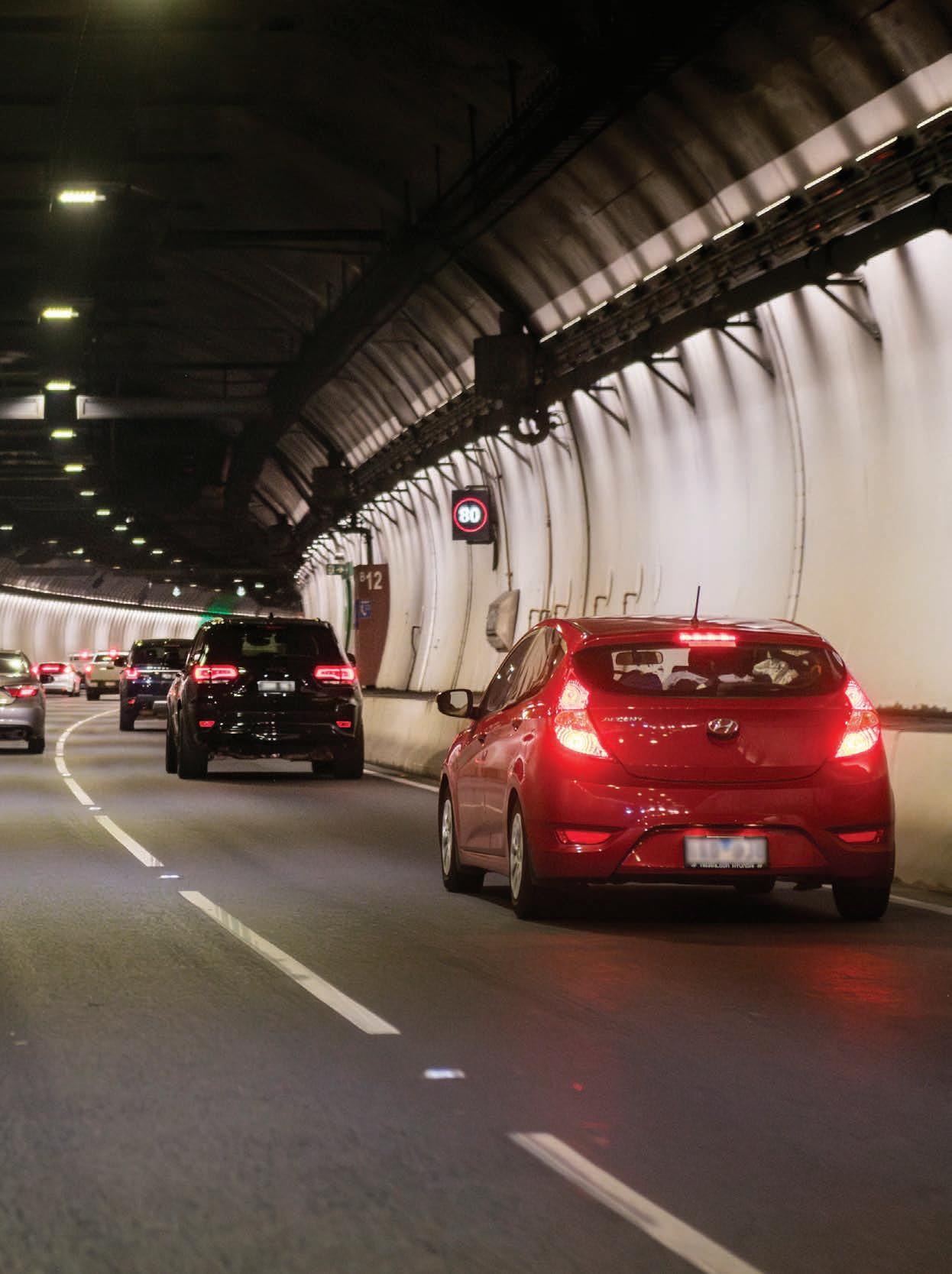
Melbourne’s West Gate Tunnel opened in 2025.
motorists to claim back up to $340 a week spent above that threshold.
As of early 2026, more than $200 million had been refunded. The June NSW Budget reduced the cap to $50, effective for one year from July 6.
The cost will be offset by two-way tolling on the Sydney Harbour Bridge and Tunnel from late 2028.
“This corrects a long-standing inequity,” the government announced. “Tolls on the Bridge and Tunnel are one-way and did
not increase once between 2009 and 2023.”
Governments cop criticism whenever tolls go up (often four per cent a year) but say they’re bound by contracts that pre-date their term and extend in some cases until 2060.
NSW said tollway operators deserve a fair return but warns overpriced motorways would be “a handbrake” on productivity and investment.
“We are putting the nail in the coffin of ‘tollmania’ by working on multiple fronts,” NSW transport minister
John Graham said. “Tilting the system back in favour of motorists, including the toll cap, scrapping administration fees from mid-year, going digital with communications to drivers.”
That means drivers with unpaid tolls will get an email or text reminder before a final demand arrives in the post.
Transurban has $36 billion invested in Sydney roads. It’s said it supports NSW toll reform and hopes to finalise changes this year.
2026 will also see the
“We are putting the nail in the coffin of ‘tollmania’ by working on multiple fronts.”
– John Graham
ARE TUNNELS A GOLD MINE FOR PROPERTY INVESTORS?
By shortening distances and travel times, new road and rail tunnels can offer a rare opportunity for developers and taxpayers alike
You might ask what tunnels have to do with property professionals like conveyancers. A hole in the ground, right?
True… but it’s how they and their associated tollways and rail lines affect housing trends.
By making commuting faster and easier, they open new areas for development and, in older suburbs, redevelopment.
Sydney’s Northwest Metro opened in 2019. It has seen thousands of new units and single dwellings around Bella Vista, Kellyville and Rouse Hill.
Another branch, the 24km underground Metro West, isn’t due to open until 2032. But it has already attracted massive housing investment around the nine new stations. And a blip in property values.
Corridor strategy - a key NSW urban renewal initiative.
Building is underway all along Parramatta Road but much will be driven by the stations at Five Dock, Burwood North, North Strathfield and Olympic Park.
Great if you’re on a Metro line, but what of taxpayers elsewhere?
Experts say it’s fair, if new infrastructure boosts housing, productivity and growth generally.
“Not every taxpayer will live near a new station or tunnel,” said the Planning Institute’s Nicole Bennetts.
“But well-planned transport corridors strengthen the wider metropolitan economy by improving access to jobs and enabling more homes where infrastructure already exists.”
appointment of a NSW customer advocate and tollway ombudsman.
Meanwhile the work of the TBMs continues in Sydney, Melbourne, Brisbane and Adelaide (the River Torrens to Darlington, or T2D.)
Other ambitious tunnel projects remain on the backburner.
Sydney’s $10 billion Northern Beaches tunnel was canned in 2023, along with the NSW Blue Mountains tunnel from Blackheath to Little Hartley.
Obstacles include the costs, and environmental concerns.
But traffic bottlenecks on Military Road, the Spit Bridge and the Great Western Highway aren’t going away.
The shortcomings of the GWH are back in focus with its closure after cracks appeared on the 194-year-old “Convict Bridge” at Victoria Pass.
A new bridge is to be built above the old one, but that’s expected to take at least a year.
“We still have unfinished business,” said the NRMA’s Khoury.
“The pattern is clear,” said Stewart Bunn of First National Real Estate. “When a new Metro station genuinely improves travel times, the market prices in that convenience quickly.”
Research by domain.
com.au found houses within 400m of a Metro station sold for almost 17 per cent more than homes further away; units for almost 25 per cent more.
At Five Dock, Deicorp’s $1.8 billion Kings Bay Village, on a former factory site, will deliver 1185 apartments less than a kilometre from the new station.
It’s the first large-scale private project to progress under the Parramatta Road
We’ve seen that underground rail can cause a property price hike. The hope, however, is that highdensity housing near rail hubs will be more affordable.
It’s vital, though, that planning laws allow for the new housing, and that construction keeps pace with infrastructure delivery.
Property analysts say road, as opposed to rail, tunnels tend to produce a more variable response.
“They are not universally popular,” said Stewart Bunn.
“Tolls, portal locations and traffic redistribution mean you can get benefits in one pocket and pushback in another.
“Property markets react at a very local level.”
Renee Roumanos is changing the game on conveyancing courses.
So, you want to be a conveyancer?
LEARNING
CURVE
By RICHARD CUNNINGHAM
We unpack what it takes to get started in conveyancing and why prior experience can make all the difference
If you’re reading this, you’re quite possibly already a licensed conveyancer.
But maybe there’s a child or young friend who sees what a great job you have and thinks “that’s what I want!”
A few cynics might raise red-rimmed eyes from a laptop at 10pm and say “kid, think about joining the circus”.
But seriously, what does it take to be part of the profession these days?
There are the well-known regional differences (solicitors in Queensland and the ACT, settlement agents in Western Australia) but generally an entrant will need an approved VET qualification like a Diploma or Advanced Diploma of Conveyancing (BSB60220).
Courses are offered by several universities, TAFEs and registered training organisations.
Australian Institute of Conveyancers NSW CEO Chris Tyler prefers uni courses.
“As universities, their compliance and oversight are a lot more rigorous,” he said.
A course like the NSW Southern Cross University’s Diploma of Conveyancing also offers credits towards further legal qualifications.
Macquarie University’s Conveyancing – Law and Practice course was highly regarded (“the best,” says one alumni), but it’s being dropped in 2027.
WHAT IT COSTS
There are at least eight PEXArecognised institutions providing an Advanced Diploma of Conveyancing (BSB60220) or similar qualification.
But the costs and duration of the courses vary considerably, from $4,000 to around $9,000, and more for university-level legal studies.
Registered training organisation KAMTAA appears the least costly, offering the advanced diploma at $3,995.
Monarch Institute has the BSB60220 at $4,950 up-front or on a weekly payment plan.
The National Business Institute offers the course for $4,995, or $1,500 down and monthly payments for the balance.
Western Australia’s West Coast Property Training (WCPT) offers a BSB60220 to be completed online within 24 months at $6,000. It is specialised for WA legislation.
WCPT’s Victorian extension Lurnn has a similar course tailored for local rules, also at 24 months and $6,000.
RMIT University runs the BSB60220 on-campus and full-time, which means living in Melbourne.
The cost is from $6,000 to $8,500 a year, depending on government support or whether it’s full fee.
If full fee, the total cost over one and a half years could be $12,750.
Government subsidies may be available. Some university law courses support a conveyancing career but are far costlier than these.
* Details correct at time of writing but subject to change. Check with the institution.
“Enrolments in the course have declined over time and other providers have entered the market,” a spokesman told AC.
Teaching staff will now focus on the uni’s law programs, “where demand is strong and continuing to grow”.
TAFE NSW currently does not offer a Diploma of Conveyancing; the closest is a Certificate IV in Legal Services more suited to a legal secretary or assistant paralegal.
One problem for tertiary institutions is students seeking faster, cheaper options.
“I think the reason there are fewer
“If you apply yourself, there’s so many opportunities to open up your own business. You can basically make as much as you want to make, as long as you do a good job.”
–Tim Keary
courses available is people are going for the easier route,” said Kristy Bell, of Bell Conveyancing in central-western NSW.
Once they have their certificate or diploma, next comes supervised work experience, after which one can apply to become a licensed conveyancer.
In NSW, that typically takes two years. In Victoria, it’s 12 months.
You must be over 18, a “fit and proper person” and hold professional indemnity insurance.
You should also join the AIC for ongoing professional development, information and support.
Getting a foot in the door can be hard. Most firms are small or sole operators (a 2023 survey found average staff of 2.2) with little time to train newbies.
The conundrum is that many are desperate for experienced recruits.
“They need staff who can pick up a file and run with it,” Tyler said.
It helps if a student is already an office junior or working in a related field like real estate while studying online.
“Coming into this job green, without any practical experience, it’s quite a weight on business owners,” Bell said.
“There’s a clear gap between formal education and what the job really requires day to day.
“I’ve had staff, despite having their degree, where I’ve had to teach them how to be a conveyancer.”
She said the ability to meet deadlines is a key advantage.
“Accountancy, property management or real estate on a CV… that would be a big green tick for me.”
So, after maybe four years of education,
the work experience, the training… is the job worthwhile?
Well, yes. It’s secure, long term and personally rewarding. But there might be some grumbles about the pay.
Australia’s median annual salary is about $74,500. A conveyancing junior can expect to earn $60-70,000, rising to $75,000 to $110,000 for an experienced, licensed practitioner.
That might not seem great for a job entailing complexity, high stress, long hours and often difficult clients.
“The industry pay is appalling,” one respondent said. “I feel like we do so much for so little.”
“Working in conveyancing is extremely stressful for the wage we get paid,” said another. “It’s not worth the workload.”
It’s hard on owners too, facing savage price competition, crippling personal insurance premiums and government demands like AML/CTF compliance.
But graduates like Sydney’s Tim Keary see a bright future in conveyancing.
Keary switched to a more “family friendly” career after 15 years with the NSW Police, rising to detective senior constable
at the State Crime Command. Pay at that level was good but he saw conveyancing as offering more scope for growth.
He works for Conveyancing at Pittwater. It’s owned by his mother Maureen and Keary expects to take over when she retires.
“If you apply yourself, there’s so many
CHANGING THE GAME
As our main article reveals, there’s a much-lamented gap between tertiary qualifications and practical training.
Sydney law firm Renee Roumanos Legal is seeking to fill it with an online course called Conveyancing Mastery.
Launched on June 1, it’s designed for junior conveyancers, lawyers, paralegals and support staff, and at this stage is specific to NSW.
“I built the conveyancing course I wished existed when I started,” Roumanos said. She believes conveyancing is now one of the
opportunities to open up your own business,” he said.
“You can do it from home. There’s a lot of competition but there’s still a lot of work out there.
“You can basically make as much as you want to make, as long as you do a good job.”
Keary studied four years part-time at
highest-risk areas of legal practice.
“One missed clause, one overlooked easement, cyber breach or incorrect advice can have devastating consequences.” Yet, she added, “Universities are still teaching paper settlements. I haven’t done paper settlements in years.
“The gap between what’s being taught and what practitioners actually encounter is a risk management issue for the entire profession.”
The 10-module CM course includes short-form videos, contract
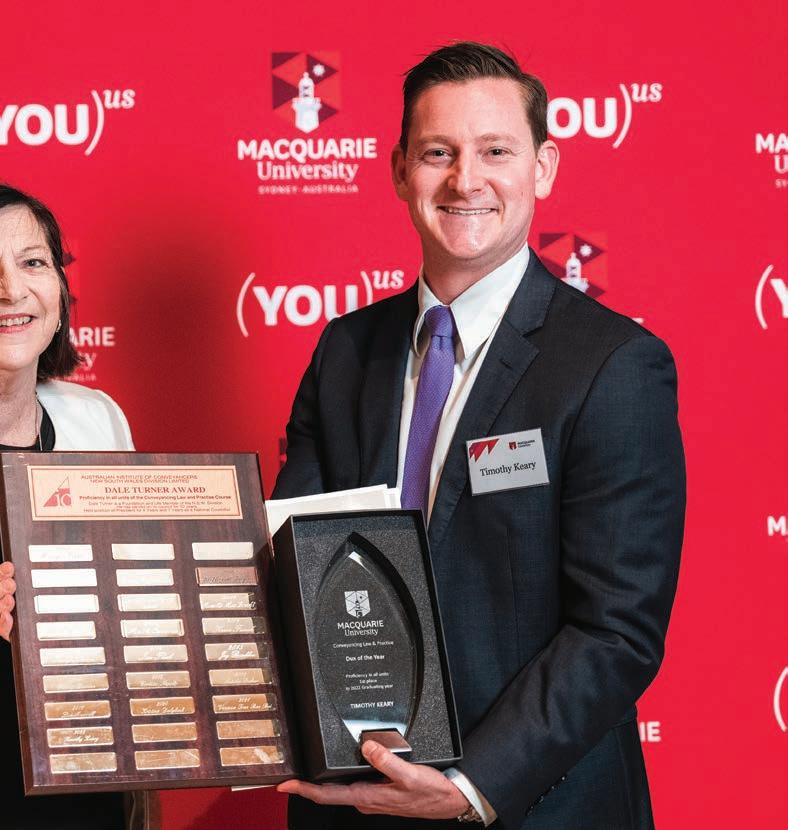
Conveyancing at Pittwater’s Maureen and Timothy Keary.
Macquarie and found it quite demanding.
“I think it really challenged and tested me,” he said, “in finding and researching case law. Not just writing an answer but legally justifying it.”
He excelled, both as dux of the course and winning the Paul Denny Award for the top student from a non-conveyancing background.
Keary’s police training helped. “I think being able to read and understand criminal law was a very transferable skill across to property law,” he said.
Work, though, was a “baptism of fire. The course only gives you so much, a lot of things I learned on the job, such as using the PEXA platform”.
“I mean, we learned about contract law, but not really how to put one together.”
Although his mother owned the firm, Keary didn’t work there until after he graduated.
“I did a bit of filing here and there but didn’t really jump into conveyancing until I finished the course,” he said.
Bell, however, worked full-time in conveyancing while completing her associate degree in law at Southern Cross University.
Both feel prior experience in a demanding job is a huge advantage.
And having investigated organised crime and drug syndicates, it goes without saying that Keary will be the office AML/CTF manager.
walkthroughs, due diligence checklists and practical explanations. Topics include pre-exchange risk assessment, contract review, digital settlements, AML and cybersecurity. There’s also a built-in community forum that can replace adhoc Facebook groups.
“Conveyancing Mastery is designed to produce practitioners who know what they’re doing from day one,” Roumanos said.
The course costs $1,000. The forum and an AML guide are free. For details, visit conveyancingmastery.com.au
Moving the dial
Game-changing words and numbers that impacted the
National median dwelling
“YOU CAN’T TURN AROUND A TANKER IN A FEW MONTHS.”
– Opposition leader Angus Taylor
Total dwelling approvals fell 1.1 per cent to 17,019 to the end of May. -1.1%
$10.24 billion
The value of total residential buildings fell 5.7 per cent to $10.24 billion
Fall in national home values in June, biggest monthly fall since December 2022. Sydney and Melbourne led the downturn -0.4%
July 1
AUSTRAC’s Tranche 2 regime began. Affected entities include conveyancers, lawyers, real estate agents and accountants
4.35% RBA cash rate. Next meeting is August 11.
“The housing industry has spoken with one voice today. This policy will make it harder to fund new housing and will ultimately reduce supply.”
– Urban Development Institute Australia national president Oscar Stanley on Capital Gains Tax changes.
“Speaking to people on the ground, some more anecdotal evidence does suggest there’s been a pretty sharp pullback in investment activity already.”
– Cotality research director
Tim Lawless on house prices during the past month
“It’s time for the Liberal Party to rebrand itself. Some people think that we’re stuck in the past.”
– Melissa McIntosh, senior Liberal MP
“BRING BACK PAUL HOGAN AND NORMAN GUNSTON. THESE ARE THE ESSENTIAL FEATURES OF AUSTRALIAN MONOCULTURE.”
– One Nation’s Pauline Hanson, addressing the
Senate
on June 24
“SHE’S A PELICAN.”
– Paul Hogan
4.0%
Consumer Price Index (CPI) for year to May 2026
$1,004.90 per week
…or $26.44 per hour. The National Minimum Wage that came into effect on July 1
4.4%
Australia’s unemployment rate as of May
“A BIG FAT FAIL.”
– NSW Liberal Party leader Kellie Sloane on the Minns Government’s approach to housing and cost-of-living issues
17%
Coalition’s record low Newspoll of June 22-25. Labor rose three points to 33 per cent while One Nation fell two points to 29 per cent
“We are looking for great franchise partners to join us… existing businesses who want to become part of a branded strategy… and not have to worry about trust, or technology. They want a done-for-you environment.”
– Christopher Lane
Title tasks without the office hassle
How franchising is coming to conveyancing
Australia is awash with franchise opportunities, from cleaning to coffee shops, fitness to fried chicken.
Over 1,300 networks, offering brand recognition, marketing, training, defined territory and back-office support.
It’s a business model that’s now come to conveyancing, where big players get bigger and small ones – like sole practitioners – often get buried under admin.
One solution on offer is “bytherules” conveyancing and property law services, developed by recent AC Face To Face guest Christopher Lane, founder and CEO of Deep Blue Company.
“Anyone who runs one of these businesses understands how much discipline is required,” Lane said of conveyancing. “They’re high volume, low margin.”
He started DBC 15 years ago as a pioneer of digital conveyancing that now offers services and subsidiaries bridging the whole sale-to-settlement journey.
It has over 400 employees with more than 70,000 clients, handling more than $9 billion a year in transactions.
Expertise he’s parlayed into DBC’s bytherules franchise division. It began in Queensland, expanding into NSW this year and Victoria next year.
“They are the epitome of a balanced corporate, in my mind,” Lane told F2F.
“We’ve got the benefits of brand, a well-articulated strategy, technology being serviced and delivered from HQ.”
As a result, he estimates DBC now handles about 16 per cent of all transactions in Queensland.
“It’s brand-led,” he said. “It’s bytherules, and we’re so very proud of it.
“We are looking for great franchise partners to join us… existing businesses who want to become part of a branded strategy… and not have to worry about trust, or technology. They want a done-foryou environment.”
According to its website, bytherules franchises cost from $20,000 with training, marketing, sales and legal support.
Bytherules head office is the law firm, and franchisees are administrators of the conveyancing work under the supervision of the law office.
A typical operator might be solo, operating online from home.
Customers use the BTR website to find what’s advertised as “incredibly easy” personalised conveyancing at a fixed price.
“We provide the infrastructure,” Lane said. “Insurance, trust account administration, technology, phones, brand and marketing strategy, legal sign-off.”
Lane finds franchisees can build not just strong businesses but join a “fantastically fun community.”
“People sometimes perceive conveyancers as less than interesting,” he said. “Well, we love it!”
He concedes some might be nervous about joining a franchise, but says they also offer a structured valuation and an exit strategy.
In other words, a saleable asset in view of eventual retirement.
Meanwhile, “you get to do what you do best: attend to the customer.”
Dwelling values
Date range 12 months to 30 June 2026
The June quarter marks a significant shift in Australia’s housing dynamic, reports Cotality research director Tim Lawless. Sydney values were down 1.2 per cent in June, Melbourne 1.0 per cent. The weaker market can also be seen in auction clearance rates and the number of properties listed for sale. Regional markets continue to outperform capital cities. The nation’s median dwelling price sits at $937,722.
Sydney’s median dwelling price is now $1,265,608, down 1.2 per cent for the month, up just 0.3 per cent for the year. Significant June sales included 48 Henley Marine Drive, Rodd Point, for $6,600,000.
Melbourne values were down 2.6 per cent through the quarter, with the median price of a dwelling now $808,486. Significant sales included 37-39 Bournian Ave, Strathmore, for $5,300,000.
Brisbane dwelling values were up 0.3 per cent in June. The median price for a Brisbane dwelling was $1,118,306. Significant sales included 64 Victoria Street, Balmoral, for $5,150,000.
Adelaide property values were unchanged in June, up 1.3 per cent for the quarter and 11.6 per cent for the year. The median dwelling value is $945,868. Significant sales included 16 David Ave, Glenelg, for $2,650,000.
Perth remains the strongest for annual price growth, but values rose just 0.7 per cent in June, 2.0 per cent for the quarter. A median dwelling is $1,046,551. Significant sales included 125 Dalkeith Road, Nedlands, for $2,770,000.
Hobart values were up 0.6 per cent in June, 1.4 per cent for the quarter. A median dwelling is $752,760. South of Hobart, 333 Old Station Road, Snug, sold for $1,450,000.
Darwin remains the most affordable capital, with values up a strong 5.0 per cent for the quarter, 19.8 per cent for the year. A median dwelling is $638,187. Just south of Darwin, 28 Smith Court, Bellamack, sold for $1,880,000.
The national capital saw negative growth, down 0.6 per cent in June and down 1.3 per cent for the quarter. The median dwelling value is $885,254. Top sales included 34 Conyers St, Hughes, for $1,600,000.
A confident outlook is just the beginning
Leanne Pilkington is chief executive officer and director of real estate network Laing+Simmons. She has more than 40 years’ experience in the industry including sales, property management, leasing and development. Leanne is also founder of the Real Women in Real Estate network, and immediate past president of the Real Estate Institute of Australia
So much of the work of our corporate team at Laing+Simmons is about creating an environment and providing the tools for our people to build confidence.
But you can’t just tell someone to “be confident”. It took me years. Like leadership – you can’t tell someone to “be a leader”. Confidence must be learned and fostered to grow.
It was never my intention to work in real estate. The industry “chose me”.
At 12, I was answering phones at dad’s agency. After high school I began working there full-time.
The more I learned, the more my confidence grew, but I still had a long way to go. I stayed for seven years before deciding to explore new challenges.
I moved into retail and commercial management and leasing, where I was pushed in new ways, and it was a steep learning curve.
Then, in 1995, I joined Laing+Simmons. Starting in admin, I worked my way up through various roles, including franchise manager, to become general manager in 2000.
Then, in 2015, I became managing director, where my focus was the growth of each office through new systems, programs, training and services.
Progressing through the ranks in this way, I gained an understanding of what business owners actually need to succeed. Part of it is to make them feel they belong to something greater.
I was fortunate to learn from some of the best. The Laing+Simmons owners at the time, Rob Farrell and Tony Anderson, taught me a great deal.
By empowering me to make the decisions I felt necessary, they fostered an environment in which I was able to build confidence, including as a leader. Industry positions followed. Having served on the REINSW board for years, I became president and saw the industry through the challenges of Covid. More recently, I was REIA president, and it was a privilege to lead the national body. With every new leadership challenge my confidence grew.
Then, in 2021, I took Laing+Simmons matters into my own hands.
By this time, Rob and Tony had moved on and Laing+Simmons was under different ownership. I recognised the culture of the workplace I’d helped build for the past 30 years demanded a different, more democratic ownership style.
Assembling a group of like-minded business owners from within the group, I organised to purchase the brand. It was certainly a leap of faith, a bold move only made possible through confidence in myself and the people around me.
In the years since, our business has grown considerably. And personally, I see no reason to stop. Retirement, at this stage, is not an aspiration. Rather, leading people I greatly respect is my inspiration.