IRBBA President’s Message • Del presidente de IRBBA
6, 10
A Global Pioneer with a Servant’s Heart: Remembering Don Cox Un Pionero Global con Corazón de Servidor: Recordando a Don Cox
12
Genetic Edge: A Sale Built on Vision, Relationships and Red Brangus Excellence
Ventaja Genética: Una Subasta Construida sobre Visión, Relaciones y Excelencia Red Brangus
16
Global Beef Outlook: Tight Supply, Strong Demand Shape Road Ahead Perspectiva Global de la Carne de Res: Oferta Ajustada y Fuerte Demanda Marcan el Camino por Delante
22, 24
Investing in the Future - The IRBBA Memorial Scholarship Foundation Continues to Grow Invirtiendo en el Futuro -La Fundación de Becas Conmemorativas de la IRBBA Continúa Creciendo
28
Paint the Pastures Red: Red Brangus Redefining the Landscape ¡Pinta los pastizales de rojo! Brangus Rojo: Redefiniendo el paisaje
32
Built for Heat, Made for Beef: The Rise of Red Brangus Hechos para el Calor, Diseñados para la Carne: El Auge del Red Brangus
38, 39
IJRBBA: The Next Great Chapter for Red Brangus
IJRBBA: La nueva gran etapa del Red Brangus
40, 42
IRBBA Members in the Spotlight Miembros de IRBBA en el punto de mira
44
The International Spotlight • El foco internacional 46
IRBBA Membership Listing • Lista de miembros de IRBBA 50
Index to Advertisers • Índice de anunciantes
EXECUTIVE COMMITTEE
PRESIDENT
STEPHEN LEE (225) 571-8713 stephenlee12@hotmail.com
VICE PRESIDENT
DENNIS DAVIS + (936) 718-6899 dsquared64@gmail.com
SECRETARY
APRIL VILLARREAL + (832) 917-7110 aprilv@villaranchcattle.com
TREASURER
JOSH WALKER + (870) 648-5389 Josh@redbudfarms.net
BOARD OF DIRECTORS
MARCOS BORGES Term Expires 2027 (979) 532-8129 + marcos@mbjranch.com
BRUCE BUFFALOE Term Expires 2028 (713) 542-8486 + bruce.buffaloe@aol.com
DENNIS DAVIS Term Expires 2026 (936) 718-6899 + dsquared64@gmail.com
JOHN GREENWOOD Term Expires 2027 (281) 740-0572 + greenwood.meganp@gmail.com
STEPHEN LEE Term Expires 2027 (225) 571-8713 + stephenlee12@hotmail.com
KYLE STUTTS Term Expires 2028 (979) 777-6064 + stutts@shsu.edu
APRIL VILLARREAL Term Expires 2026 (832) 917-7110 + aprilv@villaranchcattle.com
JOSH WALKER Term Expires 2026 (870) 648-5389 + Josh@redbudfarms.net
LADD WIED Term Expires 2028 (979) 637-6473 + ladd.wied@yahoo.com
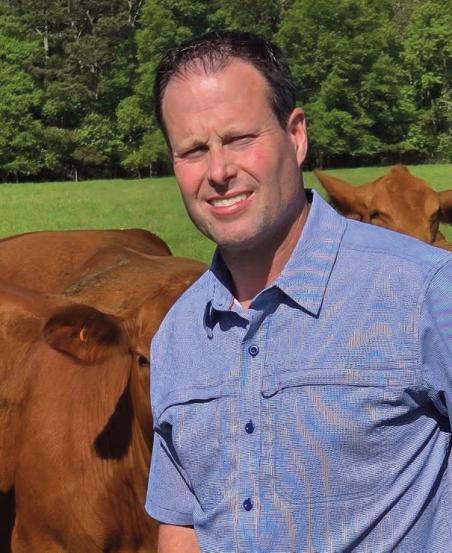
Stephen Lee, Jr. DVM A Message From the IRBBA President
Wow, what a great time to be in the cattle industry! As I sit and write the 2026 Presidential message, cattle prices are at an all-time high within every sector of the cattle market. Many indicators point to an extended cycle with a strong price run ahead. With all the excitement surrounding record-setting prices, I would challenge every one of you to think about how you will manage your cattle business moving forward. With more operating capital available, are you making adjustments, improvements, and investing in the right genetics for your future?
We are proud to present our next edition of the Red Brangus Journal. This publication is our biannual presentation that highlights the benefits and qualities of our great breed and showcases our Red Brangus breeders. Our Journal will travel across the U.S. and the Brangus World, reaching the hands of cattlemen everywhere. Thank you to our sponsoring advertisers for their commitment to advancing the promotion and awareness of Red Brangus worldwide.
As we continue to grow our herds and the U.S. increases heifer retention, we need to make accurate, informed decisions so the gene pool we maintain positions us for the future. This is where traditional selection and newer EPD tools will pay dividends. In my opinion, as herds rebuild from historically low inventories, we should first use traditional culling criteria and select based on disposition, structural soundness, obvious performance issues, and being born too late in the breeding season. The heifers that remain become our “replacement candidates”. You can further DNA test these “replacement candidates” to obtain more information about their EPDs and continue moving your herd in the right direction. We must define our individual breeding objectives, match cows to the environment, and be patient with our plans. Do not let the “noise” of others or the show cattle industry take you off your personal road to success.
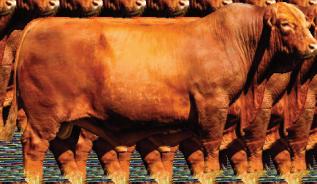
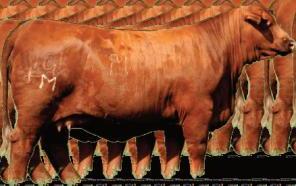
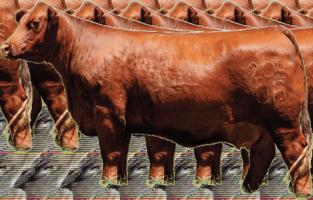
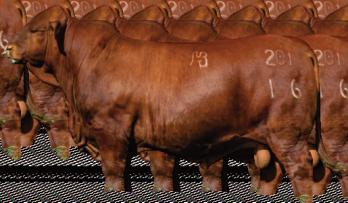
Red Brangus genetics deliver performance, adaptability, and longevity in ways that few other breeds can match. Red Brangus brings buyers maternal strength, fertility, heat tolerance, carcass quality, and disease resistance. The growth in seedstock numbers and commercial producers' recognition of the value and productivity of Red Brangus bulls have made Red Brangus producers very busy filling orders from around the world.
There have been many changes since the last edition of the Red Brangus Journal was published two years ago. The most impactful was the passing of Don Cox. Don has touched each of us at some point in our Red Brangus journey. He was one of the original charter members of the IRBBA. He will be greatly missed, but his legacy will live on. IRBBA membership has grown by over 70% in the past two years, including the junior program, which is thriving and producing the next generation of Red Brangus breeders. We are hosting the first-ever Red Brangus bull sale and grow test that is currently underway at the Graham Feedlot. These bulls will sell to seed stock and commercial producers on October 31st, 2026. We will host our Annual meeting in April and hold the Divas Drive, in which the juniors buy heifers that enter them into an annual show competition for $10,000 in prize money. The IRBBA Memorial Scholarship continues to provide scholarships to college-age agricultural students to help offset tuition costs. We have a new and improved IRBBA website where members can buy and sell cattle at the Red Brangus marketplace.
I would like to thank all members of the IRBBA for their support, and especially the Board of Directors, who give up their time to help promote the organization and brainstorm monthly on how to advance Red Brangus. These men and women are amazing and full of excellent ideas.
In closing, I would like to remind everyone that, to continue growing this great breed, we will all need to make an intentional effort. It happens when we support fellow members by attending their sales, offer advice to younger producers, lend our voices and ideas in meetings, serve on organizational committees, and stand behind our juniors and exhibitors at shows. This is how we build a vibrant community and advance Red Brangus!
Sincerely,
Stephen
Stephen M. Lee, Jr. DVM
STEPHEN M. LEE, JR. DVM
Stephen Lee, Jr. DVM Un mensaje del presidente de IRBBA
¡Wow, qué gran momento para estar en la industria ganadera! Mientras me siento a escribir el mensaje presidencial de 2026, los precios del ganado se encuentran en un máximo histórico en todos los sectores del mercado. Muchos indicadores apuntan a un ciclo prolongado con una fuerte tendencia alcista por delante. Con toda la emoción que rodea estos precios récord, los invito a todos a reflexionar sobre cómo administrarán su negocio ganadero en el futuro. Con más capital operativo disponible, ¿están realizando ajustes, mejoras e invirtiendo en la genética adecuada para su futuro?
Nos enorgullece presentar nuestra próxima edición de The Red Brangus Journal. Esta publicación es nuestra presentación bianual que destaca los beneficios y cualidades de nuestra gran raza y exhibe a nuestros criadores de Red Brangus. Nuestro Journal viajará por todo Estados Unidos y el Mundo Brangus, llegando a las manos de ganaderos en todas partes. Gracias a nuestros anunciantes patrocinadores por su compromiso con promover y difundir la presencia del Red Brangus en todo el mundo.
A medida que continuamos creciendo nuestros hatos y que en Estados Unidos aumenta la retención de vaquillas, necesitamos tomar decisiones precisas e informadas para que el reservorio genético que mantenemos nos posicione para el futuro. Aquí es donde la selección tradicional y las nuevas herramientas de EPD darán frutos. En mi opinión, mientras los hatos se reconstruyen desde inventarios históricamente bajos, primero debemos usar los criterios tradicionales de descarte y seleccionar basándonos en el temperamento, la solidez estructural, problemas evidentes de rendimiento y vaquillas nacidas demasiado tarde en la temporada de empadre. Las vaquillas que queden se convierten en nuestras “candidatas de reemplazo”. Luego pueden realizar pruebas de ADN a estas “candidatas de reemplazo” para obtener más información sobre sus EPD y seguir llevando su hato en la dirección correcta. Debemos definir nuestros objetivos individuales de crianza, emparejar las vacas con su entorno y ser pacientes con nuestros planes. No permitan que el “ruido” de otros o la industria de ganado de exposición los desvíe de su propio camino hacia el éxito.
La genética Red Brangus ofrece rendimiento, adaptabilidad y longevidad de maneras que pocas otras razas pueden igualar. Red Brangus aporta a los compradores fortaleza maternal, fertilidad, tolerancia al calor, calidad de canal y resistencia a enfermedades. El crecimiento en el número de animales de registro y el reconocimiento por parte de productores comerciales del valor y productividad de los toros Red Brangus ha mantenido muy ocupados a los criadores, llenando pedidos de todo el mundo.
Han ocurrido muchos cambios desde que se publicó la última edición del Red Brangus Journal hace dos años. El más impactante fue el fallecimiento de Don Cox. Don nos ha influido a todos en algún momento de nuestro camino en el Red Brangus. Fue uno de los miembros fundadores de la IRBBA. Lo extrañaremos profundamente, pero su legado vivirá. La membresía de la IRBBA ha crecido más del 70% en los últimos dos años, incluyendo el programa juvenil, que está prosperando y produciendo la próxima generación de criadores Red Brangus. Estamos organizando la primera venta de toros Red Brangus y prueba de crecimiento, actualmente en marcha en el corral de engorda Graham. Estos toros se venderán a productores de registro y comerciales el 31 de octubre de 2026. Tendremos nuestra reunión anual en abril y llevaremos a cabo la Divas Drive, en la cual los jóvenes compran vaquillas que los inscriben en una competencia anual con $10,000 en premios. La Beca Conmemorativa IRBBA continúa brindando becas a estudiantes universitarios de agricultura para ayudar a cubrir los costos de matrícula. Contamos con un sitio web nuevo y mejorado de la IRBBA donde los miembros pueden comprar y vender ganado en el mercado Red Brangus.
Me gustaría agradecer a todos los miembros de la IRBBA por su apoyo, y especialmente a la Junta Directiva, quienes entregan su tiempo para ayudar a promover la organización y aportan ideas mensualmente sobre cómo impulsar el Red Brangus. Estos hombres y mujeres son increíbles y están llenos de excelentes ideas.
Para concluir, quisiera recordarles que, para seguir creciendo esta gran raza, todos debemos hacer un esfuerzo intencional. Esto ocurre cuando apoyamos a otros miembros asistiendo a sus ventas, brindamos consejos a productores jóvenes, compartimos nuestras voces e ideas en las reuniones, servimos en comités organizacionales y respaldamos a nuestros jóvenes y expositores en las exposiciones. Así es como construimos una comunidad vibrante y hacemos avanzar el Red Brangus.
Atentamente, Stephen
Stephen M. Lee, Jr. DVM
The Red Brangus breed lost one of its most influential champions in January 2026 with the passing of Don Cox. For more than four decades, Don played an instrumental role in shaping the direction, credibility, and international reach of Red Brangus cattle. His influence extended far beyond the fences of his ranch in Weimar, Texas, touching breeders, associations, and friendships across continents. While his résumé is filled with leadership titles and industry honors, those who knew him best remember Don first and fore most as a visionary with a servant’s heart; someone who believed deeply in people and in the power of Red Brangus cattle to change the beef industry.
Bruce Buffaloe, fellow IRBBA founding member, current board member and owner of Buffaloe Cattle Company, confirmed this. “My friend, Don Cox, was a man of multiple features and facets. He was devoted to the Lord and a son, husband, father, grandfather, uncle, friend, entrepreneur, businessman, salesman, and without a doubt, a world-class cattleman committed to advancing the Red Brangus breed of cattle,” Buffaloe continued, “Don had tremendous foresight and vision as a promoter of Red Brangus. In particular, Don and the founders of the International Red Brangus Breeders Association (IRBBA) recognized the value of producing consistency in Red Brangus cattle by chartering the blood percentage in IRBBA as 3/8 Brahman x 5/8 Angus.”
Alongside his wife, Lili, Don built Cox Excalibur Brangus (also referenced as CX Genetics) into one of the most recognizable and respected Red Brangus operations globally. Founded on family land approximately 70 miles west of Houston, the ranch became known for progressive genetics, disciplined selection, and a relentless pursuit of cattle that worked in real-world environments.
ROOTS BUILT ON FAMILY AND PURPOSE
The legacy of Cox Excalibur Brangus is deeply rooted in family history. The land that would one day become the home
BY LINDSAY L. ALLEN
of Don’s Red Brangus herd was originally purchased more than a century ago by his grandparents. Don grew up with a deep respect for their way of life and a clear sense that agriculture was not just an occupation, but a responsibility.
In 1983, Don purchased the family land and later added adjoining acreage, making the deliberate decision to reshape its use. He walked away from traditional farming practices that no longer aligned with his goals and instead focused on breeding cattle that could perform in the hot, humid climate of southeast Texas.
His curiosity, combined with discipline and patience, became a defining characteristic of Don’s program. He tested genetics, evaluated outcomes honestly, and was never afraid to make changes if it meant long-term improvement. His goal was never simply to produce cattle that looked good on paper, but cattle that performed in the pasture, in the show ring, and ultimately in production systems around the world.
A VISION THAT CROSSED BORDERS
Don’s impact quickly grew beyond Texas. Cox Excalibur Brangus began introducing black Brangus genetics in the early 1990s, but Don’s focus on Red Brangus remained steadfast. By the late 1980s, he was already marketing cattle overseas, selling semen and embryos internationally and paving the way for Red Brangus genetics in regions where adaptability was essential.
Federico Maisonnave of Paraguay and originally from Uruguay, shared a long-standing friendship and business relationship with Don and witnessed firsthand how far his influence reached.
“One great man has left us, but his legacy will remain among Red Brangus and Brangus breeders all around the globe through the genetics he built in Texas,” Maisonnave said, “Don was a visionary for red cattle. With his deep knowledge and anticipation, he was able to raise bulls that turned into reference sires for several years and in many countries.”
Don’s willingness to travel, listen, and collaborate set him apart. He understood that meaningful international growth required trust, education, and presence, not just transactions.
“Don was an extraordinary person to deal with,” Maisonnave continued. “I always enjoyed learning from his advice while traveling in the States or South America. We are going to miss him from every corner of the globe.”
One of Don’s most significant international contributions was his role in introducing Red Brangus cattle to Mexico. A pivotal meeting in 1997 with Guillermo Zambrano, a prominent business and cattleman in Monterrey, Mexico led to the first sale of Cox Excalibur genetics in the country. That relationship ultimately contributed to the formation of the Asociación de Brangus Rojo de México, which today represents more than 140 breeders and continues to grow.
LEADERSHIP THAT UNITED A BREED
Don’s global vision was matched by his commitment to leadership and service within breed organizations. He was one of the 12 visionaries who founded the IRBBA, which he believed was essential to the future unity and growth of the breed. He served on the IRBBA board for 24 years, helping guide the association through critical periods of development and expansion.
Marcos Borges, owner of MBJ Ranch, described Don’s leadership as both influential and deeply personal.
“To the world, Don Cox was a pioneer, but to me, he was a mentor and a brother in the breed,” Borges said, “He was one of the best promoters I ever met and his impact was truly global.”
Borges emphasized Don’s role in opening doors for breeders across borders and fostering unity among cattlemen worldwide.
“He was a driving force when we helped create the Asociación de Brangus Rojo de México and played a vital role in opening the United States and many other countries to our Red Brangus genetics,” Borges continued, “For 24 years on the board and 30 years of friendship, Don led with a servant’s heart. He was the flag-bearer for Red Brangus, elevating our breed to an international standard that will benefit generations to come. Don showed us the path to unity and excellence; it is now our duty to keep that flame alive and carry his flag forward.”
Allen Goode, past IBBA president and past IRBBA vice president and owner of TRIO Cattle and Genetics, said, “Don was an individual who imagined what can be and then worked with all of his might to make it happen. His vision for the IRBBA and our breed was to provide opportunity for all members and breeders through our Red Brangus and Brangus cattle.”
A MENTOR WHO SHAPED FUTURE LEADERS
While Don’s accomplishments were many, perhaps his most enduring legacy lies in the people he mentored. He had a remarkable ability to recognize leadership potential in others and encourage them to step forward.
Dr. Stephen Lee, current IRBBA president and owner of Circle Lee Farms, experienced that encouragement firsthand.
(continued on next page)
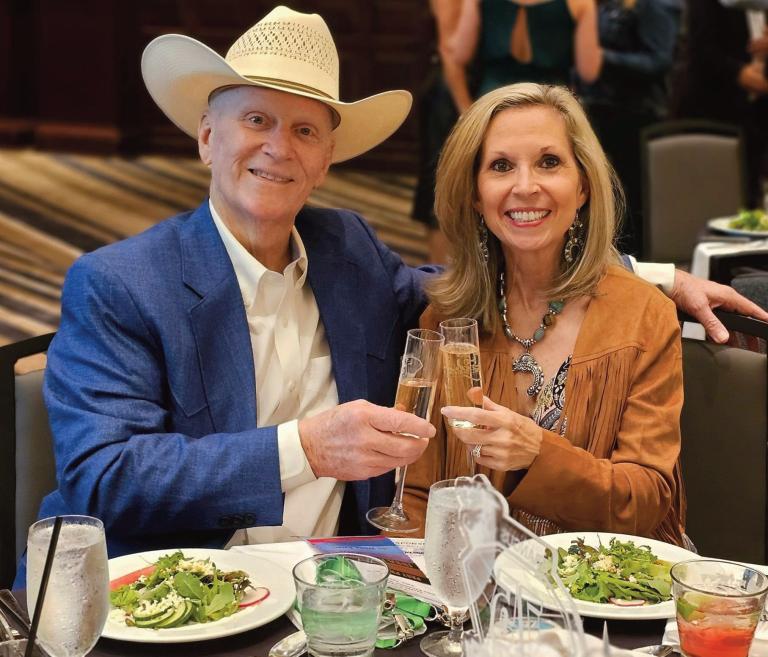
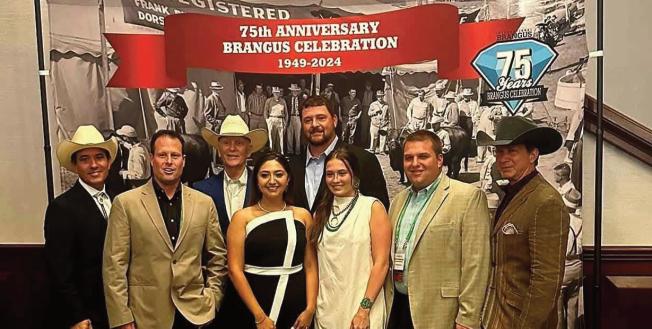
Don and Lili Cox toasting at the 75th Anniversary Brangus Celebration in August 2024, Fort Worth, Texas.
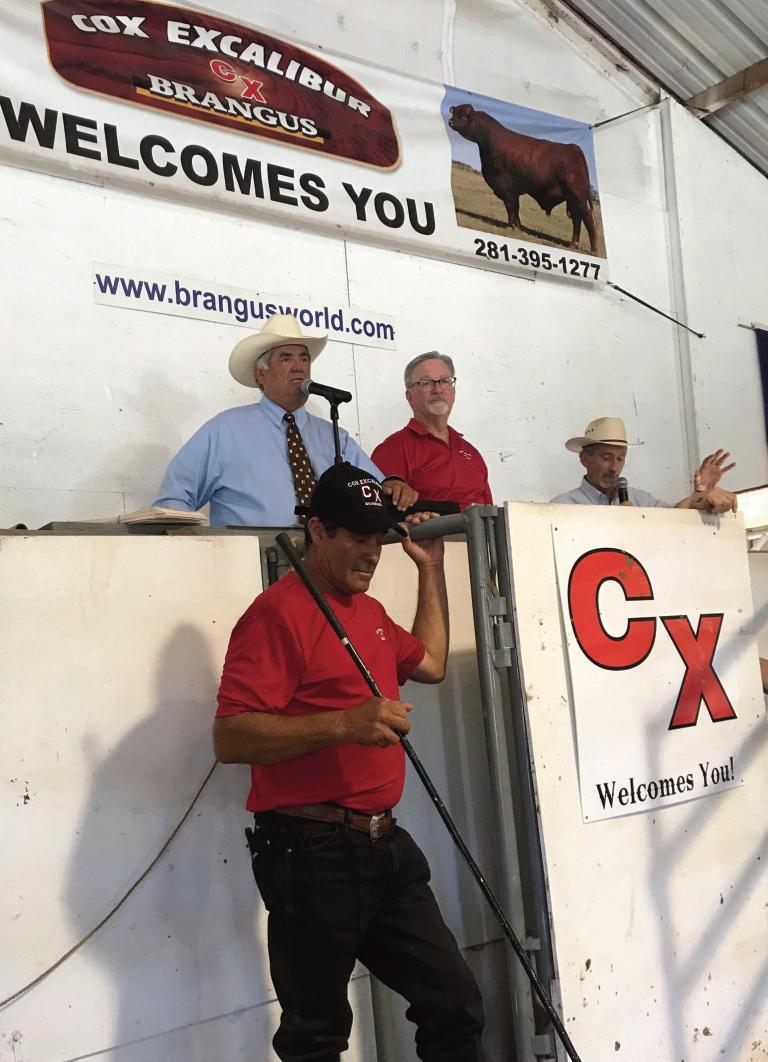
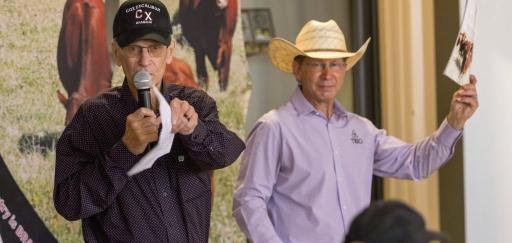
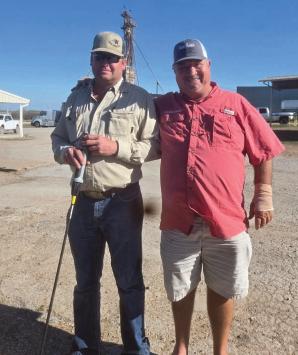
Sale day at Cox Excalibur Brangus. From top left, Leo Casas, Don Cox, Dr. Darrell Wilkes and bottom José Ramirez
“Don approached me at the Houston Livestock Show and Rodeo and said, ‘I see strong leadership and organizational characteristics in you, Stephen. I would like for you to consider leading the next generation of Red Brangus breeders as the president of the IRBBA one day,’” Dr. Lee recalled.
The invitation was both humbling and daunting, but Don followed words with action.
“He said, ‘I will help you understand the history, organization, and teach you all I can about the Red Brangus breed and the IRBBA,’” Dr. Lee said. “He was a man of his word. When situations arose that I did not completely understand, Don helped me by sharing his wisdom, leadership, and knowledge.”
That mentorship model of firm guidance paired with genuine support defined Don’s approach to leadership.
PASSING THE TORCH WITH INTENTION
Don’s belief in young breeders was perhaps most evident in his relationship with the Villarreal family. April Villarreal, of Villa Ranch, shared how what began as casual encounters at sales and shows evolved into a deep partnership rooted in trust, shared values, and mutual respect.
After first becoming familiar with Cox Excalibur Brangus through advertisements, catalogs, and attending the CX Advantage Sale, the Villarreals’ connection with Don grew organically. In 2019, they were stalling neighbors at the Houston Livestock Show, which led to conversations, invitations to visit the ranch, and eventually a lasting relationship.
“Don was always eager to showcase the best of himself and his cattle,” Villarreal said, “He truly saw the passion our family had and the trajectory we hoped to achieve, and Don believed in us every step of the way.”
As Don began thinking about the future, his desire was not to step away from the breed but to ensure that what he had built would continue in capable hands.
“He invited us to dinner and gave us the greatest honor by offering us the opportunity to be part of the legacy he had built and he looked to downsize his herd and spend more
time with his family,” Villarreal said. “He took a chance on us as young and enthusiastic breeders and trusted us to continue his legacy.”
MORE THAN AWARDS AND ACCOLADES
Don’s career was marked by numerous honors, including serving as IRBBA and International Brangus Breeders Association (IBBA) president, holding multiple officer positions, chairing committees, and receiving international recognition for his service and promotion of the breed. In 2024, he was awarded the Lifetime Achievement Award in the Exhibition of Brangus Cattle by the IBBA, a fitting tribute to decades of excellence in herdsmanship and breed advocacy, and one of his many awards recognizing his impact to the Brangus breeds.
Yet Don never measured success by trophies or titles alone. He valued the exposure the show ring provided and the relationships it fostered.
His commitment to youth was equally strong. Through the annual CX Advantage Sale, Don donated heifers to support local FFA chapters, ensuring that young people had opportunities to learn, compete, and grow within agriculture.
A LEGACY THAT LIVES ON
Don Cox imagined what could be, then worked tirelessly to make it a reality. He believed in Red Brangus cattle, in unity within the breed, and in investing in people, especially those willing to learn, work, and lead.
Though his passing leaves an undeniable void, his legacy remains firmly planted in pastures across continents, in association leadership, in reference sires, and in the countless breeders whose lives he touched along the way.
As the Red Brangus breed continues to grow worldwide, it does so on a foundation Don helped build; one defined by vision, service, integrity, and heart.
The flag he carried so proudly now passes to the next generation of Red Brangus breeders, and thanks to Don Cox, it flies higher, farther, and stronger than ever.
La raza Red Brangus perdió a uno de sus campeones más influyentes en enero de 2026 con el fallecimiento de Don Cox. Durante más de cuatro décadas, Don desempeñó un papel fundamental en dar forma a la dirección, credibilidad y proyección internacional del ganado Red Brangus. Su influencia se extendió mucho más allá de las cercas de su rancho en Weimar, Texas, tocando a criadores, asociaciones y amistades en distintos continentes. Aunque su currículum está lleno de cargos de liderazgo y reconocimientos en la industria, quienes lo conocieron mejor recuerdan a Don, ante todo, como un visionario con corazón de servidor; alguien que creía profundamente en las personas y en el poder del ganado Red Brangus para transformar la industria de la carne.
Bruce Buffaloe, miembro fundador de la IRBBA, actual integrante de la junta directiva y propietario de Buffaloe Cattle Company, lo confirmó. “Mi amigo, Don Cox, fue un hombre de múltiples cualidades y facetas. Fue devoto al Señor y un hijo, esposo, padre, abuelo, tío, amigo, emprendedor, hombre de negocios, vendedor y, sin duda alguna, un ganadero de clase mundial comprometido con el avance de la raza Red Brangus”, continuó Buffaloe. “Don tenía una enorme previsión y visión como promotor del Red Brangus. En particular, Don y los fundadores originales de la International Red Brangus Breeders Association (IRBBA) reconocieron el valor de producir consistencia en el ganado Red Brangus al establecer en la IRBBA el porcentaje sanguíneo de 3/8 Brahman x 5/8 Angus.”
Junto a su esposa, Lili, Don construyó Cox Excalibur Brangus (también conocida como CX Genetics) hasta convertirla en una de las operaciones de Red Brangus más reconocidas y respetadas a nivel mundial. Fundado en tierras familiares aproximadamente a 70 millas al oeste de Houston, el rancho se hizo conocido por su genética progresiva, selección disciplinada y una búsqueda incansable de ganado que funcionara en entornos reales.
Raíces Construidas sobre la Familia y el Propósito
El legado de Cox Excalibur Brangus está profundamente arraigado en la historia familiar. La tierra que un día sería el hogar del hato Red Brangus de Don fue comprada originalmente hace más de un siglo por sus abuelos. Don creció con un profundo respeto por su forma de vida y con la clara convicción de que la agricultura no era solo una ocupación, sino una responsabilidad. En 1983, Don compró la tierra familiar y posteriormente agregó hectáreas colindantes, tomando la decisión deliberada de redefinir su uso. Dejó atrás prácticas agrícolas tradicionales que ya no se alineaban con sus metas y, en cambio, se enfocó en criar ganado que pudiera desempeñarse en el clima cálido y húmedo del sureste de Texas.
POR LINDSAY L. ALLEN
Su curiosidad, combinada con disciplina y paciencia, se convirtió en una característica definitoria de su programa. Probaba genética, evaluaba resultados con honestidad y nunca temía hacer cambios si eso significaba una mejora a largo plazo. Su objetivo nunca fue simplemente producir ganado que luciera bien en el papel, sino ganado que se desempeñara en el potrero, en la pista de exhibición y, en última instancia, en sistemas de producción alrededor del mundo.
Una Visión que Cruzó Fronteras
El impacto de Don creció rápidamente más allá de Texas. Cox Excalibur Brangus comenzó a introducir genética de Brangus negro a principios de la década de 1990, pero su enfoque en el Red Brangus se mantuvo firme. A finales de la década de 1980, ya estaba comercializando ganado en el extranjero, vendiendo semen y embriones a nivel internacional y abriendo camino para la genética Red Brangus en regiones donde la adaptabilidad era esencial.
Federico Maisonnave, de Paraguay y originario de Uruguay, compartió una amistad y relación comercial de muchos años con Don y fue testigo directo del alcance de su influencia.
“Un gran hombre nos ha dejado, pero su legado permanecerá entre los criadores de Red Brangus y Brangus en todo el mundo a través de la genética que construyó en Texas”, dijo Maisonnave. “Don fue un visionario del ganado rojo. Con su profundo conocimiento y capacidad de anticipación, logró criar toros que se convirtieron en sementales de referencia durante varios años y en muchos países.”
La disposición de Don para viajar, escuchar y colaborar lo distinguió. Entendía que el crecimiento internacional significativo requería confianza, educación y presencia, no solo transacciones.
“Don fue una persona extraordinaria para tratar”, continuó Maisonnave. “Siempre disfruté aprender de sus consejos mientras viajábamos en los Estados Unidos o en Sudamérica. Lo vamos a extrañar desde cada rincón del mundo.”
Una de las contribuciones internacionales más significativas de Don fue su papel en la introducción del ganado Red Brangus en México. Una reunión clave en 1997 con Guillermo Zambrano, destacado empresario y ganadero en Monterrey, México, llevó a la primera subasta de genética Cox Excalibur en el país. Esa relación contribuyó eventualmente a la formación de la Asociación de Brangus Rojo de México, que hoy representa a más de 140 criadores y continúa creciendo.
Un Liderazgo que Unió a una Raza
La visión global de Don fue igualada por su compromiso con el liderazgo y el servicio dentro de las organizaciones de la raza. Fue uno de los 12 visionarios que fundaron la IRBBA, la cual
consideraba esencial para la unidad y el crecimiento futuro de la raza. Sirvió en la junta directiva de la IRBBA durante 24 años, ayudando a guiar a la asociación en periodos críticos de desarrollo y expansión.
Marcos Borges, propietario de MBJ Ranch, describió el liderazgo de Don como influyente y profundamente personal.
“Para el mundo, Don Cox fue un pionero, pero para mí fue un mentor y un hermano en la raza”, dijo Borges. “Fue uno de los mejores promotores que he conocido y su impacto fue verdaderamente global.”
Borges destacó el papel de Don en abrir puertas para criadores más allá de las fronteras y fomentar la unidad entre ganaderos en todo el mundo.
“Fue una fuerza impulsora cuando ayudamos a crear la Asociación de Brangus Rojo de México y desempeñó un papel vital al abrir los Estados Unidos y muchos otros países a nuestra genética Red Brangus”, continuó Borges. “Durante 24 años en la junta y 30 años de amistad, Don lideró con corazón de servidor. Fue el abanderado del Red Brangus, elevando nuestra raza a un estándar internacional que beneficiará a generaciones futuras. Don nos mostró el camino hacia la unidad y la excelencia; ahora es nuestro deber mantener viva esa llama y llevar su bandera adelante.”
Allen Goode, expresidente de la IBBA y exvicepresidente de la IRBBA y propietario de TRIO Cattle and Genetics, dijo: “Don Cox fue una persona que imaginó lo que podía ser y luego trabajó con todas sus fuerzas para hacerlo realidad. Su visión para la IRBBA y nuestra raza fue brindar oportunidades a todos los miembros y criadores a través de nuestro ganado Red Brangus y Brangus.”
Un Mentor que Formó a Futuros Líderes
Aunque los logros de Don fueron muchos, quizás su legado más duradero reside en las personas de quien fue mentor. Tenía una notable capacidad para reconocer el potencial de liderazgo en otros y alentarlos a dar el paso al frente.
El Dr. Stephen Lee, actual presidente de la IRBBA y propietario de Circle Lee Farms, vivió ese aliento de primera mano.
“Don se me acercó en el Houston Livestock Show and Rodeo y me dijo: ‘Veo en ti fuertes cualidades de liderazgo y organización, Stephen. Me gustaría que consideraras liderar a la próxima generación de criadores de Red Brangus como presidente de la IRBBA algún día’”, recordó el Dr. Lee. La invitación fue tanto humilde como intimidante, pero Don respaldó sus palabras con acciones.
“Me dijo: ‘Te ayudaré a entender la historia, la organización y te enseñaré todo lo que pueda sobre la raza Red Brangus y la IRBBA’”, dijo el Dr. Lee. “Fue un hombre de palabra. Cuando surgían situaciones que no comprendía completamente, Don me ayudaba compartiendo su sabiduría, liderazgo y conocimiento.”
Ese modelo de mentoría —guía firme acompañada de apoyo genuino— definió el enfoque de liderazgo de Don.
Pasando la Antorcha con Intención
La fe de Don en los jóvenes criadores fue especialmente evidente en su relación con la familia Villarreal. April Villarreal, de Villa Ranch, compartió cómo lo que comenzó como encuentros casuales en ventas y exposiciones evolucionó hacia una sólida
alianza basada en confianza, valores compartidos y respeto mutuo.
Después de familiarizarse con Cox Excalibur Brangus a través de anuncios, catálogos y asistiendo a la CX Advantage Sale, la conexión de los Villarreal con Don creció de manera orgánica. En 2019 fueron vecinos en los establos durante el Houston Livestock Show and Rodeo, lo que dio lugar a conversaciones, invitaciones a visitar el rancho y, eventualmente, a una relación duradera.
“Don siempre estaba ansioso por mostrar lo mejor de sí mismo y de su ganado”, dijo Villarreal. “Realmente vio la pasión que tenía nuestra familia y la trayectoria que esperábamos alcanzar, y Don creyó en nosotros en cada paso del camino.”
Cuando Don comenzó a pensar en el futuro, su deseo no era alejarse de la raza, sino asegurarse de que lo que había construido continuara en manos capaces.
“Nos invitó a cenar y nos dio el mayor honor al ofrecernos la oportunidad de ser parte del legado que había construido, mientras buscaba reducir su hato y pasar más tiempo con su familia”, dijo Villarreal. “Apostó por nosotros como criadores jóvenes y entusiastas y confió en que continuaríamos su legado.”
Más que Premios y Reconocimientos
La carrera de Don estuvo marcada por numerosos honores, incluyendo servir como presidente de la IRBBA y de la International Brangus Breeders Association (IBBA), ocupar múltiples cargos directivos, presidir comités y recibir reconocimiento internacional por su servicio y promoción de la raza. En 2024, recibió el Premio a la Trayectoria en la Exhibición de Ganado Brangus por parte de la IBBA, un merecido tributo a décadas de excelencia en el manejo de hatos y defensa de la raza, y uno de los muchos reconocimientos que destacaron su impacto en las razas Brangus.
Sin embargo, Don nunca midió el éxito únicamente por trofeos o títulos. Valoraba la proyección que brindaba la pista de exhibición y las relaciones que fomentaba.
Su compromiso con la juventud fue igualmente fuerte. A través de la venta anual CX Advantage Sale, Don donó vaquillas para apoyar a capítulos locales de FFA, asegurando que los jóvenes tuvieran oportunidades para aprender, competir y crecer dentro de la agricultura.
Un Legado que Vive
Don Cox imaginó lo que podía ser y luego trabajó incansablemente para hacerlo realidad. Creía en el ganado Red Brangus, en la unidad dentro de la raza y en invertir en las personas, especialmente en aquellas dispuestas a aprender, trabajar y liderar.
Aunque su partida deja un vacío innegable, su legado permanece firmemente sembrado en potreros de distintos continentes, en el liderazgo asociativo, en sementales de referencia y en los innumerables criadores cuyas vidas tocó en el camino.
A medida que la raza Red Brangus continúa creciendo en todo el mundo, lo hace sobre una base que Don ayudó a construir; una definida por visión, servicio, integridad y corazón.
La bandera que llevó con tanto orgullo ahora pasa a la próxima generación de criadores de Red Brangus, y gracias a Don Cox, ondea más alta, más lejos y más fuerte que nunca.
BY LINDSAY L. ALLEN
A Sale Built on Vision, Relationships, and Red Brangus Excellence
For more than three decades, the Genetic Edge Sale has stood as a cornerstone event for Red Brangus breeders from around the world. What began as a vision among a small group of committed cattlemen has grown into a premier international sale, consistently showcasing elite genetics while strengthening the global footprint of the Red Brangus breed.
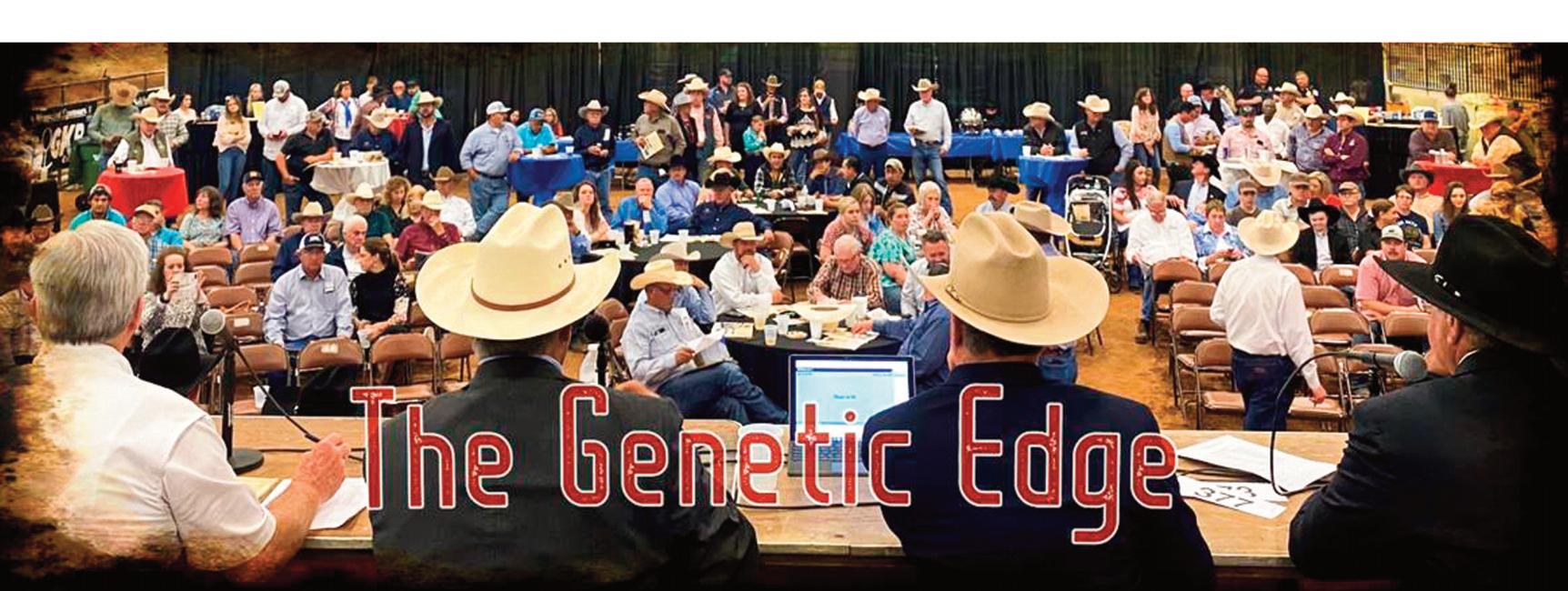
The 2026 Genetic Edge Sale will continue that legacy on April 18 in Huntsville, Texas. The sale, which will be held in Huntsville for the first time, will be held in conjunction with the International Red Brangus Breeders Association’s (IRBBA) annual meeting. As always, buyers can expect a large offering of high-quality, affordable Red Brangus animals at this live sale. While the offering and venue have evolved through the years, the core mission of the sale, to provide access to the very best genetics the breed has to offer, has remained unchanged.
Allen Goode, 2026 Genetic Edge Sale co-chairman, pointed out that, “A highly anticipated feature of the Genetic Edge has been the ‘Champions Lots’. In these offerings, the newly crowned National Grand and Reserve Grand Champion Females and Bulls are offered in the form of semen, embryos, flushes and even ownership interest. These offerings provide the opportunity for breeders to acquire the most elite genetics of our breed champions. We are excited for this tradition to continue in the 2026 edition of the Genetic Edge Sale.”
The story of the Genetic Edge Sale began in the fall of 1994, when the IRBBA Board of Directors conceived the idea of a premier sale to be held in conjunction with the association’s annual meeting. At that time, the organization consisted of just 10 founding members who shared a common goal to elevate the Red Brangus breed through quality, consistency and collaboration.
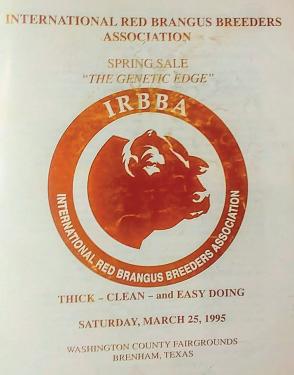
The first Genetic Edge Sale was held in March of 1995 at the Washington County Fairgrounds in Brenham, Texas, a location selected for its large pen facilities and functional auction ring. This first sale featured 35 lots of bulls, cows and heifers, primarily consigned by the IRBBA’s founding members. Though modest in size by today’s standards, the sale set the tone for what would become a trusted marketplace for premium Red Brangus genetics.
Una Subasta Construida sobre Visión, Relaciones y Excelencia Red Brangus
Durante más de tres décadas, la Sybasta Genetic Edge se ha consolidado como un evento fundamental para los criadores de Red Brangus de todo el mundo. Lo que comenzó como la visión de un pequeño grupo de ganaderos comprometidos se ha convertido en una subasta internacional de primer nivel, exhibiendo de manera constante genética élite mientras fortalece la presencia global de la raza Red Brangus.
La Subasta Genetic Edge 2026 continuará ese legado el 18 de abril en Huntsville, Texas. La subasta, que se celebrará en Huntsville por primera vez, se llevará a cabo en conjunto con la reunión anual de la International Red Brangus Breeders Association (IRBBA). Como siempre, los compradores pueden esperar una amplia oferta de animales Red Brangus de alta calidad y precios accesibles en esta subasta en vivo. Aunque la oferta y la sede han evolucionado con los años, la misión central de la subasta — es brindar acceso a la mejor genética que la raza puede ofrecer— permanece sin cambios.
Allen Goode, copresidente de la Subasta Genetic Edge 2026, señaló: “Una característica muy esperada de la Genetic Edge han sido los ‘Lotes Campeones’. En estas ofertas, las recién coronadas Hembras y Toros Gran Campeón Nacional y Gran Campeón Nacional Reservado se ofrecen en forma de semen, embriones, lavados (flushes) e incluso participación de propiedad. Estas ofertas brindan la oportunidad a los criadores de adquirir la genética más élite de nuestros campeones de la raza. Estamos entusiasmados de que esta tradición continúe en la edición 2026 de la Subasta Genetic Edge.”
La historia de la Subasta Genetic Edge comenzó en el otoño de 1994, cuando la Junta Directiva de la IRBBA concibió la idea de una venta de primer nivel que se celebraría junto con la reunión anual de la asociación. En ese momento, la organización estaba compuesta por solo 10 miembros fundadores que compartían el objetivo común de elevar la raza Red Brangus a través de calidad, consistencia y colaboración. La primera Subasta Genetic Edge se llevó a cabo en marzo de 1995 en el Washington County Fairgrounds en Brenham, Texas, un lugar seleccionado por sus amplias instalaciones de corrales y su funcional anillo de sub-
Catalog cover from the first Genetic Edge Sale.
From its inception, the Genetic Edge Sale was designed as more than a transaction; it was a strategic tool to grow the breed. The sale targeted both new and existing members who wanted to improve their herds by investing in proven, registered IRBBA cattle. That focus has endured for more than 30 years.
As the sale gained momentum in the late 1990s, it found temporary homes at various locations, including several memorable years at the OB Ranch, hosted by Marcos and Adriane Borges. During that period, the sale was held under a tent or in the OB Ranch sale barn, with post-sale social gatherings at the ranch house becoming an integral part of the experience.
Bruce Buffaloe, an IRBBA past secretary and current board member, recalls those early years fondly. Buffaloe and his mother, Wilma, were not only deeply involved in the association’s formation, but were also the highest volume and highest dollar buyers at the inaugural Genetic Edge Sale.
“The Genetic Edge Sale has been a focal event for growth of the IRBBA, which has grown from 10 charter members to over 120 active breeders to date,” Buffaloe said.
Beyond the cattle, the sale developed a reputation as a social and networking hub for breeders and guests alike. “The Genetic Edge Sale has always been an exciting social event for IRBBA breeders and guests,” Buffaloe continued. “The sale includes mariachi bands playing authentic Mexican music during the social hour. I can attest that the networking continues late in the evening as I bought interest in a bull around 2 a.m. after the sale at the hotel bar, which served as a continuation point for the sale for many years.”
No discussion of the Genetic Edge Sale is complete without recognizing the contributions of Don Cox, a prominent Red Brangus breeder whose leadership and commitment shaped the sale into what it is today. Cox’s strategic approach, tireless work ethic and deep belief in the breed
laid the groundwork for long-term success.
Ido Schroeder, a Red Brangus breeder from South Africa, witnessed that impact firsthand. “I had the privilege and honor of attending one of the first Genetic Edge Sales,” Schroeder shared, “I can attest that the memories created through this event are deep rooted and have affected the Brangus breed
(continued on next page)
astas. Esta primera venta presentó 35 lotes de toros, vacas y vaquillas, consignados principalmente por los miembros fundadores de la IRBBA. Aunque modesta en tamaño según los estándares actuales, la venta marcó el tono de lo que se convertiría en un mercado confiable para genética Red Brangus de alta calidad.
Desde su inicio, la Subasta Genetic Edge fue diseñada como algo más que una transacción; fue una herramienta estratégica para hacer crecer la raza. La venta se dirigía tanto a miembros nuevos como existentes que deseaban mejorar sus hatos invirtiendo en ganado IRBBA registrado y probado. Ese enfoque ha perdurado durante más de 30 años.
A medida que la subasta ganó impulso a finales de la década de 1990, encontró sedes temporales en varios lugares, incluyendo varios años memorables en el OB Ranch, organizado por Marcos y Adriane Borges. Durante ese período, la venta se realizó bajo una carpa o en el establo de ventas y subastas del OB Ranch, con reuniones sociales posteriores en la casa del rancho que se convirtieron en parte integral de la experiencia.
Bruce Buffaloe, exsecretario y actual miembro de la junta, recuerda con cariño esos primeros años. Buffaloe y su madre, Wilma, no solo estuvieron profundamente involucrados en la formación de la asociación, sino que también fueron los compradores de mayor volumen y monto en dólares en la venta inaugural de Genetic Edge.
“La Subasta Genetic Edge ha sido un evento clave para el crecimiento de la IRBBA, que ha pasado de 10 miembros fundadores a más de 120 criadores activos hasta la fecha”, dijo Buffaloe.
Más allá del ganado, la venta desarrolló una reputación como centro social y de networking para criadores e invitados. “La Subasta Genetic Edge siempre ha sido un evento social emocionante para los criadores e invitados de la IRBBA”, continuó Buffaloe. “La venta incluye mariachis tocando auténtica música mexicana durante la hora social. Puedo dar fe de que el networking continúa hasta altas horas de la noche, ya que compré participación en un toro alrededor de las 2 a.m. después de la subasta en el bar del hotel, que durante muchos años sirvió como punto de continuación de la subasta.”
(continúa en la siguiente página)
in South Africa in a hugely positive way and you can’t talk about the sale without mentioning the master behind it all, Don Cox, who has served as the sales administrator since the sale’s inception. Don’s impact has been instrumental in improving the breed’s genetics worldwide.”
Over time, the Genetic Edge Sale, held alongside the IRBBA show, became a powerful showcase.
“Over the years, the sale, in conjunction with the IRBBA show, offers a unique showcase of the Red Brangus breed under one roof that creates an unparalleled impact,” Schrader said.
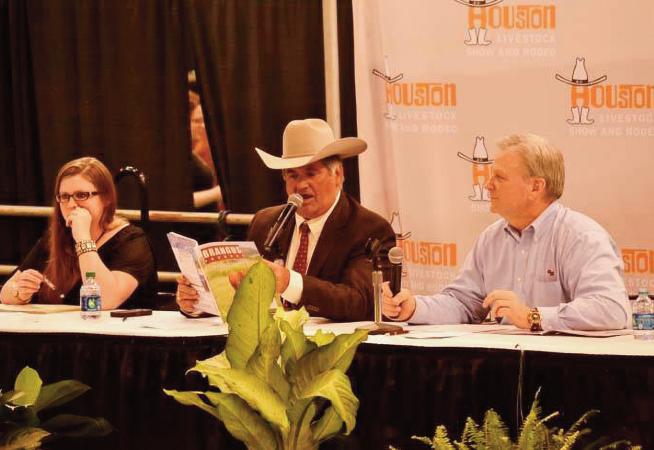
A major turning point for the sale came when it moved to Houston. Don Jobes, a managing director at Houston Livestock Show and Rodeo (HLSR), was instrumental in securing a show for International Red Brangus cattle in Houston, opening the door to unprecedented exposure.
The first Genetic Edge Sale held at HLSR took place in March 2005, and it has since become a fixture on the Saturday night following the Houston International Red Brangus Show. Initially, only halterbroken show cattle were offered by IRBBA breeders, but the visibility and prestige of Houston quickly elevated the sale’s profile.
Holding the Genetic Edge Sale in Houston promoted visibility to international buyers, with live cattle, semen and embryos purchased at the sale being shipped to Mexico, Central America, Belize, Brazil, Argentina, Australia, South Africa and Asia. In 2008, the sale expanded to include both red and black Brangus offerings, further broadening its appeal.
Fabian Balandrano, a Red Brangus breeder from Mexico, is one of the international buyers who has benefited from this sale. "The Genetic Edge Sale was a fundamental source of Red Brangus genetics during the foundational years of our operation, Rancho Los Nogales. At this sale, we acquired top-of-the-line flushes from elite cows that have since become the cornerstones of the Red Brangus breed in Mexico,” Balandrano continued, “We are deeply grateful to the Genetic Edge Sale and everyone involved for making these world-class genetics available to our program. Their contribution was vital to the success we see today at Rancho Los Nogales."
Stephen Lee, current IRBBA president, has attended the Genetic Edge Sale for the past nine years and became more involved after being elected to the IRBBA Board in 2021. His perspective reflects both appreciation for the sale’s history and optimism for its future.
According to Lee, the quality of cattle offered is unmatched. “The absolute best and most elite genetics are offered at this sale. There will be guests from all over the world attending live and on the internet. If you want the best, you'd better be bidding at the Genetic Edge Sale.”
Ninguna conversación sobre la Subasta Genetic Edge estaría completa sin reconocer las contribuciones de Don Cox, un destacado criador de Red Brangus cuyo liderazgo y compromiso moldearon la venta hasta convertirla en lo que es hoy. El enfoque estratégico de Cox, su ética de trabajo incansable y su profunda creencia en la raza sentaron las bases para el éxito a largo plazo.
Ido Schroeder, criador de Red Brangus en Sudáfrica, fue testigo de ese impacto de primera mano. “Tuve el privilegio y el honor de asistir a una de las primeras Subasta Genetic Edge”, compartió Schroeder. “Puedo afirmar que los recuerdos creados a través de este evento están profundamente arraigados y han impactado a la raza Brangus en Sudáfrica de manera enormemente positiva, y no se puede hablar de la venta sin mencionar al maestro detrás de todo, Don Cox, quien ha servido como administrador de la subasta desde sus inicios. El impacto de Don ha sido fundamental en la mejora de la genética de la raza a nivel mundial.”
Con el tiempo, la Subasta Genetic Edge, celebrada junto con la exposición de la IRBBA, se convirtió en una vitrina poderosa. “A lo largo de los años, la subasta, en conjunto con la exposición de la IRBBA, ofrece una muestra única de la raza Red Brangus bajo un mismo techo que genera un impacto inigualable”, dijo Schroeder.
Un punto decisivo para la venta llegó cuando se trasladó a Houston. Don Jobes, director gerente del Houston Livestock Show and Rodeo (HLSR), fue fundamental para asegurar una exposición para el Red Brangus Internacional en Houston, abriendo la puerta a una visibilidad sin precedentes.
La primera Subasta Genetic Edge celebrada en el HLSR tuvo lugar en marzo de 2005 y desde entonces se ha convertido en un evento fijo la noche del sábado posterior a la Exposición Internacional Red Brangus de Houston. Inicialmente, solo se ofrecía ganado de exhibición amansado al cabestro por criadores de la IRBBA, pero la visibilidad y el prestigio de Houston elevaron rápidamente el perfil de la venta.
Celebrar la Subasta Genetic Edge en Houston promovió la visibilidad ante compradores internacionales, enviándose ganado en pie, semen y embriones adquiridos en la subasta a México, Centroamérica, Belice, Brasil, Argentina, Australia, Sudáfrica y Asia. En 2008, la venta se expandió para incluir ofertas tanto de Brangus rojo como negro, ampliando aún más su atractivo.
Fabián Balandrano, criador de Red Brangus en México, es uno de los compradores internacionales que se ha beneficiado de esta subasta. “La Subasta Genetic Edge fue una fuente fundamental de genética Red Brangus durante los años fundacionales de nuestra operación, Rancho Los Nogales. En esta subasta adquirimos lavados de primer nivel de vacas élite que desde entonces se han convertido en pilares de la raza Red Brangus en México”, continuó Balandrano. “Estamos profundamente agradecidos con la Subasta Genetic Edge y con todos los involucrados por poner esta genética de clase mundial a disposición de nuestro programa. Su contribución fue vital para el éxito que hoy vemos en Rancho Los Nogales.”
Stephen Lee, actual presidente de la IRBBA, ha asistido a la Subasta Genetic Edge durante los últimos nueve años y se involucró más activamente tras ser elegido para la Junta Directiva en 2021. Su perspectiva refleja tanto aprecio por la historia de la subasta como optimismo por su futuro.
Según Lee, la calidad del ganado ofrecido es inigualable. “La mejor y más élite genética absoluta se ofrece en esta subasta.
Exposure remains a driving force behind the sale’s success. “Sales like this give the Red Brangus breed exposure; exposure to new cattlemen and cattlewomen is what sparks conversation and curiosity about the breed,” Lee said, “The Brangus breed, and especially Red Brangus, sell themselves once you really evaluate their attributes.”
From its humble beginnings in Brenham to a worldwide stage today, the Genetic Edge Sale has remained true to its purpose. As the 2026 sale approaches, the Genetic Edge Sale continues to reflect the vision of its founders, the leadership of its champions and the shared commitment of breeders across generations. More than a sale, it is a testament to what can be built when quality cattle, strong relationships and a passion for the breed come together.
Habrá invitados de todo el mundo asistiendo en vivo y por internet. Si quieres lo mejor, debes estar pujando en la Subasta Genetic Edge.”
La exposición sigue siendo una fuerza impulsora detrás del éxito de la subasta. “Ventas como esta le dan exposición a la raza Red Brangus; la exposición a nuevos ganaderos y ganaderas es lo que despierta conversación y curiosidad sobre la raza”, dijo Lee. “La raza Brangus, y especialmente el Red Brangus, se vende sola una vez que realmente evalúas sus atributos.”
Desde sus humildes comienzos en Brenham hasta el escenario mundial actual, la Subasta Genetic Edge se ha mantenido fiel a su propósito. A medida que se acerca la edición 2026, la Subasta Genetic Edge continúa reflejando la visión de sus fundadores, el liderazgo de sus campeones y el compromiso compartido de criadores a través de generaciones. Más que una subasta, es un testimonio de lo que puede construirse cuando ganado de calidad, relaciones sólidas y pasión por la raza se unen.
By Kindra Gordon
Eyes are on cattle supply, consumer demand, and of course, the weather as the future beef industry outlook in the United States and around the globe takes shape. The biggest story continues to be demand, which remains strong.
“Beef demand is fantastic,” according to Mike Miller, director of customer solutions for Denver-based CattleFax, while speaking to an audience of beef producers in February 2026. Miller shared, “Consumer demand continues to be better than we expected at food service, retail and globally.” That strength has surprised many analysts, given the elevated prices consumers are paying. But to this point, Miller added, “People still want high-quality beef.”
Nutritional trends are part of the explanation. He points to keto diets, the widespread use of GLP-1 medications, and even the recent update to the American food guide pyramid, all of which emphasize protein – like beef as an important part of healthy eating in modern diets. Miller said, “Consumers are demanding a record amount of protein.” Even with average retail beef prices reaching an average price over $9 per pound and moving toward $10 per pound, he noted, “U.S. consumers haven’t blinked at that high of a price.”
CattleFax data indicates beef demand has increased steadily for the last 17 years and is now at a 40-year high. They attribute the driver of that demand to improvement in beef quality grades. “More choice, upper two-thirds choice and prime beef product is what drove demand growth,” Miller said.
The Supply Story
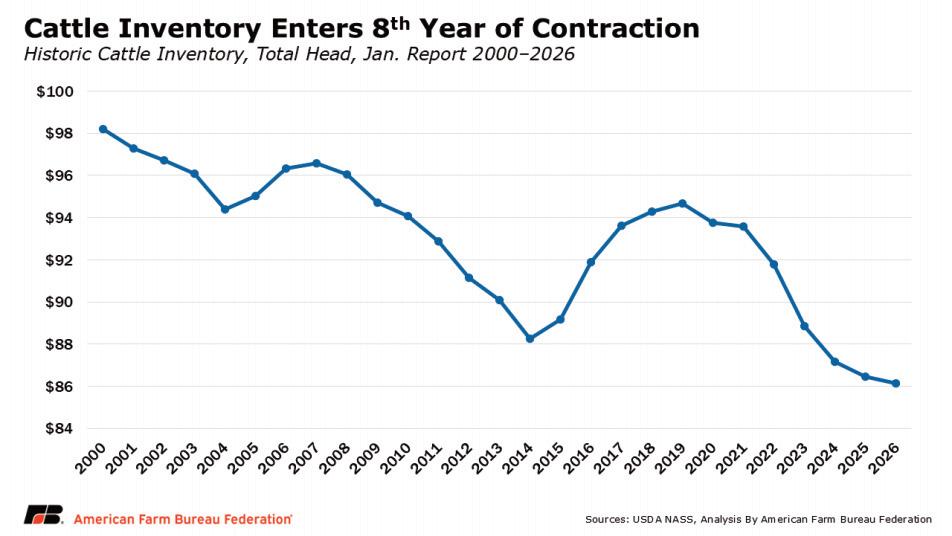
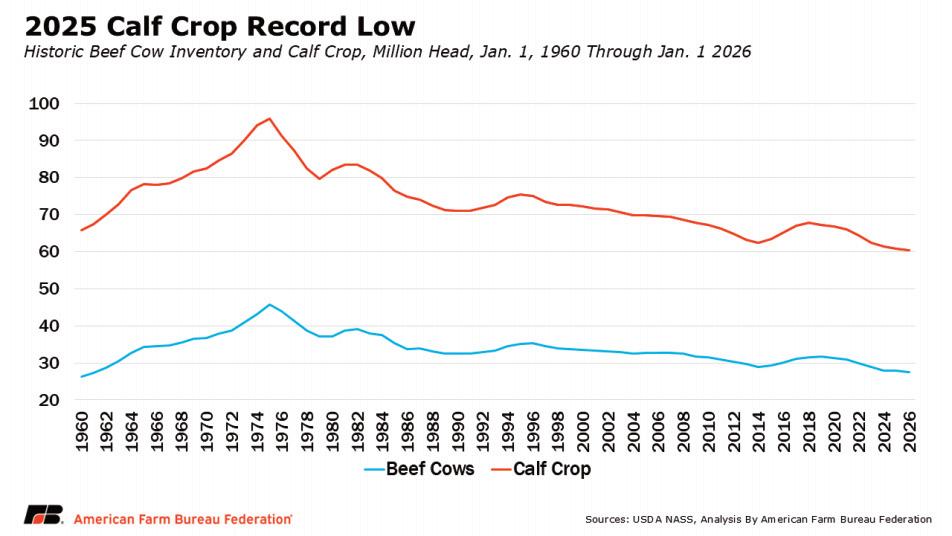
While demand remains historically strong, the supply side of the equation is notably constrained. Miller reported that the U.S. cattle supply is tight and could remain so through 2026 and into 2027, largely due to prolonged dry weather across major producing regions. Entering 2026, available data showed little evidence of expansion. “We thought the cowherd would have been larger in 2026 than it was in 2025, but weather is a big issue,” he stated.
Specifically, the U.S. beef cow herd is at its lowest level since 1951. Yet overall production remains historically robust, illustrating how the industry continues to adapt. “The beef industry continues to do more with less,” Miller explained. Carcass weights have increased significantly, gaining roughly 52
Perspectiva Global de la Carne de Res: Oferta Ajustada y Fuerte Demanda Marcan el Camino por Delante
Las miradas están puestas en la oferta de ganado, la demanda del consumidor y, por supuesto, el clima, mientras la perspectiva futura de la industria de la carne de res en Estados Unidos y alrededor del mundo toma forma. La historia más importante sigue siendo la demanda, que continúa fuerte.
“La demanda de carne de res es fantástica”, según Mike Miller, director de soluciones para clientes en CattleFax, con sede en Denver, al dirigirse a un público de productores de carne de res en febrero de 2026. Miller compartió: “La demanda del consumidor continúa siendo mejor de lo que esperábamos en el sector alimentario, minorista y global.” Esa fortaleza ha sorprendido a muchos analistas dado el alto precio que los consumidores están pagando. Pero hasta ahora, Miller añadió: “La gente aún quiere carne de res de alta calidad.”
Las tendencias nutricionales son parte de la explicación. Señala las dietas keto, el uso generalizado de medicamentos GLP-1 e incluso la reciente actualización de la pirámide alimentaria estadounidense, las cuales enfatizan la proteína —como la carne de res— como parte importante de una dieta saludable en la actualidad. Miller afirmó: “Los consumidores están demandando una cantidad récord de proteína.” Incluso con precios minoristas promediando más de $9 por libra y acercándose a $10 por libra, observó: “Los consumidores estadounidenses ni siquiera han pestañeado ante un precio tan alto.”
Los datos de CattleFax indican que la demanda de carne de res ha aumentado constantemente durante los últimos 17 años y ahora se encuentra en su punto más alto en 40 años. Atribuyen el motor de esa demanda a la mejora en las calificaciones de calidad. “Más choice, choice de los dos tercios superiores y carne prime es lo que impulsó el crecimiento de la demanda”, dijo Miller.
La historia de la oferta
Aunque la demanda se mantiene históricamente fuerte, la oferta está notablemente limitada. Miller informó que el sumiistro de ganado en EE. UU. es ajustado y podría seguir siéndolo hasta 2026 e incluso 2027, en gran parte debido a condiciones secas prolongadas en las principales regiones productoras. Al comienzo de 2026, los datos disponibles mostraban poca evidencia de expansión. “Pensamos que el hato de vacas sería mayor en 2026 que en 2025, pero el clima es un gran factor”, afirmó.
pounds in the past two years, and packers have generally avoided steep discounts for heavy animals because of tight supplies.
Beyond North America, global dynamics are reinforcing the tight supply narrative. The Global Animal Protein Outlook 2026 report, produced by Netherlands-based investment bank Rabobank, projects beef production will decline in 2026, which is the first contraction in animal protein output in six years. Herd rebuilding in North America and Brazil, and what the report dubbed “structural adjustments in China,” are expected to limit slaughter volumes.
According to the Rabobank report, Brazil’s beef production may fall 5 to 6% in 2026 as producers retain cattle, yet exports could reach record levels due to strong global demand and currency advantages. Argentina faces similar export-driven dynamics, while domestic consumption may shift toward lower-cost proteins due to high beef prices.
China’s production growth, driven by earlier herd liquidation, is expected to reverse slightly as inventories shrink, pushing prices higher. Imports remain critical to China, accounting for about 30% of supply. However, CattleFax’s Miller pointed out beef trade from the U.S. to China was closed in 2025 and will likely remain closed in 2026. He explained that China has not re-issued certificates to U.S. plants and the country is now testing for MGA, which is fed to every heifer in the U.S. and thus is becoming the next nontariff trade barrier.
In contrast to the rest of the global market, down in Australia, large cattle inventories are positioning that country for strong output and export demand, supporting firm prices. New Zealand production is expected to recover gradually as herd numbers grow and export prices remain above average.
Herd Rebuilding Emerging
With U.S. cattle prices at a 5-year peak in the cattle cycle, historically, the next move is toward an
Específicamente, el hato de vacas de carne de EE. UU. está en su nivel más bajo desde 1951. Sin embargo, la producción total sigue siendo históricamente sólida, lo que ilustra cómo la industria continúa adaptándose. “La industria de la carne sigue haciendo más con menos”, explicó Miller. El peso de las canales ha aumentado significativamente, con un incremento aproximado de 52 libras en los últimos dos años, y los empacadores han evitado aplicar grandes descuentos a animales pesados debido a la oferta limitada.
A nivel global, las dinámicas internacionales refuerzan la narrativa de oferta ajustada. El informe Global Animal Protein Outlook 2026 del banco neerlandés Rabobank proyecta que la producción mundial de carne de res disminuirá en 2026, siendo esta la primera contracción en seis años. La reconstrucción de hatos en América del Norte y Brasil, junto con “ajustes estructurales en China”, limitarán los volúmenes de sacrificio.
Según Rabobank, la producción de carne de res en Brasil podría caer entre 5% y 6% en 2026 debido a la retención de ganado, aunque las exportaciones podrían alcanzar niveles récord por la fuerte demanda global y ventajas cambiarias. Argentina enfrenta dinámicas similares impulsadas por la exportación, mientras que el consumo interno podría desplazarse hacia proteínas más económicas debido a los altos precios de la carne de res. El crecimiento de la producción china, impulsado por la liquidación previa de hatos, podría revertirse ligeramente conforme los inventarios disminuyen, lo que elevará los precios. Las importaciones siguen siendo fundamentales, representando cerca del 30% del suministro total. Sin embargo, Miller de CattleFax señaló que el comercio de carne de res entre EE. UU. y China se cerró en 2025 y probablemente permanezca cerrado en 2026, debido a que China no ha vuelto a emitir certificados a las plantas esta-
expansion and herd rebuilding phase in the cycle. Analysts believe they are seeing signs supporting that trend, but also anticipate larger scale expansion may not take off until 2027 to 2028.
U.S. beef cow slaughter dropped in 2025 and the culling rate is projected to slow in 2026, according to Rabobank. Their data says Canada is also stabilizing its herd. CattleFax data from approximately 250 U.S. feedyards indicated that early-2026 heifer placements were declining, along with fewer heifers moving through sale barns and harvest channels. Miller stated, “We are probably starting the process of rebuilding the cow herd with some retention. We will know more based on the fourth quarter data from 2026…Broader heifer retention could become more visible by 2027.”
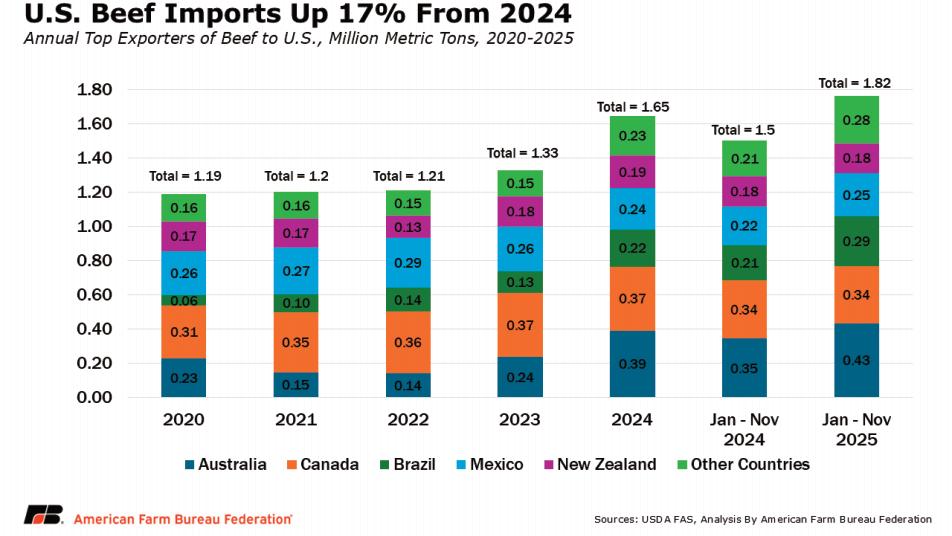
As cowherd retention and rebuilding occur, beef supplies will remain tight. For the U.S., Miller says this necessitates beef imports. Specifically, he calls the demand for ground beef in the U.S. “crazy” and noted import beef is relied on to fill that gap. To that, CattleFax anticipates the border to Mexican cattle, which has been closed due to New World Screwworm, will re-open at some point in 2026. Miller noted this trade is also needed to help Southwest feedlots and harvest plants that rely on Mexico-born calves.
Moreover, in early February 2026, the United StatesArgentina Agreement on Reciprocal Trade and Investment (ARTI) was signed, as well as a Presidential Proclamation. These agreements reduce and remove some of the tariff and trade restrictions between the two countries for 2026. Specifically, the additional temporary access of Argentine beef into the U.S. will amount to 100,000 metric tons, which is approximately 5% of U.S. beef imports or about 1% of total U.S. consumption.
Key watchpoints
Looking ahead, herd rebuilding decisions will remain clouded by several factors. The weather will remain one of the most important variables to monitor. Forecasts suggest the current La Niña pattern may fade and transition toward El Niño conditions by late 2026. That shift could bring increased moisture to the southern United States while the northern tier experiences drier conditions. Globally, El Niño often alters precipitation and temperature patterns – potentially increasing rainfall in
dounidenses y ahora prueba la presencia de MGA —alimentado a prácticamente todas las vaquillas en EE. UU.— convirtiéndose en una nueva barrera comercial no arancelaria.
En contraste, Australia cuenta con grandes inventarios de ganado que posicionan al país para una producción fuerte y para satisfacer la demanda exportadora. Nueva Zelanda también espera una recuperación gradual conforme sus hatos crecen y los precios de exportación se mantienen por encima del promedio.
Reconstrucción del hato en marcha
Con los precios del ganado en un punto máximo de 5 años dentro del ciclo ganadero, históricamente el siguiente paso es una fase de expansión y reconstrucción. Los analistas creen que hay señales que apuntan a esa tendencia, pero anticipan que la expansión a mayor escala no comenzará sino hasta 2027–2028.
El sacrificio de vacas para carne en EE. UU. disminuyó en 2025 y se proyecta que continúe reduciéndose en 2026, según Rabobank. Canadá también está estabilizando su hato. Datos de CattleFax provenientes de aproximadamente 250 corrales de engorda indican que las colocaciones de vaquillas a inicios de 2026 estaban disminuyendo, al igual que la proporción de vaquillas vendidas y enviadas a sacrificio. Miller comentó: “Probablemente estamos comenzando el proceso de reconstrucción del hato con algo de retención. Sabremos más con los datos del cuarto trimestre de 2026… Una retención más amplia podría ser visible para 2027.”
A medida que aumenta la retención y reconstrucción del hato, los suministros de carne seguirán ajustados. Para EE. UU. Miller afirma que esto hace necesarias las importaciones de carne. En particular, señala que la demanda de carne molida es “una locura” y el país depende de carne importada para llenar ese hueco. CattleFax anticipa que la frontera para el ganado mexicano —cerrada por la Mosca Barrenadora del Nuevo Mundo— se reabrirá en algún punto de 2026, algo crítico para los corrales y plantas de sacrificio del suroeste que dependen de becerros nacidos en México. Además, a inicios de febrero de 2026 se firmó el Acuerdo de Comercio e Inversión Recíproca entre Estados Unidos y Argentina (ARTI), junto con una Proclamación Presidencial. Estos acuerdos reducen o eliminan ciertas restricciones comerciales entre ambos países para 2026. La entrada temporal adicional de carne argentina a EE. UU. será de 100,000 toneladas métricas, equivalente a aproximadamente el 5% de las importaciones estadounidenses o cerca del 1% del consumo total.
(continued on next page)
(continúa en la siguiente página)
parts of South America and disrupting production in regions of Asia and Australia. These effects can ripple through feed grain and livestock markets.
Feed costs are another major factor. The United States harvested a large corn crop in 2025, but export demand –particularly from China – and ethanol policy shifts could tighten supplies and support higher prices. Because feed accounts for a substantial share of production costs, changes in grain markets can quickly influence cattle feeding margins and expansion decisions.
Carcass size trends also create market dynamics further downstream. Larger carcasses have left several foodservice operators seeking smaller ribeye cuts, opening potential opportunities for breeding programs to address specific portion preferences.
Trade flows also continue to shape supply and pricing. U.S. beef exports remain steady to Mexico, Japan, Canada, and other markets, reinforcing global demand for high-quality product. “People still want high-quality beef,” Miller concluded.
Most importantly, the bottom line reads positively for the seedstock sector. As herd expansion resumes and consumer demand for high-quality beef remains strong, the outlook signals a meaningful opportunity to market superior genetics that enhance performance, carcass merit, and profitability across the supply chain.
CattleFax’s Miller pointed out that breeding stock prices remained strong in 2025 and are expected to continue through 2026 and into 2027. Genetic progress has been evident across the industry. Miller notes the Choice-Select spread has narrowed partly because of limited Select production, observing that in some weeks Prime supplies have exceeded Select. “That’s how much the beef industry has improved genetics.” He emphasized that long-term data consistently show that “high return producers” investing in genetics and animal health outperform those who do not.
Puntos clave a monitorear
De cara al futuro, las decisiones de reconstrucción del hato seguirán influenciadas por diversos factores: Clima. El patrón actual de La Niña podría debilitarse y transitar a condiciones de El Niño hacia finales de 2026, lo que podría significar más humedad en el sur de EE. UU. y condiciones más secas en el norte. A nivel global, El Niño puede alterar lluvias y temperaturas, afectando granos forrajeros y mercados pecuarios.
Costos de alimentación. EE. UU. cosechó una gran producción de maíz en 2025, pero la demanda de exportación —especialmente desde China— y cambios en políticas de etanol podrían ajustar las existencias y elevar los precios. Dado que la alimentación constituye la mayor parte del costo de producción, estos cambios pueden influir rápidamente en las decisiones de engorda y expansión.
Tamaño de la canal. El aumento continuo en el tamaño de las canales ha llevado a algunos operadores de servicios alimentarios a buscar cortes de ribeye más pequeños, lo que puede abrir oportunidades para programas genéticos especializados.
Comercio internacional. Las exportaciones de carne de res de EE. UU. se mantienen firmes hacia México, Japón, Canadá y otros mercados, reforzando la demanda global por carne de alta calidad. Lo más importante: el panorama es positivo para el sector de ganado de registro. A medida que la expansión del hato se retoma y la demanda del consumidor por carne de alta calidad se mantiene, se abren oportunidades para comercializar genética superior que mejore rendimiento, calidad de canal y rentabilidad. Miller añadió que los precios del ganado reproductor se mantuvieron fuertes en 2025 y se espera que continúen así en 2026 y 2027. El progreso genético es evidente: la brecha entre Choice y Select se ha estrechado debido a la limitada producción Select, y algunas semanas la carne Prime ha superado a la Select. “Así de mucho ha mejorado la genética en la industria.” Subrayó que los datos a largo plazo muestran consistentemente que los productores con mayores retornos son aquellos que invierten en genética y salud animal.
EMERGING TECHNOLOGIES SHAPING THE FUTURE BEEF INDUSTRY
While supply cycles, weather, and trade policy continue to drive short-term market outlooks, a quieter transformation is underway across the global beef sector. Advances in artificial intelligence, automation, animal monitoring, and nutrition analytics are reshaping how cattle are raised, processed, and marketed. Several technologies are gaining traction and could influence competitiveness and efficiency in the coming decade. They include:
AI and robotics in processing plants. Labor availability and tight cattle supplies are pushing packers toward automation. Artificial intelligence systems paired with imaging technology are increasingly used on fabrication lines to measure carcass characteristics, guide cutting decisions, and optimize yield recovery. Even gains that are fractions of a percent per carcass can translate into substantial value when scaled across large plants.
An example, automated quality assessment tools can predict marbling or cut potential earlier in the process, allowing plants to allocate product more strategically. These systems are not replacing skilled labor outright but assisting decision-making and helping processors maximize value per animal in a supply-constrained environment.
Precision livestock monitoring. On the production side, digital livestock monitoring, including wearable sensors, camera systems, and machine-vision tools that allow
producers to track animal movement, feeding patterns, and health indicators, are advancing rapidly. Early detection tools can be beneficial to reduce treatment costs and improve welfare outcomes.
Yet, another popular example is virtual fencing. GPS-enabled collars guide cattle using audio or vibration cues, and enable rotational grazing without physical infrastructure. These tools provide flexibility in pasture management and may improve forage utilization.
On the horizon, with feed remaining the largest input cost in most production systems, nutrition optimization is a key technology focus. Machine-learning models capable of analyzing intake patterns, environmental conditions, and performance data are being developed to predict feeding behavior and improve ration efficiency.
Traceability and supply-chain transparency. Consumer expectations and regulatory pressure continue to support adoption of digital traceability tools. Technologies integrating RFID identification, blockchain platforms, and data-sharing systems expand the ability to track cattle and beef products throughout the supply chain. This may also support export market access, brand verification, and risk management during disease events, as well as consumer demand for information about sourcing, animal welfare, and environmental practices.
By Kindra Gordon
By Allen Goode
The IRBBA Memorial Scholarship Foundation Continues to Grow
The International Red Brangus Breeders Association Memorial Scholarship Foundation was established as a lasting tribute to the pioneering breeders who helped shape the Red Brangus breed into what it is today. More than just a program, the Foundation represents a commitment to the future—supporting the education and development of young cattlemen and cattlewomen who will carry the breed forward.
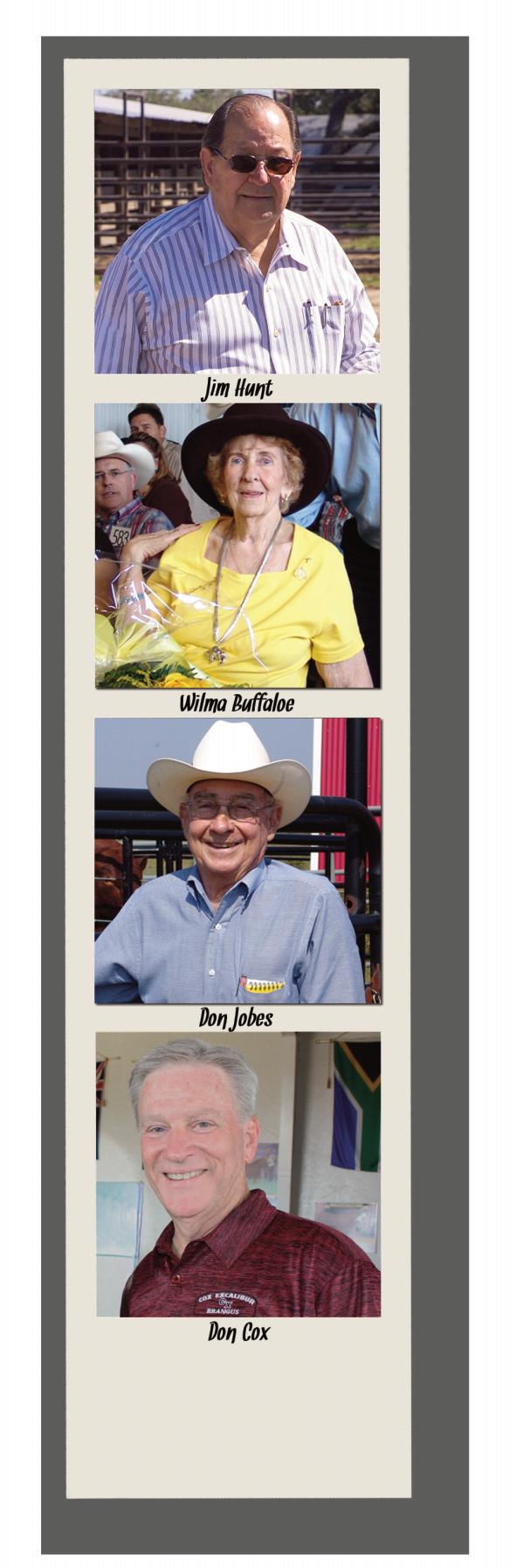
The scholarship program was initially funded in honor of two beloved IRBBA members, Mr. Jim Hunt and Ms. Wilma Buffaloe, whose passion and dedication to the breed left a lasting mark. Since its inception, an additional memorial has been established in honor of Mr. Don Jobes.
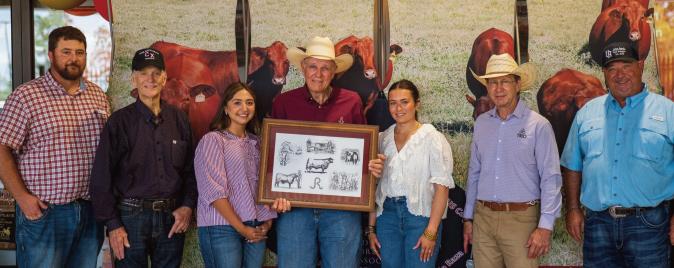
This year, the IRBBA is introducing a new scholarship established in memory of one of the most influential leaders in the breed's history—IRBBA founder and visionary, Mr. Don Cox. His unwavering dedication, leadership, and passion for Red Brangus cattle helped lay the groundwork for the association’s success and growth. His impact extended far beyond the pasture, shaping the breed's direction and inspiring countless breeders along the way. This scholarship, created in his honor, will serve as a lasting tribute to his legacy by supporting young individuals who demonstrate the same commitment, leadership, and vision that he embodied.
These tributes stand as meaningful reminders of the individuals who helped build the Red Brangus community, and whose legacies continue through the success of its youth. Their families and friends take great pride in knowing that their loved ones are remembered through opportunities that empower the next generation of breeders.
Over time, the Memorial Scholarship Foundation has grown into one of the most impactful and widely supported
programs within the IRBBA. It is a point of pride among members, reflecting a shared belief that the future of the Red Brangus breed rests firmly in the hands of its youth. Through the generosity of breeders, supporters, and donors, the Foundation continues to expand its reach and influence.
From 2009 through 2025, the Foundation has awarded an impressive 106 scholarships totaling $156,550. This remarkable achievement underscores both the dedication of IRBBA members and their commitment to investing in the next generation. Scholarship recipients have included graduating high school seniors and current college undergraduates, each pursuing their education while remaining connected to the Red Brangus breed and the broader agricultural industry.
The continued success of the Foundation would not be possible without the dedication of the IRBBA Memorial Scholarship Committee: Tracee Price, Chairwoman, along with Lissa Traber, Kay Gibson, Megan Greenwood, and John Greenwood. Their leadership, time, and commitment ensure that the program continues to grow and positively impact the lives of young people across the Red Brangus community.
Guiding the long-term vision and stewardship of the Foundation is its Board of Directors, whose members include Tracee Price, Kay Gibson, Stephen Lee, Allen Goode, and Darryl McDonald. Their oversight and commitment help ensure the integrity, growth, and sustainability of the Foundation for years to come.
Applications for both the Senior and Junior scholarships are due April 1 each year and are available on the IRBBA website under the Memorial Scholarship Foundation section.
As the Red Brangus breed continues its upward trajectory—marked by growth, demand, and enthusiasm - the importance of investing in its future becomes even more evident. Through the Memorial Scholarship Foundation, the IRBBA is not only honoring its past but actively shaping its future. By supporting the education and development of young breeders, the Foundation ensures that the values, integrity, and progress of the Red Brangus breed will endure for generations to come.
La Fundaci ó n de Becas Conmemorativas de la IRBBA Contin ú a Creciendo
Por Allen Goode
La Fundación de Becas Conmemorativas de la Asociación Internacional de Criadores de Red Brangus (IRBBA, por sus siglas en inglés) fue establecida como un homenaje duradero a los criadores pioneros que ayudaron a dar forma a la raza Red Brangus hasta convertirla en lo que es hoy. Más que un simple programa, la Fundación representa un compromiso con el futuro: apoyar la educación y el desarrollo de jóvenes ganaderos y ganaderas que continuarán impulsando la raza.
El programa de becas fue financiado inicialmente en honor a dos queridos miembros de la IRBBA, el Sr. Jim Hunt y la Sra. Wilma Buffaloe, cuya pasión y dedicación por la raza dejaron una huella duradera. Desde su creación, también se ha establecido un homenaje adicional en honor al Sr. Don Jobes.
Este año, la IRBBA presenta una nueva beca establecida en memoria de uno de los líderes más influyentes en la historia de la raza: el fundador y visionario de la IRBBA, el Sr. Don Cox. La dedicación inquebrantable, el liderazgo y la pasión del Sr. Cox por el ganado Red Brangus ayudaron a sentar las bases del éxito y crecimiento de la asociación. Su impacto se extendió mucho más allá del campo, marcando el rumbo de la raza e inspirando a innumerables criadores a lo largo del camino. Esta beca, creada en su honor, servirá como un homenaje duradero a su legado al apoyar a jóvenes que demuestren el mismo compromiso, liderazgo y visión que él encarnó.
Estos homenajes representan recordatorios significativos de las personas que ayudaron a construir la comunidad Red Brangus, y cuyos legados continúan a través del éxito de su juventud. Sus familias y amigos se sienten profundamente orgullosos de saber que sus seres queridos son recordados mediante oportunidades que fortalecen a la próxima generación de criadores. Con el tiempo, la Fundación de Becas Conmemorativas se ha convertido en uno de los programas más importantes y
ampliamente respaldados dentro de la IRBBA. Es un motivo de orgullo para sus miembros y refleja la convicción compartida de que el futuro de la raza Red Brangus descansa firmemente en manos de su juventud. Gracias a la generosidad de criadores, patrocinadores y donantes, la Fundación continúa ampliando su alcance e impacto.
Desde 2009 hasta 2025, la Fundación ha otorgado un total de 106 becas por un monto de $156,550. Este logro notable resalta tanto la dedicación de los miembros de la IRBBA como su compromiso con la inversión en la próxima generación. Los beneficiarios de estas becas incluyen tanto estudiantes que se gradúan de la escuela secundaria como estudiantes universitarios, todos ellos avanzando en su educación mientras mantienen un fuerte vínculo con la raza Red Brangus y la industria agropecuaria en general
El éxito continuo de la Fundación no sería posible sin la dedicación del Comité de Becas Conmemorativas de la IRBBA: Tracee Price, presidenta, junto con Lissa Traber, Kay Gibson, Megan Greenwood y John Greenwood. Su liderazgo, tiempo y compromiso aseguran que el programa continúe creciendo y generando un impacto positivo en la vida de los jóvenes dentro de la comunidad Red Brangus.
Guiando la visión a largo plazo y la administración de la Fundación se encuentra su Junta Directiva, integrada por Tracee Price, Kay Gibson, Stephen Lee, Allen Goode y Darryl McDonald. Su supervisión y compromiso ayudan a garantizar la integridad, el crecimiento y la sostenibilidad de la Fundación en los años por venir.
Las solicitudes tanto para las becas Senior como Junior tienen como fecha límite el 1 de abril de cada año y están disponibles en el sitio web de la IRBBA, dentro de la sección de la Fundación de Becas Conmemorativas.
A medida que la raza Red Brangus continúa su trayectoria ascendente—marcada por crecimiento, demanda y entusiasmo—la importancia de invertir en su futuro se vuelve aún más evidente. A través de la Fundación de Becas Conmemorativas, la IRBBA no solo honra su pasado, sino que también está dando forma activa a su futuro. Al apoyar la educación y el desarrollo de jóvenes criadores, la Fundación garantiza que los valores, la integridad y el progreso de la raza Red Brangus perduren por generaciones.
Meaningful growth never happens overnight. The Red Brangus breed has seen progress over the past decade of growth that has been both measurable and meaningful. From increased sale numbers and averages to expanding membership and growing commercial interest, Red Brangus cattle are carving out a larger footprint in today’s cattle market.
In 2015, there were just three Red Brangus sales held across the country. Fast forward to 2025, and that number has tripled to nine sales. Along with increased activity has come an impressive jump in value. Sale averages that once hovered around $5,000 per heifer have climbed to approximately $9,500 per head in 2025, clear indicators of growing demand and confidence in the breed.
Those numbers tell part of the story, but the real momentum behind Red Brangus lies in the value the cattle offer operations, particularly in the south.
Red Brangus cattle are widely recognized for their gentle dispositions, adaptability to numerous climates, predictability and uniformity at market time, and overall versatility. They are early maturing, easy calving, strong milking females with longevity that allows for longer production lives and optimum marketability. Hybrid vigor remains one of the breed’s defining advantages, contributing to consistent performance across varied environments.
Red Brangus: Redefining the Landscape.
¡Pinta los pastizales de rojo!
Brangus Rojo: Redefiniendo el paisaje
El crecimiento significativo nunca ocurre de la noche a la mañana. La raza Red Brangus ha experimentado en la última década un progreso que ha sido tanto medible como significativo. Desde el aumento en el número de ventas y en los promedios, hasta la expansión de la membresía y el creciente interés comercial, el ganado Red Brangus está consolidando una presencia cada vez mayor en el mercado ganadero actual.
En 2015, solo se realizaron tres ventas de Red Brangus en todo el país. Para 2025, ese número se ha triplicado a nueve ventas. Junto con el aumento en la actividad, se ha producido un impresionante incremento en el valor. Los promedios de venta que antes rondaban los $5,000 por vaquilla han ascendido a aproximadamente $9,500 por cabeza en 2025, claros indicadores de una demanda creciente y mayor confianza en la raza
Esos números cuentan parte de la historia, pero el verdadero impulso detrás del Red Brangus radica en el valor que estos animales aportan a las operaciones, particularmente en el sur.
The Red Brangus breed originated in the 1930s in central and south Texas, developed by crossing black Angus cows with gray Brahman bulls. While both black and red offspring were produced, it was the red calves that distinguished themselves through superior growth, fertility and hardiness. Over time, producers recognized that Red Brangus combined the disease resistance, heat tolerance and maternal instincts of Brahman cattle with the carcass quality, fertility and milking ability of Angus and Red Angus.
Registered Red Brangus cattle are solid red and naturally polled, with an established genetic composition of 3/8 Brahman and 5/8 Angus or Red Angus. Multi-generational breeding within these parameters has created predictability in performance and uniformity in phenotype, traits valued by both seedstock and commercial cattlemen.
Originally concentrated in central and south Texas a nd throughout the humid southeastern United States, Red Brangus cattle proved their worth in challenging climates. That hardiness led to expansion into Mexico, Central and South America, Australia and South Africa. In recent years, the breed has continued pushing into new territory, with a growing presence in the western and midwestern United States.
For Gordon Miller of Burton, Texas, the growth of the breed is personal. As a founding member of the International Red Brangus Breeders Association (IRBBA), Miller remembers the humble beginnings.
Miller recalls when the association was formed by a small group of breeders meeting in fellow breeder John Kopycinski’s barn. “We wanted to put the percentage of Brahman and Angus on the Red Brangus paperwork, and the American Red Brangus Association was not interested in doing so, which led us to form our own association,” he said.
That decision laid the foundation for what would become a steadily growing organization focused on breed integrity and long-term progress.
Looking ahead, Miller sees both challenges and opportunities. “The challenge for the breed is to continue to improve the cattle with the shortage of breeders we have,” he said, adding that he is encouraged by the next generation stepping into leadership roles. “If you don’t have good people running the association, it can fall apart in a hurry, but our young breeders are excitedly taking on leadership roles and involvement,” Miller added.
Geary Stutts, IRBBA Bull Test Chairman, has raised Red Brangus cattle for more than 40 years and has witnessed the breed’s evolution firsthand.
Stutts remembers when much of his customer base came from Mexico, a market that played a key role in the breed’s early expansion. “I’ve seen Red Brangus grow in the show arena too, but that is not the only place we can be,” Stutts said, “I’m pushing for commercial breeders to start buying Red Brangus bulls for their operation as they will see the growth and quality of our breed and create more opportunities for us.”
(continued on next page)
El ganado Red Brangus es ampliamente reconocido por su temperamento dócil, adaptabilidad a diversos climas, previsibilidad y uniformidad al momento de la comercialización, y su versatilidad general. Son animales de maduración temprana, fáciles de parto, con fuerte habilidad materna y excelente producción de leche, además de longevidad que permite vidas productivas más prolongadas y óptima comercialización. El vigor híbrido sigue siendo una de las principales ventajas de la raza, contribuyendo a un desempeño consistente en distintos ambientes.
La raza Red Brangus se originó en la década de 1930 en el centro y sur de Texas, desarrollada mediante el cruce de vacas Angus negras con toros Brahman grises. Aunque nacían crías negras y rojas, fueron los becerros rojos los que se destacaron por su crecimiento superior, fertilidad y rusticidad. Con el tiempo, los productores reconocieron que el Red Brangus combinaba la resistencia a enfermedades, tolerancia al calor y habilidad materna del Brahman con la calidad de canal, fertilidad y capacidad lechera del Angus y Red Angus.
El ganado Red Brangus registrado es de color rojo sólido y naturalmente mocho, con una composición genética establecida de 3/8 Brahman y 5/8 Angus o Red Angus. La crianza multigeneracional dentro de estos parámetros ha creado previsibilidad en el desempeño y uniformidad en el fenotipo, características cada vez más valoradas tanto por criadores de genética pura como por ganaderos comerciales.
Originalmente concentrado en el centro y sur de Texas y en el húmedo sureste de los Estados Unidos, el Red Brangus demostró su valor en climas desafiantes. Esa rusticidad impulsó su expansión hacia México, Centro y Sudamérica, Australia y Sudáfrica. En años recientes, la raza ha continuado avanzando hacia nuevos territorios, con una presencia creciente en el oeste y medio oeste de los Estados Unidos.
Para Gordon Miller, de Burton, Texas, el crecimiento de la raza es algo personal. Como miembro fundador de la International Red Brangus Breeders Association (IRBBA), Miller recuerda los comienzos humildes.
Miller recuerda cuando la asociación se formó por un pequeño grupo de criadores que se reunían en el granero del también criador John Kopycinski. “Queríamos incluir el porcentaje de Brahman y Angus en la documentación del Red Brangus, y la American Red Brangus Association no estaba interesada en hacerlo, lo que nos llevó a formar nuestra propia asociación”, explicó.
Esa decisión sentó las bases de lo que se convertiría en una organización en constante crecimiento, enfocada en la integridad de la raza y el progreso a largo plazo.
Mirando hacia el futuro, Miller ve tanto desafíos como oportunidades. “El reto para la raza es continuar mejorando el ganado con la escasez de criadores que tenemos”, dijo, agregando que le anima ver a la próxima generación asumir roles de liderazgo. “Si no tienes buenas personas dirigiendo la asociación, puede desmoronarse rápidamente, pero nuestros jóvenes criadores están asumiendo con entusiasmo roles de liderazgo y participación”, añadió Miller.
(continúa en la siguiente página)
That push is now taking tangible form through the association’s first-ever Red Brangus bull test. The test includes 80 bulls from more than 20 breeders and represents a significant milestone for the breed.
“This is something we have been talking about for a decade,” Stutts shared, “We are excited to see it in execution mode now and have dropped the bulls off at the end of 2025 for testing. The top 60-plus bulls will sell on October 31 in Brenham, Texas, alongside commercial females. The IRBBA Performance Bull Test & Sale is the first attempt to sell this many Red Brangus bulls at once, and it will be exciting to have them gain-tested with data at the sale.”
Dennis Davis of New Waverly, Texas, vice president of the IRBBA, became involved with the breed in 2018 alongside his wife, Theresa. Since joining the Board of Directors three years ago, Davis has played a key role in strengthening communication and marketing efforts.
“We can now connect with members via text messaging and we designed a new website; both tools help us network and grow interest and involvement with the breed,” Davis said. “The website also has a feature to locate breeders by region and this has allowed us to market our cattle and see exponential growth.”
That growth is evident in sales activity. “When we first joined the breed, there would be five to 10 Red Brangus bulls waiting to be sold,” Davis recalled, “The IRBBA shifted advertising and social media to promote our bulls, alongside photos and videos, and now it’s hard to find a Red Brangus bull that hasn’t already been purchased.”
Davis added that similar campaigns highlighting Red Brangus females resulted in quick sales as well. “We need new breeders to help meet the demands we are seeing for our cattle. We have seen such a large increase in our breeders, but the demand is still greater than our supply,” Davis shared.
When asked what makes Red Brangus so popular, Davis points directly to performance in his own herd. “I had a 22year-old female that had 20 registered calves,” he said, “The calving ease, maternal characteristics, milk ability and longevity of Red Brangus is bar none.”
He also highlighted the growth potential of Red Brangus calves. “It’s common for Red Brangus calves to be born around 65 pounds and wean at 500-750 pounds, depending on sex and availability to good forage, at 205 days of age,” Davis explained, “If you have 100 calves that weigh an extra 75 pounds at weaning, that is 7,500 pounds at roughly $5 per pound, giving you an extra $37,500 on selling day.”
Davis credited longtime breeder Don Cox for helping shape the breed’s global reputation. “Forty-plus years ago, he started in the Red Brangus business and he is the reason we see quality genetics from our breed all around the world.”
Geary Stutts, presidente del Bull Test de la IRBBA, ha criado ganado Red Brangus durante más de 40 años y ha sido testigo directo de la evolución de la raza.
Stutts recuerda una época en la que gran parte de su base de clientes provenía de México, un mercado que desempeñó un papel clave en la expansión temprana de la raza. “He visto crecer al Red Brangus en la pista de exhibición también, pero ese no es el único lugar donde podemos estar”, dijo Stutts. “Estoy impulsando a los ganaderos comerciales a que comiencen a comprar toros Red Brangus para sus operaciones, ya que verán el crecimiento y la calidad de nuestra raza y eso creará más oportunidades para nosotros.”
Ese impulso ahora toma forma tangible con la primera prueba de toros Red Brangus en la historia de la asociación. La prueba incluye 80 toros de más de 20 criadores y representa un hito significativo para la raza.
“Esto es algo de lo que hemos estado hablando durante una década”, compartió Stutts. “Estamos emocionados de verlo ahora en ejecución y dejamos los toros a finales de 2025 para la prueba. Los mejores 60 o más toros se venderán el 31 de octubre en Brenham, Texas, junto con hembras comerciales. Es el primer intento de vender tantos toros Red Brangus al mismo tiempo, y será emocionante tenerlos evaluados por ganancia de peso con datos disponibles en la venta.”
Dennis Davis, de New Waverly, Texas, vicepresidente de la IRBBA, se involucró con la raza en 2018 junto a su esposa, Theresa. Desde que se unió a la Junta Directiva hace tres años, Davis ha desempeñado un papel clave en fortalecer la comunicación y los esfuerzos de mercadeo.
“Ahora podemos conectarnos con los miembros mediante mensajes de texto y diseñamos un nuevo sitio web; ambas herramientas nos ayudan a establecer redes y aumentar el interés y la participación en la raza”, dijo Davis. “El sitio web también tiene una función para localizar criadores por región, lo que nos ha permitido comercializar nuestro ganado y ver un crecimiento exponencial.”
Ese crecimiento es evidente en la actividad de ventas. “Cuando nos unimos a la raza, había entre cinco y diez toros Red Brangus esperando ser vendidos”, recordó Davis. “La IRBBA cambió la publicidad y las redes sociales para promover nuestros toros, junto con fotos y videos, y ahora es difícil encontrar un toro Red Brangus que no haya sido ya vendido.”
Davis agregó que campañas similares destacando hembras Red Brangus también resultaron en ventas rápidas. “Necesitamos nuevos criadores para ayudar a satisfacer la demanda que estamos viendo por nuestro ganado. Hemos visto un gran aumento en nuestros criadores, pero la demanda sigue siendo mayor que la oferta”, comentó Davis.
The only thing better than our cattle are the breeders,” Davis added, “Everyone is hardworking, helpful and friendly. Our Red Brangus breeders are here to grow the breed, it’s not all self-interest.”
IRBBA President Stephen Lee has been breeding Red Brangus cattle for 12 years and has served on the board for five, including the past three as president. He believes several factors are aligning to support continued growth.
“The popularity and quality of red cattle in general is helping close the gap between red and black-hided animals,” Lee said, “The cattle market is also helping, and the low supply of Red Brangus females keeps prices strong.”
Lee shared that IRBBA membership has increased by 75 percent in the past two years. “The new members are excited about Red Brangus and they are contributing a lot to the breed and the association. Their excitement keeps moving us all forward.”
While optimistic, Lee acknowledges that challenges remain, particularly in improving EPDs. “We know they will perform and it is proven year-after-year, but we must improve record keeping and bull selection to improve our EPD scores,” he said.
Still, opportunity outweighs obstacles. “I envision the bull market exploding once commercial cattlemen see how well Red Brangus bulls perform in their herd,” Lee said, “The females will continue to gain traction in the U.S., Central and South America.”
With proven cattle, strong demand and hardworking breeders, it’s only up from here for the Red Brangus breed and the IRBBA.
Cuando se le preguntó qué hace tan popular al Red Brangus, Davis señaló directamente el desempeño en su propio hato. “Tuve una hembra de 22 años que produjo 20 crías registradas”, dijo. “La facilidad de parto, las características maternas, la habilidad lechera y la longevidad del Red Brangus no tienen comparación.”
También destacó el potencial de crecimiento de los becerros Red Brangus. “Es común que los becerros Red Brangus nazcan alrededor de las 65 libras y desteten entre 500 y 750 libras, dependiendo del sexo y la disponibilidad de buen forraje, a los 205 días de edad”, explicó Davis. “Si tienes 100 becerros que pesan 75 libras adicionales al destete, eso equivale a 7,500 libras a aproximadamente $5 por libra, lo que te da $37,500 adicionales el día de la subasta.”
Davis reconoció al criador de larga trayectoria Don Cox por ayudar a moldear la reputación global de la raza. “Hace más de 40 años comenzó en el negocio Red Brangus y es la razón por la que vemos genética de calidad de nuestra raza en todo el mundo.”
“Lo único mejor que nuestro ganado son nuestros criadores”, agregó Davis. “Todos son trabajadores, serviciales y amigables. Nuestros criadores de Red Brangus están aquí para hacer crecer la raza; no se trata solo de interés personal.”
El presidente de la IRBBA, Stephen Lee, ha criado Red Brangus durante 12 años y ha servido en la junta durante cinco, incluidos los últimos tres como presidente. Cree que varios factores se están alineando para apoyar el crecimiento continuo.
“La popularidad y calidad del ganado rojo en general está ayudando a cerrar la brecha entre animales de piel roja y negra”, dijo Lee. “El mercado ganadero también está ayudando, y la baja oferta de hembras Red Brangus mantiene los precios fuertes.”
Lee compartió que la membresía de la IRBBA ha aumentado un 75 por ciento en los últimos dos años. “Los nuevos miembros están entusiasmados con el Red Brangus y están aportando mucho a la raza y a la asociación. Su entusiasmo nos impulsa a todos hacia adelante.”
Aunque optimista, Lee reconoce que aún existen desafíos, particularmente en la mejora de los DEPs. “Sabemos que se desempeñan y está probado año tras año, pero debemos mejorar el registro de datos y la selección de toros para mejorar nuestros DEPs”, afirmó.
Aun así, las oportunidades superan los obstáculos. “Visualizo que el mercado de toros explotará una vez que los ganaderos comerciales vean lo bien que los toros Red Brangus se desempeñan en sus hatos”, dijo Lee. “Las hembras continuarán ganando terreno en Estados Unidos, Centro y Sudamérica.”
Con ganado probado, fuerte demanda y criadores trabajadores, el futuro solo apunta hacia arriba para la raza Red Brangus y la IRBBA.
By Kindra Gordon
The beef industry’s value chain begins long before cattle enter a feedyard or packing plant. It starts with registered seedstock breeders who are responsible for developing and multiplying genetics that influence productivity, efficiency, and adaptability across commercial herds – affecting pounds weaned, longevity in the cow herd, and ultimately the beef product delivered to consumers’ plates around the world.
Globally, Brangus and Red Brangus genetics are increasingly positioned to meet the evolving demands of the world’s beef landscape, offering climate adaptability, maternal function, and carcass merit that aligns with both environmental pressures and market expectations. It has been these characteristics that have helped these breeds grow internationally, and look toward the future with excitement.
HISTORY & EXPANSION
Developed through the intentional combination of Angus and Brahman genetics, the Brangus breed emerged in the mid-20th century as cattle producers sought animals capable of thriving across diverse production environments. Breed organizations formalized these efforts beginning in 1949 with the establishment of the American Brangus Breeders Association, later renamed the International Brangus Breeders Association (IBBA). By June 1959, nine founding ranches’ initiated formation of the American Red Brangus Association in Dripping Springs, TX. Then, in 1991, ten Red Brangus breeders formed the International Red Brangus Breeders Association (IRBBA) and stabilized the breed at 5/8 Red Angus and 3/8 Brahman, capturing the carcass quality and fertility of Bos taurus cattle with the adaptability and longevity of Bos indicus genetics. In 2005, IBBA (Black) and IRBBA (Red) merged, opening the herdbook to Red Brangus.
Today, Brangus and Red Brangus are firmly established across the United States and throughout the world, including Argentina, Brazil, Mexico, South Africa, Thailand, Australia,
Bolivia, and throughout Central and South America. While black-hided Brangus cattle have historically held prominence in the U.S. market, Red Brangus have gained significant traction globally. Their slicker hair coats and improved heat tolerance make them especially well-suited to tropical and subtropical climates.
To continue growth among both Brangus and Red Brangus and strengthen collaboration, global breed organizations formed the Federation of International Brangus Associations (FIBRA). The federation promotes shared genetic development, technical research, coordinated global marketing, and cross-border genetic exchange.
Their guiding philosophy reflects the breed’s adaptability: “Any country is Brangus Country.”
A BREED THAT CHANGED A CATTLEMAN
Few breeders have witnessed that global expansion firsthand like Marcos Machado Borges Jr., owner of MBJ Ranch Company in Wharton, Texas.
A seventh-generation cattleman whose family helped pioneer Bos indicus cattle in Brazil, Borges admits he did not initially expect Brangus to shape his future. “I am from seven generations who raised Bos indicus cattle, but Brangus made me change,” he says.
Borges purchased his first Red Brangus females in 1995 from the late Ed Mears. What convinced him was the breed’s ability to combine adaptation, maternal strength, and carcass performance in one package.
Trained as both an economist and animal scientist, Borges has been a citizen of the United States for more than two decades, and has served 18 years as president of the IRBBA and continues on its board today. He travels extensively, promoting the breed and sharing how genetic selection can improve profitability throughout the beef supply chain. His message to producers is clear: adaptability and carcass quality are not mutually exclusive.
POWER FROM TWO BREEDS
At the core of Red Brangus’ success is the complementary strength of its parent breeds. Brahman genetics contribute heat tolerance, parasite resistance, maternal ability, and longevity – traits essential for productivity in harsh environments. Red Angus contributes fertility, growth performance, and carcass merit – traits critical for profitability and market acceptance.
Together, the result is heterosis, or hybrid vigor—a measurable biological advantage that improves efficiency and productivity. Research has shown Brahman-influenced crosses can produce more than 40 percent greater weaning weights compared to straight-bred cattle in challenging environments. Those advantages extend beyond growth, improving fertility, calf survivability, and cow longevity.
Longevity alone provides significant economic value, allowing cows to remain productive longer while reducing replacement costs.
Breed performance trends reflect that balanced progress. Expected Progeny Differences in Red Brangus have steadily
(continued on next page)
Hechos para el Calor, Diseados para la Carne: El Auge del Red Brangus
La cadena de valor de la industria de la carne de res comienza mucho antes de que el ganado llegue a un corral de engorda o a una planta empacadora. Inicia con los criadores de ganado registrado (seedstock), quienes son responsables de desarrollar y multiplicar genética que impacta la productividad, eficiencia y adaptabilidad en los hatos comerciales—afectando los kilos destetados, la longevidad de las vacas y, en última instancia, el producto final que llega al consumidor en todo el mundo.
A nivel global, la genética Brangus y Red Brangus está cada vez mejor posicionada para responder a las demandas cambiantes del mercado de la carne, ofreciendo adaptabilidad al clima, habilidad materna y calidad de canal que se alinean tanto con las presiones ambientales como con las expectativas del mercado. Estas características han impulsado el crecimiento internacional de estas razas y permiten ver el futuro con optimismo.
Historia y Expansión
Desarrollada mediante la combinación intencional de genética Angus y Brahman, la raza Brangus surgió a mediados del siglo XX cuando los productores buscaban animales capaces de prosperar en diversos entornos productivos. En 1949 se formalizó la raza con la creación de la American Brangus Breeders Association, posteriormente renombrada como International Brangus Breeders Association (IBBA). En junio de 1959, nueve ranchos fundadores iniciaron la American Red Brangus Association en Dripping Springs, Texas. Más adelante, en 1991, diez criadores formaron la International Red Brangus Breeders Association (IRBBA), estabilizando la raza en 5/8 Red Angus y 3/8 Brahman, logrando combinar la calidad de canal y fertilidad del Bos taurus con la adaptabilidad y longevidad del Bos indicus. En 2005, IBBA e IRBBA se integraron, abriendo el registro a Red Brangus. Actualmente, Brangus y Red Brangus están firmemente establecidos en Estados Unidos y en países como Argentina, Brasil, México, Sudáfrica, Tailandia, Australia, Bolivia y gran parte de Centro y Sudamérica. Aunque el Brangus negro ha tenido mayor presencia en EE.UU., el Red Brangus ha ganado terreno a nivel mundial gracias a su pelo más corto y su mayor tolerancia al calor, lo que lo hace ideal para climas tropicales y subtropicales.
Para fortalecer el crecimiento global, se creó la Federación Internacional de Asociaciones Brangus (FIBRA), promoviendo el desarrollo genético conjunto, la investigación técnica y el intercambio internacional. Su filosofía lo resume claramente: “Cualquier país es país Brangus.”
Una Raza que Transformó a un Ganadero Pocos han visto ese crecimiento como Marcos Machado Borges Jr., propietario de MBJ Ranch Company en Texas. Ganadero de séptima generación y proveniente de una
(continúa en la siguiente página)
improved for weaning weight, yearling weight, and milk production while maintaining moderate birth weights and calving ease.
Adaptability and More
Borges often asks producers a simple question: What is the best breed in the world? He recalls from his animal science training that fertility is often emphasized as the most important trait. But he counters, “Animals will not have fertility if they do not adapt to the environment. So, I believe adaptability to the environment is the most important breed trait.” He continues, “Brangus is one of few breeds designed specifically to adapt to tropical environments.” Borges points to the ability to balance the percentage of Bos indicus influence in the genetics to help adjust Brangus cattle to a ranch, region, or country’s needs.
Brangus females typically reach puberty early, often breeding at 15 months and calving by two years of age, while maintaining productivity over many years. Additionally, Borges has spent decades working to change the persistent industry misconception that Bos indicusinfluenced cattle cannot produce high-quality beef. One early carcass project included 15 Brangus-influenced cattle, of which 14 graded USDA Choice and one graded Select. Those results and continued data collection have helped demonstrate that Brangus and Red Brangus cattle combine environmental adaptability with carcass quality.
Borges sees this performance being increasingly important for the future. He notes that historically, international cattle producers have rarely been compensated for carcass merit. However, as beef export opportunities expand in Brazil, Bolivia, Argentina, Central America, and other regions, cattle that can deliver both environmental adaptability and carcass value are increasingly important and return greater profits.
PREPARING FOR THE FUTURE
Borges describes Brangus as a multi-generational breed that has undergone decades of selection for marbling, feed efficiency, fertility, and overall productivity – traits that contribute to a complete and balanced animal.
(continued on page 36)
familia pionera en ganado Bos indicus en Brasil, Borges reconoce:
“Vengo de siete generaciones criando Bos indicus, pero Brangus me hizo cambiar.”
Adquirió sus primeras hembras Red Brangus en 1995 y encontró en la raza una combinación única de adaptación, habilidad materna y calidad de canal.
Economista y zootecnista, ha dedicado décadas a promover la raza a nivel mundial, dejando claro un mensaje: la adaptación y la calidad de carne pueden ir de la mano.
El Poder de Dos Razas
El éxito del Red Brangus radica en la complementariedad de sus razas base:
• Brahman: resistencia al calor, tolerancia a parásitos, habilidad materna y longevidad
• Red Angus: fertilidad, crecimiento y calidad de canal
El resultado es heterosis o vigor híbrido, lo que mejora significativamente la eficiencia productiva.
Estudios muestran que cruzas con influencia Brahman pueden producir hasta un 40% más peso al destete en ambientes difíciles. Además, mejoran fertilidad, supervivencia y longevidad.
Adaptabilidad: La Clave
Borges plantea una pregunta clave: ¿Cuál es la mejor raza del mundo?
Muchos responden fertilidad, pero él aclara: “Sin adaptación, no hay fertilidad.”
El Brangus fue diseñado para adaptarse a ambientes tropicales y puede ajustarse genéticamente según región o sistema.
Las hembras alcanzan la pubertad temprano, paren jóvenes y permanecen productivas por años.
Además, ha trabajado para eliminar el mito de que el Bos indicus no produce carne de calidad. En evaluaciones de canal, la gran mayoría de animales Brangus calificaron como Choice, demostrando su potencial.
Preparándose para el Futuro
El Brangus es una raza de largo plazo, seleccionada por:
• Marmoleo
• Eficiencia alimenticia
• Fertilidad
• Productividad integral Sin embargo, Borges advierte: enfocarse en un solo rasgo puede comprometer la adaptabilidad y habilidad materna.
El crecimiento del Red Brangus ha sido constante incluso cuando otras razas han disminuido, gracias a su capacidad de responder a las necesidades reales del productor.
Aunque el ganado negro ha dominado por marketing, el ganado rojo ofrece ventajas claras en climas cálidos:
• Mejor disipación de calor
• Mayor comodidad
• Posible mayor resistencia a parásitos
At the same time, Borges cautions against single-trait selection. “If you focus only on carcass traits like marbling, you risk losing maternal ability and environmental adaptability,” he explains. The Bos indicus foundation contributes structural soundness, longevity, and self-sufficiency, including strong maternal instincts and the ability to calve unassisted.
His confidence in the breed’s future is grounded in firsthand experience. During his 18 years serving as president of the International Red Brangus Breeders Association, Borges witnessed a period when many cattle breeds experienced declining registrations, while Red Brangus continued to grow. He attributes that momentum to the breed’s ability to meet real-world production demands.
While black-hided cattle have historically benefited from marketing programs, Borges notes that red-hided cattle offer comparable genetic merit with additional advantages in hot climates. Red cattle’s slicker hair coats offer improved heat dissipation, which can contribute to comfort and performance in warmer environments, as well many have observed improved resistance to external parasites such as flies and ticks.
“The market is trending. The world is trending. Red Brangus sales are outstanding,” he says. “In the future, the industry will become more color blind. Black or red won’t matter – data will matter. It will be about how good the cattle are, not what color they are.”
For Borges, those advantages — combined with measurable performance data — position Red Brangus to play an increasingly important role in the future of global beef production.
Borges is also a proponent of the role artificial insemination and embryo transfer technologies play in accelerating the speed at which superior genetics reach commercial operations, allowing breeders to multiply elite animals and distribute progress globally.
Ultimately, interest in Red Brangus continues expanding. Growth numbers suggest: United States: 5–15% growth, Argentina: 25–50% growth, South Africa: Red cattle represent roughly 80% of the population, Mexico: Strong adoption and Thailand: Continued emerging market expansion.
This growth reflects the breed’s ability to function in tropical, subtropical, and temperate environments alike, which is a rare combination in the global cattle landscape.
Looking ahead, as global beef demand is projected to rise alongside population growth and protein consumption, livestock production systems face pressure from climate variability, resource constraints, efficiency expectations, and consumer quality demands. Red Brangus genetics align with those realities, offering environmental adaptability, maternal productivity, carcass value, feed efficiency, and longevity.
That said, it certainly rings true that “Any country is Brangus country.”
“El mercado está cambiando. El color dejará de importar.
Importará la calidad del ganado.”
Crecimiento Global
El crecimiento actual refleja su adopción:
• Estados Unidos: 5–15%
• Argentina: 25–50%
• Sudáfrica: ~80% ganado rojo
• México: fuerte adopción
• Tailandia: mercado emergente
Mirando Hacia Adelante
Con el aumento de la demanda mundial de carne, los sistemas productivos enfrentan presión por:
• Cambio climático
• Eficiencia
• Recursos limitados
• Calidad exigida por el consumidor
El Red Brangus responde a todos estos retos ofreciendo:
• Adaptabilidad ambiental
• Productividad materna
• Calidad de canal
• Eficiencia
• Longevidad
Por eso, hoy más que nunca: “Cualquier país es país Brangus.”
The Next Great Chapter for Red Brangus International Junior Red Brangus Breeders Association
The International Junior Red Brangus Association (IJRBBA) was founded in 2021 to raise awareness for Red Brangus cattle and develop young cattlemen into tomorrow’s industry leaders. With the enthusiasm of the Junior Officers and the guiding leadership of their Advisory Committee, the organization has grown into the dynamic entity it is today. The IJRBBA currently counts 30 junior Red Brangus breeders and enthusiasts among their ranks. The IJRBBA seeks to facilitate experiences within the beef cattle industry that will prepare juniors for their future endeavors. This includes show sponsorship, association growth, industry involvement, personal development, and camaraderie. With the help of the IRBBA Memorial Scholarship Program, our organization supports Red Brangus juniors as they move into the next chapter of their careers in the cattle industry.
The IJRBBA hosts an annual Futurity held in conjunction with the IRBBA Annual Meeting. Here, junior members exhibit their prowess in the show ring. Even with standout animals in the show ring, the most memorable moments come during “Old Timer’s Showmanship” when these seasoned showmen found themselves back on the halter!
The IJRBBA’s mission to provide our youth with opportunities for education, hands-on experience, and leadership extends beyond the show ring.
An important annual event is their Leadership Conference. During this three-day event, the Junior members visit beef industry businesses, visit and tour Red Brangus operations.
By Allen Goode
They also spend time discussing and planning the future of their association. The IJRBBA board attends the Annual Beef Cattle Short Course at Texas A&M University. Here, the junior board networks with industry professionals, learn from the top animal scientists in the world, and, of course, enjoy the worldfamous Aggie prime rib dinner. Through these opportunities for professional growth, the IJRBBA continues to produce standout students and well-rounded cattlemen.
Looking forward, the IJRBBA seeks to continue to involve more junior members with Red Brangus cattle. To do this, efforts continue to secure 3/8 x 5/8 Red Brangus-specific shows for juniors at all major stock shows. Additionally, the scope of Red Brangus junior programs will continue to expand through IJRBBA’s support of international and state junior programs.
The IJRBBA is keen to give back and show its appreciation to the IRBBA by always being ready to lend a hand at meetings and sales, as well as hosting a lively Mariachi show during the Houston Livestock Show and Rodeo.
The IJRBBA is overwhelmed by the support shown by Red Brangus breeders. Through financial contributions, professional guidance, and moral support, the members of IJRBBA are some of the luckiest in the cattle industry! Red Brangus breeders can continue to assist the growth of this important organization through sponsorship and leadership. If you would like to support the efforts of IJRBBA, please contact us at ijrbba@gmail.com.
La Asociacin Internacional de Jvenes Red Brangus
La nueva gran etapa del Red Brangus
La Asociación Internacional de Jóvenes Red Brangus (IJRBBA, por sus siglas en inglés) fue fundada en 2021 con el objetivo de promover la raza Red Brangus y formar a jóvenes ganaderos como los líderes de la industria del mañana. Con el entusiasmo de sus Oficiales Juveniles y el liderazgo orientador de su Comité Asesor, la organización ha crecido hasta convertirse en la entidad dinámica que es hoy. La IJRBBA cuenta actualmente con treinta jóvenes criadores y entusiastas de Red Brangus entre sus filas. La IJRBBA busca facilitar experiencias dentro de la industria de la carne bovina que preparen a los jóvenes para sus futuros proyectos. Esto incluye patrocinio de exposiciones, crecimiento de la asociación, participación en la industria, desarrollo personal y compañerismo. Con el apoyo del Programa de Becas Conmemorativas de la IRBBA, nuestra organización respalda a los jóvenes Red Brangus mientras avanzan hacia la siguiente etapa de sus carreras en la industria ganadera.
La IJRBBA organiza anualmente un Futurity que se lleva a cabo junto con la Reunión Anual de la IRBBA. En este evento, los miembros juveniles demuestran su habilidad en la pista de exhibición. Aunque los animales destacados brillan en la pista, los momentos más memorables ocurren durante el “Old Timer’s Showmanship”, cuando estos experimentados presentadores vuelven a tomar el cabestro.
La misión de la IJRBBA de brindar a la juventud oportunidades de educación, experiencia práctica y liderazgo se extiende más allá de la pista de exhibición.
Un evento anual importante es su Conferencia de Liderazgo. Durante este evento de tres días, los miembros juveniles visitan empresas de la industria de carne bovina, así como ranchos y operaciones de Red Brangus. También dedican tiempo a discutir y planificar el futuro de su asociación.
By Allen Goode
La mesa directiva de la IJRBBA asiste al Annual Beef Cattle Short Course en Texas A&M University. Allí, los miembros juveniles establecen contactos con profesionales de la industria, aprenden de algunos de los mejores científicos animales del mundo y, por supuesto, disfrutan de la famosa cena de prime rib de los Aggies. A través de estas oportunidades de crecimiento profesional, la IJRBBA continúa formando estudiantes destacados y ganaderos integrales.
De cara al futuro, la IJRBBA busca seguir involucrando a más jóvenes en la raza Red Brangus. Para lograrlo, se continúan los esfuerzos para asegurar exposiciones específicas de Red Brangus 3/8 x 5/8 para jóvenes en los principales eventos ganaderos. Además, el alcance de los programas juveniles Red Brangus seguirá expandiéndose mediante el apoyo de la IJRBBA a programas juveniles estatales e internacionales.
La IJRBBA tiene un fuerte compromiso de retribuir y mostrar su agradecimiento a la IRBBA, estando siempre dispuesta a colaborar en reuniones y ventas, así como organizando un animado espectáculo de mariachi durante el Houston Livestock Show and Rodeo.
La IJRBBA se siente profundamente agradecida por el apoyo brindado por los criadores de Red Brangus. A través de contribuciones financieras, orientación profesional y apoyo moral, los miembros de la IJRBBA son algunos de los más afortunados en la industria ganadera. Los criadores de Red Brangus pueden continuar apoyando el crecimiento de esta importante organización mediante patrocinio y liderazgo. Si desea apoyar los esfuerzos de la IJRBBA, por favor contáctenos en ijrbba@gmail.com.
• Heterosis…we maximize heterosis with True Brangus.
• OCF is International…we sell cattle all over the world.
At Oak Creek Farms we believe in true 3/8th x 5/8th Brangus that were developed more than 75 years ago. They fit the environment better and thrive in the heat and still produce good, high-quality BEEF.
International Red Brangus Breeders Association
Membership Listing
1829 Fagan Ranch Partnership
Michael Murphy PO Box 131, 431 Hwy 239 Tivoli, Texas 77990 mlmurphy25@gmail.com (210) 845-3138
1st Spark Genetics
Andrew, Judy & Micah Chantos
2992 Oak Hollow Drive
New Braunfels, Texas 78123 icjudy@1stspark.us • (830) 708-6191
3G Farms
David Goodwin 1346 FM 1011 Liberty, Texas 77575 degoodwin4@yahoo.com (936) 334-2867
Edward Friedman 24285 Katy Freeway, Suite 300 Katy, Texas 77494 ed@freewayproperties.net (713) 494-3364
KL Cattle Company
Steven Mendoza 102 Secret Circle Burnet, Texas 78611 mendozasm03@gmail.com (972) 533-8736
L Bar Cattle
Richard Lockley 107 San Jacinto St Bay City, Texas 77414 richard_lockley@sbcglobal.net (979) 533-0265
La Colorada Brangus
Keith & Cheri Byrom 15560 IH 35 South Atascosa, Texas 78002 cowgirlcheri@aol.com (210) 288-1147
La Tripa Cattle Co.
Albert Garza 22394 W US Hwy 281 San Benito, Texas 78586 Albert.garza03@yahoo.com (956) 456-0628
For 40 years, Triangle K Farms has specialized in registered Red Brangus cattle, maintaining a herd of over 100 breeding-age females. By leveraging DNA testing, EPDs, and ultrasound technology, we produce performance-driven genetics focused on superior carcass quality and maternal merit. Our rigorous selection process has resulted in a powerful, moderate-sized herd.
Whether you need bulls, replacement heifers, semen, or embryos, we offer the proven genetics to strengthen any breeding program.
Windy Arcres Charter Jim Gravens Ranch Manager Brehnam, Texas
Wooden Cross Ranch Lifetime
David & Carla Lee 339 Kriewald Ln Marion, Texas 78124
Young Citrus and Cattle Chance Young 1199 Spruce Rd Eagle Lake, FL 33839, Florida 33839 youngcitrusandcattle@gmail.com (863) 206-6006
Why Join the IRBBA
Membership in the IRBBA offers powerful tools to grow your operation and support the breed's future. Global Visibility: Benefit from international representation, a worldclass website, and a dedicated social media marketing team. Market Access: Sell your cattle through IRBBA-sponsored sales and a specialized marketplace designed for breeders of all sizes. Industry Influence: Collaborate closely with the IBBA and stay informed via the biannual Red Brangus Journal. Youth & Education: Support the next generation through IJRBBA and exclusive scholarship opportunities.