THE TVS MISSION
Trinity Valley School has four main objectives for its students: fine scholarship with its fulfillment at college; the development of wide constructive interests; intelligent citizenship; and spiritual and moral development which promotes lasting values.
DESIGN
Spring 2026 Vol XXXVI Number 2
Trinity Valley School | 7500 Dutch Branch Road Fort Worth, TX 76132 | 817.321.0100 | tvs.org
Trinity Valley School’s Trojan Voice is published twice a year. Please contact Ashley Robinson, Director of Strategic Marketing & Communications, with any questions, comments, or suggestions regarding this publication at robinsona@tvs.org.
Trinity Valley School is an independent, co-ed, college-preparatory, day school for students in pre-kindergarten through grade 12. The school admits students of any race, color, national or ethnic origin to all the rights, privileges, programs and activities generally accorded or made available to students at the school. It does not discriminate on the basis of disability, race, color, national or ethnic origin in administration of its educational policies, admissions policies, financial aid programs, and athletic and other school-administered programs. © Copyright 2026 by Trinity Valley School, Fort Worth, TX 76132-4110
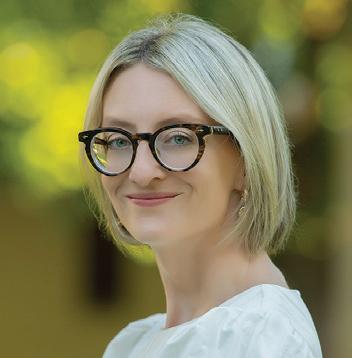
MANAGING EDITOR & CREATIVE DIRECTOR
ASHLEY ROBINSON
DIRECTOR OF STRATEGIC MARKETING & COMMUNICATIONS
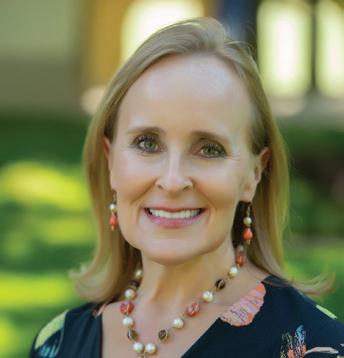
COPY EDITOR
KATHRYN DAVIS ‘89
DIRECTOR OF ALUMNI RELATIONS
COPY EDITOR
ASHLEY MCCOLLUM COMMUNICATIONS MANAGER
JUNIOR EDITOR
STELLA CAMMACK ’27
TVS JUNIOR
SARAH RADICELLO | RADICELLO CREATIVE
CONTRIBUTING PHOTOGRAPHERS
DAN BRYANT PHOTOGRAPHS
COLE CHRISTOPHER ’26
SZALAN ELLIS
JAKE FELTS PHOTOGRAPHY
KIRSTEN GALLON
PHOTOGRAPHY
MELISA GARCIA
SUNNAE HILER
CONTRIBUTING WRITERS
STELLA CAMMACK ’27
OLIVIA CAREY ’26
DR. DONALD CARLSON
EDY CLINE ‘26
BEN COURCHESNE
KATHRYN DAVIS ’89
SZALAN ELLIS
MELISA GARCIA
KYLE KAHUDA
JULIE KNUDSEN
MARGARET LANE
ERIN MACNABB
ASHLEY MCCOLLUM
ASHLEY MCCOLLUM
LAURA MONTGOMERY
KASSIE MOORE
PHOTOGRAPHY, LLC
HILLARY RELYEA
ASHLEY ROBINSON
MARCY ROTEN
CANON SAWYER: CANON
ELIZABETH PHOTOGRAPHY
LAURA MONTGOMERY
FINN MULVANEY ’30
HUB NICKELS ‘26
RICHIE PETRONIS
HILLARY RELYEA
ASHLEY RIEMITIS ‘16
ASHLEY ROBINSON
MARCY ROTEN
ELLA SCHROEDER ‘30
STEVI SCHUKNECHT
WHIT WOLMAN
MADELINE YORKSTON ’26
Homecoming 2026 October 2
Homecoming 2027 October 8
ACADEMICS
A DAY IN THE LIFE | PAGE6
CUM LAUDE SOCIETY | PAGE16
NATIONAL HONOR SOCIETY | PAGE17
THE RED FOLDER | PAGE31
ESTABLISHING STRONG ROOTS | PAGE46
CITIZENSHIP IS ACTION | PAGE54
ALUMNI
ALUMNI AWARD HONOREES | PAGE70
ACAC 2026 | PAGE75
CLASS NOTES | PAGE76
THE ARTS
WHERE MAKING MEETS MEANING | PAGE22
NIGHT WITH THE ARTS | PAGE64
CALVIN BARKLEY ENDOWMENT | PAGE68
ATHLETICS
BUILDING CHAMPIONS EARLY | PAGE26
THE RETURN OF TROJAN WRESTLING | PAGE27
COLLEGIATE SIGNING DAY | PAGE28
EXPERIENTIAL EDUCATION
LASTING IMPACT OF TOE | PAGE42
GLOBAL EDUCATION
OPENING THE DOOR | PAGE34
INSIDE THE ARCHES
HEAD OF SCHOOL | PAGE4
CLASS OF 2026 | PAGE14
60TH COMMENCEMENT | PAGE29
INCOMING UPPER SCHOOL HEAD | PAGE30
PROFESSIONAL LEARNING | PAGE38
CAREER EXPLORATION DAY | PAGE41
INCOMING ASSISTANT HEAD | PAGE49
RETIREMENTS | PAGE50
CAMP XCURSION | PAGE52
POWER OF PARTNERSHIP | PAGE59
GRANTS FOR GREATNESS | PAGE61
REACHING FOR THE STARS | PAGE62
SPIRIT COMMITTEE | PAGE66
DADS CLUB | PAGE67
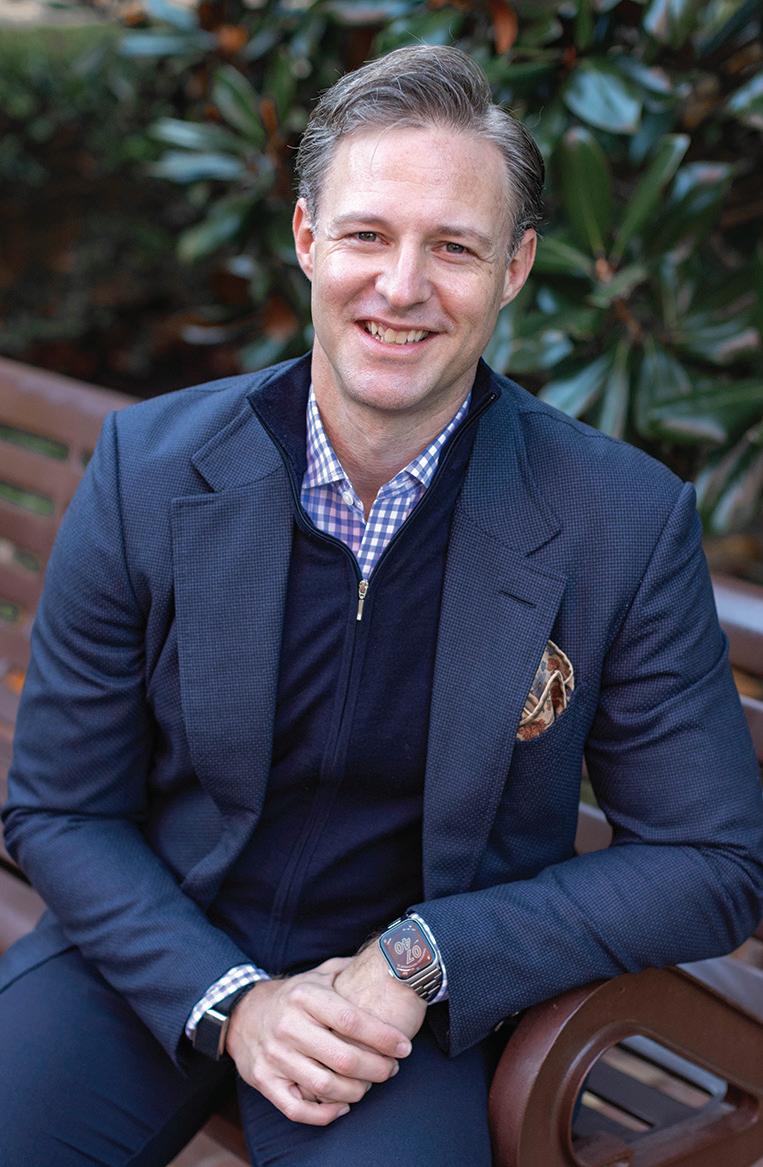
BEN COURCHESNE Head of School
LOOKING BACK TO LOOK FORWARD
This edition of the Trojan Voice reflects a theme that has stayed with me throughout this first year of my tenure: recalling our roots as we look to our future. At Trinity Valley School, our future is best understood by looking inward—by remembering who we have been and why we began.
I’ve become familiar with our humble and determined founding story. In September of 1959, six 10-year-old boys and a small group of committed educators gathered in a modest, abandoned building downtown. There were no modern conveniences or air conditioning, just a third-floor kitchen and a shared belief that something meaningful could take root there. Stephen Seleny, our founder, held fast to the idea that young people deserve an education that challenges both mind and character. His vision inspired the mission that guided us to our present: the pursuit of Fine Scholarship, Wide Interests, Intelligent Citizenship, and Moral and Spiritual Growth.
The stories in this edition are, in many ways, an extension of that founding spirit. They invite us to see the throughlines between past and present, between the courage of our earliest days and the daily experiences of our students and faculty today. As we prepare to engage in a thoughtful strategic planning process over the next year—one that will affirm a renewed mission, vision, and set of values—these reflections ground us. They remind us that any articulation of who we aspire to be must be rooted in who we have always been.
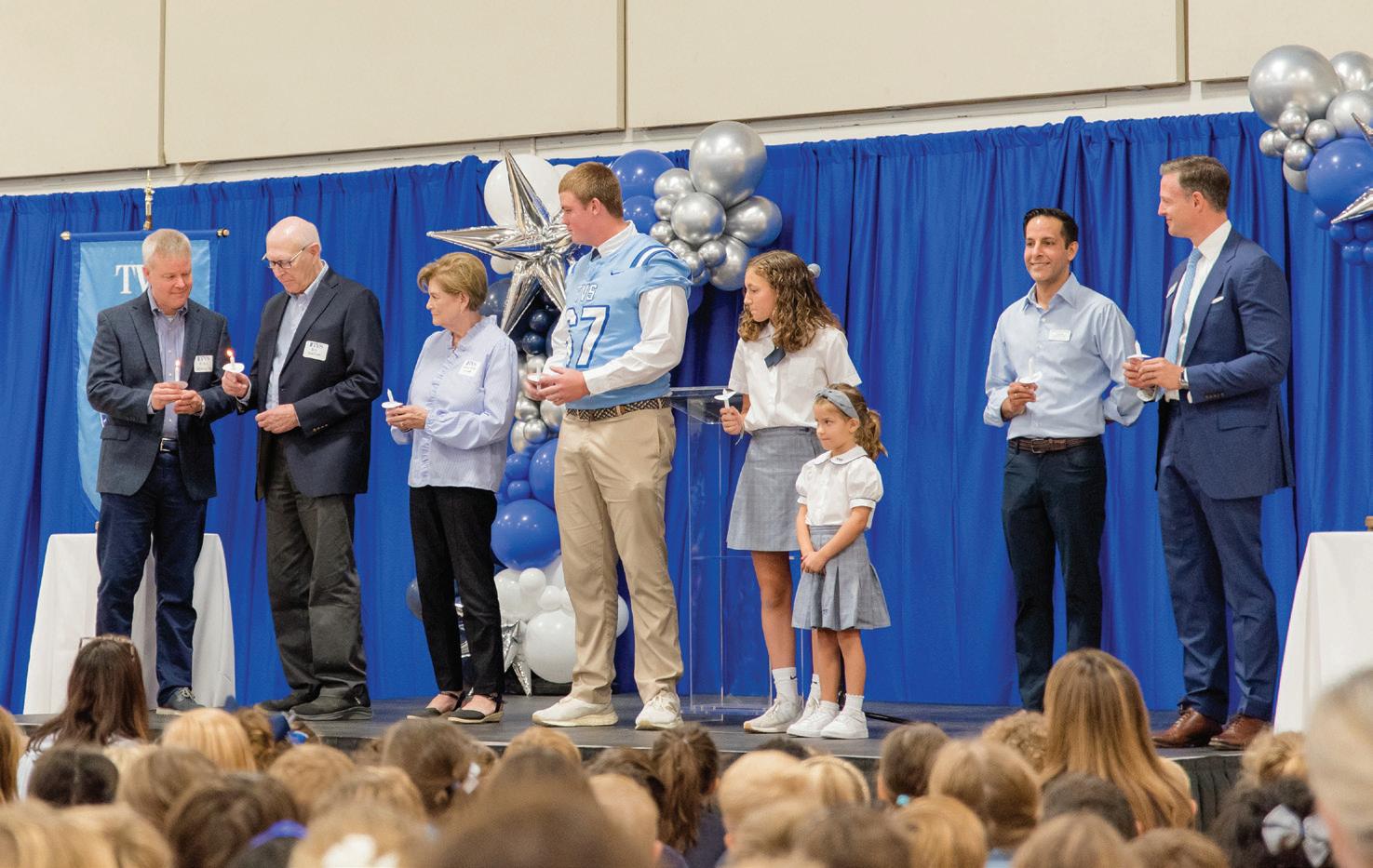
I was reminded of the depth of that vision during our Founders Day celebration, particularly in the passing of the torch from Alex Seleney to our emeritus faculty, to trustees, to current students, and finally to me: a moment that felt both symbolic and deeply personal. Etched in our foyer are words I have known since my own adolescence: “Goodness without knowledge is weak, but knowledge without goodness is dangerous.” That sentiment captures something essential about TVS: we are not simply preparing students for achievement; we are preparing them for lives of purpose and integrity. This is not a transactional place. It’s a transformative one.
To better understand how that mission lives today, I spent time walking alongside our students—literally. Backpack on, schedule in hand, I shadowed students across all three divisions. What I found was both affirming and inspiring: a fourth-grader offering a confident handshake, a Middle School community cultivating belonging through “Base Camp”, and Upper School students leading with quiet confidence and maturity. These moments made clear that at Trinity Valley, a sense of belonging is not an outcome; it is a starting point.
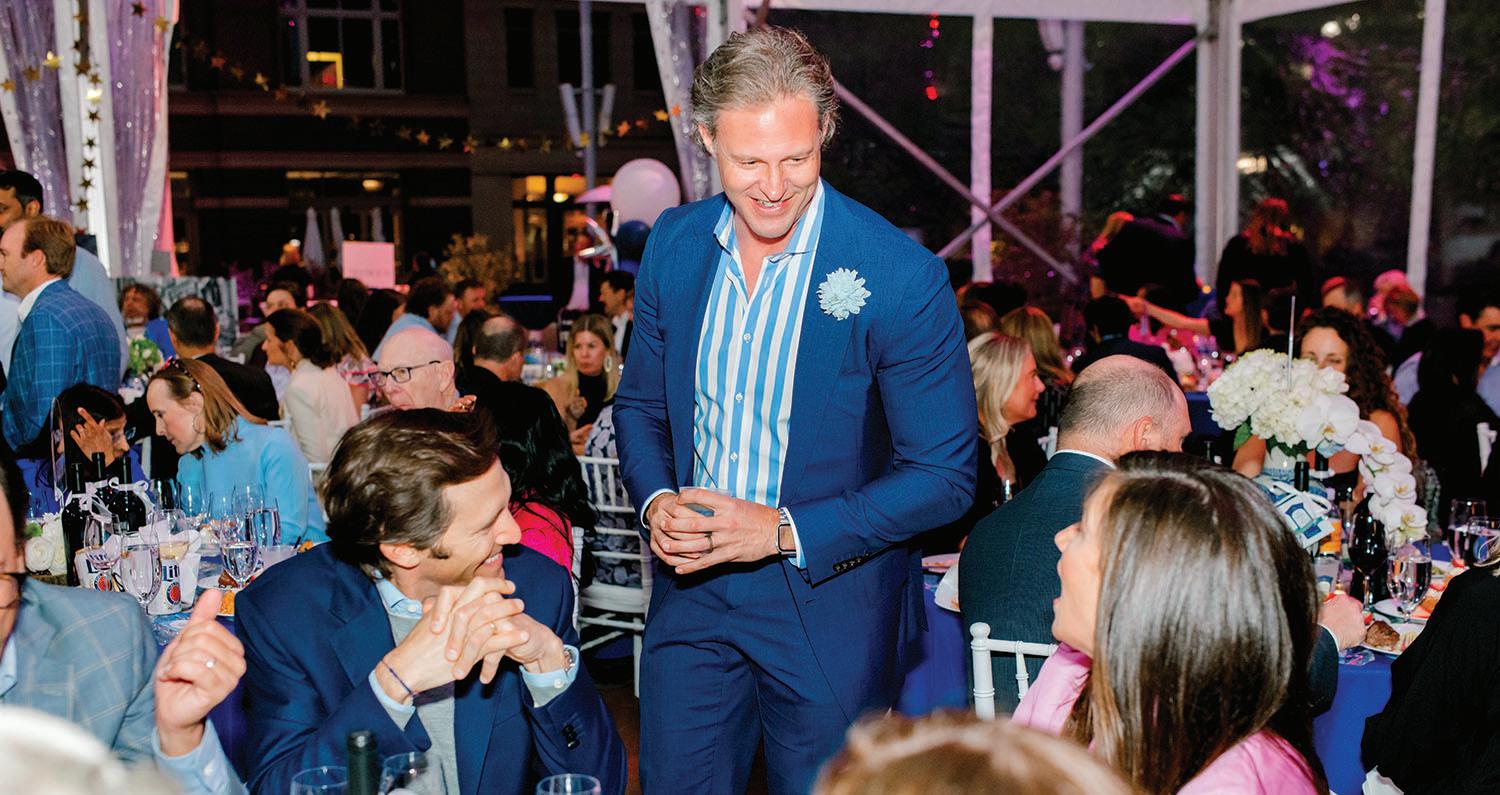
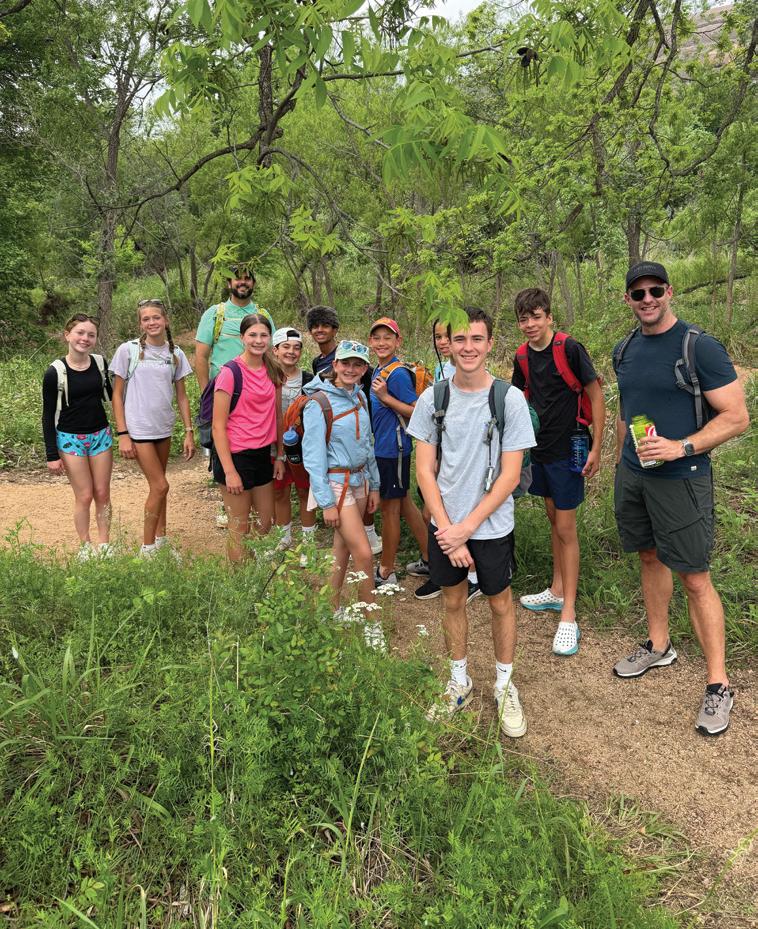
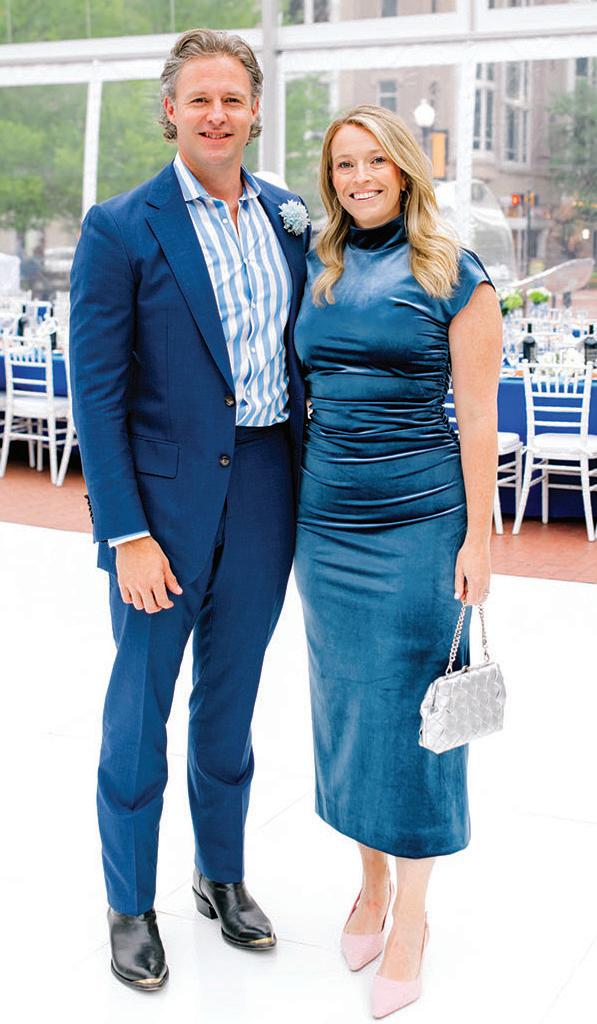
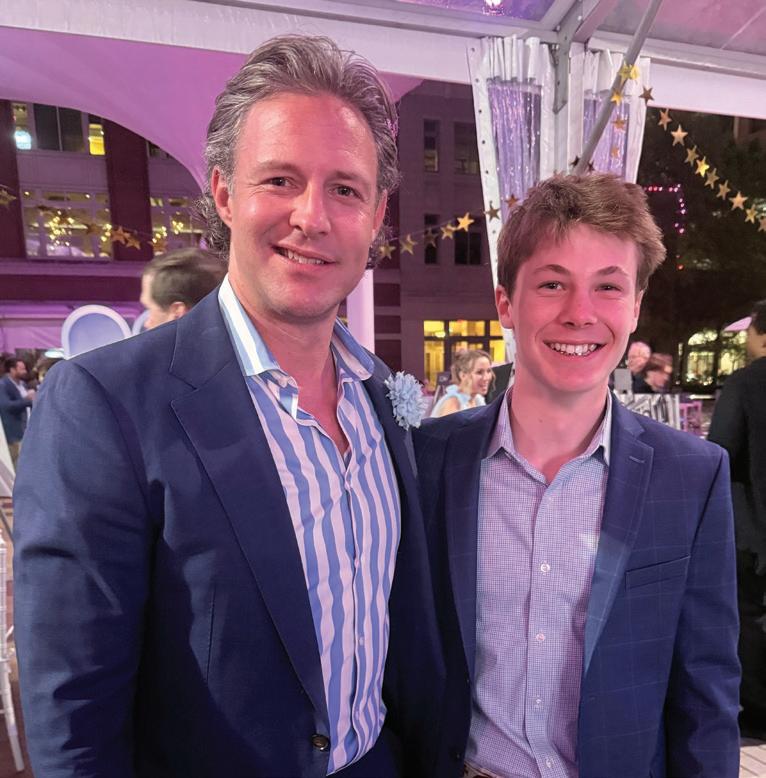
Opposite pge clockwise: Founders Day 2025 Ceremony; 7th Grade TOE Trip; TVS Auction: Ben and Audrey Courchesne; Ben and William Lynch '27; Ben with Madolin and Ben Rosenthal
Looking ahead, our work is grounded in the idea of One TVS — a cohesive, intentional journey for every student from Pre-K through grade 12. That commitment is taking shape in several important ways:
• Investing in our faculty, ensuring they have the support and professional growth needed to meet the evolving needs of our students.
• Strengthening our partnerships with families through efforts like a Community Commitments resource and sharing copies of Better Together with every family, both of which aim to deepen trust and shared purpose.
• Engaging in strategic visioning, inviting voices from across our community to help shape the next chapter of Trinity Valley School.
By honoring our beginnings and remaining faithful to Seleny’s vision even as we evolve, we do more than preserve our history; we give it life. We carry it forward, informed by the stories we tell and the ones we are still writing, as we shape a shared vision for the future.
Thank you for being an essential part of this work and this community.
A DAY IN THE LIFE
ASHLEY ROBINSON, DIRECTOR OF STRATEGIC MARKETING & COMMUNICATIONS AND STELLA CAMMACK CLASS OF 2027
What does it mean for a Head of School to truly know a school? Not from reports or meetings, but from the lived rhythm of a day: the moments that unfold between bells, in classrooms, on benches, and in quiet conversations.
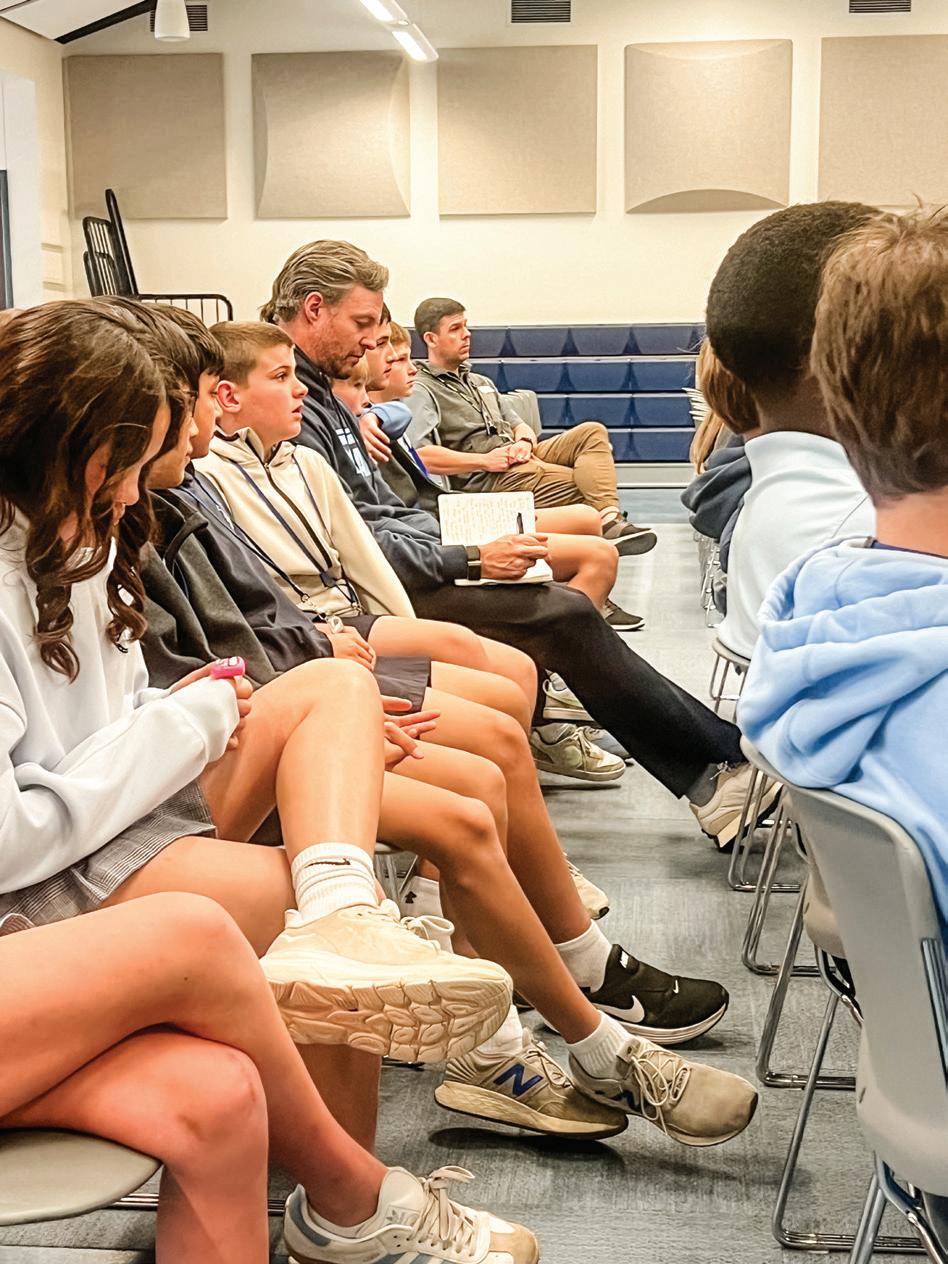
This year, Ben Courchesne has made that question a practice. In the fall, he spent time alongside 11th grader Shea McCarthy, experiencing the cadence of Upper School life — rigorous academics, demanding schedules, and the growing confidence of a student coming into her own. This spring, he turned his attention to Lower and Middle School, stepping into the worlds of fourth and sixth grade, where curiosity is immediate, relationships are foundational, and growth reveals itself in small, meaningful ways.
“Across every age and stage, the insight is consistent: when you take the time to be present, to notice, and to listen, you begin to see the throughline...”
By placing himself inside the student experience –moving from AP classrooms to HomeBase, from varsity fields to playground benches – he is tracing the full arc of a TVS education. What emerges is not a snapshot of any one division, but a deeper understanding of how belonging, curiosity, and confidence take root early and grow over time.
Across every age and stage, the insight is consistent: when you take the time to be present, to notice, and to listen, you begin to see the throughlines — how a fourth grader’s wonder, a sixth grader’s awareness, and an 11th grader’s self-possession are all part of the same journey.

MY DAY IN FOURTH GRADE WITH PARKER ROSS
BEN COURCHESNE , HEAD OF SCHOOL



7:52 a.m. – The Handshake

Parker Ross meets me in the front office with a firm handshake and steady eye contact — the sort of greeting one expects from a junior associate, not a fourth grader who still has Brain



Lower School teachers coach this early: look someone in the eye, offer a confident handshake, speak clearly. Seeing it in action is a reminder that character formation here begins long before algebra and well before college essays.
I am welcomed. I am also slightly assessed.
7:57 a.m. – Cubby Culture



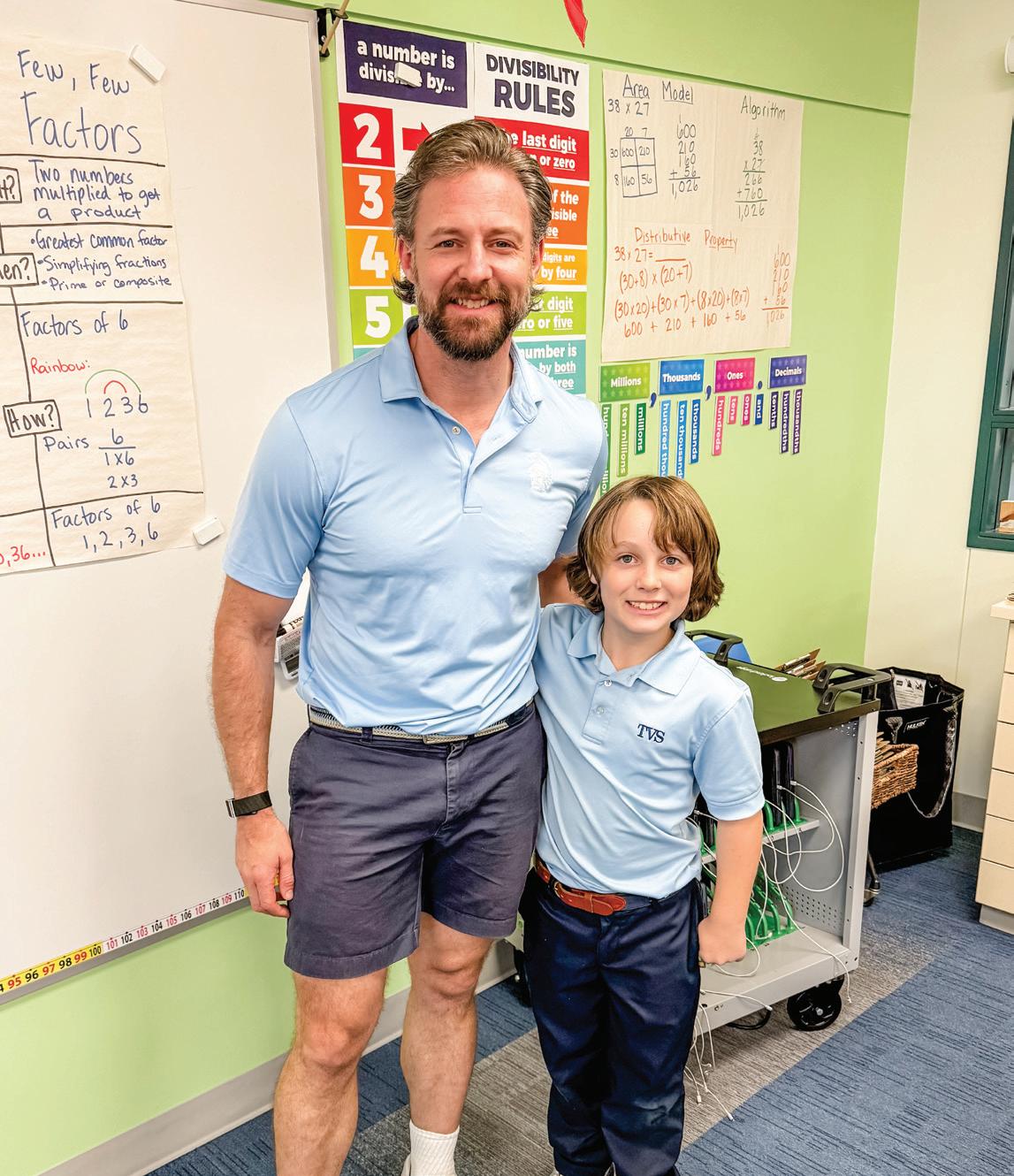
We head to Mrs. Campos’ classroom, where Parker gives me a brief but thorough tutorial on cubby logistics. There is a system. There is sequence. We will need math and science



I settle into an orange plastic chair beside Alice Doumany and Eleanor Muyskens. The chair accommodates me in the way a folding seat accommodates a retired tight end. No one

8:05 a.m. – The Tolling of the Bells



There is something quietly remarkable about nine- and 10-year-olds holding silence with intention. It suggests they understand, at least in outline, that they belong to something
8:09 a.m. – The Pledge
Without announcement, the fourth graders know it is time. Doors open and students pour out of classrooms, energy multiplying as they move, and form into lines with


Back in the classroom, Parker shares that he will offer the Pledge for the entire grade. He delivers it confidently — voice steady, shoulders square. Not dramatic. Not performative.
Leadership here rotates. Everyone will have a turn.

8:15 a.m. – Words That Frame the Day

In Mrs. Knudsen’s office, the fourth grade gathers for announcements. The Word of the Day and Character Trait of the Month – respect – are introduced, not as decorations,




We walk to the courtyard for the Tolling of the Bells, standing shoulder to shoulder in respectful silence as we honor a member of the TVS community. The chatter fades. Posture straightens. Even the breeze seems to cooperate.




Mrs. Tomme shares a presentation honoring the founder of Black History Month. The message is clear without being heavy: history matters; how we treat one another matters more.

The tone is calm. The students listen.

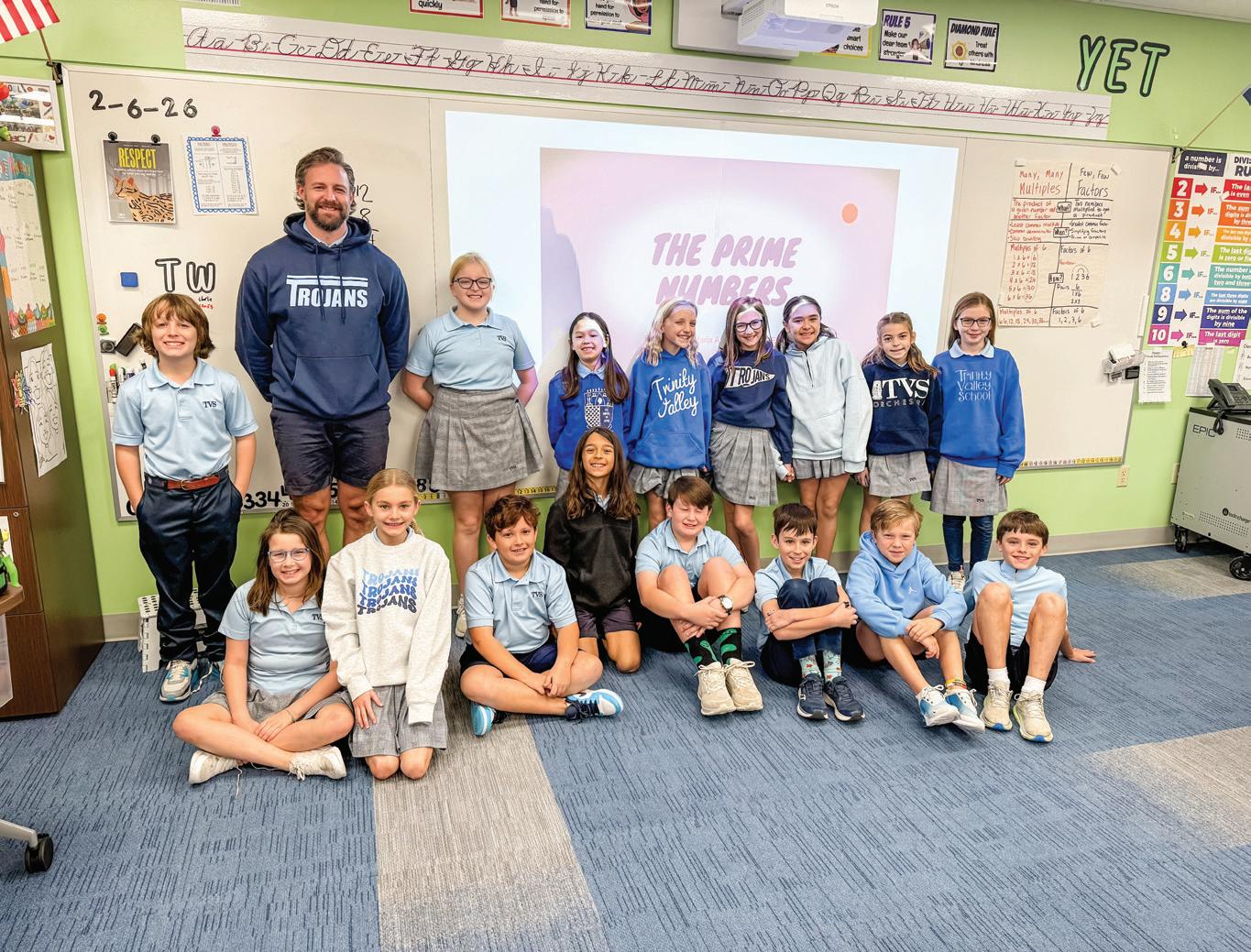
8:31 a.m. – Prime Numbers, Featuring Lizzo
Back in Mrs. Campos’ room, the class is singing about prime numbers to the tune of what I believe is Lizzo’s


It is unexpectedly effective. I now know my prime numbers
We move into patterns and long division. Parker, Alice, and Eleanor navigate the work with confidence while I rediscover how quickly fourth graders move when properly motivated.
When students finish a section, Mrs. Campos invites them to put their heads down to signal completion. The room quiets in gentle waves.
The head-down posture feels like a micro-nap. Having attended the rodeo the previous evening, I find this incentive structure deeply compelling. I work faster.
Parker mentions an upcoming fractions test and declares himself “cooked.” He does not appear cooked.
Once finished, students transition seamlessly: novels emerge, IXL screens glow, and a small group competes in a rapid-fire math challenge that feels suspiciously like postseason play.
In football, I am designated “all-time offense,” which allows me to channel Rob Gronkowski without the orthopedic
The swing game proves most humbling. I have lost the muscle memory required to pump effectively. The students assure me my kicks are “good.” The tone suggests encouragement more
And then, almost abruptly, it ends. Lines form. Materials
10:25 a.m. – Demonstrations
It is demo day in Dr. Buffington’s science class. “Is it a physical change or a chemical change?” she asks as vinegar foams,

The highlight comes when a film canister cap launches toward the 14-foot ceiling, drawing collective awe and just
The spectacle is brief. The explanation is lasting.
Students speak confidently about hypothesis and reaction. Failure is framed as revision. Curiosity is rewarded. Dr. Buffington’s enthusiasm is contagious — not flashy, but
Confidence here is being built in layers.
11:01 a.m. – Brunch Life
Brain Break happens twice a day, intentionally scheduled. It is not a pause from learning; it is part of it.
The playground divides itself into three regions:
• touch football — spirited, negotiated, nearly every
• a swing-based game involving the precise timing of a mid-arc kick of a thrown ball.
In kickball, I crush a pop fly to deep center only to be robbed by a well-positioned fourth grader. I nod, as though this was expected.
Transitions to lunch resemble choreography. Parker instructs me on door-holding assignments and informs me that we will join the parent-service line because “they give
The claim proves empirically sound.
At the fourth-grade table, conversation turns briefly to how unusual it is for a fourth grader to have a full beard. I clarify that I am not in the grade. This clarification is noted and

Mrs. Manulik and Mrs. Doswell serve generously. The room
11:25 a.m. – Leadership in Practice
Every fourth grader has a job during Lower School assembly.


Parker and I serve as Assistant Teachers, guiding a kindergarten class to the Middle School assembly hall. About halfway


1:45 p.m. – Spelling
gives me pause. Parker finishes confidently.
2:39 p.m. – ELA and the Larger Question
that I occupy the spatial equivalent of three kindergarteners sitting criss-cross applesauce.
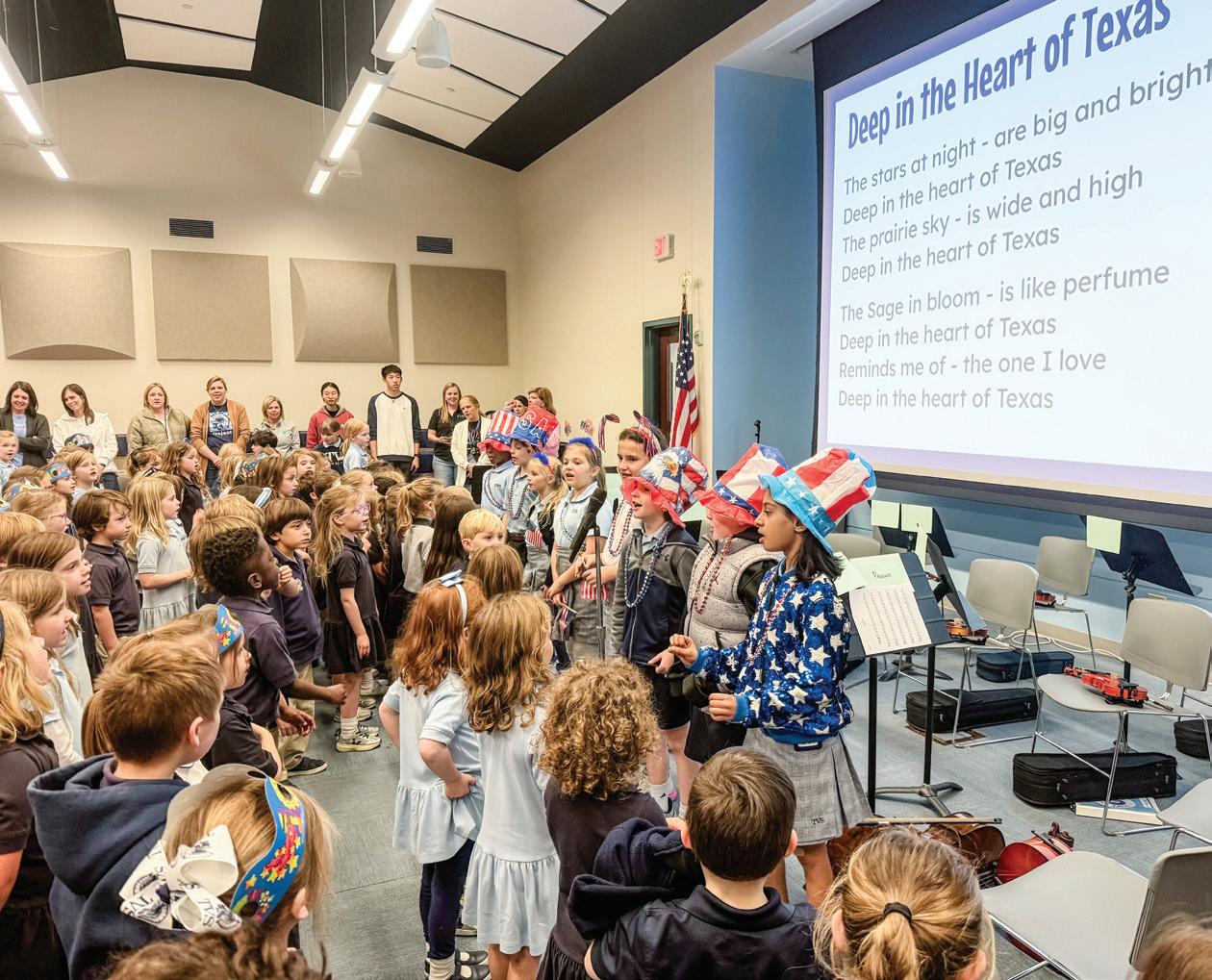
The assembly includes the Pledge, a patriotic song, and visiting students from China who speak about respect, including the custom of filling a teacup only two-thirds full so as not to burn a guest. Hospitality, it seems, can be measured in restraint.

Mrs. Knudsen later debriefs with calm clarity. Expectations are reinforced. Students listen.
PE begins with a lap around the track, a surprise to me. I grant the entire grade a quarter-lap head start and still finish near the front, though I am breathing in a manner that
Somehow, I am still trash-talked.
Inside the North Gym, we play three-way kickball. I go three for three, including what I believed to be a ground-rule home run after launching the red playground ball into the rafters. The ruling is debated. It is ultimately not a home run.
In Ms. Sosa’s classroom, the day settles with a mindful minute
“A theme,” she reminds them, “is an idea that recurs.” Then she “How do our experiences and our location influence our character?”
Hands rise. Parker nearly rises with them.
The discussion moves beyond plot. Students speak about resilience, about belonging, about how where you are shapes who you become. They are not rehearsed. They are thinking.
Winning matters. So does fairness.
1:18 p.m. – Social Studies
Ms. Sosa listens carefully, nudging the conversation forward
Back in homeroom, backpacks zip and plans unfold — basketball practice, a stop at the store for dry ice, the ordinary
No one appears in a rush to leave.
By the end of the afternoon, nothing dramatic has happened. No grand speeches. No sweeping revelations.
Parker’s game is steady and composed. He does not lobby officials. Competition here is spirited but bounded. Disagreements are argued and then resolved. The game
Mr. Melton’s classroom hums softly with background music as students research historical explorers. We learn that Ponce de León likely did not search earnestly for the Fountain of Youth, though the story persists. History, like playground disputes, benefits from evidence.
Quietly.

MY DAY IN SIXTH GRADE
WITH JAMES GILDNER
BEN COURCHESNE , HEAD OF SCHOOL
“Modern man listens more willingly to witnesses than to teachers, and if he does listen to teachers, it is because they are witnesses.”
One of the first things I do in a new school is go back to the classroom. Not to evaluate. Not to be seen doing it. Just to remember what it actually feels like to be a student and to watch what the place does when no one is performing for the
8:06 a.m. — HomeBase / Base Camp
I have spent a day in fourth grade. I shadowed an 11th grader through AP coursework, varsity field hockey practice, and the particular ease of someone who has figured out, more or less, who she is. Both days gave me something I couldn’t have
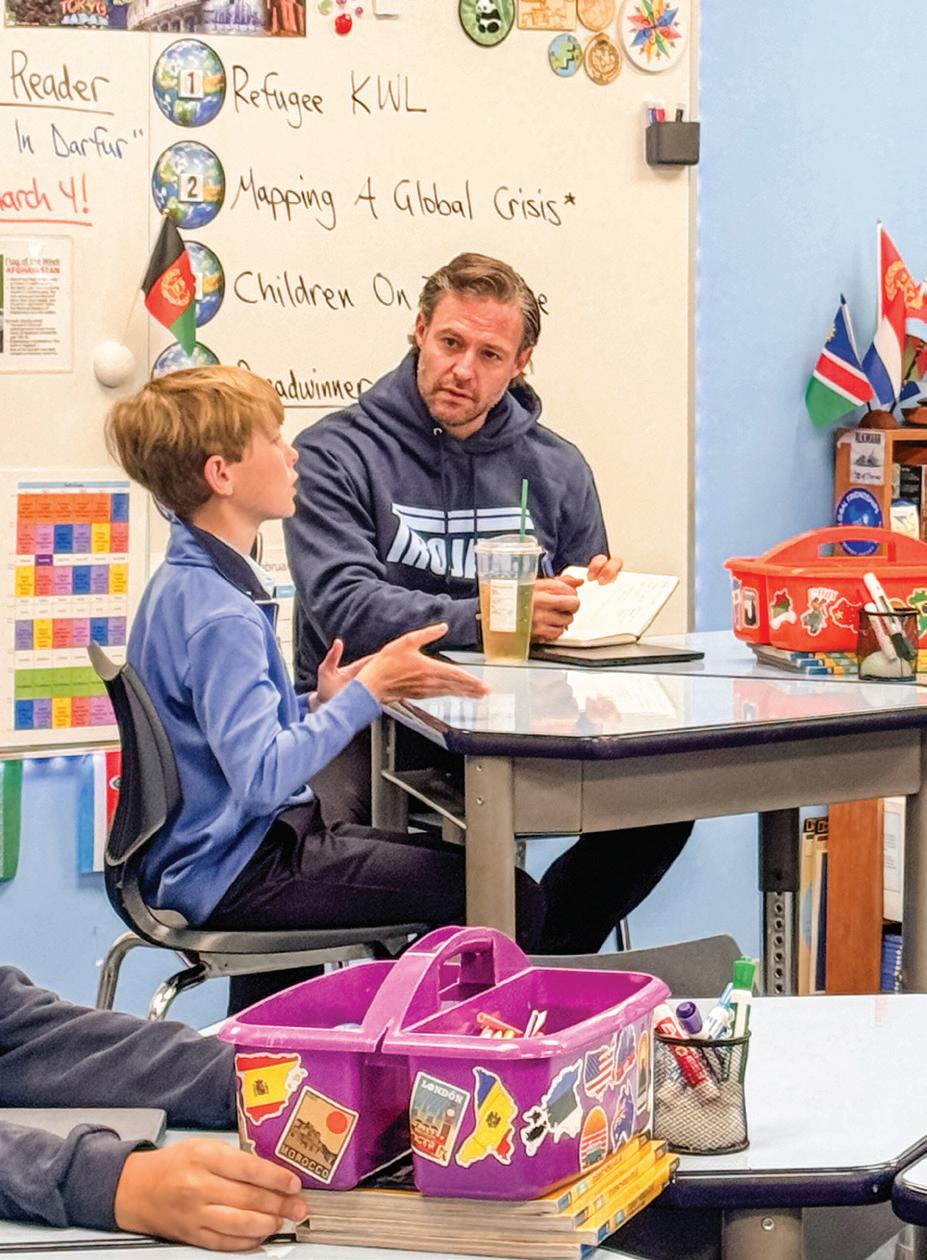
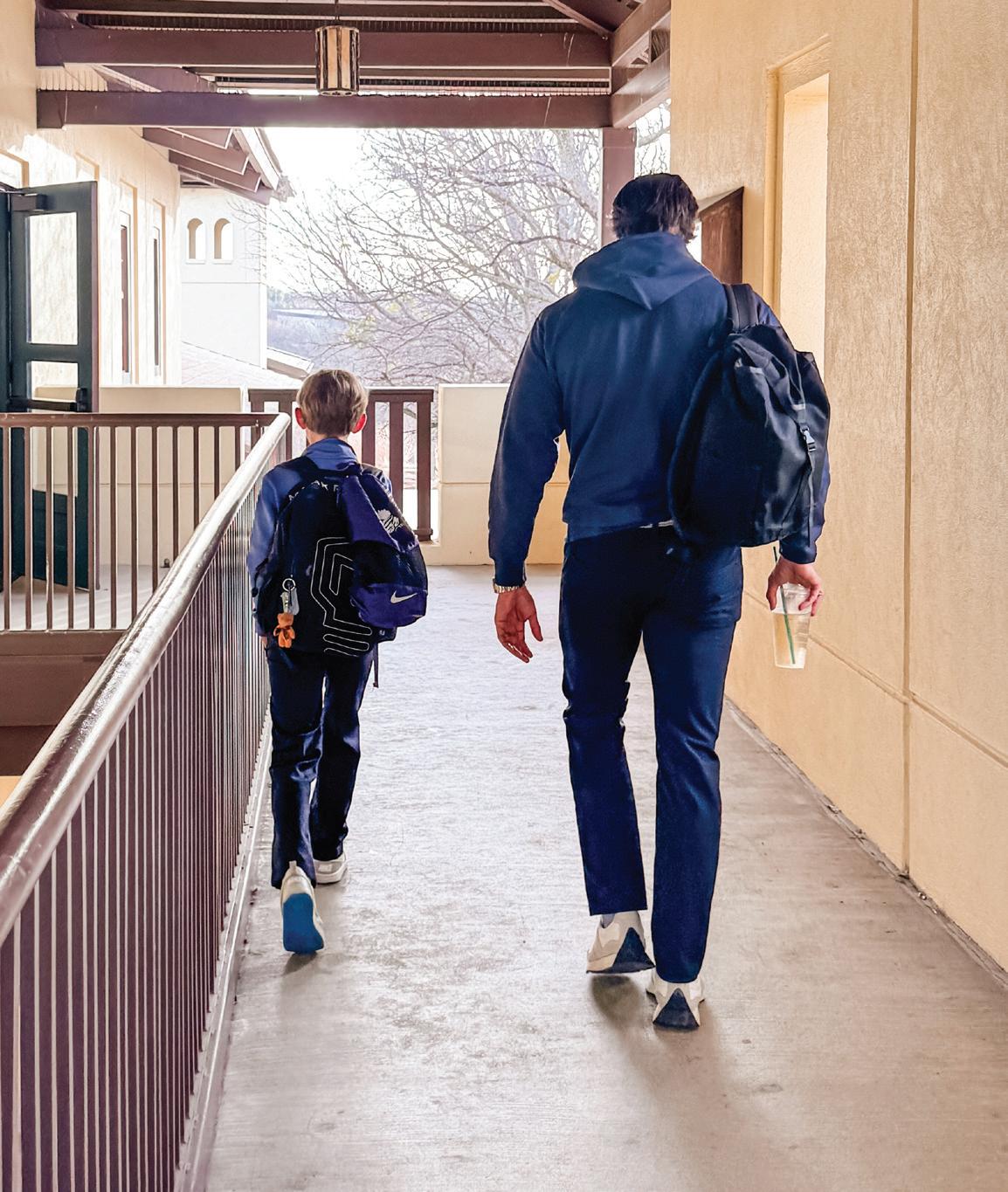
I walked into the sixth-grade hallway a few minutes before the day began, and the first thing I noticed was the teachers. Every one of them was at their door. Not checking phones, not reviewing lesson plans. Standing there, greeting students by name as they came in — a word here, a question there, a hand on a shoulder. Noticing kids. Being present for them before the day made any formal demands on anyone.
This time: the sixth grade with James, a kid I know peripherally from the sidelines of youth sports, the way heads of school know most students before they really know any of them. His mom and I exchanged hellos at drop-off. He hopped out of the car, backpack over one arm, and offered a firm handshake and steady eye contact. Nothing about it was performed. He was just — present. Composed. Ready.
It was, I thought, exactly what Pope Paul VI was describing in the epigraph above. Not instruction. Witness.
James led me to Mr. Churchward’s room for what the Middle School calls HomeBase, but James called it “base camp.” And while James may have mistaken the terms, the sentiment resonated with me. At TVS, that’s not a casual word.
B.A.S.E. Camp holds a slightly different meaning in TOE, offering time together to reflect on the Best parts of the day, Acknowledgements of others, Self care, and Expectations for the following day. The Trojan Outdoor Experience has given it real meaning: the place you set out from, the place you return to. That James used it for his homeroom, without ceremony, told me something about how he understood the day ahead.
Maps and flags covered the walls of Mr. Churchward’s room, fitting for a classroom anchored in global programming. James showed me the cubby system without being asked, no teacher prompting him. He simply knew what to do and assumed I’d want to know too.
James walked me through the day: Music. Science. Pathways to Prevention. Chinese. Brain break. Lunch. Math. Another brain break. Study hall. Pre-Athletics. History.
The music room was bright, chairs in neat rows. Ms. Owen, Middle School Music, and Ms. Cornelius, STEAM, welcomed us, and Ms. Cornelius opened class with a question
“Tell us something good.”
The kids knew. They moved with the ease of people who have been trusted to figure things out.
Students didn’t pause. One had finished a Nearpod assignment one minute before the deadline, reported with the pride of a last-second field goal. Another announced only 17 days until March Madness. One student, apparently blessed with exceptional dentition, shared that he will never need braces. Another had woken up at 4:30 a.m. to work out with his dad and wanted the room to know.
The day began with relationships. Not roll call, not a learning objective on the board — just the simple act of asking students
From there: frequency, amplitude, cymatics, Chladni patterns. Stations materialized around the room: laser light visualizers, tuning forks, wine glasses filled to different levels, salt patterns formed by vibration on a tonoscope. I held a tuning fork to the tragus — the name (I was reminded) of that small cartilage flap at the entrance of the ear canal — while James rubbed the rim of a wine glass until it rang. He looked not at all surprised that it worked.
I wrote the question down. Not because it was unusual, but because in that room, on that morning, it was just what you asked next. I didn’t know yet how much I’d be turning it over by the end of the day.
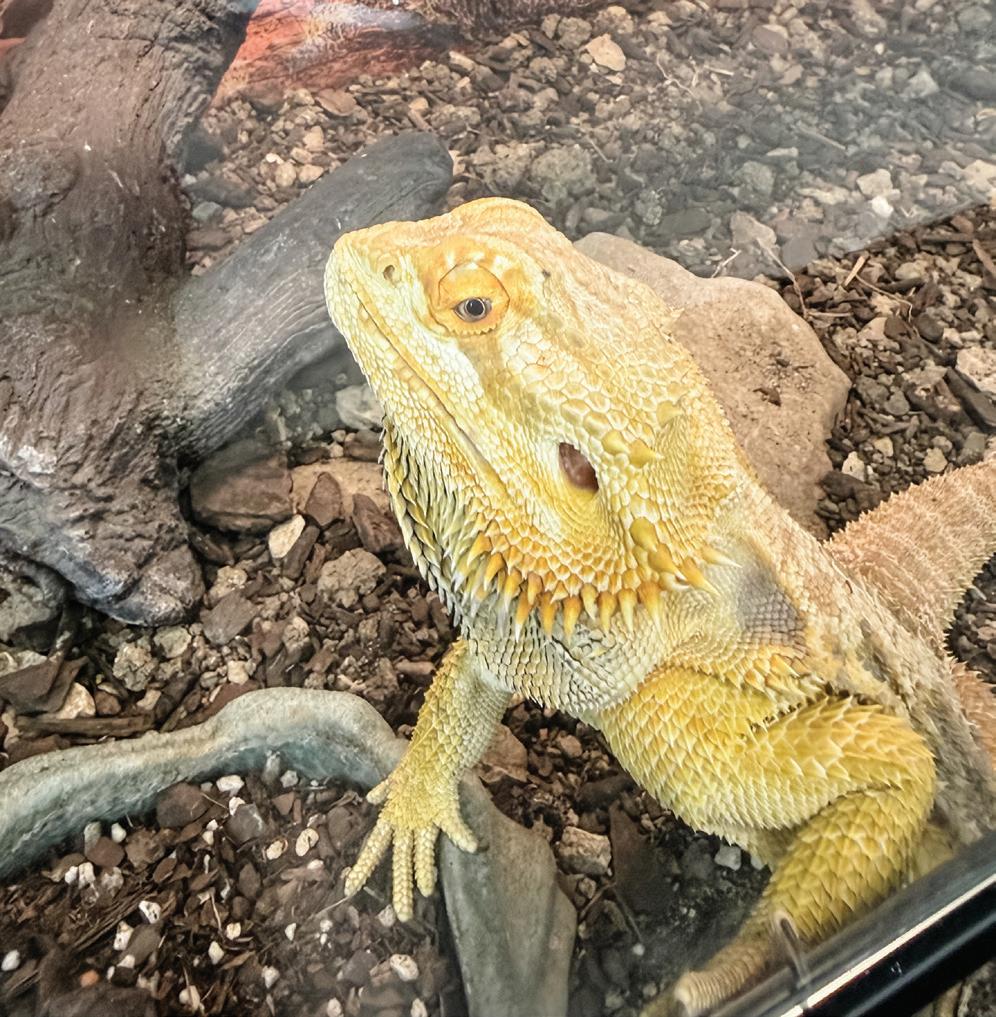
The class had identified what Mr. Gibson cheerfully called a PPP, a potential pollination problem (say that three times fast). No bees. The solution, arrived at collaboratively: Q-tips, deployed in careful mimicry of what nature usually handles without anyone’s help. Sixth graders engineering a workaround for an ecosystem gap.
Bucky, a bearded dragon of considerable girth and mild skepticism, observed all of this from his terrarium.
Later, students took notes on crustaceans and arthropods. Some built Lego versions as their demonstration of understanding. Making conversation, James mentioned, almost as an aside, that an earlier dissection had gone sideways when his grasshopper turned out to have been pregnant.
“It got messy,” he said, with the tone of someone who has made his peace with the world’s occasional lack of cooperation.
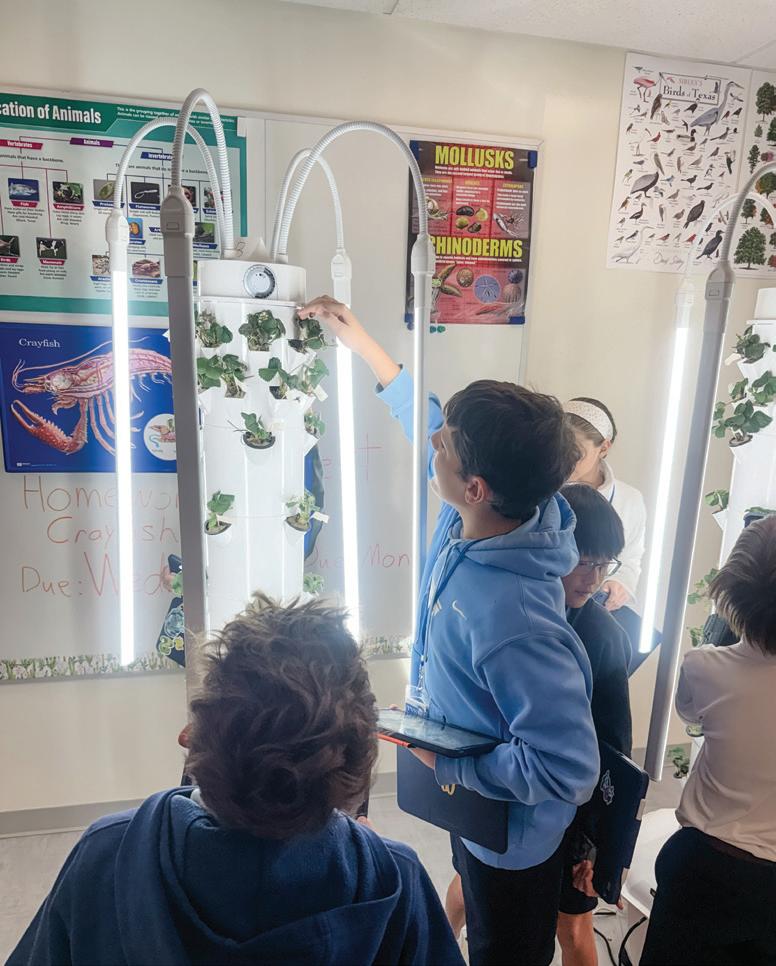
where they’d left off: gathering data on hydroponic strawberry plants, comparing growth to soil-grown controls. Mr. Gibson called from across the room:
“How are we defining growth?”
The sixth grade gathered in the assembly hall for Pathways to Prevention, an annual series on substance education, calibrated to the age of the audience. The presenter, Eduardo, connected with the room quickly, grounding his message in his own story rather than warning-label language.
He talked about brain development. About addiction. About learning to say no before the moment requires it. The room paid attention in a way rooms full of 12-year-olds aren’t always expected to.
Middle School is where the serious conversations arrive. Not announced. Just present.
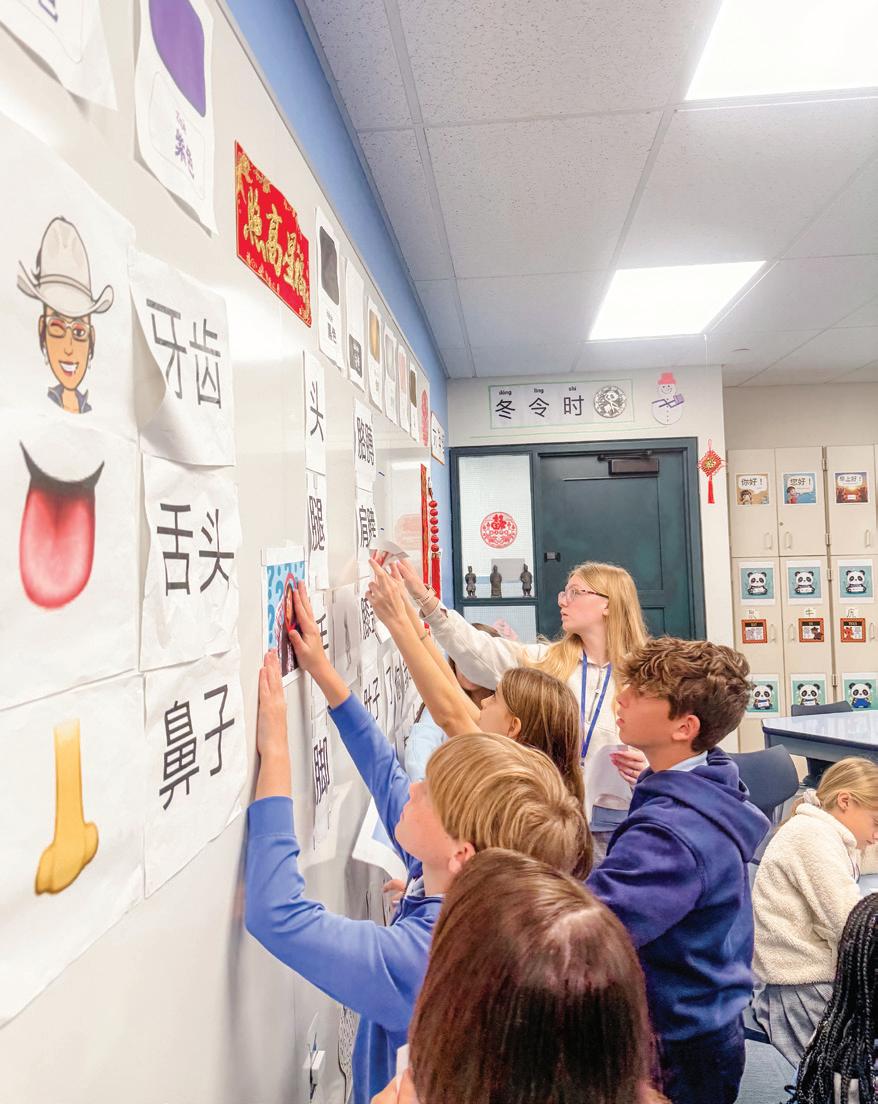
Ms. Wang met us at the door with an entry ticket: identify body parts in Mandarin. Think “Head, Shoulders, Knees, and Toes” — but with tones, characters, and stakes. Correct answers
12:12 p.m. — Math
earned fake yuan redeemable at the classroom store.
James correctly identified three of the four. He accepted his currency with dignity.
Chinese was where I felt most out of my depth. French for me in high
Mr. Waldmann’s classroom. Two warm-up problems on the board. Old anxieties don’t need an invitation.
The five-minute speed quiz came next — roughly forty problems, two sides, no talking. The room went silent except for pencils. I worked through variables, decimal subtraction, long multiplication, fraction division. I finished. I did not finish first. James beat me. He noted it was close, which was generous.
I’d learned two phrases with any confidence: “I am in pain” and “What is wrong?” — which, I realized as math class drew near, was going to be exactly the vocabulary I needed.
Morning — First Brain Break
We came outside between Chinese and lunch, and James and I ended up on a bench together while the rest of the grade scattered across the playground.
He turned to me and asked: “How are you doing?”
I’ve thought about that moment more than almost anything else from the day. On the surface it was nothing: a polite question, the kind adults exchange without thinking. But James asked it the way you ask when you actually want to know. There was a pause after it. He was waiting.
Then the whiteboard competition: students at the board, problems called aloud, mental math in front of the room. Somehow, I was up there too, in front of a classroom of 12-year-olds, trying to simplify a mixed number before a sixth grader did. I had not missed this feeling. “I am in pain,” I
I have said for years that belonging precedes becoming — that you cannot grow into yourself in a place where you don’t feel rooted. What I was watching, sitting on that bench, was a kid so settled in where he was that he had room left over to check on someone else. He wasn’t performing maturity. He
11:56 a.m. — Lunch
The competition ended in a three-way tie. James took the tiebreaker, converting a mixed number to an improper fraction before anyone else had their marker uncapped. His team won.
1:15 p.m. — Second Brain Break: Four Circle
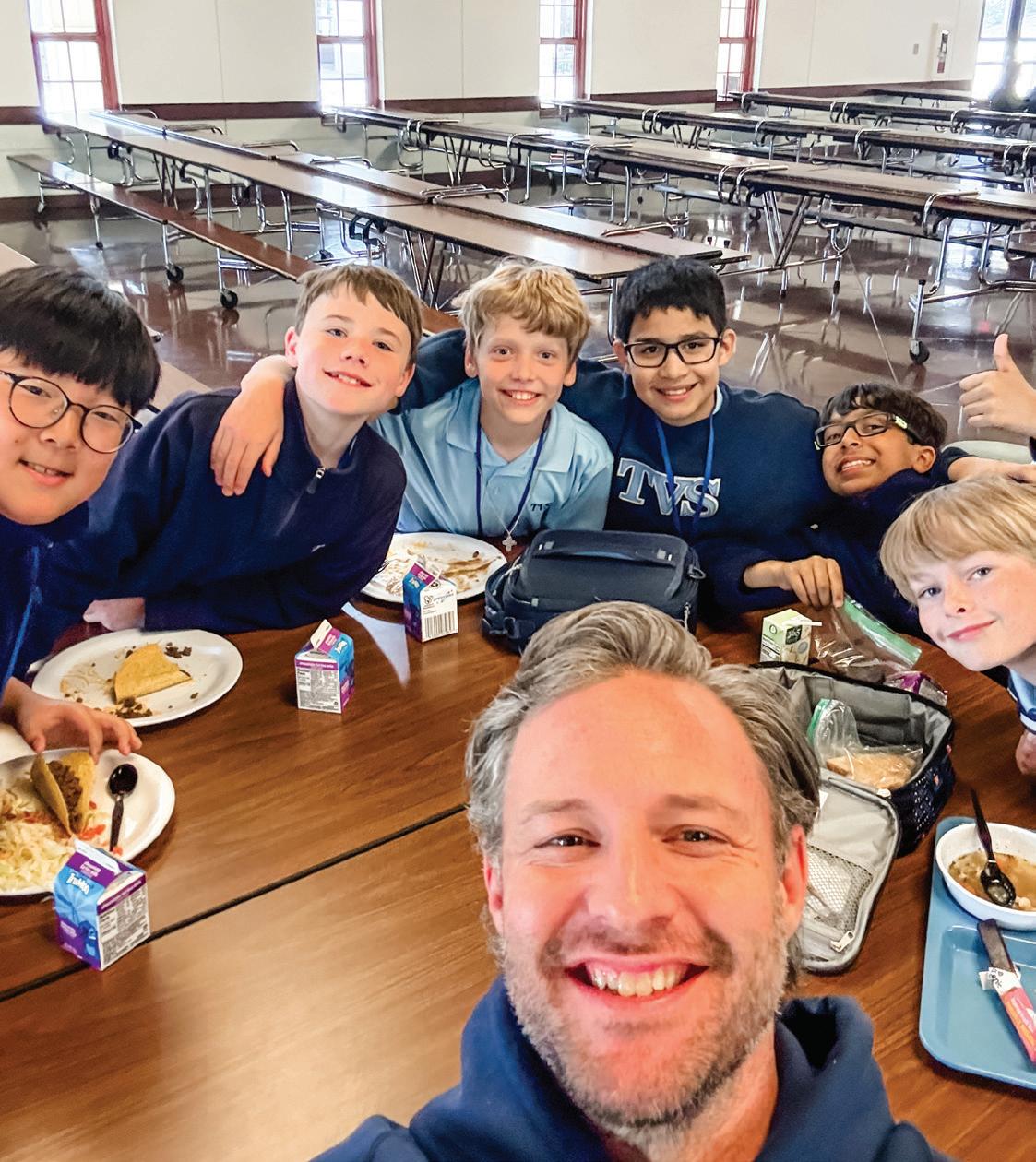
Taco day. I met James’s crew. The table conversation went immediately to fast food, specifically which chains were worth loyalty and which were not. Chick-fil-A carried the
I was also briefed on Four Circle, the afternoon Brain Break game I’d been warned about. The court is round rather than square. The rules, I would discover for myself, are a matter of
The court is round. I had been warned. What I hadn’t appreciated was the speed, or the fact that the rules — double touches, something called an around-the-world — appeared to be governed less by any written code than by collective agreement in the moment. I did not challenge this. I was a guest.
Eventually, I found an opening and put a spike down with enough force to stop play briefly. There was applause. There was something adjacent to awe.
Middle School respect is earned, not conferred. I’ll take it
Back in HomeBase. Quiet. Students working ahead, organizing their week, getting out in front of things. The room had the feel of a place where structure has stopped being something imposed and started being something used.
2:10 p.m. — Pre-Athletics: Baseball
In sixth grade, PE becomes something more specific: Preathletics. Gone are the days of dodgeball and the Presidential Fitness Test. In sixth grade, students are introduced to the sports TVS offers. Today it was softball for the girls. For the boys, baseball fundamentals with Coach Carlson and Coach LaBelle — throwing, catching, fielding fly balls, attacking
grounders, running out a base hit. The range of experience was wide. Some of these kids have been playing Little League since they could hold a bat. Others were finding their footing
I watched one kid field a grounder correctly on his third try. He looked up, a little surprised at himself, and immediately looked around for someone to share it with.
That, I thought, is also what this place is doing.
2:44 p.m. — Global Studies
Back to HomeBase for the last class of the day.
The topic: refugees. 42.5 million of them, worldwide. One of James’s classmates quickly worked that out as roughly oneeighteenth of the global population. James checked the math. Then groups formed — James with Odette and Isabel — tasked with mapping the top five refugee-producing countries, the top five host countries, and finding the patterns.
They worked without much noise. The questions they asked were good ones. Why Ukraine? War. Why Venezuela, why Sudan? Things that have been building for a long time and
As I sat with them and mostly listened, I kept coming back to Mr. Gibson’s question from that morning. How are we defining growth? Sitting in that room, watching these kids work, the answer had nothing to do with strawberry plants. Growth was the kid who checks on the adult next to him on a bench. The one mapping displacement patterns with the same focus he’d brought to a math whiteboard an hour before. The one who fields a grounder on his third try and looks for someone to tell.
You don’t define it once. You keep asking. And the asking, done by good teachers over enough years, becomes the way students eventually ask it of themselves. I heard that in the questions Odette and Isabel and James were putting to the map in front of them. Not reciting. Thinking.
A bell rang. Kids packed up and said thank you to their teacher as they exited into the hallways in clumps of chatter and planning. And yet.
Teachers at their doors at 8 a.m., seeing every kid who walked in.
A question asked on a bench, and a pause to wait for the answer.
Eight-and-a-half minus five-and-two-thirds, worked out under pressure.
Forty-two and a half million people, mapped carefully by three sixth graders who’d been talking about Chick-fil-A an hour before.
A friendly check-in with Bucky the lizard.
I went into sixth grade expecting the middle school of memory: awkward, loud, in-between. What I found was a kid who already knew where he stood and who carried that knowledge lightly enough to make room for other people in it.
Belonging precedes becoming. I’ve believed this for a while. But watching James move through his day, I understood it a little differently. Belonging isn’t only something a school builds around a student. It’s something a student, once settled enough, begins to build outward, toward whoever’s nearby.
James is 12. He hasn’t fully arrived at wherever he’s headed.
But he’s on his way. And he moves through the world like someone who knows it.
“Base Camp” will do that for you — if it’s the right one.
This is TVS, where students pursue daring expeditions from
This was the same kid who’d told me about the pregnant grasshopper that morning. Who’d said “I just love winning” without a trace of self-consciousness an hour before. Now he was quiet, tracing the shape of a crisis across a map, trying to understand something.
END OF DAY
Nothing dramatic happened. There was no single moment I could point to — no speech, no revelation, no scene that
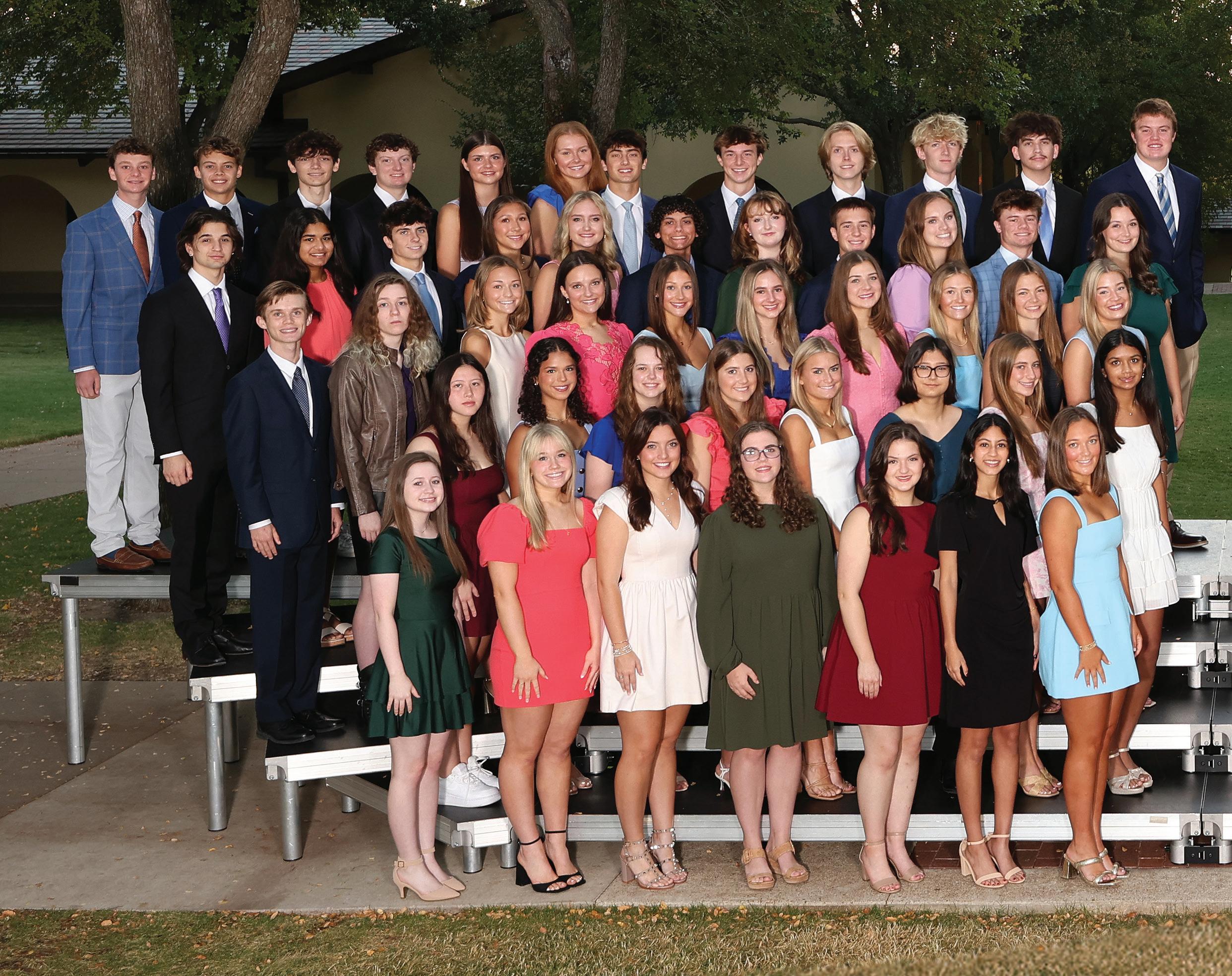
FIRST ROW (L-R)
Emily Buhman
Lucy Good
Karsyn Hamilton
Lucy Johnston
Addy Thomann
Haley Munshi
Molly Deen
Claire McKnight
Charlotte Goldman
Brooklyn Weems
Catherine McKnight Savannah Green-Dias
Edy Cline
Hasini Mukka
SECOND ROW
Alana Parker
Sydney Fewins
Madeline Yorkston
Anna Willmann
Lylah St. Peter
Izzy Bachim
Mamie Karpman
Saaira Gatta
Livia Langford
Emma Khan
Fiona She
Ella McLawhorn
Claire Kauffman
Lily Kate Bacon
Blake Corder
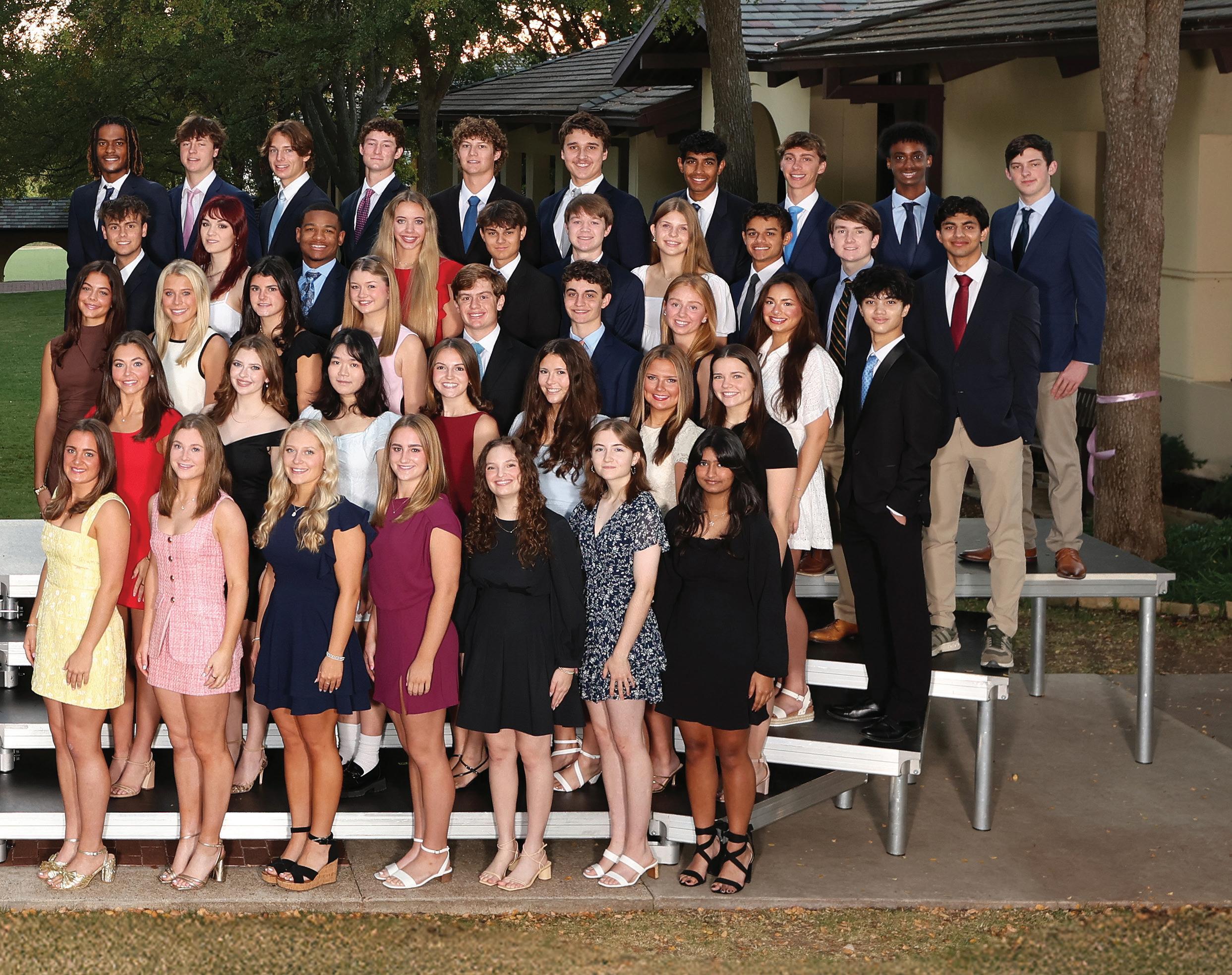
THIRD ROW
Thomas Young
Luna Hudman
Adelyn Bibb
Kadence Chaney
Gabi Cowan
Libby Bumgardner
Clare Kale
Sloane Unell
Alli Zavaleta
Hadley Langston
Maddy Grau
Kate Mikulencak
Lyla Kanthack
Ava Golden
Logan Bettinger
Reid Garsek
Ellis Jamison
Brooke Scully
Jason Shahi
FOURTH ROW
Julian Gerstle
Layla Lackan
Andrew Moore
Isabel Gonzalez
Gillian Young
Cole Peninger
Nori Hamilton
Luke Mayfield
Alex Ricketts
Tappan Bailey
Olivia Carey
Jonathan Boothby
Dalya Chandler
Ronnie
Cunningham III
Meghan Clark
Eli Trivedi
Noah Seleny
Sarah Connally
Keshav Talati
Charles Spake
Saifullah Bhatti
BACK ROW
Will Goldman
John Trigger
Danny Davis
Max McGuirk
Hattie Lewis
Caroline Huseman
Charlie Bulaich
John Ellis Payne
Davis Martin
Samuel Williams
Cole Christopher
Hub Nickels
Chris Houston
Ryan Crider
Nathan Charette
Nicholas Watkins
John Fulghum
Benjamin Walker
Shiven Dave
Jaxson Knight
Noah Daniel
Sean Needham
CUM LAUDE SOCIETY
DR. DONALD CARLSON, UPPER SCHOOL ENGLISH INSTRUCTOR
In the fall of 2022, at the instigation of Mr. Kahuda, the TVS Upper School formed a chapter of the Cum Laude Society as a way of garnering recognition for those students who achieve the highest level of academic distinction during their careers here. I was honored to be asked by Mr. Kahuda to serve as the first president of the School’s chapter.
Founded in 1906, the Cum Laude Society is dedicated to honoring scholastic achievement in secondary schools.
The founders of the society modeled Cum Laude after Phi Beta Kappa and in the years since its founding, Cum Laude has grown to more than 380 chapters, approximately two dozen of which are located in public schools and the rest in independent schools. Membership is predominantly in the United States, but chapters also are located in Canada, England, France, Spain, Puerto Rico, and the Philippines.
The mission statement of the Society reads as follows: The Cum Laude Society recognizes academic achievement in secondary schools for the purpose of promoting excellence (Areté), justice (Diké), and honor (Timé).
The symbol of the Society is the Greek letter tau, a vestige of the founding of the Society and its original name: the Alpha Delta Tau Society.
The Trinity Valley School chapter of the Cum Laude Society is part of District VII, whose regent is J.P. Culley, Head of Holland Hall School in Tulsa, OK.
The current members of the faculty council for the Society at TVS, excluding myself, are Dr. Brandon Cline (secretary), Dr. James Ray, Dr. Dave Ostroff. Mr. Kyle Kahuda, Ms. Eileen Ford, and Ms. Stevi Schuknecht.
The Cum Laude Society provides that each Chapter may elect as student members not more than 20% of the graduating class who have demonstrated academic excellence in the college preparatory curriculum. No more than 10% of the class may be named during the junior year, with the remainder of the whole number being chosen after March 1 of the senior year.
In accordance with the mission and motto of the Cum Laude Society, the faculty charter members identify and invite students who are eligible because of academic distinction. In order to be elected, a student must also embody the principle of integrity as defined and described by the Trinity Valley Honor Code.
At graduation, members wear the Tau Pin and a cord of braided white and blue with their academic regalia to reflect their status as Cum Laude Society members.
Last spring, seven new members of the Class of 2025 were elected to join the eight seniors elected at the end of their junior year. At that time, eight rising seniors of the Class of 2026 were elected for membership. Up to 10 additional new members of the Class of 2026 will be inducted to join them to fill the number for this graduating class. These elections will be announced and the honor conferred at the Awards Assembly in May.
SENIOR INDUCTEES FOR THE CLASS OF 2025
(elected spring 2025) :
Ava Casto
Mary Fahy
Kelton Finley
Grace Gibson
Maddy Reeves
Rowen Regan
Riley Stayton
SENIOR INDUCTEES FOR THE CLASS OF 2025
(elected as juniors, spring 2024) :
Sameer Bhatti
Caden George
Bea Lee
Courtney McCracken
Jimmy Rosell
Neal Shrestha
Alex Siede
Tejas Sukesh
SENIOR INDUCTEES FOR THE CLASS OF 2026
(elected as juniors, spring 2025) :
Izzy Bachim
Saifullah Bhatti
Nathan Charette
Luna Hudman
Haley Munshi
Alana Parker
Keshav Talati
Eli Trivedi
Madeline Yorkston

Ayomide Agboola
Josiah Audi
Lily Kate Bacon
Alayna Bhaloo
Coco Blackwell
David Booher
Maya Brodsgaard
Charlie Bulaich
Libby Bumgardner
Angelina Bwimbo
Stella Cammack
Grace Cantey
Davis Chaney
Vivienne Chaney
Simone Christopher
Meghan Clark
Riley Corbett
Adelyn Cox
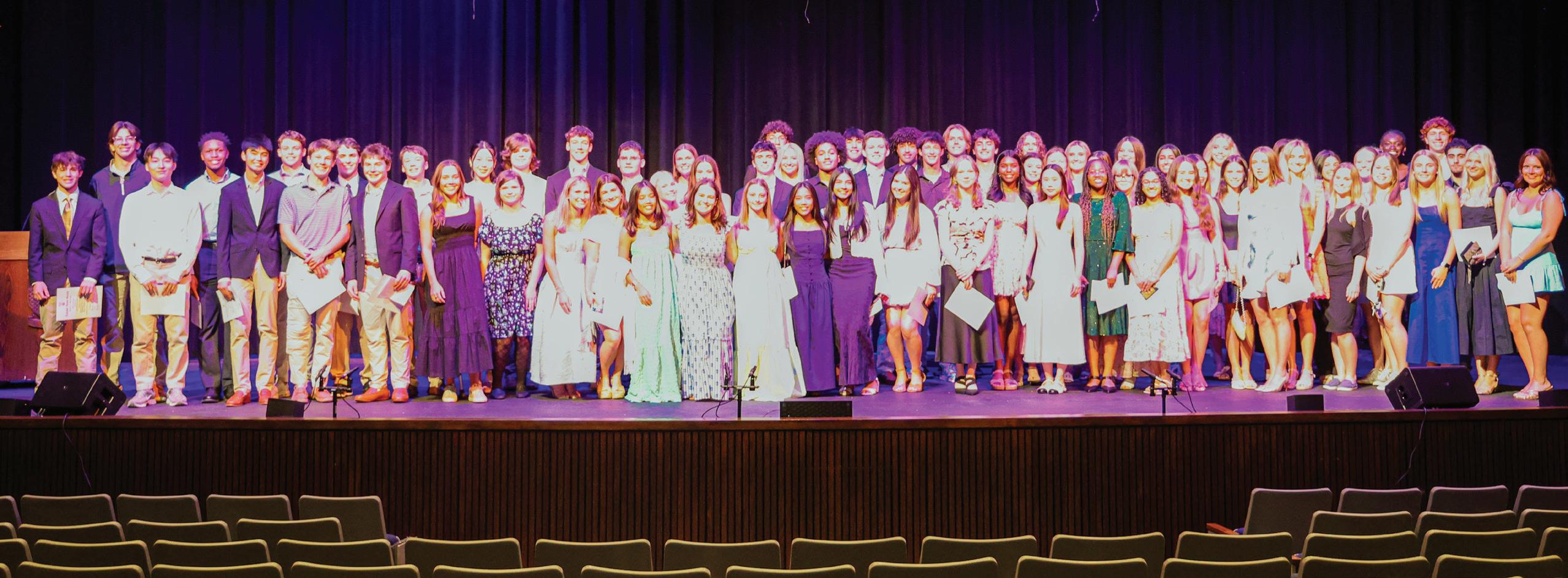
TVS WELCOMES 69 STUDENTS TO THE ALBERT M. GOGGANS CHAPTER OF THE
NATIONAL HONOR SOCIETY
Mackaylee Crain
Mackenzie Crain
Audrey Deem
Thomas Deen
Jackson Drake
Vivian Engel
Marcy Everett
Avery Ewing
Jack Fahy
Miya Fisher
Anna Gracia
Arthur Green
Daisy Johnston
Julia Kanthack
Elliott Karakourtis
Graham Kennedy
Sadie Klein
Margaret Ann Lea
Carlos Lee
Delaney Leech
Janie Lesok
Keaton Lisenby
William Lynch
Davis Martin

Kristen McAlister
Shea McCarthy
Katelyn McCracken
Sheldon Miller
Andrew Moore
Victoria Nguyen
Audrey Nolet
Adam Ostrinsky
Panphon
Panchakunathorn
Saanvi Pathikonda
Cole Peninger
Rhett Russell
Maximilian
Schneiderman
Lizzie Selkirk
Will Strickland
Sivani Subramanian
Thrisha Sukesh
Niya Talati
John Trigger
Jonathan Washington
Soichiro Yoshida
Angela Zhou

SCHOLARSHIP
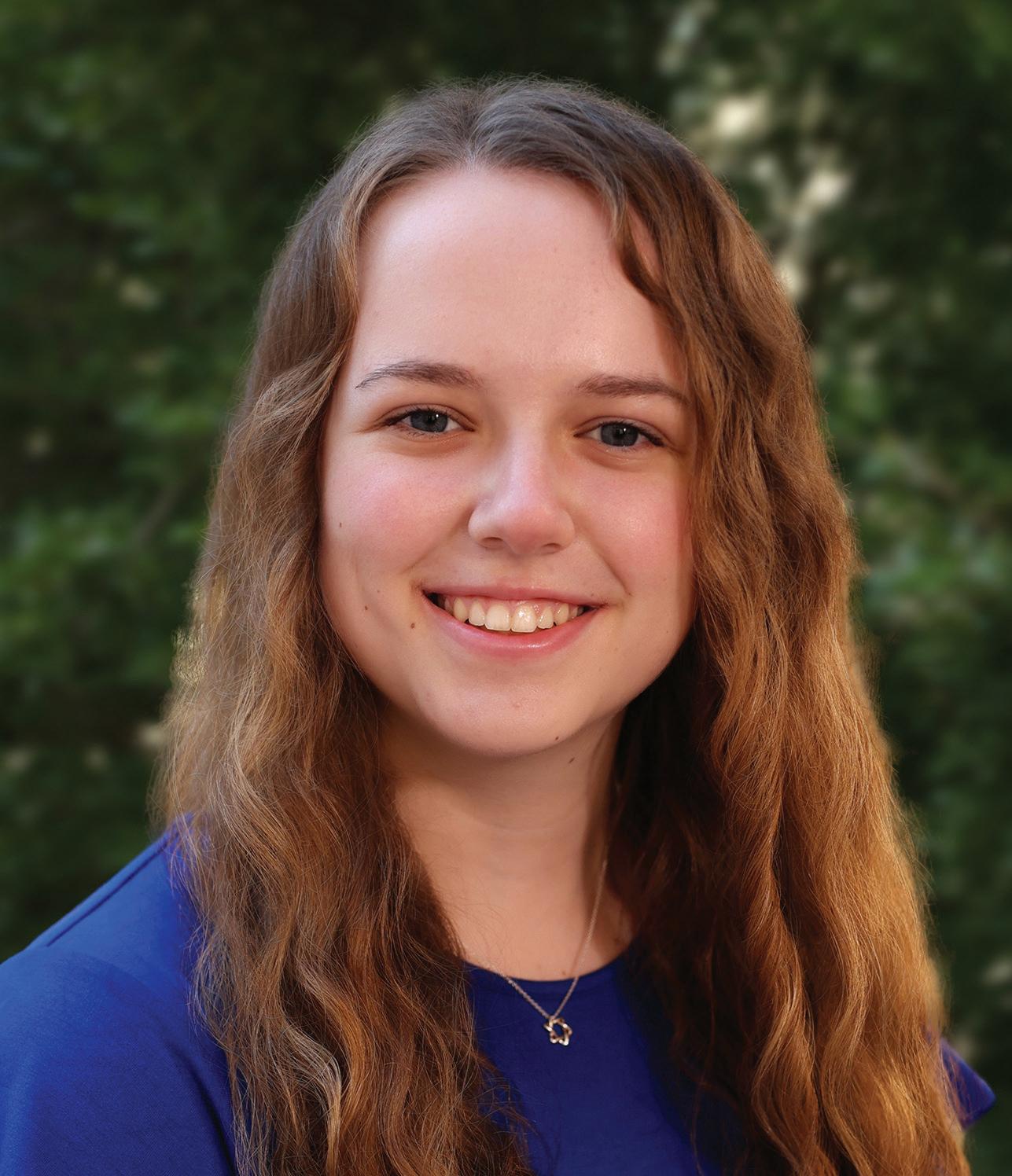
MADELINE YORKSTON
Scholarship is a word that we hear thrown around a lot in high school. It is often paired with the words ‘grades,’ ‘classes,’ and the dreaded ‘future.’
By now, I think most of us just associate it with a high GPA. After all, you had to have a 3.5 to get here today. But as I have been thinking about this nebulous idea of ‘scholarship’ for the past few weeks, I have realized there is a lot more to it than a letter on a report card.
Scholarship is about curiosity.
Whether you realize it or not, all of you have a spark of curiosity – you wouldn’t be here today if you didn’t. When you can’t wait to find out what happens in a book in English, so you read ahead, or you walk out of a physics class and realize you don’t really know anything about gravity, so you have to look it up. It’s not limited to school either. Who hasn’t gone down a late-night rabbit hole, learning about abandonded theme parks or K-pop marketing or exoplanets. That type of exploration
is just as important to scholarship as knowing how to take a derivative or identify a simile, because it is driven by a desire to learn.
Being a scholar is about kindling that desire, that passion. It’s about turning that natural curiosity into an enthusiasm to learn. This type of scholarship is clearly present at Trinity Valley School. In English classes, when we share connections we’ve made between the text and an event in history. In the hallways, when we chat about a cool science experiment we’ve just done in lab. In our extracurriculars, when we suddenly notice the geometry involved with the design of a soccer field or the engineering in theatrical lighting design. Those students who stay after class talking with teachers, who form connections between subjects, who come to class each day excited to share their thoughts: they are true scholars, no matter what mark they receive on a test.
“Who
hasn’t gone down a late-night rabbit hole, learning about abandoned theme parks or K-pop marketing or exoplanets?
That
type of exploration is just as important to scholarship as knowing how to take a derivative or identify a simile, because it is driven by a desire to learn.”
Ultimately, scholarship is more than memorizing flashcards, taking six AP classes, or acing an exam. At its core, true scholarship is rooted in a love of learning, in a deep well of curiosity and passion that spurs us onward to discover more about the world around us. As you continue in your studies, I encourage you to nurture that curiosity and to take joy in learning and expanding your horizons.
SERVICE
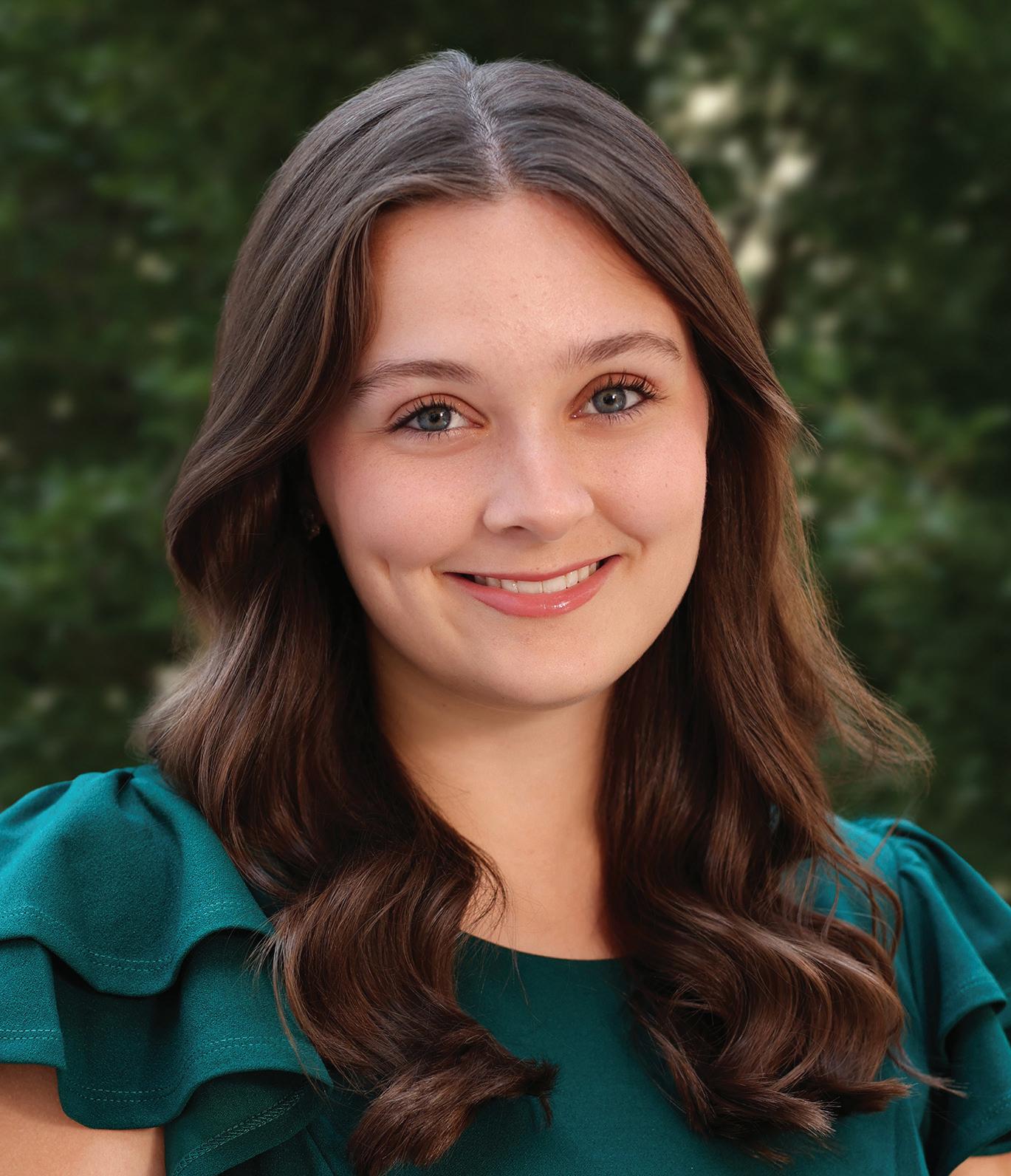
OLIVIA CAREY
In Fort Worth, 570,000 people need daily help to feed themselves and their families. The Trinity River is the third most polluted river in Texas, nicknamed the “River of Death” because 900,000 pounds of trash flow through it each year. In 2023, Fort Worth shelters euthanized over 3,200 dogs and cats.
These facts are not meant to scare you. Fort Worth is an amazing town, filled with rich culture and community, that is faced with significant social issues.
The TVS community has shown that we can make a difference. Last fall, the entire school came together to donate Halloween costumes to Como Community Center and candy to first responders. When Anna Willmann delivered the costumes to the children at Como, their smiles were priceless. When I delivered the cards and treat bags, the firemen were delighted that we thought of them. The Community Service Club has hosted seven monthly activities this year, from making flower bouquets for hospital workers to care packages for children in crisis.
I am proud to say that this NHS class has earned 17,964 hours of community service and while that's impressive, it’s really about how service makes us feel and the impact our actions have on others.
The first act of service I completed was on a TOE trip to Puerto Rico working at a vocational school that had been overtaken by weeds and vines. Piles of trash littered the classrooms and lawns. Bull thistle invaded cracks in the walkways. My back ached, my shoulders were sunburned, and fire ants crawled up my legs while I pulled weeds and raked debris. I wanted to be on the beach, sipping a virgin piña colada. However, as the sun set and I looked around, I began to see empty rooms and outdoor pathways and lawns. Though restored, it was still missing students, their sloppily drawn pictures on the walls, and the smell of meatloaf hours after lunch.
While TVS only requires us to earn 60 hours of community service, I set a personal goal of earning 1,000. At age 14, this seemed like a lofty goal. But as I became more involved in activities like Xplore, Challenger Little League, and the Welman Project, service grew into a passion that sparked other interests. I spent long shifts at the Botanic Garden, greeting guests and working with children and even becoming involved at the research level, translating scientific plant names into their Spanish common names for the Living Collections grant and encapsulating negatives of tropical plants and archiving them for the Sherwin Carlquist Collection.
My most impactful moment occurred serving dinner at the Presbyterian Night Shelter to a Haitian family who only spoke French. As I served them I noticed the mother was having trouble communicating with the staff. I had only been studying French with Madame Dodson for two years, but I was delighted to be able to translate for them and have a conversation with the daughter who was our age. I’ll always remember the way their faces lit up when they realized someone spoke their language. That small exchange is why I study languages and keeps me going when the workload piles up. It wasn’t just about speaking French, but offering comfort in an unfamiliar place. I may have started serving with sweat and sunburn, but I’ve grown into someone who shows up with a hot meal, or gardening gloves, or a few words in French. And that’s all it takes, showing up, doing the work, being open to the connections that might change you for the better. That’s the true joy of service.
LEADERSHIP
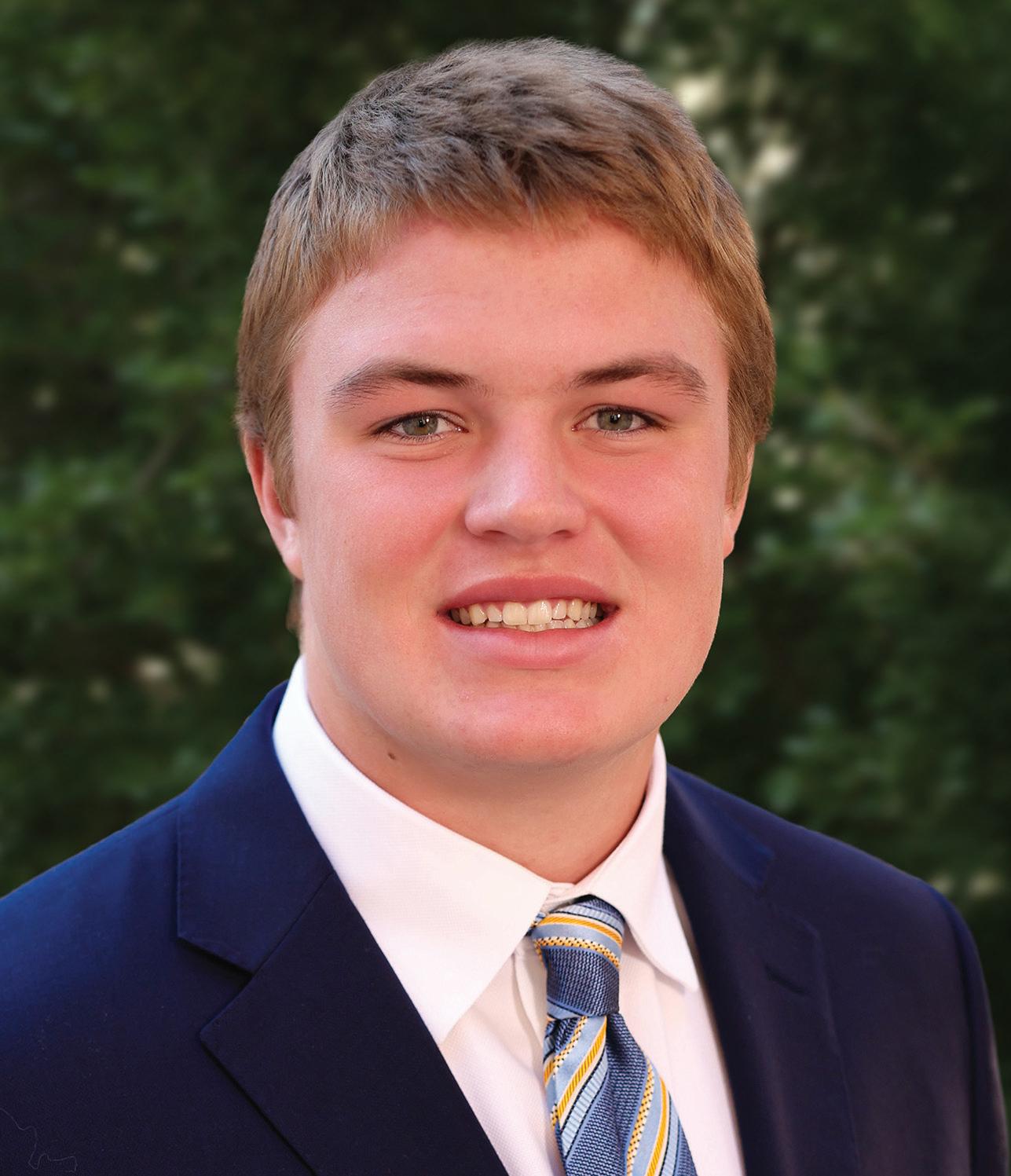
HUB NICKELS
Leadership is not a quality that someone is born with. The Merriam-Webster dictionary defines leadership as: “the office or position of a leader.”
While this definition is technically true I have a hard time agreeing with it. The reason I struggle with this is because of all my time in APUSH with Mr. T, where “you can’t advance without the permission of your peers.” To be placed in a position of leadership is to be recognized for all the hard work you have put in as a follower. The key to becoming a good leader is being a great follower. For me the following was in the form of watching seniors at football practice as a freshman and sophomore. I used to think “I will never be able to be that big or that strong and be able to tell people what to do” and here I am. Whatever you want to be a successful leader in, requires you to strive for perfection in that field. It is not possible to become an influential person by sweeping the dust under the rug just because you “feel” like it. The ability to sacrifice what you “feel” like doing versus what you “need” to do is critical to give your peers someone
to look to as an example. It is important for leaders to find someone in their life to look to.
The first people that were leaders for me were my parents. My Mom taught me that consistency creates opportunities to lead. My Mom started working at her company right out of college as a sales rep and has been there ever since. She showed up every day for the company but still never failed to involve me and my siblings in her life every day. I remember working in the warehouse at the office
“To be placed in a position of leadership is to be recognized for all the hard work you have put in as a follower.”
in Dallas during the summer for some extra cash and being very excited. The family atmosphere created at the office is a huge reason my Mom was able to love working; you have to love what you do to lead. My Mom is now the President of the Southwest United States for her company. She leads more people every day than I can imagine. On the other hand my Dad taught me something very important about the way people view each other. In simple terms, the more you speak, the less you say. While my Dad is a quieter man he is always right about any kind of advice. If you are sitting in on a conversation and just listening you will notice that the person doing most of the talking is usually just cracking jokes while the quieter people say something meaningful every time they speak. Some people are loud leaders but, in my opinion it is more important to, as Mr. T says, “Do the things that leaders do” rather than say what a leader is supposed to say and do none of the action. Nobody wants to be seen as a hypocrite and if you want the respect of others it is important that you do not give them the chance to see you this way.
If you strive to lead and put the work in as a follower you will be successful. However, the final piece of the puzzle is trust. You have to trust the person to your left and right and you have to make decisions with them in mind. It is also important to be able to say that others that you lead are right and you are wrong.
Leadership is earned every day and you need to continue to do the things that leaders do.
CHARACTER
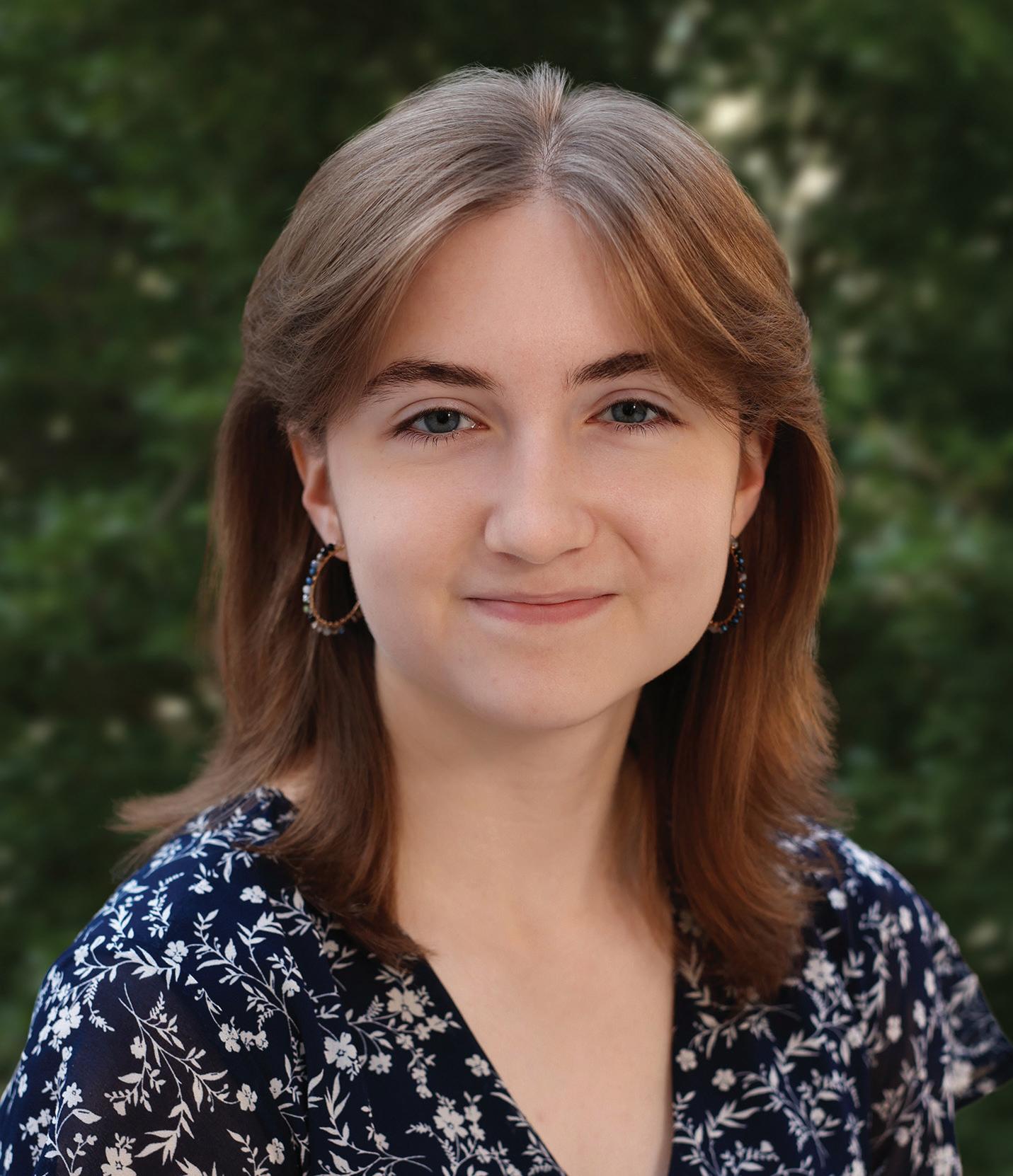
EDY CLINE
Scholarship, service, and leadership are what we may call resume virtues. This is not a bad thing, it just means they can be expressed, or verified, on a transcript or job application. Character, though, is different. It’s not a resume virtue. This makes it the runt of the litter, and honestly, difficult to write a speech about. And while I was given the honor, I can also think of many peers of mine that are excellent examples of good character. Nonetheless, I’ll try my best to convince you that character not only deserves a place among the other pillars but is actually the most precious of them all. Tonight, I’ll give you three reasons.
First, our character is the ultimate expression of our humanity. Humans are unique for our ability to overcome adversity and be better for it. We are remarkable because we each come with a builtin moral compass, called a conscience, and our character is determined by our ability to honor it. I believe we are hurtling towards a future where there is nothing a human can do that a machine can’t.
And the grade we got on that one test won’t matter, but whether we either upheld or sacrificed our integrity will—it’s a matter of marks on the page, or marks on the soul. In fact, some would argue that we are already living in this world, which leads me to my second point, which is that character is the only thing that determines our value.
Take a minute to think about the people around you whom you look up to, who inspire you (a grandparent, beloved teacher, a coach), and you will find that the reason has nothing to do with their money, social status, looks, or grades, but everything to do with the content of their character. The truth is, character is an abstract concept, yet we are each extremely perceptive to it. It’s in our hardwiring to recognize moral excellence when we see it. We can all think of a teacher who inspired us to be better, to do the right thing, who made us sit up a little straighter in class. And despite accepting that character is what gives others value to us, we hold ourselves to a double standard. We so often perceive our own value to be tied to our grades, beauty, status, or wealth, and, sadly, most of society would have us think this way. But it doesn’t just work one way: just as character determines our role models, our character determines whether we become role models. Thus, it is the only thing that determines our value, and luckily, it is also the only thing within our complete control, which is my third and final point.
The material world, what the ancient stoics called externals, is not within our control. It is chaotic, fleeting, and any pursuit of externals may end in vain. Our character, however, is within our control, and it becomes extremely important when dealing with these externals. It’s how we endure hardship, but also how we handle good fortune. It’s how we treat others, but also how we act in private. It’s what we do in moments of crisis, but also in moments of peace. I could go on, because there’s not much in life that character doesn’t touch. And here’s the thing: No one, nothing, can touch ours, if we don’t let it. Character is our only true possession, and this will always be the case. Therefore, it is the only thing that will ultimately define us. The kind of thing people will remember about us when we’re gone. So, while character isn’t a part of your resume, it’s a part of something much more important. It’s the most important part, of you.
WHERE MAKING MEETS MEANING
THE EVER-EVOLVING PRACTICE OF AN ARTIST-EDUCATOR
MARCY ROTEN, ART DEPARTMENT CHAIR
For some, becoming an artist is a conscious decision. For others, it is simply part of who they are. For Janet Chaffee, art has always been as natural and essential as breathing. She reflects on a lifelong connection to making that predates any formal training or career path. From early creations shaped by imagination to works that give form to memory and emotion, the act of making has always been deeply personal. Art serves not only as a form of expression, but also as a way for her to better understand herself and the world. There is something inherently empowering in the creative process that draws her back to the studio again and again.
That connection to making is deeply intertwined with lived experience. Nature, memory, family histories, and personal events all shape Janet’s vision. She is particularly interested in how humans relate to the land - how we connect to geological formations and care for the planet. This awareness carries into her creative process, prompting ongoing reflection about her role in both observing and stewarding the natural world. At the same time, Janet’s thinking is informed by literature and art history. Writers such as Rainer Maria Rilke, Rachel Carson, and Italo Calvino have influenced her perspective, alongside artists who explored abstraction during the Industrial Revolution. Together, these influences have helped her create a body of work that is at once introspective and outward-looking, grounded in personal experience while engaging with broader, universal concerns.
This balance between idea and experience is closely tied to material. Working primarily in drawing and painting, Janet has developed a deep sensitivity to the substances she uses. Encaustic painting has become a central part of her practice, allowing her to engage simultaneously in painting and object-making. The use of wax and mineralbased pigments creates a direct, tactile relationship with the natural world, one that feels both physical and conceptual. India ink offers a different but equally compelling experience, its fluidity echoing the organic movement found in wax. Across all media, the process itself remains central, guiding the work in ways that are often unpredictable but ultimately revealing.
Although she has long identified as a painter, Janet’s practice has been shaped by a willingness to explore. During her undergraduate studies at the University of Texas at Arlington, her experiences in printmaking, photography, and metals expanded her understanding of what art could be. That curiosity continued at Texas Christian University, where Janet earned an MFA while also working as a gallery intern and teaching assistant. These formative experiences laid the groundwork for a career that seamlessly blends studio practice with education. Since then, she has exhibited widely and taught at institutions including TCU, TCC, and UTA. Yet, her development as an artist continues to be shaped by the world beyond formal spaces, through looking at art, reading, conversation, and participation in a vibrant artistic community.
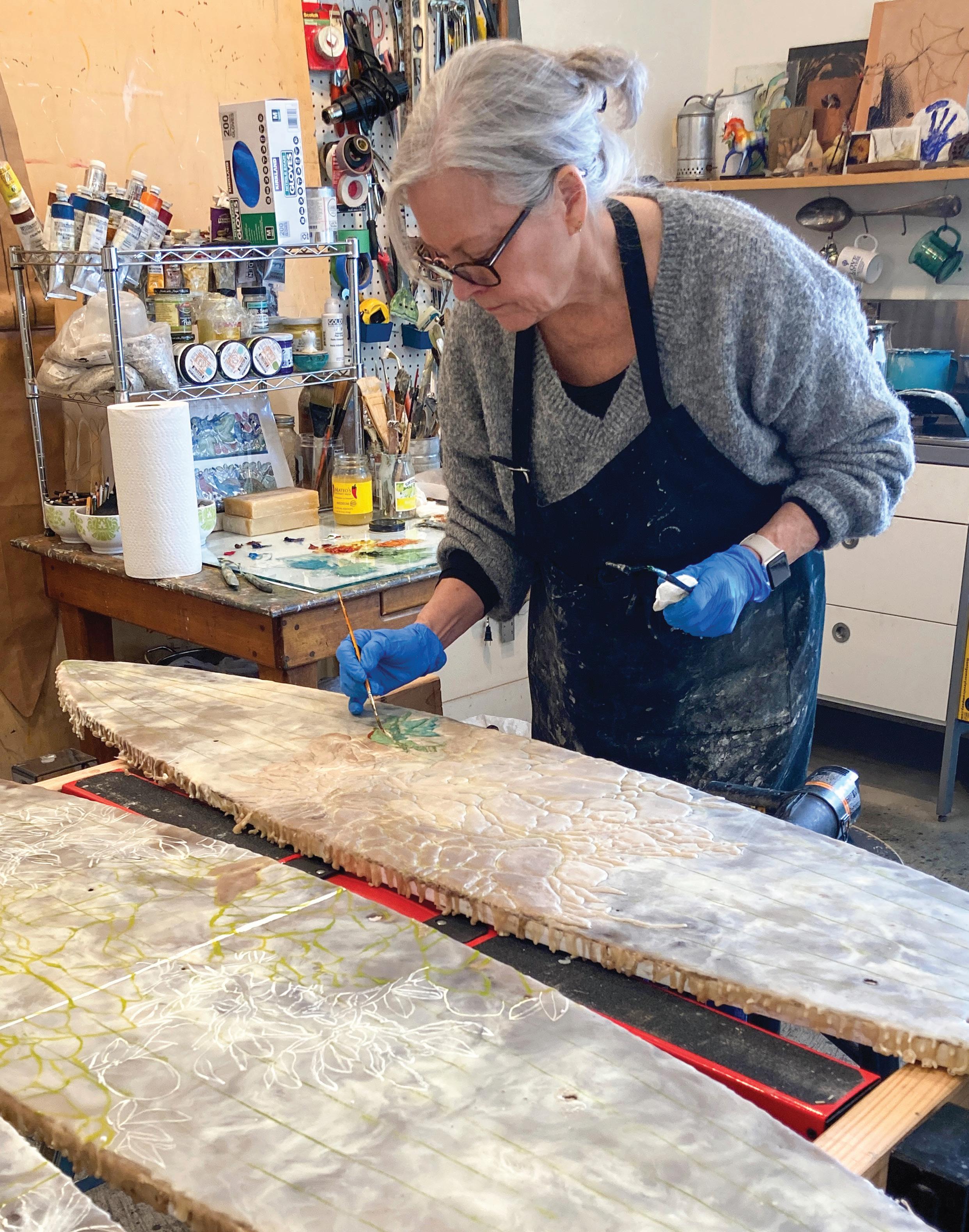
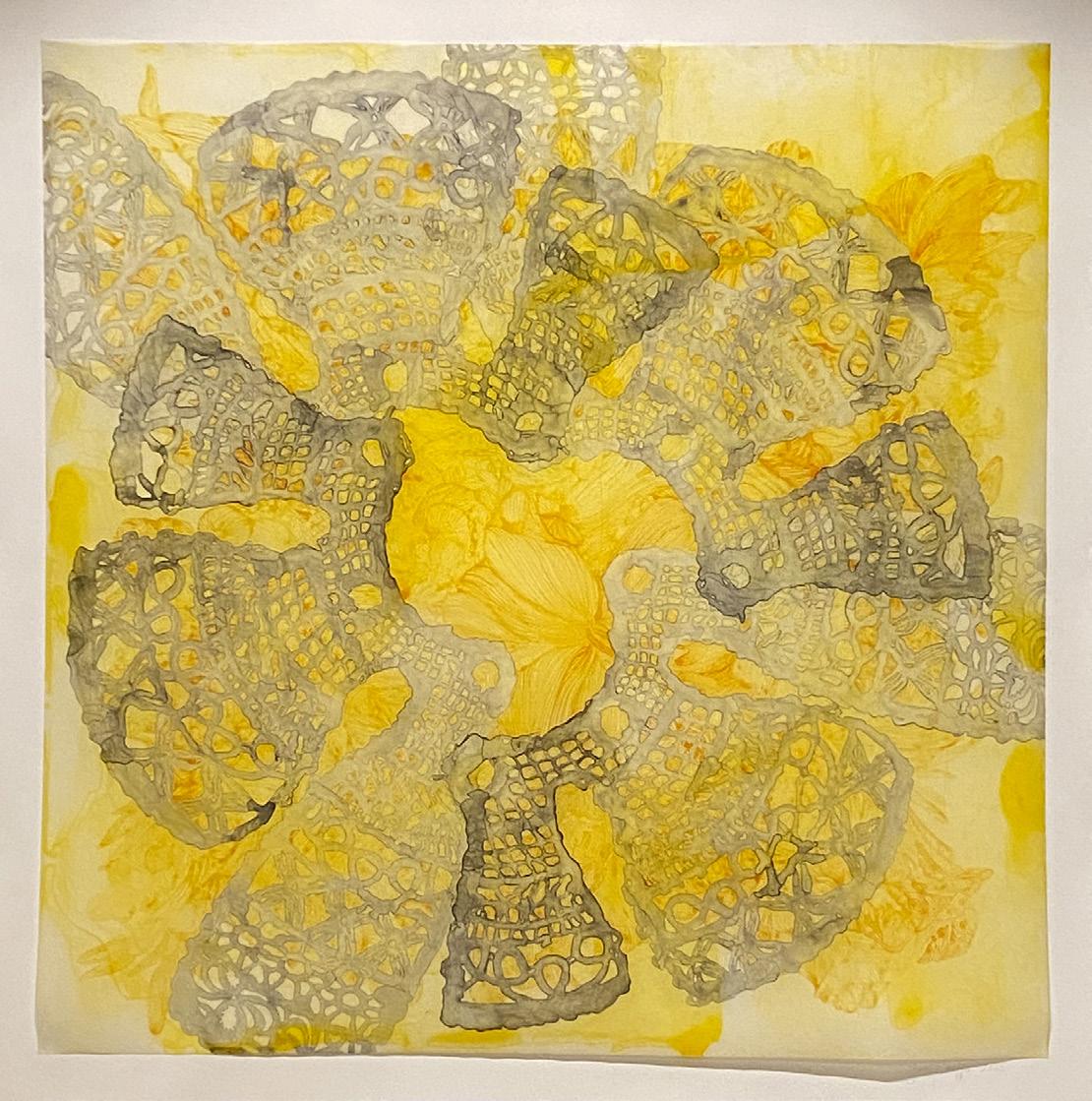
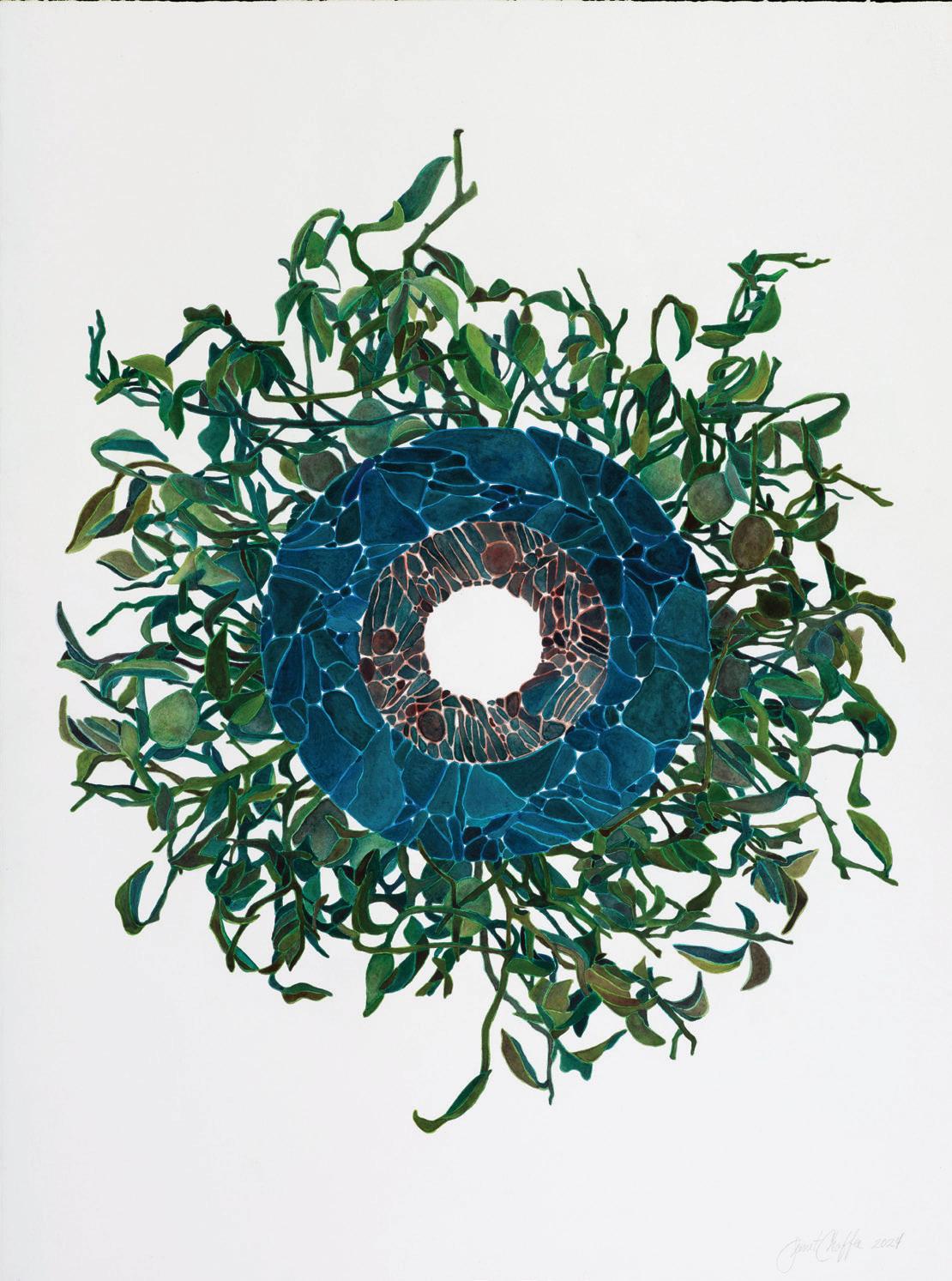
Over time, Janet’s work has revealed itself to be part of an ongoing, interconnected path. Even pieces created decades ago continue to inform her current practice, creating a sense of continuity that fuels new exploration. This spirit of connection extends into collaboration as well. She and her husband, artist Benito Huerta, have created pieces centered on architecture, focusing on the spaces they inhabit, from their studios and neighborhood to larger cultural sites such as the Nasher Sculpture Center in Dallas. These collaborations open new directions, offering insights and outcomes that might not emerge through individual practice alone.
At the center of all of this is the studio, a space that holds both structure and possibility. It is here that time seems to shift, collapsing or expanding in ways that echo the immersive creativity of childhood. In her studio, Janet becomes fully absorbed in the process, where making becomes less about outcome and more about presence and discovery. Each piece is approached as an exploration, which is why naming a single favorite work feels impossible. What matters most to her is the act itself of making, the ongoing engagement with the work as it unfolds.
This process, however, is not without its challenges. Balancing her many roles of life - artist, teacher, parent, and more - can make time in the studio difficult to sustain. Within the work itself, there are also moments of resistance, when a piece does not come together as she envisioned. These moments require patience, persistence, and a willingness to adapt. Yet, it is often within these challenges that the most meaningful growth occurs. Unexpected resolutions can lead to new directions, expanding both artistic understanding and personal insight.
This same philosophy carries directly into the classroom. As an educator, Janet emphasizes the importance of “seeing” not only as visual perception, but as a way of understanding and communicating. In the studio classroom, Janet engages with her students in a shared process of exploration, using both verbal and visual language to develop ideas. There is a mutual vulnerability in this process, as each individual works toward greater clarity and technical skill. In an increasingly visual world, this ability to communicate through images becomes an essential form of literacy.
For students, learning to make art becomes an experience in applied learning. While they may begin with a clear image in mind, the final result often diverges from that
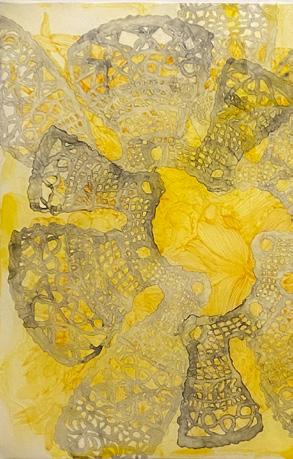
Top: Laced Armor, No. _In a Nascent State, Ink on Mylar, 2026
Bottom: Deliberate Involute, No. 1, Water Soluble Encaustic on Paper, 2024
Opposite Page Bottom: In-progress studio photo of _Reverb_, part of The Sound of Rocks.
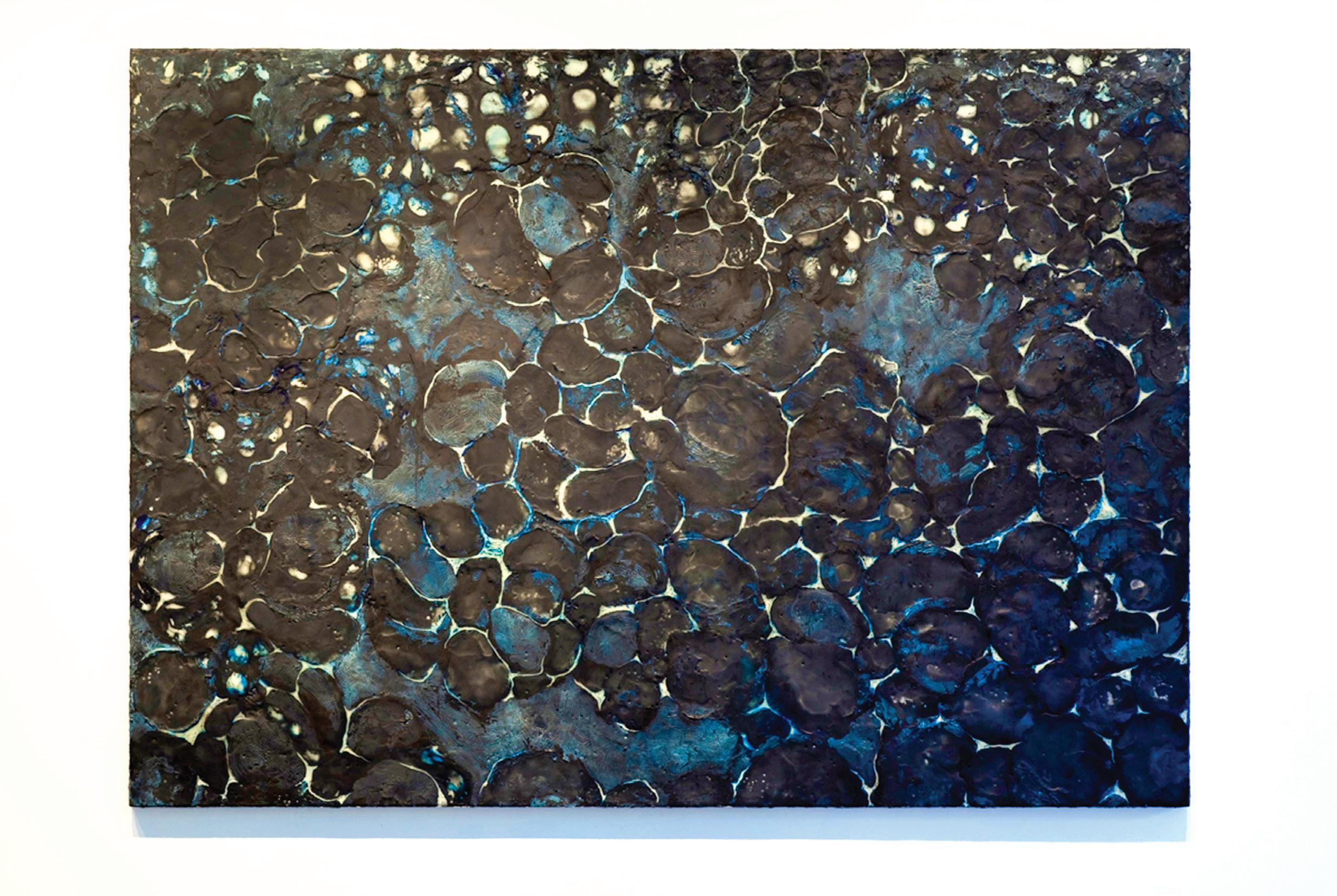
original vision. Rather than being a failure, this shift becomes an opportunity. Students learn to navigate uncertainty, to adapt, and to recognize when to change direction or stay the course. Each project becomes an open-ended journey that challenges perception, perseverance, and decision-making in ways that extend beyond the art room.
Ultimately, the goal is not simply to teach technique, but to foster independence and confidence. By encouraging curiosity and embracing trial and error, Janet helps students understand that learning emerges through action and reflection. When students begin to recognize their ability to learn from their own decisions, artmaking becomes more than a skill and blossoms into a lifelong tool for growth.
In both the studio and the classroom, Janet’s practice is guided by a belief in the transformative power of making. It is a process that reveals, challenges, and connects: one that continues to evolve with every line drawn, every material explored, and every student inspired.
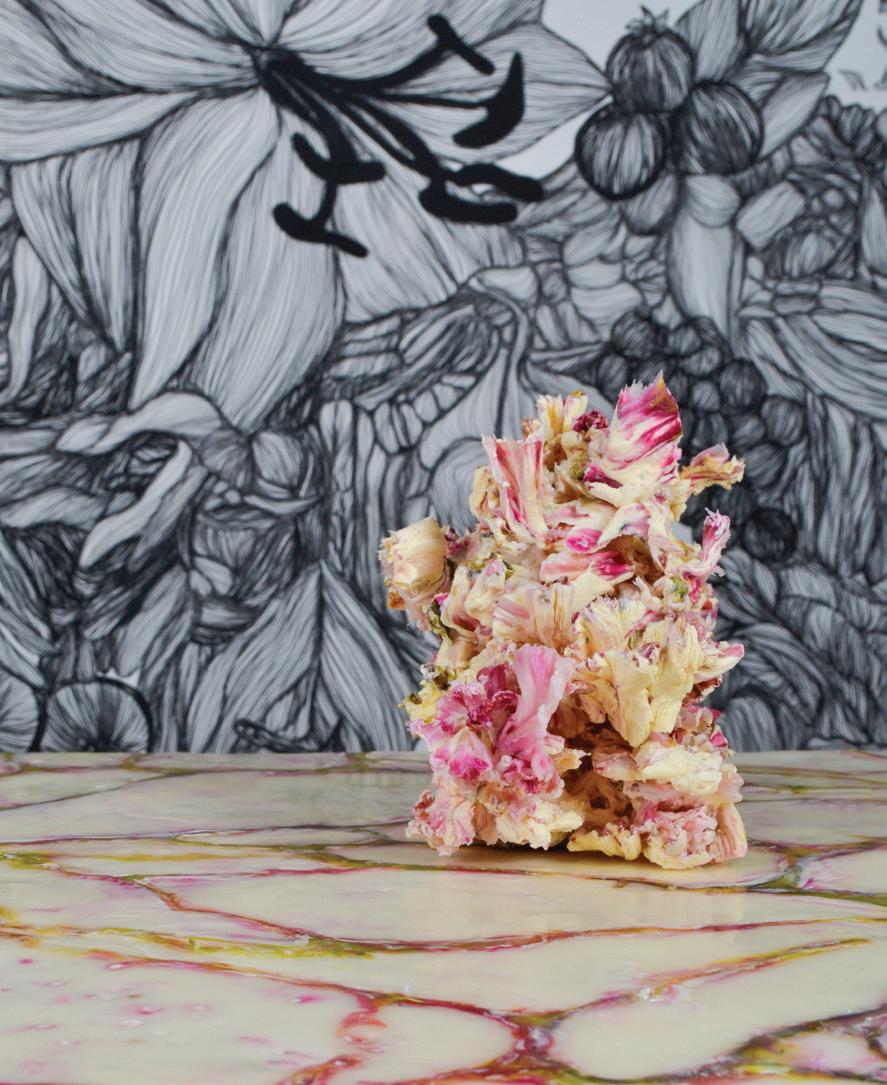
Fissure ZnO (Zinc White), Encaustic, Dry Pigment, Oil and Graphite on Panel, 2013
BUILDING CHAMPIONS EARLY: SIXTH-GRADE
PRE-ATHLETICS
ERIN MACNABB, ASSISTANT ATHLETIC DIRECTOR
The sixth-grade Pre-Athletics program is redefining the traditional TVS Middle School physical education experience by shifting from a general physical education model to an immersive, sport-focused curriculum. Designed to mirror the opportunities available in grades 7 and 8 and Upper School, the program introduces student-athletes to a selection of sports while helping them begin their journey within the Trojan Athletics community.
Rather than rotating through traditional Physical Education units, sixth-grade students now experience seasonal sport immersion. At the start of each season, athletes receive an introduction to selected sports offered during that time before selecting one on which to focus for the remainder of the season. While we would love to offer all sports, we have started with two to three sports per season as staffing allows.
approach allows young athletes to build meaningful experiences while discovering the activities about which they are most passionate.
“A unique strength of the Pre-Athletics program is its connection
to the broader Trojan Athletics structure. Many of the teams are coached by the TVS Varsity Coach or Program Director for that sport, allowing students to begin forming relationships with program leaders years before they reach the Varsity level.”
Sports offered each season for the 2025-26 school year:
• FALL – Boys’ Volleyball, Girls’ Volleyball, Flag Football, and Field Hockey
• WINTER – Boys’/Girls’ Basketball & Soccer
• SPRING – Co-Ed Track & Field, Co-Ed Lacrosse, Softball, and Baseball
Once students select their sport, they dive deeper into the game, learning the rules, etiquette, fundamental skills, and basic strategies that define each sport. This
A unique strength of the Pre-Athletics program is its connection to the broader Trojan Athletics structure. Many of the teams are coached by the TVS Varsity Coach or Program Director for that sport, allowing students to begin forming relationships with program leaders years before they reach the Varsity level. These early connections help reinforce a consistent philosophy, culture, and skill progression across all levels of athletics.
Our sixth-grade studentathletes train five days each week with a balanced approach to development. Three days are dedicated to sport-specific instruction, where athletes practice skills and game concepts within their chosen sport. The remaining two days focus on functional training led by Coach John Yarbrough, Coordinator of Athlete Performance and Development. These sessions develop strength, conditioning, endurance, balance, coordination, flexibility, and stability, all foundational athletic qualities that benefit students in every sport they pursue.
The ultimate goal of the sixth-grade Pre-Athletics program is simple: expose students to the Trojan Athletics catalog earlier, helping them build confidence, develop skills, and grow a passion for sport. By laying this foundation at a young age, the program aims to cultivate a culture of excellence, progress, and long-term success across all athletic programs.
THE RETURN OF TROJAN WRESTLING
ASHLEY ROBINSON, DIRECTOR OF STRATEGIC MARKETING & COMMUNICATIONS AND ASHLEY MCCOLLUM, COMMUNICATIONS & EVENTS MANAGER
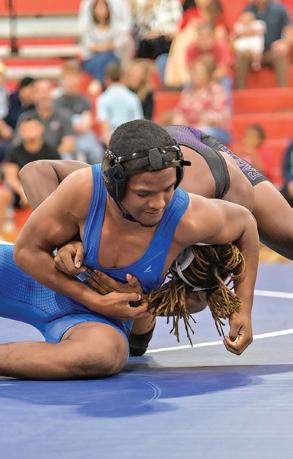
This winter marked the long-awaited return of wrestling to the TVS athletics lineup. For the first time since 2019, Trojan wrestlers stepped back onto the mat and wasted no time making their presence known.
From the earliest practices of the season, the team embraced the challenge of rebuilding a program with determination and grit. Week by week, the athletes grew stronger, sharper, and more confident, turning a comeback season into a statement of resilience and pride.
That momentum came into full view on January 9, when the TVS wrestling team competed in the Euless Trinity Trojan Classic. This is one of the largest tournaments in Texas, featuring 77 teams from across the state. In a field packed with talent, our Trojans battled with tenacity and finished 33rd overall, an impressive result for a program still finding its rhythm.
Several athletes stood out with podium finishes, showcasing both individual excellence and the rising strength of the team:
• 1st Place: Ronnie Cunningham Jr. ’26
• 1st Place: Coco Blackwell ’27
• 1st Place: Princeton Cunningham ’27
• 2nd Place: Sebastian Garcia ’27
• 4th Place: Saif Bhatti ’26
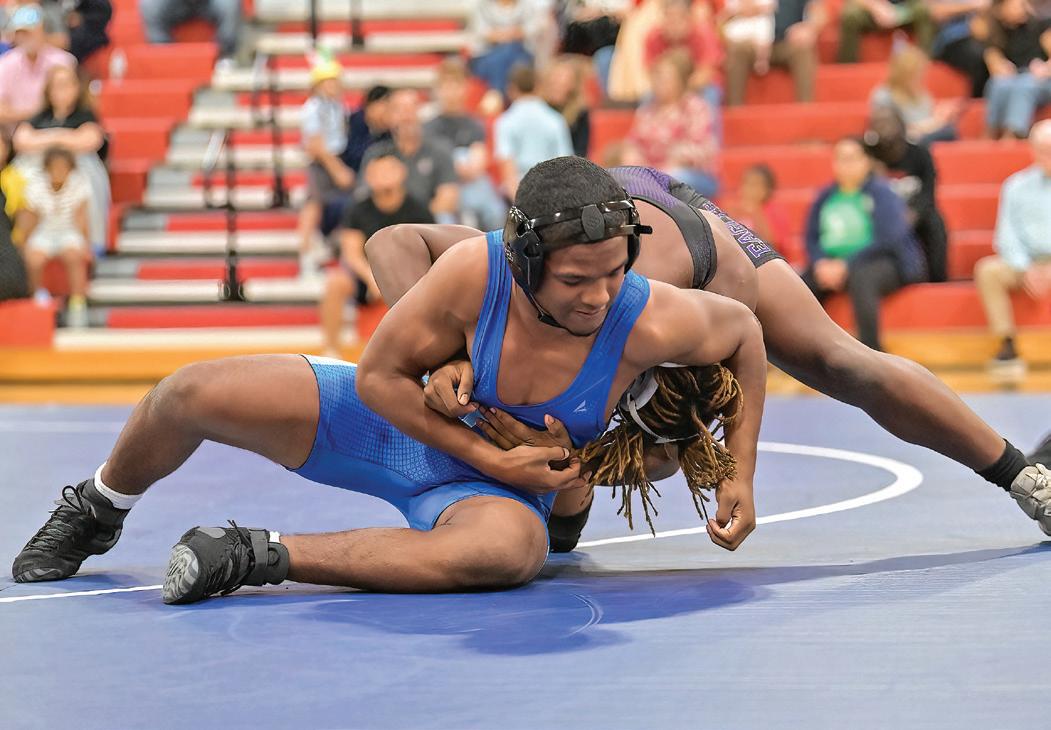
The success in Euless was only the beginning. As the season continued, more Trojans earned the opportunity to compete at the next level. Several members of the team qualified for the Prep State Team Duals, held January 24 at Bishop Lynch High School. Joining the medalists were Shiven Dave ’26, Campbell Barham ’27, David Booher ’27, and Jackson Drake ’27, each earning a place in the competition through hard work and dedication.
One athlete’s season rose to an even larger stage. Coco Blackwell ’27, whose performances consistently demonstrated skill and determination, qualified for Prep Wrestling Nationals, held February 20–21 at Lehigh University in Bethlehem, Pennsylvania. The opportunity placed her among the nation’s top prep wrestlers and marked a milestone moment for both her and the revitalized TVS program.
Behind the scenes, the team’s resurgence was guided by the steady leadership of coaches Jake Perez and Monique Dudar, whose commitment to developing athletes both on and off the mat helped shape the program’s return.
Reviving a sport after several years away is never simple. But throughout the season, the Trojans embraced the journey with heart, hustle, and a deep sense of pride, proving that sometimes the most exciting stories begin with a comeback.
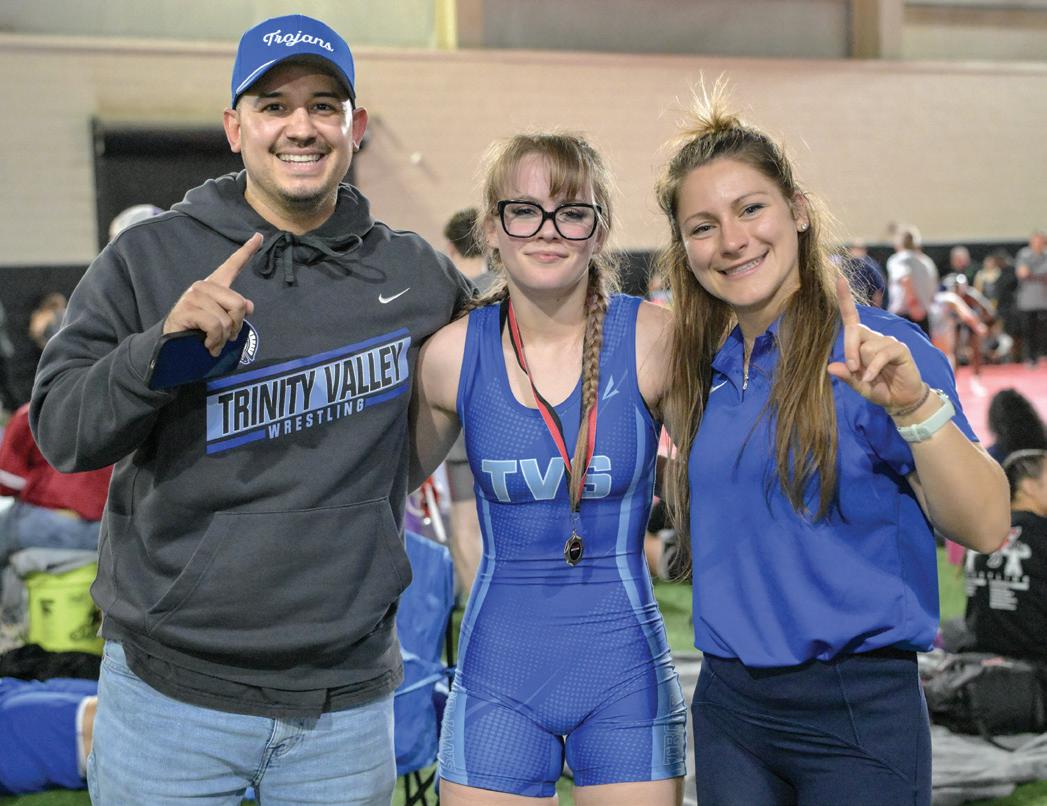
Photo Credit: Kirsten Gallon
CLASS OF 2026
COLLEGIATE SIGNING DAY
Trinity Valley School celebrated three exceptional student-athletes who have signed commitments to compete at the NCAA Division I level—an achievement reached by fewer than 2% of high school athletes nationwide.
Each of these students has shaped our Trojan athletics program through discipline, leadership, and a deep love of the game. Their journeys reflect years of intentional practice, resilience through challenge, and a willingness to pursue excellence.
We couldn’t be more proud of Caroline, Claire, and Hub. This is one of the many powerful reminders of what is possible when commitment and character come together.
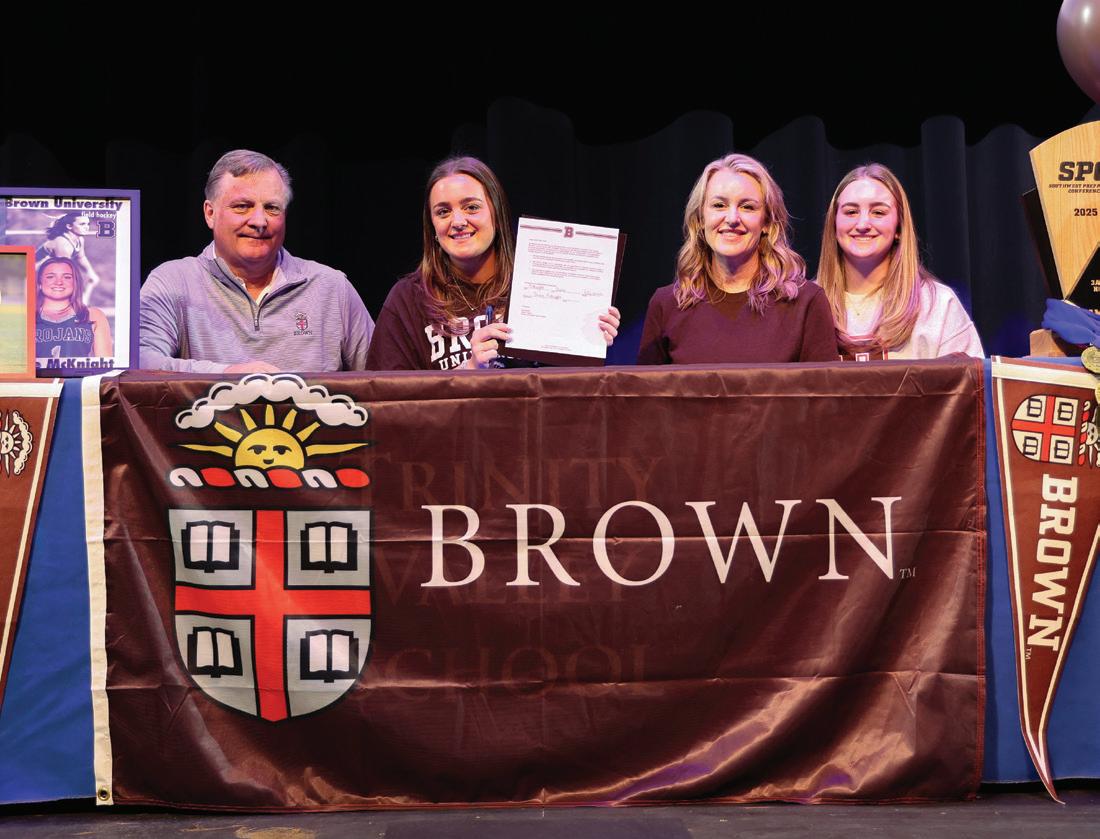
CLAIRE McKNIGHT
Brown University » Field Hockey
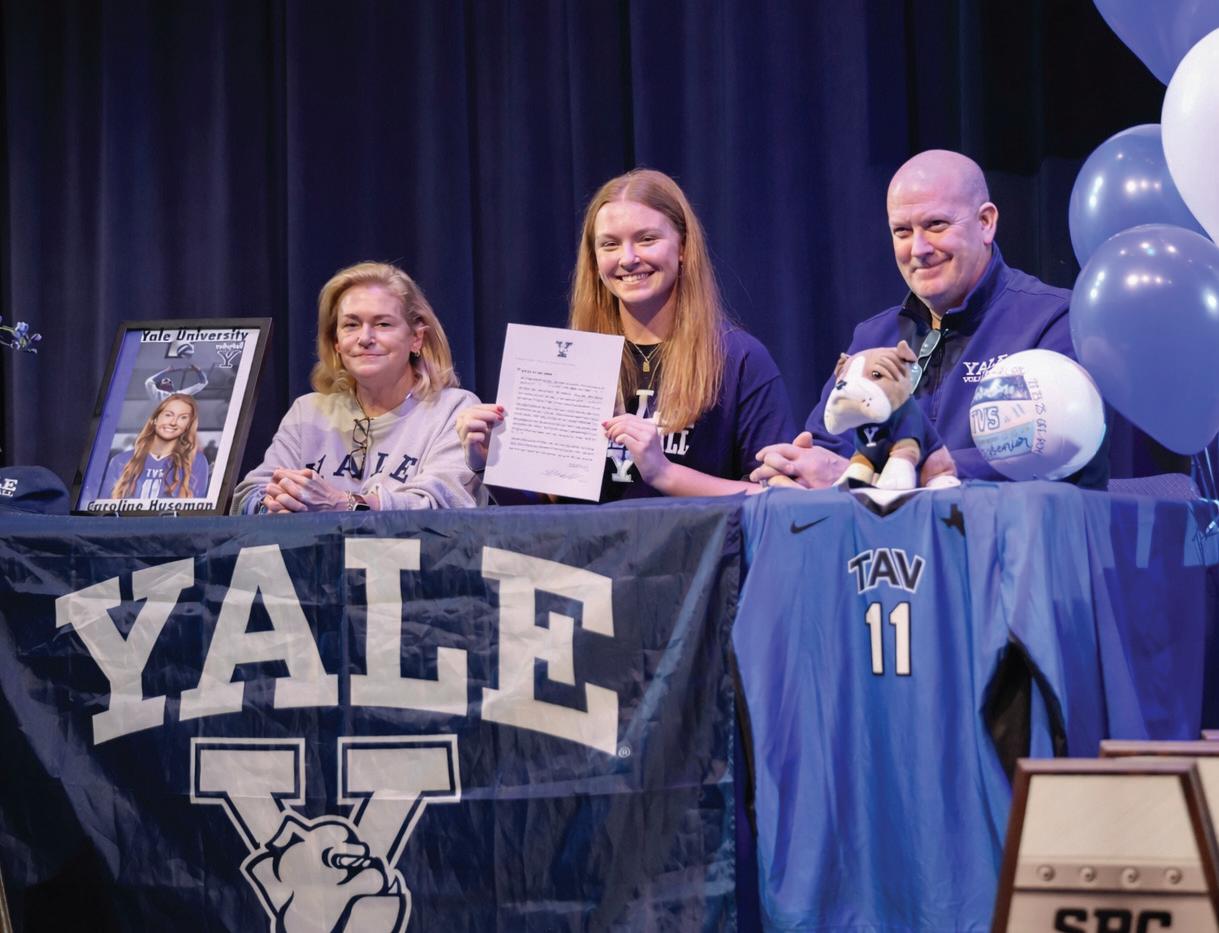

Yale University » Volleyball
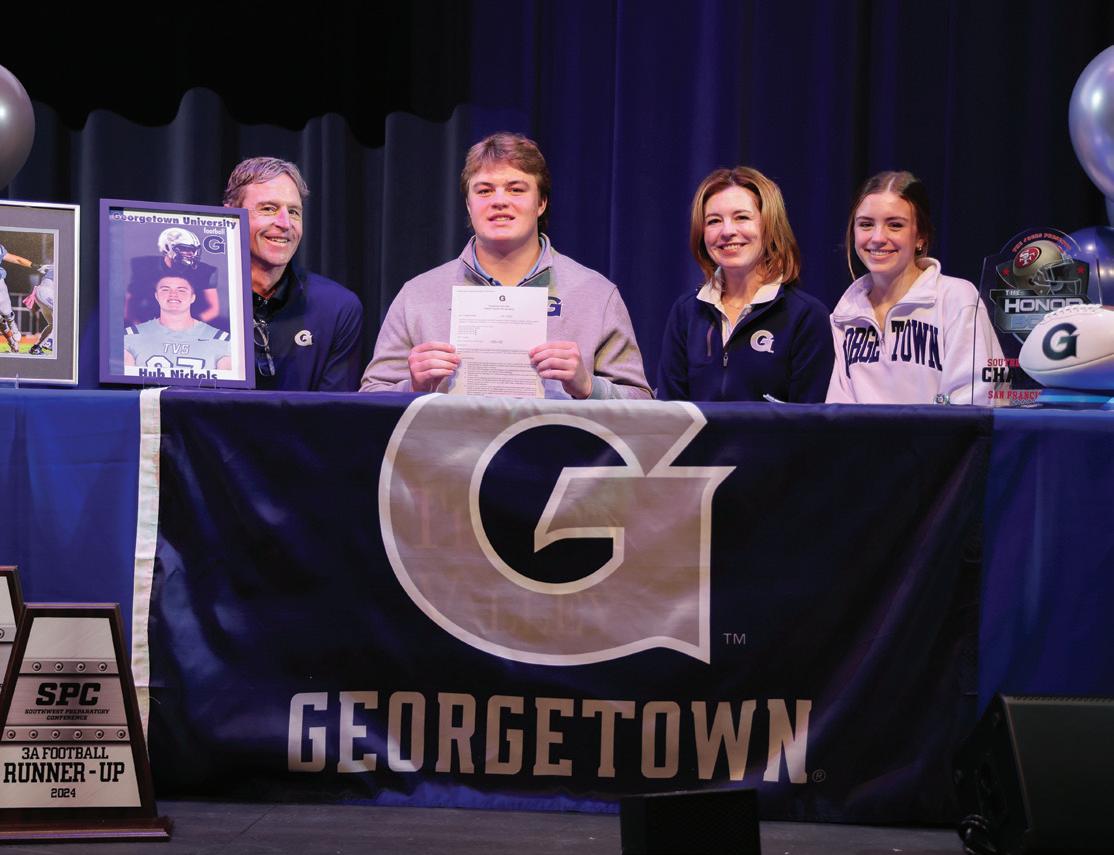

HUB NICKELS
Georgetown University » Football
CAROLINE HUSEMAN
60TH COMMENCEMENT CEREMONY
DR. JACK MCCALLUM, SPEAKER
Saturday, May 16, 2026 at 5:00 p.m. MacGorman Chapel & Performing Arts Center Fort Worth, Texas

Learn more about the class of 2026 at www.tvs.org/classof2026 or scan the QR code.
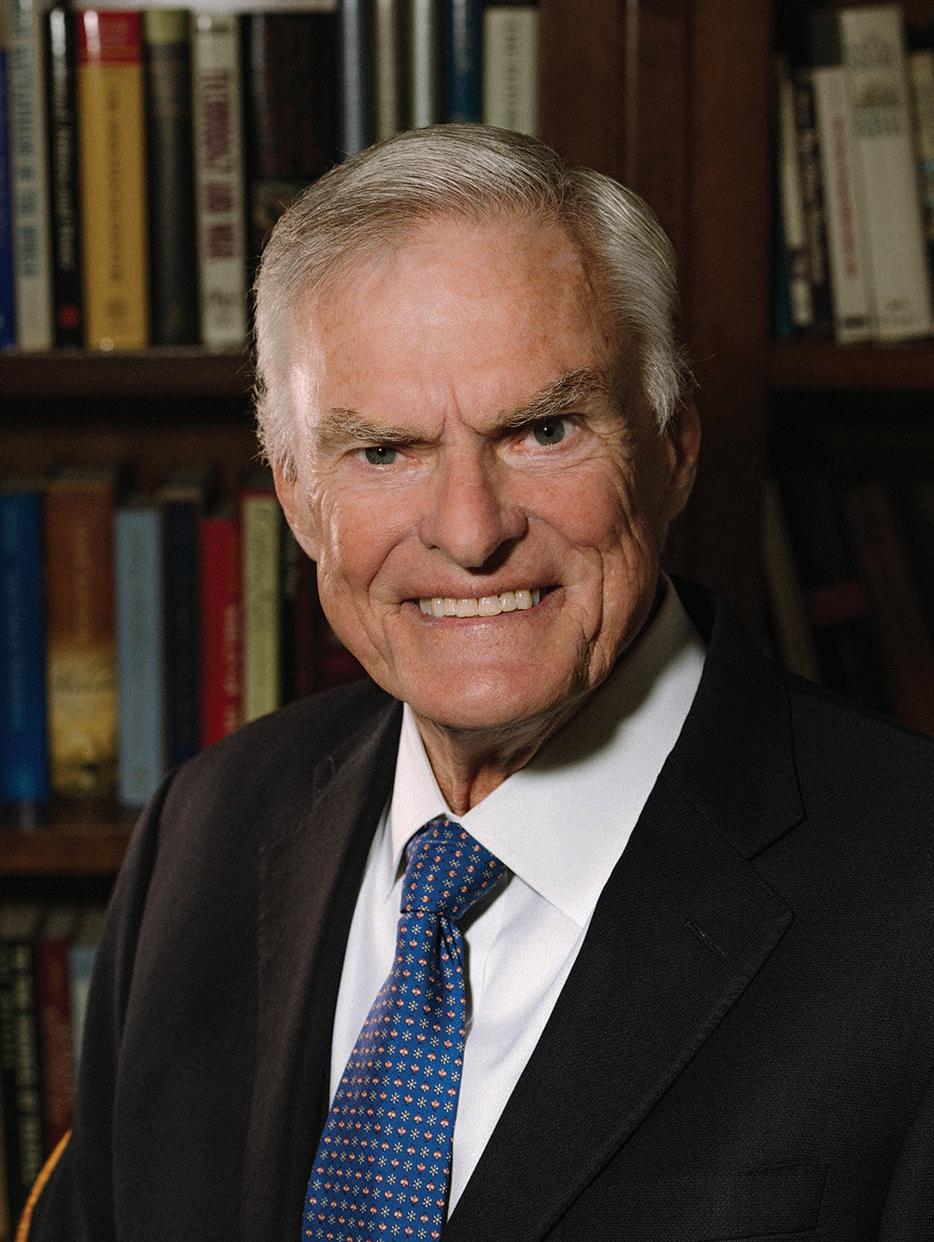
Dr. McCallum brings a remarkable combination of expertise across medicine, history, and entrepreneurship. He holds a Bachelor of Science degree from the Georgia Institute of Technology, a master’s degree in history, a doctorate in history from Texas Christian University, and a doctor of medicine from Emory University. Board-certified in both adult and pediatric neurosurgery, Dr. McCallum has held teaching appointments in medicine and history at several universities.
Dr. McCallum’s connection to Trinity Valley School is longstanding and meaningful. His daughter, Katharine (“Katie”) McCallum, is a member of the Trinity Valley School Class of 2013 and went on to attend the University of Mississippi.
GUIDED BY PURPOSE, GROUNDED IN COMMUNITY
TRINITY VALLEY SCHOOL WELCOMES MARC ADDINGTON AS HEAD OF UPPER SCHOOL SUMMER 2026
At the heart of every meaningful school experience are the moments students carry long after graduation—the friendships, the challenges, the sense of belonging. For Marc Addington, those moments are built intentionally through relationships, shared purpose, and a culture that invites students to fully engage in their growth.
This summer, Trinity Valley School welcomes Addington as Head of Upper School and Assistant Head for Strategic Initiatives following a national search. His appointment reflects a clear commitment to thoughtful leadership, student-centered innovation, and a strong, connected community.
During his visit, faculty, staff, students, and families noted his collaborative spirit and genuine curiosity about what makes Trinity Valley distinctive. Head of School Ben Courchesne describes him as a thoughtful builder of programs and people who strengthens the student experience while sustaining a community where students feel known and supported.
In his dual role, Addington will lead the Upper School while advancing key strategic initiatives across the school. Each year, he will guide one or two major efforts – launching programs, developing partnerships, or strengthening curriculum –helping translate long-term vision into meaningful action.
L-R: Lucy, Tracy, Marc, Sam, and Bailey
Addington brings more than a decade of Upper School leadership, most recently as Upper Division Director at Casady School, where he strengthened the student voice, refined academic systems, and expanded advisory programming. His earlier leadership at St. Francis Episcopal School and Parish Episcopal School reflects a consistent focus on innovation, faculty development, and student growth.
Rooted in a belief that relationships matter most, Addington leads with presence, listening, and a commitment to shared purpose. “I’m most interested in getting to know what makes Trinity Valley special through its students, faculty, and families,” he shares.
As Trinity Valley prepares to welcome Addington and his family, the community looks ahead with a shared sense of possibility, continuing to create an environment where curiosity, connection, and growth define the student experience.
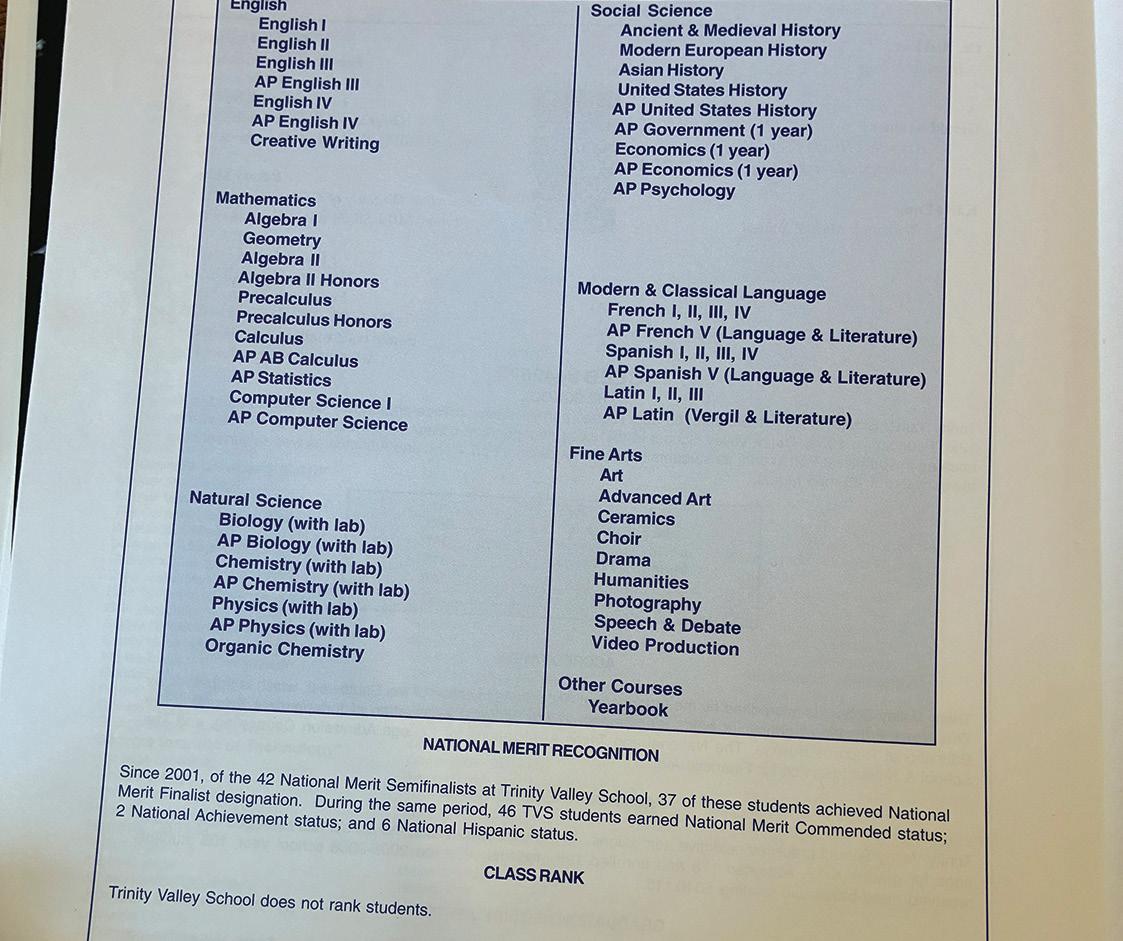
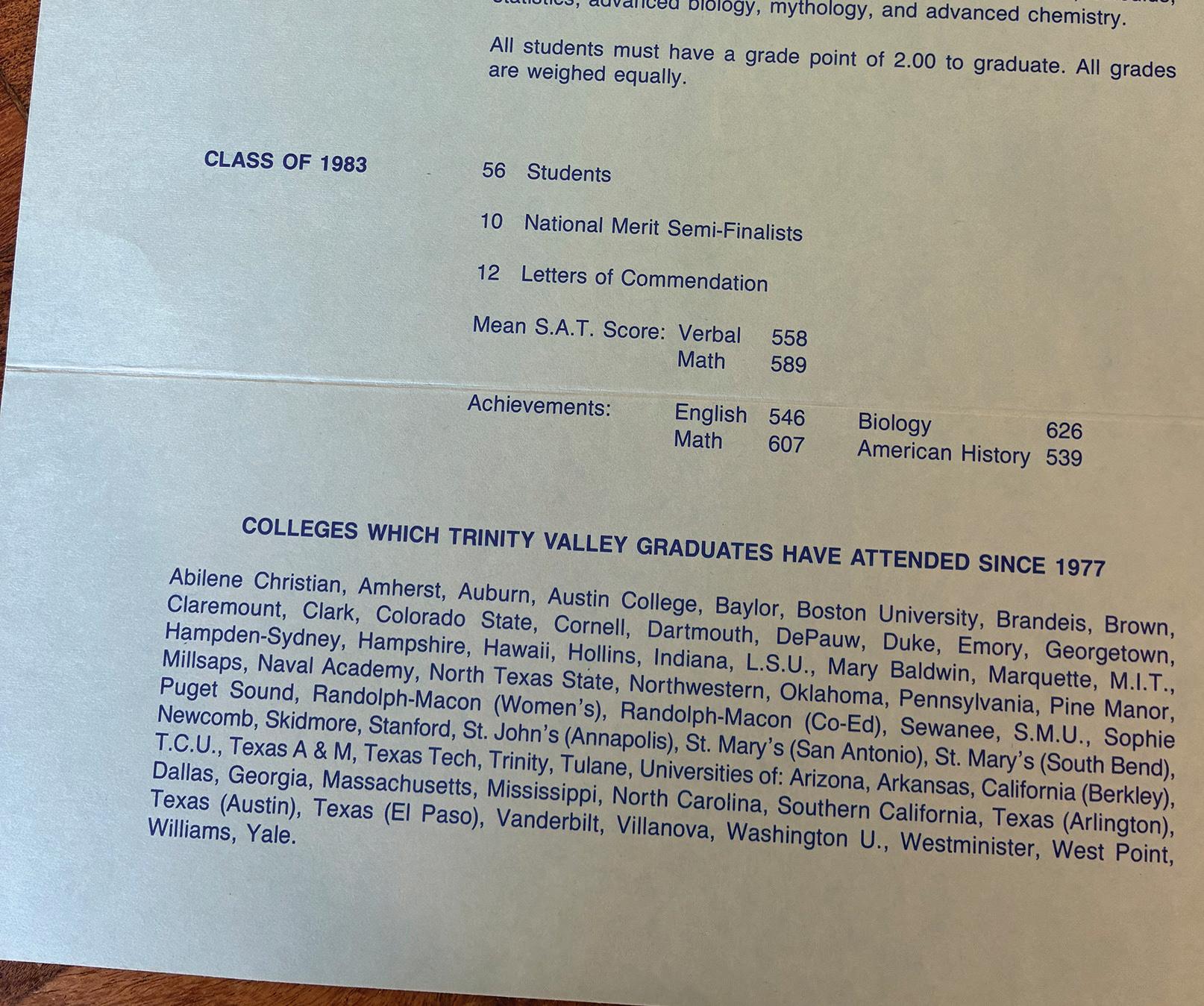
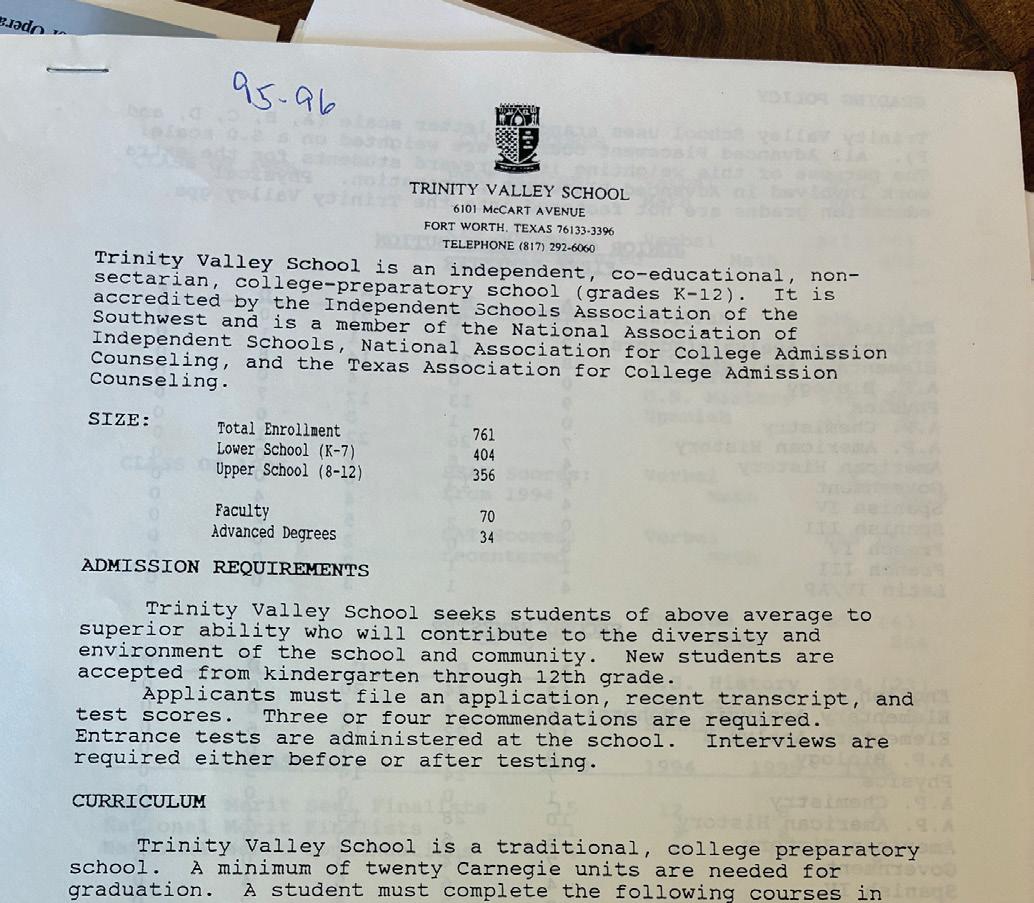
IN CONVERSATION WITH STEVI SCHUKNECHT, DIRECTOR OF COLLEGE COUNSELING AND KYLE KAHUDA , HEAD OF UPPER SCHOOL
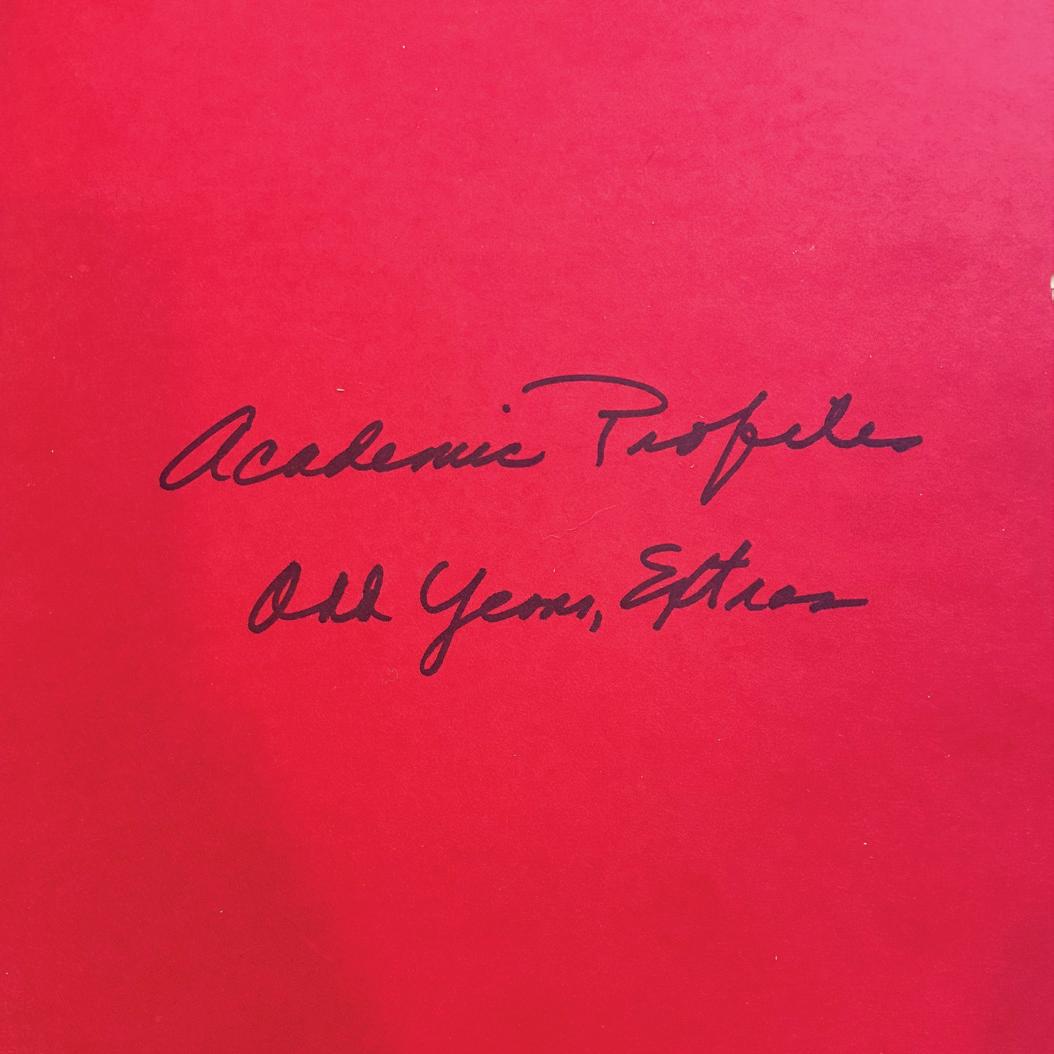
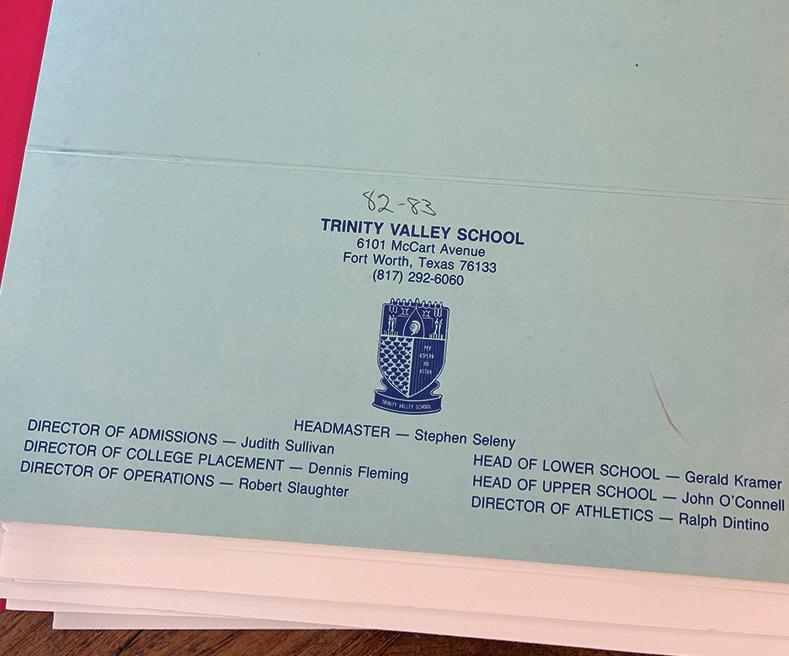
Schuknecht: When I began work at Trinity Valley School in the summer of 2022, I inherited several drawers full of files in my office. It took me months before I had sufficiently explored the files and found my footing in the mass of historical records. From fliers promoting past events to graduation programs dating back to the year 2000, it felt like I was exploring a TVS living history exhibit. But perhaps the most powerful piece of it all was a red folder I opened one afternoon to discover – to my delight! – hard copies of annual TVS academic profiles dating back to 1982. A school profile is a document sent along with a student’s transcript to a college to give context of the school community from which the student comes. In 2026, it typically includes the school’s graduation requirements
and grading scale, a bit about the school’s geographic context and enrollment, the academic offerings, distinct extracurricular offerings, and average SAT/ACT scores of current students. It also includes college matriculation or acceptances to demonstrate the range of colleges and universities students tend to consider. Today, the TVS academic profile consists of four thoughtfully designed pages of information, all offered and reported in accordance with best practices to supply admissions offices with the details that might help them understand our community and academic policies. Each summer, it is developed afresh with specific offerings and data that pertain to that year’s graduating class. Kahuda: You make that development sound easy, Stevi, but the reader should know just how big a task this is.
Each year, I am amazed by the thought and effort that you, your team, and the marketing and communications team put into making this a compelling and appealing production that helps to paint a picture of our amazing School for admissions readers.
SS: Imagine my delight when I found the red file that literally offered me a tour of the TVS Upper School through the ages. Did you know for example, that once upon a time, there was only a Lower School, grades K-7, and Upper School, grades 8-12? I could follow the slow transitions in the academic offerings, the enrollment details (mostly growth), the evolving graduation requirements, and the college matriculation lists that demonstrated not just how the experience at Trinity Valley had changed for students throughout the years, but also where the students went afterward. What I learned was that some things have stayed the same: those closest to the core of our mission. Others have
the times and the needs of students, but it is always interesting to consider all that doesn’t change!
SS: Even in the early 1980s, TVS was proud of its students’ achievements in attaining National Merit recognition.
In the 1987-1988 school year, the TVS profile mentioned offering Advanced Placement examinations for the first time (though the AP program had existed since the mid-1950s) and noted that advanced coursework was weighted in the GPA. Until that year, all courses had been weighted equally. KK: Wow, guessing lots of readers will wish they could have invested in the College Board back in the 50s!
“In the 1987-1988 school year, the TVS profile mentioned offering Advanced Placement examinations for the first time (though the AP program had existed since the mid-1950s) and noted that advanced coursework was weighted in the GPA. Until that year, all courses had been weighted equally.”
changed and beautifully brought our School across the years (and across town) to a contemporary and current version of TVS. KK: What a great resource, Stevi! I know how much you appreciate being able to understand the growth of our School and the changing experience of our students in context. I can’t wait to read about the fun nuggets you’ve been able to dig up!
SS: Of note: Elements of the graduation requirements have remained the same for all the recorded years. Today, like in 1982, students need four years of mathematics, four years of English, and three years of a world language to graduate from Trinity Valley. In every year recorded, students could choose to study advanced mathematics and advanced courses in biology or chemistry. KK: A school should (and must) change to reflect
SS: Many colleges on the matriculation lists looked similar to today’s: Texas A&M, UT Austin, Trinity University, Baylor University, TCU, and places like the University of Virginia, Brown, the University of Notre Dame, and Auburn University. However, some of the places on the list in the 1980s can no longer be found: Pine Manor College, North Texas State, Southwest Texas State, and Sophie Newcomb have either merged with other colleges or changed their names. Kahuda: Sounds like TVS families have likely been fighting (goodnaturedly, of course) over ‘Horns, Aggies, and Frogs for a long time…
SS: In 1996, one could study “Introductory Computer” and “Advanced Computer” at TVS. By the following year, “Advanced Computer” became “AP Computer Science” for the first time, training students to program in Pascal, a programming language replaced by C++ as the primary language of that course by 1999. KK: Some alumni out there (pre ’90s) will probably be reminiscing about times when C++ was higher than their GPAs.
SS: Standardized testing reporting has changed over the years, including the fact that SAT IIs (also known at various times as the SAT Subject Tests or Achievement Tests) no longer exist, and best practices now articulate that a school should report a mid-50% range rather than an average score. Though TVS has had relatively
consistent SAT score averages across the years (despite more than one redesign of the SAT exam), average ACT scores were not reported in our academic profile until 2009-2010. KK: The rise of the ACT nationally over the last 15 years or so is still amazing to me. Competition is good, right?!?
“Over
the decades, much has changed; much has not. While course requirements have evolved, the documents reveal a consistent and intentional vision for a TVS education: one that continues to guide the student experience today, just as it did 40 years ago.”
SS: Once upon a time, a student could study Organic Chemistry or Physiology at TVS. Speech and Debate, Music Theory, or Humanities earned a fine arts credit. In Social Studies, a student could take Asian History or Ancient and Medieval History. However, AP Chinese was nowhere to be found in the academic profile until 2016-2017. KK: Ugh. Organic Chemistry wrecked my GPA for three semesters in college. Yes, I said three. Long story… Can’t imagine having had that experience in high school!
SS: The Community Service graduation requirement of 60 hours was first mentioned in the 2006-2007 school year.
In 1985-1986, students were required to take three years of Latin in addition to three years of a modern world language. Though the TVS Global Education program was not formed or mentioned in its current iteration until much later, elements of intelligent citizenship and an intentional exposure to world cultures through the study of history and language always have been part of the Trinity Valley experience. KK: I love to hear about and consider Mr. Seleny’s motivations for the founding of the School. An informed appreciation of the complexity of the world beyond our borders has seemingly always been at the center.
SS: While TVS curriculum and policies will continue to be adapted and adjusted, at the core, the TVS experience consistently has emphasized the four objectives in our mission which are evident across the years. As Trinity Valley always has valued fine scholarship, students have gone on to institutions across Texas, the U.S., and even the world to pursue further study.
Trinity Valley School’s students always have been challenged to embrace and understand diverse perspectives, engage deeply with history, and become intelligent citizens (government has been a required
course for graduation for as many years as we have records). The wide, constructive interests can be seen in course offerings and program highlights throughout the years. Listings of student-led clubs show that TVS students have long been active, curious, and explored subjects beyond the classroom. Finally, lasting values are evident through pursuits like community service. Whether it was one tri-fold page formatted on a typewriter or a four-page, full-color document with graphics, the academic profile has achieved its goal: it offers a glimpse into the TVS Upper School and shares those facets that make our community what it is. Over the decades, much has changed; much has not. While course requirements have evolved, the documents reveal a consistent and intentional vision for a TVS education: one that continues to guide the student experience today, just as it did 40 years ago. It may have been Dennis Fleming, the “Director of College Placement” in the early 1980s before he became Head of Upper School, who began collecting academic profiles in the red folder, though I am not sure which director before me started the collection. What I do know is that I will certainly not be the one to break the tradition. And if you are wondering, yes, we have scanned them all and created digital records now, to ensure their safe storage for the future. That does not stop me, though, from flipping through the red folder every once in a while. KK: Thanks, Stevi, for this trip across the years. We are fortunate to be a part of this legacy of excellence, aspiration, and adaptation. I’m proud to have shared a small slice of that history with our talented and dedicated students and faculty.

OPENING THE DOOR
HOW HOME HOSTING CREATES TRANSFORMATIVE EXPERIENCES FOR STUDENTS AND FAMILIES
HILLARY RELYA, GLOBAL TRAVEL
EXCHANGE COORDINATOR
Each year, when international students and teachers arrive at our School, something remarkable happens. They do not just visit classrooms or attend activities - they become part of our community in a deeply personal way. One of the most powerful ways this connection happens is through home hosting, when TVS families open their homes to guests for a few days or several weeks.
For many families, the idea of hosting can feel unfamiliar or even daunting at first. But again and again, those who try it describe the experience as one of the most meaningful parts of their child’s education.
As sixth grader Helena B. shared, “Hosting an exchange student was really really wonderful. Lulu became my Beijing sister and I became her American little sister. Lulu and I had so much fun together every day. She taught me how to draw anime and we flew kites together and rode horses. If you ever get a chance to host an exchange student, I highly recommend it.” What begins as a new experience quickly becomes something much more personal.
Hosting turns global education from an abstract idea into a lived experience. Instead of simply learning about another culture in a textbook, students share meals, conversations, routines, and laughter with someone from across the world.
Learning That Happens Beyond the Classroom
When a student stays with a host family, learning continues long after the school day ends. Families talk about traditions, foods, holidays, and daily life in ways that simply cannot be replicated in a classroom.
Visiting guests might help cook a favorite dish from home, teach a host sibling a few words in their language, or explain what school is like in their country. These moments often spark curiosity, meaningful conversations, and authentic learning opportunities for the entire family.
For Levi R., a Swiss International Assistant Teacher here in spring 2026, that experience was unforgettable: “I had a great time with my host family. From the beginning, they were always very kind and helpful… I was able to experience Texas in a more authentic way… they truly welcomed me into their home and family.”
For younger students especially, these experiences help build empathy and understanding at an early age. Hosting reminds children that while people may grow up in different places, they share many of the same interests, hopes, and humor.
First time hosts, the McCollum family, took German International Assistant Teachers
Johanna and Lily on an outing to the Fort Worth Botanic Garden
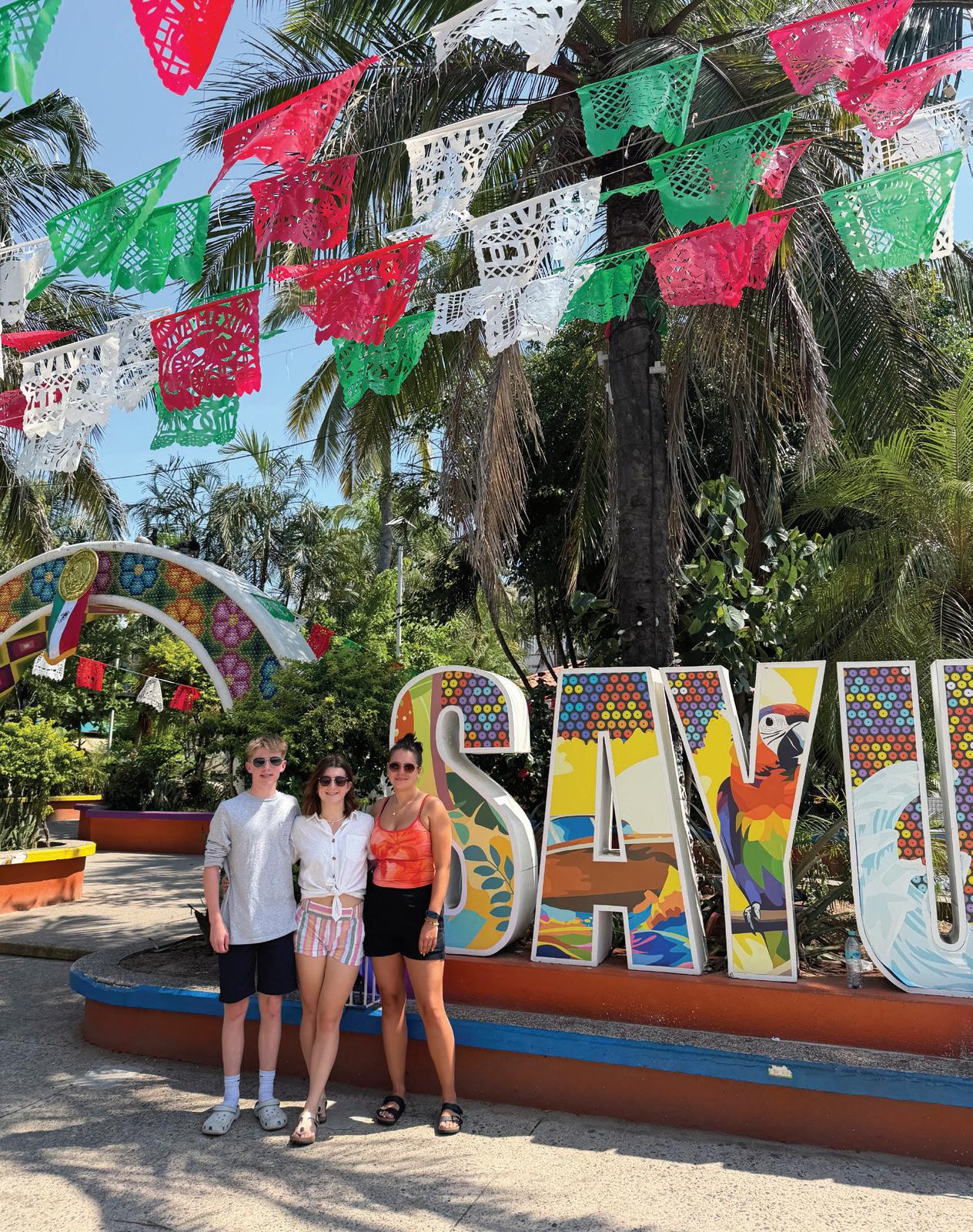
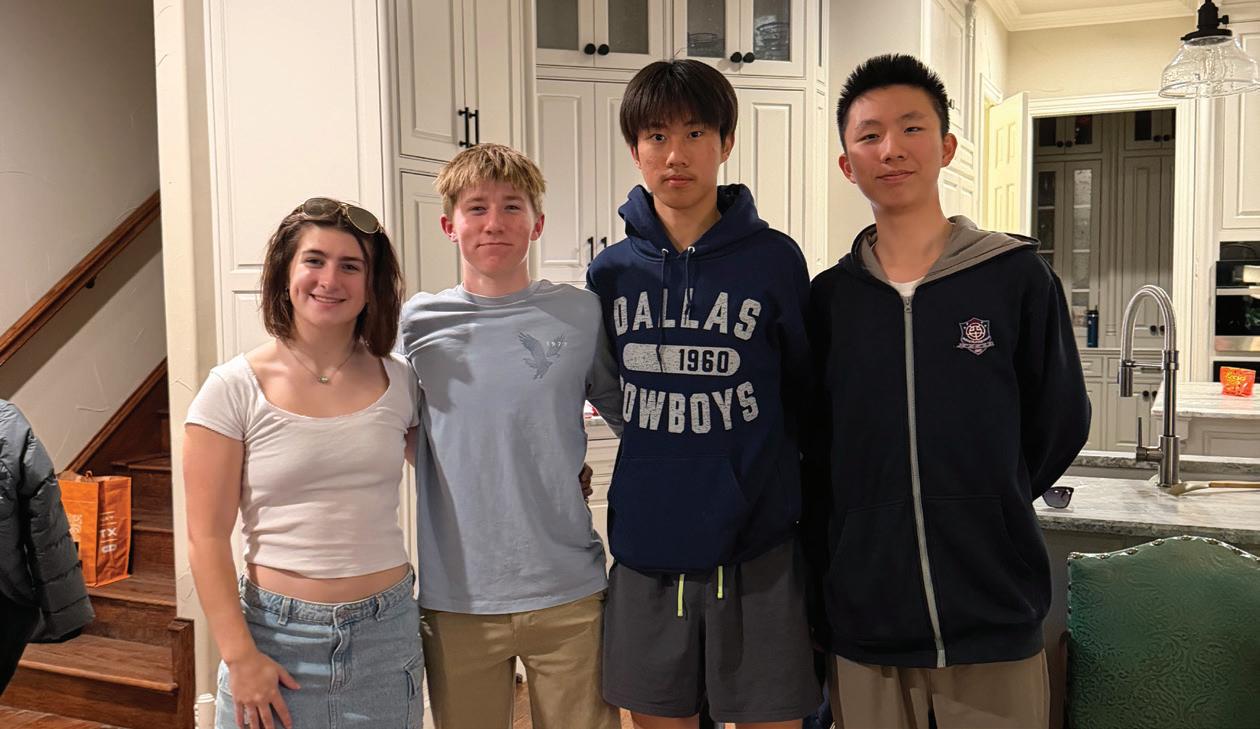
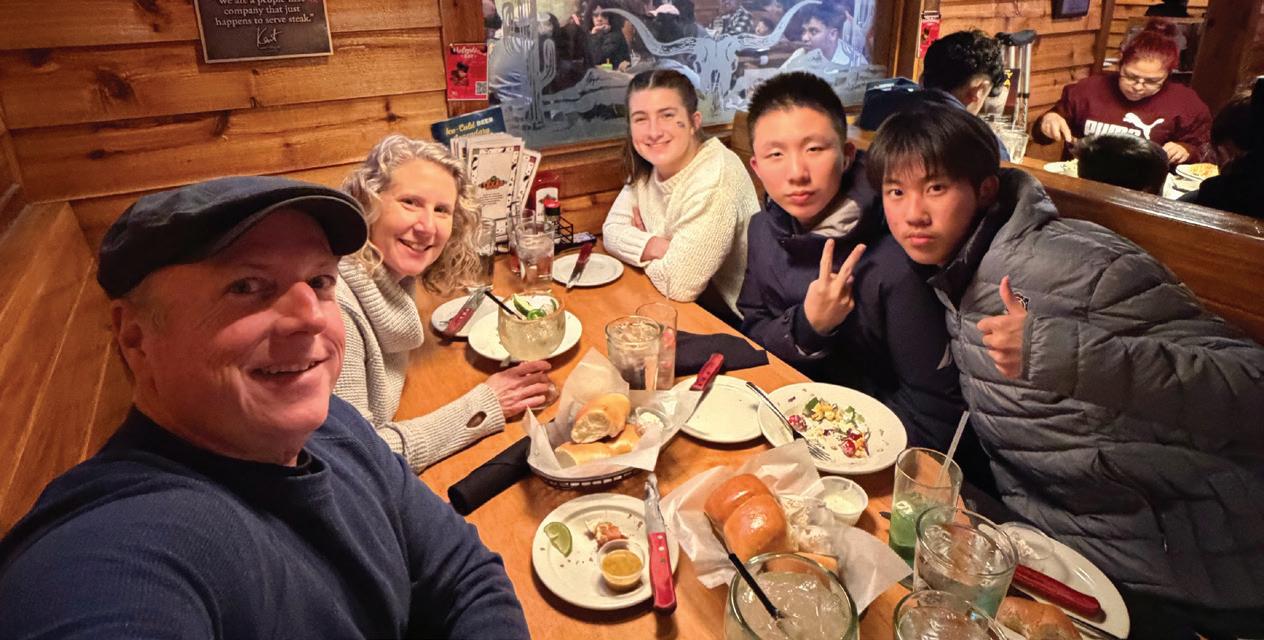
This page: Frequent hosts, the Leech-Mallette family, recently welcomed both Wilma, an International Assistant Teacher from Sweden, and Daniel and Thomas, visiting students from our partner school in Beijing
Opposite page top: The Ballard family with Lulu, a visiting student from our partner school in Beijing
Bottom: The Hulcy family with Levi, a Swiss International Assistant Teacher
Friendships That Last Far Beyond the Visit
Many host families say the most surprising part of the experience is how quickly visiting students become part of the family.
Within days, guests are cheering at games, joining family dinners, exploring local parks, and laughing over board games or late-night conversations. What begins as hosting often turns into genuine friendship.
As Levi’s host, Sarah Ikey Hulcy, reflected after hosting, “What surprised us most was how naturally he just… fit. He slipped into our daily rhythms like he had always been part of them, and it made the whole experience feel less like hosting and more like having family visit…he made us feel proud to open our door to him.”
Students feel it too. Junior Delaney L. shared, “You get to welcome someone into your home who speaks a different language, lives across the world, and has a completely different life—but for a couple of weeks, they are just part of your family. It is in those moments that you realize how much people have in common and how beautiful other perspectives are.”
In many cases, these relationships last for years. Families stay in touch through messages and video calls, and some even visit one another across the globe. What began as a short stay becomes a lifelong international connection.
Growth for the Whole Family
Hosting benefits not just the visiting student, but everyone in the home.
Parents often say hosting encourages their children to be more welcoming, flexible, and curious about the world. Students practice patience, communication, and cultural understanding - skills that will serve them well in college, careers, and life.
For Lower School parent Ashley M., the impact was profound: “Hosting TVS Global guests is one of the best experiences we have had since joining the TVS community… It really opened our children’s eyes to a culture and lifestyle different than ours and showed them how big and unique our world truly is.”
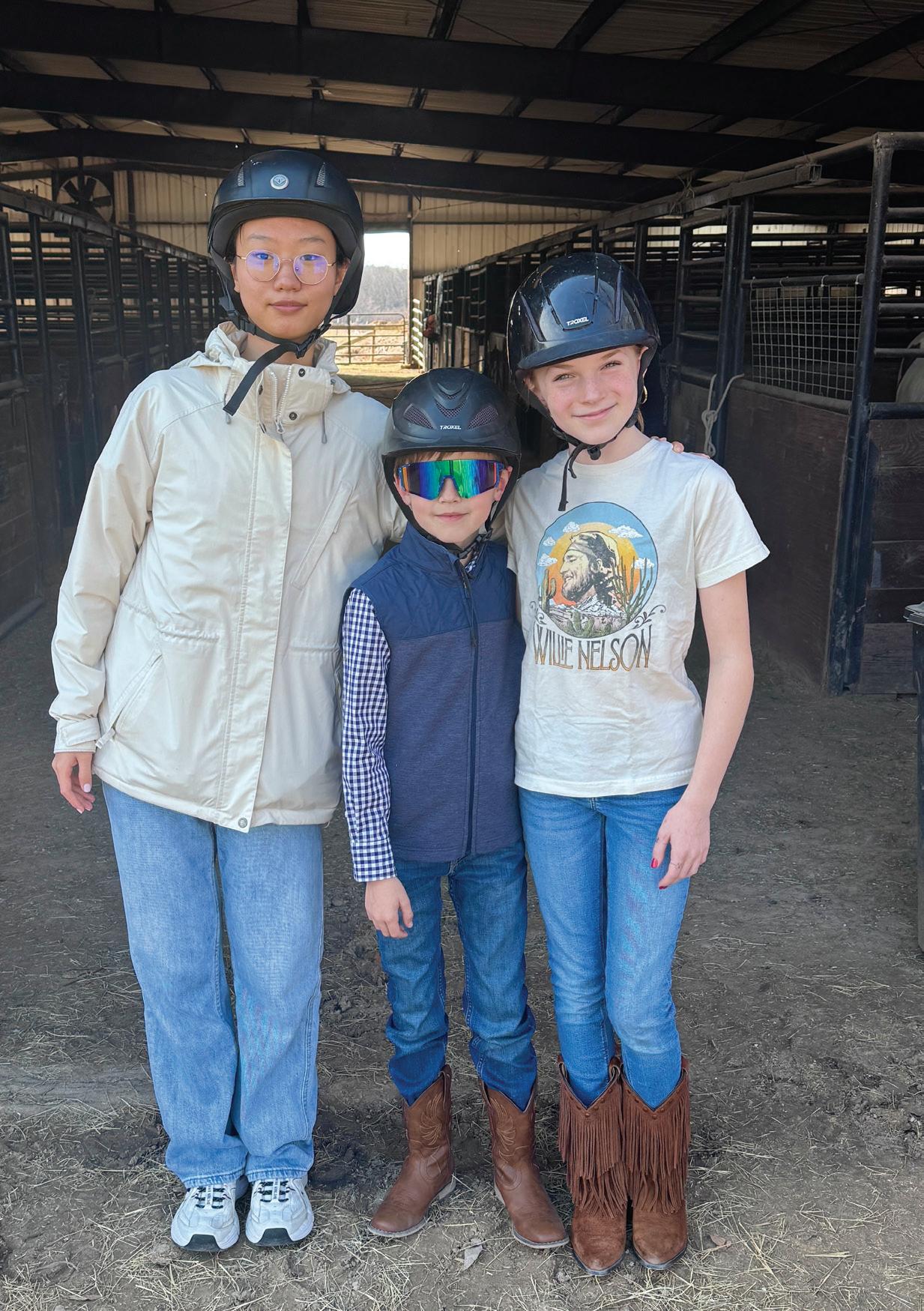
Many first-time hosts discover that what they worried about beforehand - language differences, busy schedules, or logistics - quickly fades as relationships form.
An Invitation to Our Community
Our School believes deeply in preparing students and teachers for a connected world. Home hosting is one of the most powerful ways we bring that mission to life.
By opening their homes, families give visiting students a window into everyday life here, all while gaining a window into another culture themselves. The result is an experience that enriches classrooms, friendships, and families alike.
As these voices make clear, hosting is not about having the perfect home or schedule. It is about openness, curiosity, and connection.
For families considering hosting in the future, the message from those who have done it is simple: you do not just host a visiting student or teacher - you build a meaningful global relationship that stays with your family long after the visit ends.
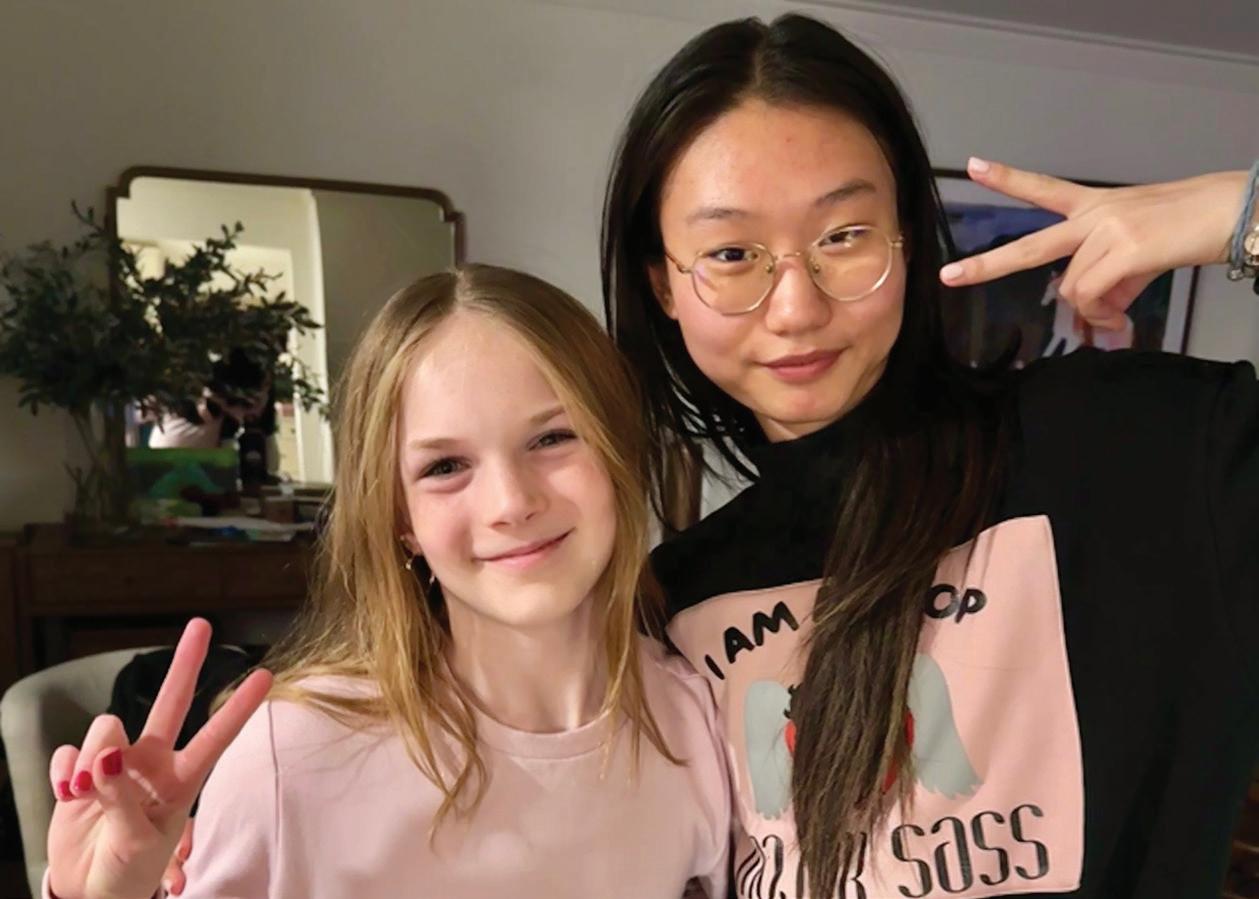
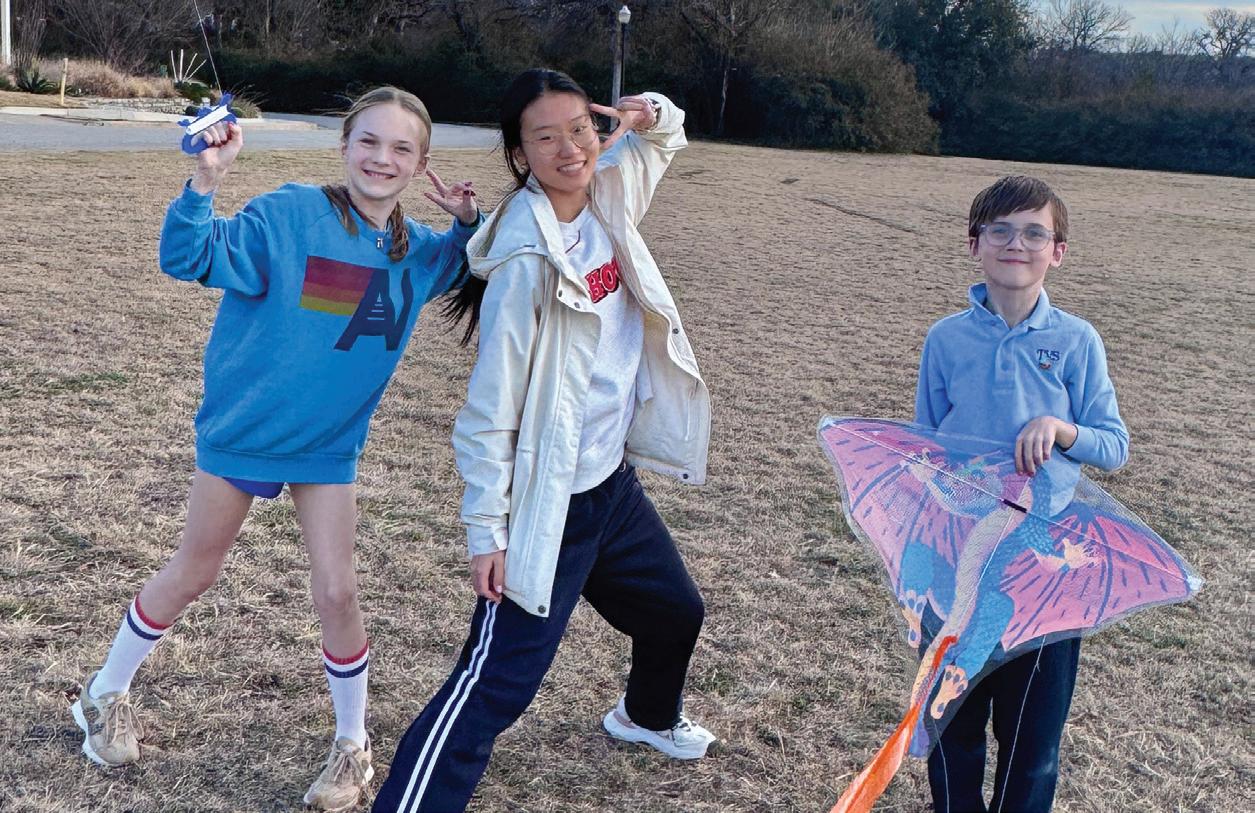
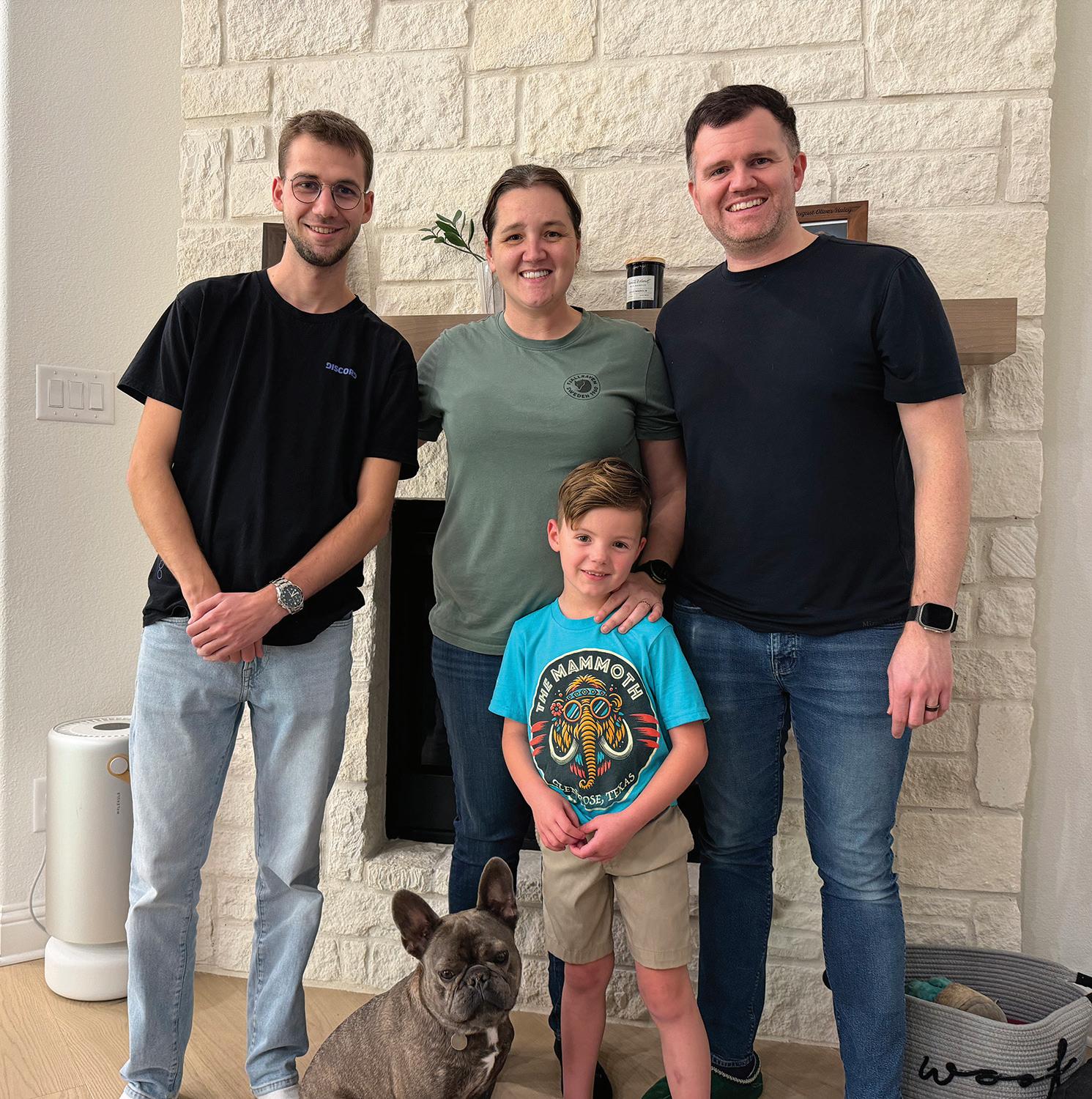
alignment, capacity, and excellence – and he named some of the areas that need further discussion and development. After the opening session, our focus shifted to shared language and understanding around learning differences. Generously sponsored by the Parents’ Club and coordinated by our Academic Support Team, Jessica Newman of the Shelton School joined us to help faculty and staff develop a richer understanding of neurodiversity in our students and practical strategies to support all of our learners. Sessions ranged from the neuroscience of learning differences to ADHD, dyslexia, and motor skill development. Faculty and staff also engaged in more experiential sessions hosted by colleagues to understand more about our student experience, teaching and learning strategies, and operational areas of the School.
Our February day looked forward. New roles and structures for the 2026-27 school year were shared, Alexandra Channell and Julie Knudsen introduced
From
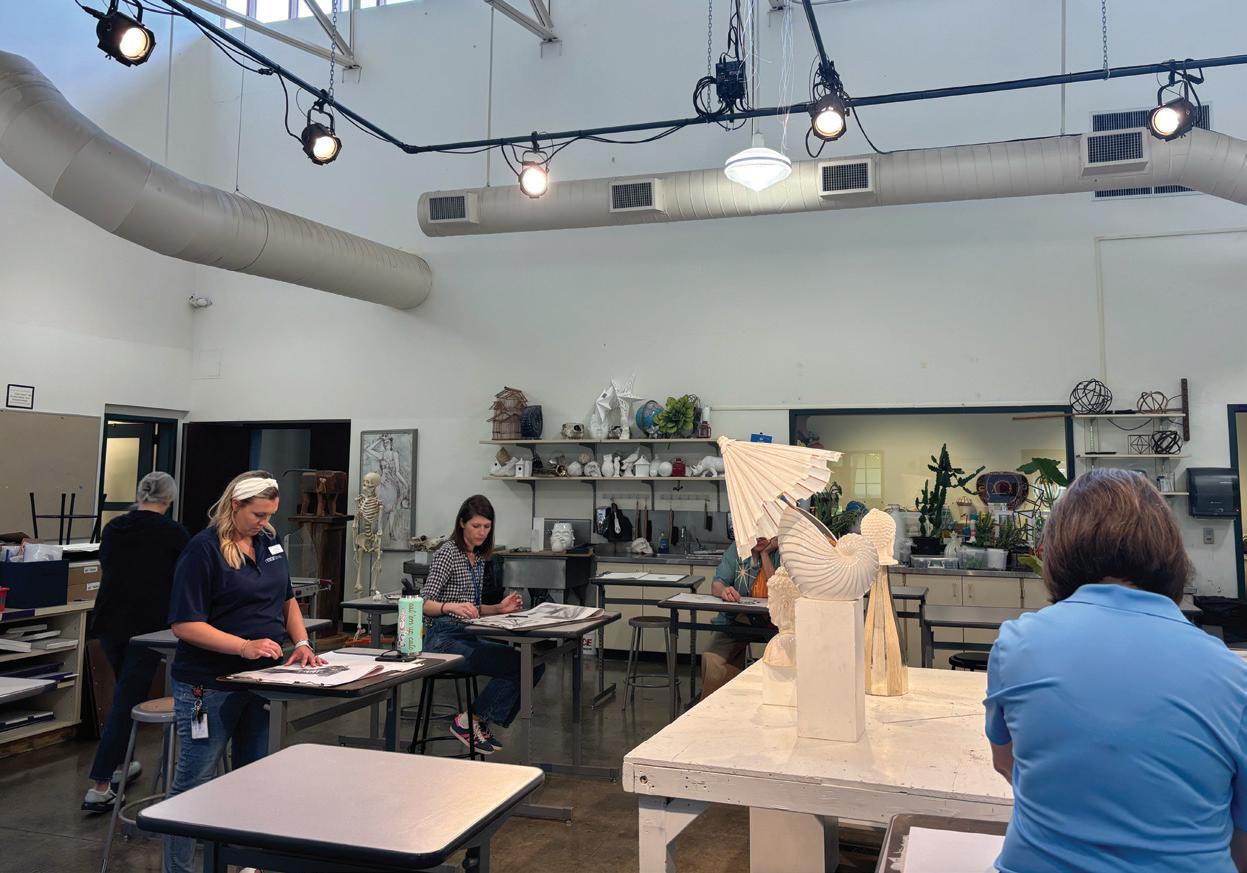
building shared language around student safety, neurodiversity, and School mission to creating space for cross-divisional dialogue and strategic contribution, each gathering reflected our commitment to educating the whole child by continually investing in the adults who guide, support, and each student.
faculty and staff to our Community Commitments work, and our cross-divisional conversations focused on creating opportunities for faculty and staff to contribute in meaningful ways to initiatives we will advance in the 2026-27 school year. Conversations included topics such as building a culture of feedback and the hopes and fears around a more formalized evaluation system, role clarity in developing student accountability, and the ways in which advisors identify and support students who are experiencing challenges. We also created space for faculty parents to discuss the unique opportunities and challenges of that role. Our Community Commitments Committee members led listening sessions that allowed faculty and staff to share their perspective on a variety of questions that will shape our Community Commitments document. The day closed with our Security Team leading full reunification training sessions by division,
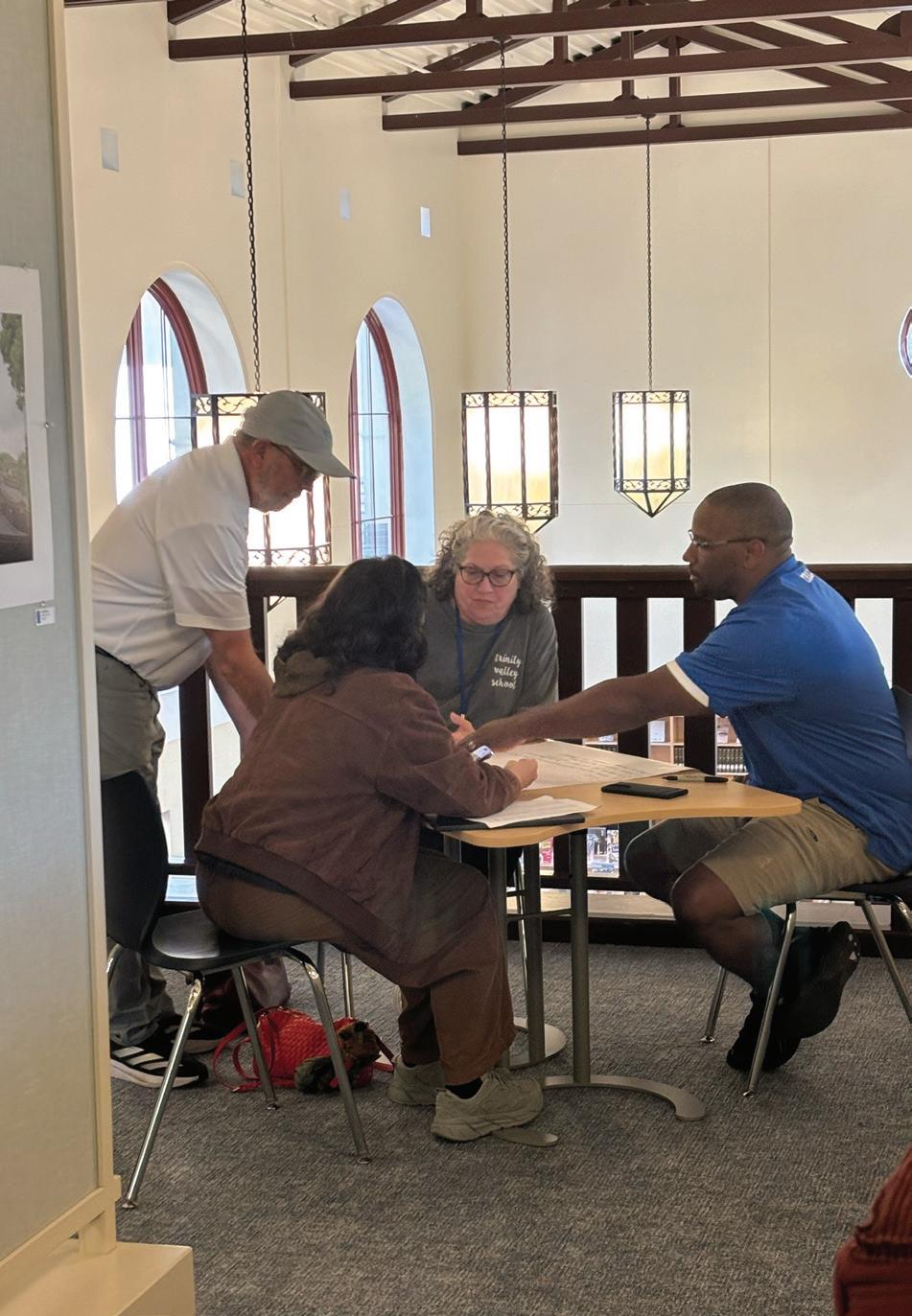
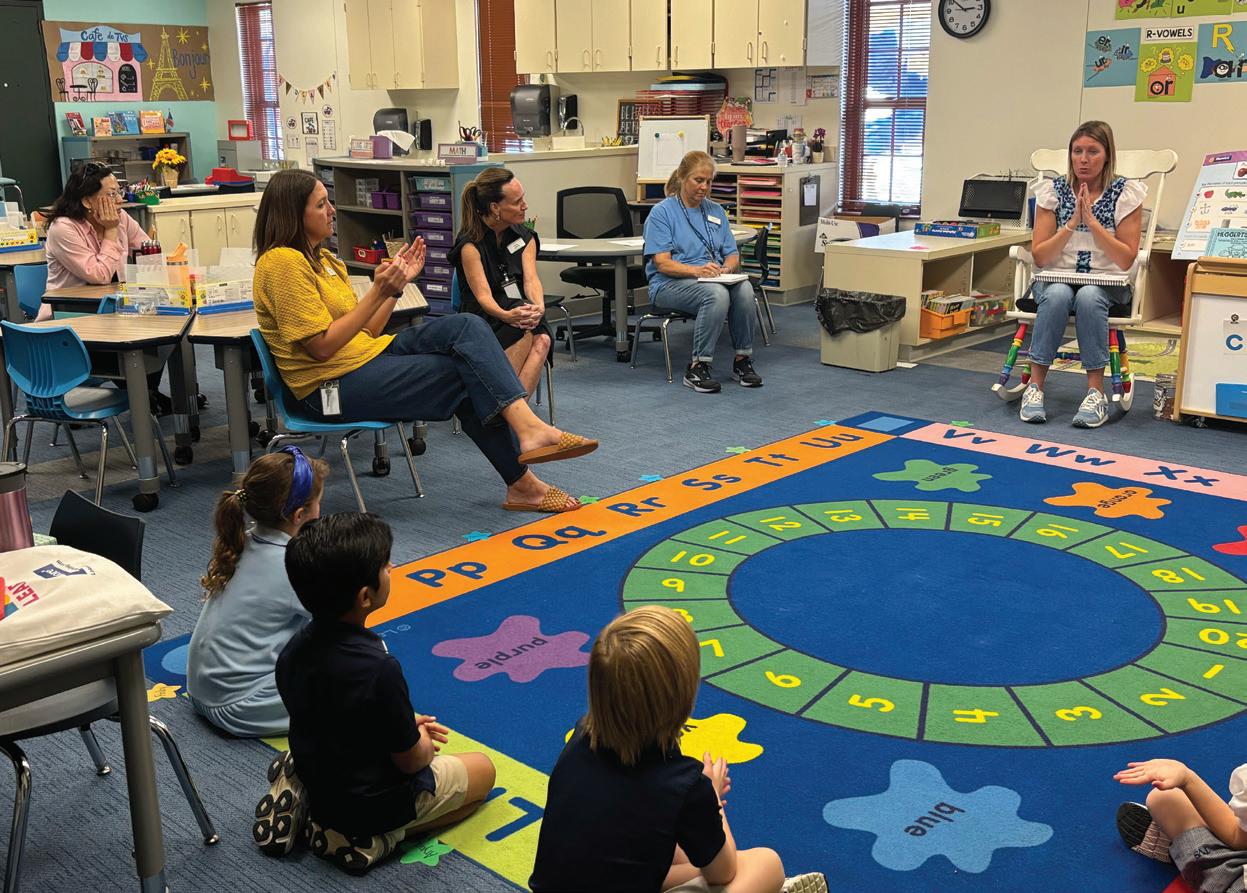
walking every faculty and staff member through his or her role in reuniting students and families in the event of a campus evacuation.
THANK YOU TO OUR FACULTY AND STAFF WHO LED SESSIONS THIS YEAR!
Drumfit, Paddles, Relays, and More | PE Staff
Ropes Course | Szalan Ellis, TOE
Beyond Borders: Building Global Competency and Integrating Virtual Exchange in Every Classroom | Ryan Churchward
The Great Calculus Debate: The Founder of Calculus: Newton? Leibniz? | Mark Cox, MS Math
STEM Connections & CrossCurricular Skill Building | Hannah Bundrick and Abbie Cornelius, MS Science
Conversations included topics such as building a culture of feedback and the hopes and fears around a more formalized evaluation system, role clarity in developing student accountability, and the ways in which advisors identify and support students who are experiencing challenges.
While not all of these themes appear overtly related to student safety, one key element that Learning Courage shared with us during our training in August was that a culture of prevention becomes stronger with clear, shared understanding of school goals and expectations, strong connections, and systems for accountability. As we advance upcoming initiatives, we acknowledge the value for academic and operational progress, as well as its value in contributing to a continuous commitment to a culture of prevention.
Looking ahead, we have intentionally built professional development into two-day blocks in the 2026-27 calendar, allowing for more time for reflection, collaboration, and more depth of conversation as we look forward to continued professional growth and its impact on our students’ experience.
Create with Canva: A Hands-On Design Session | Dr. Ashly Spencer, EdTech Innovation Specialist
Understanding the TVS Admissions Process | Regan Gilstrap, Allison Shapard, Admissions; Ashley Robinson, Strategic Marketing and Communications
Buddy Books: The Fun of Pairing Fiction and Nonfiction Books Together to Make Connections and Light Up Your Brain! | Kirsten Murphy, LS Library
Laying the Foundation in Literacy | Kim Pierce and Lauren Zito
It May "Theme" Impossible: Unlocking the Power of Thematic Units | Grace Crumley and Nicole Tomme
Making History Come Alive Through Hands-on Simulations & Artifacts | Alison Gee, MS Social Studies
Welcome to the Concession Stand: Adding Nuance and Sophistication to an Academic Argument | Ryan Ellis and Ed Wood, MS American Studies
Music in Math: A Motivational Mindset | Matt Waldmann, MS Math
En Español, Por Favor | Roberto Casanova, US Spanish
Fun-da-mentals of Drawing: Mass and Line Gesture Drawing | Janet Chaffee, US Art
Starting the Creative Process: From Paper to Clay | Jo-Ann Mulroy, US Art
Tools and Techniques: Micropipette Art | Taylor Strong, US Science
Designing with SPARK: Purposeful Strategies for Building Connections | Frank Gidwani, US Math and Adriane Wheat, US English
Harkness at TVS: Reimagining the Seminar Experience | Bill Cohoon and Dave Ostroff
An Overview of TVS College Counseling and the College Admissions Landscape | College Counseling
No Prep, On the Fly Review Games | Daniel Audi
Digital Distractions: Research and Strategies | Eileen Ford
Algebra II, Precalculus, and Calculus with Confidence: Leveraging Desmos for Deeper Understanding | Melissa Burkhead
Jingles ARE the Way: Creating and Using Short Songs in the Classroom | Brian Johnston
CAREER EXPLORATION DAY 2026
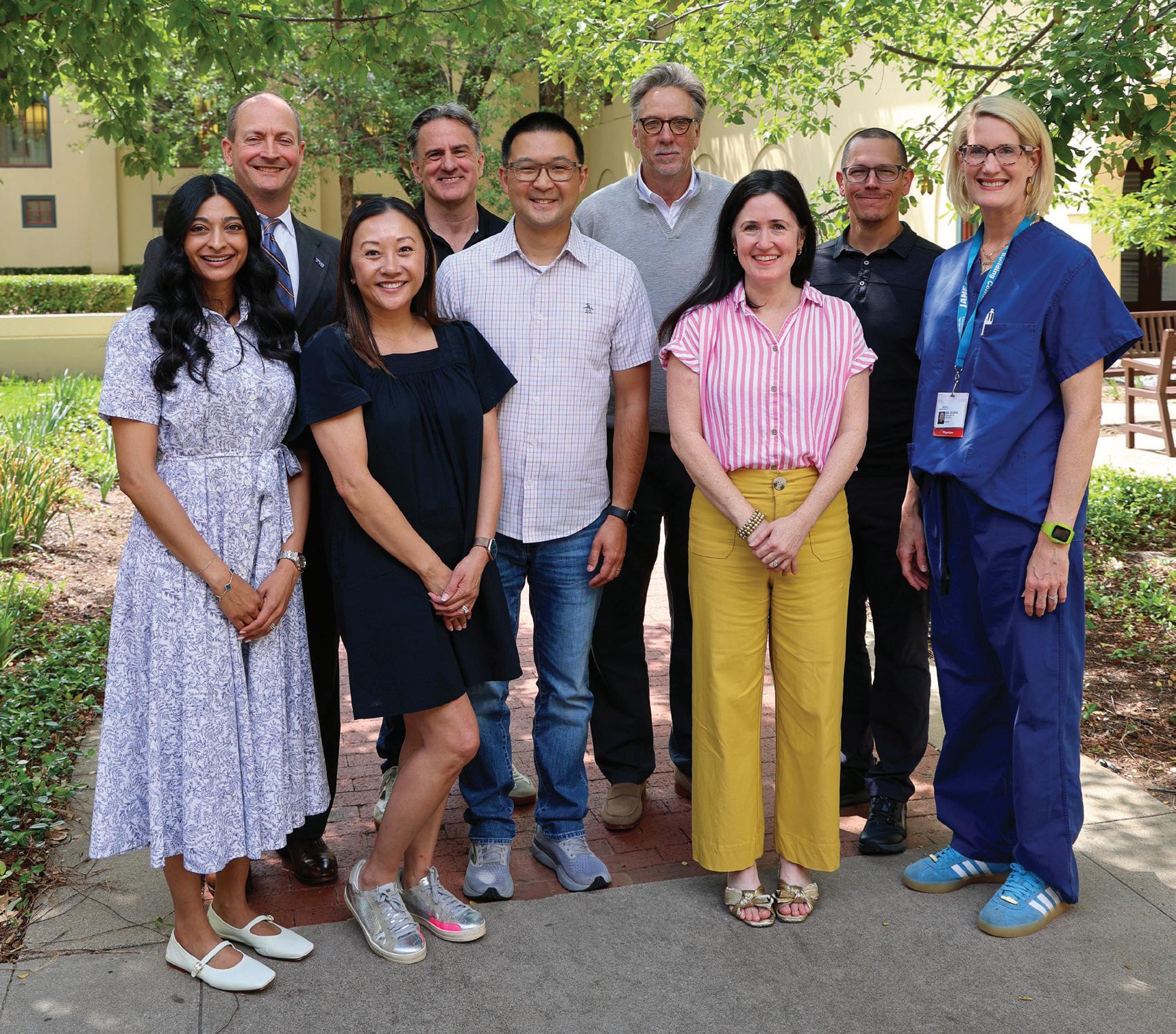
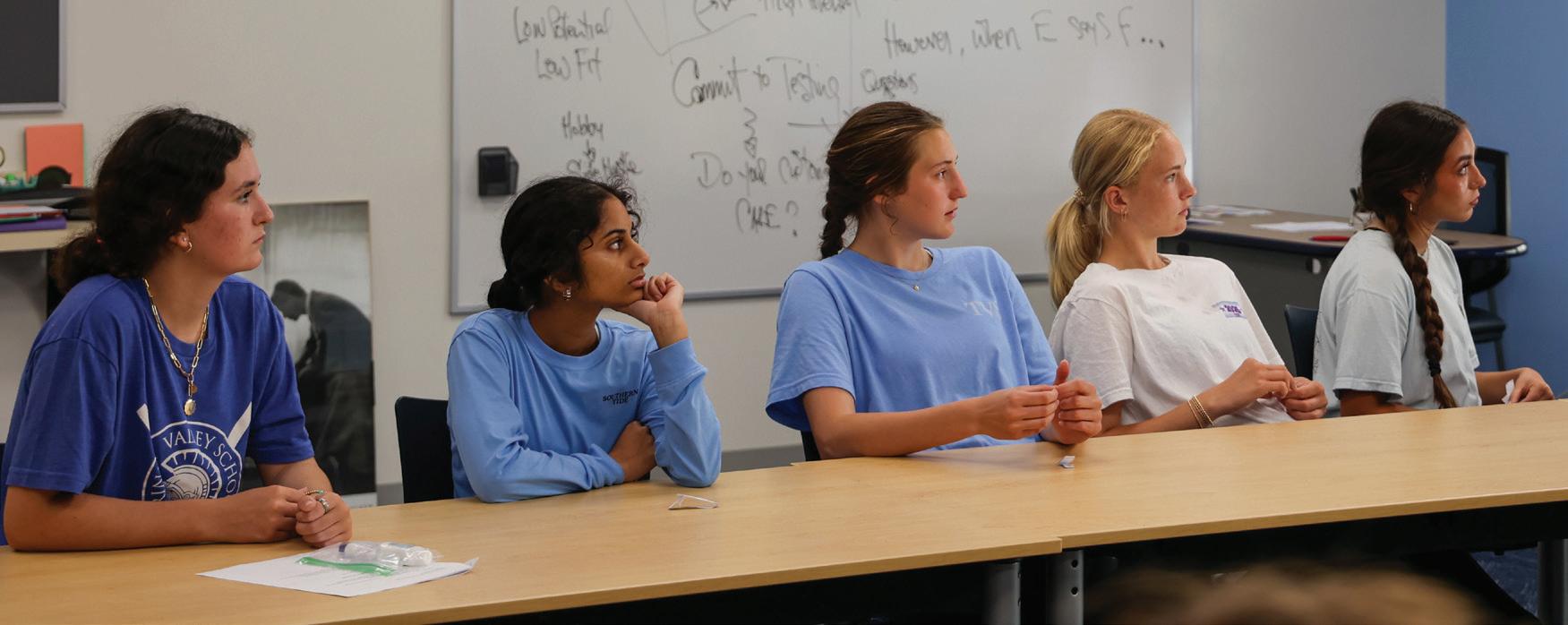
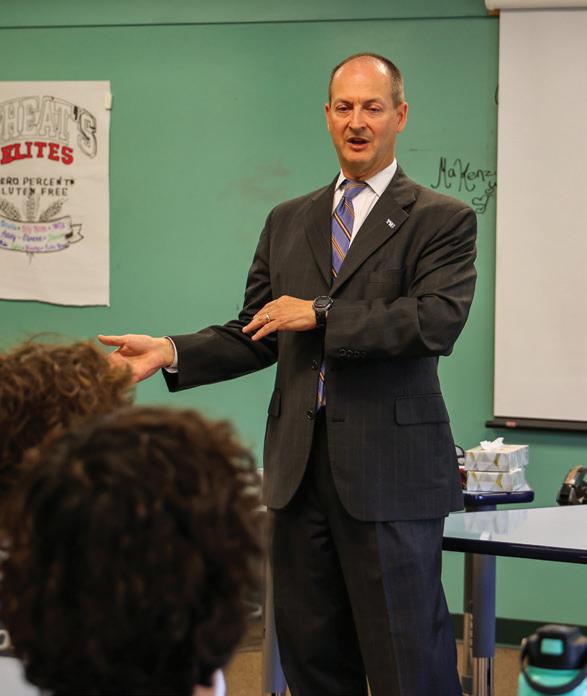
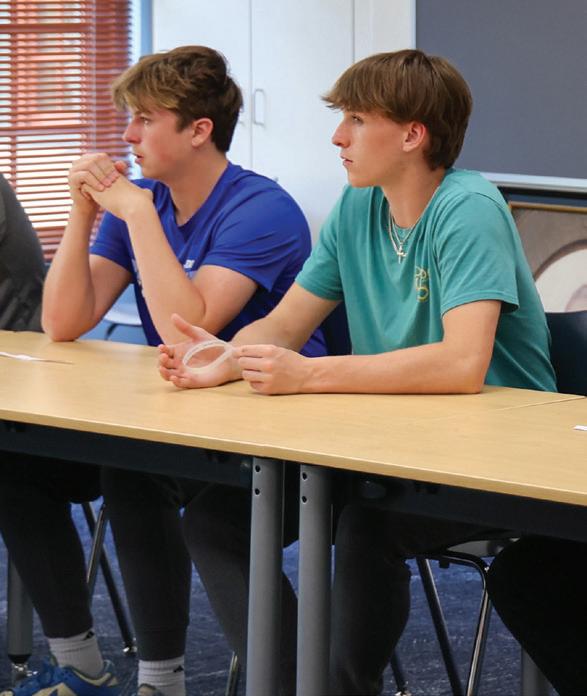
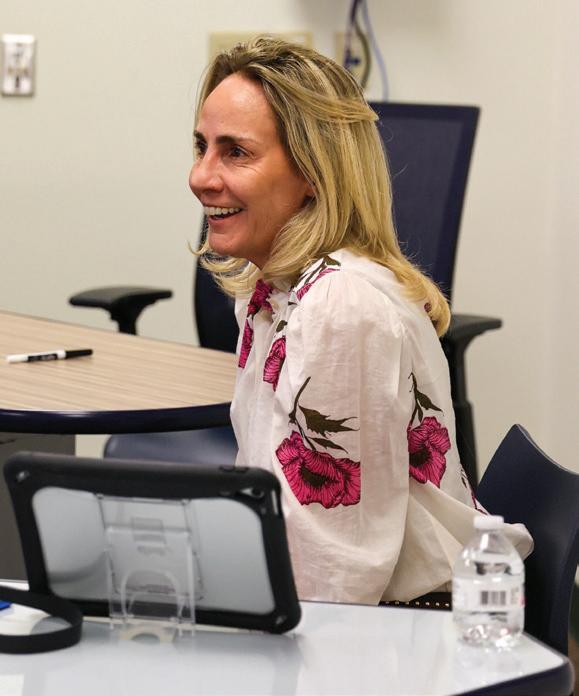
Career Exploration Day was an inspiring experience for our Upper School freshmen and sophomores as they explored potential future paths based on their individual interests. After identifying their top career fields—from medicine and engineering to the arts, business, and beyond— students participated in small group sessions led by TVS parents who shared their educational journeys and professional insights.
We are grateful to the parents who volunteered their time and perspective: Michael Appleman '86, Mac Engel, Wally Jones, Jeremy Wilson, Dr. Zelime Elibol, Sonya Tanna, Mary Ho, Jarry Ho, Lacey Kruger, and Dr. Ann Ranelle.
The day also featured a powerful keynote from Julie Butner, President & CEO of the Tarrant Area Food Bank, who spoke about the impact of service-driven careers. Her message was especially meaningful as it connected directly to our Upper School Day of Service, reinforcing the importance of giving back while exploring future opportunities.
WHERE ADVENTURE TAKES ROOT: THE LASTING IMPACT OF TOE
SZALAN ELLIS, DIRECTOR OF EXPERIENTIAL EDUCATION
We frequently talk about the origin of the Trojan Outdoor Experience program on our trips, and it always takes us back to how and why this program was created. But TOE is not just about the trips we take or have taken: it is about the roots we grow during that time. When we look back, we see more than memories of sitting around a campfire at BASE Camp, summiting a mountain, or paddling down rivers. We see the important moments in our lives that sparked something deeper - a curiosity about the natural world around us, trust in those beside us, confidence in ourselves, and the choice to seek adventure over the comfort of the familiar.
We asked Upper School students and alumni to share how TOE has influenced their lives beyond our organized trips. Their responses revealed something powerful - something we have heard them say before but wanted others to hear as well. TOE does not stop when we arrive back on campus following a trip. It continues in the weekend camping outings planned with friends, in helping a family organize their first backpacking adventure, in the decision to push beyond what feels easy. These stories remind us that TOE's greatest impact goes far beyond teaching outdoor skills: it is inspiring a lifelong relationship with adventure, internal motivation, leadership, and the outdoors.
Here is what some of our community members had to say:
CLAIRE MCKNIGHT CLASS OF 2026
Ever since I came to TVS in fifth grade, TOE trips have always been something memorable that I look forward to each year. There is something special about being outside together with your classmates and teachers, rather than in the usual classrooms. It creates a different kind of bond
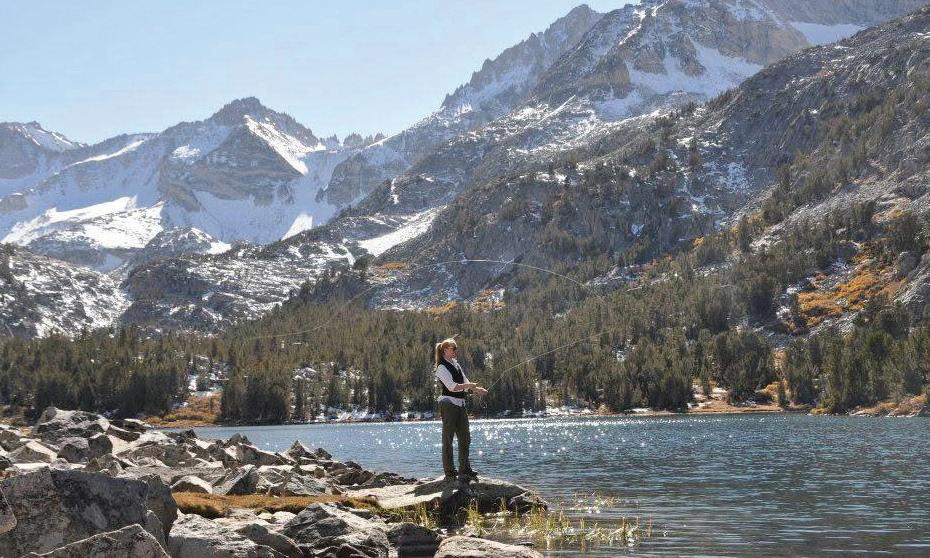
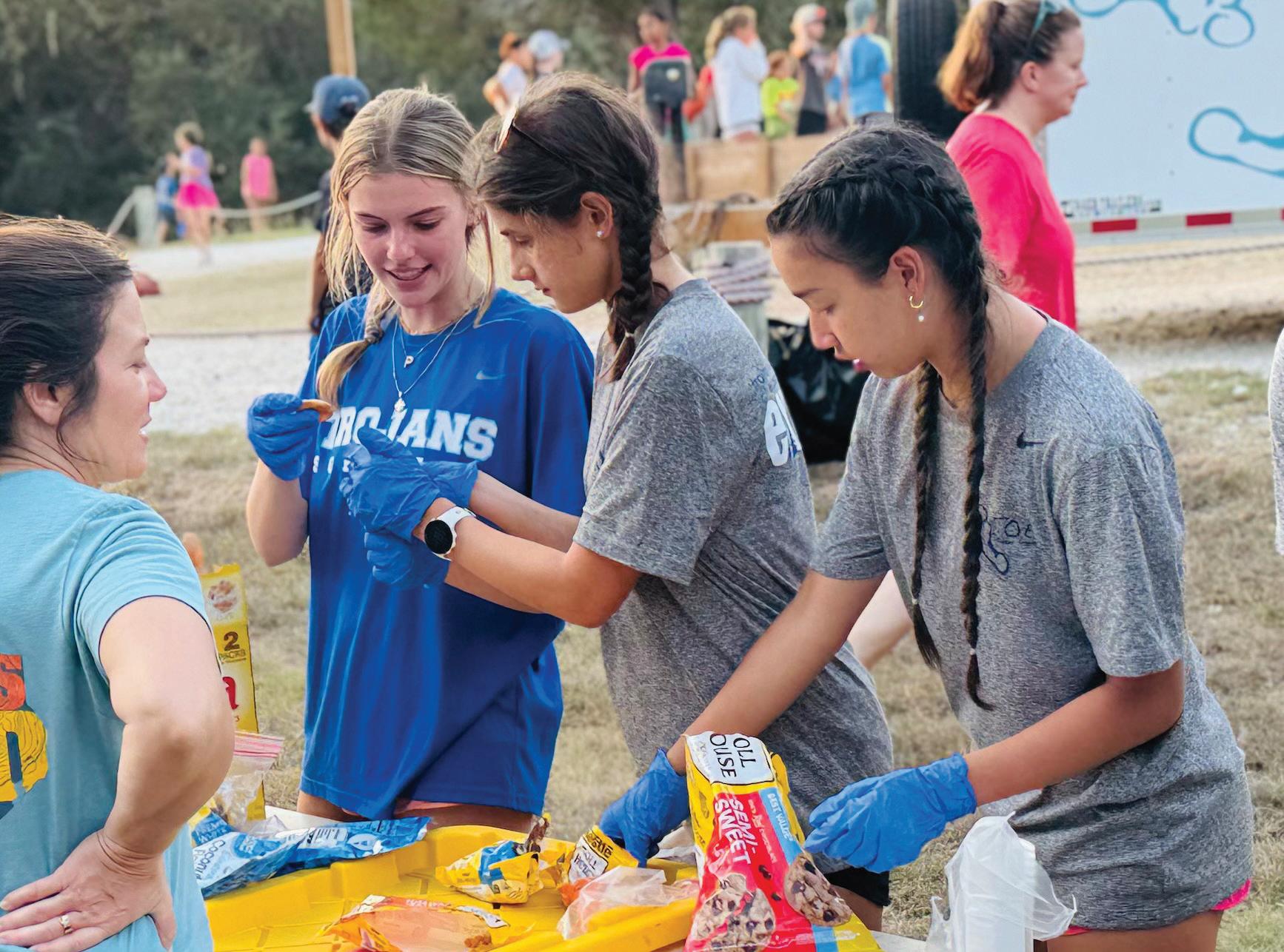
that you don’t get during a normal school day. My family has never really been big on camping, and this year’s senior TOE trip was actually my first time ever camping in a tent [due to Covid-era disruptions]. Even though it was a little outside of my comfort zone, it ended up being the highlight of my senior year so far. The trip was only two nights, but it inspired me to go outdoors outside of TOE. One thing I’m especially excited about now is going on a 10-day camping trip to Amsterdam this summer. If it hadn’t been for the TOE program and all the trips I’ve been lucky enough to go on, I probably never would have chosen to do something like this.
POLLY JOHNSTON CLASS OF 2027
The TOE program is something I am very familiar with because I have experienced it both as a student and as a student leader, and it has shaped many of the interests I carry with me today. In fourth grade, our class went on a trip where we tried climbing, and that experience introduced me to a sport that quickly became a passion of mine. I eventually joined a competitive team. Although
I am not currently competing, my love for climbing remains a defining part of who I am. The TOE program not only introduced me to that passion but also gave me opportunities to share it with others by becoming a leader and helping with the climbing activities that take place on campus. One trip through TOE turned into a passion, a community, and a part of who I am, and I hope future students get the chance to discover what their one trip might become.
NATALIE STRAUSZ CLASS OF 2028
TOE trips have shaped my love for the outdoors. This past summer, I took a 35-day trip and visited eight national parks. I camped or backpacked each night. One morning on my trip, I sat by a lake and watched the sun rise over the Tetons. In the tranquility of this moment, I was able to reflect on my love for the outdoors. I realized that TOE trips have introduced me to nature and inspired me to try new things.
NOLAN BROOKS CLASS OF 2027
I have gone on every TOE trip since fourth grade. I have also been a TOE leader for the fifth-grade TOE trip. Being a TOE leader has given me so many opportunities because it helped me make friends with the lower class and my buddy and some of his friends, but also it let me
share my skills with rising TVS students and hopefully future TOE leaders. I have been in TOE Club almost all of high school and been on TOE Club trips which are my favorite. I also want to talk about what TOE has done for me outside of school. Reed Smith and I have started a little fishing excursion. We go out around 6 a.m. to the Trinity River in the Ennis, Texas area, where we go alligator gar fishing. It has been the most fun I have had in a long time. I have used survival skills that I have gotten from my TOE experiences. These expeditions we go on always remind me of TOE and how much I love it.
WILLIAM LYNCH CLASS OF 2027
TOE has impacted my relationships with friends and teachers. Some of my earliest school memories are from TOE trips, playing outside, talking in tents, and trying new activities that I was nervous to do. Another thing I loved about being a student on trips was getting to see the other side of our teachers, the more relaxed and less stressed version. It makes it easy for students to enjoy when they see the teachers they look up to having a good time. I have immensely enjoyed being a leader on trips. It’s helped me personally grow. You learn how to connect with kids that are younger than you and help contribute towards a beneficial experience.
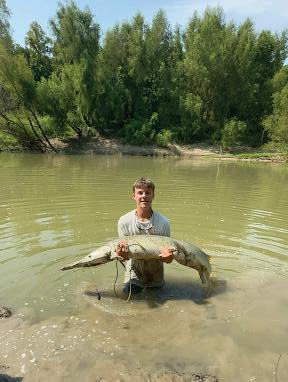
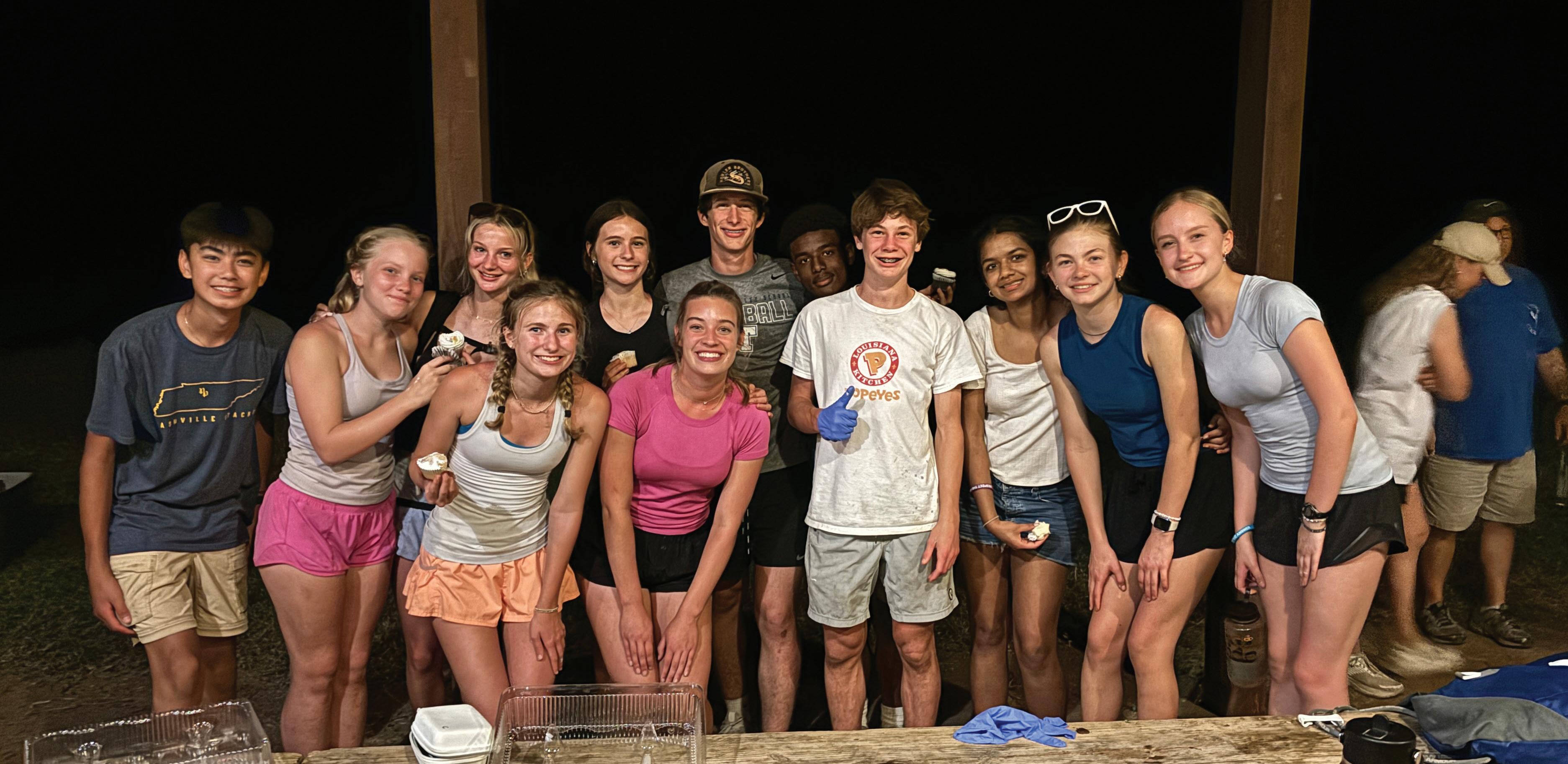
Opposite page top: Grace Taylor Ballard; Bottom: Polly Johnston
This page below: William Lynch; Right: Nolan Brooks - Trinity River
JAXSON KNIGHT CLASS OF 2026
When I was a student leader on the fifth-grade TOE trip, I never expected it to have such a big impact on me. I’ve always been an outdoors guy, usually fishing or camping with my friends, so when I heard there was a fishing section on the TOE trip, I was excited. That experience ended up inspiring me to sign up for the seventh-grade TOE trip as well. One thing I really appreciate about TOE is the opportunity it gives Upper School student leaders to connect with Middle Schoolers, which is something unique and special to TVS because it helps build a stronger community. It also encouraged me to spend even more time outdoors, especially fishing with my friends outside of school.
ANNIE JACOBS CLASS OF 2014
Growing up with the TOE program, I learned that the outdoors isn't something you need to train for or be intimidated by — it's just where you go. Whether it was trekking through Costa Rica's cloud forests, scrambling across the Austrian Alps, or setting up camp under the wide-open Texas sky, TOE taught me that adventure is a mindset, not a destination. So when my company sent me to live in Japan and I found myself staring up at the Japanese Alps that towered only a train ride away from Tokyo, I didn't hesitate — I did some research, packed a bag, and went. TOE had shown me already that the reward is always worth the effort, even if the terrain is unfamiliar. TOE didn't just teach me to embrace the unfamiliar outdoors; it made the unfamiliar outdoors feel like home, no matter where in the world I found it.
GRACE TAYLOR BALLARD CLASS OF 2001
The TOE program at TVS is, in my opinion, one of the most valuable parts from my experience as a Trojan. I believe it’s what truly taught me what I was made of—even when I didn’t realize I was learning it at the time.
From snowshoeing in New Mexico to navigating with a topographical map, building our own shelters, sleeping outside, and preparing our own food, those Middle School trips instilled in me a deep sense that I could do anything and live anywhere. Looking back, I can see how those experiences gave me the confidence to move to Europe after graduation to work as a nanny, not knowing a single person, trusting that no matter what, I could take care of myself.
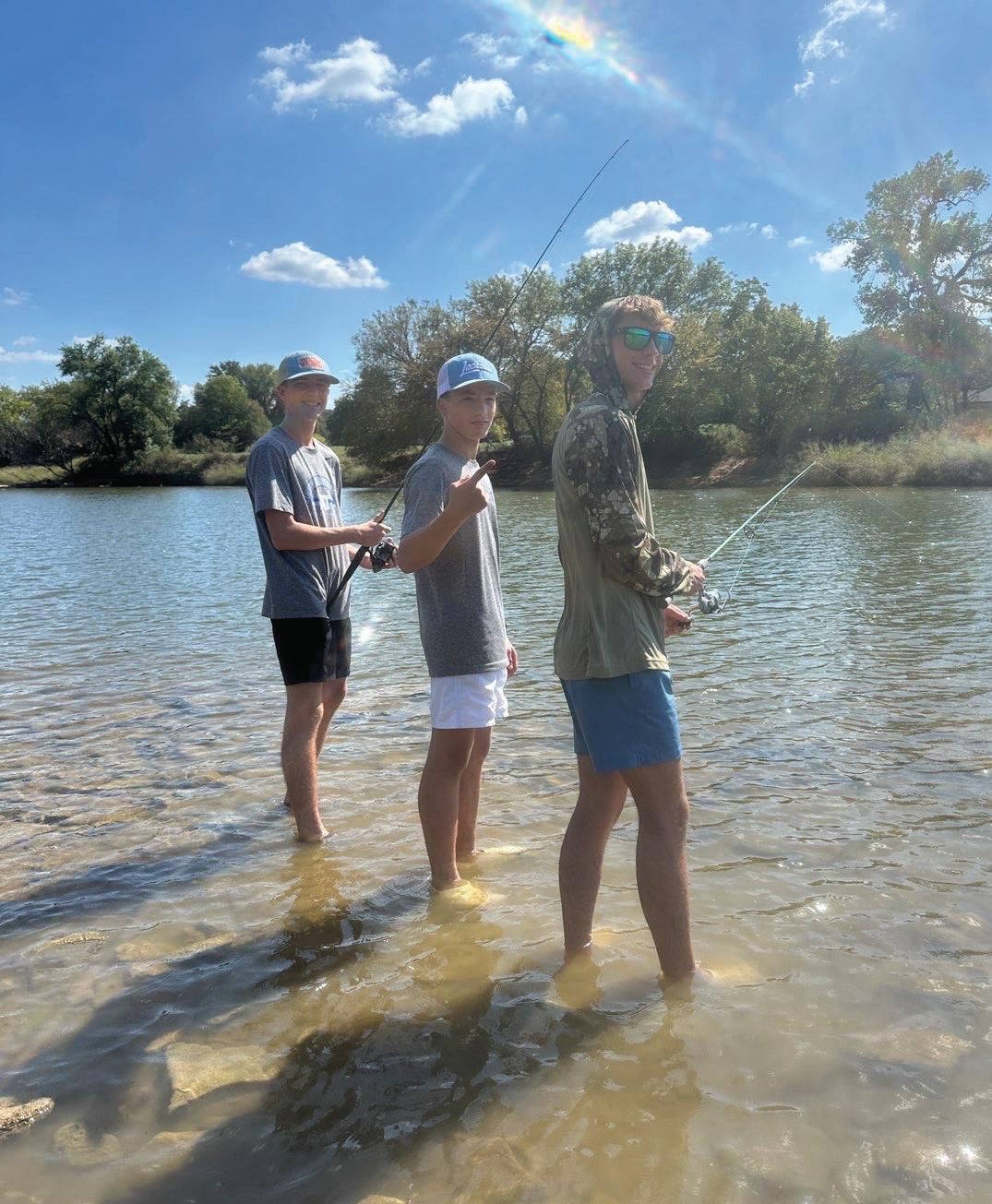
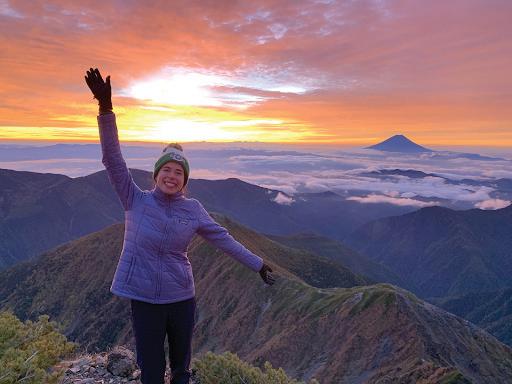
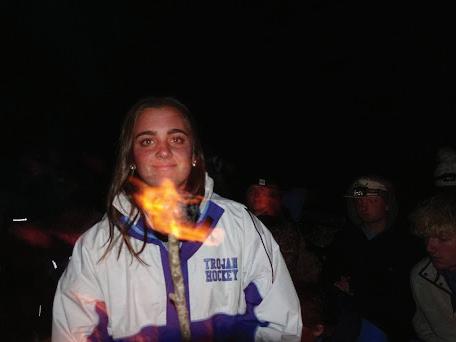
TOE also sparked a lasting love of the outdoors—not just as something to admire, but as something to actively experience. Since then, that love has taken me to the Bavarian Alps, South America, throughout Colorado, and the Eastern Sierra. Today, I carry that same tradition forward with my own children, hoping to instill in them the same love for the outdoors.
Wherever I go, I bring with me the same core principles: respect nature and its inhabitants, take time to stop, look, and listen, and leave a place better than you found it. Much like a child learning basic manners for society, TOE taught us the fundamental rules for being in the outdoors - lessons that have stayed with me ever since. I am incredibly grateful for the opportunity to have been part of it, and even more grateful that my children now have that same experience.
Top: Jaxson Knight; Middle: Annie JacobsKita-dake, Yamanashi, Japan; Bottom: Claire McKnight - Buttermilk Creek Ranch
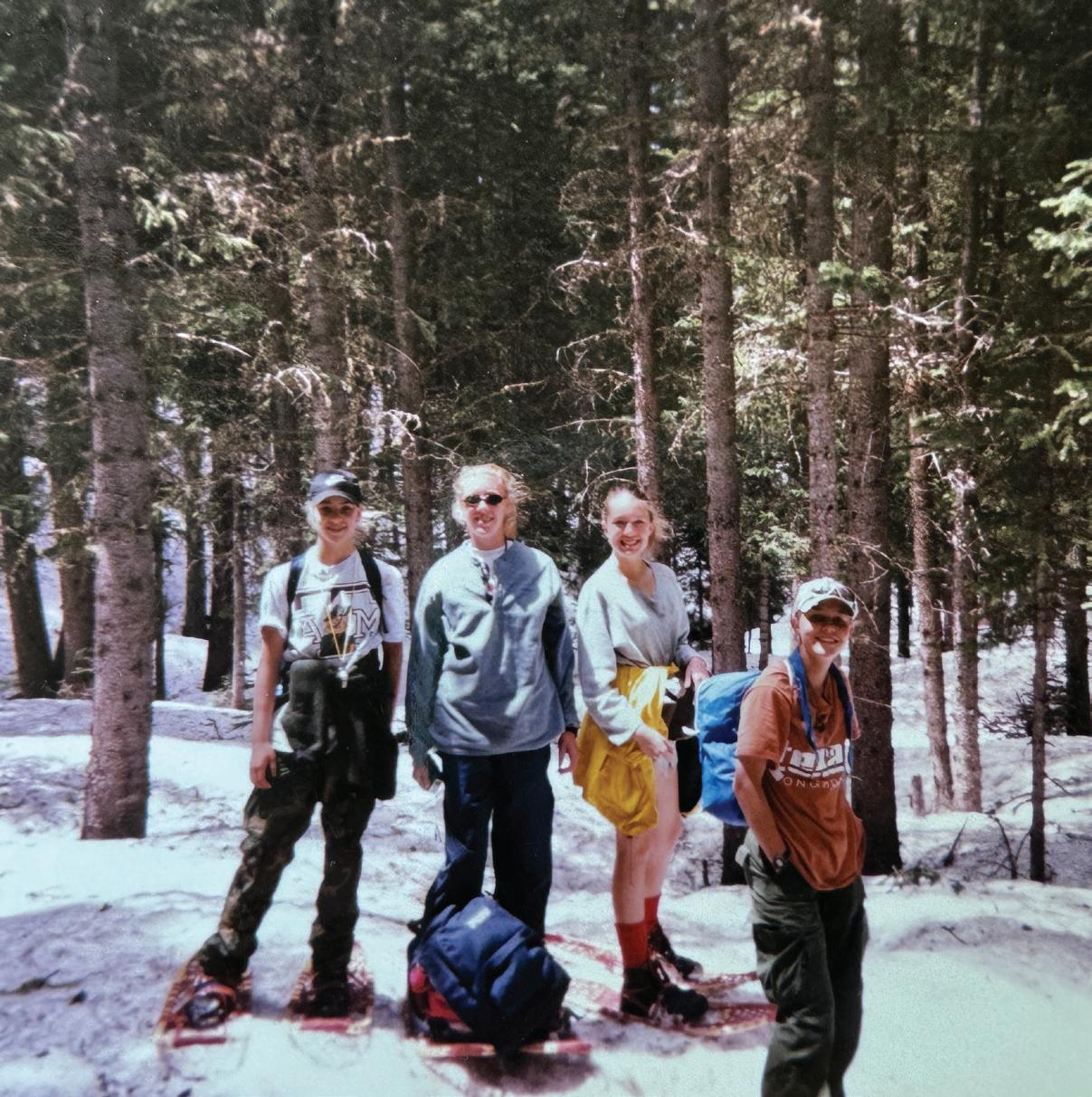
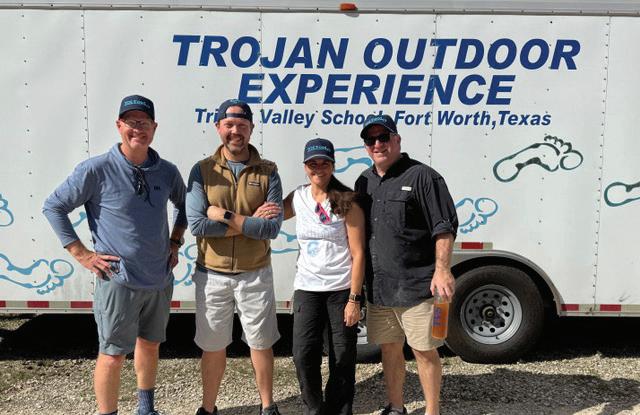
ANDREW LEWIS CLASS OF 1997
I believe TOE is all about stepping forward. For some, it is simply a step outside their comfort zone into the unfamiliar outdoors. For others, it is a step into untested leadership roles.
The value of TOE is that the various experiences offered by the program always put the participants into positions in which they have to move forward in some way. The outdoors have a funny way of bringing that out of everyone. For me, the variety of experiences taught me the value of the unknown and the importance of going there. While I continue to pursue the unknown through new outdoor experiences to this day, such as mountaineering trips and various outdoor adventures with my kids, I have found this lesson equally important in my professional life.
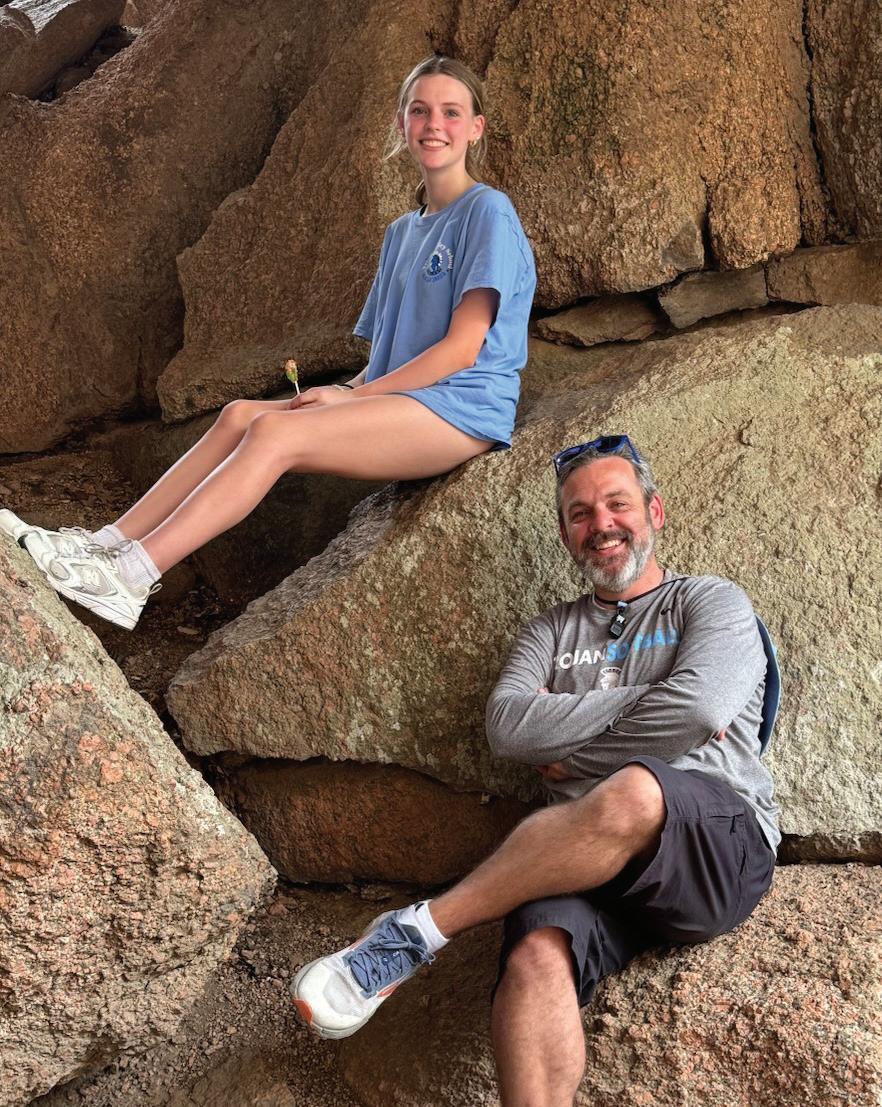
BEN HOSKINS CLASS OF 1993
My first TOE experiences (in the late 80s) were Old Testament: backpacking, cooking on ancient camping stoves, sleeping under a tarp. I loved it and couldn’t wait to be an Upper School student leader. Be careful what you wish for! I was on the infamous Class of ’95 eighth-grade trip to the Gila Wilderness where we got lost, trails weren’t clearly marked, water was scarce, oh, and a forest fire was raging nearby. But did we die?! No, we didn’t, and that’s what TOE taught me: endurance, resourcefulness, and staying calm (even when you are more scared than ever!).
My recent experience is volunteering as a parent for TOE Cooking Crew (or as we have started calling ourselves, TOE Food). For the past 15 years, this has been a welcome shift from the rhythms of the corporate office: being outside, problem-solving, working with my hands, enduring hot and cold (but in a tent), working with and leading great parents, teachers, and students, and taking some of the load off the TOE Leaders. My pitch is that “it is hard work AND it is fun!”
It has been so rewarding to be just a small part of what we consistently hear is the TVS program that sets us apart from many other schools. Even though we have not really camped as a family on our own time, my wife (TVS ’93) and three daughters (TVS ’20,’25, and ’28) have volunteered on various campouts, as well.
Clockwise from left: Grace Taylor Ballard; Ben Hoskins; Polly Johnston
ESTABLISHING STRONG ROOTS IN LOWER SCHOOL
JULIE KNUDSEN, HEAD OF LOWER SCHOOL
As I often share with TVS families, the experiences our children have in pre-kindergarten and kindergarten set the tone for how they will feel about school and learning for the rest of their lives. This is why our early childhood program is designed with such intentionality and led by passionate early childhood educators who understand the profound responsibility of these formative years. Yet the foundation we are building in our students extends far beyond a love of learning. Across all grade levels in Lower School, we are cultivating the roots, deep and strong, that will anchor our Trojans as they grow and reach for the stars. Our students' future success rests on the character and confidence we nurture in these early years.
ʻʻAs students journey from prekindergarten through fourth grade, they discover who they are and who they aspire to be... In the Lower School, norms of excellence take root.ˮ
As students journey from pre-kindergarten through fourth grade, they discover who they are and who they aspire to be. They build resilience as they navigate mistakes, practice humility as they celebrate the contributions of others, and develop empathy as they offer care to those around them. They find confidence as they stand before their peers. In the Lower School, norms of excellence take root.
Allow me to take you on a journey through our Lower School hallways and classrooms to see these roots come to life.
Students pile out of their cars, skipping, smiling, and chatting with friends as they make their way to their classrooms in the morning. The third graders enter their rooms, eager to settle into routine, listen to morning announcements, then make their way to the carpet for morning meeting. It is here that they experience the value of contributing to a community. They listen with care as others share, and they are mindful in choosing what they want to contribute during this special time. The roots of empathy and belonging deepen with each gathering.
Wander around the corner to find our pre-kindergarten students engaged in circle time: counting as they celebrate what day of school it is, singing patriotic songs, and naming the days of the week. Some have designated jobs, and it is their responsibility to offer a greeting or lead the song. These are the first tender shoots of confidence breaking through.
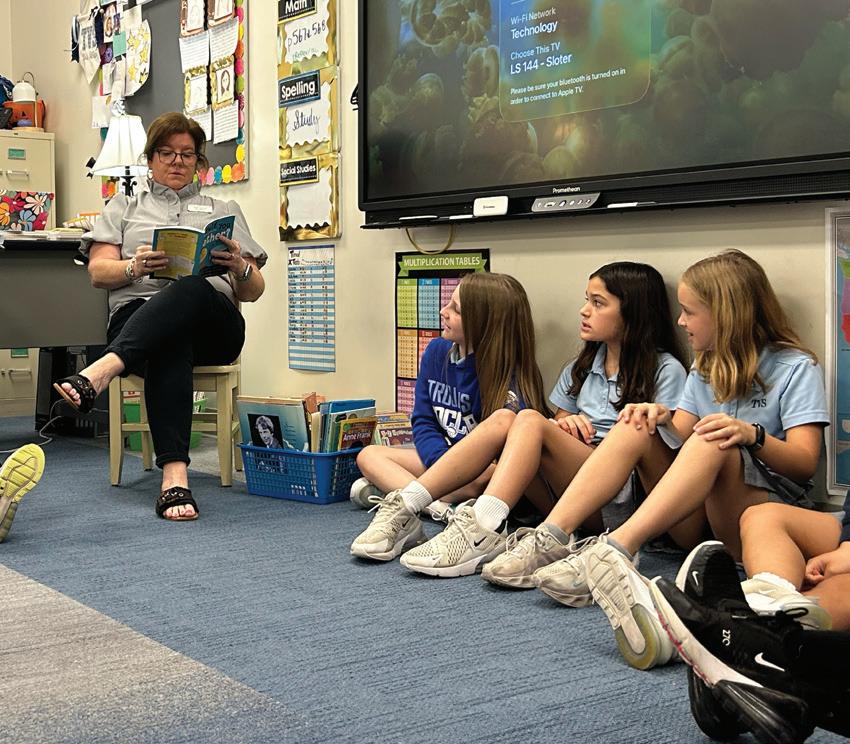
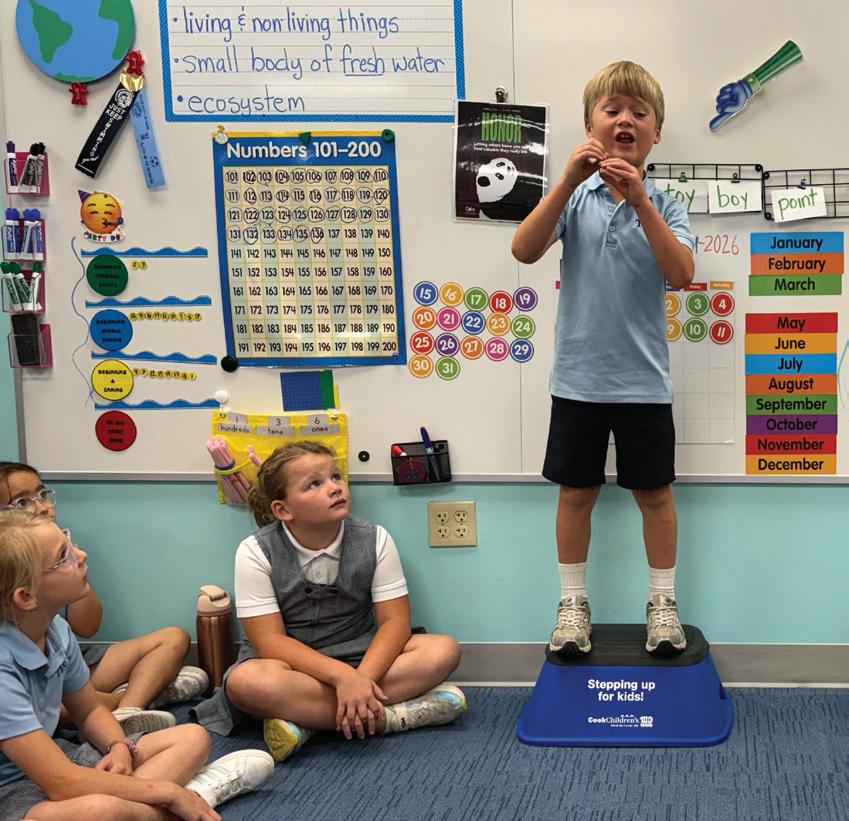
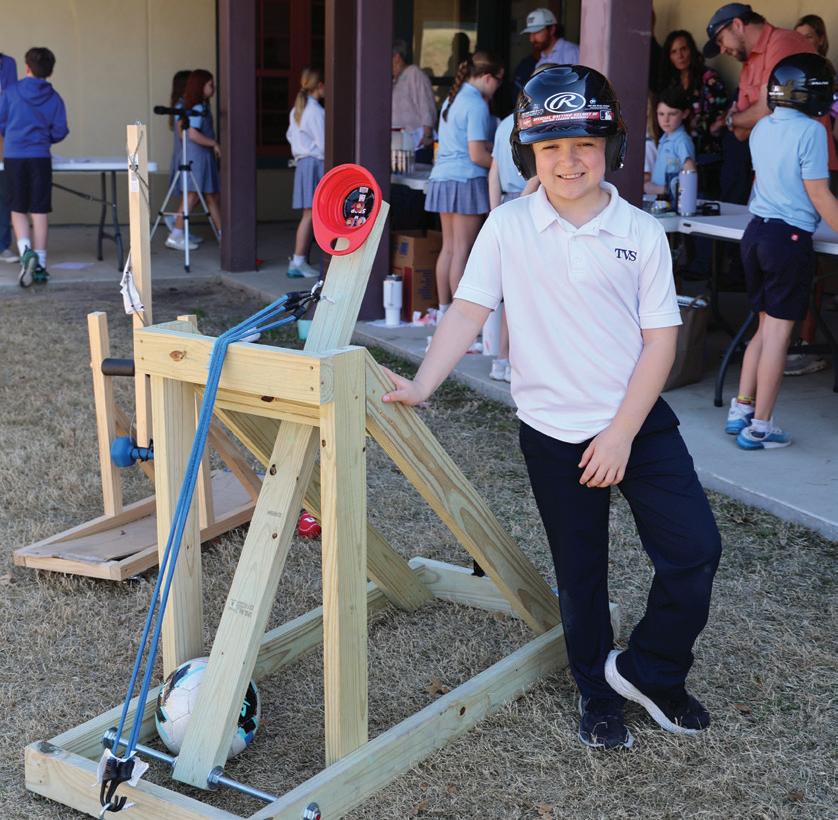
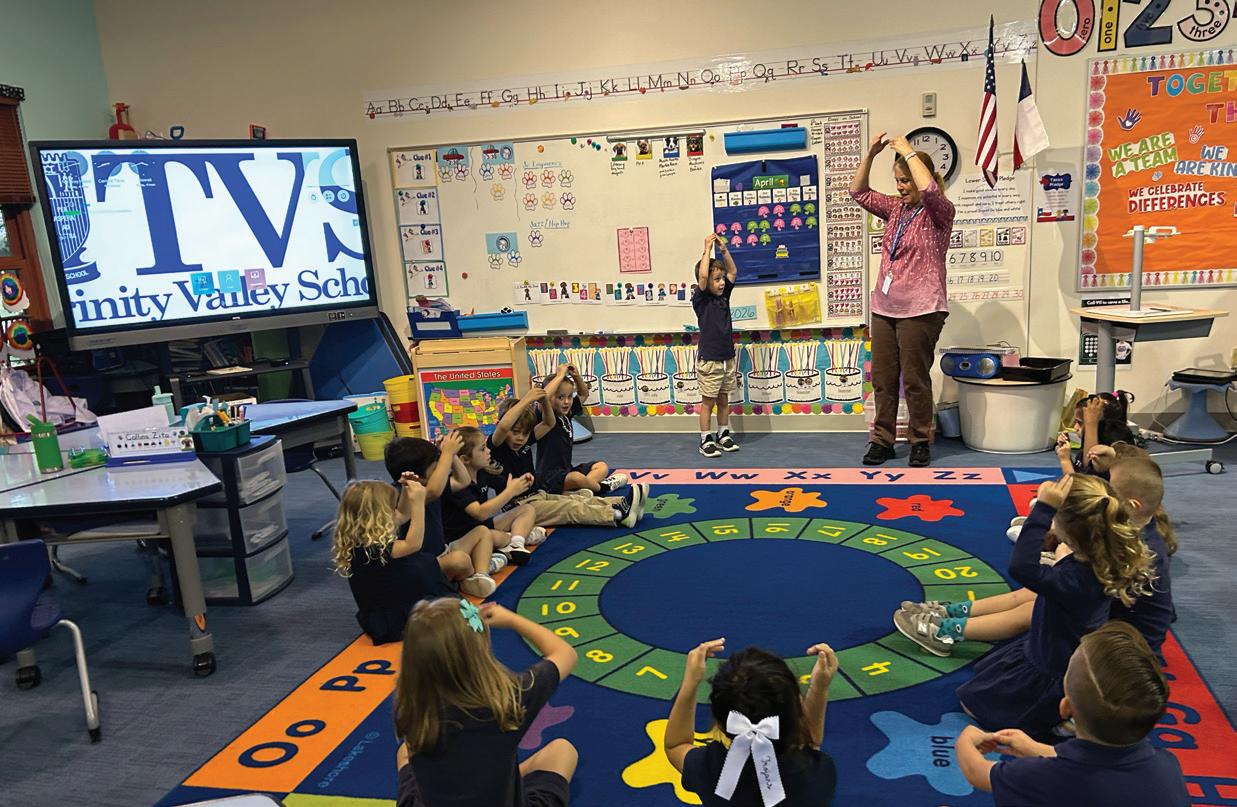
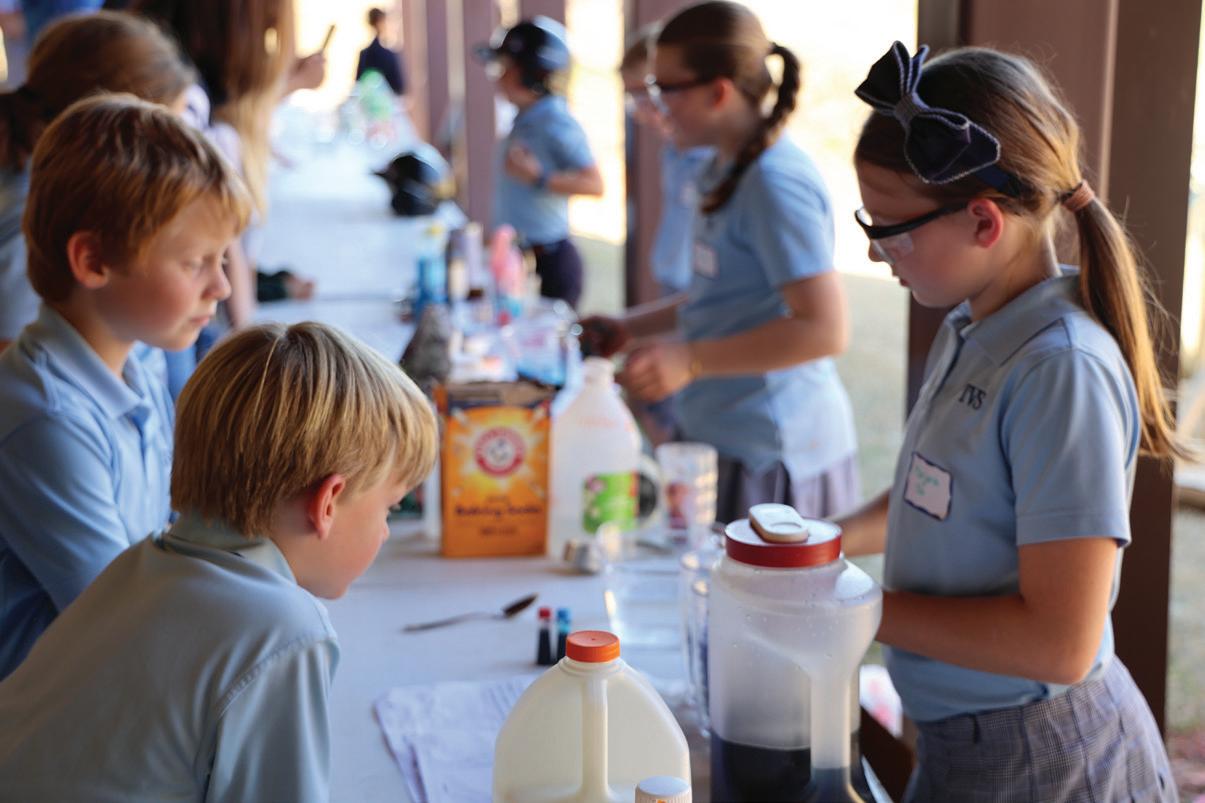
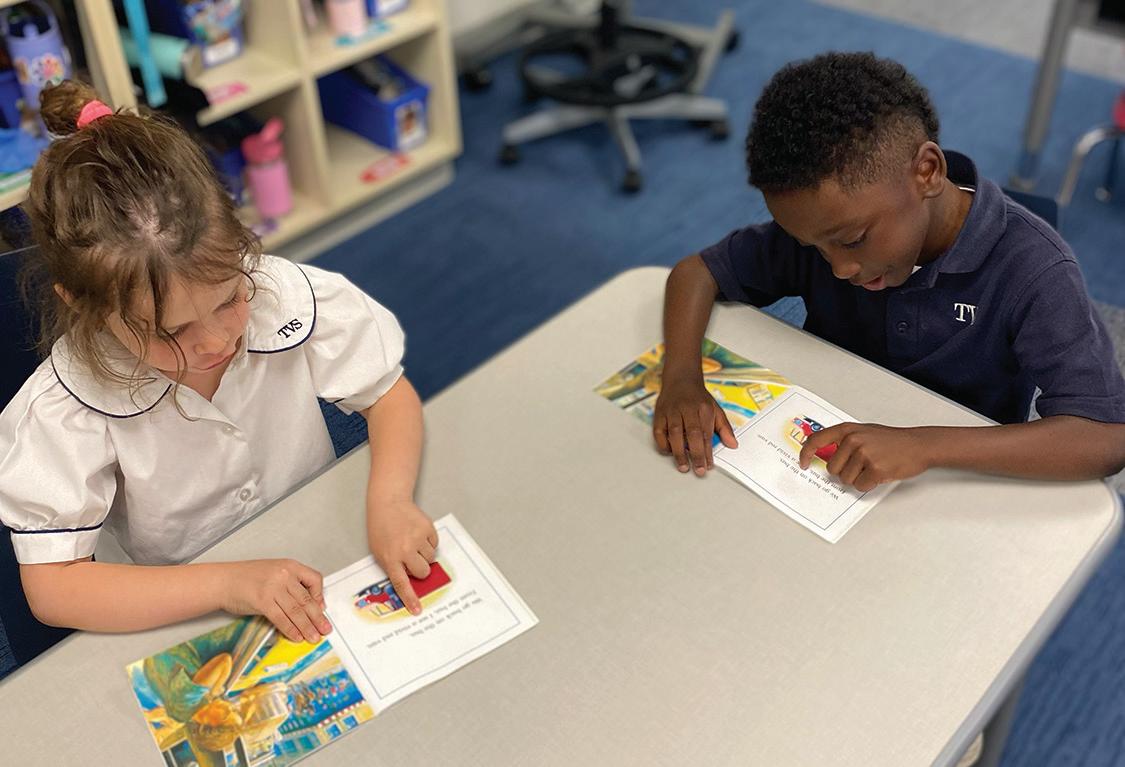
Left to right: Mrs. Sloter’s 3rd grade class; Mrs. Kee’s Pre-K class; Mrs. Tomme’s 1st grade class; 4th grade Science Expo; 4th grade Science expo. Mrs. Hutchinson’s Kindergarten class.
Travel down the hallway to our first-grade classrooms, and you will find these six- and seven-year-olds reciting poetry for their classmates. They have carefully selected a poem that excites them. They have memorized, rehearsed, and even added a prop or movement to engage the audience. They stand with pride in front of their peers as they deliver their recitation. With each performance, confidence grows stronger as they are becoming public speakers
Next door in kindergarten, it is time for centers. These young Trojans are already practicing ownership in their learning as they navigate the choices with growing autonomy. Some are gathered with a clipboard and math manipulatives in a quiet corner. Others are huddled around a shared book. They are engaged in their learning, collaborating with peers, challenging themselves, and supporting one another. The roots of independence are taking hold.
Journey to the fourth-grade science classroom where resilience is being formed. Students are engaged in their Science Expo project, which is quite an undertaking. They design a project or experiment, understand the science that “makes it work,” write a script that will teach others about that content and their project, then deliver it to the community in the Expo. There is failure along the way, so there is also great learning. Students practice how to dust off their knees and try again, discovering that they are incredibly capable.
ʻʻThis is the work of Lower School: not just teaching content but cultivating the roots of character that will sustain our students through every challenge
and opportunity ahead. Confidence. Empathy. Independence. Resilience. Humility. A strong sense of self and a deep connection to others.ˮ
A stroll back down the hallway leads to the Lower School Spanish classroom. Risk-taking is happening nearly every moment as our students are learning a new language. With the positive classroom culture they are a part of, they know it is safe to practice their speaking skills, even if they do not yet have the accent quite right or their vocabulary is not fully formed. They are encouraged to try, even if it feels a bit vulnerable. Here, courage becomes part of who they are.
A final stop in second grade will find students presenting Dream Boards to their peers. Their boards are filled with aspirations, points of pride, values, and talents that define them. They are excited to tell their classmates what they included – to share who they are. In response, these second graders offer encouragement, celebration, and empathy. Through this project, students have developed a sense of self that was not there just weeks before.
This is the work of Lower School: not just teaching content but cultivating the roots of character that will sustain our students through every challenge and opportunity ahead. Confidence. Empathy. Independence. Resilience. Humility. A strong sense of self and a deep connection to others.
These roots, established with care and intention in these formative years, will hold our Trojans steady as they challenge themselves in Middle School, in Upper School, and in all the years beyond.
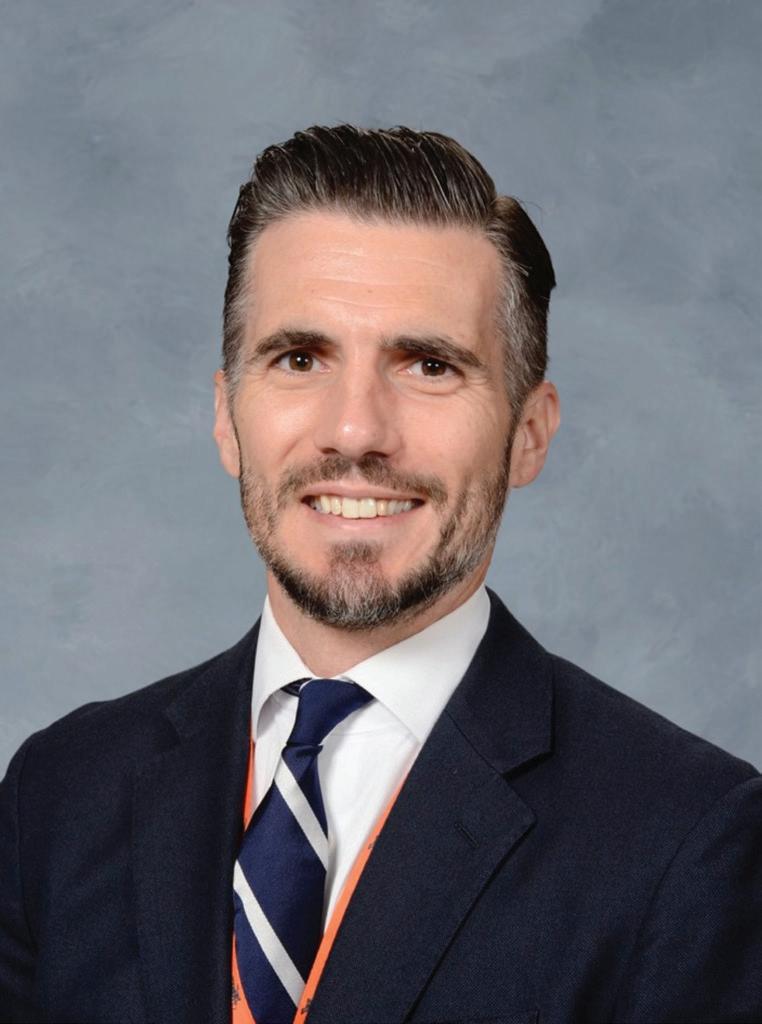
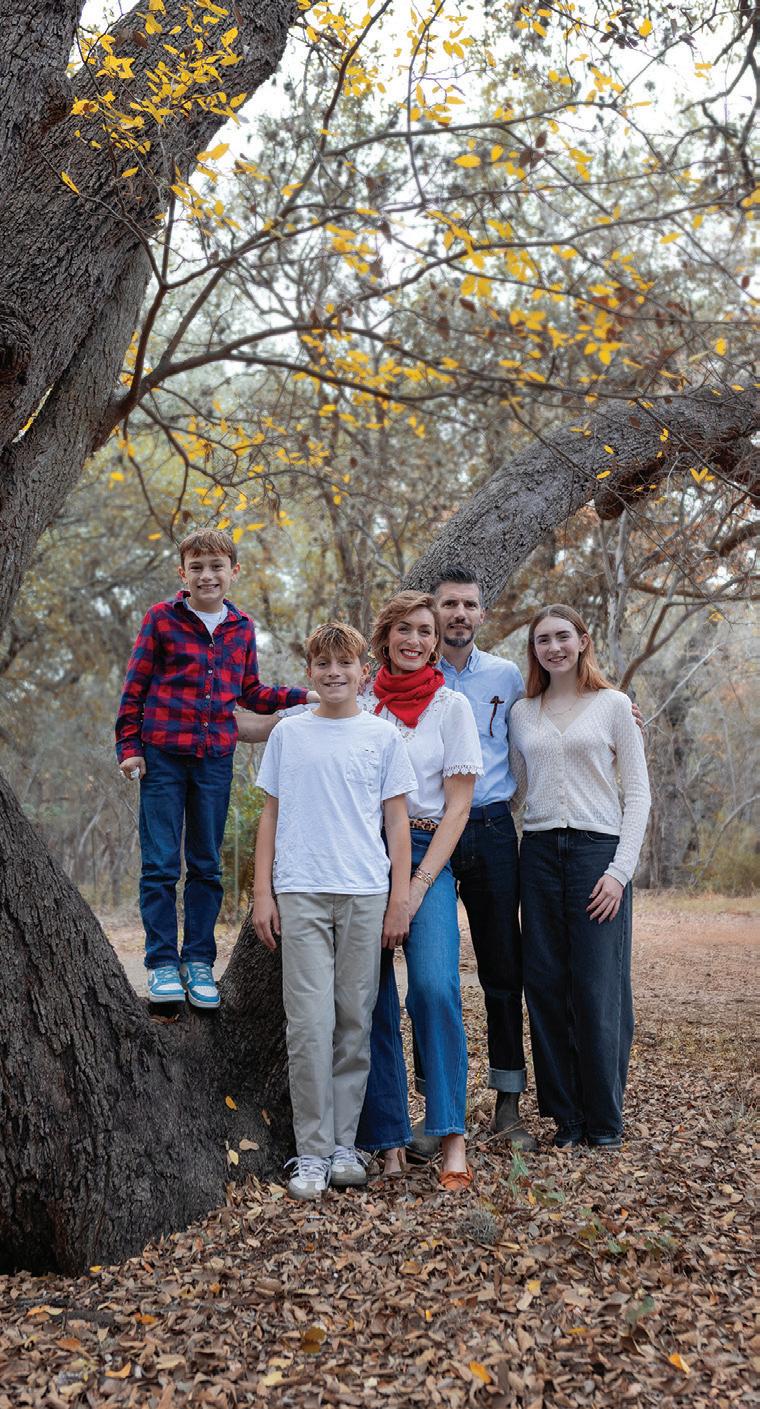
WHERE LEADERSHIP MEETS DAILY LIFE
WELCOMING DR. FRED KOUNTZ TO TRINITY VALLEY SCHOOL AS ASSISTANT HEAD OF SCHOOL SUMMER 2026
Trinity Valley School is delighted to welcome Dr. Fred Kountz as its next Assistant Head of School, beginning in summer 2026. A values-driven educator and leader, Dr. Kountz centers his work on faculty growth, student well-being, and designing learning experiences that invite curiosity and independent thinking. He brings a strong record of building programs and practices that foster belonging, strengthen teaching, and open up boundless possibilities for students.
Dr. Kountz steps into a role at the center of School life, one defined by presence as much as leadership. As chief steward of student life and programming, he will help ensure that the PK–12 experience feels coherent, intentional, and alive across academics, arts, athletics, and experiential learning.
At the heart of his work is a clear belief: student growth and faculty growth are inseparable. He is known for cultivating environments where teachers are supported to innovate and students are encouraged to think independently and explore with curiosity. Colleagues describe a leader who listens with intention and engages complex questions with clarity, an approach that is both relational and steady.
A historian by training, Dr. Kountz brings a thoughtful perspective shaped by his studies at Brooklyn College and his doctorate in educational leadership. He understands that meaningful change emerges through aligned systems, shared purpose, and daily practice.
At TMI Episcopal, where he most recently served as Head of Upper School, he guided a large division through institutional change; launched a Center for Teaching, Learning & Community; and expanded academic pathways in areas such as engineering and biomedical science. His work consistently opens doors for students while strengthening the cultures that support them.
At Trinity Valley, he will bridge vision and experience, partnering with leadership and faculty to ensure that mission is not only articulated, but felt. From the rhythms of the School day to long-term strategy, his leadership will bring clarity, connection, and momentum.
A teacher and coach at heart, Dr. Kountz leads with presence and purpose. His arrival reflects both continuity and possibility—an invitation to deepen community, expand learning, and continue shaping a School where students grow with confidence, curiosity, and care.
L-R: Sacha, Joe, Anne-Victoire, Fred, and Romy
TVS
RETIRING FACULTY & STAFF
23
YEARS
STACIE ADAMS MIDDLE SCHOOL ENGLISH TEACHER
For more than two decades at Trinity Valley School, Stacie Adams has shaped the Middle School experience with a rare blend of wisdom, humor, and unwavering belief in her students. In her classroom, expectations are high, but so too is the care with which she guides each student, holding every individual accountable to the potential within while ensuring her students feel seen, supported, and capable of more than they imagine.
A gifted teacher of language and ideas, Stacie has cultivated generations of thoughtful writers and critical thinkers, encouraging students not only to find their voice, but to trust it. Her presence extends far beyond the classroom. As a leader, she played an instrumental role in piloting the Middle School advisory program, helping to build a structure rooted in connection and belonging, and later guiding the program with intention and insight as its coordinator.
Colleagues and students alike are drawn to her quick wit, her steady perspective, and the authenticity she brings to every interaction. Whether in conversation or in the classroom, Stacie has a way of making others feel both challenged and deeply valued.
Her legacy at TVS is one of meaningful relationships, purposeful growth, and a lasting belief in the potential of every student. As she begins this next chapter, we celebrate the profound impact she has made and the countless lives she has shaped along the way.
17 YEARS
TAMMY SCHOENFELD LOWER SCHOOL ADMINISTRATIVE ASSISTANT
For 17 years, Tammy Schoenfeld has been at the heart of the Lower School, serving as both its steady anchor and its welcoming spirit. For countless students, families, and colleagues, hers is the first face they encounter each day, graciously providing a presence defined by warmth, attentiveness, and an unwavering commitment to care.
In a role that touches every corner of the Lower School, Tammy brings a remarkable ability to anticipate needs before they are realized. Whether troubleshooting the smallest logistical challenge or offering quiet reassurance to a child waiting for a parent, she always meets each moment with patience, grace, and a genuine desire to help. Her work often unfolds behind the scenes - coordinating meaningful celebrations, supporting faculty and staff, and tending to the daily rhythms of school life - but its impact is felt by all.
What distinguishes Tammy most is not simply all that she does, but the way she does it: with thoughtfulness, humility, and a spirit of generosity that elevates those around her.
The Lower School is stronger, kinder, and more connected because of her time at TVS. Her legacy is woven into the fabric of the community she has so faithfully supported and will be carried on for years to come.
TVS
SUSAN JONES
4 YEARS
MIDDLE SCHOOL AMERICAN STUDIES TEACHER
From the moment students walk into her classroom, Susan Jones creates something extraordinary: a sense of calm, trust, and quiet assurance that they are exactly where they need to be. In her time at Trinity Valley School, she has been a steady and compassionate presence in the Middle School, offering not only instruction, but a refuge.
Teaching seventh-grade American Studies, Susan approaches her work with both joy and intention, inviting students into the stories of the past while helping them better understand themselves and the world around them. She often reflects on her years at TVS as the most meaningful of her career, a testament to the deep connection she formed with her students and colleagues.
With more than two decades in education, Susan has brought to Trinity Valley a depth of experience matched by a gentle spirit that made her a trusted guide for so many. Students have sought her out not only for her knowledge, but for her kindness - for the way she has listened, understood, and made space for them to be fully seen.
Her presence, defined by warmth, grace, and genuine care for others, has left an indelible mark on the community. As she embarks on this new adventure, we carry forward the spirit she so effortlessly shares, grateful for the peace and joy she has brought to Trinity Valley each day.
DANA CHILD PRE-K TEACHER
3 YEARS
In her three years at Trinity Valley School, Dana Child has made an impact that far exceeds the measure of time, shaping the earliest school experiences of our youngest learners with intention, joy, and deep care. As a Pre-K lead instructor, she creates a classroom environment where curiosity is celebrated, confidence is nurtured, and each child is known and valued.
From the moment students enter her room, they are met with a warmth that invites both comfort and discovery. Dana has a gift for balancing gentle reassurance with an infectious enthusiasm for learning, helping her students take their first steps as engaged, capable members of the School community. Through her guidance, they begin to see themselves as learners: curious, courageous, and eager to explore the world around them.
Her compassion and dedication extend beyond her students to her colleagues, enriching the broader Lower School community with a spirit of collaboration and care. Though her time at TVS has been brief, the foundation she has helped build in the lives of her students will endure, reflecting the lasting imprint of her work and the meaningful connections she has fostered each day.
CAMPXCURSION
MELISA GARCIA, DIRECTOR OF AUXILIARY PROGRAMS
Looking for a summer full of adventure, creativity, and fun for your child? Camp XCURSION, now in its third summer, has quickly become a favorite for families who want their kids to explore, learn, and make lasting friendships!
Designed for students in Pre-K through fourth grade, each week at Camp XCURSION brings a new theme packed with hands-on crafts, games, creative projects, and special snacks that keep campers smiling and energized. From outdoor play and free play to team
challenges, every child gets the chance to explore, have fun, and grow in confidence.
Our experienced instructors, led by the dedicated XPLORE staff, create a welcoming environment where children feel safe, encouraged, and inspired. Campers are grouped thoughtfully to make sure everyone has the best experience possible. With options for half-day mornings, half-day afternoons, or full-day sessions, there’s a perfect fit for every family.
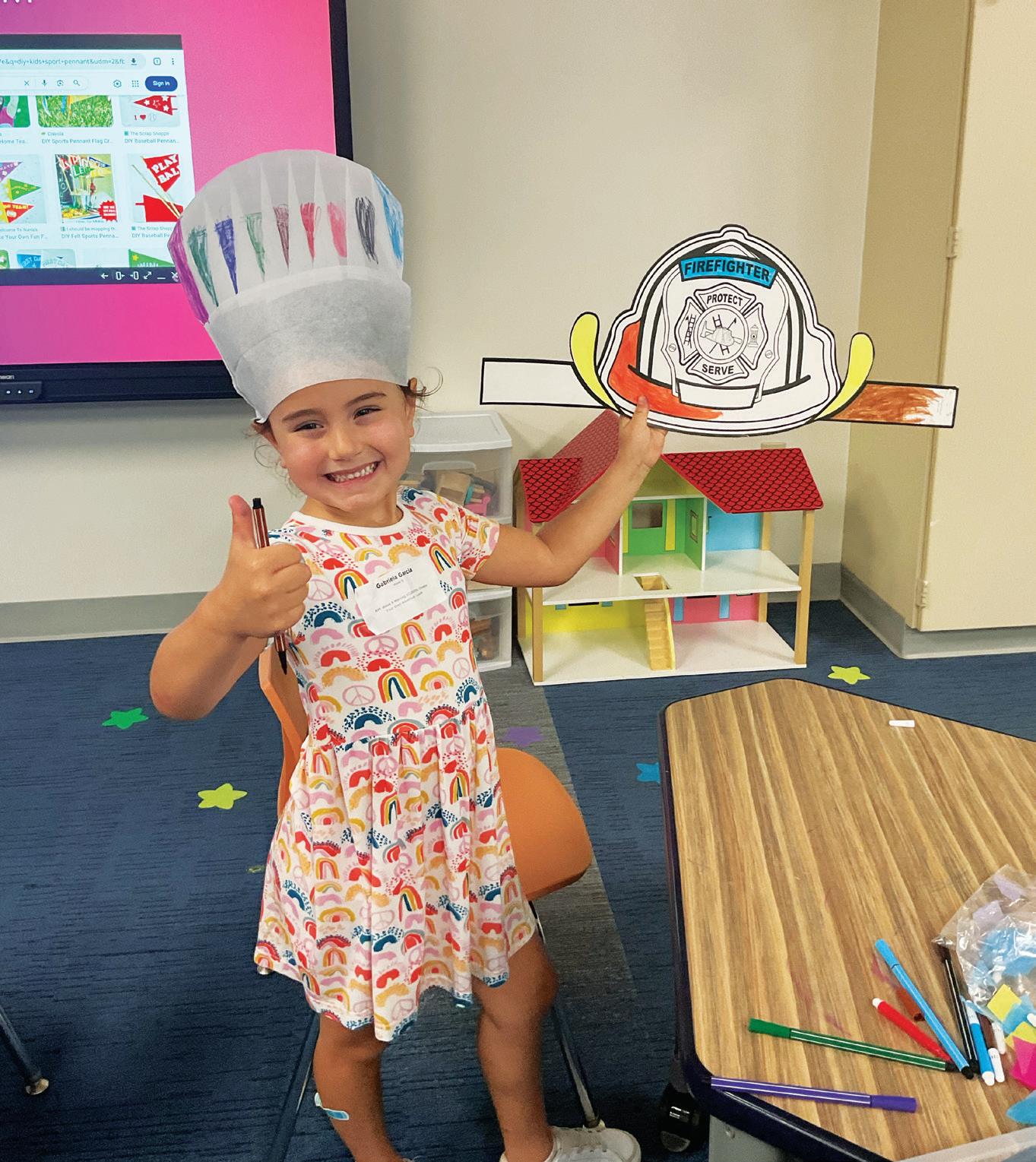
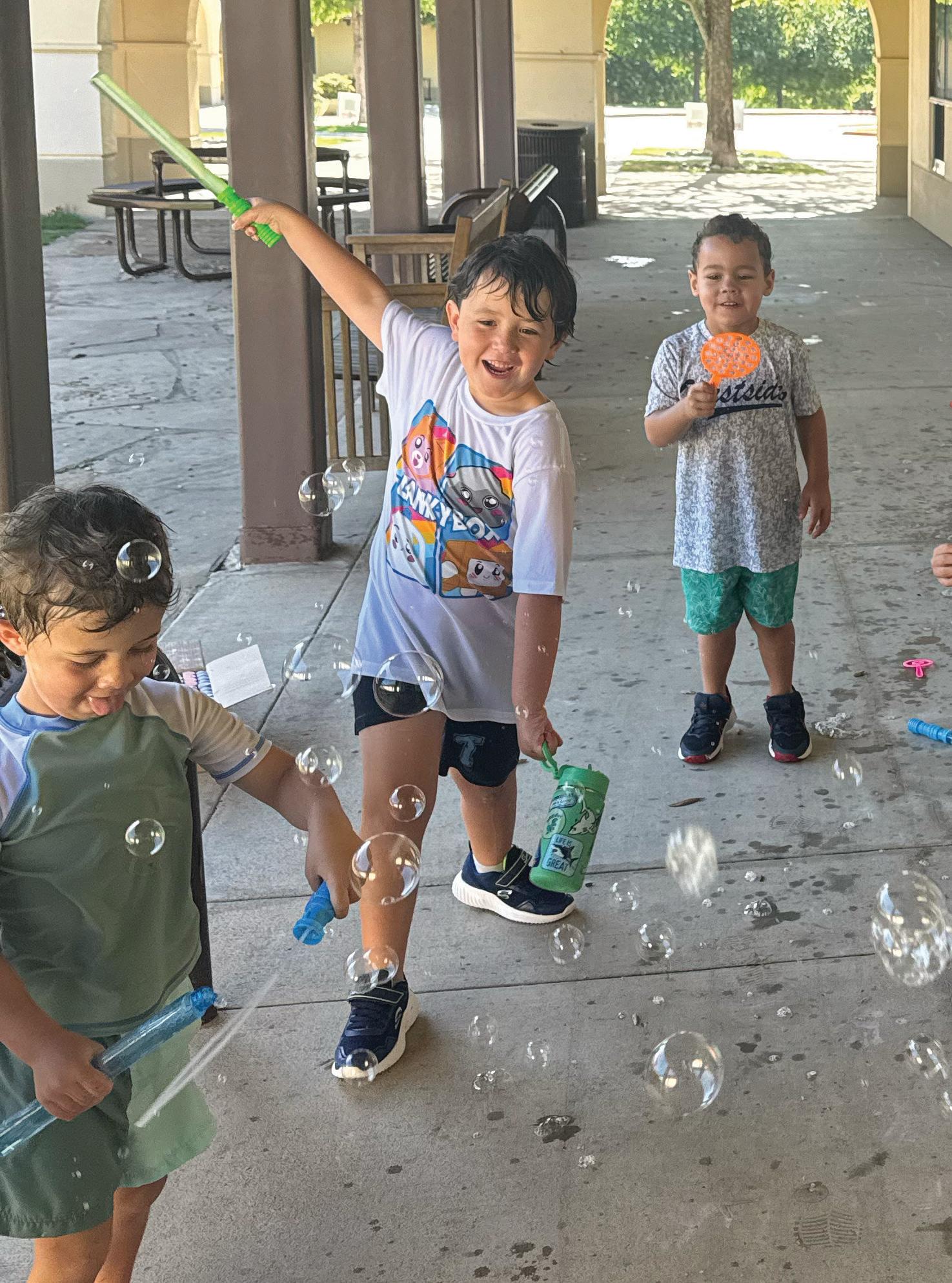

“Citizenship is not a spectator sport.” - Robert Putnam
LAURA MONTGOMERY, ASSISTANT HEAD OF MIDDLE SCHOOL WITH ELLA SCHROEDER , CLASS OF 2030 AND FINN MULVANEY, CLASS OF 2030
What does it mean to be an intelligent citizen? As one of Trinity Valley’s four core objectives, intelligent citizenship calls our students to engage in democratic life thoughtfully, critically, and actively. For eighth graders, the American Studies Capstone Project is designed to put that ideal into practice. Now in its fourth year, the Capstone Project challenges students to recognize the impact they can make in their community. As American Studies teacher Dr. Edwin Wood explains, “The Capstone Project helps students understand the world they live in and take meaningful action to make it a better place.”
Through the project, students identify a social issue that appears not only in our community, but across the world. Their topics range from addressing homelessness and food insecurity to advancing gender equity and promoting childhood literacy. Students research the causes and consequences of their chosen issue and propose possible solutions through a formal research paper and a presentation at the annual Capstone Showcase.
As part of their work, each student completes at least two hours of community service connected to his or her topic. This year, students volunteered at the Tarrant Area Food Bank, the Como Community Center, Santa Fe Nursing Home, Keep Fort Worth Beautiful, Literacy United, the Refugee Women’s Group, and many other service organizations.
Two eighth graders, Ella Schroeder and Finn Mulvaney, chose to focus on a cause close to their hearts: making
sports accessible to all children, specifically those with special needs. Ella organized a tennis skills camp for children with disabilities. At the McLeland Tennis Center, Ella and her coach taught students how to hit with a racket, practice serving motions, and build fine motor skills. Finn, an avid basketball player, recruited TVS Middle School and Varsity athletes to lead children with special needs through ball-handling and shooting drills in the TVS gym.
After learning about their camps, I sat down with Ella and Finn to discover what motivated them to go beyond the minimum community service requirement and what lessons they learned from the experience.
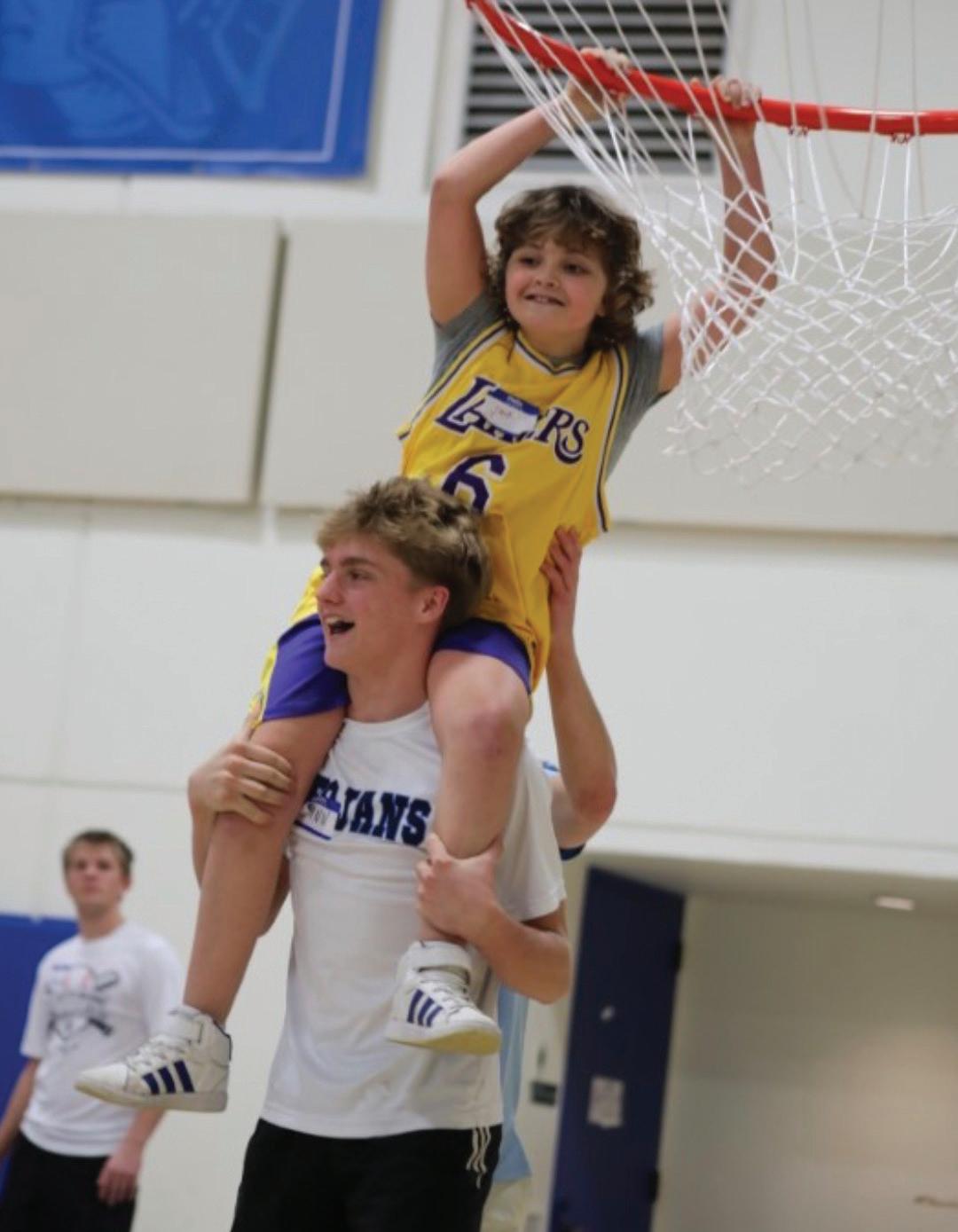
Opposite page: Ella Schroeder and her coach with two of the participants in her tennis clinic for children with special needs
This page: Finn Mulvaney gives a lift to his brother, Jack, during the basketball clinic.
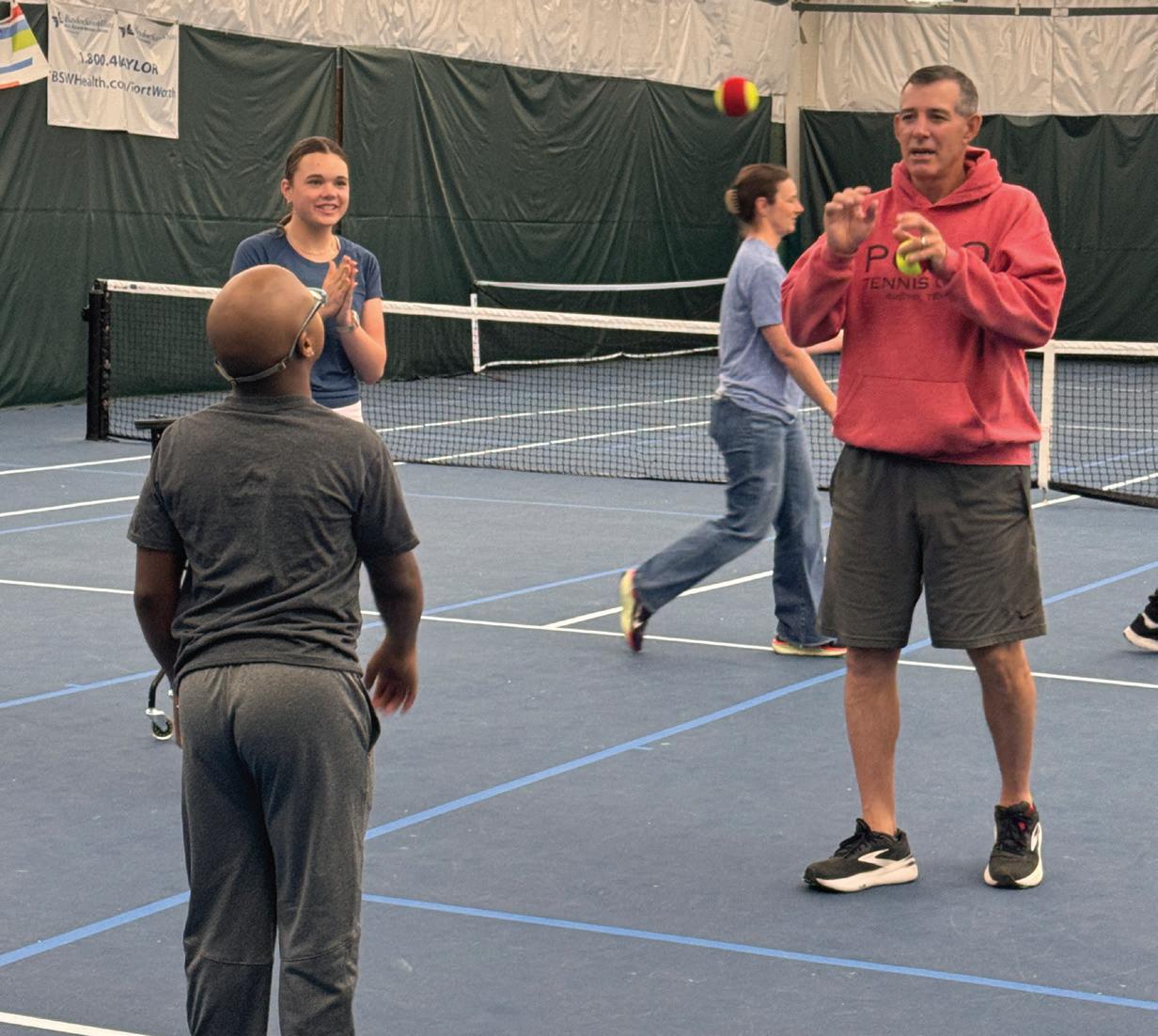
Question: What inspired you to choose access to sports for students with disabilities as the focus of your Capstone?
Finn: I have a little brother with special needs and he has less opportunities to participate in extracurricular sports because of his disability. [Students with disabilities] are less able to be active and just being able to put on this camp gives them the chance to have fun with sports, which I feel like every single kid should be able to.
Ella: I was a “tippy toe” walker as a child, and they put me in a double leg cast to help fix it. I can remember what it feels like to have your mind and your body work differently. I can remember being pitied or looked down upon even though I could still have a conversation. I wanted to give other kids—kids who are still great and amazing people but who get looked down upon in pity—something that every other kid has.
Q: What do you think people misunderstand or overlook about students with disabilities and access to athletics?
Finn: I feel like people look down upon people with disabilities and say, “Oh yeah, they can't participate in sports; they don't need sports.” I feel like people misunderstand that just because some kids have disabilities doesn't mean that they have any less right to enjoy sports and out-of-school activities, and they can enjoy them just as much as we can.
Ella: I totally agree. I think people often think that just because they have one slight disability that people need to walk on eggshells around them. They still should have the same experience with sports.
Q: Why do you believe inclusive sports opportunities matter for a school community?
Ella: Because many people have some disabilities - even if they're not as visible, they're still there - and some people may know people with disabilities or they have a friend with a disability, so it can help give them a community and bring their community together.
Finn: I feel like a school like TVS especially benefits from holding camps for kids with special needs because we are a very tightly knit community. We are not a large school, and if we can be known for doing great things like holding clinics for kids with special needs and giving everyone an equal opportunity, I just feel like that would be an amazing thing for our school to be known for. I feel like it's not about the recognition, it's about actually doing it and making these kids' days and futures brighter.
Q: How did you design the clinic so that students with different abilities could participate meaningfully?
Ella: I knew tennis was an easy sport to adapt to kids with special needs because you can work on one component at a time. I talked with my coach and asked him for ideas on what I should do, and he said it's pretty much just the same
Ella and her coach lead participants in ball control and racket forehand drills.
- it's easy to make it shorter and they may need more help, but they're going to get the same fun and activities as other students. I do clinics on Saturdays and they're normally two hours. At first I was going to make this event two hours, and my coach suggested that their attention spans are not going to be that long, so we cut it to an hour.
Finn: This year's clinic was especially difficult to arrange because we had a range of kids from two feet tall to kids at a middle schooler’s age. We had to have a total array of different size baskets and different size basketballs. It was harder to design because we had such a variety of needs, but I felt like whenever we split kids up into groups where they could have a great time and thrive with people similar to them, that made the camp a lot more special.
Q: How did your event go? Did it live up to your expectations?
Finn: I think that our event completely exceeded my expectations. I didn't think that the kids would be as involved as they were. I especially didn't think that our volunteers would make the connections that they did with their buddies, because they were a lot younger than a normal volunteer [working] with a kid with special needs.
Ella: We didn’t have as many kids show up as planned (it was a rainy day), but it was still better than I could have ever hoped for. It made my day to see their smiles, and I think they had a great time.
Q: What leadership skills did you discover in yourself through this process?
Finn: I've worked with clinics like this for a couple years and I've always been on the volunteering side working with the kids, and this was my turn to try and run the clinic. I feel like I learned so much about how to work with younger people, and I just feel like if you can work with all people, you can be a great leader in any community.
Ella: I learned that I am very bad at being direct. I was very worried whenever I sent an email that someone was going to get annoyed, but I now know that you have to remind someone repeatedly to get things done sometimes. I learned how to get people's trust - you can't just ask someone “do you want to do a tennis clinic” - you have to have a bunch of details figured out before you even ask people so they'll know to trust you.
Q: You exceeded the basic service requirement for your Capstone Project. What motivated you to expand the clinic into something larger?
Finn: Seeing the kids that we worked with - how happy they were and seeing how much fun they had whenever they ran up to get a medal at the end of the camp or their first time meeting their buddy helpers - I feel like that means a lot more than just getting my required service hours. It means something to myself, my family, and the community.
Ella: I wanted to make something that I knew would stay longer even after I left TVS. Actually at first I didn't understand – I thought we had to make it (the service) – I didn't know that you could just serve. But then I was like oh, that'd be a great service project idea.
Basketball participants worked on ball handling and shooting skills alongside the student volunteers
Q: What feedback did you receive from participants, families, or teachers that stayed with you?
Finn: After the clinic we probably got seven or eight text messages from families just like completely blown away by the camp. They were so impressed with their buddies’ connection with their kids and how involved they kept them. We had one kid there who was nonverbal. Usually people who are nonverbal have some sort of touchscreen that can help them communicate, but this kid was so young that he didn't really know how to work his communicator. His mom came up to me before and said something along the lines of “I don't think that my kid is going to last 10 minutes” - her son was out there for 55 minutes of our one-hour camp. I just feel like it's stuff like that that really shows why we did this camp. It brings people out of their comfort zone, but it shows that if we work together, we can really do anything.
Ella: I definitely saw how excited the moms were. I was worried that it was a bit of a mess, getting the kids to actually play, but seeing the moms' faces light up when their kids' faces lit up, and everyone was smiling and laughing definitely made my day. The number of emails I got saying how happy everyone was made all the work to get the clinic started totally worth it.
Q: What impact do you hope your project will have long term, even after you graduate?
Finn: I hope that this project not only continues for once a year with basketball and baseball, but I hope that we can work with our amazing athletic directors, coaches, and administrators to turn this into one of TVS’s things. I hope that we can do this for almost every sport, and I hope we can do it multiple times a year.
Ella: I think I would hope to do it again, maybe with more people, maybe in a more widespread way. I actually found there's another TVS Upper School student who does the same thing I do, and I would like to partner with her on the next clinic.
Q: What advice would you give to next year’s eighth graders choosing their Capstone topics?
Finn: Advice that I'll give to next year's eighth graders is to pick something for your volunteer work that doesn't just fill your requirements but something that you actually care about.
Ella: I would say spend a lot of time thinking to figure out what you're passionate about, because I feel like if you're not passionate about it, it won't be as fun. I knew I was passionate about all those things, but I didn't realize I was really passionate about giving every child the same experience in sports.
American Studies teacher Ryan Ellis states that a hope for the Capstone Project is for students to “gain an appreciation for the idea that they can help address this issue NOW. It isn’t about waiting until you are older to make an impact.” Ella and Finn certainly impacted many children and their families through their service work. In the end, these students showed that Putnam’s words are more than a slogan. “Citizenship is not a spectator sport,” and through their service project, they refused to sit on the sidelines. Their actions illustrate the power of young people who choose to engage, contribute, and lead - in other words, Ella and Finn embody Trinity Valley School’s goal of intelligent citizenship.
Finn Mulvaney leads participants in the basketball camp in warm-up drills
THE POWER OF PARTNERSHIP:
HOW THE PARENTS’ CLUB SUPPORTS THE TVS EXPERIENCE
WHIT WOLMAN , PARENTS’ CLUB PRESIDENT
This spring, the Parents’ Club continued its longstanding commitment to strengthening the TVS community through meaningful conversations, spirited events, and dedicated volunteer leadership. From campus gatherings to signature traditions, the semester reflected the energy and generosity that define the TVS parent body.
The semester began with the All-Parent Open Board Meeting in January, when families gathered for a Community Conversation with Head of School Mr. Courchesne. In a discussion facilitated by TVS alumni parent, current grandparent, and former Trustee Laura Miller, Mr. Courchesne reflected on his first six months on campus, sharing early observations about the School’s culture and community while offering a glimpse of what lies ahead. The evening included a lively
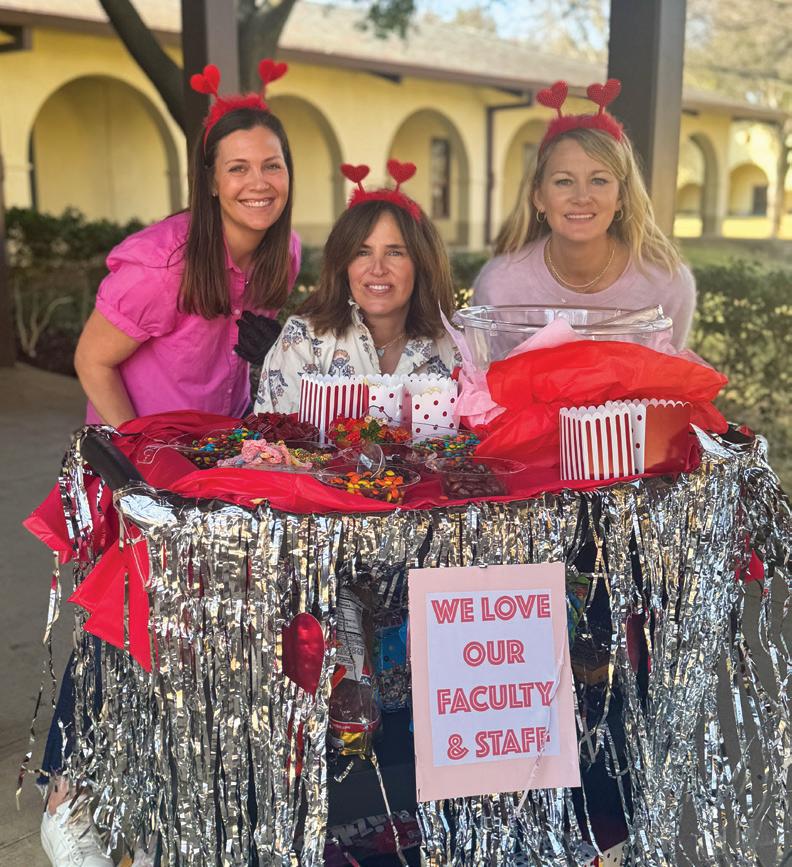
question-and-answer session, with parents engaging in thoughtful dialogue about topics ranging from technology policies to the evolving needs of students in today’s learning environment. The gathering captured the collaborative spirit that continues to shape the partnership between TVS families and the School.
On March 2, the Parents’ Club paused to celebrate those who make the TVS experience extraordinary every day: its faculty and staff. Faculty and Staff Appreciation Committee chairs Telesa Jones, Carol Ann Casagrande, and Melissa Muyskens hosted a special luncheon during the spring in-service day, providing teachers and staff with a moment of connection and gratitude. The committee is already planning additional surprises as part of Teacher Appreciation Week in May.
One of the most anticipated events of the year—the TVS Auction 2026—brought the community together for an unforgettable evening in Sundance Square in March. Under a festive tented setting, families gathered for the Night of Discovery, an evening filled with music, generosity, and Trojan spirit. Guests enjoyed a performance by the TVS Strings Orchestra, participated in silent and live auctions, and danced to music by Emerald City band.
During the program, Mr. Courchesne and junior William Lynch shared reflections on what makes the TVS experience so meaningful, highlighting the relationships, opportunities, and shared purpose that define life at the School.
L-R: Telesa Jones, Carol Ann Casagrande, and Melissa Muyskens, Faculty & Staff Appreciation; Conga line and neon at the Middle School Social; Whit Wolman and David Barkley at the Middle School Social
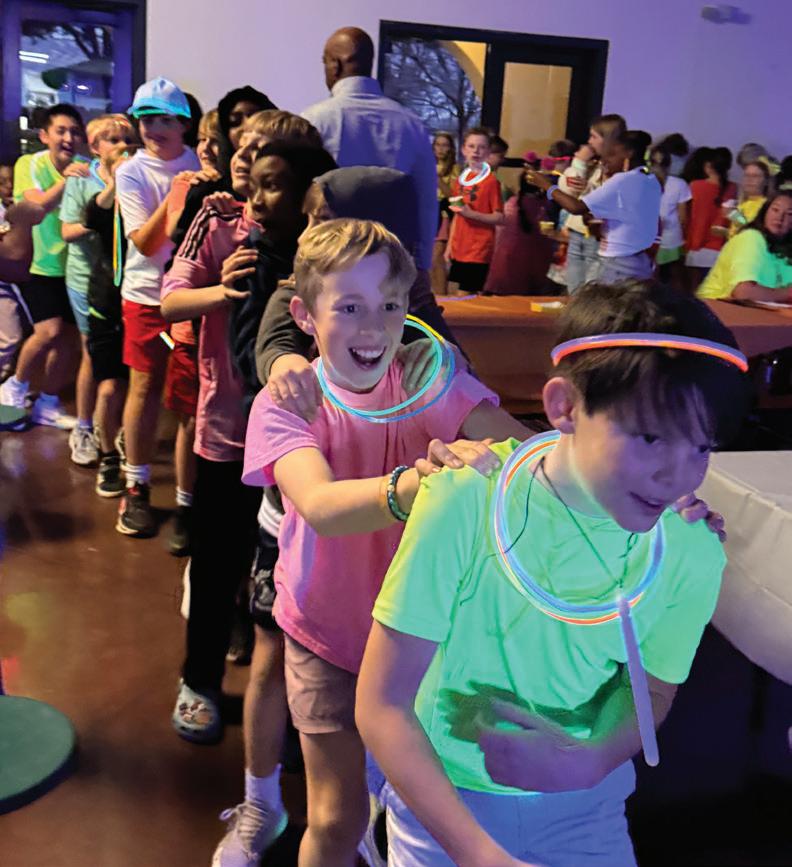
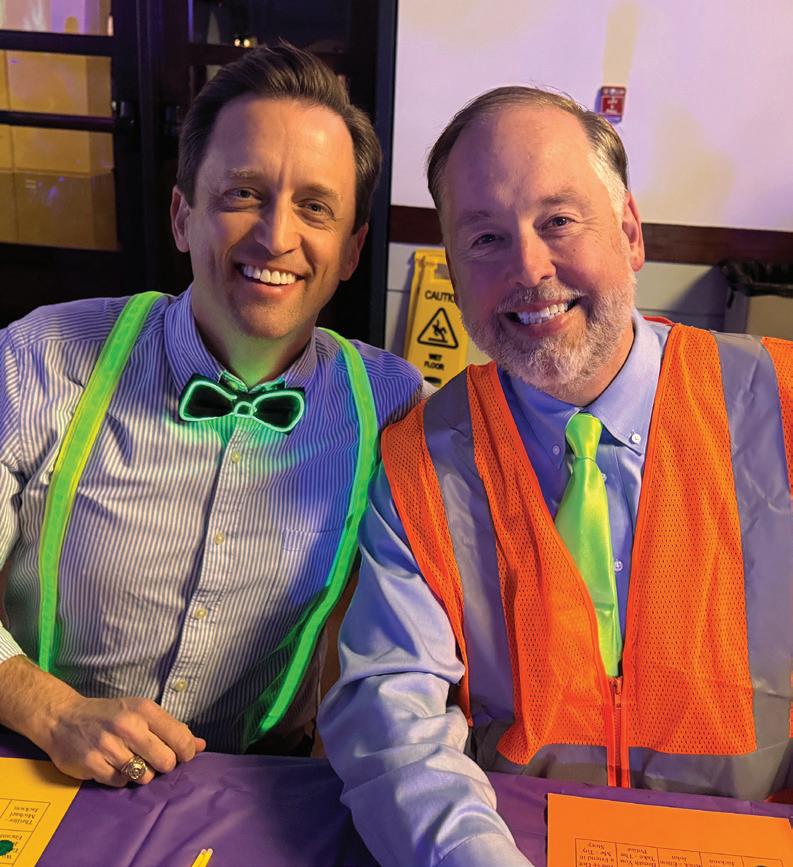
The event was thoughtfully led by Auction chairs Abigail Bebee and Elizabeth Ming, alongside a dedicated team of parent volunteers. Proceeds from the evening will support the Parents’ Club’s Grants for Greatness program, as well as professional development and programs that enrich the work of TVS faculty and staff. Special thanks go to Ashley Robinson, Director of Strategic Marketing & Communications and Parents’ Club Liaison, and Ashley McCollum, Communications and Events Manager, whose partnership helped bring the evening to life.
Beyond the Auction, the Parents’ Club continued to foster connection across divisions. In Middle School, Emily White and Nikkie Petties, together with MS administrative assistant Sunnae Hiler, hosted the lively BIN-GLOW Music Bingo Social in February. Students and parents joined in the fun—singing along, guessing songs, and enjoying an evening that combined music, laughter, and glowing School spirit.
The Parents’ Club Speaker Series also provided opportunities for thoughtful learning and conversation among parents. In March, the TVS College Counseling team hosted a Community Coffee for Lower and Middle School families, offering insights into today’s evolving college admissions landscape. The session explored trends in selectivity, student engagement, and academic pathways that support students’ long-term success.
In April, Speaker Series chairs Katie Sternweis-Yang and Robbie Clarke partnered with the TVS Leadership
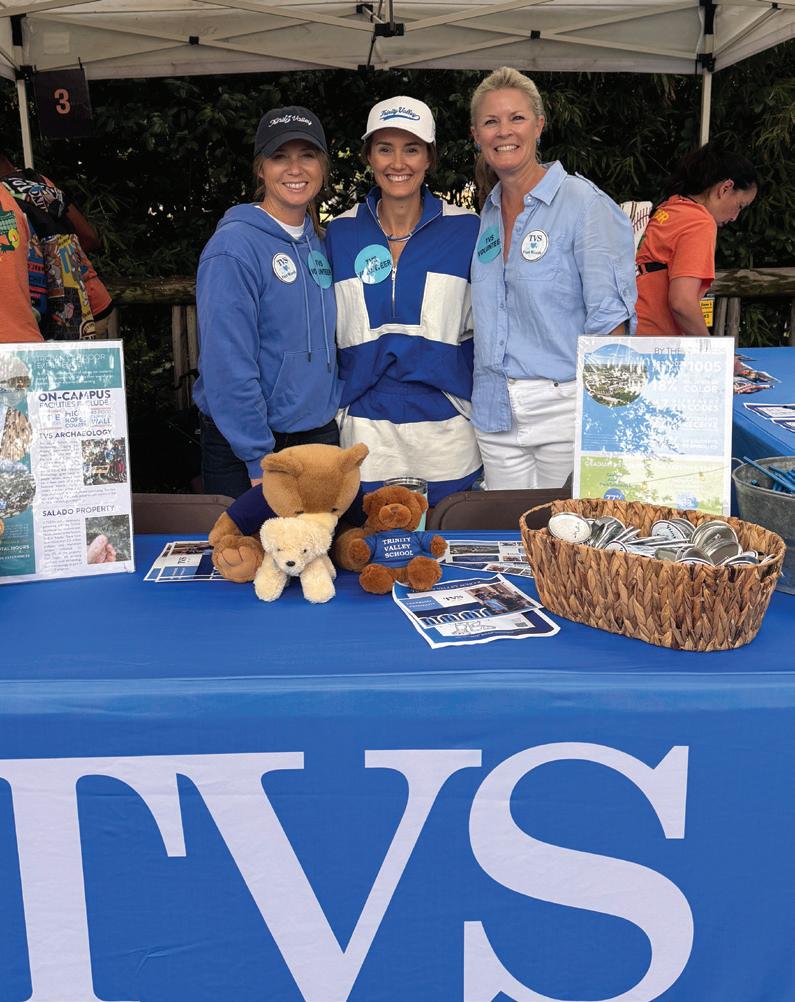
Team to welcome authors Robert Evans and Michael Thompson to campus. Their conversation, inspired by their book Hopes and Fears: Strengthening the Relationship with Today’s Independent School, explored the hopes and concerns many families experience while navigating the complexities of raising children today. Their insights emphasized the importance of strong partnerships between parents and schools in supporting students’ growth.
Beyond these gatherings and conversations, the Parents’ Club also continued its tradition of investing directly in the life of the School through Grants for Greatness.
Chaired this year by Jennie Doumany and Madison Muckleroy, this signature program uses funds raised through Parents’ Club initiatives, such as the Auction, to support faculty ideas and classroom innovation.
This year, the committee funded 10 projects across campus, including:
• Math curriculum materials for Lower School
• A chompsaw for Middle School Art and STEAM
• New camera equipment
• Music and sound equipment for Lower and Middle School programs
• A Lower School field trip experience
• Books and resources supporting parent-teacher collaboration
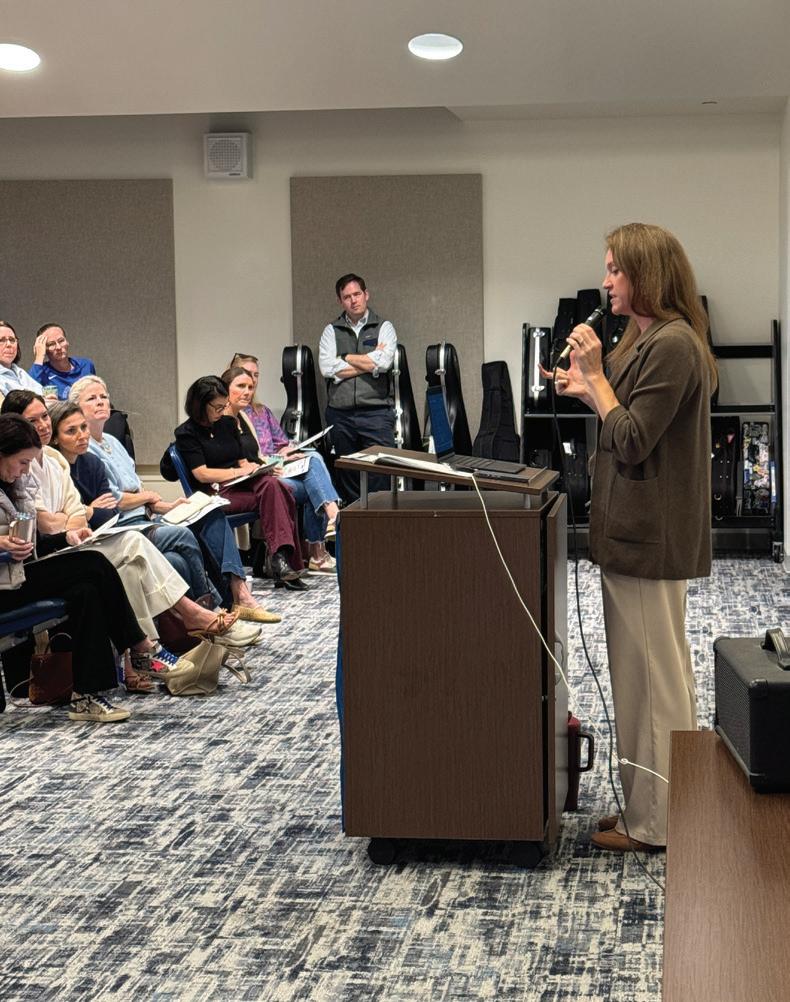
Another exciting addition this year was the launch of Dads Club, founded by Lower School parent Richie Petronis in partnership with Lower School Head Julie Knudsen. What began as a simple idea—to support morning drop-off and provide extra volunteer help—quickly grew into a group of more than 60 participating dads. The presence of fathers on campus brought smiles to students and strengthened connections among families, and plans are already underway to expand the initiative next year.
The semester concluded with one of Lower School’s most spirited traditions: Trojan Day. Chairs Ashley Hedrick and Tim Mulvaney, working alongside the Lower School Athletics team, organized a full day of friendly competition between the Blue and White teams. Students, teachers, and even a few staff members joined in the action, creating a day filled with energy, teamwork, and Trojan pride.
Together, these moments reflect the heart of the Parents’ Club: bringing families together, supporting faculty, and strengthening the sense of belonging that makes life at TVS so special.
GRANTS FOR GREATNESS
Here’s a glimpse of several projects that were funded by generosity from the Gallery Night Event held in spring 2025.
Sound That Brings Us Together
A New Portable Sound System
From joyful celebrations to everyday gatherings, a new portable sound system is enhancing how our community connects. Designed for flexibility and ease, it supports events like the All-School yearbook reveal, Donuts with Dad, and Founders Day, ensuring every voice is heard wherever we gather. Wireless and adaptable, it invites fuller participation and shared experience, amplifying the moments that define community and belonging.
Learning in Action
Second-grade Field Trip Experience
With support from the Parents’ Club, second graders will step beyond the classroom to explore the Bureau of Engraving and Printing. Tied to their study of money, this immersive visit offers a behind-the-scenes look at how currency is created and circulated. It’s a vivid example of experiential learning, where curiosity leads and understanding deepens through real-world discovery.
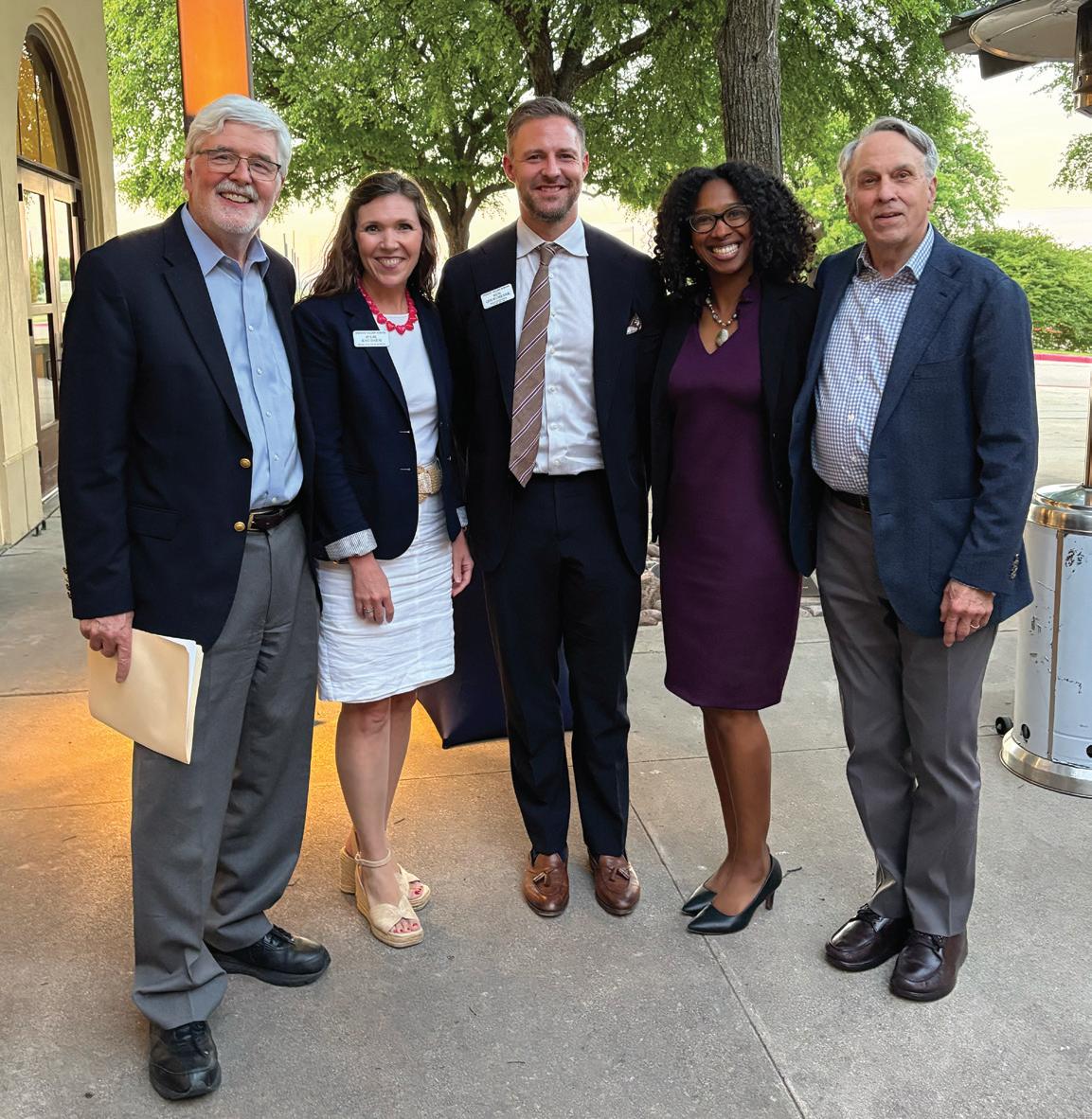
Design, Build, Discover Chompsaw
In eighth-grade art, where creativity meets hands-on exploration, the chompsaw is expanding what is possible. Students are experimenting with materials, testing ideas, and bringing designs to life - everything from room design prototypes to imaginative personal projects. These tools offer both access and efficiency: they provide an alternative for students who struggle using traditional scissors on small-scale projects, streamline the building process, and encourage thoughtful planning as students consider how their designs will take shape. Along the way, students gain early exposure to tool use, building confidence, independence, and a deeper sense of creative possibility.
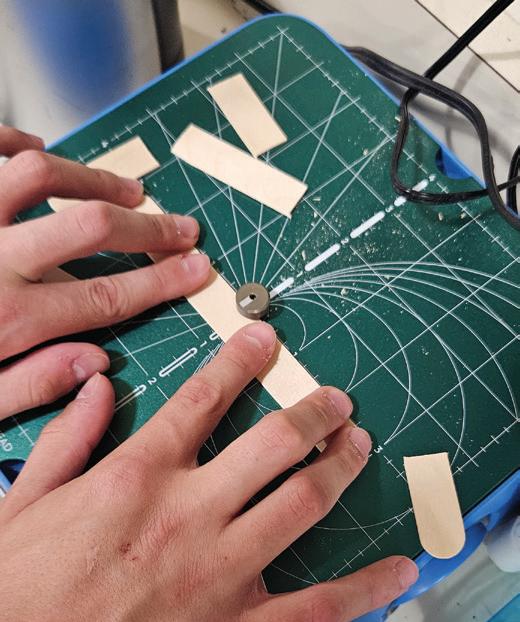
Opposite page L-R: Boo at the Zoo with Kristian Tucker, Madison Muckleroy, and Becky Schmid; Raffle basket for TVS auction; Director of College Counseling Stevi Schuknecht speaks to Lower and Middle School families at the TVS Speaker Series
Below: Guest speakers and co-authors Michael Thompson and Robert Evans with Julie Knudsen, Head of Lower School, Ben Courchesne, Head of School and Dr. Alexandra Channell, Head of Middle School
REACHING FOR THE STARS
A NIGHT OF DISCOVERY UNITES THE TRINITY VALLEY SCHOOL COMMUNITY
ASHLEY ROBINSON, DIRECTOR OF STRATEGIC MARKETING & COMMUNICATIONS
On a spring evening in Sundance Square, the Trinity Valley School community gathered under a shared sense of purpose and possibility. Per Aspera Ad Astra: A Night of Discovery was more than an event—it was a reflection of what defines TVS at its best: curiosity, connection, and a deep commitment to shaping the lives of students.
Led by Auction Co-Chairs Abigail Bebee and Elizabeth Ming, and supported by the dedicated volunteers of the TVS Parents’ Club, the evening brought together parents, alumni, faculty, staff, and friends in celebration of a shared mission. By the close of the night, that collective spirit had translated into remarkable impact—over $260,000 raised to support faculty-led programs that enrich the student experience.
Throughout the evening, guests were invited to reflect on what makes Trinity Valley School so distinctive—not just as a place of academic excellence, but as a community where students are known, supported, and inspired.
In remarks that resonated deeply, Head of School Ben Courchesne reflected on the daily experiences that shape a TVS education—moments that extend far beyond the classroom and are rooted in meaningful relationships and intentional growth.
From Lower School traditions that build confidence to Middle School experiences that foster belonging, to Upper School opportunities for leadership and intellectual exploration, these moments are made possible through the care and commitment of TVS faculty.
At the center of it all, he emphasized, are the educators who bring these experiences to life.
“They’re the ones standing at their doors every morning greeting students by name… the mentors who encourage curiosity, reward persistence, and remind students that mistakes are simply part of learning.”
These are the very experiences the auction was designed to support. Proceeds from A Night of Discovery directly fund faculty-led programs that enrich the student experience—ensuring that teachers have the resources, training, and support to continue guiding students with intention and impact.
As Courchesne shared: “Every bid tonight helps ensure that the extraordinary educators at Trinity Valley continue to grow, innovate, and inspire the students we care so deeply about.”
That sense of belonging and impact was echoed by TVS junior William Lynch, who offered a powerful student perspective on the community:
“Trinity Valley isn’t just a school—it’s a place where you are known, where you are welcomed, and you will always have a seat at the table.”
These investments strengthen the exceptional learning environment that defines Trinity Valley School— impacting classrooms, conversations, and moments of discovery across campus.
From a stunning venue to a palpable sense of connection, the evening reflected the spirit of the TVS community at its very best. The success of the event was made possible through the generosity of sponsors, donors, and volunteers, as well as the dedicated support of the TVS Parents’ Club.
More than a celebration, A Night of Discovery was a powerful reminder of what is possible when a community comes together with purpose.
$260,000+ RAISED
SUPPORTING FACULTY DEVELOPMENT AND STUDENT-CENTERED LEARNING EXPERIENCES




Hunter Baird ’03, Katie and Karthik Muraliraj ’04, Vijay Muraliraj ‘99
Laura McMullen-Cormier, Liz Vance, Merrill Rhynsburger, Abigail Bebee, Casey Creager, Elizabeth Ming, Ashley Hedrick, and Carlee Hughes-Heiszek.
Adam and Sarah LanCarte & John and Kendall Kostohryz
Brent Cunningham, Preston Foster, and Kelsey Cunningham Jason and Paige Charbonnet & Chip and Ashley Uffman
Tina Clayton, Hilary Cox, and Robin Preston
Head of School Ben Courchesne
Ty and Jordan Stimpson ’05
Megan Nagel, Sarah Rader, and Savannah Petronis
TVS Junior William Lynch
Emily and Taylor Paul & Molly and Kyler Scott
Dance Floor!
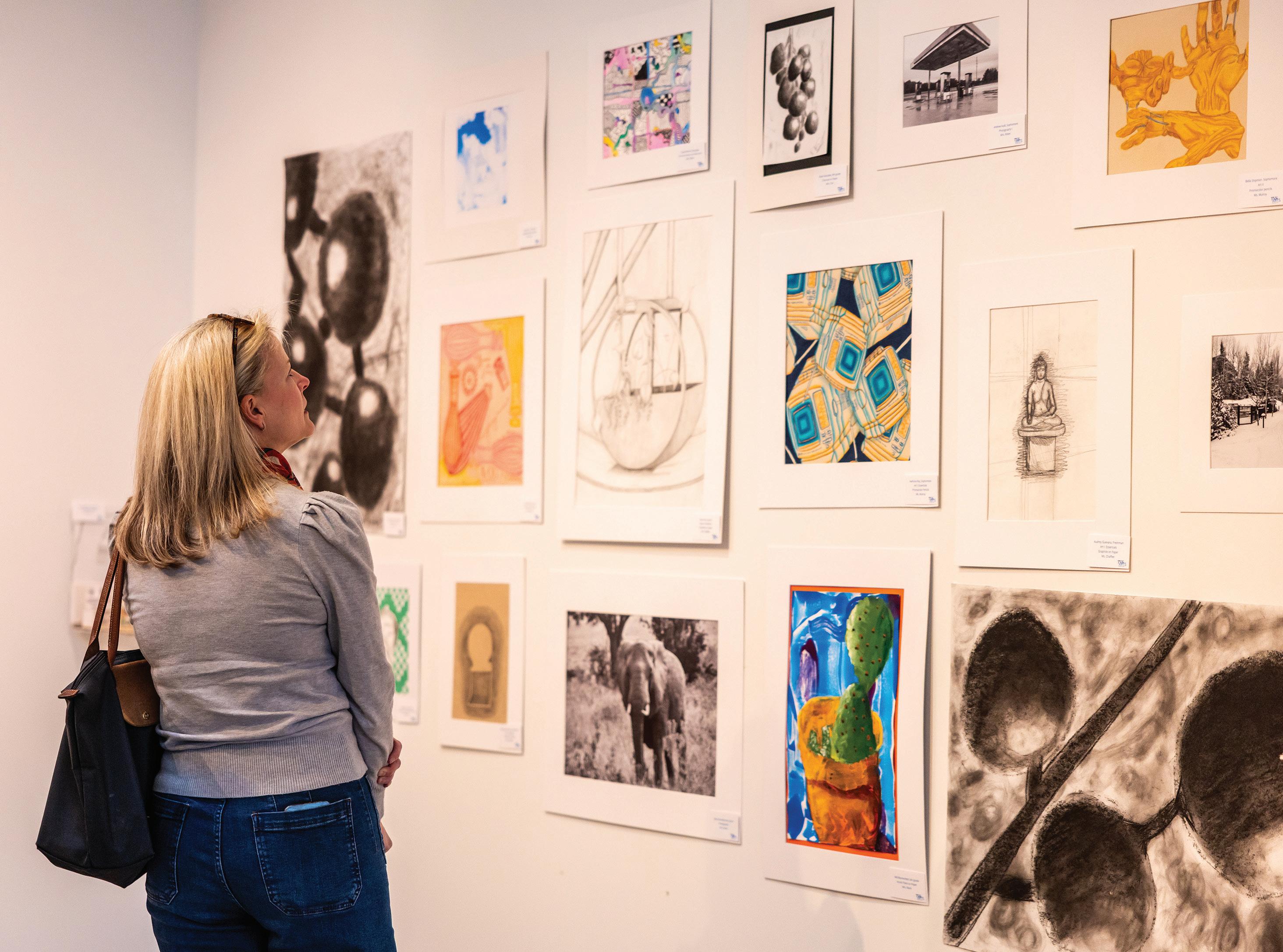
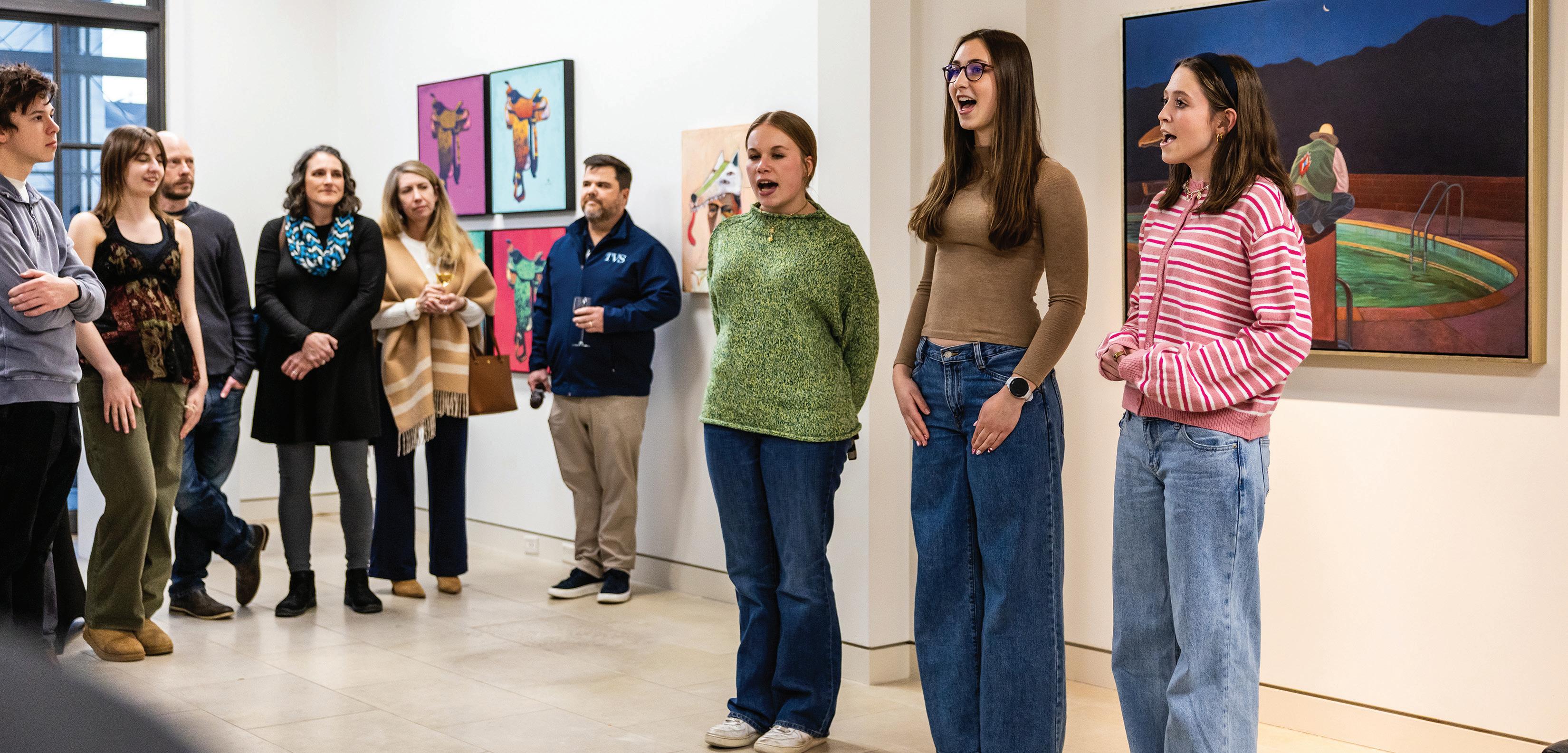
Photography by Cole Christopher
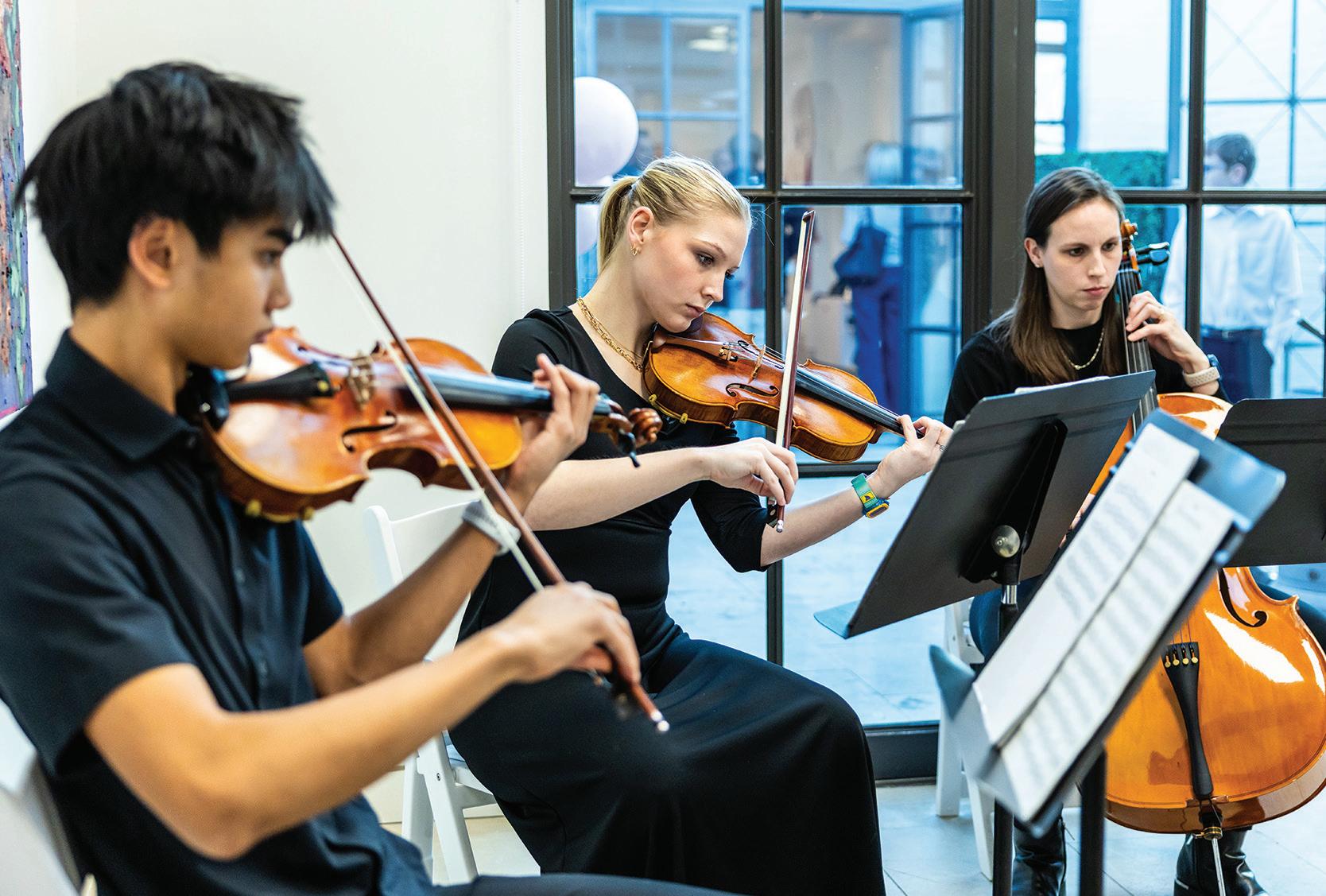
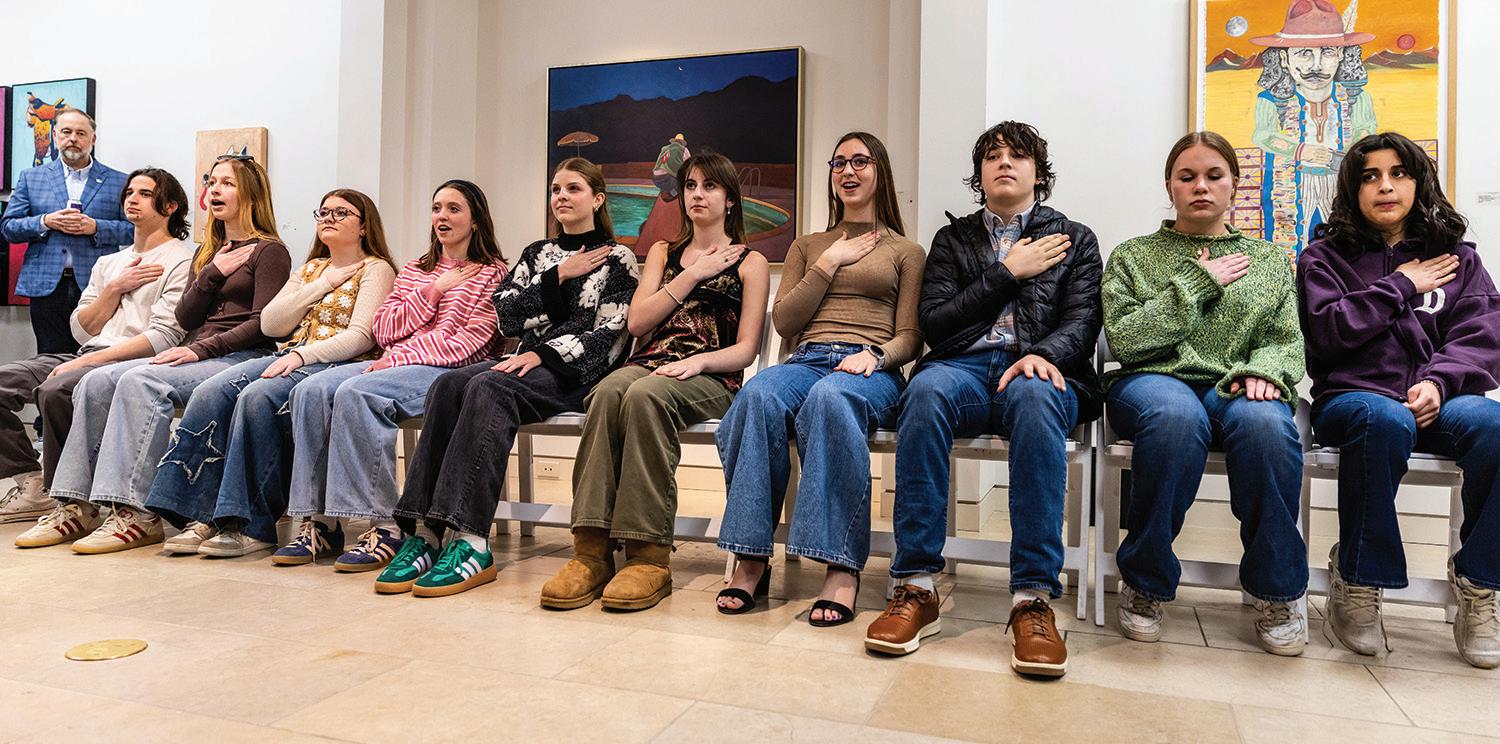
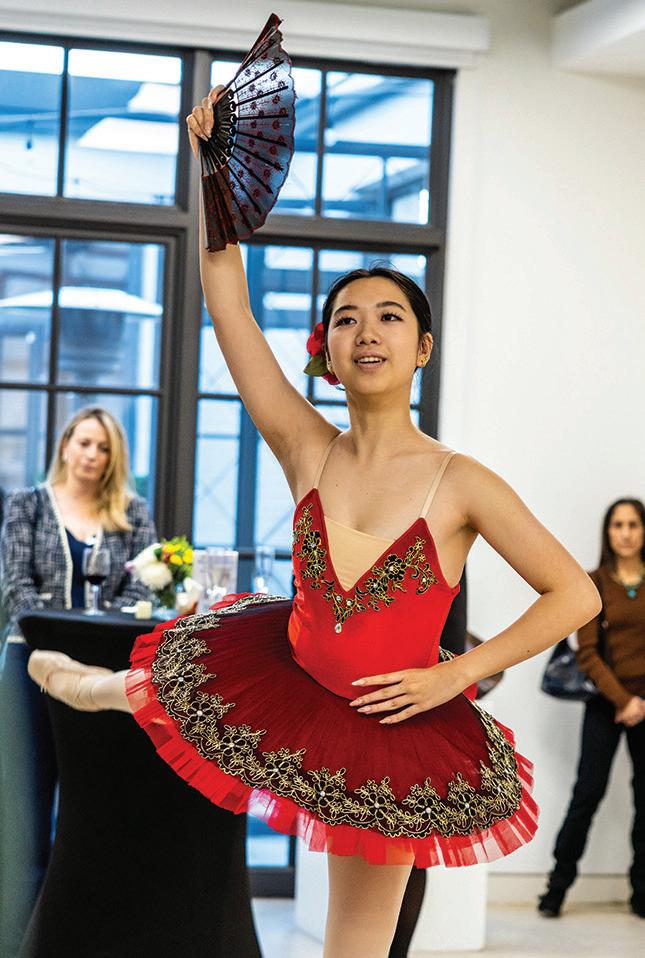
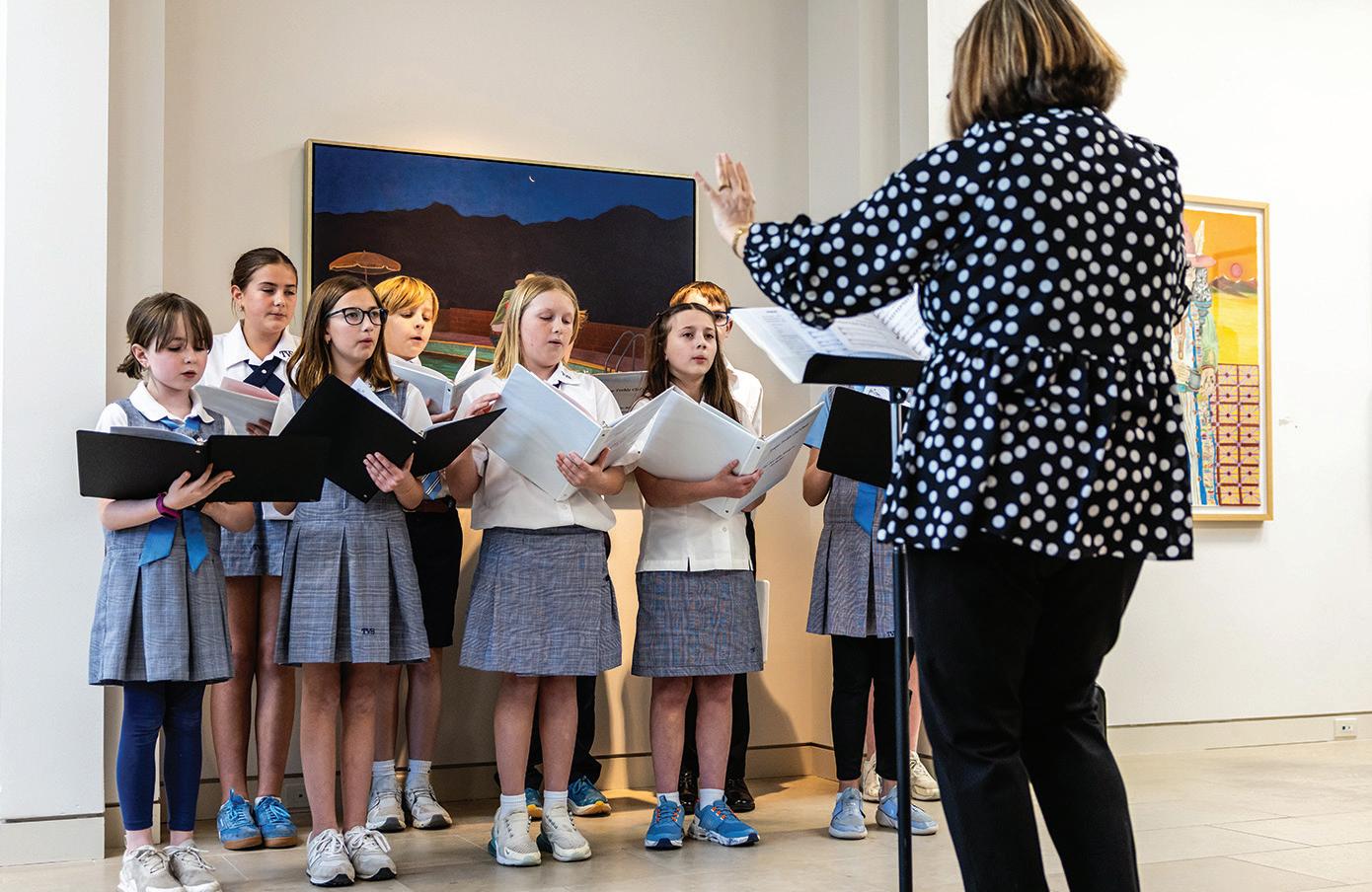
TRINITY VALLEY SCHOOL CELEBRATES THE SUCCESS OF
A NIGHT WITH THE ARTS
ASHLEY ROBINSON, DIRECTOR OF STRATEGIC MARKETING & COMMUNICATIONS
Trinity Valley School is grateful to the TVS Arts Booster Club for hosting its inaugural event, A Night with the Arts, on Wednesday, February 4. This was an evening that beautifully celebrated creativity while strengthening support for the arts at TVS.
Thanks to the generosity of the community and the leadership of the Arts Booster Club, the event raised an impressive $32,500, which will go directly toward unfunded arts needs at Trinity Valley School. These funds will expand opportunities for students across visual arts, music, theater, and other creative programs, helping ensure that artistic exploration continues to thrive as an essential part of the TVS experience.
Trinity Valley School extends its heartfelt appreciation to the Arts Booster Club leadership for their vision and dedication. Special thanks go to ABC President Emily Paslay and ABC Vice-President Erin Bales, as well as the event committee members – Haley Manulik, Jill Reynolds, Jodi Sangalli, and Misty Locke – for their time, energy, and commitment to bringing this meaningful evening to life.
The School also gratefully acknowledges the event’s generous sponsors: William Campbell Gallery, Blackland Fort Worth, and Clay Pigeon Food & Drink, whose partnership helped make the evening possible.
Events like A Night with the Arts reflect the strength of the TVS community and its shared belief in the power of the arts to inspire curiosity, creativity, and confident expression in students. Trinity Valley School is deeply thankful to the Arts Booster Club and all who supported this inaugural celebration of the arts.
SPIRIT COMMITTEE: A LOOK BACK AT OUR FIRST YEAR
MARGARET LANE, CAROL ANN CASAGRANDE, AND ASHLEY RIEMITIS ‘16 , SPIRIT CO-CHAIRS
This year marked the exciting launch of the TVS Parents' Club’s newest addition, the Spirit Committee! Created with the goal of fostering School pride and strengthening connections across campus, the committee’s first year was filled with energy, creativity, and meaningful moments.
Throughout the year, the Spirit Committee worked to build unity and community while bringing joy, positivity, and memories back to campus. From lively pep rallies to morning carpool and spirit ribbons, each initiative was designed to celebrate and uplift our students.
Some of the committee’s favorite moments included decorating the athletics areas to help host Winter SPC, celebrating our Girlsʼ field hockey, Girlsʼ soccer, and Girlsʼ wrestling teams on their SPC championship titles, and creating a cozy hot chocolate bar for the Frozen Jr. production. These special moments captured exactly what
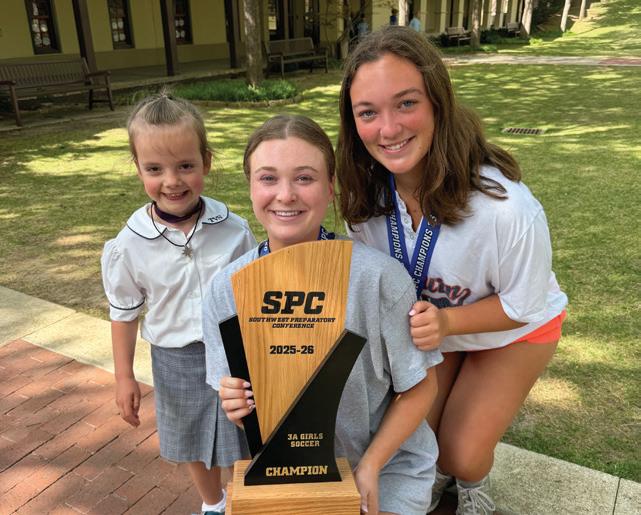
If you are interested in getting involved in the Spirit Committee scan this QR code

the Spirit Committee set out to do: recognize achievements, support students, and create memorable experiences.
The committee also introduced spirited clapouts and enhanced awareness of campus events through the Spirit Calendar, helping families stay connected and engaged. Thoughtful touches like yard signs added an extra layer of encouragement and recognition throughout the community.
As we reflect on this inaugural year, we are proud of the foundation that has been built. The Spirit Committee already has made a lasting impact creating excitement, strengthening School spirit, and helping make TVS an even more connected and joyful place.
We look forward to continuing this momentum in the years ahead!
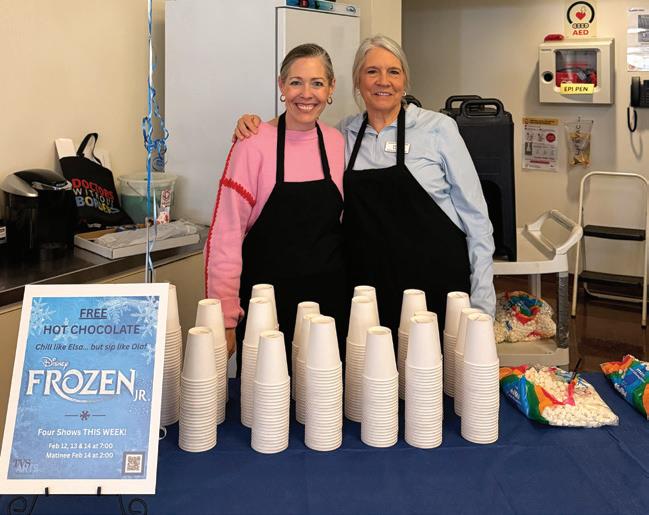
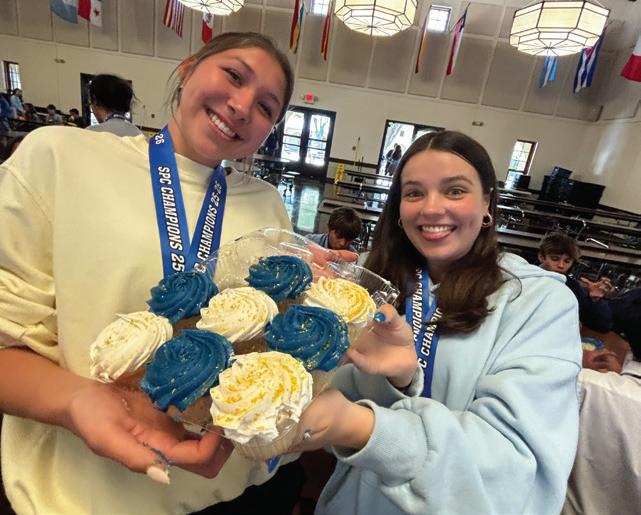
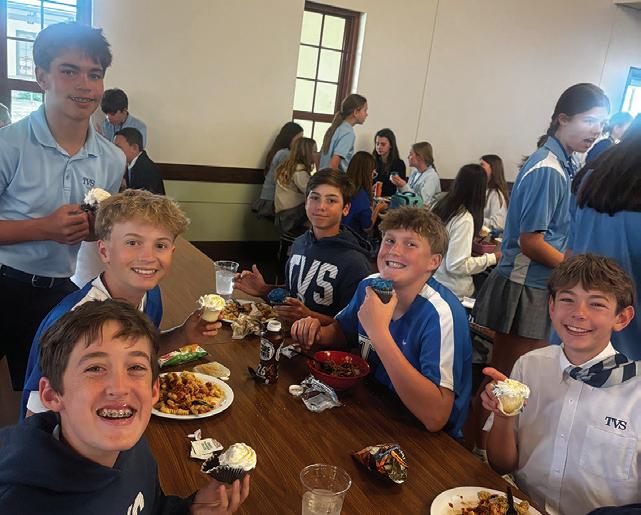
Clockwise from top left: Ashley Robinson, Margaret Lane, Carol Ann Casagrande, and Ashley Riemitis' 16 TVS Spirit Committee Leaders; Serving hot chocolate at Frozen Jr.; Decorating the windows of the House of Troy; SPC celebrations across campus
FROM DROP-OFF TO FALL FESTIVAL: TVS DADS HELPING SHAPE SCHOOL LIFE
RICHIE PETRONIS, TVS PARENT AND DADS CLUB PRESIDENT
In the inaugural year of the Trinity Valley Dads Club, we accomplished a great deal and are grateful for the opportunity. While the kids were happy to see a new face helping with drop-off, I think the dads got more out of it than anyone. As one father put it, “There is no better way to start a Monday—or the week.” We kicked off the year with a training and social where Mrs. Knudsen and Mr. Kinley welcomed the group, shared expectations for the program, and trained dads on the proper way to help kiddos exit vehicles safely during morning drop-off.
With the sounds of the latest Kidz Bop playing and the cutest kids arriving with backpacks sometimes bigger than they are, we got to work. The dads

showed up with great enthusiasm, and the program quickly gained momentum. In the fall, every dropoff timeslot was completely full, a testament to the excitement and commitment from the Trinity Valley fathers who helped give the program such a great start in its first year.
Dads Club members also assisted with numerous School activities throughout the year, including the Fall Festival and Grandparents’ Day. Leading up to the holidays, we embraced the fun by dressing up in costumes for Halloween and starting the holiday music a little earlier than most might prefer. These moments created great memories for both the dads and the students and helped strengthen the sense of community within the School.
As we continue into the spring, we look forward to new opportunities to support TVS and its students. The group is also interested in expanding the Dads Club to the Middle School in the coming years, and we would love to welcome new dads who want to get involved. We will be hosting a Spring Social, so please reach out for more information. A special thank you to all the dads who volunteered their time and helped make this first year such a success!
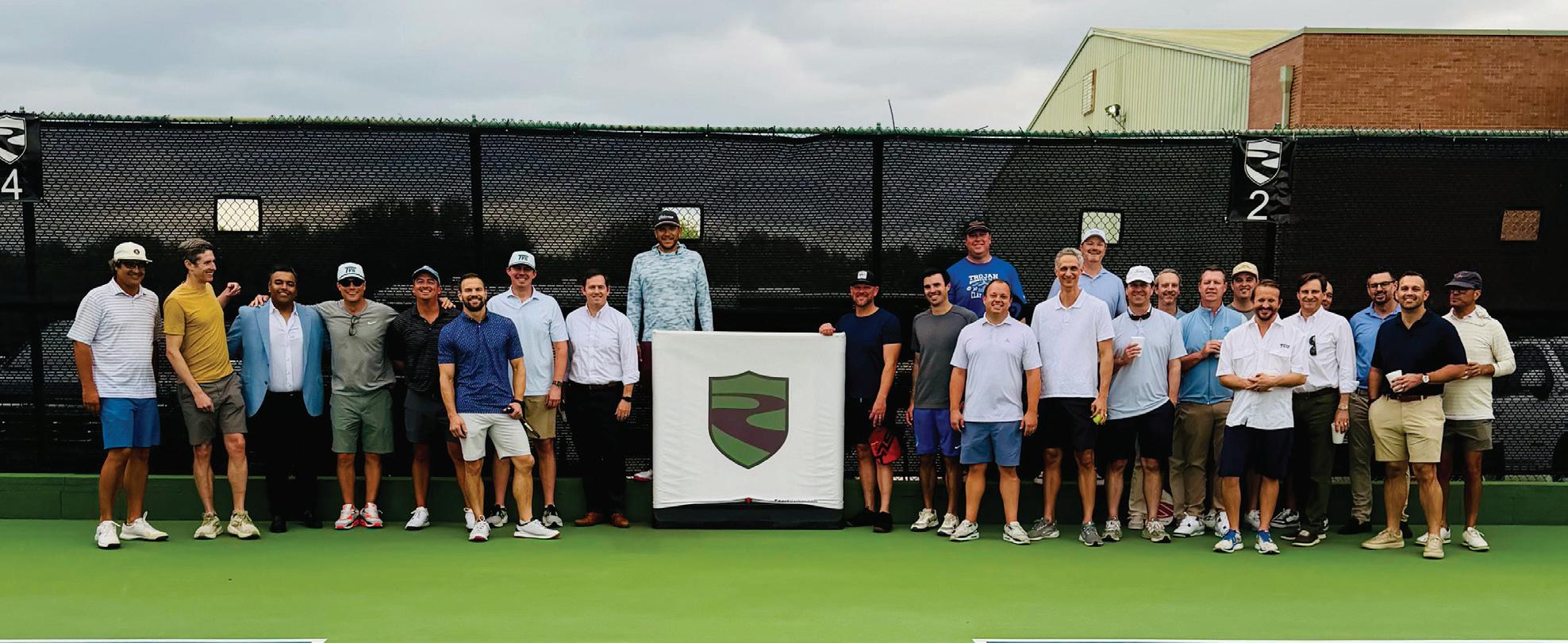
Dads Club spring pickleball social
ESTABLISHING THE CALVIN BARKLEY ENDOWMENT FOR THE ARTS
AMY ADKINS, CHIEF ADVANCEMENT OFFICER & KATHRYN DAVIS ‘89, DIRECTOR OF ALUMNI RELATIONS
On April 20, 2026, Mary Hazlewood Barkley ’98 and her husband, David, formally endowed a financial aid award, The Calvin Barkley Endowment for the Arts. We asked the Barkleys to share more about the inspiration behind this gift and what it means to their family and to Trinity Valley.
MARY: As an alumna, what are some of your most meaningful memories from your time at Trinity Valley, and how did that experience shape you?
Trinity Valley in the 1990s was academically rigorous but also had a certain level of “whimsy.” That whimsy was found in Mr. Seleny’s visits with the kids at lunch and in the hallways, joking with them and pinching cheeks, Mr. Fleming’s admonishments with a certain level of sarcasm, and Mr. Scott’s impressions and stories (that he still tells today). The teachers expected a lot of hard work, but they also tried to teach students not to take life too seriously. I would like to think those bigger “soft-skill” lessons have stayed with me, especially Mr. Fleming’s voice telling me, “If you’re not early, you’re late” in his famous, gruff New England voice.
MARY AND DAVID: Your daughter Sarah is finishing 10th grade, and your son Hix is winding up fifth. What has it meant for your family to experience Trinity Valley, and for you as parents to see your children here?
It’s been incredibly special, almost like coming full circle. Mary grew up here, so walking these halls with her feels like stepping back into her stories, only now we’re the ones watching Sarah belt out a solo in musical theater or Hix tune his violin before orchestra.
Being parents at Trinity Valley School isn’t just dropping them off in the morning for us; it’s about sharing something Mary loved, the School and mission that helped shape her, and is now helping to shape them.
What inspired your family to establish this award?
This endowment honors our son, Calvin Borden Barkley, who died in 2013 after a very short life. Even though he did not attend TVS, we wanted a way to tie his name to the School and to make something good out of a tragic situation. We felt called to establish this endowment as a lasting memory of our son and the hope that he brought into our world. The arts help inspire hope. They heal, they connect, they remind us we are not alone. This endowment is our quiet thank-you to the arts program, and to help continue Mr. Seleny’s legacy to make art an essential part of the School.
ʻʻLife is messy, loss is real, but hope? Hope is in every brush that makes a mark, every note that is sung, and every line that is performed.ˮ
What have you seen in the arts at Trinity Valley that made this an area you wanted to support?
Both of our children have thrived in the arts at TVS. Many of the opportunities that TVS has in the arts program now were not available in years past. We want to help continue that positive trajectory and establish a means through which our family can continue to contribute over time. Hopefully, when Sarah and Hix grow up and can contribute, they will consider supporting this fund as well.
What does it mean to you to have this award carry Calvin’s name and reflect his legacy?
This endowment reflects Calvin’s legacy in the gentlest, most real way: it’s not about what he did, it’s about the hope that his short life inspires. Hope helps overcome even the darkest moments.
We do not speak of Calvin often. Calvin was with us on Earth for just seven days. We named this endowment after him because we want his memory to breathe— through every piece of art that is painted in the Middle School art room, in every chord that is played in Lower School music class, and in every set change in the Upper School musical.
Over the years the arts have often given us a way forward – Sarah’s voice in the Upper School production or Hix on the stage playing his violinand now Calvin’s memory gets to live there, too. Not as tragedy, but as hope.
How have the arts continued to shape your family’s life and provide that way forward?
Sarah is immersed in all things theater and music and Hix also enjoys orchestra and choir. We see them light up when they are part of these programs. This emotional connection is why it matters at TVS. Because kids aren’t just brains or athletes. They’re hearts, too. Arts give them tools - confidence, empathy, patience - that math and science and sports might not touch. They learn to fail and then to stand up, to share spaces together, and open their hearts and minds to new thoughts and feelings.
How has your experience shaped what you hope this endowment will provide for other students?
We believe that all the art forms - visual art, theater, dance, orchestra - inspire intangible traits such as hope, grit, bravery, patience, and creativity. Those skills are essential for success in life, and we hope this endowment can help sustain programs that build those skills at TVS.
What do you hope students who receive this award will gain during their time at Trinity Valley?
We hope these students walk out of TVS feeling like they belong anywhere and that they have the soft skills necessary for success in any path they choose. The arts aren’t just lessons; they’re quiet builders. A kid who starts shaky on a violin string, or freezes before a monologue? By the end, that kid has got this steady glow: a confidence that doesn’t shout, it just shows up.
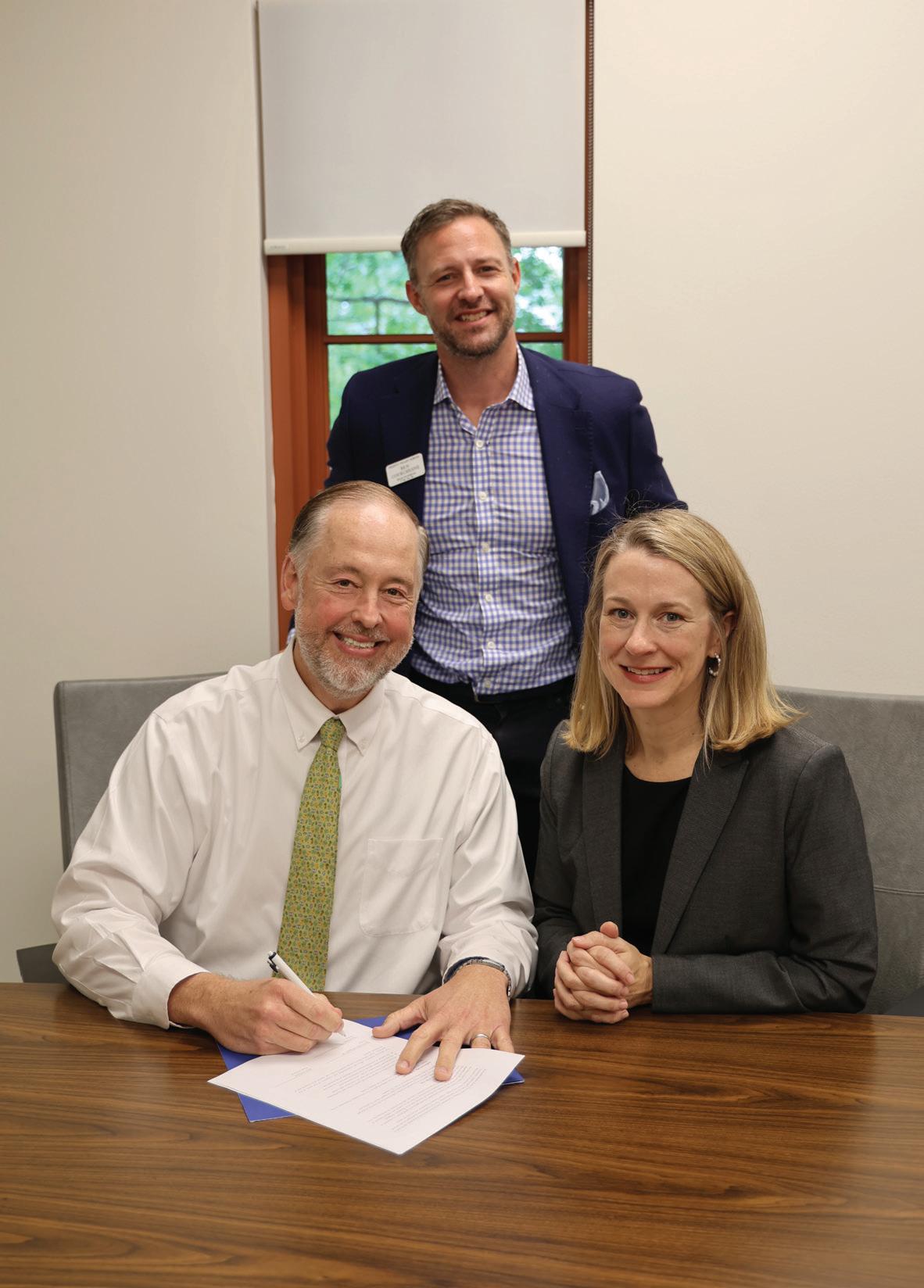
In choir, they learn their voice matters. In theater, they step into someone else’s skin and come back stronger. We want them to experience that “I can do this” rush.
If you could speak directly to the students who will benefit from this award, what would you want them to know?
To the students who benefit from this endowment: we believe in you. Not because you’re flawless, but because you’re here, trying, growing, and showing up. Music and art aren’t easy. Notes slip, lines forget themselves, paint spills. Every stumble builds something real: trust in your own voice, steadiness under lights, confidence in your brush. Just know this: you’re not alone. Keep going.
When you think about the future, what brings you the most hope?
We know what it’s like to need light after dark. Calvin taught us that. So, if our gift means one student, years from now, finds their light, or their voice on stage or their way on a canvas… that’s what lasts.
Life is messy, loss is real, but hope? Hope is in every brush that makes a mark, every note that is sung, and every line that is performed.
TVS ALUMNI AWARD HONOREES 2026
KATHRYN DAVIS ’89, DIRECTOR OF ALUMNI RELATIONS
THE JUDITH SULLIVAN KINSER ’76 TVS DISTINGUISHED ALUMNUS / ALUMNA AWARD
Given to one or more alumni embodying the TVS mission and recognized for their professional, personal and community contributions beyond TVS.
AMAR TANNA ’99
Amar Tanna’s connection to Trinity Valley School is a lifelong journey spanning more than four decades. A "lifer" who graduated in 1999, Amar’s perspective on the TVS mission is uniquely informed by his roles as a student, an alumnus, a dedicated board leader, and—most importantly—a parent.
After graduating from TVS, Amar attended Duke University, where he earned a BSE in Electrical and Biomedical Engineering. He began his career in New York City, working in investment banking at Lehman Brothers. In 2005, Amar returned to Fort Worth to join Barbnet Investments, where he has spent the last 20 years.
Amar’s service to Trinity Valley is a testament to his belief in "intelligent citizenship." He has served the School in nearly every leadership capacity possible, including president of the Alumni Board and a member of the Board of Trustees from 2010 to 2019. After rejoining the Board in 2023, he took on the critical role of co-chair for the Head of School Search Committee, leading the successful effort to welcome Ben Courchesne to the Trojan family. Currently serving as the vice president of the Board of Trustees, Amar continues to champion the "sense of excellence" and moral development that defined his own education.
Beyond the TVS gates, Amar is a pillar of the Fort Worth community. He currently serves on the Board of the Modern Art Museum of Fort Worth and has previously lent his leadership to the Van Cliburn International Competition, the Fort Worth Zoo, the Lena Pope Home, and the Boys & Girls Clubs of Greater Fort Worth.
Aside from his professional and civic achievements, Amar’s greatest joy is seeing the TVS experience through the eyes of his daughters, Neela (Class of 2034) and Remy Raj (Class of 2036). Alongside his wife, Sonya—a dermatology PA and dedicated partner in Trinity Valley's Annual Giving campaigns—Amar can often be found on the tennis court, playing golf with his brother Neel ʼ97 or friends, or skiing. He enjoys traveling as a family, sharing adventures, and being outside whenever possible, especially when accompanied by the family’s dogs. Amar remains a compassionate and mission-aligned leader, dedicated to ensuring that the School that shaped him continues to develop future leaders for generations to come.
TVS ATHLETICS CIRCLE OF HONOR
A collaborative effort of Trinity Valley’s Alumni Association and the Department of Athletics, the Circle of Honor recognizes one or more former student-athletes, TVS coaches, or TVS teams whose accomplishments and impact exemplify Trojan Athletic excellence.
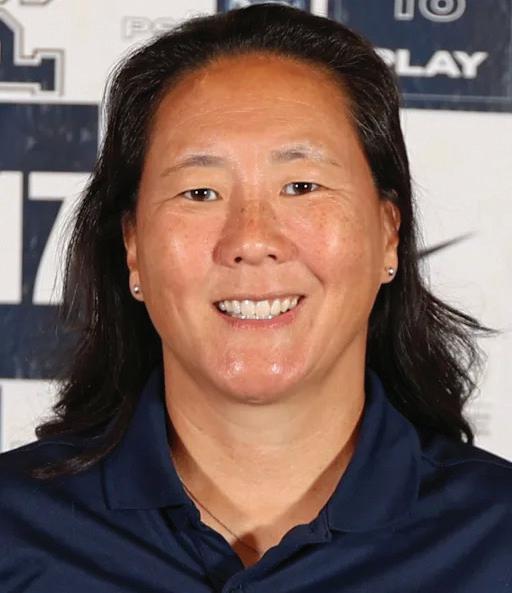
AMANDA JANNEY MISSELHORN ’95 / FIELD HOCKEY
Amanda attended Trinity Valley for all 13 years, graduating in 1995. Her sister, Melissa Janney, was a member of the Class of 1991.
While she was a field hockey player at TVS, she and her team were D1 runners up SPC in field hockey in 1994 with Coach Lisa Richards who turned the field hockey program into a winning program (after they almost did not have enough to have a Middle School field hockey team in 1988, and Coach Auger and Coach Underwood convinced them to play field hockey in sixth grade). They won D1 soccer SPC in 1994-95 with Coach Gilbert! Amanda received All-SPC and All-MISC awards in field hockey, soccer, and softball.
After Trinity Valley, she attended Wake Forest University and earned a BA in sociology as a four-year scholarship student-athlete. Following graduation, she returned to Fort Worth and coached PE, field hockey, soccer, and JV softball at TVS from 1999-2002. Under her leadership, her team won field hockey D1 SPC two times, 2000 and 2001, with the help of her Circle of Honor co-honoree Claire Lawhon Pearce '01!
Field hockey is not only a passion but has been her career. After leaving TVS in 2002, Amanda served as second assistant coach at James Madison University in Harrisonburg, Virginia. The team achieved a national ranking of fourth in September 2002 and made its first NCAA tournament appearance since 1999. She then became first assistant coach at the University of Pennsylvania before becoming head coach at Temple University in 2005. In her 10 years there, she transformed a 10-year team under .500 into a winning program with 10 straight postseason appearances. They were the 2007 Atlantic 10 Conference Regular Season Champions and in 2014 achieved a national ranking of 11th in NCAA RPI ratings.
In 2015, she became the head field hockey coach at Indiana University, Bloomington. Her tenure saw the most wins in the Big Ten Conference in IU Field Hockey program’s history as of 2015.
She had two stints coaching at the high school level, at Donegal High School in Mount Joy, Pennsylvania and Warwick High School in Lititz, Pennsylvania, before becoming head field hockey coach at Penn State Harrisburg. There, she established the first-ever NCAA Division III field hockey program and recorded a winning record with 22 wins in two seasons. She was honored with the United East Field Hockey Conference Coach of the Year Award in 2025.
Additionally, Amanda has been a member of the United States Field Hockey Association since 1991 and of the National Field Hockey Coaches Association since 1999. She was honored by the USFHA with its Humanitarian of the Year Award in 2024, recognizing her inclusive work with the All-Starz program and the Down Syndrome community.
She has pursued post-graduate work at The University of Pennsylvania and at Eastern University, where she earned a Pennsylvania teaching certificate in health and physical education PK-12.
Amanda and her husband, Walt Misselhorn, live in Mount Joy, Pennsylvania..
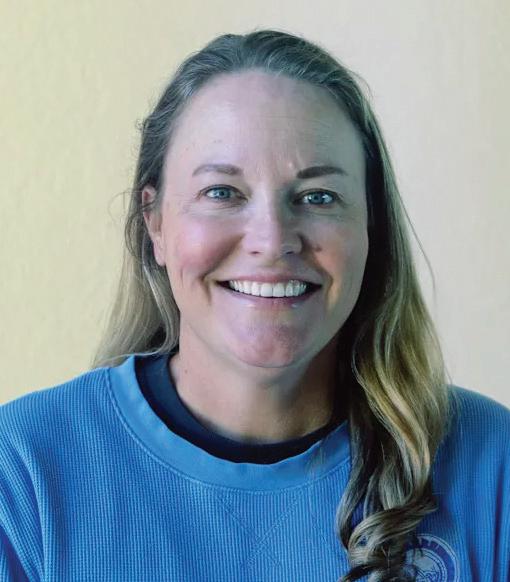
CLAIRE LAWHON PEARCE ’01 / FIELD HOCKEY AND SOCCER
Claire was a 13-year student at TVS, spending a decade on the McCart campus and graduating with the Class of 2001 on the Bryant Irvin campus. Her siblings, Reese '98 and Natalie '05, were also 13-year students, and their parents Ginger and Mack served the School as Board members, Parents' Club president, and more. Now TVS grandparents, they are still involved in some Trinity Valley projects.
Claire was a three-year letter winner for field hockey (freshmen were not allowed to make Varsity) and under fellow Circle of Honor co-recipient, Coach Amanda Janney '95, won the School's first field hockey SPC Division 1 Championship in 2000. Claire earned All-MISC and All-SPC honors and had the privilege of being a captain alongside dear friend and classmate Regan McDonald Gilstrap in 2000. Claire was a fouryear letter winner in soccer and won back-to-back SPC Division 1 championships in 1998 and 1999 under coach Gilbert Richardson. She earned All-MISC and All-SPC honors and served as captain of the 2000 and 2001 teams.
Claire followed in Amanda's footsteps to Wake Forest University where she earned an NCAA Division 1 athletic scholarship to play field hockey for the Demon Deacons. The Deacs were Atlantic Coast Conference Champions in 2002 and 2003, beating Maryland and Duke for the titles. Claire graduated from Wake Forest University in 2005 with three consecutive NCAA Division 1 field hockey National Championship titles: 2002 (defeating Penn State 2-0), 2003 (defeating Duke 3-1), and 2004 (defeating Duke 3-0). Only two other schools have ever accomplished this - Old Dominion and UNC.
After Wake Forest, Claire had hopes of staying on the east coast until Dennis Fleming convinced her to come home for an interview at TVS. Twenty-one years later and hundreds of lives mutually influenced, Claire is still teaching physical education (PK-6th grade) and coaching field hockey and soccer for the TVS Trojans. She has had the utmost honor of sending many student-athletes on to succeed at the collegiate level. More recently, her teams have earned seven consecutive 3A Southwest Preparatory Conference trophies, three for field hockey (2023, 2024, 2025) and four for girls' soccer (2023, 2024, 2025 and 2026).
TVS looks a little different to Claire now that her two children, Edie (Class of 2036) and Payne (Class of 2039) Pearce, are Lower School Trojans themselves, and she is gifted the title of “parent.” From student to alumna turned teacher/coach and now parent, Claire is a Trojan lifer and remains grateful for all of the things TVS has given her and her family throughout the last four decades.
TVS HONORARY ALUMNUS / ALUMNA
Given to a member or members of the Trinity Valley School community in recognition of faithful and distinguished leadership, service, and generosity to TVS and the Alumni Association.
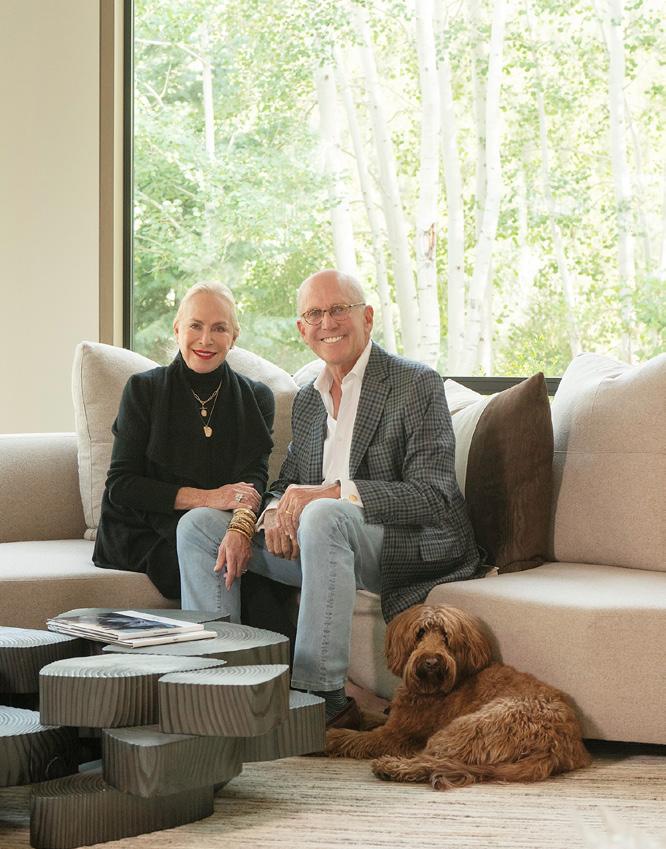
ROZANNE AND BILLY ROSENTHAL
Rozanne and Billy Rosenthal have spent decades shaping both the Fort Worth community and the industries they serve through visionary leadership, entrepreneurial success, and extraordinary civic commitment.
Rozanne Rosenthal, a 1974 graduate of the University of Texas at Austin, began her career in education before turning her talents toward community leadership and philanthropy. Her impact is both broad and deeply rooted, with service spanning organizations such as the National Council of Jewish Women, the Junior League of Fort Worth, the Fort Worth Dallas Ballet, Temple Beth-El, Cook Children’s Medical Center, and the Modern Art Museum of Fort Worth. She is perhaps best known for founding the Tarrant County Chapter of the Susan G. Komen Breast Cancer Foundation and the Tarrant County Race for the Cure® in 1991, efforts that have helped raise more than $30 million for breast cancer research and support. Her leadership has been recognized with numerous honors, including national and local volunteer awards, reflecting a lifetime dedicated to strengthening the community.
Billy Rosenthal, a 1972 graduate of the University of Texas at Austin, has built a distinguished career in the food processing and investment industries. As Chairman of Penrose Group, LLC, he oversees the Rosenthal family’s business interests. Over the course of his career, he founded or led several major companies, including Standard Meat Company and CTI Foods, and previously served as CEO of KPR Holdings. His business leadership is matched by significant civic involvement, including service on the boards of Cook Children’s Medical Center, the Fort Worth Zoo, Temple Beth-El, the Fort Worth Symphony, Texas Christian University, the UT McCombs School of Business Advisory Council, MD Anderson’s Board of Visitors, Southwestern Medical Foundation, and National Jewish Health, among others.
Together, Rozanne and Billy have combined their passions for leadership, service, and education to make a lasting impact. They have been honored jointly with awards including the National Jewish Health Humanitarian Award and most recently were named the 2024 Fort Worth Business Executives of the Year and recipients of the Exchange Club of Fort Worth’s 2025 Golden Deeds Award. In 2024, they further cemented their legacy through the establishment of the Rozanne and Billy Rosenthal Department of Management at the University of Texas at Austin McCombs School of Business.
Married since 1978, Rozanne and Billy are proud parents of three children—Ashli Rosenthal Blumenfeld '99, Benjamin Rosenthal '01, and Dr. Madelyn Rosenthal '02, all 13-year TVS grads. They delight in being grandparents of five, who now carry forward the family’s legacy as a second generation at TVS: Elanor (Class of 2029) and Will (Class of 2032) Blumenfeld and Hank (Class of 2034), George (Class of 2035), and Robbie (Class of 2038) Rosenthal.
THE STEPHEN SELENY AWARD FOR TVS
DISTINGUISHED FACULTY
Given to one or more members of the TVS faculty or staff in recognition of their contributions to sustaining the mission and educational philosophy of Trinity Valley School.
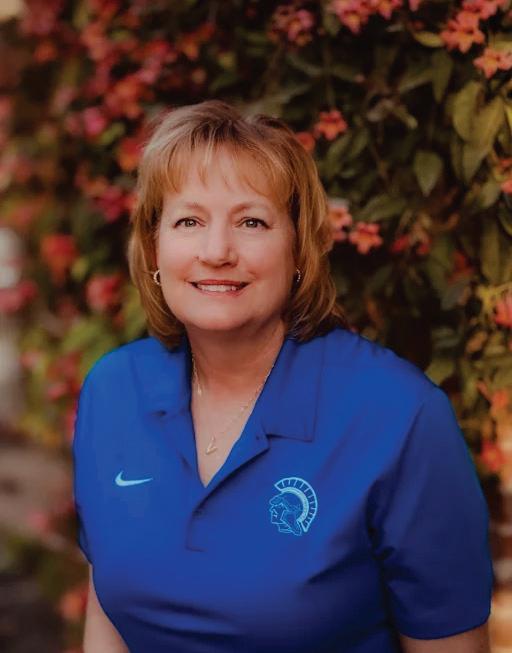
VAL UNDERWOOD
With 38 years of dedicated service at Trinity Valley School, Valerie Underwood has built a legacy defined by commitment, connection, and a deep love for students and athletics.
Raised in an Air Force family, Val learned early how to adapt, build relationships, and connect with people wherever life led which shaped her natural ability to form meaningful relationships. As a rising eighth grader, she moved from Spangdahlem, Germany to Azle, Texas, where she turned to athletics to build connections and establish a sense of belonging. What began as a way to meet others soon grew into a lasting passion, driven by her natural ability and strong work ethic.
That passion carried into high school, where Val became a standout three-sport letterman in volleyball, basketball, and track, earning all-district honors in each and all-region recognition in basketball and track, while also competing in a competitive youth softball league during track season.
She went on to play basketball on a two-year scholarship at the junior college level, starting every game, earning All-Conference honors as a freshman, and being named Conference MVP and All-American as a sophomore. She continued her career at TCU on scholarship, where she was a consistent contributor, averaging 12 points and nine rebounds per game. She graduated in May 1989 with a degree in Physical Education, Sports, and Recreation.
That same year marked two defining milestones. Val married in June and began her career at TVS in August.
Since joining TVS, Val has served in a wide range of coaching roles, including head Varsity basketball, Varsity assistant basketball, Middle School Basketball, Varsity assistant volleyball, JV volleyball, Middle School volleyball, Middle School track, field hockey, and softball. In addition to her coaching responsibilities, she has taught physical education at every grade level from Pre-K through 12th grade, developing a particular passion for working with Lower School students and shaping their early experiences with movement, teamwork, and confidence.
Beyond athletics, she has contributed as a TOE chaperone, participated on ISAS accreditation teams, and has been a long-time member and presenter within TAPHERD, supporting the broader physical education and athletic community.
Committed to innovation in education, Val partnered with Professor Debbie Rhea of TCU to help develop a specialized curriculum for Trinity Valley, reflecting a forward-thinking approach to student development. In the late 1990s, she took over the School’s Field Day tradition and, in 2025, reimagined it into what is now known as Trojan Day, a signature event that continues to bring energy and unity to the School community.
Perhaps most meaningful, Val and her husband raised two sons who both attended Trinity Valley School from kindergarten through graduation, making the School not just a workplace, but a second home.
After nearly four decades, Val’s impact is measured not only in wins and accolades, but in the generations of students she has mentored, the relationships she has built, and the lasting influence she has had at TVS.
TVS ALUMNI CELEBRATION & AWARDS CEREMONY
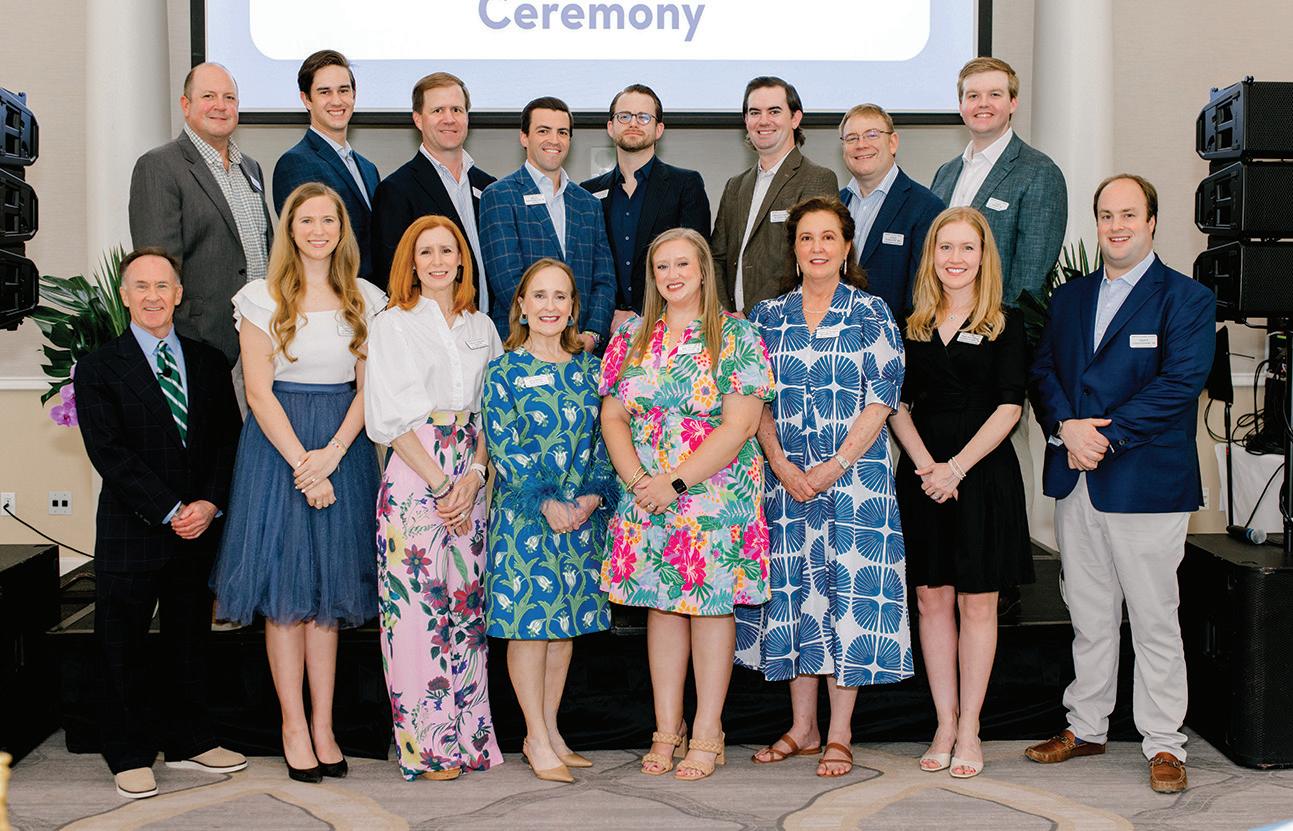
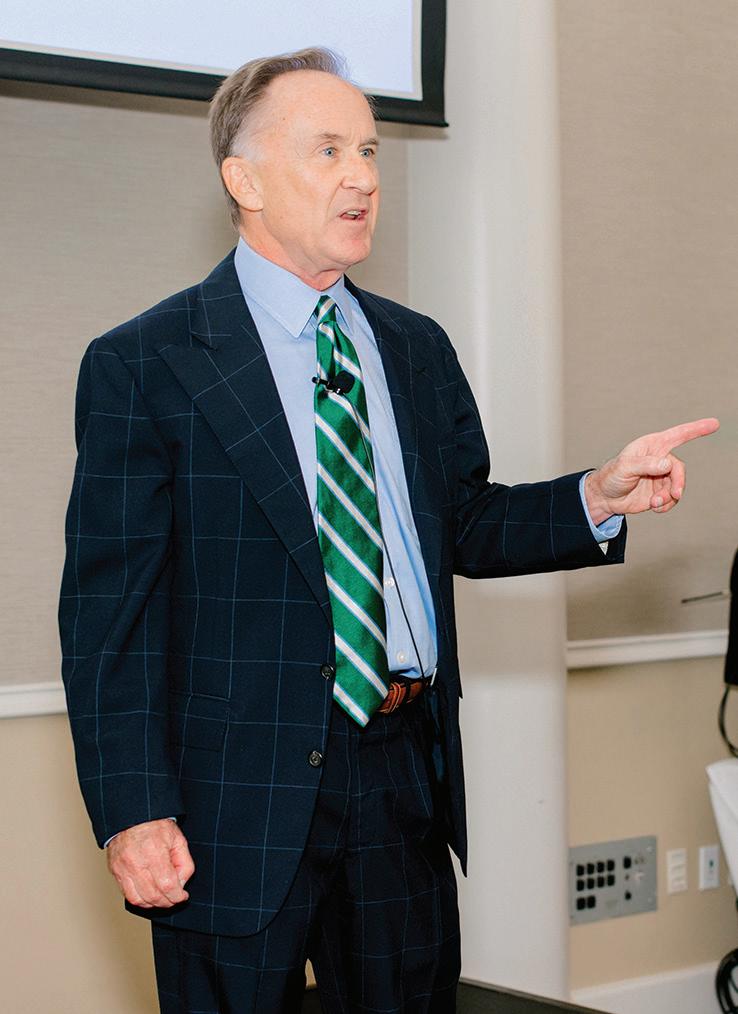
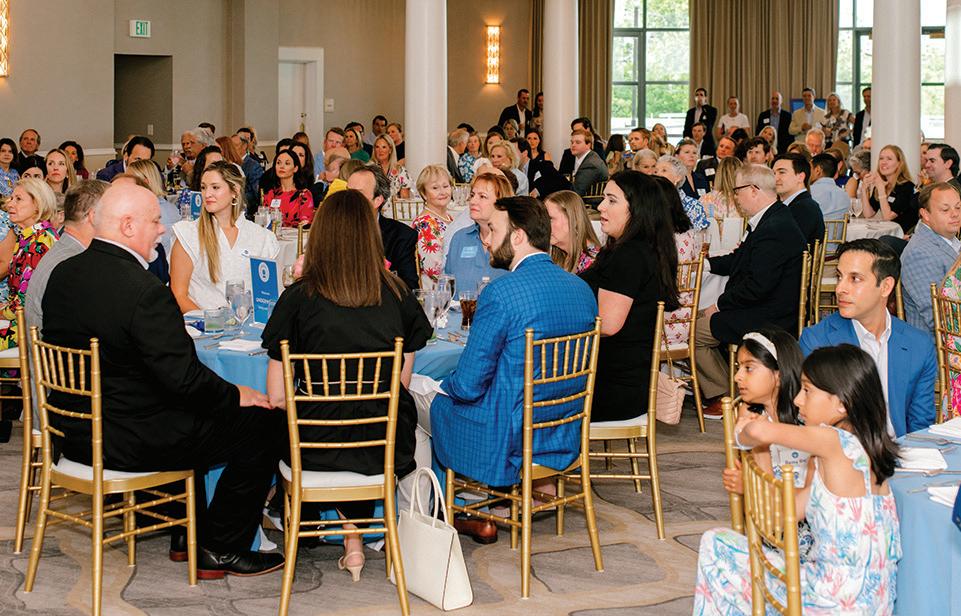
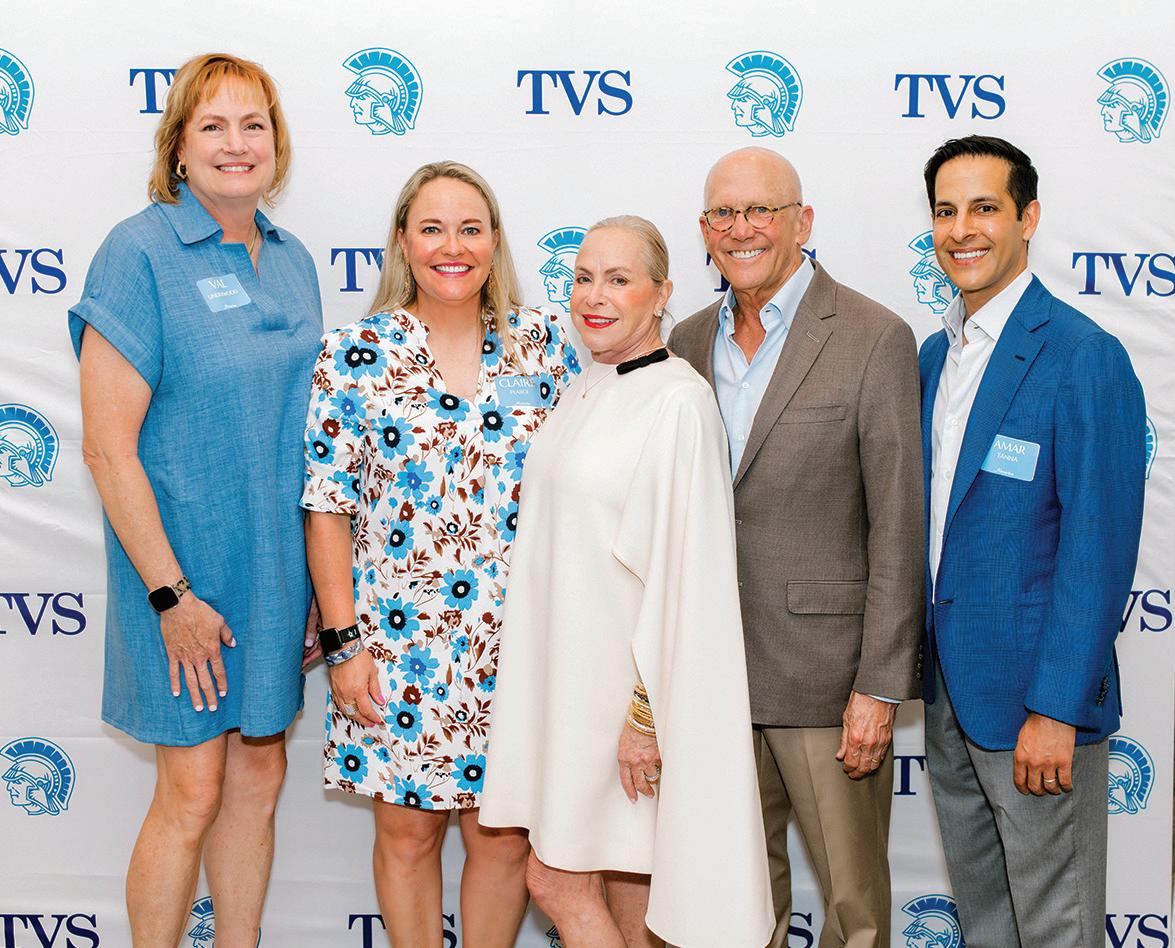
Clockwise from top left: 2025-2026 Alumni Board; Emcee Brent Pierce ’82; Honorees: Val Underwood, Claire Pearce ’01, Rozanne Rosenthal, Billy Rosenthal and Amar Tanna ’99 (not pictured: Amanda Janney Misselhorn ’95); Ballroom at River Crest Country Club
ALUMNI NOTES
If your email and home addresses are not current with TVS, please update them ASAP by emailing Kathryn Davis at davisks@tvs.org or calling 817-321-0118. Thank you for staying current with the School!
CLASS OF 1972
Roy Horan : I have already had two great adventures in 2026. The first was my first "century" ride of 106 miles at the MidSouth Gravel Festival in Stillwater, OK. Gravel biking has become one of my passions over the past couple of years. There will be more to come throughout the year culminating with the Arkansas Graveler in October. The second was going to Spain with my brother, Chris ’73, where we hiked 117 km (72.7 miles) on the Camino de Santiago. This was an awesome time for both of us walking on the last segment of the of ancient pilgrim route, Camino Frances, from Sarria to Santiago in Spain. This took us to the shrine of Saint James the Great in the cathedral of Santiago de Compostela. It was amazing to experience areas and buildings centuries of years old. We also visited Madrid on the front end of the trip and Barcelona on the back end where we were able to visit the unbelievable Basílica de la Sagrada Família that has been under construction for the last 140+ years.
CLASS OF 1983
Michael Coffman : I am a grandfather to Wesley Walker, who was born in February. Jim Knight : My wife Barbara and I now live in Houston. Over the years we have lived in Houston, New York City, Washington D.C. and most recently in Dubai, UA.E. where our three kids attended and all graduated from the American School of Dubai. I was a partner at big law firms practicing corporate law, and Barbara was head of communications for a multinational. I am now heading up an oilfield service technology company and Barbara is a senior executive at a critical minerals company that recycles lithium. Our oldest son James graduated from the University of St Andrews in
Scotland in 2024 and is now living in Houston where he works as an energy analyst for an investment bank. Our twins, Winston and Fiona, are both sophomores at the University of St Andrews in Scotland as well. I send well wishes to all of my TVS classmates and hope to return to TVS more in the future. Danny Kocurek : I am celebrating 10 years of retirement and paying my last tuition check ever. Not sure which I'm more excited about. We're still in Pittsburgh and staying busy traveling, exploring, and volunteering when we have time. The robotics team I coach qualified for the World Championships for the second year in a row, which is impressive since their coach knows nothing about engineering, physics, or programming. Not sure if Mr. Paulose would be proud or disgusted. Could go either way. Chris Matl : I thought I’d fully retired a couple of years ago after taking a voluntary early retirement package from Medtronic post Covid. It gave Sherrie and me the chance to move from Sonoma County, CA, to be closer to our kids, Zach and Sarah. They’ve both finished college and are now working in Atlanta, which has been wonderful to see. We built our “retirement home” on the Cumberland Plateau at the Tennessee River, between Chattanooga and Nashville. But not long after moving in, I was approached with an interesting opportunity at HudsonAlpha that grew out of Dr. Richard Myers’ Stanford Human Genome Center team, which was part of the joint NIH–DOE Human Genome Project. I couldn’t resist the chance to be part of it, and it has turned out to be a great fit. Scott Verden : I am a Senior CAD Consultant with d.u.h. Group and now live in Germany. Cara Coyne Williams: I was able to sneak into town last fall for a brief visit with my mother, do a little business, visit Stephanie at her stained glass shop and have some
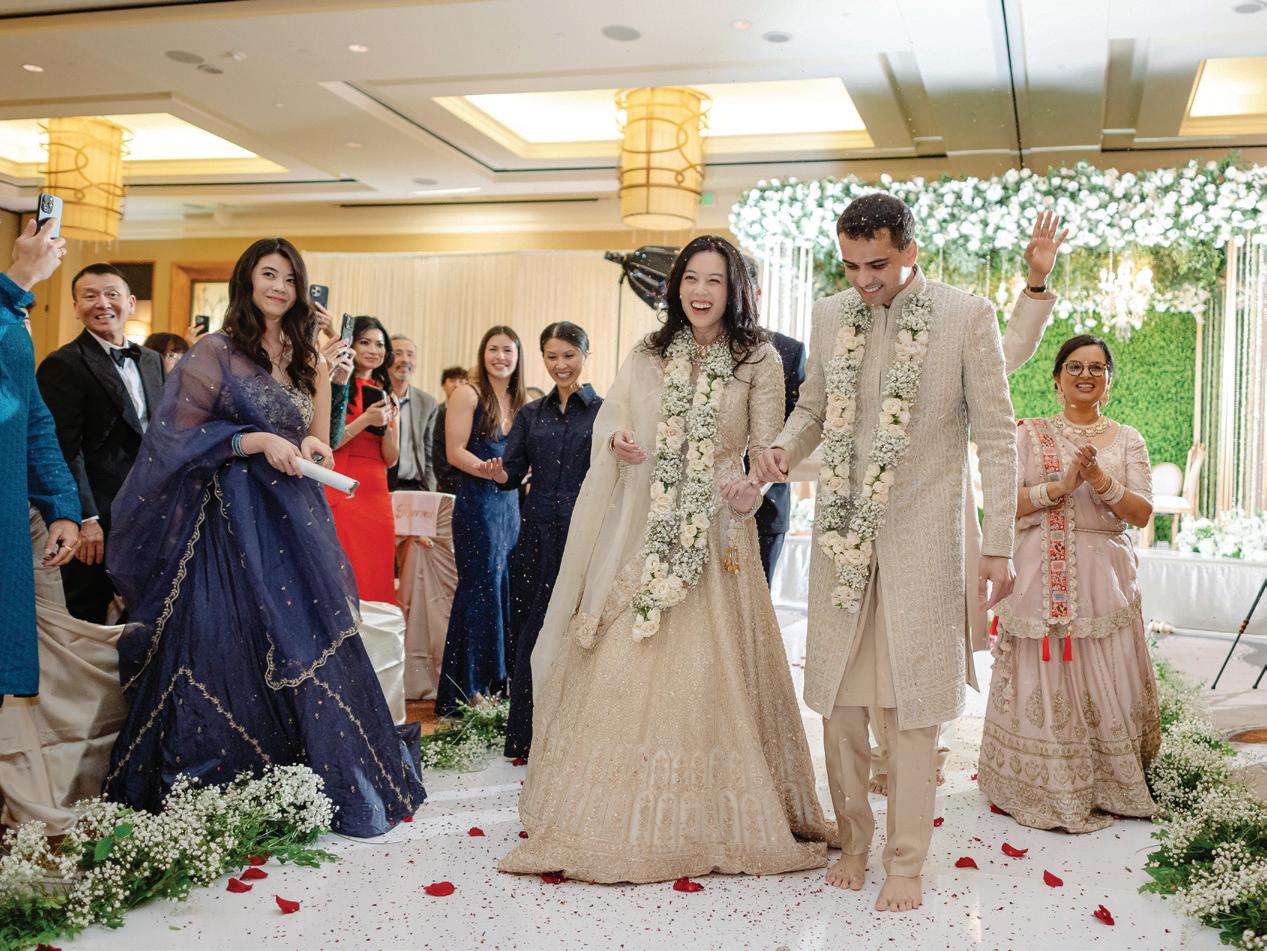
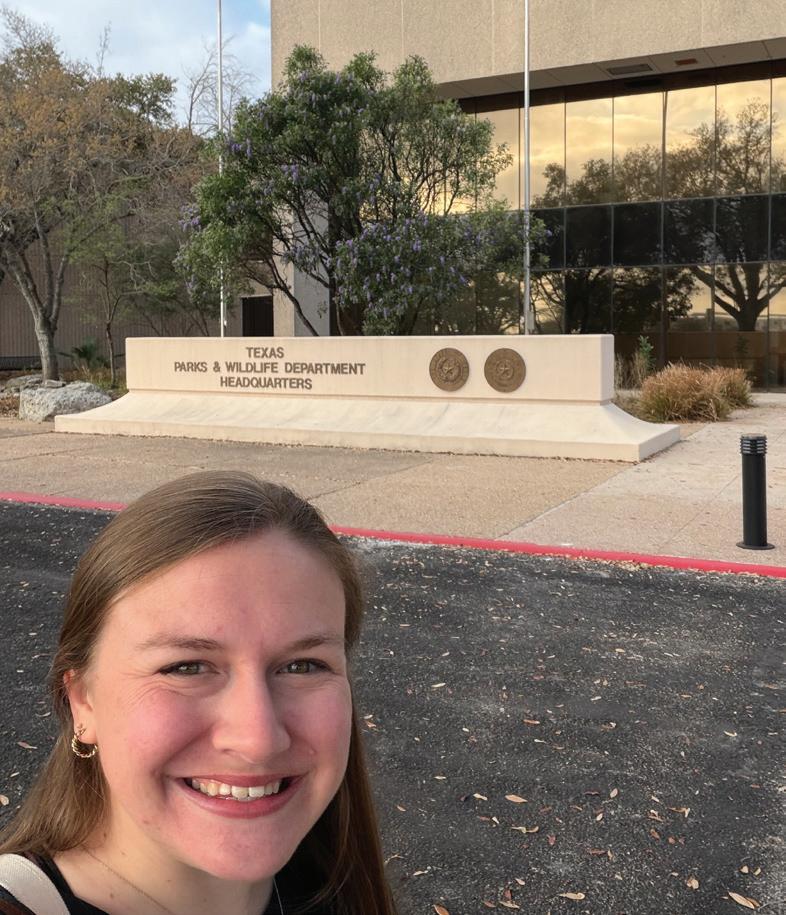
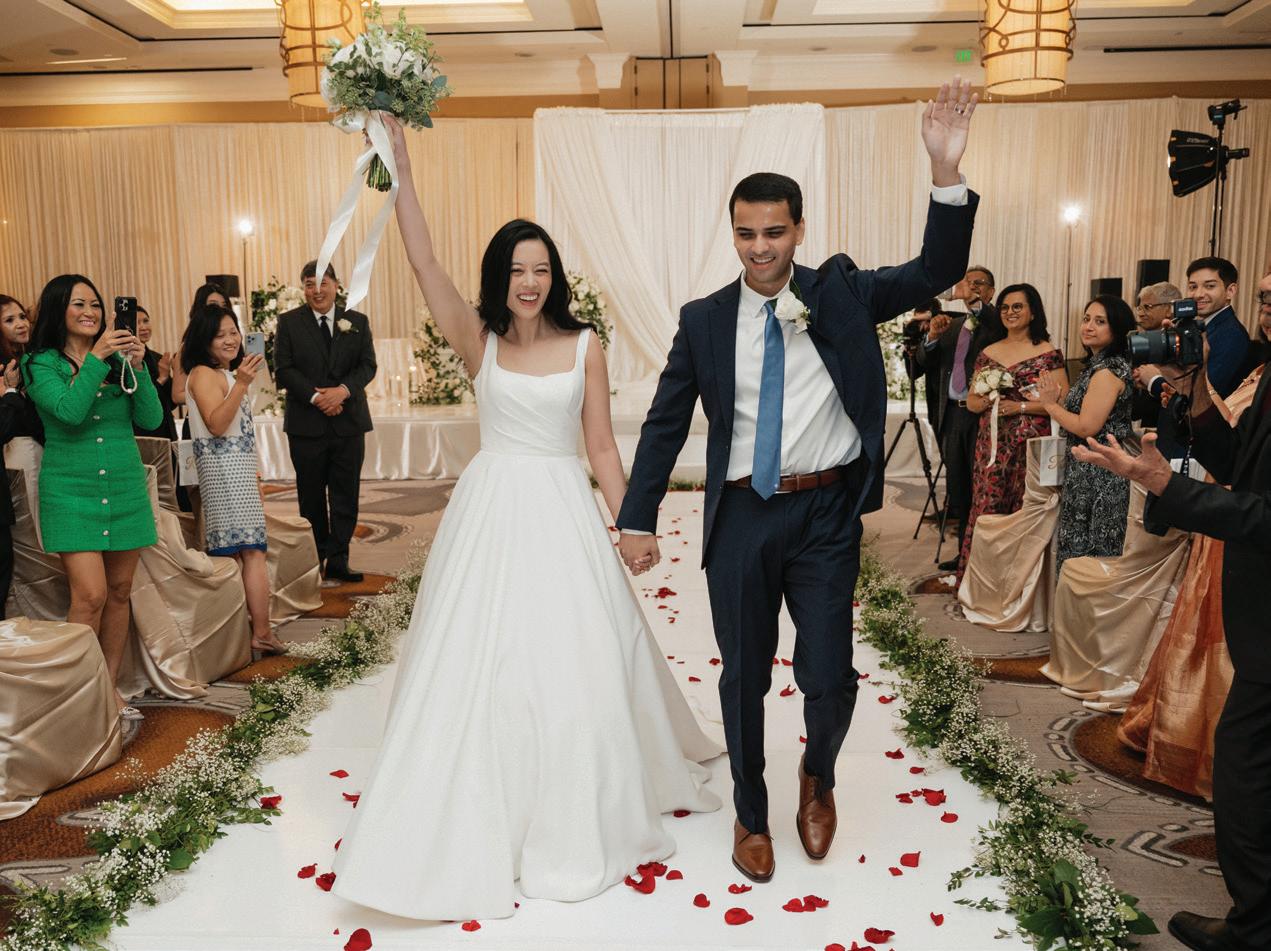
1.
Class of 2014 Parth Kalaria marries Emily Nguyen 2.
Class of 2014 Parth Kalaria marries Emily Nguyen 3. Class of 2015 Madelon Allen 4. Class of 2015 Alice Hope Davisson 5. Class of 2015 June, Calvin, Luther, Hope Davisson 6. Class of 2017 Jackie and Hartson William Fillmore 7.
of 2019 Will Porter
Texas BBQ! Bear and I are trying to retire, which is difficult as I love my work. We are spending more time in nature, reading a lot, traveling in a different way than before and with a very different wardrobe!
CLASS OF 2014
Madelon Allen : I’ve just started a new job in a new field this March, now serving as the Public Information Officer for State Parks at the Texas Parks & Wildlife Department! I work in the Press Office and serve as the media relations liaison for the State Parks Division and its 85+ incredible properties. I’ll be producing informational materials, developing communications plans, working crisis communications and media relations, and serving as an agency spokesperson. I’ll be moving to Austin this spring to work from TPWD headquarters! Parth Kalaria : I got married to Emily Nguyen during Thanksgiving weekend last year in Fort Worth. Emily has since joined me at Kalaria Law as Principal Tax Attorney, and we are now running the law firm together! We offer legal services for business and individuals, with our practice areas including corporate, data privacy, estate planning, healthcare, labor & employment, real estate, small business, startup & venture capital, and tax. We've worked with many members of the TVS community. Please feel free to visit kalarialaw.com or reach out if we can help!
CLASS
OF 2015
Alexa Antrim Davisson : Kyle ’14 and I welcomed our fourth child, Alice, in October. Her big brothers Calvin (4) and Luther (3), and big sister Jane (almost 2), are loving the newest addition to the family.
CLASS OF 2017
Hartson Fillmore: Olivia and I welcomed our son, Hartson William Fillmore III, at home on January 3, 2026. Mother and baby are in perfect health, and big sister Jackie is taking her duties very seriously. Miguel Vasquez : I have been hired by the Los Angeles Clippers as Xpression Designer and Operator.
CLASS OF 2019
Will Porter : 2026 is off to a fantastic start. I’m still working in commercial real estate with the same group, and we recently broke ground on Marine Central, an
adaptive reuse redevelopment of a historic building in Fort Worth’s Historic Northside near the Stockyards. Once complete, the building will feature ground-floor retail and 16 multifamily apartments on the second floor, with substantial completion anticipated in 2027. We also acquired an office building in downtown Fort Worth in June of last year, and since then, we’ve completed significant capital improvements and recently secured a new tenant, so things are continuing to move in a positive direction. Outside of work, I continue to play tennis regularly and am preparing to compete in my local USTA men’s spring league. My family and I also enjoy following the professional tour, and we’ve recently started attending tournaments together around the country. Most recently, we attended the BNP Paribas Open in Indian Wells, California, and next up on our calendar is the U.S. Men’s Clay Court Championship in Houston.
CLASS OF 2020
Caroline Phelps: I’m in my second year of English teaching in Spain and I’m loving it! I ran my first marathon in Sevilla, Spain in February and continue to pursue my passion of running outside of work.
CLASS OF 2022
Duncan Holloway is finishing his final semester at Texas Tech University, where he has been working with the Red Raiders football team through an undergraduate internship with the athletic training staff. He will continue his path in sports medicine next year as he begins graduate studies in athletic training.
CLASS OF 2025
AJ Deem : AJ and the University of Utah men's tennis team were in Fort Worth to play TCU on April 4. While Utah came up short, the match marked a special return to Cowtown for AJ. Hannah Timson : Hannah is finishing her freshman year at Texas Tech University, where she is already gaining hands-on experience with the Red Raiders football team through an undergraduate internship with the athletic training staff. She will continue her work with the program next year as part of a yearlong internship placement with the TTU football team. TVS athletic trainers Carrie Morrison and Ben Timson (Hannah’s dad) are proud

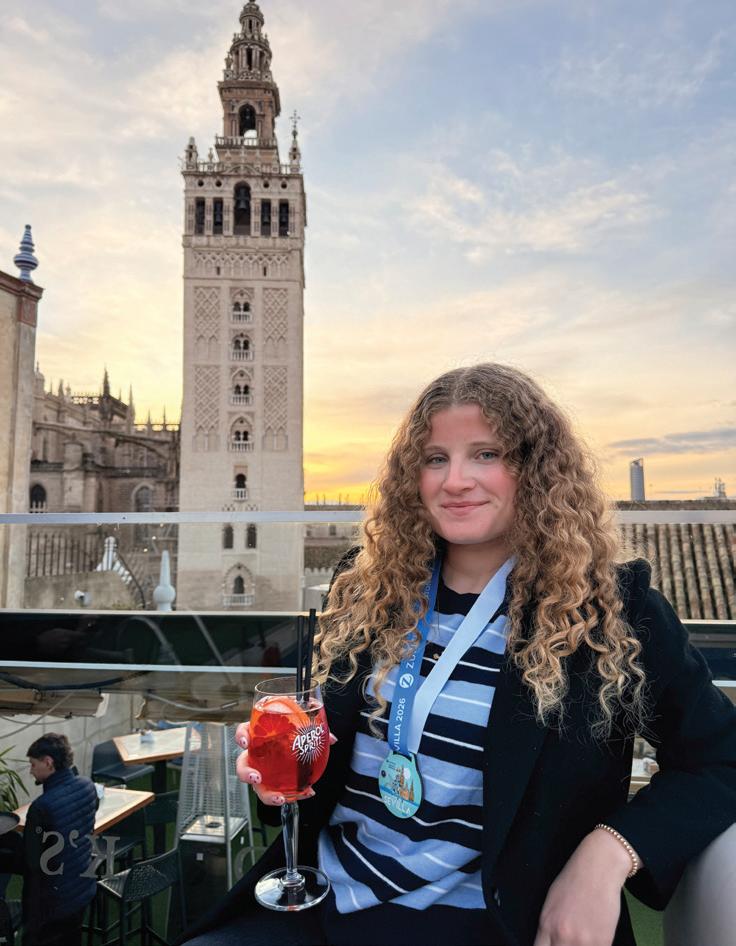
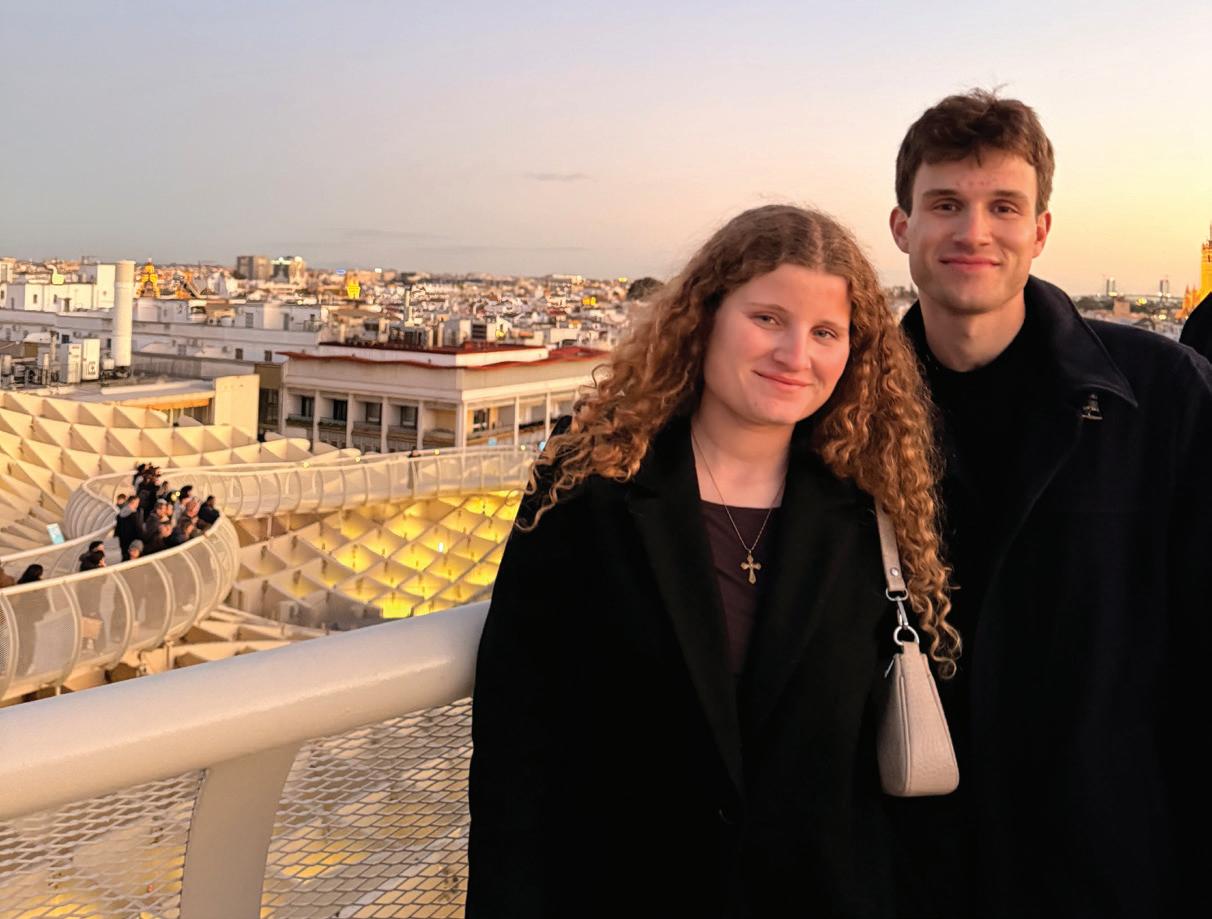
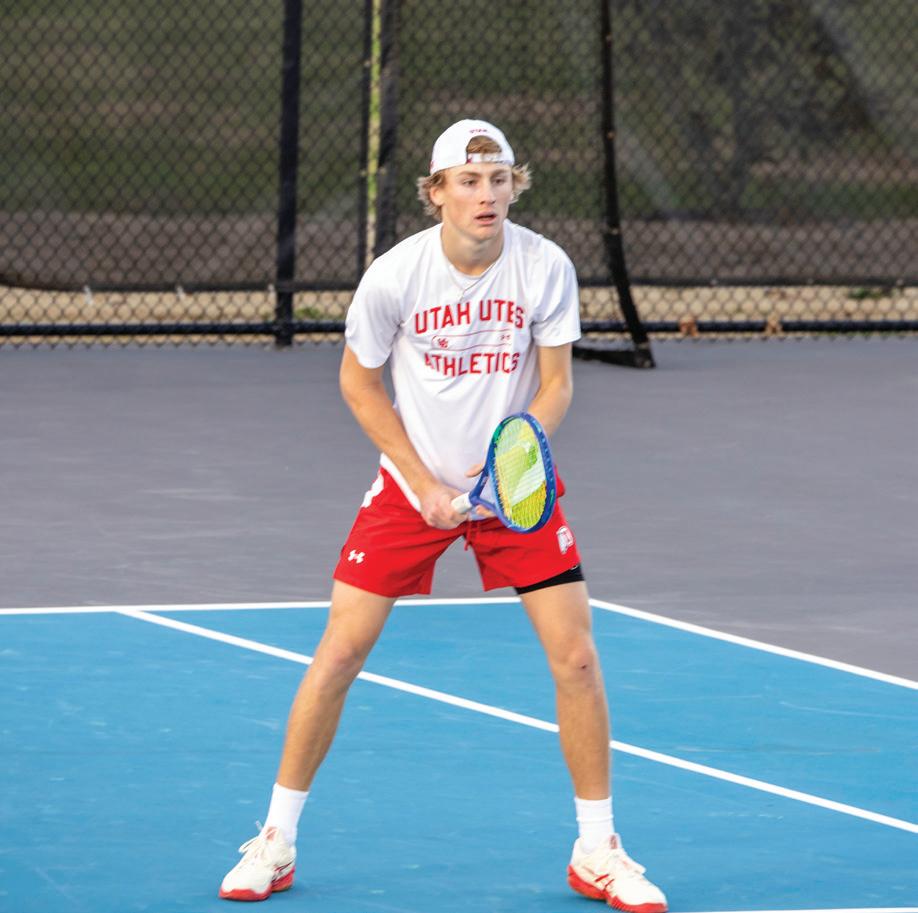
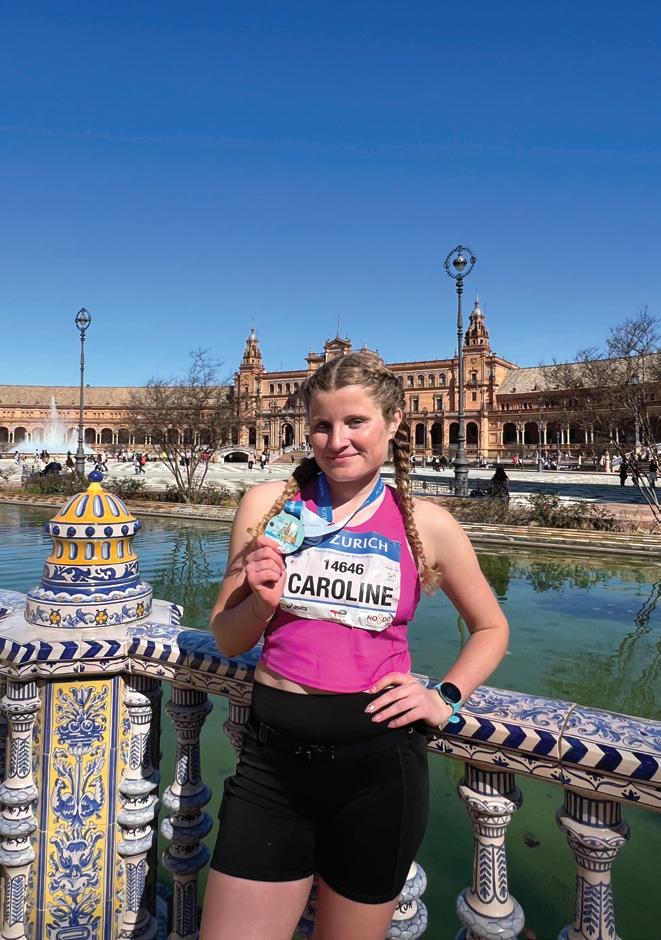
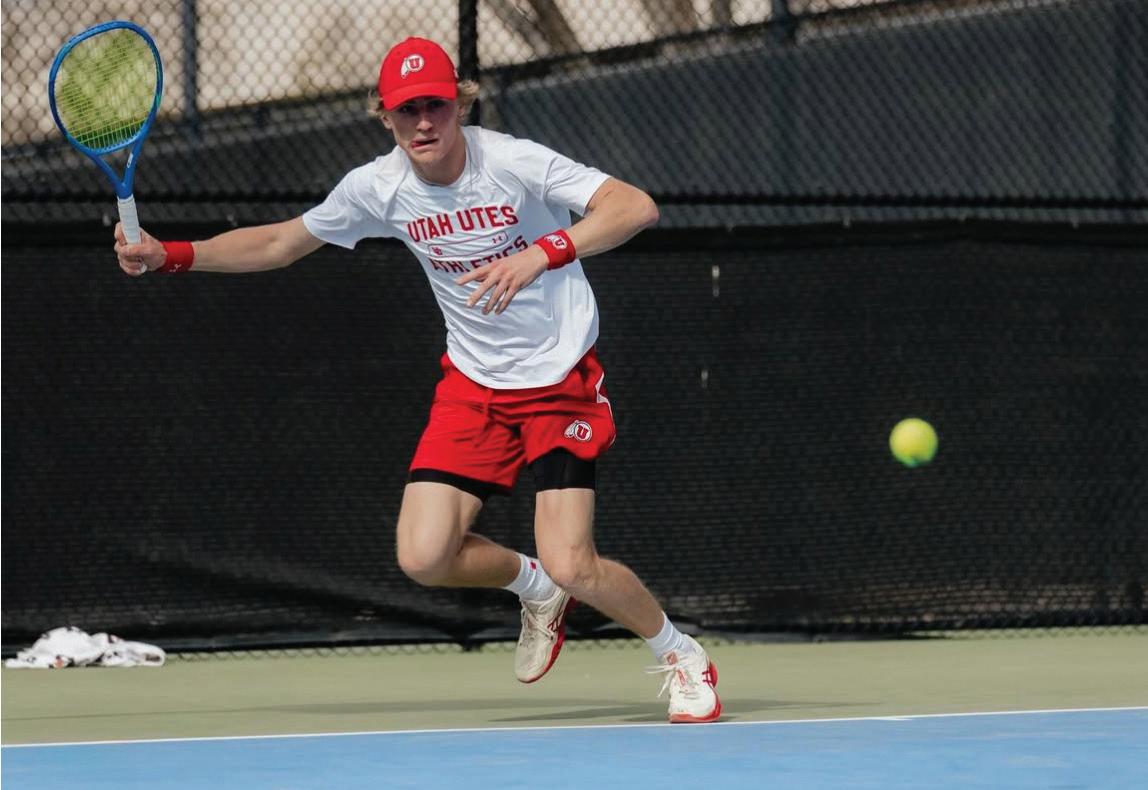
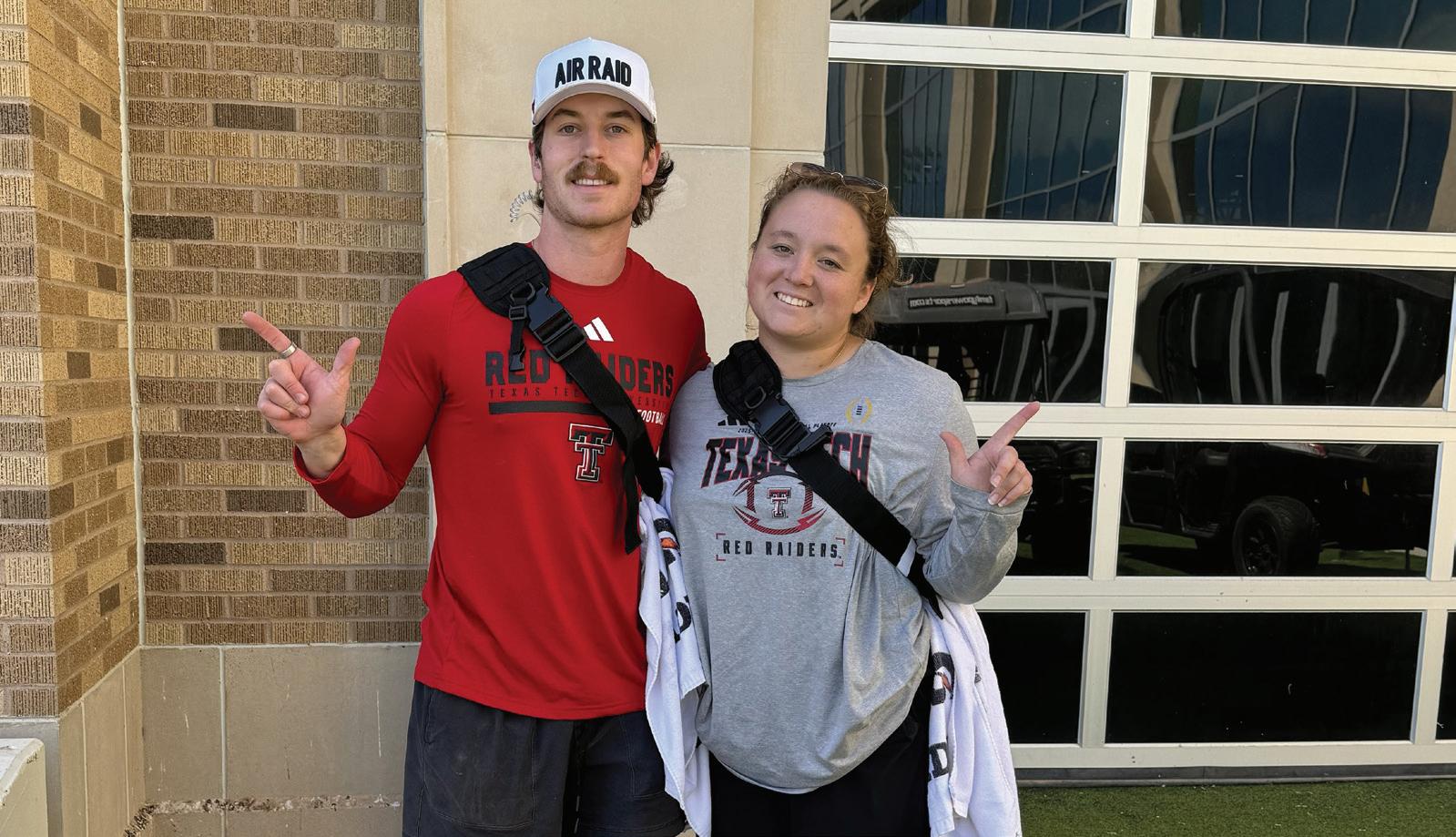
8.
Class of 2019 Will Porter 9. Class of 2020 Caroline Phelps in Spain 10. Class of 2020 Caroline Phelps Marathon 11. Class of 2020 Caroline Phelps 12. Class of 2025 AJ Deem on University of Utah's tennis team 13. Class of 2025 AJ Deem plays at Murfreesboro match Feb 2026 14. Class of 2025 Duncan Holloway '22 and Hannah Timson at Texas Tech Spring Football Scrimmage
that Hannah and Duncan Holloway ’22 (see his news above) are going on to have success at the next level after working with the TVS athletic training crew while at Trinity Valley.
Props to AJ’s mom and Hannah’s dad for sharing info and photos!
IN LOVING MEMORY: DONALD Mc LACHLAN
Don McLachlan, aka Mr. Mac, taught history and economics at Trinity Valley School from 1997 until 2016. Widely admired by his students, he left a lasting impression that continued to resonate well beyond their years at TVS. Ricky Hiler ’14 reflects on his time in McLachlan’s class, “He loved Led Zeppelin and integrating ‘real music’ into his history classes. But I will never forget how much he cared about his students and their successes in and out of the classroom.”
Ricky’s mother Sunnae Hiler, who knew Don from her earliest days at Trinity Valley and became part of his daily circuit while she was Upper School Administrative Assistant, perfectly captures the essence of this TVS legend when she recalls, “Don McLachlan was a Pink Floyd–loving, stuck-in-the-’60s, ‘make love, not war’ kind of gentle soul. He loved teaching economics, second only to his passion for biking and his treasured cats (Mr. Pink and Mr. Floyd). With a quiet but razorsharp sense of humor, he had a unique way of winning over his students by using lyrics from Pink Floyd songs to drive home his lesson of the day. I’m not sure who loved his classes more… Don or his students.”
Bill Shelton remembers his colleague with great fondness and the warmest regard. “Don was a wonderful teacher and a treasured friend. He knew the theories and realities of economics and taught them creatively to his students, often using the music of ABBA (and others) and stories of his two famous cats, Mr. Pink and Mr. Floyd, to bring macro- and microeconomics to life for his students. He and I shared a love for history, and his experiences as a certified guide of World War I battle sites in Europe entertained me in our frequent after-school conversations. He was remarkable in so many ways.”
Among James Scott’s countless memories of and stories about Don is the identifying timbre of his voice. “All students loved his Boston renderings, sometimes leaving
out the R in most words. Thus he taught about the initial communism of ‘Cal Maax.’ Students’ names tickled them when he said them: Margaret became Maah-grit. Caroline became Caah-o-lin. Karthik became Kaahthik. Students often talked about traffic issues just to get him to say: ‘Paahk ya caah.’"
Adds James, “The English invasion of the 60s was his favorite subject, as he loved every one of those groups, and their original posters covered the walls. (His original The Who was destroyed during a testing of the upstairs lab emergency shower could not be shut off and seven downstairs classrooms were annihilated.) He used these groups and their lyrics in encyclopedic detail throughout the year to teach the substance and facts of all the material needed for a 5 on the AP Euro, both MICRO and MACRO. His favorite jumping-off point was the fact that Mick Jagger was a graduate of that super-elite university, The London School of Economics.”
After leaving Fort Worth, Don and his wife Deborah moved to West Newbury, MA, where he lived until his passing last summer. Deb shared how much Don loved Trinity Valley and would have remained longer had his life circumstances allowed. Everyone at Trinity Valley wished the same.
Deb asked that this obituary be shared with the TVS family:
It is with great sadness that we announce the passing of Donald Edward McLachlan on Thursday, July 31, 2025. We are also full of gratitude and appreciation for his life. He was a good man with a great sense of humor who loved to regale those he knew with his insightful stories and experiences from a lifetime of travel.
Don grew up in Norwell, Massachusetts, graduating from Norwell High School in 1971. He was a good student who loved books and the outdoors. He could not wait to check out the latest edition of Field & Stream magazine. By his teens, Don, with his good friend Kenny, took to hunting, mostly duck and pheasant, sitting in the blinds near Neponset and traversing wetlands in the early morning hours across the South Shore. Don’s passion for hunting had at its core a love of nature. In fact, he was a true naturalist at heart. Right around this time, he got his first motorcycle and then
IN LOVING MEMORY OF DONALD M cLACHLAN
AKA MR. MAC
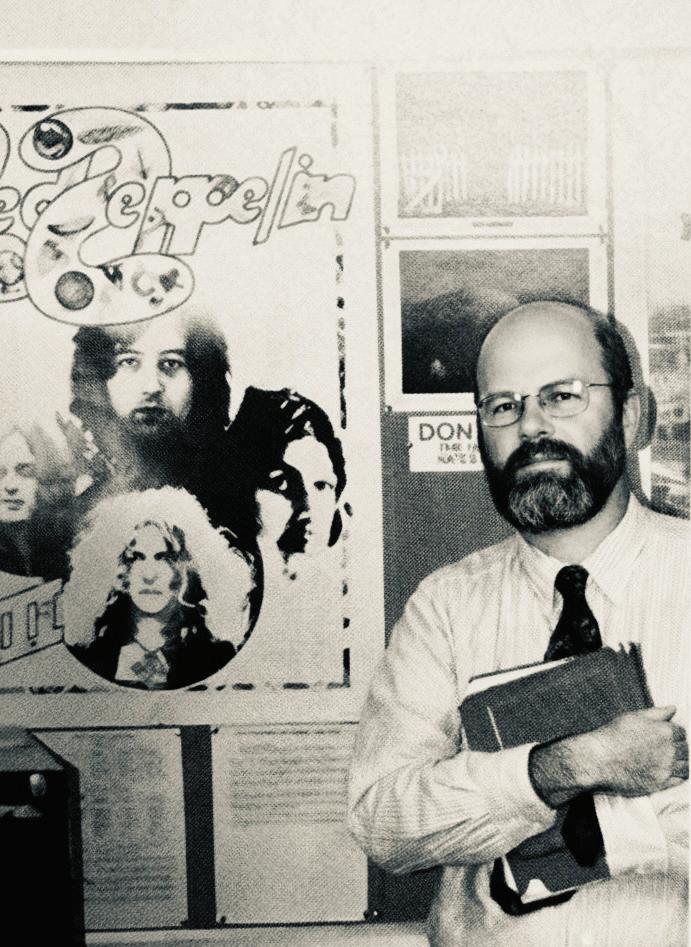
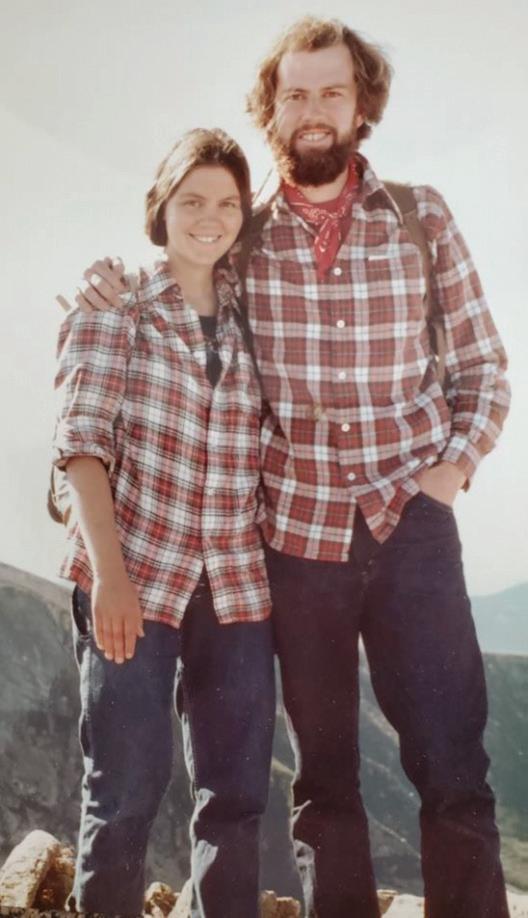

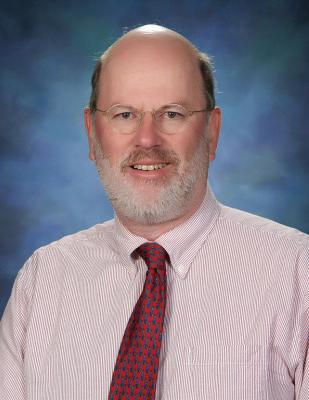
Sixth grade, 1964 Mount Katahdin, 1976
Debbie and Don McLachlan
Don loved to bike
Mr. Pink, aka Simon
Mr. Floyd, aka Blu
One of his final TVS school pics
Don with some of his teaching assistants, Led Zapplin
he was off. In a span of a few years, Don went from the clean-cut 1960s to the countercultural 1970s. His look changed to reflect his newfound freedom.
He had this wild shock of brown hair, sported a full beard, and stood 6 feet 2 inches tall. When he met Debbie in March of 1971 one Saturday night at the Rexham Beach parking lot in Marshfield, it was the perfect time for each of them to find their life partner. In a year, Debbie began studies in nursing at Quincy City Hospital and once her degree was completed, they were married in October 1975. And, just like that, they were off to see the world, touring all over the place on Don’s 750 Honda. The two of them hit the open road to experience life up close and in person. They were a team.
Then came more degrees. During the 1980s, Don earned a Bachelor of Science degree in resource economics followed by a Master of Public Administration degree at the University of New Hampshire. In between degrees, Don worked as an economist, first conducting studies for the New Hampshire Housing Authority, and later serving with the New England Fisheries Management Council. It was not long though before Don, the avid reader, music aficionado, and open-road traveler, would redirect his professional path toward teaching.
Completing his second masters, this time a Master of Arts in Teaching History degree from Boston College, Don went on to teach economics and history: for the first 10 years at the American Community School in Cobham, England, before moving stateside for the next 19 years at Trinity Valley School in Fort Worth, Texas. With his encyclopedic recall of music—beginning with the post-WWII British blues greats the Rolling Stones, the Animals, the Yardbirds, Led Zeppelin, and Pink Floyd, not to mention those American upstarts The Allman Brothers and the Doors—Don wove lyrics as a golden thread into his classroom instruction. A typical class would consist of Don playing music for his students from a particular time in history and having them analyze the lyrics as they related to supply-side economics, post-war working-class life, and, yes, all the way to what a drag it is getting old. It was not uncommon for Don to wend his way to the impact of ABBA on the Swedish gross domestic product. Don’s syncretic mind helped students to make all kinds of connections in his daily classroom encounters with them.
During their summers off, Debbie and Don continued to camp throughout Europe and the United States. Don served as an official guide for the Western Front Association, narrating for visitors the key details that took place at The Marne, The Somme, and Verdun, to name but a few of the more famous sites. They also visited American Civil War battlefields. Don’s passion for history and his interest in photography is captured in thousands of slides that he took and meticulously annotated during these visits. During this time, he also collected artifacts and frequented war museums, while building an impressive collection of history books. He was a true historian.
It is no surprise then that Don was that teacher who you had to have before graduating. He captivated students with his stories, the music of the historical periods, and most importantly what they taught about life. As Don’s teaching persona grew, he introduced his students to the nefarious, behind-the-scenes Mr. Pink and Mr. Floyd, Don and Debbie’s two Siamese cats, Simon and Blu, who were well known not to put up with any of the typical adolescent excuses, and who instead demanded accountability and responsibility. Don told his students that Mr. Pink and Mr. Floyd read all their papers. His students loved it!
Looking back on his teaching career, Don joked not long before his death that parents would come up to him and say, “Mr. Mac, whatever you’re doing in class with my kid, they are totally into it and that’s good by me.” Don famously coached his students to get results, with many of them over the years earning the highest scores on the International Baccalaureate and Advanced Placement exams. Don had his students use practice investment portfolios through Smart Money and guided them on how to make money in the markets. There are hundreds of students who learned their investment strategies from him. In his free time, Don was always cooking up social schemes that sought to operationalize local supply and demand, another resource economics activity. One was Prom Dates Ltd., where he matched his students so that every student who wanted to go to the prom could. After school, Don was proud to serve as the cycling coach for students at Trinity Valley. He continued to cycle for years after his teaching career had ended. Don likewise remained an active student himself, travelling
back to England for summer coursework; in 2006, he took an International Political Economy course at the London School of Economics, and in 2014, he completed Secrets and Spies: Modern Espionage and Intelligence at King’s College.
Over the years, Don, the shrewd Scotsman, meanwhile invested wisely himself. Upon retirement, he and Debbie relocated to West Newbury, Massachusetts, where for the past nine years he would take daily walks in the woods, on trails and unmarked paths, for hours to observe nature up close. Behind their townhouse, Don and Debbie fed the local deer who have come to rely on them during the cold winter months. One mama deer was known to show up with her fawns and look up to the window until she spied Don. She knew he was the peanut giver.
Don leaves behind his wife Debbie. Anyone who came to know them quickly realized that they are kindred spirits, even occasionally putting on matching outfits to convey to others their true inner connection in an outer kind of way. They knew each other since March 1971—a span of over 54 years, and they were married for 50 of them. Throughout this time, they shared their travels together, enjoying a good pint and frequent gatherings with their friends. They were bookends: Debbie managed the healthcare, of course, while Don managed the finances. Debbie, the painter. Don, the hiker. Debbie, the gourmet cook. Don, the enthusiastic cyclist. But they were so much more than that. Don would drive around with Debbie to take in the sights of the North Shore and nearby New Hampshire and Maine. They enjoyed a great meal out and would gladly
meet others, even after the pandemic, to try one of their favorite local restaurants. They collected friends along their journey together and were a true team in every sense of the word. Those fortunate to have them as friends understood this special connection that they shared. It was there from the beginning.
Don is the beloved son of Marie (McIntyre) McLachlan, who spent her professional life traveling extensively throughout the country as a clothing buyer for a large retail department store in New York City. Don’s father, Campbell Cowan McLachlan, was a gifted footballer, qualifying in his younger days for the U.S. Olympics team. He passed when Don was a senior in high school. Don held dual citizenship in the United Kingdom and the United States, a legacy through Don’s father, who grew up in Scotland before emigrating to America.
Don leaves behind his first cousin, Marie, her husband, Mark Walsh, and their daughters, Lindsay and Allyson of North Augusta, South Carolina. Don‘s sistersand brothers-in-law are Kathie and Hugh Collins of Hingham, Tom and Jennifer O’Toole of Wenham, and John and Lisa O’Toole of Chicago. Don was also the proud uncle of Jarrod, Brian, Taylor, Austin, Ashley, A.J., Clare, and Catherine. He was also great uncle to Anna, Ceci, Will, Lily, and Gigi.
Please take a moment and think of Don by raising a glass, offering some food in the colder seasons to wild animals, or taking a long nature walk.
Don was truly one of a kind!
May his soul rest in peace.
TVS
TRINITY VALLEY SCHOOL
7500 Dutch Branch Road Fort Worth, TX 76132-4110
RETURN SERVICE REQUESTED
TO PARENTS OF ALUMNI: If this magazine is addressed to a TVS alumnus/a who no longer uses your home as a permanent address, please e-mail his or her address to hansend@tvs.org
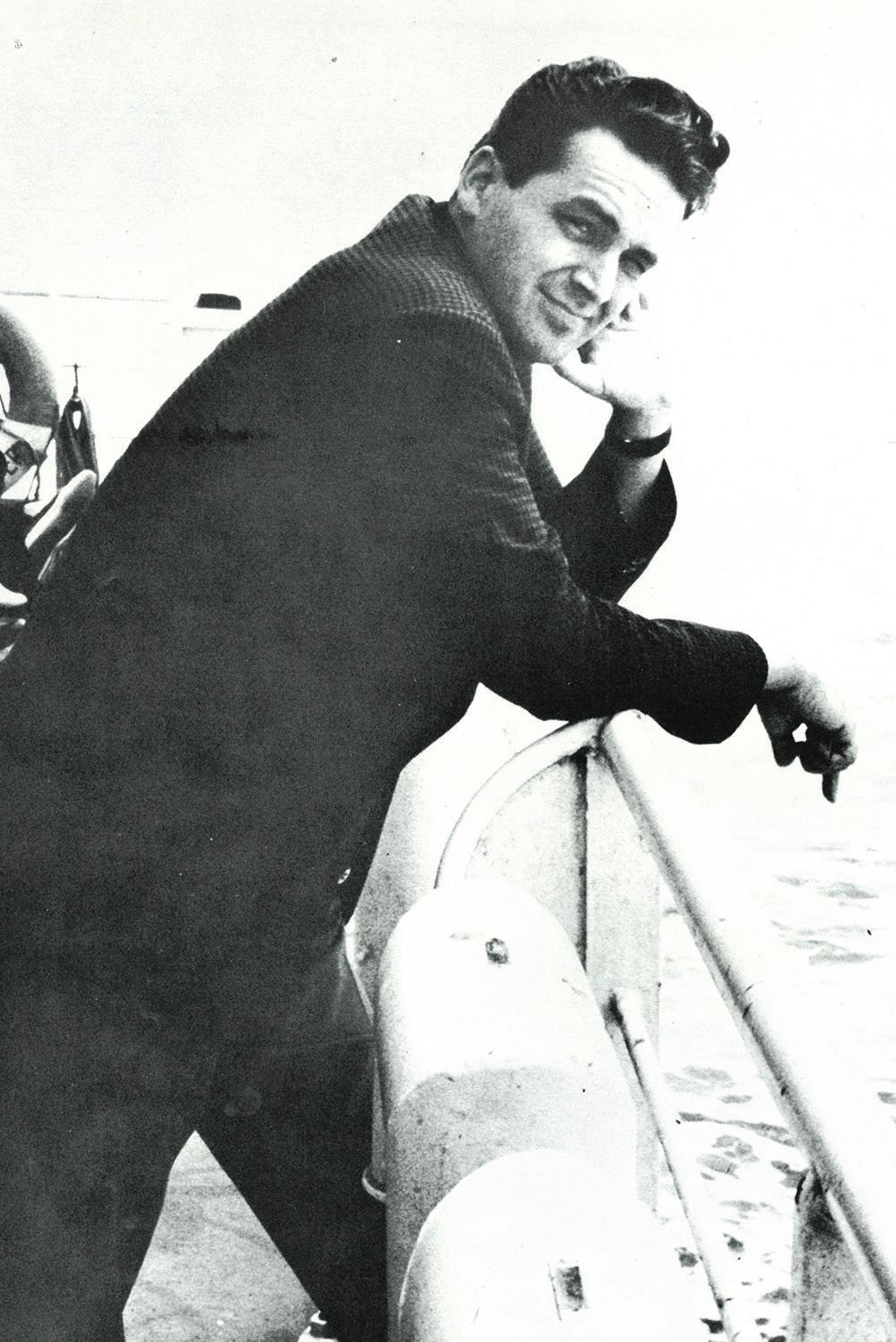
WHAT BEGAN IN SEPTEMBER 1959 with six 10-year-old boys and a handful of committed educators has grown into a vibrant community rooted in purpose. In a modest, abandoned building—without air conditioning or modern comforts— Stephen Seleny imagined something more: an education that would challenge both mind and character. From that conviction emerged a mission that continues to guide us today: the pursuit of Fine Scholarship, Wide Interests, Intelligent Citizenship, and Moral and Spiritual Growth.
The stories in this edition carry that founding spirit forward. They reveal the throughlines between past and present— the same courage, curiosity, and belief in young people that shaped our earliest days now lived out daily in our classrooms, studios, and fields. As we look ahead to a year of thoughtful strategic planning, these reflections offer something steady and true. They remind us that our future is not a departure from who we’ve been, but an unfolding of it—grounded in purpose, inspired by possibility, and sustained by a community that continues to grow with intention and heart.
Founding Headmaster Stephen Seleny