Vision for Learning

Vision
To be the leader in boys’ education and in the formation of young Men for Others.
Our vision is enduring and declares our aspiration as a College. It serves as the standard against which we consider our decisions and actions. Inspired by the Spirit and proactively responding to current realities and hope-filled futures, we are called to faithfulness, transformation and the formation of young men, as a Catholic School in the Edmund Rice tradition.
Mission
To offer innovative learning opportunities in a safe and nurturing environment which empowers young men to realise their potential.
As a Catholic School we are called to live out a message of care and inclusion. In partnership with parents, we hold high expectations for the young men in our care and seek to provide a breadth of learning opportunities in a safe and nurturing environment. We will enable academic growth, pride in their College and a commitment to serve others.
TC Spirit
The TC Spirit is widely acknowledged and celebrated as a unique and very special part of our College community. The College’s five Spirit ambitions give structure to the Vision for Learning.
1.
SPIRIT OF FAITH
To be a proud faith community where Gospel values are known, lived and celebrated.
2.
SPIRIT OF EXCELLENCE
To provide engaging teaching and learning practices that support wellbeing and inspire personal excellence among students.
4. SPIRIT OF COMMUNITY
To be an inclusive and welcoming community that supports the wellbeing and learning of every student.
3. SPIRIT OF SERVICE
To form young men with the TC Spirit who are authentic, active and outstanding role models in their outreach.
5. SPIRIT OF STEWARDSHIP
To commit to being accessible and building a sustainable future.
What is the Vision for Learning?
The Vision for Learning is our guiding philosophy, shaping the teaching, curriculum and culture of Trinity College. This document has been created in collaboration with members of the Trinity College community, including our staff, students and parents.
The Vision for Learning logo has been created to reflect the Trinity College Torch of Learning. The Torch of Learning is lit at significant school events and represents our commitment to providing high quality education and fostering a lifelong love of learning.

“It is with great pride that I introduce our new Vision for Learning. This vision presents our ongoing commitment to providing an effective, engaging and holistic learning journey for every student. It outlines an agreed set of expectations and responsibilities that will frame the teaching and learning process and act as a catalyst for challenge and success. Our Vision for Learning reflects a continuous learning journey, where the range of opportunities provided, and the diverse experiences of our students continually build upon and enrich their learning. Importantly, this Vision for Learning speaks to our College Mission; to offer innovative learning opportunities in a safe and nurturing environment which empowers our young men to realise their potential.”
Mr Darren O’Neill Principal “For me, a Vision for Learning provides a unified set of values and beliefs for staff, teachers and parents that clearly articulates our goals for both teaching and learning. It is a reference point as well as potentially being a narrative for change. It must suit our context, be ‘boy/young man-focused’ and have the understanding that every Trinity College student has the ability to learn.”
Mr Tim Hince Deputy Principal – Learning and Innovation
“The Vision for Learning represents our unwavering commitment to providing an enriching and fulfilling learning journey. This vision highlights the proactive steps we will take as a College to ensure everyone experiences this journey. Through close collaboration with staff, parents and students, I have witnessed this document evolve, reflecting the core values of our community. The actions we have pledged are grounded in research and innovation, and I am excited to see this Vision for Learning come to life at Trinity College.”
Ms Tahlia Peacham Coordinator of Professional Practice
A Learning Journey
At Trinity College, we work together to provide all students with high-quality education within a faith-filled, nurturing and safe learning environment. With Christ at the heart of our practice, we design our programs to enhance the academic skills, spiritual growth and emotional wellbeing of every student. Our Vision for Learning is a continuous journey, where the diverse experiences of our students build upon and enrich their previous education. At each stage of the learning journey, we outline three commitments we strive to meet in the formation of young men.
THE THREE COMMITMENTS:
1. RELATIONSHIPS PERSONAL GROWTH 2. LIFELONG LEARNING
We build respectful and compassionate relationships that reflect our shared values, creating a strong sense of belonging and connection across our school community.
We support each student’s journey of personal growth, encouraging them to develop confidence, character and a commitment to making a positive contribution to the world.
3.
We nurture curiosity and resilience in every student, helping them become confident learners who continue to grow and adapt throughout life.

A TC Learner...
• is respectful, resilient, reflective and a Man for Others
• is passionate and focused on his learning journey, motivated in pursuing his goals while remaining humble, open-minded and fair in his decisionmaking and interactions with others
• supports himself and his brothers on their individual journeys, demonstrating resilience, respect and resourcefulness
• leads with curiosity, approaches challenges with vigour and reflects on his efforts to build efficiency as a lifelong learner
• inspires others by asking questions, courageously seeking knowledge and respectfully engaging with the community
• values holistic education, is motivated, engaged and inquisitive, striving to become a resilient, compassionate, responsible and empathetic member of society who upholds Gospel values
• is excited to learn, open to ideas and understands how to maximise his learning potential
• is empathetic, confident and curious, engaging in critical thinking to become a lifelong learner
• is humble, engaged and respectful, demonstrating resilience and creative critical thinking as a true Man for Others
• is well-rounded, prepared spiritually, physically and emotionally for any challenge he may face throughout his life
• is a leader in the community, with a strong sense of self and independence, engaged and respectful as a critical thinker
• is curious, adaptable and resilient, inspiring personal excellence and embodying the spirit of a Man for Others.
JUNIOR SCHOOL
Years
4 – 6
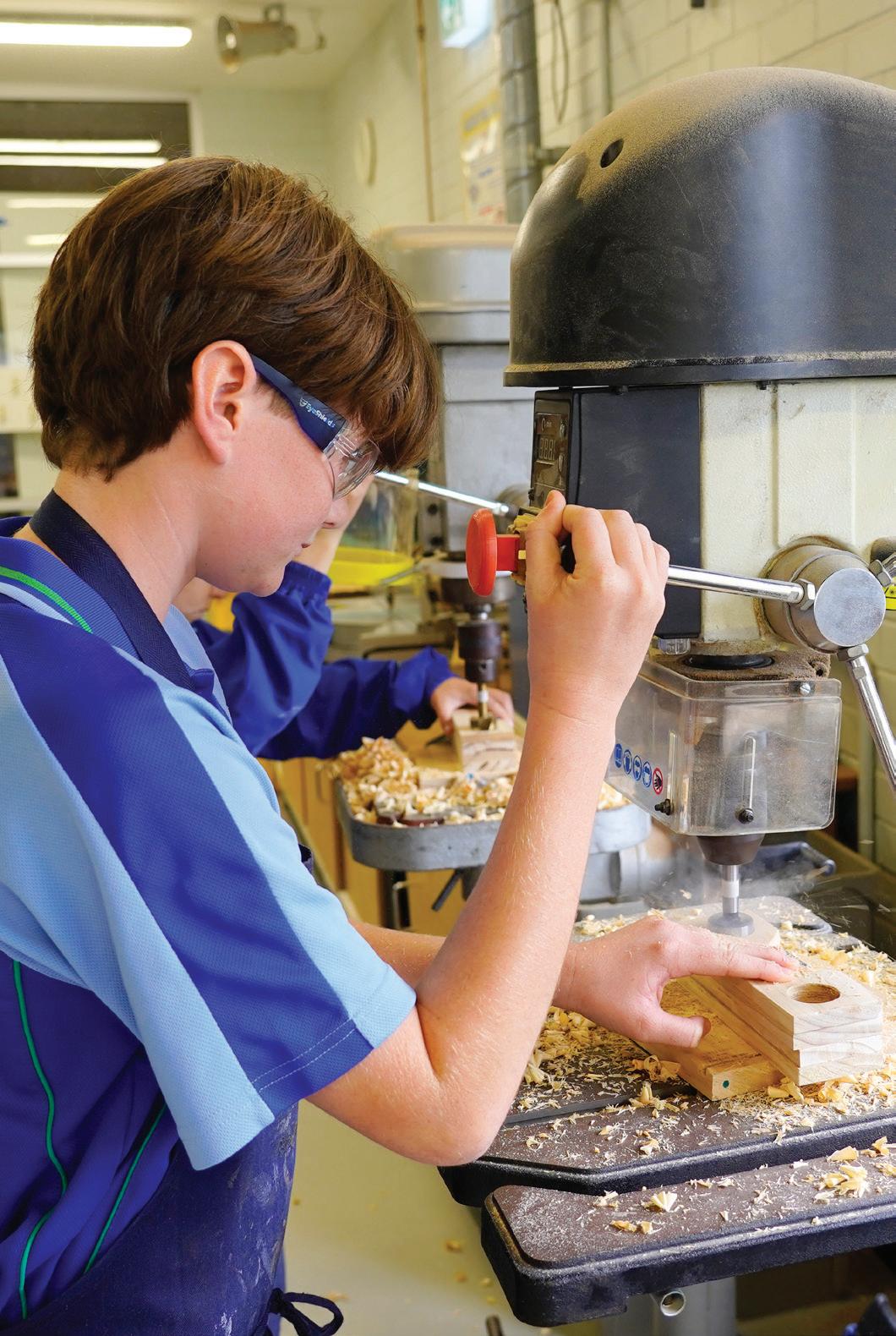
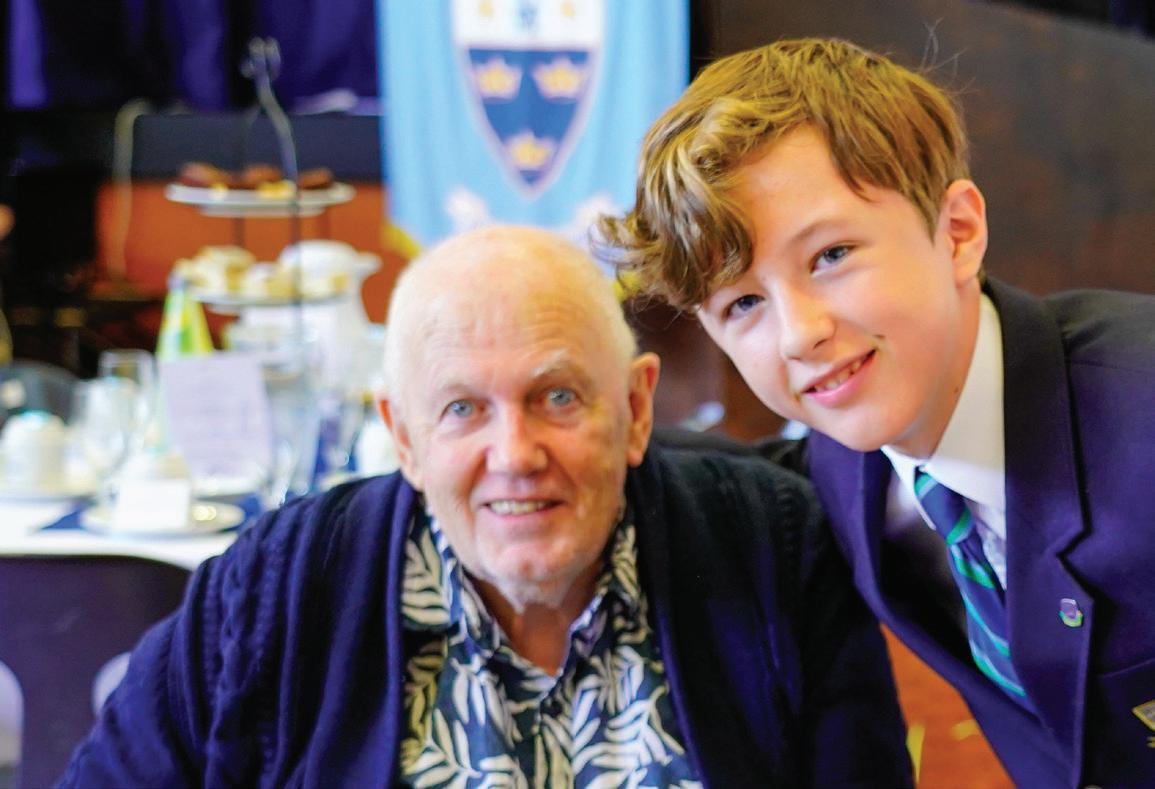
From the moment our Junior School students embark on their Trinity College journey, we foster their social, cognitive and physical growth in carefully scaffolded ways.
1. RELATIONSHIPS
Students receive high-quality, Christcentred pastoral care, encouraging them to thrive in a supportive and positive learning environment. Each student is supported as an individual.
2. PERSONAL GROWTH
Students gain a sense of voice, build friendships, work together and share perspectives.
3. LIFELONG LEARNING
Students develop a variety of skills, achieving success individually. They engage in collaboration, and a range of social, transitional, essential and ethical technological skills.



LOWER MIDDLE SCHOOL
Years
7 – 8


As they transition into high school, our students begin to cultivate a sense of responsibility and harness their skills within a dynamic and rapidly evolving learning environment.
1. RELATIONSHIPS
Students thrive in a Christ-centred environment with consistent structures and clear expectations, feeling safe and confident to explore and express their emerging sense of purpose.
2. PERSONAL GROWTH
Students continue to develop effective social skills, enabling them to recognise, describe and appropriately regulate emotions, empathise with peers and build respectful relationships.
3. LIFELONG LEARNING
Students are enthusiastic, inquisitive and empowered to learn, engaging in a variety of educational experiences.


UPPER MIDDLE SCHOOL
Years
9 – 10
Equipped with the essential knowledge and skills, students make informed decisions about their future, focusing on the cognitive and social skills necessary for excelling in senior schooling and beyond.
1. RELATIONSHIPS
Students recognise the influence God has in their lives. Sharing their gifts with the community is essential to their development, showing respect for self, others and society.
2. PERSONAL GROWTH
Students are self-motivated and proficient in addressing their own wellbeing. They take pride in the College community, seeking ways to improve it through student voice and leadership opportunities, and by being role models for others.
3. LIFELONG LEARNING
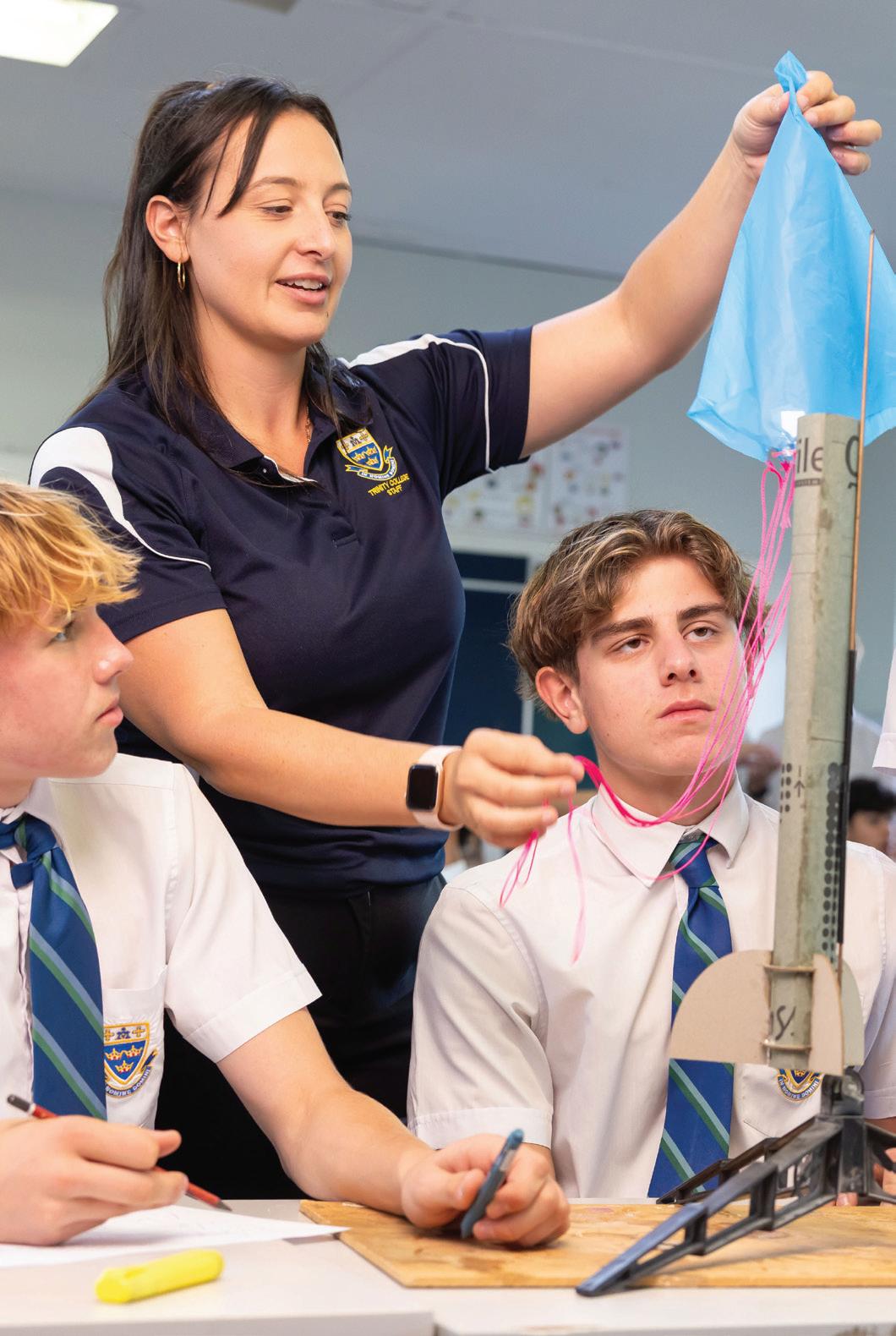
Students develop curiosity and question different aspects of the ever-changing world, spurring a desire to engage and learn. They take ownership of their learning, demonstrating autonomy and independence in building their knowledge and engaging with the curriculum to enhance their personal strengths.




SENIOR SCHOOL
Years
11 – 12
In their final years at Trinity College, our Senior students strive for excellence in all areas of learning, preparing them for the demands and exciting challenges of life beyond school.
1. RELATIONSHIPS
Students are leaders in Christ’s image, setting a positive example in all facets of their lives. They use their voice for the common good, role model leadership in and out of the College community and demonstrate personal excellence.
2. PERSONAL GROWTH
Students demonstrate respect in their day-to-day lives, guided by an internal moral compass. They show this respect at home, at College and in their surroundings, embodying the principle of being Men for Others.
3. LIFELONG LEARNING
Students are self-disciplined, critical thinkers and are well-prepared for a lifelong love of learning.

Learning Expectations
Students at Trinity College will be held to a high standard in all lessons and in their interactions with other members of the College community. Teachers may adapt lessons to suit the nature and requirements of their subject areas, particularly in practical subjects such as Physical Education and Design & Technology. While the following expectations guide student behaviour and engagement across all learning environments, it is understood that how they are applied may vary depending on the context of each subject.
Beginning the Lesson
• Arrive on time for your lesson, with all necessary resources and equipment.
• Ensure any unacceptable technology or devices (such as phones and headphones) are stored in your locker.
• Line up outside the classroom, ready to enter. Ensure you are neatly and respectfully presented.
• When you enter the classroom, do so politely and stand behind your chair. When you are invited, greet your teacher before taking your seat.
• Arrange your resources and equipment on your desk, ready to commence the lesson.
During the Lesson
• Listen attentively to your teacher’s instructions, ensuring you meet all lesson goals and expectations.
• Actively contribute to group or class discussions.
• Complete all set work as outlined, taking note of the standards and expectations of your teacher.
• Put your personal best into all work and assessments which you complete.
• Reflect on your learning, setting appropriate goals as needed.
• Engage with your peers and teacher in a respectful and collaborative manner.
• Ask any clarifying questions by raising your hand and waiting for your teacher to answer them.
• Use technology appropriately and only when allowed by your teacher.
• Respect each other’s personal space and property.
Ending the Lesson
• Clarify any expectations regarding home learning or study to be completed. Make a note of this in your diary.
• Pack up neatly and appropriately when directed by your teacher.
Tuck your chair in. Collect your belongings.
• Stand behind your desk and positively farewell your teacher and peers.
• Thank your teacher for the lesson.
• Leave only when directed by your teacher.
The TC Standards
As a TC Learner, students are expected to uphold high standards in all that they do within our College community. The following are The TC Standards – a student’s pledge to be an upstanding and well-regarded member of our College.
Come to all lessons prepared to learn. This means bringing the correct resources and equipment and having a proactive attitude towards all lessons.
Show respect in your relationships with members of the TC community. This applies to your interactions with your peers, teachers, coaches and any other members of staff.
Put your personal best into all you do at Trinity. This doesn’t necessarily mean you are the most academic, athletic or musically gifted student, but it does mean you will always try your best.
Show up as the best version of yourself. All students are expected to adhere to the uniform and presentation standards in place and should show pride in the way they present themselves. This applies in all situations where you represent Trinity College.
Engage with and contribute to all College activities. This applies to both classroom and external activities in which you are invited to participate.
Be a champion for others. Wherever possible, you should show consideration and support for your TC brothers.
Take pride in our campus. When you see something that is out of place, whether that be in regard to rubbish or interactions with others, take the initiative to make it right.
Practise resilience and a strong work ethic. Approach all challenges with a positive mindset; it is okay to make mistakes, as long as you learn from them.
Show kindness, understanding and empathy. As per the Catholic teachings of love and charity, show compassion in all that you do at TC.
Know that you can ask for help. When you or your peers are struggling, take the time to consider how you can address and prioritise your mental and emotional health and wellbeing. It’s okay to speak up!
Be a lifelong learner. It is important to be curious and to always seek out new knowledge and skills. Make the most of all educational opportunities on offer at TC.
Ensure all students feel respected, valued and included. Regardless of context and capabilities, every student at Trinity has the right to feel included and part of the College community.
The creation of this document would not have been possible without the efforts and contributions of members of the Teaching and Learning Committee and various College councils. This text was compiled and edited by Ms Tahlia Peacham and the Trinity College Marketing Department.
Considerations have been made of the following policies in formulating this Vision for Learning:
• The Australian Institute for Teaching and School Leadership (AITSL) Teacher Standards
• The Alice Springs (Mparntwe) Education Declaration
• The Catholic Education of Western Australia’s (CEWA) Vision for Learning
• Trinity College Strategic Plan –Towards 2030
• The Trinity College School Improvement Plan
• The Trinity College Evangelisation Plan
• The Edmund Rice Education Australia’s (EREA) Implementing Liberating Practice to Co-create a Better World
• Bishops Mandate 2009–2015 –CEWA