

In Nomine Domini - in the name of the Lord - calls us to our fundamental task; to enable each of our students to fully realise his spiritual, academic, social, cultural and athletic potential, thereby enabling him to become a force for good in society.

“And what does the Lord require of you, but to do justice, and to love kindness, and to walk humbly with your God.”
Micah 6:8
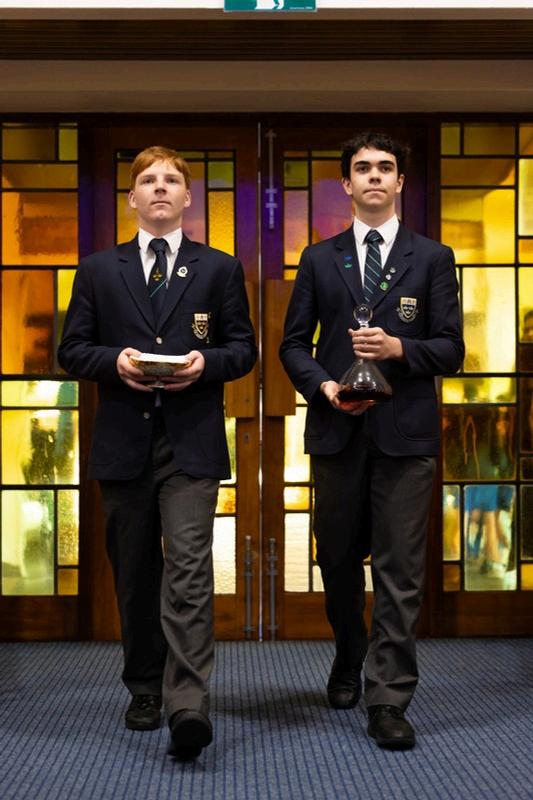

Trinity College’s rich history began in 1894, when Bishop Matthew Gibney and Brother Ambrose Treacy founded Christian Brothers’ College (CBC) at 1 St Georges Terrace in Perth. In 1962, staff and students relocated to the College’s present East Perth location, situated on the banks of the Swan River, and the school was renamed Trinity College Trinity College owes much of its current success to the tremendous work of the Christian Brothers, who modelled their life and work on that of their founder, Blessed Edmund Rice
Our motto, In Nomine Domini – In the Name of the Lord – calls us to our fundamental task; to enable each of our students to fully realise his spiritual, academic, social, cultural and athletic potential, thereby enabling him to become a force for good in society.
The motto In Nomine Domini is taken from Psalm 123: Adiutorium nostrum In Nomine Domini qui fecit coelum et terram – Our Help is in the name of the Lord who made Heaven and the earth.
The College Coat of Arms was formally approved by the College Council in 1962 The new Arms present in bold outline the three golden crowns upon the royal blue background as symbolic of the dedication of the College to the three Divine Persons of the Blessed Trinity, Father, Son and Holy Spirit The Crowns are arranged in the form of an equilateral triangle to emphasise the unity and equality of the Divine Persons. The Cross is the Cross of our salvation, the sign of a Christian School. While the Marian symbol signifies the devotion of the Order and its schools to the Blessed Mother of God. This symbol was taken from the arms of Bishop Gibney, Founder of Christian Brothers’ College, Terrace
To be the leader in boys’ education and in the formation of young Men for Others
To offer innovative learning opportunities in a safe and nurturing environment which empowers our young men to live out Gospel values and be followers of Christ in the modern world.
SPIRIT OF FAITH
SPIRIT OF EXCELLENCE
SPIRIT OF SERVICE
SPIRIT OF COMMUNITY
to be a proud faith community where gospel values are known, lived and celebrated.
to provide engaging teaching and learning practices that support wellbeing and inspire personal excellence amongst students to reach their full potential.
to form young men with the ‘TC Spirit’ who are authentic, active and outstanding role models in their outreach.
to be an inclusive and welcoming community that supports wellbeing and learning for every student
SPIRIT OF STEWARDSHIP
to seek a real commitment to providing accessibility for all and to building a sustainable future
To be “Men for Others ” The phrase “Men for Others” was used by Fr Pedro Arrupe, Superior General of the Jesuits, in an address to High School alumni at Valencia Spain in 1973. It was adopted by Trinity College to remind our students to live a life of service: a life where love is expressed more by deeds than by words, demonstrated through companionship with and compassion for those in need
Trinity College as a Catholic Community aspires to be a proud faith community where Gospel values are known, lived and celebrated, we do this by aspiring to reflect the Edmund Rice Touchstones in all we do
Faith Education needs to be the first priority in a Catholic school The College’s activities of pre-evangelisation, primary proclamation, catechesis and spiritual formation seek to ensure our young people have a personal encounter with Christ, develop an enduring relationship with God and the Church, and have a genuine engagement in Christian life College and class liturgies, school and class prayer, the College’s Retreat program, Christian Service and Immersion programs are of paramount significance

In exploring meaning and purpose in life, a Trinity learner is free to grow in their understanding of themselves, and their relatedness with God, others, Earth and creation, through experiences grounded in awe, contemplation, and action for justice and common good.
The four Edmund Rice Education Australia (EREA) Touchstones challenge the Trinity College community to strive for authenticity as a member of Edmund Rice Communities
Our Vision
Inclusive Community
A Catholic school in the Edmund Rice tradition:
• Provides pastoral care that nurtures the dignity of each person as uniquely reflecting the image of God;
•
•
•
•
Welcomes and values all members of the school community regardless of religion, race, ability, gender and sexual orientation
Works in partnership with the local Catholic community and Church in serving the broader mission of the whole Church;
Acknowledges the services and contribution of the Christian Brothers and works in partnership with Edmund Rice Ministries in furthering the Charism;
Acknowledges the traditional ownership and cultural heritage of Aboriginal and Torres Strait Islander peoples of Australia, and seeks to create safe places where cultural practise is respected and integrated
Present Practice
•
•
• Trinity College aspires to be a community that welcomes and celebrates diversity, responsive to each person’s aspirations and committed to the common good.
At Trinity College, inclusive education provides equity and consideration for those students from a variety of backgrounds and the Mary Rice Centre offers support both in the classroom and beyond for differently abled students
Relate closely with families in the building of partnerships based on faith and mutual respect which encourage family participation in the school’s mission and life
As a community, Trinity acknowledges the traditional ownership and cultural heritage of our First Nations people of Australia The College’s Reconciliation Plan (RAP) articulates our vision for reconciliation to enable each of our students to realise his spiritual, academic, social, cultural and sporting potential, and to assist him to become a man for others
• We aim to achieve this by celebrating First Nation students and families within our school community, alongside their cultures, histories, connections to Country, spirituality, stories, and traditions.
• Our First Nations students continue to perform at NAIDOC celebrations across Western Australian as well as key events on the Catholic calendar

Trinity College aspires to open hearts and minds through liberating teaching and learning experiences so that through critical reflection we are hope filled and free to build a better world.
A Catholic school in the Edmund Rice tradition:
•
•
Provides a holistic education integrating faith with culture and learning, while instilling an appreciation of the need to strive for the greater good of all society;
• Responds to Jesus’ message of liberation, creating learning environments where all can grow in confidence, agency and freedom.
•
Enables students to experience and value critical awareness of justice and peace issues through the curriculum, service and solidarity learning, environmental practices and the culture of the school.
Recognise the strengths, capacities and needs of each learner, celebrating success and achievement which enables the realisation of aspirations and pathways
• Vision for Learning - As a Catholic School we are called to live out a message of care and inclusion, enabling academic growth, pride in achievement and a commitment to serve others
• An integrated approach to curriculum planning, teaching and learning is a major emphasis within the Catholic education tradition, which calls for the integration of faith, life and culture Learning to integrate faith, life and culture will enable children and young adults to develop a Gospel vision of the Australian and global communities.
• An explicit formation program that is designed to build character formation and foster well being
• At Trinity College, Religious Education relates the knowledge and understanding of the Catholic faith to students’ real-life situations and experiences Religious Education presents Catholic beliefs and practices in the context of the Christian Promise of Salvation and the questions and aspirations of the human heart only God can satisfy completely. Religious Education staff are committed Catholics and give active Christian witness to Catholic beliefs..
• Our Spirits of Faith, Excellence, Service, Community and Stewardship are a daily reminder of how we should approach our teaching and development of the young men in the care of Trinity College.
•
Employ teaching staff who have a clear understanding and commitment to the Catholic ethos and are witnesses to the Gospel. Maintain the Catholic Identity of Trinity College by engaging staff in specific leadership formation programs.
To live the vision and mission of our College’s Vision for Learning



At Trinity College, we invite people into the story of Jesus and strive to make his message of love, compassion, justice, faith and peace a living reality within our community
A Catholic school in the Edmund Rice tradition:
• Lives and grows as a faith-sharing community by fostering personal relationships with God through Jesus Christ;
• Celebrates the life, death and resurrection of Jesus Christ, committed to the service of those in need;
• Nurtures and encourages the spiritual growth of each person through reflection, prayer, symbols, sacred stories, rituals and rite of passage;
• Provides religious education in line with Diocesan guidelines, mandated by the Bishops and faith formation experiences as fundamental components of a Catholic School curriculum;
•
Provides formation opportunities for its members in the mystery of God in all creation, the spirit of Jesus, the charism of Blessed Edmund Rice, the inspiration of the Christian Brothers, their own sacred story and their call to mission;
• Recognises and acts upon the central place of the Gospel commitment to the marginalised, through a preferential option for the poor
• Praying as a Faith Community - offering varied forms of prayerful experiences help students, staff and the community build a relationship with God to help live out the Gospel message of Jesus The College offers a number of opportunities to celebrate Mass and Liturgies. Whole School Masses, Senior School Cohort Masses, Junior School Masses and Friday 8.00am Community Mass. In addition, each day of the school year commences with prayer
• Retreats nurture and encourage the spiritual growth of each person through reflection, prayer, symbols, sacred stories, rituals and sacraments Staff involvement is important for each retreat as it evangelises and develops Christian witness.
• Christian Service - through experiences of prayer and active service students are invited to reflect on how the gospel message can have an impact on their daily lives Students across all year groups participate in Christian Service experiences Students and staff are offered additional Christian Service experiences through an array of opportunities such as Soup Patrol, Wheelchairs for Kids, and Thriive/Edmund Rice Camp for Kids.
•
Symbols and icons serve as a reminder of our commitment to Gospel values The Book of Intentions and Book of Remembrance in the College Chapel enable all members of our community to be active in prayer Icons such as our EREA touchstones and crucifixes are displayed in each classroom and in office spaces and remind us of the messages of faith, compassion, justice and peace. Honour boards in the College Chapel honour the Old Boys who lost their life in military service.
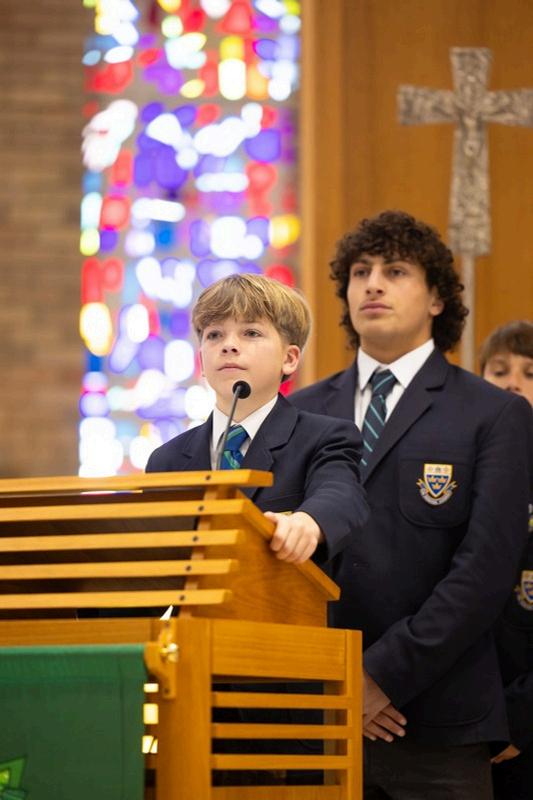
• Through ministerial roles students give witness to gospel values, this is evident in; Faith Prefects, Extraordinary Ministers of the Eucharist, Altar Servers, Cadre, Peer Ministers and Senior Mentors Student Leadership helps to create the faith community of Trinity College
Continue to offer formation, spirituality and retreat experiences as fundamental components in each person ’ s faith journey.


Trinity College is committed to justice and peace for all, grounded in a spirituality of action and reflection inspiring us to listen to, walk with and learn from all creation, especially those who experience powerlessness.
A Catholic school in the edmund Rice tradition:
• Develops a curriculum that integrates themes of justice and peace, underpinned by Catholic Social Teaching
• Adopts prophetic stances in the light of Gospel practices and is involved in advocacy for just causes
• Participates in service and solidarity learning programs in partnership with those on the margins.
• Learn from the First Nations people of Australia through truth telling, fostering local relationships and advocating for justice, equality and healing.
• To actively developing global partnerships and to promote an integral ecology.
•
•
•
Recognise we are are part of a global community and actively supports the development of all humanity.
Nurtures a culture of critical reflection and prayerful discernment in justice and peace issues.
Demonstate a deep reverence for the Earth as both God’s work and our home, working towards a sustainable and regenerative future.
•
Seeks to provide opportunities for involvement in immersion programs in which students and staff form relationships, work with and learn from those on the margins, leading to mutual transformation;
• As a Catholic school in the Edmund Rice tradition, Trinity develops a curriculum that integrates themes of justice and peace, underpinned by Catholic Social Teaching. The Religious Education Curriculum, particularly in senior years, introduces the concepts of Catholic Social Teaching and the role religion plays in society
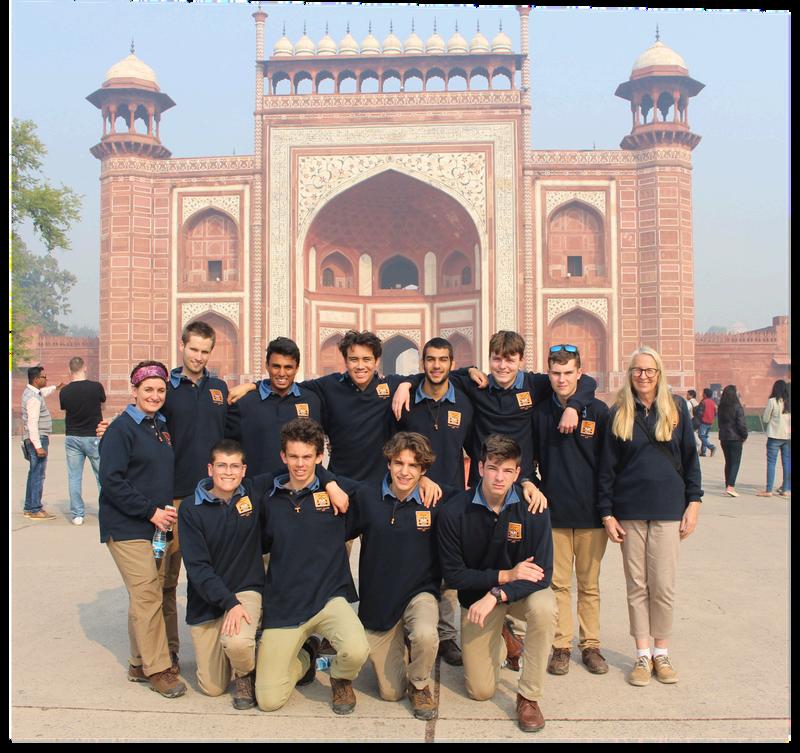
• Christian Service programs at each year level encourage students to identify the needs of others and to respond in practical ways to those needs Students are given opportunities to serve others by being placed with agencies which respond to the needs of people on the margins, whether they be younger students with special needs, elderly people, homeless people, refugees, or the environment
• Trinity College is committed to promoting an integral ecology through demonstrating a deep reverence for the earth as both God’s work and our home, promoting ecojustice and working towards a sustainable and regenerative future for all creation. Staff encourage students to recognise that its members are part of a global community and actively supports the development of all humanity Engaging with Caritas Australia’s Project Compassion resources allows staff and students to recognise these needs
• True to its traditions, Trinity endeavours to nurture a culture of critical reflection and prayerful discernment in justice and peace issues We are committed to justice and peace for all, grounded in a spirituality of action and reflection that calls us to stand in solidarity with those who are marginalised and the earth itself Promoting the College mantra, Men for Others
Develop young men into community leaders who act with compassion and a strong sense of justice

“Love cannot remain by itself - it has no meaning. Love has to be put into action, and that action is service.”
Mother Theresa

Vatican Council II, Gravissimum Educationis: Declaration on Christian Education (1965) http://www.vatican.va/archive/hist councils/ii vatican council/documents/vat-ii decl 19651028 gravissi- mumeducationis en.html
Pope Francis, Veritatis Gaudium: Apostolic Constitution on Ecclesiastical Universities and Faculties (2017 http://www vatican va/content/francesco/en/apost constitutions/documents/papa-francesco costituzi- oneap 20171208 veritatis-gaudium html
Pope Francis, Fratelli Tutti: Encyclical on Fraternity and Social Friendship (2020) http://www vatican va/content/francesco/en/encyclicals/documents/papa-francesco 20201003 enciclica-fratelli-tutti html
Religious Education in Schools (2009) http://www vatican va/roman curia/congregations/ccatheduc/documents/rc con ccatheduc doc 20090505 circ-insegn-relig en.html
Educating Today and Tomorrow: A Renewing Passion (2014) http://www.vatican.va/roman curia/congregations/ccatheduc/documents/rc con ccatheduc doc 20140407 educare-oggi-e-domani en.html
Catholic Education Commission of Western Australia, Professional Development Evangelisation Planning (2021)
Australian Catholic Bishops Conference, The Application of the Apostolic Constitution Ex Corde Ecclesiæ in Australia (2007) https://www catholic org au/acbc-media/downloads/ad-limina/bishops-1/handbook-1/2236-ex-corde-ecclesi- aeaustralia/file
Catholic Education Commission of Western Australia, Mandate 2009-2015 (2009) https://www cewa edu au/wpcontent/uploads/2018/01/Bishops-Mandate-2009-2015 pdf