
Tresco Times 2026 Yearbook

Page 1


OUR VIEWS ARE CLEAR

CORNWALL’S AWARD-WINNING SUPERYACHT SPECIALISTS

Based in Falmouth for over 35 years, Pendennis is one of the world’s leading shipyards, with the highest expertise in superyacht refit, build and restoration. Marala, a 59m motor yacht originally built in 1931, is the latest in a long line of classic rebuild projects to launch from Pendennis.

Marala off the Isles of Scilly, © Gareth Tibbs, Above & Below Imagery
Marala, ‘Rebuilt Yacht’ winner World Superyacht Awards 2023

Welcome to Tresco 2026

Each winter on Tresco is a time for reflection and renewal, though in its quiet months the island is anything but still. While mainland gardens appear to lie dormant, in Scilly life doesn’t rest for long and many varieties of plant life are already blooming and welcoming in the New Year.

In these few short months, a sense of energy and purpose moves through the islands, cottages are refreshed, roads mended and restaurant menus considered in anticipation of longer and brighter days to come. This annual rhythm of preparation and care speaks to the deep connection between the islands and those who live and work here.

This year, that rhythm was tested as Storm Goretti struck with hurricane force, carving a path through much of our forests and infrastructure. While the loss of so many trees has been deeply felt, the response across the island has been swift and determined. Thanks to the tireless efforts of our teams, the clear-up is well underway, and alongside the challenges have come opportunities for regrowth and regeneration, guided by a clear eye on the future.

At the heart of our vision for Tresco for the next twenty years is the revival of the home farm – 160 hectares of pasture, orchard and meadow. We hope to enrich the livestock, wildflowers and hedgerows, create a new market garden and continue to strengthen our environmental stewardship, sustainability and ultimately self-sufficiency.

Beyond Tresco, renewal is unfolding across the wider islands. Scilly welcomes a raft of new investment in its resilience: a third aircraft for Penzance Helicopters has arrived, a new freight vessel launches in the spring and a passenger vessel will follow shortly after. These important transport innovations strengthen our sea and air links, providing a more dependable and comfortable means of travel for both islanders and visitors alike. Further to this a new integrated hospital and care facility has just opened on St Mary’s alongside an anticipated 20-million-pound museum and cultural centre to celebrate island life.

I hope we can all agree there’s nothing silly about investment in Scilly. We look forward to the opportunity of welcoming you to Tresco in the near future.

“The Life of Pi” – cover photo is of Pi the humpback whale, who discovered Scilly in lockdown and now returns annually.

I dedicate this issue of the Tresco Times to three cousins and founding Islandsharers – Francis Phillimore, Arthur Llewellyn and Nick Bowlby – who all shared a great connection and love of the island.

EDITED BY Tom Matthews

editor@tresco.co.uk

DESIGN & ART DIRECTION

(Studio) Diggory Gordon

ASSISTANT EDITOR

Agnes Chapman Wills

PUBLISHED BY © Tresco Estate 2026

The Island Office, Tresco, Isles of Scilly TR24 0QQ

PHOTOGRAPHY

Principal Photographer: James Bowden

Additional photography: Tom Matthews, Rob Besant, Martin Nixon, Norbert Moricz.

WITH THANKS TO Orlando Bird, Alasdair Moore, Chloe Wild, Amy Oliver, Holly Doyle, Alice Thompson, Megan Oldcorn.

PRINT

Deltor UK, Long Acre, Saltash PL12 6LZ

To subscribe or unsubscribe from the Tresco Times, please email contactus@tresco.co.uk including your full name and postal address.

In this issue

P30 Terra Firma

A grassroots revolution

P56 Strength in the skies

What next for Penzance Helicopters?

P70 Channel IPA: A taste of the islands

Brewing in partnership

P80 Tresco through the lens

Features Regulars

Framing a lifelong passion

P6 Reflections

Looking back at 2025

P12 A seasonal guide to Tresco

What’s been and what’s coming

P18 #MyTresco

Tresco traditions with Orlando Bird

P86 #MyTresco

Amy Oliver revisits island life

P88 Islandshare

Your chance to call Tresco home

P22

New roots

The couple realising a vision for future farming

P38

Sailed before us

One family's remarkable boating heritage

P48

Racket Town reborn

Pairing legacy with island-deep luxury

P62

Nature’s heirlooms

Jewellery woven where water meets land

P74

A year of growth

Time well spent at Tresco Abbey Garden

P84

Autumn Tide Festival

A week-long invitation to unwind

Tresco: 28 miles off the Cornish coast. Somewhere else altogether.

Pictorial overview of two thousand and twenty five

Thirty five thousand

After a winter spruce-up, the Abbey Garden Café & Shop is looking better than ever. Every year, more than 35,000 people visit to wander the gardens, enjoy a relaxing bite to eat, and browse our range of locally sourced gifts and homegrown plants. From a classic cream tea or slice of cake to our famous homity pie and fresh garden salad, there’s always something delicious waiting.

It’s been a season of celebration with three marriages and a new arrival in our island family. Personnel administrator Emily and cottage gardener Bruno tied the knot in May, followed in June by longstanding islander Duffy and Bryher boy and boatman Andrew, who were married in a spectacular service on Samson.

Also in June, boatman Harvey and his partner, island jeweller Emily, welcomed baby Matteo to the world. Finally, in August, chefs Rosie and Jo celebrated their wedding in France, surrounded by members of the Tresco team.

Three + one!

We welcomed Hut 62 as our new Watersports partner on Tresco. From Ravensporth Beach, Dan and Robyn Bennett, along with their team, offer motorboats, sailing boats, dinghies, kayaks, and paddleboards for hire, continuing their family’s proud Scillonian boating heritage since 1962. The hut is open daily during the summer holidays, with hire available by reservation through the rest of the season.

Sixty two

Twenty two

A huge amount of work goes into keeping our island beautiful, and few know this better than Malcolm Hobbs. A skilled carpenter and joiner, Malcolm, along with his wife Sandra, has been visiting Tresco for 22 years, working across the island during the winter months. This year marks the end of his final winter season, and we’d like to extend our heartfelt thanks to Malcolm and Sandra for being such a valued part of the island community for more than two decades.

Two thousand

After months of training, 14-year-old Wiktoria Wypyszynska completed an impressive openwater swim from Halangy Porth on St Mary’s to Carn Near on Tresco in August, covering the distance in just 36 minutes and raising over £2,000 for Cancer Research UK.

One hundred

The Times has named Hell Bay Hotel among its 100 Best Places to Stay in the UK, celebrating its “views of turquoise waters and top-notch food, worthy of a trip alone…”

The review went on to celebrate Bryher’s laid-back atmosphere, concluding: “It may feel otherworldly – sipping on a samphire margarita on a sunset deck overlooking the wildlife lagoon, with nothing but the sound of the waves crashing against the rocks – but there’s nothing hellish about it.”

Thirty eight

Congratulations to our splendid sister hotel in Bristol, Number 38, which has once again been honoured with the coveted Michelin Key award. Only ten properties in the South West have received this distinction, which

We waved goodbye to Faldore this year as she left the Tresco Boats fleet – but don’t worry, she hasn’t gone far. Now based on St Mary’s, she’s in brilliant hands with commercial fisherman and skipper James, and his wife Natalie, a true islander, trading as Scilly Fishing & Boat Charters.

They run everything from relaxed twohour mackerel and pollock trips (perfect for the BBQ) to full-day adventures chasing giant bluefin tuna (several 450lb fish were caught in 2025) or shark-tagging trips supporting global conservation efforts.

Trips leave directly from Tresco and can be booked at: scillyfishingandboatcharters.com

– much like Michelin Stars for restaurants –celebrates the most exceptional hotels in the land.

A hearty hurrah as well for our marvellous Hell Bay Hotel on Bryher, which has proudly retained its 4 Red AA Stars Inspectors’ Choice Award and 3 AA Rosette kitchen, firmly holding its place as Scilly’s highest-rated hotel and restaurant.

Four hundred and fifty

Storm Goretti: island strength and spirit

On 8th January 2026, Storm Goretti made its first landfall in Britain on the Isles of Scilly, announcing itself with unmistakable force. Winds of 99mph were recorded at St Mary’s Airport, and on low-lying islands with little to blunt such power, the impact was immediate and severe.

Many compared the storm to the great storms of 1987 and 1990. Others, who have lived here all their lives, said it was the worst they had ever known – remarkable not only for its ferocity, but for the speed and unusual direction with which it struck.

Most importantly, everyone on the island – residents, guests, and contractors alike – remained safe throughout. In the midst of the storm, the strength of our island community shone through, a humbling reminder of what binds us together.

There was damage: roofs, fences and windows bore the brunt. Yet the greatest loss was to the island’s trees, felled from Abbey Road to Borough, from the Abbey Garden to the north end.

The shelter belt along the Abbey Drive took the full force of the storm and, in its many losses, helped protect the Abbey Garden from far worse damage. Thankfully, the garden, beaches, and large areas of the island remained largely untouched.

We are island folk, no strangers to storms. This may have been the fiercest to strike these shores in decades, but we have faced such challenges before, and we will face this one too.

Amid the sadness, there is also purpose. The loss of so many trees invites us to think boldly: to replant with care, to plan for long-term sustainability, and to shape the shelterbelts of the future with the environment firmly in mind. It is an opportunity for regeneration –not just for today, but for generations to come.

Thanks to the dedication of teams across the island, recovery began immediately. Access routes were cleared, vital services restored, and damage addressed with speed and care. From Jamie and Steve in the woodlands and Andrew and the Abbey gardeners, to our Services and Cottages teams and external contractors, a shared sense of purpose has guided every effort as we look ahead to welcoming our guests back – to calmer days, renewed growth, and an island once again filled with life and laughter.

Ours may have been the first part of England touched by Storm Goretti, but we are determined to be among the first to recover.

Thirty

The Valhalla Collection, comprising thirty figureheads, tells the story of Scilly’s shores. These carvings, once mounted on ship prows, have braved the elements for almost two centuries, but time and weather take their toll, and cracking, fading, and decay threaten these irreplaceable objects. Since becoming part of the National Maritime Museum collection in 1979, it is their expert conservators who travel to Scilly to care for these important historical objects – but they need your support to continue. Donate today to safeguard the Valhalla Collection at rmg.co.uk/valhalla

We launched two new festivals across the spring and autumn. This spring, we hosted our first Festival of Wellness, marking the spring equinox with a week of wild wellbeing led by island practitioners and guest experts.

Two

Later in the year, we unveiled the inaugural Autumn Tide Festival – a week-long celebration of food, art, and culture inspired by the changing seasons. Both festivals were warmly received and are set to become much-loved fixtures in the island calendar.

One

Scilly’s health and social care services will soon unite under one roof with a pioneering new facility on the Isles of Scilly Hospital site – the UK’s first to combine NHS-funded services with residential care.

The development will provide 12 carehome beds, NHS inpatient beds, a modern maternity suite and major hospital upgrades, including new digital innovations to support more on-island care.

Tresco is proud to support the project, donating much of the building’s artwork under the guidance of Gallery Curator Anna Parkes, while our land management and Abbey Garden teams help shape the surrounding grounds.

Fifty Three

From first light, land manager Steve Parkes tends Tresco’s trees and hedgerows with quiet devotion – a steadfast commitment that has spanned five remarkable decades. Through salt-laden winds and shifting seasons, he has cared for the island’s landscape with patience and pride. Thank you, Steve, for fifty years of dedication to Tresco.

We also extend our heartfelt thanks to the Abbey Garden’s Head Gardener, Andrew Lawson, who celebrates forty years on Tresco, and to Dave Johnson at Tresco Heliport, who marks thirty years on the island.

Three significant transport developments are on the way in 2026…

Penzance Helicopters has added a third aircraft to its fleet, which, alongside new Base Maintenance certification, will boost resilience and capacity. More on page 56.

This summer brings the Isles of Scilly Steamship Group’s new freight vessel, Menawethan, offering faster, higher-capacity freight services, with Scillonian IV set to follow in March 2027.

Skybus has also taken over scheduled flights between London Gatwick and Cornwall Airport Newquay, paving the way for simpler travel between the capital and the islands.

@bexiharris #MyTresco

18

Just some dreamy snaps of Pentle over half term in the autumn sun.

@georgesykesy #MyTresco

58

Incredibly insightful, knowledgeable and fascinating week at Tresco Abbey Garden, I’m leaving even more curious than when I arrived. A truly special place.

@clemencycreatives #MyTresco

17

Dreaming of the perfect light and endless rainbows on our recent holiday to @ trescoisland

#MyTresco

Your island images

@breabarncottage #MyTresco

19

@visittheislesofscilly not to be missed when in Cornwall

@davidedmulvey #MyTresco Isles of Scilly.

3

@everthewanderer #MyTresco

DON’T FORGET TO SHARE

Share your images on Instagram using #MyTresco and yours could appear here next year!

3

Last week on the Isles of Scilly – weather was perfection

#MyTresco

@jason.pengelly #MyTresco Botanicals.

@sjhiggins66 #MyTresco

155

Seven days in sunny June…gotta love a gate, especially one with a view!

4

@emilylampsonwestonmanorfarm #MyTresco

98

White sand beaches, turquoise water, pier jumping, crabbing, shrimping, fishing, paddle boarding, boating, biking and running.

@happily.snapping #MyTresco

19

@ourdailyedit

#MyTresco

214

Incredible beaches with the whitest sand and clearest seas, tiny little shells, beautiful wild flowers, headland walks through the heather and a lot of sea swims and cycling. Always feels like the final goodbye to summer.

@joewhoward

#MyTresco

@hollywoodmantextiles #MyTresco

70

Some peaceful sketching around Tresco with the one blue pen I remembered to pack…

@the_island_press #MyTresco

20

A gorgeous day for a lunch time paddle on Farm Beach, Tresco.

2.5K

It’s hard to believe that last photo is in the U.K. Under a Big Sky (2025) Part of my project ’Scillonian’.

An archipelago of pure joy. Once again, Isles of Scilly, you were sublime! 83

@venetiashepherdbreathwork

#MyTresco

89

The Festival Of Wellness, Tresco. Last week I had the absolute privilege of spending a week facilitating Breathwork on the island of Tresco, one of the beautiful Scilly Isles just, a little hop off Cornwall.

#MyTresco

ORLANDO BIRD

Orlando Bird is a journalist, author, and Letters Editor at The Telegraph. He writes with verve on books, music, television, and travel, and his work has also featured in The Financial Times, The Spectator, and Literary Review.

I had my first taste of Tresco in the early 1990s, when I was three. The trip was my grandparents’ idea, a multi-generational family treat. They loved this island at first sight because it made them think of the England in which they had grown up, a world of unspoilt landscapes, friendly strangers, ink-dark night skies and – they would say this with emphatic reverence – unlocked doors. (When it came to cars, of course, the island more closely resembled the England of their grandparents.)

For my parents, meanwhile, it was the first chance they’d had to relax – really relax – since I had come barging so unceremoniously into their lives. Here was a place where my grandparents could take charge of me for a bit, occasionally looking up from the Tresco Times to make sure I wasn’t doing anything really foolish, while Mum and Dad nipped over to The New Inn for some well-earned G&Ts. Is there any purer form of respite?

Tresco became a springtime fixture for our family (enlarged, a few years later, by the arrival of my younger brother). We worked our way round the cottages and came to regard ourselves as connoisseurs, able to provide in-depth analysis of the relative merits of, say, Glen (vast, secluded garden) and Bay House (spectacular view). My brother and I learnt how to ride bikes here, cycling countless laps of the lake and scaling Tommy’s Hill, feeling like little kings of the Old Blockhouse.

Still, compared with some of the other families we encountered, we were mere amateurs. For every newcomer on Tresco, experiencing the quiet joy of falling under its spell for the first time, there will be someone who has been visiting since the mid-1960s. Once you’ve started, you see, it’s hard to stop.

Yet stop we did. In the late-2000s, my grandparents began to struggle with the journey down from London (although they always spoke hopefully of “next year”) and it felt strange to come without them. Now they are no longer with us. But last May, our family’s great Tresco tradition took on a new lease of life. The catalyst:

my wife Eleanor and I have a child of our own, Beatrice. We have become the frazzled parents. And my parents, freshly graduated into grandparenting, knew just the place to take us for a restorative week away.

So there we were, sitting on Green Porth beach, on a glorious spring afternoon. Much had changed – in our family, in the world – but everything around us was just as we remembered. The luminous, salt-kissed air. The terns scuttling across the shoreline. The super-fine, sparkling sand – which Beatrice, inevitably, was determined to eat.

This, in short, is the beauty of Tresco. We slipped back into island rhythm as though we’d never left. In the mornings we might head to the spa for a swim – and here I feel I should apologise to anyone whose peaceful lengths of the pool were disrupted by an overexcited six-month-old. Some days my parents, in this respect very unlike my grandparents, went for a bracing – or, depending on your point of view, deranged – dip in the sea. We’d have long, al fresco lunches at Dolphin Cottage (wonderful garden). Later, perhaps, we’d amble over to the Abbey Garden, making use of the all-terrain pushchair hired from Graham at the bike shed (who I first met when I was still using stabilisers). Family photographs taken years ago – in the Shell House, at the Valhalla Museum – were recreated with our new cast member. And Beatrice had her first encounter with a red squirrel, even if she was more excited about the figureheads.

On our last night, we left my parents on childcare duty and went for dinner at the Ruin Beach Cafe. It was the first time we’d spent an evening away from Beatrice. Our meal was delightful, but every so often we’d feel a twinge of guilt, as though we were absent without leave. We needn’t have worried: my parents are consummate babysitters (you’d almost think they had done it before). Perhaps, in 30 years’ time, we’ll be performing the same service for Beatrice. I hope so.

New roots

Old ground

Most house moves involve cardboard boxes and bubble wrap. For Graham and Ruth Eggins, things are different: cattle trailers craned onto the inter-island freight boat, ducks and guinea pigs tucked into crates, a pet chicken in tow.

WORDS: Tom Matthews

Their ponies were even walked across the channel on a low spring tide. Then there’s Turk the tortoise – asleep in his hibernation box – who will wake six months from now on an entirely new island.

“We didn’t think walking him across at low tide was a good plan,” Graham grins.

“He’s got the right idea though,” Ruth laughs. “I feel like I want to go to sleep and wake up six months from now, all settled as if nothing has happened.”

After a decade running Hillside Farm on Bryher, they’ve packed up not just their livestock, but their whole way of life, to breathe fresh life into Tresco’s home farm.

“It’s hard to let go of Hillside,” Ruth admits. “Not many people get to live their dream, and we have. But it’s time for a new adventure, and we’re so excited!”

Their new home is 160 hectares of fields, heathland and hedgerows – four times the size of Bryher’s Hillside Farm. Already cattle are grazing, the bones of a new market garden are being marked out, and Tresco’s farm is stirring with anticipation.

If you want to understand Graham and Ruth’s approach to farming, you only need to meet their animals. They talk about their livestock like family: with warmth, respect, and quiet pride.

“I know they say farmers shouldn’t name their animals,” Graham admits, “but it’s important you bond with them.” Ruth nods: “You do your best for them. That’s what farming should be.”

Take Nelson, their faithful Bryher bull – one of the few animals not making the move to Tresco. “He’s been good to us,” Graham says simply. “He’s looked after us, so we’ll look after him.” Nelson will stay on Bryher with Jasper, a companion, until Hillside’s new tenants, Kerry and Jack, bring in their own herd in the spring.

“It was really important to us that Nelson had company through the winter,” Ruth explains. “I’d hate to think of him there on his own.”

Meanwhile, Tresco has its own new leading man: Crackerjack, the young, prize-winning Red Devon bull. Gentle but easily distracted, he’s very much the excitable teenager of the herd. “He used to come galloping over every morning for a scratch,” Graham says, “but now he’s in with the girls he’s got other things on his mind!”

Crackerjack marks a new chapter for the Tresco herd. The Limousins that once grazed the island’s fields are being replaced with native Red Devons – steady, bramble-munching hardy creatures, perfectly suited to the islands. “They grow slower,” Graham explains, “but the meat is far better, and they’re happy living outside, grazing on rough grasses and coastal edges. They’re just right for the island.”

“Thankfully, attitudes to food have changed a lot over the last couple of decades. People now want to know where their food has come from, and want to feel its production has had as little environmental impact as possible – in terms of chemicals, transportation and animal welfare. That’s allowed us to focus on working with the land, not against it.”

Their plan is not grandstanding or glossy; it’s quietly simple. “There’s lots of talk about regenerative, sustainable – all these buzzwords,” Graham shrugs. “I like to think it’s common-sense farming.”

Ruth nods: “When you talk to your dad about regenerative farming, he just says, ’that’s what we did 50 years ago!’ Why wouldn’t you choose cattle suited to the island? Why wouldn’t you grow crops that suit the soil? Why wouldn’t you use what’s already here?”

Fields will be planted with herbal leys – clovers and grasses that fix nitrogen and keep cattle healthy with minimal inputs. Fallen wood will be chipped for paths and compost. Shredded cardboard will line hens’ beds and form the base of no-dig plots.

“I just get a real buzz out of being tight,” laughs Graham. “Turning waste into something useful just makes sense.”

Graham and Ruth have a good pedigree here. Much of what they’re bringing to Tresco was first learned through trial, error and a fair bit of courage at Hillside.

Graham’s favourite discovery was homegrown fertiliser. “I bought some for our chillies, looked at the ingredients – seaweed and fish – and thought, why would I buy that here? I got seaweed from the beach and crab shells from Island Fish, chucked it in a tub with rainwater, and we’ve been using it ever since.”

Not that it was all straightforward. Their switch to no-dig was a leap of faith. “It took a bit of bravery,” Graham admits. “I was the one saying no at first, but once you see how well it works, you wonder why you’d do it any other way.”

“It changed the whole feel of the farm,” says Ruth with quiet pride.

On Tresco, the market garden will rise from bare fields, built bed by no-dig bed: cardboard down, compost on, seasons layered like pages. No-dig is exactly what it sounds like: instead of disturbing the soil with spades and ploughs, you build the ground gently, layer by layer, using seaweed, green matter, whatever you have. The principle is simple: don’t fight the soil, feed it.

“It keeps the nitrogen in the ground and the soil structure intact,” explains Ruth. “The bug life is insane; it’s teeming with insects and fungi. You can literally see the soil is healthier.”

The benefits soon become clear: fewer weeds, cleaner crops, produce ready to eat almost straight from the soil. “I can go down in my flip-flops, pick veg, shake it off and it’s ready,” Ruth says with a smile. She knows it will take a few years for the beds to truly establish, but already, she’s imagining salad leaves, herbs, tomatoes, aubergines, the return of Tresco asparagus – not to mention strawberries (if the red squirrels don’t get them first). “They’re not something we had to worry about on Bryher,” she says.

For Graham, meanwhile, one dream stands above all the others: “I want to see Tresco Roast Beef on the menu at The New Inn on a Sunday. That’ll be a proud moment.”

The island chefs are already on board. “They can get creative with whatever’s freshest that week,” Graham says. “We’ll pick it, and it could be in the kitchen within minutes. That’s got to be exciting for a chef.” He pauses, mock-serious: “We’ll have to lock the gates or they’ll be in raiding the fields and blaming the rabbits!”

Plans don’t stop there: the island orchard is set to expand, hens are on their way, and there are even plans for pigs to root through Tresco’s pastures for the first time in decades.

The possibilities are mouthwatering. Tresco hog roasts with orchard-reared pigs and apples, New Inn breakfasts with farm sausages and eggs, Troytown clotted cream paired with Tresco strawberries, even an island take on Eton Mess: “Our strawberries, our eggs in the meringues, Troytown cream,” Graham says, grinning. “Obviously we’ll have to keep taste-testing…”

With all this work to be done, how will they divide it up? “Graham thinks he’s coming here to escape me chasing him around the farm shouting his name,” she laughs. “That’s why I’ve put locks on the sheds, so I can hide,” Graham grins.

In truth, they’ll work side by side, just as they have for the last decade. “I’ll focus on the market garden and Graham will focus on the cattle, but we’ll still overlap and support each other a lot,” says Ruth. “Ah, but with 160 acres I’ve got more space to hide,” Graham adds with a wry grin.

Of course, it won’t just be the two of them. “Jordan has been invaluable,” says Ruth. A new farmhand arrives

On Tresco, the market garden will rise from bare fields, built bed by no-dig bed: cardboard down, compost on, seasons layered like pages. No-dig is exactly what it sounds like: instead of disturbing the soil with spades and ploughs, you build the ground gently, layer by layer, using seaweed, green matter, whatever you have. The principle is simple: don’t fight the soil, feed it.

soon, and Graham and Ruth are also excited to join forces with freight manager turned market gardener Bartek, and Kate in the Abbey Garden. “Bartek loves root crops and Kate grows an incredible range of fruit and veg,” says Graham. “We can complement each other; that’s really exciting.”

In the heart of the farm, the sheds and the new market garden will be side by side, so everyone can pause for a coffee, swap ideas and muck in together. “It won’t all fall into place straight away,” Ruth says. “But time does its thing. We’ll figure it out.”

For all their focus on the future, Graham and Ruth are just as enchanted by the past woven into Tresco’s fields. Each patch of land has a name – sometimes practical, sometimes poetic.

“There’s Mary Nance’s field,” says Ruth. “She lived in what’s now Smugglers Cottage. They thought she was a pauper, but when she died, they found all the family’s smuggling money hidden under the floorboards!”

Other field names make Ruth laugh: Dartmoor, for reasons long forgotten; Donkey Park, where runaway donkeys were held until their owners paid to reclaim them.

“I hope they don’t start that again or we’ll be skint,” Graham jokes.

“It’s all part of the island’s history,” Ruth says. “But it never gets written down, so it disappears with that generation. I’d love to record it all before it’s lost.”

One idea she’s toying with is using QR codes discreetly around the farm, so visitors can learn the stories of each field while also discovering how a crop is nourishing the soil or animals. “I’m not a big fan of QR codes usually,” she admits, “but there’s just so much information here and it would be a lovely way to share it.”

For Ruth, one of the most exciting parts of Tresco’s farm revival is the chance to involve children. “I’d love to have a little open barn area where the island children can come, do some work in the market garden, and spend time learning where their food comes from,” she says. “Five Islands Academy is launching a Polytunnel Club, and we’re hoping to work with them to show the difference between conventional growing and no-dig. That could be amazing.”

Ruth is excited by the chance to bring farming into children’s lives. Some youngsters, she points out, thrive when abstract ideas are made tangible. “If you can show them geography or science or maths in a field, it clicks. For kids who aren’t naturally academic, it can open a whole new path.”

“The islands are a rural community,” Graham adds. “We need to encourage kids to see farming as a real career option. Some of the best farmers are first-generation ones, who come at it fresh and aren’t afraid to ask questions. Who knows? In thirty years, we might have home-grown farmers running Tresco’s farm.”

For all their enthusiasm, Graham and Ruth admit the task ahead is daunting. “We’ve been really lucky to have a great introduction to the farm from Paul Christopher,” says Graham. “His knowledge was invaluable. I’ve just got to try and remember it all. Fortunately, he’s just on the end of the phone.”

Luckily, they see the challenge as part of the adventure. Ruth smiles: “I keep going back to a phrase I read: ’Comfort is the enemy of growth. Get uncomfortable.’ Every time I wobble, I remind myself of that.”

There will be frustrations, triumphs, and almost certainly a few unexpected lessons along the way, but with support from the Tresco community, and the same resilience that saw them transform Hillside, Graham and Ruth are ready to embrace their new challenge.

“When people come to Tresco, they come to recharge,” Ruth reflects. “They soak up the wellbeing of the place. The farm should be part of that. A productive place, yes, but also a gentle and happy one. If visitors feel invested in the farm – if they taste it in the food or walk through it and feel connected – it becomes part of their holiday. That’s what we want: for the farm to belong to everyone, not just us.”

On Tresco, no-dig beds are being marked out, storms will bring wood for the chipper, seaweed will wash up for the compost, and cattle gently graze green pastures. The farm is stirring, and with it, a new chapter in the island’s story.

Ruth’s vision for Tresco farm

This focus on soil biology is now at the forefront of how we approach farming and the land on Tresco. The question that we are all facing is: how do we feed ourselves and restore biodiversity, while adapting to a changing climate?

Terra Firma

When I first came to Tresco, the kitchen garden was looked after by Dick Bird, a son of Yorkshire who had come to Scilly as a young man. Dick passed away some years ago but his most visible legacy remains at the Ruin Beach Cafe. Above some of the tables are displayed painted wooden toys, which he made for the Dorrien-Smith children. A less material legacy lingers also. Dick told a good tale and I still cling on to fragments of some of his stories thirty years on. Dick’s repertoire was broad and included various accounts of his time living in Kielder Forest, of playing music with The Chieftains and something about flying in a Lancaster bomber.

One of Dick’s stories that I have retained with clarity is the one about guano. Before Dick lived on Tresco, he was a farmhand on Bryher. The farmer was ever on the lookout for cheap ways to increase productivity and one fine day in the late summer Dick was asked to row out to the Norrard Rocks and scrape up any residual seabird guano that had collected on the rocks. The imagined haul would be rowed back to be used as fertiliser. Needless to say it was not only a very difficult task but also fruitless. Dick was able to tell his employer that the sea and the storms kept the rocks pretty clean.

Dick told this story to illustrate not only the parsimonious nature of the farmer but also the need to increase the fertility of thin Scillonian soil. While he may have had no luck gathering guano on the rocks off Bryher, through much of the nineteenth century, guano was actually the most sought-after fertiliser globally. The guano trade emanated from the coast of Peru where the dried residue of bird excrement had accumulated over millennia. Hundreds of feet high on some islands, the dried guano was incredibly rich in nutrients vital for agriculture.

Guano proved transformational and in some ways marks the birth of industrial farming. With a predictable pattern of fortunes being made, people enslaved and ecologies destroyed, the guano trade drove agricultural production in the US, UK and Europe. Visit the wonderful figurehead collection at Valhalla in the Abbey Garden and you’ll see the nameboard of the Independenza which sank in 1881. Her cargo was guano. Open one of the books of Gibson family photographs of Scilly and you’ll find an image of the wreck of the Minnehaha in 1874 off Peninnis. Her cargo was guano. Guano was big business.

WORDS: Alasdair Moore
The wreck of the Minnehaha with a cargo of more than 1,200 tons of guano in 1874 on Peninnis Head, St Mary’s
Dick Bird, gardener at the Abbey Gardens

By 1900, it was calculated that 1.5 million narcissi stems could be exported from Scilly in a week. Those days have certainly gone on Tresco but the comforting irony of our current farming “revolution” is that it is less of a brave new world and more of a return to tradition.

Beyond its economic and agricultural value, the guano trade represents a revolution in the way soil was understood and perceived. While guano is a natural product, its use as a soil input reflects an understanding of soil chemistry born in the early nineteenth century, as the sum of those chemical components associated with plant growth and development: nitrogen, phosphate and potassium. These were the nutrients that occurred so abundantly in guano.

When the fully industrialised Haber-Bosch process swung into action in 1910, producing cheap chemical fertiliser, the guano trade soon ebbed away. Chemistry was now at the forefront of farming and food production. It opened the way for the Green Revolution, which fed millions upon millions of people and brought significant social and economic benefits across the world. This also caused substantial negative impacts, not least the ecological damage resulting from the application of chemical fertilisers, herbicides and pesticides, along with the degradation of our soils through industrial farming practices. We have learnt how to produce a lot of food but not yet in harmony with the natural world.

If the past two hundred years of farming can be characterised by a focus on soil chemistry, the past few decades have seen a shift in emphasis towards soil biology. Put simply, the difference is looking at soil as an ecology rather than a useful way of holding plants in place. This focus on soil biology is now at the forefront of how we approach farming and the land on Tresco. The question that we are all facing is: how do we feed ourselves and restore biodiversity, while adapting to a changing climate? While we may not have the answer, recalibrating our relationship with soil is a very good place to start.

When we think about soil, we are considering the most species-rich habitat on the planet. Soil is a complex ecosystem of organic matter, minerals, air, water, populated by over half of Earth’s species. All these elements work together to a relentless rhythm of transformation, death, decay, predation and glorious life, part of which is providing sustenance to plants. The relationship between a plant and the soil is dynamic, involving bacteria, fungi, protozoa, nematodes, worms, beetles, bugs and slugs.

As part of the photosynthetic process, plants produce a protein and carbon-rich substance from their roots, which bacteria and fungi find irresistible, encouraging them to grow and gather around the roots. These organisms are prime decomposers of organic matter, transforming and locking up precious nutrients that would otherwise be lost to plants.

The bacteria and fungi are in turn food for protozoa and nematodes, whose waste makes the nutrients available to the plants.

In turn, protozoa waste can provide up to 80% of a plant’s nitrogen requirements, for example. Protozoa and nematodes are ingested by larger organisms, like earthworms. Worms break down organic matter and help keep the soil aerated.

Where the soil biology can come unstuck is with the addition of chemical fertilisers, pesticides and fungicides, which disrupt the ecological balance. Nutrients are leached out of the soil and the soil fauna dwindles. Disturb the soil with regular cultivation and the networks of fungi are broken. Soil health equates to soil carbon, playing a crucial role in our planet’s carbon cycle.

With all this in mind, looking ahead to Tresco’s future land management principles, the first step is understanding that everything depends on the soil. Our approach to producing food will be based on that biological understanding of soil.

Historically, Tresco’s soil has worked hard. As with the Bryher farm that Dick Bird worked on years ago, narcissi and potatoes were the main crops on Tresco for generations. Both require regular cultivation and both are hungry crops. With narcissi in particular, it is hard now to imagine how the island’s agriculture and landscape was dominated by this one crop for nearly a century.

For late-Victorian Scilly, the development of flower farming represented a huge and extraordinary transformation. Commercially farmed narcissi were a new and revolutionary crop for Scilly and the closest the islands have ever got to industrial farming. By 1900, it was calculated that 1.5 million narcissi stems could be exported from Scilly in a week. Those days have certainly gone on Tresco but the comforting irony of our current farming “revolution” is that it is less of a brave new world and more of a return to tradition.

Regenerative agriculture as a description of farming methods covers a lot of practices but it is useful nonetheless. Fundamentally, it is a way of farming that produces food while improving the environment. Who wouldn’t want to do that? There’s nothing new-fangled about photosynthesis, organic matter, grazing, low-tillage and good husbandry. Graham and Ruth Eggins will be growing delicious food on Tresco, using soil-based systems, respecting ecology, both above and below the ground.

In doing so, the fields will be sequestering carbon and providing biodiverse habitat and forage. Soon we will be able to enjoy the literal fruits of their labours: not least strawberries but also beef, eggs and a wealth of other fruit and vegetables. Graham and Ruth may well undertake trips to the shoreline to gather nourishing seaweed but the days of guano (shipwrecked or hand-collected by wonderful characters like Dick Bird) are most certainly over.

Home Farm, Tresco Picking flowers on Tresco

The Ruin

WOOD-FIRED MEDITERRANEAN DINING ON TRESCO’S RELAXED SHORES... As you arrive at The Ruin, the scent of woodsmoke curling from the kitchen chimney greets you, rich with the promise of flame-cooked dishes, fuelled by island-grown wood.

tresco.co.uk/ruin

Our ethos is simple yet uncompromising: to celebrate the purity of Mediterranean flavours using local ingredients, with a nod to the island’s natural rhythm.

Jess Hughes HEAD CHEF

A big outdoor table, cold lagers, and crispy thin pizzas overlooking a white sand beach with not a single person on it – what more could you want?

THE WEEK

Just when you thought Scilly couldn't get any better...

Scilly Yacht Charters

Private skippered yacht charters around the islands

A truly unique experience aboard our 50 ft Bermudan cutter 'Jekamanzi'

Take a relaxing cruise with your experienced local crew; have the boat to yourselves; everything you need for your day aboard is provided

Sailed before us

From a humble boat shed on Bryher to adventures that span the archipelago, the Bennett family’s legacy lives on through Hut 62 – inspiring island explorers to discover Scilly’s freedom from the water.
WORDS: Agnes Chapman Wills

Surely anyone who has read a novel by Arthur Ransome will agree that he wrote about sailing like no other. His tales of childhood adventure under sail transport you back to a world that – for the most part – no longer exists.

His was a world where children were free to roam; a world where decisions were governed by the wind direction and the swell; a world where children ended the day relaying their adventures with rosy cheeks, happy smiles and a cup of cocoa under a starry night sky.

For many, that world has faded into memory – but on Tresco and the Isles of Scilly, it is still quite within reach. Here, children learn to tie knots before they learn to read, and they’re free to explore before they start school. The islands’ safety and peace give them quiet confidence – and it’s this freedom that makes for magical adventures on the water.

The spirit of freedom and exploration that filled those storybooks is alive today through Hut 62, the Bennett family’s boat hire business on Bryher, where generations have been taking to the water and finding adventure ever since one determined sailor arrived here almost 70 years ago.

Keith Bennett arrived on Scilly’s shores from Chichester aboard a 16-foot Shearwater catamaran with little more than the clothes on his back and the wind in his sails. Like something from the pages of a storybook, he appeared on Bryher as if by magic and quickly felt at home on the islands – despite the odd glances he received at his humble twin hull vessel.

“I don’t think he had a plan,” says Keith’s son Dan, who still lives on Bryher today alongside his wife, Robyn and their three boys. Keith soon made friends, picked up some farm and flower-picking work, and before long, people noticed his skill with his hands.

“During his national service for the RAF, Dad managed to wangle a job where he built models,” recounts Dan. “So it wasn’t long after he arrived here that somebody asked him to build them a boat, and one thing led to another.”

Without a workshop, expensive tools or electric power, Keith used the simple materials he could find and got to work. A true artisan, his boats were testament to the principle that you can achieve innovative results in a simple way. At first, he dug a hole in the sand and worked under a bit of tarpaulin. Then one request led to another, and Keith’s workshop was upgraded to a pigsty

settling into life on Bryher with Green Bay at the heart of the adventure 1960

Training up the next generation

A colourful line

of Bennett boats at Green Bay

and, eventually, an old cow barn, which would become the boat shed where Keith would see out his days.

Despite his humble beginnings, over the years Keith built more than 200 boats, selling them as far afield as Gibraltar, Switzerland and Bermuda – quite the feat for someone who’d simply sailed to Scilly one day.

“He was one of the first to make engine-powered catamarans,” says Dan.

“He was quite pioneering in his designs,” says Robyn. “He went to the London boat show, didn’t he?”

“Yes – and he didn’t take a boat up there,” smiles Dan. “All he had with him was a model, yet he still made sales!”

Keith never built the same boat twice. He was always experimenting and honing his designs, quietly pushing himself and his capabilities. He accepted any challenge thrown his way, from commercial fishing boats to pleasure craft and even a specialist vessel for the Wildlife Trust.

“One day, we were looking through a box of Dan’s Mum’s treasures,” recalls Robyn. “We found an old diary of Keith’s, and at the top, he had written 1962. Below it was a list of all his boat bookings. The idea really stuck with us.”

Inspired by the year Keith first started taking bookings in his diary, they opened Hut 62 on Green Bay – just a few yards along the shoreline from Keith’s old workshop.

From humble beginnings, Hut 62 is now a small but mighty island institution. With kayaks, paddleboards, punts, and sailing boats available for hire (many still built by Dan himself), the business has grown to a friendly team of ten, hiring from Bryher, Tresco and St Martin’s. The boatyard still houses some of Keith’s old boats – a living reminder of where it all began.

2024

“They wanted a boat that they could drive their quad on and off when visiting Samson,” explains Robyn, pointing to an old photo of Keith on a quad bike atop one of his boats. “So he had to do some testing!”

Keith’s love of the water was one he shared with his wife, Marian, and their children, Dan and Charlie. During the summers, the family would let out their

house and move aboard one of Keith’s boats, soaking up the salty air, sea breeze and golden sunsets – the kind of simple joy Ransome himself might have written about.

Keith would also take visitors on sailing charters around the archipelago, sharing his knowledge and leaving a lasting impression on them.

“He didn’t have a phone,” laughs Robyn, “so he’d borrow someone else’s for half an hour each day, and his advert said ’Phone Keith Bennett Scillonia 824 between 8.30am and 9am only!’

Like Keith, Dan never had intentions of staying on the islands but found himself back on Bryher after university. “I spent a year building a boat with my Dad,” he remembers. “She’s still our family boat to this day. Then I started building a few smaller boats for hire as well.”

Keith sadly passed away just a couple of years later in 2002, and Dan has continued his father’s legacy ever since, enabling visitors and locals alike to experience Scilly under their own steam aboard beautiful, Bryher-built boats.

In 2007, Dan married Robyn, a fellow islander whose family have lived on St Mary’s for generations, and boat hire became a bigger and bigger part of their business.

On a rare day off, the Bennetts always take to the water.

“We have a lot of people who say it makes their holiday – that they wouldn’t come if it wasn’t for being able to hire a boat,” says Dan.

“It allows people to see Scilly as the locals would,” agrees Robyn. “Not only can they go to the more remote uninhabited islands, but they can visit the off-islands and stay long after the passenger boats have left.”

Thanks to the Bennetts, couples can get engaged on a sand bar or explore rugged St Helen’s; families can fish for mackerel and eat their catch on Samson; and siblings can race under sail whilst their grandparents watch the next generation fall in love with Scilly.

Sea trials are always essential, especially when determining if a quad can be driven on and off a catamaran 1997

One. EXPLORE UNDER YOUR OWN STEAM in a motorboat, daysailer, dinghy, kayak or SUP from the Hut 62 Tresco hire crew on Ravensporth Beach, next to e Ruin Beach Café.

Two. TEAN Have a Swallows and Amazons adventure to Tean under sail. Land your boat on the beach and let the children run wild. Stop, breathe and take in the breathtaking views of the archipelago.

ree. TRESCO BEACHES ere is something special about seeing your favourite places from a di erent perspective. Paddle to your most beloved bay and access the crisp white sand by sea. Spend sopori c afternoons snacking on a picnic and snoozing on the beach, and then paddle away as the tide rolls in and covers the sand once more.

Four. ST MARTIN’S Paddle, punt or sail to St Martin’s and amble barefoot along sand dune paths and dusty roads. Take a dip at Great Bay and journey to the daymark as saltwater dries on your skin. Sip a ask of hot chocolate as you journey back to Tresco and fall into a deep, fresh air-fuelled slumber after a day of exploration.

Five. SAMSON Just a short paddle from Tresco is the uninhabited island of Samson. After visiting the stone ruins and soaking up the history, relax on the sand and feast on a picnic. After lunch, cowrie hunting awaits…

Six. EASTERN ISLES Set sail to a deserted treasure island and search the sand for shells, shark teeth and lobster claws. Paddle in the azure waters alongside seals and wait for the tide to reveal glorious sand bars just waiting to be explored.

When you don’t have a phone, there is a small window for taking bookings! 1962

For generations, Bennett boats have been taking to the water in tandem. 1965

“People who hired boats from your Dad are still hiring with us now, aren’t they?” says Robyn.

“Yes,” Dan nods. “I actually had someone come up to me this year after a day’s hire and say, ’I hired a boat off you the first year you were doing it.’ He was really happy when he saw that we were still here.”

Nearly seventy years after Keith first arrived on Bryher, the Isles of Scilly remain much as he found them – unspoilt, beautiful, and timeless. Dan and Robyn’s three sons, Alfie, Oscar and Felix, have all grown up in and on the water, and fifteen-year-old Oscar now pilots Keith’s boat Lea Eloise. A love of the sea has certainly flowed through

the generations, and together they’re keeping Keith’s spirit alive.

When you’re next on Scilly, take a leaf out of Ransome’s book – or perhaps Keith’s diary – and set your own course with a boat from Hut 62. Pack up a picnic, set the sails, and feel the wind in your hair and the ocean current in the tilt of the tiller. Let the children take the lead and ride the waves, having their own old-school adventure under sail.

When the sun dips low and a catamaran glides towards the horizon, it might just be a Bennett at the helm –showing that the best kind of story is one you live yourself.

Ready to chart your own course?

Find Hut 62 on Ravensporth Beach, beside the Ruin Beach Café, and set out to explore the archipelago under your own power.

Open daily throughout the summer – and by reservation through the rest of the season – Hut 62 offers kayaks, paddleboards, dinghies, pedalboards, sailing boats and motor punts for hire by the hour, half-day, day or week.

Buoyancy aids, safety kit and friendly instruction are all included, so even first-time adventurers can set out with confidence (prior experience required for sailing boats).

Pack a picnic, feel the salt spray and discover the islands as the Bennetts have for generations.

hut62.co.uk/tresco

Racket Town reborn

A NEW CHAPTER FOR A BELOVED TRESCO COTTAGE...

For generations of islanders and visitors alike, Racket Town cottage was inseparable from Miss Helen – the indomitable aunt of the Dorrien-Smith family whose presence felt as permanent as the granite walls themselves. She was woven into the cottage’s fabric like salt in the air or lichen on stone: resolute, formidable, and quietly devoted to this cherished corner of Tresco.

WORDS: Tom Matthews IMAGES: Rob Besant
The result is a home that feels both timeless and renewed: a place where memory and modernity live side by side in one of Tresco’s most stunning locations.
Tania Dorrien-Smith & Anna Wypyszynska

When a modest refresh was first undertaken some years ago, it was approached gently, almost reverently – more an act of preservation than renovation, with Miss Helen’s spirit lingering in every quirky detail.

The recent transformation of Racket Town marked something deeper still: not a departure from the past, but a continuation of it. At its heart was a very personal collaboration between Head of Property Anna Wypyszynska and Tania Dorrien-Smith. What unfolded was less a formal design process and more a shared journey, shaped by a deep affection for the island, the cottage, and its story.

“Racket Town has a soul,” says Anna. “That was really important to us. I started with the mood boards, and then, with Adam, Tania and me, we honed everything to preserve the essence of the original cottage, capture the spirit of Tresco, and reflect its surroundings. They were deeply involved, but I also felt trusted and given a great deal of creative freedom.”

That trust had grown over time. Over the past five years, Anna has led the quiet but significant transformation of Tresco’s cottage interiors, upgrading each one while maintaining a shared thread of island character.

“I worked alongside interior designer Tania Streeter,” she recalls. “She taught me so much, and together we found a way to balance beautiful design with practicality. Working with her was an enormous lesson and a great joy. She was my tutor, and I won’t forget that. She was the first person I sent the photos of Racket Town to.”

In recent years, Anna had also worked closely with Tania DorrienSmith on smaller projects across the island, but with Racket Town, both understood that any change needed to feel deeply authentic – rooted in place and respectful of Miss Helen’s legacy.

“I knew from the very start that we had to keep an element of Auntie here,” says Tania. “We always had a very special connection. After the birth of both my boys, she would call to ask how I was doing and how the children were. I felt very lucky to have her on my side, so keeping that link between the family’s past and future was really important.

“Anna got that immediately. She had a clear vision, and we honed it into the final design, but she was always respectful of keeping a sense of Auntie in this place. She’s done the most wonderful job.”

Inside, the cottage has been opened up into a light-filled, openplan living space where kitchen, dining area and sitting room flow easily together. It feels calm and generous, yet deeply personal – a place designed for slow mornings, long conversations, and the easy rhythm of island life.

Light and colour flow in harmony, from the outside in

“The sitting room is my favourite part,” Anna admits. “The vaulted ceiling is such a beautiful feature, and the light just floods in. We wanted pops of yellow to reflect that, muted greens to echo the woodland, and a few more traditional Tresco colours – like the blue in the fireplace.”

Natural materials run throughout, chosen to blur the boundary between inside and out. Patio doors open directly onto the garden, where rosemary grows close enough to pick for supper or a drink –a small, thoughtful detail that captures the project’s spirit.

Artwork plays an equally important role, carefully selected from the Tresco collection.

“We looked at about fifty pieces,” says Anna. “Adam and Tania were very closely involved. It’s such a wonderful position to be in to be able to select from such a wide and very personal collection – the art completes the interior, and the interior completes the art.”

Some of the most meaningful details are the smallest. A handwritten poem about puffins now hangs framed on the wall.

“I was talking to Henry Birch one day, and he remembered Aunt Helen reciting this little ditty whenever they went out on the boat,” Tania explains. “Between Teona Dorrien-Smith and me, we tracked it down, and my friend Poppy Fraser wrote it out beautifully. It’s so charming – and now it lives on here.”

Tucked into the quiet of the woods, Racket Town feels both hidden and timeless
Inside, the cottage reveals a calm shaped by wood, light, and lived-in warmth

RACKET TOWN is available to rent throughout the year, from £2,295 per week, sleeping up to 6 people

tresco.co.uk/staying/racket-town

SLEEPS 6 BEDROOMS 3

Private sauna with south-facing lawn and sun deck

Wide pastoral views stretching towards the distant sea

A few of Miss Helen’s treasured belongings remain in place too: a brace of wooden ducks on the kitchen windowsill, handsome bowls in the sitting room. Quiet reminders that she is still very much present.

Yet perhaps Racket Town’s finest asset lies beyond its walls: a setting on the edge of the woodland, lifted above the island with sea views, close to everything and yet wonderfully removed.

The gardens unfold naturally around the cottage, catching the sun throughout the day and opening onto sweeping views across the Great Pool – a perspective Tania counts among her favourites on Tresco.

“It’s almost Jurassic,” she says. “The architects Llewellyn Harker Lowe had a stroke of genius opening the living space onto that view. It really brings the outside in.”

Working with Tresco’s garden curator, Mike Nelhams, was another highlight. “Mike has such vision and instinct,” says Tania. “From the planting to the Ed Shepherd sauna tucked away overlooking fields of grazing cattle, it’s always a joy to see his ideas come to life.”

Racket Town feels like a meeting of great minds, history and place – from Miss Helen to Anna, from Tania to Mike – all guided by a shared respect for the cottage and its setting.

When Robert and Lucy Dorrien-Smith visited the cottage for the first time after the renovation, Anna asked Robert what he thought Miss Helen would make of it.

“He paused, and then said, ‘Can’t you feel her soaring around, happy? I can.’ We did everything with respect. There’s a sense of continuation from the past, and that means the world to me.”

For Tania, the project will always hold a special place. “When I’m cycling along the Abbey Drive in the evening, I often stop and glance across,” she says. “Seeing Racket Town perched on the hillside – the patio doors open, the sauna steaming, the barbecue alight – you just know there’s a very happy family inside.”

Today, Racket Town feels not just renewed, but deeply alive, shaped by an understanding that the most meaningful spaces are those that honour where they’ve come from, while quietly embracing what comes next.

As daylight fades, the sauna becomes a warm focal point among trees and grass
The terrace frames views of the garden, blurring indoors and out
Soft light and layered textures bring an understated calm to the bedroom
A quiet place to soak, framed by soft light and greenery outside

Strength in the skies

The 2026 step forward for Penzance Helicopters

Since Starspeed took over Penzance Helicopters in 2022, the service has undergone a significant transformation, driven by sustained investment, long-term planning and a deep commitment to the Isles of Scilly.

In 2026, many of those strategic foundations begin to bear fruit: a third helicopter joins the fleet, and the heliport gains authorisation for full on-site base maintenance – both significant steps toward greater resilience, reliability and capacity.

We sat down with Dr Simon Mitchell, Managing Director of Starspeed and David Page, Heliport Base Manager at Penzance Helicopters, to explore what this means for islanders, visitors, and the future of the route.

It sounds like 2026 will be an exciting year for the service?

SIMON: A third Sikorsky S-76 helicopter has joined the fleet, and the heliport has been authorised to perform on-site full base maintenance. These are significant advances in resilience and operational capability, achieved through sustained investment and considerable hard work.

Much of what we have today couldn’t have been delivered on day one, because the CAA rightly requires you to demonstrate capability over time. Now we’ve reached a point where Penzance is not only one of the few licensed heliports in the UK, but arguably the most capable.

DAVID: We’ve been investing for three years to build a service that works for visitors and, equally importantly, provides a robust lifeline for islanders. This year is when people will really start to feel the benefit of that work.

What difference will the third aircraft make?

SIMON: The biggest impact is operational flexibility. With three helicopters, we can spread flying hours more evenly, reducing mechanical stress and lowering the risk of unexpected issues. Think of it like running three cars instead of overworking one –you gain reliability right away.

DAVID: It adds genuine resilience in three ways. First, operational cover: with one aircraft online, one in maintenance and one on standby, we can react quickly if an issue develops with the primary aircraft.

Second, capacity: during peak periods such as Gig Weekend or May half term, we can schedule additional flights to meet demand when the entire transport network is at capacity. That’s good for visitors and good for island businesses.

Third – and most importantly – we can surge to get things back on track after weather disruption. With a third helicopter, we can roster extra aircraft and crew to move people ahead of poor weather or catch up rapidly once conditions improve. We’ve not had that flexibility up until now, and it should make a real difference.

What difference does base maintenance make?

SIMON: It’s transformational. Previously, when an aircraft needed a major check, we had to send it away and fit into someone else’s schedule – someone who might be juggling multiple other customers and their aircraft. Now, our helicopters are the only ones our engineering team is focused on.

In real terms, a 300-hour check that once took four or five weeks off-base can now be completed in around 10 days here. That’s a dramatic reduction in downtime, which means better availability and fewer knock-on disruptions.

DAVID: Because we control the schedule, we can also be more proactive. For example, on a recent bad-weather day, the team used the downtime to bring forward a 100-hour check, avoiding having to take the helicopter offline later in the season. When you’re doing multiple 100-hour checks each year, that flexibility becomes a huge advantage.

How has the Penzance team developed to support this evolution?

SIMON: What’s remarkable is how quickly this local team has grown into one of the most capable heliports in the country. Individually, they bring strong experience, but collectively they’ve become a highly skilled, cohesive team that consistently earns excellent CAA audit reports, whether for our engineers or the wider team.

There’s not an inch of this site or a second of our operations that isn’t tightly regulated, and the whole team has really pulled together to deliver a service we can be proud of, whether that’s our engineers, fire crew, operations, reservations, or baggage handlers.

As much as we benefit hugely from being part of Luxaviation and all its support and expertise, we’re proud that a considerable amount of our success has come from the local area. We’re not just a business trying to run a P&L – we want to be part of the community and nowhere more so than when it comes to investing in local talent. It makes sense for us as a business and for the community.

DAVID: If we can get schoolchildren in and get them excited about helicopters, they could be our engineers of the future. And that’s not just some hypothetical for the future – it’s already happening. We currently have two apprentice engineers, and in a few years, they will be fully licensed and type-rated. It’s going to be hard work for them, and a significant investment for us, but the signs are already great – Jack scored 100% in his first assessment, and Kieron scored 99%. They’re clever lads, and it’s great to see that team coming together.

One of our engineers, Gareth, had 15 years of experience in military helicopter engineering. We’re now benefitting from that wealth of experience after putting him through his commercial certification and type rating. That took three years of hard work and dedication from him and significant investment from us, but now he’s at the heart of the team, passing that expertise on to the next generation.

SIMON: We’re building an engineering capability in Penzance that rivals anything in the UK, and that’s something we’re incredibly proud of.

Why is a helicopter the right solution for the Isles of Scilly?

SIMON: Helicopters are complex and costly, but for Scilly, they’re the right tool. With limited space at both ends and the importance of sea-level operations, the helicopter is uniquely suited to the route. Because Penzance is at sea level like the islands, weather conditions usually match. If the islands are flyable, we’re generally flyable. And unlike fixed-wing aircraft, we’re not constrained by crosswinds or runway direction.

DAVID: The recent run of named storms really demonstrated that. Passengers were walking into the heliport, being blown sideways by the wind, and we were still able to operate safely and on time. People are often surprised by how smooth the flights are, even in strong winds.

It’s the combination of the aircraft’s capabilities, Penzance’s sea-level location, and the team’s approach that allows us to provide a service that genuinely works for the islands.

How does the team adapt to passenger needs?

SIMON: This is one of only eleven scheduled helicopter services in the world, and our team adapts minute by minute – weather, operational changes, always prioritising passenger safety.

We try to take a ‘two ears, one mouth’ approach. We won’t always get everything right, but we’re committed to listening, learning and improving whenever things don’t go to plan.

DAVE: We’re a really passionate team here. We genuinely want people’s holiday to start the moment passengers drive through the gate. The team is driven by a shared purpose: to get this right for the islands. They really care about the passenger experience.

If someone is stuck on a train, we’ll try to figure something out for them. We listened to the demand and found a solution to allow dogs to travel on board. We’ve helped older passengers continue visiting and even living on the islands, provided discounts to enable island students to travel home affordably and supported residents who rely on us to maintain their connection to the mainland.

What else is on the horizon for Penzance Helicopters?

SIMON: For us, the priority now is consolidating these step-changes and continuing to refine the scheduled service so it’s the very best it can be for the islands. That remains the heart of what we do.

Alongside that, Starspeed is introducing a new VVIP helicopter to the wider fleet, allowing us to offer an optional direct charter service from London to the islands in a highly luxurious six-seat configuration. That’s an exciting development, but our focus remains on making the scheduled service the best it can be.

DAVID: Absolutely. Without the islanders and visitors of Scilly, we wouldn’t have a helicopter service at all. It’s exciting to see the hard work of the past few years paying off and enabling us to deliver a service both we and the islands can be proud of.

Sealegs Hire

More Helicopters. More Reliability. More Choice.

Enhanced resilience for the Isles of Scilly

New for 2026, Penzance Helicopters now operates a threehelicopter fleet, supported by full on-site maintenance — delivering greater reliability, flexibility and peace of mind for our passengers.

Fly direct to Tresco or St Mary’s in just 15 minutes from Penzance Heliport, just off the A30 and just a mile from the railway station, with a generous 20kg luggage allowance.

The New Inn

THE HEARTBEAT OF THE ISLAND… Settle into the Driftwood Bar, gather in the wreckwood - lined snug, soak up sunshine on the sheltered terrace, or dine in the light-filled Pavilion.

tresco.co.uk/newinn

Simple, tasty, and made with care by a passionate team with a hint of what makes Tresco unique – that’s the food I love cooking. Liam Caves HEAD CHEF

The best of the land and sea, inspired by the seasons and the finest produce from across the islands and the West Country THE TIMES

NATURE’S HEIRLOOMS

On Scilly, nature’s forces are distilled into a world in miniature: rock, water, horizon, and sky all converge at the island edge. It is in this boundary, where water meets land, that jewellery designer Emily Nixon finds her muse.

WORDS: Chloe Wild IMAGES: Martin Nixon

There is a precise, primal force that defines the coastline: the meeting point where the land, ancient and solid, yields to the ceaseless energy of the sea. This collision of stone and water has held an enduring fascination for Emily Nixon. For twenty-five years, she has translated nature’s contrasts into sculptural forms; jewellery designs in homage to the landscape, crafted for permanence beyond our own lifetimes.

For her artist residency on Tresco, the arrival by air provided a definitive moment, the elevated perspective over the myriad of islets immediately resonating with her creative imaginings. From above, Scilly presents a startling juxtaposition: the numerous granulated outcrops appearing suddenly, poking above water in contrast to the perpetual motion of the submerged world below. This visual tension, between the rugged masses of stone and tidal flow of water, became a focal point, distilled directly into the sculptural language of her pieces.

Her residency began as the season moved towards winter, lush greens replaced with the sombre ochres and umbers of the heathland. Meanwhile, the underwater palette remained intense with bright luminous dulse, delicate pink corallina and rich leathery kelp offering a trove of silken, slippery tones absorbed directly from the water’s edge. Reflecting on the profound impact of her time on the island, Emily noted:

“From the moment I see the grainy dots of the islands, the humdrum of daily life drops away and my creative mind starts to wander. I become completely absorbed with textures, shapes, and colour – the ocean on all sides. The edge became an obsession: the point where the tide meets the rocks, the mystery of the world submerged below. That tension, between the visible and the submerged world, is at the core of this collection.”

The unhurried process: Fine Art and the found object

Emily’s quarter-century practice is an unhurried discipline rooted in her Fine Art background as a textile artist and sculptor. Her early education at Goldsmiths College instilled a crucial fascination with the edge – the selvedge, the knot, and the meeting of contrasting textures. This groundwork evolved into a unique visual identity where the patina of edges meeting remains an anchor for her work.

Her tools are simply the pieces she gathers along the tideline. On Tresco, the land’s quiet rhythm and concise geology invited her full immersion. The soft fold of kelp against exposed rock, the coarse grain of granite, and the colour of bleached lichen in the low autumn sun combined in a rich visual memoir.

Working primarily in 18ct gold, the continuity of her practice is visible in her legacy designs. Her earliest piece, the Rock Drawing Necklace cast in silver, remains a foundational work that captures her core aesthetic.

The collector’s method: a tactile memory

To understand the collection, one must first recognise Emily the collector. A fervent magpie, she has always been a gatherer of sorts –her earliest family memories are those spent scouring markets in rural France, looking for the most unlikely of objects. Over the years, her library of curiosities has extended to finds from the tideline: dried heads of kelp, broken shell and tide-tumbled pebbles. A rich resource of objects that not only feeds her creativity but also become the very materials used in her process.

INISCAW WINTER Exclusively for Tresco

Formed from 18ct recycled white gold and set with a natural 5.38ct bi-colour sapphire from Tanzania. Surrounded by a mix of natural sapphires and champagne diamonds.

£11,800

The transformation begins with softened, pliable wax. Miniature irregular forms emerge at her bench, impressed with foraged textures. Emily rejects standard tools, instead using the curve of a pebble or the sharp edge of dry seaweed to make the original marks. This tactile, free-flowing, drawn quality of her forms elevates her pieces to the level of sculpture. Her work is a celebration of natural wear and erosion, which she seeks to enhance rather than conceal.

The wax miniatures are brought to life using the traditional lostwax casting method, perfectly preserving every minute impression of the original organic material, making the surface a tactile memory.

The geography of contrast:

Tresco’s edge as muse

The Tresco collection became a focused exercise in interpreting the island’s edge. Tresco, just over two miles in length, is a juxtaposition of extremes in itself, moving from bone-white beaches in the south to the elemental drama of the granite north in one short walk. In her pursuit of contrast, it was the craggy tors of the north that drew her attention, and in particular the discovery of the cavernous entrance to Piper’s Hole. This primeval sea cave provided an epicentre of elemental force: a place defined by the perpetual collision of the Atlantic swell against the rocky coarseness of granite.

This deep observation and interpretation of her surroundings manifests in a series of sculptural talismans. She literally casts the small, mismatched fragments she gathers, then intentionally ‘unfinishes’ them. These pieces hang from fish hook forms and hoops, often set with gemstones, acting as an asymmetrical anthology of foraged materials rooted in the Scilly shores.

In her more structured Igneous pieces, the sapphires reflect the island’s light – chosen in tones of soft mauves and muted teals. These elemental jewels, reminiscent of the watery underworld, are held in settings that mimic the sea worn, natural cradle of the rock itself.

Permanence and ethical luxury

The ultimate philosophy of the work is permanence. This is achieved through her signature unfinishing technique: a deliberate rejection of polish. The result is a profound luxury that is worn by intention. Her gold is deliberately raw, ensuring each piece begins its life as a weathered artefact that will exist long beyond our own time.

Emily’s work embodies a direct, honest form of luxury – one that respects the slow, timeless nature of the materials and the landscape that inspired them. Ancient history, in the form of texture taken from rock and stone found on the island, is preserved in each piece. This perfect imperfection captures the ancient topography of the granite shore, designed to be finished by the passing of generations.

This commitment to permanence is anchored in ethical integrity. Emily’s philosophy rejects fleeting trends in favour of responsible sourcing standards. All precious metals are sourced entirely from recycled materials, a dedication to circularity that respects the land’s minerality. Moreover, her diamonds and sapphires are supplied through fully traceable and ethical channels, with one-of-a-kind pieces containing exceptional and rare Moyo sapphires from the Moyo Gems initiative; she partners only with suppliers whose stones are conflict-free and who operate to the highest labour and environmental standards.

The Tresco collection is a testament to patience, timeless design, and the enduring power of this wild, unhurried place. The lasting legacy of these pieces is in their imprint of the elemental nature of the islands – a connection to something deep-rooted and timeless, an ethereal essence of place carried in the fabric of their making. It is a subtle, eloquent story of where the artist’s hand meets the force of the tide, creating Nature’s Heirlooms.

The Nature’s Heirloom Collection by Emily Nixon can be viewed as part of her permanent jewellery display in Gallery Tresco.

Channel IPA: A taste of the islands

From the shores of Jersey to the calm beauty of Tresco, islander-turned-brewer Marco Amura has captured coastal life in Channel IPA – his tribute to the salt, sunshine, and soul of the islands.

Life on an island is different from anywhere else; islanders are shaped by salty air, sandy childhoods, rugged isolation, and profound peace. Even if you move away, a stint on an island certainly shapes you.

One such islander is Marco Amura, who retains a love of islands to this day, despite moving from Jersey to Cornwall more than 20 years ago. After graduating from Falmouth College of Arts, he moved further west to St Ives, drawn by its rich artistic heritage and incredible surf in every direction.

“It just had the mix of everything that I needed to keep me happy,” he explains. “I survived off being an artist for about two years before morphing into graphic design, which was a more practical outlet that lent itself to business.”

It was this same business brain that led Marco to buy the Queens Hotel pub and so began his journey into brewing. The hours were gruelling, but his main takeaway from the experience came from his regulars.

“People were fanatical about their beers, and they wanted a local product,” Marco recalls. “I got a taste for creating a beer, and it was a natural evolution from there.”

Armed with his art degree and design flair, Marco purchased some brewing kits and began creating Cornish beer with a distinctive brand. Although it started small, the business gradually grew and fifteen years later, St Ives Brewery is producing gallons of beer and stocking major supermarkets across the South West and beyond.

“We actually received news that we had landed stock in Waitrose a week or so ago,” beams Marco. “My mum is a Waitrose shopper, so she was over the moon with that one!”

Passionate about beer but also an advocate for his home, Marco adds, “When the light is shimmering across the water, it sticks with you. That’s the magic of Cornwall, not to mention Scilly.”

It’s this same appreciation for coastal life that inspired Channel IPA –a beer brewed in collaboration between Tresco and St Ives Brewery.

It was a winter’s day when Marco and the team found themselves huddled in The New Inn, discussing the beer that manager Sam wanted to stock for the season ahead. The meeting was swift, as – true to island form – the team had a jetboat to catch and the water in the channel was quickly dropping. Yet, as they bounced over the waves back to St Mary’s and then onward to the mainland, it became clear that Tresco was a natural fit for St Ives Brewery. Both are rooted in a love for coastal environments and an understanding of island life, thanks to Marco’s upbringing. Conversations around a collective brew soon began.

Marco and Sam discussed what flavours the beer could hold – and what grew on Tresco that might lend itself to the brewing process. The confetti bush was the decided winner, and Marco and his team took the gamble, brewing 3,000 litres using around one kilogram of confetti bush to flavour the batch.

“We’d obviously never used the plant in brewing before as it’s not exactly what you’d call native,” laughs Marco. “There were lots of unknowns, but it ended up providing a light citrusy note, increasing the bitterness slightly and helping with the depth and body of the beer.

“It has a pepperiness to it, too, which we think has worked well. It’s always a gamble when you’re adding ingredients that don’t enter the brewing language often, but luckily, it worked brilliantly.

“It’s lovely to know that something from the islands is in the beer –something tangible from the earth that grows on the islands.”

Channel IPA was made to be enjoyed in the daytime between walks exploring Tresco or – even better – on the sand bar at a low-tide event. It’s meant to be drunk in the Scilly sunshine, amidst the salty air and soothing waves.

“Tresco, for me, is a cut above the rest,” says Marco. “It’s a very special place and on a hot sunny day, Channel is the perfect light and zesty companion; it’s not going to overpower your meal, and you can continue your day wandering about the island taking in the flora and fauna.”

Channel IPA can now be found across Tresco at The New Inn, Ruin Beach Cafe, and Tresco Stores, as well as at Hell Bay Hotel – aptly just across the channel on neighbouring Bryher. The perfect addition to a picnic, a meal out, or an evening in your cottage, it was made for lovers of the island – and Marco is certainly one of them.

“I had a brief walk around that first winter we came over,” he recalls. “The sun popped out, and that coastal fresh air – that saltiness –reminded me so much of Jersey. The sun, the sea, the seaweed on the tide mark – it just made me want to drink it all in.”

And not only did he drink it – he brewed it and put it in a keg.

CHANNEL IPA is exclusively served at The New Inn, The Ruin Beach Café, Tresco Abbey Garden Café & Shop, Tresco Stores and at Hell Bay Hotel.

Hell Bay

A HAVEN OF CALM IN A WILD SEASCAPE… Welcome to Hell Bay, a luxurious retreat on the wild west coast of Bryher and the highest-rated hotel and restaurant in the Isles of Scilly.

hellbay.co.uk

On a remote island, people often underestimate what’s possible but that’s what drives me – showing that on Bryher, even in the wildest spot, we can deliver dishes that rival anywhere in the world.

Richard Kearsley HEAD CHEF

The setting is idyllic and the food even better THE TIMES

Reading Room

A year of growth

Each year, our island community welcomes three garden scholars who come to live and learn among the proteas and palms of Tresco Abbey Garden. Immersed in its sub-tropical landscape, they expand their plant knowledge, hone their horticultural craft, and uncover the deeper stories rooted in this remarkable place. Last year, scholars Alice Thompson and Holly Doyle documented their journey in our Island Journal – sharing seasonal reflections on a year in our remarkable island garden…

WORDS: Agnes Chapman Wills

Alice and Holly arrived on Tresco in September and quickly settled into island life as they gardened amongst friendly stick insects and red squirrels and learnt about the history of the garden, Augustus Smith, and the island itself. “Tresco Abbey Garden is a pilgrimage on most gardeners’ bucket lists,” writes Holly. “Being able to spend a year working here is something I still have to pinch myself about to make sure I’m not dreaming.”

After Christmas on the mainland, the pair returned for winter, eager to discover what might be flowering in the cooler months.

“January has a notoriously bad reputation in most gardens,” writes Alice. “Dark, dreary, and a reluctant return to the grind. Tresco Abbey Garden, however, is unlike any garden you might find on the mainland. The garden’s plant range originates from the Mediterranean basin, boasting species from Australia, New Zealand, South Africa, Southern Europe and South America. Tresco’s milder climate allows plants from these regions to thrive.

“Coming from gardens on the mainland, where the autumn and winter months mostly involve letting herbaceous perennials turn shades of brown, show off their seed heads and then die back to

nothing, the swathe of evergreen plants at Tresco Abbey Garden makes me feel like we have almost cheated winter.

“There are so many plants flowering now that provide winter interest. Chasmanthe aethopica, Aeonium arboreum ’Atropurpureum’ and Roldana petasitis are quickly coming into bloom whilst the camellias are winding down after a month of heavy flowering long before the mainland. There are also Narcissus ’Scilly White’ flowering in front of the chicken coop, providing a homely comfort amongst the subtropical flora I’m slowly coming to know and love.”

Working alongside garden volunteers who visit for various stints throughout the winter, our gardening duo had important discussions about favourite plants, the differences between botanic and ornamental gardens, and varying approaches to horticultural practices. All the while, their appreciation for plants was ever-growing.

“After years of obsessing over sub-tropical plants, I’m constantly amazed by what thrives here,” says Holly. “Many species are flowering right now, in midwinter, showcasing the sheer diversity this garden allows.”

SEPTEMBER

OCTOBER

NOVEMBER

Mediterranean Garden with a gorgeous Hesperocyparis macrocarpa. One of the main trees that make up the shelterbelt.
Misty morning on the Mediterranean Garden. Aeonium arborea
’Atropurpureum’ make a lovely hedge.
Gardening with friends on Tresco.
Demelza the domesticated red squirrel helping us choose flowers for the bouquets.

JANUARY

FEBRUARY

APRIL

JUNE

Cooler days here on Tresco but yesterday I was still wearing shorts. Still can’t get over the range of plants grown here and don’t think I ever will.
Meterosideros robusta appreciation post.
A nice Protea cynaroides.

“February in the garden sees the torch aloes (Aloe arborescens) continuing to light the way from winter into spring, and the camellias carpeting the ground with their immense showers of petals. As our New Year Flower Count can attribute (267 species in bloom!) there are many, many more floral delights awaiting you and as the weather gets warmer and the days get longer, I am looking forward to even more shock and awe as I discover what new treasures this garden contains.”

Moving into March, Alice reflected on the early arrival of spring here in England’s far south-west: “We remove our winter layers and the myriad birds are lively with song signalling spring’s approach. As the rest of the UK begins to see the blooming of magnolias, rhododendrons, crocuses and fritillaries, here on Tresco we are witness to a whole different range of plants blooming altogether.

“I’ve been expectantly watching the flower spikes of Beschorneria yuccoides for the past couple of weeks, as well as admiring the Leucadendron strobilinum and Monotoca elliptica located on the top terrace. The radiant blooms of March are just a slice of the garden’s picturesque promise for summer.”

As summer approached, the pair witnessed not only the change in the island’s flora and fauna, but also in the garden’s rhythm. Visiting cruise ships brought plant lovers from across the globe and Alice and Holly took part in guiding tours, in turn increasing their understanding of the garden.

“The modus operandi of the garden is not about cleanliness and neatness,” ponders Alice, “but about understanding what is already within the landscape. Whilst the garden does have problems with certain weeds such as Luma apiculate and Aristea ecklonii, most weeds in the garden are used to our advantage.

“A prime example of this is Senecio glastifolius, a beautiful, statuesque pink daisy like flower that can be found dotted all around the garden. It is a beneficial plant for pollinators and for adding structure, colour and natural ground cover to beds. The best place to see it in all its glory right now, is the Echium Walk amongst the flowering Echium pinianas and the remaining bush echiums. It is endemic to South Africa but is well and truly established on Tresco with it naturalising along Pentle beach and beyond.”

The summer months brought island hopping, sea swimming and, of course, admiration of the plethora of plants associated with June, July and August. Among Holly’s favourites were Meterosideros robusta, Semele androgyne and Protea cynaroides, and for Alice it was Corymbia ficifolia and the iconic Agapanthus orientalis subsp. Praecox that stood out. Yet, as the garden reached the height of summer the pair were reminded that their studentship was nearing its close and new adventures awaited beyond Tresco’s shores.

“As my final few weeks working at Tresco Abbey Garden come to an end,” reflects Alice, “I’ve been trying to soak up as much as I can from the garden’s recent offerings. It is bittersweet to be leaving the garden, the island and the sub-tropical plants I’ve come to know and love so well – along with the friends and colleagues I’ve met and learnt so much from over the course of my scholarship.

“It’s always hard to move on from a garden that you have spent time nurturing and helped to develop, but I’m thankful to have been able to undertake this experience, which is truly unlike any other I’ve had before. Despite feeling sad to leave the garden and the team, the plants will continue growing and flourishing. I’m just happy to have had the opportunity to be a part of that for a short time, enjoying getting to know the Tresco Abbey Garden plants and developing my understanding of what it means to be a gardener.”

Applications for 2026-2027 studentships are currently being accepted with a deadline of 31st March.

For further information and the application form please visit: tresco.co.uk/garden-studentship

Tresco through the lens

For nearly two decades, Norbert has been a familiar face at The New Inn – and a devoted documenter of island life. From stormy seas to Scilly sunsets, his simple camera and unshakeable curiosity capture the true spirit of Tresco.

WORDS: Agnes Chapman Wills IMAGES: Norbert Moricz

Anyone who has spent any time at The New Inn will know Norbert. For 18 years he has been part of life on Tresco and, alongside his role at the island pub, has been honing a craft and nurturing a passion.

Originally from Hungary, Norbert came to the UK after university when a friend suggested they find work together.

“I didn’t speak any English at all,” he recalls with a laugh. “One of our friends wrote ’Are there any vacancies here?’ on a piece of paper, and we went everywhere asking. The problem was, we couldn’t understand anything from the answer!”

After a year working as a barman in England, Norbert visited Cornwall with friends. “We have a photo from Land’s End with the big signpost showing how many miles away America is,” he says. “And I had this photo – without even knowing – of me standing in front of the sign that says ’Isles of Scilly’.”

As if foreshadowing his future, a year later, Norbert’s friend André suggested they apply for jobs on Tresco. After a short call with Robin Lawson at The New Inn, Norbert made the move – and he’s never looked back.

Just before arriving on Tresco, Norbert bought his first camera, hoping to capture his new adventure. Little did he know it would become his lifelong passion.

“When André found us the job, we spent all our money on this one small compact camera,” he says. “That was the beginning.”

The beauty of the island triggered something in him, and now, no matter the time of day or day of the week, he’s out capturing the ever-changing moods of Tresco.

“If there are any kind of interesting conditions, I feel I must be outside making the most of it,” he explains. “I have this fear that if I stay home, I might miss something.”

It’s this quiet determination that has shaped Norbert’s photography. Each year his work improves, and he carries a mental timeline of where to be and when – governed by the stormy seas, the flowers in bloom, and the shifting island light.

For Norbert, photography has never been about the gear but the eye behind it. He’s used the same simple camera for years, replacing it with the same model when it finally fails – proof that creativity, not kit, captures the moment.

“What’s the point of carrying lots of lenses and massive cameras?” he says. “You just need a camera around your neck, a GoPro in your pocket, and your iPhone in your backpack. I’ve never wanted – and still don’t have – a professional DSLR. For me, photography is all in the composition. It must be interesting.”

His regular haunts include Tresco Abbey Garden, where he can be found at least once a week; the north end of the island in any kind of wind or swell; and Appletree Bay for those golden, glassy evenings we all know and love.

Ask Norbert for a favourite photo, and there are too many to count. But one moment stands out.

“The Northern Lights were quite a big thing,” he reminisces. “Last May, I was just about to go to sleep when I checked Facebook and

saw a lady on St Agnes had posted a photo saying, ’If anyone wants to see the Northern Lights, rush out right now!’ So I did!”

Never one to miss a photo opportunity, Norbert leapt out of bed and spent the night under the aurora borealis – an unforgettable island experience.

From spectacular sunsets and starry night skies to the first blooms in the Abbey Garden, Norbert spends his time traversing the island to immortalise every fleeting moment. Along the way, he continues to discover more about Tresco.

“I always want to photograph the sunset,” he explains. “I thought it was only visible from the north end. But back in March or April 2020, I realised you can see the sun setting over the Norrard Rocks from Carn Near. The rocks in a line, the sun dropping behind them – it’s perfection.”

When asked why he has stayed on Tresco for so many years, Norbert smiles.

“I have everything I need here. I work as a waiter, and then I am out with my camera whenever I can. Some people might come here and find it boring because ’there’s nothing to do’, but if you have a passion which connects you to the island, your opinion is different.”

That passion is evident in every photo he takes. Whether it’s storm clouds rolling over the sea or the golden light of dawn, Norbert finds beauty wherever he looks.

“If my camera is with me, I’m happy wherever I am,” he says. “I can see the beauty anywhere.”

PHOTOGRAHY BREAK Join award-winning landscape and wildlife photographer Ross Hoddinott from 15th – 19th September 2026 to capture Tresco’s breathtaking vistas and expansive seascapes on a four-night photography break at The New Inn. £1,064 per person (based on two sharing), limited spaces remaining.

Find Norbert at our regular Makers Markets throughout the season – see tresco.co.uk/events

EMBRACE the Isles at the Autumn Tide Festival – a week-long celebration of FOOD, ART, and CULTURE inspired by the shifting season.

Creative Workshops

Low Tide Wanderings

Open Studios

Beach Cleans Sea Dips

Island Produce Floristry Tales of the Sea

As summer gently slips away, the Isles of Scilly take on a new kind of beauty and a slower rhythm. Golden light illuminates burnished bracken, sea winds stir the salt air, and the islands themselves exhale after the busy months of summer.

Each October, we mark this seasonal shift with the Autumn Tide Festival, a week-long celebration of island life; of food, art, music and the natural world; of the Isles through local eyes. It’s your invitation to savour the richness of harvest, the calm of cooler days, and the joy of gathering. Bathe in the October sunshine, feast on island fare, and linger by the fire as the evenings draw in.

Led by islanders, artisans, and nature lovers, the programme promises something for every soul: tuck into freshly caught seafood, sip locally brewed spirits, take an invigorating dip in the sea, or unwind to the sounds of live island music.

Days unfold gently in the autumn. You might spend a morning wandering the Abbey Garden in the company of our

horticulturalists or joining a talk on shipwrecks and sea lore. By afternoon, perhaps you’ll be found sketching by the shoreline or learning about the past, present and future of our island farm. Evenings gather everyone together for tales of the island, or fireside seafood feasts in our cosy inn.

Islanders set the tone: artists, growers, chefs and storytellers sharing what they know best. The result is a festival rooted not just in the harvest season but in a deep sense of place and community.

Get to know the archipelago on a deeper level and seize the opportunity to soak up sunny days before winter settles. The Autumn Tide Festival is a reminder that these small islands hold endless stories.

If you’re tempted to see the Isles at their most atmospheric – when the days grow shorter, the tales grow longer, and the islands reveal their quieter charms – the Autumn Tide Festival returns this October. Slow down, savour the season, and experience island life at its most soulful.

tresco.co.uk/autumn-tide

AMY OLIVER & FAMILY

Share your island stories on social media using #MyTresco for your chance to feature #MyTresco

WORDS: Amy Oliver

My first visit to the Islands was back in 1995. Flying over from Exeter, I was happily shuffled into the Twin Otter, excited for the journey ahead. Having learnt to fly at a young age – I was a solo glider pilot at 16 – sitting behind the pilots and watching them in action was the perfect start to a holiday (and still is)!

My mum discovered the Islands, intrigued by the colourful waters and sandy beaches of its warmer climate. It instantly became a firm family favourite, ensuring there was always an annual countdown to the next trip.

I’ll never forget a phone call from my dad one day, shouting, “I’m on the top of the Bishop!” He’d been contracted to work for Trinity House and brought back lots of video clips. I was excited – but also annoyed that he got to visit without me!

My first memory of Tresco is a childhood day trip while staying on St Mary’s. We landed at Carn Near (which we now know isn’t near anywhere) and endured a very wet walk in monsoon-like conditions until we made it to the trees between the Abbey and New Grimsby. Mum and Dad set up a picnic with the little gas stove my dad used to carry around. Despite the weather, I was enchanted – and from that day on, I knew Tresco was my island.

In August 1999, I was lucky enough to witness the total solar eclipse from the Islands. One of the few places in the UK with a clear sky, we stood watching the shadow of the moon hurtling across the Atlantic – eerily exciting.

As my brother Tom and I grew older, our holidays evolved. We chartered a yacht for two weeks to explore all the islands. Enjoying it so much, Dad later purchased his own yacht, a 30ft Dufour named Syrenka. When it came to the maiden Scilly voyage, and having intently studied the forecast, Mum and Tom decided they would take a flight instead! Dad and I, however, were determined to sail. We set off three days early and arrived at our accommodation just ten minutes before the minibus brought the others down from the airport – utterly exhausted! I vividly remember battling storm force eight conditions around the Lizard on our way to Penzance, where the only other yacht had someone airlifted off. I believe the phrase is “Weather Advisory” if you’re on the Scillonian…

I met my husband in 2007, and after a few years he wanted to visit too. We first came across as a couple in 2011. I had just finished university, and we had just purchased our first home together. Those early visits were on a tight budget, but we always made sure to spend time on Tresco and dreamed of staying there one day. Our first week on Tresco was in 2017, a few years after getting married. Though we’d stayed on St Mary’s, St Martin’s, and Bryher, Tresco has a certain magic that has kept us coming back ever since.

Now we bring our three children – Florrie-Louren, Maximillian, and aptly named Samson – to Tresco. Our trips have evolved into three visits per year, as my husband has fallen completely in love (thank goodness) and calls it his “happy place”! We are working our way around the island in different cottages, enjoying a new experience with each stay (though we do have some favourites). We love Lighthouse for its proximity to the beach, Dolphin House for its gardens and views over to St Martin’s, Pegasus for sunsets over Bryher, and more recently Racket Town for its peace and tranquillity –even with three kids!

The night skies on Scilly have always been breathtaking. Last year, staying in Ocean View, I received a Northern Lights alert. I must have leaned out of the window every five minutes from 10.30pm onwards – finally rewarded as the lights grew stronger and stronger.

The children have given parts of Tresco their own names and traditions. Their favourite beach is “Duck Racing” – the stretch below Old Blockhouse – where we hold our annual Duck Racing Championships. Armed with little bath ducks, we launch them into the stream as the tide flows out, cheering them on as they bob and weave toward the sea (before being safely recovered, of course).

Even getting to the island has its rituals. There’s always the question: which jet boat will greet us? Who will guess correctly –Thunder or Lightning? Our first night always ends the same way: takeaway pizzas from The Ruin Beach Café.

The children love hunting for the “Dinosaur Footprints” on the path to the Abbey and the mysterious forgotten Abbey Garden entrance. No visit is complete without Graham kitting us all out at the bike shed, before we set off in search of the hidden tree house and rope swings – which the kids genuinely believe only they have discovered!

After thirty years of visits, Tresco has become part of my life’s rhythm. From childhood adventures, to introducing my husband, to now watching my children grow up with their own island traditions – each visit feels like both a return and a new beginning. That is Tresco’s magic: year after year, it always feels like your island – your cottage, your beach, your rock.

30-year Tresco Islandshare

MONDAY CHANGEOVER

Barn Flat Band 6 / Sleeps 6

Week 13 23 Mar 2026

£13,730

Bay House Band 6 / Sleeps 6

Week 41 05 Oct 2026

£20,185

Curlew Band 7 / Sleeps 6

Week 42 12 Oct 2026

Week 43 19 Oct 2026

FRIDAY CHANGEOVER

Heron Band 6 / Sleeps 6

Week 41 02 Oct 2026

£15,795

Sandpiper Band 6 / Sleeps 6

Week 42 09 Oct 2026

Week 43 16 Oct 2026

£15,795

£15,985

Driftwood SG / Band 7 / Sleeps 6-8

Week 40 28 Sep 2026

Week 43 20 Oct 2026

£40,195

£37,910

Plover Band 6 / Sleeps 4

Week 42 12 Oct 2026

Week 43 19 Oct 2026

THURSDAY CHANGEOVER

Colossus FB / Band 11 / Sleeps 8-10

Week 17 23 Apr 2026

£15,795

£15,985

Seaspray Band 6 / Sleeps 6

Week 43 16 Oct 2026

SATURDAY CHANGEOVER

£11,610

£11,610

Snipe Band 1 / Sleeps 2

Week 42 12 Oct 2026

£7,605

Sophie Band 7 / Sleeps 6-8

Week 26 21 Jun 2027

TUESDAY CHANGEOVER

£59,850

Beach Band 3 / Sleeps 4

Week 43 20 Oct 2026

£14,200

Fearless FB / Band 3 / Sleeps 4

Week 39 22 Sep 2026

£49,895

Merrick Band 7 / Sleeps 8

Week 12 17 Mar 2026

Week 26 23 Jun 2026

£21,220

£53,990

Pebble SG / Band 2 / Sleeps 2-4

Week 27 30 Jun 2026

£48,025

Phoenix FB / Band 7 / Sleeps 6

Week 43 20 Oct 2026

£32,940

Seagrass SG / Band 7 / Sleeps 6-8

Week 42 13 Oct 2026

£37,325

Teal Band 3 / Sleeps 4

Week 12 17 Mar 2026

WEDNESDAY CHANGEOVER

£8,285

Coastguards Band 8 / Sleeps 8

Week 43 21 Oct 2026

£25,380

Coral SG / Band 7 / Sleeps 6-8

Week 42 14 Oct 2026

Week 43 21 Oct 2026

£37,325

£37,325

Endeavour FB / Band 11 / Sleeps 8-9

Week 42 14 Oct 2026

£38,085

Pearl SG / Band 5 / Sleeps 4-6

Week 12 18 Mar 2026

THURSDAY CHANGEOVER

£21,220

Dial Rocks Band 6 / Sleeps 6

Week 38 17 Sep 2026

Week 43 22 Oct 2026

£37,620

£23,705

Hilltop Band 6 / Sleeps 6

Week 12 19 Mar 2026

Week 41 08 Oct 2026

£37,500 29yrs

Dial Rocks Band 6 / Sleeps 6

Week 12 19 Mar 2026 £6,095 9yrs

Week 21 21 May 2026 £31,000 20yrs

£23,705

Lobster SG / Band 7 / Sleeps 6-8

Week 26 20 Jun 2026

Week 37 05 Sep 2026

£68,920

£65,000

Samphire SG / Band 7 / Sleeps 6-8

Week 43 17 Oct 2026

£37,910

Sea Horse SG / Band 7 / Sleeps 6-8

Week 38 11 Sep 2026

Tresco re-sales

MONDAY CHANGEOVER

£60,190

Tern Band 8 / Sleeps 8 Week 39 24 Sep 2026 £52,375 27yrs

FRIDAY CHANGEOVER

Kittiwake Band 8 / Sleeps 8-10

Week 13 20 Mar 2026 £8,930 9yrs Week 14 27 Mar 2026 £21,648 24yrs

Pentle House Band 8 / Sleeps 8 Week 35 21 Aug 2026 £106,900 27yrs

Seaflower FB / Band 8 / Sleeps 8 Week 13 20 Mar 2026 £14,120 18yrs

SATURDAY CHANGEOVER

Oyster SG / Band 7 / Sleeps 6-8 Week 28 04 Jul 2026 £164,560 35yrs

Flotsam Band 7 / Sleeps 6-8

Week 18 27 Apr 2026

£14,514 2yrs

Maiden Bower Band 7 / Sleeps 8

Week 12 16 Mar 2026

£16,708 27yrs

North End Band 6 / Sleeps 6

Week 13 23 Mar 2026

Week 27 29 Jun 2026

TUESDAY CHANGEOVER

Fearless

Week 38 15 Sep 2026

£7,060 14yrs

£61,270 30yrs

FB / Band 7 / Sleeps 6

£29,619 17yrs

Green Band 5 / Sleeps 6

Week 12 17 Mar 2026

£4,540 9yrs

Merrick Band 7 / Sleeps 8

Week 38 15 Sep 2026

£42,471 27yrs

Phoenix FB / Band 7 / Sleeps 6

Week 13 24 Mar 2026

£7,770 9yrs

Seagrass SG / Band 7 / Sleeps 6-8

Week 18 28 Apr 2026

£35,076 29yrs

Teal Band 3 / Sleeps 4

Week 42 13 Oct 2026

WEDNESDAY CHANGEOVER

£6,500 11yrs

Coastguards Band 8 / Sleeps 8

Week 12 18 Mar 2026

Week 41 07 Oct 2026

£5,980 9yrs

£13,620 15yrs

Dolphin Cottage Band 5 / Sleeps 6

Week 26 24 Jun 2026

Endeavour

£13,730

£18,895

Rockpool SG / Band 8 / Sleeps 6-8

Week 43 22 Oct 2026

£37,910

Shoreline Band 6 / Sleeps 6

Week 37 09 Sep 2027

£44,625

Tern Band 8 / Sleeps 8

Week 12 19 Mar 2026

£27,060

Week 18 29 Apr 2026

Week 19 06 May 2026

£37,400 29yrs

Band 11 / Sleeps 8-9

£44,442 36yrs

£55,242 36yrs

Gadwall Band 2 / Sleeps 4

Week 28 08 Jul 2026

Old Mill

Week 13 25 Mar 2026

£48,500 37yrs

Band 8 / Sleeps 8-10

£6,864 11yrs

Pearl SG / Band 5 / Sleeps 4-6

Week 20 13 May 2026

£39,765 32yrs

Sea Horse SG / Band 7 / Sleeps 6-8 Week 18 25 Apr 2026 £38,890 35yrs Week 27 27 Jun 2026 £107,000 33yrs

Starfish SG / Band 7 / Sleeps 6-8 Week 28 04 Jul 2026 £116,667 35yrs Week 29 11 Jul 2026 £165,000 33yrs

Please contact the Islandshare office on +44 (0)1720 424111 or email islandshare@tresco.co.uk for further details.

SG Sea Garden Cottage | FB Flying Boat Cottage Tresco Spa membership is included in all Islandshare weeks. Please note: dates are shown for guidance only and do not necessarily indicate the first year of occupation.

Turn static files into dynamic content formats.
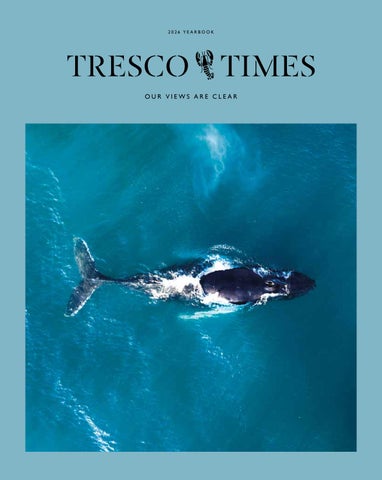
Create a flipbook