BRANCHING OUT
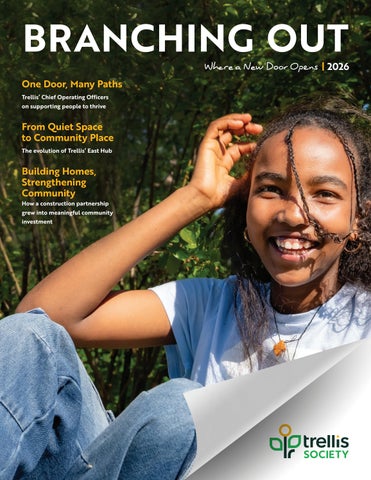
One Door, Many Paths
Trellis’ Chief Operating Officers on supporting people to thrive
From Quiet Space to
Community Place
The evolution of Trellis’ East Hub
Building Homes, Strengthening Community

Trellis’ Chief Operating Officers on supporting people to thrive
Community Place
The evolution of Trellis’ East Hub
Building Homes, Strengthening Community
The signing of Treaty 7 at Blackfoot Crossing on September 22, 1877, was not simply a transaction, but a sacred promise: that as long as the sun shines, the rivers flow and the grass grows, the people of these lands will endure. The late Henry Standing Alone of the Kainai Nation painted the original Treaty 7 Flag, and this illustration honours that enduring promise and the original signatories: the north star for Kainai (Blood Tribe); the buffalo for Piikani (Peigan); the eagle for Ĩyãħé Nakoda (Stoney); the otter for Siksika (Blackfoot); and the beaver for Tsuut’ina (Sarcee). The seven feathers below symbolize each of the Nations within the Treaty and Chief Mountain in the background is a sacred site for many Nations.
Trellis Society is honoured to serve in the traditional territory of the Blackfoot Confederacy, including the Siksika, North and South Piikani and Kainai Nations. We also acknowledge the Tsuut’ina, the Ĩyãħé Nakoda (Chiniki, Bearspaw and Goodstoney Nations) and the Otipemisiwak Métis Government of the Métis Nation within Districts 4, 5 and 6. We recognize all nations, genders and spirits who live, work and play in Treaty 7 territory.
We are all Treaty People. Our work is grounded in relationship and carried out with respect, allyship and a deep commitment to reconciliation, for today and for generations to come.
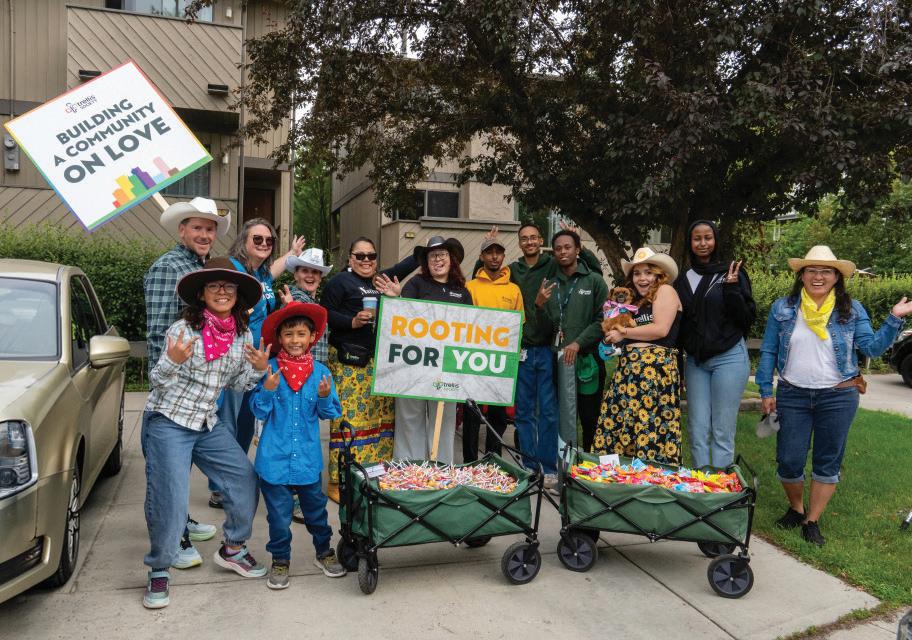

The stories in this issue of Branching Out represent the thousands of people each year who find support, healing and growth at Trellis.
Our vision is a community where everyone can flourish. One organization. Countless ways to help.
Powered by the generosity of our community, the Trellis team is honoured to walk side by side with the people we serve and stand by them through challenging times. Together, we are leaving a lasting impact for generations to come and growing a future where everyone can flourish.
These are stories of hope, strength and connection. Thank you for helping us open new doors for the people we serve.
Learn more about Trellis Society.



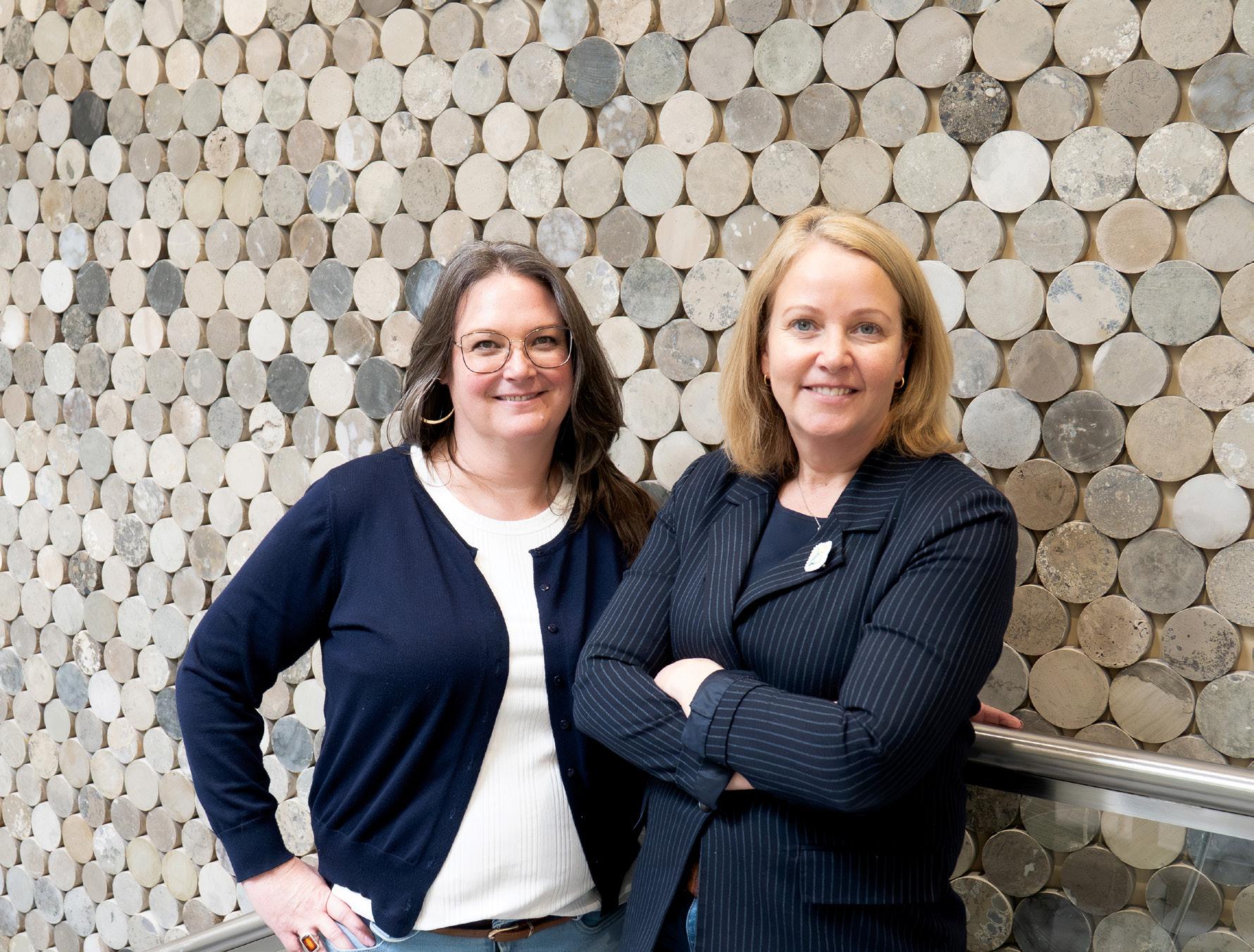
Trellis’ Chief Operating Officers on the support that helps people thrive
Trellis grew out of two organizations with powerful legacies. Together, our combined experience has created a century of impact for Calgarians.
Our legacy organizations also brought us our two Chief Operating Officers. Kim Ledene, Chief Operating Officer, Housing, spent many years working at Boys and Girls Club of Calgary in areas including group homes, foster care and housing. Courtenay Hick, Chief Operating Officer, Community Wellness, started her career at Aspen Family and Community Network Society, where she worked in group homes, in community development and with families facing homelessness.
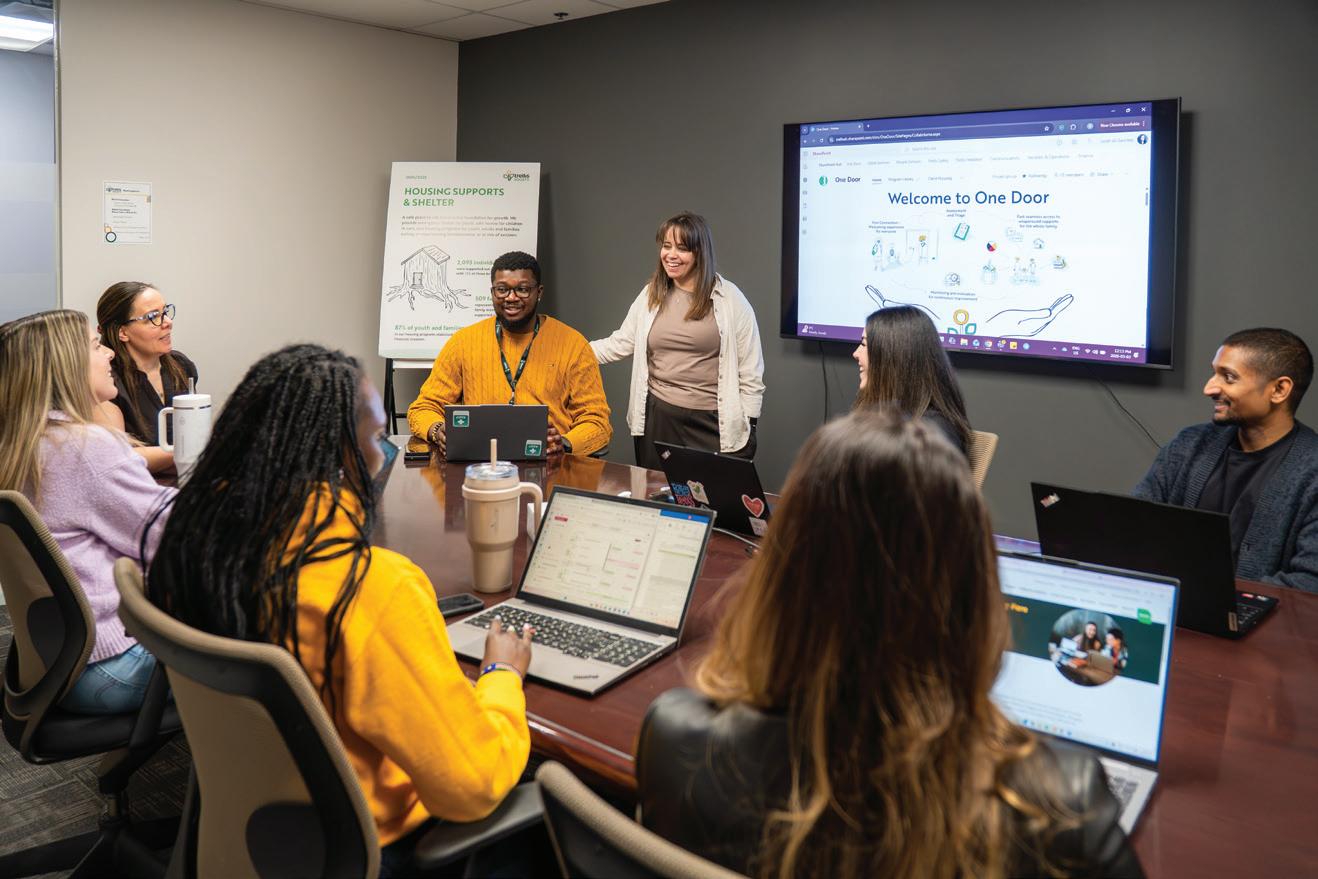
We sat down with Kim and Courtenay to get their perspective on what the people we serve are struggling with, the unique ways we’re supporting them and the power of Trellis’ One Door approach.
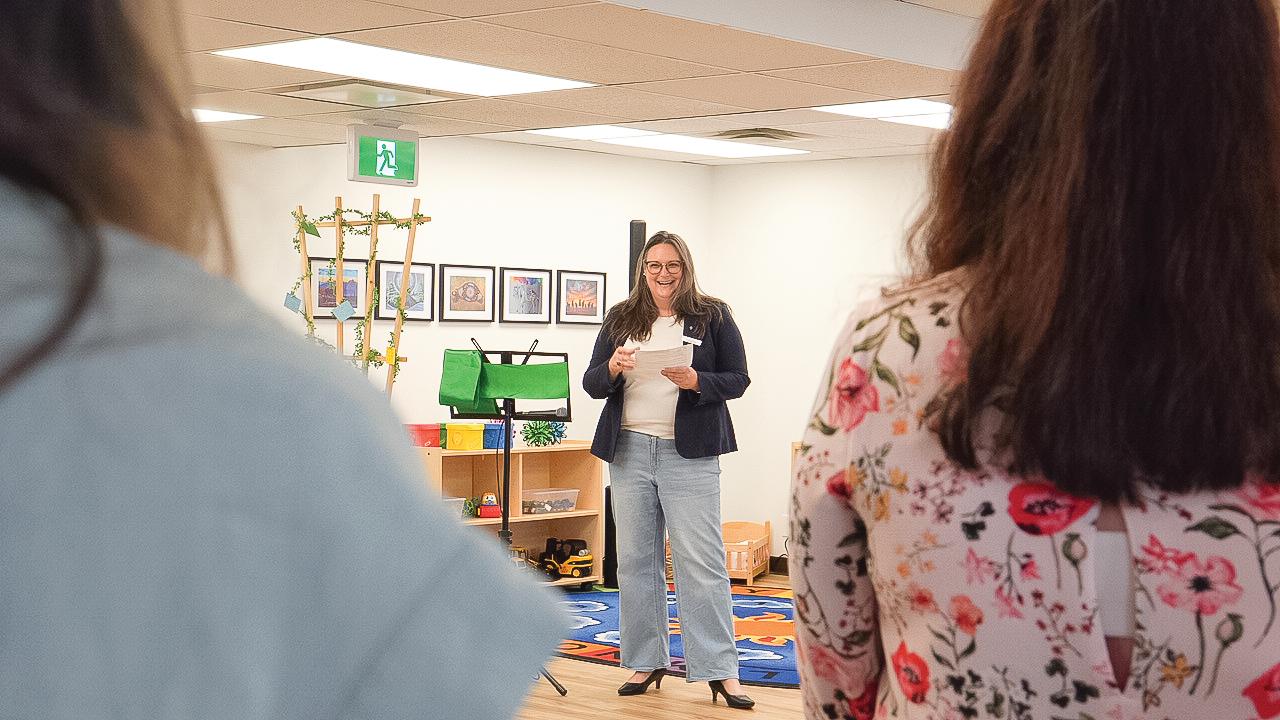
Kim: Affordability is a huge challenge. Our clients are often dealing with complex issues like intergenerational trauma, mental health struggles and addiction, so when that is combined with the rising cost of living it becomes even harder for them to make ends meet.
Courtenay: Lack of community and connection to other people is another big challenge. People have their nuclear family, and they don’t often reach out beyond that.
Kim: With technology, people don’t have to leave their house to be connected. I don’t know if we understand the impact of that yet.
Courtenay: In the past, we had a lot more opportunities to practice talking to strangers, whether that was calling for pizza, or talking to our friend’s parent on the phone or answering the door when someone showed up on our front step. Now a lot of that has gone online, so there’s no practice for how to interact and develop those relationships. That feels like a big problem and contributes to our lack of community and connection.
Could you talk about the role of Trellis’ One Door approach in connecting our clients with the resources they need to thrive?
Courtenay: There’s nothing worse than finding the courage to ask for help, only to be told that you have to go somewhere else in order to get it. Having the time and capacity to tell our story multiple times is a luxury, one that many of the people we serve don’t have. On top of the many pressures of daily life, they may not have a flexible job, childcare or a reliable means of transportation, so every stop along their way adds a barrier to getting the help they need.
Our goal with One Door is to create an experience where our clients aren’t giving up before they reach someone who can hear them and help them. Someone may be calling because they need help with housing, but we hear that they need childcare. We hear that they’re underemployed, so we connect them to our employment team. We hear that they’d benefit from clinical support, so we bring in our therapy team. People are calling about their most pressing need, but we can listen and identify other things they’re struggling with as well. This way, they can access multiple types of support through a single conversation.
Kim: It comes back to the power of only having to tell your story once. People can talk to the Trellis staff member they’re most comfortable with, and they might end up getting support from multiple different programs without even knowing it. The client might not even know what’s happening in the background, they just know they’ve found someone they trust, they’ve built a relationship with them, and that person is helping to ensure their needs are being met.
For example, a parent and their family might come to our Bowness Hub and talk to our Hub manager about what they’re struggling with. Then, behind the scenes, the Hub manager can work with staff on other Trellis teams to coordinate access to the support that family needs. They leave saying, “I just dropped into the hub and chatted with the staff at my child’s after school program, and then got help to stabilize my housing, I got access to therapy, and my oldest is getting help with graduating from high school.” We want to create that one-stop feeling for Trellis clients and make it as easy as possible for them to get the support they need to thrive.
Our hubs provide an important venue for community building and connection.
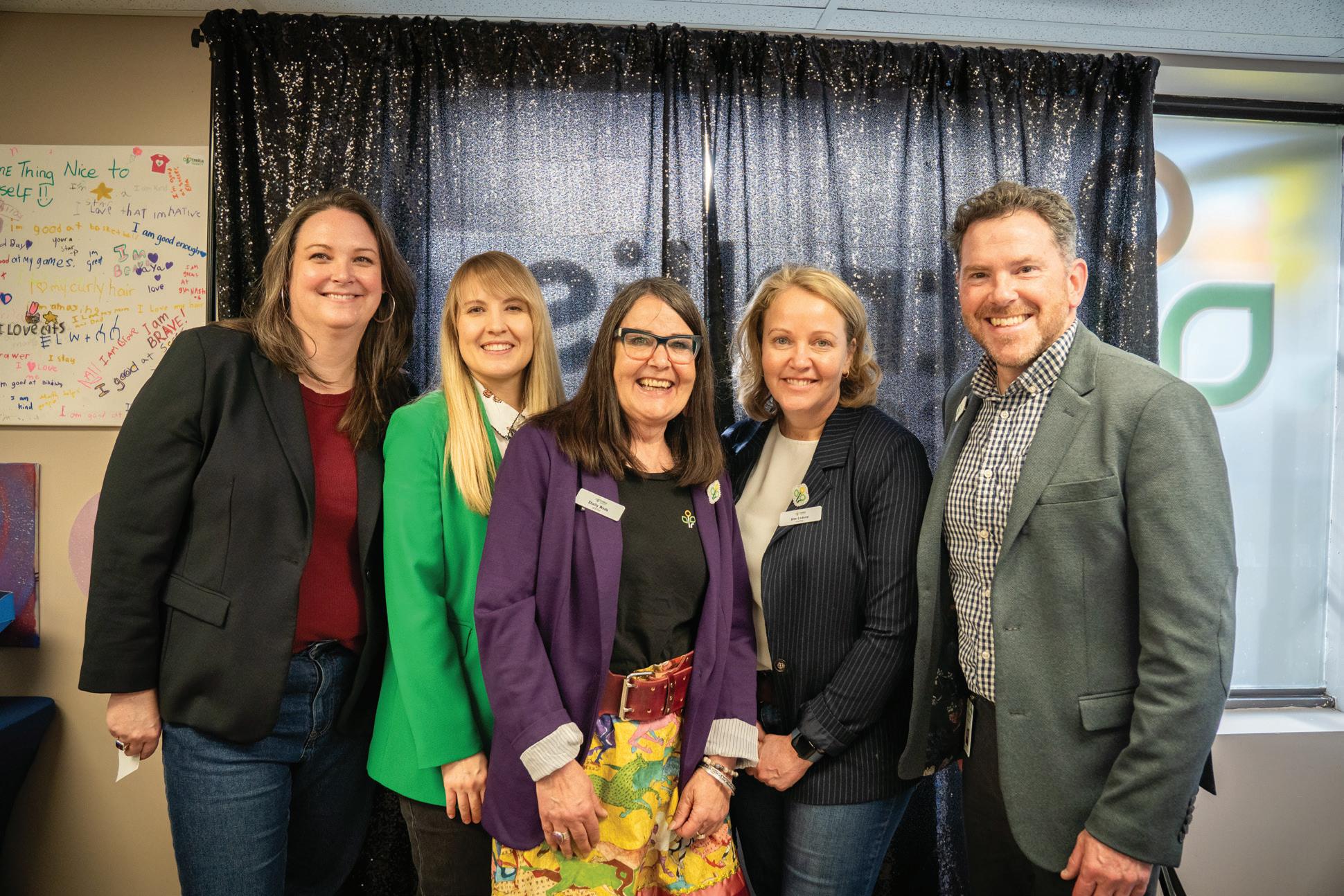
Kim and Courtenay along with Chief Executive Officer Jeff Dyer, Chief Strategy Officer Angela Clarke and Director of Indigenous Initiatives
Shelly Wade, celebrating the opening of Kickstand at our Strathmore Hub
Courtenay: If you support someone in community early on, before their problems get big, you can keep them out of a homeless shelter. If somebody comes to us at one of our hubs saying, “I’m going to lose my housing,” we can investigate. We can explore temporary rent subsidies, help them budget in a different way or connect them with resources to find a better paying job. Small things like this can add up and help keep someone out of the cycle of homelessness.
Kim: Relationships are often the conduit for change. Often, the people we work with have had experience with being let down, whether it’s by professionals or by friends and family. At our hubs, we can build trusting relationships where people can feel safe to ask for help.
Courtenay: When we’ve built a solid relationship with a client, sometimes we can offer help without them having to ask for it. We can get curious and give space for people to talk about what they’re going through. When people have the chance to get to know us over time, in a more casual environment like our hubs, asking for help doesn’t feel so scary.
Through connection and opportunities for growth, four boys found the confidence they needed to flourish
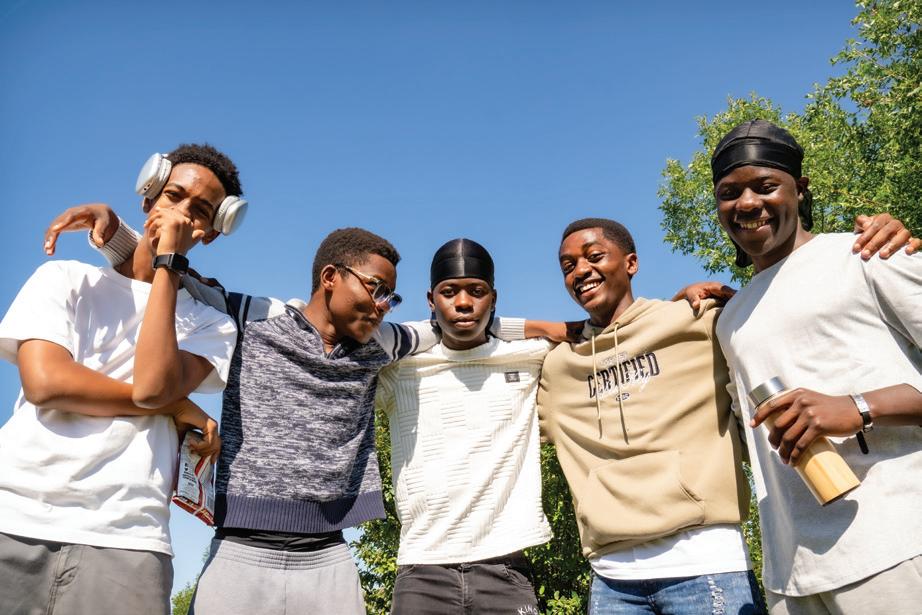
Jay, Luke, Adam and John* were struggling. Their families had recently arrived in Canada as newcomers, and each of the boys was feeling isolated and alone. They were having a difficult time learning English and were placed in classes at school that didn’t reflect their true abilities. They faced bullying, and making friends was difficult.
That all began to change when they discovered Trellis. Opening the Genesis Centre doors was the first step towards lasting friendships and opportunities that are helping them launch into adulthood.
The boys met on the soccer field, where they connected through a shared language they already understood. As they continued to attend Trellis’ Youth Programming, they got to know each other and made connections with staff.
As months went by, the boys became more connected to Trellis, and to each other. Together, they developed confidence and found the courage to try new things.
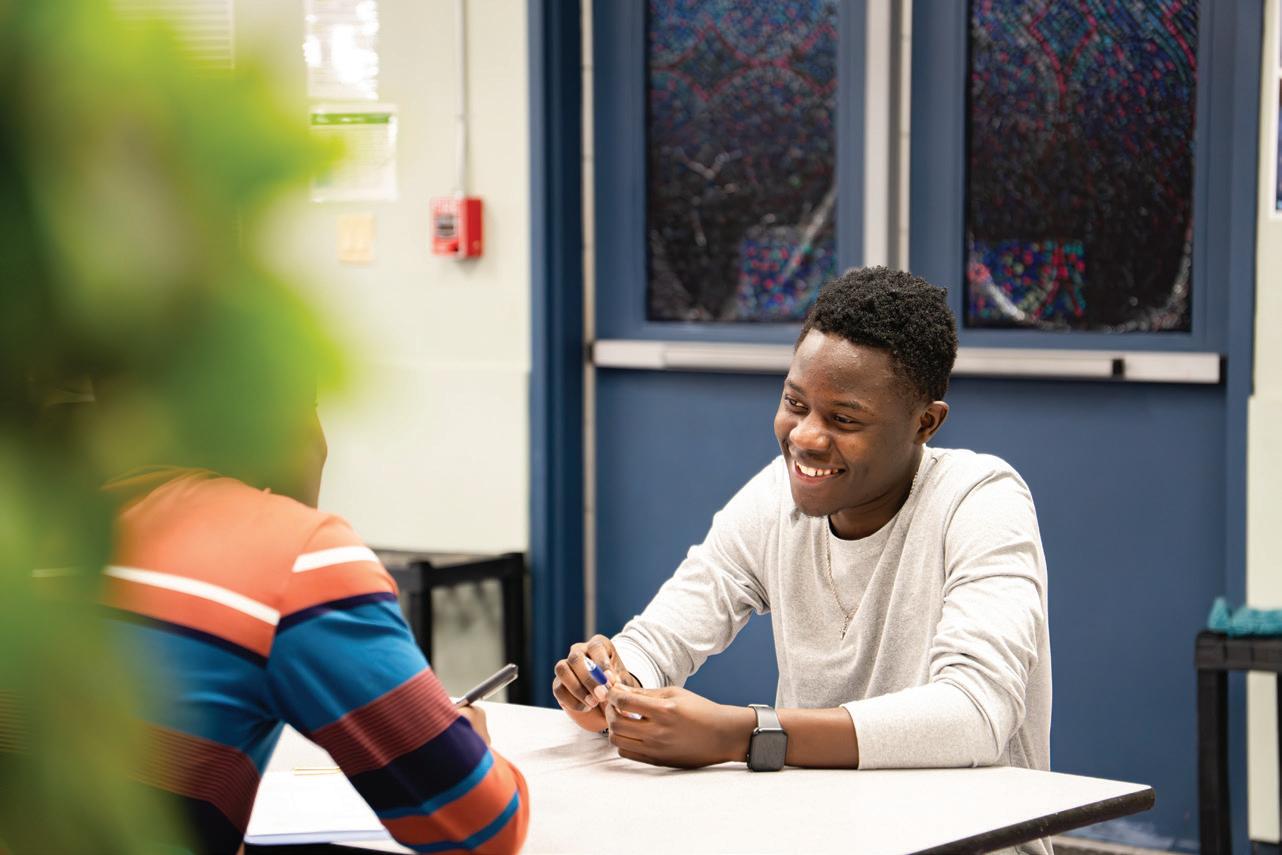
“I had fun playing soccer, and then I discovered that Trellis had more to offer,” said Jay. “One of the Trellis staff let me know that there was a cooking program, so I started coming to that too.”
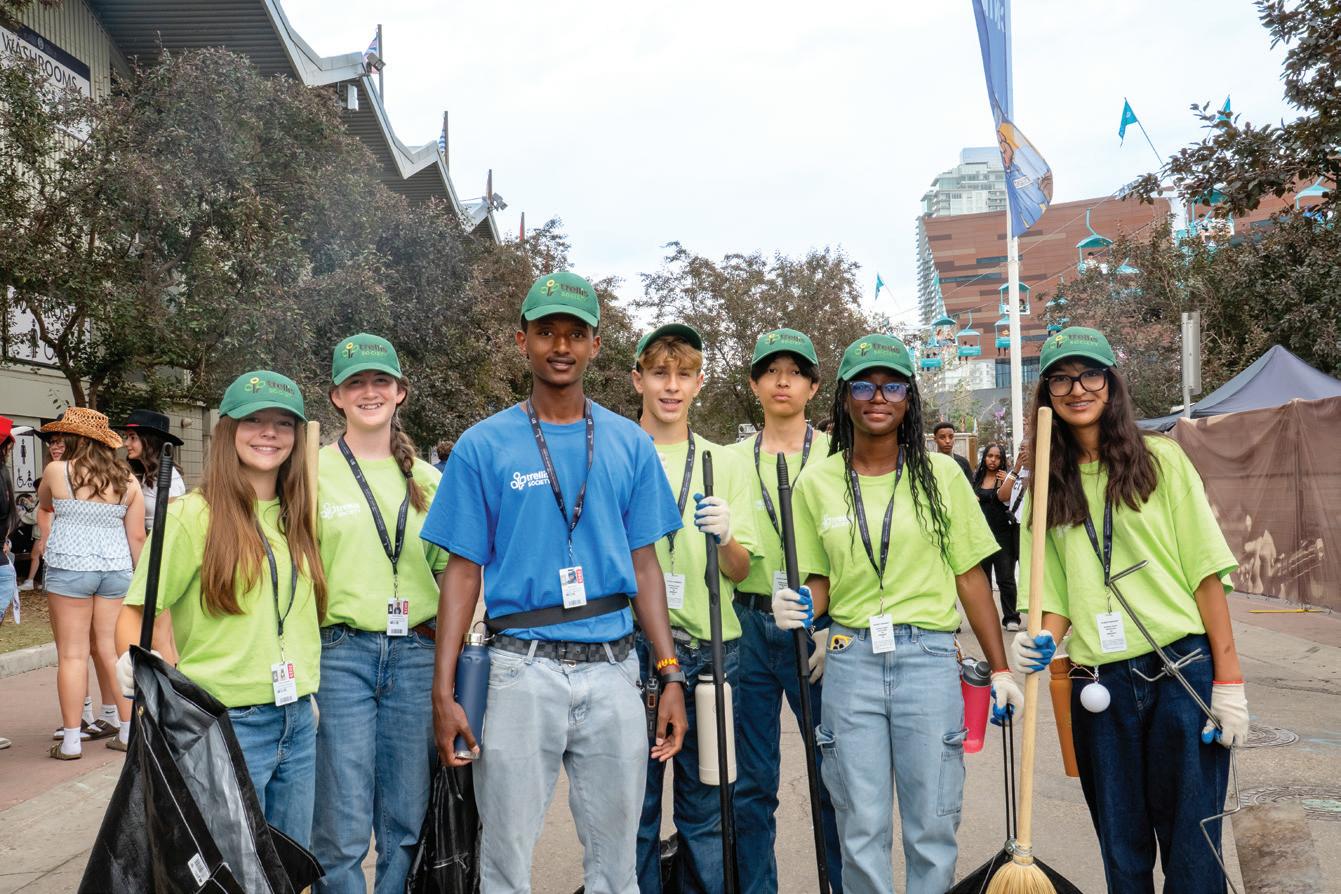
Trellis staff soon introduced the boys to employment supports that would help shape their future. Tightly bonded now, the boys signed up for a Trellis employment workshop together. This introduction led to opportunities for all four on Trellis’ Calgary Stampede Cleaning Crew, followed by time as leaders in training at the Renfrew Hub.

You care about the Calgary community and want to ensure everyone has the opportunity to belong. Through a gift in your will, a donation of investments or real estate, or other extraordinary contributions, you can create lasting impact. By including Trellis in your will or estate plans, you’re helping support children, youth and families in your community.
We would be honoured to talk about how your legacy can help people flourish for generations. Scan to learn more.
“Working at the Stampede was my first job in Canada,” says Luke. “I started as a crew member and then was promoted to supervisor. Trellis gave me the opportunity to grow my skills, which I can use when I’m looking for jobs in the future.”
Jay echoed Luke’s sentiments, explaining that when he submitted his Stampede application, it was his first time applying for a job. “Trellis staff helped me with the application and taught me how to write a resume. In the following years, they encouraged me to be a supervisor, where I learned about leadership and dealing with difficult situations.”
As Trellis staff got to know the boys more deeply, their individual needs became clearer. Each of the boys connected to All In For Youth success coaches at their high schools, who gave them the support they needed to graduate.
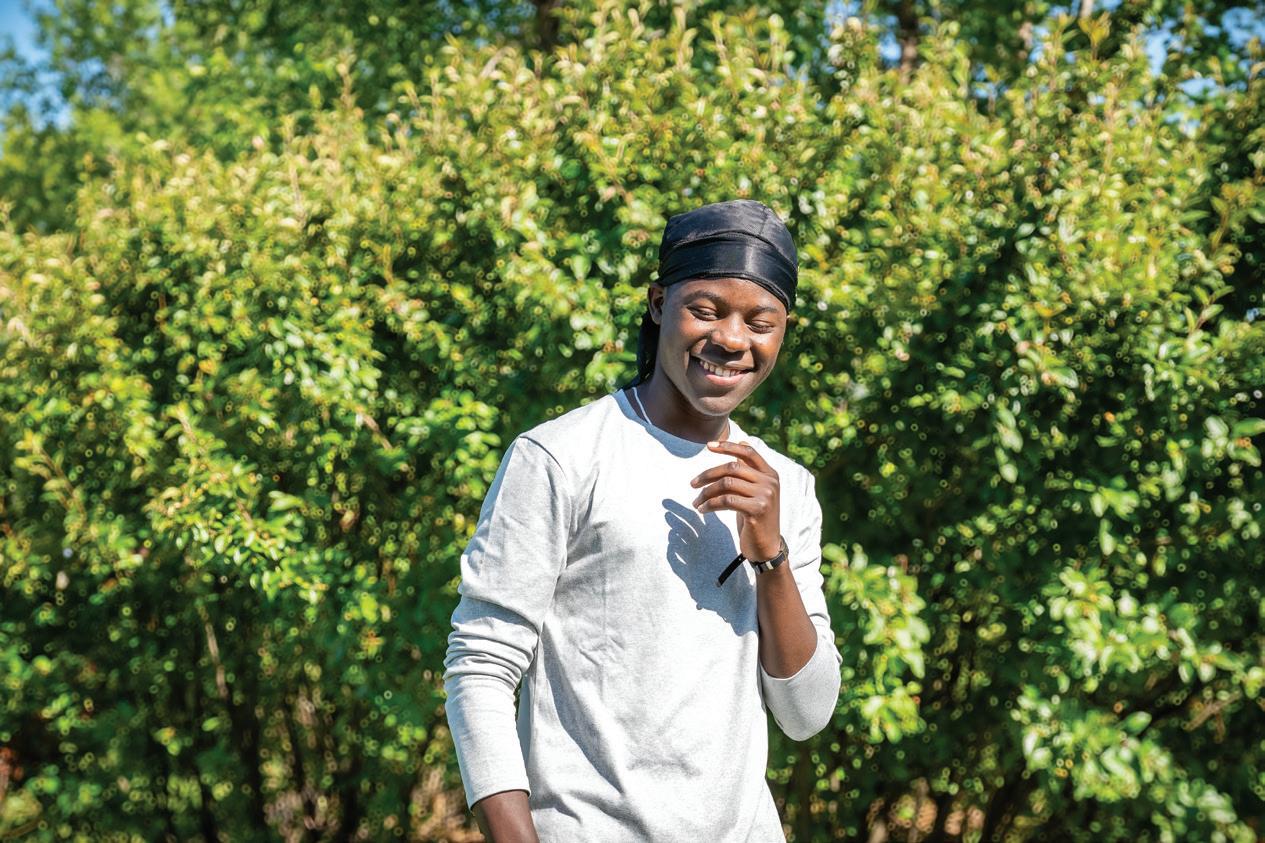
Doors opened not only for the boys but for their family members as well. Families were connected to grants and housing assistance. They met with Settlement Case Managers, who supported them through pathways to permanent residency or Canadian citizenship. Jay also introduced his sisters to Trellis, and they found jobs of their own on the Stampede crew.
Four years after their first meeting, Jay, Luke, Adam and John remain best friends and continue to grow through education, employment programs and community involvement. They connect regularly at our Trellis hubs, where they share laughs, catch up on their week and talk about their successes and struggles.
“I’ve developed so many useful skills through Trellis, like public speaking, learning how to apply for a job, and navigating the interview process,” says Luke. “But the chance to see my friends is the biggest reason I keep coming back.”
Their journey is a powerful reminder of the growth that can happen when young people find a group of friends they can count on and a network of supports to help them navigate life’s challenges.
*Names have been changed
How Trellis’ construction partnership with Chandos Construction grew into meaningful community investment
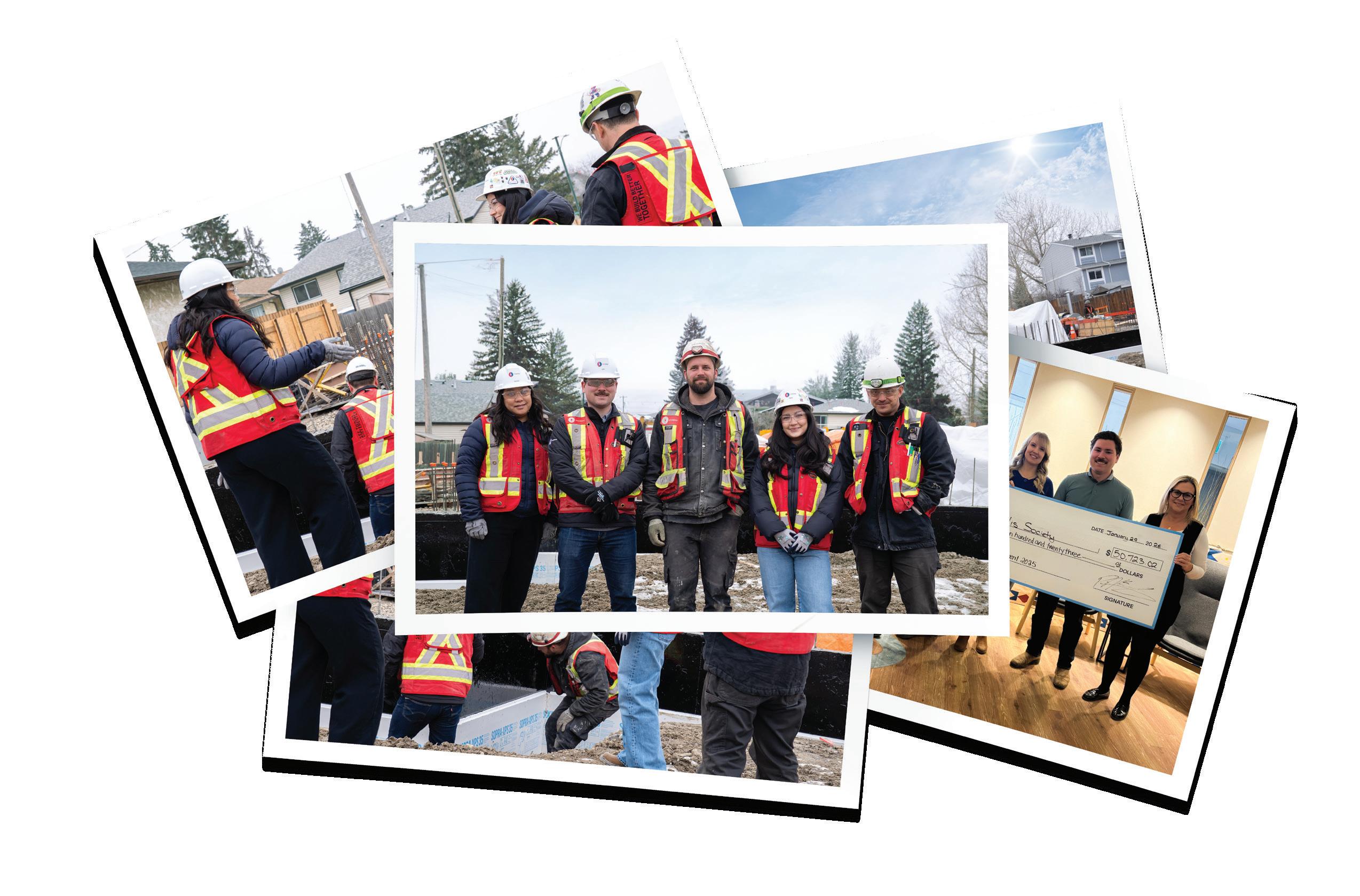
At Chandos Construction, social impact is woven into every project they work on. Their partnership with Trellis is a testament to their belief that when a project is built with social value in mind, everyone benefits.
Our relationship with Chandos began in 2024, when they were chosen as the construction partner for our affordable housing project in Bowness. While they’re building new doors in Calgary’s northwest, they’re
also supporting Trellis’ work across the city through sponsorships and donations.
“We know that funding is tight and construction is expensive,” says Natalie Ho, Senior Project Manager at Chandos and a member of the Bowness project team.
“We try to bridge that gap, whether it’s by sponsoring events or holding fundraising events of our own.”
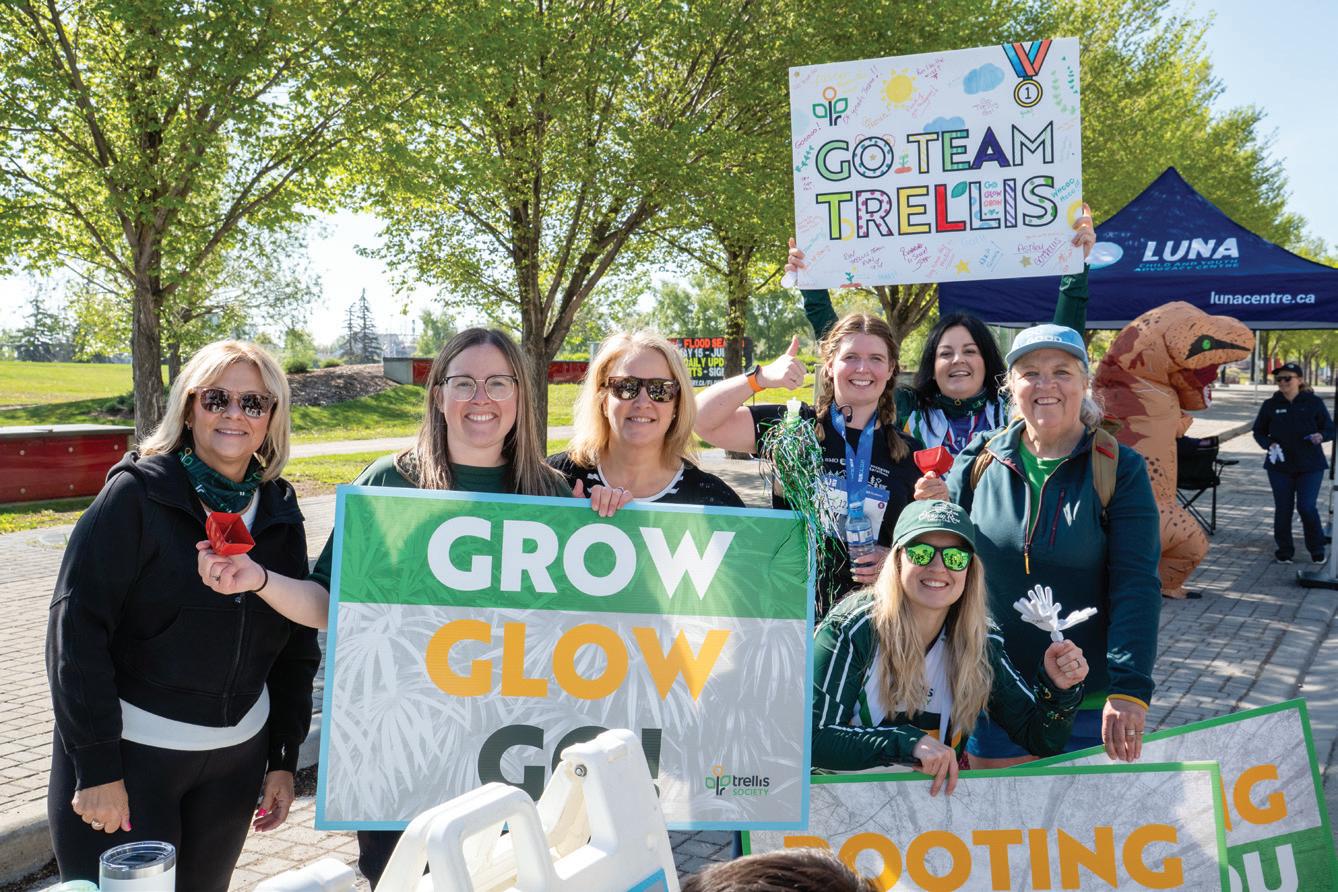
In 2025, Chandos chose Trellis as one of the recipients of funds raised at their annual skeet shooting event. They also sponsored and attended The Trellis Society Soirée, our signature fundraising event, and donated to Team Trellis in the Servus Calgary Marathon Charity Challenge.
“When we have the chance to participate and attend events for the organizations we work with, it makes our jobs more fulfilling,” says Natalie. “It’s a great feeling, knowing you’re giving back to an organization that does such important work. It makes handing over the project when it’s complete more meaningful.”
“I didn’t know much about Trellis before I started working on this project,” says Levi Shelfoon, Project Manager at Chandos and another Bowness project team member.
“When I attended Soirée, I heard a powerful story about a previous client who now works at Trellis as a service navigator. It was amazing to hear about her growth as a person and really demonstrated the impact Trellis has on peoples’ lives.”
When it comes to Trellis supporters, relationships are everything. Getting to know the team at Chandos and understanding their priorities has been an important part of our work together. “It’s been wonderful working with Trellis through our role as a corporate partner,” says Levi.
“Our interactions with the Trellis team have felt really personalized. It’s obvious that everyone on the team cares deeply about the work they do and we’ve been able to see the impact of the funds we’ve provided.”
Construction is underway on our new home for families in Bowness, with plans to open doors in the fall of 2027. It’s an easy walk to Trellis’ Bowness Hub, where residents can access childcare, youth programs, counselling and other impactful supports.
With their experience in the construction industry, the team at Chandos sees firsthand how important this project is.
“There are a lot of new apartment buildings going up in our city but the fact that Trellis’ building can accommodate families of many sizes, including multigenerational families, makes it unique,” says Natalie. “To be able to build something new for families that’s also affordable helps close a big housing gap in Calgary.”
Chandos believes in the power of collaboration and Trellis shares that belief. Working together with donors and funders is a big part of what makes our impact possible. We’re grateful for organizations like Chandos who are more than just vendors – they’re partners in our vision to create a community where everyone can flourish.
“It’s a great feeling, knowing you’re giving back to an organization that does such important work.”

The work in Bowness continues to grow.
Follow Trellis Society on LinkedIn for updates and stories from across our community.
Want to help support youth and families in Bowness? Donate at growwithtrellis.ca/donate.


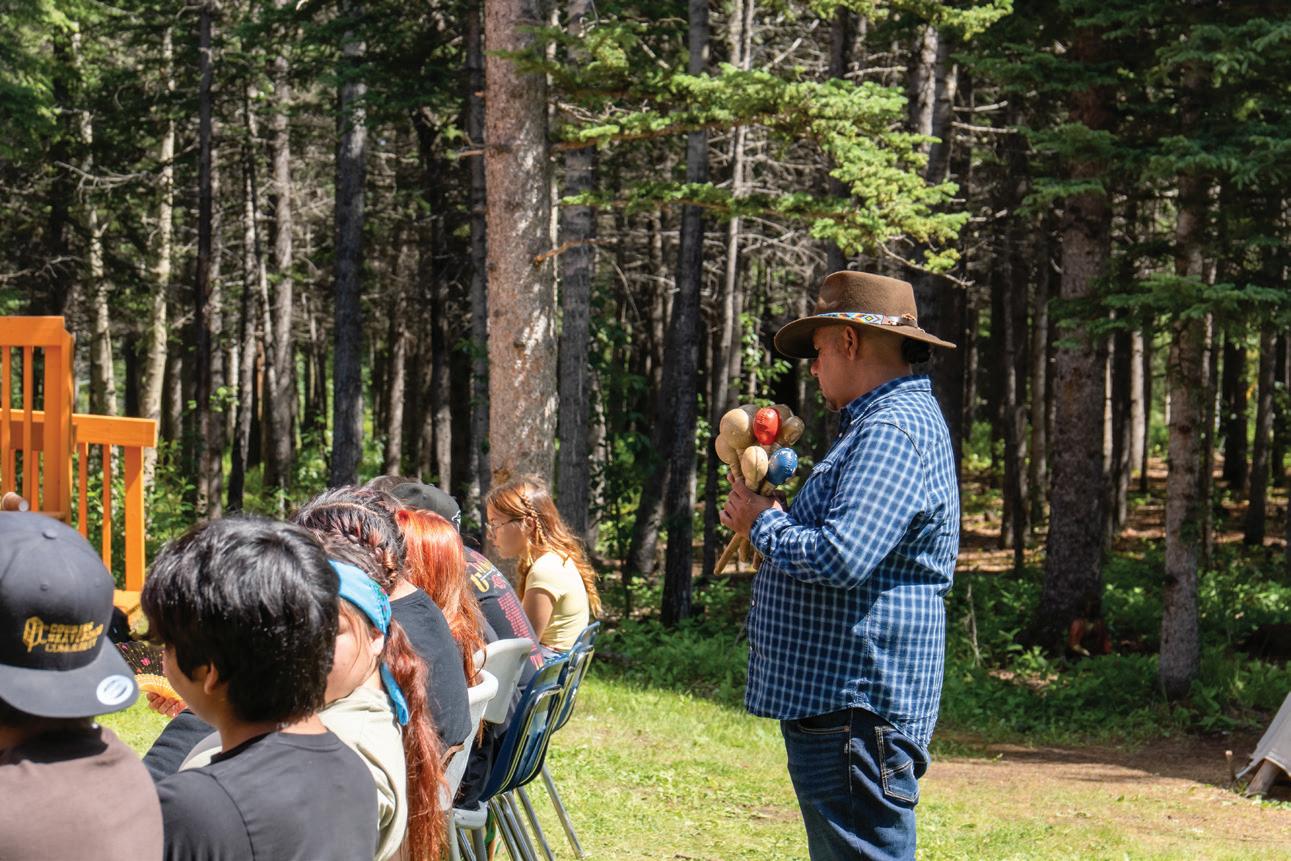
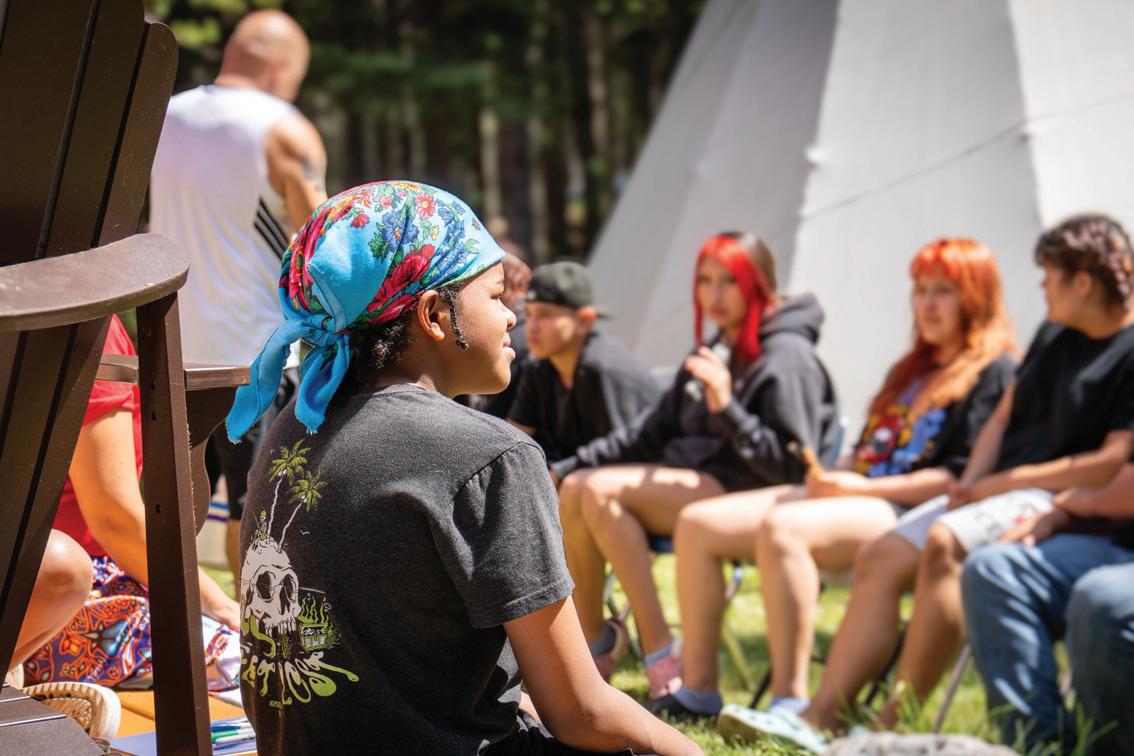
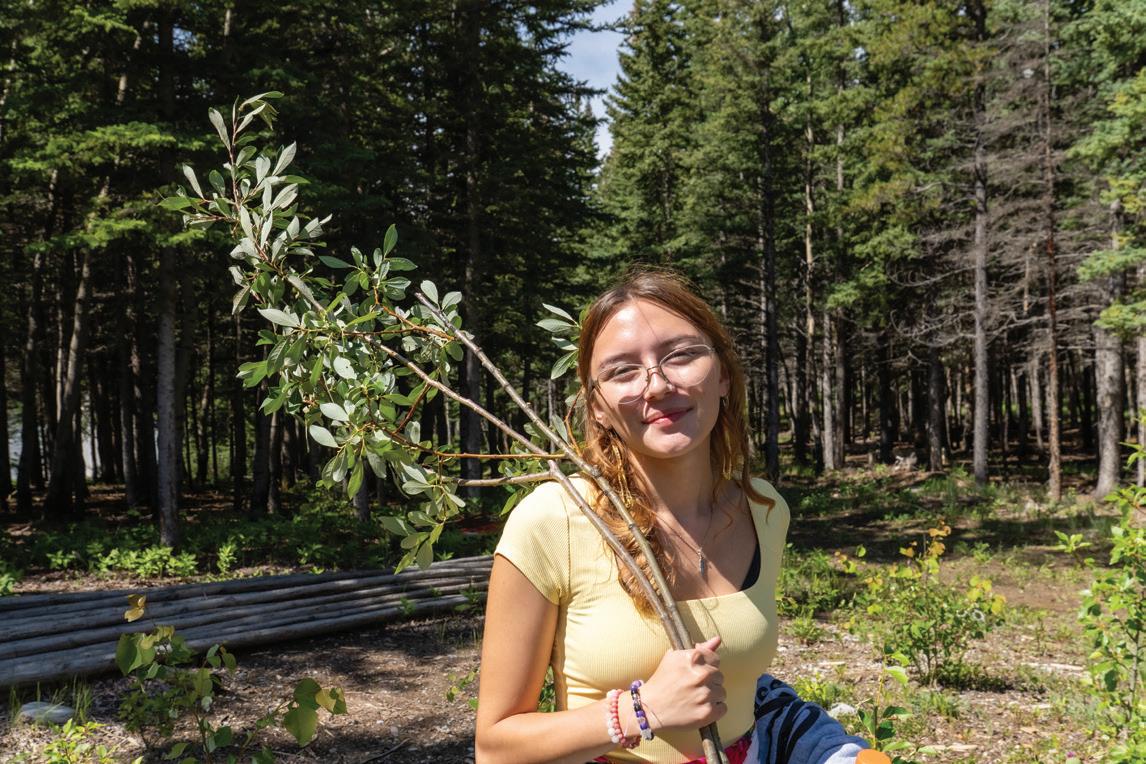

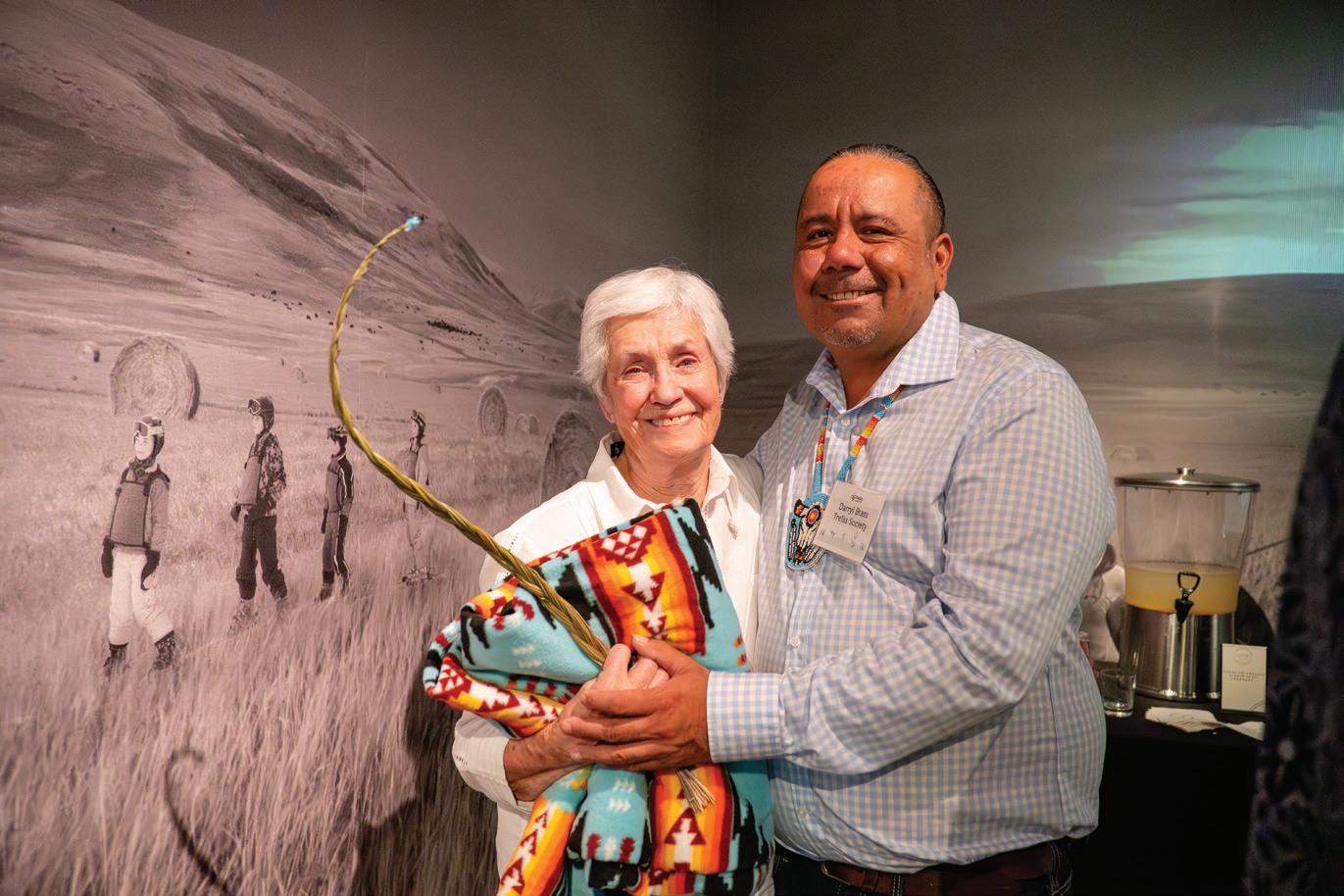
Culture Camp is more than a few days in the wilderness. It is a place where young people feel seen, supported and safe enough to begin finding their way back to themselves.
“My first time going to camp, I was going through a lot of things with my mental health and not really knowing who I was,” shares Tarra, a Culture Camp participant. “I walked out of Culture Camp feeling more confident about myself, feeling like ‘okay I’ve got this. I’m going to be okay.’”
Throughout the week, youth aged 12 through 21 take part in ceremonies, storytelling and hands-on cultural activities.
For participants, camp is a cell-phone free zone, allowing them to truly disconnect from the pressures of day-to-day life and immerse themselves in the experience.
“Culture Camp is a really special time for our Indigenous youth,” says Shelly, Trellis’ Director of Indigenous Initiatives. “They are building relationships with each other, with our staff and with our Elders. They are getting connected with this beautiful land and to their culture.”
Each day, participants enjoy outdoor activities like building a sweat lodge, canoe races, swimming and sharing circles. They share meals, laughter and unstructured moments that allow friendships to form
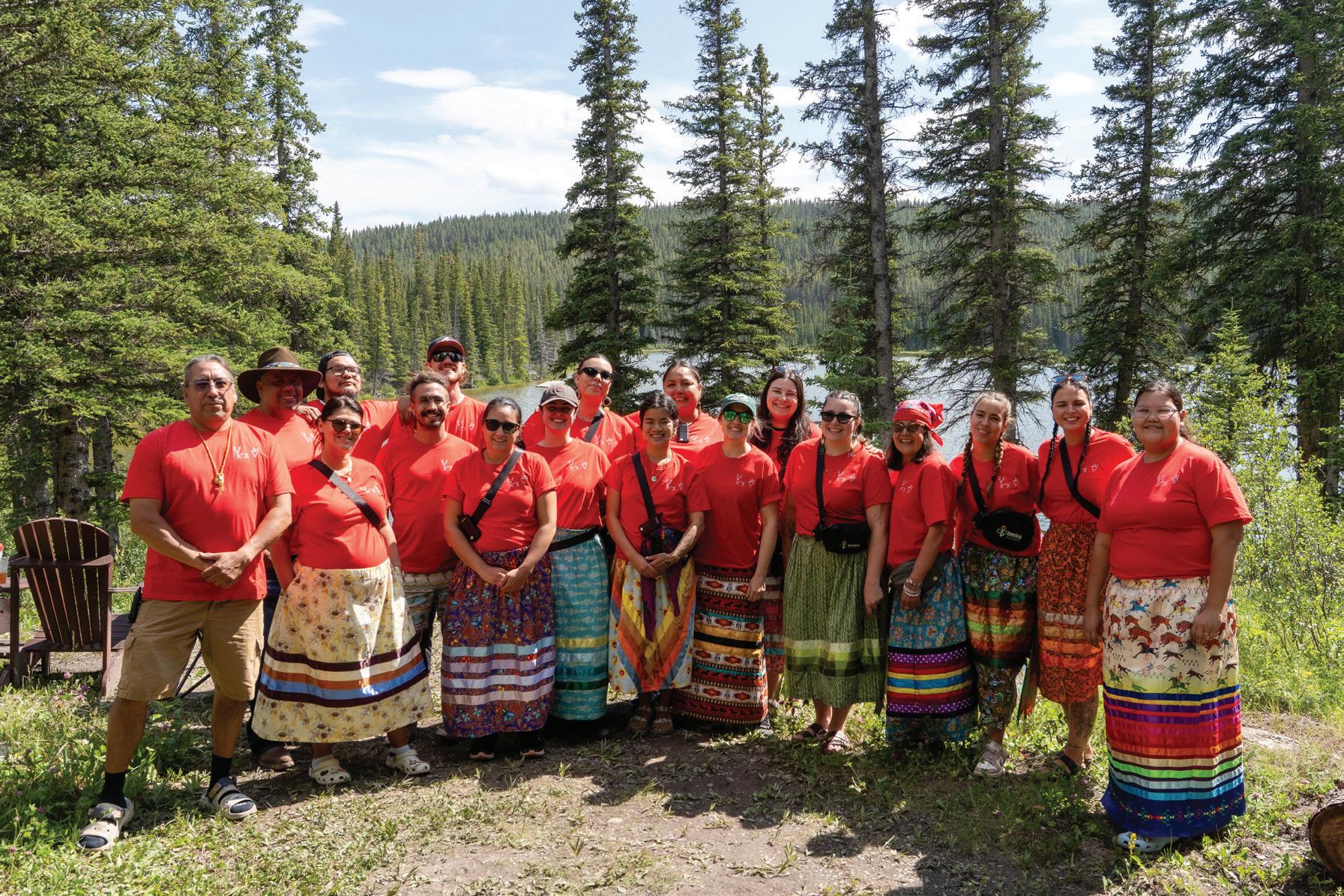

naturally. At night, they watch the night sky while listening to Indigenous stories that have been passed through generations.
So much of what youth take away from camp is given by the Elders who join them. For the Elders, Culture Camp is an important opportunity to impart their knowledge and share the teachings they carry. This chance to connect helps ensure that traditions and ways of knowing will endure from one generation to the next.
Culture Camp is often one of the few times youth can immerse themselves in culture, as something they can feel, practice and share. “Many of our youth push their
culture away,” explains Darryl, Trellis’ Elder in Residence. “They’re not taught about it. When they come out here and learn about it, they walk away with that sense of pride.”
Indigenous youth are often navigating realities shaped by trauma, instability and systems that have not made room for cultural connection or belonging. Culture Camp is a space where youth are not defined by what they have experienced but welcomed for who they are. On the land, surrounded by community and care, youth are given time to slow down, breathe and reconnect with parts of themselves that may have been quiet for a long time.
For some youth, that reconnection feels deeply spiritual. “Coming back, I think my spirit was yearning for it,” shared Dorian, a youth participant. “Like Creator brought me back here.” Experiences like Dorian’s speak to the deeper purpose of Culture Camp: creating space for healing, identity and pride to re-emerge in ways that feel safe, supported and deeply personal.
Through ceremony, shared teachings and connection with Elders and peers, youth begin to strengthen their sense of identity and pride. Culture shifts from being a story of the past to a steady guide for the present. In moments of uncertainty, the teachings from camp become tools youth can draw on to care for themselves and navigate challenges.
As Darryl explains, growth often begins with something small. “Even if they learn one thing, like how to start their own smudge and take care of themselves – that’s huge,” he shares. “It’s always about learning one thing at a time, little by little.” In this way, Culture Camp plants seeds that continue to grow long after the campfire fades.
The impact of Culture Camp goes beyond individual growth. Youth build friendships rooted in shared experience and support, while staff and Elders witness young people stepping into themselves with greater confidence and openness. Through service to Elders and role modeling for their younger peers, older campers
are given opportunities to step up as leaders. Together these moments create lasting ripple effects that extend into families, communities and the paths youth choose moving forward.
At a time when many young people are navigating uncertainty and complex challenges, access to culture and community is not a luxury. It is foundational. When youth are given the opportunity to reconnect with who they are, to feel pride in where they came from and to simply be kids in a space that honours their identity, the impact reaches far beyond a single week.
The laughter shared around a campfire, the quiet moments of reflection and the teachings carried home in heart and spirit all become a part of a larger story of strength and renewal. Culture Camp is a reminder that when we invest in young people, nurture their identity and walk alongside them, growth follows. And with continued commitment and community support, those seeds will keep growing for generations to come.
Want to learn more about this powerful opportunity for Indigenous youth?
Scan the QR code to watch our Culture Camp 2025 video.

“It’s always about learning one thing at a time, little by little.”
— Darryl Brass, Elder in Residence

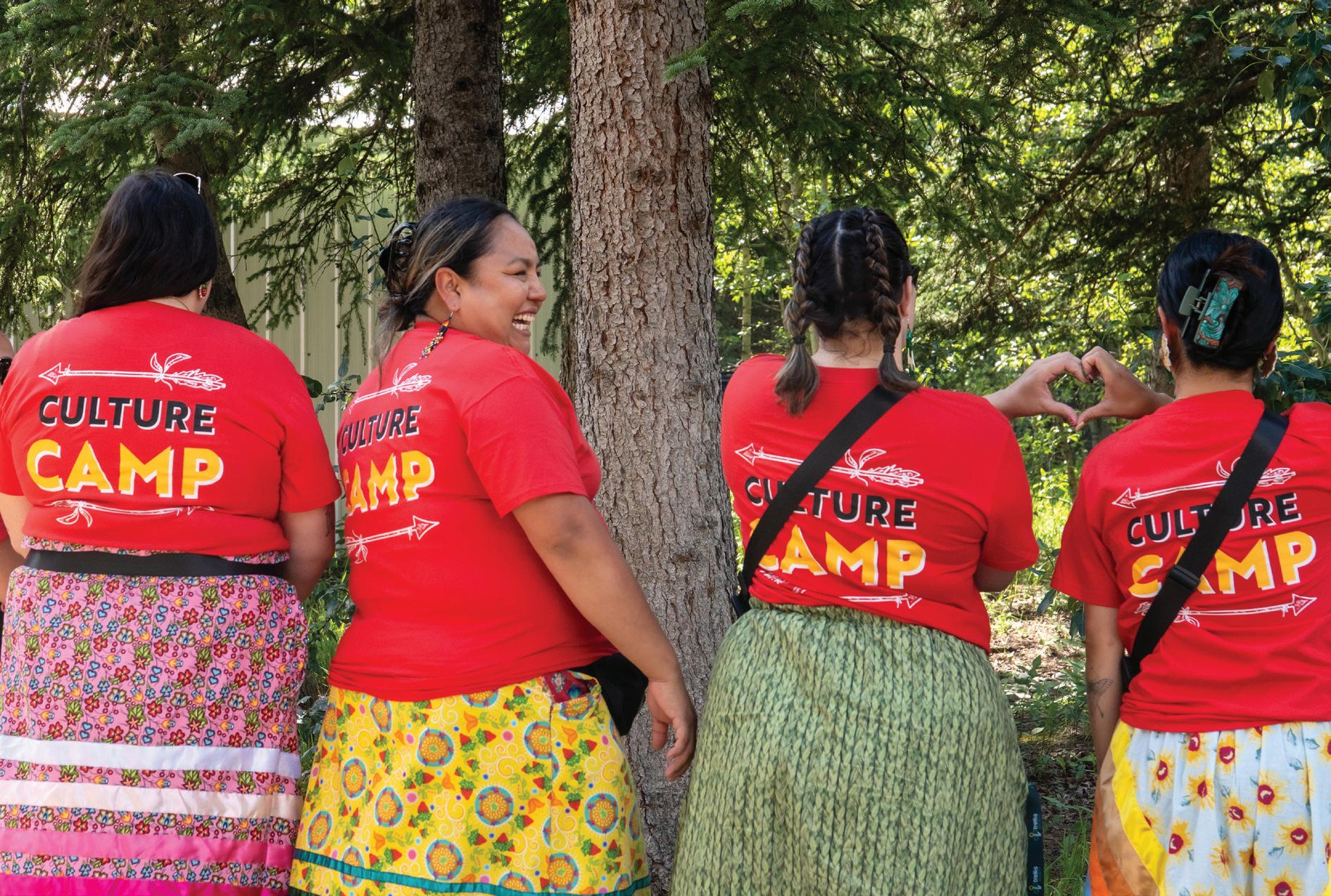

Culture Camp is made possible through intention, care and a shared belief that Indigenous youth deserve spaces rooted in culture, safety and belonging. We are grateful for the generosity of our donors including Children’s Aid Foundation of Canada, the Calgary Flames Foundation, TC Energy and TD Ready Commitment, alongside the partnership and guidance of the Aboriginal Friendship Centre of Calgary and Miskanawah. Their support ensures that youth have access to land-based learning, cultural teachings and the care of Elders and community.






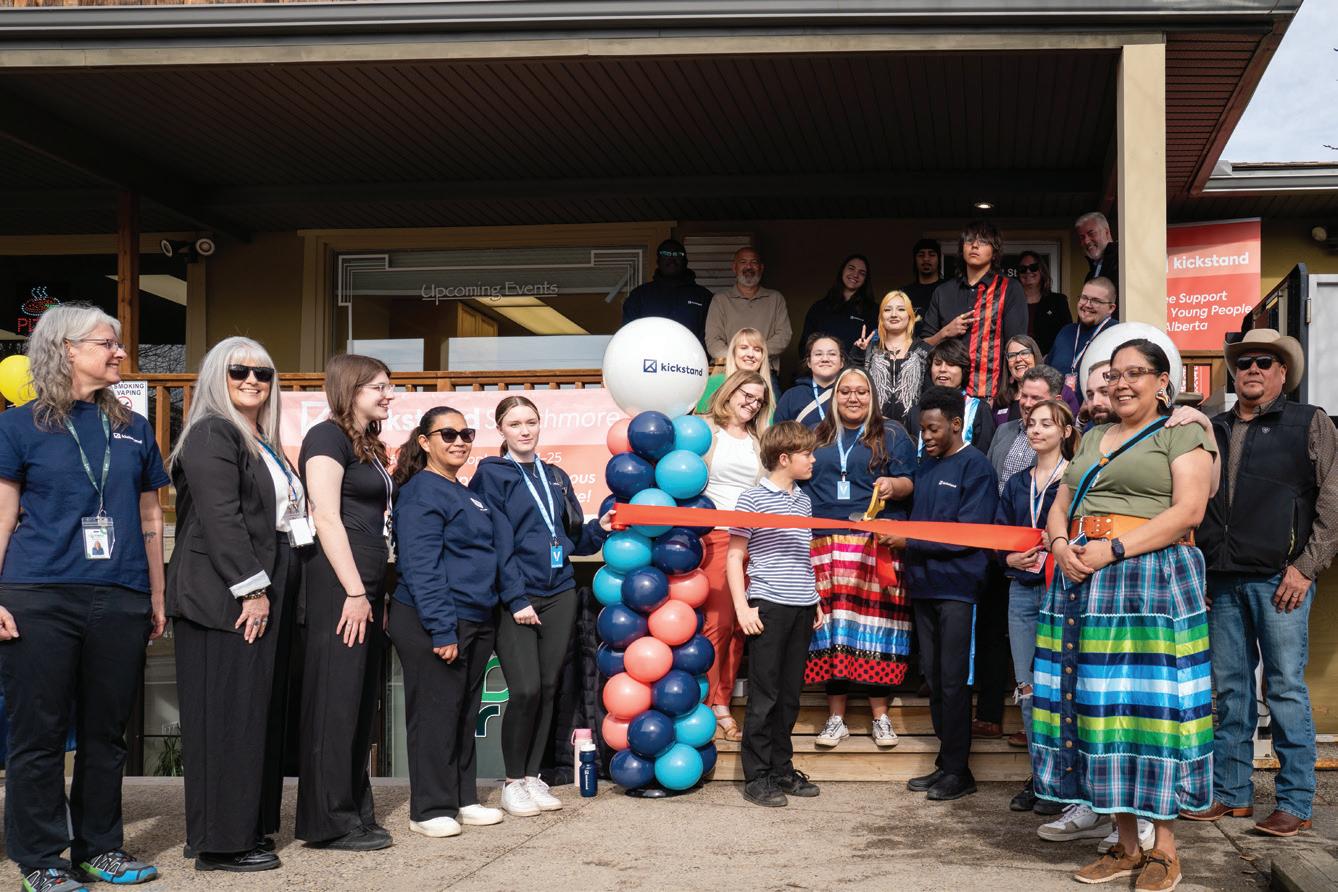
Celebrating the opening of Kickstand at our Strathmore Hub
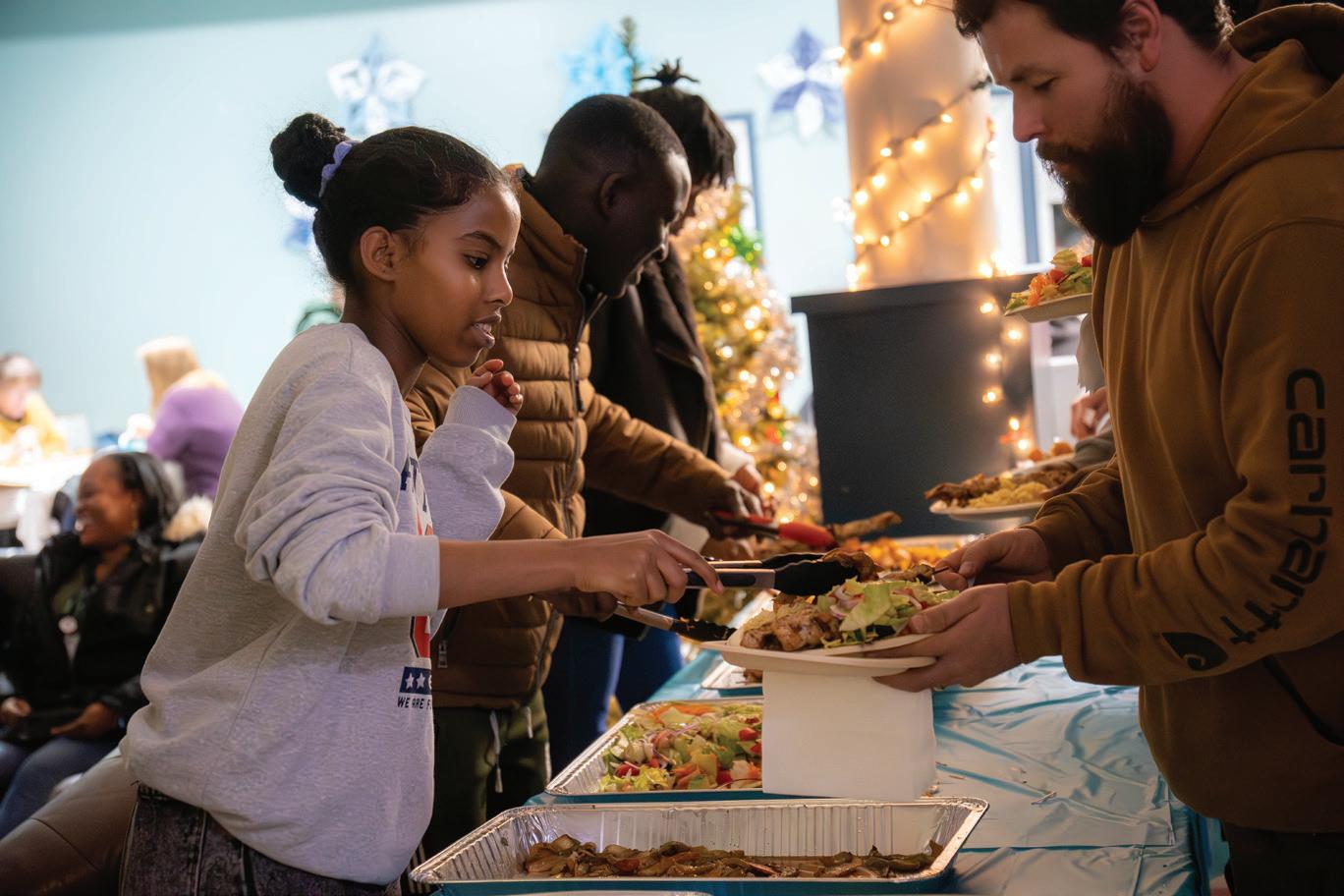



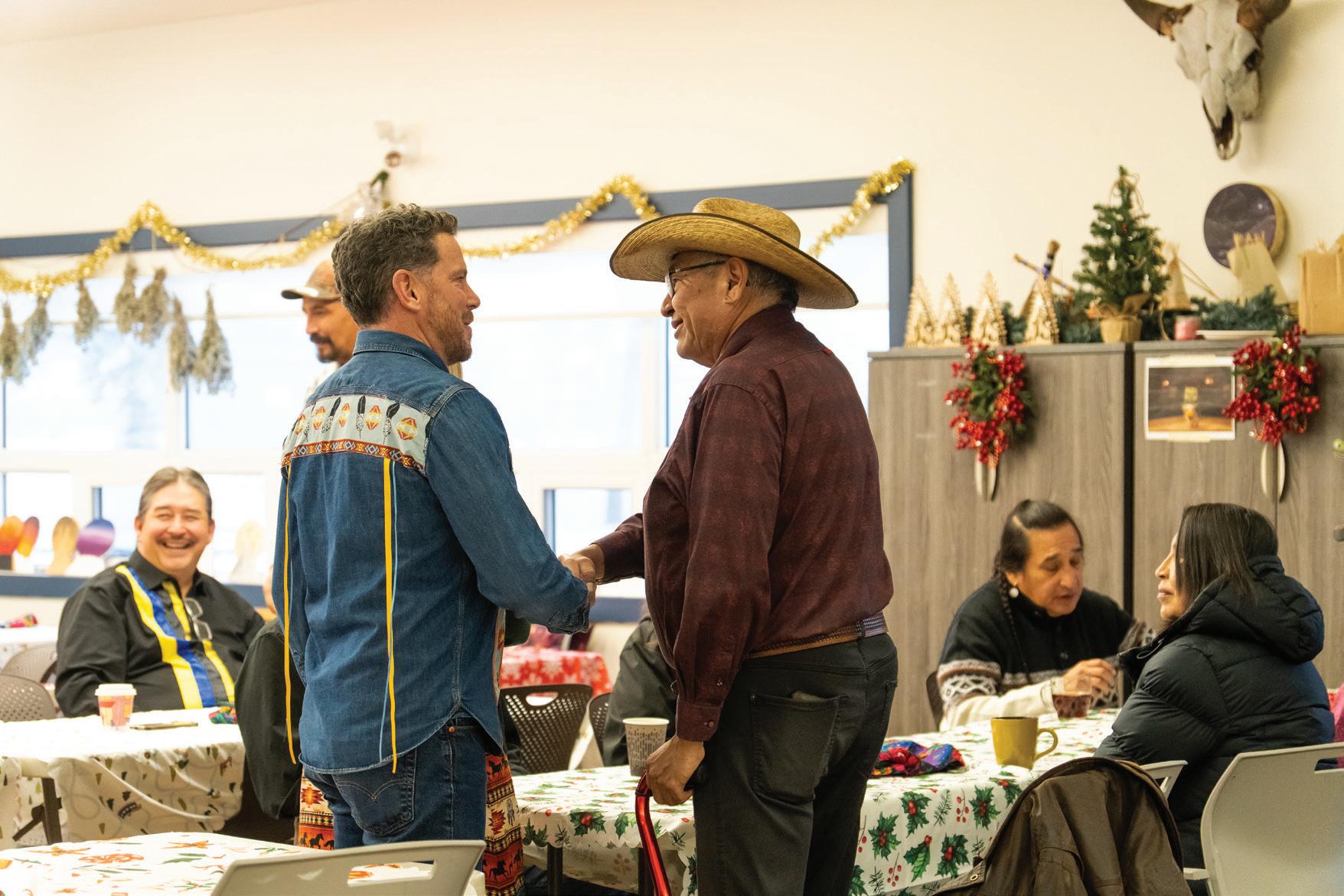
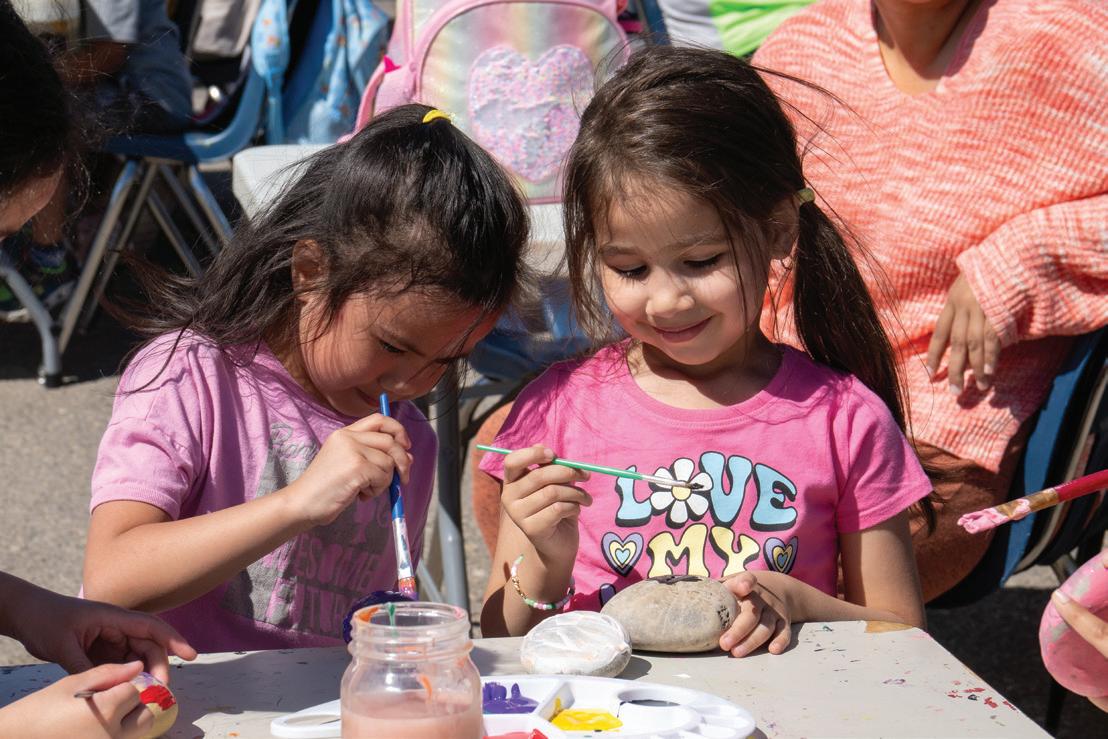
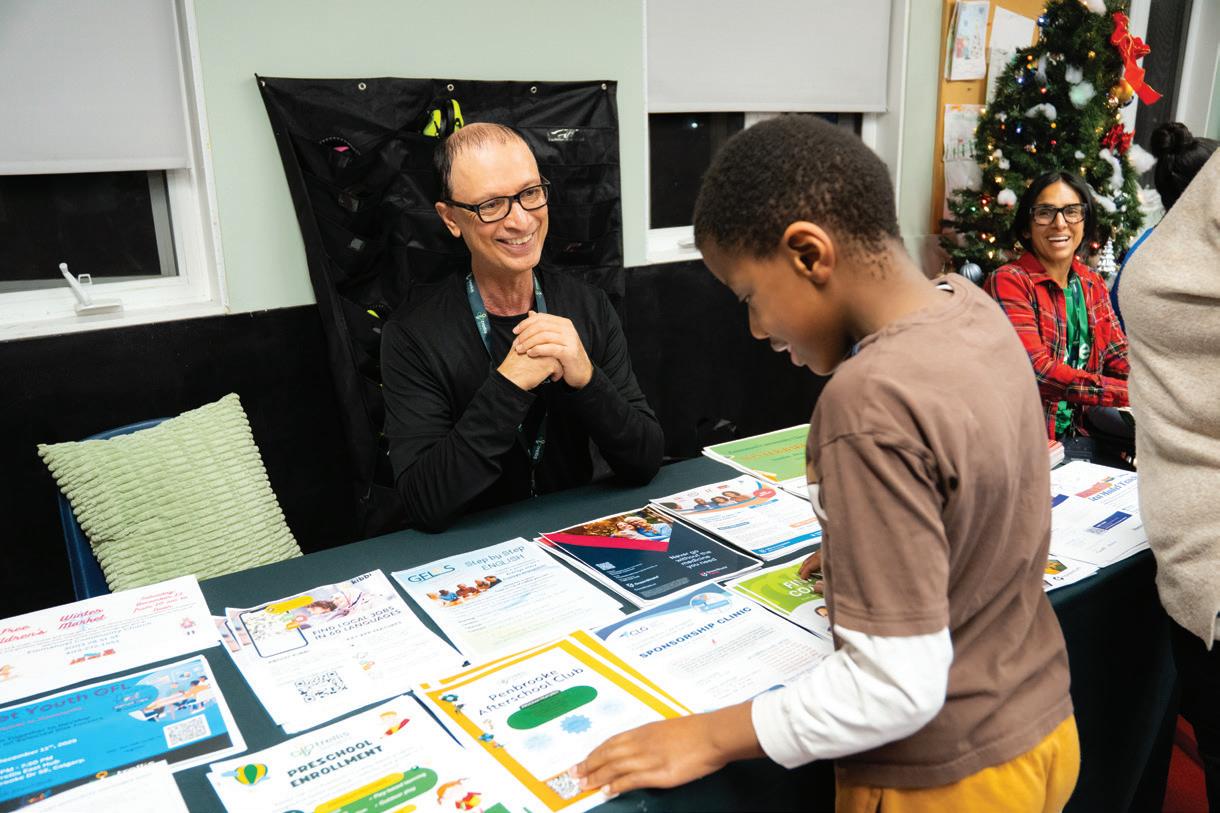
With courage to think differently and a commitment to building relationships, staff at Trellis’ East Hub in Penbrooke have reimagined the building’s potential, opening doors to more Calgarians.
Trellis has deep roots in Penbrooke, having opened the original Penbrooke Club several decades ago.
For years, the building has been home to preschool and after school programs, important work that remains a cornerstone of the space. But the Trellis team dreamed of creating a hub that would better serve the entire community.
“When I started here, it was very quiet,” says Hannah, Program Facilitator at the East Hub. “Not a lot of people knew about our space or what we had to offer, which is amazing considering where we are now.”
“A small part of this building was being used for our preschool program, but otherwise it was sitting empty for
most of the day,” explains Ad, a Community Development Worker and a leader in the East Hub’s transformation. “No one would ring the doorbell or come to the space.
We knew that if we committed to changing the way we did things, we could make this hub more welcoming.”
The transformation started with cleaning and reorganization that would make the space more usable. Staff moved boxes and rehomed old items, uncovering an open and airy office area and a cozy room for therapy sessions. One highlight was the creation of an Indigenous Learnings Room. With input from Indigenous Circle Keepers on the Trellis team, what was once a storage area has become a vibrant and welcoming space ready to host gatherings or quiet one on one discussions.
With the physical space reimagined, it was time to invite the community in.
“Food is always a good way to build connections, so we decided to create a food pantry,” explains Ad. “We wanted people to come here in a way that felt natural, and the pantry was a great first step.”
The pantry has become a key entry point into the Penbrooke Hub. It helps address food insecurity, which is a major concern for residents in the neigbourhood. In 2025, staff at the East Hub were contacted 626 times for support with accessing basic needs, and the pantry was a major contributor to that number.
The minutes residents spend selecting their food items have also become an opportunity to dive deeper.
“As residents started coming in, I wanted to make them feel more connected to the hub,” says Ad. “I would start with something simple, like asking them whether they lived in the area, and sometimes that would lead to a more in-depth conversation. It’s always important to build a relationship first. When you have the relationship, people will be more likely to want to have a conversation.”
“Talking to residents who come to the pantry allows us to determine what the greatest needs are within the community.” adds Hannah. “People won’t start talking about their life right away – it takes them a while to tell us what kind of support they need. But as they continue to visit, we get to know them on a more intimate level, and they become more open about what they’re going through.”
These days, the Penbrooke Hub is a busy place. On any given day, you might find therapy sessions in progress with our clinical team, young people connecting at Youth Programming, or evening events around anti-racism or how to interpret your utility bill.
Within the reimagined space, the Trellis team has been able to serve clients in a more well-rounded way. “Staff from across the agency have made a commitment to work more collaboratively within the hub,” explains Ad. “For example, when clients are waiting for their therapy appointments, I talk to them about different programs and resources that are available in the neighbourhood.”
“We’ve been able to help families in our after-school program access other Trellis supports,” says Hannah. “Whether it’s referring someone who’s struggling with rent to our Home Stay program or introducing newcomers to our Settlement team, it’s been great to be able to connect people with more of what they need to thrive.”
Whatever the reason someone comes to the door, they’ll be met with a smile and a listening ear.
“Trellis stands out because we’re relationship-led,” says Ad. “If you asked people what they like about coming to the East Hub, I think the number one thing they’d say is the positive atmosphere. We’ve worked hard to make this hub a more welcoming place – we’ve come a long way and we’re not done yet.”

A healthier, happier you is within reach. Trellis offers therapy for individuals, couples and families ages four and up, with a diverse team of counsellors who tailor their approach to your needs. Sessions are available in a variety of evidence-based approaches, and many insurance plans are accepted. Sliding-scale options help ensure therapy remains accessible to those who need it most. Scan the QR code to connect with Trellis Therapy today.
When a young person can no longer live safely at home and enters care, it can feel like every door has closed at once.
Home feels far away. Relationships are strained. Trust is fragile. The path forward is unclear. That’s a lot for anyone to carry, let alone a young person.
Many youth come into care because of family crisis, neglect, violence, addiction or circumstances beyond their control. They may move between homes, lose connection to school and community and feel separated from the people and cultures that ground them. Without strong support, these experiences can follow them into adulthood.
At Trellis, we believe group care can be more than a place to stay. It can be the moment where a new door opens.
Co-designed with youth, families, Elders and frontline staff, the Transformation Project for Young People in Care is reshaping group care into something more connected, culturally grounded and healing focused. Young people do not heal in isolation. They heal in relationship.
“We have made a conscious decision to not view youth as individuals separated from their families and really
see the whole family as a unit,” says Monica, a Program Manager at Trellis. “Our current work is intentional and focused on finding, maintaining and strengthening the meaningful family connections and relationships that youth need to succeed.”
Today, supports wrap around youth and the people who matter most to them. Youth and Family Case Managers rebuild family connections. Therapists build trust through everyday moments. Circle Keepers bring cultural teachings and ceremony into the homes, strengthening identity and belonging. Barrier Removal Funds help families stay connected by covering practical needs like transportation and groceries. Strong coordination with Child and Family Services supports long-term stability.
Together, these changes help group care feel less like transition and more like stability.
Over the past year, Monica has witnessed powerful reminders of why this work matters.
She describes a young person who reunited with her family after being told for years it might never be possible. As trust rebuilt and visits increased, the youth began spending holidays and celebrations at home
“Youth in care are just that, youth. They are smart, funny and full of curiosity…”
before eventually returning to live with her parents and siblings.
In another instance, three sisters who had lost both parents within months of each other were initially placed in different homes. Through the Transformation Project’s focus on family connection, Trellis worked to bring them together so they could navigate their grief side by side, lean on each other and rebuild their sense of family.
Staff also helped reconnect a young person with grandparents in another country after years without contact. “Watching the family reconnect, the grandparents shower love and the youth take it all in was a powerful reminder of the importance of connection.”
These moments reflect what Monica wishes more people understood:
“Youth in care are just that, youth. They are smart, funny and full of curiosity… they love their people with deep, unwavering loyalty, and they find joy in the simple things like playing games, laughing and telling silly jokes that light up the room.”
Beneath behaviours shaped by trauma, she says, is “a young person yearning for stability, connection and the opportunity to simply be a kid again.”
In its first year, the Transformation Project supported 60 young people and strengthened connections with more than 100 family members and natural supports. More youth are transitioning to stable housing or reunifying with family, and cultural connection is strengthening identity and belonging.
These early signs point to something important: when relationships are prioritized and barriers are removed, stability becomes possible.
For every young person who walks through Trellis’ doors, Monica says the team asks one guiding question: “When our involvement ends, who remains?”
This work is part of a three-year transformation. A $1 million investment from Calgary Foundation helped launch the first year and demonstrate what’s possible. Year two was generously supported by an anonymous donor. The Home Depot Canada Foundation recently committed $200,000 to help fund the next phase, building on their ongoing support of Trellis youth housing programs.
Together, these partners are helping create pathways out of instability and toward connection, belonging and long-term well-being.
Transformation at this scale takes courage, coordination and community. It takes people who believe cycles can be interrupted and futures can change.
Because when the right supports come at the right time, new doors open. And with continued partnership and generosity, more youth will have the opportunity to walk through them.



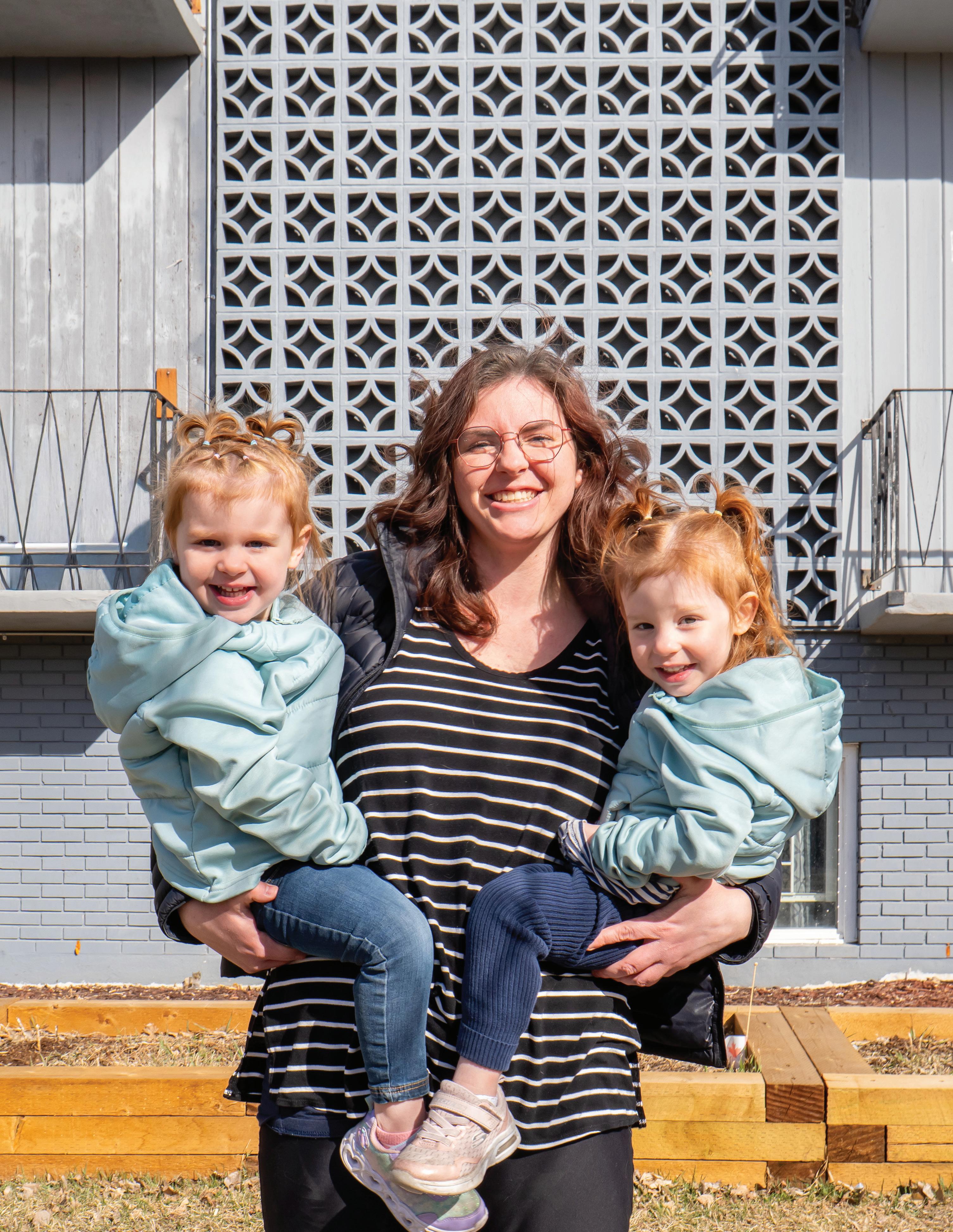
When children and youth can’t stay in their family home, foster families provide the safe, caring environment they need to grow and thrive.
As a Trellis foster parent, you’ll receive comprehensive training, ongoing support and a dedicated team walking alongside you every step of the way.
If you have space in your home and heart to support a child during a critical moment, fostering might be for you.
Scan the QR code to learn how you can become a foster parent with Trellis


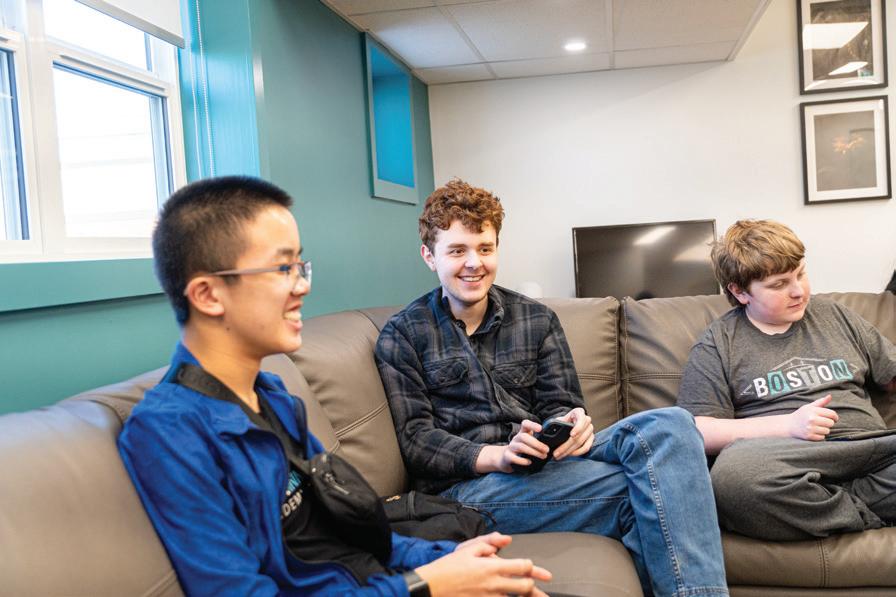
Trellis program
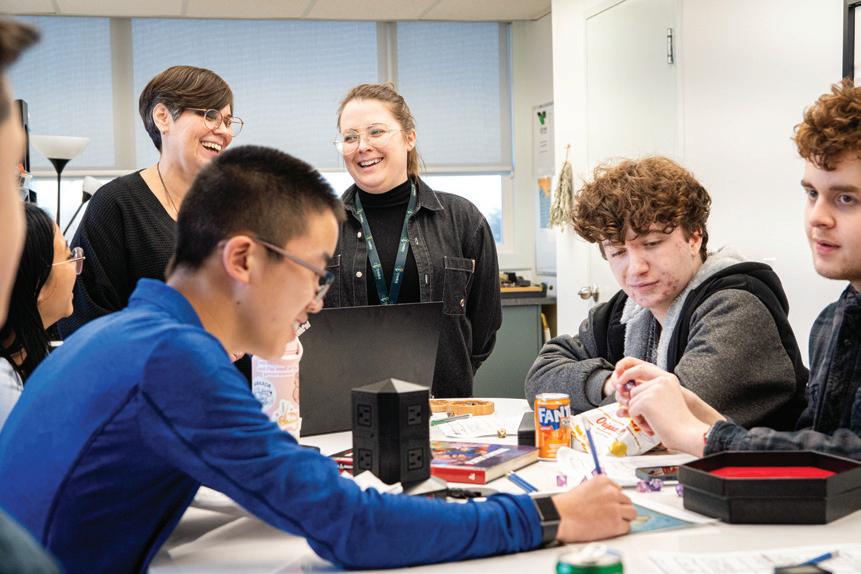
When Angela joined the team at Trellis’ Southwest Calgary Family Resource Network (FRN), she never imagined that she’d be spending her Friday afternoons as a Dungeon Master. But opening doors for youth often requires some flexibility and a willingness to think outside the box.
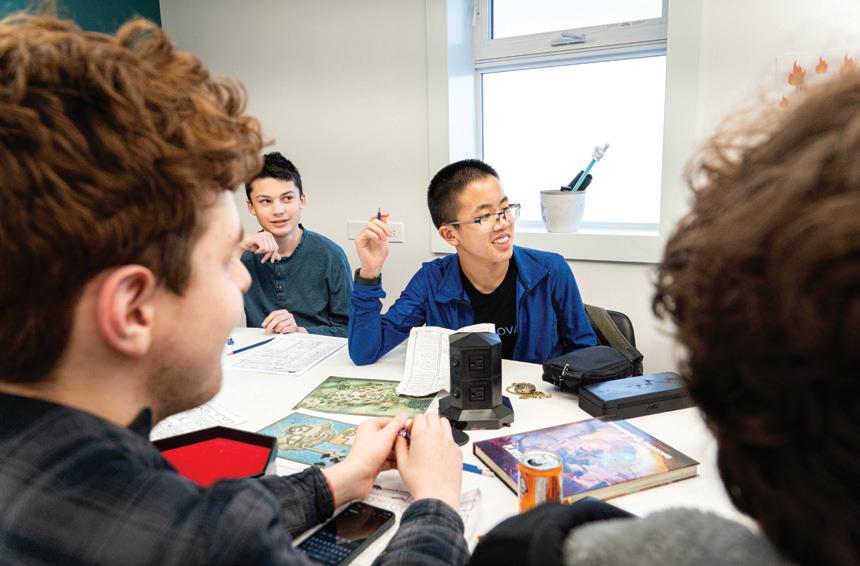
Angela, a Family and Youth Resource Network Specialist, wanted to bring more teens to the Southwest FRN at our hub in Acadia. A conversation with Samantha, one of Trellis’ All In For Youth Success Coaches, planted a seed that has grown roots and taken off. Now, every Friday afternoon, a group of boys ranging in age from 14 to 18 show up at the Hub, eager to connect with their friends and continue their Dungeons and Dragons campaign.
“Neither of us knew very much about Dungeons and Dragons,” laughs Angela. “But we were committed to doing it together. It was only supposed to be a six-week campaign, but months later, we’re still going strong.”
Dungeons & Dragons, often referred to as D&D, is a collaborative fantasy game where players create characters and go on adventures guided by a storyteller called the Dungeon Master. Instead of a board, the game unfolds through imagination, conversation and dice rolls that determine whether actions succeed or fail. Players explore worlds, solve problems, fight monsters and make choices that shape the story.
This may sound like simple child’s play – and that’s part of the appeal.
“Teens don’t have many places where they can just come and have fun,” explains Samantha. “They see their friends at school, on sports teams and at extracurriculars, but the opportunity to have casual fun often gets lost. Having a space where they can be creative, have fun and connect with peers who have similar interests helps create a sense of belonging, something that they’re still developing at this age.”
... help youth stay engaged in their education by connecting them to the resources, both in and outside of school, that they need to succeed. AIFY is offered in 13 Calgary Board of Education high schools across the city.
With all the pressures that young people face, from school, family, social media and complicated relationships with peers, the importance of this safe place to escape into fun can’t be overstated. “I really like the freedom of D&D,” says Roane, 17, one of the youth participants. “You can just be whatever you want and do whatever you want. It’s a nice change of pace. I don’t need to worry as much about what I do in the game as I do when I’m at school or just in my day to day.”
When the boys arrive at the Hub, their faces light up with smiles as they see the friends they’ve grown close to. “It’s been amazing to see the kids come together and build a little community,” says Samantha. “They often show up before the program starts to chat about their week and strategize about what they’re going to do next in the game. You can tell they feel really connected to each other.”
“I have a great time coming here,” says Mason, another D&D participant. “It’s been fun to play with friends, make new friends and just have a fun adventure together.”
As they sit down around the table to roll their dice, the boys share plenty of laughs with their fellow players and Trellis staff. Laughter and play are reasons enough to call this program a success, but there’s more to it than that. “They’re having so much fun that I don’t think they’ve noticed that they’re building reading, writing, communication, social and leadership skills,” says Karen, Roane’s mom.
Samantha and Angela agree, specifically noting the importance of the leadership opportunities the program has offered the boys. “Watching the more experienced players mentor those who are newer to the game has been amazing to see,” says Samantha. “We had a newer player who came in feeling nervous and unsure of himself.
The more experienced players took him under their wing and helped him figure things out. Over time, he’s built trust and connection with the other boys, which has given him the confidence to try new things. Now he shows up every week excited to play.”
The boys also credit their relationships with Trellis staff as one of reasons they keep coming back. “I love the leaders here,” says Ethan, 18. “They’re super kind and just fun to be around.”
“Samantha and I have really tried to create a space where they’re just allowed to be themselves,” explains Angela. “We joke around with them, make an effort to get to know them better and let them get to know us, too. When we provide spaces where young people feel safe, it builds their self-esteem and self-worth. It also helps them understand that not all adults are scary, which is important as they navigate the world outside of our program.”
“The creativity and enthusiasm the staff have brought to the table, and their willingness and ability to individualize the experience, lets every participant feel seen and accepted,” says Karen.
On the wall behind the boys hangs a poster with the words “It’s all ok! I’ll be ok!”. Surrounded by flames, it’s a reminder to keep calm even as chaos swirls around them. “One of the boys started saying that as a way to keep morale up during the game,” Angela says. “I’m constantly putting them in tough situations as the Dungeon Master –there’s so much coming at them and they’re fighting for their lives in the game. So, I made that poster and I hang it up every time the boys come to play.” It’s a simple mantra, but it’s one that serves them well, both in their Friday adventures and in the world beyond the game.
At Trellis Society, we believe that everyone deserves the opportunity to grow, flourish and reach their full potential
That’s why we work alongside people of all ages and backgrounds, helping them overcome barriers, nurture their strengths and create brighter futures.
But we can’t do this work alone. Our ability to adapt, to meet people where they are, to provide support when it’s needed most – it all happens because of a deeply rooted community of supporters, partners and people who believe in this work.
Monthly gifts are one impactful way for our donors to contribute to the work we do. When you choose to donate monthly, you are investing in sustainable, continuous change that empowers individuals and communities to thrive all year long.
The people we serve are often living in uncertainty. They might be wondering whether they can pay their rent next month, whether they can find and keep a job, or whether their friends and family members will be there when they need them.
Our monthly donors help us provide stable, ongoing support for the people we serve. Monthly donations allow us to focus on the needs of today, while feeling secure in the knowledge that we can be here for our clients tomorrow, next month and next year as they build towards a brighter future.
Monthly donations also provide stability for Trellis as an organization. With a portion of our budget secured each month, we can set realistic annual goals, develop and launch multi-year programs and make thoughtful investments in growth. Instead of focusing solely on short-term needs, we can concentrate on building sustainable solutions and deepening our impact in the Calgary community for years to come.
Interested in becoming a Trellis monthly donor? Scan the QR code or email donations@growwithtrellis.ca
Our monthly donors tell us that committing to a regular contribution makes them feel part of the Trellis team. When they pledge to stay involved for the long term, they feel connected to Trellis’ vision and purpose. As they continue to stay engaged with the work we do, they witness something truly rewarding – the growth that takes place gradually from small moment of impact.
“After volunteering with Trellis Society, I gained a deeper understanding of the impact they have in our communities,” explains Olivia, a Trellis monthly donor. “Donating monthly is my way of standing alongside Trellis year-round so they can continue supporting people when it matters most.”
Monthly donation makes a big impact for us, and it’s also convenient for you. On the Trellis website, you can enter the donation amount of your choosing, input your payment information, and the funds will automatically be transferred to us each month. If you would like to have your funds directed to a specific program area, we can accommodate that too.
Any monthly contribution, whether big or small, brings stability, certainty and peace of mind. This gives us freedom to open doors in new and creative ways and allows us to focus on the work that creates flourishing communities.
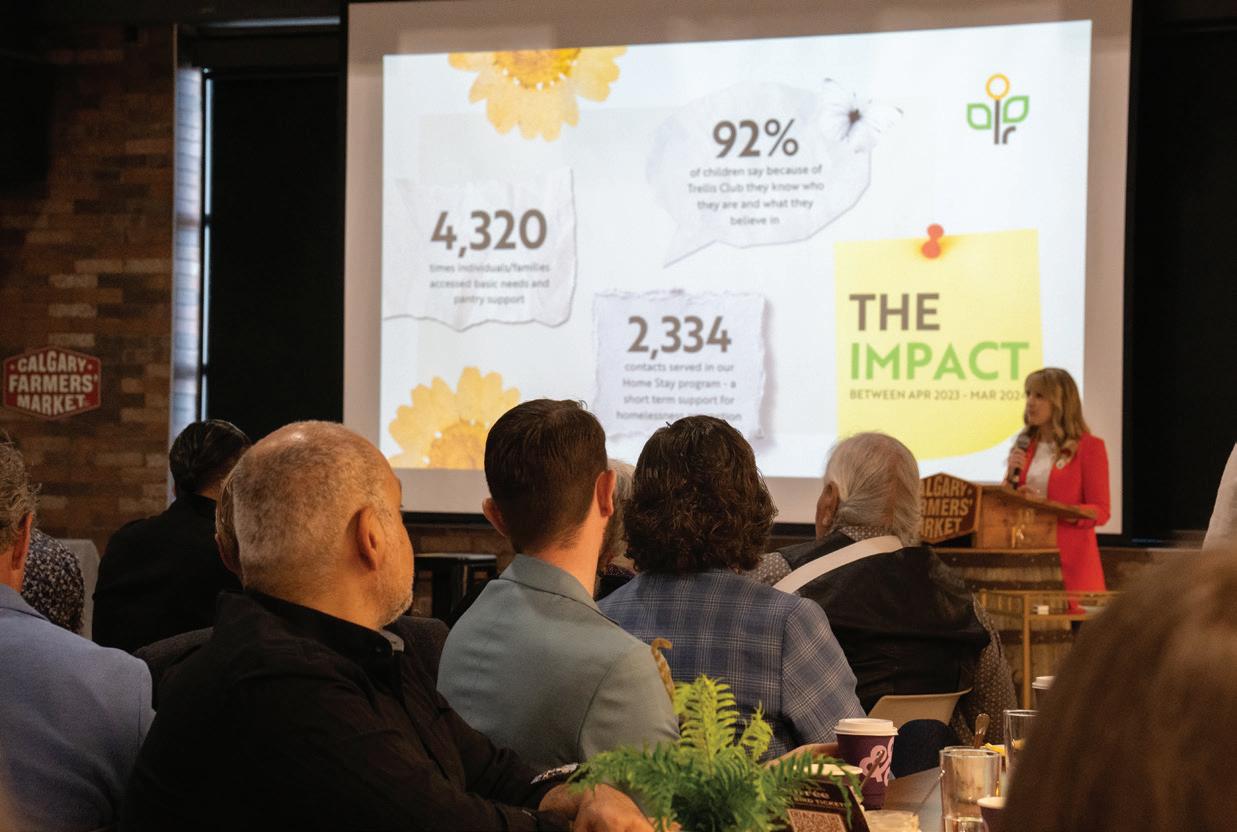
When someone walks through the doors at Trellis, it may be at a moment when life feels uncertain.
In those moments, trust matters. Accreditation is one of the ways we protect that trust.
Across Trellis, programs undergo rigorous external review to ensure the care people receive is safe, ethical and effective. It is not a one-time achievement. It is an ongoing commitment to clear standards, strong practices and continuous improvement.
At its core, accreditation is accountability. It asks hard questions about how safety is upheld, how decisions are made and how people are treated when they are at
their most vulnerable. It ensures staff are trained and supported, policies reflect best practice and services are delivered consistently and with care.
“Accreditation ensures that the people we serve feel safe, have a positive sense of well-being and inclusion and are valued for their uniqueness,” says Natashia, Trellis’ Practice & Quality Improvement Lead. “It also ensures that everyone receives consistent quality of care at all levels of the organization.”
For the people we serve, this commitment shows up in everyday moments. Youth experience spaces that are predictable and safe. Families navigating crisis encounter
“We want the people we serve, funders and our partners to know they can rely on us to provide safe, ethical and high-quality services.”
consistency and respect. Individuals moving through complex systems meet staff guided by shared values and clear standards.
Accreditation is also reflected in how staff show up each day. Natashia explains that it means engaging through a trauma informed lens, ensuring people only need to tell their story once and helping reconnect youth with natural supports, culture and community.
Without these standards, she explains, people would notice inconsistent practice within programs and across the agency.
As Trellis grows – expanding housing, strengthening family supports and responding to emerging community needs –accreditation helps ensure quality remains strong. With 28 programs accredited, along with agency-wide governance and management, teams are continually reflecting on what is working and where improvements are needed. Standards guide the development of new programs, documentation remains consistent and staff are oriented to best practices that support the people we serve.
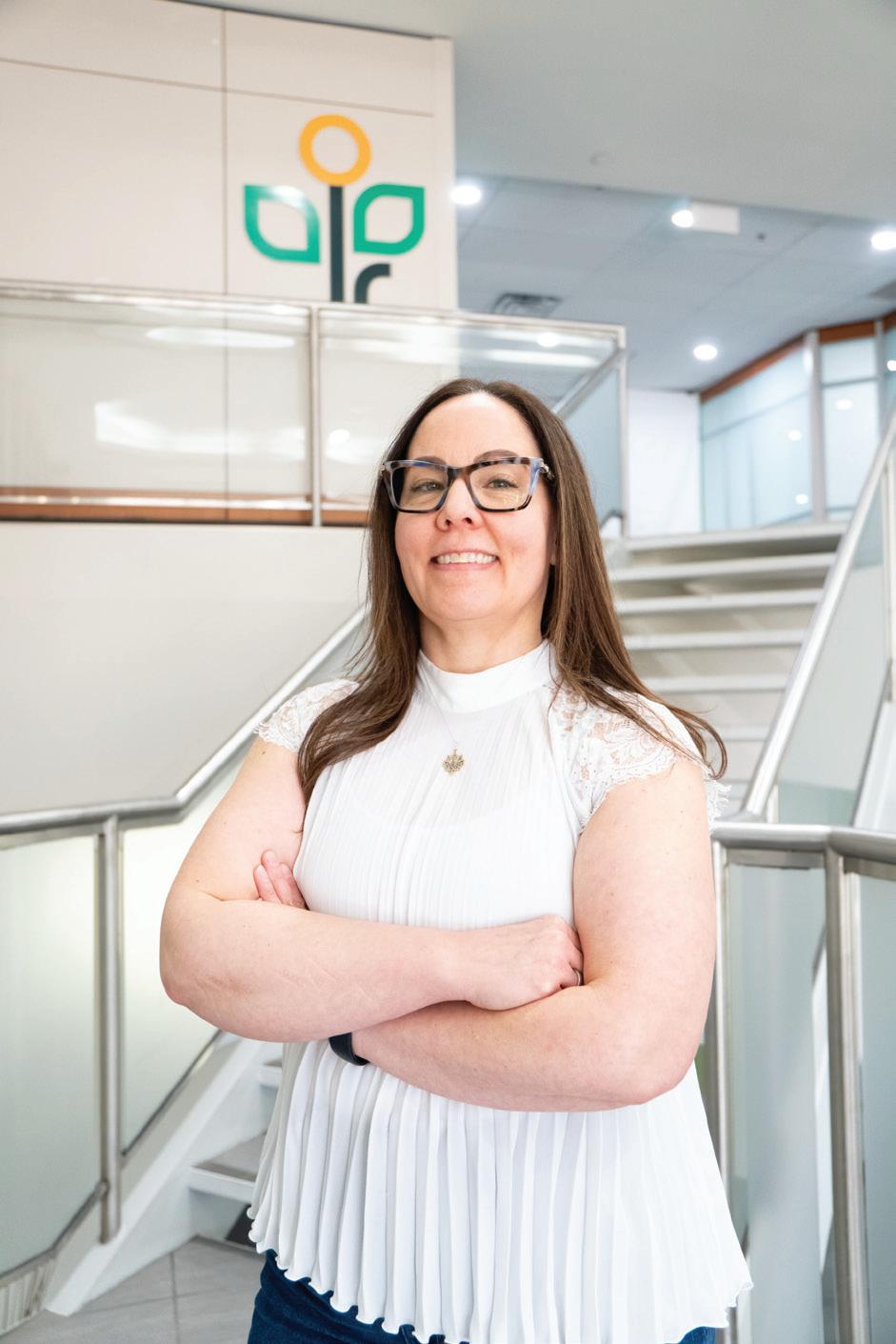
Continuous improvement is essential in human services work. “The sector and the people we serve are not static but rather constantly changing and evolving,” Natashia says.
For donors and partners, accreditation offers reassurance that their support is stewarded responsibly. It reflects an organization committed not only to compassion, but to excellence, transparency and measurable impact.
Accreditation rarely makes headlines. Yet it shapes every interaction, every program and every outcome. It is one of the ways we ensure that as Trellis branches out, the care people receive remains grounded in trust, integrity and a commitment to doing quality work.


Calgary’s Best Party With A Purpose
OCTOBER 24, 2026 |
Join us for an evening of impact and meaningful connections with Calgary changemakers. Scan to buy tickets and explore sponsorships!

TITLE SPONSOR