

The homeland of the Shtax’héen Kwáan Tlingit of Southeast Alaska. We are able to share Wrangell’s wonders with you because of the stewardship of the Tlingit people, who have lived here since time immemorial. It is important to us to pay our respect while offering to build mutual understanding across cultures. The Tlingit are guided by four ancient values that remain central today:
• Haa Aaní (protecting and honoring the land): The Tlingit believe that everything has a spirit, including the animals and trees. In utilizing resources, the Tlingit acknowledge the spirits of the land, sea, and air.
• Haa Latseení (strength of body, mind, and spirit): Young Tlingit men and women are taught to achieve physical and inner strength, protect and care for their community, seek truth and knowledge, and adapt to changing times while maintaining the integrity of ancient values.
• Haa Shuká (honoring ancestors and future generations): The Tlingit maintain strong bonds with their ancestors, whom they honor in their daily lives and ceremonies. They also protect their land and culture for their children and grandchildren and those who follow them.
• Wooch Yáx (maintaining social and spiritual balance and harmony): This value guides relationships with others and includes kaa yáa awuné (respect for others) and at yáa awuné (respect for all things).


Overview, itinerary, Wrangell History, How To get Here
Anan Bears, the Stikine River, Golfing, Fishing, Hiking & Biking
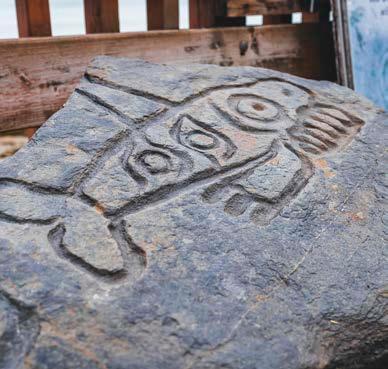
Totem History, Petroglyph Beach, the James & Elsie Nolan Center
& DIRECTORIES BearFest, Garnets & More...
Island Map, Downtown Map, Boat Charter & Business Directory
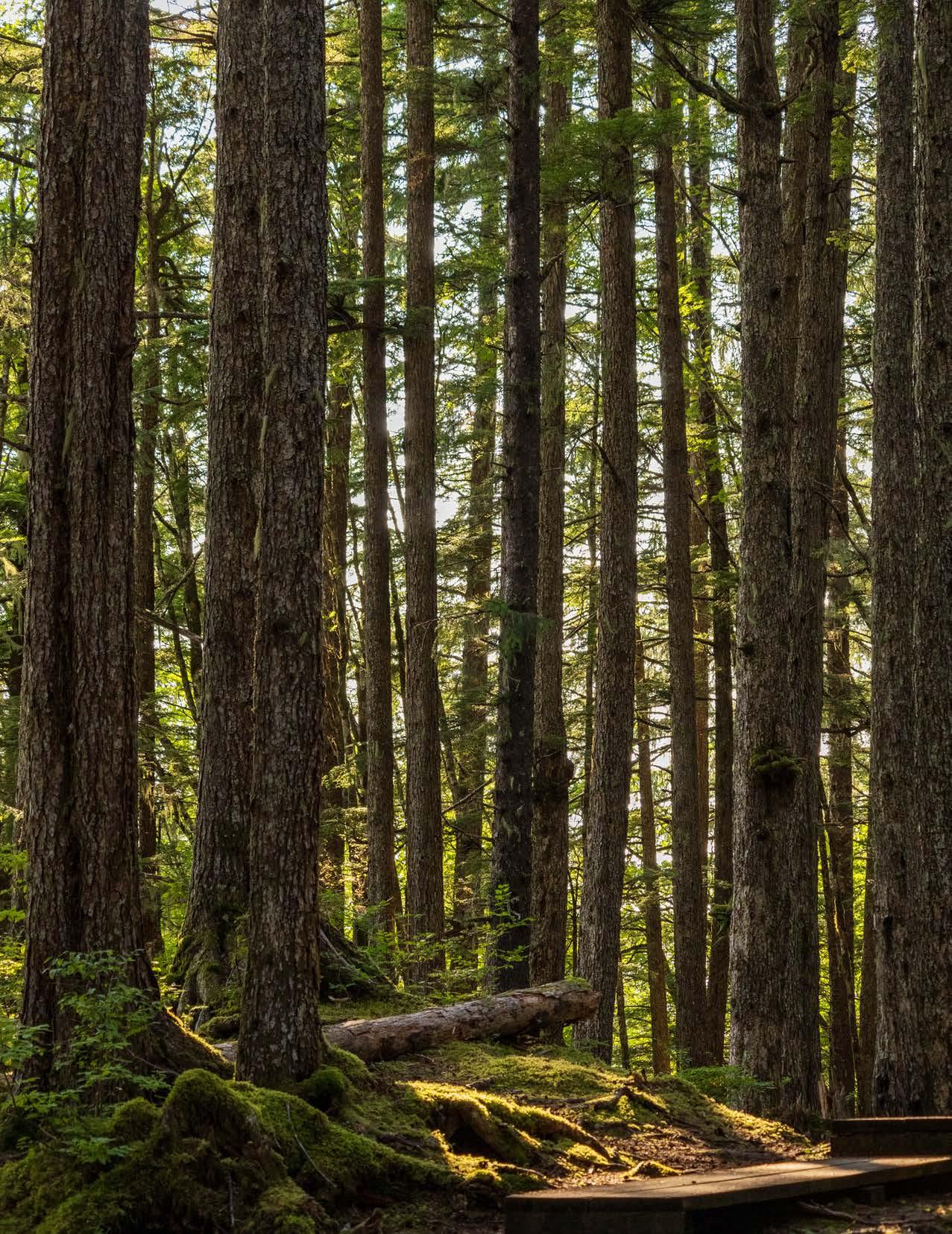
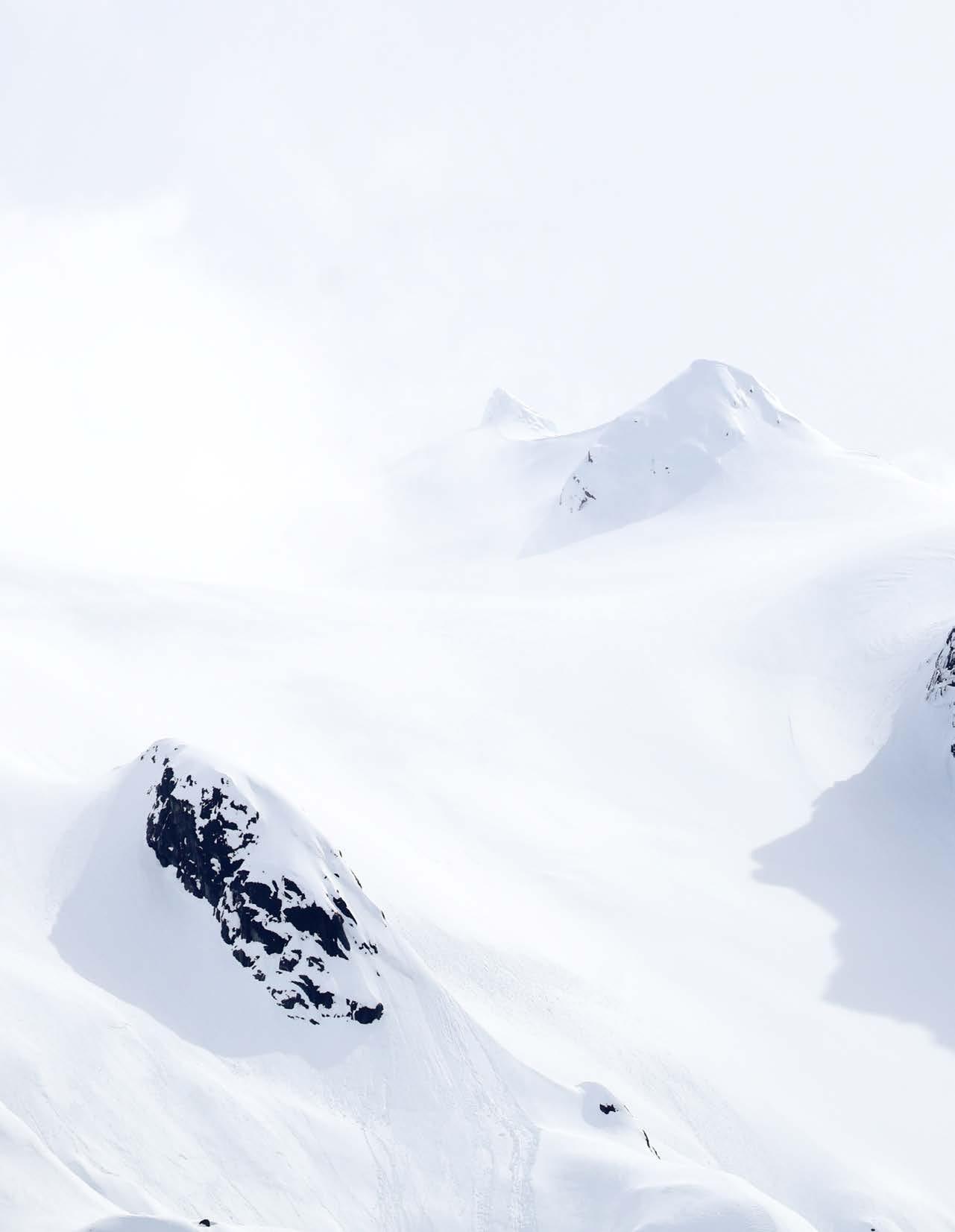
In a world where no one waits, Wrangell offers an authentic escape. Embark on your iconic Alaska adventure to discover its unspoiled beauty, up-close and Independent.
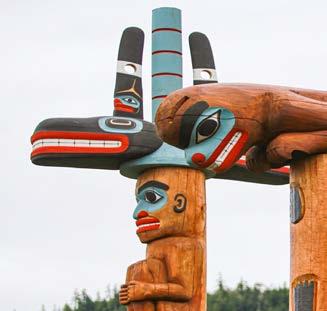
Discover Wrangell’s rich history and native culture.
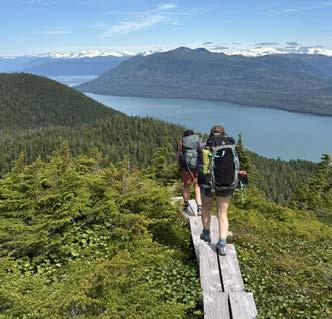
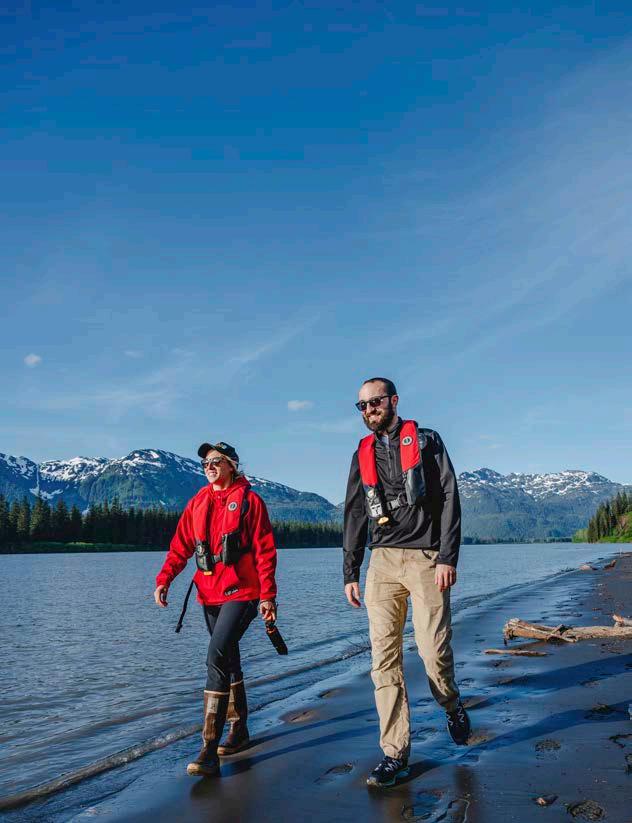
Explore trails and shorelines to connect with nature.
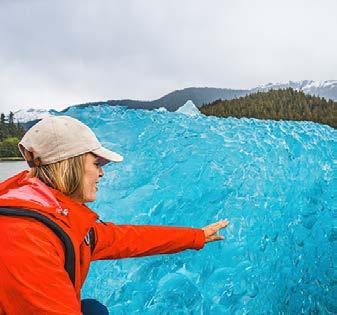
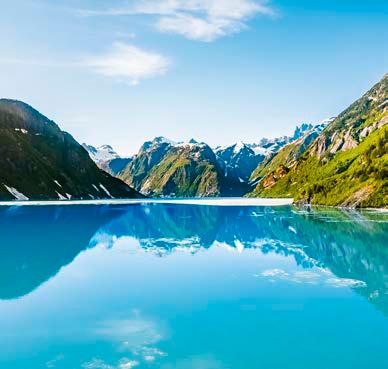
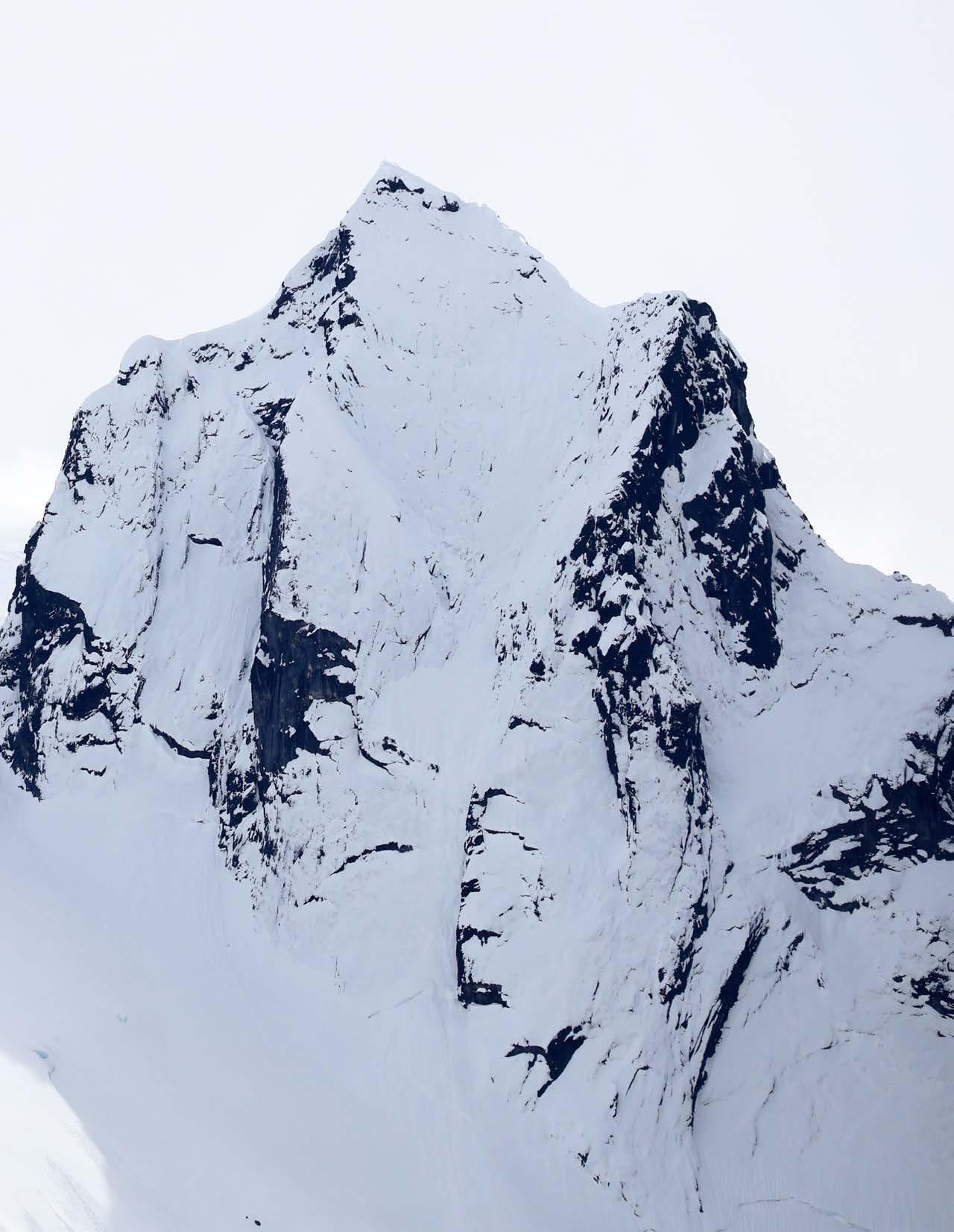
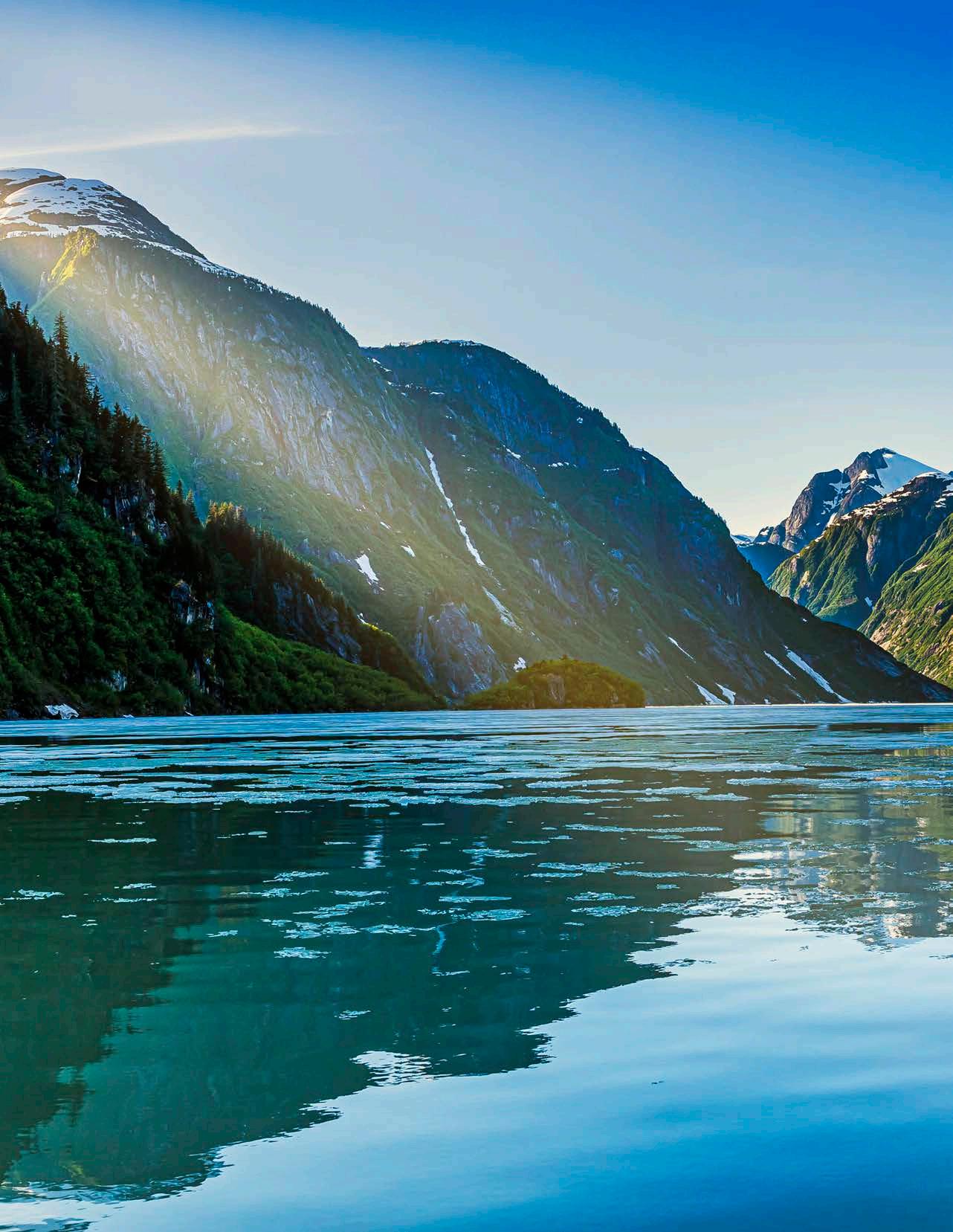
Journey to LeConte’s icy, waterfall-lined bay.
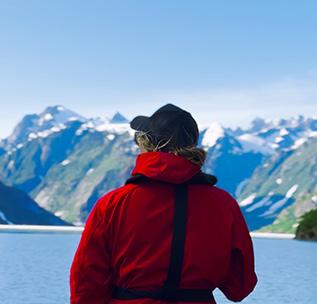
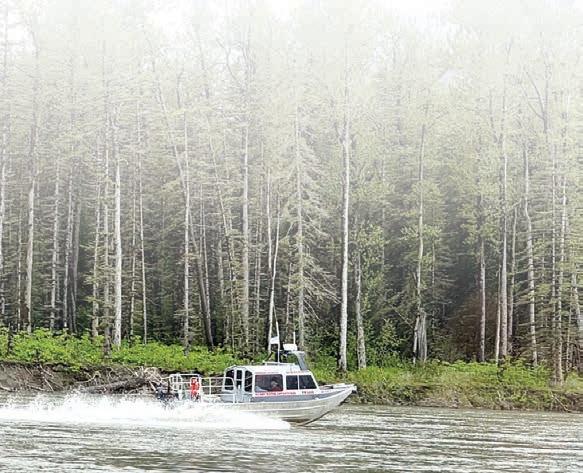
Jet boat into the pristine Stikine River wilderness.

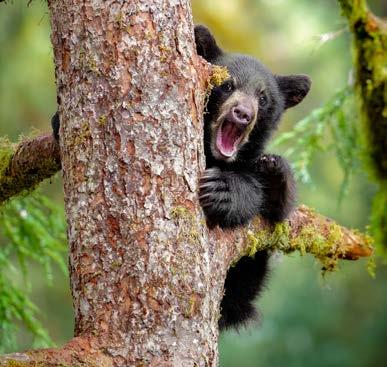
Witness bears and eagles feast on salmon at Anan.
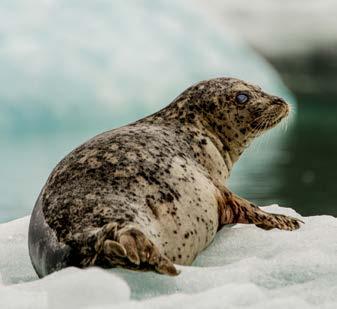
See whales, otters, sea lions, and seals on a charter.


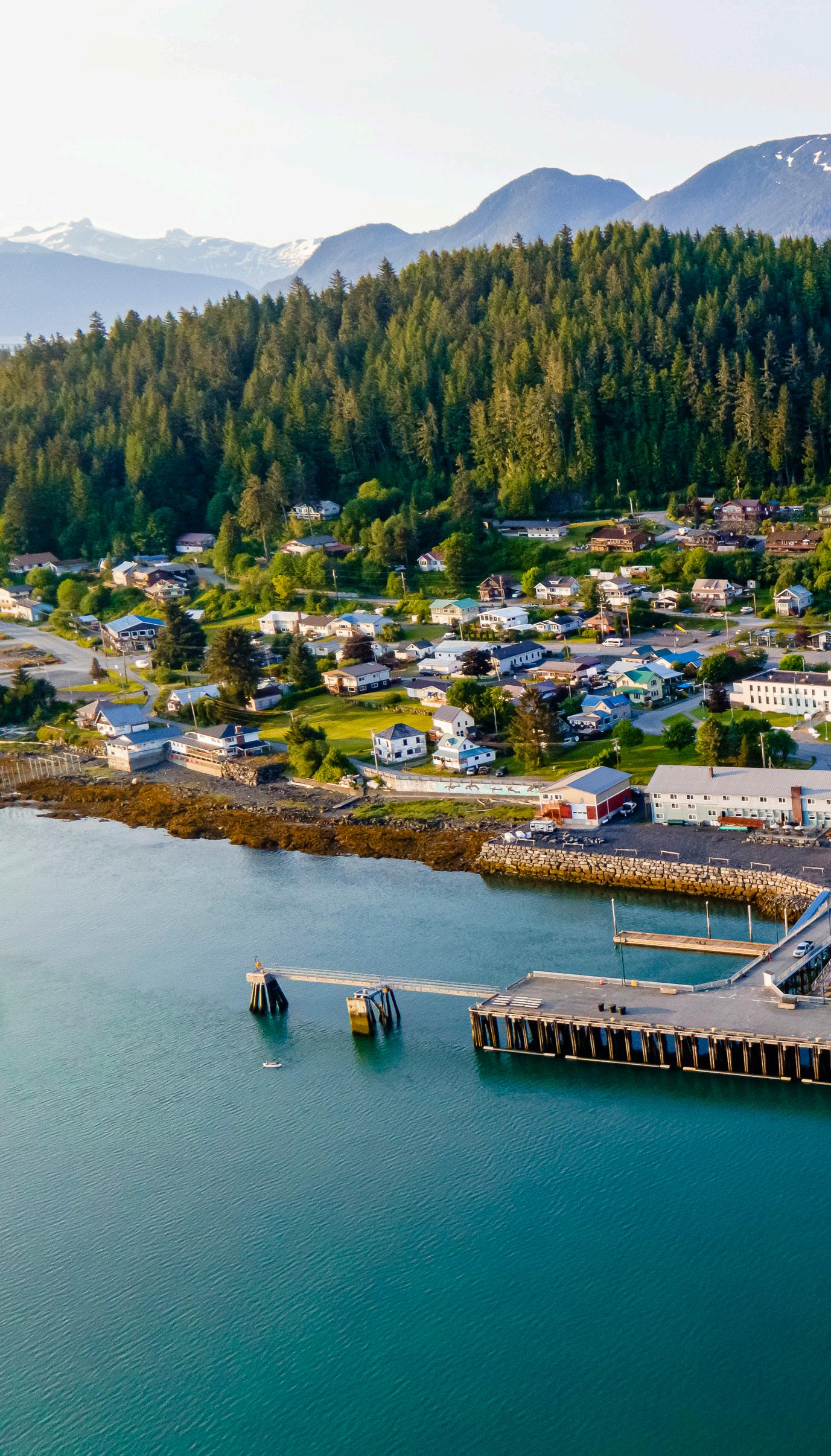
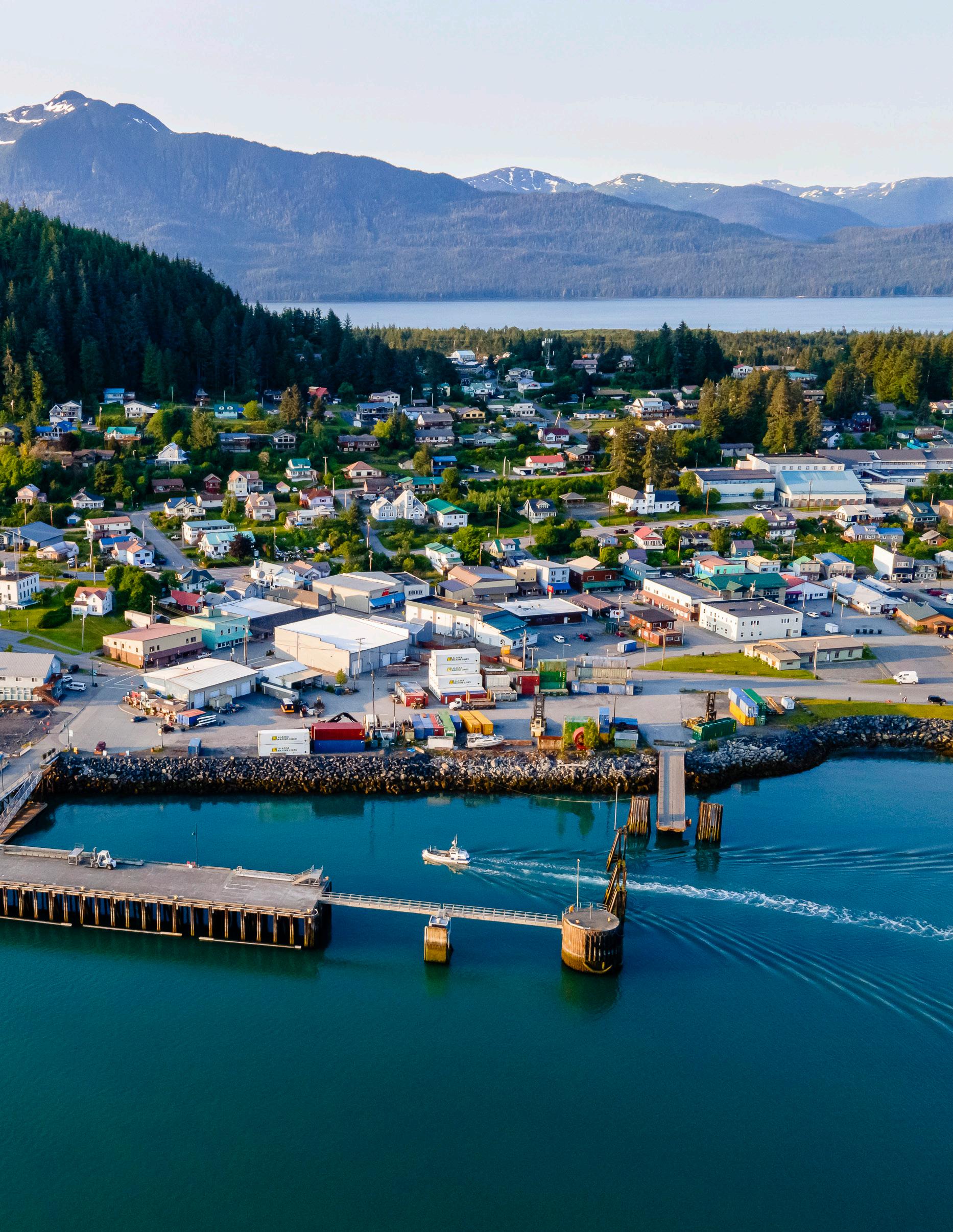
Wrangell, one of the most historic communities in Alaska, is the only town in the state to have been ruled by four nations: Tlingit, Russia, the United Kingdom and the United States.
It has the reputation as the “friendliest little town in Southeast Alaska.”
It’s also one of the hardest-working towns in the state.
The maritime industry is Wrangell’s largest economic driver, which includes commercial fishing. The Marine Service Center is a thriving boat works facility for commercial and recreational vessels. Its boat lifts provide haul-out capabilities and skilled workers provide quality services known throughout Southeast Alaska.
The second-largest private-sector industry in the town of about 2,000 people is tourism, which is gaining in strength as more people discover the region’s attractions and smaller, higher-end cruise ships add Wrangell to their itineraries.
About 75,000 visitors are expected in 2026 by boat and airplane, a single-digit percentage fraction of the large numbers in the crowded visitor cities of Ketchikan, Juneau and Skagway.
Located in the middle of the Tongass National Forest, Wrangell has a mild climate with temperatures infrequently dipping into a hard freeze in the winter. Rain is more common than snow, and summer temperatures range anywhere from the mid-50s to the mid-70s.
Wrangell is 750 air miles north of Seattle and 150 miles south of Juneau, the state capital. It sits near the delta of the Stikine River, an important resource in the lives of those who live here for recreation, commerce and subsistence.
On a clear day you can see the majestic, snow-capped mountains of British Columbia to the north and east of Wrangell Island. The Anan Wildlife Observatory and its world-famous bear viewing is a short boat ride away.
Salmon is the commercial fleet’s main catch, along with halibut, shrimp and crab. Processors freeze and pack for markets nationwide, though you can buy the seafood in Wrangell shops too – enjoy some of the freshest seafood you’ll ever taste!
Everyone is an unofficial greeter. Don’t hesitate to ask if you need help.
Wrangell isn’t as far away as you might think.
You can take off from Seattle on a Friday morning and be in Wrangell in plenty of time for lunch.
Then enjoy the rest of the day sightseeing along the waterfront, walking among the totems that tell the stories of Alaska Native culture and history, maybe visiting the Wrangell Museum before you enjoy dinner of fresh-caught seafood or other memorable dining choices.
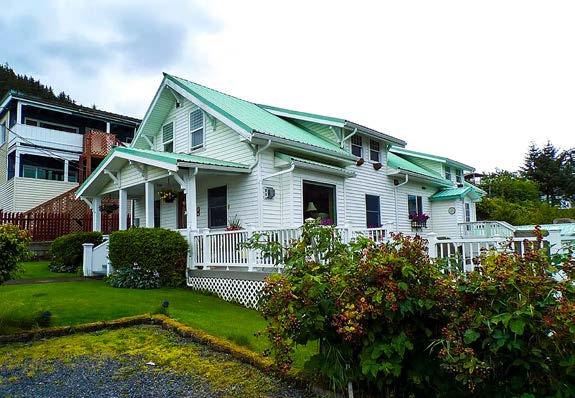
There are multiple options for your overnight accommodations, many with a view of the water.
Whether a hotel or bed and breakfast, Wrangell is ready to make your short stay comfortable. And all of your hosts will be happy to give advice on what to see while you’re in town.
On Saturday, if you’re ready for a little more adventure, you can rent a bike — electric or peddled — and tour the town, head out to any of several hiking trails, or just cruise around and enjoy the scenery.
For even more adventure, you can rent a car or a four-wheeler and drive farther out the road and even on some of the old logging roads that head into the interior of the island, moving through the thick forest for a change of scenery from the beachfront.
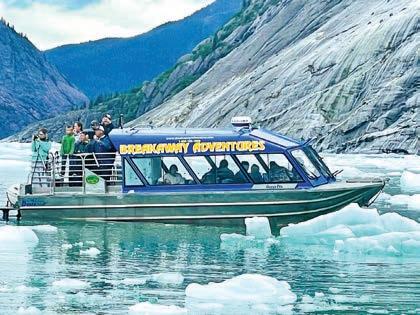
Going out on a charter boat to try your luck at salmon or halibut fishing is another option for your Saturday. Or skip the fishing and take a boat tour up the famous Stikine River or over to LeConte Glacier, the southernmost tidewater glacier in North America.
Seeing photos of the river and glacier is good, but seeing them in person from your seat in a guided tour boat is spectacular.
A directory of charter fishing businesses and sightseeing boats is on Page 47.
And if seeing the scenery from a boat, a bike or on foot still leaves you wondering about the bigger picture, you can charter a flightseeing tour of the area for an especially breathtaking view you probably never imagined.
Rest up Saturday night so that you can pick up where you left off on Sunday, fitting in whatever you missed, then pack up for the afternoon flight and be back in Seattle shortly after dinner on Sunday.
It will be the busiest three days but possibly the best three days you ever spent away from home.








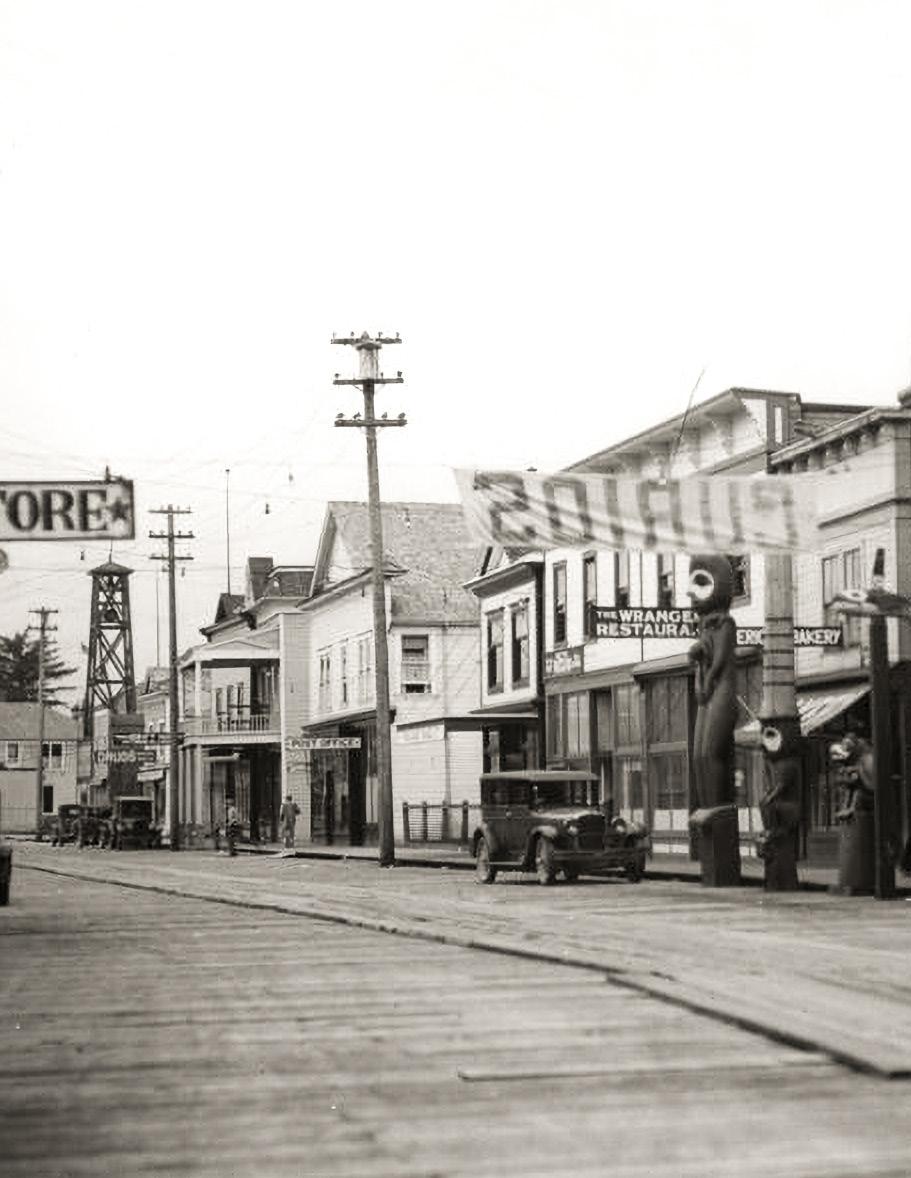


housands of years before fur, gold, salmon and timber brought settlers, adventurers and pioneers to work and live in Wrangell, the Tlingit people arrived in the region via the Stikine River, migrating from the Interior.
In Nora Marks and Richard Dauenhauer’s 1987 book of Tlingit storytelling, “Haa Shuká, Our Ancestors,” Robert Zuboff (Kak’weidí Clan, Kaakáakw Hít) recounted in a 1960s interview the story of how Indigenous people living on the mainland long ago discovered that the Stikine flowed under a glacier. So, they tied a raft together and put two elderly women on the raft and pushed them under the glacier.
The story goes on to say that others were afraid to float under the glacier, so they traveled over it.
Regardless of whether the first arrivals floated under the glacier, walked over it or paddled down the river when it was navigable, the Stikine has been the dominating force in Wrangell’s story since before recorded history. The town is proud of its name: Gateway to the Stikine.
The Russian American Co. decided 200 years ago to take a serious look at the river, particularly its value as a direct trade route to the fur resources of the Canadian Interior.
Coastal Alaska Natives had long been trading with the Interior tribes, and in about 1811 the Russians began trading with the Stikine Tlingit near the site of present-day Wrangell. With its headquarters at Sitka, the Russian American Co. ruled the fur trade of Alaska.
But its hold was soon challenged by the British Hudson’s Bay Co., and the showdown between the two commercial giants, each with a vast network of trade stretching across entire hemispheres, was to be played out in a remote and obscure corner of the wild now known as Wrangell Island.
A treaty signed between the two nations in 1824-25 granted the British the right to use navigable streams along the coast crossing Russian territory on their way from the Interior to the sea, providing no Russian settlement stood in the way.
With an eye toward the Stikine fur trade, the British company in 1833 outfitted the brig Dryad to sail from Fort Vancouver on the Columbia River to the Stikine to establish a permanent trading post upriver.
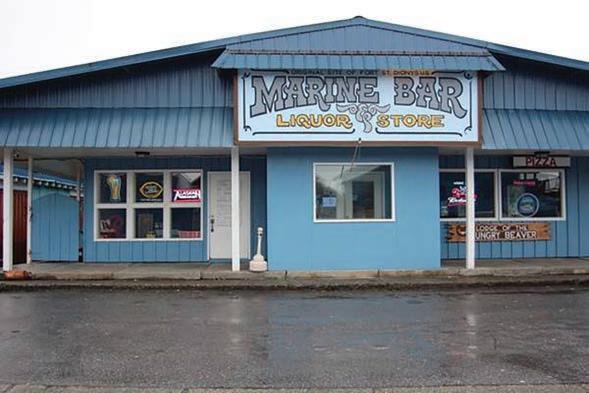
The Russians, however, had thoughts of their own on protecting the Stikine fur trade, and in 1833 Lt. Dionysius Zarembo and a band of men were sent to build a fort near the mouth of the Stikine. A spot was chosen near the north end of Wrangell Island, where the Marine Bar stands today, and the fort was completed in 1834.
The Tlingit village at that time was about 13 miles south, at a site now known as Old Wrangell. The village was moved to the harbor area in the 1860s.
Baron Ferdinand von Wrangel, manager of the Russian American Co. in Sitka at the time, got his confrontation in 1834 when the British brig approached the mouth of the Stikine and was greeted by a volley from the fort and the Russian brig Chichagof, at anchor near the fort.
Zarembo then boarded the British ship, protesting the entry of the vessel into a river in Russian territory. It appears no one asked the Stikine Tlingit, who protested against any new party going up the river to trade with the Interior tribes — an ancient trade right they fiercely maintained.
The British protested to the Russian government, and an agreement was reached in 1839 in which the British waived damages from the incident and obtained a 10-year lease of the coastline from the Russians for an annual payment of 2,000 land otter skins.
The British flag was raised over the fort June 1, 1840, renaming it Fort Stikine.
The lease with the British was renewed until the United States purchased Alaska from Russia in 1867, making Wrangell the only city in Alaska to have been ruled under three flags.
But fur, which had attracted Hudson’s Bay, was to face competition with the discovery in 1861 of gold up the Stikine, in Canada. With the arrival of hundreds of gold seekers, Wrangell began the first of its three lives as a gold rush boom town. (Continued on next page)
(Continued from Page 13)
With the onslaught came continuing problems for the Native community, sporadic incidents usually spurred by opportunism and exploitation.
The introduction of steamship service up the Stikine further strained relations. Capt. William Moore took the steamer Flying Dutchman upriver, pushing a barge bringing miners and provisions to the camps. The Stikine Tlingit rioted, claiming the boisterous craft would upset moose and salmon, and were paid with Hudson’s Bay blankets to restore order.
The 1861 rush was over only a few years after it began, when the gold deposit was found to be of limited extent. With the lowering of the Russian flag in 1867, Fort Stikine and the rest of Alaska became a possession of the United States. A new fort, named Fort Wrangell, after the baron, was built from 1868-70 at the site of today’s post office.
In 1872, two prospectors returned from Dease Lake in the Cassiar region of the Canadian Interior after finding gold. They left for the winter, seeking reinforcements and returned in the spring with an entire party of hopefuls, including Capt. Moore. The Cassiar gold rush was on, marking the second boom for Wrangell and bringing thousands of miners and everything thousands of miners needed, or at least wanted. Gambling, women and dance halls flourished.
By 1888, the Cassiar rush had all but died. The second boom was over. Fishing, canneries and a lumber mill were to provide the town with the economic stability gold and furs could not provide. In the late 1880s, the Wilson & Sylvester sawmill, believed to be the first in Alaska, was founded by Capt. Thomas A. Wilson, Juneau’s first Customs inspector, along with Rufus Sylvester, a retired fur trader. The mill, which later was to produce high-grade timber for airplane construction, produced packing boxes for the canneries and building lumber.
With the infancy of those industries came the last of the three gold rushes. The Stikine was tapped as a backdoor pathway to the Klondike rush of the late 1890s. Miners would travel the Stikine to Telegraph Creek, British Columbia, proceed 160 miles to Teslin Lake and then follow the Hootlalinqua River to the headwaters of the Yukon River. The Teslin route was more promising than profitable, however, and by
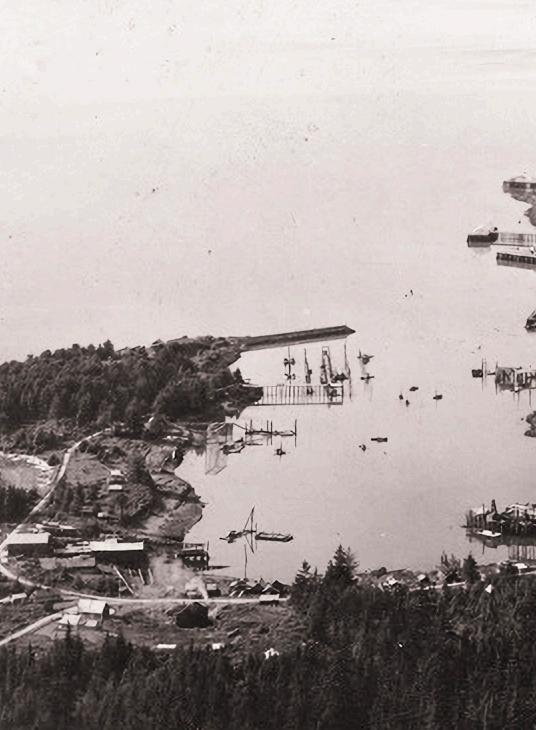
the turn of the century the miners were gone and Wrangell was again a quiet town of about 1,500 people.
More salmon canneries would open, in addition to shrimp and crab operations. The canneries brought the arrival of great sailing ships and, later, the steamers, making their runs between Seattle and San Francisco and the ports of Southeast, including Wrangell.
Before the arrival of air service, steamships were the town’s sole lifeline, and at one time more than 35 ships a week stopped at Wrangell.


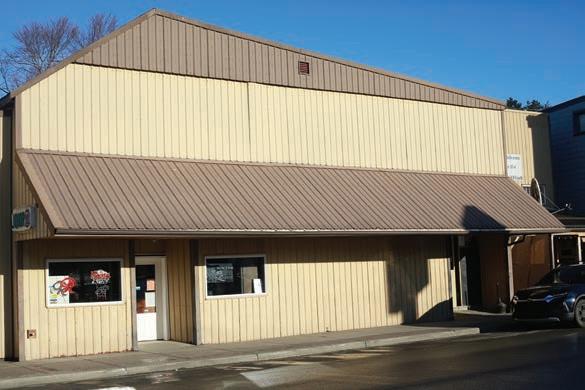
Throughout it all, the Stikine continued its role as a major transportation corridor, with riverboat service until that ended about 1970.
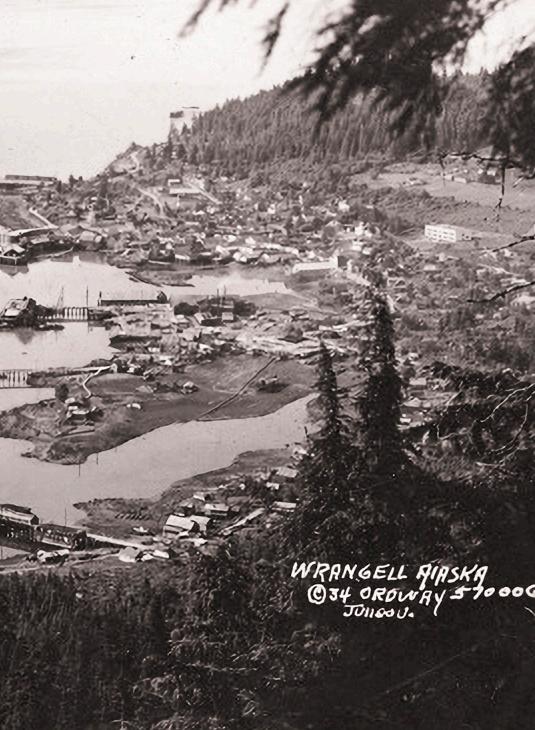
The town enjoyed several decades of timber prosperity, with logging camps on the island and around Southeast feeding the sawmills. But economic and environmental restraints later closed down the mills and most of the logging in Southeast, including pulp mills in Ketchikan and Sitka in the 1990s.
Today, the Stikine River continues to serve as a favorite recreation area for Wrangell residents and visitors, keeping with the name: Gateway to the Stikine.
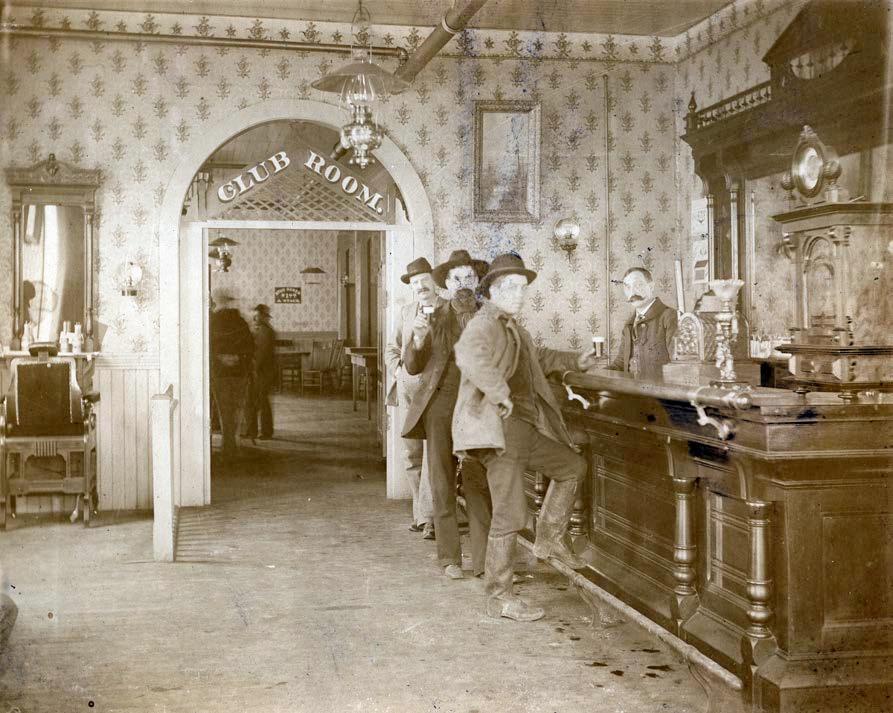
Men lined up at the bar at the Grant Hotel, also known as the Wrangell Hotel, in this 1898 photo. In addition to drinks and whatever games were allowed in the Club Room, men could get a haircut in the barber chair to the left of the bar.
The hotel burned down in the March 1906 fire that leveled downtown — but was rebuilt and reopened in about five months. The hotel, on the water side of the street, was badly damaged in a 1918 fire and repaired again. By 1924, the hotel was advertised as “headquarters for tourists and big-game hunters … located at a pivotal point in the heart of the greatest hunting and fishing region in Alaska.”
It burned down in the 1952 blaze that destroyed much of downtown and was not rebuilt.

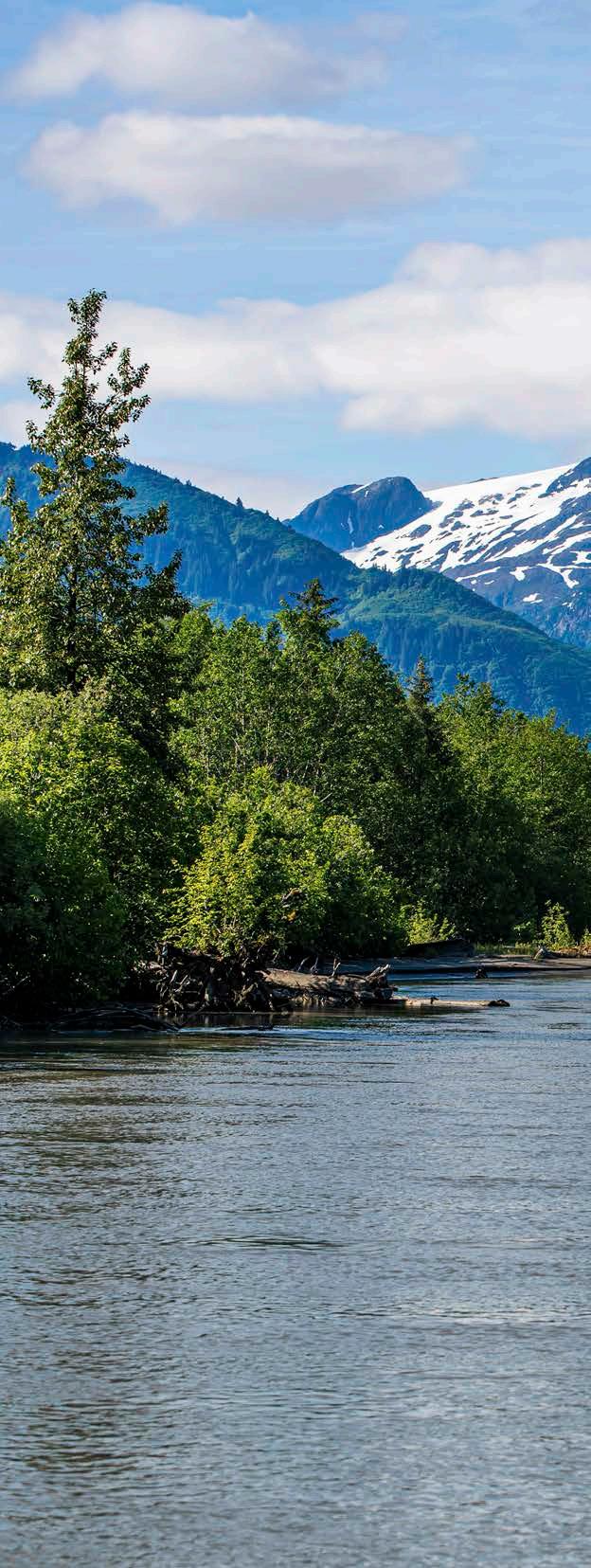
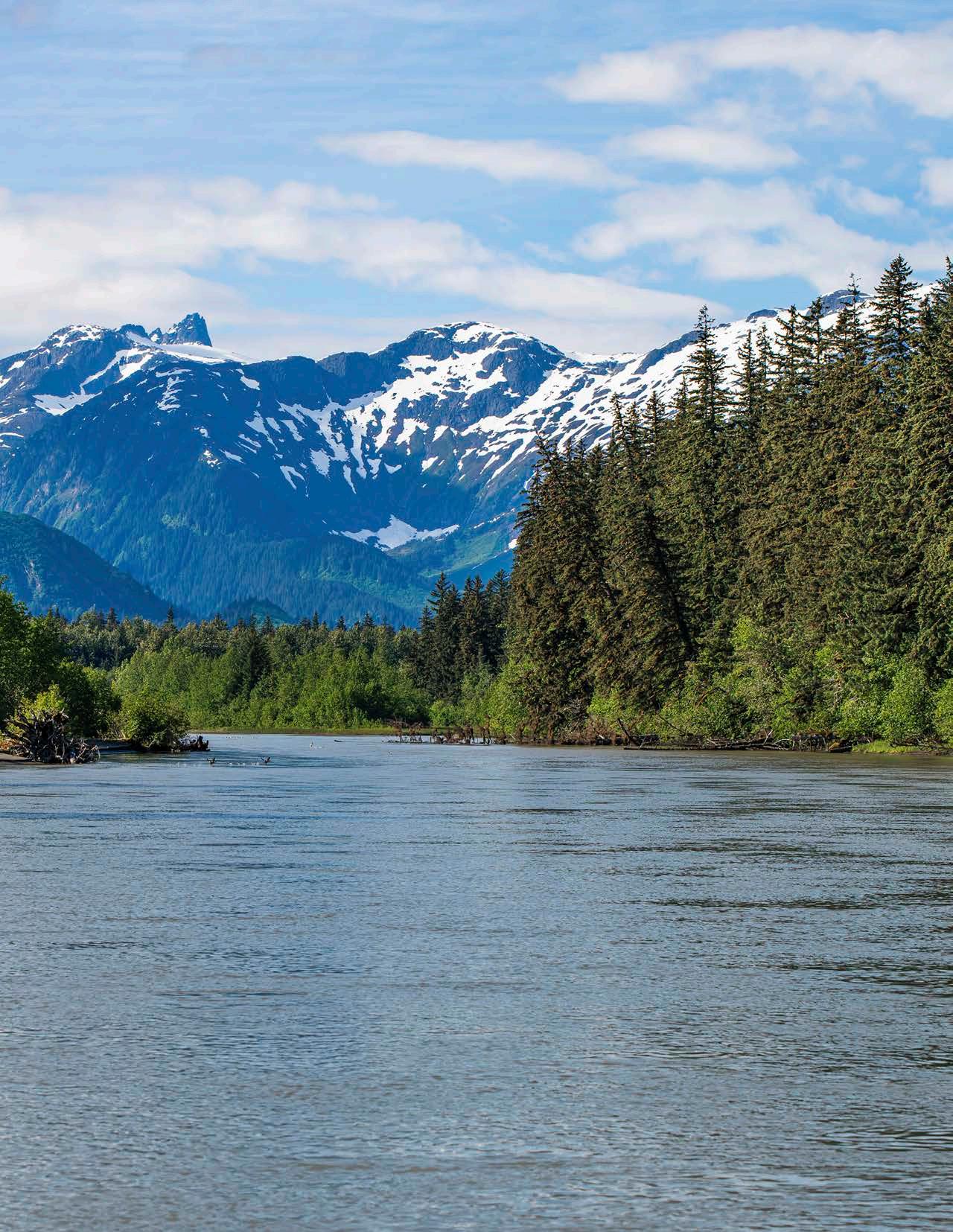
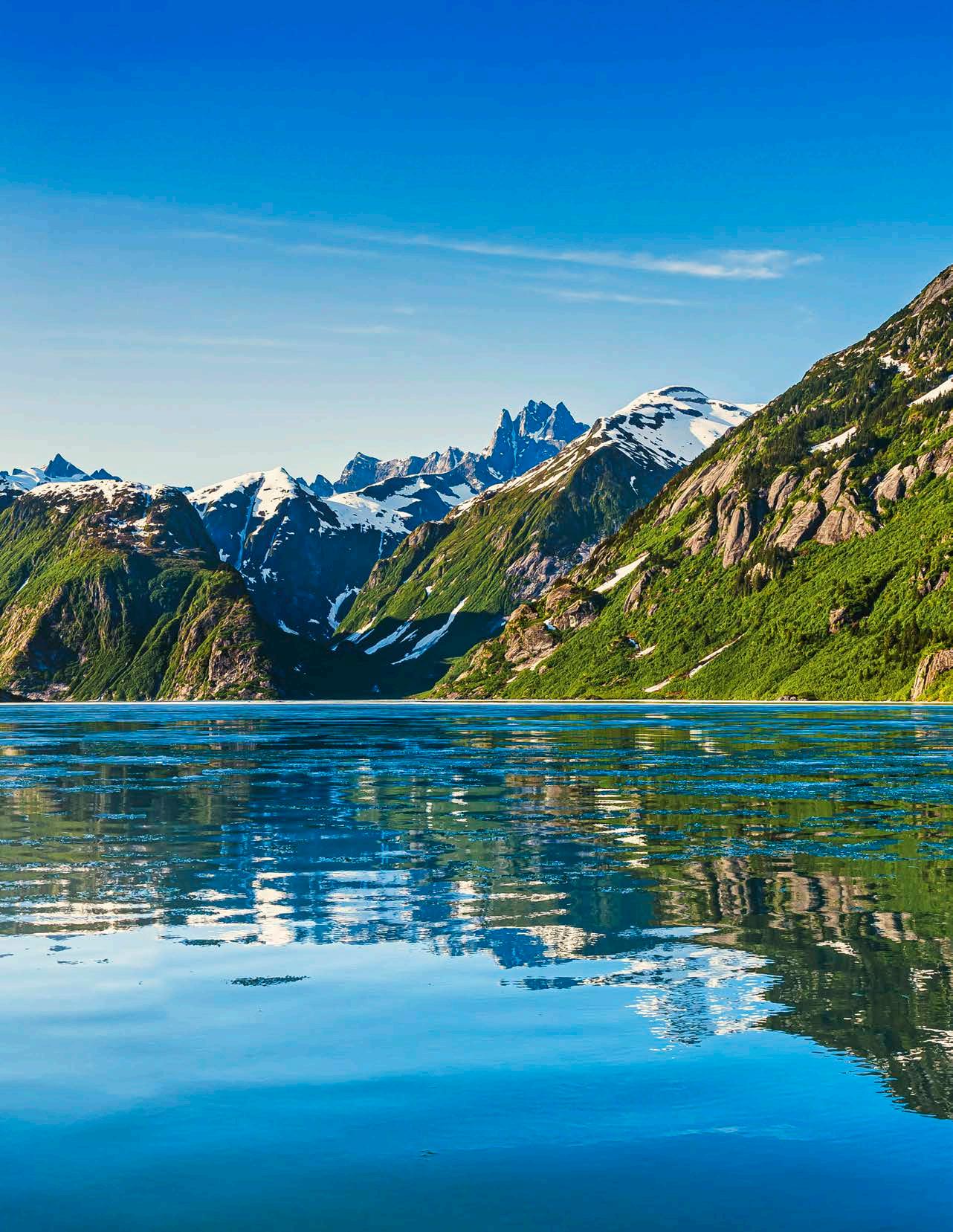
The fastest-flowing navigable river in North America, and one of the few remaining free-flowing rivers, the Stikine (pronounced ‘Stick-EEN,’ meaning “Great River”) runs 330 miles through British Columbia, the Coast Mountains and Alaska to its delta, just a few miles north of Wrangell.
A favorite camping, fishing, hunting and boating area for residents and visitors alike, the Stikine offers magnificent scenery with unparalleled views of glaciers, ice fields and mountains.
Many Wrangell residents pilot their boats across the river delta — not an easy feat, since the delta is laced with tricky sandbars — to explore the side sloughs of the river, picnic on sandy beaches or visit other favorite spots.
The river is truly a photographer’s dream. The delta is a haven for more than 120 species of migrating birds in the spring and fall, including tundra (whistling) swans, Canadian geese, sandhill cranes, mergansers, waterfowl and shorebirds.
There is other wildlife such as otter, beaver, bear and moose. There is also a large sea lion haul-out site at the mouth of the Stikine River during March and April, when you can hear them making a ruckus all the way from town.
Continued on Page 17
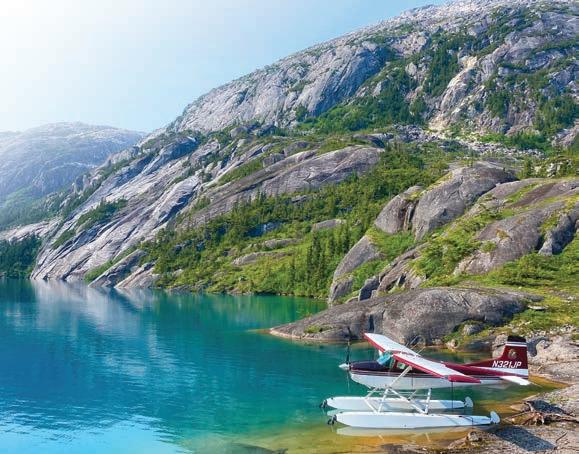
WE INVITE YOU TO GO FLIGHT-SEEING WITH SUNRISE AVIATION
WE INVITE YOU TO GO FLIGHT-SEEING WITH SUNRISE AVIATION
SEE THE STIKINE RIVER & LECONTE GLACIER
SEE THE STIKINE RIVER & LECONTE GLACIER
• Transportation to local lakes and U.S. Forest Service Cabins
• Business Transportation & Flight-seeing tours
Call us for all of your air charter needs, with float & wheel plane services throughout the Alaska Panhandle.
Located at Wrangell Airport
P.O. Box 1440, Wrangell, AK 99929
Email: sunriseaviation.ak@gmail.com Ph: (907) 874-2319


Continued from Page 16
Several Wrangell charter boat and jet boat operators offer trips on the Stikine, including roundtrips to Telegraph Creek, British Columbia. Another option is to take an air charter flight to see the speculator scenery from above.
Roaring rapids and unique landscapes are among the many attractions found by following the Stikine River into interior British Columbia. Though the spectacular mountains, canyons, glaciers, forests and wildlife of the area are not as well known as easier-to-access attractions, a river trip is well worth the time and customs clearances to and from Canada.
Those who wish to experience this beauty should come prepared for a real wilderness adventure. The river begins its journey deep inside British Columbia at peaceful headwaters in the Spatsizi Wilderness Park.
Brown bear, caribou, moose and mountain goat roam the tranquil rolling tableland in this area, surrounded by vast mountains. The alpine tundra along the upper reaches of the Stikine gradually gives way to a thick spruce forest farther downstream. One of the most spectacular
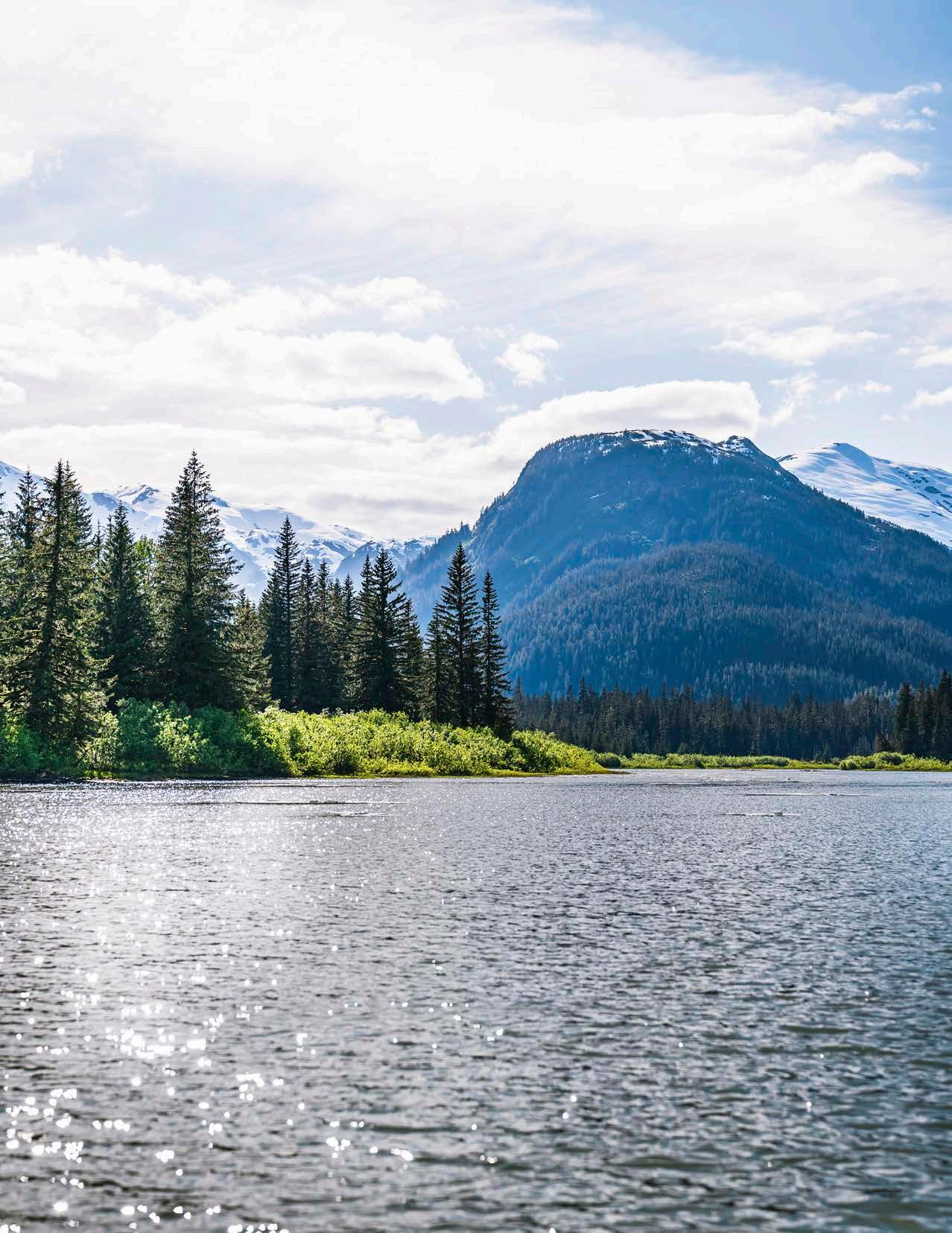
features of the river is the 45-mile-long Grand Canyon of the Stikine, about 200 miles upstream from Wrangell. Canyon walls soar as high as 1,000 feet.
At the west end of the Grand Canyon is Telegraph Creek, population around 400, the only town along the Stikine. Most of the residents are Tahltan, the Indigenous people who settled the Interior region.
Rafters, kayakers and canoeists use the town as a starting point for exciting, scenic trips downriver to Wrangell.
The high peaks of the Coast Mountains tower up to 10,000 feet over the river. Glaciers hang from high mountain valleys. The river snakes between forested shores and wide expanses of sand and log deposits past connecting river outlets and cascading waterfalls, through untamed country where visitors enjoy camping, fishing, hunting, and exploring.
The Stikine crosses the border into Alaska for the last 30 miles of its run.
More information is available from boat and air charter operators in town, and at the Wrangell Chamber of Commerce information desk in the Nolan Center downtown.
Located about 28 water miles from the Wrangell downtown harbor up the Stikine River, Chief Shakes Hot Springs is one of the more popular recreational destinations for residents — and visitors too.
One covered and one open-air redwood tub provide comfortable places for a hot soak. There are dressing rooms, benches and outhouses, but no overnight accommodations. Expect large crowds on weekends, holidays and sunny days throughout the summer.
The U.S. Forest Service built a new deck for the lower tub in 2025. A high-river level at Ketili Slough is required for easiest water access to the hot springs, though a 0.3-mile trail off Hot Springs Slough provides access at lower water levels.
There is no fee to use the hot tubs, which are maintained by the U.S. Forest Service.
Water is available from a nearby stream, but treat the water before drinking it.
When the water is high enough to allow access from the Stikine River, this is a favorite summer recreation spot for water skiing, jet skiing, picnicking and swimming.
At the entrance to Twin Lakes Slough, the U.S. Forest Service has a public recreation cabin available for rent. The 16-by-16-foot A-frame cabin has a sleeping loft, with an outhouse nearby. A trail leads from the cabin to the lakes.
Reservations available online at www.recreation.gov.
Wrangell also provides an opportunity for an excursion up the Stikine River to Telegraph Creek, 160 miles from Wrangell into the Canadian interior. Telegraph Creek is accessible by either plane or boat. Visitors get a first-hand look at a gold rush town, replete with historic buildings, including the former Hudson’s Bay Co. (a Canadian Heritage Building).
The area surrounding the town provides opportunities for walking, hiking, fishing and camping.
Telegraph Creek also offers a road link to Canada. Just 70 miles to the northeast is Dease Lake and the Cassiar Highway, which bridges the Grand Canyon of the Stikine.
Tucked along the east side of Wrangell Island, Muskeg Meadows Golf Course boasts long, narrow fairways with spectacular views in every direction — perhaps none more striking than the panorama looking out toward the mainland across the Back Channel.
Southeast Alaska’s first U.S. Golf Association-regulation 9-hole course, Muskeg Meadows opened in 1998 and also features an 18-basket disc golf course.
On sunny days, there’s no nicer place for a walk, and few prettier courses anywhere. Visible over and between the trees are sweeping water views, with forested and snow-capped mountains rising beyond.
Golfers should keep an eye out for bald eagles overhead, Sitka blacktailed deer and their fawns wandering the greens — and be aware that bears occasionally make an appearance on the course as well.
Facilities include a practice putting green available for free use and a covered driving range to shelter golfers from the rain. Golf clubs, pull and power carts, and discs are all available to rent, and the pro shop stocks snacks and beverages to keep you going between holes.
Green fees are paid by the day at the pro shop, or after hours via the orange lock box. Season passes and memberships are also available for those who plan to make Muskeg Meadows a regular haunt. Muskeg Meadows hosts multiple tournaments each summer, drawing competitors from across Southeast Alaska and beyond.
Located on Ishiyama Drive (also known as the Spur Road) on the way to the airport, the course is entirely the work of volunteers, with much of the original construction donated by Alaska Pulp Corp., Ketchikan Pulp Corp. and Silver Bay Logging.
And for those unlucky enough to lose a ball to one of the local wildlife residents, the course has established its famous “Raven Rule” — if a raven steals your ball, you may replace it without penalty, provided you have a witness.
Course hours vary, so call ahead to confirm the schedule. You can reach Muskeg Meadows at 907-874-GOLF or visit muskegmeadows.com




The inaugural event in 2025 went so well that organizers booked a return flight for 2026 and look to make the Milk Run Music Festival a permanent part of Wrangell’s springtime schedule.
The two days include performances by visiting and local musicians giving free concerts and workshops, along with food and art vendors on the downtown waterfront.
Most of the events are under a large tent, with some of the activities in the nearby Nolan Center.
The free music festival, which is organized by volunteers and run as a nonprofit, aims for the first weekend in May each year.
The event is named for Alaska Airlines “Milk Run,” the daily flight that leaves Seattle in the early morning for short-hop stops in Southeast Alaska communities, repeating the route in the afternoon in the opposite direction back to Seattle.
In addition to Alaska Airlines offering a discount on flights into Wrangell for the festival, local operators have provided discounts for travelers coming by boat from neighboring communities and also for hotel rooms. It’s all about making it easy for visitors to enjoy the performances, foods and contests.
More information is available at milkrunmusicfest.org


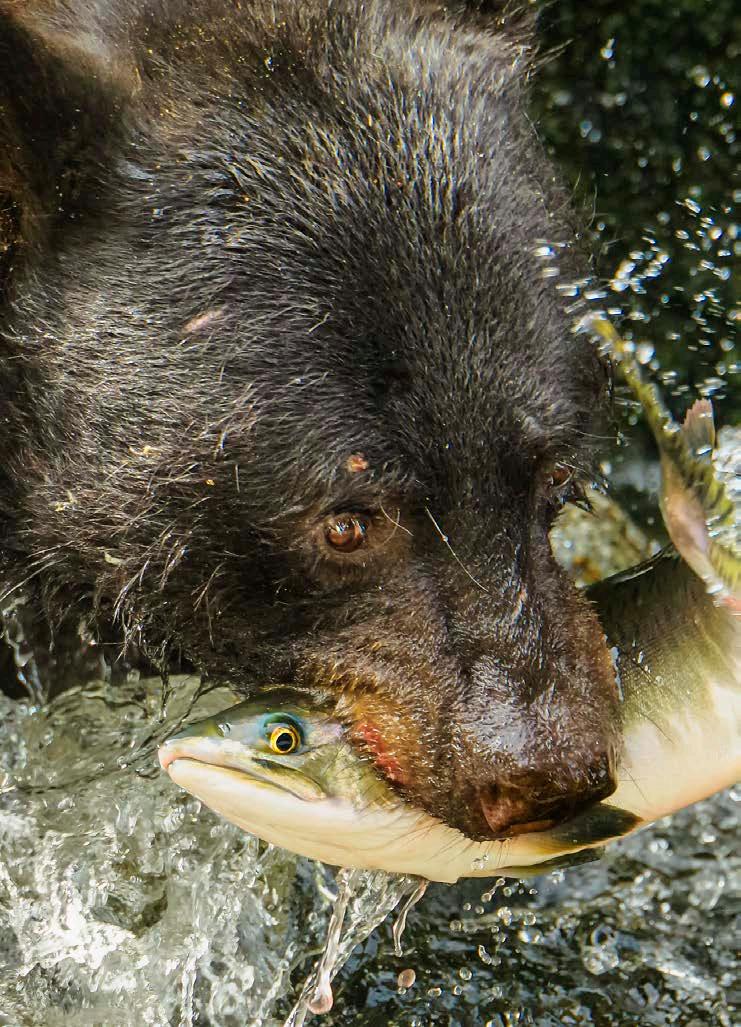
As the salmon gather up Anan Creek to spawn, so too the bears gather to feast upon the moving mass of tasty fish.
The Anan Wildlife Observatory is a world-class bear viewing site, just 30 miles southeast of Wrangell. Travelers can take off from the Seattle airport in the morning and be at Anan in the afternoon.
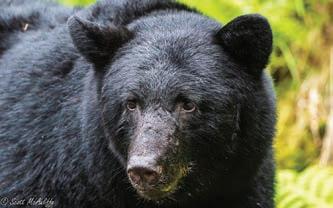
Home to one of the largest pink salmon runs in Southeast, the creek draws brown and black bears, creating a viewing opportunity that is unique in Southeast. Both species of bear work the salmon stream together, which is atypical of areas where the two species’ habitats overlap.
The Anan bears get along because they are more concerned about the food than each other, Dee Galla, a recreation planner at the U.S. Forest Service Wrangell Ranger District, explained.
“The food source is so rich that the bears will tolerate one another,” she said. “It’s all about the salmon. They’re going to go where they’re going to get the most food. To come here, they have to tolerate each other.”
The fish bounty also means the Anan bears are unusually tolerant of humans. “It’s not because they like people,” Galla said. “It’s just that they have to be less reactive if they want to eat.”
There is an expanded observation platform, shelter and viewing decks — which won a design award from the Alaska chapter of the American Society of Landscape Architects. A photo blind is available, as are outhouses.
The U.S. Forest Service limits the visitor count to 60 per day on guided trips during the peak bear season of July 5 to Aug. 25. Most Anan visitors use an authorized guiding company, of which there are several in Wrangell.
The Forest Service staffs the site 8 a.m. to 6 p.m. every day during the permit season.
For individuals who have their own boat or floatplane to reach Anan, there are 12 private permits available for purchase for each day on recreation.gov.
Visitors to the observatory can expect to see bears working the streams, but a nearby hiking trail also provides opportunities to see bears going about their routines.
Several Wrangell-based charter boat services provide guided trips to Anan during the season. Look them up on the chart on Page 47 of this guide. Or check anancalendar.com to see which guides are providing trips on days you’d like to visit.
Although the observatory is open outside of the permit season, the best time for seeing the most bears at the dinner table is between the July and August dates.
And for those who want to watch the bears from the comfort of an indoors setting, webcams provide the public with prime views. The cameras are active starting in late May or early June. The website is at https://explore.org/livecams/tongass-national-forest/ anan-black-bear-camera-2.
There also is a nonprofit, Friends of Anan, that shares information about the bear observatory, including video feeds, and raises money to help the Forest Service with maintenance and projects at the site: friendsofanan.org.
Visitors have multiple options for getting around Wrangell, whether the downtown core and its attractions, venturing out to the trails and harbors, or driving the miles of old logging roads on the island.
Breakaway Adventures, on Lynch Street downtown, just around the corner from Front Street — and during the summer months operating from its additional location in front of the City Dock — offers e-bike rentals by the hour or the day, with recommended routes — and also runs a four-hour guided e-bike and hiking tour.
Breakaway also rents skiffs and canoes, and all the required gear.
Call them at 907-874-2488 or email info@breakawayadventures.com. Or check them out at breakawayadventures.com
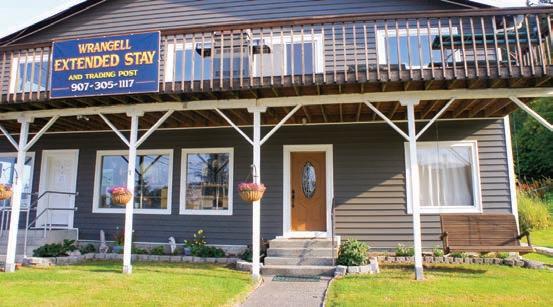
Wrangell Extended Stay, located across the street from the state ferry terminal just a few blocks north of downtown, rents e-bikes — along with providing helmets and local advice on what to see while you’re riding around town.
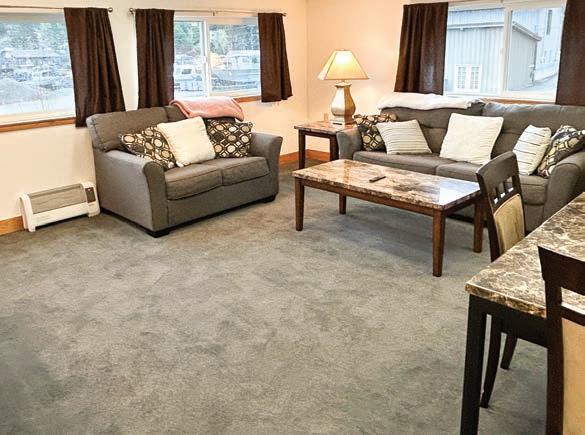
That’s in addition to a variety of overnight rooms for visitors, all the way up to a three-bedroom unit for families.
Call them at 907-305-0989 or 509-675-1150, or email info@ wrangellextendedstay.com, or check the website at wrangellextendedstay.com.
Electric scooters are available in town, through Scoot Alaska. All it takes is a quick scan of a QR code. Look for a scooter on the sidewalk, or look for the sandwich boards that are set out at each end of downtown. Scan the code and download the app, which will give you a map of where an available scooter is located in town.
Scoot Alaska has eight scooters in Wrangell, all GPS-enabled for easy locating.
Set up your account, unlock the scooter with your phone — and you’re off.
Keep it for a while or park it when you’re at your destination and pick up another when you’re ready. No itinerary required, says Aaron Angerman, co-owner.
“Just park your scooter out of the path of foot traffic, drop the kickstand and end your ride.” The rental rate is per minute, not by the hour, with an “unlock fee” for each use.
There is no storefront shop. More information is at scootalaska.com.
In addition to sedans, passenger vans, small SUVs and pickup trucks — many with all-wheel or four-wheel drive — Island Escape Car Rental, conveniently across the parking lot from the Alaska Airlines terminal at the airport, offers a Can-Am six-passenger side-by-side four-wheeldrive recreational vehicle.
Their other vehicles for rent include the Subaru Outback, Ford Bronco and Chevy Colorado Crew Cab — all good fits for adventuring in, around and out of downtown.
For self-guided tours on the logging roads, they recommend the higher clearance of one of their trucks or Bronco.
Call Island Escape at 907-874-3975 or email islandescaperentalcars@ gmail.com. The website is wrgislandescape.com.
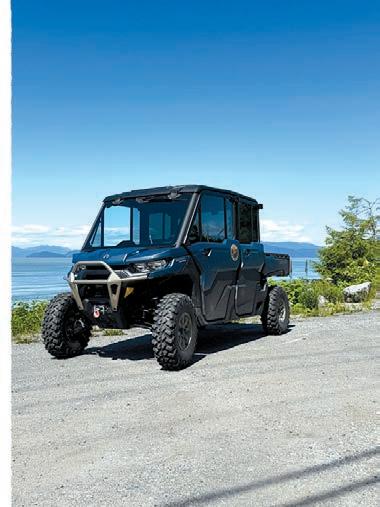
Stikine Off-Road Rentals has a Can-Am Defender HD-10 Limited Max, a four-door utility recreational vehicle that can seat up to six passengers and features a fully enclosed cab with a full heating and air conditioning system.
Mike Ottesen started up the business in 2025 and offers pick-up and drop-off for renters flying or boating into town, with half-day, all-day and multi-day rentals available. There is a trailer that people can rent with the Can-Am if they want to haul bikes or extra gear.
Comforts include a Blue Tooth sound system, preloaded maps into the GPS system with a touch-screen display. The maps include the old logging roads on the island.
Other than staying on the island, renters can go most anywhere, he says, adding that he provides recommended routes for visitors.
More information is at stikineoffroadrentals.com or call 907-305-1144.

Photo: Vincent Balansag

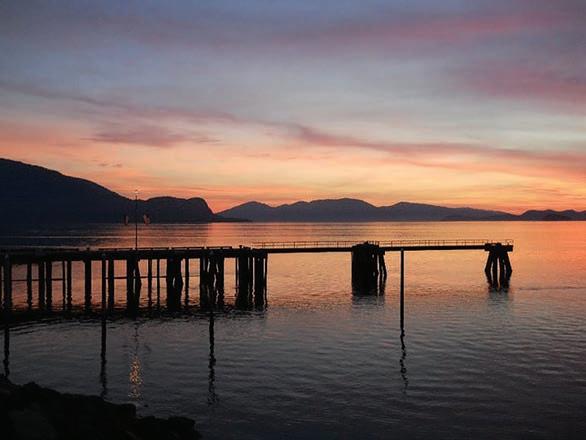



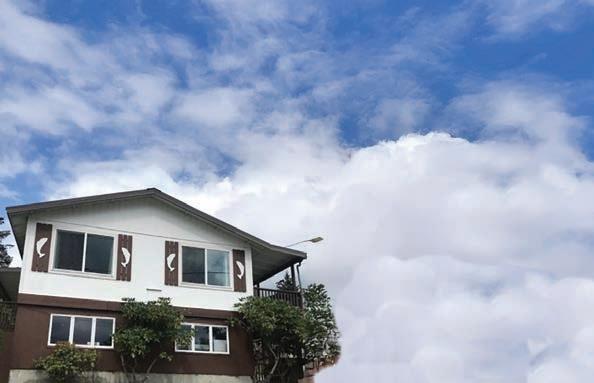

Wrangell offers many scenic spots for picnicking and camping, from easily reachable City Park and Shoemaker Bay to the more remote Nemo Point and Salamander Creek campsites.
Located about a mile south of town on Zimovia Highway, the waterfront park is adjacent to a historic cemetery and an old baseball field now used as the community garden.
The park contains picnic tables, shelters and restrooms. Tent camping is restricted to 48 hours. Camping is not allowed inside shelters. Overnight parking is prohibited.
Avid cyclists may want to take advantage of the paved bike trail along the highway — it starts near the Public Safety Building, passes City Park and runs past Shoemaker Bay Park.
Shoemaker Bay RV Park is about five miles south of town, along Zimovia Highway. The park offers 25 sites open exclusively to RV and trailer campers – 16 spots with electricity ($30 a day), nine without ($20 a day). All sites have excellent views of Zimovia Strait and neighboring Woronkofski Island.
Facilities are on a first-come, first-served basis; no reservations. Payments can be made in the pipe safe at each parking spot.
There is a dumpster for trash, and restrooms are nearby in the harbor parking lot.
A tent camping area is located in a wooded spot near a creek, with six spaces. South of the creek is a tennis court, restrooms and picnic shelter. Tent campers should use the designated camping area only.
Municipal code allows up to 10 days in the RV park and five days in the tent campground at Shoemaker Bay.
A sewage dumping station is located near the restrooms at Heritage Harbor, just a mile out of town on the way to Shoemaker Bay.
Go to the Wrangell Parks and Recreation website wrangellak.myrec.com or call Parks and Recreation at 907-874-2444 for more information.
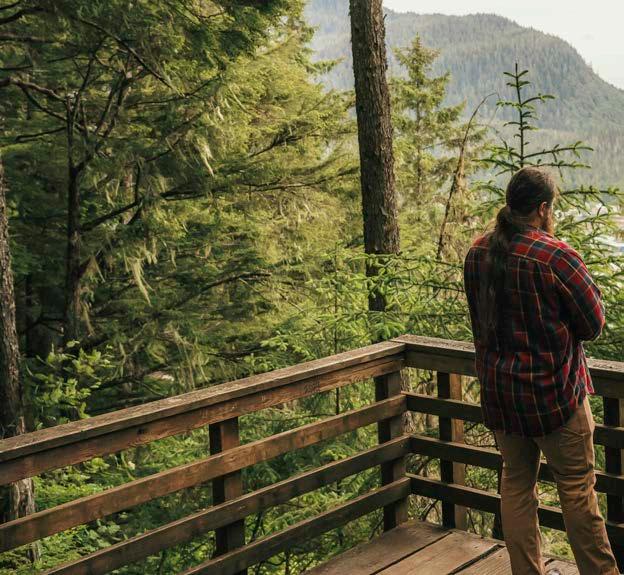
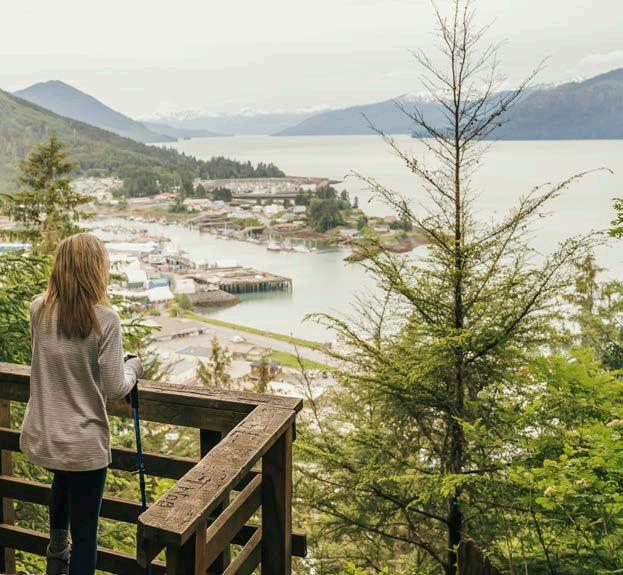
Located right behind downtown, this large, tree-covered hill is a quick hike for a fine view of Wrangell and Zimovia Strait. A trail leads up the hill from downtown. Go up to Third Street behind the high school, or from Front Street take McKinnon Street heading away from the water to the set of stairs leading up past Reid Street, veer left at the top of the staircase and follow Mt. Dewey Lane until it hits Third Street. A sign
pointing right shows the way to the trail.
Or there is a new access trail that takes off from the road toward the airport (Bennett Street). A parking lot at the trailhead makes this a convenient starting point. The trail extension links up with the main pathway to the Mount Dewey viewing platform.
For a short but pleasant walk near town, head for Evergreen Elementary School and the baseball fields behind it. Taking either the route between the two fields or north past the tennis courts, you will find a gravel trail that meanders through the muskeg with interpretative signs pointing out particular flora and fauna, as well as occasional benches to rest on, courtesy of the U.S. Forest Service.
(moderate to difficult)
Just across Zimovia Highway from the Shoemaker Bay camping area is the Rainbow Falls Trail, which offers a self-guided hike through the pristine Southeast Alaska rainforest. A little less than a mile up the trail is a beautiful view of Rainbow Falls; a tenth of a mile later, a trail spur leads to a platform above the waterfall and provides spectacular views of Chichagof Pass, Zimovia Strait and surrounding islands. Viewing platforms and bench seating make this a great place for a picnic. The trail intersects with Institute Creek Trail.
(difficult to most difficult)
If you choose to continue from the Rainbow Falls Trail, this trek offers many scenic views for an additional 2.7 miles (and a total 1,500-foot elevation gain) on the way to the Shoemaker Bay Overlook Shelter.
There’s a three-sided shelter, picnic table, fire grill and outhouse, as well as an excellent view of Shoemaker Bay Harbor, Zimovia Strait and surrounding islands.
This trail begins 2.2 miles from the Rainbow Falls Trailhead via the Rainbow Falls and Institute Creek trails. The trail leads 1.3 miles to the High Country Shelter and continues another mile to the Pond Shelter. Shelters are three-sided with a picnic table and an outhouse.
Hikers can also start on the opposite side of the island and travel over the mountain toward Shoemaker. This hike starts at the North Wrangell trail and ends at the Rainbow Falls trail. The trail, which is surfaced with a boardwalk, begins about 3.6 miles down Ishiyama Drive, which locals often refer to as Spur Road.
Pats Lake recreation area is 11 miles south of downtown Wrangell, at a crossroads where dirt roads branch off Zimovia Highway. From the Pats Lake Road FR 6259, the Pats Creek trail begins from a pull-off just before Pats Lake and descends from the road to a small viewing platform on the lake, then follows Pats Creek as it empties into the sea. The trail is in very poor condition with rotted tread and broken boards. Several varieties of trout are found in the lake and creek. The creek also has a fall salmon run.
Turning off Zimovia Highway to the right leads down FR 6250 to saltwater. A short walk north leads to a sandy point, which is good for picnicking or a little seaside relaxation as well as an occasional haunt of passing seals or sea lions.





















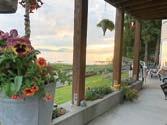
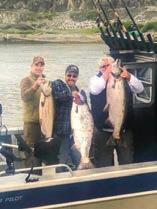
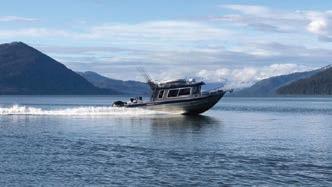
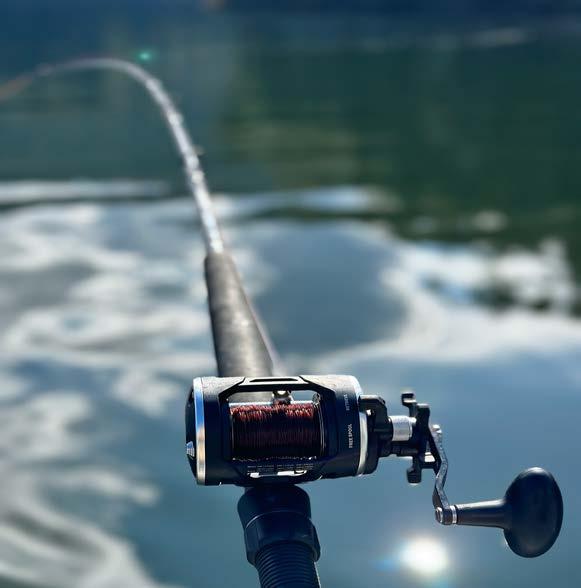
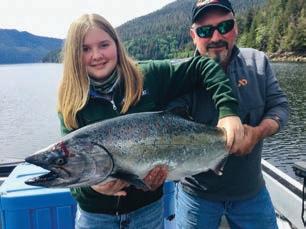
Salmon and halibut are the area’s top draws for sportfishing. The town has several charter boat operators eager to help with all your arrangements, while sharing their expert knowledge toward a successful fishing trip.
They also can offer assistance in packing and shipping your seafood to arrive safely back home. Be sure to use an airline-approved fish box or sturdy tote to check in your catch.
A state license is required for sportfishing. In addition, sport anglers need a king salmon stamp to go after the largest of the salmon in Southeast.
Locally, the licenses and stamps are available from several sporting goods stores downtown, which also carry sportfishing gear and friendly advice.
The state licenses also are available online at https://store.adfg.alaska.gov/
Non-residents under the age of 16 do not need a sportfishing license or king salmon stamp.
The rules for daily catch and seasonal limits are important to maintain the health of salmon stocks. Charter fishing operators and license vendors are a good source of information.
Salmon runs start in early May and extend into fall. Steelhead and Dolly Varden fishing is open year-round, although the best steelhead fishing is in April and May. The best season for Dollies starts in June and continues through September.
Halibut can be caught year-round, though they can more easily be found during the summer months.
For freshwater fishing enthusiasts, some of the best spots are a short drive away. They include Thoms Lake, Pats Lake, Pats Creek, Salamander Creek and Institute Creek. Institute Creek and Pats Creek are accessible off Zimovia Highway, while Highbrush Lake, Thoms Lake and Pats Lake are all accessible via U.S. Forest Service roads.





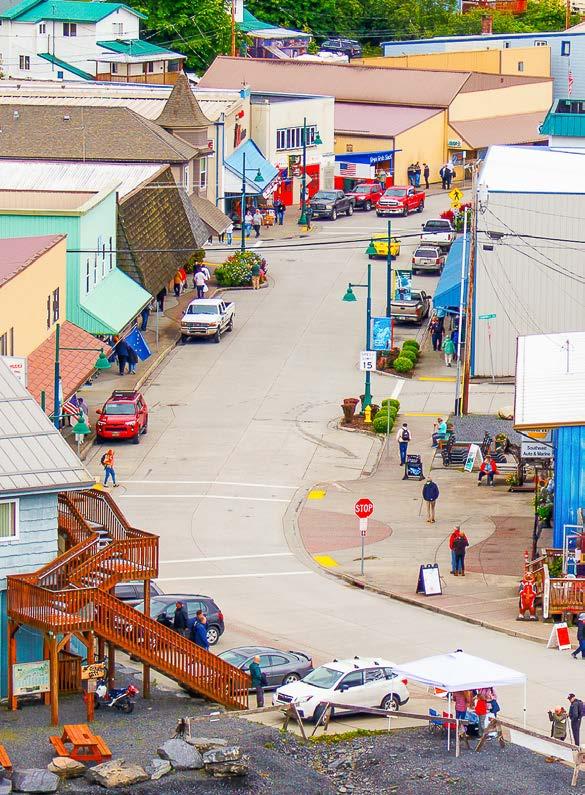
Just as Wrangell is welcoming and helpful to visitors, the community — particularly City Hall — is just as welcoming to businesses. The town is always looking for businesses that want to sell or produce their goods or services in the community.
The borough’s Economic Development Department can answer zoning and land-use questions, provide statistics about the town’s economy and workforce, give directions to state and federal resources, and assist with most of the questions business owners and prospective new residents may have.
The department can share its reports and numbers on Wrangell’s overall economic health, its tourism economy and much more.
Like much of Alaska, Wrangell has a high proportion of self-employed people, working a wide variety of skilled trades. There were almost 300 self-employed people in town in 2024, according to the most recent numbers collected by the borough. The entrepreneurial spirit is strong in Wrangell.
For questions about the town, its economy and opportunities, contact the borough’s Economic Development Director Kate Thomas at kthomas@wrangell.com. Or call City Hall at 907-874-2381.






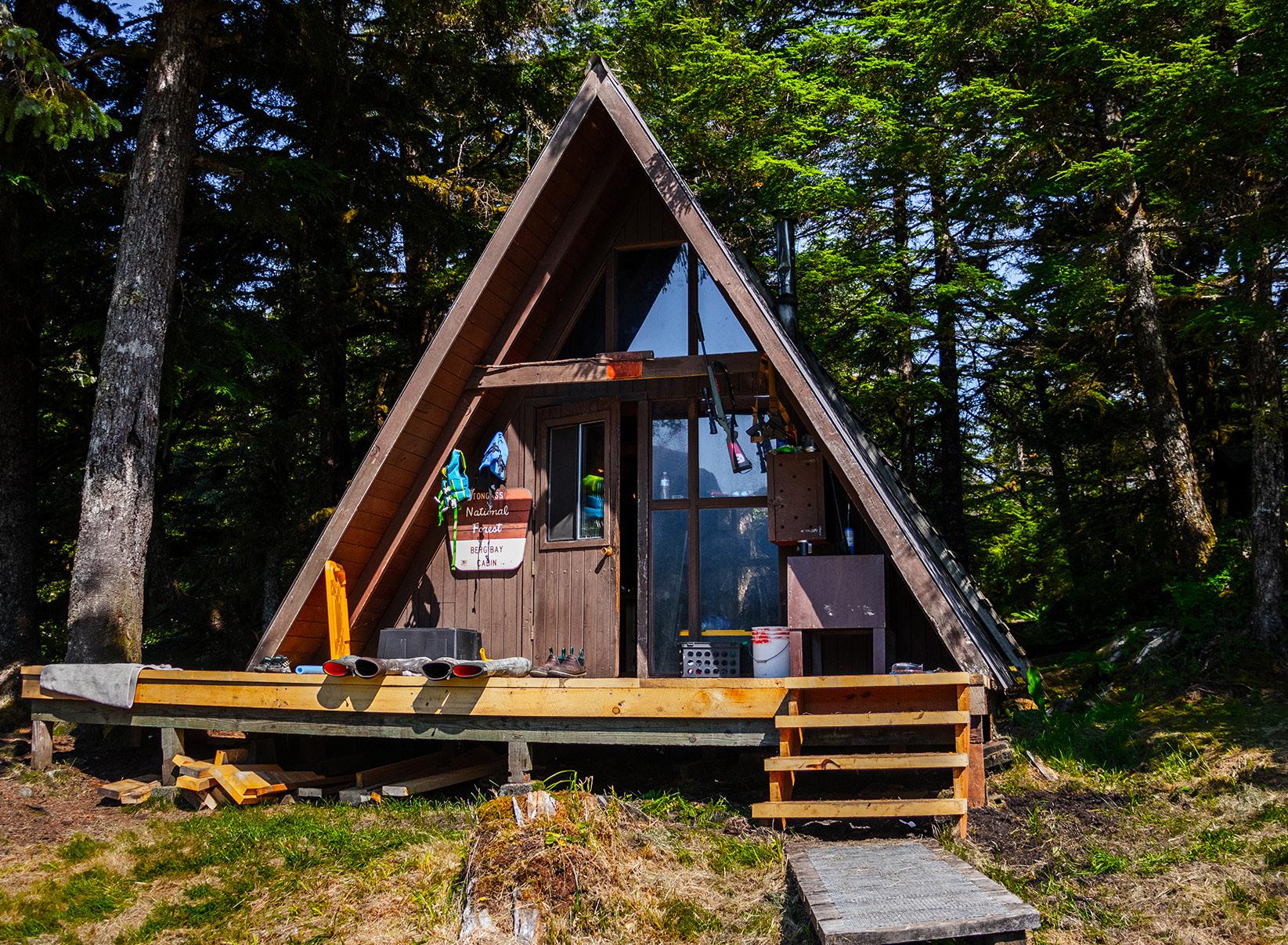
The U.S. Forest Service has close to 150 public-use cabins throughout the Tongass National Forest in Southeast Alaska, with more than 20 in the Wrangell Ranger District.
Most of the cabins are in remote areas and are primarily used for hunting, fishing and recreation. They come with sleeping bunks, tables and benches.
Inland cabins are usually accessible only by air, while those on saltwater beaches can be reached by boat or floatplane, depending on the tides.
The Forest Service also has several campsites in the area, mostly on former logging roads and with an outhouse on site.
Reservations are not required for the campsites, but they are for the public-use cabins. The cabins can be booked six months in advance. Cabin fees are charged per night, regardless of the number of occupants. The fee must be paid in advance at the time of the reservation. There’s a cap on the number of consecutive days you can rent a cabin.
Cabin rentals are available at recreation.gov.
One of the area’s most popular cabins is Middle Ridge, pretty much in
the middle of Wrangell Island, off of the middle Ridge Road FR 50060. A landslide in November 2023 cut off road access to the cabin; work to restore access started in 2025 and is expected to be completed in 2027.
Another popular cabin is at Anan Bay, near the world-famous Anan Wildlife Observatory bear viewing site.
More information is at the Forest Service website: https://www.fs.usda. gov/r10/tongass or by calling the Wrangell Ranger District Office on Bennett Street at 907-874-2323 or by visiting recreation.gov.


The intricately carved totem poles around Wrangell are a reminder that the town is built on the land of the Shtax’heen Kwaan, or Stikine Tlingit – the Alaska Native people of this area.
Most of the totems you’ll find around Wrangell are duplicates of poles that were commissioned in the 1800s, when totem carving flourished, though five new carvings were raised in 2025.
To view the poles, visit Totem Park just off Front Street, the Nolan Center or the Chief Shakes Tribal House on Shakes Island, which is accessible from a bridge near the harbor office.
When totem carving started about 200 years ago, poles were put up for a wide variety of reasons — to signal social status, to mark a special occasion such as a potlatch, to record a story or to hold the ashes of deceased relatives.
But this isn’t just a tradition of the past — totems are still being carved today by master carvers who continue to innovate on the form.
For the first time in 38 years, Tlingit and Haida came together in Wrangell in July 2025 from throughout Southeast and celebrated the unveiling of five new totem poles: three on Shakes Island, one at the post office and one at Totem Park.

The three at Shakes Island are:
Bear Up The Mountain Pole: A Naanya.aayí X’atgu Hít narrative of survival during a great flood, when a bear saved the clan by leading them to higher ground.
Gunakaadeit Pole: A Naanya.aayí X’atgu Naasí Hít tale of a man using a sea monster’s skin to feed his community.
Underwater Sea Bear Pole: A Sik’nax.ádi legend of a mythical good-luck creature.

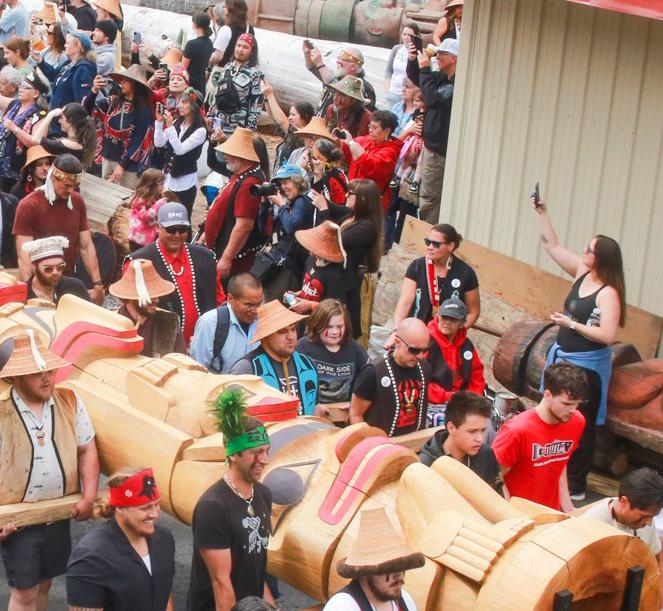
Killer Whale Grave Marker: A Kayaashkeiditaan tribute to Shx’atoo, who died during the U.S. Army 1869 bombardment of the Native village at Wrangell. It’s standing near the post office.
Kadashan Pole: A replica of a 1940 pole, originally gifted by Haida relatives to honor intermarriage with Tlingit women in the 1830s. It’s at Totem Park.
Not all North American Indigenous groups carve totems. These works are specific to the Alaska Natives and First Nations people of the Pacific Northwest. Poles reflect the unique identity, history and values of the groups that commission them. The carvings tell stories or display signs of family lineage.
In the 19th and late 18th centuries, when many of the original poles were created, it wasn’t common practice to repair, repaint or reconstruct existing totems damaged by rain and rot. It was usually easier — and more socially advantageous — to erect a new pole. Tlingit society was intricately organized by rank, so the ability to commission multiple expensive poles over a lifetime could bump someone up the social ladder.
This all changed during the Great Depression of the 1930s, when a large-scale federal restoration project began. Hoping to create jobs and preserve artistic heritage, the Civilian Conservation Corps hired more than 200 Tlingit and Haida men to restore or replicate totems.
The project, which was led by the U.S. Forest Service, has received both criticism and praise from historians and community members alike. The Conservation Corps included elders in the project, allowing knowledge about totem carving to be passed down to the rising generation.
Three Southeast clan houses, in Wrangell, Kasaan and Totem Bight near Ketchikan, and 121 totems were restored under this massive preservation effort.
When looking at Wrangell totems, keep an eye out for recurring motifs like ravens, eagles, frogs, killer whales, beavers, bears, the Gunaakadéit (sea monster) and heroes from Tlingit oral histories. Look closely; some figures might even have smaller figures embedded inside them.
The designs on totem poles are closely related to Tlingit social life. The community is divided into two “moieties,” or complementary descent groups — raven and eagle. Traditionally, ravens would only marry eagles and vice versa, but this system has relaxed in the past century. Moieties are divided into clans, clans are divided into houses, and each group has unique crests that might appear on their regalia or totem poles.
Moiety, clan and house crests, along with certain stories and dances, belong exclusively to members of that family group.

No visit to Wrangell is complete without seeing the ancient stone carvings at Petroglyph Beach State Historic Site, a short walk from downtown and one of the community’s most popular visitor attractions.
Former U.S. Forest Service archaeologist Larry Roberts believes the petroglyphs were probably carved by early Stikine Tlingit, possibly 1,000 years ago. However, archaeological finds elsewhere in Southeast Alaska show that humans have been present here for more than 8,000 years — so the rock carvings could be far older. Wrangell’s Petroglyph Beach has the highest concentration of petroglyphs in Southeast and is easily accessible for exploration.
The beach is about a 20-minute walk from the state ferry terminal. Facing the terminal, turn right on Evergreen Avenue, walk north about a mile, then look for a sign and a small parking area. A gravel road to the left of the parking area leads down to the beach.
There is an accessible boardwalk to a deck overlooking the beach, the Stikine River and Zimovia Strait.
Replicas of several designs are displayed on the deck for visitors to make rubbings on — but only from the replicas. Rubbings made on the original beach rocks are not allowed, as years of erosion and abrasion
have taken their toll. Visitors are asked to help preserve the original carvings for future generations.
There are steps leading down to the beach for closer inspection of the ancient designs. They are best viewed at low tide.
Most of the iconic symbols are to the right, toward a tidal outcropping as you step onto the sand. Visitors enjoy searching for the more than 40 petroglyphs on the beach. The whale petroglyph, unique to Wrangell, is located along the grass line in front of a house — don’t hesitate to go look for it. But please, document your experience with photographs only.
Another option is to stay in town — three original petroglyphs are on display at the Irene Ingle Public Library in town, and a replica is on display at the museum in the Nolan Center.
No one knows the true intent or motivation of the artists, nor what the designs meant to their makers and users. Based on archaeological records and cultural stories, petroglyphs may be a form of writing, a method of communication or a way to record events.
There are a variety of interpretations. The designs could have been carved to commemorate victories in war, document the transfer of wealth or territory in settlement of a feud, record important potlatches, or perform a religious function. They could also be simply the work of visiting Tsimshian or of the Tlingit themselves.
The carvings are treasured landmarks and are protected from loss, desecration and destruction under the Alaska Historic Preservation Act.

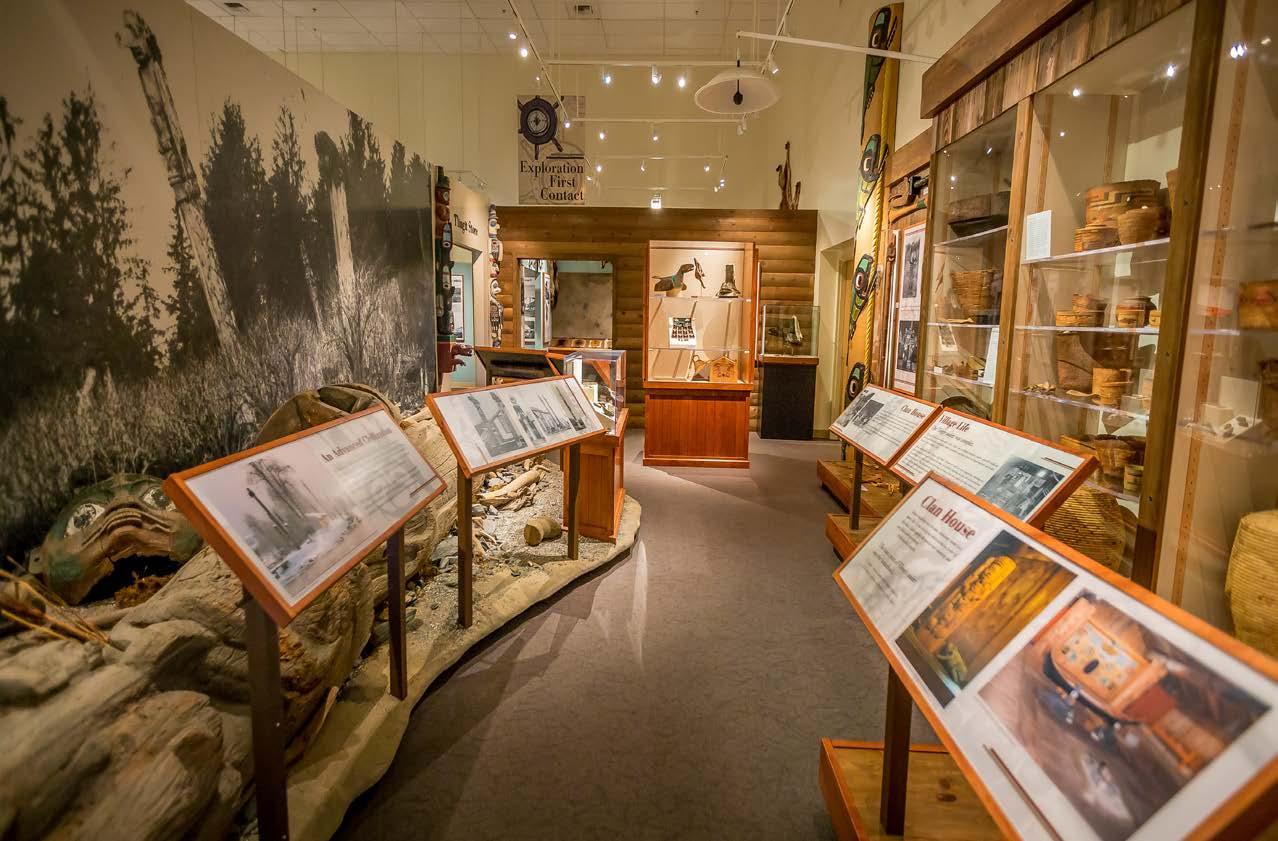
The James and Elsie Nolan Center has been a community gathering place since its opening in 2004, preserving Wrangell’s diverse culture and history and providing a multipurpose facility for events.
Housed within the Nolan Center are the museum, art gallery, civic center, visitor center and gift shop. The building also has a great view along the downtown waterfront.
The main hall can transform into a theater for movies and events, including banquet seating.
The museum provides an interactive walk through Wrangell’s rich history. The exhibits provide a narrative of the culture, heritage and peoples of Wrangell, from the time of the Tlingits through the fur trade of the Russian American Co., British Hudson Bay Co., Wrangell’s role in gold rushes, and Alaska’s incorporation into a U.S. territory and transition to statehood.
Entering the facility, it’s hard to miss the ornate Chief Shakes house posts. They were created between 1775 and 1790 and are accredited to the famous master carver Kadjisdu.a’xch II. They are thought to be the oldest still in existence today.
Further into the lobby are the two totems overlooking a replica of the Stikine River Delta inlaid on the floor.
The museum gallery is a stimulating passage through time, beginning
with a view of natural history, then a reverent walk through the land of the Native people who thrived in the area for many years.
There is a replica of the stone carvings located at Petroglyph Beach, thought to be thousands of years old. Around the corner, enter the Russian period and the fur trade (filled with furs to touch and feel). Next, visit the era when Wrangell was a major trade center for three gold rushes.
Wrangell was even well known by a few famous faces including Wyatt Earp, who served as temporary town marshal, and John Muir, who wrote about his many adventures.
Finally, your journey winds into the 20th century. This area is packed full of Wrangell’s more recent history, exhibiting stories of the people and their businesses.
The visitor desk area houses an interactive map of the island and Stikine River Delta, one of the most popular features in the Nolan Center. Visitors can find printed maps, brochures and photos.
The center will be open 9 a.m. to 5 p.m. weekdays during the summer; 10 a.m. to 4 p.m. the rest of the year. And during the summer, the center will be open weekends when cruise ships are in port.
More information is available from the Nolan Center at 907-874-3770 or go to thenolancenter.com



Presenting
Summer
Monday
Sundays
Unique
Souvenirs
Please





















Among the heirlooms of Wrangell’s long history, one shines particularly brightly.
The Garnet Ledge — a bedrock outcropping flecked with garnet crystals — is located on the mainland near the mouth of the Stikine River, about seven miles and a quick boat ride from Wrangell.
The garnets are available for purchase at local gift shops and from children and their family businesses. The garnets can also be dug directly out of the ledge, but there’s a catch — only children of Wrangell are allowed to do the digging.
In 1962, area businessman Fred Hanford gave the Garnet Ledge to the Boy Scouts of America and the Presbyterian Church “for only so long as the said grantee … shall use the land for Scouting purposes and shall permit the children of Wrangell to take garnets therefrom in reasonable quantities.”
Hanford’s gift was the birth of a multigenerational youth trade, which continues today in retail and wholesale forms, though not on an industrial scale.
In 2006, the Scouts transferred their portion of the deed, putting the property under the full ownership of the Presbyterian Church of Wrangell.
Then in 2025, the church transferred the property to the local tribe, the Wrangell Cooperative Association.
Because of the conditions of Hanford’s gift, anyone looking to dig garnets out of the rock shelf must be accompanied by a Wrangell child.
“If anyone goes up there to get garnets, they have to have kids,” says Sandy Churchill, a member of the Wrangell Cooperative Association tribal council. No industrial or commercial harvests by adults are allowed.


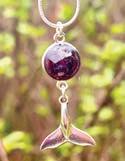
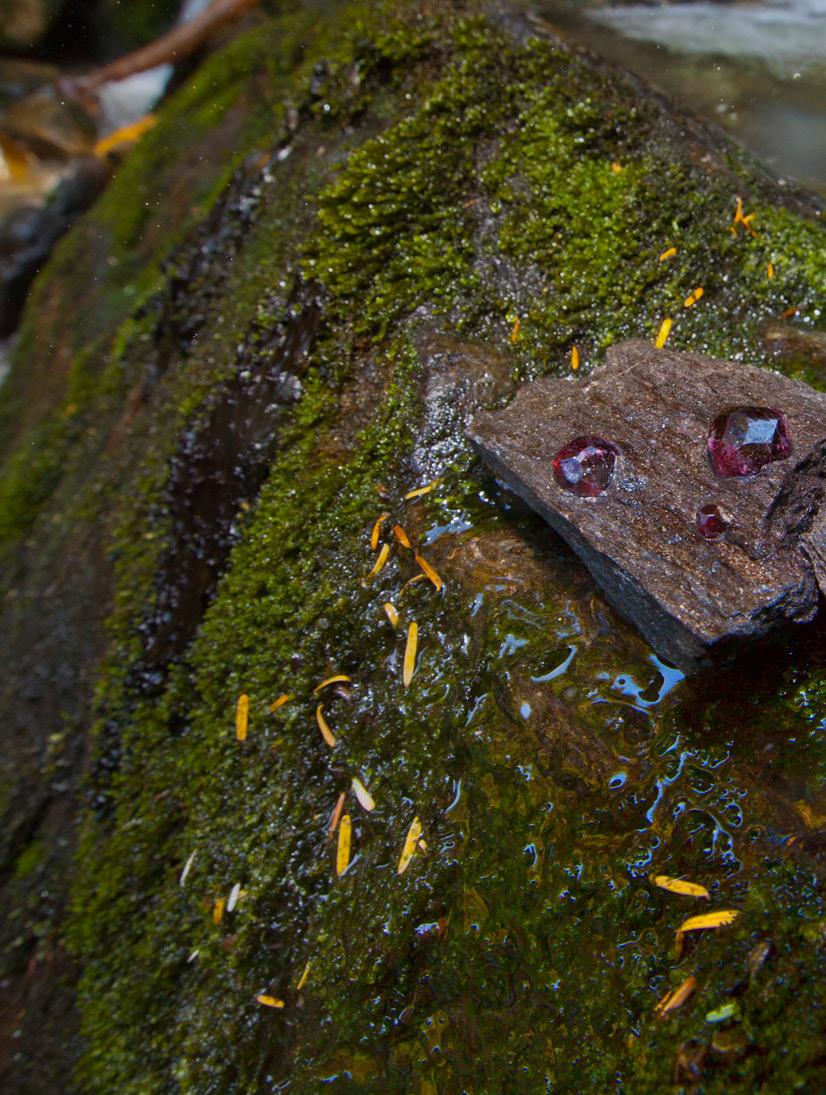
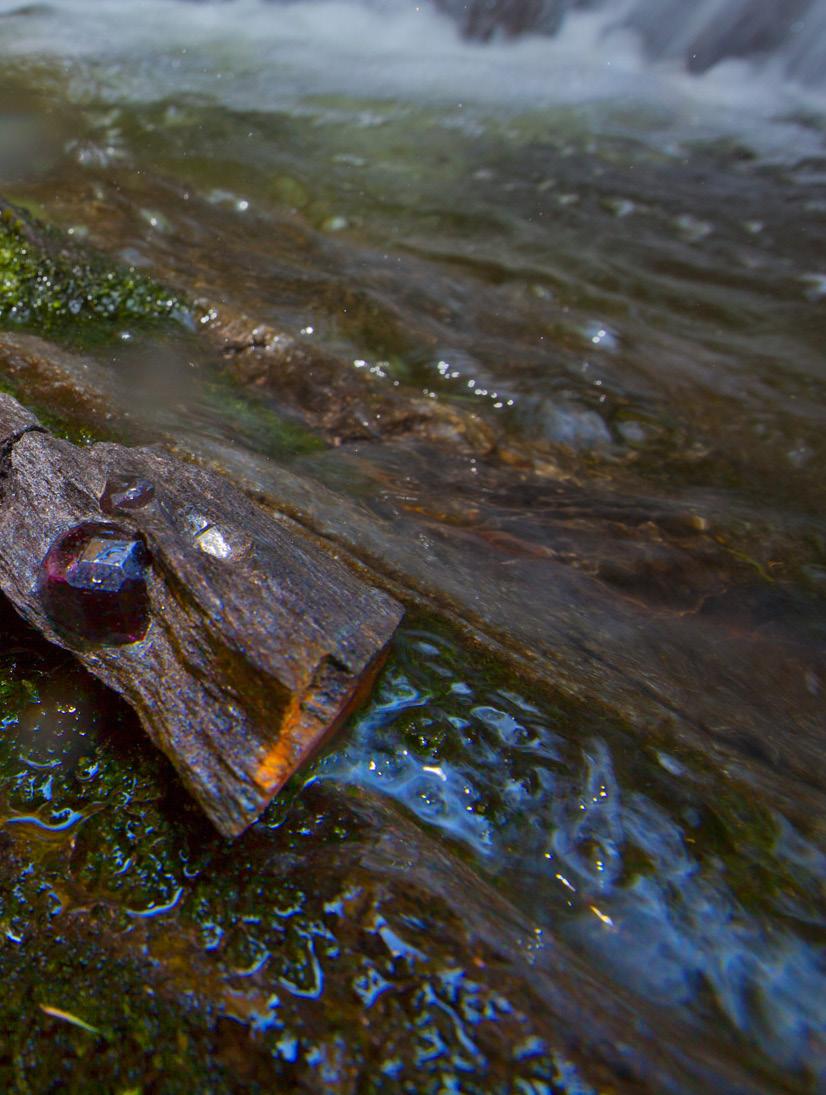
Garnets are semi-precious gemstones forged in the heat of metamorphic rock. The Wrangell garnet is of the type known as the almandine or carbuncle. They are comprised of iron, aluminum and silica.
Awareness of the stones dates back to the early gold miners of the 1860s.
Wrangell garnets can vary in size and are generally ruby red. They are not gemstone quality, however, and cannot be cut or polished without difficulty. A nearby U.S. Forest Service cabin is available for those wanting some extra time to mine, though they still need to follow the tribal council’s rules.
No power tools are permitted. Kids and their families take hand tools and buckets to look for garnets in the rocks and streams.
The cabin is on federal land, but the ledge and its deep scarlet prizes are on tribal council property.
Children are allowed to sell the stones of their labor to visitors and wholesale them to gift shops, giving them an up-close learning experience with business and commerce.
Tourists can find Wrangell garnets from entrepreneurs down by the ferry terminal or City Dock when ships are in port, at the Wrangell Museum gift shop, and sometimes at other shops.
RE Johnson
By Patricia Neal
Wrangell’s Garnet Ledge is noted for two things: Its garnets are sold by Wrangell children to visitors, and the ledge was mined by the first all-woman corporation in an era when women were just beginning to be accepted into the business world.
The Garnet Ledge has a long history that goes way beyond entrepreneurship by women and children.
While mining for gold on the Stikine River was active in the 1800s, there were at least 28 claims to the area (the majority by Alaska Garnet Mining & Manufacturing Co.) and at least two leases to the site beginning in 1881. Most claims were short-lived. It was hard work mining garnets — and then you had to figure out what to do with them! Between the late 1800s and 1905, activity at the ledge was mainly day trips to dig for garnets and have a picnic. But, three separate claims were filed in 1905.
A group of businessmen from the Chicago area visited Wrangell in 1905. They were looking for investment property, and the Garnet Ledge looked like the perfect opportunity. The Alaskan Ruby Mining & Development Co. was formed. The company leased the property from Alex Vreatt and William Taylor. Shares in the corporation were offered
at $4 each. An “Alaskan Ruby” was added to sweeten the deal. About two tons of garnets were shipped out, but the company was never heard from again.
The most active and most profitable claim to the ledge was owned by the Alaska Garnet Mining & Manufacturing Co., of Minneapolis. The company was formed in late 1906, with Anna E. Durkee the controlling stockholder and general manager. She heard about the property while in Wrangell earlier that year while visiting her friend Mary Elmer. They were scoping out a copper mine not too far from Wrangell.
Durkee purchased the property from Vreatt and Taylor. She returned to Minneapolis with plenty of garnets to show to her friends. Armed with tales of Alaska and the deep burgundy-colored garnets, she convinced 15 of her women friends to invest in the company.
News of the corporation made the front page of the Alaska Sentinel in Wrangell, but only an inside page of the Minneapolis Journal. Durkee indicated to reporters that men would be hired to work the mine but would not be involved in the corporation.
The women participated in the 1909 Alaska-Yukon-Pacific Exposition held in Seattle, and they were at the 1915 for the Pan Pacific Exposition in San Francisco. Several tons of garnets were shipped from the mine to Wrangell and then down to Seattle and on to San Francisco.
Mention was made in the newspapers across the country that the women were manufacturing jewelry and that sales were going well in England because the gems were from Alaska.
After the 1920s, work at the mine ceased and the buildings and equipment fell into disrepair —Durkee had moved on to mine in Arizona. Wrangell businessman Fred G. Hanford acquired the ledge in 1962. He deeded the property to the Southeast Council of Boy Scouts. It allowed the council to retain ownership of the ledge as long as the children of Wrangell were allowed to dig for garnets. The ledge was transferred to the First Presbyterian Church of Wrangell in 2006 when the Scouts could no longer manage the site.
The church in 2025 transferred the property to the local tribal council, the Wrangell Cooperative Association.
Patricia Neal is the author of “Wrangell Garnet Ledge History” available at local retailers or contact her directly at TrishaNeal@hotmail.com.

Bear with Wrangell if you’re in town Aug. 6-9 this year. It’s Bearfest week.
Residents and visitors alike can attend symposiums, listen to live music, test their baking skills at the “beary pie” contest, play games, browse the community market, run a 5K or half-marathon and, of course, learn about bears.
Bearfest is in its 17th year and is intended to promote the environment, specifically bears, and how important the animals are to the ecosystem.
“We want to showcase our environment, our culture, our resources,” says organizer Sylvia Ettefagh.
The events are free, except for the dinner and auction typically held Friday night at the Stikine Inn Restaurant. A gourmet dinner is prepared by a renowned chef, while participants can bid on tables full of fundraising items. Live music usually is performed throughout the dinner.
It’s one of the most popular events held in Wrangell every year, and

tickets to the dinner sell fast, so check www.alaskabearfest.org to find out when they go on sale.
There are also plenty of events for kids, like book readings and children’s games.
Those who like to challenge themselves can play in the golf tournament at Muskeg Meadows or enter a 5K walk or run or halfmarathon.
To find out more about Bearfest, visit the website alaskabearfest.org or email fun@alaskabearfest.org.
Whether for the more affordable provisions than elsewhere in Southeast, the strong reputation of the town’s marine service industries, or to see the Stikine River and all the other attractions around Wrangell, the community is drawing an increasing number of independent boaters from out of state to tie up and visit.
“We’re happy to see them,” says Harbormaster Steve Miller.
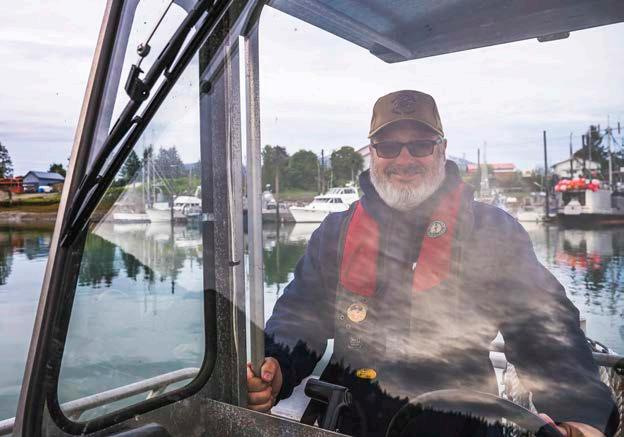
While the Ports and Harbors Department works to serve the local commercial and sportfishing fleets, recreational boaters and cruise ships that visit May through September, the staff is always eager to accommodate yachts and pleasure boats of any size.
Whether touring Southeast Alaska on their own, with an accompanying boat or two of friends, or part of an organized flotilla, Wrangell has room for waterborne guests of every size.
“Those are the ones we target for sure,” Miller said of independent boaters.
Most of the time, the harbor staff finds them a space to tie up at Heritage Harbor, Wrangell’s newest harbor, just about a mile south of downtown.
Boaters appreciate that fuel and groceries are a little cheaper in Wrangell than other stops in Southeast, Miller said. And Wrangell’s harbors are easier to navigate than Ketchikan’s busier port.
Most boaters coming through Southeast in the summer months, he said, are headed toward Glacier Bay National Park and Preserve, about 250 sea miles north of Wrangell.
Looking for a place to refuel, resupply and enjoy along the way, particularly for boaters on the long journey from Puget Sound, find Wrangell a convenient port. It’s a good next stop after Ketchikan.
And not just for the scenery and food.
“We get a lot who get wounded along the way,” Miller said of boaters who need to pull into the harbor and call one of the town’s skilled workers for repairs to their vessel, whether electrical, hydraulic, metal work or fiberglass.
For more information, visit wrangellportsandharbors.com, or call 907-874-3736.


Wrangell enjoys its holidays, especially the Fourth of July. It’s several days of food, street games, old-time logging competition, paddle and motorboat races, fishing contests for children, golf, a traditional parade, fireworks — and a lot more food.
Most of the events are held downtown, making it easy for people to wander between the games and activities.
The community pays for its fireworks with proceeds from a monthlong fundraising effort, in which Wrangell teens sell raffle tickets for a July 4 prize drawing. You can buy the tickets at the royalty contestants’ downtown food booths throughout June.
The community also turns out in large numbers for a Christmas tree lighting, school concerts and holiday displays and, yes, more food.
Though not an official holiday, the annual salmon derby is a highlight of Wrangell’s calendar. Prizes are awarded for the first salmon, the largest salmon caught and other categories in the derby, usually held over several days in late May and/ or early June.
The chamber of commerce runs the derby, with the exact dates and limits set in consultation with the Alaska Department of Fish and Game. The details are available at wrangellfishderby.com or call 907-874-3901.
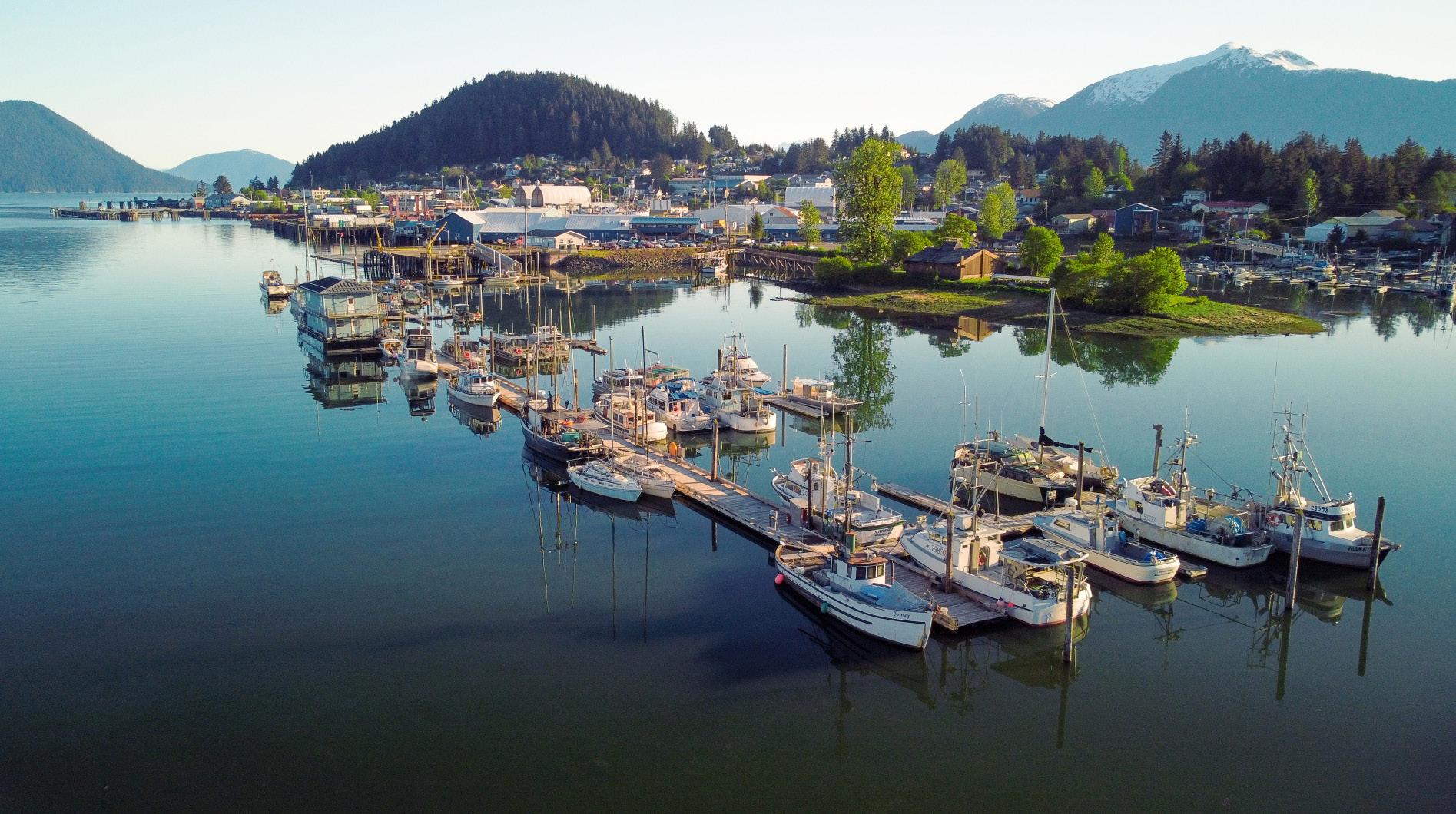
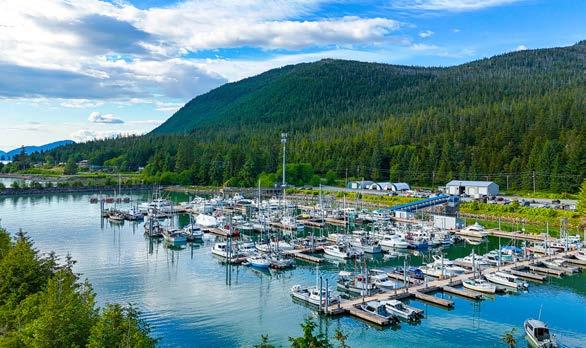
From 18-foot skiffs to 100-foot yachts to large cruise ships, Wrangell’s port and harbors can accommodate boats of all sizes, welcoming travelers from across the country and overseas — and certainly from our Southeast Alaska neighborhood.
Cruise ships tie up at City Dock, a deepwater dock at the north end of town near the Stikine Inn.
Wrangell also has three borough-operated harbors with reserved and transient moorage options, a 300-ton hoist and a 150-ton Travelift for haul-out and a Marine Service Center where skilled services are available for boat repairs and most anything else a mariner could need.
Heritage Harbor — a popular spot for visiting vessels — is located about a mile from the downtown shops, restaurants, groceries and hardware stores.
Heritage is the newest of Wrangell’s harbors, with electricity and potable water on the docks, a well-maintained restroom, an all-tides boat launch and plenty of turning space to accommodate large vessels.
The harbor is also the site of the Wrangell Mariners’ Memorial, a design-award-winning open-air gazebo and metal sculptures honoring lives lost at sea.
Located downtown near Shakes Island, the Inner Harbor primarily serves smaller, local vessels under 40 feet. Like Heritage Harbor, the Reliance Float at Inner Harbor also offers transient moorage for visiting vessels.
Though it is about six miles from downtown, Shoemaker Harbor is surrounded by amenities and recreational opportunities. A park, picnic shelter, restroom, playground and RV camping area are nearby. The harbor offers power, water, waste oil collection and garbage collection.
Before arriving in town, Harbormaster Steve Miller recommends calling the department in advance to touch base with staff and ensure that there is space available.
The summer season — especially around the Fourth of July — is particularly busy. Even then, “we do a pretty good job of making sure that we can accommodate everyone,” Miller said.
For more information, visit wrangell.com or call the Harbor Department at 907-874-3736. The Harbormaster also monitors VHF Channel 16.
Or go to wrangellportsandharbors.com






PLAN EARLY:
Most charter operators are booked many months in advance for key vacation dates.
CONSIDER THE SIZE OF YOUR PARTY:
Some operators can accommodate larger parties, while others prefer to focus on smaller groups.
CONSIDER THE ABILITIES OF YOUR PARTY:
Find out if trips can be paced for elderly or handicapped persons, and what ages of children are welcome.
ASK WHAT TO WEAR: Some operators furnish gear that others don’t.
Wrangell’s Coast Guard-licensed charter boat operators, who advertise here, observe safe boating practices and know the local area best what to see and what to do. From fishing excursions to sightseeing trips to freight hauling, they can meet all of your boat charter needs.
Stikine River sightseeing day trips
Stikine River overnight Fishing day trips
Sightseeing, photography, glaciers, pleasure
Alaska Legacy Charters 907-470-4000 info@alaskalegacycharters.com https://alaskalegacycharters.com
Alaska Vistas 907-874-3006 info@alaskavistas.com www.alaskavistas.com
Alaska Waters Inc. 907-305-0495 info@alaskawaters.com https://alaskawaters.com
All In Charters
907-874-3225, 907-394-2206 infor@allincharters.com https://allincharterswrangell.com/
Breakaway Adventures 907-874-2488 info@breakawayadventures.com www.breakawayadventures.com
Fish Wrangell 907-209-2190 marlin@fishwrangell.com www.fishwrangell.com
Muddy Water Adventures 907-305-0206 muddywaterak@gmail.com www.muddywateradventures.com
Stickeen Wilderness Adventures 907-874-2085 stickenwildernessadventures @hotmail.com https://stickeenwildernessadventures.com
Summit Charters 907-305-0416 johntaylorandsonsinc@gmail.com www.summitcharters.com


Drivable Roads
Unmaintained/Undrivable Roads
Trails
Campsite Lakes
USFS 3-sided Shelter
State Cabin (Public)
US Forest Service Cabin
Hiking
Water Activites: Swimming
Water Activites: Boating, Non-Motorized
Fishing
Points of Interest
THIS D IRECTORY IS SPONSORED BY ADVERTISERS IN THE WRANGELL TRAVEL GUIDE
* DENOTES BUSINESSES WITHOUT A STOREFRONT
1. 56 NORTH: 5 Front St., 907-305-0495, Facebook: @56North
2. A SUITE SPOT B&B: 206 McKinnon St., 970-535-4357, www.asuitespotbandb.com
3. ALASKA AIRLINES: Wrangell Airport, 800-252-7522, www.alaskaair.com
4. ALASKA MARINE HIGHWAY SYSTEM: 301 McCormack St., 907-874-3711, www.dot.alaska.gov/amhs
5. ALASKA VISTAS: 103 Front St., 907-874-3006, www.alaskavistas.com
6. ALASKA WATERS: 5 Front St., Unit 1, 907-305-0495, www.alaskawaters.com
7. ALASKAN ARTIST: 107 Stikine Ave. and 1003 Case Ave., 907-874-3508, www.marineartist.com
* ANCHOR PROPERTIES: 907-470-0085, www.apalaska.com
8. ANGERMAN’S INC.: 2 Front St., 907-874-3640, Facebook: @Angerman’s Inc.
9. AP&T: 20 Front St., 800-478-7785, www.aptalaska.com
10. ARCTIC CHIROPRACTIC AND MASSAGE: 109 Lynch St., 907-874-3361, www.arcticchiropractic.com
11. BREAKAWAY ADVENTURES: 106 Lynch St., 907-874-2488, www.breakawayadventures.com
12. BUNESS BROS, INC.: 18 Front St., 907-874-3811, Facebook: @Buness Bros Inc.
13. CHIEF SHAKES TRIBAL HOUSE: Shakes Island, 907-874-4304, www.wcatribe.org
14. CITY AND BOROUGH OF WRANGELL: 205 Brueger St., 907-874-2381, www.wrangell.com
15. CITY MARKET: 423 Front St., 907-874-3333, Facebook: @City Market, Inc.
16. COOPER’S CORNER: 124 Front St., 907-305-1026, www.cooperscorneralaska.com
* FISH WRANGELL: 907-209-2190, www.fishwrangell.com
17. FIRST BANK: 224 Brueger St., 907-874-3363, www.firstbankak.com
18. FORGET ME NOT LODGING: 203 Weber St., 208-818-6925, www.forgetmenotlodging.com
19. GRAND VIEW BED & BREAKFAST: 1.9 Mile Zimovia Highway, 907-874-3225, www.grandviewbnb.com
20. HARBOR VIEW SELF STORAGE: 1068 Zimovia Highway, 907-796-9007, www.harborviewstorage.net
21. HAYSTACK QUILT STORE: 1002 Case Ave., 907-874-3648
22. HERITAGE FISHERIES: 107 Stikine Ave., 907-470-4001, Facebook: @HeritageFisheriesAK
23. HERITAGE HARBOR BOATHOUSE: 238 Berger St., 360-393-7354, www.airbnb.com/rooms/14789513
* HOMEPORT ELECTRONICS: 907-772-3100, www.homeportelectronics.com
24. HUNGRY BEAVER PIZZA & MARINE BAR: 640 Shakes St., 907-874-3005, Facebook: @Marine Bar
25. IRENE INGLE PUBLIC LIBRARY: 124 Second St., 907-874-3535, www.wrangell.com/library
26. ISLAND ESCAPE RENTAL CARS: Wrangell Airport, 907-874-3975, www.wrgislandescape.com
27. ISLAND OF FAITH LUTHERAN CHURCH: 211 Second St., 907-874-2743, www.islandoffaith.weebly.com
28. JAVA JUNKIE: 103 Front St., 907-874-3006, Facebook: @Java Junkie
29. JOHNSON’S BUILDING SUPPLY, INC.: 2.5 Mile Zimovia Highway, 907-874-2375, www.jcsialaska.com
30. KSTK RADIO: 202 St. Michaels St., 907-874-2345, www.kstk.org
31. MUDDY WATER ADVENTURES: 107 Stikine Ave., 907-305-0206, www.muddywateradventures.com
32. MUSKEG MEADOWS GOLF COURSE: 0.5 Mile Ishiyama Drive, 907-874-4653, www.muskegmeadows.com
33. THE NOLAN CENTER: 296 Campbell Drive, 907-874-3770, www.thenolancenter.com
34. OCEANSIDE B&B: 609 Evergreen Ave., 907-305-0173, www.oceansidebandb.com
35. OTTESEN’S ACE HARDWARE: 104 Front St., 907-874-3377, Facebook: @Ottesen’s Ace Hardware
36. RAYME’S BAR: 116 Front St., 907-874-3442, Facebook: @Rayme’s Bar
37. REEVES GUEST HOUSE: 3.75 Mile Zimovia Highway, 907-305-0657, www.airbnb.com/rooms/42153824
38. RELIANCE RENTALS: 1214 Peninsula St., 907-305-1211, www.airbnb.com/rooms/17815042
* RITCHIE’S ROCKS: 907-305-1211, www.ritchiesrocks.com
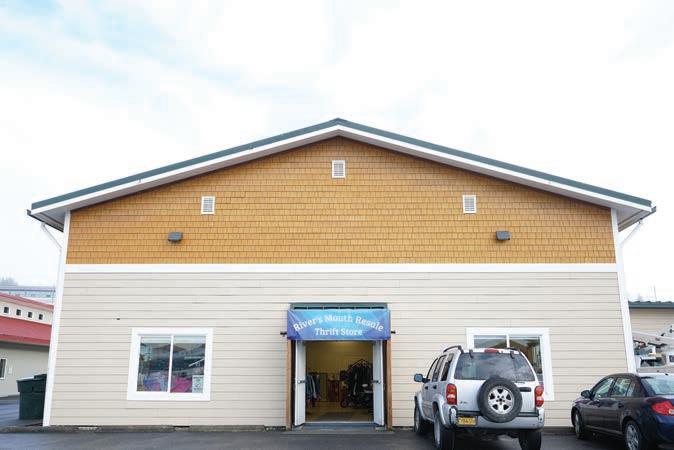
39. RIVER’S MOUTH RESALE: 321 Front St., Back Hall, 907-874-4095, Facebook: @River’s Mouth Resale
40. SEARHC MEDICAL CENTER: 232 Wood St., 907-874-7000, www.searhc.org
41. SENTRY HARDWARE & MARINE: 408 Front St., 907-874-3336, Facebook: @Sentry Hardware & Marine
42. ST. PHILIP’S EPISCOPAL CHURCH: 446 Church St., www.stphilipswrangell. com
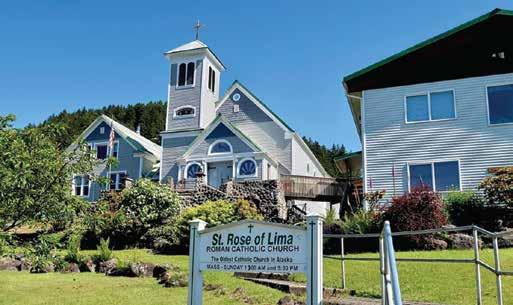
43. ST. ROSE OF LIMA CATHOLIC CHURCH: 120 Church St., 907-874-3771, www.stroseoflimawrangell.com
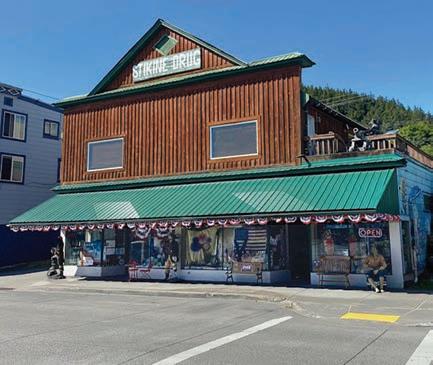
44. STIKINE DRUG STORE: 202 Front St., 907-874-3422, www.stikinedrug.com
45. STIKINE INN AND RESTAURANT: 105 Stikine Ave., 907-874-3388, www.stikineinn.com
* STIKINE OFF-ROAD RENTALS: 907-305-1144, Facebook: @Stikine Off-Road Rentals
* SUMMIT CHARTERS: 907-305-0416, www.summitcharters.com
46. SUNRISE AVIATION: Wrangell Airport, 907-874-2319, Facebook: @Sunrise Aviation Inc.
47. SWEET TIDES: 305 Front St., 907-874-3900, Facebook: @Sweet Tides
48. TONGASS FEDERAL CREDIT UNION: 215 Front St., 907-874-2500, www.tongassfcu.com
49. TK’S MINI-MART: 930 Zimovia Highway, 907-874-2361, Facebook: @Tk’s Mini-Mart
50. WRANGELL CHAMBER OF COMMERCE: The Nolan Center, 907-874-3901, https://wrangellchamber.com
51. WRANGELL ELKS LODGE NO. 1595: 103 Front St., 907-874-3716, Facebook: @B.P.O.E #1595 - Wrangell Elks Lodge
52. WRANGELL EXTENDED STAY: 312 Stikine Ave., 907-305-0989, www.wrangellextendedstay.com
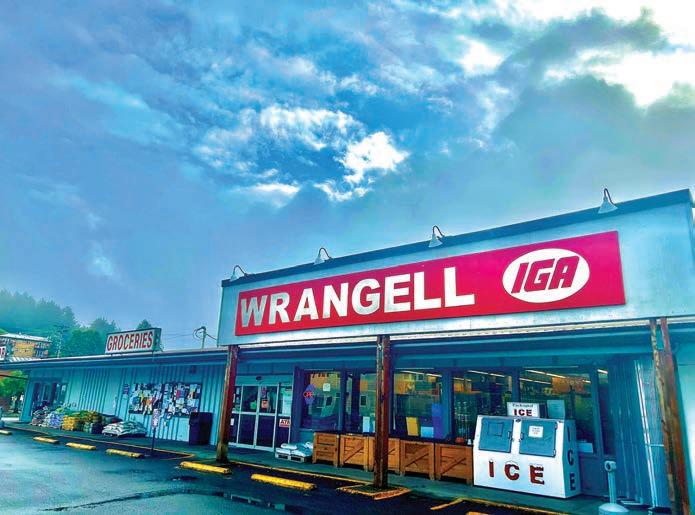
53. WRANGELL IGA: 223 Brueger St., 907-874-2341, www.wrangelliga.com
54. WRANGELL PARKS & RECREATION: 320 Church St., 907-874-2444, www.wrangellrec.com
55. WRANGELL PORTS & HARBORS: 671 Shakes St., 907-874-3736, www.wrangellportsandharbors.com
* WRANGELL REAL ESTATE: 907-874-4445, www.movetowrangell.com
56. WRANGELL SENTINEL: 205 Front St., 907-874-2301, www.wrangellsentinel.com
* XÓOTS TAXI: 907-305-1095, Facebook: @Xóots Taxi