ITB BERLIN 2026

Page 1


Cuba at ITB Berlin 2026: Strategies and resilience in a challenging scenario

Artificial intelligence will redefine travel in 2026

TTC Special Feature: Low-income neighborhoods as new epicenters of cultural tourism

Havana Club relaunches its Selección de Maestros with a new image

A Caribbean destination for sea adventurers

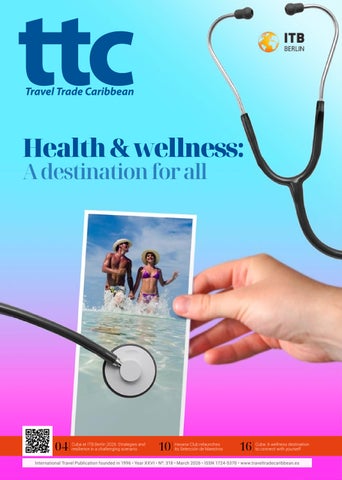
A wellness destination to connect with yourself

The African jewel in Germany’s world tourism

Special Feature: Tourism in 2026: Opportunities and challenges for Latin America and the Caribbean

EDITORIAL NOTE

We are enthusiastcally preparing for ITB Berlin 2026, one of the most important events on the international tourism calendar. We at Travel Trade Caribbean reiterate our commitment to promoting vibrant Caribbean destinations, with a special focus on Cuba as a must-see for travelers from around the world.

The trade show will be a perfect opportunity to strengthen partnerships, showcase investment opportunities and open new routes that contribute to the sustainable development of tourism in the region. Cuba, with its rich culture, history and natural attractions, continues to consolidate its position as a leading destination in the Caribbean.

Our team, in collaboration with local and international partners, works tirelessly to promote its potential and highlight its authenticity. ITB Berlin 2026 promises to be a meeting point for innovation, knowledge sharing and forging connections that will drive tourism growth in an era of constant change.

ITB Berlin 2026: 60 years making a mark on tourism while looking to the future

TTC TRAVEL TRADE CARIBBEAN S.R.L. Vía Armando Díaz, 10 Gioia del Colle, Bari, Italia • redaccion@traveltradecaribbean.com • www.traveltradecaribbean.es

From this platform, we invite all stakeholders in the sector to continue investing in responsible, inclusive and regenerative tourism. Together, we will make the Caribbean an increasingly attractive and competitive destination.

Warm regards,

Director General Alfredo Rodríguez • Cuba Director Mario Ramos • Editor-in-chief Claudia Dupeiron • Correspondent Daily Pérez Guillén • Director of Technology Hairo Rodríguez • Marketing Amy Cruz • Graphic Design 10K • Web Editor Rachell Cowan • Webmaster Nelson Sánchez • Social Media Manager Yoanna Cervera • Translator Mayte Tiant • Accounting Nara Rodríguez • Collaborators Julio Ginarte • Representative in the Dominican Republic Leidy Velázquez

Registered with the Court of Milan under number 166. Property of Travel Trade Caribbean S.R.L. Date of registration at the Chamber of Commerce: August 1, 2001. Registered with the ROC Italia (Register of Communications Operators). Partial reproduction is prohibited without the express permission of the authors, who retain all legal rights and are responsible for content.

Cuba at ITB Berlin 2026: Strategies and resilience in a challenging scenario

Amid a complex international context and with an economy battered by the tightening of the US blockade, Cuba is set to reaffirm its commitment to tourism at the ITB Berlin trade fair, running March 3 through 5.

The event, which celebrates its 60th anniversary this year, promotes B2B exchange and will be an opportune setting to strengthen Cuba’s presence in the German market, one of the most important tourism markets for the Caribbean nation.

Orlando Ramos, Cuban Tourism counselor to Germany, explained that the fair will be a key opportunity to demonstrate the destination’s resilience and present new offers for the 2026/27 summer and winter seasons.

“The professional nature and the intense schedule of meetings will allow us to engage in dialogue with tour operators, agencies, specialized media and local authorities to explain the changes we are implementing and to guarantee the quality of our offerings,” he noted.

Furthermore, he highlighted the Cuban tourism sector’s efforts to maintain operations under adverse conditions and protect its development as an essential pillar of the social economy.

Another key point Ramos addressed was the direct flights between Germany and Cuba.

Since December 2025, collaboration between Cubana de Aviación and the Spanish airline Plus Ultra has established direct connections from Frankfurt to Holguín and Havana, increasing the number of German tourists.

According to Ramos, just two months after the establishment of two weekly circular flights connecting Frankfurt with Holguín and Havana via a direct route, using an Airbus A330-200 with a capacity for 287 passengers (17 in business class and 270 in economy), Cubana de Aviación had to announce an adjustment to its flight frequency starting April 1, 2026, operating the Frankfurt-Holguín-Havana-Holguín-Frankfurt route only on Wednesdays.

“Shortly afterward, due to a lack of fuel availability, all operations were canceled until March 8, 2026,” he explained.

Ramos pointed out that the German company Friends Touristik Marketing GmbH & Co. KG, Cubana de Aviación’s GSA in Germany, will also be participating alongside the Cuban delegation at ITB Berlin 2026.

He emphasized that the occasion will allow them to evaluate the results of the operation and the conditions for its announced resumption.

“Exchanges with key professional clients will allow us to reach agreements that contribute to the definitive positioning of the operation, through joint promotional activities and a marketing policy that effectively incentivizes and engages tour operators, travel agencies and consolidators, in a timely manner and in accordance with the lead times required for the preparation, promotion and sales processes of the seasons,” he noted.

In this regard, he clarified that these actions could have a considerable quantitative impact on bookings, provided they align with the strong demand for the destination and the in-depth knowledge of distribution channels. This will be achieved through the growth of guaranteed group tours and domestic itineraries, the organization of events and incentives, and the planning of individual trips, thus contributing to strengthening commercial, cultural and tourism ties between Cuba and Germany.

When discussing Cuba’s main attractions for German tourists, Ramos highlighted that travelers from the European nation have a strong preference for long-haul destinations that offer sun and beach vacations combined with domestic tours and excursions. These options allow them to experience the rich historical and cultural heritage of the countries they visit and offer the opportunity to learn about the local way of life and interact with host communities.

“Germans are not only looking for leisure and recreation, but also enriching

life experiences from a sustainable and socially responsible perspective. The tourism resources and competitiveness of the Cuban tourism product perfectly align with these expectations. However, Cuba also possesses a special appeal that makes it unique, and that is precisely its difference, its distinction within the context of its similarities to other destinations in the region with comparable attractions,” he explained.

That differentiating element is the Cuban people themselves, he said, “with their unique character shaped by their island identity, their sense of hospitality and solidarity, their nobility, their boundless gratitude, their sense of humor and their contagious joy, even in difficult circumstances.”

Ramos further explained that among the aspects most appreciated by German visitors is the exceptional beauty of the island’s beaches.

“Cuba is seen as a high-quality sun and beach destination, with fine sandy beaches, crystal-clear waters, and highly preserved natural environments in national parks and biosphere reserves, or those designated as cultural landscapes of humanity. Germans especially appreciate the idyllic beaches of the keys in our archipelago, the exceptional climate, and the options for relaxation in pristine and uncrowded settings,” he emphasized.

He clarified that, unlike other markets that solely prioritize “all-inclusive” beach resorts, Germans seek combined experiences. They highly value domestic programs and tours that combine beach vacations with cultural, historical and nature excursions.

“The culture treasured by our historic and heritage cities, their architecture, and their traditions are highly appreciated, as are the music, dance, colonial heritage and elements such as tobacco, rum and everyday life. Germans ultimately seek destinations with heritage value and authentic experiences beyond just sun and sand,” the Cuban representative stated.

One of the themes at this year’s ITB Berlin is health tourism, a sector in which the Caribbean island has excelled. TTC also spoke with Ramos regarding this aspect, to learn about the prospects for the German market.

Aligned with one of the themes of ITB Berlin 2026, Cuba has promising prospects in health tourism, thanks to

international recognition of its scientific advancements and a diversified range of medical and wellness services offered by Cuban Medical Services, he said.

He noted that Cuba possesses significant strengths to become an ideal destination for health and wellness tourism, offering a unique combination of specialized infrastructure, high-quality medical treatments, natural environments and competitive prices; all supported by highly qualified human resources and achievements in biomedical research.

“Among the most valued services in the Cuban Medical Services portfolio are specialized consultations, traditional therapies (massage, acupuncture), and innovative treatments such as ozone therapy, equine assisted therapy and natural medicine for general well-being,” he emphasized.

Ramos also highlighted the addiction treatment programs with multidisciplinary approaches based on cognitive-behavioral therapies; cancer treatments with immunotherapy; placenta-derived products for skin conditions, retinitis pigmentosa and diabetic foot ulcers; minimally invasive surgeries; comprehensive rehabilitation; obesity management; ophthalmological and dental services; and services for stress, insomnia and nutrition, among many others. These services not only aim to cure, but are also focused on prevention and improved quality of life, integrating tourism with medical care, which sets Cuba apart from other Caribbean destinations.

ITB Berlin 2026 promises to be one of the most outstanding editions in the history of this global travel trade fair, standing out for its many new features and its focus on the future of tourism.

The event, which will take place from March 3 to 5, is fully booked and will feature exhibitors from more than 160 countries. Angola is the host country, highlighting the growing importance of tourism in Africa.

Artificial intelligence will redefine travel in 2026

The year 2026 will be remembered as the year artificial intelligence (AI) became the central focus of the global tourism industry. What once required hours of searching across multiple platforms is now resolved in seconds thanks to algorithms that anticipate travelers’ desires.

According to the Simon-Kucher’s Global Travel Trends 2026 report, 35% of travelers already use AI tools to plan their routes, a figure that jumps to 50% among Generation Z. In Asian markets, penetration reaches 60-80%, paving the way for the rest of the world. Precedence Research forecasts that the market for generative AI applied to travel will reach $5.8 billion by 2032, driven by its ability to predict fares, recommend accommodation and optimize expenses.

The main transformation lies in hyper-personalization. Tools like ChatGPT and Gemini are eroding traffic from traditional searches on Google and platforms like Booking.com. New conversational assistants understand nuances such as dietary restrictions or mobility needs, creating customized itineraries that previously required a skilled travel agent.

AI is also streamlining the airport experience. Biometrics with facial recognition allows for check-in, border

controls and hotel access with just a fingerprint, reducing wait times and improving security. In hotels, smart sensors monitor energy consumption based on actual occupancy, while automated processes free up staff for high-value interactions.

The corporate sector also benefits. According to Rafael Cohen, CEO of Blis. AI, AI agents consult real-time inventories, apply company policies and return proposals in seconds, drastically reducing costs and human error.

However, the sector warns against dehumanization. Braztoa’s 2026 study identifies scalable, intelligent, and humanized personalization as the key competitive differentiator, under the concept of “high-tech + high-touch.”

At Fitur 2026, the message was unanimous: technology should support, not replace, the warmth of service. Cemil Hakan Kilic, director of the Istanbul Convention Bureau, summarized it this way: “The more travelers see, the more walls are broken down.”

At the upcoming ITB Berlin 2026, advances in real-time translation, autonomous vehicles for tourist transfers, and recommendation systems that learn from every interaction will be presented. This year, the winners will be those who use AI to make every interaction more seamless, ethical and valuable.

Low-income neighborhoods as new epicenters of cultural tourism

PHOTOS: WILLEXPERIENCE.COM

The constant flow of international visitors, seeking new and authentic experiences, allows historically stigmatized communities to position themselves as hubs of urban art and culture. In this context, “barrios populares” or shanty towns emerge as urbanizations with inexpensive lots where residents build their own homes and services.

This type of low-income neighborhood is prevalent in Brazil, Colombia and several other Latin American countries, exhibiting unique urban, social and cultural dynamics. Regardless of their size or impact, these settlements have traditionally been overlooked in terms of their contribution to the city and to any tourism or city branding strategy. It is generally thought that these areas offer nothing but poverty and social problems. However, beyond these traditional and disparaging perceptions, it is believed that they can actively contribute to tourism and city branding development in Latin America.

For example, in Colombia, the Trinidad neighborhood, better known as Barrio Antioquia, has become a meeting point where young talent takes over public spaces. On the one hand, freestyle battles have made the area a benchmark for fast-paced, streetwise rhymes. Music, sports and community combine in Trinidad, or Barrio Antioquia, demonstrating how neighborhood identity can become a powerful tourist attraction.

It is significant to note that during 2025 and early 2026, Rio de Janeiro experienced an unprecedented transformation in its tourism dynamics. The city reached a historic record of 2.1 million international tourists, representing a 44.8% increase compared to the previous year.

However, the most relevant data point has been the change in visitor preferences: travelers began to flock to the “favelas,” seeking a cultural immersion that iconic monuments like Christ the Redeemer or Sugarloaf Mountain could not offer on their own.

Informal settlements are commonly found in developing countries today, but they are also present in developed countries. In Rio de Janeiro, the city’s unique geomorphology, with its big hills and vast stretches of vegetation interspersed with large buildings, has

TEXT: JOSÉ LUIS PERELLÓ
Views from Morro do Cantagalo

contributed to a blurred class divide between neighborhoods: a large number of favelas exist within middle- and upper-class neighborhoods, just meters from luxurious properties.

The term favela originated in Brazil and is generally applied to impoverished areas in the urban center. However, it was in the 1950s that informal settlements were first included in population censuses, and a definition of favela was established for this purpose. According to the Rio de Janeiro City Master Plan, “a favela is a predominantly residential area characterized by land occupation by low-income populations, precarious urban infrastructure and public services, narrow and irregularly aligned streets, irregularly shaped and sized lots, and

unlicensed constructions that do not conform to legal standards.”

Some of the best-known favelas in Rio de Janeiro are Rocinha, Pavão-Pavãozinho, Vidigal and Dona Marta in the South Zone, as well as Cidade de Deus in the West Zone. The largest are Fazenda Coqueiro and Nova Cidade (both in the West Zone), and Complexo do Alemão and Complexo da Maré (North Zone).

For many residents, tourism has become the main source of income and a tool for social mobility. Local guides in Rocinha have adapted their services to offer personalized tours through the narrow alleyways of Brazil’s most populous favela. The local economy was thus injected with part of the 7.8 billion reais

that foreign tourism generated for the city in 2025.

The trend became clear: the 2026 tourist prioritizes authenticity. Tours of Rocinha or Morro da Providência were not limited to passive observation; they included participation in capoeira demonstrations, visits to local artists’ studios,l and dinners on residents’ rooftops.

The viral spread of videos on digital platforms and the presence of influencers and international celebrities, such as the singer Rosalía, who was seen practicing the “passinho” dance in Rocinha at the end of 2025, were key to building trust and attracting a younger, more curious global audience.

Local infrastructure also evolved, with the opening of bars with panoramic viewpoints and professional drone filming services for influencers.

Tourism experts from the State University of Rio de Janeiro noted that these communities successfully met the demand for experiences with a sense of place.

The local guides’ approach was educational, seeking to tell the story of the territory from the perspective of its inhabitants, eliminating the superficial view of a “human safari” and replacing it with one of awareness and respect. For visitors, the appeal lay in the fact that the experience wasn’t “staged” for tourists, but rather showcased the pure essence and true rhythm of life in Rio.

As has been reported, leisure travel is driven by those who actively seek the unknown and express their intention to explore new destinations instead of returning to familiar haunts. At the same time, there is a shift in demand towards smaller cities, working-class neighborhoods, and rural areas, with most opting for the “slow tourism” model.

Views from Morro do Cantagalo
Colombia’s Street

Havana Club relaunches its Selección de Maestros with a new image

Havana Club unveiled the new look of its iconic Selección de Maestros rum, a redesign that refreshes the bottle of this flagship product of the brand on its 15th anniversary. The launch took place at the recently inaugurated Casa del Ron Havana Club in Old Havana, at an event led by the President of Havana Club International S.A. (HCI), Michael Merolli, before a group of specialized journalists.

Accompanying Merolli at the presentation were Asbel Morales, director for national sales of the product, and the five Masters of Cuban rum, responsible for the creation and quality control of these spirits. The event reaffirms Havana Club’s commitment to the tradition, innovation and excellence that characterize Cuban rum heritage.

New look, same essence

Experts explained that the new presentation maintains the essence of the original product while introducing a redesigned bottle that reinforces the brand’s identity with an elegant and contemporary style. The design pays tribute to Cuban cultural heritage and the Rum Masters as guardians of this centuries-old legacy.

The bottle draws its inspiration from La Giraldilla, a symbol of Havana and Cuban identity, whose silhouette crowns the tower of the Castillo de la Real Fuerza. Selección de Maestros is part

of the Havana Club Iconic Collection (Colección Icónica), an ultra-premium category that represents the pinnacle of the brand’s extra-aged rums.

Havana Club Icónica Selección de Maestros is bottled directly from the barrel with an alcohol content of 45%, preserving its warm amber hue and characteristic reddish highlights, with a robust body and full flavor.

During the presentation, it was reported that the Havana Club domestic market registered a 16% increase in sales during the past year, reflecting the brand’s strength in Cuba.

Havana Club International was established in 1993 as a joint venture between Cuba Ron S.A. and the French group Pernod Ricard. Since 1994, it has been one of the French company’s priority brands, ranking among the top 13 in the conglomerate’s spirits portfolio.

The brand currently exports to 125 countries, with Germany, France, Italy, Spain, the United Kingdom, Canada, Chile and Argentina as its main markets. In 2025, Havana Club received 58 international awards, bringing its total to 576 accolades since 1994.

The unveiling of the redesigned bottle reinforces the role of the Masters of Cuban Rum as custodians of a tradition recognized as Intangible Cultural Heritage of Humanity by UNESCO, while also consolidating Havana Club’s presence as a global ambassador of Cuban rum excellence.

A COLLABORATION BY RACHELL COWAN CANINO

30 years working to inform tourism, commerce and business professionals

Cuba: A Caribbean destination for sea adventurers

Right where the waters of the Atlantic Ocean, the Caribbean Sea, and the Gulf of Mexico converge, Cuba stands out as a key point for marine exploration and connectivity. More than 4,000 cays and islets, along with the Island of Cuba and the Isle of Youth, make up the largest and westernmost archipelago of the Greater Antilles. Those seeking adventure and privacy while traveling aboard luxury yachts will discover unforgettable experiences here.

Ranking among the eight largest archipelagos in the world has not guaranteed the Caribbean country one of the most visited nautical destinations in the Americas. María Romeu, a travel agent who has organized around fifty luxury yacht cruises across Cuba over the last decade, has tried to overcome all obstacles and turn this reality into an attraction.

Passion emerges when she talks about the subject. “Cuba offers, especially to the adventurous visitor, everything you can imagine. There are beautiful sailing routes because it is one of the largest, most diverse, and most pristine destinations in the entire Caribbean, for people who truly want to explore.”

A sustained commitment to environmental conservation means that approximately 25% of the marine and coastal ecosystems in this territory are recognized as protected areas. Hence, the seabed surrounding Cuba is ranked among the most spectacular in the Caribbean for its natural, historical, and scenic richness.

This is part of the promotional content highlighted by CubaPlus Travel, the company Romeu currently works for.

“36% of all coral reefs in the Caribbean basin are found here… the ecosystems are healthier than in any other country,” the website’s home page states.

Most of these corals grow in pristine reservoirs. The reefs boast more than 40 species, and the largest black coral reserve in the Caribbean is located on the Guanahacabibes Peninsula, toward the western end of the island. Iconic species such as lionfish, grouper, conch, sea turtles, bottlenose dolphins, crocodiles, and sharks also swim in these depths.

In other locations, the underwater landscape offers caves, tunnels, and canals ideal for professional diving and photography, such as María la Gorda and Punta Francés. Meanwhile, in the Ciénaga de Zapata National Park, underground valleys and galleries connect to the sea through cenotes and lagoons.

As if that weren’t enough, Cuba also safeguards a submerged historical heritage. Specialized guidebooks and travel reviews mention the ship graveyards in the Bajo de Zambo area, with more than one hundred wrecks, or in the Bay of Santiago de Cuba, where Spanish ships sunk by American gunboats during the 1898 war lie.

To reach these places with all kinds of guarantees and enjoy exclusive experiences, María Romeu has designed three maritime routes —and announces that another one will soon be available along Cuba’s northern coast.

You can access them and learn all kinds of details through the digital platforms of the CubaPlus Travel agency. The Northwest route begins—or ends, like all the others, at the client’s choice—in Varadero, continues toward Havana, then continues to Cayo Jutías until reaching the María La Gorda International Diving Center, very close to Cape San Antonio, on the western tip of the island.

Meanwhile, one of the southwest routes begins at Cape San Antonio, then arrives at the María La Gorda International Diving Center, continues to Punta Francés on the Isle of Youth, enters the Canarreos Archipelago, skirts Cayo Largo del Sur, and continues to Cienfuegos and Trinidad.

Finally, the exploration that departs from Santiago de Cuba, on the southeast coast, offers a chance to enjoy the scenery at Marea de Portillo. Sailing at night is recommended, waking up in complete solitude on Cayo Cabeza del Este with a lighthouse in sight. Then, explore the Jardines de la Reina, and approach Trinidad, Cienfuegos, or Cayo Largo del Sur.

Exclusive experiences

Inland from the 5,800 km of coastline that will always be visible to the crews, the island territory is home to mountains, crystal-clear rivers with waterfalls, and diverse ecotourism trails; more than 6,000 plant species, many of which are endemic; iconic animals such as the smallest bird on the planet, the bee hummingbird; polymitas, the world’s most colorful snails, and the largest mangrove forests in the Caribbean.

To ensure her discerning clients can experience these wonders, including the nation’s history, culture, and people, Romeu weaves a network of connections across the island with state and private stakeholders. “For example, I had a 99-meter yacht, with two passengers on board and 35 crew members, for thirty days off the southern coast of Cuba, just exploring. They never set foot on the mainland. They were British people of very high economic standing.”

She assures us that their stay went unnoticed. “These people seek privacy and the exploration of unspoiled places. They spent six days in Jardines de la Reina, an underwater national park protected for thirty years. There is every imaginable marine life, between

seven and eight species of sharks and crocodiles endemic to Cuba. They then went to Cayo Largo del Sur, and to stock up, we managed to import 600 kilograms of gourmet food through a Belgian company. Everything was packaged in accordance with international regulations and requirements for food transportation. The Cuban entities Palco, Immigration, Customs, and Marinas Marlin collaborated with all the information and paperwork to move these supplies from Charles de Gaulle Airport in Paris to Cayo Largo del Sur in 72 hours. This was a wonderful experience in 2023, and we have already repeated it several times.”

Other travelers prefer to abandon their luxurious vessels for a few hours or days, explore selected locations in the country, and experience its vibrant culture.

“In Santiago de Cuba, we hosted a spectacular yacht for four days. Its owners wanted a very curated, special trip, as it was one of their birthdays. During that time, we hosted a carnival at El Morro with the Comparsa del Caribe. Four children with two nannies and six other adults were also on board. On one occasion, while the adults enjoyed a private meeting with the city curator and musicologist, Omar López, about the history of Cuban music, the children took a class with the Santiago Ballet. And after the parents danced rumba in an interactive class, we went to the ballet studio and saw their children, both girls and boys, performing a scene from The Nutcracker . I think there were six private events in four days.”

Among the photos she keeps in her smartphone gallery are dinners held in such idyllic locations as the ruins of French coffee plantations in Gran Piedra, surrounded by flowers in the Ave del Paraíso Garden (Bird of Paradise

María Romeu, a highly experienced travel agent in the luxury yacht market, presents Cuba as a budding tourist destination with ample opportunities to gain a significant place in the Caribbean region.

Flower), where these Asian and many other species are grown. On pristine white tablecloths, silver cutlery, fine crystal glasses, and delicious meals gleam.

“All of this generates income for the private sector, for artists, and for the community at large, and it’s very important to me to support these people,” she declares.

Cuba, an ideal setting for luxury yachting

Luxury yachting represents much more than sailing; it’s an exclusive way of life that combines advanced technology, refined design, and personalized experiences. María Romeu started in this business decades ago.

Although she was born into a family of Cuban origin with nautical traditions, for the first time in her life she came close to modern vessels measuring 70, 80, and 90 meters in length, with helicopters, swimming pools, gyms, spas, and crews of up to 30 people on board.

“I would look at them and think, why don’t these yachts go to Cuba? One day, a British billionaire, a very famous financier, arrived with his wonderful boat that often went to that marina, and I asked the captain, do you think yachts like these would ever go to Cuba?” He replied, “Good luck. If you can convince a billionaire to take his yacht to Cuba, I think they’d love it, but I wouldn’t even know where to start.”

Years passed, and the idea continued to float in this woman’s head, who

left her position in the marina to become a professional crew member. “I decided I was going to learn the industry from top to bottom and found a new career as a crew member on super-high-level yachts.”

It was then, after a long voyage, in December 2014, that she heard President Barack Obama’s statements that temporarily changed the course of relations between Cuba and the United States. “I left everything and, with a cousin, began visiting all the marinas in Cuba. I’ve spent ten years creating all this,” she says, while trying to get the sailing routes she’s designed to attract luxury yachts to Cuba to appear on her cell phone.

Between 2016 and 2018, the company managed the voyage of more than 30 vessels of this type through Cuban waters and ports. It also organized a familiarization trip for the International Yacht Brokers Association and brought 27 charter yacht managers to Cuba in early 2017.

Following the intense hurricane season of 2018 and the restrictions imposed by the Donald Trump administration in 2019, which limited travel by US citizens to Cuba, she estimates that only about 20 yachts have booked her services. Given this reality, she redirected all her marketing to Europe, a strategy that is in line with the trends in this market.

Specialized media outlets claim that this industry is booming, driven by

María Romeu, an experienced travel agent who has guided luxury yacht trips in Cuban waters.
Superyacht entering the port of Havana.

the growth of exclusive tourism, rising global wealth, and a growing demand for personalized experiences at sea. The luxury yacht market was valued at $8.75 billion in 2024 and is projected to grow to $10.14 billion in 2025. By 2033, it is expected to reach $17.33 billion, at an annual growth rate of 8.0%. Europe leads the trend with a 47.58% share, according to statistics from the previous year published by Fortune Business Insights.

This high-end tourism generally seeks destinations in the Mediterranean, the Caribbean, and Southeast Asia. During the winter season (November to May), when warm temperatures and calm waters are ideal for sailing and anchoring, the Caribbean is the preferred destination. More than 700 islands and cays, from the Bahamas to the Virgin Islands, showcase unique landscapes and beaches and a very attractive local culture.

Many of these islands are only accessible by boat, a guarantee of privacy and exclusivity highly valued by the small but significant percentage of travelers who make up this segment. As an essential addition, the region’s modern marinas offer high-end charter services and professional crews.

In this competitive and exclusive environment, Cuba still offers opportunities and challenges. María Romeu knows them very well.

“Yachting is totally mobile in every aspect. The restrictions that exist in the United States only apply to American yachts. The last one we had here was Moroccan-owned, but the vessel was Italian. That yacht lives half the year in a Miami marina, and it came and went there. The border guard and the border police told it, “Welcome,” because the restrictions are on American owners and vessels, which number eight or ten. The rest of the yachts in the world are not made in the United States, nor are their owners American citizens.

Given this reality, what options remain for American citizens who want to

sail through Cuba’s seas and even get closer to its people? While tourist travel is not authorized under current Cuban legislation, the Office of Foreign Assets Control (OFAC) has issued general licenses for twelve categories of travel.

“With an itinerary that qualifies in these categories, they can come,” Romeu clarifies. “Many Americans have come mainly under the so-called Support for the Cuban People and Humanitarian Projects programs, for whom I have created itineraries and experiences related to nature conservation, seabed protection in protected areas, and others. I had a family, for example, whose entire experience was with private cultural projects. That means Americans can also come legally.”

Despite the difficult economic situation Cuba is experiencing, the experienced travel agent assures that the country is better able than ever to promote high-standard tourism.

“During our stays in Cuba, we heavily promote natural products. We work with agroecological farms, offering natural, seasonal, and all organic products. But if they ask for a pear that doesn’t grow in Cuba, there are suppliers who import, and you can find pears, apples, and grapes. We hire people who supply restaurants daily, and we can legally provide fresh fish, different types of milk, even gourmet food. There are very few things that are unavailable, such as exotic vinegars or oils. But these crews travel with a chef on board, and we work closely with them on supplies. They love cooking with what we provide here.

María also makes sure her clients venture ashore. “We take excursions to farms like Vista Hermosa or Marta. At the sustainable restaurant El Cuajaní in Viñales, for example, they have an impressive garden where they grow countless different types of tomatoes and are dedicated to edible flowers. Savoring the tostones made with a variety of Italian tomatoes or the cilantro flower skewers that explode in your mouth are unforgettable experiences with the flavor of the Cuban countryside.”

Fuel, a major concern in the country today, is not so much of a concern

for CubaPlus Travel. “These are vessels with large tanks that almost never need refueling.” In any case, the agency has ensured it has the support of the country’s infrastructure for emergencies.

“If something breaks, a satellite, an engine part, we can get it into Cuba in less than 24 hours. We have the full support of Customs and the marinas. I’ve had to locate everything from medicines to satellites, or a propeller, and we’ve been able to get it into Cuba and onto the yacht within 24 hours.”

Regarding nautical infrastructure in the archipelago, the Marina Gaviota Varadero, with more than 1,000 berths, is one of the largest in the Caribbean. The Port of Havana, which also serves as a gateway to unique cultural experiences such as the Cannon Shot Ceremony at La Cabaña Fortress or the Tropicana Cabaret show, is well-equipped to accommodate these luxury yachts. In other areas of the vast island, such as Cayo Largo, Cienfuegos, and Santiago de Cuba, there are other points also equipped for these purposes. A network of anchorages complements these facilities in key locations on the island’s shelf.

In communicating these opportunities for adventure and exploration in Cuba and participating in networking events like nautical shows, Romeu sees a goal. These types of events attract merchants, members of professional yachting organizations, captains, as well as representatives from many other agencies dedicated to mapping out routes for luxury yachts.

“It’s very important to understand the impact of this level of visitors, because if they are conscious people who come to Cuba truly to soak up or be immersed in the culture and nature, it’s with the hope of a new level of tourism, and they also serve as ambassadors,” says María Romeu, a woman who thinks of her people and of positioning Cuba as one of the preferred destinations for luxury yachting in the Caribbean. “The most important thing for me is that these types of people come and see and know that they are safe and healthy, that they will be welcomed with open arms.”

Superyacht in the port of Havana.
Yacht in María la Gorda.

Cuba: A wellness destination to connect with yourself

Discover a unique wellness experience in Cuba with Eastern treatments designed to revitalize body and mind in an environment of serenity and harmony. Imagine enjoying ancient therapies in an environment that invites relaxation and harmony. If you seek deep rest, tension relief, and improved physical and emotional well-being, Cuba offers an ideal destination to reconnect with yourself. With a unique combination of Eastern treatments, paradisiacal landscapes, and a serene atmosphere, here you will find the balance your body and mind need.

From acupuncture to meditation, we offer treatments designed to restore your energy, reduce stress, and improve your quality of life.

Among the available options are:

3. MOXIBUSTION: Heat therapy to relieve joint pain, strengthen the immune system, and improve digestion.

1. DETOX MASSAGE WITH CUPPING: Relax your body and stimulate circulation with the cupping technique, ideal for eliminating toxins, relieving muscle pain, and improving skin health.

4. LASER ACUPUNCTURE: Relieves chronic pain and stimulates cell regeneration with a modern technique based on the principles of acupuncture.

2. ACUPUNCTURE: Balance your vital energy and relieve ailments such as stress, insomnia, and digestive problems with this ancient technique of Traditional Chinese Medicine.

5. REFLEXOLOGY: Restore your body’s balance by stimula ting key points on your feet and hands, promoting overall well-being and deep relaxation.

PHOTOS: SMC

6. ELECTROSTIMULATION: Activate and strengthen your muscles, reduce pain, and improve circulation without physical exertion.

7. YOGA, TAI CHI AND MEDITATION: Find inner peace with disciplines that harmonize body, mind and spirit, helping you achieve a state of balance and fulfillment.

Immerse yourself in a Wellness Journey

Take advantage of this opportunity to revitalize yourself with natural and effective treatments in a destination that has it all: dreamy beaches, vibrant culture and a holistic approach to your health.

Book your wellness experience today. For more information, contact the Coordination and Processing Center of the Cuban Medical Services Marketing Company (CSMC, S.A.) at smc@smcsalud.cu.

Solid recovery of global tourism in 2025

The global tourism sector continues to show encouraging signs of recovery in 2025, reflected in a 4% growth in international tourist arrivals, according to the latest UN Tourism World Tourism Barometer.

This growth brings the total to approximately 1.52 billion travelers, almost 60 million more than in 2024, approaching pre-pandemic levels and recovering almost 95% of the average annual growth rate of 5% that characterized the decade before the health crisis.

The rebound is due to multiple factors, according to the report. Among them: strong travel demand, the positive positioning of major source markets, and the progressive recovery of destinations in Asia and the Pacific have been key. Furthermore, the consolidation of air connectivity and the simplification of visa

procedures have facilitated the return of international tourism.

UN Tourism Secretary-General Shaikha Al Nowais highlighted that, “Demand for travel remained high throughout 2025, despite high inflation in tourism services and uncertainty stemming from geopolitical tensions,” adding that this positive trend is expected to continue throughout 2026, with recovery extending to some destinations that are still lagging behind pre-pandemic levels.

In the European region, with 793 million international tourists, the results show a solid recovery, with 4% growth compared to 2024 and 6% higher than in 2019. Western Europe and the Mediterranean lead with increases of 5% and 3%, respectively, although figures are still 9% below pre-pandemic levels in some areas of eastern and central Europe.

In the Americas, with 218 million arrivals, growth was more moderate, at only 1%, although South America (+7%) and Central America (+5%) stood out with positive results, while some Caribbean destinations experienced minor setbacks related to weather events.

Africa saw a notable increase of 8%, reaching 81 million arrivals, with a particular boost in the north, which grew by 11%.

The Middle East registered growth of 3%, exceeding 2019 figures by 39%, reaching nearly 100 million international tourists. Asia and the Pacific, which continues to rebound, grew by 6%, although the region is still 9% below pre-pandemic figures; the growth of Northeast Asia (+13%) and the return to pre-pandemic levels in South Asia are noteworthy.

These figures reflect a solid and sustained recovery trend, fueled by improvements in global connectivity, advances in visa facilitation, and demand that, despite economic and geopolitical obstacles, remains strong.

The tourism sector’s hope for 2026 is clear: to continue on the path of growth, recovering destinations and strengthening confidence in a sector essential to the economy and communities worldwide.

Angola: The African jewel in Germany’s world tourism showcase

Although Angola was until recently a destination reserved for the most adventurous or business travelers, its presence as the guest country at ITB Berlin 2026 marks a turning point in its history. And rightly so: the country has just been crowned by UN Tourism as the African nation with the highest tourism growth on the continent, and the fourth in the world, closing 2025 with a 30% increase in international arrivals.

Under the slogan Visit Angola-The Rhythm of Life , the African nation comes to the German trade fair with the mission of showing that it is much more than a well-kept secret. With

223,000 international tourists in 2025, the country has already surpassed pre-pandemic figures, demonstrating that its economic diversification strategy is bearing fruit. But what does Angola offer the global traveler?

The answer lies in its extreme nature and cultural authenticity. Angola is the seventh largest country in Africa and is home to wonders such as the imposing Calandula Falls, the second largest waterfall on the continent, and the breathtaking Namib Desert, considered the oldest on the planet, with red sand dunes reaching 300 meters in height. For wildlife enthusiasts, Kissama National Park, recently declared a Biosphere

Reserve by UNESCO, offers safaris just a few kilometers from the capital. In addition, the south of the country boasts an exceptional ethnographic richness, where communities such as the Mwila and the Himba, guardians of ancient traditions, live side by side.

Angola boasts a coastline of over 1,600 kilometers, ideal for developing sun and beach tourism, water sports and cruises. Its historical heritage, linked to the colonial era and Atlantic trade routes, opens the door to expanding cultural tourism. Furthermore, the government’s commitment to sustainability and investment in tourism infrastructure reinforces its position as an emerging destination.

However, in addition to leisure, the Angolan government is focusing on the potential of business tourism. In this regard, it is building the Luanda Conference Center (72,000 m² with a capacity for 3,000 people) and has already opened the new Dr. António Agostinho Neto International Airport, with a capacity for 15 million passengers annually. With the creation of the Angola Convention Bureau, the country aspires to become the hub for congresses and events in Central and Southern Africa.

Furthermore, to facilitate the arrival of visitors, Angola has implemented a visa-free policy for 97 countries, drastically simplifying entry procedures. The goal is ambitious: to increase tourism’s contribution to GDP from 0.64% to 2.5% by 2030, and to reach two million tourists annually by 2050, according to a report by the Angola Press Agency.

At ITB Berlin, Angola is promoting itself as a sustainable, inclusive and rapidly developing destination. As its slogan states, it invites visitors to experience the rhythm of a nation poised to become a must-visit destination on the world stage. The trade fair will be the perfect platform for this African gem to emerge from obscurity and become a key player in global tourism.

Luanda, capital of Angola
Calandula Falls
Mirador da Lua, Luanda

TTC

SPECIAL FEATURE:

Tourism in 2026: Opportunities and challenges for Latin America and the Caribbean

Tourism in Latin America has consolidated itself in recent years as one of the most important strategic activities for the economies of the region’s countries, while strengthening cultural identity and social cohesion. This region’s geographical, historical and cultural diversity, combined with the warmth of its people, has allowed countries at different levels of development to find in tourism a path to economic progress, international integration and global recognition of their tangible and intangible assets.

Trends point to a new, smarter, more emotional tourism in 2026, tailored to the traveler’s needs. Destinations must understand that they are not competing with photos, but with identity. It is no longer enough to showcase monuments: they must convey culture, purpose and lifestyle. Thus, city branding becomes an intimate, human narrative. Postcards, sound experiences, personal stories and local voices now construct the destination’s image.

The Latin America and Caribbean region receives more than 125 million international visitors each year, and the revenue generated by the tourism sector, which includes both tourism itself and all related sectors, represents 26% of total GDP in the Caribbean and 10% in

Latin America. Furthermore, it accounts for 35% of employment in the Caribbean and 10% in Latin America. In this regard, Caribbean island nations such as Antigua and Barbuda, Aruba, Saint Lucia and Anguilla rely on tourism for more than 50% of their Gross Domestic Product.

At the same time, foreign investment finds in tourism a gateway for hotel projects, tourism real estate developments, theme parks, and transportation infrastructure projects, which have proliferated in countries such as Mexico, the Dominican Republic, Peru, Colombia, Chile, Panama and Brazil. This influx of capital contributes to the modernization of tourism infrastructure and the improvement of air and land connectivity, essential factors for maintaining competitiveness in an increasingly demanding global market.

Understanding the scope of tourism in Latin America and the Caribbean requires analyzing it not only in terms of the income and jobs it generates, but also in terms of its impact on nature conservation, heritage preservation, the revitalization of local cultures, social inclusion, and the promotion of shared values.

In many countries of the region, tourism is a major driver of growth, attracting foreign investment, driving technological modernization, and

boosting foreign exchange earnings. The importance of this sector must be measured by its multiplier effect: an increase in tourist arrivals stimulates sectors such as transportation, agriculture, construction and telecommunications.

The global dynamics of tourism in 2026 present unique opportunities for Latin America and the Caribbean. The rise of nature tourism, ecotourism, wellness tourism and authentic experience tourism coincides with the region’s natural and cultural strengths. The biodiversity of the Amazon, the richness of the Andes, the vastness of Patagonia, the magnificent beaches of the Caribbean, as well as the variety of climates and landscapes, make the region a prime macro-destination for those seeking contact with nature and transformative experiences.

Sustainability has ceased to be a distinguishing feature and has become a starting point. Now, a more ambitious idea is emerging: regenerative tourism. It is not enough to avoid harming; we must contribute. This implies protecting the environment, stimulating local economies, strengthening ties with the community, and leaving a positive legacy.

In this context, national parks and protected areas are key spaces for nature tourism in Latin America. Regions

such as the Amazon, Patagonia, the Andes, and the Caribbean contain unique ecosystems that attract millions of visitors. These spaces offer experiences such as hiking, wildlife observation, camping and boat tours, while also fulfilling an essential function of conservation and regeneration.

Tangible cultural heritage is one of the cornerstones of the global tourism industry, and Latin America and the Caribbean boast exceptional wealth in this area. Magical towns and colonial cities like Cusco, Quito, Cartagena and Antigua Guatemala are iconic destinations that attract millions of visitors each year. Archaeological monuments such as Machu Picchu, Teotihuacan, Copán, Chichén Itzá and Tikal are UNESCO World Heritage Sites and global benchmarks of cultural identity.

Cultural heritage and thematic routes are an innovative strategy for diversifying and decentralizing tourism offerings. These routes connect multiple destinations linked by a common thread, such as history, religion, gastronomy or music. They allow travelers to immerse themselves in historical and cultural narratives while distributing economic benefits across different regions.

Another important trend is the growing demand for sustainable and

responsible tourism. International travelers, especially younger generations, increasingly value respect for the environment, cultural authenticity, and the social contribution of their trips. This also presents a unique opportunity for Latin America to consolidate its position as a leader in sustainable tourism, provided it can develop clear policies, reliable certifications, and compelling narratives that convey its commitment to the planet and local communities.

While the region’s identity has been driven almost exclusively by sun and sand for decades, it is giving way to a new model focused on personalized and authentic experiences. The combination of idyllic beaches, warm weather and all-inclusive resorts attracts millions of visitors, generating significant revenue. However, this model faces challenges: overcrowding, dependence on a single product, and environmental impacts on reefs, dunes and mangroves.

Today’s travelers are no longer simply looking to relax in an all-inclusive beachfront hotel, but rather to experience transformative trips that connect with their emotions, values and personal identity. Innovation, in this sense, means creating tourism products that respond to new travel motivations and are tailored to specific segments of the global market.

The challenge for Latin America in this sector is to ensure that the tourism-driven exploitation of nature and culture does not lead to their trivialization or loss of authenticity. This task requires establishing responsible tourism policies that protect traditional expressions, promote the participation of indigenous communities, and value cultural diversity as an irreplaceable asset.

The future of tourism in Latin America in 2026, which has begun amidst political, social and military conflicts, will depend on the capacity and ability of governments, the private sector, academia and local communities to work together in a coordinated manner toward a shared vision. Only in this way can the full potential of this industry be harnessed to generate prosperity, inclusion and sustainable development. Some of the major challenges facing Caribbean island nations include dependence on commodity imports, a lack of economic diversification, insufficient investment in technology, and a lack of regional integration. Furthermore, these countries are particularly vulnerable to climate change, coral reef degradation and natural disasters, which can severely impact their economies and, of course, tourism.

The region also faces significant challenges, such as improving air and land connectivity, increasing safety in some destinations, reducing bureaucratic hurdles in visa procedures, combating informal employment, and developing infrastructure adapted to the needs of tourists with disabilities or reduced mobility.

Tourism in 2026 for the entire region will depend on international cooperation, the exchange of new best practices, and the integration of technology and innovation as strategic pillars. It is essential to recognize the importance of participatory governance with the various stakeholders in the sector, from public and private managers to local communities, ensuring that tourism becomes an instrument of equitable and environmentally responsible progress. Working together and sharing a common vision are solid paths to addressing global challenges, from adapting to climate change to the evolving preferences of travelers.

Air connectivity

TEXT: REDACTION

TTC

World2fly maintains flights to Cuba

World2fly, an airline belonging to the Iberostar group, reported that its flights from Havana (Cuba) to Madrid will make a technical stop in Santo Domingo (Dominican Republic) for refueling due to fuel shortages at the Cuban capital’s airport.

World2fly stated in an official press release that commercial operations continue, now with one weekly flight, and ticket sales remain available through its website and usual channels.

Mexican airlines continue to fly to Cuba as normal Aeroméxico and Viva Aerobus confirmed to the newspaper La Jornada that they are operating normally on their daily route between Mexico City and Havana.

Both airlines are expected to load larger quantities of fuel in Mexico, even though this will represent an increase in operating costs.

March sees Wingo resume Medellín-Caracas route

Low-cost carrier Wingo resumed direct flights between Medellín and Caracas on March 1, marking another step in rebuilding air connectivity between Colombia and Venezuela. The Medellín (MDE) – Caracas (CCS) route will operate three times a week, specifically on Tuesdays, Fridays and Sundays.

Wingo currently operates regular flights between Bogotá and Caracas, so the return of the Medellín route is intended to complement its existing service.

Dominican Republic and Iberia agree to increase flights between the Caribbean and Spain

The Dominican Republic and Iberia plan to increase flights between Spain and the Caribbean nation by 30% starting this year, according to the Dominican Ministry of Tourism.

With this agreement, air connectivity between the Dominican Republic and Europe will reach record levels in 2026, when Iberia will operate two daily flights, equivalent to 14 weekly frequencies.

Among the aircraft that will be part of the new operation are state-of-the-art models such as the A330-300, with 292 seats; the A330-200, for 288 passengers; and the A321XLR, with a capacity of 182 seats; equipped with different cabin configurations depending on the model, including Business, Premium Economy and Economy, to optimize comfort and efficiency.

Caribbean Cruises

Royal Caribbean expands its Caribbean cruise program for 2027-2028

Royal Caribbean has unveiled its new selection of ways to explore the Caribbean in 2027-28. Starting in April 2027, families and vacationers can relax or embark on adventures aboard 13 of the company’s ships, from the new Legend of the Seas and the refurbished Allure of the Seas to action-packed getaways from Fort Lauderdale, Miami, Port Canaveral (Orlando) and Tampa, Florida; New Orleans; San Juan, Puerto Rico; Cartagena, Colombia; and Colón, Panama.

Vacationers can choose from idyllic destinations in the Western, Eastern and Southern Caribbean on a variety of 3 to 9-night adventures, including visits to Perfect Day at CocoCay in The Bahamas and Royal Beach Clubs on Paradise Island and Cozumel in 2026 for the very best beach days.

Cozumel begins 2026 with bustling cruise ship tourism

The first full week of January 2026 saw vigorous tourism activity in Cozumel, with the scheduled arrival of international cruise ships that boosted the

island’s economic revenue and activity in the service sector.

According to information released by the Quintana Roo Port Authority (APIQROO), the continuous schedule of arrivals from January 5 to 11 made for a key week for tourism service providers, businesses, transportation companies and local guides.

Fifteen Norwegian Cruise Line ships are sailing the Caribbean and Bahamas through March

NCL’s Caribbean offerings are tailor-made for travelers seeking relaxation, flexibility and freedom. With most of its ships in the region early this year, including the new Norwegian Luna ™, which will debut in March, guests can choose from itineraries ranging from 4 to 14 days, departing from nine ports, including Miami and Port Canaveral (Orlando), Florida; New York; Punta Cana (La Romana), Dominican Republic; and San Juan, Puerto Rico.

In addition to visiting the region’s most spectacular destinations, nearly all voyages include access to NCL’s exclusive private islands, Great Stirrup

Cay in the Bahamas and Harvest Caye in Belize, where travelers can unwind in beachfront cabanas, snorkel in crystal-clear waters, or enjoy a massage on the beach.

Royal Caribbean boosts cruises in the Dominican Republic

Royal Caribbean has announced its 2027-28 season itinerary, which includes several Dominican Republic ports, giving cruise passengers the opportunity to explore various tourist destinations in the country.

The cruise line will visit the new port of Samaná, Puerto Plata, and Cabo Rojo in the province of Pedernales, with departures from Fort Lauderdale. The Allure of the Seas will include Samaná starting in November 2027, offering 7-night Caribbean vacations.

Similarly, the Legend of the Seas will dock in Cabo Rojo in Pedernales, also starting in November 2027. Designed for families of all ages, it will combine 6 and 8-night getaways to tropical destinations in the southern and western Caribbean.

ITB Berlin 2026: 60 years making a mark on tourism while looking to the future

The 2026 edition of ITB Berlin promises to be one of the most outstanding in the history of this global travel trade fair, distinguished by its many new features and focus on the future of tourism.

Regarding regional participation, the Middle East and North Africa will continue to be key players, with countries such as the United Arab Emirates, Saudi Arabia, Qatar, Oman, Jordan and Egypt—which will have its own large pavilion—aiming to strengthen their international presence.

Air connectivity will also be reinforced, facilitating access and enhancing the attractiveness of this region.

Asia-Pacific will be one of the growth drivers, with Thailand as the largest exhibitor, along with Malaysia, Japan, China, South Korea, Indonesia and Vietnam.

Australia, New Zealand, India and Pacific island destinations will also have a significant presence, reflecting the recovery and expansion of these markets in global tourism.

In terms of segments, the fair will bring together the main players in the cruise sector, hotel chains, digital platforms and tour operators. Growth is expected in the technology and corporate travel areas, with the introduction of innovative digital solutions.

In addition, MIA, a chatbot available at all times, will be launched, and themed guided tours and special events will be held to commemorate the 60th anniversary, consolidating the fair’s role as a hub for global tourism trends.

The event, taking place from March 3-5, is fully booked and will feature exhibitors from over 160 countries. Angola will be the host country, highlighting the emerging importance of tourism in Africa.

The fair will also take a step forward in digital experience and will focus its

convention on key topics such as artificial intelligence, ethical trade and regenerative tourism, with the participation of 400 speakers.

The Americas will have a strong presence, including the United States, Canada and Mexico, which will use the fair as a platform for the upcoming ITB Americas in Guadalajara.

Europe will maintain its relevance with Italy, Greece and Spain, in addition to an exhibition celebrating the continent’s tourism heritage.

Innovation will be a key pillar, with six pavilions dedicated to travel technology, where companies such as Amadeus, VISA and Stripe will showcase payment and technology solutions.

Also noteworthy is the ITB Talent Hub, focused on talent development and recruitment in the industry, given the current staffing shortage.

The cruise sector will also play a prominent role, with the presence of major players such as Royal Caribbean and Disney Cruise Line, in addition to the inauguration of the Health Tourism pavilion, which will offer awards related to longevity and well-being.

ITB Berlin 2026 combines tradition and innovation, with a focus on future trends, sustainability, technology and talent, solidifying its position as the essential event for the global tourism sector.

DOWNLOAD THE LATEST EDITION!

Specialized service of mini company guides, aimed at specific segments of the tourism and business sector. Contains general information about the destination of Cuba, its tourist centers in Spanish and English and more than 1,000 contact information of tourist organizations.

Turn static files into dynamic content formats.

Create a flipbook