If you think you’ll read this later, you suffer from a common affliction .
We’ve all done it. Put off doing something until later, “when we have time”. Like reading that book, calling that friend, taking up that hobby, or going on that holiday. With so many demands on our time, we simply can’t get to everything we’d like to. So our futures become a dumping ground for the goals, dreams and plans we’re too busy to get to now. But here’s the rub: If you think you’ll have more time in the future, think again. You won’t.
time limitations we experience in the present. And so the cycle continues. Think about your own life for a moment. How many things remain undone?
This tendency to think you’ll have more time in the future is an affliction most people suffer from. Or, at least, most people eventually suffer because of it. We focus on the present moment and the immediate needs around us, putting off other tasks and desires. However, the future often arrives with the same
The only way you will have more time in the future is to secure it now. The good news is, if you invest early, time gives you money. And then, money gives you more time to spend on what’s important to you. Like reading that book. Calling that friend. Taking up that hobby. Or going on that holiday. So don’t put off investing any longer. Start today.
Because time really is the greatest gift of all.
To make the most of your time, visit www.allangray.com.na, call +264 (0)61 460 0000, or your financial adviser.
Editor
Elzanne McCulloch elzanne@venture.com.na
Production Manager
Liza Lottering liza@venture.com.na
Sales Daleen Small daleen@venture.com.na
Layout & Design
Richmond Ackah Jnr. design@venture.com.na
Admin and Enquiries
Bonn Nortje bonn@venture.com.na
Printing John Meinert (Pty) Ltd
FlyNamibia Magazine Welcome
At Venture Media, we’re more than just a publisher - we’re a multi-media content creation powerhouse. Our expertise includes awe-inspiring photography, striking videography, impeccable design, and crisp podcasts. With a reputation for excellence spanning three decades, we bring unparalleled storytelling to life.
In our boutique publishing and content marketing house, stories that matter take center stage. Every page you turn reflects our commitment to quality and innovation. Dive in and experience the difference that top-tier content creation can make.
Venture Publications (Pty) Ltd.
PO Box 21593
Windhoek Namibia
Disclaimer:
Please
Need To Knows. with FlyNamibia
Select which tickets you would like to purchase: destinations, travel dates, morning/afternoon departure. We offer multiple fare options such as: Saver, Classic or Premium
Passenger details
Please enter names as they appear on passport or travel documentation
LOGIN to upload passenger details from previous booking.
Baggage policy, sporting equipment, over weight luggage or to add an additional bag(s) More options for the perfect trip
Read up on all our additional information regarding terms and conditions, and tick the selection box once completed to continue.
Payment
Fill in your payment details in our DPO paygate to make final payment.
Confirmation Mail
Transaction confirmation will be sent to passenger email entered.
Windhoek Eros Airport Office
Ondangwa airport office
Katima Mulilo airport office
Hosea Kutako airport office
All major travel agents
PayToday app Buddy SuperApp
Cash payment at: Eros Airport, Ondangwa Airport Electronic Funds Transfer (EFT) Online card transaction
Check-in opens 1h 30min before domestic flight and 2 hours before international flight. Online check-in opens 24 hours before departure of the flight on Fly Namibia
Check-in CLOSES 30 min prior to domestic flight and 50 min prior to international flight.
Luggage restrictions
Lotions and aerosols above 100ml, flammable aerosol, sharp objects, i.e. nail files, nail scissors, Leatherman, matches.
Katima Mulilo (via Maun)
Victoria
ZIMBABWE
DOMESTIC FLIGHTS
WV*4Z8505 06:30 Eros - Windhoek Ondangwa - Toivo Ya Toivo 07:30 Mon, Tue, Fri
WV*4Z8506 08:00 Ondangwa - Toivo Ya Toivo Eros - Windhoek 09:00 Mon, Tue, Fri
WV*4Z8595 16:20 Eros - Windhoek Ondangwa - Toivo Ya Toivo 17:20 Tue, Wed, Thu, Fri, Sun
WV*4Z8596 17:50 Ondangwa - Toivo Ya Toivo Eros - Windhoek 18:50 Tue, Wed, Thu, Fri, Sun Lüderitz flights from 1 April - 22 April 2026
WV*601 09:00 Eros - Windhoek Lüderitz 09:50 Mon - Sun
WV*602 13:15 Lüderitz Eros - Windhoek 14:00 Mon - Sun
4Z329 07:05 HKIA - Windhoek Cape Town 09:10 Mon, Tue, Wed, Thu, Fri, Sat
4Z321 09:50 HKIA - Windhoek Cape Town 11:55 Mon, Tue, Wed, Thu, Fri, Sat
4Z327 13:40 HKIA - Windhoek Cape Town 15:45 Mon-Sun
*Code Share
HKIA - Hosea Kutako International Airport
Our main routes
FROM TO
Windhoek
The seasonal FlyNamibia Safari schedule will resume on 1 May 2026 and run until 30 November 2026. Our daily shuttle flight operates in a clockwise circuit seven days a week. The exact departure and arrival times are determined the day before the flight and will be communicated directly to lodges, tour operators, and transfer companies. A minimum of two passengers is required per sector. All destinations remain available on a private charter basis.
The departure time from Sossusvlei is between 08:30 and 11:00, meaning arrival in Swakopmund and Twyfelfontein will be in time for lunch, and arrival at Etosha will be between 12:30 and 15:30. The arrival time in Windhoek will be between 16:00 and 17:00, or earlier if necessary to ensure connections with various airlines. It’s important to note that no activities should be booked on the day of departure to the next destination until the departure time is confirmed the day before. All destinations remain available on a private charter basis.
For more information, contact: Email: safari@flynamibia.com.na
Welcome on board – and thank you for choosing to fly with us.
April is an exciting month for FlyNamibia, marking meaningful growth, new opportunities, and continued partnerships that celebrate the very best of Namibia and our region.
This month, we are proud to launch our expanded regional services to Victoria Falls and Maun, strengthening our connections to two of Southern Africa’s most iconic destinations. These additional flights make it easier than ever for travellers to experience the wonder of Victoria Falls and the extraordinary wilderness of Botswana’s Okavango Delta, while positioning Windhoek as an increasingly important regional hub.
At FlyNamibia, we believe that connectivity drives opportunity – not only for travellers, but for businesses, tourism operators, and communities across borders. The expansion of these routes is part of our continued commitment to growing regional travel in a way that supports tourism, trade, and shared prosperity.
This month also marks the rollout of something especially close to our hearts – the FlyNamibia Makers Project, which is now officially up and running. This proudly Namibian initiative creates opportunities for local entrepreneurs, artisans, and small-scale producers to showcase their creativity and supply handcrafted products that represent the spirit of Namibia. By partnering directly with Namibian makers, we are investing in local talent and supporting small businesses to grow – because we believe that when local enterprise thrives, our country thrives too.
In addition, we are delighted to once again support the Best of Namibia campaign – a celebration of the people, places, and businesses that make Namibia exceptional. This initiative shines a spotlight on excellence across industries and encourages all Namibians to recognise and support the brands and experiences that make our country so special.
As always, our domestic network continues to keep Namibia connected, ensuring reliable and accessible travel for families, professionals, and visitors alike.
As you settle in for your journey today, I invite you to explore the stories in this edition of our inflight magazine – stories of innovation, creativity, and connection that reflect the unstoppable spirit of Namibians.
From all of us at FlyNamibia, thank you for flying with us.
We’re for Namibians.
Warm regards,
Nerine Uys CEO, FlyNamibia
Read our previous issues
Kristall Galerie
The gem of the coast
In Swakopmund, few places are visited as frequently by our family as the well-known landmark, the Kristall Galerie. This is partly thanks to my sister-in-law. A jeweller by trade, her mind perpetually scouts for new ideas and designs to incorporate into her gem cutting and silversmithing. Originally from the frigid Dakotas in the USA, she makes a point of visiting the Kristall Galerie whenever she and my brother travel to Namibia every three years, often squeezing it into their already crammed itinerary.
Established in 1998, the Kristall Galerie displays a wide array of specimens, crystals, and cut gemstones. In addition to
its impressive displays, the exhibition now features three jewellery boutiques, a souvenir shop, a ‘gem garden’, a rock cave, and a studio. Here, visitors can watch local artists tinker away on semi-precious stones. The displays include Dioptase; shades of blue, pink, and purple Tourmaline; Pyrite; Amethyst; Fluorite clusters; Aquamarine; and Pietersite. Notably, Pietersite is found in only two places in the world: China and Namibia.
Quartz crystal clusters are among the many fascinating attractions. The largest known quartz crystal cluster on display anywhere in the world can be found at the Kristall Galerie. This awe-inspiring natural wonder, estimated to be
around 520 million years old, was discovered on a farm in Namibia’s Erongo Region in August 1985.
Towering 3 metres high and spanning 3 metres across, the cluster weighs an astonishing 14,100 kilograms. Excavating this delicate specimen took five full years.
Quartz crystals found at the Otjua mine near Karibib are distinct for their seemingly nearperfect beauty. Many are also unique, as they are doubly terminated, a term meaning the crystals have natural points at both ends instead of just one. This quality also makes them “floaters”: crystals that formed while suspended in mineralised fluid, not attached to any surface. There is no recorded reference to the largest floater ever found. It is possible that the Otjua crystals hold that distinction. The largest single crystal from Otjua is a floater measuring 2.2 metres long and 1.8 metres in circumference, with an estimated weight of one ton. It is part
of the colossal cluster exhibited in the foyer of the Kristall Galerie.
With my nieces and nephew in tow, I am inevitably pulled towards the Gem Garden. An assortment of tumbled semi-precious stones lies jumbled together, nestled in sculpted crannies. It offers a delightful treasure hunt for young and old alike. With their salvaged stones stuffed into small bags, we meander slowly through the semidark rock cave; a replica of the original Otjua Tourmaline Mine. Here, a collection of crystals is illuminated by softened light winding through its twists and turns.
This clever, immersive maze leads to the main exhibition area and manufacturing studio. Natural gemstones, mostly from Namibian mines, are set here in 14-and 18-karat gold or sterling silver by professional smiths. At the entrance, La Tourmaline Jewellery Boutique – Sister-in-law’s
place of utter, unrestrained joy – offers fine jewellery and souvenirs. These include exquisitely crafted and beautifully cut stones.
Yet the gallery goes beyond the purely commercial and aesthetic. Over the years, I have watched my brother’s children pore over these luminous stones in slow wonderment and wide-eyed curiosity.
In the end, the Kristall Galerie is more than an exhibition. It is a careful guardianship of the Earth’s cavernous, mysterious history. Its collections stand as a testament to the dedication required to uncover, preserve, and share these geological marvels. For future generations, it offers more than beauty and knowledge. It is also a quiet reminder of our responsibility to protect the natural treasures entrusted to us.
Madeleen Duvenhage
Opening hours: Monday to Saturday 09:00 - 17:00
Small entry fee at the entrance - enquire at reception
Located on the corner of Tobias Hainyeko and Theo-Ben Gurirab Avenue in Swakopmund
Book
your
conference at Khorixas Camp
Discover unparalleled conference facilities amidst breathtaking natural landscapes with Namibia Wildlife Resorts. At Khorixas Camp, immerse yourself in the rich history of ancient civilizations while enjoying modern conference conveniences.
This is Namibia
EXPLORE WALVIS
BAY & BEYOND
WALVIS BAY LAGOON
The Walvis Bay Lagoon takes pride of place as a scenic attraction in the Walvis Bay area. The tranquil body of water, its natural beauty accentuated by thousands of flamingos gathering at the rich feeding grounds, is over 3000 years old. The lagoon has been silting up for hundreds of years, a process hastened by man’s activities. Because of its value nationally and internationally as a wetland area, it was designated as a RAMSAR site in 1995, named after a convention on wetlands held in 1971 in Ramsar, Iran. The lagoon is regarded as the most important wetland for coastal birds in Southern Africa. Wading birds including Lesser and Greater Flamingos, and White Pelicans are seen here. A pleasant walk of just over 3 km leads to Lover’s Hill, which overlooks the lagoon.
WALVIS BAY’S ENVIRONMENT
Midway between Walvis Bay and Swakopmund is Langstrand. Established by the Walvis Bay Municipality, the neighbourhood’s main beach features tidal pools and ideal swimming conditions. Dune 7, on the outskirts of town, is the highest dune in the area. Palm-tree-shaded facilities for day camping and barbecues are ideal for family entertainment. The angling potential along the coast is particularly good. An angling area favoured by locals is Paaltjies, which consists of four angling spots south of the town. The ‘paaltjies’ are navigational beacons used by commercial fishermen. The first ‘paaltjie’ can be reached by ordinary vehicle, but a 4x4 is required to reach the other three further south. The Walvis Bay Lagoon is ideal for windsurfing, boating and regattas organised by the Yacht Club, in which Hoby Cats, Fireballs and catamarans compete. A tour operator offers ski-boat trips for shark, bottom and game fishing. Beach-fishing trips in 4x4 vehicles along the coast specialise in shark fishing. Boating day trips are enjoyable pleasure excursions. If you would like to lay your hands on some fresh fish, a good option is to catch it yourself by booking an ocean safari, or going on a fishing expedition along the beach.
Find more Namibia travel inspiration at www.thisisnamibia.com
Follow @thisis_namibia on Facebook and instagram for extraordinary Namibia travel stories.
SANDWICH HARBOUR
The lagoon at Sandwich Harbour, situated 48 km south of Walvis Bay at the foot of towering dunes, is a spectacular and sought-after destination. The lagoon, referred to in old texts as Sandfisch Hafen, is a former bay that silted up over the years. Today especially ornithologists, photographers and nature lovers visit Sandwich. The Sandwich area has a strange mystique, enhanced by the legend that buried somewhere in the dunes above the high-water mark is a ship with a rich cargo of ivory, gold and precious stones. This treasure has been searched for by many fortune hunters, but to date has eluded all. The lagoon is fed by fresh water seeping from an inland aquifer, and it is a sanctuary for large numbers of coastal and freshwater birds. It is also an important breeding ground for a variety of fish species. Sandwich Harbour was proclaimed a RAMSAR site in 1995. It is one of five such protected wetlands in Namibia. Permits to visit Sandwich are obtainable from the MEFT offices in Swakopmund, Walvis Bay, Sesriem and Windhoek. Please note that Sandwich is accessible only by 4x4 vehicles; that it is recommended to take a guided tour; that in certain areas angling and vehicles are prohibited; that angling is not allowed from 25 January to 15 April; and that overnight camping is not allowed here.
Walvis Bay Lagoon
Family travel on a budget
Affordable adventures for Namibian households
Family holidays do not have to be expensive. With smart planning and creativity, Namibian families can enjoy the country’s treasures and build lasting memories without financial strain.
Planning early and spreading costs
Booking accommodation and transport well in advance allows families to secure better deals and spread expenses over time. Creating a simple savings plan, such as setting aside a small amount each month, makes travel more manageable.
Affordable destinations
Community lodges, camping sites and hidden gems across Namibia offer affordable stays while immersing families in authentic experiences. These destinations often provide opportunities to connect with local communities and nature at a fraction of the cost of luxury resorts.
Food and transport savings
Packing snacks and preparing simple meals can reduce food costs significantly. Families can also save on transport by carpooling, using public transport where available or planning routes that minimise fuel expenses.
Free or low-cost activities for children
Namibia is rich in natural beauty and cultural heritage. Families can enjoy hiking, swimming, exploring local markets or visiting museums with minimal or no entry fees. These activities provide fun and educational experiences for children.
Financial tips
Opening a family vacation savings account helps keep travel funds organised. Involving children in budgeting teaches them valuable financial skills and makes them feel part of the adventure.
Exploring Namibia does not have to break the bank. With thoughtful planning and resourcefulness, families can embark on affordable adventures that create lifelong memories.
Martha Hagemann
ONGULA VILLAGE HOMESTEAD AND THINDEREVU HERITAGE TOURS AND SAFARIS
Connecting Namibia’s classic destinations to its most meaningful, off-the-beaten-track experiences
Thinderevu Heritage Tours and Safaris is an emerging Namibian-owned destination management company focused on creating tourism-led livelihoods in rural and underrepresented regions, particularly in north central Namibia. Rooted in the symbolism of “Thinderevu” – a place associated with resilience, survival and movement – the company reimagines a past where Namibians once left home in search of opportunity, into a future where opportunity is created at home.
At the heart of this vision lies Ongula Village Homestead Lodge.
Established in 2012, Ongula was the first lodge in Namibia’s north central region to introduce the concept of “tourism beyond dunes and wildlife.” Built within a living Owambo village, it offers guests an authentic cultural experience while laying the foundation for something far greater; a rural transformation model where tourism, skills development, and community upliftment are intrinsically linked.
Over time, Ongula evolved into more than a lodge. Through initiatives like the Ongula Academy and rural skills programmes, it began addressing a critical gap : providing training and opportunity for out-of-school youth, young mothers, and vulnerable groups with limited access to employment pathways. However, its remote location meant limited guest flow, and therefore limited real-world exposure for trainees.
This is where Thinderevu was born.
As an in-house tour operator and destination management platform, Thinderevu exists to drive demand into Ongula and similar off-the-beatentrack destinations. By connecting established routes like Etosha to northern Namibia’s cultural landscapes, Thinderevu transforms tourism into a direct enabler of training, employment, and rural enterprise.
Its experiences are designed to be both immersive and impactful. Guests can explore cross-border routes linking Etosha, Okongo, Kavango and Botswana, enjoy agro-gastronomy experiences such as local gin, cheese and honey tastings, or participate in voluntourism initiatives tied to conservation and community upliftment. Cultural day tours, heritage journeys, and small-scale MICE and CSR packages further extend its offering.
Yet beyond the itineraries lies a deeper purpose.
The name Thinderevu draws from Omuramba wa Thinderevu in Bwabwata National Park – a place tied to stories of endurance. One such story tells of Josef, a young man who, in the 1950s, journeyed south in search of work. When his companion collapsed from thirst, Josef found water and returned to save him. Together, they continued on. That spirit of perseverance defines the Thinderevu philosophy.
Today, the journey has changed direction.
Through Ongula as its anchor and Thinderevu as its engine, this model ensures that every guest stay, every tour, and every partnership contributes to tangible impact – creating jobs, supporting local suppliers, preserving culture, and strengthening Namibia’s tourism economy from the ground up.
Thinderevu Heritage Tours and Safaris is not simply about travel. It is about connection, between people, place, and possibility.
David Penda
OUR COMMUNITIES
We work with our stakeholders to ensure that communities thrive, sustainably, through enabling quality healthcare and education.
At Namdeb, we are about more than mining. We are about mining for good.
Childhood echoes
How our early years shape the adults we become
Many people wonder why they react to certain situations in particular ways. Why do some individuals struggle with trust, while others constantly seek reassurance or fear abandonment? Why do some people avoid conflict at all costs, while others react intensely to criticism? Often, the roots of these behaviours can be traced back to childhood experiences.
Childhood is one of the most important stages of human development. During these early years, children begin forming beliefs about themselves, other people and the world around them. These beliefs are not formed through formal teaching but through everyday interactions with caregivers, family members and the broader environment. The way children are treated, comforted, disciplined and supported during this stage of life plays a significant role in shaping their emotional development and behavioural patterns later in life.
Children are highly observant and absorb information from their surroundings. They learn about relationships by watching how adults interact with each other. They learn about emotions through the way their feelings are acknowledged or dismissed. Over time, these experiences help form what can be described as an emotional blueprint – a set of internal beliefs and expectations about how relationships work and what one deserves from others.
When children grow up in nurturing and supportive environments, they are more likely to develop a strong sense of security and self-worth. Caregivers who respond consistently to a child’s needs send the message that the child is valued and important. As a result, these children often grow into adults who feel comfortable expressing their emotions, trusting others and building healthy relationships.
However, not all childhood environments provide the same level of emotional safety and stability. When children grow up in homes where their emotional needs are not consistently met, they may develop different ways of coping with their experiences. These coping strategies are often developed as a way to adapt to challenging environments, but they may continue into adulthood long after the original circumstances have changed.
It is important to understand that these behaviours are not signs of weakness or personal failure. Rather, they are learned responses that once helped individuals cope with their circumstances. Recognising this can help people to
approach themselves and others with greater compassion and understanding. While childhood experiences can have a lasting influence, they do not determine a person’s entire future. Human beings have a remarkable capacity for growth, learning and change throughout their lives. With increased awareness and reflection, individuals can begin to recognise patterns that developed in response to earlier experiences.
Self-awareness is often the first step towards change. When individuals begin to understand how past experiences influence present behaviour, they gain the opportunity to make more conscious choices about how they respond to situations. Instead of automatically repeating old patterns, they can begin to develop healthier ways of relating to themselves and others.
In many cases, professional support from a mental health professional can also be beneficial. Therapy provides a safe space for individuals to explore their past experiences, understand how those experiences influence their current behaviour and develop new coping strategies. Through this process, individuals can begin to build healthier emotional patterns and stronger relationships.
Understanding the influence of childhood experiences allows people to see themselves in a different light. Rather than viewing certain behaviours as personal flaws, they can be understood as patterns that developed in response to earlier life circumstances. This perspective encourages greater compassion, both towards oneself and towards others who may be struggling with similar challenges.
Ultimately, while childhood may shape the early chapters of our lives, it does not have to define the entire story. With awareness, support and intentional effort, individuals have the ability to grow beyond the limitations of their past experiences. By learning from the past and developing healthier patterns, people can create more fulfilling relationships, stronger emotional wellbeing and a more balanced and meaningful life.
Theresa Gertze Clinical Psychologist
The law of unintended consequences
One of the challenges of writing a column like this is that you need to be very careful about what you choose to write about, because situations can always change from the time of writing and there could be unintended consequences stemming from what you wrote, said or did. Which is exactly what I decided to write about this month.
At the time of writing, we are several days into the war in Iran – a war that by most accounts does not seem to have been all too thoroughly thought through but which we can be sure will result in many unintended consequences.
(As a quick aside: it could even be argued that the situation in Iran in the lead-up to the US/Israel strikes was itself an unintended consequence of previous actions in the country.)
A United States airstrike killed Iran’s supreme leader Ayatollah Ali Khamenei which (again, at the time of writing) resulted in him, in all likelihood, being replaced by his son Mojtaba Hosseini Khamenei. The latter is said to be more radical than his father and would fit well with the reported wishes of Ali Khamenei that his successor should be someone “hated by the enemy” – surely an unintended consequence. US forces were also reportedly in talks with Kurdish opposition forces to foment an armed uprising in Iran, something which could have untold future unintended consequences if history is anything to go by (think of the US military’s involvement in Syria and Afghanistan in more recent times). German Chancellor Friedrich Merz, having at first indicated that his country stood behind the US/Israel strikes because he felt Iran was a threat to the region, now warns against the collapse of the Iranian state and the effect this will have on migration to Europe. Perhaps he started to think about exactly the type of unintended consequences that could result from the US/Israeli actions.
to take control of the government if elected leaders abuse power for their own interests”. And then, just the other day, I overheard some people talking about how Namibia should consider at least a 5-year-term where the army would take control of the country so that “they could get things done”. Citing Burkina Faso’s Captain Ibrahim Traoré as their example, they seemed to forget that the unintended consequence of armies taking power is that they generally do not tend to give it back. In fact, this is evidenced in Burkina Faso, where all political powers have been dissolved and the courts have been placed under direct government control.
We often like it when "new brooms sweep clean and can get caught up in leaders "cutting through the red tape" to get things done.
We often like it when “new brooms sweep clean” and can get caught up in leaders “cutting through the red tape” to get things done. However, when we give them too much power we forget that, while we may feel they are benevolent and will use that power for good, that same power could just as easily be abused by their successors. Hence that old adage reminding us how power tends to corrupt.
As one final example, many Windhoek drivers are getting excited about the widening of Auas Road, but we must not forget the possible unintended consequences it could cause. There is a theory called “induced demand” which posits that “creating more of something increases the consumption of that thing”. In this case, creating additional lanes will merely result in an increase in traffic in the longer term.
So perhaps instead of bombing foreign countries, granting our leaders unlimited power and building more lanes, we should be aiding development, holding our leaders to account and concentrating our efforts on funding reliable public transport and protected bicycle lanes.
Until next time, enjoy your journey.
David Bishop
Sticking with the theme, research organisation Afrobarometer previously revealed that “a slim majority of Namibians believe it is legitimate for the armed forces
A Journey to Northern Namibia
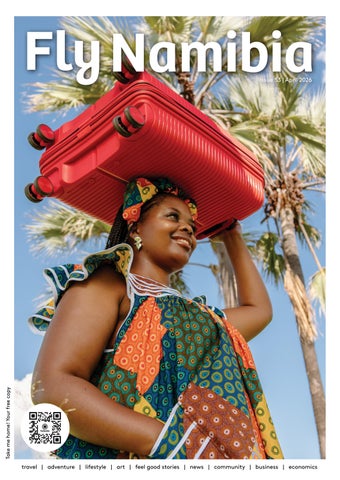
Something about travelling North always feels like stepping into a rhythm of Namibia that feels less rushed. Where time is merely a construct and community is put first. This time around, my adventure started with Redi: my small, red travel buddy.
Upon arrival, I had no expectations apart from predicting the embrace of the scorching hot sun. The sun in the north demands to be felt and her presence, although appreciated, can be slightly unbearable at times. Lucky for me, Redi was always kind enough to provide shade.
Though I travelled to a place that mostly felt familiar, as an owambo woman who grew up ‘muushimba’, which translates to ‘in the city’, this visit revealed that there was much about my culture I had no knowledge about. The ‘aahh’s’ and ‘ohhh’s’ escaped me more often than I thought they would and I felt a deep sense of urge to record and capture as much as I could. To listen attentively and to ask questions as soon as curiosity arises.
I had the pleasure of experiencing Ongula Homestead Lodge. The staff, the service and the stay felt like a breath of fresh air.
Travel often promises cultural experiences, but this felt far more personal than that.
One of my firsts on this journey was getting to ride on a donkey cart. A significantly grounding moment that had me thinking about those who came before us. It’s one of those experiences I grew up seeing around me from time to time, but never actually tried myself.
Travel often promises cultural experiences, but this felt far more personal than that. I watched as women pounded Mahangu in a rhythm so synchronised it felt unreal. They also pounded Marula nuts gently into oil with such ease and sat together weaving baskets that would later carry their labour. I also watched intensely as clay pots were being shaped by hand in a dark room underground.
I found myself learning how to play Owela for the first time, and what looked like the most complicated game eventually started making sense and quickly turned into a lesson about strategy and concentration.
No journey up north would be complete without traditional food, and when I tell you it was divine! Each bite felt like home and took me right back to my mother‘s kitchen.
As I zipped up my luggage for the journey back home, I was reminded that every trip leaves a quiet imprint and somewhere between the departure and the arrival, the journey unfolds and becomes an unforgettable experience. It is also safe to say that my suitcase felt heavier, filled with souvenirs and stories.
Namafu Amutse
Photography: Simon Deiner / SDR
In the lush and green northeastern Kavango region, a fabric tells the story of survival. The Sambyu people, who are native to the area, called the fabric Amakeya, after a legendary female farmworker from colonial South Africa. Following an attack on the farm where she worked, Amakeya fled for safety with a baby on her back. Treading through a river running red with blood, she made it to safety. It was only when Portuguese traders introduced them to a reddish, zig-zag patterned cloth that the Sambyu people saw Amakeya’s story in its lines. They named the fabric after the folklore legend, and many years later, a modern-day Namibian fashion designer chose the same name for her fashion brand that celebrates the Kavango people’s heritage.
This layered, living history has defined Maria Caley’s career as she ventured into fashion design, education and textile-making. She has become one of the most thoughtful and intentional Namibian voices on the intersection of textiles, identity and memory preservation. With her Amakeya brand, Maria pays homage to her roots. “My heritage has always been my blueprint,” she says. “I can’t make a garment or fashion product without it being authentically Kavango.”
Maria Caley’s career-long celebration of traditional textiles
A fashion designer and educator by trade, she prefers to call herself a textiles designer because of her focus on creating textiles. “My fashion collections have always been unique, because I often explore textile techniques derived from indigenous basket weaving and pottery,” she says. From as far back as her undergraduate days, Maria explored with natural dyes native to the indigenous baskets of the Kavango regions. “Though my current work is not based on natural dying or sustainable design, it is about finding healing through collaborative work based on archival material,” she says.
Preserving history and decoding meaning
Before the trade cloth arrived on the shores of Namibia, communities clothed themselves in animal hides and handmade leather, with ornaments crafted from locally sourced natural materials. In a country defined by its arid environment, leather was the primary material because of its practical and spiritual significance. Animal skin and fur were worn as spiritual armour, and certain hides were believed to carry the powers of the animals they came from. Cheetah skin, for example, was considered royal, and to wear it without any rank was a punishable offence. Today, many high-ranking traditional royal leaders still wear cheetah skin as part of their garb.
Maria has spent most of her career studying and interpreting these cultural meanings, researching the traditional Vakwangali dress as part of her master’s thesis. Her findings were striking, revealing that hairstyles, ornaments and garments contained a richly coded visual language within the VaKavango subgroup. “When we look at traditional clothing, it is embedded with a lot of meaning,” she explains. “Even if different groups wear the same leather from the same animal, how they adorn it gives it a different meaning,” says Maria, adding that her desire to restore these traditional clothing designs has become the driving force behind her design practice.
Photo
The trade cloth as symbol of a prevailing wound and resilience With the arrival of colonialism, Namibians were not only stripped of their traditional clothing and forced to dress in more “acceptable” garments, but they were also stripped of their culture, self-preservation and spiritual identity. During German rule, and the missionary influence that stemmed from it, European dress codes were imposed on Namibians. Women were forced to cut their hair, and communities were made to discard their animal skins, a practice Maria describes as “traumatic and humiliating”.
This influence on how indigenous Namibians dressed is evident in modern-day Namibia, with the OvaHerero, Nama and Khoekhoegowab communities still dressing in European-inspired clothing, which they adapted to and made their own over time. This resilience became evident through their adaptation to the trade cloth as they added beaded work to the hems of the flimsy skirts to restore the weight with which they were more familiar when wearing leather. By the 1950s, the women went even further by styling the simple headscarves in their own unique way, with the OvaHerero headscarf resembling cow horns. “I would say it was the start of a symbolism of resistance,” says Maria.
Archival culture and fashion exploration
In 2025, following the return of 23 cultural artefacts to Namibia from Germany, Maria collaborated with fellow cultural preservers to facilitate healing from past colonial violence by dealing with what was mostly sensitive material amongst the returned artefacts. This historic moment birthed an archival instinct in Maria, and the collaboration became a vehicle for what she describes as “finding healing through collaborative work based on archival material”.
Maria is not alone in this. Fellow creative Tuli Mekondjo’s work features restoration of missionary archives, while the late Cynthia Schimming brought to life a fashion installation in Berlin, Germany, which stands as a symbol of the Germany-Namibia repatriation dialogues. “These are not just art-world gestures,” says Maria. “These are acts of cultural excavation, resilience and ownership.”
Looking ahead, she hopes that these practices will continue to give voice to Namibia’s cultural stories. “That is what fashion can do when it listens. And in Namibia, the cloth has spoken for a very long time.”
Rukee Kaakunga
Men, stress and hormones
In the first part of this series, we explored how men’s hormones function as an interconnected system influenced by stress, sleep, metabolism, toxins and lifestyle. But beneath all these factors lies a deeper question: Why is this system under such strain in the first place?
From a functional medicine perspective, hormones do not fail randomly. They respond intelligently to the environment the body perceives – not just the physical environment but the emotional and psychological one as well.
The nervous system comes first
Before testosterone levels drop, before insulin resistance develops, before sleep becomes shallow or recovery slows, something more fundamental shifts: the nervous system loses its sense of safety.
Many men today live in a state of constant low-grade stress. Not physical danger, but psychological pressure –performance expectations, financial responsibility, time scarcity, digital overload and the unspoken rule to “deal with it”. The body interprets this as a threat.
When the nervous system stays in this heightened state, cortisol remains elevated. In survival mode, the body deprioritises functions it deems non-essential, including hormone production, libido, deep sleep and emotional flexibility. This is not dysfunction. It is adaptation.
The cost of emotional suppression
One of the least discussed contributors to men’s hormonal imbalance is emotional suppression. From a young age, many men are taught to contain, control or silence their emotional responses. Over time, this creates chronic internal tension.
Author and physician David Hawkins wrote that emotions that are not felt and released do not disappear; they are stored in the body. Functional medicine increasingly recognises that this storage has physiological consequences. Persistent muscle tension, shallow breathing and hypervigilance all feed into the stress axis, reinforcing hormonal imbalance. This does not show up on standard blood tests. But the body registers it clearly.
Hormones reflect capacity, not weakness
Testosterone is often framed as a hormone of strength or dominance. Biologically, it is more accurate to see it as a signal of capacity. Healthy testosterone levels reflect a body that perceives enough energy, recovery and safety to invest in growth, connection and creativity.
When life becomes relentless – no pauses, no recovery, no emotional outlet – the body conserves. Testosterone declines, not because the body is broken, but because it is prioritising survival.
Seen through this lens, many hormonal “problems” are actually protective responses.
Identity, purpose and physiology
Men’s hormonal health is also shaped by meaning. Research consistently shows that a lack of purpose, chronic dissatisfaction or identity conflict increases inflammatory markers and disrupts endocrine regulation.
This is why two men with similar diets and exercise routines can experience vastly different hormonal outcomes. One feels aligned. The other feels trapped. The body responds accordingly.
Hormones follow truth faster than habits.
A different kind of solution
Supporting men’s hormones at this level requires more than supplements or protocols. It asks for a different relationship with stress, rest and self-awareness. Nervous system regulation, quality sleep, time in nature, meaningful connection and honest emotional expression all directly influence hormonal balance.
This is not about becoming less driven or less masculine. It is about becoming fully embodied – able to move between effort and rest, strength and softness, action and recovery.
Changing the conversation
Men’s hormones are not failing. They are communicating.
When we stop reducing men’s health to numbers on a lab report and start listening to what the body is signalling, we open the door to real resilience – not just longer lives, but fuller ones.
Healing does not begin with forcing the body to perform. It begins when the body finally feels safe enough to recover.
Cerina Bezuidenhout Haasbroek
Living Well is a monthly wellness column exploring functional health, natural rituals and conscious living in Namibia. Follow @cerinabzd on Instagram for tips, workshops and holistic health guidance.
Have a Heart
Bridging care, education and communities across Namibia
At sunrise in Walvis Bay’s industrial areas, volunteers refill feeding stations for feral cats. Hundreds of kilometres away, a mobile veterinary clinic prepares to serve a rural community. In Swakopmund, dedicated designers create a vibrant children’s magazine about animal welfare. These are all strands of the same vision, interweaving and overlapping at strategic points.
Have a Heart was founded in 2012 by Lindie Prinsloo, driven by a simple yet powerful mission: saving lives through sterilisation. Today, it is the first and only registered non-profit organisation in Namibia dedicated to mass sterilisation of pets in townships, and it is also registered in Germany. After the passing of Lindie Prinsloo, Geesche Neuburg stepped in to take the reins of Have a Heart. Originally based in Namibia, she is currently advocating for the organisation from Germany, continuing to champion its mission. Through her dedication and leadership, she has become a powerful driving force behind Have a Heart’s ongoing work. Supported by a committed team and passionate volunteers, the organisation continues to grow and thrive.
Entirely dependent on donations, Have a Heart has grown from a small initiative into a nationwide movement. As more people joined the cause, Have a Heart expanded into further towns and communities. Today, the organisation operates in 12 of Namibia’s 13 regions, supported by seven board members and volunteers across the country. In 2025 alone, nearly 4,000 dogs and cats were spayed, neutered, vaccinated or treated against parasites through partnerships with veterinary professionals.
From the outset, one thing was clear: the demand for accessible veterinary care among responsible dog and cat owners in Namibia was enormous. And it continues to grow.
Trap, neuter, release
Since its inception, Have a Heart developed a three-pronged strategy: trap, neuter and release. This approach has proven particularly effective in Walvis Bay, where factory areas were once overrun by stray cats. With the support of the Walvis
Bay harbour, volunteers established dedicated feeding stations while systematically sterilising the cats to stabilise and manage the population – a practical and sustainable solution.
In addition to sterilisation campaigns, Have a Heart operates a mobile veterinary unit, reaching low- and no-income families in townships, informal settlements and rural communities. These are areas where veterinary care is often unaffordable or unavailable, and where stray populations can spiral quickly. During outreach visits, teams do more than provide veterinary care. They answer questions, explain the benefits of sterilisation and vaccination and also administer rabies vaccination and tick treatments, approaching every interaction with compassion and patience.
Pako Kids Magazine
While sterilisation addresses the immediate crisis, education and awareness remains just as important.
Have a Heart aims to significantly expand its public education initiatives, with a strong focus on children. Through a partnership with Namibia’s Pako Kids Magazine, the organisation developed an engaging educational programme for school visits. The programme teaches responsible pet ownership, animal welfare and rabies prevention in an age-appropriate and fun way.
Pako Kids Magazine was established 15 years ago by Petra Scheuermann. When she unexpectedly passed away in April 2025, the publication was transferred to Have a Heart, ensuring that her legacy of education and storytelling would continue.
Today, Hélene van Rooijen and Andrea Leech serve as the graphic designers behind the magazine, bringing Pako to life through its stories, illustrations, layouts, games and quizzes. The demand for school outreach is high, but Hélene stresses that funding constraints limit the organisation’s ability to roll out the programme at scale. The most recent edition was made possible by the generous financial backing of the Vanishing Kings Foundation. The strength of an organisation like Have a Heart lies in the many different skills people are willing to share. Everyone has something valuable to offer; whether it is design, communication, public speaking, accounting, or countless other talents. Each contribution, no matter the field, plays an important role and has a place in helping the organisation operate effectively.
Beyond Namibia, the concept has expanded regionally. In collaboration with Pako in Namibia, Kalata Magazines are produced specifically for Zambian children through the Chipembele Wildlife Education Trust, with content cleverly contextualised to suit Zambia’s landscape and wildlife.
Lodges with Heart
As Have a Heart continues to grow, a new initiative is taking form: Lodges with Heart.
The campaign partners with lodges to address the growing challenge of feral cats on hospitality properties – an issue that affects both the wildlife and guest experience. Through structured sterilisation and management programmes, the project aims to offer sustainable solutions.
There is also the possibility of deploying the mobile veterinary unit to service more remote lodges and communities, though additional funding is urgently needed to cover operational costs such as fuel.
The ongoing success of Have a Heart is the result of a collective effort from many individuals and organisations: committed veterinarians, volunteers, supportive businesses, and members of the public who contribute through donations and other forms of assistance. Through their generosity and dedication, whether in time, resources, or financial support, Have a Heart is able to continue its work and expand its impact.
Madeleen Duvenhage
LOCAL
ARTS
V O E
WORK OF OUR HANDS
Blending colour, style and craftsmanship, Work of our Hands shows the magic of Namibian beads.
INSPIRED CREATIONS
INDIGENOUS BATIK DESIGNS
A crowd favourite at Namibia Craft Centre, Indigenous Batik Designs offers eye-catching designs such as unique purses and soft T-shirts inspired by Namibian flair.
It is the little things that make a space feel magical. Inspired Creations brings charm through hand painted vases, key chains and tiny keepsakes.
KASUPI CRAFTS
Discover charming, hand painted children's wear from Kasupi Crafts at the Namibia Craft Centre for truly special gifts.
Add a touch of elegance to your home and office with Anin Embroidery, handcrafted beauty perfect for your home and office.
The Namibia Craft Centre is located in the heart of the city and has become known as the leading retail space for handmade crafts, gifts, and curios in Namibia. It provides a platform for Namibian handicrafts ranging from jewellery to carved tree roots.
Find us at 40 Tal Street, Windhoek +264 61 242 2222
Dr La-toya Mwoombola-Hamutenya Aesthetic Medical Practitioner
Understanding our skin and how to care for it is an important part of overall wellbeing.
In this new FlyNamibia column, Dr La-toya Mwoombola-Hamutenya shares insights from the world of aesthetic medicine, answering common questions about skincare, treatments and how to make confident, informed choices about your health and appearance.
Aesthetic medicine is a rapidly evolving field that blends science with artistry. For Dr La-toya, the path into this speciality was deeply personal. “Aesthetic medicine is quite a new field in medicine,” she explains. “There was a stage in my life when I wondered where I was going to go and what I was going to do.”
The answer came from an unexpected connection between medicine and creativity. As a performing artist, La-toya found herself drawn to work that would allow her to use both her medical training and her artistic instincts. “It allowed me to do something that still awakens my artistic brain,” she says.
What to expect at your first consultation
One of the most common questions patients ask is what they should bring to their first consultation. The answer is refreshingly simple. “Bring your beautiful self and your beautiful skin,” she says with a smile.
A fresh perspective on skincare, wellness and aesthetic medicine
However, she does recommend bringing along the skincare products you have been using recently. “I’m not talking about bringing every single product you own,” she explains. “But bring the products you’ve used in the last three months so we can look at what you need, what you don’t need, and how we can amplify your skincare.”
This helps create a clearer picture of a patient’s existing routine and allows for more tailored recommendations.
The reality of cosmetic treatments
Another question many people ask is whether aesthetic treatments are covered by medical aid. In most cases, they are not.
Cosmetic procedures are generally considered elective treatments and therefore fall outside the scope of traditional medical aid coverage. Dr La-toya advises patients to reserve medical aid benefits for times when medical care is truly necessary.
The one skincare rule everyone should follow
While skincare routines can vary widely, she believes there is one product that should never be skipped: “SPF is so important for our skin. That’s a non-negotiable.”
Daily sun protection plays a crucial role in preventing premature ageing, protecting skin health and maintaining an even complexion. For women of colour in their thirties, Dr LMH recommends choosing a sunscreen that offers broad-spectrum UVA and UVB protection, ideally with an SPF between 30 and 50.
Never skip sunscreen!
Choose a broad-spectrum SPF 30–50 and apply it daily, even on cloudy days. Consistent sun protection is one of the most powerful steps you can take to protect your skin’s long-term health.
Emily Kandanga-Erastus
The name of our cargo box, ‘Epakete’, means package in Oshiwamb o
Yoda’s journey home
From photoshoot to fur-ever home
On the edge of Windhoek, where the city gives way to open skies and rocky hills, a tiny pup named Yoda was learning how to survive. Just two weeks old, he and his three siblings arrived at SPCA Windhoek after losing their mother. They were small enough to fit in two hands. The shelter staff stepped in without hesitation, warming milk bottles through the night and watching over the fragile newcomers with quiet devotion.
As the weeks passed, Yoda grew stronger. His siblings left one by one, carried off to new homes and new lives. Yoda remained, small and watchful, with bright eyes that seemed to follow every movement at the shelter, as if waiting for his turn.
That moment came through an unlikely avenue: a runway. Chosen for a FlyNamibia photoshoot, Yoda spent a day at the airport, sniffing new scents, padding across unfamiliar floors and charming everyone he met. Among them was Mr Louw, an aircraft engineer, who could not forget the tiny pup. The memory lingered. Soon, he returned to the shelter, this time to meet Yoda again. A few tail wags and gentle nudges later, the decision was made. Adoption papers were signed, and Yoda left the shelter in the arms of his new owner, heading towards a home of his own.
Today, his world is filled with warmth, play and the comforting rhythm of daily life. He races through rooms, curls up without worry and greets each day with uncomplicated joy. In a city shaped by wide horizons and long journeys, Yoda’s story is a reminder that even the smallest pup can find exactly where he belongs.
We’re for Namibians
By Namibians. For Namibia.
The Stubborn Dreamer
Johanna Swartbooi
Unapologetically More. Natural. Creative. Cultural. Resilient. This is Johanna Swartbooi.
Growing up in the village of Vaalgras, Johanna Swartbooi’s world was defined by grey grass and the warmth of a close knit communal space. Surrounded by cousins and extended family, she developed into a people’s person who preferred listening to stories rather than telling them. This was a far cry from the spotlight she now commands as Miss Namibia.
That shy village girl has transformed into a woman of purpose, but the journey was not a straight line. It took three attempts at the Miss Namibia pageant before she finally
claimed the crown in 2025. For Johanna, the persistence was fueled by a deep sense of patriotism that solidified while living in Milan. Missing the warmth of the Namibian sun and the constant smiles of its people, she returned home with a mission to represent her country on the international stage.
"I wanted to win the crown for a greater purpose beyond myself," she says.
Johanna’s reign is defined by a commitment to authenticity. In a bold move that defied her team’s original plan, she chose to walk
I want to win the crown for a greater purpose beyond myself," she says.
the Miss Namibia stage with her natural hair in its most authentic state. For her, it was not just a style choice; it was about representation. Today, she hears stories of young girls who, seeing her crowned, have learned to celebrate their own natural beauty.
As the first Southern Queen to be crowned Miss Namibia, Johanna carries her heritage with immense pride. Whether she is teaching “Namlish” phrases to her Miss Universe roommate or incorporating Caprivian dance into her national costume performance, she is a walking showcase of Namibia’s rich cultural tapestry.
Beyond the glamour, Johanna is a stubborn dreamer and a dedicated advocate for the creative industry. Through her ||Hapo Initiative (meaning dream) she nurtures the next generation of Namibian talent through skills development and the ||Hapo Wall, a public space where students can visualize and share their career aspirations.
Her message to young Namibians is clear: dream big, but back those dreams with relentless work. She encourages them to forge their own paths, even if it means going against the expectations of those around them.
Johanna Swartbooi is more than a titleholder; she is a catalyst for change, reminding every Namibian that their roots are a source of strength and their dreams are valid.
NNN LEADS CALL FOR STRONGER INVESTMENT IN AFRICAN WATER SECURITY
President Netumbo Nandi-Ndaitwah has called for increased investment in climate-resilient water security and sustainable sanitation systems across Africa to support economic growth and development.
Speaking at the African Union–Africa Water Investment Programme Summit held on the sidelines of the 39th Ordinary Session of the Assembly of Heads of State and Government of the African Union (AU) in Addis Ababa, Ethiopia, President Nandi-Ndaitwah said access to reliable water resources is critical for the continent’s development and must be prioritised by governments and development partners. The gathering focused on strengthening investments aimed at ensuring sustainable water availability and safe sanitation systems in line with the goals of Agenda 2063.
The president noted that, for many years, water availability was taken for granted in many African countries, particularly those with perennial rivers. However, the effects of climate change have highlighted the vulnerability of water sources, with some once-reliable supplies now drying up. According to Nandi-Ndaitwah, this reality has prompted African countries, including Namibia, to recognise that water security is central to national development and economic stability.
FUNDING MOBILISATION
She also highlighted Namibia’s role in advancing continental efforts to improve water investment. In 2023, Namibia cochaired the high-level panel of the African Union–Africa Water Investment Programme, which produced two key documents, namely Africa’s Rising Investment Tide and the Africa Water Investment Action Plan.
“These two important documents provide guidelines for AU member states, their development partners and the private sector on how to mobilise the required additional US$30 billion per year towards climate-resilient water security and sustainable sanitation in Africa by 2030,” said Nandi-Ndaitwah. She further warned that water scarcity and poor sanitation can contribute to migration and displacement, potentially leading to internal and crossborder conflicts if not addressed through targeted and sustainable investments.
The president further stressed the importance of sanitation, describing it as essential for dignity, public health and improved living conditions. She noted that many African communities still lack basic sanitation services, an issue that has historically been neglected. In line with the UN’s Sustainable Development Goal 6, Namibia has adopted a National Water Supply and Sanitation Policy aimed at ensuring sustainable access to safe water, improved
sanitation and hygiene through integrated planning, community participation and national targets set for 2030.
The policy also promotes environmental sustainability and the efficient use of water resources. President NandiNdaitwah expressed optimism that renewed commitment from African leaders and partners would help secure the funding needed to achieve water security and safe sanitation for all across the continent.
GWPO SECRETARIAT HEADQUARTERS
Namibia also signed a headquarters agreement to host the secretariat of the Global Water Partnership Organisation (GWPO). “This development reflects growing confidence in our commitment to sustainable water management and regional cooperation, and we look forward to working with partners to ensure it contributes meaningfully to advancing water security and safe sanitation for all in Africa,” she added.
Additionally, the president held high-level meetings on diplomacy, climate action, health and economic cooperation. She met with Ethiopian Prime Minister Abiy Ahmed to discuss bilateral and continental issues and reaffirmed long standing Namibia-Ethiopia ties. Discussions with Seyni Nafo, co-chair of the Green Climate Fund Board, focused on climate financing and resilience, while talks with Winnie Byanyima, under-secretary-general of the United Nations and executive director of UNAIDS, reinforced Namibia’s commitment to HIV response and health sovereignty.
The president also engaged Dr Fatima Farouk Elsheikh, secretary-general of the Arab Bank for Economic Development in Africa (BADEA), on development financing, as well as Florizelle Liser, president and CEO of the Corporate Council on Africa, on trade and investment partnerships.
Maggie Forcelledo Paz
The shepherd’s tree can also be referred to as a bush. Owing to its ability to adapt well across the country, the tree’s growth rate is determined by the environmental conditions within a particular area. It therefore sometimes takes the shape of a bush rather than a tree. This evergreen tree happens to be one of the most widespread trees in Namibia. It is known to be browsed by both livestock and game as it has highly nutritious leaves.
The tree has pale, almost white bark with a rough texture which flakes occasionally. The rougher the surface, the more frequent the flaking. Its leaves are oblong and arranged in spirals around the branches. The leaves are dark, pale or olive green with a slightly rough texture and a leathery feeling on both sides due to the tiny surface hairs. While not all shepherd’s trees are tall, they can grow up to a height of 10 metres.
Flowering occurs from August to February, when small, greenish-yellow flowers become visible. The fruits formed after the flowering are spherical and green, turning yellow when ripe. The seeds are round with a creamy colour.
Uses of the shepherd’s tree vary, as different ethnic groups have sought their own benefits from this rather versatile tree. The one common use across all groups is that of fodder for livestock, especially during droughts. Where
Native Leaves:
SHEPHERD’S TREE
Scientific name: Boscia albitrunca
Common name: Shepherd’s tree
livestock cannot reach, branches are often cut from trees and scattered on the ground for livestock to feed on.
For me, the most intriguing fact about this tree is its ability to thicken cow’s milk. Communal farmers must have done plenty of experiments over the years to improve their farming practices and general lifestyle. However, in an environment with various plant species ranging from herbs, shrubs, bushes and trees, one can only imagine to what lengths they must have gone to conclude that the shepherd’s tree bark is best suited for this thickening process.
In short, pieces of the bark of older trees are cut and left to dry, or it can be used in its moist state. These pieces are then placed and left in the milk for several days until the milk shows signs of the desired thickening after shaking it in an enclosed container. These pieces of bark are not thrown away after being used but rather left to dry and used again when needed. It can be used several times. Farmers know when they are no longer useful and can be disposed of.
A recent visit to the open market allowed me to buy a large piece of the shepherd’s tree, because there were none in our homestead for me to take up-close pictures. To my surprise, it was quite affordable, despite being a rather large chunk. The wood is quite low in density, very light and scent-free. I also concluded that large pieces cut from the tree can be easily dried.
Due to dwindling livestock populations, cow’s milk production has also decreased. This means that the demand for the use of the shepherd’s tree as a milk thickener is no longer a threat to the population of the plant species. In fact, records suggest that the shepherd’s tree populations are healthy throughout the country, occurring in many different habitats and exhibiting different forms of growth. Without current reforestation needs, the seeds are definitely a good backup for future population regeneration if ever the need would arise.
Agnes
Shekupe Shivute
Namibia and Japan strengthen cooperation on trade, investment and mineral development
Minister of International Relations and Trade Selma Ashipala-Musavyi undertook an official working visit to Tokyo, Japan, where she held bilateral meetings with senior officials from the Japanese Ministry of Foreign Affairs as well as representatives from government institutions responsible for trade, investment promotion, infrastructure development and economic cooperation, including members of the private sector.
The discussions focused on strengthening relations between Namibia and Japan, with particular emphasis on expanding cooperation in trade, investment, infrastructure, logistics and industrial development. The engagements also aimed to deepen bilateral ties and advance practical cooperation in areas of mutual interest.
Stronger bilateral relations
Japan’s Minister of Foreign Affairs Toshimitsu Motegi welcomed the minister’s visit and reaffirmed Japan’s commitment to deepening cooperation with Namibia. He noted that Namibia plays an important role in strengthening connectivity between nations in the Indian Ocean region and Africa through its quality port infrastructure and access to neighbouring countries.
Motegi said enhanced cooperation between the two countries would contribute to maintaining and strengthening a free and open international order based on the rule of law.
He also expressed Japan’s interest in further strengthening economic relations with Namibia, highlighting Japan’s past development cooperation with the country and noting the growing interest among Japanese companies in Namibia’s mineral and energy resources.
The two ministers confirmed their commitment to continue working together on issues of mutual interest.
During her visit, Ashipala-Musavyi also met with the leadership of the Japan Organisation for Metals and Energy Security (JOGMEC), which has been involved in Namibia’s
Lofdal Rare Earths Project since 2020.
JOGMEC signed a memorandum of understanding with Namibia’s Ministry of Mines and Energy in 2022 to cooperate on rare earth supply chain research and provide technical training in mineral exploration.
Value addition opportunities
Meanwhile, during the launch of a report titled “Rapid Assessment for Value Addition and Diversification to Support Namibia” in Windhoek, Japan reaffirmed its commitment to supporting Namibia’s economic diversification and value addition in the minerals sector.
The report was launched under the United Nations Conference on Trade and Development (UNCTAD) project on critical energy transition minerals (CETMs). Speaking at the event, Noriaki Sadamoto, the deputy head of mission at the Embassy of Japan in Namibia, represented the
embassy in the absence of Ambassador Shinichi Asazuma. Sadamoto expressed appreciation to UNCTAD for leading the initiative and commended the Government of Namibia and national stakeholders for their cooperation in implementing the project.
He noted that the Government of Japan places strong emphasis on collaboration with UN agencies, adding that since 2013 Japan has funded 27 trilateral cooperation projects through various UN agencies to support Namibia’s development priorities, with investments exceeding US$21 million.
Supporting Namibia’s role in energy transition
The initiative aims to help Namibia and other countries in Southern Africa harness the potential of CETMs such as copper, lithium, cobalt and rare earth elements, which are essential for clean energy technologies, including electric vehicle batteries, solar panels and wind turbines.
Sadamoto emphasised that, while many developing countries rich in mineral resources mainly export raw materials, the energy transition should be both green and just, ensuring that countries benefit from value addition, economic diversification, job creation and improved living standards.
He added that the UNCTAD report provides an evidencebased assessment of countries’ positions in global critical
minerals value chains and identifies realistic pathways for value addition and diversification.
Industrial development
According to the report, Namibia has promising opportunities in sectors such as organic chemicals, iron and steel as well as machinery, which could strengthen industrial capacity, create skilled jobs and improve economic resilience.
Sadamoto also noted that the initiative aligns with Namibia’s national development priorities, including the Sixth National Development Plan (NDP6), as well as international commitments outlined in the outcome of the Ninth Tokyo International Conference on African Development held in Yokohama in August 2025.
The deputy head of mission reaffirmed Japan’s commitment to supporting initiatives that promote sustainable industrialisation, economic diversification and inclusive growth.
He expressed hope that the findings of the report would assist policymakers in Namibia and contribute to constructive discussions on sustainable development at national, regional and international levels.
DOshikoto youth urged to lead agricultural transformation
eputy Minister of Agriculture, Fisheries, Water and Land Reform Ruthy Masake has called on the youth of Oshikoto Region to move from spectators to active partners in driving the country’s economic renewal. Speaking at the Oniipa Agri-Youth Engagement, Masake urged young Namibians to take control of the nation’s primary production sectors, describing 2026 as a year for bold action and meaningful transformation.
The deputy minister’s address centred on the alignment of the Sixth National Development Plan (NDP6) and the SWAPO Party Manifesto, both of which prioritise youthled agribusiness and climate-smart production. She emphasised that the government’s vision is to move away from subsistence farming toward high-value, exportorientated commercial ventures.
Masake detailed several financial and institutional support programmes available to young farmers and entrepreneurs. Among them is the National Youth Development Fund (NYDF) which was launched in September 2025 with an initial allocation of N$257 million. The fund, administered through the Development Bank of Namibia (DBN), Agribank and the Environmental Investment Fund (EIF), provides collateral-free loans for youth aged between 18 and 45 with registered businesses or agricultural ventures. It offers:
• Collateral-free loans: Available for registered businesses and cooperatives.
• Low interest rates: Ranging from 2% for start-ups to 4% for larger projects.
• Flexible repayment: Terms up to five years with a 12-month grace period.
• Funding scale: Loans ranging from N$60,000 to over N$1 million.
The deputy minister also pointed to Agribank’s Agri-Pioneer Scheme, which utilises off-take agreements instead of strict collateral, allowing young farmers to scale their operations despite limited assets.
Masake described Oshikoto Region as a powerhouse in the making, citing its fertile soil and traditional strengths in mahangu, sorghum and livestock. She urged the attendees to look beyond traditional farming and explore modern niches such as:
• Agro-processing: Milling, packaging and value addition.
• Horticulture: Fruit orchards and vegetable farming.
• Innovation: Mushroom farming and climate-resilient livestock feed production.
While promising government support through extension services and land allocation, the deputy minister said: “Strong business plans, registered enterprises or cooperatives, discipline and commitment will open these doors.”
Attended by regional leaders, youth representatives, young farmers and entrepreneurs, the engagement served as a platform for interactive dialogue, where young farmers were encouraged to openly share their challenges and propose solutions related to drought, market access, land availability and skills development. Masake called on the youth to seize the opportunities available in the sector and help shape Namibia’s agricultural future.
Maggie Forcelledo Paz
NAMIBIA TO FINALISE INVESTMENT PROMOTION BILL BEFORE YEAR-END
The Ministry of International Relations and Trade plans to finalise the Namibia Investment Promotion and Facilitation Bill by the end of 2026 to strengthen policy certainty and investor confidence. Minister Selma Ashipala-Musavyi said the Bill aims to balance attracting investment with supporting national development goals. It focuses on promoting economic growth, reducing unemployment, and diversifying the economy. Key provisions include reserving sectors for Namibian investors, improving dispute resolution, and enhancing coordination on incentives. The legislation also seeks to advance industrialisation, job creation, technology transfer and value addition, while reducing poverty and inequality through growth in priority sectors.
The Governors of the Bank of Namibia and the South African Reserve Bank, Ebson Uanguta and Lesetja Kganyago, signed a revised Memorandum of Understanding in Pretoria to strengthen cooperation between the two central banks. The updated agreement reflects major changes in both countries’ financial sectors, including broader supervisory mandates, enhanced resolution frameworks and increasingly complex cross-border financial institutions. The memorandum establishes structured collaboration on supervision, regulation, crisis preparedness and financial stability, while supporting regional integration and capacity-building. Though not legally binding, it reinforces long-standing cooperation and shared commitment to monetary and financial stability amid evolving global risks.
BANK OF NAMIBIA AND SOUTH AFRICAN RESERVE BANK SIGN REVISED COOPERATION PACT
NAMIBIA TO LAUNCH FIRST GREEN HYDROGEN-POWERED FREIGHT LOCOMOTIVE LATER THIS YEAR
Namibia will launch its first green hydrogen-powered heavy-duty freight locomotive later this year, developed by CMB.TECH Namibia, in partnership with TransNamib and Africa Global Logistics. The locomotive is being assembled by Traxtion in South Africa and will undergo trials on the Walvis Bay–Windhoek freight corridor, completing 50 return trips along the 414 km route, which climbs from near sea level to 1,601 metres. The steep gradient will test traction, fuel substitution and system reliability. Powered by a 2,250-horsepower BeHydro dual-fuel hydrogen combustion engine, the locomotive will use green hydrogen produced off-grid at CMB.TECH’s Walvis Bay plant.
NAMIBIA’S 2026/27 BUDGET BALANCES CAPITAL SPENDING, REVENUE AND DEBT SUSTAINABILITY
Oscar Capelao, Executive Director in the Ministry of Finance, says the 2026/27 national budget is structured to balance fiscal sustainability with realistic expenditure while funding key operational and development needs.
Speaking at a Budget in Focus session, he noted total spending of N$89 billion, including N$6 billion for capital projects, which could effectively reach N$10–12 billion with public enterprise financing. Capelao said revenue assumptions were carefully assessed to avoid unrealistic cuts, focusing on debt, interest costs and the primary balance. Operational spending will be tightly managed within ceilings. Despite global and regional risks, he maintains that the fiscal framework is credible and sustainable.
MTC TO EQUIP 30 ||KHARAS YOUTH WITH VOCATIONAL SKILLS AND N$5000 SEED CAPITAL
launch the 2026 MTC 4 Life programme in the ||Kharas Region in April, selecting 30 young Namibians aged 18–35 for vocational training and start-up support aimed at reducing youth unemployment. Participants will receive seven days of practical training in trades such as hairdressing, barbering, baking, leatherwork, sewing and cell phone repair, with each trade limited to five trainees for closer mentorship. Beneficiaries will also receive a starter toolkit and a N$5,000 seed grant to start or expand a micro-business. MTC says the initiative supports youth empowerment and socio-economic development, especially in underserved rural areas.
CANVAS FRAME
PVC BANNER with Eyelets
Inform. Inspire. Impact.
Namibia National Career Week celebrates 15 years of connecting young Namibians to opportunity
In early March, the halls of the Mercure Hotel in Windhoek were filled with curiosity, ambition and the energy of thousands of young Namibians eager to explore their future. The occasion was Namibia National Career Week (NNCW) 2026, a milestone event celebrating 15 years of bridging the gap between education and industry.
Over two days, 3,635 learners from 37 schools attended the event, joined by educators, parents, university students and members of the public. Admission remained free, reinforcing the platform’s long-standing mission: ensuring that access to career guidance and opportunity is never determined by geography or economic circumstance.
Formerly known as the Namibia Careers Expo, the event was formally rebranded this year as Namibia National Career Week, marking a strategic evolution from a single-city expo into a platform with national ambitions. The rebranding reflects a growing movement aimed at bringing career guidance and industry exposure to young people across the country from Windhoek to Oshakati, Keetmanshoop, Katima Mulilo and beyond.
At the heart of the event was the Premium Exhibitor Pavilion, where 33 organisations from education, finance, government and industry engaged directly with learners. Universities, training institutions, financial service providers, government agencies and corporate partners shared information about study options, bursaries, scholarships and employment pathways.
A flagship feature of the programme was the SanlamAllianz Speaker’s Hall, where industry professionals shared real-life career journeys and practical insights that no classroom can replicate. For many learners, these conversations offered their first direct interaction with professionals working in fields they hope to enter.
The 2026 edition also introduced several new programme highlights designed to strengthen the bridge between education and employment. The event served as the launch platform for Field Ready, a new digital employability tool connecting learners directly with industry training providers and employers.
Meanwhile, the Basecamp Business Incubator masterclass focused on entrepreneurship development, encouraging young Namibians to see themselves not only as job seekers but also as future job creators. Adding a creative dimension, Edu-Game Namibia’s Global Game Jam challenged participants to design board games addressing real-world social and economic issues.
Beyond the numbers, what stood out most was the level of engagement. Learners moved between stands, asking questions about careers they had never previously considered. Exhibitors reported high levels of curiosity and enthusiasm from students eager to learn more about opportunities available to them.
However, events of this scale and impact are only possible through strong partnerships. As Namibia National Career Week enters its next phase, corporate support will be essential to expanding the platform beyond Windhoek and reaching learners in every region of the country.
“Access to career information should never depend on where a learner lives,” according to the organisers. “If we are serious about preparing young Namibians for the future of work, we need to take these conversations to every corner of Namibia.”
With plans already underway for regional activations and roadshows in future editions, the organisers are actively inviting corporate partners, sponsors and industry leaders to come on board and help grow the platform’s national footprint. Organisations interested in supporting this initiative and impacting the next generation of Namibian talent are encouraged to get involved by contacting Abed Erastus, the NNCW director, at abed.erastus@gmail.com
When young people are given access to information, mentorship and opportunity, the impact extends far beyond the classroom. The mission remains clear: Inform. Inspire. Impact.
And after 15 years, Namibia National Career Week is only just getting started.
Emily Kandanga-Erastus
A NOCTURNAL AFFAIR
Scaling up pangolin conservation
To mark World Pangolin Day on 21 February, the Pangolin Conservation and Research Foundation (PCRF) hosted a cocktail fundraiser and silent auction, bringing together partners (including Gondwana Collection), sponsors and fellow conservationists in support of the gentle and elusive pangolin. Held at Am Weinberg Boutique Hotel in Windhoek, the evening united guests around a shared purpose: raising vital funds for one of the world’s most endangered and trafficked mammals.
“Tell me, how many people in this room have spotted a pangolin more than six times?”
With that question, FENATA’s chairperson, Ally Karaerua, opened his remarks at the event. A meagre few hands shot up, while the rest of the audience fumbled, filing through their memories for even a vague recollection of encountering this enigmatic mammal up close. As for me, I could count only one sighting, and even that lasted mere seconds before the pangolin silently slipped back into the nebulous dark. Nocturnal, naturally rare and clandestine, pangolins are notoriously difficult to study and monitor.
Pangolins are under severe threat due to high levels of trafficking for their scales (made up of hardy keratin), body parts and meat. In some markets, particularly for traditional Chinese medicine, they are sought after in a manner similar to rhino horn, despite there being no scientific evidence supporting any medicinal benefits. While various African cultural groups have historically used pangolins for food, medicine or spiritual practices, this traditional use never placed significant pressure on wild populations. Today, however, as Asian pangolin species become increasingly scarce, demand has shifted to African species, putting new and unsustainable pressure on local populations.
Human-driven factors compound these threats. Habitat loss shrinks the areas where pangolins can safely live, while encounters with human infrastructure – such as electric
fencing, roads and gin traps – have become common causes of mortality. Together, these pressures make pangolins one of the most vulnerable mammals in Africa and Asia, highlighting the urgent need for conservation action.
WHY PANGOLINS?
Originally from the United States, Kelsey Prediger, the executive director of PCRF, was raised on the shores of a lake and immersed in nature. Her love for adventure and wildlife took root from an early age, solidifying her dream of a future career in conservation. In 2016, she moved to Namibia to work with carnivores, but it was here that she soon discovered the often-undocumented plight of the pangolin. Drawn to this misunderstood animal, she shifted her focus to understanding and protecting it, ultimately finding her true calling.
“We (PCRF) exist for three simple reasons: to research, protect and rewild. We protect pangolins in their natural habitat alongside local communities. This involves research, rehabilitation and an eventual return to the wild. It may sound straightforward, but since 2014 pangolins have become the most trafficked animal globally, yet with the least resources or support available.”
“Why pangolins?” Prediger asks the audience. “I didn’t fall in love with pangolins because they are charismatic in the way that elephants, lions or cheetahs are, but because they are gentle and don’t have a voice. They are quiet, shy and walk softly amongst us, unseen by most. They don’t roar; they don’t charge. When threatened they curl up in a ball, trusting that their armour will protect them.”
A SAD REALITY
Sadly, this armour is no longer sufficient in keeping them from harm.
Unavoidably, conservation work is often tinged with the sobering realisation that not all animals can be saved and protected. Taking a deep breath, Prediger shares the
inevitable: “Now I’m going to tell you of the ones we lost.” She goes on to mention Shiloh, Rue and an unnamed female who died from her injuries – each fatality a stark reminder of the realities faced on the frontlines.
“With every loss, we fight harder so that it doesn’t happen again. In conservation we want to talk about the success, but in truth the heartbreak shapes us and leads us to the victories. We push forward to research more, gather better data and to do better next time. The grief is real, but so is the responsibility our entire team bears. This responsibility is what pushes us to keep going.”
THERE IS HOPE
Many cases of poaching go unregistered. When a pangolin is the victim of poaching, it is a silent disappearance, with no carcass or tusks left behind to collect. Still, there is good news. In partnership with the Ministry of Environment, Forestry and Tourism (MEFT), 46 successful rescues and rehabilitation cases have been recorded. In recent years, PCRF has seen a steady increase in survival rates, from 40% to 90%. From science-backed research to the rangers on the ground, every aspect of the organisation is committed to the cause, blending compassion with evidence.
When pangolins survive and thrive, it is usually an indicator of a robust, healthy biodiversity, where a balanced ecosystem supports other species. “This interconnected coexistence,” says Prediger, “is central to our future.” Protecting the pangolin has a direct impact on other animals we tend to
overlook, including the aardvark and the porcupine.
Looking ahead, PCRF has set clear fiveyear goals, including the expansion of its rehabilitation centre, a significant step forward from operating out of a two-bedroom flat on rented property. For PCRF, it is equally important to establish a new generation of Namibian conservation scientists through skills training and internships, ensuring local capacity and long-term impact.
The Pangolin Guardians were also present at the fundraiser. These are local conservation heroes who draw on generations of traditional knowledge while using modern technology to track and protect pangolins. The Ju/’hoansi San bushmen from the Nyae Nyae Conservancy brought the story of the pangolin to life through an original song in the Ju/’hoan language. Led by !Oma Sao, the room pulsed with the rhythmic shuffling of feet and Sao’s trembling, lone voice.
As the song’s last refrain lingered in the room, I thought back to Kelsey Prediger’s simple, yet imperative appeal and our own pressing mandate: “We need resilient pangolin populations, resilient teams and resilient partnerships.”
Madeleen Duvenhage
Guiding You with Wisdom and Power
Our expertise and dedication lead the way through even the most complex
The minister of foreign trade of the United Arab Emirates (UAE), Dr Thani bin Ahmed Al Zeyoudi, undertook a two-day official working visit to Namibia from 17 to 18 February 2026, accompanied by senior representatives from the Ministry of Foreign Trade, Ministry of Presidential Affairs, the UAE Investment Authority, Abu Dhabi Ports, International Resources Holding, Etihad Water and Electricity, Air Arabia and Global South Utilities, amongst others. As part of the bilateral engagement programme, the Namibia Investment Promotion and Development Board (NIPDB) hosted a high-level Namibia–UAE Business Forum in Windhoek that brought together business leaders and enterprises from both countries to discuss investment opportunities and explore areas of mutual interest and cooperation aimed at strengthening trade and economic ties between Namibia and the UAE.
In her opening remarks, Jessica Hauuanga, NIPDB’s acting CEO, reflected on the historical significance of the two countries’ relationship, noting that the NIPDB’s first national mandate upon its inception five years ago was coordinating Namibia’s presence at Expo 2020 Dubai.
“We remain grateful of the significant support extended by the UAE government, which enabled Namibia to proudly showcase its culture, diverse talents as well as trade and investment opportunities on the global platform,” said Hauuanga. “With one of our leading beef producers having secured Halaal certification recently, Namibia is strategically positioned to introduce its premium beef to the UAE market. This will further create new economic opportunities and strategic partnerships for importers, distributors and retail partners in the UAE seeking to do business with Namibia,” she added.
During a courtesy call to the Ministry of International Relations and Trade (MIRT), Minister Selma AshipalaMusavyi highlighted Namibia’s key development priorities under the administration of President Netumbo NandiNdaitwah. These priorities include agriculture, sports, youth empowerment, quality education and training, the creative industry, health and social welfare, as well as land, housing and sanitation.
She added that these sectors are supported by strategic industries such as energy, oil and gas, mining, green hydrogen and tourism, which the government aims to leverage to drive economic growth and development.
Diversifying the trade basket
Latest trade statistics from the Namibia Statistics Agency (NSA) show that Namibia’s exports to the UAE are
Namibia calls for value addition in trade with UAE
dominated by diamonds and minerals, while imports from the UAE are dominated by fuel and petroleum products. However, the minister called for a decisive move towards value addition and diversification opportunities to promote Namibia’s agricultural products such as beef and other meat products to the UAE markets as well as cooperation in agro-processing, irrigation technology and food value chains.
The minister further stated that, while diamonds and gold have the greatest export potential to the UAE, Namibia’s diversified export products include dried and shelled lentils, frozen bone-in lamb cuts and jewellery made of precious metals. “We invite the UAE to explore investment in Namibia’s diamond cutting and polishing industry, and also to form joint ventures to increase value addition before exports,” she added.
Logistics hub
A major highlight of the talks was Namibia’s emergence as a regional gateway. With the deepening of the port of Walvis Bay and the automation of its container terminal, Namibia has successfully positioned itself as a logistics hub for landlocked neighbours.
The minister proposed collaboration between Namibia and the UAE to further develop:
• Aviation and port infrastructure
• Transport corridors
• Energy technology
Highlighting the UAE’s approach to economic growth through trade, logistics and market expansion, Dr Al Zeyoudi stressed the need for strong government-togovernment frameworks that build confidence in the private sector. He noted, however, that current trade and investment figures between the two countries do not yet reflect their full potential and called for practical followthrough. Dr Al Zeyoudi also said that the UAE is interested in exploring investment protection and double taxation agreements to create a more predictable and enabling environment for investors.
To turn discussions into concrete outcomes, Namibia has proposed the creation of a Joint Economic Commission with the UAE, aimed at facilitating technology and skills transfer to directly support Namibia’s manufacturing capacity.
Maggie Forcelledo Paz
Debmarine Namibia vessel team extends a hand of hope to Anastassia
In a moving act of solidarity and compassion, employees of Debmarine Namibia’s vessel SSN A-Team rallied together to support little Anastassia Nastya Adams, a courageous three-year-old battling the challenges of syndactyly. The team contributed N$10,000, which was generously matched by the company, bringing the total to N$20,000. This noble gesture will fund Anastassia’s upcoming life-changing surgery scheduled for mid-March at Lady Pohamba Private Hospital.
Christopher Simataa, Senior Sampling Geo Observer and member of Team A, explained: “Our teammates have always come together to support a cause that has meaning. We all decided to contribute funds towards Anastassia, and it fills us with pride to know we are making a difference.”
For Anastassia’s mother, Claudia Adams, the support has been nothing short of transformative. She shared her gratitude and hopes in her own words:
1. What did it mean to you when Debmarine Namibia SSN – A Team stepped in to raise funds for Anastassia’s operation?
It meant the world to me. In that moment, I felt we were not alone in this journey. The kindness of strangers became a lifeline for my daughter, and it gave me renewed strength to keep believing in her brighter future.
2. How would you describe the difference this support has made in Anastassia’s life and in your own as her mother?
This support is opening doors to possibilities that were once out of reach. For Anastassia, it means she can finally have the chance to use her hands more freely, to play and grow like other children. For me, it is a relief and a blessing, I can breathe easier knowing she will get the care she needs.
3. What are your hopes and dreams for Anastassia now that she will receive the life-changing operation?
My dream is simple: that she can live a full, independent life. I hope she will be able to write, draw, and play without pain or limitation. More than anything, I want her to grow up believing that nothing can hold her back.
4. If you could share one message with the employees and donors who made this possible, what would you want them to know about the impact of their kindness?
Your kindness has planted seeds of hope in our lives. You may see it as a donation, but to us, it is a miracle. You have given Anastassia the chance to heal, and you have given me the strength to keep moving forward.
5. If you could share one message with the employees who made this possible, what would you want them to know about the impact of their kindness?
Please know that your generosity will forever be remembered in our hearts. You have shown us that humanity is alive and well, and that compassion can truly change lives. You have given my daughter the gift of possibility.
This story is not only about Anastassia’s healing journey but also about the power of collective kindness. Debmarine Namibia’s SSN A-Team has proven that when people unite for a meaningful cause, they can change the trajectory of a child’s life. Anastassia’s operation is more than a medical procedure, it is a symbol of hope, resilience, and the extraordinary impact of community.
BANK OF NAMIBIA STRENGTHENS MONETARY POLICY AND REGIONAL COOPERATION
The Bank of Namibia (BoN) has taken significant steps to reinforce its monetary policy framework and deepen regional financial cooperation through a series of developments. These include safeguarding price stability, supporting economic growth and strengthening financial stability.
In a move aimed at strengthening monetary policy formulation, BoN has appointed economist John Steytler as the first independent member of its Monetary Policy Committee (MPC) for a three-year term, as well as Helvi Fillipus as the bank’s youngest MPC member.
Steytler brings more than three decades of national and international economic policy experience. His career includes serving as chief economist and research director at BoN, CEO of the Development Bank of Namibia (DBN), economic advisor to the president and founding statisticiangeneral and CEO of the Namibia Statistics Agency (NSA). He also served as a senior advisor at the International Monetary Fund (IMF), contributing to macroeconomic stability initiatives across Africa.
Meanwhile, Fillipus brings extensive experience and expertise in macroeconomic research, financial markets and public finance. Currently serving as an economic advisor at the bank, she previously advised the minister of finance and holds academic qualifications from the University of Namibia (UNAM) and the University of the Free State (UFS). This development, according to BoN Governor Ebson
Uanguta, brings fresh perspectives to the committee as it works to maintain the stability of the Namibian dollar and support sustainable economic growth.
MPC decision
At its first bimonthly meeting of 2026, BoN’s MPC met to determine the appropriate monetary policy stance for the next two months. The meeting focused on measures aimed at safeguarding the currency peg between the Namibian dollar and the South African rand, while also supporting the domestic economy. Deciding to maintain the current repo rate at 6.5%, the committee noted that the global economy remained resilient in 2025 despite trade tensions and policy uncertainty, with global growth according to the IMF projected at 3.3% in 2026.
Risks to the global economic outlook remain tilted to the downside, with several factors potentially affecting growth and financial stability. According to the IMF’s world economic outlook update, a reassessment of productivity gains linked to artificial intelligence (AI) could reduce investment and trigger an abrupt correction in financial markets. Such a development could spread from AI-related companies to other sectors, potentially eroding household wealth.
At the same time, rising trade tensions could prolong uncertainty and weigh on global economic activity. Political and geopolitical tensions also pose risks, as they could disrupt financial markets, supply chains and commodity prices. The report further states that fiscal pressures remain
Photography: Bank of Namibia
another concern, with larger budget deficits and high public debt levels likely to place upward pressure on long-term interest rates and broader financial conditions.
However, there are also potential upside opportunities. Increased investment linked to AI could support economic activity and potentially lead to stronger productivity gains and more dynamic business growth if adoption accelerates. In addition, a sustained easing of trade tensions could further support global economic expansion.
Strengthening regional central bank cooperation
To strengthen stability and support sustainable growth in the medium term, policymakers are encouraged to restore fiscal buffers, maintain price and financial stability, reduce uncertainty and implement structural reforms without delay.
Domestic economy
Commodity prices for some of Namibia’s key exports, including gold, uranium, zinc and copper, increased during the review period. However, diamond prices continued to face downward pressure due to competition from labgrown diamonds and high global inventories.
On the domestic front, economic activity slowed during the first three quarters of 2025, largely reflecting contractions in the agriculture, fishing, mining and manufacturing sectors. Despite this slowdown, inflation remained well contained, declining to 3.5% in 2025 from 4.2% in 2024, and further easing to 2.9% in January 2026. Namibia’s external position also improved, with the merchandise trade deficit narrowing by 35.4% to N$25 billion in 2025, supported by strong export earnings from uranium and gold. Meanwhile, foreign reserves increased to N$51.9 billion at the end of January 2026, providing an estimated 3.3 months of import cover, which the central bank said is sufficient to maintain the currency peg and meet international financial obligations. With the next MPC meeting scheduled for 27 and 28 April 2026, the committee indicated that maintaining the repo rate at its current level remains appropriate to ensure stable capital flows, low inflation and financial stability.
In addition to domestic policy developments, the central bank has also strengthened its regional partnerships by recently signing a revised Memorandum of Understanding (MoU) with the South African Reserve Bank (SARB), aimed at enhancing cooperation between the two institutions.
The agreement was signed in Pretoria, South Africa, by Uanguta and SARB Governor Lesetja Kganyago. The revised MoU replaces the previous agreement signed in 2015 and reflects developments in the financial sector, including strengthened supervisory mandates, improved resolution frameworks and the growing complexity of cross-border financial institutions operating in both countries.
Under the agreement, the two central banks will enhance cooperation in areas such as central banking operations, financial regulation and the supervision of institutions with cross-border activities. It also aims to strengthen regional integration, improve coordination between monetary and fiscal policies, as well as support financial stability. The MoU further focuses on enhancing crisis preparedness, protecting depositors and strengthening coordination between the two institutions. However, the agreement does not create binding legal obligations or limit the statutory independence of either central bank.
Speaking at the signing ceremony, Uanguta noted that the agreement reflects the longstanding relationship between the two institutions and underscores the importance of regional cooperation in maintaining financial stability amid an increasingly complex global financial environment.
Maggie Forcelledo Paz
MAKERS
The FlyNamibia Makers Project is a proudly Namibian empowerment initiative designed to uplift local artisans and small-scale entrepreneurs. By providing seed funding and guaranteed first orders, FlyNamibia acts as both an enabler and a first client – helping makers turn ideas into income. The project not only supports Namibia’s creative economy but also ensures that FlyNamibia’s corporate gifts and retail products reflect the nation’s craftsmanship, culture, and pride. Through this, we continue to embody our purpose: We’re for Namibians.
FlyNamibia – We Rise by Lifting Others.
In a world that is increasingly digital, disposable and detached, there is something profoundly grounding about watching someone work with their hands to create something majestic that attracts and brings people together.
For Kudjo, art is not just something he does; it is something he lives. Born into a family deeply rooted in arts and crafts, Kudjo grew up surrounded by creativity. His parents, both skilled artisans, introduced him to the world of handmade craft at an early age. Watching them work with patience, dedication and care sparked a passion that would eventually shape his own path of greatness.
Today, Kudjo continues this family legacy and has been creating art for almost twelve years. What began as a family influence has grown into a personal journey filled with meaning and emotional connection. For him, every piece he creates tells a story.
“My art is something I am emotionally attached to,” says Kudjo. “It is part of who I am.” His work reflects not only his skill but also the heritage that inspired it. Each carefully crafted piece carries a sense of pride and authenticity, something that Kudjo believes cannot be rushed.
Beyond creating art, Kudjo is passionate about passing his knowledge to others. He trains young people in beadmaking
Kudjo’s journey of fabric, family and Namibian pride
and clothing, helping them to develop practical skills and confidence through creativity. By teaching the next generation, Kudjo hopes to keep traditional craftsmanship alive while also empowering young people to explore opportunities within the creative industry.
His influence stretches far beyond his local community. Kudjo says he has had the opportunity to teach both locally and internationally, sharing not only his techniques but also the cultural significance behind his work. Through these experiences, he sees himself as more than just an artist. “I’m not only selling my art,” he says. “I am also selling my country Namibia.” For Kudjo, every design becomes a cultural ambassador showcasing the beauty, creativity and spirit of the whole country to the world.
When asked about the philosophy behind his work, Kudjo offers a simple yet powerful message: “To me it is all about quality over quantity,” he says. Rather than focusing on producing large volumes of work, he prioritises craftsmanship and detail. “Even if I only have a few pieces in stock, I want them to be the best they can be.” This dedication to excellence is what sets his work apart. Each piece is carefully made, reflecting the patience, care and love that Kudjo pours into his craft.
After twelve years of creativity, teaching and sharing his art, Kudjo continues to build a legacy rooted in culture, mentorship and authenticity. Through every stitch and every thread, he not only preserves tradition but also tells a story that proudly carries the spirit of Namibia to the world.
Charlene Somses
You can find Kudjo’s shop inside the Namibia Craft Centre in Tal Street, Windhoek.
Closing the Gap
Hollard Introduces Gap Cover – An Extra Layer of Protection Against Rising Medical Costs
Healthcare in Namibia has advanced rapidly in recent years – but with those advances have come rising costs. For many families, medical aid provides an essential safety net. Yet more and more Namibians are discovering that having medical aid does not always mean they are fully protected against the real cost of treatment.
Recognising this growing challenge, Hollard Namibia has introduced Hollard Gap Cover – the first open market Gap Cover product available to the Namibian market.
Geanethe Haikali, Portfolio Manager for Partnerships and Product Development at Hollard Namibia, says the product was developed specifically to address the financial pressure many families experience when medical aid does not fully cover the cost of treatment.
“Post-Covid we’ve seen medical aid premiums increase while the level of cover has effectively gone down,” she explains. “That’s not because medical aids are failing – it’s because healthcare itself has become more advanced and more expensive. New technology, specialist treatment
and rising medical costs mean that people who think they are covered often find they still face large out-ofpocket expenses.”
Those unexpected bills are what the insurance industry calls “the gap.”
Medical aid schemes generally reimburse healthcare providers according to the NAMAF tariff, the guideline used for medical billing in Namibia. However, specialists are not always restricted to this tariff and may charge above it. When that happens, patients are responsible for paying the difference.
“If a specialist charges 150% of the NAMAF tariff and your medical aid pays 100%, that remaining 50% becomes your responsibility,” Haikali explains. “That difference is the gap – and that’s exactly what gap cover is designed to help with.”
These gaps often emerge at the most stressful moments in life: during serious illness, accidents or major medical procedures.
“Cancer diagnoses are increasing, and treatment can be extremely expensive,” Haikali says. “You also see these costs when children need specialised radiology scans, when patients require procedures like colonoscopies or gastroscopies, or during surgery where multiple specialists are involved.”
Hospital care in particular represents one of the biggest drivers of medical costs. Industry data shows that around a third of all medical aid expenditure relates to hospital-
related care, where specialist involvement and complex procedures can quickly escalate costs.
In Namibia, where the number of specialists is relatively limited, the cost of specialist services can be even higher due to demand. This reality played a central role in how Hollard designed the product.
“Everything about this product was developed using Namibian data and Namibian experiences,” says Andre Vermeulen, MD of Hollard Life. “We analysed local medical aid claims and looked at where families were experiencing the biggest financial pressure.”
The result is a product that focuses on the areas where financial gaps most often occur. Hollard Gap Cover offers two options – Core and Plus – providing protection for specialist tariff shortfalls and certain hospital copayments.
One of the most significant benefits is the oncology cover available under the Plus option, which provides additional financial protection once a member’s medical aid oncology benefits have been exhausted.
“Cancer is a difficult journey emotionally and physically,” Haikali says. “The last thing a family should be worrying about during treatment is whether their medical aid benefits have run out.”
Importantly, Hollard Gap Cover is designed to work alongside any registered private Namibian medical aid, rather than replacing it. Medical aid pays the initial
WhatsApp us to get in touch
Whatsapp number: +264 83 801 1828
portion of a claim, after which gap cover can step in to help cover the remaining shortfall.
The product is available to individuals, families and corporate groups and can be purchased independently –meaning customers do not need to hold any other Hollard policies to access the cover.
The claims process has also been streamlined for convenience. Customers can submit claims through an online portal by uploading the necessary documents, with most claims processed within days.
Ultimately, Haikali says the purpose of the product is simple: to provide financial security when people need it most.
“Gap cover helps you prepare for the unexpected,” she says. “It ensures that when a health crisis happens, you have fewer financial surprises and greater peace of mind for yourself and your family.”
Sometimes the most powerful ingredients are the simplest. In the vast landscape of the Kalahari Desert, nature has created something remarkable – rich in minerals and so pure that even chefs and food lovers around the world have embraced it. Oryx Desert Salt is more than just a seasoning; it’s about heritage and flavour all crystalised into a single grain of salt.
Oryx Desert Salt captures the essence of this environment, bringing a natural and authentic flavour experience to both home cooks and professional kitchens.
Harvested by nature
Oryx Desert Salt is sourced from an ancient underground aquifer that formed millions of years ago beneath the Kalahari Desert. The naturally mineral rich brine is pumped to the surface and left to dry slowly in the hot Southern African sun, allowing the salt crystals to form naturally. The result is a clean, pure salt that remains unrefined and free from additives, preserving its natural minerals and authentic taste.
A natural flavour enhancer
Unlike heavily processed table salt, Oryx Desert Salt retains trace minerals that contribute to its distinctive flavour. This creates a balanced taste
that enhances food rather than overpowering it. Whether used in everyday cooking or as a finishing touch on a carefully prepared dish, Oryx Desert Salt brings out the natural flavours of ingredients.
Prefect for kitchens and tables
From seasoning grilled vegetables to a weekend braai, a nice dinner steak or adding the final touches to a beautifully plated dish, Oryx Desert Salt is a perfect fit for any kitchen or table. Its versatility makes it a favourite not only in homes but also in restaurants, hotels, lodges and coffee shops that value quality ingredients and authentic flavours.
A commitment to sustainability
Beyond its natural flavour, Oryx Desert Salt reflects a strong respect for nature. The salt is harvested from a renewable underground aquifer that is naturally replenished, allowing the resource to remain sustainable for generations to come. This careful approach ensures that every crystal represents both quality and environmental responsibility.
A pure taste of the desert
Simple, natural and rooted in the landscapes of the Kalahari, Oryx Desert Salt is more than just a seasoning. It is a reminder that the finest ingredients often come directly from nature, delivering purity, flavour and authenticity in every grain.
... anyone can shop at
Simplifying Life
PRIME LOCATION
Whether you're on business or exploring Namibia, CYMOT Hilltop has everything you need under one roof!
Conveniently located next to Grove Mall in Windhoek, we make shopping easy, hassle-free, and enjoyable.
Start your journey with the perfect cup! Fuel up with the rich aroma and bold avours of Slow Town Coffee, available in-store. From a quick espresso to a smooth latte, every cup is crafted to perfection.
VARIETY
Explore our wide range of products and services:
We’re open 7 days a week!
- Friday: 09:00 - 18:00
09:00 - 15:00
A Shared Landscape
People, Wildlife, and Conservation in Namibia
In the vast, sun-scorched deserts of Kunene, where jagged mountains meet endless plains, a herd of desertadapted elephants moves silently at dawn. Nearby, a young woman adjusts her binoculars, scanning the horizon: not as a tourist, but as a community ranger. Her name is Nangolo, and she is part of Women for Conservation, a groundbreaking initiative started in 2019 by 19 women from five Kunene conservancies.
Did you know that these women were among the first in the region to take part in formal leadership training for conservation? Today, they are not only protecting wildlife but also shaping how natural resources are managed, proving that gender inclusion is central to the future of Namibia’s landscapes.
This is the story of the Integrated Rural Development and Nature Conservation (IRDNC), a Namibian organisation that has been quietly transforming conservation since its founding in 1982. At the time, the idea that local communities could lead wildlife and resource management was revolutionary. Today, IRDNC supports 46 conservancies across Kunene, Zambezi, and Kavango East, covering nearly 60,000 km² of communal land.
In Zambezi, where wetlands teem with hippos, crocodiles, and elephants, IRDNC has helped communities develop transboundary conservation corridors connecting Namibia to Angola, Botswana, Zambia, and Zimbabwe. Here, villagers are learning to live alongside wildlife that once posed constant threats to crops and livestock. Night patrols, early-warning systems, and community game counts – walking an average of 12,858 km per year since 1998 – help predict and prevent human-wildlife conflict.
Back in Kunene, the Kunene Elephant Walk, launched in 2020, has become a model for coexistence. A team of 50 rangers, including women and youth, works tirelessly to protect both people and elephants, using nonlethal deterrents and innovative monitoring tools. The programme has not only reduced crop losses but also built trust between communities, traditional authorities, and conservationists.
And the work doesn’t stop with wildlife. IRDNC helps communities diversify livelihoods, from carbon credits and natural plant products to tourism ventures and biomass energy. For many, this means moving beyond subsistence farming into more resilient economic pathways. By 2031, the aim is for at least 37 community organisations to provide tangible benefits to members, ensuring that conservation delivers for people as much as it does for nature.
IRDNC’s impact is also visible in governance. Annual general meetings, regional forums, and transparent management practices give communities control over their resources. Women, youth, and marginalised groups now have a seat at the table; a remarkable shift from the early days when decision-making was largely maledominated.
DID YOU KNOW?
Since 2001, community teams in Kunene have driven nearly 49,000 km annually to monitor wildlife. This makes Namibia’s CBNRM program one of the most consistent community-led wildlife datasets in Africa, tracking species like lions, black rhinos, and elephants over decades.
This is more than conservation; it is community resilience in action. By linking wildlife protection with livelihoods, governance, and climate adaptation, IRDNC has created a model where people and nature thrive together. From desert elephants to riverine hippos, from women rangers to youth leaders, Namibia’s communities are proving that conservation is strongest when it is led by those who live with the land.
IRDNC’s story reminds us that lasting change is built over time: decades of trust, training, and vision. And it’s a story that is still being written: one patrol, one community forum, and one conservation success at a time.
Rolex vs Cartier
The Crown vs The Jeweller
In the world of luxury watches, few rivalries are as compelling as Rolex versus Cartier. Naturally, we did not forget about Omega, but this article is specifically about these two brands. One represents industrial dominance and mechanical supremacy. The other embodies design heritage and Parisian elegance: The Crown versus The Jeweller. Both brands are globally recognised. Both command respect. Yet they occupy very different positions in the market, especially when it comes to brand perception, cost and value retention.
Brand positioning: tool vs design
Rolex built its empire on performance. Waterproof Oyster cases. Chronometer precision. Deep-sea exploration. Everest summits. Daytona racetracks. The brand narrative is rugged, technical and achievement-driven. Rolex is engineered masculinity. Cartier, on the other hand, was born from design. Founded in 1847 as a jewellery house, Cartier approached watchmaking from an aesthetic perspective. The Santos (1904) was one of the first purpose-built pilot watches. The Tank became an icon of minimalist design. Cartier is elegance first, mechanics second. Rolex sells performance and status. Cartier sells style and heritage. Both work. But they speak to different men.
Recognition vs refinement
Rolex has achieved something few brands ever do: universal recognition. A Submariner, GMT-Master or Datejust is identifiable across continents. Even non-watch people know the Crown. Cartier’s recognition is more subtle. A Tank or Santos is recognisable to those who know design. It is less about flex, more about taste. In many ways, Rolex signals success, while Cartier signals refinement. Neither is superior. They merely communicate differently.
Retail pricing and accessibility
At retail, Rolex sports models often range from moderate luxury to high luxury. However, the challenge is availability. The most desirable Rolex models are difficult to obtain at authorised dealers. In contrast, Cartier offers stronger retail accessibility. Santos and Tank models are often available without multi-year waitlists. The entry price for Cartier
mechanical watches can be lower than that of many Rolex sport models. For a first-time luxury buyer, Cartier can feel more attainable.
The second-hand market: where things get interesting
This is where the divergence becomes clear. Rolex dominates the secondary market. Models like the Submariner, Daytona, GMT-Master II and even the Datejust have historically retained value extremely well. In certain market cycles, they appreciate significantly.
Why? This is mainly due to controlled production; global demand; recognisable design language and strong brand equity.
Cartier behaves differently. While certain models (especially steel Santos and select Tanks) hold value well, Cartier generally does not command the same resale premium as Rolex sports models. The depreciation curve is steeper. However, this creates an opportunity. On the pre-owned market, Cartier often offers exceptional value relative to design pedigree and finishing quality. Rolex represents liquidity and stability. Cartier represents design value and style arbitrage.
Investment vs enjoyment
If your primary goal is value retention and resale security, Rolex is statistically the safer choice. It operates almost like a luxury commodity. If your goal is personal style and aesthetic distinction, Cartier offers something Rolex cannot replicate: a timeless design language rooted in art and architecture. A Santos wears differently from a Submariner. A Tank under a cuff communicates something entirely different from a ceramic Daytona. One says, “I’ve arrived.” The other says, “I understand.”
The Crown creates icons through engineering. The Jeweller creates icons through design. The question is not which is greater. The real question is: which story do you want to wear on your wrist?
Paulo Coelho
Macro Pulse
Foot-and-Mouth Disease
Economic Risks for Namibia
REGIONAL CONTEXT AND ESCALATING TRADE RISK
Recent FMD outbreaks in South Africa, Botswana and Zambia have elevated biosecurity from a sector-specific concern to a macroeconomic issue. A confirmed outbreak in South Africa's Northern Cape, roughly 400 kilometres from Namibia's southern border, together with infections in Botswana's Disease Control Zone 6b, places Namibia within an intensified transboundary risk environment.
Botswana's experience illustrates how rapidly FMD translates into trade restrictions. Following confirmed cases, fresh bovine meat exports to the UK were temporarily restricted and movement bans imposed within days, demonstrating how quickly animal-health events disrupt access to premium markets.
Namibia's agricultural sector has historically shown significant volatility, with output ranging from strong expansions to contractions exceeding 20% during severe droughts. This structural fragility means an FMD-related export shock would compound an already cyclical recovery phase.
The livestock sector, valued at approximately N$15–17 billion, underpins export earnings, rural employment and regional income stability. Namibia's export-approved abattoirs supply the EU, UK, Norway, South Africa and China. In 2024, Namibia exported an estimated 22.7 million kilograms of beef, with the EU and UK accounting for 55–65% of volumes. Beef exports are valued at roughly €290 million (N$5.7 billion annually), of which N$3–3.6 billion is directly exposed to EU and UK markets. A confirmed outbreak would likely trigger immediate export suspensions, with reinstatement typically requiring 12–24 months or longer.
Namibia's exposure is amplified by timing. Severe drought in 2023 forced widespread destocking, and improved rainfall since late 2024 has initiated herd rebuilding, a phase involving greater livestock movements, auction activity and cross-border exposure precisely when regional disease risk is elevated.
CROSS-BORDER MOVEMENTS AND TRADE DISRUPTION LESSONS
Botswana's outbreak demonstrates how quickly FMD translates into trade disruption. Following confirmed cases, strict movement bans were imposed and importing partners
Export Share and Value Exposure
restricted fresh bovine meat, generating income losses and reputational damage.
For Namibia, disease-free credibility is economically valuable but fragile. Namibia maintains FMD-free status without vaccination, a premium classification supporting higher export prices and buyer confidence. Losing this status would halt exports and reduce prices upon re-entry.
Even without domestic infections, regional outbreaks affect Namibia through trade linkages. South Africa accounts for 35–40% of Namibia's imports (over US$2.8 billion annually), and disruptions in South Africa's livestock sector can lead to stricter inspections, higher compliance costs and supply inefficiencies.
FOOD PRICES, INFLATIONARY PRESSURES AND SECOND-ROUND EFFECTS
Food and non-alcoholic beverages account for 16.5% of Namibia's CPI basket, with meat at 3.5% and beef at 1.3%. A 15% beef price increase could add 0.20 points to headline inflation; with poultry substitution adding 0.09 points, protein volatility could raise inflation by ~0.3 percentage points under stress.
Namibia Top Exporter and Importer Partners
In mid-2025, beef prices rose over 12% year-on-year despite no domestic outbreak. Given poultry's CPI weight of 0.9%, substitution-driven increases amplify food inflation beyond the red-meat shock.
Second-round effects include adjusted inflation expectations, defensive retail pricing, wage pressure and tighter credit for farmers and processors.
MACROECONOMIC AND EMPLOYMENT IMPLICATIONS
Agriculture contributes approximately 6–8% of GDP but supports 20–23% of the labour force, compared with mining, which employs less than 5%. The livestock value chain supports 70,000–90,000 livelihoods, including farming households, abattoir workers, transport operators and veterinary services.
A 10% livestock output contraction due to export suspension could reduce GDP by 0.45 percentage points directly, with spillovers into processing potentially reaching 0.5–1.0 points. A prolonged suspension of N$5–6 billion in annual exports would widen the trade deficit, compress rural incomes and weaken manufacturing output.
GOVERNMENT PREPAREDNESS AND THE ECONOMICS OF PREVENTION
Namibia has adopted stricter border inspections, movement controls and expanded veterinary surveillance. Prevention spending should be viewed as risk insurance; the fiscal cost is modest relative to potential losses of billions in export revenue. Biosecurity functions as macroeconomic infrastructure rather than purely veterinary administration. A domestic outbreak would require additional fiscal resources for vaccination, compensation and surveillance, while reduced profitability would weaken tax contributions and increase stress in agricultural loan portfolios.
Namibia Food Inflation
Simonis Storm is known for financial products and services that match individual client needs with specific financial goals. For more information, visit: www.sss.com.na
CONCLUSION: BIOSECURITY AS ECONOMIC INFRASTRUCTURE
Under a six-month export suspension, losses could reach N$2.5–3 billion with GDP growth reduced by 0.5 points and food inflation rising 0.2–0.3 points. A 12-month suspension could see losses approach N$5–6 billion, reducing GDP growth by up to 1 percentage point.
The regional FMD outbreak is a trade-linked biosecurity shock during a sensitive agricultural recovery phase. Safeguarding Namibia's FMD-free status protects a sector worth N$15–17 billion, exports exceeding N$5–6 billion annually, and up to 90,000 livelihoods. Biosecurity preservation should be treated as core economic infrastructure requiring sustained vigilance and coordinated policy response.
WHY NAMIBIA’S OIL AND GAS FUTURE WILL BE DEFINED BY PREPAREDNESS, NOT DISCOVERY
Across the world, nations blessed with hydrocarbons learn a common lesson early: the presence of resources alone does not transform an economy. A discovery becomes a true turning point only when institutions, policymakers, capital providers and industry leaders demonstrate readiness. Without this alignment, even the most promising deposits risk remaining untapped potential.
Namibia now stands at precisely this juncture.
Over the past three years, the country has shifted from a frontier market to one of the most closely watched prospects on the global energy map. Exploration activity has accelerated, international operators are deepening their commitments, and anticipation is building around a potential Final Investment Decision (FID). While discovery has captured attention, the real determinant of Namibia’s success will be how prepared the country is for what comes next.
Few have engaged Namibia’s emerging energy landscape as deliberately as Angelique Peake, recently appointed Group Head: Oil and Gas Strategy for FirstRand Namibia. Over the past several years, she has focused on understanding a sector that did not yet formally exist in the country. In the absence of a domestic blueprint, this required looking outward—into global markets where the industry is mature and deeply integrated.
This work took her across the oil and gas value chain, engaging upstream operators, engineering and procurement contractors, offshore service providers, policy institutions and international project finance specialists. The intention was not simply to observe, but to extract practical insights and translate them into a framework for Namibia’s future. It was about assembling the building blocks of an ecosystem the country is only now beginning to develop.
This preparation reflects a broader professional trajectory shaped by complex and evolving sectors. From mining to sector coverage leadership, and now to shaping FirstRand’s oil and gas strategy, Peake’s focus has consistently been on positioning the organisation ahead of structural shifts in the economy.
Namibia’s exploration phase has, by nature, rewarded agility, speed and decentralised decision-making. However, the transition to development introduces a different level of complexity. It brings significantly larger capital requirements, heightened regulatory expectations and the need for coordinated engagement across global supply chains. This phase cannot be supported by fragmented or traditional approaches. It requires integrated thinking across institutions.
Recognising this early, FirstRand Namibia made a deliberate strategic shift. Rather than operating in silos, the group prioritised coordination across its businesses, including RMB Namibia, FNB, Ashburton, Pointbreak and its insurance entities. The objective is to present a unified, investment-ready institution capable of supporting the full oil and gas value
chain—from exploration through to development and beyond. This shift acknowledges that conventional banking frameworks across credit, risk, compliance, operations and client engagement must evolve to meet the demands of large-scale energy projects. It also reflects an understanding that success in this sector requires more than capital; it requires insight, alignment and the ability to navigate complexity at scale.
Peake’s role sits at the centre of this transformation. Her mandate is both strategic and operational—ensuring that the group is equipped to respond to an evolving industry while maintaining coherence across its various functions. This includes aligning risk frameworks, strengthening internal capability, enabling meaningful client engagement and anticipating the needs of a sector still taking shape.
Importantly, the development of an oil and gas industry is not purely a technical or commercial exercise. It is a national undertaking with far-reaching implications. It shapes supply chains, influences skills development, creates opportunities for small and medium-sized enterprises, and impacts long-term economic resilience. Financial institutions play a critical role in this ecosystem by enabling local participation, supporting enterprise development and ensuring that growth is inclusive and sustainable.
This is where early investment in readiness becomes decisive. Preparing ahead of momentum allows institutions to shape outcomes rather than react to them. It enables better decision-making, stronger partnerships and more meaningful contributions to national development. Conversely, delayed preparation limits influence and reduces the ability to participate effectively once the sector matures.
Namibia’s oil and gas story is still unfolding, and the coming years will demand strong leadership, coordination and adaptability. Yet one conclusion is already clear: the organisations that invest in capability today will be best positioned to influence the sector’s trajectory.
FirstRand Namibia has made its position clear. It is aligning talent, strategy and capital with the intention of actively contributing to the country’s development. At the centre of this effort is a leadership approach grounded in foresight and preparation—ensuring that when Namibia moves into its next phase, the institution is ready to play a meaningful role.
Because ultimately, Namibia’s future in oil and gas will not be defined by what is discovered beneath the surface, but by how prepared the country is above it.
Angelique Peake
Group Head: Oil & Gas Strategy
FirstRand Group
Versatility is the name of the game
The list of people who can wear many hats at the same time in and around Ondangwa town would be incomplete without the name of Field Marshall “DJ 50” Shitaleni. This man has been plying his trade as a cellphone and computer technician, radio DJ, live performer, music producer, barber and – during particularly rough times –part-time taxi driver.
Shitaleni has a container along Ondangwa’s main road. Here, he repairs cellphones and computers, while selling merchandise such as cellphone accessories and hair products. It is also here where he cuts clients’ hair.
Shitaleni started his business over ten years ago with savings from his job at a local furniture retailer. “I was renting space in a container with other people here in Ondangwa. However, rent was increasing rapidly, so I decided to invest in buying my own container,” he says, stressing that having his own place maximised his profit and gave him more space.
According to Shitaleni, young entrepreneurs ought to be creative and have ingenuity in order to save costs and enjoy financial freedom. He also adds that up-and-coming businesspeople should think out of the box to beat the competition and for their businesses to keep head above water.
The father of four feels that, with high unemployment in the country, the youth should not wait for the government or the corporate world to provide them with jobs but instead create their own businesses in order to feed their families and create employment for others. He adds that life has become so expensive that even some employed individuals have side hustles.
“Look around you. Everybody has got something to do after hours. Teachers, nurses, police officers and other professionals sell clothes, hair, perfume and other merchandise after work.”
Born in Ohangwena, Shitaleni serves the people of Ondangwa and surrounding areas such as Oniipa, Onethindi, Uukwiyuushona, Oshitayi and even some from places as far as Oshigambo.
Asked whether or not his business provides him with a substantial income, he is quick to point out that, although he is not making millions, what he gets is enough to feed his family, pay rent and leave him with something to take to the bank. “Nowadays you don’t expect to make millions, unless you are already a millionaire. But if you can
get something to sustain you and your family, I reckon you should not complain,” he explains.
And what obstacles are associated with small businesses such as his? He notes that a lack of financing from financial institutions is the main challenge. “Go to any bank to apply for a loan. You will be rejected. Why? Because they want collateral and a fat and healthy bank account.”
However, he remains optimistic in view of newly introduced government financial schemes for young entrepreneurs being rolled out countrywide. “Maybe some of us will be lucky to benefit one day,” he points out.
According to Shitaleni, he has one employee whom he has trained over a period of one year. “I trained him myself and he is doing a good job. When I am not around, he mans the station. Right now he went to Onandjokwe Hospital to help a client with a troublesome computer,” he says, adding that he wishes to employ more people should he be able to spread his tentacles further.
Well-known Ondangwa businessman Robert Haufiku, who is a loyal customer of Shitaleni, says that established businesspeople would always support the upcoming ones. “He cuts my hair and that of one of my boys. In that way I support him. He has been doing that for many years. I also hire his sound system and have him DJ at all our events,” he adds, bearing testament to Shitaleni’s versatility.
Marx Itamalo
1
APRIL IN NUMBERS
Celebration, Nature and Stories
APRIL
APRIL FOOL’S DAY - A day for playful pranks and laughter, perfect for lighthearted moments in Namibia!
30–100
Hippos - Populate rivers such as the Kwando, Okavango, and Kunene, basking, wallowing, and playing, creating magical photo opportunities.
10–15
DESERTADAPTED SPECIES: Such as oryx, springbok, pangolins, and geckos become more visible in the Namib and Kalahari deserts after seasonal rains.
50–200
ELEPHANTS - Gather at permanent waterholes, making April an ideal month to witness social interactions in savannah and riverine habitats.
3–15
LIONS - Can be seen near shrinking water sources, along with leopards and cheetahs hunting or resting as prey congregates around
650+
BIRD SPECIES - Can be spotted across Namibia, including residents like African fish eagles, lilac-breasted rollers, and weavers, as well as late migratory visitors such as European swallows and cuckoos
200kg
50–70
NOCTURNAL INSECTSEmerge during April’s warm evenings, attracting bats, frogs, and night birds, creating lively nocturnal ecosystems.
6–12
AFRICAN WILD DOGS
- Can be tracked near river systems and northern national parks, offering a rare and exciting safari experience.
of MARULA FRUIT per day can be eaten by a single elephant during the bush fruit season, alongside other wild fruits like mopane and mongongo, feeding both wildlife and local communities.
15
10–
3–5
REPTILE SPECIES - Including tortoises, skinks, and snakes, are easier to observe during cooler mornings and late afternoons.
NEWBORN ANTELOPES PER HERD – Are often seen in April, as species like kudu, impala, and springbok give birth, adding fresh life to the savannah.
Celebrate, observe and take part!
CROSSWORD
ACROSS
2. Cartier’s iconic pilot watch, first introduced in 1904 (from Rolex vs Cartier)
4. Dr LMH says this is a non-negotiable for daily skincare (from A fresh perspective on skincare, wellness and aesthetic medicine)
6. Community-managed area supported by IRDNC where locals protect wildlife and natural resources (from A Shared Landscape)
9. What Kudjo prioritises over quantity, reflecting patience, care, and attention to detail in every piece (from Kudjo’s journey of fabric, family and Namibian pride)
11. Staple grain grown in Oshikoto, central to traditional Namibian farming (from Oshikoto youth urged to lead agricultural transformation)
12. An affordable way for Namibian families to stay close to nature (from Family travel on a budget)
DOWN
1. Food provided for livestock, especially during droughts (from Native Leaves: The Sheperd’s Tree)
3. What Johanna Swartbooi embraced by walking the Miss Namibia stage with her natural hair (from We’re for Namibians: Johanna Swartbooi)
5. Three-year-old whose life-changing surgery was funded by Debmarine Namibia’s SSN A-Team (from Debmarine Namibia vessel team extends a hand of hope to Anastassia)
6. Artistic technique using layered pieces of paper, photos, or objects to create a composition (from The Project Room: Be Longing)
7. Critical mineral essential for clean energy technologies, including electric vehicle batteries (from Namibia and Japan strengthen cooperation on trade, investment and mineral development)
8. Name of the traditional Kavango fabric and a modern Namibian fashion brand (from Maria Caley’s career-long celebration of traditional textiles)
The goal of Sudoku is to fill a 9×9 grid with numbers so that each row, column and 3×3 section contain all of the digits between 1 and 9.
SUDUKO
Find the words in the articles throughout this magazine. Each word relates to a key topic or person featured in the stories.
10. The process that gave Yoda a “fur-ever” home after his time at SPCA Windhoek (from Yoda’s journey home)
13. FirstRand Namibia’s Group Head for Oil and Gas Strategy, preparing the institution for the sector’s future (from Why Namibia’s Oil and Gas Future Will Be Defined by Preparedness, Not Discovery)
The
Graceful
Lechwe of the Floodplains
In the Northeast’s deep green, the lechwe stands tall in the grass, ears forward, body still, it listens to a world layered in sound and scent. Alert, yet unhurried, it belongs wholly to this quiet edge of water and wild.