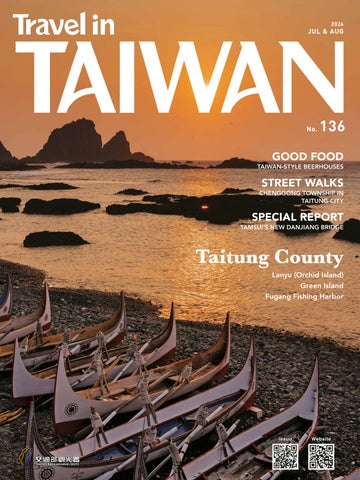
Lanyu (Orchid Island) Green Island Fugang Fishing Harbor



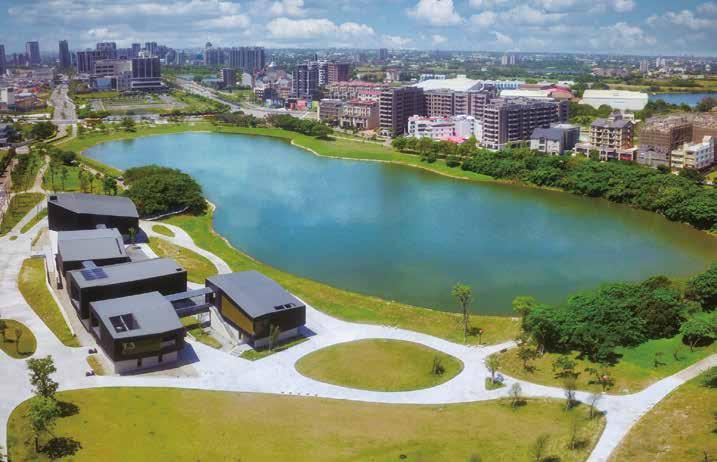

Taiwan Taoyuan International Airport Tourist Service Center (Free Half-Day Tour Desk)
Service Hours: 07:00 - 23:30 (Terminal 1), 05:30 - 24:00 (Terminal 2)
TEL: +886-3-398-2790, +886-3-398-3341 (or dial 2790# or 3341# on the airport's courtesy telephone) E-mail:halfdaytour@mail.tad.gov.tw
Guided Tour (Tour Bus)
Transit or transfer passengers with a 7 to 24 hours layover
Participants must hold a valid R.O.C. visa or be eligible for visa-exempt entry.
Self-guided Tour
Transit or transfer passengers staying up to 24 hours
Must hold a valid R.O.C. visa or be from a visa-exempt country
Online reservation is recommended
On-site registration is available if seats remain
Morning Tour
Arrival before 07:00
Departure after 15:00
Afternoon Tour
Arrival before 13:00
Departure after 20:30
Each passenger may join one tour per stopover only Passport must be valid for at least six months
The registration counter is located at the Tourist Service Center / Free Half-Day Tour Desk in the arrival hall. Tours are subject to availability and operational conditions.


to plan your stopover tour
Harbor · Heritage · Old Street
08:05-08:15 at Terminal 2, Free Half-Day Tour Desk 08:20-08:30 at Terminal 1, Free Half-Day Tour Desk
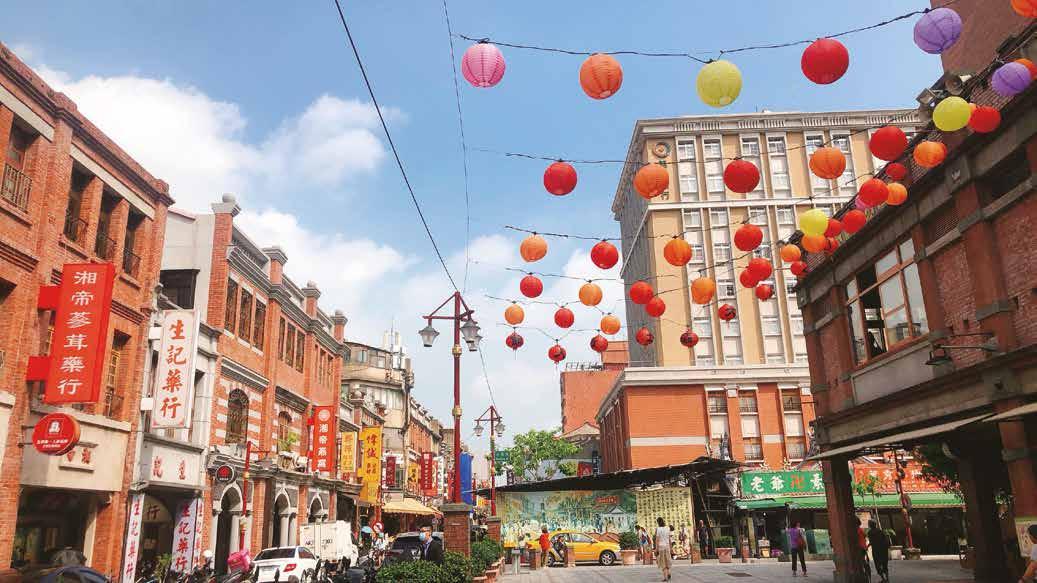
Sightseeing: Huwei Fishing Harbor (Danjiang Bridge Photo Spot), Fuyou Temple, Tamsui Old Street 12:30 Arrival at Taoyuan International Airport The itinerary may be adjusted according to tra c conditions following the opening of Danjiang Bridge.

18:00 Arrival at Taoyuan International Airport Morning Tamsui Waterfront Tour
13:35-13:45 at Terminal 2, Free Half-Day Tour Desk 13:50-14:00 at Terminal 1, Free Half-Day Tour Desk
Sightseeing:
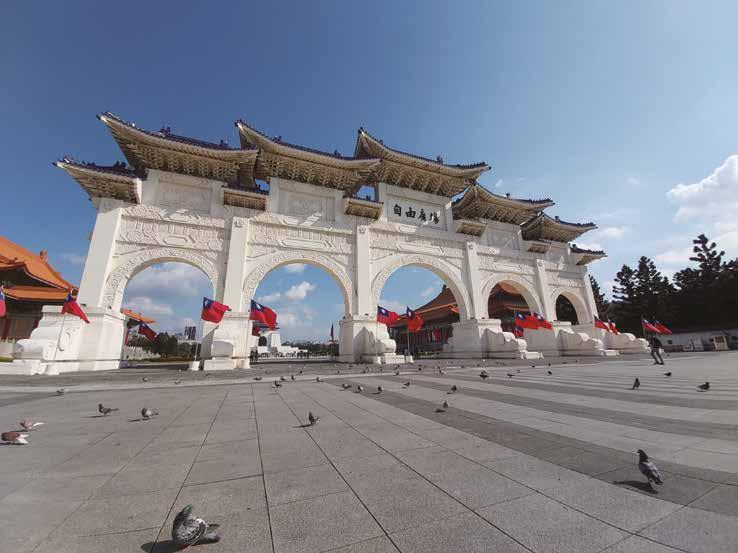
Dadaocheng & Dihua Street, Liberty Square & National Chiang Kai-Shek Memorial Hall, Ximending Commercial District
Dear Traveler,
Midsummer has arrived, and the summer sun is soaring high – the best of times to get out touring under the big blue Taiwan skies.
In our trio of feature articles this issue, you’ll be traveling under big open ocean skies by ferry to Lanyu (Orchid Island) and Green Island, picturesque small lands off Taiwan’s southeast coast. Our main article introduces you to the culture of the Tao tribe, the good folk that call Orchid Island home – including their six villages and unique traditional semi-subterranean dwellings – and to the wonder-filled local scenery on a DIY tour along the quiet coastal loop road.
The second feature is a Green Island excursion, again along a tranquil coast-hugging loop road. Like Orchid Island, a large volcanic outcrop bobbing in the sea, the tourism highlights here include guided reef-diving outings, fantastical coastal rock formations, seaside alfresco saltwater hot springs, and a unique human rights museum in a former facility for political prisoners. The third feature is spent back on the mainland at your Lanyu/Green Island ferry launchpad – Taitung City’s Fugang Fishing Harbor – well worth a few hours of your culture-explorer time. Notable stops include a colorful old sea goddess temple, a roisterous marine-catch auction market, quaint seafoodspecialty eateries, and the dynamic Fugang Geopark (aka Xiao Yehliu).
In our regular Street Walks file visit Chenggong, an important fishing harbor town on the East Coast. There, you can catch the daily afternoon fishing harbor auction, walk the landscaped seaside park, and cycle seaside northward to the famed Sanxiantai (“Platform of the Three Immortals”) tourist attraction. More outdoor adventures await in our National Park file – destination Kenting National Park on Taiwan’s south tip, a giant fun-filled ecology classroom offering guided snorkeling and scuba diving, walks through magical upraised-coral hill terrain, guided nighttime monsoon rainforest walks, and tons of sandy-beach recreation.
We also have much indoor fun for you this issue! In Good Food , check out some premier beerhouses – a favorite place for locals to spend an evening – enjoying the distinctive Taiwanese aesthetics reflected in the food, drink, and décor. In Little Things, learn all about iconic local “Q” foods – distinctive-texture foods described as “Asia’s al dente” and “food that fights back.” And in Made in Taiwan , meet three local boutique brands crafting stylish and practical bags and accessories with inimitable “cuteness” at their aesthetic core.
Enjoy your high-summer Taiwan travels!
PUBLISHER
Taiwan Tourism Administration
EDITING CONSULTANT
T. C. Chou
PUBLISHING ORGANIZATION
Taiwan Tourism Administration, Ministry of Transportation and Communications
CONTACT
International Affairs Division, Taiwan Tourism Administration
Add: 9F, 290 Zhongxiao E. Rd., Sec. 4, Taipei City, 10694, Taiwan
Tel: 886-2-2349-1500 Fax: 886-2-2771-7036
E-mail: tad@tad.gov.tw Website: http://taiwan.net.tw
PRODUCER
Vision Creative Marketing & Media Co.
ADDRESS
1F, No. 5, Aly. 20, Ln. 265, Sec. 4, Xinyi Rd., Taipei City 10681, Taiwan
Tel: 886-2-2325-2323 Fax: 886-2-2701-5531
editor@v-media.com.tw
GENERAL MANAGER
David Hu
台灣觀光雙月刊
Travel in Taiwan
The official bimonthly English magazine of the Taiwan Tourism Administration (Advertisement) JULY/AUGUST, 2026
Tourism Administration, MOTC
First published Jan./Feb. 2004
ISSN: 18177964 GPN: 2009305475
Price: NT$50
中華郵政台北雜字第1286號執照登記為雜誌交寄
Copyright @ 2026 Tourism Administration. All rights reserved. Reproduction in any form without written permission is prohibited.
MAGAZINE IS SOLD AT:
1. Wu-Nan Culture Plaza, No. 6, Zhongshan Rd., Central Dist., Taichung City 40043 886-4-2226-0330 http://www.wunanbooks.com.tw/
2. National Bookstore, 1F., No. 209, Songjiang Rd., Zhongshan Dist., Taipei City 10485 886-2-2518-0207 http://www.govbooks.com.tw/
EDITOR IN CHIEF
Johannes Twellmann
ENGLISH EDITOR
Rick Charette
DIRECTOR OF PLANNING & EDITING DEPT
Joe Lee
MANAGING EDITOR
Anna Li
EDITORS
Masako Takada, Lynn Chang
CONTRIBUTORS
Ami Barnes, Rick Charette, Jenna Lynn Cody, Simon Foster
PHOTOGRAPHERS
Chen Cheng-kuo, Ray Chang
DESIGNERS
Ian Tsai , Hsieh Yun-jhen
ADMINISTRATIVE DEPT
Lily Wan, Hui-chun Tsai, Xiou Mieng Jiang
ONLINE
Read Travel in Taiwan online at www.travelintaiwan.net. Find back issues (PDF version) on the publication platform issuu at issuu.com/travelintaiwan


WHERE YOU CAN PICK UP A COPY OF TRAVEL IN TAIWAN
Offices of the Taiwan Tourism Administration in Beijing, Shanghai, Hong Kong, Singapore, Bangkok, Ho Chi Minh City, Kuala Lumpur, Seoul, San Francisco, New York, Los Angeles, Frankfurt, and London. Overseas Offices of the Ministry of Economic Affairs; Overseas Offices of the Central News Agency; EVA Air, and other selected international airlines; selected travel agencies in Asia, North America, and Europe; and other organizations.
Tourism Administration Visitor Center; Tourism Administration; Taiwan Visitors Association; foreign representative offices in Taiwan; Tourism Administration service counters at Taiwan
Taoyuan Int’l Airport and Kaohsiung Int’l Airport; major tourist hotels; Taipei World Trade Center; VIP lounges of international airlines; major tourist spots in Taipei; visitor centers of cities and counties around Taiwan; offices of national scenic area administrations; public libraries
This magazine is printed on FSC® COC certified paper. Any product with the FSC® logo on it comes from a forest that has been responsibly maintained and harvested in a sustainable manner.
This magazine was printed with soy ink. Soy ink is said to be more environmentally friendly than petroleum-based ink and to make it easier to recycle paper.
EAST TAIWAN | LANYU 62 KILOMETERS AND A WORLD AWAY A Visit to Lovely Lanyu
EAST TAIWAN | GREEN ISLAND GREEN ISLAND, BLUE SEAS A Summer Escape with Unexpected Depths
EAST TAIWAN | FUGANG
WHILE YOU’RE WAITING
How to Enjoy Fugang Fishing Harbor
STREET WALKS | CHENGGONG
WHERE THE MOUNTAINS MEET THE SEA A Local's Guide to Chenggong, a Quiet Gem on Taiwan’s East Coast
GOOD FOOD | BEERHOUSES A TOAST TO TAIWAN Food, Drinks, and a Whole Lot of Local Flavor
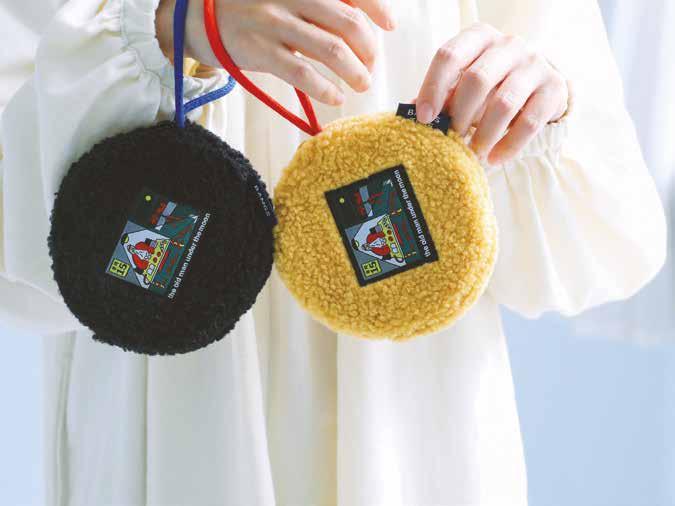
MADE IN TAIWAN BAGS FULL OF CUTENESS Three Taiwan Brands Producing Fashionable, Practical, Affordable Items
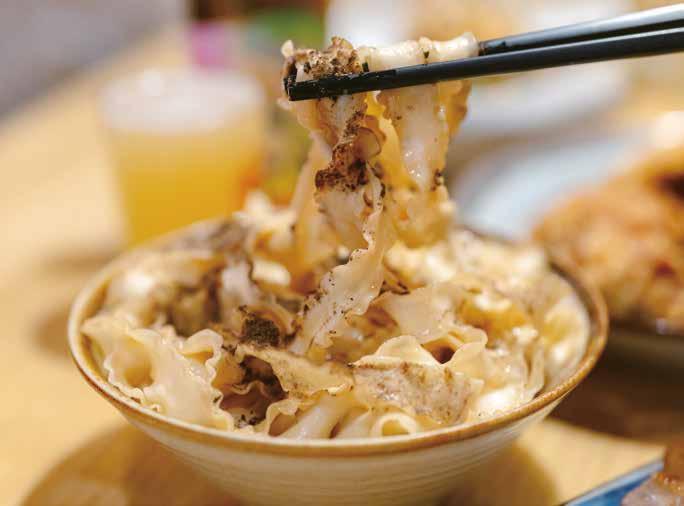
LITTLE THINGS THE JOYS OF “Q” FOODS A Taiwan Culinary Obsession Explained
TAIWAN PASS EXPLORING TAIWAN WITH EASE Take Advantage of the Taiwan PASS!
TRANSIT TRAVEL TIME IN TAINAN What to Do When Your Cruise Liner Docks at Anping Port
YUNLIN COUNTY 1 September
雲林國際偶戲節
This annual festival is Taiwan’s premier celebration of budaixi (glove puppetry). It has been held in Yunlin County’s Huwei Township, the center for this art form, since 1999. The festival runs for about two weeks in September and October, featuring free outdoor performances, international troupes, showcases of living national treasures, and the prestigious Golden Palm Awards ceremony. It blends tradition with modern creativity, incorporating puppetry with electronic music, circus acts, and digital technology. A family-friendly, one-of-a-kind cultural event that draws large crowds each year, the venue is easily reached from Taipei via Taiwan High Speed Rail (THSR) + shuttle bus in less than two hours. www.facebook.com/puppet.yunlin.gov.tw
September 12 ~ November 15
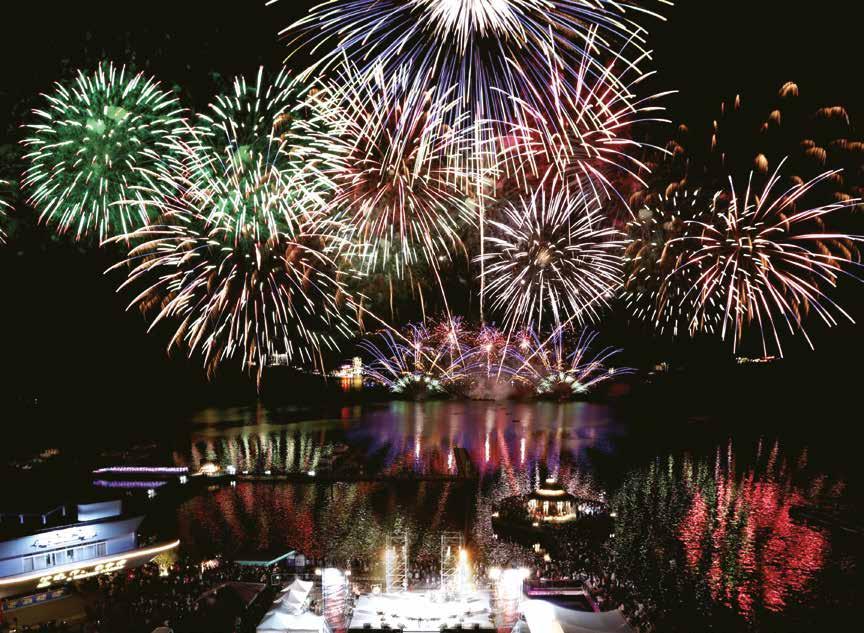
Sun Moon Lake Music & Fireworks Festival
日月潭花火音樂嘉年華 2
Running annually from September through November since 2008, the Sun Moon Lake Music & Fireworks Festival sees Taiwan’s largest and most scenic lake transformed into the stage for a two-month celebration of music, fireworks, sports, and indigenous culture. Centered on three major fireworks concert nights at Ita Thao Pier, Shuishe Wharf, and Xiangshan Visitor Center, respectively, the festival also coincides with a round-thelake marathon, a cycling carnival, the local township’s Black Tea Culture Season, and a lakeside mass wedding ceremony. All fireworks shows are free, as are all performances, which range from indigenous drumming to full symphony orchestras. Sun Moon Lake is easily accessible by bus from THSR Taichung Station. www.sunmoonlake.gov.tw
大稻埕夏日節 3
July 25 ~ August 15
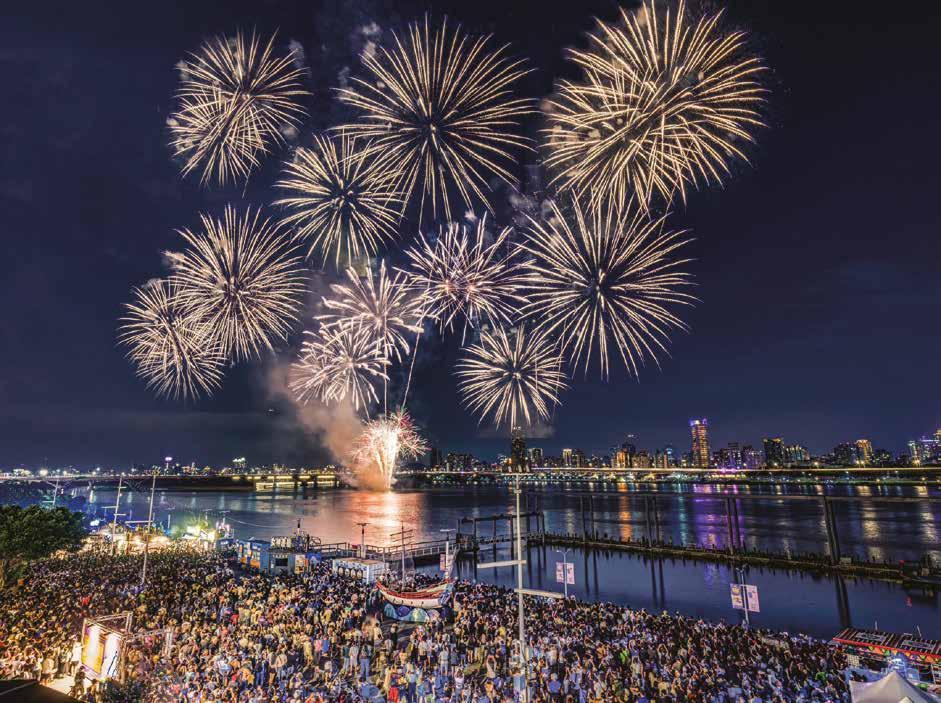
Taipei Summer Festival
Held every August at Dadaocheng Wharf and Yanping Riverside Park in Taipei’s historic Datong District, this festival is Taiwan’s most iconic urban summertime celebration. Growing from a single Qixi Festival (Chinese Valentine’s Day) fireworks event, it now spans a full month, featuring 5-minute themed fireworks shows every Wednesday evening, a grand 8-minute Qixi Festival finale, live music concerts, decorated Tamsui River cruise boats, more than 500 meters of riverside light installations, and a container market with street foods and DJ live music. Close by is the Dadaocheng neighborhood’s centuries-old streetscape of teahouses and traditional shophouses (especially Dihua Street). All events are free, and the festival area is easily reached by the Taipei Metro (Beimen and Daqiaotou stations). taipeisummer.travel.taipei
鷄籠中元祭 4
August ~ September
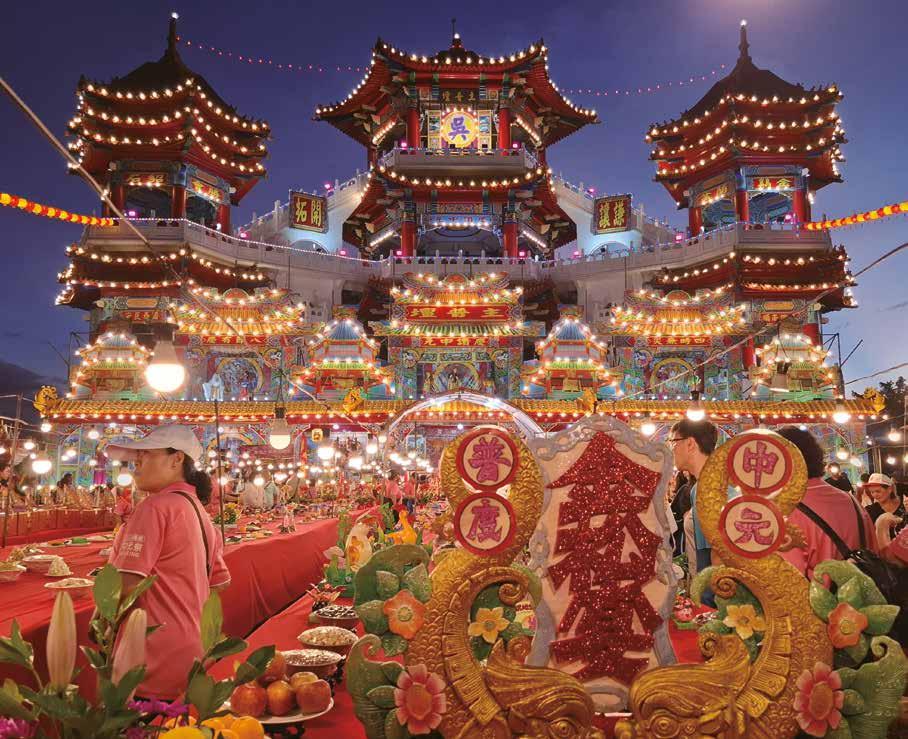
Dating to 1855, this festival is the first to be designated as a cultural asset by the government in the “Important Folklore” category. It is the island’s largest Ghost Festival celebration, running for a full month during the seventh lunar month (typically in August-September depending on the lunar calendar). Born from a deadly clan feud, it transformed rivalry into a rotating ceremony of peace, with fifteen surname-based clan associations taking turns hosting the events each year. Highlights include the opening of the Gates of Hell at Laodagong Temple, clan lantern parades, Taoist salvation ceremonies, and the spectacular Grand Water Lantern Parade, during which ornate paper lanterns are released into the sea at Badouzi Harbor. Keelung is about 30 minutes from central Taipei by local train. klctb.klcg.gov.tw
TAIPEI CITY August 24 ~ September 6
5
Launched in 2024, Trendy Taipei is a major urban festival organized by the Taipei City Government. Running for about two weeks, the event spans music, fashion, technology, gaming, and art across three pillars: large-scale concerts, international industry forums, and citywide live performances. Anchored at the Taipei Music Center in Nangang District, it also activates live houses, bars, and cultural venues throughout the city. Highlights include the panAsian Jam Jam Asia music festival and the Taipei Music Expo. The 2025 edition drew over 100,000 attendees from more than 40 countries. The Taipei Music Center is easily reached by the Taipei Metro (Kunyang and Nangang stations). trendy.taipei

TAOYUAN CITY September 24 ~ November 11
台灣設計展 6
Launched in 2003, this is one of Taiwan’s largest annual design events, hosted in a different city each year through a partnership between the Taiwan Design Research Institute and local governments. Using design thinking to spotlight each host city’s unique culture, industry, and lifestyle, it transforms entire urban districts into multi-venue exhibition spaces. Past hosts include Taipei, Tainan, Kaohsiung, and Changhua. Taoyuan is the host city this year, with planned venues including the Taoyuan Municipal Art Museum and Zhongyuan Creative Park. designexpo.org.tw

TEXT RICK CHARETTE PHOTO CHEN CHENG-KUO
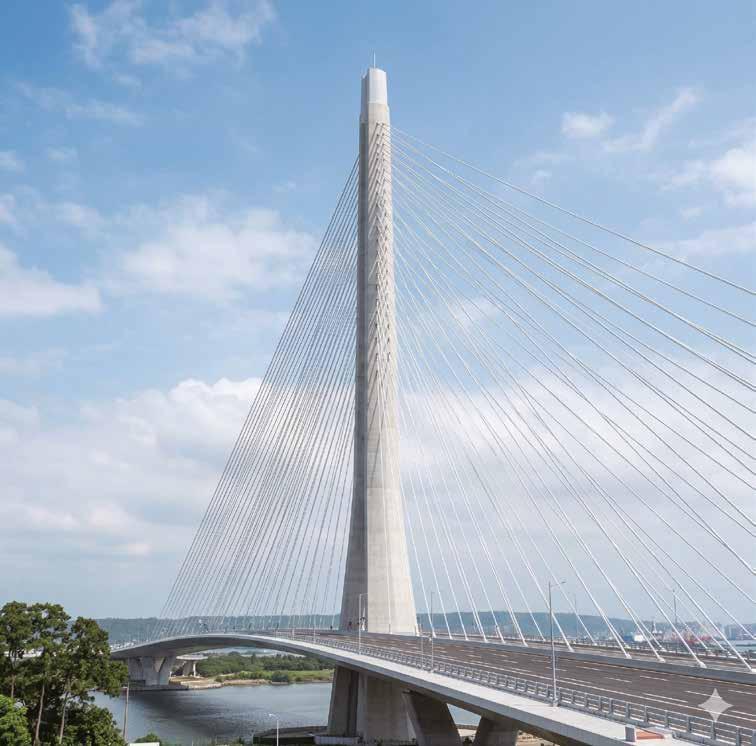
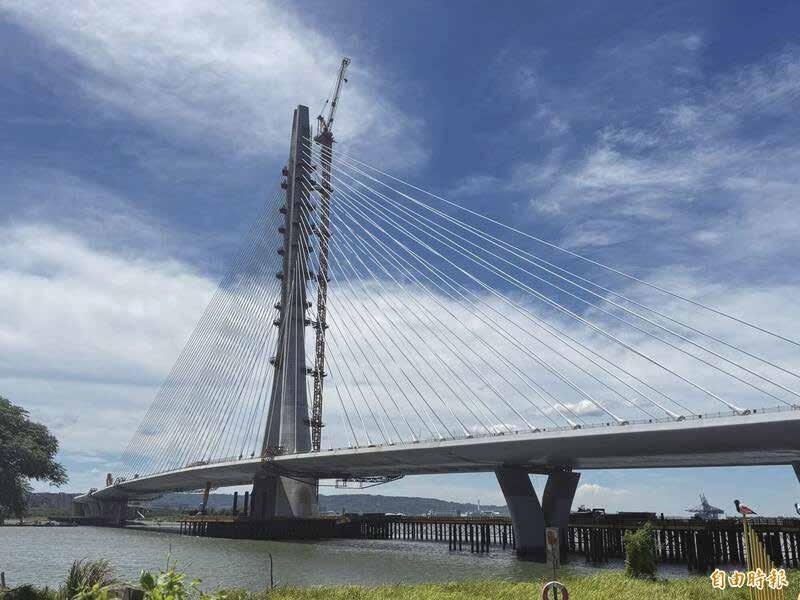
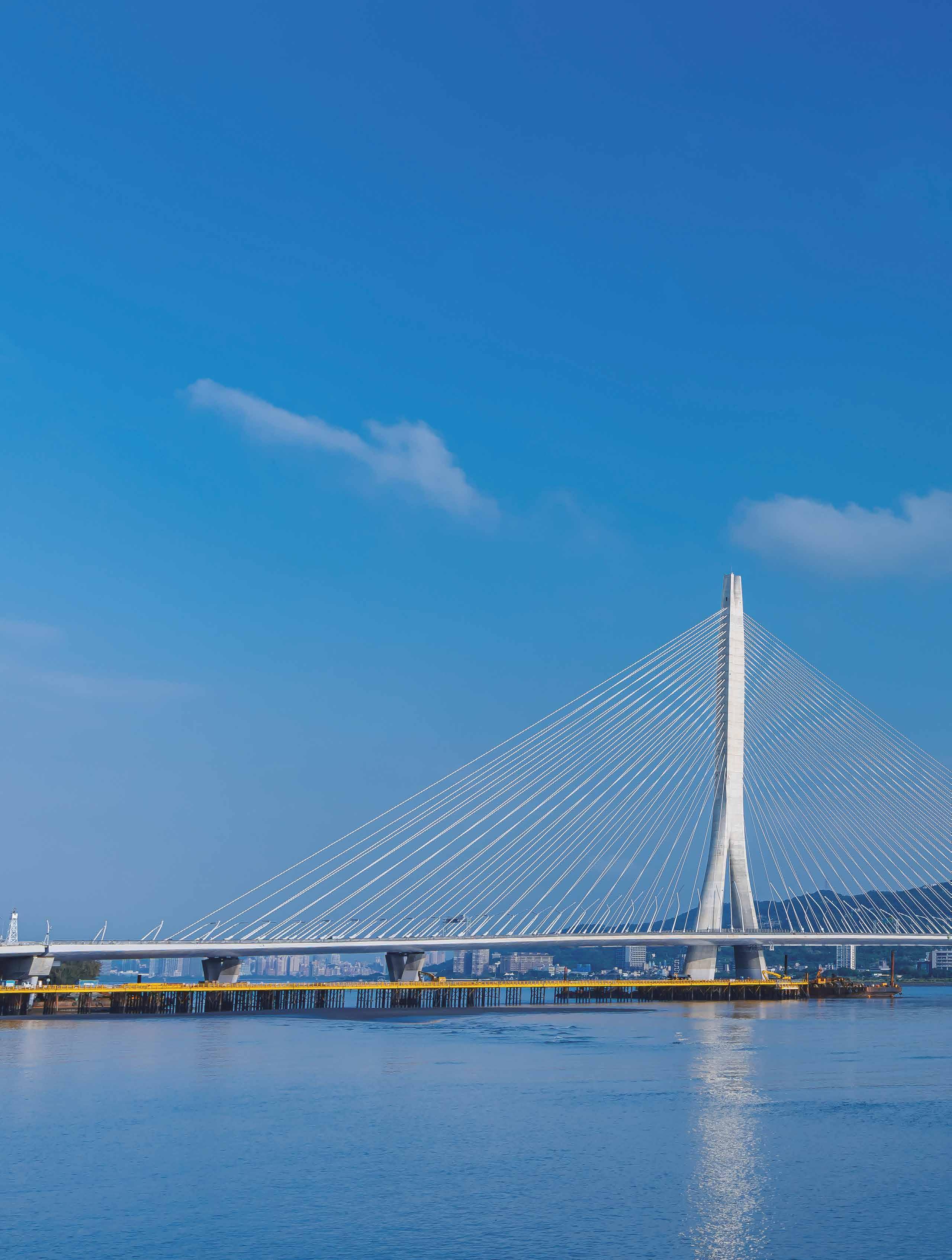
The new Danjiang Bridge across the Tamsui River estuary, north of Taipei City, represents a monumental shift in the north region’s tourism landscape. The world’s longest singletower, asymmetric cable-stayed bridge is not merely an infrastructure project undertaken to alleviate traffic between New Taipei City’s Tamsui District on the river’s right bank and Bali District on the left bank. This is a world-class architectural landmark engineered to enhance, rather than obstruct, one of Taiwan’s most celebrated natural spectacles: the glorious Tamsui sunset.
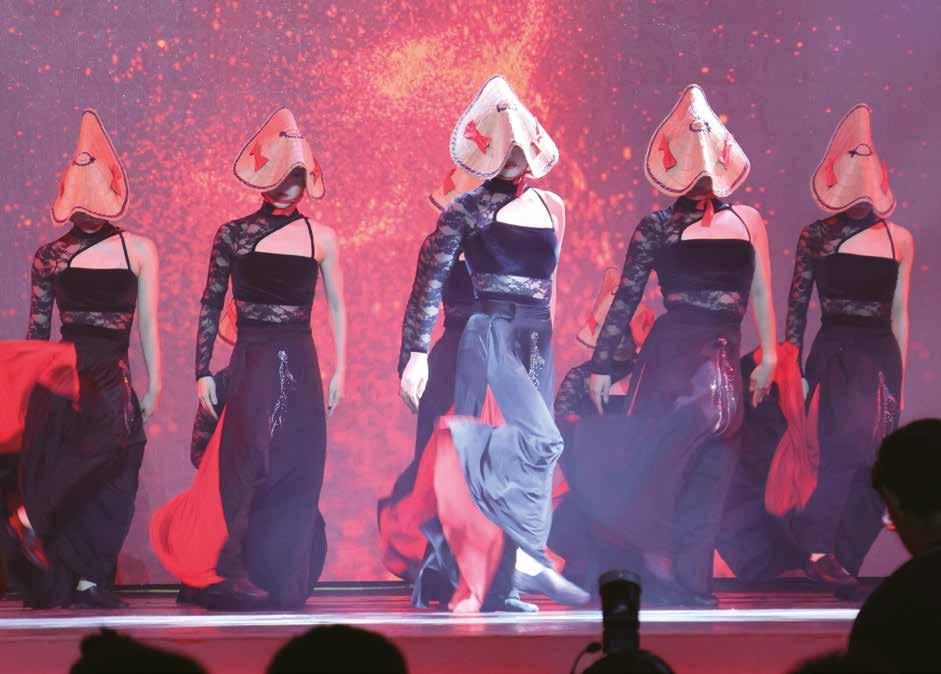
Designed by the late famed architect Zaha Hadid, Danjiang Bridge opened to traffic on May 12 with a great festive atmosphere. After an opening ceremony featuring a brand-new, site-specific performance called Light Chain by Taiwan’s internationally celebrated Cloud Gate Dance Theatre troupe –inspired by the bridge’s structure and mechanics – excited drivers, cyclists, and pedestrians streamed across in great numbers to be part of the momentous day.
The historic fishing-port town of Tamsui draws millions of domestic and international travelers annually. Visitors flock to its long boardwalk waterfront and bustling Tamsui Old Street , both busy with eateries and shops, its centuries-old Fort San Domingo, the Tamsui Fisherman’s Wharf, and other attractions. However, tourism growth has been constrained by severe traffic congestion in the area, with the nearest river-crossing bridge five kilometers upriver. The Danjiang Bridge will help address this infrastructure deficit by linking the major estuary-area highways and reducing travel time between the Tamsui and Bali districts by 25 minutes. The bridge will also serve as a platform for the expansion of the river-crossing Danhai Light Rail system from the Tamsui side.
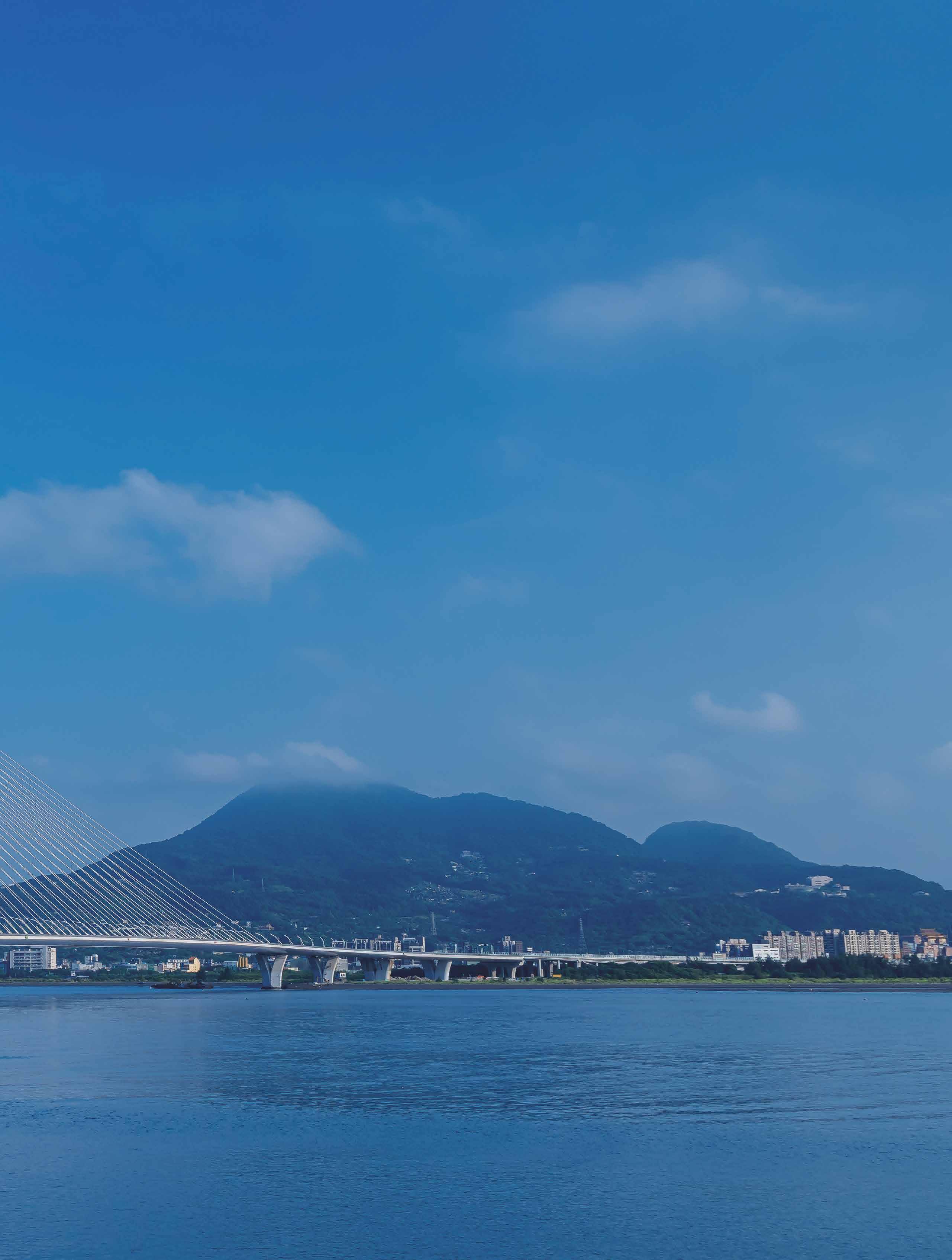
From an aesthetic perspective, this stunning architectural artwork will transform the North Coast arrival experience for tourists. Acting as a visual gateway on the island’s north edge, it features a single 200-meter-high concrete pylon, which supports a 920-meter-long road, rail, and pedestrian deck. The single-mast design was utilized to minimize the structural footprint in the riverbed, thereby preserving navigation channels for local fishing boats and river-cruise yachts and protecting the local ecosystem by avoiding waterflow interference. Most importantly, this design ensures that the sweeping, unobstructed views of the sunset over the estuary and Taiwan Strait beyond – a cultural touchstone in Taiwanese art and literature and perhaps Tamsui’s premier tourism draw – remain flawless.
As a work of transportation infrastructure, the bridge is intended to shift the focus from traditional motor-vehicle transit to recreational, slow-paced exploration using green transit. Dedicated pedestrian walkways and bicycle lanes enable quick cross-estuary travel, encouraging flow between the two previously distinct tourism hubs: the historical, bustling cultural scene of Tamsui and the relaxed, nature-oriented café culture of the Bali Left Bank area.
Cyclists can now embark on unbroken, panoramic loop tours, riding the dedicated riverside bikeway on the Tamsui side, crossing the bridge, and then riding the Bali waterfront bikeway. There are YouBike public bike-rental stations close to the bridge on both sides of the river.
Furthermore, the Danhai Light Rail expansion will provide tourists with seamless, eco-friendly transit links directly from downtown Taipei to the coastal areas on either side of the river, eliminating the need for more complicated DIY driving or bus-route navigation.
The Danjiang Bridge also enhances the Tamsui “sunset economy” – driving business to local eateries, river-cruise operators, and other enterprises – by introducing entirely new sunset-viewing vantage points. Dedicated viewing platforms jut out from the pedestrian pathways, offering elevated, unobstructed 360-degree views of the westward horizon, historic Tamsui waterfront, and Yangmingshan National Park peaks eastward. Be sure to keep your hat on tight – there are strong winds at times!
This additional draw will help retain tourists into the evening hours. Add to this nighttime illumination along the bridge cables, designed both for visual appeal and to protect endemic/migratory birds on their routes. This aesthetic appeal will encourage overnight stays in Tamsui and Bali.
Historically, Tamsui has absorbed the vast majority of area tourism traffic, leading to overcrowding on weekends/holidays, and the Bali District has remained comparatively underutilized. Easier Bali access via the Danjiang Bridge will facilitate the discovery of its comparatively less-known attractions, including the Shihsanhang Museum of Archaeology (www.sshm.ntpc.gov.tw) and Wazihwei Nature Reserve (mangrove conservation area).
For the international traveler, the Danjiang Bridge is not just a transportation passageway – it is a destination in itself.
ENGLISH AND CHINESE
Bali (Left Bank) | 八里 ( 左岸 )
Danhai Light Rail | 淡海輕軌
Danjiang Bridge | 淡江大橋
Fort San Domingo | 紅毛城
Shihsanhang Museum of Archaeology | 十三行博物館
Tamsui (Fisherman's Wharf) | 淡水 ( 漁人碼頭 )
Tamsui Old Street | 淡水老街
Tamsui River | 淡水河
Wazihwei Nature Reserve | 挖子尾自然生態保留區

臺北藝穗節
August 23 – September 7
Various venues around the city ( Taipei City )
Each year, this festival transforms Taipei into a living stage, using a variety of unconventional venues –from bustling markets and hidden alleys to scenic hills and riverbanks. By partnering with community theaters and embedding hundreds of performances within everyday neighborhoods, the festival blurs the line between art and daily life. Last year, more than 170 performance groups, including eight from abroad, took part in this large-scale happening. More than just a performing arts festival, the Taipei Fringe Festival is a citywide celebration of creativity, community, and culture –inviting both seasoned audiences and first-time visitors to experience Taipei in a whole new way. tpac.org.taipei/festival-fringe

2
Festival 3 Music
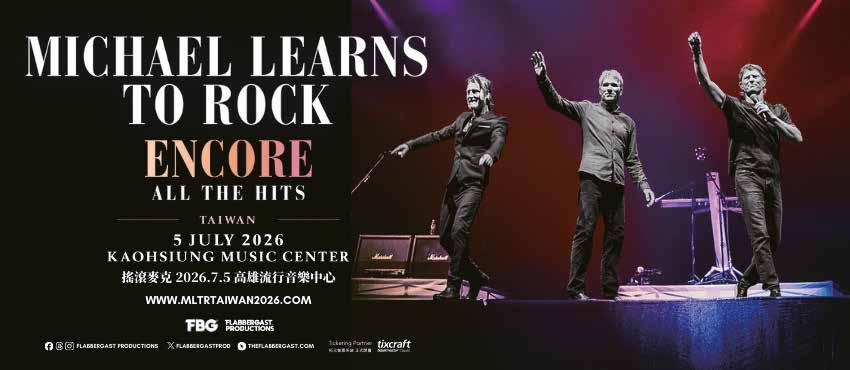
搖滾麥克
July 5
Kaohsiung Music Center ( Kaohsiung City )
This concert by the Danish soft-rock legend Michael Learns to Rock is a one-night celebration of the trio’s most beloved songs. Formed in 1988, the band has built a devoted following across Asia with its signature blend of melodic pop-rock ballads and heartfelt storytelling – songs that have soundtracked countless memories for fans across generations. Audience members can look forward to a night of timeless classics and irresistible sing-alongs, from tender ballads to upbeat fan favorites. Whether you grew up with these artists’ music or are discovering it for the first time, this is an evening not to be missed. kpmc.com.tw
臺北兒童藝術節
June 30 – August 6
Taipei Performing Arts Center ( Taipei City )
This festival, held at the Taipei Performing Arts Center, invites families to experience art through active participation rather than passive observation. This year’s edition is centered on three enchanting art forms: the playful magic of light and shadow, the expressive world of puppetry, and the immersive staging of picture-book stories. Highlight acts include the Papermoon Puppet Theatre, one of Indonesia’s most acclaimed contemporary puppet companies, and the renowned Taiwanese ensemble Taipei Percussion, which will perform Embrace the Ocean, an interactive family concert that explores the sounds and emotions of the sea through percussion. tpac.org.taipei
Exhibition 4
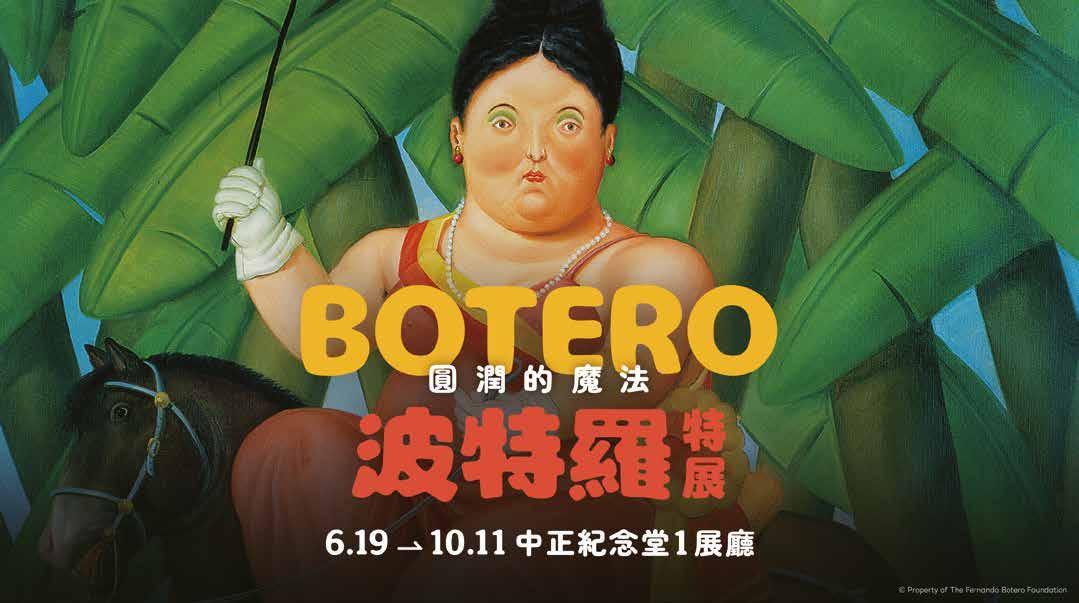
THE MAGIC OF VOLUME: BOTERO EXHIBITION
圓潤的魔法 波特羅特展
Jun 19 – Oct 11
National Chiang Kai-shek Memorial Hall ( Taipei City )
This exhibition brings the iconic world of Colombian figurative artist and sculptor Fernando Botero (1932~2023) to Taipei’s National Chiang Kai-shek Memorial Hall. Celebrated for his unmistakable style of voluminous, rounded figures, Botero transformed everyday subjects – from people and animals to still lifes – into works filled with playful grandeur and quiet humanity. His art invites viewers to slow down and appreciate the joy found in exaggerated forms and vibrant colors. This rare exhibition offers the Taiwanese audience a unique opportunity to experience one of Latin America’s most beloved and internationally acclaimed artistic voices. www.cksmh.gov.tw
Exhibitions 5
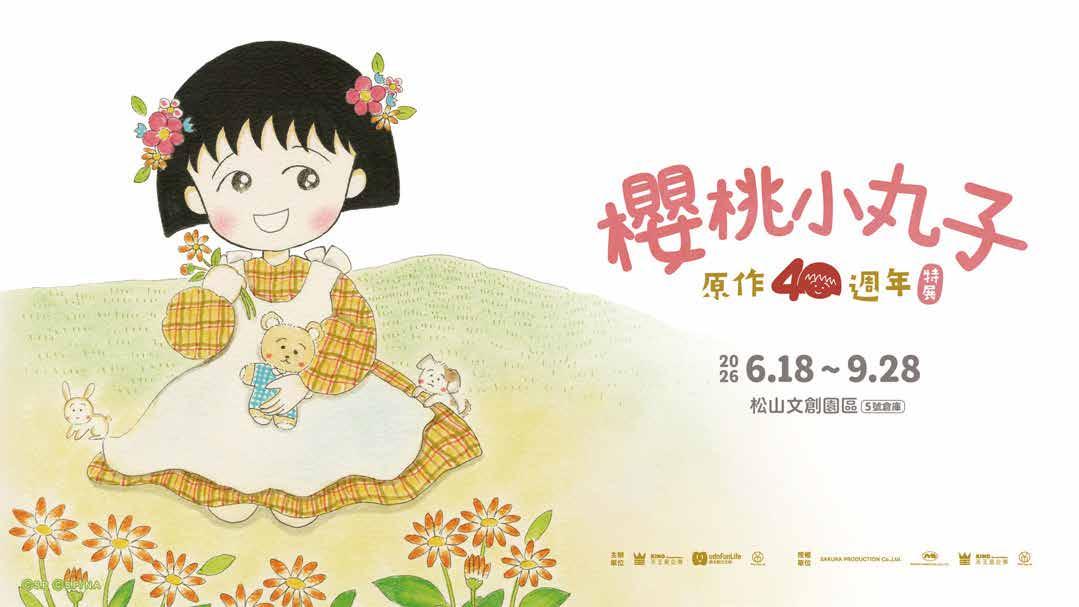
CHIBI MARUKO CHAN MANGA 40th ANNIVERSARY EXHIBITION
櫻桃小丸子原作40週年特展
June 18 – September 28
Songshan Cultural and Creative Park ( Taipei City )
This exhibition invites fans of all ages to revisit the warmth, humor, and nostalgic everyday moments of Class 3-4 , a Japanese manga and TV series that has been a beloved part of Taiwanese culture since its local debut in 1994. Created by Momoko Sakura, Chibi Maruko-chan first appeared in manga form in 1986 before becoming a widely loved anime that captured hearts across Asia. To mark the 40 th anniversary of the manga series, Chibi Maruko-chan is also being brought together with Crayon Shin-chan (another hugely popular Japanese manga and anime series) in a special crossover series, making this a milestone year for the franchise.
www.songshanculturalpark.org
Exhibition 6
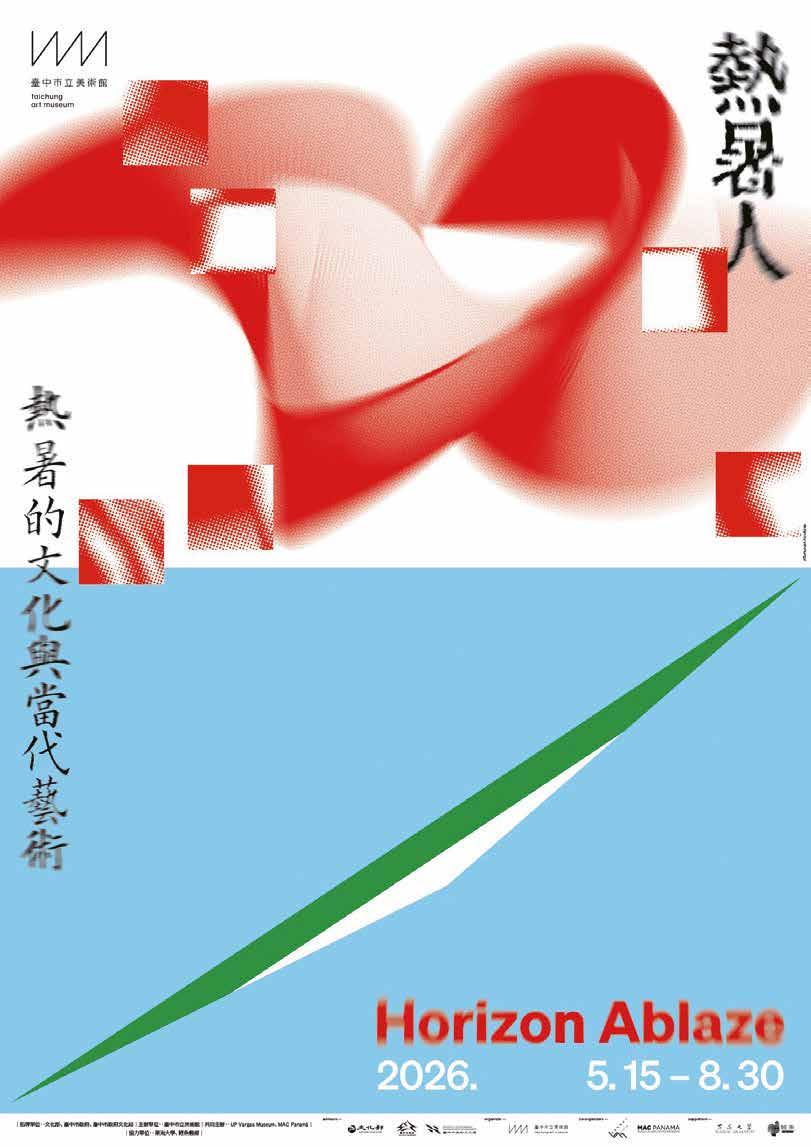
熱暑人-熱
May 15 – August 30
Taichung Art Museum ( Taichung City )
Co-curated by a transnational team from Taiwan, the Philippines, and Panama, this exhibition brings together artists from five continents – 33 artists from 16 countries –to explore humanity’s diverse responses to heat. For those living in Taiwan, where tropical and subtropical zones converge, heat is far from abstract; it is visceral, familiar, and inescapable. Presenting 50 selected works spanning painting, video, and sound installation, the exhibition asks whether this shared bodily sensation can become a language for cross-cultural exchange. www.tcam.museum/en/exhibition/ horizon-ablaze
Taiwan presents you with outstanding eco-geographical diversity. Choose from among the nine national parks – dedicated to the preservation of unique flora, fauna, and ecosystems – like choosing from a buffet of adventure possibilities. Taroko for deep marble canyons. Yushan for Taiwan’s highest peak and lofty sister peaks. Yangmingshan for a volcanic wonderland. And in these pages, Kenting National Park for tropical monsoon forests, marine marvels, and so much more.
This wonder-filled park is a bit of a tropical paradise at Taiwan’s southern tip, covering the southern Hengchun Peninsula, bordered by the Taiwan Strait to the west, the Pacific Ocean to the east, and the Bashi Channel to the south, with the southern tail of the Central Mountain Range running through its heart. Taiwan is mostly subtropical, but here we’re in the balmy tropics, which has a pronounced wet and dry season and almost unlimited sun, perfect for uninterrupted ecoexploration and recreational romping.
This precious bio-treasury, encompassing both land and surrounding sea, is on the ecology edutainment side known for its rich oceanic natural resources and terrestrial ecosystems ranging from grassland to exposed coral reefs uplifted through tectonic activity to monsoon rainforest. On the party-recreation entertainment side, it’s renowned for sandy beaches, snorkeling and jetskiing, and other water fun, and nightlife in the main village, coast-side Kending.
Established in 1984, Kenting is Taiwan’s oldest and southernmost modern national park (“modern” because three “Japan national parks” were set up when Japan controlled Taiwan 1895-1945). Concerned about the ecological damage being caused by farming and building, the central government moved in to protect the area’s natural beauty and unique habitats.
Kenting weighs in at 333 square kilometers – 181 land, 152 sea. The park’s anchor is Kenting National Forest Recreation Area, in the hills above the main village, a botanical garden and herbarium opened as a research station by the Japanese in 1906, to which they brought specimens from around the globe, their main goal being commercial exploitation. This is today home to many regal giants.
Located just west of Kending village, be sure to make this invaluable resource your gateway to the park. The expansive facility provides comprehensive travel consultations and interactive exhibits with four major Kenting themes (you even get to do pop quizzes): Mountain and Ocean, History, Ecology, and Conservation. The multimedia displays, landscape models, and rotating theme exhibitions are in multiple languages. Another highlight is the luxuriant courtyard garden and wooden observation deck, which does double-duty as an alfresco café, presenting sweeping panoramas of the south-tip coast and rising jungled hills behind.
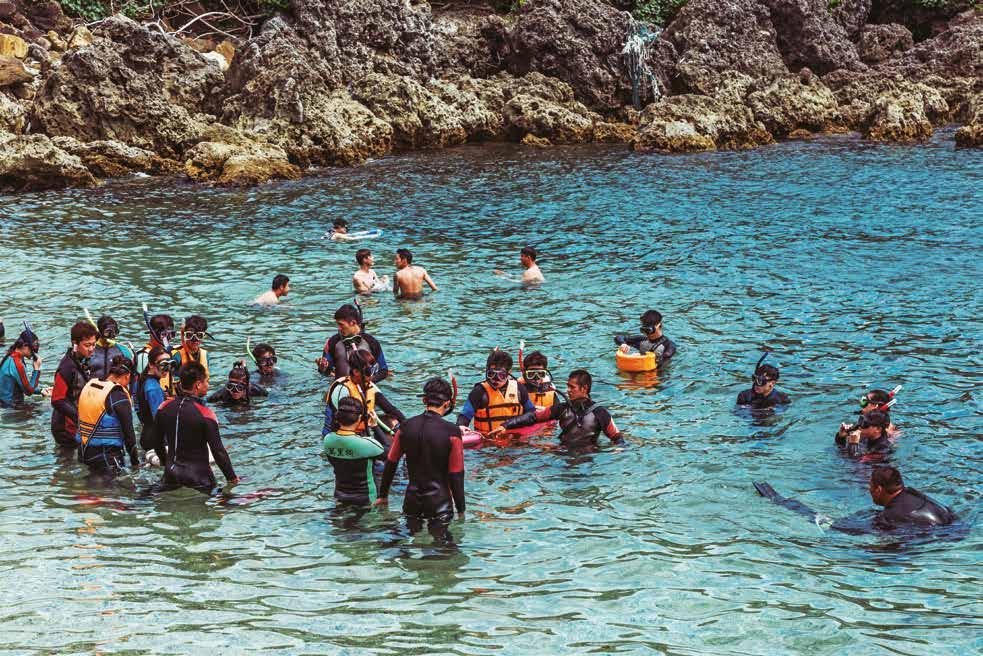
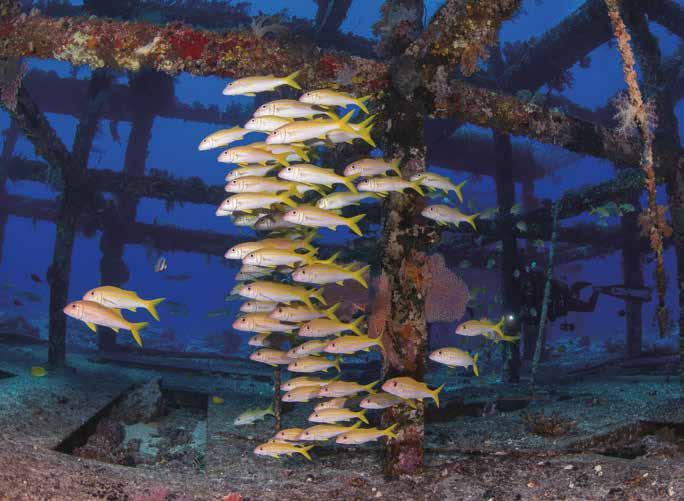
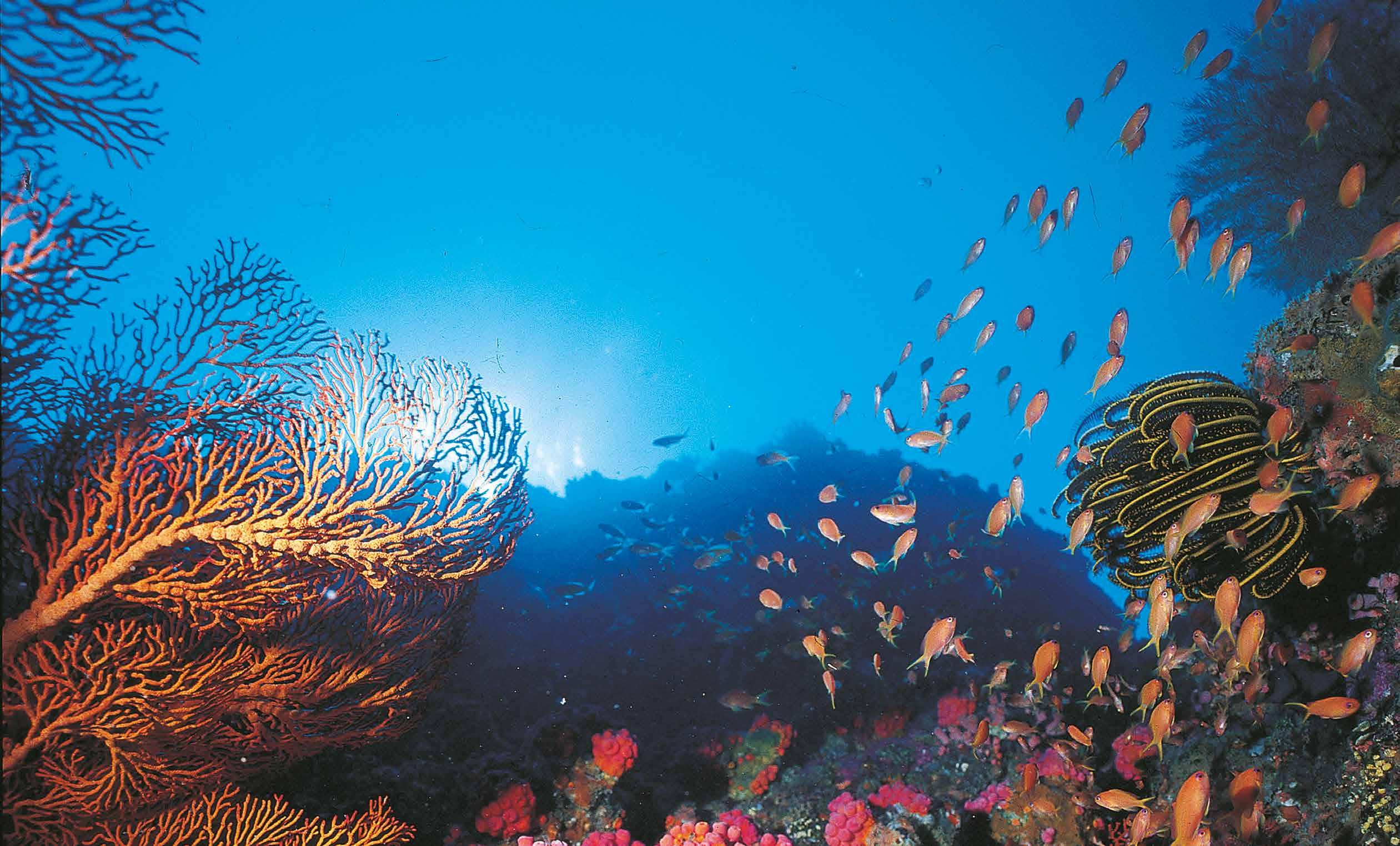
Be sure to take advantage of the guided snorkeling and scubadiving outings available (classes also available). The park is a critical biodiversity hotspot where marine and terrestrial ecosystems seamlessly converge. Its underwater world’s foundation is the upwards of 300 coral species supporting over 399 reef-fish species, including vibrant-painted clownfish. The reefs and intertidal zones further host a bounteous cosmos of shellfish, crustaceans, and calcareous algae, and protect the shoreline from erosion.
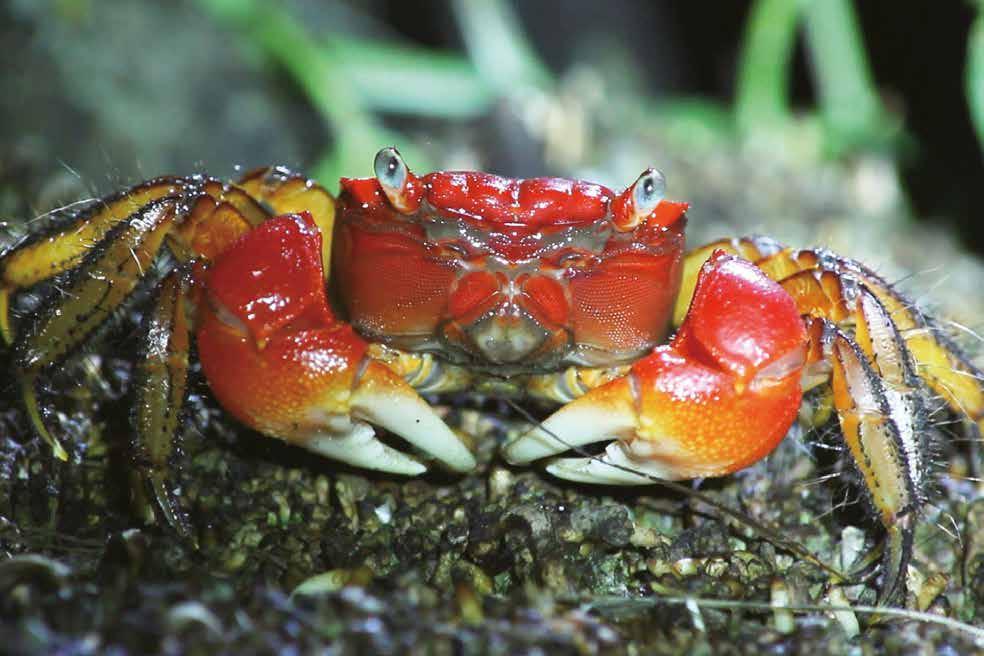
The big stars, however, are the land crabs, with about 69 species recorded, one of the globe’s most diverse such habitats. During the July~November breeding season, species including the Red Flower Crab migrate in the thousands from the coastal forest down to the sea to spawn.
Kenting has an extensive and well-maintained trail/pathway system; be sure to check out the Sheding Nature Park guided eco-tours and other eco-tour options.
The park’s terrestrial domain is defined first and foremost by its unique coral reef landscapes. These uplifted limestone formations support specialized “reef-forest” vegetation, with hardy plants like the Bird-lime Tree thriving despite thin soils and salt-laden winds. This rugged terrain transitions into lush monsoon rainforest characterized by high biodiversity and distinct seasonal adaptations.
Forest-dwelling fauna central to Kenting’s eco-brand is the Formosan Sika Deer. Once nearly extinct due to overhunting, a dedicated reintroduction program has birthed today’s thriving population. Sheding Nature Park night tours are especially favorable for spotting them at the forest’s edge (land crabs as well, in season).
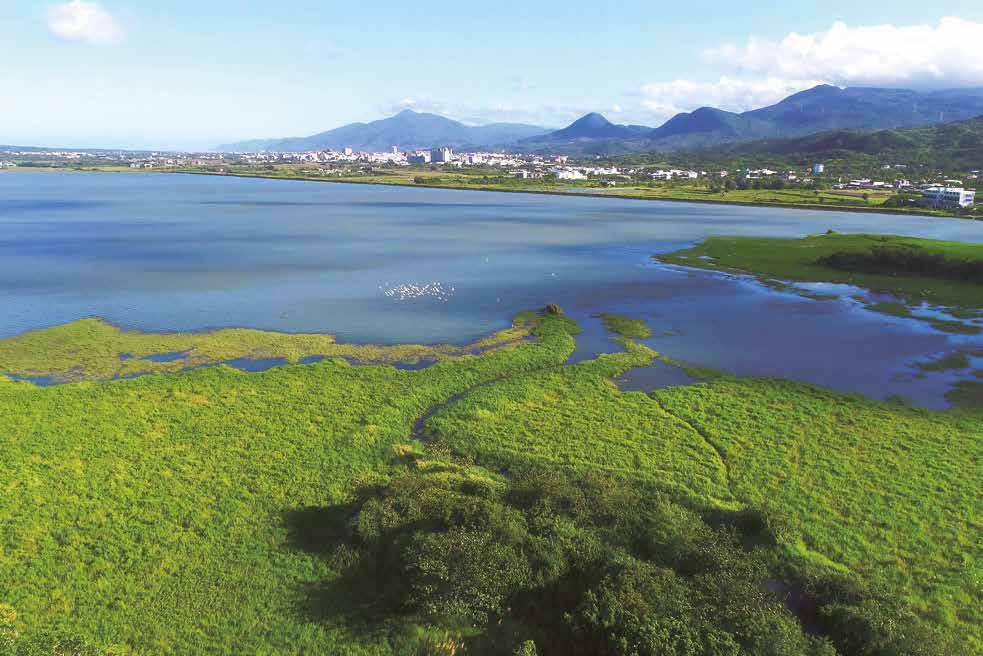
Do not miss the park’s special guided birdwatching tours and highly informative Longluan Lake Nature Center. The park administration engages in comprehensive wetland preservation efforts, with Longluan Lake at their heart. An inland freshwater wetland of national importance, it’s a crucial stopover spot for migratory birds by the thousands, with the Grey-faced Buzzard the most celebrated.
Coastal conservation efforts thrive through community-led initiatives. For example, Wanlitong fishing village’s Shanhai Association champions sustainable tourism through protection patrols and guided intertidal-zone tours, introducing vibrant tide pools teeming with sea stars, hermit crabs, and corals with an emphasis on environmental protection.
ENGLISH AND CHINESE
Hengchun Peninsula | 恆春半島
Kending | 墾丁
Kenting National Forest Recreation Area | 墾丁國家森林遊樂區
Kenting National Park | 墾丁國家公園
Longluan Lake | 龍鑾潭
Sheding Nature Park | 社頂自然公園
Wanlitong Association | 萬里桐協會
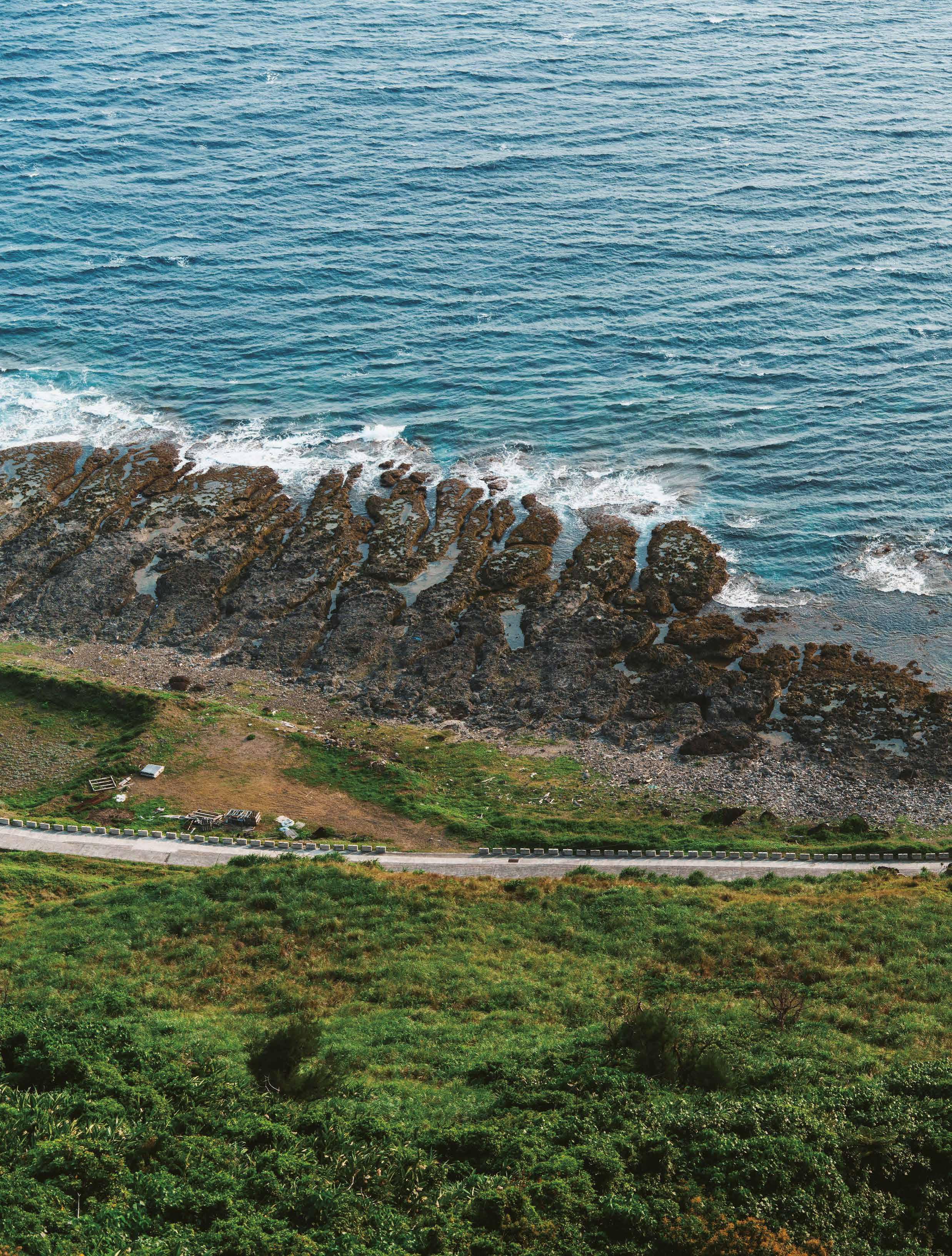
Before arriving on Lanyu (aka Orchid Island, Ponso no Tao, or Island of the People), I’d heard consistently glowing tales of this volcanic outpost from those whose opinions on such matters I trust. As it transpires, they were wholly accurate. Framed by wave-weathered coastal scenery and jungle greenery, life on this island, drifting 62 kilometers east of the Taiwan mainland’s Pingtung County (but being part of Taitung County), still follows the seasons of the sea – it’s truly a place like no other.
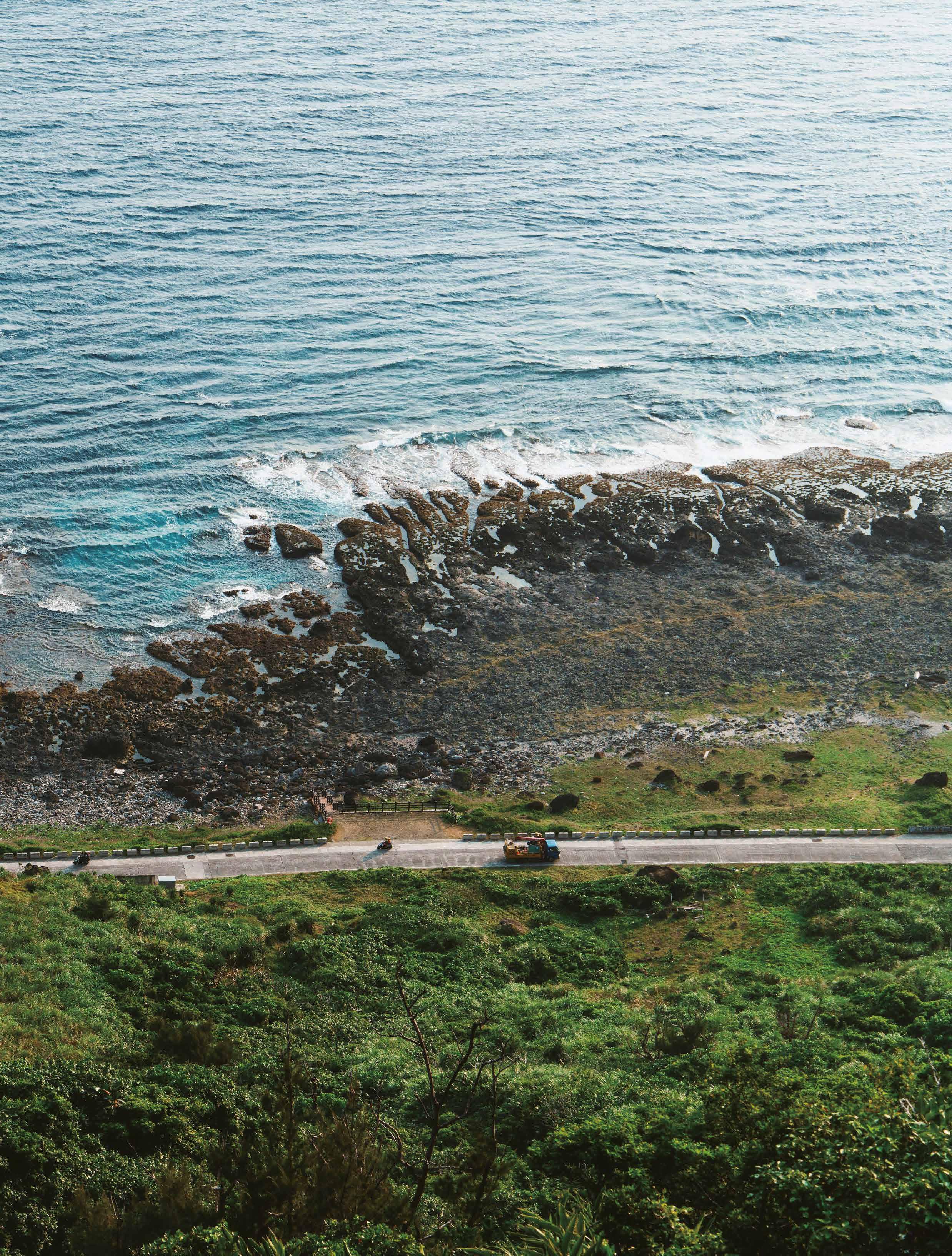
Despite its many charms, Lanyu remains stubbornly off the radar for international travelers, a fact that is explained at least in part by the challenging logistics. There are planes, but tickets sell out fast, and the services are frequently grounded by weather.
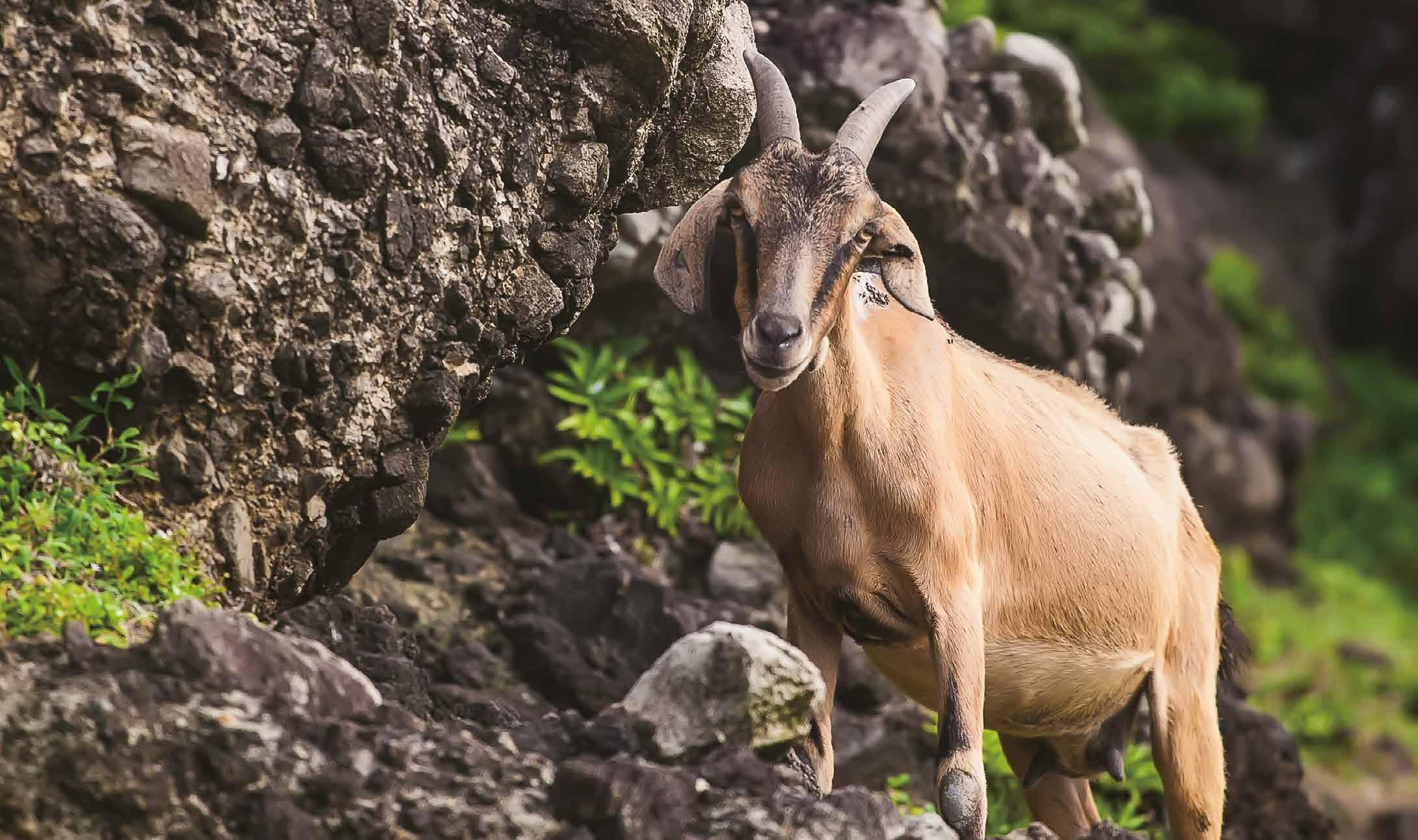
The 2.5-hour ferry ride from Taitung County’s Fugang Harbor? Let’s just say it has a reputation for upsetting sensitive tummies. Still, as our team disembarked during a recent Travel in Taiwan trip, surrounded by the hubbub of reuniting families and delivery drivers collecting wares, brisk wind swept away any vestigial queasiness, and the three-goat-strong welcome party picking its way along the Kaiyuan Harbor wall put me in a sunny mood. Before the sun had set on that first day, I had already committed to returning – all boat-related travails forgiven in the face of Lanyu’s captivating natural beauty and laidback tropical island character.
One thing that sets Lanyu apart from the rest of Taiwan’s outlying islands is the fact that roughly four-fifths of its 5,000-strong population are indigenous. The group self-identifies as the Tao, meaning simply “the people” (though a miscommunication during the 1895-1945 Japanese era means they’re still referred to in government documentation as the Yami), and based on genetic similarities, linguistic links, and oral histories, it’s believed they migrated here from the Batanes Islands in the Philippines some centuries ago.
The group’s relative isolation has given rise to a culture with many highly unique elements (I urge you to Google “Tao tribe ceremonial clothing”), and has also left it better placed to resist both overt and creeping pressures towards assimilation into Taiwan’s dominant Han culture. That’s not to say Lanyu remains frozen in time, but there’s probably nowhere else in Taiwan that you can hear young kids singing songs in an indigenous tongue as part of the nightly rubbish disposal ritual.
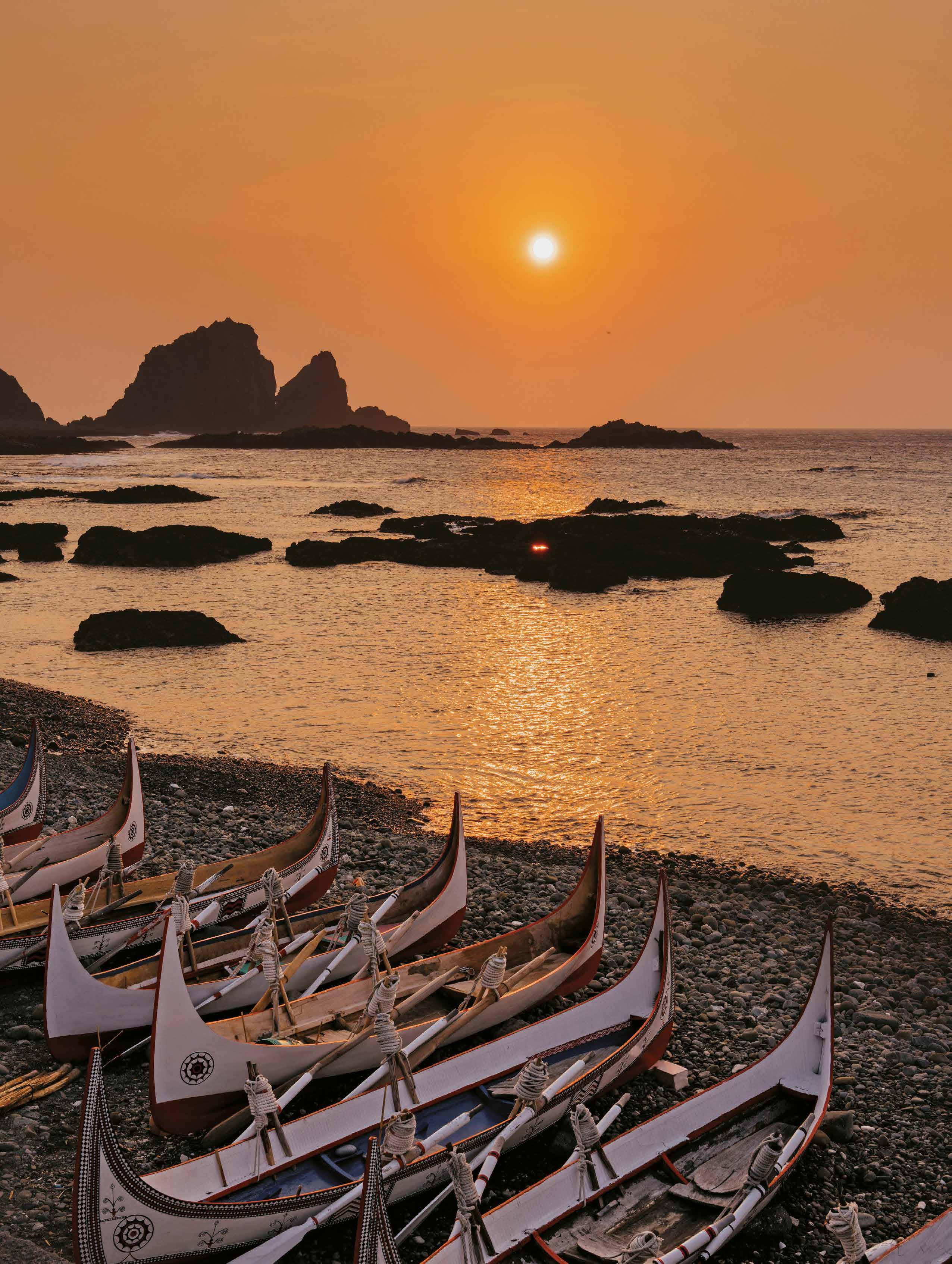
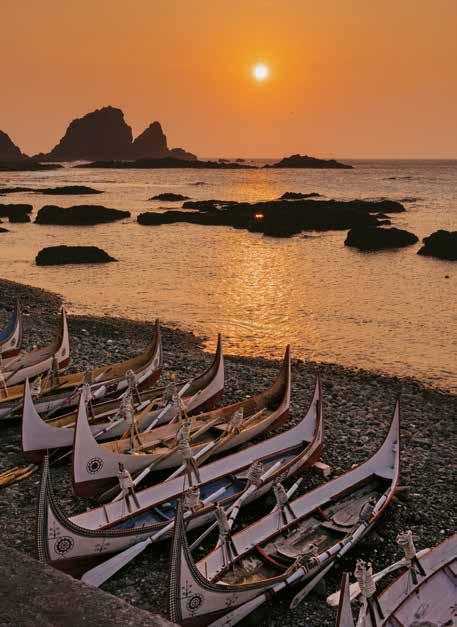
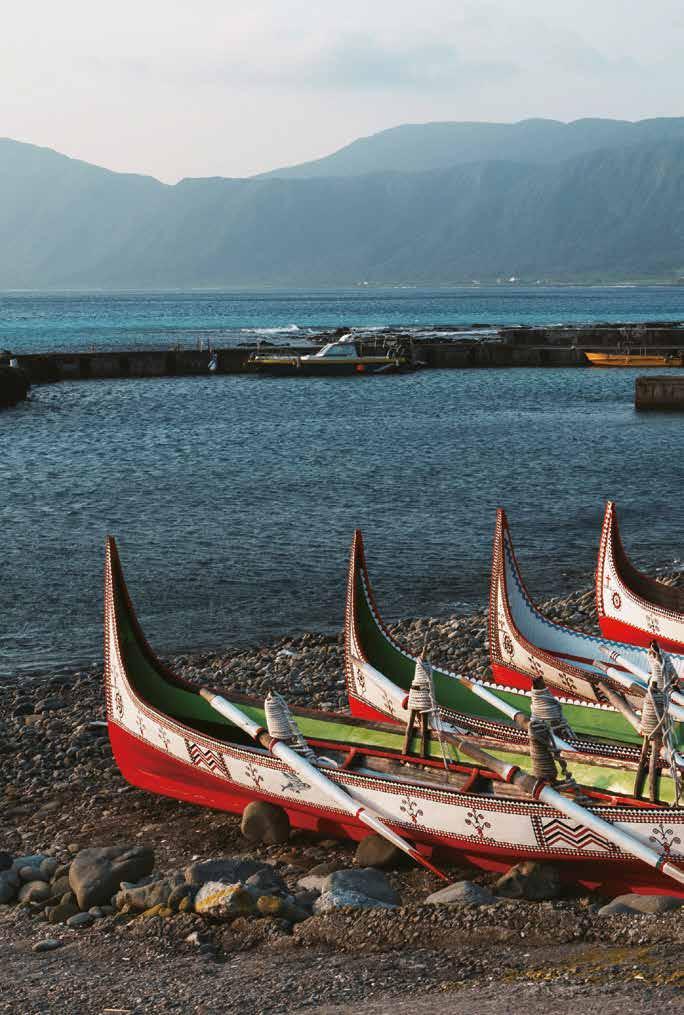
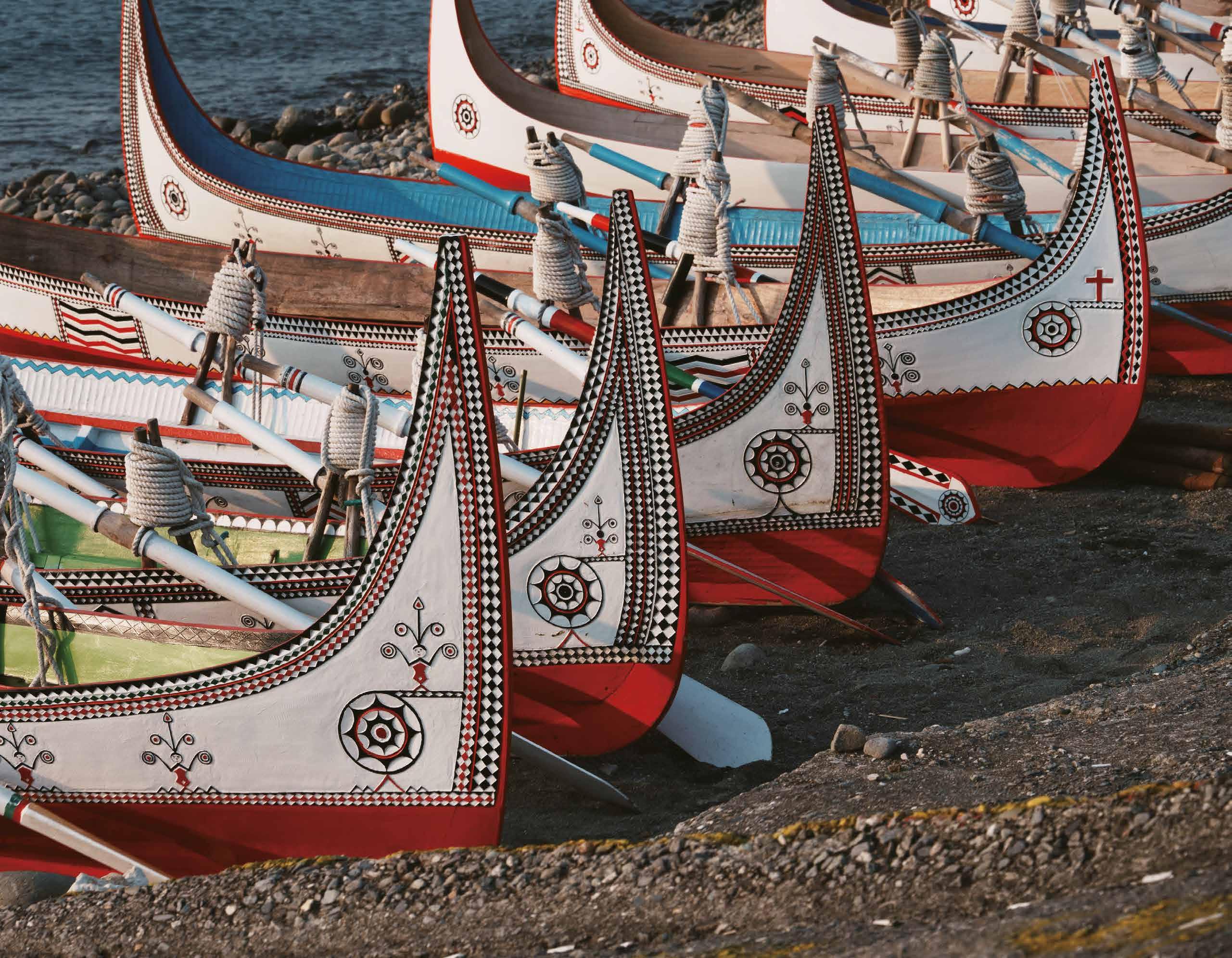
For the casual observer, perhaps the most noticeable symbol of Tao culture is its watercraft. White with red hulls and decorated with a geometric sunburst pattern to ward off maritime mishaps, these hand-carved canoes are deeply symbolic – they’re a means of providing for the family, a marker of a village’s prosperity, and a sacred connection to ancestors. Each year, the vessels also play a central role in the Mivanwa, a fish-summoning festival, with teams of fishermen heading out to sea to call flying fish down from the heavens. Outsiders are welcome to observe the event, which takes place sometime in March (precise dates vary from village to village), though it’s not for the faint of heart – a fair amount of livestock slaughtering is involved.
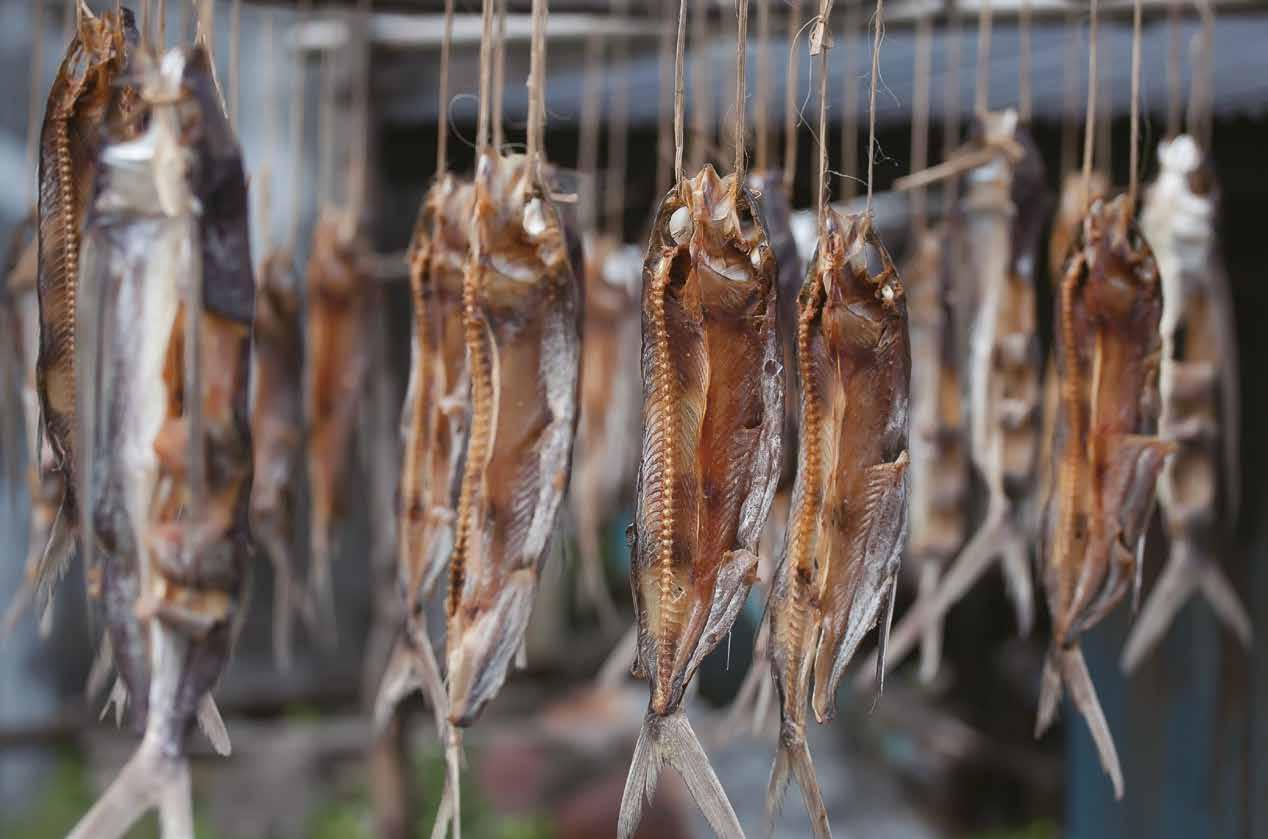

The Mivanwa is not the only date in the Tao year dictated by flying fish. In fact, the fish, known as libangbang (gift from Heaven), are something of a horological anchor – the entire calendar revolves around their presence or absence. The season for catching flying fish (Raayon) usually commences in April, and during this time, islanders are forbidden from catching reef-dwelling fish. Raayon segues into Teyteyka, the time when families focus on drying the fish, and then, around September, the extended flying fish season closes with the festival of Kaliman, during which any remaining dried fish must be divvied up among the village’s pigs and dogs. Thereafter, the island enters Amyan, aka the season of waiting for flying fish.
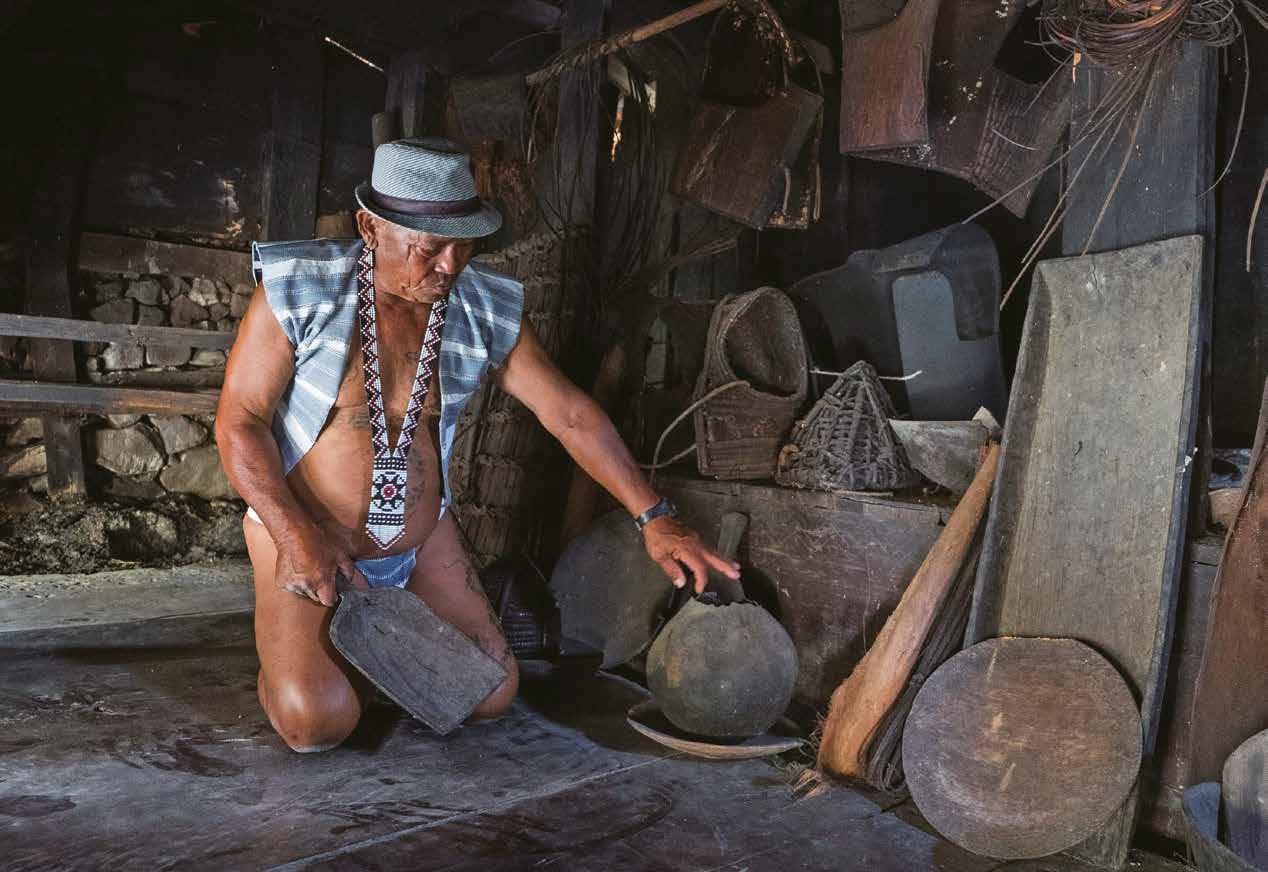
Another tangible facet of island culture can be seen in Yeyin (Ivalino) – the island’s best-preserved Tao village. Built as an adaptation to an unforgiving climate of summer typhoons and winter monsoons, Lanyu’s semi-subterranean dwellings are a fascinating architectural oddity, and though few islanders still occupy them today, outsiders can look around (only as part of guided visits). We joined one such tour with a village elder who showed us around his property dressed in the traditional loincloth and vest, accessorized with sunglasses, a jaunty hat, and a cane (needed to compensate for a construction accident he’d suffered while working on the mainland). The tours are currently Mandarin-only, but if you can arrange a translator, they’re by far the best way to get an insight into how the Tao lived and live.
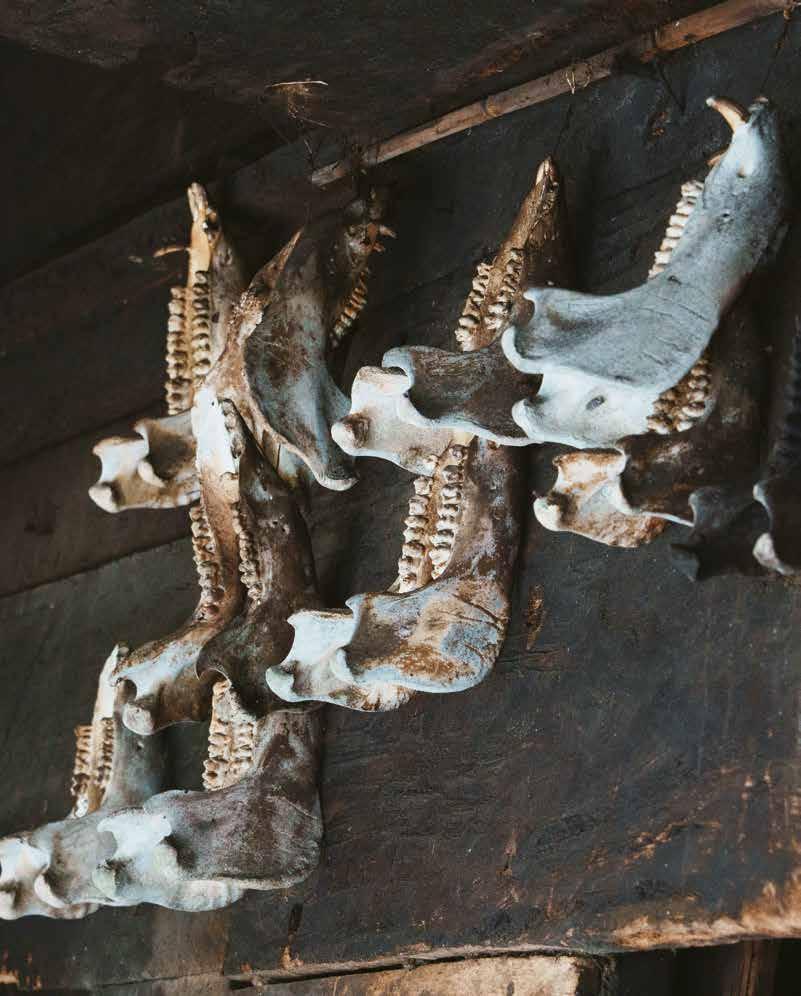
Indigenous culture aside, the most impressive thing about Lanyu is the island itself, and the best way to experience this is by striking out for a spin around the 36-kilometer round-island road. Some iron-calved souls opt for bicycles, and the flocks of international birders tend to travel in mini-vans, but for the most part, the scooter reigns supreme, and though doable in an hour, the landscape justifies taking your time. Rocky peaks covered in jungle – the very top tips of submarine volcanoformed mountains – dominate the interior, while honeycombed rock formations and pebbly bays are strung along the narrow shoulder of coral-capped coastline.
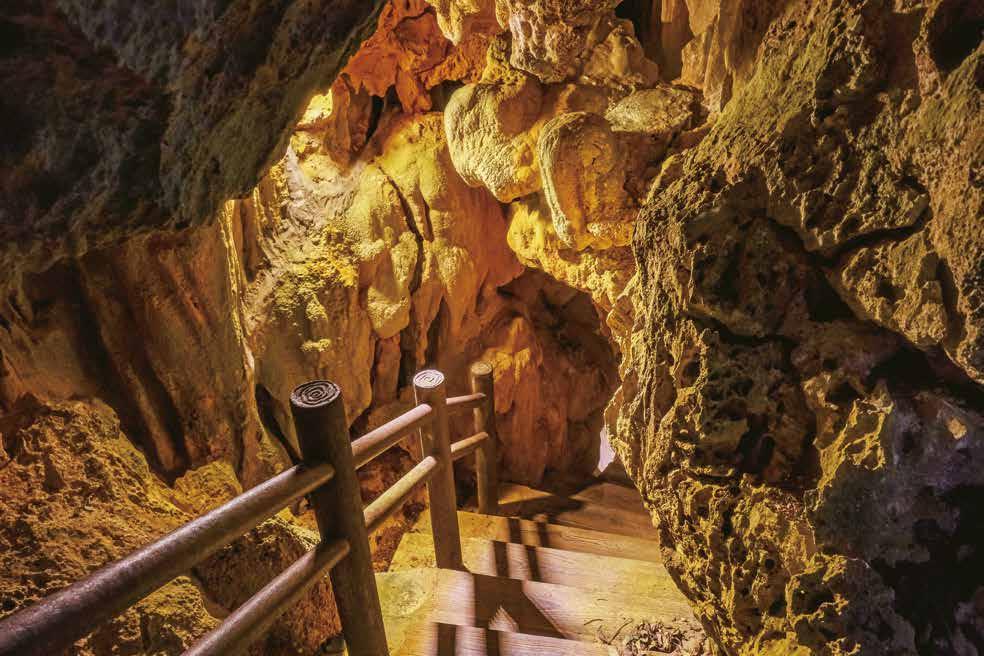
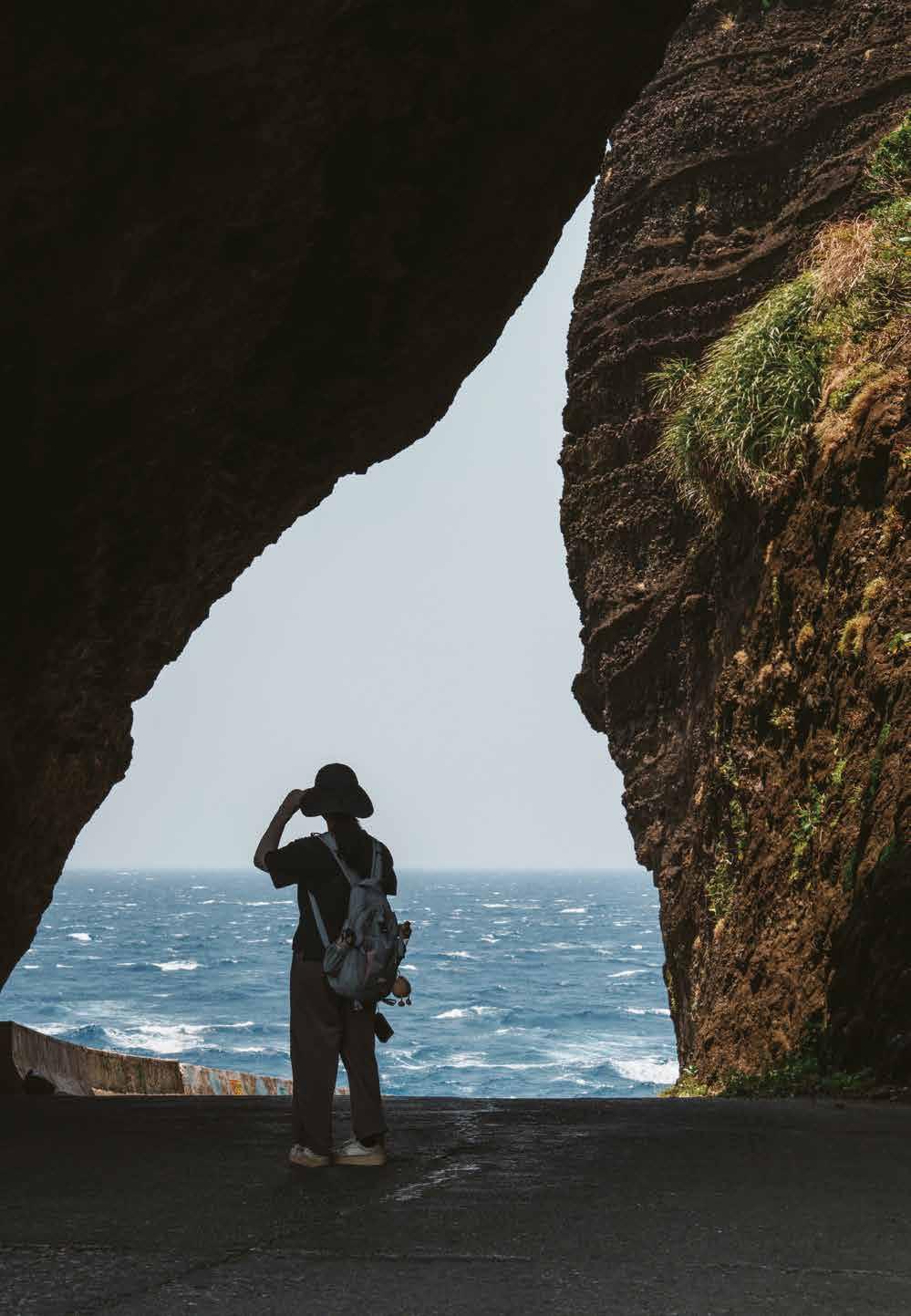
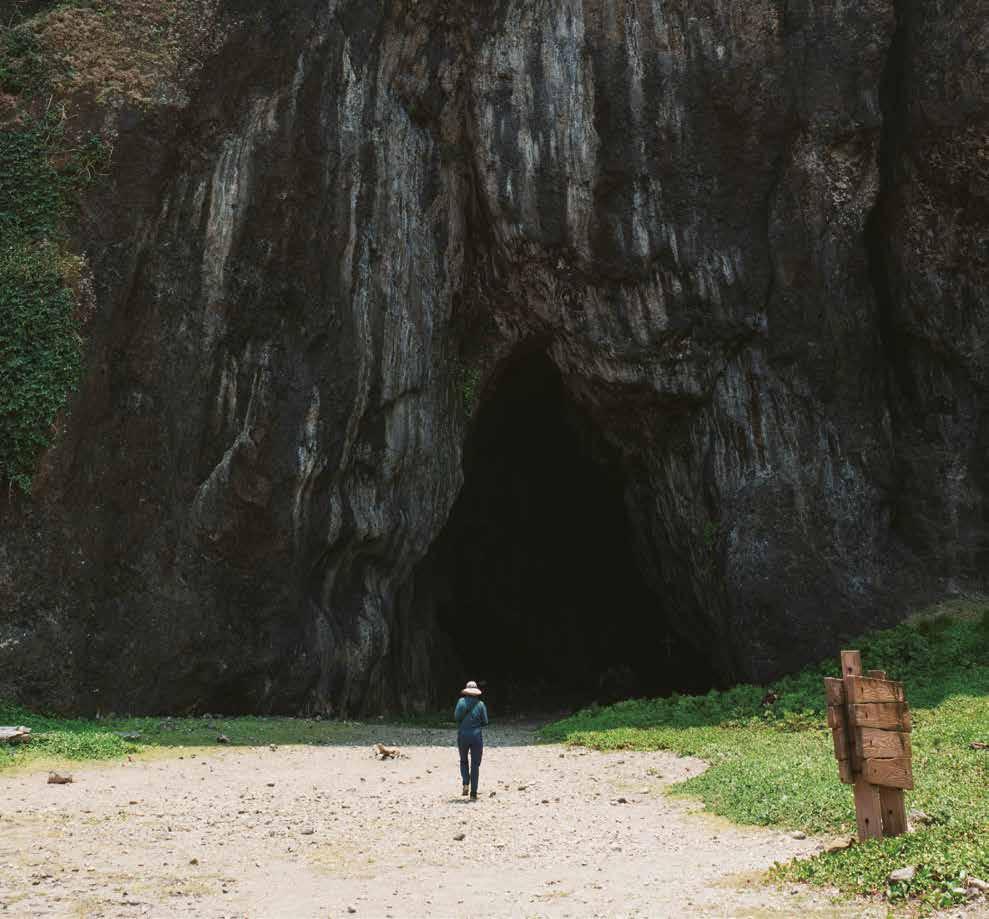
Heading north from Kaiyuan Harbor, we passed herds of free-roaming goats foraging the foreshore before arriving at one of Lanyu’s most recognizable landmarks, Hongtou Cave (Jaykmey Sawasawalan). The road cuts straight through this cave, looking for all the world like a portal to an island paradise, which – having been there – I know is not too far from the truth.
On the far side, we veered eastward, soon finding ourselves at Five-Hole Cave (Jikarahem) – a series of natural caves used as open-air churches by villagers from nearby Langdao (Iraralay). A little further along, we ditched our scooters in a dusty car park and navigated using Google Maps to discover
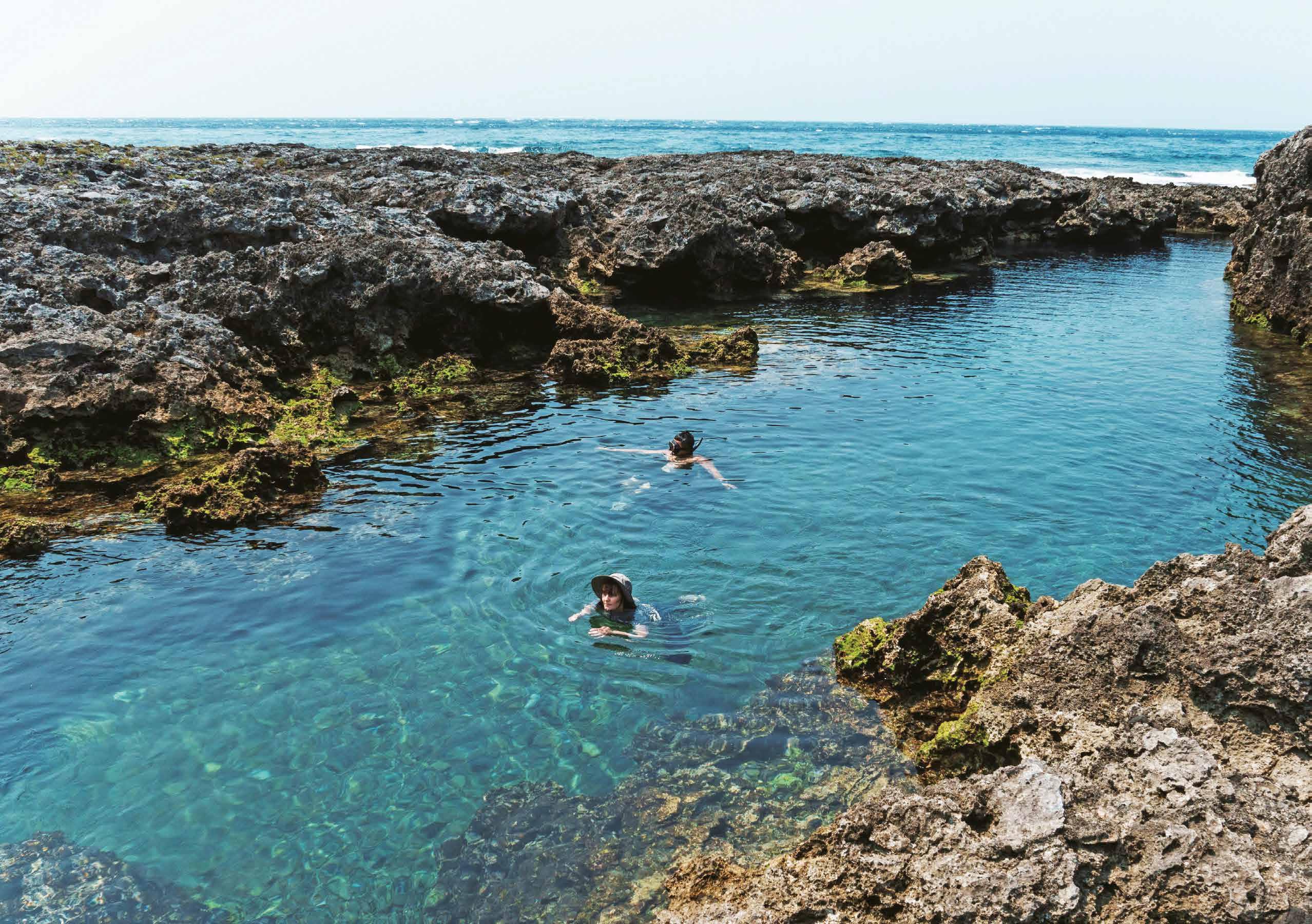
the Langdao Secret Spot, a beautiful azure pool where stream and saltwater mix. Though not dressed for swimming, the call of the water won out, and I jumped in to swim a few laps. Treading water a meter from the craggy rock wall, I watched a littoral whiptail skink hunt tiny crabs and a banded sea krait coil its black-and-blue-striped body into a crevice. (This venomous critter is apparently common here, though thankfully known for its docility.)
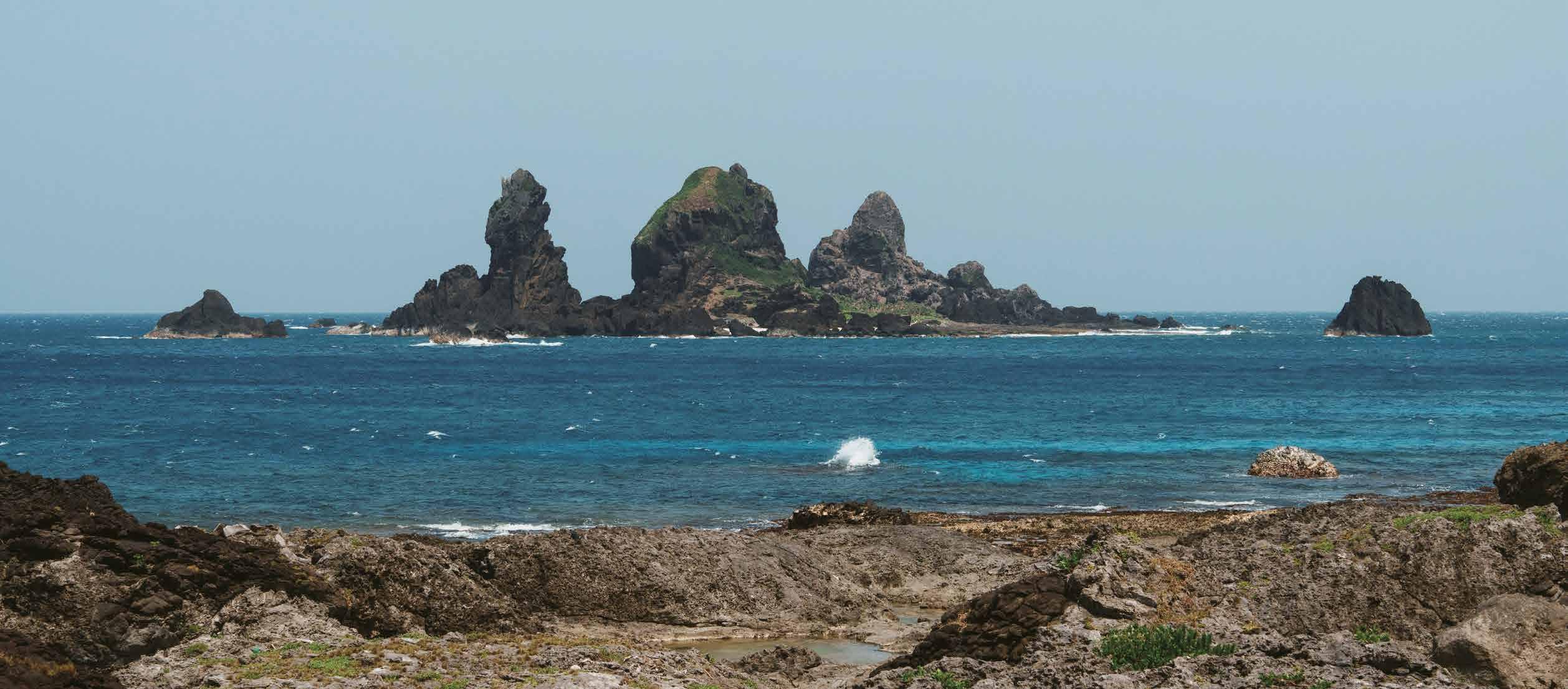
Scootering on – in my case, damp but unrepentant – through Iraralay, we passed the village’s ocean-facing pavilion and taro fields. A pair of giant breccia boulders known as the Twin Lion Rocks playfight on the foreshore, then, as the road climbs, the forbidding form of Battleship Rock can be spotted jutting above the waves. Approaching Donqing (Iranmeylek), we passed the entry points for short trails leading to Lover’s Cave and Rutou Hill. They were closed for maintenance, but both are popular sunrise-viewing spots, as is Iranmeylek Bay.
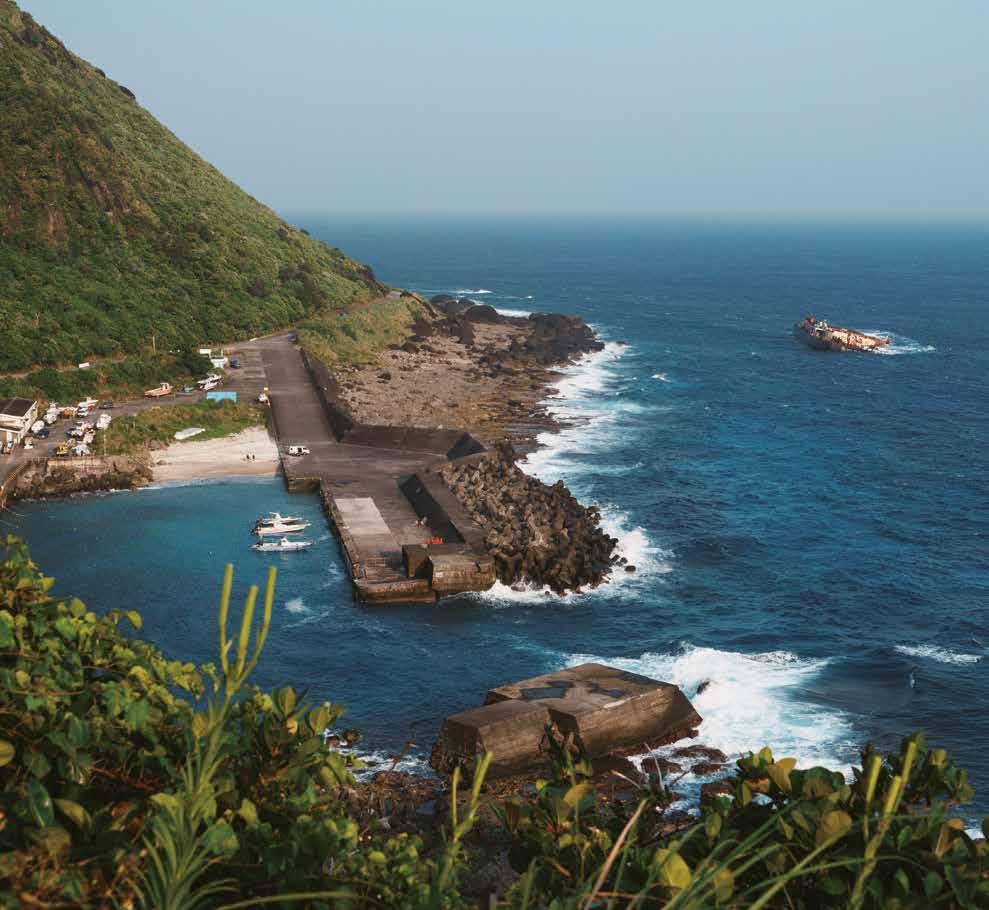
We rode onward to Yeyin, by which point the wind and sun had already done a good job of drying me out. From this point, you can either take a shortcut up and over the hills on the island’s winding second road or follow the coastal route towards Lanyu’s southern tip. This latter option features more charismatic rocks (Helmet, Elephant Trunk, Dragon Head), and just beyond Dongmen Port, a new sightseeing spot overlooks the remains of the Blue Lagoon, a bulk carrier that ran aground during 2024’s Typhoon Krathon – though ongoing dismantling efforts may soon see it disappear from the map once more.
The final stretch involves heading northward through Hongtou (Imaorod), Yuren (Iratay), and Yeyou (Yayo), separated from each other by stretches of pebble-strewn beach. I spent less time exploring this area, but riding through gave rise to two entertaining vignettes. In Imaorod, I saw a group of friends seated around a roadside grill, oblivious to the machinations of a wily cat that snuck between their legs to snag a glistening fish before darting off with her ill-gotten gains clamped tightly in her mouth, and as we neared Yeyou, we saw a policeman attending to a minor accident accompanied by his second officer, an imperious-looking little black dog who seemed to be following the discussion with care – peak island life.
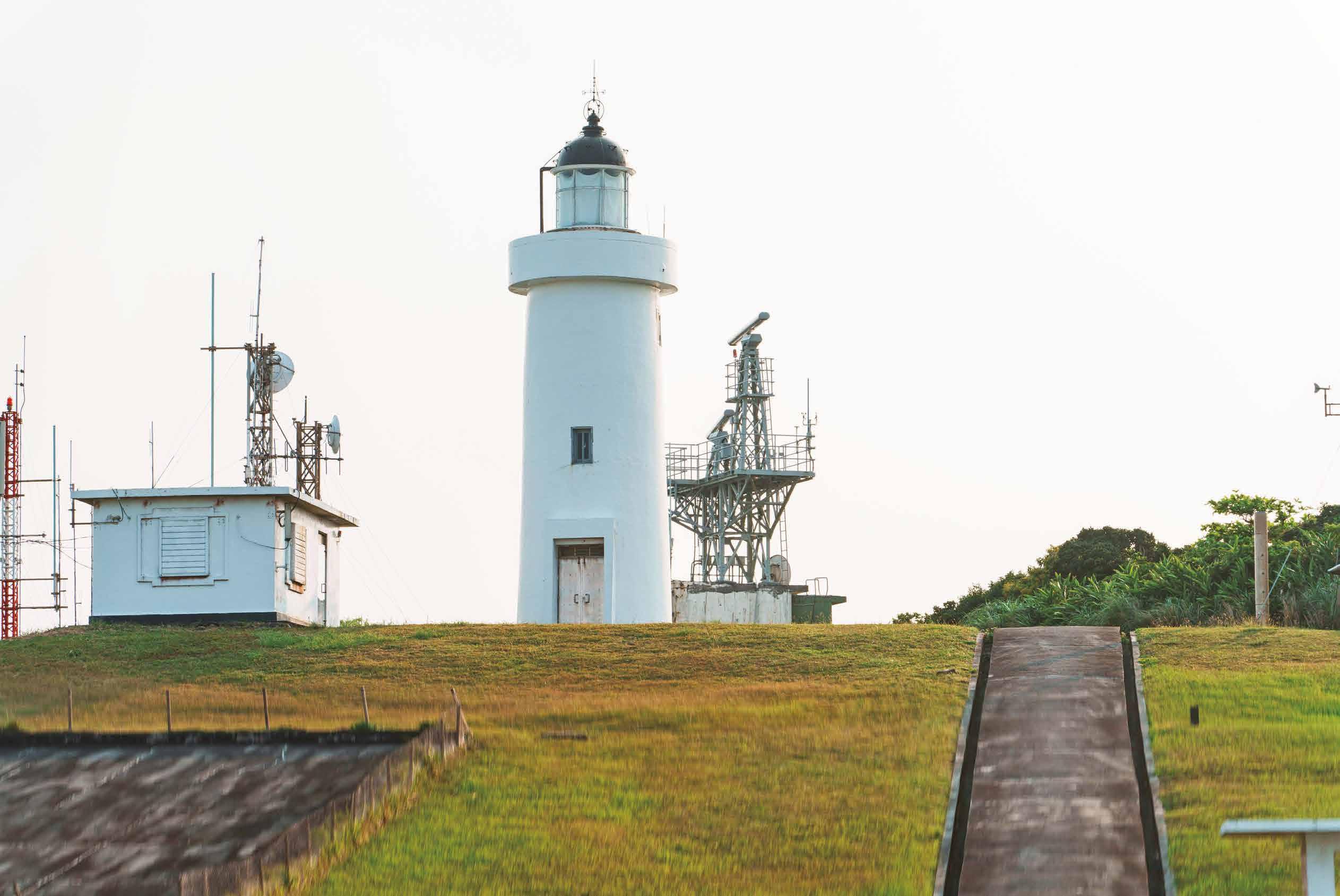
The majority of Lanyu’s scenic spots lie within a stone’s throw of the roundisland road, but a couple require minor diversions. Lanyu Lighthouse sits atop a steep-sided peak on the island’s northwestern shoulder, and though the lighthouse itself is exactly what you’d expect from a lighthouse, the ride up is rather exciting. Climbing first past taro fields, the side road climbs 200 meters through a series of tight switchbacks, gradually narrowing until fingers of tall grass reach out looking to tickle your face as you pass, and by the time you reach the top, the scooters seen zipping along the coastal road down below have shrunk to minuscule proportions.
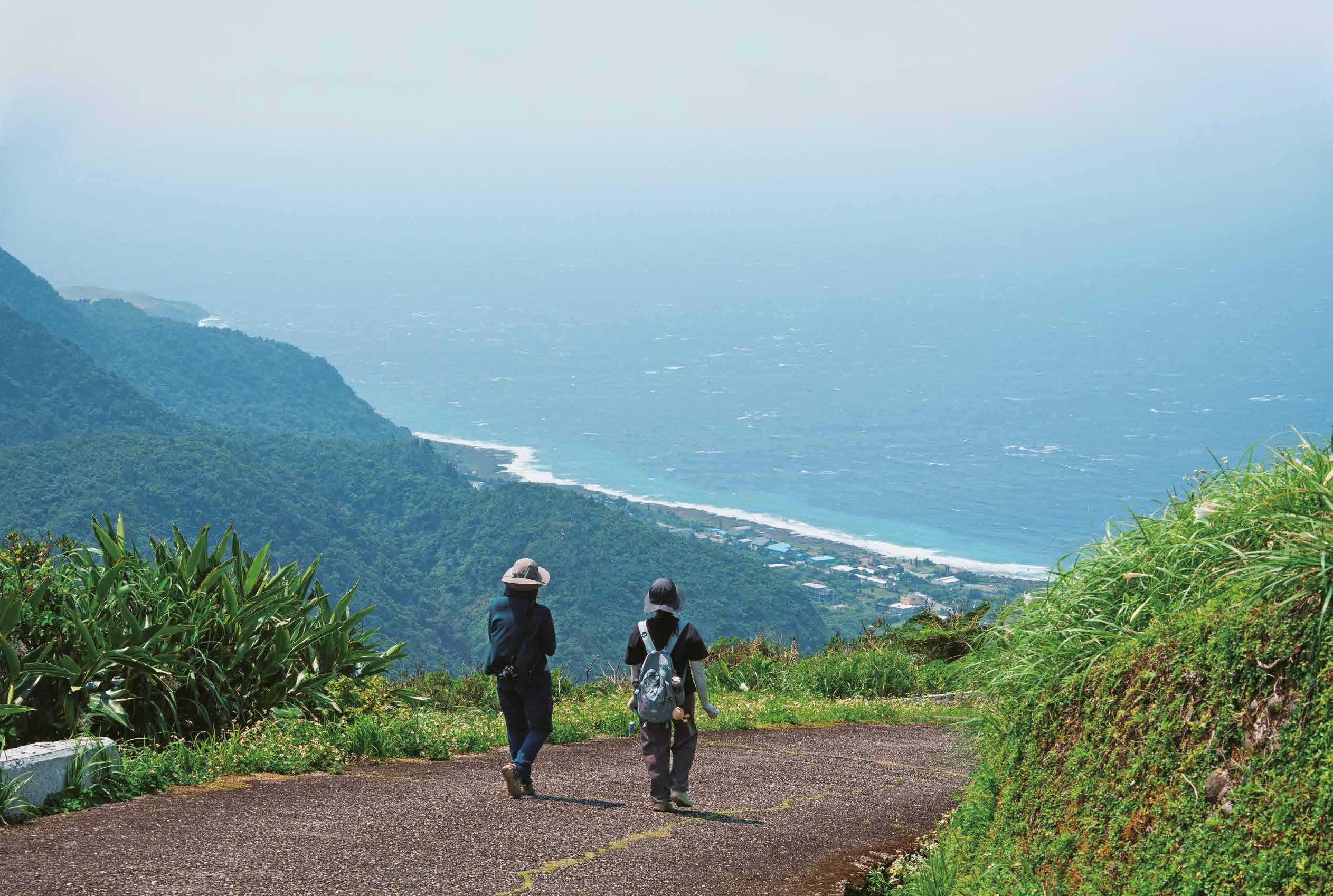
Lanyu Weather Station is a similarly exposed pilgrimage point. Getting there involves scootering over the cross-island road, then climbing the steep final 650 meters on foot because – in the words of a local we met on the way –anyone who rides up comes crashing down. Sitting 300 meters above sea level, it’s Lanyu’s highest point accessible by road, and those who put in the legwork can take a nosy at the meteorological instruments of the new weather station and the shell of the older Japanese-era facility, or simply enjoy the views of lush forested peaks sloping to meet brilliant blue waters.
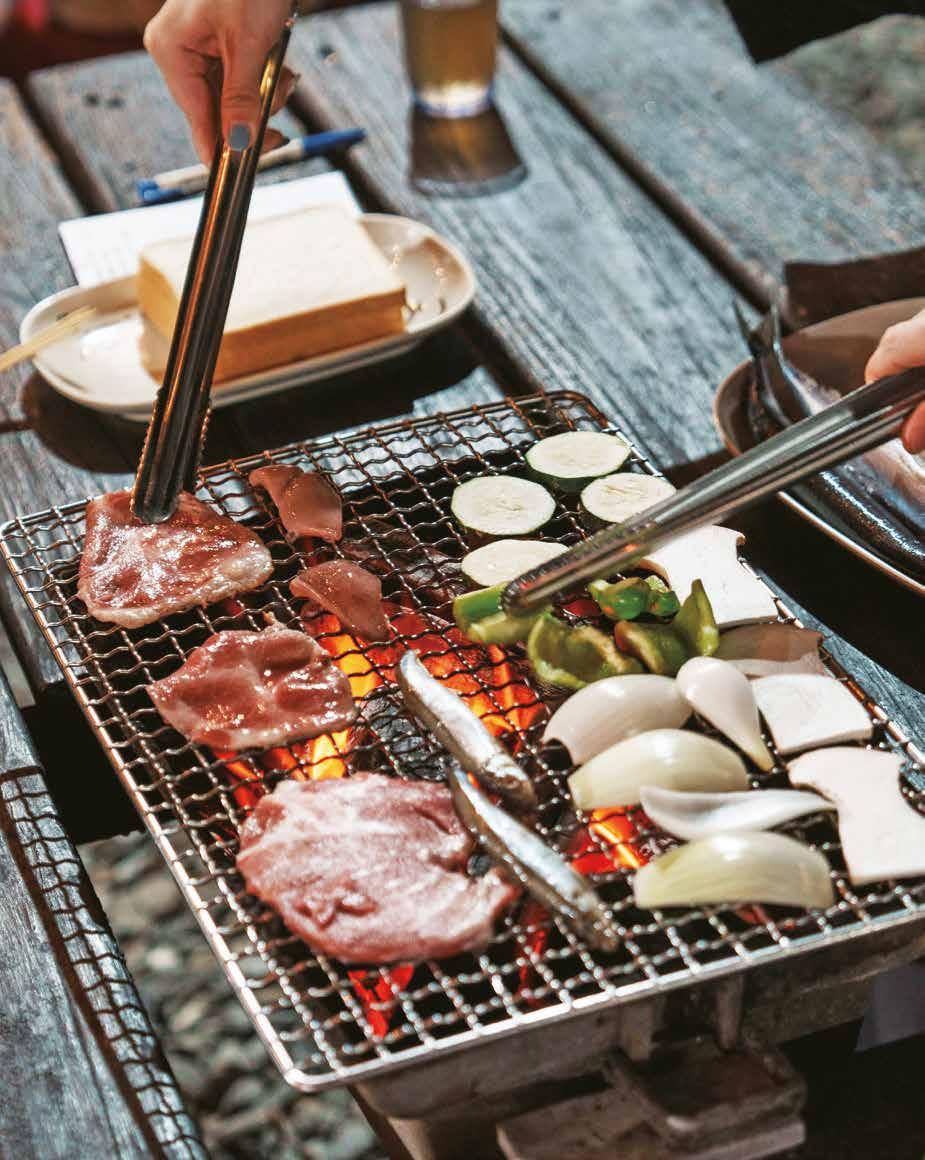
Operating two venues – one just outside Iranmeylek and the other beside the airport – You Yi Jian BBQ vies with 7-Eleven for the title of largest chain presence on the island. The Iranmeylek branch, where we dined on our first night, has outdoor seating overlooking Battleship Rock and sits so close to the water’s edge that you can hear the waves when there’s a lull in the conversation. For NT$500 a head, we were set up with a grill and free rein to order endless helpings from the all-youcan-eat menu (items that cost extra are clearly indicated). My meat-eating companions feasted on silver-skinned saury and fresh squid, thin slivers of sliced pork, and juicy chicken wings, while, as a vegetarian, I found myself eating more zucchini and onion sandwiches than I had ever eaten before. The atmosphere is casual, convivial, with music and chatter filling the air and village dogs trying their luck.
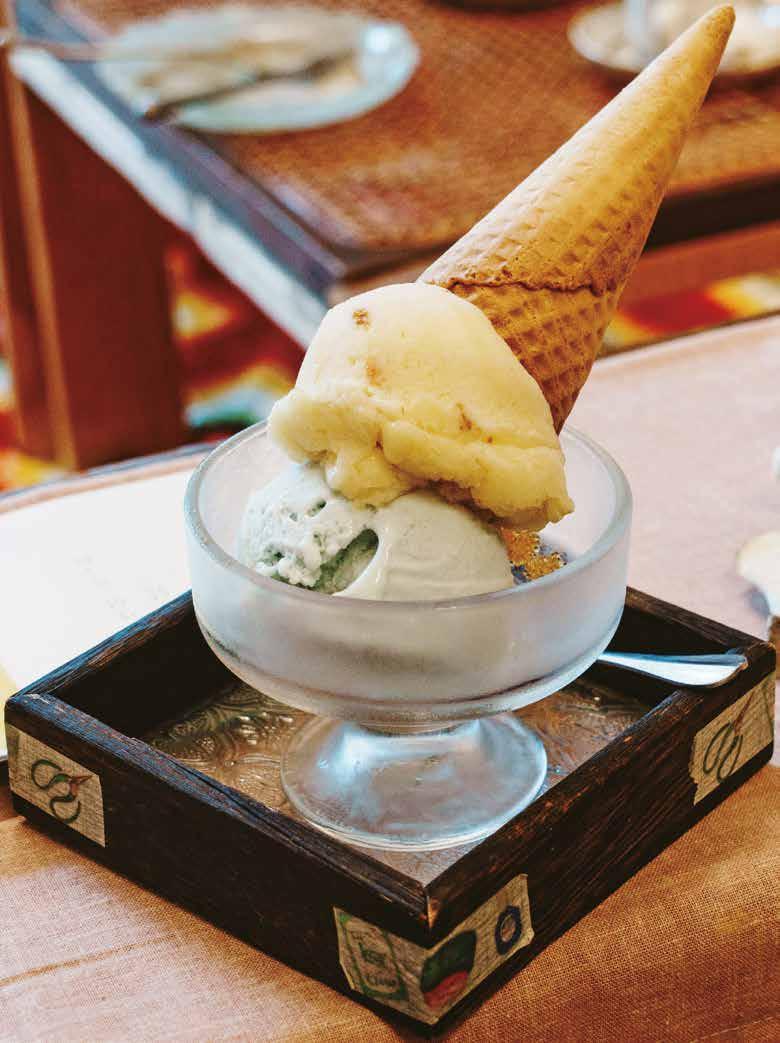
Summer-dessert fans will find themselves particularly wellserved on Lanyu. Almost every settlement has its own icecream parlor, and in Ivalino, Hatchingday fulfills this role. Made in-house and served in the tiny front room of a residential property, the ice-cream flavors are seasonal and somewhat unexpected. At the time of our visit, the menu featured pineapple-fig, Tieguanyin tea, pandan-coconut, and frosty sea salt; butterfly pea flower is used in the last to impart a pale-blue hue, and it is paired with a sprinkling of flying fish roe. It may sound bizarre, but the result is (so my companion informed me) impeccably balanced – the tiny pearls bursting satisfyingly in the mouth to make a pleasing union of salty and sweet.
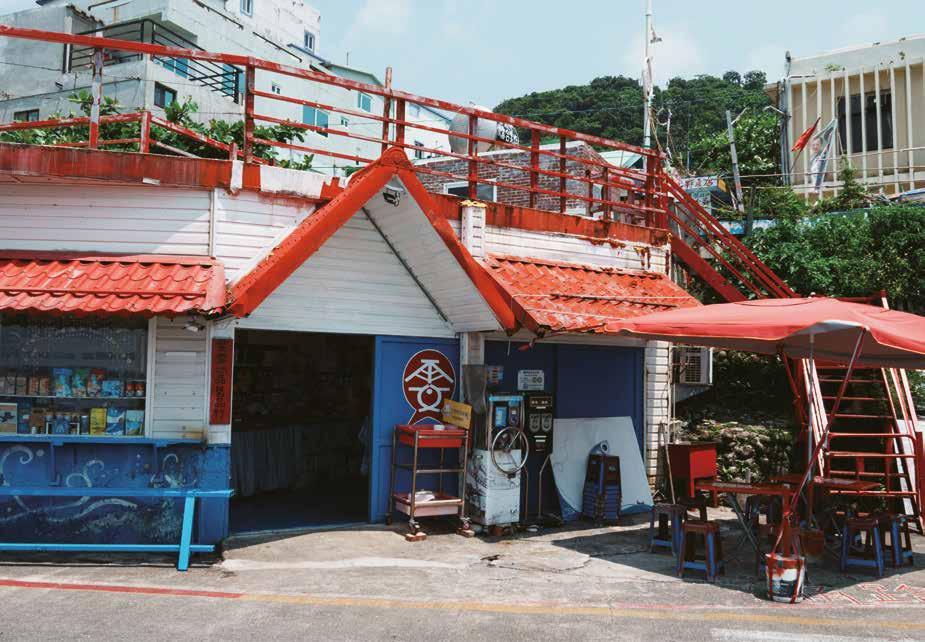
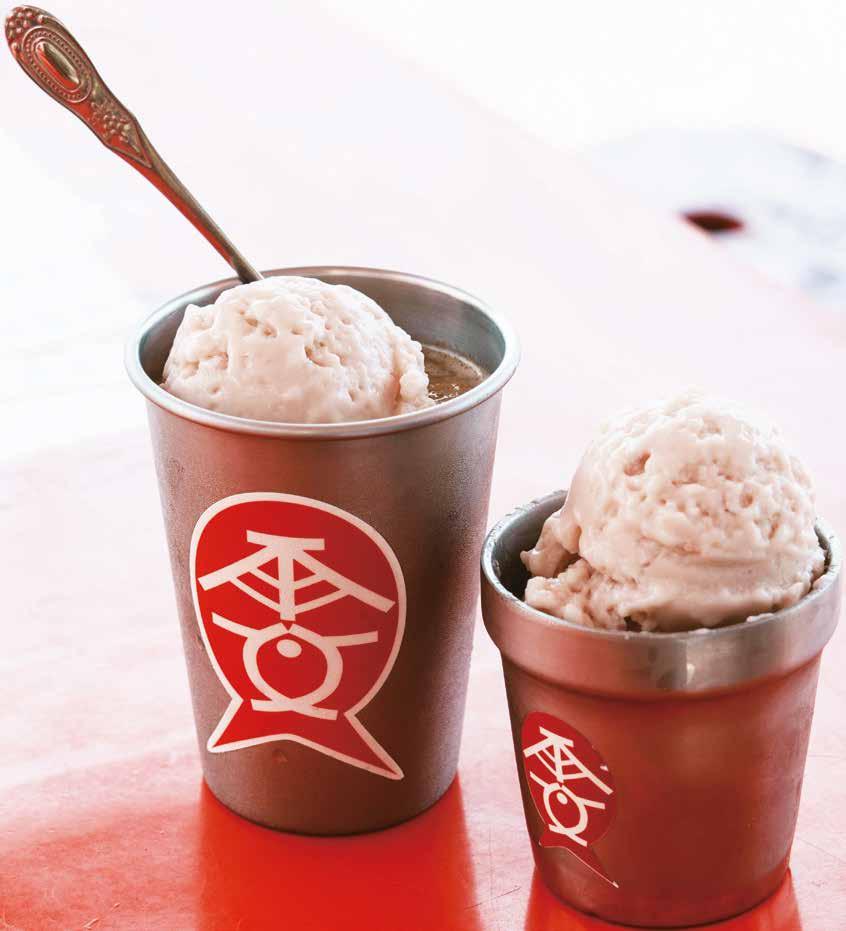
For me, the culinary highlight of my stay on Lanyu was taro ice cream from Wenwen Taro Ice. The store, which doubles as a souvenir shop, sells scoops of the cold treat either by itself or swimming in cups of iced mung-bean soup. Purist that I am, I opted for the taro ice cream by itself and was absolutely enchanted – dense, rich, nutty, and creamy, with small bites of fresh taro studding each scoop. I would happily have eaten it for breakfast, lunch, and dinner every day of our stay.
YOU YI JIAN BBQ (DONGQING BRANCH) | 有一間燒烤 ( 東清店 )
0972-887-424
No. 163-5, Neighborhood 7, Dongqing Village, Lanyu Township, Taitung County ( 台東縣蘭嶼鄉東清村 7 鄰 163 之 5 號 ) facebook.com/bbqdongchin Wed-Mon 5:30pm-10:30pm
HATCHINGDAY | 孵日手製冰淇淋
No. 124, Yeyin Village, Lanyu Township, Taitung County ( 台東縣蘭嶼鄉野銀村 124 號 ) instagram.com/hatchingdays__ Wed-Mon 1pm-6pm
WENWEN TARO ICE | 雯雯芋頭冰 0912-075-399
No. 20, Hongtou Village, Lanyu Township, Taitung County ( 台東縣蘭嶼鄉紅頭村 20 號 ) facebook.com/lanyuwenwen 9am-9pm
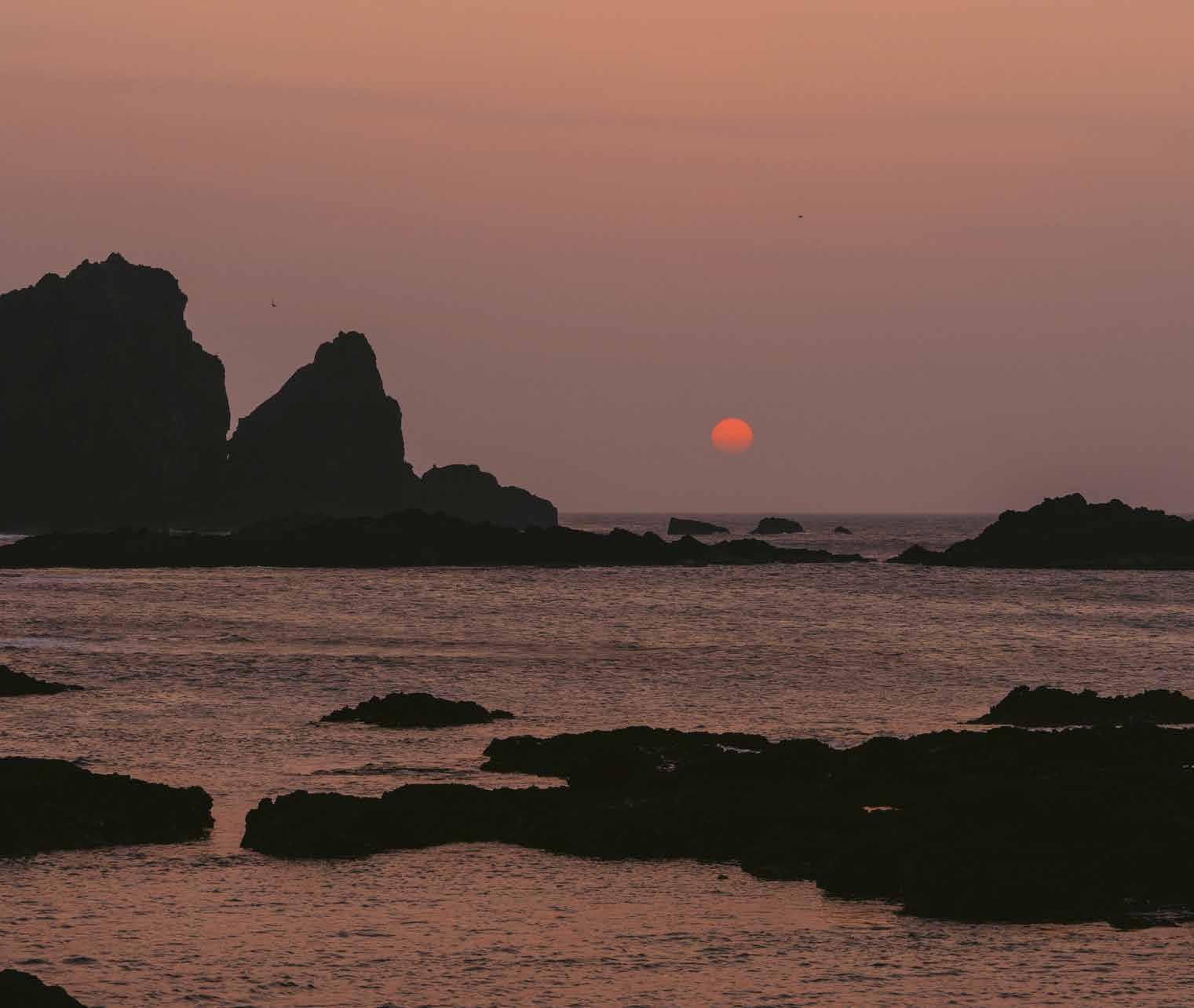
If you want to catch the sunrise on Lanyu, you need to head to the east coast. The most popular spot is Dongqing Bay.
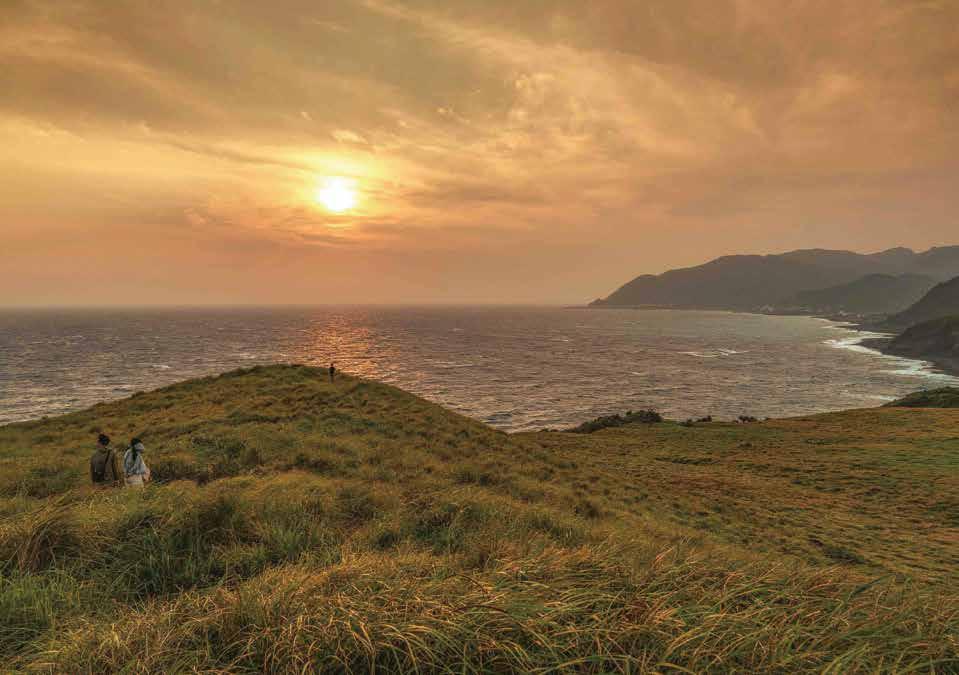
The often windswept Green Green Grassland on the southwest coast is the perfect spot to watch the sunset on the island.
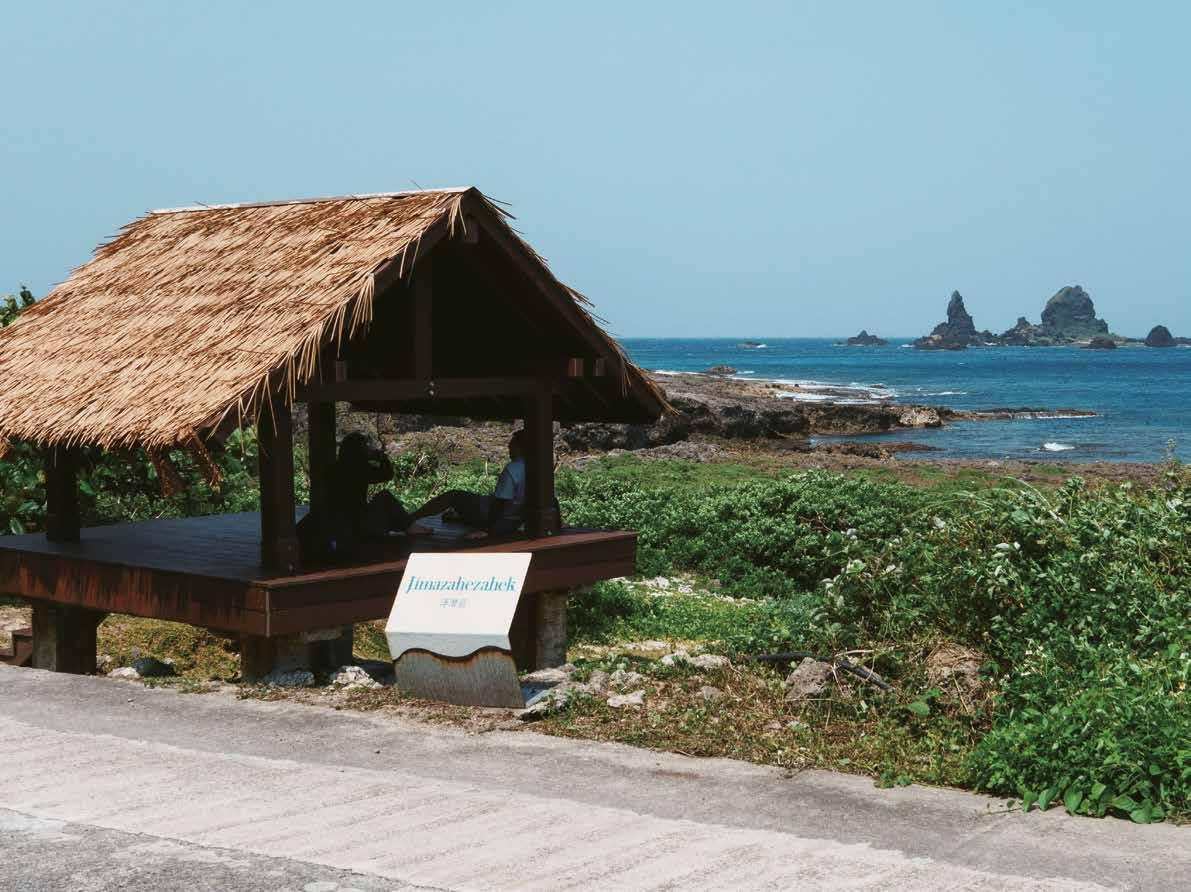
A common sight on the island is small rest pavilions with thatched roofs and wooden platforms. Remember to take off your shoes when entering one!
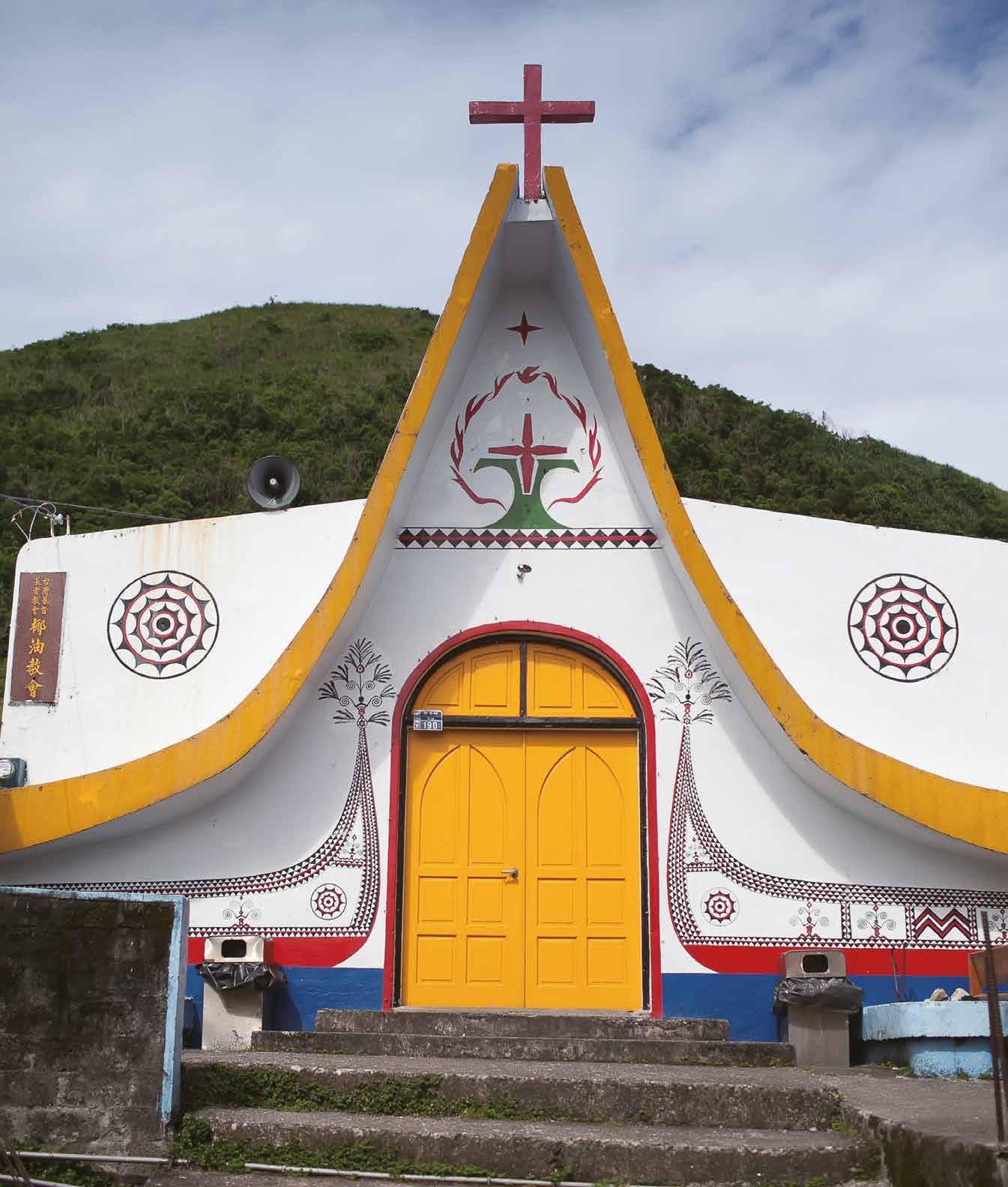
The beautiful Presbyterian church in Yeyou is one of 12 formal churches (Catholic and Protestant) on the island. 4.
Free-roaming goats are very common on Lanyu. They often climb up cliffs, and might cross the road in front of you, so be careful when riding a scooter!
ENGLISH AND CHINESE
Battleship Rock | 軍艦岩
Dongqing | 東清
Five-Hole Cave | 五孔洞
Fugang Harbor | 富岡漁港
Hongtou Cave | 紅頭岩洞
Kaiyuan Harbor | 開元港
Langdao (Secret Spot) | 朗島 ( 祕境 )
Lanyu | 蘭嶼
Lanyu Lighthouse | 蘭嶼燈塔
Lanyu Weather Station | 蘭嶼氣象站
Lover's Cave | 情人洞
Rutou Hill Trail | 乳頭山步道
Tao | 達悟族
Twin Lion Rocks | 雙獅岩
Yeyin | 野銀
Yeyou | 椰油

Yuren | 漁人 MAP


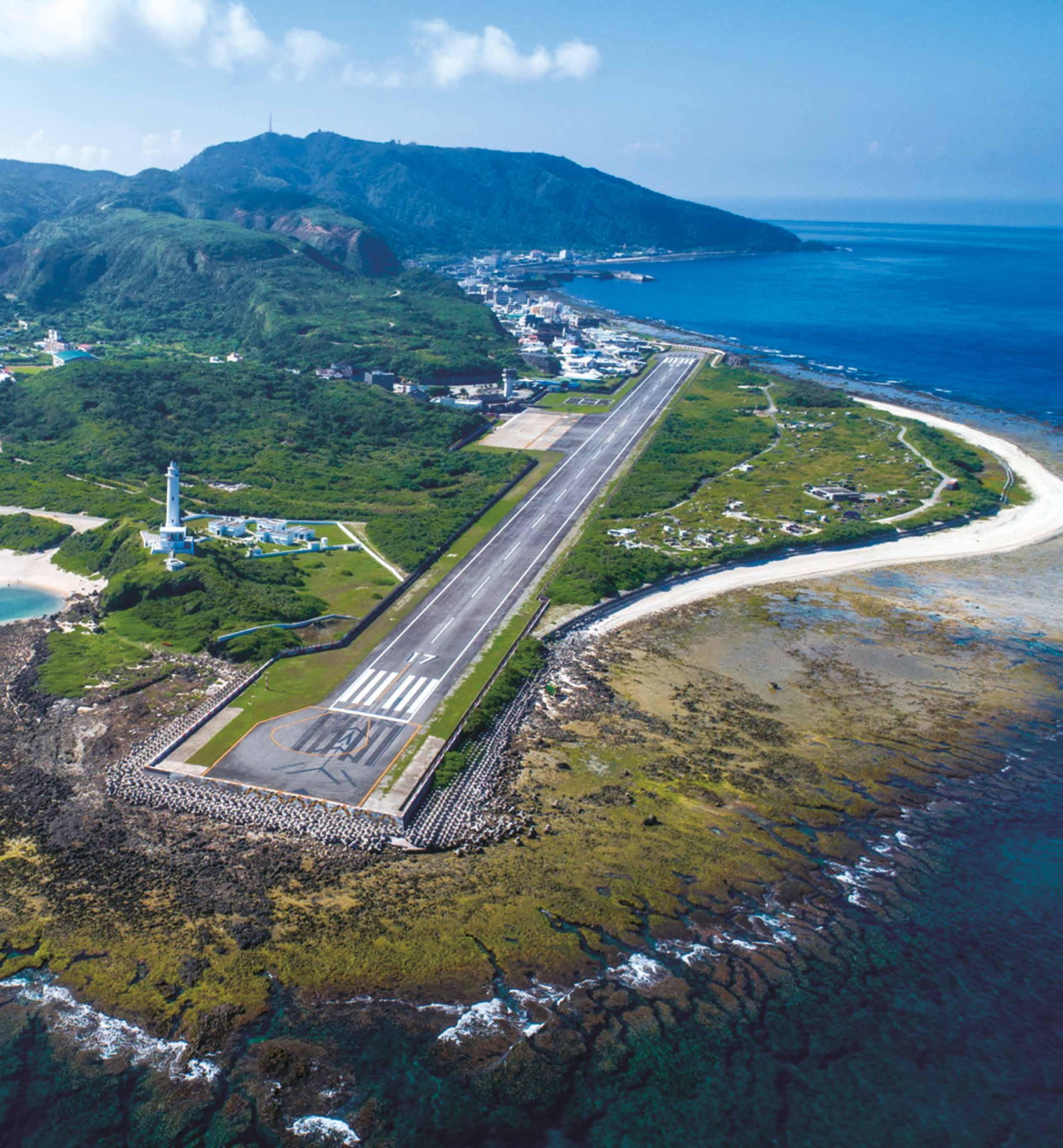
A volcanic outcrop surrounded by the Philippine Sea’s clear blue waters, Green Island is a short 40-minute sailing or 20-minute flight away from the Taiwan mainland. Extensive coral reefs lie beneath the surface of the surrounding waters, while above the waterline, life is laid-back — if you like your weekend getaways to be sun-kissed and saltwater-scented, this will be right up your alley.
Travelers who are somewhat au fait with Taiwan’s travel landscape know that Kenting National Park at the southern tip of the main island and the Penghu archipelago in the Taiwan Strait are where most go for ocean-based fun, but anyone with a serious interest in underwater pursuits will tell you Green Island is where it’s really at. With sea temperatures of 20-29°C year-round and underwater visibility regularly exceeding 30 meters, it’s easy to see the appeal.
Peak season runs April through September, when favorable weather conditions make for glassy water and all dive sites are accessible (monsoon winds render the northeastern waters off-bounds October through March). During this window, racks of drying gear stand outside every dive school, and the shallows teem with shoals of be(wet)suited snorkelers.
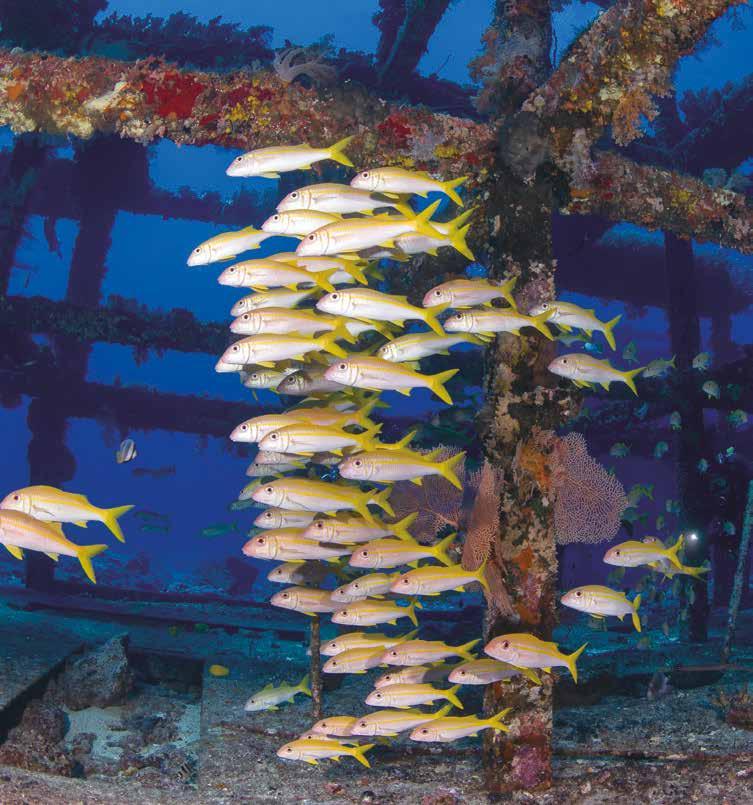
Shilang Diving Area , on the island’s sheltered western coast, is an easy entry point for those with little to no experience. Accessed from the shore via a long walkway, the area is home to both hard and soft corals, as well as a colorful lineup of aquatic life. Some of the more photogenic species include green sea turtles (important note: never touch these turtles; hefty fines await those who do! ), leopard wrasses, Spanish dancer nudibranchs, moorish idols, and regal angelfish. It’s also a popular place for people to dip a toe in the night-diving scene – but beware, you will never unsee the sight of hundreds of glowing shrimp eyes staring back at you.
Most dramatic among the shore-dive locations is a submarine cavern just off a beach named Dabaisha (“Big White Sand”), northwest of the island’s southern tip, known as the Cathedral , into which shafts of light penetrate, creating an otherworldly scene. Offshore, boat-dive options are even more numerous and varied. Sites like Steel Reef, further out from Dabaisha, with its friendly batfish, suit intermediate divers, while more experienced divers can brave the deeper waters of sites like the Great Canyon , off the north coast, to watch migratory fish chow down on the feast brought in by the Kuroshio current.
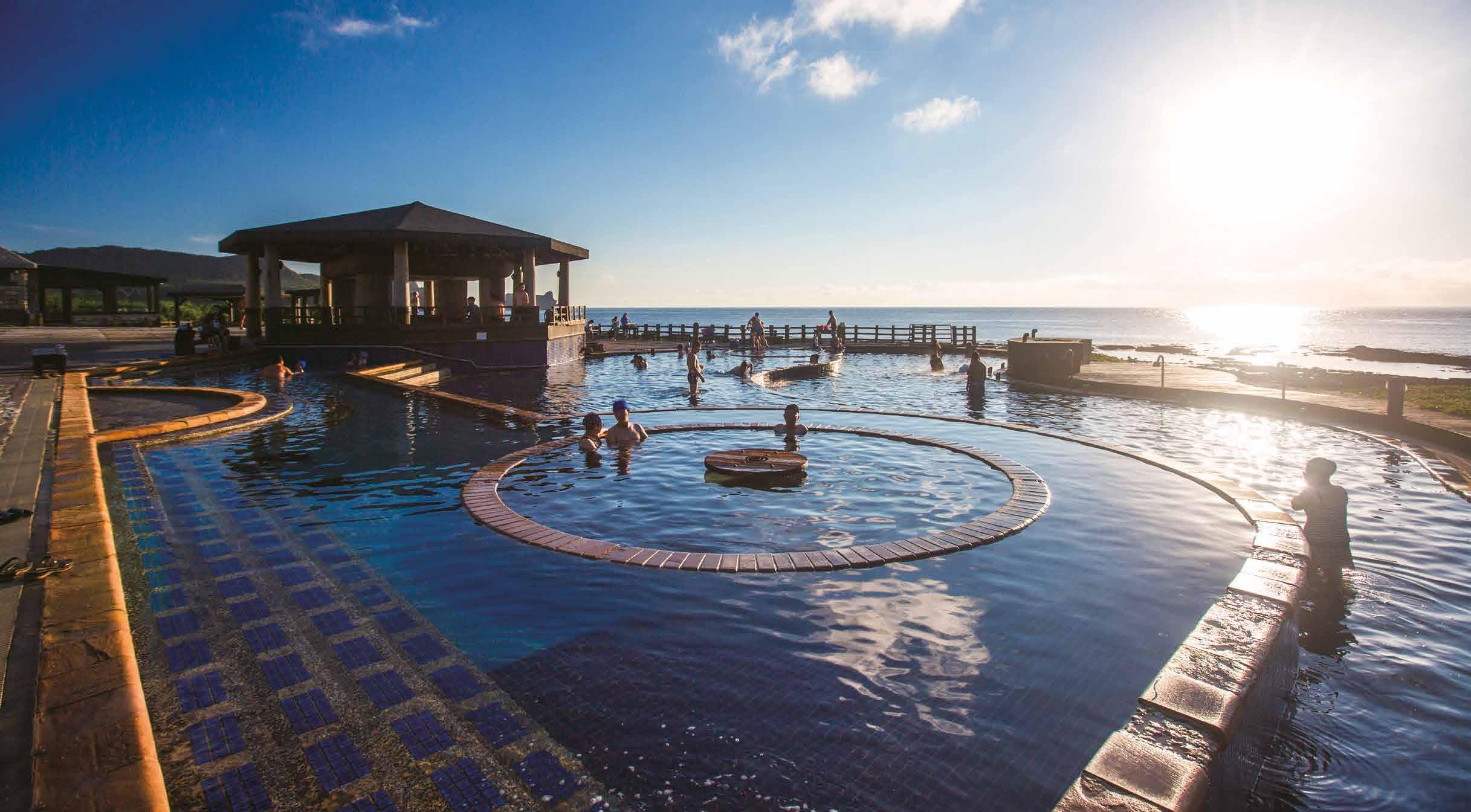
Of course, for some (this writer included), the idea of plumbing the deep blue is ominous rather than enthralling – thankfully, for these folks, Green Island has an even more beginner-friendly place to dive into the local waters: the Zhaori Hot Springs. One of just three saltwater hot springs globally, this outdoor facility has rather unusual opening times. Each day’s first session runs from pre-dawn (precise hours shift with the season) to 11am, allowing early dippers to soak in the shoreline pools as the sun emerges from the ocean, with a later 4-11pm session for stargazing night owls.
The first thing most people do when they arrive on Green Island is arrange a set of wheels for their stay (online, you can prebook packages that include scooter rentals plus ferry tickets, and/or transfer from Taitung Railway Station). Only scooters and e-bikes are available, but given that it takes less than an hour to circumnavigate the 16.3-kilometer round-island road by scooter, two wheels are ample. In fact, completing a full loop is a great way to learn the lay of the land. Just be sure to take it slow – on daytime rides, I have found myself sharing the road with goats, deer, chickens, geese, and on one occasion the cutest little drove of piebald piglets, while after nightfall, the island’s protected land crabs command right of way.
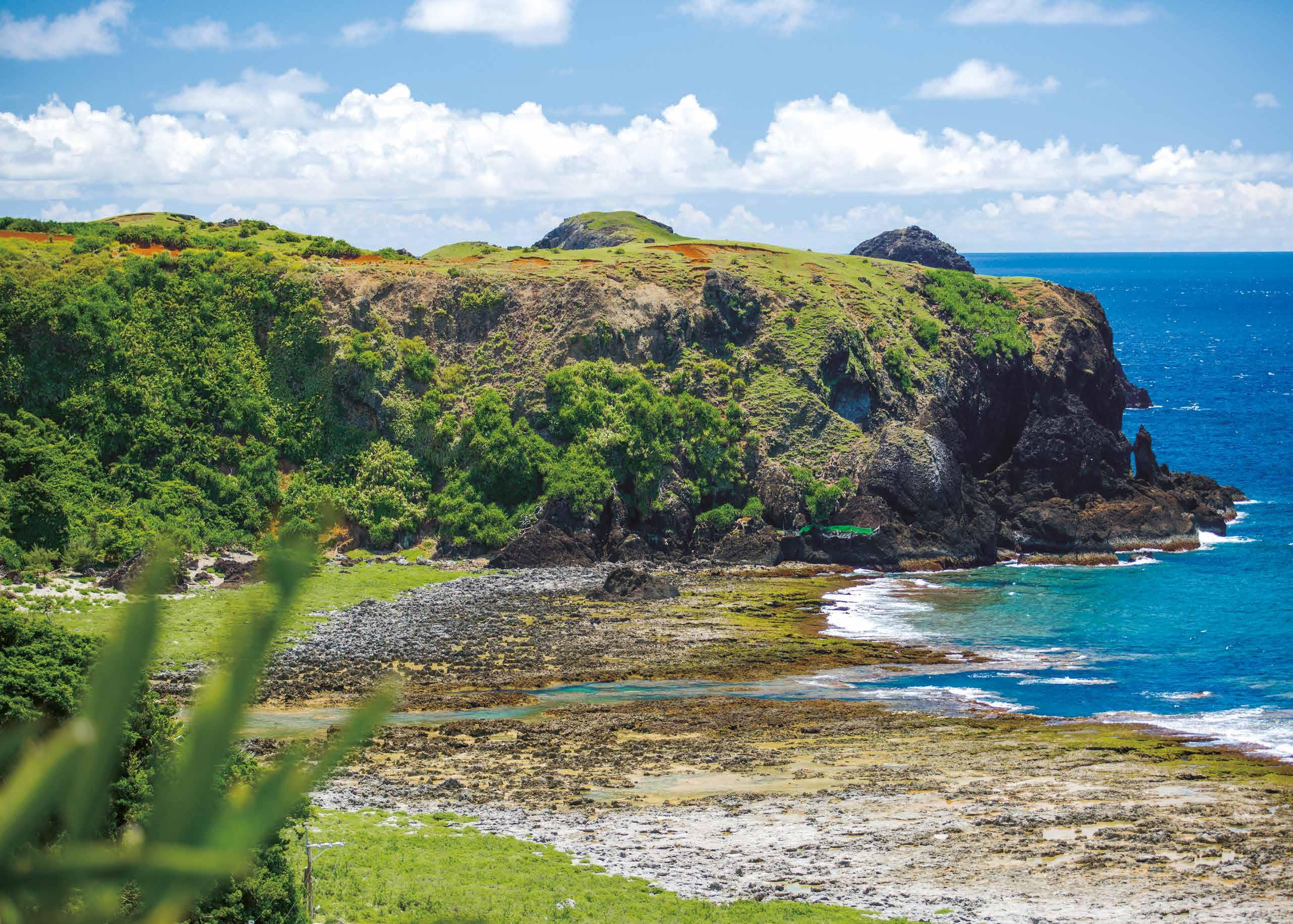
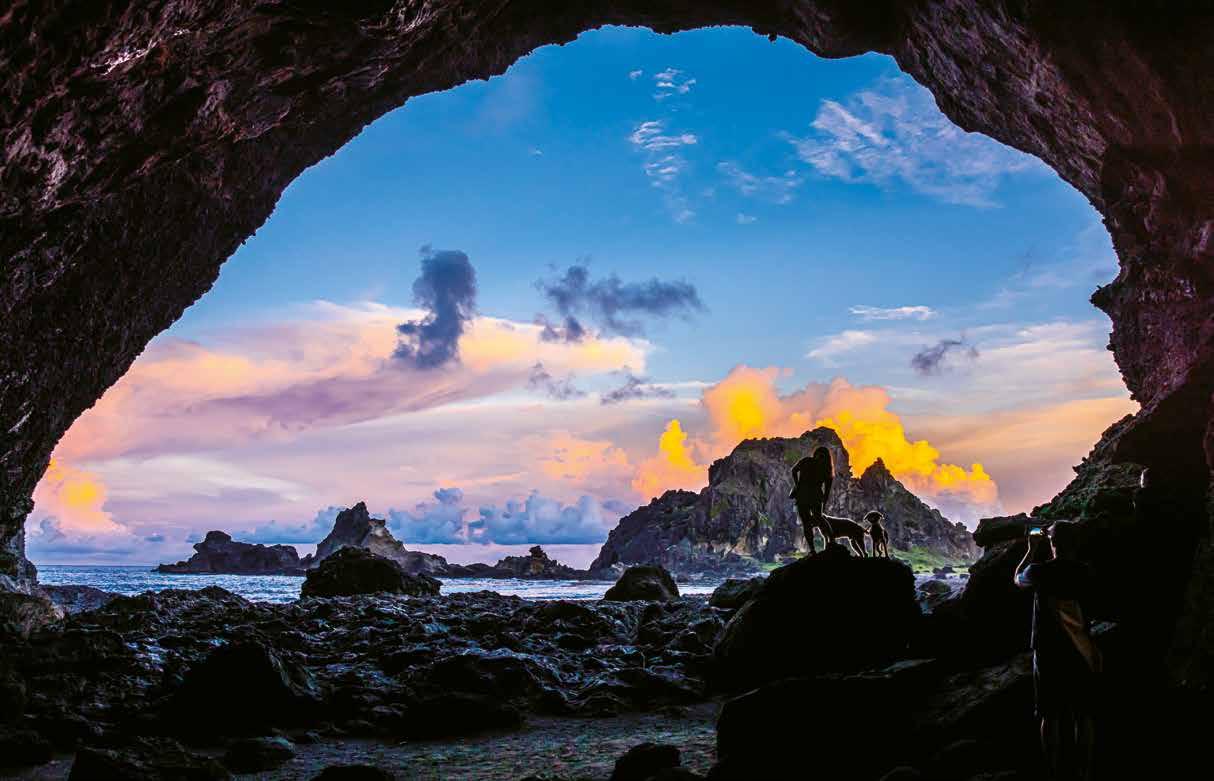
One spot that’s ripe for deeper exploration is Youzihu , a cove that’s separated from the road by scrubland-capped bluffs. Here, the small dramas of intertidal life play out amid rockpools pitting the fossilized-coral foreshore, and a short walk away, the dramatic arch of Wangong Cave (technically a sea arch rather than a true cave) provides a striking natural frame for holiday snaps. Steps inland from the Youzihu
shoreline, you can visit the remains of a now-abandoned village – coral-rock walls holding up the skeletons of former roofs. Much of what can currently be seen at the site was built by fisherfolk who settled here at the turn of the nineteenth century, but archeologists have found pottery, burial mounds, and other artifacts that suggest prehistoric habitation by people who were in trading contact with peer populations on Taiwan’s main island.
Just north of Youzihu is Niutoushan, a headland with rolling meadows shorn to a short fuzz by wind and deer, and a rock that locals have decided looks like a recumbent Snoopy. On clear mornings, its east-northeast aspect draws a small crowd of sunrise lovers, eager to greet the first golden rays of the day.
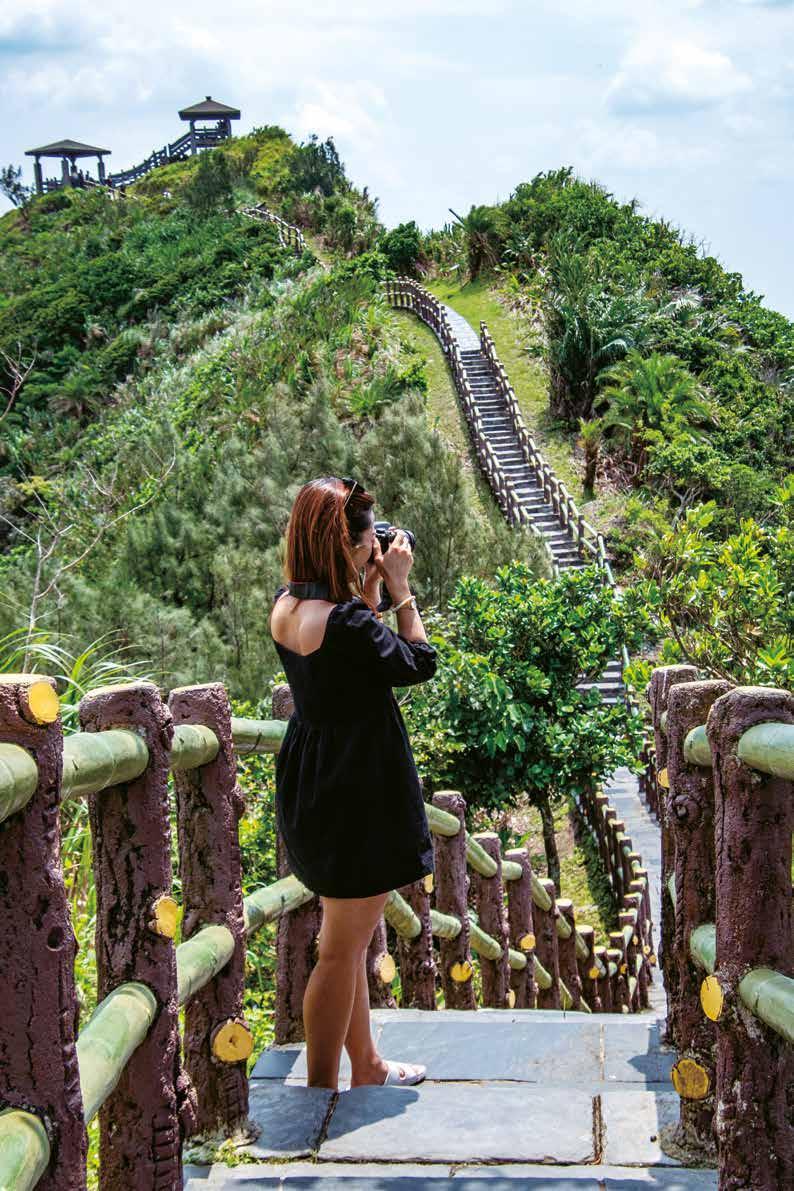
Elsewhere, hiking trails with varying degrees of difficulty offer pleasant diversions. I managed to squeeze in three walks during a recent brief visit, the shortest and easiest of which was a stroll along Green Island’s Little Great Wall , a headland on the west coast. Though inarguably lacking the grand scale of its namesake, the 300-meter walkway


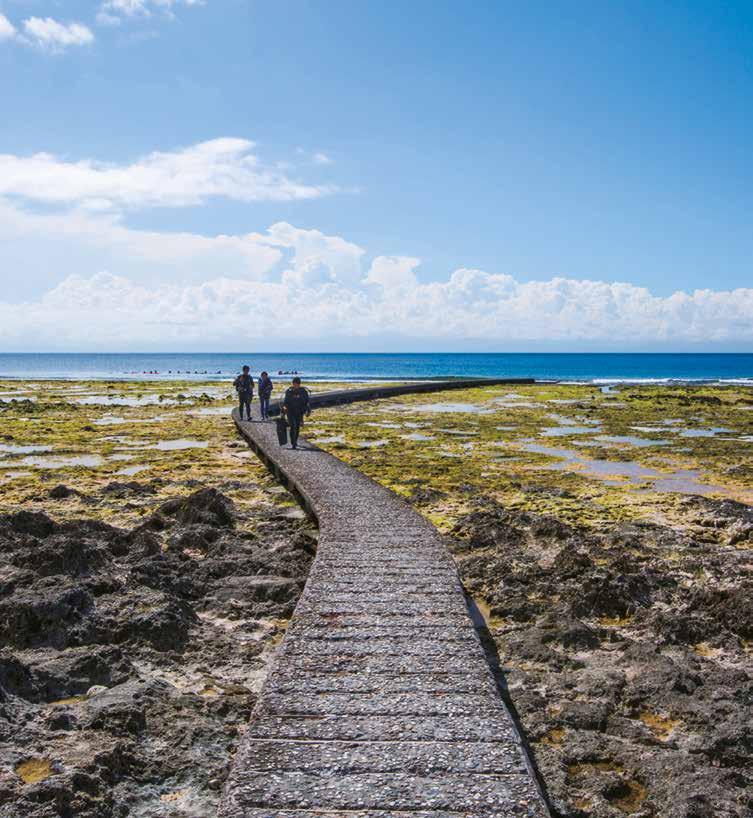
offers views of several enigmatic rock formations and is another prime sunrise-viewing location. Two more trails start close to the settlement of Wenquan on the east coast. On the Coastal Viewing Trail , switch-backing boardwalk steps climb through jaggedly volcanic rocks. The flora – usually the softener of harsh landscapes – proves equally spikey, with vicious screw pine and white-flowered Japanese thistle lining the path.
For something longer, you can take on the two-hour trek to the island’s highest peak, Mt. Amei in the island’s middle, following the Across Mountain Ancient Trail. I timed my arrival at the summit to coincide with sunset, enjoying watching the sky fade from a coral blush through bruise purple to a luminous post-sunset blue, and seeing the lights of the mainland’s Taitung City glitter far off over the water. Muntjac eyes reflected the beam of my headtorch as I descended, and I also crossed paths with a couple of purplehued hermit crabs. If I visit again, I would definitely join one of the island’s night-time eco-tours (bookable via Klook) – Green Island is also home to several other interesting animals, like sika deer, juvenile coconut crabs, and Formosan fruit bats, and a guided tour with a local expert offers your best chance of seeing them.
Two final notes: Take cash – few (if any) places accept foreign credit cards. Also, your experience of Green Island will vary greatly depending on when you visit. During dive season, you can expect roads and restaurants to be busy, but during a visit last December, fellow travelers were few and far between. This, though it limits dining opportunities, is hard to beat if you’re feeling in need of some enforced relaxation.
An unexpected highlight of my most recent visit to Green Island for me was time spent at the National Human Rights Museum. Occupying the length of a windswept bay near the village of Gongguan, the former detention center for political prisoners has been converted into a museum to confront its grim legacy. Modern modifications are minimal, meaning visitors can sense a ghostly echo of the structural brutality; propaganda slogans stain the weathered concrete, and traces of long-gone prisoners’ doodles mark cell walls – all the more suffocating in the face of the ocean’s sublime indifference. www.nhrm.gov.tw
ENGLISH AND CHINESE
Across Mountain Ancient Trail | 過山古道 Cathedral | 教堂 Coastal Viewing Trail | 觀海步道
Dabaisha | 大白沙 Gongguan | 公館 Great Canyon | 大峽谷
Little Great Wall | 小長城
Mt. Amei | 阿眉山
National Human Rights Museum | 白色恐怖國家人權博物館
Niutoushan | 牛頭山
Shilang Diving Area | 石朗浮潛區
Steel Reef | 鋼鐵礁
Wangong Cave | 彎弓洞
Wenquan | 溫泉
Youzihu | 柚子湖
Zhaori Hot Springs | 朝日溫泉

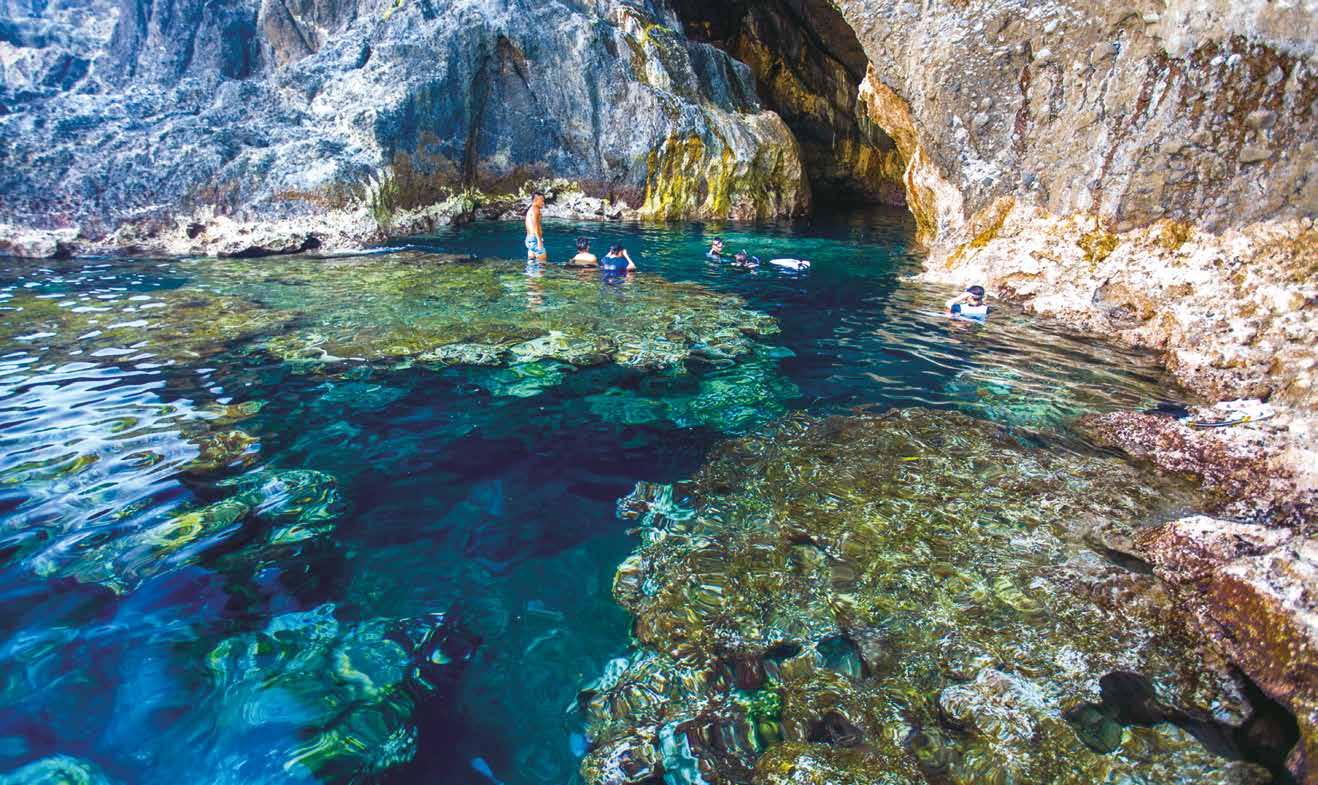
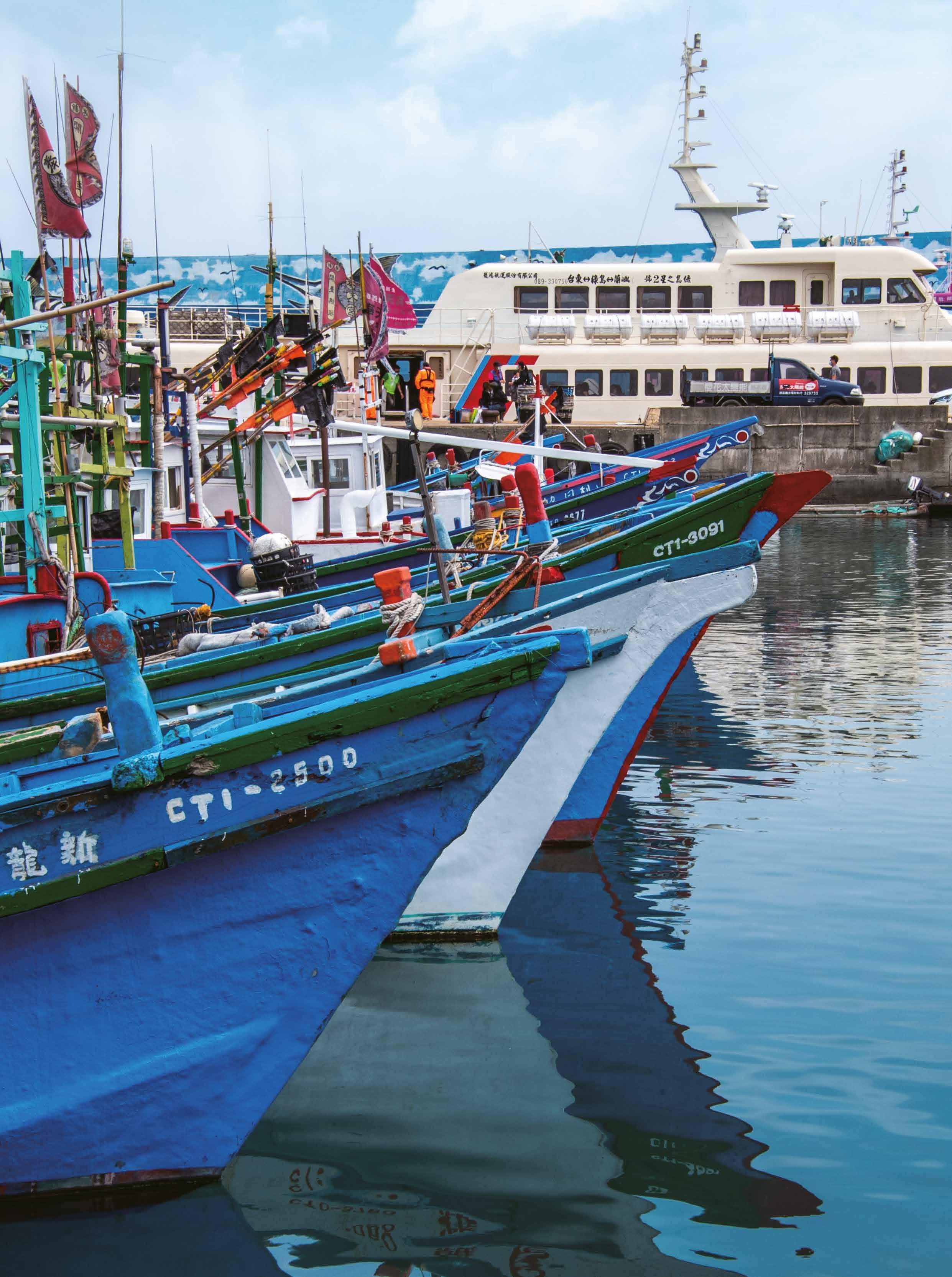
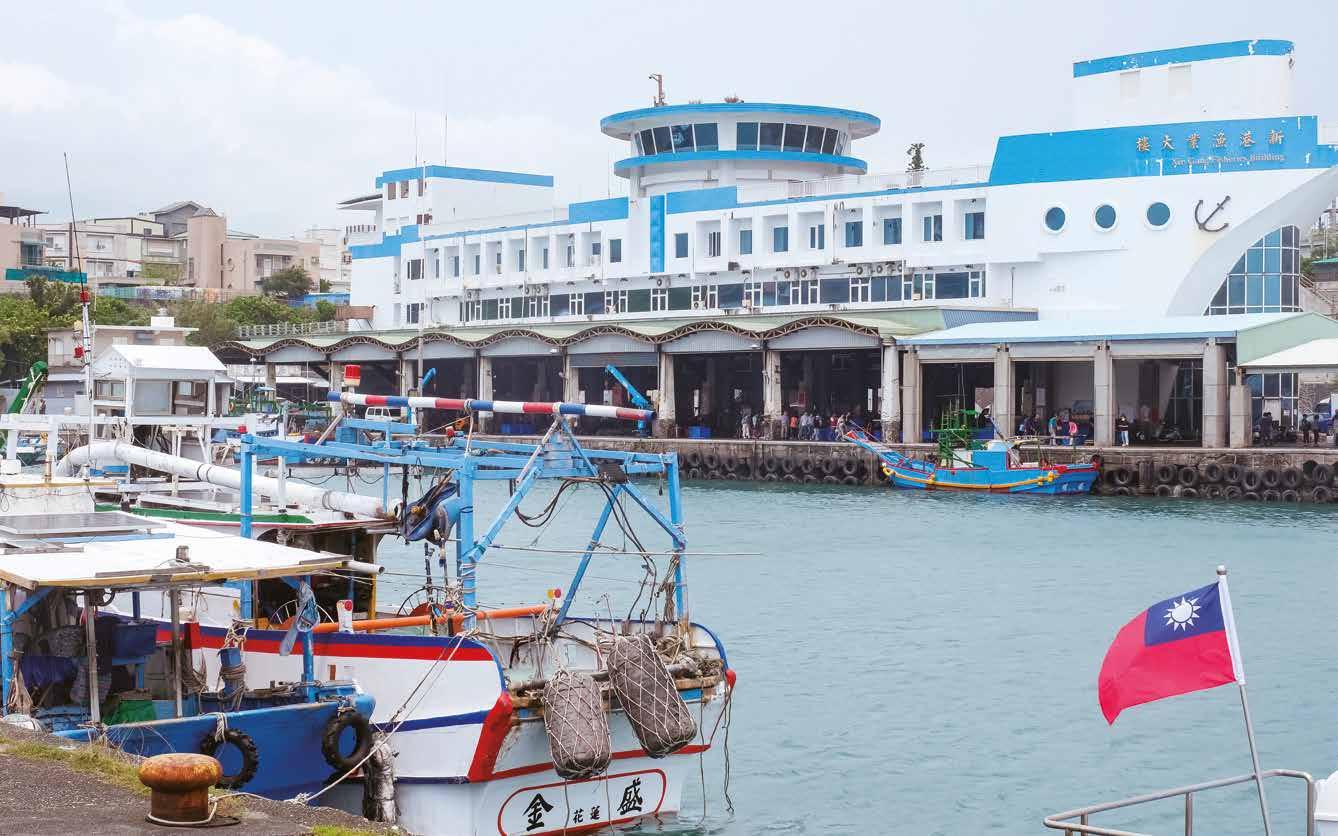
Most travelers transiting through Fugang on their way to Green Island and Lanyu (Orchid Island) experience the small Fugang Fishing Harbor, located on the outskirts of Taitung City, as little more than the point of embarkation. Still, with a brand-new passenger terminal opening this summer, some scenic seaside to stroll along, and restaurants serving up fresh catch of the day every day, it has more than enough pleasant diversions to fill a couple of hours.
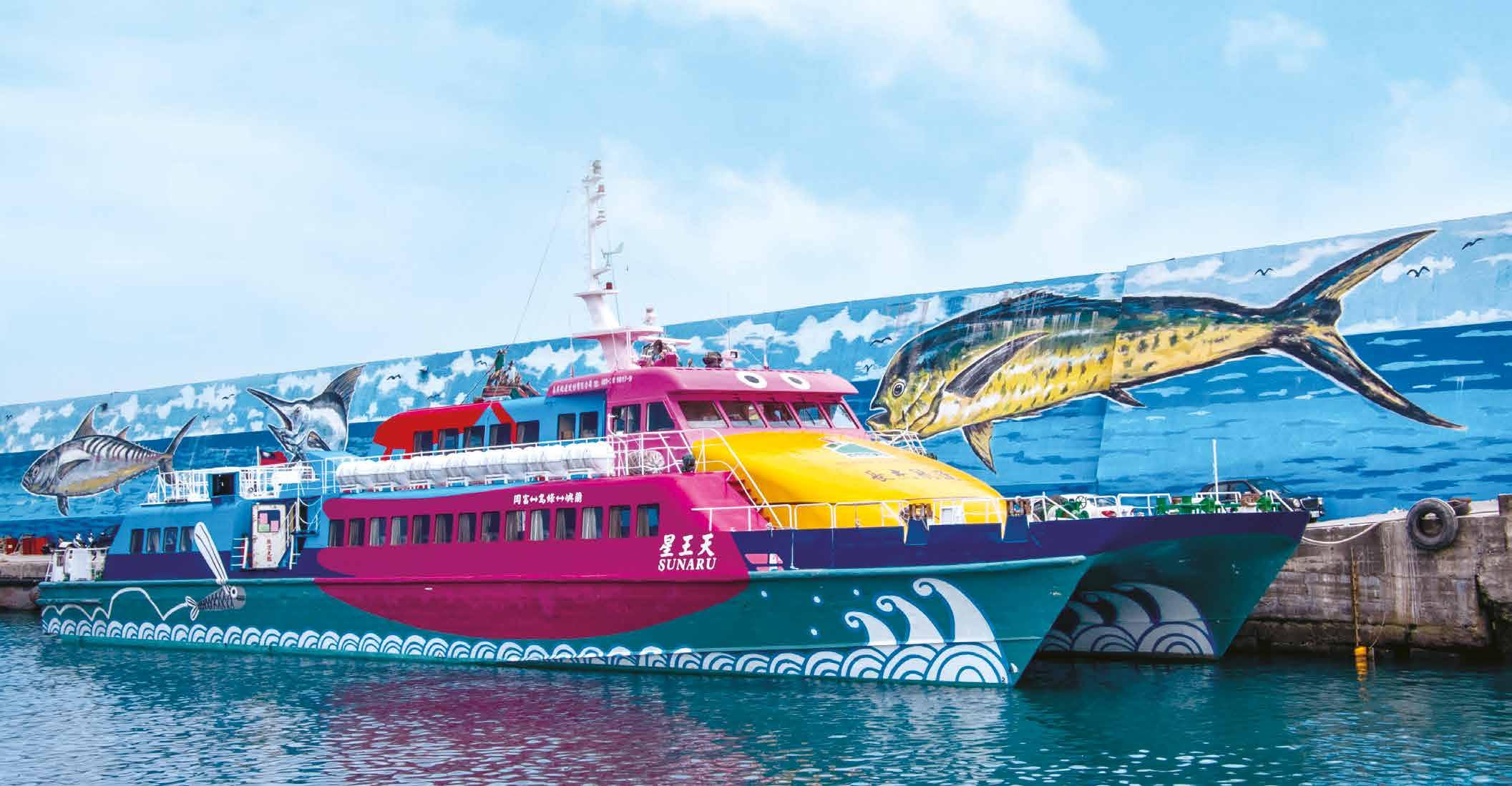
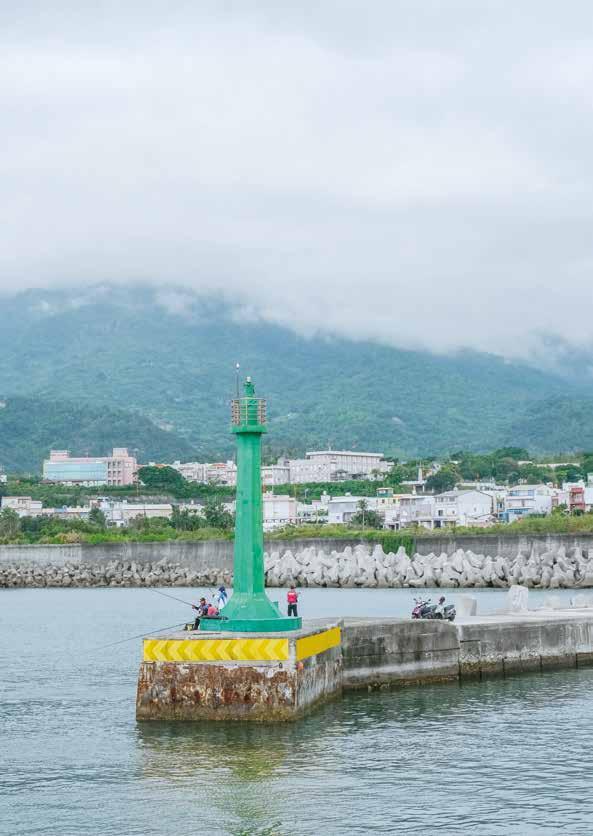
For travelers arriving at Taitung Railway Station, a 15~20-minute taxi ride (or a 30-minute ride on the #201 bus) will deposit you in front of the main ferry terminal at Fugang Fishing Harbor. When there’s a sailing about to depart, the hall is crowded with tourists popping seasickness pills while waiting to board, but outside of these brief windows it’s a sleepy place where rows of small-to-middling fishing vessels bob in the clear water, sheltered from the sea by a high wall decorated with murals depicting the region’s marine bounty.
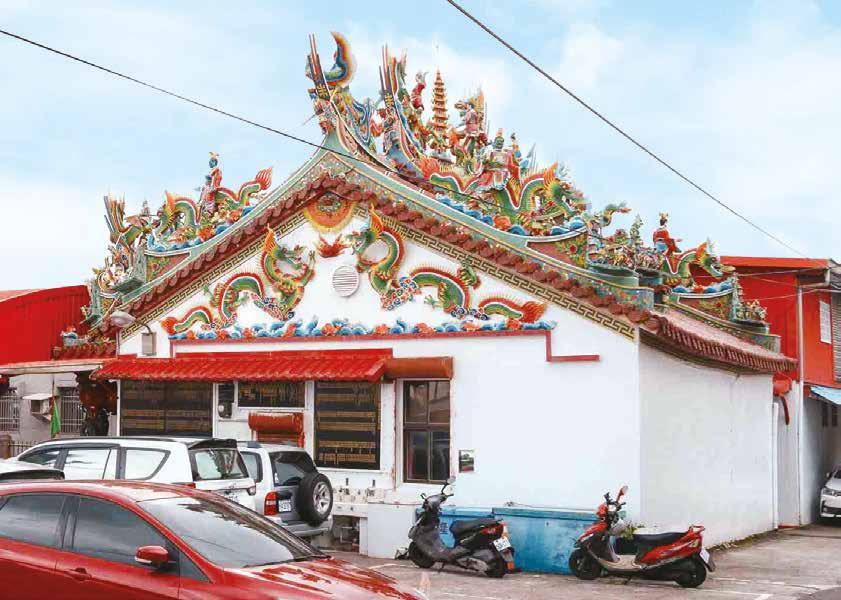
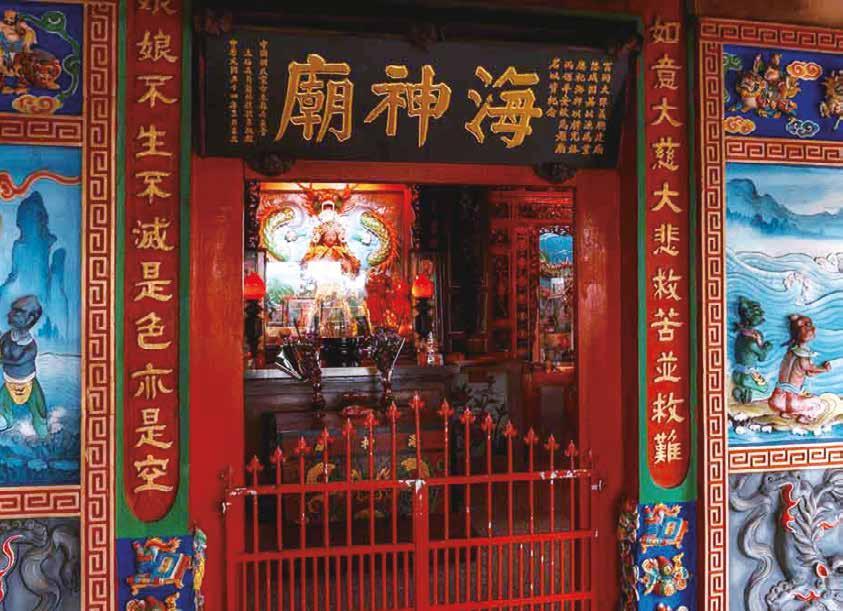
Assuming you don’t have luggage to tow, one spot worth a quick visit is nearby Fugang Haishen (Sea Goddess) Temple. Hidden a five-minute walk uphill from the harbor at the seaward edge of Fugang Village, the temple itself is simple, but its story illuminates an interesting sidebar in Taiwan’s history.
The village, also known as Dachen New Village, sprang into existence wholesale in the 1950s after escalating tensions across the Taiwan Strait prompted the newly arrived ROC government to evacuate 17,000-plus residents from the Dachen Islands off the coast of China’s Zhejiang Province. A small portion of those transplanted islanders were resettled here, and since most were skilled fisherfolk, they continued – after a bumpy period of adapting to differing regional fishing practices – doing what they did best.
Like many communities whose lives and livelihoods are subject to the whims of the waves, the islanders were deeply superstitious, and when they relocated, they made sure to bring their spiritual guardian with them. Ruyi Niangniang – protector of seafarers and bringer of bountiful catches, also known simply as the Goddess of the Sea – is not to be confused with Taiwan’s better-known sea goddess, Mazu, though the pair’s origin stories are remarkably similar. It seems the goddess approved of her new home because when an opportunity arose for her to make a return pilgrimage to the Dachen Islands, she is said to have made her objections known, requesting instead that a second idol be carved to replace her on the voyage.
Fugang Sea Goddess Temple is the only temple in Taiwan dedicated to Ruyi Niangniang, and if you find yourself passing through Fugang en route to an island, it can’t hurt to pop in and proffer a prayer for smooth seas.
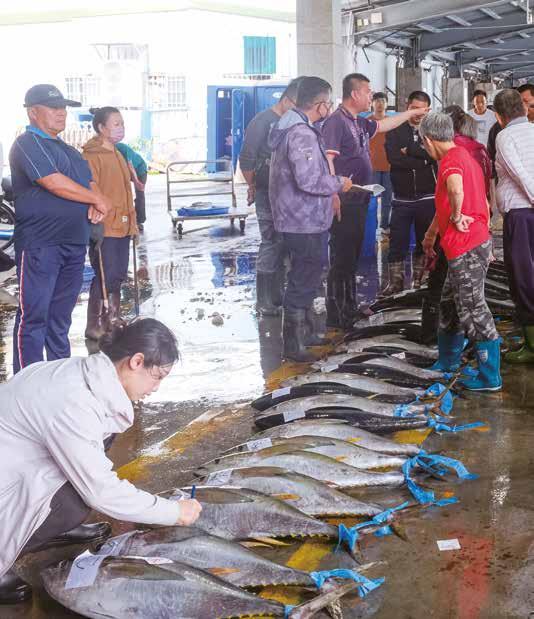
The ferries at Fugang Fishing Harbor, as the name suggests, are of secondary importance. The serious work takes place on the boats and in the harborside market, and anyone keen to see this side of the port should visit in the morning. Unlike other such spectacles, which are usually done and dusted before the average local has polished off their morning egg pancake, Fugang’s market operates on a relatively civilized schedule, swinging into action around 8 or 9am.
Rows of crated fish are laid out, and prospective buyers are given time to browse and make their pick before a couple of sharp blasts on a whistle mark the commencement of bidding. Cutlassfish, tuskfish, sailfish, and cornetfish; groupers and snappers; rosy seabass, purplish amberjack, yellowfin tuna – the vividity of the names is matched only by the fresh brightness of the fish themselves. Purchasers must be licensed to participate, so most of those trailing the auctioneer and nodding assent to his barked volley of prices are representatives of local restaurants, but this being Taiwan, there is a workaround: professional auction snipers cleverly disguised in the form of your regular auntie next door can be enlisted by private buyers. After you spot something you fancy, just agree on the price you’re willing to pay and let her handle it (remember to factor the purchaser’s 10% service fee into your calculations).
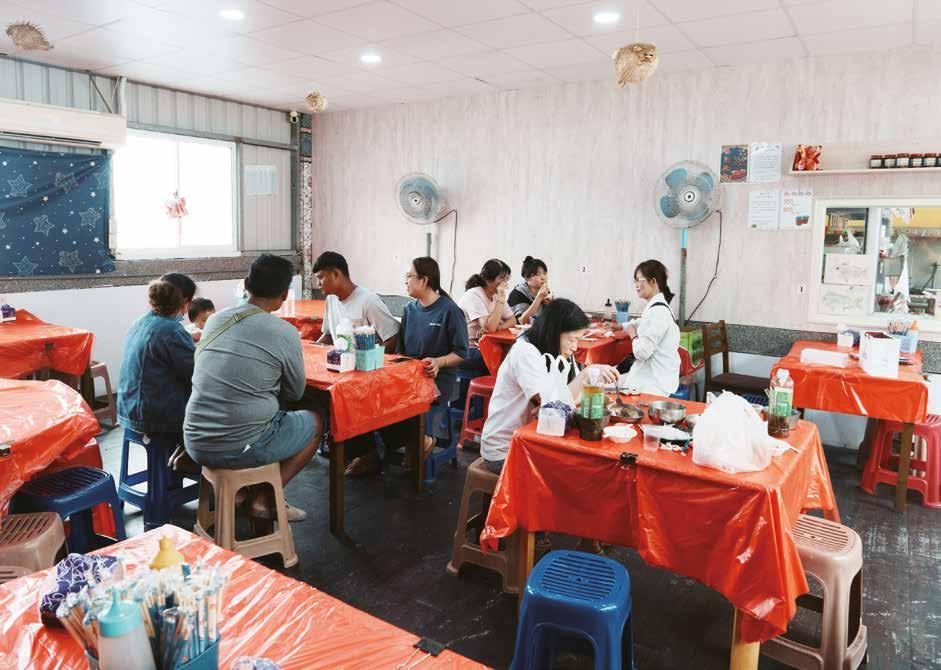
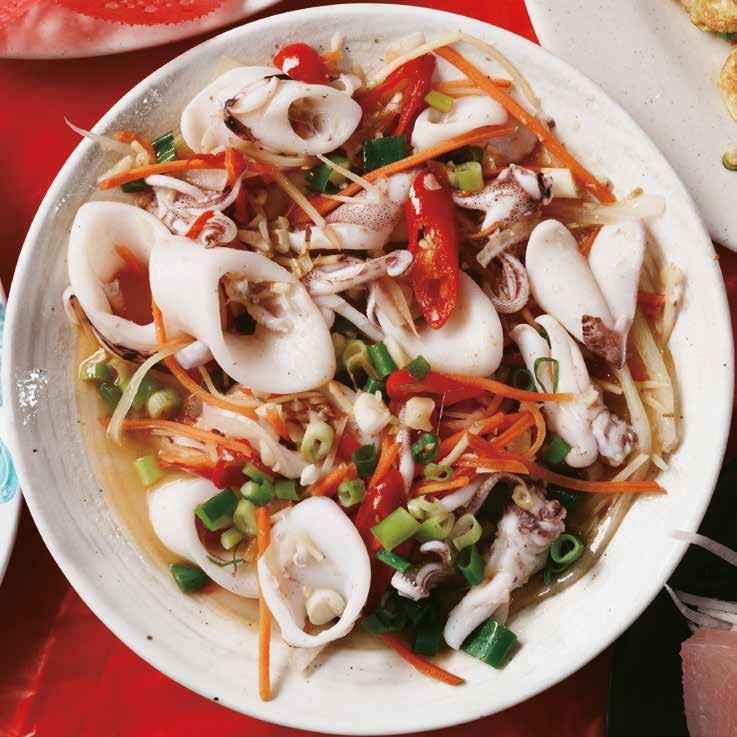
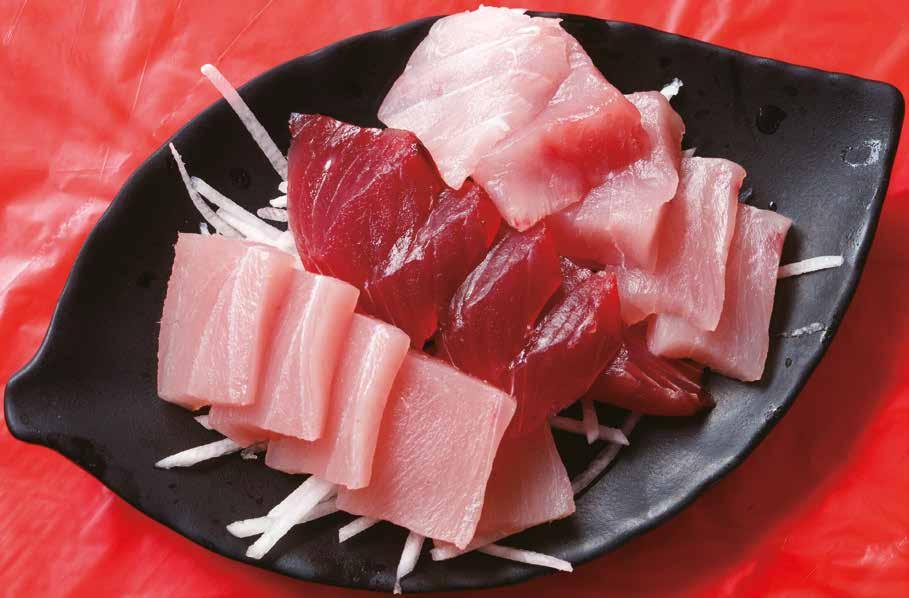

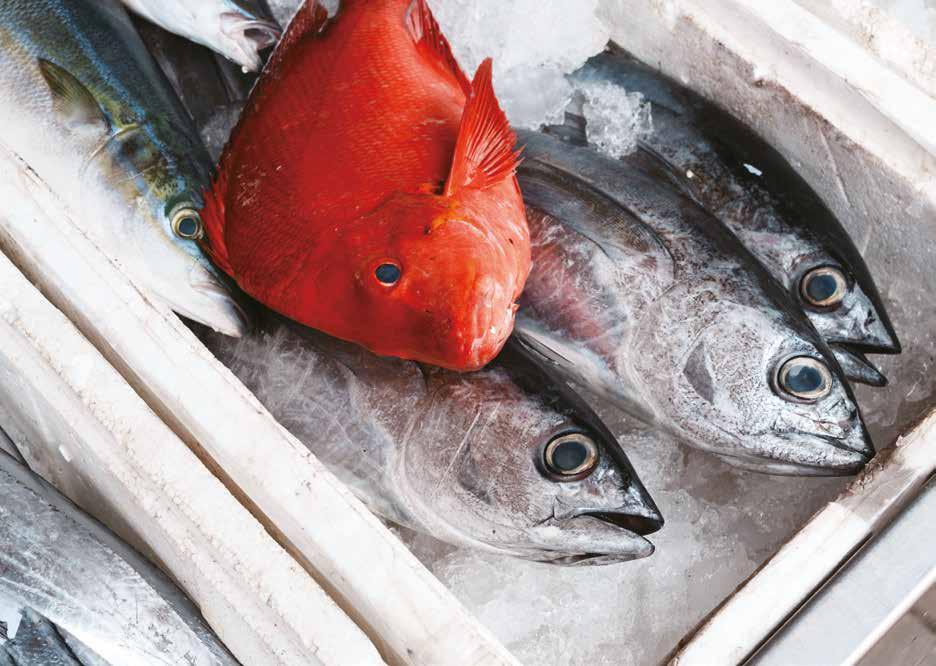
Of course, no fishing harbor worth its salt would be without seafood restaurants, and Fugang is no exception. A row of eateries lines the parallel road adjacent, some opening as early as 8am, meaning successful tourist bidders can take their haul next door to be turned into something delicious – from sea to stomach in a matter of hours. Not a morning person? No problem. The stores still have plenty of seafood specialties to choose from. Our small Travel in Taiwan team, while waiting for our ferry on a recent trip to Lanyu (see main feature article), dined at Lianfa Fish Shop, where the top pick is an NT$200 sushi platter of locally caught fish, which – season-dependent – may include marlin, tuna, oilfish, swordfish, mahi mahi, or salmon. Other dishes worth trying include stir-fried cuttlefish, seaweed salad, deep-fried oysters, flying fish roe sausages, and seaweed omelet.
If you’re more in a snacking and strolling mood, grab a bag of horn snails sautéed with garlic and chili and enjoy sucking the meat from the shells as you wander up the road to Fugang Geopark (aka Little Yehliu).
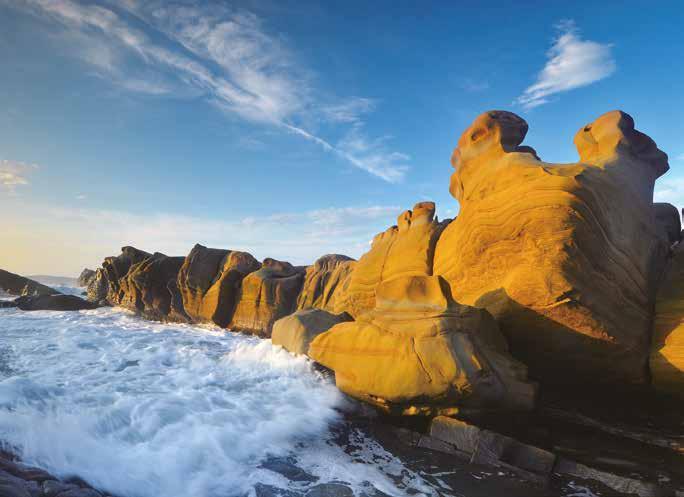
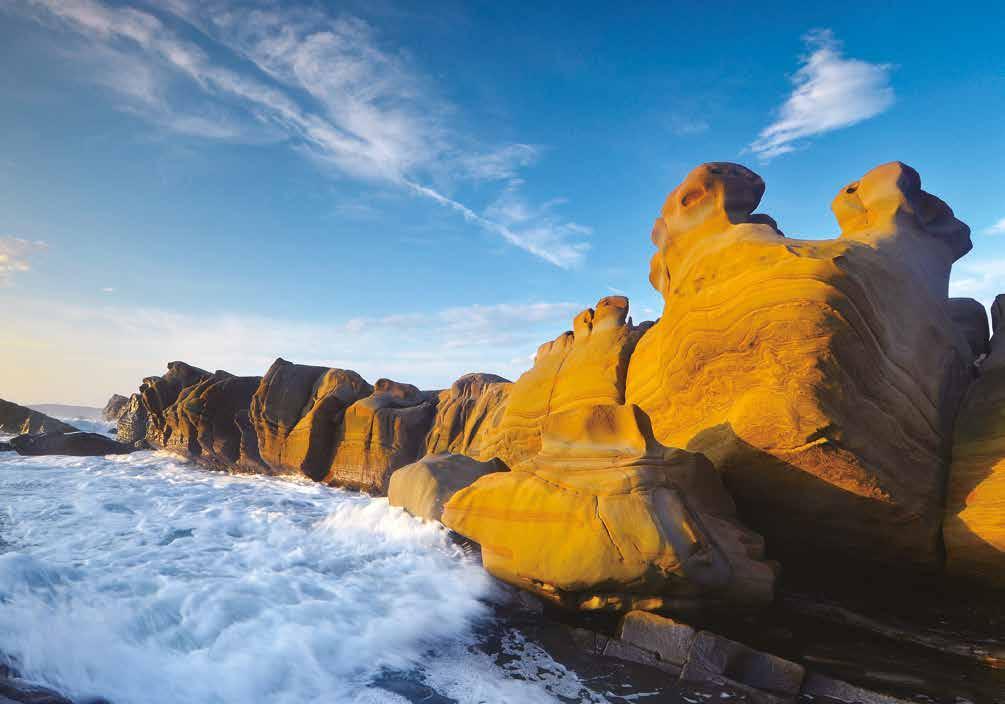
The geopark’s winding paths fan out towards the shoreline, where layers of exposed bedrock stretch out in a series of cuestas (ridge-and-furrow formations) sitting at a right angle to the water. The steep sides are streaked with compact strata of sandstone and mudstone – layers of buff, rusty orange,
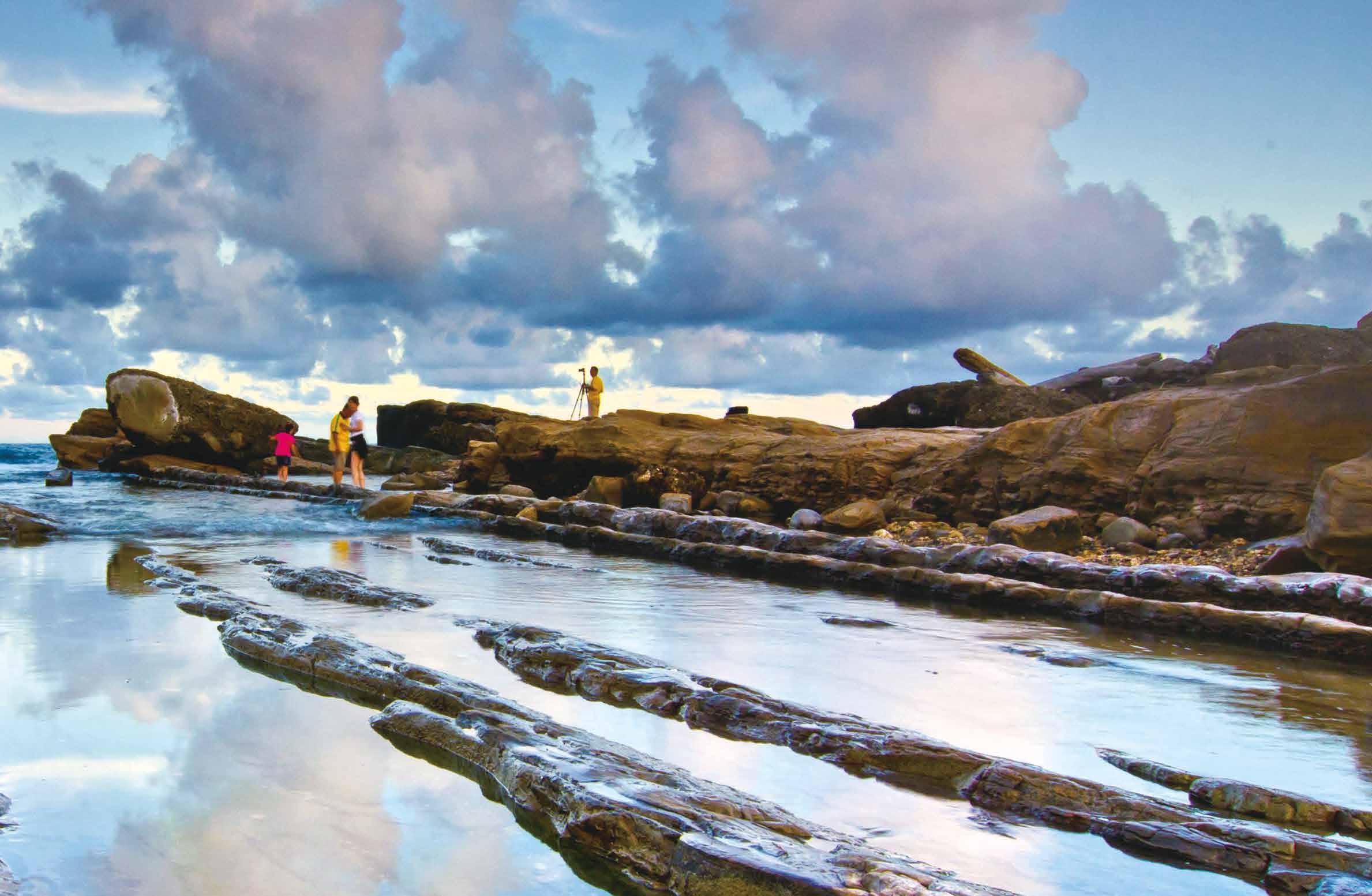
tan streaked through with ribbons of gray – while the gentle backslopes have been carved into a pleasing mosaic by wind and water erosion (dubbed tofu rocks by the perpetually foodbrained Taiwan locals).
Long skinny brackish pools fill the dips between each ridge, and although, at first glance, they seem devoid of life, patient watchers will notice perfectly camouflaged gobies and herds of tiny hermit crabs – some as small as a grain of rice –grazing on the algae. In places, hard coral capstones sit atop the bedrock, leading to even more improbably eroded forms, the most impressive among which is a twin-knobbed protrusion resembling a big-eyed bullfrog.
Further back from the water, there’s a shopping area where snacks and trinkets are sold, as well as a visitor center where you can brush up on your geological terminology. The park is free to enter, and presents a pleasant way to kill time while waiting for a ferry, and if you decide you like the area, well, you don’t need to leave – the adjoining campsite has pitches overlooking the ocean.
If you’re the kind of person who prefers adding a little more cultural and historical context to your visits, Fugang Gang Gang Hao (reachable via Facebook and email) is a community enterprise that runs guided tours of the port, market, and surrounding area.
ENGLISH AND CHINESE
Fugang Geopark | 富岡地質公園
Fugang Fishing Harbor | 富岡魚港
Fugang Gang Gang Hao | 富岡港港好
Fugang Haishen Temple | 富岡海神廟
Lianfa Fish Shop | 聯發魚行
Little Yehliu | 小野柳

Ruyi Niangniang | 如意娘娘 MAP
TEXT SIMON FOSTER PHOTOS ALAN WEN, VISION
One of Taiwan’s best-known fishing harbors, Chenggong lies just south of Taitung County’s famous tourist spot Sanxiantai. A bustling town of 25,000 in the 1970s, today its population of indigenous Amis people and Taiwanese is roughly half of that. Recently improved transport links and tourism have driven a minor renaissance, with people from around the island (and indeed the world, including this writer and his family) seeking the quiet life in this remote slice of paradise tucked between mountains and ocean. There are now YouBike rentalbike stations, a PX Mart supermarket, and numerous good restaurants, making Chenggong a worthwhile destination in its own right, as well as a great base from which to explore.
The town’s pretty harbor offers insight into a seldom-seen world that exists between land and sea. Catches are auctioned off daily (except Sunday) from 1pm, just as they have always been, whilst crew from across Southeast Asia do boat repairs, eat, chat, and enjoy their time away from the high seas. Small canteens, some smarter restaurants, and stores (and even a tiny mosque) are dotted around the harbor, and on the streets above, there are a couple of cafés, from where you can enjoy great views over the whole scene. I often come to the harbor with my family to eat, to wander, and to buy ice for summer ice baths, and we have even taken the ferry to Green Island from here! Walking along the harbor wall to the Xingang Lighthouse, you can see fishing boats coming and going, container ships in the far distance, and even our house!
Opposite the well-known Meet Marlin Restaurant at the harbor, Kuroshio is a seafood product shop that only opened in 2025. Its eclectic selections sell well. The shop name pertains to the ocean current that runs from the Philippines to Japan, bringing bountiful fishing opportunities off Taiwan’s East Coast. As you might expect, the shelves are stacked with marine products (wish to try frozen fish balls, or maybe mahi mahi popcorn?), but there are also such other Taitung specialty items as organic rice from the East Rift Valley, touristy knick-knacks, imported Indonesian snacks, and delicious local fruit-ice pops!
KUROSHIO | 黑潮旗跡 (08) 985-1152
No. 23-5, Gangbian Rd., Chenggong Township, Taitung County ( 台東縣成功鎮港邊路 23 之 5 號 ) 9am-5pm kuroshiofish.org.tw
Whale Watching Outings from Chenggong Dolphins and whales are active in the waters around Chenggong, and May to October is the best time to experience these majestic creatures in their element. Jin-Ling Whale Watching (www.dolphin-wan.com.tw) is an environmentally responsible operator offering 2~3-hour guided boat trips with an 80% success rate. Note that most information is provided in Chinese only.
Dining in Chenggong has always been about seafood, mahi mahi in particular, and the town’s restaurant scene has been bolstered by some exciting newcomers in the past few years. As well as the listings below, if you’re here on a Monday, Chenggong’s night market is worth checking out – dumplings, fried snacks, steaks, sushi, drinks, fresh fruit, and desserts are all on offer, and can be enjoyed on the seafront.
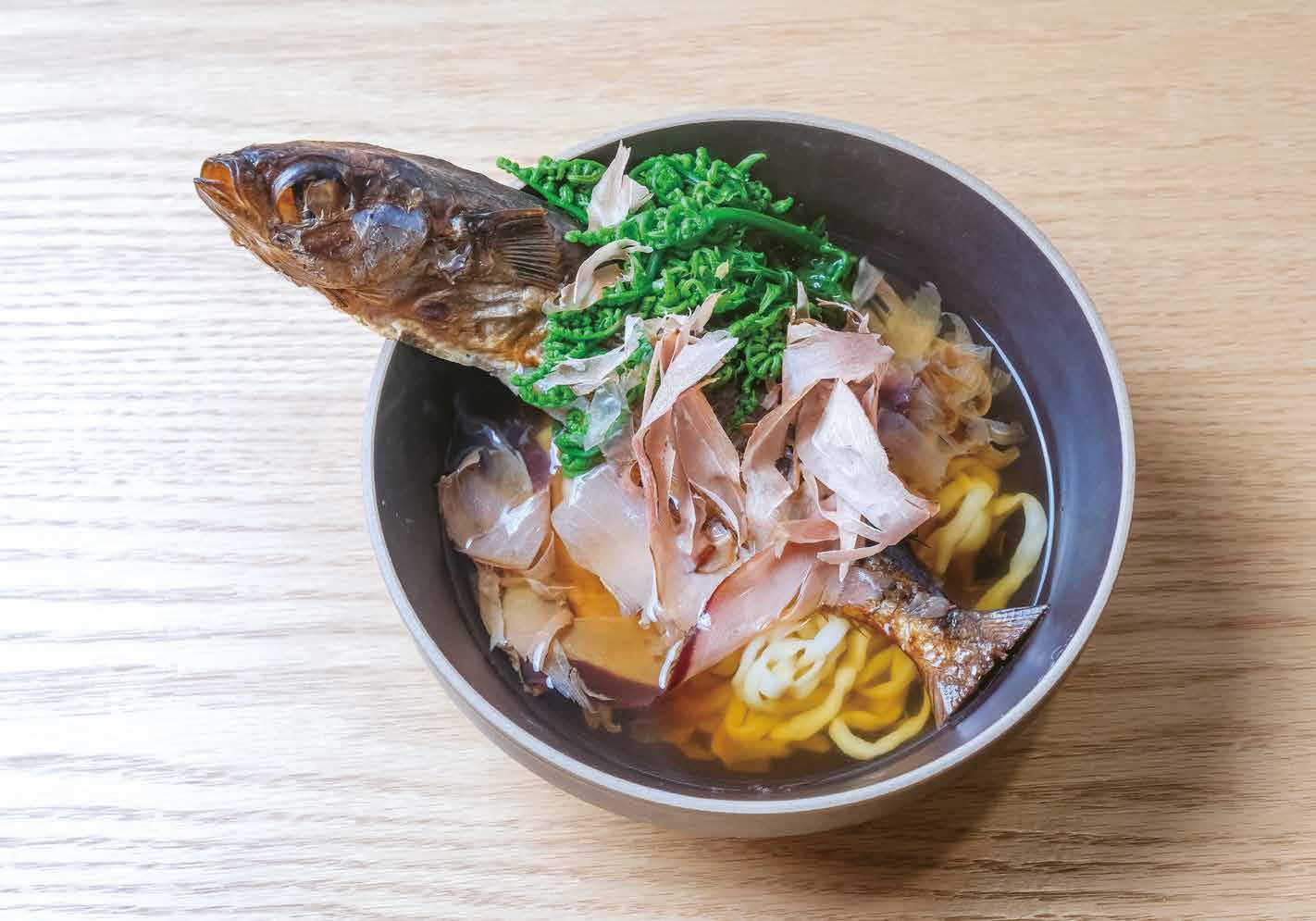
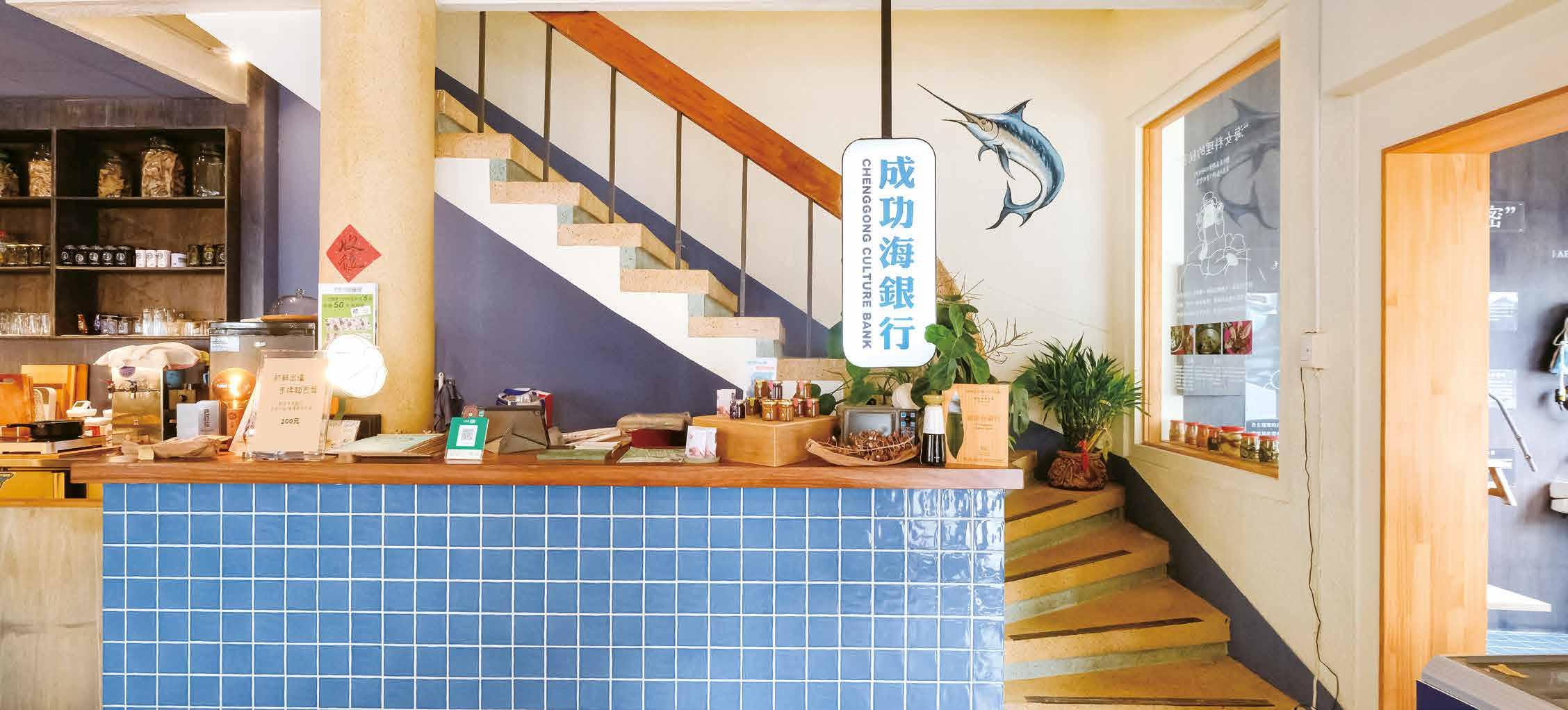
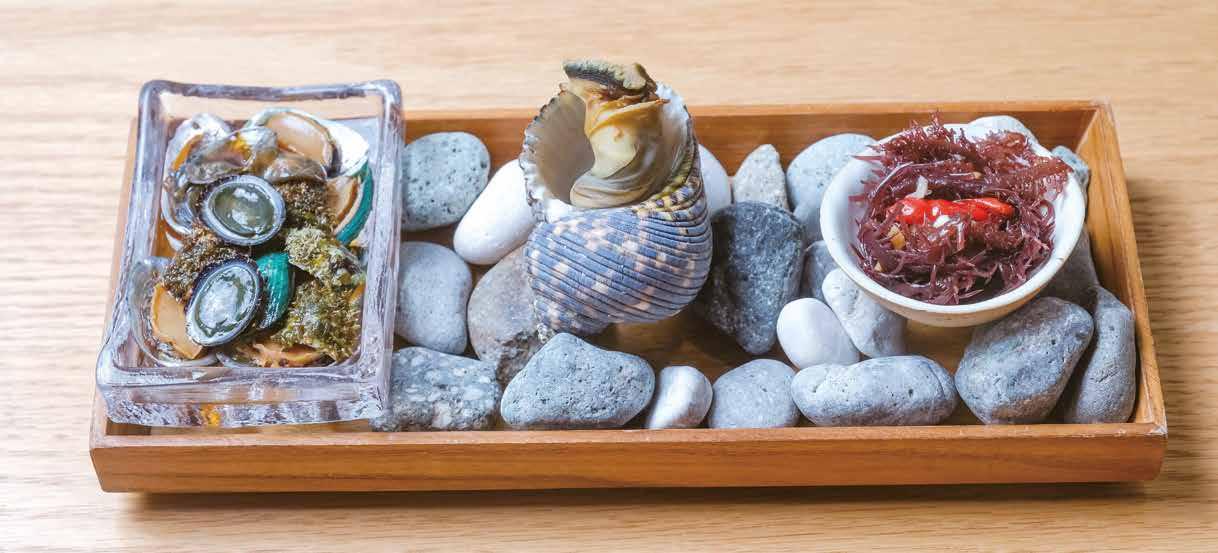
Housed in a historic building that once served as the town’s Land Bank location, this pleasing addition to Chenggong’s restaurant scene opened in 2022, offering excellent seafood set meals in an attractive dinerstyle setting, with an English menu to boot! The menu allows the ingredients to shine, with choices of flyingfish noodles (Amis Ina Set), tomato fish soup noodles (Captain’s Set), and even a veggie meal (Shell Ginger Rice Set). Meals are well-priced (NT$380, or NT$480 with a drink), beautifully presented, and accompanied by a selection of seaweed salad, sashimi, sea snails, and tofu. There’s also an interesting range of cocktails, soft drinks, and desserts such as Bonito Basque Burnt Cheesecake.
Decorated in simple blue, white, and light wood tones with an open kitchen and maritime accents such as bar lighting suspended from an old fishing spear, the restaurant is also something of an information hub, featuring magazines and books. There’s traditional fishing equipment on display, and the team that runs the restaurant can also arrange fishing and foraging excursions with local indigenous fisherwomen.
CHENGGONG CULTURE BANK | 成功海銀行
(08) 985-1552
No. 66, Zhonghua Rd., Chenggong Township, Taitung County ( 台東縣成功鎮中華路 66 號 ) Thu-Mon 11:30am-7:30pm chenggongculturebank.com

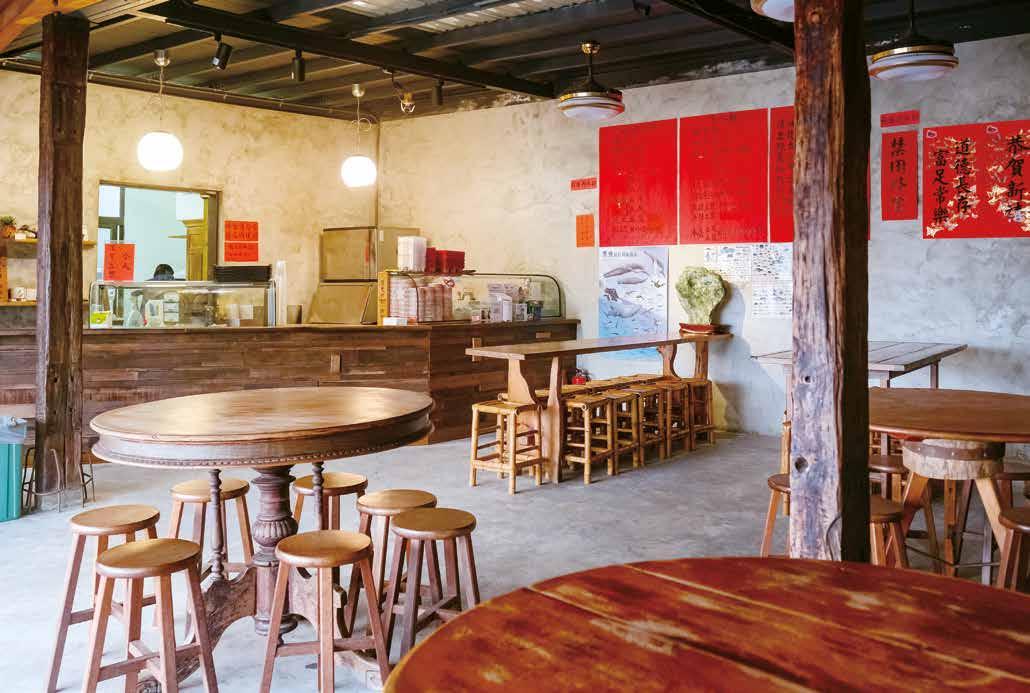
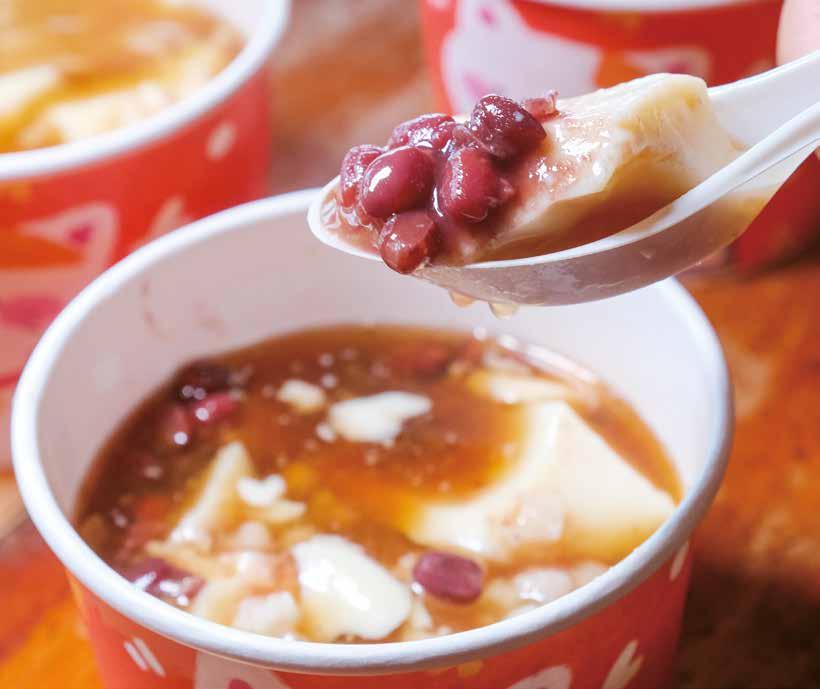
In business for over two decades, this shop in a traditional wooden-fronted bungalow serves up tasty tofu treats that can be enjoyed in its attractive courtyard, complete with a traditional millstone. The classic douhua (silken tofu pudding; NT$50) is made from non-GMO soybeans and comes with a choice of grass jelly, adzuki bean, mung bean, or peanut (for an additional NT$10, you can choose two). It also serves doujiang (soy milk) and refreshing shaved ice, the latter of which can be prepared with toppings that include the additions for douhua just named above, douhua, or milk. Days off vary, so it’s worth calling in advance to check if it’s open.
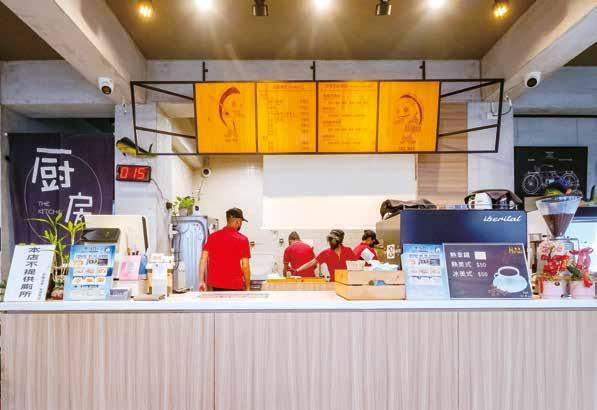
MAHI MAHI | 王記鬼頭刀專賣店 (08) 985-1870
No. 53, Xinsheng Rd., Chenggong Township, Taitung County ( 台東縣成功鎮新生路 53 號 ) 10am-6:30pm www.mahimahi.com.tw
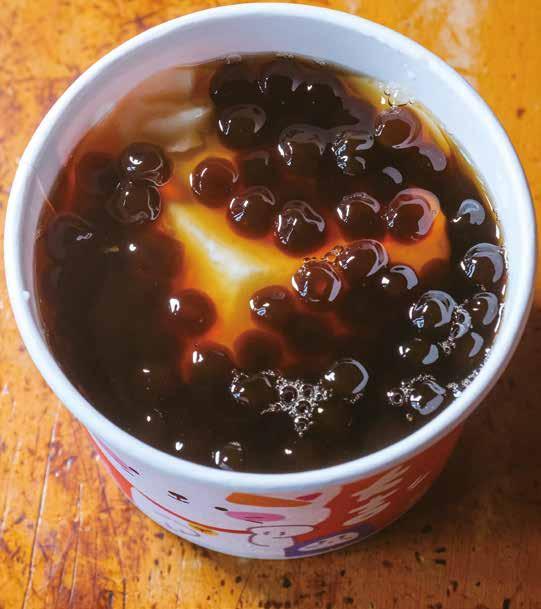
CHENGGONG TOFU PUDDING | 成功豆花 (08) 985-4128
No. 63, Zhongshan Rd., Chenggong Township, Taitung County ( 台東縣成功鎮中山路 63 號 ) 9am-6pm
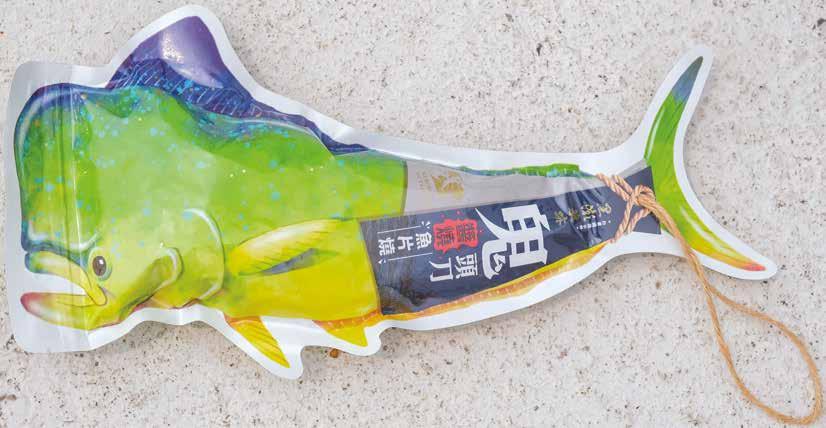
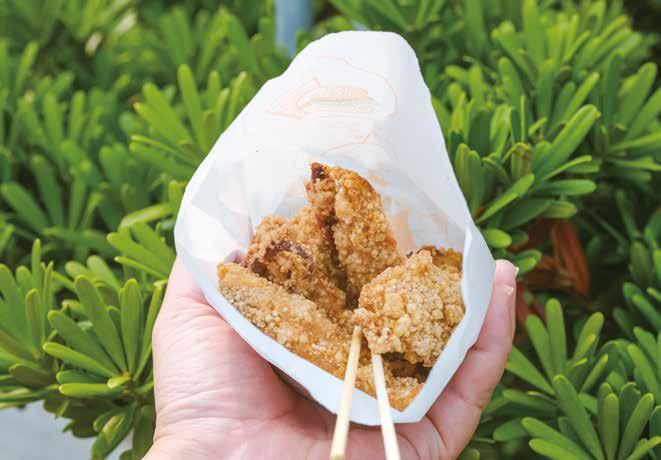
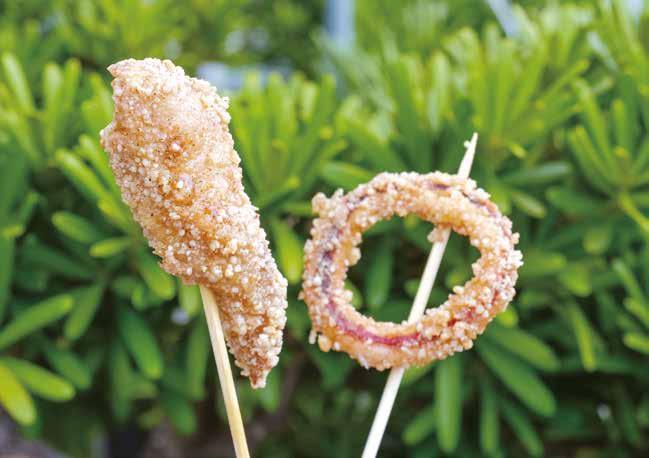
Close to the Farmers’ Association Supermarket, this clean, modern take-out canteen opened during the Covid period and has become deservedly popular for its deliciously succulent deep-fried mahi mahi strips and squid rings (NT$100, or you can choose a mixed bag for the same price). Simply served in paper bags, it also prepares other deep-fried snacks, including fish balls and satisfyingly chewy brown-sugar rice cakes (niangao), and stocks a selection of dried fish products. You might have to queue for a while, but it’s definitely worth the wait!
MEET MARLIN | 旗遇海味 0988-852-889
A family favorite, this smart, modern harborside restaurant offers excellent seafood and great views. The sashimi, breaded mahi mahi nuggets, fresh greens, and orange salad are all delicious. There’s plenty of on-site parking, and you can follow your meal with a stroll around the harbor.
No. 19-8, Gangbian Rd., Chenggong Township, Taitung County ( 台東縣成功鎮港邊路 19 之 8 號 ) 11am-3pm & 5-8pm www.meetmarlin.com
The town’s hinterland presents ocean vistas, cycling, and hiking opportunities. You can pick up a YouBike public-bike rental in Chenggong (or at the seaside park), and then ride out to Sanxiantai along the main road, returning on the bike path via the seaside park.
Marking the northeastern boundary of the town proper, Chenggong Seaside Park is a lovely open space popular with families, walkers, and joggers. As well as a few trails, there are pavilions, a lookout tower, sculptures, tennis courts, and a tiny café (Fri-Tue 9am-2pm).
Chenggong’s Monday night market also sets up on the road alongside the park. During the summer, there are occasional concerts.
MEET MARLIN | 旗遇海味 0988-852-889
No. 19-8, Gangbian Rd., Chenggong Township, Taitung County ( 台東縣成功鎮港邊路 19 之 8 號 ) 11am-3pm & 5-8pm www.meetmarlin.com
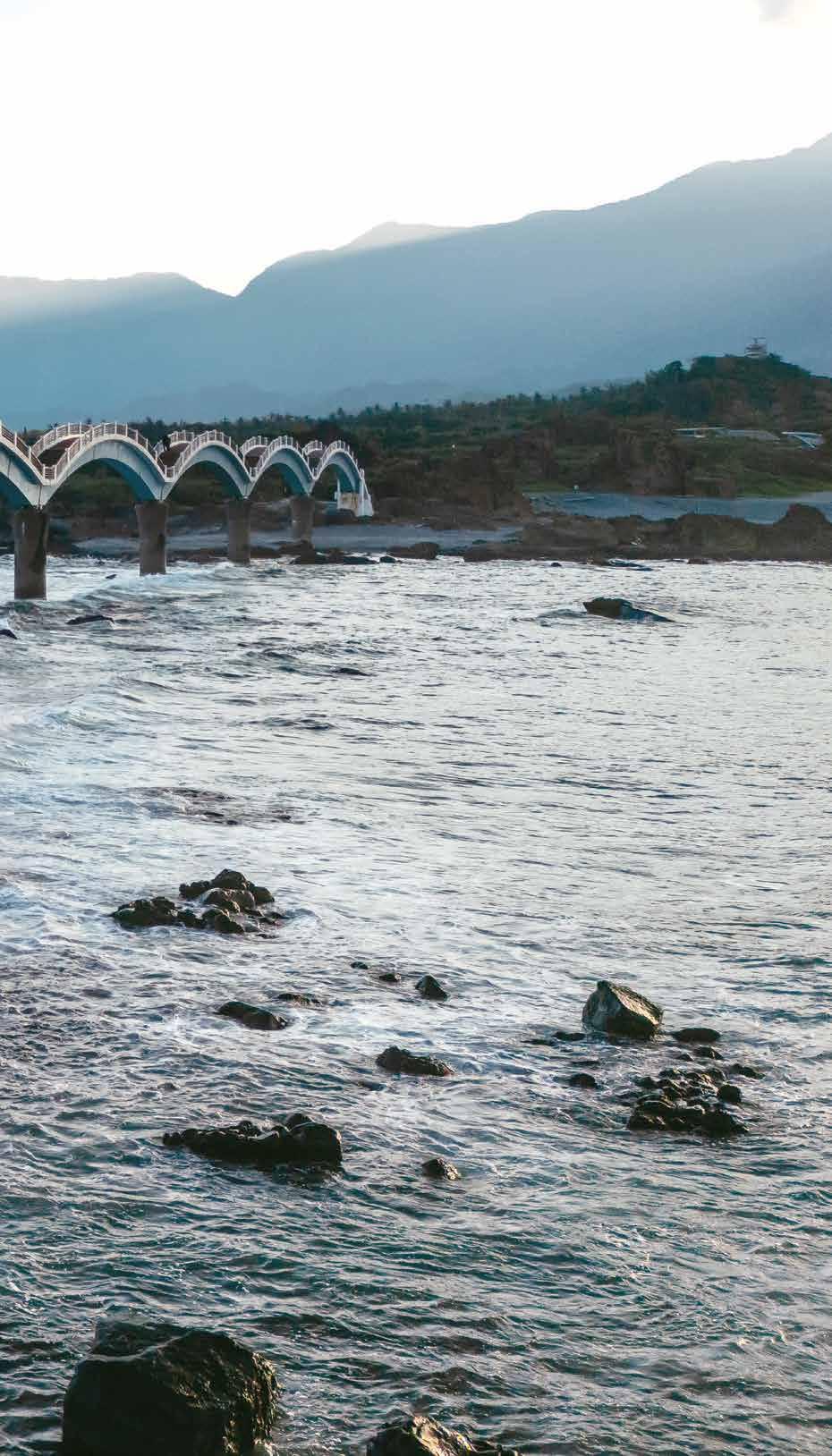
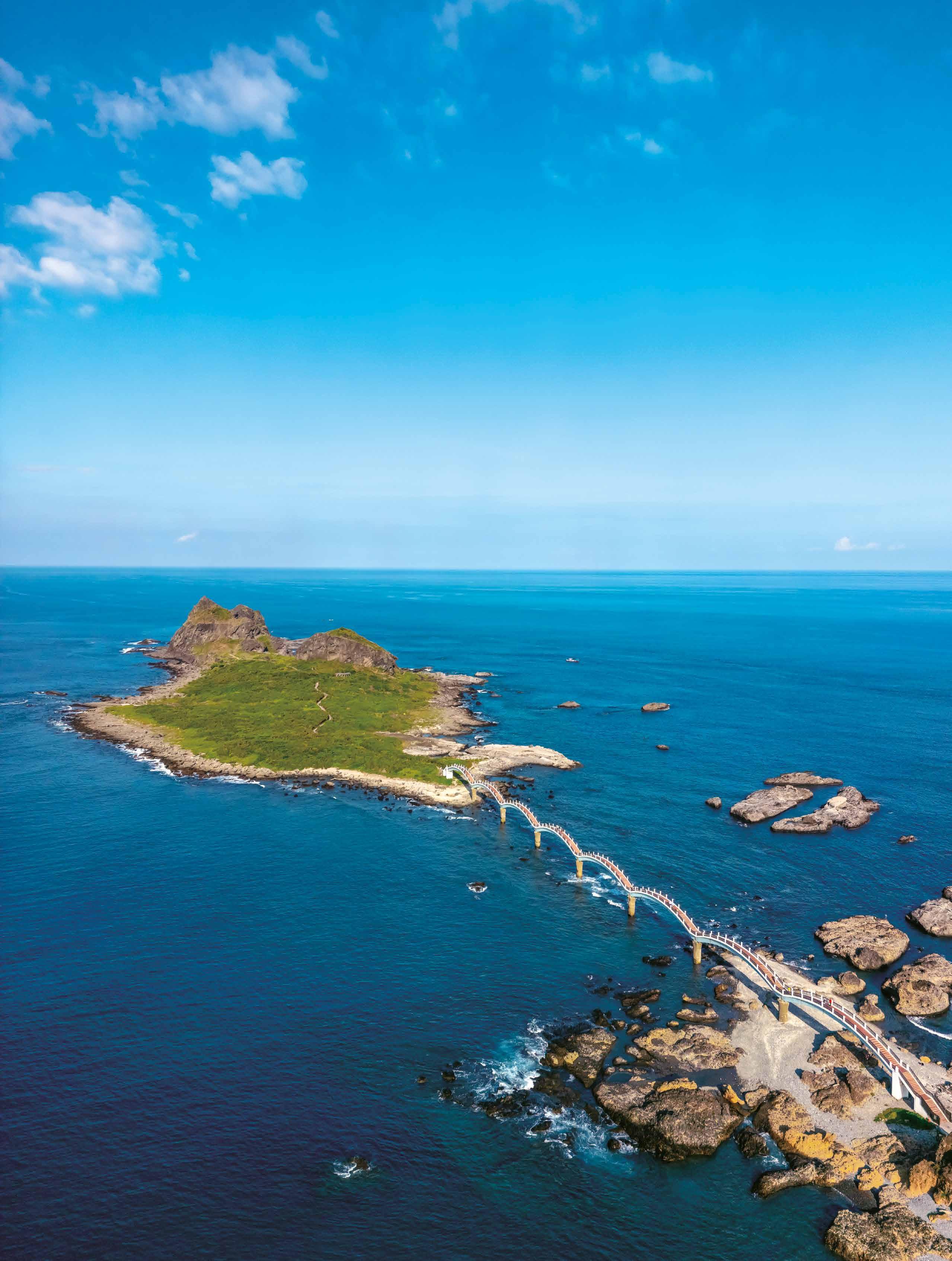
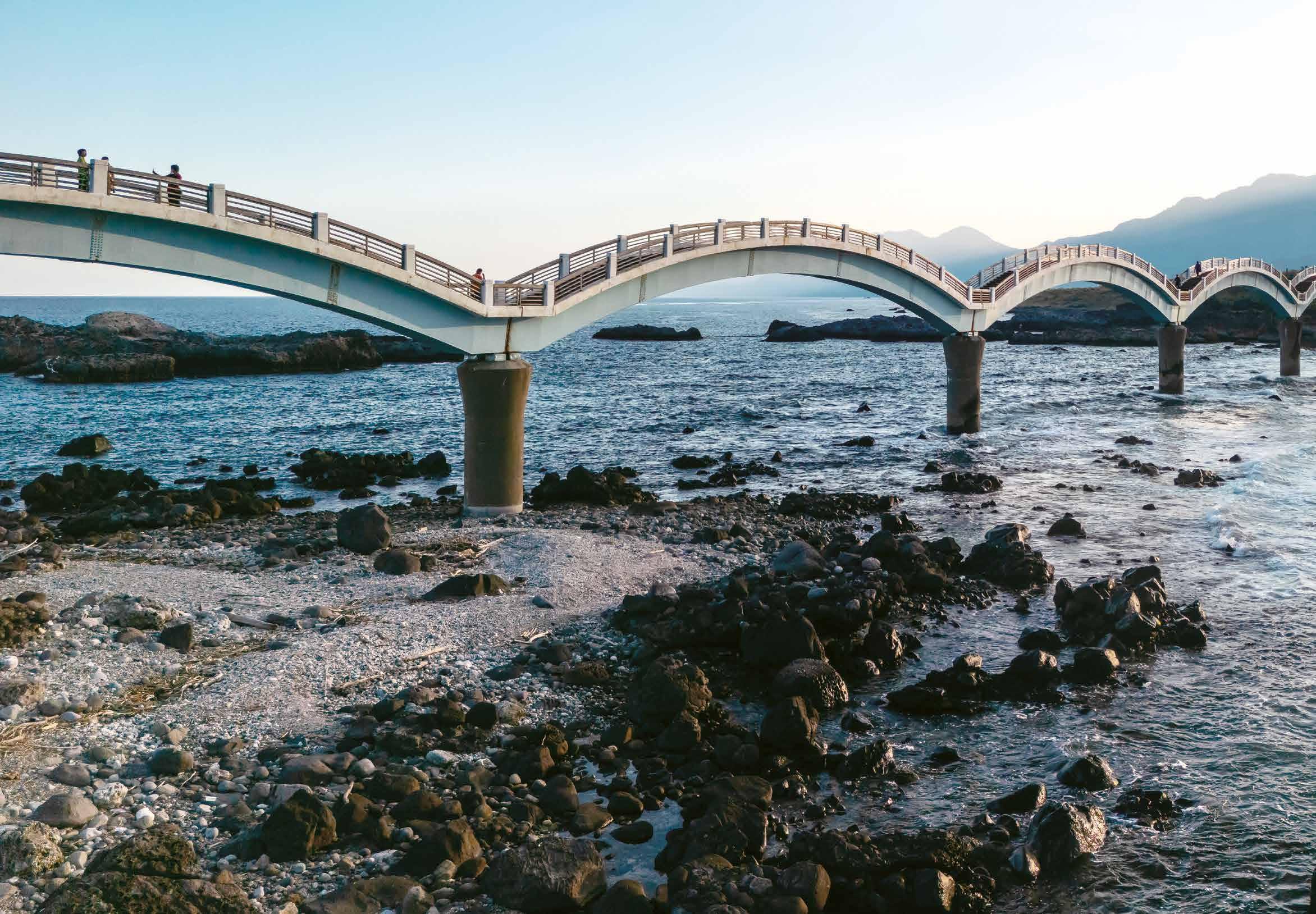
One of the brightest jewels in the East Coast’s crown, the rugged volcanic outcrop of Sanxiantai beckons you from afar to cross its mighty 8-arched bridge. Its name (“Three Immortals Platform”) is derived from the island’s shape, representing three of Daoism’s Eight Immortals – hence the number of arches on the bridge. In times gone by, Nuwalian (“Eastern Lands” in the language of the region’s Amis tribe) was a prime fishing and sea snail foraging spot, accessible only by boat or wading through the shallows at low tide.
Arriving by car, you’ll need to pay for parking, and immediately adjacent to the car park, there’s a visitor center, toilets, and snack and souvenir shops. As a destination, Sanxiantai has something for everyone, whether that’s just a wander to the bridge for the classic view across to the island or a more strenuous hike to the lighthouse, which caps Sanxiantai’s easternmost high point. Trails from the car park run along the rocky pandanus-covered coastline, and once across the bridge, there’s an easy-to-follow loop around a part of the island. The route to the lighthouse offers more adventure and involves picking your way across the craggy shoreline and ascending steep steps, rewarded by magnificent views. En route, you’ll pass an eerie cave that cuts through the island. There’s a path through the cave which emerges onto the opposite coastline, a popular spot with fishermen.
Back on the mainland, Sanxiantai is also the starting point of a short but delightful bike path which follows the coastline south towards Jihui Fishing Pier. After a couple of kilometers, the path rejoins a backroad to Chenggong, which passes meadows of grazing water buffalo and the bright and breezy Monday Coffee & Food before reaching town via the seaside park.
MONDAY COFFEE & FOOD | 海邊咖啡屋
No. 185-6, Zhitian Rd., Chenggong Township, Taitung County ( 台東縣成功鎮芝田路 185 之 6 號 ) Fri-Wed 12pm-6pm
Note: The arched bridge is scheduled to be closed until sometime in 2027, meaning that the island will also be inaccessible until then.
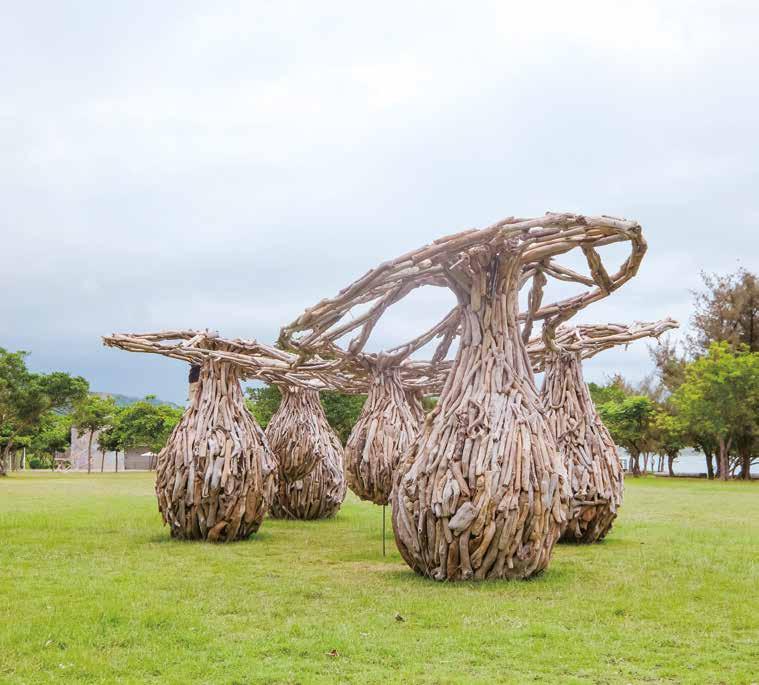
Just north of Sanxiantai, Pisirian (“Place for Keeping Goats”) is a small, somewhat ramshackle Amis village, worth a wander for a slice of local life with a backdrop of coastal vistas, driftwood goat sculptures, and, if you’re lucky, the beat of drums! Many of the village’s adult residents work elsewhere on the island, and the acclaimed Paw Paw Drum Troupe was created to give the local youth a focal point and connection with their heritage. The drums are made from repurposed fishing buoys (“paw paw” in the Amis language), and performances (as well as meals) can be arranged by contacting the Faluhay Restaurant in the village. Alternatively, you could just visit on a weekend and try your luck – my family’s most recent visit was on a Sunday, and there was a performance in progress. There are also a few other restaurants (mainly open on weekends), a couple of homestays, and a campsite in the village.
FALUHAY RESTAURANT | 比西里岸風味餐廳
0915 777-124
No. 261, Bailian Rd., Chenggong Township, Taitung County ( 台東縣成功鎮白蓮路 261 號 ) Meals for groups on request only
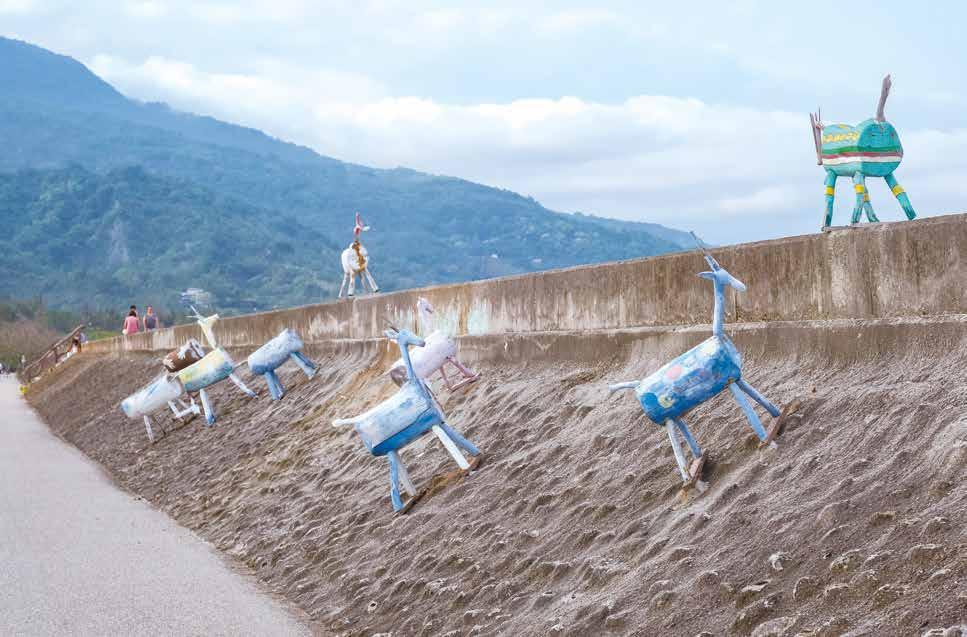
Driftwood goat sculptures
ENGLISH AND CHINESE Chenggong (Fishing Harbor) | 成功 ( 漁港 ) Chenggong Seaside Park | 成功鎮海濱公園 douhua | 豆花 doujiang | 豆漿 East Rift Valley | 花東縱谷 Jihui Fishing Pier | 基翬漁港 Jin-Ling Whale Watching | 晉領號賞鯨 niangao | 年糕
Pisirian | 比西里岸 Sanxiantai | 三仙台 Xingang Lighthouse | 新港燈塔

The US has its bars, and the UK has its pubs. In Taiwan, one of the most popular ways to spend a night out is at a “beerhouse,” a bistro-like place that offers good food alongside an extensive drink menu that often includes far more than beer. Similar to Japanese izakaya culture, in Taipei these establishments frequently offer Taiwanese food as well as local plum wine, sake, or millet wine. Many have connections to the local community and take cues from the Taiwanese aesthetic in their decor.
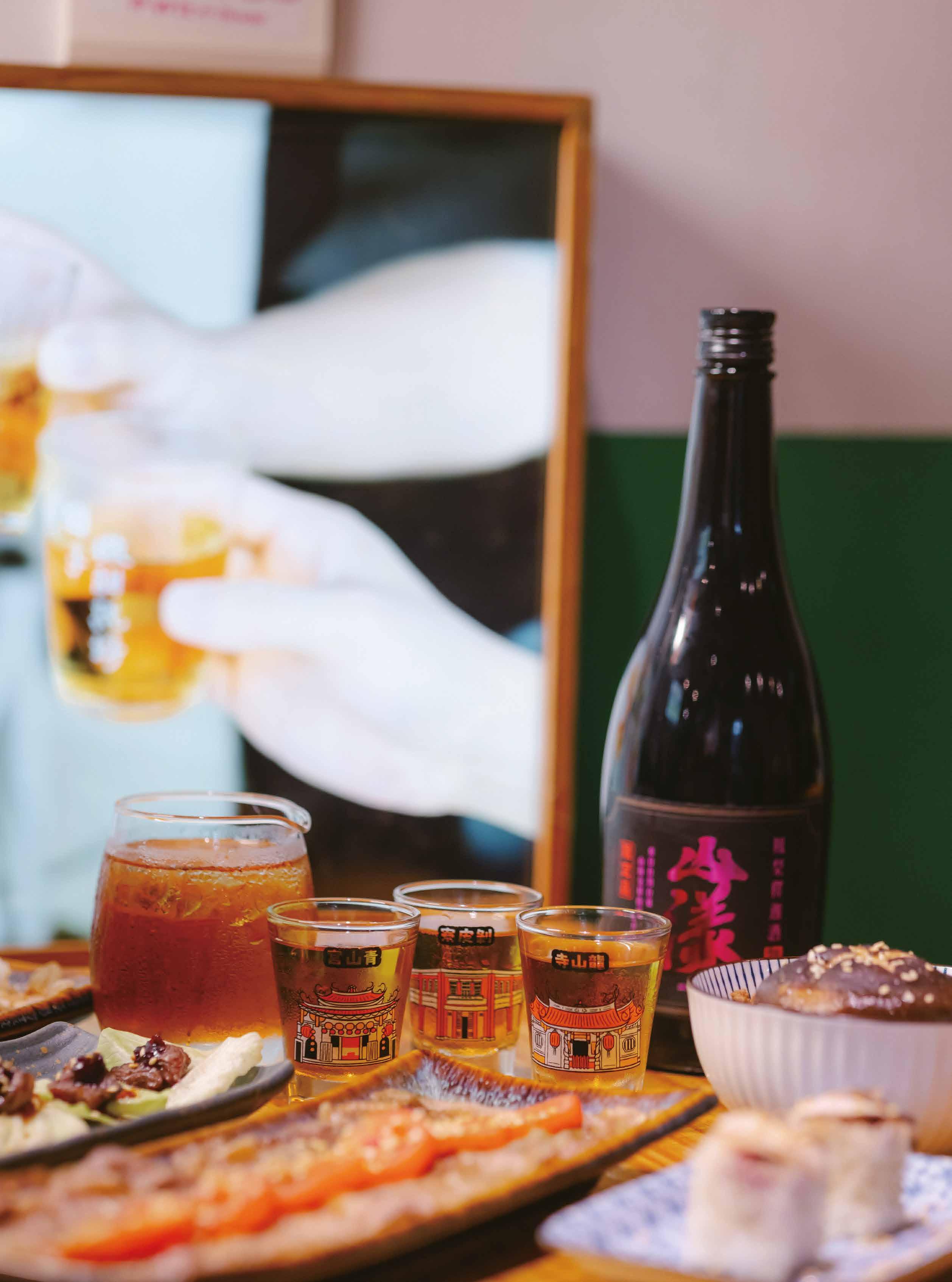
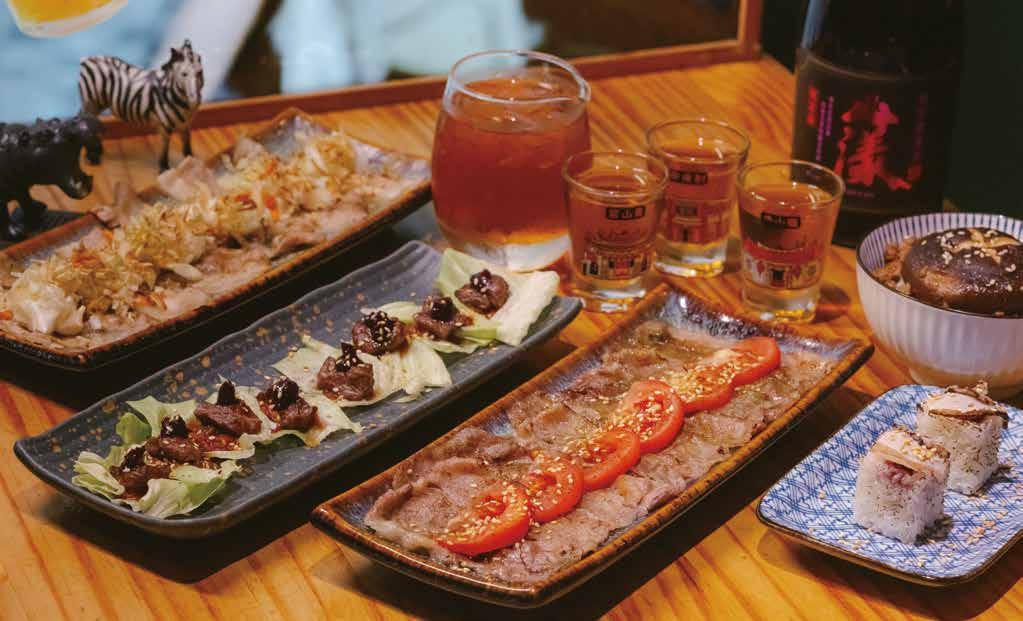
Nestled among the working-class storefronts on Dongyuan Street deep in Taipei’s heritage-heavy Wanhua District, Ka-láh-á prides itself on its community connections and roots. Founded by Chris Liu and his wife in 2017, the intimate beerhouse features elevated cuisine exclusively using Taiwanese ingredients along with an innovative drink selection.
The interior, like the food, is simple, straightforward, and very Taiwanese. Half-green/half-white walls are meant to evoke a sense of home while harkening back to the area’s history as a quasi-industrial zone. The setting is intimate, with most tables seating two to four people. Instead of baskets to hold patrons’ bags, old-fashioned red, blue, and green striped plastic shopping bags are available.
Many of the ingredients at Ka-láh-á are from the nearby Huannan Market, which Liu calls the “refrigerator of Taipei” for its abundance of fresh meat and produce, further cementing Kaláh-á’s place as a local institution with deep neighborhood ties. Ingredients for some seasonal items are sourced from Taitung County, where the couple enjoys vacationing far away from the big city, among the indigenous people.
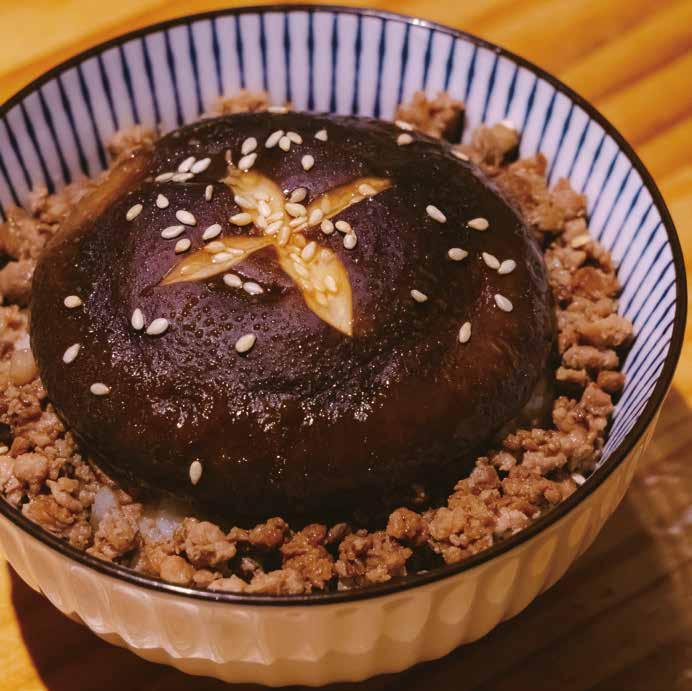
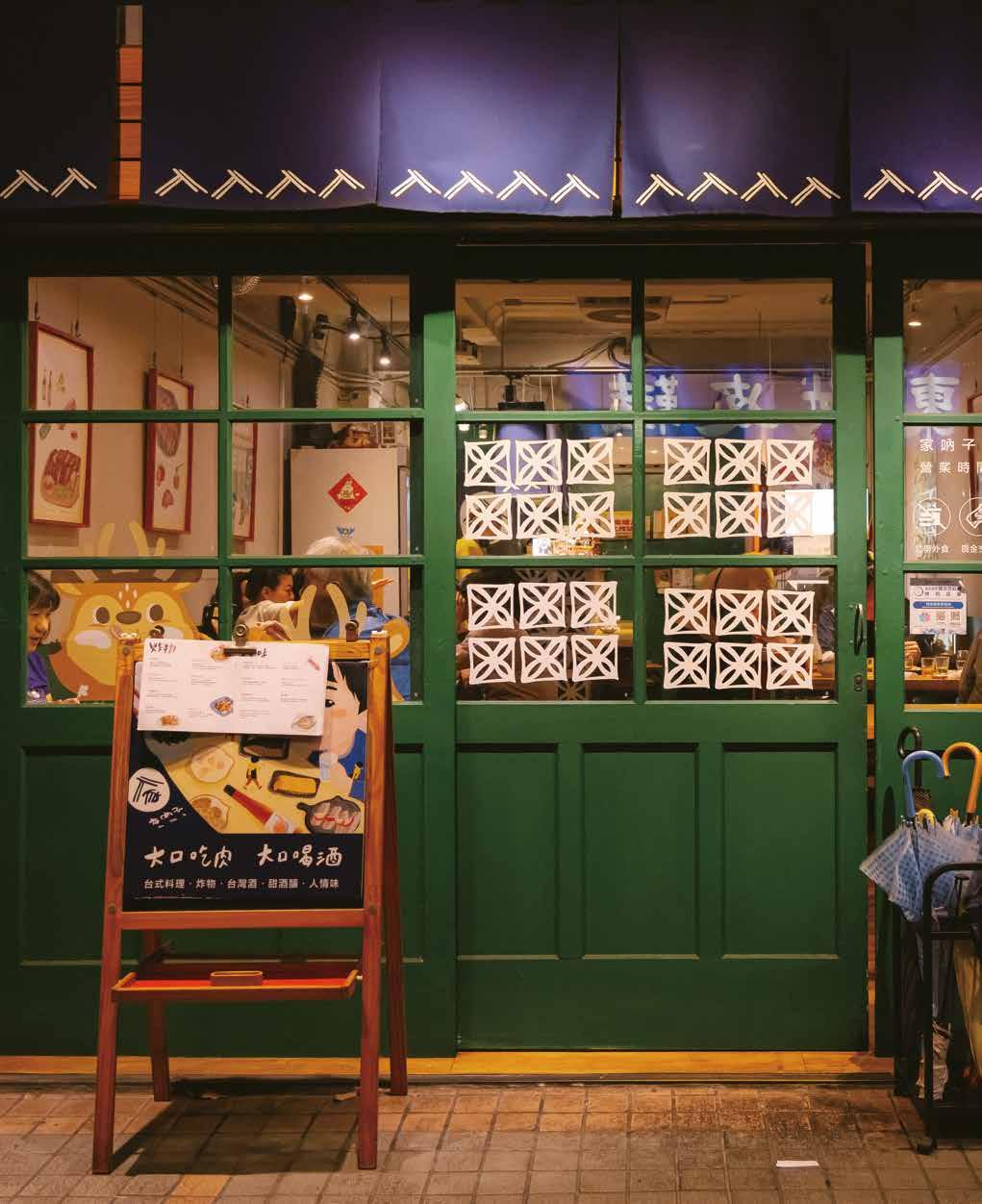
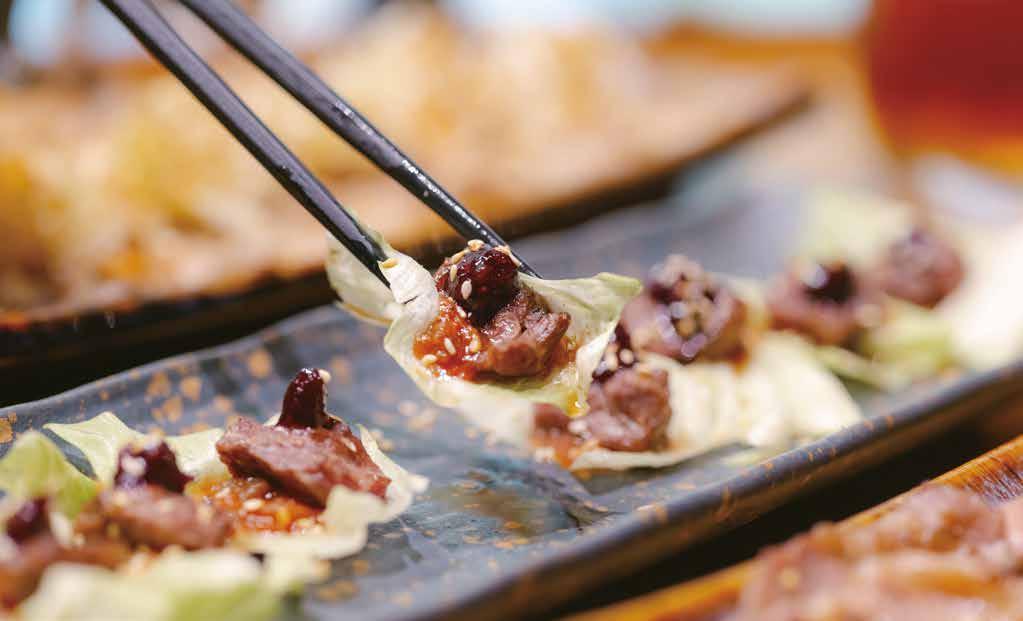
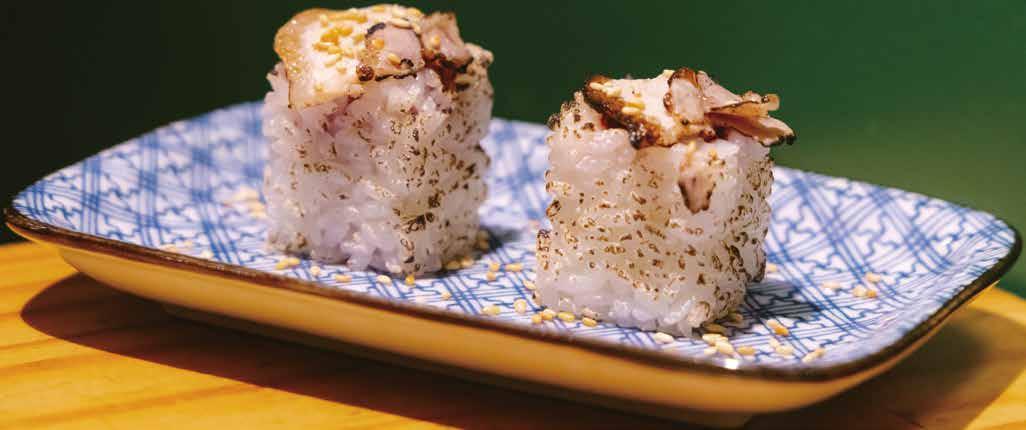
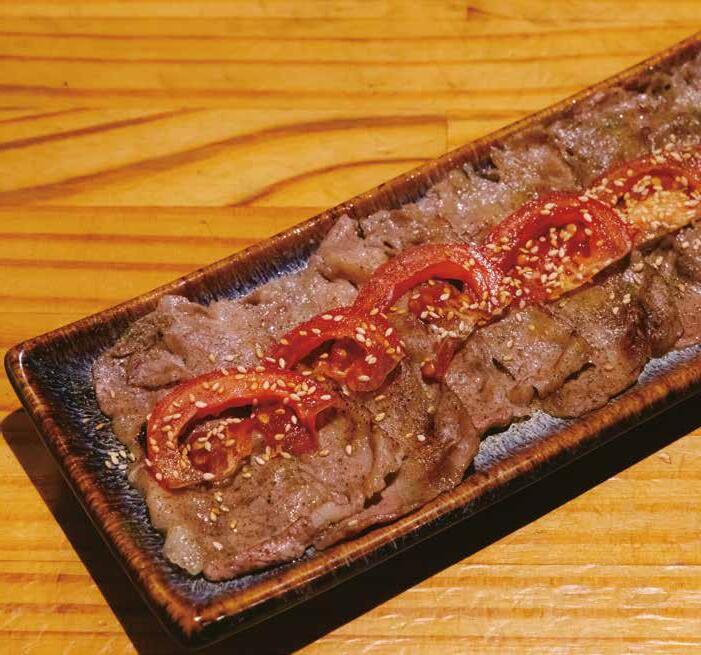
Many dishes at Ka-láh-á are meant to be shared. The silaw showcases traditional Amis-tribe pickled pork, lightly seared and served atop seared sticky rice with a roselle preserve. The “Tomato Beef” pairs fresh, juicy tomato with succulent, thinly sliced beef. The “Taiwan-style Pao Pao Pork” contrasts luscious pork with astringent Taiwanese-style kimchi, and the “Roselle Beef” features miniature beef bites topped with roselle salsa and white sesame seeds. Wash it all down with beer, or try – if in season – Taitung custard apple liqueur for another type of refreshing, local beverage.
| 家吶子台式居酒屋 (02) 2339-3582
No. 68-4, Dongyuan St., Wanhua District, Taipei City ( 台北市萬華區東園街 68 號之 4) 6pm-12am, closed Mon & Tue www.instagram.com/kalaha.2017 www.facebook.com/kalaha.2017 ka-lah-a.com.tw
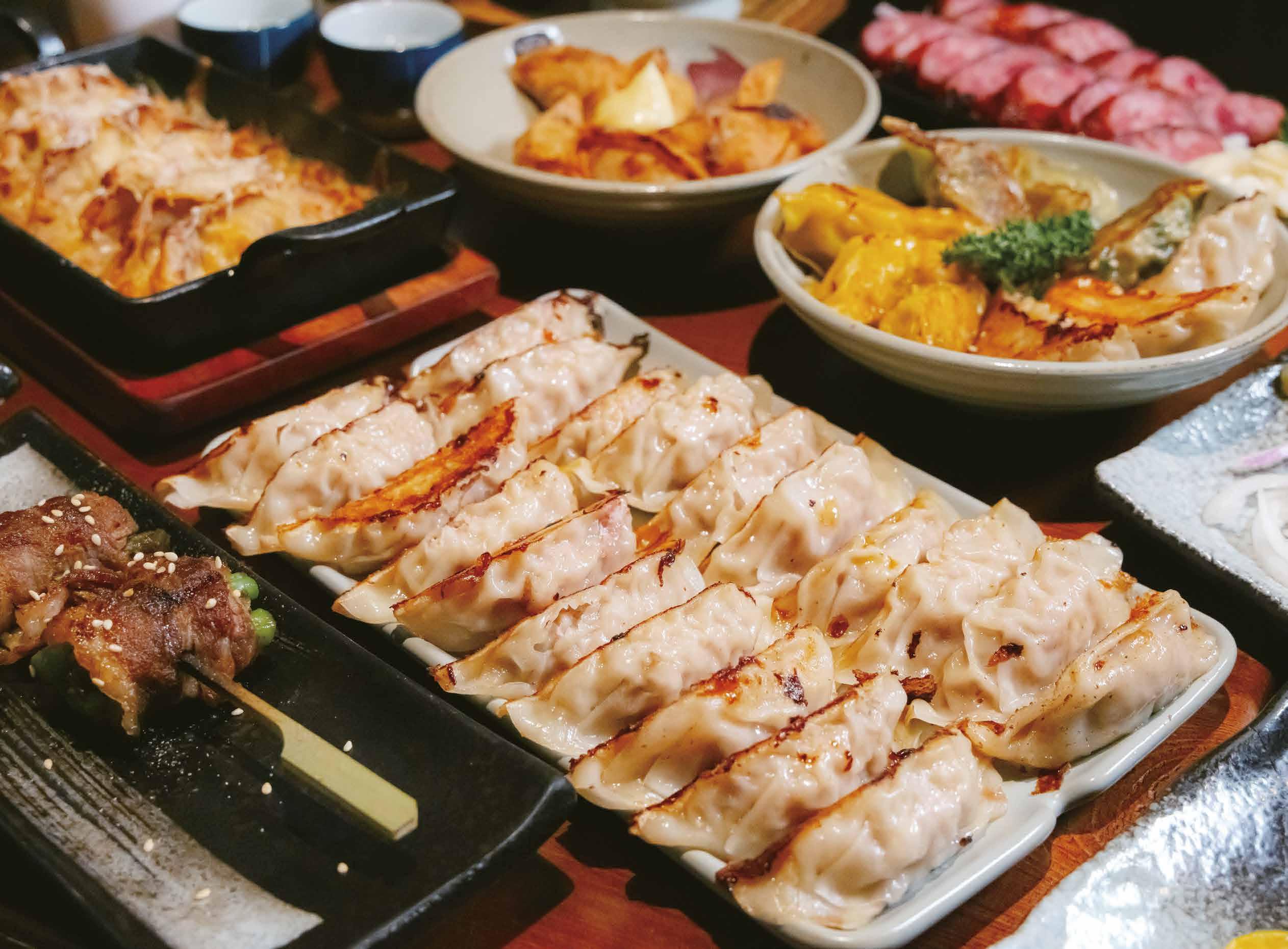
One unique thing about Taiwanese bar culture, especially beer culture, is the prevalence of dumplings on the menu. Drinks and dumplings are a perfect match, so it’s no surprise that one of Taipei’s most popular beerhouses is also known for exactly this combination.
Uncle A Bo Lang Taiwan Bistro, located just a few steps from Exit 1 of MRT Zhongxiao Dunhua Station, carries on a longstanding local dumpling tradition with its signature “thin-skinned” dumplings, with a special technique employed to ensure that the skin of each dumpling is only 0.5mm thick. This technique is popular in Japanese and several styles of Chinese dumpling making. In Taipei, it was perfected by chefs in Wanhua District’s Dongyuan Market in the mid-20 th century. Since nowadays there aren’t many dumpling masters left who can achieve a skin this thin, making A Bo Lang’s dumplings a rare treat.
Thin dumpling skin is made by adding boiling water to flour; the water’s heat allows the starch in the flour to gelatinize into long chains that act like polymers, creating a dough that is pliable and soft but won’t break when stretched until translucent and cooked. This method allows the plump filling to peek through and produces an especially crispy potsticker.
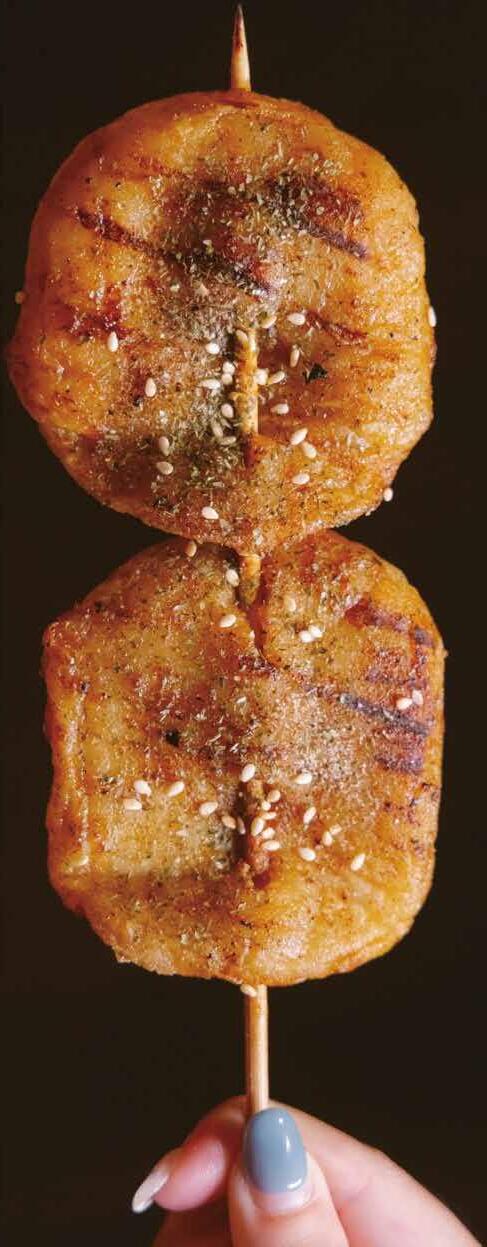

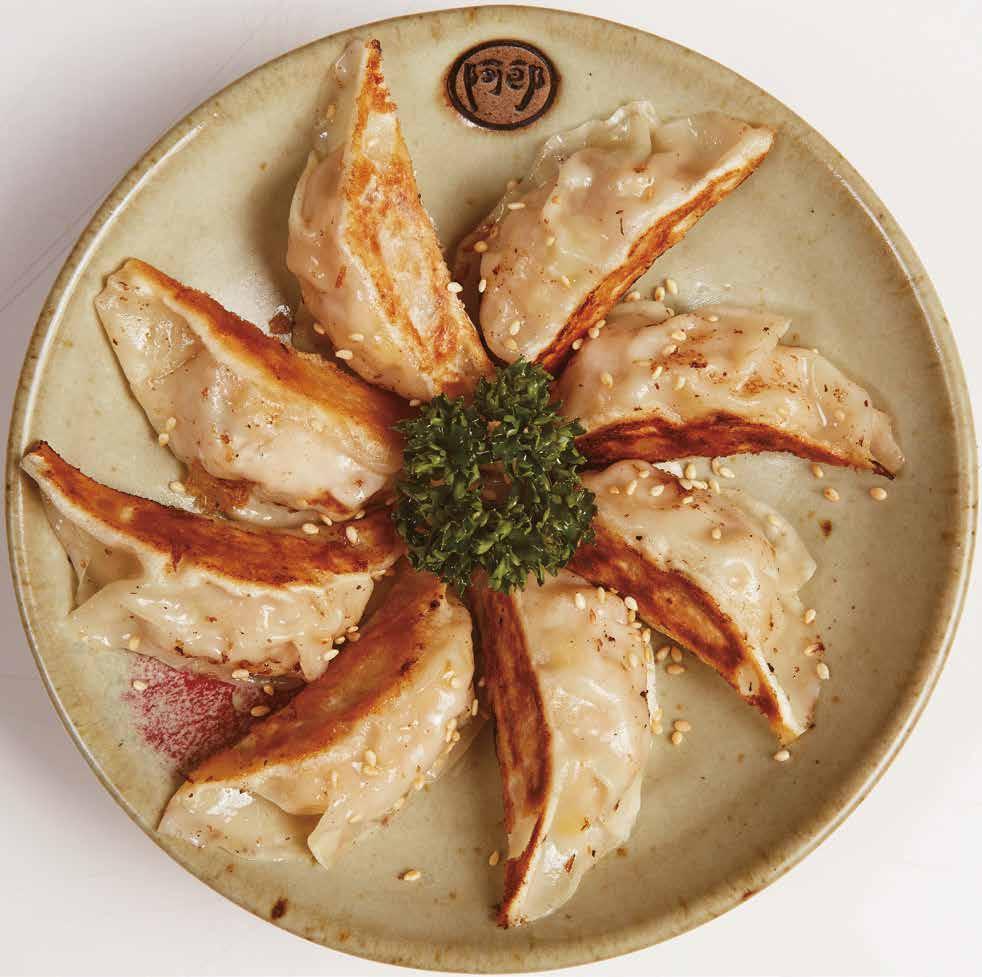
A Bo Lang offers thin-skin dumplings that are steamed, deep-fried, or pan-fried, with fillings such as pork with cabbage, golden corn, and Taiwanese chive. Its “Three Brothers Dumplings” offering is three dumplings of three different flavors that are served with a mayonnaise dipping sauce. The “Deep-fried Tiger Prawn Chive Dumplings” are extremely long steamed dumplings, each containing one massive giant tiger prawn. The “Iron-plate Cheese Dumplings” come swimming in gooey cheese that sticks to the dumplings’ crispy “skirt” of web-like fried dough.
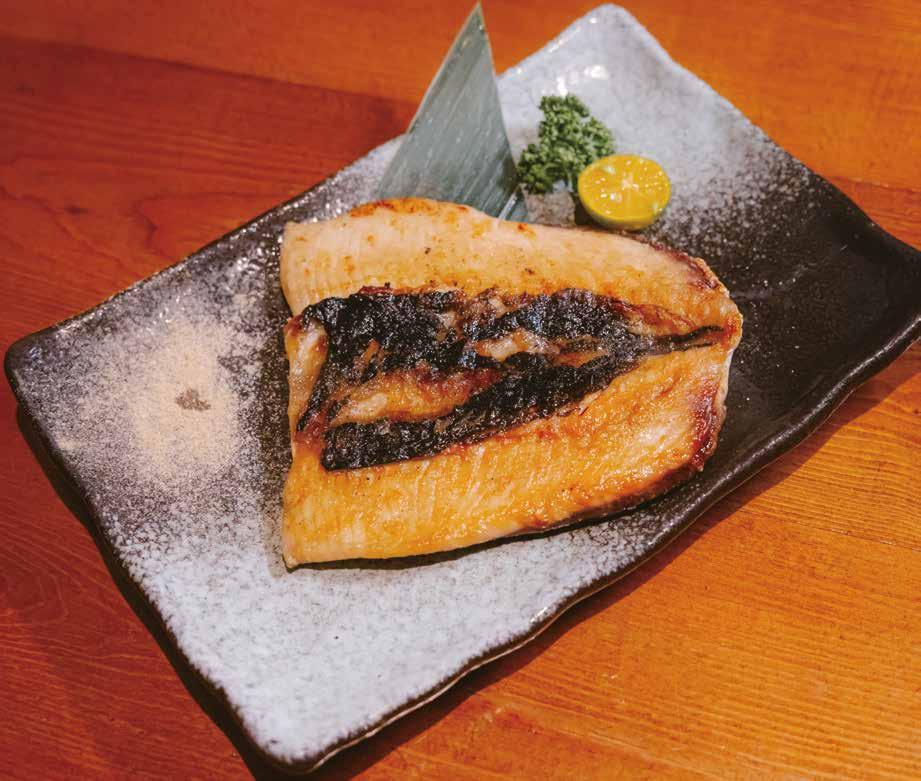
Of course, dumplings aren’t the only thing on the menu at A Bo Lang. Like any good Taiwanese beerhouse, it offers a variety of barbecued yakitori on sticks, including Taiwanese-style tempura (made with fish paste), chicken thigh with onion or pomelo, and various kinds of mushrooms and tofu, each seasoned and grilled to perfection. The most popular meat dishes are the “Fatty Pork with Onion,” beautifully textured grilled “Milkfish Belly,” which is a Taiwanese specialty, “Thick-cut Steak,” and “Taiwanese black-pork sausage.”
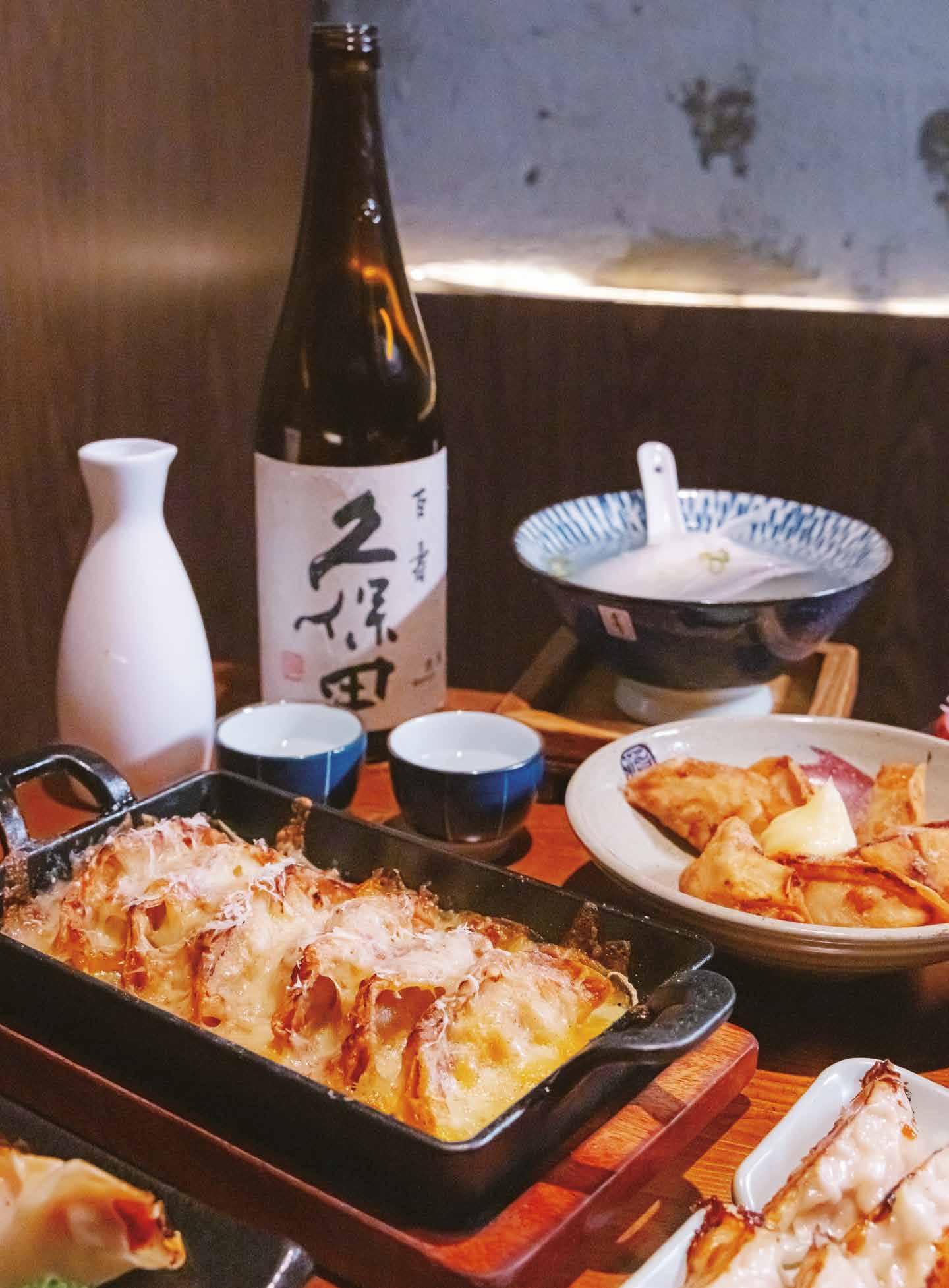
The drink menu is just as generous, with Taiwanese and imported beers, plum wines, sake, and more. The Taiwan Beer Only 18 Days draft, which has no preservatives and thus only keeps for 18 days, is one of the bestsellers.
Proprietor Hamilton Peng named the restaurant A Bo Lang in part as a reference to the thin skin of the dumplings (bo means “thin” in Mandarin), but also as a way of giving the bistro a unique personality. “A Bo Lang” sounds like a Taiwanese-style nickname, and the name is accompanied by the image of an avuncular man in a vintage outfit.
The point is to bring a sense of Taiwaneseness to an izakaya, originally a Japanese concept, and not to bank on nostalgia with the branding or decor. Uncle A Bo Lang Taiwan Bistro is decorated with touches of brick, art, calligraphy, and old-style textured glass, with wooden tables and chairs that are reminiscent of, but not the same as, bygone-days Taiwanese school furniture. This is combined with more modern accents in red and black, referencing but not copying the colors of Hakka-style floral fabric, also a Taiwanese staple.
"Iron-plate Cheese Dumplings"
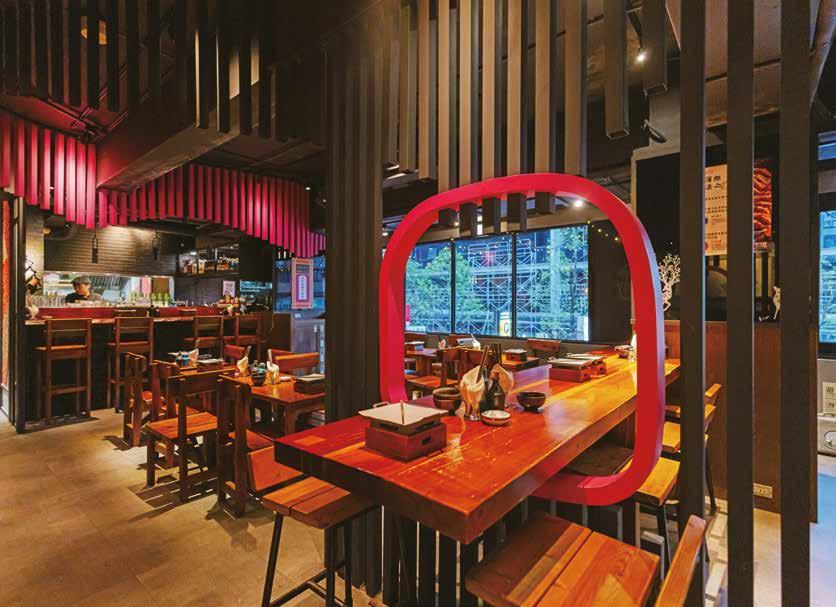
UNCLE A BO LANG TAIWAN BISTRO |
(02) 8771-6686
2F-2, No. 177, Sec. 4, Zhongxiao E. Rd., Da'an Dist., Taipei City ( 台北市大安區忠孝東路四段 177 號 2 樓之 2 ) Mon-Thu 11:30am-2pm, 5:30pm-10pm Fri-Sun 11:30am-2:30pm, 5pm-12am www.instagram.com/a_bo_lang_taiwan_bistro www.facebook.com/UncleABoLangTaiwanBistro
Dumplings aside, other popular dishes to order on a night out are yakitori (Japanese-style sticks of barbecued meat and vegetables) or Taiwanese-style fried chicken. Few Taiwanese beerhouses do these dishes better than Zen Food, located near MRT Daan Station.
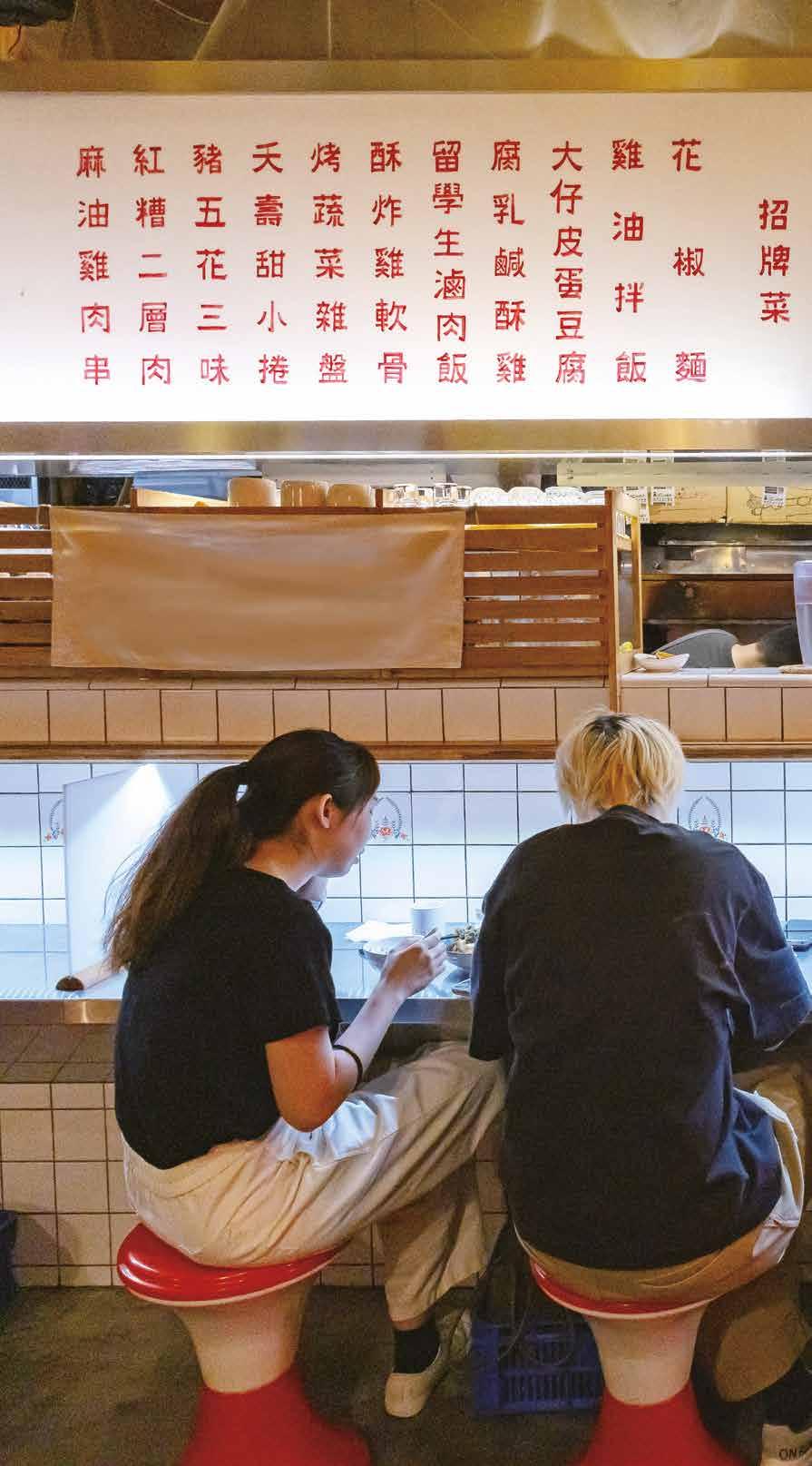
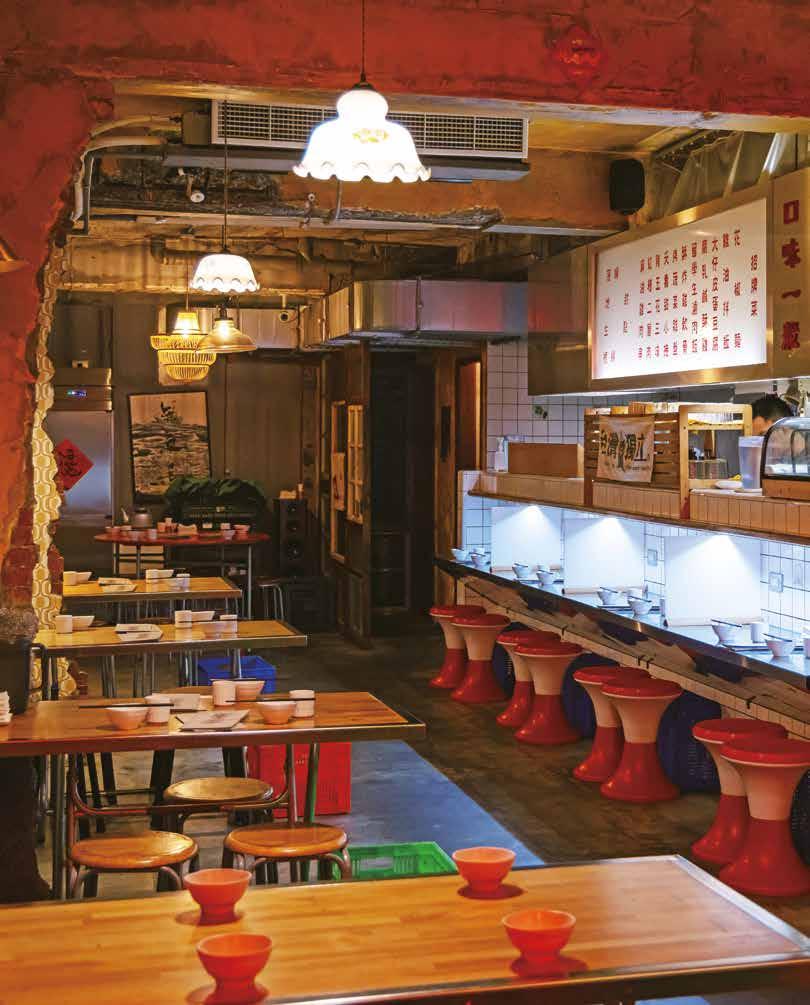
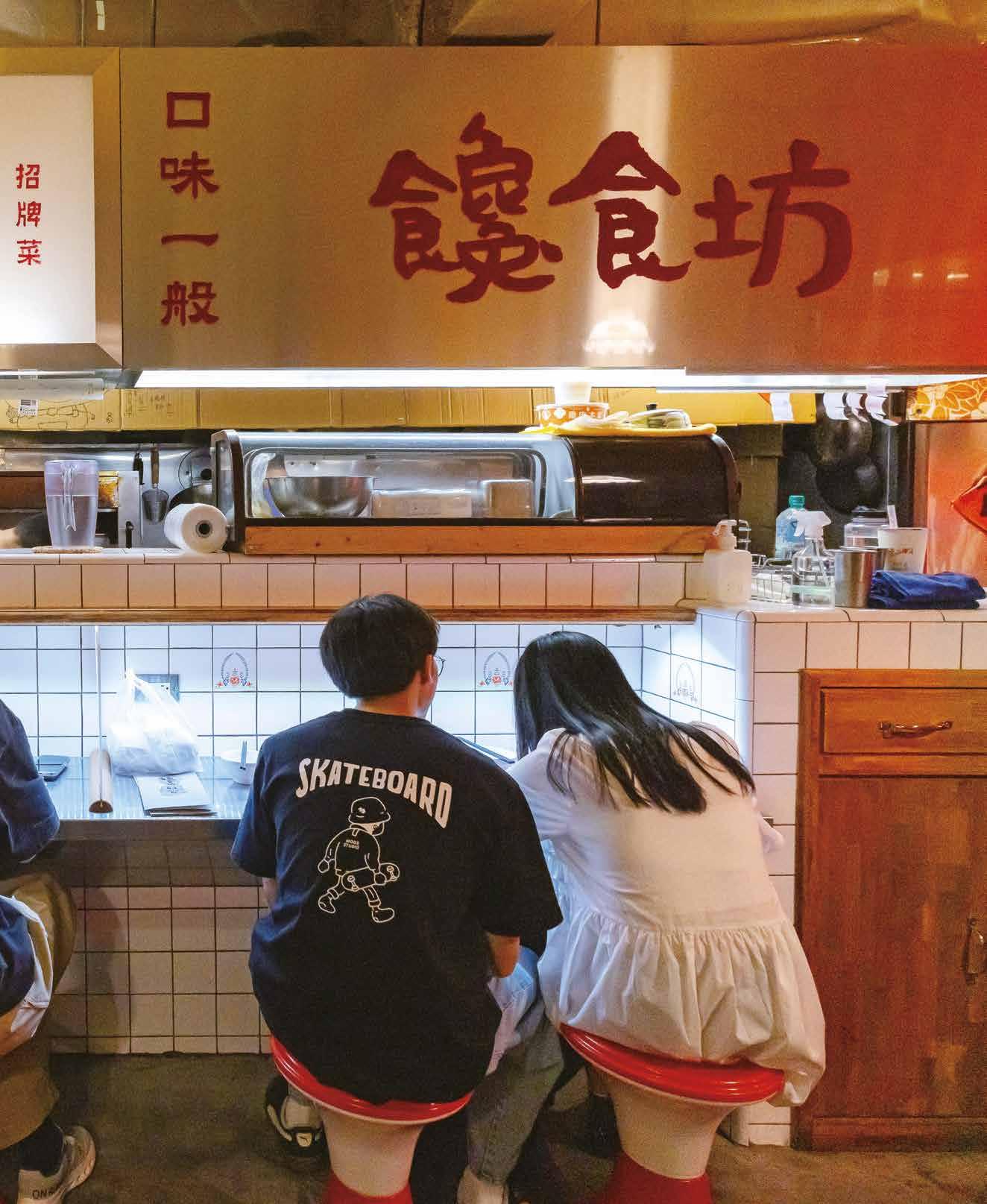
For the past few years, Zen Food has been the place where all the “cool kids” go to eat and drink. The vibe is cool indeed: situated in a quiet residential neighborhood down the street from two hip coffeehouses, the exterior, with carved cement ventilation bricks and old-fashioned steel window grates, is a synecdoche of Taiwan. The interior is clad in painted cement and patterned tile, like a 1970s Taiwanese abode. The night-market-style menu over the open kitchen and long bar-style seating are pure Taiwanese “street food” style.
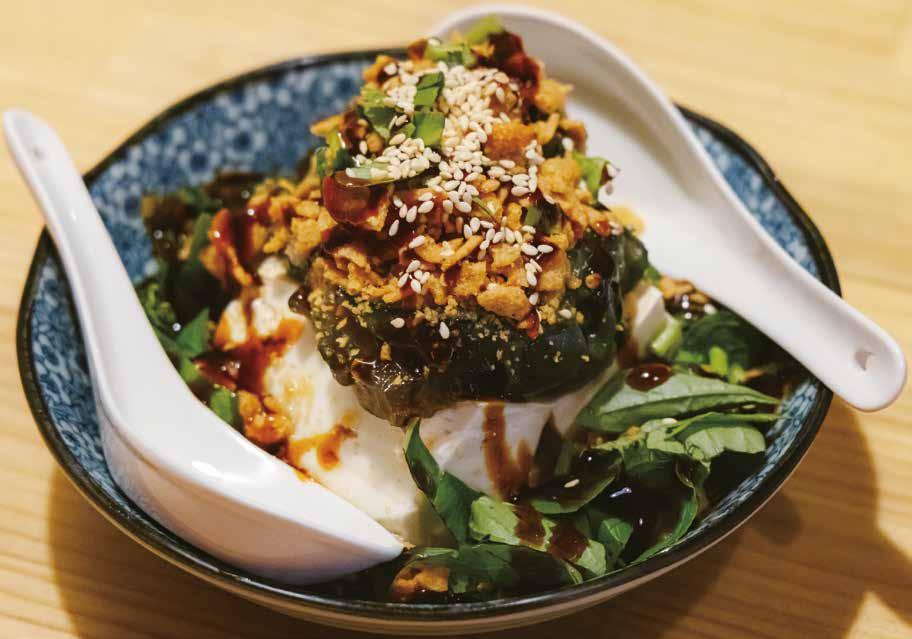
Zen Food did not set out to be an izakaya-style eatery. The team started with little to no experience in the restaurant industry, but some were accomplished home cooks. They had initially planned to open an elevated Taiwanese friedchicken place, but then decided to just offer preserved tofu fried chicken as the only option on the menu. Yakitori, numbing-spicy flower pepper noodles, fried tofu, and other dishes were thereafter introduced to fill out the restaurant’s offerings.
The “Preserved Tofu Fried Chicken” is truly excellent, especially after squeezing the calamansi that accompanies it over the freshly cooked pieces. Not everyone likes the pungent, fermented taste of preserved tofu, but Zen Food keeps it light so that the taste is not overwhelming. The most important aspect of great fried chicken is juiciness, and the chefs prioritize this so there is never a dry bite.
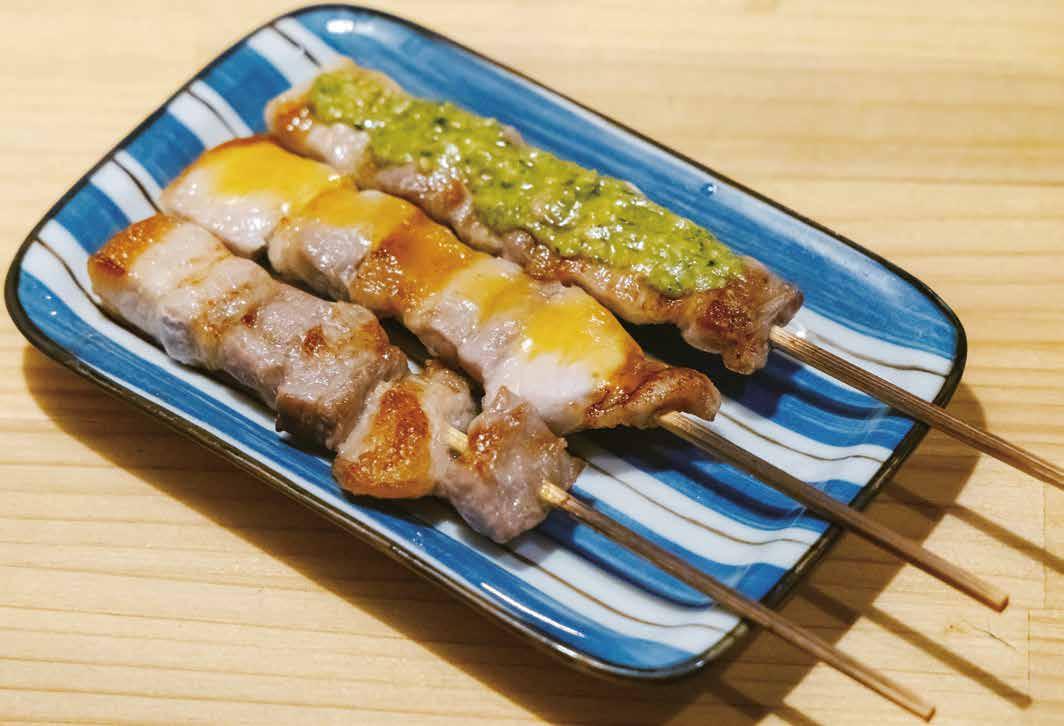
For yakitori, a standout dish is the “Three-way Grilled Pork Belly.” This unique dish comes with three pork skewers: original, which is lightly salted; Hakka-style kumquat sauce, which has a complex citrus flavor; and the chef’s signature pesto, made with Taiwanese basil, Taiwanese chives, ground almonds, and bitter tea oil. Other popular yakitori dishes are the “Breaded and Fried Garlic Cloves” (on the menu as a pun on “forget it,” the Chinese for “garlic” and “forget it” pronounced the same) and “Beef Rib with Garlic Sauce.”
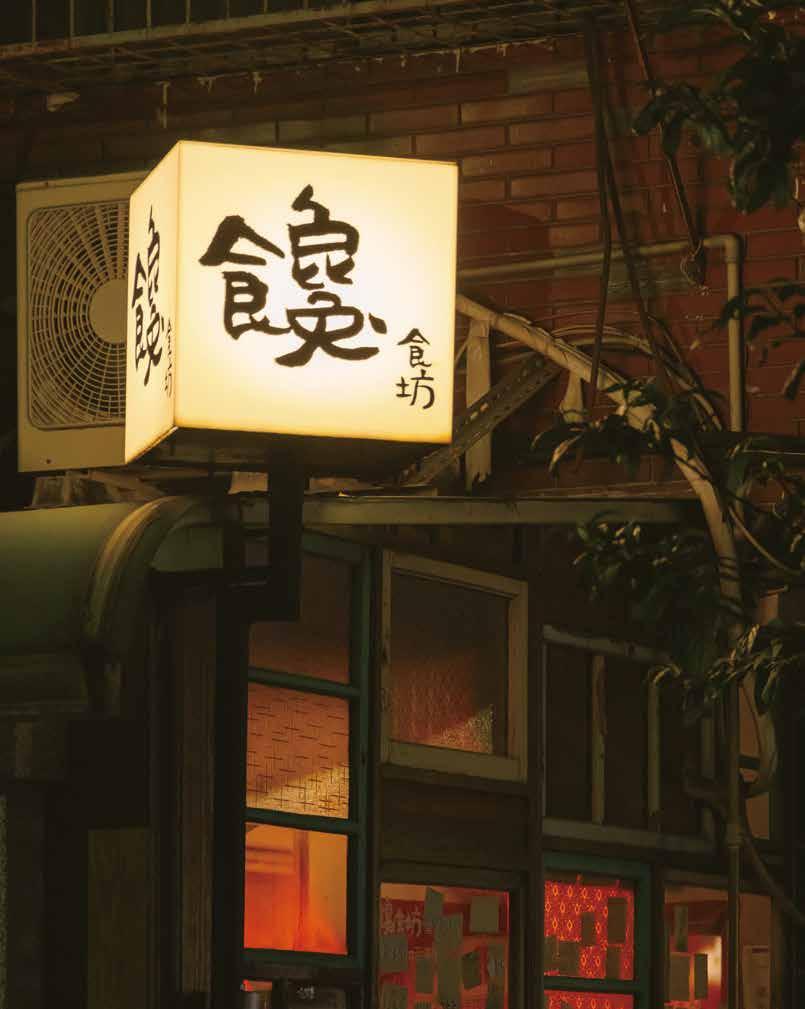
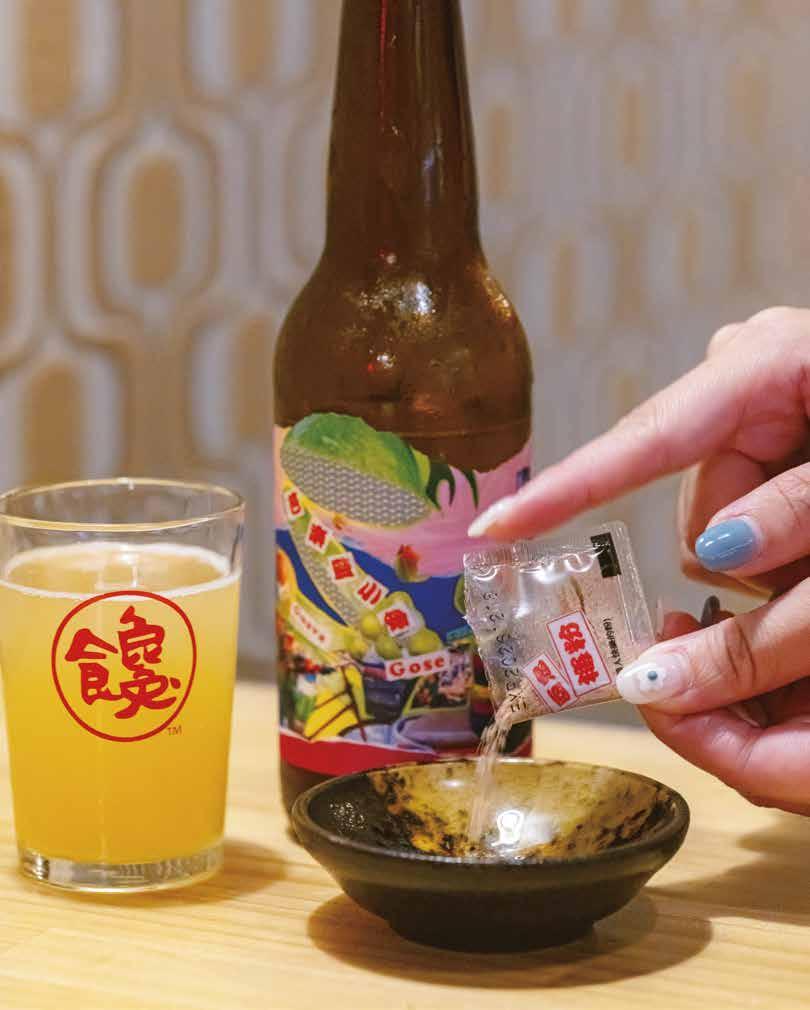
ZEN FOOD | 饞食坊 (02) 2755-5859
No. 58, Ln. 30, Sec. 4, Xinyi Rd., Da'an Dist., Taipei City ( 台北市大安區信義路四段 30 巷 58 號 ) 6pm-2am www.instagram.com/zenfooood www.facebook.com/zenfooood
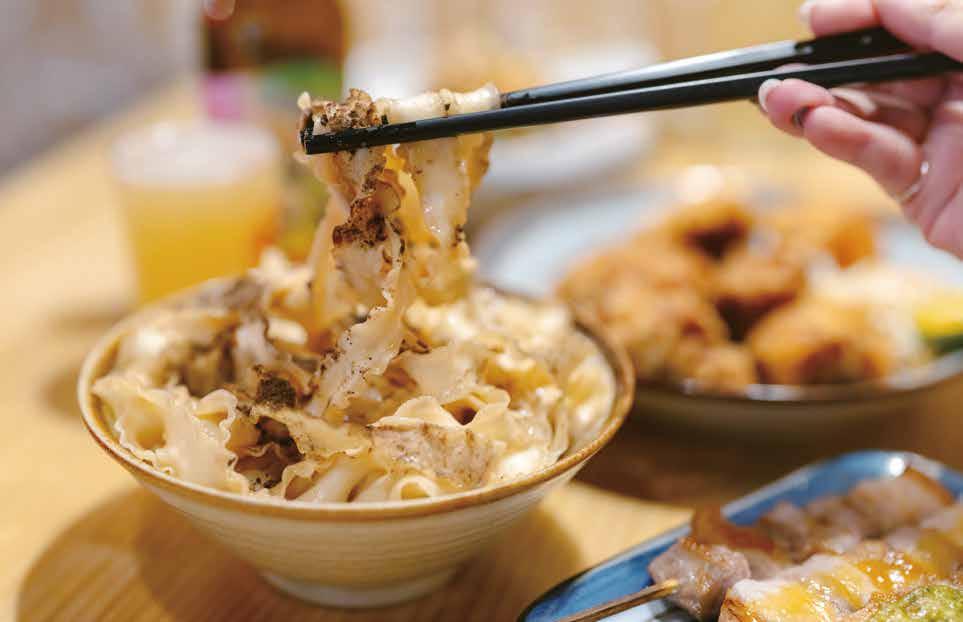
The numbing-spicy flower pepper noodles (titled “Sichuan Pepper on Noodles” on the menu) are a popular carbohydrate to accompany yakitori: the dish looks deceptively simple, seasoned just with pepper, salt, and oil, but the taste is unforgettable. The “Thick Potato Wedges” are also satiating.
Zen Food’s drink selection is entirely Taiwanese. Among the many beers on offer, the Taiwan Beer Only 18 Days draft is the most popular; other beers are listed under different breweries, including North Taiwan Brewing and 55th Street Craft Brewery. Also wellregarded are the extensive plum wine and sake selections, as well as the several cocktails on offer. More popular than all of these, however, is the list of millet wines. Millet wine is a product made by Taiwan’s indigenous tribes, and can be difficult to find outside Taiwan. No Taiwanese spirits-sampling experience is complete without having tried it. The singular millet wine to try is the “Penglai rice fragrance mountain boar” millet wine. The name references a popular rice cultivar in Taiwan, with the flavor coming from this kind of rice, purple rice, and millet. It’s complex and a little pungent, and the perfect accompaniment to fried chicken or grilled meat.
ENGLISH AND CHINESE 55th Street Craft Brewery | 五十五街啤酒
“ Beef Rib with Garlic Sauce” | 蒜味牛肋
Chris Liu | 劉哲豪
“ Deep-fried Tiger Prawn Chive Dumplings” | 炸草蝦韭菜餃子
Dongyuan Market | 東園市場
“ Fatty Pork with Onion” | 蔥蔥豬五花
“ flower pepper noodles” | 花椒麵
“ forget it ” | 蒜了吧!就這樣 Hamilton Peng | 彭成翰
Huannan Market | 環南綜合市場
“ Iron-plate Cheese Dumplings” | 帕馬森起司鐵板煎餃
“ Taiwan-style Pao Pao Pork ” | 台式泡泡豬
“ Penglai rice fragrance mountain boar ” millet wine | 蓬萊米香山豬小米酒
preserved tofu fried chicken | 腐乳鹹酥雞
“ Roselle Beef ” | 洛神沙沙牛
“ Taiwanese black-pork Sausage” | 台灣黑豬肉香腸
Taiwanese-style fried chicken | 鹹酥雞
“ Thick Potato Wedges” | 厚切黃金脆薯
“ thin-skinned ” dumplings | 薄皮餃子
“ Three Brothers Dumplings” | 餃子三兄弟
“ Three-way Grilled Pork Belly ” | 豬五花三味
“ Tomato Beef ” | 蕃茄牛五花

In Taiwan, cuteness isn’t optional — it’s expected. The following three brands have made it central to their identity, producing bags and accessories that are stylish, practical, and impossible to mistake for generic mass-market goods, thanks to whimsical characters and pleasing color palettes.
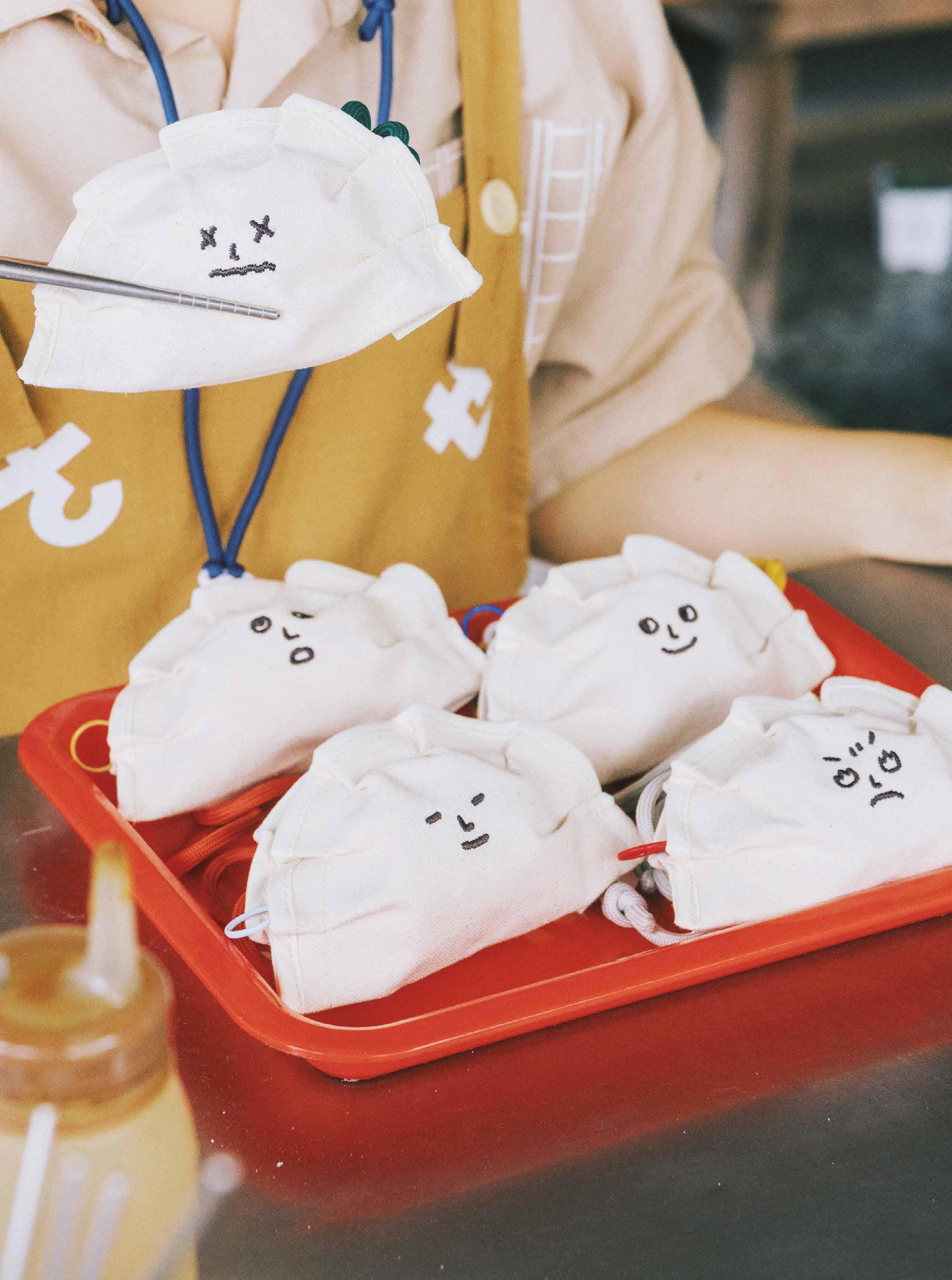
Hey Sun (www.heysun.co) is Taiwanese lifestyle brand known for prints that translate everyday Taiwanese scenes and cultural symbols into wearable design. Many of its pieces feature screen-printed graphics on fabric, giving the designs a tactile, handcrafted feel, with numerous items produced in Taiwan in support of local creativity and manufacturing.
The brand’s recognizable motifs transform familiar cultural elements into something you can wear or carry. These include zhuyin fuhao (aka “bopomofo” – phonetic symbols used to help schoolchildren learn the pronunciation of Chinese characters). Prominently printed on bags, shirts, socks, and even umbrellas, these cheerful-looking symbols give Hey Sun creations a distinct Taiwan flavor, since they are only commonly used on this island.
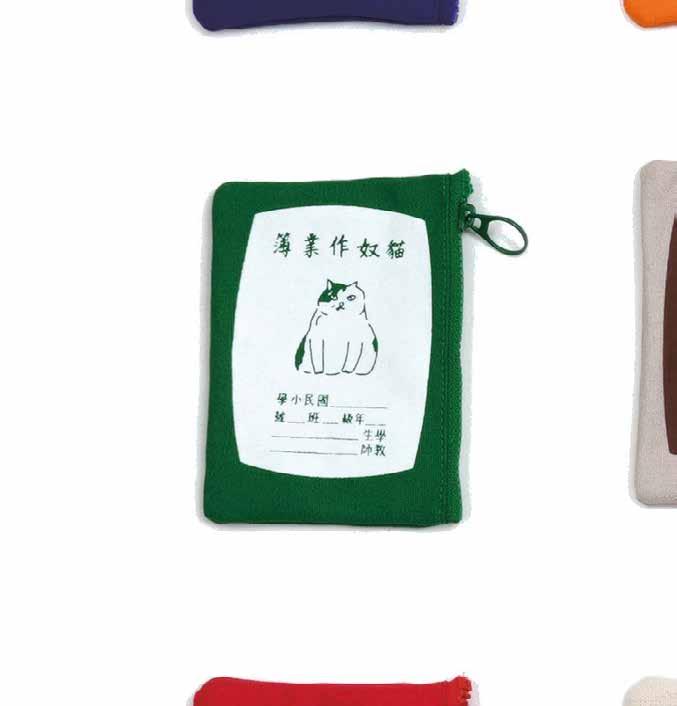
Equally playful is the use of the humble dumpling. Bags and pouches feature images of off-white or egg-yellow dumplings, while handbags and coin pouches take on the shape of this iconic street food entirely. Among the brand’s more inventive items are socks printed with the imagery of a road surface, complete with a zebra crossing on one sock and the Chinese character “man” (“slow”) on the other – a sight instantly familiar to anyone who has walked the streets of Taiwan.
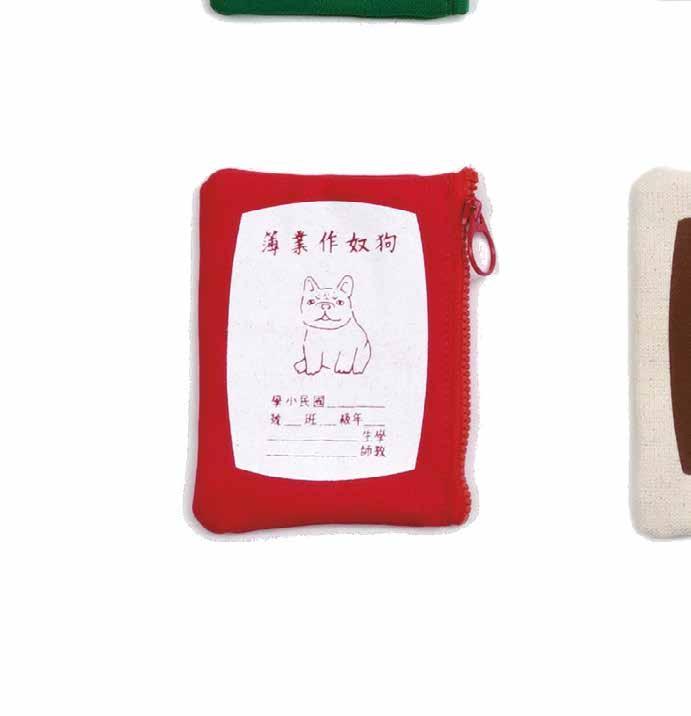

Bangstree (www.bangstree.com) is a Taiwanese handmade bag brand established in 2012. The brand was created with the hope that thoughtfully crafted bags could become popular and important accessories, much like bangs can become a defining part of a girl’s look.
Each piece is designed by the studio and carefully sewn by hand, reflecting close attention to detail. The team describes its bags as small “fruits” from a tree – individual pieces with distinct colors and personalities, each meant to be chosen by the person it resonates with.
Distinct from conventional canvas bags, Bangstree focuses on experimenting with color and combining different fabrics and materials. Many of its designs feature vibrant palettes and unexpected pairings, emphasizing individuality while maintaining a playful, handcrafted aesthetic.
Among its products are small pouches (ideal for compact cameras and utensils), fluffy purses, and shoulder bags, some featuring cute illustrations and tree-related English phrases, such as “Gold coins grow on a tree” or “I plant a healthy tree.”


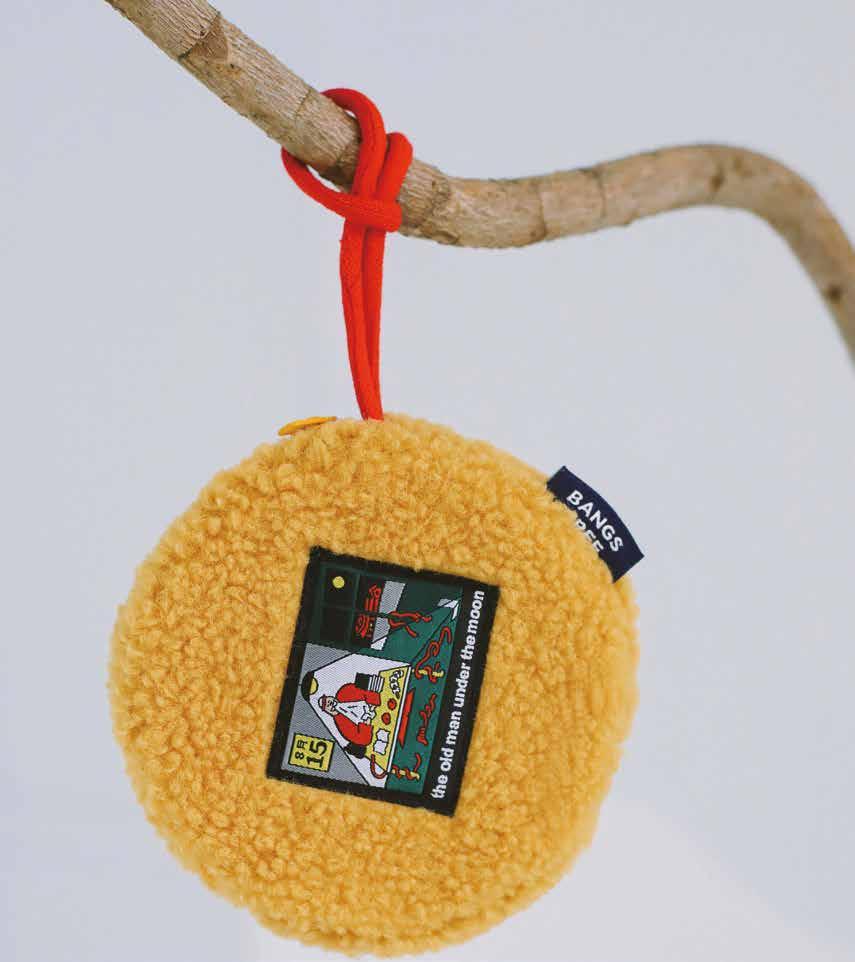

More More Toe (moremoretoe.shoplineapp.com) is a Taiwanese illustration-based lifestyle brand that has been creating original designs since 2013. The brand is known for the playful handdrawn characters – mainly animals such as dogs, cats, and bears, as well as shrimp and other whimsical creatures – and story-driven visuals featured across its bags and accessories.
Many of its designs emphasize versatility, with some bags featuring detachable pouches in distinct asymmetrical shapes that can be used separately. When purchasing a backpack, customers can choose from a variety of color combinations and pair it with interchangeable pouches – attached via a zipper and a button – to suit different moods and occasions. Water-repellent fabrics are commonly used, such as durable canvas, combining practicality with distinctive illustration art.
Original artwork is incorporated into each product, turning everyday bags and accessories into expressive design pieces. Accessories also include pins featuring the brand’s signature characters. Over time, More More Toe has built a strong following among fans of Taiwanese independent design and illustrated lifestyle goods. Despite the thoughtful design and quality materials, its prices remain accessible, making the products appealing to young budget-limited consumers seeking something personal and expressive.
Note: More More Toe products are designed in Taiwan but manufactured abroad.
All three brands are deeply rooted in Taiwanese everyday life and visual culture, making their products memorable souvenirs and gifts – the kind that feel personal and considered rather than picked up randomly at a souvenir shop or an airport outlet.
ENGLISH AND CHINESE Bangstree | 瀏海樹
Hey Sun | 嘿森
man | 慢
More More Toe | 墨墨頭工作室
zhuyin fuhao | 注音符號
The people of Taiwan obsess about their food. Among the palate sensations most avidly and famously pursued is “numbing-spicy” (mala) – notably mala hotpot. Another is “crunchy crispy” (cui) – such as batter-coated chicken, shaped and served like popcorn. And have you ever heard of “Q” foods? Well, you’ve come to the right place to read all about it!
hat in the world is a Q food? The letter refers to a specific texture beloved by Taiwan locals – we’ll explain the use of an English letter rather than a Chinese character in a moment. Eat a Q food and your mouthfeel will be a combination of slightly chewy and offering resistance to the bite without either mushiness or hardness, springy, tender, and moist. You might hear it described as “food that fights back.” Though not an exact match, it has also been explained as “Asia’s al dente.”
You’ll also see “QQ” being used. Clever you, take a guess at what that means. (Answer at end of article – no peeking!)
We know you diehard foodies will be chomping at the bit to check out the specific new food treasures that await you, so if you just can’t hold on, jump to the last section – but don’t forget to come back!
Though the letter used is from the English alphabet, and some mistakenly think “Q” was chosen because it sounds a bit like “chewy,” this slang term’s origins lie in the Taiwanese language. It’s a metamorphosis of the Taiwanese Hokkien word khiū ( ���� ), used to describe something wavy, curvy, or bendy, most commonly used to describe the curliness or bounciness of curly or permed hair, but also used for curly and bouncy/springy items like noodles, dumpling skins, etc. Khi ū / Q is a bit of onomatopoeia –think of the English word “boing.”
When the word was adopted into local Mandarin, because no standard character captured the sound or meaning perfectly (khiū being specific to Hokkien, not generally used elsewhere), the English letter Q was utilized instead, being a better match. Q usage has since left the island, now widespread in China and Chinese-speaking communities beyond. Note, however, that inside and outside Taiwan, the letter has also come to be used as slang for “cute,” so pay attention to context.
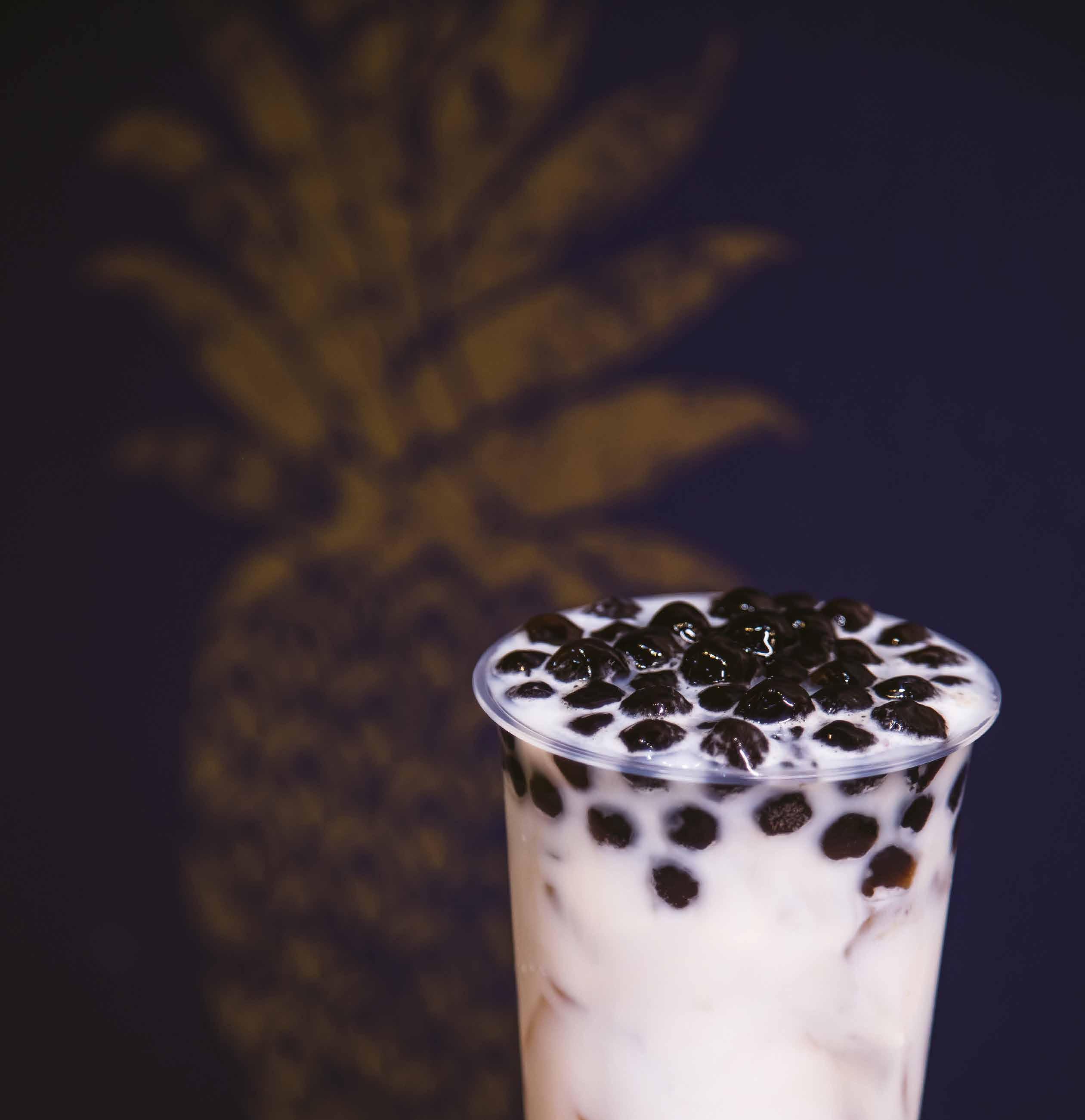
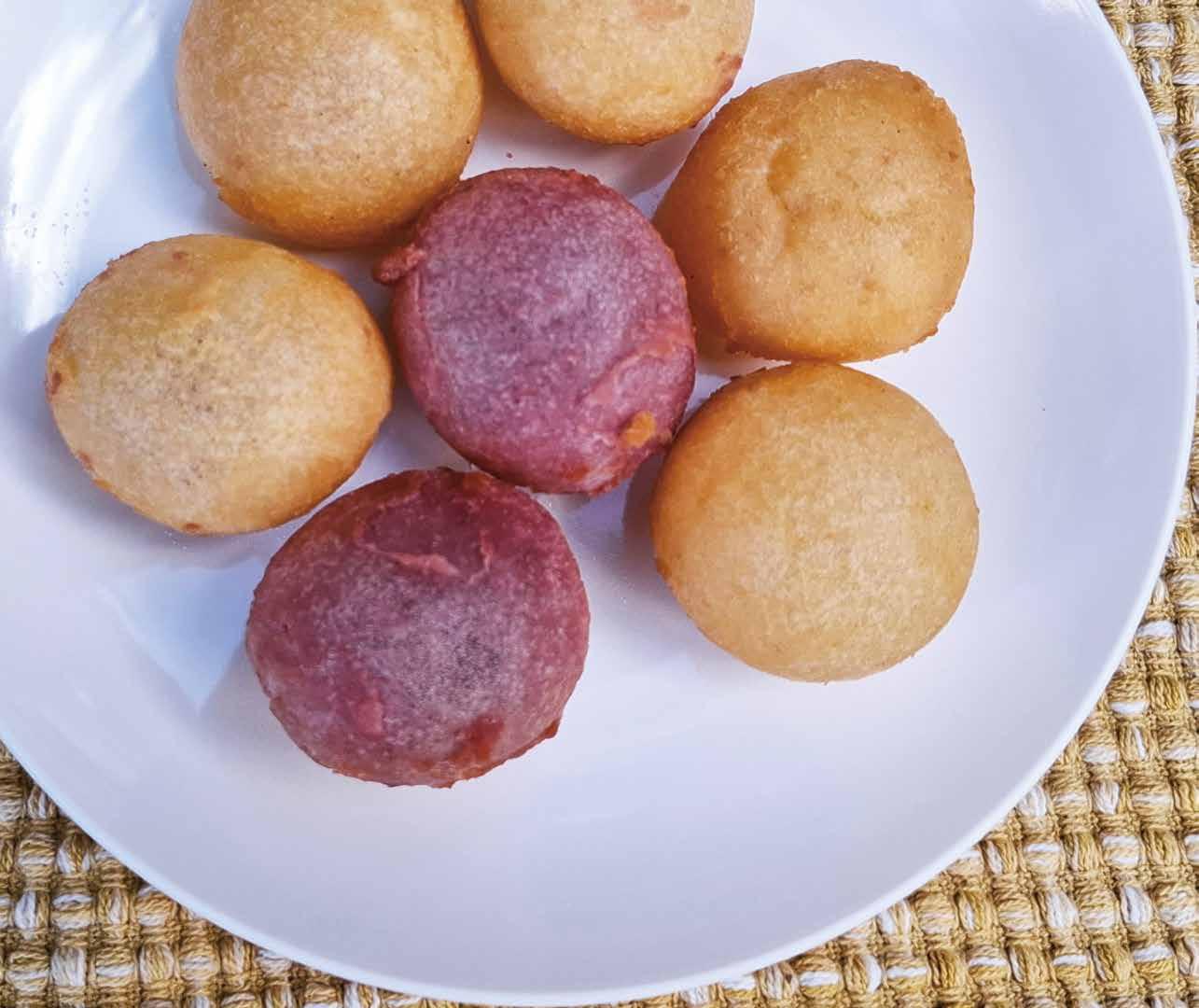
The unique Q texture is achieved through the manipulation of starches and proteins. Heat, moisture, and technique – such as extended kneading of fish paste or adding alkaline lye water to noodles –cause starches to gelatinize and protein networks to strengthen, creating the signature springy resistance. Freshness is highly prized in Chinese/Taiwanese cuisine, with ingredients commonly purchased the same day at market, and the treasured Q texture is a go-to freshness indicator. This texture is so prized that it is sought widely in the creation of both savory and sweet snack foods and delicacies.
Fishballs & Meatballs – Often labeled “Q on a stick” when served on skewers at night markets. The paste is vigorously kneaded and thrown against a tabletop repeatedly, causing the proteins to tangle, increasing springiness. The removal of air pockets also enhances firmness and bounciness. Local foodies all know that cuttlefish balls are the most Q.
Noodles – Lye water increases wheat-noodle dough’s alkalinity, strengthening the proteins. Lye noodles are notably springier and stretchier than standard wheat noodles.
Tapioca Pearls – The heart of bubble (boba) tea, tapioca balls are made with tapioca starch, sweet-potato starch sometimes added for greater firmness. Instead of al dente, some describe these as akin to gummy bears.
Wood Ear Mushroom – Locals love all mushrooms for their chewiness and bounce, but only the gelatinous wood ear mushroom achieves the classic Q texture. They’re consumed as a cold appetizer, marinated in vinegar and sesame oil.
Other must-mentions are mochi, a sweet treat, and the hearty savory icon called bawan (Taiwanese pronunciation; meat-filled, gelatinous-skin crystal dumplings).
“QQ” answer – That’s right, “extra” or “double” Q/chewy/springy. Pat yourself on the back!
ENGLISH AND CHINESE
bawan | 肉圓
cui | 脆
mala | 麻辣
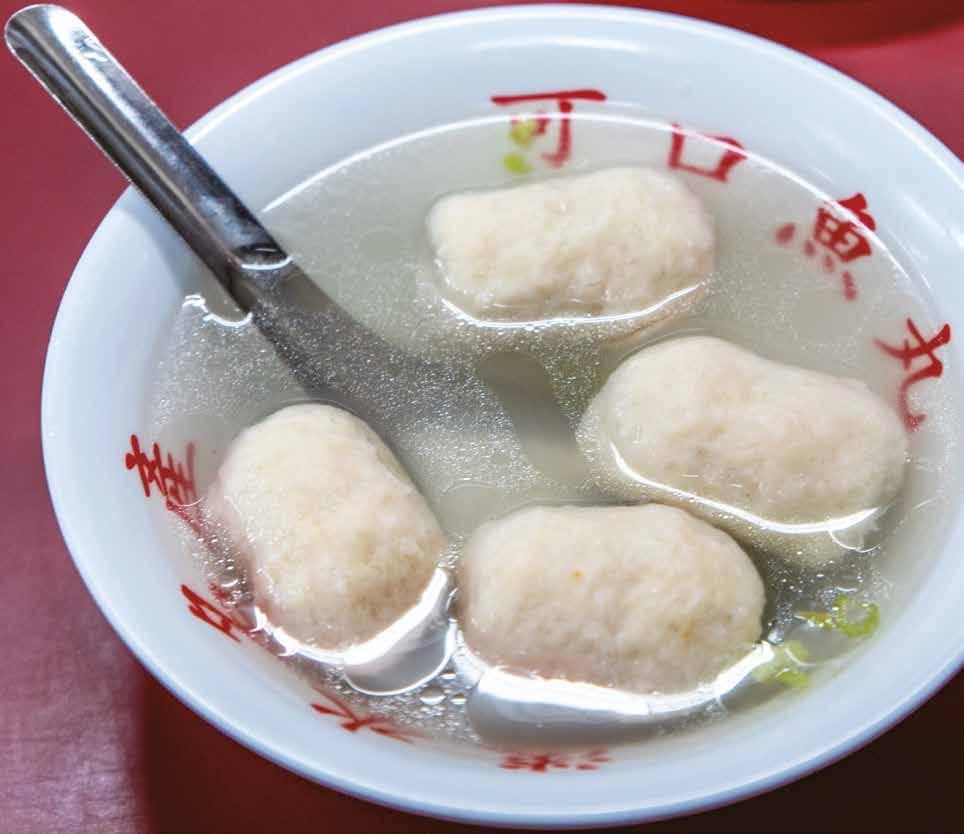
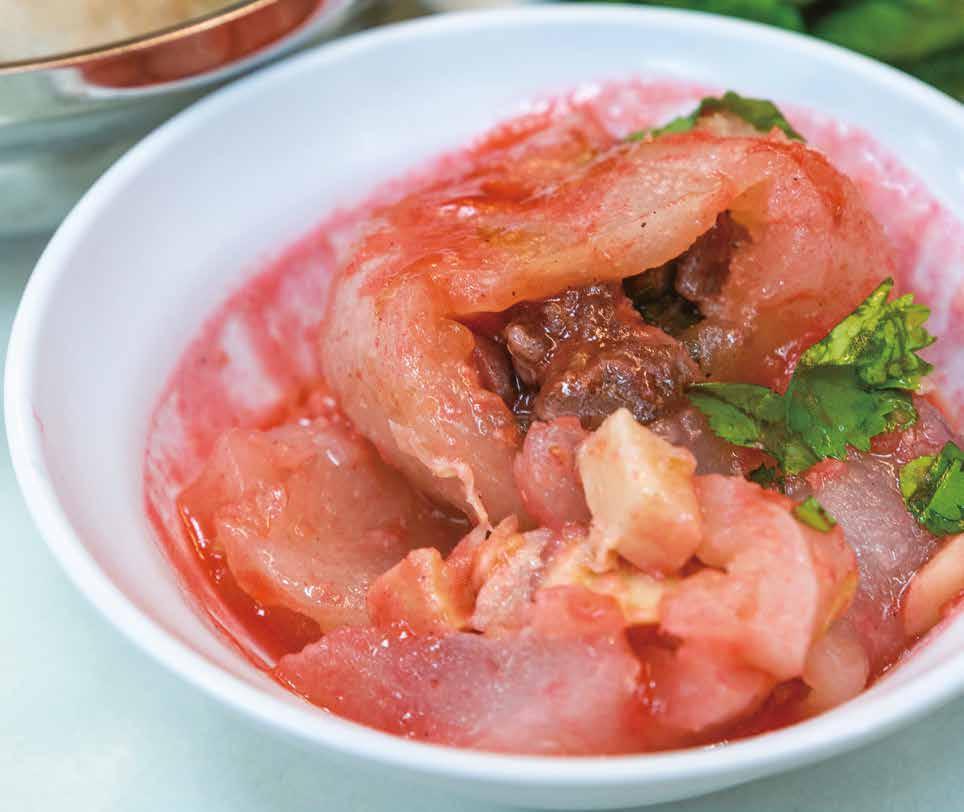
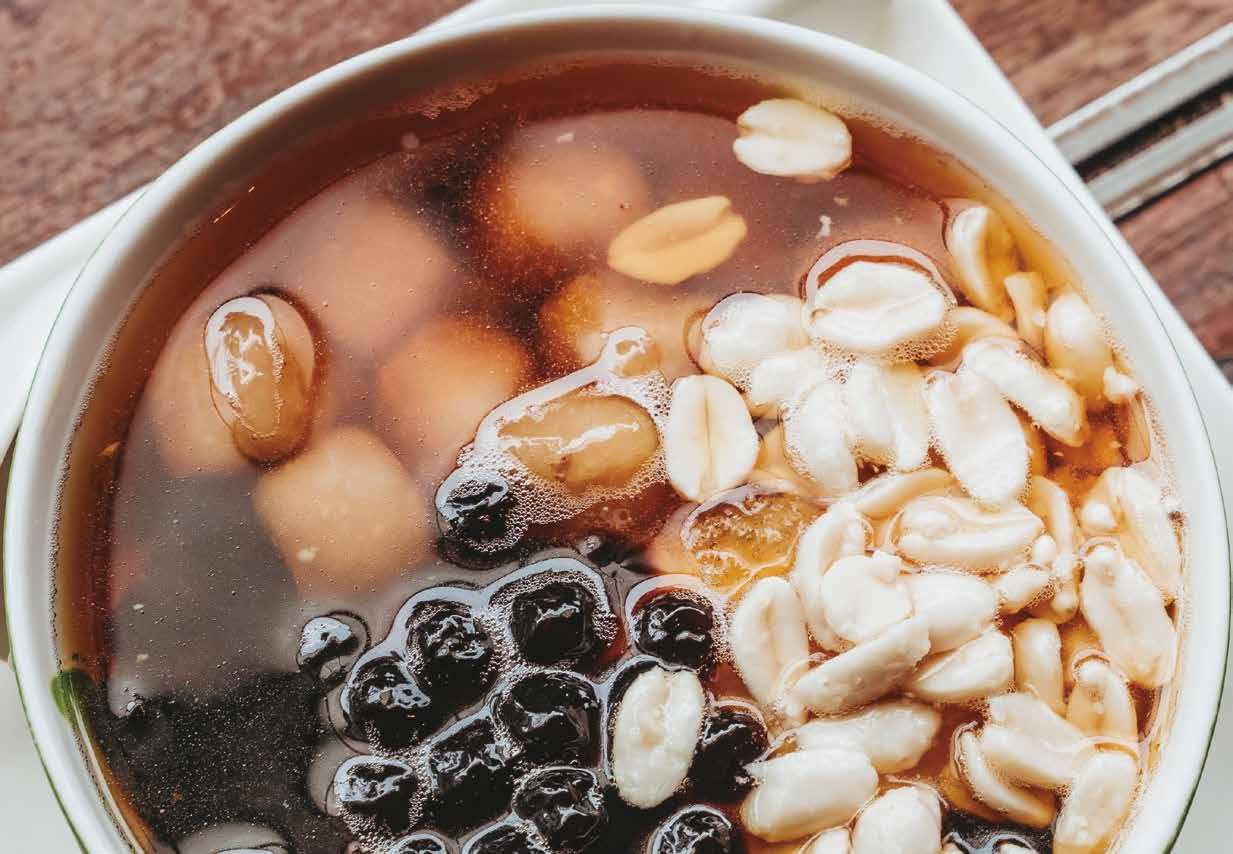

Planning a comprehensive journey across Taiwan, from the bustling streets of Taipei to the scenic landscapes of the south? Good news for you – the Taiwan PASS has just become even more convenient. On April 1, the Tourism Administration introduced a major upgrade to its popular transportation e-voucher, streamlining what was once five separate product categories into two clear, traveler-friendly options.

The upgraded Taiwan PASS now comes in two versions: the High Speed Rail (HSR) Edition, exclusive to international visitors, and the Taiwan Railway (TR) Edition, available to both domestic and international travelers. Both are built around a 3-Day Unlimited Pass for the respective rail systems, paired with flexible options for urban transit and scenic shuttle services. The overhaul also greatly expands the pass’s coverage. The new Taiwan PASS now integrates four metropolitan MRT systems and 15 tourist-shuttle routes, seamlessly linking city centers and major transportation hubs with some of Taiwan’s most popular tourist destinations.
HSR Edition – NT$2,800 | Exclusive to international travelers (non-Taiwan passport holders on short-term stays of 180 days or less)
T R Edition – NT$2,500 | Available to both domestic and international travelers
Both passes are fully digital, managed through the Taiwan PASS app (available on iOS and Android), with no physical card required.
Rail: The HSR Edition includes a 3-Day Unlimited Pass for the Taiwan High Speed Rail system, allowing flexible travel between the cities of Taipei and Kaohsiung (Zuoying) – or any stop in between – over three consecutive days. The TR Edition provides the equivalent for the Taiwan Railway network.
Metro: For taking the MRT, select a pass for one of the four major urban MRT systems: the Taipei Metro (including the Maokong Gondola), Taoyuan Metro, Taichung MRT, or Kaohsiung Metro and Light Rail. For arrivals at Taoyuan International Airport, the Taoyuan Metro option offers a convenient starting point for the journey into Taipei or onward to an HSR station.
Tourist Shuttle Bus: One of the most significant upgrades is the expansion of the tourist shuttle component, with numerous options now offered to cover transportation gaps once you reach your main destination. Choices include:
Taiwan Tourist Shuttle round-trip tickets on four popular routes: Cingjing, Sun Moon Lake, Alishan, and Kenting Express
Alishan Forest Railway tickets
Yilan 3-Day Pass, Taichung Go, and Kaohsiung MeN Go regional travel options
Car rental or taxi vouchers
24-hour scooter rentals
FunTOUR one-day guided bus tours in Yilan County and around Nantou County’s Sun Moon Lake, combining transportation with self-guided audio commentary for in-depth local exploration
The Taiwan PASS is available through Klook, KKday, and other partner e-commerce platforms. After payment, you will receive a redemption code beginning with “85.” Enter this code into the Taiwan PASS app to manage bookings and access your digital tickets.
Important: The pass must be activated in the app within one year of purchase. Once the first component is used, all remaining items must be used within 7 consecutive days (including the first day of use).
Since this is a digital-only product, everything is managed through the Taiwan PASS app.
HSR: Enter your pass serial number on the HSR website or at a station counter to reserve seats. Present your digital pass and passport at the manual gate when boarding.
TR: The TR-PASS requires in-person redemption at one of 66 designated TR stations across Taiwan. Present the QR code from the Taiwan PASS app at the station counter to receive a physical pass card.
MRT: Present the QR code from the Taiwan PASS app to station staff to receive your physical transit card or token.
Tourist Shuttles & Other Options: Show the QR code to the relevant bus, shuttle, or service counter to redeem your chosen option.
Download the Taiwan PASS app immediately after purchase and register your code. Bring your original passport – it is required for verification at HSR manual gates. Book HSR seats well in advance for travel on weekends and national holidays. Check the operating hours of your chosen shuttle route before planning day trips. If you also hold a Taipei FunPASS, avoid duplicating the Taipei MRT option – choose a different city’s MRT or the Airport MRT return ticket instead.
For full details, and to explore all 15 shuttle options, visit the official website: twpass.tw
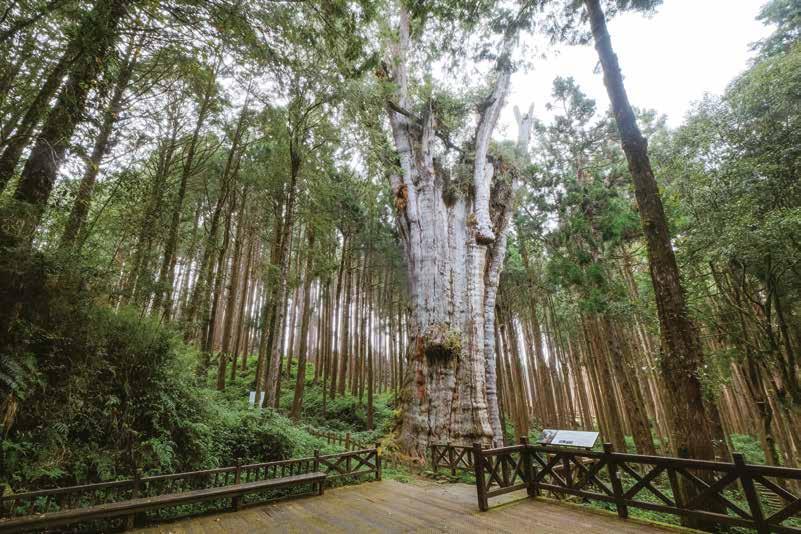
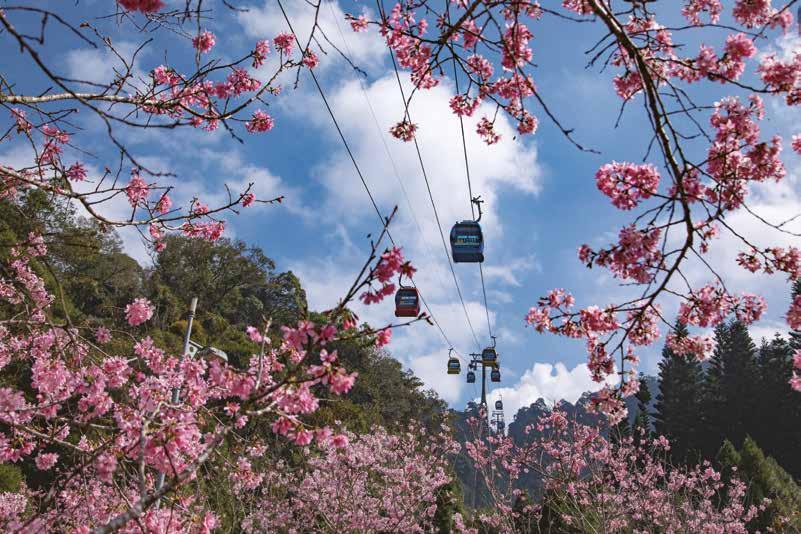
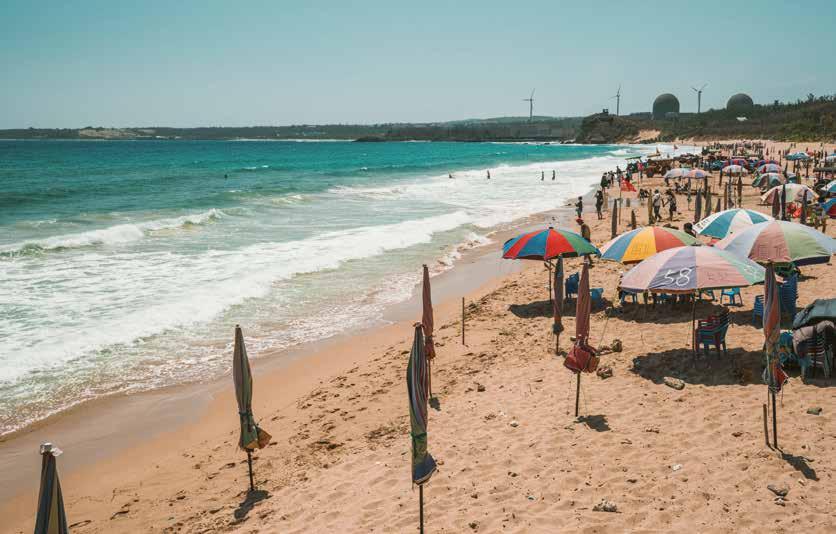

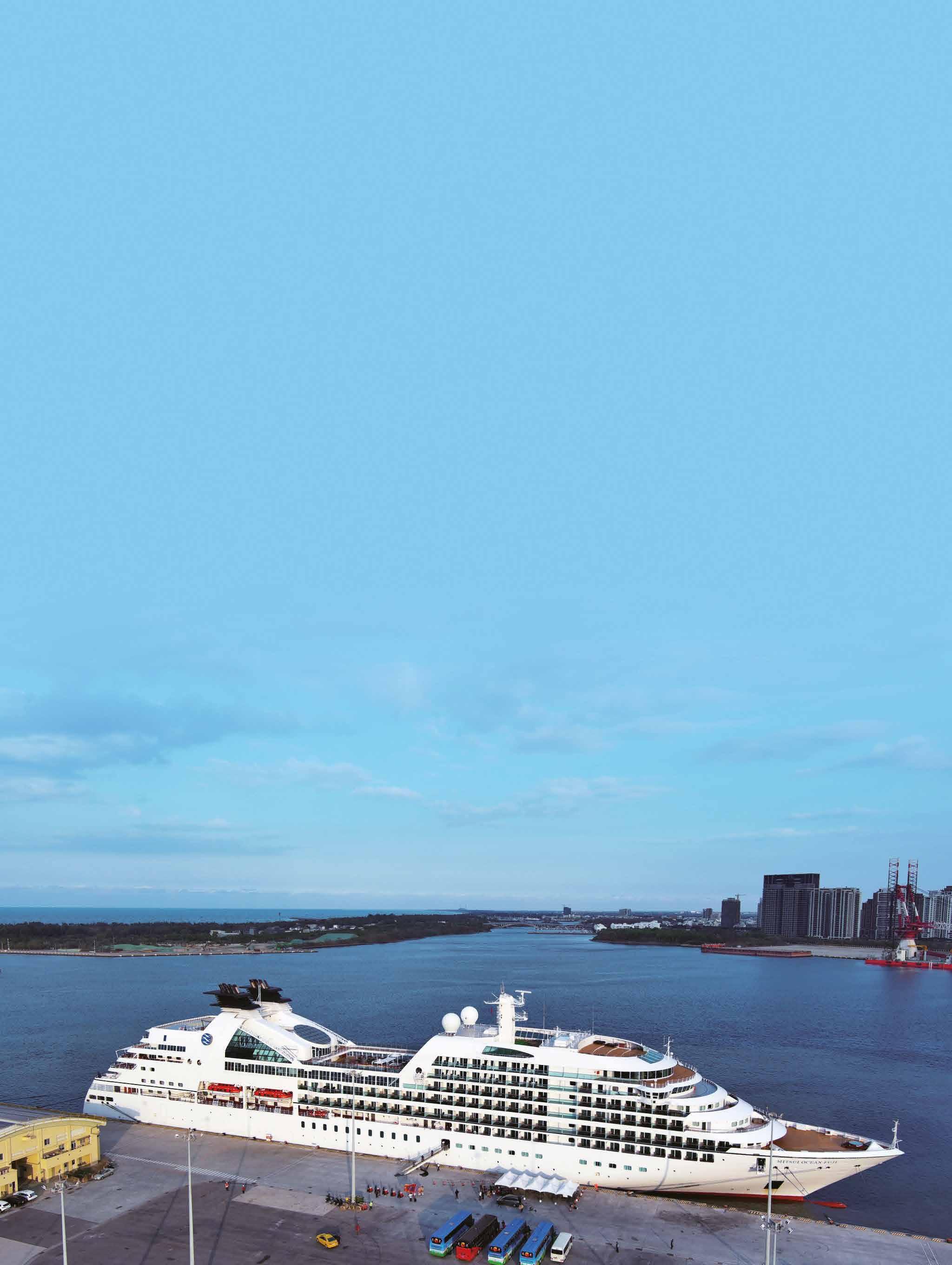
Tainan’s Anping Port is one of seven ports in Taiwan capable of handling international cruise liners. While large cruise ships call here less frequently than at other regional hubs, the harbor and surrounding city offer a deeply rewarding stop on East Asia itineraries. Two recent arrivals were the Odyssey of the Seas (Royal Caribbean) in September 2025 and the Mitsui Ocean Fuji (Mitsui Ocean Cruises) in January of this year, each bringing more than 500 passengers ashore to explore Tainan. (For detailed info on cruise liners stopping in Taiwan, visit cruise.twport. com.tw.)
With ships typically docking for one to two days, passengers have a prime opportunity to experience Taiwan’s oldest city – a place defined by 400 years of history, a vibrant street-food culture, and a charm quite unlike anywhere else in Asia. While cruise liners usually offer guided shore excursions, allowing passengers to explore with maximum convenience and no planning required, Tainan is also an excellent place for self-guided adventures. Two areas especially worth visiting are the Anping District and West Central District.
Located just northwest of the cruise terminal, the historic Anping District is highly accessible. Begin at Anping Fort (Fort Zeelandia), site of the ruins of a 17th-century Dutch fortress that marks the birthplace of modern Taiwan, then explore the atmospheric Anping Tree House, where centuries-old banyan roots have dramatically engulfed an abandoned imperial-era British trading firm warehouse. Just steps away, Anping Old Street offers the perfect introduction to Tainan’s legendary food scene. Sample oyster rolls, shrimp crackers, peanut candy, and fresh sugarcane juice as you browse the heritage façades of the many family-run eateries and souvenir shops.
For a different perspective of Anping, hop aboard a canal-and-harbor cruise departing from Anping Fisherman’s Wharf (just to the south of Anyi Bridge). These guided boat tours, which last 45 to 50 minutes, pass landmarks such as the Anping Lighthouse, Eternal Golden Castle, and Yuguang Island – offering a relaxed look at the port’s history and coastal scenery.
To dive deeper into the local cultural heritage, head to the West Central District. This area boasts an extraordinary concentration of historic landmarks – including Chikan Tower (Fort Provintia), the Sacrificial Rites Martial Temple, and the Tainan Confucius Temple – all within easy walking distance of one another.
Beyond these districts, the wider city encompasses over 300 temples and numerous bustling night markets. Whether you have one day or two, Tainan promises a lasting impression. Plan your itinerary at www.twtainan.net/en.
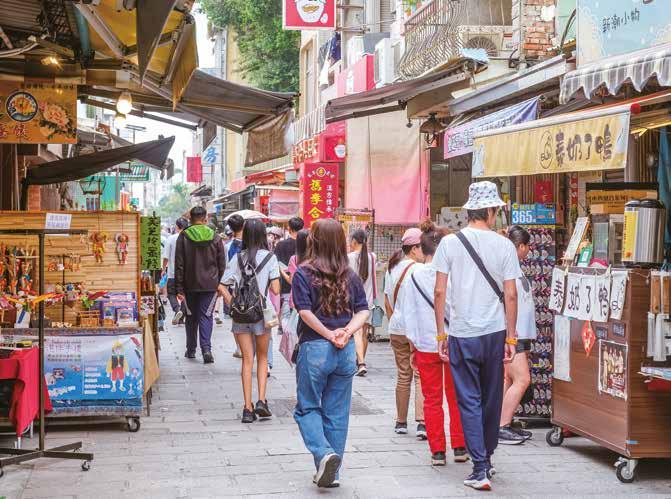
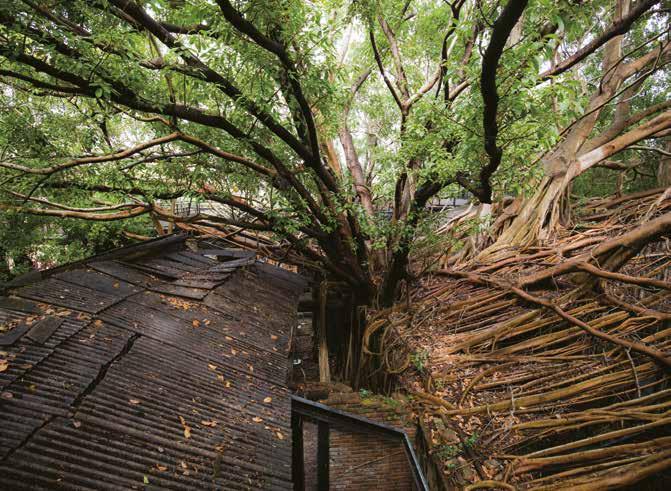
ENGLISH AND CHINESE
Anping Fisherman's Wharf | 安平漁人碼頭
Anping Fort | 安平古堡
Anping Old Street | 安平老街
Anping Port | 安平港
Anping Tree House | 安平樹屋
Chikan Tower | 赤嵌樓
Sacrificial Rites Martial Temple | 臺灣祀典武廟
Tainan Confucius Temple | 臺南孔廟


New Taipei City Taipei City
Shangri-La Summer Wonderland with My Melody & Little Twin Stars 台北遠東香格里拉飯店
For the first time, the Shangri-La Far Eastern Taipei is partnering with Sanrio to present the “My Melody & Little Twin Stars Vacation” event (July 1 - August 30), featuring specially designed themed rooms and the Shangri-La Summer Wonderland for families. Guests can enjoy unlimited access to the space, participate in two craft workshops, and receive welcome desserts, a hearty breakfast, and exclusive gifts with every stay. Starting from NT$10,000 per night, it’s the perfect way to make the most of a joyful summer getaway!
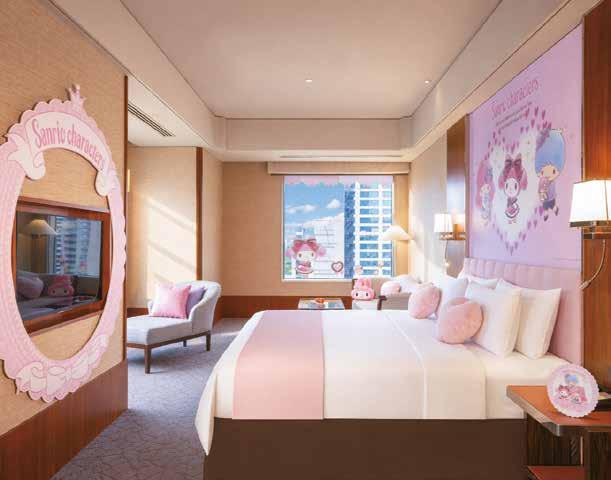
No. 201, Sec. 2, Dunhua S. Rd., Daan Dist., Taipei City ( 台北市大安區敦化南路二段201號)
Tel: (02) 2378-8888
shangri-la.com/taipei
Taipei City STAY

Steps from Taipei Dome: United Hotel’s Room Package with Breakfast 國聯大飯店
Located on Guangfu South Road, United Hotel places guests just a one-minute walk from MRT Sun Yat-sen Memorial Hall Station and steps from Taipei Dome, making it an ideal base for concert nights, game days, and city exploration. Songshan Cultural and Creative Park is only a short stroll away, while Taipei 101 and Taipei’s major shopping districts are within easy reach. The hotel features 243 wellappointed guestrooms, a fitness center, the MICHELIN Guide-listed Pei-Full Restaurant for refined Shanghai cuisine, and Slate Cafe for an inviting buffet breakfast and allday dining. Available exclusively through the hotel’s official online booking site, the
No. 200, Guangfu S. Rd., Taipei City (臺北市大安區光復南路200號)
Tel: (02) 2773-1515 www.unitedhotel.com.tw
Taipei City TRAVEL FunLAB
好玩製物所
Travelers holding a Taipei FunPASS can visit FunLAB and present their pass to enjoy complimentary premium Taiwanese tea and join a Taiwanese Market Bag (Ka-tsí Bag) DIY experience, where they can create a handcrafted souvenir inspired by Taiwanese culture and local elements. After completing the DIY experience, participants can then use a complimentary redemption booklet to visit ten local shops along Dihua Street, where they can redeem a variety of gifts and discounts while exploring the cultural charm and everyday lifestyle of the Dadaocheng neighborhood.
2F, No. 192, Sec. 1, Dihua St., Taipei City
Room Package with Breakfast includes a complimentary buffet breakfast at Slate Cafe, along with gym access and Wi-Fi. Whether visiting for culture, shopping, or a big event at Taipei Dome, guests can enjoy a stylish, well-connected stay in the heart of Taipei.
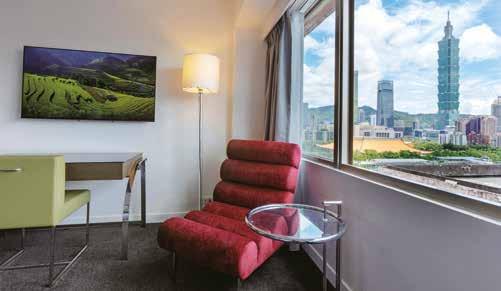

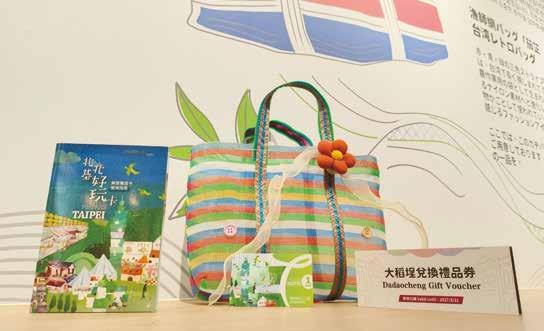
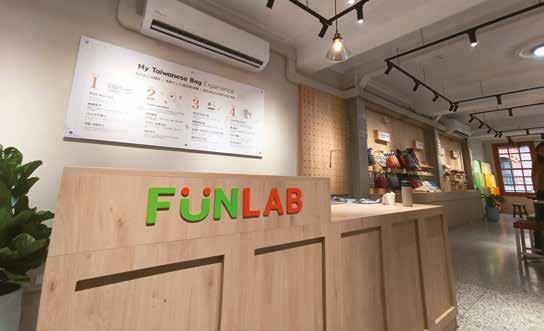
Set at the mouth of the Tamsui River in northern Taiwan, Four Points by Sheraton Taipei Bali offers a refined riverside escape near the striking Danjiang Bridge – one of the final masterpieces by the legendary Zaha Hadid. The hotel’s 241 guestrooms each feature a private in-room hot spring fed by the geothermal veins of Guanyin Mountain. The mineral-rich waters are prized for their silky texture and skin-enhancing qualities – enjoyed alongside floor-to-ceiling views of the river and mountain beyond. Outside, the historic waterfront invites a slower pace, where old temples and traditional storefronts offer a rare chance to disconnect and rediscover the art of leisure.
No. 8, Guanhai Blvd., Bali Dist., New Taipei City (新北市八里區觀海大道8號)
Tel: (02) 2619-2777 www.fptpe.com
Taipei City
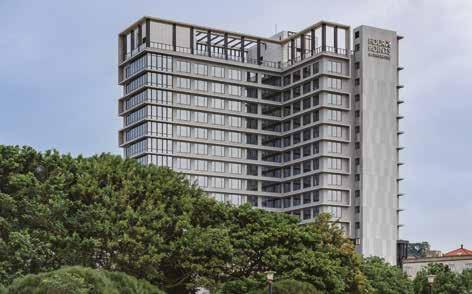
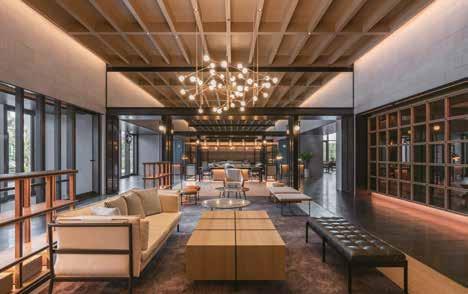

AquaHex Hydrotherapy Solution — Rejuvenating, Hydrating Your Skin, Revitalizing
Hydrotherapy harnesses water’s natural buoyancy, resistance, and warmth to support rehabilitation and wellness. AquaHex elevates this with HKE Physical Resonance Technology, transforming water into stable hexagonal clusters with enhanced permeability and activity. Its dual vortex resonance system optimizes water structure to support deep skin hydration, improved circulation, and overall comfort – delivering a smoother, more refreshing experience that promotes relaxation, recovery, and healthier-looking skin. Low-maintenance and versatile, AquaHex suits rehabilitation centers, spas, wellness resorts, and premium home systems. Experience a new level of hydrotherapy with AquaHex!
10F, No. 61, Yanping S. Rd., Taipei City ( 台北市延平南路61號10樓)
Tel: (02) 2371-1171 www.aquahex.com.tw
Taipei City


Founded in 1895, Li Ting Xiang is rooted on Dihua Street in Taipei’s historic Dadaocheng neighborhood. It is one of the few traditional Chinese pastry shops in Taiwan whose legacy has spanned three centuries. From the first generation to the present day, it has remained committed to the craft of hand-kneading dough and slow-cooking fillings over a gentle flame. Each pastry delicately encapsulates gratitude for the land and the blessings of traditional festivals. Stepping into the shop in Dadaocheng, visitors are greeted not only by the inviting aroma of freshly baked pastries, but also by the warmth and human touch of old Taipei. While preserving the essence of traditional pastry-making, Li Ting Xiang has also embraced modern aesthetics and
innovative ideas, bringing traditional Chinese pastries from ceremonial offering tables into everyday life and transforming them into an elegant, heartfelt choice for a Taiwanese-style afternoon tea.
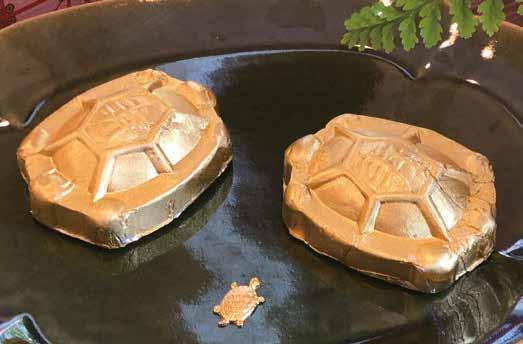
No. 309, Sec. 1, Dihua St., Datong Dist., Taipei City ( 台北市大同區迪化街一段309號)
Tel: (02) 7746-2200 lee-cake.com

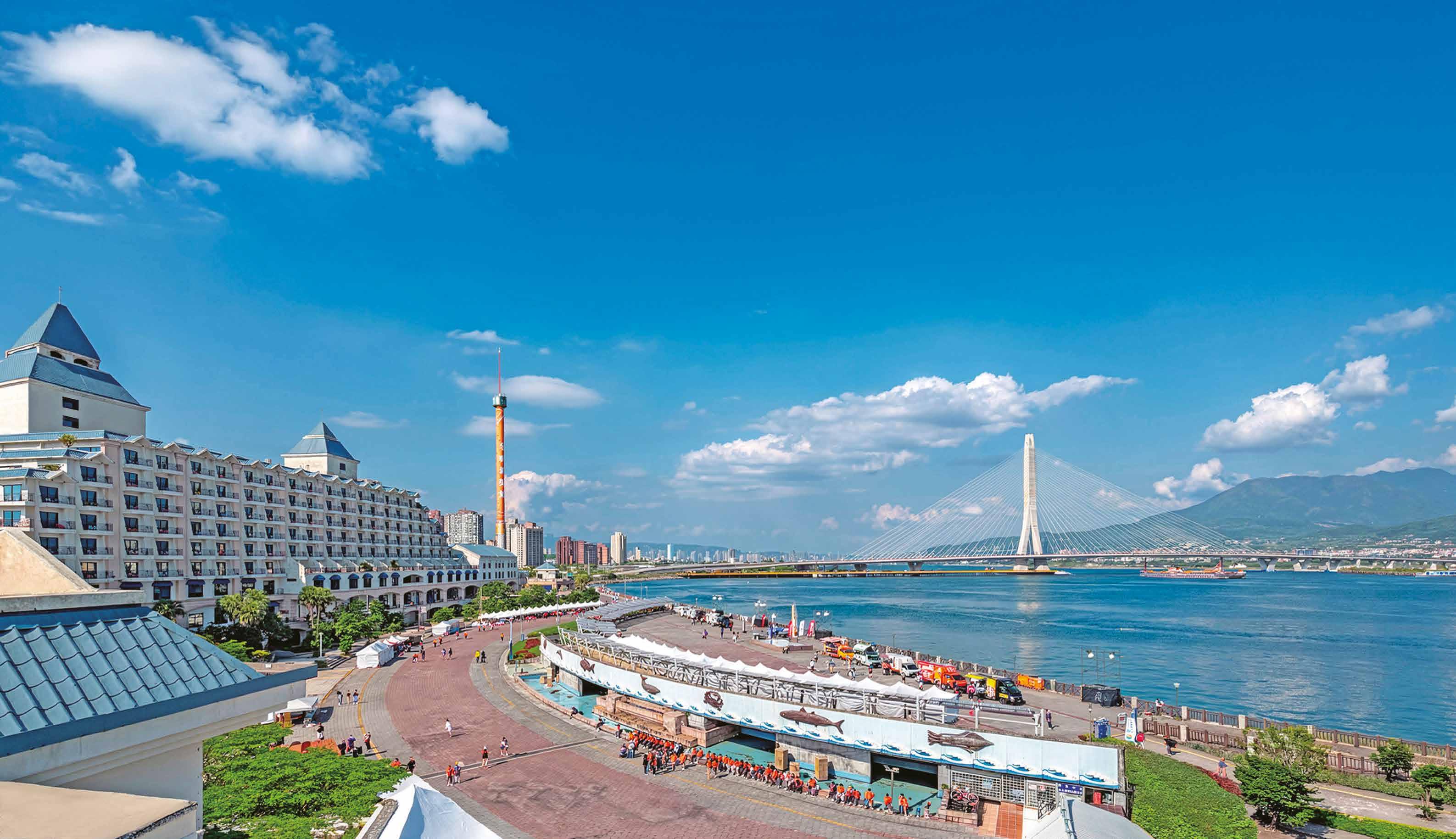
The opening of the Danjiang Bridge marks a new chapter for tourism in Tamsui. Just 30 to 40 minutes from Taoyuan International Airport, Tamsui Fisherman’s Wharf is emerging as a convenient gateway for international travelers exploring northern Taiwan.
Located at Tamsui Fisherman’s Wharf, Fullon Hotel is celebrated for its striking cruise ship-inspired architecture. Together with the brand-new Danjiang Bridge – the world’s longest single-tower asymmetric cable-stayed bridge – the hotel forms Tamsui’s signature waterfront skyline, creating a spectacular panorama where river and sea converge.
More than half of the hotel’s guestrooms have panoramic river and sea views, offering guests a front-row seat to the beauty of Mt. Guanyin,
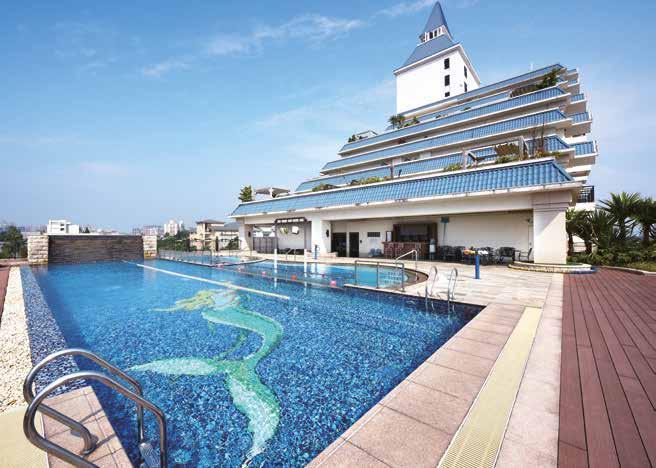
the Tamsui River mouth, Fisherman’s Wharf, and the Danjiang Bridge – all from the comfort of their room.
From sunlit waterfront vistas in the morning and world-class sunsets at dusk to the dazzling bridge lights that illuminate the night, every moment here is one to remember. Complementing the spectacular scenery are an ocean-view swimming pool, the renowned Golden Beauty Spring hot-spring baths, a children’s activity center, and diverse dining options, making the hotel an ideal retreat for families, couples, senior leisure travelers, and independent explorers alike.
To visit Tamsui is to do more than admire the scenery; it is to step into a tranquil landscape where river and sea meet, and to experience the timeless charm of its legendary sunsets and celebrated twin landmarks.