Enjoy a combination of Character and Quality! Taiwanese Japanese
The first hotel of the Mitsui Garden Hotels chain outside Japan
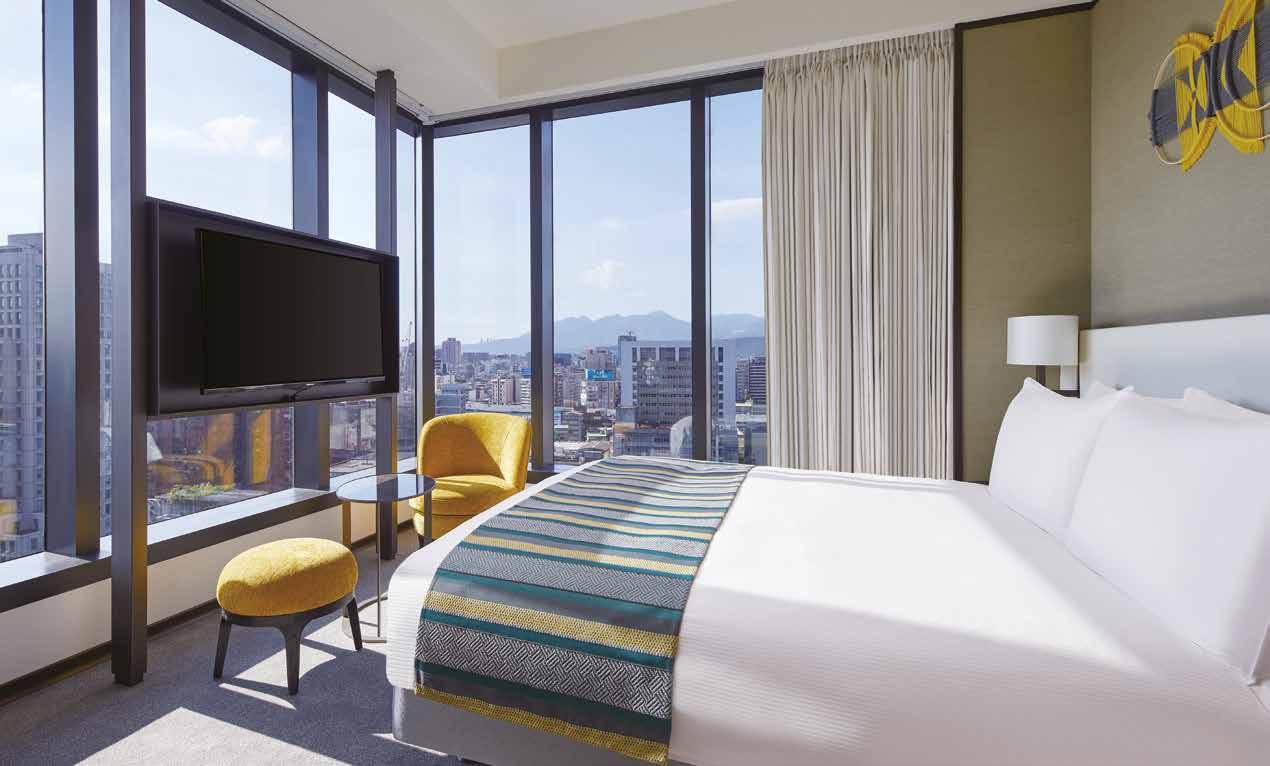
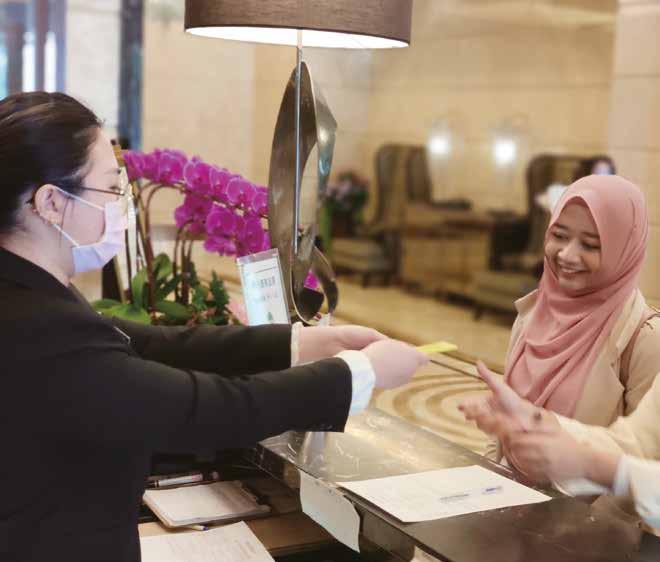
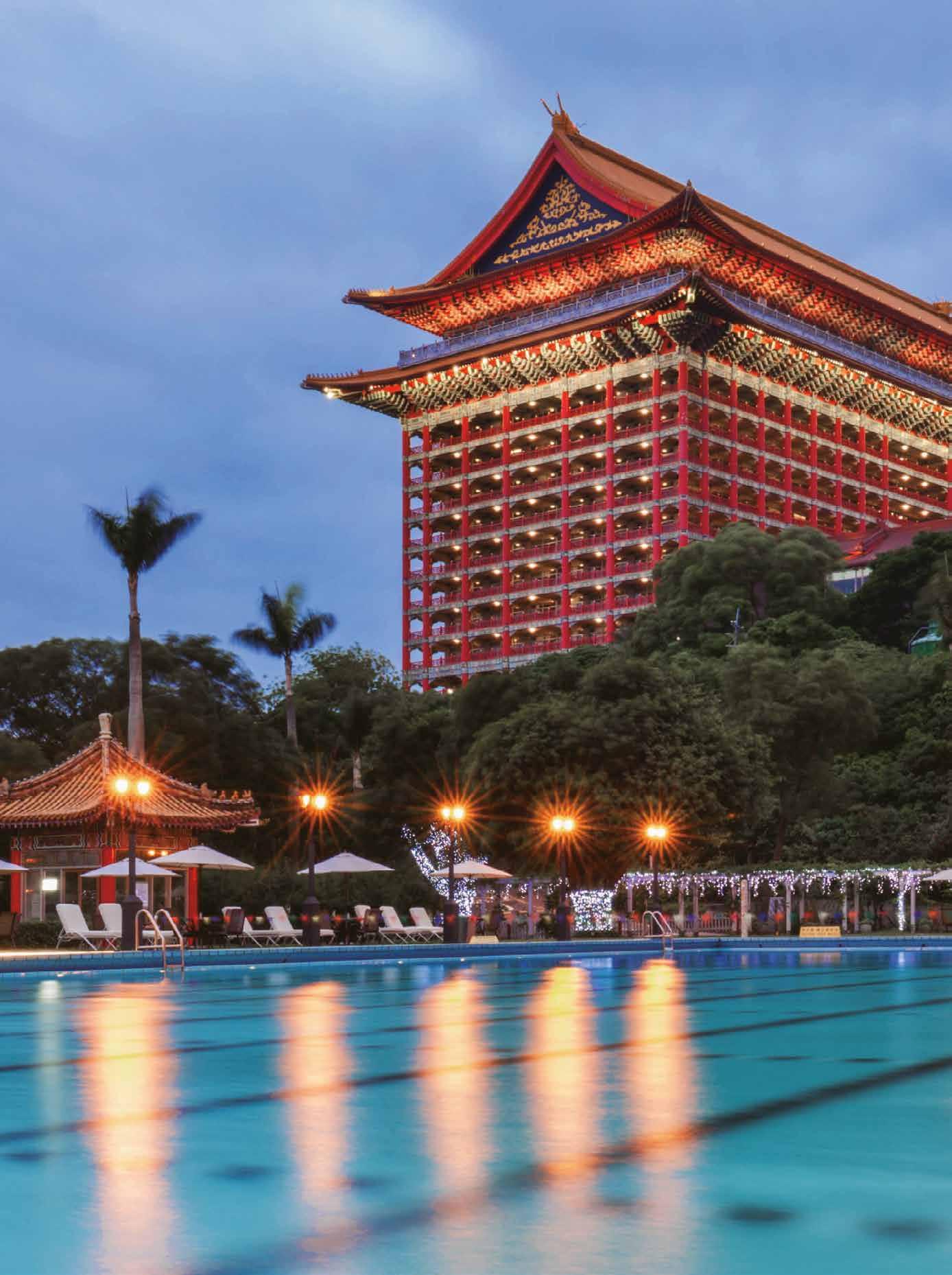
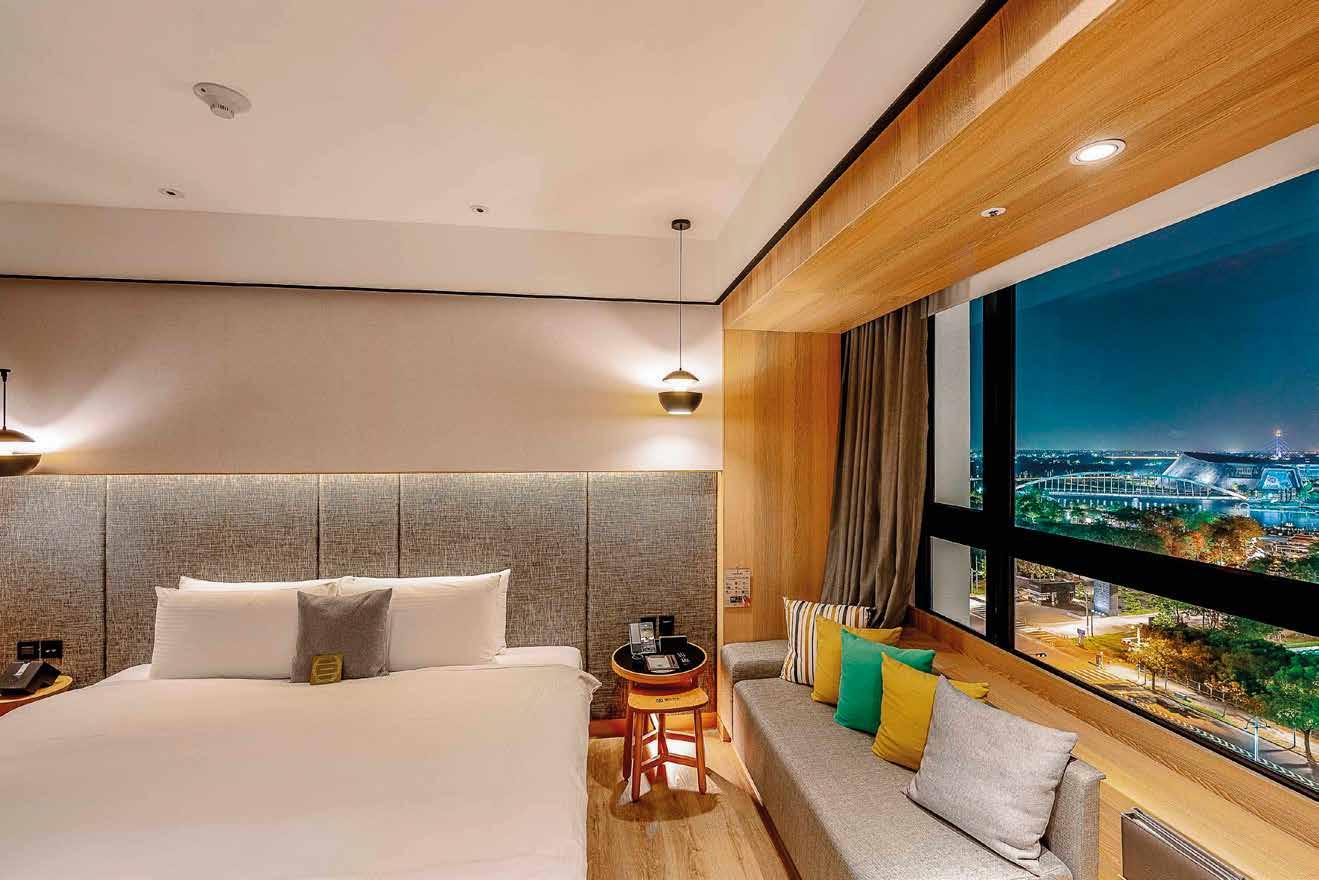
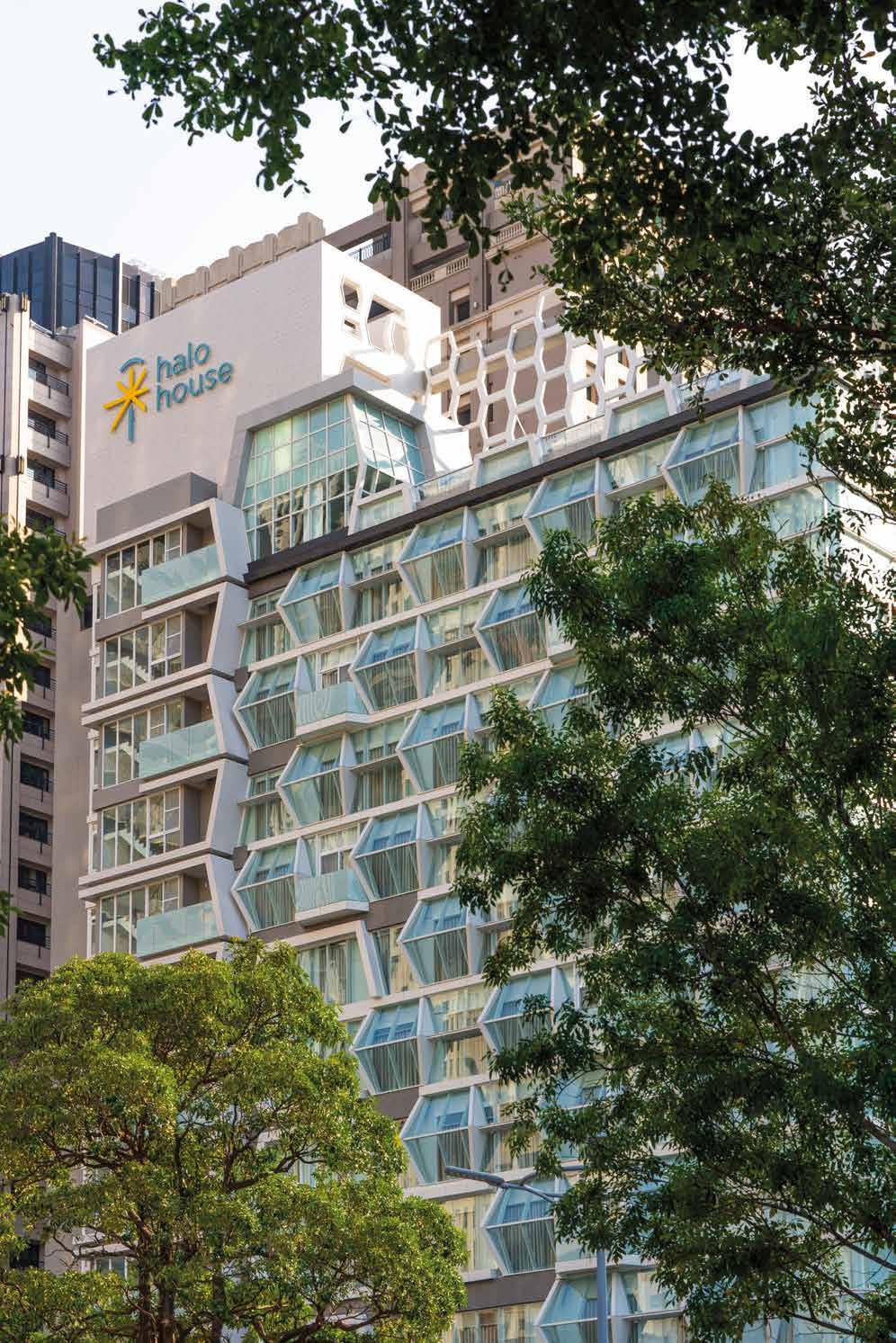
A new Taipei landmark, MGH Mitsui Garden Hotel Taipei Zhongxiao has an interior design inspired by Taiwan’s natural beauty with artwork created by Taiwanese designers. The guestrooms are relaxing spaces that stand out for their exceptional Japanese quality.
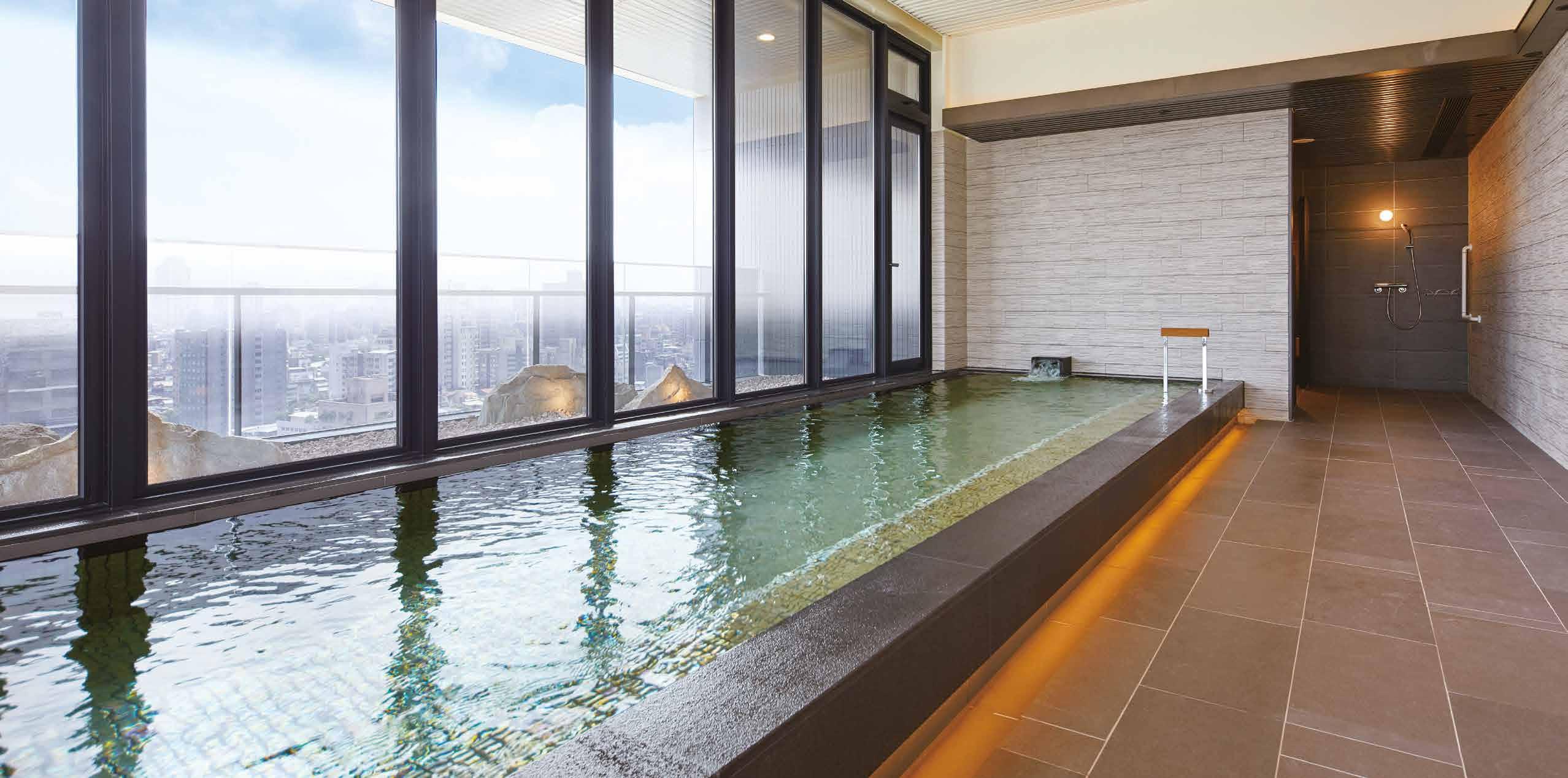
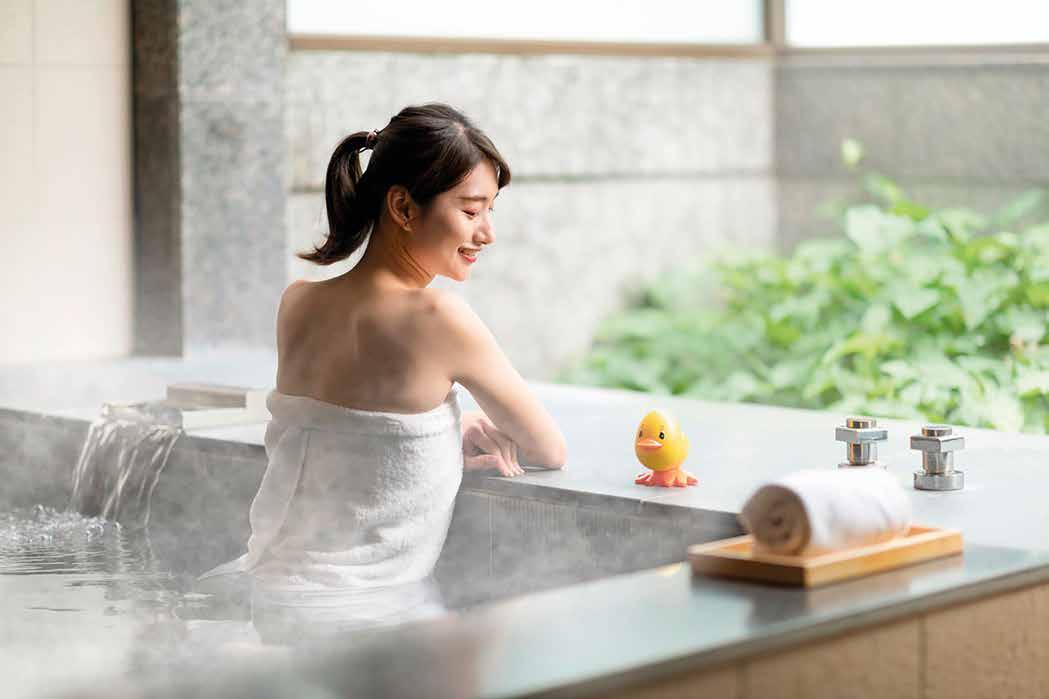
On the top floor you will find a Japanese-style bath area with breathtaking views of the city.
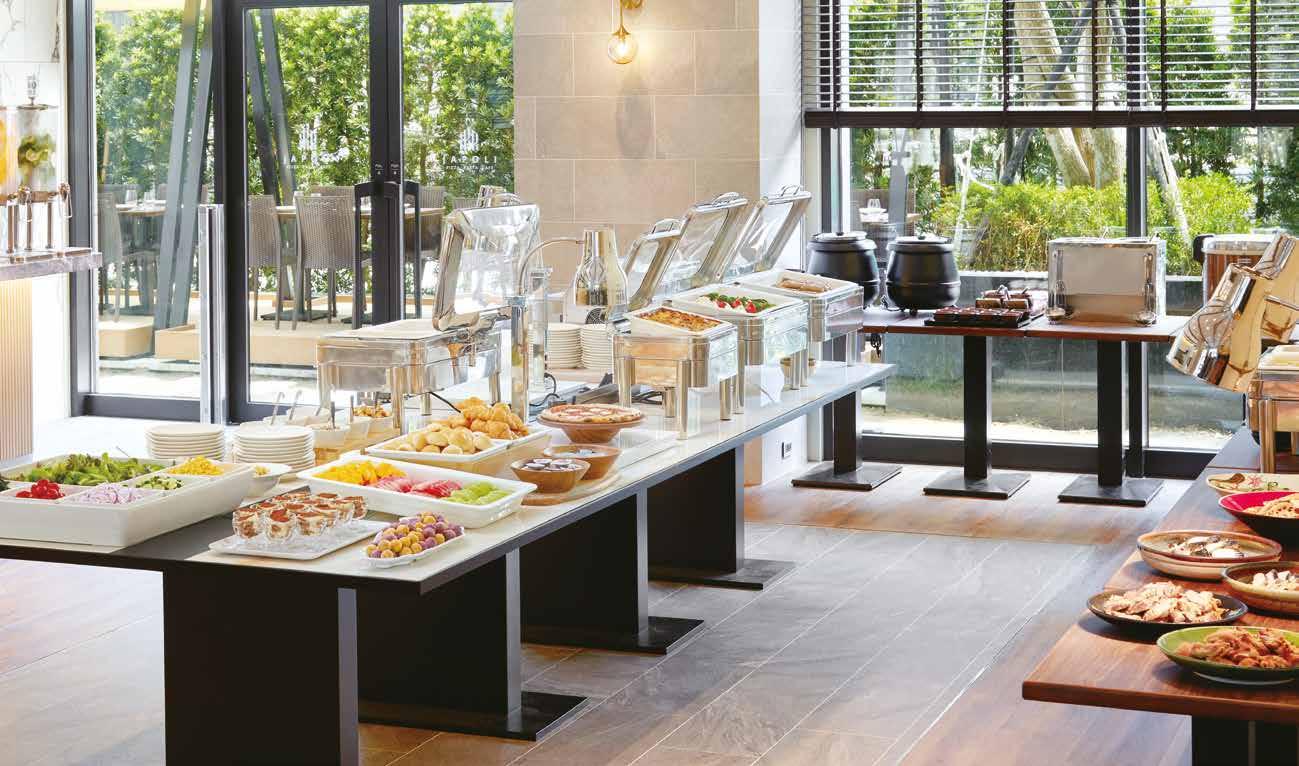
Enjoy a delicate buffet breakfast prepared with carefully selected fresh ingredients from Taiwan.
Conveniently situated just a few steps from Exit 3 of MRT Zhongxiao Xinsheng Station (Blue and Orange lines).
PUBLISHER'S NOTE
Dear Traveler,
Though subtropical Taiwan does not have the clear-cut four seasons enjoyed in lands of higher latitudes, springtime still brings a clear-cut burst in our floral and foliage energy, painting the landscape with so much more exuberance in both color and abundance. Time to hit the Taiwan roads to see for yourself. In this issue, as you’ll see, “roads” means both roadways and railroads.
The local rail network circles the outside of the island, with branch lines – today tourism-focused – cutting deep into the interior. In our main feature article, you’ll ride the north’s Pingxi Line, the center’s Jiji Line, and the south’s South Link Line (this last line a section of the round-island route).
In another feature, you’ll be boarding five special tourist trains that are redefining Taiwan rail travel. These roll through especially scenic sections of the island-circling system, and fly such colorful names as Moving Beauty, Moving Kitchen, Shanlan (“mountain mist”), and Haifeng (“sea breeze”). Our third feature presents a twist on the “railroad” theme – a primer on how to use the east region’s Hualien-Taitung rail line for bike-travel excursions, with sample outings on two famed dedicated bikeways, one on a repurposed railbed.
In our regular Street Walks file, a walkabout in an old railway-oriented countryside market town, Fugang, part of today’s sprawling Taoyuan City in the north. You’ll then “hit
the road” in a very different sense in National Parks, taking a quick domestic flight to the Taiwan Strait’s Penghu Islands and then heading out on a big-vista boat tour to the wonderfilled South Penghu Marine National Park , a magical place of ancient fishing villages and kaleidoscopic coral life.
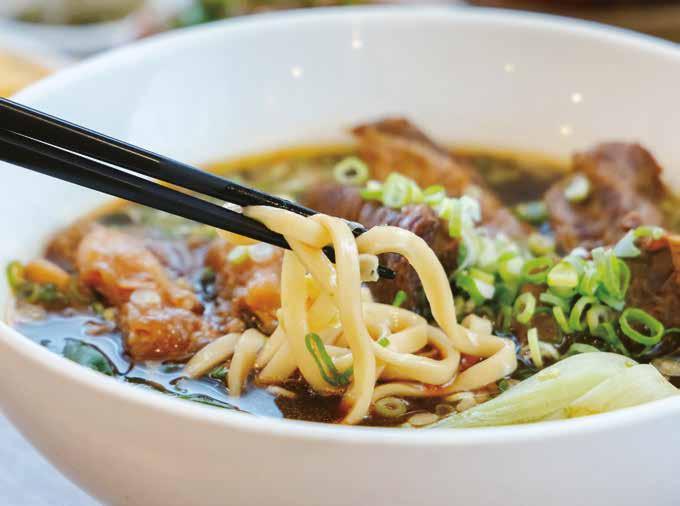
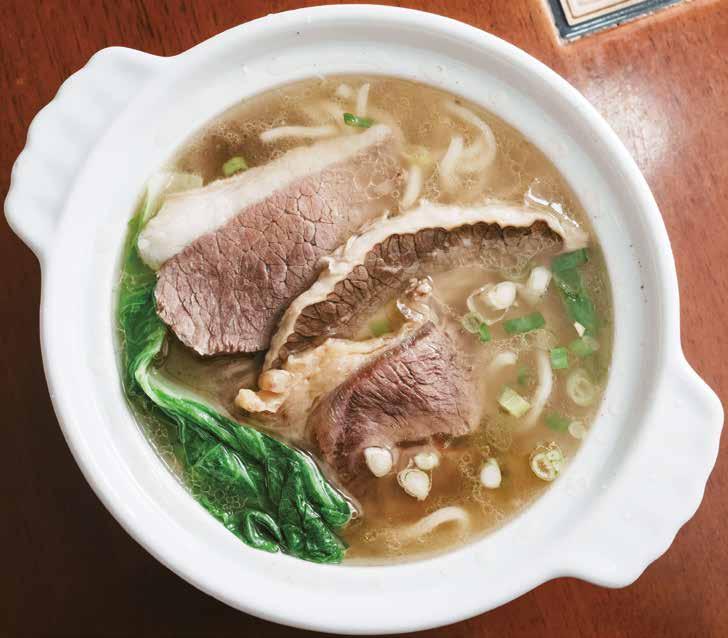
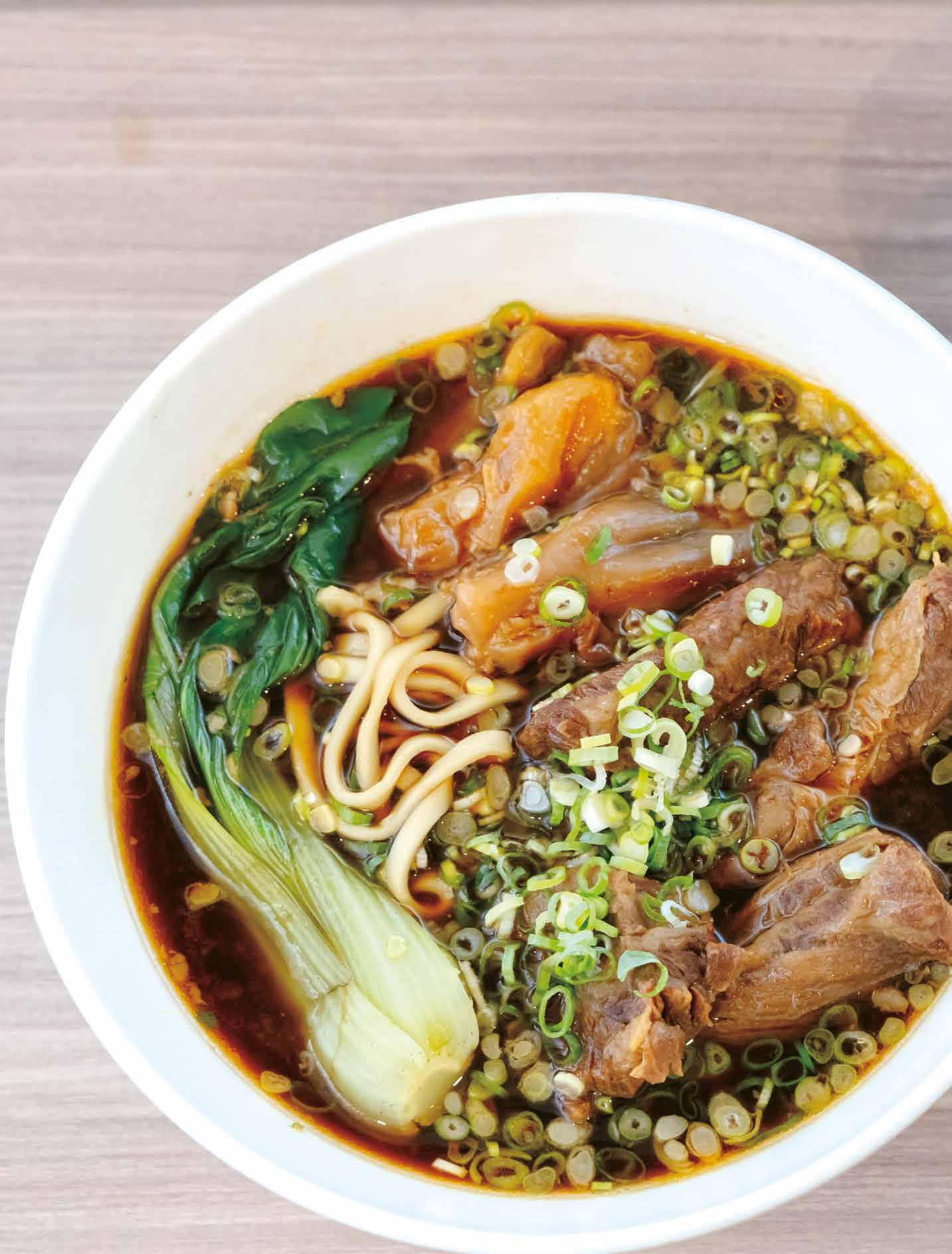
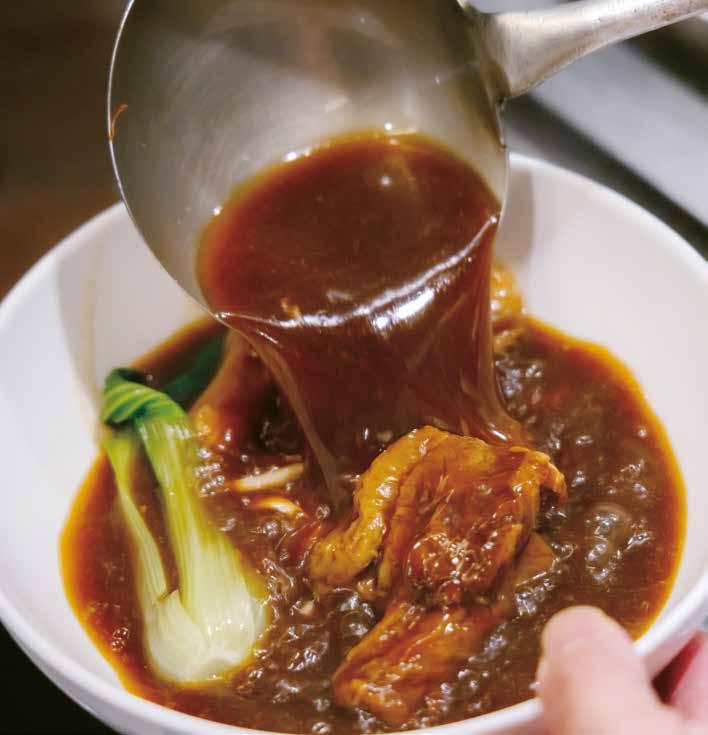
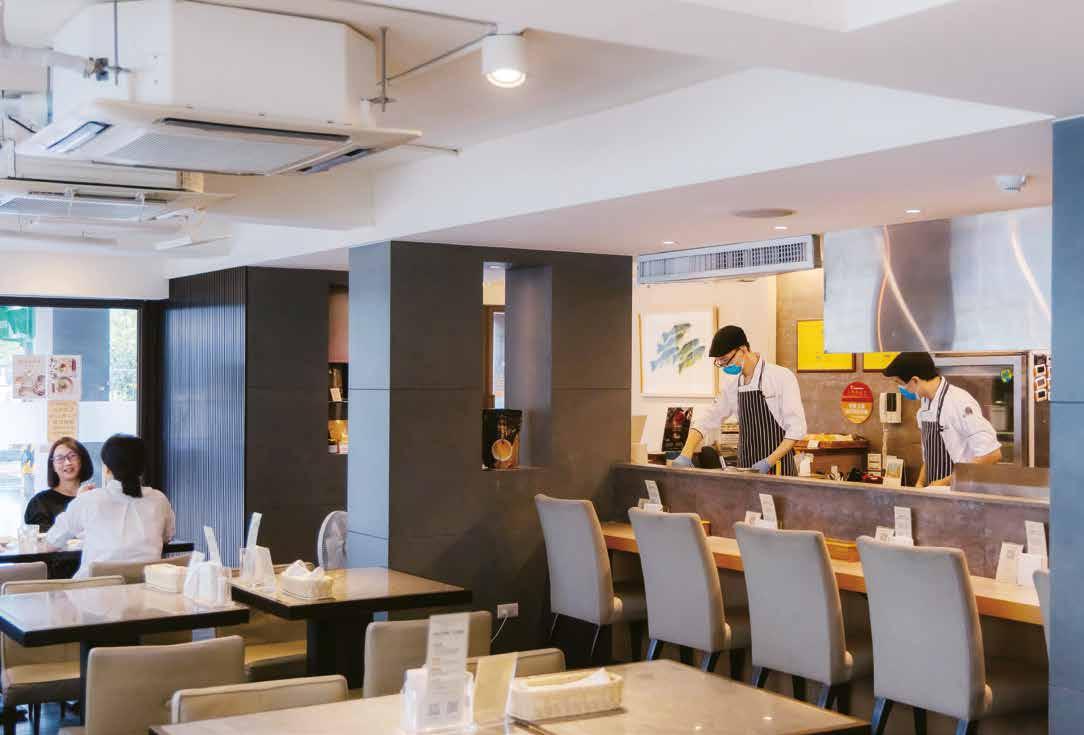
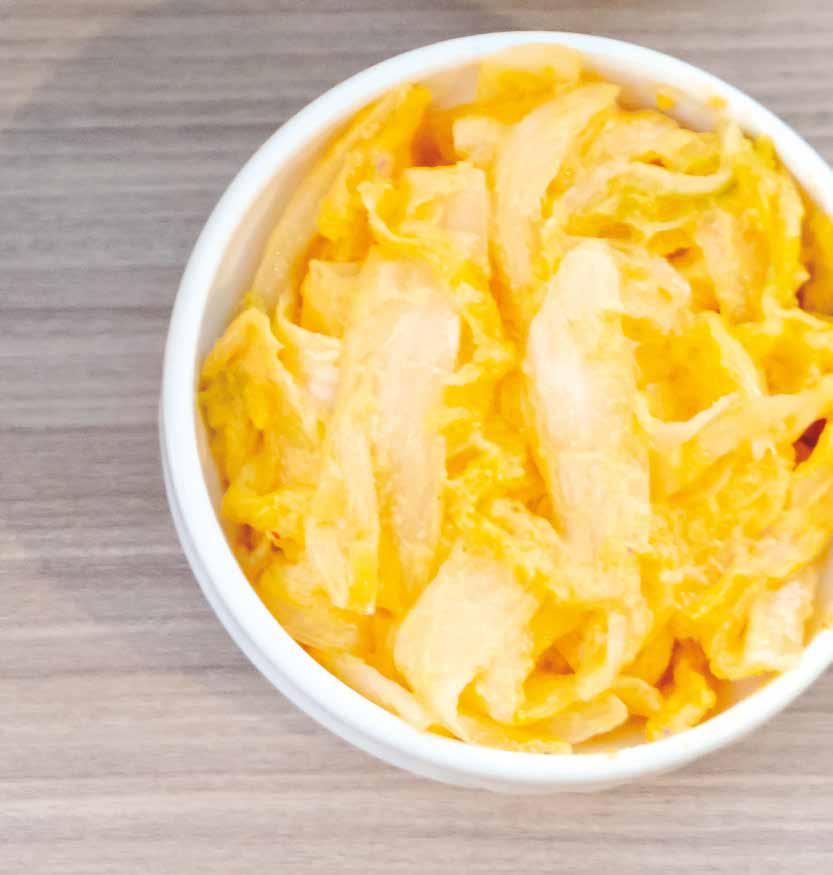
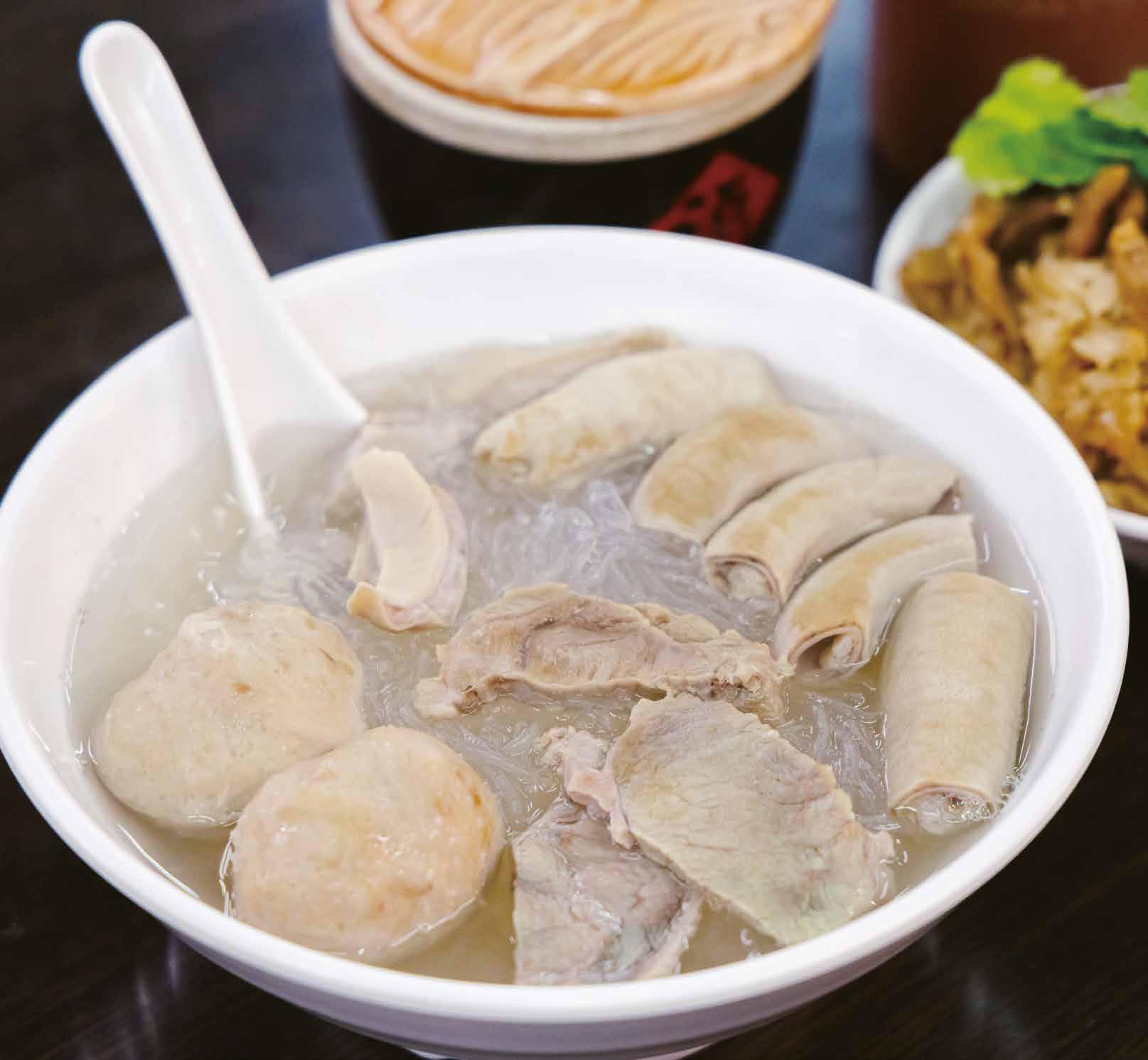
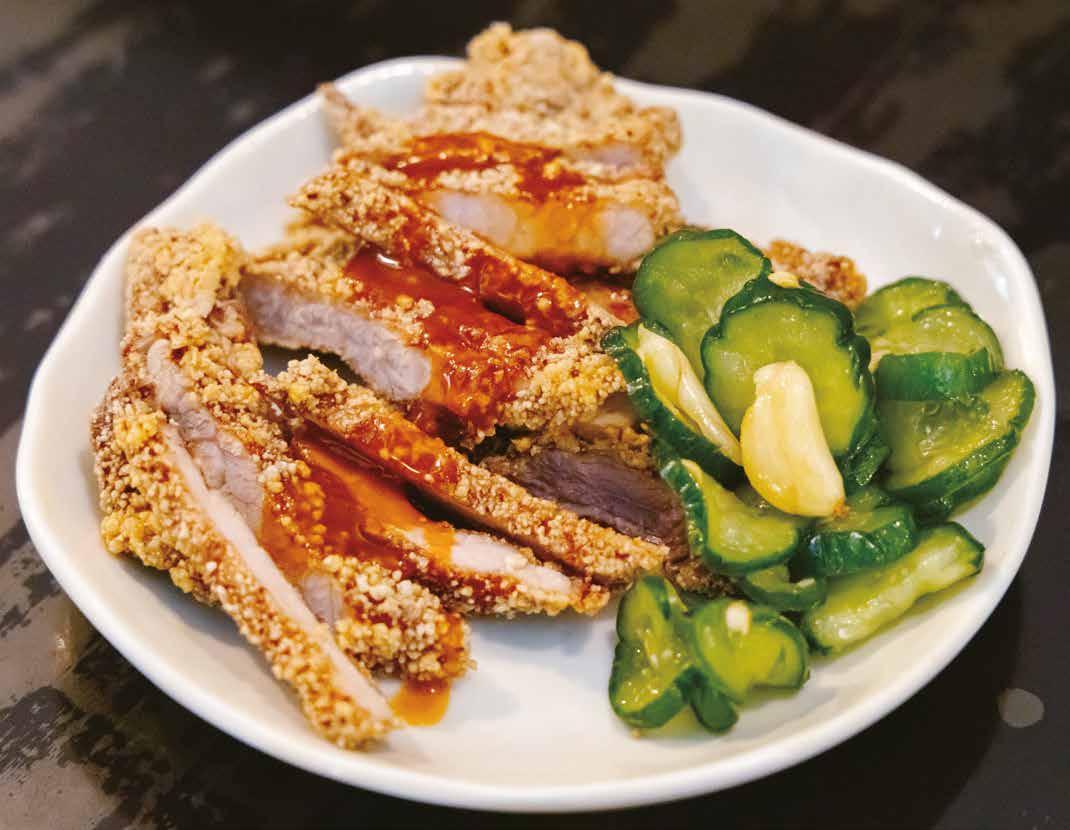
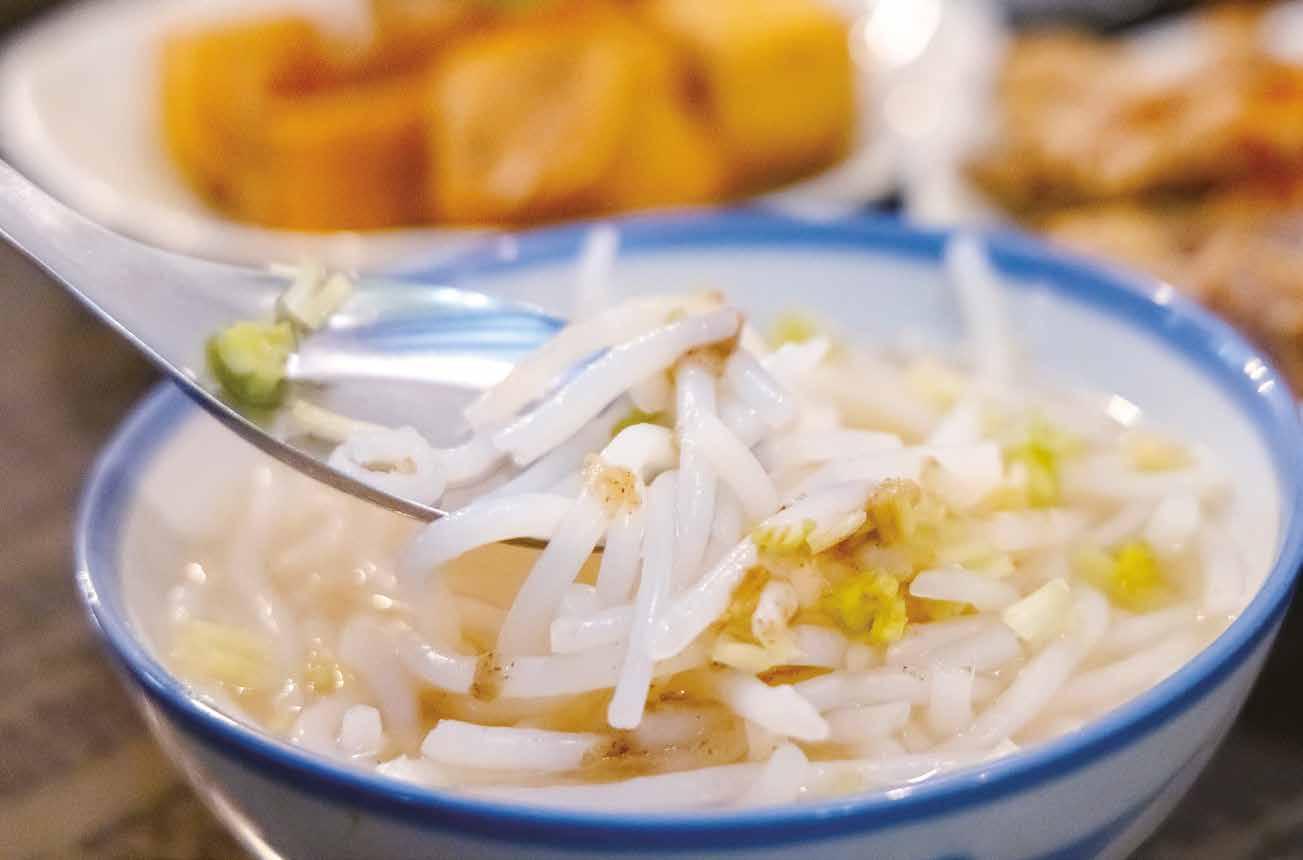
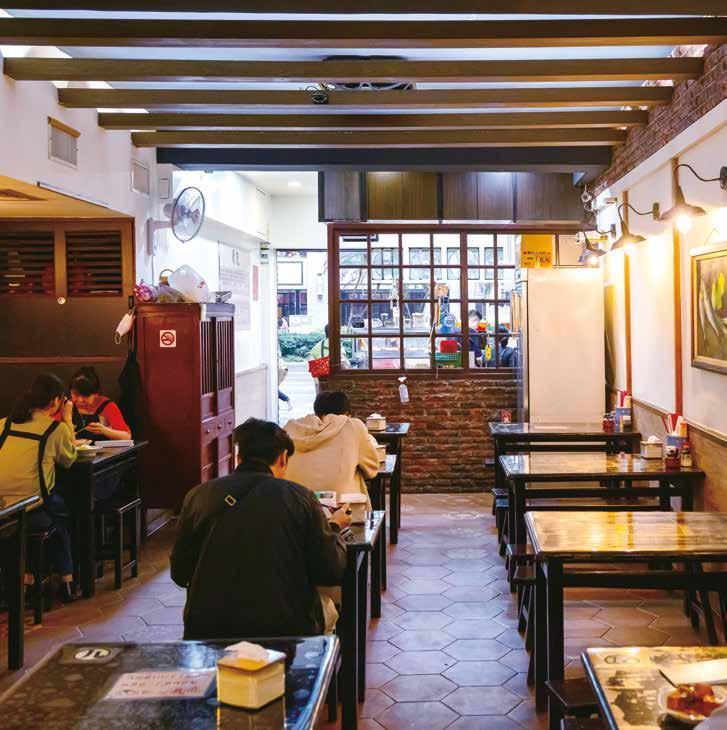
Serving up a big change of pace, we spend time indoors in our Good Food department, where our culinary destinations are six of the best noodle eateries in Taipei , a “city of noodles,” trying such tasty variations as beef noodles, cold noodles, glass noodles, and “shaken” noodles. The focus in Made in Taiwan is “Beautifully Local,” showcasing two unique homegrown Taiwan brands in color cosmetics and two in skincare, producing items that make great takehome purchases. And in Little Things, we take a fun little look at Taiwanese Hokkien , one of our island home’s main languages, and teach you a few terms you can try out on the road.
Enjoy your time with us!
TAIWAN TOURISM ADMINISTRATION
PUBLISHER
Taiwan Tourism Administration
EDITING CONSULTANT
T. C. Chou
PUBLISHING ORGANIZATION
Taiwan Tourism Administration, Ministry of Transportation and Communications
CONTACT
International Affairs Division, Taiwan Tourism Administration
Add: 9F, 290 Zhongxiao E. Rd., Sec. 4, Taipei City, 10694, Taiwan
1F, No. 5, Aly. 20, Ln. 265, Sec. 4, Xinyi Rd., Taipei City 10681, Taiwan
Tel: 886-2-2325-2323 Fax: 886-2-2701-5531
E-MAIL
editor@v-media.com.tw
GENERAL MANAGER
David Hu
台灣觀光雙月刊
Travel in Taiwan
The official bimonthly English magazine of the Taiwan Tourism Administration (Advertisement) MAY/JUNE, 2026
Tourism Administration, MOTC
First published Jan./Feb. 2004
ISSN: 18177964 GPN: 2009305475
Price: NT$50
中華郵政台北雜字第1286號執照登記為雜誌交寄 Copyright @ 2026 Tourism Administration. All rights reserved. Reproduction in any form without written permission is prohibited.
MAGAZINE IS SOLD AT:
1. Wu-Nan Culture Plaza, No. 6, Zhongshan Rd., Central Dist., Taichung City 40043 886-4-2226-0330 http://www.wunanbooks.com.tw/
2. National Bookstore, 1F., No. 209, Songjiang Rd., Zhongshan Dist., Taipei City 10485 886-2-2518-0207 http://www.govbooks.com.tw/
EDITOR IN CHIEF
Johannes Twellmann
ENGLISH EDITOR
Rick Charette
DIRECTOR OF PLANNING & EDITING DEPT
Joe Lee
MANAGING EDITOR
Anna Li
EDITORS
Masako Takada, Lynn Chang
CONTRIBUTORS
Ami Barnes, Rick Charette, Jenna Lynn Cody
PHOTOGRAPHERS
Chen Cheng-kuo, Ray Chang
DESIGNERS
Ian Tsai , Hsieh Yun-jhen
ADMINISTRATIVE DEPT
Lily Wan, Hui-chun Tsai, Xiou Mieng Jiang
Travel in Taiwan No.135 MAY/JUNE, 2026
ONLINE
Read Travel in Taiwan online at www.travelintaiwan.net. Find back issues (PDF version) on the publication platform issuu at issuu.com/travelintaiwan
WHERE YOU CAN PICK UP A COPY OF TRAVEL IN TAIWAN
ABROAD
Offices of the Taiwan Tourism Administration in Beijing, Shanghai, Hong Kong, Singapore, Bangkok, Ho Chi Minh City, Kuala Lumpur, Seoul, San Francisco, New York, Los Angeles, Frankfurt, and London. Overseas Offices of the Ministry of Economic Affairs; Overseas Offices of the Central News Agency; EVA Air, and other selected international airlines; selected travel agencies in Asia, North America, and Europe; and other organizations.
IN TAIWAN
Tourism Administration Visitor Center; Tourism Administration; Taiwan Visitors Association; foreign representative offices in Taiwan; Tourism Administration service counters at Taiwan
Taoyuan Int’l Airport and Kaohsiung Int’l Airport; major tourist hotels; Taipei World Trade Center; VIP lounges of international airlines; major tourist spots in Taipei; visitor centers of cities and counties around Taiwan; offices of national scenic area administrations; public libraries
This magazine is printed on FSC® COC certified paper. Any product with the FSC® logo on it comes from a forest that has been responsibly maintained and harvested in a sustainable manner.
This magazine was printed with soy ink. Soy ink is said to be more environmentally friendly than petroleum-based ink and to make it easier to recycle paper.
Website issuu (PDF)
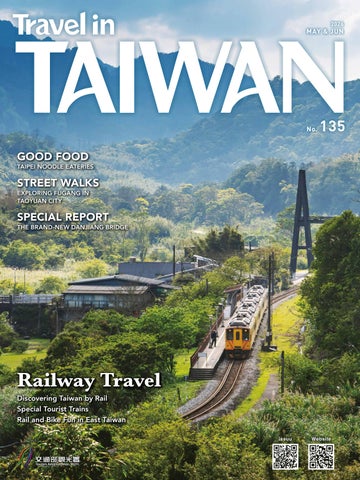
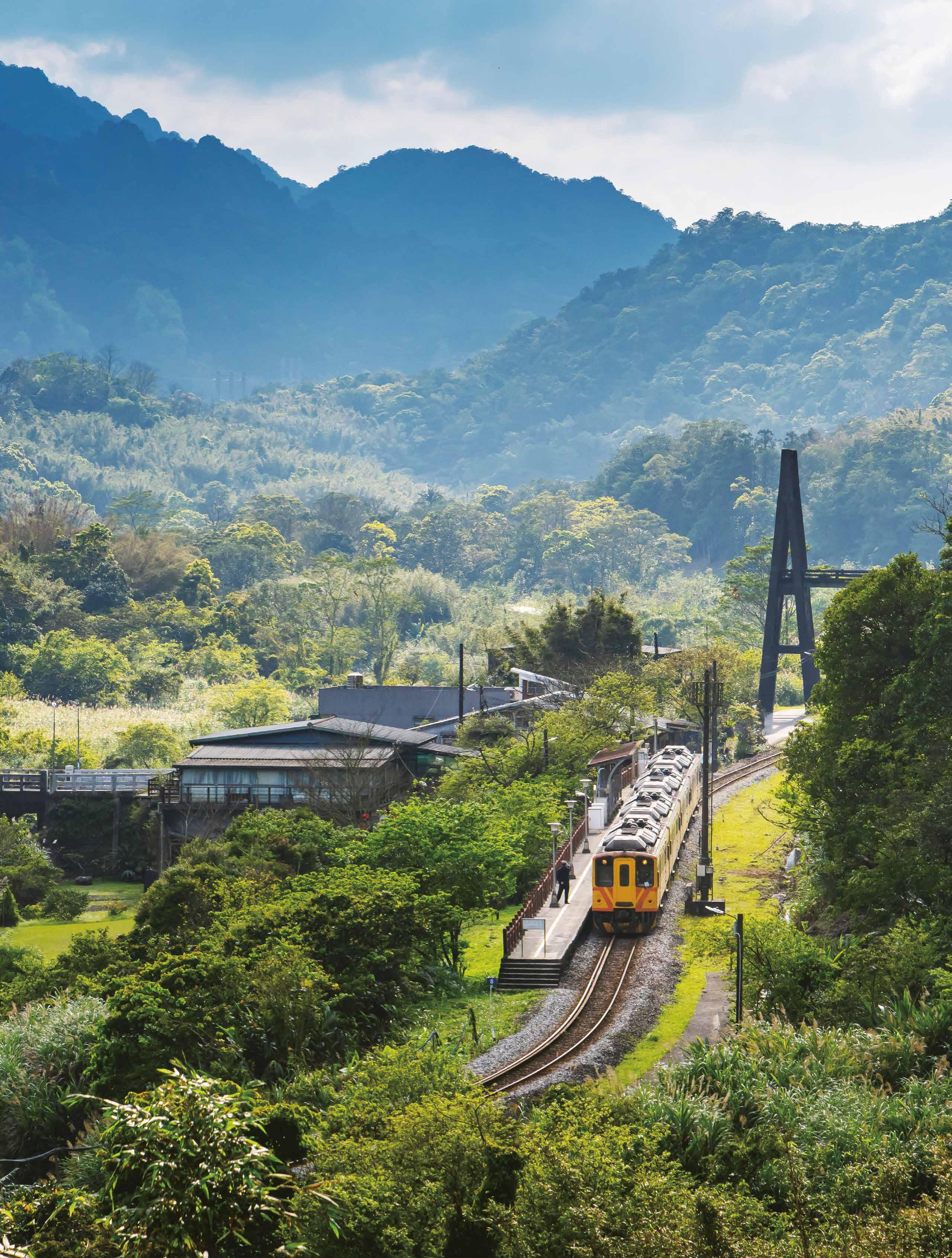
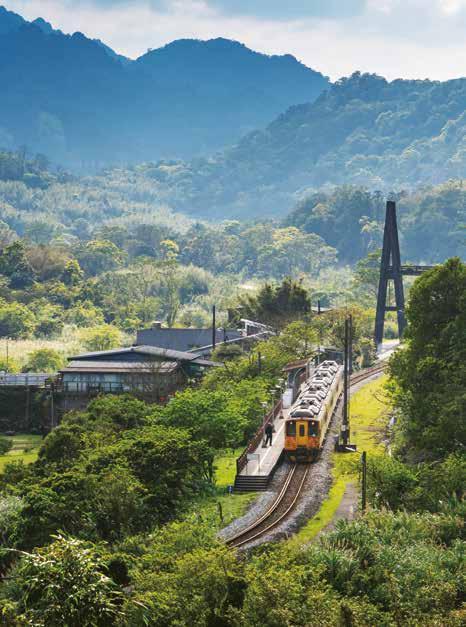
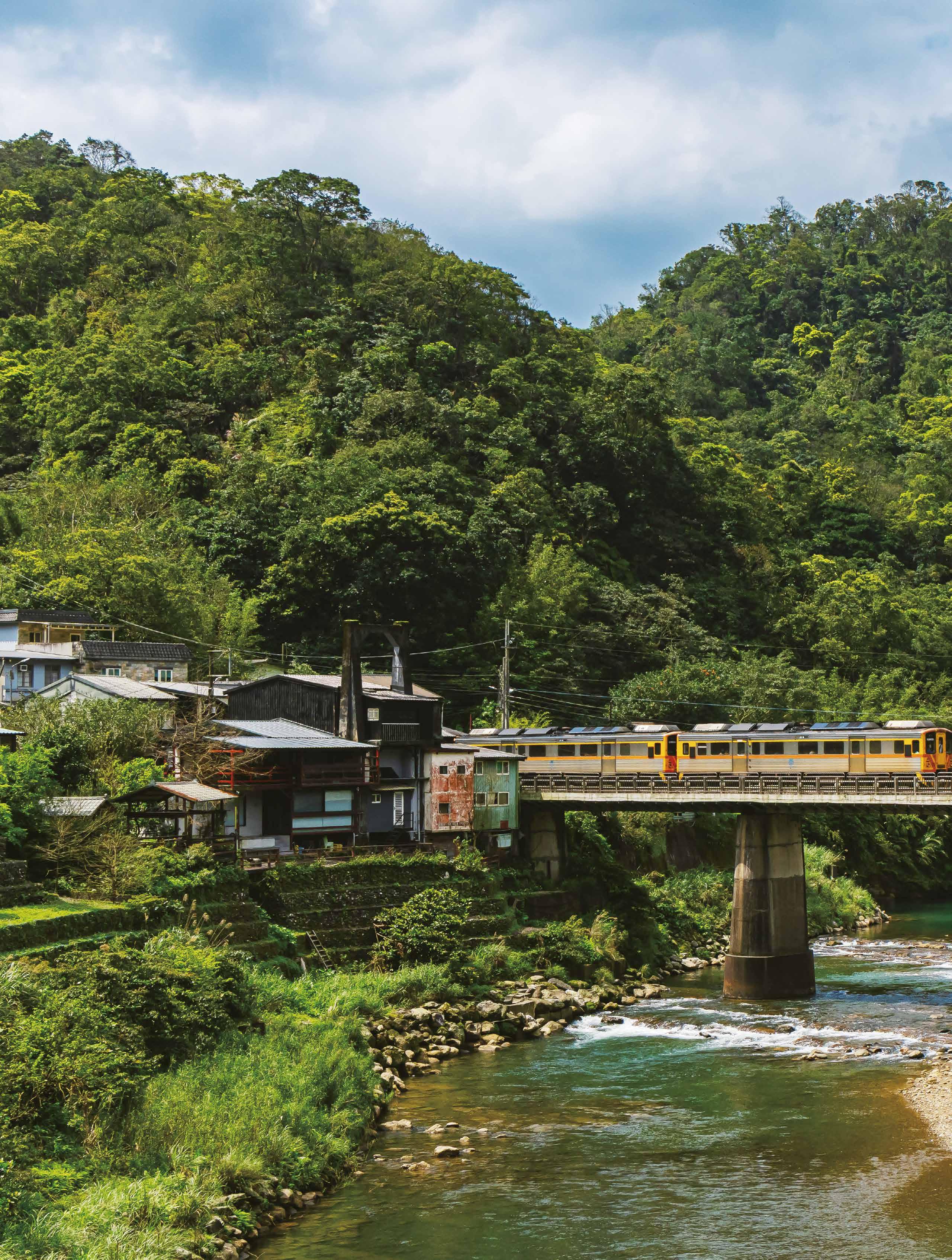
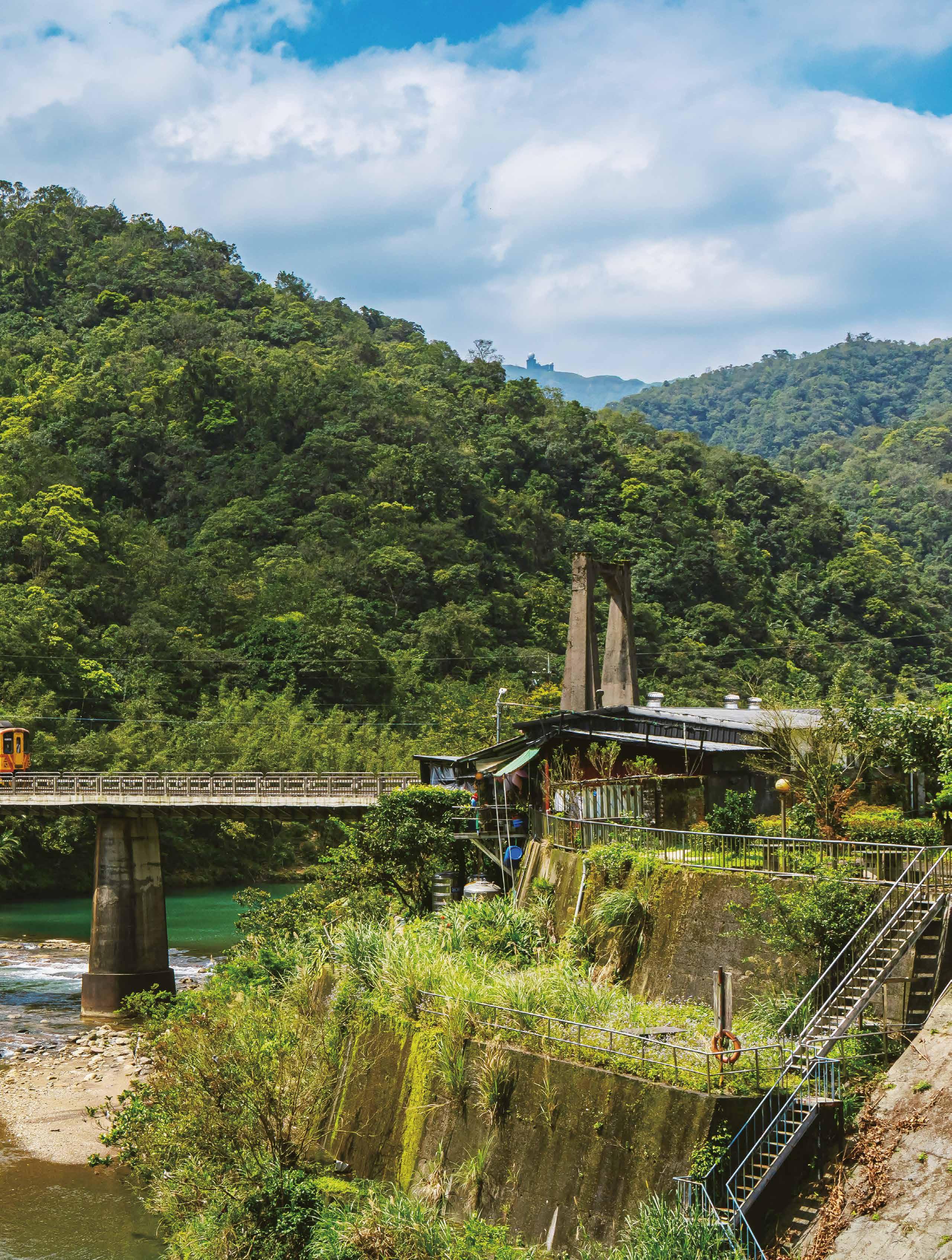
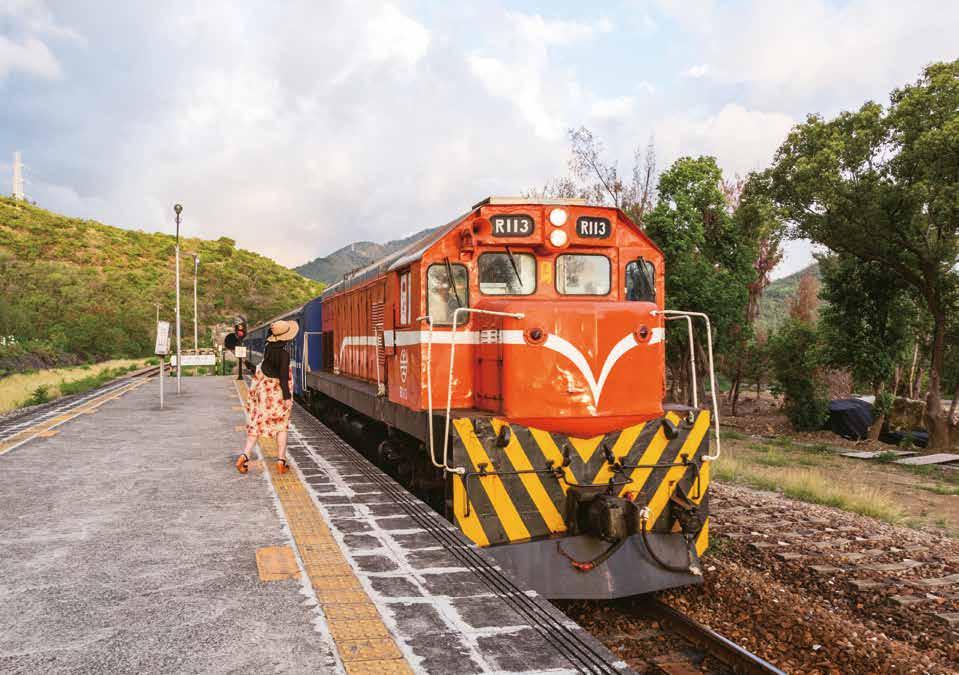
A Pingxi Line train at Wanggu Station, New Taipei City
THE SOUTH PENGHU MARINE NATIONAL PARK Magnificent Eco-Tourism Playground 12
RAIL TRAVEL | AROUND TAIWAN
THREE ROUTES, COUNTLESS REASONS TO RIDE The Joys of Discovering Taiwan by Rail
RAIL TRAVEL | HUALIEN/TAITUNG
EAST RIFT VALLEY BIKEWAYS
And How the Local Train Line Gets You to Them
RAIL TRAVEL | SPECIAL TRAINS WHEN THE JOURNEY IS THE DESTINATION Five Tourist Trains Redefining Rail Travel in Taiwan 38
STREET WALKS | TAOYUAN
ALL ABOARD FOR FUGANG, TAOYUAN! An Old Railway Town and Its Tourist Charms
GOOD FOOD | NOODLE RESTAURANTS
TAIPEI'S TEMPTING NOODLES
Exploring the City’s Noodle Heritage
50 MADE IN TAIWAN
BEAUTIFULLY LOCAL
Unique Taiwan-Brand Beauty & Cosmetics
52
LITTLE THINGS
GETTING TO KNOW TAIWANESE
A Quick Look at One of the Main Languages Spoken in Taiwan 54
REPORT | TAMSUI
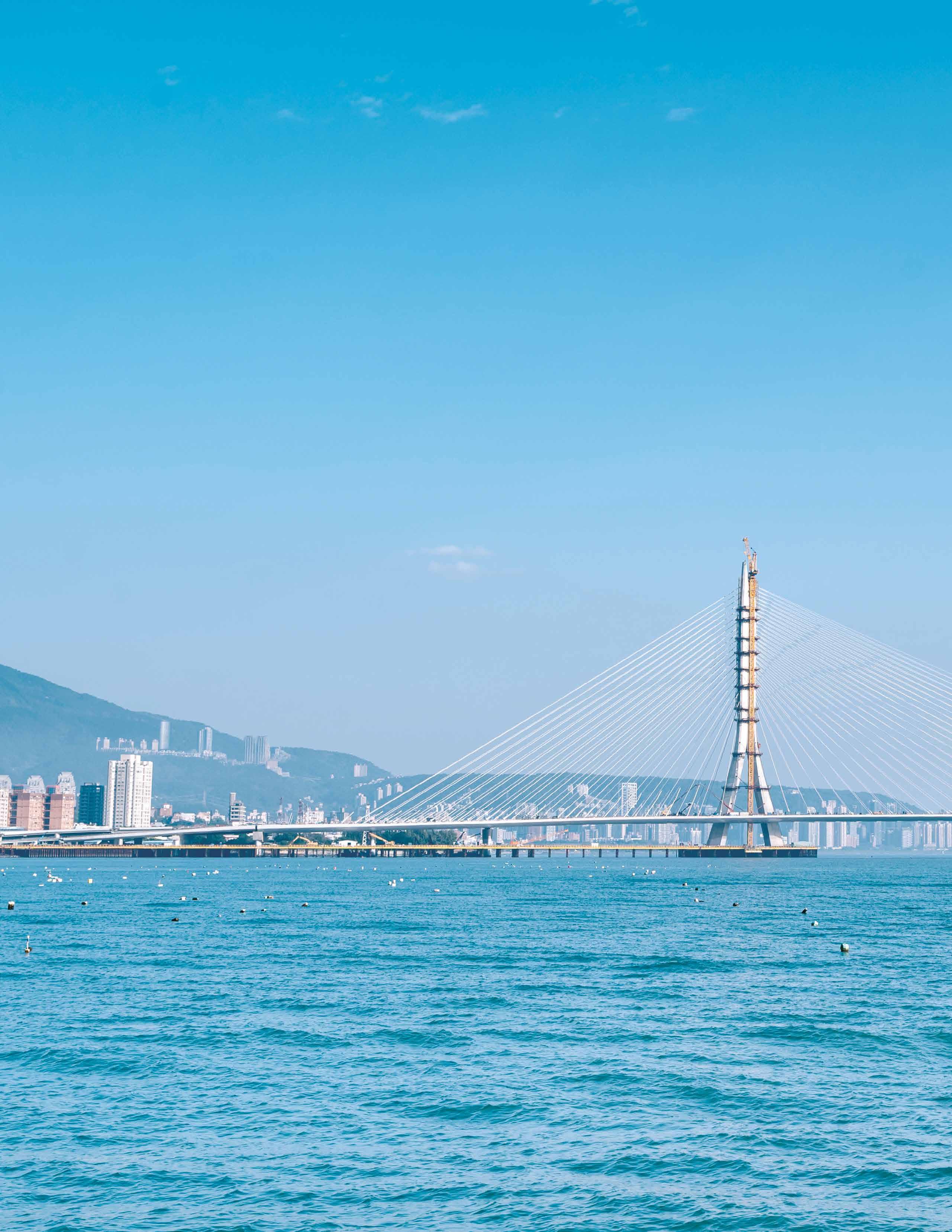
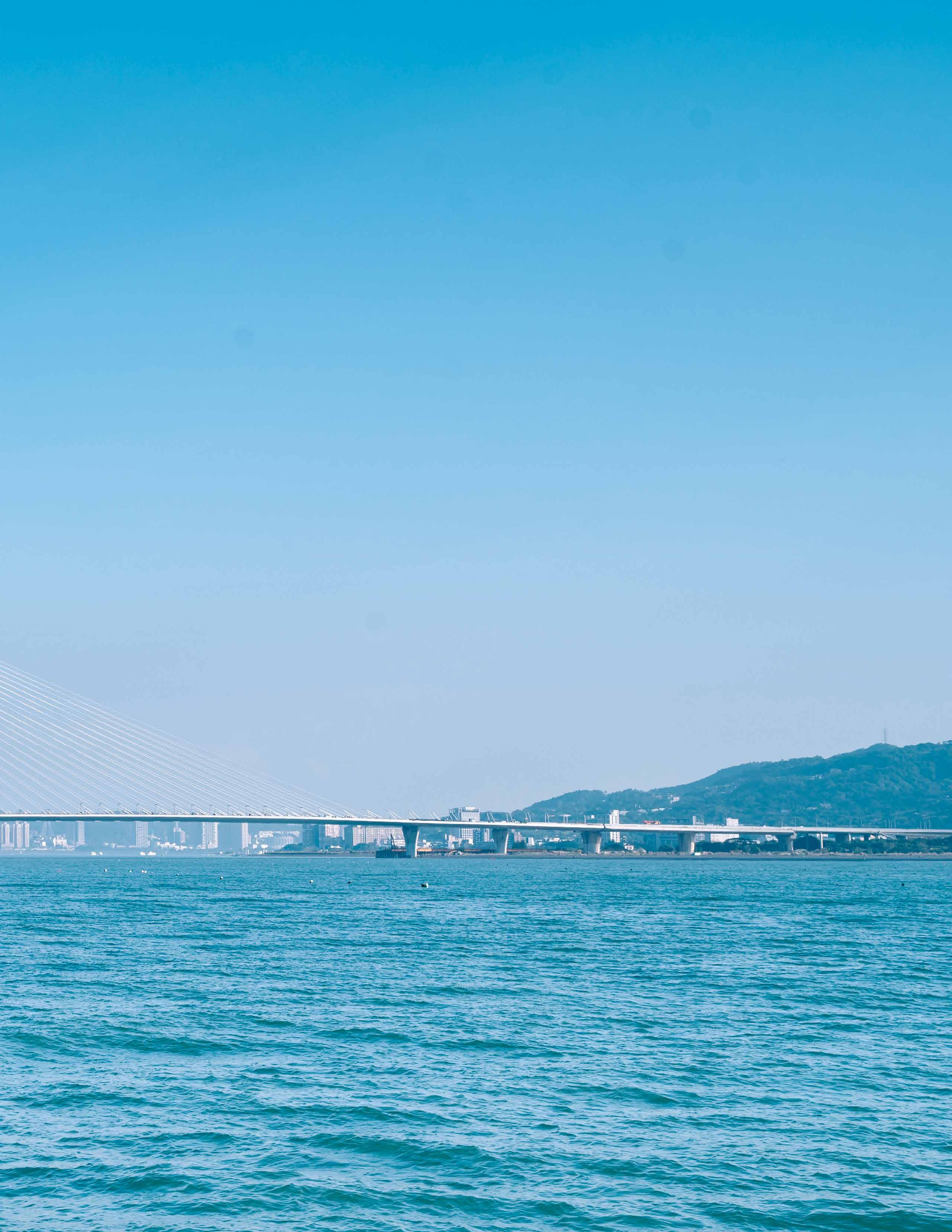
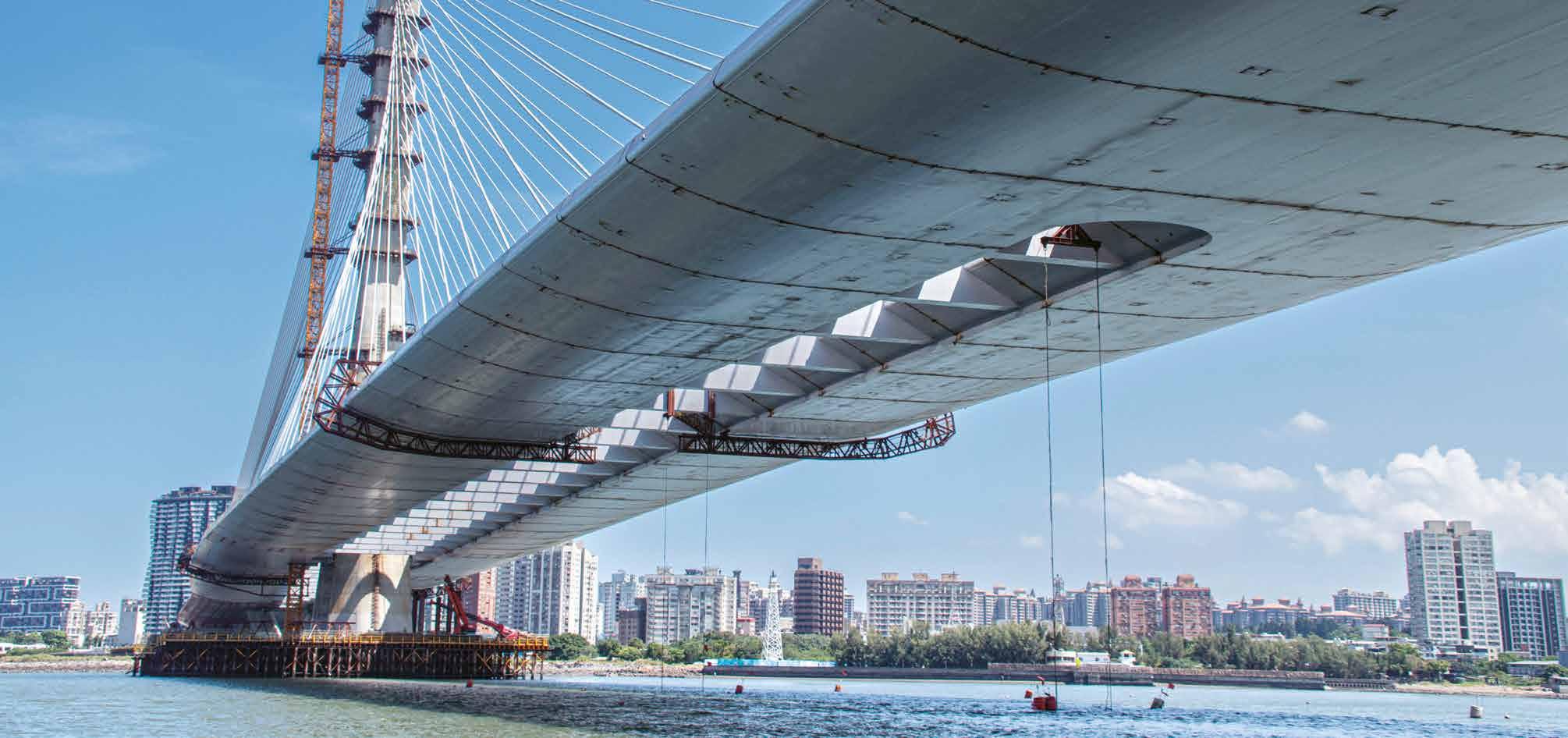
THE NEW DANJIANG BRIDGE
Taiwan’s Newest Globally Acclaimed Engineering Landmark and Tourism Marvel
Early-Summer Festive Events
PENGHU COUNTY
1 May 4 ~ August 25
Penghu International Fireworks Festival
澎湖國際海上花火節
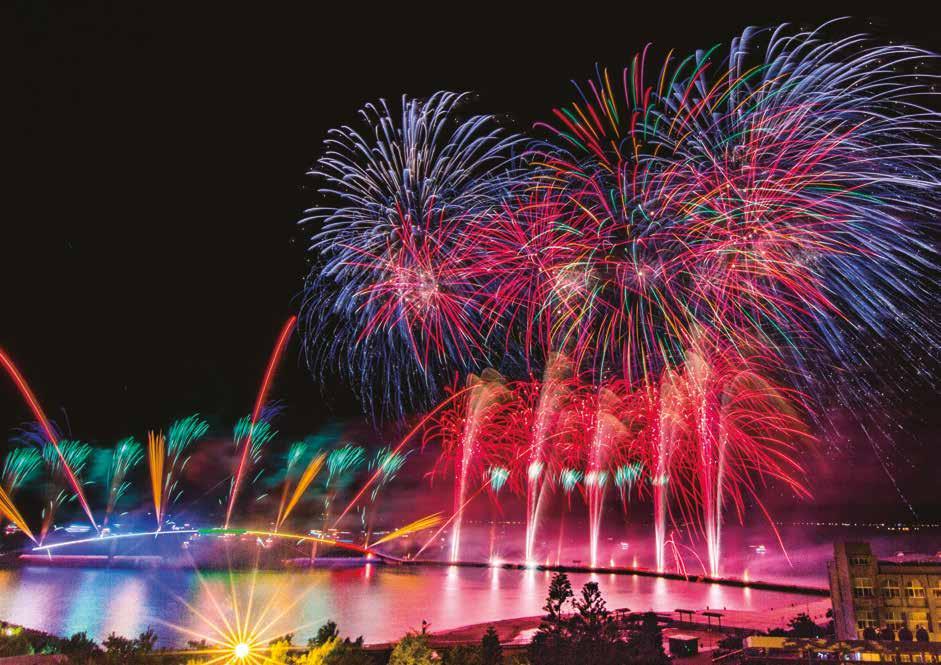
The Penghu International Fireworks Festival, one of the most anticipated seasonal events in Taiwan, returns this summer to light up the waterfront of Guanyin Pavilion Recreation Area in Magong City on Penghu’s main island. First held in 2003, the festival has become Penghu’s flagship tourism attraction, drawing large crowds to watch elaborate fireworks displays launched over the sea. Each edition features a themed program that blends fireworks with drone light shows and cultural performances. This year features a partnership with the classic anime Dragon Ball Z, introducing themed drone displays, character installations, photo spots, and exclusive merchandise inspired by the beloved series. www.facebook.com/phfireworks
TAITUNG COUNTY
2 June 21 ~ September 29
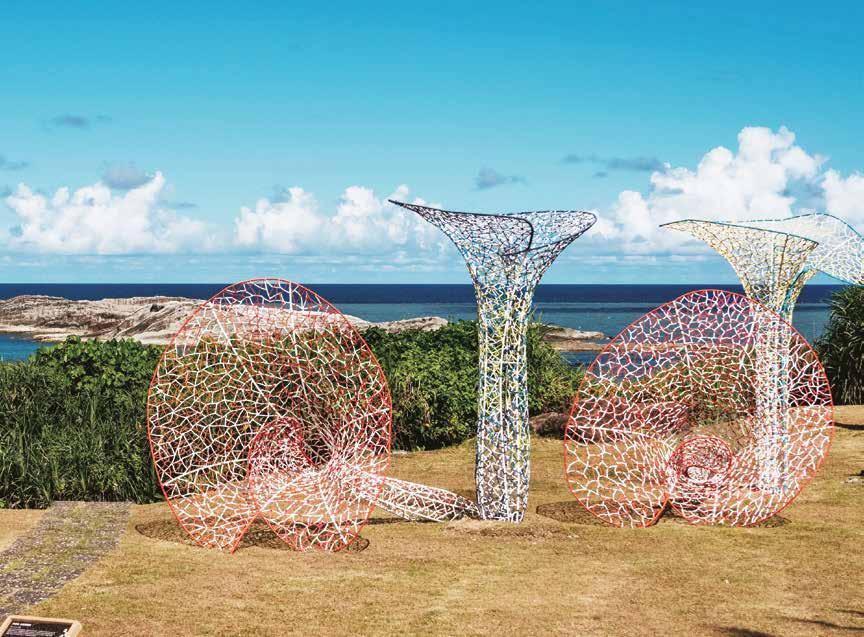
Taiwan East Coast Land Arts Festival & Moonlight Sea Concert
東海岸大地藝術節&月光.海音樂會
This is one of Taiwan’s most distinctive summer cultural programs, with its activities stretching along the Pacific coastline of eastern Taiwan. Organized by the East Coast National Scenic Area Administration, Taiwanese and international artists create site-specific works for the festival that engage directly with the landscapes, materials, and cultural context of the East Coast. The program features three main components: coastal land-art installations, the Moonlight Sea Concert series, and an arts platform highlighting creative spaces and artists throughout the Hualien-Taitung corridor. The Moonlight Sea Concert gatherings will be held on evenings around the full moon between June and September at the Torik Visitor Center. www.eastcoast-nsa.gov.tw/teclandart
NEW TAIPEI CITY
3 June/July
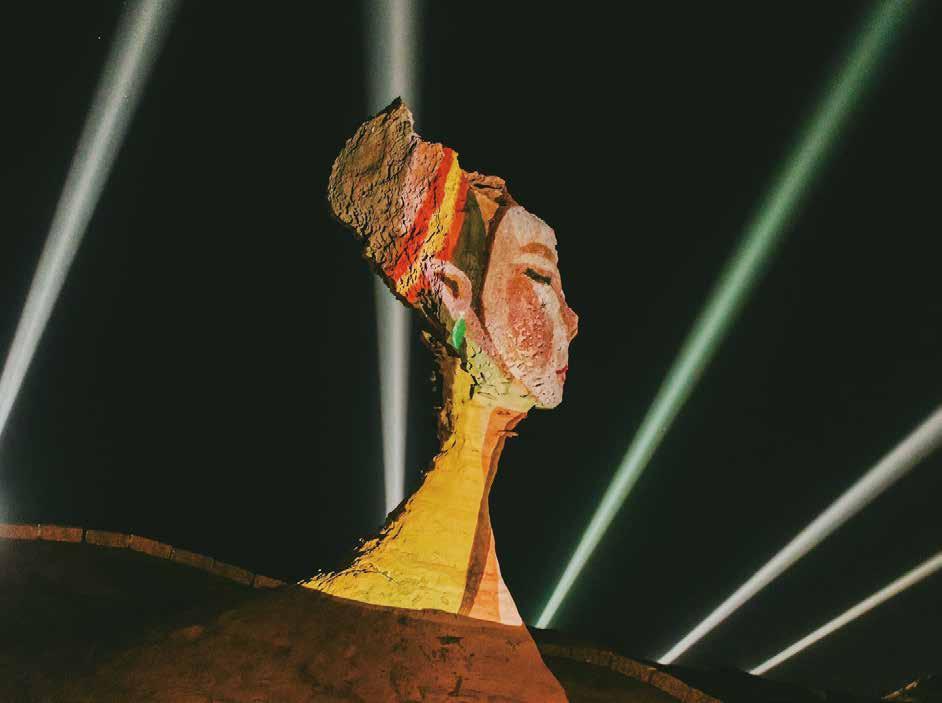
Times of Rocks in Yehliu: A Nighttime Visit to the Queen's Head
野柳石光-夜訪女王
Each summer, Yehliu Geopark, located on the North Coast to the northwest of Keelung City, hosts this special evening event during which visitors are allowed to experience the park’s dramatic geosculpture landscape after dark. Best known for the wind- and seaeroded Queen’s Head Rock, the geopark becomes an illuminated outdoor gallery through carefully designed lighting installations and visual effects. Launched in 2018, the event marked the first time the geopark opened for nighttime visits. Since then, it has returned each summer with new themes and programming, blending landscape lighting, live performances, environmental education, and conservation awareness. www.ylgeopark.org.tw
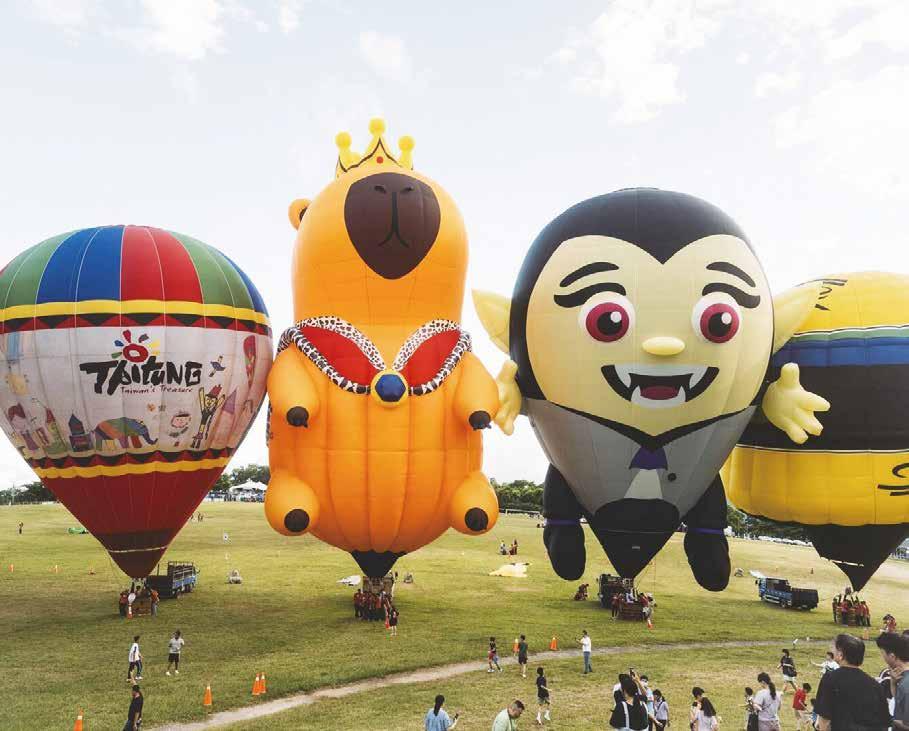
Every summer, the Luye Highland in Taitung County comes alive with vibrant hot-air balloons floating up into the valley’s open skies. Set in the scenic East Rift Valley (also known as the Longitudinal Valley), the festival is famous for its special-shaped balloons, vibrant designs, and stunning aerial displays against the backdrop of lush green hills and expansive open skies. Each morning and evening, balloons take to the air for display flights and tethered rides, giving visitors the chance to marvel at the spectacle up close or soar above the valley themselves. The festival also buzzes with live performances, interactive activities, and local-food stalls, creating a lively atmosphere that blends aerial artistry with cultural experiences and scenic beauty.
balloontaiwan.taitung.gov.tw
YILAN COUNTY 5 July 4 ~ August 16
Yilan International Children's Folklore & Folkgames Festival
宜蘭國際童玩藝術節
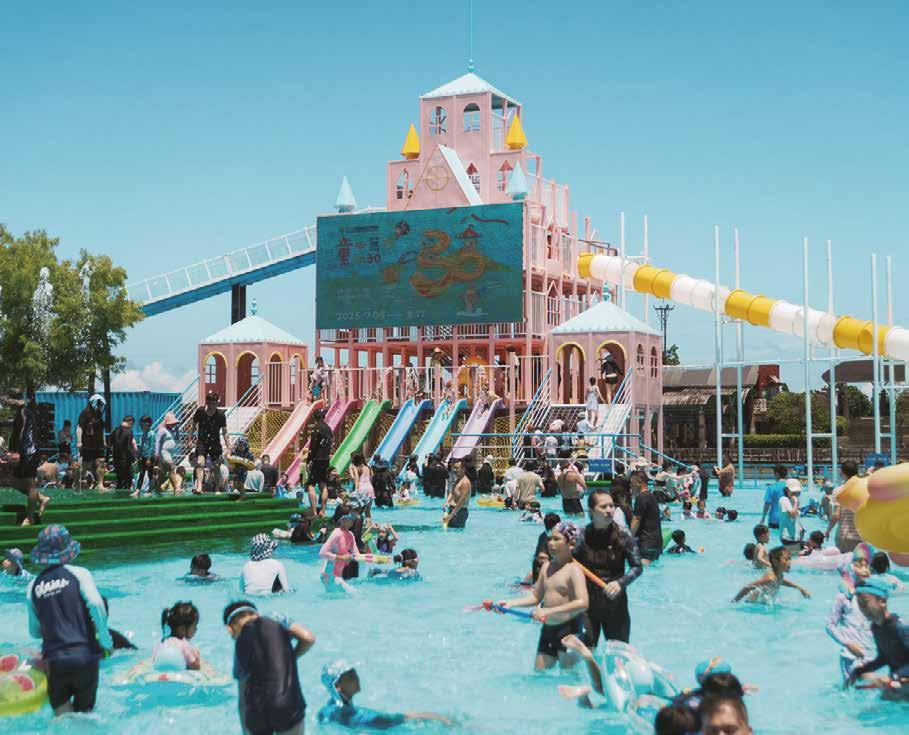
Since 1996, each summer, the riverside Dongshan River Water Park in Yilan County has come alive with the sights and sounds representative of children’s cultures from around the world. As the only festival in Asia officially certified by the International Council of Organizations of Folklore Festivals and Folk Arts, it holds a unique distinction for its international scale and cultural ambition. The program features folk-art troupes presenting traditional music, dance, and costumes from across the globe. Designed specifically for families, an environment is created where children can experience diverse cultures firsthand. Water-fun activities remain a highlight, with the riverside setting making aquatic play a central and memorable part of the experience. www.facebook.com/yicfff
HUALIEN COUNTY 6 July 16~19
Pacific Austronesian Joint Harvest Festival
太平洋南島聯合豐年節
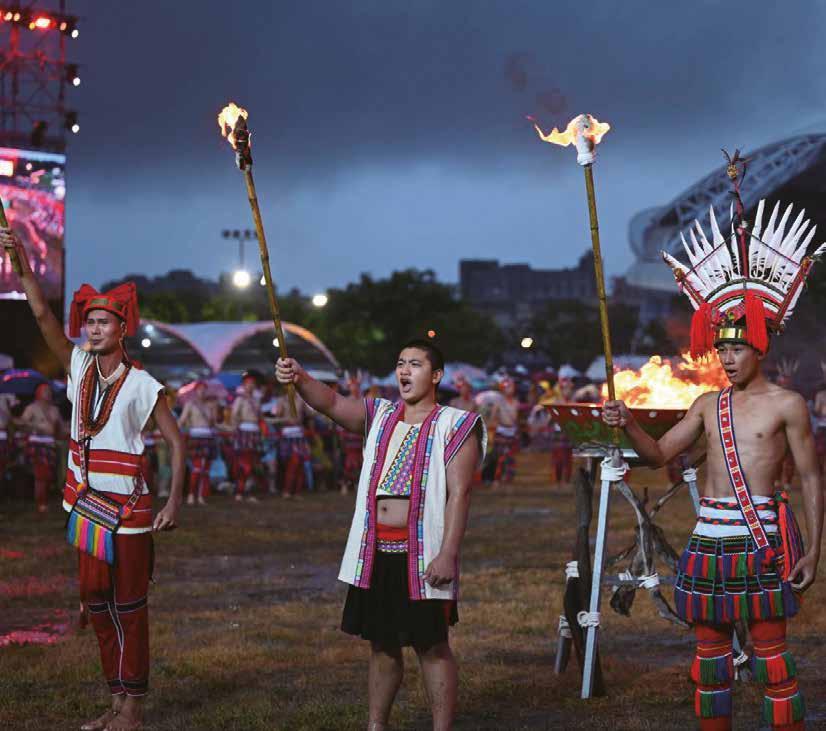
Each summer, the grassy expanse of Dexing Lawn in Hualien County is transformed into a vibrant stage for this festival, one of Taiwan’s most exhilarating celebrations of indigenous Pacific culture. Bringing together performers and dance troupes from around Taiwan and across the broader Austronesian world, the festival offers an immersive experience of song, dance, craft, and food rooted in the harvest traditions of Taiwan’s indigenous peoples. Evenings begin with elaborately costumed young dancers performing tribal songs and choreography, building toward the festival’s emotional centerpiece, a mass communal dance where the entire audience is invited to join hands and move together on the grass. Alongside the main stage, a slow food market showcases indigenous cuisine, handmade crafts, and agricultural products from communities across Taiwan. tour-hualien.hl.gov.tw
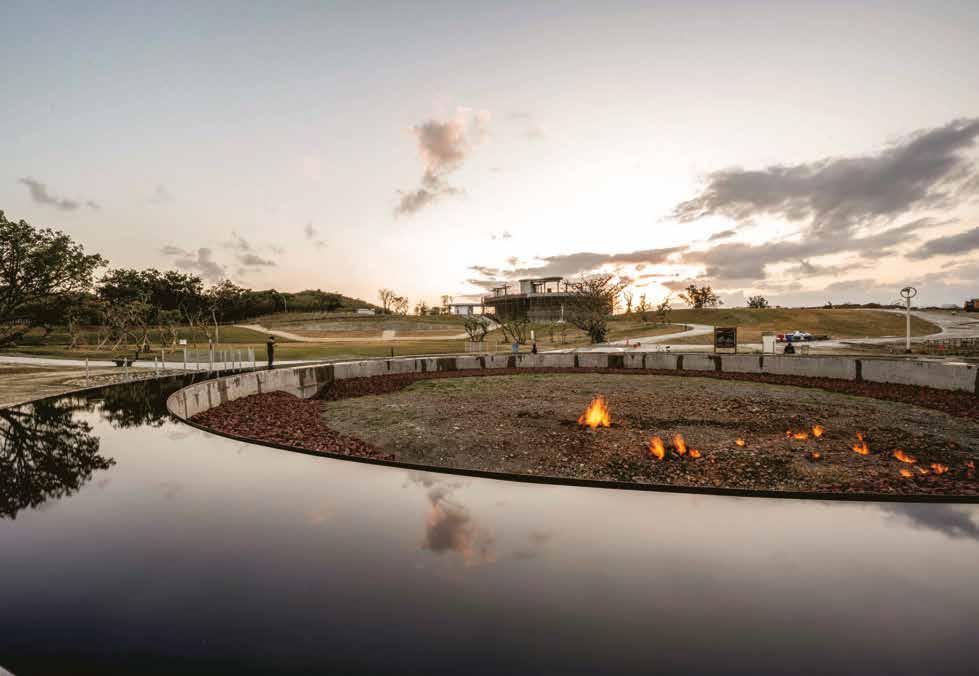
The well-known Chuhuo site in southern Taiwan’s Pingtung County reopened earlier this year following a major redesign as a geopark. Chuhuo, literally meaning “Emerging Fire,” is a rare geological phenomenon in which natural gas seeps through cracks in the ground and ignites on contact with air, creating flames that flicker continuously from the earth. The site, located just to the east of Hengchun town, had long faced management issues, including illegal grilling by visitors and congestion caused by vendors. To improve safety, the revamped park now features a circular water barrier around the flame area, allowing visitors to observe the phenomenon up close in a safe manner. The project was carried out jointly by the Pingtung County Government and the Kenting National Park Administration, giving new life to one of southern Taiwan’s best-known natural attractions. www.ktnp.gov.tw
Lotus Pond Scenic Area
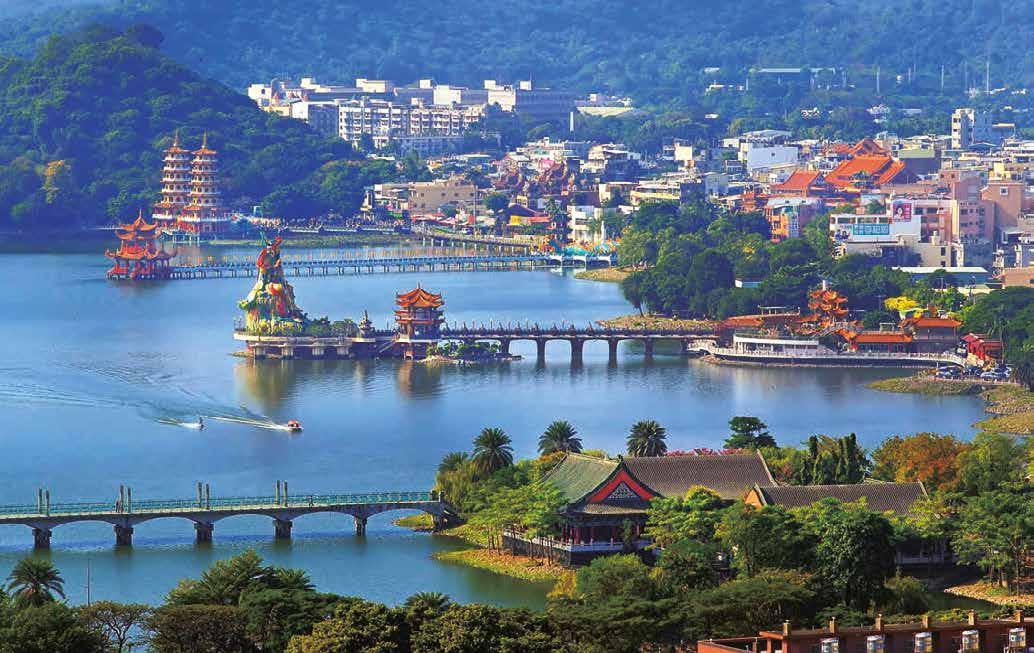
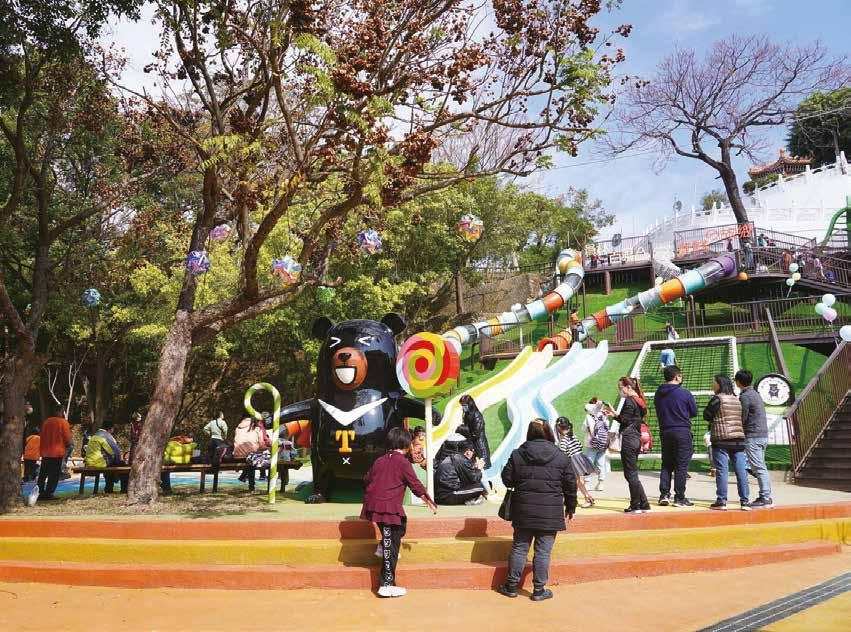
Kaohsiung City’s Lotus Pond Scenic Area has undergone a major waterfront renovation that lasted nearly five years. Known for the iconic Dragon and Tiger Pagodas rising from the water, the pond is one of southern Taiwan’s most recognizable landmarks. According to local tradition, visitors who enter through the dragon’s mouth and exit through the tiger’s are said to receive good fortune. The city government invested significantly to improve the pond’s waterfront ecology and accessibility. One key upgrade has been the connection of the various trails alongside the pond, allowing visitors to walk all the way around the body of water while enjoying uninterrupted waterfront views and easy access to the Confucius Temple and the twin pagodas. Other additions include the new Kaohsiung Bear IP & Design Gift Shop and the Lotus Wake Park, with further ecological improvements planned for the area. khh.travel
A wealth of tourist attractions across Taiwan have been newly opened or revitalized in recent months – here are a few of them.
Baiguoshan Exploration Park
Baiguoshan Exploration Park, a dinosaur-themed amusement park in central Taiwan’s Changhua County, was reopened this year after closing in September 2024 when its lease expired. Following several months of planning and renovation, the operator has updated the park with 12 new attractions. Its signature forested setting has been retained, home to dozens of life-sized animatronic dinosaurs, while new rides such as a jungle adventure vehicle, mid-air lazy river, rainbow slide, and tank-battle cars have been added. Located in Yuanlin City, the park has long been a popular destination for families and dinosaur fans.
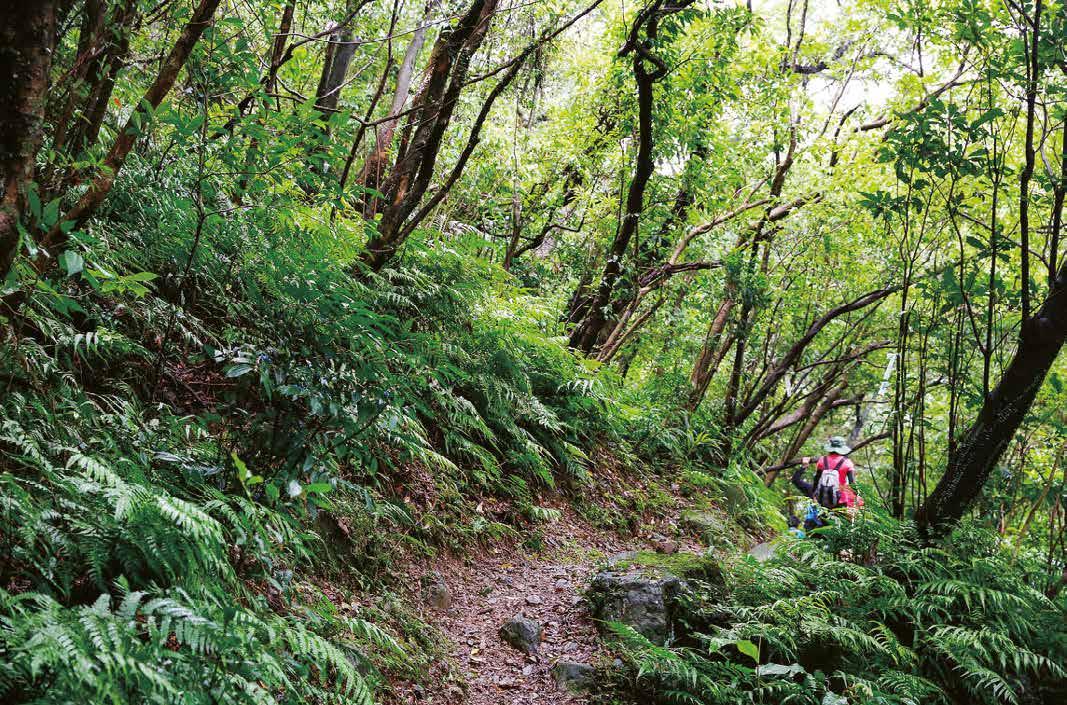
New Taipei City has recently introduced a digital modeling system for the Tamsui-Kavalan Historic Trails, bringing one of Taiwan’s most storied mountain route networks into the digital age. The trails once linked the port town of Tamsui on the north coast with the Kavalan plain of present-day Yilan County, serving as an important means of travel across the mountains of northeastern Taiwan. The new digital platform uses ultra-high-resolution panoramic imagery
and digital twin technology to let users explore designated sites in detail from multiple perspectives. Covering the northern, central, and southern sections, the platform features locations such as the Jinzi Tablet Trail, the Pingxi Trail, and the Sidu Trail, with ambient soundscapes, illustrated explanations, and AI and human voice guides in Chinese, English, Japanese, and Korean. newtaipei.travel/immersive-tk-trails
Taiwan Literature Hub
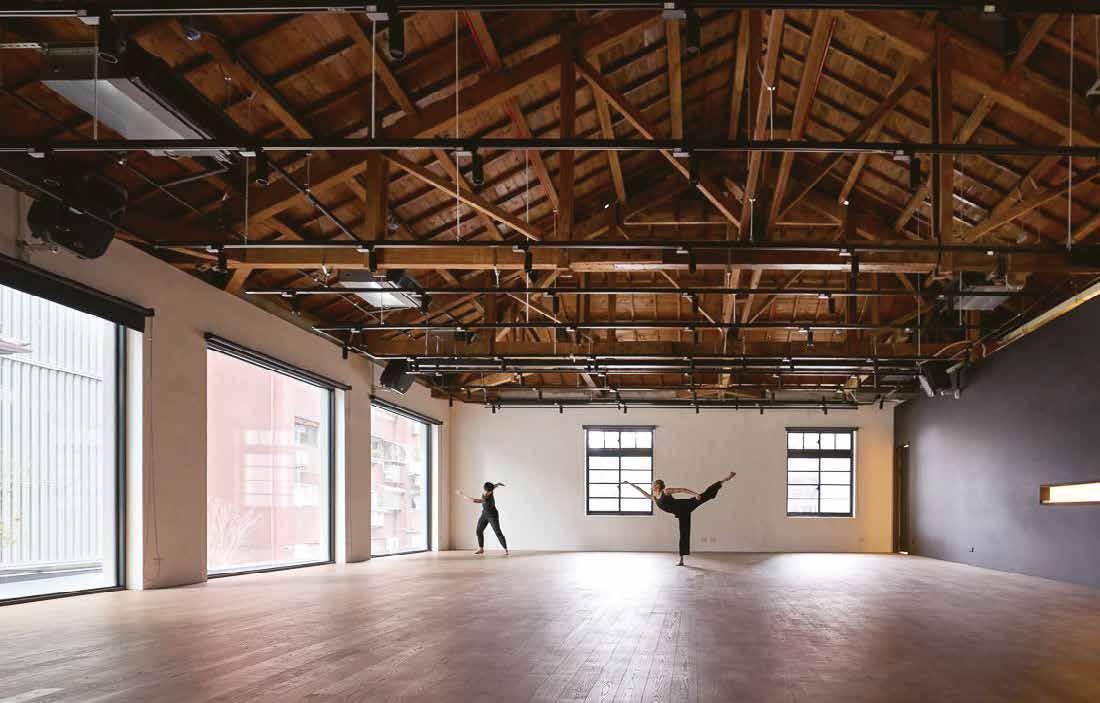
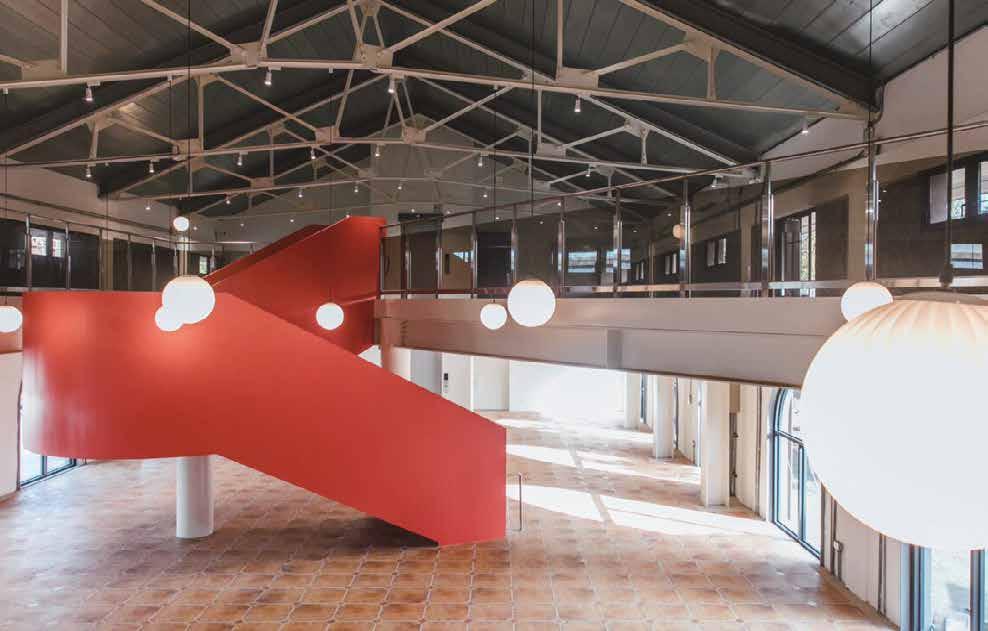
This cultural attraction opened to the public in Taipei this March. Its building has a layered history: originally constructed after World War II as a warehouse and administrative office for Taiwan’s grain authority, it was later used for rice storage before falling out of use in 1999. Designation as a historic structure came in 2016. After the National Museum of Taiwan Literature took over the site in 2019, years of restoration and redesign led to its full public opening this year. Now the museum’s second Taipei location, alongside the Taiwan Literature Base, the facility’s original beams and walls have been preserved while adding contemporary features such as a glass elevator and flexible spaces for exhibitions, lectures, workshops, and rehearsals. Current highlights include a light-projection show on the historic façade, two special exhibitions, and four themed zones exploring literature’s connections with performance, design, film, music, and other art forms. www.facebook.com/taiwanliteraturebasehub
Zhutian Station – Takeda
A new railway-themed cultural attraction in Pingtung County, Zhutian Station – Takeda, officially opened this March inside Zhutian Station Park, home to the historic Zhutian Station. The old station, located right beside the modern one, was established in 1919 as Dunwu Station. At the heart of the new attraction are two former Taiwan Railway warehouses, revitalized under the theme of Hakka hospitality, relaxation, and slow travel. Warehouse No. 1’s ground floor houses a multi-purpose exhibition and event space alongside local specialty shops and an independent bookstore, while the second floor is home to a restaurant serving Hakka-inspired Japanese set meals made with local Pingtung ingredients – including a special Zhutian railway bento (boxed lunch). Warehouse No. 2 offers accommodation for 40 guests in capsule- and tatami-style rooms, catering to young travelers. A separate standout is a renovated Japanese-style tatami villa with a private bathroom and courtyard, designed for a more immersive slow-travel experience. www.i-pingtung.com
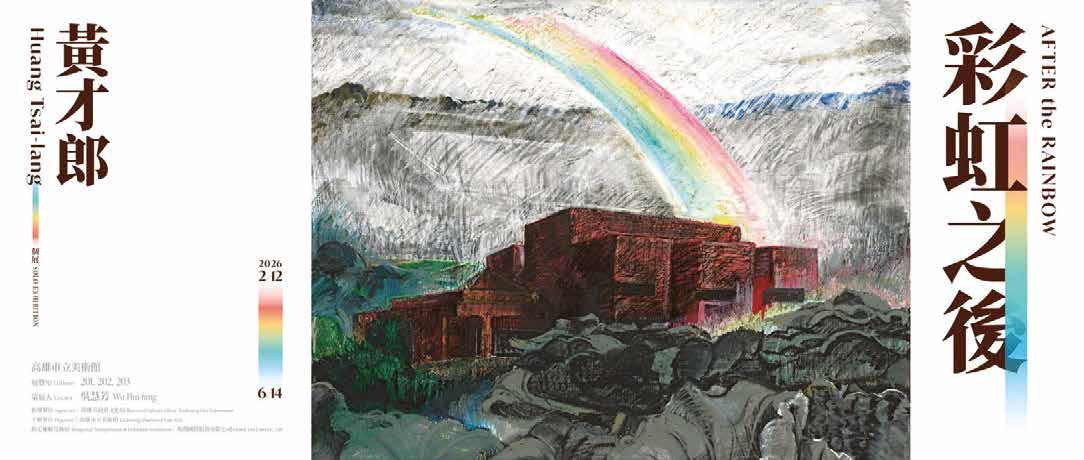
AFTER THE RAINBOW –HUANG TSAI-LANG SOLO EXHIBITION
彩虹之後─黃才郎個展
Feb 12 – Jun 14
Kaohsiung Museum of Fine Arts [Kaohsiung City]
This solo exhibition showcases the distinctive work of Huang Tsai-lang (b. 1950), a notable Taiwanese artist and arts administrator who has served as director of some of Taiwan’s most prominent museums, including the Taipei Fine Arts Museum and National Taiwan Museum of Fine Arts. It explores themes of transformation, memory, and the interplay of light and color. Through painting, installations, and experimental techniques, Huang reflects on personal and collective experience, capturing moments of beauty, impermanence, and emotional resonance. This exhibition invites viewers into the space between reality and imagination – a visually rich, introspective journey that will linger long after leaving the museum. www.kmfa.gov.tw
2
Dance
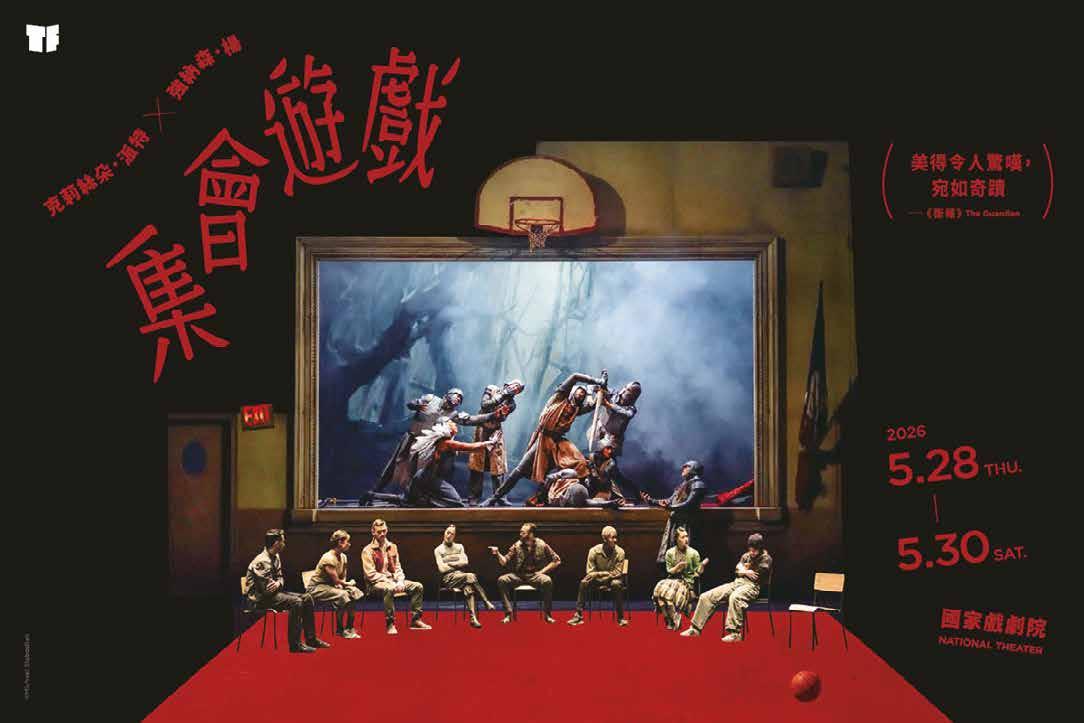
KIDD PIVOT / CRYSTAL PITE & JONATHON YOUNG: ASSEMBLY HALL
克莉絲朵.派特X強納森.楊《集會遊戲》
May 28-30
National Theater [Taipei City]
First performed in 2023, Assembly Hall is the latest dance-theater work from Canadian company Kidd Pivot, led by Crystal Pite. Choreographed by Pite and written by Jonathon Young, it is their fourth theatrical collaboration. The piece is centered on a group of medieval re-enactors gathered for an annual general meeting, their club facing hard times – membership dwindling, debt mounting, and the hall itself falling apart. As the meeting progresses, the line between reality and reenactment begins to blur, and it becomes clear that far more is at stake than a mock-medieval tournament.
npac-ntch.org
3
Musical
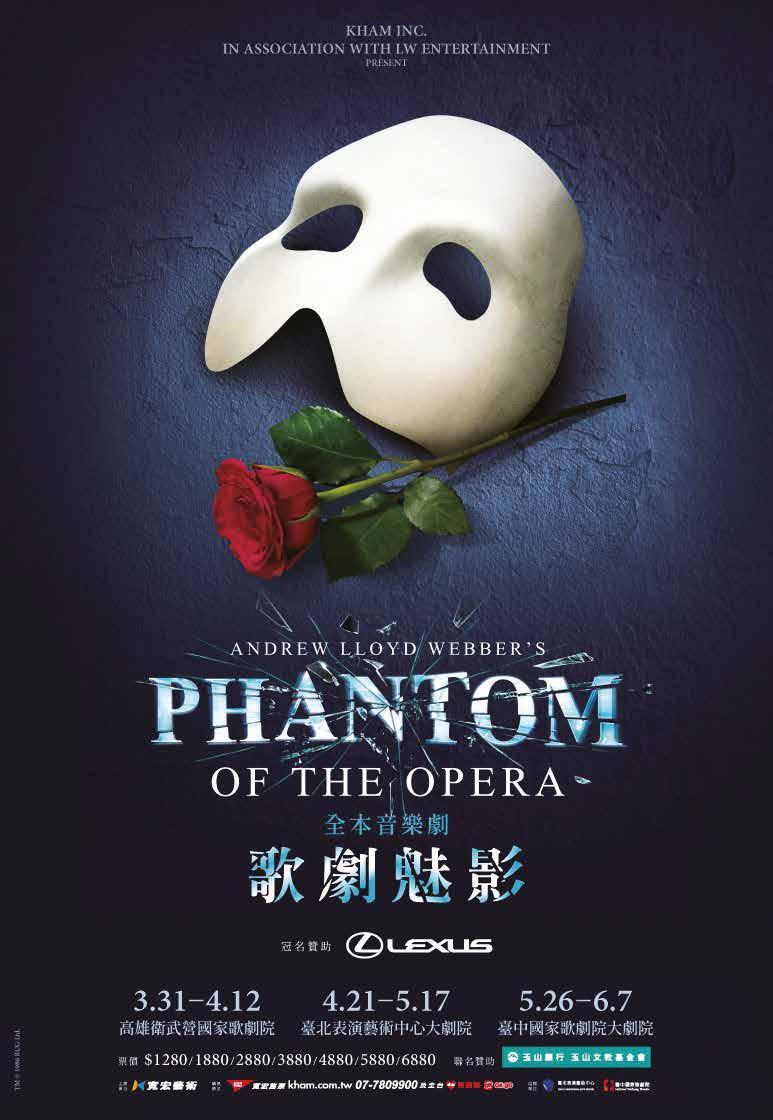
PHANTOM OF THE OPERA
全本音樂劇《歌劇魅影》
May 26 – June 7
National Taichung Theater [Taichung City]
This globally renowned musical, with music by Andrew Lloyd Webber, tells the dramatic and romantic story of a mysterious masked figure who haunts the Paris Opera House while falling in love with a young soprano. Known for its sweeping score, lavish sets, and spectacular stage effects, The Phantom of the Opera offers audiences a timeless blend of romance, suspense, and theatrical grandeur, making it one of the most beloved musicals in the world. www.npac-ntt.org
Exhibition 4
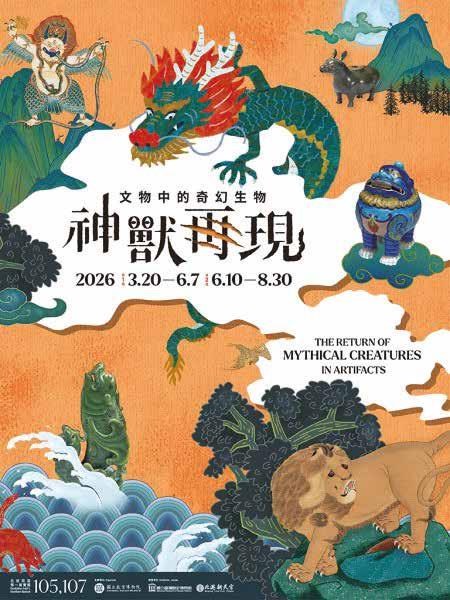
THE RETURN OF MYTHICAL CREATURES IN ARTIFACTS
神獸再現
March 20 – August 30
National Palace Museum
[Taipei City]
This exhibition explores the depiction of mythical creatures in Chinese art and cultural artifacts, highlighting their symbolic meanings, artistic evolution, and enduring influence across centuries. Featuring a wide range of objects –including sculptures, ceramics, and ritual items – the exhibition reveals how these fantastical beings embody moral values, cosmology, and cultural imagination. Visitors are invited to discover the stories and symbolism behind each creature, gaining insight into the rich artistic and spiritual traditions that continue to inspire contemporary interpretations. www.npm.gov.tw
Exhibition 5
TOMÁS SARACENO: INTERWOVEN
托馬斯.薩拉切諾:共織宇宙
March 21 – September 9
New Taipei City Art Museum
[New Taipei City]
This solo exhibition presents the innovative works of Argentine contemporary artist and architect Tomás Saraceno (b. 1973), exploring the intersections of art, science, and ecology. Through immersive installations, kinetic sculptures, and interactive environments, Saraceno examines interconnected systems – from spiderwebs to urban networks – inviting visitors to consider the complex relationships between humans, nature, and the cosmos. Interwoven encourages engagement, curiosity, and reflection on our shared environment, offering a visually striking and intellectually stimulating experience. ntcart.museum
Exhibition 6
MICHAEL LEARNS TO ROCK: ENCORE – ALL THE HITS
搖滾麥克
July 5
Kaohsiung Music Center
[Kaohsiung City]
Michael Learns to Rock, a Danish soft rock band formed in 1988, is known for its melodic, easylistening pop-rock ballads, which have enjoyed massive popularity across Asia. This concert will feature all of their most popular songs, promising an evening of classics nostalgia and sing-alongs. Fans can expect a mix of timeless ballads and upbeat tracks showcasing the band’s signature melodic style and emotional storytelling. The performance will offer an engaging experience for both long-time followers and new listeners alike. ntcart.museumkpmc.com.tw
The South Penghu
Marine National Park
Magnificent Eco-Tourism Playground
Taiwan’s 10 national parks and 13 national scenic areas present you with an incredible choice in landscape and waterscape variation. And no matter how remote you seek to be, the superb transportation system makes access quick and painless. Here now, the inimitable watery world of the South Penghu Marine National Park.
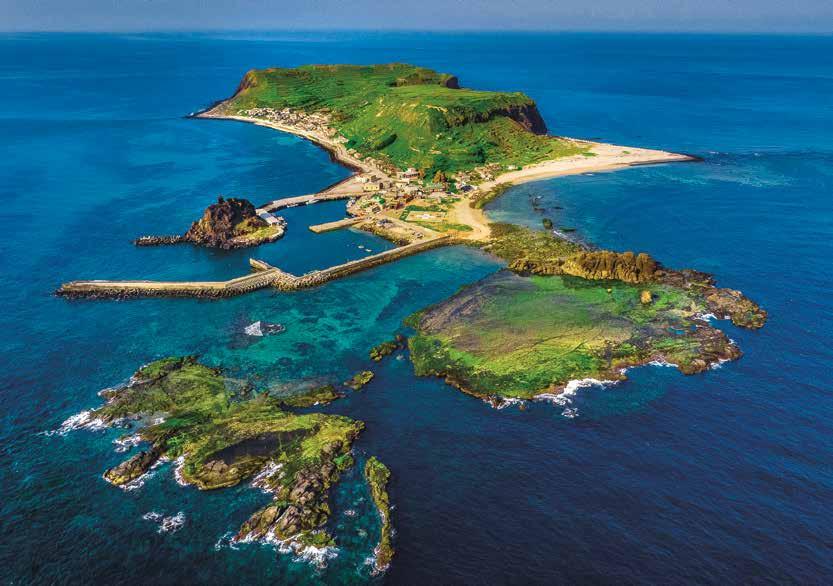
How remote? Picture yourself jumping happily off a boat far out in the Taiwan Strait, half-way between China and mainland Taiwan, nothing but a tiny island with a cluster of simple old fisherfolk abodes a few hundred meters in front of you, one or two other tiny islands seen far off in the distance.
You’re in the south of the far-flung Penghu archipelago, far from the main-island cluster that is the gateway to the islands for most travelers. Visitors primarily get to South Penghu Marine National Park (www.marine.gov.tw) via boat tour from Magong City on Penghu Island, the archipelago’s largest.
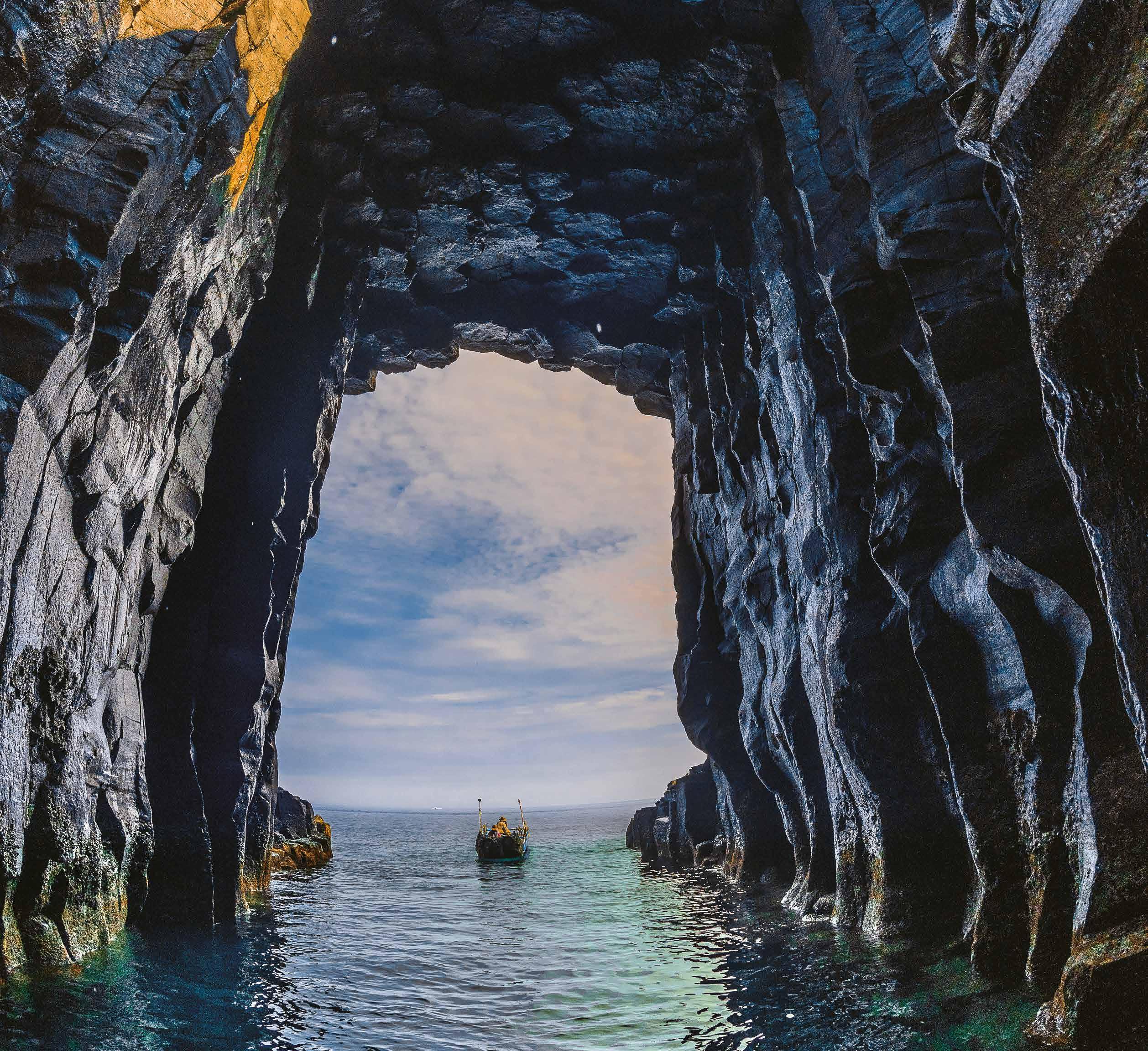
Blue Cave on Xiji Island
NATIONAL PARKS South Penghu
What Makes the Park Special?
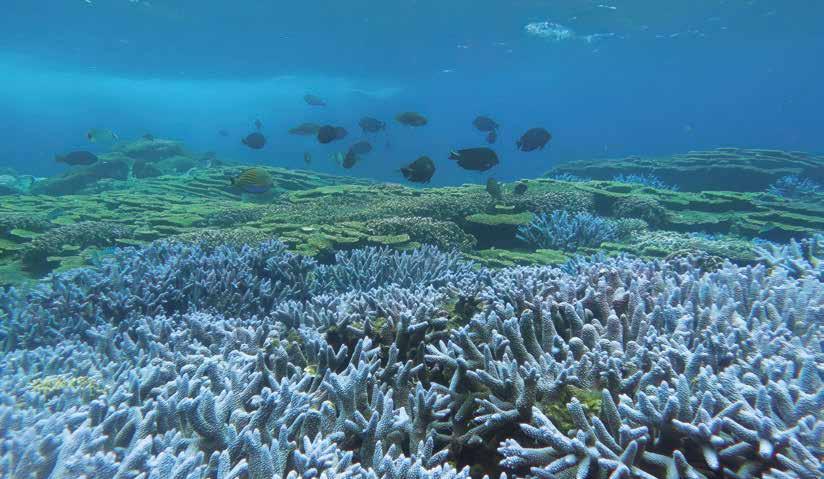
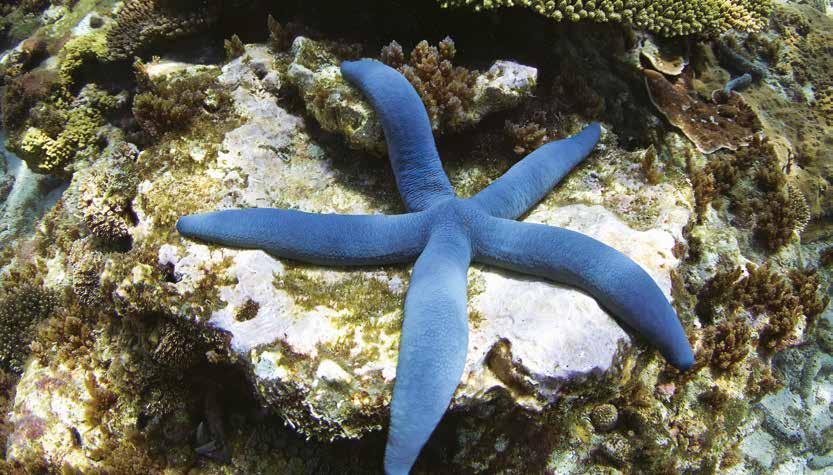
Established in 2014, the national park spans 35,000 hectares and is 99% marine-based. Management is charged with protecting its fragile marine ecosystem. While exploring its precious riches, you’ll have over 279 coral species, over 581 fish species, and endangered sea turtles on your checklist; small numbers of dolphins and smaller whales have also made a return. Fishing is now restricted, and eco-tourism is promoted. A showcase star of the underwater world is the captivating Linckia laevigata, a bright-blue, large sea star species found in shallow Indo-Pacific waters.
Anchoring the park are four small basalt islands – Dongji Island, Xiji Island, Dongyuping Island, and Xiyuping Island – platforms for a unique and crucial migratory bird, seabird, and marine wildlife habitat, which are located between the major islands of Wang’an and Qimei. The four islands are dotted with old traditional-architecture fishing villages.
Water Activities
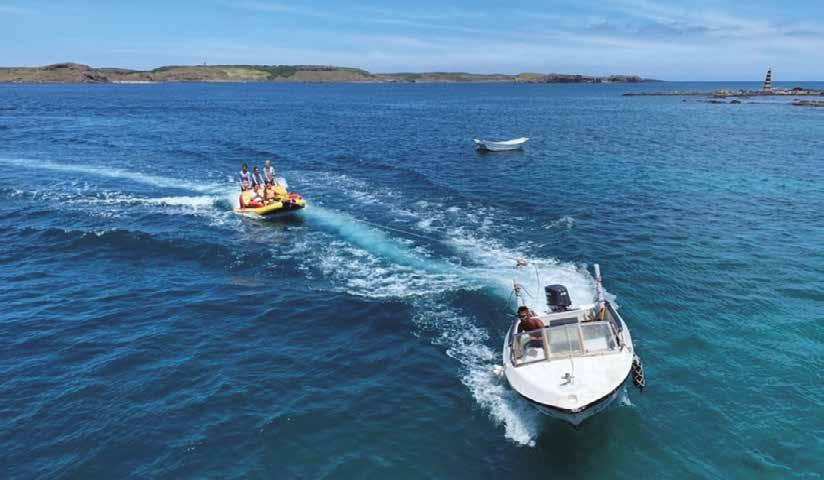
Most park visitors come as part of organized boat tours, typically 7~9 hours, offered by local outfits vetted by the Taiwan Tourism Administration. These have desks at the South Sea Visitor Center at Penghu’s Magong Harbor (book on-site or online at www.penghu-go.tw/ penghugo/ ), where participants gather for the excursions.
A standard guided expedition features a stop at Dongji Island for land exploration, cruising by Xiji Island to see the Blue Cave, and sometimes a stop at Dongyuping Island. There are also specialized snorkeling tours, usually off Dongyuping Island, often with additional fun such as walking on an uninhabited sea-eroded platform and observe the ecology.
Island Highlights
Monumental columnar-basalt formations, sea stacks, and caves/ blowholes are in view in many places. The iconic Blue Cave is a cathedrallike erosion cave in a massive seaside cliff formation; the innards glow bright blue when sunlight streams in through a roof hole, reflected off the seawater inside.
A prominent manmade feature of the Penghu landscape is the conspicuous stone-built, pagoda-like talisman towers, 43 spread across the archipelago. These traditional structures are believed to repulse evil and ward off the powerful winter winds and blowing sand.
The four islands’ photogenic old stone residences feature a distinctive, fetching combination of white and black rock – the former sourced from the coral reefs, the latter from the basalt columns. And the colorful old temples, the anchors of community life, have been carefully restored since the park’s founding.
Penghu International Fireworks Festival
Penghu’s grandest annual festival is the Penghu Fireworks Festival, with the main venue in the city’s Guanyinting Recreation Area (2026 edition: May 4 ~ Aug 25). Immerse yourself in fireworks fests by some of the world’s greatest pyrotechnics maestros, each session preceded by a stage show starring celebrity singers and musical groups entertaining in relay. For more info about the event and Penghu’s tourist attractions in general, visit penghutravel.com
Dongyuping Island
ENGLISH AND CHINESE
Blue Cave | 藍洞
Chifu Temple | 池府廟
Dongji Island | 東吉嶼
Dongyuping Island | 東嶼坪嶼
Linckia laevigata | 藍指海星
Magong Harbor | 馬公港
Penghu International Fireworks Festival 澎湖國際海上花火節
South Penghu Marine National Park 澎湖南方四島國家公園
South Sea Visitor Center | 南海遊客中心
Xiji Island | 西吉嶼
Xiyuping Island | 西嶼坪嶼
MAP
Coral reef
Water-fun activity
Blue sea star
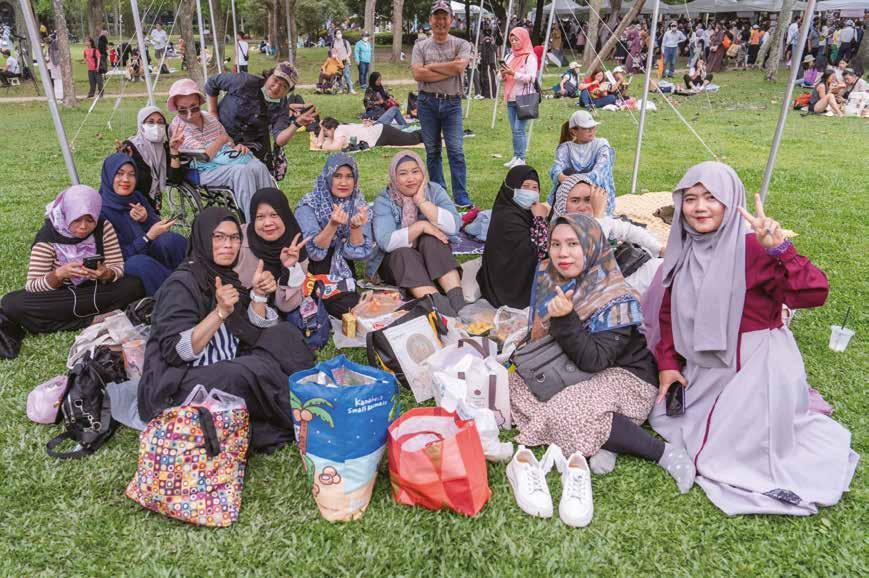
Imagine finishing a long day of sightseeing and spotting a familiar sign – a quiet prayer room, just when you need it. Or biting into a halal-certified snack at a buzzing night market stall, surprised and delighted that Taipei thought of you. This is what inclusive travel feels like, and Taipei has spent years making it a reality. Taipei has guided more than 100 attractions and accommodations toward Muslimfriendly certification – earning recognition at CrescentRating the Most Promising Muslim-friendly City Destination of the Year (non-OIC) in 2023 and the Muslim Women-friendly City Destination of the Year in 2025, and, more importantly, the genuine appreciation of visitors who feel truly at home here.
Landmarks That Welcome You
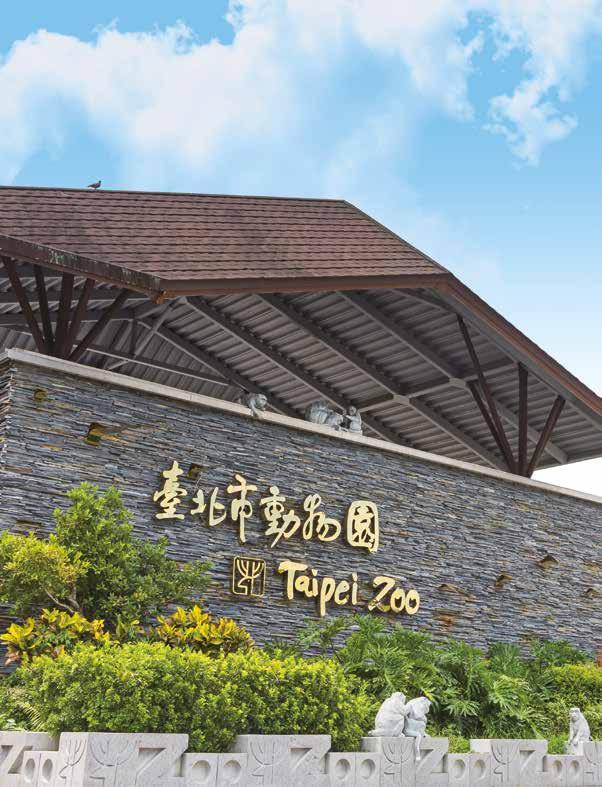
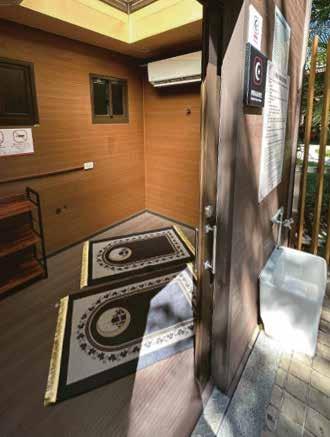
At Taipei Zoo, after wandering through the African Animal Area and watching giraffes move lazily in the afternoon heat, a dedicated prayer space waits just steps away, with ablution facilities nearby. It’s a small detail – but one that changes everything. That same thoughtfulness runs through the city: the towering Taipei 101 skyscraper, Maokong Gondola, and Taipei Children’s Amusement Park all provide prayer rooms so that a quiet space for worship is never more than a short walk away. You’ll find the same care at Taipei Main Station, Taipei Arena, and many other tourist attractions.
Rest Easy, Every Night
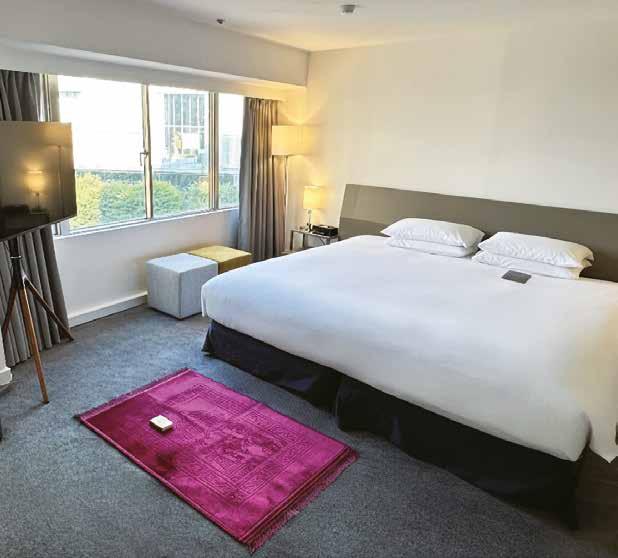
After a full day of exploring, your hotel should feel like a genuine retreat. A growing number of Taipei properties offer prayer rugs, Qibla direction indicators, and ablution facilities as standard. Boutech Jiantan Hotel, S-aura Hotel & Banquet, and Royal Seasons Hotel are among those that go further still – combining comfort with the quiet reassurance that every detail of your stay has been considered. The fine food offered is also Muslim-friendly.
Taipei Zoo
Prayer room and ablution facilities
A City of Halal Flavors
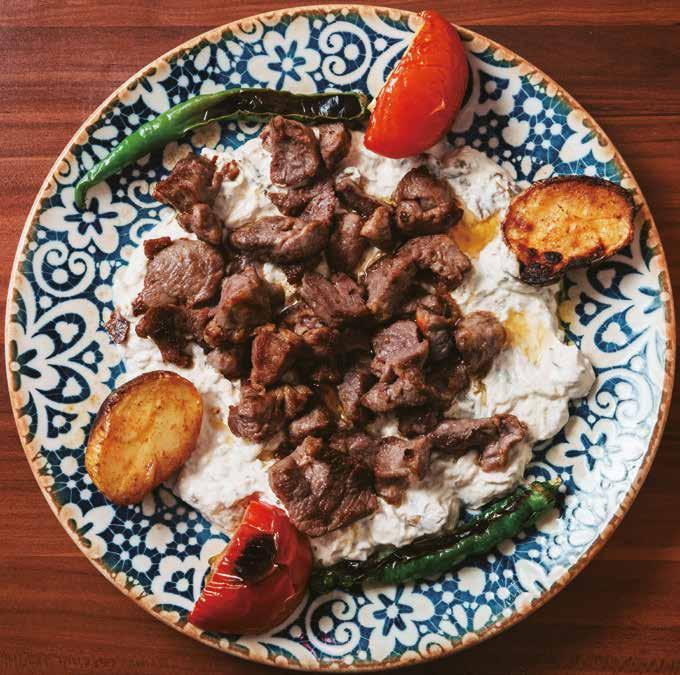
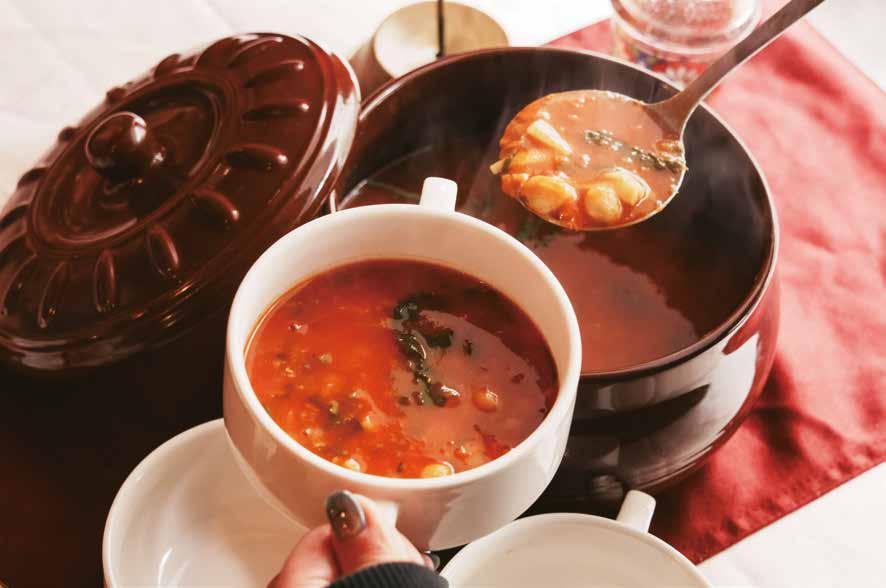
Taipei’s halal dining scene is as diverse as the city itself. Pull up a chair at Safranbolu Turkish Restaurant for slow-cooked lamb and freshly baked bread that could have come straight from Istanbul. Head to Mouna Restaurant for the kind of warm, familiar flavors that keep visitors coming back, trip after trip. Then, when evening falls, follow the crowds to the night markets – where halal-certified stalls let you eat like a local, no compromises required. Before you leave, pack a little of Taipei home with you: pineapple cakes from Vigor Kobo or cookie gift box from Kuo Yuan Ye make halal-certified souvenirs that taste as good as the memories they carry.
Celebrate Eid al-Fitr in Taipei
There are a few things quite like celebrating Eid far from home – and few cities that make it feel less foreign. Eid al-Fitr is celebrated in Taipei each year at Daan Park. The event showcases halal food, music, and a wide range of cultural activities — from a vibrant halal bazaar and live stage performances to hands-on workshops and interactive booths. It brings Muslims and nonMuslims together in a festive, inclusive celebration of multiculturalism in the heart of the city. Whether you plan your trip around the occasion or find yourself in the city by happy coincidence, Taipei celebrates alongside you.
If you want to learn more about the city and how to have a splendid time here, make sure to read the latest issue of TAIPEI quarterly. It’s a quarterly English magazine published by the Taipei City Government, presenting foreign residents and overseas tourists with useful information on major events, tourist attractions, fine food options, history, and cultural customs and practices.
With understated efficiency, metro systems in Taiwan’s largest cities shift more than three million passengers a day, the highspeed rail system links north and south with a swift undertwo-hour journey, and the round-island railway offers an easy, punctual, low-carbon way to explore at your own pace. In short, Taiwan takes train travel seriously.
Pingxi Line train in New Taipei City
RAIL TRAVEL Around Taiwan
Quite aside from its primary transportation function, Taiwan’s historic railway network presents plenty of potential for fun. Former lines in numerous cities/ counties have been converted into pleasant cycle paths (Houfeng Bikeway in Taichung City and Yufu Bikeway in Hualien County, to name just two) or upgraded with railbike facilities (incl. Shen’ao Railbike on the North Coast and Old Mountain Rail Bike in Miaoli County). In the hills, defunct logging routes offer nostalgia-tinted rides (incl. Bong Bong Train in Taipingshan, Yilan County; Wulai Log Cart in New Taipei City), or form the backdrop for atmospheric hiking trails (incl. Jancing Historic Trail, Taipingshan; Mianyue Line, Chiayi County). True trainspotters are well-catered for, too, with Taipei’s excellent brand-new National Railway Museum (www. nrm.gov.tw), seasonal sights such as the annual resurrection of sugarcane trains, and the one-of-a-kind working roundhouse in Changhua City – something you’d be hard-pressed to experience anywhere else in the world. The only challenge is deciding where to begin.
Accessible Rail Travel
Heightened awareness of inclusive design and a growing elderly population mean that travelers requiring mobility or visual accessibility accommodations are increasingly finding Taiwan’s main rail networks thoughtfully equipped. In terms of station design, whether you’re using MRT (Mass Rapid Transit), THSR (Taiwan High Speed Rail), or TR (Taiwan Railway) services, you should find elevators connecting concourses with platforms, wheelchair-accessible ticket dispensers, wide ticket barriers, accessible bathrooms, and tactile paths. A guiding service to help navigate from curb to carriage is also offered for those who need it. Taipei Metro trains (www.metro.taipei ) have priority seats for those with additional needs in every carriage, and dedicated wheelchair space in both the front and rear carriages. Meanwhile, for the THSR ( www.thsrc.com.tw ) and TR ( tip.railway.gov.tw ) services, full accessibility details — including onboard wheelchairspace locations and booking procedures — are available in English on their respective websites.
RAIL TRAVEL Around Taiwan
North Taiwan: Pingxi Line
To answer that question of where to get started, this article takes three routes and holds them up as frames for rail-centered excursions that will appeal to train enthusiasts and slow-travel lovers alike. Hop on. Jump off. Explore at will.
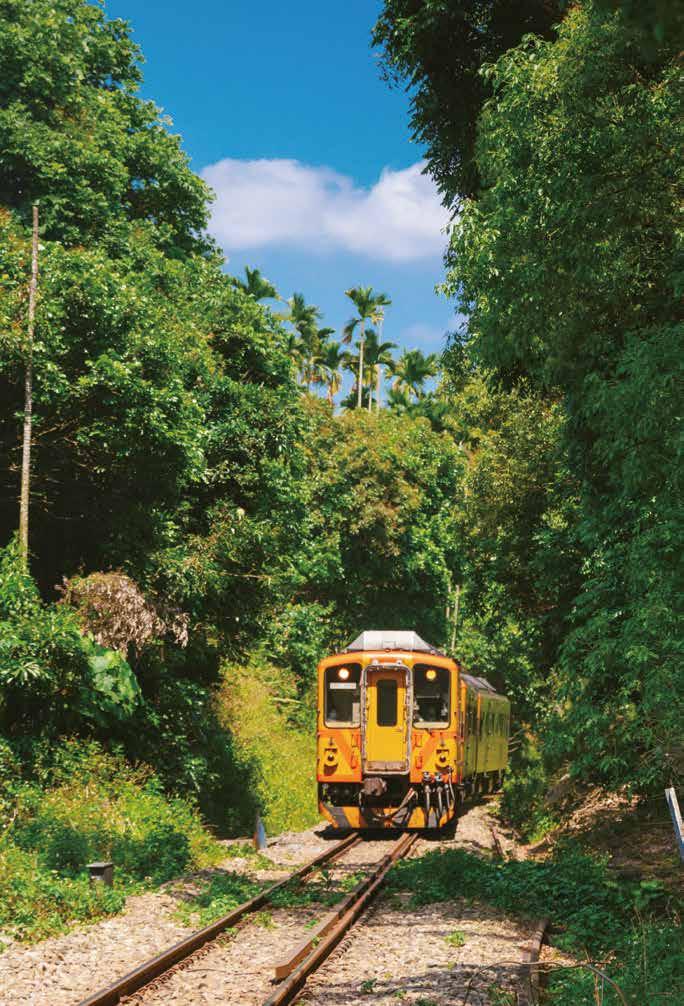
First up is the Pingxi Line, a branch line. Thanks to its proximity to Taipei City and an overabundance of scenic attractions, this line is well known among international visitors. The 12.9-kilometer former coal-mining route is fused with the stubby 4.6-kilometer Shen’ao Line (sights on this seabound offshoot include Shen’ao Railbike (www.railbike.com.tw), the National Museum of Marine Science & Technology (www.nmmst.gov.tw), and the dreamy coastal landscape of the Wangyou Valley Trail at Ruifang Station. Diesel-powered DR1000s shunt back and forth between Badouzi (on the coast) and Jingtong (deep in the Pingxi Valley), with about one run per hour in each direction.
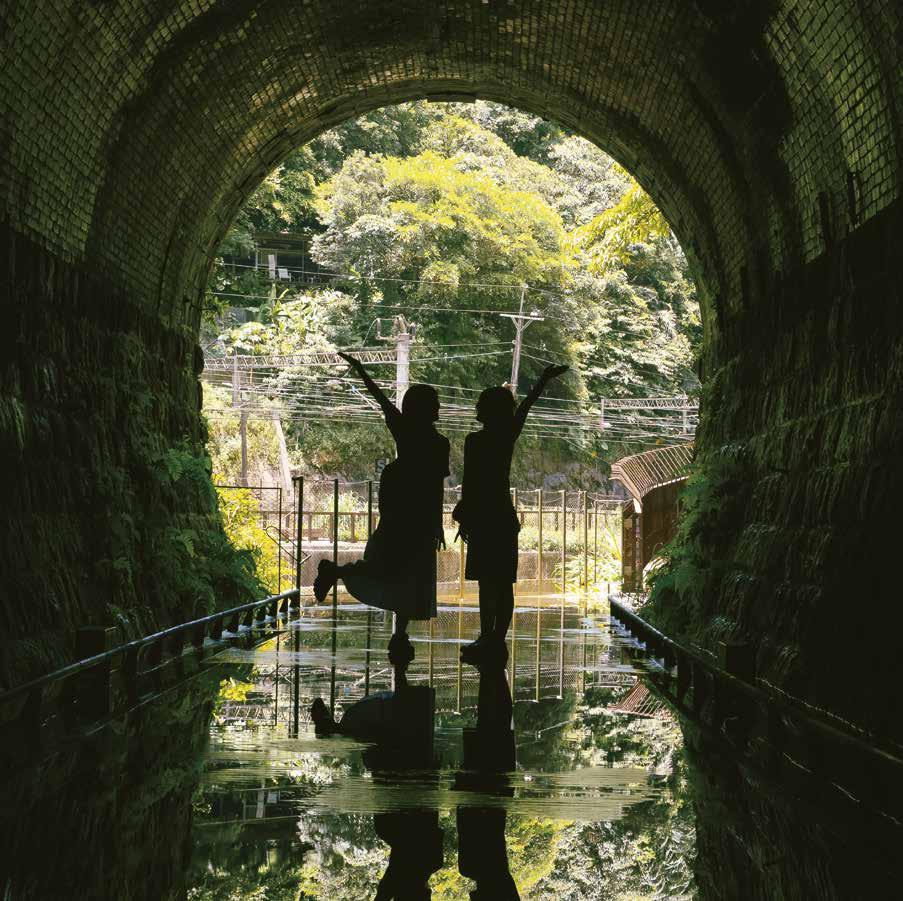
Houtong Cat Village is the first stop after boarding the train heading to the village of Pingxi at Ruifang. Houtong’s feline occupants can generally be found strutting their stuff in the station plaza, but if they’re feeling shy, you can instead pop into the Ruifang-Ruisan Coal Preparation Plant (now a museum) to learn how the “black gold” industry shaped this area. Houtong is also the starting point for a couple of even slower and lowercarbon adventures. Hikers can tackle the Dacukeng Historic Trail, a brisk 7-kilometer trek through a lush forest to the busy mountainside town of Jiufen, which overlooks the sea, while cyclists can grab a YouBike public-rental bike and set off to explore the atmospherically lit interior of Sandiaoling Ecofriendly Tunnel (free, but a reservation is required; newtaipei.travel/sdl-tunnel ).
Next up is the Sandiaoling station. Taiwan’s only station without road access, this is the point where the Pingxi Line diverges from the Eastern Trunk Line, and those alighting here can wander along the track to the small cluster of eateries around Shuren Village. My top pick among these is Café Hytte ( facebook.com/cafehytte) – a low-key coffee shop ensconced amid the tumble-down walls of an old cottage that makes a perfect pitstop after completing the Sandiaoling Waterfall Trail hike.
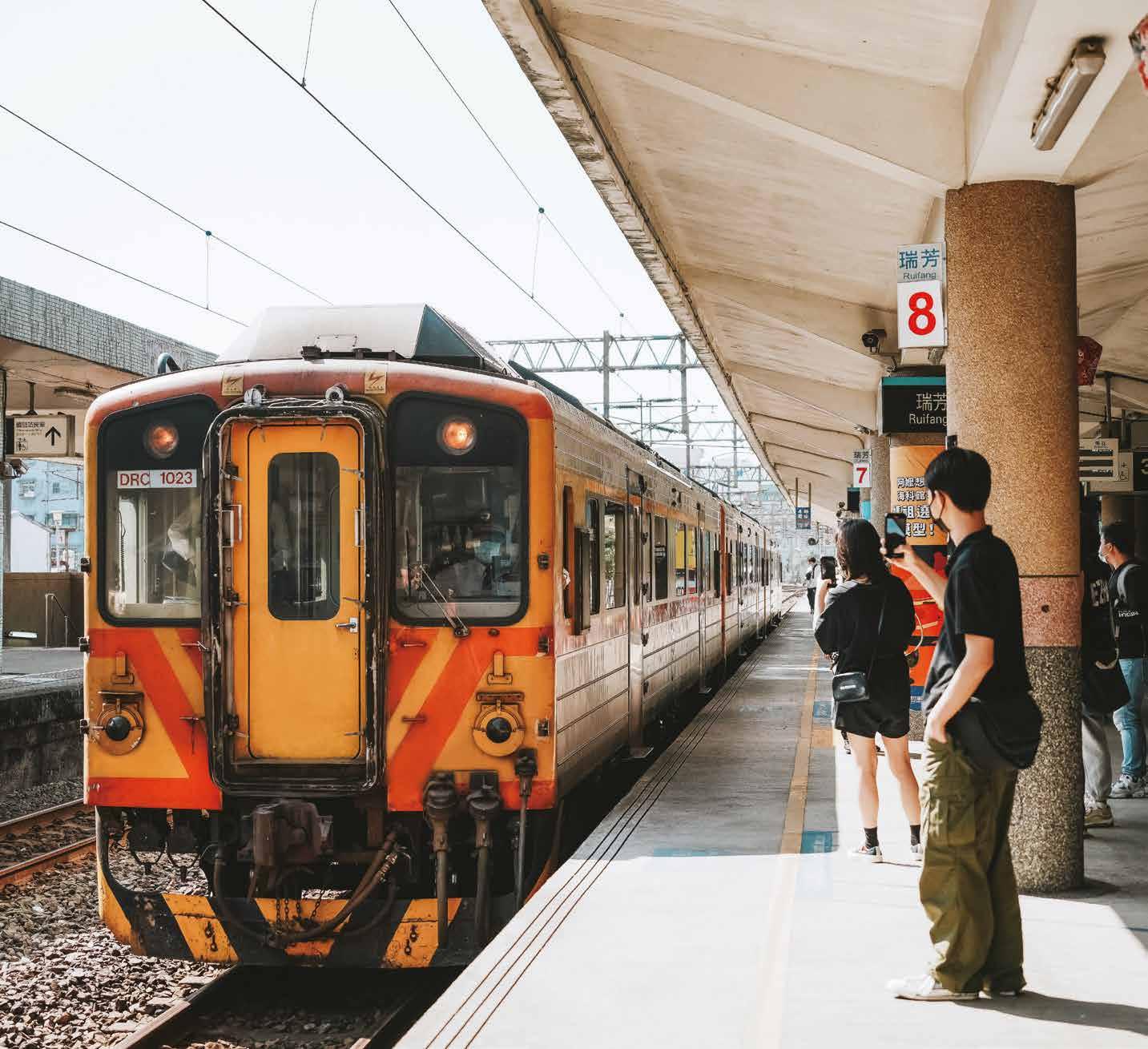
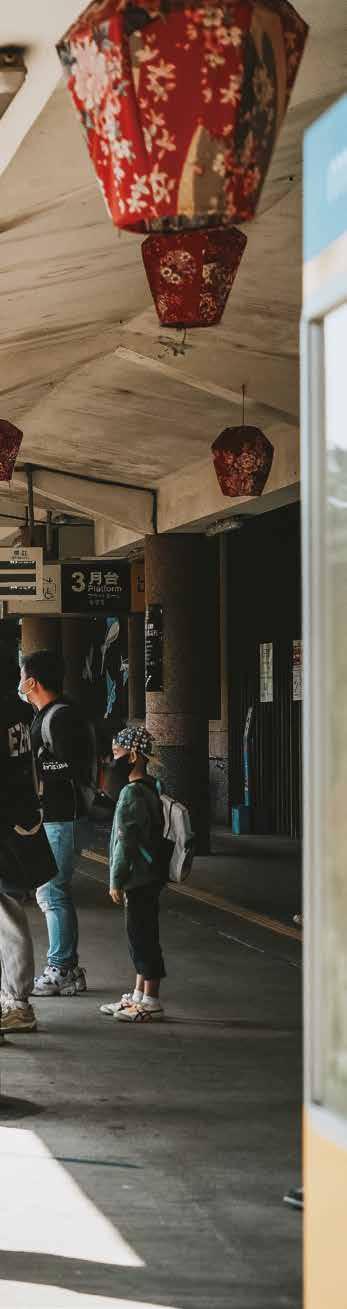
Pingxi Line train at Ruifang Station
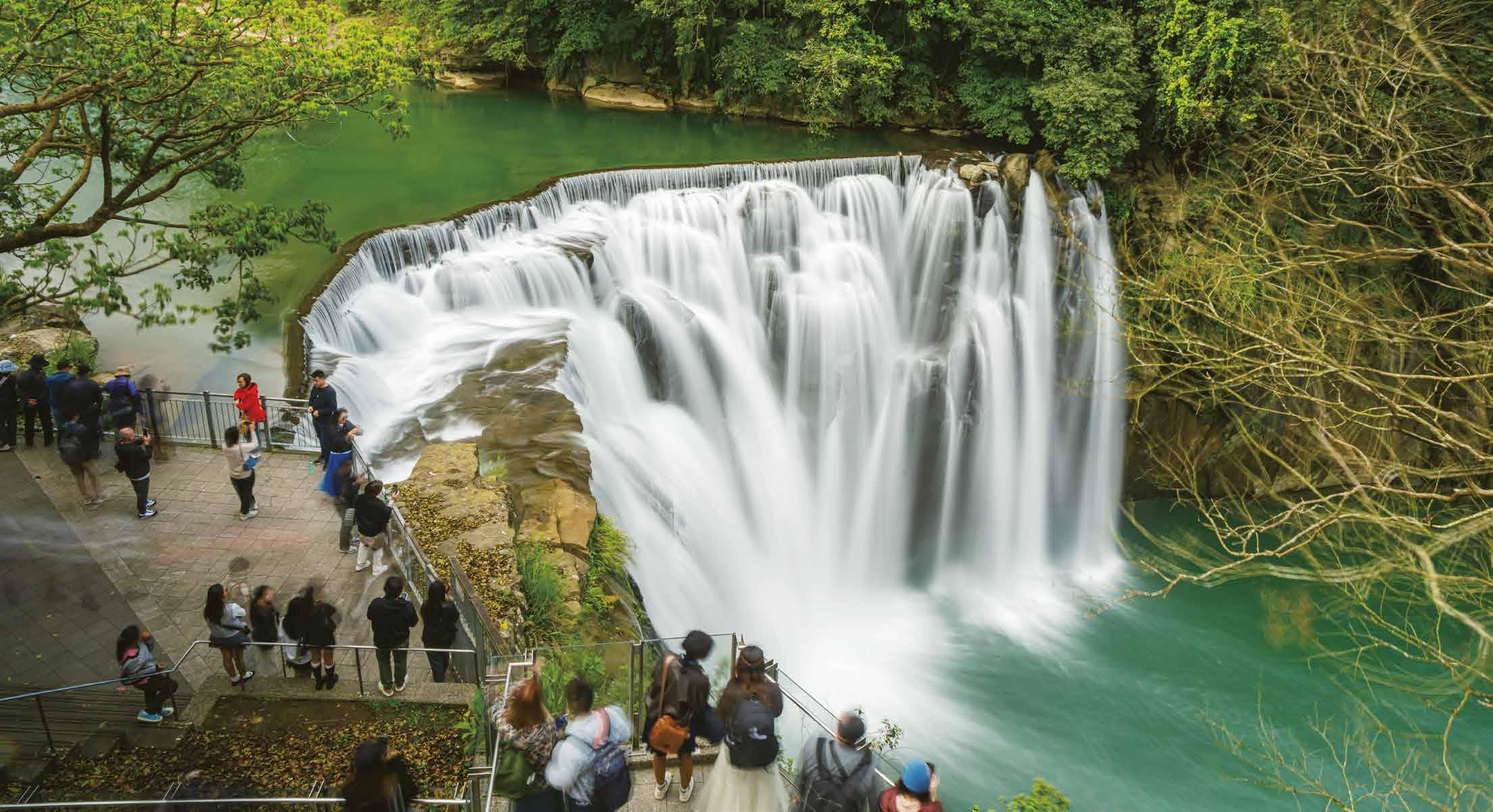
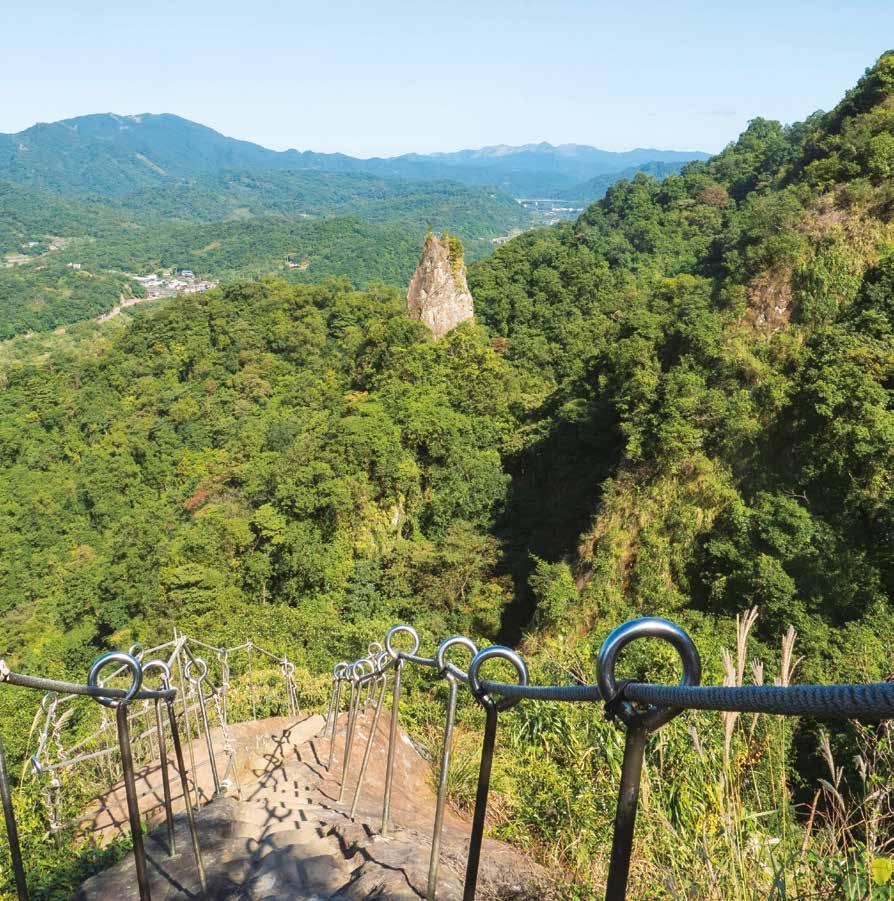
Further west is Dahua – an unmanned station, and probably the least noteworthy stop along the way – followed by Shifen. Famed for its waterfall and sky lanterns, so much has been written about the village of Shifen that it feels unnecessary to fritter away my word count on the subject, but if you want my honest opinion, you can skip the crowds here in favor of a hike between the next two stations, Wanggu and Lingjiao, which takes in two falls that are quieter, pretty, and connected by an easy-to-moderate hiking trail with several fun rope ladders. Or for something altogether more thrilling, alight instead at Pingxi, where the vertiginous summits of the Pingxi Crags rise like rocky spires from the jungle, giving 360-degree views of the green-cloaked valley –just be warned, this climb is not for the unfit or acrophobic.
The line terminates at Jingtong, where a smattering of vendors caters to tourists along the village’s tiny Old Street. A popular activity here involves writing your hopes and dreams on lengths of bamboo, which are then tied to a fence, but my favorite thing to do in Jingtong is to watch fireflies emerge at dusk (best time April) to dance through the abandoned ruins of an old colliery.
View from Cimu Peak, one of the Pingxi Crags
Bridge across the Keelung River
Shifen Waterfall
Sandiaoling Eco-friendly Tunnel
Central Taiwan: Jiji Line
The Jiji Line – like much of Taiwan’s rail infrastructure – owes its existence to groundwork laid during the 50-year-period of Japanese occupation (1895-1945). When the Japanese authorities first arrived, they found abundant natural resources, but were stymied by the absence of a coherent transportation network. Within months, a web of human-powered narrow-gauge handcar routes had proliferated as a stopgap solution – at their height in the 1930s, these covered over 1,400 kilometers.
Among them was a line running between the town of Puli (Nantou County) and Ershui (Changhua County). Originally built to extract sugarcane from the landlocked mountain basin Puli sits in, by 1921 the Jiji Line had been beefed up to accommodate steam trains carrying construction materials for a hydroelectric plant fed by overspill from Sun Moon Lake.
The line starts in the west at Ershui, an unassuming town at the south tip of a tadpoleshaped ridge running the length of Changhua County. Little seems to happen in the town
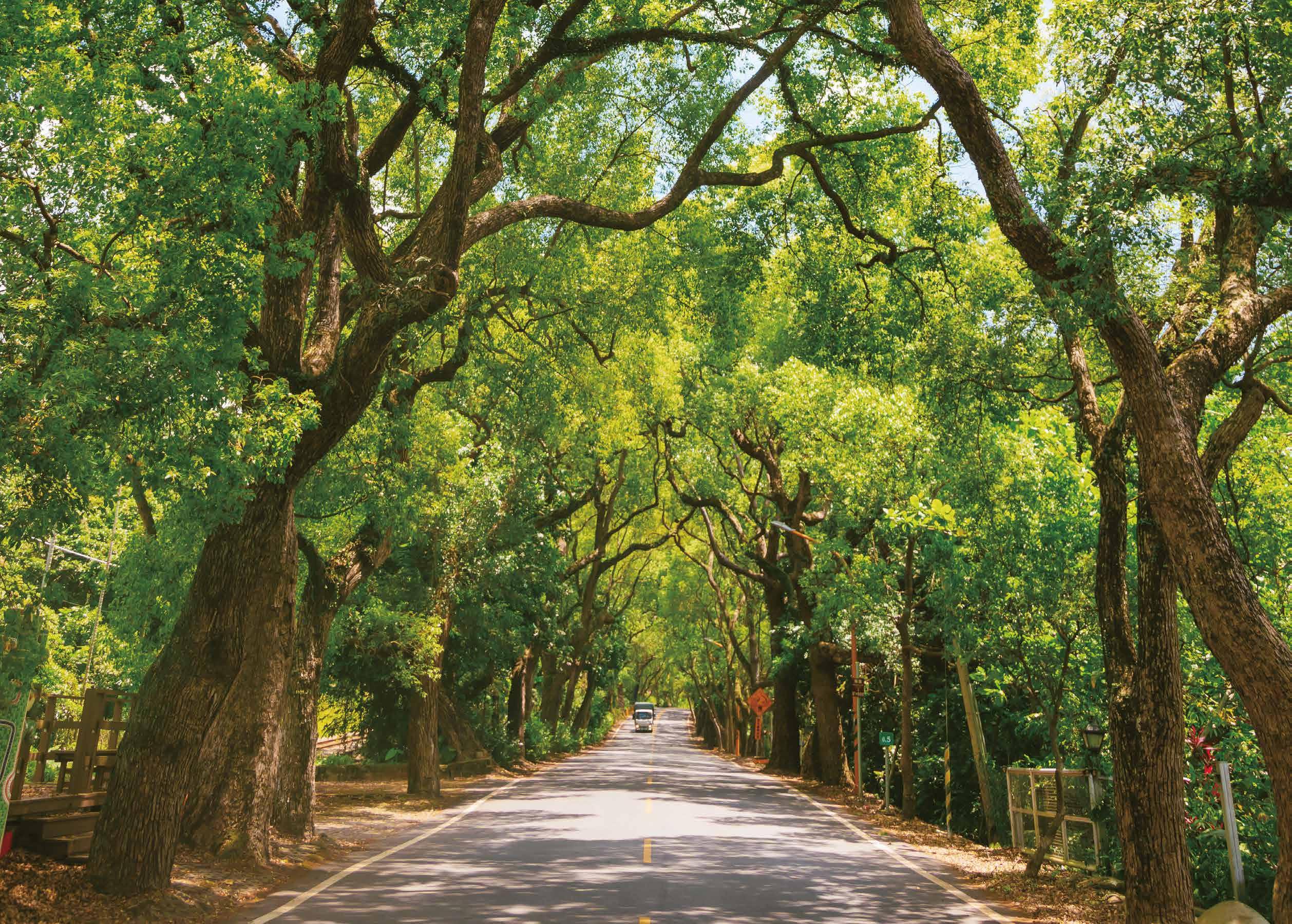
A tree-lined stretch of road known as the Green Tunnel, running parallel to the Jiji Line
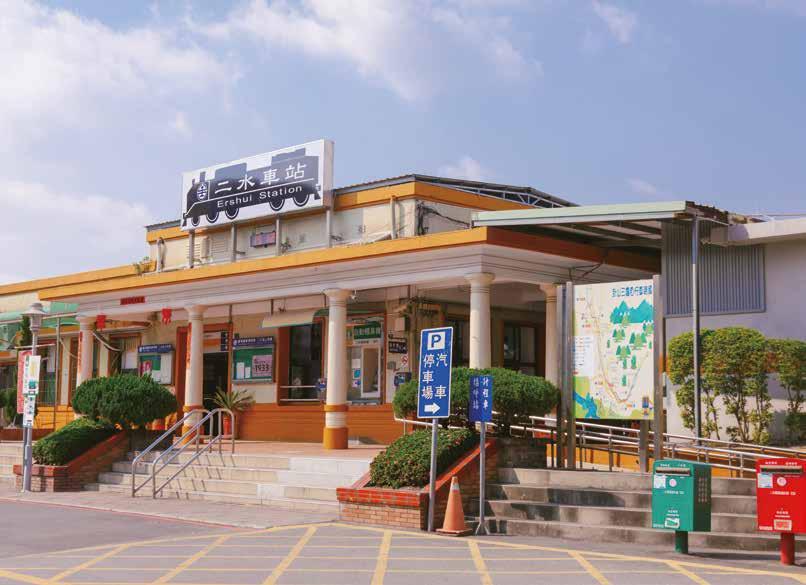
Ershui Station
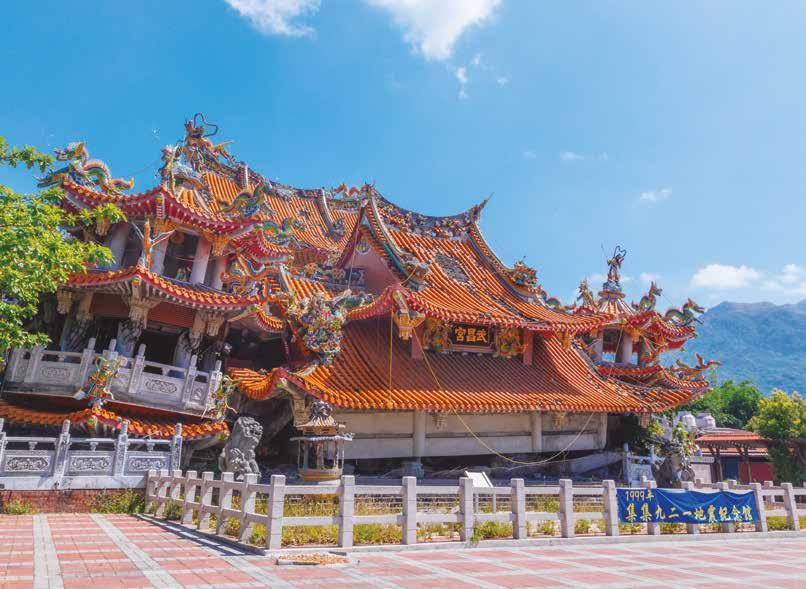
Earthquake-damaged Wuchang Temple in Jiji
RAIL TRAVEL Around Taiwan
itself, but there are adventures to be had nearby. It’s a twentyminute walk to Fengbo Plaza and the start of the Dengmiao Trail. This monkey-populated path climbs to Songboling Shoutian Temple (which will be celebrating its 370th birthday in 2027). For a flatter alternative, a bikeway threads through paddy fields, guava orchards, and rows of dragon-fruit plants towards the line’s second station, Yuanquan. From here, you can walk on to the Babao Canal. Reputedly Taiwan’s oldest surviving irrigation channel, the locals are so proud of it that every November they don wellies and take part in the annual Ershui Water Running Festival.
The next major stop is Jiji. The line’s liveliest destination, Jiji has elevated the banana to an art form. Forget your pleasantly bland Cavendishes, Jiji mountain bananas are the best known among the town’s musaceous multitudes for their sweetly aromatic flesh. You might also find plump and chewy Lady Fingers, red-skinned red apple bananas, and dainty rose bananas, barely longer than an index finger. If you’re thinking, “Great, but sweeter, please,” Yiyi – with two stores in the town – sells moreishly fluffy banana cakes as well as ice cream and egg rolls, all made with locally grown fruit. Meanwhile, for a more informative slant, the Jijibanana farm (a 5-minute taxi ride from the main drag) offers bananabased edutainment and child-friendly cookery activities.
Beyond bananas, perhaps Jiji’s most compelling sight is Wuchang Temple. Not the current structure (although that is
grand enough), but the original temple beside it, which was consecrated in March 1999, precisely six months before a devastating magnitude 7.7 earthquake toppled it. The ruins – with their concertinaed rebar and pancaked flat ground floor – were left in situ, and gazing at them forces a deeply unsettling contemplation of reality. Less unnerving, and very worthy of your time, is the Endemic Species Research Institute, where visitors can explore a native-plant park and exhibits on Taiwan’s remarkable biodiversity.
Shuili is the next stop. This town is often used as a staging post for frugal travelers hoping to find cheap lodgings for onward travel to Sun Moon Lake (just a 30-minute bus ride away), but handicraft lovers might be tempted to stop and seek out the town’s century-old Shuili Snake Kiln (www. snakekiln.com.tw).
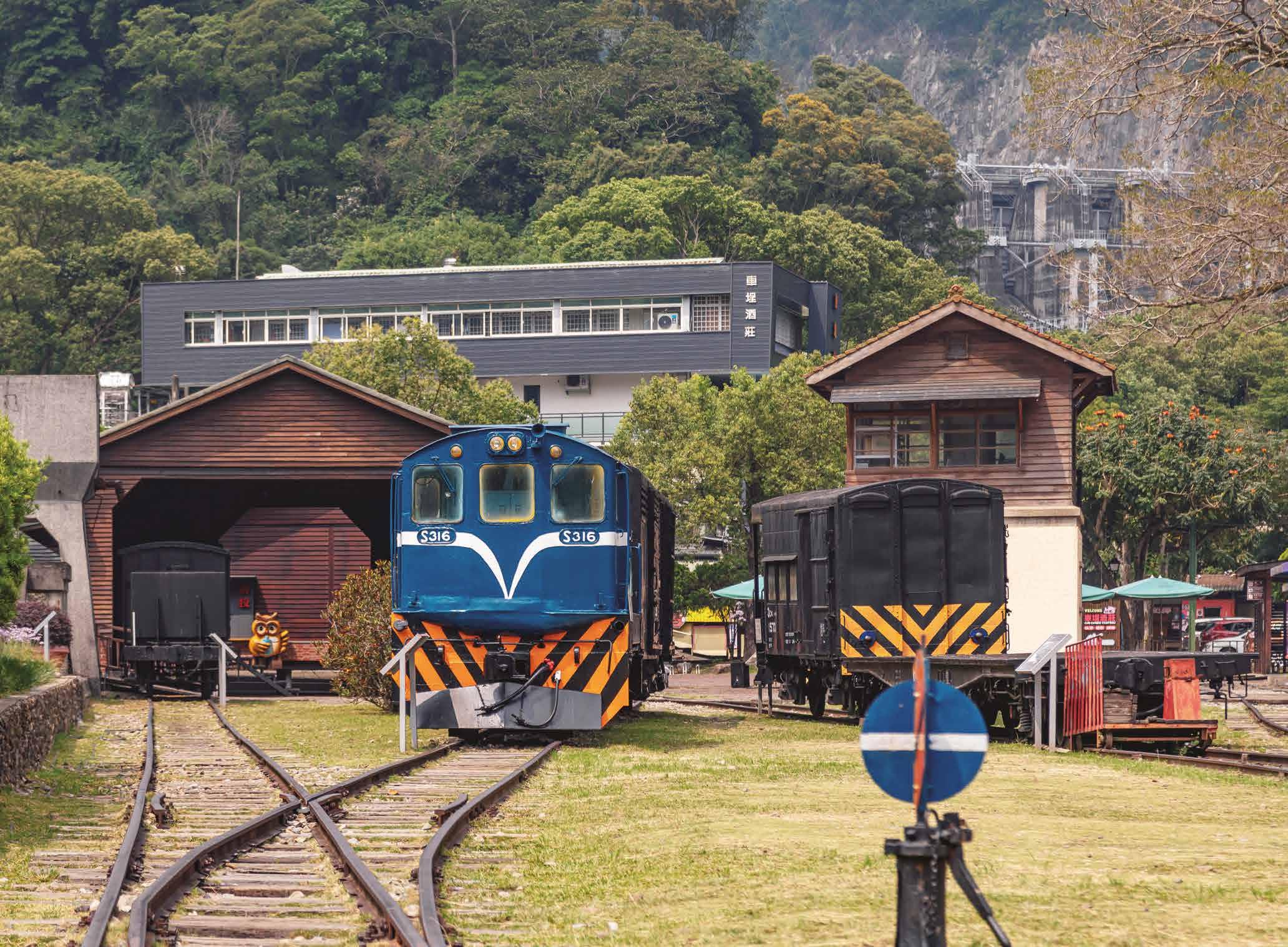
The line terminates at Checheng. In its earliest iteration, Checheng was a staging post halfway along the ErshuiPuli handcar line, but these days it’s a sleepy tourist spot, locked in a daydream of a previous life as a logging town. Its timber-processing past lives on in details everywhere you look – stalls on the hilly Old Street sell carved homewares, restaurants serve food in wooden buckets, and an old lumber pond – neighboring the informative Checheng Wood Museum, located in the old timber mill – forms the tranquil, fish-filled focal point of most visitors’ excursions.
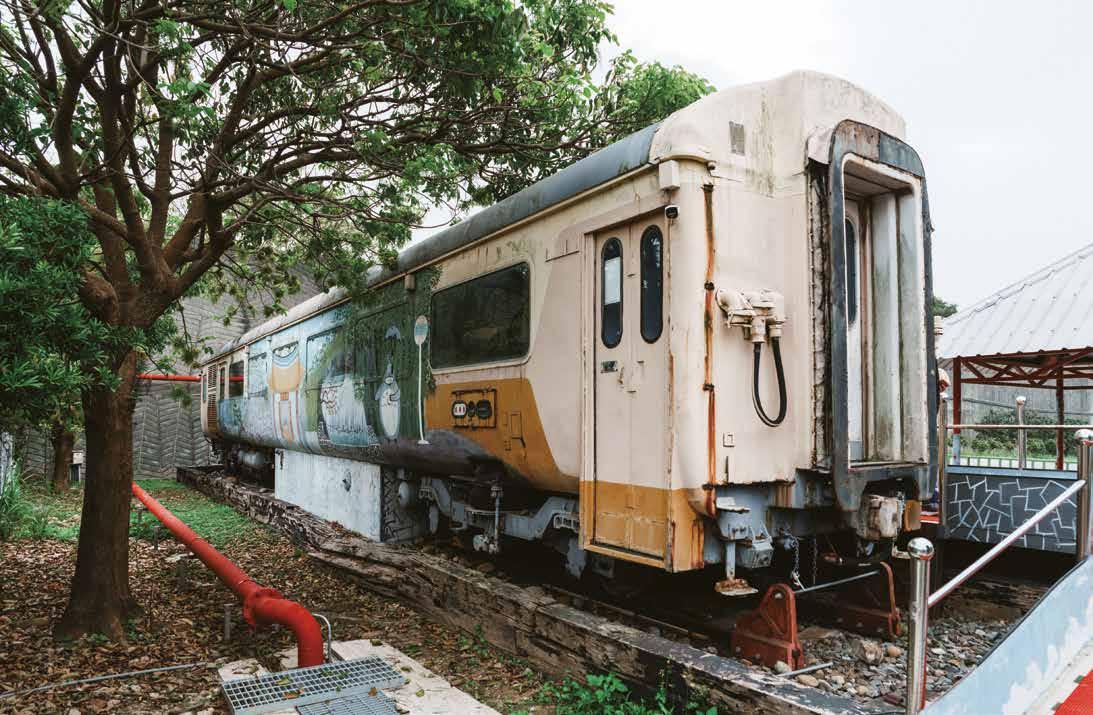
Old rolling stock on display at Checheng Station
South Link Line
Down at Taiwan’s southern tip, the South Link Line cuts a crooked smile-shaped curve down through agricultural Pingtung County and up along Taitung County’s coastal blue vastness. As recently as 2020, the section between the towns of Fangliao and Zhiben became the final stretch of the round-island loop to undergo electrification, but if you thought this ushered in a new era of high-speed, get-up-and-go dynamism, think again. Nothing happens in a hurry in Taiwan’s laid-back deep south, and those who endeavor to embrace local life should cultivate an air of having nowhere particular to be and all the time in the world to get there. Both express and local trains serve this line, but nothing epitomizes its romantic lost-in-a-time-warp appeal better than Breezy Blue – a specialty tourist train pulled by a 70-year-old EMD G22 series engine (bookable exclusively through Lion Travel; event.liontravel.com/en-us/railtour/ breezyblue/index).
Starting at Fangliao – a quiet coastal settlement bypassed by the main coastal road – the recently zhushed up Rainbow Railway Art Village is its main attraction. Consisting of former dormitories for TRA employees, the site is dotted with colorful sculptures, and several of the painted buildings house cafés or snack stalls. Fangliao Fishing Harbor is just a short walk away. Arrive early in the morning, and you can watch the night-fishing boats return to unload their catch – javelin grunter, cutlassfish, silver pomfret, onespot snapper, golden threadfin bream, etc. –before auctioning it off on the spot. Arrive later, and you can enjoy a seafood feast in whichever of the waterside restaurants placed successful bids. Not into fish? The port-adjacent Gangbo Ice Store – serving plump cubes of local mangoes heaped on
generous mounds of ice – may be more up your street.
Sliding out of Fangliao, trains trundle south between fish farms and mango orchards. Among the early stations passed are two with superlative claims to fame: Neishi , with the lowest ridership (averaging just two passengers daily), and Fangshan , the southernmost. At Fangshan, the tracks arc away from the coast, beginning their journey through Taiwan’s mountainous spine, and when I say through, I really mean through – between Fangshan and Dawu, trains spend more time in tunnels (19 of them in total) than out, with just brief flashes of green in between.
Once you emerge on the East Coast, the landscape is ruggedly green on one side with seemingly endless kilometers of pebbly beach on the other. The settlements along this stretch are tiny, and the concentration of churches here indicates a sizeable indigenous population. Christian and indigenous motifs combine in Longxi’s Daxi Catholic Church, where a carving depicting the last supper has the disciples wearing muntjac horn headdresses, while in Jinlun’s Kiokai ni Santo Yosef, statues show Mary and Joseph clothed in full Paiwan regalia, and arrangements of wild boar jawbones hang above the entryway.
This is an excellent area in which to sample authentic indigenous cuisine. For Paiwan dishes, check out Jinlun’s Jiang Mimi Bistro – expect pinuljacengan (similar to congee), barbecued meats, and cinavu (millet and rice steamed dumplings). Further north in Zhiben , the Pinuyumayan-run indigenous Kitchen offers home-cooked lunch boxes heaped full of whatever the chef has to hand.
Zhiben is one of the bigger stops along the way, and makes a fine place for an overnight stop. Famed for its colorless, odorless hot springs, passengers alighting here can hop on the 8129 bus to where the hot-spring hotels are gathered, or ride to the terminal stop, in a narrow valley, where you’ll find the entrance to the Jhihben National Forest Recreation Area – 110 hectares of forested hillside with shady trails amid hanging banyans and hot-spring pools for weary walkers to soak their feet in.
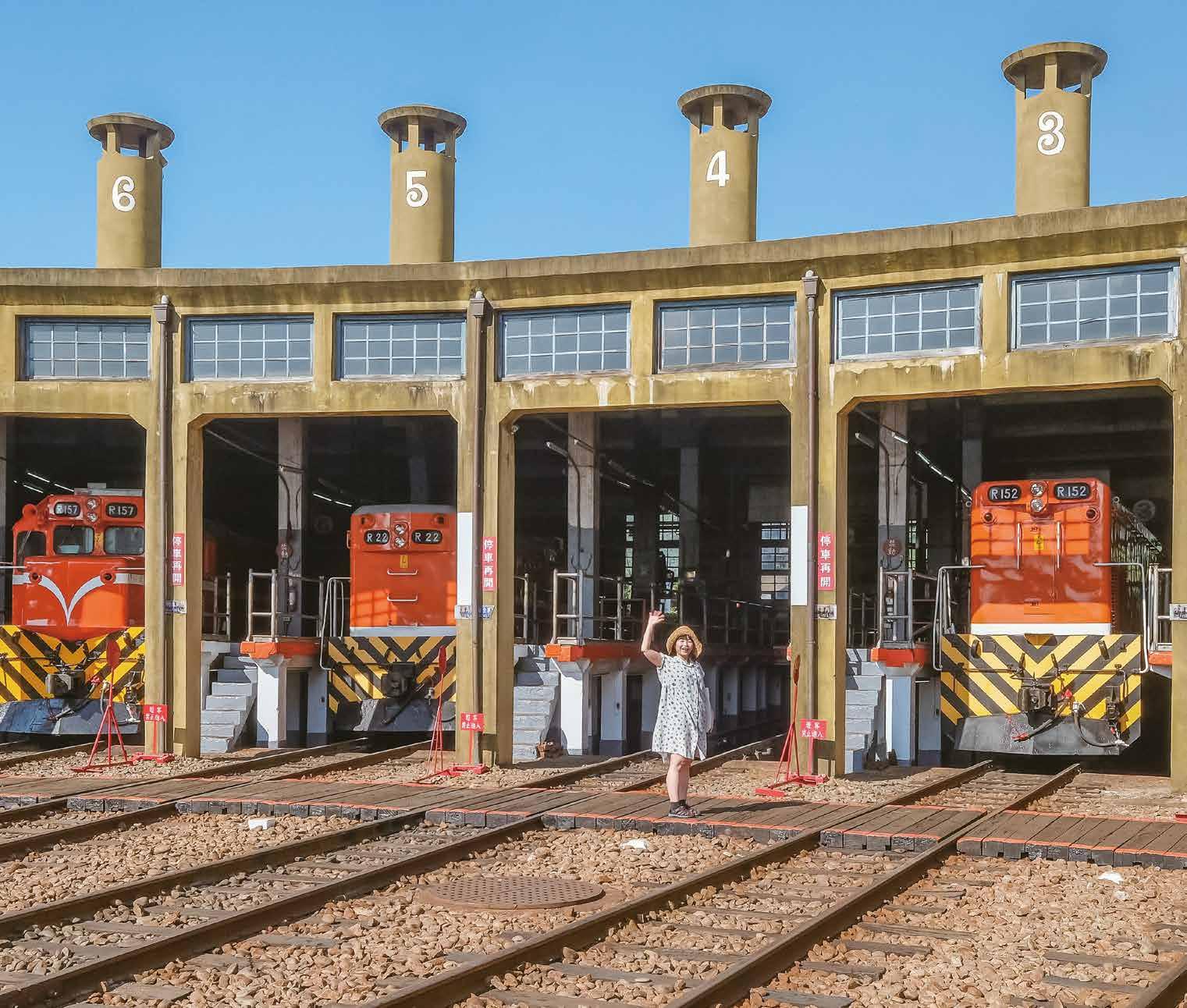
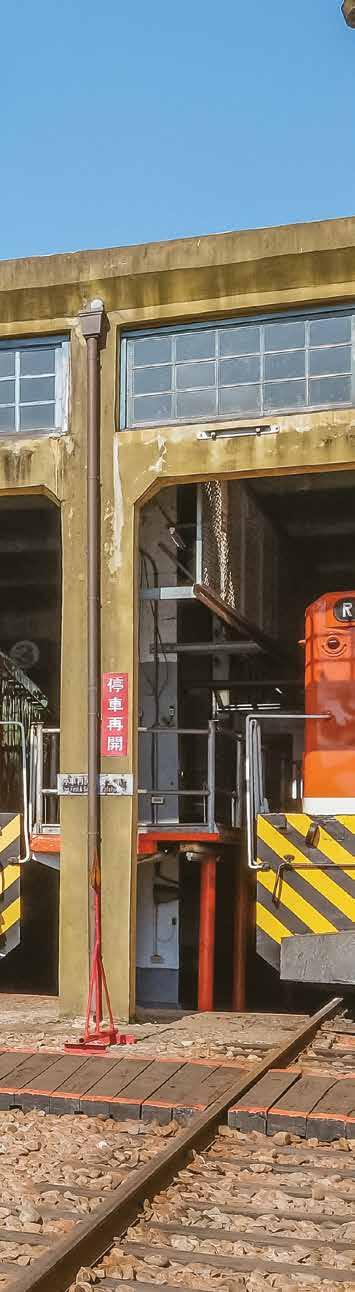
A rare gem of Taiwan's railway heritage, the Changhua Roundhouse in Changhua City is a fan-shaped locomotive depot where trains are neatly arranged like spokes of a wheel, offering a fascinating glimpse into classic rail operations.
2.
Located in Pingtung County's quiet countryside, Fangshan Station is the island's southernmost railway station. It's the last station for eastbound trains before traversing the rugged mountains of the Central Mountain Range toward the Taitung coast.
3.
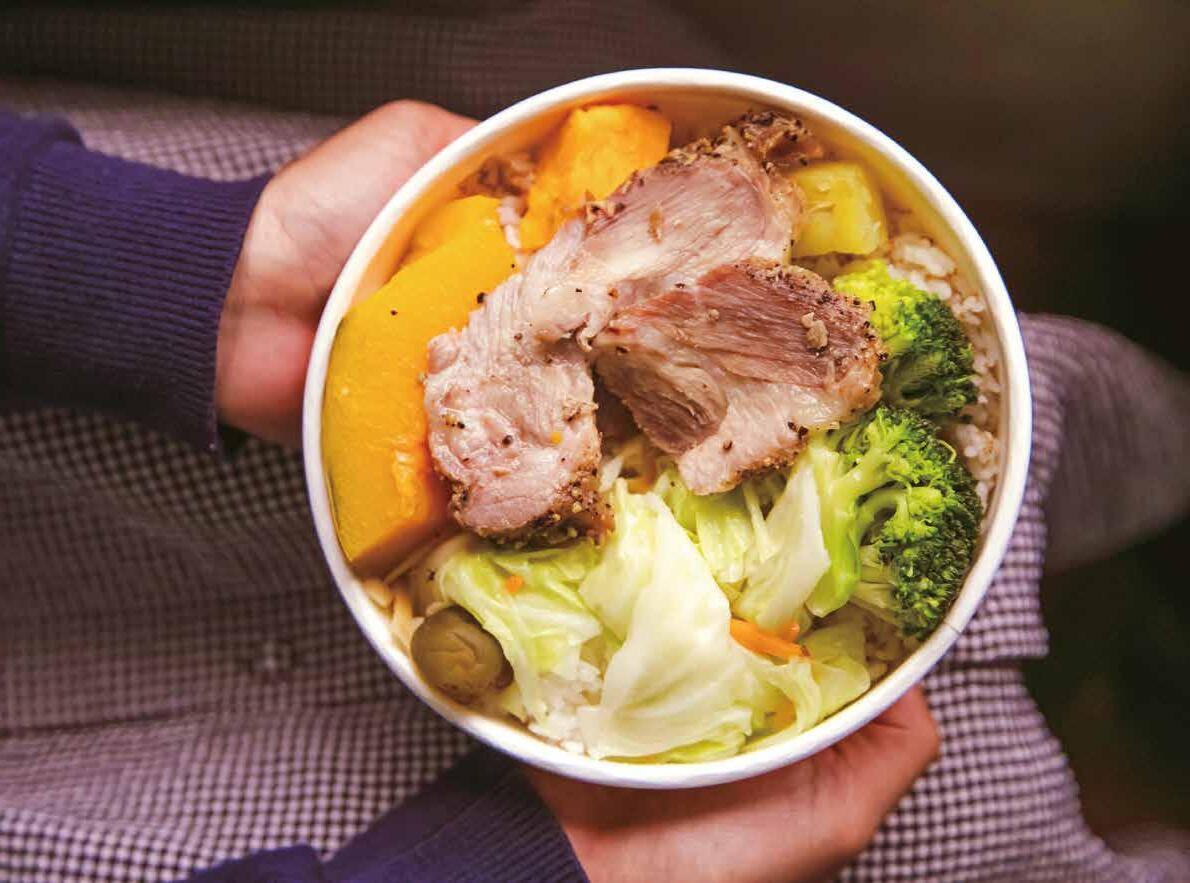
Eating a classic railway lunch box, tielu biandang, is an essential part of railway travel in Taiwan, offering a nostalgic taste of local flavors that perfectly complements the journey.
4.
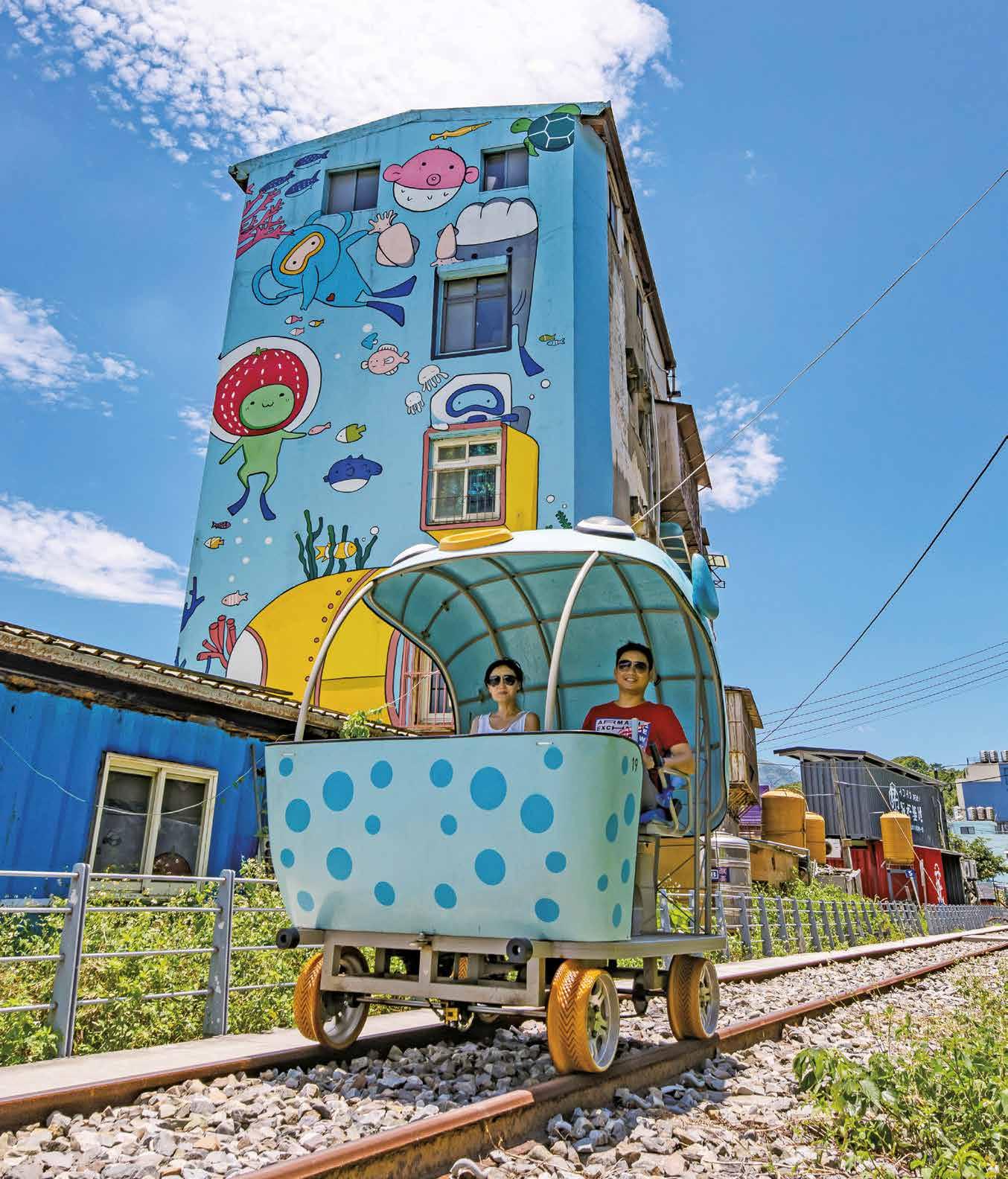
Riding the scenic Shen'ao Line Rail Bike, visitors pedal along a decommissioned coastal railway line, enjoying sweeping sea views and cool historic tunnels for a uniquely immersive experience on the tracks.
5.
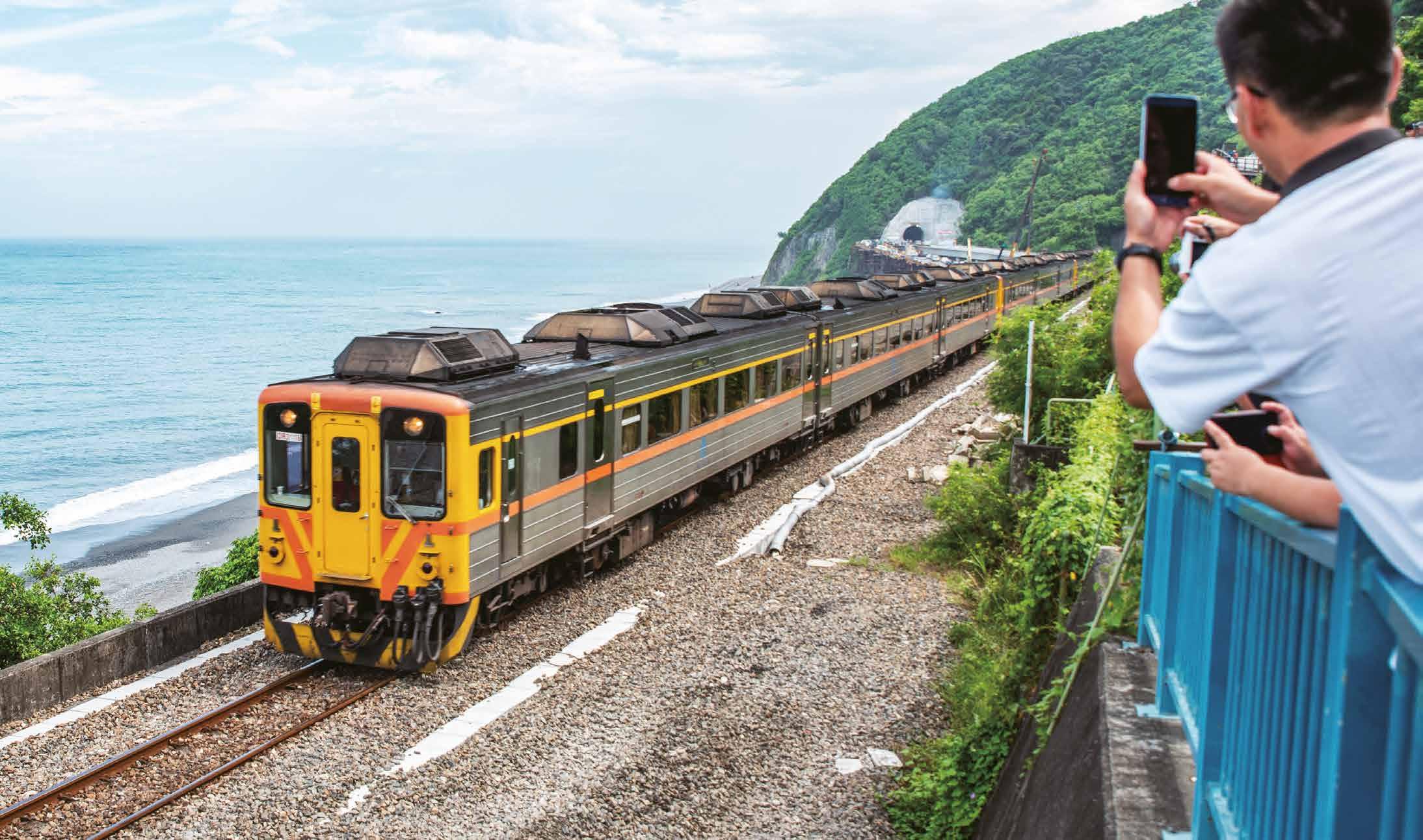
Overlooking the Pacific Ocean, Duoliang Station is celebrated as one of Taiwan's most iconic train-spotting locations, where you can capture passing trains traveling between the vast Pacific and verdant coastal mountains.
ENGLISH AND CHINESE
Bong Bong Train | 蹦蹦車
Breezy Blue | 藍皮解憂號
Checheng | 車埕
Checheng Wood Museum | 車埕木業展示館
Endemic Species Research Institute | 生物多樣性研究所
Ershui | 二水
Fangliao | 枋寮
Gangbo Ice Store | 港伯冰品
Houfeng Bikeway | 后豐鐵馬道
Houtong Cat Village | 猴硐貓村
Jancing Historic Trail | 見晴懷古步道
Jiang Mimi Bistro | 講蜜蜜特色餐廳
Jiji Line | 集集線
Jijibanana | 集元果觀光工廠 / 休閒農場
Jinlun | 金崙
Mianyue Line | 眠月線
Old Mountain Line Rail Bike | 舊山線鐵道自行車
Pingxi Line | 平溪線
Puli | 埔里
Sandiaoling | 三貂嶺
Shen'ao Line | 深澳線
Shen'ao Railbike | 深澳鐵道自行車
Shifen | 十分
Shuili (Snake Kiln) | 水里 ( 蛇窯 )
South Link Line | 南迴線
Wulai Log Cart | 烏來觀光台車
Yiyi | 一億
Yufu Bikeway | 玉富自行車道
Zhiben | 知本 TR
When the Journey Is the Destination
Five Tourist Trains Redefining Rail Travel in Taiwan
Tourist trains — that is to say, special rail services that transform the journey into the destination — are a relatively new phenomenon in Taiwan. It wasn’t until 1991, when the South Link Line was completed, that rail circumnavigation of Taiwan’s main island even became possible. It’s taken a while for the concept to build up a full head of steam, but with several new options coming on board in recent years, the country is now well on track to become a new hub for leisure train adventures.
RAILWAY TRAVEL Special Trains
Future
In a nutshell: First-class travel meets Michelin-level movable feast
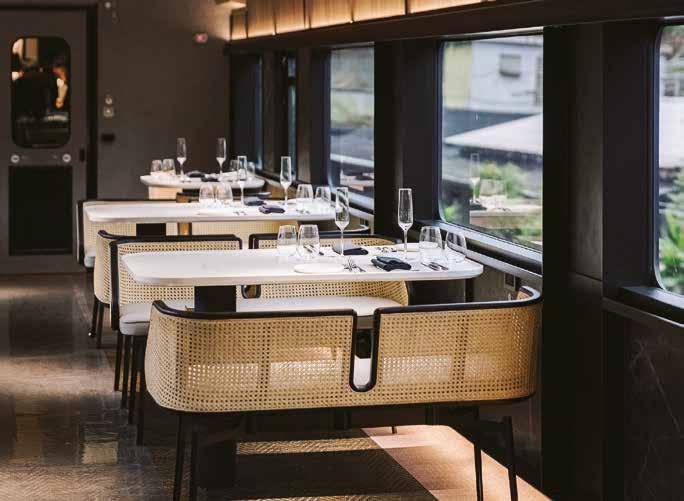
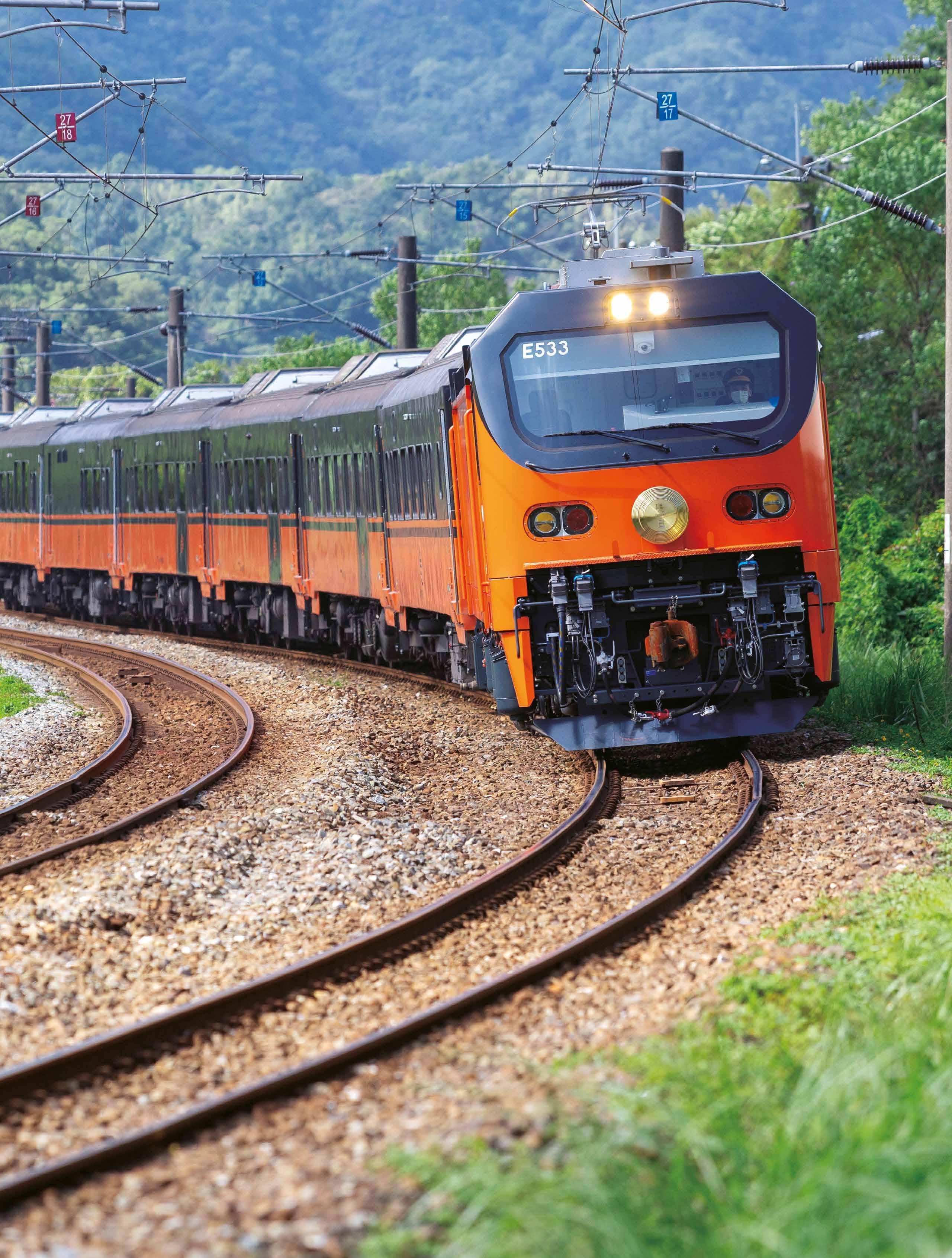
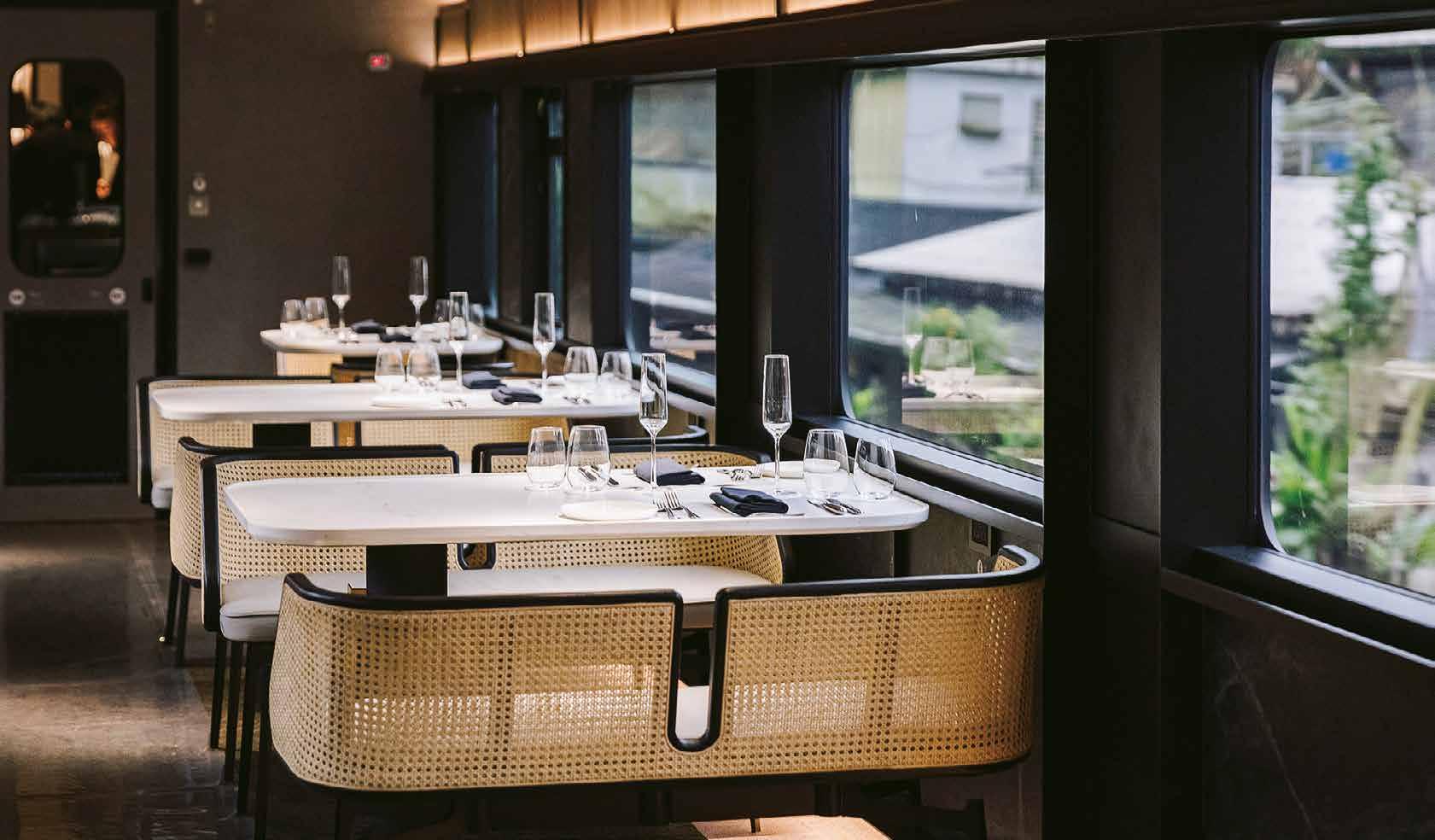
Most prestigious among Taiwan’s growing fleet of tourist trains is the Future. This 70-year-old reconditioned Chu-Kuang Express has been reborn in a glossy coat of soot black and sunset orange. Designedto-the-nines carriage interiors (courtesy of Taiwanese architect-designer Johnny Chiu) exude sleek elegance with their curved lines, warm neutral tones, and textures that accentuate the natural scenic beauty framed by huge statement windows. From the dedicated check-in counters and butlers that get you settled to the resident barista serving up coffee from Taiwan’s Alishan area and the pomelo-flower scent that fills the air, not a single detail has been overlooked. Everything about this train is first class.
The Future offers two distinct service options: Moving Beauty and Moving Kitchen. As the Moving Beauty, it offers multi-day touring packages (generally three-day, twonight) that pair the onboard opulence with overnights at 5-star establishments (Silks Place Tainan, Grand Cosmos Resort Ruisui) and carefully curated off-train excursions and activities such as visits to indigenous villages, tea ceremonies, jade carving, or fruit picking.
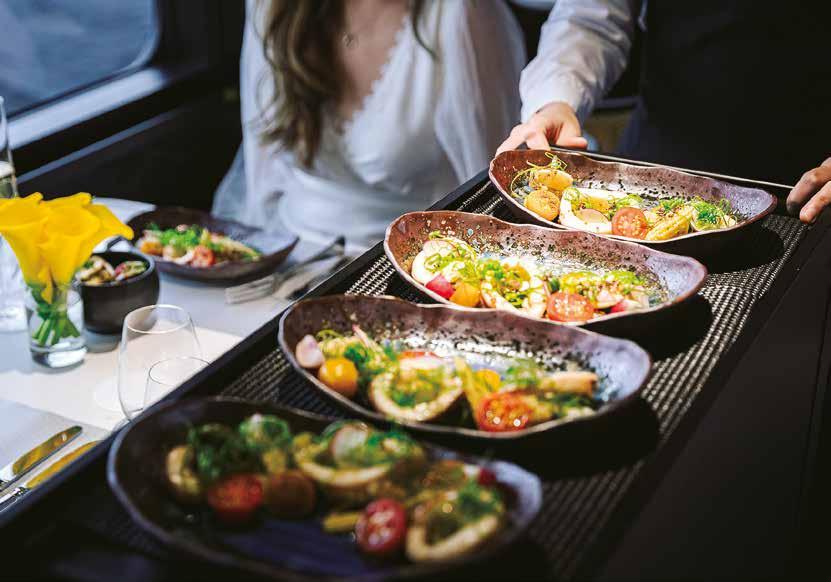
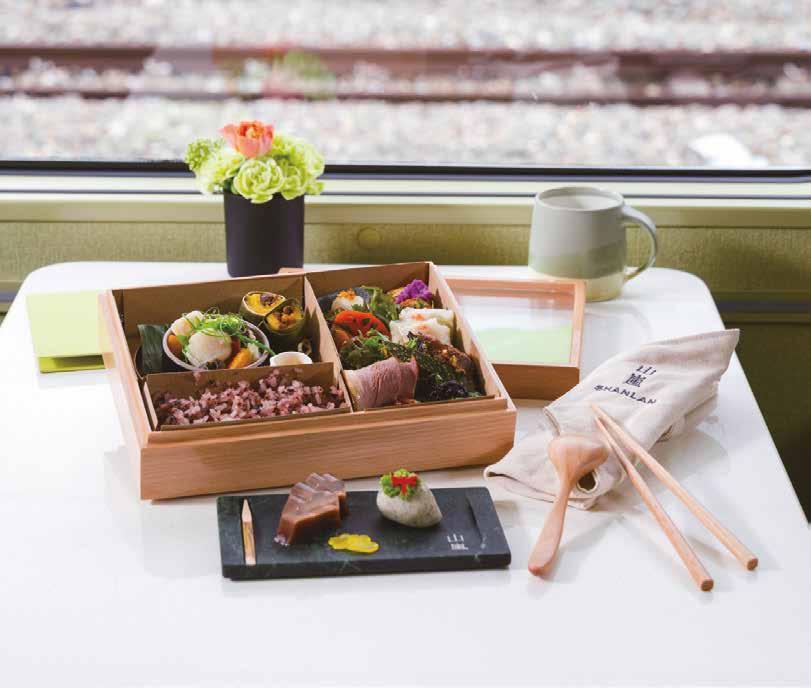
In its Moving Kitchen configuration (one- and twoday outings), food is placed squarely center stage. Billed as a mobile fine-dining experience, the menu is a collaboration with Taiwan’s first three-Michelin-starred restaurant, Le Palais of Palais de Chine Hotel Taipei. As the scenery rolls past, Michelin-caliber meals featuring local ingredients (Dongshi oysters, Hsinchu rice noodles, Taitung custard apples) are plated and served with all the understated ceremony of a high-end restaurant. Live music accompanies the evening service, transforming the meal into a true occasion.
The train runs most weeks, and trips are available exclusively through Lion Travel, with offerings shifting seasonally to cover new tourist attractions or themes. Of course, such luxury does not come cheap – Moving Beauty packages start around NT$40,000 per person for the three days of extravagance, while Moving Kitchen packages are around NT$18,000 or NT$38,000 for the one- and two-day itineraries, respectively.
Info: bit.ly/taiwan-future-train
Ample space inside cars
Dining car
Fine cuisine
TRAVEL Special Trains
Formosa Express
In a nutshell: Indulge your inner child with cute, family-friendly fun
Shanlan
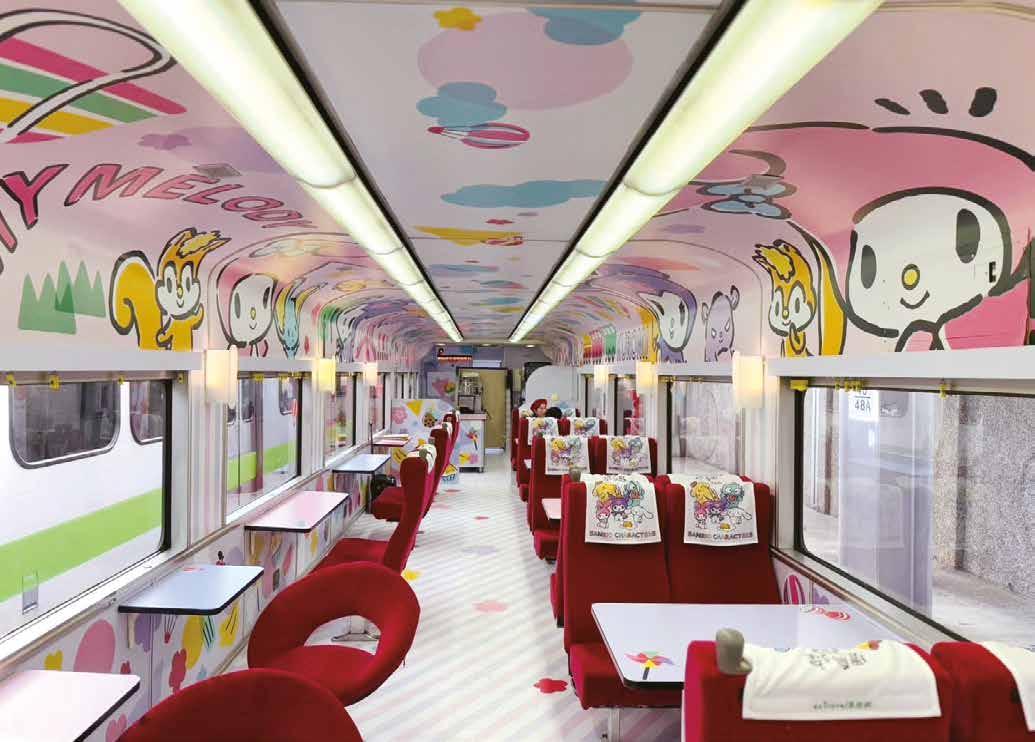
The Formosa Express is the oldest among Taiwan’s tourist trains, and perhaps also the service with the broadest appeal. Operating Friday through Monday with one round-island loop service in either direction per day (two trains in service, heading clockwise/counter-clockwise respectively), the train is quite a sight to behold as it rolls through city and countryside. A colorful cast of Sanrio characters brightens the exterior, and the inside – each carriage is themed around a different beloved favorite – is even more saturated with cuteness.
Given the saccharine overload (plus the scheduled roster of crafting activities), you would be forgiven for thinking this is one for the kids, but the karaoke carriage and evening happy hour suggest otherwise. And speaking of refreshments, there’s no risk of going hungry – meals and snacks (included in the ticket price) are served at set times, and the café carriage is open for drinks throughout the journey.
Prices vary depending on the route taken (there are 23 stops), topping out at NT$3,890 for a full loop; tickets can be bought via ezTravel or Klook.
Info: bit.ly/formosa-expres s
In a nutshell: Multisensory field- and forest-infused relaxation in stylish surrounds
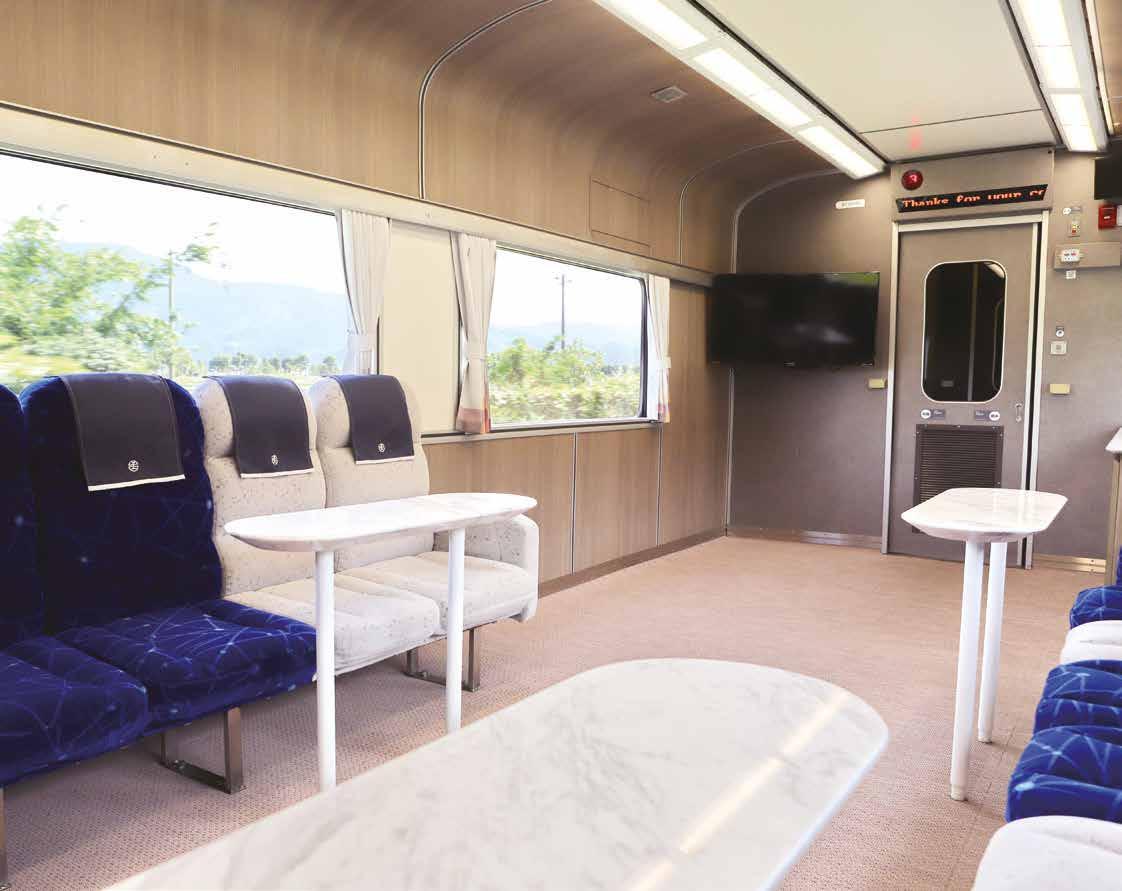
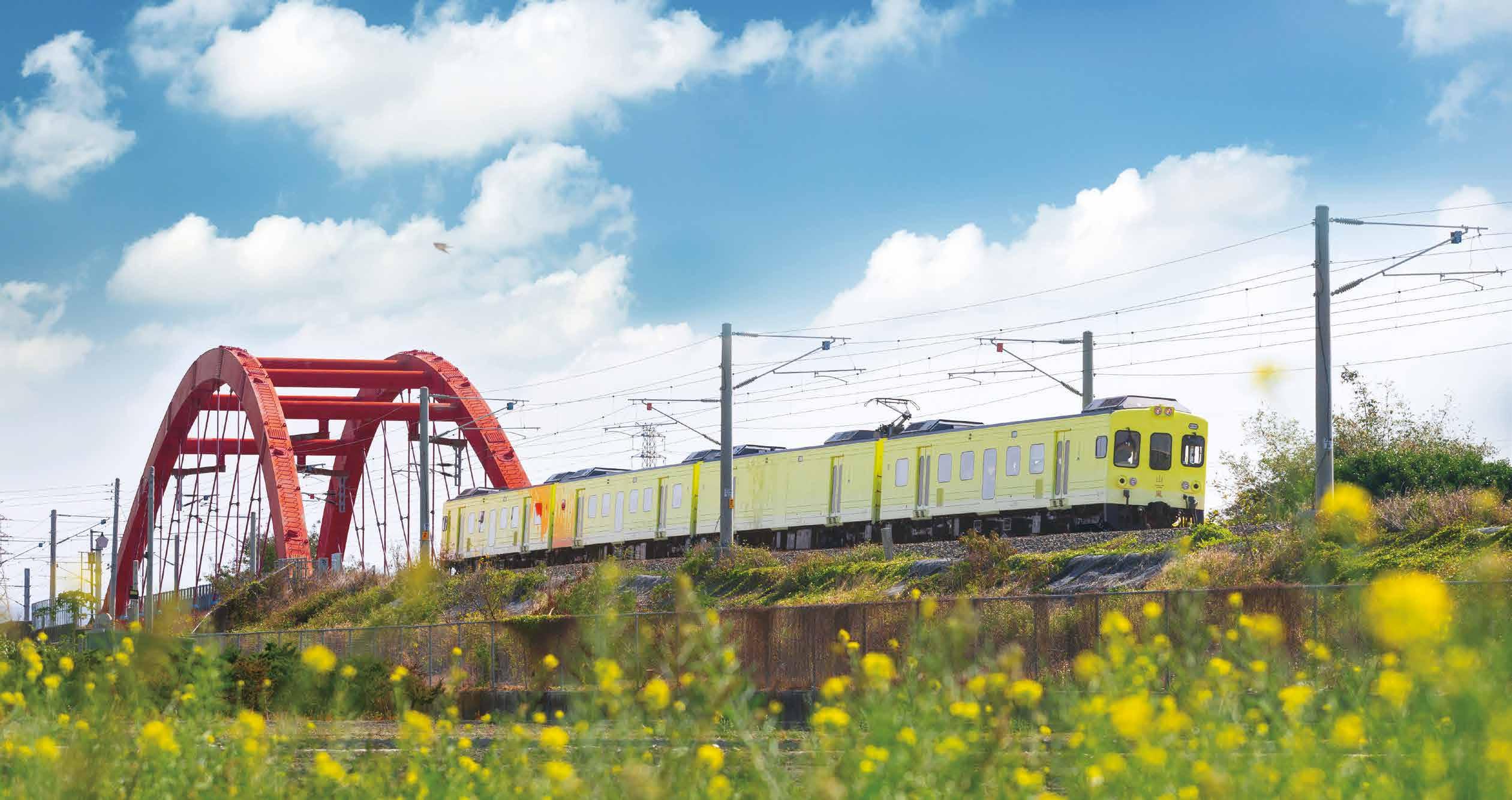
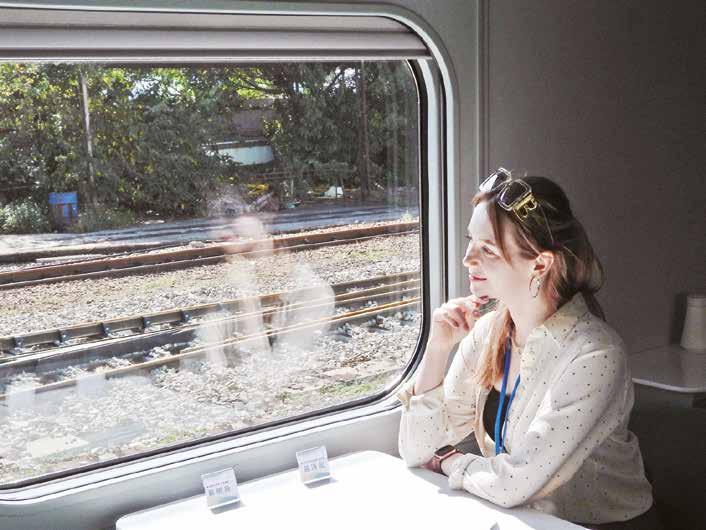
Launched in 2025, the Shanlan (meaning “mountain mist”) is one of two touristtrain experiences geared towards a mid-range “I fancy a splurge” kind of luxury. The service runs use a specially reconditioned EMU500 kitted out in ripe-rice chartreuse livery, with one door in each carriage replaced by a stunning floor-toceiling window that makes you feel as if you’re soaring through the landscape. Furnishings are muted greens – celadon, eucalyptus, moss, sage – inspired by Taiwan’s misty mountains and fertile fields, while a constellation of ceiling lights twinkles whenever the train enters a tunnel, and woodland scents fill the air.
From April to June of this year, the train is scheduled to shuttle between Changhua (central Taiwan) and Tainan (south Taiwan). Southbound stops are at the small stations of Shetou and Ershui; northbound stops are at Houbi and Dalin. Catering provided on these routes comes from the Silks Place Tainan, with the hotel’s esteemed culinary team drawing inspiration from the grand banquets of yore and the region’s coastal bounty. (As with all services mentioned here, accommodation for vegetarian diets requires advance notification.)
Trains run Friday through Sunday. One-way tickets cost NT$3,900; bookable via Lion Travel.
In a nutshell: The rail-based adventure that dessert lovers never knew they needed
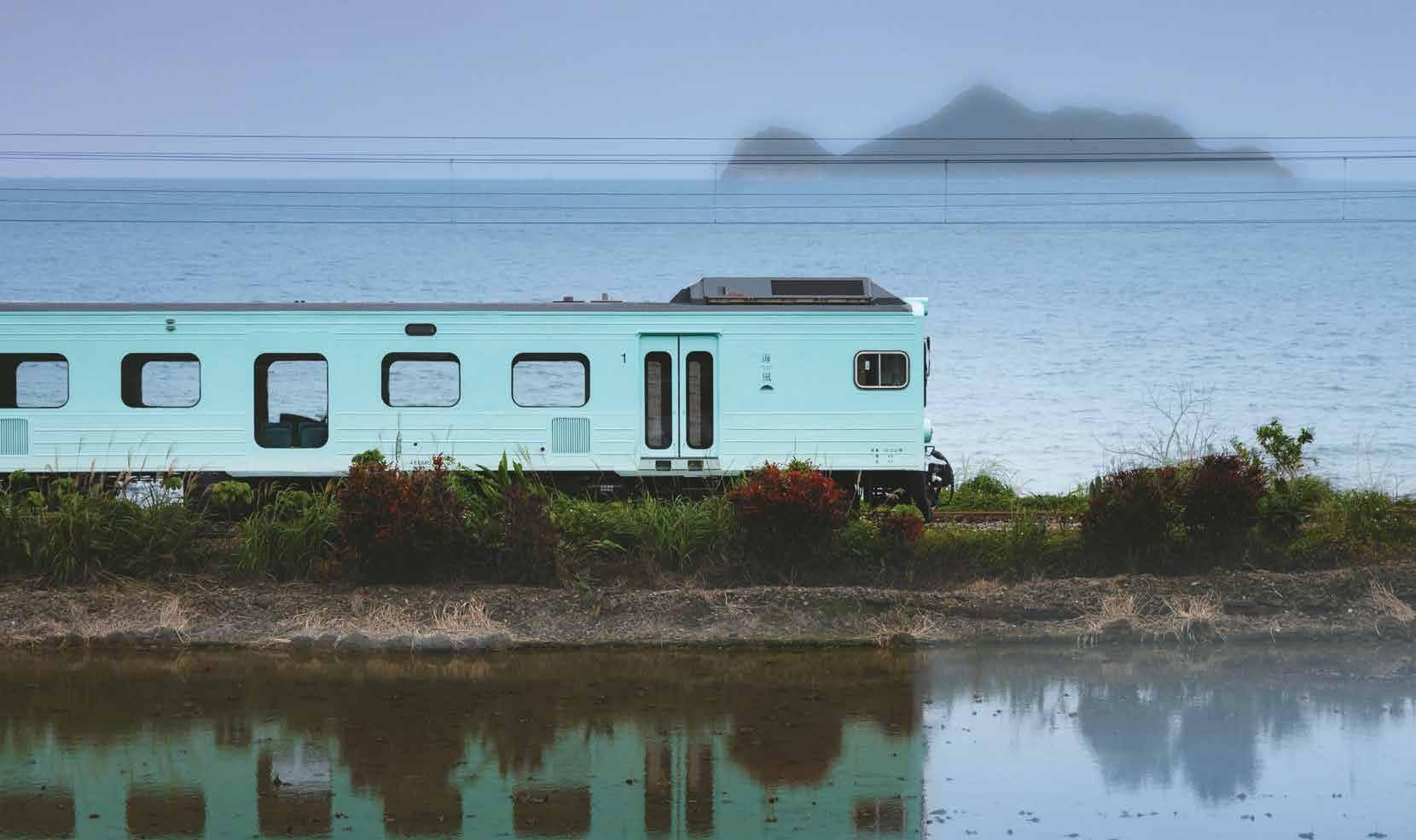
Sister service to the Shanlan, the Haifeng (literally, “sea breeze”) is a similarly refurbished EMU500, with a palette drawn from Taiwan’s east coast littoral landscape – think pebble gray, spume white, the teal of sunlit waters. It is airy, light, and bright, and like the Shanlan, it has the same generous windows that draw the external scenery inside.
Routes vary, but through this May and June, the Haifeng will chart a course between Nangang (Taipei City) and Yilan (northeast Taiwan), with stops at Dali and Toucheng outbound or Dali and Houtong on the return. The culinary highlight is a
tea spread from Taipei’s Moon Bakery. Treats like Tieguanyin tea canelés, curly kale salad, red guava tarts, Sanxing scallion croissants, mentaiko buns, and fragrant oolong tea are presented in a Tiffany-blue box that frames each treat as an edible jewel. (On west-coast journeys, the MANO MANO patisserie and Michelin-starred ice-cream parlor MINIMAL do the catering, with equally mouthwatering results.)
Services run Friday through Sunday. One-way tickets cost NT$3,600; bookable via Lion Travel.
Info: bit.ly/haifeng-train
Mid-Summer Formosa Train (Hualien-Taitung)
In a nutshell: Travel back in time with a steam-powered cruise through east Taiwan’s summer scenery
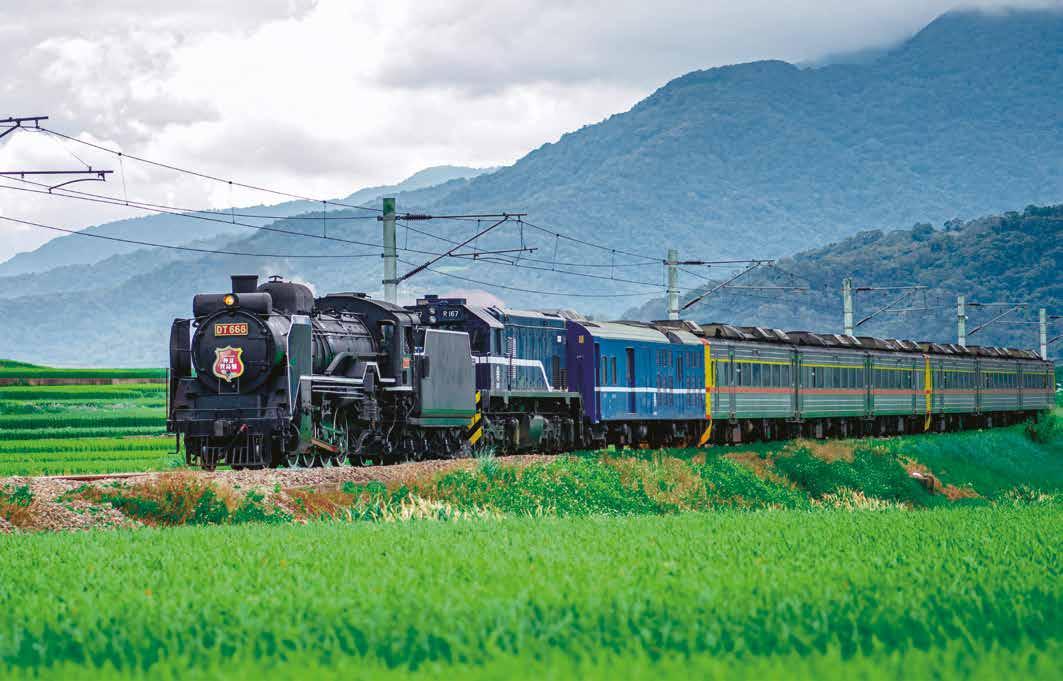
For rail enthusiasts, nothing beats the sheer sensory delight of a steam locomotive in all its hissing and whistling, hot-oilsmelling, juddering and whirring, and thrusting glory. It is a visceral evocation of a bygone era, and one that Taiwanese steam freaks get to experience for three weekends each summer when a steam locomotive, pulling the Mid-Summer Formosa Train, graces the East Rift Valley (now also known as East Longitudinal Valley) with her majestic presence.
In her day, the handsome locomotive (manufactured in 1943 by Kawasaki Rolling Stock Co., Ltd.) was one of the fastest in the land, earning her the nickname the Queen of Steam, and although she’s no match for the modern machines when it comes to speed, you’ll certainly feel like royalty as you sit in the train steaming past banks of spectators gathered beside verdant rice paddies to wave you on your way.
Precise itineraries vary year to year, but usually include stops at several stations. Specifics tend to be announced in early June, with tickets going on sale shortly thereafter (available from EZ Travel or directly from the TRA website) Info: bit.ly/midsummer-forumosa
The Haifeng train travels along the East Coast, providing panoramic ocean views
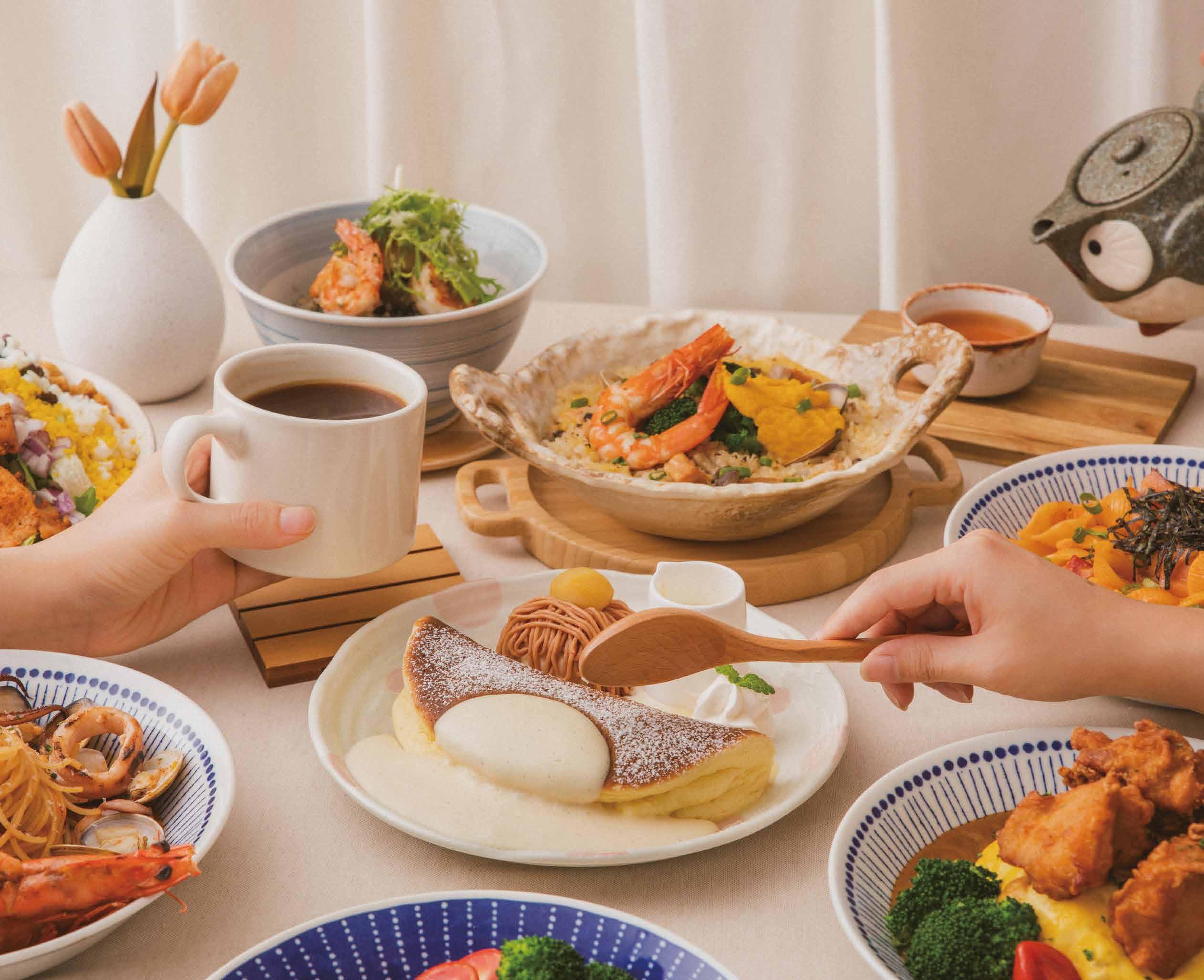
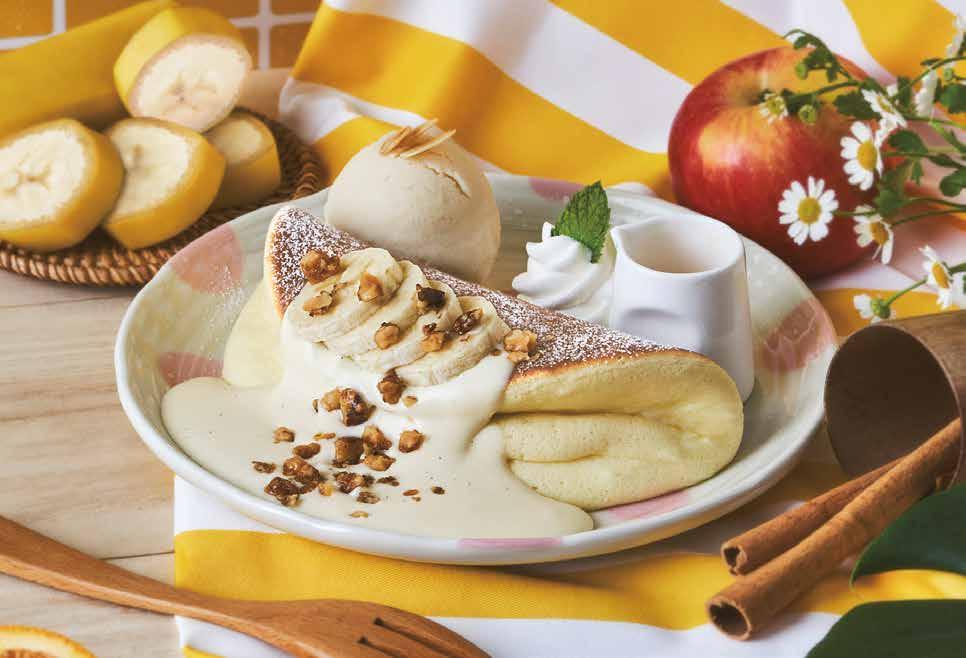
The Woosa Western-style pancake house is renowned for its signature cloud pancakes and is widely hailed as a must-visit pancake spot in Taiwan. Made with carefully selected Japanese ingredients paired with fresh local Taiwanese produce, these pancakes are impossibly light – cloud-soft and melt-in-the-mouth, with a taste of pure bliss that stays with you long after the last bite.
Beyond these signature pancakes, the menu also features all-day Japanese-Western cuisine – from popular soup-don to handmade hamburger steaks – beloved by local and foreign gourmands alike, and a hit with Korean celebrities too. Woosa looks forward to making your Taiwan journey a lot sweeter!
Woosa currently has 17 locations across Taiwan and one directly operated store in Melbourne, Australia. When in Taiwan, step into Woosa and treat yourself to a little happiness!
Must-Tries at Woosa
1. Cloud Pancakes
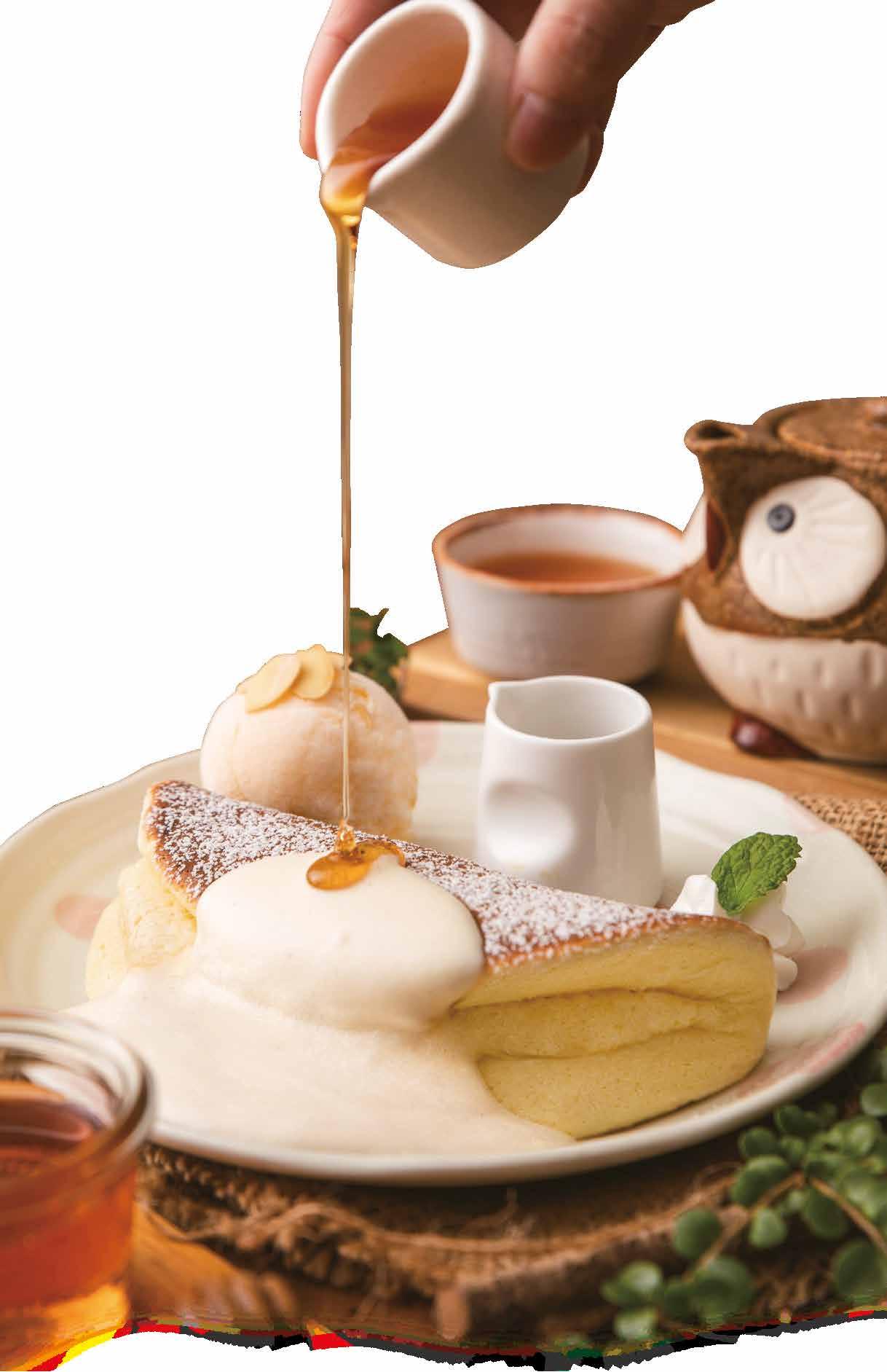
At Woosa, you most definitely need to try the classic cloud pancakes. Soft and airy as a cloud, each pancake brings together the fluffiness of soufflé, the richness of cheesecake, and the smoothness of crème brûlée, finished with fresh seasonal fruit – a reinvention of everything you thought a pancake could be.
Among the options, the Pancake with honey and vanilla ice cream remain an enduring favorite – the go-to order for many firsttime visitors. Warm pancakes drizzled with honey and paired with vanilla ice cream – the interplay of hot and cold creates a richly layered experience that is simple yet utterly unforgettable.
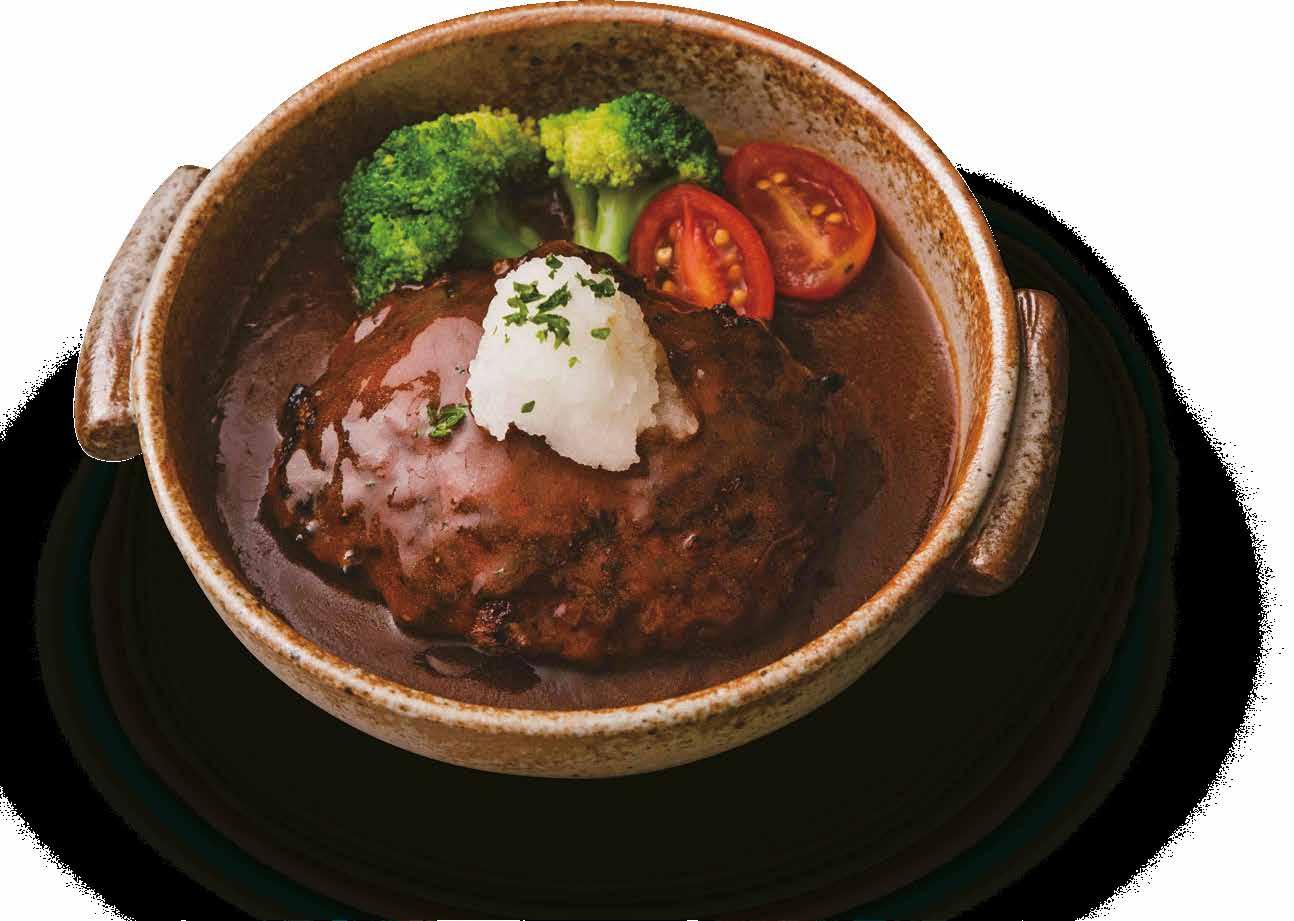
2. Soup-Don & Japanese Hamburger Steak
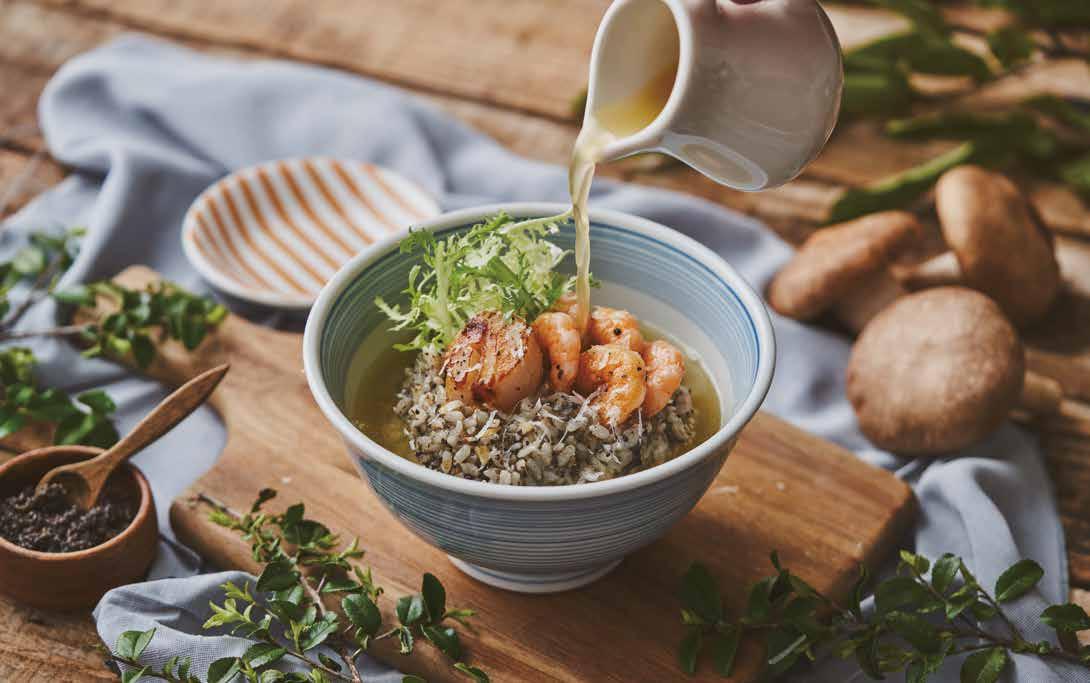
Woosa’s original soup-don dishes deliver a multi-layered flavor experience that has won a devoted following.
The top pick is the Soup-Don with Seared Scallop and Shrimp in Truffle Cream Sauce – first savored as-is, then transformed by a pour of rich broth that the rice soaks up beautifully. Truffle fragrance and fresh seafood sweetness come together into something bold and utterly captivating.
Also on the menu are handmade Japanese hamburger steaks –tender, juicy, and deeply satisfying – alongside a wide selection of Japanese-Western dishes, bringing warmth and comfort to every visit.
Facebook
Inline
East Rift BikewaysValley
And How the Local Train Line Gets You to Them
TEXT RICK CHARETTE PHOTOS VISION
Locals and in-the-know travelers use the inexpensive, high-quality Hualien City-to-Taitung City train service through eastern Taiwan’s gorgeous East Rift Valley like an “in-town” bus service, hopping on and hopping off at local stops. Tour cycling is popular in the flat-bottomed valley, which is carpeted with neat farms, especially rice paddies, and framed by the Coastal Mountain Range on the east and the Central Mountain Range on the west. Let’s see how trains and bikes connect.
Yufu Bikeway
You can take your cycle on the trains – with certain restrictions, of course –and also rent well-maintained bikes at outfits vetted by the Taiwan Tourism Administration within easy walking distance of train stations at numerous stops. There are different levels of choo-choo service – fast trains through milk runs – so be sure there’s actually a scheduled stop at the destination you’ve chosen to begin your cycling play (Taiwan Railway website: railway.gov.tw).
The East Rift Valley’s major roadways are very bike-friendly, with light vehicle traffic and good shoulder space; Provincial Highway 9 has dedicated bike lanes (the major train stations are beside/close to this route). Casual cyclists, however, prefer the valley’s menu of easy-and-breezy dedicated bikeways.
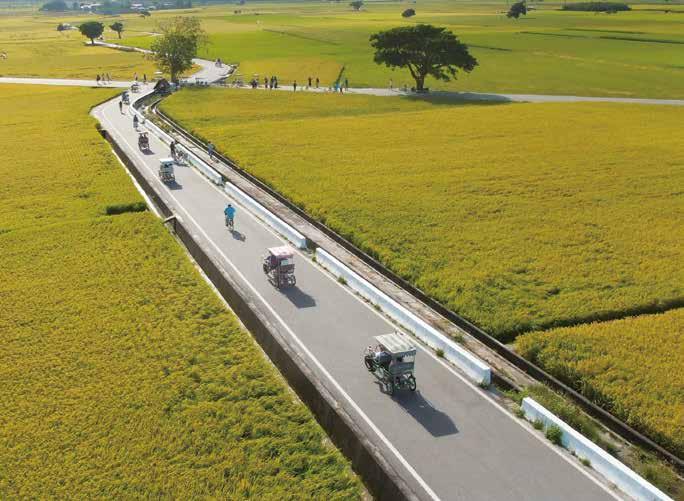
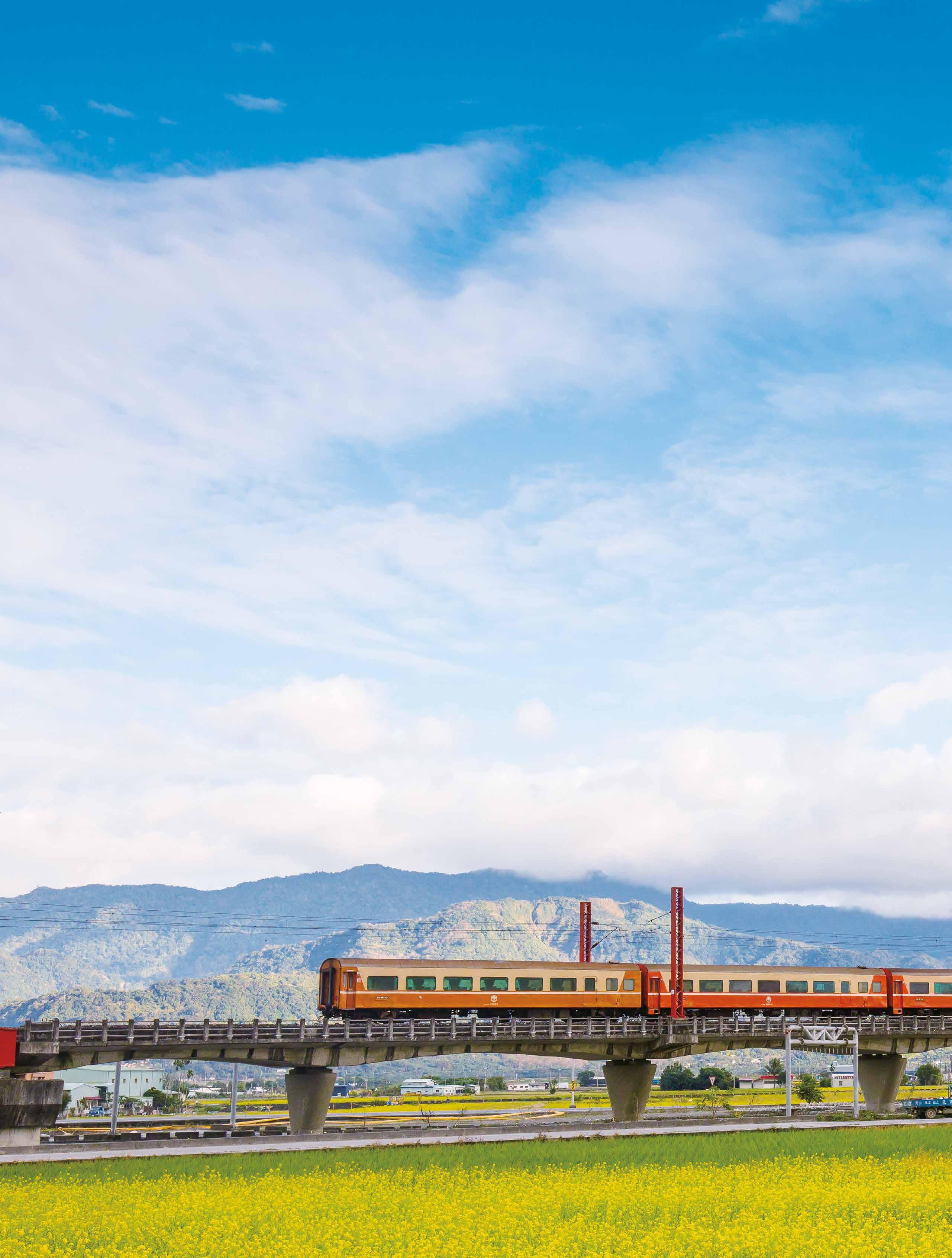
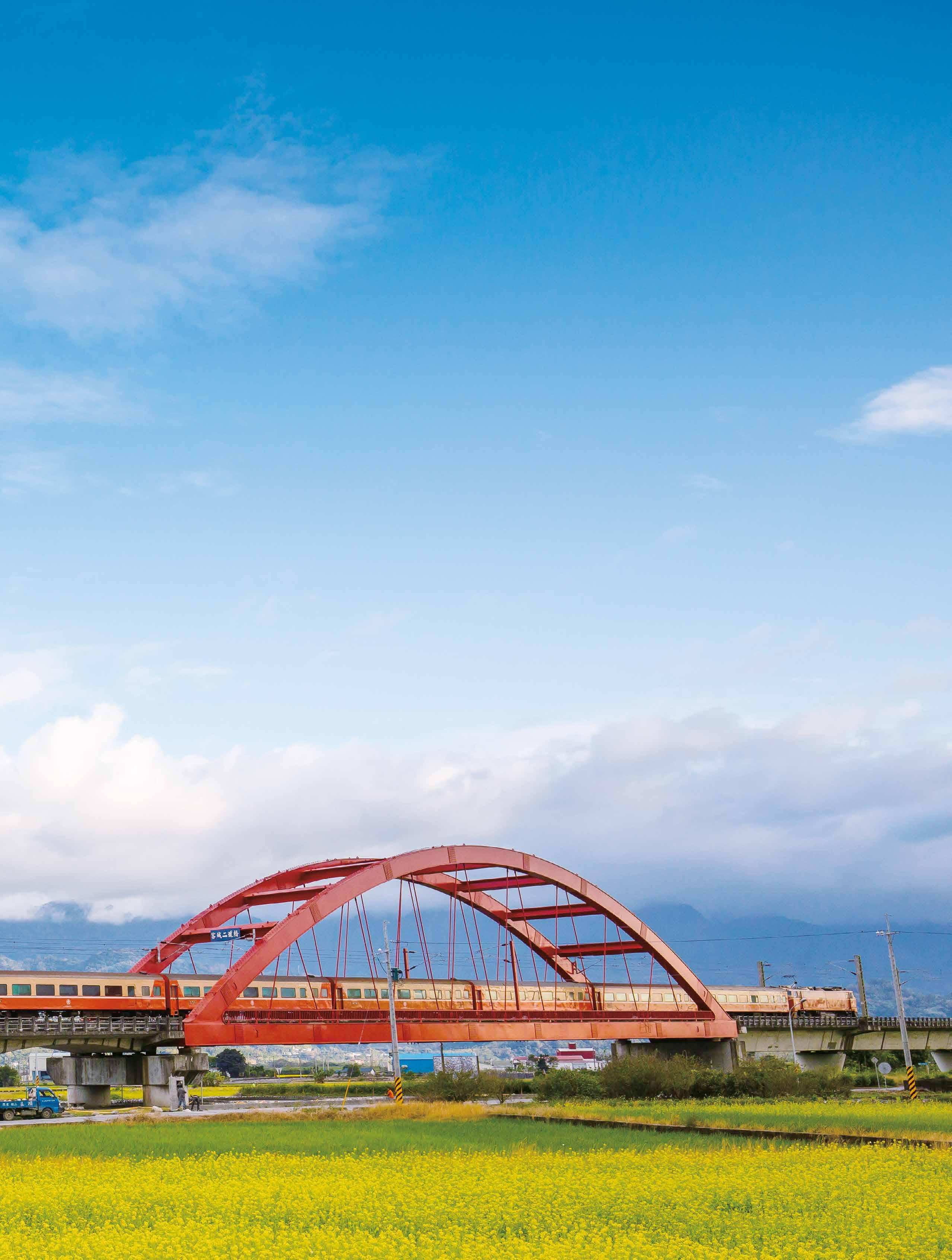
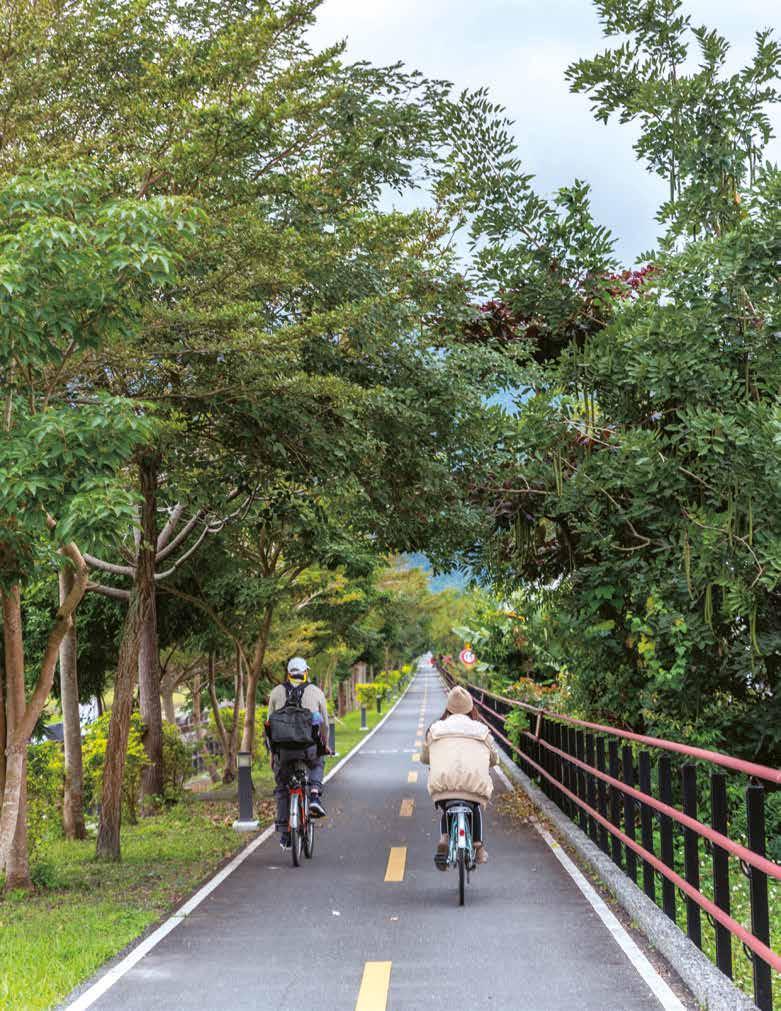
The Yufu Bikeway is a premier, 10km route that straddles the townships of Yuli (the “Yu” in the name) and Fuli (the “fu”), swishing you through a sweeping rice paddy/rapeseed field mosaic. It’s flat, built along a decommissioned railway line section. Yuli is one-two hours south of Hualien City by train, depending on the train service type. Bike rentals are readily available at/around its station. The bikeway starts 300m south of the station, first bringing you alongside the new tracks, then along the edge of open countryside. Recommended right off the bat, however, is a short “detour” from the entrance (continuing south alongside the tracks) to the iconic Kecheng Iron Bridge, a fiery-red multi-arch railway bridge captured by countless photographers – bridge flying over rice paddies, trains flying over bridge, backdrop of soaring mountains.
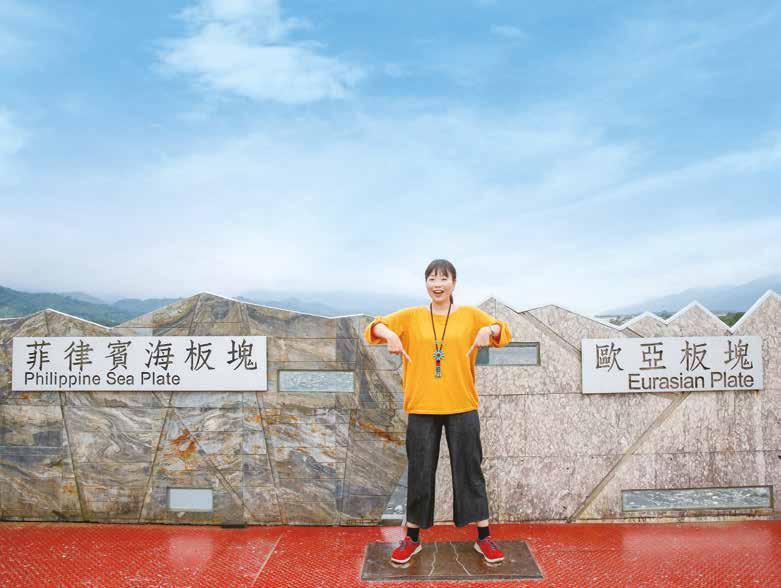
A few kilometers into your ride you’ll come to an old railway bridge. The Eurasian Plate and the Philippine Sea Plate fault line run underneath – as does the Xiuguluan River, flowing north – marked clearly so you can stand with one foot on each tectonic plate. The bridge and railway tracks were put under too much strain by the ongoing plate movements, leading to the retirement of this section in 1989.
Later on in your ride, a short jaunt up a side valley will bring you to the popular Antong Hot Springs resort area, founded by the colonial Japanese in 1930. By the trailside at the jump-off point is the recently thoroughly renovated old Antong Railway Station, built in 1924, which now features a visitor center and raised viewing deck. This and substantial work on the bikeway were carried out after damage caused by an earthquake in 2022.
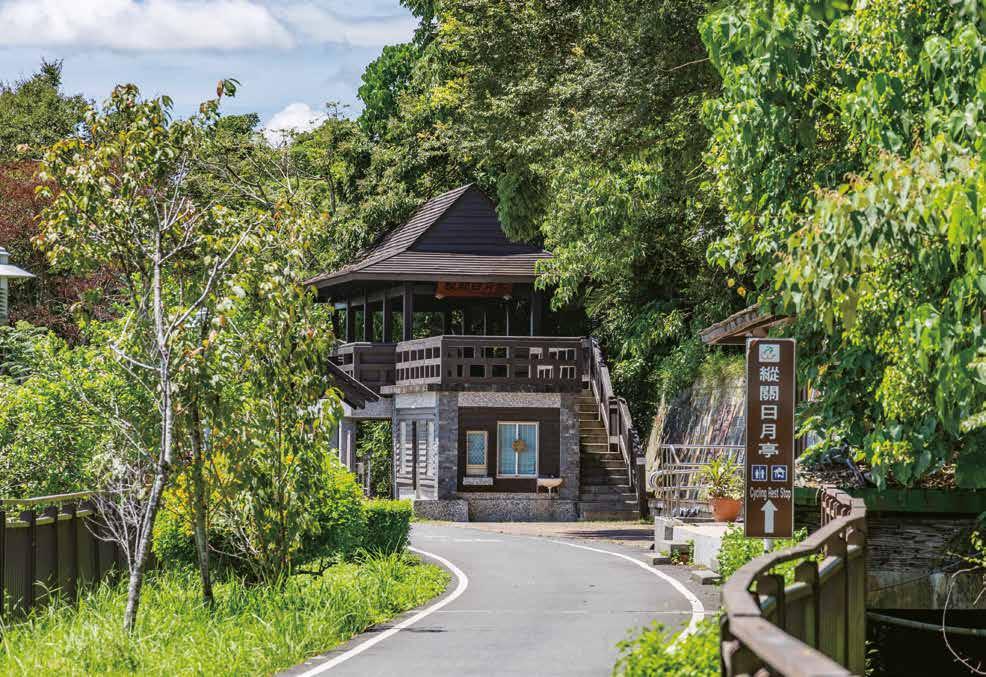
The bikeway ends in Fuli Township at the cute, decommissioned, artworkbeautified old Dongli Railway Station , now home to a café with comfy outdoor seating.
Riding on the Yufu Bikeway
Standing on two tectonic plates at the same time
Kecheng Iron Bridge near the town of Yuli
Guanshan Town Circle Bicycle Path
The 12-kilometer Guanshan Town Circle Bicycle Path fully encircles the town of Guanshan, about 37 kilometers south of Yuli, 45~60 minutes away by train depending on service type. Like Yuli, Highway 9 runs through its heart, and close by its railway station. There are cyclerental shops both right outside the station and a short distance away (east), just outside Guanshan Water Park, through which the bikeway runs. Save for a small cluster of residences/guesthouses here, you’re already in open farmland.
The Guanshan loop holds the honor of being the first dedicated bikeway created in Taiwan, in 1997, and remains among the most beautiful. Fruit orchards are added to the valley’s paddy- and rapeseed-field mix. Most riders tackle the route counter-clockwise, heading out from the water park area. Your first section, heading north, brings you along beside the shallow irrigation waters of the gurgling Guanshan Canal , the bucolic tapestry here most likely completed with grazing water buffalo and darting cattle egrets.
Further ahead, you come to a striking section lined with tall areca (betel-nut) palms. Their long, slender trunks rise like thin columns, betel-nut clusters visible near the crowns. The betel nut, consumed in Taiwan like chewing tobacco for its mild stimulating effect, has long been a part of local agricultural and blue-collar life.
Now, a gentle but steady climb of half a kilometer heading west along a small river that shoots out from a narrow gap in the central mountains. Pace yourself. You’ll
end up higher than the town, creating splendid sweeping views eastward over the town and valley. Along this stretch, many riders stop once or twice to wander down the narrow paddy-separation paths or sit atop a stone ledge bordering one of the irrigation channels, contemplating the serene painter’s canvas before them.
The next stretch, the cycleway’s highest, runs south along the wooded mountainside past the town – on hot days the shade provided here is much appreciated. Along the way you come to a viewing pavilion where a token NT$50 bikeway maintenance fee is collected. For much of this length you’re accompanied by a ditch-like irrigation channel filled with gushing waters fresh from the mountains, the waterway seeming, impossibly, to defy gravity and move up and down with you as you navigate this section’s long, gentle undulations. As you emerge into more open countryside again, fragrant fruit orchards and small range-chicken operations appear.
This section ends at the start of the bikeway’s biggest thrill – a downhill straightaway fully 1km long that streaks you back down into the valley bottom, near the Beinan River, which streams south. Be sure to test your brakes before you launch. The bravest riders – perhaps “most foolhardy” would be the better choice here? … we’ll let you decide after the fact – try to go without brakes till the denouement. Note, however, that a sight that encourages many a rider to slam on the brakes partway down is a trailside strawberry farm where you can sit yourself down on a congenial patio with a cooling shaved-ice treat – the
perfect reward for yourself after all that pedaling (assuming you didn’t lazy-option rent an e-bike, of course!).
Your joyride is completed with a leg through the tranquil Guanshan Water Park . Once the site of a large waste site, the attractively landscaped grounds, spread over 32 hectares, are a pleasure to meander through. There are eco-trails, plenteous birdhouses generating great birdwatching, splash areas, fountains, a small artificial lake with paddleboat rentals, a stargazing deck, and other attractions.
ENGLISH AND CHINESE
Antong Hot Springs | 安通溫泉
Antong Railway Station | 安通車站
Beinan River | 卑南溪
Dongli Railway Station | 東里車站
East Rift Valley | 花東縱谷
Fuli Township | 富里鄉
While in Guanshan, several places of historical and/or cultural interest in the town center are also well worth your time. Among these, Guanshan’s old 1919 Japanese/Westernarchitecture train station, named Lilong Station , is close to the new one, as is the Guanshan Tianhou Temple, the valley’s most important place of Mazu (Goddess of the Sea) worship; the first edition was erected in 1895, the current version in 1930.
Slow, Low-Carbon Travel in Guanshan, Taitung County
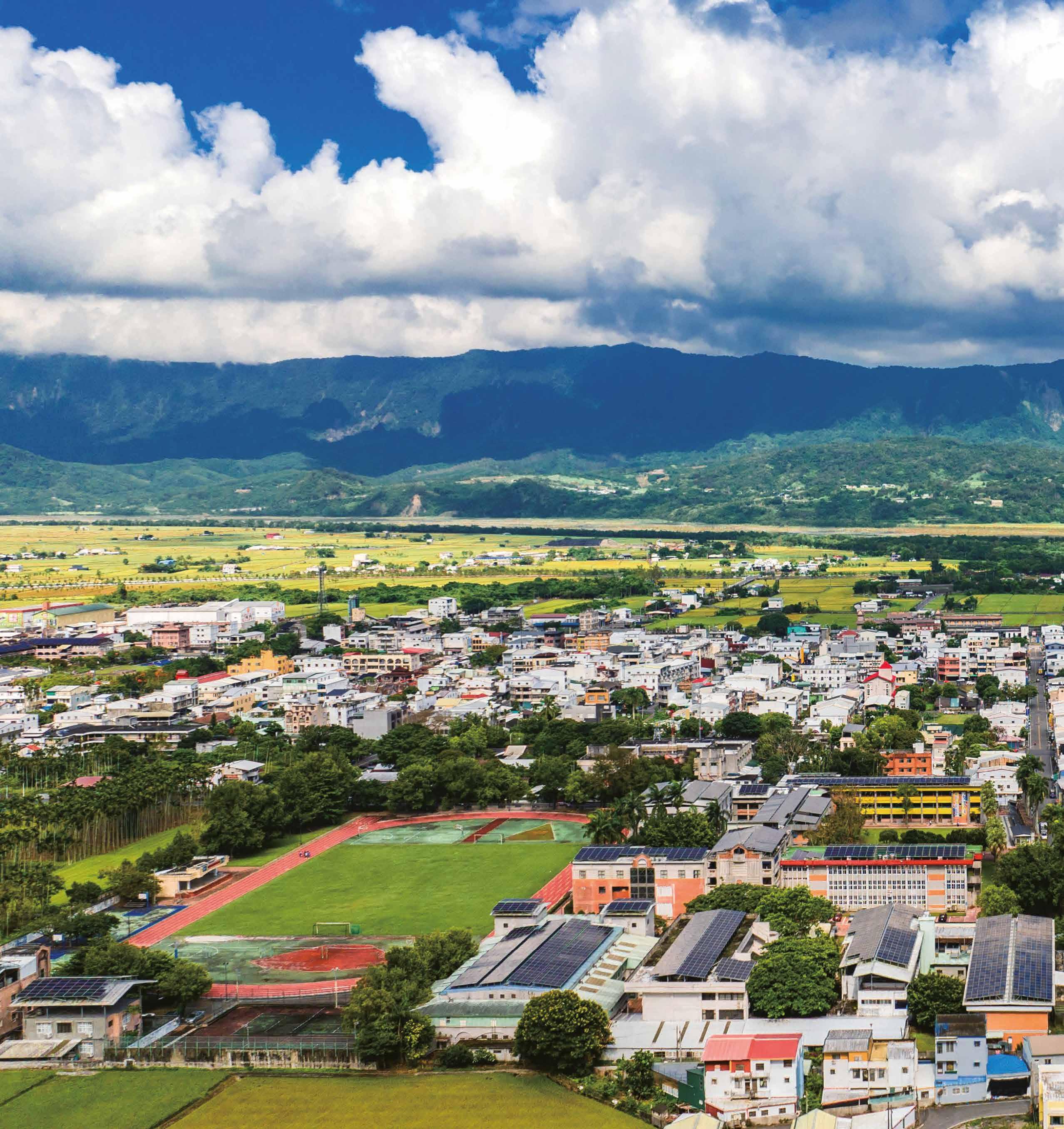
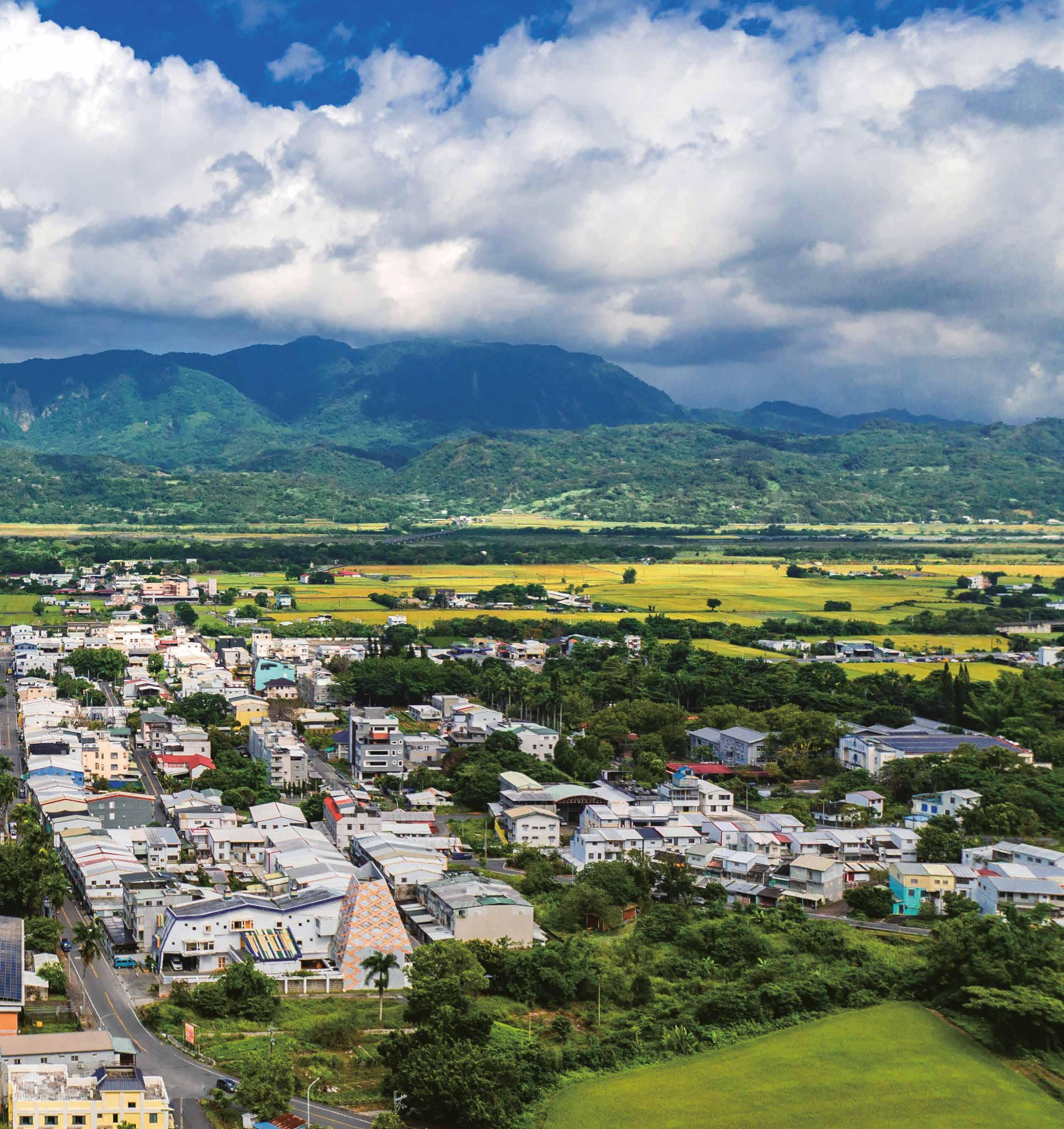
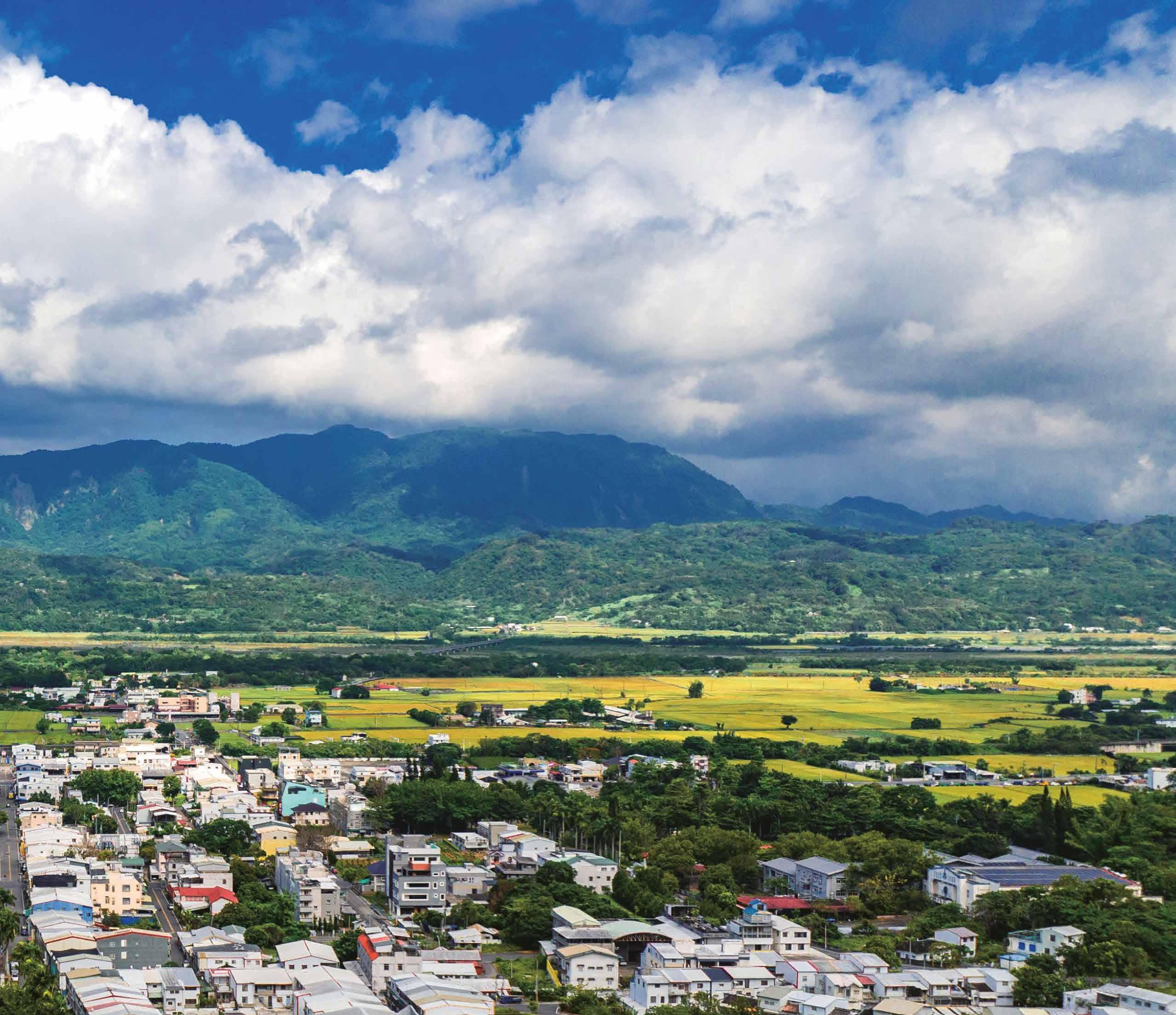
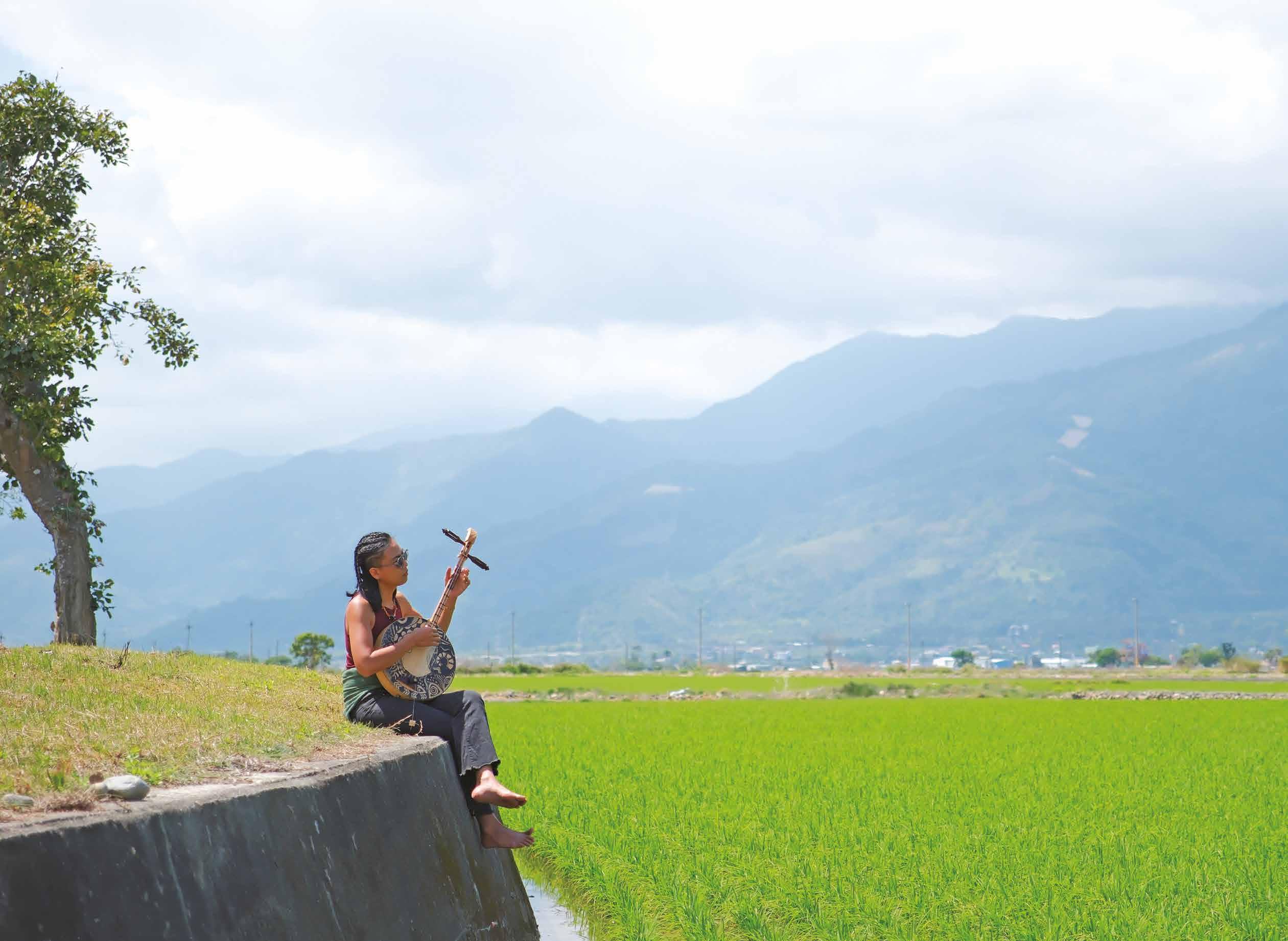
Amidst swaying rice fields, travel is no longer about rushing from place to place; it becomes a life experience that unfolds gently, at its own pace. Nestled in eastern Taiwan’s East Rift Valley (also known as Longitudinal Valley), between the Central and Coastal mountain ranges, Guanshan is a small township that naturally invites visitors to slow down.
When taking a train through the valley, the view from the window opens onto endless fields and distant mountains. As the train slowly arrives at Guanshan Station, the journey itself seems to ease into a quieter, unhurried rhythm.
Easily Accessible, Yet Peacefully Unspoiled
Just outside the train station, nearly everything is within walking distance – from the main streets and restaurants to guesthouses and daily conveniences. Though small in scale, the town offers everything needed for everyday living. Corner shops, cafés in repurposed old buildings, local restaurants, and family-run guesthouses together create a streetscape full of warmth and character.
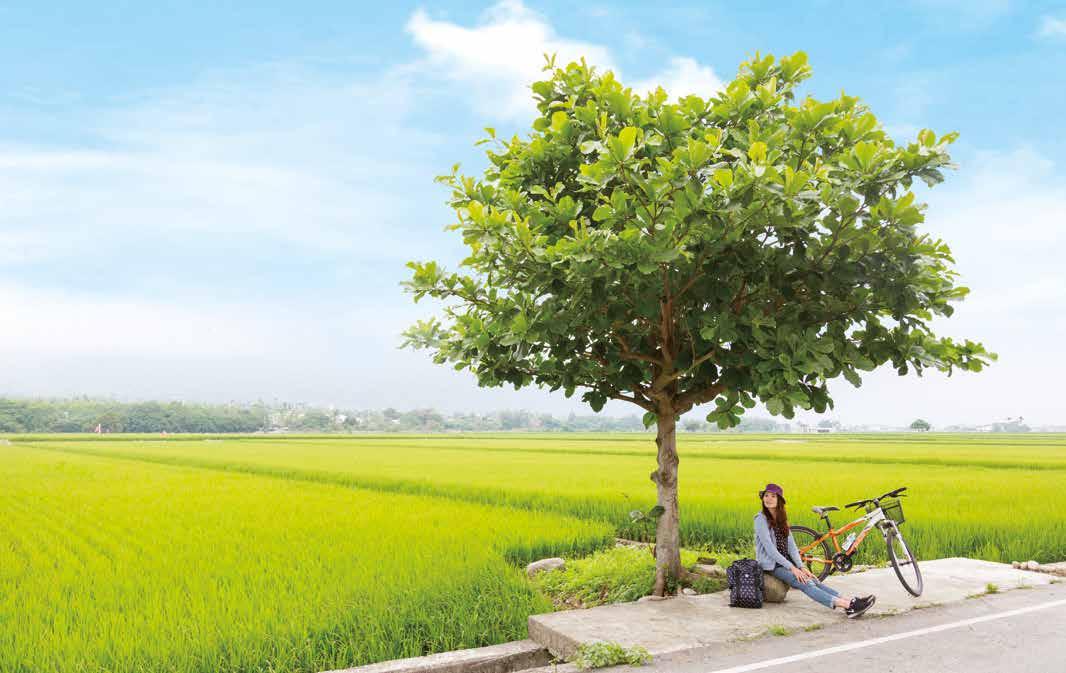
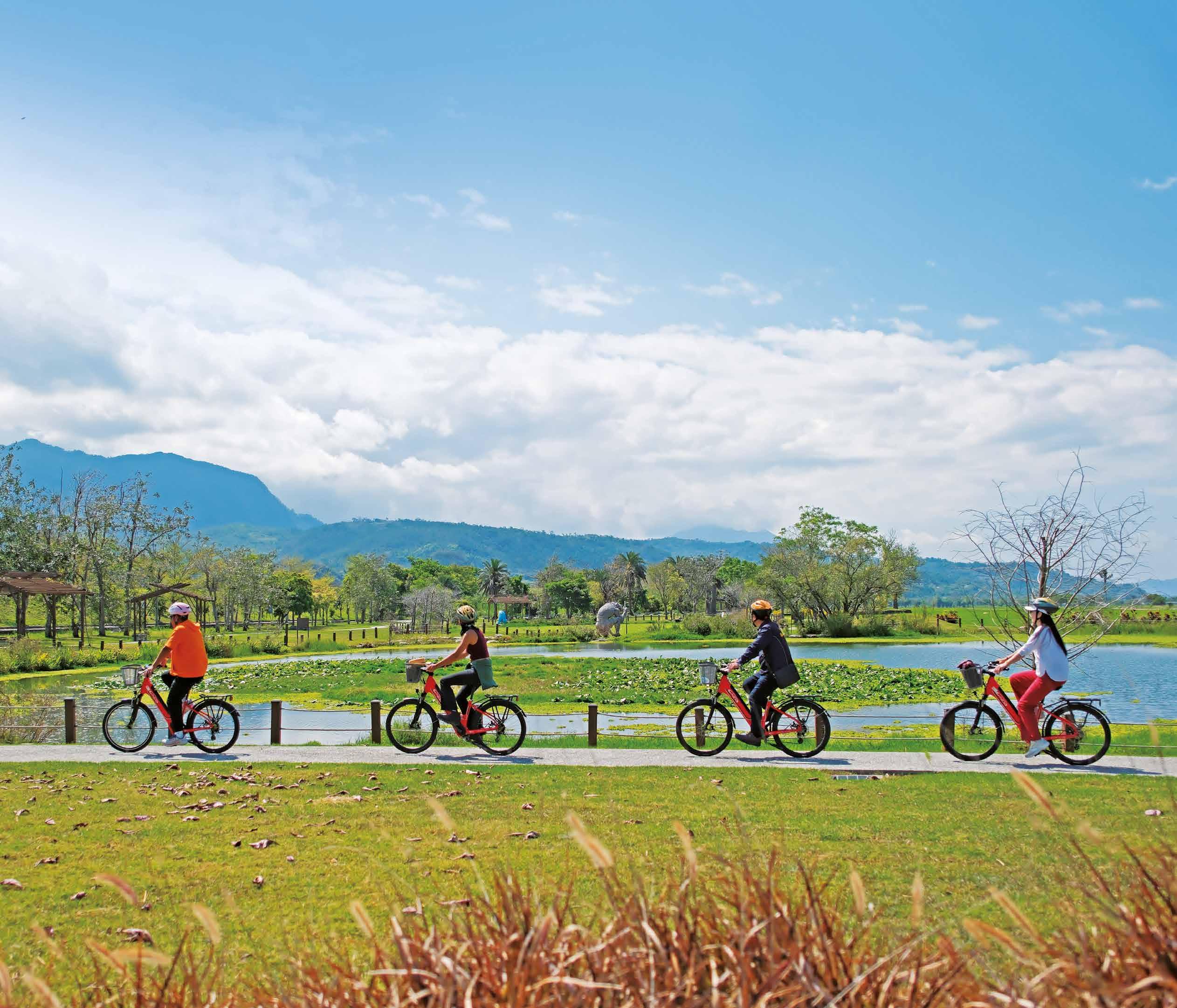
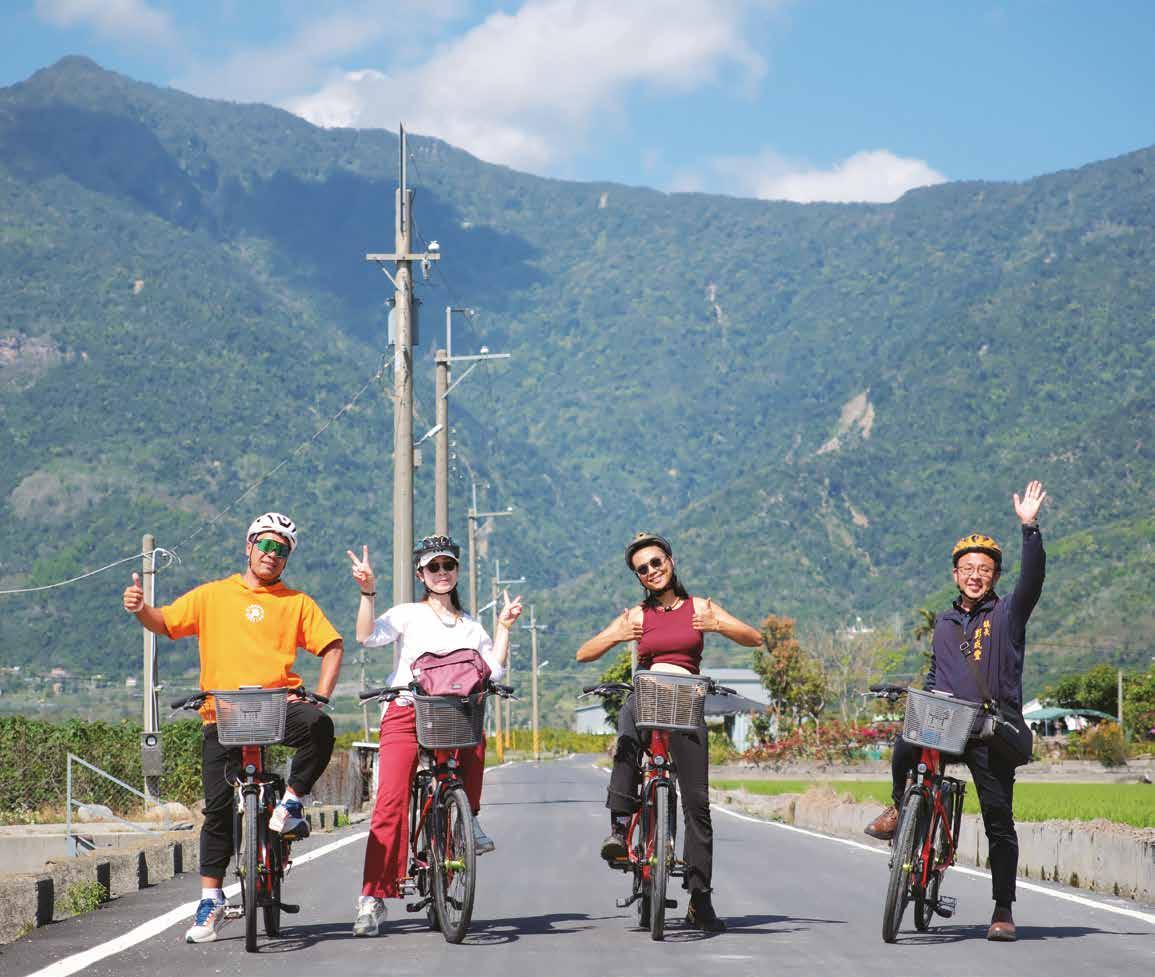
The Guanshan Town Circle Bicycle Path, on the outskirts of central Guanshan, is Taiwan’s first dedicated cycling route that circles an entire town. With a length of roughly twelve kilometers, the bike path connects rice paddies, irrigation canals, local villages, and scenic sights. On an e-bike, with rice fields swaying on either side and mountain breezes brushing past, you don’t have to worry about steep slopes or heavy traffic – you’ll have the scent of paddies and the silhouette of distant mountains for company.
This cycling path is more than an exercise route – it’s a way to explore Guanshan slowly, savoring one scenic stretch at a time. Along the route, rice fields, waterbirds, and mountain vistas unfold at every turn, and travelers can pause to chat with local farmers – making Guanshan a model town for sustainable slow travel in the East Rift Valley.
Nature’s Gift ~ Guanshan Rice
The East Rift Valley has long been an important rice-producing region in Taiwan, and Guanshan is one of its most iconic rice-growing towns.
This area boasts fertile alluvial soil and clean water, along with the significant day-to-night temperature differences typical of the valley, creating ideal conditions for rice cultivation. As a result, Guanshan rice has long been celebrated for its superior quality.
In spring, flooded paddies mirror the sky as seedlings are planted. By summer, the growing rice transforms the countryside into a vast green sea. In autumn, golden waves of rice sway in the breeze, filling the township with a gentle fragrance.
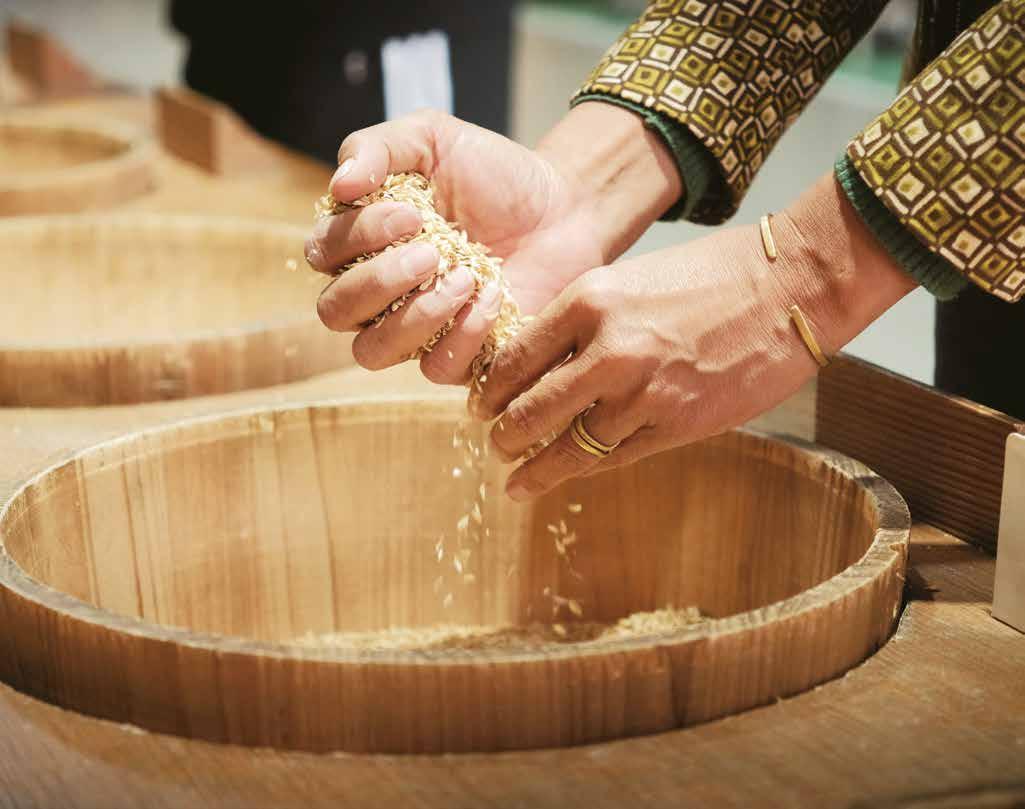
If you are looking to delve deeper into rice culture, you will find the “Rice Country School,” transformed from the old granary of the Guanshan Farmers’ Association, well worth a visit. Through exhibits, guided tours, and interactive activities, you can discover the entire journey of rice from the fields to the table.
Cyclists on the Guanshan Town Circle Bicycle Path
Learning about different types of rice at the "Rice Country School"
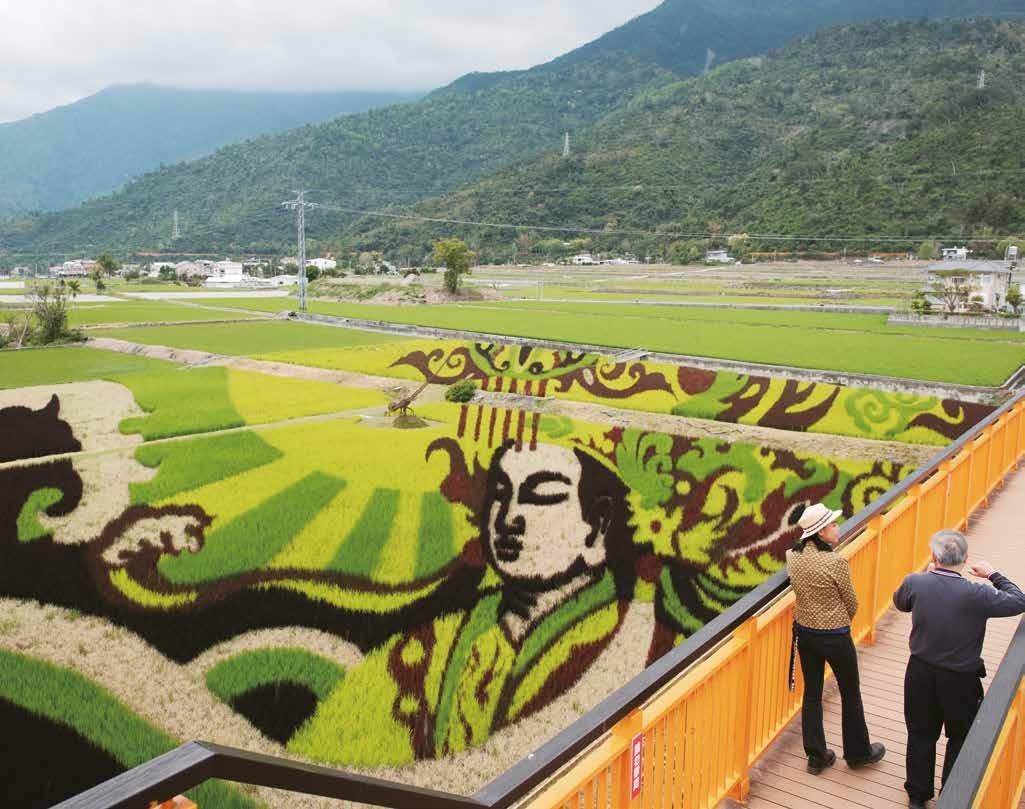
Rice-field art near the "Rice Country School"
Guanshan on the Tip of Your Tongue ~ The Taste of a Small Town
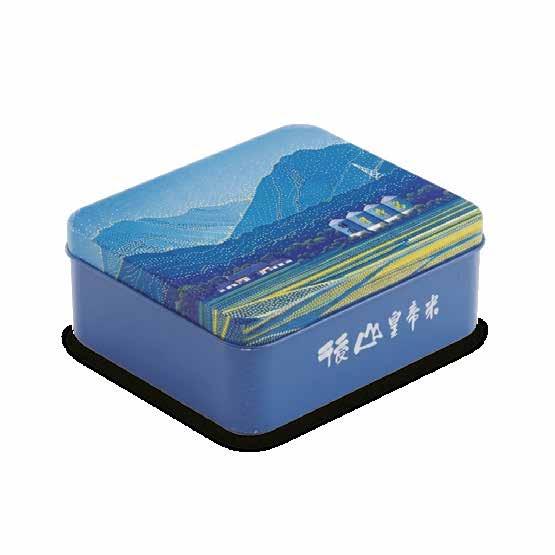
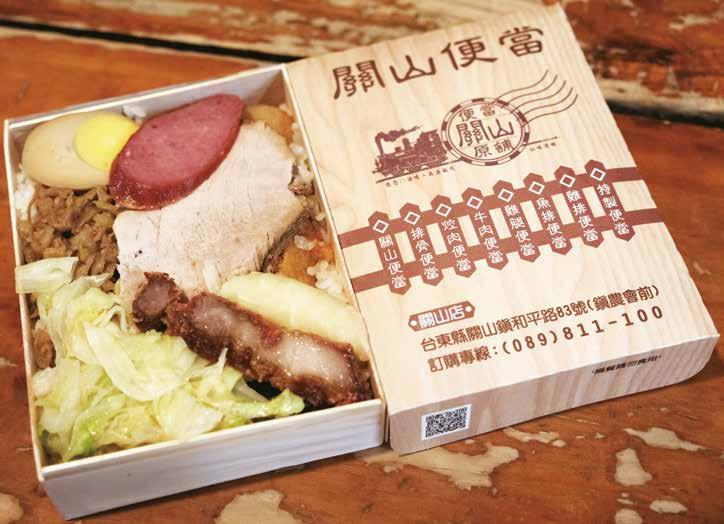
Travel memories often start with taste. No visit to Guanshan is complete without trying a Guanshan boxed lunch. Using locally grown rice and accompanied by simple but hearty side dishes, every bite delivers a warm and comforting flavor.
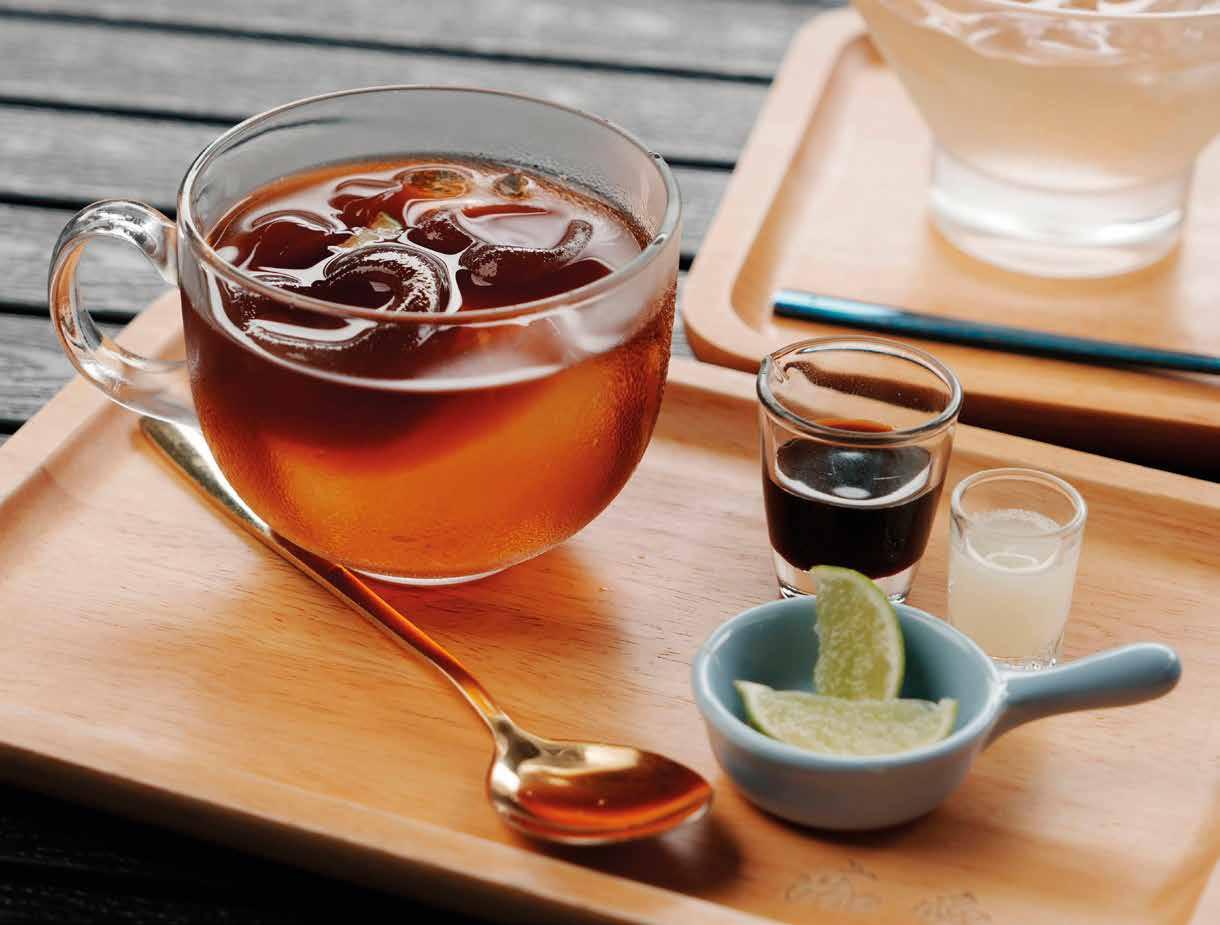
Looking to beat the heat? Visit a charming old shophouse and savor hand-washed aiyu jelly (made from the seeds of a fig plant). Nurtured by Guanshan’s natural environment, the fig wasps help give the local aiyu jelly its delicate aroma and silky texture. Served with the fresh sweetness of fruit, it becomes a perfectly refreshing treat.
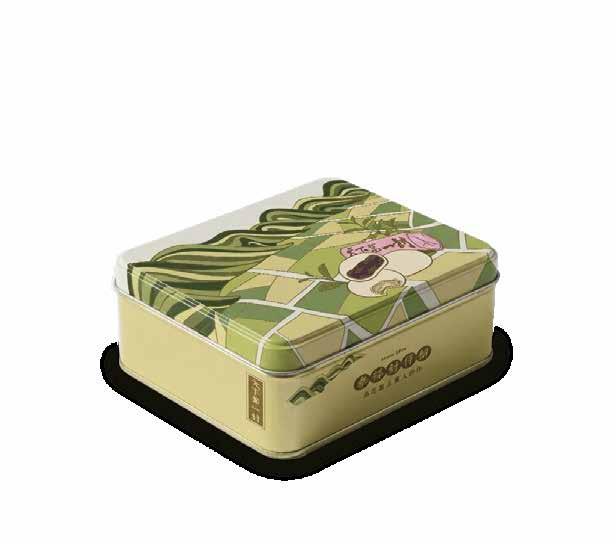
Before you leave, be sure to take home a special keepsake from the town. From local rice and fengzai cakes to peanut brittle and Huo-sheng Bakery’s toast, traditional confections showcase Guanshan’s culinary traditions.
Valley Views and Hidden Wetland Escapes
Located in the heart of the East Rift Valley, Guanshan is an important hub linking Hualien and Taitung counties. Here, the plain and the mountains stretch wide and majestic, and as the wind passes over the rice paddies, the fields ripple like a rolling sea.
Near the Takofan Indigenous Village lies a hidden gem – Takofan Wetland. It serves as a vital habitat for migratory and water birds with a glassy surface that reflects the sky, clouds, and distant mountains, evoking a sense of tranquil elegance.
Enjoying Guanshan's enchanting valley views
Aiyu jelly
Where People Meet Nature ~ Guanshan Water Park
Guanshan Water Park offers a glimpse of how the town and nature coexist in harmony. With an ecological pond, a waterside trail, and wide green spaces, the park offers residents and visitors a place to unwind and explore, while also serving as a center for nature education.
Along the waterside trail, aquatic plants sway in the breeze, dragonflies flit by the pond, and frogs can occasionally be heard calling, showcasing the vibrant natural ecology of Guanshan.
Sustainable Slow Travel & Nighttime Explorations
Guanshan now offers a low-carbon travel experience that combines ecological awareness with cultural exploration. With a professional guide, travelers can explore Guanshan on electric-assisted bicycles, meandering through old streets and open fields while hearing locals share stories about the town’s agriculture, waterways, ecology, and cultural heritage.
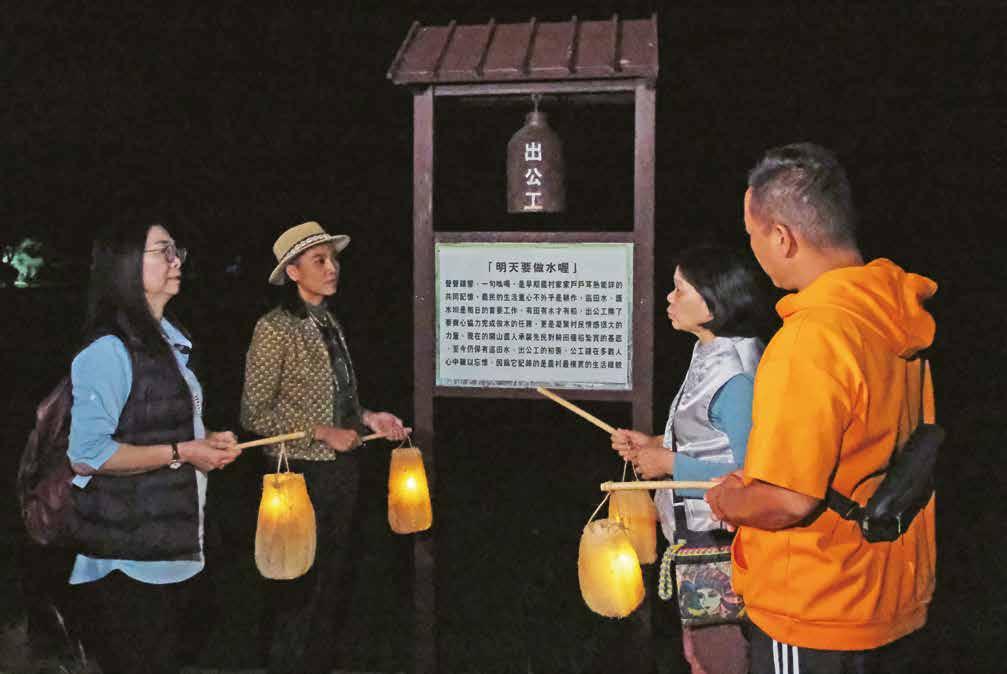
As darkness settles, the small town unveils a different, enchanting side. With a lantern in hand, wander along rural paths and irrigation canals, hearing frogs call, insects stir, and gazing at a sky full of stars – discovering a side of Guanshan that is entirely different from the daytime.
The Timeless Old Street Awaits — Explore Its Hidden Treasures
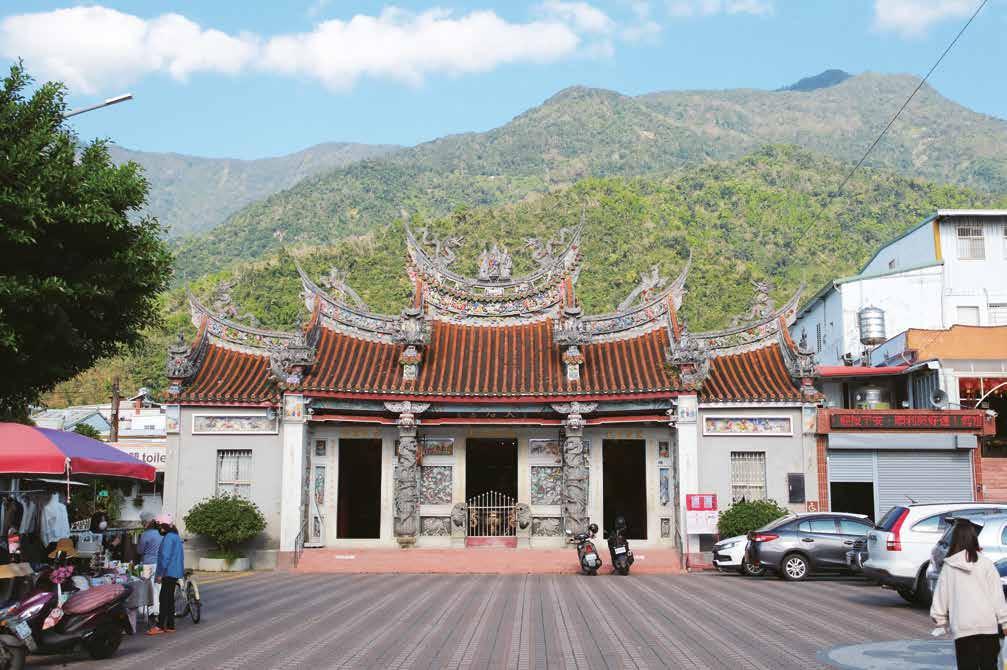
Guanshan, formerly known as “Lilong,” served as an important transportation hub and commercial center in the East Rift Valley during the Japanese colonial period. “Lilong Station,” the historic Guanshan Train Station, has stood for over a century, with its elegant architecture remarkably well preserved. “Xingyuan Hang,” a historic building, has stood the test of time and is now a unique guesthouse, while the Tianhou Temple in the town center has been a vital place of worship for more than a century.
Tastes of Guanshan
Rice, fengzai cakes, and aiyu jelly are the three iconic foods to try when touring Guanshan. Take the valley vibes, the sunshine, and the warmth of its people home with you, and let these flavors become a lasting memory of your Guanshan visit.
As travelers depart Guanshan, they often carry memories of the swaying rice fields, the cycling path, and the town’s gentle, welcoming pace of life. Guanshan isn’t a town to rush through for a quick snapshot; it’s a place that invites you to linger – and to return.
Tourist Information
To learn more about Guanshan’s tourism and culture, visit the Guanshan Township Office, where you can get tourist information, learn about local events, and access low-carbon travel experiences.
GUANSHAN TOWNSHIP OFFICE | 關山鎮公所 (089) 811-179 / 811-034 ( Mr. Pan / Ms. Lin ) No. 54, Zhongshan Rd., Guanshan Township, Taitung County ( 台東縣關山鎮中山路 54 號 )
Tianhou Temple
Nighttime exploration
All Aboard for Fugang, Taoyuan!
An Old Railway Town and Its Tourist Charms
For the international traveler, except for its Taoyuan International Airport, Taiwan’s main gateway, the city of Taoyuan is largely terra incognita. Right beside Taipei/New Taipei City, most bypass it on the way to bigger-name attractions in the island’s center and south. Expats in the know, however, are well aware of its myriad worthy allures – here we explore charismatic Fugang, a time-capsule old market town.
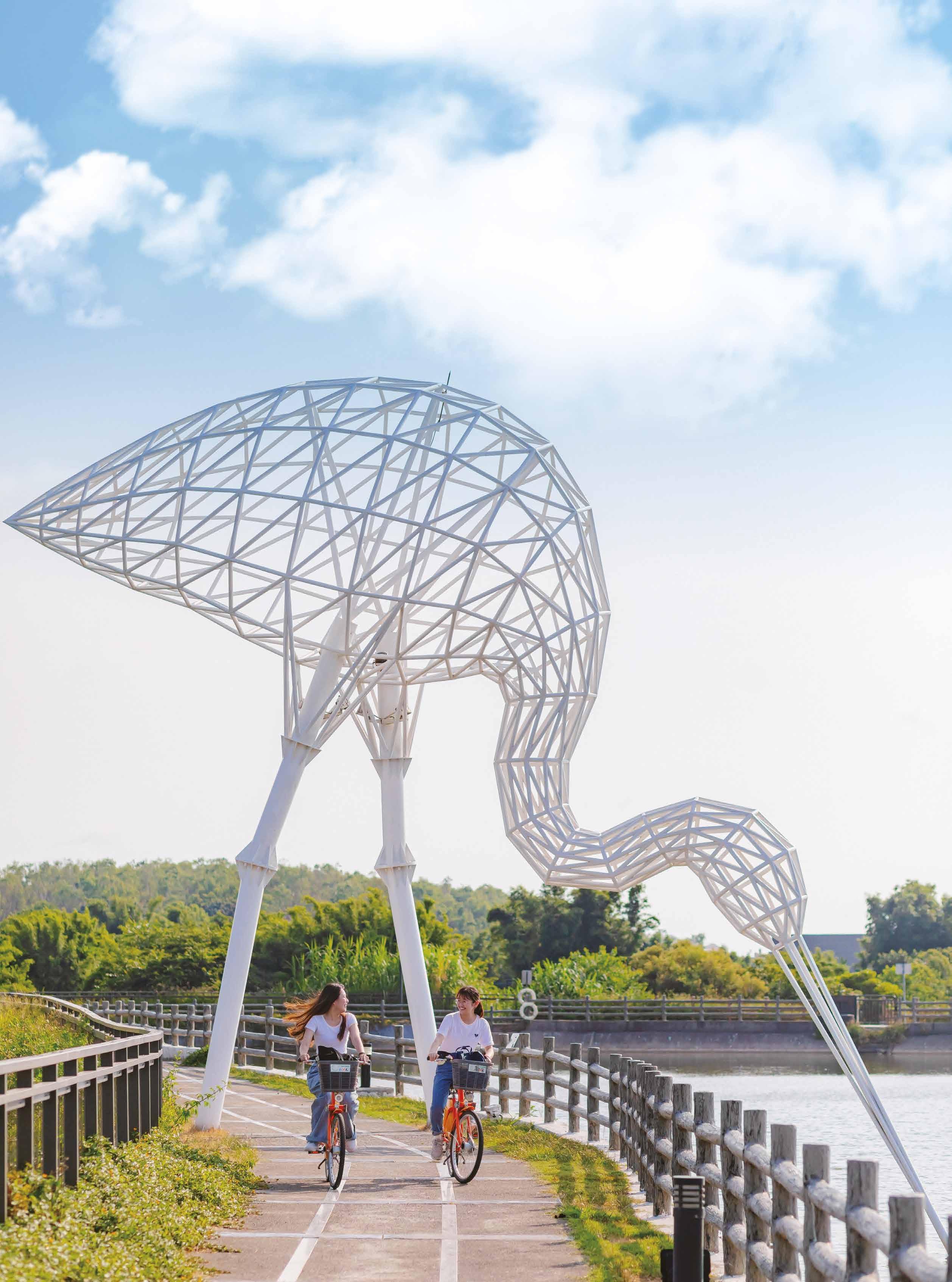
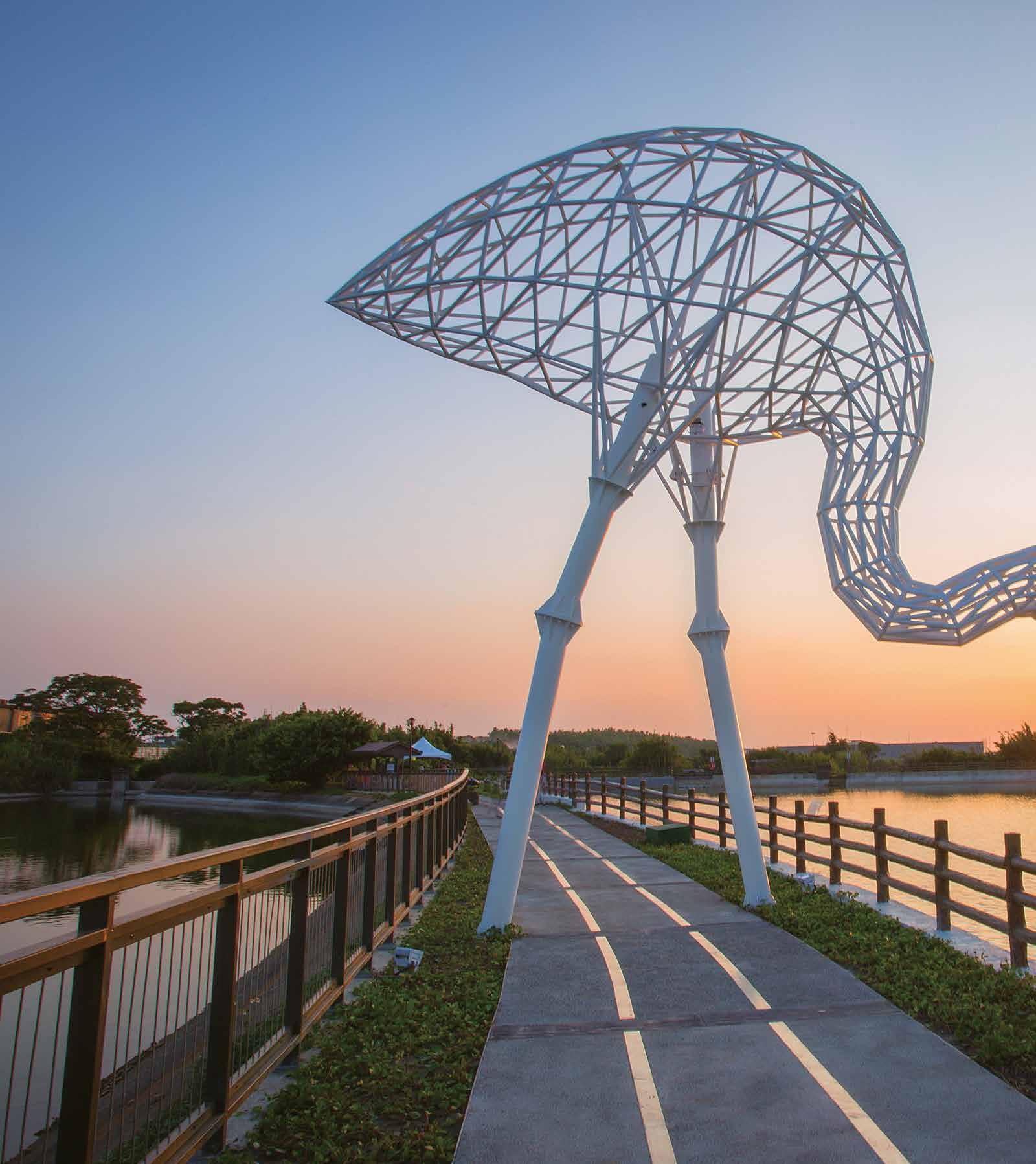
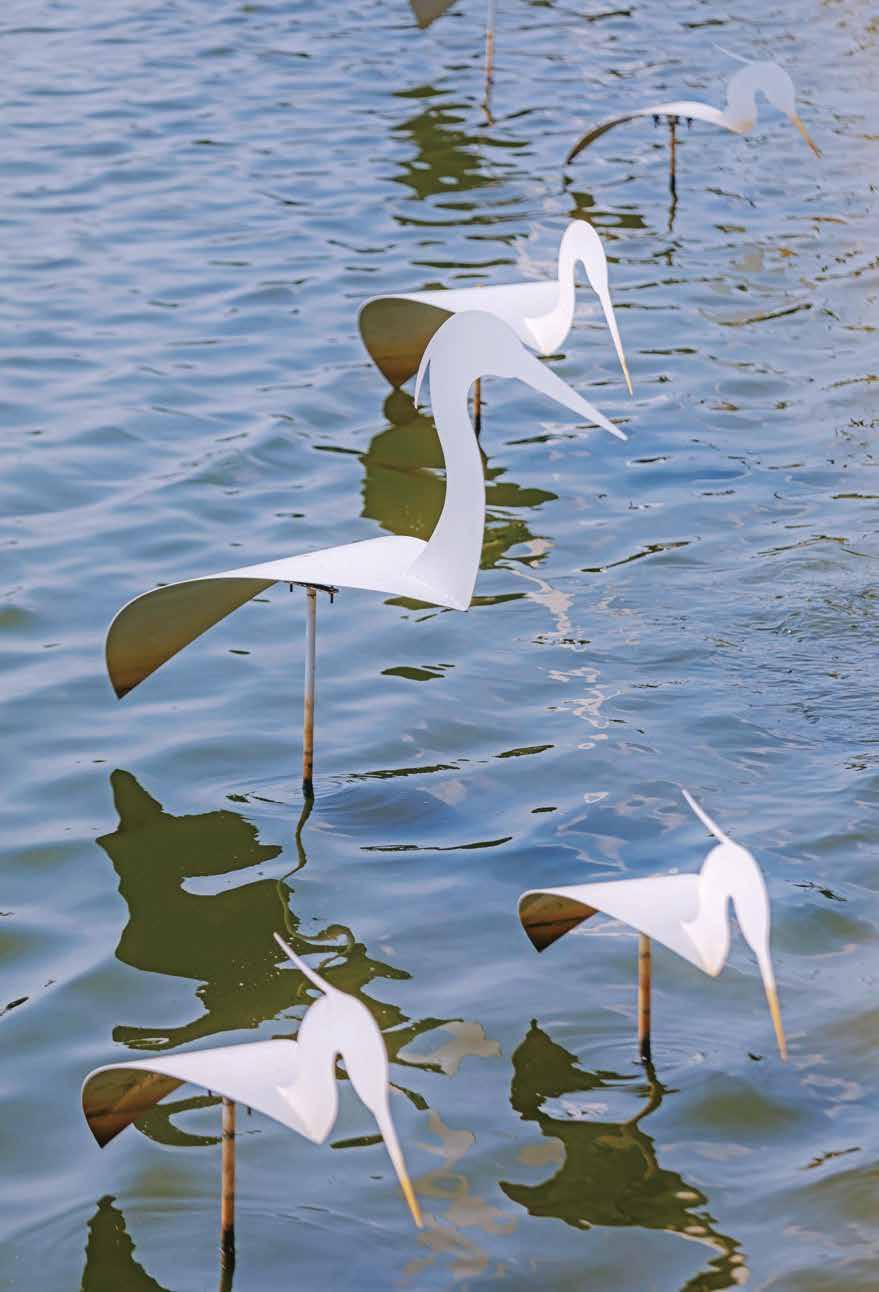
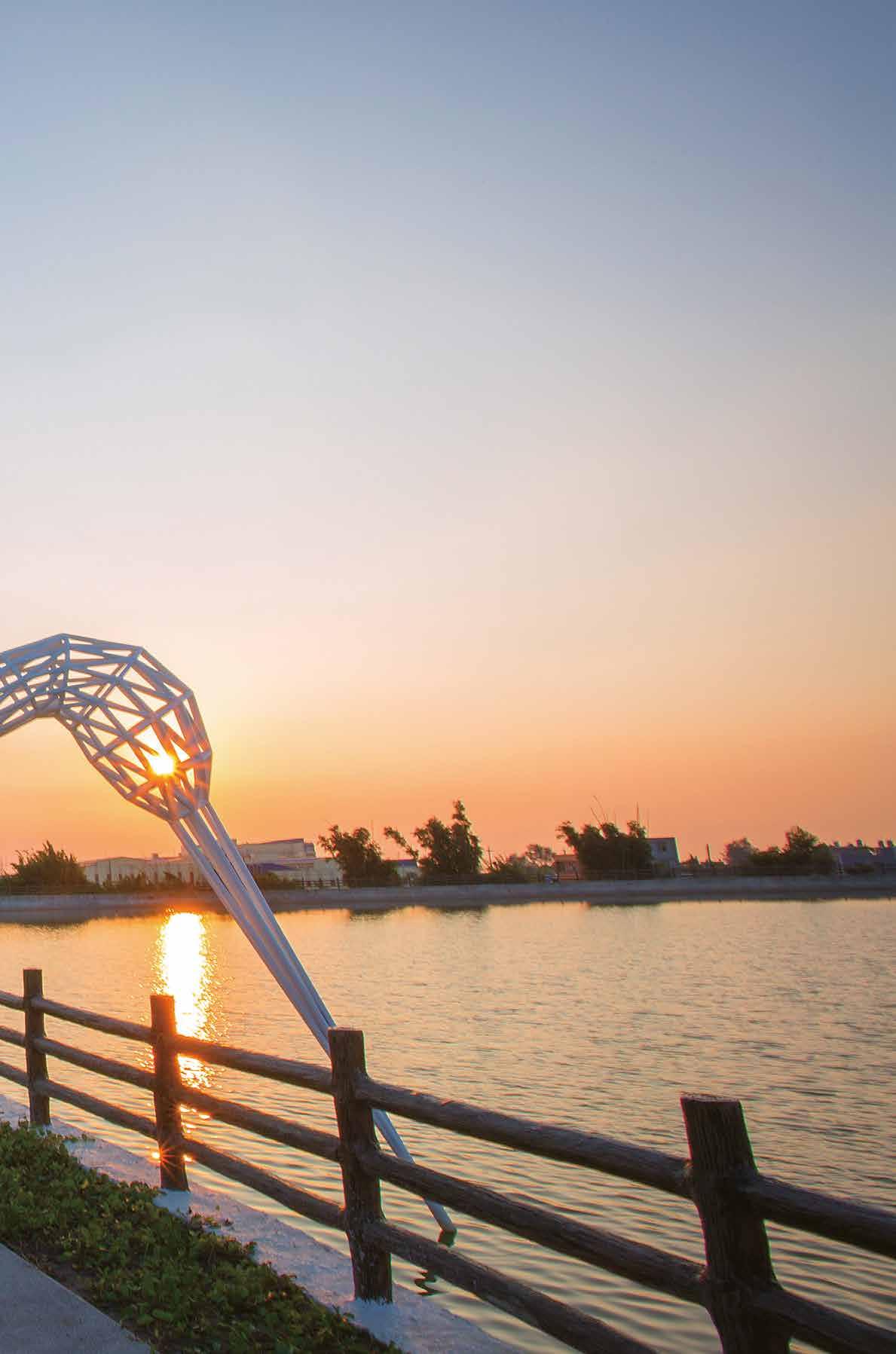
Giant white egret sculpture at Three Links Pond
Despite its “city” status, Taoyuan is overall rural. The large silt tableland that runs in from the Taiwan Strait coast here is cut up into countless small farms. Further inland you cross through foothills that lead to the higher peaks of the island’s north-south spine of thick mountains.
Look down over the elevated plain as your plane approaches/ departs the airport, and your view sparkles with an army of large mirror-reflection irrigation ponds, most of which date to Taiwan’s imperial era. The Fugang agri-production area is part of this unique landscape.
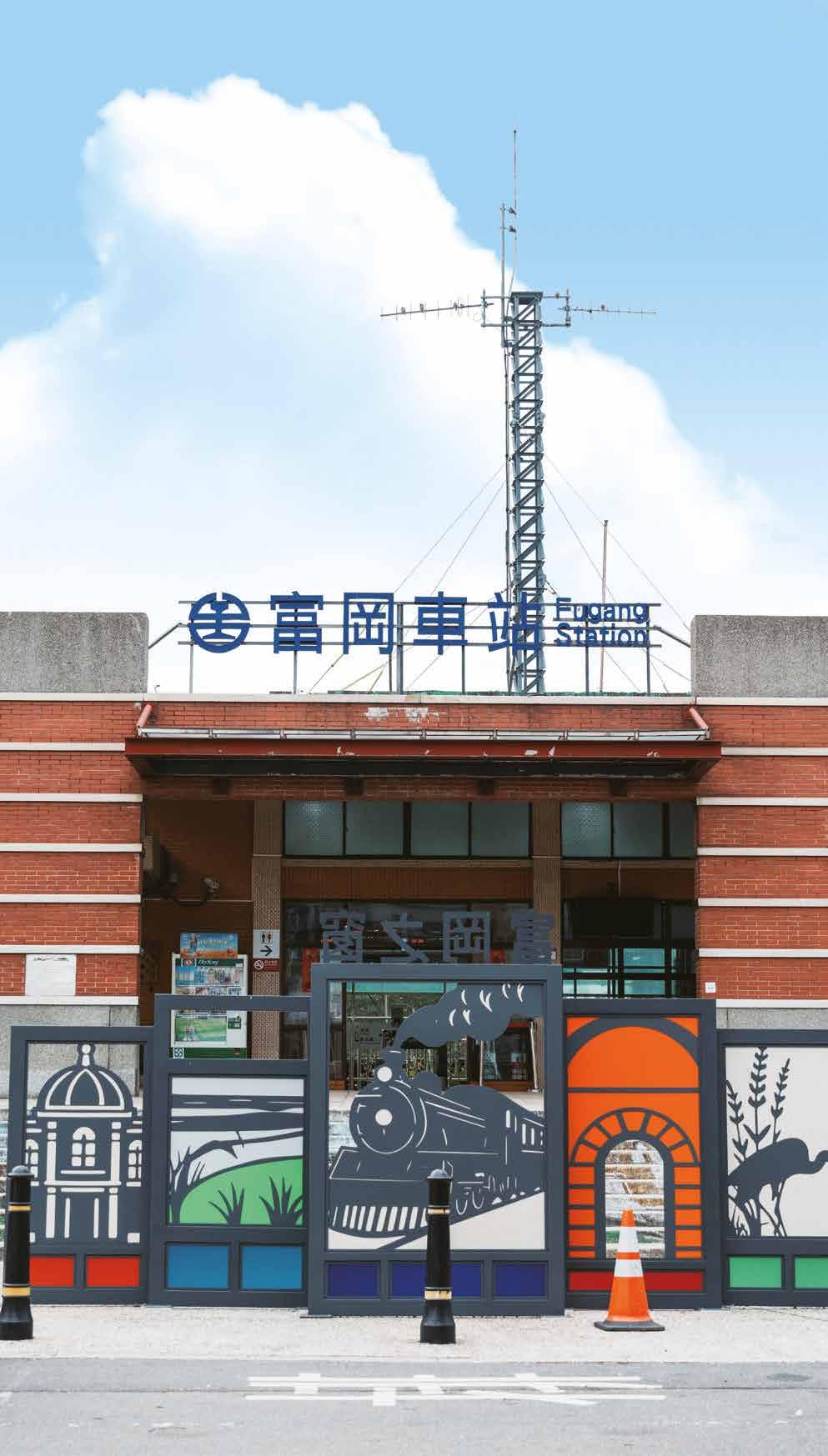
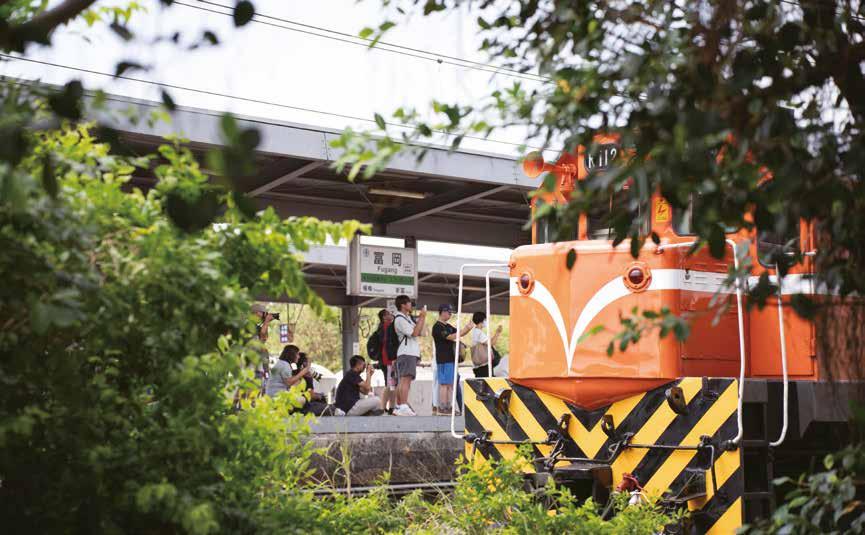
Fugang flourished after the Japanese, who ruled Taiwan 1895~1945, built a train station there – today called Fugang Railway Station – in 1929. A 1988 renovation gave this heritageprotected work a more modern, stylish appearance. The station and an abundance of long-in-place architecture and familyrun shops in the nearby streets offer a glimpse into the growth of early 20th-century Taiwan when railways connected small towns, inspiring commerce and community life.
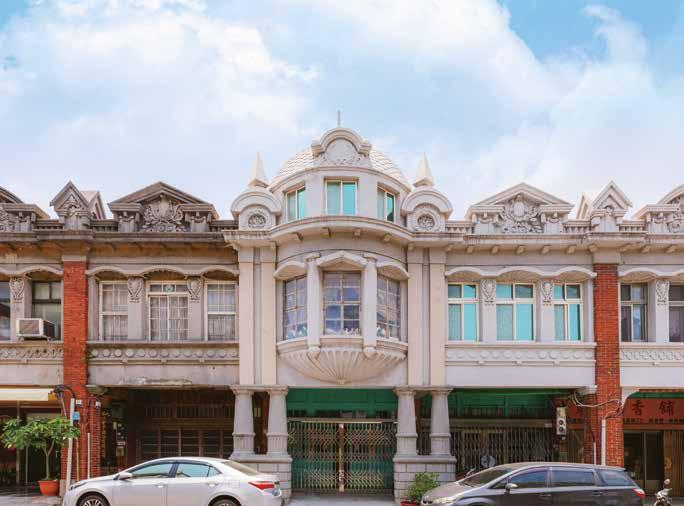
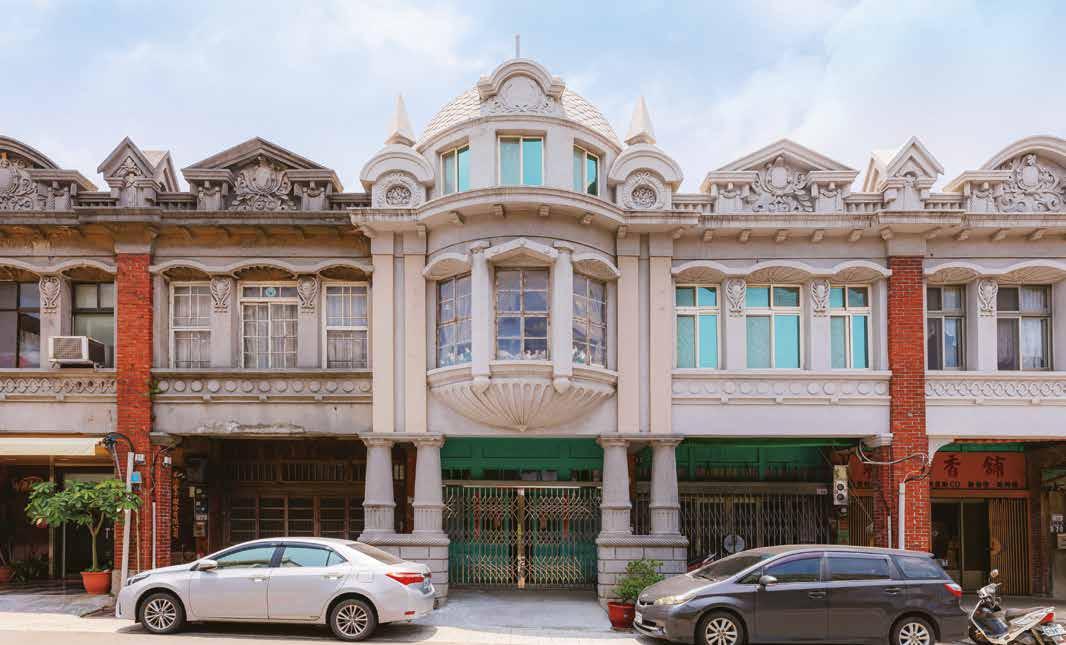
Today, a commuter stop (on the West Coast line), Fugang is served solely by local trains. To the station’s east and west, along Chenggong Road, you’ll see a collection of grain warehouses built during the town’s rail-shipment heyday. Zhongzheng Road, i.e. Fugang Old Street , runs straight ahead (north) from the station. The town’s other landmark building is found on the first section from the station, on the west side – the two-story Yangmei Fugang Lu Mansion . Spanning five street-level shop façades, this arcaded, boldly ornamented neo-Baroque property is a showcase of the merchant wealth generated here before modern times left the original large-capital local commercial ventures behind.
Fugang Railway Art Life Festival
A Gold Winner in the 2025 London Design Awards and 2026 French Design Awards, this week-long festival (Nov~Dec) celebrates Fugang’s history and culture as a railway town. Centered around the station and Old Street, it features nostalgia-themed art installations, special street performances, local food experiences, agri-product promotion events, and in-depth guided community tours.
Two doors east of the railway station, you’ll pass the handsome Yangmei District Farmer’s Association building, a renovated warehouse with a comely roof of Japanese-style tiling and a red-brick and terrazzo façade. Inside, browse the area’s premium agri-commodities and sit down to such freshly-made goodies as ice treats, waffles, and coffee. (You’ll see the association’s name posted in English on the exterior.)
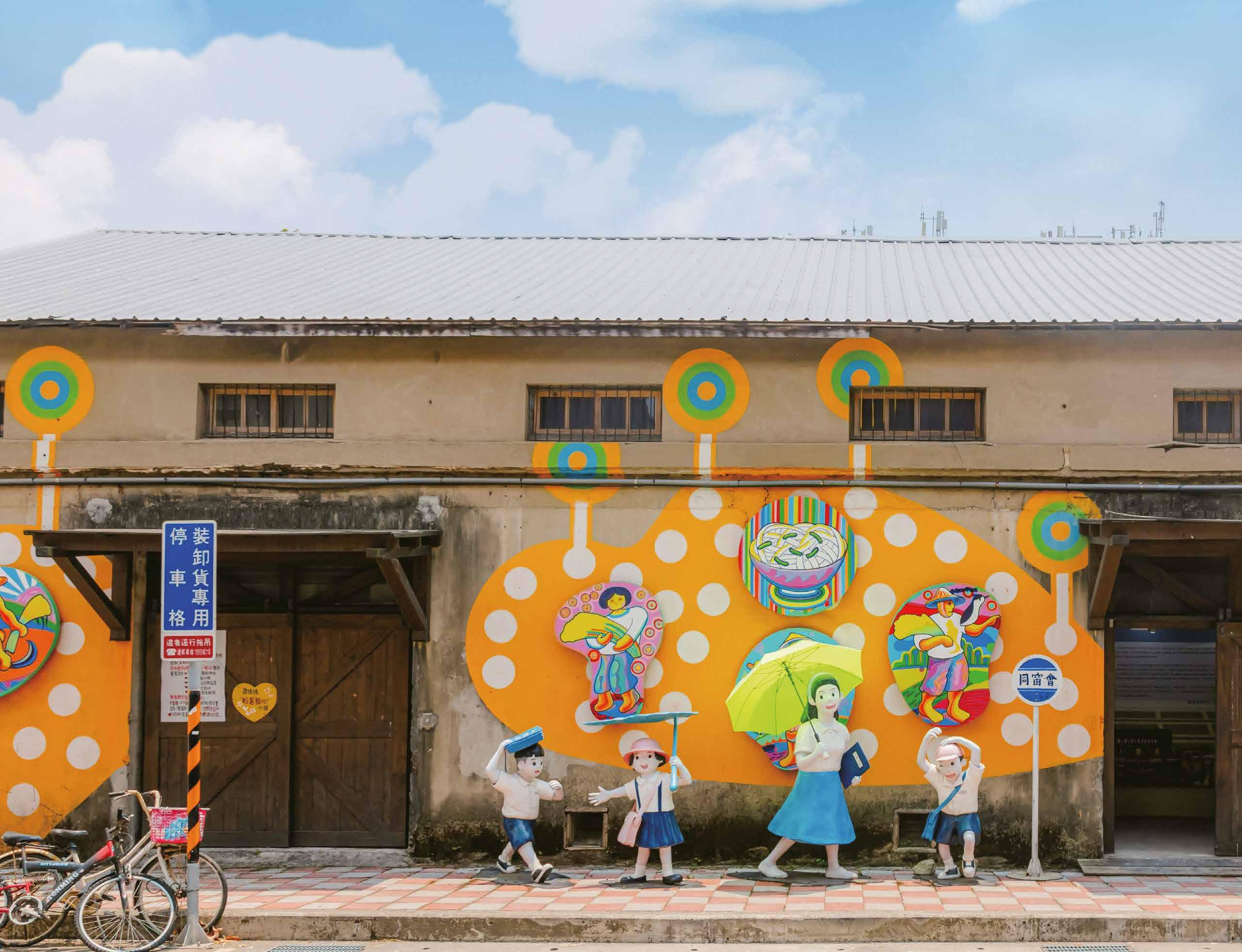
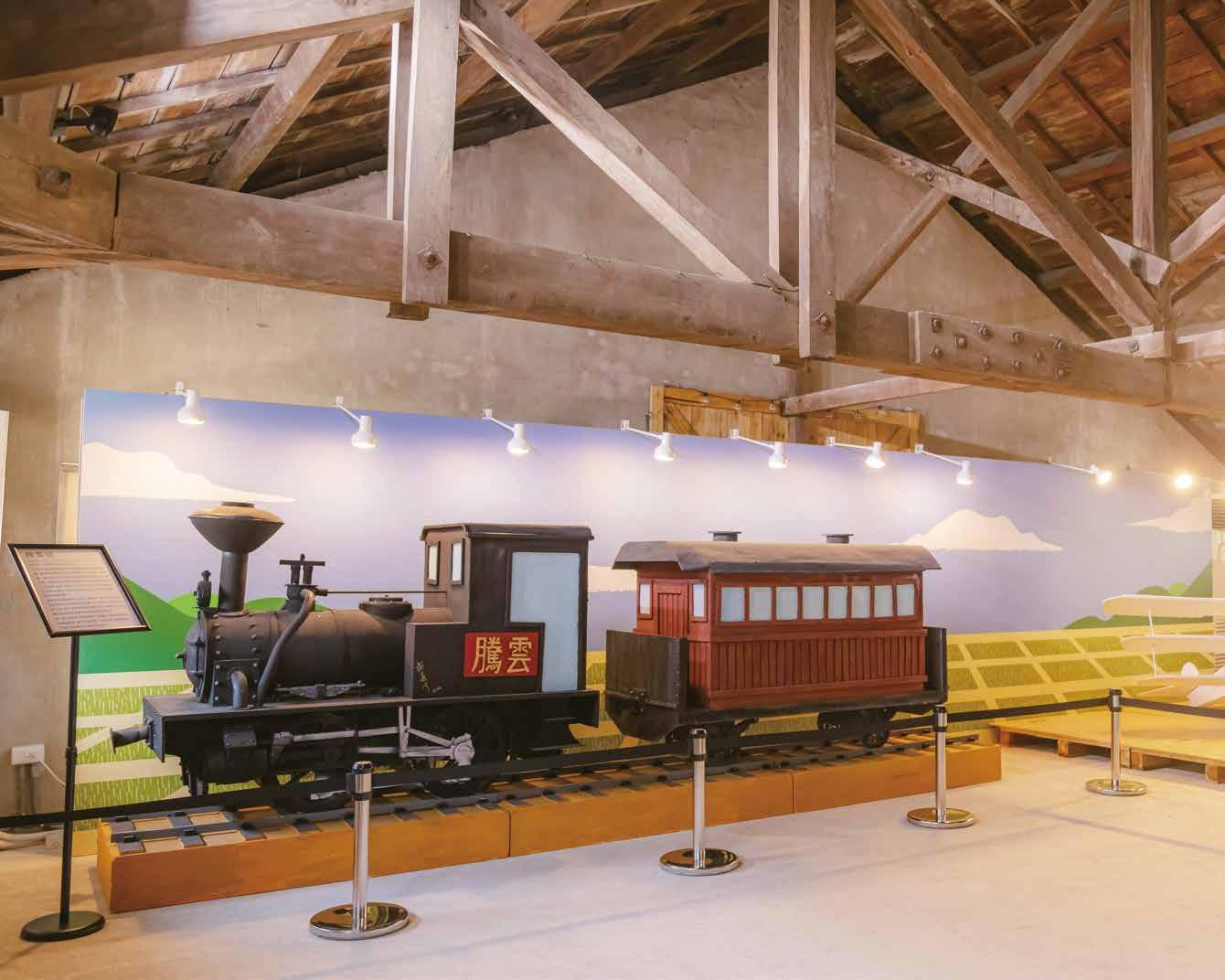
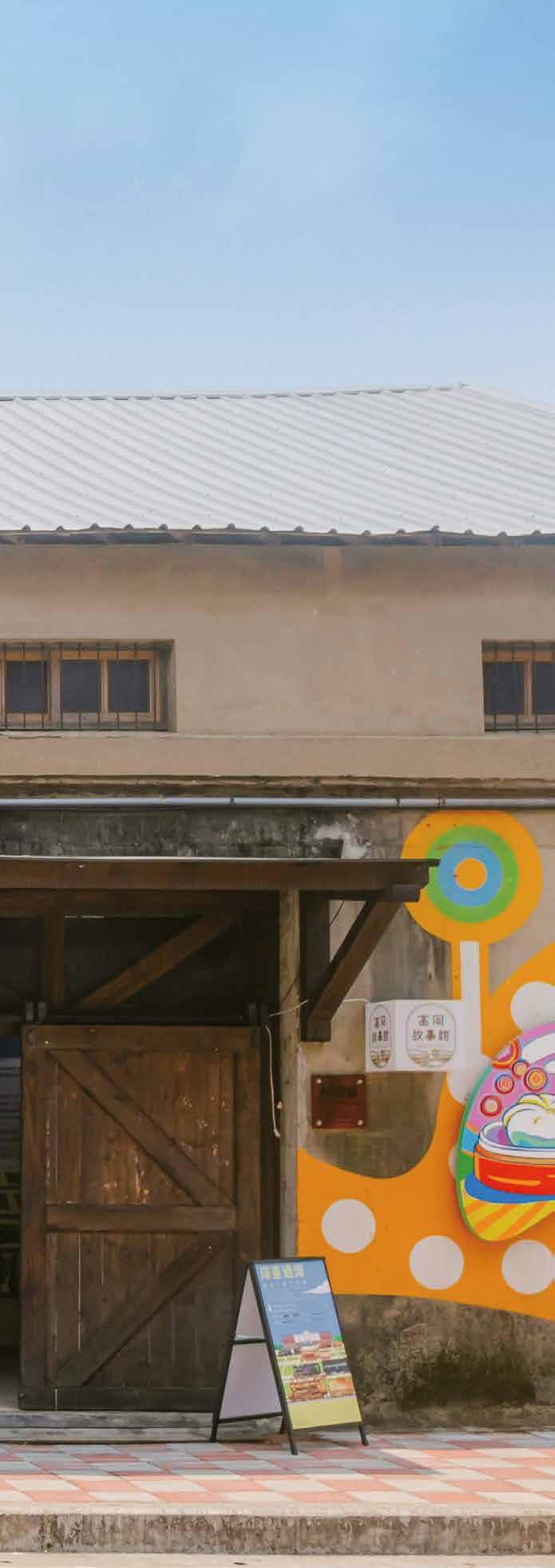
Right next door (further east) is the Fugang Story House . You can’t possibly miss it – outside are cute statues of kids in school uniforms waiting for the bus (covering their heads from the rain), and the façade is festive with brightly painted Fugang-brand images, such as straw-hatted farmers working their rice paddies and an old-time vendor’s bicycle with a food cabinet mounted on the back. Also captivating are the two oversized antique wooden doors – this was originally a rice granary.
The interior of the two-story structure is cavernous, and the original concrete walls and ceiling rafter-work have been left exposed for history-buff pleasure. Original rice-measuring scales also remain on the walls. The warehouse’s upper level today introduces the town’s past
Fugang Story House
Exhibit inside the Story House
(info in Chinese) – primarily focused on its railway and rice-cultivation history – while the ground level serves as a multifunctional space (Hakka-theme performances and craft activities, even Sunday church mass). The upper level’s most compelling displays are the bird’s-eye-view scale models of yesteryear railway-town settings and scale models of pastera rolling stock and railway yards.
Bygone Fugang was a distribution center for all the settlements in the area. Rice would be hauled cross-country by cart, oxen most commonly the locomotion force, for milling at one of the numerous station-area mills. Most of the aforementioned warehouses were used for rice or fertilizer storage. A market formed before the station first; today’s main and offshoot “old streets” organically took shape thereafter. There is a strong ethnic Hakka presence in the area; the Xinfu Hakka Cultural Association was formed in 2019, first using today’s Fugang Story House facility as its base before launching this museum in 2022.
At the northern end of two-block-long Fugang Old Street is a compact, antiquated Earth God temple, and built up against a perimeter wall is Bogong Food Stand , a town icon and de rigeuer stop for day-trippers.
A quick aside before we find out what’s on the menu: the Earth God is the Hakka people’s most important guardian deity, referred to fondly as “Bogong” (Mandarin pronunciation), the Hakka term for family-protector elderly relatives. In times long past, Hakka settles worshipped trees or rocks as Earth God symbols, eventually building temples at these sites. Fugang’s original name was Bogong Gang, the “gang” meaning “hillock.” Bogong Food Stand, opened in 1985, is a classic rural-area ramshackle metal-sheeting structure, its face open to the street, with patrons sitting down on metal-legged stools at rickety small folding tables. Bring a hefty appetite, because the dishes are all traditional Taiwanese home-style hearty – the signature dishes are beef noodles, vermicelli with pork intestine, and thick meat soup with noodles.
After your hot meal, a nice ice treat will help with your digestion and prepare you for further explorations. “Fugang Small-Town Lemon Ice Stop” is a block-and-a-bit west of Zhongzheng Road, on Zhonghua Road beside the town’s post office. All the classic Taiwan cooling bonne bouches are found here, from fresh hand-made fruit drinks to milk teas to smoothies to beancurd puddings to herbal jelly. Portions are large and prices low: beverages are 700cc, and NT$50 is the highest number listed. Try flavors you’ll likely not find back home, such as the roselle milk tea, sour plum smoothie, taro smoothie, papaya milk tea, and Taiwan cane sugar grass jelly shaved ice (summer only).
FUGANG STORY HOUSE | 富岡故事館 0917-798-671
Bldg. C, No. 25, Chenggong Rd., Yangmei Dist. Taoyuan City
( 桃園市楊梅區成功路 25 號 C 棟 ) Sat and Sun 1pm-6pm facebook.com/fugangstoryhouse
BOGONG FOOD STAND | 伯公小吃 No. 63, Zhongzheng Rd., Yangmei Dist. Taoyuan City
When Han Chinese farming pioneers were developing the land in this region during imperial days, on what is called the Taoyuan Plateau, they found a scarcity of waterways, and thus created legions of ponds to collect rainwater. At one time numbering almost 10,000, Taoyuan’s nickname “land of a thousand ponds” sprouted to life.
Immediately west of Fugang is a scenic open area of shimmering rice paddies and three large, interconnected irrigation reservoirs the size of small lakes collectively called San Lian Pi (“Three Links Pond”). When the Japanese ruled Taiwan, they built an irrigation canal system in Taoyuan that linked up the existing ponds. Here, narrow, placid farm roads and boardwalk/bikeway sections wend their way around and in between the three ponds – many Fugang visitors cycle around town and area on steeds picked up at the YouBike public bike-rental station just west of the railway station (Zhongzheng Rd./Fuyuan St. intersection).
Most visitors to San Lian Pi stop for a check-in photo at the attraction’s famed giant white egret sculpture, created for the 2018 edition of the popular Taoyuan Land Art Festival, which introduces public artworks into citizens’ living spaces and natural environments. The sculpture is a celebration of the birdlife, endemic and migratory, that beautifies Taoyuan’s irrigation ponds, which are also used for aquaculture by local farmers – the unique San Lian Pi scenery is further augmented by farmers’ pontoon rafts, paddle-wheel aerators, and a flock of smaller-sculpture egrets standing in water by the shoreline and floating atop tiny bright-white manmade “islands.”
The commanding colossus landscape-art egret stands at the edge of one of the ponds, gracefully bent over with a long beak nipping the surface of the water, intently looking for prey. The levee-top pathway here goes right between its super-elongated stilt legs. This ingenious work moves with the breezes, swaying gently back and forth as if alive, head slowly rising and lowering. If you position yourself right, you’ll also photo-capture trains running along another pond’s edge in the near background.
Just a bit further west, right beside the railway tracks, is another highly unusual attraction – the “Tze-Chiang Express Train Carriage Fude Temple,” opened in 2019. You’ll never be in another place of worship like this, Taiwan’s only temple inside a railway carriage. It came to be when the Taiwan Railways Administration built its expansive Fugang Depot here, forcing the demolition of an old Earth God temple. This had been a key part of local citizens’ lives, and locals feared its disappearance would leave them without protection.
The TRA came up with the creative solution of donating a decommissioned and renovated EMU100 train car, a type affectionately
known in Taiwan as the “British Lady,” used in the island’s first generation of electrified Tze-Chiang Express service. It stands on a short section of track, undercarriage equipment fully intact. The original temple’s furnishings now occupy the central portion of the carriage; the new “temple” is entered through the carriage’s open sliding doors. A simple traditional-style covered temple platform was built before the doors to house the original censers and a sacrificial altar. Both the surrounding community and the nearby tracks, plus passing trains and their occupants, are now provided Earth God protection.
The two end portions of the carriage feature its original seating, tables, flooring, drapes, and wallmounted fans, along with newly fitted historical railwayrelated photos. The EMU100 was debuted in Taiwan in 1978, with the last retired in the late 2000s.
For foodies, Taipei can be called a “city of noodles,” where heritage, industry, and artisanal craft meet to create a panoply of noodle choices. From boutique beef noodles in Nangang’s old industrial district to home-style noodle bars downtown serving everything from nostalgic qiezai (shaken) noodles to mung bean or rice vermicelli, Taipei offers endless noodle-slurping variety.
TEXT JENNA LYNN CODY PHOTOS VISION
Beef Noodles
Neverland Noodle Bar
Around the corner from Nangang Station, a massive compound of mid-century factory buildings looms behind a security gate and a fringe of palm trees. This is the Chiao Thai Hsing Enterprise Co., a flour mill founded in 1953 by entrepreneur Lin Kuo-chang. Chiao Thai Hsing is known for producing high-quality Chiahe Flour.
In 2015, as part of a modernizing rebrand, Chiao Thai Hsing opened Neverland Noodle Bar next door to its Nangang factory. Neverland’s interior is more upscale than a typical noodle restaurant in Taipei, with a chic, modern color scheme of gray and cream, marble-topped dining tables, and generously sized, comfortable creamhue velvet chairs.
Neverland uses various blends of the company’s Chiahe Flour, at various levels of gluten content, to make the four types of noodles on offer: angel hair, thin, thick, or home-style wide noodles. The noodles really make the restaurant here: each type has excellent chew and mouthfeel. Some patrons match the noodle to the soup base. Generally, lighter and clearer soup bases, such as clear stewed soup, are thought to go well with thinner noodles such as angel hair, whereas heartier ones like numbing-spicy tend to pair best with the wider home-style noodles, as they catch more of the chili oil.
Beef noodles are widely considered to be Neverland’s specialty, with a variety of cuts on offer from belly and shank to brisket or tendon, each served in a suitable broth. The best beef in the house is the Premium Angus short ribs, served on the bone, with noodle soup on the side.
NEVERLAND NOODLE BAR (02) 2653-3606
To confirm – beef noodles are not the only famous noodles in Taiwan! Fried soybean-paste noodles, danzai noodles from the southern city of Tainan, and cold noodles with sesame paste are also popular.
Walking into Wang Li’s feels a bit like entering a high-end bar or bistro: although small, as you approach, the wood-paneled and picture-windowed exterior is warm and welcoming.
Wang Li’s specializes in zhajiang noodles, which originated in northern China’s Shandong Province and have long been popular in nearby Beijing. The dish consists of thick wheat noodles topped with a sauce of fried, fermented soybean paste with chopped scallion and diced pork. Scallion oil noodles and side dishes are also available, as is a variety of drinks, including cocktails. The zhajiang sauce, however, is the highlight. It’s silky and intense, the diced pork and soybean bursting with flavor.
Wang Li’s classic noodles come in original, garlic, and spicy Sichuan flavors, and its special noodle selections come with a truffle sauce, a three-in-one combo, or a cumin-flavored sauce with lamb shoulder rack. For most noodles, customers can choose a meat topping of broiled beef belly, grilled pork belly, or chicken and scallion. The grilled pork belly manages to be both fatty and crisp, the strong taste melding perfectly with the zhajiang sauce.
While some of Taipei’s noodle restaurants, like Wang Li’s, focus on one or two kinds of noodles, others offer a variety, from wheat-based to yellow “oil noodles,” often served cold, to rice noodles, in a salivating menagerie of sizes and sauces.
WANG LI�S ZHAJIANG NOODLES | 王李氏炸醬麵 (02) 2732-9627
Cold noodles are a staple snack in Taipei, especially in summertime. They can be enjoyed year-round at Qiao Xuan Cold Noodles, a long-standing noodle shop that has changed ownership several times but maintains a high standard. The eatery serves some of the best cold sesame-sauce noodles in Taipei. Located in a busy neighborhood just behind Taipei Municipal Stadium, athletes and office workers alike have been coming to this beloved local establishment for as long as some of them can remember.
Typical of smaller Taiwanese restaurants, Qiao Xuan is fronted with a simple cooking area, with small tables and stools inside. There are a few outdoor seats as well. The signature cold noodles are topped with a silky, rich sesame sauce and julienned cucumber, which stick perfectly to the noodles as they’re mixed together. Add a touch of wasabi or chili paste for a dash of heat – regulars prefer the wasabi for the complexity it adds to the overall taste. Qiao Xuan’s only other menu items are perfect accompaniments to the noodles: poached eggs, scallion eggs, and soups. The miso meatball egg drop soup, savory and filling, is the most popular.
While thicker strands like the ones used in cold sesame-sauce noodles are well-known in Taiwanese cuisine, thin noodles such as mung-bean and rice vermicelli are also popular.
Danzai Noodles
Xingtian Temple Nameless Noodle Shop
Finding this tiny, family-run noodle shop is as difficult as the name suggests. Tucked deep in an alley south of MRT Xingtian Temple Station, there’s no sign, and the entrance is easy to miss. The name we’ve used, Nameless Noodle Shop, is what appears in Chinese on Google Maps, and comes from that lack of a sign: it simply doesn’t have a name. The restaurant itself is of the typical Taiwanese old style, with a stainless-steel-equipment cooking area and a small amount of seating at wooden tables with stools, wellworn terrazzo flooring, and a family shrine at the back. The menu, featuring noodles, side dishes, wontons, and braised pork rice, is posted on the wall.
The shop’s noodles and other dishes are served up in traditional blue and white bowls, and offer tastes that remind one of grandma’s home cooking: nothing fancy,
but absolutely mouthwatering. The pork liver noodles are especially popular, and a variety of other noodles, from thick rice-based kue-á-tiâu (Taiwanese pronunciation) to mung-bean glass vermicelli, are on offer.
Some noodle shops offer a variety of noodle types, often with a sauce developed in-house that works in many dishes. Others, however, gain a loyal following by mastering a single ingredient or dish, serving it paired only with
Meatball soup
Cold noodles served with a sesame sauce
GOOD FOOD Noodle Restaurants
Glass Noodles
Chang Oriental
Thin glass noodles made with mung beans and thin rice noodles have been sating the appetites of Taipei’s working class for generations. Pork intestine is a popular addition in both noodle dishes, although one might also find pork jowl or meatballs. Thin rice noodles are also commonly served with oysters.
Established on Hankou Street near the bustling Ximending shopping and entertainment district, Chang Oriental is a legendary pillar of Taipei’s traditional
of offal, especially pork intestine, a craft that requires great skill.
The hallmark of Chang Oriental’s glass noodles is the clear broth. Unlike many vendors that serve heavy, starch-thickened soups, Chang Oriental offers a light, translucent soup base brewed with pork bone and infused with subtle medicinal herbs and a signature dash of rice wine. This clean base is designed to highlight the pork-intestine cuts, which are meticulously cleaned and slow-cooked until they reach a perfect “Q” texture: firm enough to be springy and chewy but tender enough to be properly eaten. For those who don’t care for intestine, the noodles are also available with pork
An important part of any visit to Chang Oriental lies in the containers found on every table storing spicy pickled cabbage. This fermented, fiery condiment is the shop’s secret weapon. Regulars typically start by sipping the original clear soup to appreciate its purity, then add heaps of the spicy cabbage halfway through. The acidity and heat of the cabbage transform the broth into a completely different, robust dish. Also renowned is their oil rice, which is fragrant with dried shrimp and shallots, and their rice vermicelli with pork intestine or oysters.
Located near MRT Daan Station on Fuxing South Road, Zhouji Qiezai Noodles is a beloved local eatery. It represents the enduring legacy of old-school street food, having earned a reputation among locals for its consistent quality and nostalgic flavors. The shop maintains a welcoming and unpretentious atmosphere, with antique wood tables and stools, a floor of hexagonal terra-cotta tiles that reminds customers of a traditional Taiwanese farmhouse, and wood beams on the ceiling.
Two stars on the menu, written prominently on the eatery’s shop sign, are mifen tang and tshì-á-m ì (Taiwanese pronunciation). Mifen tang is one of Taiwan’s most beloved comfort foods – a simple, clear broth soup built around soft rice noodles. At Zhouji, the noodles are in the thick, stubby style: closer in spirit to mitaimu , with a dense, slightly chewy texture that soaks up the savory pork-bone broth without losing its body.
Tshì-á-mì (Taiwanese pronunciation), a noodle dish named after the tshì (shaking) motion of the deep, cone-shaped noodle strainer in boiling water. Yellow oil noodles are invariably used and served in a clear broth made from pork bone along with sliced lean pork, bean sprouts, garlic chives, and fried shallots. Zhouji is specifically known for the deep and complex but clear flavor of its pork broth.
Mifen tang and Tshì-á-m ì are rarely eaten alone. The typical accompaniment to make a full meal is “black and white cuts” or heibai qie, a traditional assortment of carefully cut and blanched side dishes, often made with offal. Zhouji is known for its extensive selection of heibai qie : the glass display case at the entrance acts as a tempting gallery of Taiwanese delicacies
ZHOUJI QIEZAI NOODLES | 周記切仔麵 (02) 2703-5669 No. 267, Sec. 1, Fuxing S. Rd., Da'an Dist., Taipei City ( 台北市大安區復興南路一段 267 號 ) Tue-Sun 11am-10pm
tshì-á-mī noodles | 切仔麵 zhajiang noodles | 炸醬麵
Mifen tang (soft-rice-noodle soup) "Black and white cuts"
Beautifully Local Unique Taiwan-Brand Beauty & Cosmetics
The pride-filled, hard-earned Made in Taiwan brand means the highest in quality and deep honor in workmanship. The local beauty industry is a good example. Taiwan ranks among the world’s top sheet mask producers, and a new generation of homegrown brands is building on that reputation with rigorous formulations and a fierce pride in local ingredients. Below are four names to know – two in color cosmetics, two in skincare – that are well worth bringing home.
Color Cosmetics
heme – The Guardian of Young Skin
Walk into a Taiwan drugstore, and chances are you will find products by heme (www.hemecosmetics.com.tw) – its sleek, minimalist packaging is impossible to miss. The brand was founded in 2005 on a simple but ambitious promise: deliver 100% Made in Taiwan cosmetics at affordable prices, without compromising on quality or safety. The brand is firmly committed to cruelty-free formulations and has been devoted to sourcing and incorporating native Taiwanese ingredients into its products.
Aimed mainly at younger consumers, heme built its reputation on skincare-cosmetics hybrids – think BB creams and night masks that became million-selling classics – before expanding into a full color range. Its first makeup series launched in 2012, and today the range covers everything from base makeup and eyeshadow palettes to lip tints and highlighters. Abroad, heme has found eager customers in places such as Singapore, China, and Canada – proof that its brand of accessible, quality-first Taiwanese beauty travels well.
MEKO – Sensitive Skin, Serious Craft
Founded in Taiwan in 2002, MEKO (www.meko.com.tw) occupies a distinctive niche in the local beauty landscape: a color cosmetics brand with a founding philosophy that is rooted in the needs for sensitive skin. MEKO has developed hypoallergenic formulas manufactured in factories that also supply major international prestige brands. Its product range is impressively broad. Foundations, brightening creams, and setting powders handle base makeup, while browcaras, eyeshadow mousses, blushes, lipsticks, and lip tints take care of color. Nail varnishes and professional-grade tools, including influencer-collaboration brush sets, round out the range.
The Chinese term jiandan (in this brand name written JAN DAN) means “simple,” and simplicity is the brand’s core philosophy. Founded in Taipei in 2016, JAN DAN (www.jandancare.com) was built on the conviction that skincare had become needlessly complicated. Collaborating with professional dermatologists and skincare specialists, the founders set out to create a clean-beauty line built on plant extracts, vegan formulations, and full ingredient transparency.
Every JAN DAN product passes triple SGS certification, and the company uses EU-certified raw materials with no alcohol or animal-derived ingredients, making its range suitable for people with sensitive skin, pregnant women, and vegans alike. Ingredients are sourced following Clean Beauty principles; packaging leans toward uncolored frosted glass and white cardboard boxes, with carbon-footprint reduction built into the production process. JAN DAN is based in Taipei, selling online via its website and with a physical presence at Eslite Bookstore (Nanjing West Road branch) and other select retail locations.
23.5°N – Farm to Face from the Tropic of Cancer
The 23.5 degrees north parallel is the Tropic of Cancer. It passes directly through Taiwan – a geographic fact that inspired one of the island’s most poetic skincare origin stories. The founder of 23.5°N (www.235n.com. tw), Helen Ho, left her corporate career to spend two years living on the Chianan Plain in southwest Taiwan, immersed in the textures and rhythms of the local agricultural landscape. Founding 23.5°N in 2009, she set out to transform the island’s finest farmed ingredients into clean, effective skincare, with the brand working directly with local farmers to source botanicals at peak freshness before processing them in-house.
The result is a range of deeply Taiwanese products organized into lines built around single ingredients: rice for sensitive and soothing care; red pearl barley for radiance and elasticity; Oriental Beauty tea for balancing oily and acne-prone skin; and bamboo for hydration. Products have minimal ingredient lists and are free of common irritants, making them suitable even for sensitive skin, pregnant women, and babies. Find them at 235n.com.tw, through the Pinkoi platform, and at select overseas stockists.
ENGLISH AND CHINESE
23.5° N | 北緯 23.5
Chianan Plain | 嘉南平原 heme | 喜蜜 JAN DAN | 簡單
jiandan | 簡單 Oriental Beauty tea | 東方美人茶 Tropic of Cancer | 北回歸線
A Quick Look at One of the Main Languages Spoken in Taiwan
While most people who visit or move to Taiwan try to learn some Mandarin, the country’s heart speaks Taiwanese. For travelers and expats, moving beyond Mandarin unlocks a deeper level of local connection and cultural affinity. From navigating rural markets to mastering a complex tone system, here is why –and how – you should embrace this language.
Visiting or living in Taiwan without speaking one of the local languages can mean facing a rather high language barrier. While English is spoken at most major hotels and tourist spots, restaurant menus might include items that are inherently Taiwanese, using characters that a phone app cannot translate. Street vendors and taxi drivers will also most likely not speak a foreign language.
Mandarin, either spoken or presented through a translation app, can be used in most situations, but it will often help to know some Taiwanese, also known as Hokkien. Speaking Mandarin may elicit praise, but a foreigner speaking Taiwanese may garner delighted surprise.
Both Mandarin and Taiwanese are part of the same Sinitic language family, but they are not mutually intelligible.
While Mandarin has four tones, Taiwanese has eight. In Mandarin, each syllable’s tone is usually fixed regardless of where it occurs in speech. In Taiwanese, preceding syllables in compound words and phrases can require a tone change according to a set of rules. For instance, the word “hó,” meaning “good,” uses the second tone. In the phrase “good person,” this changes to “ho-lâng,” with “ho” taking the first tone. Tones change for particles such as “a” ( 啊 ) using a different set of rules, to match the word they follow.
Taiwanese also has slightly more complex grammar than Mandarin. For example, if discussing the past, one adds “ū” before the verb: this also means “to have” (y ǒ u/ 有 in Mandarin). Negative past is formed with “to not have,” or “bô” (méiy ǒ u/ 沒有 in Mandarin).
tsia̍h-pá--buē
bah-oân 食飽未 Have you eaten yet?
Meaty dumpling
ô-á-mi-sòa Oyster noodles
There are places where Taiwanese is not only common and appreciated, but is the lingua franca. It’s common in the countryside, especially in southern Taiwan. In cities, the most common places to hear Taiwanese are traditional markets and less touristy night markets. Taxi drivers, especially outside major cities, tend to prefer Taiwanese over Mandarin. Some churches, especially in southern Taiwan, are also predominantly Taiwanese-speaking.
Some Taiwanese words have been integrated into Mandarin in Taiwan, especially local foods, rendering Mandarin in Taiwan unique. Meaty dumplings encased in a starchy shell are called “bah-oân,” not the Mandarin “ròuyuán” ( 肉圓 ). Oyster omelets are “ô-á-tsian,” not the Mandarin “kezǐjiā n” ( 蚵仔煎 ). Similarly, thin noodles with oysters are “ô-á-mi-sòa,” not the Mandarin “kezǐmiànxiàn” ( 蚵仔麵線 ).
Oyster omlet
Learners of Taiwanese face a steep learning curve. Good pronunciation matters, so a teacher or language-exchange partner who will not only correct you but can explain how the tone system works is essential. Most learners start with Romanized versions of Taiwanese, such as Pèh-ōe-jī (the church system) or Tâi-lô (the government system), but it is possible to start with Chinese characters. Listening is as important as reading to master pronunciation, and practice is essential. New learners will benefit from trying out their Taiwanese skills with market vendors, taxi drivers, and neighbors.
Learning Taiwanese can be challenging, but it can also be deeply rewarding, especially for those seeking greater integration and cultural affinity with the island community.
The New Danjiang B r idge
Taiwan’s Newest Globally Acclaimed Engineering Landmark and Tourism Marvel
In recent decades, Taiwan has repeatedly grabbed news attention around the world as it races into the future with rapid infrastructure development. Its most famous groundbreaking mega-project, the Taipei 101 tower, recently garnered global coverage once again when “conquered” by free-solo climber Alex Honnold. Here, we unveil the newest internationally recognized architecture blockbuster – the virtuoso Danjiang Bridge.
TEXT RICK CHARETTE PHOTOS VISION, HIGHWAY BUREAU
Danjiang Bridge, seen from the northwest
This colossus of clean, minimalist line and sparkling brightwhite mien leaps gracefully over the Tamsui River on the island’s north coast right where the river debouches into the wide ocean, the setting magnificent. The Tamsui runs up from Taipei City, roadways to/from the coast streaming along either side, commonly congested with commuters on weekdays and daytrippers on weekends/holidays.
The new facility markedly eases pressure on the nearest existing river-spanning bridge, the aesthetic red-facade Guandu Bridge, five km upriver. Two important, heritage-rich tourist towns are found at the river’s mouth, Tamsui on the east and Bali on the west, and the Danjiang Bridge will facilitate movement both directly between them and between the north coast’s east/west sections. The bridge deck possesses vehicle roadways, pedestrian walkways/bikeways, and facilities for the Danhai Light Rail Transit system expansion.
This is the world’s longest single-tower cable-stayed bridge. Designed by the celebrated architect Zaha Hadid, construction began in 2014. Asymmetrical, the stylish single tower, soaring 200m above the water, is toward the eastern end. It was placed here because the bedrock slopes much deeper toward the west end; a very large foundation has been used, visible at the top, to withstand the powerful wind, tidal, and tectonic forces, paired with a towerinternal tuned mass damper mechanism. Eastern-side placement also ensures continued unobstructed enjoyment of the sunsets from the upriver Tamsui-side boardwalk/bikeway, a key visitor magnet.
Advanced techniques and materials have also been used to create bridge piers that are both minimal in number and unusually slender. A key benefit of this, in tandem with the eastern-side tower placement, is minimized disruption for the estuary marine environment, the fishing craft, local ferry, and tourism-cruise yacht traffic, and the Bali-side Wazihwei Nature Reserve (world’s highest-latitude mangrove conservation area).
The ultra-slender, inverted-Y tower is in the form of two hands joined in prayer, conveying the idea of traditional blessings prayer on Taiwan – both the Bali and Tamsui areas have important religious history.
Bridge from below, Tamsui beyond
Hydraulic cylinders used during the construction of the bridge
Danhai Light Rail Transit train
In the past, because of the bridge inconvenience, day-trippers have chosen either the Bali side or the Tamsui side for their day of play, though a limited percentage each day would take a quick trip to the other side using the local small-ferry services.
The most popular ferry ride takes you from near Tamsui Old Street to Bali Old Street , both riverside areas stuffed with eateries, cafés, and shops. The riverside bike paths/pedestrian walkways that run on either side of the river from the Taipei Basin to the coast pierce these areas. Quality bike-rental operations are found in both. Tamsui’s most iconic local food invention is A-gei – fried tofu stuffed with noodles, sealed with fish paste, steamed, and served topped with a special sauce.
Elsewhere in Tamsui, immediately downriver from the Danjiang Bridge is Tamsui Fisherman’s Wharf , right where the river meets the sea. The 300m boardwalk here serves up spectacular sunsets, and the adjacent higharch, pedestrian-only Tamsui Lover’s Bridge takes you high above the site’s fishing port & marina. River-mouth yacht cruises launch from here.
Between the wharf area and Tamsui Old Street, atop a hill overlooking the estuary, is another major Tamsui tourist gem, the Fort San Domingo and Former British Consular Residence complex. The fort was built in the mid1600s after the Dutch ran the Spanish out of north Taiwan. The Victorian-style residence was built in 1872; the British leased the fort for consulate use after the Second Opium War.
These historical treasures are part of what’s called the Tamsui Historical Museum (tshs.ntpc.gov.tw). Other highly recommended museum sights are Hobe Fort , the Tamsui Customs Officer’s Residence (Little White , and Douglas Lapraik & Co. (foreign trading company buildings).
On the Bali side, the riverside bikeway/walkway runs up through the protected mangrove forest and past the first-rate Shihsanhang Museum of Archaeology, overlooking the north coast, built over important prehistoric-site digs (on view).
If time allows, you can also explore low Mt. Guanyin, Bali’s photo backdrop, sprinkled with old temples and laced with splendid-view trails.
Former British Consular Residence | 前清英國領事官邸 Fort San Domingo | 紅毛城 Guandu Bridge | 關渡大橋
Hobe Fort | 滬尾礮臺
Mt. Guanyin | 觀音山 Shihsanhang Museum of Archaeology | 新北市立十三行博物館
Tamsui (Old Street) | 淡水老街 Tamsui Customs Officer’ s Residence (Little White House) | 前清淡水關稅務司官邸 ( 小白宮 )
Tamsui Fisherman’ s Wharf | 淡水漁人碼頭
Tamsui Historical Museum | 新北市立淡水古蹟博物館 Tamsui Lover’ s Bridge | 淡水情人橋
Wazihwei Nature Reserve | 挖子尾自然保留區 MAP
Former British Consular Residence
Stylish café with Tamsui River view
boasts a strategic presence across key hub cities, including Keelung, Taipei, Taichung, Chiayi, Tainan, Jiaosi (Yilan), and Shanghai. Guided by our core principles of Comfort, Warmth, Safety, and Hygiene, Evergreen Hotels has received the Outstanding Service Award for chain business hotels for consecutive years. We are not only a steadfast pillar for business travelers but also the perfect starting point for explorers to immerse themselves in Taiwan’s local culture. While deepening our roots in the hospitality market, Evergreen Hotels continues to innovate for a new generation of travelers. We have expanded our horizons with a brand-new lifestyle brand, "halo house," creating a sanctuary that harmonizes aesthetics with an artistic atmosphere. We invite you to step into our world. Amidst the warmth where tradition meets innovation, let us help you redefine your travel map