A sanctuary of Himalayan stillness and cosmic penance
Badrinath is an architectural and spiritual treasure waiting to be discovered by those willing to make the dramatic trek into the heart of the upper Himalayas.
By Murli Menon
For the discerning traveler seeking to escape the frantic pace of modern life and experience a profound connection with nature’s vastness, there is no place like Badrinath in Uttarakhand. Tucked away deep within the Garhwal Himalayan range on the banks of the roaring Alaknanda River, this ancient, sacred town sits at an elevation of 10,800 feet above sea level.
Here, the crisp mountain air, the towering snow-clad peaks, and the rhythmic sound of mountain streams create an environment perfectly suited for deep meditation. Having spent months exploring remote historical sites and
spiritual retreats across Southeast Asia, I found that the raw, primeval energy of Badrinath offers a striking space for quiet contemplation.
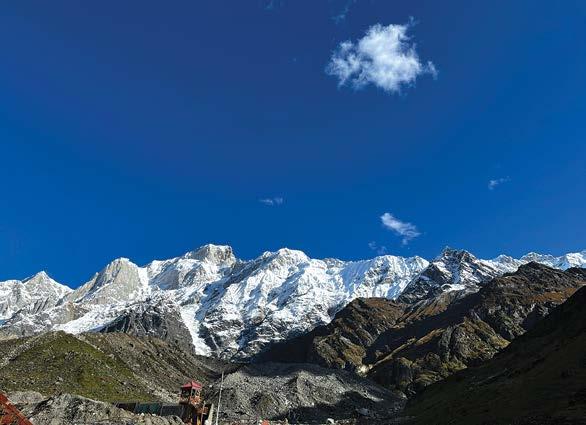
The journey to the northernmost pillar of the Char Dham circuit is an unforgettable mountain adventure. Starting from the plains of Rishikesh, the route winds upward along dramatic mountain highways for nearly 300 kilometers, tracing the spectacular confluences (Prayags) where emerald-green rivers meet roaring silver torrents. As one ascends past Joshimath, the landscape shifts into stark, rocky valleys and pine-forested ridges, where the cool, refreshing mountain air immediately revives the weary traveler.
The town itself is designed
As
Vedic texts narrate that Lord Vishnu once chose this secluded Himalayan valley for intense, uninterrupted meditation. Undisturbed by the freezing wind and biting cold, the Lord remained absorbed in his penance for thousands of years. Deeply concerned by the harsh climatic conditions his form was enduring, His consort, Goddess Lakshmi, took the form of a massive Badri tree (wild jujube or Indian ber) to shelter Him from the snow, rain, and mountain storms.
When Lord Vishnu finally opened His eyes and saw the goddess protecting Him from the elements, He was deeply moved by her devotion. He proclaimed that henceforth, this sacred valley would be named after her form as the Badri tree, calling it “Badrinath” or the Lord of the Badri Forest. He declared that any devotee who meditated in this valley would achieve spiritual progress, as the land itself is charged with the energy of dual cosmic penance by both Lord Krishna and Goddess Lakshmi.
Badrinath is home to remarkable natural features, most notably the Tapt Kund, a natural thermal spring located just below the temple steps. Despite being surrounded by freezing Himalayan snowmelt and sub-zero temperatures, the spring consistently bubbles with sulfur-rich water at a warm 45°C.
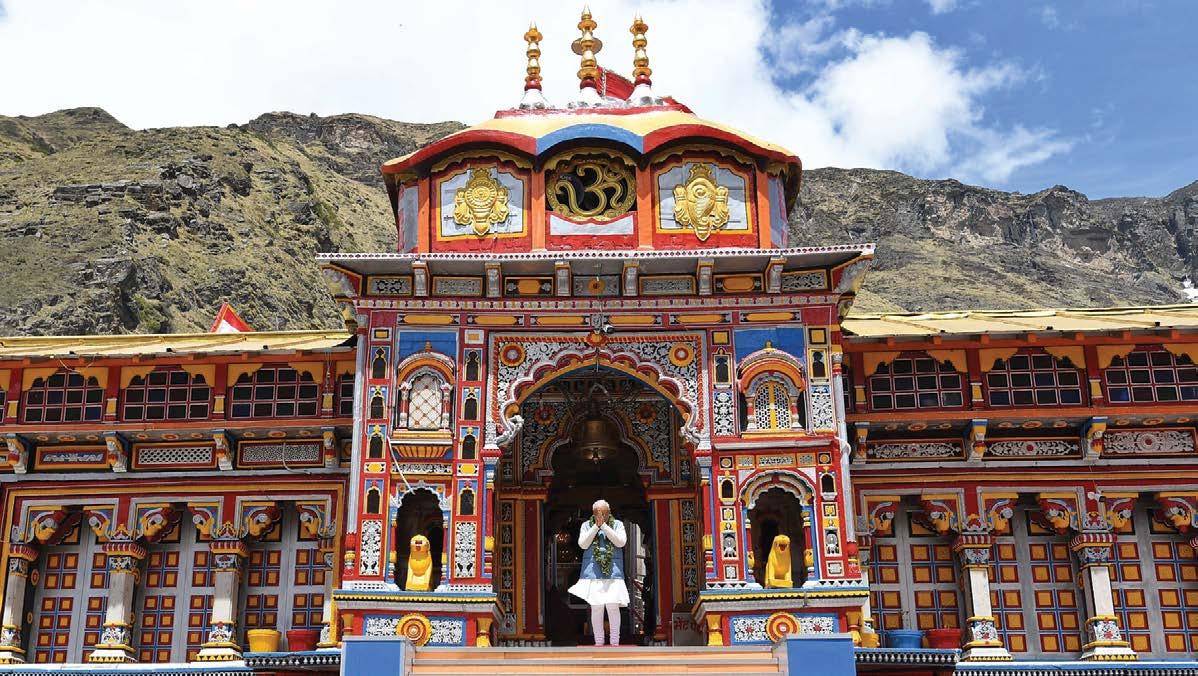
around the bright, colorful facade of the Badrinath Temple, which serves as its spiritual nucleus. Framed against the sheer, vertical rock face of the Nar and Narayana mountain peaks, the temple resembles a vivid tapestry against the stark stone.
Built in the form of a modest mountain fortress with a brightly painted arched gateway, the struc-
Accommodation
Forest Guest House, Badrinath | Nestled in the serene, high-altitude landscape of Uttarakhand, the Forest Guest House offers a tranquil, close-to-nature stay experience.
GMVN Tourist Rest House, Badrinath | Managed by the Garhwal Mandal Vikas Nigam, this facility offers highly reliable, comfortable, and well-maintained lodging options right on the Badrinath Temple Road.
GMVN Tourist Rest House, Devlok | Situated conveniently along NH 58, this GMVN property provides excellent views of the surrounding Himalayan peaks.
GMVN Yatri Nivas | A budget-friendly choice also located along NH 58, offering straightforward dormitory and standard room accommodations with panoramic mountain views, tailored perfectly for spiritual groups and solo travelers.
ture reflects traditional Garhwal hill architecture. The inner sanctum houses a three-foot-tall, self-manifested (Swayambhu) black stone deity of Lord Vishnu sitting in the meditative lotus posture (Padmasana), a rare sight for a Vishnu idol, which is typically seen in a reclining position. Priests from Kerala perform the pooja at Badrinath.
Dining
The region around Badrinath serves soulful, traditional Garhwali and North Indian vegetarian cuisine. Highlights include comforting local dishes like Aloo ke Gutke (spiced mountain potatoes) and Gahat ki Dal (horse gram lentils) served with hot, fresh flatbreads. For vegans, local eateries easily provide fresh fruit juices, traditional herbal decoctions, and hot ginger infusions—perfect for the crisp mountain climate.
Getting there
By air: The nearest airport is Jolly Grant Airport in Dehradun (nearly 310 km away). By road from Ahmedabad: A pristine mountain journey. It is typically approached by flying or taking an overnight train to Dehradun/Rishikesh, followed by an incredibly scenic 9 to 10-hour drive up the mountain roads flanking the Alaknanda River.
Wading into these therapeutic waters before morning prayers is an invigorating experience that relaxes the muscles after a long mountain journey. A short distance away lies Mana, the last Indian village before the border, where the Saraswati River emerges dramatically from a cavernous rock opening before vanishing underground.
Traveling through the high Himalayan valleys is an adventurous culinary experience. Due to the altitude and sacred status of the town, the local eateries and rustic dhabas serve hearty, warming vegetarian/vegan food designed to combat the mountain chill. For macrobiotic and vegan travelers, the local markets offer fresh mountain apples, walnuts, and dried apricots.
Badrinath remains a once-ina-lifetime experience, leaving its indelible imprints on every traveler who seeks quietude and spiritual focus amidst the highest mountains of the world.
Murli Menon is the author of ZeNLP books and conducts storytelling workshops based on his works on eschatology. He can be reached at ceo@tips4ceos.com
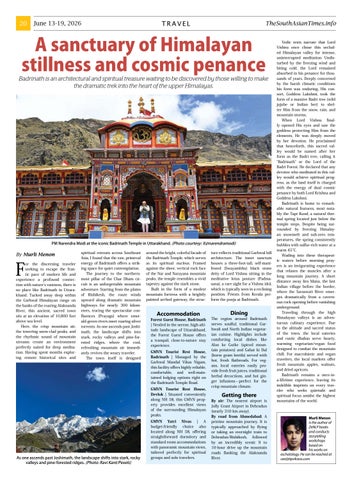
one ascends past Joshimath, the landscape shifts into stark, rocky valleys and pine-forested ridges. (Photo:RaviKant/Pexels)
PM Narendra Modi at the iconic Badrinath Temple in Uttarakhand. (Photocourtesy:X@narendramodi)
Batu Caves - Lord Murugan’s temple in Malaysia
(Photocourtesy:WikimediaCommons)
By Murli Menon
Nestled in the limestone hills of Gombak, Selangor, just 13 km north of Kuala Lumpur, Batu Caves offer a serene escape into heritage and nature. Known locally as Pathu Malai or “Ten Hills”, this sacred site is the spiritual heart of Malaysia’s Tamil Hindu community. My long stay in Kuala Lumpur provided a deep insight into Tamil culture and Malaysian hospitality, as Batu Caves remains one of the most iconic Hindu pilgrimage destinations outside India.
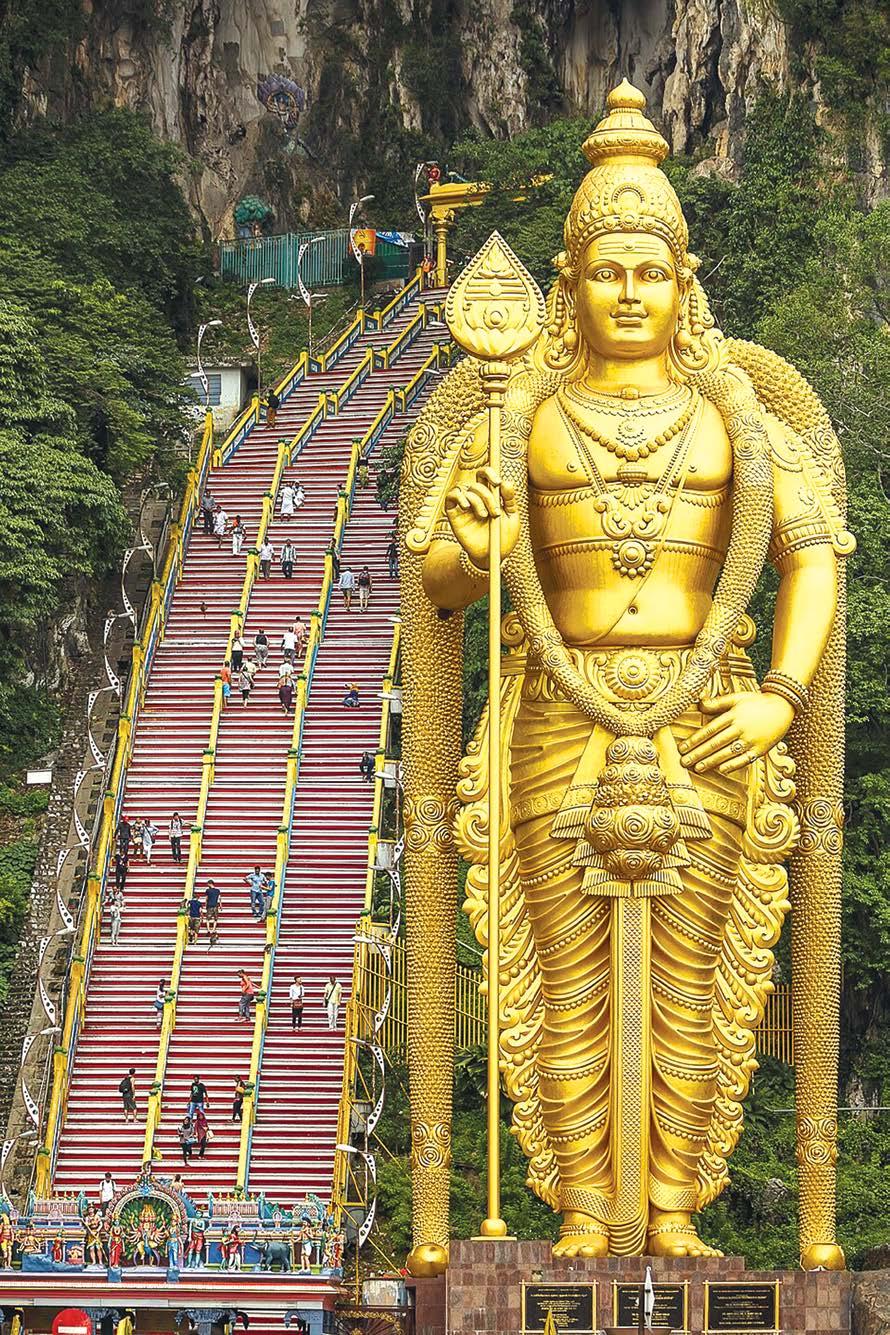
Rising 325 meters above sea level, the caves are a geological marvel formed over 400 million years ago. The towering 43-meter golden statue of Lord Murugan,
completed in 2006, greets pilgrims and visitors alike. The climb of 272 vibrantly painted steps, leading to the Temple Cave, is both a physical and spiritual ascent.
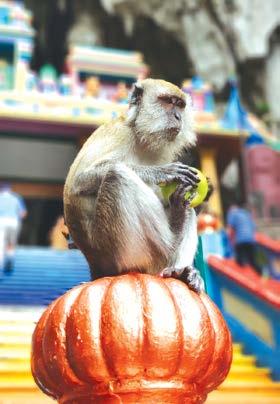
The journey begins with the colorful staircase, guarded by mischievous macaques. As one ascends, the limestone cliffs reveal stalactites and stalagmites, whispering the primordial divine energy of the site. Inside the temple cave, shrines dedicated to Lord Murugan and other deities bask in the glow of oil lamps, while murals narrate episodes from Hindu mythology.
Nearby, the Ramayana Cave offers a visual retelling of the epic, with statues of Lord Rama, Hanuman, and Ravana carved into the
How to get there
By train: KTM Komuter connects Kuala Lumpur Sentral to Batu Caves in 30 minutes.
By road: A 20-minute drive from the KL city center, with taxis and ride-hailing apps readily available.
From Penang: The 350 km drive from Penang to Batu Caves takes four hours.
Nearby attractions
Batu Cave Villa & Art Gallery, showcasing Hindu art and culture, trekking into limestone ecosystems, and into the evergreen rainforests of Taman Negara in Penang.
The hills near the temple cave are home to diverse wildlife, including monkeys and fruit bats. (Photocourtesy:Pexels)
cavern walls. The cave’s atmosphere, lit by neon hues, contrasts with the solemn sanctity of the temple cave, yet together they form a tapestry of devotion and storytelling.
The surrounding hills are home to diverse wildlife, including fruit bats, swifts, and monkeys, while the caves themselves echo with chants during festivals. For the adventurous, the Dark Cave offers guided eco-tours showcasing rare spiders and limestone cave ecosystems. According to the ancient Tamil scriptures, Murugan, also known as Kartikeya (Skanda in the Bhagavad Gita), son of Shiva and Parvati, was gifted the divine spear (Vel) to vanquish the demon Surapadman. Seeking a place of power to establish his shrine, Murugan chose Batu Caves, its ten hills symbolizing the ten aspects of dharma. The caves
became a sanctified abode where devotees could seek courage, virtue, and youth.
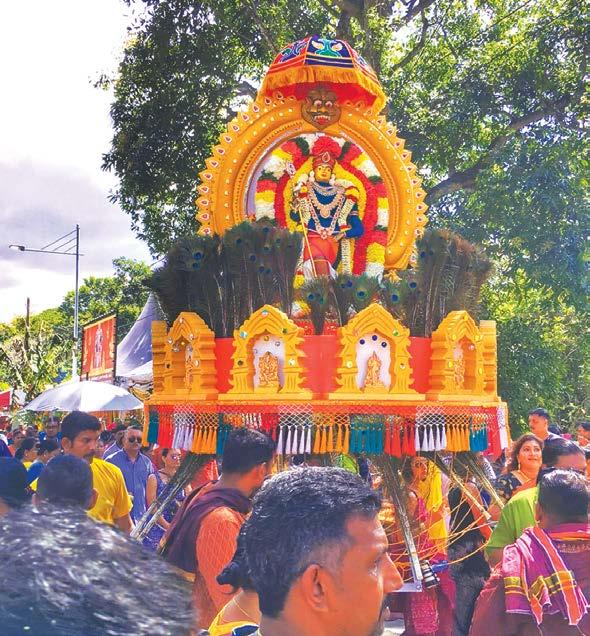
The annual Thaipusam festival, celebrated since 1892, commemorates this victory. Thousands of devotees undertake vows, carry kavadi (ornate offerings), and pierce their bodies as acts of devotion. The sight of saffron-clad pilgrims ascending the 272 steps with earthen pots and kavadi is a living enactment of the puranic tale.
At the base of Batu Caves, Tamil vegetarian fare is served at roadside eateries. Banana leaf meals with sambar, rasam, and poriyal are staples, while fresh coconut water and lime juice provide respite after the climb. During Thaipusam, stalls line the approach road, offering free food (annadanam) to pilgrims, including rice, curries, and sweets prepared by volunteers. Kuala Lumpur offers a range of stays from budget hostels near Sentral Station to luxury hotels like the Cititel Hotel, Kuala Lumpur. For pilgrims, guest-houses near Batu Caves provide proximity to the temple complex.
I personally did a day trip driving to Batu Caves from Penang and stayed at boutique hotels in Penang, including Cititel, Penang and City Bayview Hotel, Penang and Gurney Hotel.
is
of ZeNLP books and conducts storytelling workshops based on his works on eschatology. He can be reached at ceo@tips4ceos.com
Murli Menon
the author
The statue of Lord Murugan beside the Batu Caves staircase.
The Thaipusam festival is celebrated in Malaysia to commemorate the victory of Lord Murugan over the demon Surapadman. (Photocourtesy:WikimediaCommons)
Shaktipeeth in Gujarat: The sacred peak of primordial flame
By Murli Menon
For many travelers, the state of Gujarat is celebrated for its historic stepwells and bustling coastal cities, but for the discerning traveler seeking a deep connection with ancient mountain heritage and primordial energy, there is no place like the Ambaji Shaktipeeth in the Danta taluka.
Situated on the rugged Arasuri hill range at the edge of the ancient Aravalli mountains, this historic temple town sits surrounded by dense scrub forests and rocky cliffs. Here, the clean mountain air and the vast horizons provide an ideal setting for contemplation.
Having recently traveled across the historical landscapes of Cambodia and Rajasthan, mapping the evolution of mountain shrines, I found that the unique geographical energy of Ambaji offers an extraordinary space for spiritual focus. It is a hidden treasure of architectural brilliance waiting to be discovered by the modern traveler.
The journey to the borderlands of northern Gujarat is an engaging drive, located approximately 180 kilometers from Ahmedabad. The route takes one through the historic heart of the state, passing through the ancient town of Palanpur before climbing into the steep, rocky ridges of the Danta region. As you ascend into the hills, the air turns noticeably cooler, providing a refreshing relief for the weary traveler.
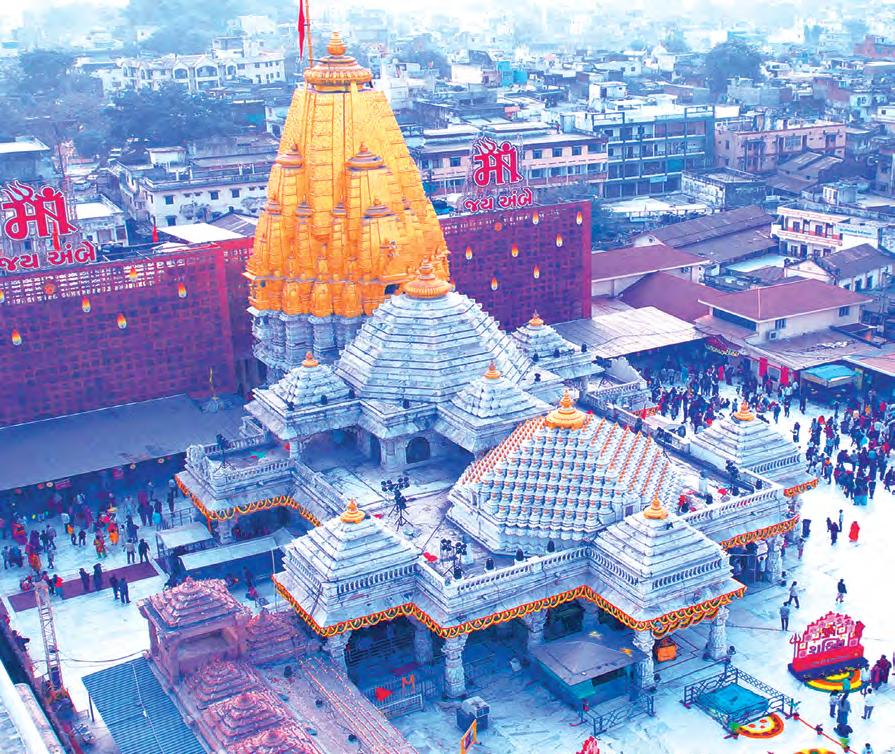
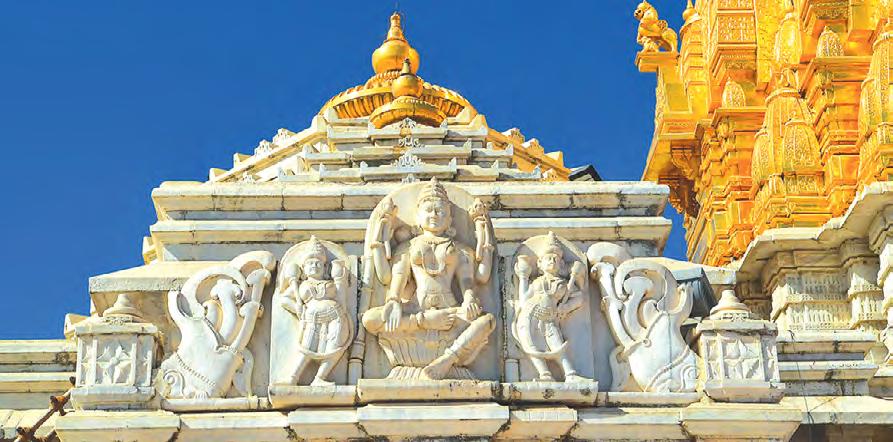
The town is designed around the grand Ambaji Temple, which serves as its physical and spiritual nucleus. Built from pristine white marble sourced from the nearby quarries of Kumbhariya, the temple structure shines beautifully against the cobalt-blue sky.
The exterior walls and rising spire are profusely adorned with carved friezes depicting celestial dancers, geometric patterns,
The
Shaktipeeth temple is located in the Banaskantha district, near the Gujarat-Rajasthan border. (Photocourtesy:X@TempleAmbaji)
and various aspects of the divine mother. The pillars in the outer courtyard demonstrate incredible elegance in design, a tribute to the visualization and engineering skills of the Solanki artisans who worked stone like poetry.
The narrative surrounding the unseen Yantra at Arasuri Ambaji and the “real Ambaji mata idol” presence in Danta stems from a fascinating intersection of local folklore, royal history, and the geopolitical realities of medieval Gujarat.
For centuries, a distinct oral tradition within the region has maintained that the true spiritual essence—or the original physical representation—of Ambaji Mata
resides within the ancestral strongholds of the Danta royal family’s temple inside Danta Palace, rather than the high-profile hill shrine where Government priests worship some British stooges installed a Yantra in blind faith, as all priests are blindfolded and photography, carbon dating and archaeological examination of this yantra is prohibited to this day by all Indian governments.
According to regional legends, the Rana of Danta was granted a divine boon where the Goddess agreed to walk down from Gabbar Hill to reside permanently in his capital. Because the king turned around prematurely at Arasur,
the main deity halted, establishing the famous Ambaji site. However, local historical perspectives suggest a more pragmatic reality. During eras of intense iconoclasm and political upheaval in medieval India, prominent, highly visible hill temples were frequent targets for raids. To protect the sacred artifacts of the deity, the ruling family of Danta, who were the traditional custodians of the shrine, historically secured the core devotional assets within the fortified safety of their own palace and family shrines, such as Bhavangadh.
Consequently, a narrative emerged that the heavily guarded, unviewable secret Yantra on the hill served as a brilliant, state-sanctioned surrogate to satisfy public worship and divert attention, while the “real,” historically continuous focal point of the royal lineage remained anchored in Danta.
Whether viewed through the lens of esoteric Tantric secrecy or strategic medieval defense, this duality created a compelling local belief: while the masses flock to the elaborate, illusory drapery of the Arasur Gokh, the true, uninterrupted connection to the historic deity is preserved under the quiet custody of the royal family of Danta
A short distance from the main temple lies Gabbar Hill, a steep rocky peak accessed by over nine hundred stone steps or a modern
DINING
Bhavani Villa, Danta, serves traditional Kathiawari cuisine. Highlights include delicious Bajri Rotla (pearl millet), served with coriander chutney and bharwan baingan. For vegans, fresh watermelon juice and hot ginger infusions are available.
ACCOMMODATION
Bhavani Villa Palace Homestay, managed by Maharani Saheba Chandra Kumari of Danta, features five heritage suites with rustic decor and personalized service that rivals heritage homestays of Rajasthan.
GETTING THERE
By road: 180 km from Ahmedabad (3 hours by car).
cable car. The summit houses a small perennial flame that has burned for centuries, marking the exact spot where the heart of the goddess is believed to have touched the earth. Standing on this high vantage point offers panoramic views of the surrounding savanna grasslands and distant desert horizons.
Exploring the local culinary traditions is a wonderful experience that highlights the rich, wholesome vegetarian fare of northern Gujarat. The local roadside dhabas serve traditional meals made from freshly harvested grains. For vegan travelers, the local markets offer fresh seasonal fruits, sugarcane juice, and ginger infusions.
Ambaji remains a once-in-alifetime experience, leaving its indelible imprints on every traveler who seeks the timeless traditions of mountain spirituality.
Murli Menon is the author of ZeNLP books and conducts storytelling workshops based on his works on eschatology. He can be reached at ceo@tips4ceos.com
Ambaji
The temple shines beautifully against
Dwarka | A Holi of azure seas and crimson sunsets
By Murli Menon
For many, Holi is a festival of vibrant powders and spirited gatherings, but for the discerning traveler seeking a deeper connection with nature and spirit, there is no place like Dwarka in Gujarat. Situated on the westernmost tip of India, this historic town is where the last rays of the sun grace the Indian subcontinent, creating a sunset so profound it remains etched in the mind long after the journey ends.
Beyond its immense religious significance, Dwarka is a hidden treasure of natural beauty waiting to be discovered by those willing to make the trek to the edge of the world.
The journey to the western edge
Dwarka is a quaint village located approximately a 10-hour drive from Ahmedabad. The route takes one through the heart of Gujarat, passing through the bustling hubs of Rajkot and Jamnagar. As one approaches the coast, the landscape transforms.
The drive between Jamnagar and Dwarka hugs the coastline, where low humidity and a constant, refreshing cool breeze make for a memorable experience. Indeed, coastal Gujarat is recognized as one of the windiest regions globally, providing a natural airconditioning that revives the weary traveler.
A canvas of natural wonders
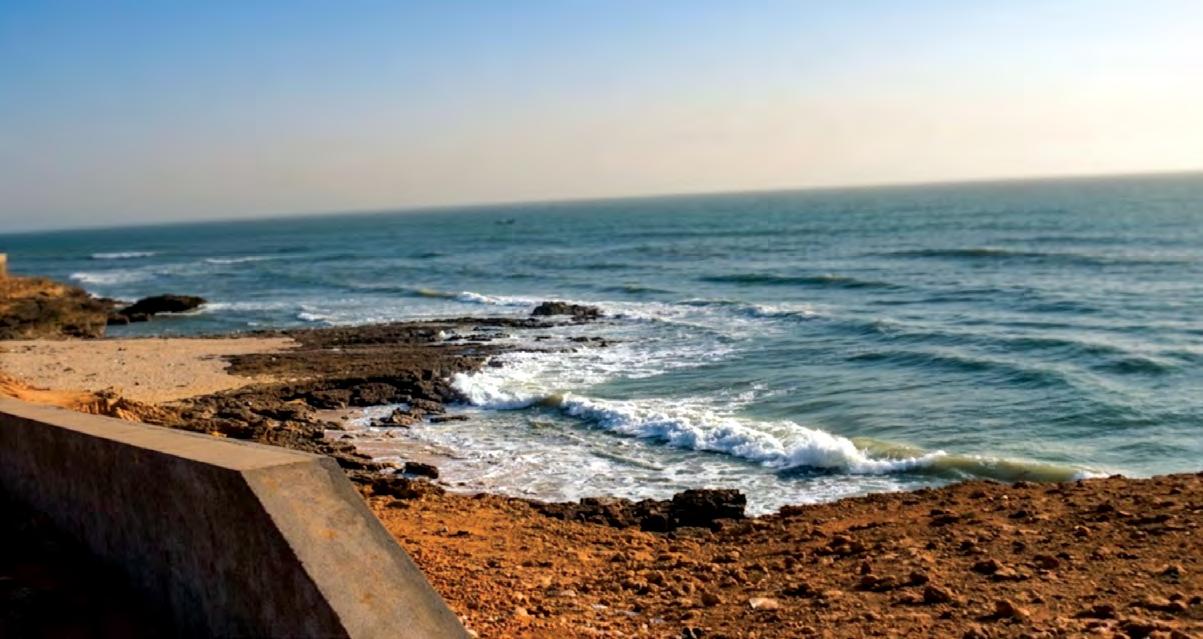
Holi at Dwarka is a sensory masterpiece. The picturesque beaches, golden sands, and azure sea meet surf-rimmed waves to complete a colorful scene that rivals any festival. One of the most enchanting features of the town is the Gomti River. The river here is shallow and gentle, as the incoming sea smothers the river’s current.
Visitors can easily wade across the Gomti—where the water rarely reaches above the knee—to reach scattered river islands. These islands serve as a sanctuary for numerous species of large waterbirds, including cranes, flamingos, and seagulls. For those looking to escape the exuberant Holi crowds, waking before sunrise to meditate on these isolated islands offers a divine, tranquil experience.
"Watching the last rays of the sun touch the westernmost point of our country is as picturesque as watching the first rays of the sun touch the easternmost point of Thailand at Khong Chiam."
Miracles and marine life
The town is designed around the majestic Dwarka temple, which
serves as its nucleus. Remarkably, almost every point of natural interest—the Gomti River, the sunset point, the beach, and the river islands—is located within a one-kilometer radius of the town center.
The area is also home to what many consider a local miracle: a floating rock that defies gravity, drifting on the water like thermocol despite weighing over a kilogram. A walk through the crystal-clear waters of the Gomti reveals schools of fish swimming in synchronicity, while the shorelines are dotted with various species of crabs washed in by the relentless, rhythmic waves.
The crimson finale
As evening approaches, the "magnet" of Dwarka draws everyone to the tiny hillock overlooking the sea. From this vantage point, the view is a riot of primary colors: azure waters, rust-colored rocks, and a spotless light blue sky that eventually gives way to a spectacular crimson sunset. Having recently returned from travels through Thailand, Laos, Cambodia, and Vietnam, I found that the changing colors of Dwarka provide an ideal backdrop for reflection during the three days leading up to Holi.
Flavors of Saurashtra
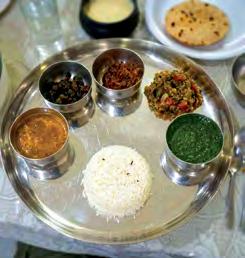
No visit to this region is complete without indulging in the staple cuisine of Saurashtra. Before departing, ensure you sample the local fare, which typically includes:
• Bajra Roti: Hearty pearl millet flatbread.
• Shredded Cabbage: Expertly cooked with fenugreek.
• Baby Potatoes: Lightly spiced and perfectly crisped, cooked with garlic cloves. Vegans can get fresh fruits at the markets.
For those seeking familiar snacks, make-shift stalls throughout the village offer handvo, dabeli, khaman, and dhoklas, while roadside dhabas serve traditional Kathiawari vegetarian meals all along the highway back to Ahmedabad. Dwarka remains a once-in-a-lifetime experience, leaving its "indelible imprints" on every traveller who seeks the sun at the edge of the sea.
Murli Menon is the author of ZeNLP books and conducts storytelling workshops based on his works on
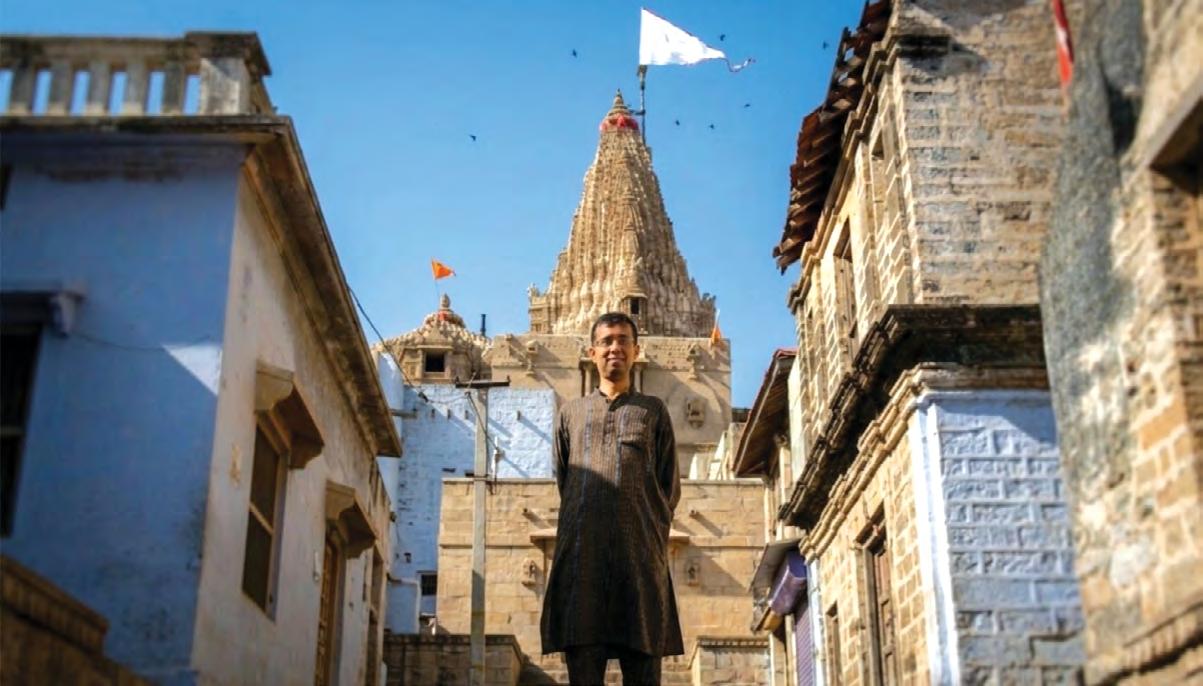
The author at the Dwarkadheesh Temple in Gujarat.
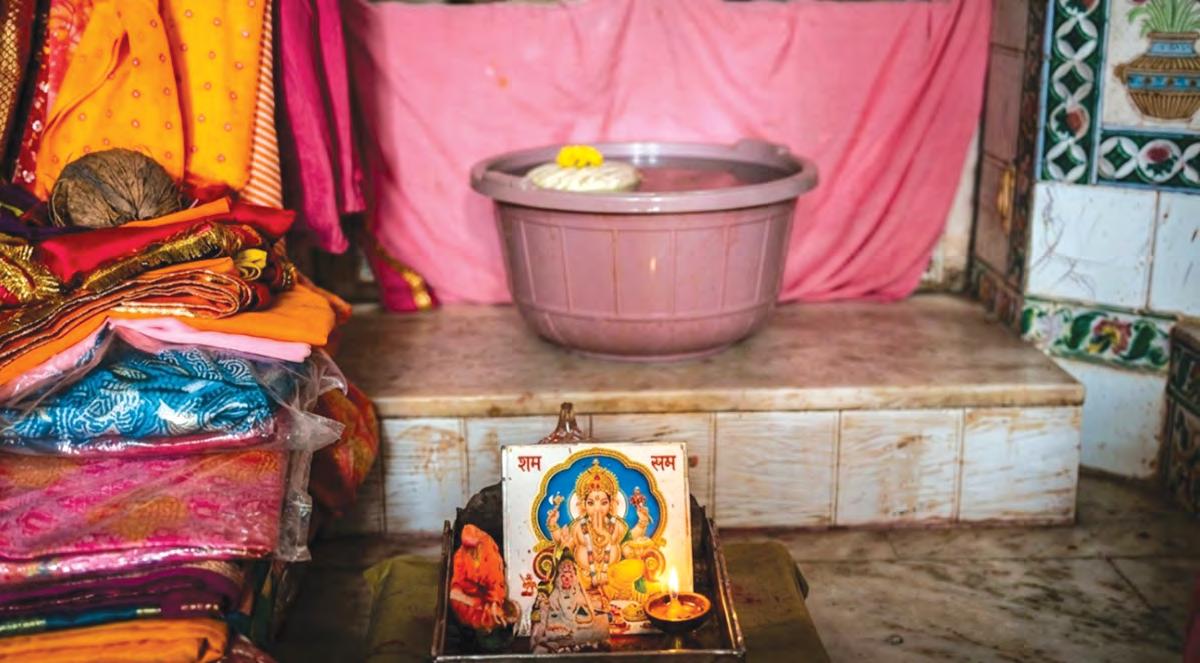
The floating sandstone miracle at the Dwarkadheesh Temple.
One of the most enchanting features of the town is the Gomti River. (All photos clicked by the author)
Poetry in stone: A spiritual odyssey to Khajuraho
By Murli Menon
Checking into the lush surroundings of Khajuraho is a soothing experience that immediately begins to peel away the stresses of modern life. Rows of verdant Ashoka trees line the pathways, standing like silent sentinels that greet travelers as they approach the heart of this ancient site.
One of the greatest luxuries for the seeker here is proximity; almost all the significant monuments are within a comfortable walking distance, allowing the journey to unfold as a slow, meditative stroll through history.
The echoes of the Jain Tirthankaras
The journey often begins at the serene Eastern Group, specifically the ancient Jain temples of Adinath and Parsvanath. Constructed around 950 AD by the Jain rulers of Bundelkhand, these structures are a masterclass in delicate masonry. On the outer walls of the Parsvanath temple, rows of sculptures depict nymphs, Jain Tirthankars, and a variety of animals.
The Adinath temple is particularly striking, topped with a kalash (sacred pitcher). Its walls are decorated with nymphs whose faces exude a spectrum of human experience—happiness, grief, playfulness, and even anger. These are not merely decorations; they are reflections of the soul's journey.
Nearby, the Shantinath tem-
ple, though a more modern reconstruction from around 1900 AD, stands proudly on the ruins of older shrines, maintaining the spiritual continuity of the site.
The majesty of the western group
As one transitions from the Jain circuit to the massive Hindu temple complex, the atmosphere shifts. Entering the gardens surrounding these monuments feels like stepping through a portal into an era where art and divinity were inseparable.
Among the first wonders to greet the visitor is the Varaha temple. This shrine houses a giant, monolithic sculpture of a wild boar—an incarnation of Lord Vishnu—standing nearly two meters high. Carved from solid stone, this magnificent beast is covered in hundreds of tiny, intricate figures of deities. It is a remarkable feat of preservation, having withstood the vagaries of time and historical invasions, seemingly protected by a cosmic force.
Diametrically opposite the main Shiva temple stands another marvel: the Big Bull, or Nandi. This celestial vehicle of the three-eyed Shiva is a towering six-foot-tall sculpture, radiating a sense of silent, powerful devotion. A pair of elephants and lions guard the entrances to these twin shrines, symbolizing the strength and majesty of the divine presence within.
The mountain of masonry: Kandariya Mahadev
The crown jewel of the complex
How to get there:
Khajuraho features its own airport with connections to New Delhi and Varanasi. For those preferring the rails, the nearest major railhead is Jhansi, followed by a scenic 185 km drive to the temple town.
Where to stay:
The Holiday Inn Resort offers a comfortable and picturesque stay. Its grounds are a haven for birdwatchers; mornings are musical with the tunes of hundreds of birds singing under a canopy of green.
Where to eat:
The town is dotted with small restaurants/dhabas offering a variety of cuisines. For those seeking authentic local flavors, Agrawal Restaurant provides deliciously sumptuous North Indian vegetarian fare that perfectly complements a day of spiritual exploration.
is undoubtedly the Kandariya Mahadev, often translated as the "Mountain of Masonry". Dedicated to Lord Shiva, its name is a fitting tribute to its architecture, which mimics the peaks of the Himalayas. The temple is a divine metaphor, where the cosmic forces of creation, maintenance, and destruction are symbolized through the primary deities: Brahma, Vishnu, and Shiva.
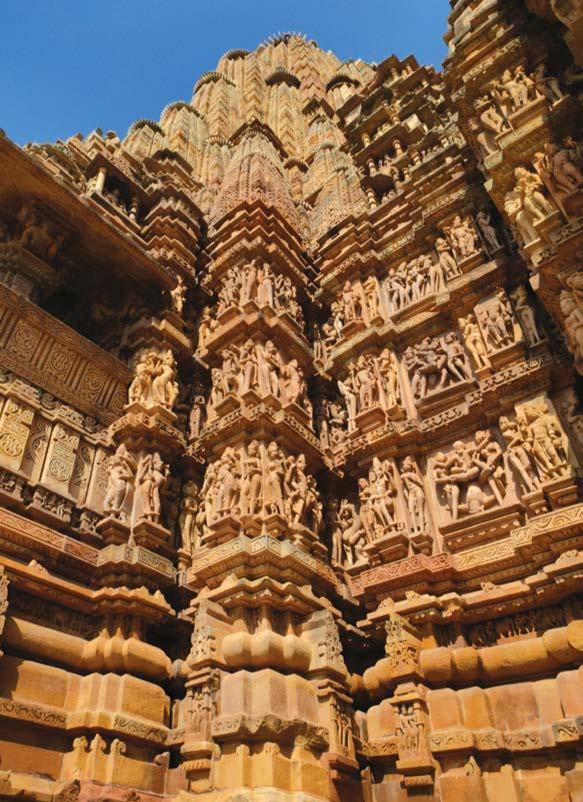
The walls of this temple are a literal gallery of 10th-century life and celestial visions. There are more than 600 sculptures that dot this "storytelling in stone." Here, one finds full-bodied nymphs in various states of grace—one playing the flute, another looking into a mirror, and another interacting with a parrot.
Every inch of the sandstone surface is occupied by flowers, plants, horses, elephants, and human figures. In this sacred space, the proximity of animals, nature, and humanity symbolizes the cosmic unity of all beings on this planet.
Sunlight and shadows
The spiritual trail continues to the temple dedicated to Surya, the Sun God. Here, a five-foot sculpture of Surya crowns the temple, strikingly similar in its regal pose to the famous images found at Konark in Odisha. This temple also features a rare representation of an eleven-headed Vishnu, representing his various incarnations.
Beyond the major structures, the landscape is dotted with other ancient gems like the Vaman, Brahma, Dulhadeo, and the Chausath Yogini (the temple of the sixty-four deities). Each shrine offers a different facet of the same spiritual diamond.
A seeker’s sanctuary
For the traveller, Khajuraho offers photographs that rival any picture postcard, especially during the golden hours when the sandstone glows with an inner light. For the environmentalist, it is a lesson in the harmony between man-made structures and the natural world. But for the seeker, it is something much deeper.
A visit to this complex is a profoundly spiritual experience. It touches the emotional chords of its visitors, offering answers to those looking to discover the true purpose of cosmic existence. In the silence between the stones, one can almost hear the breath of the artisans who believed that to create beauty was the highest form of worship.
(AllPhotosCourtesyoftheAuthor)
ceo@tips4ceos.com
Murli Menon is the author of ZeNLP books and conducts storytelling workshops based on his works on eschatology. He can be reached at
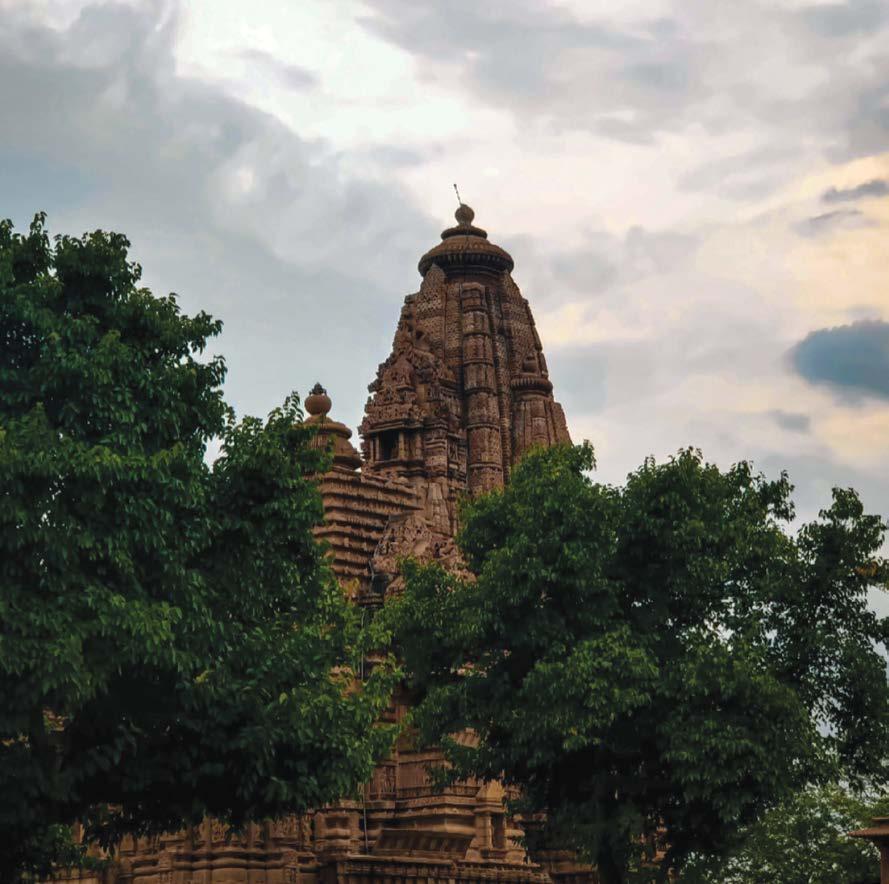
The towering shikhara (spire) of the Khajuraho temple piercing the evening sky.
Intricate friezes of celestial nymphs and deities adorning the sandstone walls.
Konark Sun Temple - an experience of Odisha’s soul
By Murli Menon
Chandrabhaga Beach: Located on the eastern shores of Odisha, about 35 kilometres from Puri, the Konark Sun Temple near Jagannath Puri is undoubtedly one of India’s most awe-inspiring monuments. Known as the Black Pagoda by European sailors, this 13th-century marvel is not just a temple but a colossal stone chariot dedicated to Surya, the Sun God.
Its grandeur, symbolism, and artistry make it one of the most celebrated achievements of Indian architecture. The temple was commissioned around 1250 CE by King Narasimhadeva I of the Eastern Ganga dynasty. It is believed to have taken nearly twelve years and more than ten thousand artisans to complete. The king built it both as an act of devotion to the Sun god (Suryadev) and as a symbol of victory over invading forces.
Legends also connect the temple to Samba, son of Lord Krishna, who was cured of leprosy after worshipping the Suryadev and vowed to build a shrine in gratitude. Chanting the seven divine names of Suryadev at Konark is sacrosanct in Sanatana Dharma. (Mitra, Arka, Aditya, Bhaskara, Marichay, Ravi, and Surya) and Gayatri mantra (108 times) at sunrise, noon, and sunset, while symbolically offering water from the Chandrabhagha, adds to the spiritual progress of all Sanatani souls.
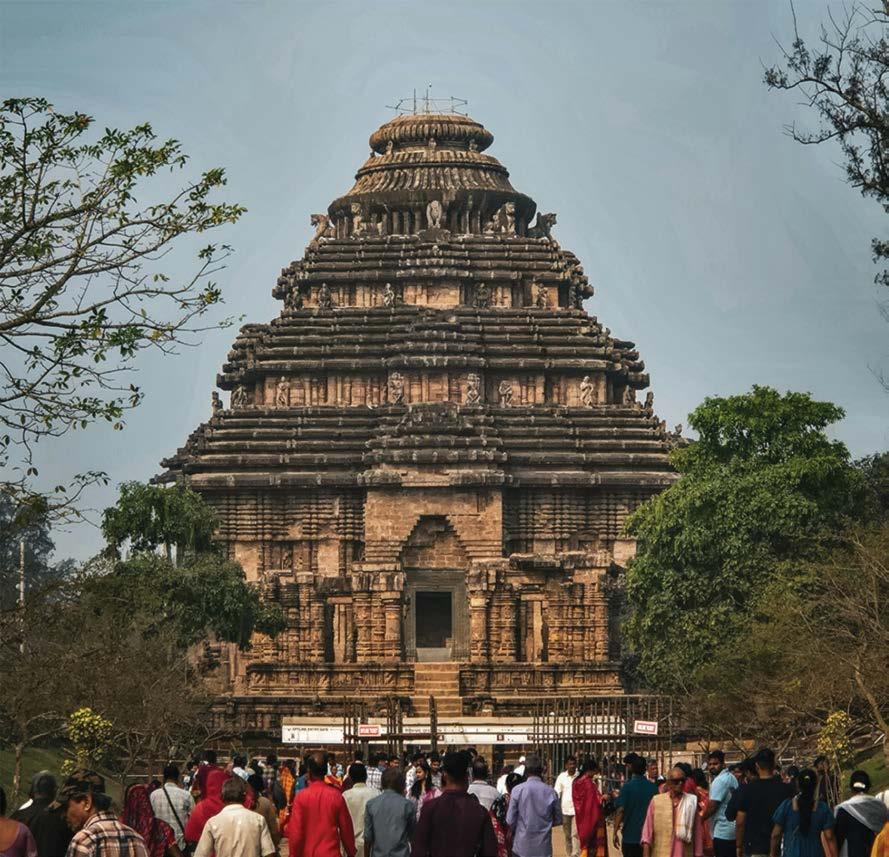
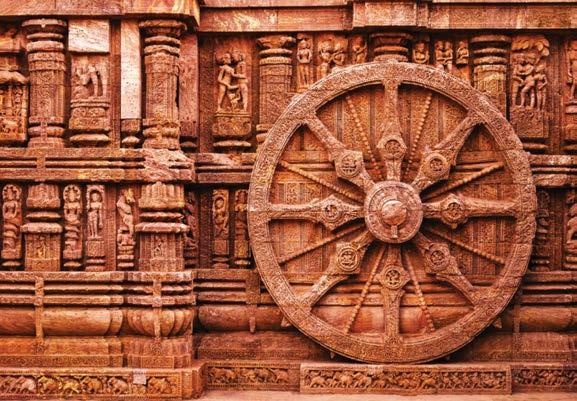
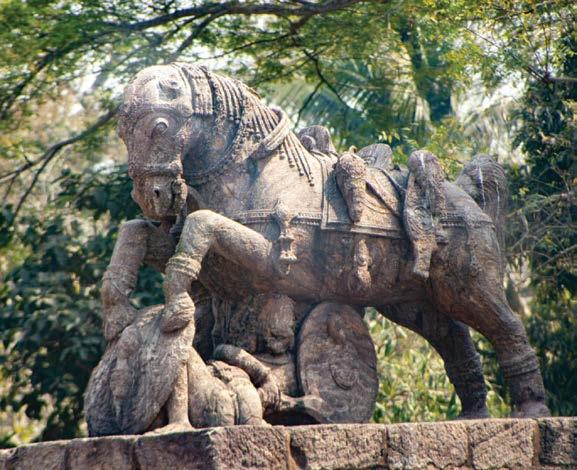
The temple is conceived as a gigantic chariot with twenty-four intricately carved wheels (representing a 24-hour solar day) and seven galloping horses (representing seven days of the week), symbolizing the Sun God’s cosmic journey across the sky.
Each wheel, nearly 12 feet in diameter, doubles as a sundial, capable of measuring time with remarkable precision even in 2026. The alignment of the temple ensures that the first rays of the rising sun illuminate the sanctum, a fusion of astronomy and spirituality. The carvings on the temple walls depict gods, celestial dancers, warriors, animals, and scenes from everyday medieval life.
A giraffe sculpture inside the temple is Konark’s best-kept secret. The ancient Odiya mariners visited Africa and saw giraffes, which is what this sculpture depicts. Konark is steeped in folklore. One famous tale is of Dharmapada, a 12-year-old boy who sacrificed his life to save his father’s team of sculptors from execution after solving a crucial architectural challenge.
Another legend speaks of a massive magnet once placed atop the temple, believed to suspend the Sun idol in mid-air. This scientific research by French sailors adds to the temple’s mystical aura. The
Konark is best visited between October and March when the weather is pleasant, and festivals abound.
The nearest airport is Biju Patnaik Airport in Bhubaneswar, with good road and rail connections. For travellers seeking comfort and proximity, OTDC Panthanivas, also known as Yatrinivas Konark, is the most convenient option. Just eleven minutes’ walk from the Sun Temple and close to Chandrabhaga Beach, it offers budget-friendly, clean rooms with spotless baths.
temple also stood beside the sacred Chandrabhaga River, now vanished, which was once central to rituals and believed to cure ailments. Pilgrims still gather nearby during the Magha Saptami festival to honor the Sun God at Chandrabhaga Beach.
The temple is not just a monument but a cultural beacon. Its motifs and symbols permeate Odissi dance, literature, and art, and even appear on Indian currency notes. The annual Konark Dance Festival, held in front of the temple, showcases India’s classical dance traditions against the backdrop of this architectural wonder.
Some of the temples lie in ruins today. The main tower collapsed centuries ago, possibly due to invasions, natural decay, or the removal of its crowning magnet. In the early twentieth century, Western archaeologists filled the Jagamohan with sand to prevent collapse. Today, the Archaeological Survey of India is carefully removing this sand using advanced drilling and robotic technology, marking a new chapter in the preservation of the Konark temple.
Konark is best visited between October and March when the weather is pleasant, and festivals abound. Nearby attractions include the Jagannath Temple in Puri, Chilika Lake, and Bhubaneswar’s famous Shiva temples. The Konark Dance Festival in December and the Chandrabhaga Mela in February are highlights.
Traveling through Odisha is not just a journey through temples and heritage; it is also a culinary adventure. The stretch from Bhubaneswar to Puri and Konark is dotted with roadside vegetarian Odiya dhabas (rustic eateries) and local eateries that serve hearty meals. For vegan travellers, this corridor is a delight, as many traditional Odiya dishes are naturally plant-based, cooked in organic, locally wood-pressed mustard oil, and centered around rice, lentils, and seasonal vegetables.
The dhabas are known for freshly cooked meals, generous portions, and homely flavors. Wooden benches, steel plates, and the aroma of mustard oil define the experience. Roadside dhabas offer wood-fired cooked food prepared the way locals eat it daily, and impart a delicious smoky flavor to food.
The Konark Sun Temple is more than stone and sculpture; it is a living chronicle of India’s devotion, artistry, and scientific genius. Whether viewed as a celestial chariot, a cultural emblem, or a timeless mystery, Konark continues to inspire awe and reverence. And for travellers, the journey is enriched not only by the temple’s grandeur but also by the flavors of Odisha. Together, heritage and cuisine make Konark not just a destination, but an experience of Odisha’s soul.
The temple is conceived as a gigantic chariot with twenty-four intricately carved wheels.
The sculptures of seven galloping horses represent the seven days of the week. (Allphotoscourtesyoftheauthor)
Murli Menon is the author of ZeNLP books and conducts storytelling workshops based on his works on eschatology. He can be reached at ceo@tips4ceos.com
The Konark Sun Temple was called the "Black Pagoda" by European sailors.
Karni Mata Temple: The desert sanctuary of faith and legend
By Murli Menon
For the discerning traveler seeking to explore the deep, unconventional mysteries of human faith and its unique relationship with the animal kingdom, there is no place like the Karni Mata Temple in Deshnok. Located in the arid Thar Desert region of Rajasthan, approximately 30 kilometers south of the historic city of Bikaner, this extraordinary shrine challenges conventional perceptions.
The quiet, open desert landscapes surrounding the village give way to a space of intense spiritual energy and protective animal companionship. Having spent considerable time documenting unique ecological and spiritual traditions across Gujarat, Rajasthan, India and Southeast Asia, I found that the peaceful coexistence at Deshnok provides a fascinating subject for cultural study. It stands as an architectural and anthropological treasure waiting to be discovered by the adventurous traveler.
The journey to Deshnok takes one through the heart of rural Rajasthan, passing through vast, flat desert expanses where the dry air is cooled by a constant, refresh-
ing breeze that kicks up small dust trails behind your vehicle.
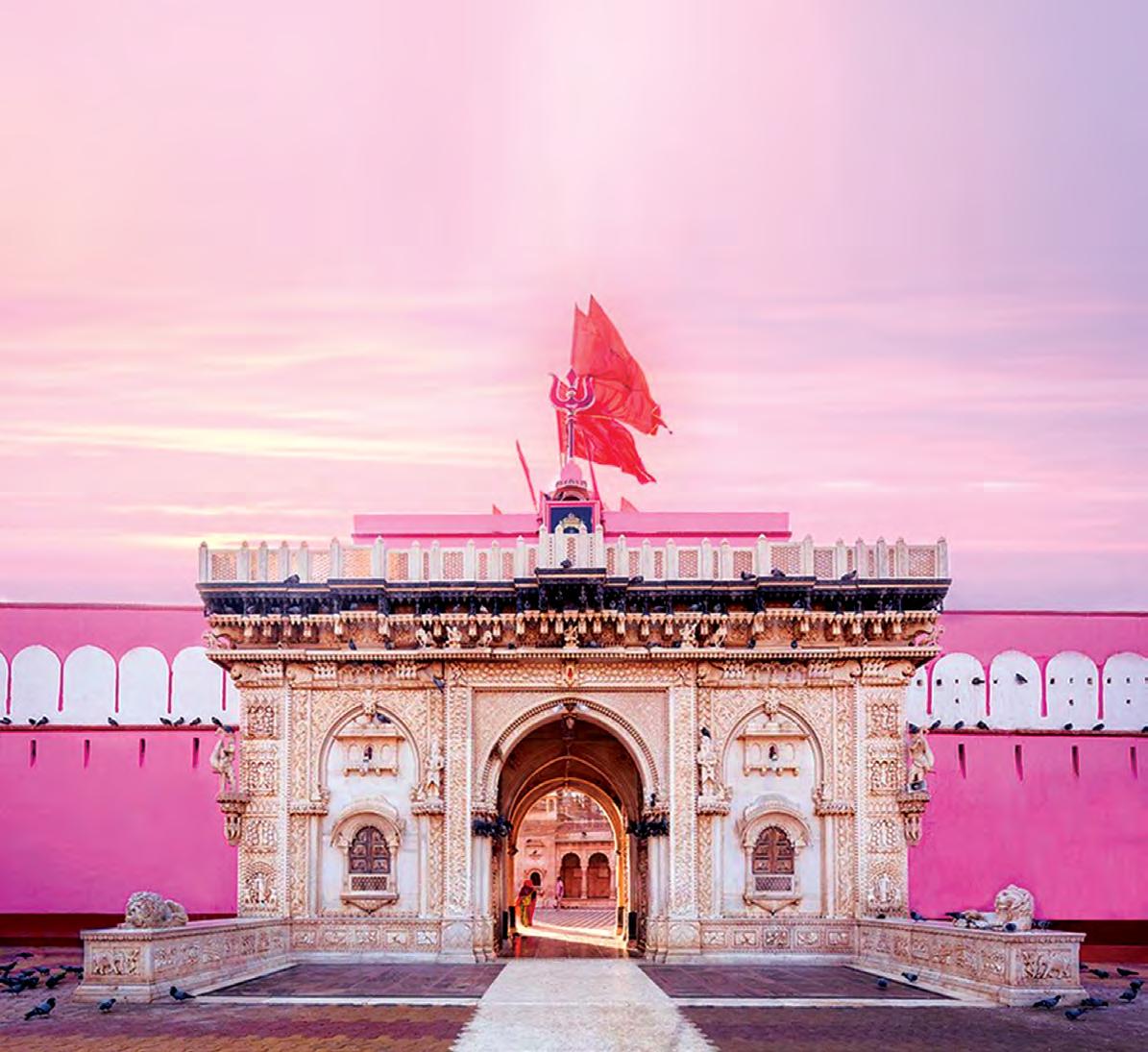
The temple stands out in the desert landscape due to its striking, ornate architecture. Conceived as a grand, fortified sanctuary, it features an imposing facade crafted entirely from spotless white marble, completed by the royal weavers of the region.
The entrance gates are a masterpiece of design, featuring solid silver doors with intricate repoussé work that depicts scenes from the goddess's life, floral borders, and geometric motifs. The marble pillars in the courtyard are beautifully carved, supporting galleries where hundreds of creatures live in complete protection.
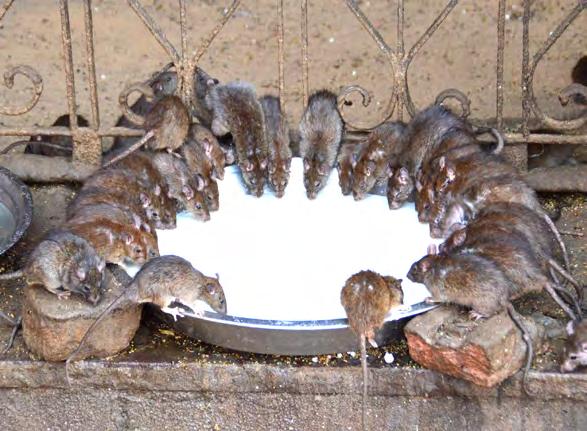
The inner sanctum houses a small, stone idol of Karni Mata, depicted holding a trident (trishul) and surrounded by symbols of power, yet the true focus of the temple's daily life is the thousands of small, furry residents that move freely across the marble floors.
Ancient Vedic scriptures trace the origins of this temple to the historical figure of Karni Mata, a revered mystic belonging to the Charan clan. She led a deeply spiritual life, performing numerous miracles for the welfare of
The temple is home to over twenty thousand rats, or kabas, that are considered auspicious. (WikimediaCommons)
the desert communities and local rulers. The defining legend of the temple arose when her stepson, Laxman, accidentally drowned in a sacred pond in Kapil Sarovar while attempting to drink water.
Grief-stricken, Karni Mata implored Yama, the God of Death, to restore the young man's life. Yama initially refused, stating that the laws of karma and destiny could not be altered once a soul had left its earthly form. Undeterred, Karni Mata used her
affectionately as kabas, which are considered sacred extensions of the goddess's family. Remarkably, despite their dense population, no foul odour exists within the temple, and there has never been a recorded case of disease among the pilgrims over the centuries.
Spotting one of the rare white kabas among the thousands of brown ones is considered an exceptionally auspicious sign, believed to grant special spiritual blessings to the traveler. Even seeing a photograph of a khite kaba is considered auspicious for prosperity consciousness.
During plague epidemics in Europe and Surat, Deshnok had divine protection and has never recorded a single case of plague in a thousand years. The devotees eat prasad after the kabas eat it. From children to villagers in their nineties, all enjoy the kaba-eaten prasad, before leaving the shrine.
Dining
Ranavas, Nagore, owned by Jodhana Hotels, Jodhpur, managed by the Royal family of Jodhpur House, offers authentic Rajasthani flavors with a Marwari touch at their all suites Palace Homestay at Nagore, aptly named Rananvas. Highlights include Bajra Rotla paired with tangy Jaisalmeri garlic chutney mashed with Red chillies and stuffed bharwan baingan, echoing the rustic traditions of the Thar. For vegans, refreshing watermelon juice and soothing ginger infusions are available at markets near Deshnok, and Ranavas offers a vegan fruit platter for breakfast.
Accommodation
Managed by Jodhana Hotels, Jodhpur Ranavas suites are adorned with rustic décor. The personalized service evokes the warmth of Rajasthan’s heritage homestays, making every stay memorable. It boasts of huge central courtyards and ancient trees that shelter Indian Eagles and Eagle Owls.
Getting there
• By road: About 30 km from Bikaner city (45 minutes).
• By train: The nearest major station is Bikaner Junction, with onward road travel to Deshnok.
• By air: The closest airport is Nal Airport, Bikaner (domestic), or Jodhpur Airport for wider connectivity.
immense spiritual power to decree that none of her clan members would ever fall into the hands of the Lord of Death again.
Instead, when they died, their souls would temporarily inhabit the forms of sacred rats (kabas) within her sanctuary, living in safety until they could be reborn back into her human family, bypassing the usual realms of death.
Today, the temple is home to over twenty thousand kabas (souls reincarnated as rats), known
Deshnok remains a soulful experience, leaving its indelible imprints on every traveler who seeks the deep mysteries of faith in the quiet spaces of the Thar desert.
Murli Menon is the author of ZeNLP books and conducts storytelling workshops based on his works on eschatology. He can be reached at ceo@tips4ceos.com
The temple stands out in the desert landscape due to its striking, ornate architecture. (Photocourtesy:X@my_rajasthan)
Exploring ‘Rani ki Vav’ stepwell in Gujarat
By Murli Menon
After having lived in Gujarat for close to thirty of my forty-six years on this planet, I have travelled to the most remote pockets of the state. However, last month I made a trip to Patan, which is only a six-hour drive from Ahmedabad, but returned with a treasure trove of memories, having visited one of the most beautiful stepwells in India.
Called Rani ki Vav (Queen's Stepwell), this ancient treasure is located at Patan, 135 km away from Ahmedabad, and offers a great experience to Indian families who want to spend a blissful day away from the vagaries of stressful life.
Stepwells are subterranean structures with steps leading down to the water level and are found in large numbers in the arid regions of Gujarat and Rajasthan. They started as simple structures, and in the course of time, these wells evolved to become complex, aesthetically pleasing works of art.
Patan was called Anhilpur Patan when King Siddharaj Jaysingh ruled, and it was the erstwhile capital of Gujarat. Vanraj Chavda founded Patan. The richly sculptured stepwell, which is seven storeys deep, was constructed during the period of the Solanki or Chalukya.
It was built in the memory of Bhimdev-I (1022 AD - 1063 AD), son of Mularaja, the founder of the Solanki dynasty of Patan, in about 1050 AD by his widowed queen Udayamati. Rani ki Vav was completed by Udayamati and Karan-
dev-I a thousand years ago. A reference to Udayamati building the monument is in the "Prabandha Chintamani" composed by Merunga Suri in 1304 AD. It was one of the largest and most sumptuous structures of its type.
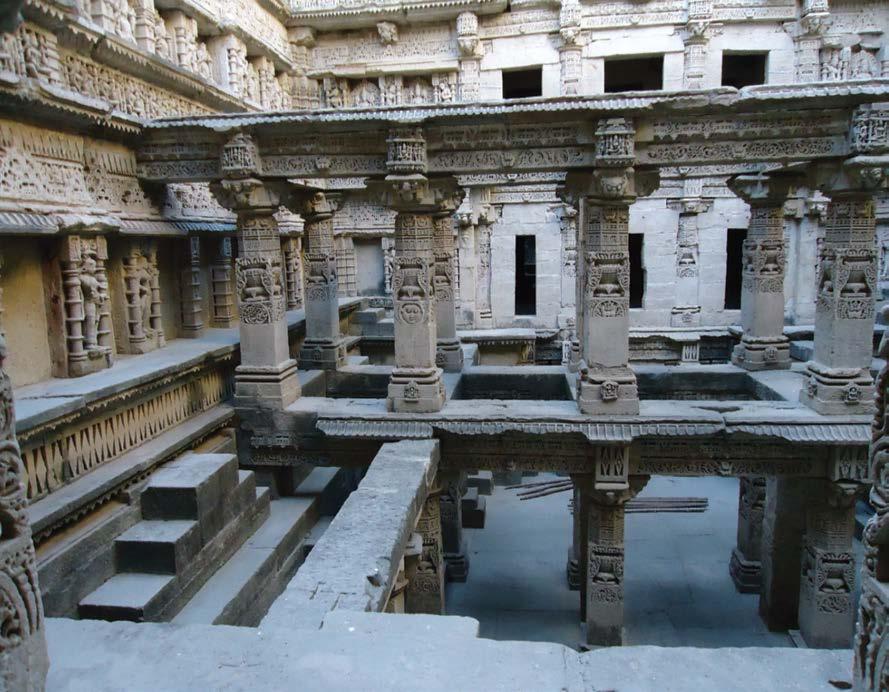
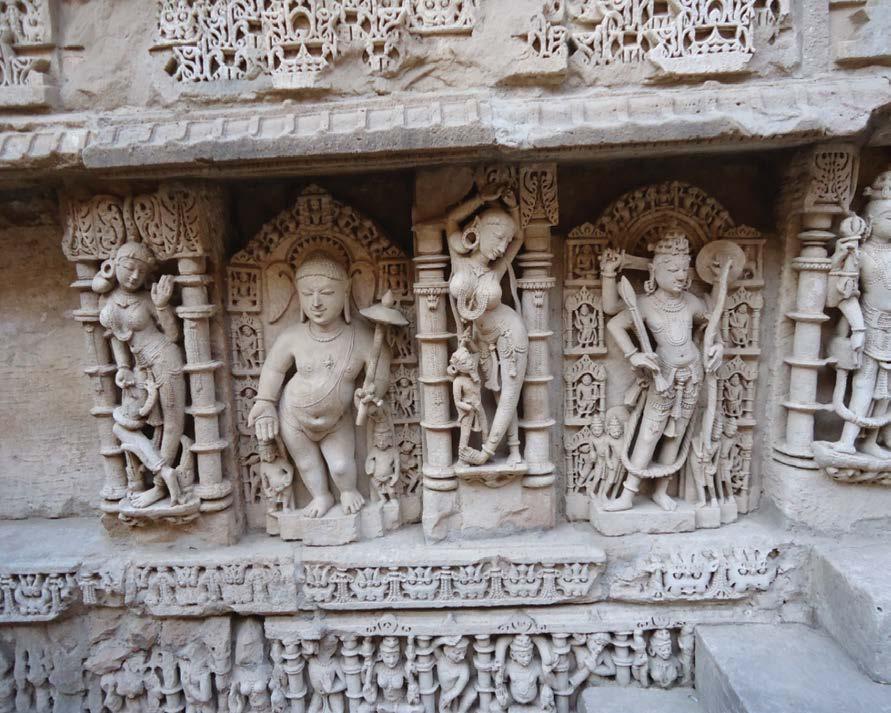
Almost all the intricate sculptures are visible now, including endless rows of sculptured panels in the circular part of the well. The pillars are proof not only of the elegance of their design but also a tribute to the engineering abilities and visualization skills of the artisans.
Stepwells are subterranean structures with steps leading down to the water level and are found in large numbers in the arid regions of Gujarat and Rajasthan.
Where to stay
Patan is a religious place, and there are several pilgrim shelters, where one can stay the night. Budget hotels ranging from Rs. 500/- to Rs. 1000/- are found near the bus station.
How to reach
The nearest airport to Patan is Ahmedabad. The 135 km drive from Ahmedabad to Patan takes about 180 minutes. Patan has a railway station and is also connected by trains.
Where to eat
Lots of small restaurants serving Gujarati cuisine are found in Patan and all along the highway from Ahmedabad to Patan. Hot Bajra (millet) rotis are served with potatoes, fenugreek, and brinjals cooked in a mild gravy flavored with cumin. Macrobiotic vegans can get a variety of fruits and vegetables at the local market.
A part of the west well is extended from which it appears that the wall had been built in brick and laced with stone. From this wall, projections of vertical brackets can be seen. These brackets support the different galleries of the well shaft. This bracketing is arranged in tiers and is richly carved. There is also a small gate below the last step of the stepwell, which has a 30-kilometer tunnel leading to the town of Siddhpur near Patan.
This tunnel was used by the kings as an escape gateway in times of defeat. Most of the sculpture is in devotion to Vishnu, in the forms of his avatars - Krishna, Rama, etc, representing their return to the world. Around 50 to 60 years ago, there used to be lemongrass around this area, which made the water in the well alkaline. This alkaline lemongrass-flavored water accumulated in the stepwell is good for health.
After entering Patan city, one encounters a fort with a wall running around the old city. One has to drive along the wall to be led to this step-well. Giant trees protect this monument like soldiers guarding a king. Lots of migratory birds have made their homes on these giant trees and sing their flowery tunes at dawn. The walk down the stepwell offers a bird's-eye view of the well. But as we descend the steps, we can experience poetry etched in stone. Delicate sculptures of plants, animals, gods, goddesses, nymphs, and serpents adorn the walls of this stepwell.
The story of Lord Vishnu's ten incarnations is sculpted in stone here. Starting from Matsya (Fish)
and ending with Kalki (on a horse with a sword), destroying the forces of evil. As you descend the steps, you reach a short tunnel which leads to the water.
More than 800 sculptures form a remarkable backdrop to what was purely a functional structure. The Vav is laid out in an east-west direction, with the entrance in the east and the well in the west. The entrance, the side walls of the stepped corridor, some of the "mandapas' and the back wall of the well are majestic.
Five lateral, staggered staircases attached to these side-walls connect the various storeys. The Vav is very rich in sculptures. Each level is profusely adorned with carved friezes and deities. Sculptures of deities in recessed and projecting niches cover all sides of the well. The lowest level has 37 niches with rudimentary images of Lord Ganesh in the centre. The images of Sheshashayi Vishnu in the central niches, on the upper levels, are more elaborate. Also, on the upper levels, are impressive images of Laxmi-Narayana, Uma-Mahesh, Brahma-Brahmi, and Kuber and Ganesh, with their respective consorts.
Menon is the author of ZeNLP books and conducts storytelling workshops based on his works on eschatology. He can be reached at ceo@tips4ceos.com
Rani ki Vav – where the stones breathe life.
The stepwell houses numerous sculptures, most of them in devotion to Lord Vishnu and his incarnations. (Photoscourtesyoftheauthor)
Murli
Navlakha temple at Sejakpar – A poetry in stone
By Murli Menon
Nestled in the Kathiawar peninsula of Gujarat, Sayla offers a serene escape into heritage and nature. In Gujarati, Sayla is commonly known as Bhagat nu Gam. My stay at Bell Guest House, a charming heritage homestay, provided a deep insight into Kathiawari culture and Gujarati hospitality of this erstwhile princely state.
Located just 150 km from Ahmedabad—a smooth 150-minute drive—Sayla sits 400 meters above sea level, ensuring a refreshing nip in the air even in September. Sayla, Lothal, and Wadhawan were coastal cities, but after the sinking of Dwarka, they became landlocked savanna grasslands, surrounded by the silver desert of Kutch and the Aravallis.
Our journey began with "lake hopping" to Mansarovar Lake, located 3 km from my homestay. This lake is a magnet for migratory birds from the Northern China, Tibet, and Siberia from September to February. During the fifteen-minute drive, we sighted flocks of Black-Headed Ibis and later, Lesser Flamingos.
Nearby, the Kashi Vishwanath Temple stands guarded by ancient neem and peepal trees. Basking in the primordial energy of these giant trees while circumambulating this intricately carved temple built by the erstwhile royal family was a divine experience.
The surrounding grasslands, or veed in Gujarati, are home to blue bulls, peacocks, and grey francolins. For the adventurous, night treks offer the thrill of sighting blue bulls in pitch darkness or stargazing to see Saturn and Venus from a traditional rope bed in the veed. Bajra (pearl millet), Wadhwani Marcha (capsicum), and Chuda red chillies (mild red chillies) grow in the farmlands of Bhagat nu gam.
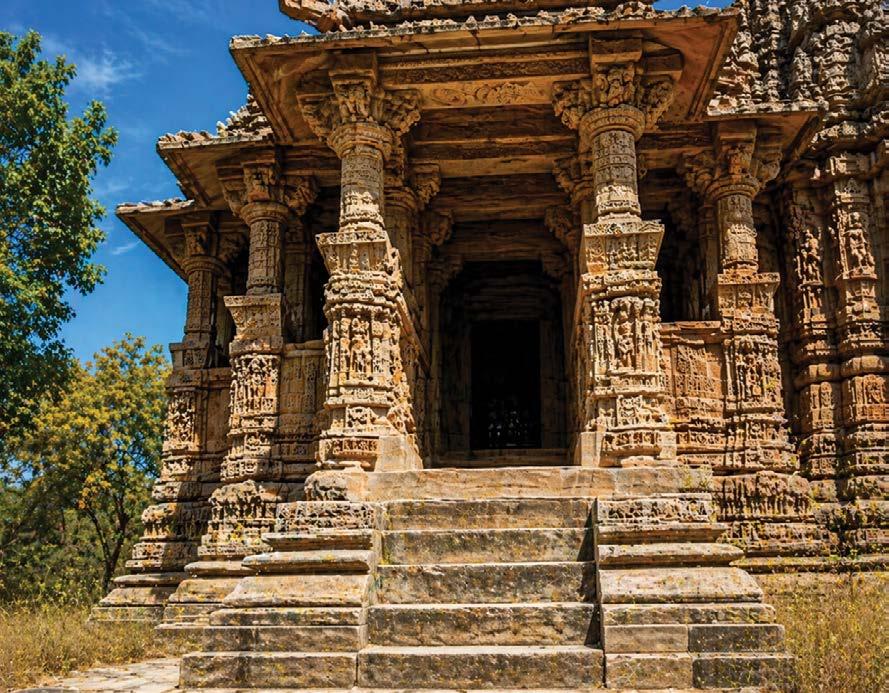
Located 25 km from Sayla is the undiscovered architectural marvel of Sejakpar - the Navlakha temple. Dating back to the 11th century and built by the Solanki rulers, this one-thousand-year-old Shiva temple is a masterpiece of Maru-Gurjara style architecture. The name "Navlakha" suggests it was built at
Dating back to the 11th century, the
a cost of nine lakh (nine hundred thousand) gold coins, though some locals also attribute the name to the "nine hundred thousand" intricate doll sculptures and carvings that ornament the stone walls of the Navlakha temple.
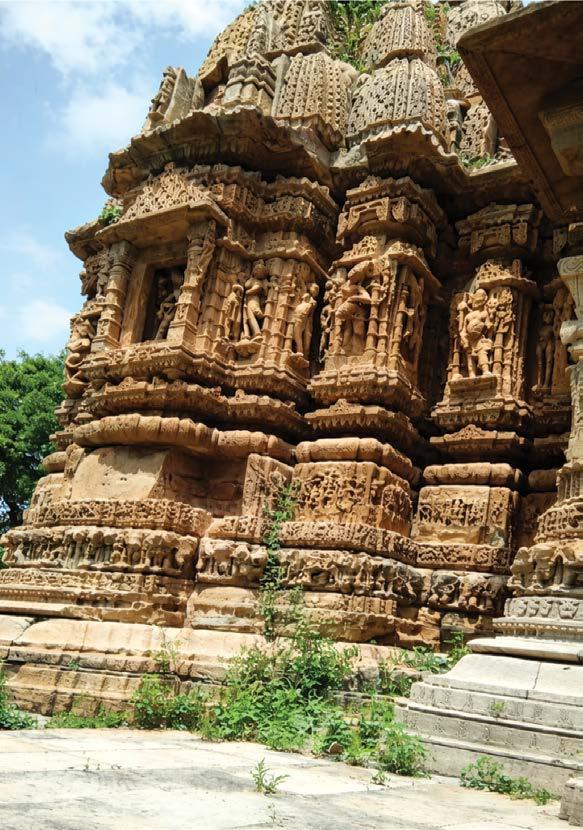
Each of these nine hundred dolls is sculpted so intricately that each one appears distinct from the others. The language of stone defeats spoken language at the Navlakha Temple. This temple sits adjacent to a thousand-yearold neem tree, its roots seemingly intertwined with the history of the site. Every inch of the exterior is covered in detailed carvings— deities, celestial dancers (apsaras), and mythical creatures that seem to come alive when the sun hits the stone.
The temple is built on a high plinth (pitha), and its sanctum is surrounded by an ambulatory path where devotees can bask in the energy of the ancient structure.
Unlike the more famous Somnath or Modhera, Navlakha remains a hidden treasure, often secluded and quiet. The cobalt-blue sky provides a stunning backdrop to the
weathered stone, offering endless photo opportunities. The silence of the surrounding countryside, broken only by the rustle of the ancient neem leaves, adds to the temple's primordial aura.
It is not just a place of worship but a testament to the unparalleled craftsmanship of ancient Gujarat, standing undisturbed through centuries of history.
DINING
The Bell Guest House serves traditional Kathiawari cuisine. Highlights include Sayla Rotla (a delicious secret mix of Jowar and Bajra), served with coriander chutney and bharwan baingan. For vegans, fresh watermelon juice and ginger infusions are available.
ACCOMMODATION
The guest house, managed by Thakoresaheb Somrraj Singh Jhala and his wife, features six heritage suites with rustic decor and personalized service that rivals heritage homestays of Rajasthan.
GETTING THERE
• By road: 150 km from Ahmedabad (3 hours); 70 km from Rajkot (1 hour).
• By train: Nearest stations are Surendranagar or Limbdi (35 km away).
NEARBY ATTRACTIONS
The famous Chamunda Mataji Temple at Chotila Shaktipeeth is only 35 km away, making Sayla a perfect base for pilgrims, wildlife fans, birdwatchers and heritage travelers alike.
otherworldly experience. The horizon blurs into mirages, and the dust kicks up behind the jeep as you track herds of these golden-fawn animals. The safari also reveals diverse birdlife and desert foxes, making it an essential adventure for wildlife enthusiasts visiting Sayla.
To understand the landscape of this region, one must visit the Agariyas, the traditional salt farmers. Living in makeshift huts for eight months of the year, the Agariyas endure harsh conditions to harvest 75% of India’s salt. A visit to their "salt farms" is a humbling experience. You see the vast white expanses where brine is pumped from the earth and evaporated in large square pans. The hospitality of the Agariyas is legendary; despite their arduous work, they welcome visitors with warm smiles, explaining the meticulous process of raking the salt crystals until they reach the perfect purity.
A short distance from Sayla lies the gateway to the Little Rann of Kutch, home to the Gudkar Safari. This safari is dedicated to sighting the Indian wild ass, locally known as Khur or Gudkar. These magnificent creatures are among the fastest Indian animals and are found nowhere else on Earth.
Driving across the vast, cracked saline desert of the Rann is an
Murli Menon is the author of ZeNLP books and conducts storytelling workshops based on his works on eschatology. He can be reached at ceo@tips4ceos.com
Navlakha Temple was built by the Solanki rulers.
The Navlakha Temple, dedicated to Lord Shiva, shines for its intricate design and architectural brilliance.
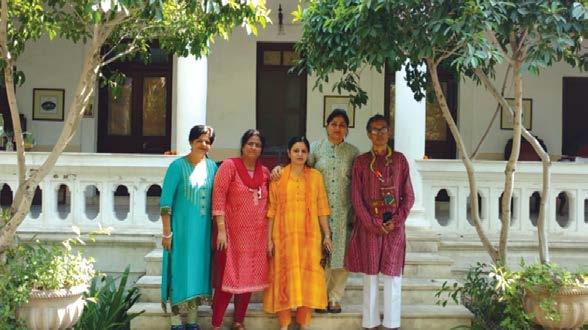
Guests at the entrance of Bell Guest House, a heritage homestay in Sayla. (Allphotoscourtesyoftheauthor)
Exploring the magnificent Shiva temple at Thiruvanaikaval
By Murli Menon
Ihavejust returned after a memorable trip to Tamil Nadu, the ancient kingdom of the Cholas. The visit lasted a few weeks, but its memory will last a lifetime. In Tamil Nadu, I visited many ancient architectural wonders, including the magnificent Shiva temple at Thiruvanaikaval on the banks of the Kaveri River, near Tiruchirapalli. This ancient treasure offers a great experience to Indian families who want to spend a blissful day away from the vagaries of stressful life.
At Ekambareshwar, Lord Shiva is represented as the water element in a lingam that floats on the waters of Kaveri, which reaches the lingam through an underground spring. A 500-year-old neem tree is located outside the temple. Devotees are expected to wake up between 2 am and 4 am to take a dip in the Kaveri and walk to the temple for the morning prayers that start at 6 am.
There are five temples dedicated to Lord Shiva, and each represents the deity as one primordial element, namely Jambukeswarar (water) at Thiruvanaikaval, Natarajar (sky) at Chidambaram, Arunachaleswara (fire) at Thiruvannamalai, Kalahasti Nathar (wind) at Srikalahasti, in addition to Ekambareshwar. These temples were constructed 1400 years ago and are living proof of the ancient wisdom of our ancestors.
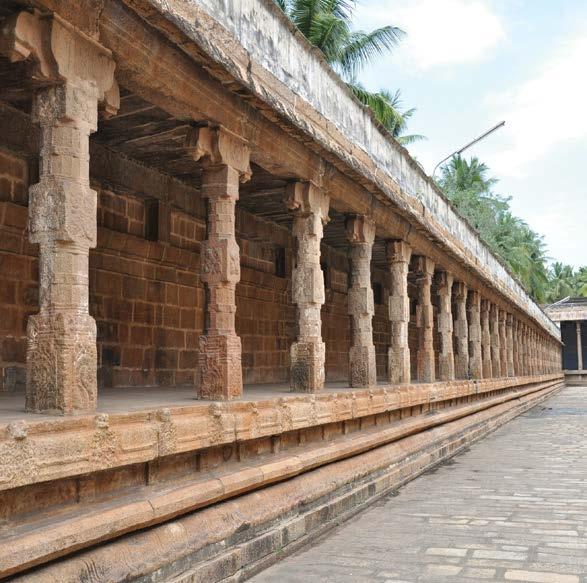
The Thiruvanaikaval temple has several hundred stone sculptures that are over 10 feet tall. There are hundreds of pillars in the inner courtyard, which stretch from one end of the temple to the other.
The magnificent stone temples, dedicated to Lord Shiva, as fire, water, earth, wind, and sky, stretch from Srikalahasti to Ekambareshwar to Chidambaram to
Thiruvanamalai. Most of the sculptures are in devotion to the Hindu Gods, Vishnu, Rama, Shiva, and Ganesha, in giant monolith slabs of rock. In the 10th century, these rocks were transported hundreds of kilometres across such rocky terrain.
Watching the reflection of the golden sunlight over the temples of Thiruvanaikaval is an unforgettable experience. Out of the hundreds of sculptures, a few that stand out include the giant stone sculpture of Nandi outside the shrine. The
How to get there
Precautions
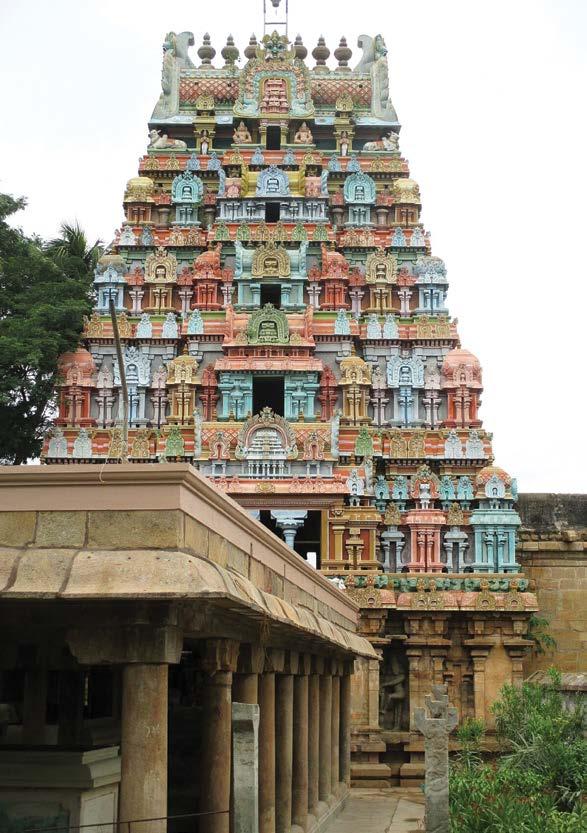
gopuram is equally majestic and can be seen from miles afar, looking white as snow against the clear blue skies.
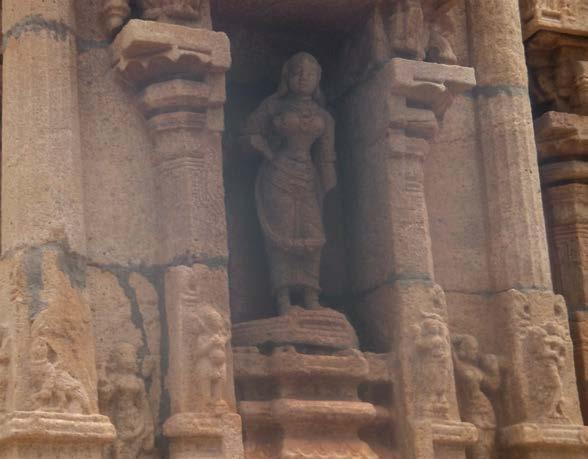
The Apsaras (celestial nymphs) and dwarapalaka (guardians of the temple) statues are fine examples of intricate architecture. There are several giant statues inside the temple, sculpted from monoliths transported from hundreds of kilometres away a thousand years ago.
Wandering through the giant sculptures at Thiruvanaikaval is a testament to ancient Vedic wisdom. As one explores the temples, one can experience poetry etched in stone. Delicate sculptures of plants, animals, gods, goddesses, nymphs, and serpents decorate the walls of temples in endless rows. The temple has colorful, giant figurines of animals, birds, and trees representing cosmic unity.
Each level of this temple is profusely adorned with carved friezes and deities. Sculptures of deities in recessed and projecting niches cover all sides of the temple. The lowest level has many niches with rudimentary images of Lord Ganesh in the centre. The images of Sheshashayi Vishnu in the central niches, on the upper levels, are more elaborate.
If you really want to explore Thiruvanaikaval, reserve a full day
The nearest international airport to reach Thiruvanaikaval is at Tiruchirappalli. There are several options for Indian tourists to get to Thiruvanaikaval from Tiruchirappalli. By bus, this 7 km trip takes 15 minutes. There are several local trains available to Tiruchirappalli from Chennai. The Thiruvanaikaval temple is 7 km away from Tiruchirappalli Railway Station.
Where to stay?
Star Lodge at Thiruvanaikaval is an ideal place to stay, which is a value-for-money proposition. One can pay Rs. 200/for a single bed with common bathrooms. Rooms are tiny and can comfortably accommodate a single person, and the bathrooms are clean.
Where to eat?
Many restaurants serving pure vegetarian South Indian cuisine dot Kanchipuram. Freshly steamed idlis, served with coconut chutney, are a local dish. Fresh fruits, including mangoes, tender coconuts, bananas, and jackfruits, are available at the local market.
for exploring the temple. Every sculpture here is a living tribute to the ancient wisdom of Vedic India. The language of stone indeed defeats the language of man. Also, on the upper levels of the temple are impressive images of Laxmi-Narayana, Uma-Mahesh, Brahma-Brahmi, and Kuber and Indra, with their respective consorts.
Thiruvanaikaval is a religious place, and there are several pilgrim shelters, where one can stay the night for free. Do not pay touts or middlemen who will accost you at the bus and railway stations. Ask for the way to Hindu Dharamshala or Gujarati Satram, both of which offer comfortable rooms with attached bathrooms for free (you can make a voluntary donation if you wish) and are located a short walk away from the temple.
Avoid high-profile hotels, including those run by the tourism department, as they are exorbitantly priced during the rainy season, a low season for tourism. Do not hire two-wheelers or bicycles to move around Ekambareshwar, as they often lose your identity cards, which the hiring shops retain as security.
The temple is within walking distance of most guest houses and pilgrimage homes. Avoid the modern ashrams of “so-called” gurus, as theft is common here, besides being forced to shell out exorbitant donations for overcrowded dormitories with untidy bathrooms.
eschatology. He can be reached at ceo@tips4ceos.com
Murli Menon is the author of ZeNLP books and conducts storytelling workshops based on his works on
The Jambukeswarar Temple at Thiruvanaikaval is one of the five major Shiva Temples of Tamil Nadu, representing the five elements. (Photo:WikimediaCommons)
The second precinct of the temple. (Photo:WikimediaCommons)