
MICHELLE EGGLESTON SCHWARTZ, CPTM
MICHELLE EGGLESTON SCHWARTZ, CPTM

EVERY WELL-DESIGNED PROGRAM, COACHING CONVERSATION AND STRETCH ASSIGNMENT SENDS AN IMPORTANT MESSAGE TO EMPLOYEES: YOUR DEVELOPMENT MATTERS.
The answers to what motivates and inspires employees are unique because people are unique. What drives one employee may deter another. What energizes one person might leave someone else overwhelmed. Some employees thrive when given autonomy and opportunities to experiment, while others seek structure and a clear path forward.
For learning and development (L&D) professionals, that reality can feel daunting. If every learner is different, how can we possibly create experiences that engage everyone?
The answer begins with understanding the people we serve. Without a clear understanding of employees’ challenges, aspirations and day-to-day realities, L&D is left guessing. We may build programs with the best intentions, but if learning doesn’t address real needs, solve real problems or support meaningful growth, engagement will always remain elusive.
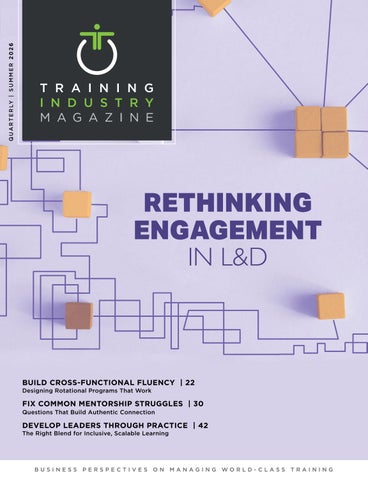
This issue of Training Industry Magazine explores what it means to rethink engagement and create learning experiences that truly matter. Inside, you’ll find insights on accelerating earlycareer talent through rotational programs, reigniting mentoring relationships when they lose momentum, designing peer-to-peer learning that scales and understanding what actually inspires employees to learn.
Engagement has become one of those workplace buzzwords that appear in nearly every strategy document, leadership presentation and conference agenda. Yet beneath the buzz is a very real challenge. Organizations need engaged employees
to solve problems, generate ideas, adapt to change and move the business forward. When engagement is missing, work can become transactional. Employees complete tasks, check boxes and move on. The creativity, curiosity and initiative that drive innovation begin to fade.
In today’s environment, organizations simply can’t afford that kind of stagnation. Fortunately, L&D has an opportunity to influence engagement in meaningful ways. Learning is one of the few organizational functions dedicated entirely to helping people grow. Every well-designed program, coaching conversation, mentoring relationship and stretch assignment sends an important message to employees: Your development matters.
And while the specific things that motivate each of us may differ, there is something remarkably universal about the desire to learn, improve and make progress. People want to feel capable. They want to contribute. They want to see a future for themselves. That’s where L&D can make all the difference.
I hope the articles in this issue spark new ideas, challenge old assumptions and provide practical strategies you can apply within your own organization. Most of all, I hope they remind you that engagement isn’t something we create for employees. It’s something we unlock by understanding them, investing in them and helping them grow.
Michelle Eggleston Schwartz, CPTM, is the editor in chief of Training Industry, Inc., and co-host of “The Business of Learning,” the Training Industry podcast. Email Michelle.


FIX COMMON MENTORSHIP STRUGGLES 42

DEVELOP LEADERS THROUGH PRACTICE
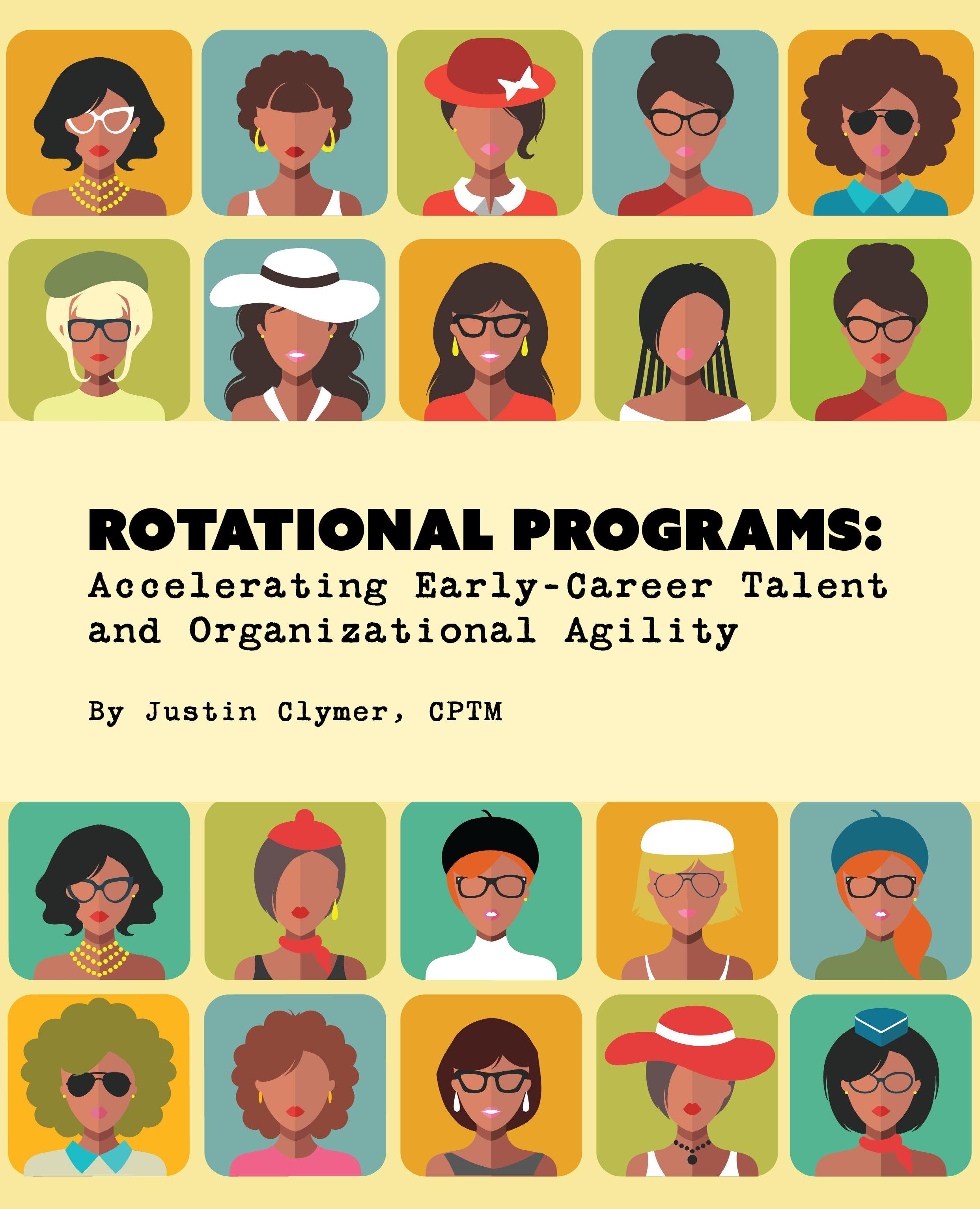
ROTATIONAL PROGRAMS: ACCELERATING EARLY-CAREER TALENT AND ORGANIZATIONAL AGILITY
By Justin Clymer, CPTM
How to create a program that breaks down silos and drives operational efficiency.
WHAT’S THE DEAL WITH NUDGE LEARNING?
By Kate Frear
Help people make better choices without taking away their freedom.
WHEN MENTORING STALLS: HOW TO REIGNITE PROGRESS AND PURPOSE
By Wendy Brenes
The right questions can deepen connections and get struggling mentorship relationships back on track.
THE ARCHITECTURE OF TECHNICAL LEARNING: SYSTEMS THINKING FOR SCALABLE TRAINING
By DJ Jaeger
How to shift the L&D team from content builders to learning ecosystem designers.
FROM THE EDITOR
By Michelle Eggleston Schwartz, CPTM
LEARNING LEADER SPOTLIGHT
By Carrie Berg, CPTM
L&D CAREERS
By Amy DuVernet, Ph.D., CPTM
SCIENCE OF LEARNING
INTERLEAVING FOR IMPACT: A NEUROSCIENCE-INFORMED LEARNING STRATEGY
By Trevor Cox, Ph.D.
Learning becomes deeper when concepts are revisited in new contexts.
OSF: A MODERN LEARNING MIX THAT IMPROVES LEADERSHIP DEVELOPMENT AND BUSINESS OUTCOMES
By Sabrina Rock, CPTM
Leadership develops on the job, not in a classroom. Learn how everyday work supports learning goals.
HOW ORGANIZATIONS INSPIRE EMPLOYEES TO LEARN
By Sarah Coley
Help employees engage with learning by developing a support system within the organization.
WHAT’S NEXT IN TECH? By JD Dillon 3 9 11 13 15 57 59 61 34
By Srini Pillay, M.D.
CAREER DEVELOPMENT
By Julie Winkle Giulioni
CULTURE AND WELL-BEING
By Dr. Kristal Walker, CPTM
BUILDING LEADERS
By Marshall Goldsmith and Suzie Bishop
20 51 54
UPSKILLING
By Eftychia Koutsagkoulaki
Peer-led learning that scales.
HOW-TO
By Loren Sanders, CPTM
Get learning out of the classroom.
STRATEGIES
By Kiara Graham
How to design campaign-style learning.
PERSPECTIVES
By Ann Stott, CPTM
Learn how leaders are really made.


CASEBOOK By Emma
Heaps
What a values-led culture looks like in practice.
CLOSING DEALS
By Sarah Gallo, CPTM
Alchemist Group Expands Capabilities and Scale With Acquisition of The Experiential Learning Group
COMPANY NEWS
Review the latest training news from the last quarter.
CEO
Ken Taylor ktaylor@trainingindustry.com
EDITOR IN CHIEF
Michelle Eggleston Schwartz meggleston@trainingindustry.com
SENIOR EDITOR
Sarah Gallo sgallo@trainingindustry.com
SENIOR EDITOR
Carla Rudder crudder@trainingindustry.com
VP OF BRAND STRATEGY
Amanda Longo alongo@trainingindustry.com
SENIOR DESIGNER
Mary Lewis mlewis@trainingindustry.com
BRAND MANAGER
Kellie Blackburn kblackburn@trainingindustry.com
DESIGNER
Rylee Hartsell rhartsell@trainingindustry.com
ADVERTISING SALES sales@trainingindustry.com
MISSION
Training Industry Magazine connects learning and development professionals with the resources and solutions needed to more effectively manage the business of learning.
JUDI BADER, CPTM Senior Director of Culture, Learning and Development Willy’s Mexicana Grill
BARBARA JORDAN, CPTM Group Vice President, Global Learning & Development Sims Metal Management
CATHERINE KELLY, MA, BSN, RN, CPTM Director of Learning Programs Brookdale Senior Living
SHIREEN LACKEY, CPTM Senior Management and Program Analyst, Office of Business Process Integration Veterans Benefits Administration
SCOTT NUTTER Principal/Owner Touch & Go Solutions
MATTHEW S. PRAGER, CPTM Executive Training Manager U.S. Government
MARC RAMOS
Global Head, Learning Strategy and Innovation ServiceNow
KELLY RIDER Chief Learning Officer PTC
DR. SYDNEY SAVION Vice Chancellor for People, Culture & Belonging Vanderbilt University
KERRY TROESTER, CPTM Director, North America Sales Training Lenovo
NATASHA MILLER WILLIAMS Head of Diversity & Inclusion Ferrara
KEE MENG YEO
Adjunct Professor Grand Valley State University & Davenport University
SUBSCRIPTIONS
ELECTRONIC: Sign up at TrainingIndustry.com to receive notification of each new digital issue.
PRINT: Print copies are available for purchase at magcloud.com for $17.95.
To order reprints of articles, please contact Training Industry at editor@trainingindustry.com.
PUBLISHER
Training Industry Magazine is published quarterly by:
Training Industry, Inc. 110 Horizon Drive, Suite 110 Raleigh, NC 27615-6520

CARRIE BERG, CPTM
In this issue, we are pleased to spotlight Carrie Berg, a learning and talent executive with over 20 years of experience in learning and development (L&D), most recently serving as vice president of learning and talent at Teladoc Health. Carrie was drawn to L&D when she saw how the right support can truly boost someone’s confidence and career trajectory. Today, she leads businessfocused learning initiatives that help people succeed in real moments and is deeply committed to advancing workplace culture and leadership excellence.
Read on to learn about Carrie’s career journey.
Q: HOW DID YOU GET STARTED IN L&D?
A: I started in sales and marketing and kept getting pulled into training others. I realized my sweet spot was taking complex topics and making them easier to understand. I also deeply cared about developing people to reach their goals. I enjoy watching others succeed.
Q: WHAT’S YOUR MOST MEMORABLE TRAINING EXPERIENCE, GOOD OR BAD?
A: Early in my career, I delivered a program that looked great but didn’t change behavior. It was pretty on the page and clear in concepts, but the audience did nothing different when they walked out the door. That taught me a lasting lesson: if it doesn’t translate to the job, it doesn’t matter.
Q: WHO IS YOUR MOST VALUABLE ROLE MODEL?
A: My mom. She led with consistency, humility and always put others first. She showed me that how you treat people matters just as much as what you accomplish.
Q: WHAT ARE THE MOST PRESSING ISSUES ON YOUR PROFESSIONAL PLATE RIGHT NOW?
A: Too much content with too little impact. Organizations are guilty of overproducing learning while underdelivering on performance. And so many are trying to drive an artificial intelligence (AI) strategy that they are ill-equipped to actually build or really understand. It is one thing to speak it, another to execute upon it.
Q: WHAT’S THE MOST CHALLENGING ASPECT OF YOUR JOB?
A: Cutting through noise and competing priorities to focus on what actually drives performance. Not everything deserves a training solution. Also, getting people to see they have places where they can improve is a challenge. A high performer is not perfect.
Q: WHAT’S THE MOST REWARDING ASPECT OF YOUR JOB?
A: Seeing someone lead more confidently or approach a situation differently because of something I built or something I demonstrated is the most rewarding aspect of my job. That shift is what makes the work meaningful. Turning the dial from fear to curiosity is key!

Q: WHAT’S YOUR PREFERRED TRAINING METHODOLOGY?
A: Practical, applied learning: real scenarios, real conversations and reinforcement over time. If people can’t use it immediately, it won’t stick.
Q: HOW DO YOU FIND THE TIME TO CONTINUE YOUR OWN PROFESSIONAL DEVELOPMENT?
A: I learn more from conversations, coaching and real-world application than from formal programs. I also stay close to business challenges because they’re the best teachers. Reading, podcasts, news and LinkedIn posts are all ways to gain nuggets of information.
Q: ANY RECOMMENDATIONS FOR FOLKS OUT THERE: BOOKS, PARTNERS, RESOURCES, ETC.?
A: Stay connected to your business, not just the L&D field. Resources like Training Industry are great, but the real insight comes from understanding how work actually gets done in your organization. And knowing where you could plug in to help is even better! Be an operator first and a designer second.
Q: “IF SOMEONE WANTS TO FOLLOW IN MY PROFESSIONAL FOOTSTEPS, I’D TELL THEM TO BE SURE TO …”
A: Don’t fall in love with learning for its own sake. Stay focused on performance, outcomes and the people you’re trying to support. Be willing to change what is ineffective.
Move beyond theory and into action with collaborative, workshop-style sessions built for learning leaders.
Explore the Agenda


AMY DUVERNET, PH.D., CPTM

Learning and development (L&D) professionals spend their careers helping others learn, grow and adapt. The irony is that we often struggle to stay intentional about our own professional development. Like our learners, we face competing demands that feel more urgent than our own development. And yet, staying engaged in our own growth is more important than ever. In Training Industry’s recent State of Professional Development survey, 65% of respondents said artificial intelligence (AI) has increased or changed their professional development needs.
1. DEFINE WHERE YOU ARE GOING.
Career engagement starts with direction. Ask yourself:
• What professional development am I already doing, and is it intentional?
• What are my biggest challenges in my current role? And what skills would help me address them?
• What are my longer-term career goals?
• What skills or experience gaps may be preventing me from reaching those goals?
• What experiences do I need to seek out to prepare for my next role?
• How is my performance viewed by my manager, stakeholders, peers and direct reports?
Without direction, professional development can become a collection of disconnected activities. These questions can help turn it into an intentional practice.
2. BE SELECTIVE AND REALISTIC.
Staying engaged in your development doesn’t mean chasing every trend or attending every webinar. In our research, L&D professionals rated the more substantial development experiences (i.e., advanced degree, professional
certification, conference and vendorprovided instructor-led course) among the most valuable. These options often require more planning and investment, so consider:
• Is this directly applicable to my current or aspirational role?
• Will this help me address a real challenge at work?
• Will I learn from experienced facilitators and engage with peers?
• Is the content research-based?
• Will I leave with tools, templates and frameworks?
• Will this help me build evidence of growth, such as improved performance, expanded responsibilities or increased credibility?
Being selective means making sure your development choices build toward something.
BEING SELECTIVE MEANS MAKING SURE YOUR DEVELOPMENT CHOICES BUILD TOWARD SOMETHING.
3. BUILD ENGAGEMENT INTO YOUR ROUTINE.
We know that learners benefit from reminders, reinforcement, accountability, manager support and opportunities to apply new skills in the flow of work. The same is true for us.
If your development plan depends on finding extra time someday, it is unlikely to happen. Instead, make professional growth part of your regular rhythm:
• Block time for learning.
• Set reminders to revisit key resources.
• Join a peer group or professional community.
• Ask a manager or mentor to help hold you accountable.
• Choose one skill to practice in your current work.
• Capture examples of how you are applying what you learn.
• Schedule brief reflection time after major projects to capture lessons learned and next steps.
• Share what you are learning with your team or network to reinforce your own learning.
Over time, those behaviors keep you connected to the field and actively engaged in your own growth.
4. REVISIT YOUR PLAN OFTEN.
As time goes on, your goals may change. The capabilities you need to succeed at work may change. As technology, business needs and learner expectations evolve, the L&D profession itself will continue to change.
Treat your development plan as a living document. Set reminders to revisit it regularly. Ask yourself: what has changed in my role? What skills have I strengthened and what gaps remain? What new opportunities should I pursue next? Find a peer who will do the same so you can hold each other accountable.
As we rethink engagement in L&D, we can’t limit the conversation to learner participation or program design. In a profession built around learning, career engagement is part of staying credible, adaptable and prepared to lead.
Amy DuVernet, Ph.D., CPTM, is the vice president of learning products at Training Industry, Inc., where she oversees all processes related to Training Industry’s courses for training professionals, including program development and evaluation. Email Amy.
Unlock exclusive, members-only events where you can:
• Connect with forward-thinking peers
• Stay ahead of emerging industry trends
• Access insider expertise from Training Industry’s research and editorial teams
Training Industry Membership puts you at the center of what’s next in L&D.
Start leading what’s next.


Imagine a 45-year-old learner in a blended environment, moving between artificial intelligence (AI)-driven online modules and thoughtful in-person sessions. The learning management system tracks everything: time on task, clicks, participation and adaptive pathways that respond to her behavior. From the outside, she appears fully engaged — present, responsive, progressing. But internally, her attention drifts, curiosity flickers and effort fluctuates.
This is the part traditional models miss. As Halverson and Graham argue, engagement is not defined by observable activity but by the learner’s cognitive and emotional energy — the invisible investment of attention, effort, curiosity and affect that actually drives learning outcomes.
For example, millions of TikTok or Instagram views don’t mean people are truly paying attention. External behavior can signal activity but not engagement. A learner can move seamlessly through module after module — just as someone scrolls through TikTok or Instagram — appearing active while taking in almost nothing at all.
Your brain constantly processes a flood of information, but only a small fraction becomes a memory. At specific moments, when something feels important, emotional or attentiongrabbing, particular groups of brain cells fire together in coordinated patterns, and those patterns are what get stored. Research shows that even during the same experience, different groups of neurons are activated at different times, and only some of these groups are later used to recall the memory.
To form these memory patterns, brain studies show that the brain must enter a specific coordinated state, not just receive information. For example, research on cortisol shows that when something is emotionally engaging, the brain’s arousal networks (what grabs your attention) and memory networks (what stores information) begin to overlap and work more tightly together. In this state, the brain prioritizes what feels important and tunes itself to encode that information more strongly. What this means is that learning is not just about exposure; it’s about whether attention, emotion and memory systems are aligned simultaneously.
There’s another implication here. Engagement happens in brief, high-quality moments. The brain doesn’t encode everything; it selects. Which means most learning experiences are judged not by their length or completeness, but by whether they create even a few moments where attention, meaning and relevance truly converge.
1. Stop measuring completion. Start measuring impact. Completion tells you someone showed up, not that anything stayed. Instead of “100% finished the module,” ask: “What’s one thing you used this week?” to track whether a behavior changed.
2. Force relevance early. If the learner doesn’t see why it matters, the brain won’t prioritize it. Open with: “Where does this show up in your job this week?” or “What problem is this solving for you right now?” — before teaching anything.
3. Create stakes. The brain encodes what feels consequential, not what feels
SRINI PILLAY, M.D.

optional. Present a real scenario: “If you handle this conversation poorly, you lose the client. What do you do?” Now it matters.
4. Interrupt passive flow. Smooth, frictionless learning often leads to shallow processing. Instead of letting learners click “next,” pause and ask: “What would you do here?” before revealing the answer.
5. Require a decision, not just exposure. Memory strengthens when the learner takes a position. Give two options and force a choice: “Which strategy would you use and why?” Then show consequences.
6. Align attention, emotion and meaning in the same moment. This is when the brain encodes. Tell a short, relatable story, then ask: “Have you experienced this? What did you do?” — linking feeling, relevance and reflection.
7. Engage the body to reinforce the brain. Learning is not just cognitive. Physical state directly shapes attention and memory. Before a key concept, ask learners to pause, take one slow breath and notice: “Where do you feel this in your body?”
If the learner never has a moment where something feels relevant, slightly urgent and personally meaningful, they can complete everything — and remember nothing.
Dr. Srini Pillay is the CEO of NeuroBusiness Group. He is a Harvardtrained psychiatrist and neuroscientist, on the Consortium for Learning Innovation at McKinsey & Company and author of “Tinker Dabble Doodle Try.” Email Srini.


Read the reviews of learning and development (L&D) professionals who achieved their career goals with Training Industry’s Certified Professional in Training Management (CPTM™) program.
“I am new in the role, as the first plant training manager for a national food manufacturing brand. The knowledge and tools I have gained during the process of acquiring my CPTM [credential] have provided me with both the framework and confidence to structure and develop a high-performing training and development program that is strategically aligned with our operational objectives.”
— Dave Stewart, CPTM, plant training manager, McKee Foods
“I don’t have the traditional educational background that most professionals do but have an extensive training background from my time in the military. For five years, I was having a difficult time overcoming the educational gap and translating my military experience into a training position. I’m proud to say that only two months after obtaining my CPTM certification, I was offered and accepted a training position!”
— Wade Watson, CPTM, supply chain operations training and development specialist, SCA
Your career goals are waiting! Get started on your path to L&D success with the CPTM program.
“I had been in the Training industry for over 20 years when I signed up and was absolutely floored by how much I was learning. So many of my experiences had no name before I took the CPTM and now they do. I could not find a better use of my time than this program, period.”
— Jeff Emanuelli, CPTM, vice president of people management and development, SMBC MANYUBANK

I was recently driving with the family when the conversation turned to planking. We each shared our preference for hands or forearms (hands won) and compared how long we could hold a plank maintaining proper form (I lost). I found myself wondering out loud about how long a human being could actually do this. Within six seconds, the answer emerged from the backseat, “9 hours, 38 minutes and 47 seconds for a man and 4 hours, 30 minutes and 11 seconds for a woman.” End of discussion. Literally.
What, in the past, would have entertained us for quite a while — speculating which muscles might fail first or strategies for distracting oneself from the pain — didn’t happen because of one frictionfree answer. And it got me wondering … about the effect of artificial intelligence (AI) on wondering.
THE IMPACT OF AI
The simple act of wondering doesn’t just yield information. It sets off a journey of discovery that demands patience and focus. It builds the emotional regulation required to sit in the sometimes uncomfortable soup of confusion. It forges neural pathways because of the silent collaboration of the subconscious. And it produces those peak “aha” moments that are profoundly satisfying and build the confidence to wonder yet again.
That loop — struggle, breakthrough, grow — is one of the most distinctly human experiences available to us. By outsourcing (or at least short-circuiting) it, we’re losing two things, and they’re not equal.
The first is the skill. There’s considerable public debate about AI’s weakening of the cognitive muscle required for deep, sustained thinking. That needs to be taken
seriously, but it’s recoverable. As learning and development (L&D) professionals know well, a skill can be rebuilt when the will exists.
WE’RE NOT BEING FORCED OUT OF WONDERING. WE’RE BEING GENTLY, PLEASURABLY SEDUCED OUT OF IT.
The second loss is more dangerous. We’re losing the motivation to wonder — the appetite to volunteer our time, energy, attention and patience to a question that won’t answer itself. When instant answers become the norm, our tolerance for friction recalibrates. Extending the exercise metaphor, the weight gets lighter. The muscle atrophies. And eventually we stop even reaching for the heavy things — not because we’ve decided to, but because we’ve simply forgotten what it felt like to carry them.
Once that appetite is extinguished, the skill has nothing to stand on, which makes this more than a capability crisis. It may quickly become an intractable motivation crisis. And it deserves L&D’s most serious attention.
Who outside of the learning function is better suited to protect and provoke the fundamental human skill and will to wonder? The answer, I’d argue, is nobody. Here’s where we start:
• Push back against the efficiency mandate. Make the business case to leadership that productive struggle is where capability develops. A
learning culture optimized entirely for frictionless answers is producing people who can retrieve but can’t create or innovate.
• Defend the time to wonder. Advocate systemically for unstructured thinking space. Position tolerance for unresolved questions not as inefficiency but as the organizational conditions that generate breakthrough thinking.
• Reposition not-knowing as a strategic asset. Work to shift the cultural narrative so that sitting with a hard question signals intellectual courage and leadership maturity rather than incompetence or indecision.
• Curate generative collisions. Expose people to perspectives and problems from outside their immediate world. Disrupt existing thinking in productive ways. This goes beyond cross-functional learning; I’m talking about genuinely novel or unsettling intellectual encounters that leave people carrying questions they can’t immediately resolve.
• Design for intentional incompleteness. Build learning experiences that offer learners questions to carry rather than concepts to file away. Make the unresolved ending a feature, not a failure, of instructional design.
For a profession based on figuring out how to quickly and effectively help others know, it’s ironic that at this time we may be called upon to lean into the opposite: facilitating great comfort with the unknown (at least for a while). How will we handle it? I wonder.
Julie Winkle Giulioni is the author of the bestselling books, “Promotions Are SO Yesterday” and “Help Them Grow or Watch Them Go.” Email Julie.

BY EFTYCHIA KOUTSAGKOULAKI
A few years ago, a mid-level manager shared some honest feedback: “I just sat through another eLearning module,” she said. “Ninety minutes. I learned nothing I didn’t already know, and the one thing I needed an answer to wasn’t even in there. But last week, Ilias spent 15 minutes sharing input about my latest presentation and a tip on how he manages difficult audiences. That has changed how I work.”
Despite such experiences being common in people development, organizations continue to invest heavily in platforms and external services.
Notifications, artificial intelligence (AI)generated summaries, automated nudges, platform alerts and an everexpanding catalogue of learning content compete for employees’ attention. Information is abundant and relevant knowledge is scarce. In this environment, a colleague who has already understood and decoded a complex situation is worth more than a library of resources that nobody has time to filter through.
Mentoring works because it is personal and contextual, but it depends on a single relationship. Peer learning takes that same principle and opens it up: knowledge flows in multiple directions, everyone has something to contribute and the role of “the one who knows” rotates depending on the topic and the moment.
THE CHALLENGE IS THAT KNOWLEDGE STAYS INVISIBLE UNLESS THE ORGANIZATION DELIBERATELY CREATES CONDITIONS FOR IT TO FLOW.
In an era of increasing AI and automation, authenticity matters, and the human quality of a real conversation is more valuable than ever. Peer learning creates connection between people who work in the same reality, face the same pressures and speak the same organizational language. Employees are looking for meaning, context and the reassurance that comes from someone saying, “I’ve been there. Here’s what worked for me.”
The most current, most relevant knowledge inside any organization rarely lives in a learning management system (LMS). It lives in the heads of the people doing the work. The challenge is that this knowledge stays invisible unless the organization deliberately creates conditions for it to flow.
Think of peer learning as what mentoring looks like when it grows up and scales.
Unlike passive consumption, peer learning relies on conversation, observation and shared experience. According to the LinkedIn 2024 Workplace Learning Report , most employees feel that learning boosts their connection to the organization and adds purpose to their work.
The difference between a facilitator and an expert matters: A facilitator in peer sessions guides the discussion rather than teaching from authority, encouraging participants to share experiences. Learning comes from the exchange, not a lecture.
Peer learning is not a spontaneous hallway conversation, an informal Slack thread or a good talk over coffee. Those have value, but without design, peer learning stays uneven. A useful test: If a session can be recorded once and consumed the same way by everyone, it probably belongs in formal content.
Peer learning is not the right vehicle for everything. Regulatory or compliance content still require formal instruction and assessment. The goal is not to replace formal learning but to use each approach appropriately.
A COLLEAGUE WHO HAS ALREADY UNDERSTOOD AND DECODED A COMPLEX SITUATION IS WORTH MORE THAN A LIBRARY OF RESOURCES THAT NOBODY HAS TIME TO FILTER THROUGH.
Successful peer learning programs require a balance between structure and flexibility. Think of it like building an internal product: it has a clear promise tied to real business needs, a simple operating model and a quality loop that makes it better over time.
The most impactful peer sessions address real challenges employees face in their roles. These might include practical skills, cross-team collaboration challenges or emerging business topics that reflect everyday work realities.
A useful frame for defining the learning promise:
• Who does this serve (role, level, domain)?
• What outcome does it target (faster onboarding, fewer errors, stronger execution)?
• How will it work in practice (cadence, format, participation)?
Peer facilitators do not need to be professional trainers. Look for people who are respected by their peers, communicate with clarity and have a genuine interest in helping others grow. Curiosity and openness matter more than technical expertise alone.
Sessions typically last 30 to 60 minutes. A simple structure works across all modalities: open with the problem, demonstrate the approach, give time to apply it, debrief on patterns and close with one action to test in the coming week.
The facilitator is visible. Learning and development (L&D) owns everything behind it. That means matching facilitators to topics, running light briefings to align on objectives and format, and collecting honest feedback afterward and sharing it directly with facilitators. Every session should be a little sharper than the last.
Engagement starts before the first session. Build a simple internal page so employees can learn about facilitators, their topics and their motivations. After the first sessions, add testimonials and feedback scores. When people read that a colleague found a session genuinely useful, they show up curious rather than obligated.
After each session, collect brief input on what worked well, what could be stronger and what people want more of. Share it with facilitators and guide them on how to improve future sessions. Participants will stay engaged if they believe their feedback is valued.
Peer facilitators are giving time and knowledge on top of a full workload;
recognition matters. A note to the facilitator’s manager, a mention at allhands or recognition through a valuesbased awards program all contribute to making facilitation feel worthwhile.
To elevate the program even further, connect facilitators with one another and encourage them to co-design sessions on a shared area of expertise. In doing so, they bring different perspectives to the same challenge and model teamwork.
The focus of measurement should not be to prove that sessions were completed, but to understand whether people are applying what they learned and whether it is making a difference.
Start with the fundamentals: participation numbers, the functions and levels represented and feedback scores. Then move to what matters most: a confidenceto-apply pulse collected right after the session and a 30-day follow-up checking whether a specific tool or practice has been adopted.
At the organizational level, do not overlook existing data. When employees mention a peer session or a facilitator in an engagement survey or a development conversation, that is one of the strongest signs the program is working
An organization I worked in previously was facing a familiar problem: teams across all functions worked with data daily, but capability levels varied widely, and the gap was slowing decisionmaking. Rather than having an external training, the L&D team partnered with the business intelligence (BI) team lead to design peer-led sessions on Excel and data visualization. The facilitator was a recognized expert, a strong communicator and genuinely willing to contribute to the organization’s development culture.
Sessions ran monthly, open to all roles and levels. As the program matured, two tracks emerged: beginner and advanced. Participants valued the sessions because they were advancing a real skill using business cases from their own reality.
The BI lead became the first in a growing cohort of internal facilitators.
The same model was later applied in a less technical context. An experienced manager ran an open discussion with firsttime managers about the real challenges of the role and surfaced insights that no formal program would have captured.
Perhaps the greatest impact of peer-led learning is cultural. When employees regularly share insights and host sessions, learning stops being something that happens to them and starts being something they do. They become active contributors to organizational capability, not passive recipients of training.
There is no need to start large. Identify two or three high-friction topics, find willing facilitators, run the first sessions and build from the feedback. Over time, these initiatives can evolve into
L&D can use this checklist before and after each peer-learning session:
• Co-design the session with the facilitator: define topic, audience, outcomes.
• Share a one-page session guide.
• Offer a 30-minute prep for first-time facilitators.
• Collect brief feedback from participants (five questions max).
• Share it with the facilitator directly and honestly.
• Note what to sharpen for the next iteration.
The goal is not evaluation but iteration.
learning communities that complement formal programs and strengthen organizational capability.
Eftychia Koutsagkoulaki is a senior learning and development professional with global experience in leadership development and talent strategies. She designs human-centered learning experiences to strengthen performance, engagement and growth, and is committed to creating wider social impact. Email Eftychia.
Not all learning leaders have the same development needs.
That’s why Training Industry Courses created personalized Learning Journeys.
From topics including evaluating performance, identifying training needs and managing learning technologies, there is a Learning Journey that will help you fill your unique skills gaps to become a more confident learning leader.


BY LOREN SANDERS, CPTM
Every day, learning leaders operate under pressure to deliver programs faster than the business can absorb them. Yet the more we build, the less it sticks. Too often we rush to design content, push it live and move on hoping for the best.
Meanwhile, frontline leaders — the managers who determine whether learning is used, ignored or reinforced — are overloaded. Teams are managing burnout and competing priorities are splitting attention. When another training appears, it feels like one more demand instead of a meaningful way to drive performance.
It doesn’t have to be this way. What if learning could happen so naturally that it feels like part of the job instead of an extra to-do? How can we make that shift, why does it matter and where do you start?
When training is treated like a calendar event, it rarely leads to behavior change. Attendance might be high, but application stays low. Most leaders in the flow of work are asking questions like: How is this helping me right now? How will this get
my team to do their job better, faster and more accurately.
Effective learning helps people do their jobs better in the moment of need. It reduces team friction, saves time and supports better outcomes. It should be done in a way that is so accessible that it feels like a natural part of the workday.
Traditional programs still dominate most organizations. They have a place, but they cannot carry the full development load. We must create processes and workflows that make learning accessible in real time: in the platforms, conversations and decisions where work is already happening.
The shift requires deliberate design choices.
DESIGN
Ask your audience what helps them learn. Understand their daily challenges and where they get stuck. Ask what resources they already rely on. Design learning with them, not for them.
WE MUST CREATE PROCESSES AND WORKFLOWS THAT MAKE LEARNING ACCESSIBLE IN REAL TIME: IN THE PLATFORMS, CONVERSATIONS AND DECISIONS WHERE WORK IS ALREADY HAPPENING.
Observe behaviors and look beyond stated needs.
Consider scheduling shadow days, where you join the teams you are supporting. Look at how they handle delays, customer challenges and when/how they escalate. Look for the areas where problems occur and/or where people get stuck fixing them or finding resources.
Create opportunities for focused conversations, whether it be a formal focus group or impromptu meetings. Ask good questions that uncover needs that may not have been addressed, like: “When someone has a challenge, where do they go for information? How easy is it to find what you need. What do you wish you had learned when you started?” Think of this as codesign.
2. CURATE BEFORE YOU CREATE
Not every need requires something new. Before building more, take stock of what already exists. Organize, simplify and connect resources so people can find what matters in seconds. Remember content saturation reduces usage.
Look for overlap in higher content places like onboarding or compliance refreshers. Consider using a tool that identifies redundant content. A simple document that categorizes content by topic, owner and format can help identify duplication quickly.
3. INTEGRATE LEARNING INTO EXISTING TOOLS
Work closely with IT and team leads to
embed learning into existing systems. Add prompts, quick guides or links inside the digital spaces where people already spend time. Think customer relationship management (CRM) prompts, workflow triggers or embedded decision aids.
THE BEST IDEAS COME FROM LISTENING TO PEOPLE ABOUT THE PROBLEMS THEY EXPERIENCE.
Consider doing learning labs or joint workshops to both build relationships and keep the learning moving forward in a way that supports the work being done.
Leaders rarely have an uninterrupted hour. Small, targeted pieces, like a twominute video, a one-page checklist or a clear answer to a frequent questions, are easier to access and apply.
Check this against time tracking. For example, if access to apply exceeds 60 seconds, simplify it. Think of it like a cheat code for the team.
Encourage leaders to share what works for them. Set up huddles, learning labs and digital forums where people can swap tips and build community and confidence. Spotlight sharers in all-hands meetings or tie to micro credentials. Consider allowing peers to nominate the people you highlight.
Track beyond the BIS (bottoms in seats) and look for real impact. Are leaders more confident? Are teams performing better? Are decisions improving? Are cycle times and errors decreasing? Gather feedback and stories, look for changes in key metrics and adjust as you go.
Think about pre/post confidence deltas or one-click polls about whether “x” cut decision time. Correlate with business key performance indicators (KPIs) quarterly, and use dashboards to show the wins.
At one company I consulted with, they were training managers in an 8-hour online class. The class format clashed with their customer-facing roles. They could not step away from work to sit through hours of text-heavy slides in Rise. Although attendance wasn’t an issue, knowledge retention was. Evaluations showed that only about 20% of the information was retained within 90 days.
To address this, we shifted to bite-sized, podcast-style audio nudges, ready to use conversation scripts and embedded resources available within 1-2 clicks in daily tools like their CRM and Teams.
What we learned:
• People use tools when they are easy to find.
• Short, targeted aids work better than lengthy sessions for busy leaders.
• People need precise help for the challenges at hand.
• The best ideas come from listening to people about the problems they experience.
After the changes were implemented in the pilot group, managers reported more confidence and retention jumped to 74% within the first 90 days. This pivot proved that invisible, in-the-flow learning drives behavior without stealing time away from work.
Change is uncomfortable, and you may still need to overcome common barriers where leaders think learning only happens in a classroom. Expect resistance from departments optimized for delivery volume. Be ready to show examples of where integrated learning saved time or improved results. Pilot new methods with teams open to experimentation and use their success to build belief.
Making learning invisible means making it so seamlessly integrated that it becomes a natural and valued part of every leader’s day. As learning leaders, when we remove team friction and provide just-in-time support by empowering frontline leaders and teams to grow where the action happens, we improve our value and learner value, too.
Loren Sanders, CPTM, is an author, speaker, empathy coach and fractional L&D strategist who thrives in settings where she can leverage people’s passion and talent and connect their professional development to business results. She is an adjunct faculty member at Lake Forest Graduate School of Management, where she teaches organizational communications, effective leadership and strategic talent management. Email Loren.
Unsure where to begin? Select one of two ideas from the list below.
• Interview 5-10 frontline leaders this month about challenges they are facing in their roles.
• Inventory existing training materials for performance support potential.
• Create three microresources for common issues.
• Embed one learning element into an existing tool (e.g., Slack/Teams/ email).
• Launch a peer-sharing huddle or digital idea exchange.
• Replace one legacy metric with an outcomefocused one.
• Share one success story with the organization to model the shift.
As industries evolve, regulations shift and customer expectations change, organizations need employees who understand how the entire business works, not just their own corner of it. That’s where rotational programs come in.
Well-designed rotational programs give early-career talent the chance to experience multiple areas of the business such as finance, operations, customer experience and beyond. This exposure builds organizational fluency: a deeper understanding of how decisions in one function ripple through others. The result is a more agile, connected workforce ready to adapt when priorities shift.
For organizations, the payoff goes beyond talent development. Crossfunctional exposure breaks down silos, strengthens collaboration and drives operational efficiency. Over time, programs like these become a magnet for high-potential graduates seeking meaningful growth and development — a win for both the individual and the enterprise.
Cross-functional fluency is about more than knowing what other departments do; it’s about understanding how they think, operate and contribute to the organization’s overall success. Through rotational experiences, earlycareer employees gain firsthand exposure to the unique workflows, challenges and dependencies across multiple business units. They begin to see how decisions made in one area can have downstream impacts on others.
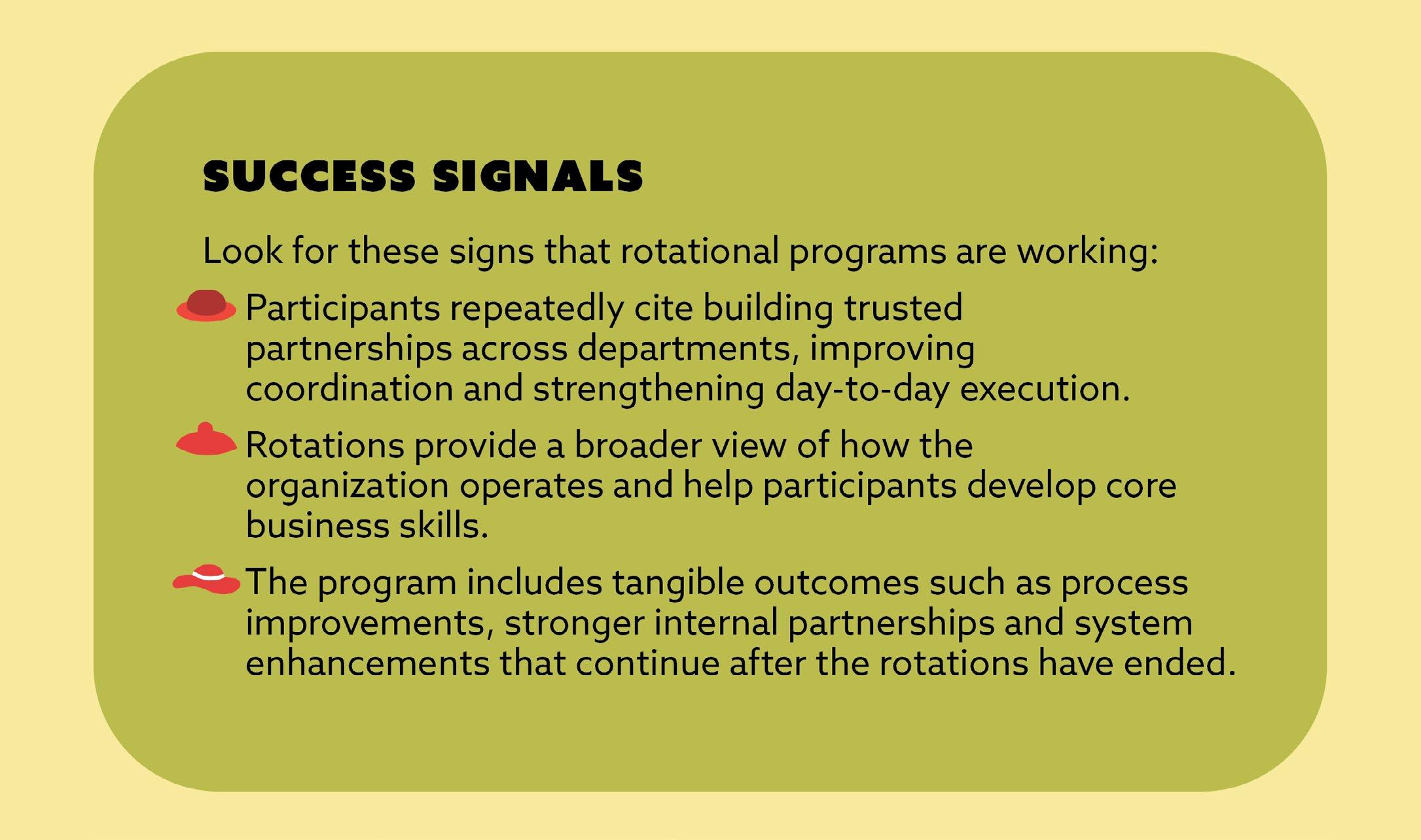
This broader view often translates into tangible performance gains. When talent acquisition professionals spend time in frontline roles, they gain insight into what makes a candidate successful in those environments. Participants who rotate through
information technology (IT) develop a clearer sense of what’s required to process service requests efficiently, leading to faster turnaround times and fewer bottlenecks.
Beyond operational benefits, this exposure reshapes how participants approach collaboration. Instead of working in silos, they draw on relationships formed during rotations to problem-solve across boundaries. They build a network of internal expertise making it easier to share information and align priorities.
As career paths evolve from rigid ladders to flexible lattices, rotational experiences give employees a chance to explore where they thrive, while organizations gain versatile, wellrounded talent ready to adapt as business needs change.
Understanding the value of cross-functional fluency is only the first step. To truly realize its benefits, organizations must design rotational programs that
are structured and aligned with business strategy.
A strong rotational program doesn’t happen by chance. It begins with clear intent and alignment to organizational strategy.
In our case, we engaged the C-suite early to understand the company’s long-term priorities and to ensure resources were used wisely. Communicating the vision was just as important as the design. Each stakeholder, from human resources (HR) and talent acquisition to department leaders, needed to understand the “why.” When departments saw that the program offered them a full-time employee who would return with broader business knowledge and crossfunctional insight, buy-in increased. That alignment helped establish shared accountability from the start.
Our program ran over an 18-month period, with each rotation lasting five to seven days. Timing was coordinated around critical business cycles such as quarter ends, performance reviews and departmental workload. Departments were selected in partnership with senior leadership, ensuring the experience matched organizational priorities. Customer-facing rotations proved especially valuable, allowing participants who typically worked in back-office roles to better understand client needs and the realities of service delivery.
Our organizational development team worked closely with host departments to design hands-on, meaningful assignments tied to measurable outcomes. Experience was viewed as the best instructor. Consistent templates guided hosts in structuring each rotation while providing us with data for later evaluation. Before rotations began, participants completed professional development sessions focused on networking, personal branding and communication, helping them bring immediate value to every department they entered.
Mentorship was another cornerstone. Previous program graduates were trained to serve as mentors, offering guidance and perspective to new cohorts. Managers were encouraged to enable participation by adjusting workloads and maintaining open communication. Regular pulse checks and individual conversations allowed for early intervention and ongoing support.
Finally, assessment tied everything together. Each rotation carried defined key performance indicators (KPIs), with feedback collected from both participants and host departments. This two-way feedback loop drove continuous improvement, which led to smarter scheduling, better resource allocation and richer learning experiences over time.
Executive and departmental sponsorship are foundational to any successful initiative. When buy-in starts at the top, it cascades naturally throughout the organization. Senior leaders have the influence and resources to champion the program, remove barriers and model its importance. Without that alignment, experience can become inconsistent, with some departments fully invested and others participating only out of obligation.
To build commitment, we engaged leaders early and often. Before the program launched, executives were invited to share their concerns and expectations, ensuring their voices shaped the final design. We host orientation sessions to align messaging across the organization and provide leaders with guiding resources, such as rotational planners, best practices and activity suggestions. Positioning the program as both a talent development initiative and a business growth opportunity helped secure lasting engagement.
Shared accountability was reinforced through clear channels such as strategic checkpoints, executive roundtables and ongoing pulse checks to gather real-time feedback and maintain momentum. One strong example came from the IT department, where leaders transformed a standard rotation into an immersive learning experience by taking participants to offsite data centers. Conversely, initial resistance from the information security team shifted once we partnered with them to co-design a secure yet meaningful experience. This collaboration became a model for how ownership drives both quality and innovation.
Rotational programs do more than build foundational knowledge; they build readiness. When early-career professionals gain firsthand exposure to senior leaders, observe decisionmaking in action and experience different business environments, they start to think and operate with a broader organizational lens. That kind of proximity and experiential learning accelerates leadership potential in ways that classroom development simply can’t replicate.
Across our organization, we’ve seen participants move into more complex roles, both within their departments and across new business lines. Those who complete rotations often return as stronger collaborators, ready to bridge understanding between departments because they’ve already lived those interconnections. They naturally become internal connectors who help teams anticipate needs, navigate processes and solve problems with greater context.
The influence of this program has extended beyond its original scope. Inspired by the success of these rotations, we’ve incorporated similar experiential elements into mentorship and career development programs, ensuring that exposure and connection remain central to how we grow talent long term.
Looking back, one of my early assumptions was that scheduling rotations would be the easy part. On paper, it made perfect sense to plan them far in advance, map out a clean calendar and communicate early so everyone could prepare. In practice, shifting organizational needs and external influences made that level of planning unrealistic. Building in contingency time and allowing for flexibility became key. A little breathing room helps the program stay steady even when the business landscape changes.
Another lesson learned was around leadership engagement. While most departments were supportive, reminders about upcoming rotations often triggered a sense of last-minute urgency, especially for new hosts. Regular communication, check-ins and reassurance go a long way toward keeping leaders confident and ready.
One of the biggest missteps early on was a lack of clear ownership. Roles
and responsibilities weren’t fully defined, which creates some internal confusion. Once accountability became explicit, such as who manages what and who communicates what, the program became more cohesive.
Finally, quality assurance mattered more than expected. Early pulse checks revealed that not all rotations were happening as intended. Spot checks and consistent feedback loops helped address that quickly. Establishing a central online resource hub for all tools, calendars and templates kept everyone aligned and empowered to participate successfully.
Rotational programs, when designed with purpose and supported with intention, do more than prepare individuals for success. They prepare organizations to thrive. They create a workforce that understands how different parts of the business connect, adapts to change with confidence and builds stronger bridges across departments. For organizations looking to strengthen collaboration, retention
and leadership readiness, rotational experiences offer a flexible, highimpact solution.
Leaders don’t have to start with a large-scale initiative. Begin small. Pilot a rotation between two departments. See what insights emerge. Even limited exposure can uncover opportunities to align people, processes and performance in powerful ways.
Personally, having the opportunity to lead this program from start to finish has expanded my own leadership capacity. It’s reinforced how growth for both individuals and organizations come from a willingness to learn through experience. When we create environments that support that kind of learning, everyone benefits.
Justin Clymer, CPTM, is a learning and development leader focused on helping people and organizations grow through leadership development, skill building and practical learning solutions. He partners with leaders to create meaningful development experiences that align with business goals while making learning engaging, relevant and actionable. Email Justin.


By Kate Frear

Corporate learning is full of big ideas, but few have captured attention quite like nudging. It shows up in product design, public policy and now — more than ever — in learning and development (L&D). But with all the buzz, it’s easy for the concept to get muddled. Is a nudge just a reminder? Is it a mandate in disguise? And how exactly does it help people learn?
In this article, you’ll learn what a true nudge is and what it isn’t. You’ll see where common misconceptions show up in L&D and how to avoid the traps that turn nudges into noise. And you’ll get practical guidance for designing behaviorally informed learning experiences that help people build habits, not just complete courses.
At a time when the corporate learning marketplace is shifting toward behavior change and real-world application, nudges offer a way to design environments that influence learner decisions and habits. Understanding how nudges work — and how to use them responsibly — can help L&D teams evaluate solutions, strengthen their learning ecosystems and create experiences that truly support growth.
Let’s dig into what nudge learning is really about.
The word nudge tells you a lot about the idea itself. It’s small, and it’s gentle. It’s the kind of subtle force that helps someone notice something they might otherwise overlook.
Dictionary.com calls it “a gentle prod to bring attention to something.” Merriam-Webster adds “to push lightly” or “urge into action.”
In behavioral science, a nudge is a feature of the environment that predictably shifts behavior without restricting options or adding big incentives. In plain language, it’s a subtle design that guides decisions while still preserving a person’s freedom of choice.
A true nudge has four key characteristics:
• It predictably influences behavior.
• It does not restrict choice (no bans, no mandates).
• It does not meaningfully change incentives (no big rewards or penalties).
• It’s easy to ignore or opt out of.
Classic nudges work through quiet psychological channels rather than brute force. Think defaults like automatically checking a box on a form, framing how information is presented or ordering options by placing the most helpful choice first.
You’ve seen nudges in the real world: retirement savings programs, organ donation defaults, wellness programs, nutrition labeling. They’re everywhere because they work quietly and reliably.
Nudges went mainstream after the book “Nudge: Improving Decisions About Health, Wealth and Happiness” hit shelves and Richard Thaler won the Nobel Prize. Suddenly, behavioral design wasn’t just an academic idea, it was a practical toolkit for helping people make better decisions.
The philosophy behind nudging is simple: You can help people make better choices without taking away their freedom.
And nudges are the mechanism. They’re gentle, non-coercive and grounded in how humans think and behave. They simplify decisions, make the desired action the easiest one and they still leave room for alternatives.
There are several examples of how public policy embraced nudges early on. Automatic enrollment in retirement plans helped millions of people put more money into savings. Healthy-choice defaults improved nutrition. Small design tweaks helped people follow through on what they already wanted to do.
Nudge‑based learning is about designing an environment where learning becomes natural, timely and repeatable.

Nudges are appealing because they work with human nature, not against it.
As nudges gained traction in public policy and product design, learning designers started asking a natural question: If nudges can change behavior, why not use them to support learning?
Nudge-based learning applies the principles of choice architecture to the learning environment. Instead of relying on one-and-done training or

hoping learners remember to apply what they learned, nudge-based learning helps people practice, reflect and follow through.
In learning design, nudges can support behavior that benefits both the learner and the learning community. Nudges can be used to surface the right content at the right moment or make the next step in a learning flow easy and obvious. Nudges can support learning and behavior change by encouraging repetition or reflection.
Remember that nudge-based learning isn’t about forcing compliance. It’s about designing an environment where learning becomes natural, timely and repeatable.
Traditional training often centers around a single event — a workshop, a webinar or a course — and with the expectation that learners will remember and apply what they learned. But learning and real behavior change requires repetition, reflection and practice over time.
With all the excitement around nudges, it’s easy for the concept to get stretched too far.

Nudges help close the gap between knowing and doing by showing up at the moment of need, reducing friction so the next step is effortless, and reinforcing small, repeatable actions that build real habits. Because they fit naturally into the flow of work and keep learners in control, nudges make it easier for learners to practice skills and apply
based learning aligns with how people naturally grow: through small steps, repeated over time, supported by
If nudges are all about guiding people based learning is about guiding people toward better learning outcomes. The goal isn’t to trick anyone or push them into
something they don’t want. It’s to design the learning environment so the helpful choice in learning and development becomes the easiest choice.
Effective nudge based learning works by providing support at the moment someone is most likely to act, surfacing content that feels directly relevant to their role or challenge and making the next step in the learning journey effortless. When timing, relevance and frictionless action come together, nudges shift learning from something people remember to something they actually do.
Here are the major categories of nudges and examples of how to use them to improve learning:
• Defaults: Auto-enroll learners in short lessons or pre-select recommended content. Defaults reduce decision fatigue and increase follow-through.
• Expectations and Social Norms: Say, “Most managers complete this three-minute prep before their 1:1s.” People naturally align with what others like them are doing.
• Salience and Attention: Surface the right learning content at the right moment by sending a notification via email, chat or digital calendar. A well-timed reminder can turn intention into action.
• Choice Structure and Ordering: Put the most relevant or highest-impact course options first on a learning management system (LMS) dashboard. A clear, simple menu helps learners move forward.
• Framing and Presentation: Present learning as a benefit, not a burden. “Strengthen your coaching skills in five minutes” lands better than “Complete this assignment.”
• Friction Reduction and Simplification: Remove unnecessary steps — like extra clicks or long-winded instructions — in the learning flow and make the next action obvious. Reduce cognitive load so learners can focus on the content, not the process.
When these nudges work together, they create a learning environment that feels supportive, intuitive and human, and helps people gain real knowledge and skills.
Nudges are powerful, but they’re not magic, and they can backfire if used poorly. Here are the pitfalls to avoid:
Don’t confuse nudging with nagging.
A nudge is a gentle prompt. A nag is a repeated demand. If learners feel pestered, they disengage. Nudges should feel helpful, not harassing.
Don’t hide the intention.
Transparency builds trust. Learners should understand why they’re receiving a prompt and how it supports their growth. A nudge should never feel sneaky or manipulative.
Don’t remove choice.
If an action is mandatory, call it mandatory. Nudges only work when people feel free to opt out. Once you add consequences, it’s no longer a nudge — it’s a rule.
Nudge‑based learning aligns with how people naturally grow: through small steps, repeated over time, supported by timely cues.
Don’t overwhelm learners with too many nudges.
More is not better. Nudges lose their power when they become noise. Be selective. Be thoughtful. Make each nudge count.
Don’t rely on nudges alone.
Nudges support behavior change, but they don’t replace good content, strong leadership or a healthy learning culture. They’re one tool in a larger ecosystem.
Don’t assume one size fits all.
Different learners respond to different cues. What motivates a new manager may not motivate a senior leader. Personalization matters.
It’s also important to embrace nuance. Not every learning intervention needs to be a “pure” nudge to be effective. Required compliance training still exists, incentives still motivate and live feedback still matters. Nudges don’t replace these tools, but they can enhance them by making learning easier to start and easier to sustain.
Nudge learning isn’t about tricks, pressure or clever reminders. It’s about designing learning environments that make the helpful choice the easy choice.
By unpacking misconceptions, exploring the different types of nudges and learning practical ways to apply behavioral principles, you now have clearer path forward. You can use nudges to help learners engage more consistently, retain more effectively and practice more confidently.
Kate Frear builds behavior-first learning tools that help managers turn good intentions into consistent habits at Joyntly. She writes about the intersection of behavioral science, leadership development and actionable, scalable learning design. Email Kate.
BY WENDY BRENES
Most mentoring relationships start out strong. Energy is high, the match feels promising and both sides are optimistic. Then, slowly, momentum fades. Meetings get postponed, small talk replaces progress and conversations feel repetitive. The stall is common and, most importantly, fixable.
Mentoring doesn’t stall because people don’t care. It stalls because of three predictable patterns: commitment challenges, relationship challenges and discussion challenges.
This article explores what these three challenges look like, why they happen and how mentors and program administrators can reignite transparency, strengthen connection and have greater impact.
Before we dive into the common challenges that cause mentoring to stall, it is important to review a few essential mindsets mentors can embrace for their partnership to be meaningful.
Be curious. Curiosity allows the mentor to best understand the mentee’s goals, context, pressures and perspectives. Asking questions can explore these in a non-judgmental way and opens the space for honest dialogue.
Be present. Removing distractions allows mentors to prioritize the person, signaling “you matter right now,” which strengthens trust and helps conversations move beyond surfacelevel exchanges.
Be patient. Mentees are learning, and learning takes time. Patience creates an environment where mentees can ask questions, explore and build confidence at their own pace.
Be yourself. Authenticity is a powerful tool mentors bring to the relationship. Mentors are matched because of their experience and perspective. When mentors share openly about their own learning journey, successes, challenges and decisions, mentees gain relatable insights and feel more
Mentoring is no different from other meaningful relationships: connection comes first, impact comes second.
comfortable being transparent about their own development.
Each of these mindsets matters and sets mentors up for success across all the three challenge areas. They can help mentors reignite the partnership with honesty, build trust through genuine connection and create purposeful conversation that leads to growth.
Mentoring is no different from other meaningful relationships: connection comes first, impact comes second. It’s easy for mentors to jump right into problem solving or offering advice right away. Though, for that advice to truly resonate, mentors and mentees need a foundation of trust and mutual understanding.
Learning about the mentee’s background, motivations, work environment and why their mentoring goals are important to them gives mentors context. It helps mentors guide conversations with greater relevance and empathy.
Connection develops through small, intentional behaviors, such as showing
warmth and genuine interest, asking curious questions and sharing glimpses of personal experiences. Simple actions, like following up on something the mentee mentioned in prior discussions reinforces the relationship is a priority.
When trust is strong and connection is authentic, mentoring challenges become easier to navigate. Difficult conversations feel safer, expectations can be reset and both sides can engage with greater honesty and commitment.
Even with that foundation in place, mentoring partnerships are not immune to challenges. Like any relationship, they can hit rough patches. The goal is not to prevent challenges, but to recognize early indicators of a stall so mentors can respond with curiosity and care. The first place this often shows up is commitment.
Commitment challenges are the most visible signs mentoring relationships are losing momentum. They typically show up as inconsistent communication, frequent rescheduling and arriving unprepared for discussion.
Many mentoring challenges don’t start with disengagement. They start with unspoken assumptions about goals, roles and how conversations should work. Asking a few intentional questions early helps mentors build trust, clarify expectations and create momentum that lasts.
Five questions mentors can ask early:
1. What prompted you to seek a mentor at this point in your career?
2. What would make our conversations feel valuable for you?
3. How do you prefer to receive feedback, perspective or challenge?
4. What pressures or realities should I understand about your current role?
5. How would you like me to show up for you as a mentor?

There are many reasons why this dip can happen, such as shifting priorities, personal changes, unclear expectations or uncertainty about roles in the partnership. When people feel stretched, they naturally focus on immediate, pressing matters and unintentionally deprioritize developmental conversations. Ironically, these are often the moments when mentees benefit most from hearing how mentors navigate these situations.
This is where mentors can make an important difference. Instead of assuming disinterest, they can approach the situation with curiosity and presence. A simple, compassionate outreach opens the door for realignment. It could sound like, “I haven’t heard from you in while. Is everything okay? Has anything shifted since we last spoke?”
This type of question acknowledges the gap without blame. It shows the mentor
sees the mentee as a whole person, not just a participant in a program. Once the conversation begins, mentors and mentees can reset expectations together, adjusting cadence, revisiting goals, clarifying roles.
Program administrators in learning and development (L&D) can support mentors by providing templates or conversation starters to navigate these moments. While they could reach out to the mentees to assess the situation, the most powerful reset often comes from a direct, honest, human conversation between the mentor and mentee.
Sometimes there is a deeper issue that goes beyond scheduling. When the relationship is the challenge, this can interrupt the flow and outcomes of mentorship.
When partners say they are “not clicking,” it often reflects a difference in communication, expectations or limited context rather than a poor match.
Even with the best of intentions, partners can feel out of sync. A mentor may prefer broad themes while the mentee prefers specifics. These differences don’t mean the match is wrong. They usually indicate a lack of shared understanding about how each person works, thinks and communicates. Without intentionally discussing these differences, each side may misinterpret the other’s stye as disinterest, mismatch or lack of chemistry.
Sometimes the strain comes from mismatched expectations. One person may be expecting structured coaching where the other expects informal conversation.
Other times, the dynamic becomes one-sided, where mentors are unintentionally dominating the conversation while the mentees remain quiet out of respect or hesitation.
This is where curiosity and patience become valuable mindsets. A simple reset conversation can lead to clarity. For example, the mentor could say, “People approach conversations differently. What is your natural style? What helps you feel supported? Is there anything I can adjust to make our discussions more helpful?”
Framing it this way communicates no style is better than another; it’s about learning to collaborate.
To rebalance one-sided conversations, mentors can shift into questioning and listening which invites the mentee’s perspective to lead the discussion.
As best practice, program administrators can encourage partners to spend time exploring the partnership itself. Asking questions about what is working, what is not and if anything has shifted can provide great insights. Ask: “Are you getting what you need from this partnership? What can we adjust? Has anything shifted?” These questions create space for an honest and productive reset.
Discussion challenges are another common way mentoring partners lose momentum. These typically show up
when the mentee arrives without topics to discuss, when conversations stay at the surface level or when mentees ask for guidance where the mentor has no direct experience. While these can feel uncomfortable, they are normal and can be addressed with a bit of structure and clarity.
There are several reasons why quality of the discussion may slip. Sometimes the conversation stalls because the mentoring goals are unclear, too broad, forgotten or are no longer relevant. Other times, mentees are unsure what is appropriate to bring to a mentoring conversation and worry about choosing something too tactical, too personal or too trivial, so they default to small talk. Some assume the mentor will lead the conversation and wait for direction. And, in many cases, life gets busy. Without preparation, mentees come to the conversation without a clear topic, and discussions become reactive or repetitive rather than purposeful.
Mentors can help redirect and strengthen conversations with a few intentional moves. If goals feel unclear, mentors can pause and ask, “Do these goals still feel relevant? What would you like to focus on over the next few meetings?” Resetting goals often brings immediate clarity to what conversations can focus on.
To build momentum, a mentor might start with, “Tell me something good
Effective mentors don’t need to have all the answers. They can offer to explore the topic together or bring in someone from their network.
that happened this week.” This helps the mentee reflect on meaningful experiences and creates a natural path back to broader goals. To move beyond social banter, mentors can ask, “What would be most beneficial to discuss today?” This is a gentle, effective way to establish direction without pressure.
When mentees find themselves stuck in frustration, mentors can acknowledge the emotion and help them move toward action by saying, “I sense that was upsetting for you. How can I help you take steps to move forward?”
If a mentee brings up a topic outside the mentor’s experience, transparency is key. Effective mentors don’t need to have all the answers. They can offer to explore the topic together or bring in someone from their network with relevant expertise. This demonstrates collaboration and reinforces mentoring is about development not perfection.
Program administrators can support by providing topics or discussion guides that help partners prepare. But often, it is a single, intentional question from the mentor that turns an unfocused conversation into one that is productive.
Mentoring challenges are normal. What matters is how partners respond. When mentors authentically lead with curiosity, patience and presence, stalled conversations turn into meaningful progress. With just a few intentional practices, mentors can help every partnership reconnect with its purpose and have impact both people hoped for from the start.
Wendy Brenes has more than two decades of experience in L&D. She passionately creates transformative mentoring cultures at Robert Half, the world’s first and largest specialized talent solutions and business consulting firm, including a program that has been recognized twice by the Brandon Hall Group. Email Wendy.
By DJ Jaeger

Technical training is often built like a series of construction projects: develop a course, launch it, then move to the next initiative. Over time, however, this approach leads to content fragmentation, which leads to a lack of cohesion in learning experiences. Content might be duplicated across platforms or courses, ownership becomes unclear and learners struggle to navigate numerous disconnected resources.
As product portfolios expand over time and organizations scale (nationally or globally), the question is no longer how to build more training, it’s how to design a learning system that sustains growth.
Applying systems thinking to technical learning shifts the focus from isolated assets to an integrated architecture, so instead of managing courses, learning leaders manage ecosystems.
Systems thinking, popularized in organizational theory by scholars such as Peter Senge, is an integrative framework that emphasizes understanding interdependencies rather than isolated
parts. In learning organizations, this means recognizing that training content, platforms, governance models and business priorities are interconnected and function as a system.
In technical environments especially (including SaaS, cybersecurity, cloud and enterprise software) the pace of change exposes weaknesses in fragmented learning design. Product updates typically outpace training content revisions; multiple teams could create overlapping materials and different learner groups are directed to different platforms for similar information. The end result is inefficiency for the organization and confusion for the learner.
A learning architecture mindset addresses this by asking a broader question: How does each learning asset fit into the full ecosystem of performance?
A scalable technical learning ecosystem includes four essential components: intake systems, content structure, delivery channels and governance.
Many training teams operate reactively. Requests arrive through email, meetings or informal conversations, and content is produced based on urgency rather than content planning or strategic alignment.
An architectural approach introduces a centralized intake process to avoid any missed requests, forgotten submission forms or outdated ticket queues. All training requests are evaluated against business goals, learner personas and existing assets before development even begins. This reduces content redundancy and ensures course alignment with organizational priorities.
Structured intake also improves crossfunctional collaboration with product, operations and customer success teams, creating shared accountability (and celebration) for outcomes.
In rapidly evolving technical environments, endless courses become liabilities. A minor interface update or content update
can require extensive redevelopment when content is bundled.
Modular design solves this problem. Instead of producing long, linear courses, content is built in reusable components like short videos, scenariobased exercises, job aids, microlearning and performance checklists. These components can be updated independently without disrupting the entire learning path, which increases the flow of learning.
Research on cognitive load theory supports modular design by emphasizing manageable information chunks that reduce cognitive overload and improve content retention. Designing with modularity also aligns with agile product development cycles as modules can be updated independently from the main course and swapped out as the assets shift over time.
Technical learners interact with multiple content delivery platforms, such as learning management systems (LMS), knowledge bases, collaborative tools and product interfaces. Without clear mapping, learners usually spend more time searching for training than applying it.
An architectural strategy will map learner personas to optimal delivery channels:
• Foundational onboarding may reside in a centralized or human resources (HR)-based LMS.
• Advanced skills development may be delivered through cohort-based sessions or specialized LMSs with included libraries.
• Just-in-time resources may be embedded into workflow tools, email communication or searchable repositories.
This structured distribution reduces friction and supports performance at each step and within context.
Training rarely fails because it was poorly designed; it usually fails
Training rarely fails because it was poorly designed; it usually fails because it was poorly maintained (or not maintained at all).

because it was poorly maintained (or not maintained at all).
Content maintenance plans, also called governance, ensures that content remains accurate, relevant and aligned with business objectives. Each asset should have a designated owner, a review cadence and a defined lifecycle status (e.g., active, archived, scheduled for revision).
Dashboards or spreadsheets that track content age, usage trends and alignment to business initiatives provide visibility for decision-making. Governance transforms training from a static library into a dynamic system.
Marketplace shifts make learning architecture increasingly urgent to adopt today:
Frequent product updates require adaptable and easily updatable content structures.
Global Workforce Distribution
Distributed teams demand consistency, translated materials and localized approaches to learning across regions and platforms.
Executive Scrutiny on ROI
Learning investments are expected to demonstrate measurable impact.
Digital Tool Proliferation
Organizations now operate across multiple systems, increasing the risk of content fragmentation.
Alignment needs to be purposefully engineered; it does not occur automatically. Learning architecture provides the mechanism through which this alignment can be consistently achieved and maintained.
Learning leaders may consider a systemic review if:
• Multiple versions of similar content exist across platforms.
• Learners frequently ask where to find training.
• Content updates require excessive manual effort.
• Ownership of materials is unclear.
• Reporting is limited to completions rather than performance impact.
These indicators suggest structural issues rather than content gaps. Addressing these signals early can prevent more significant scalability and maintenance challenges in the future. Recognizing these challenges is the first step, but sustainable improvement requires a deliberate shift in how learning teams operate.
Adopting a systems mindset requires a shift in professional identity where learning teams move from content producers to thoughtful and futurelooking ecosystem designers. Conversations should shift with this mindset from, “What course should be built?” to “How should the system support performance?”
In practice, this shift often begins during moments of scale or change. For example, when organizations consolidate platforms, launch new products or expand into new markets, training teams frequently discover duplicated content, inconsistent learner experiences and unclear ownership. These moments create an opportunity to redesign not just content, but the structure supporting it.
1. Conduct a Content Inventory Aligned to Business Goals
A comprehensive inventory should go beyond listing assets. Each item (courses, modules, videos, job aids, links) should be mapped to a business goal, audience and lifecycle stage. This process often reveals patterns, such as multiple versions of onboarding content for similar roles or redundant feature-based tutorials created by different teams. Identifying these overlaps allows organizations to consolidate content and prioritize high-impact updates.
2. Establish a Centralized Intake and Evaluation Model
A structured intake process ensures that new requests are evaluated consistently. This includes defining submission pathways, evaluation criteria and escalation protocols. Without this structure, teams often prioritize based on urgency rather than strategic value, leading to reactive development and duplicated efforts. A welldesigned intake model helps align stakeholders on what should be built, updated or retired.
3. Convert High-Maintenance Content Into Modular Formats
Certain types of content are especially prone to rapid obsolescence, including feature walkthroughs, UIbased tutorials and release-specific training. These are strong candidates for modularization. Breaking these into smaller components, such as short videos, step-by-step guides or scenario-based exercises, allows teams to update only the affected elements rather than rebuilding entire courses. Over time, this significantly reduces maintenance effort and increases responsiveness to change.
4. Assign Lifecycle Ownership for Critical Content
Every asset should have a clearly defined owner responsible for accuracy and updates. Ownership should not be limited to initial creation but should include ongoing review cycles tied to product updates or business milestones.
Use these five questions to assess structural health:
1. Is every individual training material mapped to a business priority?
2. Does each training material have a clearly assigned owner?
3. Can individual components be updated without rebuilding entire courses?
4. Are learner personas mapped to specific delivery channels?
5. Is there a documented request intake and content publishing prioritization process?
If three or more answers are “no,” the issue may not be content quality, it may be architectural design. Addressing structure first reduces maintenance costs, improves learner experience and increases alignment with organizational strategy and business goals.

Without ownership, content quickly becomes outdated, even if it was well-designed initially.
5. Build Dashboards That Reflect Ecosystem Health Reporting should extend beyond completion rates to include indicators such as content age, usage trends, duplication risk and alignment to strategic priorities. Sharing these dashboards with stakeholders creates transparency and reinforces the value of maintaining a healthy learning ecosystem.
Organizations beginning this transition often encounter predictable challenges. One of the most common is attempting to modularize everything at once, which can overwhelm teams and stall progress. Another is implementing intake processes without stakeholder buy-in, resulting in workarounds that undermine the system. Additionally, failing to assign clear ownership can lead to well-structured content becoming outdated over time. A phased approach, combined with strong governance and communication, helps mitigate these risks.
This approach strengthens strategic credibility and positions learning as
infrastructure rather than overhead. Over time, this repositioning enables learning teams to contribute not just to knowledge transfer, but to organizational agility and resilience.
Scalable learning does not emerge from course completion or overall catalog volume, it emerges from purposeful system design. Organizations that treat learning as architecture will create environments where knowledge flows efficiently, updates are manageable and learners experience learning pathway clarity rather than confusion.
In complex technical ecosystems, thoughtful architecture is not optional: it is the structural foundation that allows learning to evolve alongside the business — sustainably, strategically and at scale.
DJ Jaeger is a senior training manager at Akamai Technologies and an adjunct professor at Portland State University, where she teaches instructional design. She specializes in scalable learning strategy, technical training architecture and aligning learning ecosystems to business outcomes. Email DJ.
Hi, I’m Ringer. I’m an LXD, a dolphin, kinda good looking & always interesting.
Join *THE RING, SweetRush’s Talent Agency Community, and Follow Ringer, An LXD on Staff Aug Assignments!
Get Ringer’s monthly exploits, career insights, valuable info, job openings, good stuff. FOMO.

So join THE RING and come along on my journey as I take on gigs.


Are you a high-performer?
I’ve been told I swim circles around others and I’ve echolocation, so I listen really well.
Is Ringer your real name?
No. A client said “I need a ringer.” SweetRush assigned me, I crushed it and the nickname Ringer just stuck.
How do you handle pressure?
Well, waves don’t stress me out and I can leap through hoops when needed.
Thoughts on AI?
It’s a love hate thing. But I jumped in... sink or swim.
If you had a magic wand? BAM! — everyone joined THE RING.
SweetRush leads the industry in design & development of custom learning journeys, and we provide high-performing talent to our clients for staff aug assignments. We practice Relationship Recruiting and our clients and our talent are very happy.
Join THE RING! Contact us anytime for talent or custom development. info@sweetrush.com www.sweetrush.com/get-in-touch
Perhaps one of the most important takeaways from the advancing field of neuroscience and learning is that learning is difficult. As much as we try to ease the burden, learning requires effort, and the brain is designed to translate that effort into deep learning. Interleaving is an evidence-based approach that helps us make our learners’ effort more strategic and impactful.
The more we revisit concepts, experience new contexts, connect new learning to other learning and allow enough time in between for some forgetting to happen, the deeper learning gets.
One of the foremost scholars on neuroscience and education, Tracey Tokuhama-Espinosa, defines interleaving as a “process of reinforcing learning durability by returning to topics multiple times rather than exhausting all the information in a single block of time.” Interleaving helps create the effort needed for deeper learning and taps into many neuroscience principles for transferring that learning to unique contexts in the future.
By Trevor Cox, Ph.D.
In the same book, Tokuhama-Espinosa noted that as of 2021, there were over 63,000 scientific articles demonstrating that interleaving improves retention, transfer and durability. Yet this is not a concept many trainers are familiar with. And we are even less prepared to apply it in our work. I argue it is not common in training discussions for three reasons:
1. Interleaving requires time and effort. We tend to train in ways that are quick and require less effort because we know our learners are busy with their actual jobs and lives.
2. Modern training models favor information dumping then moving on, which is the opposite of interleaving.
3. We don’t have many models for how to incorporate interleaving into our training design and strategy. We have used the information dump as a model for so many training and educational environments, it seems odd to question it.
Let’s look at interleaving a bit deeper. I find that a metaphor helps to illustrate the neuroscience behind it.
Imagine you are in a huge field of tall grass. As you look around, you see well-worn paths that have been trodden over time. These paths are easy to take because they have been worn down for us. Those paths represent what we know. To learn, we have to blaze new trails. So in this same metaphor, learning requires wearing down the grass to make a new trail. There are no bulldozer shortcuts; the trail has to be walked several times before it is “learned.” Think about the effort it takes to go from tall, untouched grass to a well-worn path. That is the work of learning.
One of the ways we blaze new trails is allowing the brain the chance to forget It sounds counterintuitive, but when we forget parts of something new, it requires effort for the brain to go back and retrieve it. The work of retrieval wears down the path and uses the extra effort to deepen learning.
Another way the brain wears down the path is by learning in multiple contexts. When we see, experience and use new knowledge, skills and abilities in different contexts and under different circumstances, it helps deepen the learning. When we no longer associate the learning with just one setting, we are better able to use and recall what we learn in future settings. In their book “Make It Stick,” Brown, Roediger III and McDaniel cite a study in which hockey players rehearsed the same skill on different sections of the rink — a technique that used interleaving to reinforce their learning.
Interleaving is a wonderful tool. The more we revisit concepts, experience new contexts, connect new learning to other learning and allow enough time in between for some forgetting to happen, the deeper learning gets.
Compare this to how we typically train. We have one training session where we try to

exhaust an entire subject, hope people remember it, then move on. Interleaving weaves several training topics together and revisits them over time.
Let’s use onboarding as an example to illustrate a typical information dump training. Onboarding traditionally sets aside the first day or two of the job for a whirlwind of information thrown one at a time at new employees. We stack up presentations on everything they need
to know to work at the company in just a few hours. We assume that if we throw all of the information at them, we will have efficiently exposed them to everything they need to know as an employee. Yet neuroscience continues to provide evidence that this is not an effective way to train. We need to interleave our training so learners can do the hard work of blazing those new trails. But how can we start to change this process when the information dump seems so much more efficient?
One technique I have found especially useful in my work with training and development (T&D) clients is visual mapping the learning design. This allows us to see what we are doing in individual trainings as well as the overall system and approach to our training department. When we visually represent what people are learning and how they are learning it, it helps us interleave in more intentional ways.
When I can visualize everything that people need to learn, I can make connections between topics. I can see where to introduce concepts that I will be doing full trainings on later, and I can note where I should revisit previous trainings. Intentionally mapping learning in this way allows me to build in opportunities for learners to forget, recall and see learning in multiple contexts.
Figure 1 represents a year of training for an instructional designer (ID) with a typical information dump approach to onboarding and other training you might find in a given year. Each topic is presented as an information dump and only taught once.
Now, let’s look at how an interleaving approach compares (Figure 2). Some information dumping is necessary in onboarding. Insurance, payroll and policies are all things you need to know when starting a new job. But now we are introducing dialogues around company values, tech and teamwork in the early stages. These dialogues, like company values, are repeated because we want to reinforce them frequently. Each
Rather than passively sitting through an information dump, learners experience the most important topics in multiple contexts, which helps them become more engaged.
quarter, the new employees have more experience to talk about how they see these values at work.
In the second quarter, we start linking company values to the actual work of an ID. We allow learners to start using design models and feedback in real scenarios or talk about how these operate. This becomes an experiential session to put models to work in their actual jobs. We also give them some information on project management and the review process as well as working with subject matter experts (SMEs). We could even provide employees opportunities here to ask questions about HR, policies, etc.
In the third quarter, we take each of the important elements of learners’ jobs and allow them to see how everything connects to company values like collaboration — whether it is the tech tools we use, the feedback we give and take, or the way we manage projects with our time.
Finally, we end with giving the learners feedback on how they are managing their projects and begin to prepare them for next steps in their career.
Importantly, in quarter two and four, we have added a growth inventory. A growth inventory allows learners to provide evidence of their learning, reflect on what they are doing well and what they need to improve.
Interleaving onboarding in this way allows learners to forget some of what they have learned and therefore creates recall when they revisit the topics. It allows them to practice what they learn and have a shifting perspective on it as they advance in their training. They can see how the learning applies to different contexts. It also allows them to reflect on what they
need to continue to learn. All of that effort and time deepens those pathways.
In the interleaving model, we cover the same material as the traditional model, but we do so in ways that create opportunities to deepen the learning and help learners take ownership of their learning. You may not have to overhaul your current strategy to bring in elements of interleaving. Even the simple act of color coding to see where topics are revisited can make a huge difference. Now, rather than your learners passively sitting through an information dump, they experience the most important topics in multiple contexts, which helps them become more engaged and see how the topics directly apply to their success in their job.
Deep learning will always require effort, and that can feel like asking a lot of people who are busy. Our goal as trainers is to help learners turn that effort into deep learning. While neuroscience is an expanding field, we can make small changes in our approaches to training to help deepen learning. Interleaving is a great place to start because of the evidence of its effectiveness. And visual mapping helps us create strategic plans to make sure we are interleaving when we can and that our learners are blazing those new trails.
Trevor Cox, Ph.D., is director of learning innovation and associate professor of organizational leadership at the University of Central Oklahoma, where he leads LX Studio, a consulting group specializing in learning design and organizational training. Email Trevor.
Over a decade ago, Defence Construction Canada (DCC) implemented a robust leadership development program designed to support frontline managers in their leadership development journey. The program was based on a combination of individual and group-based learning, culminating in a national capstone leadership development event. Since its inception, several hundred employees have participated in the program.
Prompted by recent organizational growth, DCC’s training and development (T&D) team was tasked with evolving the organization’s leadership development beyond a single-program approach. They landed on two main requirements.
The program needed to be:
• Inclusive of all employees — grounded in the mindset that leadership is not defined solely by position or title
• Scalable — able to expand reach and impact without requiring proportional increases in effort and cost
To start, the team designed the framework around four stages of leadership: leading yourself, leading others, leading the business and
leading the organization. This structure reinforced DCC’s leadership mindset by including all employees. Then the team defined the behaviors, knowledge and skills required to support leadership capability within each stage.
Next, the team addressed scalability by incorporating multiple learning sources. The new framework was designed with flexibility in mind, recognizing that leadership capability develops through a combination of on-the-job (O), social (S) and formal (F) learning sources.
Seeking current information on OSF in the modern workplace, the team turned to the Training Industry’s 2022 report, Updating 70-20-10 for the 21st Century The research suggests a modern OSF benchmark of approximately 55% onthe-job learning, 25% social learning and 20% formal learning, although the precise mix varies by context. The team concluded that intentionally incorporating a more balanced mix of learning sources would be foundational to the framework.
Adult educators have long recognized that workplace learning, including leadership development, is most
effective when supported by OSF. Onthe-job experiences enable employees to develop job-specific skills, make decisions and address real workplace challenges while receiving timely feedback. Social learning allows employees to learn by working with others through everyday interactions, shared experiences and learning together as part of doing their jobs. Formal learning provides a shared foundation that supports and strengthens learning in the flow of work. These sources are essential and are most effective when intentionally aligned and designed to reinforce one another within an integrated learning system.
With this in mind, the team deliberately avoided a narrowly programmatic, course-based approach. Instead, the framework reflects how leadership develops in practice. Senior leaders were engaged throughout development to ensure relevance and organizational alignment. Once sufficiently developed, the framework was tested through a small-scale trial, where a select group of managers applied it in development and career conversations. Their feedback helped refine the framework and strengthen its practical application.
Through this process, the value of integrating multiple learning sources became increasingly clear. Four key takeaways emerged:
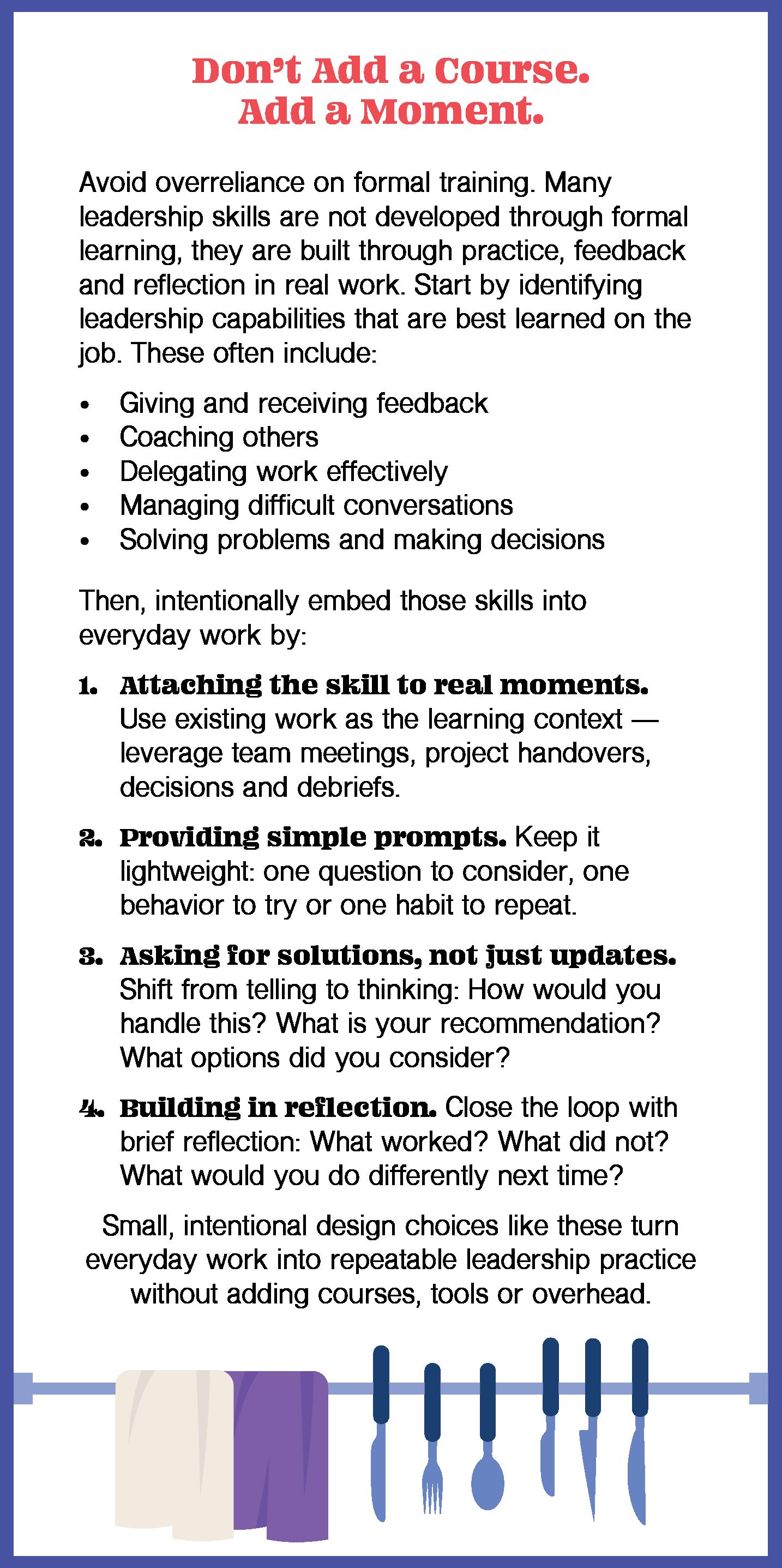
An OSF mix accelerates leadership growth by moving learning into real work, reinforcing it through relationships and anchoring it with a shared formal baseline. Integrating multiple learning sources shortens time to competency, improves readiness for role transitions and supports consistent performance across teams by engaging employees directly in the work, rather than relying solely on formal training.
Employees are more likely to remember and apply learning when it is reinforced through experience, interaction and structured development. Managers also gain a more complete and accurate view of development over time, rather than relying on course completion as a proxy for capability. Everyday work and interactions become opportunities to practice, creating natural moments for reflection and feedback.
When learning is embedded in work and shared socially, capability can scale without scaling the training function at the same rate. The framework improves operational efficiency and agility by elevating onthe-job learning as a core capability rather than a peripheral activity.
This allows the organization to respond more quickly to changing needs without waiting for course redesigns or material updates. As a result, learning can scale and continue delivering value as priorities and constraints shift.
An OSF approach turns experienced leaders into multipliers by making development a routine part of how work gets done, not a separate event. The framework strengthens learning by building capability through people — not just programs. This builds a stronger leadership foundation and reduces risk by ensuring critical capability and organizational knowledge are not concentrated in a few individuals.
Experienced employees play an active role in developing others, ensuring learning translates into performance and that critical knowledge is embedded and scaled across the organization. They “pay it forward” in ways formal training alone cannot replicate. In turn, they deepen their own leadership skills and reinforce consistent ways of working. Learning becomes a shared responsibility and a visible part of how work gets done.
Stronger networks make learning faster and more durable by expanding who employees can learn from, both internally and externally. The framework strengthens connectivity by providing guidance for employees to build intentional networks and across industry and professional associations. These connections broaden perspectives, support knowledge exchange and bring emerging practices into the organization.
Participation in external networks also increases the organization’s visibility and credibility within the broader professional and industry landscape. Together, this ensures valuable external perspectives are consistently integrated into the workplace while reinforcing the organization’s reputation and relevance.
When learning is designed as an integrated system rather than a collection of programs, the impact extends beyond individual development to organizational performance. At DCC, shifting from a course-centric approach to an OSF-enabled framework supports faster time-to-competency and enables leaders to develop capability in the flow of work.
how capability develops over time, enabling more informed decisions about workforce readiness and development priorities.
Scalability and resilience are improved from an operational perspective. Rather than scaling leadership development through additional programs and centralized effort, the framework scales through people, relationships and work itself.
Equally important, the framework strengthens leadership bench strength. Knowledge is retained, transferred and applied in context, supporting continuity during growth, turnover and change.
Leaders are operating in an environment of constant change and increasing pressure to deliver results with fewer resources. Learning cannot be treated as an add-on or a series of isolated programs. Future-proofing capability requires intentional choices about how learning is distributed across the organization, how limited resources are leveraged, and how on-the-job, social and formal learning are intentionally combined to support organizational performance.
Capability is built where decisions are made and results are delivered. This allows gaps to be addressed in real time, rather than waiting for new courses or program updates. Leaders gain greater visibility into
Taken together, these shifts change how organizations build and sustain capability. Learning becomes a mechanism for strengthening capacity and supporting decision-making, developing continuously through work, relationships and shared expectations to enable execution and resilience during change.
For leaders, the path forward is not about approving more courses. When learning is treated as a system embedded in work, it becomes a shared leadership responsibility and a practical lever for improving business outcomes, adaptability and organizational resilience.
Sabrina Rock, BSc, MEd, CPTM, is the national manager of training and development at Defence Construction Canada. Email Sabrina.
A learning and development (L&D) team attempts to design an excellent training module. An internal design team starts creating a learning module, but they fail to validate whether it meets a need at their organization. They use artificial intelligence (AI) tools to draft an outline, slide decks and exercises. The module goes live, and they celebrate. However, in the coming weeks, sign-ups are sparse. Employees who complete the module say that it was too long and unhelpful. What went wrong?
This team should’ve recognized the importance of getting feedback from stakeholders early and often while using time-tested frameworks to guide their decisions. To get employees excited about learning, it must be clearly integrated into their job and growth trajectory. When done well, this leads to immersive, relevant and motivating experiences.
This article explores how to make training relevant, design motivating material, embrace the role that managers (and others) play in guiding employees’ learning journeys and implement a robust learning culture at your own organization.
Whether a learning module succeeds or fails is determined well before it
launches. Its success hinges on the quality of its design and whether it addresses the underlying needs of an organization.
Using common-sense AI prompts to generate content that seems relevant on the surface may seem like a quick win. But in practice, it often misses the mark. A better approach involves a deep understanding of what the organization is solving for and a rigorous evaluation of potential solutions.
L&D professionals need to ask these questions:
• What need is the organization trying to fulfill?
• What are the best practices for fulfilling that need? How do competitors approach it?
• What does research say about the topic?
• Does the learning module fit with the company’s culture?
• How are employees expected to show up daily?
• Is the content engaging and consistent with how employees want to be immersed and learn?
• What feedback do stakeholders have as the module is being developed?
The last question is the most important one; learning modules cannot be developed in isolation. Of course, the design team must collaborate, but other stakeholders must weigh in early. These questions must be answered at the start.
Designing phenomenal learning opportunities is only the start. L&D professionals have a hand in guiding employees to engage with the learning.

More than promoting the availability of new module, their guidance should focus on enhancing perceptions of a learning opportunity’s accessibility and effectiveness. One of the best ways to accomplish this is by advocating for a support system that makes it easier for employees to learn.
Managers are essential to workforce development. They must lead an employee’s developmental trajectory just as much as the employee does.
Managers set priorities, balance deadlines and engage in conversations about career growth. This means managers can assess the best times for their employees to engage in learning in a way that benefits the employee and their team.
There are multiple touchpoints that managers can use to accelerate their employees’ learning. However, about a third of managers don’t make space for learning opportunities, according to research from Truist Leadership Institute. An even greater percentage don’t promote unique developmental opportunities, like encouraging their employee to network across the organization. Without their manager’s guidance, employees might not know these opportunities exist.
Managers and employees should collaboratively remove these barriers. Employees may feel too overwhelmed to spend time on learning, but managers can circumvent these concerns. The key is giving employees time and bandwidth to learn. Managers can shift priorities, prompt co-workers to trade off responsibilities, assign relevant stretch assignments or make introductions to new collaborators. Importantly, all employees (not just people leaders) must be eligible for these opportunities for a learning culture to proliferate.
Managers are why learning goes beyond “one and done” and extends into a journey lasting an employee’s entire tenure.
The burden isn’t entirely on managers to develop their employees.
Building a learning culture requires identifying each person’s role. Learners play a role in attending, engaging with and applying their learning, but their ability to do so relies on the organizational norms and support that connects them to learning experiences. L&D designers create environments that make this easier to do by tapping into learner’s preferences for specific modes of learning.
Many organizations also promote mentoring relationships. Unlocking the performance-related and cultural benefits of mentorship requires deliberate effort. For example, it’s fruitful to promote mentor-mentee connections at multiple points in one’s career, not just at the beginning.
Success is likelier when the following is true:
• An infrastructure is in place to help mentees find mentors.

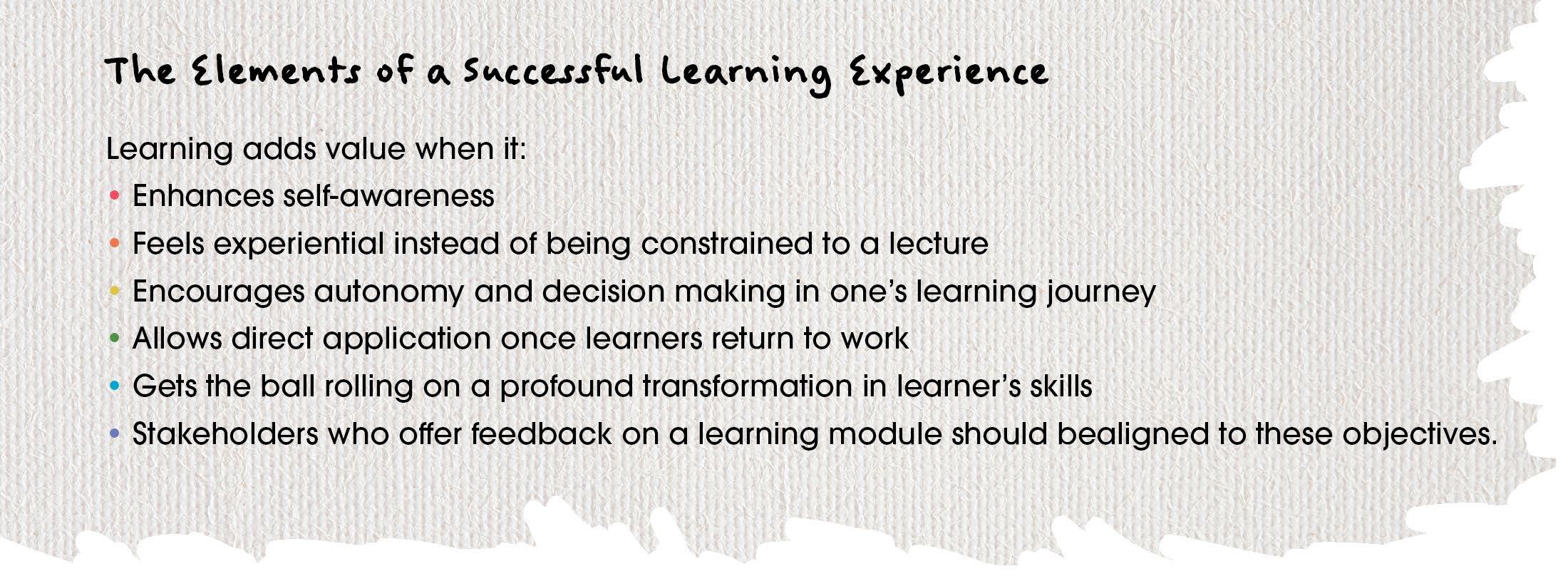
• Mentorship roles are formalized.
• Mentees practice autonomy and apply their learning.
• There is a standard of honest feedback between the mentor and mentee.
• Mentors guide mentees based on what worked well for them in their learning journey.
• The entire organization contributes to the power of social proof. Employees witnessing others taking learning seriously signals that they should do the same.
Another emerging learning resource is AI in training. AI can retain information about an employee’s role, projects and their career goals. Some AI software can recommend which learning opportunities an employee should engage in next.
Despite AI’s advantages, some employees are intimidated by it. They might fear being left behind by those proficient with the technology or the capabilities of the technology itself.
Employees aren’t in this alone. Their peers are learning the technology, too. Turning learning into a social endeavor amplifies retention and the transmission of knowledge. This can involve simple actions like asking a coworker for help
with troubleshooting an AI application or holding a sharing session. These opportunities help employees feel less overwhelmed when they begin a formal learning journey on a new subject like AI.
AI is a partner in effective learning, but learners and designers must remember that it can’t replace thoughtful design for creating programs or managerial guidance for developing employees.
Multiple team members engaging in learning opportunities forges a shared language and a culture of learning. Instead of one employee developing an edge, the entire team maneuvers better together, especially over the long term. Their accumulated experiences help them recognize how their team can continuously learn and grow.
A first step for enabling this culture at your organization is taking a hard look at your L&D strategy. Implementing irrelevant measures — or good measures at the wrong time — results in wasted effort.
An authentic assessment of your organization’s learning culture is an investment in the organization’s future. When approached with evidence and resonant frameworks, this assessment helps your organization prepare relevant offerings that plug into an accessible learning infrastructure that is easily used and reinforced over employees’ entire tenure.
Organizations with nascent learning cultures should focus on educating managers to build learning capacity on their teams while ensuring that relevant offerings are available once their employees are inspired to engage.
Seasoned organizations should use technology and managerial connections to identify their best talent and develop those individuals via stretch projects and succession planning. These L&D processes can be refined over time through feedback systems, especially as an organization retains tenured employees that enable a wealth of institutional knowledge.
Regardless of where your organization is in implementing a learning culture, much can be done to connect employees with opportunities that will accelerate their performance. Organizations that are honest about where they are and how else they can sharpen their offerings will maintain an edge.
Organizations cannot reliably stem the tide of change, but their employees can be well-armed with knowledge and prepared for everything that comes next.
Sarah Coley, Ph.D., is a senior researcher at Truist Leadership Institute. Multiple years of experience with program evaluation have helped her identify the mechanics of effective, meaningful interventions that address stakeholder objectives. Email Sarah.


Which statement best reflects where you are in your career journey?
• I’m mastering the fundamentals of training management.
• I’m leading programs and want to expand my influence.
• I’m setting the direction for L&D across the organization.
Complete the quiz to evaluate your current role, competencies and goals to see if the executive level is the next step in your career!
Learn more about the Training Industry Senior Leaders Program.
TAKE THE QUIZ
BY KIARA GRAHAM
Learning professionals are often asked to solve a familiar problem: drive engagement with content that is clearly relevant to employees’ roles but not tied to an immediate task or deadline.
In these cases, traditional delivery methods tend to underperform. Selfdirected courses rely on discretionary motivation. One-time workshops create a moment of exposure that erodes quickly without sustained reinforcement. Knowledge bases are most useful to employees who already know what to look for.
This case study examines the Level Up: Partners Season Pass campaign run by Workleap, a distributed B2B SaaS company, and outlines how a campaign-style learning experience
combined multi-channel delivery, gamification and spaced application to increase engagement with this type of low urgency content for a distributed, cross-functional audience.
At Workleap, internal enablement content on the company’s partner ecosystem had been consolidated into a well-designed knowledge hub. Despite its quality, engagement remained low: 24 employees accessed the content over its lifetime, out of a population of more than 300.
To address this, the team designed Level Up: Partner Season Pass, an eight-week internal learning campaign.
The campaign structure included:
• A baseline assessment
• Weekly microlessons delivered through the learning management system (LMS)
Learning campaigns borrow their cadence from marketing: repeated, spaced exposure designed to influence behavior over time. However, cadence alone is not sufficient. In practice during the Level Up campaign, three design choices proved critical.
MEET LEARNERS IN THE FLOW OF WORK
In most organizations, especially remote, hybrid and otherwise distributed ones, employees spend a significant portion of their day in collaboration tools such as Slack or Teams. Positioning these tools as the “front door” for a learning campaign reduces friction — learners don’t need to remember to visit a separate platform.
CONTENT ISN’T URGENT, MOTIVATION NEEDS TO BE DESIGNED DELIBERATELY.
• Slack-based reflection prompts and discussion threads
• Optional applied “bonus challenges”
• A final capstone activity
Learners earned experience points (XP) across activities, with recognition and prizes tied to different types of participation.
In the Level Up campaign, the chat layer didn’t replace structured learning. Instead, it acted as a trigger point: surfacing weekly prompts, reinforcing participation through social visibility and creating opportunities for reflection and discussion.
When content isn’t urgent, motivation needs to be designed deliberately. In the Level Up campaign, a gamified structure provided that motivation. Weekly prompts framed each activity as a “mission,” with a low time commitment and clear reward (points, recognition and leaderboard movement). WHEN
Here’s what we learned along the way.
2. CREATE REASONS TO ENGAGE WITH DEEPER CONTENT
Each part of the Level Up campaign played a distinct role in the learner’s experience. Here’s how the pieces all worked together.
• Slack: Weekly mission posts, reflection threads, bonus challenges, leaderboard updates. This was the front door where invitations to engage and motivating social proof lived.
• Confluence: Campaign hub, persona references, partner ecosystem documentation. This was the reference material that persisted after the campaign ended.
• LMS: Microlessons, baseline and final quizzes, completion tracking. This is where the structured learning and assessment lived.
Running this type of campaign doesn’t require these specific tools. It requires designing the learner’s path across whatever tools you have. Think about where they get pulled in, where they go for the structured content and where they apply and discuss what they’re learning.
Structured learning remained in the LMS, while reference materials lived in a knowledge base. The campaign connected these elements, rather than expecting any one tool to fulfill all roles.
Spaced repetition consistently outperforms massed practice for retention. However, retention alone isn’t the goal; application is.
During the Level Up campaign, each week incorporated reflection prompts and applied challenges designed to make thinking visible. Learners weren’t only asked to consume content, but also to interpret and apply it in a public channel. This created the opportunities for peer learning that would be difficult to replicate in a single-session format.
The Level Up campaign was structured around a video game “season pass” theme. While gamification is often discussed in terms of points or rewards, the thematic
layer played a more significant role in our example. The human brain is wired to learn through stories. A compelling narrative “provides special access to increase someone’s engagement and retention.” In this case, the theme created continuity across multiple weeks and modalities.
Concepts were embedded within the narrative:
• Partner personas became “companions.”
• Internal resources became part of a “codex.”
• Weekly activities were framed as missions.
This consistency reduced cognitive load and provided retrieval cues, while also lowering the activation energy required to engage with optional content.
While the microlessons provided foundational knowledge, the most
meaningful learning during the campaign happened in two areas: peer discussion and applied challenges.
Weekly reflection prompts generated visible, role-specific reasoning.
For example, after a lesson on partner personas, learners were asked to identify which persona they would prioritize when building a partner strategy. Responses varied significantly by function. Marketingfocused employees prioritized reach and demand generation, while technical roles emphasized implementation depth.
These differences surfaced tacit knowledge and enabled learners to compare perspectives across functions — a form of social learning that can be difficult to achieve in more structured programs.
Optional “bonus challenges” functioned as opportunities to test application.
In one activity, learners designed a “character card” for a partner persona, defining its role and strategic value. In another, they proposed new features for the company’s newly launched partner portal.
Submissions demonstrated not only recall, but synthesis. For example, one learner proposed an AI-assisted deal registration process, identifying friction in the current workflow and suggesting specific data inputs to improve efficiency. Another designed a tool to prevent under-licensing, linking it to downstream support challenges.
These responses indicated that learners understood both the content and its operational context — a key indicator of transfer.
By the end of the campaign:
• 120 employees engaged with at least one activity (a fivefold increase from the six who had engaged with the pre-existing knowledge hub before the campaign)

• Average assessment scores improved from 8.25 to 9.40
• Course ratings ranged from 4.8 to 5.0 stars
• A subset of participants completed all available activities across all eight weeks
More importantly, the content began to appear in day-to-day work conversations, suggesting a shift from awareness to application.
Several design considerations emerged that we’ll apply next time:
• Duration matters. Eight weeks was ambitious for non-mandatory content. A four-to-six-week arc might have compressed the engagement curve without sacrificing the depth available to fully-engaged learners. We’ll test this next time.
• Application drives value. The two bonus challenges were actually the campaign’s strongest application points. Next time, we’ll treat creative and applied challenges as core design work, not optional add-ons, and put more design effort into these.
• Design for cross-functional learning. The most valuable Slack threads we saw in this campaign (e.g., a personarecruitment debate in Week 4 and a segmentation discussion in Week 3) produced organic, cross-functional peer learning. Next campaign, we’ll design reflection prompts more intentionally to deliberately draw out functional differences, whereas this time those differences emerged only incidentally and we hadn’t planned for them.
• Plan for continued engagement. A meaningful subset of learners asked for more after the campaign ended. Next time we plan to add optional additional learning for those who want to go deeper.
A learning campaign isn’t just a series of communications layered onto existing content. It’s a connected experience: meet learners in the channels they already use, give them concrete reasons to engage with structured content and extend application and peer dialogue across time.
For content that employees need but are unlikely to prioritize on their own, this approach offers a practical alternative to traditional delivery models.
Kiara Graham is a seasoned talent development professional with over a decade of diverse industry experience in learning and development. Kiara currently works for HR and IT tech solutions provider Workleap as a senior talent management and organizational development advisor. Email Kiara.

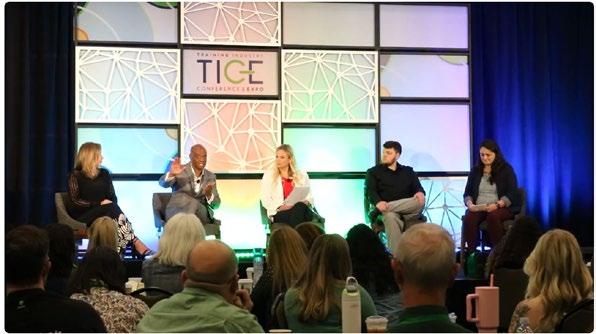





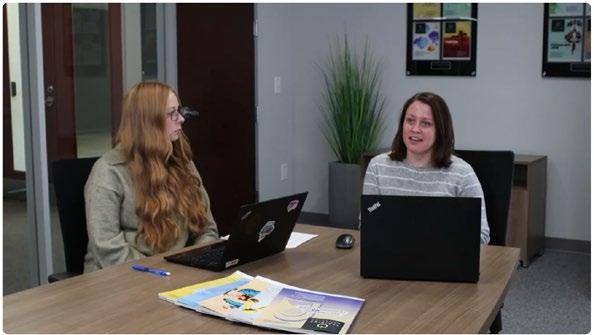


BY ANN STOTT, CPTM
You could have heard a pin drop.
There were 350 leaders in the room, and the leader stood in front of her entire international team and admitted something: weakness. Everybody was stunned.
This was not a leader who struggled to command a room. She was respected, polished and known for delivering results. The kind of leader who people expected to have the answers, not the questions.
And yet, in that moment, she paused. She took a breath, and she said something real.
You could feel the shift instantly. People leaned in. This was the moment that
changed my leadership style for life as a chief learning officer (CLO)
What I had just witnessed was confident vulnerability.
Confident vulnerability seems like a contradiction in terms. That is exactly the nuance of the approach. It is not about being soft, and it is not about oversharing. It is about showing up with clarity, courage and transparency in a way that builds trust and strengthens performance. When done well, it humanizes leadership without diminishing it. When done poorly, it can erode credibility just as quickly. That is why this is not something to try casually in your next meeting. It requires intention.
THE MOST EFFECTIVE LEADERS ARE THE ONES WHO CREATE THE CONDITIONS FOR OTHERS TO PERFORM AT THEIR BEST.
When a leader is willing to be vulnerable in the right way, something powerful happens. It gives everyone else permission to do the same.
When a leader admits a mistake, acknowledges a gap or shares a moment of uncertainty with clarity and ownership, it signals that perfection is not the expectation. Growth is.
This is what creates psychological safety. The kind that removes fear of speaking up, fear of getting it wrong and fear of being judged for not having all the answers.
When that fear is reduced, teams operate differently. They engage more
fully, speak up earlier and challenge ideas instead of holding back. They take smart risks and collaborate in a more honest and productive way. Over time, this leads to what every organization is trying to build: a highperforming, highly engaged and innovative team.
When people are no longer managing perception, they focus on performance. That is the power of confident vulnerability.
At the center of confident vulnerability are four dimensions: motivation, impact, trust and perceived strength. These dimensions determine whether vulnerability strengthens your leadership or unintentionally undermines it.
Each dimension exists on a spectrum. You are never fully on one end or the other. The question is not where you should be in theory, but where you are in the moment.
1. Motivation. Your motivation sits on a spectrum from internal to external. Internal motivation can be driven by personal catharsis or a desire to be seen as authentic. External motivation, by contrast, focuses on strengthening the team and building trust.
For example, a leader might share frustration about a failed initiative simply to release their own stress, leaving the team
uncertain and burdened. In contrast, a leader who says, “I missed something in how we approached this. Here’s what I’m seeing now, and here’s how we adjust,” demonstrates the same vulnerability with a very different intent and outcome.
2. Impact. Impact ranges from negative to positive. On one end, vulnerability can create discomfort or uncertainty. On the other, it fosters growth, clarity and cohesion. A leader who openly questions whether the strategy is working, without providing direction, can cause the team to spiral. However, a leader who frames it as, “I have concerns about our current direction. Let’s step back, assess what we’re seeing and align on the next move,” creates alignment rather than instability.
3. Trust. Trust exists on a spectrum from low to high. In low-trust environments, vulnerability is often met with skepticism. In hightrust environments, it strengthens connection and credibility.
A leader who has not yet built relationships and suddenly acknowledges a gap, surfaces a concern or admits a misstep may create confusion or hesitation. In contrast, a leader with an established foundation of trust can use vulnerability to deepen connection, reinforce credibility and strengthen their leadership.
4. Perceived Strength. Perceived strength also ranges from low to high. Too little perceived strength can undermine leadership, while the right balance enhances connection without eroding authority. For instance, saying, “I don’t know what I’m doing here,” can weaken confidence. Reframing it as, “This is a new space for me. Here’s what I know, here’s what I’m still working through and here’s how we move forward together,” maintains leadership presence while still being open.
Each of these dimensions sits on a spectrum, and the goal is not to maximize them or operate at the extreme end. Instead, the goal is to function within what can be described as the target zone.
The target zone exists when your motivation is externally focused, your impact is constructive, trust is strong enough to support openness and your leadership presence remains intact. You do not need to be perfect across all four dimensions, but you do need to be intentional about where you are.
Before choosing to be vulnerable in a meaningful moment, leaders can benefit from a quick internal check. Ask yourself:
• Motivation: Am I sharing this for me or for the team?
• Impact: Will this create clarity or confusion?
• Trust: Have I built enough trust for this to land well?
• Perceived Strength: Will this reinforce leadership or create doubt?
These questions create a pause point. They help ensure that vulnerability is intentional, not reactive, and that it lands in a way that supports both the leader and the team.
Confident vulnerability is not performative. It is not about sharing more or sharing louder. It is about sharing with purpose.
When leaders get this right, the impact extends far beyond a single moment. It shapes how the team shows up. It creates an environment where people are willing to be honest, take risks and engage more fully. It builds trust, fuels innovation and ultimately drives performance.
If you want a high-performing team, this is part of the work. Leaders set the tone for how growth happens. If you want people to speak up, you have to go first. If you want accountability, you need to model it. If you want growth, you have to demonstrate what it looks like in real time.
The most effective leaders are not the ones who appear flawless. They are the ones who create the conditions for others to perform at their best.
That is confident vulnerability.
And when you get it right, it changes everything.
Ann Stott, CPTM has over 30 years of experience in learning and development and is a former chief learning officer and published author of “Grit Leadership.” She is currently an executive coach helping leaders elevate performance and build highperforming teams. Email Ann.
WHEN A LEADER ADMITS A MISTAKE, ACKNOWLEDGES A GAP OR SHARES A MOMENT OF UNCERTAINTY WITH CLARITY AND OWNERSHIP, IT SIGNALS THAT PERFECTION IS NOT THE EXPECTATION. GROWTH IS.
Determine the leadership solutions your organization needs the most. Download the Aligning KPIs to Organizational Goals template to get started.
DR. KRISTAL WALKER, CPTM
There was a time when employees showed up to work, attended a training session, marked complete and returned to their roles. Modern-day employees, with competing priorities at work and at home, are asking one question before they even consider attending: “What’s in it for me?”
To truly engage modern-day learners, training must directly answer their top concerns:
“IF MY MANAGER IS NOT ENGAGED, WHY SHOULD I BE?”
When managers do not prioritize development conversations, learning quickly becomes an afterthought. In some companies, development conversations are inconsistent, transactional or limited to the annual performance review season.
Without intentional, regular touchpoints, employees cannot see how a course, training program or skill development opportunity ties to their role, their team or the broader organization. As a result, they treat learning as optional or resent the opportunity altogether.
Engagement tends to decline further when employees are expected to step away from their responsibilities to complete training, only to return to the same workload with little opportunity to apply what they have learned.
Managers play a critical role in how learning takes place within an organization. When they actively support development, reinforce learning and create space for growth, engagement becomes more natural and sustainable.
“I CAN’T OWN WHAT I DON’T UNDERSTAND”
Organizations often encourage employees to take ownership of
their personal and professional development, typically with self-serve learning that they can access at their convenience. However, ownership without clarity can create confusion rather than empowerment.
When employees lack a clear understanding of what growth looks like, development can feel abstract and out of reach. They might misinterpret or misdiagnose performance gaps, then get overlooked for career pathing and promotion opportunities.
Clear expectations and ongoing guidance help learners focus their efforts and see the value in their development.
“I
Engagement doesn’t just mean basic participation; it requires intentional and meaningful contribution from the learner. A learning environment that welcomes curiosity and treats questions as part of the learning process, rather than as interruptions, creates space for learners to challenge assumptions in ways that enhance the overall learning experience.
It’s just as important to feel safe to share ideas. Learners show up to training with a myriad of experiences, perspectives and insights and are more likely to engage when their contributions are encouraged and valued.
Learning also requires a degree of vulnerability, and employees must feel confident that admitting what they do not know will not lead to embarrassment or negative consequences.
When safety is evident, learners don’t see training as compliance but as a means to be successful.

Formal learning programs are not sufficient on their own. Learners expect opportunities to apply knowledge in realworld contexts. Stretch assignments challenge learners to think and solve problems in real time, further building their confidence. Unlike traditional learning, where outcomes are typically controlled and predictable, stretch assignments introduce complexity that requires adaptability and ownership. It’s through this process that learners see their true capability.
Another way to expose learners to real-world experiences is to connect them with teams outside their immediate area of responsibility. Through cross-functional projects and greater exposure to organizational initiatives, learners innately deepen their business acumen while building greater capacity and relationship currency across the company.
Organizations that rely solely on content delivery may miss the opportunity to create deeper, more impactful learning experiences.
Engagement is not an experience that organizations can mandate in learning. It is the result of intentional design. Modernday learners aren’t asking for more learning opportunities. They do want clearer direction, stronger leadership related to learning experiences and real opportunities to grow beyond a course.
Dr. Kristal Walker, CPTM, SHRM-CP, is the vice president of learning and talent development at Sweetwater Sound. Kristal is also a facilitator for Training Industry’s Certified Professional in Training Management (CPTM) program. Email Kristal.
Hosted by international thought leaders, Training Industry webinars provide timely and strategic information about the business of learning. Stay up to date on the latest trends to enhance your training strategies. Ready to leap into a galaxy of knowledge? Explore free webinars and on-demand content at www.trainingindustry.com/webinars.
Learning agility is a critical skill. As organizations and industries evolve faster than ever, an individual’s willingness and capacity to learn is what will enable them to keep up. However, engagement statistics remain low across the board, and many organizations are faced with the question of how to inspire their employees to learn. Some look to leaders to solve the problem, but that’s only half the equation.
In order to create an environment where individuals are driven to learn, engagement must be transformed into ownership.
FOR INDIVIDUALS TO BELIEVE TRUE OWNERSHIP WILL BE REWARDED, THEY NEED TO SEE THEIR LEADERS PRACTICE IT.
The leader/follower relationship is a twoway street, but companies often focus primarily on the leader. The leader drives the relationship, sets expectations and creates the environment in which that relationship exists. The leader is the one who has to balance success and engagement to both meet organizational goals and retain top talent. But at their best, leaders and performers are working together toward a common goal of performance improvement, connecting organizational goals to the individual’s personal and professional goals.
In this relationship, the individual owns their performance. They speak up when they need support or direction from their leader. They let their leader know when they’re feeling burnt out or experiencing regression. And it’s safe for them to do so. We call this a performance ownership culture.
For this to happen, the leader and the organization need to foster a culture where failure is ok and accountability is celebrated. This starts as a top-down change. For individuals to believe true ownership will be rewarded, they need to see their leaders practice it. From there, you can begin to build a reciprocal relationship around performance and development.
Here are the qualities your culture needs:
• Open communication: This is the first step to building the trust necessary for accountability. On the leader’s side, this means being transparent about decisions, future changes and feedback to the level that you responsibly can. On the individual contributor’s side, this means being upfront about your current skill level for tasks and overall engagement.
• Curiosity: Curiosity enables us, both leaders and followers, to avoid coming to conversations from a place of assumptions. From a leader, this can look like sharing your performance observations and asking the performer for their perspective. On the individual

contributor’s end, it means asking for the “why” behind tasks or decisions and working to understand the larger organizational goals.
• Accountability: Leaders often need to take the first step by owning up to mistakes and recognizing the part they play in team dynamics. This then ripples down to the follower, who must take accountability for their performance, both when it’s high and when it’s low. This transparency must be encouraged. That doesn’t mean long-term poor performance is acceptable, but when a follower comes to you asking for help, it’s an opportunity to help them course correct and resolve issues before they grow into something bigger.
There are many positive outcomes to fostering a culture of ownership, but one of the long-term benefits is that it creates an environment that engages individuals at all levels of the organization in learning. By putting people in the driver’s seat of their own development, you open the door to opportunities. It gives them the freedom to explore areas that tie to their own goals as well as the organization’s. This kind of culture takes intentional modeling from leaders at every level.
Marshall Goldsmith is the world authority in helping successful leaders get even better. Suzie Bishop is the vice president of product development at The Center for Leadership Studies Email Marshall and Suzie.
Explore our directory of 2,000+ L&D vendors. Search for and connect with verified training companies to solve your training needs.
LEADERSHIP
CONTENT DEVELOPMENT
DIVERSITY, EQUITY AND INCLUSION
COMPLIANCE
PROFESSIONAL DEVELOPMENT
IT AND TECHNICAL TRAINING
LEARNING LIBRARIES
SALES TRAINING

Does your company provide training solutions? Sign up for a vendor listing.
I once managed the world’s first virtual reality (VR) theme park attraction. Guests strapped on 10-pound helmets and climbed onto stationary motorbikes to fly on a magic carpet. It was ahead of its time (in the early 2000s). It was also a massive headache — pun intended. We had to clean every headset between guests. Straps required constant adjusting to fit every possible head size. And if the counterweight holding the apparatus up decided to give out, well, you can imagine what happened next.
That experience taught me a valuable lesson: hardware shapes the experience.
Sure, the 3D world was built with software. But you couldn’t fly to Agrabah without the right device. Every tactile point of friction — an ill-fitting liner, a broken display, a failing counterweight — disrupted the magic. The entire attraction had to be designed around the point of access.
The same is true for learning at work.
When people talk about “learning tech,” they’re inevitably talking about software. Platforms. Apps. Artificial intelligence (AI). We focus on features, integrations and interfaces.
HARDWARE IS JUST … ASSUMED.
In the office, this assumption holds. Work happens on screens all day, every day. People move from meeting to meeting with laptops in hand. They jump on Teams calls and ask Claude to rewrite their emails. Many carry two phones, one personal and one company-issued. Screens are everywhere, so information access is constant and reliable.
But this isn’t reality for most employees. More than 70% of the global workforce
is deskless, working in retail stores, healthcare facilities, restaurants, hotels and construction sites. They may use screens now and then, like a point-ofsale system or a desktop workstation. But access is inconsistent, often limited by role, position or task.
When learning and development (L&D) designs enablement to suit corporate reality, we lock a significant portion of the workforce out of the learning ecosystem.
You think it’s hard to get a corporate employee sitting at a computer to complete a 30-minute compliance module? Try pulling a manufacturing worker off the line, walking them across a facility the size of two football fields and getting them into a computer lab they never use just to complete the same training.
Failing to consider the hardware side of digital learning strategy does more than create friction. It reinforces inequity and widens the gap between corporate and frontline workers. People do their jobs differently. We can’t put a screen in front of every worker all the time, but L&D can ensure hardware availability isn’t a barrier to doing the job well.
Start by finding the screens. When and where do people use devices within the workflow? And I mean every screen! Handheld scanners, wristmounted devices, shared desktops, breakroom kiosks, deli scales, personal smartphones.
These access points are the foundation of your enablement strategy.
JD DILLON

Maximize every device. Ditch the responsive courseware for taskfocused tools. Every employee should be two clicks and ten seconds away from support. Leverage formats that match the moment and the screen: quick answers via digital assistant, short tutorial videos, rapid practice activities.
EVERY EMPLOYEE SHOULD BE TWO CLICKS AND TEN SECONDS AWAY FROM SUPPORT.
Lastly, recognize when digital just doesn’t fit. A well-maintained binder or a quick coaching conversation can outperform any app when devices aren’t available. Don’t force tech into the workflow because a vendor said you should. Focus on the most efficient and effective way to support the work.
AI will continue to dominate the tech conversation. But every large language model (LLM) and agent comes with the same requirement: access. To free the Genie or walk a retail associate through the new return policy, you must design around the device.
Hardware shapes the experience. Start there.
JD Dillon is a respected advisor, speaker, and author of The Frontline Enablement Playbook and The Modern Learning Ecosystem. With 25 years of experience leading operations and talent development with companies like Disney, AMC and Kaplan, he partners with organizations to reimagine enablement strategy and architect AIpowered performance ecosystems. Email JD.
BY EMMA HEAPS
At Pest Control Partnership (PCP), we’re in a period of rapid growth. We’re bringing together a constantly increasing number of businesses, expanding into new markets across Europe and building something bigger than any one legacy culture. We want to do it differently.
At group level, from a learning and development (L&D) perspective, we were starting from scratch. That gave us a real opportunity, not just to define what we stand for, but to build a culture deliberately, not accidentally.
This is where the program Managing the PEST Way began.
At group level, there wasn’t a legacy framework to refine, we were building from a blank page while the organization itself was still taking shape. Different businesses had different ways of working, different expectations of managers and unique cultures that had evolved over time.
We wanted to create alignment without losing what makes each business successful. And we knew we didn’t want a top-down “this is how you must lead now” corporate mandate.
Instead, we started with our four values — people, environment, service and technology (PEST) — and a question: “What does this actually look like in practice?”
Values only start to matter when they’re visible. Not theory. Not generic leadership language. Real, everyday actions.
For example:
• What do values around our people look like when we’re under pressure?
• How do service values show up when things go wrong?
• What does technology mean for someone who isn’t technical?
This will shape our competency framework but, to start, it was about creating clarity on what good looks like, not locking it down too early.
From there, we created our first grouplevel program: Managing the PEST Way.
We designed it to feel different from traditional management training:
• Grounded in our values, not generic models
• Focused on real challenges managers are dealing with right now
• Built around practical exercises, reflection, conversation and clear takeaways to put into action, not just content
A big part of the design was what we’d call “serious fun”: purposeful exercises that still felt enjoyable and engaging.
For example, we introduced an activity called “Higher or Lower,” to demonstrate how people show up with a growth mindset (above the line) versus reacting under pressure (below the line). One person stands on a line marked on the floor, while their team shouts “higher” or “lower,” like the old British game show, as they respond to real workplace scenarios. It is simple, but it gets people moving, creates energy and helps the theory stick in a way that a slide never could.
We also used fun tools like “stretchies” (small stretchy toy figures) to encourage peer feedback, with learners recognizing when colleagues stepped out of their comfort zone and made valuable contributions. Another exercise challenged teams to come up with 50 uses for an everyday item, such as a newspaper, encouraging creative thinking and building on each other’s ideas. This provided some funny answers, which were rewarded with prizes.
When people feel something and enjoy the experience, the learning is far more likely to stick and turn into action. We’re already seeing real examples of behavior change. Through post-course coaching calls and conversations across the business, we’re hearing how
managers are doing things differently as a direct result of these exercises.
One of the key steps was investing in a learning platform we could truly make our own.
We introduced Cornerstone as our learning management system (LMS), but importantly, we didn’t position it as just another system. We branded it as PESTflix™, with our values at the heart of the experience, creating a space that feels simple, accessible and relevant.
Learning is personalized from the start. Through artificial intelligence (AI)-driven skills and interest profiles and by linking PESTflix™ to our human resources information system (HRIS), new starters are automatically enrolled and assigned role-specific learning from day one, giving them the right foundations straight away.
To avoid content overload, everything is organized around our PEST values. This not only reinforces what matters but also connects directly back to what managers experience in the Managing the PEST Way program.
Alongside this, we’ve started creating our own PESTflix™ Originals, practical eLearning, videos and “how to” content that people can use in real time, particularly
as they get used to new systems and ways of working. As we expand into new markets, we’re also adapting content into local languages, both within the platform and in our own Originals, to make sure learning is accessible and relevant wherever our people are based.
PESTflix™ brings together compliance, core learning and broader capability across the organization and countries in one place. The aim is to make learning feel less like something to complete and more like something people can dip into, return to and use when it matters.
This isn’t a one-off course, it’s how we’re building capability and culture across the business.
One of the realities of our journey is that we’re not building this in a stable environment. We’re growing constantly: new businesses joining, new countries coming on board and different cultural contexts to consider.
What works in the UK won’t look identical in France, Germany or Spain, but the principles still need to hold. For example, in France we partnered with a local facilitator team, RYO, to deliver the program in French, using locally adapted materials, examples and references to legislation and cultural norms. The principles remain the same, but the delivery feels relevant to the local context.
We’re still building. Next, we’re focusing on Expanding the PEST Way beyond managers and strengthening how we measure behavioral change. We will continue to grow PESTflix™ as our learning hub and adapt our approach as we enter new countries.
Right now, we’re starting to explore user-generated content to better capture and share the expertise across our teams, particularly from our pest technicians, where the role is a true trade.
But most importantly, we’re staying honest about where we are: early in the journey, with strong foundations in place.
You don’t need a fully formed model to start building a values-led culture. You need clarity on what good looks like, consistency in how it’s talked about and the willingness to build it over time.
Be willing to test, learn and adapt as you go, and see mistakes as part of the process. Because the reality is, in a growing organization like ours, change is the only constant.
Emma Heaps is group head of learning and development at Pest Control Partnership (PCP), supporting the development of a values-led culture across a growing business. She focuses on making learning practical, engaging and easy to apply in the real world. Email Emma.
1. You don’t need to wait until it’s perfect If we’d waited to design the “complete” solution, we’d still be designing it. Starting small gave us something real to build on.
2. Clarity beats complexity. Keep frameworks simple so people can remember and use them in day-to-day work.
3. Culture is built through managers. The biggest impact comes from what happens in day-to-day conversations — not in training sessions.
4. It has to feel relevant. Make learning directly relevant to real challenges managers are facing.
5. It’s a continuous journey. There isn’t a finish line. It will keep evolving as we grow, learn and bring new businesses into the group.
Congrats to these graduates from the same company!
Indiana Automotive Fasteners
Carly Thompson Rickey Banks STIHL Inc.
Jake Bell Mark Gabriel
Aileen Clayton Five Star Credit Union
Alison Handcock Roche
Amanda Nelson MNGI Digestive Health
Amber Becker Credit Union of Colorado
Anna Sieber GEA Group Services GmbH
Arly Castellanos Ali Forney Center
Babs Parnarouskis AGC of America
Beatriz Cabrera Nestle Purina
Bradley Rowan Chamberlin Roofing & Waterproofing
Celine Clancy Rogers Foods Ltd.
Christina Alley East Harris County Empowerment Council
The Haskell Company Michelle Kunkel Rachel Walker
Christina Turner Navy Federal Credit Union
Dalia Soror Boehringer Ingelheim
Daniel Wilson Accendra
Darrell Jackson Big O Tires
David Smith T-Solutions
Deanna Gibson Race Telecommunications
Dorinda Eller-Palmer Everest Insurance
Edward Latour
Fred Reid NC State Employees’ Credit Union
Ginu Easow Bioventus
Gracynn Blankenship Harborstone Credit Union
Heather Akridge Ira McMillan Right Click Learning Solutions, LLC
Isabella Guzzi GroundGame.Health
James Leibee Lockheed Martin
Jeff Otero Revere Electric Supply Company
Jennifer Mier Obagi
Jessica McGrath GreenState Credit Union
Jia Yi (Jenny) Li Bento
Jill Foster STCU
Joy Straight GDIT
Julie Davidson Inspire Brands
Kaitlyn Kinsey Busch’s Fresh Food Market
Kari Elling Lincoln County SD
Kate Young
Katya Konovalova Hind Management
Kendria Taylor TG8 Solutions Insight
Kim Stillman Quincy Compressor
Kimbria Worley Prairie View A&M University
Kristyn Loudermilk BMWC Constructors
Krystall Valencia Western Area Power Administration
Lawrance Holton The Russell Group
Lisa Parks Cayman Islands Government
Lois Ajiboye UT Health
Ly Kallaur Jones Lang LaSalle
Magen Runyan Our Blood Institute
Margaret Cady ChoiceOne Bank
trainingindustry.com/cptm
Margaret Thompson John M Floyd and Associates
Maria Dalmolin Penske
Marjorie Rondolo Bicycle Health
Mary Saavedra Dine Development Corporation -ITS
Matthew Ross ECS Limited
Mayra Moreno Pinterest
Megan Cobb Carnival Corp, plc.
Michelle Pacheco Healthfirst
Miranda Price Orthotic & Prosthetic Centers
Nate Horton Highmark Health
Nikki Greer Qnity Electronics
Paige Vannaman Apria
Pamela Tartt UL Solutions
Radoslaw Daczynski 3M Belgium
Robert McBride DRS
Ronnie Rogers Herbalife
Ryan Reynolds Broward Sheriff’s Office
Sarah Rodriguez
Palm Beach County Board of County Commissioners
Shikhi Shukla Mishra Priority IDC Pvt. Ltd.
Stephanie Smith KeyBank
Steven Rodriquez Via Metropolitain Transit
Stuart O’Quin Globus Family of Brands
Tina Robison Legrand
Tiz Arnold
Tommy Arnold Ariel Corporation
Travis Dewitt Compass Health Network
Zoe Hernandez Renewal by Andersen
BY SARAH GALLO, CPTM
In November 2024, Alchemist Group acquired RAIN Group to elevate its sales training and coaching capabilities. Since then, the company has expanded its leadership training offerings in the U.S. and has made strategic investments in delivering experiential learning solutions.
Earlier this year, Alchemist Group announced the acquisition of The Experiential Learning Group (TELG), a UK-based training company, and its three brands: PCA, PCA Law and Youd Andrews.
Let’s take a look at this deal in more detail.
ALCHEMIST
Organizations look to experiential learning providers for immersive training solutions that support real-world practice in riskfree environments. This is especially valuable in leadership and sales training, two of Alchemist Group’s focus areas, where behavior change is essential. Sales professionals can practice customer conversations and negotiations, and leaders can build confidence in areas like navigating difficult conversations or conducting performance reviews.
In addition, Stuart Packham, Alchemist Group’s CEO, says today’s organizations are asking employees to learn new skills faster than ever before while navigating changing business environments shaped by artificial intelligence (AI) and evolving customer expectations. As a result, companies are looking for learning experiences that create more opportunities for real-world application. “What makes learning stick, particularly in a fast-changing environment? It’s got to be practical. It’s got to be memorable.
Perhaps most importantly, it’s got to be connected to reality,” he says.
Expanding experiential learning capabilities was a driving force behind the acquisition. Packham says the company has maintained a clear acquisition strategy since its founding, focused on two primary goals: increasing its geographical footprint and strengthening its experiential learning capabilities. The acquisition of RAIN Group was “the first part of that journey,” and “TELG is very much the second part of that.”
Cultural alignment was also a major factor in the deal. Packham says Alchemist Group and TELG share a similar philosophy around learning design and delivery, specifically around how they approach blended learning experiences that combine human facilitation and technology.
TELG also brings specialized expertise that complements Alchemist Group’s existing capabilities, particularly in the legal industry. While Alchemist Group had experience delivering experiential learning programs to law firms, PCA Law brought “really deep expertise in law,” with established relationships across many major UK law firms as well as a presence in the U.S.
Along with strong cultural alignment and a shared philosophy between brands, the acquisition also delivered the unique differentiators Alchemist Group was looking for. “The key differentiators that we were hoping to get, we got,” Packham says.
Looking ahead, Packham says the acquisition will continue to strengthen
Alchemist Group’s global reach by bringing together capabilities across its portfolio of brands. Now, the organization serves a broad base of global clients, many of whom have engaged with individual parts of the business in the past. With the acquisition of TELG, those clients can now access a more comprehensive set of experiential learning solutions. “By bringing together the three businesses, we are able to solve more complex problems. We are able to solve problems at a larger scale, and we’re able to do them consistently for organizations across the world,” he says.
Packham notes that the acquisition is part of a broader long-term strategy to pursue further acquisitions as the company continues to grow its capabilities and reach. “I don’t think we’re finished yet,” he says. However, he emphasizes that the company’s growth is being met with investment in product development and technology to ensure a consistent customer experience.
Despite the pace of expansion, Packham says their focus remains rooted in the learner experience. “We are ambitious, but we are also mindful about making sure that our ambition is customer-centric,” he says. To best serve customers, which include both organizations procuring learning and learners themselves, “We as an organization have to keep trying to think ahead, both through our organic growth, our product innovation and our acquisitions, to make sure we can serve those groups the right way.”
Sarah Gallo, CPTM, is a senior editor at Training Industry, Inc., and co-host of “The Business of Learning,” the Training Industry podcast. Email Sarah
Learning Pool has acquired WorkStep to expand its frontline workforce training, engagement and retention capabilities. The acquisition combines Learning Pool’s learning and performance platform with WorkStep’s AI-driven employee sentiment and predictive retention technology, helping frontline enterprises better manage the full employee lifecycle through a more unified, data-driven workforce experience.
ExecOnline has acquired Teamraderie to expand its leadership development offerings with team-based AI transformation and operational change capabilities. The acquisition combines ExecOnline’s business school-backed leadership courses with Teamraderie’s expert-led team development model, helping organizations translate leadership learning into measurable workflow improvements, stronger execution and real-world business impact.
Cognota has launched the latest expansion of its LearnOps Academy, a free micro-certification platform designed to help L&D professionals build practical operational skills in areas like strategy, analytics, program management and transformation. The modular, on-demand certifications aim to make learning operations training more accessible.
Pluralsight has introduced new platform capabilities aimed at helping organizations better develop and apply AI and technology skills in realworld workflows. The updates include
Coursera and Udemy have completed their merger to create a unified global skills development platform serving learners, enterprises and content creators worldwide. The combination brings together expanded course catalogs, AI-powered learning tools and credentialing capabilities to help organizations and individuals build job-relevant skills faster and at greater scale in the AI era.
Pearson and Salesforce have expanded their strategic partnership to accelerate AI readiness and workforce skills development across Salesforce’s global organization. The collaboration combines Salesforce’s AI and CRM technologies with Pearson’s skills intelligence, assessment and credentialing capabilities to help anticipate emerging skill needs, deliver targeted upskilling and validate workforce capabilities through certifications and learning programs.
5app has partnered with Thrive Partners to integrate the Helix AI skills intelligence platform into leadership and coaching programs. The partnership combines personalized coaching with real-time soft skills analysis and feedback, helping organizations better measure development, reinforce learning between sessions and improve coaching outcomes through continuous AI-driven insights.
Bites has partnered with EZShift to embed frontline microlearning directly into workforce scheduling and attendance workflows. The integration allows employees to access training content inside EZShift’s scheduling environment without additional apps or logins, helping organizations streamline onboarding, reduce training friction and deliver learning in the flow of daily work.
expanded AI sandbox environments, enhanced guided learning tools, faster instructor-led training deployment, and deeper integrations with enterprise platforms like Workday, Cornerstone, SAP SuccessFactors and EdCast.
TalentLMS announced the release of TalentLMS 7.0, a platform update centered on a simple idea: learners need space to practice before the stakes are real. TalentLMS addresses this challenge with Learning Playground, a new learner-facing AI-powered space inside TalentLMS where learners can rehearse conversations, work through decisions and build skills at their own pace.
Docebo unveiled a major expansion of its AI-powered learning platform at Docebo Inspire 2026, introducing new capabilities that unify enterprise knowledge, skills intelligence and learning into a single connected ecosystem. The release includes autonomous AI agents, enterprise knowledge integrations, AI tutoring tools and deeper skills intelligence powered by 365Talents.
PLEASE SEND TO EDITOR@TRAININGINDUSTRY.COM