



TQA partakes 21st Word Cup National Journalism Confab, secures 17 awards


To further enhance campus writers’ knowledge of the many skills significant in the field of journalism, the Word Cup Edcalibre International Company held its 21st Word Cup National Journalism Conference and Ambassadors Award at Angel’s Hills, Tagaytay City from May 4-5, 2024.
The journalism event comprised of six guest speakers and 250 participants across 15 regions in the Philippines, with over nine writing categories in both the English and Filipino language, namely: News Writing/Pagsulat ng Balita, Feature Writing/Pagsulat ng Lathalain, Editorial Writing/Pagsulat ng Pang-ulong Tudling, Mobile Journalism, Sports Writing/Pagsulat ng Balitang Isport, Copyreading & Headline Writing/Pag-uulo at Pagwawasto ng Balita, Science Writing/Pagsulat ng Balitang Agham, Photojournalism/Pagkuha ng Larawan, and Column Writing/Pagsulat ng Opinyon.
Following the theme, “The Role of
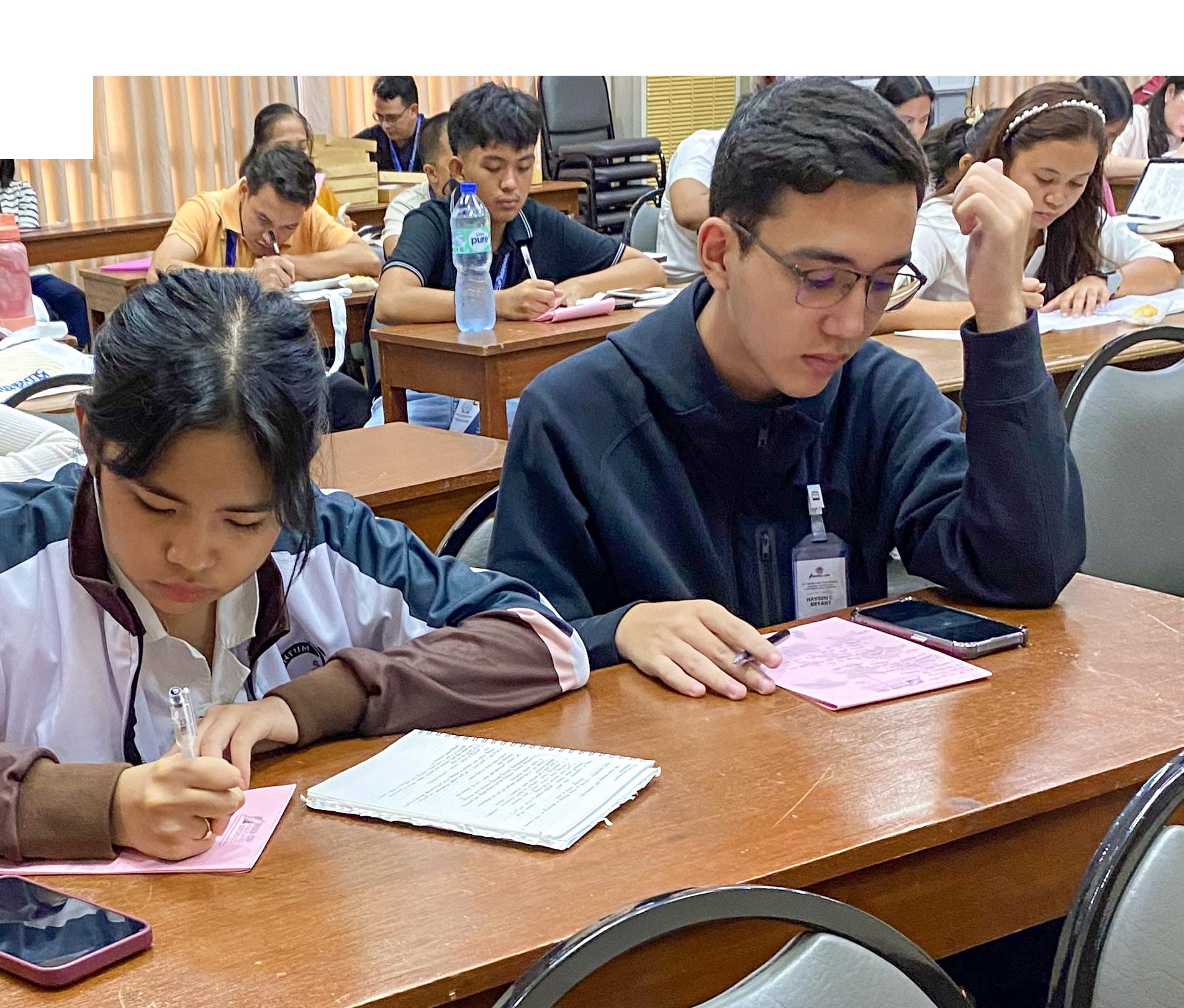
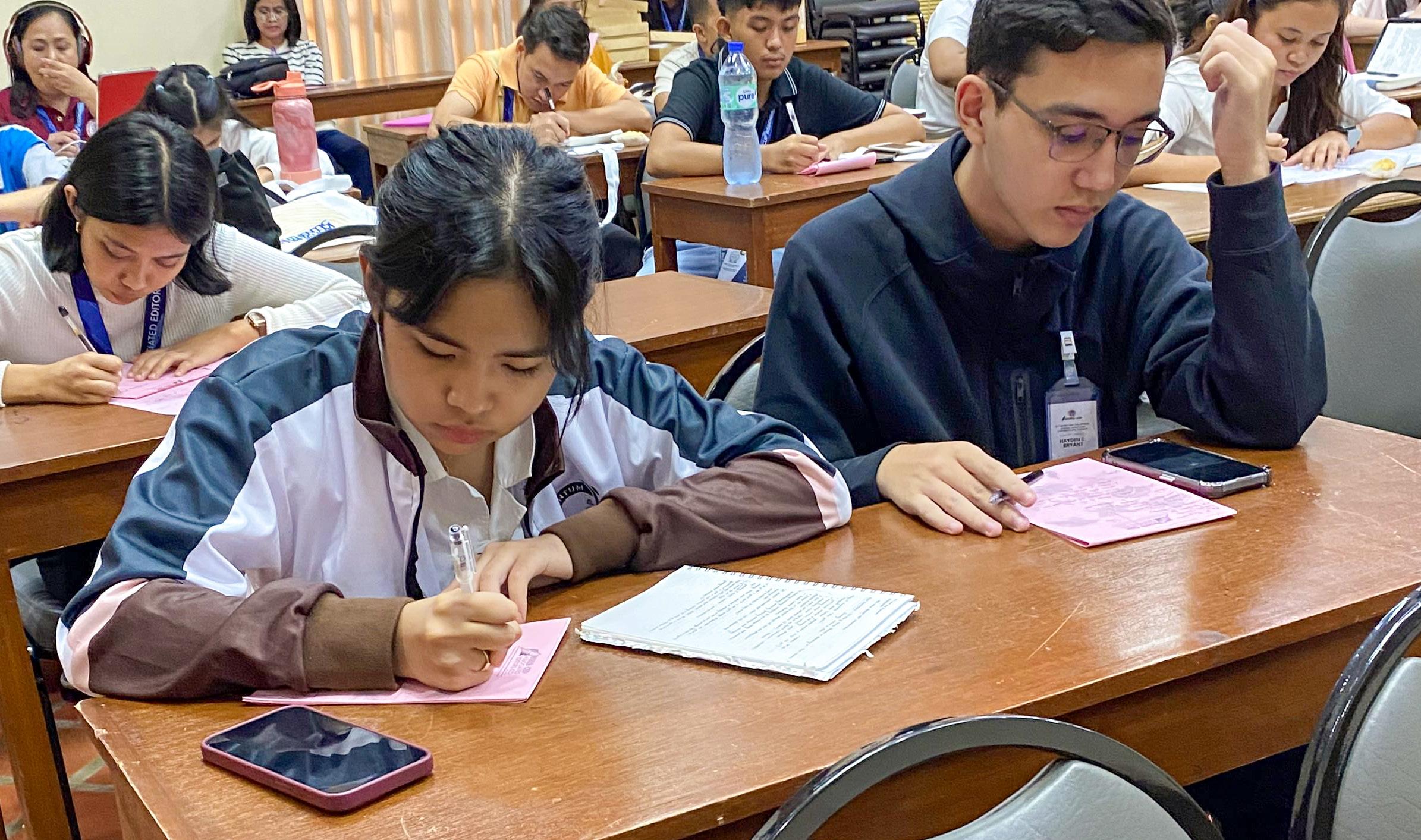
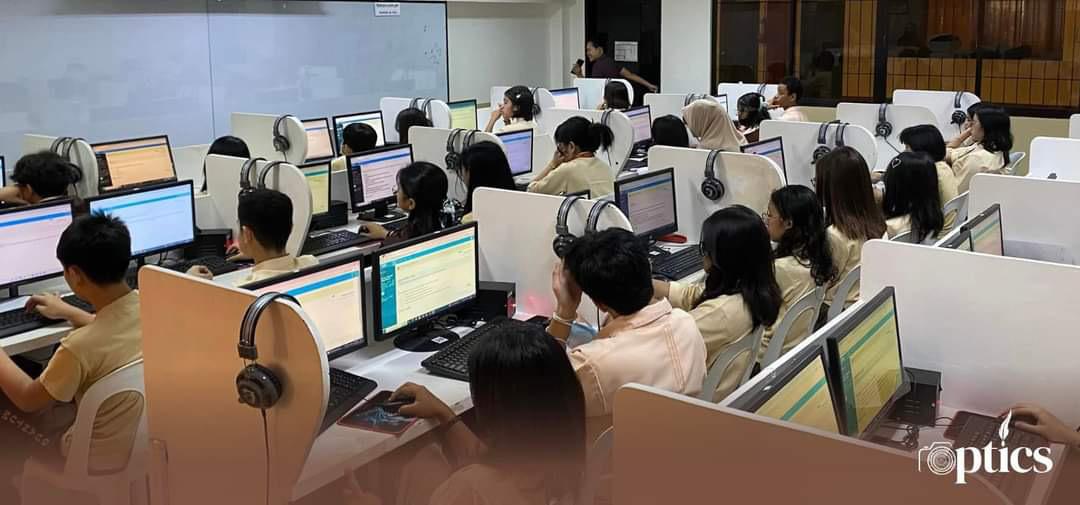
Keeping up with the demands of the digital era, The Quantum Academy (TQA) embarked on the second part of the first quarterly examinations via the school’s official online platforms, Genyo and Microsoft Forms, on Monday, October 7, 2024. This shift provided a more convenient and efficient examination process for the students. The school administered the exams at different testing venues, a process set to conclude on October 11, Friday.
Upper School (US) students have been taking their examinations in the morning. They are assigned to different testing rooms: MakerSpace, Genyo Computer Laboratory, LS Robotics Laboratory, US Robotics Laboratory, and Astron Gallery. The Mini-Conference/Viewing Room is on standby if more space is needed. Meanwhile, the Lower School pupils have been assigned to take their exams in the afternoon. Specifically, examinees were assigned
General Santos City Mayor Lorelie Geronimo Pacquiao outlined her strategic initiatives and goodwill at the City Hall on June 27, 2024, following the consolidation of all city jeepneys.

4 OUT OF 6
Science Museums in Promoting a Science Nation: Fostering Interests in Science, Math and STEM-Related Courses and Careers,” the delegates were instructed to write about the theme, events, and statements said during the 21st Word Cup Mini Press Conference.
Journalists assigned to photojournalism were taken to Tagaytay Picnic Grove, one of Tagaytay’s most popular tourist attractions, where the view of Taal Lake is evident. There, the delegates took pictures, interacted with tourists, and interviewed workers to create a connection
sets bar
In an interview with the staff, Mayor Pacquiao highlighted her efforts in addressing the concerns of public utility vehicle (PUV) drivers. “Siyempre, una-una, matagal na talaga akong nagko-commute ‘no… siyempre masaya ka at nakakausap mo yung driver at napapakinggan mo kung ano yung nangyayari dito sa palibot natin, dito sa GenSan, at kinukuha [ko] din yung mga opinyon nila. (First of all, I’ve been commuting for a long time already. It is also enjoyable being able to talk to the drivers and hear about the events happening within GenSan. At the same time, I am also able to collect their opinions),” Pacquiao remarked. When asked about further plans of the Local Government Unit (LGU) of GenSan, Pacquiao emphasized the importance of consulting the transportation sector and the drivers while considering schoolbound commuting.



Led by Teacher
the team—comprised of teachers Grace Naul, Rembranth
and Earl Hormigoso—brought home valuable knowledge, expanding the scope of robotics education at TQA.



by Trump’s reelection sparks concerns for OFWs,
Former President Donald Trump was reelected as the 47th President of the United States of America (US), defeating Kamala Harris in the November 5, 2024 election, securing 49.95% of the votes. His return raised concerns for overseas Filipino workers (OFWs) and their families, particularly with his immigration policies that could lead to mass deportations.
According to Rappler, Trump’s administration announced plans for the
Look, Generals! The Big Bad Wolf is here!
Big Bad Wolf Fair, which took place from October 11-29, 2024, attracted hundreds of book lovers and literary enthusiasts alike to the Veranza convention center. The eighteen-day event boasted an expansive range of books, from romance to thriller, providing many choices for customers to choose from, at unbelievably low prices.
It brought a full-blown book-loving experience that combined literature, entertainment, and community engagement...
With thousands of books on offer— from bestsellers and children’s titles to rare finds and academic resources—the Big Bad Wolf Book Fair was a must-visit event for readers and bargain hunters. This year’s fair marked the first time it was held in General Santos City, and when asked why they chose Gensan, BBW’s Regional Head Bernard Lee answered, “In fact, say, we want to reach as much readers as we can, and non-readers, so we will plan to go to each province in the Philippines. I think this the ninth location? And we hope to go to bigger locations as well. We want to make sure we give the opportunity to everyone at large, the community, to look at our books and also afford to buy our books. That is why we’re going to a lot of places, and Gensan was in our map, and we are very happy to be here, with the support of the people of Gensan, and we look forward to coming here again sometime soon.”
The Big Bad Wolf Book Fair’s stay at General Santos City this year brought more than just discounted books—it brought a full-blown book-loving experience that combined literature, entertainment, and community engagement. Many eager
SERENUELA
YUAN
ARMANA
From España to GenSan!
“largest” deportation plan in US history, targeting undocumented immigrants. This, along with stricter immigration controls and the possible end of birthright citizenship, could significantly impact majority of the undocumented Filipinos in the US.
Furthermore, the potential deportations could severely affect the Philippine economy, which heavily relies on remittances from OFWs that account for nearly 10% of the country’s Gross Domestic Product (GDP) and could be disrupted if OFWs face difficulties.
Additionally, Trump’s “America First” policies could negatively affect the Philippines’ Business Process Outsourcing (BPO) sector, which earns over $30 billion annually from U.S. clients (FINEX, November 8, 2024).
In response, the Philippine Department of Migrant Workers (DMW) prepared a support program for affected OFWs which include financial, medical, and legal assistance through the “Agarang Kalinga at Saklolo para sa mga OFWs na Nangangailangan (AKSYON) Fund” and Emergency Repatriation Fund, as well as

visitors flooded the Veranza Mall, drawn by the promise of unbeatable deals and an unparalleled selection of books.
For many attendees, the event was an exciting opportunity to discover new authors, stock up on books, and meet other book enthusiasts.
When asked what initially made him interested in the book fair, a local resident answered, “Actually, nong kahapon, nagbili ‘yung kaibigan ko ng libro dito. It’s actually a comic din eh. Kaya, I was interested na magpunta dito.” Andrew shared.
From children’s books to self-help, cookbooks to graphic novels, the sheer
by Sciences, School of Business and Accountancy, and School of Engineering and Information Technology.
Recently, representatives from the University of Santo Tomas (UST) General Santos City campus have reached out to current graduating students who would wish to pursue one of the courses they offer for their second academic year. The university, located in Barangay Ligaya, first opened its doors for applications from April 23 to May 17, 2024, on the onset of A.Y. 2024-2025.
In a blog posted on the Office of Administration’s website, the university previously announced five pioneering academic programs: BS Accounting Information System, BS Entrepreneurship, BS Medical Technology, BS Pharmacy, and BS Industrial Engineering major in Systems Engineering under three
In mid-2023, Academician Professor Maribel G. Nonato, PhD discussed the vision for the USTGSC as an “Integrated Innovation Agritech campus” during Discurso de Apertura, according to an article posted on their official website.
As for incoming college freshmen, UST-GSC has announced that the final deadline for applications for the University of Santo Tomas Entrance Test (USTET) will be on February 7, 2025, for those who wish to become Tomasinong Mindanaoans.
There is no news of expanding their scope to cater to senior high

variety of titles on display was a highlight of the fair. Visitors could peruse books organized by genre, with themed sections that made it easy to navigate the aisles in the fair. One of the key draws of the Big Bad Wolf Book Fair were its shockingly low prices. Books were offered for as low as 20 pesos, with many visitors eagerly snapping up bargains. Whether it was for gifting, personal reading, or expanding their collection, attendees enjoyed the thrill of finding beloved books at a fraction of their usual cost. Another key point of the fair is that, while known for its international
presence, the fair also celebrated local culture and talent by offering a selection of Filipino authors, illustrators, and publishers that were given special prominence, with a highlighted display at the center of the event. And as the last day of the 2024 Big Bad Wolf Fair wrapped up, visitors left with arms full of new books and anticipation for, possibly, a next visit in the future, and more opportunities for the community to come together and celebrate the joy of reading.
reintegration programs for deportees. The DMW is also exploring alternative job opportunities in countries like Japan and Germany to help displaced workers. During Trump’s previous presidency from 2017 to 2021, strict immigration policies such as workplace raids, family separations under the “Zero Tolerance” policy, and attempts to end the DACA program caused fear among immigrants (Rappler, 2024). Many are concerned these challenges could return under his leadership.
The online and in-person summit was held to provide a venue for journalists (may they be students, teachers, or professionals) to share insight as well as gain knowledge from the number of speakers who were invited, such as Korina SanchezRoxas, Hon. Raffy Tulfo, and Mariz Umali, among others.
The event itself spanned two days, from 7:00 AM to 5:00 PM, with 10 guest speakers in total. Open forums were also held after each talk to encourage interaction between the attendees and the speakers.
21ST WORD CUP FROM PAGE 1
between their images and stories. The two-day event concluded with The Quantum Academy having English Department teacher, Froilan Aguring, along with Bryce Denoyo, Anthony Nonaillada, Aidan Villegas, and Patricia Castro as the winners for News Writing. Additionally, the following students won in their respective categories: Anthony Nonaillada for Mobile Journalism, Bryce Gabriel Denoyo and Aidan Franco Villegas for Sports Writing, Kiara Annelise Valencia, Arthur Diaron Zerna and Anthony Nonaillada for Copyreading and Headline Writing, Anthony Nonaillada and Aidan Franco Villegas for Science Writing, Patricia Ysabelle Castro and Arianna Garcia for Photojournalism, and Armana Yuan Serenuela and Arthur Diaron Zerna for Column Writing, with a total of 17 awards.
ANTHONY
NONAILLADA by
“We should be earnest about voting.”
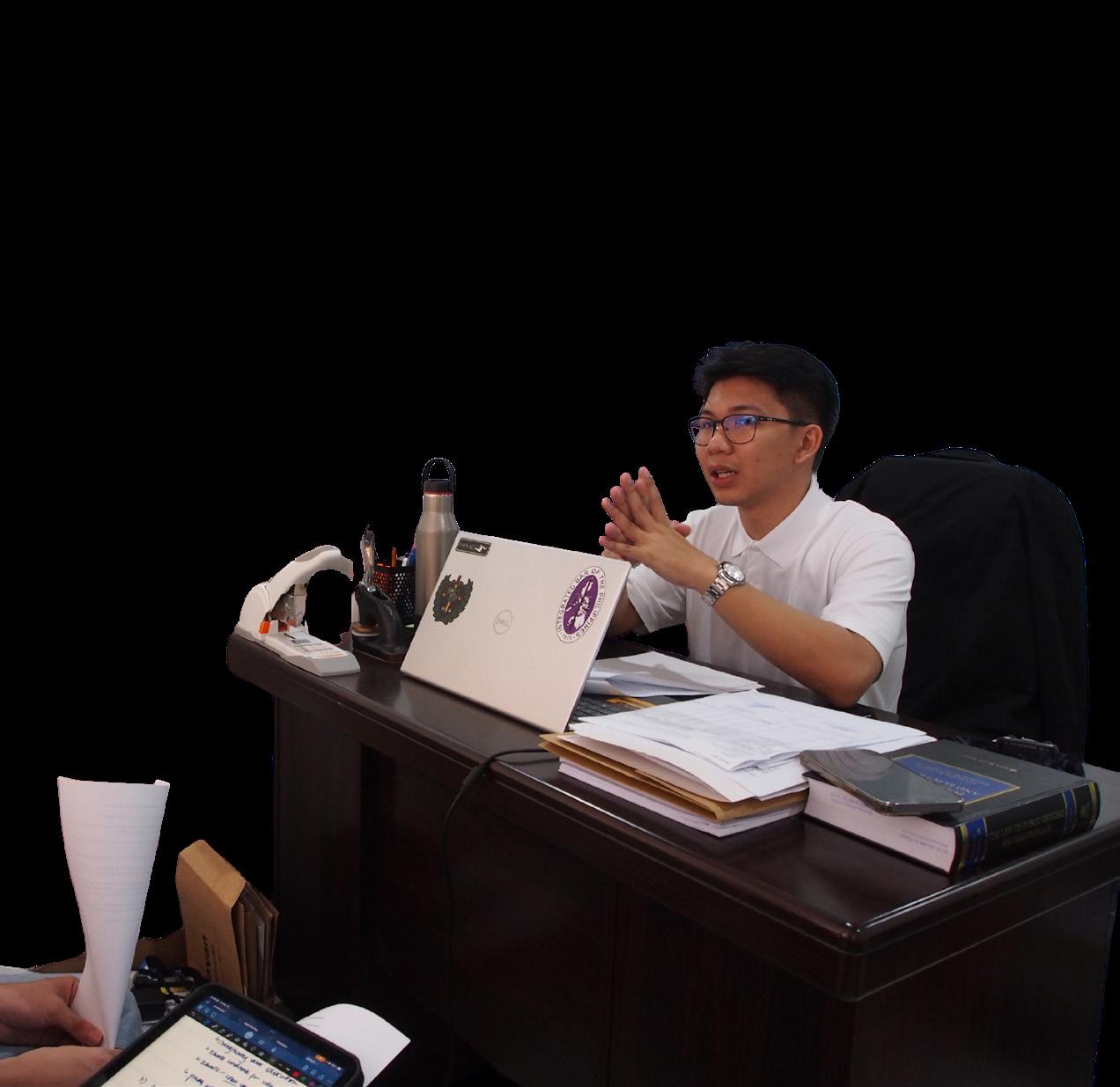
This was Commission on Elections (Comelec) Regional Election Attorney Jeljan Panal’s statement in an exclusive interview with Optics on November 15, 2024 at the Comelec Office in General Santos City, shedding light on the Commission’s vital role in safeguarding the democratic process, highlighting recent advancements, ongoing challenges, and the importance of voter participation.
Atty. Panal highlighted the Comelec’s quasi-judicial role, particularly in addressing election offense cases such as vote buying, premature campaigning, and illegal campaigning.
“So, hindi alam ng nakararami (Majority do not know) that the Comelec has this what you call a quasi-judicial function. It’s like a court.” he explained. As Regional Election Attorney, Panal oversees the preliminary investigation of complaints to determine whether cases merit filing in court or dismissal, streamlining the judicial process.
measures to detect and prevent multiple registrations through the Automated Fingerprint Identification System (AFIS).
“Dati kasi barangay certification lang would suffice for you to register. ‘Yon ang sinasubmit lang for identification of voters. Now, strikto na si Comelec. Kailangan talaga ng valid ID. (Before, a barangay certificate sufficed as identification, but now Comelec requires valid IDs),” he said.
When discussing challenges, Panal identified premature and illegal campaigning during barangay and SK elections,
Comelec has this what you call a quasi-judicial function. It’s like a court.
Comelec is studying the feasibility of online voting to enhance accessibility.
He also pointed out recent improvements in voter registration, including the stricter implementation of ID requirements and the introduction of
“Congress Chairman George Erwin Garcia is already planning with his team na i-studyhan ‘yong pag-conduct ng elections online. Do’n naman talaga tayo papunta sa digital age. Perhaps, there will come a time na ang pagvote natin is sa bahay na lang… basta meron lang safeguards from hacking and data compromise (Congress Chairman George Erwin Garcia is already planning with his team to study the possibility of conducting elections online. That’s really where we’re headed in the digital age. Perhaps, there will come a time when we can vote from home… as long as there
ARIANNA GARCIA by
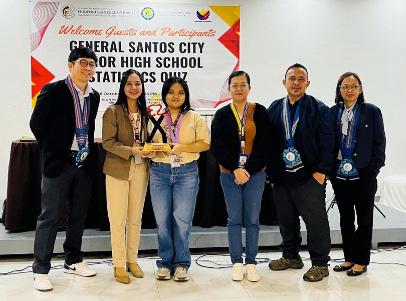
In celebration of the 35th National Statistics Month, General Santos City’s Philippine Statistics Authority (PSA) organized a variety of academic competitions, which commenced on October 1 and concluded on November 7. Following the theme, “Advancing Data and Statistics Through Digital Transformation: A Road to an Empowered Nation,” this month-long event highlighted the modernization of the statistical system, focusing on the use of digital tools and platforms to improve the accuracy, timeliness, and accessibility of statistics.
STATISTICALLY UNSTOPPABLE!
The Quantum Academy celebrated its 26th Foundation Anniversary Week from the 4th to 7th of December with a diverse range of on-campus events.
The festivities kicked off on December 4th with “Paws and Claus,” a heartwarming event showcasing students’ beloved pets.
The following day, the highly anticipated Christmas decoration competition unfolded across all grade levels. Students engaged in spirited caroling presentations, followed by preliminary and final judging of their creative decorations. Throughout the week, upper school students actively participated by setting up a variety of engaging booths around the campus. Food options were plentiful, with the Student Council managing a Potato Corner booth and a Coco Island booth. Grade 11 - Curie added to the culinary delights with their own food stall featuring three miniature games. Parents and teachers also contributed by setting up food stalls under the pergola.
Adding an interactive booth, Grade 12 - Newton transformed their classroom into a captivating horror house, with students themselves guiding visitors through the experience.
The Student Council further enhanced the festivities by organizing a Bingo raffle, inviting students, teachers, and visitors to participate.
The culmination of the week saw high school students enjoy separate Hawaiian and Ibiza-themed cookout parties, filled with other competitions Student Council booths.
The 26th Foundation Anniversary Week was a resounding success, fostering an inclusive atmosphere with active participation from all students, teachers, and visitors.

TQA celebrates Christmas with global festivities
All is calm. All is bright!
The Quantum Academy (TQA) held a series of festive activities to celebrate Christmas this year. The events, which ran from December 4 to 5, 2024, included a pet show and tell, a school fair, a caroling competition, and a classroom window and door decorating contest.
The festivities began on December 4 with a pet show-and-tell in the morning, followed by the opening of school fair booths in the afternoon. The booths, organized by Grades 11 and 12, the Student Council, and some parents and teachers, offered a variety of food, drinks, and games for students to enjoy. On December 5, the school held a caroling competition at the campus pergola. Each grade level performed a short carol, which counted for 10% of their score in the classroom decorating competition. The decorating competition, themed
“Christmas Around the Globe,” challenged students to transform their classroom windows and doors into festive displays. Grade levels began decorating their classrooms a month in advance, with judging taking place on December 5. The competition was divided into categories: Kinder-Grade 2, Grades 3-4, Grades 5-6, Grades 7-9 (Division 4), and Grades 10-12 (Division 5). In Division 4, Grade 8-Respect took first place with their China-themed decorations, followed by Grade 9-Integrity with a South African theme, and Grade 7-Camaraderie with a Singaporean theme. In Division 5, which focused on “Christmas in the Philippines,” Grade 12 emerged as the winner, followed by Grade 10 and Grade 11. The top three winners in each division received seed points for the upcoming intramurals: 150,000 for
and
TQA unveils ‘Learning Commons’
Last August 2, 2024, The Quantum Academy inaugurated its new “Learning Commons,” a groundbreaking facility designed to revolutionize the learning experience for its students. This expansion embodies the school’s commitment to fostering 21stcentury skills and creating a dynamic and innovative learning environment.
“It is not just a physical space but an innovative concept that drives our approach to education,” shared School Director Angela Corazon Licas. “It is a space that fosters problem-solving, teamwork, and mentorship while seamlessly integrating technology into teaching and students’ experiences.”
The Learning Commons boasts a diverse array of facilities, including the Atrium, Dots EdTech Center, Astron Gallery, Torch Library, and The Nexus.
As the school director claims, the primary motivation behind the expansion was to provide students with a wider range of learning spaces.
“We wanted the Q-Kids to have more learning spaces. Savings for the building construction took almost eight years, but the idea started when the first classrooms were built over 20 years ago when we realized that the school’s population was rapidly growing,” Licas emphasized.
In terms of its architectural integrity, sustainability was also a key consideration in the building’s design.
“The windows were made larger than the older buildings, so natural light and fresh air can be maximized depending on the temperature. The building has also been prepared for the adoption of solar energy,” Licas explained.
Looking ahead, the school director envisions continued expansion and development of the Learning Commons.
“I hope to see more space for collaborative work, research, immersive learning, and even a snack bar. With our current technology and the promise of more to come, the future of our new building is bright,” she expressed.
Selected Grade 10 and 12 students from The Quantum Academy (TQA) participated in various events held throughout this month — Essay Writing, Impromptu Speaking, Quiz Bee, Infographics and Poster Making — which were held at different venues.
Under the tutelage of T. Froilan Aguring, Kiara Annelise Valencia and Anthony Nonaillada from Grades 10 and 12, respectively, competed in Essay Writing, with Valencia securing third place in the Junior High School (JHS) category.
Further, Sitti Fharhannah Datukaka from Grade 10 and Arthur Diaron Zerna from Grade 12 participated in Impromptu Speaking under the guidance of their coach, T. Erika Danica Bautista, both earning a spot among the top 10 in the Junior and Senior High School categories.
In the Quiz Bee, Datukaka and Nonaillada, guided by their coach, Gebrielle Aguinaldo, represented the school, with Datukaka emerging as the top placer in the JHS category.
Jannah Yden Derayunan and Nonaillada, Grades 10 and 12 students, took part in the Infographics Competition alongside their coaches T. Froilan Aguring and T. Gebrielle Aguinaldo, with Nonaillada being recognized as champion in the SHS category.
Finally, in the Poster Making Competition, Selene Joelle Pestaño from Grade 10 and Basil Galvez from Grade 12 showcased their artistic skills with the help of their coach, Lizter Navasquez, both emerging among the top 10 in both categories.
TQA holds Buwan ng Wika with ‘Pista sa Nayon’
KIARA ANNELISE VALENCIA by
Celebrating Buwan ng Wika, The Quantum Academy (TQA) held its “Pista sa Nayon” on campus with the theme “Panitikan at Kapayapaan,” highlighting the significance of Filipino language and culture on August 30, 2024.
Ms. Angela Corazon Z. Licas, TQA’s Director, emphasized the deep link between language and identity stating, “Kung niloloko mo ang wika mo, iyan ang klase na tao ka. Kung wala kang pagmamahal sa paggamit ng wika, wala kang pagmamahal sa katawan mo. Sapagkat ang wika ay kaluluwa ng kung sino ka (If you mock your language, that is the kind of person you are. If you have no love for [using] your language, you also have no love for yourself. For language is the very soul of your identity).”
The Student Council with the Filipino Language Department organized the day-long event featuring a variety of competitions for students from grades seven to 12. Activities included house competitions such as Kadang-Kadang, Patintero, and Tagisan ng Talino, as well as class contests such as Scrabble, Slogan, Piging, and Tinig ng Tanghalan.
While each participant faced the challenges with diligence and a competitive spirit, Anthony Nonaillada, Editor-in-Chief of Optics, reminded the participants that the essence of the event was to honor the Filipino culture regardless of the competitions’ results.
“Sa mga paligsahan na ating sinalihan, panalo man o talo, ay naipakita natin ang ating pagmamahal sa ating kultura (In the competitions we have participated, whether won or lost, we demonstrated our love for our culture),” Nonaillada emphasized.
The event celebrated the Filipino heritage and underscored that the true victory lies in embracing and honoring our cultural roots.
Optics makes a comeback, shines at DSPC
ANTHONY
After a five-year hiatus, The Quantum Academy’s student publication, Optics, is back and ready to shine a light on campus happenings this school year.
Armana Serenuela, Associate Editor of Optics, expressed a sense of fulfillment in the project despite the challenges involved.
“Being part of a whole has never felt more rewarding,” Serenuela said. “Although bringing back Optics came with its fair share of pressure, especially when presented with the previous outputs, I’m pretty proud of what we have created, and I look forward to what we can create in the future.”
The Optics team’s hard work paid off at the Division Schools Press Conference (DSPC) held last January 10-11, 2024, where they made a splash with multiple wins.
Armana Serenuela and Hayden Bryant, both Grade 11 students, took home 1st place and 5th place in column writing, respectively.
Arianna Garcia, a Grade 10 student, won 2nd place in news writing. Since the beginning of the school
year in August, Optics journalists have been honing their skills across various disciplines, attending workshops and training sessions. Serenuela spoke highly of the training programs, which, for her, were crucial in developing the journalists’ ability to craft articles within tight deadlines.
“Due to everyone’s busy schedules, preparation for DSPC was not entirely consistent,” Serenuela admits. “But the writers learned so much from the trainings, especially how to manage time well enough to finish an article within a specific time frame,” she expressed.
The return of Optics reflects the school’s ongoing commitment to student journalism. The publication plans to continue providing coverage of campus events and student stories throughout the school year.

to different testing venues to ensure the reliability of the test results. In other words, various grade levels shared the same testing room, and the test takers sat beside students from different grade levels. Teachers were also assigned to proctor the examinations spearheaded by the Head Teachers.
While the transition to online exams may have elicited varied reactions among the students due to the technical challenges, the administration, and the teachers remain steadfast in their positive outlook and determination to keep improving and adjust for the students’ better learning and assessment experience. In line with big universities and other academic institutions locally and internationally, the school’s adaptability is a clear sign of progress, reassuring the community of our ability to keep up with the changing times.
One student from grade nine echoed this sentiment, emphasizing that we are now in the digital world. While the shift to virtual examinations may have been daunting initially, it is a fitting step forward. The positive feedback from our students is a testament to their adaptability and resilience, and it is something we can all be proud of and support.
Moreover, it is worth noting that the school has 4 Internet Service Providers (ISPs), which are PLDT Fibr, PLDT iGate, PLDT connection direct from Manila provided by Genyo Head Office, and Globe Fiber, providing a total internet speed of 700 megabytes per second (MBps). Such speed caters to 165 computer units and tablets for online examination, 140 personal devices of teaching and nonteaching personnel, not to mention the other mobile devices of the students, which might also be connected to the internet, and the CCTV cameras.
All these considered, the school administration has planned to follow a different but much improved schedule, especially for Senior High School (Grades 11 and 12) exams starting next quarter. Also, the number of exam days may be lessened to just three days. We want to keep you informed and involved in our decision-making process as we strive to provide the best learning and assessment experience for our students.
TQA’s upper school graduating grades project growth in CEM
TQA Alumni shine with top honors, professional licenses
Alumni of The Quantum Academy (TQA) have continued to excel in 2024, achieving outstanding results in higher education and licensure examinations, further establishing the school’s reputation for academic excellence.
Two TQA graduates, Erica S. Gomez (Batch 2019-2020) from UP Diliman and Liz S. Espinosa (Batch 2020-2021) from De La Salle University, earned Summa Cum Laude honors in BS Psychology and BS Human Biology, respectively. Several others received Magna Cum Laude distinctions: Hans Ed Christian T. Saldaña (Batch 2019-2020, UP Diliman) in BA Psychology, Ma. Isabelle Alessandra M. Mirabueno (Batch 20192020, UP Diliman) in BS Family Life and Child Development, and Chloe Louise M. Almelor (Batch 2020-2021, De La Salle University) in BS Human Biology. Carelle Ysabelle B. Tupas (Batch 2020-2021) earned Cum Laude honors in the same field. In licensure exams, John Dominic Mari M. Rafael and Fritzie Bianca Isabelle O. Aquino (Batch 20142015) passed the Physician Licensure Examination, and Julia Rose L. Diomampo (Batch 2014-2015) passed the Architect Licensure Examination. In the legal and accounting fields, Keziah Yvette Acharon (Batch 2014-2015) and Nicole Faith Cariaga (Batch 20132014) passed the Bar Exam, while Ma. Jayna Koleen Omila (Batch 2014-2015) and Jessica Natasha Quibod (Batch 2016-2017) passed the CPA Licensure Examination.
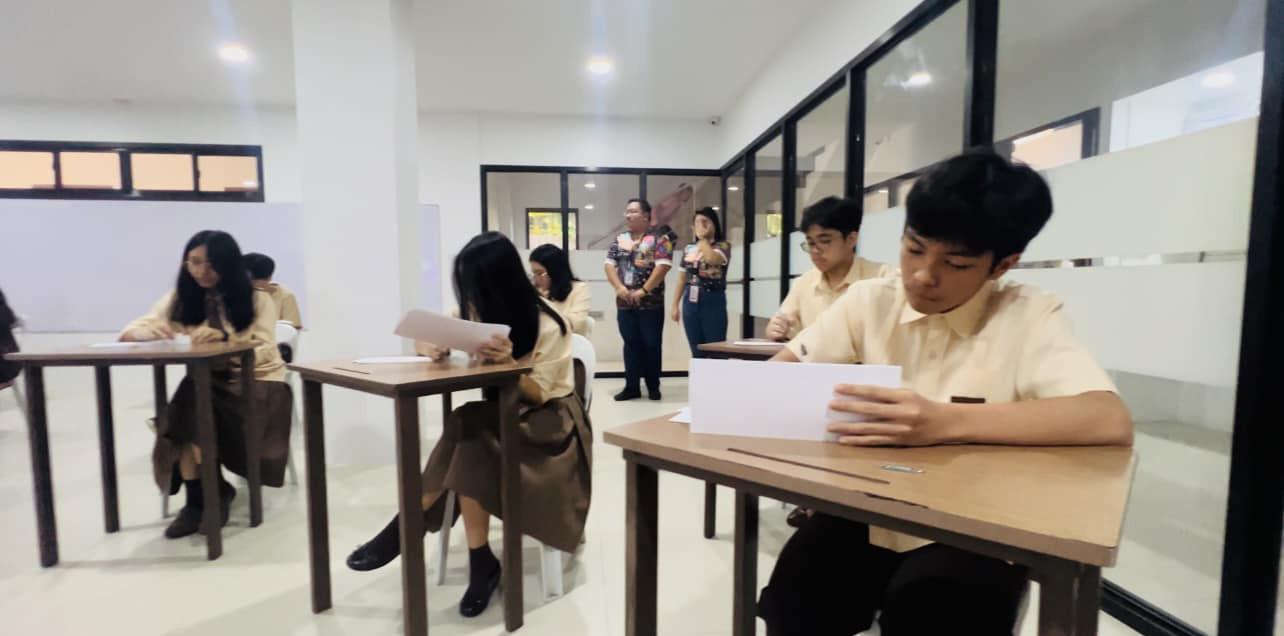
In their pursuit of reopening the school’s annual tradition, The Quantum Academy (TQA) reintroduced Battle of the Brains (BOB) after its long hiatus, which commenced on November 11 and ended on November 13. The competition, a highlight of the academic calendar, saw students from all four houses—Crimson, Gold, Azure, and Emerald—vying for top placements.
Crimson House emerged as the overall victor, claiming first place in both the Lower and Upper School divisions. In the Lower School, Crimson was followed by Gold House in second place, with Azure and Emerald taking third and fourth,
The Quantum Academy (TQA)’s upper school department exhibited development in school year 2023-2024 in the major subjects — English, Science, and Mathematics — after a recent analysis of graduating grades’ results in the Central of Education Measurement (CEM) standardized test.
In an interpretation of the CEM outcomes of both grades 10 and 12 from
respectively. The Upper School results mirrored this outcome, with Crimson again leading first, Azure securing second, and Gold and Emerald rounding out the rankings.
Beyond the house competition, students from the Upper School showed their academic prowess. In Division 5 (Grades 10-12), Nonaillada of Gold House secured first place, followed by Crimson House students Zerna and Yabes in second and third, respectively. Gomez from Azure House took fourth place. Division 4 (Grades 7-9) saw Gold House students Regidor and Evangelio claim the top two spots, while Jacob and Dumaran from Emerald House placed third and fourth, respectively.
The BOB tested students’ knowledge
school year 2023-2024 and the year prior, the three overall standardized scores had an average increase of 3 and 3.67, respectively, with Math being the dominantly improved area.
Accordingly, the data presented Mathematics with an increase of six standardized scores, from 53 to 59 for both grade levels, whereas Science and English both had an average increase of two standardized scores — from 72.5 to 74.5 and 82 to 84, respectively.
across a wide range of subjects, including History, Geography, Mathematics, Science, Language, Literature, the Arts, and Current Events. The competition followed a rigorous format with the first round consisting of a 10-item test, which was held in the students’ respective classrooms.
Qualifiers then advanced to the second, third, and final rounds held in the Nexus mini-conference room which consisted of questions revolving around the same topics at increasing difficulties. Finally, students that garnered the highest points at their respective houses and divisions were given prizes such as the 2024 Battle of the Brains limited edition jersey and exemptions in their Second Quarterly Examinations.
With 10 standardized scores as the highest increase individually in the content areas, the most fostered areas include grade 10’s Geometry, Grammar, and Reading Comprehension moreover grade 12’s Geometry, Natural Hazards, and Types of Speeches. These results serve as evidence of the continuous efforts of teachers and students in reaching for greater heights and an education that conquers all.
At the start of school year 2024-2025, The Quantum Academy (TQA) launched its Scholastics program, open to all students in both the upper school and lower school, highlighting the need to strengthen the school’s reading program by offering a diverse collection of books tailored to its students’ interests.
Launched in August of 2024 and effective throughout the entire school year, the Scholastic program is supported by the newly opened Torch library, which aims to provide the students with necessary digital tools for their convenience and accessibility.
In an interview conducted with Teacher Erika Bautista, TQA Scholastic moderator, she emphasized the school’s commitment to integrating the Scholastic website into students’ education by allotting time for Scholastic activities and awarding house points to students who actively engage in the program.
We [teachers] encourage our students to read books, which can help them earn more points, and, at the same time, help their house, as it is also a house competition.
WILFRED EMANUEL FLORIDA by

The Quantum Academy (TQA) set the annual National Book Week (NBW) in motion with the theme of “MAGBASA, MANGARAP, MAGDIWANG” (READ, DREAM, CELEBRATE) via competitions held in the Torch, TQA’S official library, from the 25th to 29th of November 2024 for students and their respective houses.
The annual NBW is an event that celebrates reading and literature and pays tribute to the importance of libraries in the journey of imparting knowledge. TQA administered competitions commemorating the celebration of NBW, namely the Daily Trivia, Digital Bookmark Making (DBM), and Digital Poster Making (DPM), all events following their particular rules, guidelines, and criteria. Furthermore, the Daily trivia, a competition participated by grades 2-12, encouraged reading by providing
questions revolving around books, authors, and Philippine literature. On the other hand, DBM and DPM accommodated competitors from grades 4 to 12, giving students freedom to express their creativity under the condition that they follow the theme of the event.
The Daily Trivia was the only event out of the three to be physically held at the Torch. On the contrary, the contestants from DBM and DPM were given the liberty to accomplish their tasks where they wished to do so.
“Actually… may schedule kasi kami [LGU GenSan] this Friday (June 28) ‘no, mag-meeting kami, and then consultation [namin] sa mga driver, kung mayroon lang [kaming] baguhin na mga ruta parang gano’n. Siyempre, ang sa akin… hindi natin kailangan pahirapan, lalo na ang ating mga estudyante, so basta lahat ng mga gagawin, lahat ng decision is, kailangan talaga i-consult bago natin gawin. (We have a schedule this coming Friday to consult with drivers about possible route changes. And of course, my main concern is to make transportation easier, especially for the students. Either way, every decision and action to be made needs to be consulted with beforehand),” Pacquiao shared.
As the PUV Modernization Program progresses, Mayor Lorelie vowed to use the majority of the public’s opinion as her foundation for the future plans of the LGU of General Santos City.
“Actually now, we integrate it [Scholastic] in our weekly schedule, so as you know, days are allotted for Scholastic — it could be through independent reading or guided reading (…) during breaks and holidays, we [teachers] encourage our students to read books, which can help them earn more points, and, at the same time, help their house, as it is also a house competition,” she shared. Additionally, when asked about the school’s future plans for implementing the website, Teacher Erika stressed the school’s commitment in maintaining the program for the coming school years after receiving a positive outlook from the students’ participation.
“We see its [Scholastic] positive effect among the students (…) after administering the post-test, there we see if we have reached the goal or if students engaged more in answering several activities or quizzes (…) it’s really a good program for students to develop a passion, habit, and love for reading, as we believe that, when they read every day, they will lead a better life,” she said.
Student Council launches book drive
ARMANA YUAN SERENUELA
by
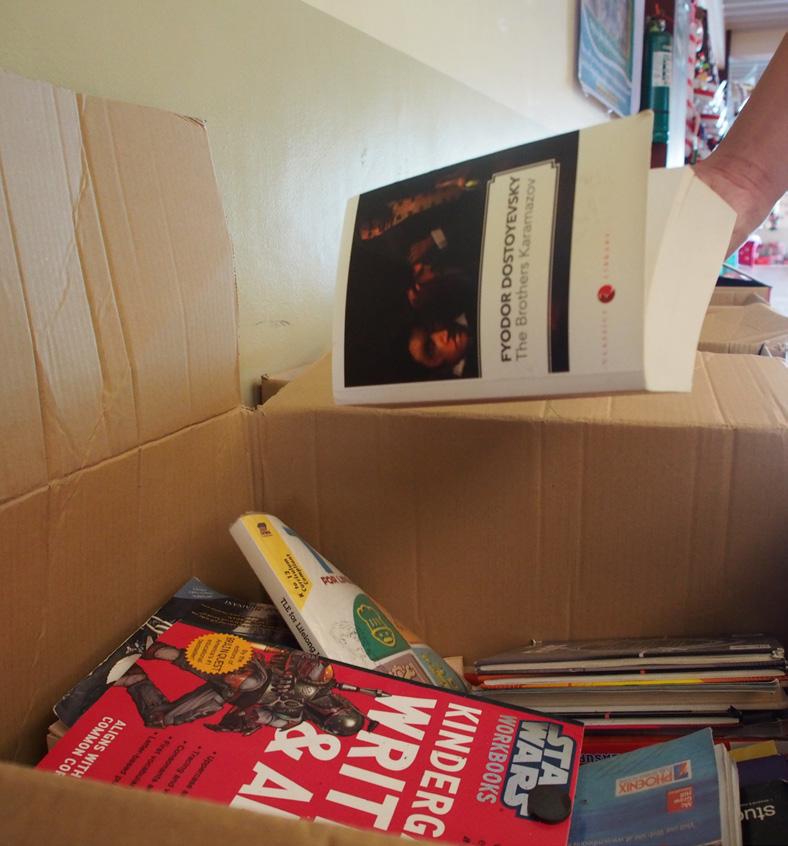
From November 6 until the end of the first quarter, the Student Council of The Quantum Academy organized a book drive to be donated to certain public schools and the Barangay San Isidro Reading Center, as a part of the Student Council’s Literacy and School Supplies Donation Drive.
When asked about the objective of the endeavor, SC President Enrico Gomez stated, “Our entire goal is to spread literacy towards other individuals such as those in public schools since wala sila masyadong materials (…) we have to at least give a share, even if it’s our old books.”
Boxes intended for the drive were set up at the school’s pergola, with six and a half boxes already filled with books according to Gomez. These books will be given to recipient school
HAYDEN
ANTHONY NONAILLADA
ARMANA YUAN SERENUELA
ARTHUR
To battle the ongoing stigma of mental health issues and address the mental health crisis among students, President Ferdinand Marcos Jr. signed into law Republic Act 12080, or otherwise known as the Basic Education Mental Health and Well-Being Promotion Act. The need to highlight the concern for Filipino students’ mental health has been growing more evident with every case tied to it and with legislative efforts, though long overdue, the country is now a step closer to easing the plight of learners and educators alike, cementing mental health’s place in contemporary society.
This legislation marks a historic moment in the nation’s commitment to prioritizing psychological health, particularly among young learners. By institutionalizing mental health awareness and support systems within the basic education sector, the law aims to reimagine the traditional approach to education, shifting the focus from mere academic achievement to the holistic development of students. This can be embodied through a curriculum, programs, and campaigns that place great emphasis on the scope of mental health. With this act, what used to be a historically-shunned issue is now a mainstream movement that poses hope for the ill and affected. This paradigm shift recognizes the link between mental well-being and academic performance, filling in the gaps that separate them.
Though society may pose it as a harmless ordeal, nurturing the mental health of students is a crucial issue.
In 2021, 404 students died by suicide with 2,147 attempts during the same year brought on by the route education took during the pandemic. Additionally, according to a study by insurance provider AXA, the number of Filipino respondents in the 18-to-24-year-old bracket that admitted going through depression and anxiety were higher than global statistics. Mental health is then presented not as a fleeting concern of temporary discomfort; it is an embedded problem that requires specialized focus. With this, the administration, the people,
The MATATAG Curriculum makes its first proper nationwide appearance this SY 2024-2025 to oppose the ongoing inadequate performance of Filipino students and the issues apparent in the educational system of the earlier years of school. However, without consideration of the necessary rudiments that will bring this program to life— such as engagement, funds, political transparency, and its synergy with other sectors—it would all go up in flames.
The nation has plenty to work on concerning the educational sector— mainly in battling students’ inefficacy in foundational skills, congestion in lesson planning and time management, and the fact that the Philippines’ previous educational system was lagging compared to other countries’ systems. Due to lesson congestion, teachers did not have the time to go in-depth on certain topics which some students struggled with. Students would not have the time to focus on developing their foundational skills (such as literacy, arithmetic, and socio-emotional learning). Both deficiencies combined sum up to be one of the reasons why the Philippines’ education system cannot bear comparison with other countries.
The Philippines’ PISA results have been particularly embarrassing as well. We continue to be in the lowest rankings
and the country leaving room for the psychological aspects of well-being for students becomes a necessity, recognizing that they are not only problematizing academic endeavors.
However, the law’s purpose is often questioned by concerns of importance. Opponents of the legislation may argue that such a law is not a necessity as it is only a waste of funds and resources to reinstate the system. It may be seen that our mental health system and structure are already sufficient, and adding it to the educational sector is already redundant. At the same time, such topics may be insensitive or inappropriate for a younger demographic. In the Philippine context, such a statement is not unwarranted as history has brewed a conservative point of view with how mental health is given a place in society, often seeing its priority as taboo.
Despite this, this notion of disregard should be abolished. The law is of great use as it acts as a primer of handling the issue, targeting the experienced struggles of students as they go on with their lives. Of course, problems are not exclusive to the youth alone. Teachers, and even adults in other professions, may experience the same or worse magnitudes of events. Ultimately, that is the entire picture; fixing the perspective and notion around how conservative the Philippines treats the conflict of mental hardship is the priority. With initiatives akin to the act, this systematic issue is given centerfold treatment and a light that aims to truly influence public perception. It is with great intention that mental health awareness should not only be a topic brought up in postmortem gossips and church eulogies ex post facto, as it must be a cultural and moral standard. Generations should grow understanding that it is human nature to feel emotionally unwell given certain situations, and help is only a call away. As this norm becomes reinforced, society cultivates a positive feedback response to cases of psychological nature.
Although the act is a big leap in the progress of the overall societal treatment of mental health, such a step is not enough to eliminate the concern. This law, even though leveraging the general public’s perception on the topic,
SUBJECT TO TASTE

is merely a catalyst for the pending movements and courses of action that should take place. What should be done, however, is the readjusted belief and approach of the situation, participated by both civil society and the governing administration. To achieve this, investments in mental health infrastructure, including accessible and affordable mental health services, particularly in underserved areas, must be sought after. Additionally, further promotion of mental health literacy through education and awareness campaigns is much needed. By normalizing conversations about mental health and internalizing its nature within practical applications, true change can be achieved. As the nation now takes strides to address the pressing issue of the mental health crisis, it is imperative to remember that the solution is a collective effort. A comprehensive approach involving societal shifts and increased awareness is crucial. Through fostering a country of empathy, understanding, and support, individuals can be empowered to seek help without fear of stigma. It is only sustained commitment that can truly prioritize mental well-being and create a healthier and more open society for all.

compared to Singapore’s rate of 30% of their students. It’s harrowing to see such deficient results after doing all that we possibly manage as citizens of society. We can hardly get by at this point and knowing that our best isn’t good enough is painfully heartbreaking and underwhelming.
DepEd constructed this program not only for lessons to be more digestible to learners but also for students to gain knowledge on its appliance in day-to-day lives. The curriculum aims to emphasize on what is lacking in the skills of learners— creativity, cognitive demands, and moral standards—and educate them in effective practice. As a student who has been hearing all about the new program, it sounds to be a pleasantly different change of pace. However, despite all the cordial chimes of a whimsical future, there is one major flaw that bothers me. Do we have all the necessary resources, people, and minds to commit to such a heavy task?
As the Philippines is recognized as a third-world country, there is a pronounced struggle to find the resources needed for such considerably large projects. This includes infrastructure, funds, and academic equipment. It is a problem because projects like the MATATAG Curriculum are connected to sectors essential for the nation’s growth. If not enough resources are set aside for said projects, the combined efforts thus far will have just been exhausted. Resources must be used wisely specifically for important circumstances like these deciding the future
of the country. Even so, such must first be weighed and sorted out accordingly by people with actual integrity. Furthermore, in distributing the new program, we need apt, capable supervisors. We seek for people who have not only the heart, but also a genuine passion for correcting Filipino education. The problem we’re facing is that barely any newly-grads want to take BSED as their course—or to even cross paths with it anytime in their lives. There’s a dire lack of teachers in the Philippines—even more so effective teachers. We need more diversity coming from people with experience, people who can duly exercise concern in their work and collaborate with like-minded people of other sectors in creating an ideal, if not simply better, future. Most importantly, we, as onlookers, must keep patience. “Improving access, equity, equality, resiliency, and wellbeing will not happen overnight, nor can it be done by DepEd alone. We need a national commitment and sustained effort from all sectors of the society.” (Sara Duterte, 2023) Besides the need for administrative cooperation, we, as students, must also comply with the curriculum’s goals for our
A difference in the educational sector will only be made if we persist in faith and believe in change.
own benefit and for the good of all. From the first-hand perspective of a SHS student, it feels like there has been barely any change besides the types of subjects we were given. This may just be due to all the cancellations of classes, but, personally, academic demands feel just as congested as ever. Nevertheless, it must be mandatory for the government to be transparent about its actions concerning the curriculum and where it is heading. The curriculum directly impacts us, somehow always finding a way into our lives. Therefore, we would undeniably need regular, upfront updates apropos of the details behind the assimilation of the curriculum and where it is heading. A difference in the educational sector will only be made if we persist in faith and believe in change. The chance of improvement may be low, but it still exists. Together, we unite as a single entity with a pronounced goal in mind, to preserve the future of our homeland from the hands of greed and negligence. As Sara Duterte testified in her Basic Education Report (BER) for 2023, “We will rally for an improved learning system in the country. Together, we will rally for every Filipino
After years of seemingly unending political turmoil and geopolitical tensions, the conflict in the West Philippine Sea still constitutes a threat to the economic and social system of the Philippines, a concerning implication for the country’s future if not met with proper action.
The sea continues to be a hotbed of incidents highlighting escalating aggression by China Coast Guard (CCG) vessels against Philippine vessels, including water cannon attacks and dangerous maneuvers impeding Filipino fishing operations and threatening the livelihoods of fishermen. These acts of retaliation and constant violations of established law by China present the Philippine administration with a difficult dilemma: choosing between maintaining peace, which risks further encroachment, or responding assertively, which could potentially lead to a full-blown war. However, this situation, if sought to be ended, necessitates a calibrated response that demonstrates the country’s commitment to protecting its sovereignty and the well-being of its citizens.
Historically, the Philippines reserves the right to claim the benefits of bodies such as the Scarborough Shoal, Reed Bank, and the surrounding waters within its exclusive economic zone (EEZ) based on international agreements, particularly the United Nations Convention on the Law of the Sea (UNCLOS). This right is further supported by the landmark 2016 ruling of the Permanent Court of Arbitration (PCA), which rejected China’s expansive claims in the South China Sea, including the “ninedash line.” The Tribunal found numerous violations of UNCLOS by China, including those impacting Philippine fishing activities, environmental protection, and safe passage. Unfortunately, China’s refusal to recognize the ruling has resulted in significant economic losses for the Philippines, as these actions continue to hinder resource development.
The West Philippine Sea sustains over 300,000 Filipino fishermen and provides a significant portion of the country’s fish production. Behind this, the region’s resources are under severe threat from illegal, unreported, and unregulated (IUU) fishing, particularly from Chinese ships. According to the Philippine Statistics Authority (PSA), the combined reef fish production value of Metro Manila, MIMAROPA, and Central Luzon, three regions heavily dependent on the West Philippine Sea, experienced a drastic 40% drop in reef fish production value between 2002-2011 and 2014-2023. This stakes livelihoods under industry, solidifying the need for action. The consequences also extend far
Dear Editor-in-Chief,
beyond coastal employment. The West Philippine Sea is a vital source of food security for the nation as it provides a substantial portion of the nation’s fish consumption. Disruptions to fishing activities, such as those caused by harassment and intimidation, not only threaten the livelihoods of millions of Filipino fishers but also jeopardize the nutritional security of the population. Moreover, the sea is a vital element of maritime trade due to how it connects the Philippines to global markets. As a result of Chinese aggression, the disruption of shipping lanes and the harassment of vessels increases insurance costs for shipping companies, lowers foreign investment in Philippine maritime industries, and deteriorates the country’s economic competitiveness. This not only impacts the tourism sector, which relies heavily on maritime transport, but also hinders the development of other key industries such as logistics and manufacturing, ultimately impacting the overall economic growth and prosperity of the nation.
Opponents of this view, however, may defend that going against such a forceful nation and powerful body such as China’s may be a detrimental decision. A direct confrontation could instigate larger problems and trigger a military conflict that the Philippines is ill-equipped to handle. Such a conflict could have devastating consequences for the country, including loss of life, widespread destruction, and worse
their agenda will only harm Filipinos more in the long run. Additionally, the argument that any assertion of Philippine sovereignty will inevitably lead to a devastating war is incredibly pessimistic. History is littered with examples of nations successfully asserting their rights and diminishing aggression through a combination of diplomatic pressure, international alliances, and a credible defense posture. The Philippines may be comparatively illequipped, but it is also important to note that freedom is at stake.
To allow China to propagate their agenda will only harm Filipinos more in the long run.
The best course of action is not to push through defense with violent initiatives, but through the force of law. The court of public opinion and international pressure can be powerful tools. By consistently highlighting their illegal actions in international forums and rallying support from other nations, the Philippines can isolate China diplomatically and increase the costs of their aggression. This approach can
stronger alliances with countries like the United States, Japan, and other likeminded nations can provide the Philippines with critical support, including intel sharing, joint military exercises, and assistance in the event of a crisis. If armed conflict does arise, the Philippines should also invest in improving its military infrastructure and modernizing its defense capabilities, which can increase the odds of reclaiming sovereignty. The situation may seem bleak as China may be more powerful, but the country must never lose hope. Truth will prevail, and the Philippines will reclaim its rightful place in the world.

In this age, digital trickery and the spread of disinformation have become prevalent. It negatively affects the school and its community in several ways. It poses risks that may have a significant impact on the relationships within our community, the school’s environment, and our learning process. For instance, rumors and fabricated stories about students often create confusion and mistrust, and they also change the way students perceive each other. Rumors like this can escalate quickly and may lead to unnecessary conflicts. I believe that it is part of our duty as students to take the responsibility of promoting and creating a safe and healthy environment wherein truth will be fostered.
Sincerely, Lizzle Amadeo
Dear Lizzle, Your letter really resonated with me. The spread of disinformation and digital trickery is something I’ve been increasingly worried about, too, and honestly, it’s something I’ve even experienced firsthand. It was incredibly hurtful and frustrating to deal with the fallout from something that was completely untrue, and it brought to mind a simple yet vital practice: Before you assume, learn the facts. Before you share, think. Before we spread any information, we need to pause and consider: Is this true? Is it kind? Is it necessary? It’s so easy to get caught up in the moment and contribute to gossip, but even
seemingly harmless chatter can snowball into something harmful. Like you said, disinformation erodes trust and creates unnecessary drama, and you’re absolutely right when you say it’s our duty as students to actively work against this. We all deserve to feel safe and respected at school, and that means fostering an environment where truth matters.
We need to be mindful of what we say and share, always considering the source and the potential consequences. It’s crucial that we are truth-tellers, not tale-tellers. We also need to cultivate a culture of open communication, where individuals feel comfortable speaking up if they’ve been misrepresented or unfairly targeted. If we see someone being attacked or bullied, we must stand up for them and challenge the false narratives that arise.
This is where campus journalists and student

Amajor underpass project in General Santos City is underway at the perpetually congested intersection of Mabuhay-Bulaong and Digos-Makar roads. This project, aligned with the national “Build, Build, Build” program, aims to alleviate the city’s gridlock. While the vision of smoother traffic flow is enticing, a closer look reveals a potential obstacle.
On paper, the underpass seems like a well-oiled solution. Traffic lights at this high-volume intersection would just be another stop-and-go nightmare on Digos-Makar. An overpass, while solving the flow issue, might block the view of that charming bakery on the corner – you know, the one with the incredible ensaymadas? Overall, an underpass offers both design and functionality, keeping traffic flowing freely and minimizing the impact on the cityscape.
However, an important question needs to be addressed. General Santos City sits at sea level. What happens when the underpass gets submerged during heavy rains or typhoons? The lack of information about plans for floodproofing is a cause for concern. Are they constructing a tunnel of hope or an underwater carpark? Let’s not forget about the immediate challenges either. Construction has certainly created a congestion nightmare around the intersection. Although the 2023 holiday season offered temporary relief, navigating the area remains a daily hurdle for commuters. Transparency is key here. The city council needs to keep residents informed about the construction progress, potential delays, and implemented traffic management plans. Communication goes a long way in easing frustrations and ensuring a smooth transition once the underpass is operational.
The General Santos City underpass project is a significant investment in the city’s future and economy. The potential for smoother traffic flow is undeniable. However, immediate challenges and the risk of flooding require careful attention. Open communication and a focus on mitigation strategies will be crucial in determining whether this project becomes a tunnel of hope or a flood of trouble. The residents of the city deserve a clear picture of this project’s long-term impact.
organizations, like the student council, play a key role. As a campus journalist myself, I feel a deep responsibility to combat disinformation. We have a duty to uphold the truth and provide our community with accurate information. Through our work, we can debunk falsehoods and promote media literacy among our peers. It’s essential that we lead by example, demonstrating the highest standards of journalistic integrity and responsibility.
I truly believe that if we all make an effort to become more responsible digital citizens and focus on creating a culture of truth and respect, we can make a real difference. It may not always be easy, but by sticking to these principles, I’m confident that we can build a community where everyone feels safe, respected, and understood. Together, we can make our school a better place for all of us.
Sincerely,
Editor-in-Chief


In the past few months, teachers and students alike have endured the erratic effects of the MATATAG curriculum’s implementation – the supposed revolutionary brainchild of VP Sara Duterte. But this all falls in vain as multitudes of manholes deem the execution of this curriculum entirely unorganized. Thankfully, with roughly five months of being the DepEd Secretary and plenty of backtracking for the education sector, Sonny Angara has proven to be nothing like his predecessor who abandoned her post in drought.
Angara stands as everything Duterte failed to be or wishes she could be. With the stark fervor for education as a means of uplifting the country, evident in his past decisions such as his authorship of the Universal Access to Quality Tertiary Education Act and the act that created EDCOM II, he is a better icon of resilience in his early years than Duterte was during her prime. While it is true that Duterte intended to push the education sector for the better with her pro-learner ideologies, this does not and should not deflect attention from her rough governance of the sector whose depths are deeper than the pinnacles’ heights.
In fact, the juxtaposition of both terms speaks volumes.
The MATATAG curriculum played a vital role in Duterte’s two-year stint. As a matter of fact, this is the one product that she can proudly present as hers regardless of backlash, which was two years in the making. But because of the implementation of this curriculum, students and teachers alike have expressed their concerns about the workload, with ACT-NCR President Ruby Bernardo even stating, “Sa tatlong linggo na kasisimula ng klase ramdam po ng ating mga teachers ang napakabigat na trabaho at kalagayan sa ilalim ng MATATAG curriculum,” in an interview with ANC. the opposite end of the spectrum, however, Angara highlighted that within the first 100 days of his tenure,
the ‘red-urgent’ challenges that DepEd has pinned have significantly decreased. (Within the three weeks that classes have resumed, our teachers have felt the heavy workload and state under the MATATAG curriculum.)
Recently, there has also been a significant budget cut (roughly P12 billion) for the Department of Education’s (DepEd) computerization program for 2025, receiving an outcry from none other than the chief himself. With concerns about the digital divide, it is clear that Angara himself does not want to leave the students in the dust while he envisions modernization and digitalization in education. Considering Duterte made similar moves with similar intentions but failed to materialize anything, it is refreshing to see a leader who so openly challenges these budget decisions for the betterment of their sector and not of ghosts’ pockets. It has also been noted by most that the education
It is refreshing to see a leader who so openly challenges these budget decisions for the betterment of their sector and not of ghosts’ pockets.
system has failed students for far too long. The latest PISA results and the analysis of such should have significantly helped the country in determining the faults in its curriculum and all factors that work around and for the students. With this in mind, it is with much hope that Angara should focus on such faults and work with the results and not against them in denial. Recently, he has also been eyeing a task force to handle such matters. Although the question of whether Angara will attempt to completely revamp the curriculum is completely up in the air, his recent activity with only his five-month tenure as basis gives the country hope for the development of the education sector. Even though Angara is not a can-do-no-wrong heroic savior, he is surely far from his predecessor, and that is enough to envision that education in the Philippines can finally gasp for air.

Asociety that condemns drunk driving teaches the public of responsible alcohol consumption. A society that condemns environmental pollution teaches its citizens about responsible waste management. Yet, a society that condemns young pregnancy avoids the very education that could prevent it.
Ironic, but it is reality in the Philippines.
Senate Bill 1979, also known as the “Prevention of Adolescent Pregnancy” act, seeks to mandate Comprehensive Sexuality Education (CSE) in schools, provide access to reproductive health services, and offer support to adolescent parents. This bill, sponsored by Sen. Risa Hontiveros and co-authored by six other senators, aims to address the alarming rate of teenage pregnancy in the country and lay a foundation for intensifying sexual literacy. However, concerns were raised by conservative groups and senators that questioned the sensitivity and intent of the act, such as the ridiculous misconception under Committee Report 41 that the bill teaches concepts of “bodily pleasure” or “sexual rights,” sourced from “Standards of Sexuality Education in Europe.”
Of course, these allegations were null since the bill was actually referenced from the Responsible Parenthood and Reproductive Health Law, as claimed by its proponent. Provisions and mentions of masturbation, oral and anal sex, and other sexual themes aimed towards children are completely fabricated and serve as propaganda against the bill’s true premise. Senate Bill 1979 is not a bill that wants to promote intercourse to children but rather aims to provide sex education to impart responsibility and awareness of its dire consequences in the long run, achieved by cultivating open minds.

ARTHUR DIARON ZERNA by
The need for this bill cannot be emphasized further. In 2022, the teenage pregnancy rate in the Philippines was 5.4%, being lower than 2017’s 8.6%. However, in the same year, the number of live births to girls under 15 years old increased by 35.13%. This is solid proof of the Philippines’ consistency as having one of the highest teenage pregnancy rates in Asia. To mitigate this, CSE empowers young people to develop situational initiatives, enabling them to navigate sexual information responsibly and make informed decisions about their bodies and relationships.
Knowing the highly conservative and religious background of the country,

Tokhang.
They whispered as the car slid past the commotion. This word had been thrown around so carelessly and without regard for the gravity of the situation, as if it had become the Philippines’ new normal for six years. And it was! Though Former President Rodrigo Duterte’s War on Drugs bore undesirable byproducts in the name of public safety, and as much as the operation strained the governance of the country through unlawful extrajudicial killings, it was also just the reality Filipinos lived. Finally, two years after the dissolution of the administration, the ghosts of these byproducts are ricocheting back onto the head himself after an alerted ICC drew a definite line, and the senate convened for a probe. But is this halfpromise of an arrest enough to vindicate those who were directly affected?
The short answer is no, it is not.
Not only is the possibility of his arrest completely futile, his stubbornness and
pride deem it completely unprogressive. The Philippines had cut ties with the ICC back in 2019 under Duterte’s term in response to its relentless attacks on behalf of the thousands of people who were killed under the radar and without any due process whatsoever. As a man famously known internationally for his colorful words, Duterte labelled the court “useless,” and vowed never to submit to its terms. Similarly, his recent appearances in the senate, although eye-opening, are up in the air with anticlimactic conclusions. Looking far frailer than he was during his term, some things truly never change as his profanities colored the hearing and reflected not only his lack of respect but also the need for objectivity on the senate’s end. Perhaps it is enough to hope that these efforts will result in an appropriate resolution.
Always a man of his principles, Duterte also offered “no apologies, no excuses” for how he ran the country; he even confessed to actually having a Death Squad of “gangsters” at the ready for whenever he needs a criminal killed. As for international intervention, the Philippines remains still, with the Marcos administration promising not to protect Duterte, but also not to encourage the investigations. So, in plain reality, it is only the Philippines’ justice system that survives as a chance, and even then, whether these pursuits conclude with a definite punishment remains to be unclear.
When the conversation of extrajudicial killings comes into focus, we are speaking of roughly 30,000 Filipinos. Do the numbers lie? Surely not. If these statistics and projections do not clearly present the sheer impact of this entire operation on our country as a whole, nothing else will. His being the former president should not put up a shield for him to cower behind, if anything, it should further highlight the need for accountability. As Duterte himself said, “I, and I alone, take full legal responsibility for everything that they have done pursuant to my orders.” He must not be offered the opportunity to bypass due process of law and appropriate punishment, just as he robbed the people of it. If these statistics and projections do not clearly present the sheer impact of this entire operation on our country as a whole, nothing else will.
it is no surprise that the bill garnered negative and opposing attention. We uphold traditional and “modest” values embedded in our sociocultural standards, wherein sex becomes a censored topic of conversation. Families find it difficult to talk about intercourse and often desert it through time for their children to know about themselves, which is a realistically grave mistake. A 2023 survey showed that the Philippines ascended to the top spot as having the most time spent in pornographic website Pornhub, highlighting a critical disconnect between traditional ideals and the actualities of the current era. Young people, particularly, are exposed to a vast amount of sexual content online, often without proper guidance or critical thinking skills. For this very reason, the bill comes into play; it tries to avoid circumstances of addiction, dependence, and irresponsible actions stemming from these kinds of material.
The Philippines is facing a crisis on adolescent pregnancy, and it cannot be denied.
In the end, the Philippines is facing a crisis on adolescent pregnancy, and it cannot be denied. We cannot risk endangerment for the sake of “feeling comfortable.” Though traditional values and conservative attitudes persist, Senate Bill 1979, already offers a progressive and effective solution towards addressing this issue, so why not accept it? It is imperative to move beyond fearmongering and misinformation to prioritize the well-being of our youth, even if it means going beyond our upbringing.

Online exams have become the new normal at our school, giving rise to a mix of excitement and frustration. For some, it symbolizes progress—efficient, fast, and environmentally friendly. For others, it brings stress and anxiety, largely due to technical problems and performance challenges. The truth, as always, lies somewhere in between.
Let’s begin with the highs. Online exams offer faster results, reduced paper waste, and streamlined processes. These benefits are hard to ignore; who wouldn’t appreciate instant feedback and the convenience of digital tools? For teachers, grading becomes simpler, and for students, the process feels more modern and less burdensome. However, convenience tends to come at a cost. Our first attempt at online exams earlier this year was far from smooth. Platform crashes, upload errors, and confusion turned what should have been a straightforward experience into a collective headache. Thankfully, improvements have since been made, and the system now functions much better, though occasional glitches still remind us that
it’s far from perfect. A slow internet connection or a frozen screen can easily throw off even the most prepared student. Even with these improvements, fairness remains a concern. Everyone had access to the same school computers and networks, but technical issues like delayed responses or crashes still triggered moments of panic. These aren’t just minor inconveniences; they can directly impact a student’s performance. This raises an important question: is it truly fair to let technology dictate how well someone performs? Academic integrity is another challenge. Teachers were present in all exam venues, keeping a watchful eye to prevent cheating. Their vigilance, combined with the platform’s built-in safeguards, ensured a relatively secure environment. But no system is foolproof. Minor distractions and potential loopholes still exist, though these aren’t exclusive to online exams--they happen in traditional exam settings as well. Despite the hurdles, online exams have their supporters. Many students value the immediate feedback and the more relaxed atmosphere of typing or clicking answers rather than writing them out by hand. It’s a format that aligns well with the digital nature of today’s learners. However, here’s the catch: preference doesn’t always equate to effectiveness. A test should measure knowledge, not our ability to fix lastminute tech issues. So, are online exams here to stay? Most likely. They offer too many advantages to be dismissed. However, the journey doesn’t end with their adoption. The system needs continuous refinement addressing the remaining technical kinks, ensuring fairness, and possibly rethinking how exams are designed to align with this new format.
As George Orwell said, “Progress is not an illusion, it happens, but it is slow and invariably disappointing”. Online exams are indicative of the growing pains an education system experiences as it adapts to a digital world. If approached thoughtfully, this shift has the potential to be transformative. The key, ultimately, is ensuring that technology serves the students, not the other way around.
Take
Mayor Lorelie Pacquiao, General Santos City’s current mayor, as an example. Being the mayor is no easy feat, and in a world where women in roles of leadership are becoming more recognized, there she stands, as a pillar of resilience and community service. In an interview, she opens up about her experiences from being a barangay captain leading up to her position as a mayor, the influences that have affected her, and advice to fellow women on the path to success.


Before stepping into the mayoral office, Lorelie Pacquiao served as the barangay captain of Barangay Labangal for nearly 12 years. Make no mistake—her time as barangay captain was not merely a prelude to her current life as a mayor, but a foundational stage in her life that instilled in her the values she holds onto now. “Siyempre, lahatlahat ng mga problema ay nadaanan ko na. Nadaanan ko na at, ayan, sa awa ng Panginoon, nalampasan naman,” she shares, a peek into how her time as barangay captain has shaped her faith grounded mindset.
Her early life was far removed from the political spotlight. Lorelie was, in her words, “Isa lang po ordinaryong tao,” before she took on the mantle of public service. The challenges she faced molded her into a felicitously leader-like individual, propelling her to the mayoralty of General Santos City.
“Ipinaubaya ko po talaga sa Panginoon, lagi ko gina-pray na lahat ng mga decision ay talagang tama,” Mayor Lorelie says. Her faith has been her anchor, digging into destinations and holding her in place. In addition to her religion, Mayor Lorelie draws strength from her family, particularly from her brother-in-law and world-famous boxer, former Senator Manny Pacquiao. “He always tells us, ‘Lore, magtakbo ka ng mayor para mas marami pa tayong matulungan,’” she recalls. This sentiment touched her and she saw just how many people offered her their support.
Mayor Lorelie Pacquiao is also committed to instilling values of humility and service in her children. “Sabi ko sa kanila, ‘Mataas man ang position ko ngayon, pero tayo ang pinakamababa na may puso,’” she reminds them.











Similarly, Dra. Maria Helena Veneracion Garcia’s decision to pursue medicine began not with a grand epiphany, but through the subtle influence of her surroundings. “It’s the exposure,” she calls it, reflecting on her childhood days spent in and around the family hospital. Growing up in a family deeply embedded in healthcare, with all seven of her family in medicine, with her father as a doctor and her mother as a pharmacist, she was naturally drawn to the medical field. This is a reflection of both her environment and her innate passion for curing people.
“My Papa, a doctor, and my Mama, a pharmacist, built this hospital together. We see how [my papa] transforms all these sick people into, well, well individuals. So that’s such an inspiration. That kind of exposure, right from the very start, made a deep impression on me.”
Yet, as Dr. Maria Helena reflects, it wasn’t just about following in her parents’ footsteps. “It’s something innate,” she says. “Even though I was exposed to other interests—like fashion, I love to dress up—the passion for curing people was something that felt deeply embedded in me.”
The loss of her father, a pillar in both her personal and professional life, was a turning point. “He was my rock,” she reflects. “Personally, being able to handle something as big as losing someone you love so much and someone you want to be with every day, and who is your source of strength and being able to accept? I should say that that’s my biggest achievement.”
For Dra. Maria Helena, another one of her greatest achievements is not her professional milestones but raising her children and keeping her family intact despite the challenges. “Being able to have my kids graduate and support their studies is my greatest achievement,” she says proudly. Dra. Maria Helena distinguishes between barriers and challenges in her medical career. Barriers, such as financial constraints during the 1980s when her family hospital almost closed, which required perseverance and resilience to overcome. Challenges, like handling night duties without sleep or dealing with strict mentors,



I know where we stand and in which direction to









women autonomy—the power to make their painstaking effort, women have been given their than ever before. These women have the changes, manage facilities, and govern cities. fraught with challenges. These empowered crossroads of choices.
complex endeavor that necessitates communication, curriculum development, management, and continuous improvement. With over 37 years of experience under her belt, Angela Corazon Licas—better regarded as Miss Kozet—takes on the role of the ‘manager’ of the school and carries out her duties as The Quantum Academy Inc.’s director with startling ease.
She graduated from the Philippine Normal University, PNU for short, which coincidentally was her first brush with teaching way back in 1987.
“Being a leader means that you must make decisions (…) I have come to accept the fact that not everyone is going to like the decisions that I must make,” she explains. “However, I must focus on a clear vision and major school goals.” Through this, Miss Kozet aims to inspire the vision for the school that aligns with its values and student needs to track progress.



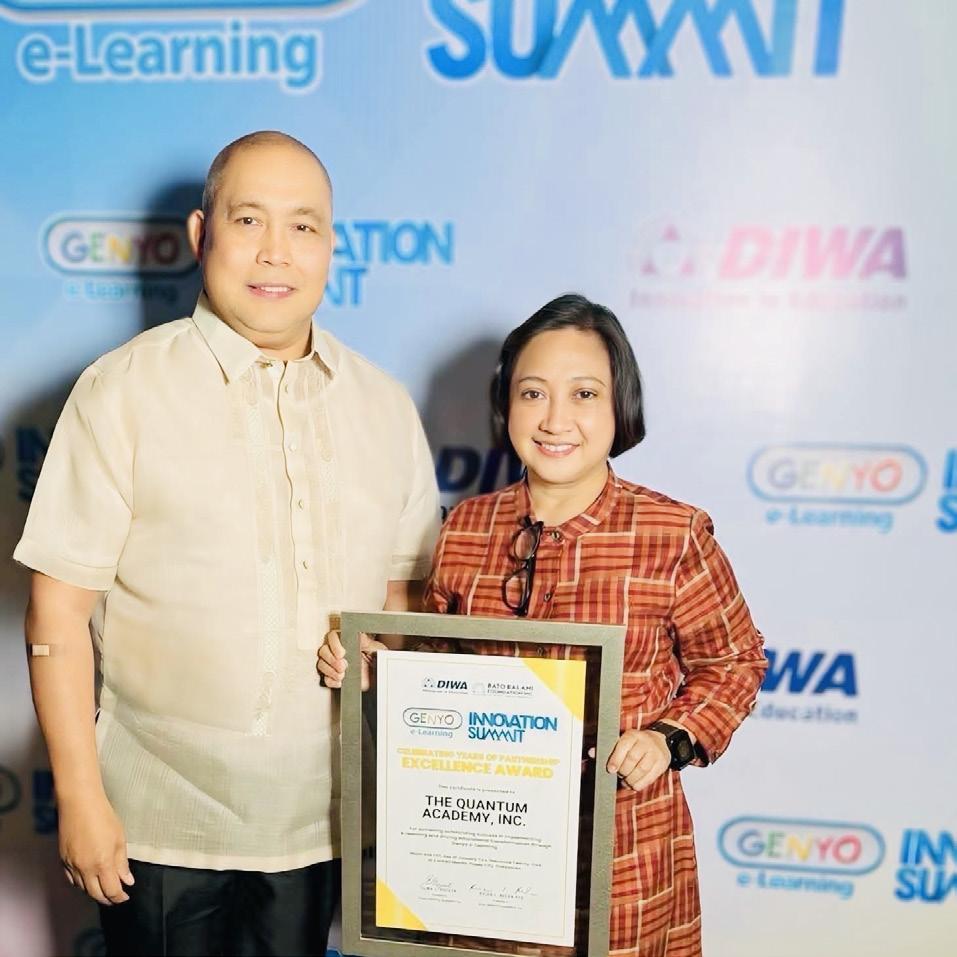
And lastly, Rose Ling, or more commonly known as Miss Rose in The Quantum Academy Inc., shares her own thoughts about her experience as she talks about her experiences leading up to her role in TQA.
“It is really about passion talaga.” She states, giving extreme importance to passion for everything that you do and want to achieve in life, regardless of gender. This statement emphasizes the fundamental idea that passion is a driving force behind success and fulfillment in life, and provides a perspective which encourages a mindset where the energy and commitment you invest in your pursuits are the true determinants of achievement, rather than surface level factors. The crossroads where women stand are never clear-cut. The choices they are presented with are clouded by risk and ambiguity. Yet, it is in these moments that empowerment is most profoundly felt. Women are learning to trust their instincts, embrace the unknown, and take steps forward—even when the path ahead is not clear.
It is really about passion
talaga.
For all the women standing at these crossroads, the journey is not just about making choices; it is about owning those choices and finding your strength in the process. Whether they are redefining success, prioritizing well-being, or challenging societal norms, empowered women today are shaping a future that is as diverse and dynamic as the decisions they make.

As women navigate pivotal moments, they are not only forging their own paths but also paving the way for future generations to follow—creating a world where every woman has the freedom and support to stand at her crossroads with all the courage in the world.
There are problems inherent in being a private school leader, particularly the pressures of adhering to government regulations while managing financial constraints. She describes the difficulty of capricious orders and directives school eludes complicated Still, despite these hurdles, steadfast. In her words: “I know where we stand and in which direction to go. Our vision and goals are clear.” Miss Kozet admits there are moral dilemmas, particularly surrounding resisting unfair practices in some dealings. “We are not spared from this dilemma when a situation calls for it,” notes Miss Kozet. “In the meantime, I focus only on our school.” Our beloved director operates on a decision making system, ensuring that decision she makes is based on facts and research, the school’s vision and standards, best for students, stakeholders, as well as fair and just. “If the decision criteria, then let us roll! If not, it is back to the drawing board. through this process, you will feel more confident about your your reasoning to others,” she shares.

On another side of the metaphorical crossroads, Judge Alena PalileoYabes, who is a distinguished figure in the legal landscape, has spent years serving in law, earning the respect and admiration of her peers, attorneys, and those whose lives she has touched. Her career is a testament to the enduring power of justice, and her story reflects the heart of what it means to serve with integrity in the judiciary.

And while Judge Yabes’ career has been one of remarkable achievement, it has not been without its challenges. As a female judge in a predominantly male dominated profession, she has often faced skepticism and criticism, particularly early in her career. Despite these hurdles, she has remained steadfast in her commitment to justice.
“It’s a matter of empowering yourself, not because you are a female or just because you are a male. If the opportunity is there, grab it.“
Judge Yabes’ ability to provide an impartial judgement all while remaining calm in intense cases is an aspiring characteristic that sets an example for people, men and women, who want to pursue a career in the legal field.

It’s a matter of empowering yourself, not because you are a female or just because you are a male.
“My goal is actually not to inspire other women, but no distinction, man or woman. And not just in my work as a judge. You see, judges are being called honorable.
Honorable Judge Alena Gale H. Palileo Yabes. I live up to that standard. And hopefully the rest will be inspired.“




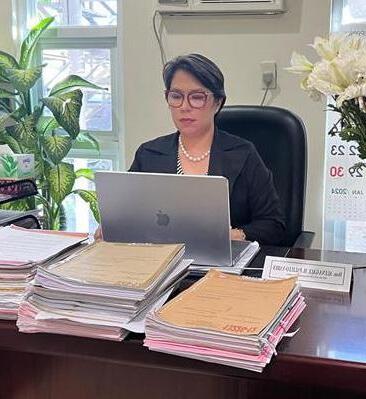


When was the last time you had tuna this fresh?
For the commoners of General Santos City, fresh fish remains a staple of their diet. Tuna and other fish products make their way into the farthest corners of the city-in the freezer sections of meat shops, small pop-up market stalls, the grills of street vendors, and even in pasalubong centers (usually in the form of tuna chicharon). Nonetheless, real treasure is evident under the shimmering scales of freshly caught tuna. Whether it’s your first, second, or fiftieth time tasting its bright red meat, it’s sure to astonish you.
Different varieties of tuna reside within GenSan’s waters. This abundance in variety presents consumers with plenty of choices when picking their cut of meat, but which tuna species takes the crown?
Selections are diversified with five main species of tuna in the hooks and nets of fishermen-yellowfin tuna, skipjack tuna,
bigeye tuna, frigate tuna, and eastern little tuna.
Yellowfin tuna is the most common of the five varieties and is dubbed to be the pride and mascot of GenSan (and rightfully so, as it proudly struts its long, golden tendrils!). It boasts a whopping average weight of 180 kg and measures up to 10 feet long. It is well known for its rich flavor and sushi appeal, benefiting the city in its export of sashimi-grade tuna.
Skipjack tuna is a smaller variety of tuna at around 20 kilos and meter-long length. It is lean, flakey, and uniquely fishy, which makes the fish perfect for canning and local consumption.
Bigeye tuna is fairly larger than its yellowfin counterpart and is indubitably distinguished by its abnormal bulging eyes. Among the five, it is the most sought after for its lush, succulent, fatty meat. Its

flavorful composition makes it a prime candidate for hearty stews like kare-kare, and rivals the sashimi-grade yellowfin.
Frigate tuna and eastern little tuna seldom constitute a percentage of a catch. Similar to the skipjack tuna, they both hold a humble and modest size. Nevertheless, they sojourn as a delicacy even prepared as a simple grill served with a side of sinamak or spiced vinegar.
Are you up for a whimsical treasure hunt?
As you cross the roads, picture a land where a myriad of wonders greets you, from waterfalls and beaches to blooming forests and articulate architecture—welcome to SOCCSKSARGEN, the hidden gem of Mindanao!
South Cotabato captivates with the renowned Mount Matutum and the vibrant blooms of SG Farm. The Magsangyaw Land of Praise offers a heavenly retreat, while Lake Holon’s azure waters draw hikers seeking serene beauty. Lake Sebu combines the breathtaking Seven Falls with the cultural heritage of the T’boli, embodying the title “Land of the Dreamweavers.”
The next stop, Cotabato, holds the Grand Mosque that exhibits the region’s Islamic heritage, while the
gorgeous landscapes around Lake Lanao offer nature’s true beauty and cultural festivals that celebrate the regions vibrant traditions.
Sultan Kudarat boasts scenic spots like lake Buluan, known for its tranquil beauty. Tantawan Park offers lush landscapes and peaceful retreats while the local markets and festivals in the Sultan Kudarat Provincial Capital provide a vibrant showcase of the area’s rich culture. Gumasa, with its white sand and clear waters, is perfect for sunbathing and swimming. These beaches provide a perfect mix of relaxation with a dash of adventure that rivals international sands.
Our final stop is General Santos City, carrying various titles such as Gensan, Tuna Capital, and Home of the Champions. The city is well-known for its thriving business

The afternoon daze is starting to get to you. Ceaselessly, that faint, same-old, monotonous buzzing sound seemingly fades back into the back of your mind. The cold office lights blare at you as if yelling at you to get back to work. With a relinquished sigh, you shift around in your creaky office chair. Through your tired vision, you can faintly make out the stature of your white, printed mug against the dark, stained desk. Then, as if an invisible force were present, the half-full mug was lifted into your hold, its handle snugly fitting between your trembling fingers. You take another sigh, as if about to take the dive into the deepest waters. Instead, you rub your eyes, proving your blurry vision wrong, and investigate the contents of the mug. The wafting aroma of sweet yet earthy cherries dismisses your anxiety; and the pale, lightly watered down, auburn liquid welcomes you. You take a hefty sip and start to ponder.
community and lively cultural life. Home to prestigious universities and multiple malls, GenSan is known as the commercial and educational hub of Region XII. The city offers a special fusion of natural beauty and urban excitement, featuring spots such as Hill VI and Mt. Sabrina. In conclusion, SOCCSKSARGEN is a diverse, blend of cultural legacy and scenic beauty. Every location offers a different experience, from Saranggani’s immaculate beaches to South Cotabato’s breathtaking lakes and waterfalls. Gensan combines urban energy with natural beauty, while Sultan Kudarat and Cotabato City offer cultural insights. When combined, these locations highlight the enthralling charm of this undiscovered treasure in Mindanao.
What is your favorite destination in SOCCSKSARGEN?
Have you ever wondered about the life your coffee lived before it reached your cup? Markedly, the coffee you can down in a heartbeat can take as long as 5 years to produce from sow to cup. To most coffee regulars, the drink’s origin is no more than an afterthought; however, to farmers, coffee has remarkably influenced their way and make of living, for the better or the worse.
According to the World Population Review, the Philippines is the second largest consumer of coffee in Asia. But why is coffee so valuable to us Filipinos? Generally, coffee can be a means of motivation, socialization, pride, and even accolade to a long and busy day. Economically speaking, there is an insistent trade for the beverage, and the country’s advantage in its coffee (and cacao) industry plays a huge role in socio-economic development. Not only does this industry provide the population with employment opportunities, but it also demonstrates the pride we hold as producers of superior local goods.
Beneath what harbors the majority of the Philippines’ agricultural industry (banana and coconut production) is the humble red cherry of a coffee plant. According to the Department of Agriculture, small farmers in Mindanao produce the majority of the Philippines’ coffee supply, as much as 83.63%. More specifically, Region 12 reigns as the number one coffee producer in the Philippines due to its ideal social climate and access to viable farmland, with Sultan Kudarat contributing the most. However, despite Region 12’s impressive share to the country’s total volume of green coffee beans, coffee production has slowed (decreased by ~3.5%/year, according to DA). In contrast, demand has increased steadily, especially in recent years during and following the
Oftentimes, nothing extravagant comes to mind when fish is brought to the table. However, with a culture as closely intertwined with the seas, and a livelihood dependent on the flow of fish, to the people of General Santos City, the striking crimson streak of a tuna is as prized as a ruby.


2020 pandemic. The issue now lies in how much of the harvest is left after all the daunting procedures that coffee beans undergo before they’re brewed for the masses. In harvesting beans ripe enough for processing, farmers will meticulously hand-pick coffee cherries of a specific shade of wine red. Then, cherries are washed of any debris, floated, and then sorted judging by how well they held up against the elements such as invasive fungi and hungry pests. The more durable beans tend to be processed specifically into specialty coffee, while the less admirable ones are to be sold as commercial coffee. This tiresome process, alongside the struggle to obtain capital, land, and materials in the first place, the lengthy payback period ultimately leads to a minuscule supply of quality coffee beans. By the same token, socially, farmers tend to prefer coconut plantations over coffee for their lesser maintenance. Additionally, the effects of global warming have further pushed warmer temperatures that coffee plants struggle to produce fruit in. Coupled with the increasing rate of land and lacking assistance from local administration, not many people would favor investing in a coffee plantation. Due to its limited supply, specialty coffee beans can be sold at an average of 1,200php/kg of roasted beans considering their prominent demand in institutional brewing (as in coffee shops). Furthermore, specialty coffee beans are sought-after for their more sophisticated flavor notes, proving them ideal in case of a brewing or sampling competition or for true coffee connoisseurs looking for a taste of pure craftsmanship. Brewing cups and other competitions are some of the many ways
people can come together in solidarity in the name of coffee, they’re usually held by local associations like the Gensan Coffee Association and Tagum Coffee Association with the aid of the Department of Trade and Industry and the Department of Agriculture. More or less, it’s a mode for feeling pride and belonging within a community of likeminded people. During the competition, baristas gather and share their experiences, bringing only themselves and their acquired techniques in coffee brewing.
Adrianne Louise Flaviano, certified by the Specialty Coffee Association, Champion of BrewFest Taster’s Cup 2024, and barista at Manual Crew Slowbar presents her perception of coffee as more than a drink. “It’s one way to communicate with people of the same passion, people with the same taste. It’s about connections, it’s about community,” she sets right. “People with different knowledge, different personality, different approaches. I wouldn’t have met all these people if I hadn’t gotten into coffee.” Flaviano also says that it’s a chance for a change of pace—for people to listen, exchange their experiences, and experiment with their craft. It’s a healthy competition. Overall, no matter the context, in a cup of coffee is the reflection of the lives of those who insist to preserve a part of Filipino tradition. It embodies the careful cultivation from sow-to-cup, the hardships people face in balancing quality, sales, and a living, and the countless laughs people shared as they gathered with a common interest. By taking a seat and slowing down to ponder the origins of our coffee, we make a silent ode of solidarity in honor of an underrated Filipino craft.
Some things never change!
Erica Gomez, who graduated from The Quantum Academy in 2020, completed her course in BS Psychology from the University of the Philippines Diliman on July 2024, bearing the distinction of Summa Cum Laude — the highest Latin honor one can receive. With this achievement, she expressed her profound gratitude for the fountainhead of her foundation and the school from where she was molded.
But, “in a nutshell, hindi siya madali.”
Gomez harks back to this journey as “a path that paved with tears, doubts, and mostly sleepless nights,” whose key is none other than love of work and the motivation that stems from it. Throughout these challenges, one thing rang true to her: Per Ardua Ad Alta, or greater heights are achieved through arduous work. And with the copious learning opportunities thrown her way, the school’s motto shapeshifted into a different, more impactful statement.
“Sometimes, you really don’t get the things that you want, and it’s okay. Greater heights are achieved through hard work, [but] “greater heights” doesn’t necessarily mean what you want (...) that’s one of the mottos in life talaga that I really carry,” Gomez explained.

Her post-graduation plans involve proceeding to the University of the Philippines College of Law, where she is currently studying. But the idea of college and further education does not seem to loom over her anymore, as she compared the university to the academy where she studied from nursery school to grade 12. With this, Gomez advised to focus on the silver linings of the unknown especially when adjusting to a different environment.
“I can also say as a Quantum student, you don’t really have to worry in terms of academics and in terms of how you interact with other people, because Quantum is a good foundation for the skills that you need,” she said.
In recent years, Gomez also had the opportunity to create publication materials for her school organization, which ran along the same wavelength as her high school journalism feats. As the former EditorIn-Chief of Optics, she aptly illustrated the talk as a full circle moment, and outlined just how much the experience shaped her.
“In Quantum Optics, we’re always tasked with the duty of providing information about what’s happening in Quantum, what are our stances on certain activities. In UP similar din (...) Quantum will really prepare you,” she shared.

ANTHONY


Hans Christian Saldana, a former Q-kid and TQA’s mighty pride, holds the key to unlocking this narrative. His pursuit of a Bachelor of Arts in Psychology at UP Diliman was marked by excellence, yet in an interview, he humbly admits, “I wasn’t aiming for Latin honors. I just tried to do the best I can.” This mindset allowed him to embrace the challenges of university life while also immersing himself in UP’s dynamic, everevolving culture.
Aboy, a dream, a journey—a grand trifecta of triumph. From the nurturing classrooms of The Quantum Academy to the prestigious halls of the University of the Philippines, the boy emerged victorious, the laurel of Magna Cum Laude resting upon his brow. Yet for him, success is not a destination but a path; a path paved with growth, resilience, and endless possibilities. As one chapter closes, another unfolds, proving that beyond the laurel, the journey continues.



Brown quarters, beige floors, and peach uniforms were once part of her journey. Now, she dons
Such is the story of Isabelle Mirabueno, a 2020 graduate of The Quantum Academy (TQA) who completed her course in BS Family Life and Child Development from the University of the Philippines (UP) Diliman last July 2024. With this milestone, she carried the second highest Latin honor of Magna Cum Laude, the culmination of her collective academic endeavors.

Academy, Hans credits the school for instilling essential values and skills that paved the way for his success. “I’m very privileged na nakapagaral ako sa Quantum. They did a very good job in terms of college prep,” he said. He expressed gratitude for the school’s emphasis on academic rigor, research skills, and the unwavering encouragement to aim high. “Quantum actively encouraged us sa batch… super thankful ako, not just for the encouragement, but for the concrete support and assistance.”
“It was definitely a fun experience. UP is a very big world,” Hans shared. “Quantum is a closeknit community, but UP? It’s one of the biggest universities in the country. Ang dami kong naranasan beyond just the usual things you expect from college.”
Reflecting on his time at The Quantum
Hans’s passion for psychology was sparked by a deep awareness of mental health issues and a calling to make a difference. “Yung end goal ko talaga is to become a clinical psychologist,” he shared. He plans to gain practical experience through an internship and pursue a master’s degree in clinical science at UP.
Despite his lofty aspirations, Hans remains deeply rooted in his
community. He envisions returning to General Santos City to practice and is open to mentoring current TQA students. His success, after all, is not just personal. It’s meant to inspire others to chase their own dreams.
As the interview came to a close, Hans left one final piece of advice for young students about to embark on their college journey.
“College is not just a time for you to take your professional, academic pursuits seriously. It’s also a period of holistic growth and development. Make the most of it. ‘Wag niyong i-limit yung sarili niyo. Step out of your comfort zones, explore new opportunities, and be open to experiences kasi marami kang matutunan.”

the school, turn their tassels, and move forward with the values of Quantum Academy imprinted firmly in them.
At the very core of these values lies the evocative impact of reading.
Margaret Fuller’s adage, “Today a reader, tomorrow a leader,” captures the essence of RDL day in a nutshell. Reading nurtures the skills of a strong leader by opening doors to new ideas and dimensions of thought.
Heads up, Q-kids: September 13 is no ordinary day for The Quantum Academy Inc! This day marks the annual RDL Day (Reading Develops Leaders), a special holiday created in tribute to Miss Rosa D. Ling, the esteemed founder and former director of Quantum Academy, on her very special birthday.
RDL Day isn’t just a day off from regular classes; it’s a day dedicated to reading books that inspire great leadership, challenge one’s thinking, and spur personal
growth. It is a celebration of Miss Rose’s belief that reading is an ingredient in the development of leadership. Since the school’s inception, Miss Rose’s contributions to Quantum Academy have been nothing short of profound. She has been a champion for holistic education, ensuring that every student is equipped not just with academic knowledge, but with the Quantum’s core values that shape true leaders: camaraderie, excellence, respect, service, loyalty, integrity, leadership, responsibility. Her dedication to ensuring that Quantum produces well-rounded students who are not only scholars - but future leaders - and make sure they leave
The best leaders are excellent communicators, and being an excellent communicator requires a good grasp on human behavior. A good grasp on human behavior requires empathy, and one of the best ways to develop empathy is through reading. Reading entails an enlargement of cognitive empathy; readers dive into worlds someone poured their all into making—a world inspired by their thoughts, dreams and experiences. They enter another person’s head.
Theory of mind is the ability to identify others’ mental states like beliefs, intentions, or desires and to comprehend that others have beliefs, intentions, and desires that are dissimilar from our own. When you read literature, you gain this ability. You deepen your understanding of other people’s thoughts, emotions and desires. Why not use this ability to better
However, the path she took was not a direct road.
Mirabueno recalled the ‘culture shock’ of having online classes for two consecutive years, exemplifying the possibly missed opportunities for socialization that could have transpired during those times.
As she entered college fresh, she also had to adapt to two unfamiliar environments — a new system of education and an online setup, which seemed intimidating to her at the time.
“The biggest adjustment was because of the pandemic (…) one of the biggest adjustments was of the culture,” Mirabueno explained.
Despite these trying times, her pursuit did not cease.
Expressing deep gratitude to individuals like TQA’s current school director, Ms. Angela Licas, and other esteemed educators who guided her journey, Mirabueno highlighted how the school’s curriculum, clubs, and competitions fostered the cultivation of her efforts and talents. She regarded the school as a preparatory vessel, helping her strive towards her dreams.
“My education in Quantum really helped in the

connect with and inspire those you lead?
And it goes without saying that people who read actively broaden their vocabularies and improve language skills, allowing these future leaders to articulate their ideas in ways that appeal to their people. Many of the world’s greatest leaders—past and present—are voracious readers, their appetite for texts even more so.
For example, Marcelo H. del Pilar was a lawyer, journalist, editor of La Solidaridad, and founder of Diariong Tagalog; Teresa Magbanua, originally a teacher, transitioned into a military leader, commanding her troops with strategic intelligence; Josefa Escoda was a prominent advocate for women’s rights and the founder of the Girl Scouts of the Philippines; José Rizal, a prolific reader, writer, and scholar, authored iconic novels such as Noli Me Tangere and El Filibusterismo. These national heroes and leaders couldn’t have developed their leadership skills without reading, for it bolstered their eloquence, allowing them to inspire and connect with their people.
Reading biographies, historical texts, and leadership literature provides inspiration and practical lessons for aspiring leaders. Miss Rose’s journey as an educator
sense [that] Quantum really boosted my confidence,” she emphasized.
College proved to be a testament of personal growth for her, fostering a deep appreciation for human connection. Immersed in her specialized course, Mirabueno encountered individuals from all walks of life, which helped her form meaningful friendships and broaden her understanding of the world. She expressed how this shaped her understanding of communities.
“My time in college really made me realize how much I love people [because] I really met a lot of people,” Mirabueno said.
After accepting her prestigious accolade, Mirabueno then gave her insights for the next frontier of her life. She is currently studying in The University of the East Ramon Magsaysay Memorial Medical Center (UERMMMC) College of Medicine, envisioning to be a licensed physician. Mixing both her TQA and UP experiences, she paved her desired future as one that is hopeful and ambitious.
“The people will always need a compassionate doctor, no matter how many, and I can be one of them,” she expressed.
The tale of Isabelle Mirabueno comes as a positive reminder of how one, especially TQA students, can overcome adversity and achieve remarkable success. Even in the face of adjustments and setbacks, Isabelle persevered with unwavering determination. Her colorswitch journey serves as an inspiring example of how hard work, dedication, and a strong belief in oneself can lead to extraordinary achievements, even in the face of seemingly insurmountable obstacles. It is best said by her wise words.
“Never lose your inner strength.”
is rooted in a pure love for the craft and a commitment to fostering a passion in students. She has labored for years and years and through her tireless efforts, the Quantum Academy has grown into a school where students are encouraged to read widely, think critically, and lead confidently.
On September 13, Quantum Academy celebrates RDL Day by encouraging students to spend time immersed in books that ignite their curiosity and broaden their perspectives. Activities such as perusing books from the newly constructed library, catching up on Scholastic (which doubles as a house competition), and just reading in general will help students reflect on how reading can shape their personal journeys toward becoming leaders.
Speaking of Scholastic, the program provides a large selection of books curated based on students’ reading levels and interests. Scholastic provides kids with an extensive library of books that spark their curiosity and encourage independent reading, aligning with the RDL Day’s mission.
Let us keep in mind that as we celebrate RDL Day, each page turned brings us one step closer to becoming the leaders of the future!
Picture this: A young individual in their bedroom, a TikTok blaring on one phone, a group chat buzzing on another, with a laptop propped open to a project or Youtube video. For Generation Z— those born roughly between 1997 and 2012—this is what the usual scene looks like, encapsulating lives deeply entwined with digital technology, innovation, and self-care.
Generation Z are born between 1997 and 2012, coming after the Millennial generation and before Generation Alpha. The oldest of this generation are reaching their late 20s in 2024. Many of them are out of college, getting married, and starting families, while the youngest are as young as 12.
Gen Z is the most racially diverse, well-educated, and digitally native generation in history, yet they’re also grappling with heightened levels of mental illness, environmental disillusionment, and the pressures of constant connectivity. Despite this, they’re also the ones who can change the narrative. They simply have to learn to balance the good with the bad.
Gen Z’s diversity is what sets them apart. According to Pew Research Center, Over 50% of Zoomers in the U.S. are nonwhite, with global Gen Z’ers reflecting even more varied racial and ethnic backgrounds. These differences shape their principles, creating movements like Black Lives Matter and LGBTQ+ rights advocacy with their voices.
With the internet as their classroom, Gen Z is growing up with the world at their fingertips—but the question is: do they know how to turn the world off when it gets overwhelming? Gen Z has accessibility and opportunities for self-directed learning unlike any generation before, which they can use to pursue higher education while honing niche hobbies and skills through things like TikTok tutorials and YouTube workshops. But more often than not, the sheer amount of accessible content online can steer us to content that is decidedly less productive, such as brainrot.
Gen Z’s language is a bewilderment in itself, evolved from Millennial slang but distinctly their own, and not to be conflated with Gen Alpha Linggo. Where Millennials leaned on “adulting” and “YOLO,” Gen Z’s prefers their slang built on in-platform jokes from apps like TikTok and Twitter.

For example, a word like “based” can signal authenticity, confidence, or defiance depending on the context, and abbreviations such as “ijbol” aren’t seen very often in platforms such as Facebook.
According to a paper by Vinka Ganita and Ardik Ardianto, with Gen Z being at the forefront of contemporary language trends, they frequently incorporate slang into their everyday conversations, seamlessly merging online and offline communication styles. In real life, we start to see people saying phrases like, “mama, a girl behind you,” when really, it should be left in Tiktok. Another thing that’s interesting is their preference for audio communication (like voice notes and TikTok comment narrations) over text—showcasing their ease with multimodal expression.
Gen Z language also evolves at a pace that could only be described as lightning fast, because it is not tied to geographical borders; it is the first truly global vernacular, shaped equally by Hollywood movies and K-pop. It is reached our idols on an international level, with people like Jungwon from ENHYPEN saying “slay” in an interview.
More than any other generation, Gen Z prioritizes mental health. Social media platforms have given them tools to normalize therapy, share their struggles, and demand systemic support for wellness. According to research conducted by the Walton Family Foundation 42% of Gen Z battles with depression and feelings of hopelessness, and Harmony Healthcare IT released a report that revealed that anxiety in Gen Z has reached an alarming level with 61% having been medically diagnosed with an anxiety condition.
Experts point to several culprits, like Social media perfectionism, where the incessant stream of curated content from Instagram influencers fuels feelings of inadequacy. This ties into Digital dependency, where constant connectivity creates burnout and a lack of mental boundaries. And since they’re all globally aware, it does foster a sense of camaraderie—but also collective helplessness.
SELENE JOELLE PESTAÑO by
Discord, a platform for voice, text, and chat, is an application typically associated with gaming and online gamers, though there’s been a growing number of users building Discord communities. In today’s digital age, such applications have become integral to the way students socialize, learn, and collaborate. What started as a simple tool for gamers to communicate has evolved into a versatile platform that students to flock like birds.
To get a closer look at how The Quantum Academy (TQA) students use Discord, we interviewed various students. One of whom has been actively using the platform since 2018. Their insights reveal both the appeal and the challenges of this popular platform. Our interviewee first stumbled upon Discord in grade four, during a time when online role-playing was becoming a popular pastime among their peers. “I discovered Discord when I was irade 4,” they recall. “I used it to roleplay, you know KRP (Korean roleplay)? But Discord started out as an app for people to game and chat.” As they grew older, the gaming aspect of Discord became even more significant. They explain, “Discord is a gaming platform at its core. It’s where you chat while playing games. I’ve been using it since 2018, and what keeps me coming back is how accessible it is when using a computer. You can share your screen, the voice channels are high quality, and it’s just easy to communicate.”

Yet, for all their vulnerability, this is also the generation most willing to fight for their mental health. Therapy is cool; burnout is acknowledged; selfcare is collective.
Zoomers are often lauded as the generation most committed to tackling climate change, but the reality is nuanced. While they value sustainability more than any other demographic group, Gen Z’s environmental activism doesn’t always translate into personal action— especially given the success of fast fashion from brands like SHEIN.
Still, Gen Z brings an innovative edge to the fight for sustainability. According to a survey conducted by First Insight and the Baker Retailing Center at the Wharton School of the University of Pennsylvania, 75% of Gen Z respondents prioritize sustainable purchases over brand names.
The online universe is more than just a distraction for Gen Z; it’s a redefinition of connection and joy. Gaming, short-form content, virtual social hangouts, and fandom spaces offer pleasure and a sense of belonging that doesn’t hinge on family outings or large social gatherings.
Unlike older generations who favored in-person socializing, Zoomers are happy texting or FaceTiming their friends from the comfort of their own homes. While this independence signals a break from tradition, it also reflects how digital spaces can become refuge-like extensions of their identity.
Still, there’s a tradeoff: digital immersion can amplify feelings of isolation. The same platforms that offer community can also reinforce comparison, shallow connections, and relentless competition.
Gen Z’s identity is marked by paradox: a hyper-connected yet anxious generation; hyper-diverse yet struggling with belonging; socially aware yet cautious about personal sacrifice. But what stands out is their willingness to acknowledge their challenges and tackle them head-on. They’re already rewriting the rules— whether the rest of you are ready or not.
platform for today’s students, who often need to balance their academic responsibilities with their desire to connect with friends.
However, like any online platform, Discord is not without its risks. The interviewee candidly shared some of the negative experiences they and their associates have encountered on the platform.

So why is Discord so popular among students at TQA?
The interviewee points to a generational shift in how young people engage with technology. “Right now, in today’s generation, gaming is a big thing,” they explain. “As students, especially Generation Z, we’re naturally drawn to an application that is more suitable for gaming.” Examples of popular games that utilize Discord’s voice chat feature are Valorant, Mobile Legends: Bang Bang, Roblox, and Genshin Impact. But Discord’s appeal goes beyond gaming. It has also become a valuable educational tool. “Aside from socializing, students are drawn to Discord because it has educational groups, which Discord is known for,” they note. “There are study servers: channels for specific subjects, for notes, advice, and some voice chats even have music for studying. Students also use it for brainstorming and collaborating.”
This blend of social and educational functionality makes Discord an ideal
“Discord isn’t entirely secure,” they admit. “Managing or moderating a server is hard, so it’s difficult to keep members in check. Servers are prone to being raided, which can lead to serious issues like information getting leaked and doxxing.” Raiding, a term used to describe when a group of people flood a server with disruptive or harmful content, is a real threat on Discord, particularly for servers without strong moderation.
This insight is crucial for both students and educators. While Discord offers incredible opportunities for connection and learning, it also requires discipline and self-awareness to ensure it doesn’t interfere with academic performance.
The conversation with our interviewees sheds light on the multifaceted role Discord plays in the lives of TQA students. It is a platform that offers both immense opportunities and significant challenges. For students who know how to navigate its features responsibly, Discord can be a valuable tool for both gaming and education. But for those who lack guidance, it can become a source of distraction and even danger.
As more students turn to platforms like Discord, it is crucial that parents, educators, and the students themselves remain vigilant. With the right approach, Discord can continue to be a positive space where students connect, collaborate, and grow.
On this tropical island of P-Pop, the sensational group BINI has blossomed since their debut with “Born to Win” in October 2021. Managed by ABS-CBN, this powerhouse ensemble features Jhoanna, Mikha, Sheena, Maloi, Colet, Stacy, Aiah, and Gwen. Each member brings a unique blend of visuals, vocals, dance, and rap, collectively reshaping the landscape of girl groups in the Philippine music industry. Their influence extends far and wide, inspiring countless young Filipinas across the nation.
BINI is not just a group of artists; they’re activists too. They’ve demonstrated immense support for the LGBTQ+ community and raised awareness about crucial social issues in our country. Through their active presence on social media, they consistently share their thoughts and ideas with their fandom, known as Blooms. Indeed, they’ve emerged as role models for our generation.
BINI’s journey to success wasn’t an overnight phenomenon. While they’ve captured the hearts of many, their rise to the top involved hard
work, dedication, and perseverance. Like many aspiring artists, they faced challenges and honed their talents through rigorous training and performances. This makes their achievements even more inspiring for their fans.
“BINIverse,” their first solo concert, sparked immense excitement among the Blooms. The group also brought their energy to General Santos City with a performance at the KCC Open Grounds. Their recent threeday concert, “Grand BINIverse,” was a resounding success, further cementing their status as P-Pop royalty. And now, the excitement continues to build as BINI has just announced their upcoming world tour, taking their music and captivating performances to a global audience.
They have definitely claimed their title as the nation’s girl group, and undeniably revolutionized P-Pop. With their remarkable success and now a world tour on the horizon, anticipation runs high as we eagerly await what more they have in store for the ever-expanding BINIverse.


“Iturn
my superwoman on when I wanna ‘Cause I’m my own superwoman!”
In this inconsequential blue dot within the Virgo Supercluster, people’s dreams may weigh more than the tiniest blackhole, and people’s lives may revolve not around a star but the dream of becoming one.
With this, the vast seas between the Philippines and South Korea did not stop young aspirants to aim for their dreams and to emerge victorious from the selection of 82 contestants in the survival show “Universe TIcket”, elevating, once more, the Filipino pride. With a bouncy and cutesy three-minute debut song with a
Filipino Korean-Pop aficionados as the group showcased a Filipino line of three Pinay members. The three gifted young ladies are Elisia Parmisano, Gehlee Dangca, and Jin-Heonju. Gehlee was endeared as “princess” by her fellow trainees, while Heonju- the only Filipino-Korean of the bunch- manifested her great leadership during her participation which shall continue after their debut. Finally, Elisia was the trainee to shine the brightest and to place first among all ladies. Undoubtedly, these young ladies, along with the other five members, proved to be

Paradise Reef, a coral reef located in Samal, faces the beginning of its destruction due to the Samal-Davao bridge project, a China-funded project that aims to construct a bridge that connects Samal and Davao. Because of this project, over one hundred species of coral and fish are threatened to be wiped out. Naturally, if the bridge construction progresses, Paradise Reef cannot continue to be a ‘paradise’ to the corals and fishes it hosts.
Initiated back in October 2022, the Samal-Davao bridge project is being built in an area where many corals are thriving. Since the project’s inauguration, many marine biologists have warned the dangers of its construction activities to the corals.
John Michael Lacson, a marine biologist, says that the sedimentation from the construction activity will smother the corals through the natural current and kill them (Sarmiento, 2023). Marine biologists have also urged officials of the project to reroute or realign the bridge to reduce the damage. However, despite numerous warnings and appeals, the project still carries on, putting the coral reef bound for destruction.
The delicate balance between development and conservation must be carefully considered...
As of November 16, 2024, the predictions of marine biologists have come true as numerous hard corals of the coral reef are now dead (Sarmiento, 2024). The corals died due to suffocation from silt caused by construction activities, confirming the prediction of marine
THROUGH THE SCREEN
biologist, Lacson, accurate. This occurrence just emphasizes the urgency of rerouting the bridge to prevent further coral deaths. With continued pressure from environmentalists and the public, it is clear that a sustainable solution must be found—one that balances the developmental needs of the city and the preservation of our natural resources.
Of course, though the SamalDavao bridge project comes with a lot of significant consequences, it is undeniable that it also comes with advantages such as faster and more efficient transportation, as well as
reduced costs. However, are these advantages worth the consequences? Economic growth and development are given more importance than environmental sustainability. The Samal-Davao Bridge issue is an example of this conflict, where the promise of economic development for the region comes at a devastating cost to marine life and ecosystems. While infrastructure projects like this are often framed as vital for progress, they frequently overlook the longterm environmental damage that can result. The delicate balance between development and conservation must be carefully considered, especially when ecosystems such as coral reefs, which are critical for biodiversity and climate, are at risk.
Nevertheless, it is not too late to save the coral reef. Awareness is simply not enough; it is crucial to realize these concerns in a way that would push for practical change. By doing so, citizens can demand responsibility from governing bodies and decisions-makers to help minimize or even avoid the irreversible effects of the project. With Paradise reef on its way to becoming a wasteland, saving the coral reef becomes a national responsibility that demands immediate action.

devices, particularly mobile phones, with the promise of higher quality as opposed to other models or brands. However, this often results in the discard of old yet functional electronics due to minimal awareness of the environmental impact these actions have. This is further exacerbated due to the process being carried out frequently and on a widespread scale.
by
On the surface, solid waste management appears to be a matter out of one’s control. Something to be left to the government, not worth giving much thought amongst more evident and concerning issues. However, with respect to the erratic state of solid waste management, as the youth of this day and age, it’s even more reason to take action and heed the calls upon us.
Omar M. Saikol, the Regional Director of the Department of Environment and Natural Resources (DENR) of Region 12, further enumerated the importance of the youth’s role on this matter. Solid waste management is an issue prevalent both locally and nationwide. In region 12, specifically South Cotabato, the DENR has come up with solutions and policies to address the pressing problem. “One way of solving this problem is for all Local Government Units to pass and adapt the 10-Year Solid Waste Management Plan. Luckily, all the Local Government units of Region 12, including South Cotabato, had passed.” He said in an interview.
A benchmark currently being set forth by the province is the Sanitary Landfill of Koronadal. However, other LGUs lack sufficient waste disposal and management facilities, resulting in the dumping and burning of waste becoming primary sources of disposing waste. Consequently, these actions further exacerbate the situation, often extending its effects onto the surrounding environment. Processes such as the Waste Analysis and Characterization Study (WACS), an integral tool for the development of the 10 Year Solid Waste Management implemented by the DENR to guide LGUs with solid waste management.
Glan, a popular tourist destination in Southern Mindanao, is known for its ecotourism. Though it prospers due to avid tourism in the area, the many developments made to enhance ecotourism hindrances its natural state through the increase of solid waste and carbon footprints. In turn, the DENR seeks to regulate the municipality’s industries regarding its wastewater discharge, air pollution, and solid waste management.

With the current state of the province in mind, we, in South Cotabato, are fortunate to have LGUs in collaboration with government agencies such as the DENR to control factors such as pollution and waste management. Of course, we must not get complacent and sit back. It is not enough to simply be aware of environmental issues; we must take proper action. We, the youth, are the future of society, effectively, we also have the potential to reshape the world we live in.
Though this matter is of global significance, we must first act locally, specifically in school and in our communities. Even the simplest actions yield big differences, from conserving water, reducing waste, and supporting sustainable businesses. “Start by making environmentally sustainable choices in your own communities and inspire others to do the same. They should embrace sustainability and environmental practices in their daily lives. Lastly, they should try to embody their own environmental advocacies,” he said.
“Your choices and actions extend beyond yourselves; it does not end with you. They affect others as well. So even at a young age, it is important to be conscious of the impact your actions have, particularly with the environment. Small, thoughtful steps that promote environmental protection and conservation can make a significant difference, and we believe in that. When everyone participates, anything is possible. Begin with yourself. Start at home, and in school. These actions will ultimately ripple out to benefit your community, country, and the entire world,” he said as a message to students.
cause the risk of extinction of species.

The latest phone model is rumored to be better than its predecessors in all ways. More storage, faster processing speed, higher quality camera lenses, and better graphics. All these seem to be more than enough reasons to buy it. However, is hastily purchasing the “upgrade” the better choice? With a deeper delve into electronics, your choice could impact the future of the environment greatly.
Over the past seven years, the Department of Environment and Natural Resources (DENR) collected over two thousand tons of electronic waste, mostly from consumer electronics like TVs, refrigerators, and mobile phones. Consequently, the Philippines has consistently been among the top contributors of e-waste in Southeast Asia, and the soaring figures have raised environmental concerns and possible health hazards within the country.
Large corporations such as Apple and
Of course, with the gradual technological advancement, it is worth noting that newer models tend to outshine its predecessor as it is the typical business strategy of tech giants to bring updates to their latest products. Otherwise, what is the point of buying a new phone? Many failed products of well-known companies suffered in the market predominantly due to failing to adapt to the demands of consumers by focusing excessively towards current features.
In recent years, companies have shifted to focusing on convenience and aid users with the hectic day-to-day schedules of modern day. Such instances can be found in newer iPhone models adding fitness and health trackers and the addition of a stylus included with recent Samsung products.
I have inherited an older generation iPhone for some time now, and I don’t feel the need to upgrade it. Its performance is still satisfactory despite its age and performs at a relatively similar rate as later models.
We must take initiative with the pressing concerns of e-waste growing more evident as of late. Even if it is shown in small, simple courses of action such as by passing old electronic devices down to younger family members, it still benefits both the environment and the technological industry.
Additionally, by using an electronic device for its intended duration, it withholds the possibility of e-waste and offers more sustainable and environmentally friendly alternatives to disposal. These include contacting manufacturers to trade the device for cash or credit, donating to charity programs, and sending it to a recycling facility to repurpose materials for future use.
Going back to that new phone model. With respect to e-waste, ask yourself, do you really need it? And if so, what would you do with the one you currently own?
For many people, biodiversity is simply the wildlife found in nature. But what many people fail to see is that biodiversity is one of the main reasons why we are able to breathe the air we breathe, eat the food we eat, and have the basic needs for daily living. However, if biodiversity is the reason for our survival, why are we facing the peak of biodiversity loss?
For Kier Mitchel Pitogo, a Kansas-based scientist who studied and researched the biodiversity of southern Mindanao, there are multiple reasons for this. One of which is the complexities of biodiversity. “The challenge with biodiversity is that its benefits are interconnected and sometimes conflict with one another. For example, clearing forests for farming boosts food production but reduces clean water and destroys wildlife habitats. These trade-offs make creating effective conservation policies difficult,” he said in an interview.
Of course, with biodiversity loss reaching an all-time high, especially in southern Mindanao, it is up to the government to implement laws and policies to ensure that the issue does not exacerbate. But just like any other environmental issue, addressing these problems is not an easy fix as it affects other priorities such as agriculture and mining. “Addressing biodiversity is complex because it is a “wicked problem”—a term for issues that are difficult to solve due to their interconnected and often independent factors. The real challenge
is translating these plans into effective actions. To improve this, LGUs need to consult experts when designing and implementing land use plans. Proper enforcement and consistent monitoring are also crucial to ensure these policies achieve their goals,” he said.
Southern Mindanao, having attractive tourist spots and enchanting destinations, is a hotspot for tourists. Unknown to many, tourism may also be a factor in biodiversity loss due to its harmful effects on wildlife. “Many natural destinations in Mindanao don’t have scientific studies to determine their carrying capacity—the maximum number of visitors that an area can sustain without damage. As a result, overuse of these areas can lead to habitat destruction and ecosystem imbalance. Tourists and locals alike can also unintentionally introduce invasive species, like rats or cats, into forests,” he said. Tourism, of course, is not a bad thing as it strengthens the local economy, but if left unchecked or not managed properly, its effects on biodiversity may be dire. With the world already facing many issues such as climate change, it is expected that we will face major consequences soon. And, as ecosystems become increasingly fragile, the services they provide are at risk, which in turn threatens not only humanity but every living being on Earth. The decline in species and habitats reduces nature’s resilience, making it harder to adapt to future environmental changes, which may
“Many species in Mindanao haven’t even been discovered or documented yet (because of lack of expertise and resources). If they disappear, we lose the chance to learn about them and the potential benefits they might offer, like new medicines. This also means we lose valuable knowledge to pass on to future generations. Raising awareness and educating people about biodiversity is crucial. A society that values biodiversity is more likely to protect it,” he said.
To address the accelerating loss of biodiversity, we must act now—collectively and with urgency. It is crucial that we finally recognize the intrinsic value of all species and ecosystems, not just for their own sake, but for the continued well-being of humanity.
“When we cultivate a love for nature, we create a ripple effect. This could lead to more (future) scientists, policymakers, and business leaders who prioritize biodiversity in their decisions. The more people we involve in protecting biodiversity, the better our chances of conserving it for future generations,” he said as a message to students.

by
Seasonal
colds are, in fact, a reality especially here in the Philippines due to our erratic weather and climate.
According to Gelaga (n.d.), colds are most common during rainy seasons and the last quarter of the year as it is considered as the coolest months of the year. And due to the cold weather, nasal passages become dry, which makes it vulnerable to viral infections.
Stages and symptoms of the common cold
According to Herndon (2024), there are five stages of the common cold. First, the incubation period (lasts one to three days) is when the virus has been exposed to the body, but the symptoms have not appeared yet.
Second, the symptom onset (lasts one to two days) is when symptoms such as sore throat, mild fatigue, and mild headache start to appear. Third, the peak symptoms (lasts one to two days) are when the cold is highly contagious due to symptoms like runny nose, sneezing, and coughing. Fourth, the plateau period (lasts two to three days) is usually when the body starts to fight off the virus but symptoms such as runny nose and coughing remain. Lastly, the recovery period (lasts three to five days) is finally when the body starts to gradually improve, but some symptoms may linger.
Science itself is not very palatable for most children, but innovators in the industry have made it possible by sugar coating science into a fun and engaging activity, in the form of innovative museums.

It all started with the Philippine Science Centrum, a flagship program of the Philippines Foundation for Science and Technology (PFST). It is the first science museum in the Philippines, and its specialty? Interactivity. It features over 100 interactive exhibits which blend fun and learning into an enjoyable experience.
There are also Traveling Science Centrums and Regional Science Centrums.
The Traveling Science Centrum is a mobile exhibition which serves as a miniature version of the Science Centrum, which is composed of seven sets of traveling exhibits. The Regional Science Centrum is a type of Science Centrum established by a government agency, like LGUs and DOST.
Another science museum making a name for itself is The Mind Museum.
Located in Taguig, it features over 250 interactive exhibits alongside theater and planetarium shows, and experiment
demonstrations. Not only does it have indoor exhibits but also outdoor areas, the “Science-in-the-Park” and the JY Campos Park. The minimum entrance fee for the Mind Museum is 190 pesos.
The executive director of the PFST, May M. Pagsinohin, highlighted the importance of these science museums in shaping the next generation of learners saying that it promotes multidisciplinary learning.
“By integrating concepts from diverse science, math and STEM disciplines, science museums highlight the interconnectedness of scientific knowledge and inspire holistic problem-solving approaches.”
Supporting these museums affirms their longevity, thus giving the future generation a fun and holistic approach to science. So, consider going to a science museum!
Seasonal cold prevention As they say, prevention is better than cure. With that here are some ways you can prevent getting a cold during the coldest months of the year: Use a humidifier – Due to the dry air, using a humidifier may help your nasal passages from drying up.
Take vitamins – Taking vitamins such as Vitamin C and Vitamin D may strengthen your immune system, lessening your chances of getting a cold.
Proper hygiene – Proper hygiene like washing your hands with antibacterial soap is recommended because of the numerous objects we touch every day and due to the fact that we use our hands to touch our nose and eyes.
Disinfection – Disinfecting
mask
Treating the seasonal cold Lastly, if prevention fails, here are ways of treating a seasonal cold:
Water treatment – Drink lots of water or fluids filled with electrolytes.
Rest – Take the day off and get plenty of rest.
Medicine – Take over-thecounter medicine to speed up the healing process.
Eat nutritious foods – Eating foods such as fruits and vegetables supply
AIDAN FRANCO VILLEGAS by
Caffeine has certainly become a staple in the adult workforce, the same could be said for students all around the globe.
It was found that 97% of pupils indulge in caffeinated drinks, ranging from coffee, tea, energy drinks, and soda.
The most cited reason for this rate of consumption is to alleviate fatigue and to increase mental alertness.
Caffeine consumption has its positive effects. Studies show that moderate intake of caffeine can lead to higher levels of concentration, productivity, and memory. A stimulant like caffeine can help a student during stressful and mentally-taxing situations like examination periods.
However, it does pose some health risks. In a study conducted by Gangwal (2024), 40% of students reported experiencing gastritis, 30% of students experienced anxiety, and 18% of students experienced insomnia.
While caffeine in energy drinks has the same effects, the other common ingredients that compose these drinks grant positive effects. A common ingredient, taurine, is an animo acid
present in energy drinks, it is believed to have antioxidant properties and to increase physical performance.
Another common ingredient is guarana, a plant known for its caffeine and also its antioxidant properties. Young children and teenagers are particularly more vulnerable to the adverse effects of caffeine.
Students should always evaluate their caffeine intake based on their lifestyle, and as caffeine has a cardiovascular

These risks may manifest early and gradually. For instance, psychological factors such as emotional process skills and genetics can drastically increase the risk of one suffering from mental health conditions. Additionally, early childhood is a major determinant to one’s mental health, as unethical environments with violence and bullying worsens one’s mental condition and further reflects upon oneself.
According to a study conducted by the American Psychiatric Association (APA), 50% of mental illnesses begin at age 14, while 75% begin at age 24 respectively. However, major mental illnesses are usually the outcome of the aforementioned factors. Signs of mental turmoil amongst an individual are most commonly changes in behavior, thinking and feeling. Other common symptoms include hallucinations, erratic mood swings, withdrawal from family and friends, and violent thoughts.

Mental health transcends the abstract concept of mental well-being, as it is a complex mental construct varied from one person to another. It defines one’s mentality and perception on how we view the world and may yield very different social outcomes. It encompasses multiple degrees of intensity with individual, social, and environmental factors which consequently determine either the flourish or decay of one’s mental health.

Majority of the demographic today struggle with mental health, exacerbated by the stigma and discrimination received from society. However, healthcare institutions remain relatively under-equipped in terms of treatment programs as mental health care was an under prioritized topic in the past and requires more bounds in the field for effective administration. The need for initiative on mental health is urgent and indisputable yet the minimal effort from health systems and authorities may result in the worsening of the decrepit situation of mental health.
After typhoons battered, beat up, and busted the archipelago of the Philippines, President Ferdinand Marcos Jr. ordered the country’s agencies to modify the government’s flood control master plan. Accordingly, new revision shall take place in plans for lowering destruction caused by frequent typhoons, increasing heavy rains and storms, and rising sea levels which all fall under the effects of climate change.

therefore I always pay attention during classes, so I already know what our topics are all about.”
It is imperative that athletes like Heureux who dedicate many hours into keeping themselves into a standard that fit their sport, but even Heureux feels burnt out by all the work his schedule gives, nonetheless it does not stop him.
“I get burnt out, but I keep going. I tell myself, the sacrifices of my parents, coach, and myself will be in vain — like if I stop, what would happen to all the thousands of hours I spent pushing myself to the limit and
displayed TQA’s values.
“It felt rewarding to have finally won after not winning anything at all last year… I was happy to see that we were able to put up a good fight and prove that we had not only the brains, but the brawns as well.”
As a starter of the girls’ team and a senior to her teammates, Angelica Sarona stated that she appreciated and welcomed the surge of younger students joining the team.
“I feel happy that more people joined our team, and, at the same time, I felt proud that players this young were able to experience what is it like to participate in PSBEA and to be in a varsity team… As someone who is now older teamed up with younger players, I try to make things easier for them by easing them whenever they feel pressure on court and having fun with them and at the same time teaching them what I know.”
I was happy to see that we were able to put up a good fight and prove that we had not only the brains, but the brawns as well.
First-time TQA coach and teacher Deithray Agatep stated the difficulties in coping with the differences between coaching the boys’ and the girls’ volleyball teams.
“The adjustment was really hard. The boys were already equipped with basic skills on how to play volleyball, while the girls needed more thorough coaching, since some of them were beginners. The girls were way more emotional, so you must have to deliver every information to them softly. Unlike the boys, I can just easily scold them because that will be [a part] of their training.”
[then] have nothing to show for it?
That’s why I set a goal, I need to win an international tournament before I would consider stopping,” he says.
His only piece of advice to all the young or up-and-coming athletes is to never stop, since being tired is a natural part of sports.
“Don’t quit even though it’s tiring since it’s all part of the process. You can’t expect success without going through what every successful athlete went through. If you think you’re having it rough, remember that your competition is also going through it, but they keep their heads up and continue to strive for improvement.”
Nineteen-year-old Filipino tennis player, Alexandra Eala, ended her year off with semifinals finish in the 2024 in the singles category of the International Tennis Federation’s W100 tournament, the biggest one in her career.
Despite losing to Russia’s Polina Kudermetova, 1-2, this highlights a significant moment in Eala’s career.
She will be ending her 2024 season as the WTF’s 149th, six placements shy from her peak of 143rd which she earned last July 2024. Far from the previous highest ranking
Filipina player, Maricis Gentz, who peaked at 284th back in 1999.
The 19-year-old was seen on social media reflecting and being grateful for all the support and success.
“From traveling around the Philippines, to traveling around the world, I’m so thankful for the journey, to be healthy, and to be surrounded by so much love and support. Here’s to an even better 2025 season!” she said on Instagram.

After

ATHLETE’S VIEW
in the first half, but James Damalerio Jr. and Mcwall came in clutch, sealing the game in the final minutes (2-1) and claiming their spot in the semi-finals of the tournament. However, the semi-final game versus NDDU put an end to the team’s hot streak, scoring two goals against none scored for TQA, and the same spell was put on the players as they continued to lose the bronze medal game against NDDU-Sienna (0-3). Meanwhile, TQA’s elementary team endured, even when they came up short on the games against the elementary players of Wizard, NDDU, and Montessori.
Alfonzo Pagunsan, the central attacking midfielder of the team, shared positive remarks when asked what he felt when he won their games.
“I felt happy and surprised at our wins because it was the first time we worked and faced problems as a team,” he said.
Pagunsan also stated that the team itself needs to build their relationships in order to improve.
“I think we should improve our chemistry as a team, and our schedules to match each other better,” he said.
Oscar Pagunsan III, brother of Alfonzo, said that the feeling of being able to play a varsity game as an elementary student was a good experience.
“It felt nice to finally play because I’ve waited for that [moment] for so long.”

This school year, The Quantum Academy (TQA) has opened the opportunity for students to become student athletes, and we have felt the spirit of competition that came at the price of draining schoolwork during the months of November and early December.
As student athletes, we voluntarily signed up for late dismissals, muscle fatigue, possible injuries, and academic stress. Long hours were spent practicing and training at the gym and field of TQA after class hours. Practices with the team and coaches usually uplift our spirits after a hard day at school; however, even these can be inconsistent as bad practices can also do the same amount of damage. During the games we had at the PSBEA-Meet 2024, emotions were high, and the competition was thrilling. We used the lessons we learned during training that resulted in a record of two wins and three losses. When we won, it was an adrenaline rush, to say the least. However, when we
lost, it felt like a huge disappointment for all the time and hard work we put into the game. After the week of games was done, fellow student athletes of the volleyball team and I can say that the schoolwork afterwards exacerbated our fatigue. Whenever we had our games, we were considered ‘excused’ from any assessment we had in school on that day—meaning we had around four days of excused assessments. On each of those days, we had an assessment and/or long test to take on a later date. We had to do five long tests in a single day and finish all assignments and activities with much less time than everyone else from our classroom. Furthermore, in the following weeks, there were many things we had to do, including Christmas decoration, preparation for TQA’s foundation week, and the second quarterly exam.
Though some of our losses were inevitable, it could have aided us if student athletes were given special courses or remedial classes, whenever crucial practices or games were upcoming. Implementation of this could also help with lessening the load of schoolwork we have to do after giving our all on the court. We played with passion and a hope of winning each time we played, and don’t you believe that a fairer chance is deserved?
With everything that we have experienced, I can say that we have learned many values and built stronger bonds as student athletes. First, we had to learn to have the discipline to not only give our best in the sport but also excel in our academics. Secondly, teamwork and being in a team were quite a learning experience for us. The motto our coach, Deithray John Agatep, gave to us was: “We win as a team and we lose as a team, so we shouldn’t blame others for mistakes our team made.” Lastly, we made lasting relationships within and outside of the school. We had many chances to bond with our coach and team manager, as well as meeting new faces from other competing schools.
All in all, every one of us from the volleyball team aspires to continue having these experiences in the following years. Personally, I want to make the best out of the next years of varsity in hopes of having memories that could last my entire life.
two
While being able to join the SRAA is already a privilege, Mariko’s goals are already set as she is eager to get the qualifying time to join this year’s Palarong Pambansa.
“My goals going into this year is to qualify for Palarong Pambansa 2025 in my best event 1500m freestyle. To qualify for this event, I need to have the qualifying time in order to move on to Palarong Pambansa. 21:14.19 being the qualifying time of the 1500m free(style), I also need to be 1st or 2nd to be able to have the event.”
She believes that by balancing her academics and her swimming with equal dedication, she can achieve her sporting goals and succeed in both areas.
“When I am in school, I will do my utmost best to understand and focus on the lessons. When I am in training, I will visualize what I need to do and how to do it. I will set daily goals and also find ways to motivate myself. I will also continue to do my best and set high scores on lesson check, tests, etc.” Hopes are high as Mariko sees her improvements and she thinks her upcoming SRAA appearance will have a better outcome than the last time.
“My expectations for the next SRAA is that I will bag more medals. I think that I greatly improved my skills in swimming since my last SRAA competition. I believe my strokes are a lot better and smoother than last time. I am also continuing to have better times during training. I am more capable in holding my breath even more underwater than before.”
and Allan Yabes showcased their impeccable skills against fellow karatekas of the same age group with a successful performance of the
in
and an engagement in combat under the Kumite at the
Though dealing with stress, anxiety, and opponents at higher levels, Vincy and Allan found their own way of displaying their mastery over Kata and Kumite, snagging one bronze medal for Allan and two for Vincy.
Through strength and determination, Vincy danced and fought her way into retrieving the to her instructor and senior for the knowledge and guidance they’ve bestowed upon her.
“[I would like to credit this to] my sensei and senpai, as they’ve taught me all the things I know about karate,” Vincy said. On the same note, Allan dedicated his win to those who have helped him participate, instructed
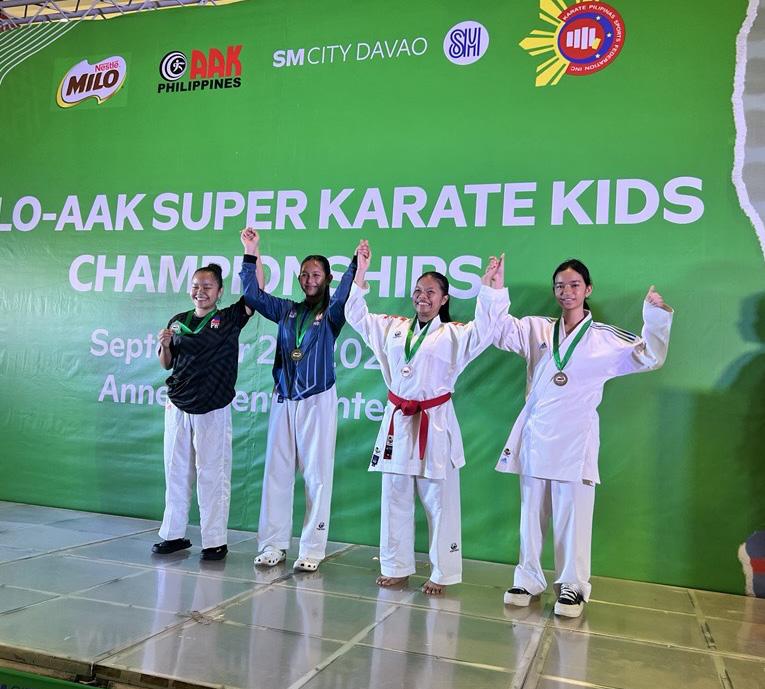


Student-athlete tells all





In a sport built by endurance, commitment, and consistency, most are unable to dedicate a portion of their lives to triathlon, especially to those who are in school. But for Heureux Almero, passion is a euphemism for the hard work he has committed to the sport.
Ever since being in the GenSan Triathlon Team (GTT) nine years ago, there is no doubt that he has faced hardships trying to balance his schoolwork and triathlon, with a busy school schedule and a filled week consisting of biking and running in the morning and swimming in the afternoon on Mondays, Wednesdays, and Fridays, running in the morning and swimming in the afternoon for Tuesdays and Thursdays, long distance biking for Saturdays, and a simulation (running, biking, and swimming) on Sundays.
As he is finally in his senior year in The Quantum Academy, he is finally able to share his side of the story, casting aside all the glory he has earned.
Almero considers the biggest challenge to be balancing his performance to fit expectations in both the sport and the school.
“Maintaining balance between my performance in triathlon like keeping up with the expectations of my parents, teammates, coach, competitors, and other coaches while also doing good in academics and having a high ranking in the class.”
His approach for this challenge is to study and listen to classes for his academic performance, and to get adequate rest to support his lifestyle.
“After I get home from training, if there are upcoming quizzes or exams, I immediately study upon arriving at home since I arrive home around 8pm and I have to sleep at around 10 p.m. since I wake up 4 a.m. every day. Doing well in quizzes and exams are sort of easier or lighter when I listen to the discussions of teachers,
The Quantum Academy’s Arnis team participated in the GSCAA meet on December 9-10, 2024, inside Robinsons mall.
One of the players, Timothy Marsch, who has practiced Arnis for a year, won bronze in his category. His experience in other sports granted him the ability to catch up and be a proficient player.
“I started Arnis with a little bit of knowledge from past sports that had put me in the right head space for Arnis, like other martial arts,” he said.
Lorenz Sudaria, another Arnis player, unfortunately did not win due to an insufficient amount of practice and illness but he maintained composure and fought on until the end.
“The main challenge I faced during the competition was not the competition at all, it was my illness. While I was doing the competition I was feeling sick, but I powered through at fought on.
Unfortunately, I couldn’t get the victory.”
As for Rea Petchalin, who won bronze in padded sticks, she was brutally honest
with what she considered as a challenge during the competition.
“Having to face my friends from other schools, during sayaw, I rooted for the other team more since I knew Quantum could really not reach SRAA due to the lack of players in the categories.”


Through good serves and strong spikes, The Quantum Academy’s (TQA) boys’ and girls’ volleyball teams have made their statement in the PSBEA-Meet 2024.
The boys’ games, held on November 19 to 21, and the girls’ games, held on the 16th, 19th, and 20th, took place at the Holy Trinity College (HTC) Arcade court and HTC Wildcats court, respectively.
Spirits were high after the TQA boys’ team won their first game against Notre Dame Dadiangas University (NDDU)Espina, dominating the team on the first set (25-16), though almost losing momentum on the second set (25-21).
Following that, the game against Gensan Christ Life Academy (GCLA) saw boiling emotions and intense competition when the GCLA upset the 1st set (25-27) against TQA.
After a switch of courts, TQA still struggled, only managing to gain a shaky lead late in the second (25-23).
In the deciding set, the players held on during their back and forth, leading into the final points in the set that was won with hustle and perseverance, making the closing score 15-13 and a win for TQA.
On the same day, the fatigued players had another emotion-filled game against New Era University with a score of 14-25 in the first set, and 19-25 in a competitive
second set, leading to a loss for TQA. On the next day, the boys’ team versed with Ramon Magsaysay Memorial College (RMMC) and HTC, both yielding losses for TQA.
Meanwhile, the girls’ games opposing NDDU-Sienna, NDDU-Espina, and NDDUIBED all resulted in sweeps in favor of the opponents. Nonetheless, their development as a team did not stop, coming into the last game against Wizard. During the first game, the girls had trouble keeping up with the opposing team. Despite eventually leading for portions of the game, the opposing team still managed to catch up and take match point (23-24), forcing a timeout for TQA. Following this, the girls’ team tried their best to save the ball, but Wizard ended up scoring the point, leading to another loss for TQA (23-25).
Being the boys’ volleyball captain, Wilfred Florida felt satisfied with their performance compared to the previous season, and proud with the way they


Teamwork was put on full display during the high school team’s first game against Montessori, when Alfonzo Pagunsan assisted Kingsley Mcwall’s goal, winning them the game (1-0). Tension filled their second match when NDDU-Espina scored the first goal, making the score 0-1 Astonishing results came from the debut of both The Quantum Academy’s (TQA) high school and elementary soccer teams, as they kicked the ball in this year’s PSBEA-Meet at Notre Dame of Dadiangas University (NDDU)-IBED soccer field. The high school matches took place on December 4, 5, and 7, 2024, while the elementary games were held on December 2 and 3.