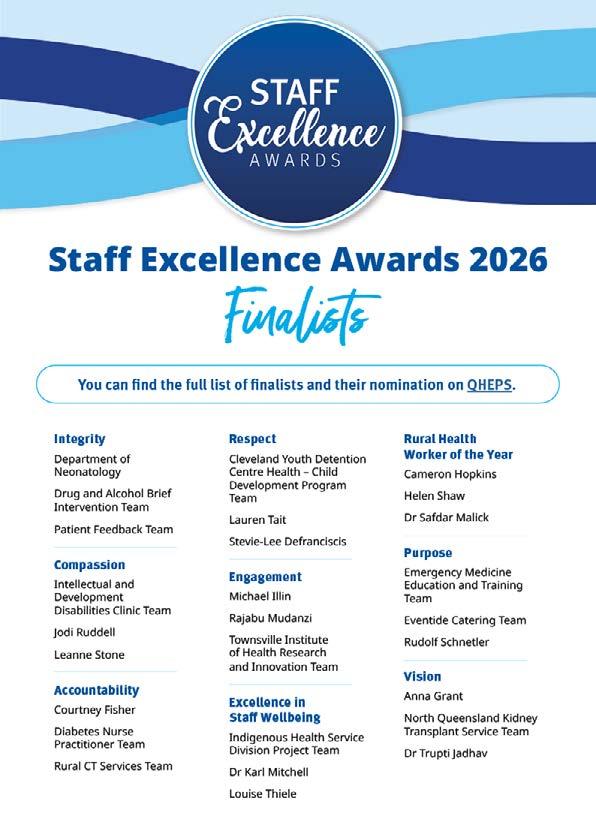
Tomorrow is Anzac Day, the most solemn day on our national calendar. Our health service is fortunate to have so many staff that have served, or are serving, our nation as well as those of us that have family members with armed forces service. When I think about the community we serve, which includes Australia’s largest garrison community, this connection to military service is possibly the strongest community tie we have. This is reflected in the growing numbers of people that participate in our dawn service at the front of Townsville University Hospital. It is always good to see members of our community, alongside patients and staff, in attendance. In addition to the dawn service there will be a number of us (yours truly included) representing the health service in the march along the Strand. In my experience over the years, we have had a broad range of people participating for a whole range of reasons. If this interests you, it would be great to see you at Strand Park at 0830. We’ll be near the basketball courts.
This week I was lucky enough to get to Charters Towers. I say lucky because sometimes it feels like I’m tethered to my desk or the meeting room, so I relish the chance to get out. I had the opportunity to meet with Mayor Liz Schmidt who was fulsome in her praise of the great work our teams are doing in Charters Towers. It was good to get to Eventide and in particular visit the dining hall after the repair of the burst water pipe – the team has done an amazing job while dealing with that slight inconvenience! The work on the new medical imaging suite at the Charters Towers Health Service, which includes a CT, has reached practical completion and next month we will start seeing patients in there. Everyone in the ED at Charters Towers has done really well continuing to provide care while we completed these much-needed works around them. I think all too often we focus on the new equipment and often forget to acknowledge the effort that goes into sustaining service delivery at the same time, so well done team. As a fun bit of trivia, I’m going to claim the installation of a CT, into a 142-year-old hospital in its original form, as a world first! I rounded out my trip by visiting the Charters Towers Rehabilitation Unit and sharing some lunch.
Over a relaxed discussion it was heart warming to hear the stories (which are actually shared in small posters in the unit) of different consumers being successfully rehabilitated into fulfilling lives back into the community. This is only possible because of the dedicated multidisciplinary team providing truly person-centred care – well done team.
I also want to acknowledge the significant amount of work currently underway across the organisation in relation to budget preparation and operational planning, in addition to all of the work delivering care to our community. There are a lot of moving parts at the moment, and I appreciate the effort teams are putting in. We’re still working through the details, particularly around funding allocations. We’ll continue to keep you informed as things progress.
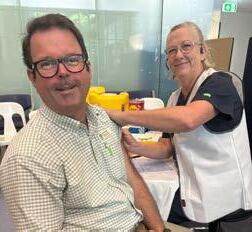
‘Operation Immunity’ is now well underway, that’s our Mission Impossible-inspired theme for the annual drive to vaccinate as many people as we can to protect against influenza and COVID. I popped into the RDA Foyer this week and had both vaccinations and, in a first for me, both in the same arm (not the beer arm). Well done to Mandy for a painless vaccination and for ensuring the photo was PG rated (I know a few of you are scarred from one of me a few years ago that was a bit more revealing).
As always, thank you for the work you do every day.
kk
Study day to highlight holistic palliative care
An upcoming Townsville University Hospital (TUH) palliative care study day will bring together staff for an in-depth exploration of how holistic palliative care can make a meaningful difference to patients and their families.
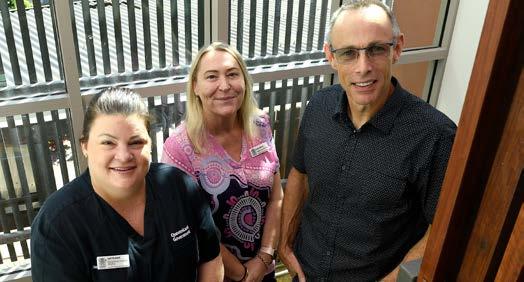
Townsville specialist palliative care rural telehealth service (SPaRTa) clinical nurse consultant Jodi Ruddell said the study day aimed to educate staff and emphasise all aspects of palliative care, both within the health service and across the community.
“Palliative care is not limited to diagnosis or endof-life care, it really is about treating the whole person physically, emotionally, socially, and spiritually,” Jodi said.
“The day will feature presentations from an interdisciplinary team, including social work, bereavement coordination, occupational therapy, physiotherapy, pharmacy, volunteers, and primary health network and compassionate communities representatives.”
SPaRTa bereavement coordinator Jane Logan said one the key presentations on the day would be centred on the role that volunteers play in supporting staff delivering palliative care.
“There will be volunteers in attendance to talk about topics like memory making and explain how personal connection and legacy building can support families during difficult times by reducing the risk of complicated grief,” Jane said.
“It’s about empowering staff to know where they can go for support and how to work holistically with families.”
Jodi said by bringing teams together, the event hoped to strengthen connection across the service and reinforce the shared goal of delivering care that went beyond medical needs.
“There’s a big and diverse skillset across the palliative care team, and this day will bring everyone together to showcase what they do and how we can each help each other,” Jodi said.
The event is open to nursing, medical, and allied health staff and will take place on Tuesday 12 May 2026 in the Cannington Lecture from 8.00am to 4.30pm, with lunch provided.
Register by COB Friday 1 May via email: tsv_palliative_care_service@health.qld.gov.au
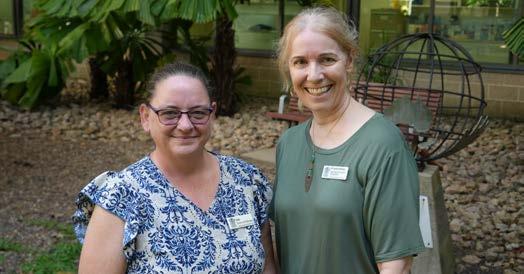
Jodi Ruddell, Linda Merrill, and Dr Claus Bader
Matthew home with new support program
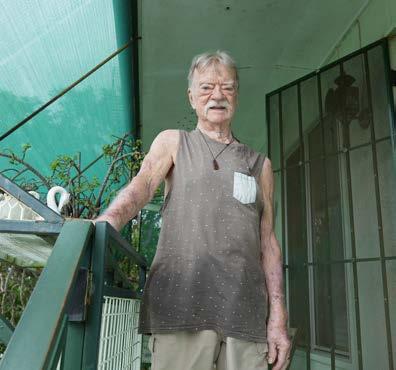
For four decades, 87-year-old Matthew Janssen poured his heart into his old Queenslander, building it up and painting every square inch by hand, and after spending months in hospital, a special initiative has now allowed him to return home.
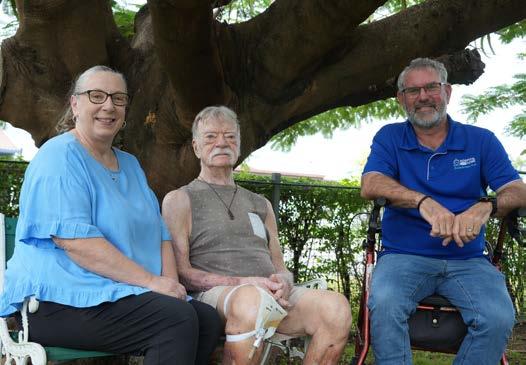
Matthew is among the first patients being supported through the new Maintenance in the Home (MiTH) program, a partnership between Townsville University Hospital (TUH) and Hospital in Your Home, designed to deliver hospital-level care to older patients in the comfort of their own homes.
Born in the Netherlands, Matthew migrated to Australia in the 1960s and built a long career as a boilermaker.
In late 2025 and early 2026, he experienced multiple hospital admissions due to a lifethreatening skin condition on top of a complex medical history including prostate cancer, multiple myeloma, and cardiac disease.
During this time, he sadly lost his wife of 35 years to an unexpected illness.
Shortly after, Matthew was discharged under the MiTH program and able to return home under a 24/7 hospital equivalent model of care.
Hospital in Your Home chief executive officer Dr Michael Young said MiTH was created to support patients who were medically stable but unable to leave hospital due to social or physical challenges.
“Matthew’s journey reflects exactly what MiTH was designed to achieve,” Michael said.
Mary Leech, Matthew Janssen, and Dr Michael Young
“Rather than remaining in a hospital bed, patients like Matthew receive comprehensive care at home where they are naturally more active and engaged.
“Matthew receives daily visits from nurses, physiotherapists, occupational therapists, doctors and personal care staff, alongside local small businesses who provide supports including gardening, cooking, and house cleaning.
“The goal is to keep people safe at home for longer and prevent unnecessary transition into residential aged care.”
Michael said by the time Matthew was clinically ready for discharge, he was severely deconditioned, grieving, and barely able to climb the 13 steps into his home.
“Fast-forward to today and Matthew can safely manage the stairs and spends his time feeding the birds on his porch, and working in his garden and workshop,” Michael said.
“The MiTH program integrates digital platforms to support safer home-based care including monitoring daily routines and identifying early health changes through ambient sensors around the home.
“We also utilise an interaction platform designed to foster meaningful engagement between patients, carers, families, and care teams, which helps with social participation and leads to better cognitive function, emotional resilience, and overall quality of life for patients.”
Townsville Hospital and Health Service director of nursing Mary Leech said the program benefited both patients and the hospital system.
“The program helps to address bed shortages and emergency department ramping by relocating patients who no longer need acute hospital care,” Mary said.
“However, the most significant benefit is to patients themselves.
“At home, compared to the hospital, people are naturally more active and maintain independence and autonomy, so everyday movement becomes rehabilitation.”
For Matthew, the program meant everything.
“It’s good to be at home; I can do my own thing, make a cup of coffee, and walk in the backyard,” Matthew said.
“The doctors, nurses, and everyone that helps me are amazing.
“This really is the best thing that’s ever happened to me, after marrying my wife.”
Matthew has recently undergone an aged care assessment and will receive a Commonwealthfunded community care package to keep him at home, a key transition point built into the MiTH model.
Townsville Hospital and Health Service
Matthew Janssen
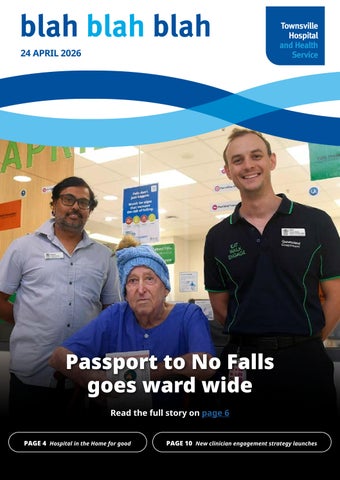
Passport to No Falls new venture in care
To coincide with April No Falls Month, a national campaign raising awareness about the impact of falls, Townsville University Hospital’s oncology ward launched a novel way to encourage patients to keep active while in hospital.
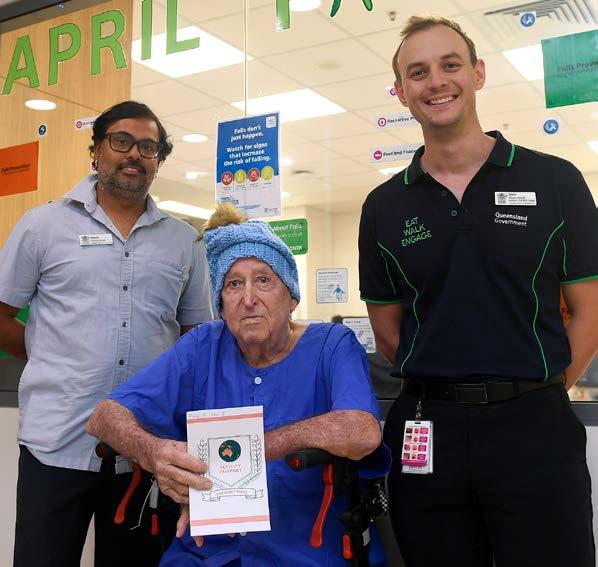
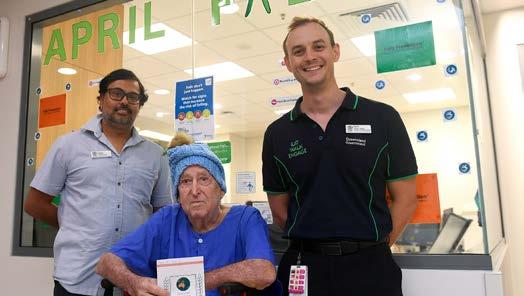
Eat Walk Engage allied health assistant Tyson Czinege said as the ‘Activity Passport’ was part of the ward’s adoption of the Eat Walk Engage program, the activity was developed to support patients to keep moving and stay mobile during their hospital stay.
“One of the pillars of the Eat Walk Engage program is supporting early, graded and regular mobility,” Tyson said.
“It’s important for patients to keep moving to maintain their independence, preserve muscle strength and reduce functional decline, which is important when it comes to preventing falls and getting home sooner.
“The Eat Walk Engage multidisciplinary working group came up with the idea of creating the passport to encourage people to get up and out of bed and move as much as is safely possible for them.”
The passport encouraged patients to travel ‘wardwide’, partake in activities such as the ward’s group exercise program and laps of the ward to find fun facts and collect stamps in their booklet for a prize.
“The Calvary Church generously donated gift packs for prizes once passports are completed, which is a great incentive,” Tyson said.
In addition to the prize packs, Tyson said the patients were loving the social and wellbeing benefits of the initiative as well.
“When our patients are encouraged to get up and move, they get to socialise and share that message with others on the ward as well,” he said.
“They often support each other, families and visitors get involved too, as well as the volunteers and other staff who pass through the ward.
“It motivates everyone and it becomes this whole ward-based activity and focus.”
For patient Doug Radcliffe, the daily movement is the one thing that breaks up the monotony of hospital.
“It gets me out of the bed because it can get a bit tiring looking at the same four walls,” Doug said.
“I’ll get out and say g’day to the staff and other people around the ward, but the main thing is it makes me feel like I’m not stagnating.”
Ankush Anchal, Doug Radcliffe, and Tyson Czinege
Soft and bite-sized options fuel patients
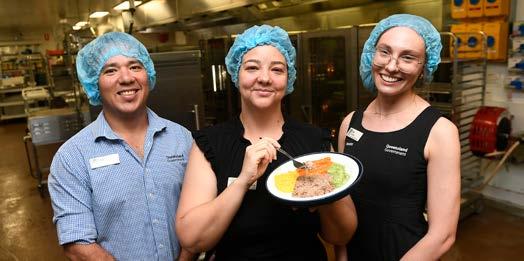
The final piece of Townsville University Hospital’s texture modified meals was launched this week with the new soft and bite-sized (SBS) diet.
Senior speech pathologist Karina Nikolaychuk said SBS was another step on the way back to consuming whole or baseline foods for patients who had difficulty swallowing.
“With the SBS diet, patients have the option of consuming something a little more solid than pureed or minced food,” Karina said.
“Previously, patients would receive pureed food as the default modification, but they may not necessarily be satisfied with that for an extended period.
“We may also get patients coming into hospital from the community or a residential aged-care facility who are on SBS as their baseline, and then they had to be downgraded to pureed food.”
Speech pathology, dietetics and food services worked together to make the menu a reality from working with suppliers to stock SBS items to kitchen staff preparing it, and creating the final menu, something senior dietitian Kate Lovell said must follow set standards and guidelines.
Characteristics of the SBS diet:
• Soft and tender
• Pieces no bigger than 1.5cm
• No cutting required
“It’s important to ensure adequate variety across vegetables, meats, and other meal components each day to meet nutrition requirements and maintain patient interest,” Kate said.
“Evidence suggests when a patient on a regular diet is offered a meal such as roast beef and veggies for dinner, patients receiving a texture modified menu should be offered a comparable option.
“Thankfully, with the supplier we use, we’re able to easily translate many of our meals to texture-modified diet codes.”
Assistant food services manager Alec Stevens said the kitchen had dedicated teams working on the implementation and preparation of the SBS diet.
“There have been a few changes in workflows,” he said.
“There has been shoulder-to-shoulder training with the team, specifically around product identification to ensure the right meal goes to the right patients.”
An SBS diet spotlight has been created on QHEPS and medical and nursing teams are encouraged to speak to their speech pathology colleagues for more information or patient-specific enquiries.
Townsville Hospital and Health Service
Alec Stevens, Karina Nikolaychuk, and Kate Lovell
Specialist cancer support helping young people like Melia
Twenty-three-year-old Melia Hink’s life changed suddenly in November 2024, when persistent and severe back pain led to scans, a biopsy, and a diagnosis of acute osteosarcoma, an aggressive bone cancer.
Due to the rarity and complexity of her diagnosis, Melia’s treatment was split between Townsville University Hospital (TUH) and The Prince Charles Hospital in Brisbane.
Over nine months she underwent six rounds of intensive chemotherapy followed by a 12-hour spinal operation involving a spinal fusion and muscle relocation.
Within weeks Melia began fertility preservation before starting chemotherapy, decisions she never expected to face in her early twenties.
“Life moved at an extraordinary speed following my diagnosis,” Melia said.
“I remember the first thing I thought was I don’t want to die; there’s so much life I haven’t lived yet.
“And from there I was just in a survival mindset and taking every step possible to get through each day.”
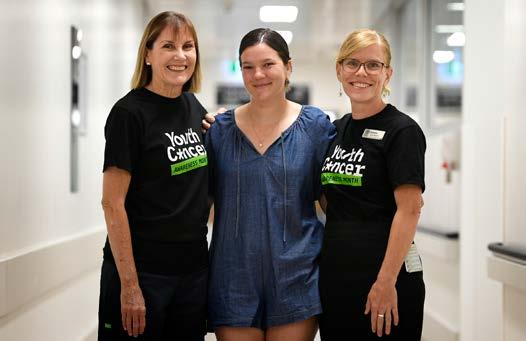
Melia received outpatient care through the TUH oncology unit and was supported by the unit’s dedicated youth cancer team as part of the Queensland Youth Cancer Service (QYCS), a statewide partnership delivering care for young people aged 15-25.
Youth cancer team care coordinator Linda Logan said the TUH team played a vital role in ensuring young people like Melia were not only supported through treatment, but empowered to recover, rebuild, and thrive beyond cancer.
“The youth cancer team is a dedicated service delivering coordinated clinical care alongside psychosocial support, practical guidance, and advocacy for young people and their families,” Linda said.
Linda Logan, Melia Hinks, and Samantha Orrin
“We take a holistic approach with the patient at the centre of everything we do, to ensure the voices of the young people we support are at the forefront of care planning.
“With a 50 per cent rise in youth cancer diagnoses since the 1980s and significant long-term impacts for young people, there is a clear need for this sort of age-appropriate, multidisciplinary care.”
Melia said she didn’t know how she would have got through her treatment without the team.
“Without the team, and Linda, my whole experience would have been so much harder; they guided me through everything,” Melia said.
“I didn’t have the mental capacity to question anything, so having someone organise appointments, medications, and travel meant all I had to do was show up.
“People my age are too old for paediatrics and too young for adult-specific care so it’s a really confronting space to be in, and I can’t imagine how much more confronting it would have been if this type of support wasn’t available.”
Melia completed her treatment in August 2025 and is now cancer free.
Back at university studying primary education, Melia said she hoped to become a hospital teacher so she could support young patients in a similar spot to where she once was.
“My perspective on life has really changed, I have such a deep appreciation for everyday activities that are easy to take for granted,” Melia said.
“I’m adjusting to life after cancer; you don’t just snap back to who you were, you have to learn to embrace a new version of yourself.”
Melia said it was important for young people facing cancer to remember to take it day by day.
“Like my dad told me when I was diagnosed, whatever monster walks through the door, you deal with it when you get to it,” she said.
April is Youth Cancer Awareness Month (YCAM), led by Canteen Australia, which shines a spotlight on the unique and growing impact of cancer on young people across the country.
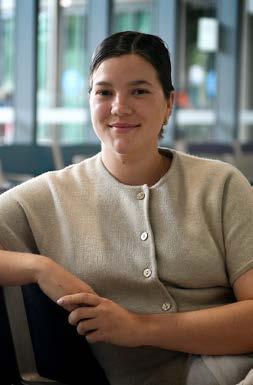
Melia Hinks now
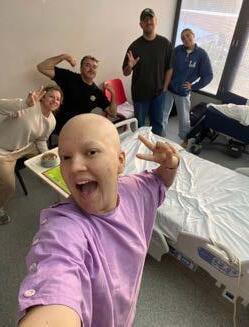
Melia in hospital
New clinician engagement strategy empowers
While the Townsville Hospital and Health Service has continued to grow, the Clinical Council recently undertook a review of the old Clinician Engagement Strategy and has launched a refreshed version alongside a companion framework for clinician engagement.
Clinical Council co-chair Dr Carly Hughes said the new strategy would be more user-friendly compared to the 10-page document which embodied the previous strategy.
“We were keen to make it readable, so we’ve made it a two-page document which highlights the three engagement pillars of communicate, consult, and collaborate,” Carly said.
“Each of the pillars contains a description of what that looks like and some examples of how clinicians can bring engagement into their everyday practice.
“We wanted something that would resonate with everyone at all levels of the health service.
“It was also key the strategy was implementable.”
The new strategy and framework were developed through a series of consumer and stakeholder discussions and feedback, which captured the sentiments of allied health clinicians, medical officers, and nurses across the health service.
In addition to the three pillars of clinician engagement, a fourth pillar ‘empower’ was introduced to the framework.
“From the feedback we received, ‘empower’ was introduced to foster workplace conditions where people on every level feel supported to be a part of engagement,” Carly said.
“We developed the framework to help clinicians implement the strategy into their everyday work, to create the conditions where they can lead, influence, and innovate.
“There are also some self-reflective questions for each level that can be incorporated into a personal development plan or team meeting to assess whether you’re taking the opportunities to address each pillar of engagement.”
The new Clinician Engagement Strategy and Framework is available online through the Clinical Council’s QHEPS page.
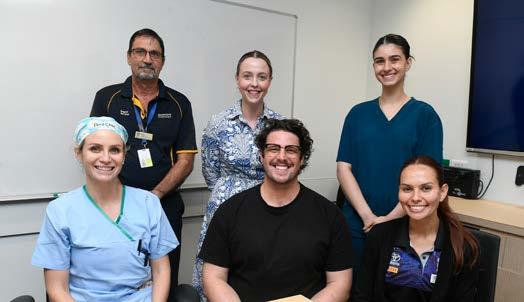
Clinical Council members
Back: James Slade, Dr Carly Hughes, Dr Julia Chequer De Souza
Front: Peta Nahrung, Leigh Ryan, Morgan Appleby
Dawn Service
Townsville Hospital and Health Service invites you to join us at a dawn service to commemorate past and present service men and women
Saturday, 25 April at 5:50am
Townsville University Hospital Front Garden
Guests are welcome to lay a wreath or book
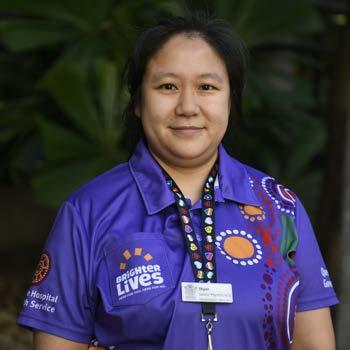
‘Staying present’ key to Shyan’s Schwartz Rounds
Since its introduction to the Townsville Hospital and Health Service last year, Schwartz Rounds have seen staff from across every department come together to reflect on the human aspect of working in health care.
At last month’s Schwartz Round, senior clinical psychologist Shyan Low delivered the following presentation titled ‘When All You Can Give Doesn’t Feel Like Enough’.
“In healthcare, we are trained to assess, intervene, and improve outcomes. We are problem-solvers by design. Much of our professional identity is built around making things better, relieving symptoms, restoring function, finding a way forward.
But what happens when there is no solution?
Early in my work in consultation liaison psychology, I encountered an experience that fundamentally challenged how I understood compassionate care. It is a case that has stayed with me, and one that continues to shape how I show up with patients, particularly in moments of profound suffering.
I had been asked to review a patient on the maternity ward, referred due to concerns about her mood in the context of a complex social history. Complexity, as clinicians know, is not unusual. It is part of our everyday work, and initially, this referral seemed no different.
That changed the moment I sat with her.
At the time, I was also pregnant. As she shared her story, it became clear that this was not simply a complex presentation, it was a deeply human one, marked by loss, guilt, and an impossible decision. Within days of giving birth, she was facing whether to keep her baby or proceed with adoption.
I remember feeling overwhelmed, not because I didn’t understand what she was experiencing, but because I understood all too well that there was nothing I could do to change her circumstances. There was no intervention that could remove the pain of that decision. No therapeutic technique that could ease the depth of her grief in any meaningful way. And yet, I still had to show up.
I had to sit with her distress, remain grounded and attuned, and hold space while bearing witness to one of the most painful moments of her life. Inside, I felt the weight of it deeply; the urge to fix, to take the pain away, to offer something more tangible. But I couldn’t.
All I could offer was my presence.
A space where she could speak freely. A space without judgement or expectation. A space where she was not alone.
After our final session — after witnessing her farewell her baby — I returned to my office and cried. It was one of the most emotionally challenging experiences of my career. It forced me to confront a belief many of us hold, consciously or unconsciously: that our value as clinicians lies in our ability to make things better.
In that moment, I learned something different.
Compassion did not look like fixing or solving. Compassion looked like staying. It looked like tolerating uncertainty and discomfort. It looked like bearing witness to suffering without turning away. It looked like allowing myself to feel, while still holding a safe, steady space for someone else.
But experiences like this also come at a cost.
As healthcare workers, we absorb stories, emotions, and moments that do not always stay contained within our clinical roles. When layered onto existing pressures — workload, time constraints, system limitations — sustaining compassion can feel increasingly difficult.
So how do we continue to provide compassionate care when the work is heavy and the outcomes are uncertain?
Perhaps the answer is not about doing more. Perhaps it is about allowing ourselves to be human.
Recognising that sometimes, presence is enough. That walking alongside someone in their suffering is meaningful, even when nothing can be changed. That feeling deeply does not represent failure — it reflects care.
And importantly, that compassion must extend beyond our patients.
We need spaces where we can reflect, share, and process the emotional weight of our roles.
Spaces like Schwartz Rounds remind us that we are not alone in carrying these experiences, and that vulnerability and reflection are not signs of weakness, but of strength.
Compassion is not just something we offer to those we care for.
It is something we must also offer to ourselves — and to each other.”
The next Schwartz Rounds will take place on April 29 in the Robert Douglas Auditorium at Townsville University Hospital from 10am, with the theme ‘Drowning in Documentation: When the Chart Feels Heavier Than the Care.’
A chance to have your say on TUH’s new multi-storey car park
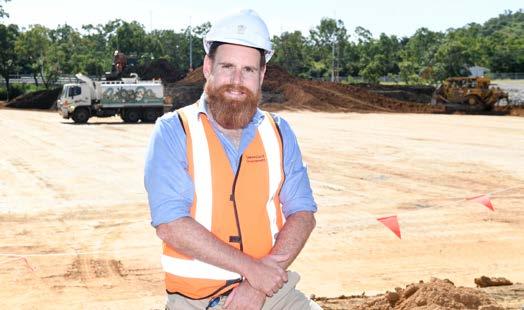
Townsville University Hospital staff are being invited to help shape one of the campus’s major upcoming infrastructure projects, with expressions of interest now open for a dedicated Multi-Storey Car Park (MSCP) Staff User Group.
Senior project manager Andrew Chapman said the main design for the building was already locked in, with the focus now on the finer details and staff input key to getting that right.
“This is an opportunity for staff to help make sure this space works as it should day to day,” he said.
“While it might be seen as just a car park, it’s something our staff, patients, and visitors will interact with every single day.”
Andrew said the group would provide practical feedback on how the design worked in real life, especially around safety, access, and usability.
“Our staff understand the realities of shift work, getting around campus, and what’s needed to make things safe and practical,” he said.
“We’re asking people to look at the design and tell us what works, what doesn’t, and what could be improved from their perspective.
“The working group will be held in a single threehour in-person meeting with more details to come based on the EOI.”
Andrew said the user group would focus on practical elements including functionality, safety and security, access and wayfinding, and end-of-trip facilities such as bike storage and showers.
The new eight-storey multi-storey car park will be built on the western side of the campus and is expected to deliver more 1,100 parking spaces to support future growth at the hospital.
Features will include accessible parking, electric vehicle charging, motorcycle spaces, and improved end-of-trip facilities for staff.
“We want to hear from you and give you the chance to contribute to something that will be part of the campus for years to come,” Andrew said.
To get involved, staff can complete the expression of interest form here.
Andrew Chapman
Child safety front and centre of new reportable conduct initiative
The Townsville Hospital and Health Service will further strengthen its position on protecting children as it introduces a new tool to report misconduct and abuse.
The Reportable Conduct Scheme is scheduled to go live across the health service from 1 July and applies to all staff.
Director of nursing newborns and childrens’ services Katrina Roberts, who is working on the scheme’s implementation, said it was about reducing the risk of harm to children and young people.
“The Townsville HHS is joining with other Queensland Government organisations to implement the scheme,” Katrina said.
“It will provide a framework across the health service to ensure every allegation of concerning behaviour by a worker in relation to a child or young person, no matter how minor, is identified, investigated, and addressed.
“It also provides clear guidance for reporting and investigating child-related misconduct, building community confidence in our service, and supporting a culture where child safety is everyone’s responsibility.
“This will be applicable for all staff, and over the coming weeks and months we will put the supports in place, so staff know of their responsibilities, the actions they need to take, and the mechanisms for reporting concerns.”
The Reportable Conduct Scheme follows the release of the Child Safe Standards earlier this year which are focused on preventing harm to children.
Chief operating officer Susan Freiberg, who is the executive of the scheme and standards, said these were valuable tools that would further enhance children’s safety within the health service.
“The Reportable Conduct Scheme and the Child Safe Standards have come from the Child Safe Organisations Act 2024, which came into effect across the state at the start of this year,” Susan said.
“I have been working closely with Katrina and clinical nurse consultant Michelle Parkinson to bring these new measures to the health service.
“These are important steps in further enhancing the safeguards for children and young people that come into contact with our health service.”
More information on the Reportable Conduct Scheme will be made available ahead of its introduction on 1 July.
Visit QHEPS to find out more about the Child Safe Standards.
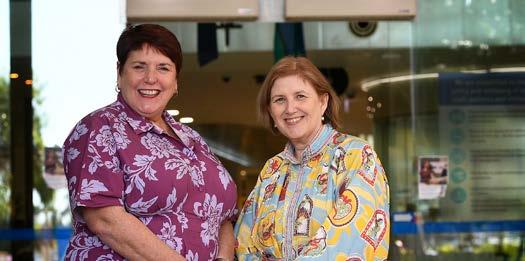
Susan Freiberg and Katrina Roberts
Building better leaders with new tools for line managers
The Townsville Hospital and Health Service is backing its leaders with a new line manager orientation program, competency framework, and suite of practical resources to support staff who are leading teams.
Within months of launching, the program is already helping staff make the transition from subject matter expert to line manager.
Josephine Sailor Adolescent Inpatient Unit and Day Service nurse unit manager (NUM) Liisa Kersevani said the resources were now part of her daily role.
“I’ve only been a NUM for about 18 months, so I’m fairly new to the line manager space, but I found the training really valuable and wish it had been around when I first stepped into the role because it would have made things a lot easier,” Liisa said.
“The program brings everything together in one place, including a step-by-step guide for new line managers, clear expectations of the role, and short, practical resources to help with everything from developing staff to handling day-to-day issues.”
As well as supporting her own development, Liisa said the resources also helped her build her team’s skills.
“I’ve shared it with my team and used it to work through challenges with staff, and it gives me a place to go for ideas, guidance and support, whether that’s making sure I’m doing the right thing or helping develop my team,” she said.
Organisational development consultant Louise Allsopp said the program was designed to support both new and experienced leaders.
“It’s a staged framework that helps people prepare for the role before stepping into it and supports them through their first few months, with resources they can refer to as they go,” Louise said.
“It also helps experienced managers identify development areas and access training to strengthen their skills and knowledge.
“We’re seeing strong results from early adopters, with more engaged teams, and it’s important to know the resources are open to everyone, not just those with direct reports but also emerging leaders and role models.
“I’d really encourage people to jump on, have a look and start using it, even in small ways, because it can make a real difference to how you lead your team.”
Find out more on QHEPS or enrol in a 30-minute drop-in session via LOL, or contact THHS-Learning@health.qld.gov.au for support.
Liisa Kersevani and Louise Allsopp
Thursday 7 May 2026
Robert Douglas Auditorium
Townsville University Hospital
12:00-14:30
A Microsoft Teams appointment will be organised for staff wishing to join via teams.
A Note...Brighter
Triple M’s Cliffo joins Brighter Lives as ambassador
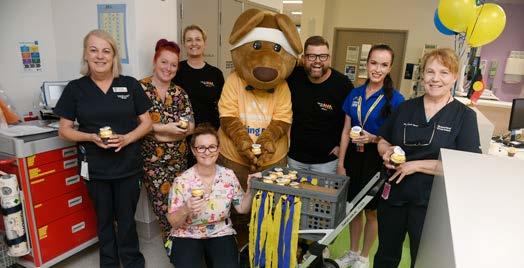
Last week, Brighter Lives welcomed Triple M’s Guy ‘Cliffo’ Clifton, joined by his breakfast co-host, Kate Jeboult, as the foundation’s newest ambassador.
To mark the occasion, the radio duo helped celebrate Brighter Lives mascot Bandi Bear’s 37th birthday.
Alongside Bandi Bear, the duo visited various hospital wards to hand out birthday cupcakes to staff and patients.
“I’m so excited and honoured to be joining Kate as a Brighter Lives ambassador,” Cliffo said.
“We have seen firsthand the amazing work they do in our community, fundraising last year with them for their Brighter Day for the Next Generation Sequencing machine for Townsville to help patients here locally.
“I can’t wait to help out with this fantastic local charity.”
Cliffo and Kate visited several hospital wards, personally thanking staff and distributing individually packaged cupcakes.
“The nurses, doctors and all the staff at the hospital are incredible and work hard to keep north Queensland healthy,’ he said.
“It’s amazing to be able to say thank you in person for the big difference they make every single day.”
Brighter Lives chief executive officer Stephanie Naunton said the foundation was thrilled to have Cliffo join Kate as an ambassador.
“It was very exciting to have Cliffo and Kate here for Bandi Bear’s birthday to say thank you for the incredible work staff do every day,” Stephanie said.
“Together, Cliffo and Kate have already made a huge impact with Brighter Lives. Welcome to the team, Cliffo!”
Cliffo, third from left, with his co-host Kate, Bandi Bear, Stephanie Naunton and staff from the children’s ward
Title Title
To the doctors, nurses and staff in ICU TUH, Thank you all for your support and care for my wife. It is truly appreciated.
ICU
My father has been an inpatient of the Medical Wards for several weeks. During this time I have witnessed great care and compassion from the ward staff of this unit, I cannot thank them enough for the humane treatment of not only my father, but all of the patients and their families.
MED WARD 5
There are truly no words that feel big enough to express my gratitude for the care you gave me during one of the most overwhelming times of my life.
MATERNITY SERVICES
Capital works update
Works currently underway
Project: eHealth Infrastructure Maintenance Program
Work location: Various locations in TUH
Project: Charters Towers CT Scanner
Work location: Charters Towers Health Service
Project: Kirwan Health Communty Campus expansion
Work location: Kirwan Health Campus
Works on the way
Project: Multi-storey car park
Work location: Townsville University Hospital
Project: TUH Transit Lounge
Work location: DDU and Social Work Area
Project: Charters Towers Staff Accommodation
Work location: Charters Towers Health Service
Project: Palm Island Staff Accommodation
Work location: Palm Island Health Service
Have any questions?
Project: Ingham CT Scanner
Work location: Ingham Health Service
Project: Carpark 17 expansion
Work location: Adjacent TecNQ
Project: Ingham Staff Accommodation
Work location: Ingham Health Service
Project: Ayr CT Scanner
Work location: Ayr Health Service
Plans are currently underway to support staff through the changes that will occur in the coming months.
To accommodate so much growth at TUH, some staff will be required to relocate to new office spaces and to support this, we have commenced a Business Case for Significant Change with those teams who will be impacted by works undertaken at TUH.
If you have any questions or would like to discuss any proposed changes, please contact the chief operating officer via email or THHS-InfrastructureOffice@health.qld.gov.au.
Recipe of the week Healthy banana oat pancakes
Laugh of the blah
Ingredients
•2 medium bananas
• 2 eggs
• 1/2 cup light milk
• 1 cup rolled oats (steel cut)
• 1/2 teaspoon baking powder
• 1 teaspoon cinnamon
• Fresh fruit and natural greek yoghurt to serve
Method
1.Mash up banana, eggs and add milk to a large bowl.
2. Add oats, cinnamon and baking powder to mixture.
3. Heat a non-stick frying pan over medium heat.
4. Fry spoonfuls of the batter until golden brown on both sides.
5. Serve with a drizzle of natural greek yoghurt and fresh fruit of your choice.
Classifieds
FOR RENT
House available in Kelso 3 bedroom 1 bathroom, available on 5th May. $480 a week Please call or message 0403 733 929. (24/4)
Master bedroom w/ensuite available in a 2br 2bath sharehouse in West End from 23/5. Fully furnished, on-street parking, sharing with one 32 y.o male, also working in healthcare. $350pw inc bills. Text Luke 0401 402 282. (24/4)
FOR SALE
SUV GT Slide out Camping Trailer $20,000. Sleeps 6 Air Annex & Shower Annex. Call Neil 0414897044 (24/4)
2024 Hyundai Venue. 31500KM, Blue, Automatic, bought in July 2024. Selling due to upgrade, prepaid servicing until 2029. Dash mat, floor mats and boot mat inc.
$25,000 price negotiable, if reasonable - full tank for fuel. Phone/Text Kieryn on 0437640064. (24/4)
Email classifieds to tsv-public-affairs@health.qld.gov.au with subject ‘Classifieds’. Do not send classifieds as attachments.
Photos will not be included. Submissions for classifieds should be no longer than 50 word in a plain-text email. Classifieds longer than this will not be included.
Classifieds will stay current for two issues of the blah. If you would like your ad to be continued after this time please resend the ad. We do not advertise services in the blah.