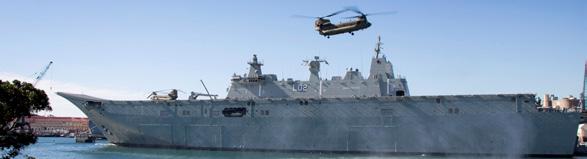
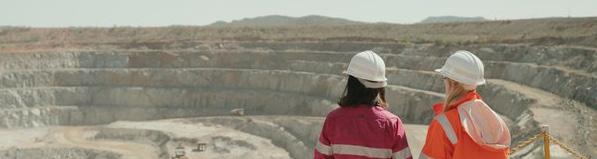
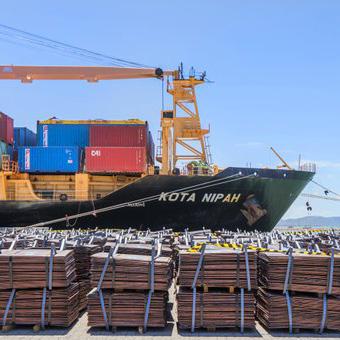
Unlock the North - 2026/27: Federal and State Budget Priorities
Townsville Enterprise pays its deepest respects to Aboriginal and Torres Strait Islander peoples as the traditional custodians of the land in Australia, and recognise their continuing connection to land, water and culture.
We pay respects to Elders past and present. We acknowledge the stories, traditions and living cultures of Aboriginal and Torres Strait Islander peoples and commit to fostering a culture of learning from and working with First Nations people in the spirit of reconciliation and access to justice.
Foreword
Townsville North Queensland has entered its most significant growth trajectory in more than a decade. The decisions made by government today present a timely opportunity to shape the future of our region, ensuring it can unlock its full economic, social and national potential for generations to come.
This special edition of Unlock the North outlines the priority projects and policy enablers that will underpin both the 2026–27 Federal and State Budget submissions. As in previous years, this submission brings together region-shaping investments that reflect a shared vision for prosperity, resilience and long-term growth.
Collectively, these priorities represent the future focuses of the five local government areas of Townsville, Hinchinbrook, Burdekin, Charters Towers and Palm Island. Coupled with our region’s $40 billion+ Project Pipeline, they are our united project priorities that will continue to drive growth, not only for North Queensland, but deliver enduring benefits for our state and the nation as a whole.
In recent years, Townsville North Queensland has continued to perform as an economic powerhouse with its unique blending of regional, rural and city industries, underpinned by innovation, first-class education and a highly skilled workforce. The region, particularly over the last 12 months, has further cemented its position as one of Australia’s strongest performing regional economies.
Investment confidence continues to build as the region attracts major public and private investments across energy, resources, defence, manufacturing, health, housing and tourism.
Townsville North Queensland is no longer a hidden opportunity for investors. As the largest city in Northern Australia, supported by strong population growth, nationally significant infrastructure and relative housing affordability, Townsville North Queensland is firmly in the national spotlight.
Our visitor economy now supports more than 9,000 local jobs and contributes over $1.2 billion annually, delivering direct benefits to local businesses and stimulating entrepreneurship across accommodation, hospitality, tourism and retail.
Like all regions, we face challenges. Rising energy costs pose a serious risk, not only to households, but to our mining,
manufacturing and processing industries, and the thousands of jobs they sustain directly and indirectly. Energy security is now one of North Queensland’s most critical economic vulnerabilities. Affordable gas supply and CopperString’s full connection of the North West Minerals Province to the National Electricity Market (NEM) are essential. Without firm commitment to CopperString in its entirety, the region risks losing billions of dollars in investment, value-adding opportunities and sovereign capability. These are outcomes that are critical not just for Townsville North Queensland, but for Australia’s economic and national prosperity.
Townsville North Queensland has proven its ability to deliver growth by looking to the future and leveraging our renewable resources, skilled workforce and strategic location to build nationally important industries in clean energy, critical minerals processing and advanced manufacturing, while still addressing the real challenges faced by North Queenslanders.
As the region’s peak economic development, destination management organisation and lead for major events acquisition, Townsville Enterprise remains committed to securing the future of Townsville North Queensland. We call on all sides of politics, both Federal and State, to work with us and our regional councils as we all come together to support the delivery of this shared vision.
Claudia Brumme Townsville Enterprise, CEO
Kevin Gill Townsville Enterprise, Chairman
Townsville Enterprise, along with Townsville City Council, Burdekin Shire Council, Charters Towers Regional Council, Hinchinbrook Shire Council, the Palm Island Aboriginal Council and the North Queensland business community are committed to securing the future of Townsville North Queensland.
Our role has always been to look ahead, and champion the projects and policies that will deliver economic growth for our region for decades and generations to come. We work to drive our traditional industries like defence, health, education, tourism, and mining to greater heights, while backing innovation and new technology to stay competitive and relevant to national and international markets. In addition, Queensland’s runway towards the 2032 Olympics and Paralympics also provides an ideal opportunity to develop refreshed experiences that support visitors travelling to Townsville North Queensland.
Enterprise is a
and growing membership-based organisation. We would like to thank our members for their continued support in our efforts to Secure the Future of Townsville North Queensland.
$40B+
1.0
TOURISM & CITY GROWTH
1.1 The Strand: Rockpool Redevelopment
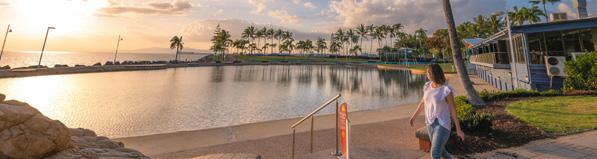
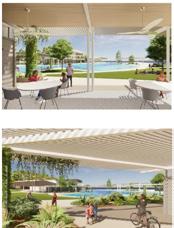
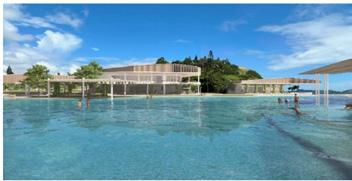
The Strand Rockpool presents as a key redevelopment need for Townsville. As an iconic location on the foreshore, the Rockpool upgrades would be a primary contributor to achieving richer visitor experiences, more jobs and better infrastructure, and deliver on the Queensland Government’s Destination 2045 plan.
BACKGROUND
The Strand Rockpool is a stinger-resistant seawater pool located at the northern end of The Strand. Initially constructed in 1968, it was repaired after Cyclone Althea in 1971, replacing the original ocean swimming enclosure that existed in the exact location.
The 1999 redevelopment of The Strand included the addition of a headland next to the Rockpool that is in use today.
The original Rockpool and its surrounding buildings have aged significantly, resulting in increased maintenance costs. The community strongly supports investment to bring this facility up to a modern-day standard, with all accessible amenities and supporting public realm.
ROCKPOOL REDEVELOPMENT
The purpose of the Rockpool redevelopment is to:
▶ Create a year round safe swimming space for locals and visitors
▶ Make the area more resilient to significant weather events
▶ Improve access to nearby attractions
▶ Create high-quality open spaces
▶ Refresh the visual identity of both the Rockpool and The Strand.
DETAIL
Delivery of the new public pool will include:
▶ Modifications, renewal, and upgrades to the pool’s substructure
▶ Additional shade and lighting within the pool
▶ Changing the layout to connect better with open spaces
▶ Meeting current pool safety standards.
STATUS
Demonstrating their commitment to progressing this important project, Townsville City Council is investing in a detailed design to reflect community feedback and gain detailed cost estimates.
▶ $100 million investment for the delivery of the Rockpool redevelopment, to create a clear water, all year swimming facility with improved attractions and high quality public realm.
1.2 Ross Creek Pedestrian Bridge
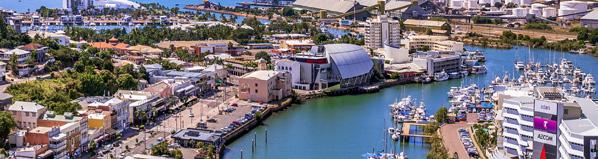
Ross Creek, Galgimga in Gurambilburra Wulgurukaba language, has significant local meaning and dreamtime history. Ross Creek is located at the heart of Townsville and is an important feature of the city’s landscape.
BACKGROUND
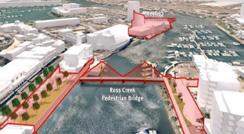
As part of Townsville City Council’s revitalisation strategy, a rolling program of boardwalks and active transport pathways have been delivered which have enhanced the accessibility of the city along the water’s edge. It has also provided significant economic and social activation and increased commercial opportunities along the creek waterfront. The next stage of Townsville’s Waterfront Renewal project is provision of a new pedestrian bridge across Ross Creek between Flinders Street East and Plume Street which will provide allaccessible, safe active transport connections between Townsville’s tourism, accommodation, hospitality, and events precincts.
THE ROSS CREEK PEDESTRIAN BRIDGE PROJECT CONTAINS THREE KEY ELEMENTS:
1. A 100 metre active transport bridge across Ross Creek connecting Flinders Street to Plume Street.
2. On the northern side of the bridge, transformation of a car park along Flinders Street creek front to inspiring landscaped public realm.
3. On the southern side of the bridge, upgrades to pedestrian connectivity and accessibility along Plume Street and Tomlins Street providing immediate economic uplift and transformation of under-utilised space.
DELIVERY OF THE ROSS CREEK PEDESTRIAN BRIDGE WILL HAVE TRANSFORMATIVE RESULTS FOR TOWNSVILLE CITY:
▶ Provide connectivity between key hospitality and accommodation districts and a direct link between the Great Barrier Reef Aquarium and the Cruise Ship Terminal. The pedestrian bridge will be a critical tourism piece to maximise the investment into the aquarium and city centre activation.
▶ Generate broader economic uplift to surrounding businesses and increase safety in the city by activating spaces linking major attractions. The uplift will support new small businesses and expansion of many creek-facing hospitality offerings, creating much needed local jobs.
▶ Increase the safety of pedestrians and active transport users. Currently, the closest pedestrian crossing is George Roberts Bridge. The footpath on the bridge provides no physical separation from vehicles and the pathway is not wide enough to enable wheelchairs, prams, wheeled devices and pedestrians to safely pass.
▶ Provide direct and welcoming pedestrian route for cruise ship passengers to access the city centre, tourism and hospitality precincts through to The Strand.
▶ Enhance the wayfinding of the city, and increase allaccessible public realm. Integration of CCTV cameras and improved lighting across the pedestrian bridge will provide 24-hour safe use for community members.
▶ Provide a key connection in the active transport network that connects with the Stadium Precinct, Central Park, Reid Park and the residential, dining and entertainment precinct of Central Village.
▶ Support the Queensland Government’s Townsville Mobility Strategy, fulfilling goals to create walking and cycling, only bridges over major waterways, significantly improving active transport options and safety for users.
WE ARE CALLING FOR
▶ $60 million to deliver the Ross Creek pedestrian bridge and surrounding public realm improvement works on Flinders Street East and Plume Street. This will provide critical connectivity, economic growth, safety and accessibility for residents and visitors linking two of the city’s key hospitality and accommodation precincts.
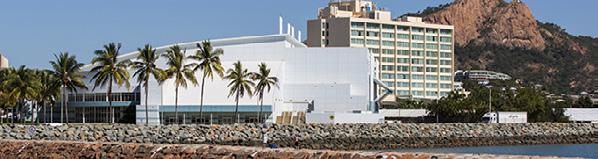
1.3 Townsville Entertainment and Convention Centre
Townsville is in immediate need of a modern, mid-sized entertainment facility. Currently the Townsville Entertainment and Convention Centre (TECC) is at end-of-life and lacks modern requirements, including all-accessible access and amenities and contemporary audio-visual infrastructure.
BACKGROUND
A 2024 business case for a new Townsville Arena determined that an investment of at least $360 million is needed for a new facility. Refurbishment of the TECC presents as a viable alternative to the construction of a new facility, however there are some significant considerations to extend the asset lifespan by a further 20 years. Without a facility Townsville will miss events catering for up to 5,000 pax and is at significant risk of losing its fourtime WNBL championship team, the Townsville Fire.
DETAIL
Requirements to achieve a further 20 years from the facility and meet compliance with the International Basketball Federation (FIBA) specifications to enable hosting of national and international games, are:
▶ Immediate drainage rectification and HVAC works.
▶ New roof and drainage corrections.
▶ Disability Discrimination Act (DDA) compliance upgrades to make the venue all-accessible.
▶ A new FIBA certified playing surface (court) and equipment.
▶ Media and broadcasting infrastructure.
▶ Improved arrival experience for spectators.
▶ Updated back-of-house facilities, especially kitchens to enhance catering and pre and post event offerings to patrons.
▶ Integrated and significantly updated audio-visual infrastructure.
▶ Improvements to break out spaces to enhance multi-use of the facility and enable hosting multiple events at one time.
DELIVERY OF UPGRADES WILL UNLOCK ECONOMIC BENEFITS FOR THE CITY AND THE REGION
The facility upgrades would provide a strong focus on enhancement to the asset to be a multi-purpose space that enables all forms of arts, entertainment, education, conferences and business gatherings to be held in Townsville. The investment will provide legacy infrastructure that will deliver a flexible multi-use space for events between 1,000 – 5,000 pax. Revitalisation of the TECC will provide a contemporary home for the Women’s National Basketball League and enable hosting
of international level sporting and entertainment events. This is critical to development of local athletes as well as continuing to generate an economic outcome for Townsville.
In the runway to the 2032 Games, it’s critical that Townsville can showcase Queensland to the world, and investment in the TECC will reestablish the missing middle in event capacity for the city and the broader region. Investment of $130 million over a three-year period will enable upgrades and enhancements to be safely completed while keeping the facility activated.
OUTCOMES TO BE DELIVERED
▶ An additional 20 years of life to the Townsville Entertainment and Convention Centre (TECC), extending its functionality past 2045.
▶ A multi-use facility servicing North Queensland, with increased functionality to serve multiple stakeholders.
▶ Contribution of over $13 million GRP annually to the region and ongoing jobs.
▶ Induced visitor spend of over $5 million annually.
▶ An all-accessible facility.
▶ Contribution to The Strand and broader Townsville City Revitalisation Strategy
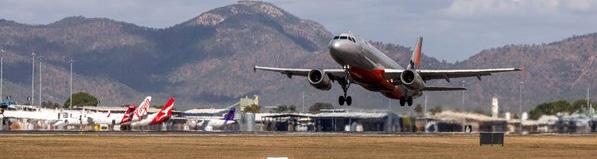
1.4 Rebuilding International Aviation
Townsville Airport is the primary aviation gateway for North Queensland, facilitating almost 1.6 million passengers, 6,000 tonnes of freight, and contributing $400 million to GRP annually. As a critical enabler of tourism, trade, defence, resources, agriculture, education and government services, the airport supports 2,500 FTE jobs and underpins the liveability and economic prosperity of the region.
BACKGROUND
Townsville has a growing population and more than $40 billion in regional projects in the pipeline, therefore secure and enhanced air connectivity is vital to meet Townsville North Queensland’s future needs. While Townsville has previously hosted international flights, changes to Commonwealth aviation security standards now prevent the reinstatement of direct international services without upgraded screening infrastructure.
Restoring international capability, starting with a Bali service, is already backed by economic modelling and industry support and would deliver significant lifestyle, tourism, business and trade benefits for the region. There is strong community support for the reinstatement of direct international flights, reflecting the local desire for greater connectivity, more affordable travel options, and improved regional liveability.
With more than 50,000 passenger movements already occurring between Townsville and Bali (and surrounds), and positive interest from airlines in commencing this new international route, the business case for the reinstatement of a direct connection is strong. Recent aviation and tourism forecasts indicate that Bali passenger demand is expected to triple within five years, driven by the rapid growth in leisure travel from regional Australia.
Restoring international capability would deliver significant tourism, business, liveability and trade benefits for Regional Queensland and aligns strongly with the Queensland Destination 2045 Plan.
DETAIL
A full upgrade of Townsville Airport’s international security screening infrastructure is required to ensure compliance with current Commonwealth aviation security requirements and enable the reinstatement of direct international services.
Key components include:
▶ Installation of new compliant passenger screening equipment, replacing outdated systems.
▶ Building modifications within the international departures lounge to integrate the new equipment and optimise passenger movement.
▶ Revised layout and passenger flow redesign, ensuring seamless interface with Border Agencies and improved
processing efficiency.
▶ Testing, commissioning, and certification prior to operational commencement.
Economic analysis shows that reinstating a Townsville–Bali route would attract 7,419 additional international visitors annually, generating $35.3 million in ongoing visitor expenditure. Rapidly increasing Bali demand strengthens this case: regional leisure travellers now overwhelmingly prioritise Bali as their most preferred international destination, and carriers are actively expanding Bali capacity nationally to meet demand. The projected tripling of passenger numbers over the next five years further demonstrates strong route sustainability. Air freight demand is critical for establishing new international routes. The aquaculture industry in North Queensland is rapidly expanding and are highly sought after by SouthEast Asian markets such as Japan, Singapore and Hong Kong. This could present an opportunity to support the viability of international passenger and freight routes. Beyond tourism benefits, reinstating international services will significantly enhance community liveability, giving residents direct access to popular overseas destinations without additional domestic transfers. This improves affordability, reduces travel time for families, and supports cultural, sporting and educational exchanges.
GOVERNMENT PARTNERSHIPS WILL:
▶ Unlock direct international services within 12 months of project commencement.
▶ Deliver more than $35 million in annual economic benefit to Queensland.
▶ Strengthen North Queensland’s visitor economy and global connectivity.
▶ Support new jobs across tourism, aviation, hospitality and supporting industries.
▶ Enhance liveability for local residents through improved travel access and affordability.
WE ARE CALLING FOR
▶ Townsville Airport seeks a $2 million State or Federal Government contribution to match the airport’s $2 million co-investment and deliver this critical enabling aviation infrastructure.
1.5 Magnetic Island Koala Hospital
The Magnetic Island Koala Hospital is a not-for-profit registered charity. The Hospital has been operating since 2003 and was established for the rescue and rehabilitation of injured, sick, and orphaned koalas. The Bee Family have been operating the Koala Hospital as volunteers out of their private home, and over the years have supported more than 360 injured koalas.
BACKGROUND
The increased demand for wildlife care on Magnetic Island, particularly for injured and sick koalas, means the Magnetic Island Koala Hospital needs to look towards expansion.
The Magnetic Island Koala Hospital has a vision to offer an immersive, educational, and inspiring experience for visitors and the community which supports the rescue, rehabilitation, veterinary care and subsequent release of injured, sick, and orphaned koalas and other wildlife.
BENEFITS
▶ An economic output of more than $13 million and employment for more than 20 people during construction and in the first 5 years of operation.
▶ Expediated response to wildlife care on Magnetic Island and improved services that reduce travel requirements for injured animals.
▶ Addressing the anticipated increased demand for wildlife care services on Magnetic Island due to the impacts of climate change.
▶ Educational opportunities for students, locals, and visitors.
▶ Opportunity for the local community to volunteer with a meaningful organisation and make a difference to the environment.
▶ Prime opportunity to positively profile Magnetic Island and the region nationally and globally through an immersive and regenerative tourism experience
▶ Opportunities to work with First Nations people to share their culture and demonstrate the connection between first nations people, koalas and other native wildlife.
WE ARE CALLING FOR
▶ $4.9 million to develop a visitor facing Magnetic Island Koala Hospital
20+ PERMANENT EMPLOYEES
$13M IN ECONOMIC OUTPUT
WILDLIFE CARE
1.6 Great Barrier Reef Art and Science Pontoon
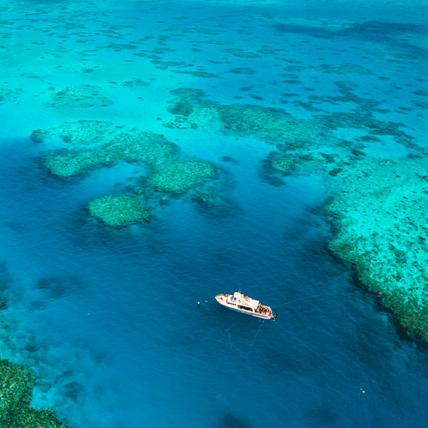
The Museum of Underwater Art (MOUA) is one of Queensland’s most distinctive cultural, scientific and eco-tourism assets.
Located at John Brewer Reef on the Great Barrier Reef (GBR), MOUA features globally significant artworks by internationally acclaimed sculptor Jason deCaires Taylor, integrating art, science and Traditional Owner culture to inspire reef conservation and global awareness.
BACKGROUND
Since 2019, MOUA has delivered the Ocean Siren, the Coral Greenhouse - the world’s largest underwater sculpture - and the Ocean Sentinels series, drawing national and international visitors, generating more than $250 million in global media reach, and establishing Townsville North Queensland as a leader in reef-based art and science tourism.
With increasing marine and eco-tourism demand, growing visitation to MOUA’s installations, and rising interest in immersive, education-based reef experiences, MOUA now requires a permanent, sustainable platform to enhance site accessibility, visitor safety and the delivery of high-yield, low-impact tourism experiences.
The community, Traditional Owners, licensed commercial operators, and regional stakeholders have expressed strong support for this next stage of MOUA’s growth, recognising its role in supporting reef stewardship, citizen science, regional pride and the liveability of Townsville North Queensland through world-class marine experiences.
DETAIL
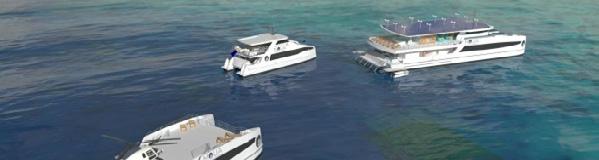
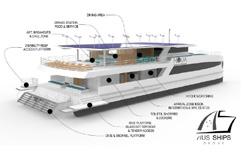
A new Art & Science Pontoon adjacent to MOUA’s snorkelling and diving site at John Brewer Reef will be a game-changer for marine tourism in the region.
The proposed pontoon will:
▶ Cater for 100 visitors daily, increasing safe access to the Reef.
▶ Incorporate zero-emission technologies and operate as a lowimpact, movable structure to optimise seasonal conditions.
▶ Deliver a world-class art, science and cultural tourism hub, including interpretation spaces, citizen science labs, and educational infrastructure.
▶ Support an immersive reef-sleep experience for up to 20 overnight guests.
▶ Include a second module housing luxury villa accommodation and a helipad, delivering high-yield visitation to the region.
The pontoon is permissible under the Great Barrier Reef Marine Park Authority (GBRMPA) John Brewer Reef Site Plan, with preliminary meetings confirming requirements and processes.
MOUA holds existing permits, Environmental Management Plans, and mooring licences for the site. Traditional Owners (Manbarra) were involved in the original site planning and have been informed of this project, with formal engagement processes built into the upcoming GBRMPA public information stage.
GOVERNMENT PARTNERSHIPS WILL:
▶ Expand regional marine and cultural tourism, diversifying Queensland’s visitor offering in line with Destination 2045
▶ Extend on the marine experience that will be offered within the Great Barrier Reef Aquarium, providing an on-reef educational experience to complement.
▶ Significantly boost jobs, visitation and expenditure for Townsville and the broader North Queensland region.
▶ Strengthen reef-based education, citizen science, research and cultural storytelling.
▶ Provide a safe, sustainable and globally competitive platform that elevates Townsville as a gateway to the Great Barrier Reef.
▶ Enhance community pride and regional liveability through greater access to transformational art, science and reef experiences.
WE ARE CALLING FOR
▶ $15 million to finalise Naval Architecture and Construction Plans and develop and install the Townsville North Queensland MOUA pontoon.
1.7 Palm Island Civil and Marine Infrastructure
Palm Island is a tropical paradise, located in the middle of the Great Barrier Reef and is home to the largest remote Indigenous community in Australia. The Manbarra people, the Indigenous Bwgcolman people, and their descendants were sent to the Palm Island missions from a number of communities across Queensland.
BACKGROUND
Palm Island is the largest discrete Indigenous community in Australia with approximately 4,000 people residing on the island. There is high mobility between Palm Island and the mainland, with the population rising to over 5,000 during periods of peak visitation. Along with the mobility of the residents of Palm Island, its economy and essential services rely heavily upon marine and barge logistics. The reliability and safety of these services are essential to delivering new housing, tourism activation and freight to the island.
The Palm Island Aboriginal Shire Council is calling for upgrades to key civil and marine infrastructure that is crucial to delivering outcomes outlined in the Palm Island Tourism Masterplan and will support heavy vehicle movements tied to housing and service projects.
BENEFITS
Investment into this critical infrastructure will unlock the following benefits for Palm Island:
▶ Resilience and continuity: reduced logistics disruption to essential goods and construction programs; improved disaster readiness and recovery.
▶ Economic development and sustainability: On-island trade and enterprise capability (industrial estates), lower mobilisation costs for regional projects, and more stable supply chains to support the Port of Townsville and contractors.
▶ Community and social outcomes: Local job creation and Indigenous-led enterprise; safer, more reliable access to services; tourism activation that complements regional offerings and disperses benefits.
DETAIL
Key components of the project and costings include:
▶ Marine piles replacement and wharf strengthening: $12 million
▶ Barge ramp rehabilitation and load-rated surfaces: $5 million
▶ Navigational aids and lighting: $1 million
▶ Port roads connection and heavy-vehicle turning nodes: $6 million
WE ARE CALLING FOR
▶ State and Federal Government funding support of $25 million over 3 years to deliver key upgrades for civil and marine infrastructure to improve safety and economic outcomes for Palm Island.
2.0 HOUSING AND REGIONAL SUPPORT
2.1 Unlocking Housing in the Regions
North Queensland is on the cusp of an economic growth phase that will require thousands of new homes to support the long-term jobs accompanying this growth. To ensure these houses can be built, investment in trunk infrastructure is needed for the roads, water, and services supporting new housing developments.
BACKGROUND
As a result of the Queensland Government’s Residential Activation Fund announcements, over 6000 housing lots have been unlocked in North Queensland. This is a good start, and more is needed. With projections forecasting strong population growth, ongoing support to trunk infrastructure will ensure North Queenslanders, from Ingham to Home Hill and out to Charters Towers, will have access to housing for themselves and their families.
The RAF is a productive scheme that is providing the foundations for local housing developments and ensuring adequate stock. It is imperative that the government continue to provide this support, lest local governments be left to withdraw money from their own rates revenue, which history has demonstrated is insufficient for the huge need they service.
Hinchinbrook Shire provides a perfect example of the ongoing support needed to catalyse housing development for an expanding population. An investment in the trunk infrastructure for Lucinda will unlock 110 residential sites that can support both long and short-term accommodation. With a growing attractiveness for the DIDO workers supporting regional growth, investments like this one set the foundation for housing success in North Queensland.
WE ARE SEEKING RAF FUNDING COMMITMENT TO THE FOLLOWING REGIONAL HOUSING INFRASTRUCTURE ASKS:
Townsville
Upper Ross Sewer and Water Infrastructure
$99 million to deliver essential sewer diversion, duplication infrastructure, and water main infrastructure, which will unlock over 3,000 residential housing lots Cosgrove, Greater Ascot and Shaw Road Infrastructure
$91.5 million to deliver essential road infrastructure, providing improved arterial road connectivity and unlocking 4,200 residential lots across three housing estates.
Northern Beaches Water Infrastructure
$2.5 million to facilitate the design of critical infrastructure that will secure long-term water supply and reliability
for the Northern Beaches, unlocking over 12,000 residential lots over five housing estates.
Hinchinbrook
Lucinda Sewage Infrastructure Project
$18 million investment into a strategic upgrade to Lucinda’s sewage capacity through new trunk infrastructure.
This upgrade will incorporate trunk mains, a pump station and property connections. Overall, Hinchinbrook Shire Council are seeking capacity for approximately 50 new unites at Dungeness, 30 new dwellings at Lucinda, and 30 new holiday units at Lucinda.
WE ARE SEEKING FEDERAL GOVERNMENT FUNDING SUPPORT THROUGH THE HOUSING INFRASTRUCTURE FUND FOR THE FOLLOWING ASK:
Burdekin
Bruce Highway/Craig Street Intersection Upgrade
The Queensland Government has recently committed $2.4 million through the Residential Activation Fund to upgrade the Bruce Highway/Craig Street Intersection to unlock residential development in Ayr. To complement this intersection upgrade, Burdekin Shire Council has proposed an extension of Chippendale Street and Craig Street. This new link will improve traffic flow, reduce congestion, and provide a safer route for emergency services.
WE ARE CALLING FOR
▶ Ongoing commitment from the Queensland Government to funding regional trunk infrastructure through the RAF in FY27
▶ Federal Government support for the remaining $2.4 million of the Bruce Highway/Craig Street Intersection Upgrade.
2.2 Supporting the Regions
This section encompasses projects from all five North Queensland regions: Townsville, Burdekin, Charters Towers, Hinchinbrook, and Palm Island. The projects presented are community-focused initiatives that require modest investment from State and Federal Governments while delivering significant social and economic benefits to local communities.
DISASTER RESILIENCE CYCLONE TESTING SHELTER
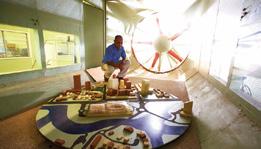
With the threat of increasingly severe weather events in Northern Australia, there is a significant impact on both government expenditure and cost of living. To address this growing concern, there is an urgent need to invest in proactive and large-scale disaster resilience research through JCU’s Cyclone Testing Station to build more resilient communities.
Replacing the ageing facilities will allow the expansion of testing and research, empowering the Station to continue it’s important work to improve the resilience of buildings. It will also increase safety, improve insurance outcomes for residents and increase the overall resilience of regions in their disaster recovery.
WHAT WE NEED
▶ Government to invest $20 million in capital funding to replace JCU’s Cyclone Testing Station infrastructure with contemporary facilities to continue and expand research into cyclones, storms and flood.
HINCHINBROOK RECYCLING WASTE FACILITY
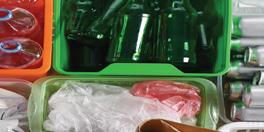
This project aims to deliver a state-of-art recycling waste facility at the Warrens Hill Landfill and Resource Recovery Centre near Ingham. It will prove dedicated facilities for waste separation and employ recycling attendants to maintain the facility. This initiative is critical to extending Council’s existing landfill by diverting significant volumes of waste.
WHAT WE NEED
▶ Investment of $4 million creating five direct full-time positions and building long-term capacity in the region.
BURDEKIN COUNTRY UNIVERSITIES CENTRE
The Burdekin Shire Council is advocating for support to establish a Country Universities Centre (CUC) in the Burdekin to provide a regional study hub for current and new students. The CUC framework provides a place-based learning solution that can respond quickly to the higher education challenges and needs of local communities.
WHAT WE NEED
▶ Federal funding of $2 million to establish and operate the Burdekin Country Universities Centre for three years.
2.2 Supporting the Regions Cont.
PALM ISLAND INDUSTRIAL ESTATE
The Palm Island Aboriginal Shire Council is seeking funding support for the development of a 10 ha Stage 1 Industrial Estate. The site is located on Council/Trust land near existing utilities and will provide 20-25 services lots for trades, logistics, marine services, fabrication, depots and shared enterprise facilities. The scope of the project includes:
▶ Planning and Tenure: land suitability, trustee processes (DOGIT), native title and Indigenous land use agreement (ILUA) pathways, planning scheme amendments, approvals.
▶ Headworks and Servicing: internal roads, stormwater, water, wastewater, power, telecoms, fire services, cyclone-rated standards.
▶ Lots and Controls: lot layout, design controls for amenity/ environmental/ cultural overlays and climate resilience.
▶ Enterprise Support Hub: small works yard, shared equipment, training room, incubator offices.
WHAT WE NEED
▶ State or Federal Government to provide $4 million funding for business case design.
CHARTERS TOWERS WATER SECURITY UPGRADES
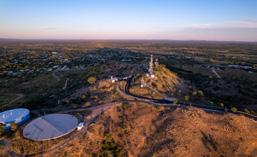
The water infrastructure servicing Charters Towers is in urgent need of upgrades, including the main reservoir and water mains. Key upgrades required include works at the Towers Hill reservoirs, a new reservoir and pumpstation near the Racecourse, and a new DN500 main connecting the reservoir to Towers Hill. The benefits include avoiding the dire consequences of failure of the current water main, increased water capacity, improvement in water quality, improvement in pumping efficiency and increased water storage capacity.
WHAT WE NEED
▶ $50 million to invest in the essential water services and ensure water security for the region.
3.1 Future Health Prosperity
Health service capacity underpins the success of other sectors.
Within the region, Townsville Hospital and Health Service (HHS) is one of the largest employers, one of the largest purchasers of goods and services, and is the biggest driver of skilled migration. This, combined with the societal benefits of better health outcomes, means health spending is among the highest economic multipliers of any government investment.
BACKGROUND
Townsville Hospital and Health Service (THHS) operates 21 facilities across the region, including primary care clinics, rural hospitals, aged care facilities, and Townsville University Hospital, which is the largest tertiary referral hospital in Northern Australia.
More than providing the healthcare of today; the HHS is planning and innovating for the future.
An ambitiour masterplan has been developed to ensure that continued health and prosperity of the region and solidify the position of Townsville asa centre of health service excellence. The delivery of this infrastructure is a critical enabler of not just health service priorities but those of every other industry priority across the region.
WE ARE CALLING FOR
RURAL
HEALTH
▶ $398 million to build a new hospital for Charters Towers, replacing the existing facility which is aged beyond repair and one of the oldest operational hospitals in Queensland.
▶ $24 million to expand and improve services at Joyce Palmer Health Service on Palm Island.
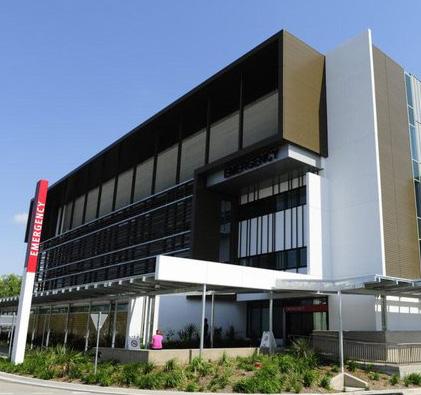
▶ $10 million to upgrade and expand the emergency department at Ingham Hospital.
▶ $30 million to build a new, fit-for-purpose health clinic on Magnetic Island.
AGED CARE
▶ $70 million for an expansion of the Parklands to Residential Aged Care Facility.
COMMUNITY SERVICE
▶ $80 million to construct an Ambulatory Care Centre in Townsville.
ENABLING WORKS
▶ $70 million to upgrade the Yolanda Drive intersection-ensuring that patients, staff and emergency vehicles can continue to access the campus with growing traffic volumes.
TERTIARY CARE
▶ $10 million for a third CT Scanner at Townsville University Hospital.
▶ $10 million for a business case to expand the Townsville Cancer Centre into a future-focussed cancer hub for North Queensland.
▶ $10 million for a business case for Stage 1b of the Townsville University Hospital Master Plan, which will see the construction of a 10-storey surgical centre with a rooftop helipad.
4.1 Armoured Vehicle Maintenance
BACKGROUND
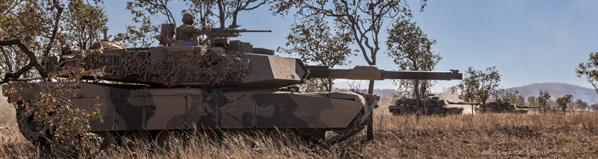
Townsville will be home to the majority of the Australian Army’s armoured fighting vehicles, which form the heavy combat power of the Army’s Amphibious Combined Arms system – one of the priority projects in the Integrated Investment Plan (IIP). Despite being based and operated in North Queensland, current plans by Defence will see the vehicles transported to southern Queensland or to Victoria for maintenance. This transport will cost the Australian taxpayer millions annually, impact road infrastructure and will reduce Army’s access to these vehicles for internal training and potentially for operational use.
OPPORTUNITY
As an economy built on manufacturing, Townsville stands ready to support the maintenance of these vehicles close to home. Any support contract for these fleets should have a requirement for maintenance to be conducted close to
4.2 Theatre Logistics
BACKGROUND
North Queensland is a strategic junction for Defence logistics. As the home to two of army’s brigades – its most logistically intensive two – as well as the Combat Training Centre and multiple logistic units, from health battalions to Force Support Battalions and even the Joint Logistics Unit for All of North Queensland, Townsville is the nexus for Defence logistics in northeastern Australia. In times of conflict, its importance as a focal point becomes even more critical. With the maritime, air, and land supply chains converging in North Queensland, there is a high likelihood that allied nations and partners will use North Queensland as a staging and training area. It makes sound strategic, logistic, and financial sense to set the foundations for success by preparing to use North Queensland as a hub for logistics in peace so as to be ready for war. Security for equipment in modern conflict is multi-layered, and dispersal in storage with rapid consolidation for use is a key tactic. North Queensland has multiple dispersed locations of Defence land, including Macrossan Training Area, which would be highly suitable for equipment storage with access to roadtrain supported roads, rail lines, and even airstrips. There is even more non-defence land that would be suitable, providing
Lavarack Barracks to ensure the minimal cost, in both time and dollars, is imposed from ownership of these fleets. Australia’s premier garrison city is ready to support the ADF as more than just a home base, but as part of the capability inputs that keep the ADF ready to secure the nation’s interests.
WE ARE CALLING FOR
▶ The Federal Government to specify Townsville as the required location for maintenance of the Army’s armoured fighting vehicles.
a plethora of options to best support defence logistics. Upfront investment in sustainment systems, supply chains, and warehousing and storage will ensure that in the event that the ADF is pressured to mount and deploy, the supporting infrastructure to support military operations is ready. Project timelines for construction are only lengthening, and in the event of a conflict—more likely now than at any time in the last 80 years—time will be a factor in achieving success.
OPPORTUNITY
Townsville is the entry point for thousands of international military personnel each year for training, and in the event of conflict, it will increase in its strategic importance. The Government has the opportunity now to set the conditions for success, storing foreign-owned equipment in North Queensland between training iterations and as insurance against their being required for war.
WE ARE CALLING FOR
▶ The Federal Government to stipulate North Queensland as a defence logistics hub, with committed investment in infrastructure for storage, warehousing, distribution and supply to the ADF in the region.
4.3 Watercraft Basing
BACKGROUND
The acquisition of medium and heavy landing craft for the Australian Army under its Land 8710 program will see one of the largest watercraft fleets in the region raised in the next decade. The Federal Government intends to base these vessels in three locations; Darwin, Brisbane, and North Queensland. The most logical base for North Queensland vessels is Townsville. These vessels will provide ongoing, routine support to the heavy vehicles of the 3rd Brigade, based in Townsville. Loading and unloading will take place at the Port of Townsville and will currently require the use of common access berths. With regular use of the Port of Townsville a given, and the heavy constraints on the use of HMAS Cairns facilities, the best choice for Defence is to have their North Queensland vessels based at the Port of Townsville. As the nation’s Army capital, home to the two most potent fighting formations in the Army – the 3rd Armoured Amphibious Brigade and the 16th Aviation Brigade, armed with cutting-edge and highly lethal AH-64E Apache Guardians – Townsville stands ready to support more army platforms and host more of its soldiers.
The Townsville Port Expansion is shovel-ready, with Environmental Impact Statement and EPBC Act approvals in place. This means construction can commence immediately, delivering purposebuilt berths and associated infrastructure for Defence, with the flexibility to scale as Australia’s requirements evolve. This is not just the most cost-effective solution; it is the only solution that aligns with the urgency of the Defence Strategic Review and the Government’s commitment to regional resilience, sovereign capability, and value for taxpayer investment. By acting now, the Government can deliver a legacy asset that underpins Australia’s Indo-Pacific strategy, strengthens alliance commitments, and supports local industry and jobs.
WE ARE CALLING FOR
▶ The Federal Government to specify Townsville as the home base in North Queensland for army watercraft acquired under the Land 8710 program.
4.4 Defence Industry & Innovation Precinct
BACKGROUND
Defence industry in North Queensland is relatively small. Despite the highest concentration of ADF personnel in the nation, defence industry is heavily concentrated into a small number of companies, with approximately 60% of non-construction tenders being awarded to only two companies. With the majority of Army’s complex and technical platforms being concentrated in Townsville, the time is ripe for the growth of defence industry to best support ADF members as they train and prepare to secure the national interest.
OPPORTUNITY
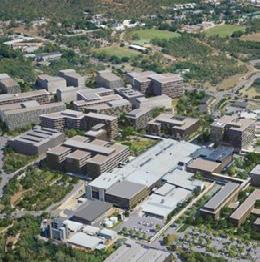
The boundary of Australia’s largest military base, Lavarack Barracks, is shared by James Cook University and the Townsville University Hospital. This area will be developed under the JCU masterplan into a world-class tropical research centre, TropiQ – highly relevant to the ADF’s most important region, the Indo-Pacific. As part of this masterplan, defence industry will be prioritised.
An area adjacent to Lavarack Barracks has been designated for development as a Defence Industry and Innovation Precinct, ready to house the future of defence industry in North Queensland. To activate this precinct, investment is needed to ensure suitable access via the local road network. This will ensure large vehicles, including defence vehicles if necessary, can access the precinct without undue disturbance to the adjoining health and research institutions.
WE ARE CALLING FOR
▶ $20 million from State and Federal Governments for road upgrades to provide large vehicle access to the proposed Defence Industry and Innovation precinct.
ENERGY
5.1 Securing CopperString
CopperString remains the cornerstone for progress in North and North West Queensland. Reliable energy is the foundation for secure investment in the North West Minerals Province and ensures the ongoing prosperity of the region. With billions of dollars of investment planned throughout this region, certainty is needed around the timing for the construction and completion of regional Queensland’s legacy infrastructure, CopperString.
BACKGROUND
In 2025 the Queensland Government committed to the construction of the Eastern Link of CopperString. This commitment will ensure the delivery of a transmission line between Hughenden and Townsville, connecting the abundant renewable resources of the Flinders and Charters Towers regions to the National Electricty Market (NEM) on the eastern coast. The Crisafulli Government has stated their intention to build the Western Link of CopperString between Hughenden and Mount Isa, but has not provided clarity around the timeline for this vital project. Without certainty for infrastructure, there can be no certainty for investment. The abundant resources of the North West Minerals Province will remain latent and untouched without the means to extract and refine, a process dependent on the energy delivered by CopperString.
CONNECTING INDUSTRY IN THE NORTH WEST
Manufacturing remains the backbone of the North Queensland economy. From the smelter in Mount Isa to the metal refineries in Townsville, and through every value-add opportunity in between, energy inputs are critical. No longer can we simply extract and export – every opportunity must be taken to add heat to ore, create value in concentrates, and ensure sovereign supplies and security for the nation. CopperString provides this energy input and commitment on the timeframe will give investors the confidence to invest and add this value to our abundant natural resources.
WESTERN LINK: ATTRACTING NEW INDUSTRY INVESTMENT TO THE NORTH WEST
The Western Link of the CopperString project is integral to ensuring that existing and new mining and processing projects in the North West region remain viable. Several new mining projects have emerged in the region, such as Harmony’s Eva Copper Project, which will produce on average 60,000 tons of copper per annum over its 75 year lifespan. The project is expected to inject over $17 billion into Queensland’s economy through its construction and eventual operations,
which will firmly cement the Eva Copper project as one of the most significant new copper developments in Australia. The threatened closure of the Mount Isa Copper Smelter and the Townsville Copper Refinery demonstrated just how valuable the copper mining sector is to the region and the economy. Copper is the lifeblood of the global energy transition and is essential for transmission lines, batteries, electronics and renewable technologies.
SEEKING INVESTMENT CERTAINTY
The mining industry in North Queensland has faced signficant challenges, primarily with the announcement of the closure of Glencore’s Mount Isa Mines. This created uncertainty around the future of the Mount Isa Mines Copper Smelter as well as the Townsville Copper Refinery. In October, the Federal and State Government announced a rescue package, which will invest $600 million over the next three years, protecting thousands of direct and indirect jobs along the North West corridor. The Mount Isa Copper Smelter provides half of Australia’s copper smelting capacity and is integral to safeguarding Australia’s sovereignty in the face of copper becoming an increasingly single-market product. The secure, reliable and affordable power provided by the Western Link will ensure that the Smelter and the Refinery remain viable and continue to uphold this vitally interconnected industry, which supports thousands of jobs and billions of dollars in economic output. It will also ensure that new mining ventures, such as Eva Copper, will remain committed to the region, and continue to attract new mining operations and industries to this region.
WE ARE CALLING FOR
▶ Commitment to firm timelines for the construction of the Western Link of CopperString.
5.2 Gas Pricing and Access
There is strong concern over continued high domestic gas prices and the east coast market’s inability to guarantee long-term supply. The Australian Competition and Consumer Commission (ACCC) has forecast looming domestic shortfalls, growing state-by-state competition for Queensland’s gas, and prices that remain well above pre-2022 levels. LNG producers control the overwhelming majority of reserves and heavily influence supply and pricing outcomes.
BACKGROUND
Domestic gas prices have risen fourfold since LNG exports commenced, despite falling domestic demand and increased supply. Industrial customers in North West Queensland now pay more than double what many global competitors pay and face unreasonable contract conditions requiring them to underwrite new infrastructure. Energy costs can reach 25% of operating expenditure for major industrial users in the region.
This situation is undermining both economic competitiveness and Australia’s transition to net zero. For many industries, there is currently no commercial substitute for natural gas as feedstock, and gas remains the only viable transition fuel to replace coal-fired power in the short to medium term. With no clear delivery timeline for CopperString, the gas monopoly in the North West continues to present serious operational and investment risk.
SUPPLY FOR NORTH QUEENSLAND
The increasing cost of gas for mining and manufacturing operations in the North West has been driven by the increase in demand along Australia’s east coast. Concerns about the ability of the current market to meet short and long-term demand were most recently highlighted by the ACCC in its June 2025 Gas Inquiry Interim report, which forecast: 1) Looming domestic shortfalls, 2) State-by-state competition for Queensland’s gas supplies as southern states’ resources expire, and 3) Prices remaining beyond pre-2022 global gas crisis figures, which are highly unaffordable.
Despite the gas monopoly and lack of access to the National Electricity Market (NEM) being unique to the North West region, the entirety of North Queensland is implicated. The Mount Isa to Townsville industrial corridor, connected by the Great Northern Rail-line and feeding into the Port of Townsville,
is a highly interconnected industrial ecosystem collectively supporting tens of thousands of direct and indirect jobs. Any closure of, or failure to develop, operations in the west explicitly impacts on jobs, economic activity and prosperity throughout the corridor all the way through to Townsville.
QUEENSLAND-FIRST APPROACH
The North West Power System (NWPS), the isolated grid supplying power to Mount Isa, Cloncurry and surrounding mining operations, relies on natural gas for about 80% of its generation. Industry users in the region have been found to be paying up to double the energy costs faced by comparable users in the NEM. The inequity of gas prices in the North West has emerged as the biggest threat to job security, investment and future growth across North Queensland. There is an urgent need to implement a state-based domestic gas policy that ensures gas extracted in Queensland is directed to Queensland users rather than exporters. With the recent challenges faced by smelters and mining companies in the region, it’s imperative that both State and Federal Governments focus on improving energy affordability. High energy costs are consistently cited as the greatest barrier to progressing from feasibility to investment for new projects in the region. Ensuring domestic gas supply for industry users in Queensland would provide greater stability in both supply and price, creating stronger investment certainty for new and existing operations in the North West.
WE ARE CALLING FOR
To protect regional industry and accelerate growth, we are calling for:
▶ Monopoly pricing in North-West Queensland to be addressed and consideration for targetted intervention
▶ Encouraging new supply development across the east coast.
▶ Requiring LNG exporters to reliably contribute to domestic needs first.
5.3 Sustainable Aviation Fuel
Australia is notable for its leadership in the pursuit of decarbonisation, and also for the delay in implementing mandates on the use of low carbon liquid fuels to help achieve its goals. Many countries with whom Australia conducts international trade, including tourism, with Queensland as the core offering for millions of international tourists, have stated mandates on their aviation fuels to drive change in this industry and ensure obligations for transition are met.
BACKGROUND
North Queensland is leading the way for the development of sustainable aviation fuels (SAF) and renewable diesel (RD). The entire NQ supply chain from growing the biomass, developing the raw inputs, refining the fuel, and exporting the end product is primed to become the centre of low carbon liquid fuels in the future.
DETAILS
Government leadership is required to underpin investor confidence and ensure market certainty. This leadership should take the form of mandates. Australia’s international trading partners in Europe and Southeast Asia have set ambitious targets for the use of low carbon liquid fuels (LCLF), making Australia an outlier in the pursuit of a decarbonised aviation industry. By establishing a mandate for LCLF, the government at both state and federal levels can ensure that a market exists for private investment to supply.
The current programs established, like the Cleaner Fuels Fund at the federal level and the Sovereign Industry Development Fund, are welcomed. With ongoing funding support from these programs, combined with a mandate that is aligned to global best practices, there is strong momentum for the development of a LCLF industry. And with the agricultural heartlands of the Burdekin, Hinchinbrook, and Charters Towers Shires, North Queensland is at the heart of this industry in Queensland and across the nation.
SOVEREIGN CAPABILITY IN NORTH QUEENSLAND
As the head of army capabilities in Australia, Townsville is acutely aware of the importance of establishing secure and reliable supply chains to deliver essential goods and services. Australia relies almost entirely on imported fuel, and for Northern Australia, the bulk of our fuel supplies arrive through the Port of Townsville. Australia’s
dependence on imported fuels has presented a serious risk to national security and sovereignty. Sustainable aviation fuels offer the opportunity to break the decade long reliance on imported fuels, whilst simultaneously providing a low-carbon fuel option for airline carriers who are urgently seeking to decarbonise their operations.
VALUE-ADD OPPORTUNITY FOR EXISTING AGRICULTURE INDUSTRY
Agriculture is a key sector of the Townsville North Queensland economy, with the Burdekin and Hinchinbrook regions being the largest sugarcane producers in Australia (collectively responsible for a combined 154 million tonnes annually). This established industry is well placed to provide the feedstock for the biofuel industry, which is then expected to add $5 billion to Queensland’s GDP and attract $10 billion in private investment. Scaling up the production of sugarcane bioenergy is a key driver that supports national policies and builds sovereign capability.
UNLOCKING QUEENSLAND’S BIO ENERGY FUTURE
Townsville Enterprise believes that sugarcane bioenergy projects must be commercially viable and regionally grounded. To support this emerging industry, government should focus on co-investment at all stages of projects, including pre-feasibility and front-end engineering and design, as well as policy reform and infrastructure that enables these emerging industries to scale.
WE ARE CALLING FOR
▶ Policy simularity or alignment with other global leaders of a 10% mandate by 2030.
▶ Ongoing support at all project stages through Cleaner Fuels Fund and Sovereign Industry Development Fund extensions
6.1 Lansdown Eco-Industrial Precinct
The Lansdown Eco-Industrial Precinct (LEIP) is driving the transformation of Townsville’s economy, turning clean-industry ambition into delivery.
BACKGROUND
The Lansdown Eco-Industrial Precinct is Townsville’s flagship long-term industrial development and a project of national signficance for Northern Australia. Located at Calcium, 40 kilometres south of Townsville, the 2,200-hectare greenfield site has been owned by Townsville City Council (TCC) since 2001 and is being developed as North Australia’s first environmentally sustainable industrial hub for advanced manufacturing, processing, technology and emerging industries. Since 2021, TCC has converted LEIP from a strategic vision into an active development zone of national significance. The precinct has attracted major private investment and intergovernmental support and remains the only code-assessable heavy-industrial precinct on Australia’s east coast. Declared a Prescribed Project by the Queensland Government in 2023, LEIP reflects Queensland’s commitment to decarbonisation, regional development, and sovereign manufacturing capability. To date, $74 million in State and Commonwealth funding has been secured, advancing core infrastructure and unlocking further market confidence. Council’s co-contribution through Queensland Treasury Corporation (QTC) borrowings demonstrates strong local leadership and prudent financial management, ensuring Townsville is actively delivering industrial growth.
DELIVERING THE PRECINCT
Townsville City Council and its partners are now delivering enabling infrastructure, executing key agreements with industry, and laying the foundations for long-term economic and environmental growth across Northern Queensland.
OPPORTUNITY
The precinct is primarily a High Impact Industrial Zone, well separated from residential areas, and is being designed from inception to integrate environmentally responsible systems. Its declaration as a Prescribed Project by the Queensland Government reflects its strategic importance and enables a coordinated, whole-of-government approach to delivery. Lansdown is already attracting major proponents and will generate significant employment during both construction and operations, positioning Townsville as a nationally important centre for clean, modern industry. Council, in partnership with the Australian and Queensland Governments, has secured substantial early investment to commence delivery
of enabling works, including roads and raw water supply, with costs to be recovered from proponents over time. As demand for industrial land and clean-energy aligned projects accelerates across Northern Australia, Lansdown represents a once-in-a-generation opportunity to anchor advanced manufacturing and emerging industries in North Queensland. Further investment will remove key barriers to private sector capital, accelerate jobs and industrial development, and cement Lansdown’s role as a cornerstone of Townsville’s long-term economic transformation.
LOOKING AHEAD
The Lansdown Eco-Industrial Precinct is no longer an aspiration. It is a program in delivery. With enabling infrastructure advancing, proponent projects moving toward construction, and continued collaboration between all levels of government, the LEIP is anchoring Townsville’s role in Queensland’s next generation of clean-industry growth. As delivery accelerates and the first projects commence, Lansdown will stand as clear evidence of what coordinated government, industry confidence and local leadership can achieve for Queensland’s industrial future.
OUTCOMES DELIVERED
Every dollar invested at Lansdown multiplies across the North Queensland economy, supporting local contractors, manufacturers and service providers while positioning Townsville as the industrial centre of Northern Australia. The project delivers:
▶ Acceleration of job creation and unlocks over $10 billion in private capital inflows.
▶ Strengthens alignment with the State’s critical minerals, energy and jobs, and manufacturing agendas.
▶ Measurable returns in regional GRP, employment, and supply-chain development.
WE ARE CALLING FOR
▶ The priority ask of the State and Federal Governments is $150 million, comprising $80 million for road infrastructure (bringing total road funding to $94 million) and $70 million for water infrastructure (bringing total water funding to $130 million).
6.2 Port Expansion Project
As Northern Australia’s largest city and principal trade gateway, the Port of Townsville is the major container and automotive port serving the growing regional population. It is also the nation’s largest exporter of copper, zinc, lead, fertiliser and sugar and the critical link between the North West Minerals Province, vast agriculture precincts and global markets.
BACKGROUND
With world-class projects in critical minerals, advanced manufacturing, renewable energy, future fuels, and defence moving from concept to delivery, expanded common-user port capacity is the key to unlocking a $40 billion+ investment pipeline, powering the Indo-Pacific renewable energy corridor, and cementing Townsville as a cornerstone of the Future Made in Australia agenda.
The Townsville Port Expansion is a transformational, master-planned expansion that will position Townsville as a global trade gateway for the next 30 years, delivering:
▶ Six new berths in the Outer Harbour.
▶ 150 ha of strategic land reclamation.
▶ Widened and deepened shipping channels to accommodate next-generation vessels and forecast trade growth.
STAGE 1 – CHANNEL WIDENING
(COMPLETED 2025 | $251 MILLION)
Funded via the Townsville City Deal (Queensland Government
$105 million, Commonwealth $75 million, Port of Townsville $71 million) the Channel Widening was successfully delivered on time and on budget, enabling safe access for larger ships and laying the foundation for growth.
STAGE 2 – OUTER HARBOUR DEVELOPMENT
(2026–2031 | $690 MILLION)
▶ Two multi-user wharves to support diverse trade.
▶ Seawalls creating a 90 ha reclamation footprint for trade growth and future expansion.
▶ Dredging of berths and approaches for next-generation vessels.
▶ Integrated trunk infrastructure, services and utilities, with the opportunity to embed sustainable vessel-powering solutions—including shore power and futureready green-energy connections (e.g., green methanol/biofuel bunkering)—to reduce emissions and accelerate decarbonisation.
The Outer Harbour Development - can be delivered over five years (2026–2031), matching customer timelines for long-life critical minerals and renewable energy projects across the North and North-West corridor.
Stages 1 and 2 together deliver the full 150 ha platform, enabling all future stages of berth developments, enabling capacity to scale up as industries grow across the region.
BENEFITS
▶ Sovereign capability in critical minerals: Enables Australian processing and export, reduces reliance on foreign supply chains, and advances Future Made in Australia.
▶ Clean-energy logistics capacity: Efficient, large-scale imports of wind turbines and solar infrastructure; exports of sustainable aviation fuel, biofuel and green methanol - placing Australia at the heart of global clean-energy supply chains and providing essential inputs for Australia’s energy transition ambitions.
▶ Secures strategic logistics capability for Army and Navy, providing interoperability, scalability, and rapid force projection to strengthen Australia’s defence posture and operational readiness in Northern Australia and the Indo-Pacific.
▶ Catalyse Private Investment: Provides the certainty of port access and capacity required to unlock substantial
The Townsville Port Expansion – Outer Harbour Development will give proponents across North and North West Queensland the certainty needed to advance major export and service projects that
will benefit the region through facilitation of trade, job creation, economic prosperity, liveability and climate change action.
6.2 Port Expansion Project Cont.
private investment across emerging industries.
▶ A safer, cleaner, more competitive and resilient freight system.
▶ Modal shift to sea for bulk and containerised freightthe most economic, low-emission and safest mode.
▶ Fewer heavy vehicles on national highways - lower congestion, emissions and road trauma.
▶ Lower supply-chain costs that boost the competitiveness of Australian producers and exporters.
▶ Long-term economic value: Unlocks up to $700 billion in economic value to 2050 through increased export capacity, jobs, supply-chain resilience, and new industry growth.
STATUS
▶ Shovel-ready and fully approved.
▶ EIS completed and approved for the full six-berth, 150 ha expansion by both State and Federal Governments.
▶ EPBC Act approvals in place, enabling immediate commencement.
▶ Delivery Timeframe: Stage 2 Outer Harbour Development – 5 Years (2026–2031).
WE ARE CALLING FOR
Federal Government commitment of $450 million to the Townsville Port Outer Harbour Development to:
▶ Strengthen national sovereignty and economic security.
▶ Advance defence priorities in Northern Australia.
▶ Unlock private capital and deliver the Future Made in Australia agenda.
▶ Secure Australia’s Northern Gateway for decades to come.
6.3 Townsville Eastern Access Rail Corridor
Townsville stands at the forefront of Northern Australia’s transformation - our largest city and principal trade gateway powering growth in critical minerals, advanced manufacturing, renewable energy, future fuels, and agriculture. With CopperString unlocking the North West Minerals Province and new refineries and energy projects accelerating, the challenge is clear: move these products at scale - safely, efficiently, and without compromising city liveability.
The Townsville Eastern Access Rail Corridor (TEARC) freight rail link will connect the Mount Isa Rail Line and North Coast Line freight directly to the Port of Townsville, removing freight movements from the CBD, and future-proofing capacity for longer trains and higher tonnage across the Mount Isa–Townsville supply chain.
BACKGROUND
TEARC proposes an 8.3 kilometre freight rail corridor linking the North Coast Line at Cluden to the Port of Townsville via the State Development Area. Running parallel to the Port Access Road and crossing the Ross River, the design includes:
▶ A single-track narrow-gauge line with one passing loop (initially for 1,000 metre trains, expandable to 1,400 metre)
▶ Realigned or extended public roads, including Boundary Street extension with land reclamation
▶ Four road bridges and eight rail bridges
A 2017 Business Case, jointly funded by the Federal and State Governments, estimated capital costs at A$391.7 million (P90) and whole-of-life costs at A$457.7 million.
BENEFITS
▶ Unlocks Efficient, Direct Rail Access to Port of Townsville: A dedicated freight link removes a major known bottleneck, enabling faster, more reliable movement of minerals, agricultural products, and manufactured goods to global markets.
▶ Removes Freight from the CBD, Enhancing City Liveability: Diverting heavy rail freight out of Townsville’s heart improves safety, reduces congestion, and activates key precincts like the stadium and waterfront making the city more vibrant for residents and visitors.
▶ Future-Proofs Northern Australia’s Supply Chains: Designed for longer, heavier trains and integrated with the port expansion, TEARC ensures the region can handle the forecast surge in critical minerals, renewable energy, and advanced manufacturing exports for decades.
▶ Strengthens National Supply Chain Resilience and Competitiveness: By streamlining logistics and shifting freight from road to rail, TEARC reduces costs, lowers emissions, and enhances Australia’s export competitiveness - delivering benefits proven by major national rail projects.
▶ Additional Strategic Advantages:
• Increased rail capacity for growing freight volumes
• Enhanced efficiency and connectivity across the network
• Urban traffic and safety gains through reduced CBD freight
• Improved flood resilience for uninterrupted operations
• Economic and regional growth through supply chain competitiveness
• Lower maintenance costs on urban rail and roads
• Long-term readiness for industrial expansion By removing heavy rail freight from Townsville’s CBD, TEARC enables the full potential of the Queensland Country Bank Stadium and waterfront precincts - creating a city that is safer, more attractive, and ready for the next generation of residents.
STATUS
TEARC is recognised by both Queensland and Commonwealth Governments as a strategic infrastructure priority. The corridor is preserved through land acquisition and environmental planning, supported by $12.5 million in joint funding, with resumptions expected by mid-2028. With demand profiles shifting and growth accelerating - driven by CopperString, critical minerals, and Townsville’s expanding urban footprint - the time to act is now.
WE ARE CALLING FOR
▶ A partnership between the Federal and State Governments to secure full funding for construction of the 8.3 km freight rail link - unlocking the next era of supply chain efficiency, export growth, and liveability for Townsville and the nation.
6.4 Bruce Highway Upgrade
Townsville Enterprise welcomes the announcement that the Queensland and Australian Governments have agreed to fund upgrades to this vital route with an 80:20 funding split. The commitment of $9 billion will progress, but not complete, the upgrades required for this vital national route.
BACKGROUND
With this funding commitment in place, it is necessary to determine the priority locations for upgrades. With billions already committed or spent upgrading the stretches of the Bruce Highway in southern Queensland, it is time to ensure North Queensland gets a fair share.
The current Burdekin River Crossing on the Bruce Highway is fast becoming a capacity constraint to development of Northern Queensland and a risk to national security. An accident risks the productivity of the region and, as we saw with the weather event that closed the Fitzroy River Crossing in WA, critical infrastructure along major highways can shut down land transport and cause huge increases to regional prices for goods, drastically driving up the cost of living. The Burdekin Crossing is a priority for the region, and for the country.
The existing Burdekin River Bridge is a critical link for the Australian Defence Force to access training areas across Queensland. Any obstruction, whether from natural disasters or other events, would severely impact ADF operations.
TOWNSVILLE ENTERPRISE ADVOCATES FOR THE FOLLOWING:
Burdekin River Bridge Second Crossing
Constructed in 1957, the existing Burdekin River Bridge is the sole coastal link between North and South Queensland. Serving both road and rail, its limited capacity and vulnerability to closures pose a major risk to statewide connectivity. A second crossing is essential to:
▶ Improve safety and reliability by reducing dependence on a singular structure.
▶ Provide a critical link for the ADF to access training areas across Queensland.
▶ Support economic growth through uninterrupted freight movements.
▶ Future-proof the Bruce Highway as traffic volumes continue to rise.
Burdekin Deviation Project
For over 25 years, proposals have aimed to divert Bruce Highway traffic away from Ayr, Home Hill and Brandon. While Council support improved traffic flow, concerns remain about impacts on local businesses, agriculture and the environment.
Key considerations include:
▶ Minimising economic disruption to local towns.
▶ Preserving prime agricultural land and cane rail infrastructure.
▶ Managing environmental impacts and costly bridge works across floodplains.
McDesme Crossing Safety Upgrade
The Bruce Highway & Giddy Road intersection south of Ayr has been significant safety concern for Council and the community for several years. The primary risk includes:
▶ Vehicles turning right from Giddy Road (west to east) onto the Bruce Highway, crossing in from of 100 km/h through traffic.
▶ Multiple incidents have occurred, including rollovers and highway closures.
▶ Road traffic has doubled in the last three years from 600 vehicles/day to 1500 vehicles/day.
WE ARE CALLING FOR
▶ Both the Federal and State Governments to prioritise safety upgrades between Bowen and Ayr and between Townsville and Cardwell within the funded $9B Bruce Highway improvements. Funding should be deployed as soon as feasible, with preference to local contractors to support regional economies.
Upgrades to the Burdekin River Bridge:
▶ Prioritise planning and funding for a second Burdekin River crossing to safeguard statewide freight, community connectivity, and national security.
▶ Conduct a full review and stakeholder consultation on the Burdekin Deviation alignment to ensure the best outcome for local communities and industries.
▶ Fast-track safety upgrades at the McDesme Crossing under Bruce Highway Targeted Safety Program to prevent further crashes and protect lives.
6.5 Flinders Highway Upgrade
The Flinders Highway is the lifeblood of the North West Minerals Province. Between the movement of critical minerals by road train to the export hub of the Port of Townsville, to the huge generators and turbines needed to drive the renewables transition in Flinders Shire, the Flinders Highway is the path to prosperity.
BACKGROUND
Despite its importance to the future economic growth of Queensland, and the nation, this critical road remains underfunded. With critical crossing points subject to flooding every year, and weight restrictions forcing operators to conduct detours of hundreds of kilometres, this highway is in dire need of investment.
CHALLENGES
It was revealed in the wake of 2025’s severe weather that over $35 million travels along the Flinders Highway every day. Delays to this freight cost more than money, they cost export income, they prevent family reunions, and they undermine national security. Construction activity along this corridor will exponentially increase with the highway becoming a major thoroughfare for wind turbines, solar panels and transmission tower components for CopperString. The increased activity will further degrade the already poor condition of the highway, presenting an increased risk to the productivity of the region and a threat to the safety of those travelling along this route. A government committed to road safety and economic productivity must appreciate the need for both on this arterial road and provide requisite funding to keep families safe and to keep the economy powering ahead.
REINFORCING NORTHERN LINES OF COMMUNICATION
The Flinders Highway is a strategically valuable transport link that connects the east coast of Australia to the Northern Territory. With the relocation of the 3rd Bridage and the 16th Brigade, Townsville has emerged as the capital of Defence. The Flinders Highway is a corridor of strategic importance as it connects Townsville to the next closest Defence base in Northern Australia, located in Darwin. The risk of not investing into the critical maintenance and upgrade works will be dire and will result in serious implications for supply chain movements, transport and communication exercises between two of the largest defence bases in Australia.
WE ARE CALLING FOR
▶ The Federal Government to work with the Queensland Government to fund Flinders Highway upgrades to accommodate the anticipated surge in critical mineral activities, CopperString, renewable energy projects and defence.
7.1 Water Security
BIG ROCKS WEIR
Big Rocks Weir is located 26km north-west of Charters Towers and upon completion would be capable of storing at least 10,000 ML of water - double that of Charters Towers’ existing water infrastructure. Big Rocks Weir will open up at least 3,000 ha of new irrigated agriculture for the region by providing a guaranteed water supply. Importantly, the Weir will also provide water for new manufacturing and industrial development that will help to meet future urban water demands for the people of Charters Towers and surrounding regions.
PROJECT STATUS
In 2024, the Charters Towers Regional Council made the decision to transfer ownership of the project to the State Government. The project remains jointly funded with commitments by the Queensland Government ($30M) and the Australian Government ($38M) through the National Water Grid Fund. Following this decision, the Queensland Government has affirmed its commitment to advancing the project. However, Townsville Enterprise has continued to advocate for this critical project, ensuring that construction begins at the earliest feasible date to maximise economic benefits for the region.
REGIONAL BENEFITS
The Big Rocks Weir is a vital project that will create more than 170 new jobs and an additional $35 million in agricultural product annually. The benefits also include increased water security for the Charters Towers community as well more on-farm employment, food processing and handling services to supply domestic and export markets
THE BURDEKIN RIVER SYSTEM
The Burdekin River is one of the largest river systems in Australia with the Upper Burdekin catchment located in the wet tropics. However, the region’s population has more than doubled since the Burdekin Dam was built in 1987. The abundance of water in the Burdekin catchment and its potential to support our economic future is a competitive advantage for our region. Significant investment has been undertaken into developing new water infrastructure storage proposals in this catchment. Townsville Enterprise has driven the business case development of the Hells Gates Dam and the Big Rocks Weir, in addition to Sunwater’s development of the proposed 2 metre raise to the Burdekin Falls Dam.
TEL welcomes the decision of both Federal and State Governments to take a holistic review of the entire Burdekin catchment to assess the most appropriate development of infrastructure to support our economic future. It is incumbent on both governments to ensure the previous monies committed is reserved for future investment in the projects identified in the further regional water assessment and review of the Burdekin Water Plan.
TEL remains firmly of the view that the development of water storage and distribution infrastructure is required in the upper Burdekin Catchment as part of a holistic infrastructure development program being considered.
TEL welcomes the decision to review the Burdekin Water Plan and undertake a Water Infrastructure Assessment.
TEL notes that:
▶ 73% of the rainfall occurs during the four-month wet season (December to March).
▶ 7.8 million megalitres per year flows from the mouth of the Burdekin River.
▶ Water losses and unallocated water reserves exist in lower Burdekin that could be captured and re-allocated.
▶ Climate change is expected to see shorter but more intense rainfall periods resulting in the same volume of rain, which means additional capture and storage infrastructure will be required.
▶ North Queensland’s water security is critical because droughts can last 8-10 years.
The Upper and Lower Burdekin catchments must work as a combined system to maximise the use of available water within the catchment.
A holistic review of the whole system will ensure optimal use of the current unused water allocations and maximise the capture and distribution of water where it will have the best economic use. Currently, the bulk of the water available sits in the Lower Burdekin, limiting future development in the Upper Burdekin.
BURDEKIN RIVER IRRIGATION AREA
CHANNEL ENHANCEMENT AND MODERNISATION PROJECT
An immediate priority for infrastructure investment is required to upgrade the open earth water distribution channels that exist in the Burdekin River Irrigation Area (BRIA).
Extensive work was undertaken by the Queensland Government in 2017 that identified a risk to the future of
7.1 Water Security Cont.
agricultural development in the Lower Burdekin arising from salinity impacts caused by rising groundwater tables.
BENEFITS
Studies undertaken by the Queensland Competition Authority found that over 50,000 megalitres of water is lost in the BRIA Channel system each year through channel seepage, contributing to rising ground water issues. Discussion papers previously released by the Queensland Government identified options to reduce channel seepage by improving the open earth irrigation channels and upgrading the distribution infrastructure to prevent these losses. The State Government has committed approximately $25 million to support works that will help recover these losses. However, further funding is required to carry out ongoing channel improvements and upgrades to recover this water, return it for allocation to alternative economic uses and address the rising groundwater threat in the Lower Burdekin.
Approximately 200,000ML is nominally allocated in the Burdekin Water Plan to account for water losses in the system. The ability to recover the actual losses and return at least part of the nominal allocation for use in other parts of the basin will contribute significantly to the development of other storage and distribution projects.
WHAT WE NEED
▶ Comprehensive water monitoring infrastructure to be established in the Upper Burdekin to accurately measure water available for storage and economic use at the Hells Gates Dam Site.
▶ Sunwater and State Government to deliver the Big Rocks Weir Project jointly with the Queensland Government over the next three years.
▶ Funding from the State or Federal Government to complete the Environmental Impact Assessment for Hells Gates Dam.
7.2 Haughton Pipeline Stage Two
Water security remains a critical foundation for Townsville’s future. Only 12 years ago, Townsville was facing significant impacts of drought and heavy water restrictions. The Haughton Pipeline Stage 1 and 2 represents a commitment to securing long-term water security for the community and for the industries that drive the region’s economy.
BACKGROUND
Stage 1 of the Haughton Pipeline was completed in 2020. Townsville City Council (TCC) then signed the Grant Deed with the Queensland Government for $195 million of funding towards Stage 2 of the project. The agreed budget for Stage 2 of the Haughton Pipeline was $274 million, including council’s $79 million contribution.
In early 2023 an external review was initiated to understand what could be done to reduce the forecast cost escalation of the project. The review identified various causes for the cost increase and further work was completed that reported several significant issues with the location and design of the intended pumpstation.
In December 2024, TCC presented all the findings of the review to Queensland Government representatives. At that point TCC, the Queensland Government and Sunwater agreed on a solution that would resolve the identified technical issues and deliver a suitable pumpstation for the project, leveraging existing infrastructure to reduce costs.
In June 2025, TCC in collaboration with Sunwater presented a Technical Memorandum to the Queensland Government with a proposed way forward for the project. After receiving acceptance from the Queensland Government, TCC has been working through a Concept Study and Business Case that will see a redesigned pumpstation, utilising existing Sunwater infrastructure (Tom Fenwick Pumpstation).
In January 2026 TCC has contributed an additional $6 million towards the project.
STATUS
The Haughton Pipeline Stage 2, pipe and associated infrastructure is 29 kilometres in length. The 28 kilometres of trenched pipeline is almost constructed, with forecast completion in March 2026. Final works include the pumpstation, associated power supply and the completion of 533 metres of trenchless pipeline. It is critical that these works are completed by 2032. If the works are not completed by this time the existing pipeline will not meet water consumption needs of the city and the Lansdown Eco-Industrial Precinct.
The Concept Report and Business Case is scheduled for completion in June 2026. At this point Council will have a robust cost estimate and concept design, leading into the detailed design process.
WHAT WE NEED
▶ State Government and Sunwater to continue their partnership with Townsville City Council to achieve a cost-effective outcome for the delivery of Townsville’s long-term water security.
8.1 Townsville 2032 Legacy
The Games for all Queensland – Brisbane 2032 Olympics and Paralympics, presents a pivotal opportunity for Townsville to create long-lasting legacy impacts for generations to come.
BACKGROUND
Recognising the significant impact the Brisbane 2032 Games will contribute to Queensland, Townsville City Council formed the Townsville 2032 Legacy Working Group to enable strong outcomes for and from the north, with membership including Sporting Wheelies, North Queensland Cowboys, Oceania Athletics Association, and Townsville Enterprise.
Investment in sporting infrastructure is critical for Townsville. Not only will it return outcomes for our community, but it also facilitates economic returns that benefit our whole community. The ability for Townsville to host leading events, from school carnivals to masters tournaments benefits our local hospitality and accommodation businesses, as well as providing our kids high quality opportunities locally.
MURRAY SPORTING COMPLEX
The Murray Sporting Complex is Townsville’s primary sports hub and supports soccer, netball, pony club, cricket, BMX, hockey, darts, basketball, badminton, cycling and skateboarding. As the home to grass roots sports, it is also the incubator for our region’s pre-elite athletes. The sporting complex is dominated by aged sports and venue infrastructure. The overall complex requires a staged redevelopment that increases carparking and separates pedestrian movements from roadways. Creating a safe and inviting public realm that enables clubs to share facilities and reduce costs and environmental impacts, as well as extend hours of operation will be a critical legacy outcome.
The provision of quality sporting facilities directly influences the growth of participation in sport and successful pathways to producing elite athletes. The Murray Sporting Complex is integral for supporting North Queensland athletes and developing the future Olympians of Queensland.
The first stage revitalisation of Murray Sporting Complex will enable establishment of an extreme sports hub, which can then create regional circuit competition across Queensland. Murray Sporting Complex has significant potential to create Brisbane 2032 medallists and showcase the breadth of talent contained within Queensland.
RIVERWAY SPORTS PRECINCT
Riverway Sports Precinct, located in Thuringowa Central, opened in its current configuration in 2007 as one of Townsville’s premier outdoor sporting venues and is currently designated as a Tier 2 venue under the Cricket Australia Venue Guidelines. The Stadium hosts a range of national and international sporting matches, occasional concerts and other entertainment events, as well as regularly hosting local sport matches and training. With the hills around the ground for spectators and the current two-storey grandstand, the maximum capacity of the Stadium is 10,000.
Riverway Stadium is currently constrained by the inability to host elite, broadcast-standard sporting events and evening fixtures, restricting opportunities for sporting and broadcasting growth across the region. Additionally, the facilities for players and officials within the Stadium are outdated and not appropriately equipped to cater for women’s and shared sports. With participation in women’s and shared sports continuing to increase, limitations associated with player and officials’ facilities within the Stadium will continue to increase and usage will be further constrained.
Investment in Riverway Sports Precinct functionality, standards, amenities and condition will create a reinvigorated sporting precinct for the region and result in significant increases in tourism and economic growth through a greatly improved ability to host national and international sporting events.
▶ Murray Sporting Complex: $29.6 million to enable Stage 1 transformative upgrades to provide the best opportunity for athletes to maximise skill development.
▶ Riverway Sports Precinct: $14.9 million investment into functionality, standards, amenities and conditions to create a reinvigorated sporting precinct for the region.