
This budget will raise more revenue from property taxes than last year's budget by an amount of $2,992,693, which is a 6.72 percent increase from last year’s budget. The property tax revenue to be raised from new property added to the tax roll this year is $2,245,369.
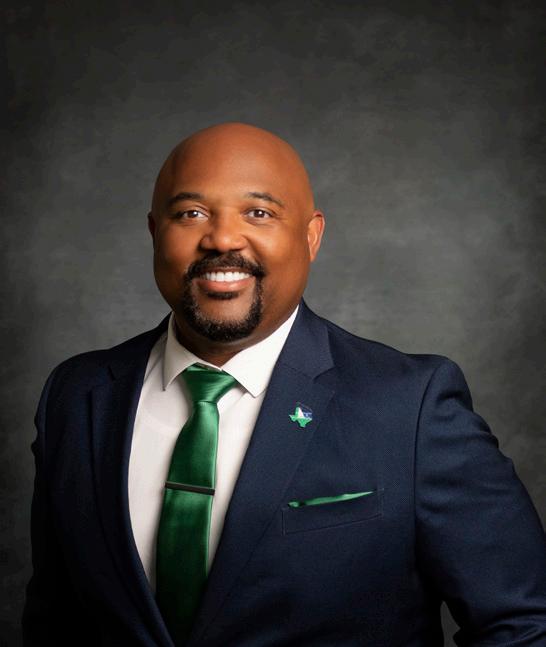
Mayor Cornelious Yea Yea
Mayor Pro Tem Singh Yea Yea
Deputy Mayor Pro Tem Evans Yea Yea
Council Member Johnson Yea Yea
Council Member Eaken Yea Yea
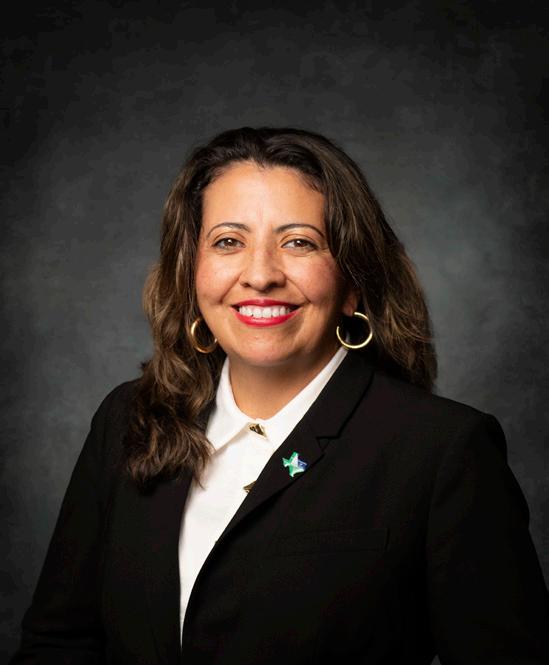
Council Member Amaya Yea Yea
Council Member Hambrick Yea Yea
The total amount of municipal debt obligation secured by property taxes for the Town of Little Elm is $66,360,000.
The above information is presented on the cover page of the Town’s Fiscal Year 2025 Annual Budget to comply with Section 102.005 of the Texas Local Government Code
In accordance with Section 140.0045 of the Texas Local Government Code expense line items for public notices and lobbying efforts are provided below:






Principal Officers
Fiscal Year 2025 - 2026
Town Manager
Matt Mueller
Deputy Town Manager
Doug Peach
Assistant Town Manager
Chad Hyde
Assistant Town Manager
Caitlan Biggs
Finance Director
Sherrelle Evans-Jones
Municipal
Economic Development Corporation (EDC)
Community Development Corporation (CDC)

Message from the Town Manager
A municipal budget is more than a book of numbers. A budget is a tool for prioritizing, communicating, and allocating resources toward implementing programs, projects, and services that fit the needs of a community’s residents and businesses. It is the duty of those fortunate enough to serve the residents of Little Elm to operate transparently, efficiently, and ethically. The budget is also a tool that allows us to do just that.
Little Elm is a vibrant, rapidly growing community starting to hit its economic stride and seeing goals and projects that have been in progress for a decade coming to fruition. This excitement and growth come with tremendous challenges and outstanding opportunities. One of the benefits of strong growth is that new sources and higher amounts of revenue are allocated in the budget. Still, there is a mounting list of needs for programs and services to accommodate growth, meet the community's expectations, and build sustainable service levels.
Town staff develop the operating and capital budgets to achieve strategic goals and long-term objectives defined in the Town Council's adopted Strategic Plan. This Strategic Plan was approved in 2013 and last updated in 2024. It is required by Little Elm's local charter that a strategic plan is maintained and updated every two years. The Strategic Plan allows the Council to set the vision, goals, and policy objectives of the Town, and it is the staff's job to accomplish the Strategic Plan's goals and implement the Council's policy objectives effectively and efficiently.
Little Elm is currently in a time of planning and transition and that is how staff have approached this year’s budget and financial plan. The Council’s strategic plan has been in place for more than a decade now, much of the vision that was expressed in 2013 has been accomplished or has been set in motion. Because of this, several planning efforts are currently underway and nearing completion that will chart the course of the future of the community through build-out. Small area plans that identify future opportunities and needs along the US 380 Corridor and Lakefront District are nearly complete and a parks and recreation master plan update has recently been adopted. These plans, along with a substantial input gathering process including stakeholder surveys and focus groups, are part of the efforts to complete an overhaul of the Town’s strategic plan. The new strategic plan is scheduled to be adopted in late 2025 or early 2026. These planning efforts will allow the Town to build on what has been accomplished and identify the needs and priorities on which to focus prior to Little Elm’s build-out.
With the Fiscal Year (FY) 2025-2026 budget, we are continuing our process of implementing full cost accounting. Cost accounting is the process of assigning indirect costs such as administrative overhead and organization-wide costs, such as insurance, to the individual user departments. This allows for a greater understanding of the fully burdened or true costs to do business for all of our functions. This knowledge will allow us to drive performance and understand our market
competitiveness. This year, we will continue to establish the framework and drivers for cost allocation. We will also be phasing in the assignment of these costs in certain areas of the organization.
The internal value system at the Town of Little Elm stems from the philosophy of Servant Leadership and the belief that as public employees, all actions stem from the obligation to put the needs of the stakeholder first and dedicate our decision-making and activities to the idea that Town employees exist to serve others. This is further emphasized in our organization's Core Values of Integrity, Customer Service, Efficiency, and Innovation. These values are the organization's foundation and are the bedrock on which the departmental budgets are built.
The overall budget philosophy of the Town of Little Elm is to provide the highest level of service at the greatest value. This approach means that the Town must operate in the most effective and efficient way possible to accomplish this goal. Therefore, the internal budgeting and review process is very stringent, with department heads dissecting each other's budgets in a peer review process that seeks to ensure that every line item is carefully planned, and all projects are justified. As part of the Town's budgeting philosophy and commitment to respect the taxpayer's money, priorities in the budget process are to maintain a competitive tax rate, realize the long-term impacts of financial decisions, expect a business-minded approach to many of our functions, and keep fund balances and reserves at a healthy level.
Governmental efficiency has been a big topic this year. Typically, when initiatives are discussed at the state or federal levels, we begin to get questions about how it relates to local government. I am proud to say that Little Elm is ahead of the curve on this topic. As mentioned earlier, efficiency is one of our four Core Values, and this organization has used various tools and efficiency measures for more than a decade to ensure that we are as lean and efficient as possible while still providing excellence in service. In 2017, Little Elm was named as the leanest local government in North Texas by the Dallas Business Journal and we found in a recent review that our cost-ofservice delivery per capita is the lowest among our comparable market cities.
Little Elm’s strategic and thoughtful approach to budgeting has paid off over the years. Not only has the Town been able to build up strong reserves and contingencies and plan for future obligations, but also improve financial standing with several bond ratings upgrades over the past several years. The Town’s strong AA+ bond rating was once again affirmed this past spring.
Beginning with the FY 2016-2017 budget, our goal has been to successfully present a five-year balanced budget (technically a one-year budget and a four-year financial plan) to the Council for consideration. The approach aims to ensure that we provide appropriate services in Little Elm's high-growth environment but in a way that ensures future services' sustainability. This is particularly important as we continue expanding services in the northern and western parts of the
community and extend contractual services to various partners in our region.
The five-year budget looks at the cost of the services needed to serve these areas and the revenues coming due to the growth. A multi-year plan is beneficial since the expenses for these services are very soon, yet the revenues will be delayed as the area grows, and new taxable values are added to the tax rolls. The multi-year plan is reviewed annually and revised as needed.
As we expected, the growth and constant change in the area conditions have changed particular needs and assumptions in the planning years, and we addressed these needs in the new budget. The greatest value in the financial plan is that this multi-year approach lets us see how today's spending decisions will affect the budget in the future and ensure that we can sustain our services. Knowing the long-term impacts allows us to be nimble in our decision-making and take advantage of opportunities while still having confidence that we are not selling out long-term stability for shortterm gain.
Although we do not anticipate that Little Elm will reach build-out during the planning years of this plan, it is likely that growth will begin to slow during later years of the plan as available lot inventory is absorbed. Using a multi-year budget and planning tool helps us ensure that quality and availability of services in later years when growth begins to slow.
The total FY 2026 budget, including all funds and transfers, is $200,315,983. The adopted FY 2026 budget decreased due to decrease spending in FY 2026 due to the completion of larger capital projects during the FY 2025 budget. Additionally, Transfers Out decreased due to a planned transfer during FY 2025 to Capital Reserves. The reduction in Debt expenditures is due to payments on existing service.
During the five-year budget period, the town-wide budget, excluding debt, major capital equipment, projects, and transfers out, is expected to marginally increase in year two and increase in years three through five as represented by the chart below. The increase in year two is attributed to normal salary increases and a planned market adjustment for public safety employees.
$41,599,231
$41,766,507
$43,586,062
$45,448,449
$47,053,486
$51,659,920
$53,418,709
$57,494,282
$57,000,799
$59,024,462
The Town of Little Elm’s primary source of revenue is property tax. Due to the highly residential makeup of this community, Little Elm’s dependence on this revenue source is higher than many in our area. For FY 2025-2026, the Town has budgeted a gross property tax collection of $47,486,278 This is an increase from last year’s collections by $165,449 (0.4%). The Town is required to remit a portion of collected property tax to the tax increment financing zones and municipal management district. These payments are reflected in a net total budgeted property tax revenue of $38,930,253. This is a decrease from last year’s collections by a total of $903,263 (-2.3%). This decrease is attributed to a reduction to the Town’s debt service payments, resulting in a 1.5 cent reduction in the Interest & Sinking (I&S) tax rate, commonly known as the debt portion of the tax rate.
As a result of strategic planning initiatives, retail recruitment has been a huge priority over the past decade. Due to retail growth and favorable economic conditions, Little Elm’s sales tax growth has remained strong. However, sales tax is generally a source of revenue that is highly volatile and dependent on economic conditions, so we continue to be conservative about our projections in the coming years. Although retail growth has been strong, the highly residential nature of the community means that online sales make up a large segment of our sales tax collections and we continue to have a lower sales tax per capita than our comparison communities. Sales tax collections in FY 2024-2025 have met expectations.
The Town budgeted for a increase of 0.17% over estimated FY 2024-2025 receipts in the FY 20252026 budget. Therefore, the total sales tax budgeted for FY 2025-2026 is $11,565,195, which is a $116,090 or 1 01% increase over what was budgeted last year. The sales tax revenue
reported includes revenue receipts and contractual payments attributable to 380 economic development and performance agreements where the sales tax has been previously pledged.
Little Elm has grown rapidly over the past two decades, resulting in strong revenue from building permits and other growth-related activities. Anticipated building permit revenue for FY 2024-2025 is $2,384,540 This revenue source will see significant reduction as Little Elm reaches the end of its growth phase. We are conservative in our permit revenue projections and show a decrease in revenue over the five-year planning horizon due to permit revenue being subject to highly volatile economic conditions and anticipation of specific neighborhoods approaching build-out.
The licenses, permits, and fees revenue in FY 2025-2026 is $8,821,579 and includes projected revenues of $2,100,000 in building permits and solid waste service fees of $4,422,253. The remaining income is attributable to other types of permitting and registrations required by development services.
One of the long-term objectives adopted in the Strategic Plan is to operate as a service provider for neighboring communities and districts where possible. A significant amount of revenue comes from these contracts for service that Little Elm has with several districts, neighboring communities, and school districts to provide public safety services. The total amount of revenue generated by these intergovernmental service agreements is $9,053,035. This revenue goes directly towards the cost of providing these services.
Grants are another major intergovernmental source of revenue for the Town. In FY 2022-2023, the Town was awarded the Staffing for Adequate Fire and Emergency Response (SAFER) grant for three years which provides the Town funding until December 2025 to increase and maintain the number of trained front-line firefighters. The budget for this grant in FY 2025-2026 is $174,152. Additionally, Denton County passed the Transportation Road Improvement Program in 2022 (TRIP 22) to provide municipalities funding for improvements to state highways, major local thoroughfares, safety improvements, and county roads and bridges. Beginning in FY 2024- 2025, the Town will receive a total of approximately $32.5 million in funds from Denton County over the next few years for various roadway projects throughout Town.
Other major sources of revenue come from rates, fees, and charges. These sources are for services rendered and user fees charged, such as ambulance, alarm monitoring, municipal court, recreational use fees, and utility-related services. This category is budgeted for FY 2025-2026 at $33,511,032. The rate, fee, and charge increase Town-wide over the amended FY 2024-2025 is $1,716,498 or about 5.4%. Most of this increase is attributed to charges for water, sewer, and solid waste services. The Utility Fund will see an increase over the amended FY 2024-2025 budget of $1,313,901, or about 5.6%, in rates, fees, and charges. Most of this increase is attributed to the Town’s utility water and wastewater rate plan approved last winter. Water rates will be increasing by 7% as outlined in this plan. For FY 2025-2026, a total of $25,409,332 has been budgeted for utility sales and other service charges. Of this amount, $15,686,585 comes from water sales,
$7,869,035 from sewer, and $1,853,711 from additional charges, fees, and wholesale contracts.
Transfers between funds are part of the total sources of revenue. Transfers assist in funding infrastructure improvements and reimbursement for in-kind services across funds. The total transfers budgeted in FY 2025-2026 are $22,619,639. Total revenue from all sources is broken down in the following table:
The five-year revenue total revenue projections (excluding funding for major capital projects and interfund transfers) for the Town of Little Elm are as follows:
Property taxes have been a topic of discussion over the past several years due to the rising property values in the area. While the Town of Little Elm does not have anything to do with the assessment of property values, the decisions made at the appraisal district have an impact locally and affect the Town’s budget and property rate calculation.
Although property owners typically see one tax bill, the bulk of the property taxes paid by property owners do not go to the Town of Little Elm. In Little Elm, independent school districts receive most of the money paid by property owners and the rest is paid to the Town of Little Elm, Denton County, and any special applicable taxing district.
These special taxing districts include Public Improvement Districts (PID), Tax Increment Reinvestment Zones (TIRZ), and a Municipal Management District (MMD). Several neighborhoods in Little Elm exist within a PID or MMD; in the instance of three of the PIDs and the MMD, a percentage of the Town’s collected property tax is remitted back to the neighborhood.
These arrangements were made with the developer before the construction of these neighborhoods. Although these arrangements place the burden of constructing certain public infrastructure, funding public improvements, or operating public amenities on the developer or district governing boards, it also means that the Town of Little Elm receives a smaller percentage, in some cases half the amount, of property tax generated by its adopted tax rate from property owners in these neighborhoods.
Due to the continued growth in valuations over the past decade, the issue of property tax relief has been a topic of discussion at the State Legislature for several sessions. In the 2019 session, the State imposed revenue growth caps affecting municipalities to limit the revenue growth that can be realized on the local tax rate.
It has historically been a goal of the Little Elm Town Council to maintain a competitive tax rate while still planning for future operational and capital growth. Since 2012, the Town’s tax rate has either remained flat or been lowered to help stabilize the municipal portion of the tax bill. In addition, Little Elm also has tax relief available to property owners in the community. Little Elm has an adopted tax ceiling, or “tax freeze”, for homesteads of homeowners above the age of 65 or disabled persons, including an exemption of $10,000. The tax bills for senior citizens 65 years old or older are frozen.
According to the Denton County Central Appraisal District (DCAD), the certified taxable value after the homesteads with a tax ceiling is $8.383 billion. This value is 6.38% or $503 million more in assessed valuation than the 2024 tax year taxable value of $7.880 billion. DCAD is responsible for providing all taxing entities with a certified tax roll.
The roll does reflect approximately $408 million attributable to new taxable values added to the tax roll, which includes improvements and personal property. This becomes very important because new taxable values are deducted from the calculation when calculating the no-newrevenue rate and the voter-approval tax rate. The following graph reflects historical growth in taxable property values, including the current year (2025) certified totals:
Source: Denton CAD Certified Totals 2015 - 2025
1,000 2,000 3,000 4,000 5,000 6,000 7,000 8,000 9,000
It is worth noting that most of the Town of Little Elm’s new growth occurs in neighborhoods that are part of a TIRZ or MMD, where the Town only receives a portion of the property tax revenue collected. This also impacts the property tax rate calculation from new values added to the rolls instead of new revenue due to higher values.
As mentioned earlier, it has been the goal to keep the tax rate competitive with other cities while providing adequate revenue to fund the needs of a rapidly growing community now and in the future. This year, the Town can again propose a lower tax rate of $0.549901 and still meet those objectives. This reflects a reduction of one cent over our current tax rate.
The Town was able to propose a tax rate lower than the no-new-revenue tax rate, prepare for its future obligations, and adhere to the Town’s long and short-term operational plan. The adopted tax rate still provides an anticipated revenue in the tax levy for operations and debt service commitments. Of the total tax rate of $0.549901, $0.441390 or 80.26% is dedicated to general operations and maintenance (O&M) in the General Fund, and $0.108511 or 19.73% is dedicated to general obligation debt service.
The following table is a history of the Town’s property tax rate:
The average taxable single-family home value is currently $442,343 compared to $433,302 last year. At the adopted property tax rate of $0.549901, the portion of a resident’s tax bill that will be paid to the Town for the average single-family home value will be $2,432.44.
The following table is a history of the Town’s property tax collections:
The operating budget is a combination of all costs to do business except for major capital improvement projects (CIP), capital equipment, transfers, and debt service payments. The combined operating budgets for the FY 2025-2026 budget are $93,259,151
Budget
$45,000,000
$40,000,000
$35,000,000
$30,000,000
$25,000,000
$20,000,000
$15,000,000
$10,000,000
$5,000,000
$-
The following chart reflects the FY 2025-2026 percentage of expenditures for operations by function of the Town:
The major increases over last year’s adopted budget are as follows:
• Current Salaries and Benefits - $3,307,900
• Cottonwood Ballfields Turf Renovation - $750,000
• Gravity Sludge Thickener (Dewater, Clean, Inspect) - $400,000
• Cardio and Strength Equipment - $275,000
• Water Reuse Irrigation System Study - $250,000
• American Water Infrastructure Act Recertification - $217,000
• Interior Facility Railing Replacement - $210,000
• New Personnel - $206,103
• New Bucket Truck for Traffic Operations - $205,000
• Server Infrastructure Replacement - $175,449
• Inflow and Infiltration Study - $150,000
• Compact Skid Steer - $112,250
• Public Safety Conference Room A/V - $111,110
• Additional Sidewalk Replacement Funding - $100,000
• Polyfluoroalkyl Substances (PFAS) Compliance Plan - $100,000
• Draft One Report Writing - $89,229
• Lead and Copper Compliance - $85,000
• Aquatic Attraction Maintenance Plan - $85,000
The new programs and significant one-time expenses that have been placed in the budget for the current and future years are as follows:
Sandpro
to Toro
Buffalo Blower
to Blitz Stand
(Many of these projects cover many years, so they may not be limited to one fiscal year’s budget)
In 2016, the Council adopted a master plan for camping improvements in Little Elm Park and originally included a plan to improve the primitive camping area. This project has since evolved to include not only the camping area, but also a pedestrian bridge connecting this area to the amphitheater and beach, amphitheater improvements, garbage disposal improvements, and potential parking surface improvements.
The design for this project is complete and a contractor has been selected. Construction is anticipated to be completed by the end of 2026. Projects will be phased and scheduled to accommodate our current special events. A total budget has not yet been established, but funding has been set aside from grants approved by the Texas Parks and Wildlife Department, TIRZ #3, and park dedication fees.
Little Elm’s Animal Shelter opened nearly 12 years ago and was originally funded from the 2009 Bond Program. Since that time, the community has seen significant growth, and the needs of the shelter have outgrown the space available.
Construction on the existing building and expanded kennel area is anticipated to start Fall 2025 with an anticipated completion date of Summer 2026. The budget for this project is $2 million and has funding set aside from the 2024 Certificate of Obligation (CO) issuance.
This project will install approximately 5,600 feet of 8” reuse water lines, extending from the recently built 100,000-gallon reuse water tank located at the wastewater treatment plant to the intersection of Witt Road and King Road (near the entrance of the McCord Park Splash Pad). The estimated cost of construction is $900,000. The Town received a grant and will pay the remainder of the project from the Utility Fund. Due to delays in the easement acquisitions, the Town is requesting an extension on the grant funding before moving forward with the project.
This project will reconstruct Hill Lane from Oak Grove Parkway to Dickson Lane to a collectorlevel thoroughfare with a 2-lane divided concrete cross-section, underground drainage system, enhanced landscaping, and sidewalks. The project design is complete and expected to begin construction in 2026. All funding of $10,468,000 for the project is from the Denton County TRIP 22 Bond Program.
This project will expand King Road to a four-lane divided thoroughfare from Witt Road to Rose Lane. The project will include underground drainage, sidewalks, and median landscaping and lighting. The project cost is currently estimated at $6,700,000. The Town has received $4,500,000 in funding assistance from Denton County TRIP 22 Bonds and entered into an interlocal agreement with the City of Frisco. Additional funding is needed for the project and the Town is working with Denton County and Frisco to fund the remaining amount. The City of Frisco will manage the construction of the project
This project will reconstruct Fishtrap Road from Union Park Boulevard east to FM 1385. The project includes a divided concrete collector with sidewalks and underground drainage. Fishtrap Road is currently in Denton County and will be constructed with funding from the TRIP 22 Bonds. The Town has agreed to advance the project by entering into an interlocal cooperation agreement for the design of $600,000. The Town will contract and manage the project's design and then turn plans over to Denton County for bidding and construction. The project is currently under design.
This project will complete the construction of a four-lane divided concrete section from US 380 north to Fishtrap Road. The project will include underground drainage and sidewalks. The project is funded by the Denton County TRIP 22 Bonds. The timeline for design and construction is unknown currently, but the Town is coordinating with Denton County and the City of Cross Roads to move the project forward.
This project constructs a 4-way traffic signal at the intersection of Main Street and Eldorado Parkway. The Denton County TRIP 22 Bonds will fund the project. Construction is pending the delivery date of the remaining materials. Once the materials arrive, the construction schedule will be set.
This project will add a new pump station, ground storage tank, hydro pneumatic tank, and disinfection equipment. This will provide increased pumping capacity and pressure for the water distribution system west of the Little Elm Bridge. Land acquisition for the project is currently in process. An interlocal agreement with Mustang is already in place and design work is complete. Construction began in the fall of 2025 and is expected to be completed in Spring 2027. Including design, the estimated cost of the total project is $13,000,000.
This project will begin a replacement process for Police portable radios. The current radios are no longer supported by the vendor or field support. Over the course of five fiscal years, 59 radios will be purchased for an approximate cost of $590,000. Twenty-six radios have been purchased thus far, with an additional 11 radios scheduled for purchase in FY 2025-2026. Eleven radios will be purchased in each subsequent fiscal year until FY 2027-2028, when the last set of radios will be purchased.
This project will begin replacing 99 body and 68 vehicle cameras for the Police department. The current cameras have reached the end of their useful life and are no longer supported. The new cameras will increase efficiency by allowing Police Officers to store videos, photos, and other information with incident/case files. This project will cost approximately $254,177 per year until FY 2027-2028, for a total of $1,016,708.
This project will regrade the current fields to improve the quality and create a safer playing environment. Construction is expected to take place in the off season and be completed by Spring 2026. $750,000 is budgeted in FY 2025-2026 and will be paid for by the Community Development Corporation.
In FY 2013-2014, the Vehicle Equipment Replacement Fund (VERF) was established. User departments make annual payments to the funds on all equipment and vehicles so that when the item reaches the end of its useful life, the money is there to purchase its replacement. The total transfer to this fund in the FY 2024-2025 budget is $2,416,238.
We plan to reduce the contributions to the VERF with the offset of auction proceeds to minimize fund balance growth but still maintain a balance that will be able to replace future fleets and equipment.
The total personnel costs, including salary and benefits, is $50.73 million for FY 2025-2026. This includes 394 full-time positions as well as 45 seasonal and part-time positions, totaling 439 FTEs.
We will be experiencing cost increases in personnel due to new positions, increasing the cost of insurance premiums, and pay increases due to the implementation of a compensation plan.
For all employees, a step raise is planned for each year in the five-year budget with a 2.5% cost of living adjustment for FY 2025-2026, FY 2027-2028, and FY 2029-2030. In addition, in FY 2027-2028, the Town will have 27 payroll periods due to a leap-year effect.
The new positions adopted within the five-year budget include the following:
FY 2025-2026 Positions
• Part-Time Audio/Video Technician – Information Technology
• Tourism Recruitment and Planning Coordinator – Marketing
• Accountant/Utility Billing Specialist – Finance
FY 2026-2027 Positions
• Equipment Operator - Parks Maintenance
• Maintenance Operator – Stormwater
• Sign and Signal Technician – Traffic Operations
FY 2027-2028 Positions
• None
FY 2028-2029 Positions
• Fire Captain
FY 2029-2030 Positions
• None Insurance
Little Elm is facing the issue that many employers are facing, which is increasing costs to provide insurance. An 18% increase in premiums has been budgeted. As we move into looking at cost reductions, the health insurance coverage will be reviewed annually.
Texas Municipal Retirement System (TMRS), a statewide administered pension plan, is a “cash balance plan” in which members make regular contributions to individual accounts that are matched with employer contributions and supplemented with investment income. TMRS covers more than 940 cities, and each municipality can design a benefit plan to meet its needs and cost structure.
The Town provides pension benefits for all of its full-time employees through TMRS. The Town continues to contribute 100% of its annual required contribution (ARC) at an actuarially determined rate. Both the employees and the Town make contributions monthly. The Town’s TMRS plan is a 2-to-1 matching ratio with a five-year vesting period. Service eligibility for retirement is age 60 with five years of service or any age with 20 years of service. In addition, the Town has updated service credits and COLA, all annual repeating.
The Town’s FY 2024-2025 contribution rate is 13.75%, with the FY 2025-2026 rate at 13.7%, resulting in a .05% decrease. As a result, the budgetary impact of the TMRS contribution rate based on the Town’s estimated wage and compensation budget for FY 2025-2026 will increase by approximately $48,613 due to an increase in compensation for steps and market adjustments. The following table reflects the Town’s historical contribution rates:
The General Fund is the fund that houses the essential services of municipal government. These services include Police, Fire, Streets, Development Services, and Parks Maintenance. In previous years, this fund also housed Governmental Administration and all internal services. However, this budget is the first year of the first phase of the implementation of a cost allocation program. Therefore, these functions have been moved to a newly established Administrative Support fund. The total expenditure in the General Fund adopted for FY 2025-2026 is $63,656,052. Without transfers to the other funds, the amount is $48,510,105.
General Fund revenues and budgeted transfers are estimated at $56,467,687 for FY 2025-2026. This is a decrease of 0.47% or $264,088 from amended FY 2024-2025. The sales tax maximum rate is 8.25%, with 1% contributed to the Town of Little Elm’s General Fund. The sales tax is projected to be approximately $7.816 million or 1.03% more than last year’s budget in the General Fund. This growth results from continued commercial development, population growth in the area, and a continued shift to online shopping for many residents.
Revenue from permitting activity continues to provide sustaining support to general-purpose operations. Single-family residential dwelling permitting activity was budgeted to reflect 1,150 new construction permits in FY 2024-2025. Building permit revenue in FY 2024-2025 was budgeted at $2.30 million, and the Town is estimating a total collection of $2.38 million The Town is forecasting conservative growth in new construction permits for residential at approximately 1,000 units in FY 2025-2026. With residential and commercial permitting, the anticipated revenue for building permits in FY 2025- 2026 will be approximately $1.75 million.
As discussed above, property tax represents 52% of the total funding sources of the General Fund at $28.98 million. It is approximately $391,721 or 1.3%, less than the FY 2024-2025 estimated collection of property tax revenue. This decrease is due to anticipated tax exemptions on limited properties throughout the Town. Transfers into the General Fund represent 2% of the total sources of funds and include payments for general and administrative services from the Utility Fund.
General Fund operating expenditures total $48,510,105 before transfers out. With transfers, the total General Fund budget for FY 2025-2026 is $63,656,052. The following chart is a breakdown of General Fund operating expenditures by category:
Like most municipal organizations, Public Safety is the most significant cost center of generalpurpose operations, with a combined operating budget of $37.6 million or 77.6% of the total General Fund operating budget. These services include Police, Fire, Municipal Court, Animal Services, and ambulance costs. By category, total personnel costs represent about 79.11% or $38.38 million of General Fund operation costs.
The total ending fund balance for the General Fund is projected to be $45.9 million for FY 20252026. This estimated and projected ending fund balance is approximately 67.6% of operating expenditures. The Town’s fund balance legal reserve requirement by town ordinance is 25% and is equal to roughly $15.3 million, leaving a budgeted amount that will be rolled forward for use in future years while the tax base grows in the northern part of the community. In addition to the fund balance that is programmed for future use, $1.5 million will be transferred from the General Fund to the Capital Improvement fund to continue to build a capital reserve that can be allocated to future projects prioritized by the Town Council.
The Town of Little Elm utilizes a conservative strategy when projecting revenues and expenditures by analyzing revenue and expenditure patterns to make adjustments as needed.
In order to prepare for the implementation of full cost accounting next year, we established the Administrative Support fund in FY 2024-2025 During the FY 2025-2026 budget cycle, we have completed this implementation. This is an internal service fund consisting of the departments
providing administrative services to the rest of the organization and includes the following departments: Town Manager, Human Resources, Communications, Finance, IT, Town Attorney, Facility Maintenance, Fleet Maintenance, Marketing, and GIS. These are functions that were previously housed in the General Fund. The total budget for this fund is $12,507,033.
The Utility Fund (“the utility system”) is 100% self-supporting with rates and charges sufficient to cover operating, debt, and various scheduled capital outlay purchases and capital infrastructure projects. The Town operates a full-service utility with water production and distribution, sewer collection, treatment, and meter billing and collection. The Utility Fund serves as a business enterprise and utilizes full accrual accounting. The Utility Fund segregates and distinguishes water operations and sewer functions and works toward making each process self-supporting.
The FY 2025-2026 budget for Water and Sewer combined operations incorporates the multi-year rate package approved by the Town Council on February 20, 2024. The five-year rate plan provided water rate adjustments commencing in October 2024, October 2025, October 2026, October 2027, and October 2028.
The Water and Sewer Fund is expected to begin FY 2025-2026 with a $20 million working capital balance. The Town maintains working capital per policy of a minimum of 120 days reserves. As a result, the expected ending working capital balance will be more than the required reserve at $9.56 million. A healthy fund balance is necessary to help fund future capital projects and onetime maintenance infrastructure costs planned within the five-year balanced budget. The fund balance is programmed to be reduced in the five-year financial plan due to the increased costs of operations and future debt issuance for capital infrastructure.
The total Utility Fund revenues from rates, fees, and charges are expected to be $25.4 million, and with interest earnings of $1,100,000, the total payments of the system are estimated at $26,519,332. It is expected that total revenues will be 5.21% more than the prior-year budget due to increased water usage, marginal growth in residential, multi-family and commercial connections to the Town’s utility system and the 7% water rate increase planned in the multi-year rate plan. The Town assesses and collects water and sewer developer impact fees to help pay the infrastructure costs associated with new development for commercial and residential development.
Other fees are related to services performed in the field for new connections, penalties, and interest on late payments and disconnects. Other financing sources include impact fees and other developer contributions.
The Utility Fund expenses for operations, debt, transfers, infrastructure improvements, and capital items total $29,160,086. The following graph reflects the uses of funds in the Town’s utility system:
$3,116,786 11%
$6,584,086 23%
$175,000 1%
$4,968,109 17%
$902,720 3%
Purchases
$8,602,831 29%
$3,071,810 10%
Administration $1,038,120 4%
2%
The budget includes a pass-through increase for water purchased through the North Texas Municipal Water District (NTMWD). The rate for purchased water will significantly increase based on the information the Town has received from NTMWD. This rate will go from $3.90 to $4.19 per 1,000 gallons. Wholesale water costs for FY 2024-2025 were $7,546,563, while FY 2025-2026 is projected to be $8,602,831, representing a 14.00% increase. NTMWD water rates have continually increased each year, and there are normal rate increases to the customer, as mentioned earlier, one of the unknown threats looming in the future is a significant increase to NTMWD customer cities. While the Town of Little Elm’s contract does not expire for several years, we have joined with other customer cities to enter into negotiations with NTMWD to move forward with an early renewal that would be beneficial to everyone. We anticipate this issue to be resolved before the end of the calendar year.
This business-type fund accounts for the Town’s solid waste activities (refuse, hazardous waste, and recycling materials). The Town contracts solid waste collection with Community Waste Disposal, Inc. (CWD). In the summer of 2024, staff began evaluating the contract to assess service performance, rate structures, and opportunities for improvement due to its expiration in January 2025. Through comprehensive discussions and negotiations, a new agreement was developed to enhance service delivery while ensuring cost efficiency and price stability for the community. The new contract went into effect on February 1, 2025.
The Town operates its courtesy disposal site with franchise and user fees generated through this fund. The Solid Waste Fund accounts for the Town’s semi-annual clean-up events and household hazardous waste collection and disposal costs. The annual waste collection and removal contract is estimated at $4.06 million. With this amount, the FY 2025-2026 budget for the Town’s Solid Waste Fund is $4,866,073 after transfers and is supported by franchise fees, billing and collection fees, and sales of service of $4,755,853.
The Street Maintenance Fund is budgeted toward neighborhood street repairs and construction annually. The fund is typically spent annually to complete as many street maintenance projects as possible. For FY 2025-2026, this fund is budgeted to receive $1,954,199 from the ¼ cent sales tax allocation.
In 2005, Little Elm voters approved a ¼ cent sales tax to construct and maintain the Town's streets and have continued to renew it every four years with the last renewal in May 2025. The next renewal will be in May 2029. The Town issues a competitive bid for street maintenance and awards the request for street repairs based on a comprehensive street maintenance inventory grid maintained by the Town. Street Maintenance Project Inventory is updated annually by Public Works and Engineering and projects are prioritized and placed out to bid. The bids are valueengineered and tailored to the Street Maintenance Sales Tax Budget.
In addition to the money dedicated to street maintenance from this fund, $430,000 in additional funding for street maintenance and $200,000 for sidewalk repair have been allocated from the General Fund in the FY 2025-2026 budget.
Several years ago, the decision was made to separate the revenue-generating functions of the Parks and Recreation Department into a special revenue fund. This allows staff to take more of a business philosophy towards functions such as The Rec at The Lakefront™, Special Events, and Athletic Programming. This philosophy has been paying off as we see business success at The Cove at The Lakefront®, a considerable increase in membership at The Rec™, a much higher level of cost recovery in Special Events, Athletics, and Aquatics, and the elimination of the General Fund subsidy to the Parks and Recreation Fund for direct operational costs.
We continue to place great emphasis on special events and, with the opening of Little Elm's first hotel, have added more of an emphasis on regional tourism. Different events will have a different focus and end goal with low to no-cost events tailored to the community being offered and significant regional events expected to generate a profit and generate tourism numbers. We will
also partner with outside event production companies to bring additional events to the area.
During FY 2025-2026 budget and related to the full cost allocation implementation, this fund will receive a subsidy for indirect costs of $1,675,143 from the General Fund. This fund allows user fees to cover the cost of recreation programming and facilities so that minimal tax money is utilized.
The Hotel Occupancy Tax Fund was established in FY 2020-2021 after the Council amended the Town’s Code of Ordinances to include short-term rental units in the definition of a hotel. The fund’s only source of revenue is from the 7% hotel occupancy tax. The Town’s tax rate is in addition to the 6% rate imposed by the State of Texas, which is remitted separately to the State. By law, occupancy taxes must directly enhance and promote tourism and the hotel industry. This fund is seeing increased activity with our first hotel coming online in FY 2023-2024. In FY 20252026, $178,000 is budgeted in this fund to promote tourism within the Town.
The funding for this fund comes predominantly from leases the Town has on its tower facilities and funds that developers escrow for landscape and sidewalks. The total revenue from the leases is approximately $225,000. In addition to tower lease proceeds, the fund is supported by a transfer from the Solid Waste Fund for $400,000 and $50,000 from the Community Development Corporation (CDC). This fund will receive annual payments from various Homeowner Associations (HOAs) through FY 2030 as they fulfill contractual agreements to pay back their matching portion of the now-expired Neighborhood Integrity Grant program.
The Landscape Fund includes the Town’s right-of-way mowing contract with a budgeted allocation of $572,000. Other budgeted expenses include:
• On-going Operational Expenditures
o Irrigation Maintenance: $75,000
o Tree, Bedding, and Median Maintenance: $60,000
o Miscellaneous Landscape and Signage: $50,000
• FY 2025-2026 One-Time Expenses
o Palm Tree Replacement: $30,000
The Landscape Fund will begin the year with a balance of $388,934 and is estimated to end the fiscal year with a balance of $309,571
Drainage Fund
On November 1, 2011, the Town Council adopted Ordinance #1087, implementing the stormwater management program. Beginning in January 2012, Little Elm utility customers were assessed a
drainage fee as established and determined by Town staff and a consulting team. The purpose of the fee is to provide more effective stormwater management throughout Little Elm. It will also help protect Lake Lewisville, the community, private property, and the environment from stormwater problems such as pollution, damage to aquatic habitat, creek erosion, and flooding. The stormwater system is a network of structures, channels, and underground pipes that carry stormwater (rainwater) to ponds, lakes, streams, and rivers. The network consists of both public and private systems. It is an integral part of the stormwater management system in the Town that is designed to control the quantity, quality, timing, and distribution of storm runoff. It is not part of the wastewater (sanitary) sewer system, which carries water and waste from drains (sinks, bathtubs, showers, etc.) and toilets to a treatment plant to be treated and filtered. Stormwater does not flow to a treatment plant.
The Town’s drainage fee is based on a drainage master plan as approved by the Town Council and is calculated on impervious service areas. There is a standard square footage assessment for each residential property with commercial properties based on square footage plus concrete parking. Residents pay a base fee of $3.35, and commercial accounts pay a calculated rate on their impervious area per their equivalent residential units of $3.35.
The total budget for the Storm Drainage Fund for FY 2025-2026 is $833,197 and funds vehicles, equipment, and personnel to oversee drainage work. There is also funding for various drainage projects to improve the creeks and channels within the Town, including:
• FY 2025-2026 One-Time Expenses
o Wynfield Farms Outfalls Debris Separators: $120,000
o 365 Gallon Brine Tank: $15,000
Council established this fund in FY 2012-2013 to provide funding for the Town’s future public access and educational channel. The estimated balance for the fiscal year ending September 30, 2025, will be approximately $96,499. The annual revenue to support the fund will be approximately $36,000 for FY 2025-2026. In the coming years, the PEG fund will be utilized to make improvements to improve the broadcast and viewing quality of the Council meetings and public information.
The CDC is supported by a ¼ cent sales tax and is utilized to support parks and recreation improvements and programs in the Town of Little Elm. The CDC typically covers the debt service for portions of parks projects completed in previous years, such as Little Elm Park improvements, Beard Park improvements, and improvements at The Rec at The Lakefront® and The Cove at the Lakefront®. It has also been a critical funding source for many trail and lighting projects. In the coming budget, the major expenses of the CDC are as follows:
• On-going Operational Expenditures
o Miscellaneous Park Projects: $75,000
o Drainage/Pour in Placement at Hydra Playground: $50,000
o Playground/Splash Pad Repair Funding: $20,000
o Lightning Detection System: $8,000
o Broadband at Little Elm Park: $6,000
• FY 2025-2026 One-Time Expenses
o Cottonwood Ballfield Turf Renovation - $750,000
o Cottonwood Park Trash Receptacles - $98,000
o Trash Receptacles – Various Parks: $25,000
o Beard Park Turf Replacement: $70,000
o Parks Signage Replacement: $50,000
The TIRZ for The Lakefront District was established a few years ago to benefit and enhance the development of this unique area in Little Elm. The Town, EDC, CDC, and Denton County all participate in this TIRZ with the contribution of revenues earmarked for improvements in this area. The funding supporting the TIRZ is based on the incremental increase of property taxes and sales taxes generated within the boundaries of the TIRZ. There was very little revenue for the first couple of years, but now that many new projects have occurred in the Lakefront District, revenue sufficient to begin going towards improvements is beginning to be generated. The following are the items funded out of the TIRZ #3 Budget in FY 2025-2026:
• On-going Operational Expenditures
o Marketing: $129,580
o Transfer to General Fund for Marketing Administration: $100,000
o Little Elm Park Seasonal Security: $70,000
o Economic Development Incentives: $60,000
o July Jubilee Sponsorship: $50,000
o Public Art - $50,000
o Maintain Lakefront Building Lights: $45,000
o Beach Maintenance: $45,000
o Programming for The Lawn: $35,000
o Influencers: $30,000
o Chamber Concert Series Sponsorship: $25,000
o Shuttle Services $24,400
o Professional Services Property Tax Collection Analysis and Reporting: $15,000
o Seasonal Banners: $15,000
o Rental Equipment: $11,000
o Turf Maintenance at the Lawn: $8,800
o Water Tower Light Maintenance: $3,200
• FY 2025-2026 One Time Expenses
o Restructuring of Santa and Elf Houses at the Lawn - $22,500
o Dancing Tree Light and Technology Replacement - $7,000
The purpose of this fund is to record property taxes levied and collected to pay annual principal and interest payments on debt obligations. The tax levy creates a legally binding pledge to repay a commitment against property values certified by the Denton County Appraisal District. This year, it is anticipated to utilize the I&S rate to pay down existing debt. This will allow for future capacity within the current tax rate and reduce the overall debt burden for the Town. The following is a list of all debt obligations:
PRIMARY GOVERNMENT
2012A General Obligation Refunding Bonds - $2.735M 8/1/20278/1/2022420,000
2013 Certificates of Obligations - $6M (CDC) 8/1/20338/1/20232,815,000
2013A Certificates of Obligations -$3M 8/1/20338/1/2023460,000
2014 General Obligations Refunding - $4.550M 8/1/20298/1/2024625,000
2015 Certificates of Obligations - $9.655M 2/1/20362/1/20255,935,000
2016 General Obligations Refunding - $6.725M 8/1/20278/1/20251,110,000
2018 Certificates of Obligations - $15.460M 2/1/20382/1/20289,380,000
2019 General Obligations Refunding - $7.230M 8/1/2029 -
2019 Certificiates of Obligations - $6.640M 2/1/20392/1/20285,125,000
8/1/2030 -
2020 Certificates of Obligations - $4.085M 8/1/20408/1/20293,235,000
2021 Certificates of Obligations - $15M 8/1/20418/1/203011,615,000
8/1/20368/1/20254,855,000
This completes the highlights of the FY 2025-2026 budget and a balanced financial plan through FY 2029-2030 We feel that we have done our best to listen to the directives set forth by the Town Council at the beginning of the budgeting process and met all the needs communicated. The Town of Little Elm staff and department heads have put a tremendous amount of effort into building a budget that is conservative and respectful of the taxpayers’ resources while still addressing the needs and challenges that are presented by the unprecedented growth the community is experiencing. I am proud that this is a document put together by a team who all had the community’s best interests at heart.
Respectfully submitted,
Matt Mueller Town Manager
ENDING FUND BALANCE
The General Fund houses the basic services of municpal government. These services include Public Safety, Public Works, Community Services, Culture and Recreation, and General Government Administration.
EXPENDITURES
General Fund revenue is made up of several categories of revenue from across multiple Town departments. These include:
• Ad Valorem (Property) Taxes – Property Taxes are based on the appraised values provided by Denton County Central Appraisal District.
• Sales and Use Tax – Of the two percent sales tax on taxable sales within the Town, one cent is recorded as revenue in the General Fund.
• Franchise Fees – Includes fees assessed for private use of public property.
• Fines and Forfeiture – Includes all court fines and fees, and contractor and constructions fees, and other Town fees.
• Licenses and Permits – Includes permits and licenses required by the Town for homes and businesses.
• Charges for Service – Includes all revenues collected for services provided through the departments funded through the General Fund.
• Intergovernmental – Activities of two or more governments providing assistance for a program.
• Miscellaneous – Items not covered above.
This is an internal service fund that will house the departments providing administrative services to the rest of the organization and includes the following departments: Town Manager, Human Resources, Communications, Finance, IT, Town Attorney, Facility Maintenance, Fleet Maintenance, Marketing, and GIS. These are functions that were previously housed in the General Fund.
This fund is the fiscal and accounting entity used to record financial transactions and balances related to the operation of the Town’s recreation programs. The Fund has four divisions – Aquatic Facility, Recreation Programming, Special Events and Athletics. Special events include July Jubilee, Brew and Que, AutumnFest and more. The two-story recreation center spans over 26,000 square feet, and includes elements such as a large state of the art fitness area, full-size gym, recreation classrooms, multi-purpose room, craft room, outdoor terrace, and spacious men’s and women’s locker rooms. The facility offers memberships, group exercise, programs and classes of all types, amenities, and facility rentals.
The Cove at The Lakefront™ aquatic park opened in 2021. The aquatics facility is over 42,000 square feet, with a retractable roof that provides year-round entertainment and activities for all ages. The Cove™ has a FlowRider® Double, a zero-depth splash pad, a large play structure, multiple slides, an activity pool, entertainment areas, party rooms, and cabanas.
The purpose of this fund is to record property taxes levied and collected for the purpose of paying annual principal and interest payments on debt obligations with a legally binding pledge to repay with a commitment of an annual tax levy against property values certified by the Denton County Appraisal District.
The Town has utilized two different rating agencies over the years –Standard and Poor’s and Moody’s Investor Services. The AA+ and Aa2 ratings from S&P and Moody’s respectively are considered high investment grade ratings of each agency and reflect the Town’s very strong economy, rapidly growing tax base, and strong financial position due to significant ongoing development while maintaining through conservative budgeting and formal policies, which will attract investors. The chart below reflects ratings since 2008.
Standard & Poor’s AA+ August 2021 AA
Moody’s Aa2 June 2021 Aa3
Standard & Poor’s AA August 2020 AA
Standard & Poor’s AA January 2017 AA-
Standard & Poor’s AA- June 2013 A+
Moody’s Aa3 April 2010 A2
Moody’s A2 December 2008 A3
Standard & Poor’s A+ November 2008 NR
This fund was established to collect funds that must be used for a specific project. Special revenue funds provide an extra level of accountability and transparency to insure funding will go toward an intended purpose. Types of subaccounts included in this fund include the Municipal Court Technology, Court Security, Child Safety, Police Training -LEOSE, Fire Training -TCLEOSE, and designated parks and recreation funds collected through grants for specific purpose.
The Town voted to continue the 1/4 cent sales tax street maintenance allocation in May 2021. The town issues an annual competitive bid for street maintenance and awards the bid for street repairs based on a comprehensive street maintenance inventory grid maintained by the Town’s engineer. Street Maintenance Project inventory is updated annually by Public Works and the Town Engineer and projects are prioritized and placed out to bid; the bids are value engineered and tailored to the budget resources.
This fund was set up by resolution of Council whereby all funds from lease/rental payments received from broadband and cellular providers is set aside for landscape improvements throughout the Town.
Public Access Television is a form of non-commercial mass media where ordinary people can create content television programming which is cablecast through cable TV specialty channels. Public access television was created between 1969 and 1971 by the Federal Communications Commission (FCC). Public-access television is often grouped with public, educational, and government access television channels, by the acronym PEG.
Texas Statutes 66.009 Public , Educational, and Governmental access channels: Cable and Video companies doing business in a municipality and holding a state-issued certificate of franchise authority shall provide the municipality with capacity in its communications network to allow public, educational, and governmental PEG access channels for noncommercial programming.
The fund accounts for proceeds and expenditures relating to the Coronavirus Relief Fund and the American Rescue Plan Act of 2021. The American Rescue Plan Act of 2021, signed into law March 11, 2021, established the Coronavirus State and Local Fiscal Recovery Funds (“SLFRF”). The Fiscal Recovery Funds are intended to provide support to State, Local, and Tribal governments in responding to the impact of COVID-19 and in their efforts to contain COVID-19 on their communities, residents and businesses. The Fiscal Recovery Funds build on and expand the support provided to these governments over the last year including through the Coronavirus Relief Fund (CRF).
The fund accounts for proceeds and expenditures relating to the Staffing for Adequate Fire and Emergency Reposne (SAFER) Grant awarded to the Town in Fiscal Year 2022 - 2023. The SAFER Grant funds are intended to provide funding directly to fire departments and volunteer firefighter interest organizations to help them increase or maintain the number of trained, “front line” firefighters available in their communities.
This fund accounts for all hotel occupancy taxes collected. Council amended the Town’s Code of Ordinances May 5, 2020 to include short-term rentals to pay a hotel occupancy tax. The Town’s hotel occupancy tax rate is 7%.
The Donation Funds purpose is to account for the donations made by civic organizations, businesses, and citizens for specific uses.
A Municipal Drainage Utility System and consequently the Stormwater Drainage Fund was created in November 2011 by Council approval of Ordinance 1087. The Drainage Utility Fund’s purpose is to protect the public health and safety of the Town’s residents from the loss of life and property caused by surface water overflows, surface water stagnation, and pollution arising from on point source runoff with boundaries of the Town of Little Elm.
In October 2013, the Town Council of the Town of Little Elm approved Ordinance No. 1175 designating a contiguous geographic area within the Town of Little Elm, as a Tax Increment Reinvestment Zone to known as Reinvestment Zone Number Three.
Impact Fees were established to assure the availability of funds for major capital projects needed as a result of development. The laws governing the collection and disbursement of impact fees require separate accounting and reporting of these funds. Additionally, an analysis and update of the fee structure is required every five years. Appropriations from these funds are being utilized to provide supplemental funding for eligible capital improvement projects.
The Capital Improvement Project Fund accounts for the acquisition, construction, or improvement of major capital facilities or projects throughout the Town of Little Elm. This dedicated Fund is used to track the revenue and expenses during the life of each project. Projects are not necessarily completed during one budget cycle but may be carried over from one budget cycle to the next. See appendices Capital Improvement Project Planning list, pages 113-116, for details on major capital projects.
This fund is a business-enterprise fund accounting for the Town’s water and sewer utilities including water distribution, sewer plan operations and treatment, water billing and meter reading. The system is self-supporting with rates and charges determined by an annual rate analysis to determine the adequacy of revenue to support operations, capital improvements and debt commitments.
• Water Operations - Personnel and water operation expenses
• Wastewater Collections - Personnel and wastewater operation expenses
• Wastewater Treatment - Personnel and expenses for the wastewater treatment plant
• Utility Administration - Personnel who oversee water and wastewater operations
• Utility Billing - Personnel and operations that oversee the meter billing and collection for water and wastewater services.
• Capital Improvement Projects - Water and Wastewater infrastructure
• Debt Service - Expenditures supporting bond payments for capital improvement projects to support new residential and commercial connections
• Water Purchases - Water purchased from the North Texas Municipal Water District for distribution by the Town
• Transfers - Payment in lieu of taxes for services provided by the Town
This fund is a business-enterprise fund accounting for the Town’s water and sewer utilities including water distribution, sewer plan operations and treatment, water billing and meter reading. The system is self-supporting with rates and charges determined by an annual rate analysis to determine the adequacy of revenue to support operations, capital improvements and debt commitments.
Impact Fees were established to assure the availability of funds for major capital projects needed as a result of development. The laws governing the collection and disbursement of impact fees require separate accounting and reporting of these funds. Additionally, an analysis and update of the fee structure is required every five years. Appropriations from these funds are being utilized to provide supplemental funding for eligible capital improvement projects.
The Utility Vehicle Equipment Replacement Fund (UVERF) operates under the principle that the funds are collected and segregated, over a period of time, to cover the replacement cost of existing Water-Wastewater vehicles and equipment.
The Vehicle Equipment Replacement Fund (VERF) operates under the principle that the funds are collected and segregated, over a period of time, to cover the replacement cost of existing vehicles and equipment.
The Fire Equipment Replacement Fund (FERF) operates under the principle that the funds are collected and segregated, over a period of time, to cover the replacement cost of existing fire equipment.
The Facility Maintenace and Repair Fund operates under the principle that the funds are collected and segregated, over a period of time, to cover the replacement and repair cost of existing Town facilities.
The Little Elm Community Development Corporation (CDC) is a 4B Corporation established under the Development Corporation Act of 1979. The corporation is tasked with the promotion and development of new or expanded business enterprises, parks, and other community projects. The CDC derives funding from a one-quarter cent sales tax collected in the Town of Little Elm. The CDC was established in October 2007 and has an independent board appointed by Town Council to govern the corporation. The CDC’s focus is the planning and growth of the parks and recreation system by applying the one-quarter cent sales tax towards capital projects that benefit parks and other related projects.
• Budget Planning Calendar
• Budget Policies
• Capital Improvement Project Planning List
• Ordinance No. 1822 - Budget Adoption
• Ordinance No. 1823 - Tax Rate Adoption
January 14 Budget Kickoff Meetings
January - February February Departments Begin Entering FY 2025 Estimates, FY 2030 Budget, and Supplemental Requests
February 21 Staffing Requests Completed and Submitted to the Town Manager
February 28 Town Manager Reviews Staffing Requests
March 3 Cost Allocation Drivers Due
March - June March 10 Departments Submit Fleet Requests to VERF Committee
March 17 VERF Committee Meetings with Departments
March 31 Internal Service Departments Budget Completed
April 18 All Other Department Budgets Completed
May 3 General Election
May 19 CIP Meeting with Directors
June 2 Final Draft of Cost Allocation Plan Provided to Finance
June 2 Finance Revenue Projections Complete
June 9 Budget Week for Staff and Directors
July - September
July 14 CDC Board Meeting for FY 2026 Budget Recommendations
July 15 TIRZ 3 Board Meeting
July 25 Finance Calculates FY 2026 Proposed Property Tax Rates
August 1
Finance Sends FY 2026 Proposed Budget, Tax Rates, and Public Hearing Information to Marketing for Website Publication
August 1 Finance Files FY 2026 Proposed Budget with Town Secretary
August 5
Council Meeting Presenting Proposed Budget and Proposed Tax Rates / Recorded Vote on Proposed Tax Rate and Public Hearings
August 6 - 7 Council Workshop on the Proposed Budget and Proposed Tax Rates
Agenda for Council Meeting:
First Public Hearing on Proposed Budget and Proposed Tax Rates (No Vote Taken)
August 19
Approve TIRZ 4,5, and 6 Budgets Valencia, Hillstone, and Rudman PID Annual Service Plans
September 2 Second Public Hearing and Vote on Approving Proposed Budget and Tax Rates
October 1 First Day of 2026 Budget
The Town of Little Elm, Texas financial policies set forth the basic framework for the fiscal management of the Town. These policies were developed within the parameters established by applicable provisions of the Texas Local Government Code and the Town of Little Elm Town Charter. The policies are to be reviewed on an annual basis and modified to accommodate changing circumstances or conditions.
1. The fiscal year ofthe Town shall begin onthe first dayof October each year and shall end on the thirtieth day of September of each year.
2. On or before the fifteenth day of August of each year, the Town Manager shall submit to the Town Council a balanced budgetofthe revenues ofthe Town andthe expense of conducting the affairs thereof forthe ensuing fiscal year. The Town is committed to a balanced operating budget under normal circumstances. Any deviations from a balanced budget are to be presented with full disclosure and justification. Fund Balance (reserves) can be used to balance the budget (see section on Fund Balance). The Budget as submitted by the Town Manager shall be legally adopted for all governmental fund types of the Town by Ordinance.
3. The Town Manager leads the Budget Process with the Mayor and Town Council, Chief Finance Officer, Town Departments, and the public participating during various stages of the budget process. Throughoutthe process, the Town Manager provides the Town’s Department Heads with policy direction in formulating the budget and discusses areas of concern with Town Council.
4. Role of Department Heads and Directors. Each Department Head and Director is responsible for the effective, efficient, and economical use of all resources made available to his or her department or division. After direction from the Town Manager, all department and division managers are given formal budget packets to complete electronically. Once packets and budgets are submitted electronically to the Finance Department, the Chief Finance Officer and Town Manager reviews the Department baseline requests and will determine whether changes are required based on funds availability and priorities. Interviews with Department Heads and Directors are conducted with the Town Manager and Finance to review budget requests and justifications for new programs or expansion of programs. Department Heads and Directors must present with their budget submissions base budget justifications along with supplemental request explanations for operational expenses as well as requests for additional personnel. These requests are weighed against financial constraints.
5. Town Manager’s Proposed Budget. Once the budget reviews are completed and revisions are made tothe requested budget,the result becomes the Town Manager’s proposed budget of programs and services. The Town Manager’s proposed budget is filed with the Town Secretary and distributed to Town Council to set in motion work sessions, public hearings and ultimate approval.
The Town Manager’s proposed budget must be an itemized estimate (by line -item) of the expense of conducting each department, division, office and/or fund. The Town Manager’s proposed budget must be submitted to Town Council with a concise summary of the budget summarizing major changes in priorities or service levels from current years and the factors leading to those changes. Additionally, the Proposed Budget must include:
a. Priorities and key issues for the new budget period
b. Major financial factors and trends affecting the budget
c. Significant changes in revenue functions including property taxes
d. Current and future debt obligations
e. Rate changes for Utilities as well as other fees and charges summarized
f. Significant use of or increase in unreserved fund balances.
g. Provide for financial summary at the Fund level that reflects at least a three-year period, including prior year actual, current year budget and/or estimated current year actual, and proposed budget.
6. Final Budget. The budget for all funds shall be balanced in that the appropriations from each fund shall not exceed the resources available for the fiscal year. These resources include estimated revenues andthe unreserved balance in thefundatthebeginningofthe year. There shall be a least one public hearing on the operating budget prior to adoption of the budget by ordinance. The Town Council can amend the Town Manager’s proposed budget prior to adoptionby ordinance. The Budget shall be approved by ordinance prior to the last day of the fiscal year with or without amendment.
7. Tax Levy. The proposed budget shall contain a suggested tax rate tobe levied to support the operational plan of expenditures and debt requirements for the ensuing fiscal year. All applicable laws pertaining to the adoption of the tax rate must be complied with including the adherence to theTruth-in-Taxation time table and events asoutlinedbythe State Comptroller in the Truth-in-Taxation Handbook.
a. The applied property tax rate will not exceed the no-new-revenue tax rate by more than3.5% or more commonly referred toasthe “voter-approval” tax rate unless public hearings and notices are done in compliance with Property Tax Codes.
b. The Town will strive to maintain the percentage ofthetax rate allocated tothe general fundat a minimum of 65%. Conversely, the allocation ofthe tax rate fordebt purposes will be no more than 35%.
B. Budget Administration
1. All expenses ofthe Town shall be made in accordance with theadoptedannualbudget or as legally amended.
2. The legal level of budgetary control is at the fund level. The Town Manager is authorized to transfer budgeted amounts between departments within any fund. Any revision(s) that increases the total expenditures of any fund greater than the original budget must be approved by ordinance of Town Council.
3. Transfers between expenditure accounts (line-items) in one department or division may occur with the approval of the Chief Finance Officer. Transfers between operating departments may occur with the approval ofthe Town Manager and Chief Finance Officer provided that a department’s total budget is not changed. Transfers betwee n funds must be accomplished by budget amendment approved by ordinance of the Town Council. However, budgeted operating transfers are authorized within the authority given in the annual budget ordinance.
4. Budget Delivery and Execution. After the budget and tax levy are adopted by Town Council by ordinances, the Finance Department distributes the adopted budget, capital
outlay schedules and personnel schedules denoting the expenditure and staffing authority that each department has in order to carry out its mission and provide services to the Town. The Finance Department monitors revenues and expenditures through the fiscal year for reportable conditions of major fluctuations in revenues and/or expenditures.
No money shall be drawn from the Town Depository, nor shall any obligation for the expenditure of money be incurred, except in pursuance of appropriations made by the Town Council. At the close of each fiscal year, the unencumbered balance of each appropriation shall revert to the fund from which it was appropriated and shall be subject to future appropriations.
5. Budget Reports. The Finance Department will generate reports tothe Town Manager and Departments on a routine basis or upon request. The Finance Department will prepare quarterly budget reports to Town Council identifying andhighlighting sources and uses of funds in a summary format with narrative explanations of significant changes and fluctuations.
1. The Town shall establish and maintain a Capital Reserve Fund to be used to renovate, repair and replace fixed assets of the Town, including public buildings, streets, storm sewers, park facilities and water and wastewater improvements. The Town shall establish and maintain an Equipment Replacement and Reserve Fund to be used to replace movable fixed assets of the Town, including vehicles, off road equipment, and other equipment with an average life of more than three years and valued over $10,000. There shall be established and maintained, within the Capital Reserve Fund and Equipment Replacement and Reserve Fund such accounts as shall be deemed appropriate by the Town Manager as evidenced in the Town’s annual budget.The Capital Reserve Fund and Equipment Replacement and Reserve Fund shall be funded with contributions made from nonrecurring revenues as available and other revenues detailed in the budget submitted to the Town Council by the Town Manager.
2. The Capital Budget or Capital Improvement Plan (CIP) is a separate and distinct process of planning and budgeting but connects to the operating budget for future potential of adding operational expenditures (see section below on Capital Project Expenditures). The annual budget will be developed to fund services of benefit for just one or two years and expenditures with long-term benefits will beput into a Capital Budget which takes a multiyear perspective. The Town Manager will submit asanappendixtothe Town’s operational budget a Capital Budget outlining capital improvement projects. The Town’s Capital Improvement Plan is developed as a five-year plan for both Utility and General Governmental purposes.
1. The Town will strive to obtain franchise agreements that incorporate a franchise or rental fee with all public utilities (including municipally owned utilities). The fee structure will be similar to other cities in the area and allowed bythe Public Utility Commission. Inaddition the Town will seek the “most favored nations’ clause” in its franchise agreements with public utilities operating within the Town.
2. The Town will strive to maintain revenue diversification in order to improve the ability to
handle fluctuations in individual sources such as property taxes, sales and other taxes. Fees and Charges for services will be reviewed annuallytothe extent to which they cover the cost of the service being provided.
3. The Town will pursue an aggressive policy of collecting all moneys due to the Town.
4. The Town will continue an aggressive program to reduce the level of delinquent taxes. The minimum collection rate objective is 98%.
5. The Town will strive to maintain total delinquent taxes outstanding at an aggregate level not to exceed 10% of the current tax levy.
6. Tax exemptions presently allowed bythe Town will be monitored to include the Senior Tax Ceiling and the 65 year old and disabled person’s homestead exemption. Additional residential or non-profit property exemptions must be approved by the Town Council.
1,450,000