ELA/English ELA 5 ELA 6 English 7 English 8
Math Math 5 Math 6
Pre-Alegebra OR Honors PreAlg & Intro Alg Algebra 1 OR Honors Alg & Geometry
Science Sci 5 Sci 6 Sci 7 Sci 8
History His 5 His 6 His 7 His 8
Language 1 semester Spanish & 1 semester Latin 1 semester French & 1 semester Mandarin
Choice of Spanish, Latin, Mandarin or French
Music Students elect band, orchestra or chorus and continue in that class throughout Middle School. Students may also elect to do band/chorus OR orchestra/chorus.
Specialist Classes
Visual Arts
Woodshop/Art 5 Art 6
Theater Theater 5 Theater 6
Woodshop/Art 7 Art 8
Theater 7 Theater 8
Research/Tech Research Skills/ Typing Club Research Skills/ Typing Club Tech/Digital Citizenship Tech/Digital Citizenship
PE/Athletics PE 5 PE 6
Athletics
SELF Social Emotional Learning Foundations
Athletics
TLC Skills Classes Skills Classes Workshops during Work Period Workshops during Work Period
Signature Strength Community Kindness Empathy disABILITIES Leadership
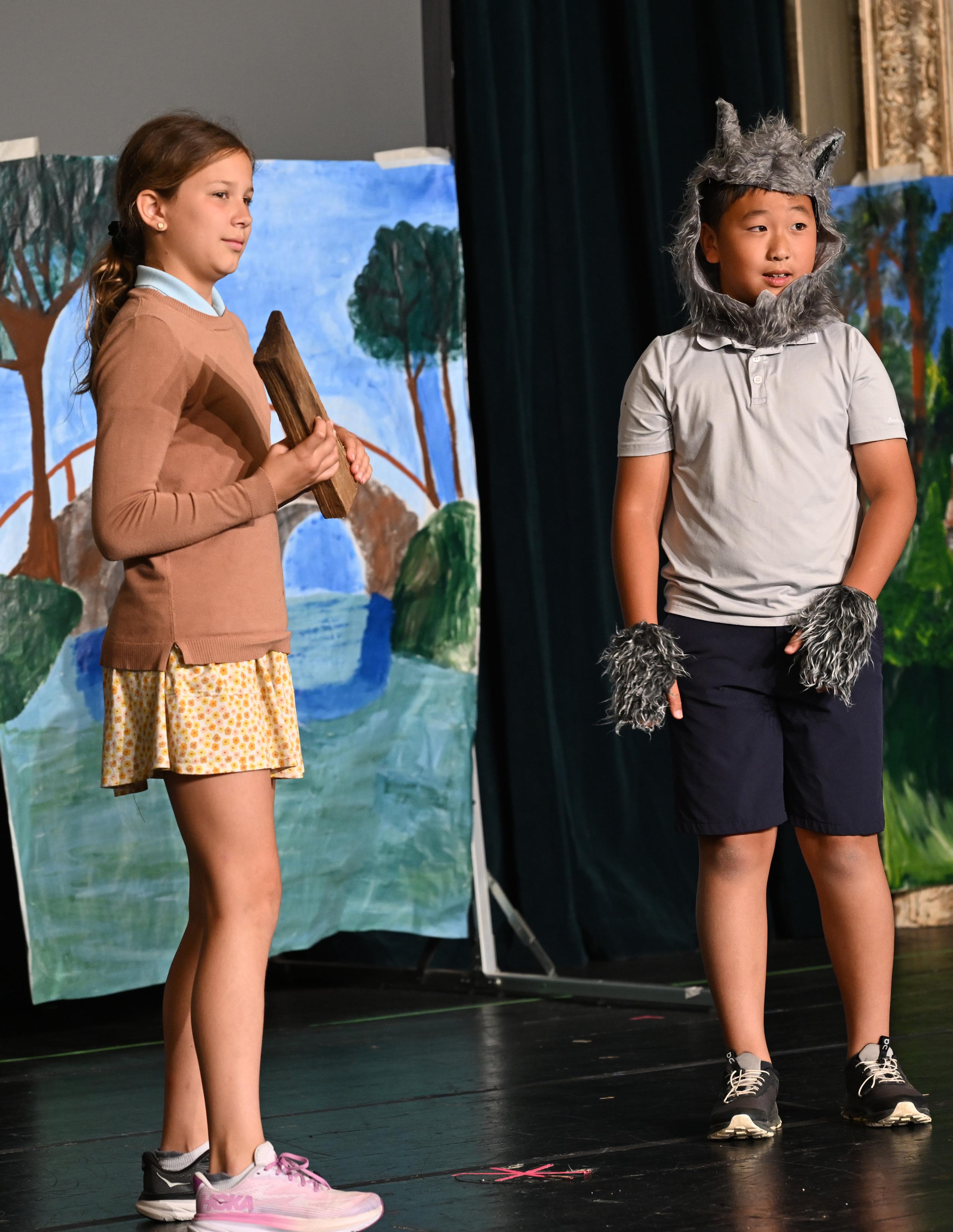
The fifth grade language arts program integrates grammar, creative and critical writing, and word study, emphasizing the writing process from brainstorming to publishing. Students explore various writing genres, including persuasive, expository, narrative, plays, and poetry, while grammar instruction covers parts of speech, sentence structure, syntax, and punctuation. Vocabulary and spelling are taught through direct and contextual methods. Reading fluency and comprehension are enhanced through fiction and nonfiction texts, with a focus on deeper understanding via previewing, annotating and class discussions. The program includes a “literature circle” experience that emphasizes student choice, allowing students to select texts from a thoughtfully curated list designed to encourage them to engage with works that challenge and expand their reading abilities, fostering both personal interest and higher-order thinking skills. A highlight for fifth graders is writing and performing an original fractured fairy tale for preschool audiences.
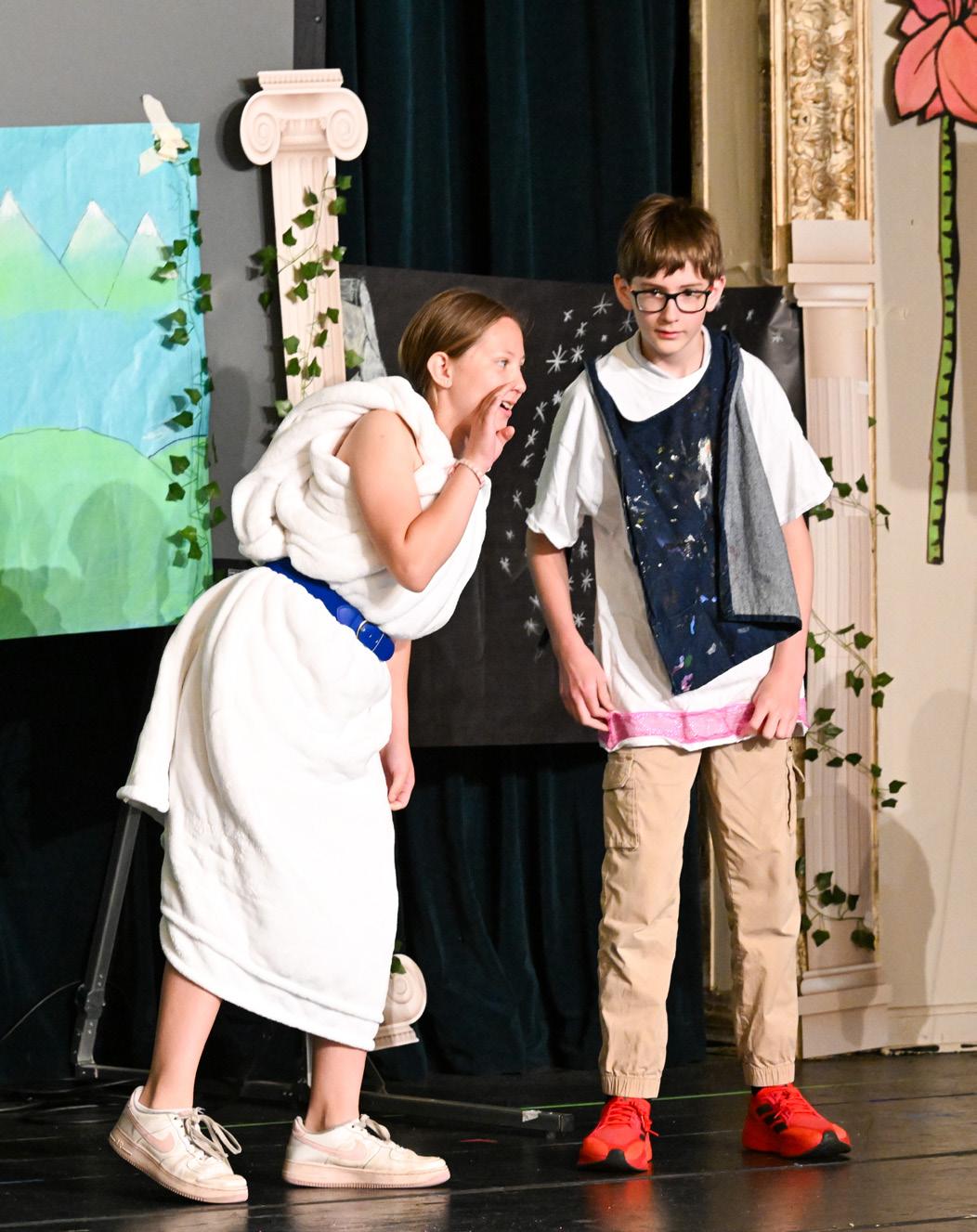
The sixth grade language arts program empowers students to become confident communicators, creative writers and thoughtful readers. Through a blend of writing, reading and public speaking, students develop their authentic voice and analytical skills. They craft a variety of written works, explore vivid language and poetic devices and engage in literature circles that foster collaboration and critical thinking. Students read widely across genres, making personal connections and gaining new perspectives. A highlight of the year is the creation and performance of a contemporary Greek myth during our beloved Greek Festival—a cherished tradition that brings learning to life and celebrates student creativity.
English 7 is all about discovering the power of words—ours and the ones on the page. We’ll dive into stories and poems that challenge the way you see yourself and the world, then use them as fuel to sharpen your own voice. Together, we’ll explore classic literature like The Outsiders, dive into thought-provoking nonfiction and uncover the beauty and rhythm of poetry. Through games and interactive lessons, we’ll strengthen our grammar and expand our vocabulary in ways that stick. Along the way, we’ll build stronger writing skills, experiment with style and tone, and learn how language can spark real impact. Think of this course as both a toolkit and a launchpad: a place to practice, play, and grow as a reader, writer and thinker.
In English 8, we’ll dive into stories that connect the past to the present, asking big questions about justice, power and how people’s experiences shape the world. By reading beloved classics like Of Mice and Men and A Raisin in the Sun, we’ll explore the ways literature reflects real struggles and enduring hopes. Vocabulary and grammar will come to life through interactive lessons and games that strengthen your understanding of language and style. We’ll experiment with different kinds of writing to find and sharpen your own voice, learning how to make your words clear, strong, and effective. The year culminates in an in-depth study of the American Dream—tracing its roots, evolution and how it manifests in today’s rapidly changing world. Along the way, you’ll practice seeing writing as a process, building the skills and confidence to write with purpose—and maybe even enjoy it.
The fifth grade math course is designed to solidify the students’ ability to perform operations with whole numbers. New topics introduced will be all operations with fractions and decimals including the supporting concepts of number theory and divisibility strategies. The course then moves onto ratios, proportions, and percent and probability ideas. Problem solving concepts include using basic statistics and non-routine techniques. The calculator, provided in class, is introduced as a tool for problem solving activities and investigating patterns.
In sixth grade, students review decimal and fraction operations, including work with greatest common factors and least common multiples. New topics include operations with integers, rational numbers, equations and inequalities, ratios and proportions, percents, geometry, and probability. Students will use the calculator as a problem-solving tool.
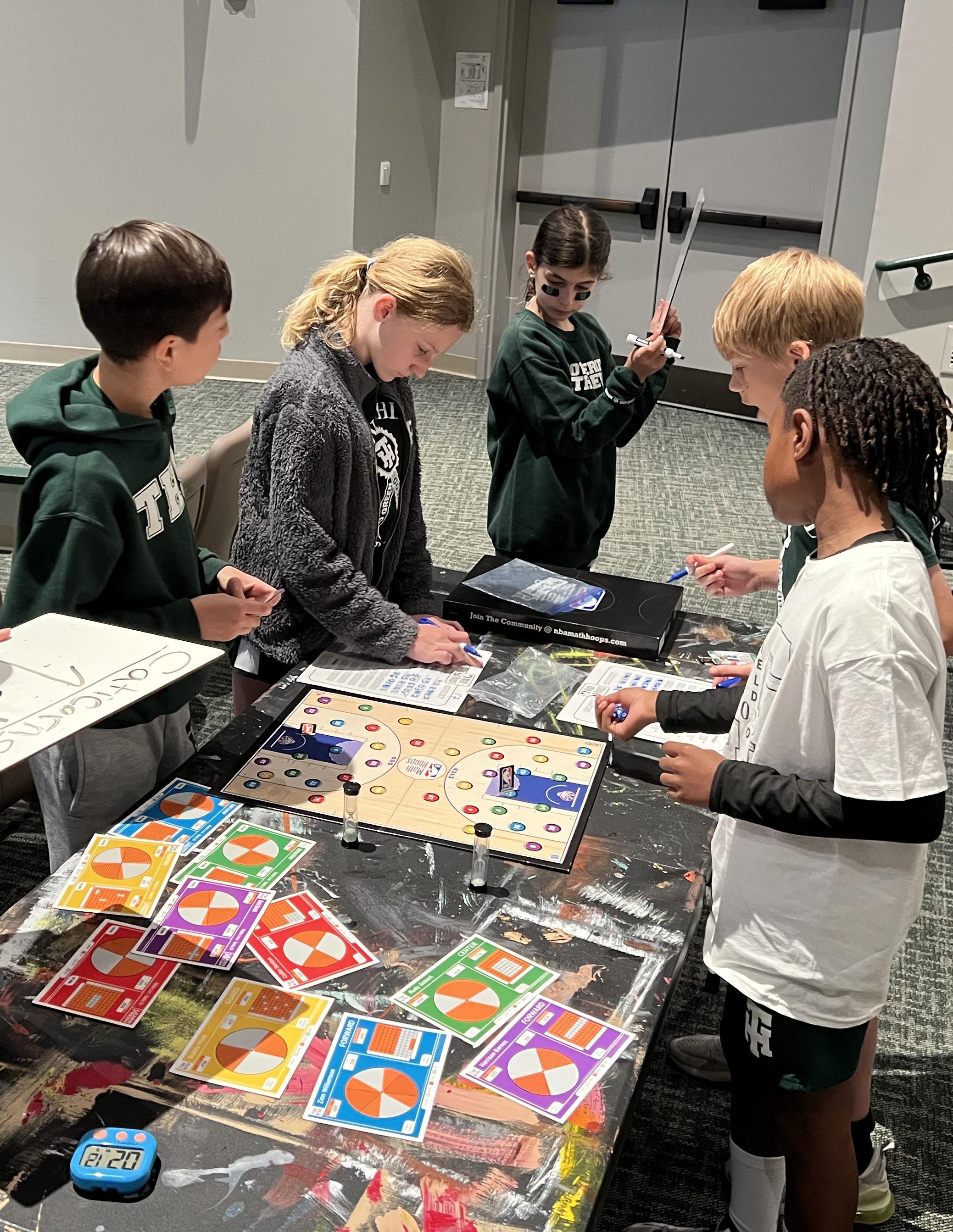
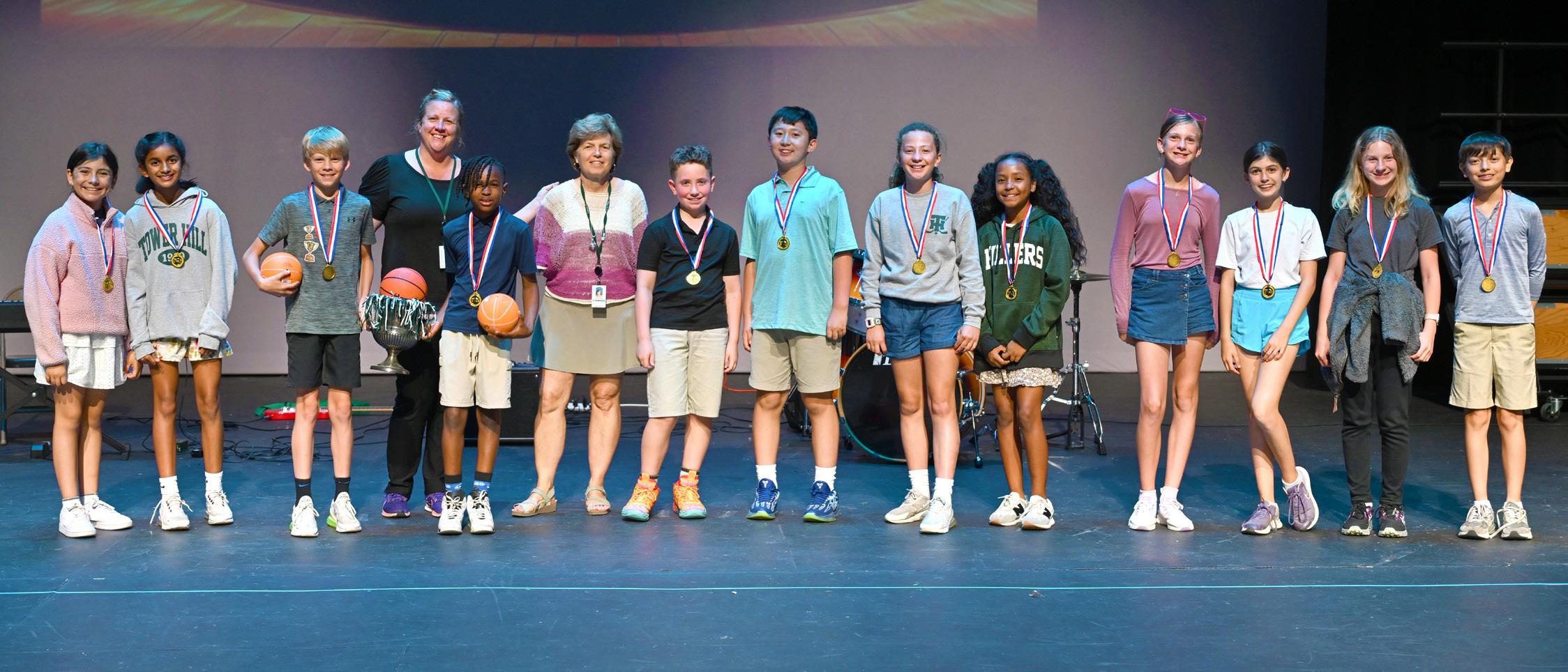
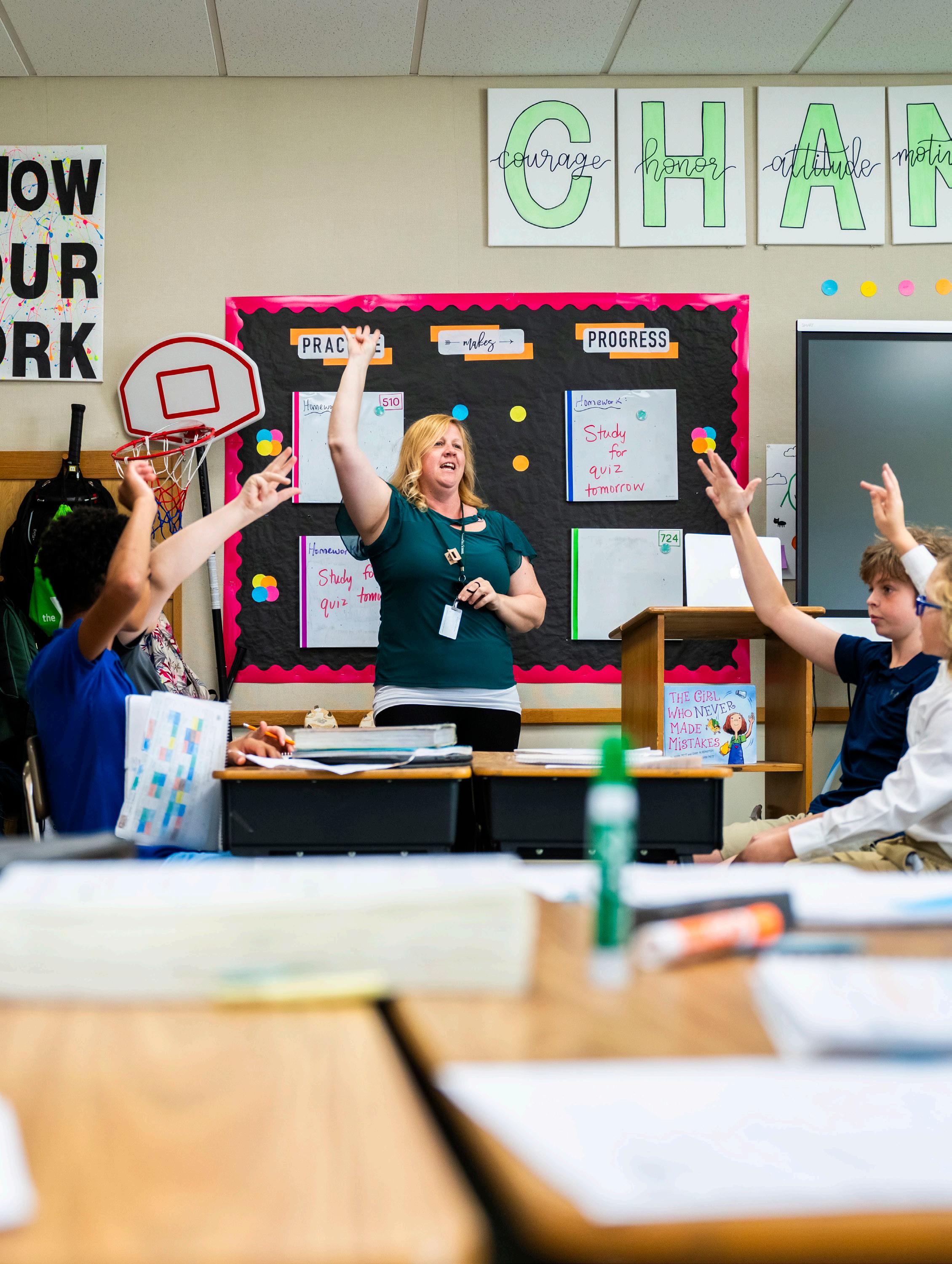
Beginning in October, fifth- and sixth-grade students take part in Math Hoops, a fast-paced game that combines basketball excitement with math skills. Players use “player cards” to compete in an in-house tournament for the coveted Math Hoops Cup, and top performers will go on to represent Tower at the regional competition in January.
This seventh grade course emphasizes the concepts and skills of elementary algebra, including solving equations and inequalities, modeling word problems, and graphing linear equations in the coordinate plane. Students study two- and three-dimensional geometric objects, and they are introduced to a graphing calculator.
This course serves as an introductory algebra course in seventh grade. This course will assume students have full mastery of core skills and are ready for a more in-depth study of basic algebraic techniques. The instruction in this course will be rigorous and concentrate on developing various skills. Students will be required to demonstrate fluency in application and conceptual understanding. The following topics will be covered: the number system (including rational, irrational and radicals), ratios and proportions, expressions and equations (including monomials, polynomials, laws of exponents, multi-step equations, and multiplying and factoring binomials), graphing linear equations and slope, systems of equations, geometric concepts, and probability and statistics. Students will be introduced to a graphing calculator.
In this eighth grade course, students review basic algebra rules and properties, operations with numerical and algebraic expressions, solving equations, and modeling word problems. In addition, students study linear equations and inequalities, systems of linear equations, operations with polynomials, factoring and its use in solving quadratic equations, radical expressions and equations, properties of exponents, and simplifying rational expressions. Further work with the graphing calculator is also a component of the course.
This course is designed for eighth grade students who have had a particularly strong year in seventh grade math and is intended to prepare students for the accelerated program in the Upper School. Topics covered include linear, absolute value and quadratic equations; linear inequalities; systems of linear equations; operations with polynomials, including factoring and its use in solving equations; operations with radical and rational expressions; rational and radical equations; coordinate geometry; and introduction to functions and graphs.
Developing an appropriate and effective use of the graphing calculator is also a component of the course. Students shift from a concrete to a more abstract study of mathematics, and develop sound problem solving and critical thinking skills.
The Math Department at Tower Hill is dedicated to providing the best possible experience in which students will be challenged each year by the course content, but not overwhelmed by the pace and material. As students move through the courses, we strive to provide a strong foundation at every level for subsequent math courses that they will encounter. At the end of every academic school year, each student’s progress will be evaluated and a recommendation for the next year’s course will be made. This decision is based on various data and criteria and is made collectively by the Middle School teachers, Head of Middle School and the Department Chair’s input.
• In seventh grade, students will be placed into pre-algebra OR honors pre-alg and intro alg.
• In eighth grade, students will be placed into algebra 1 OR honors algebra and geometry.
At the end of eighth grade all students take a skills assessment, which is used as an important data point in determining their placement in ninth grade math. See the Upper School course description for a description of course offerings in ninth grade.
Math Olympiad (MOEMS) – An international program for elementary and middle school students that fosters creative problem-solving through monthly contests. Students tackle five challenging math problems that build perseverance, strategy and mathematical insight. Competitions occur for all middle school grades 5-8 once a month from November through March.
SIGMA Math Competition – A problem-solving contest designed to challenge students with creative, nonroutine math questions. It emphasizes logical thinking and mathematical reasoning over rote computation. Competitions occur during class time for seventh and eighth grade students during October through March.
American Mathematics Competitions 8 (AMC 8) – A national math competition for middle school students focused on problem-solving skills in algebra, geometry, number theory and probability. It encourages interest in mathematics and identifies talented students through a timed multiple-choice exam. This contest at Tower Hill is offered to all eighth grade students.
Fifth graders explore life science, simple chemistry, physical science and health science while developing essential skills in measurement, observation, collaboration and communication. Students learn to recognize the interconnections in their world through hands-on investigations and independent inquiry.
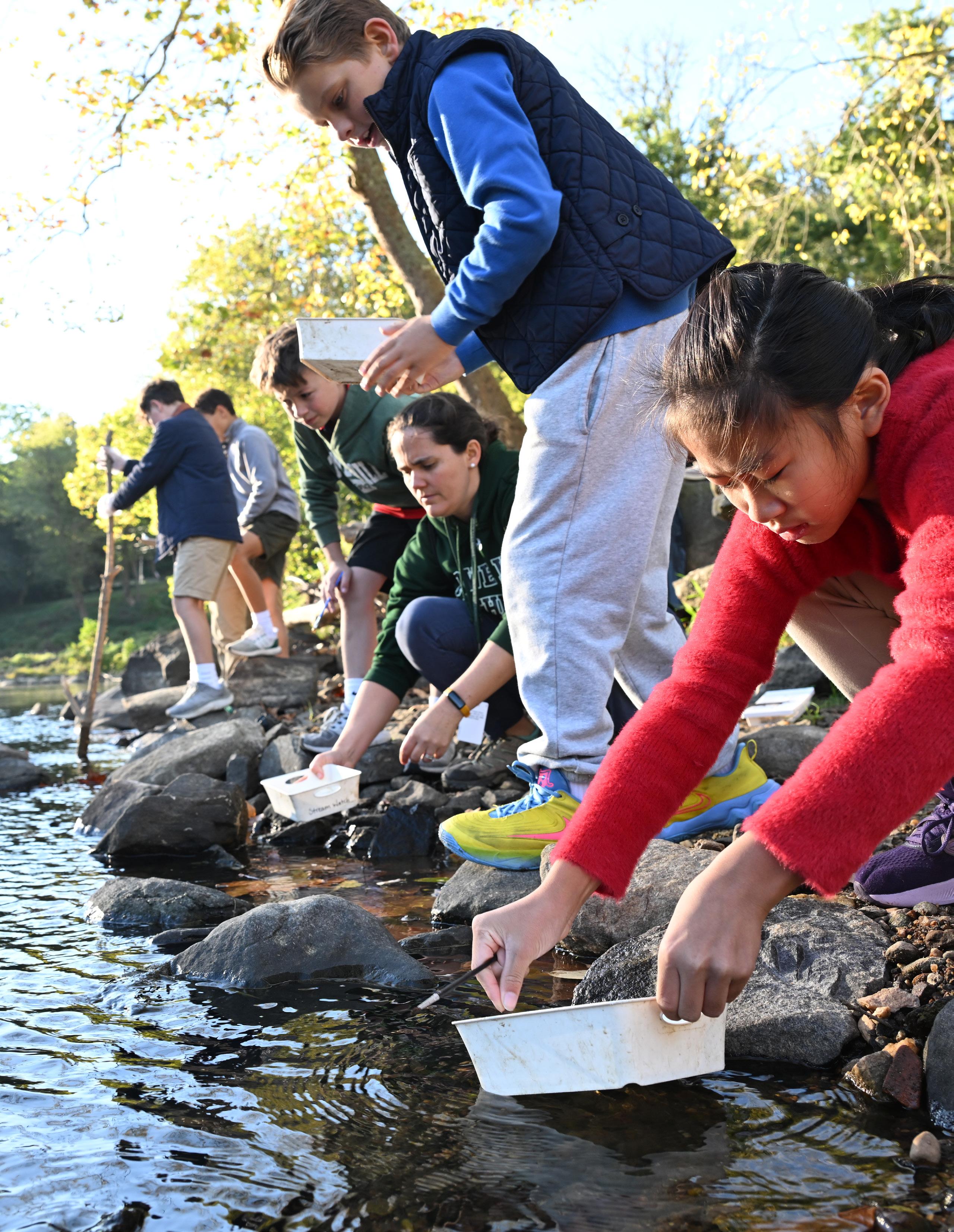
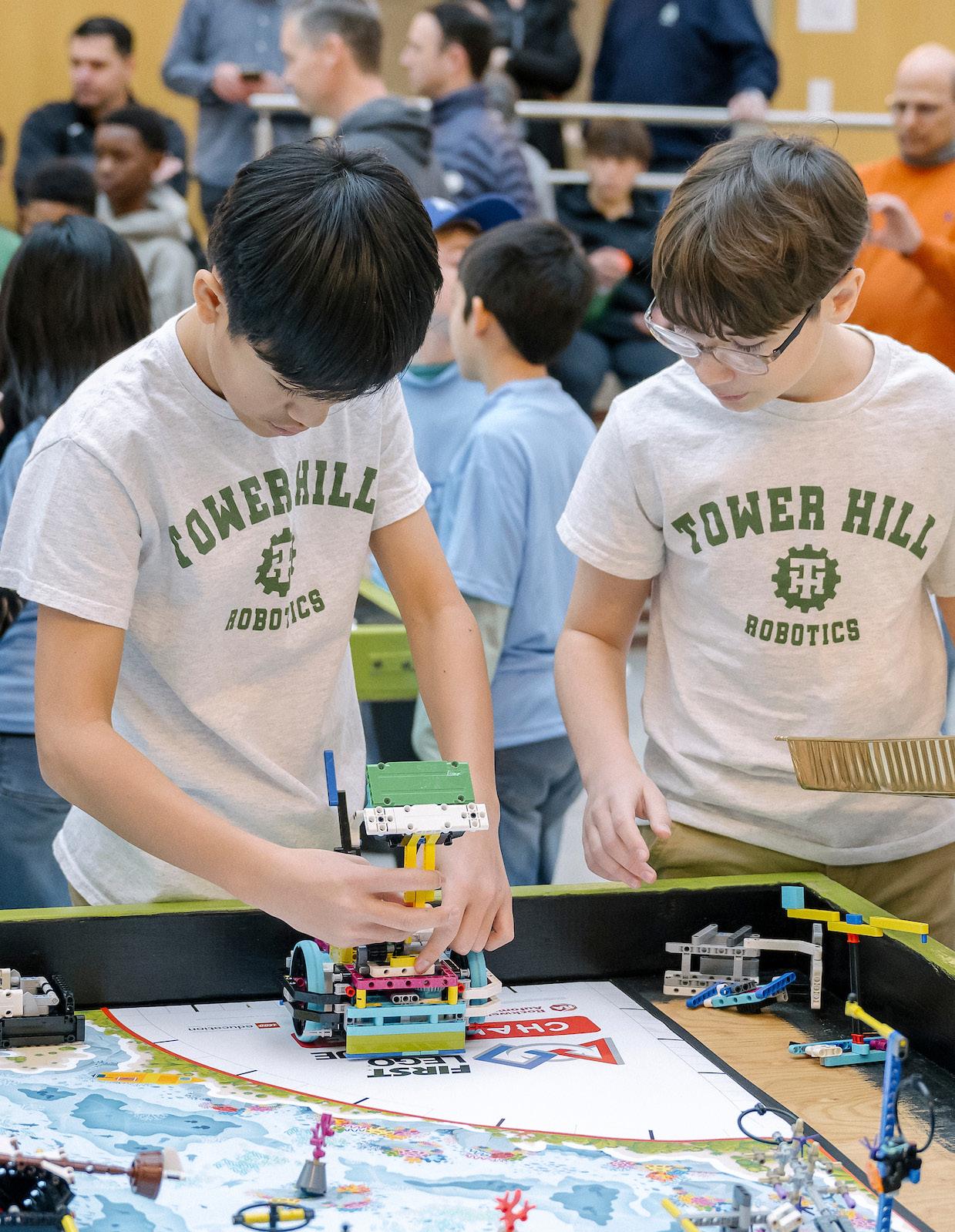
Ecology studies lead to seasonal visits to the Brandywine River for Stream Watch, where students conduct biological, chemical and geological surveys. In physical science, students examine the principles of the electromagnetic spectrum and apply this knowledge through in-depth microscopy studies. They also design and implement engineering experiments through the LEGO Robotics unit.
The year concludes with a health science unit on puberty and reproduction, where students learn about human development and new life. Throughout the year, the emphasis remains on hypothesizing, problem-solving, and conducting investigations with increasing independence.
Sixth grade science focuses on the physical sciences as a way to understand the world. Built around key questions and hands-on experiments, the course emphasizes the scientific method and encourages curiosity through discovery.
Students explore motion, pendulums, density, gravity (Newton’s Third Law), electricity, energy, waves and sound through a series of labs. Along the way, they learn to design experiments, collect and analyze data, and communicate findings in lab reports.
The course also develops a wide range of scientific skills: problem solving, preparing spreadsheets, identifying patterns, building computer models, applying units, creating graphs, distinguishing independent and dependent variables, and using mathematics to describe natural phenomena. These skills often come together in practical applications, culminating in STEAM projects and presentations.
Seventh grade science focuses on our dynamic Earth, with five major units: Earth science and geology, ecology and organismal interactions, genetics, and evolution and natural selection. These units will then culminate in a sustainability and climate project. There is a final exam in seventh grade science, which focuses on scientific literacy and jargon. The seventh graders continue their skill building by applying the scientific method to make careful observations, to ask specific questions and to plan effective independent experiments. Students learn to collect and quantify their data and to use appropriate technology to enhance their research and facilitate their presentations.
Eighth grade science offers an integrated exploration of life science, chemistry and conceptual physics, with energy as the central theme. Students investigate how energy is transferred and transformed in living systems, chemical reactions and physical phenomena. A key unit, spaceship Earth, builds on concepts introduced in seventh grade, guiding students through the dynamic systems that shape our planet.
Throughout the course, students engage in hands-on, inquiry-based experiments that emphasize the scientific method; collecting, organizing and analyzing data to draw meaningful conclusions. This curriculum not only nurtures curiosity and critical thinking, but also lays a strong foundation for future coursework in biology, chemistry and physics in the Upper School. Designed to cultivate informed, inquisitive citizen scientists, the class encourages lifelong engagement with science and the world around them. At the end of the year, students demonstrate their learning through a cumulative final exam covering major concepts and skills.
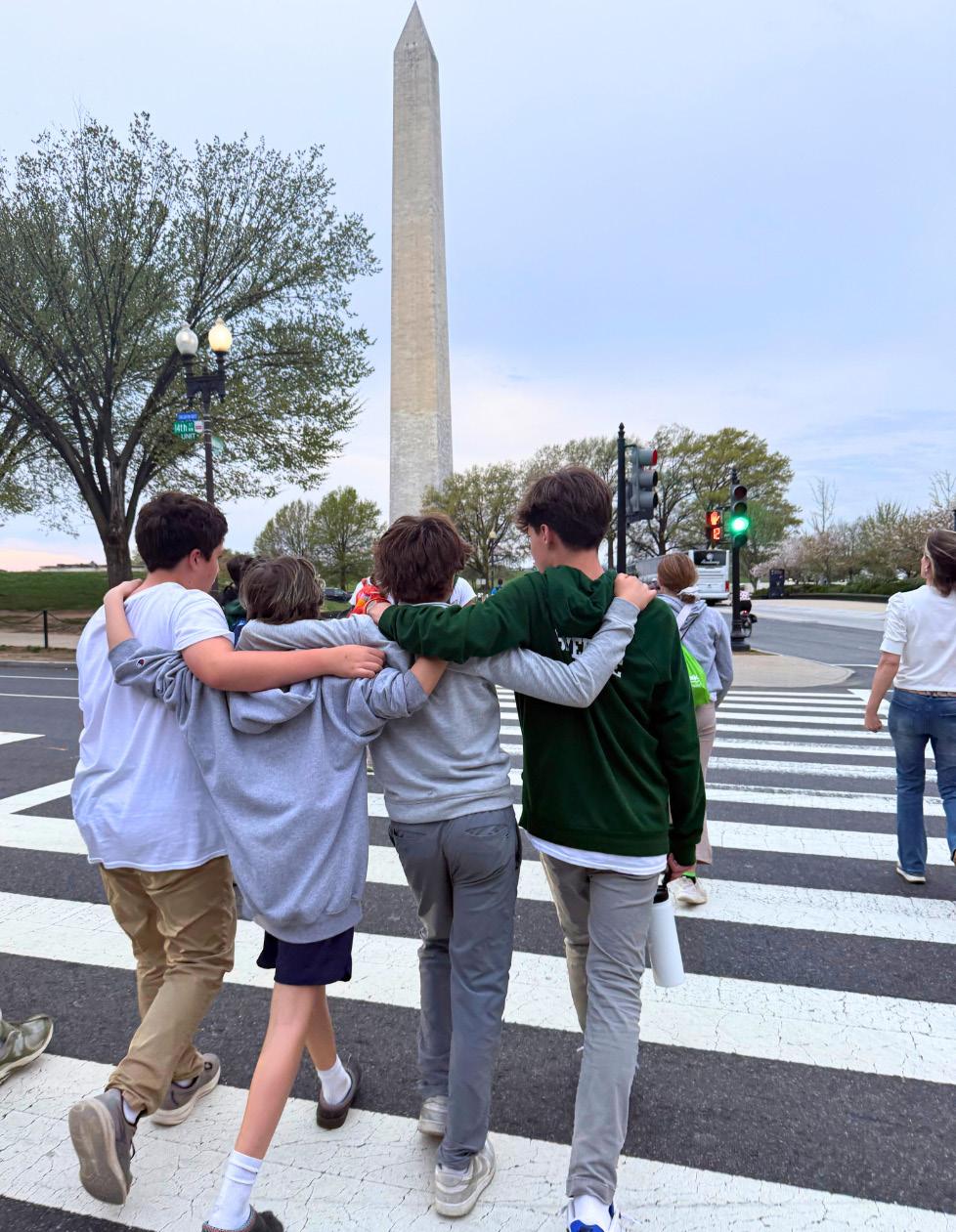
In Passport to the World Part: Western Hemisphere, students examine major themes, concepts and skills in geography. Students explore the web of relationships that exist between people, places and the environment, paying particular attention to Latin America. Emphasis is placed upon physical, human, cultural and political geography, using geographic tools such as maps, graphs, charts and more. Students explore how to use graphic organizers to take notes both in class and from the textbook, with significant attention to assessment preparation. Reading comprehension and writing skills are strengthened through the research and writing process, with enhanced focus on source citation through Noodletools in order to create a working bibliography. This course culminates with a research paper demonstrating the role that both physical and human geography have in Argentina. This class environment promotes a curiosity about the people and places across the globe.
In Passport to the World: Eastern Hemisphere, students continue the journey they began in fifth grade by examining the relationships that exist between people, places and the environment. These relationships are examined by exploring Africa and Asia. Emphasis is placed upon the impact of colonization of indigenous peoples in addition to physical, human, cultural, and political geography. Students continue to develop their note taking skills using a variety of graphic organizers alongside traditional outlining methods. Reading comprehension and writing skills are strengthened through the research and writing process. In exploring a variety of sources and using web-based research tools, students write a comprehensive report on an African country of their choosing. The class environment promotes a curiosity about the interconnectedness of people and places across the globe.
The seventh grade course surveys United States history from European colonization through Reconstruction. Using a chronological approach, the class examines the major political, economic and social developments that have shaped the foundations of American society. Emphasis is placed upon note-taking and reading comprehension skills, assessment preparation, use of primary and secondary sources, research skills, as well as, the use of library and digital information. Students are required to make connections between the past and present by utilizing course content and enhanced historical thinking skills.
The eighth grade course provides a broad survey of human history from the earliest civilizations through the Renaissance. The course has a chronological structure, exploring thematic developments in civilizations throughout the world. The rise and fall of empires, the creation and diffusion of global religions, trade, migration, cultural interaction, and revolutions are the key themes of the course. The course encourages the continued development of certain historical skills: intelligent questioning, gathering and interpreting data, analyzing concepts, recognizing the significance of historic occurrences, understanding cause and effect, and expressing ideas with clarity and vigor in both class discussion and writing.
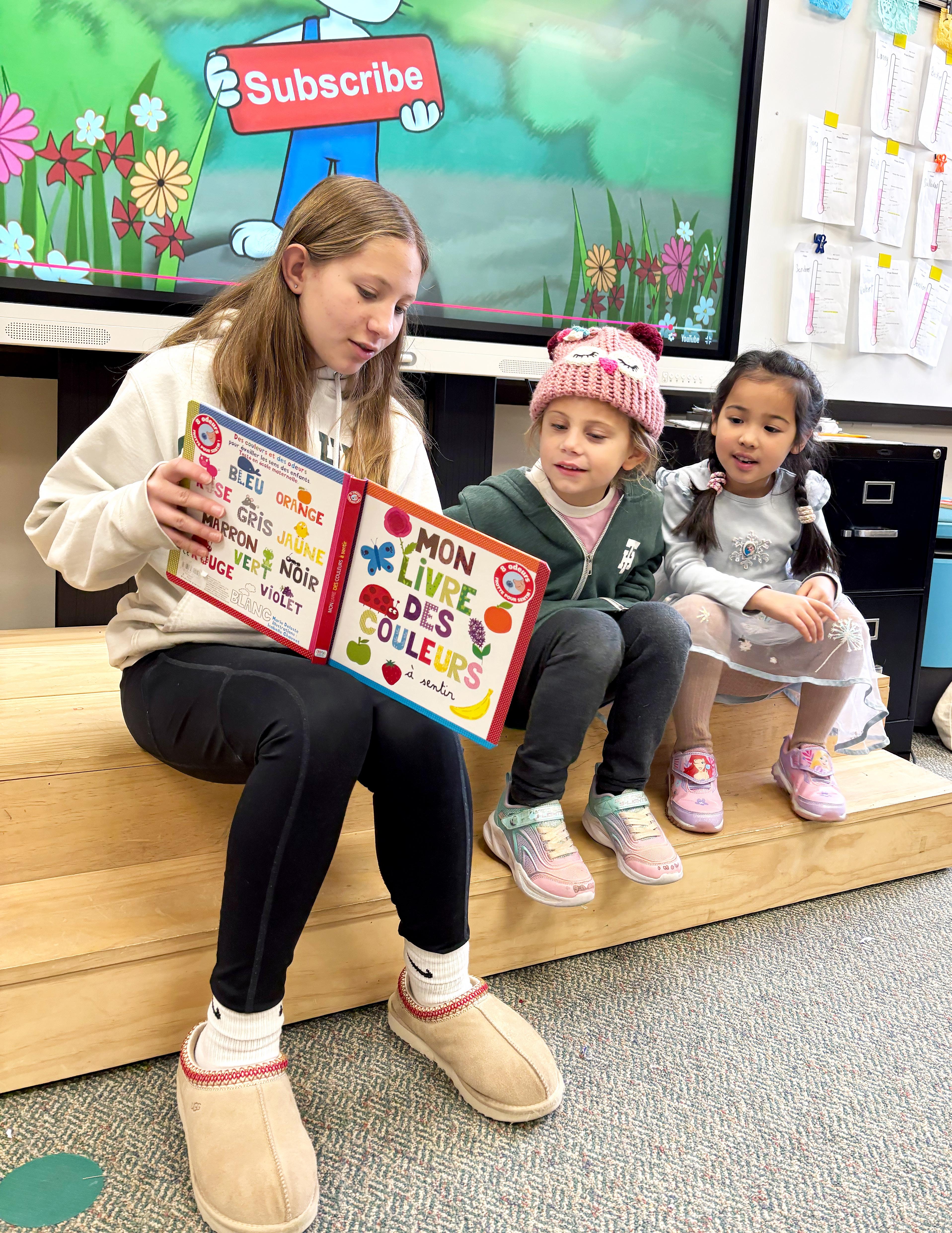
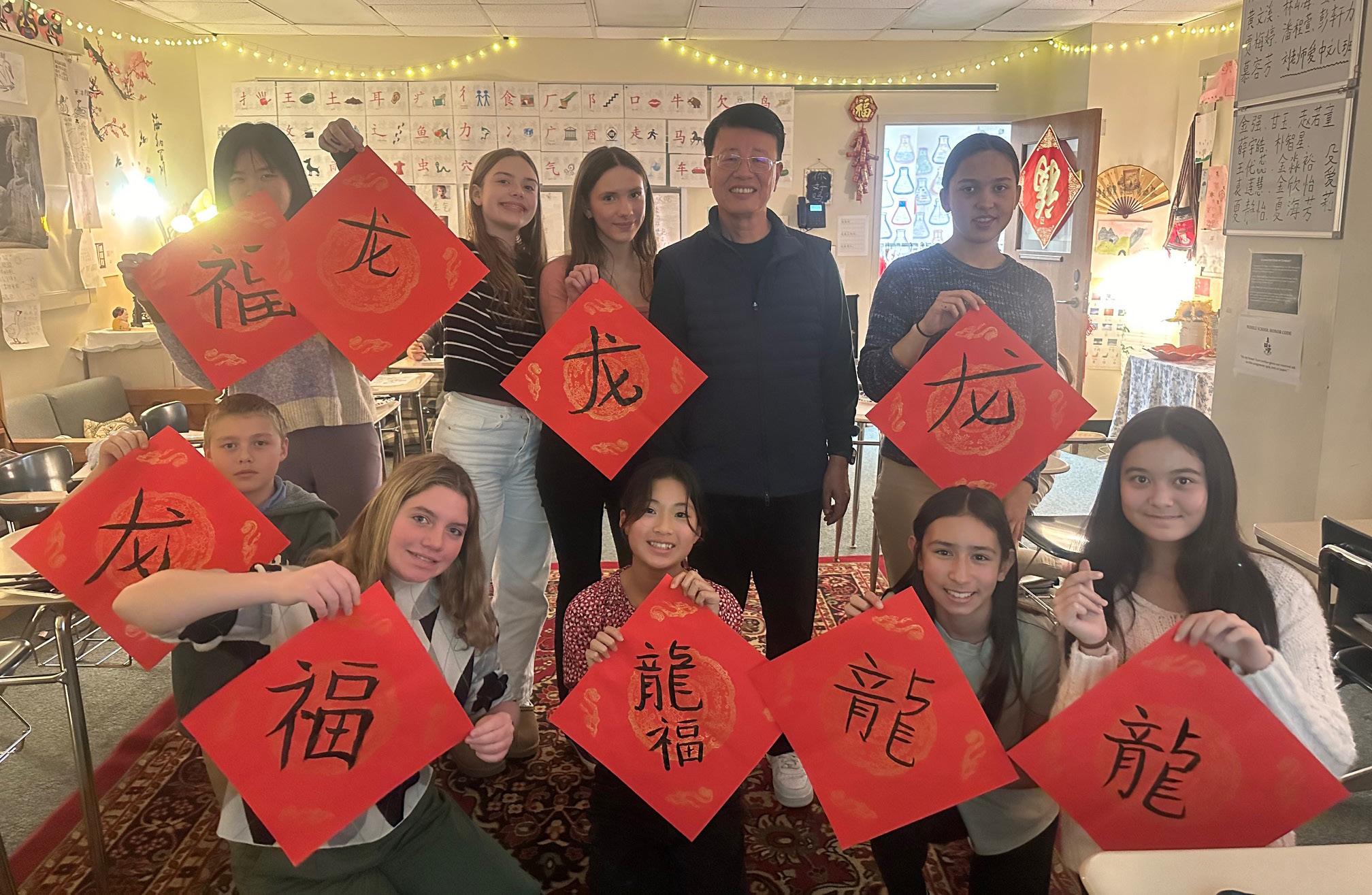
Fifth and sixth grade students complete exploratory semesters in all languages of instruction (Latin, Mandarin, French and Spanish). These classes meet three times in a 10 day cycle for 50 minutes (the standard Middle School block). In fifth grade, students explore Latin and Spanish. In sixth grade, students explore Mandarin and French. Sixth grade ranks their top two choices for language study in the second semester of the year.
By the end of each exploratory semester of our spoken languages (Mandarin, French and Spanish), students can use the target language to greet each other, sing along and chant simple songs, count, and name colors, familiar objects, sports, food, and animals. They can understand basic greetings and farewells, simple classroom instructions, and short, simple phrases about likes and daily life. In writing, they can create short words and phrases and can define words, sound out new words, and interpret short, simple phrases.
By the end of the exploratory semester of Latin, students can sound out high-frequency words with increasing accuracy and demonstrate improved pronunciation of new vocabulary. They understand some Latin words, phrases and short sentences, especially when these are presented in familiar contexts or supported by illustrations. They can follow short stories and simple descriptions and are beginning to recognize English derivatives while reading, thus demonstrating an emerging awareness of Latin’s influence on English vocabulary.
Seventh and eighth Grade students complete a two-year level 1 course in their chosen language. These classes meet eight times in a 10 day cycle for 50 minutes (the standard for Middle School core academic classes). When selecting courses for their first year of Upper School, eighth grade students elect to continue in the same language of Middle School study or to start a new language at level 1.
By the end of the first year (seventh grade) in our spoken languages (Mandarin, French and Spanish), students can use the target language to reproduce patterns (intonation, verb endings, accents), emulate correct pronunciation and begin to use multiple clauses in their speech. They can tersely describe aspects of their daily life and surroundings with a range of vocabulary and expressions, make simple presentations on familiar subjects, and engage in simple conversations on familiar topics. They can understand expressions used in everyday communication, familiar vocabulary and questions when delivered clearly and slowly, sometimes with visual support of images or gestures and with pauses left for understanding. They can understand the main points in short, clear and slow spoken texts and presentations regarding familiar topics. They can write simple sentences and compose a short paragraph or dialogue that uses newly learned words and phrases. They can read and comprehend simple narratives and descriptions, especially those related to familiar subjects and can demonstrate basic understanding of a short article from a beginner’s level language learning resource or a simple authentic resource.
By the end of the second year (eighth grade) in our spoken languages (Mandarin, French and Spanish), students can use the target language to engage in simple conversations on familiar and/or prepared topics, or ask another person a provided set of questions and respond to their answers. They can connect phrases in a simple way in order to describe experiences and provide brief elaboration using a variety of vocabulary and grammar structures. They can understand more if spoken slowly and some if spoken fast, including content like short stories, videos, or presentations on familiar subjects using familiar vocabulary. They can compose a short paragraph composed of linking sentences on familiar topics or brief descriptions, using sequencing words like “first” and accurately employing the grammatical structures covered in the course. They can read and understand very short, simple texts that include high frequency vocabulary and grammar on familiar topics. They can follow the narrative and main points in simple stories, find specific, predictable information in simple everyday material such as advertisements, menus and timetables, and answer short, simple reading comprehension questions.
By the end of the first year (seventh grade) in Latin, students can accurately sound out high frequency Latin words and are increasingly accurate in their pronunciation of new words. They can often understand Latin words, phrases and simple sentences in the context in which they have been learned as well as formulaic expressions, which they can compare to common formulaic expressions in English. They can follow stories and descriptions about events and experiences in various time frames related to topics from ancient Roman culture, personal interests, and studies. They can compare word order in simple sentences of Latin to English and can report differences and similarities between the sounds and writing systems of these languages. They can recognize a few basic grammar points and derivatives when they hear them spoken as well as identify cognates and derivatives between Latin and English (when the definitions of the cognates or derivatives are provided). They can also present a brief analysis of archeological objects.
By the end of the second year (eighth grade) in Latin, students are developing insight into the nature of language in order to interact with cultural competence in the study of the Ancient world and Latin. They can understand the main idea of short and simple Latin texts when the topic is familiar and can demonstrate basic content knowledge, some conceptual and contextual awareness, and some critical, reflective thinking. Their responses are valid but limited by the scope of the content covered through level 1. Interpretive skills and the ability to synthesize are emerging alongside increasing accuracy as students encounter progressively more challenging material for translation. Students can also present with increasing confidence analysis of archaeological objects.
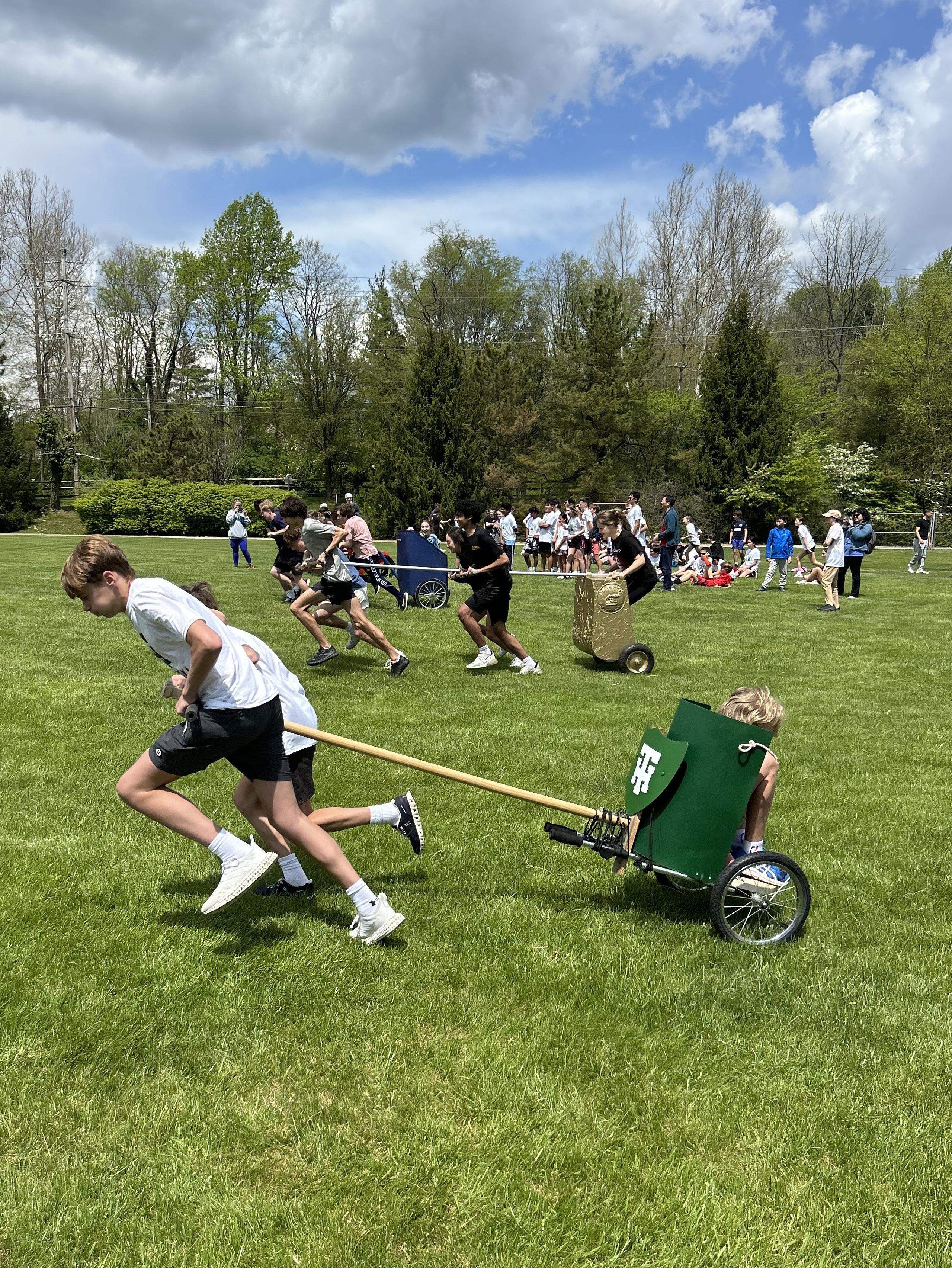
The art curriculum in grades fifth through eighth enables students to explore a variety of media and processes to help prepare them for the many elective courses offered in Upper School. The philosophy of the Art Department is to teach students how to originate authentic ideas, encourage self-expression and develop universal problemsolving skills through hands-on making. Through this process of material and technique discovery, our students work towards refining their creative vision while elevating their understanding of historical and cultural perspectives. Throughout the year, the department invites visiting artists to workshop with students in the studio classrooms, providing our students an opportunity to engage with professional artists and learn from their experiences. Middle School artwork is regularly exhibited in our hallways, Kullman Commons and the main entrance throughout the year, and is featured in the culminating annual spring art event, Evening of the Arts. Additionally, at the Middle School level, students are encouraged to start entering art exhibitions and state-wide art contests in an effort to celebrate their developing talents in and outside of our school walls. The ultimate goal of the Art Department is to provide a physical space where students can be seen, supported and celebrated for their artistic, creative, and problem-solving achievements.
Woodshop/Art 5
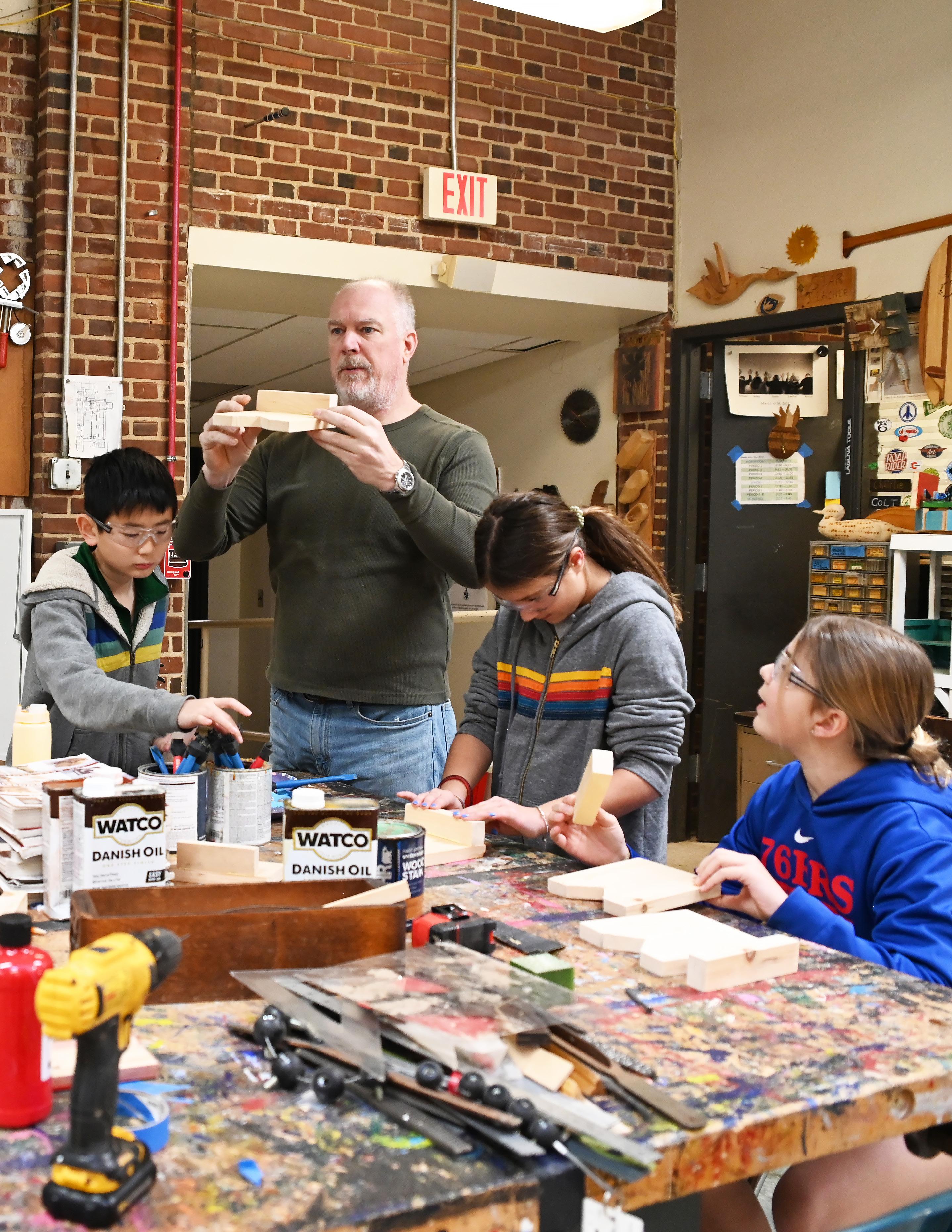
In fifth grade, students divide their year between one semester of art and one semester of woodshop. In art class, they practice creative techniques such as pastel gradation and hand-built ceramics, developing both technical ability and personal expression. In woodshop, they focus on craftsmanship and practical skills through the construction of the traditional Tower Hill School step stool, a signature project that has been part of the school’s program for generations.
Art 6
In sixth grade, students participate in a full year of art, engaging in projects that build creative, technical and interdisciplinary skills. Coursework includes environmentally themed collaborative installations, paper mâché sculpture and sewing with felt. Students strengthen technical proficiency through observational drawing and consistent sketchbook practice. The curriculum also integrates art history with the sixth grade history program, reinforcing cultural and historical understanding through hands-on artistic exploration.
Woodshop/Art 7
In seventh grade, students spend one semester in art and the other in woodshop. In art class, they practice plein air watercolor painting, design and construct three-dimensional plaster sculptures, and refine their skills in observational drawing, all while engaging with key topics in art history. In woodshop, students integrate creativity with engineering principles as they design and build CO₂ race cars, culminating in a community demonstration and race that highlights their craftsmanship, problem-solving and design skills.
Art 8
In eighth grade, students spend the full year in a combination class of art and ceramics, allowing them to build on prior skills while engaging in more advanced projects. Their work includes designing watercolor mandalas that emphasize symmetry, pattern and color theory, as well as, creating a range of ceramic pieces that strengthen their understanding of form, texture and glazing techniques.
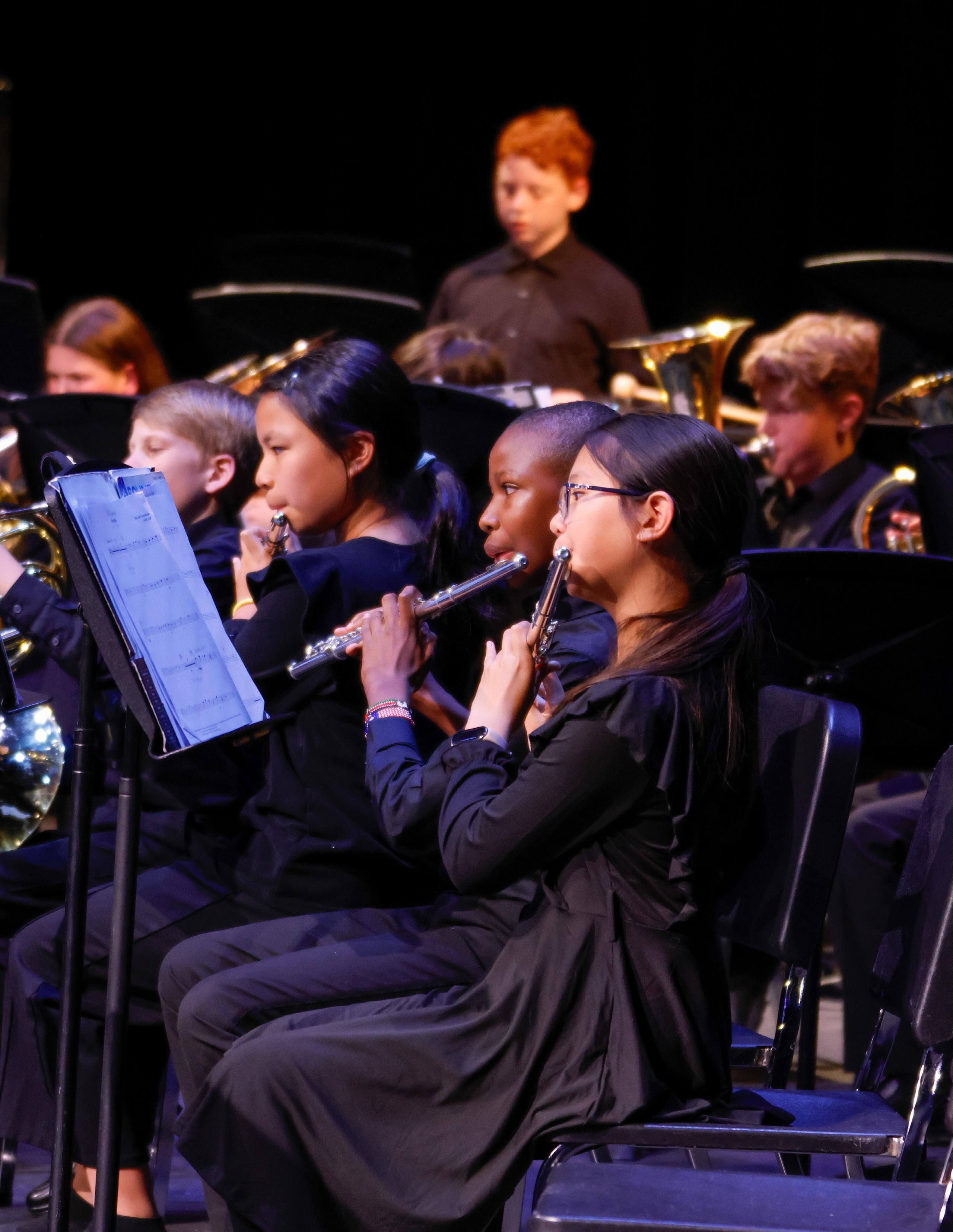
Students participate in a musical ensemble throughout all four years of Middle School. In fifth grade, students are introduced to the three main ensembles: band, orchestra and chorus. They choose one ensemble to join and continue in it throughout Middle School, with the option to participate in a band/chorus or orchestra/chorus combination. Instrument testing and selection take place at this stage. Beginner ensembles are made up almost entirely of fifth graders, novice ensembles consist of sixth graders and combined ensembles consist of seventh and eighth graders.
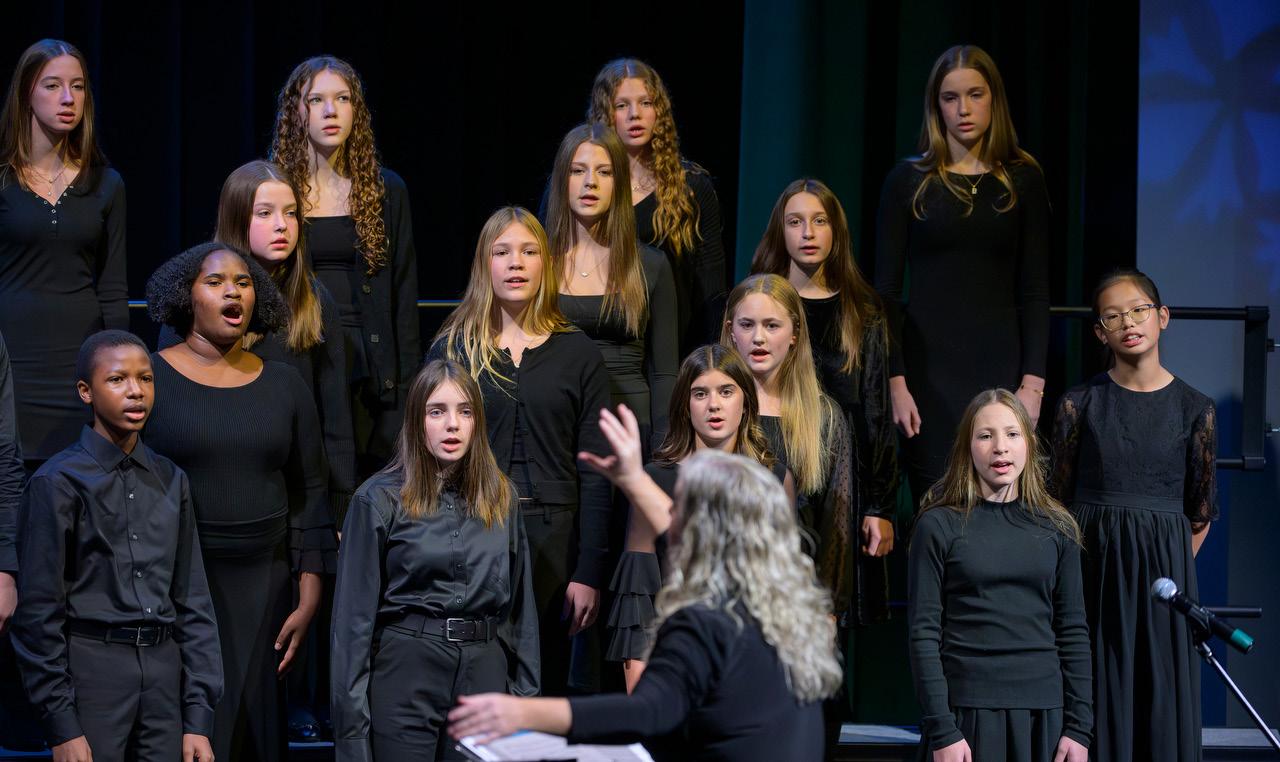
The Middle School chorus helps students develop strong, healthy singing voices while building music-reading skills and confidence as performers. Students learn proper posture, breath support, tone production and diction, as well as, how to sing in head, mix, and chest voice. Through daily practice in sight-singing, rhythm reading and solfege, students gain the skills to read and perform music independently. They explore a wide range of musical styles while singing in multiple languages and learning about music from the Renaissance to the present day. Performances, self-evaluations and group projects encourage teamwork, creativity, and artistic growth, preparing students for success in Upper School choirs and a lifelong love of music.
The Middle School band helps students develop strong instrument-specific skills, musical knowledge/literacy and confidence as performers. Students learn proper posture, breath support, tone production and specific techniques for their instruments. Through daily practice, students refine these skills and gain the necessary know-how to diagnose and correct musical issues as they occur. They explore a wide range of musical styles, time periods and composers. Performances, sectional rehearsals and individual playing check-ins encourage teamwork, growth and accountability, preparing students for success in Upper School bands and a lifelong love of music.
The Middle School orchestra introduces students to the orchestral strings, namely: violin, viola, cello and bass. Beginning students learn proper posture and bow hold, along with instrument anatomy and care, basic sound production, finger placement, and music reading. Students continue to refine these skills and develop more advanced skills as we move through the Middle School grades. Through class rehearsals and individual practice, students develop listening and analytical skills to improve technique and musicality, as well as teamwork, cooperation, and leadership to improve ensemble. We explore a variety of musical styles, cultures and history through orchestra literature to develop appreciation and understanding across disciplines.
Theatre 5
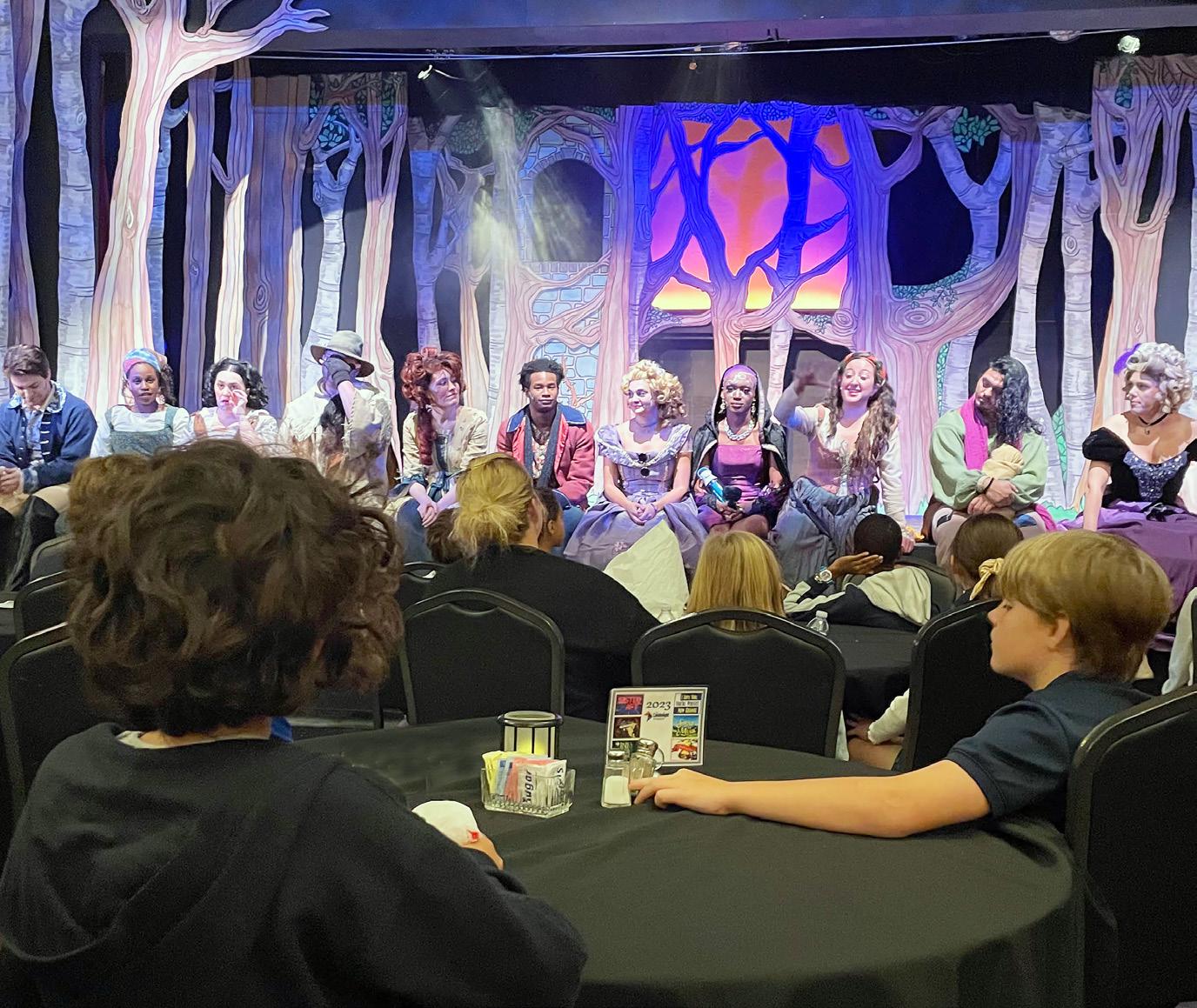
The main focus of fifth grade theatre is storytelling, fairy tales and collaboration. Everything we do in theatre revolves around one essential element—the story. We begin the year by exploring the various ways to communicate using the three important tools in the actor’s toolbox: the body, voice and imagination. The goal of the process is to work on collaborating as a team to tell one story.
Theatre 6
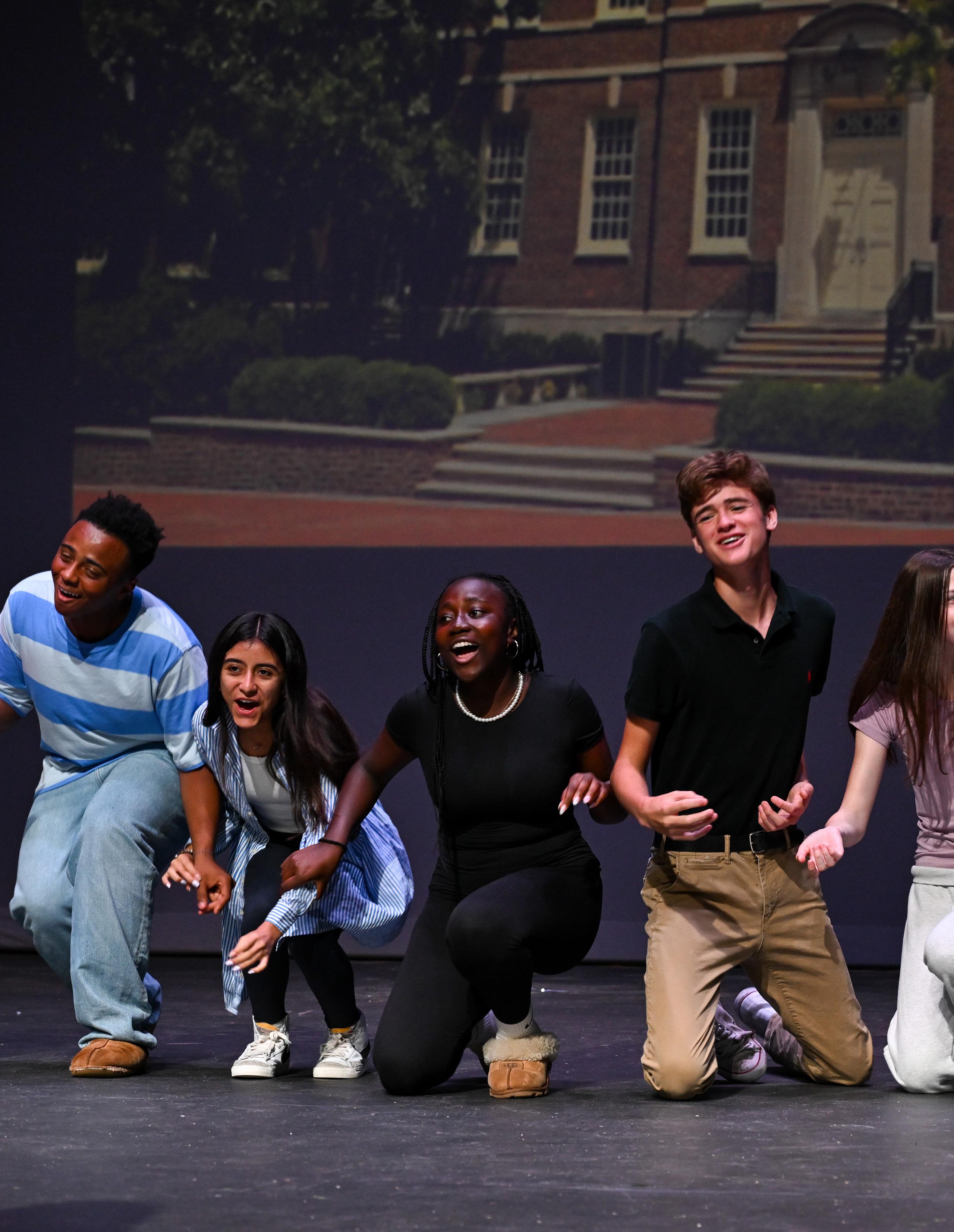
The focus of sixth grade theatre is improvisation or the art of creating a spontaneous performance. We begin the year learning the rules of improv, with a strong focus on the two key words: yes and. It reminds us to agree with our fellow players while also adding in our own ideas. In addition, we work on communication, observation, thinking on our feet, body awareness, concentration, listening and teamwork.
Theatre 7
The focus of the seventh grade theater class is public speaking and discovering your voice. The goal of this class is to boost self-confidence, introduce methods to overcome fear and anxiety, improve diction/projection, eliminate fillers and strengthen physical presentation. We explore storytelling, short personal talks, prepared persuasive speeches and,eventually, we work our way up to scripted monologues. Through observations from their peers and discussions of their challenges and successes, we are working to develop young leaders who are supportive, focused and speak with confidence.
Theatre 8
The eighth grade curriculum focuses on “what it takes to put on a show.” Students begin the year studying all of the jobs that are involved with production, such as: marketing, stage management, and costume, prop and scenic design. Through project based and hands-on learning, students explore the many facets of production and are encouraged to try and recognize how their particular skills could benefit the production as a whole. From design to audition to performance, the students have the ability to create, collaborate and finally tell a story to an audience. The culmination is the production of the annual eighth grade show, which takes place this year on May 14 at 7 p.m. in the Pierre S. du Pont Theatre and Arts Center.
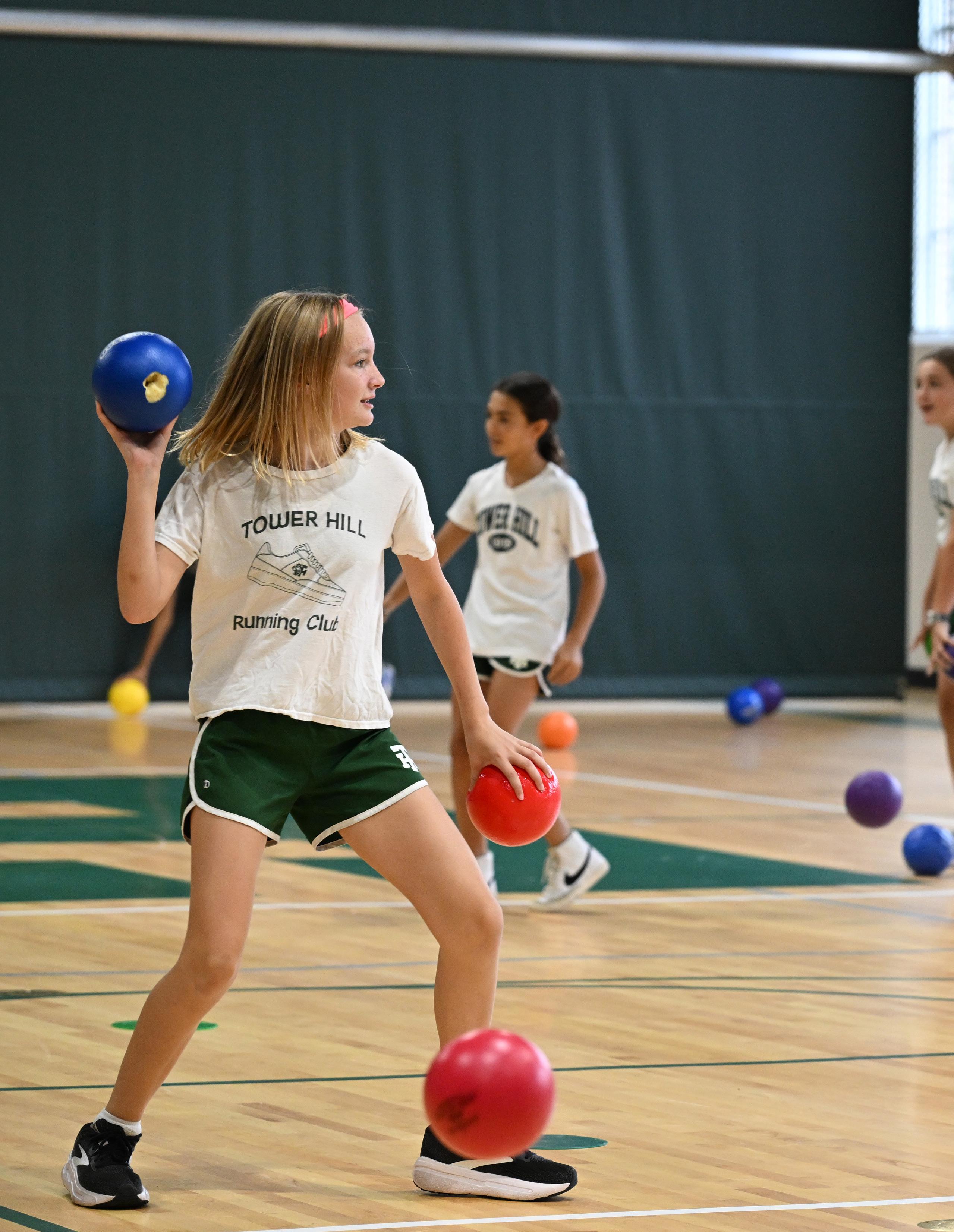
Fifth- and sixth-graders participate in a physical education course that meets every day with boys and girls separated for most classes. The course aims to help students become and remain physically fit, promote physical development through a variety of indoor and outdoor games, and introduce the team sports they will engage in as seventh- and eighth-graders. Additionally, the program emphasizes the importance of good sportsmanship, encouraging appropriate conduct, honest competition, and graceful acceptance of outcomes.
Building on this foundation, our sports program follows the DIAA schedule with season-specific units: fall includes boys’ soccer, boys’ flag football, cross country, girls’ field hockey and girls’ volleyball; winter features girls’ and boys’ basketball along with girls’ fitness; and spring offers girls’ and boys’ lacrosse, girls’ soccer, boys’ baseball, and girls’ and boys’ tennis. Beyond these core sports, students can also participate in extra activities such as touch rugby, steal games, pickleball, kickball, girls’ flag football and co-ed volleyball and team handball, providing diverse and inclusive opportunities for skill development and recreation throughout the year.
Tower Hill believes that involvement in athletics adds to the education of the whole student and provides every student with the opportunity to benefit from, and contribute to, the school community. We believe it is clear that individual student athletes and athletic teams, in general, make significant contributions to the vitality of life in the school and its larger community.
Therefore students in seventh and eighth grades are expected to fully participate in interscholastic athletics during each season. Time for athletics, which represents the physical education curriculum for students in these grades, is built into the school day with all practices (2:30-3:45 p.m.) and competitions (roughly 3:30-5:30 p.m.) scheduled exclusively on weekdays following school. From an attendance standpoint, full participation requires attending the duration of all practices and competitions barring days on which the student is absent from school.
We encourage students and their families to consider this expectation to participate as an opportunity rather than an obligation, as most schools do not guarantee every student the chance to participate in athletics. With various levels being offered for most programs, students of any skill or experience level can find the right fit each season.
Athletic offerings for boys
Fall: soccer, football, cross country
Winter: basketball, wrestling, indoor track
Spring: baseball, lacrosse, track, tennis
Athletic offerings for girls
Fall: hockey, cross country, volleyball
Winter: basketball, fitness, indoor track
Spring: soccer, lacrosse, track, tennis
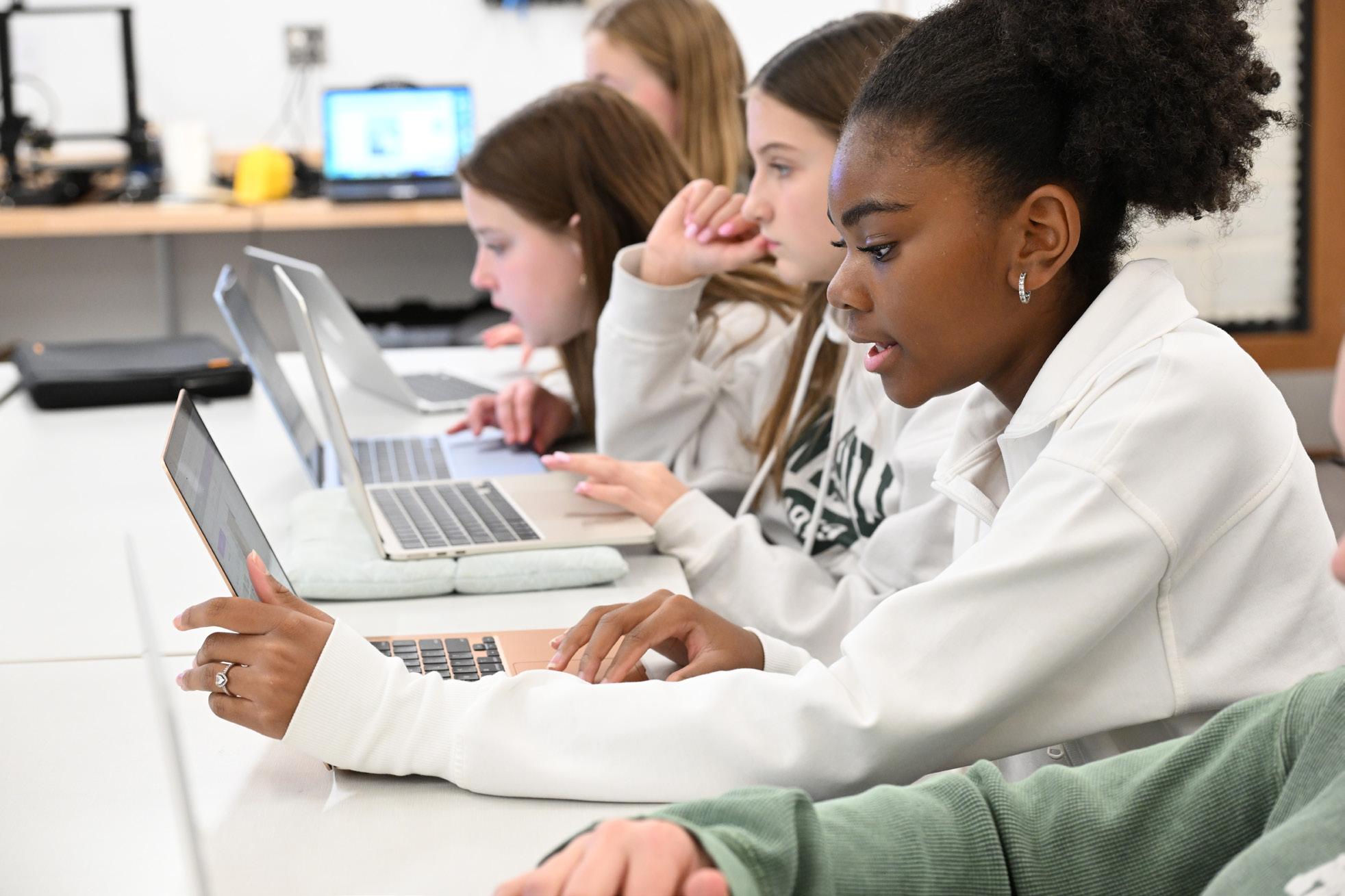
This class, primarily focused on seventh grade technology, emphasizes digital citizenship, responsible technology use, technology balance, device and data security, artificial intelligence (AI) usage and safety, and more. Students will engage in project-based learning with a focus on real world examples. How to avoid online scams, act responsibly online and the dangers of sharing personal information are key topics. Tools like Canva will be used to demonstrate understanding. Students will learn AI prompting techniques and gain experience using various AI tools. Ethics around when to use AI and when not are woven in throughout.
The eighth grade curriculum focuses on developing digital literacy and content creation skills. Students will work with video creation tools to plan, script and edit videos. They will utilize photoshop to learn photo composition and editing processes. They will be taught the risks of memes and responsible social media use. Additionally, students will gain hands-on experience with various artificial intelligence tools as they learn how to leverage AI in an ethical manner. Concepts like digital balance in everyday life are reinforced throughout. The curriculum is project based and involves collaborative work and critical thinking about digital media.
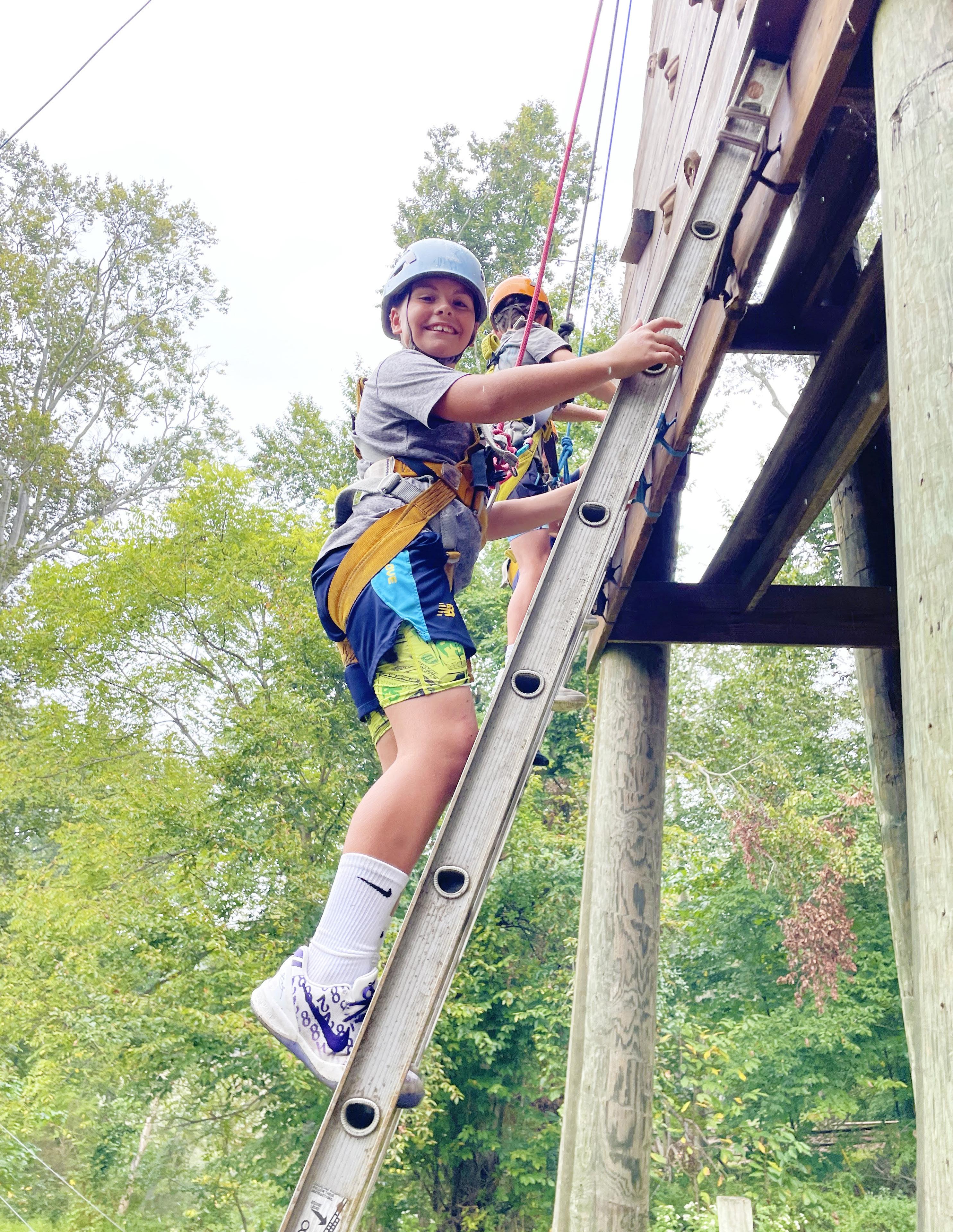
Tower Hill is dedicated to helping students with the growth of their character and considers skills-based Social Emotional Learning (SEL) instruction as critical to our mission. SEL skills help students manage themselves, their behavior, their relationships and their choices. Tower Hill prioritizes the development of these skills just as it does other areas of learning. As such, students participate in SELF classes. The SELF curriculum ensures that students acquire the essential social and emotional skills necessary for academic success and personal growth. These skills equip students to be successful learners, good friends and positive contributors to a safe and healthy community.
A sample list of topics for each grade is listed below:
• Fifth Grade: kindness, emotion recognition, value identification, decision making, sportsmanship
• Sixth Grade: identity, self care, teamwork, problem size, digital citizenship
• Seventh Grade: self and social awareness, time management, reputation management, social media
• Eighth Grade: emotion regulation, healthy boundaries, group dynamics, risk and addiction, human development
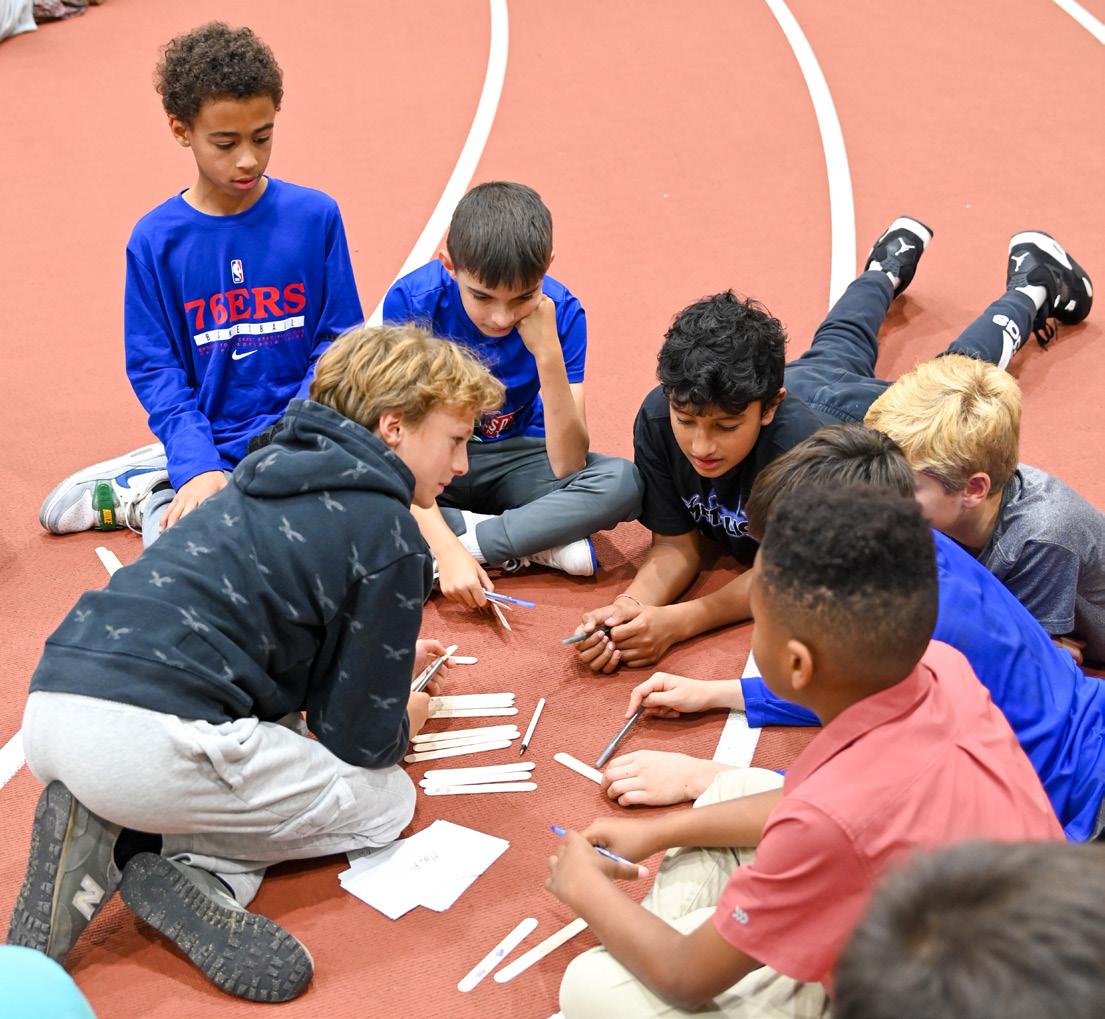
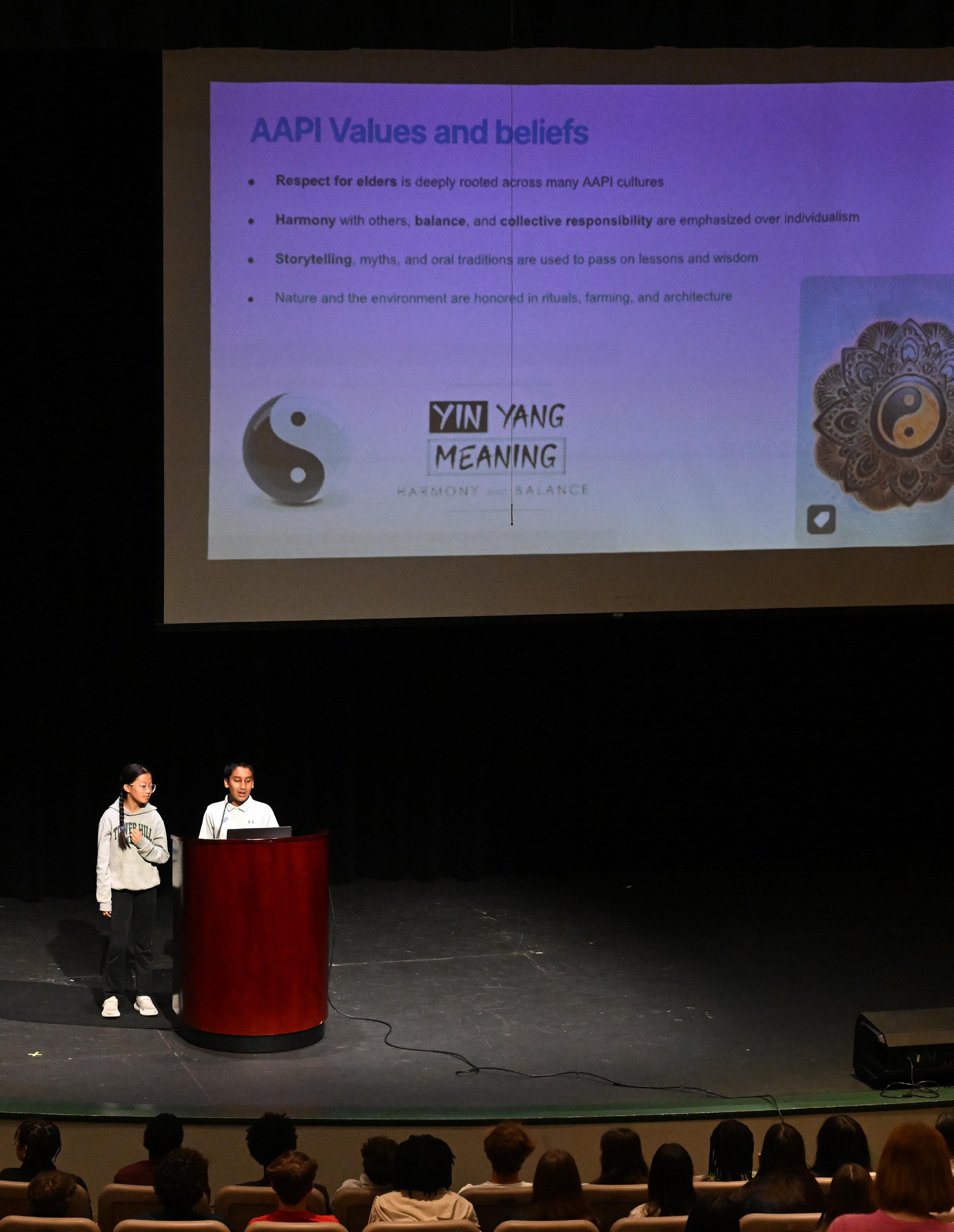
The Leaning into Equity Awareness and Diversity Conference is an opportunity for all of our seventh and eighth grade students to come together with seventh and eighth graders across the state for a single-morning conference. Each year, there is a theme based on a diversity, equity, accessibility, or inclusion topic relevant to the age group. Recent themes include identity, the importance of names, navigating the world with a mixedrace identity, and a variety of cultural performances. The purpose of the day is to provide windows for students to learn about experiences different from their own, mirrors for students to see themselves reflected in the conversations, and sliding glass doors for students to step out of our singular school bubble and interact respectfully with peers from other schools, developing the skills necessary to engage in courageous dialogue.
In fifth and sixth grade we have a yearlong community conversations class that meets once every 10-day cycle. We focus on what a community is and what it means to be part of a community. We discuss friendships and kindness and then move into identity, belonging and the meaning of our names. We share how our names are a part of who we are and the importance of pronouncing names correctly. We talk about labels (we place on ourselves and others), how people dress and how they talk, as well as, the importance of how to ask a curious question. We also engage in topics on debate, discussion and dialogue and how to participate in meaningful conversations. Students learn how to passionately advocate for a cause that is close to their heart and create a speech about their chosen topic. We watch the film Ruby Bridges and discuss school segregation and integration, through the lens of what it means to be a community. Students learn about themselves, their peers and how to be part of a community that celebrates our similarities and differences.
The DEI office presented on school segregation and Delaware’s role in Brown v. Board of Education and the integration of schools to the Middle School community. They learned a lot of the history, which included several Tower Hill connections. This assembly was to lay a foundation for our Black History Month assembly on Jan. 30, where the community learned about the Hockessin Colored School #107c and heard from Mr. Sonny Knott, who was a former student. The Hockessin Colored School #107c was built in 1920 and played a monumental role in desegregating schools nationwide. Today this historical landmark serves as an impactful center for DEI work.
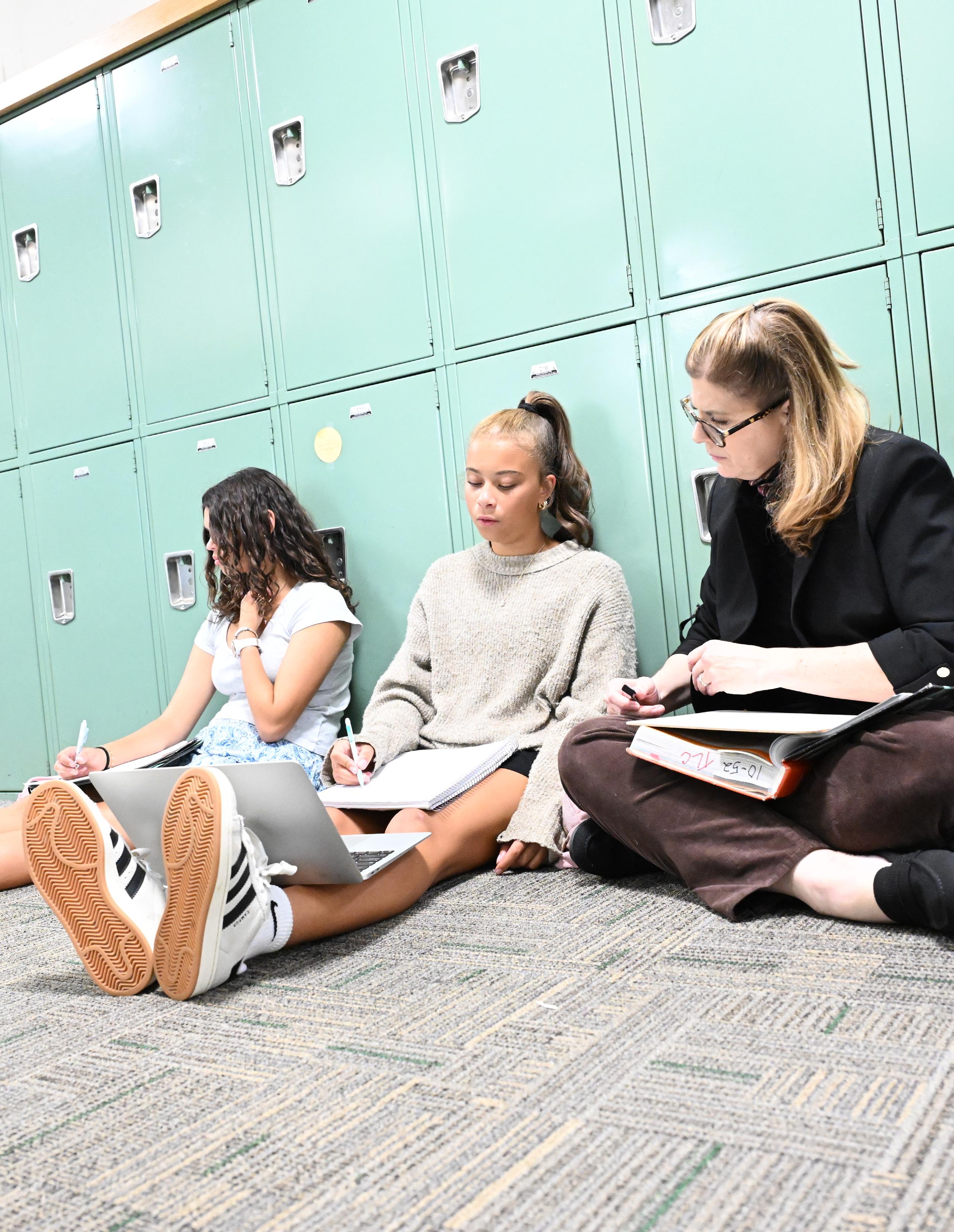
The TLC teaches students lifelong “Learning How to Learn Skills” including:
Healthy Habits and Growth Mindset
• Building routines and attitudes that support focus, resilience and learning.
Organization, Planning and Time Management
• Staying organized and managing time so tasks, priorities and activities all stay in balance.
Note-Taking and Research Skills
• Capturing, organizing and finding information so it’s easy to use later.
Effective Study Strategies
• Learning how to review and practice in ways that actually stick.
Test-Taking Skills and Strategies
• Approaching quizzes and exams with confidence and smart techniques.
Using TowerNet, Email and Google Drive
• Using school platforms and digital tools to stay informed and productive.
In fifth and sixth grades, all students participate in:
• TLC Skills Classes - classes that teach TLC’s Learning How to Learn curriculum
• Math Workshop - classes to advance math skills cotaught by the Math Teacher and Learning Specialist
Students with a demonstrated need receive support:
• During period 7 “work period” in the TLC with homework and organization
• With brief 1:1 check-ins in homeroom, class or check-out
In seventh and eighth grades, all students participate in:
• TLC Skills Workshops - given throughout the year during periods 2 and 6
Students with a demonstrated need receive support:
TLC is the GPS for student suppor t
• In flexible, small groups during period 2 “work period” - focused preparation for an upcoming assessment, paper or project
• With brief 1:1 and small group check-ins in homeroom or during class
The TLC provides accommodations for students with a diagnosed need. Please contact a Learning Specialist for more information.
The fifth and sixth grade “Research Detectives” classes focus on:
1. Inquiry - Generating an inquiry. What’s interesting to me about this topic? What do I think I know now, and what more can I find out?
a. Students will translate a broad topic of personal interest into a focused research question that can be explored.
2. Sources - Differentiating between source types and when you’d seek out one vs. another. The main focus is two big buckets: Background information and analysis.
a. Students will analyze several different sources in order to classify them as either a background source, a news article or an analytical report.
b. Students will articulate how a background source can help them in their inquiry, and why other source types are needed, too.
3. Citation - How we bring the ideas of others into our writing and why we cite.
a. Students will evaluate simple examples of information to determine whether citation is needed in order to recognize citation as a signal of academic honesty.
b. Students will differentiate between their own ideas and the ideas of others through appropriate paraphrasing and direct quotations.
These newly developed classes are part of Tower Hill’s commitment to deepen and expand students’ research skills for their learning through upper school and beyond.
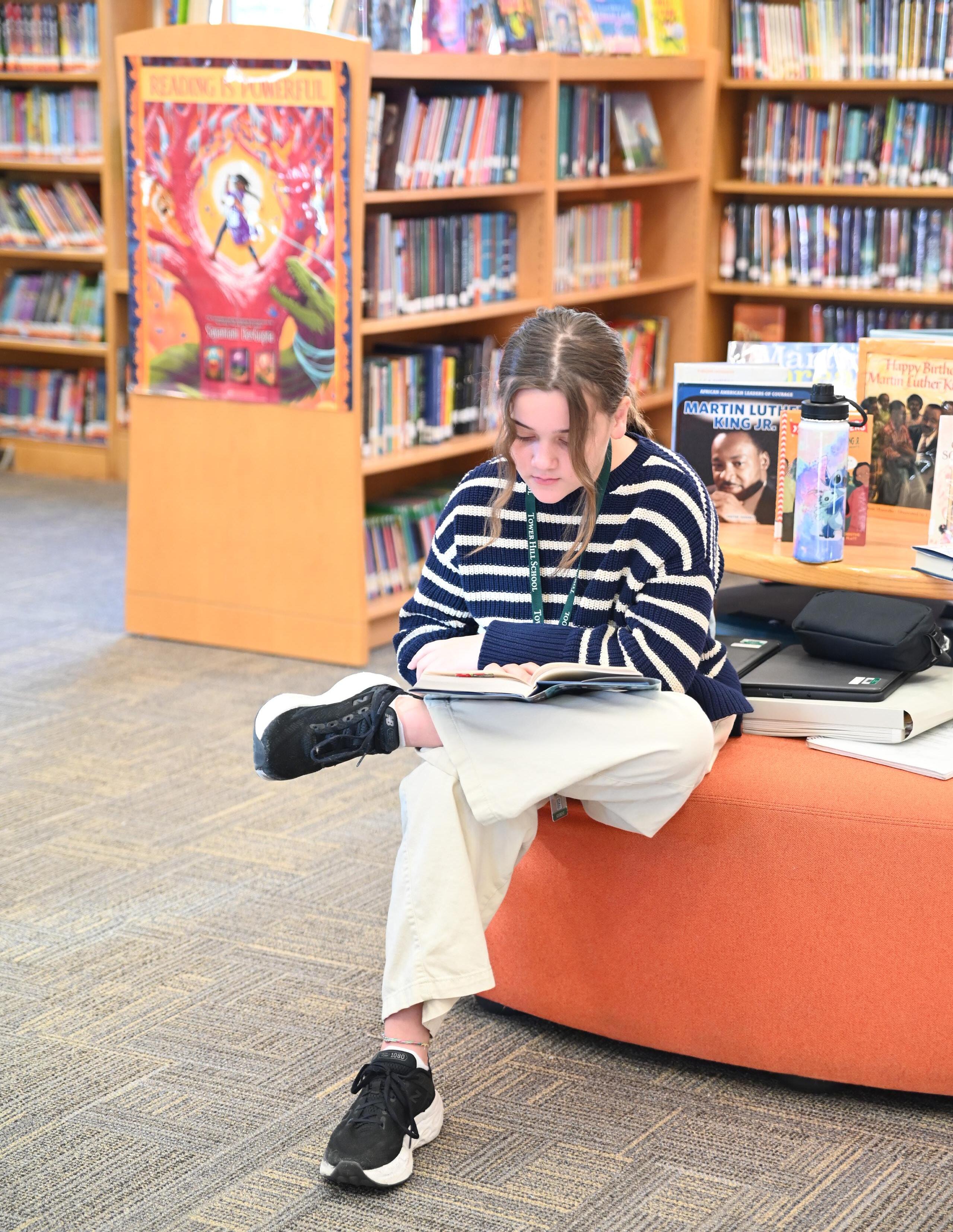
These flex blocks offer students the opportunity to directly engage with the Lower Grades Library’s 17,000 volume print collection and our Sora eBook and audiobook collection with the combined guidance of our Lower Grades Librarian and ELA teachers. Readers advisory support is offered proactively. Thematic research and curricular units are also supported during these classes, encouraging more in-depth and personalized inquiry along with expansion of topics/themes.
Fifth grade students focus on the Big Bang of the Books book battle, an annual year-long reading challenge encompassing students from four Wilmington-area independent schools. Sixth grade students embark on a deep dive of literary genres that includes a year-long challenge spanning 25 specific stylistic categories.
Research skills support for seventh and eighth graders by the Upper Grades Librarian is currently in development. Students have access to THE Hub’s 12,000 volume print collection and over 60 databases available through our online collections, including: