
TRAVEL DESTINATION


Africa’s Rise as a Digital Nomad Destination
Work-cation The Grind & Vaction
Africa’s Remote Revolution
Types of Digital Nomad Visas
Desert to Safari: A 10-Day Road Trip Across Namibia
Meetings Africa 2026
Events
Editor’s Note
As we close the first quarter of 2026, Tourism News Africa turns its focus to one of the most transformative trends reshaping the continent’s tourism landscape: Africa’s emergence as a premier destination for digital nomads and remote workers.
What began as scattered anecdotes of laptops on beaches and co-working cafes in Cape Town has evolved into a structured, policy-driven movement. Countries like South Africa (with its Remote Work Visitor Visa now fully operational), Mauritius (Premium Visa), Namibia, Cape Verde, and others have introduced dedicated frameworks that allow remote professionals to stay longer, contribute steadily to local economies, and integrate more deeply into communities. From the dramatic dunes and wildlife of Namibia to the tech-driven energy of Nairobi’s Silicon Savannah, the reliable connectivity in Kigali, and the island calm of Mauritius, Africa offers far more than scenery — it delivers the rare blend of productivity, inspiration, and authentic experience that modern remote workers crave.
This issue explores that shift through diverse lenses. We examine how improved digital infrastructure, forwardthinking visa policies, and adaptive hospitality models are turning short-term visitors into extended-stay contributors who support year-round revenue for accommodations, co-working spaces, cafes, and local services. Articles highlight inspiring itineraries — such as Namibia’s desert-to-safari road trip that balances connectivity in Windhoek and Walvis Bay with offline reflection amid vast landscapes — and the broader work-cation appeal of destinations where mornings mean focused work and afternoons bring cultural immersion or nature escapes.
Yet we also confront the realities. As nomad numbers grow, so do questions around gentrification, rising living costs in hotspots like Cape Town, infrastructure pressure, and equitable benefit distribution. Thoughtful implementation — with community-focused regulations, sustainable practices, and inclusive growth — will determine whether this trend becomes a genuine win for host destinations or risks replicating global pitfalls.
The timing feels particularly poignant following the landmark 20th edition of Meetings Africa in Johannesburg, which celebrated two decades of connecting Africa to the world. With record international engagement, substantial economic impact, and renewed emphasis on the continent’s MICE capabilities, the event underscored Africa’s maturing position in global business tourism — a foundation that complements and amplifies the remote-work revolution.
Africa is no longer just a place to visit; it’s increasingly a place to live, work, and thrive meaningfully. As editors, we are excited to witness — and document — how this chapter unfolds, ensuring tourism remains a force for shared prosperity.
Welcome to our Digital Nomads & Remote Work edition. May it inspire fresh perspectives on how work and travel can converge to benefit both visitor and host.
Derek Martin
Editor

The way we work has changed — and so has the way we travel. With laptops, cloudbased systems, and virtual meetings now part of everyday professional life, many people are no longer tied to a single office or location. This shift has given rise to a new generation of digital nomads and remote workers who seek destinations that support both productivity and personal fulfilment. Africa, once overlooked in this space, is now emerging as a compelling choice.
Through my work in hospitality, I have witnessed how hotels and tourism operators are responding to this change — adapting spaces, services, and experiences to meet the expectations of long-stay, digitally connected travellers. What was once considered unconventional is quickly becoming part of mainstream tourism.
FROM LIMITED ACCESS TO GLOBAL CONNECTIVITY
A decade ago, Africa was rarely viewed as a practical base for remote work. Internet connectivity was inconsistent, co-working spaces were scarce, and extended stays often involved complicated visa processes. While cities such as Cape Town, Nairobi, and Marrakech attracted tourists and business travellers, few considered them suitable for long-term remote living.
Today, this narrative has shifted dramatically. Submarine cables, mobile broadband expansion, and privatesector investment have significantly improved digital infrastructure across many countries. Fibre networks now reach major urban centres, and co-working hubs have become common in business districts and lifestyle neighbourhoods. Hotels, too, have invested in high-speed connectivity and business-friendly facilities, recognising the growing demand for work-ready environments.
KEY DESTINATIONS ON THE NOMAD MAP
Several African cities now stand out as digital nomad hubs. Cape Town remains one of the continent’s most popular destinations, offering strong infrastructure, a vibrant creative economy, and access to beaches and mountains. Nairobi continues to attract technology professionals and entrepreneurs, supported by a dynamic start-up ecosystem and reliable connectivity. In Morocco, cities such as Marrakech and Essaouira appeal to creatives and freelancers seeking cultural
Africa’s Rise Digital Nomad
depth alongside modern amenities. Kigali, Rwanda’s capital, has earned recognition for its cleanliness, safety, and growing digital economy, making it attractive for long-term stays. Meanwhile, Accra in Ghana is gaining attention for its expanding co-working culture and creative industries.
Beyond their basic infrastructure, these destinations each offer distinct lifestyles that appeal to different types of remote workers. Cape Town combines world-class scenery with an established remote-work community, making it ideal for creatives and entrepreneurs. Nairobi, often referred to as Africa’s “Silicon Savannah,” attracts tech professionals drawn to its innovation hubs and networking culture. In North Africa, Marrakech blends historic medinas with modern co-working spaces, while Kigali stands out for its efficient public services and investor-friendly environment. West Africa’s Accra offers a dynamic mix of music, art, and entrepreneurship, fostering strong creative networks. Smaller destinations such as Swakopmund, Zanzibar, and Diani Beach appeal to nomads seeking slower-paced, nature-focused lifestyles without sacrificing connectivity. Together, these locations demonstrate the diversity of Africa’s remotework landscape, offering options that range from fastpaced urban centres to tranquil coastal retreats.
Smaller towns and coastal destinations are also entering the picture. These emerging hubs demonstrate that remote work is no longer limited to major metropolitan areas, provided that reliable infrastructure, accommodation, and professional services are in place.
“Where once barriers existed, opportunities are now emerging — Africa is becoming a place to live, work, and thrive.”
Rise as a
Destination
CHANGING POLICIES AND LONGER STAYS
Government policy has played a crucial role in supporting this trend. In the past, short tourist visas restricted remote workers to brief stays, often forcing them to relocate frequently. Today, several African countries have introduced digital nomad and long-stay visas, offering greater stability and legal clarity.
Countries such as Namibia, Mauritius, and Rwanda have led the way, recognising the economic value of attracting skilled international professionals. These initiatives encourage longer stays, deeper community engagement, and sustained spending within local economies. For hospitality providers, this shift has created opportunities to develop extended-stay products and personalised services for this growing segment.
HOSPITALITY’S ROLE IN THE REMOTE WORK EXPERIENCE
Hotels and serviced apartments are central to Africa’s digital nomad ecosystem. Properties are increasingly offering dedicated workspaces, co-working lounges, ergonomic furniture, and flexible booking arrangements. From my professional experience, I have seen how thoughtful design and service delivery can significantly influence a remote worker’s productivity and overall satisfaction.
At the same time, responsible hospitality remains essential. Sustainable operations, local sourcing, and community partnerships ensure that the benefits of digital nomad tourism extend beyond hotel walls. When managed carefully, remote work travel can support employment, skills development, and small businesses in host destinations.
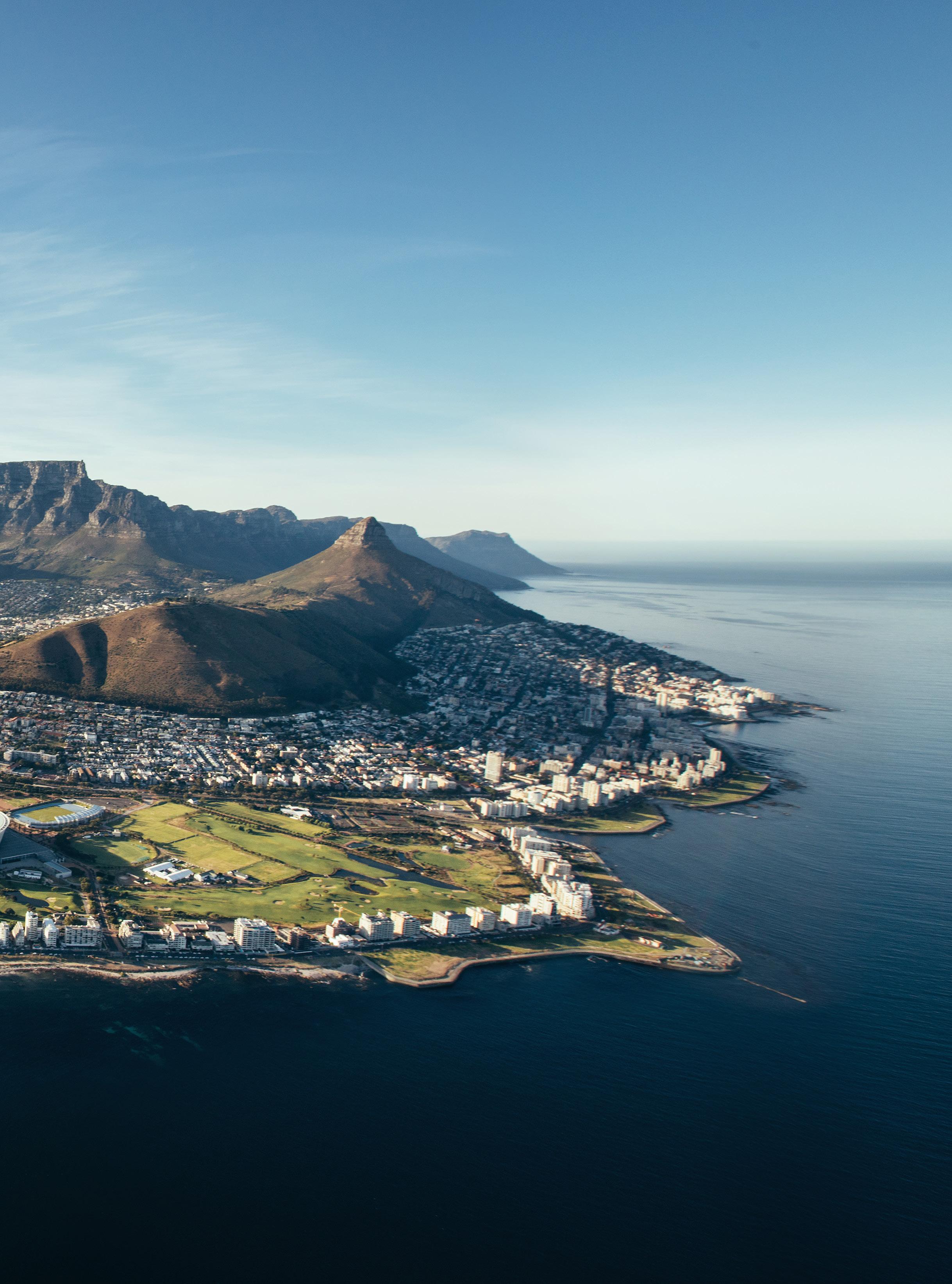
“Africa, once overlooked in this space, is now emerging as a compelling choice for remote workers.”
BALANCING PRODUCTIVITY WITH PLACE
One of Africa’s greatest advantages lies in its ability to combine work with meaningful experiences. Remote workers can begin their day in a co-working space and end it on a game drive, cultural tour, or coastal walk. This balance contributes to improved well-being and long-term engagement with destinations.
Many hotels and operators now integrate environmental and cultural programmes into their offerings, encouraging guests to participate in conservation projects, heritage activities, and community initiatives. This approach strengthens the connection between visitors and host environments while reinforcing responsible travel values.
LOOKING FORWARD
Africa’s rise as a digital nomad destination reflects broader changes in global work culture and tourism development. Improved infrastructure, supportive policies, and innovative hospitality models have transformed the continent’s appeal to remote professionals. Where barriers once existed, opportunities are now emerging.
Observing these developments through my work in hospitality has been both inspiring and encouraging. As destinations continue to adapt and invest in sustainable, inclusive growth, I’m excited to see how Africa will further position itself as a place where people can live, work, and connect meaningfully. The future of remote work on the continent is not only promising — it is already taking shape.

Work-cation The Grind & Vaction
There was a time when travel meant switching off your laptop and setting an out-of-office reply. Today, for a growing number of professionals, travel simply means switching Wi-Fi networks. The digital nomad once a niche lifestyle is becoming a serious contributor to global tourism and Africa is steadily positioning itself as one of the world’s most compelling places to live, work, and explore at the same time.
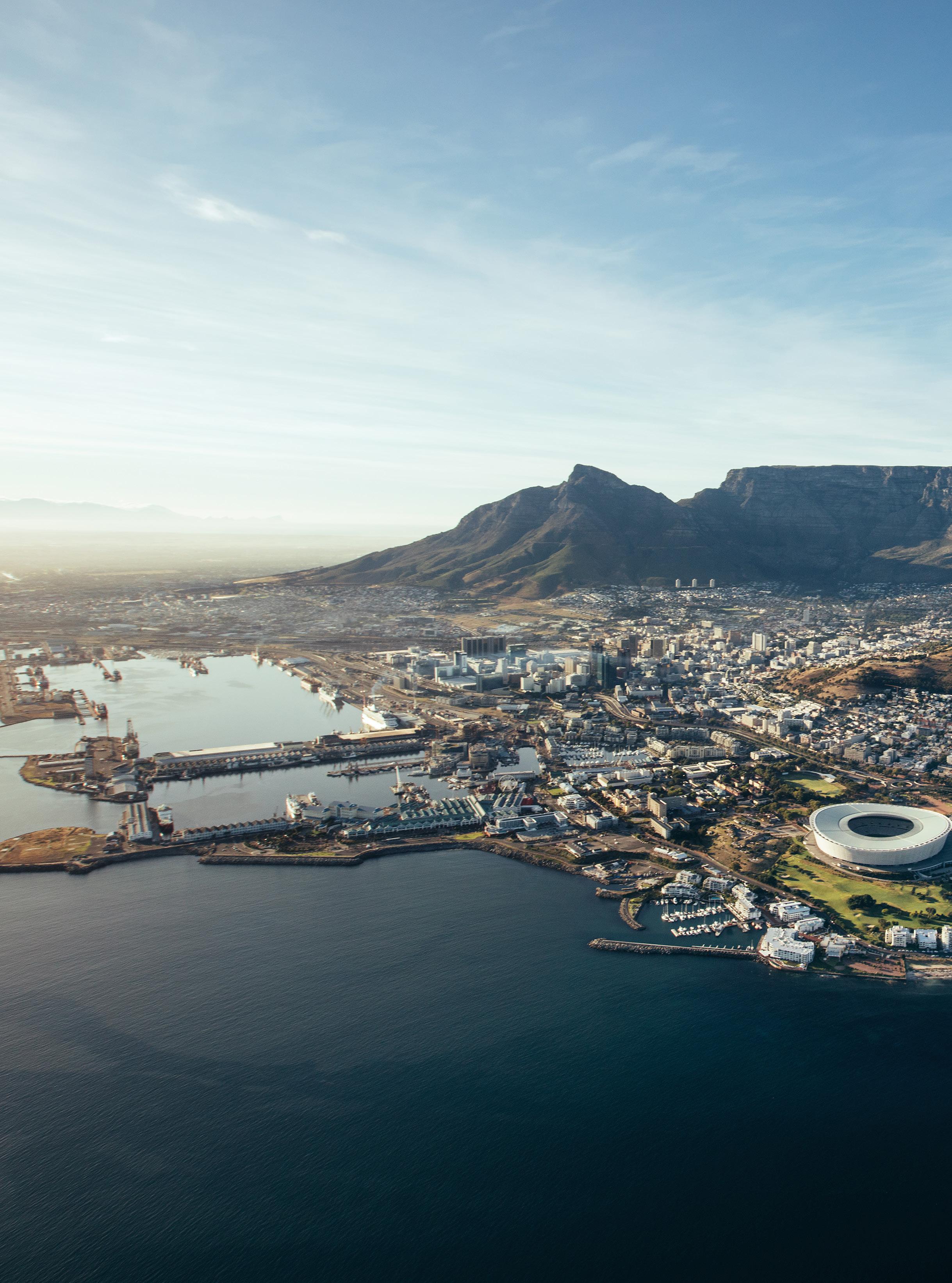
What makes Africa particularly appealing isn’t just affordability or scenery, it’s rhythm. Cities and landscapes here allow productivity and presence to exist together. A morning meeting can happen from a café overlooking Table Mountain, and by late afternoon you’re walking along the Atlantic coast watching the sun fall into the ocean. The line between routine and discovery becomes wonderfully blurred.
South Africa has naturally led the conversation. Cape Town consistently ranks among the most desirable remote work destinations globally thanks to reliable fibre networks, co-working hubs, favourable exchange rates for foreign earners and a lifestyle that rarely requires a weekend escape because it already feels like one. Add a growing remote-work visa framework and time zones aligned with Europe and it becomes less a holiday and more a temporary home base.
Further north, Kenya has quietly become East Africa’s digital gateway. Nairobi’s tech scene, often called the “Silicon Savannah” and offers fast connectivity and a startup-driven culture that welcomes locationindependent workers. Yet within a few hours, the urban energy gives way to national parks, coastlines, and highland retreats, making it possible to work a normal weekday and still fit in a sunrise game drive before your first call.
Mauritius approached the nomad trend with intent. Its Premium Travel Visa allows long stays specifically for remote workers, and the island’s infrastructure was designed with stability in mind, consistent power, strong internet, and a safe environment. The appeal here is predictability: the reliability needed to meet deadlines paired with the calm needed to actually enjoy where you are.
Then there’s Rwanda, small but ambitious. Kigali’s cleanliness, safety, and growing co-working culture have positioned it as a rising hub. The government’s
openness to innovation and ease of movement make everyday logistics remarkably simple which is something remote workers quickly learn to value more than scenic backdrops.
What travellers often discover is that productivity changes in new environments. Work hours compress. Evenings stretch. Inspiration increases. Many remote workers report that tasks completed in four focused hours abroad would take a full day back home. A shift in surroundings resets attention — and attention, not time, is often the real currency of productivity.
Africa’s advantage lies in offering contrast without chaos. You can work from modern infrastructure while remaining close to nature, culture, and community. Markets replace shopping malls, conversations replace commutes and routine becomes experienced.
The work-cation is no longer about escaping work… it’s about redesigning it. And across the continent, professionals are realising they don’t need to choose between career progress and living fully. Sometimes the most productive move you can make is simply changing your view.
Because when the day ends and the laptop closes, Africa doesn’t feel like where you travelled to. It feels like where you were meant to work from all along.


Jesse Morris News Correspondent
Africa’s Remote Digital Nomad Visas - Tourism
Digital nomad visas allow remote workers such as freelancers, tech professionals, and entrepreneurs, to legally live and work in a foreign country for extended periods (typically 6–12 months or more), provided their income comes from outside the host nation. Unlike traditional tourist visas (often limited to 90 days), these programmes target highearning individuals who blend work with lifestyle travel.
Globally, over 50 countries now offer such visas, but Africa has emerged as a rising frontier, with pioneers like Mauritius (Premium Visa, launched 2020), Cabo Verde (Remote Working Programme, 2020), Namibia (Digital Nomad Visa, 2022), Kenya (Class N permit, 2024), and most recently South Africa (Remote Work Visitor Visa, launched 2024 and fully operational by 2025). These initiatives leverage Africa’s diverse attractions such as pristine beaches, wildlife safaris, vibrant cultures, worldclass cities like Cape Town, and far lower living costs to attract remote workers.
The link to tourism is direct and profound. Traditional tourism in Africa often relies on seasonal peaks (e.g., dry season safaris or beach holidays), leading to boomand-bust cycles that can strain local economies. Digital nomad visas transform short-term visitors into longstay “extended tourists” who spend more consistently on accommodations, food, transport, co-working spaces, and experiences. For instance, in small island states like Cabo Verde, these visas provide year-round revenue, reducing dependence on seasonal tourism and supporting hospitality year-round. Similarly, Namibia positions nomads as nature-loving adventurers who rent longer-term and explore widely, boosting sustainable spending in rural areas. Mauritius has used its tax-free Premium Visa to draw remote workers to its tropical paradise, stabilising income for local businesses beyond peak visitor seasons.
By contrast, in South Africa, the new visa targets highearners (minimum ZAR 650,000+ annual foreign income) to live and work remotely, with potential to supercharge tourism in hotspots like Cape Town (already a previsa favourite for remote workers) while encouraging exploration of national parks, wine regions, and coastal towns. Across the continent, these programs align with goals like Kenya’s target of 5 million annual tourists by 2027, by encouraging deeper economic integration through prolonged stays.
THE PRO’S OF DIGTAL NOMAD VISAS:
The Pros for African host countries and their tourism sectors are compelling. First, economic diversification and steady income: Nomads often outspend short-term tourists, injecting foreign currency into local economies without competing for jobs. Their longer stays support off-season hospitality, create demand for co-working hubs, cafes, and services, and foster entrepreneurship in tech and tourism-adjacent sectors. In South Africa, the visa promises to attract skilled, affluent visitors who contribute through spending rather than local employment, potentially revitalising urban economies and extending tourism benefits inland.
Second, sustainability: Unlike mass tourism’s environmental strain (e.g., overcrowding at iconic sites), nomads integrate into communities, promoting slower, more immersive travel that can fund conservation or cultural preservation.
Third, global visibility: Attracting skilled, affluent visitors enhances Africa’s image as a modern, connected destination, potentially drawing investment and talent. In places like Cabo Verde, governments invest visa-driven revenue in digital infrastructure, creating a virtuous cycle for future growth.
THE CON’S OF DIGTAL NOMAD VISAS:
However, the cons cannot be ignored, as rapid influxes risk unintended consequences. A major concern is gentrification and rising costs: Higher-earning nomads (often from wealthier nations) drive up housing prices through short-term rentals, making homes unaffordable for locals - already evident in parts of Cape Town (intensified by the new visa and pre-existing remote work trends) and echoed in African island destinations.
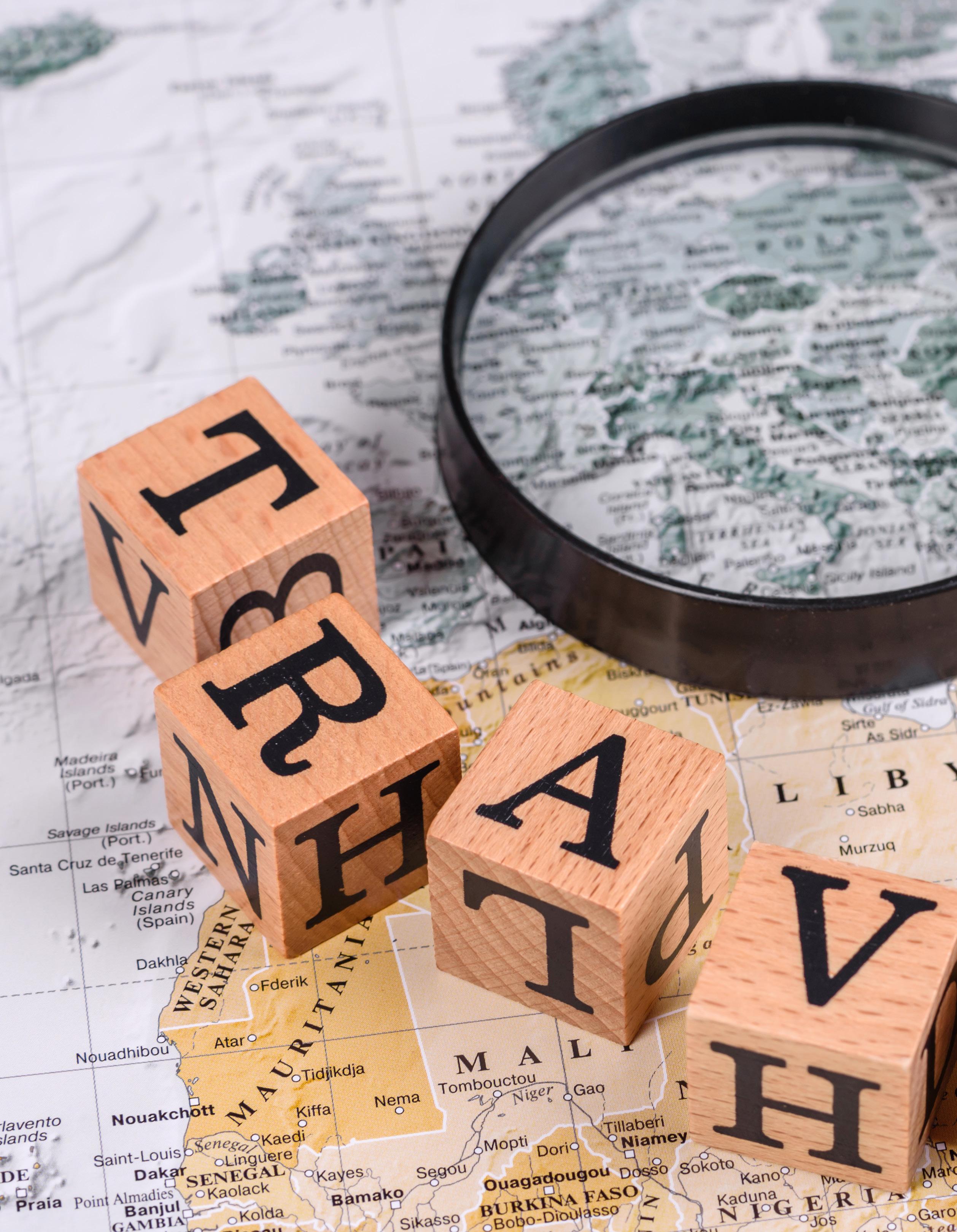
“Globally, over 50 countries now offer digital nomad visas, but Africa has emerged as a rising frontier.”
Remote Revolution Tourism Boost or Gentrification Risk?
“When managed equitably, digital nomad visas offer a win-win: inspiring workplaces for nomads and sustainable revenue for host destinations.”
Infrastructure strain follows, with increased pressure on water, electricity, internet, and transport in areas unprepared for sustained foreign populations. Cultural and social tensions may arise if nomads cluster in enclaves, leading to perceptions of inequality or “economic colonialism,” where wealth flows in but little trickles down through taxes (many visas, including South Africa’s in some cases, exempt or limit taxation on foreign income).
Finally, over-reliance on nomads could dilute authentic tourism if destinations prioritize remote workers over family or adventure travelers, or if programs fail to regulate numbers and impacts.
THE STRATEGIC PIVOT
Here in Africa, where tourism contributes significantly to GDP in countries like Kenya, South Africa, and island nations, digital nomad visas represent a strategic pivot toward resilient, year-round models. Yet success of these programmes depends on thoughtful implementation such as clear regulations, community benefits (e.g., infrastructure funds or local hiring incentives), and monitoring to prevent displacement.
Programmes in Mauritius and Namibia show promise by emphasising affordability and natural appeal, while South Africa’s longer potential stay (up to 36 months with renewals) and urban draw could accelerate growth if balanced carefully.
Ultimately, digital nomad visas bridge remote work and tourism in ways that could redefine Africa’s economic narrative. When managed equitably, they offer a win-win: nomads gain inspiring backdrops for productivity, while hosts secure sustainable revenue and global connections.
As more African nations explore or expand these schemes the continent stands at a crossroads - poised to harness this trend for inclusive growth or risk replicating global pitfalls of uneven benefits. The key lies in policies that prioritise local communities alongside economic gains.
“Africa stands at a crossroads—poised to harness this trend for inclusive growth or risk replicating global pitfalls of uneven benefits.”


Chris Midgley News Correspondent
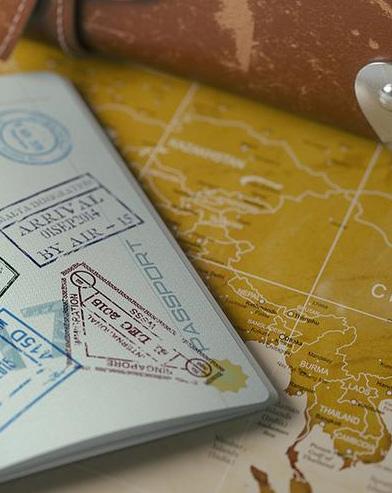
AAs the global workforce embraces flexible working arrangements, Africa is increasingly positioning itself as an attractive destination for digital nomads. With its vibrant cities, breathtaking landscapes, and relatively low cost of living, the continent offers more than just a change of scenery, it provides a unique opportunity to work while experiencing diverse cultures. For digital nomads, the first step in making this lifestyle feasible is understanding the types of visas available for remote work across Africa.
1. SOUTH AFRICA – THE SPECIAL WORK VISA FOR REMOTE WORKERS
South Africa has long been a hub for professionals seeking a mix of urban convenience and natural beauty. Recognising the growing trend of remote work, the government now offers a visa specifically tailored for digital nomads. The visa typically allows stays of up to 12 months, extendable under certain conditions. Applicants must demonstrate proof of remote employment or a freelance business, sufficient financial means to support themselves, and comprehensive health insurance. Cape Town and Johannesburg are particularly popular among nomads, offering reliable internet connectivity alongside co-working spaces and social hubs.
2. MAURITIUS – THE PREMIUM VISA FOR LONG-TERM STAYS
Mauritius, with its tropical beaches and favourable tax policies, has created a “Premium Visa” aimed at long-term remote workers. Valid for up to one year and renewable, this visa requires proof of employment outside Mauritius or a self-owned business, a minimum monthly income, and medical insurance. The country’s infrastructure, including high-speed internet and international connectivity, makes it an attractive destination for digital nomads who want both work efficiency and lifestyle appeal. The Mauritian government also emphasises safety and political stability, which are important considerations for longer stays.
3. CAPE VERDE – THE REMOTE WORK VISA
Cape Verde is emerging as a hidden gem for digital nomads. The country offers a remote work visa allowing stays for up to six months, with the possibility of extension. Applicants must provide evidence of remote employment and sufficient funds to cover their stay. Cape Verde is particularly appealing for those seeking a quieter environment, with stunning coastal scenery, a mild climate, and a slower pace of life that is ideal for balancing work and leisure.
Types of Digital
4. KENYA – SPECIAL PASS FOR REMOTE WORKERS
Kenya, known for its dynamic cities and world-famous safaris, has introduced a special pass for remote workers. The visa permits stays ranging from six months to a year, depending on the applicant’s employment type and income. Remote workers must provide proof of employment outside Kenya, a valid work contract or freelance portfolio, and health insurance. Nairobi and Mombasa, with their growing tech hubs and co-working communities, are ideal locations for digital nomads seeking both connectivity and adventure.
5. MOROCCO – DIGITAL NOMAD AND FREELANCE VISAS
Morocco has recently opened doors to remote workers through a digital nomad-friendly visa. Designed for freelancers and employees of foreign companies, the visa allows stays up to a year with potential extensions. Morocco’s appeal lies in its rich history, diverse landscapes, and vibrant cities such as Marrakech and Casablanca, which blend traditional culture with modern infrastructure suitable for remote work.
6. RWANDA – THE INNOVATION-FRIENDLY VISA
Rwanda, often referred to as the “Singapore of Africa,” offers a forward-thinking approach to attracting remote workers. The country provides visas that support longterm stays for skilled professionals and digital nomads, especially those in tech and innovation sectors. Kigali, the capital, is emerging as a hub for co-working spaces and networking events, offering a combination of urban convenience and access to Rwanda’s stunning natural attractions.
“Reliable internet access, cost of living, healthcare infrastructure, and safety are equally important.”
Digital Nomad Visas
KEY CONSIDERATIONS FOR DIGITAL NOMADS IN AFRICA
When choosing an African destination for remote work, visa eligibility is just one part of the equation. Reliable internet access, cost of living, healthcare infrastructure, and safety are equally important. Many countries require proof of sufficient funds and health insurance, so planning ahead is crucial. Nomads should also be mindful of local laws and customs, ensuring their work and lifestyle remain compliant and respectful.
CONCLUSION
Africa’s growing recognition as a destination for digital nomads is opening new opportunities for remote workers seeking adventure, culture, and professional flexibility.
From South Africa’s dynamic cities to the tropical allure of Mauritius and the innovation-driven environment of Rwanda, the continent offers diverse options for those ready to combine work and travel. Understanding the different types of digital nomad visas and the requirements for each is the first step toward making Africa a long-term work-travel destination of choice.

Jonty Bruggen
News Correspondent
DIGITAL NOMADS IN AFRICA: ECONOMIC BOOST OR GENTRIFICATION CRISIS?
Desert to Safari: A 10-Day Road Trip Across Namibia
rom vast desert landscapes to wildlife-rich savannahs and a laid-back coastal lifestyle, Namibia is a dream destination for digital nomads seeking adventure, freedom, and space to breathe. On this 10-day self-drive journey, I explored my home country along its most iconic route, blending remote work, road-trip freedom, and unforgettable scenery.
Namibia is a land of contrasts: red dunes, coastal lagoons, granite peaks, and wildlife-rich savannahs all waiting to be explored.
WINDHOEK: NAMIBIA’S CAPITAL (1 NIGHT)
Namibia’s capital is the perfect starting point, offering reliable internet, work-friendly accommodations, and a gateway into local culture.
HIGHLIGHTS:
Christ Church Windhoek — iconic landmark with German colonial architecture
Independence Memorial Museum — insight into Namibia’s history and independence
Oshetu Community Market — handmade crafts and textiles
DIGITAL NOMAD TIP: Windhoek is the ideal place to establish a base before venturing into remote regions. Connectivity is strongest here, making it easy to get work done and plan the road trip ahead.
SOSSUSVLEI – NAMIB DESERT (2 NIGHTS)
The Namib Desert offers surreal landscapes with towering dunes, clay pans, and dramatic skies.
HIGHLIGHTS:
Deadvlei Valley — iconic white clay pan surrounded by red dunes
Dune 45 — climb at sunrise for unforgettable vistas
Elim Dune walk — a quieter alternative with spectacular perspectives
Sesriem Canyon — natural gorge carved by the Tsauchab River
Stargazing — some of the clearest night skies in the world
Photography workshops — offered by lodges for the perfect desert shot
DIGITAL NOMAD TIP: Wi-Fi is limited here. Use this time to unplug creatively and let the desert inspire your work.
WALVIS BAY – WEST COAST (2 NIGHTS)
Walvis Bay is a coastal paradise with abundant marine life and adventure opportunities, perfect for balancing work and exploration.
HIGHLIGHTS:
Catamaran cruises — spot dolphins, seals, and flamingos
Pelican Point — birdwatching and wildlife encounters Lagoon kayaking — paddle among pelicans and other waterbirds
Sandwich Harbour — dunes meet the ocean in a dramatic landscape
Adventure activities — sandboarding, quad biking, and scenic flights
DIGITAL NOMAD TIP: Connectivity is also strong here, giving the opportunity to catch up on and prepare all work-related tasks.
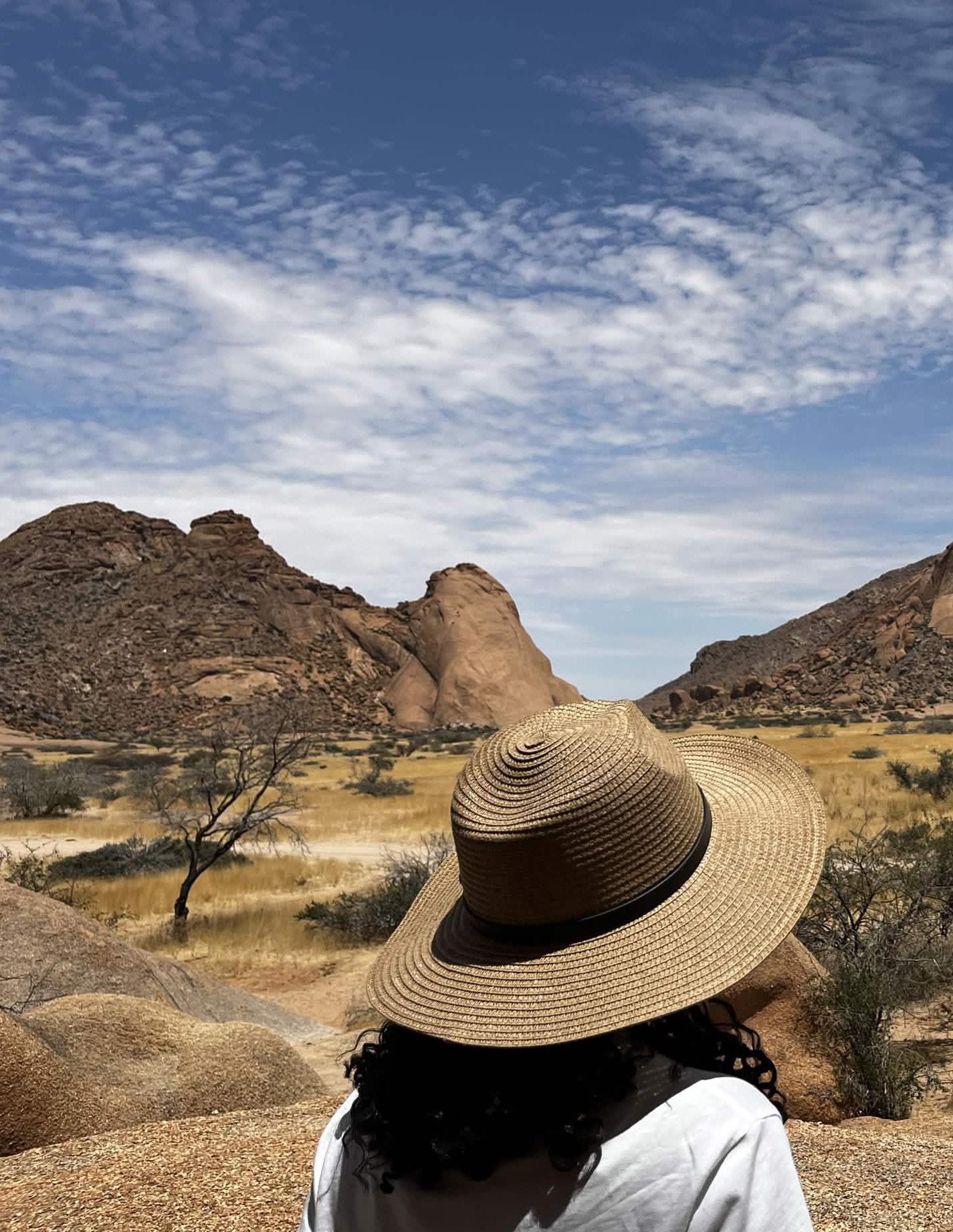
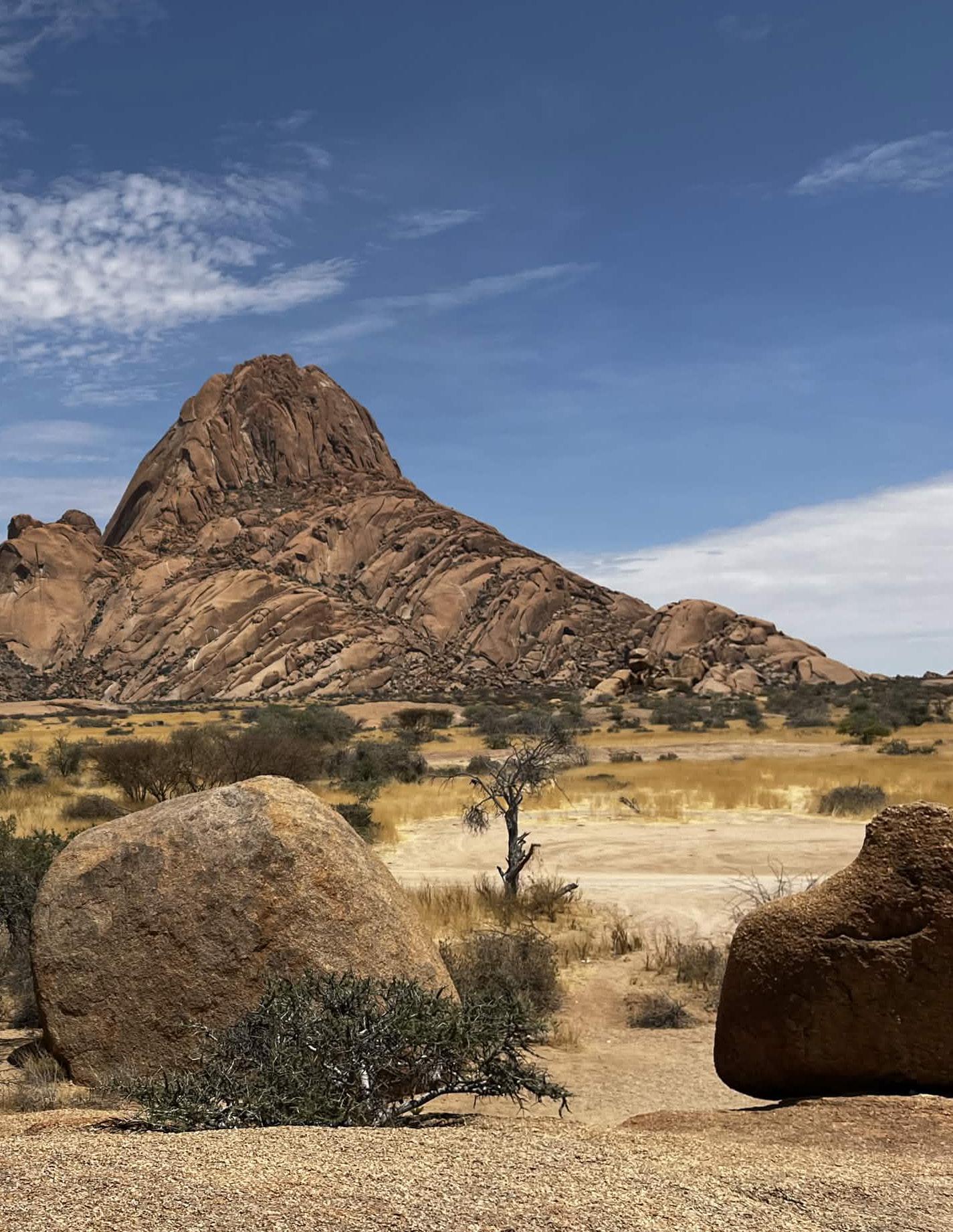
SPITZKOPPE – GRANITE PEAKS AND ROCK ART (2 NIGHTS)
Spitzkoppe, known as the “Matterhorn of Namibia,” offers adventure, culture, and inspiration.
HIGHLIGHTS:
Rock climbing — from beginner to advanced routes
Bushman rock art — ancient San paintings in Bushman’s Paradise Cave
Ûiba-Ôas Crystal Market — unique souvenirs and local crafts
Sunset hikes — granite formations glow beautifully in evening light
Birdwatching — several species are endemic to the region
DIGITAL NOMAD TIP: With limited signal, this is an ideal place to focus on offline projects or creative reflection.
ETOSHA NATIONAL PARK – SAFARI ADVENTURES (2 NIGHTS)
Etosha is one of Africa’s most accessible safari destinations, centred around the vast Etosha Pan.
HIGHLIGHTS:
Etosha Pan — surreal white salt pan landscapes
Moringa Waterhole — wildlife viewing at its best
Guided morning and evening game drives — see wildlife in action
Birdwatching and Photography workshops — offered by lodges for wildlife enthusiasts
DIGITAL NOMAD TIP: Most lodges have limited connectivity, so plan work before or after game drives for a seamless mix of productivity and adventure.
EXPLORING NAMIBIA: FROM DESERT DUNES TO WILDLIFE
RETURN TO WINDHOEK (1 NIGHT)
The journey concludes back in Windhoek, providing the perfect opportunity to reconnect online, edit content, and reflect on the trip.
HIGHLIGHTS:
Explore cultural heritage sites and museums
Visit local markets for souvenirs
Relax in co-working-friendly accommodations before departure
DIGITAL NOMAD TIP: Windhoek is the ideal place to finish the trip while catching up on work and planning your next adventure.
WHY NAMIBIA WORKS FOR DIGITAL NOMADS
Namibia offers a rare combination of reliable infrastructure and immersive experiences that make remote work both feasible and inspiring. Windhoek and Walvis Bay provide strong internet, co-working-friendly accommodations, and services that allow nomads to stay connected while planning road trips. Beyond the city, lodges along the route from Sossusvlei to Walvis Bay, Spitzkoppe, and Etosha are increasingly catering to remote workers.
The country’s low population density and wide-open landscapes give nomads space to structure their days around work and exploration without constant distractions. Minimal traffic, predictable road conditions, and safe accommodations make it easy to balance productivity with adventure — whether drafting
reports in a desert lodge or editing content by a lagoon. This practical combination of connectivity, calm, and flexibility is what makes Namibia a standout destination for digital nomads.
FINAL THOUGHTS
Namibia is more than just a destination — it’s a workspace, a playground, and a source of inspiration. This 10-day road trip captures the essence of the country, offering experiences that blend productivity with adventure and leave a lasting impression. For remote workers seeking space, creativity, and authenticity, Namibia delivers on every level. The landscapes, wildlife, and cultural experiences provide endless inspiration, making it easy to imagine returning again — for work, exploration, or both.
Roux-Ché Shidute
News
Correspondent
20 YEARS OF CONNECTING AFRICA TO THE WORLD Meetings Africa 2026 S
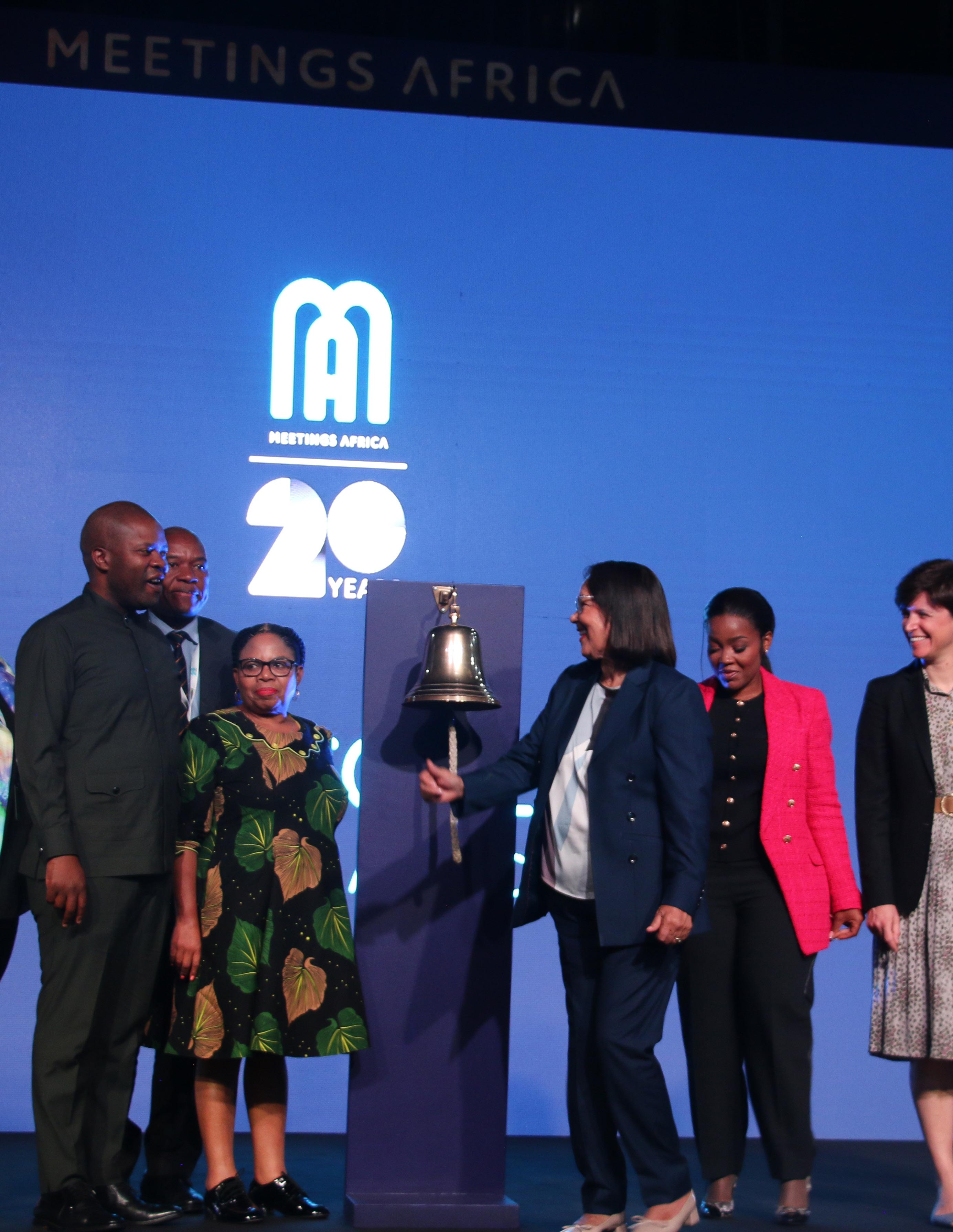
outh Africa’s once again welcomed the global travel and business events community to Johannesburg, for the 20th edition of Meetings Africa - the continent’s leading MICE trade show for tourism. As Africa’s premier MICE-focused trade show, Meetings Africa 2026 brings together African exhibitors, international and regional buyers, associations, corporate planners and media under one roof. The platform facilitates high-value engagement, partnership-building and deal-making, while amplifying Africa’s collective business events offering to the world.
Hosted again at the Sandton Convention Centre, this 2026 edition marked a truly significant milestone — 20 Years of Connecting Africa to the world. Over the last two decades, Meetings Africa has grown into the most definitive marketaccess platform for Africa’s meetings, incentives, conferences and exhibitions (MICE) sector. In an era where business tourism is increasingly recognised for its role in driving investment, job creation and skills transfer, Meetings Africa continues to stand out as a strategic enabler of growth for destinations and suppliers across the continent.
Delivered by SA Tourism, the event has consistently positioned Africa as a credible, competitive and creative destination for global business events, while delivering tangible economic impact across the continent.
A CONTINENTAL MILESTONE FOR BUSINESS EVENTS
The importance of Meetings Africa 2026 was highlighted as early as July 2025, when South Africa’s Minister of Tourism, Patricia de Lille, officially announced the dates for both Meetings Africa and Africa’s Travel Indaba and stated the following: “These are not just dates; they represent important milestones in our continent’s tourism and business events calendar. Through these events, we are solidifying South Africa’s leadership role in hosting world-class business events”.
The minister further highlighted the strategic role of Meetings Africa in shaping Africa’s business events future, highlight how the event brings together key stakeholders from around the globe, positioning Africa as a competitive and creative destination for MICE activities, as well as serving to connect regional and international buyers and suppliers, building a platform for the growth and development of Africa’s MICE sector as a whole.
As a media partner to the Meetings Africa event, the TNA team was again on the ground capturing the event and bringing you all the latest news from Meetings Africa 2026. Discover more in our highlights video below: