
SUSTAINABILITY REPORT 2024
www.touchpointww.com
www.touchpointww.com/sv

CEO GREETINGS
The year 2024 was once again dynamic and eventful in many ways, and for us at Touchpoint it was also a period of change and of defining new directions. The years 2020–2023 were marked by major global “shocks,” such as the pandemic and the war in Ukraine, and the complex and often unpredictable consequences they caused in the markets and in our operating environment Although 2024 was not free from global turbulence either, we were nevertheless able to focus more strongly on the long-term development of our own operations and on exploring new opportunities.
The market environment remained relatively challenging both in Finland and across the Nordic countries. The overall economic situation and uncertainty along with the effects of inflation and higher interest rates created a sense of caution within our industry. As a result, many larger projects and investments were postponed Fortunately, our
long-term customer partnerships remained strong throughout the year However, in new customer acquisition we did not reach the targets we had set. Among the year's key achievements were our market entry in Estonia and a new partnership with a major Finnish operator in the transport sector. In product sales, our clear success story was our microfiber care garments: in total, we delivered more than 300,000 units to both new and longstanding partners.
In 2024, we underwent a comprehensive recertification audit for the ISO 9001 quality management system and the ISO 14001 environmental management system. The audit included a thorough review of our processes, our achievement of set objectives, and our continuous improvement practices. We received substantial positive feedback, particularly regarding the consistency and high quality of our team’s work
Towards the end of the year, our team experienced changes as our long-term colleagues and management team members, Arto and Minja, moved on to new opportunities outside the company I would like to once again express my sincere gratitude to both of them for their valuable contributions to Touchpoint – thank you.
I wish you an insightful and inspiring reading experience. With this report, we hope to once again share openly how we operate and how we strive to advance more sustainable practices within the textile industry. We warmly welcome any feedback or suggestions for improvement
– Noora
Noora Salonoja
CEO,Touchpoint Oy
TOUCHPOINT HIGHLIGHTS 2024
ENVIRONMENT AND CLIMATE
The best sustainable workwear solutions for us, you and the environment.
MAIN TARGETS :
1. SUPPLY CHAIN DEVELOPMENT
Strengthen our delivery reliability and increase production flexibility
2. MATERIAL EFFICIENCY
Track the amouont of environmentally preferable materials and the use of recycled materials
3. ENVIRONMENTAL AWARENESS AND CARBON FOOTPRINT
Calculating our carbon footprint and learning from it
HIGHLIGHT OF THE YEAR 2024
SUPPLY CHAIN DEVELOPMENT
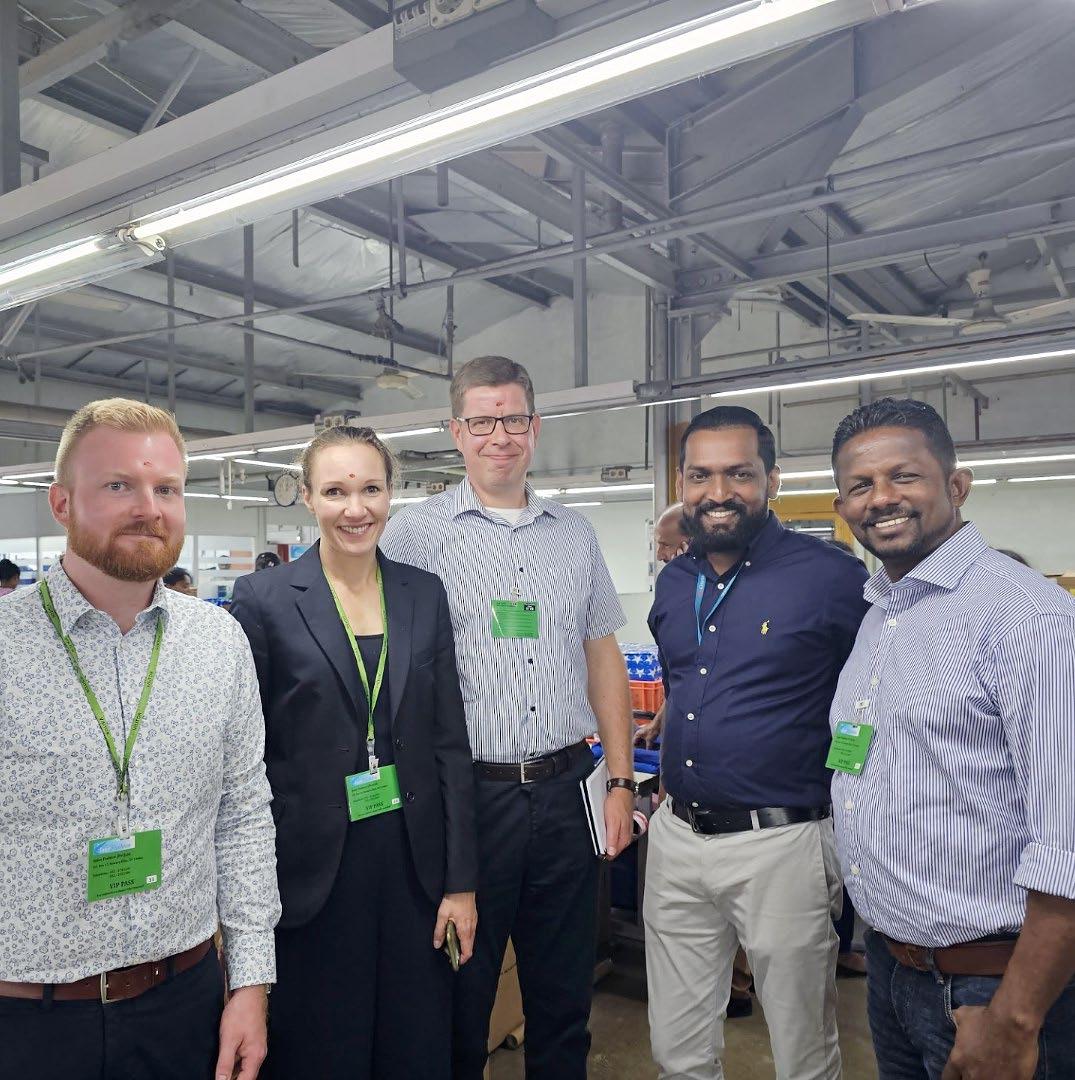
In 2024, the most significant development area was our procurement chain and production network. Our key objective was to strengthen delivery reliability, increase production flexibility and agility, and improve our competitiveness both in terms of quality and cost. As a result of these changes, the share of production in Estonia decreased relative to other locations. Production volumes were divided rather evenly between Vietnam, Estonia, and our new production country, Sri Lanka.
We always aim for long-term partnerships and select new suppliers and manufacturers with great care. For this reason, the final selection and onboarding of these new partners required sustained work that had already begun in 2023 During 2024, we were able to move from planning to execution in the form of concrete orders and deliveries. I am pleased to say that the changes in our procurement chain were implemented successfully, and the integration of new partners has given us a solid foundation and confidence to continue working with our selected network in the years ahead.
–Noora Salonoja, CEO of Touchpoint
PRODUCTION & SUPPLY CHAIN
In 2024, the focus of our garment production shifted from nearshore manufacturing to Asia.
GARMENTS
PRODUCED BY COUNTRY(%)
In 2024, the majority of the workwear we produced was manufactured in Asia In addition, collaboration with our new production partner in Sri Lanka required close coordination and several audit visits linked to the start of the partnership.
PRODUCTION BY COUNTRY
We produced 76% of our garments in 2024 through our production partners in the Far East. During the year, Touchpoint had production in Estonia, Lithuania, Bulgaria, Ukraine, Sri Lanka, and Vietnam. We also sourced a smaller share of ready-made products from other Asian countries. The distribution of production volumes by country is presented in the adjacent table. The Baltic region is classified as low-risk All other mentioned production countries fall under medium-risk countries according to the Amfori BSCI risk classification.
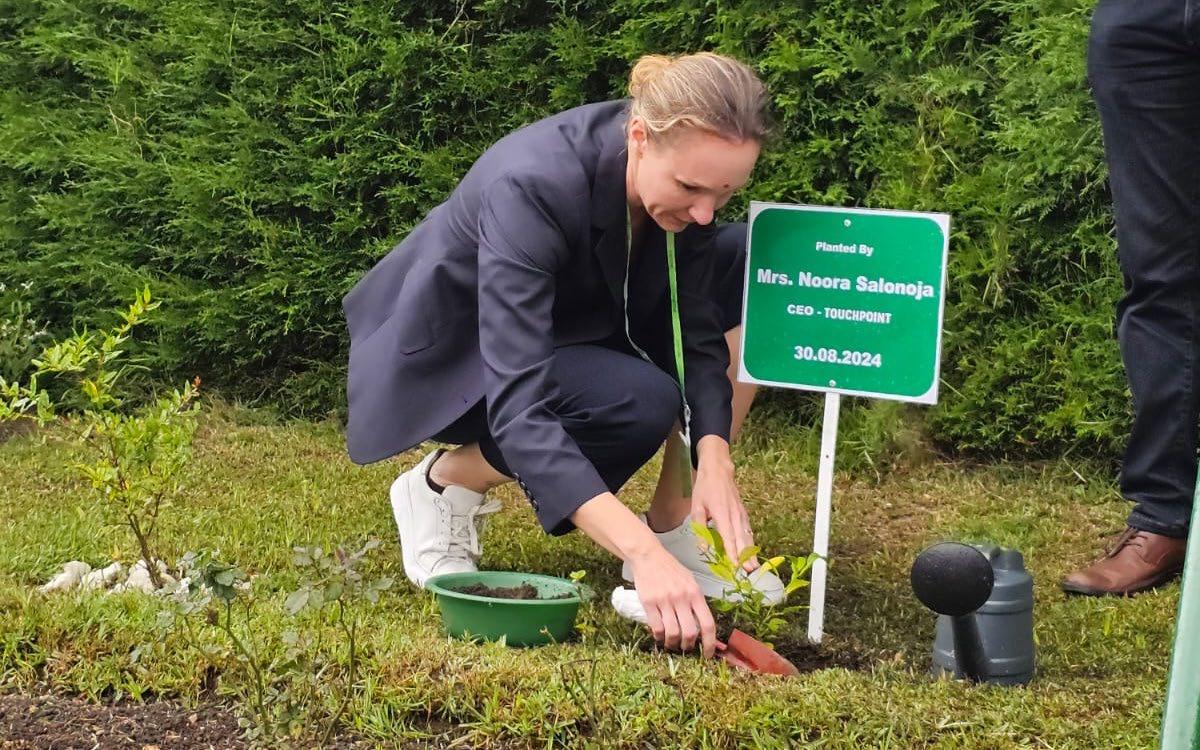
Working with a new production partner typically requires more introduction visits and close cooperation during the first projects Our team visited Sri Lanka several times, and within a short time we have already gained valuable insights into collaboration practices and local culture In the Amfori risk scoring, Sri Lanka receives a score of 38.23, placing it in the medium-risk category.
TRANSPORT OF PRODUCTS
In 2024, we clarified and improved the way we report transport data Transport volumes are now reported in kilograms by mode of transport. In earlier years, reporting was based on transport events. This change enables more accurate calculation of the carbon footprint generated by transport activities However, we want to note that the updated calculation method is not comparable with figures reported in previous years
TRANSPORT OF PRODUCTS 2024

LOGISTICS 2024

The year 2024 was again marked by global geopolitical tensions, which posed challenges to the execution of our projects.
In 2024, the focus of our workwear production shifted to Asia, highlighting the importance of quick reactions, careful planning, and effective collaboration. A successful transition required close cooperation with our freight forwarders and customers to keep logistics under control despite global challenges
In Finland, port strikes had a significant impact on logistics The strikes caused traffic jams at ports and delays in sea and road freight transport even after the strikes had ended The Port of Helsinki, for example, reported that its cargo volumes fell significantly in the first quarter of the year precisely because of these strikes
The year 2024 continued to be marked by global geopolitical tensions, which caused uncertainty and occasional disruptions to shipping and port operations in the Far East (e.g., route changes and delays at ports) These disruptions lengthened transit times and increased fuel consumption, which directly impacted carbon dioxide emissions from shipping. For example, the security situation in the Red Sea region deteriorated significantly, forcing
shipping companies to reroute vessels on longer routes around Africa This significantly lengthened transit times and increased shipping costs. Although global demand was not necessarily at the peak levels seen during the pandemic, certain Far Eastern ports continued to experience bottlenecks and capacity limitations that slowed loading and unloading.
We strove to respond quickly to the prevailing situation and succeeded in keeping our projects on schedule despite the challenges The year 2024 taught us to react quickly to changing situations and to take risks and challenges into account already during the project planning phase
MATERIALS & MATERIAL DEVELOPMENT
The largest source of emissions in our operations is emissions from the textile materials used in the workwear we produce. In 2024, we shifted our focus even more specifically to textile materials.
TEXTILE MATERIALS
Each year, we calculate our carbon footprint at Scope (1,) 2, and 3 levels The main source of emissions in our operations comes from the fabrics and knits used in our workwear As in previous years, we used the emission calculator provided by the Carbon Neutral TextileIndustry 2035 commitment for our emissions calculations
Material usage increased compared to the previous year. In 2024, polyester accounted for the largest share of the materials used in the workwear we produced This is due to the high production volumes of polyester-based microfiber garments we manufacture for the healthcare sector. At the same time, however, we can note that the expected lifespan of this product group is significantly longer than that of the corresponding cotton/polyester blend material The rate of use of regenerated cellulose-based fibers as a substitute for cotton fell from seven percent to just two percent in 2024. This is due to the project-based nature of our production
OUR TEXTILE SUPPLIERS
We source fabrics for our own production directly from fabric suppliers who have ensured that the materials comply with REACH requirements in accordance with EU legislation Our most significant fabric suppliers in 2024 were, in alphabetical order:
CarringtonTextiles/United Kingdom
Foxa Oy/Finland
Klopman International/Italy
Utexbel/Belgium
Orneule/Finland
TEXTILE WASTE
In 2024, we received a total of 128,276 kg of end-oflife textiles from our customers This lower volume compared to the previous year is due to temporary interruptions in Rester’s collection services and changes in the types of materials accepted
PRODUCT MATERIAL COMPOSITION 2024

COMPOSITION OF END-OF-LIFE TEXTILES 2024

RETOUCH BY TOUCHPOINT
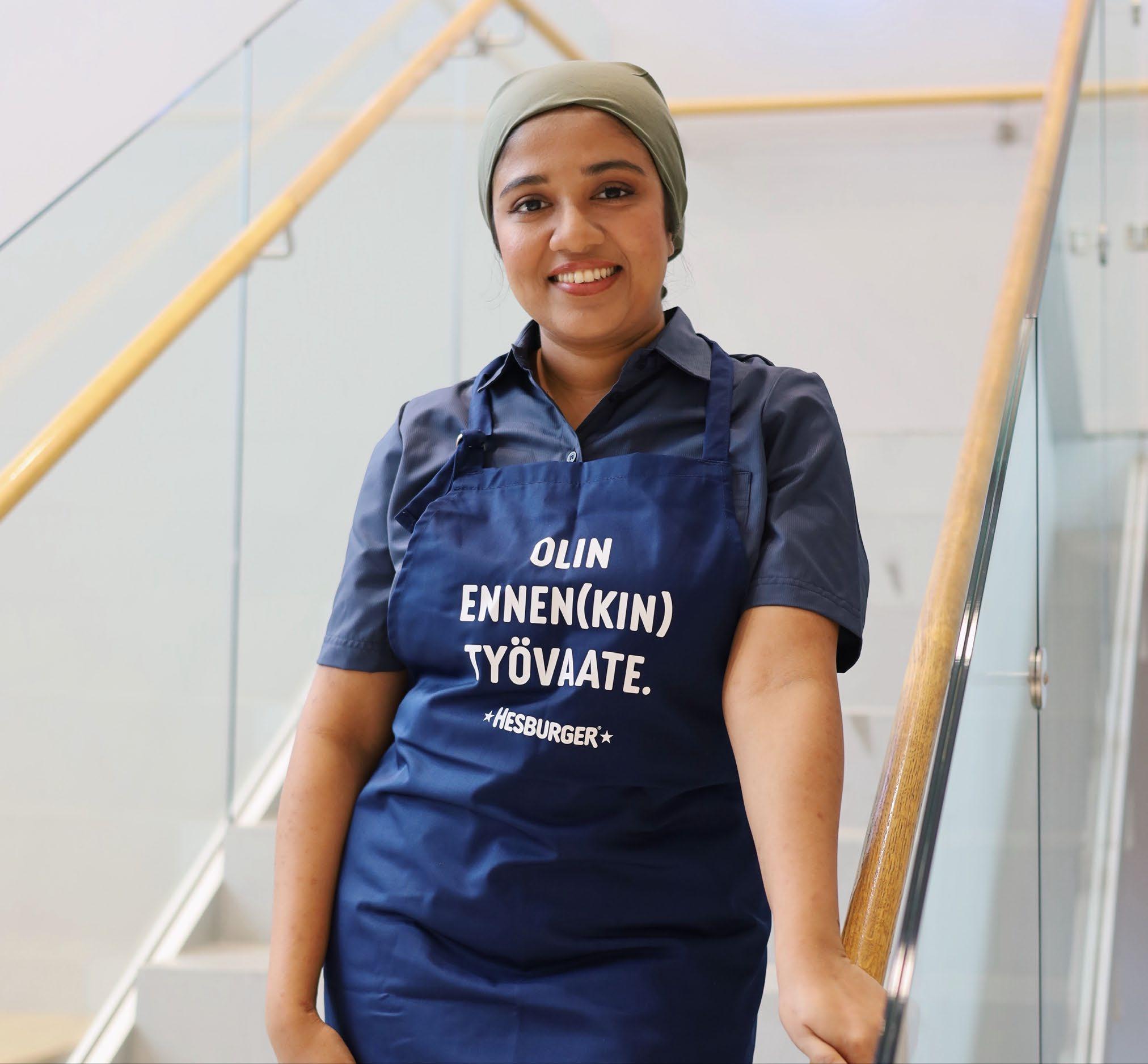
Our ReTouch fabric has been well received by our customers. We are proud to offer workwear fabric made from raw materials sourced in Finland. This material uses fiber collected from used workwear from customers across the Nordic countries. Our partner Rester handles the fiber recycling at its processing plant in Paimio Enough virgin raw material has been added to the fabric to ensure it meets the quality criteria required for workwear.
Our long-standing workwear client, Hesburger, is always eager to try out the most sustainable options on the market. It was, of course, easy to know who would be among the first to use our workwear material containing recycled fibers (textile-totextile).
You can see ReTouch aprons in Hesburger restaurants
If you’re not familiar with our innovation, don’t worry Visit our website at www.touchpointww.com and read more in our News section.
Highlight of the year 2024
Photo: Hesburger/ Photographer FiinaThessler
TOUCHPOINT’S CARBON FOOTPRINT
In 2024, the emissions from Touchpoint’s own operations (Scope 2) were most significantly influenced by our energy-efficient office spaces in Helsinki and Tampere, as well as lower emission factors from our district heating provider
For Scope 3, the most significant changes in emissions were related to the textile materials used We used more fabrics in our production, and also more heavy fabrics than in the previous year.
Logistics emissions increased because there were slightly more air shipments for production than in the previous year *In addition, we refined our reporting on product transportation for 2024, so the transportation emissions calculations from previous years are no longer comparable with each other Transportation is now reported in kilograms per mode of transport In previous years, reporting was based on individual transport events. This change allows us to report the carbon footprint of transport with greater accuracy
Employee business travel abroad increased significantly compared to previous years We plan to continue conducting systematic audit visits to our production countries in the coming years, so the share of business travel will remain at 2024 levels in the future
((NEW) Transmission and distribution losses in
Photo

BUSINESS AND GROWTH
MAIN
TARGETS
1. HAPPY CUSTOMERS
Measuring and Improving Customer Satisfaction
2. GOING INTERNATIONAL New customers
3. STAKEHOLDER ENGAGEMENT
Project and Development Cooperation
Photo: Hesburger/ Photographerr FiinaThessler
SUSTAINABILITY ACT OF THE YEAR 2024
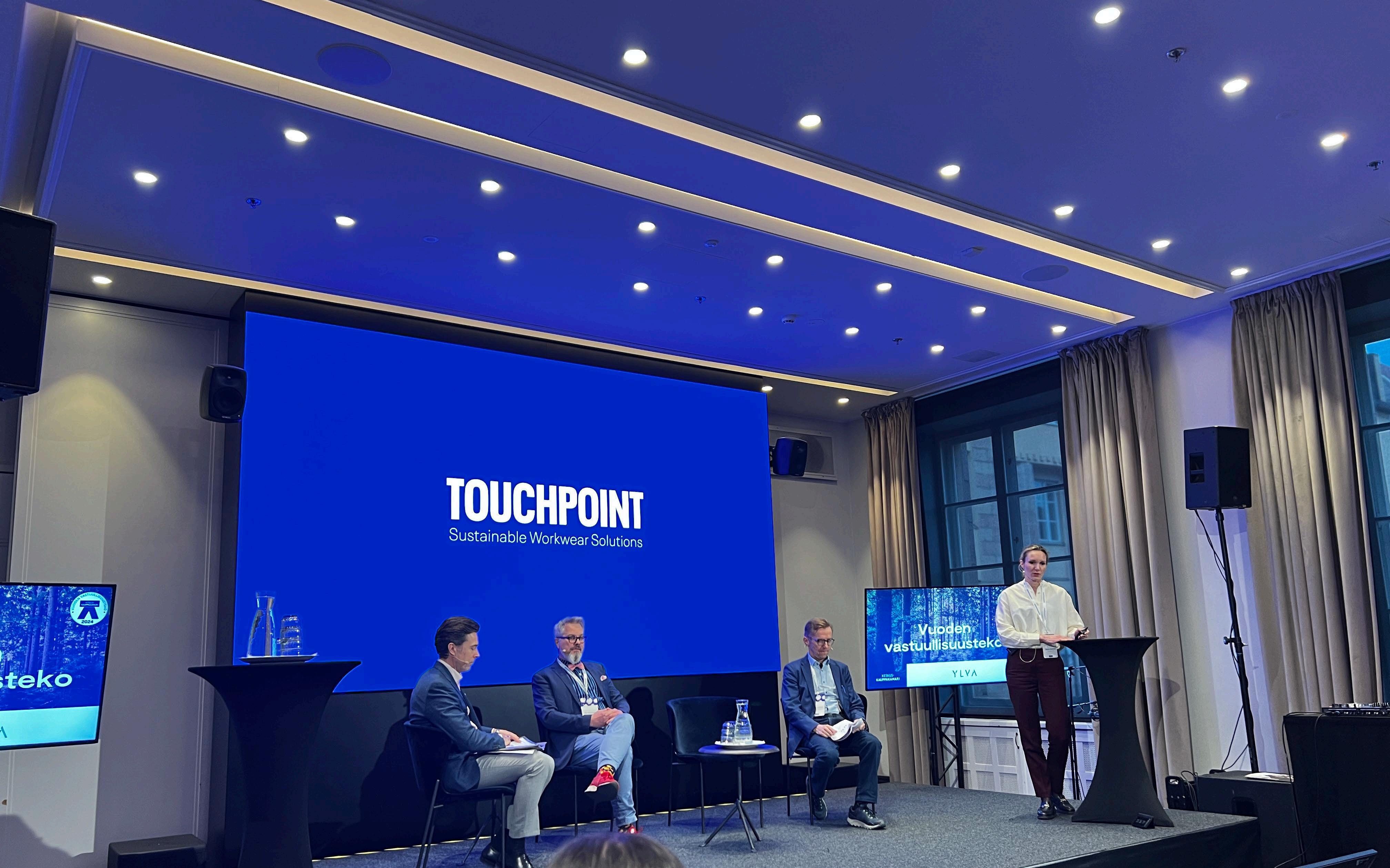
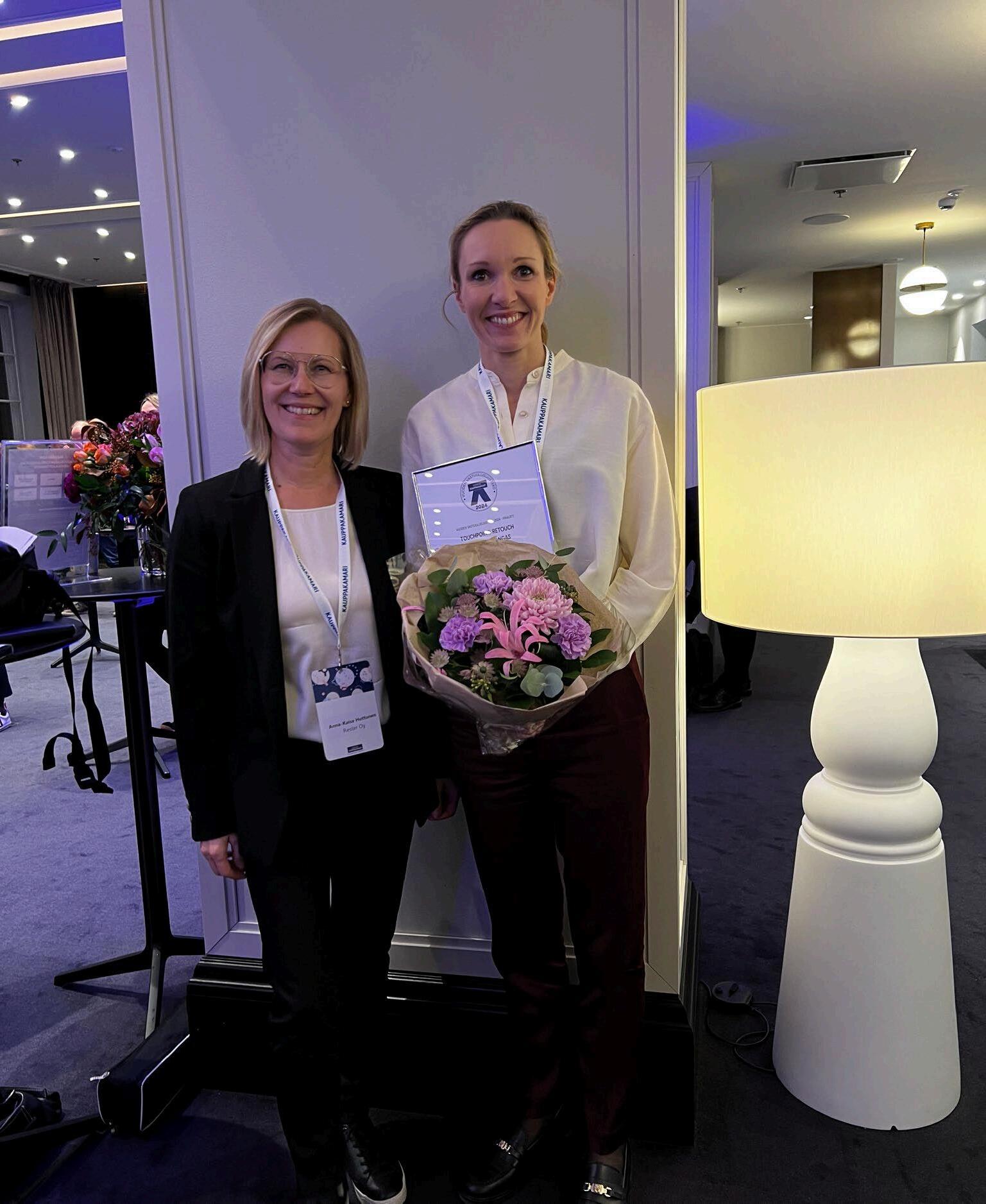
We made it to the finals of the “Sustainability act of the Year 2024" competition organized by the Central Chamber of Commerce!
We entered our reTouch fabric innovation in the “Responsibility Initiative of the Year” competition organized by the Central Chamber of Commerce, and we were delighted to make it to the finals. The “Corporate Responsibility Day” event took place on November 13, 2024.
The event’s first panel discussion featured an inspiring conversation about the circular economy, in which our CEO, Noora Salonoja, participated alongside author Pasi Nokelainen and researcher Pekka Leskinen. We learned that we need more regulation, incentives, and collaboration. And that the circular economy is a combination remedy for many of today’s sustainability challenges.
Touchpoint did not win the Sustainability Initiative of the Year competition. The competition was deservedly won by a multi-stakeholder collaboration project, an innovation called “Circular Economy Brick.”
SALES REVIEW: FINLAND AND THE BALTICS 2024
In 2024, we set out to revise our sales strategy and focus on developing key customer relationships and acquiring new customers in a targeted manner, while divesting ourselves of a few customer accounts as part of our operational restructuring. One major success was the successful delivery of larger-than-expected order volumes for a single large project, all on schedule
In Finland, the schedules for expected requests for proposals in public procurement tenders were delayed, which affected the development of our order book in line with our targets. Following successful bids, we secured significant new customer contracts. A new important customer relationship opened up for us, among other things, to activate our service and logistics operations
We also achieved success in Estonian procurement, where we have found suitable customer segments for us in this still unfamiliar territory by researching and exploring procurement opportunities.
Our strategic shift will continue in the coming years and is expected to bring clarity to our operations, as well as a positive boost beyond Finland’s borders.
Customer satisfaction with products (0-10)
Customer Satisfaction NPS Last year's result 18
Joni Mäenpää
Sales Director Touchpoint Oy

OVERVIEW OF THE SWEDISH MARKET 2024
TOUCHPOINT AB
For Touchpoint Workwear AB last year (2024) was much about continuing to develop within the Swedish workwear market and as such establishing and developing relationships with both existing and potential Key Account customers and partners In order to continue Touchpoint’s development and understanding of the Swedish healthcare market Touchpoint decided to be part of SIS (Swedish Institute for Standards) work with the Swedish Standards for healthcare textiles from the start of 2024. Here Touchpoint is part of the Committee for Medical Textiles and also part of the team that works with the revision of SIS-TR 11 Textile Handbook This has strengthened our knowledge regarding the Swedish healthcare market, the requirements and requests in a very positive way
Despite the challenges in the Swedish economy as such Touchpoint has continued to advance in the workwear market and sees increasing interest in Touchpoints products, services and solutions which is encouraging for the future. In conclusion 2024 was another year of development for Touchpoint Workwear with new experiences, lessons learnt and lot of internal development. All this so we can continue to build on Touchpoints strengths as a company and use and adapt these strengths for the Swedish market for the future
” Touchpoint continued to build brand awareness among its target groups and partners”
Country Manager Sweden
Touchpoint AB

Marko Ruotsalainen
TELAVALUE
In 2024, we completed our company’s Telavalue (Value chains for sustainable production, use and cycles of Textiles) project This project, led by VTT from 2022 to 2024 and supported by Business Finland, enabled companies to participate in their own projects. The key objective of Touchpoint’s project was to develop an international workwear service model while also exploring the various possibilities for textile recycling in international markets
A significant portion of the project’s resources was allocated to analyzing the Swedish market, and more limited research was also conducted in other Nordic countries and Estonia During the project, we established a subsidiary in Sweden and built connections with numerous potential customers and partners
As the project progressed, we quickly identified the differences between the workwear markets in Finland and Sweden. This insight guided the development of our market strategy and enabled us to focus on selected customer segments. The concrete goal of the project was to pilot the workwear service model we developed in Sweden during the second half of 2024. Although there was a slight delay in the schedule, we expect the pilot to take place during 2025
In addition to market research, our corporate project involved analyzing market-specific service models and product requirements We studied Nordic tenders and product standards. Based on this, we also produced product samples and participated in several tender processes
Our exploration of the Nordic workwear market sparked several internal development projects related to, among other things, fabric procurement, supply chain structure, and procurement models Additionally, we investigated local textile recycling solutions and the pricing of end-of-life textiles in Sweden.
As part of the project, we implemented a closed-loop workwear model in collaboration with the end-of-life textile facility Rester, fabric supplier Klopman/TDV, and Lindström. This innovation, the ReTouch fabric, was launched in January 2024 ReTouch is the first woven workwear fabric to contain fibers recycled from workwear. More information about the ReTouch fabric is available on our website
As part of the project, we also familiarized ourselves with life cycle assessment (LCA) and carbon dioxide emissions
calculations, and gradually developed Touchpoint’s own emissions calculation capabilities. We provide our customers with emissions calculations for both the workwear they purchase and the textile waste they return.
In summary, Touchpoint’s corporate project Telavalue generated significant insights into the Nordic workwear market and its key players This has helped us tailor our offering to these markets. In addition, we gained a concrete understanding of customer requirements, which has been essential in developing our service model. Touchpoint now has a clear plan for moving forward in the Nordic market, and we are confident that the resources invested in the project will yield results in the coming years
PROJECTS AND PARTNERSHIPS 202524
Touchpoint is an active player in the textile and apparel sector in the Nordic countries. The year 2024 was no exception. We participated in the UN Global Compact’s SME Sustainability Group, where we thoroughly reviewed all aspects of corporate due diligence.
Our Sourcing Manager participated in a study tour organized by the City of Paimio and the EU, titled “Collaboration for a Sustainable Future,” to explore textile recycling in Turkey. The group visited Uşak, Turkey, where 72% of the country’s textile recycling takes place. Pre-consumer textile waste from the apparel industry is mechanically opened into fibers, which are then used in products such as blankets, rugs, felt, socks, and furniture In addition to factory visits, the trip included meetings with Usak municipal council members and an introduction to Turkey’s traditional rugmaking
Touchpoint also participated in the Cirpass 2 Lighthouse project, which began in 2024, where a digital product passport for workwear companies was developed in collaboration with the project’s partner companies.



Future event


In 2024, we became a member of the Swedish Standards Institute (SiS) and are part of the Swedish healthcare standards working group. As a member, we work together with partners, customers, and end users to develop workwear for the Swedish healthcare sector and the processes surrounding it.
HIGHLIGHTS OF OUR MEMBERSHIP IN 2024
• FIBS
• Swedish Chamber of Commerce
• Swedish Standards Institute (SiS)
• Finnish Chamber of Commerce
• Finnish Textile & Fashion Association
• Finnish Packaging Recycling RINKI Ltd
• Sverige Textil- ock modeföretag
• UN Global Compact


Photo: Collaboration for a Sustainable

PEOPLE AND WELLBEING
MAIN TARGETS
1. OUR DUE DILIGENCE
Development of customer and stakeholder engagement
2. ACTING AS A STRONG VOICE FOR RESPONSIBILITY
Organising and participating in customer and stakeholder events
3. MOTIVATED AND SKILLED EMPLOYEE
Improving employee satisfaction and maintaining an employee turnover rate below 10%
Photo
ENOUGH IS ENOUGH!
In January 2024, we organised a stakeholder webinar together with Rester. The aim of the webinar was to increase understanding of upcoming EU regulatory requirements in the textile sector and to support procurement professionals in making more sustainable choices. The webinar was highly successful, attracting well over 200 participants from 15 different countries
The discussions highlighted the need for transparent and traceable value chains, more responsible material choices, and solutions that promote the circular economy These elements are central to meeting the objectives of the EU Strategy for Sustainable and Circular Textiles and forthcoming regulations such as Extended Producer Responsibility (EPR), the Ecodesign for Sustainable Products Regulation (ESPR), the Digital Product Passport, and the Corporate Sustainability Reporting Directive (CSRD)

Watch the recording of this insightful discussion,
The speakers emphasised that the workwear sector is particularly well positioned to act as a frontrunner in building a sustainable textile ecosystem, as the sector benefits from eco-design approaches, material circulation, and close collaboration between value chain actors. The webinar discussions concluded that advancing sustainability requires, above all, transparency, reliable data, collaboration, and long-term development efforts across the entire value chain. Webinar Speakers:
Noora
Anders
Highlight of the year 2024
Stéphane Popescu, CEO, COSE361 Sustainable Apparel & Footwear Consultancy
Hanna Lehmuskoski, Environmental Manager, Kesko
Tomi Hilvo, Nordic Way Group
Salonoja, CEO, Touchpoint Oy
Mixe, Category Manager, Capio Nordic
Anna-Kaisa Huttunen, Partnership Manager, Rester Oy
Photo:
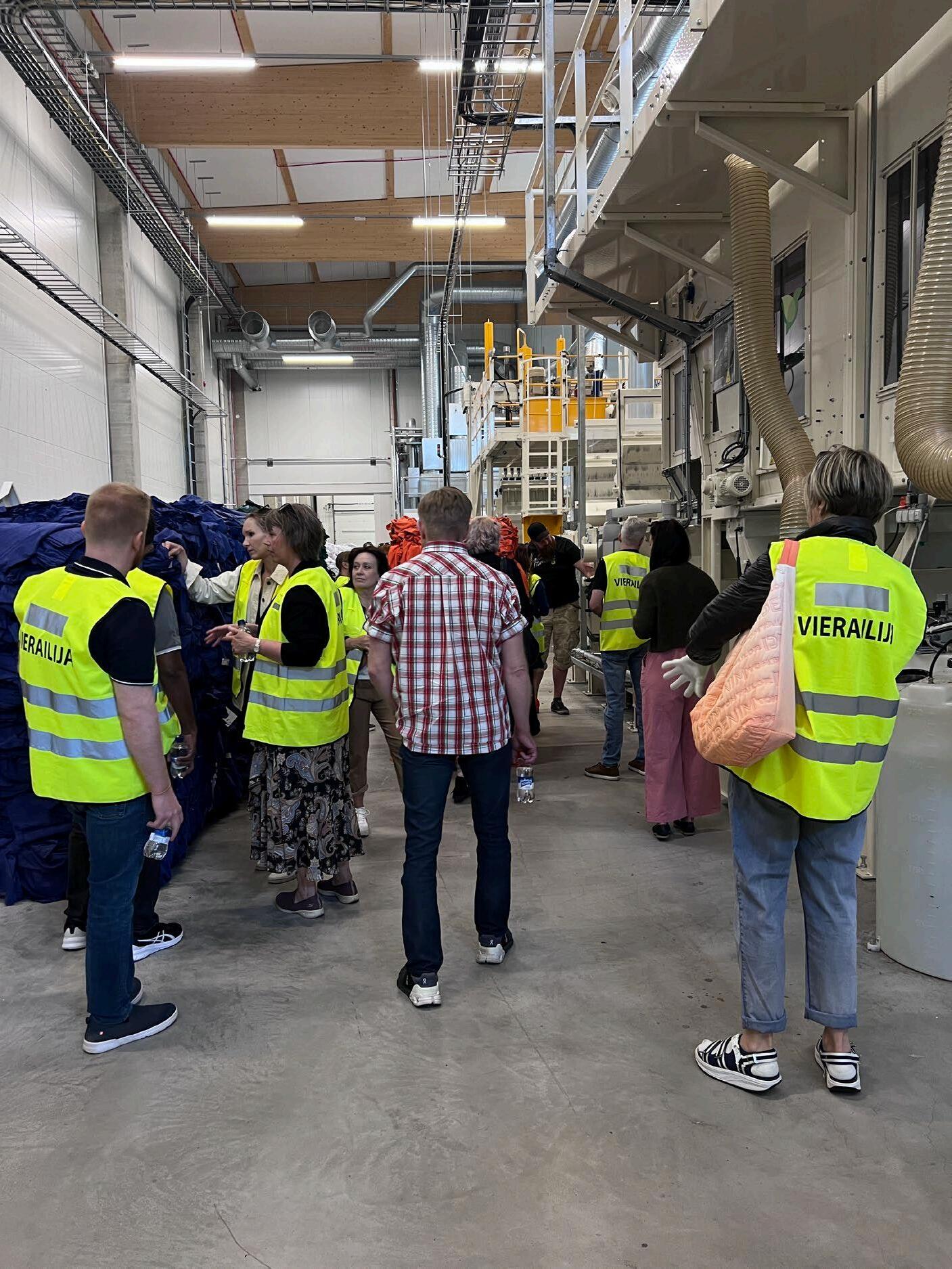
COOPERATION
CUSTOMER RELATIONSHIPS
Our responsibility extends deep into our collaboration with customers. We invest in partnerships and believe that open dialogue is key to success. The best outcomes are achieved when we have a thorough understanding of our customers’ needs. For this reason, we actively visit our customers and jointly review materials, collections, and other requirements with them. This approach enables us to ensure that we can provide solutions tailored precisely to their needs and serve them in the best possible way.
We also communicate openly about challenges and risks, allowing us to transparently offer more responsible solutions to our partners.
CUSTOMER AUDITS
Touchpoint has many highly responsible companies among its customers and partners, many of whom also conduct their own audits. In 2024, Touchpoint’s operations were audited by one of our long-standing customers. In addition, one of our customers carried out an extensive production site audit at our manufacturing facility in Asia. As a result of these customer audits, we received a great deal of positive feedback on our sustainability practices.
NON-PROFIT COLLABORATION
The collaboration between Hospital Clowns and Touchpoint continued in 2024. Together with our partners, we produced new clown jackets for the Clowns. The jacket collaboration involved Marimekko as well as the garment sewing students from Keuda, the Central Uusimaa Vocational College.
ADVOCACY
Our team actively participates in the advocacy work of the Finnish Textile & Fashion Association. Upcoming EU regulation requires close monitoring and the clear articulation of our perspectives to ensure that future regulation is truly effective and supports the advancement of our industry.
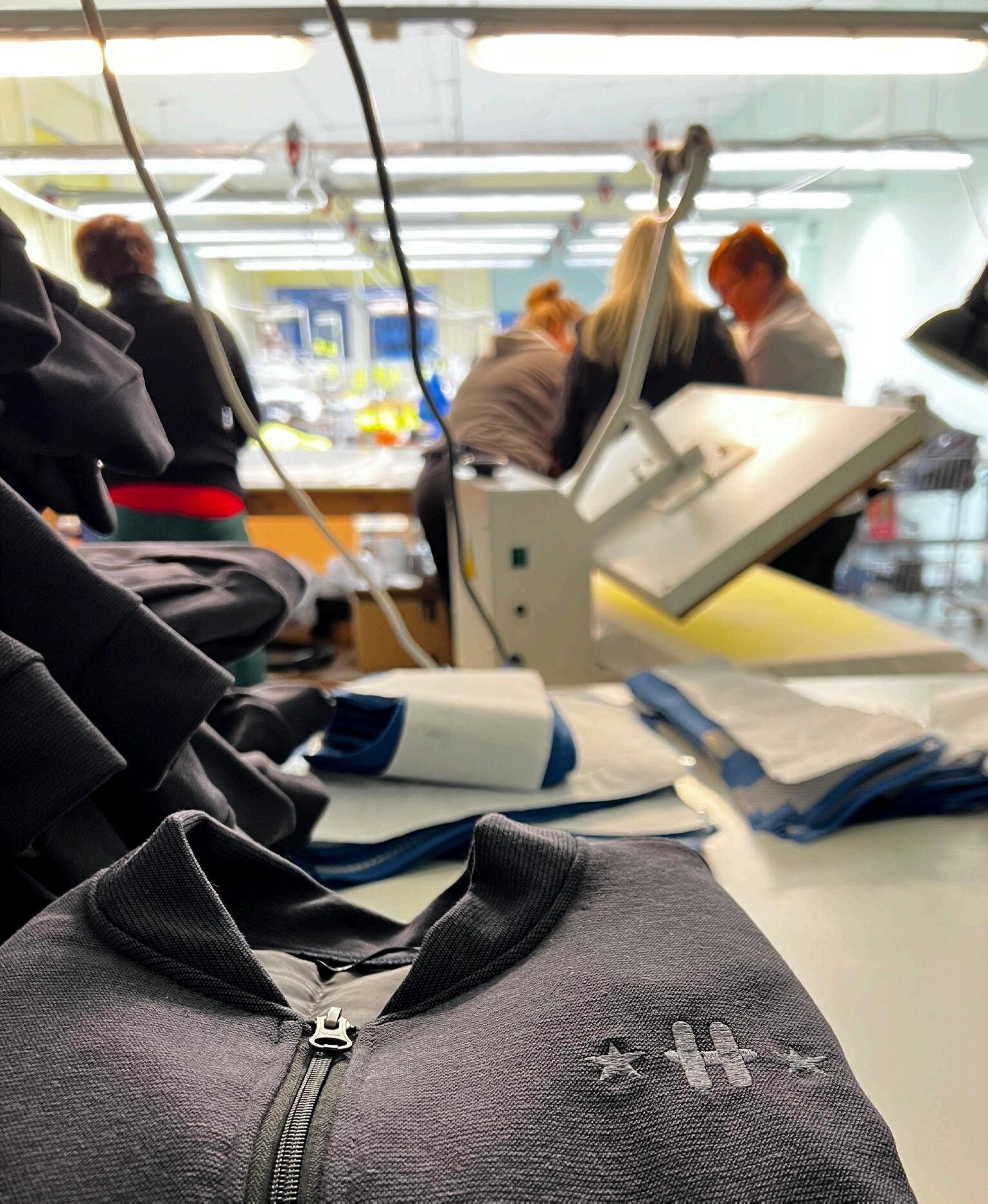
FACTORY VISITS IN ESTONIA
Estonia continues to be a key partner for us, although its operating environment has recently been challenging due to the geopolitical situation and high inflation Despite these circumstances, we have maintained close cooperation, which has also opened up new business opportunities for us. Collaboration with Estonia plays a central role, for example, in pattern making and sample sewing, supporting the agile development of our products.
At the core of our sustainability efforts is extending the lifespan of our products The role of nearby regions in enabling garments to be quickly circulated from one user to another is of primary importance We have introduced a new storage and reuse service that allows products to be circulated from one customer to another. This service is one of our most important circular economy initiatives in 2024, helping us reduce environmental impacts and promote more sustainable consumption
Photo:
PERSONNEL
In 2024, our team was successful in numerous tenders and key projects Due to the nature of our operations, we often manage several overlapping projects at the same time, which continuously challenges and develops our project management capabilities In 2024, we adopted OKRs (Objectives and Key Results) as a management tool This goal-oriented framework helps translate our strategy into everyday actions and supports the prioritisation of our team’s work Even in a busy environment, we strive for openness, constructive interaction, and a strong team spirit
Employee well-being is supported through the ePassi sports and culture benefit, which is offered to all permanent employees Other employment benefits include, among others, flexible working hours and opportunities for professional development both during and alongside work Employee satisfaction is measured twice a year In 2024, our entire team completed up-to-date information security training provided by our ICT partner
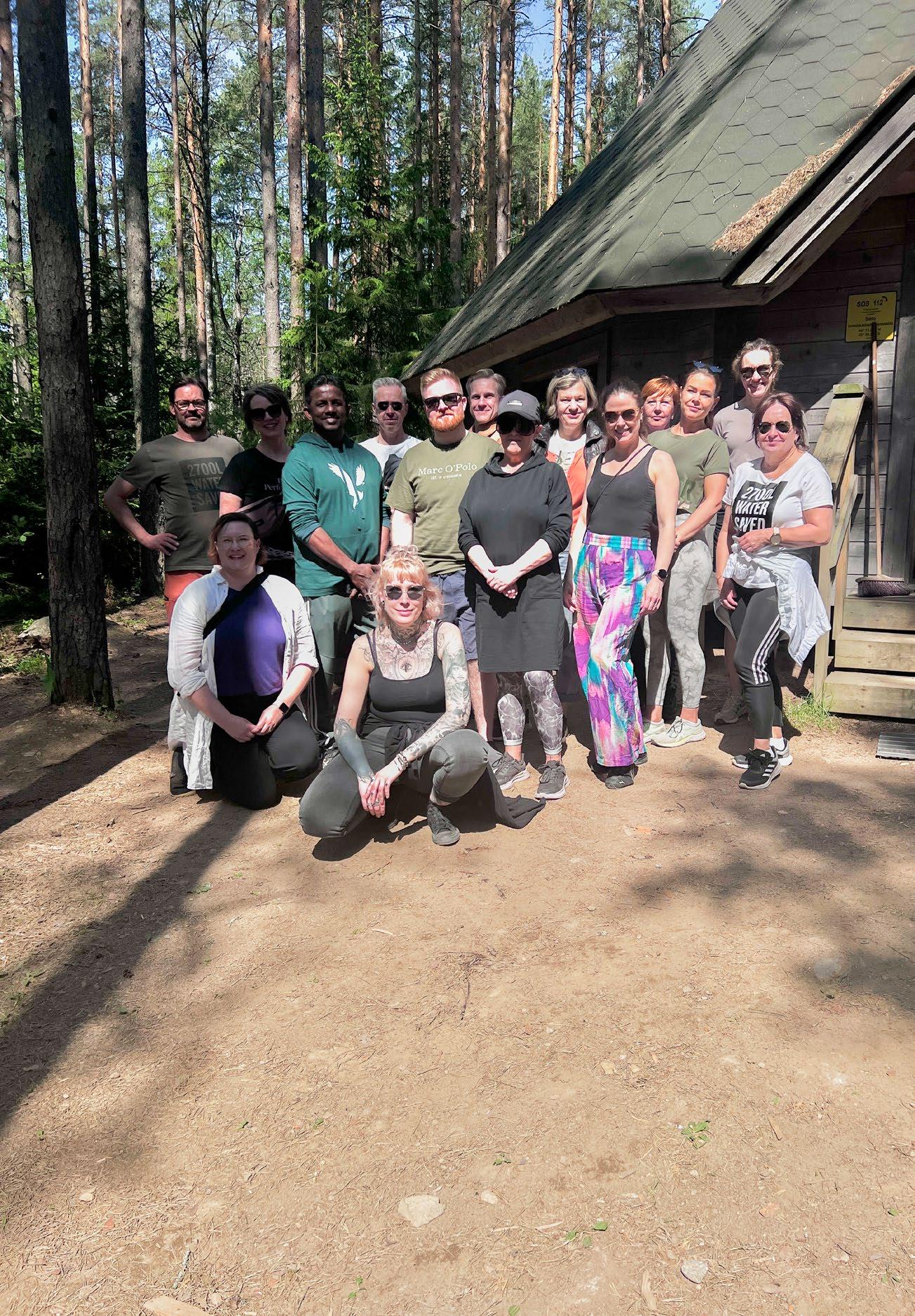
In June, we spent a summer team day in the charming surroundings of Mathildedal and Teijo National Park We were also joined by our Quality Manager from Asia, Sumedha The adjacent image shows a moment from our forest excursion during the summer team day The only constant is change In 2024, we said goodbye to a few members of our team and initiated a recruitment process to welcome a new Touchpoint colleague
TABLE OF GOALS
Sustainability Strategy
Customerfocused sustainable products
Indicator Status
Customer satisfaction survey report
Carbon footprint calculation
Utilisation rate of
Goal achieved in 2024 Goal 2025 -2026
Customer satisfaction improved 2024. NPS 18->40 Yes 2024: Improving customer satisfaction scores
Our operational carbon footprint was calculated for 2024. Climate units purchased for own emissions in 2024 Yes
Target changed
Audit reports
End-of-life textile recycling
Circular economy creating new business
Active closed-loop project
2024: Conducted audits at four production sites
In 2024, efforts were made to further specify and update the most appropriate recycling options for end-of-life textiles by material type.
Promoting the use of recycled fibres from textiles. (Circular textile)
Positive social impact
A textile waste service model for international customer
Project finished 2024. Read more
New international customers No new international clients in 2024
Stakeholder events
Employee satisfaction grade
Active participation in events. “Enough is Enough” webinar. Read more. Final round of the Central Chamber of Commerce’s 2024 Corporate Social Responsibility Award.
Employee satisfaction surveys are conducted twice a year. The average employee satisfaction score for the year was 7.1 (7.22 in 2023), and the NPS was 5 (the figure for 2023 was -5).
Employee turnover (%) during the calendar year Change in staff: 15%.
Obtain primary data on CO2 emissions from fabric suppliers. Develop a carbon footprint calculation method and report on it annually.
Monitoring the utilisation rate of the following materials: 1. Recycled fibers 2. Cellulose fibers that replace cotton 3. Synthetic fibers produced from renewable natural resources.
Yes 2024: Conduct 4 audit on the production sites.
Yes We will update our goals during 2025.
Yes We will update our goals during 2025.
Yes We will update our goals during 2025.
The goal was not achieved 4 new international customers
Yes 3 participating in events as an influencer or organizing your own events
The goal was partially achieved Employee satisfaction and NPS are improving.
The goal was not achieved Employee turnover remains below 10%.
Description and scope of reporting
The report covers Touchpoint Oy's operations for the period 1.1.-31.12.2024 and follows the GRI standard where applicable. Touchpoint has prepared an annual sustainability report starting in 2020. The contact person for Touchpoint's sustainability work and reporting is Anni Wulff-Kokko.
GRI STANDARD CATEGORY INDEX
REPORT SECTION
COMMENTS
201-1 Direct economic value generated and distributed Touchpoint highlights 2024
201-2 Financial implications and other risks and opportunities due to climate change
The potential economic impacts of the climate crisis impacts have not yet been calculated The most significant environmental impact of Touchpoint's operations is the materials used in its textiles, so the search for new, more environmentally friendly material alternatives is an ongoing effort at Touchpoint. GRI 205: Anti-corruption
205-1 Operations assessed for risks related to corruption
205-2 Communication and training about anti-corruption policies and procedures
Anti-corruption is a key topic in Touchpoint's Code of Conduct
Anti-corruption guidance is included in the induction plan for new employee
205-3 Confirmed incidents of corruption and actions taken No known incidents
206: Anti-competitive Behavior 206-1 Legal actions for anti-competitive behavior, anti-trust, and monopoly practices
known incidents
and
development 301-3 Reclaimed products and their packaging materials Complaints have their own reporting process and are monitored internally. As a matter of principle, we do not individually package products.
302-5 Reductions in energy requirements of products and services
303-5 Water consumption
and material development ,
In the textile sector, water use is most significant in the production of materials. We do not use much water in our own operations, but we can influence water use through material choices in product design.
GRI
GRI 301: Materials
GRI 302: Energy
GRI 303: Water and Effluents
GRI