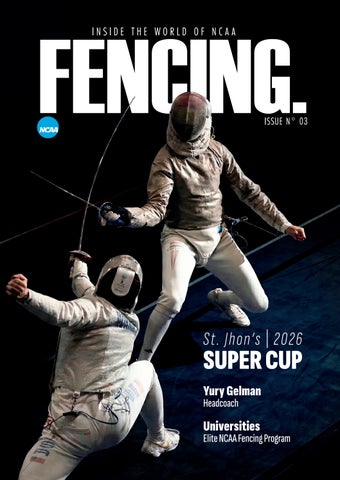
Inside the World of NCAA Fencing — Issue N°03 | St. John's Super Cup 2026
Inside the World of NCAA Fencing — Issue N°03
Some issues are built on data, rankings, and statistics. Others are built on moments. This is one of the latter.
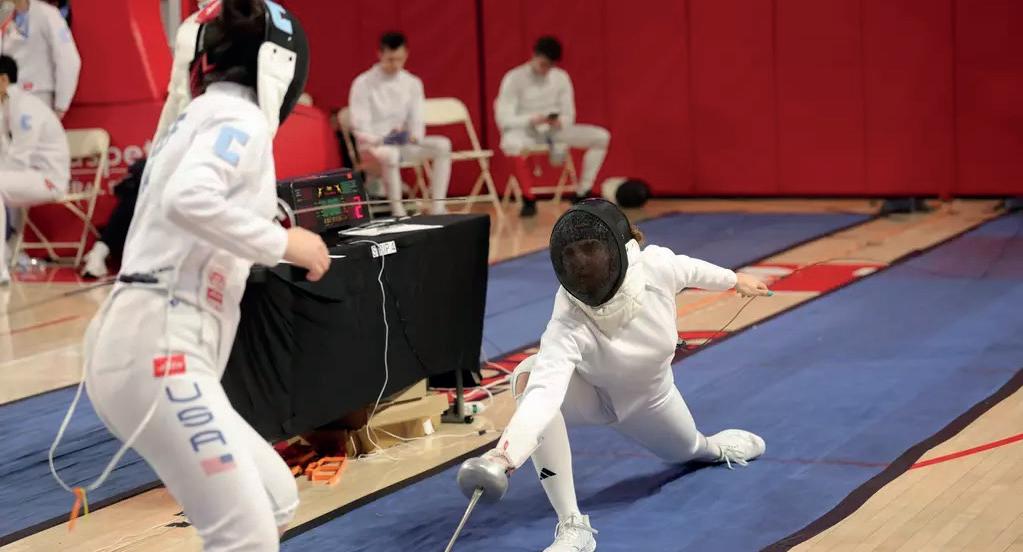
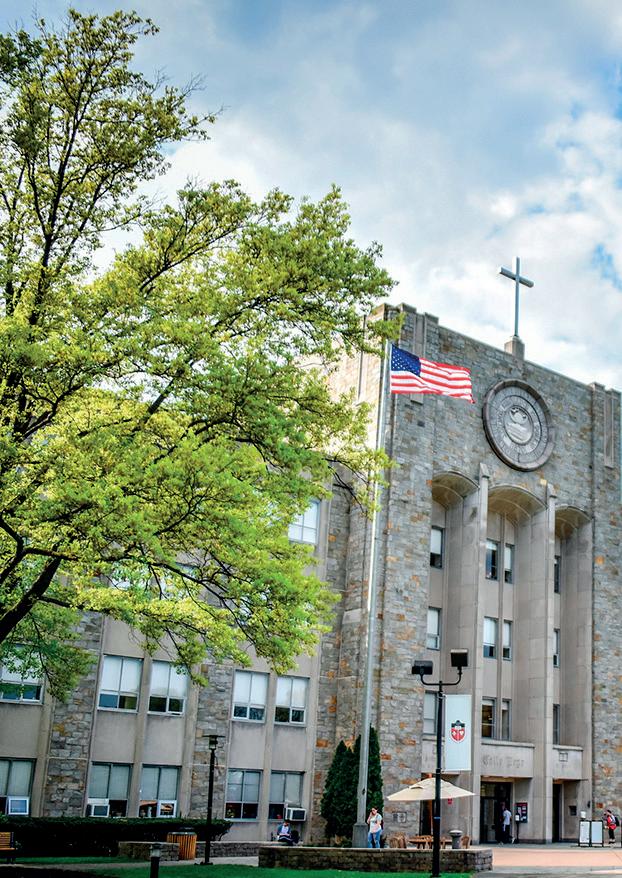
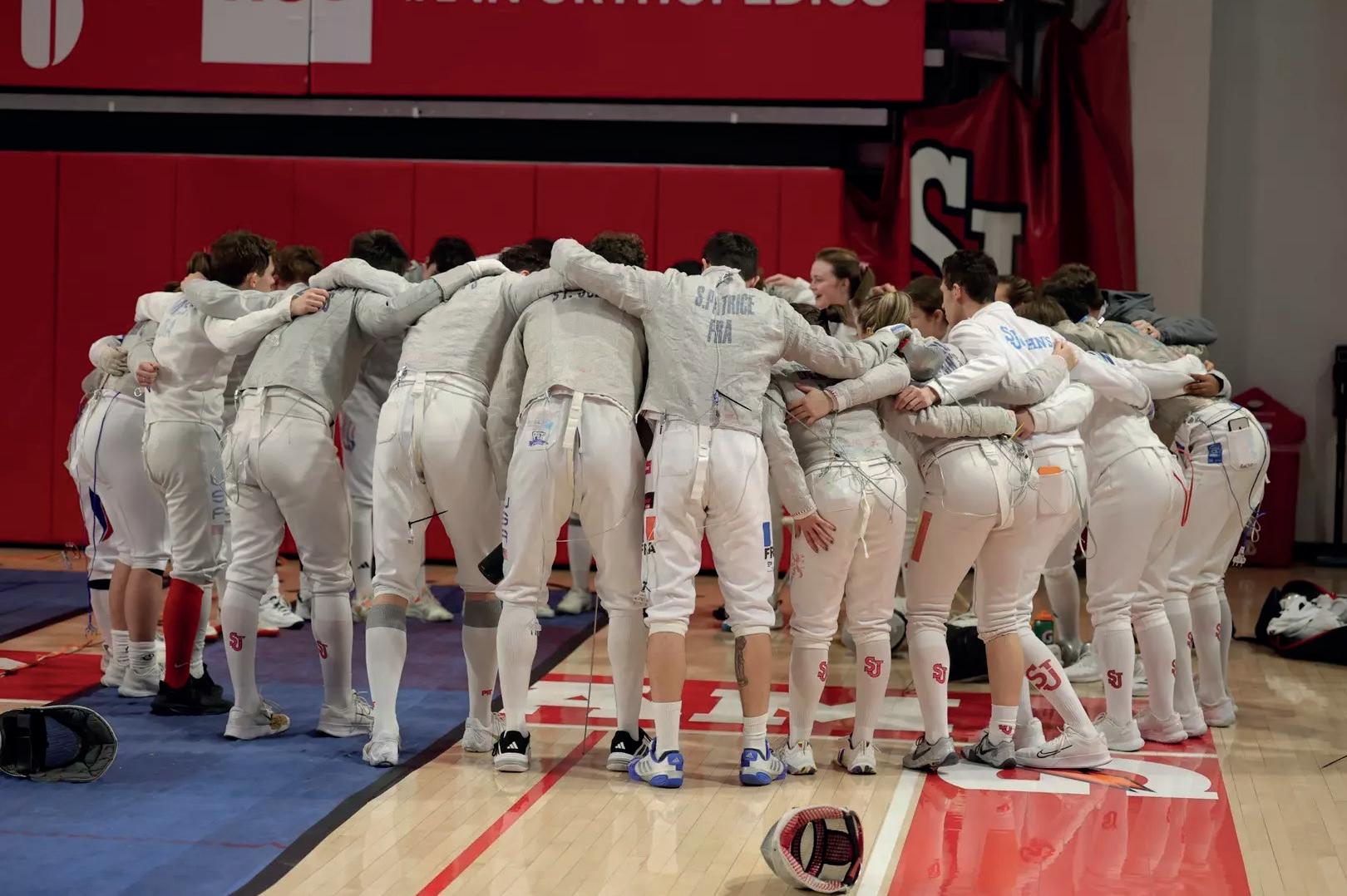
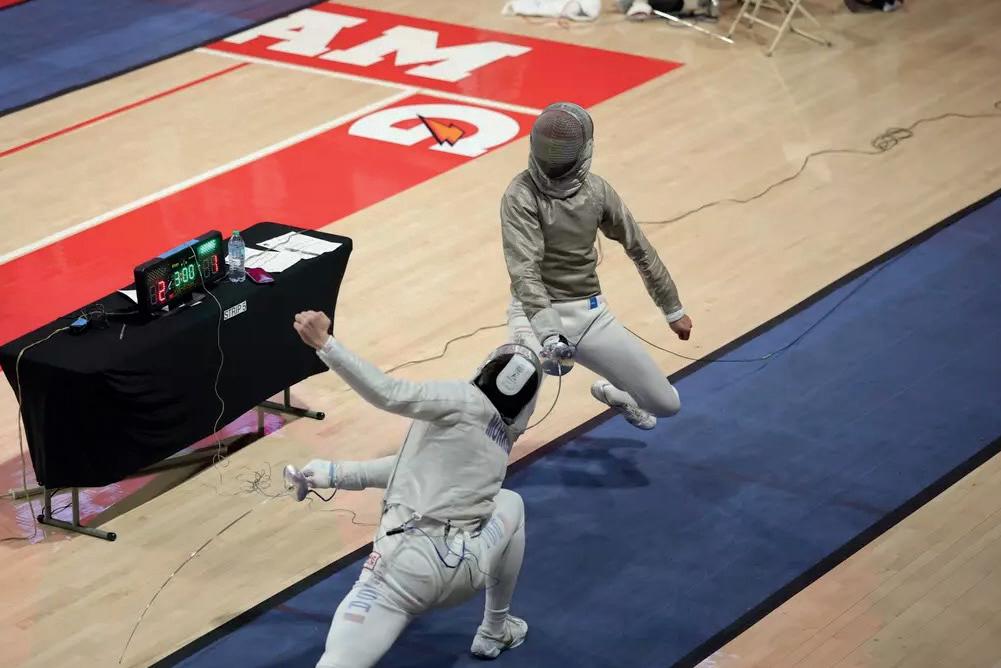
On January 17, 2026, the Taffner Fieldhouse and Carnesecca Arena at St. John’s University in Queens hosted the third edition of the Super Cup. Six elite programs. A single day of five rounds with no margin for error. And results that will fuel conversations in gyms and strips across half a dozen American universities for weeks to come.
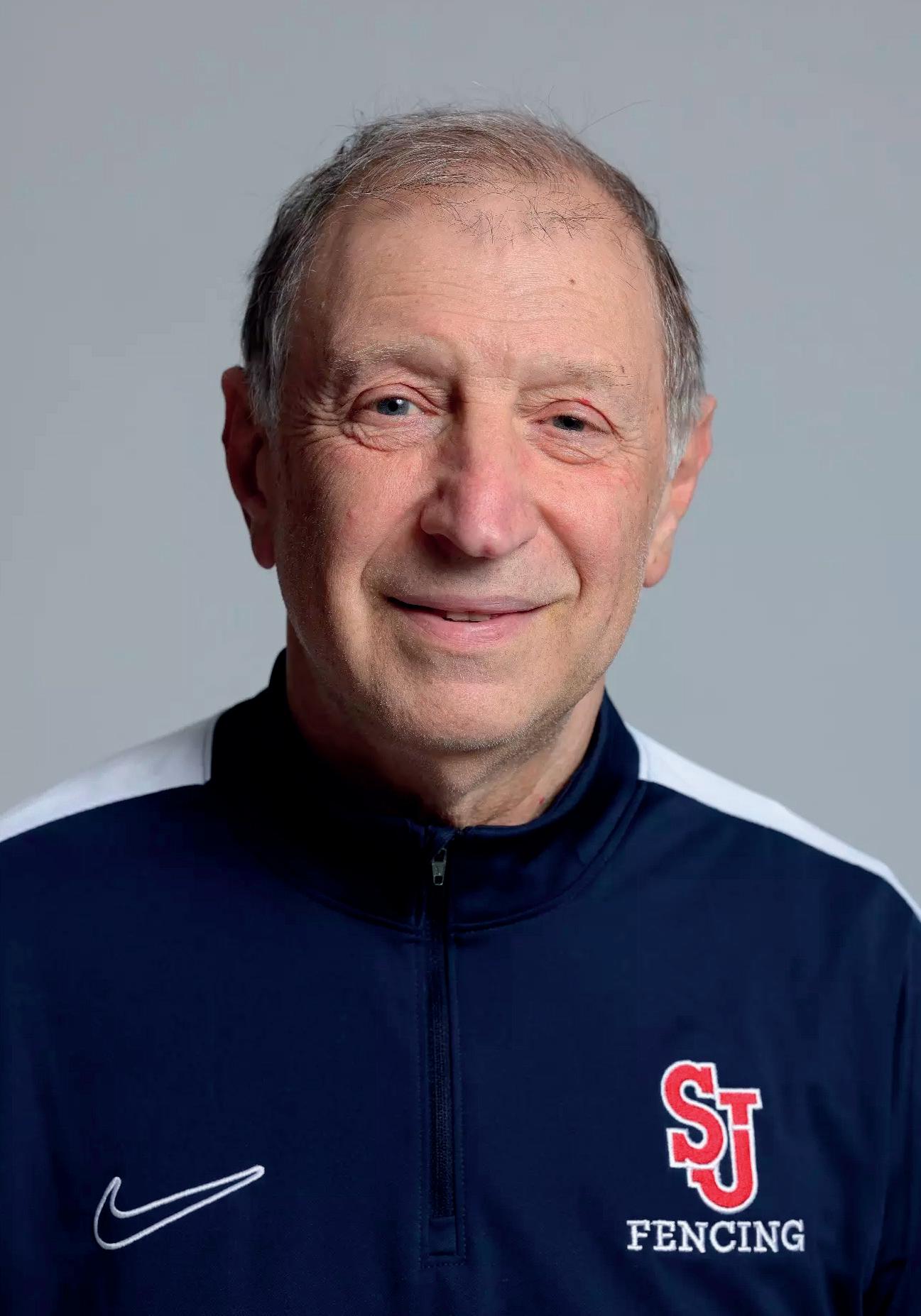
Yury Gelman is the inevitable starting point of this issue. Thirty-one years at St. John’s, seven consecutive Olympics as national coach, more than 140 All-Americans developed, and a philosophy that transcends the strip: “Fencing is life, and life is fencing.” Not just a coach — the architect of an institution within an institution.
that competed at the highest level. Harvard and Ohio State, each with their own case to make heading into the postseason.
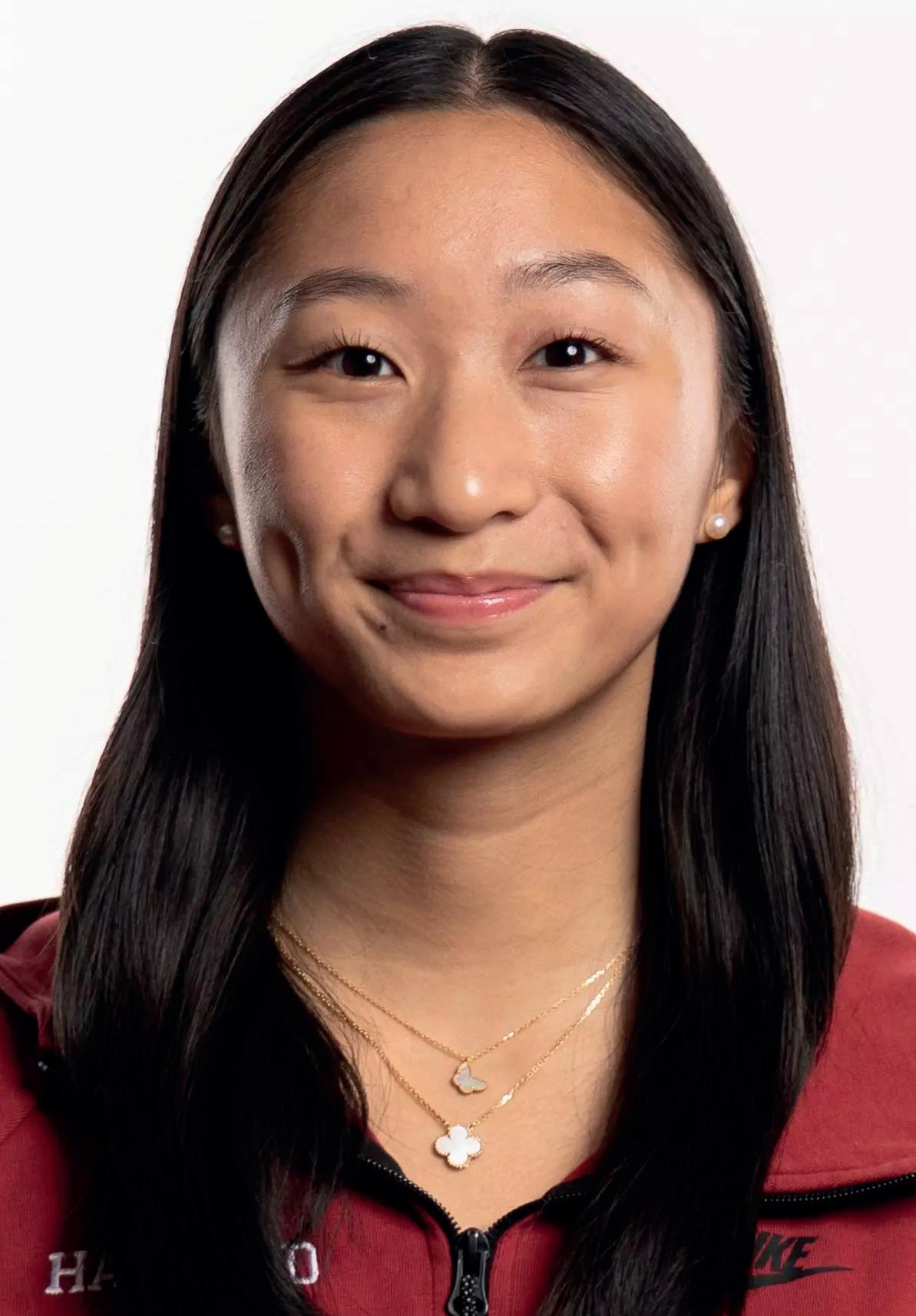
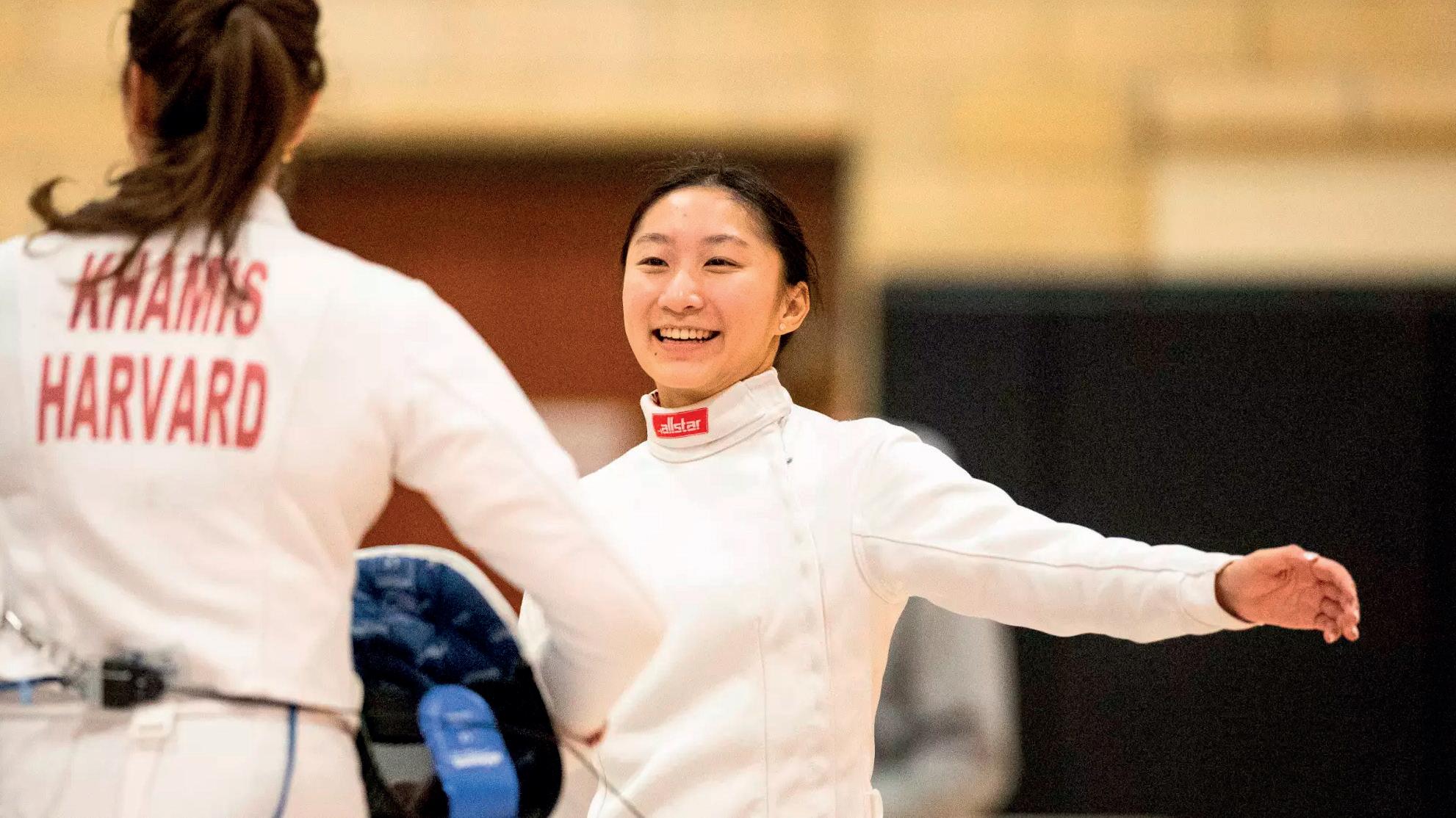
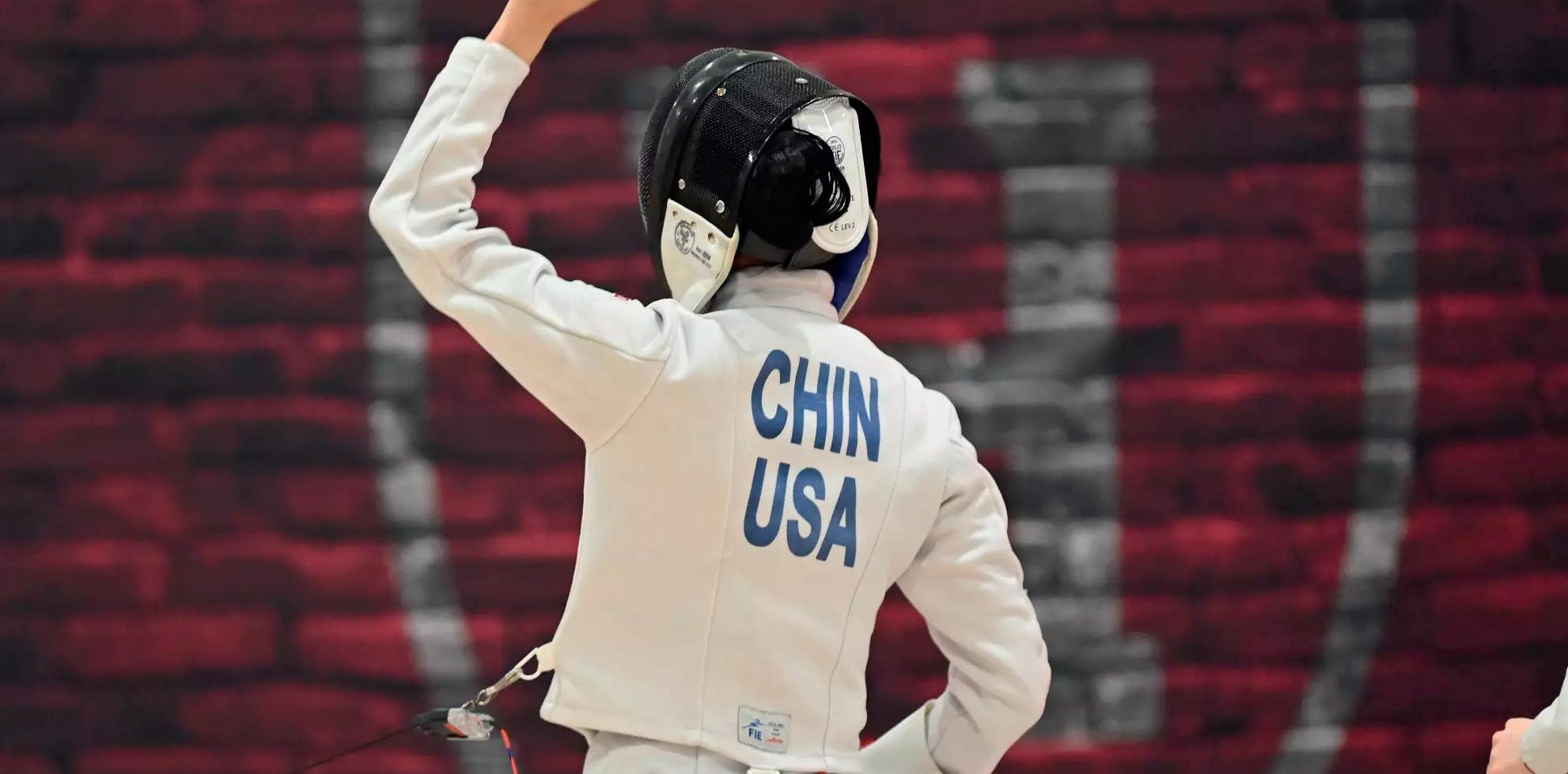
And then there is Isabella Chin. She is not an Olympian — not yet. She comes from Manhasset, Long Island, from a neighborhood club in Port Washington, from years of quiet, disciplined work under a coach who believed in her. She arrived at Harvard with three national titles already in her pocket, became part of the 2024 NCAA championship team in her first year, and is now captain of the women’s program. On January 17th she was the fencer with the best individual record on her team at the Super Cup: 12 wins, 3 losses. In this issue we give her the Perfil — because her story may be the most representative of what NCAA Fencing is at its core.
The best of this season is still to be written. Follow every chapter with us: Inside the World of NCAA Fencing Magazine is your window into the world of NCAA Fencing — issue by issue, touch by touch.
From there we traveled through the six programs that competed at the 2026 Super Cup. Notre Dame, undisputed men’s champion. Princeton, crowned in the women’s bracket in one of the most dramatic finishes the tournament has seen. Columbia, relentless on the women’s side. St. John’s, a host Touché
Yury Gelman
The coach who bult a dynasty
¿What is the St. Jhon’s Super Cup
nd why does it r in NCAA Fencing?
St. John’s Super Cup 2026
A
St. John’s University
Elite
Notre Dame University
Elite
Columbia University
Elite
Princeton University
Elite
Ohio University
Harvard University
Yury Gelman
The Coach Who Built a Dynasty
From New Jersey flea markets to the Olympic podium Thirty years forging champions in Queens.
There is a line Yury Gelman repeats with the same certainty a fencer uses to call a touch:
“Fencing is life, and life is fencing. All the rules are the same.” This is not rhetoric. It is the distillation of a life built piece by piece, bout by bout, continent by continent.
In January 2026, when the top NCAA fencing programs arrived at the Taffner Field House at St. John’s University for the Super Cup, Gelman welcomed his rivals on home ground. Because that is exactly what Queens, New York, has become for him: his home, his laboratory, his legacy.
From kyiv to the highways of new jersey
Born on October 13, 1955, in Kyiv, Soviet Ukraine, Gelman discovered fencing at the age of ten and never looked back. He graduated in 1977 from the Piddubny Olympic College with a degree in physical education and fencing, won two Ukrainian saber championships, and by 1987 was already coaching the Ukrainian national team.
But history, as it tends to do, intervened. Doctors diagnosed his daughter with dermatological complications—a direct consequence of the Chernobyl disaster—and recommended an urgent change of climate. In November 1991, at 36 years old with the Soviet Union collapsing behind him, Gelman crossed the Atlantic.
The contrast was stark. In Kyiv he had had a private driver. In Philadelphia, he washed dishes. He then moved to New York and for a year and a half made his living selling homemade doughnuts and coffee at a flea market beside a New Jersey highway. It was not what he had planned. It did not stop him either.
The numbers of an unparalleled career
Thirty years after that first day in Queens, Gelman’s record of achievement is difficult to absorb in a single reading.
7 OLIMPIADAS COMO COACH DE EE.UU.
Sydney · Atenas · Beijing · Londres · Río · Tokio · París
27 CAMPEONES INDIVIDUALES NCAA EN ST. JOHN’S
Desde 1995
140+ ALL-AMERICANS FORMADOS EN ST. JOHN’S
19+ OLIMPIANOS PRODUCIDOS
6 de ellos medallistas olímpicos
The call that changed his trajectory came shortly after: a New York fencing club needed a coach. Gelman recognized the opportunity. By 1993 he was in Manhattan. In 1995 came another call—this time from a university in Queens with a fencing program that wanted to grow. St. John’s University had been waiting decades for this arrival without knowing it.
“I teach people to lunge, but also how to live. Results are not enough. You must add personality and ethics — be a gentleman, a good person.”
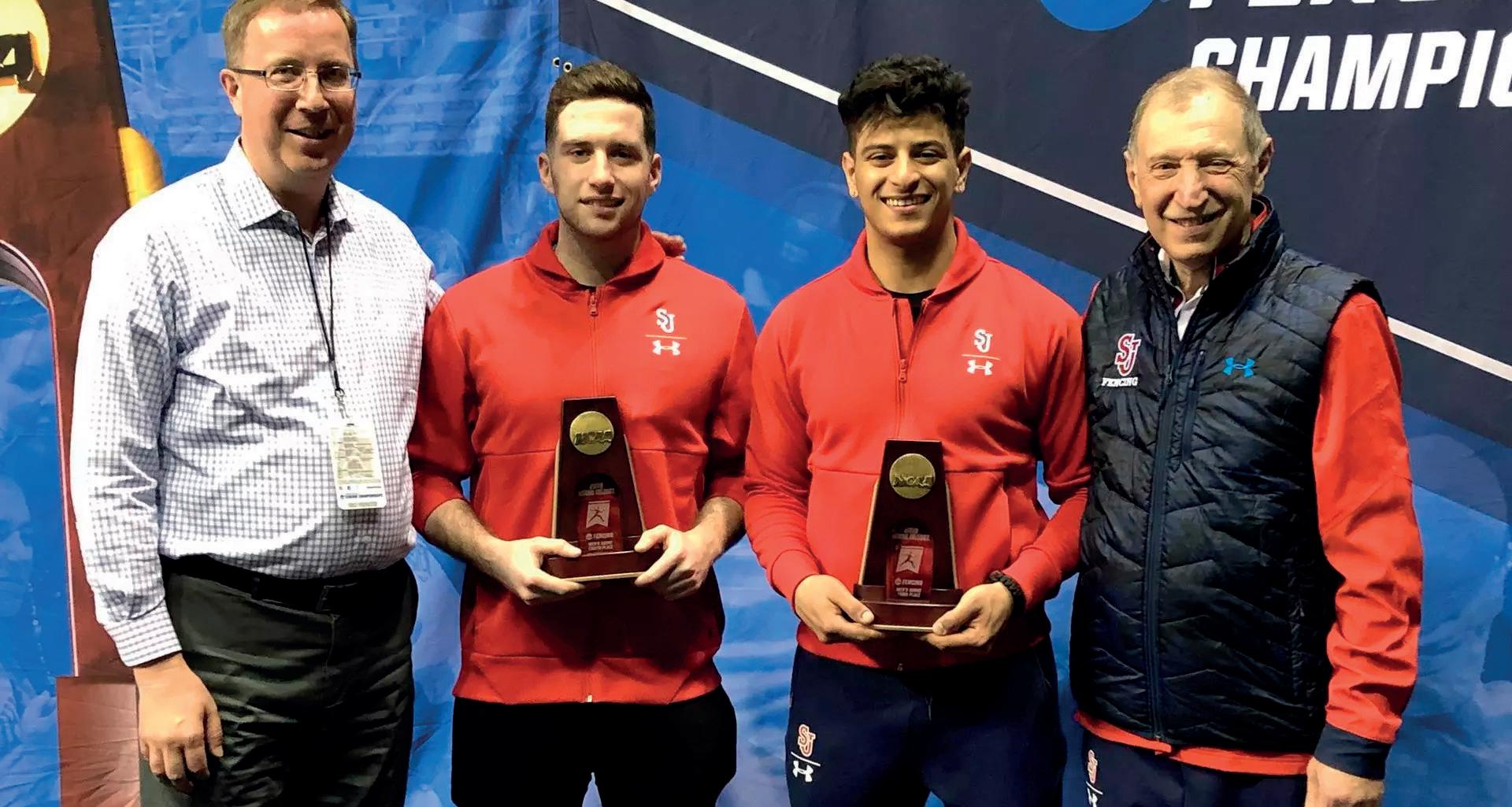
In 2001, his Red Storm won the NCAA national title—the only one in program history—with a team that included four future U.S. Olympians and seven individual NCAA champions. That same year, his students Ivan Lee and Tim Hagamen delivered the United States its first gold medal at the Junior World Championships.
In 2008, the U.S. men’s saber team he directed won Olympic silver in Beijing. In 2010 he was inducted into the U.S. Fencing Hall of Fame. In 2011, the U.S. Olympic Committee honored him with the U.S. Olympic Achievement Award. In 2016, his former student Daryl Homer won silver in Rio. In 2020, the St. John’s Athletics Hall of Fame opened its doors to him as well. In Paris 2024, he was once again in the corner of the U.S. saber team—his seventh consecutive Olympics as national coach.
The philosophy of the fencer who learned to teach
Gelman started in foil, as many young fencers do. But saber is what defined him. And not by chance: saber is the weapon of fast decision, of the attack in motion, of tactical intelligence applied in fractions of a second.
“I enjoy setting a trap and feeling that I am a little smarter. He is stronger, but I am smarter.”
That conviction accompanied him into elite coaching and never abandoned its role. Today, at 69, Gelman acknowledges he gives fewer private lessons than before—physically, time advances. But in his gym at the Manhattan Fencing Center, founded in 2007, there are roughly 400 active fencers, 60 in foil and the rest in saber. And he is still there, in the black coach’s uniform, unable to step away from the strip.
His philosophy goes beyond technique: he wants his athletes to become good members of society.
“I want every child I coach to become a good member of society through fencing — to get into a good university and graduate from it.”
He founded the Yury Gelman Foundation to fund the training of children from low-income families and support elite athletes who cannot afford their own development.
His grandniece, Elizabeth Tartakovsky, competed for the United States in women’s saber at the Paris 2024 Olympics. She was eight years old when she watched Gelman lead the American team to Olympic silver in Beijing 2008 on television and decided she wanted to do the same. “Yury is the closest family we have in the United States,” she said. The legacy, it turns out, is quite literally a family matter.
The super cup: queens as the capital of collegiate fencing
The St. John’s Super Cup was born precisely from Gelman’s conviction that his program, and his city, deserve to be at the center of the elite collegiate fencing calendar. In January 2026, the Taffner Field House at Carnesecca Arena once again became the stage where Harvard, Notre Dame, Princeton, Columbia and Ohio State measured themselves against the Red Storm on their home ground.
St. John’s does not always win the Super Cup—that is not the point. The point is that it exists, that it draws
the best programs in the country, and that it carries the name of the university that Gelman transformed, through patience and decades of work, into a mandatory destination for any fencer who aspires to excellence in American collegiate competition.
His 31-year record at St. John’s includes 140 AllAmericans and 27 individual NCAA champions. In 28 of those seasons, the program finished in the national top six. A run of consistency that far outlasts Olympic cycles, generational shifts and the inevitable fluctuations of sport.
At some point during the weekend of Super Cup 2026, between bouts, Yury Gelman stood at the edge of the strip watching his fencers with the same focused expression as always. Seventy years of life, fifty of fencing, thirty-one in Queens. The story of a man who arrived with nothing, sold doughnuts beside a highway, and ended up building one of the most influential programs in American collegiate sport.
That is no small thing. Nor is it a surprise to those who know him.
“I make champions,” he says with his characteristic calm. Thirty years of evidence confirm he does not say it lightly.
What Is the St. John’s Super Cup
and Why Does It Matter in NCAA Fencing?
The St. John’s Super Cup has established itself as one of the most significant stops on the NCAA Fencing calendar. Hosted each season by St. John’s University in Queens, New York, it brings together some of the strongest programs in collegiate fencing for a concentrated format of competition that tests the depth and consistency of every team on the strip.
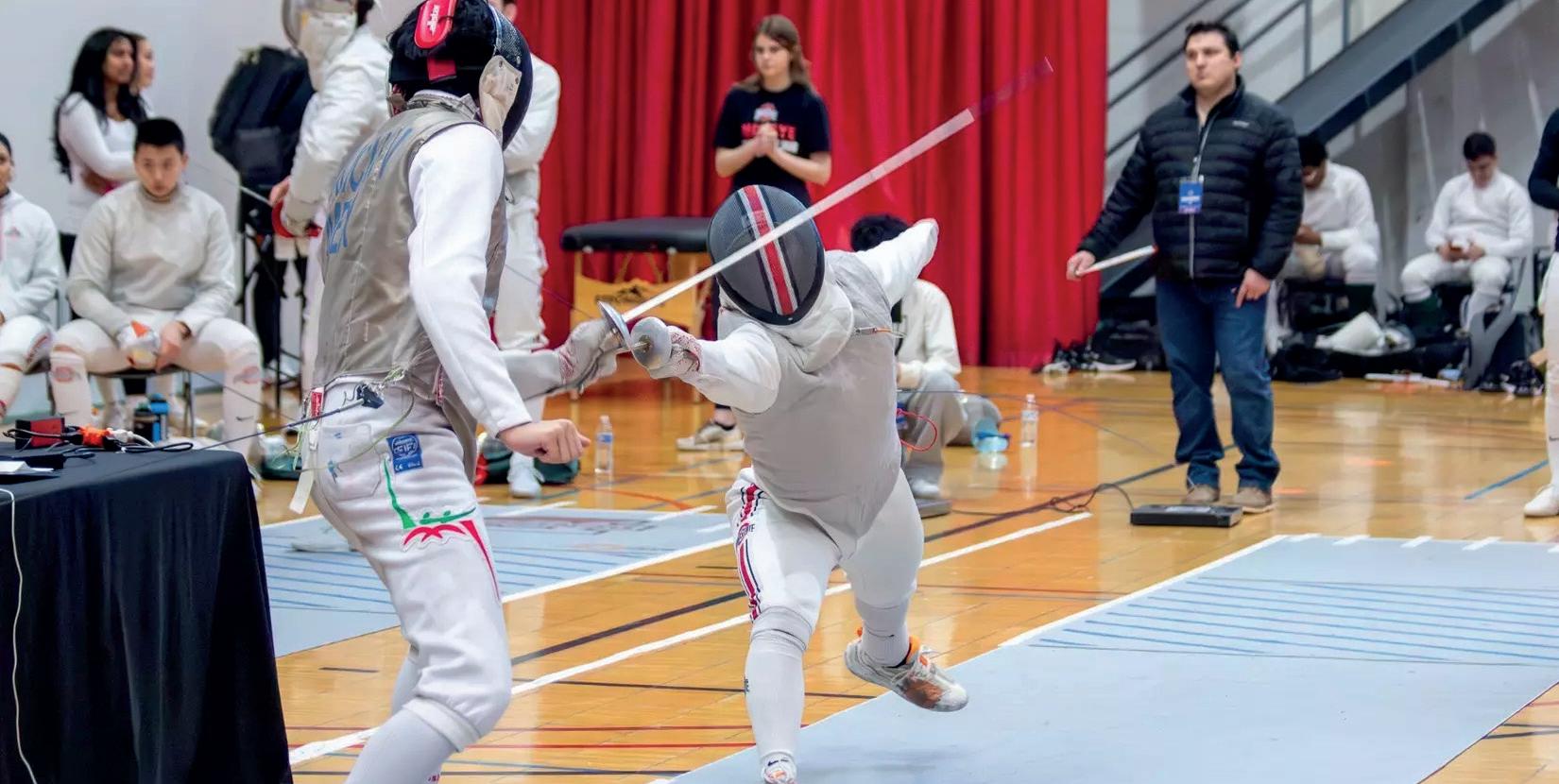
Unlike large invitationals with multiple rounds of elimination, the Super Cup runs as a round-robin tournament in a single day. That intensive format leaves teams no room for a slow start: every matchup counts from the opening touch, and the margin for error is as thin as it gets outside the postseason.
A benchmark moment in the season
Within the rhythm of the NCAA Fencing season, the St. John’s Super Cup serves as a competitive barometer. Results from the tournament give coaches, analysts and fans a clear read of where each program stands against its direct rivals—and an early signal of which teams are building toward a deep postseason run.
For coaches, it is a critical opportunity to evaluate lineup decisions, fine-tune tactical strategies and observe how athletes perform under the pressure of elite competition. For fencers—particularly younger athletes experiencing the event for the first time—it is a formative challenge that accelerates both their competitive maturity and their adjustment to the demands of top-tier collegiate fencing.
The tournament also sharpens long-standing rivalries between programs such as St. John’s, Notre Dame, Princeton, Columbia, Harvard and Ohio State. Their head-to-head matchups at the Super Cup often carry implications well beyond the day’s standings, seeding narratives that play out across the remainder of the season and into the NCAA Championships.
More than a tournament
The Super Cup also fulfills a symbolic role within collegiate fencing. The strips of Carnesecca Arena and Taffner Field House become a meeting point between tradition and renewal, where established figures and emerging talents share the same competitive stage for an afternoon.
Each edition produces memorable performances, decisive encounters and clear signals of what lies ahead at key events such as the Brian Palestis Memorial Invitational and, ultimately, the NCAA Championships. The day functions as a preview of the season’s final chapter—written in real time, with consequences that every program takes home.
For TouchéWorld and NCAA Fencing Magazine, the St. John’s Super Cup represents the essence of what collegiate fencing is: elite competition, holistic athlete development and genuine international projection—all contained within a single, unforgiving day of bouts.
St. John’s Super Cup 2026
A High-Stakes Day in NCAA Fencing
Queens, New York — Carnesecca Arena & Taffner Fieldhouse
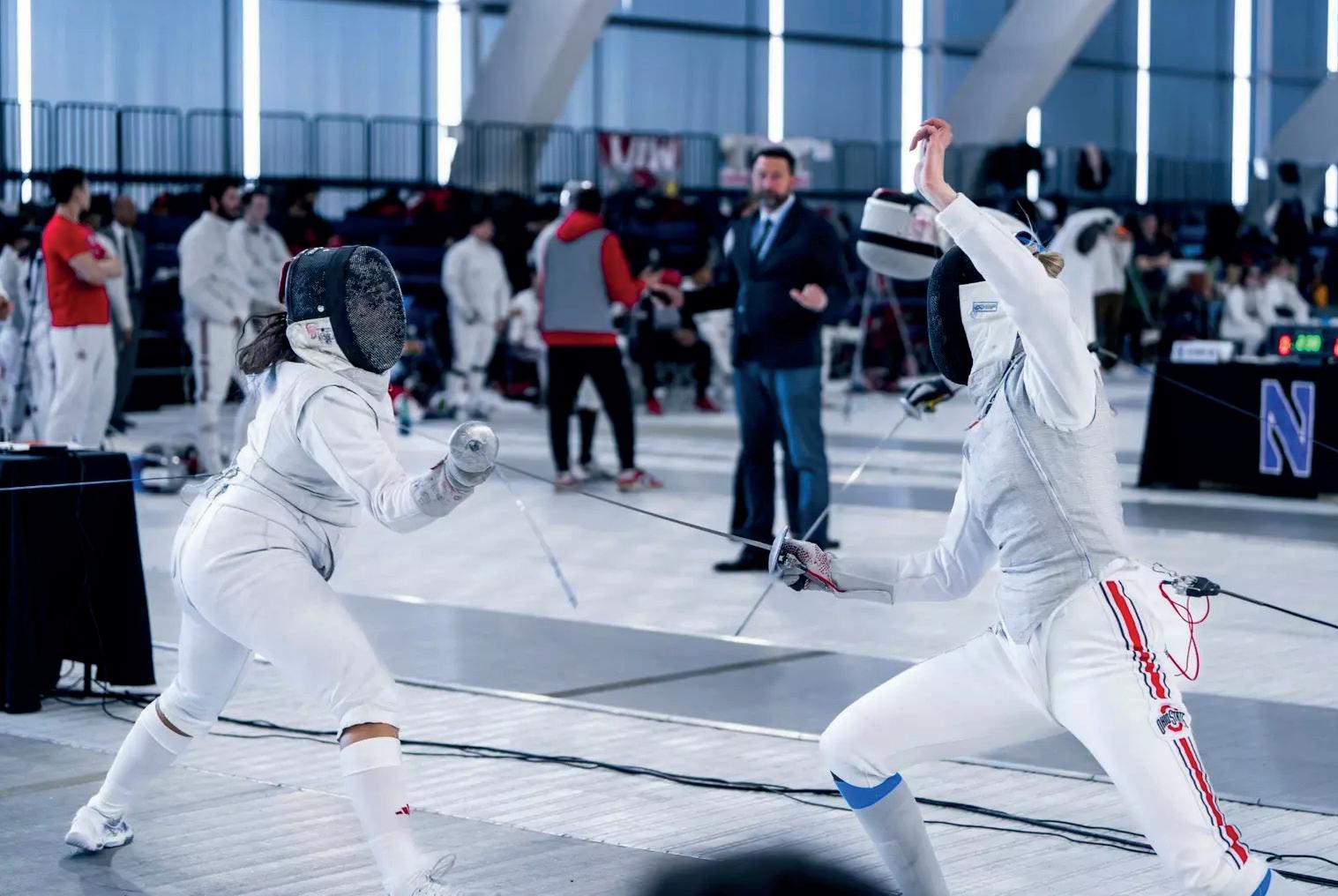
On January 17, 2026, the Carnesecca Arena and Taffner Fieldhouse at St. John’s University in Queens opened their doors to one of the most intense days on the NCAA Fencing calendar for the 2025–26 season. Six of the most powerful programs in the country — St. John’s, Notre Dame, Princeton, Columbia, Harvard, and Ohio State — came together in a roundrobin format that leaves no room for pacing yourself or making mistakes. Five rounds. Ten bouts per
bracket. No rest between strips. The season’s most honest test.
By the time the last touch was called late in the afternoon, the day had delivered an undisputed men’s champion, a women’s title that came down to a three-way tiebreaker, a major upset led by Ohio State, and dozens of elite individual performances that signal an intense postseason ahead.
Men’s bracket: Notre dame, champions without margin for error
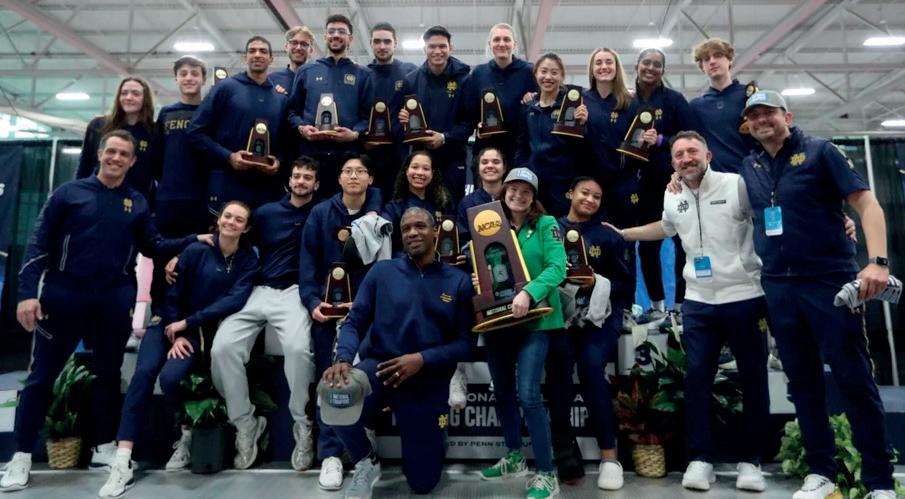
The Fighting Irish arrived in Queens as the nation’s number one ranked program and left with the men’s title unchallenged, closing the day at 4–1. Their only loss — and the biggest surprise of the tournament — came in the opening bout of the morning, when Ohio State defeated them 14–13 in a result that shook the Taffner Fieldhouse. For the rest of the day Notre Dame was relentless: they defeated Princeton 19–8, Harvard 19–8, St. John’s 17–10, and closed with a 15–12 win over Columbia.
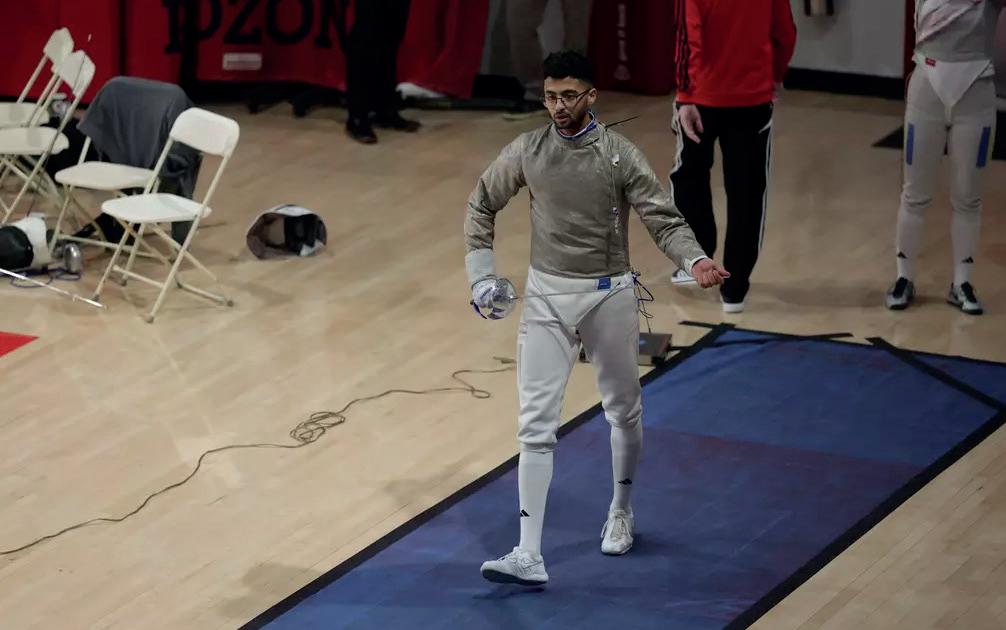
Three Irish athletes posted double-digit individual win totals. Ziyuan Chen finished the day with a brilliant 11–2 record in foil, the best in his weapon across the entire tournament. In sabre, Grant Dodrill (11–4) was the most dominant individual performer: the newly named team captain surpassed 100 career wins at Notre Dame during this event — a historic milestone for the program. Ahmed Hesham (12–3) and Radu Nitu (10–5) complemented an Irish sabre squad that was the most feared weapon in the men’s bracket all day long.
St. john’s: second place at home, with character
The Red Storm men answered the expectation of competing at home with a sharp, consistent performance. They finished second in the overall standings at 4–1, with wins over Columbia (14–13), Ohio State (23–4), Princeton (16–11), and Harvard (18–9). Their only loss came against Notre Dame (10–17) — the nation’s top-ranked team — in the highest-voltage bout of the day for the host program.
Individual leadership was well distributed. In sabre, sophomore Vlad Covaliu was the team’s offensive engine with 11 wins on the day, the best mark among all Red Storm sabreurs. Junior Adham Moataz added 10 victories and sophomore Darii Lukashenko contributed 9. In épée, Samuel Imrek led with 10 wins and Adam Horvath added 9, while Daniil Mazur closed with 7 victories, including a solid 2–1 against Harvard
in the final bout. In foil, sophomore Jan Nowak was the most consistent with 8 wins, alongside freshman Sebastian Garcia with 6.
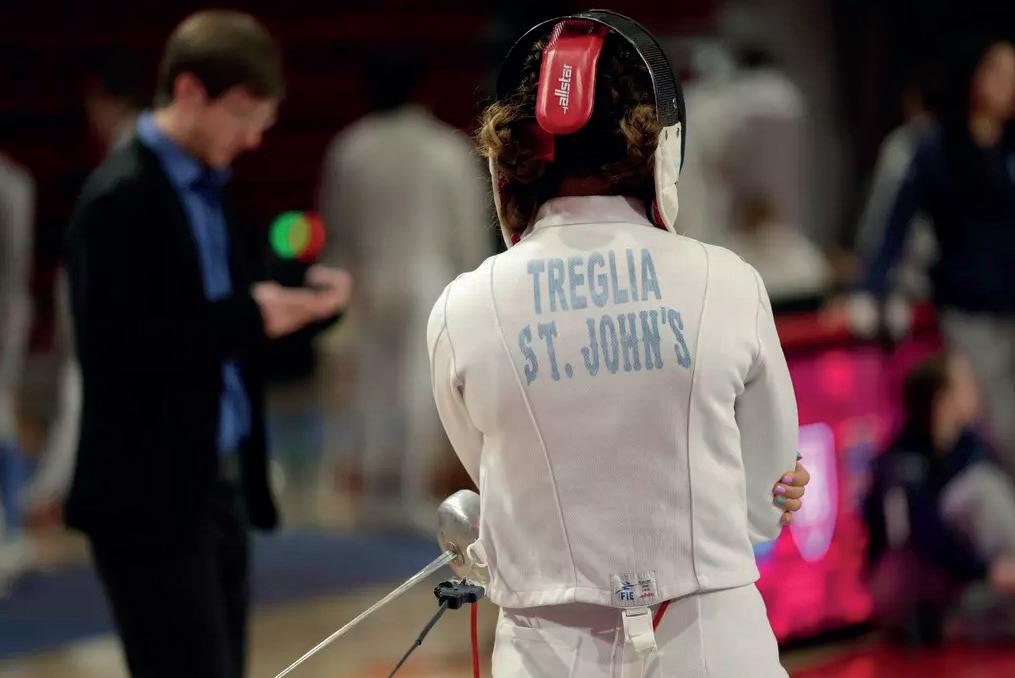
On the women’s side, St. John’s faced a tougher day and finished fifth at 1–4. Their only win came against Ohio State (17–10). The most dramatic bout was the one that opened their day: a 13–14 loss to Columbia that could have reshaped the entire women’s standings by a single touch. Sophomore Nicole Feygin was the team’s standout individual with 11 wins in épée, including perfect 3–0 performances against Ohio State and Harvard. In foil, Elisa Treglia added 9 wins with a flawless 3–0 showing against Notre Dame. In sabre, Catinca Dumitru anchored the group with 9 victories on the day.
Princeton: the women’s crown in a three-way tiebreaker
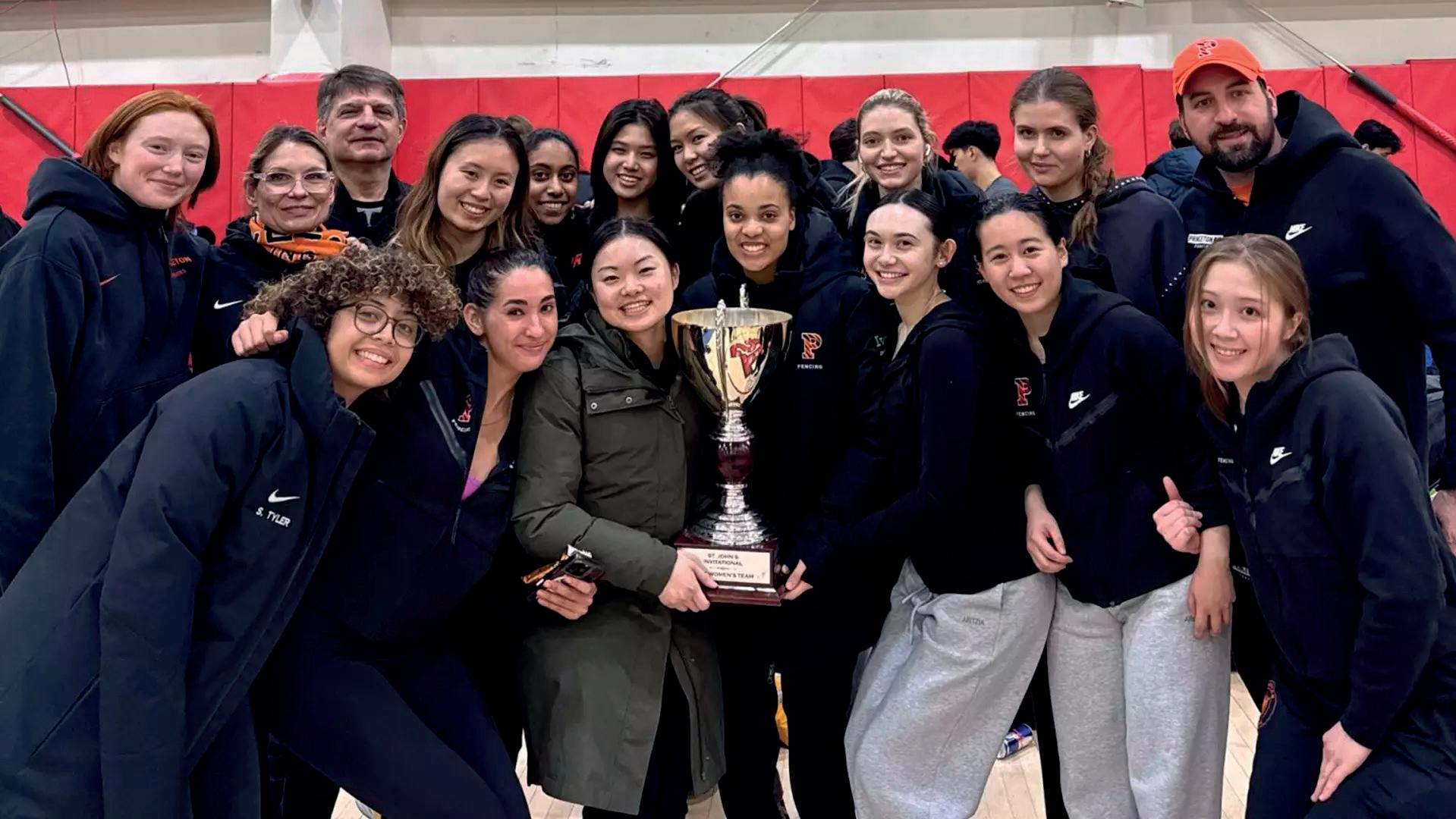
The women’s title had an extraordinary resolution. Princeton, Notre Dame, and Columbia all finished tied for first place with four wins each, but the internal tiebreaker by touch differential crowned the Princeton Tigresses as champions in one of the most dramatic finishes in recent tournament history. Princeton’s women defeated Harvard (14–13), Notre Dame (15–12), St. John’s (21–6), and Ohio State (17–10), with their only loss coming against Columbia (13–14) — the tightest bout of the entire women’s bracket.
The stars of the women’s title run were Leehi Machulsky in épée, with decisive performances (3–0 vs. St. John’s, 2–1 vs. Harvard and Notre Dame), and Maia Weintraub in foil, who was a perfect 3–0 against Notre Dame. In sabre, Alexandra Lee led the charge with a 3–0 against St. John’s and another 3–0 against Ohio State, making her the driving force behind the team’s most dominant weapon on the day.
On the men’s side, the Tigers finished fourth at 2–3, with wins over Harvard (16–11) and Ohio State (14–13).
Princeton’s foil was devastating against Harvard: Allen Chen, Um, and Brandon Lee combined for a collective 9–0 in that weapon — the most dominant foil performance of the day in the men’s bracket.
Columbia: the most consistent women’s program of the day
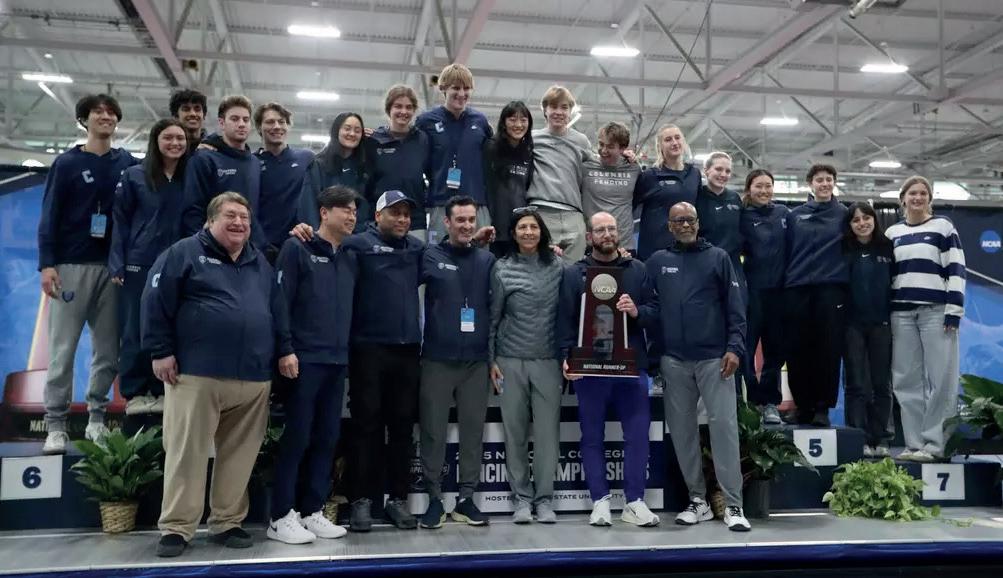
Columbia’s Lions experienced a contrasting day between their men’s and women’s teams. On the women’s side they finished first in wins at 4–1, with their only loss coming against Notre Dame (13–14) in the final bout of the day. They defeated St. John’s (14–13), Harvard (14–13), Ohio State (17–10), and Princeton (14–13) in four ultra-close bouts that reflect the program’s depth and ability to perform under pressure. However, the three-way tie with Princeton and Notre Dame left them outside the title on touch differential.
On the men’s side, Columbia finished third at 3–2, with wins over Harvard (17–10), Ohio State (17–10), and Princeton (16–11). Their only men’s losses came against Notre Dame (12–15) and St. John’s (13–14).
Ohio State: the upset of the day
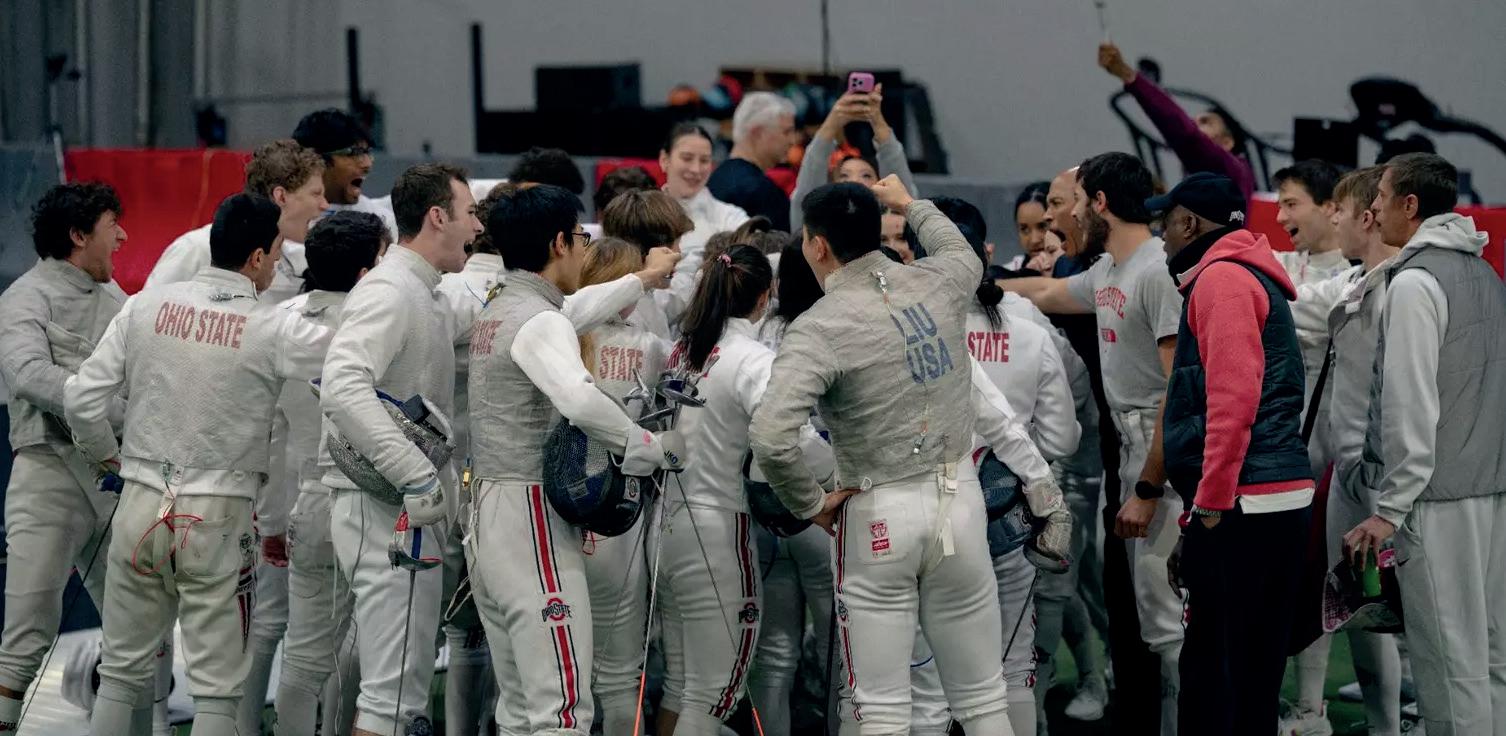
The Buckeyes of Columbus wrote the tournament’s most memorable chapter by defeating numberone ranked Notre Dame in the opening bout of the morning, 14–13, in the most surprising result of the entire day. The match was decided in foil: Albert Bagdány and Solin Li formed the most effective foil pair in the tournament. The Hungarian junior closed the full day with 9 wins — the best individual record on his team — and contributed 7 foil victories in the
bout against Notre Dame alone. Li added 8 wins across the tournament and was a key piece in the 7–2 foil performance that sealed the upset over the Irish.
Ohio State finished the day at 1–4, having faced the five top-ranked programs in the national standings. On the women’s side, Natalia Botello led the team with 8 sabre wins.
Harvard: women’s solidity, men’s uphill climb
The Crimson closed the day with contrasting results by gender. On the women’s side they finished fourth at 2–3, with wins over Ohio State and St. John’s and narrow losses to Princeton, Columbia, and Notre Dame. Team captain Isabella Chin was the standout performer of the day with a 12–3 record in women’s épée — the best on her squad. Junior Jessica Zi Jia Guo, two-time Olympian for Canada and reigning NCAA
Final Standings
foil champion, finished at 10–5, showing consistency even on an uneven day for the team as a whole.
In men’s fencing, Harvard finished fifth at 1–4, their only win coming against Ohio State. The demanding field — Notre Dame, Columbia, Princeton, and St. John’s — reflected the nature of the tournament as a maximumpressure testing ground.
St. John’s Super Cup 2026
Men’s Bracket
Women’s Bracket
St. John’s University
Elite NCAA Fencing Program
City / State: Queens, Nueva York, EE. UU.
Head coach: Yury Gelman
Program Founded: Decades of distinguished history, including the 2001 NCAA national title.
Recent Titles: Consistent All-American producers; frequent national championship finalists.
2025 NCAA: 5th place at NCAA Championships · Darii Lukashenko — individual saber national champion.
Editorial
From Queens, the St. John’s Red Storm carries one of the most respected traditions in American collegiate fencing. Under the leadership of Head Coach Yury Gelman—who has guided the program for more than 30 seasons and developed dozens of All-Americans— the Red Storm combines tactical experience with a competitive philosophy that values both technical refinement and mental resilience on every touch.
St. John’s fencing is defined by solid execution across all three weapons—saber, foil and épée— with a particular emphasis on building team depth
beyond the individual star. The program’s tradition includes a sustained presence among the country’s elite programs and a culture that balances academic excellence with high-performance competition.
At the St. John’s Super Cup 2026, the men’s team reaffirmed that identity with a 4–1 performance, while the women’s team competed with determination in a nationally elite field. That balance marks the Red Storm as one of the most complete and consistent programs in NCAA Fencing.
2025 NCAA: Head coach: Guiorgie “Gia” Kvaratskhelia
Founded: 1934
Team Titles:
• 14 NCAA team national championships — the most in program history and Notre Dame Athletics
• Combined team champion with 183 points — ahead of Columbia/Barnard and Harvard.
Editorial
The fencing program at the University of Notre Dame is synonymous with sustained excellence and dominance in NCAA Fencing. With a history stretching back to 1934, the Fighting Irish have built a dynasty grounded equally in collective performance and individual championship titles, making them the historical benchmark of the national collegiate circuit.
Under Head Coach Gia Kvaratskhelia—one of the most decorated strategists in the country—Notre Dame has developed a fencing identity defined by tactical discipline, versatility across all three weapons and a deeply ingrained competitive culture. Their ability to balance technical tradition with strategic adaptation has placed them consistently at the top of the collegiate rankings.
The 2025 NCAA Fencing Championships offered a definitive statement of their national standing: the Fighting Irish captured the combined team title with dominant performances in épée, foil and saber, and added several individual crowns that reflect both the depth and the quality of their roster from top to bottom.
At the St. John’s Super Cup 2026, Notre Dame went 4–1 with both men’s and women’s teams, with the men claiming the tournament title. Their only defeat—a 13–14 loss to Ohio State in the opening round—served as an early reminder that in collegiate fencing, the number-one ranking provides no automatic guarantees.
• Men’s and women’s Ivy League champions · February 8, 2026.
• 12 fencers selected for the 2025 NCAA Championships — among the highest in the nation
NCAA 2025:
• 2nd place in team standings (Columbia/Barnard) with 172 points — behind Notre Dame, ahead of Harvard.
Editorial
PROGRAM IDENTITY
The fencing program at Columbia University stands as one of the most venerated traditions in American collegiate fencing. With a history stretching back to 1898, the Lions have been a consistent presence at national tournaments and Ivy League championships, maintaining a competitive standard that fuses technical talent with a deeply strategic team culture.
Under Head Coach Michael Aufrichtig—named Ivy League Coaching Staff of the Year in 2026— Columbia has continued to develop athletes capable of competing at the highest levels of the NCAA. Their 2nd-place finish at the 2025 NCAA Championships, combined with fielding one of the largest contingents at the national meet, confirms the program’s position as a perennial contender for the title.
Columbia’s fencing identity is built on depth across all three weapons—épée, foil and saber— with a particular emphasis on roster depth and tactical adaptability against elite opponents. This combination of tradition, technique and consistency makes the Lions one of the defining programs on the national landscape.
• Multiple All-Ivy and All-American honors — strong national presence.
Editorial
The fencing program at Princeton University is synonymous with historical depth and sustained competitive performance within the NCAA. Under the experienced leadership of Head Coach Zoltán Dudas— who has led the Tigers for more than two decades— the program has built a tradition of excellence in both individual matchups and team competition.
Princeton combines a rigorous technical foundation with a tactical fencing philosophy that is reflected in its consistency at Ivy League championships and in its national-level results. The Tigers regularly reach top positions at the most demanding collegiate tournaments, supported by deep rosters across foil, épée and saber.
A notable milestone was the Ivy League men’s title in 2025, where Princeton asserted itself decisively over Columbia and other historic rivals. The women’s team followed with a strong Ivy League showing in 2026 and claimed the Super Cup tournament title on January 17 in Queens—defeating Notre Dame, Harvard, St. John’s and Ohio State en route to the championship.
Princeton Fencing Roster 2025–26
Men´s Team
Alec Brooke
Lucas Choy Allen Chen
Adam Lai Silas Choi
Women´s Team
Emese Domonkos Alexandra Lee - Épée (Jr.)- Foil (Sr.)- Foil (So.) -
• 15 Olympic medalists produced · 160+ AllAmericans.
2025 NCAA:
• Men’s 1–4 — including upset of #1 Notre Dame 14–13 · Women’s 0–5.
Editorial
The fencing program at Ohio State University is one of the most storied and influential institutions in NCAA Fencing history. With a tradition spanning more than a century and multiple national championships, Ohio State has served as a launching pad for Olympic medalists and All-Americans who have left their mark on both the collegiate circuit and the international stage.
The Buckeyes combine a competitive identity built on roster depth with a philosophy of technical development across all three weapons: foil, épée
and saber. Their fencing style is characterized by tactical adaptability, physical intensity and a strong team culture—attributes that make them a respected opponent in every matchup they enter.
The program’s impact is reflected in the consistency with which its athletes qualify for major national events and contribute to the institution’s historic legacy. Ohio State’s Big Ten Conference membership places them among programs that compete at the highest academic and athletic standards simultaneously.
Ohio State Fencing Roster 2025–26
Women´s team
Maria Alexe
Hamsika Arnipalli
Men’s Team
Carter Berrio - Sabre (Jr.) -
Albert Bagdány
Natalia Botello
Grace Fan
Sally Fan
- Sabre (Fr.)- Sabre (Sr.) -
- Épée (So.)- Sabre (Jr.) -
Gloria Klughardt
Julia Semikin
Sami Boumedienne
Solin Li
- Foil (Jr.)- Foil (Jr.)- Sabre (Fr.) -
- Épée (Jr.)- Épée (So.)- Épée (So.) -
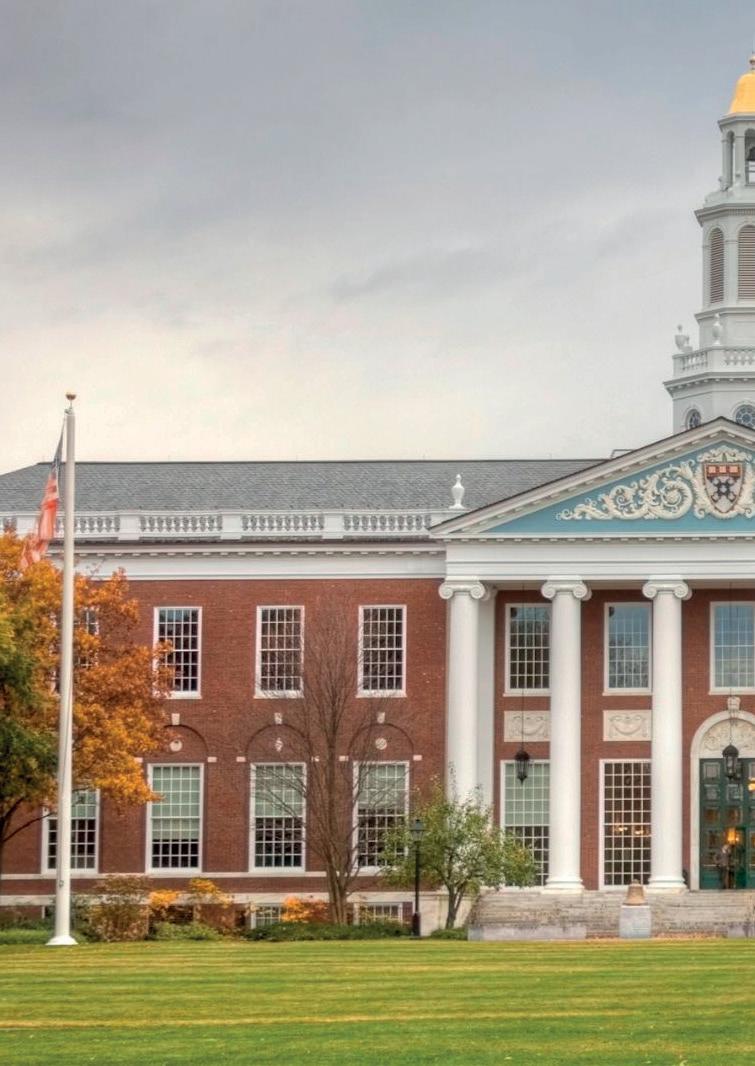
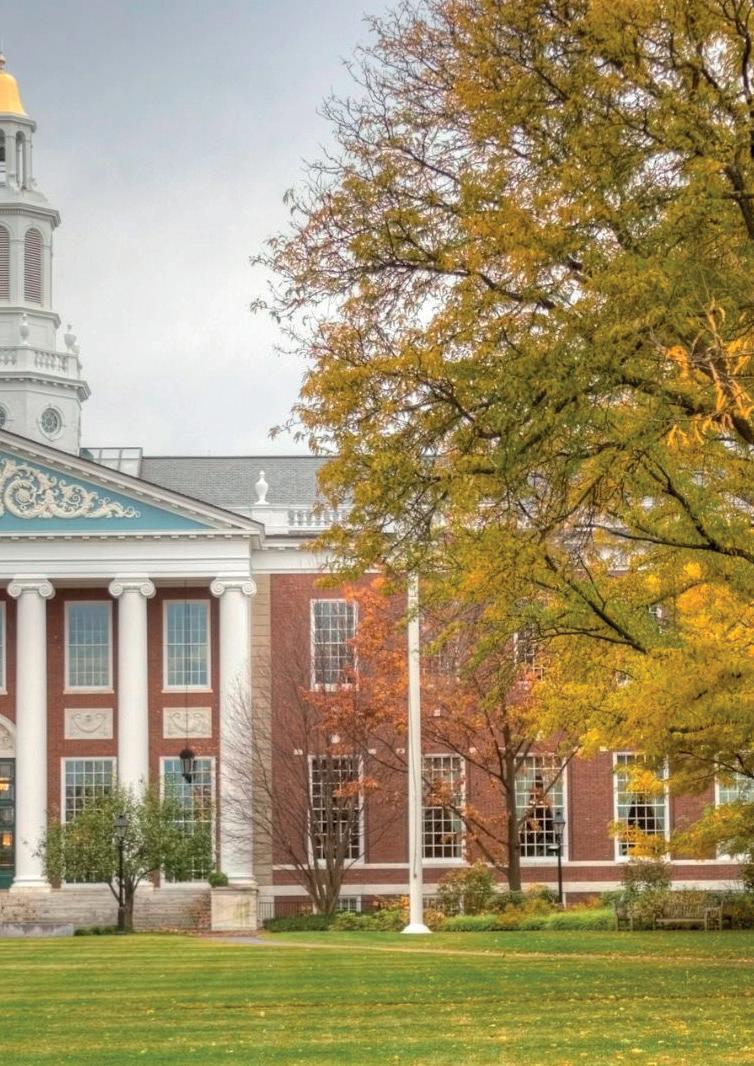
Harvard University Elite NCAA Fencing Program
City / State: Cambridge, Massachusetts, USA
Head coach: Daria Schneider
Founded: 1888 — one of the first universities to establish a competitive fencing program in the United States.
Títulos / logros recientes:
• NCAA Fencing National Champions 2024 (combined team title).
• 8 Harvard-affiliated athletes at Paris 2024 — first time in history the entire USA men’s saber team came from one university.
2025 NCAA:
• 3rd place team standings — multiple AllAmericans — individual medalists.
Editorial
The fencing program at Harvard University is both a historical landmark and a contemporary force within NCAA Fencing. Founded in 1888—making it one of the first competitive fencing programs in the United States—the Crimson has evolved into one of the most successful programs in the country, combining a deep technical tradition with consistently elite results on the national stage.
Under Head Coach Daria Schneider—whose leadership produced the 2024 NCAA Fencing National Championship and a 3rd-place finish in 2025—Harvard has reinforced its position at the very top of collegiate fencing. Schneider holds a historic distinction: she is the first coach in Olympic history to have the entire U.S. men’s saber team come from one university—all eight Harvard-affiliated athletes competed at Paris 2024.
The Crimson’s style balances tactical épée, foil and saber with an emphasis on roster depth and strategic adaptation. Harvard’s ability to produce individual champions while sustaining team-level excellence makes it a program that continually raises the bar for what collegiate fencing can be.
college students who are also Paris 2024 Olympians.
There is a question the academic calendar never quite manages to answer: can you be a full-time college student and an elite Olympic athlete at the same time? On January 17, 2026, four answers to that question competed in Queens under the same roof. Four athletes who have stood on the Grand Palais floor in Paris, who know the weight of a medal and the feeling of a world final, and who showed up at the Taffner Fieldhouse that Saturday in their university uniforms, with their season records in hand, and the same focus they bring to any international competition.
These are their stories.
Colin Heathcock
Harvard University · Men’s Saber · Sophomore (Class of 2028)
Born in Beijing and raised in the Bay Area of California, Heathcock’s father enrolled him in fencing lessons after seeing a local advertisement. The reaction was immediate. “I wanted something fast and furious,” Heathcock recalls. “Sabre is different from every other sport. There are no boundaries.” He was eight years old.
He moved to Europe at 13 to train at the elite level, a decision that would shape his entire career. What followed was a steady upward trajectory that took him to the Olympics as one of the youngest sabreurs to ever qualify for the Games. At Paris 2024, with
just 18 years old, he finished 19th in the men’s sabre individual event and was part of a historic team — the first in Olympic history in which all four members of a weapon squad came from the same university: Harvard. The team finished 7th in the team event.
Before arriving in Cambridge he had already made his mark on the international circuit: gold at the Grand Prix in Tunis in January 2024, first place at the World Cup in Padua in April 2024, and bronze at the Seoul Grand Prix in May 2024. He currently ranks 7th in the FIE senior men’s sabre world rankings.
“Sport has infinite possibilities. I wanted something fast and furious, that’s why I chose saber. There are no limits.”
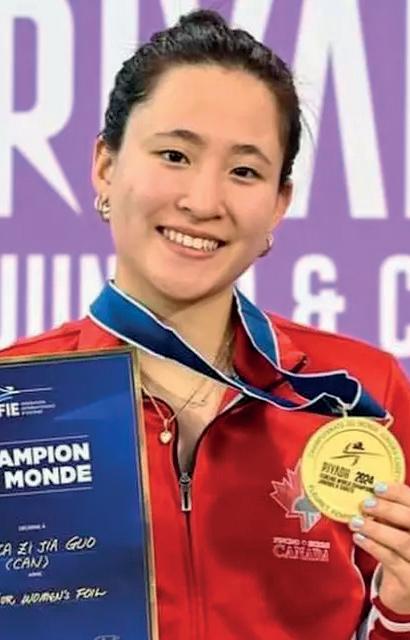
Jessica Zi Jia Guo
Harvard University · Women’s Foil · Junior (Class of 2027)
She grew up in Toronto and began fencing as a young child, never imagining that at 15 she would be competing at the Tokyo 2020 Olympic Games. That first Olympics was just the beginning. Guo has now competed in two Olympic Games for Canada — Tokyo 2020 and Paris 2024 — alongside two Cadet World Championship titles (2021 and 2022) and the Junior World Championship in foil in 2024.
Her first year at Harvard was extraordinary: NCAA women’s foil champion, national team title, AllAmerica First Team, and USFCA Rookie of the Year. In her second year she finished second in the individual event at the 2025 NCAA Championships. At Paris 2024 she faced teammate Lauren Scruggs in the round of 16 — a rematch of the 2024 NCAA women’s foil final — losing 11–15 to the eventual silver medalist.
At the 2026 Super Cup she finished 10–5, confirming the consistency that makes her one of the most complete collegiate foilists in the country. Top-10 in the FIE senior women’s foil rankings.
“The NCAAs are great preparation for my endurance because I have to fence about 20 bouts. The high energy and intensity is great preparation for the loud, chaotic atmosphere of Paris.”
2x Olympian: Tokyo 2020 (13th individual) and Paris 2024 · 2024 NCAA Women’s Foil Champion · 2024 Junior World Champion — Foil (individual) · 2x Cadet World Champion (2021, 2022) · Top-10 FIE senior ranking · First-Team All-American 2024 and 2025 · Super Cup 2026: 10–5
Olímpica París 2024 (EE.UU.) · 12ª individual, 7ª equipo · 2x Campeona Mundial Junior Espada (Dubái 2022, Plovdiv 2023) · 3x All-American · All-Ivy 1ª equipo 2025 · 18ª fencer Tiger en clasificarse a los JJ.OO. · Super Cup 2026: 13-2 en espada (lideró el equipo femenino).
“Fui weirdly hardcore desde el principio. Sin ninguna razón, siete días a la semana, cinco horas al día. Y no era buena.”
Hadley Husisian
Oakton, Virginia. She started fencing at age 10 after watching an episode of iCarly in which a girl wielded a foil. What began as curiosity became a dual career: academic at Princeton and competitive on the international épée circuit.
Husisian is a two-time Junior World épée champion — Dubai 2022 and Plovdiv 2023 — and the 18th Princeton fencer to qualify for the Olympic Games. To prepare for Paris 2024 she took an academic leave of absence from university. At the Games she finished 12th in the women’s individual épée — advancing past the round of 32 before falling in the round of 16 to Vivian Kong, the eventual Olympic champion. She finished 7th with the U.S. team.
At the 2026 Super Cup she led Princeton’s women’s team in épée with a record of 13–2, playing a key role in the Tigresses’ women’s championship title.
Princeton University · Espada femenino · Junior (clase 2027)
Nicholas Zhang
Harvard University · Men’s Épée · Sophomore (Class of 2028)
He grew up in Richmond, British Columbia, and wrote one of the most extraordinary stories on the road to Paris 2024: at 17, he won the Pan American qualifying tournament to secure Canada’s sole individual men’s épée slot — and that summer he competed at the Grand Palais before ever setting foot on Harvard’s campus.
His transition to the NCAA was as smooth as his arrival at the Games: Pan American Junior Champion
2024, All-Ivy First Team 2026 with a 10–2 record in épée. At the 2026 Super Cup he contributed steadily to Harvard’s collective effort in a men’s bracket that finished 1–4 against the most demanding field in the country.
Zhang represents a generation that doesn’t wait. That competes at the Olympics one summer and arrives on campus that fall as if both things were exactly what they were always meant to be.
“Canada’s Olympic team has one of its largest contingents since 1988. And among them, a Harvard freshman.”
Paris 2024 Olympian — qualified by winning Pan American Qualifier at age 17 · Pan American Junior Champion 2024 (individual) · All-Ivy 1st team 2026 (10–2 in épée) · Member of Harvard All-Ivy team 2025–26.
The St. John’s Super Cup 2026 brought together in a single weekend two Harvard Olympians and one from Princeton, alongside the full complement of six NCAA programs that have sent the most athletes to the Olympics in the past decade. That is not an accident. It is the result of decades of investment in elite collegiate fencing, by coaches who understood that producing Olympic champions and producing great graduates are not contradictory goals.
Heathcock, Guo, Husisian and Zhang are the most visible expression of that thesis. The next time you see them on the strip—whether at the Taffner Field House in Queens or the Grand Palais in Paris—you know exactly who they are.
The Result Nobody Saw Coming
Ohio State 14, Notre Dame 13
How the Columbus Buckeyes, led by a Hungarian foilist and a veteran All-American, toppled the No. 1 team in the country at the Taffner Field House.
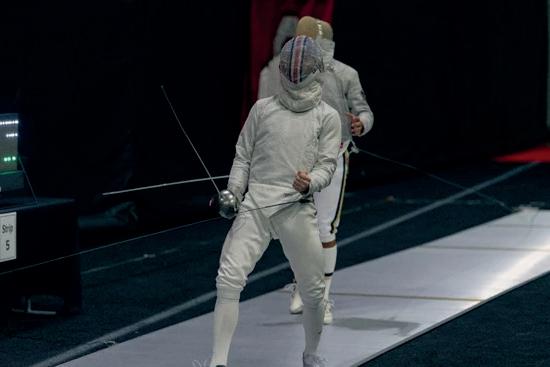
10:00 a.m., Saturday, January 17, 2026. The Taffner Field House at St. John’s University in Queens has been running for barely an hour when officials call the first match of the day to the strip. On the left, the men’s team of the No. 5 program in the country: Ohio State, the Buckeyes of Columbus. On the right, the undisputed No. 1 of the season: Notre Dame, the Fighting Irish, reigning national champions and heavy favorites to repeat in March.
What happened over the next ninety minutes is the kind of result people remember years later—not because it decided a championship (it was January, a high-level exhibition with no bearing on the official rankings) but because it revealed something about the nature of the sport. That No. 1, on any given day, can lose. And that sometimes the team that beats them is one that never stopped believing it could.
Ohio State 14, Notre Dame 13. The tightest possible scoreline in a sport where the maximum is 27.
Resultado final
OHIO STATE
NOTRE DAME
The
foil that decided everything
Ohio State’s saber lost 1–8 to Notre Dame. It was the expected weapon differential—the one the Fighting Irish always exploit against mid-level opponents. In a normal matchup, that 7-touch saber advantage would have buried the Buckeyes. But this morning was not a normal matchup, and Ohio State had Albert Bagdány in foil.
The junior from Szigetszentmiklós—a city 20 kilometers south of Budapest that produces more elite fencers per capita than almost anywhere else in the world—finished the full day with 9 victories, the best individual record on the men’s team in the entire tournament. Against Notre Dame, in the weapon that defined the match, foil finished 7–2 in favor of Ohio State. That margin, combined with a 6–3 advantage
in épée, was enough to offset the Irish’s 8–1 in saber.
Alongside Bagdány, junior Solin Li finished 8–1 across the full tournament in foil. Against Notre Dame, the Ohio State foil pair operated as a precision machine, executing exactly the tactical plan their program needed to compete with the No. 1 team in the country.
“Ohio State’s foil was dominant. Bagdány and Li were the best foil fencers in the tournament.”
Albert bagdány: the hungarian from columbus
It was his mother who first walked him into a fencing hall in 2011, when Albert was six years old. The club was the Szigetszentmiklósi TE, in the same city where he was born. Ten years later he was competing for the Ludovika SE in Budapest, one of the most demanding development clubs in Hungary. By then he had built a record few American college athletes can match: European Cadet Champion in foil, team bronze at the Junior World Championship (2022), bronze at the European Junior Championship.
In 2023 he crossed the Atlantic to study international relations at Ohio State, joining a program that has drawn European talent for decades on the argument that the Big Ten offers the highest level of collegiate competition in the country outside the Ivy League. Today, in his third year as a Buckeye, Bagdány is the most decisive foilist on the team and one of the names every opponent analyzes before facing Ohio State.
His younger sister Mira is a Latin dance performer. In his Ohio State athlete profile, when asked what he enjoys outside of sport, his answer is brief: spending time with the people he loves. Fencing keeps him busy enough.
9 VICTORIES ACROSS THE FULL TOURNAMENT Best individual record on the OSU men’s team
7 FOIL VICTORIES AGAINST NOTRE DAME (maximum possible: 9)
JUNIOR WORLD TEAM BRONZE 2022 · EUROPEAN CADET CHAMPION
Solin li: the veteran who never misses
If Bagdány is the European talent Ohio State recruited from abroad, Solin Li is the continuity the program built from within. The junior from San Diego, California, has spent four seasons in Columbus accumulating credentials that speak to consistency: CCFC Foil Champion in 2023, Honorable Mention AllAmerican in 2025 after finishing 11th at that year’s NCAA Championships.
At Super Cup 2026, Li finished 8–1 across the full tournament—second-best on the men’s team. Against Notre Dame, his contribution was decisive in the 7–2 foil outcome. Against Princeton, in Ohio State’s tightest match of the day (another 14–13), foil finished 5–4 in favor of the Buckeyes, with Li as a key factor in that single-touch margin.
“Ohio State’s men went 3–2 in foil and 3–2 in épée. That’s not luck. That’s a plan that worked.”
The rest of the day: nearly perfect until the end
The victory over Notre Dame was the first match of the day. What followed showed both the potential and the current limits of the program. Ohio State fell 23–4 to host St. John’s in the second match. Then came a 17–10 loss to Columbia and a 15–12 defeat against Harvard. In the final match, they fell 14–13 to Princeton—the exact same scoreline as their opening win, but reversed.
The final record was 1–4 in the tournament—numbers that, out of context, do not appear remarkable. But context changes everything: in their five matches, Ohio State faced the five highest-ranked programs in the national standings (Notre Dame, Columbia,
Harvard, Princeton, and St. John’s on their home floor). Against No. 1, they won.
Viktor Kulcsar and Jakob Stange each added 7 victories in men’s épée. James Schardine led saber with 3 victories. On the women’s side, Natalia Botello posted 8 wins in saber—the best individual record on the women’s team and the highest women’s saber total among all OSU fencers on the day.
The Super Cup does not count toward the rankings. January results do not decide March championships. But there is something the Super Cup results do reveal clearly: the actual state of programs at mid-season, unvarnished, against the best available opponents in a single day.
Ohio State ended that Saturday in Queens with a 1–4 record. They also ended it having defeated the No. 1 team in the country. For Albert Bagdány, Solin Li, and the rest of the Buckeyes, that was enough to remember long after the tournament closed its doors.
For Notre Dame, it was the first loss of the season. Ohio State handed it to them.
Isabella Chin
The captain from Queens who arrived in Cambridge with three national titles already in her pocket
De los mercados de pulgas de Nueva Jersey al podio olímpico.
Treinta años moldeando campeones en Queens.
Manhasset is a small city on the north shore of Nassau County, Long Island. Twenty minutes from Grand Central Terminal by the LIRR, with tree-lined streets, high-achieving schools, and — for the past few years — a name that resonates through the collegiate fencing circuit: Isabella Chin.
Chin has been on the strip since third grade — around eight years old — after her mother suggested fencing as an alternative once she had worked through more conventional sports like swimming and ice skating. The connection was immediate. “I like the many different components that go into fencing,” Chin explained in a local interview before arriving at Harvard. “Strategy plays a big role. You have to be both mentally and physically in shape. And I also admire how you can be creative in your actions.” It didn’t take long to discover that épée was her weapon.
What followed were years of quiet, disciplined work at the New York Fencing Academy in Port Washington, under the guidance of coach Sergey Danilov — one of the most respected épée coaches on the East Coast, also an assistant coach at St. John’s University and
the USA’s designated national team coach for cadet and junior épée. Danilov describes her as one of the hardest-working athletes he has ever coached: always among the first to arrive at the gym, invariably the last to leave.
The work produced measurable results, quickly. Before arriving at Harvard, Chin had accumulated a Junior national title in 2022 and a Junior World Cup championship in 2023, along with a Cadet World Cup team title in 2021 and a team bronze medal in the same category in 2022. In January 2023, at 17 years old, she traveled to Maalot, Israel, to compete in the Junior World Cup. Only twelve fencers from across the country earn the right to represent Team USA at this competition. Chin didn’t just qualify — she won gold, defeating her own teammate and future Harvard classmate 15–10 in the final, adding another title to a collection that already included three national championships.
With that résumé, she arrived in Cambridge in the fall of 2023.
Harvard: from debut to leadership
Her first year with the Crimson was immediately productive: she finished sixth at the NCAA Championship with a 14–9 record and a +15 indicator, earned USFCA All-America Second Team honors, and was part of the squad that captured the 2024 NCAA national title. Not a modest debut for a firstyear collegiate athlete.
Her second year raised her profile further. More experience, more consistency, more presence in the major tournaments on the calendar. She closed the 2024–25 season with 43 wins and 25 losses, earned All-Ivy League Second Team recognition, and reached the top-16 at the NCAA Championships.
Then came her third year — the current one — with a new title that changes the weight of every training session: Isabella Chin is a captain of the Harvard women’s fencing team for the 2025–26 season. A responsibility that, by all accounts from those who have known her since Manhasset to Cambridge, she had been building toward from the very first day she stepped onto a fencing strip.
The Super Cup, from the inside The complete picture
On January 17, 2026, Chin was the standout individual performer for Harvard’s women’s team at the Super Cup. She finished the day with the best record on the squad: 12 wins and 3 losses in women’s épée, including perfect 3–0 marks against both Ohio State and St. John’s. In a tournament where her team went 2–3 against the most demanding field in the country, Chin’s performance was the individual anchor that kept Harvard competitive in every single bout.
Her teammate Madison Duckett summed it up well after the tournament: “The first half had a lot of highs — strong bouts and dominant touches — but also some challenging moments that tested us as a squad. Despite that, we never lost our sense of unity.” Chin was, in large part, the center of that unity.
There is something in Isabella Chin’s trajectory that sets it apart from the other profiles in this issue. She is not an Olympian — not yet. She didn’t enter the international elite circuit at 15 or represent the USA at the Games. Her story is different, and perhaps for that reason more representative of what NCAA Fencing is at its core: an athlete shaped in a neighborhood club on Long Island, trained with discipline over years by a coach who believed in her, recruited to Harvard on academic and athletic merit, and now a captain of one of the most decorated programs in the country.
AP Scholar with Honor. A fan of baking and crocheting. Daughter of Karen and Kevin Chin. And the fencer with the best individual record on her team at the 2026 Super Cup.
She has one more year at Harvard. The postseason starts now.