Co-Publisher Jerry Wooldridge jerry@totallicensing.com
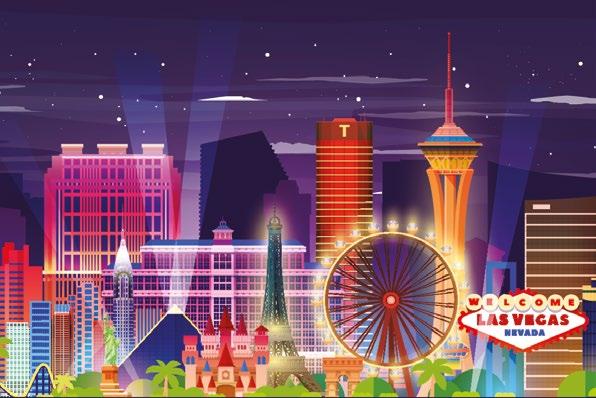
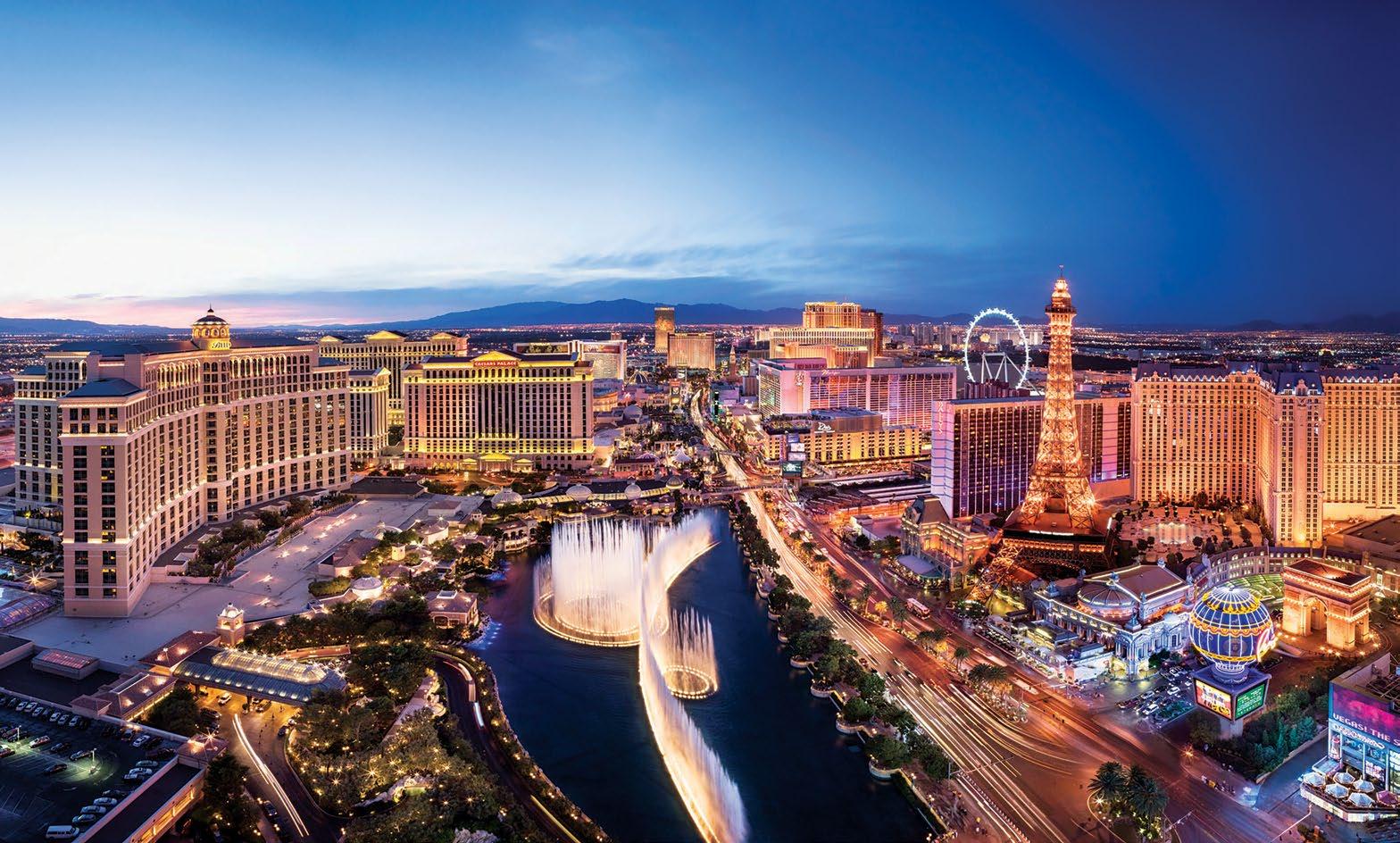
As many of us head to Las Vegas for Licensing Expo, this year’s show won’t be short of discussion topics as we navigate the aisles. Tariffs, regional conflicts and wars, supply issues and more. Some or all of these affect different regions in different ways.
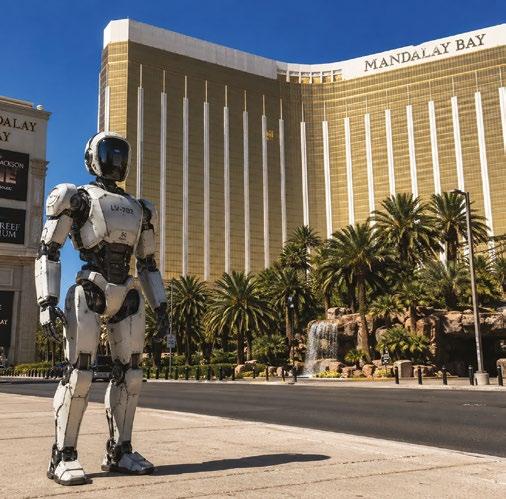
But the one subject that affects us all – no matter whether we are a licensor, licensee, retailer or a service company is, of course, the rise and rise of AI.
Editorial Director
Rebecca Ash Ffrench becky@totallicensing.com
Office Manager Helen Bowerman helen@totallicensing.com
Japan Agent Roger Berman, ZenWorks rmb@zenworks.jp
With thanks to those who contributed to this issue
TOTAL LICENSING LTD
43 Vinehall Business Park Vinehall Road, Mountfield Robertsbridge, East Sussex TN32 5JW UK
AI is transforming the licensing and merchandising industry by making processes more efficient, more data-driven, and by opening up entirely new ways to generate revenue from intellectual property. On the licensing side, AI is significantly improving back-end operations. One of the most important uses is in contract analysis and rights management. AI systems can read complex licensing agreements and quickly extract key terms such as territories, royalty rates, and usage rights. This allows companies to build a centralised, accurate view of their agreements, reducing the time spent on manual review and lowering the risk of errors. It also helps organisations track obligations and identify issues like expired rights or misuse of licensed content much earlier.
AI is also enhancing royalty tracking and revenue management. Licensing deals often involve complicated payment structures, but AI can translate contract terms into clear rules and automatically validate whether payments are accurate. This reduces disputes between licensors and licensees and helps prevent revenue loss. At the same time, AI improves compliance by continuously monitoring how intellectual property is being used and linking activity back to specific contract terms. Instead of relying on occasional audits, companies can now manage compliance in real time, which strengthens legal protection and reduces risk. On the merchandising side, AI is changing how companies decide what products to create and sell. By analysing large amounts of customer and market data, AI can identify trends, predict demand, and guide decisions about product ranges, pricing, and distribution. This leads to betterperforming products and reduces the amount of unsold inventory. AI-driven demand forecasting also allows businesses to manage stock more efficiently by predicting when items will sell and automating replenishment, which lowers costs and improves margins.
Another major impact is in personalisation. AI enables retailers to recommend licensed products based on individual customer behaviour and pref-
erences, making marketing more targeted and effective. This increases conversion rates and helps build stronger relationships between brands and consumers.
Beyond improving existing processes, AI is also creating new licensing opportunities. Companies are beginning to license their intellectual property for use in AI-generated content, allowing characters, music, and other assets to appear in outputs from AI systems while still generating revenue for the original owners. In addition, a new area of licensing is emerging around the use of copyrighted material to train AI models. As legal frameworks develop, creators and organisations are exploring ways to ensure they are compensated when their work is used in this way, effectively creating a new type of licensing market.
AI is also enhancing the customer experience in merchandising through technologies such as virtual try-ons, augmented reality, and intelligent shopping assistants. These tools make shopping more interactive and engaging, which can lead to increased sales and customer satisfaction.
Overall, AI is helping the licensing and merchandising industry become more efficient and strategically focused. It automates complex and time-consuming tasks, improves decision-making through data insights, and enables new forms of monetisation. At the same time, it is shifting the role of professionals in the industry toward more creative and strategic work, while ongoing developments in regulation and adoption mean the full impact of AI is still evolving.
As always, Total Licensing, and Total Brand Licensing, will be in the halls at the Mandalay Bay. Happy travels and see you there! n
Francesca Ash Jerry Wooldridge Co-Publisher Co-Publisher
MAZEL TOV! OLD JEWISH MEN SIGNS BRAND CENTRAL
Brand Central has signed Old Jewish Men (OJM), the viral New York City lifestyle brand. The cult lifestyle brand worn by Larry David, Selena Gomez, Mel Ottenberg, Benny Blanco, and more - beloved by fishmongers and pastrami slicers everywhere - expands its reach with the licensing agency. The partnership will expand OJM’s licensing footprint across new consumer product categories, bringing the brand’s singular blend of Jewish humor, nostalgia, and street credibility to a broader retail audience.
Brand Central intends to extend the OJM brand beyond ecommerce, social media and publishing and into collaborations, food and beverage, lifestyle products, toys and collectibles, paper goods and much more.
What began in 2015 as a street photography account documenting the old Jewish men of New York City has grown into a cultural phenomenon. The brand has produced not only viral apparel pieces but also live events,
promoted across OJM’s 1 million social followers, and has been featured in The New York Times, The Wall Street Journal, GQ, Interview Magazine, The Times of London, Vogue, and more. The brand’s debut book, The Old Jewish Men’s Guide to Eating, Sleeping, and Futzing Around is a USA Today bestseller. The book has earned praise from The New Yorker, The Wall Street Journal, and the Jewish community at large.
OJM is equal parts media brand and clothing company - a singular universe built around the irreverent, unapologetic spirit of the Old Jewish Man. OJM’s mainstream credibility was cemented when Larry David wore OJMbranded shorts during the farewell season of HBO’s Curb Your Enthusiasm.
OJM’s online store has produced a string of hit products - from the Bagel Sweatshirt and Schlep Tote to the Pickle Princess Crop Top — with offerings that span streetwear-inspired
apparel, footwear, and jewelry. The brand has cultivated a loyal customer base across all 50 states and dozens of countries worldwide, from Europe to Asia.
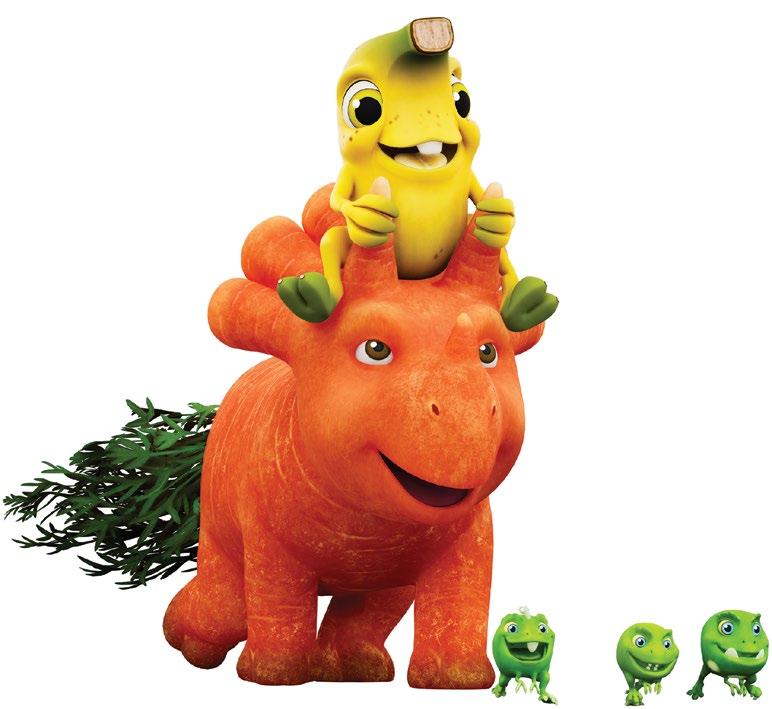
STOMP! STOMP! RHINOS! BUILD MOMENTUM
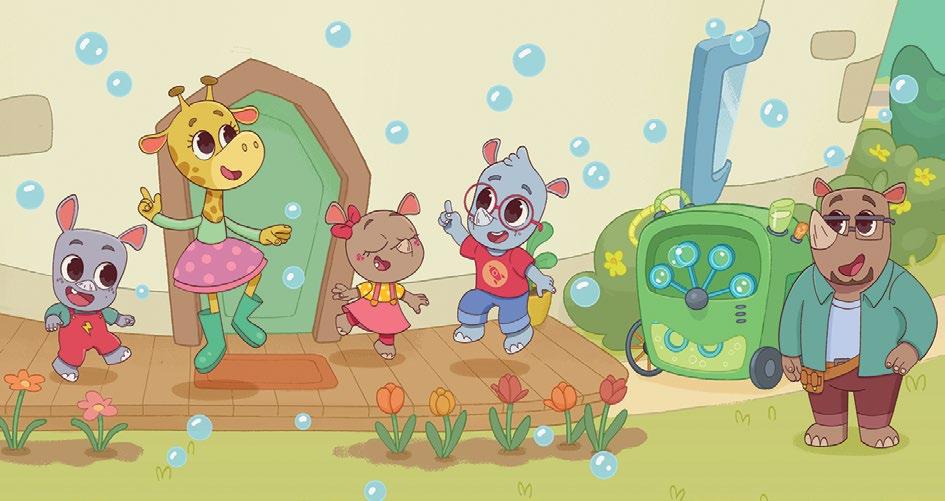
Stomp! Stomp! Rhinos! represents a new model for preschool content, combining emotional wellness, global accessibility and entertainment in a way that reflects the real needs of today’s children and families.
Created by OAK9 Entertainment, Stomp! Stomp! Rhinos! follows Rhino siblings Noah, Ela, and Ron as they navigate everyday preschool experiences while learning to understand and manage big emotions through storytelling, music, and playful mindfulness. Audience demand for the franchise is accelerating across streaming and digital platforms.
The property’s new YouTube channel is rapidly building a global audience, garnering award recognition and
achieving strong engagement within months of launch. To introduce the series, OAK9 premiered a full-length episode of Stomp! Stomp! Rhinos! simultaneously to audiences worldwide. Featured on YouTube Kids, known for its high-quality and kids-safe content, the Stomp! Stomp! Rhinos! channel has surpassed 4.5 million views in under four months, significantly outperforming typical benchmarks for new preschool IP. Total watch time already equals more than 4 years of continuous viewing, highlighting strong engagement and repeat viewing among young audiences.Viewing patterns also mirror those of established preschool franchises, with families favoring long watch sessions, full-episode viewing,
and playlist consumption — clear signals of sustained audience engagement. Since its premiere, the channel has already published more than 99 pieces of content, including full episodes, minisodes, interactive games, music videos, and short-form storytelling. The channel also received a nomination for Best Kids Channel at the 2026 TellyCast Digital Video Awards, a fantastic recognition of the creativity and excitement behind this fast-growing preschool brand. In addition, global distributor Boat Rocker Studios has brought new streaming and television partners on board to share the beloved Rhino family with their family-focused audiences. New partners include Minno, an ad-free streaming platform featuring Christian content for kids, faithbased shows, Bible stories, and familyfriendly music trusted by parents; and HITN— for Edye, its Spanish-language preschool platform that nurtures curiosity, imagination, empathy, and joyful learning. HITN is the leading Spanishlanguage media company offering educational and cultural programming for the whole family. Plus, the Rhino family is also featured on Yippee TV, featuring safe, faith-filled shows and Kanopy, the video streaming service known for quality, thoughtful entertainment.
PRECIOUS MOMENTS PROGRAM EXPANDS
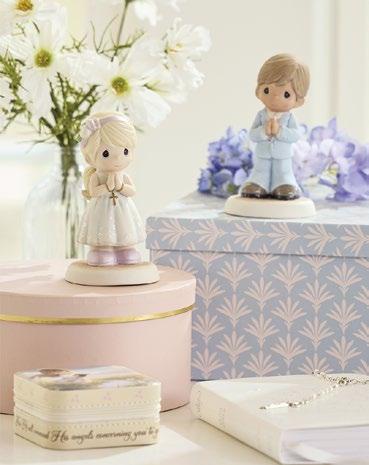
Precious Moments, the beloved heritage brand known for its iconic figurines and inspirational artwork, is expanding its licensing program through a slate of new partnerships aimed at driving growth across key product categories.
Represented by The M Zone since January 2024 as its North American licensing agent, the brand has signed several new partners, including LA Rocks (fashion jewelry), Concept One (fashion accessories), Tai Apparel (apparel), Blank Tag Co. (waterproof stickers) and collaborations with contemporary fashion brands Madhappy and Samii Ryan. Enesco, whose renewed part-
nership with Precious Moments was announced late last year, continues to forge an exciting path forward for the brand. Penguin Publishing will also expand the brand’s publishing program.
Founded nearly 50 years ago by Sam Butcher, Precious Moments began with charming children’s illustrations and grew into a globally recognized brand. Its signature teardrop-eyed figurines and heartfelt messaging have made it a timeless symbol of love, hope, and connection, resonating across generations.
The new product lines, set to launch later this year through early 2027, will feature Precious Moments’ classic artwork, drawing from a vast ar-
chive of thousands of original images that reflect the brand’s nostalgic and wholesome aesthetic.
INTERACTIVE BABY SHARK EXPERIENCE
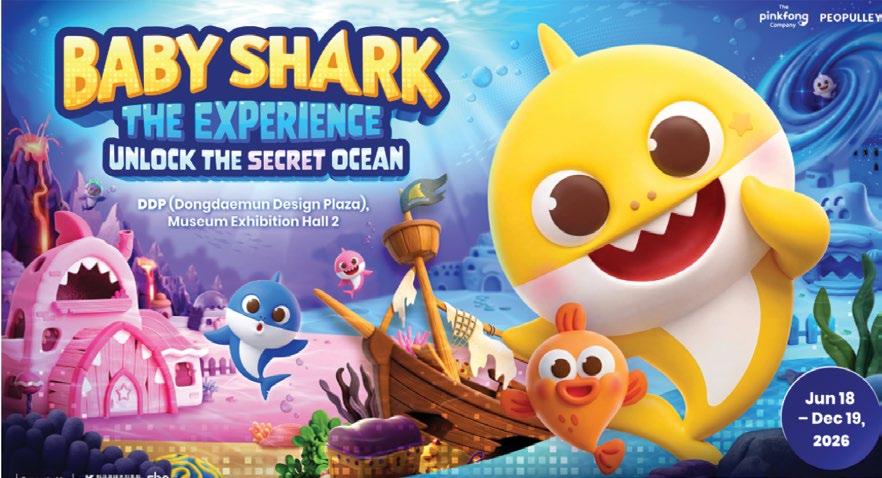
The Pinkfong Company, the global entertainment company behind Baby Shark, has announced early-bird ticket sales for Baby Shark The Experience: Unlock the Secret Ocean, a new AIpowered interactive exhibition that
interactions and personalized storytelling. Early-bird tickets are now available through official ticketing platforms, offering discounts of up to 50 percent for a limited time. Spanning approximately 18,000 square
ized experience throughout the exhibition.
The experience integrates large language models (LLMs), speech recognition, voice synthesis, and computer vision, enabling characters to respond in real time while engaging in dynamic conversations. One of the exhibition’s signature features allows guests to create their own version of the iconic Baby Shark song through an AI-powered music experience, adding a personalized creative layer to the exhibition. The experience also supports four languages— English, Chinese, Japanese, and Korean—allowing visitors from around the world to participate seamlessly.
blends generative AI technology with immersive storytelling.
Opening June 18 at Dongdaemun Design Plaza (DDP)—one of Seoul’s premier cultural and design landmarks— the exhibition invites global fans into the underwater world of Baby Shark through real-time AI-driven character
feet, the exhibition features around 20 interactive experiences that bring the Baby Shark universe to life. Visitors can explore immersive underwater-inspired environments while interacting with characters that respond dynamically to their voices, facial expressions, and movements, creating a personal-
“By combining AI technology with character storytelling, this project introduces a new kind of interactive entertainment experience,” said Gemma Joo, Chief Business Officer at The Pinkfong Company. “We hope it offers audiences of all ages a glimpse into how AI can create more immersive and emotionally engaging ways to experience beloved characters.”
APPLICATIONS OPEN FOR TOY FAIR 2027
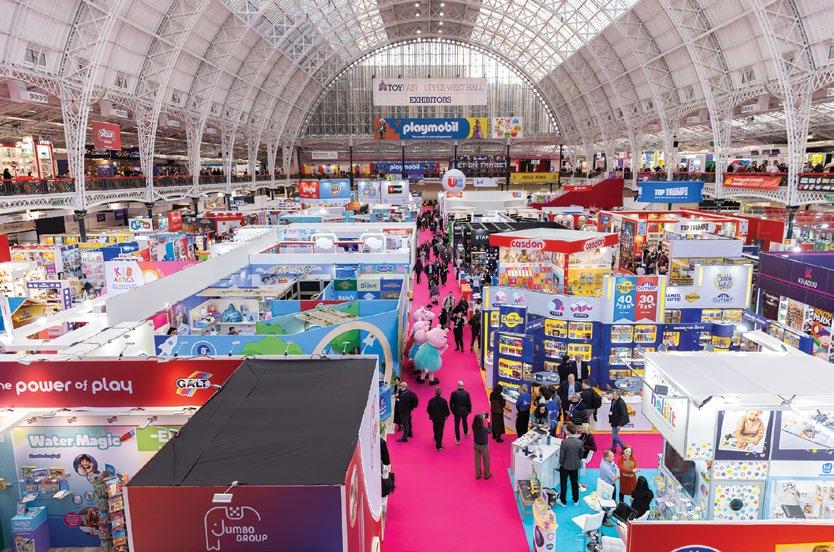
Applications for exhibition space at Toy Fair 2027 in the UK are now officially open via the Toy Fair website. Organised by the British Toy & Hobby Association (BTHA), Toy Fair will once again return to Olympia, London, from the 19th to 21st January 2027, spanning the Grand, National and Upper West Halls.
As the UK’s largest toy trade exhibition of the year, Toy Fair offers toy, game and hobby manufacturers and distributors a prime opportunity to unveil their newest launches and upcoming ranges face-to-face with a diverse audience. Buyers, licensors, inventors, media and wider industry professionals gather under one roof, creating an unrivalled environment to spark new partnerships and strengthen established relationships. Retailers in attendance represent every
corner of the market, from grocers and national multiples to independent retailers and specialist toy stores, making Toy Fair a vital platform for brands looking to broaden their reach and build partnerships. Whether as an emerging business ready to make a debut or a global brand returning to the vibrant show floor, Toy Fair is the ideal platform to help all types of companies, from large renowned brands, through to smaller and emerging start-ups, to generate quality leads, expand their network and start the year with momentum. Anticipation is already building for 2027, with strong early interest from returning and new exhibitors alike. Companies are encouraged to apply early and those who pay a 25% deposit by the 15th May will benefit from a 3% early booking discount applied to their balance invoice.
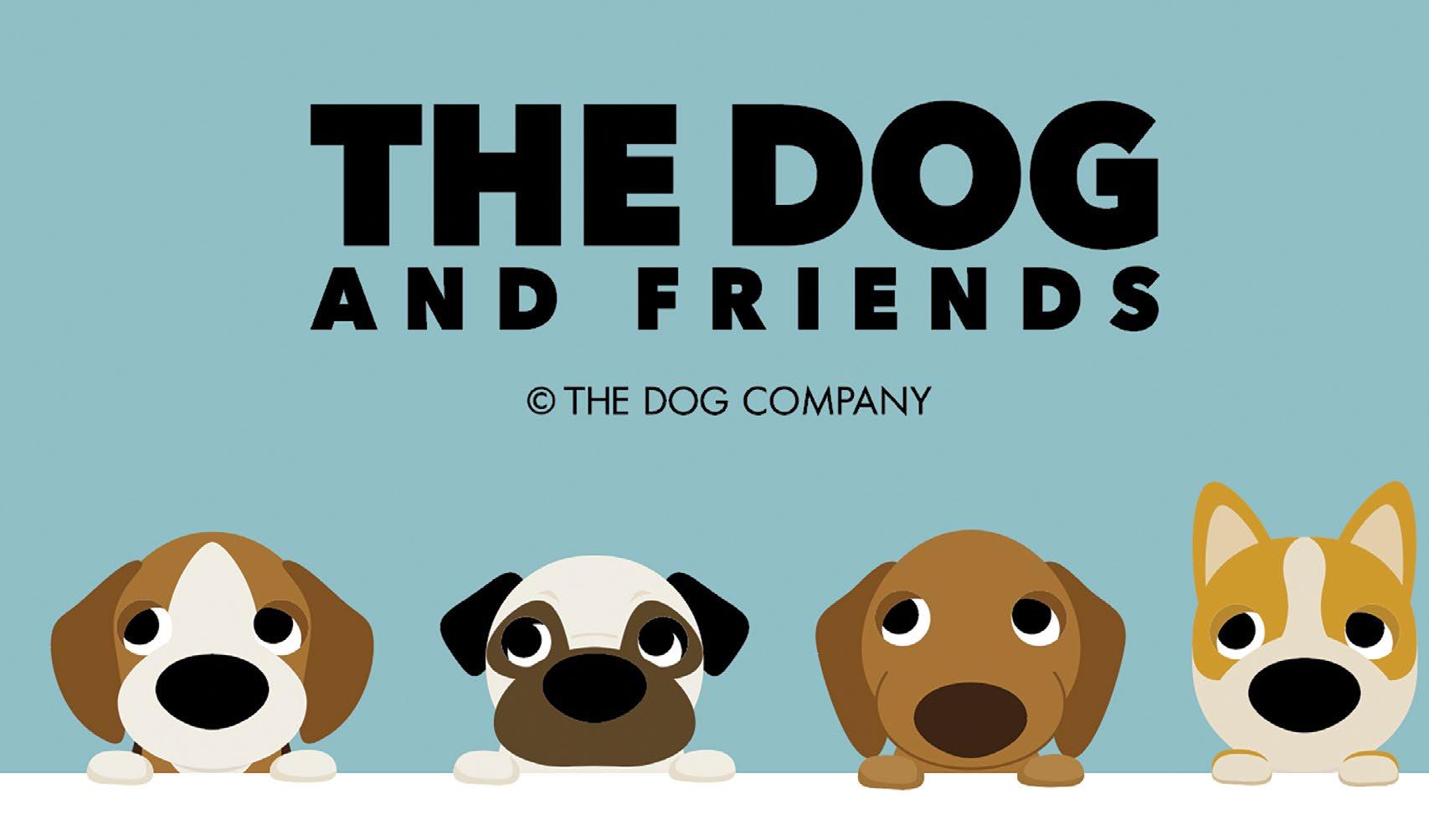
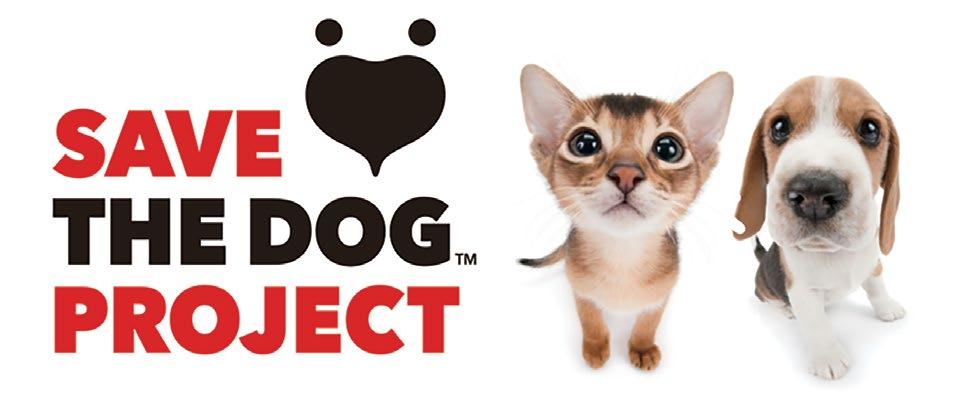
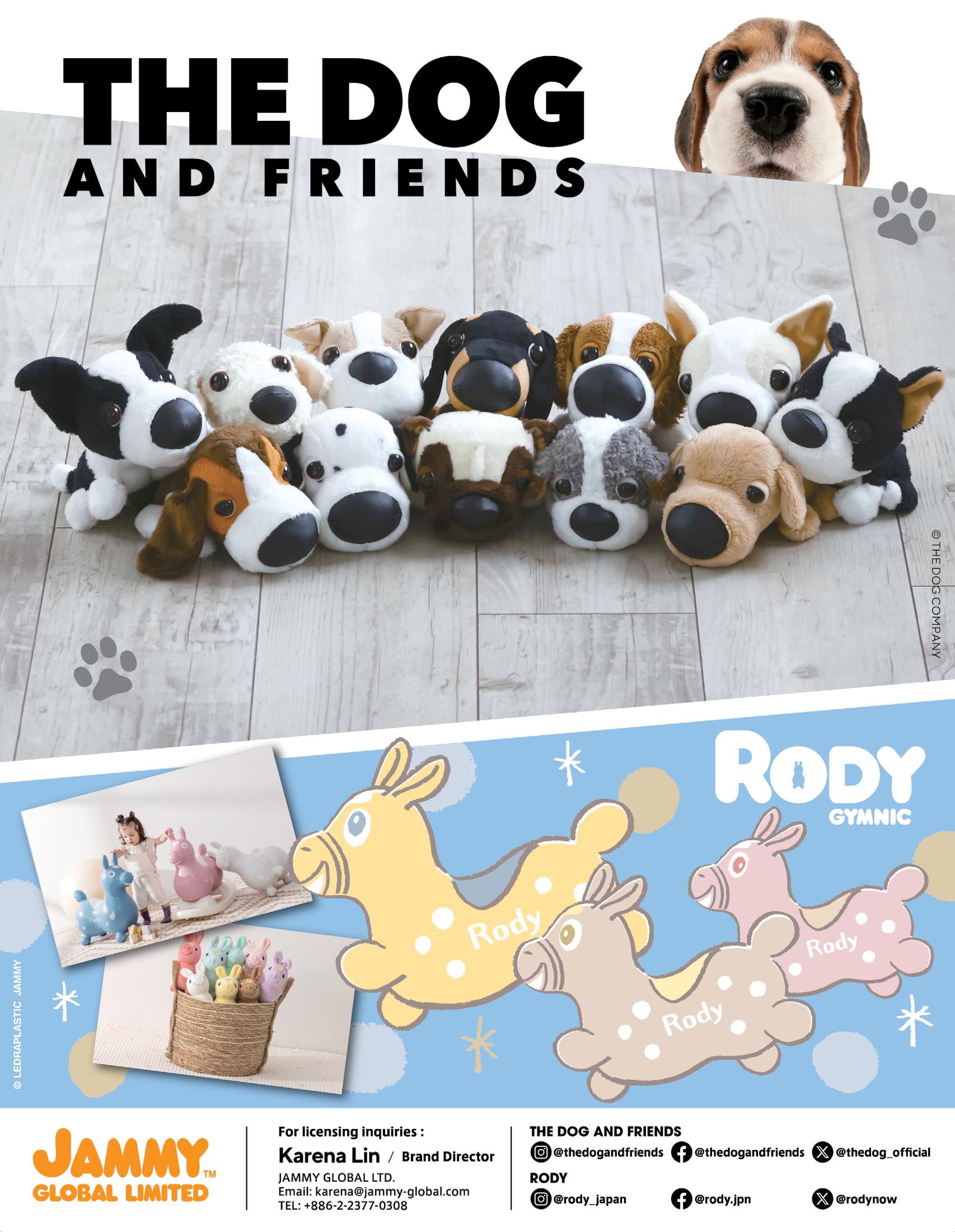
The iconic THE DOG AND FRIENDS brand is making a strong comeback!
THE DOG AND FRIENDS, a beloved character brand, celebrates its 26th anniversary this year.
Since its launch in Japan in 2000, it has expanded globally, driven by its highly recognizable fisheye-lens dog portraits, and has become a crossgenerational brand loved by audiences worldwide.
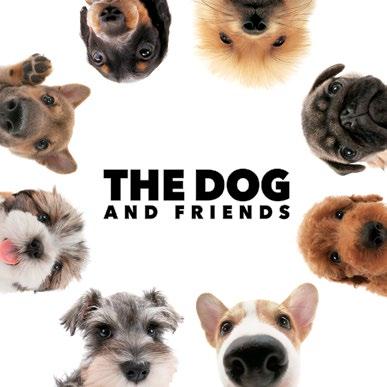
The brand’s signature style features fisheye-lens pet portraits - dogs with big noses, round heads, and expressive eyes. These images capture the pure and adorable nature of animals in a fun and heartwarming way. This distinctive style not only sets it apart from traditional pet photography, but also creates a playful yet comforting visual
identity that resonates with pet lovers and collectors around the world.
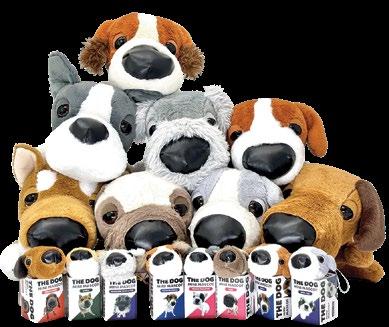
Following its debut, THE DOG AND FRIENDS expanded into a wide range of products, including calendars, stationery, plush toys, and other licensed items, reaching more than 50 countries. More than just a character brand, it also helped shape a lifestyle trend in the early 2000s and became a memorable part of that era.
In 2020, the brand was refreshed in Japan to mark its 20th anniversary, alongside the launch of the “SAVE THE DOG PROJECT.”
Part of its licensing revenue is donated to animal welfare organizations, while continuing to support pet rescue efforts.Through this approach, the brand not only continues to expand globally, but also reinforces its emotional bond with audiences who value compassion and care for animals.
This ongoing cycle of contribution allows business growth and social impact to move forward hand in hand, giving the brand a deeper, more purposeful role in society.
Ultimately, THE DOG AND FRIENDS is not just a character brand, it represents a lifestyle that celebrates kindness, empathy, and the joy of sharing love with animals.
At the same time, the brand restarted its collaborations and licensing programs, first launching a range of products in Japan, including plush toys, bags, apparel, and capsule toys.
By bringing the brand into everyday life through these accessible and collectible items, it was able to reconnect with long-time fans while also attracting a new generation of audiences.
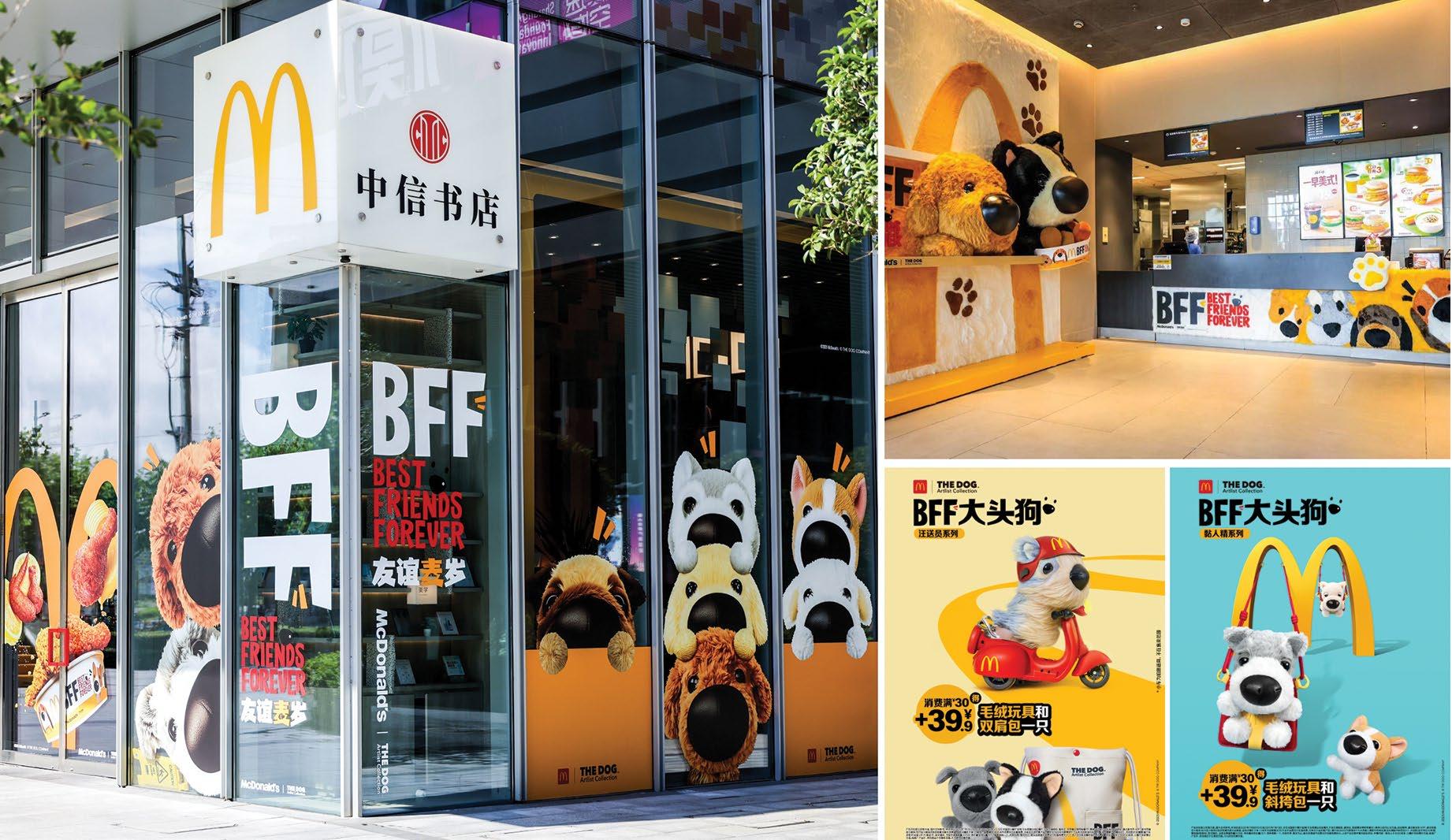
In July 2025,THE DOG AND FRIENDS reunited with McDonald’s after more than 20 years to launch a large-scale campaign in China, attracting widespread attention.
Centered on the theme “BFF” (Best Friends Forever), the campaign highlighted the special bond between dogs and humans, and introduced 16 plush toys featuring the brand’s signature big-headed dog designs.
Supported by digital marketing and active social media engagement, the campaign quickly gained strong consumer interest and generated significant buzz both online and offline. Fans enthusiastically shared their collections, fur-
ther amplifying the campaign’s visibility and reach across different platforms. Beyond its immediate success, the collaboration also reinforced the brand’s emotional connection with audiences while introducing THE DOG AND FRIENDS to a younger generation.
It demonstrated not only the brand’s lasting appeal, but also its strong growth potential within the rapidly expanding pet market, paving the way for future collaborations and market opportunities.
Following the campaign’s success, multiple licensing deals were secured in China by the end of 2025, covering categories such as plush toys, fash-
ion, beverage brands, and major retail channels.
In addition, partnerships were established with licensing partners in Europe and North America, with launches in these markets expected by the end of 2026.
With 26 years of brand history and strong global appeal, THE DOG AND FRIENDS is ready to reconnect with people who love pets, cherish childhood memories, and appreciate timeless design.
As it continues to expand worldwide, the brand aims to bring a sense of warmth and familiarity into everyday life, creating small yet meaningful moments of joy. n
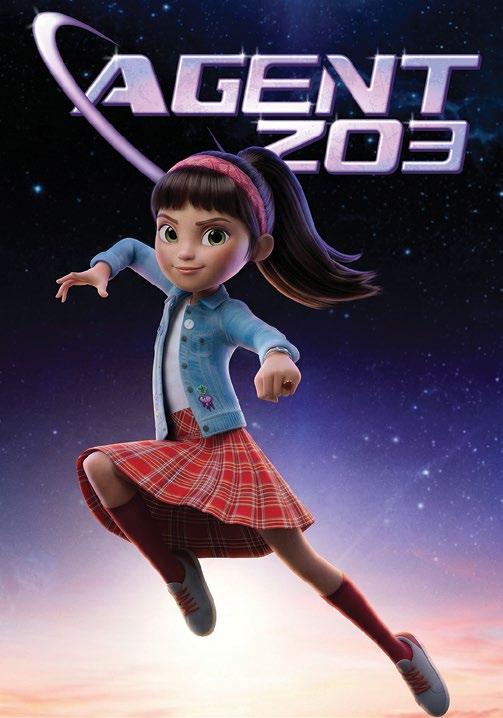
TOON2TANGO SET TO PRODUCE AGENT 203 MOVIE
Following the success of the animated series Agent 123, which has been sold in more than 100 territories, Toon2Tango is now producing the first feature film centered on teenage secret agent Zoe Stranek. With Agent 203, Toon2Tango is bringing the popular TV animation brand—which also includes magazines and audiobooks—to the big screen. The brand-new “spy-fi adventure comedy” genre combines brightly colored high-tech gadgets, action, and humor in a fast-paced story about courage, teamwork, and self-discovery.
Ulli Stoef, CEO of Toon2Tango, says: “With Agent 203, Toon2Tango has proven that modern, exciting entertainment ‘made in Europe’ captivates children and families worldwide. We are thrilled to now adapt the series’ universe for the big screen together with creative partners and top-tier production companies from Germany and Spain.”
David Matamoros, CEO of Mr. Miyagi, adds: “Mr. Miyagi is proud and excited to be part of this project, which demonstrates how European talent and creativity can connect with audiences around the world. The adaptation of the series’ universe for the big screen represents a unique opportunity to further strengthen the audiovisual industry, and we are delighted to collaborate closely with international partners and top-tier production companies to take this story to new heights.”
DR. SEUSS IN LAS VEGAS
Dr. Seuss Enterprises continues to experience extraordinary brand momentum as they stay dedicated to entertaining and educating generations by promoting and protecting the literary works of Dr. Seuss. By providing world-class content that drives joyful learning, Dr. Seuss Enterprises continues to solidify its status as a pop culture mainstay through hundreds of premier licensing deals and a strategic slate of new projects that keep its legacy fresh and relevant.
At Licensing Expo, Dr Seuss Enterprises will be showcasing key properties including The Cat in the Hat - Dr. Seuss Enterprises has major plans to expand the Cat in the Hat’s already bolstering presence within the global cultural zeitgeist, as they look to major milestone moments in 2026 and 2027. 2026 will see the debut of the upcoming animated feature film with Warner Animation, bringing Cat to the big screen globally. 2027 marks The Cat in the Hat’s 70th anniversary and the team at Dr. Seuss Enterprises is building out a robust anniversary program with multiple touchpoints.
The Grinch is everyone’s favorite curmudgeonly character and #1 licensed holiday IP and continues to delight fans and dominate the cultural conversation and product sales every holiday season. As Dr. Seuss Enterprises gears up for the brand’s 70th anniversary in 2027, they are staying laser focused on developing impactful retail and entertainment programs.
Graduates continue to find inspiration and take advice from the classic Dr. Seuss book Oh, the Places You’ll Go!. Dr. Seuss Enterprises’ growing annual program for the book includes partners across all categories, and looking ahead to 2026 and 2027, there will be a massive spring and summer takeover for the brand going beyond graduation.
RECYCLE TO READ INITIATIVE
Recycle to Read in the UK announced it officially launched its hard plastic toy recycling service in 167 Tesco stores nationwide on 22 April 2026, marking Earth Day, following a successful early rollout across UK schools and communities.
The program, developed by Wastebuster in association with Products of Change, brings together Tesco, Mattel, leading UK children’s publishers and other toy companies in a unique cross-sector collaboration to deliver a scalable hard plastic toy recycling solution while supporting children’s literacy.
Global play and family entertainment company Mattel joins as a programme sponsor across the Tesco network, supporting the expansion of this industry-wide initiative, which also forms part of an international research programme exploring circular economy solutions for the toy sector.
Families can return broken plastic toys through in-store collection bins for recycling, helping schools earn books and supporting children’s environmental education and literacy. An estimated 370 million toys were sold in the UK in 2018, yet there are currently limited options for recycling broken hard plastic toys in the UK or globally. At the same time, 1 in 7 UK schools does not have a library, and around 1 in 10 children do not own a book of their own.
The initiative aims to establish a recycling solution for hard plastic toys that have reached the end of their useful life and are not fit for rehoming, reducing the number sent to landfill or incineration (without energy recovery), while advancing innovation in plastic recycling. Alongside this, the programme engages children aged 4–11 through curriculum-linked education, introducing concepts such as the waste hierarchy and circular economy, supported by popular Mattel characters including Hot Wheels, Barbie and Thomas & Friends.
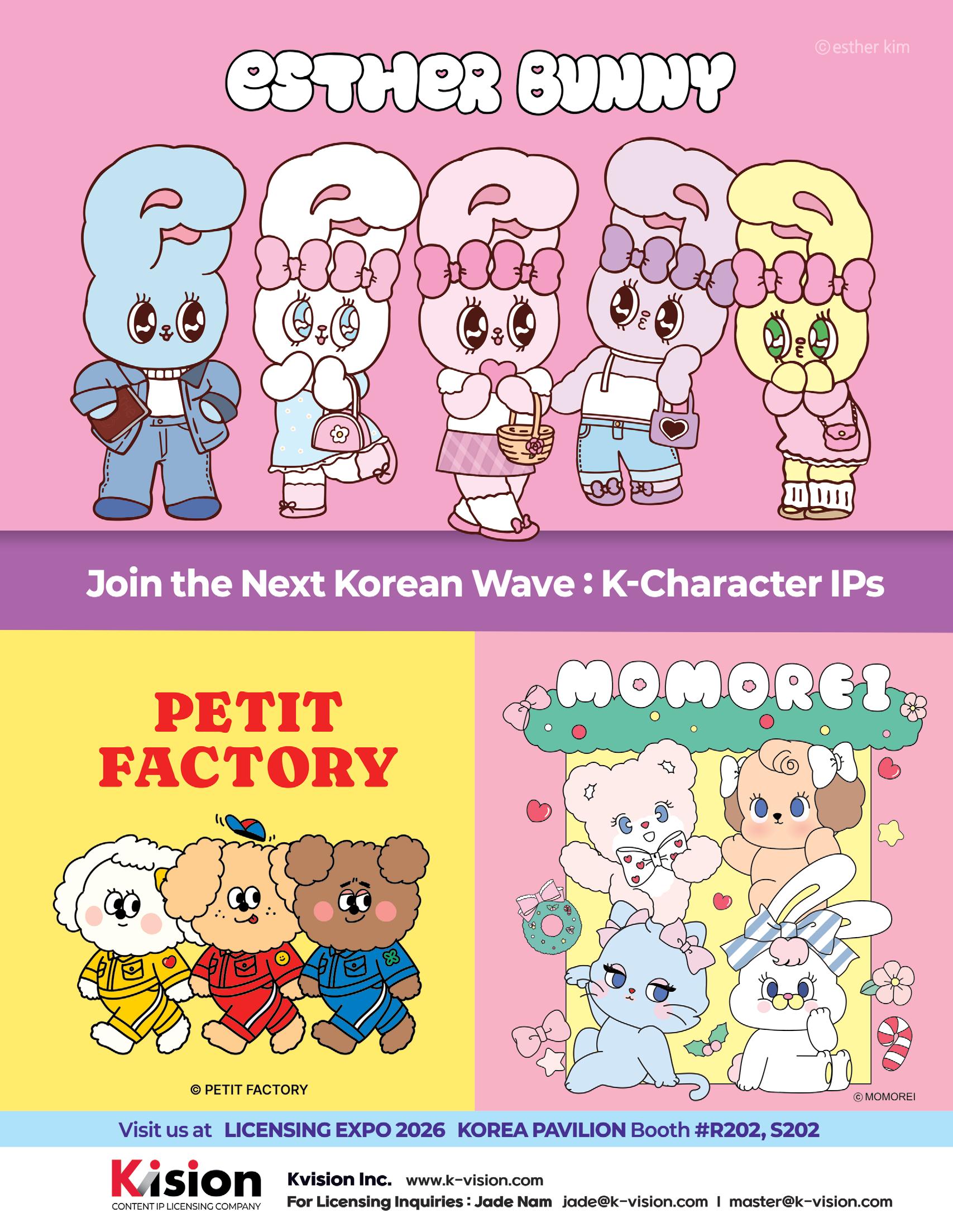
Character IPs managed by Korean character licensing specialist company K-Vision Inc. are achieving unprecedented success in the global marketplace. The remarkable accomplishments of Esther Bunny— which made history by winning a Japanese character industry award— and the emergence of next-generation rising star MOMOREI demonstrate that K-characters are evolving beyond a passing trend and establishing themselves as global lifestyle brands.
K-Character Global Expansion
The success of Esther Bunny and the rise of Next-Generation contender, MOMORE!
Esther Bunny: The Symbol of K-Character Success in Japan
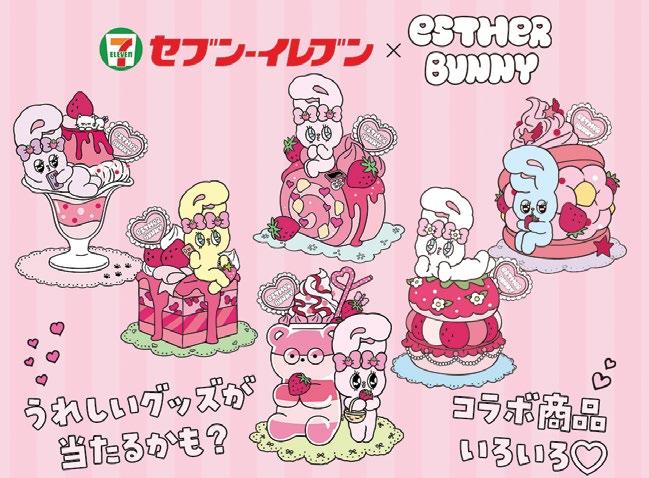
Esther Bunny has built an exceptional success story in Japan, one of the world’s most sophisticated character licensing markets. Since its full-scale market entry in 2024, the brand has achieved the remarkable feat of securing approximately 120 licensing agreements in Japan alone within just two years.
In addition to partnerships with some of Japan’s leading corporations—including Sega, Bandai, Seven-Eleven Japan, Loft, and Kodansha—the brand has further demonstrated its powerful market appeal through collaborations with Sanrio’s My Melody, Sanrio Puroland, and Tamagotchi.
In 2025, Esther Bunny became the first Korean IP ever to win the New Face Award, recognizing the year’s most promising emerging character brand, at the 17th Japan Character Awards 2025, solidifying its status as a major force within Japan’s licensing industry. Its popularity among Generation Z has been particularly notable. In a 2025 survey of Japanese high school trends, Esther Bunny ranked No.1 as the “Most Favorite Character,” surpassing even iconic brands such as Hello Kitty and Chiikawa.
This success in Japan has expanded across Asia. In China, Esther Bunny has
collaborated with Luckin coffee, which has over 30,000 stores in the region.
In Taiwan, large-scale “2026 Esther Bunny Pink Run” marathon events attracted thousands of participants in major cities including New Taipei City and Kaohsiung, demonstrating the brand’s strong offline consumer draw.
To date, Esther Bunny has signed agreements with approximately 400 companies worldwide, launching around 5,000 licensed SKUs and rapidly expanding beyond Asia into North American and European markets.
MOMOREI: The NextGeneration K-Character Rookie Powered by Retro Appeal
MOMOREI is rapidly emerging as the next-generation successor to Esther Bunny’s success. With visuals that stylishly reinterpret the mood of retro comics, the brand has expanded swiftly into Japan, Taiwan, Thailand, and China since 2025.
In Japan, the brand has increased awareness through collaborations with fashion magazines and dessert franchises, the launch of its own cosmetics line, and pop-up activations at Shibuya 109.
In Thailand, MOMOREI has partnered with Unilever and CP Meiji on promotional campaigns, while proving local popularity through the pop-up café “Mappy” at Siam Center. The brand also continues its business relationship with leading Thai licensing distributor Take Toys.
In Taiwan, MOMOREI partnered with La Roche-Posay, the premium French dermatological skincare brand, and CeraVe, the globally recognized dermatologist-developed skincare brand, for promotional campaigns. In China, the brand has penetrated everyday consumer culture through collaborations with brands such as fashion brand Bronze Lucia and custom-
branded Shanghai transit card covers.
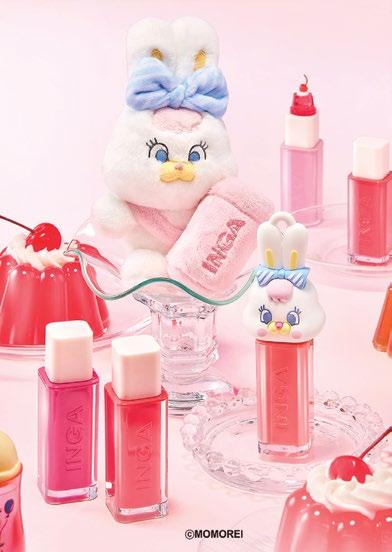
Additionally, a tint product collaboration with Korean cosmetics brand INGA went viral overseas, serving as a springboard for licensing expansion into apparel, plush, stationery, and other product categories.
K-Vision: Leading the Global Expansion of K-Content
Worldbuilding
K-Vision Inc. is a specialist IP licensing company focused on discovering promising K-character IPs and developing them into global brands.
Through sophisticated branding strategies that combine immersive character worldbuilding with fandom cultivation, the company has achieved expansion beyond traditional merchandising—transforming its IPs into broader cultural content franchises.
Currently, K-Vision is strengthening its Japanese market hub through its local Japanese subsidiary while accelerating expansion into North America and Europe, leveraging established partnerships across key Asian markets including Taiwan, China, and Thailand.
Moving forward, K-Vision Inc. will continue to deliver new K-character success to fans around the world. n
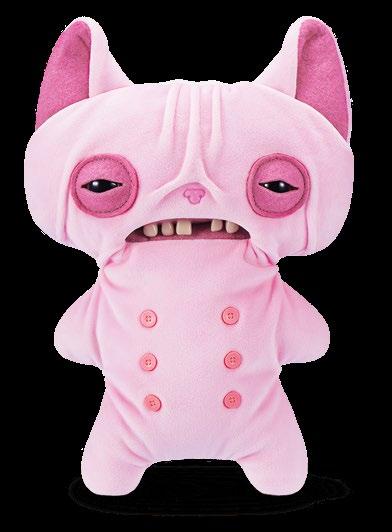
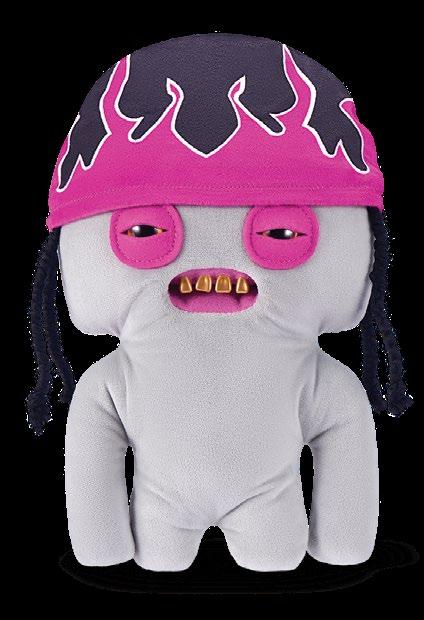
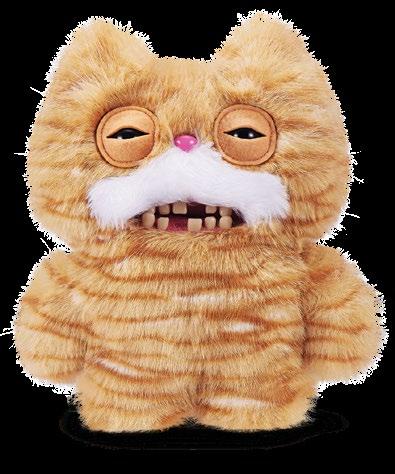
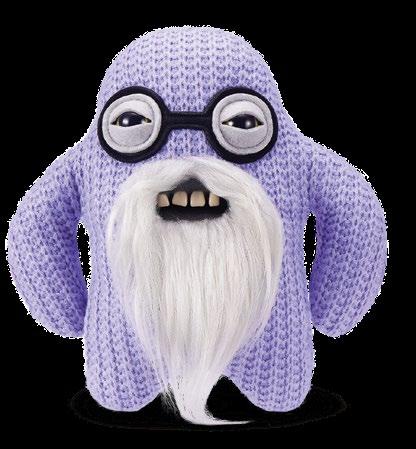
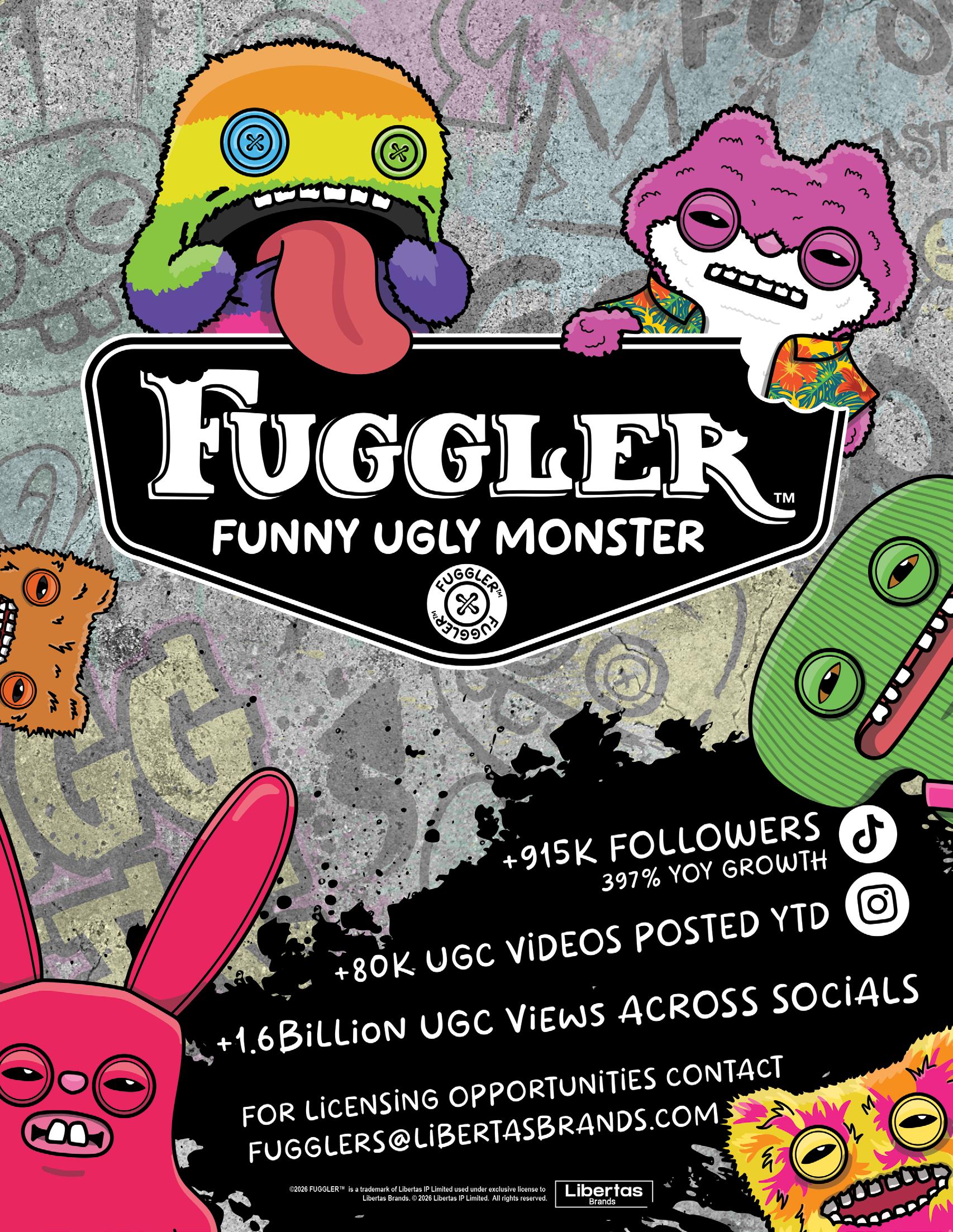
The weird and wonderful world of Fugglers!
2026 has kicked off in gloriously chaotic fashion for Fuggler—and things are only getting weirder.
Fugglers have officially gone mobile. Blue Zoo Digital launched Fugglers: Reckless Runner—the brand’s firstever mobile game in April 2026—on both the App Store and Google Play. This fast-paced, ad-free runner throws players into a waddling stampede of mayhem, guiding Fugglers through unpredictable levels, collecting loot, and unlocking new characters along the way. It’s a natural next step for a franchise that has already exploded across digital content—and proof that Fugglers are no longer just lurking on shelves, but now living in your pocket.
Following a breakout 2025, the brand has doubled down on content across TikTok, YouTube, and Instagram—and Fugglers remain completely irresistible. The audience continues to skew toward teens and kidults, with female teens and kidults making up around 60% of the fanbase. TikTok remains a chaos engine, with over 100,000 pieces of fan content generating more than 1.6 billion views. Across owned channels, Fuggler has now surpassed 1.8 million followers, with engagement consistently exceeding 5%. In short: the internet is still utterly obsessed with Butt-on holes.
At retail, Fuggler’s global footprint continues to expand, now live in 80+ markets across major partners including Walmart, Target, Tesco, Smyths, Amazon, Costco, and beyond. Bold POS and disruptive merchandising are driving visibility—and stopping shoppers in their tracks.
Collabs remain a key driver of momentum. Gremlins, DC Heroes, and Jaws ranges continue to perform globally, while 2026 has introduced SpongeBob keychains, PowerPuff Girls, and Care Bears, with more unexpected partnerships on the horizon. Meanwhile, the core range continues to evolve with themes like Fugg Life, Old Fogies, FuggStars, Nipple Fuggs, Fuggalicious,
and Alley Cats—plus a few secrets not yet unleashed.
Beyond plush, the Fuggler infestation continues across categories, with 65+ licensees globally spanning collectibles, apparel, accessories, stationery, pet toys, homewares, publishing, costumes, and digital. Key partners include PMI Kids World, Poetic Brands, Difuzed, Hunter Price International, MoonPig. com,Trends International, Isaac Morris, Jada, SkyBrands, Panini, Franco Manufacturing,Wow! Stuff, and Tibles (home of the FuggClub app), with more deals in progress worldwide.
Supporting this growth is a strong global agent network: Retail Monster (US/Canada), Haven Global (Australia/ NZ), Creative Minds (Japan), FIR Ventures (China/HK/Taiwan), and WildBrain CPLG (rest of world), alongside Libertas Brands in the UK & Ireland.
At Licensing Expo 2026, one thing is clear: Fuggler has evolved far beyond a toy line into a fast-growing content and licensing universe—powered by fans, fuelled by chaos, and spreading faster than ever.
So whether you’re laughing, screaming, or just staring in disbelief… the Fuggler invasion is far from over. n
For licensing inquiries (if you’re brave enough):
Fugglers@libertasbrands.com
LAUNCH OF A GLOBAL MERCHANDISING POWERHOUSE
Five established merchandising leaders have come together to deliver a new level of scale, speed, and cross-category capability to the global licensing industry.
San Diego Hat Company, Aquarius Ltd., H3 Sportgear, Drew Pearson International, and Difuzed have come together as a unified global merchandising force, combining their strengths across North America, Europe, the UK, and Asia under Mainland Headwear Holdings Ltd.
Together, they represent a cross-category platform spanning apparel, headwear, belts, small leather goods, cold weather accessories, bags, and hosiery, supported by a diverse portfolio of leading licenses and an international design network. Each company brings a distinct area of expertise. San Diego Hat Company brings over 30 years of design-led headwear and accessories, with a strong presence in boutique retail and directto-consumer channels. Aquarius Ltd. contributes over 50 years of experience in designing, manufacturing, and distributing fashion accessories across all retail tiers. H3 Sportgear delivers trend-right apparel and accessories, including high-quality cold weather products, from value to specialty retail. Drew Pearson International (DPI) adds deep-rooted expertise in sports licensing and large-scale headwear programs. Difuzed strengthens the group with fashion-forward licensed merchandise and established retail partnerships across Europe.
Together, this collaboration enables broader cross-category collections, faster speed to market, and the ability to scale programs across multiple regions. For retailers and licensing partners, it offers a more streamlined way to develop cohesive collections, reduce complexity, and unlock new opportunities across product categories and markets.
The group will showcase its latest collections and capabilities at Licensing Expo Las Vegas 2026. Retailers and partners are invited to connect with the teams on-site to explore upcoming collaborations and global licensing opportunities.
MHS INTRODUCE NEW ART BRANDS
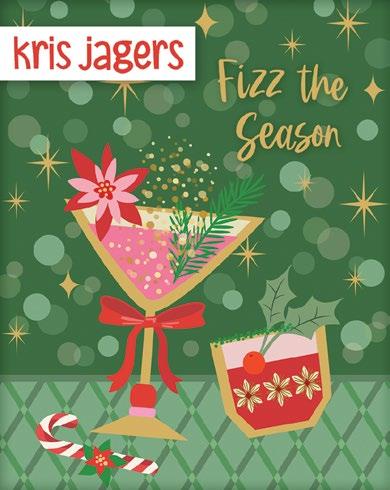
MHS Licensing + Consulting will debut new art brands and trending designs from its talented roster of art properties at the upcoming Licensing Expo. Attendees can explore these new offerings at the MHS booth (H90) during this premier event.
The new art brands being introduced include Kris Jagers and Shelly Craig alongside a collection of innovative new designs from their highly soughtafter and established artists. This showcase will provide attendees with an exclusive first look at the latest additions to their dynamic portfolios.
“The Licensing Expo continues to be an essential platform for connecting with our partners and showcasing new talent,” says Marty Segelbaum, President of MHS Licensing + Consulting. “Our licensee partners are always eager for fresh designs, and the Expo is an excellent venue for unveiling both our new art brands and exciting new works from our family of artists.”
SEGA AND ROVIO APPOINT WILDBRAIN CPLG
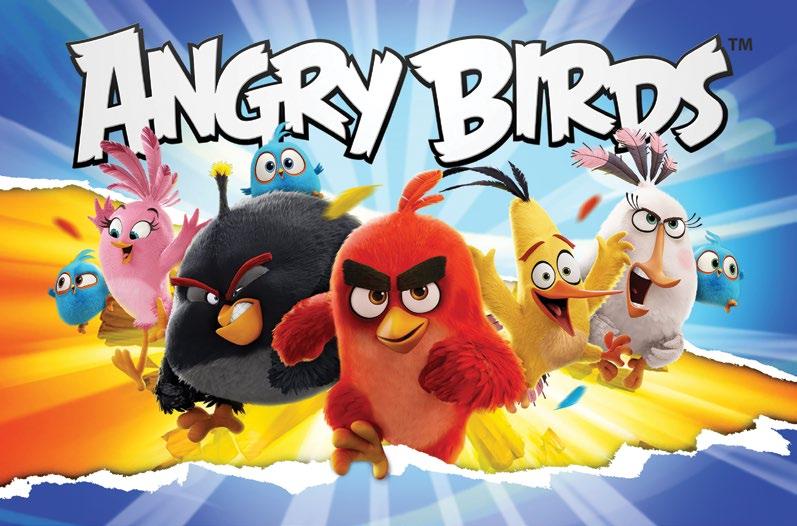
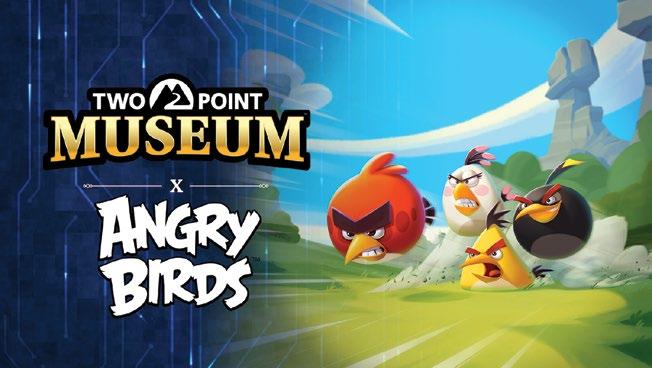
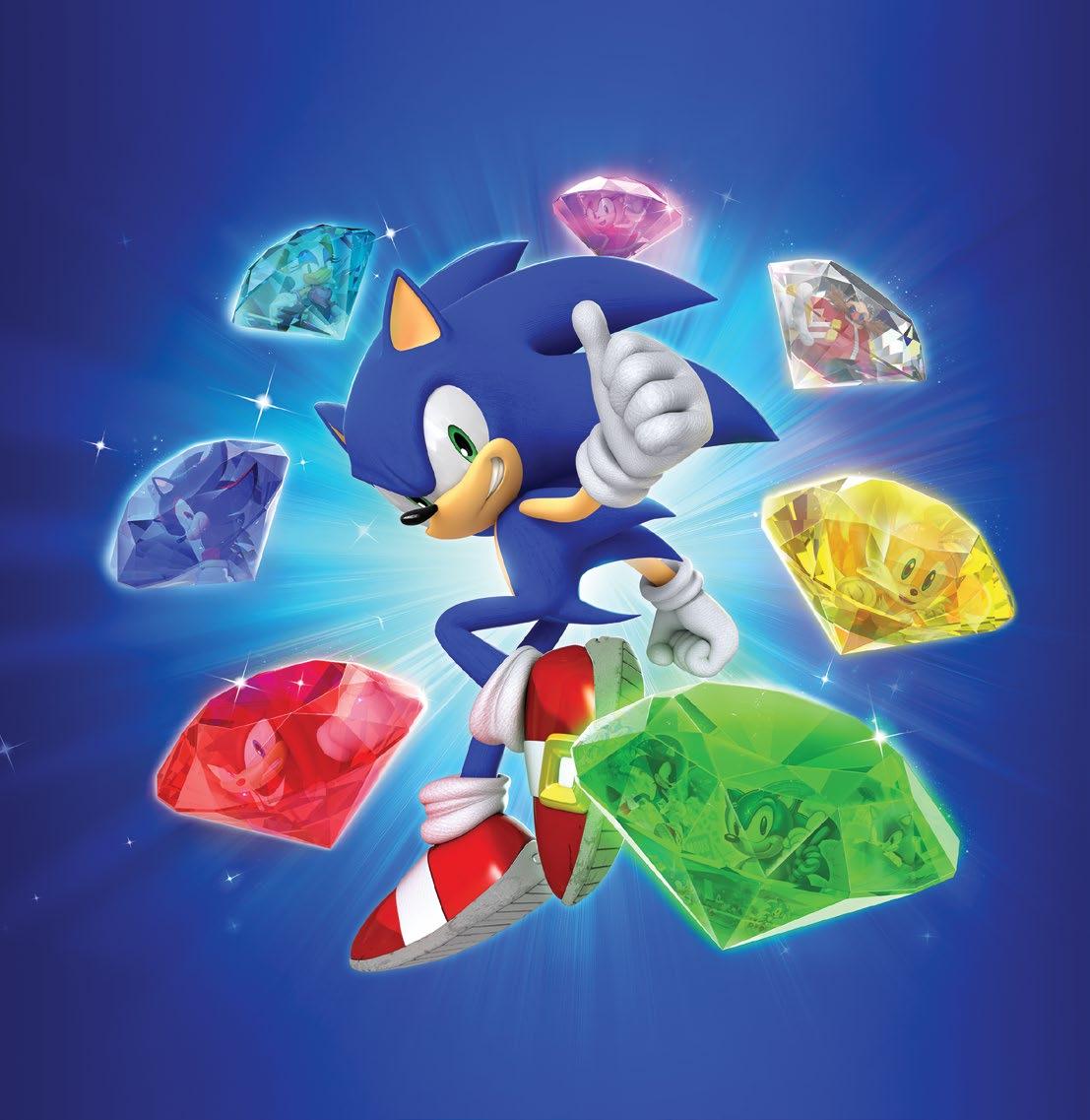
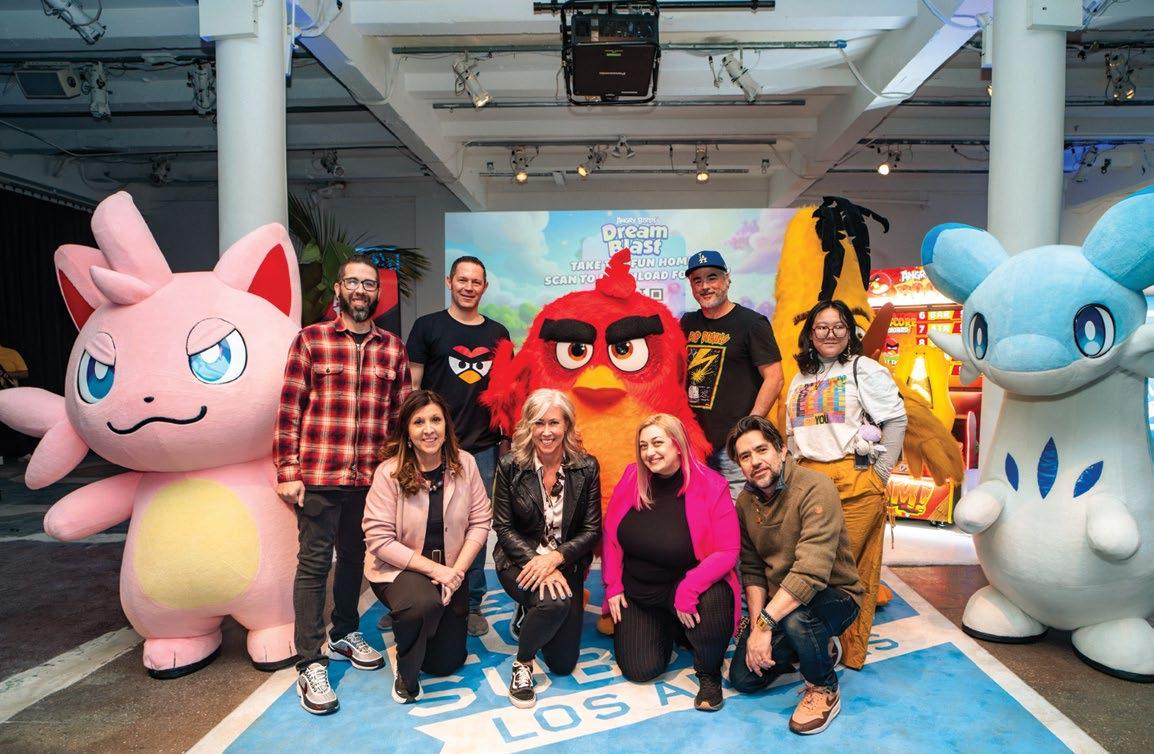
SEGA and Rovio are expanding their relationship with WildBrain CPLG to include Rovio’s Angry Birds representation across Europe (excluding select countries across Europe like the UK), Middle East, and South Korea. WildBrain CPLG will drive a broad, cross-category licensing program spanning publishing, apparel and accessories, toys and collectibles, FMCG, homeware, gifting and novelty, and more. The new rights build on WildBrain CPLG’s existing representation of SEGA’s iconic portfolio, including Sonic the Hedgehog, which celebrates its 35th anniversary this year.
With over 5 billion mobile game downloads and a combined 33 million social media followers, Angry Birds remains a powerhouse global gaming franchise, and its momentum is only accelerating ahead of the release of The Angry Birds Movie 3 on December 23, 2026, from Paramount Pictures. The upcoming film marks the third instalment in the $500 million movie franchise and brings together an all-star cast. “Mobile gaming continues to surge year after year, and Rovio’s Angry Birds remains one of its original pioneers. With the next chapter of this hugely successful film franchise on the way, we’re rolling out a licensing programme that taps into the brand’s powerful nostalgia, while engaging a whole new generation of fans. As we continue to strengthen our partnership with SEGA, these new rights unlock exciting opportunities for a fresh wave of Angry Birds merchandise for fans worldwide,” commented Maarten Weck, EVP Global Partnerships and Licensing at WildBrain
MOULIN ROUGE AND LA MONNAIE DE PARIS
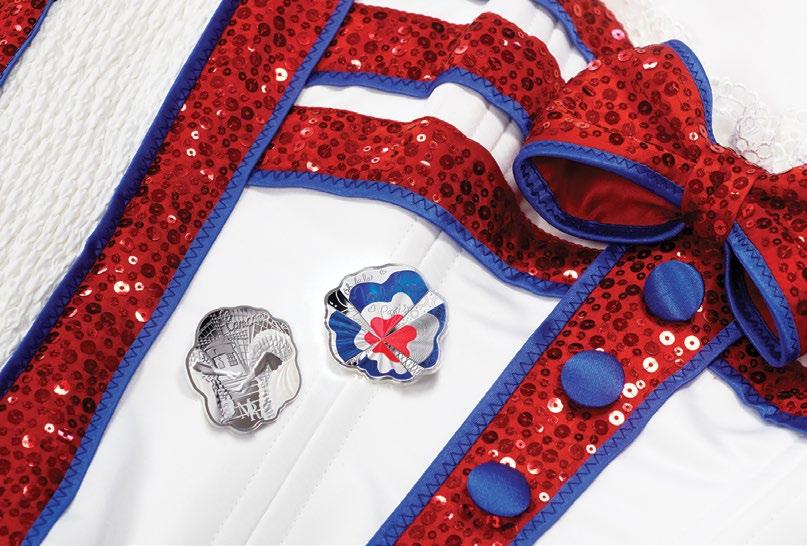
This spring, Moulin Rouge and Monnaie de Paris have joined forces to launch a collection of five new pieces with a uniquely shaped coin, inspired by a French Cancan petticoat.
The engraving is rich in detail, paying tribute to the four Maisons d’Art of the Parisian cabaret, enhanced by vibrant coloration on selected silver pieces.
With this collaboration, the two Parisian institutions aim to celebrate the craftsmanship and savoir-faire they both preserve. Each minted piece echoes the work of feather artisans, bootmakers, embroiderers, and costume designers who, day after day, magnify the Moulin Rouge performers.
The five pieces, perfect for gifting, collecting, or treating oneself, are now available through both brands’ distribution networks.
LUCY & YAK
Socially and environmentally conscious lifestyle brand Lucy & Yak has announced the opening of its sixteenth store in Islington, London. Coming to Islington Square – a destination for retail, dining and leisure the new location sits at the heart of one of London’s most characterful boroughs, in a square designed to reflect the identity of its surrounding community. Inside, customers can explore Lucy & Yak’s collections, all made from ethically sourced, ecofriendly materials. The store will also be home to L&Y, a recently launched label sharing the same commitment to sustainability and ethics – offering a more pared-back approach to dressing through considered prints, calming tones and playful silhouettes. Additionally, the store will debut an exciting new studio – the Re:Yak Hub – where customers will be invited to repair, mend and customise their Yaks, supporting the brand’s mission to keep clothing in circulation for longer, including community events and workshops.
TOTALLY SPIES POWERS UP WITH FASHION AND BEAUTY
Banijay Kids & Family recently announced a trio of major fashion-driven licensing deals for Totally Spies!, adding to the growing wave of products and activations as the brand celebrates its 25th anniversary year. Representing a significant step in reactivating fashion-led products for the brand, the deals signal a refreshed focus on style-driven consumer offerings.
Award-winning jewellery and accessory brand BonBonWhims will debut a Totally Spies! jewellery line, available in the U.S. with worldwide online availability. Nail brand Deco Beauty will introduce Totally Spies! inspired nail stickers available online, via Amazon, and in specialty stores. Rounding out the slate, New York-based clothing label Tyler McGillivary will launch a capsule collection plus merchandise items, also releasing in the U.S. with global online access.
Roubina Tchoboian, Head of Global Licensing at Banijay Kids & Family commented, “Responding to incredible demand for products that let fans express their connection in fun, fashion-forward ways, this marks a major moment for the brand as we re-enter the fashion space. Celebrating 25 years of Totally Spies!, BonBonWhims, Deco Beauty and Tyler McGillivary each bring distinctive creative visions that perfectly capture the energy and confidence of the franchise for fans to embrace around the world.”
Mascot Fun Inc.
IP CONSUMER GOODS COMPANY WITH UNIQUE DESIGN LANGUAGE
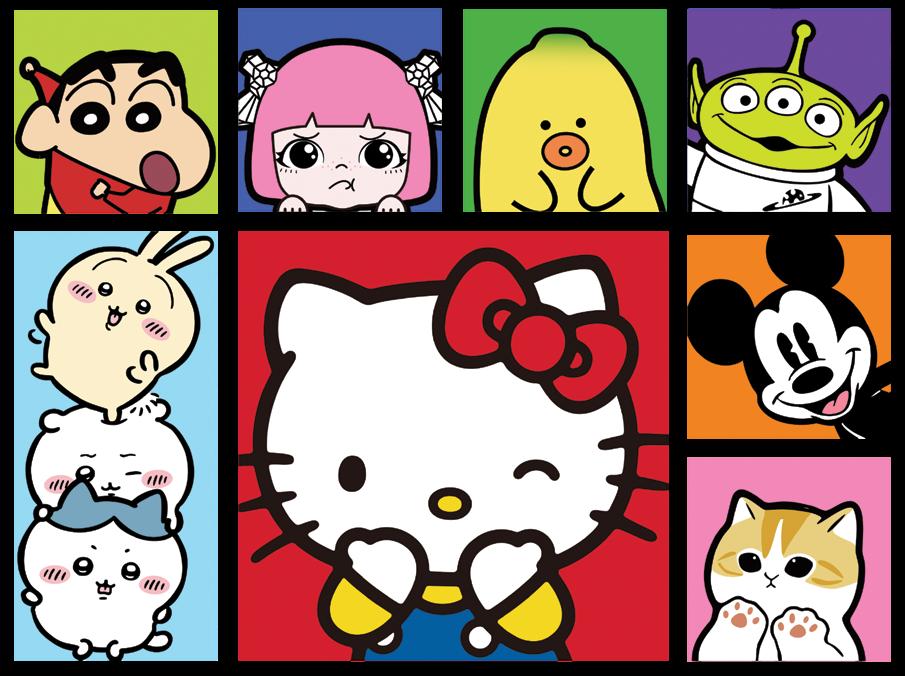
Adhering to the concept of interest consumption in the content era, we lead the life trend category innovation with lovely and interesting unique design language.Play with your heart to create a fun, good-looking and easy-to-use art toy brand of products.Take “Make for Fun Dream for More” as a vision. Committed to IP culture for more than ten years. Successful cross-border cooperation with multiple brands.With great ingenuity. Constantly create a trend of consumer goods with IP as the core feature and touching people’s hearts.
IP Matrix
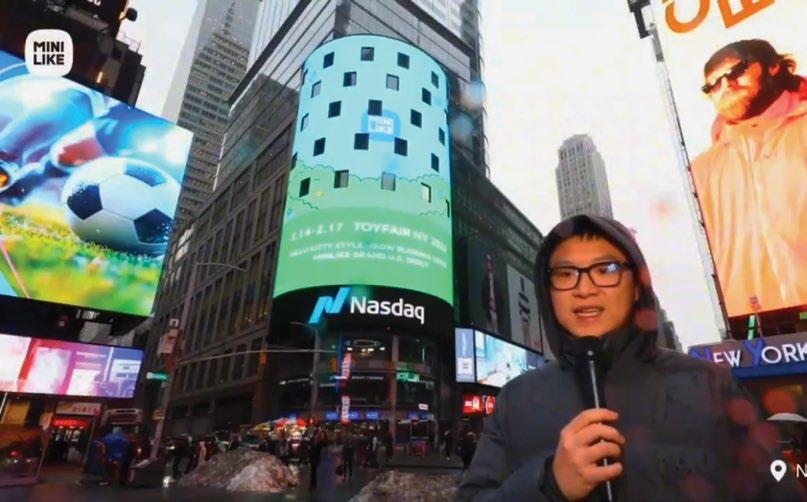
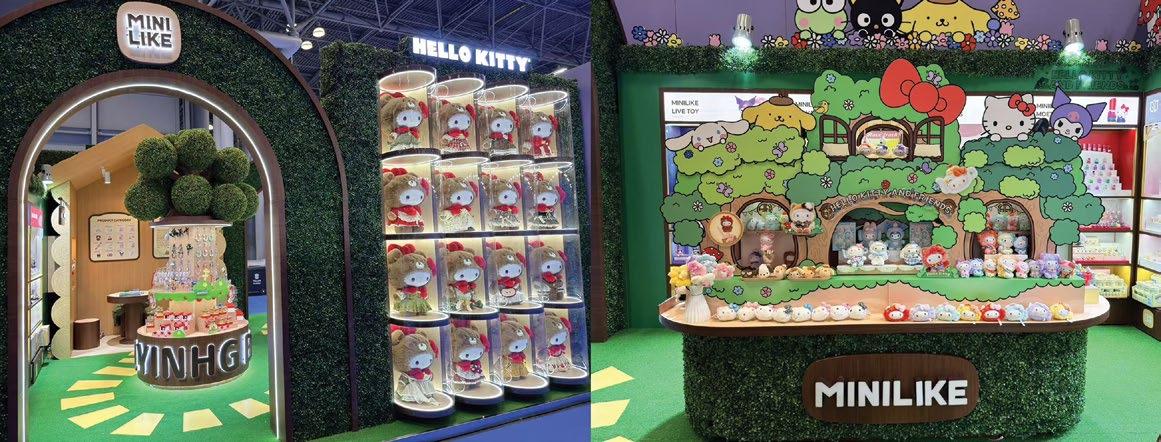
MINILIKE lights Up the Nasdaq Screen
On February 14, 2026, international trend toy brand MINILIKE made its official debut on the iconic Nasdaq screen in New York’s Times Square—the “Crossroads of the World.” This milestone not only marks a spectacular global debut but also represents a pivotal step in the brand’s international strategy. It signals MINILIKE’s accelerating efforts to engage in deeper dialogues with mainstream cultures worldwide, while propelling Chinese trend toy creativity onto a broader global stage.
iconic landmarks to regional markets, MINILIKE is rapidly translating its growing international visibility into widespread consumer recognition.
Industry-Leading Exhibitions: Deepening Participation in the Global Ecosystem
As part of its global strategy, MINILIKE made a standout appearance at the New York Toy
Market Data Confirms Overseas Potential, Strong Global Foundation in Place
According to data from the brand’s marketing center, social media buzz for MINILIKE in the North American market has surged by over 54% year-on-year, with the 18–35 age group accounting for 65% of the engagement—highlighting strong brand awareness and consumer loyalty.
To date, MINILIKE has entered over 100 retail locations across North America and the Asia-Pacific region, with global reach through Amazon, the brand’s official website, and other channels. Notably, exclusive pop-up events in countries such as Singapore, Canada, and Malaysia have generated over $1 million in sales within a single month, providing solid market backing for this high-profile presence. From
collaborative partnerships, cocreating the future of the trend culture industry.
Explosive Growth Validates Strategic Success
According to the latest updates, the North American market has become a key growth engine for MINILIKE in 2025. Industry insiders view the successful Nasdaq debut and participation in top-tier international exhibitions as a crucial milestone in the brand’s evolution from a Chinese trend toy leader to a global trend culture brand. This marks the beginning of a new phase in its globalization strategy.
Fair—the world’s oldest and most influential toy exhibition. This platform not only showcases the brand’s comprehensive strengths but also serves as a key opportunity to integrate into the global industry ecosystem and initiate two-way value exchanges. By engaging with top-tier international brands, MINILIKE aims to turn brand visibility into
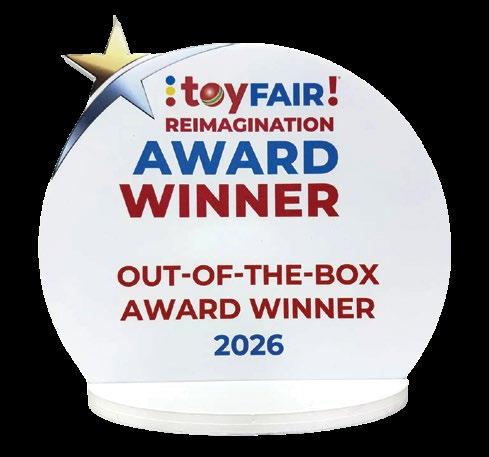
MINILIKE was also honored with the prestigious OUT-OF-THEBOX AWARD at the 2026 New York Toy Fair - an accolade awarded to only 18 winners worldwide -recognizing its innovative design capabilities on the international stage.
Moving forward, MINILIKE will continue to drive growth with creativity and culture at its core, deepen local operations, and shine a spotlight on Chinese trend design in an everexpanding global arena.
UGGA MUGGA AT THE BRONX ZOO
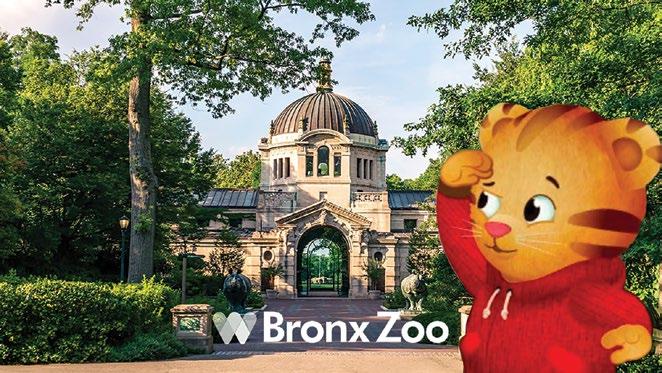
The Bronx Zoo has announced the debut of Daniel Tiger’s Neighborhood at the Bronx Zoo, an immersive new exhibit created to inspire curiosity, imagination, and wildlife advocacy through playful interactives, performances, and more, featuring favorite characters from the beloved PBS KIDS series from Fred Rogers Productions.The experience will open to the public on May 22 and run through September 7. This opening marks the world premiere of a first-of-its-kind concept that brings together two cherished worlds – Daniel Tiger’s Neighborhood and the world of wildlife – to enchant both kids and kids at
heart. Activities are designed to be accessible to neighbors of all ages and abilities and will integrate both Spanish and English. Entry is free with WCS membership or purchase of Bronx Zoo admission.
“For over 125 years, the Bronx Zoo has inspired a passion for wildlife and lifelong curiosity in guests of all ages,” said Rachel Libretti, Director of Events, Programming, and Rides at the Bronx Zoo. “We’re thrilled to debut Daniel Tiger’s Neighborhood at the Bronx Zoo in continuation of this rich edu-
cational tradition and are honored to bring some of America’s most treasured characters to life at our trusted, family-friendly park.”
In addition to the more than 11,000 animals guests will encounter while exploring the zoo’s 265 acres, Daniel Tiger’s Neighborhood at the Bronx Zoo offers a combination of fan-favorite activities and Bronx Zoo exclusives that will excite children to discover the natural world.
Hands on activities include climbing aboard the first-ever life-sized Trolley from Daniel Tiger’s Neighborhood, making playful music like insects, frogs, and birds at a sensory-rich replica of the iconic Neighborhood Music Wall, glimpsing everyday animals, birds, and more along a seek-and-find Nature Walk, receiving a free bilingual Zoo Activity Book in English and Spanish, comparing yourself to the incredible size and speed of wildlife at Same & Different, a fun, tactile station for exploring differences in the animal kingdom, plus, many more imaginative play stations that span the animal kingdom.
The new exhibit also includes an original live music show, meet and greet, photo opportunities and exclusive merchandise.
“We are excited to partner with a mission-aligned organization like the Bronx Zoo to bring Daniel Tiger’s Neighborhood to families in a way that hasn’t been done before,” said Christopher Arnold, chief operating officer, Fred Rogers Productions. “It is vital for us to meet children where they are, and an experience-based and educational opportunity like this collaboration allows for that in an innovative, engaging way.”
WILDBRAIN CPLG APPOINTMENTS
WildBrain CPLG has promoted four Commercial Directors under a new Regional Director model across Europe, designed to reinforce its commitment to delivering value to partners through long-term brand growth across complementary markets.
WildBrain CPLG’s new European leadership model sees four directors promoted into the new Regional Director roles: Stacy Scimia, Regional Director, UK & Nordics, Angela Reuber-Gundolf, Regional Director, Germany, CEE & Benelux, Laurent Fourcine, Regional Director, Italy, France & Spain and Begüm Isikli, Regional Director, Turkey & Greece.
DINO RANCH
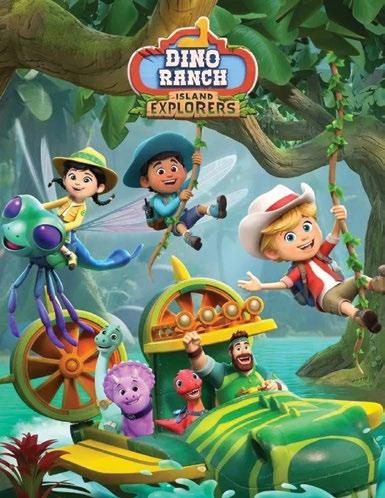
Boat Rocker Studios has announced that 13 episodes of its new preschool series Dino Ranch: Island Explorers began streaming on Amazon Kids+ in April, available to subscribers in the US on both Fire TV and Fire Tablets.
A spin-off of the Dino Ranch series, Dino Ranch: Island Explorers (52 x 11’, 3D animation) follows the Cassidy family as they trade in their cowboy hats for explorer hats and head off to the mysterious and exotic Dino Island. Home to Uncle Jack Cassidy and teeming with new dinosaur species, humongous insects and prehistoric amphibians, Dino Ranch: Island Explorers launched in Canada on CBC, CBC Gem, and CBC Kids YouTube in November 2025 and will be on ICI TÉLÉ, ICI TOU.TV and Radio-Canada.ca in September. It will also air on Amazon Kids+ in the UK, Canada, Japan, and Germany, and on Warner Bros. Discovery’s Cartoonito across Europe, Middle East and Africa.
Dino Ranch: Island Explorers was created by Industrial Brothers’ cofounder Matthew Fernandes. It is produced by Industrial Brothers and Boat Rocker Studios. Boat Rocker manages global franchise development, including content distribution and consumer products.
Dino Ranch has sold to more than 170 countries, airing in more than 15 languages worldwide. Its official English and Spanish YouTube channels have more than 1 billion combined views.
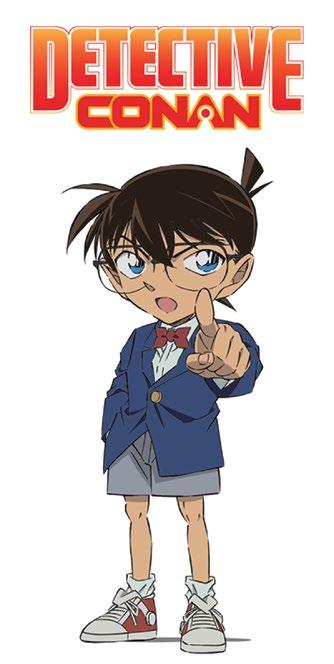
SPACETOON AND DETECTIVE CONAN
Spacetoon has been officially appointed as the licensing agent for the Detective Conan franchise across MENAT (Middle East, North Africa, and Türkiye) region by Shogakukan-Shueisha Productions.
Under the new agreement, fans can look forward to an expanded range of Detective Conan experiences. Spacetoon will collaborate with regional and international partners to develop a diversified licensing and merchandising program, including consumer products, toys, themed events, and immersive on-ground experiences designed to engage both newcomers and longtime superfans.
The appointment marks a significant milestone in a long-standing relationship between Spacetoon and the iconic Japanese franchise. Spacetoon was the first broadcaster to introduce Detective Conan to MENA audiences in the early 2000s, when the series first aired on Spacetoon TV. Since then, Spacetoon has served as the regional home of Detective Conan, airing the long-running series on both Spacetoon TV and Spacetoon Go - its online streaming platform - and bringing the franchise’s recent theatrical films to cinemas through Spacetoon Pictures, the company’s film distribution arm. Through these efforts, Spacetoon has cultivated a passionate and loyal fan community across the region.
In parallel with this announcement, Spacetoon has confirmed the theatrical release of the latest Detective Conan movie across cinemas in the MENA region in 2026. Previous releases distributed by Spacetoon Pictures ranked as the second-highest-grossing anime film in Saudi Arabia and among the top five anime films in other key markets, including the UAE, Bahrain, and Kuwait.
REEBOK
Reebok is officially expanding into the strength training space with the launch of an all-new strength collection. Developed in strategic partnership with Stamina Products Inc., this launch marks a significant step in bringing professional-grade functional equipment to the everyday athlete.
Combining Reebok’s fitness heritage with Stamina’s manufacturing expertise, the collection is designed to meet the growing demand for versatile, high-performance gear that fits seamlessly into the home environment.
“Partnering with Reebok marks an exciting milestone for Stamina as we continue to expand our portfolio of trusted fitness brands,” said Barry Laurie, Vice President, Stamina Products. “With decades of experience bringing innovative, accessible equipment to market, we’re proud to collaborate with a brand that shares our commitment to performance and quality. Together, we’re making it easier than ever for consumers to bring effective, high-quality workouts into their everyday routines.”
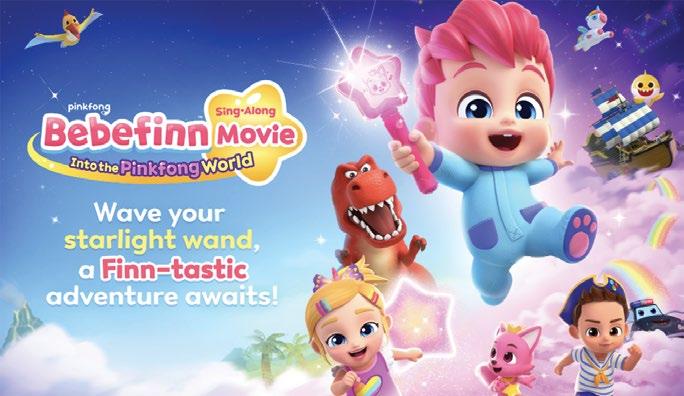
BEBEFINN MOVIE FROM PINKFONG DEBUTS
The Pinkfong Company, the global entertainment company behind Baby Shark, has announced that its first Bebefinn film released globally on Netflix on April 20, following its worldwide theatrical rollout last year. Released in cinemas across multiple international markets, the film drew strong audience response, marking a key milestone for the fast-growing brand.
Bebefinn has emerged as a leading global kids and family brand, topping Netflix Kids and Family charts in 11 markets, including the U.S., and landing in the Top 10 across 25 countries.
The franchise has surpassed 58 billion views and 80 million subscribers across its global YouTube channel, and earned the YouTube Diamond Creator Award in just 14 months—one of the fastest milestones among The Pinkfong Company’s channels.
In the film, the main character Finn is suddenly pulled into a tablet, prompting his siblings Bora and Brody to team up with Pinkfong and Baby Shark on a mission to bring him back from a magical world. Bringing together beloved characters from across the Pinkfong Universe, the film delivers an interactive viewing experience, incorporating sing-along moments, a mix of 3D animation and
pixel art, and a dynamic soundtrack blending jazz, EDM, and Broadwayinspired musical elements.
To mark the global Netflix release, The Pinkfong Company hosted a social media campaign from April 23 to May. Fans were invited to share photos or videos of their viewing moments on Instagram Stories by tagging Bebefinn’s account for a chance to win Bebefinn plush toys.
“We are excited to bring Bebefinn’s first theatrical release to Netflix audiences worldwide following its successful run in cinemas,” said Gemma Joo, Chief Business Officer at The Pinkfong Co. “This global streaming release marks an important next step in expanding Bebefinn as a multi-platform franchise, and we look forward to continuing to connect with families around the world through engaging content experiences.”
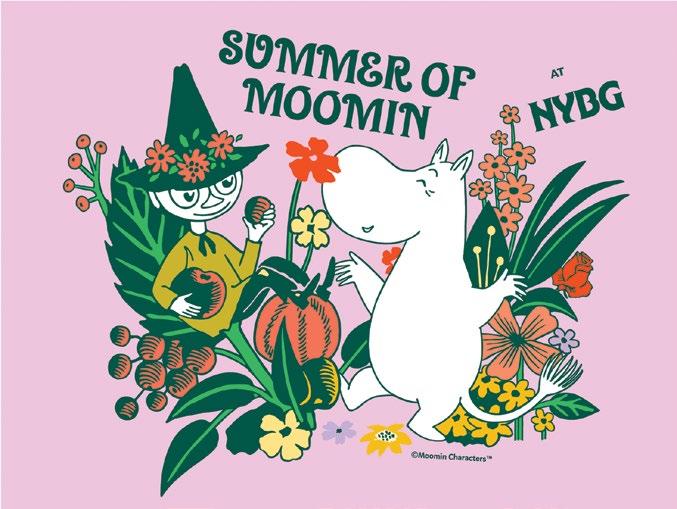
MOOMIN MOVES FROM DISCOVERY TO DEMAND IN THE U.S.
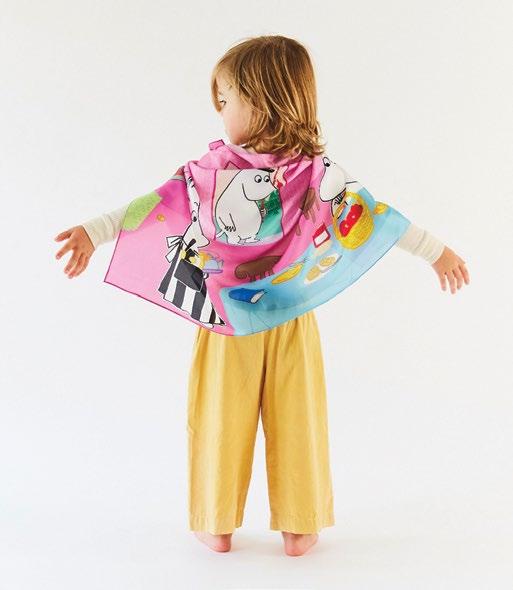
Moomin is expanding its presence in the United States across retail, partnerships, and cultural activations, as the brand gains meaningful traction with American audiences.
Created by Finnish artist and writer Tove Jansson in the aftermath of World War II, Moominvalley was imagined as a place of comfort, curiosity, and belonging. That emotional core continues to resonate today, particularly with Gen Z consumers seeking more thoughtful, emotionally grounded storytelling.
This growing fandom is especially visible online. Moomin has added more than one million followers over the past year, reaching over 5 million globally, with growth largely driven by the U.S. On TikTok, audiences have embraced the 1990s animated series, introducing the beloved characters to a new generation of fans. At the same time, the brand’s longstanding commitment to sustainability has strengthened its connection with younger consumers, resulting in a highly engaged fanbase increasingly looking for ways to bring Moomin into their everyday lives.
To meet this rising demand for realworld touchpoints, Moomin partnered with the Brooklyn Public Library last year on its first U.S. exhibition dedicated to Tove Jansson. The exhibition generated more than one billion impressions and was fea-
tured in New York Magazine’s year-end Approval Matrix as a defining cultural moment. Building on that momentum, Moomin is continuing to invest in high-impact cultural experiences, including an upcoming activation at the New York Botanical Garden this summer.
As awareness grows, it is translating into expanded licensing opportunities. In partnership with its U.S. licensing agent, King Features, Moomin has taken a selective approach to collaborations, prioritizing partners that align with the brand’s storytelling, aesthetic, and values. Recent and upcoming releases include BonBon Swedish Candy Co., Sarah’s Silks, Zilly Monkey, HER Accessories, Running Press, and Steady Hands, spanning categories from consumables and toys to accessories, publishing, and apparel. Together, these partnerships reflect a deliberate and cohesive lifestyle licensing strategy.
invest at an increasing rate in experiences that delight fans, new and old and are excited for this next chapter in the United States.”
As Moomin continues to scale in the U.S., its growth reflects a long-term strategy rooted in cultural connection, community, and disciplined brand building, creating a strong platform for future licensing partnerships.
“Moomin has always resonated deeply with audiences around the world, but what we’re seeing now in the U.S. is a more intentional and accelerating discovery of the brand,” said Christina Nix Lynch, Senior Director of Licensing at King Features. “We’ve focused on building the right foundation and partnering with brands that can thoughtfully translate that storytelling into product.”
“We are thrilled to see new American fans discover the Moomins at an unprecedented rate and are excited to build out the brand presence in the U.S. with companies that share our ethos of storytelling,” said Thomas Zambra, Director of Business Development at Moomin Characters. “There is tremendous potential and a real need for wholesome, whimsical, legacy content. We will continue to
The Moomins first appeared in print in 1945 and went on to star in a series of books and comics, enthralling millions of readers all over the world. The stories about the adventurous and witty Moomins stem from the singular imagination of Tove Jansson (1914-2001), a Finnish-Swedish artist who created not only captivating tales but also a remarkable visual legacy. Her works span a vast spectrum of creativity, from intricate watercolour paintings to charming comic strips and illustrations. The Moomin stories, while accessible to all ages, delve into profound themes such as courage, our relationship with nature, and the enduring power of friendship. The books have been translated into more than 60 languages. The Moomins have inspired stage adaptations, TV series, films, games, music, exhibitions, and theme parks – and continue to take new forms.
Fifteen Years of Western Content Bulletin: A Long View on Licensing and IP for the Japanese Licensing Industry
I recently completed column number 179 of my “Western Content Bulletin”, a monthly Japanese-language column that has appeared on CharaBiz. com since January 2011. CharaBiz. com is a Japan-based B2B news platform focused on the character business, licensing, and content industries, read widely by Japanese IP owners, licensors, licensees, and industry professionals. My very first article, published in January 2011, was titled “The First Globally Popular Character Born from the Smartphone Medium: Angry Birds.” From the outset, I have written the column directly in Japanese, and doing so on a monthly basis has played a significant role in improving my Japanese writing skills over time!
I had founded ZenWorks in 2010, and later that year Kazuo Rikukawa, president of Character Databank, a Japanese market-research firm specialising in the character business, invited me to join CharaBiz’s roster of monthly columnists to write about the licensing industry from an international perspective. When asked to name the column, I chose the title Western Column Bulletin.
When my column began 15 years ago, its aim was straightforward: to help Japanese readers better understand how licensing and content businesses operated in major markets around the world but with a focus on North America and Europe. At the time, overseas licensing information was limited, often fragmented, and was not widely informed by practical, firsthand industry experience.
What emerged over the years was more than a monthly column. It became a long-term record of how the global licensing industry itself has evolved.
In the early years, the focus was on market education and fundamentals. Articles explored key territories such as the United States, Europe, India, and
emerging regions, while addressing practical questions faced by Japanese companies expanding overseas—agent selection, trade show participation, licensee evaluation, and the importance of execution tools such as style guides and contracts.Trade shows like Licensing Expo and Brand Licensing Europe featured prominently, not as event reports alone, but as entry points into understanding how international licensing ecosystems function.
As the industry matured, so did the column. From around the mid-2010s, coverage expanded beyond children’s character licensing into music, sports, celebrity, video games, and global content markets. Licensing was no longer treated as a single-category business, but as a cross-industry strategy tied to brand, media, and cultural relevance. The question shifted from where licensing was happening to why certain IPs were gaining traction across markets and categories.
Over time, the column moved from reporting to interpretation. Topics such as digital consumption, changing media habits, brand revitalisation, and the rise and fall of major toy and entertainment companies reflected deeper structural change. Licensing increasingly emerged not as a secondary revenue stream, but as a core component of long-term IP strategy.
One constant throughout has been the use of international trade shows as industry barometers. Rather than treating exhibitions as isolated events, the column has observed how shifts in booth design, exhibitor mix, creator visibility, and audience engagement signal broader changes in how IP value is created and communicated. In recent years, this has become even more relevant as trade shows function not only as B2B marketplaces, but as live environments for testing IP appeal, experience, and storytelling.
Looking back across 15 years, a clear
pattern emerges: the industry’s gradual shift from product-led licensing to IP-led ecosystems. Concepts that are now widely discussed—creator-driven brands, adult collectors, limited editions as long-term value builders, and IP as culture rather than merchandise—were often visible at the margins long before they became mainstream.
Today, the licensing landscape is more complex than ever. Fragmented media platforms, global competition for attention, and rising expectations around authenticity and experience have reshaped how IP is developed and monetised. In this environment, the role of Western Content Watch is no longer to simply introduce overseas markets, but to provide context—connecting execution on the ground with broader strategic implications.
If the past 15 years have demonstrated anything, it is that licensing does not evolve in straight lines. It responds to culture, technology, creators, and consumers, often in unexpected ways.
Maintaining a consistent, long-term vantage point has made it possible to see not just moments of change, but patterns of transformation. n
About the Author
by Roger Berman, President, ZenWorks
Roger Berman is President of ZenWorks Co., Ltd., a Japan-based international licensing consultancy and IP marketing solutions provider advising content owners, brands, and rights holders on licensing strategy, market entry, business development, and IP marketing across Japan and Asia.
Born in Liverpool, England, Roger relocated to Japan in 1984 and has built more than four decades of experience in the Asian licensing industry.
He served as Managing Director of LIMA Japan from 2008 to 2010 and as a Board Director of the Japan Licensing Business Association (now Licensing International Japan) from 2012 to 2014.
Roger is a contributor to English-language licensing publications and is internationally recognized as a speaker and moderator at licensing industry events.
www.zenworks.jp • rmb@zenworks.jp
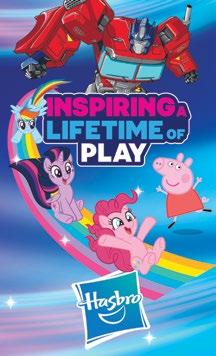
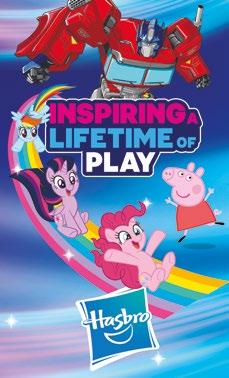
Inspiring a Lifetime of Play
It has already been a standout year for Hasbro and its world-class portfolio of iconic brands that have inspired a lifetime of play across cultures. The company kicked off the year strong, unveiling high-profile announcements, story-driven brand campaigns, milestone anniversaries, and culturally resonant licensed collaborations that captured industry attention worldwide.
That excitement now carries forward to Las Vegas Licensing Expo, where Hasbro will once again take center stage. At the show, the company will spotlight its powerhouse portfolio with a robust slate of licensing announcements and product reveals spanning TRANSFORMERS, PEPPA PIG, MY LITTLE PONY, Dungeons & Dragons, MAGIC: THE GATHERING, POWER RANGERS, and more.
Across categories including premium collectibles and toys, fashion and ap-
parel, publishing, music, food and beverage, and immersive live experiences, Hasbro continues to bring people and families together through play and lifestyle offerings while deepening fan engagement through collaborations with top global partners.
“2026 is off to an incredible start for Hasbro as we celebrate the 40th anniversary of THE TRANSFORMERS:
THE MOVIE, introduce a meaningful new chapter for PEPPA PIG, activate all-new licensed collaborations across our iconic brand portfolio, and continue to develop more integrated franchise ecosystems,” said Kim Boyd, President of Global Licensing & Entertainment at Hasbro.
“Licensing Expo is a pivotal moment for us to build on that momentum and showcase what’s ahead for these iconic franchises through innovative, fan-first licensed offerings.”
Hasbro will attend Licensing Expo at Mandalay Bay (Booth G170) from May 19–21, showcasing its latest licensing initiatives as part of the company’s “Playing to Win” strategy, including the following brand spotlights.
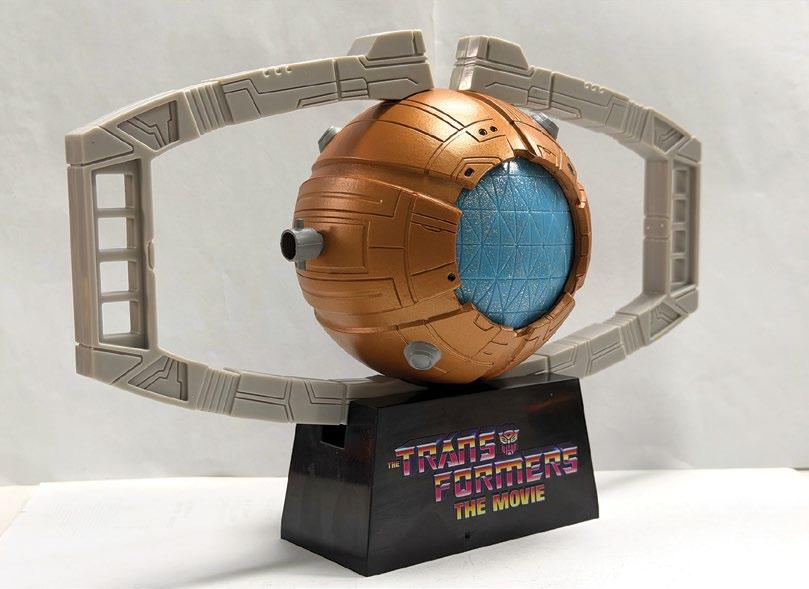
THE TRANSFORMERS: The Movie: The Apology Tour
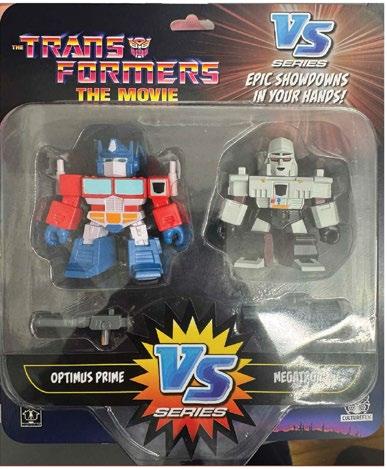
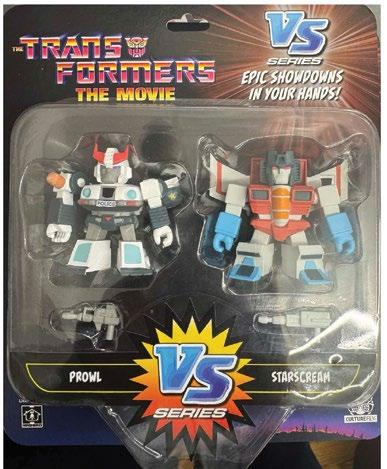
This year marks the 40th anniversary of THE TRANSFORMERS: THE MOVIE, Hasbro’s beloved animated feature, turned cult classic, that culminated the first two seasons of the original ’80s television series. The film delivered epic action, unforgettable characters, and one of the most impactful moments in franchise history: the loss of Autobot leader Optimus Prime – proving that animated storytelling could deliver an emotional punch powerful enough to resonate for decades.
Audiences were left stunned as the Autobots and Decepticons went to war in the Battle of Autobot City, culminating in Optimus Prime’s defeat during his epic showdown with Megatron – a moment audiences young and old were not prepared for. That single scene hit hard, quietly teaching millions of fans that great leadership sometimes comes with sacrifice. Over the decades, the film has only grown more legendary through home video re-releases, theatrical revivals, and generations of fans passing the Matrix of Leadership down to new viewers, often with a gentle warning about the heart wrenching moment that still hits just as hard today.
Four decades on, Hasbro is continuing its year-long celebration of the film’s milestone anniversary with the “1986 Apology Tour,” a playful, fan-first
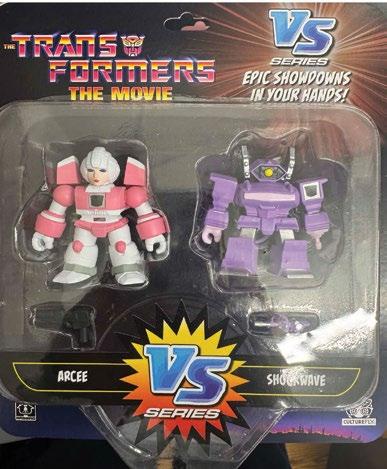
campaign that honors THE TRANSFORMERS: THE MOVIE for its epic action, enduring legacy, and the tragic moment fans are very much still processing. Spanning events, screenings, consumer products, licensed collaborations, and storytelling, the initiative brings generations together to revisit, relive, and reframe a defining chapter of the franchise—one that remains more than meets the eye.
The anniversary is supported by premium licensed offerings from Culture Fly, Jada Toys, Monogram, ShuShu Papa, Super7, Threezero, Trends International, and more that deliver all-new ways for fans to honor the franchise’s multigenerational legacy.
In publishing, Skybound Entertain-
ment and Image Comics are releasing the first-ever hardcover collection of the classic comic adaptations in THE TRANSFORMERS: THE MOVIE Deluxe Edition. Insight Editions will also debut THE TRANSFORMERS: THE MOVIE: The Ultimate Visual History, an in-depth retrospective featuring rare imagery, behind-the-scenes materials, and new insights into the making of the iconic film, available now for pre-order.
Additional TRANSFORMERS products and immersive brand experiences will also be showcased at Licensing Expo, including new collaborations with Opposuits and others, highlighting the brand’s continued expansion across lifestyle, collectibles, and fan engagement.
PEPPA PIG Continued Evolution
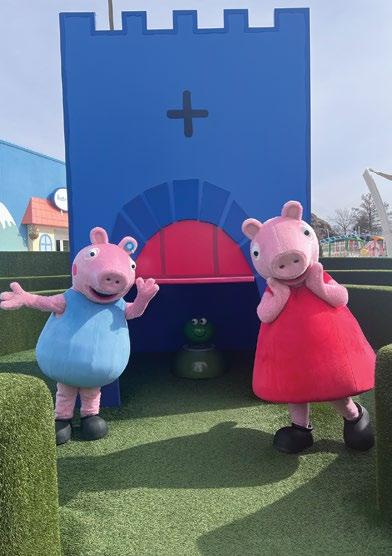
Building on over two decades of success, Hasbro is expanding the world of PEPPA PIG through richer storytelling, broader representation, and multicategory brand extensions that reflect the lives of modern families.
A key milestone in this evolution was last year’s introduction of Peppa’s baby sister Evie, marking the first major change to the core family dynamic in years. This new addition signals a wider creative shift for the brand, opening up fresh storytelling opportunities and deepening emotional connection with audiences.
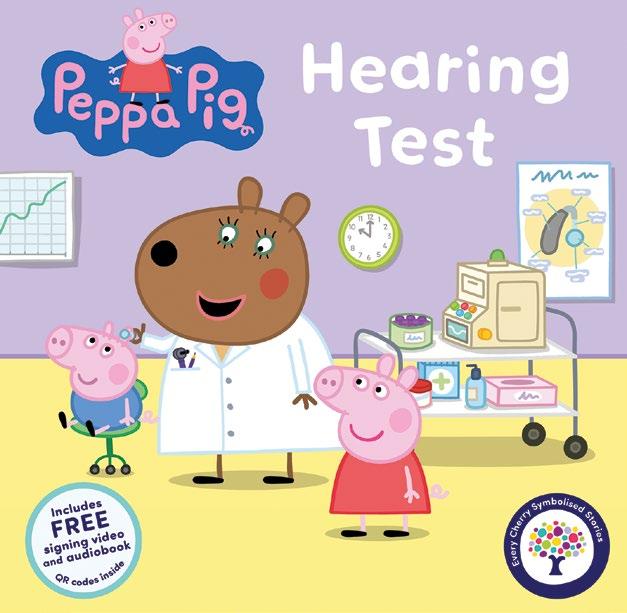
That commitment to contemporary, relatable storytelling continues in new Season 11 episodes of PEPPA PIG on Nickelodeon in the U.S. and multiple top broadcasters globally, where it is revealed that Peppa’s younger brother, George, has moderate hearing loss in one ear. The storyline marks a meaningful moment in his character’s journey and building on PEPPA PIG’s long-standing commitment to representative storytelling that reflects the real experiences of children and families.
This evolution extends beyond the screen through a coordinated ap-
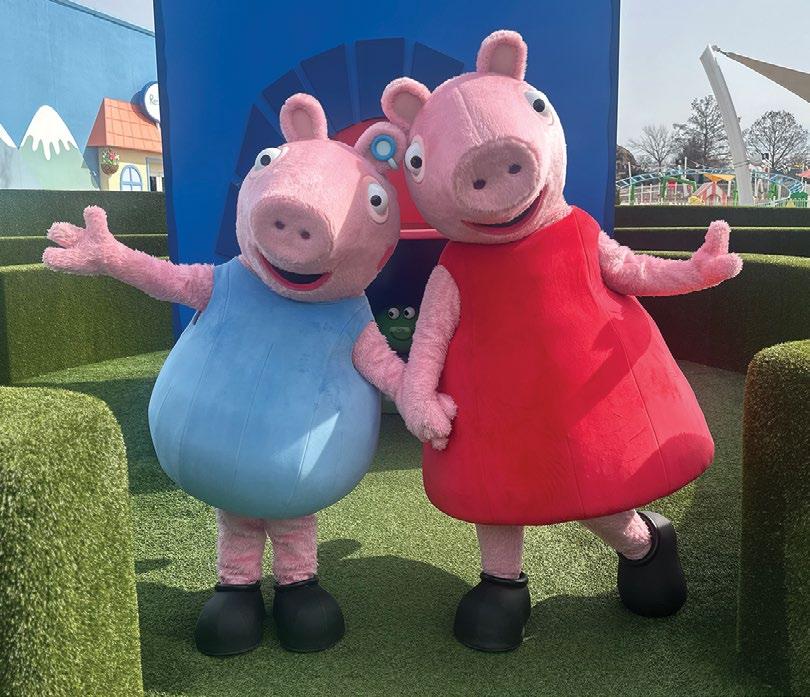
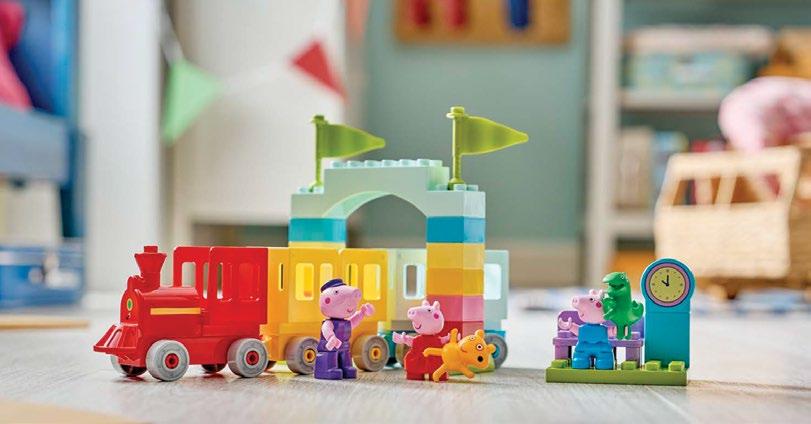
proach to licensing and experiences. With new LEGO DUPLO sets, an updated costume character at our global Peppa Pig experiences, SEND-symbolized books from Every Cherry Publishing and more, George’s character arc is reflected across the franchise ecosystem.
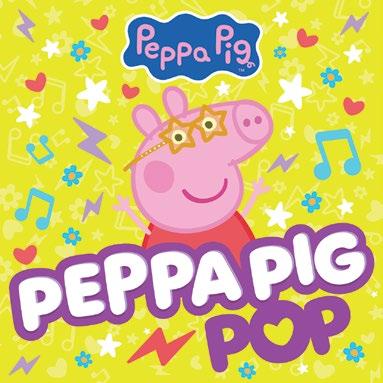
At the same time, PEPPA PIG continues to expand with new launches from Joya Apples, RuffleButts, Tonies, Crayola, and Staedtler, as well as elevating cultural relevance through new music releases like the recent Peppa Pig Pop album featuring oink-tastic covers of Rihanna’s “Diamonds”, Kelly Clarkson’s “Stronger”, and other pop hits.
Together, these initiatives reflect a brand that is not only growing but evolving with purpose—continuing to connect with new generations while remaining a trusted, relevant companion for families around the world.
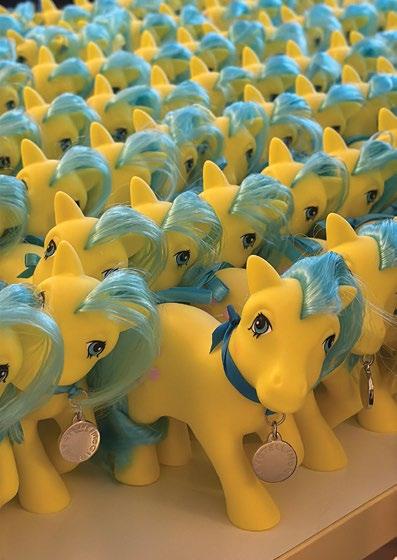
MY LITTLE PONY Cultural Resurgence
For more than 40 years, MY LITTLE PONY has championed themes of friendship, self-expression, and community. Today, the brand is experiencing a cultural resurgence as it continues to expand its appeal across kids, teens, and young adults who are actively seeking new ways to engage with the their favorite pony characters.
The year 2026 also marks the Lunar Year of the Horse, providing a timely and meaningful cultural moment
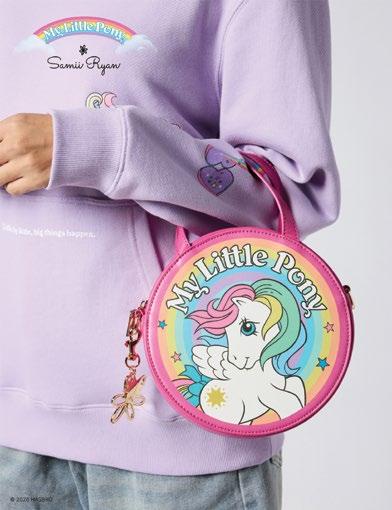
for MY LITTLE PONY to blend its heritage with modern relevance. This momentum has been particularly showcased through fashion and lifestyle, highlighted by recent standout collaborations with Stella McCartney,
Samii Ryan and SKULLPANDA – each honoring the brand’s legacy while introducing it to new audiences through elevated, culturally relevant moments.
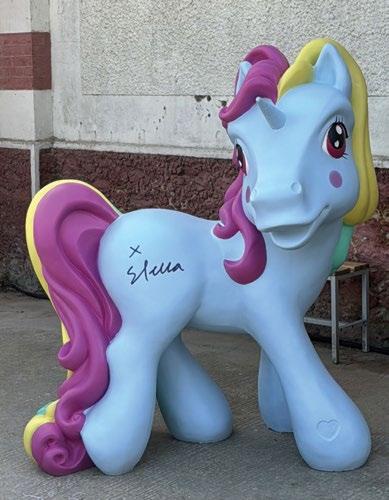
In Stella McCartney’s Winter 2026 runway show, “Celebrating Equestrianism, A Lifelong Love of Animals And The Year of the Horse,” the MY LITTLE PONY brand appeared as part of a deeply personal collection inspired by the designer’s childhood love of horses and riding in Scotland. The collaboration extended beyond the runway, featuring behind-the-scenes moments with MY LITTLE PONY figures delivered through VIP invites and a statement Pony statue welcoming guests outside the venue.
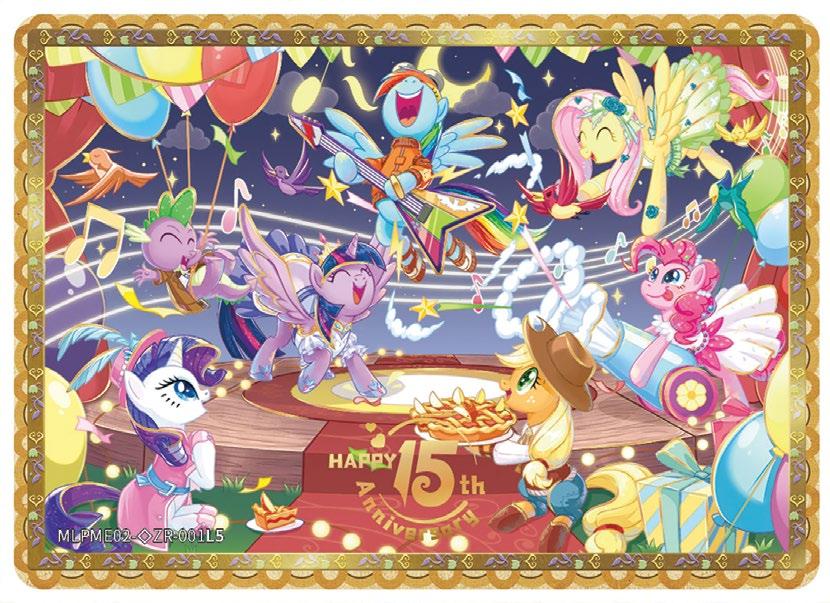
The brand’s momentum continues through its ongoing Kayou trading card collaboration, including its newly released Friendship Eternal Cards Moon Edition 2, as well as brand-new music releases from DJ Pon-3.
Together, these initiatives mark a bold new era for MY LITTLE PONY. Hasbro remains focused on delivering bigger, brighter, and more culturally impactful expressions of the brand, while still preserving the joy, creativity, and emotional connection that generations of fans know and love.
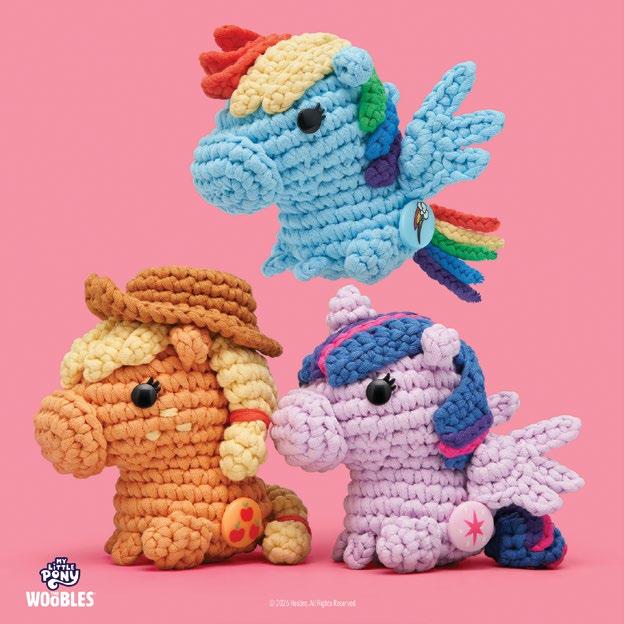
Additional MY LITTLE PONY collaborations slated for Licensing Expo 2026 include newly announced products and experiences from The Woobles, Kayou, balabala, and more.
From honoring beloved legacies to introducing inclusive, forward-looking storytelling, Hasbro continues to harness the magic of play to create joy, spark connection, and build community across generations. With Licensing Expo 2026 as its next major stage, the company is poised to deliver another powerful chapter for its iconic brands and passionate global fan base.
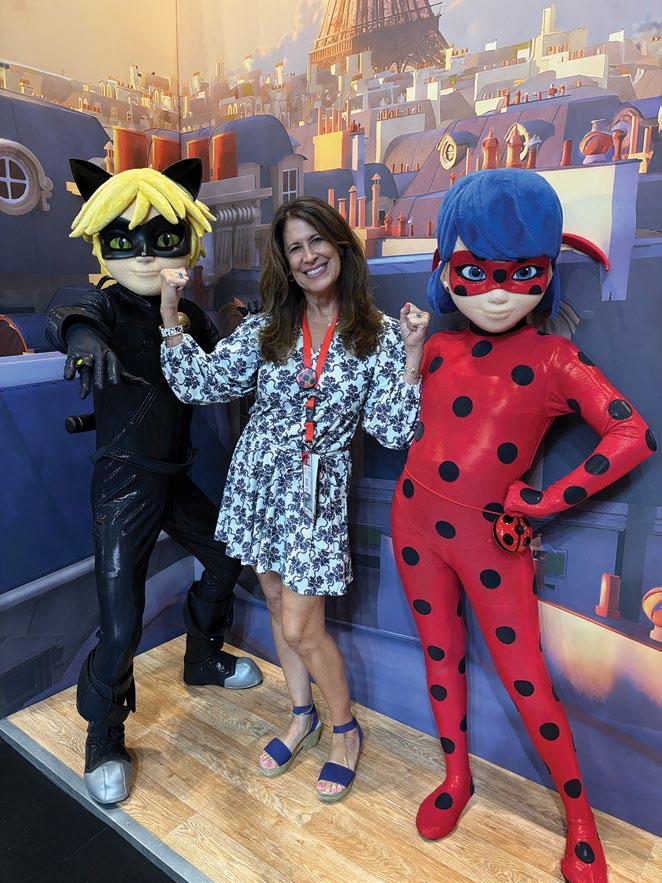
Interview: Lisa Foster, Senior Vice President, Licensing, North America, Global Toy and Publishing at Miraculous Corp.
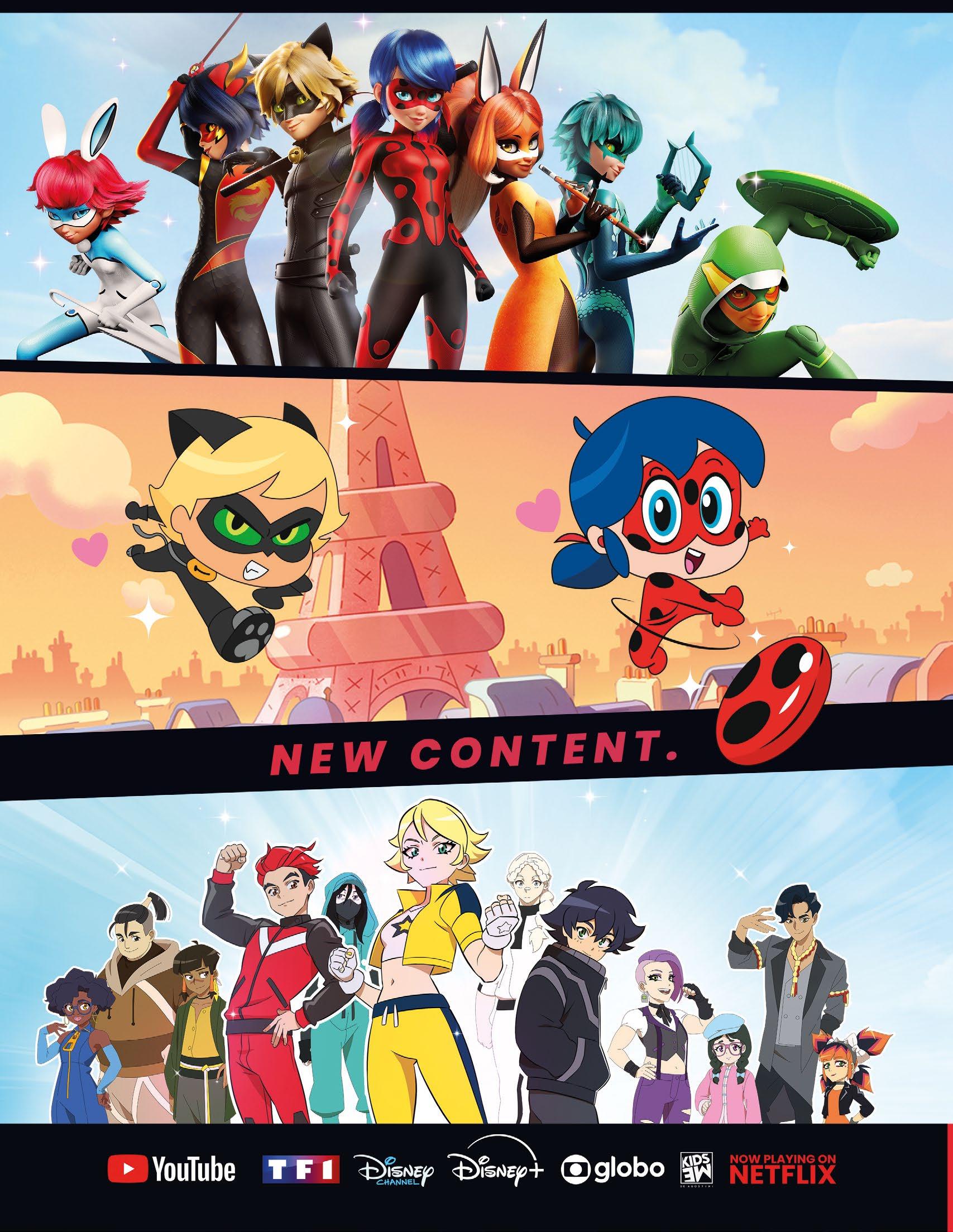
Miraculous – Tales of Ladybug and Cat Noir has grown from a hit animated series into a global franchise.
From your perspective, overseeing licensing in the U.S. and Canada, what has been the key to the brand’s sustained momentum?
Lisa Foster: “The longevity of Miraculous is rooted in its distinctive blend of emotional storytelling and universal relatability.
Over the past decade, the series has seamlessly combined high-energy superhero action with the authentic challenges of growing up, allowing viewers worldwide to see themselves reflected in its characters.
Marinette, in particular, resonates deeply—she’s kind, well-meaning, a little awkward, and imperfect in ways
that feel real. Yet when she transforms into Ladybug, she embodies confidence, strength, and heroism, becoming a powerful aspirational figure. Cinematic 3D animation, the iconic Paris setting, and a rich mythology built around magical jewels, Kwamis, and ancient guardians offer endless opportunities for discovery. Ultimately, Miraculous reinforces a timeless message—the true hero is the person behind the mask. This idea inspires confidence, empathy, and connection across generations and cultures. It serves as the emotional foundation for everything we do. And from a licensing perspective, consistency is key. We’ve been very intentional about aligning content, products, and partnerships so that every touchpoint reflects Miraculous’ core values of empowerment, optimism, and transformation. At the same time, we continue to innovate. Whether it’s new content, immersive experiences, or product categories, ensuring there is always something new for fans to discover and explore. That balance of consistency and evolution is what keeps retailers, partners and audiences invested.”
With Season 6 continuing its rollout and Season 7 on the horizon, how does the ongoing expansion of the series help keep the brand fresh?
“New seasons are incredibly important because they continuously
re-energize the franchise. Each season introduces new storylines, character developments, and visual elements that translate directly into product innovation. It also keeps the fan base expanding while giving existing fans reasons to return, which is critical in today’s competitive landscape.”
The Miraculous universe is expanding. How do these extensions create new opportunities for licensing and retail programs in the U.S. market?
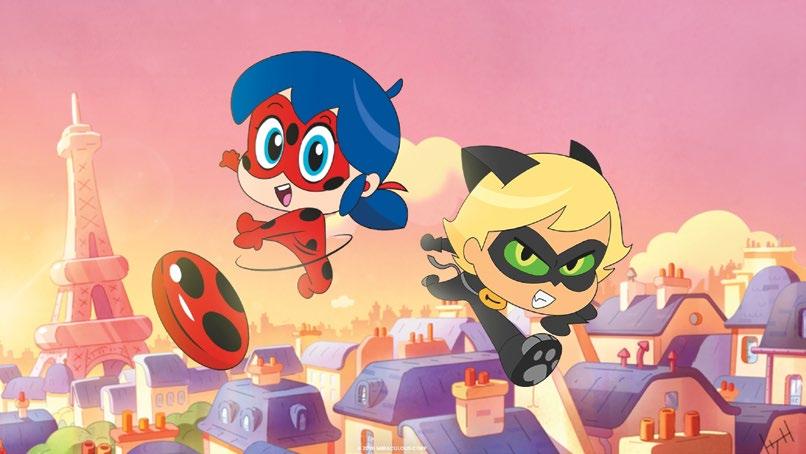
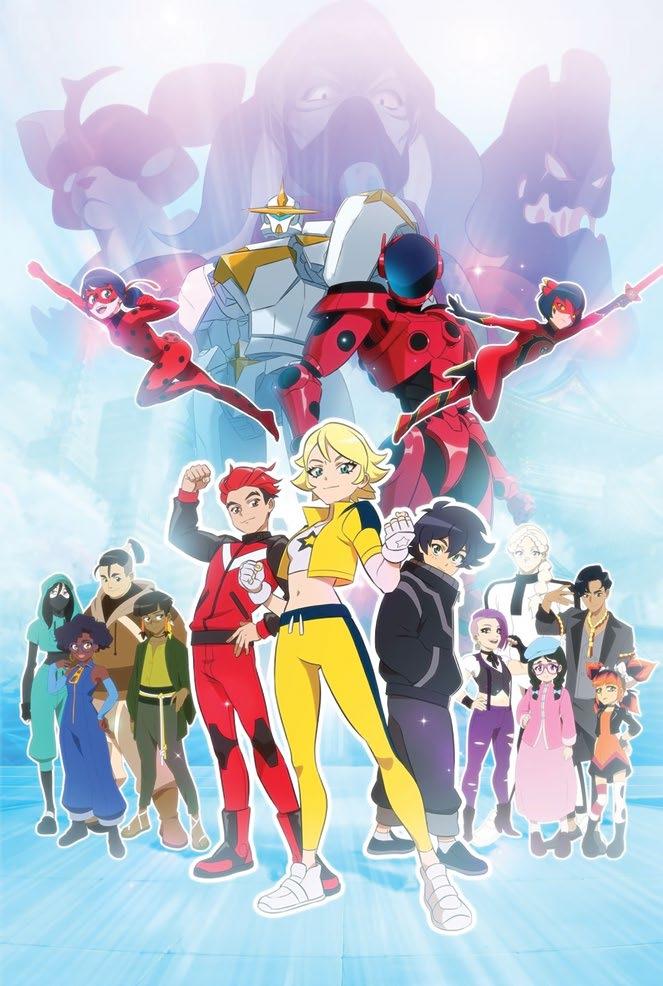
“Each extension unlocks new creative and commercial opportunities for the Miraculous franchise. Miraculous Stellar Force is the first original series to launch in the expanded universe. Based in Tokyo, the series introduces a new team of heroes and brings fresh aesthetics and storytelling that can translate into entirely new product lines. Miraculous Chibi taps into humor-driven, short-form content that works well on digital platforms and naturally lends itself to fun, playful products with strong impulse and novelty appeal. The theatrical film, to be produced by John Cohen (Despicable Me, The Angry Birds Movie) alongside Jeremy Zag, will further increase visibility, creating large-scale tentpole moments that drive awareness and consumer engagement.
Together, these initiatives expand the franchise’s reach across multiple age groups, providing partners with new avenues for innovation across
Lisa Foster
categories, while building on the strong foundation and global success of the existing TV series.”
Miraculous has built a strong global audience across broadcast, streaming, and digital platforms.
How does that visibility translate into opportunities for licensing partners and retail growth in the U.S.?
“Our global reach is a huge advantage. We have distribution across the world’s three most powerful platforms.
Disney serves as the primary home, followed by Netflix and YouTube, maximizing global reach and audience engagement in more than 150 territories.
On YouTube alone, Miraculous has generated over 50 billion views, with new initiatives like Miraculous Chibi, a digital-first series, continuing to drive discovery and interaction.
According to Parrot Analytics, Miraculous ranks as the second most in-demand kids’ IP globally, just behind SpongeBob SquarePants. This demand creates a strong foundation for consumer products.
For licensing partners, this translates into built-in awareness, sustained demand, and reduced market entry risk. It also enables us to localize content and marketing strategies while maintaining a consistent identity globally.”
You’re working with a growing network of partners across toys, lifestyle products, and more. How are collaborations with partners like Jazwares helping to expand the brand’s
footprint in the U.S. and overseas markets?
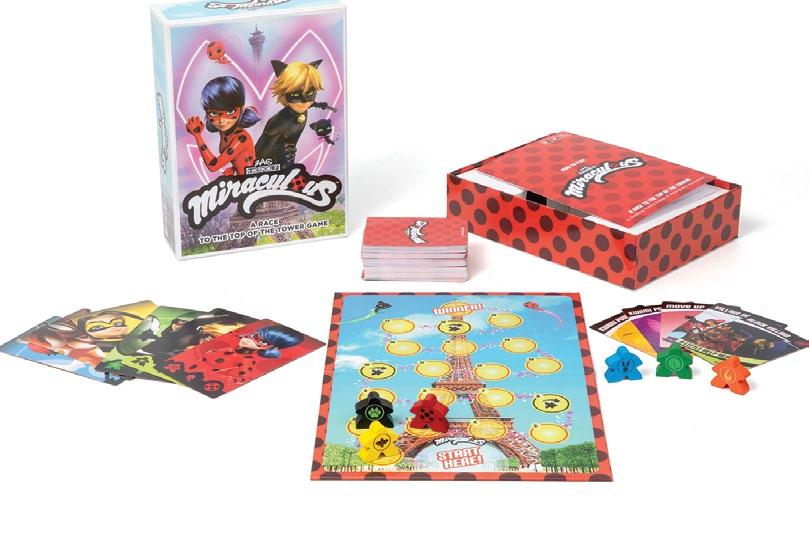
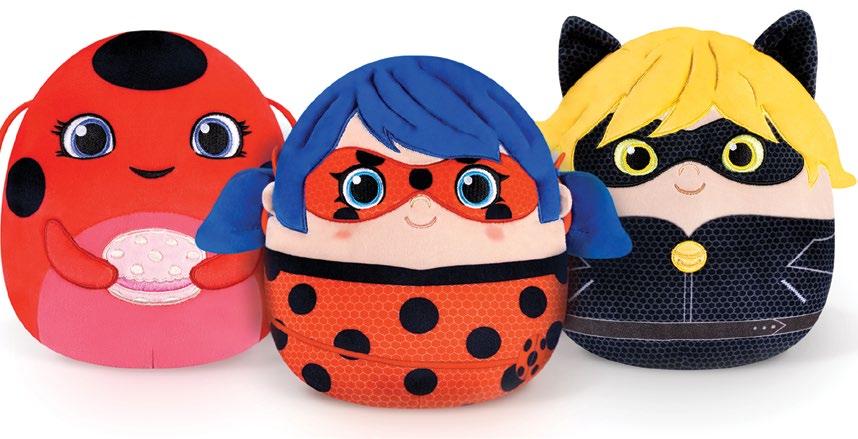
“Jazwares is a great example of the kind of partner we look for. They have a strong track record of building global toy ecosystems and really understand how to connect with fans. Together, we’re developing a comprehensive product line that includes mini figures, dolls, role play, plush, novelty, and collectibles. It’s about creating a cohesive universe at retail that shows the depth of the brand.
We’re also expanding our global partner roster with new licensees in key categories.
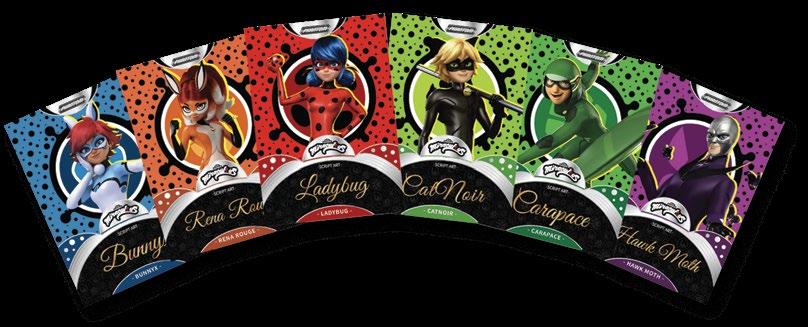
Recent agreements include KAKAWOW, a premium collectible card brand under Suplay Inc., which will introduce trading cards and related accessories such as albums and card bricks, as well as adjacent collectibles. In the tech
space, Hyundai Technology will deliver branded tablets, computer accessories, headphones and earbuds globally (excluding China). French West, under Signature Scent Group, will launch perfumes and scented candles for young adults and children (exc. China).
At the same time, fashion remains a major area of opportunity for us, inspired by Marinette’s passion for becoming a fashion designer. That narrative gives us a very authentic entry point into apparel and accessories, allowing us to create collections that reflect creativity, individuality and self-expression— core themes of the brand.
We have more announcements on this to come soon.
Consumer promotions are also playing an important role in bringing the brand to fans in everyday moments. Can you share how upcoming U.S. promotions help drive awareness and engagement for the brand?
“Absolutely. Promotions are a powerful way to meet fans where they are.
This year in the U.S., we have a strong lineup.
It includes a nationwide summer partnership with SweetFrog Premium Frozen Yogurt, a tween skincare collaboration with Pipa, an in-store
promotion with Rocky Mountain Chocolate Factory, activity-based promotions with Color Me Mine, and Miraculous hair styling with Snip-Its and Cookie Cutters. These programs are fun, accessible, and highly shareable, which helps drive both awareness and engagement.
Location-based entertainment is becoming an increasingly important part of brand building for family franchises. How do these attractions help deepen fan engagement and expand the brand’s presence beyond traditional retail and media?
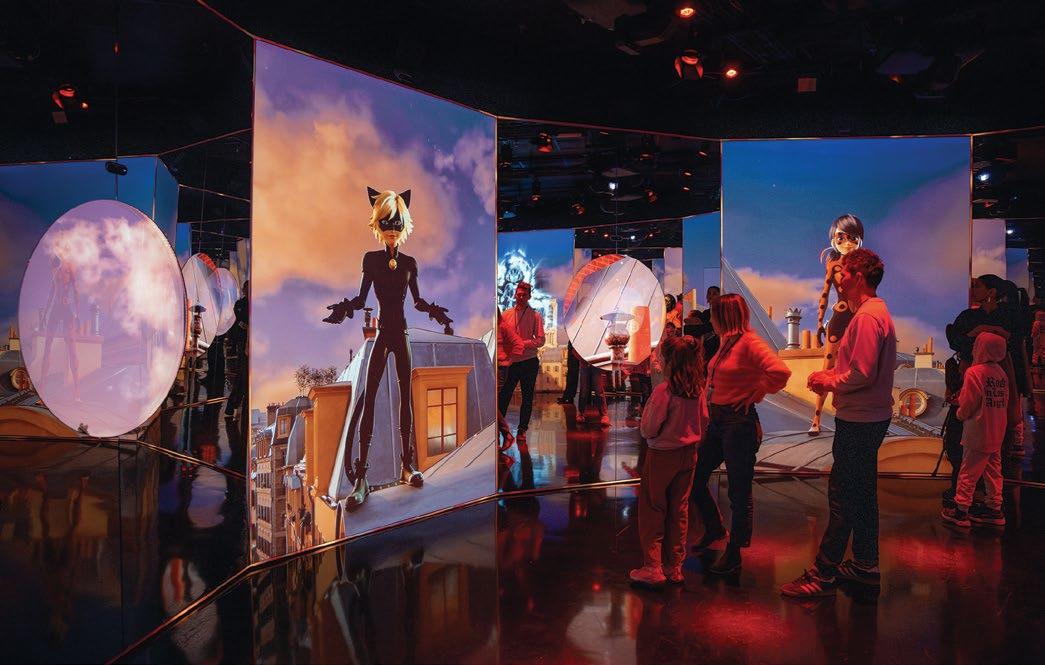
“Location-based experiences allow fans to step directly into the world of Miraculous, which is incredibly powerful. When kids can physically interact with the brand—whether it’s through training challenges, play environments, or live performances—it creates a much deeper emotional connection. This year is an exciting milestone for us as new immersive experiences launch. The Miraculous Experience: Superhero Training at MOIR in Paris and Miraculous Adventure at the Mall of Qatar in Doha with our partner Ground Control—our first family entertainment center in the
Middle East—are designed to bring the brand’s core themes of heroism, transformation, and empowerment to life in fully interactive environments. Looking ahead to 2027, we are developing a large-scale live stage production with Monlove, the company behind some of the most innovative family live productions of the past two decades, including Ice Age Live! A Mammoth Adventure and All Systems Are Go! A NASA / Peanuts Experience.
The cinematic show will combine next-generation stage technology, original music, acrobatics and visual effects. And we are very close to announcing a new immersive experience for the U.S. Stay tuned!”
As you look ahead, where do you see the biggest opportunities for Miraculous to continue growing across licensing, retail, and new product categories?
“We see strong opportunities in fashion and lifestyle categories, which continue to resonate with our audience.
Collectibles and digital integrations are also important. Gaming and interactive experiences are also key growth areas as fan expectations evolve.
We continue to build a holistic ecosystem—where content, products, experiences and digital platforms work together seamlessly. Our goal is to keep giving fans new ways to engage with the brand and express what it means to “live like a hero” in daily life!” n
On the Trail of Miffy Across the UK
Miffy, the much-loved character and iconic brand created by Dick Bruna, who celebrated her 70th anniversary last year, is a global phenomenon. Her multi-generational appeal extends to publishing and television, as well as licensed products ranging from apparel, accessories and bags, plush and infant development to homewares and textiles and greetings cards.
Brand owner Mercis has also brought the little bunny to the globally fastgrowing category of experiential licensing. Last summer saw the launch of a Miffy theme park in Japan, while the UK market is also showing a strong appetite for Miffy-themed events, most recently with the success of two well-attended family events in the UK market over Easter.
For the first time, Miffy welcomed spring to Tatton Park, one of the UK’s most complete historic estates, featuring expansive gardens, a working farm, and a neo-classical mansion. The three week event delivered an engaging, nature-inspired experience for young visitors, with plenty to discover both outdoors and indoors. Little explorers were able to go on a Miffy scavenger hunt in the beautiful gardens, searching for signs of spring, enjoying playful activities, and taking in the sea-
sonal sights, sounds and smells. On the Tatton Park farm, the Miffy activities continued with her farmyard friends helping visitors collect chalk rubbings of Easter treats for a springtime picnic whilst learning about animals and rural life along the way. The adventure continued inside the mansion, where families could spot Miffy amongst the colourful treasures. Designed especially for pre-school and early-primary-age children, the event blended storytelling, outdoor play and seasonal discovery, making it an ideal day out for families with young children. Miffy also inspired some special events at the Tullie Museum in Carlisle, for the Easter school holidays. Families enjoyed a number of spring-themed activities centred around a museum trail where families were encouraged to seek out Miffy in all her hiding spots around the museum and garden. Accompanying the trail were a series of Miffy-themed events and activities at Tullie for the whole family to enjoy. Miffy Make and Takes was a clever twist on Tullie’s popular craft sessions and the Miffy story time sessions allowed visitors to cosy up with a Miffy book read by Tullie staff. The Make a Miffy Village activity was a chance to become an eco-architect for the after-
noon and build Miffy a village out of recycled materials.
Marja Kerkhof, MD of Mercis, says: “The success of these two events in bringing Miffy together with her young fans at times and places ideally suited for family events are a tribute to the brand’s wide-ranging appeal and adaptability. We certainly intend to further extend this success to other appropriate venues and events to reflect Miffy’s popularity.”
Melissa Satterly – Brand Manager, Rocket Licensing, which manages the Miffy licensing campaign in the UK for Mercis, adds: “The further development of the Miffy brand into new categories – notably experiential ones – has proved a major success in the UK. With interest in this sector very strong, Miffy is perfectly placed to expand to many other venues.” n
Minecraft at Licensing Expo 2026:
Continued Global Growth Across Partnerships, Experiences, and Content
As one of the most enduring and expansive entertainment brands in the world, Minecraft continues to evolve its global licensing program with new collaborations, immersive experiences, censing Expo 2026 (Booth J98-J103), the brand is building on its unique ability to connect digital gameplay with physical products, retail, and real-world engagement, reaching fans of all ages in fresh and innovative ways.
Following an amazing year in 2025 for Minecraft, featuring the theatrical release which generated nearly $1B at the global box-office and multiple high-end collaborations, Minecraft arrives at Licensing Expo with new collaborations and licensing partners around the world; an expansion of its location-based entertainment initiative; a new theatrical release and a new series with Netflix in the works.
New Collaborations + Licensing Partners
Minecraft’s licensing ecosystem continues to thrive through strategic partnerships that bridge gaming, fashion, food, collectibles, and lifestyle categories.
A standout success comes from the November 2025 launch with Australian Gen-Z pop culture brand Cool Shirtz. The Very Cool x Minecraft collection sold out within minutes of its initial drop, with continued restocks carrying momentum into Spring 2026, highlighting strong demand among younger audiences for bold, expressive apparel rooted in gaming culture. The brand’s multi-year partnership with adidas remains a cornerstone of its licensing strategy. Throughout 2025, Minecraft and adidas expanded their crossover of sport, gaming, and culture with multiple physical and digital activations. Key moments included a June 2025 adidas Originals collection paired with the adidas Adventurers Add-On experience, followed by an expansive
drop in November spanning apparel, accessories, and footwear across adidas Originals, Sportswear, and Terrex. The November drop coincided with the launch of Three Stripes City Dynamic World in Minecraft Marketplace, seamlessly connecting real-world style with in-game adventure.
Fashion also took a playful turn with OppoSuits, whose global collaboration launched in September 2025. Featuring bold, colorful designs inspired by iconic in-game elements, the collection brought Minecraft’s signature creativity into standout apparel for both kids and adults.
Beyond apparel, Minecraft is expanding into new consumer product categories with a robust slate of global partners. A major collaboration with Danone introduced a campaign across eleven markets through Actimel, combining functional nutrition with playful Minecraft branding and a strong marketing push across Europe. The collectibles and activity categories are also seeing strong growth. Sticki Rolls introduces an interactive sticker ecosystem featuring collectible sticker rolls, coordinating bracelets and charms, and a companion collector book to track fan collections, launching globally in August 2026. Also debuting in August, Horizon Group USA is expanding Minecraft’s footprint in STEM, compounds, and creative play
with new products—including Gelli Gels,Topper Jars, and Dig Kits—rolling out across North America
Finally, a new global plush partnership with Ty Inc. debuted in early 2026, combining the iconic Beanie Babies format with beloved Minecraft characters including Steve, Creeper, Bee, and Ender Dragon, bringing tactile play to one of gaming’s most recognizable worlds.
New Location-Based Entertainment
Minecraft has been expanding its footprint in location-based entertainment (LBE), transforming its digital universe into immersive, real-world adventures. Minecraft’s first-ever interactive attraction, Minecraft Experience: Villager Rescue, that debuted in Dallas in 2024, is opening in four more cities around the globe in the coming months. In addition, the brand has announced Minecraft Experience: Moonlight Trail for fans and families to experience Minecraft outdoors, at night, and in real life – something that will feel familiar and entirely new at the same time.
Building on this momentum, Merlin Entertainments and Mojang Studios recently announced Minecraft World, the world’s first fully immersive Minecraft theme park land.
Opening in 2027 at Chessington World of Adventures in Greater London, Minecraft World is a $70 million project that represents the next major evolution of the franchise.
New Theatrical Release in Development
Inspired by the game’s most iconic biomes, mobs, and items, Minecraft World will bring the best-selling game of all time into the physical world for the very first time at a major theme park. The land will feature new Minecraft-themed attractions, including a thrilling world first coaster, interactive adventures, epic block built playscapes, and themed retail and dining. Minecraft is positioning itself as a leader in translating gaming IP into immersive entertainment that appeals to families, fans, and new audiences alike.
From Mojang Studios, in collaboration with Legendary Pictures, Warner Bros. Pictures and Vertigo Entertainment, the Minecraft movie sequel builds on the first film’s blend of adventure and creativity, expanding the blocky world into a larger universe, diving deeper into the lore of the Overworld and beyond while maintaining the franchise’s signature humor and accessible tone. With returning creative leadership and a continued emphasis on imagination, survival, and teamwork, the sequel aims to elevate the stakes, broaden its appeal to fans and longtime players, and forge new audiences. In theaters July 2027.
New Content: Minecraft
Heading to Netflix Minecraft’s universe is also expanding into streaming. A brand-new animated Netflix series is currently in development. The show will feature original characters and storylines, offering a fresh perspective on the Minecraft world. Launching exclusively on Netflix, the series is expected to captivate new and longtime fans alike. n
19-21 May, 2026
Mandalay Bay Convention Center, Las Vegas
What Happens in Vegas… Shapes the Future of Licensing!
New releases and first ‘reveals’ happen at Expo
Brands come to life with licensing
3 days. 5000+ brands. $300bn in opportunities
Read on for Total Licensing’s Vegas preview...
Pick up your copies of Total Licensing on the show floor, and sign up to receive our exclusive ‘Show Dailies’ during Expo
Universal Products & Experiences
Universal Products & Experiences (UP&E) returns to Licensing Expo 2026 with a showcase built around the breadth, depth and cultural influence of the Universal portfolio. The company will highlight a slate that spans global blockbusters, enduring franchises and fan-favourite brands, all underpinned by a clear focus on fandom.
Upcoming theatrical moments will play a central role, including DreamWorks Animation’s Shrek 5 and Universal Pictures’ How to Train Your Dragon 2. The Fast & Furious Saga will also be in focus as it marks its 25th anniversary throughout 2026, ahead of the next chapter, Fast Forever, in 2028. Meanwhile, Jurassic World continues to deliver multigenerational appeal as one of the definitive dinosaur brands.
UP&E will also spotlight the continuing momentum behind Wicked, with major tentpole moments and elevated consumer offerings designed to deepen fan engagement. In preschool, Gabby’s Dollhouse is entering its next chapter as a global powerhouse, fol-
lowing its success on Netflix and its theatrical breakout.
Beyond film and kids’ entertainment, the company’s portfolio includes Bravo franchises such as The Real Housewives and Below Deck, legacy lifestyle opportunities around Felix the Cat, and Universal’s rich horror heritage, from Universal Monsters to modern franchises such as The Exorcist.
Sesame Street
Sesame Street arrives at Licensing Expo 2026 with strong global momentum, following a year of expanded reach across streaming, digital platforms, live events and licensing.
Sesame Workshop’s partnership with Netflix has helped bring the newest season of Sesame Street to audiences worldwide, while the brand continues to offer free access on public television in the U.S. An expanded YouTube partnership has also made the platform home to the largest digital library of Sesame Street content. The brand now reaches 300 million households across more than 190 countries and 30 languages, while its characters continue to move beyond
the brownstone into major cultural moments. At the Milano-Cortina Winter Olympics, Elmo, Cookie Monster and Grover connected with athletes, commentators and creators, reinforcing the brand’s themes of perseverance, teamwork and joy.
Licensing activity remains highly international. In Japan, Sesame Street Market stores are expanding with immersive retail and café experiences, while lifestyle partner Gelato Pique has launched its third Sesame Street collection across Asia and the U.S. In China, collaborations with KAWS and touring art exhibitions are bringing the brand into the cultural and collector space. Across Latin America, Europe and the Middle East, initiatives with Volvo Cars Mexico, Eventbox, Brandhub Group and local broadcasters underline Sesame Street’s continuing ability to meet families wherever they are.
KOCCA Korea Pavilion
KOCCA’s Korea Pavilion will return to Licensing Expo 2026 with 20 Korean companies, offering international buyers a broad view of the commercial potential of today’s K-IP
market. This year’s pavilion expands beyond character IP to include animation, webtoon and entertainment-led companies, reflecting the increasing diversity and global appeal of Korean content.
Participating companies include Roy Visual, ICONIX, Naver Webtoon, Kakao, HYBE and Aurora World, alongside a wider group of Korean businesses seeking new licensing and collaboration opportunities. Together, the exhibitors represent a mix of established brands and emerging properties across characters, animation, digital storytelling, entertainment and lifestyle.
By bringing these companies together in one curated destination, KOCCA offers licensees, agents, retailers and promotional partners an efficient way to explore the Korean market across multiple genres and categories. The pavilion is designed not simply as a showcase, but as a practical business
platform, helping visitors identify relevant companies and begin conversations with partners actively looking to expand overseas.
As global interest in Korean content continues to grow, the Korea Pavilion aims to demonstrate the wider strength of the sector. For visitors seeking fresh IP, new creative voices and cross-category opportunities, KOCCA’s presence at Licensing Expo 2026 will provide a valuable gateway into one of the world’s most dynamic content markets.
Global Merchandising Services
Global Merchandising Services (GMS) returns to Licensing Expo with a powerful music portfolio spanning rock, pop and contemporary culture. As a leading music licensing agency, GMS represents some of the world’s most influential artists, connecting iconic music brands with licensees across apparel, collectibles, accessories, beverages, gaming and lifestyle.
The company’s Expo line-up includes Iron Maiden, Ozzy Osbourne, Oasis, Mötley Crüe, Megadeth, Backstreet Boys and Zayn Malik, each supported by active licensing programmes and continuing fan engagement through touring, collaborations and cultural moments.
Iron Maiden remains one of music’s most successful licensing brands as it celebrates its 50th anniversary, with around 100 partners across apparel, collectibles, gaming, beverages and lifestyle. Ozzy Osbourne continues to command global recognition, supported by renewed interest around Black Sabbath and a broad consumer products programme. Oasis is seeing major momentum following its reunion tour, while Mötley Crüe and Megadeth continue to deliver strong visual identities and loyal fanbases across rock and metal.
On the pop side, Backstreet Boys continue to connect with multiple
generations, supported by renewed visibility around Las Vegas and European activity. Zayn Malik brings a contemporary, fashion-led platform for curated collaborations. Across the roster, GMS combines cultural relevance, authenticity and global commercial reach.
STUDIOCANAL Kids & Family
STUDIOCANAL Kids & Family
Ltd. will return to Licensing Expo 2026 with a major focus on further expanding the global licensing “bootprint” of Paddington, one of the world’s most beloved entertainment franchises.
The brand is supported by a thriving content ecosystem spanning three blockbuster films, television, theatre, experiential entertainment and a growing consumer products programme, alongside publishing with HarperCollins Children’s Books. At Expo, STUDIOCANAL will look to build on this momentum and recruit new partners across key categories and territories.
Central to Paddington’s success is a carefully curated approach to collaboration, reflecting the character’s values of kindness, curiosity, humour and charm. Recent activity includes a global bath and body partnership with Lush, which launched across 52 markets and sold out in several locations within days, successfully connecting Paddington with Gen Z audiences. Live and location-based experiences are also growing, including premium family activations at The Peninsula Beijing and the London opening of Paddington: The Musical. Digital platforms are bringing Paddington to younger fans through Roblox and Crayola Create & Play+.
STUDIOCANAL will also highlight its wider catalogue of more than 9,400 titles, including Terminator, Rambo, John Carpenter titles, JeanLuc Godard works and cult horror favourites, with opportunities across gaming, collectibles and apparel.
Random House Children’s Books
Random House Children’s Books returns to Licensing Expo 2026 with a portfolio that brings together enduring literary icons, nostalgia-
driven brands and newer favourites for young readers. The company, showcased within Penguin Random House at booth A149, will highlight opportunities across publishing-led properties with strong cross-category potential.
Leading the line-up is Richard Scarry’s Busy World, which is entering a new phase of global growth. With more than 50 active licensees across apparel, stationery, home, toys, technology and lifestyle, the brand is broadening its international footprint across North America, Europe, Japan and Australia. Nearly 70 years after its debut, Richard Scarry’s world is also resonating strongly with nostalgia-driven adults, supported by an engaged social community of more than 378,000 followers. The company will also spotlight Harriet the Spy, which is expanding into new formats, including a musical
in development with iTheatrics for 2028. Leo Lionni’s beloved catalogue is another key focus, with Frederick turning 60 in 2027 and new activity across stationery and plush. Additional properties include The Berenstain Bears, with more than 300 million books sold, the bestselling Grumpy Monkey picture book brand, and Pizza and Taco, a humorous young graphic novel series with lifestyle potential.
Dr. Seuss Enterprises
Dr. Seuss Enterprises comes to Licensing Expo 2026 with strong brand momentum and a focus on expanding one of the most recognisable literary portfolios in the world. The company continues to build licensing programmes, content initiatives and retail campaigns designed to keep the works of Dr. Seuss fresh, relevant and commercially powerful for new generations.
A key focus will be the build-up to 2027, when both The Cat in the Hat and How the Grinch Stole Christmas! celebrate their 70th anniversaries.
The company will preview its “Year of Genius” campaign at the show, setting the stage for major anniversary activity across consumer products, entertainment and retail.
The Cat in the Hat will benefit from the 2026 global animated feature from Warner Animation, alongside expanded licensing for the Cat and Thing One and Thing Two. The Grinch, already a leading holiday licensing property, remains a major focus for seasonal retail and entertainment
programmes.
Dr. Seuss Enterprises will also continue to grow Oh, the Places You’ll Go! beyond graduation through spring and summer campaigns ahead of its 2028 animated feature, while The Lorax continues to support eco-conscious partnerships and publishing activity. Target categories include toys, food and beverage, accessories, baby, travel, sustainability, digital and gaming. Stomp! Stomp! Rhinos!
OAK9 Entertainment’s Stomp! Stomp! Rhinos! arrives at Licensing Expo 2026 as a fast-emerging preschool property built around emotional wellness, global acces-
sibility and family entertainment. The series follows Rhino siblings Noah, Ela and Ron as they navigate everyday preschool experiences while learning to understand and manage big emotions through storytelling, music and playful mindfulness.
Audience momentum is accelerating across digital and streaming platforms. The property’s YouTube Kids channel has surpassed 4.5 million views in under four months, with total watch time already equalling more than four years of continuous viewing. Since launch, the channel has published more than 99 pieces of content, including full episodes, minisodes, interactive games, music videos and short-form storytelling. The channel has also been nominated for Best Kids Channel at the 2026 TellyCast Digital Video Awards.
Distributor Boat Rocker Studios has secured new streaming and television partners including Minno, HITN’s Spanish-language preschool platform Edye, Yippee TV and Kanopy. Supporting this growth, a new interactive website offers character information, episode guides, parent tips, angerregulation tools developed with child psychology experts and activities for children.
Together, these initiatives position Stomp! Stomp! Rhinos! as a scalable preschool franchise with strong digital foundations and consumer products potential.
ARTiSTORY
ARTiSTORY will make a strong statement at Licensing Expo 2026, presenting a global portfolio of art and cultural IP designed to help brands, retailers and event companies create authentic, purpose-led products and experiences. Exhibiting at booth Q225-9, the company offers access to world-class museums, galleries, science centres and libraries, supported by curated style guides and ready-touse creative assets.
ARTiSTORY’s portfolio includes Dunhuang Inspiration, Centre Pompidou, Tate, the British Library, the Shanghai Science & Technology Museum, the Shanghai Natural History Museum, the Shanghai Astronomy Museum, the
Thyssen-Bornemisza National Museum, the Benaki Museum, Beautiful Science, the Forbidden City’s Mythical Creatures, The Amazing 24 Solar Terms in The Palace Museum and the Great Wall Society of China. Recent collaborations have included the British Library with CHAGEE, Malaysia Airports, Lele Sadoughi and dudupanda; Centre Pompidou with UOOYYA; a NASA-themed product line with Moleskine; and marketing partnerships involving Dunhuang Inspiration with JD.com, Intel and Siam Paragon.
At Expo, ARTiSTORY will showcase both international cultural institutions and Chinese heritage IP, offering opportunities across fashion, home, FMCG and experiential sectors. Its
proposition is clear: transforming cultural storytelling into commercially relevant products and immersive brand experiences for global audiences.
LEC, Inc.
Tokyo-based LEC, Inc. arrives at Licensing Expo 2026 with an important new direction. Long recognised for its success in character licensing and officially licensed anime collectibles, the company is now introducing its first slate of original intellectual properties to the global market.
The new character portfolio has been designed to appeal across different audiences and emotional tones. Germlings is a mischievous cast of colourful, germ-like “power monsters” built around chaotic charm, col-
lectibility and contagious happiness. Useless Guy takes a more relatable approach, using everyday humour and self-aware storytelling to connect with kidult audiences. Completing the line-up is nonbiri class, a gentle, slow-living animal series inspired by Japan’s “nonbiri” philosophy, offering comfort, calm and cosy storytelling. Alongside these character brands, LEC will also introduce QooCo, a lifestyle brand rooted in the fast-growing oshikatsu movement. The plush companions feature a heart-shaped transparent pocket that allows fans to display and carry favourite items such as photo cards and mini collectibles, turning fandom into a daily fashion statement.
The launch marks LEC’s evolution
from licensing specialist to full-scale IP creator. With proven experience in Japan and a fresh, globally relevant portfolio, the company is seeking international licensing partners, retailers and collaborators.
Likeness Agency
Likeness Agency, a newly launched boutique licensing firm, will make its debut at Licensing Expo 2026 with a mission to expand commercial opportunities for underrepresented intellectual property across the global licensing market.
Founded by licensing and consumer products executive Jasmin FrancisBush, the agency focuses on building structured licensing programmes for culturally driven brands, estates and talent. Its approach centres on translating cultural influence into scalable consumer products, retail partnerships and cross-category collaborations.
“Many culturally influential brands remain under-leveraged in licensing,” said Francis-Bush. “We’re focused on
connecting that IP with the right partners to unlock long-term, meaningful growth.”
Francis-Bush brings experience across sports, retail and consumer products, with previous roles at the NBA, Bloomingdale’s, Macy’s, WilliamsSonoma, Pottery Barn, Nintendo of America and collegiate licensing. At launch, Likeness Agency is introducing a roster of clients seeking licensing partnerships, including The Apollo Theater, The Althea Gibson Estate, 5001 Flavors and Yeza.
The agency is targeting opportunities across all licensing categories, collaborations and experiential retail, while also welcoming new clients. At Licensing Expo, Likeness Agency will meet with licensees, retailers and brand partners to explore partnerships across categories and territories.
Spin Master
Spin Master returns to Licensing Expo 2026 with a portfolio spanning global entertainment franchises, evergreen toy icons and fast-growing
digital brands, creating licensing opportunities across preschool, kids, collector and lifestyle audiences. Leading the company’s showcase is PAW Patrol, as anticipation builds for PAW Patrol: The Dino Movie, set for release on August 14, 2026. The franchise remains one of the world’s most successful preschool properties, with proven strength across entertainment, toys, consumer products and experiences. A new toy line is scheduled to launch on July 1, supported by early movie activity including a teaser trailer.
Melissa & Doug also continues its strategic expansion into licensing after more than three decades as a trusted name in developmental play. New opportunities are emerging across publishing, softlines and lifestyle collaborations rooted in quality, creativity and learning.
Digital phenomenon Toca Boca remains a key growth engine, with more than one billion downloads and a highly engaged global fanbase
supporting opportunities in fashion, publishing, music and collaborations.
Spin Master’s toy-aisle icons Rubik’s Cube and Tech Deck continue to extend into lifestyle partnerships, while Bakugan celebrates its 20th anniversary with renewed category potential.
Together, the portfolio reflects Spin Master’s ability to build franchises that move fluidly from content to product to fandom.
POP MART x Van Gogh Museum
POP MART’s partnership with the Van Gogh Museum continues to bring fine art into everyday life through collectible design and storytelling. First launched in 2024, the collaboration reimagines Vincent van Gogh’s work
through POP MART’s distinctive art toy language, making museum collections accessible to a new generation of collectors and fans.
The partnership debuted with the MEGA ROYAL MOLLY x Van Gogh Museum Almond Blossom edition, released in both 400% and 1000% sizes. Created by artist Kenny Wong, the figure reinterprets POP MART’s iconic MOLLY character with the delicate blue branches of Van Gogh’s Almond Blossom (1890), a painting associated with renewal and new life.
A second release followed in August 2025 with the MEGA SKULLPANDA x Van Gogh Museum Sunflowers edition. Inspired by Van Gogh’s vivid brushwork and his letters to his
brother Theo while preparing the Yellow House in Arles, the design reflects the artist’s dream of building a creative community. Creator Xiong Miao infused the character with optimism, longing and creative energy. With both partners committed to making art more accessible, further launches are planned as part of the ongoing collaboration.
Tattoo Zoo
Tattoo Zoo arrives at Licensing Expo as a rebellious new character universe positioned at the intersection of tattoo culture, streetwear, humour and emotional honesty. Created by tattoo-world veteran Tyler Stover, the IP introduces a cast of tattooed animals that are loud, expressive and highly individual.
The brand is already gaining traction across social platforms, tapping into Gen Z and young millennial interests around authenticity, alt-cute design, chaos-core aesthetics and characterdriven storytelling. Its growing community is sharing, remixing and engaging with the characters as personalities rather than simply products. Each Tattoo Zoo character is built from real tattoo art, layered personality and a distinct emotional voice, creating strong potential across apparel, collectibles, accessories, plush, gifting, publishing and digital content. The property comes to Expo with com-
mercial foundations already in place, including a full style guide, character bible and multi-year content roadmap. The universe is also expanding through annual character drops. Cattoos introduces a chaotic line-up of tattooed cats designed for lifestyle, gifting and viral content, while Batties brings darker gothic energy through tattooed bats with cult-collectible appeal.
At Licensing Expo, Tattoo Zoo will present immersive character displays, product previews, exclusive content and a first look at its expanding universe.
Screeny and Licensed Right International
Screeny and Licensed Right International (LRI) will exhibit together at Licensing Expo 2026 following the announcement of a strategic partnership designed to connect digital creators with consumer brands. The collaboration brings together Screeny’s focus on turning digital fandom into real-world experiences with LRI’s long-standing licensing expertise. The partnership is designed to represent large, highly engaged creators from YouTube and beyond, helping them extend their online communities into consumer products, live events and branded experiences. In a media landscape increasingly shaped by creator-led audiences, Screeny and LRI see an opportunity to build licensing programmes that translate trust, reach and engagement into
tangible products and experiences.
“Creators have spent years cultivating deep, authentic trust with their audiences, and we want to help them maximise every opportunity that comes from that connection,” said Screeny CEO Elizabeth Mclead. As exclusive licensing partner for brands working with Screeny, LRI brings more than 30 years of industry experience across multiple sectors. Together, the companies aim to provide infrastructure for creators while offering brands and manufacturers a direct route to highly motivated fan communities. Their joint booth will serve as a destination for partners looking to engage with the creator economy.
Rebellion
Rebellion will use Licensing Expo 2026 to open discussions around major partnership opportunities tied to the 50th anniversary of 2000 AD and Judge Dredd, as well as its newly announced video game Alien Deathstorm. The company is planning an action-packed year of celebration for 2027 and is seeking suppliers, retailers, brand partners and licensees. Rebellion operates across books, comics, TV, film and video games. Its flagship Sniper Elite franchise has reached more than 50 million players worldwide, while Alien Deathstorm, a new action-horror game, is scheduled for release on PC and consoles in 2027.
At the heart of Rebellion’s licensing
offer is 2000 AD, one of the world’s longest-running comics and home to Judge Dredd, Rogue Trooper, Strontium Dog, Halo Jones, The ABC Warriors and many more. A Rogue Trooper feature film, written and directed by Duncan Jones, is set for release in 2026.
Several licensed partners and retailers are already supporting Rebellion IP, including Rubber Road, Ingram, Artlume, 101 Collectibles, Forbidden Planet, IGN Store, Fanattik, Hiya Toys and others. Rebellion will also highlight a new Judge Dredd “Megaberry” energy drink powder and shaker launching with Sneak Energy on May 29, 2026.
BoxLunch
BoxLunch is bringing together fandom and athletics with a new sports collection designed for fans who want to celebrate their favourite characters in true game-day style. The assortment positions BoxLunch as a destination for consumers who move easily between pop culture and sports culture.
The collection includes baseball jerseys, basketball jerseys and classic varsity-style designs, combining authentic athletic silhouettes with bold, character-led graphics. By blending sportswear formats with entertainment and character fandom, BoxLunch is tapping into a growing appetite for apparel that feels wearable, collectible and expressive. For licensing partners, the range demonstrates the continuing potential of fan fashion beyond traditional T-shirts and accessories. Jerseys and varsity pieces offer a more elevated canvas for character artwork and brand storytelling, while also appealing to consumers looking for products that can be worn at events, conventions, games and everyday social occasions. The launch reflects a wider shift in the market, where fans increasingly expect licensed products to fit naturally into their personal style. With its sports-inspired line, BoxLunch is extending fandom into a lifestyle space that is energetic, social and highly visible. n
The New Kids’ TV: How WildBrain Is Building a Unified Network for Today’s Fragmented Viewing Landscape
For decades, kids’ entertainment followed a relatively simple model: a handful of broadcast destinations, predictable viewing windows and clearly defined advertising environments. That world no longer exists.
Today’s families move seamlessly across platforms and screens—watching on YouTube, discovering content through FAST and AVOD services and engaging with brands far beyond traditional television.
At WildBrain, we believe this fragmentation doesn’t signal the decline of kids’ TV, but rather an evolution that demands a fundamentally different approach to scale, safety and monetization.
That belief sits at the heart of the WildBrain network: an integrated offering across YouTube, FAST, AVOD and Media Solutions, designed to help content owners and advertisers reach families wherever they’re watching, within a trusted, kid safe environment.
One Network, Many Screens
The WildBrain network was built on a simple insight: families don’t think in terms of platforms. They think in terms of shows, characters and moments they love. Our role is to bring those experiences together across a
Kate Smith, EVP
Audience Engagement at WildBrain, sits down with Total Licensing to discuss the power of the WildBrain network
single scaled network—we think of this as “the new kids’ TV.”
Across YouTube, FAST and AVOD, WildBrain manages and monetizes more than 1,000 premium channels for owned and partner brands, supported by deep operational expertise and long standing platform relationships. On YouTube alone, we operate over 800 premium made for kids channels, leveraging over a decade of experience optimizing performance, building communities and monetizing responsibly within a COPPA compliant environment.
FAST and AVOD extend that reach further. WildBrain is the global leader in kids’ FAST, with more than 200 channels across platforms including Samsung TV Plus, LG Channels, The Roku Channel, Pluto TV and Tubi. These always-on environments deliver lean-back viewing that mirrors traditional television, while offering the flexibility and data-driven insights of digital distribution. For brands with deep libraries, FAST has become a powerful driver of sustained engagement.
Media Solutions: Monetization for a Fragmented World
As viewing fragments, monetization
strategies must evolve. Through the WildBrain network, WildBrain Media Solutions connects platforms, content and advertisers to deliver scaled, compliant family reach, giving advertisers and brand owners confidence their messaging appears in premium, kidsafe environments across YouTube, FAST and AVOD.
For brands and agencies navigating today’s complex media landscape, this combination of scale, reach and safety has made Media Solutions a first call for family advertising. By integrating ad sales and branded content across the WildBrain network, Media Solutions enables advertisers to reach families consistently—while allowing IP owners to unlock incremental value from their libraries.
Building for What Comes Next
The WildBrain network is a core part of WildBrain’s broader offering across licensing, franchise growth and content production. As the kids’ and family entertainment landscape continues to evolve, success will belong to brands that adapt holistically to meet audiences wherever they’re watching. The future of kids’ TV is already here—and WildBrain is helping shape what comes next. n
“...we believe fragmentation doesn’t signal the decline of kids’ TV, but rather an evolution that demands a fundamentally different approach.”
Jewel Branding & Licensing Showcases Dynamic Artist Portfolio and New Signings at Licensing Expo 2026
Jewel Branding & Licensing returns to Licensing Expo (Booth #D124) with strong momentum across its global artist portfolio, unveiling new signings, expanded retail programs, and category growth that highlight Jewel’s position as a leading home for artists in the licensing industry.
Jewel represents a dynamic roster of artists from around the globe, each bringing a distinctive creative voice to a wide range of product categories — translating unique artistic styles into commercially successful collections at major retail.
Artist Programs Drive Broad Category Growth
Jewel’s artist-driven programs continue to deliver strong results across
an impressive range of categories and partners:
• Personal Care: Bouffants & Broken Hearts launching toothpaste across Asia with DK Global Pharm Co.
• Apparel: Bouffants & Broken Hearts women’s and girls’ collections at major UK retailers through BioWorld
• Stationery: Rachael Hale x Bendon, Gabrielle Neil x The Happy Planner, and Vicky Yorke x Graphique de France with launches across mass, drug, grocery, and specialty retail
• Pet Accessories: Krissy Mast x The Foggy Dog and Artsy Pets x Multipet with fresh new collections
• Craft: EttaVee x Plaid with a colorful line of acrylic paint and brush sets
• Gift: Piddix x Transpac expanding their Christmas gift and tabletop line; Loveall Design x Christian Art Gifts with an extensive range of faith-based
products including bible covers, giftware, and drinkware
• Tabletop: Turnowsky continuing its remarkable success with Lifetime Brands, joined by collections from Gabrielle Neil, Jill Labieniec, and Krissy Mast, with vibrant drinkware from CatCoq, Sara B., and Whiskey Ginger Artist Series
Jewel’s Artist Series programs remain a key growth driver, with bedding, throws, and beach towel collections featuring artists including Tania Garcia, Krissy Mast, Mia Charro, Sandra Hutter, Pam Vale, Vicky Yorke, and Bex Morley performing strongly at Costco, TJ Maxx, HomeGoods, Marshalls, and Walmart.
New Artist Signings
Jewel is excited to welcome four talented new artists to its roster.
Megan Roy is an LA-based digital illustrator and author whose work blends an analog soul with digital tools. Her style is organic, layered, and textured — balancing the expressive and the approachable in a way that feels both imaginative and deeply human. Her work is ideally suited for lifestyle, stationery, and home categories.
Cris Villa Studios brings more than 15 years of international design experience to the roster. Originally from Madrid and now based in Summit, New Jersey, Cristina creates original paintings using acrylics, gouache, and watercolor, bringing warmth, texture, and a handmade quality to every piece — a natural fit for home, gift, and fashion categories.
Tara Green of Folk Meadow Studio is a surface designer known for fanciful, classically inspired animal and botanical illustrations with exceptional attention to detail. Working in both digital and watercolor, her hand-drawn, hand-painted patterns are beautifully suited for home textiles, stationery, and gift.
Melody Jeffries is a colorful, cozy artist and surface designer based in New Mexico whose work celebrates everyday objects, nature, nostalgic memories, and all things whimsical. With a signature warmth that invites joy into
every piece, her art translates naturally across home textiles, stationery, and lifestyle categories.
Creative Services
Jewel’s rapidly growing Creative Services division supports manufacturers, retailers, and brand partners with trend direction, product development, and custom design. With a network of more than 50 designers, Jewel delivers tailored creative strategies that bring licensing programs from concept to market.
Visit Jewel Branding & Licensing at Booth #D124 at Licensing Expo to learn more about its artist portfolio and licensing opportunities. n
Spiralcute, the award-winning character and IP development company from Japan, is enjoying an exciting new chapter in its global journey. Focused on identifying, nurturing and growing culturally resonant, creator-led brands, the company has built a reputation for helping beloved characters travel further while staying true to the creative spirit that made them special from the beginning.
The launch of Spiralcute International, its new Los Angeles-based arm, marks a major step in its expansion beyond
Asia, bringing its beloved brands to a broader global audience. With a coordinated international strategy and deep respect for each brand’s origins, the business is positioned to accelerate growth as it builds long-term 360 franchises that extend across products, partnerships and experiences.
Spiralcute’s premium, creator-led IP portfolio includes the hugely engagChiikawa, Mofusand and Koupen Chan, each with its own distinct voice and clear emotional ap-
Highly relatable, Chiikawa is one of Asia’s most popular characters – a
cultural icon bringing joy, comfort and connection worldwide. Created by artist Nagano, Chiikawa and friends, Hachiware and Usagi, face everyday challenges with resilience and heart, resonating deeply with fans who see their own lives reflected in these adventures.
Mofusand has rapidly become one of Japan’s fastest growing character brands. Brought to life by kitten illustrator Juno, these irresistibly cute cats turn everyday moments into joyful, adventures. Whether doing simple cat things, dressing up in endlessly charming cosplay, or stepping into human-like scenarios such as working, travelling or shopping, Mofusand captures the playful imagination of fans everywhere.
Illustrator Rurutea’s creation Koupen Chan, is the adorable baby emperor penguin who celebrates the simplest of life’s wins to spread positivity and cheer and lift the spirits of adults and kids alike.
These brands connect with broad audiences because they are rooted in genuine emotional resonance. Each has grown organically through social platforms where fans actively engage, share and celebrate the content. Nat-
urally expressive and highly visual, they translate seamlessly across categories, becoming products that spark joy and become part of fans’ daily lives.
Plush and collectibles are a particular strength, and Spiralcute is partnering with Jazwares as master toy partner outside Asia. The deal will expand distribution and retail presence while maintaining creative integrity, bringing high-quality, accessible toy lines to fans worldwide. Initial lines for Mofusand and Chiikawa are set to roll out internationally from this Fall, with Koupen Chan following from Spring ‘27. Jazwares will also distribute authentic
premium Japanese plush from GPS outside Asia.
Beyond plush, categories including publishing, apparel, accessories, sta tionery, gifting and everyday lifestyle products play a central role in the consumer products strategy.
Spiralcute’s brands are also proving hugely popular in cross-brand col laborations and promotions, engaging both core collectors and new audi ences. Partnerships with UNIQLO and MINISO helped establish early international visibility, while promo tions such as Mofusand x Starbucks in
Singapore demonstrated true cultural impact, driving limited merch sell-outs, wide media coverage and strong fan engagement. Collaborations with Sanrio have also delighted fans through character mashups that blend two beloved worlds in a way that feels both nostalgic and fresh.
Spiralcute is actively seeking new licensing and collaboration partners to further build both the global reach and cultural resonance of its brands, working with a best-in-class network of licensing agents across major markets. Great care is taken to select partners who can truly uphold the spirit of each IP, with priority placed on creative alignment, genuine fandom and proven category expertise. The focus is on developing products and collaborations that feel collectible, shareable and culturally relevant, allowing fans to engage with the brands in authentic and personal ways.
With a rich pipeline of creator-led IP, Spiralcute is excited to introduce more of its portfolio to audiences
Angry Birds Hype is growing, fueled by new markets, SEGA synergy and movie starpower!
Right now, the planets are aligning for Angry Birds. A major theatrical release scheduled for the prime holiday window. A landmark entry into the world’s largest gaming market. A string of inventive cross-brand collaborations. And a newly restructured licensing operation backed by the full weight of SEGA’s global infrastructure. Rovio Entertainment’s flagship IP is not only building compelling experiences for fans, but building the foundation to take the brand even higher.
A Holiday Blockbuster Built for the Moment
December 23, 2026 is when Paramount Pictures will bring The Angry Birds Movie 3 to cinemas worldwide, landing the flock squarely in the middle of the most competitive and most lucrative theatrical window of the year. The casting alone tells you everything about where the brand stands in popular culture. Returning favourites Jason Sudeikis (Red), Josh Gad (Chuck), Danny McBride (Bomb), and Rachel Bloom (Silver) are joined by incoming talent that brings together two of the biggest names in online entertainment. MrBeast (Jimmy Donaldson), the founder of the most-subscribed YouTube channel on the planet, joins the flock alongside Salish Matter, content creator, co-founder of Sincerely Yours, and 2025 Webby Award winner for Kids & Family. Between them, these two creators command an audience
that dwarfs most traditional media properties, with appeal across key demographic segments.
Rounding out the new additions are Emma Myers (Wednesday, A Minecraft Movie), Keke Palmer (Nope, One of Them Days), Tim Robinson (creator and star of I Think You Should Leave), and Lily James (Cinderella, Baby Driver), among others, as well as Psalm West, son of Kim Kardashian, who makes his voice acting debut. It is a cast that reflects the film’s ambition to speak to every corner of the audience, reaching across age groups, fan communities, and cultural touchpoints.
The Birds Return to China
If the movie is the headline act for the end of 2026, the brand’s return to mainland China is arguably the most strategically significant development of the year, and one with long-term implications for the brand.
Through a major strategic partnership with Kingsoft Shiyou, Angry Birds games are officially coming back to China. Kingsoft Shiyou serves as the exclusive publisher and operator for the region, and will initially bring a specially developed version of Angry Birds 2 to local players, with Angry Birds Dream Blast to follow. The partnership also yielded a high-profile distribution arrangement with Xiaomi, with Angry Birds 2 arriving as a pre-
configured app on the new Xiaomi 17 Pro and Xiaomi 17 Pro Max smartphones, putting the brand directly in the hands of millions of premium smartphone buyers the moment they open the box. That deal alone generated over 100,000 activations in its first month.
The reception has been warm to say the least. On April 11, 2026, at the Weibo Cultural Communication Night, one of China’s most prestigious cultural industry events, Angry Birds received the “Weibo Annual International Classic IP Honor.” The Weibo Gala Committee described the franchise as a property that brings a sense of joy and vitality that connects fans across generations and national borders. Receiving this honor was an indication that the Angry Birds brand carries genuine cultural weight in China, even after a period of absence.
The China re-entry is being approached thoughtfully and for the long term. Alongside the game launches, Rovio has introduced the “Mischief Maker” Creator Program to build community and cultural engagement in the region, recognising that in 2026, brand relevance is built as much through creators and platforms as it is through product. With The Angry Birds Movie 3 on the horizon, this reactivation in China sets up what could be an extraordinary opportunity in a market with a deeply loyal existing
fanbase and enormous new audience potential.
Crashing Into New Worlds: Gaming Collaborations That Get It Right
The gaming collaborations landing around the Angry Birds brand right now are worth noting for their quality as much as their quantity, presenting players a new opportunity to be introduced to the world of Angry Birds in a meaningful way.
In March 2026, the Angry Birds franchise collaborated with Two Point Studios’ critically acclaimed management sim, Two Point Museum.
The update introduced an interdimensional rift that brought the Bad Piggies and the Angry Birds (Red, Chuck, and Bomb) into Two Point County. Players could introduce the Birds into their museums as exhibits, and they even provided a gameplay advantage, giving players a way to fight against the Bad Piggies who threatened to steal the players’ exhibits.
Meanwhile, over at Sonic Racing: CrossWorlds, Red has joined the roster as a playable racer, complete with his own custom vehicle that takes inspiration from the now discontinued fan favorite game Angry Birds Go!. Appearing alongside characters from Like a Dragon and Puyo Puyo, Red’s inclusion in one of SEGA’s most high-profile racing titles is another indicator of how naturally Angry Birds now sits within the broader SEGA family of IP.
Nine Million Strong: A Brand That Keeps Growing
The official Angry Birds YouTube channel recently surpassed 9 million subscribers — a milestone that places it firmly among the most-followed gaming and entertainment brands on the platform. The flock’s social footprint, which boasts over 24 million followers, combined with an active games portfolio spanning Angry Birds 2, Angry Birds Dream Blast, Angry Birds Bounce, and Angry Birds Friends, means the brand is constantly generating engagement. When The Angry Birds Movie 3 lands in cinemas on December 23rd, there will be millions of players primed and ready to engage with the film and the product program that surrounds it.
Bigger Infrastructure, Bolder Ambitions: The SEGA Merger
Underpinning all of this activity is a structural shift that may prove the most consequential of all when it comes to licensing. In January 2026, Rovio and SEGA announced that Angry Birds licensing operations would be integrated into SEGA’s global transmedia licensing framework. It is a natural next step following SEGA’s acquisition of Rovio in 2023, and it dramatically expands the operational capability behind the brand.
In practical terms, this means Rovio and SEGA will be managing Angry Birds licensing together in a unified global strategy covering both consumer products and location-based entertainment.That includes direct licensing
relationships in the US, UK, and Japan, and an activated network of expert regional agents across the globe. The architecture for a truly global licensing program, with consistent brand management, strong regional execution, and the scale to support a major theatrical release, is now firmly in place.
December 23rd Is Just the Beginning
The Angry Birds Movie 3 will be a genuinely global brand moment: a holiday theatrical release from Paramount Pictures, featuring a cast that spans Hollywood A-listers and the internet’s most-watched creators, arriving in a year when the brand has re-entered the world’s largest gaming market and supercharged its licensing infrastructure. For an IP that already resonates
on every continent, that is a formidable combination.
And the story does not end when the credits roll. The momentum will carry over into 2027 with more activities, such as a recently announced collaboration with SmileyWorld, dubbed “Emotions Unleashed”, which will bring together the two iconic brands to celebrate the full spectrum of human feeling. This will play out in the form of exclusive limited-time events in Angry Birds 2 and Angry Birds Dream Blast, as well as a co-branded consumer products range spanning multiple retail categories.
The licensing programme for the movie, and beyond, is already shaping up to be one of the most exciting the Angry Birds brand has seen, and even more announcements are on their way as the December premiere draws ever closer. n
For more information on Angry Birds licensing opportunities, visit rovio.com/licensing
Find Angry Birds representatives at Licensing Expo – Visit us at the SEGA booth (#U210).
Betty Boop Steps into New and Expanded Brand Collaborations
The Original Sass Symbol is a Star in Nearly Every Category, from Accessories and Streetwear to Collectibles and Games
Brand-licensing agency Global Icons and Fleischer Studios, owners of the beloved icon Betty Boop and several other classic animated cartoon characters, have announced they have entered into several new licensing collaborations for the celebrated Queen of Cartoons, including launches for new apparel, games, and accessories. In addition, vibrant new character art will be unveiled for licensees at this year’s International Licensing Expo in Las Vegas.
Italian fashion brand GCDS has included several chic pieces featuring Betty Boop in their Spring/Summer 2026 collection. Founded in 2015 from the avant-garde vision of brothers Giuliano and Giordano Calza, GCDS is an established “Made in Italy” brand in the new luxury sector. The brand highlighted the new collab with Ms. Boop in its recent 10th anniversary runway show at Milan Fashion Week called, “What’s in My Bag.” Designs featuring Betty include a leather jacket, denim, swim, tees, and more. All are available at select retailers and at GCDS.com. Additionally, worldwide fashion and lifestyle retailer Shein has expanded their extensive Betty Boop x Shein collection of apparel and accessories, including new viral bag charms and tees in time for spring and summer. From their global offices, Shein reaches customers in more than 150 countries with their commitment to making the beauty of fashion accessible to all. The latest pieces featuring Betty can be found at shein.com.
Betty Boop has also thrilled fans recently with a number of highly successful collabs, including new apparel with iconic luxury streetwear brand Von Dutch and phone cases and apparel with Skinnydip London. A popular in-game collaboration with mobile gaming entertainment and technology leader, Playtika, blends Jazz Age glamour with high energy action, placing Betty into the games through interactive features, themed content and exciting jackpot gameplay.
Later this year, a new production of the award-winning Boop! The Musical will make its International Premiere in Japan, with performances scheduled in Osaka, Fukuoka, and Tokyo. Makoto Rei will star in the title role as Betty Boop.
Betty Boop was created by Max Fleischer for his “Talkartoons” series, the world’s first animated “talkies” which Max’s company, Fleischer Studios, produced for Paramount Studios. In the 1930 cartoon “Dizzy Dishes,” the first of the series, Betty’s unnamed precursor character appeared as a
dog-like stage performer who sang and danced with another dog-like character named Bimbo, joyfully entertaining vast audiences of other Fleischer characters from the animal kingdom. Inspired by the collective energy, style and sound of the many popular Jazz Age flappers and entertainers of the 1920s, Betty quickly evolved into a fullfledged human character, becoming the only female animated screen star in the world. Voiced by Mae Questel, Betty starred in more than 100 cartoons, 90 of which are included in the official Betty Boop series, which ended
in 1939. Since then, Betty has appeared in dozens of hit movies, television specials, commercials, and was the first cartoon character to be profiled by A&E’s Biography series.
Today, Fleischer Studios with their team of creative professionals and worldwide licensing agency, Global Icons (globalicons.com) continue to parlay the iconic Betty Boop into a worldwide licensing and entertainment phenomenon, delighting millions of fans and collectors alike. n www.fleischerstudios.com www.bettyboop.com
The brand that taught generations to care is now reaching more people, more categories, and more hearts than ever before.
For nearly 45 years, Cloudco Entertainment’s Care Bears has been doing something remarkable. While trends have come and gone, and consumer habits have transformed beyond recognition, a group of colorful Care Bears from Care-A-Lot has remained a constant.
The Next Chapter of Care: How
Care Bears Became One of Licensing’s Most Powerful Stories
Ask someone how Care Bears make them feel, and the answer is always powerful: Happy. Joyful. Comforted. Something warm that’s hard to put into words, but immediately familiar. That emotional response is the result of everything Cloudco Entertainment has built. As Care Bears approaches its 45th anniversary in 2027, that foundation is driving one of the most compelling stories in licensing right now. “Care Bears has always stood for something bigger than a character or a product,” says Kristeen Tibbits, VP, Global Brand Marketing at Cloudco Entertainment. “Care shows up as optimism, comfort, inclusion – it is an invitation to feel something and share it with the world. That is as meaningful today as it has ever been.”
What Care Bears Stands For Has Never Been More Relevant
The Care Bears story begins in 1982, when the characters debuted as greeting card designs before expanding into animated specials, a hit television series, films, and one of the most recognizable toy franchises of the decade. From the outset, each Care Bear has featured a belly badge – a symbol of their unique superpower – representing the idea that caring, in all its forms, makes life more positive.
Nearly forty-five years on, that idea has not just endured – it has grown in cultural weight. “In a world that often feels heavy, people are actively seeking simple moments of joy, connection, and belonging,” says Tibbits. “The Care
Bears universe offers a colorful space to escape to, where caring is more than a feeling. It is how we show up for ourselves and for each other.”
With over 120 bears – each with a distinct personality, belly badge, and emotional world – the breadth of the Care Bears roster is one of the brand’s greatest assets. “There is a Care Bear for everyone,” says Tibbits. “Whenever you speak to fans, it’s incredibly personal. Everyone has a favorite and connects to a different emotion.”
That personal connection is what makes the brand’s multigenerational reach feel so authentic. Adults smile just as much as children when they encounter the character mascots.
Parents introduce Care Bears to their children while younger audiences discover them through gaming. The emotional space the brand occupies does not age, and its core values are timeless.
Spreading Care, Everywhere: Care Bears in Culture
It is one thing to love a brand. It is another to wear it, share it, and integrate it into everyday life. Over the past year alone, Khloé Kardashian threw a Care Bears-themed birthday party, Cheer Bear joined Paul Williams and Portugal. The Man for a live performance at Coachella, and fans shared Kung Fu Tea’s Care Bears bubble tea. The brand continues to show up in culture in ways that feel relevant and timely. When K-pop group ILLIT collaborated with Care Bears for their Japanese debut single, the exclusive plush sold out on Weverse in six minutes. When Ariana Grande shared Wicked x Care Bears to her 374 million followers, and Care Bears appeared on The Masked Singer special with judges Robin Thicke, Rita Ora, Ken Jeong, and Jenny McCarthy-Wahlberg, and host Nick Cannon – these serve as a reminder that Care Bears occupies a rare space in culture, one that audiences everywhere want to be part of.
From full collections with PUMA,
Uniqlo, Cotton On Body, and United Colors of Benetton to the Caring Cuties and Sugar Cuties wearable charms with Basic Fun!, the brand gives fans a personal way to express their care. Care Bears is also resonating in sports, with upcoming theme nights across Major League Baseball teams and more.
All of this contributes to the spirit behind the brand’s 2026 theme, Colors of Caring, where each Care Bear’s color and belly badge represent a distinct way of caring, from Cheer Bear’s pink optimism to Grumpy Bear’s blue honesty.
“We are seeing Care Bears show up in wardrobes, in homes, and in moments of celebration in a way that feels completely authentic,” says Robert Prinzo, Head of Global Licensing at Cloudco Entertainment. “People are drawn to the brand because it stands for something they want to stand for too.”
Care Bears Success at a Global Scale
The results of that philosophy are significant. Global retail sales reached over half a billion dollars in 2025, representing a 7.5% year-on-year increase. Care Bears has more than 500 best-in-class global licensees across over 190 countries, retail placement in over 50 categories, and over five million plush sold every year. For a brand built on the simple idea that caring matters, the commercial scale
is remarkable – and still growing. Strong demand spans key international markets across the US, UK, Europe, and Asia. Partnerships with Pop Mart, Be@rbrick, and Miniso have delivered trending vinyl figures, blindbox surprises, and collectibles, tapping into retro appeal and contemporary expression. The Barbie x Care Bears Cutie Reveal Series became the number one-selling Barbie doll globally, and a McDonald’s activation sold out within its three-week window. In the digital space, Care Bears has built one of the most impressive gaming footprints in licensing. The Care Bears: Caring Quest Roblox experience has attracted over 13 million visits and earned three Webby Awards. Across gaming platforms – including Nintendo Switch, PlayStation, and Xbox – the brand has accumulated over 315 million plays and 14 million unique users.
Underpinning all of that is a content engine that has been deepening for decades, with titles available on Netflix, Max and other major platforms. The next major chapter is already in motion, with a new Warner Bros. feature film in development, set to reintroduce Care Bears to global audiences in a way that honors the legacy while bringing something completely fresh.
The Meaning Beyond The Volume
Despite this scale, the brand’s approach remains grounded in purpose. “We look for partners who understand the emotional core of the brand,” says Prinzo. “What does not work is when it becomes purely transactional – volume without story, or anything that will not invoke a positive feeling.”
The Sesame Street collaboration is a strong illustration, with thoughtful character pairings and details considered with real intentionality – Oscar the Grouch with Grumpy Bear, Elmo with Cheer Bear. Similarly, the Wicked x Care Bears and Stranger Things x Care Bears succeeded for the same reason, earning top recognition, including a Toy Book Pulse of Play Award.
That same emphasis on meaningful engagement is shaping where the brand expands next. Location-based entertainment is emerging as a major growth area, bringing Care-A-Lot to life through immersive experiences.
From the first U.S. play area at Barton Creek Square Mall in Austin with Simon Malls to live shows, touring productions, cafes, and hospitality experiences, these initiatives extend the brand into physical spaces where families can engage in new ways.
Publishing is another key pillar. With partners including HarperCollins, Scholastic, Running Press, and Penguin Random House, Care Bears is deepening its storytelling across formats, from children’s books to social-emotional learning and collector editions.
The Next Chapter of Care: The Road to 2027
As the 45th anniversary approaches, the Care Bears universe is evolving to meet a new moment. In 2027, the Care Bear Cousins return from the Forest of Feelings for the reunion fans have been waiting for. First introduced in The Care Bears Movie in 1985, the Cousins – among them Brave Heart Lion, Cozy Heart Penguin, and Loyal Heart Dog – represent a diverse group of animals, centered on inclusivity and unity.
Care Bears Baby represents another meaningful expansion, meeting millennial and Gen Z parents at one of life’s most important beginnings. With Caring from the Start as its guiding principle, it opens up significant new licensing territory, from nursery and gifting through to apparel, for a generation of parents who grew up with Care Bears and are now raising the next.
“For 45 years, Care Bears have helped generations discover the power of
caring,” says Tibbits. “In 2027, the Care Bears universe is growing – through new collaborations, unexpected touchpoints, and an open invitation for every fan to build their caring crew and find their own way to lead with heart. Because when care is shared, it grows.”
Care That Goes Beyond Commerce
Perhaps what sets Care Bears apart most clearly in the licensing landscape is what the brand does beyond product.
Share Your Care Day, now in its eleventh year, invites fans and partners worldwide to participate in acts of kindness every September 9th – a global moment that has grown into one of the brand’s most treasured annual activations. The Care-A-Lot Awards, entering its second year this fall, recognizes real-world acts of care and kindness – celebrating those who live the brand’s values every day. Past and present charitable partnerships include Young Lives vs Cancer in the UK and The Birthday Party Project in the US, bringing the brand’s mission to life by putting care into action. Forty-five years on, Care Bears is not simply a legacy brand maintaining relevance. It is a brand that has understood something most properties never do: that joy, comfort, empathy, color, and inclusion – held together by a genuine belief that care has the power to bring people together – is the most durable asset in licensing. As 2027 approaches, the question is not whether Care Bears will endure. It is how far the universe of Care-A-Lot and Forest of Feelings will grow – on a mission to spread care, everywhere. n
Miffy and Friends
Family, Friendship, Curiosity and Fun
Miffy’s evolution from a classic bookbased character to a global icon continues. The recognition for both Miffy and Dick Bruna (centennial celebrations in 2027) is heart-warming and seems to resonate more and more with fans from all ages.
Family, Friendship, Curiosity and Fun have always been important themes in Dick Bruna’s story-telling when creating the Miffy books. Despite our everchanging world these essential values remain firmly rooted in Miffy’s world but this doesn’t mean that Miffy’s world doesn’t evolve!
ers are Miffy’s younger brother, Baby Bun, and Ko the Koala. In combination with brand new story-telling viewers can expect engaging moments and new settings but always with respect for the characteristic Bruna design. The television series is already being broadcast in, or confirmed for, France, UK, Benelux, Sweden, Australia, Canada and China with more territories to be announced shortly
The super cute ‘baby bun’ also reminds us to keep focusing on the primary target audience. When it all started in 1955 it was not the (young) adults, but rather infants and toddlers (0-5 years) that embraced Miffy fullheartedly. The stories in Dick’s original books are about everyday situations he encountered which also included more difficult topics such as the passing away of grand-mother or the struggles Dan experienced by looking differently. He essentially lowered the threshold between child and (grand)parent to interact on more difficult topics in a natural literary and illustrative way. Bridging this with Miffy proved to work and in the process creates a natural bonding session between child and (grand)parent whilst all along stimulating the imagination from the
The collaborations between Mercis publishing, Tate Gallery and Thames & Hudson which focus on art, are good examples of Miffy’s ‘bridging’ ability to connect seemingly different worlds. In this case the worlds of art and young children. Introducing young children to some of the world’s most iconic artists in the book ‘Miffy and the Artists’ proved such a success that in collaboration with Thames & Hudson ‘miffy and the impressionists’ will see the light in 2026. The success of this program is furthermore illustrated by the fact that this is done simultaneously in 6 different countries and languages.
Besides new product launches for babies and toddlers through specialized retailers globally there is also a presence at baby fairs such as the Negenmaandenbeurs in the Benelux and Baby Show in the United-Kingdom. These remain important moments to engage with the world of new and expectant parents, babies, toddlers and grandparents.
Clarity about what it means to add real value seems to still come from returning to the level of a child, just like Dick Bruna did from very humble beginnings in 1955.
Keep seeing the world through the eyes of a child. n
BeddyByes: soothing
bedtime animation with strong licensing potential
Of course, a visually rich and uniquely tactile series that supports positive sleep routines to help young children get ready for sleep also offers a number of licensing opportunities. With BeddyByes now firmly established on a number of major linear TV platforms, with more to be announced shortly, awareness of this delightful show is growing quickly. That’s hardly surprising. The series has an excellent creative force behind it. It was developed by JAM Media, the successful Dublinbased, multi-award-winning producers of animated and live action content for preschool and children’s audiences. Storytelling and appealing design are also important factors in its growing popularity. Each episode features a different theme, with an engaging but gently paced storyline that follows the charming characters MeMo and BaBa through their own daily routine on Planet BeddyByes. They interact with welcoming friends in a colourful but soothing landscape on their calming journey towards sleep, preceded, of course, by a bedtime story from show narrator Gramma Leeba (voiced by the iconic Dawn French).
The series underscores the importance of establishing a routine for children to wind down, from PlayTime, YummyTime, BrushyTime, and BathTime to StoryTime and, finally, BeddyByes.
A number of major broadcasting names are already on board. Indeed BeddyByes was commissioned by BBC Children’s and Education and quickly secured a prime slot during the CBeebies Bedtime Block, where it can be seen every day at 6.10pm. It is also popular on BBC iPlayer. Ireland’s RTE (the show’s co-producer) and public broadcasters DR of Denmark, YLE Finland, and SVT Sweden have signed up to broadcast the series, alongside Disney which will carry the brand on its channels globally outside the UK.
For the ongoing licensing programme, designs will be inspired by the colourful but soothing landscape and delightful characters that have entranced young viewers since the show’s launch on CBeebies in June and BBC iPlayer in late May 2025.
Blue Ant Rights, the show’s global media distributor and consumer products brand manager, is maximising the licensing potential of the series, beginning with toy and publishing opportunities.
Blue Ant Rights is part of Toronto-based Blue Ant Media, a global awardwinning, full-service multiplatform production,
distribution and rights management company.
Independent licensing company Bulldog Licensing, which manages licensing and merchandising in the UK and Ireland for BeddyByes, is expecting strong demand from children, parents, grandparents and caregivers. Early categories targeted include toys and publishing, bedding, bathtime products, personal care, sleep aids and, of course, apparel.
In fact the show’s memorable imagery and superb design have already inspired the first two licenses, recently announced by Bulldog. Aykroyds & TDP Licensing and Blues Group Limited will both be supplying apparel –
Designed to soothe and calm children during the crucial pre-naptime and bedtime periods, the new preschool 52 x 11’ animated TV show BeddyByes is one of the few shows in recent years that directly addresses the challenges of getting little ones to settle down.
daywear, underwear and, of course, nightwear – for young fans of the show. Both ranges will arrive in SS27 at supermarkets and major stores, as well as online. Availability will follow the launch of plush toys from master toy licensee Moose Toys. Further licensing announcements are imminent.
Richard Goldsmith, Executive Vice President of Kids & Family Sales and Brands at Blue Ant Media, says: “BeddyByes is all about heart, humour and fun, supported by memorable imagery and superb design, elements that have already inspired some of the UK’s best-known licensed apparel companies. With the show already a TV and streaming hit, we anticipate a strong consumer response to these and future offerings.”
By Jerome Mazandarani
Jerome Mazandarani is Head of Anime at 8 Lions Entertainment, contributing writer for Anime News Network’s ANSWERMAN column, and creator of The Accidental Otaku on Substack. He advises on anime and character IP strategy across the EMEA region and internationally. jeromemazandarani@ gmail.com
Japanese character brands hit differently... ... how can the rest of the world catch up?
There is a scene in Rental Family, the 2025 Searchlight Pictures film directed by Hikari and starring Brendan Fraser, in which a Japanese man quietly explains to his bewildered American colleague that, in Shinto belief, God exists in every creature and every object, even a rock or a flowing river. Literally, in every living thing, and every manufactured one too.
The American doesn’t quite know what to do with that information, and neither, for the most part, does the Western licensing industry.
I’ve spent over twenty years working
at the intersection of anime, global distribution, and consumer products. I’ve enjoyed a very privileged opportunity of sitting in development meetings in Tokyo, attending licensing expos in London, and driving distribution negotiations in Los Angeles. The single most clarifying observation I can share with the people reading this is that the Western industry consistently mistakes the content for the asset. Japan never makes that mistake. And the reason why goes back approximately two millennia.
The Spirit That Imbues Everything
In Shinto, Japan’s indigenous spiritual tradition, kami are the sacred essences that inhabit all things, not just living creatures: objects, places, storms, mountains and even the wind. The concept is sometimes translated as “God,” but that’s a reduction. The better translation is closer to “spirit” - a quality of aliveness and significance that the universe distributes generously and without hierarchy.
Have you ever wondered why there
are so many mascots in Japan? A quick Google will reveal that the country is home to over 3,000 individual mascots. Almost every prefecture, city, utility and service provider in the country has its own mascot, a totem of that community, business and place, and a physical embodiment of its people, its values and its culture. It is no coincidence, and it isn’t the end result of some sort of advertising trend from the early 1980s. It goes deeper than that. Shinto, which has existed in one form or another for over 2,000 years in Japan, holds that there are yaoyorozu no kami, “eight million gods.” A metaphor for infinity. Nothing in this world is devoid of divine energy.
Duke University anthropologist Anne Allison, in her essential study Millennial Monsters, calls what happened when this worldview met Japanese commercial culture “techno-animism.” An ancient animistic instinct that didn’t fade with industrialisation. It migrated into toys, into manga, and into a small yellow electric mouse on a Game Boy cartridge. Allison documents how Japanese consumers don’t encounter a product; they encounter a
being.The character isn’t a representation of something living. In the cultural context that produced it, it simply is. It is a fascinating subject that helps to explain some of the magic ingredients that make Japan the world leader in the creation of branded characters, as well as comics (“manga”) and animation (“anime”) aimed at kids, teens and adults. Allison’s thesis on animism and technology isn’t mysticism for its own sake, but instead, it shows how this tradition of understanding has direct, measurable commercial consequences. If sacred essence can inhabit a rock or a teapot, it can absolutely inhabit a blind box figure, a limited edition plush, or an EPOS credit card collaboration. The pervasiveness that Western brand managers fear as dilution - the character appearing on everything - is, in the Japanese cultural context, simply animism on a retail scale. Yaoyorozu no kami. Eight million gods. Gotta catch ‘em all!
Don’t Design a Character. Introduce the Character. If we examine Japan-originated IP that endures for decades, there is one in particular that truly deserves our attention. Totoro is not a monster. He is a forest kami in the most literal Shinto sense. Hayao Miyazaki (Artist, writer, director and co-founder of Studio Ghibli) didn’t really invent him. Instead, he remembered him as a spirit animal from his childhood. Something tangible, real and comforting, but wild. Children worldwide respond to Totoro instantly, across every language
and culture, because the character was conceived as genuinely alive. That aliveness is legible. Audiences feel it without being told to.
Godzilla is perhaps the most commercially instructive example in cinema history. Born from Japan’s trauma of Hiroshima and Nagasaki, from American nuclear destruction in the Pacific. Godzilla is a kami of consequence and catastrophe, reinvested in each era with that generation’s specific anxiety, from the bureaucratic paralysis of Fukushima in Shin Godzilla (2016) to the survivor’s guilt of the immediate postwar period in Minus One (2023) - seventy years unbroken. Because the character doesn’t represent something, the character is something. He is Japan’s relationship with existential dread, made flesh. And audiences, worldwide, feel the weight of that. Even Pikachu, that “small yellow electric mouse”. One hundred and fiftyone original Pokémon creatures, each designed as if it contained a world. Children form genuine bonds with their starter Pokémon not because of game mechanics but because the people who designed those creatures believed they deserved that bond. Ian Condry, in The Soul of Anime, documents how this collective creative investment: writers, animators, designers, all genuinely caring about the character, is perceptible to audiences. They feel whether something was loved into existence. After working within the anime industry from inception to production, and all the way through delivery, marketing, licensing
and distribution, I can personally attest that if the people creating it don’t care about it deeply, it will fail.
Take Bandai Namco Toy’s Tamagotchi creation. I was never “just a toy.” It was a dependent. Forty million people felt genuine grief when they died. Don’t think of it as a product feature, but more as battery-powered animism.
The IP Isn’t the Anime. The Anime Is Marketing. Here is the insight that I believe the licensing industry is ready to hear clearly, and which I took from my consulting work on global IP strategy: the IP isn’t the anime. The anime is marketing for the IP ecosystem.
The Western model, at its most reductive, runs like this: commission content, build an audience, hope merchandise follows. The Japanese model, at its most sophisticated, inverts this entirely. Build the character complete-
ly, with full emotional integrity. Let the anime introduce it to the world. Build the commercial ecosystem around the connection that results.
Pokémon is the gold standard. The games are the engine. The anime onboards children, who migrate to the trading card game, to the Pokémon Centre retail network, to Pokémon GO. Each channel serves a different life stage and keeps the relationship alive across decades. The anime is extraordinary in its longevity, quality and consistency, and it is also, functionally, the most effective piece of marketing in entertainment history.
Single-channel IP creates dependency and dead periods. If your entire relationship with your audience is mediated through one content vehicle, one theatrical film every three years, one streaming series per platform cycle, then your licensing programme lives and dies on that release window. That is not an IP business. That is a promotional campaign with merchandise attached.
Keiji Ota, TOHO’s Chief Godzilla Officer, articulated this pivot explicitly in 2024: away from film-cycle dependency and toward always-on IP management. Chibi Godzilla is the children’s entry point. The extraordinary Godzilla monument at Haneda Airport serves as a physical discovery channel for the world’s inbound visitors, and let’s also not forget Godzilla Road in Shinjuku’s Kabuki-Cho district. Games, experiences, and licensing as connective tissue between theatrical events. The goal, as Ota stated plainly,
is no dead periods in the relationship between character and audience.
While it may be a bit of a stretch to describe TOHO’s strategy as Shinto cosmology applied to brand architecture, you most certainly can describe it as an omnichannel IP strategy. Expect to see this in practice starting later this summer as they commence the international pre-promotion of Godzilla: Minus Zero, coming to screens this Holiday season.
The Japanese way of doing things is no longer exclusive to Japan, and I am not the only one who has been diligently following their ways. The lesson is now also being written by a YouTube-first animation studio in Melbourne. Glitch Productions built The Amazing Digital Circus with no broadcaster, no development deal, and no marketing budget, and to date, it has generated 1.2 billion views. They built the audience before signing any deals. Netflix and Prime Video both came to them, on the creator’s terms. Their model: free content as the engine, community as the moat, merchandise as the monetisation. The streamers accepted non-exclusive
deals in which YouTube always premieres first. That is a paradigm shift, and it happened because the IP was built with genuine love before it was built with commercial intent.
The Lesson for This Room
The licensing executives assembled in Las Vegas are exceptionally skilled at building programmes around IP. The question worth asking, and I think this industry is ready to ask it, is whether
the IP being brought to them was built with the right intentions at the foundation.
The most commercially durable character brands in history: Pokémon, Hello Kitty, Naruto, Goku, Godzilla, Totoro, all share one quality that predates every style guide, every retail strategy, and every licensing agreement: somebody believed in them completely. They created them as if they mattered. As if the character deserved to exist. Think about that and let it sink in.
That belief is legible. Audiences, particularly the young audiences who have grown up immersed in anime, manga, YouTube, Minecraft and Roblox, have extraordinarily sensitive detectors for whether a creative team loved making something.The data cannot measure it. The spreadsheet cannot manufacture it. But your retail numbers will tell you whether it was there, because when the kids care, the parents care, and the purchase happens. Don’t believe me? Ask your local toy retailer if they have any Jellycat in stock.
Godzilla now stands forty metres wide in the international arrivals hall at Haneda Airport, welcoming the world to Japan. A creature born from the trauma of nuclear destruction. Now, the first face millions of international visitors see when they land. That is what happens when you let a character genuinely mean something across generations, across channels, and with creative integrity intact.
The IP isn’t the anime. And Godzilla, seventy years on, waving hello at the airport, proves it. n
Licensing in Korea 2026 From awareness to expansion: The evolution of Korea’s IP Business in 2026
South Korea’s character and IP market continues to evolve at remarkable speed. As of 2025, the market is valued at approximately KRW 13.6 trillion (around US$10 billion), underlining both its strong consumer spending power and significant room for further business expansion.
In recent years, the key question in the Korean market has shifted from simply “Which IP is famous?” to “Which IP can build fandom quickly and expand into multiple business verticals?” Global powerhouse IPs such as Disney and Sanrio naturally continue to wield major influence. High awareness remains a critical starting point for collaboration, distribution, merchandising and consumer trust.
However, the Korean market in 2026 is layering new trends on top of that established foundation. The sources of IP are diversifying rapidly—from local creator-led properties and digitally native characters to subculture-driven IP and even AI-generated characters. At the same time, consumers are responding more quickly to niche preferences and emotional resonance, embracing new IP faster than ever before.
Today, the true core of Korea’s IP business is no longer simple character licensing, but rather how effectively awareness can be expanded into fandom, new categories and lifestyle sectors.
Changing Core Consumer Demographics and Expanding IP Sources
One of the most significant developments in Korea’s character and licensing market has been the rise of the “Zalpha” generation—comprising younger Gen Z and Gen Alpha con-
sumers—as the dominant consumer group. Broadly encompassing those born from the late 1990s through the early 2010s, this demographic tends to view characters and IP not merely as designs, but as extensions of their emotions, tastes and identity.
Their consumption habits differ markedly from previous generations. For Zalpha consumers, IP is no longer confined to television animation or traditional retail channels. Characters are now discovered and consumed across YouTube, short-form video platforms,
By Hyon-Kyong Kim, President, K-VISION
INC
social media, online communities, gaming and streaming platforms—as well as through offline touchpoints such as pop-up stores, select shops, cafés and convenience stores.
In today’s Korean market, characters have evolved beyond content tied to specific media formats. They are increasingly becoming cultural objects integrated into daily life—experienced, shared and expressed in everyday settings.
Against this backdrop, the types of IP attracting attention are also changing. While major IPs remain powerful, smaller properties with strong emotional appeal or distinctive personality are increasingly capable of building fandom rapidly from niche beginnings. In particular, Zalpha consumers respond as strongly to “characters that represent me” as they do to “characters everyone knows.” This dynamic has fueled the rapid rise of local creator IP, digital-native characters and, more recently, AI-generated characters as emerging IP sources.
Subculture IP Moves from Niche to Mainstream
Another shift in Korea’s IP market is the mainstreaming of subculture IP.
Animation, gaming, cosplay and virtual content were once viewed as niche interests for dedicated enthusiasts, but those boundaries are rapidly disappearing.
What was once labelled “otaku (geek) culture” has evolved into a broader “fan activity culture” among Zalpha consumers, carrying substantial commercial influence.
This trend is particularly evident in the virtual idol sector. Groups such as Isegye Idol and PLAVE have built integrated consumption ecosystems combining music, live performance, merchandise and fandom participation, clearly demonstrating the commercial viability of virtual IP in Korea.
This reflects a broader change in consumer perception: Korean audiences are no longer treating characters simply as digital creations, but increasingly as entertainment IP capable of gener-
ating emotional attachment and sustained fan engagement.
At the same time, virtual singer Hatsune Miku—widely regarded as the original virtual idol—has also regained momentum in Korea. Through concerts, exhibitions, merchandise and collaborations, a new generation of fans has entered the market.
This demonstrates that subculture IP is no longer a limited niche, but has evolved into a sustainable commercial category capable of expanding across generations.
AI Characters: A New Frontier for IP Creation
Among the increasingly diverse sources of IP, one of the most closely watched developments is the rise of AI-generated characters.
While not yet at the centre of Korea’s licensing market, AI characters are rapidly emerging as a new type of IP capable of building awareness and testing fandom potential in entirely new ways.
A leading example is ANX HAMZZI KIM, a hamster-like AI-generated character IP centred on emotional relatability.
What makes this character notable is not simply that it was AI-generated, but that it embodies a highly relatable and emotionally resonant persona: an anxious yet lovable self-portrait of the modern individual.
By expressing the fatigue, anxiety, lethargy and self-deprecating humour of working adults and younger consumers through an approachable character format, ANX HAMZZI KIM has evolved beyond meme culture into a genuinely empathy-driven IP.
Market response has been striking. The character surpassed 200,000 YouTube subscribers within one month of launch and, after just eleven months, has grown to more than 700,000 subscribers. It was also ranked seventh in YouTube Korea’s 2025 Most Popular Creator Rankings, placing it alongside major influencers and celebrities.
Commercial collaborations further underline its growing value. Partnerships with brands including Apple (for iPhone promotions), Spotify, Kakao Pay, Pizza Hut and the GS25 convenience store chain, demonstrate that AI-generated characters are already securing repeat commercial partnerships from major domestic and global brands.
Ultimately, what matters is not the production method, but whether a character can build fandom, create
emotional connection and drive real consumer engagement.
In that sense, AI characters represent an important new experimental frontier for Korea’s future IP market.
The Advancement of Fandom Business Models
Korea’s IP market is increasingly recognising characters not merely as merchandising assets, but as long-term brand properties to be strategically developed and managed. While not every company has fully embraced this model, leading players are clearly shifting toward fandom-based business strategies.
A symbolic example is the collaboration between IP company SAMG Entertainment and K-pop giant SM Entertainment.
This partnership reflects a growing view that characters should no longer be treated solely as children’s entertainment, but rather developed in a manner similar to K-pop artists—cultivating fandom through continuous engagement and relationship-building. Going forward, characters will increasingly need to be managed as operational IP: properties whose worlds are continually expanded and whose fan communities are actively nurtured over time.
Brand-Driven IP and Lifestyle Expansion
All of these developments point toward one clear conclusion.
The IPs succeeding in Korea today
are no longer simply “characters used to make cute merchandise.” They are becoming brand-driven properties capable of embedding themselves into consumers’ lifestyles and expanding across diverse categories. Traditionally, licensing centred on plush, stationery and novelty goods. Today, expansion into fashion, beauty, homeware and food & beverage is becoming standard.
Characters are no longer confined to desktops or display shelves—they are now designed to be worn, used and experienced.
Pop-up stores remain particularly influential, functioning not merely as
retail spaces but as immersive offline touchpoints where fans can experience the IP world and deepen their connection with the brand.
Conclusion
Korea’s IP market in 2026 still values awareness. But increasingly, success depends on how that awareness is expanded.
From local creator-led properties and digital-native characters to subculture IP, AI-generated characters and fandom-driven business models, Korea is continually generating, testing and scaling new forms of IP.
Ultimately, the competitive strength of Korea’s licensing market lies not simply in determining what is famous, but in designing how far an IP can expand. Today, Korea’s IP business is moving beyond the traditional character merchandise market into a new era—one where brands, culture, fandom and lifestyle converge.
More than just a consumer market, Korea is increasingly functioning as a testbed for the rapid validation of next-generation IP business models. n
About the Author
Hyon-kyong Kim is president of Korean licensing agency, K-VISION Inc.
Ms. Kim studied for a Masters Degree in Journalism at Sophia University in Tokyo for two years. During that time, she also worked as an overseas video journalist for KBS 2 TV channel, part of Korean Broadcasting System, the national South Korean public broadcaster. Upon graduation, after working for Sumitomo Warehouse, she re-engaged with media joining H.C.P., Japan’s first magazine dedicated to the “Korean Wave” of popular Korean contents. Thereafter she worked for the Tokyo International Anime Fair Secretariat before establishing K-VISION in Japan in 2005 and then in Korea in 2010. Ms. Kim writes extensively on the Korean contents industry. For three years, she authored a Korea market column for CharaBiz.com, a Japanese character industry portal site, and now continues to contribute to Korean licensing magazines.
www.k-vision.com master@k-vision.com
Experience the Future of Entertainment at ACE Fair 2026 Celebrating 21 Years of Content Innovation
For over two decades, Gwangju ACE Fair has been the leading platform for industry leaders, creative pioneers, and visionary entrepreneurs looking to connect, collaborate, and shape the future of the content industry. Following the grand success of our 20th anniversary, the 21st edition of ACE Fair continues to position itself as a premier cultural and content hub in Asia.
From September 10 to 13, 2026, attendees will immerse themselves in a dynamic showcase of Broadcasting & OTT, Animation & Characters, Digital Content (Games, Metaverse, AR/VR/ XR), and a wide range of licensing content—a truly multidimensional experience designed to push the boundaries of innovation.
Unlock Limitless Opportunities
Building on the success of the 2025 edition, ACE Fair 2026 is designed as a results-driven business platform where global buyers and exhibitors connect and create real deals.
At its core are 1:1 business matching sessions, enabling direct engagement with Korean and international companies to generate real opportunities. Participants can also expand connections through a networking party, while
curated city tours offer a unique way to experience the cultural strengths of Gwangju.
Empowering Business Connections
ACE Fair 2026 delivers practical, outcome-oriented business experiences through targeted matching, networking, and curated programs. Designed for efficient meetings and collaboration, the event supports partnership building and real business results.
Connect with the Best in the Industry
ACE Fair brings together leading global and Korean companies across broadcasting, animation, and licensing.
Past participants include Imagen Televisión, Mango TV, Globo, iQIYI, CCTV Animation Group, as well as CJ ENM, SK Broadband, Daekyo, OCON, and SAMG Entertainment. (Based on 2025 participants; subject to change.)
Secure Your Spot Today
Exhibitor applications are open until September 13, 2026. Register before June 30, 2026 (KST 24:00) to enjoy an exclusive early-bird discount.
For buyers, registration offers access to premium exhibitors and strategic partnership opportunities—ensuring you stay ahead in the global market. Position your brand alongside the industry’s top players and secure your spot today at www.acefair.or.kr.
Join Us at ACE Fair 2026
Have questions? Reach out to the ACE Fair Secretariat at os@acefair.or.kr or visit www.acefair.or.kr.
With over 85% participant satisfaction, ACE Fair stands as a trusted platform for global business success.
Step into the future of K-Content & Animation Excellence at ACE Fair 2026—Where global content deals begin. n
KADOKAWA EXPANDS GLOBAL PRODUCT LICENSING
Kadokawa, a premier global entertainment leader with a publishing heritage dating back to 1945, has recently unveiled its new Rights Sales Planning Section. Operating under the Original Licensing Business Department, this newly established team is dedicated exclusively to international consumer products, merchandising, and brand collaborations, expanding the reach of Kadokawa’s original IP portfolio far beyond traditional translation rights. The creation of this international sales-oriented division was driven by surging global demand from overseas partners eager to utilize Kadokawa ‘s original publishing artwork and branding for local lifestyle and retail programs. While the department continues to handle the original book and comic rights for its legendary manga and light novel franchises, the new section also aims to unlock the untapped potential of its broader character and lifestyle portfolio. Driven by interna-
tional partners looking to go beyond localized publishing, Kadokawa aims to replicate its robust domestic lifestyle licensing programs on a global scale. The company recognizes that IPs often take on a life of their own in foreign territories, sometimes resonating even more powerfully abroad. A prime example is Siamese Cat Azuki-san. Originally a bestselling comic diary by creator Nobeko about life with her cat in Japan, the property has become a licensing phenomenon in Greater China. Demonstrating its flexible
LEC INC GOES GLOBAL
Tokyo-based LEC, Inc., long recognized for its success in the character licensing space, is stepping into an exciting new chapter. After years of building a strong foundation through officially licensed anime collectibles and character-driven daily life goods, the company is now bringing its first slate of original intellectual properties to the global market.
Making their international debut, LEC’s new character brands showcase a diverse and strategically balanced portfolio designed to resonate across multiple audiences.
Leading the lineup is Germlings, a cast of colorful, germ-like “power monsters” whose chaotic charm and
approach to international markets, Kadokawa maximized this momentum through a tailored collaborative structure: for this property, its local subsidiary acts as the master agent driving day-to-day operations, while the Tokyo headquarters provides strategic oversight and final approvals. This approach has enabled the rapid expansion of the original comic IP into merchandise across major retailers, along with diverse touchpoints such as collaboration cafes, pop-up stores, and themed public transport cards. Digitally, Azukisan has thrived through online game integrations and UI customizations on massive platforms like Bilibili, QQ, and Weibo, serving as the perfect blueprint for taking Kadokawa’s original character properties global.
Supported by a network of 20 overseas subsidiaries, the Rights Sales Planning Section is leveraging these proven case studies to build comprehensive global programs.
contagious happiness are built for high collectibility.
In contrast, Useless Guy taps into relatable, everyday humor, capturing life’s perfectly imperfect moments with a warm, self-aware tone that connects strongly with kidult audiences. Rounding out the trio is nonbiri class, a slowliving animal series inspired by Japan’s “nonbiri” philosophy - offering a gentle escape through comfort, calm, and cozy storytelling.
Alongside its character IP, LEC is also introducing QooCo, a standout lifestyle brand rooted in the fast-growing oshikatsu movement.
These plush companions feature a signature heart-shaped transparent pocket, allowing fans to display and carry their favorite items—from photo cards to mini collectibles—transforming fandom into a daily, fashionforward expression.
This expansion signals more than just new product lines—it marks LEC’s evolution into a full-scale IP creator, combining its deep licensing expertise with original storytelling and fan-centric design.
JMK MEDIA
JMK Media Ltd. introduces JMKFC, a Hong Kong-born original character IP rooted in Cantonese culture, to the international licensing market. Created in 2016 by director Keith Lam, JMKFC started as a mascot for JMKTV and has since grown into a full IP universe. The story follows Gei Yun Fat, Sakura, Jelly, Gei Ka Ming, and friends—extraterrestrial chickens who settle in Hong Kong and embrace Cantonese language, humour, and traditions through comics, short films, and events. Over 100 completed licensing deals have been signed across fashion, food, home goods, mobile accessories, and government-backed projects JMKFC is expanding into AI animation and feature films, with an initial fundraising goal of RMB 10 million. Upcoming collaborations include themed restaurants, bubble tea shops, board games, charity runs, exhibitions, and traditional Chinese painting-style crossovers.
Licensing Japan 2026: Find differentiating IP for product, promotion and Marketing at CONTENT TOKYO in Tokyo
In a market where attention is scarce and product cycles move fast, differentiation is increasingly created through the right IP alignment: the properties that sharpen a product concept, strengthen a promotional story, and give marketing a clearer reason to exist. Licensing Japan is a B2B marketplace designed to help teams identify differentiating IP and move efficiently from discovery to evaluation.
Licensing Japan 2026 will take place at Tokyo Big Sight (West Exhibition Halls) from 17–19 June 2026 (10:00–17:00).
It is held inside CONTENT TOKYO, a comprehensive exhibition made up of multiple specialised trade shows spanning content creation, production and licensing. Under one roof, CONTENT TOKYO brings together creators and distributors, solution and technology providers, marketing service providers and licensors, creating an environment where IP decisions can be connected directly to real execution across products, communications and experiences.
Benchmark at scale: 960 exhibiting properties in one place
Licensing decisions often stall because options are fragmented. Licensing Japan addresses this with scale and comparability. The show is billed as Japan’s largest* and features 960 exhibiting properties, enabling visitors to benchmark, shortlist and move conversations forward in a single venue. For product planning teams, this supports new product lines, seasonal ranges and category extensions. For promotion and marketing teams, it supports campaigns, collaborations and tie-ins that need a clear differentiating hook, from anniversary and seasonal moments to fan and social-first initiatives.
From inspiration to activation: services that support implementation
Differentiating IP is only valuable if it can be implemented at speed and with
confidence. Licensing Japan therefore includes business support services that underpin activation, including contracting and rights management and promotional support. This helps bridge the gap between “finding the right property” and “making it work”, supporting smoother planning for rollout, creative assets, merchandising and partnership mechanics.
Why being inside CONTENT TOKYO matters
Because Licensing Japan sits within CONTENT TOKYO, visitors can connect IP discovery to the broader content and marketing ecosystem in the same trip. Alongside Licensing Japan, CONTENT TOKYO includes specialist shows such as Creators’ Expo, Video & CG Production Expo, Immersive Technology Expo, Ad Creative & Marketing Expo and Communication Design Expo. This means teams ex-
ploring a licensing tie-up can also meet creators for key visuals and copy, assess partners for video, CG and shortform content, and review solutions for advertising, PR and marketing operations. Those shaping brand experience can explore immersive technologies and experience design, as well as communication and design expertise that supports consistent brand expression across touchpoints. This one-roof structure makes it easier to move from strategy to production decisions without losing time between separate events.
Japan Character Awards: a snapshot of momentum
Licensing Japan also features the Japan Character Awards, which recognise leading licensed brands and characters from the previous year and are presented and showcased at the venue. Past Grand Prix winners have included major franchises such as Pokémon, ONE PIECE and Chiikawa. For product and marketing teams, the Awards offer a practical snapshot of momentum and licensing execution—what has translated into commercial impact across categories. Also Japanese top IP holders will speak live in concurrent seminar sessions such as Toei Animation and Sanrio. n
Event information and next steps
Dates: 17–19 June 2026 (10:00–17:00) Venue:Tokyo Big Sight,West Exhibition Halls
More details online: http://www.contenttokyo.jp/en-gb/about/lj.html
For visitors, registration is free via the official website. For exhibitors, exhibiting information can be downloaded online.
For further enquiries, please contact CONTENT TOKYO Show Management Office: content-tokyo.eng.jp@rxglobal.com
As the global licensing landscape continues to evolve, few brands demonstrate the sustained momentum, cross-category strength, and cultural relevance of Blocks Universe.
Anchored by the award-winning Numberblocks— which celebrates its 10-year anniversary in 2027—and supported by the expanding portfolio of Alphablocks, Colourblocks, and breakout hit Wonderblocks, the franchise has firmly established itself as a powerhouse in children’s educational entertainment.
Blocks Universe: A Global Phenomenon Surging Ahead in the U.S. and South Korea
With more than 36 million YouTube subscribers globally and over 33 million daily views, Blocks Universe has transcended traditional content boundaries to become a fully immersive, multi-platform brand. Its awardwinning toy lines, led by partners Learning Resources and hand2mind, have consistently ranked among the Top Ten preschool toys in the United States, while a network of more than 50 top-tier licensees worldwide continues to drive category expansion and retail success.
Yet within this global growth story, two markets stand out as defining forces behind the brand’s upward trajectory: the United States and South Korea. Each represents a distinct model of success—one driven by scale and educational integration, the other by cultural immersion and experiential innovation. Together, they illustrate why Blocks Universe is not just growing, but accelerating.
The United States: scale, engagement, and educational dominance
The United States has rapidly become one of the most dynamic growth engines for Blocks Universe, with Numberblocks leading the charge as a category-defining preschool property.
In a highly competitive market, the brand has achieved what few others have: both commercial success and deep educational integration. Through
its partnership with hand2mind, Numberblocks is now the #1 preschool learning toy license in North America and has entered the Top 10 preschool properties overall, according to Circana. Even more striking is its performance trajectory—posting an exceptional +73% year-over-year growth at a time when many competing brands experienced declines.
This momentum is underpinned by a powerful cross-platform presence. Numberblocks is available across all major streaming services in the U.S., including YouTube, Netflix, Amazon Prime Video, and a wide range of kidfocused platforms. The result is sustained, high-volume engagement: over 2.8 million daily YouTube views in the U.S. alone and more than 6.6 million hours of content consumed monthly.
Crucially, this engagement extends beyond entertainment into education. More than half of U.S. classrooms now incorporate Numberblocks into early math instruction, positioning the brand as one of the most widely adopted supplemental learning tools in American education. This level of institutional trust is rare—and invaluable. The licensing programme reflects this strength. A rapidly expanding roster of best-in-class partners is bringing the
brand to life across multiple categories. From musical toys by Kidz Toyz and interactive learning systems from LeapFrog, to publishing programmes led by Cottage Door Press and Readerlink imprints, the pipeline is both diverse and strategically aligned with consumer demand.
Apparel, footwear, and party goods further extend the brand’s reach into everyday life, ensuring that Numberblocks remains present across multiple touchpoints for families. This holistic ecosystem—spanning classrooms, homes, and retail—has positioned the brand as one of the most influential players in the U.S. preschool sector.
South Korea: A cultural phenomenon redefining kids’ brands
While the United States showcases scale, South Korea represents something equally powerful: cultural transformation.
The rise of Blocks Universe in South Korea has been nothing short of extraordinary. In a market known for its highly discerning, education-focused parents, the brand has achieved rapid and meaningful penetration by delivering precisely what consumers demand—high-quality educational con-
tent combined with compelling, localized experiences.
What began as a television animation has evolved into a premium kids’ brand deeply embedded in Korean culture. At the heart of this success is a sophisticated localization strategy, aligning world-class educational methodologies with culturally resonant storytelling and activations.
One of the most significant drivers of growth has been the launch of the Numberblocks Musical. Premiering in March 2025 at the prestigious Theater Yong in the National Museum of Korea, the production achieved recordbreaking success, delivering the highest revenue in the venue’s history. Its subsequent nationwide tour continued this trajectory, setting new benchmarks for children’s theatre.
The production’s quality—spanning creative direction, stagecraft, and performance—has earned international recognition, culminating in a successful run at Singapore’s Marina Bay Sands Theatre in 2026. With encore performances planned and discussions underway to export this Korean-developed format to the UK and U.S., the musical represents a powerful example of reverse innovation.
Building on this momentum, the Alphablocks Musical has also drawn large audiences, reinforcing the strength and scalability of the Blocks Universe portfolio.
Retail innovation has further amplified the brand’s presence. The Numberblocks Pop-up Stores, launched as a nationwide touring concept in 2026, have transformed traditional shopping environments into immersive play and learning spaces. Combining interactive zones, experiential learning, and visually engaging design, these activations have redefined how children and families engage with licensed brands in retail settings.
Product performance has been equally impressive. Numberblocks Smart Blocks have become a must-have educational tool, consistently selling out across online and offline channels since their launch.
The product’s integration into daily
Korean families.
Looking ahead, the upcoming launch of the Numberblocks AI Bot is generating significant anticipation. By combining character-driven engagement with adaptive learning technology, the product represents the next evolution of educational play—further strengthening the brand’s innovative credentials.
A unified trajectory: global strength, local excellence
What makes Blocks Universe truly exceptional is its ability to succeed in fundamentally different markets while maintaining a cohesive global identity.
In the U.S., growth is driven by scale, accessibility, and educational integration. In South Korea, it is fueled by cultural relevance, experiential innovation, and premium positioning.
At the core of both successes lies the same foundation: trusted educational value, distinctive and engaging design, and a scalable content ecosystem that extends seamlessly into products, experiences, and partnerships.
This balance between global consistency and local execution is what sets Blocks Universe apart—and what makes it such a compelling proposition for licensing partners.
The future: accelerating growth and expanding opportunity
With a robust pipeline of new content, products, strategic collaborations, and large-scale initiatives planned for the second half of 2026 and beyond, Blocks Universe is entering its next phase of expansion with significant momentum. The brand is not only strengthening its position in established markets but also creating a blueprint for success in new territories. Its proven ability to integrate content, education, retail, and live experiences offers partners an opportunity to participate in a truly multi-dimensional brand ecosystem.
A brand with nowhere to go but up
In an industry where longevity and growth rarely go hand in hand, Blocks Universe is achieving both. Its performance in the United States and South Korea is not an anomaly—it is a clear indication of a brand that understands its audience, delivers consistent value, and continually innovates.
For licensing partners seeking growth, relevance, and long-term potential, the opportunity is clear. Blocks Universe is not just part of the conversation—it is leading it. And as its global trajectory continues to accelerate, one thing is certain: this is a brand with nowhere to go but up. n
For global licensing opportunities contact Karen McNally: karen.mcnally@blue-zoo. co.uk.
For US licensing opportunities contact Leslie Levine at Licensing Works: leslie@licensingworks.us
For South Korea licensing opportunities contact Jeeyeon Oh at Pengro: joh@pengrohouse.com
learning routines underscores the brand’s deep resonance with
On the occasion of the 80th anniversary of its publication in France, The Little Prince continues to demonstrate its timeless appeal and global influence.
The year 2026 is marked by a series of major activations, with a key highlight in April — the historic month of its first publication in 1946.
The Little Prince Celebrates 80 Years
Unprecedented Global Licensing Momentum Across Publishing, Retail, and Brand Collaborations
The 80th anniversary edition of The Little Prince, designed by MinaLima — the graphic designers behind the Harry Potter films — stands out as one of the major global children’s publishing launches of the year. Featuring nearly 100 new illustrations, intricate paper-engineered pop-ups and immersive design elements, this edition is redefining the standards of premium gift publishing.
Rolled out internationally, the book has launched simultaneously in 22 languages, supported by an ambitious global release. Initial print runs highlight the scale of the project, with 30,000 copies in Spain and Italy, 15,000 in both the US and Brazil, and 10,000 in Korea, contributing to a total first print run exceeding 250,000 copies. It features an extensive retail and bookstore promotion program, including an international book-signing tour organized by the studio, as well as special displays at the House of MinaL-
ima boutiques and the Petit Prince Store in Paris.
Beyond these figures, it is the speed of international rollout, strong in-store visibility and highly positive consumer reception that confirm its status as a global publishing phenomenon.
The anniversary year is also marked by a major announcement in the toy category: the first-ever collaboration between The Little Prince and Play-
mobil. For the first time, the poetic universe of the story will be brought to life through figurines, bringing together two iconic heritage brands. A first anniversary figurine will launch in summer 2026, followed by more comprehensive sets including characters and playsets in 2027.
“This collaboration is a dream come true. Bringing together a toy brand that has delighted generations with The Little Prince, which continues to do the same through its story, is deeply symbolic. It is something truly meaningful for us, as The Little Prince continues to create strong emotional connections across generations — and this collaboration is a perfect illustration of that,” said Thomas Rivière, Brand Director of The Little Prince and great-grandnephew of Antoine de Saint-Exupéry.
In the food category, a new collaboration with Lindt will launch in September 2026, featuring a range of chocolate sticks alongside gift packs incorporating dedicated merchandising. This marks the first step of a broader partnership set to expand further in 2027. The success of the second collaboration with Women’secret further confirms the brand’s appeal in the lifestyle sector.
In South America, where “El Principito” enjoys exceptional popularity, development is now led by Caravanserai
— already the brand’s agent for Iberia and Italy. They will rely on three subagents: Develop Licensing (Mexico), Austral Nexus (Chile), and Claudio Grimaldi (Argentina).
In parallel, in Brazil—where O Pequeno Príncipe is one of the most beloved books across generations—the strength of the brand is reflected through long-standing local partnerships and major cultural activations. Key partners include Ciranda Cultural, a leading licensed children’s publishing house, and Jandaia, a major notebook and stationery brand, both of which have been successfully developing The Little Prince universe for over a decade.
This presence is further reinforced by large-scale cultural initiatives, such as an anniversary exhibition in São Paulo, which welcomed more than 80,000 visitors in just three months.
In the luxury segment, several highprofile collaborations are set to launch at the end of the year. Baccarat will unveil a crystal statuette playing with light and reflections, while Berluti will present its very first collaboration on leather goods, an ultra-premium collection inspired by Antoine de SaintExupéry’s original manuscripts, to be revealed during Paris Fashion Week in June.
Meanwhile, IWC Schaffhausen — the Swiss luxury watchmaker renowned for its pilot watches, a particularly meaningful connection to Antoine de
Saint-Exupéry’s career as an aviator — is celebrating 20 years of collaboration with The Little Prince with the launch of nine new timepieces. First unveiled at Watches and Wonders in Geneva, the collection will be supported by global activations and exclusive events, including at the Longchamp Racecourse in Paris.
Finally, the collaboration with BIC proved a remarkable success: launched in France, it sold out on the brand’s website in less than a week. This performance highlighted the strong resonance between two iconic French heritage brands and led BIC to rapidly re-manufacture additional stock ahead of the planned retail rollout across further markets.
The year is also marked by a major cultural opening in Asia with The Little Prince House in Busan, South Korea.
Opened in mid-March 2026 in the heart of Gamcheon Culture Village — one of the country’s most iconic and colorful cultural landmarks — this museum entirely dedicated to The Little Prince establishes a new cultural destination.
Beyond its cultural dimension, the opening is part of a broader symbolic context, celebrating 140 years of diplomatic relations between France and Korea. Through its exhibition spaces, artistic content and programming, The Little Prince House aims to become a true cultural bridge between the two countries, promoting creativity, imagination and friendship.
The inauguration ceremony was held in the presence of Olivier d’Agay, grandnephew of Antoine de Saint-
Exupéry, who officially unveiled this new space dedicated to the author’s universal legacy.
More broadly, The Little Prince continues to experience strong growth across Asia, with China now established as the brand’s number one international market. This momentum is reflected in major collaborations, including a highly successful partnership with POP MART, as well as projects with BOSS, Thermos, Lipton and Ladurée, which notably translated into themed afternoon tea experiences in Japan.
Finally, the brand’s global ecosystem will continue to be activated throughout the year with key structuring highlights: Le Petit Prince Day, celebrated on June 29 worldwide with all licensees, as well as an increased presence at major international licensing events, including Licensing Day España, the Licensing Expo in Las Vegas (alongside new North American agent IMG), and France Licensing Day.
Through all these initiatives, The Little Prince is able to confirm its status as a unique intergenerational brand, capable of combining heritage, creativity, and large-scale international development. n
Studio 100 brings an impressive slate to Vegas and beyond, focusing on Gifted, Ash, Vegesaurs, Arnie & Barney, and Heroes of Childhood
Studio 100 International Expands Strategic IP Slate with Cross-Generational Licensing Focus
Studio 100 International is heading into Licensing Expo with a clear message: its content pipeline is not only expanding, but evolving strategically to meet the demands of a global, multigenerational licensing market. From premium live-action and CGI animation to established preschool hits and nostalgia-driven lifestyle brands, the company is building a balanced portfolio designed for long-term growth across both content and consumer products.
At the forefront of this push are two new properties, Gifted and Ash, which together demonstrate Studio 100’s focus on scalable, story-led IP targeting clearly defined audiences.
Gifted (10 x 28’) is a premium liveaction series aimed at 8–14-year-olds, marking a return to the genre space that delivered success with House of Anubis. Produced by Black Camel Pictures and Media Valley for BBC Children’s and Education, the series follows a group of Scottish teens who develop supernatural abilities and must unite against a mysterious threat. With high production values and filming locations in Edinburgh and Glasgow, the show is set to launch on CBBC and BBC iPlayer in late 2025, ahead of an international rollout in 2026. Studio 100 International is handling global distribution and licensing and merchandising rights (excluding GSA), with deals already in progress.
Complementing this is Ash (26 x 22’), a CGI-animated comedy adventure for 6–9-year-olds, co-produced with Gaumont and bigchild Entertainment. The series centres on a teenage girl discovering magical powers while searching for a legendary hazelnut wand. Blending fairytale elements with a contemporary, humorous tone, Ash has been designed with strong visual identity and productdriven storytelling in mind, offering clear opportunities across publishing, toys and role-play categories. To gether, the two IPs provide a wellrounded 360° offering that strength
ens Studio 100’s position across both older and younger demographics. Meanwhile, Vegesaurs continues to deliver as a global preschool success story. With five seasons and 100 episodes, the brand is now distributed in more than 120 territories, supported by major broadcasters including ABC, BBC, PBS, KiKA and France Télévisions. Beyond linear, digital strategy has become central to its growth. YouTube plays a key role, with a mix of full episodes, clips, shorts and sing-alongs driving engagement and discovery. The brand has seen particularly strong momentum in the US following its PBS launch, with views increasing by over 500% and subscribers rising more than 400%. Social media engagement across platforms such as TikTok and Instagram further reinforces its reach, while expansion into gaming—with a Roblox experience planned for 2026—signals continued innovation.
into immersive experiences, underlining its credentials as a fully integrated preschool property.
Elsewhere, Studio 100 is building on the enduring popularity of Maya the Bee with Arnie & Barney, a new animated feature film introducing fresh characters into the established uni-
On the licensing front, Vegesaurs is supported by Epic Story Toys as global master toy partner and Macmillan as master publishing partner, alongside successful retail activations and loyalty campaigns. The brand is also extending
verse. Timed to coincide with the brand’s 50th TV anniversary in Germany, the film will roll out internationally from April, supported by a multichannel marketing campaign. The introduction of new characters opens up additional licensing opportunities, with initial deals expected to follow shortly.
Finally, the company is tapping into one of the industry’s most powerful trends with Heroes of Childhood.This initiative reimagines classic characters such as Heidi, Vic the Viking and Pinocchio through a contemporary, pop culture lens, targeting the fast-growing kidult audience. Backed by strong consumer research showing high recognition and emotional connection among adults aged 25–45, the brand combines nostalgic content with modern digital formats and lifestyle products, including sustainable fashion ranges. With nostalgia, digital engagement and transgenerational appeal all shaping the licensing landscape, Studio 100 International is positioning itself at the intersection of tradition and innovation—delivering IP that resonates across audiences, platforms and prodn
SEGA TO HIGHLIGHT KEY BRANDS AT LICENSING EXPO
At Licensing Expo Las Vegas 2026, SEGA will spotlight its key properties, unveiling licensing strategies & experiences that will delight fans for years to come.
Celebrating the Past and Future of Sonic the Hedgehog
SEGA places the Sonic the Hedgehog brand at the core of its licensing strategy, marking the 35th anniversary with extensive celebratory campaigns planned for 2026. The year began with a retrospective social media campaign highlighting Sonic’s impact over the decades.
Fans can anticipate in-person activations, digital and physical content, and anniversary-themed merchandise and collectibles to celebrate the franchise’s legacy. Sonic’s influence extends beyond gaming into film, television, and merchandise, driving the brand’s success and opportunities for unique licensed products.
SEGA will continue its multi-year partnership with McLaren Racing to enhance Sonic’s presence in motorsport. Additionally, a multi-year agreement with the International Olympic Committee celebrates the legacies of both Sonic and the Olympic brand.
Looking forward, Paramount Pictures and SEGA plan to release “SONIC THE HEDGEHOG 4” in March 2027, alongside several high-profile collaborations that promise an exciting future for the franchise.
Persona Franchise’s 30th Anniversary Milestone
In 2026, SEGA also celebrates the Persona franchise’s 30th anniversary, highlighting ATLUS’s reputation for creating deep RPG and narrative-driven games.
Persona has become one of SEGA’s leading pillars, known for engaging storytelling that builds strong emotional connections with fans.
To honor this milestone, SEGA plans multiple fan engagement activities, such as “P-Live,” featuring music from the franchise.
“Persona Live 2026: Awakenings,” the first-ever U.S. performance, attracted music fans and showcased the unique concert series blending gaming and music audiences.
Additional pop-ups, appearances at Anime Expo, cosplay, and merchandise releases are also planned throughout the year.
Unlocking new opportunities for Angry Birds
2026 is a big year for the franchise, as
the highly anticipated third animated film,The Angry Birds Movie 3, is scheduled to hit theaters on December 23, 2026.
With the brand now under Rovio and SEGA’s combined transmedia expertise, the film is poised to be an unforgettable major brand beat, driving demand for innovative, tailor-made licensed products across the globe in 2026 & beyond. n
To explore collaboration opportunities with SEGA, please visit the SEGA booth U210 at Licensing Expo 2026 or contact the team at soebrandlicensing@sega.co.uk.
INTERVIEW: Alexandra Algard-Mikanowski, Commercial Director, Millimages
During Licensing Expo,
what will you be
focusing on?
MOLANG is our flagship property and a perennial brand that although originating as a kids character, has also successfully expanded into the ‘kidult’ arena, thanks to its huge adult audience which has been drawn to Molang’s themes of friendship, empathy and comfort.
We are now entering into our 11th year since its launch and during Licensing Expo we will be building on our licensing programme, continuing to meet with clients old and new to negotiate further merchandise and licensing deals.
Tell us more about how you have been evolving the Molang brand?
Starting out as a hit animated TV series, Molang has expanded into a broader content ecosystem spanning YouTube, social media, gaming, and digital activations. We plan to build on that success. We develop original content yearly targeting the property’s key target demographics – thus creating a multi-audience YouTube ecosystem. Molang Cartoon which is our main channel targeting kids reaches 2.19 million followers, while the Molang YouTuber channel which targets Gen Z and Millennials has already built a community of 475K+ followers.
This strategy is backed by a wider social footprint, with Molang now reaching 10.8m+ followers globally and generating 1.3+ billion social media views in 2025. By testing
concepts, observing fan reactions and identifying what resonates across audiences, we are able to feed those learnings directly into licensing, retail and product development.
Can you tell us more about your licensing program?
As Molang continues to grow as a global lifestyle brand, publishing has become a key part of its long-term brand development strategy. With transgenerational appeal, this
important milestone - the first titles launch this summer targeting fans aged 12+. In the UK and France, gifting books with Helen Exley have also helped extend Molang into a more lifestyle-led publishing space. Molang is also expanding in Turkey with Dogan, including magazine formats that create regular touchpoints with younger audiences.
As one of the oldest Indie animation companies in France, how have you handled
merchandising. Nowadays buyers expect to see how the IP can grow beyond the screen before they finance, and digital platforms are key in testing engagement early on.
As such, Millimages reorganised internally. Instead of having executives oversee separate aspects of the business, we internally have become more connected. We now have licensing as well as content distribution for example under the one umbrella. And we have focused on all social media platforms, tailoring content exclusively to each platform. This approach has been key to building our brands, when the industry has faced challenges. Our approach is 360.
Can you comment on key industry trends?
The K-pop explosion and demand for Kawaii have taken the world by storm. And with the likes of’ Labubu’ mania for example, it appears kids and kidults just can’t seem to get enough of ‘cuteness’, especially when it comes
to collectibles. For Millimages, Molang continues to win over new fans. To date we have sold over 1 million collectible products across Europe and through Heathside, our Master Toy partner, Molang has a strong worldwide presence.
What do you have coming up?
As Molang is still our flagship property, our next step is to create a dedicated baby brand in order to extend our reach to key audiences, including young parents who grew up with the Molang series. We are developing new exclusive content and there will be more details to follow over the coming months regarding the launch of this new YouTube channel (“Mini Molang”) targeting this demo that will feature lullabies, educational themes and much more. n
During Licensing Expo in Las Vegas Millimages will be located at Table Q225-8
Carla Silva, SVP, GM, Global Head of Licensing, King Features
CREATIVITY IS KING:
How King Features is reimagining iconic brands for modern audiences
Working across a portfolio of iconic, largely comic-born properties, the focus is on partners who understand the potential of these brands beyond their origins.
The goal is to create work that feels both new and natural, where longstanding legacies meet contemporary culture in ways that resonate.
Fashion and Lifestyle
As competition intensifies across the heritage brand landscape, King Features, a unit of Hearst and home to some of the world’s most beloved entertainment characters, is taking a deliberate approach, using creativity as a filter for how and where its brands show up.
For more information, please contact brandlicensing@ kingfeatures.com
Fashion has become one of the clearest expressions of this approach, offering a space to reinterpret familiar
characters through an elevated lens.
Popeye and Olive Oyl anchor much of this work. This spring, Olive Oyl partnered with Cloe Moda on a collection of travel gear and accessories that highlight her legacy as one of pop culture’s earliest leading ladies. Spinnaker took a similar approach with a limited-edition Valentine’s Day watch collection inspired by the iconic romance between Popeye and Olive Oyl. Together, these collaborations leverage the most recognizable elements of the brands and translate them into modern design.
This strategy extends across fashion, from luxury resort wear, where MC2 Saint Barth taps into Popeye’s nautical roots in its Spring/Summer 2026 swimwear and apparel line, to the streetwear scene, through collaborations with YoungLA, WOLFpak, and others.
Gaming and Digital
The gaming and digital spaces are increasingly important touchpoints for engaging existing fans and reaching new ones.
Popeye continues to show up across major gaming platforms through a series of integrations with leading partners, including an upcoming limitedtime crossover event with a major gaming company and an in-game collaboration with Solitaire Grand Harvest earlier this year.
Flash Gordon is also stepping into the virtual space, with a new interactive experience set to launch this summer. More broadly, King Features is exploring how emerging technologies can extend these brands beyond traditional formats. A recent global collaboration with Samsung brings Popeye into the smart home space through custom animation promoting AI-enabled appliances.
Branded Experiences
Experiences continue to play a role in keeping these properties culturally and creatively relevant.
Earlier this year, the King Features portfolio was prominently featured on Comic-Con: The Cruise, underscoring continued demand for these properties in live settings. Looking ahead, Popeye is partnering with Empower Races in Asia to bring the Sailor Man into a familyfriendly fitness setting. U.S.based Moomin fans will also get to experience the brand in-person this summer through a major activation at the New York Botanical Garden. Together, these moments reflect a mix of licensed and marketing-driven experiences that allow audiences to immerse themselves in these iconic worlds.
these heritage brands, particularly with collaborations that feel intuitive to the character.Popeye’s association with strength and vitality carries into a partnership with Sailorman Foods, introducing açai and olive oil products that build naturally from the brand’s DNA.
Moomin similarly continues to activate collaborations that reflect its core themes of love and kindness, notably in a new partnership with BonBon Candy.
Publishing and Core Fandom
At the center of all of this is storytelling, which continues to fuel long-term fandom. This is especially evident with The Phantom, which celebrates its 90th anniversary this year. A global publishing powerhouse, The Phantom’s program spans long-standing partners like Egmont and Frew, alongside newer partners like Mad Cave Studios, with 125k+ copies sold in 2025 alone.
The Power of the CreativeLed Strategy
Food and Beverage
The food and beverage category offers another natural platform to extend
Across the portfolio, these efforts reinforce a consistent approach: treating each property as a creative platform, with partnerships that reinterpret and deepen the core brand DNA. By focusing on how these characters evolve, King Features continues to shape a distinctive portfolio of enduring brands that remain relevant across generations. n
By Gabriela Arenas SVP, Global Licensing, Sesame Workshop
Sesame Street’s Global Momentum:
Bigger Reach, Bigger Stages, Bigger Impact
“This time last year, we made the excit ing announcement that Sesame Street would debut its newest season globally on Netflix. Sesame Street now reaches 300 million households across more than 190 countries and 30 languages, while continuing to offer free access on public television in the U.S. We fol lowed up with news of an expanded partnership with YouTube, now home to the largest digital library of Sesame Street content, including hundreds of full episodes. It’s been a year of glob al growth for Sesame, and we’re not slowing down anytime soon. Sesame Street’s beloved characters are step ping outside the familiar brownstone to engage with audiences on some of the world’s biggest stages.
is strengthening its global presence through innovative licensing and distri bution partnerships that bring Sesame Street into everyday life.
At the Milano‑Cortina Winter Olym pics, a natural showcase for persever ance, teamwork, and joy, Elmo, Cookie Monster, and Grover connected with celebrated athletes, commentators, and creators including Laila Edwards, Madison Chock and Evan Bates, Max im Naumov, Tom Daley, Johnny Weir and Tara Lipinski, and Adam Rippon. The resulting content blended play fulness with authenticity, offering mo ments that resonated across cultures and generations.
Beyond live events, Sesame Workshop
In Japan, Sesame Street Market stores are expanding across the country, offering immersive retail experi ences that feel both contemporary and deeply familiar. A third location opened in Osaka last December, fol lowed by a fourth in Tokyo in March. Inside, visitors find exclusive merchan dise, from fashion forward apparel to totes, bandanas, pins, stickers and more, alongside cafés serving delicious character‑inspired treats. More than retail destinations, the stores are plac es to gather, connect, and celebrate shared memories.
That sense of playful sophistication also defines Sesame Street’s ongo ing partnership with Japanese lifestyle brand Gelato Pique.This spring, Gelato Pique launched its third Sesame Street collection across Japan, the United States, China, Hong Kong, Taiwan, and South Korea. The line blends Sesame Street’s joyful characters with Gelato Pique’s signature cozy aesthetic, span ning apparel, kids, baby, home, acces sories, and pet categories, all designed for families who have grown up with the Street and are now sharing it with a new generation.
In China, Sesame Street continues to
accessible and engaging for children and caregivers alike.
The Sesame Street Marvelous Talent Show, a new live event experience produced with leading live entertain ment company Eventbox, launched in Dubai in December and will tour the Middle East.
The heartwarming 30 minute English language show brings together Sesame Street and Ahlan Simsim, celebrating creativity, friendship, and the joy of discovering your talents. Additionally, Sesame Workshop recently appointed Brandhub Group as its official licensing agent in MENA for consumer prod ucts including apparel, accessories, home, toys, and more.
make a bold impression in the arts and culture space. Last fall, a colos sal Elmo‑inspired inflatable sculpture by renowned artist KAWS floated through Victoria Harbour as part of Hong Kong’s first‑ever Water Parade, transforming the skyline into a mo ment of collective wonder.
A limited‑edition collection of KAWS + Sesame Street vinyl figures extended the collaboration to collectors world wide. Meanwhile, the contemporary art exhibition Sesame Street: Magical Art World, featuring works by more than 25 international artists celebrat ing the brand’s 55th anniversary in the region, continues to tour across China before expanding into Southeast Asia later this year.
Across Latin America, Sesame Street remains a trusted partner for families to navigate their everyday lives. Re cently, with Plaza Sésamo, we teamed up with Volvo Cars Mexico on a cam paign focused on sustainability and safety. Elmo and Cookie Monster joined actress and Volvo ambassador Karla Souza for a nationwide campaign exploring the environmental benefits of electric vehicles and road safety with a focus on making complex ideas
Europe, too, continues to find inven‑ tive ways to welcome Sesame Street into daily life. In Germany, we worked with broadcaster NDR to introduce pedestrian traffic lights featuring Bert and Ernie, adding a touch of whimsy while reinforcing road safety. In the Netherlands, Dutch co‑production Sesamstraat is celebrating its 50th an niversary. The milestone year began at
Netflix’s EMEA headquarters with a Sesame Street story‑time event host ed by Dutch influencer Anna Nooshin, joined by Elmo, Cookie Monster, and Bert and Ernie.
Together, these global touchpoints tell a clear story: Sesame Street contin ues to evolve while staying true to its purpose. Whether on screens, in city streets, at sporting events, or around kitchen tables, the world’s longest Street is meeting children and families where they are—and still finding new ways to grow.” n
By Marici Ferreira
Marici Ferreira is the CEO of EP Grupo, a B2B content and events agency, and President of ABRAL/Licensing International in Brazil. She is also a speaker and author of the book What Story Is This? The Licensing of Brands and Characters in Brazil.
The Market for Brands and Characters in Latin America: Why Brazil Leads the Next Wave of Growth
A dynamic combination of culture, consumption, and creativity is positioning Latin America as an increasingly relevant force in the global licensing industry, with Brazil at the forefront of this transformation.
A Growing Industry with Expanding Influence
The licensing market in Latin America has entered a more mature and strategic phase, aligning closely with evolving consumer behavior. No longer limited to simple product extensions, licensing has established itself as a meaningful segment of the global creative economy, influencing industries such as fashion, toys, entertainment, and lifestyle. On a global scale, licensing generated US$369.6 billion in retail sales in 2024, according to Licensing International. Latin America accounts for over 4% of that total, contributing US$13.8 billion. While still smaller than markets like the United States and Asia, the region’s steady growth signals a strong upward trajectory.
A Region with Untapped Potential
Latin America’s expansion is supported by structural shifts that continue to reshape its economic landscape. The growth of the middle class has increased purchasing power, while the gradual formalization of retail has improved access to licensed products.
At the same time, consumer demand for branded and character-driven goods continues to rise, particularly
in categories such as fashion, toys, and everyday consumer products. This combination creates a market that is still developing but rich with opportunity, especially in countries where population size and cultural engagement amplify demand.
Brazil as the Regional Leader
Within this landscape, Brazil stands out as the clear leader.
Generating approximately US$7.47
billion in licensing revenue, it represents the largest market in Latin America and acts as the primary engine of regional growth.
This leadership is not accidental. Brazil benefits from a population of over 200 million people, a deeply rooted consumer culture tied to entertainment, and high levels of digital connectivity. In addition, the country has built a relatively structured and professional licensing ecosystem, allowing brands to scale more efficiently. These factors contribute to growth projections that consistently exceed the regional average.
From Products to Ecosystems
The licensing model in Latin America—particularly in Brazil—has evolved significantly. What was once centered on individual products has transformed into a broader ecosystem driven by multiple interconnected sectors.
Entertainment remains a major force, fueled by films, series, and streaming platforms.
At the same time, sports, fashion, lifestyle, gaming, and digital culture are playing increasingly important roles. This diversification has expanded the reach of licensing across categories such as apparel, accessories, toys, stationery, and home décor, creating a more integrated and dynamic market.
Retail as an Experience Platform
Retail in Latin America, especially in Brazil, has become a key driver of licensing growth. Its role now extends far beyond distribution.
Retail spaces increasingly function
as immersive environments where brands tell stories, build emotional connections, and create memorable experiences for consumers. This reflects a broader global shift. Consumers are no longer satisfied with simply purchasing products; they seek meaning, identity, and engagement. Licensing, when executed effectively, becomes a bridge between brand narratives and consumer lifestyles.
The Impact of Digitalization and Creators
Digital transformation has accelerated these changes. Brazil, one of the most connected countries in the world, has seen a surge in digital-native intellectual properties and creator-driven brands. This has introduced new licensing models that are faster, more flexible, and closely tied to real-time trends.
As a result, the industry is becoming more agile and increasingly guided by data, enabling brands to respond
quickly to shifting consumer preferences and cultural movements.
Balancing Opportunities and Challenges
Despite its strong potential, the licensing market in Latin America faces ongoing structural challenges. Complex tax systems, logistical constraints, and economic volatility can limit growth and create operational hurdles. At the same time, the opportunities remain compelling. The region offers a large and highly engaged consumer base, a strong emotional connection to brands, and a steadily increasing level of professionalization within the industry. These factors create fertile ground for sustained expansion.
An Invitation to Experience the Market
For those looking to understand this evolving landscape firsthand, Licensing Con Latam 2026 will take place on August 12 and 13 in São Paulo, offering a comprehensive view of the trends, opportunities, and innovations shaping the industry.
www.licensingcon.com.br
Relevance as the Key to Future Growth
Looking ahead, the success of licensing in Latin America—and particularly in Brazil - will depend less on scale and more on relevance. The brands that thrive will be those capable of translating cultural insights into meaningful products, building authentic connections with consumers, and seamlessly integrating content, retail, and experience.
In a market driven by passion and identity, licensing is no longer just about extending brands. It is about establishing cultural presence and generating lasting value. n
By Luis Salazar, CEO, CPL
More than four decades of market knowledge are not a legacy — they are a foundation for what comes next.
CPL at 46: Building the next chapter of licensing, promotions and branded merchandise in Latin America.
When I look at where CPL stands today, I see two things clearly: the distance we have traveled, and the scale of what remains ahead.
Over more than four decades, we have built something that does not have an easy equivalent in this industry — a licensing, promotions and branded merchandise infrastructure that spans the full complexity of Latin America, with genuine market roots in each territory we operate. That took time, relationships, and a consistent commitment to understanding markets from within, not from above.
But what I want to address here is not where we have been. It is where we are going — and why the next phase of CPL’s growth is, in many ways, the most significant chapter we have undertaken.
The foundation: what 46 years actually builds
More than four decades in any market builds one thing above all else: knowledge that cannot be replicated quickly.
ences. We are investing in the capabilities and the relationships required to develop more projects of this nature across the region. Location-based entertainment is not a trend we are responding to. It is a direction we are actively building.
Over 46 years leading licensing, promotions and branded merchandise strategy and market development across Latin America.
We know our clients — their capabilities, their commercial strengths, their limitations.
We know which companies in each territory have the buying and distribution infrastructure to execute a licensing, promotions and branded merchandise program at scale. We know the retail landscape, the regulatory environment, and the cultural dynam-
CEO, CPL
ics that determine whether a program succeeds or stalls.
This is the foundation on which CPL’s next phase is being built. It is not a starting point — it is a competitive advantage that compounds over time.
“More than four decades of presence is not a credential. It is a structural advantage — the kind that only comes from building relationships across every level of a market, over time.”
Where we are growing: categories, territories, formats
Our growth strategy for the next two to three years is organized around three clear vectors.
The first is category expansion. We are actively developing licensing programs in categories that have historically been underserved by strategic licensing in the region — beauty and personal care, pet products, and lifestyle segments where we see significant and growing consumer demand. These are categories where a wellexecuted license delivers a meaningful competitive advantage, and where the market is ready for that offer.
The second is experiential licensing. The success of projects like Casa Warner in Ecuador confirmed what we had been building toward: consumers in Latin America are ready — and eager — for immersive brand experi-
The third is the expansion of our licensee ecosystem. One of the most valuable things CPL can do for its licensor partners is not just manage existing programs — it is identify and develop new licensees. We are using events, activations, and targeted market development initiatives to actively grow the pool of qualified partners available to our licensors in each territory. This is how programs scale.
The growth target: 30% and what it requires
We have set a clear internal benchmark: a minimum of 30% annual growth. That is not an aspirational number — it reflects a specific assessment of the opportunities we see in front of us and the infrastructure we have built to capture them.
Achieving that requires discipline
Luis Salazar
Football Team Fashion Collaboration Programs, Deportivo Saprissa, Costa Rica
Elgin Batteries, Brazil
across three dimensions. First, identifying the right opportunities — which means continuing to invest in market intelligence and staying ahead of where consumer demand is moving. Second, executing with consistency — which means maintaining the operational standards that have made CPL a reliable partner for global licensors over decades. Third, expanding our reach — both geographically within markets where we operate and across new categories where licensing has not yet been fully developed.
The combination of these three dimensions, applied consistently, is what makes 30% growth not just a target, but a credible one.
“Growth at this scale requires more than ambition. It requires the market knowl-
edge, the partner relationships, and the operational discipline to execute consistently across complex, diverse territories.”
Latin America as a platform, not just a market
There is a broader strategic context for CPL’s growth that I think deserves to be stated directly.
Latin America is moving from a position of following global trends to a position of generating them. The cultural output of this region — in music, in content, in creative industries broadly — is having a measurable influence on global consumer taste. That shift has direct implications for licensing: the properties, the categories, and the creative approaches that succeed here are increasingly relevant to global markets.
CPL is positioned to be the bridge between that cultural momentum and the commercial structures that allow it to generate sustained business value.
That is a role that requires exactly the kind of depth and breadth of market knowledge we have built over more than four decades.
The companies and brands that recognize this moment — and invest in building the right partnerships to capitalize on it — are the ones that will define the next era of licensing in this
What we are bringing to Licensing Expo
When we arrive at Licensing Expo this year, our agenda is specific. We are looking to advance conversations with global brand owners who are serious about Latin America and are ready to build — not just explore.
We are looking to identify new category opportunities where we see demand without adequate supply. And we are looking to deepen the partnerships that are already producing results.
We are not coming to make the case for Latin America in the abstract. The case has been made — by results, by market data, and by the programs we have built alongside our partners. We are coming to build the next ones. n
region. CPL intends to be at the center of that.
Location Based Entertainment Programs, Casa Warner Exhibition Regional
Beauty Programs
Ruby Rose, Colombia
Fashion DTR Programs Confecciones Maquila Internacional Regional
Location Based Entertainment Programs Food Truck Timeless Brands México
NEWS FROM THE LATIN AMERICAN MARKETPLACE
A brief look at just some of the latest licensing and merchandising activity in the region.
Brand House
For over 15 years, Brand House has managed Latin America’s largest portfolio of international bands and artists. While traditional licensing remains a core strength, the agency has strategically expanded into the immersive experience market. By leveraging an extensive retail network and deep audience insights, Brand House connects global music icons with fans through unique, high-impact activations.
To celebrate AC/DC’s 2026 tour in Brazil, Brand House operated the official AC/DC PWR UP Pop-Up House at Tokio Marine Hall in São Paulo.
From February 21st to March 5th, the space served as a community hub for fans, offering much more than merchandise.
Fans enjoyed free entry to a space featuring live shows, themed gastronomy, immersive entertainment, and
an exhibition of the band’s historical artifacts. The activation included music lessons for children and a dedicated transfer service for fans attending the stadium’s concerts. The operation was a massive success, welcoming 16,347 visitors and selling 27,262 items across 64 different SKUs, providing fans with unprecedented access to exclusive merchandise and a closer connection to the band’s history. The project succeeded by providing fans with a tangible connection to the band through exclusive products and personal history, acting as a true extension of the concert experience.
As Iron Maiden approached its 50th anniversary in 2025, the band partnered with Casa das Alianças to create a high-end collector’s piece: an official, numbered watch limited to just 1,975 units worldwide—a tribute to the band’s founding year.
The watch features a Japanese movement, sapphire glass, and two interchangeable straps (genuine leather and stainless steel) and custom visual references to the Iron Maiden universe, blending premium horology with collectible memorabilia. Each unit comes in a metal collector’s box and includes the official book Iron Maiden - Piece of Time - Established 1975, plus an exclusive letter from the band to their Brazilian fans. The rollout followed a three-phase model: “blind” pre-sale inspired by European festival tickets, allowing fans to secure the watch at a promotional price before the design was revealed. The price in phase 1 was at R$ 1.999,00; a high-profile launch event in São Paulo for press and selected fans, featuring bands performances and guest appearances by renowned Brazilian musicians like Bruno Sutter and Amilcar Christopharo. The price in phase 2 was at R$ 2.099,00; final units made available through the
website and up to 80 physical stores across Brazil. The price in phase 3 is R$ 2.199,00.
Brand House continues to expand the legacy of The Beatles in Brazil and Latin America through partnerships that resonate with contemporary lifestyle and purpose.
Chilli Beans x The Beatles: This collection translates the band’s history into a sophisticated visual language for eyewear and watches. Design elements include references to the Abbey Road pedestrian crossing, Strawberry Fields gates, Sgt. Pepper uniforms, and lyrics from Let It Be and Help!. The pieces feature premium finishes like wood and crystals.
Aimed at early childhood musicalization, the PHX x The Beatles line combines educational purpose with a playful aesthetic. Available nationwide in music specialty stores, the collection is designed to stimulate coordination and artistic expression through products such as 10-instrument musicalization backpack kits and musicalization tables and drum sets (3 and 5 pieces).
Redibra
Redibra is a pioneering brand licensing and extension agency in Brazil, with over 60 years of experience. The company is recognized for its strategic approach, innovation, and brand management capabilities. With a curated portfolio, Redibra represents brands such as Nintendo, Netflix, Bravado, General Motors, Paul Frank, Care Bears, Spin Master, Moonbug, Artestar and Galinha Pintadinha. It was ranked by License Global as the #1 licensing agency in Latin America and #21 worldwide.
Beyond traditional licensing, Redibra operates BEAT, its consulting division
focused on brand extension projects for corporate clients, connecting brands to new categories and developing collaborations as a marketing tool, with clients including Nestlé, Unilever, and Kimberly-Clark. The company also runs its Experiences division, dedicated to creating immersive consumer activations, and has recently expanded its LBE (LocationBased Entertainment) capabilities as a strategic growth pillar.
Over the past year, Redibra has delivered high-impact partnerships across licensing, retail and experiences. Care Bears entered the LBE space in Brazil with its first official run event, designed to engage both adult and kids audiences, while at retail its partnership with Cacau Show (4,700 stores)
became a viral success, with a collectible product selling 240,000 units in one week and generating massive organic reach driven by influencers, followed by a fully sold-out Easter collection. Galinha Pintadinha, celebrating its 20th anniversary, is set to release its first theatrical film this year and expanded its product offering at ABRIN with 11 licensees and over 26 new SKUs inspired by the film, in addition to launching a dedicated area at Beto Carrero World, the largest theme park in Latin America. Coca-Cola expanded into the beauty category with a viral lip care line developed with Carmed, alongside a collaboration with Bruna Tavares (Kiss New York Group), launching 15 products with strong emphasis on brand storytelling. With a focused portfolio and a strategic approach, Redibra combines licensing, brand extension, and experiences to build relevant consumer connections and deliver consistent results in the Brazilian market.
Senna
The Senna brand carries the DNA of a true global icon, recognized by Formula 1 as one of the greatest drivers of all time. Beyond his records and achievements on the track, Ayrton Senna’s extraordinary talent—combined with values such as discipline, resilience, and an unwavering drive to push beyond limits—continues to inspire millions of fans worldwide.
Guided by these values, the Senna brand is driven by the purpose of preserving and extending Ayrton Senna’s legacy, connecting fans, partners, and new au-
diences through globally relevant products and experiences. This approach transforms the brand ecosystem into a platform that inspires individuals to believe in their potential and seek to be the best version of themselves in every aspect of life.
Managed by Senna Brands, a company established by the driver’s family, the brand has a presence in more than 70 countries and boasts over 65% awareness across American markets — highlighting its strong resonance in the region.
To effectively engage with global markets, the Senna brand is structured across strategic business verticals that ensure both brand elasticity and meaningful partner integration. Its portfolio combines long-standing partnerships — some originally initiated by Ayrton Senna himself — with new collaborations designed to engage younger generations.
Across the Americas, the Senna brand demonstrates strong performance. In Brazil, its
home market, 60% of consumers consider the brand unique, with no comparable athlete-inspired equivalent. In the United States, among consumers familiar with Senna, purchase intent for licensed products increases by 60% when associated with the brand. In Mexico, 70% of consumers say the brand aligns with fan expectations and consumption trends, while in Argentina, 64% agree that their personal values are reflected in the Senna brand’s actions.
Within the licensing space, the Senna brand spans a diverse range of categories. Highlights include toys and collectibles, with partners such as LEGO and Funko; fashion, footwear, and accessories with brands like Outterstuff and New Era; apparel through Senna Shop; and watches and luxury goods with TAG Heuer.
In the motorsports and high-performance segment, partnerships with McLaren and Ducati reinforce the Senna brand as a symbol of performance. Consumer acceptance remains strong. A standout example is the Ducati Monster Senna edition, which sold out
all 341 units globally within 72 hours. In gaming, the brand is breaking new ground. Ayrton Senna became the first motorsports icon to feature in a dedicated Minecraft map, developed by Floruit, alongside a global partnership with EA Games in the F1 official game. Looking ahead, experiences are set to become a key strategic pillar by 2027. Together, these verticals are expanding the brand’s touchpoints across the Americas — strengthening its cultural relevance and deepening engagement with new audiences.
Plim Plim
Plim Plim, ‘The Kindness Hero’ has established itself as one of the biggest
English-language presence to reach families across North America.
Master toy licensee Bandai has released a range of products in core Spanish-speaking markets across plush, figurines, vehicles, bath toys and interactive games while in publishing Penguin Random House has published 18 books and two audio books across Latin America countries with nine more books planned this year.
Music is at the heart of Plim Plim, reaching over 64.1 million monthly streams across Spotify, Amazon Music, and Apple Music and placing it among the most-listened-to Spanish-language children’s artists worldwide. “Abejita Chiquitita (Little Bee),” one of its biggest hits, has surpassed 1.5 billion
and most resonant preschool brands in Latin America with plans to further grow in North America and internationally building on its reputation as a trusted destination, community and brand for kids, parents and carers. On YouTube in Latin America, its content is currently the most-watched kids’ Spanish-language channel and number four in the world, among more than 48 million creators in total views. It also airs with high ratings on Netflix in Latin America and a host of public broadcasters as well as a dedicated FAST channel which is watched in 33 million households across 17 Latin American territories.
With kindness at its core, Plim Plim has built a genuine connection with preschool audiences across Latin America — growing into the largest Spanish-language kids’ channel on YouTube. That loyalty translates into a strong 360° licensing program and sold-out live events throughout the region. The “Plim Plim Let’s Play” app has surpassed 779,000 unique users, and the brand is now expanding its
Lima, Mexico City, and Buenos Aires, and was recognized with awards at the Library of the Argentine National Congress and the Martín Fierro Latino Award in Miami.
Guillermo Pino, creator of Plim Plim, said, “In 2026 we’re building on the success and rapid growth of the brand in 2025, consolidating our presence across Latin America and targeting further growth in the US and internationally. We are in production on new content and have secured agreements with major platforms as well as growing across television, theater, music and social initiatives that echo our values. The Plim Plim app is proving very popular and we have strong demand for consumer products. Parents have confidence that Plim Plim is a healthy and engaging brand and we are driving forward our ambition to forge opportunities in new markets to bring this ‘kindness hero’ closer to millions of families.”
byFrog Co
views on YouTube and joined the Billion Views Club. It has also sparked millions of recreations on TikTok, where families around the world create and share their own versions, proving the brand lives far beyond the screen.
Plim Plim also comes to life on stage. “Plim Plim Live: Musical Energy” has brought together more than 150,000 attendees across 70 cities in 10 countries, giving families a chance to sing, laugh, and connect in ways that only a live show can. The tour continues throughout 2026 with more dates to come.
In 2026, Plim Plim became a presence at some of Latin America’s most meaningful cultural moments. The character starred in Chile’s Teletón and headlined TV Azteca’s Juguetón in Mexico, a campaign that collected more than 19 million toys for children in vulnerable situations, performing the iconic ribbon-cutting ceremony that kicked off the fundraising drive. The brand also appeared in shopping malls across Barcelona, Madrid, Seville,
B.Duck, the global lifestyle and entertainment brand owned by Semk Holdings, is accelerating its presence across Latin America and North America, marking a new strategic phase in its international expansion. The brand’s regional expansion is
led by byFrog Co., a licensing and brand management company responsible for developing B.Duck across North America, Central America, and South America. With an integrated approach combining licensing, content, retail, and live experiences, B.Duck is positioning itself as a multidimensional platform in the region.
“Latin America represents a key strategic market for B.Duck, with strong demand from both consumers and retail partners,” said Rodrigo Dagnolo, CEO & Founder of byFrog. “We are building a long-term ecosystem that goes beyond traditional licensing, integrating content, collaborations, and immersive experiences.”
B.Duck is gaining traction with key licensed partners, now totalling more than 15 licensees across Latin America, spanning both manufacturing and retail.
In Brazil, the brand is advancing in strategic fashion and lifestyle channels, with a highlight partnership with Riachuelo through its FanLab platform, with a launch scheduled for the first half of 2026.
B.Duck also partners with Novabrink and A Fantástica Toys in the toy
segment — with product lines targeting both children and the “kidult” audience as well as Dermiwil, offering a full range of luggage and backpacks, and Jandaiain notebooks and stationery.
At the same time, the brand is preparing for a significant retail expansion in the United States, with licensed product lines expected to roll out across major retail chains starting in August, further strengthening its presence across the Americas.
As part of its content strategy, B. Duck is expanding its media presence through B.Duck TV, structured into two formats: B.Duck TV Kids and B. Duck TV Pop
In addition to its presence on YouTube, Spotify, and more than 30 global music streaming platforms, the project is also moving into broadcast television, significantly expanding the brand’s reach.
“In the first half of the year, children’s content will debut on broadcast TV, with the partner to be announced soon. At the same time, we have begun pre-production of live-action content focused on young adult audiences, with a premiere scheduled for the second half of 2026, also on broadcast TV and the network’s digital platforms,” said Rodrigo Dagnolo, CEO & Founder of byFrog Co.
The initiative aims to generate new revenue streams through advertising, product placement, branded entertainment, among other monetization formats.
With growing cultural relevance and a strong connection to Gen Z and Millennial audiences, B.Duck is actively exploring collaborations across fashion, food & beverage, toys, and lifestyle categories.
The brand’s flexible positioning allows it to partner with both global and local players, creating culturally relevant products with strong commercial potential.
B.Duck’s expansion across the Americas is part of a broader global vision to establish the brand as one of the leading lifestyle IPs worldwide, integrating licensing, content, and experi-
ences into a unified ecosystem.
With strong momentum across retail, media, and partnerships, B.Duck is well positioned to become one of the most dynamic and fast-growing brands in the region.
Caravanserai
Caravanserai, based in Barcelona and Milano, has been committed, from the very beginning to a direct approach — working closely with licensees, but equally close to the Licensors and proof of that are the relationships and licensing programs built during these years. They understand that a fast and effective response fosters a smooth relationship between all parties. They seek tailored solutions designed for each of our clients, always respecting the characteristics and unique nature of every property.
2025 was the year of consolidation for their project in Italy, led by Rachele Geraci, with outstanding results.
Now, in 2026, Caravanserai takes a further - and highly significant - step forward, launching collaborations in Argentina, Uruguay, Paraguay, Mexico, Chile, Colombia, Peru and Bolivia for the management of the Le Petit Prince brand.
In Argentina, Uruguay and Paraguay, we are partnering with Claudio Grimaldi of CG, a widely-recognised professional with extensive experience in evergreen brands like Popeye or Frida Kahlo.
In Mexico, Caravanserai is joining forces with Develop Licensing, a company led by Fabel Galarza and her partners, which manages — among other properties — Miffy.
Finally, in Chile, Colombia, Peru and Bolivia, Caravanserai is taking part in a new venture with a newly formed company, Austral, with which we aim to build a management model mirroring the one Caravanserai has developed across the EU.
Licensees like Hojas, from Colombia, Animation Brands from Peru, Blascool from Chile or Ed. Vértice from Argentina are some of the first steps of this new adventure at Caravanserai.
Tesaki Licenciamento de Marcas e Personagens
Rebecca Bonbon, the world’s most charming French bulldog, known for her stationery items, backpacks, home goods, accessories, among other products coveted by all women, recently launched a line of beauty and jewelry products for all ages. In addition, the brand has officially announced the expansion of its operations in Latin America. With a history of exponential growth in the Brazilian market, the brand is now consolidating its presence in Argentina, Paraguay, Uruguay, Mexico, Peru, Colombia, and Ecuador, through representatives who are opening opportunities for manufacturers and retailers seeking products with high added value and a strong emotional connection with the public. The licensor has more than 8,000 physical points of sale in Brazil alone, in addition to a licensed and official e-commerce. “We celebrate 20 years of a history built with creativity and innovation. Our desire is for Rebecca Bonbon to be increasingly inserted in a fashionable and functional way into people’s daily lives,” concludes Sedamar, CEO of Tesaki Licenciamento de Marcas e Personagens, the brand’s master agency in Latin America.
Far from being a passing novelty, Rebecca Bonbon celebrates 20 years of continuous history and growth, demonstrating remarkable global solidity. The brand already has a consolidated presence in key markets such as Asia, North America, Canada, and Europe.A Trajectory of Success: From Tokyo to the World
Created in Japan by Yuko Shimizu, the same creator of Hello Kitty, Rebecca Bonbon was born with a DNA of sophisticated and global design. The character is a French bulldog born in Paris and residing in New York, who lives a bon vivant lifestyle, passionate about fashion and sweets.
Unlike other characters, Rebecca positions herself as a digital influencer, communicating directly with her fans with a unique Franco-American accent, which generates a community of “aficionado” and loyal consumers.The Phenomenon in Brazil
In Brazil, the brand is already a consolidated powerhouse, especially in the stationery and accessories sectors, where it frequently ranks as a sales leader in major industry trade shows. This success is sustained by a robust network of licensees that deliver quality and authenticity to the market. Key Brazilian partners include Animativa, DAC, Skypaper, ZoopToys, and Bruno Joinha for stationery and gifts; Clio Style (backpacks and pencil cases) and Semax for fashion and accessories; and Up Skin (makeup) and Esaki Presentes (sterling silver jewelry) for beauty products.
The brand’s official arrival in new Latin American territories aims to replicate the Brazilian success model, transforming Rebecca Bonbon into a regional business trend. The brand seeks partners who want to license products not only in stationery but also in expanding categories such as beauty, home and decor, fashion accessories, and technology.
In Latin America, Tesaki Licensing continues to advance in the consolidation of the brand in the region, with the structuring of its network of agents in strategic markets. Countries like Chile, Costa Rica, and Guatemala are in the development phase, reinforcing the brand’s expansion potential and opening up space for new local partners.
case the brand’s potential beyond the sector where we are already a reference. The expansion into new countries is the strategic step to consolidate Rebecca Bonbon as a global lifestyle platform in the region,” highlights Sedamar Esaki, CEO of Tesaki Licenciamento de Marcas e Personagens, the company responsible for the brand.
Companies and consumers in these regions can now rely on the strength of a brand that combines a legacy of Japanese design with a Western and fashionable aesthetic appeal.
Rebecca Bonbon is the world’s most fashion-forward French bulldog. In Brazil, the brand is represented by Tesaki Licensing and is among the most beloved lifestyle properties, transcending generations and connecting with women of all ages who are passionate about fashion and trends. Her creative universe inspires collections of fashion, stationery, personal care, accessories, decor, and dozens of other categories, totaling millions of units sold in the national market.
La Panaderia
Founded by Maca Rotter and Jessica Juseppe, La Panadería has cemented its position as one of Mexico’s most dynamic and forward-thinking licensing agencies. Based in Coyoacán, Mexico City, the agency operates exclusively in the Mexican market — and does so with the kind of depth, intentionality, and curatorial eye that only comes from truly knowing your territory.
“The goal is to show-
Together, Rotter and Juseppe have built an agency where commercial strategy and cultural intelligence work in tandem. Rotter, also the author of Los 10 Mandamientos de Licensing and a recognized voice in brand and licensing education across the Spanishspeaking world, brings the strategic and philosophical framework. Juseppe anchors the operational engine that keeps a complex, extremely creative approach in a multi-brand portfolio running at full speed. The result is a partnership that is as complementary as it is effective.
La Panadería’s brand roster is a de-
liberate reflection of the Mexican consumer landscape — spanning generations, moods, and fandoms with remarkable range.
The agency holds the exclusive licensing representation for Peanuts/Snoopy in Mexico, one of the most emotionally enduring character brands in the world — and continues to develop it with a curatorial approach that honors the property’s legacy while keeping it alive and relevant across retail channels.
In the preschool space, Bluey — the BBC Studios phenomenon — stands as the agency’s undisputed powerhouse. The Australian animated series has become the defining preschool brand of its generation globally, and La Panadería has positioned it as exactly that in Mexico: a category leader with passionate, loyal fans at every retail touchpoint.
For the anime-devoted Mexican consumer, the agency represents two giants: Dragon Ball and One Piece — both dominant forces in a market where anime culture runs deep, drives significant product volume, and shows no signs of slowing down.
One of La Panadería’s sharpest competitive advantages is its ability to anticipate consumer sentiment — and act on it before the market catches up. Nowhere is this more evident than in its deliberate embrace of the nostalgia trend. The agency has brought back to Mexico two beloved properties with powerful emotional imprints: Strawberry Shortcake and Teletubbies — brands that defined the childhoods of today’s millennial parents and now
carry double the resonance: memory for the adults, discovery for their children.
This isn’t nostalgia for nostalgia’s sake. It’s a calculated read on a consumer who shops with their emotions and buys what makes them feel something.
La Panadería’s most recent representation signals yet another dimension of the agency’s market vision. Through SPiralcute, the agency now brings to Mexico two of the biggest names in the fast-growing Japanese kawaii and character design space: Mofusand and Chiikawa — properties with massive, highly engaged digital communities and a product appeal that crosses age, gender, and lifestyle categories. This addition positions La Panadería squarely at the intersection of global micro-trend culture and Mexican retail appetite for the fresh, the cute, and the collectible.
What ties every brand in the La Panadería portfolio together is not category logic — it’s emotional logic. Rotter has long argued that the most durable licensing relationships are built on genuine connection between a brand, a product, and a consumer who chooses to bring something meaningful into their life. That belief shapes every deal the agency makes, every partner it selects, and every product it approves.
In a market as nuanced and passionate as Mexico, that kind of philosophy isn’t ide-
alistic. It’s the only strategy that works long-term.
As Licensing Expo 2026 approaches, La Panadería arrives in Las Vegas with a clear agenda: deepen existing brand relationships, open new category doors for their portfolio, and continue building the kind of market presence that turns global IP into locally beloved icons.
Ubisoft
Ubisoft continues to expand its brand presence by translating its iconic franchises into meaningful consumer experiences through strategic partnerships, localized executions, and global collaborations. With globally recognized IPs such as Assassin’s Creed, Rainbow Six Siege, and Rabbids, Ubisoft leverages strong storytelling and fan engagement to activate its brands across apparel, premium collectibles, gaming accessories, promotions, and lifestyle products.
Latin America remains a key growth region for Ubisoft, supported by a highly engaged gaming audience and an increasingly dynamic retail ecosystem. In 2025, Assassin’s Creed strengthened its regional footprint through targeted partnerships that extended the franchise beyond gaming into lifestyle and community-driven spaces. One impactful initiative was the collaboration with MCD in Brazil, which leveraged the brand’s regional reach,
bringing Assassin’s Creed to a broad lifestyle audience through an apparel collaboration with the streetwear brand. Ubisoft expanded its longterm partnership with Pichau, one of Brazil’s leading gaming and technology retailers, launching Assassin’s Creed Shadows gaming chairs. Designed for the core fans, the collection reinforced the franchise’s connection to performance, immersion, and gamer lifestyle, generating strong resonance within the local community.
Together, these initiatives reflect Ubisoft’s regional approach in Latin America: combining the strength of global IPs with locally relevant partners, while balancing large-scale visibility with credibility among engaged gaming
At a global level, Ubisoft continues to advance its strategy through partnerships that emphasize innovation, design, retail, digitalfirst initiatives, and fan-driven engagement. Collaborations with Visa and Red Bull have enabled large-scale activations supported by global reach and strong cultural alignment with gaming, sports, and live experiences. These partnerships have delivered premium campaigns and exclusive touchpoints, connecting Ubisoft franchises with lifestyle-oriented audi-
Ubisoft has also expanded its presence in collectibles and premium gaming categories through collaborations with Makeship and Blacklyte. Limited-edition, community-driven releases with Makeship strengthened emotional connections with fans, while the partnership with Blacklyte positioned Ubisoft IPs within high-end gaming furniture and competitive gaming environments.
Another notable initiative was the collaboration between Assassin’s Creed and Magic: The Gathering, which demonstrated our brand’s ability to bridge storytelling universes and engage established fan communities. The crossover appealed to both gamers and collectors, reinforcing Ubisoft’s transmedia potential.
Looking Ahead: Ubisoft’s partnerships’ success is built on a flexible model that adapts to regional market dynamics while maintaining strong global brand consistency. In Latin America, partnerships such as MCD and Pichau highlight the balance between traditional market reach and core fan engagement. Globally, collaborations with Visa, Red Bull, Makeship, Blacklyte, and Magic: The Gathering showcase our focus on innovation, premium positioning, and long-term brand value.
In 2027, the iconic franchise Assassin’s Creed will celebrate its 20th Anniversary, and partners have a unique opportunity to elevate their products through a landmark collaboration celebrating this important milestone with the franchise highly engaged fans.
By combining iconic IPs, data-driven consumer insights, and strategic partners, Ubisoft is well positioned to nurture deepen fan relationships and expand its brands far beyond the screen.
Queen Sight
With expertise in brand and character licensing, the Latin American company Queen Sight is born as an international extension of the Brazilian company Tesaki Licensing, gathering the competence of over thirty (30) years in marketing and property development to help other companies build a consistent business in the licensing universe. As an initiative originating from Tesaki, the company carries the know-how built over decades in the Latin American market, now applied to building businesses on a global scale.
Queen Sight, more than a prominent Brazilian company, not only manages but also drives the growth of highimpact properties, acting strategically in the positioning and expansion of brands.
Its recent expansion and arrival in Europe mark a natural step in this trajectory, solidifying its position as a strategic partner for brands seeking global relevance, using the success of cases like Rebecca Bonbon and Militão dos Santos as proof of its successful business model.
This positioning translates into a strategic portfolio of properties with strong potential for international expansion, reflecting Queen Sight’s capacity to develop brands consistently and scalably. Among the main highlights are Rebecca Bonbon and Militão dos Santos.
As the brand’s master agent, Queen Sight leads Rebecca Bonbon’s international expansion and is currently structuring the agent network in Europe, focusing on strategic markets such as Spain, Portugal, Italy, and Poland, some already in an advanced stage of negotiation.
This movement opens opportunities both for new licensing partners and for local agents interested in developing the brand in their respective territories.
In addition to Rebecca Bonbon, Queen Sight’s portfolio includes the artist Militão dos Santos, known for his Naïf art. The licensing portfolio features successful partnerships with major publishers like Moderna, FTD, and Ática for educational books, as well as licensing in consumer sectors such as Indústria Bandeirante and Bali Beach.
The most recent launches include bottles, jars, and cups with exclusive prints, in a line of sarongs (cangas). Queen Sight acts as the global master agent for the artist, directly conducting licensing negotiations and brand expansion in new markets.
This character represents a distinct licensing front, leveraging Queen Sight’s expertise in identifying and developing properties with strong cultural appeal due to being intrinsically linked to the Brazilian identity.
Just like Rebecca Bonbon, Militão dos Santos presents international growth potential and is open to new commercial and licensing partnerships.
The Algorithms didn’t win... We did!
What the Long Tail, a Blue Dog from Brisbane, and my motherin-law can teach the licensing business about what comes next.
Forgive me for a moment of optimism. Actually, it might be more than a moment. For nearly twenty years, those of us in the children’s media, toy and licensing business have been watching the digital revolution do to childhood what a wrecking ball does to a sandcastle. Silly Con Valley moved fast, broke things, and the things it broke most efficiently were attention spans, sleep patterns, and the sacred business of children being bored enough to imagine something - what neuroscientists call the Default Mode Network. This is where creativity, daydreaming, and self-reflection live. Pretty fundamental, really.
The tech industry didn’t just build platforms - it built slot machines for six-year-olds, wrapped in primary colours and algorithmically optimised to keep small humans glued until their eyes were glazed, like cherries on a trifle.
We watched. We wrung our hands. We attended summits, drank warm white wine, and nodded vigorously at one another. Well, some of us did. Others put their heads in that broken pile of sand.
And yet. Here we are in 2026, and something rather extraordinary has happened. Power is shifting — from the algorithm to the parent, from the platform to the child. And that changes everything for our industry.
LEGO Built It, and They Came
The market has begun voting with its wallet. LEGO - bless their little Danish bricks - posted a 12% revenue jump in fiscal 2025, reaching $12.9 billion, while net profit grew 21%, in a year when the broader toy market managed a respectable but unremarkable 7%.
What is LEGO selling that no algorithm can replicate? Time. Patience. The specific, deeply human joy of making something with your hands. LEGO enables you to fill your time. It doesn’t fill your time for you.
But LEGO is also only here today because of the power of this industry. The physical and the franchise are natural allies. Which brings us to how audiences actually engage with IP today. Because it has changed. Fundamentally.
In the latest of his regular columns for Total Licensing, Gary Pope, CEO and Co-Founder of Kids Industries and Children’s Commissioner for Products of Change focuses on meaningful stories, physical play, human connection, and the right of every child to be bored enough, occasionally, to dream something up for themselves.
Nobody Watches Anymore. They Belong.
To misquote Twain, the old model’s demise is greatly exaggerated. The trinity of broadcast, license, and retail is not dead; it has evolved. Licensing International’s 2025 Global Industry Study tells us that evergreen properties now account for 77% of entertainment licensing revenue. The fans who love Pokémon don’t just watch it. They collect it, trade it, mod it, debate it, podcast about it, and I’m fairly certain someone has a Pikachu tattooed on their forehead.
Deep fandom changes everything for how we build, extend, and monetise IP. The franchise isn’t a funnel anymore — it’s a considered ecosystem that delivers what fans actually want. Label slapping’s death cannot be exaggerated.
Which is why Chris Anderson’s Long Tail - he was thinking about MP3s in 2006, not collectables, but never mind — has finally arrived in our industry.
The future of licensing is not fewer, bigger franchises. It is more, smaller ones, each with a passionate, defined, commercially viable audience. Niche collectors. Regional fandoms. Valuesaligned communities who will pay
premium prices for products that feel made for them, rather than manufactured at them. Micro is not a retreat. Micro is the strategy.
Quality Is Coming
The discoverability crisis is real. It’s never been easier to make great content for kids, and never harder to find an audience. Slop surfaces. But that is changing.
Organisations like the Children’s Media Foundation are doing the unglamorous and essential work - giving evidence to parliamentary select committees, running summits at BAFTA, and engaging with the platforms on how to identify what quality actually looks like. Their framework is simple and a game changer: quality content reflects children’s own lives, tells their stories, and connects them to their culture. It is both a creative and commercial imperative.
When quality content surfaces, it persists. It builds evergreen IP with real licensing legs. Disposable algorithmic slop delivers eighteen months of consumer clamour and then withers. A Blue Dog from Brisbane has just demonstrated the creative-commercial argument to the tune of two billion dollars per annum at retail.
Everything Will Be Alright in the End
The digital revolution has not destroyed childhood’s imagination. It tried. But children are irrepressible — they are evolution itself, and evolution does not tolerate cherry-glazed eyes for long. Life finds a way, as someone once said before the dinosaurs ran amok across the park.
Mother Nature has delivered us Gen Z mums and dads for precisely this reason: to ensure that Gen Alpha and whatever comes next can thrive in a post-digital-addiction world. They are clearly buying a considerable amount of LEGO.
The arc of this industry is bending back toward what we always believed in: meaningful stories, physical play, human connection, and the right of every child to be bored enough, occasionally, to dream something up for themselves. The pendulum is swinging, and it is not asking permission.
As my mother-in-law always said, “Everything will be fine in the end. And if it’s not, well, it’s not the end.”
We’re at the end of one thing, and the beginning of something rather good. n
The
Cozy Cute Meets Spooky Comedic
Sharpe Company Brings “Hot Kidult Pop Trends” to Licensing Expo 2026
The Sharpe Company is set to make a powerful showing at the Las Vegas Licensing Expo, May 19–21, 2026, spotlighting this year’s hottest Kidult Pop Trends—where Cozy Cute meets Spooky Comedic in a world of color, comfort, and caustic attitude.
Leading the Cozy Cute movement is Pembe the Pink Cat, the affirmation-led pop phenomenon whose cheerful messages and affirmations are shared millions of times a day, radiating positivity and playful charm around the world.
Joining them in the trend-forward lineup are the beloved Naughty Naughty Pets, celebrating their 25th Anniversary with a new master toy licensee alongside their en-
during online cult following. Humphrey’s Corner, created 30 years ago by author and illustrator Sally Hunter, returns with its cherished storybook world of thirty published book titles and an enduring emotional charm. With a rich retail history extending from a fabulous collection of nursery product at Mothercare in the UK to a US merch program anchored by FAO SCHWARZ, the brand has re-emerged at retail with a robust nursery care program at Tesco across the UK. Today, Humphrey appeals both to the nostalgic mom who adored the little elephant herself—and is now sharing his world with her own children….and to a new generation who have fallen in love with Sally Hunter’s exquisite artwork and thoughtful observations on life. Meanwhile, Bear in Underwear leads the “comedic cute” category with a fun, tongue-in-cheek sensibility bridging nostalgic kidult toy culture and humor. A breakout from the Tightey Whitey Toys universe, Bear has expanded into a bestselling book series and even an animated pilot, giving this fan-favorite character new life in screens and shelves alike.
Sharp blended Matrix of the comforting and the comedic, capturing the playful duality at the heart of today’s kidult pop culture—nostalgic yet boundary-pushing, soft yet subversive. Find The Sharpe Company Booth A132 —located next to Licensing International—at the Las Vegas Licens-
ing Expo, May 19–21, to explore this dynamic trend showcase. Meet Charlie Day of The Sharpe Company and Stephen Stanley of Matrix Brand Dynamics, who are collaborating on these amazing new kidult properties at the intersection of cute, spooky, and cozy cool. n
The Spooky Comedic edge of the portfolio comes alive with the off-color twisted humor of Steven Rhodes who is celebrating 10 years of licensing pop culture merch….with 6 million TShirts sold in USA last couple of years. PLUS the unmistakable artwork and doodle attitude of Todd Goldman (prolific author-illustrator of ex–David & Goliath favorites Goodbye Kitty, Boys Are Stupid and the sharp dark comedy of Bloody Mary), the cultclassic legend of The Rocky Horror Show alongside its new Bride of Rocky, and the vibrant psychedelic art of Rob Corradetti’s Killer Acid. Together, these properties form a
Striking the Right AI/Human Balance in Licensing
Artificial intelligence has ushered in a new era—and a precarious one at that. In the span of a few months, Disney made and ended a landmark deal with AI company Sora. So naturally, you may be asking yourself: is AI really a gamechanger? And is it essential to ensure the future of the licensing industry? It’s hard to predict the future, but one thing is for certain: AI will never replace two critical things that have been a part of our industry for decades: relationships and trust. No matter how much AI ends up incorporated into our work, these very human elements will still form the foundation of success in licensing.
Lots of people who are very financially invested in you using AI are quick to sell it as a miracle product that can solve all your problems. But it isn’t that: it’s a tool, a souped-up search engine and co-pilot for your workflow.
At the end of the day, you still have to know the facts in order to understand when AI is right on track or hallucinating a solution that’s actually untenable for you and your clients. It can handle repetitive tasks, provide you with basic guidance and initial research, but you cannot trust it blindly. Without human intelligence, artificial intelligence is anything but.
So what does that mean for us in the
“It is surely going to change the industry when it comes to royalties.”
licensing industry? Heaps! AI can help you to manage your workflow, timelines, and execution. It’s a structuremaker, a guide to help you identify the best products, IP, and licensors with which to engage. It can draft contract templates, research product development trends, and highlight any potential issues—legal, financial, production, etc—before they even occur. AI is a lifesaver when it comes to preparing pitch decks and tracking progress, helping to focus thoughts and streamline execution timelines, and it’s surely going to change the industry when it comes to royalties.
What do I mean by that? Up until now, royalty structures in contracts have remained mostly the same, but AI can track performance and monitor sales and consumer engagement better than any human. This means it can help lower risks and increase royalty rates based on the partnership’s performance. Which means dynamic royalty structures—where rates increase or
decrease depending on how well the deal is going—can finally come into the fold and benefit licensors when IP overperforms and relieves licensees if it underperforms. And that is surely going to change the game for our industry in huge ways.
AI content may feel (at least for now) a bit soulless to consumers, but it’s only a matter of time before something breaks the mold and goes mainstream (Hello, Fruit Love Island!). This will create a new market for the licensing industry, one that can also be tracked by AI. Tools like predictive IP tracking will help licensors jump on opportunities before everyone else. It will be able to scan the web for counterfeit goods, stopping copyright infringement in its tracks. Virtual focus groups, automated product design, and even mass customization options are all things artificial intelligence brings to the table to aid us all in radical ways, freeing up our brainpower to focus on the things that really matter: relationships and the creative process.
Licensing is a relationship-based business, and that will never change. Only humans can provide that quintessential element, which is the foundation for a longstanding business relationship. You can’t trust AI to get everything right, so why would you trust it to maintain your interpersonal relationships, aka the foundation of our industry?
You can’t. But you can trust it to do so much more than any of us thought possible, paving the way for a future filled with licensing success stories on both sides of the equation. n borntolicense.com
By: David Born, Founder and CEO of Born to License
“AI will never replace two critical things that have been a part of our industry for decades: relationships and trust.”
From Broadcast to Creator Economy
TF1’s YouTube Collaboration Points to the Future of News @ Stream TV. The Dossier: How TF1 and a YouTube Creator Are Rethinking Political Journalism
By Eamon McElwee
“Eamon has spent many years wandering happily between television production, documentaries, animation, and media consultancy. Part storyteller, part deal-maker, part curious commentator on where the industry is heading next. He enjoys mixing it up between creative ideas, business strategy, and the occasional bit of industry mischief.”
At StreamTV Europe in Lisbon, one of the most revealing discussions around the future of journalism and content came from an unexpected but increasingly powerful alliance: a major national broadcaster partnering with a digital-native creator.
French broadcaster TF1 is collaborating with YouTube creator Gaspard G on a new political interview format titled The Dossier, a project designed to coincide with the next French election cycle. The initiative signals a broader shift in how legacy media is adapting to a fragmented, platform-driven landscape.
Moderated by media analyst Evan Shapiro, the panel explored how this collaboration merges institutional credibility with creator-led audience engagement, a balance that traditional media has struggled to achieve in the digital era.
At the core of the partnership is mutual necessity. TF1 brings decades of journalistic authority, archive access, and national reach. Gaspard G brings a deep understanding of digital audiences, particularly younger viewers who increasingly consume news through platforms like YouTube rather than traditional broadcast channels.
40 to 50 minutes where political figures are questioned not just on policy, but on their historical positions, past statements, and ideological evolution.
Drawing on TF1’s extensive archives, the show effectively “interrogates the past,” creating a narrative that feels both journalistic and native to digital storytelling.
But the real innovation lies in distribution.
Rather than a traditional windowing strategy, the content is designed to exist simultaneously across platforms on TF1’s broadcast and digital outlets, and on the creator’s own channel. This co-distribution model reflects a significant shift in media ownership and control, where intellectual property and audience engagement are increasingly shared between institutions and individuals.
platform, YouTube’s fastest-growing audience segment is now viewers aged 55 and over, signalling a convergence between traditional television audiences and digital platforms.
For TF1, the collaboration is not simply an experiment in format, but a strategic move to remain relevant in a rapidly evolving ecosystem. For creators like Gaspard G, it represents access to scale, credibility, and archival depth that would be difficult to achieve independently.
eamonmcelwee@ hotmail.com
The format itself reflects this hybrid thinking. The Dossier is built as a long-form interview series, typically
The panel also challenged some of the persistent myths around digital audiences. Contrary to the belief that online content must be short-form to succeed, data shared during the session highlighted that some of the strongest engagement on YouTube now comes from longer-form content often exceeding 30 minutes with viewing increasingly taking place on connected TVs in the living room.
Equally striking was the shift in demographics. Far from being a youth-only
Taken together, The Dossier points to a new model for journalism, one where authority and authenticity are no longer competing forces, but complementary ones. As the media landscape continues to fragment, partnerships like this may become less of an exception and more of a blueprint. A deeper dive into these ideas will follow in a forthcoming on-site podcast with Evan Shapiro, recorded at StreamTV Europe. Shapiro’s focus on media fragmentation and the rise of the “affinity economy” cuts to the heart of the industry’s current reset. Events like this are no longer optional viewing for legacy players, they are where the future is being defined, as platform-native thinking, creator collaboration and new distribution models rapidly reshape the rules of the game. n
From Insight to Action: Why Licensing Needs a New Kind of AI
Licensing has always involved a balancing act. Rights, approvals, royalties, and compliance all need to work together, but rarely in a way that feels simple or immediate.
In recent years, that complexity has only increased. Agreements span more territories. Product lifecycles move faster. Data volumes continue to grow. Most organizations now have access to more information than ever before, yet many still struggle to turn that information into timely decisions. This is where the conversation around AI in licensing is starting to shift. For a long time, AI has been positioned as a way to generate insight. It helps teams analyze contracts, identify patterns in royalty data, and surface trends that might otherwise go unnoticed.These capabilities are valuable, but insight on its own does not solve the underlying challenge.
The Gap Between Knowing and Doing
Across modern licensing teams, the issue is no longer just visibility. Teams can see what is happening with licensing software. They can access reports, dashboards, and alerts. The difficulty lies in what happens next.
A contract may be flagged for review, but someone still needs to read it, interpret it, and extract the relevant terms. A report may highlight an anomaly, but it still requires time and effort to investigate. A product submission may be delayed simply because of the manual steps required to move it forward.
These moments create friction. Over time, they slow operations, introduce risk, and limit scalability.
“The challenge is no longer access to data. It is the ability to act on it quickly.”
A More Practical Role for AI
A more useful way to think about AI in licensing is not as a layer of intelligence, but as part of the workflow itself.
Instead of focusing only on what AI can show, organizations are beginning to explore what it can do. This includes extracting rights and
obligations from contracts, organizing incoming data, supporting product approvals, and interpreting performance metrics to inform decisions directly.
When AI is applied in this way, its value becomes more immediate. It reduces the time between identifying an issue and addressing it. It allows teams to spend less time on repetitive work and more time on judgment and strategy.
“Insight is helpful. Action is what changes outcomes.”
What This Shift Looks Like in Practice
Consider the lifecycle of a licensing agreement.
From the moment a contract is signed, information needs to be captured, understood, and shared across teams. In many organizations, this still involves manual review and re-entry of data across multiple systems.
When contract data can be identified and structured automatically, it becomes available earlier and with greater consistency, obligations can be tracked more reliably, and risks can be identified closer to the source.
The same principle applies across the licensing lifecycle. Product approvals can move faster. Performance data becomes easier to explore and act on. Royalty processes become more transparent and responsive.
Each improvement may seem incremental, but together they create a more efficient and adaptable operation.
From Reactive to Responsive
The broader impact of this shift is responsiveness.
Licensing teams operate in environments where timing matters. Delays in approvals can affect product launches. Gaps in compliance can impact brand integrity. Slow responses to performance data can result in missed opportunities.
By reducing the distance between insight and action, organizations can respond with greater speed and confidence.
Looking Ahead
As AI continues to evolve, its role in licensing will become more embedded
in everyday workflows.
Rather than existing as a separate layer of analysis, it will increasingly support the work itself. Its value will be measured not only by the insights it produces, but by how effectively it helps teams move from awareness to action.
This is the direction the industry is heading. Some organizations are already beginning to apply this approach through technologies such as FADEL’s AIVA, which is designed to operate within licensing workflows rather than sit alongside them.
The shift is subtle, but important. The goal is no longer just to understand what is happening across licensing programs. It is to respond to it, in real time, with clarity and control.
FADEL delivers AI-enabled software to manage brand compliance and IP licensing with precision and confidence. Its cloud-based platforms enable organizations to govern content compliance at scale, streamline complex licensing and royalty processes, and reduce risk across global operations.
Trusted by many of the world’s most recognized brands in media, publishing, consumer goods, high-tech, and advertising, FADEL empowers teams to protect their brand, accelerate licensing workflows, and operate with clarity in an increasingly complex digital ecosystem. For more information, visit fadel.com.
Emily Coffey is a Senior Content Marketing Manager at FADEL, a global B2B SaaS company specialising in rights, royalty, and licensing management. With experience spanning the entertainment and technology sectors, she leads global content, brand, and social strategies that position FADEL as a thought leader across licensing, publishing, and brand management. Known for translating complex, data-driven solutions into compelling narratives, Emily has delivered high-impact marketing initiatives across both startup and Fortune 500 environments, driving visibility, demand, and business growth in competitive markets.n
by Emily Coffey, a Senior Content Marketing Manager at FADEL
By Olena Nekhotsa, CEO & Founder ON Licensing
How to Build a Profitable Business... During War
In 2022, most international companies put Ukraine on pause. Some exited. Some froze their contracts. Some decided to wait.
But by 2024–2025, those same brands are coming back. And the real question is no longer “Is the market working?”
It’s “Who can we trust to work with in this market?”
ON Licensing - we didn’t just stay.
We grew. A Market That Didn’t Break Ukraine is the largest country in Europe, with a population of up to 39 million people. Despite the war, the economy did not stop — it transformed.
Businesses adapted faster than most expected: supply chains were rebuilt production facilities were relocated energy risks became manageable And most importantly — the consumer didn’t disappear. They changed. They became more conscious. More brandloyal. And significantly faster in decision-making.
While Some Waited — Others moved at a time when many international companies chose a “wait and see” strategy, others acted. McDonald’s reopened. Zara is returning. Major retailers are expanding again. This is not just a gesture of support. It’s a business decision. Because Ukraine is not only a risk. It is a market being rebuilt in real
time. And that creates space for those who move first.
What we realized early working in licensing, we saw one critical truth: Global brands cannot operate effectively in Ukraine without strong local partners. Especially in times of crisis. So instead of waiting for “normal” to return, we built a different model: fast local partnerships focus on FMCG and mass-market categories flexible deal structures product launches designed for immediate relevance
We stopped waiting — and started creating demand.
The
Result: Growth During War
During this period, we: signed new contracts with international brands expanded into new categories, including beauty launched collaborations with leading Ukrainian manufacturers grew the business. But more importantly — we became the partner that global brands look for when entering Ukraine.
What actually works in crisis? This is not about motivation. It’s about execution. Local partners are everything no global strategy works without local expertise. FMCG wins everyday consumer products remain the most resilient category. Speed beats perfection decisions must be made quickly — and tested immediately. Brand
matters more than price consumers choose what gives them a sense of stability. Flexibility is the new strategy Plans will change.
That’s not a risk — that’s reality. The Reality no one can ignore the war is not a background factor. It shapes every decision.
• Blackouts.
• Destroyed facilities.
• Workforce challenges.
But businesses don’t ignore these risks. They learn to operate within them. Why this Is the most interesting moment Ukraine today is a market in reset. Global brands are returning local companies are scaling infrastructure is recovering consumer confidence is evolving
And most importantly — competition is still not at its peak. Which means one thing: Those who enter now gain the biggest advantage.
Conclusion:
Building a business during war is not about survival. It’s about speed, courage, and the ability to make decisions when others hesitate. Ukraine is a complex market. But that’s exactly why it is one of the most promising in Europe today. The question is no longer whether to enter. The question is — who will move first, and with whom. n
Imitation on Aisle Five The Battle Over Parasitic Packaging
Whether it is a character from Disney or a heritage brand with decades of recognition, visual assets are central to maintaining value
Parasitic packaging has become an increasingly visible talking point across the FMCG and licensing sectors, particularly as private label continues to grow in confidence and sophistication. While imitation has always existed in retail, today’s examples are more nuanced, more strategic and, in many cases, more contentious.
At its core, parasitic packaging refers to the practice of designing a product so that it closely resembles a market leader, borrowing heavily from established visual cues in order to benefit from consumer recognition.This is not counterfeiting in the traditional sense. Logos and brand names are typically avoided. Instead, the focus is on colours, layout, typography and overall shelf presence—elements that, when combined, can create a powerful sense of familiarity.
For retailers and challenger brands, the appeal is clear. Building brand equity from scratch requires significant investment, both in marketing and time. By contrast, aligning a product visually with a well-known competitor can provide an immediate shortcut to consumer trust. In crowded categories such as confectionery, household goods and personal care, where purchase decisions are often made in seconds, that visual shorthand can have a measurable impact on sales. Supermarkets in particular have been at the centre of the debate. The rise of
private label has seen retailers develop increasingly polished own-brand ranges, some of which have drawn criticism for echoing the look and feel of leading products. For consumers, this is not always perceived negatively. Many shoppers are well aware they are buying a lower-cost alternative and, in the current economic climate, value often takes precedence over brand loyalty. However, there remains a fine line between reassurance and confusion, and it is this distinction that frequently becomes the focus of legal disputes.
From a legal standpoint, parasitic packaging sits firmly in a grey area. Brand owners can pursue action under trademark law or “passing off” claims, but success is far from guaranteed. Courts tend to assess whether a product is likely to mislead the average consumer and whether the elements being replicated are sufficiently distinctive to warrant protection. In some cases, similarities are deemed to fall within accepted category conventions, while in others, companies have been forced to rethink packaging strategies following high-profile rulings.
For the licensing industry, the issue carries particular weight. Licensed brands depend heavily on consistency and clarity of identity. Whether it is a character from Disney or a heritage brand with decades of recognition, visual assets are central to maintaining value across product categories and
territories. When third parties adopt similar design language, even without direct infringement, it can dilute that identity and create challenges for licensees operating within strict brand guidelines.
As a result, licensors are placing increasing emphasis on protecting not just logos and trademarks, but also broader elements of design, often referred to as trade dress. This can include distinctive colour palettes, packaging structures and even the overall “look” of a product range. At the same time, brands are being encouraged to push creative boundaries, developing packaging that is both distinctive and difficult to replicate.
Looking ahead, parasitic packaging is unlikely to disappear. If anything, it will continue to evolve as retailers refine their strategies and consumers become more accustomed to navigating a mix of branded and own-label products.
F
or brand owners and licensing professionals, the challenge will be to remain vigilant while continuing to innovate, ensuring that originality and authenticity remain at the forefront of the consumer experience.
Ultimately, the persistence of parasitic packaging serves as a reminder of the enduring power of strong branding. After all, imitation only works when there is something worth imitating in the first place! n
“...licensors are placing increasing emphasis on protecting not just logos and trademarks, but also broader elements of design, often referred to as trade dress.”
“After all, imitation only works when there is something worth imitating in the first place...”
LARKSHEAD TEAMS UP WITH JELLY ARMCHAIR
Larkshead Licensing has joined forces with the inventive creators at Jelly Armchair to expand the brand’s distinctive wit and humour into a range of licensed products.
Founded in 2015 by sisters Cat and Liz Faulkner, Jelly Armchair is a familyrun business known for its colourful illustrations and love of silly puns. The brand’s ‘puntastic’ style spans art, literature, celebrity, animal, food & drink themes—blending visual jokes, cultural references, and eye-catching design. With the help of Larkshead Licensing, Jelly Armchair has already secured
four new licensing deals set to roll out over the coming months.
Woodmansterne has launched a new range of greeting cards, expanding Jelly Armchair’s presence across a variety of sentiments and occasions. The Silly Art and Literature collection debuted in mid-February, with the Silly Smile range scheduled for release in April. Meanwhile, Carousel Calendars has signed to develop a range of calendars for fans across the UK and US, with the first formats launching in 2027. Following a successful showcase at the UK Toy Fair earlier this year, University Games will introduce two new card games and two 1,000-piece jigsaw puzzles featuring Jelly Armchair’s signature humour. The latest partner, Bothy Threads, will release a collection of cross stitch kits this October.
With the ever growing success of the daily “Guess the Pun” game on Instagram which has garnered a fanbase of over 89,000 followers, Jelly Armchair is set for a busy year as these new ranges hit the market, alongside further licensing deals currently in discussion.
BLUEY SELLS 4M BOOKS IN THE UK
Following the creative recognition for the 2025 Bluey publishing programme at the Bologna Children’s Book Fair, which won Best Preschool Licensing Project, Penguin Random House Children’s Licensing and BBC Studios have announced another milestone for the Bluey brand with over 4 million books sold in the UK through TCM. Ladybird, an imprint of Penguin Random House Children’s UK, has been publishing Bluey since 2021.
The publishing programme continues to deliver outstanding results in the preschool market. In 2025, Bluey titles appeared in the top 20 preschool chart 78 times, including 41 top 10 positions and 4 number one spots with My Dad is Awesome and the World Book Day mini book: Bluey’s Little Book. Where’s Bluey? remains the bestselling title overall selling over 317, 547 copies through TCM.
Globally, the brand’s publishing success shows no sign of slowing. More than 1 million English-language copies have been sold across international territories, alongside 6.9 million copies in translation, spanning 30 languages.
Ladybird continues its strong momentum into 2026 with an exciting publishing line-up. Upcoming titles include: Bluey’s Friends Jigsaw Book, A Magic Finger Painting Book, and a range of seasonal releases such as Bluey and Bingo’s Book of Scary Things: A Lift-the-Flap Book, Halloween Trick or Treat Calendar and Let’s Do Christmas Magnet Book.
KIKKOMAN LICENSING
With a heritage spanning more than 300 years and a presence in American households for generations, Kikkoman Soy Sauce and its iconic tabletop dispenser enjoy exceptional brand awareness and consumer trust across the United States. Building on its established licensing program, Tact Communications, as global master agent, together with ZenWorks as global consultant, is exploring licensing and merchandising opportunities across the U.S. market, with the aim of enriching Kikkoman’s heritage and brand recognition with new product categories and strategic brand collaborations. Outside the U.S., Kikkoman’s licensing program is supported by sub-agents: WildBrain CPLG in Europe and Assembl Brands in Australia.
Initial U.S. market focus categories include lifestyle and household products across both hardline and softline segments. Food, beverage, and consumable categories are not part of the current licensing program. Shunsuke Tamura, President of Tact Communications, commented, “Kikkoman is a brand built on heritage, quality, and trust, with a deep connection to consumers in the United States. As we expand our licensing program, our priority is to ensure that any brand extensions are carefully developed and aligned with these core values. We are committed to working with partners who understand the importance of preserving the brand’s identity while delivering meaningful new consumer experiences.”
Interview: Very Loyal Subjects
Could you tell us a bit of background to the Loyal Subjects?
TLS started in 2009, out of my West Hollywood Bungalow with $500.00. Initially as a conduit for street artists and pop surrealist artists, doing high profile art toy collaborations with Upper Playground and notable street artists like Sam Flores. I used to call people, knock on doors, show up to
offices, travel the world relentlessly sharing and selling my vision. I’m also an artist, designer, creator. Eventually, I broke through by adding retailers like Toys R Us, and Hot Topic before expanding to Target, Walmart, Amazon and the like. Since our inception TLS is in the top 10% of our industry, we’ve sold tens of millions of toys, and collectibles, $200M at retail, we’ve worked with every studio on the planet, touched nearly every pop culture property, won a TOTY (Toy of the Year) last year which is our industry’s version of the Oscars, and continue to scale now with owned/created brands that are hitting retail this year. Been a crazy ride.
And outline for our readers your recent activity at NYTF!
We executed a full day activation that ended in a catered party and event. We rented out a 5k sq ft event space in Hudson Yards, brought in 13’ tall inflatables from the video game “Palworld”, a giant two-player Angry Birds stand alone game, an Angry Birds photobooth, had the actual Katniss movie costume and props from the
first Hunger Games movie, a Katniss cosplayer, some Angry Birds costumed characters running around, a full display of all the new products from our Hasbro, Sony/Aniplex/Pocket Pair licensing partners, a great catering service providing drinks and eats, we gave out 500 gift bags, had over 800 rsvp’s.... we killed it, great time by all! Industry professionals, influencers, buyers, licensors...you name it, all were there.
What sets you apart - what is your USP?
Our creative fingerprint sets us apart from the rest of the industry. We have rep for being a very artistic, high quality, nuanced, out-of-the-box Co delivering excellent and high quality products and experiences. Owned and operated by a Creative which is unusual in the toy industry...toy industry is fairly transactional, more commodity driven, TLS has been able to excel and emerge by bringing a painter’s brush stroke to the canvas of toy. It’s been our calling card.
How big do you predict such immersive experiences to be - and how do they connect with fans?
I’ll take that the immersive experience are our products - we can scale mightily. The next stage of TLS is primed
with rapid growth; deeper buy-ins and support from our big retails (Walmart, Target, and Amazon), complementary support from Specialty Chain retailers (Hot Topic, Game Stop, Books-A-Million, Calendar Club,Toys R Us), further support from Specialty ma and pa and classic toy stores, more expansion on the International front (Aus/NZ, EU, UK, LATAM, SE Asia), and our ecomm specialty business (Big Bad Toy Store, Entertainment Earth, etc). We’ve built this to scale, and compete at the highest levels.
And what’s next for you!
Next is delivering a mighty product offering that is in current production mechanics for Walmart, Target, and Amazon, setting this summer, and a very large Holiday sprint with two properties that have big movies (Hunger Games this Thanksgiving, and Angry Birds this Christmas). I’m really excited about the lines I designed for the Co which have broad retail buy-in, one launching 9/12 at Walmart, another first to market with Amazon early third qtr, I’m especially proud of the lines we create in house, and it’s exciting to see that they’re resonating with the retailers, and ultimately with consumers once they all hit shelves! n
The Loyal Subjects’ CEO Jonathan Cathey talks to Total Licensing about the company’s trailblazing way of working, and how this resonates with consumers and retailers alike
Dependable Solutions is redefining how licensing professionals interact with their data, manage operations, and plan for the future.
At the heart of this transformation is a powerful suite of updates: a redesigned user interface, strategic team expansions, and an enhanced forecasting tool – each aimed at helping licensors, licensees, and agents move faster, work smarter, and unlock more value from their licensing data.
Dependable Solutions Raises the Bar for Licensing Management Platforms
The Fastest Way to Work in Licensing
Licensing is inherently complex, but systems used to manage it shouldn’t be. Dependable Solutions’ newly redesigned platform puts critical information front and centre, making it easier than ever to go from contracts to actionable insights with fewer clicks and greater confidence.
Whether managing global agreements, tracking royalties, or navigating approvals, the platform’s upgraded interface introduces smarter navigation, sharper data visualisation, and workflows that mirror the way licensing teams actually work.
“This is about giving time back to our clients,” says Marty Malysz, President of Dependable Solutions. “We’ve taken everything we’ve learned from 20 years in licensing and reimagined how users engage with their data. The result is a platform that feels faster, clearer, and more aligned with the way the industry really operates.”
Paul Hucker, Director of Client Services, adds, “Our clients are sitting on incredibly valuable data. This new interface helps them see it, understand it, and use it.”
The update isn’t just visual – it’s strategic. By simplifying access to critical information, teams can spot opportunities sooner, reduce manual effort, and make better decisions every day.
The Team Behind The Tools Just Got Stronger
To complement the enhanced platform, Dependable Solutions is growing its team across client services, operations, and development. As licensing operations become more data-driven, demand for responsive support, strategic guidance, and continuous innovation has never been higher.
“We’re investing in the areas that matter most to our clients,” says Malysz. “That means growing our team with people who understand licensing, understand our technology, and are committed to helping our clients succeed. It’s about delivering more expertise,
more responsiveness, and more innovation at every touchpoint.”
New client services hires will strengthen onboarding, training, and ongoing support, ensuring that every user gets maximum value from the platform.The expanded development team will accelerate product innovation and help build custom solutions to industry edge cases.
“Our clients rely on us as more than just a software provider,” Hucker explains.“They see us as a partner. Growing our team means we can be more proactive, strategic, and hands-on in helping them achieve their goals.”
These additions reinforce Dependable Solutions’ long-term commitment to the licensing industry – providing the expertise and tools licensors, licensees, and agents need to thrive in a competitive landscape.
Turning Licensing Data into Forward-Looking Insights
In parallel with interface improvements and team growth, Dependable Solutions is unveiling a newly enhanced forecasting tool designed to deliver unparalleled visibility into revenue streams, trends, and opportunities.
“In an industry where timing, accuracy, and insight are everything, effective forecasting can make the difference between missed opportunities and maximized growth,” says Malysz. “Forecasting isn’t just about predicting revenue. It’s about creating clarity in a complex licensing ecosystem. Our enhanced tools help clients see po-
tential outcomes, plan proactively, and respond strategically. It’s about turning uncertainty into opportunity.”
The upgraded tools leverage contract data, royalty schedules, and historical performance to provide forwardlooking insights. Users can simulate scenarios, track trends across territories and product lines, and anticipate revenue changes before they happen. The result is smarter decision-making, reduced risk, and a stronger foundation for growth.
“Our clients operate in fast-moving, data-heavy environments,” adds Hucker. “This enhancement puts forecasting front and center – helping them stay ahead, optimize resources, and identify revenue opportunities they might otherwise miss.”
The Competitive Advantage for Licensing Teams
Taken together, these initiatives position Dependable Solutions as more than a software provider – they are a partner for growth. The new interface makes complex processes intuitive, the expanded team provides expertise and support at every step, and the forecasting tools turn raw data into strategic advantage.
“Our goal has always been to give licensing professionals the tools they need to focus on growth, not administration,” says Malysz. “These updates are about creating clarity, speed, control – and ultimately, the ability to make better decisions that drive results.”
YuMe Toys Drives Growth in Licensed Collectibles with Multi-Line Innovation for 2026
YuMe Toys continues to strengthen its position as a leader in licensed collectibles, delivering a multi-line strategy that blends global partnerships with format innovation. Across entertainment, anime, character and gaming properties, the 2026 portfolio is built around layered product ecosystems, strong shelf presence and formats designed to drive both collectability and repeat engagement.
A key pillar of YuMe’s portfolio sits a powerful line-up of anime heroes including Jujutsu Kaisen, Solo Leveling and Kaiju No. 8, each supported by distinct, complementary formats.
Jujutsu Kaisen leads with depth, spanning Bobble Hero Series 2, Pocket Hero keychains and Cursed Energy DZNR plush, balancing desk-ready collectibles with premium soft formats. Solo Leveling is anchored by the Shadow Rising Hero Box, delivering dynamic, scene-based blind-box figures, supported by Bobble Hero Series 1 to broaden accessibility. Meanwhile, Kaiju No. 8 Combat Series Hero Box brings bold sculpting and high-energy poses into a compact, display-ready format. This is added to the earlier innovation brought to fans with the One Piece Barrel Capsule, which combined
blind unboxing with strong licensed design to meet ongoing demand for discovery-led play.
YuMe’s partnership with Sanrio and Hello Kitty and Friends delivers a design-led, lifestyle-driven range anchored by the Mini Botanics Memo Stand Series, blending desktop utility with a calm, considered aesthetic. This is supported by a cohesive lineup including Forest Friends Mini-Dolls, Kuromi Birthday Party Series, Unicorn Series Figures and ambient Night Light ranges, alongside portable formats such as Light-Up Camping Lamp Keychains and Zoom Hero pull-back cars. Together, these lines balance gifting, collectability and everyday use.
Within its entertainment portfolio, YuMe’s Star Wars Cosbi range continues to build momentum through a unified, stylised collectible format.
The Cosbi Bobble-Head Collection features core characters such as Grogu and Ahsoka Tano, while Series 3 draws on The Mandalorian with more narrative-led poses and chase variants. This is extended through the Cosbi Rider Collection, pairing characters with vehicles,
alongside Balloon Cosbi Collection and Dark Side Bobble-Head ranges that add further breadth and display appeal.
Expanding into the world of gaming, YuMe’s officially licensed PlayStation™ collection introduces three complementary formats.
The All-Star Hero Box delivers display-ready figures showcasing characters across fan-favourite game titles including Kratos from God of War Ragnarök and Aloy from the Horizon franchise. This line is supported by YuMe’s Bobble Hero assortment for desk-friendly appeal and YuMe Pocket Hero Keychains for everyday portability. Together, the range brings a strong roster of gaming icons into a cohesive collectible ecosystem.
Across all categories, YuMe’s focus remains clear: translate leading IP into commercially sharp, design-led formats that resonate with today’s increasingly engaged and discerning collector.
YuMe Toys is a global toys and collectibles company dedicated to creating original, design-driven products that celebrate the world’s most iconic pop culture franchises. From premium plush and innovative surprise capsules to collector-grade character figures, YuMe Toys crafts consumer experiences that inspire fandom, spark imagination, and resonate with both devoted fans and casual collectors across the globe.
https://www.yumetoys.com/ n
By Peter Han
Peter Han is a global licensing strategist and industry analyst focusing on the intersection of entertainment, automotive, and regional cultural architecture. For more information, contact: peter.d.han @protonmail.com
The Architecture of Authenticity: Why the “Shanghai Model” is Disney’s $60B Secret Weapon
When Josh D’Amaro officially took the helm as CEO of The Walt Disney Company on March 18, 2026, he stepped into a $60 billion mandate. But for the global licensing industry, the real question isn’t the scale of the investment - it’s the Cultural Architecture required to sustain it.
The blueprint for this next era was validated just weeks ago in Singapore. The maiden voyage of the Disney Adventure (March 10) - the first Disney ship to homeport year-round in Asia—is not merely a new homeporting strategy; it is the most recent victory for the “Shanghai Model.” Developed over more than a decade, this model posits that global IP thrives not through the “export” of Western culture, but through the achievement of Cultural Peerage.
As Disney eyes a potential $10 billion
development in Abu Dhabi, the Shanghai Model offers the only viable “Stability Index” for a brand operating in volatile, high-growth markets.
Building Institutional Trust: The Disney English Legacy
Total Licensing readers know that market entry is a tactical hurdle, but market permanence is a strategic one. In the mid-2000s, Disney’s path into Greater China didn’t start with a castle; it started with the classroom. Through Disney English, the company effectively created a new “Educational Toy” category that didn’t exist in the region.
Central to this effort was the recognition that brand equity grows through social utility. Creative leads, including veteran Disney executive Rick Law who initiated the Disney English Toys line, integrated character IP with the developmental goals of Chinese families. These weren’t just licensed products; they were tools for language acquisition and social mobility.
By solving a local social need before asking for a mass-market retail transaction, Disney built Institutional Trust.
This early investment ensured that by the time the Shanghai Disney Resort opened in 2016, the brand was viewed not as a foreign interloper, but as a partner in the nation’s middle-class
aspirations. This “social utility” is the bedrock upon which all subsequent licensing durability is built.
The “Reverse-Flow” ROI: The Wuxia Factor
Perhaps the most significant shift in the Shanghai Model is the concept of Reverse-Flow Innovation. In the traditional licensing funnel, Burbank or London creates and the world consumes. The Shanghai Model flips the funnel, allowing regional innovation to dictate global retail trends.
The definitive case study remains Kung-Fu Mickey Mouse. Designed by Rick Law specifically for the Chinese market, the character fused Disney’s iconic mascot with wuxia aesthetics. This wasn’t a surface-level costume change; it was a deep dive into China’s martial arts storytelling traditions, where discipline, honor, and self-mastery are core virtues.
The ROI of this “authentically local” approach has been staggering and serves as a masterclass in modern brand scaling:
• Industrial Integration: In 2022, the strategy moved from the toy aisle to the automotive sector with the launch of the Chevrolet Menlo EV “Mickey Kung Fu Edition.” This proved that culturally respectful, China-born
Josh D’Amaro
IP could anchor a high-stakes partnership with a major global automaker.
• Global Scalability: Law’s designs didn’t remain regional. They gained a “global cool” factor that saw them scale into Western retail powerhouses. Today, those same “Mickey Kung Fu” designs—originally created for a local publishing unit—populate apparel aisles at Target, Walmart, Kohl’s, and Hot Topic in the United States.
This proves that when IP is built with regional integrity and creative depth, it doesn’t just survive in the territory—it becomes a premium export that rejuvenates the brand in its home market.
From Presence to Peerage:
The Stability Index
In 2026, the durability of a license is measured by its Stability Index—a metric of how well a brand survives shifting diplomatic and regulatory winds.
A milestone for this index was reached in 2025 when Rick Law—whose consulting on Shanghai Disney and Disney English earned him deep recognition within the region— became the first nonChinese creative to serve as a Final Judge for the Golden Monkey King Awards and the CACC Golden Dragon Awards.
These are China’s highest state-backed honors for animation and comics. When a Western licensor is invited to arbitrate a nation’s highest storytelling honors, the relationship has moved from transactional licensing to shared cultural stewardship.
This “Creative Peerage” turns the brand into a cultural “insider,” creating a level of policy resilience and protection against the “soft target” status
that often plagues Western brands during times of geopolitical friction.
The Abu Dhabi Pressure Test
The necessity of the Shanghai Model is best seen in contrast to the current uncertainty in the Middle East. While the Disney Adventure launch in Singapore demonstrates a successful “Pivot to Asia” through regional tastes and “culturally inspired” merchandise, the Disneyland Abu Dhabi project faces a different reality.
As geopolitical tensions cast a shadow over the $10 billion Yas Island development, the “Export-Only” model of American IP is being fundamentally questioned. Capital and brand power are no longer sufficient to guarantee market success.
D’Amaro’s era will be defined by his ability to execute the “Architecture of Reciprocity.” Just as Disney did in Singapore and Shanghai, it must build local creative infrastructure in the Middle East that serves the host nation’s long-term Vision 2030 goals.
To spend $60 billion effectively, global licensors must stop being landlords of
IP and start being architects of shared culture.
The 2026 Playbook for Global Licensors
For the global licensing community watching the D’Amaro era unfold, the Shanghai Model offers three actionable takeaways:
Build the Social Utility: to fill regional needs—be it educa tion, sustainability, or mobility—to earn “Institutional Trust” before seeking massmarket retail.
Incentivize Reverse-Flow: Treat regional hubs (Singapore, Shanghai, Mumbai) as the primary R&D labs for global “evergreen” IP. Tomorrow’s global hit is as likely to be born in a regional studio as in a corporate headquarters.
Prioritize Creative Peerage: Move beyond “service vendors” to equitable partnerships with local talent. Cultural integrity is the only hedge against geopolitical risk.
Conclusion: The Next Decade of Global IP
Ten years on from its inception, the Shanghai Model has proven that authenticity is more than a creative choice; it is a market engine.
It proves that when you invest in cultural fluency, you don’t just earn market share; you earn permanence.
As Josh D’Amaro takes the wheel and navigates the next $60 billion in growth, he isn’t just building theme parks and launching cruise ships; he is building bridges. And in the complex landscape of 2026, those cultural bridges are the most valuable assets Disney - or any global licensor - can own. n
Liesa Dornan, Head of International Licensing, Mob Entertainment talks all things Poppy Playtime, the success of the global franchise and what the future holds
Interview: The Global Appeal of Poppy Playtime
Tell us all about
Mob Entertainment!
Mob Entertainment is the studio behind the mascot horror Poppy Playtime video game series, the brainchild of the brother duo Seth & Zach Belanger. Since launching in 2021, the game has grown into a global franchise with more than 60 million players. The story is set inside Playtime Co., an abandoned toy factory where all of the employees have mysteriously disappeared. The player returns as a former employee trying to uncover what happened, encountering a cast of deceptively cute characters along the way, many of whom are far more sinister than they first appear!
The game itself is not the only success, though; the brand has built a highly engaged global fandom, particularly across YouTube and social platforms, where fans continue to explore and expand the story through lore building, speculative content, and engaging with our ARG campaigns where the universe continues to grow even outside of the game.
The recent launch of Poppy Playtime: Chapter 5 has been a huge success - what do you think drives the continuing popularity of the franchise?
The biggest driver is the depth of the lore and the ongoing, slowly building mystery that is unraveling. Fans are constantly trying to piece together the story, analysing every detail and theory,
which creates a very active and invested community. But it’s also the horrifically spectacular roster of characters, which grows with each new chapter launch, in addition to the fact that each chapter takes us deeper, both canonically and physically, into the underbelly of the Playtime Co. factory. In that way, there’s always something truly new to engage with and theorize around. And do you see the current horror trend/wave continuing to gain momentum?
Absolutely, and perhaps most importantly, it is evolving. Horror is no longer a seasonal category tied to Halloween, and instead it’s become a year-round genre with multiple entry points, from gaming and entertainment through to fashion and consumer products. Horror is also so versatile, making it an exciting genre to work in and with.
Poppy Playtime is not your ‘usual’ licensed character, per se. What’s the appeal and what is the demographic of the audience?
With Poppy Playtime, we have a very broad and diverse audience, and that’s largely due in part to the beautiful contrast between the visual style of the characters and the tone of the world they exist in. They are instantly recognisable and highly stylised, but they are deceptively cute, giving them an edge that makes them memorable and in some cases, instantly iconic. Our core gamers tend to sit in the late
teen to young adult bracket, but the brand reaches far beyond that.
Lastly, can you outline how important licensing is to Mob and what are the plans going forward, and around the Licensing Expo?
Licensing is a core part of our longterm strategy, and as an independent studio, it remains at the heart of our business. We are investing heavily in this area, which is reflected in our presence at Licensing Expo. Having a booth and a strong team on the ground is an important step for us as we look to grow our partner network and expand into new categories.
At Mob, we are just as much fans of the brand as our fans are, so there is a real focus on creating products globally that our audience will love, whether that is toys and apparel or more immersive formats like escape rooms and experiences, and more recently, even expansion into Food & Beverage. We want to bring all sorts of products and experiences to our fans around the world, and the IP is immersive and versatile enough to cater to all types of ideas.
We’re aiming to introduce the brand to new partners at Expo and explore fun, new ideas as we develop the next phase of our licensing program. Interested brands can meet us at booth K236 and can reach us to arrange a meeting at consumerproducts@ mobentertainment.com. n
By Amer Bitar CEO & Founder BBM Licensing
Amer Bitar continues his regular column focussing on licensing in the Middle East - with a look at the marketplace and where it is heading..
For more information: amer.bitar
@bbmlicensing.com
https://bbmlicensing.com www.amerbitar.com
For years, the licensing story in the Middle East and North Africa was largely written by imported brands. Global entertainment franchises, food concepts, sports properties, lifestyle labels, and retail brands entered the region to capture the attention of young, brand-conscious consumers. Dubai became the gateway, Saudi Arabia grew into an increasingly important market, and the wider region proved that it had both the appetite and the commercial potential to support global intellectual property at scale.
That story is still true. But it is no longer the full story. A new chapter is beginning to take shape across MENA, and it may prove to be one of the most important shifts the regional licensing industry has seen in years. The region is no longer only a destination for imported IP. It is increasingly becoming a place where original IP can be built, structured, commercialized, and, over time, taken to the world. This is not simply a cultural shift. It is a commercial one.
I see that change firsthand in my own
work. I am currently advising on commercialization models for several brands originating from the region that are now looking beyond their home markets and exploring how to position themselves for international growth.
What stands out most is that the conversation has moved well beyond local visibility. The real question now is how to build the right IP architecture, partner strategy, and category roadmap to make these brands scalable, licensable, and globally relevant. That, to me, is where the next phase of MENA licensing begins.
For a long time, the region was viewed primarily as a market for imported content and global brand extensions. International properties entered, local partners adapted them, and consumers responded with enthusiasm. That model helped build the market and it continues to matter. Global brands will remain a major force across MENA, particularly in entertainment, family experiences, consumer products, hospitality, and food and beverage.
But the regional market is maturing, and maturity changes the conversation. Across the Gulf in particular, governments and private-sector players have invested heavily in entertainment, tourism, sports, culture, retail, and digital transformation.
Saudi Arabia’s Vision 2030 has accelerated this shift dramatically, while the UAE continues to play a critical role as a commercial and operational hub.The result is a licensing ecosystem that is becoming more structured, more ambitious, and more capable of supporting long-term brand growth.
A stronger ecosystem does not only benefit imported brands. It also creates the conditions for local and regional IP to emerge more seriously. The region has many of the right ingredients. It has a young and digitally connected population. It has audiences that are deeply engaged with media, creators, gaming, sports, and experiences. It has stronger confidence in local storytelling and cultural expression. It also has growing institutional and commercial interest in building
brands, destinations, and experiences with longer-term value in mind. That matters because successful IP does not grow in isolation. It needs more than creativity. It needs an ecosystem of creators, operators, distributors, partners, venues, investors, and brandbuilders who can take an idea and turn it into a scalable commercial platform. This is where the conversation needs to become more disciplined.
The opportunity around homegrown IP is not just about celebrating local stories, though that is certainly part of it. MENA has never lacked creativity, heritage, or compelling ideas. What has often been missing is the infrastructure required to convert those ideas into licensing-ready businesses.
In many cases, the challenge is not invention. It is commercialization.
A strong local concept does not automatically become a scalable IP asset.To grow into a serious licensing property, it needs to be built properly. It needs a clear brand world, a distinctive visual language, a defined audience, a category strategy, and a commercial roadmap. It needs intellectual property protection. It needs the right partners. It needs governance that protects the integrity of the brand as it expands across products, content, publishing, experiences, and digital platforms. This is where many promising properties either advance or stall.
The next winners in MENA will not simply be the most creative. They will be the most structured. They will understand that authenticity matters, but that authenticity alone is not enough. A culturally resonant idea may attract attention, but unless it is supported by disciplined brand-building and a serious commercialization model, it will struggle to travel. That is why this moment is so important.
We are beginning to see a real opportunity for homegrown IP to emerge across several categories. Children’s and family entertainment is an obvious one. The region has the demographic profile, cultural depth, and content demand to support original characters and storytelling ecosystems that can move into toys, publishing, apparel, live
experiences, and education. Edutainment is another strong lane, particularly where learning, values, language, and family trust come together. Sports and esports also offer significant potential, especially as the region continues to invest in major events, leagues, destinations, and youth engagement. Creator-led brands should not be underestimated either, particularly as digital-native personalities build communities that can evolve into product lines, collaborations, content franchises, and experience-led concepts.
There is also growing potential in heritage-inspired lifestyle brands, hospitality concepts, and destination-based IP, especially where local identity can be translated into design, storytelling, and premium experiences.
In fact, some of the strongest opportunities may come precisely where licensing intersects with place. One of the defining characteristics of the region’s growth story is its investment in experience-led development. That creates a meaningful advantage for homegrown IP, because it can be designed from the outset not only as a product brand, but as a multidimensional experience.
For founders, creators, and regional operators, the implication is clear. The future is building an IP system not only about owning an idea.
That requires thinking early about world-building, audience design, legal protection, visual assets, category sequencing, and commercial partnerships. It requires discipline in deciding what should come first, what should wait, and where proof of concept should be built. Most importantly, it requires treating IP not as a one-off creative output, but as a long-term business platform.
For licensors, licensees, retailers, developers, and investors, this shift should also matter. The rise of homegrown IP expands the opportunity set. It opens the door to new partnerships, new formats, new product categories, and new consumer experiences rooted in the realities of the region rather than simply adapted for it. In a market where resonance and
relevance matter deeply, that is a strategic advantage.
Imported brands will remain central to the MENA licensing landscape. That is not going to change. But the market is moving beyond a one-directional model. The next stage of growth will come from a more balanced ecosystem, one in which global IP continues to enter the region while regional IP begins to scale from within it.
That is where the long-term value may be created.
The next phase of MENA licensing will not belong only to those who know how to bring brands into the region. It will increasingly belong to those who know how to build, structure, protect, and scale brands from within it. The question is no longer whether MENA can consume global brands. The real question now is whether MENA is ready to produce the next generation of licensable properties of its own.
If the Middle East remains part of your 2026 strategy, I always welcome dialogue with industry leaders exploring opportunities in the region. n
You can reach me at amer.bitar@bbmlicensing.com
About the Author
Amer Bitar CEO & Founder, BBM Licensing Inc.
Amer is a leading licensing and cultural expert with deep expertise in the Middle Eastern market.
He has built and led successful brand management and licensing agencies focused on helping global brands expand across the MEA region. With a proven track record in market entry, brand localization, and strategic partnerships, Amer is
passionate about connecting international brands with regional opportunities to drive sustainable, long-term growth. He is also the author of Bedouin Visual Leadership in the Middle East, a book that explores the intersection of culture, leadership, and identity in the region.
Can you outline what Banijay Rights will be bringing to Licensing Expo in May?
Banijay Rights is heading to Las Vegas with a forward-looking approach that transcends a traditional content catalogue. Our 2026 slate is our strongest yet, combining premium scripted IP, long-running global hits, and fast-growing digital brands.
At the Expo, the focus will be on showcasing the breadth of the portfolio and its ability to extend across categories - from fashion and lifestyle to gaming, hospitality, live experiences and FMCG. The aim is to build longterm partnerships with licensees, retailers, and brands.
Several key properties will lead the slate. Peaky Blinders is entering a new phase, with two sequel series in production, opening up a multi-year licensing runway across apparel, accessories, spirits, gaming, hospitality, and experiential collaborations. Black
Banijay Rights’ SVP of Licensing Leila
Loumi sits down with Total Licensing to talk Peaky Blinders, MasterChef, live experiences, FMCG, and more...
Mirror, with a new season planned, offers tech-inspired products, publishing, digital extensions, fashion, home & collectibles and live experiences.
Meanwhile, MasterChef continues its 30-year global dominance and Survivor approaches its milestone 50th season, driving demand in cookware, culinary experiences, hospitality and outdoor gear. Deal or No Deal is seeing renewed interest through new formats and adaptations, while digital phenomenon Simon’s Cat continues to perform strongly in merchandising. And what property in particular are you hoping will cause the most excitement/interest?
The property likely to generate the most heat is undoubtedly Peaky Blinders. The brand has evolved into a global cultural icon and lifestyle brand. To celebrate its next chapter, we are hosting a dedicated Peaky Blinders Licensing Partner Event on Monday, 18 May, from 17:00 to 20:00. This is an exclusive opportunity for existing and prospective partners to connect directly with our team and explore the expanding Shelby universe.
Do you find there is an upswell in licensing programmes geared towards adults?
This is one of the most significant trends and one Banijay Rights is strongly positioned to capitalise on. What used to be a niche market has moved firmly into the mainstream. We are seeing Kidult culture and nostalgia drive immense purchasing power, and it is so much more than toys for grownups.
Today’s adult consumer wants premiumization. They are looking for immersive hospitality tie-ins, high-end spirits, and sophisticated fashion collaborations. Consumers are no longer just purchasing individual items; they are investing in a comprehensive
brand universe. Our brands like Peaky Blinders, Black Mirror and Rogue Heroes sit perfectly at this intersection of maturity and fandom.
And how about fandom - is that driving some of where you direct your licensing efforts?
Fandom is a major driver of our strategy and informs every category we prioritise. Where there are super fans, the lifecycle of the brand extends far beyond the air date of a season finale. Peaky Blinders fans drive our fashion, publishing, gaming, grooming, spirits, hospitality, live experiences categories. MasterChef fans drive our hospitality, homeware and cookware deals. Survivor and Rogue Heroes fans are the engine behind our adventure and outdoor gear.
We follow where fan behaviour leads. If they are talking about it on social media, we want them to be able to experience it in a restaurant, wear it on their back or play it on their phones. What about any key trends that you think will be prominent this year?
Looking ahead, I see a few structural shifts dominating the floor in Vegas. Experiential and hospitality are no longer nice-to-haves; they are central pillars. Whether it’s a Peaky Blinders themed bar or a MasterChef fine-dining restaurant, LBE (Location-Based Entertainment) is booming.
Furthermore, digital-first extensions like AR layers, in-game content, and virtual goods are becoming standard. Finally, sustainability is no longer optional. Our partners are increasingly asking how to build value with values into their ranges from the outset. In short, Banijay Rights is heading to Las Vegas to build robust, long-term partnerships. We have the IP, the most engaged fanbases, and the strategic vision to move from the screen to every corner of the consumer’s life. n
Products of Change (POC) shares a preview into its Licensing Expo plans, and the resources and tools it is pioneering to enable innovative, resilient, and future-proofed business.
Building what’s next: How POC is powering the future of brand licensing
At Products of Change, we have always believed that when an industry comes together, it has the power to transform not only how it operates, but the impact it leaves behind.
Which is why Products of Change will be heading to Licensing Expo 2026, armed with the resources, discussions, and tools needed to drive and support the licensing industry on its sustainability journey, continuing its partnership with the Global Licensing Group.
From sustainable conversations to show floor activation
Building on its on-booth (O235) activation at Brand Licensing Europe last year, POC is collating the most inspiring and boundary-pushing products and companies from the community to show on its stand at Expo, dosing visitors with a taste of what sustainable industry can and is looking like.
The POC Membership network is a community unto itself, full of a vast array of brands at varying stages of their sustainability journey. Crucially, it includes the innovators and the changemakers which are fearlessly striving a path forward to do things differently and in doing so are inspiring examples of what can be achieved when sustainability is embedded into the very fabric of business.
This year, POC will be showcasing a selection of such innovators from its Membership on its show stand. This in-
cludes circular music merchandise manufacturer, Organic Sound, which is working alongside the teams at Bravado and Universal Music Group to produce merchandised apparel from recycled textile waste, in particular excess stock from UMG. Another textile innovator will be Material Rebellion, which produces apparel blanks from textile waste and cut offs, using innovative technology to cut patterns from machine waste.
We also have the companies that are using new materials to transform industry: BioFluff’s products will be on stand, demonstrating that soft, scalable plush material can be created without the use of fossil-based plastic material, instead using completely plant-based sources. Meanwhile Baneco is creating fibre moulded packaging from the vast amounts of waste by-product from banana production. And finally, we will have Movopack, the innovative reusable packaging creator, introducing branded packaging formats that can be used over and over again.
These innovators demonstrate the direction of travel for the industry and offer the solutions to enable us to get there.
Another key offering will be a panel session on Wednesday 20 May, 16:0016:45 at the Networking Hub, titled:
Why Sustainability is now Core to Brand Licensing.
The brand and licensing industry has always evolved with culture, responding to shifting trends, retail changes as well as new consumer expectations. But there is one shift that is not a passing phase: the expectation that brands genuinely care – and should care.
Today’s consumers, particularly the next generation, expect brands to care about how products are made, their environmental impact, and the future they help shape. Sustainability is no longer a side conversation in all of this; it is instead now deeply embedded in how business is judged.
Despite changing language and political noise, this expectation has not weakened. Environmental concern now ranks second globally in unprompted mentions when consumers discuss sustainability. According to McKinsey’s State of the Consumer 2025, 61% of global consumers care about climate change, and 51% believe businesses –not individuals – must lead the transition.
Hosted by Helena Mansell-Stopher, founder and CEO of Products of Change, this panel brings together leaders driving real change across beauty, fashion, music, and entertainment: Andrew Xeni (Nobody’s Child), Olivia Kelly (Universal Music Group/
Products of Change is a purpose-driven organisation, supporting the brand and licensing industry on its sustainability journey. To find out more, visit: productsofchange. com.
Bravado) and John Breckow (Disney).
Together, they will explore how brand owners and licensees can move beyond intent to impact by embedding sustainability into product, partnerships and commercial strategy to future-proof brands and unlock endless opportunity.
Because sustainability isn’t a trend, it’s the direction of travel.
An evolving POC
Over the past five years, Products of Change has worked alongside brand owners, retailers and licensed manufacturers to build the foundations for sustainable transformation, creating a shared space for collaboration and the development of practical tools.
But as the industry matures, so must the way we drive change. We are now entering the next phase of that journey, one defined not just by intent, but by insight. Because while ambition has set the direction, it is data that will enable faster, effective, and measurable progress at scale.
At the heart of this next chapter is the POC Partner Maturity Index, developed in partnership with Kids Industries, and built collaboratively with the industry itself. It launched industrywide, in collaboration with the Global Licensing Group on Earth Day (22 April) last month and will be making its mark at Licensing Expo this year as the industry begins to adopt this first-
of-its-kind tool.
“Sustainability is a fundamental pillar of the licensing industry, and at the Global Licensing Group, we are dedicated to advancing initiatives that promote social good, eco-consciousness, and giving back to our communities,” shares Anna Clarke, senior vice president of the Global Licensing Group.
This industry-first tool is designed to unify and streamline sustainability data across the brand and licensing ecosystem, enabling a shared, structured view of environmental maturity across global supply chains.
For the first time, brand owners can understand where their partners are, licensees can benchmark their progress, and the industry as a whole can begin to move in greater alignment –reducing duplication, increasing transparency, and accelerating change.
This is where POC’s role evolves from convening conversation to enabling coordination; from sharing knowledge to building infrastructure; from supporting progress to helping power it. As legislation accelerates, consumer expectations rise, and the need for credible, comparable data becomes critical, the industry requires more than guidance – it requires systems, systems that connect stakeholders, streamline data, and turn insight into action.
And as we step into this next chapter,
focus of POC and its Community remains the same as it has always been: to work collectively, to reduce impact, and to ensure that this industry not only adapts to change – but leads it.
Resources for your sustainability arsenal
The first POC Toy Chapter has arrived, packed with the breakthroughs, collaborations, and real-world progress shaping the future of play in the toy industry.
This marks the launch of the new Products of Change Chapter series for 2026. There is so much going on in the world of sustainability right now, that the Chapters provide a real account of the progress, ambitions, challenges, and opportunities going on in each sector. Together, the Chapters will come together into a single volume at the end of the year, published in time for the POC Conference on 11 November and form a comprehensive volume of the state of play in each category during 2026. As the Chapter topics are repeated, we will be able to chart and map the progress they have made.
This dedicated publication asks key questions about the consumer perception around sustainability in the toy space, offering exclusive research and data on what consumers really think. The biggest toy companies share the progress they are making across product, packaging, and operations; we give you a handy guide to the need-toknow legislation for the toy industry; and we spotlight the most exciting, groundbreaking innovations.
Despite numerous challenges, industry is continuing to grow, push boundaries, innovate. What we are seeing now is not sustainability caving under the pressure, but it evolving to better serve the companies it is being rooted into.
The pace and volume of change needed requires collective effort and collaboration and is too great to be solved in isolation. We are seeing this through exciting partnerships and cross-industry collaborations, and this is also what Products of Change serves to facilitate. n
China’s Licensing Industry Enters a New Growth Cycle
Insights from the China Licensing Industry Report 2026
China’s licensing industry is entering a new phase, one defined not just by scale, but by structural change.
The China Licensing Industry Report 2026, released by the China Toy and Juvenile Products Association (CTJPA) and the Licensing Council of China (LCC), confirms that the market continues to deliver strong double-digit growth while rapidly evolving into a more consumer-driven and ecosystem-based model.
After more than a decade of expansion, the question is no longer how big the market is, but how it is changing.
Sustained Growth, Shifting Foundations
The headline figures remain striking. According to the Report, in 2025, China’s licensed merchandise retail sales reached RMB 179.85 billion (USD 25 billion), up 15.9% year-on-year, while licensing royalties rose 12.3% to RMB
6.83 billion (USD 1 billion), marking the eighth consecutive year of growth for both metrics.
More than half (54.1%) of licensors reported increased sales, and nearly half (45.3%) introduced new IPs into the market. Animation continues to dominate new IP activity, followed by fashion/lifestyle and character/imagebased properties.
Yet these figures tell only part of the story. What is emerging is a shift in how licensing functions within the broader commercial landscape.
From Marketing Tool to Core Business
Licensing in China is no longer a supplementary strategy but also becoming central to revenue generation.
The data highlights the increasing commercial importance of licensing across sectors. According to the
report, 93.9% of licensees say IP collaborations directly contribute to sales growth, with nearly one-third (32.3%) reporting revenue increases of 20–49%.
For more than half (52%) of surveyed companies, licensed products now account for over 30% of total revenue. At the same time, the scale of collaboration is expanding rapidly. In 2025, 170 leading brands across 17 sectors completed 1,937 licensing partnerships, a 55.6% increase year-on-year.
This signals a clear transition: licensing is moving from brand amplification to business infrastructure.
Digital IP and New Growth Engines
Growth is being driven by a widening range of IP sources, particularly in digital sectors.
The app/software category recorded
By Alice Yang Deputy Secretary General of the Licensing Council of China
aliceyang2323@gmail.com
the fastest expansion, with licensing activity increasing by 182.2% to 429 deals. Video game IP has become the dominant force within this segment, reflecting the growing influence of interactive entertainment.
Looking ahead, further diversification is expected. Licensees are planning increased collaboration in areas such as arts and culture, sports, and gam-
ing—broadening the definition of what constitutes licensable IP.
The Rise of the Participatory Consumer
Perhaps the most significant transformation is on the consumer side.
The report shows that 60.8% of consumers now identify as “IP Enthusiasts,” up 10.4 percentage points yearon-year. These consumers are highly engaged, with strong emotional attachment to IP and a clear willingness to spend.
More than 61% say their purchasing decisions are driven primarily by affinity with the IP itself, while 88.6% are willing to pay a premium for limitededition products.
Crucially, engagement extends beyond purchasing. Over 87% of consumers have participated in offline IP-themed experiences, and 61.5% have taken part in co-creation activities, contributing user-generated content and shaping brand narratives.
This reflects a fundamental shift in consumer behaviour. In China, IP is not only consumed; it is interacted with, shared, and continuously reinterpreted.
From Products to Experiences
This shift is most visible in the rapid growth of experiential licensing.
Location-based entertainment (LBE) and IP-driven activations are becoming central to brand strategy. More than 57% of licensors reported growth in LBE-related revenue, while 72.5% have executed IP-themed pop-up events.
Retail is also evolving. Across 19 cities, 65 major commercial complexes now host more than 15 ACG (anime, comics, games) stores each, with Shanghai leading in scale.
The top 10 malls surveyed delivered a combined 850 IP-themed events in 2025 alone, with domestic IP accounting for over 40% of activity.
China’s licensed merchandise retail sales reached RMB 179.85 billion (USD $25 billion) - up 15.9% year-on-year. Licensing royalties rose 12.3% to RMB 6.83 billion (USD $1billion), marking the eighth consecutive year of growth.
The implication is clear. IP is no longer confined to products or screens; it is about a spatial and social experience.
An Expanding and Integrated Ecosystem
Beyond individual sectors, China’s licensing market is becoming increasingly interconnected.
Cross-industry participation continues to grow, with brands from retail, technology, culture, and entertainment all engaging in licensing collaborations. This convergence is reshaping the industry into a broader “IP economy,” where content, platforms, and physical spaces are tightly integrated.
At the same time, geographic expansion is accelerating.
More than one-third (34.2%) of licensors have begun exploring international markets through merchandis-
ing, content distribution, and licensing deals, with over 40% already establishing overseas operations.
The Report’s dedicated focus on “Chinese Original IP Going Global” highlights a strategic shift: Chinese IP is no longer only adapting to global markets—it is actively entering them.
Outlook: A Market Redefined by Engagement
The 2026 Report confirms that China remains one of the fastest-growing and most dynamic licensing markets globally.
However, its significance lies not only in its size, but in the model it represents.
With deeply engaged consumers, rapid cross-sector adoption, and increasing global ambition, China’s licensing industry is moving beyond scale toward a more complex, experience-driven ecosystem.
For international licensors and brands, the opportunity is substantial, but so is the learning curve. Success in China will depend on understanding a market where retail, digital platforms, and fan communities are not separate channels, but parts of a single, highly interactive system. n
Number of IPs collaborated with - per Licensee - in 2025
Can Once-Generic Terms become Licensable? Legally
Gregory
J.
Battersby
Battersby Law Group, LLC
25 Poplar Plains Rd. Westport, CT 06880
(203) 454-9646
gjbattersby@ gbiplaw.com www.gbiplaw.com
The goal of every brand or trademark owner is to create a buzz for its trademark so that it becomes well-known and protectable.
Extensive use and public recognition lead to findings that such a mark has acquired strong secondary meaning which makes enforcement much easier since courts give owners of such marks a great deal more latitude when enforcing them against similar, although not identical, marks. Thus, the goal of every trademark owner is to develop strong or even famous trademarks.
Most strong trademarks start out as coined words or names that had little, if any, relationship with the product or services for which they are being used.
By: Gregory J. Battersby
The more such marks are used for such products, the stronger and more valuable they become. Consider, for example, marks such as APPLE, COCA-COLA, NIKE, BMW, and DISNEY.
In contrast, marks that are highly descriptive of their products or services face an uphill battle in attempting to protect them.
Trademarks that identify or describe the product or service for which it is used are considered “weak” marks and pose particular challenges to their owners in protecting and enforcing them against third party competition.
As such, they are not generally considered terribly valuable as licensing properties since they can be difficult to enforce against their competition.
Similarly, when marks become so famous that they become part of the common lexicon or everyday vocabulary, they run the real danger that they lose their basic function as a trademark in that they cease to function as a source or origin of their owner, i.e., they become generic.
There is a lengthy list of generic terms that started as trademarks, including such names as aspirin, trampoline, videotape, linoleum, flip phone, escalator, and cellophane.
Once a mark becomes so well-known and popular that it becomes part of everyday vocabulary, it ceases to serve as the name of the source or origin of the product and can be used by the world at large.
Is all hope lost for highly descriptive or generic terms, i.e., can a term that was once generic become so associated with a sole source that it actually becomes a protectable trademark?
A recent decision by the U.S. Court of Appeals for the Federal Circuit, in Bullshine Distillery LLC v. Sarerac Brands, LLC, 130 F. 4th 1025 (Fed. Cir. 2025) held that a mark’s genericness is at the time of registration regardless of whether it had been generic in the past. In other words, generic marks can become protectable under certain circumstances particularly where th mark has come to be associated with a sole source or origin.
Bullshine Distillery sough to register the mark BULLSHINE FIREBULL for alcoholic beverages.
Sazerac, who was the owner of the popular whiskey brand FIREBALL, opposed the application on the grounds that such use would be confusingly similar to their well-known mark. Bullshine countered by seeking to cancel the Sazerac mark on the ground that it was a generic term before Sazerac sought to register it. The Trademark Trial and Appeal Board found no likelihood of confusion between the marks and further found that the mark FIREBALL was not generic.
On appeal, the Federal Circuit ejected the theory that a term that has been generic in the past could never again be registrable as a trademark, concluding that since the goal of the Lanham Act is to prevent consumer confusion about a product’s source or origin, what matters is how consumers perceive them to be at the time of registration and not what consumer thought of a term ten, fifty or even a hundred years ago.
This ruling potentially opens the door to the protectability (and licenability) of older marks that had once been considered generic but no longer. n
schleich: Firm Focus on Licensing
Founded in 1935, schleich® (pronounced “sh-like”) is an imaginative toy company built on the belief that the best stories are full of imagination, free of limitations, and powered by kids’ unbridled curiosity. As one of the most recognized toy companies in the world, schleich figurines are known for their quality, detail, and authenticity, that inspire kids to get lost in imaginative worlds where bears do backflips into outer space and dinosaurs help with homework. schleich believes that play helps children develop important cognitive, social, and creative skills; it’s new resource hub, Learning through Play, supports their ongoing mission to deliver imaginative and learning-based play to kids and families.Today, schleich products are sold in more than 60 countries and have become a beloved feature in children’s rooms around the world.
Licensing Evolution
Licensing has long been a strategic extension of schleich’s brand, executed through two complementary approaches: selective partnerships with external IP and the expansion of schleich’s owned worlds into new categories.
Curated, Brand-Aligned Partnerships
schleich has a long history of partnering with globally recognized properties that align with our commitment to storytelling, craftsmanship, and emotional connection. For over 40 years, schleich partnered with The Smurfs, building one of the most enduring licensed figurine programs in the industry and reinforcing our ability to translate beloved characters into highquality, collectible forms.
More recently, we have expanded into globally relevant franchises such as Harry Potter, as well as digitally native brands like Pudgy Penguins, which introduce schleich to new, highly engaged collectors and kidult audiences. We also pursue localized licensing opportunities that resonate within key markets, including The School of Magical Animals in Germany and upcoming initiatives tied to America250 in the United States.
Across all partnerships, schleich maintains a highly selective, brand-first approach, ensuring that every collaboration reflects the quality, realism, and imaginative play patterns that define the schleich figurines.
Extending schleich Worlds
Beyond Figurines
In parallel, schleich is increasingly activating its owned IPs, including Horse Club, Eldrador Creatures, and bayala, across adjacent categories and experiences. This includes video games that bring schleich characters and worlds to life in interactive formats, publishing and content that deepen storytelling and character development, apparel and lifestyle products, particularly within in-school lines, and CPG partnerships, including collaborations with companies like Storck, which extend schleich characters and brand worlds into everyday consumer products and new retail environments.
To date, much of this activity has been concentrated in Europe, where schleich’s brand awareness is strongest. Looking ahead, we see a significant opportunity to expand these programs into the United States, building broader ecosystems around our IPs and reaching new audiences through content, community, and cultural relevance.
Future Focus
As schleich continues to evolve, licensing will continue to play a critical role in driving both growth and brand relevance. We plan to focus our efforts on growing collector and kidult engagement through culturally relevant partnerships, expanding our owned IP ecosystems. Simultaneously, we’re scal-
ing successful licensing models from Europe into the US while exploring new distribution and experiential formats that will bring our licensed products into high-traffic, discovery-driven environments.
Through both external partnerships and expansions of our owned IP’s, schleich is building a more connected brand universe that extends beyond figurines while staying true to the craftsmanship and storytelling that have defined the brand for generations. n
David Albert, President, North America, schleich
THE EUROPEAN PAVILION
For the fourth year, Total Licensing is working with the show organisers to create a European Licensing Pavilion.
With the objective of making it as easy as possible for overseas exhibitors interested in making their mark in China, the organisers and Total Licensing have created a package that includes 3m x 3m booth, furniture, lighting and hotel accommodation for only £3000/€3500.
China Licensing Expo, now in its 19th year, will be held on 21 - 23 October 2026 at the Shanghai New International Expo Centre (SNIEC), Shanghai, China.
ABOUT THE SHOW
The show, which is organised by the China Toy & Juvenile Products Association and the Licensing Council of China and is supported by the Ministry of Culture and Tourism of the People’s Republic of China as well as the National Cultural Heritage Administration.
The show runs concurrently with The China Kids Expo, The China Toy Expo and the China Preschool Expo, and has eight different territory pavilions - Russia, Japan, Korea,Chinese Taipei, Hong Kong, China and, following the successful launch in 2019, a major European Pavilion to take advantage of the broad variety of visitors that attend each year.
CHINA LICENSING EXPO - THE FACTS
• 566 Exhibitors
• 99,030 Professional Visitors
• 5653 International Professional Visitors
• 9 International Pavilions
• 100 On-site Events during the show.
CHINA LICENSING EXPO EXHIBITORS
Amongst the 566 international and domestic exhibitors:
Hasbro
Walt Disney Co
Universal Pictures
WildbrainCPLG
GZ Art-Land Holdings
Alfilo Brands
UYoung
Legendary Brands
Merchantwise
Ubisoft Tencent Spacetoon Smiley Co
MGL Art
Larkshead Licensing
Rainbow Productions
Santoro Licensing
Two Daughters Entertainment LMCA Bandai Namco
Alpha
AT Licensing & Merchandising
Pantone
The Royal Palace
PPW
Fantawild
Oxford University
Warner Bros
National Museum Beijing
China Brand Group
Dargaud Groupe
Global Trademark Licensing
Pop Mart
MediaLink
I-License
THE BOOTH PACKAGE
The booth package includes
• A 3m x 3m booth
• Three panels
• A round table
• An information counter
• Five folding Chairs
• 5 Spotlights
• A power socket (15AX380V)
• A waste bin
• One hotel room - single or double - and breakfast for three nights at the luxurious five- star Kerry Hotel Pudong.
Infringement
The organisers also have an IPR office on site in order to protect the copyright and trademarks of exhibitors.
The total cost for all the above, including stand, furnishing and hotel accommodation is £3000.00 plus VAT/€3500.00. (Larger booths/multiples are also available.)
WHAT EXHIBITORS IN 2025 SAY...
“Participating in the China Licensing Expo was an important step in Santoro’s growth plans into Asia. The event was timely and gave us valuable exposure and meaningful connections, demonstrating how Gorjuss resonates deeply with audiences — from the licensing community to the public — and continues to transcend borders and cultures.”
Jo Campbell, Santoro Licensing
“We found the show in Shanghai to be a useful and educational view into the Chinese market. Even though the market is still at an early stage in terms of licensing, we were glad to be part of this pioneering group of International exhibitors, and start building roads for legitimate licensing and business.”
Raul Turpin, MGL Licensing
“Once again, CLE was a tremendous platform for Rainbow to be able present our products to a wide range of visitors; from UK toy companies through to some of the highest profile Chinese entertainment brands. Rainbow’s profile and client base is growing in the region and as we develop our presence in the Chinese Licensing and Toy industries so too is the demand for the unique features of a Rainbow mascot. We also took the opportunity to unveil new products such as a wearable air conditioning vest which regulates the body temperature of costume character performers and in the heat of the Shanghai sun this was most certainly appreciated!”
Simon Foulkes, Rainbow Productions Ltd
ABOUT THE HOTEL
Connected to Kerry Parkside with a wide range of shops and restaurants, luxurious Kerry Hotel Pudong, Shanghai is a 3-minute walk from the New International Expo Center and Huamu Road Subway Station (Line 7). Elegant and modern, it features a spacious fitness center including a spa. Free Wi-Fi is available. Kerry Hotel Pudong is a 10-minute drive from Zhangjiang High Tech Zone and a 25-minute drive from Waigaoqiao Free Trade Zone. Shanghai Disneyland can be reached in 17 minutes by car or by shuttle bus arranged by the hotel. It takes 30 minutes to drive to The Bund. There is also a shuttle service from the hotel to Longyang Road Maglev Station, where guest can take the maglev train and reach Shanghai Pudong International Airport in 15 minutes. Offering a total of 574 guestrooms and suites, Pudong Kerry Hotel features spacious and modern units decorated with Chinese accents.