Welcome to the latest edition of Total Licensing China. This issue is tailored specifically for the Chinese market while also covering the latest global developments and insights in brand licensing and merchandising. Many readers will be attending the Licensing China exhibition, held this April in Shenzhen. The event will highlight licensing opportunities in China’s Greater Bay Area.This special China edition of Total Licensing is packed with content. In addition to analyzing the business strategies of multiple companies, it also presents market research on China’s entertainment
industry and offers in-depth observations across multiple sectors. If you are attending Licensing China in Shenzhen, we warmly invite you to visit the Total Licensing booth (Hall 16, Stand 16T28) to meet and exchange ideas. Alternatively, visit our website at www.totallicensing.com. Total Licensing is a professional global publication in the brand licensing industry. The publication has a readership of over
V&A:持续分享馆藏创意 与CASETiFY电子配件的合作
V&A(维多利亚与阿尔伯特博物 馆,Victoria and Albert Museum) 在各种形式的设计与创意领域中都 发挥着引领作用。凭借丰富的馆藏 以及在设计界的影响力,来自V&A的 品牌授权项目屡获殊荣,彰显激发 设计与创新的承诺。V&A也为众多产 品品类提供几乎无限的设计灵感来 源,涵盖从家居内饰、服装与配饰, 到高级珠宝、礼品及文具文创等多 个品类和领域。
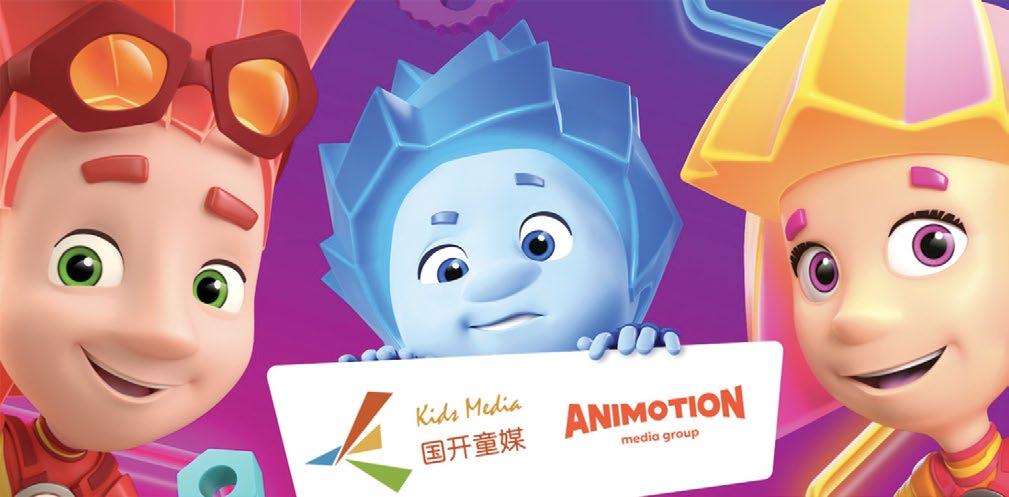
Animotion Media Group 宣布, 已正式与 Beijing Kids Media Limited Corporation 签署出版 合作协议。该公司是中国领先的 儿童出版机构之一,隶属于 Open University of China Press Co., Ltd.,同时也是 The Fixies 品牌 的长期支持者。此次协议标志着 Animotion 旗舰 IP 国际拓展的重 要里程碑,并进一步加强了该品牌 在中国市场的影响力。
Beijing Kids Media 是儿童出 版行业公认的专业机构,专注于 早期教育、漫画、儿童科普、绘 本以及授权 IP 等领域。公司与 LEGO、Disney、Bluey 和 DK 等世界 知名品牌合作,在为年轻读者开发 高质量、兼具教育性与娱乐性的出 版项目方面拥有丰富经验。
根据本次合作,Animotion Media Group 与 Beijing Kids Media 将 围绕 The Fixies 开展一系列出版 项目,包括纸质和数字图书系列、礼 品版图书、与出版相关的衍生商品, 以及其他受动画系列启发的创意形 式。这些项目将在注重教育价值、本 土化以及与中国儿童和家庭建立长 期互动的基础上进行开发。
此次合作体现了 Animotion Media Group 的整体战略,即将 The Fixies 从屏幕内容拓展至出版、授权
及消费品领域,在全球市场打造围 绕该 IP 的全方位品牌生态系统。
Animotion Media Group 总经理
Julia Nikolaeva 在谈及此次合作时 表示:“中国是 Animotion 的关键
Shaohua 补充道:“The Fixies 是一个享誉全球的教育品牌,成 功融合了科学、好奇心和富有吸 引力的故事叙述。我们很高兴与 Animotion Media Group 合作,并
战略市场,而出版是儿童在屏幕之 外与故事和角色互动的重要方式。
我们很高兴与 Beijing Kids Media 合作,通过高质量且具有教育意义 的出版形式,将 The Fixies 带给中 国的年轻读者,同时保持品牌的核 心价值。”
Beijing Kids Media Limited Corporation 总经理 Gong
期待开发出版项目,以有意义且富 有启发性的方式将 The Fixies 介绍 给中国家庭。”
这项新协议进一步丰富了 Animotion Media Group 在中国 市场的经验,并彰显了公司致力于 建立稳固、长期合作关系的承诺,以 支持其 IP 在多平台、多形式上的全 球发展。
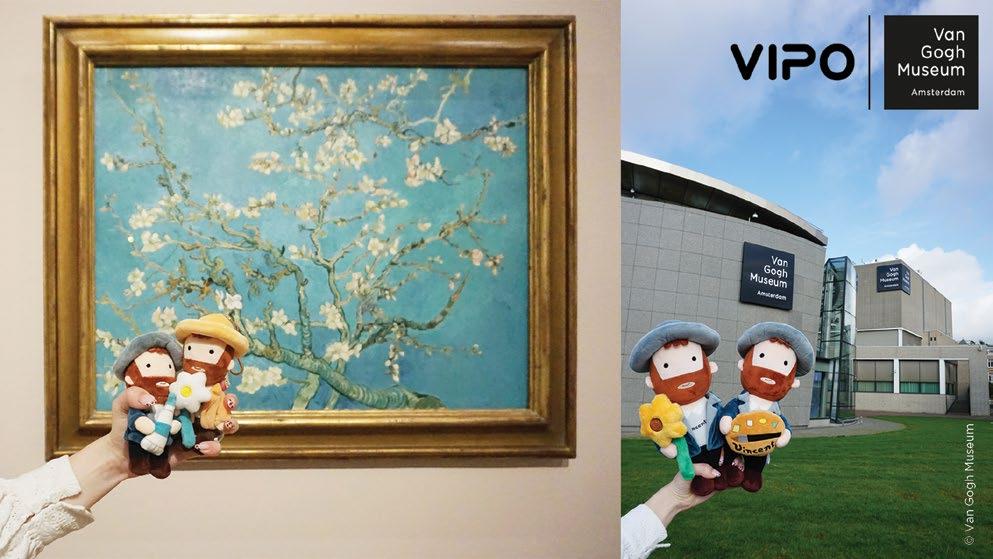
Van Gogh Museum Expands Collectibles and Gift Licensing
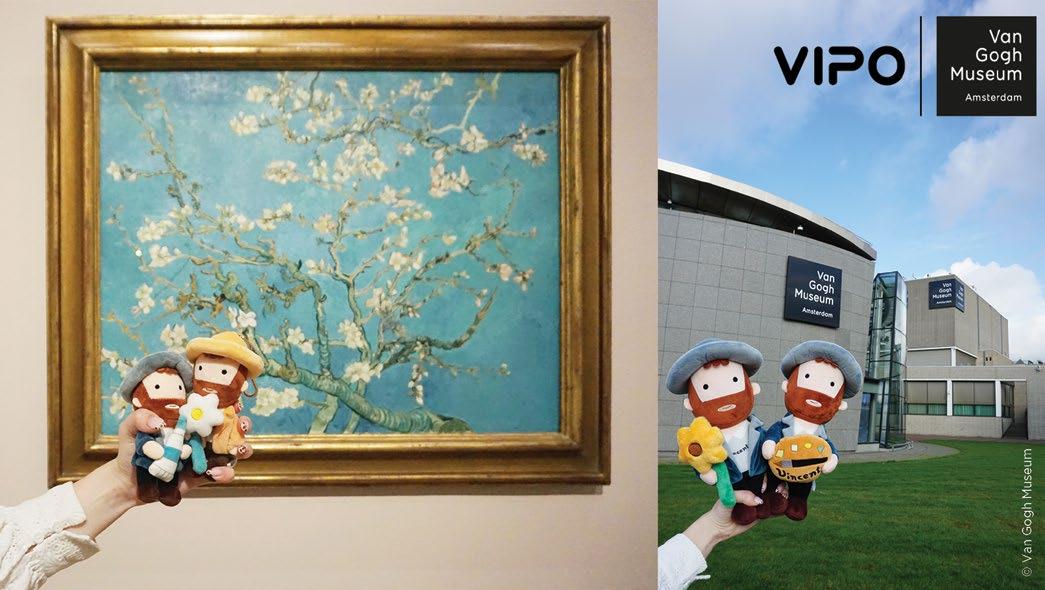
The Van Gogh Museum in the Netherlands continues to increase its presence in the gift and collectibles category through its collaboration with VIPO, a Hong Kong–based licensee specialising in blind box
collectibles, plush items and lifestyle accessories across key Asian markets.
A standout success within the partnership is the Vincent’s SelfPortrait Plush Keychain Blind Box, which blends classic Van Gogh
imagery with the contemporary blind box trend.
Drawing on Vincent’s self-portraits and recognisable artistic elements, including brushes, palettes and motifs from Sunflowers and Almond Blossom, each keychain offers a playful, story-driven design and a sense of discovery for collectors. The range has proven highly popular. Beyond the blind box keychains, the collaboration has expanded to include larger plush items and two Van Gogh-inspired bags, with additional products in development. The partnership reflects the museum’s strategic licensing approach: working with category specialists to translate Vincent van Gogh’s legacy into contemporary, accessible products that resonate with the GenZ and Millennial consumer.
Peter Han is a global licensing strategist and industry analyst focusing on the intersection of entertainment, automotive, and regional cultural architecture.
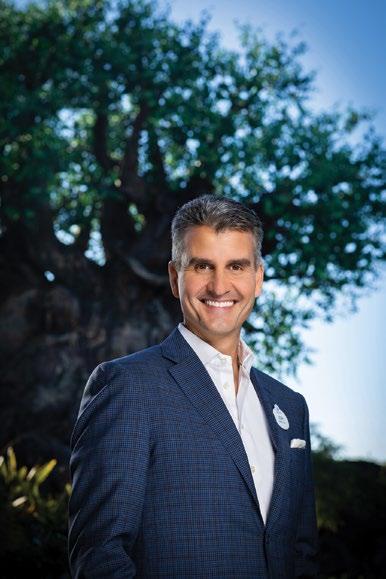
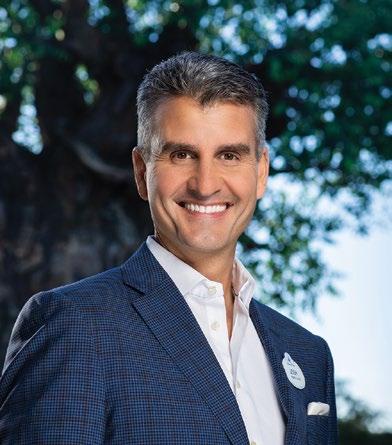
D’Amaro officially
The Architecture of Authenticity:
Why the “Shanghai Model” is Disney’s $60B
Secret Weapon
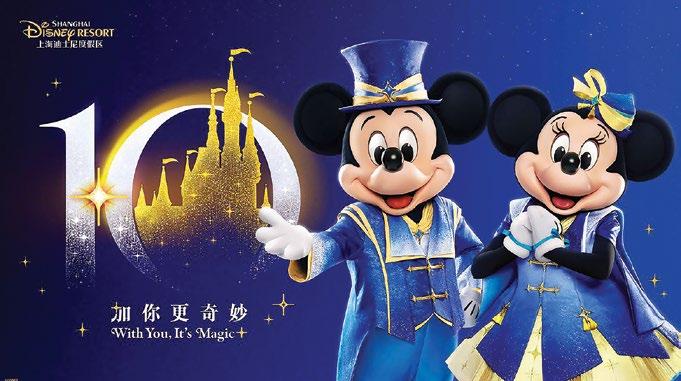
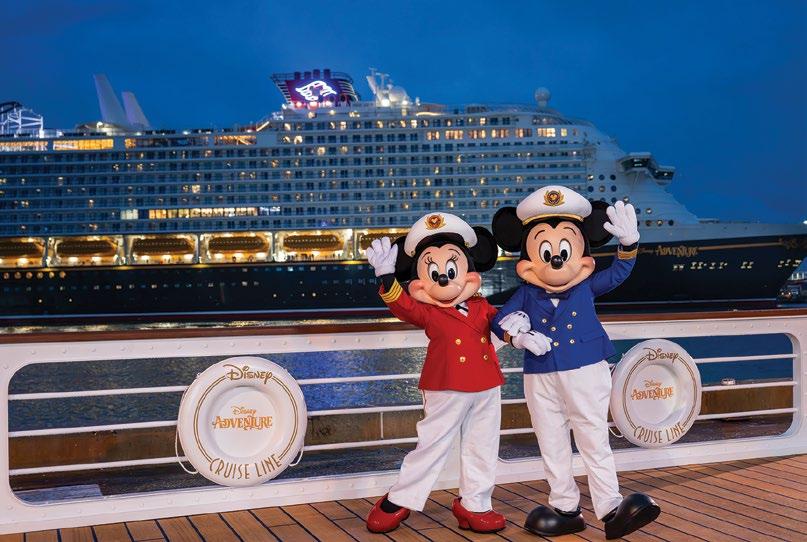
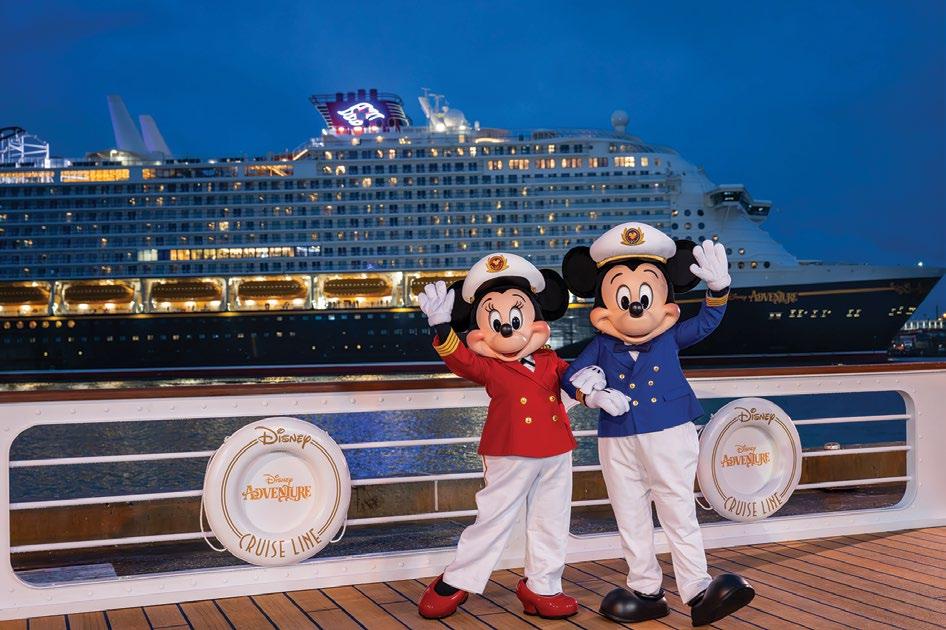
stepped into a $60 billion mandate. But for the global licensing industry, the real question isn't the scale of the investment—it’s the Cultural Architecture required to sustain it. The blueprint for this next era was validated just days ago in Singapore. The maiden voyage of the Disney Adventure (March 10) - the first Disney ship to homeport yearround in Asia - is not merely a new homeporting strategy; it is the most recent victory for the "Shanghai Model." Developed over more than a decade, this model posits that global IP thrives not through the "export" of Western culture, but through the achievement of Cultural Peerage.
As Disney eyes a potential $10 billion development in Abu Dhabi, the Shanghai Model offers the only viable "Stability Index" for a brand operating in volatile, high-growth markets.
Building Institutional Trust: The Disney English Legacy
Total Licensing readers know that market entry is a tactical hurdle, but
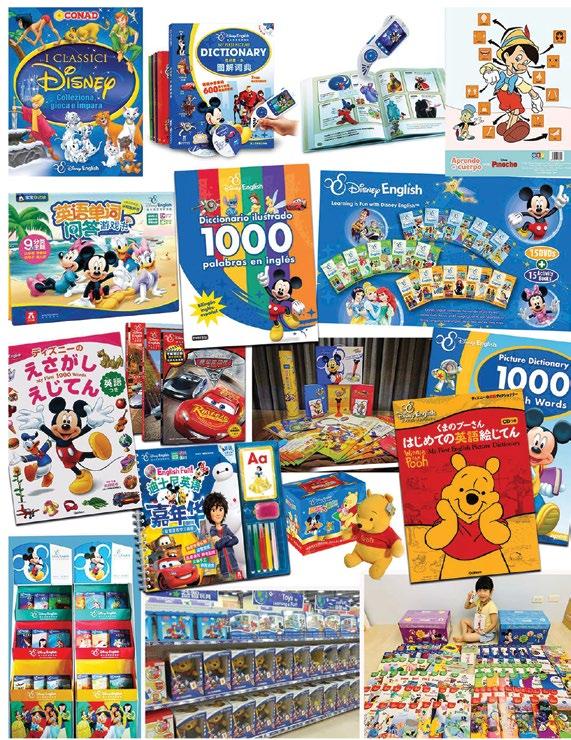
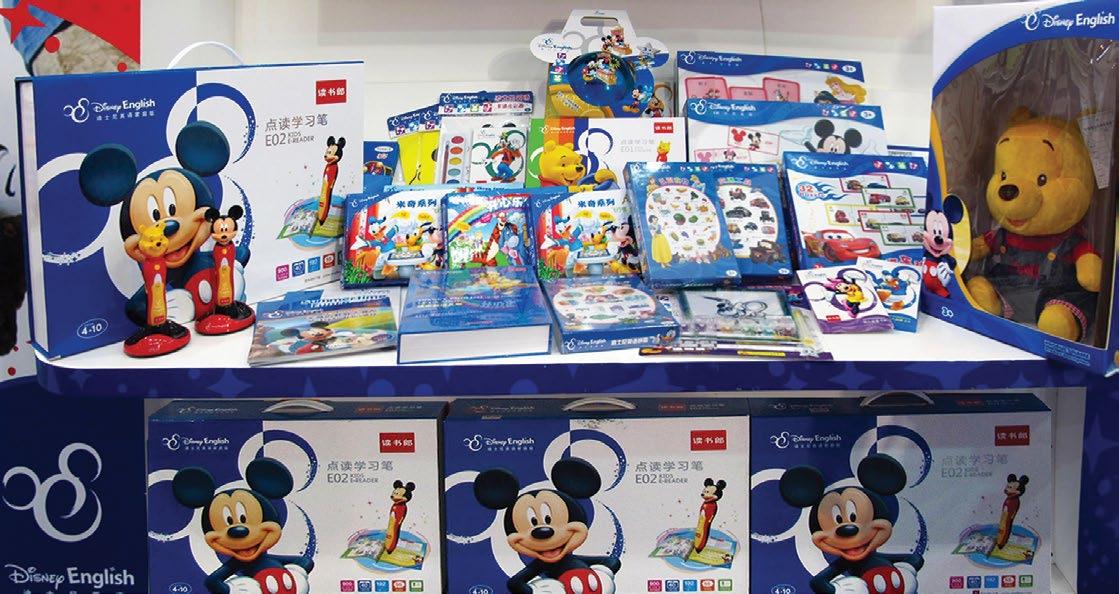
market permanence is a strategic one. In the mid-2000s, Disney’s path into Greater China didn't start with a castle; it started with the classroom. Through Disney English, the company effectively created a new "Educational Toy" category that didn't exist in the region.
Central to this effort was the recognition that brand equity grows through social utility. Creative leads, including veteran Disney executive Rick Law who initiated the Disney English Toys line, integrated character IP with the developmental goals of Chinese families. These weren't just licensed products; they were tools for language acquisition and social mobility.
By solving a local social need before asking for a mass-market retail transaction, Disney built Institutional Trust. This early investment ensured that by the time the Shanghai Disney Resort opened in 2016, the brand was viewed not as a foreign interloper, but as a partner in the nation’s middle-class aspirations. This "social utility" is the bedrock upon which all subsequent licensing durability is built.
The “Reverse-Flow” ROI: The Wuxia Factor
Perhaps the most significant shift in the Shanghai Model is the concept of Reverse-Flow Innovation. In the traditional licensing funnel, Burbank or London creates and the world consumes. The Shanghai Model flips the funnel, allowing regional innovation to dictate global retail trends.
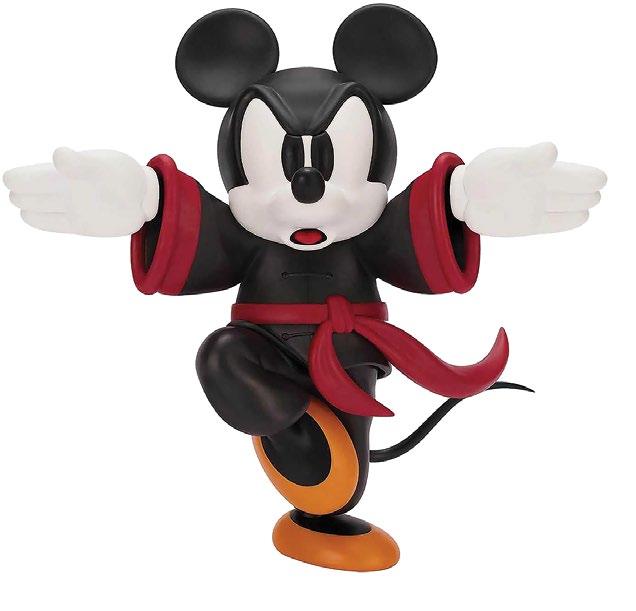
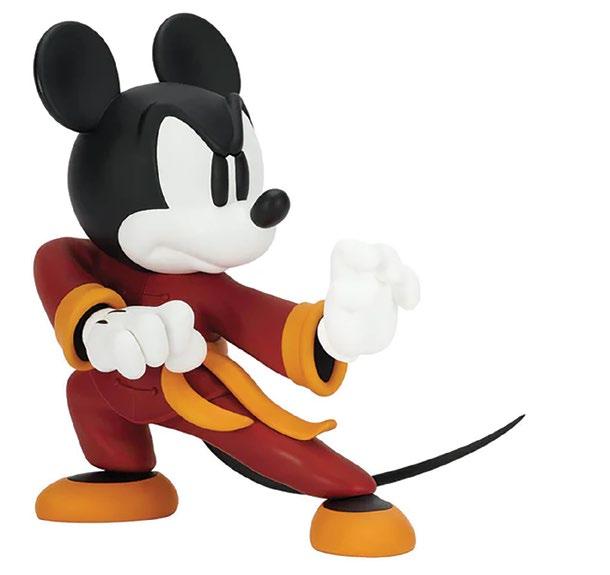
The definitive case study remains Kung-Fu Mickey Mouse (功 夫米老鼠). Designed by Rick Law specifically for the Chinese market,
Josh D’Amaro, CEO, The Walt Disney Company
the character fused Disney’s iconic mascot with wuxia aesthetics.
This wasn't a surface-level costume change; it was a deep dive into China’s martial arts storytelling traditions, where discipline, honor, and self-mastery are core virtues. The ROI of this "authentically local" approach has been staggering and serves as a masterclass in modern brand scaling:
• Industrial Integration: In 2022, the strategy moved from the toy aisle to the automotive sector with the launch of the Chevrolet Menlo EV "Mickey Kung Fu Edition." This proved that culturally respectful, China-born IP could anchor a highstakes partnership with a major global automaker.
• Global Scalability: Law’s designs didn't remain regional. They gained a "global cool" factor that saw them scale into Western retail powerhouses. Today, those same "Mickey Kung Fu" designs—originally created for a local publishing unit— populate apparel aisles at Target, Walmart, Kohl’s, and Hot Topic in the United States.
This proves that when IP is built with regional integrity and creative depth, it doesn't just survive in the territory—it becomes a premium export that rejuvenates the brand in its home market.
From Presence to Peerage: The Stability Index
In 2026, the durability of a license is measured by its Stability Index—a metric of how well a brand survives shifting diplomatic and regulatory winds.
A milestone for this index was reached in 2025 when Rick Law— whose consulting on Shanghai Disney and Disney English earned him deep recognition within the region— became the first non-Chinese creative to serve as a Final Judge for the Golden Monkey King Awards and the CACC Golden Dragon Awards.
These are China’s highest statebacked honors for animation and comics.
When a Western licensor is invited to arbitrate a nation’s highest storytelling honors, the relationship has moved from transactional licensing to shared cultural stewardship.
This "Creative Peerage" turns the brand into a cultural "insider," creating a level of policy resilience and protection against the "soft target" status that often plagues Western brands during times of geopolitical friction.
The Abu Dhabi Pressure Test
The necessity of the Shanghai Model is best seen in contrast to the current uncertainty in the Middle East. While the Disney Adventure launch in Singapore demonstrates a successful "Pivot to Asia" through regional tastes and "culturally inspired" merchandise, the Disneyland Abu Dhabi project faces a different reality.
As geopolitical tensions cast a shadow over the $10 billion Yas Island development, the "ExportOnly" model of American IP is being fundamentally questioned. Capital and brand power are no longer sufficient to guarantee market success.
D’Amaro’s era will be defined by his ability to execute the "Architecture of Reciprocity." Just as Disney did in Singapore and Shanghai, it must build local creative infrastructure in the Middle East that serves the host nation’s long-term Vision 2030 goals. To spend $60 billion effectively, global licensors must stop being landlords of IP and start being architects of shared culture.
The 2026 Playbook for Global Licensors
For the global licensing community watching the D’Amaro era unfold, the Shanghai Model offers three actionable takeaways:
• Build the Social Utility: Use IP to fill regional needs—be it education, sustainability, or mobility—to earn
"Institutional Trust" before seeking mass-market retail.
• Incentivize Reverse-Flow: Treat regional hubs (Singapore, Shanghai, Mumbai) as the primary R&D labs for global "evergreen" IP. Tomorrow's global hit is as likely to be born in a regional studio as in a corporate headquarters.
• Prioritize Creative Peerage: Move beyond "service vendors" to equitable partnerships with local talent. Cultural integrity is the only hedge against geopolitical risk.
Conclusion: The Next Decade of Global IP
Ten years on from its inception, the Shanghai Model has proven that authenticity is more than a creative choice; it is a market engine. It proves that when you invest in cultural fluency, you don't just earn market share; you earn permanence.
As Josh D’Amaro takes the wheel and navigates the next $60 billion in growth, he isn't just building theme parks and launching cruise ships; he is building bridges. And in the complex landscape of 2026, those cultural bridges are the most valuable assets Disney—or any global licensor—can own.
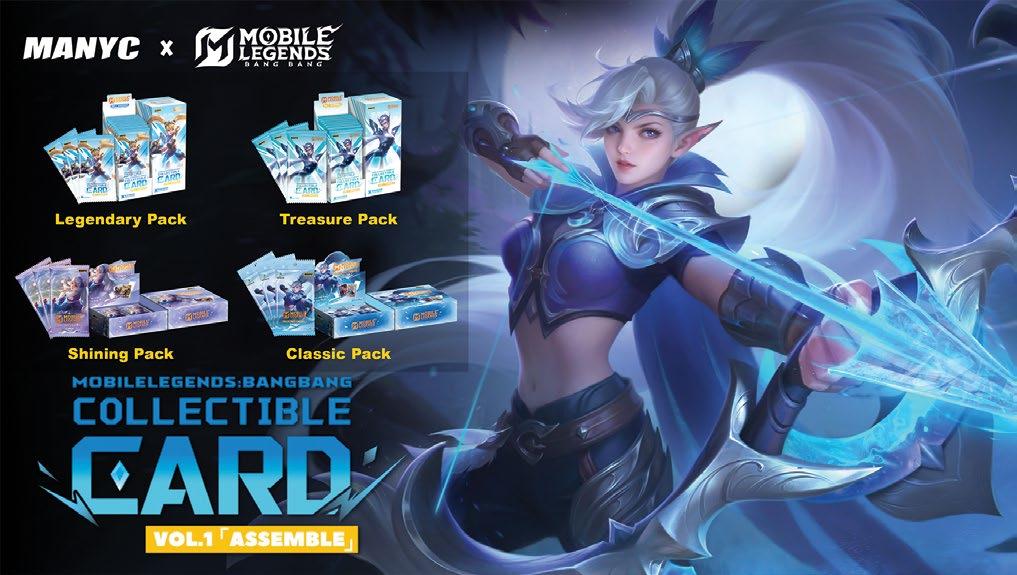
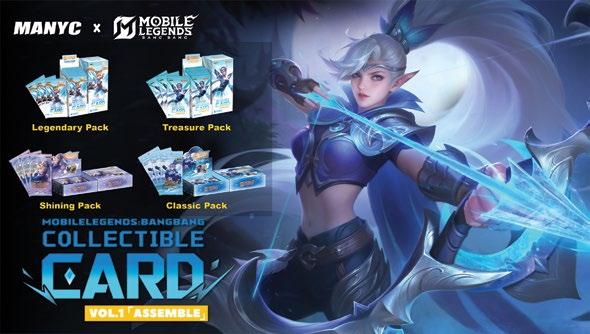
MANYC will showcase a limitededition collectible card series, co-developed with “Mobile Legends: Bang Bang” (MLBB), at the 38th International Toy and Trendy Toys Exhibition in Shenzhen.
As a globally renowned mobile esports IP, Mobile Legends: Bang Bang stands as a benchmark in the MOBA mobile
gaming industry and an official event of the Esports World Cup. Currently operating in over 200 countries and regions worldwide, the game boasts more than 1.5 billion registered users. It consistently ranks first in bestseller charts across Southeast Asia, Latin America, and the Middle East, featuring a mature tournament system and a highly active player ecosystem. The IP continues to unlock substantial commercial potential through sustained growth. In 2025, MANYC and MLBB officially entered into a licensing partnership to jointly develop collectible card products. In August of the same year, MANYC unveiled its first product lineup at the Jakarta Toy Expo in Indonesia’s capital. By November, the
inaugural volume (Vol.1) of the Mobile Legends: Bang Bang collectible card series hit the market, quickly achieving sales exceeding thousand units and generating over million in revenue, earning positive feedback from core players and fan communities.
The first installment features four products across various price ranges. The complete card set includes 20 popular heroes totaling 255 cards, categorized into 11 rarity tiers, combining character-exclusive cards with Qversion style designs. Notably, the ARgrade art cards showcase previously unreleased in-game illustrations, with each limited to 99 copies worldwide–a significant enhancement of product scarcity and collectible value.
ARTiSTORY: Advancing Cultural Heritage IP
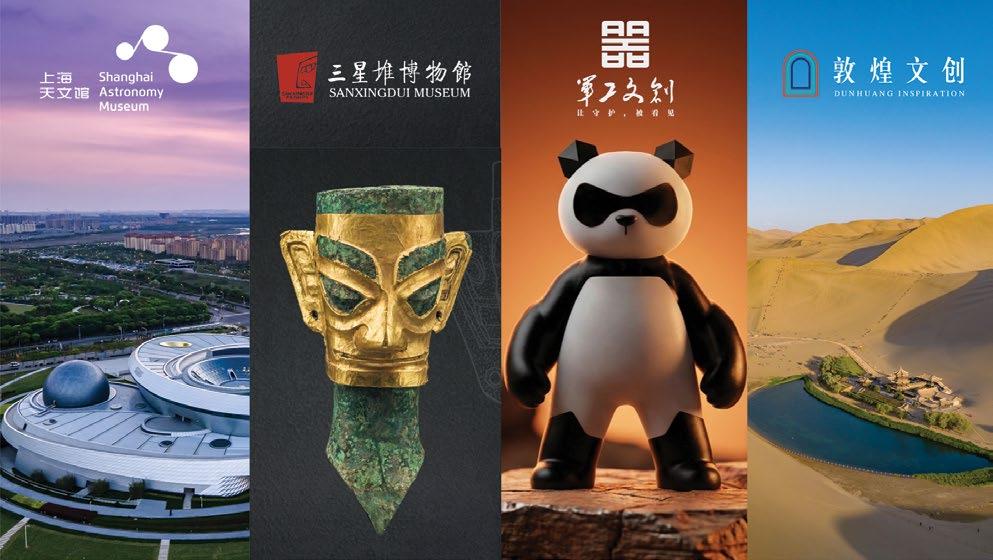
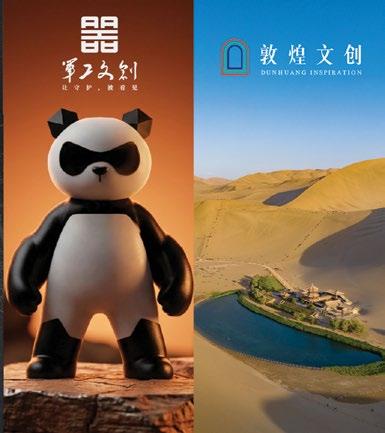
ARTiSTORY has recently achieved significant milestones in cultural IP development, highlighted by two major collaborations. The company has renewed its global licensing agreement with Dunhuang Inspiration for another five years.
This marks the first decade-long commitment to building a local cultural heritage IP brand in China. ARTiSTORY has facilitated high-impact collaborations for Dunhuang with global brands such as JD.com, Intel, and Siam Paragon, successfully integrating the ancient art into modern life through co-branded products and experiences.
Simultaneously, ARTiSTORY has entered a strategic partnership to spearhead the systematic brand building of Military Industry Cultural And Creative. The collaboration has launched a new visual identity system, including a trademark, mascot, style guideline, and theme song, aiming to make the legacy of national defense innovation accessible to the public through creative products.
To date, ARTiSTORY has supported cultural IPs including Dunhuang Inspiration, Shanghai Astronomy Museum, Sanxingdui Museum, and Military Industry Cultural And Creative in their systematic brand development, style guidelines, and comprehensive licensing matrix construction.
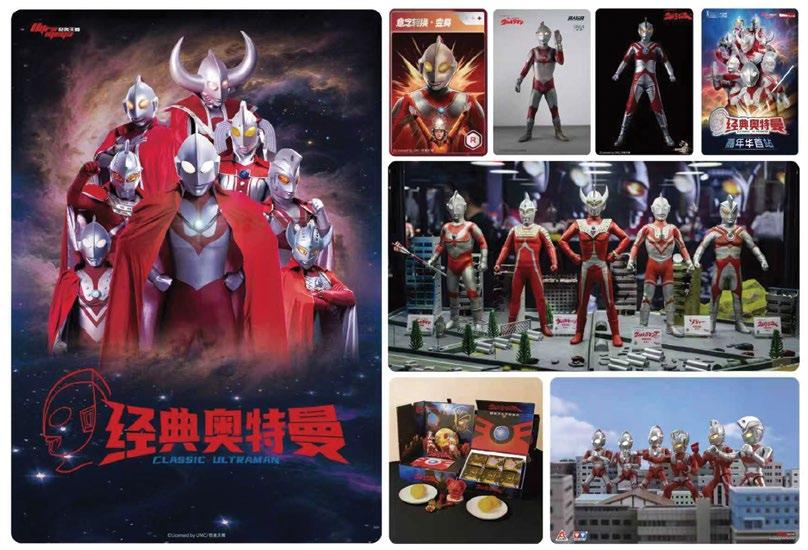
Ultraman’s 60th Anniversary
In 2026, the Ultraman franchise celebrates a historic milestone as its 60th Anniversary festivities officially commence.
The Classic Ultraman series—featuring iconic heroes like the original Ultraman, Ultraseven, Ultraman Jack, Ultraman Ace, Ultraman Taro, Ultraman Zoffy, Father of Ultra, and Mother of Ultra.
Since debuting in 1966, these warriors from the M78 Nebula have captivated audiences worldwide, embodying the universal values of justice and courage that resonate across all age groups.
During this year, ULTRAMEGA, the exclusive mainland China licensee and operator for Classic Ultraman, is collaborating with strategic partners to explore innovative licensing opportunities, co-branding initiatives, and creative expressions that unlock the IP’s limitless potential.
The company extends a global invitation to premier enterprises to join this all-category cross-industry collaboration, focusing on key sectors including landmark building activations, anniversary galas, high-profile exhibition, collector-grade merchandise, and deep integrations within the gaming.
Together, they aim to kindle a new chapter in this sixty-year legend alongside industry leaders.
ULTRAMEGA emphasizes that the 2026 Ultraman 60th Anniversary represents more than just a historical celebration; it is a pivotal opportunity to maximize the IP’s potential and pioneer future development models. By bridging online and offline experiences, fostering cross-sector partnerships, and embracing innovative storytelling, Classic Ultraman will continue to deliver fresh waves of passion, justice, and surprise to fans around the world.
优扬传媒加速“积木宇宙(Blocks Universe)” 中国市场布局
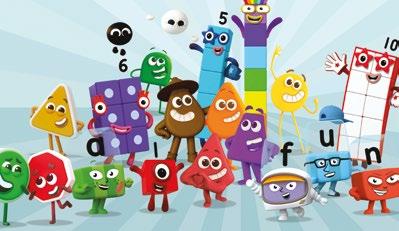
中国北京 —— 优扬传媒及其全 资子公司北京优趣时光科技有限 公司宣布,将全面加速“积木宇宙 (Blocks Universe)”在中国大陆 市场的战略布局。该品牌由《数字 积木》(Numberblocks)、《字母 积木》(Alphablocks)、《颜色积木》 (Colourblocks)以及全新推出的《 奇思积木》(Wonderblocks)四大核 心 IP 构成,致力于打造英语启蒙和 STEAM 教育领域的标杆内容体系。 “积木宇宙”系列IP是英国 BBC
优扬传媒诚邀品牌伙伴与行业机构 携手合作,共同推动这一全球知名 教育 IP 在中国的持续发展,为新一 代儿童构建终身学习与独立思考的 坚实基础。
UYoung Media Accelerates China Market Expansion for the “Blocks Universe”
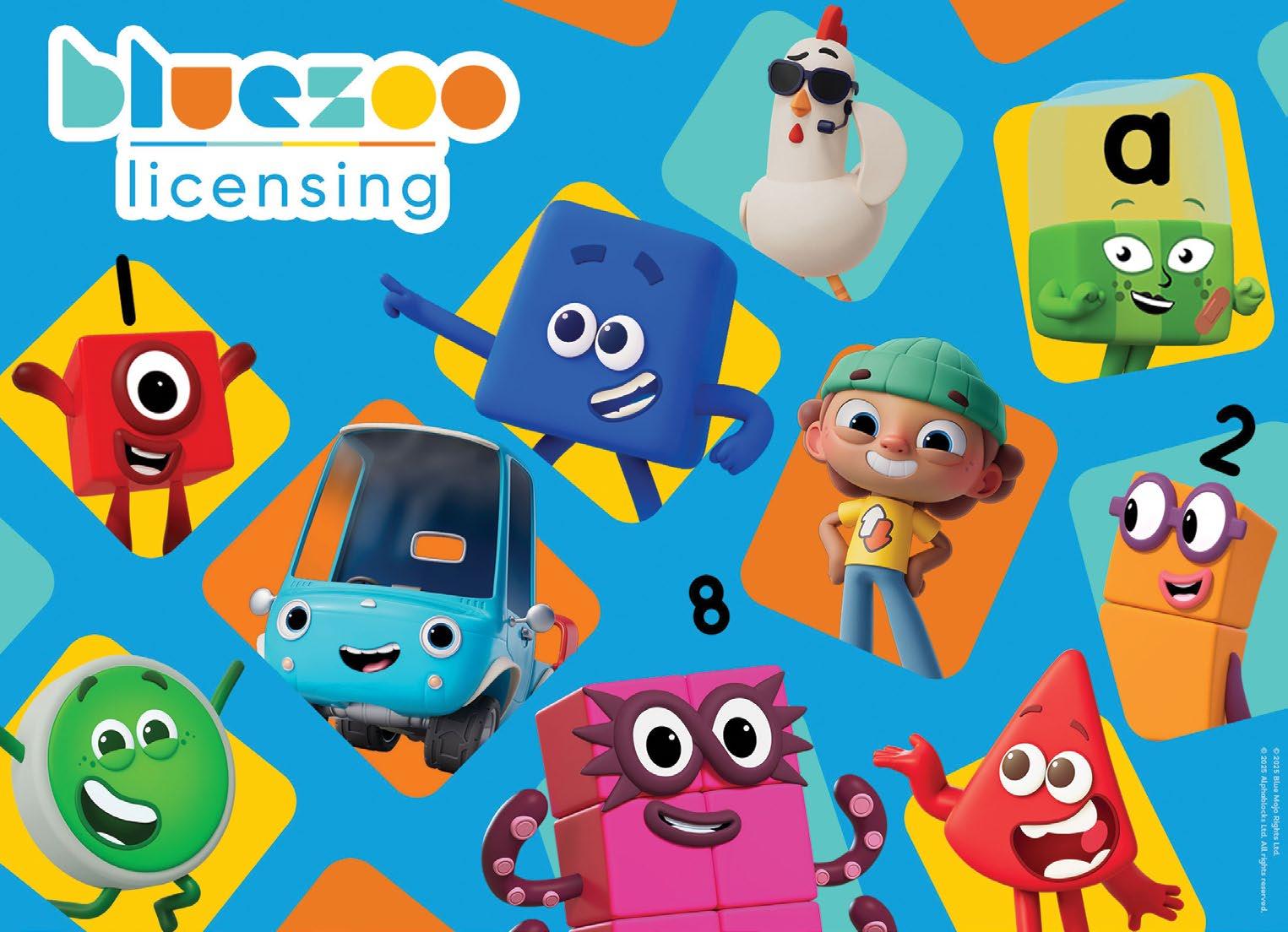
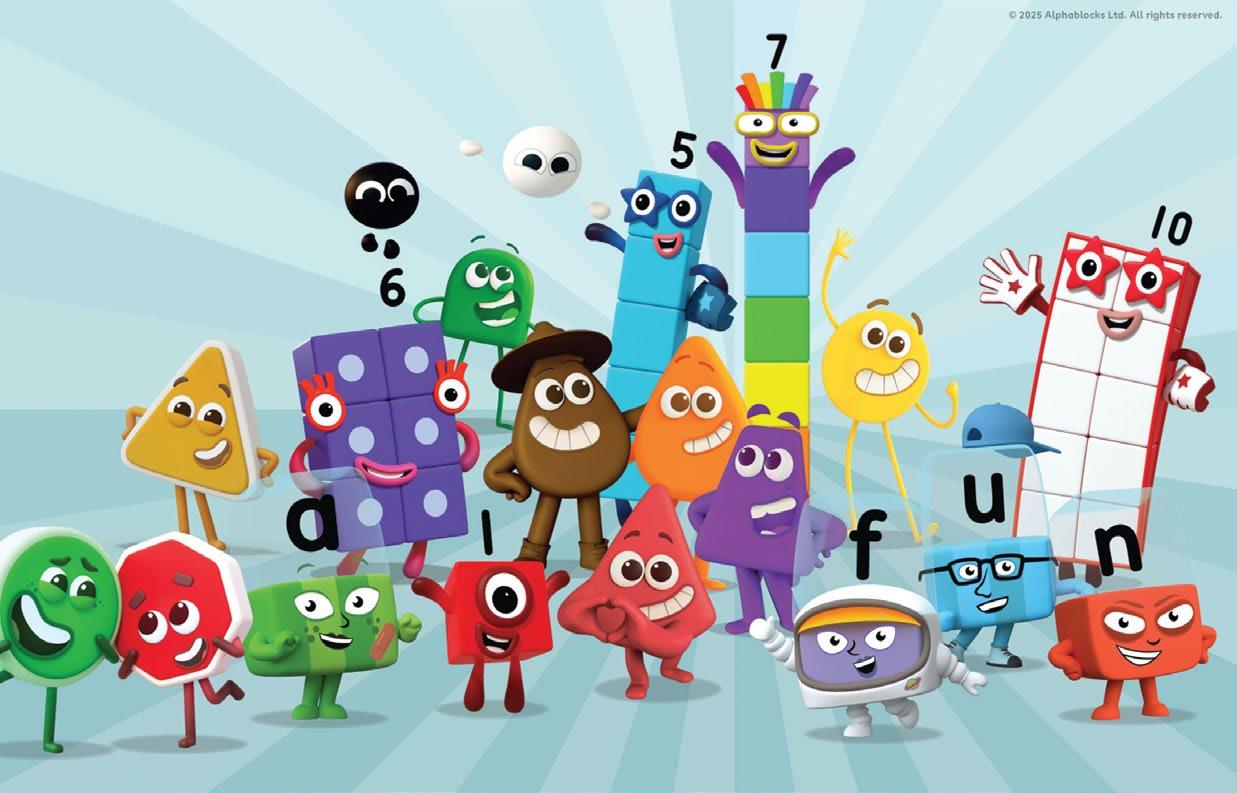
UYoung Media and its wholly owned subsidiary, Beijing Ukids Culture & Technology Co., Ltd., announced an accelerated strategic expansion of the Blocks Universe across Mainland China. The franchise consists of four core IPs - Numberblocks, Alphablocks, Colourblocks, and the newly launched Wonderblocks - and aims to establish a leading content ecosystem for English-language learning and STEAM education.
The series in the Blocks Universe are flagship educational programs on the UK’s BBC CBeebies channel and has since become an internationally acclaimed children’s learning brand, earning multiple awards and recognition from families and educators worldwide.
Under UYoung Media’s management, the series is now widely available across major Chinese digital platforms, including Ukids, iQIYI, Youku, and Tencent, offering Chinese
families an immersive early-learning experience.
The Four Core IPs:
Alphablocks – A literacy-focused series built on phonics, using imaginative “word magic” to make early reading intuitive and engaging Numberblocks – An innovative math-learning animation that uses visual block structures to help children understand numbers and arithmetic logic.
Colourblocks – A series that explores the language of color, using storytelling to develop children’s visual literacy and creativity.
Wonderblocks – Focused on problem-solving and curiosity, helping the next generation of digital natives develop logical thinking and a spirit of exploration.
Clara Yang, VP of International Business at UYoung Media
commented: “Blocks Universe combines world-class educational pedagogy with high-quality animation. We are now expanding the brand beyond premium content into a broader ecosystem of products and experiences, allowing children to learn with greater enjoyment and inspiration.”
UYoung Media is currently expanding 360-degree licensing opportunities across multiple product categories. With growing visibility and strong educational value, the Blocks Universe is rapidly building trust among Chinese parents and increasing influence within the retail market.
UYoung Media welcomes brand partners and industry collaborators to join in advancing this globally recognized educational IP in China, helping build a strong foundation for lifelong learning and independent thinking for the next generation of children.
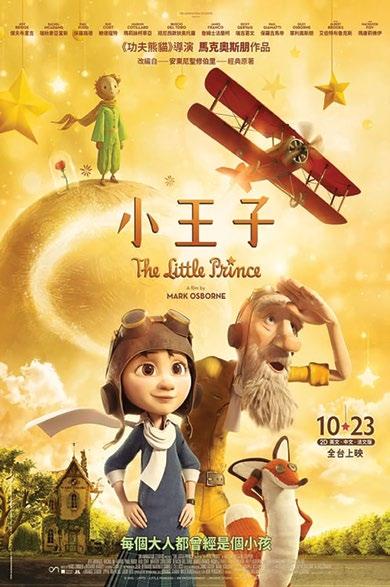
The Little Prince in China A flourishing licensing
China has become one of the most dynamic and creative markets for The Little Prince brand licensing, with a growing number of collaborations and large-scale activations that continue to expand the universe of the iconic character across the region.
First published in 1943 by French author and aviator Antoine de Saint-Exupéry, The Little Prince remains one of the most widely read and translated books in the world, with more than 300 million copies sold and over 650 language and dialect translations. The story has found a particularly strong resonance in China. The official Chinese translation, approved by the Saint-Exupéry Estate and translated by Li Jihong for publisher Guomai, has sold more than six million copies in just ten years. The brand’s popularity in the region was further amplified following the global release of the animated film adaptation in 2015.
A key factor behind the brand’s success in the region is the long-standing partnership with Hong Kong-based licensing agency Medialink Group. Working together since 2005, the teams have built a robust multi-category licensing program across China and Asia, developing collaborations that combine premium brands, retail activations, and immersive experiences.
The Chinese market has proven particularly receptive to high-profile brand collaborations. Recent examples
program built on long-term partnerships
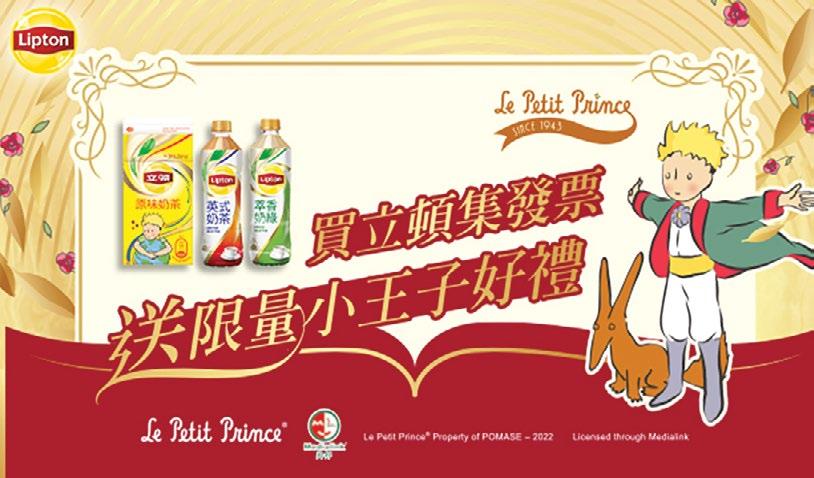
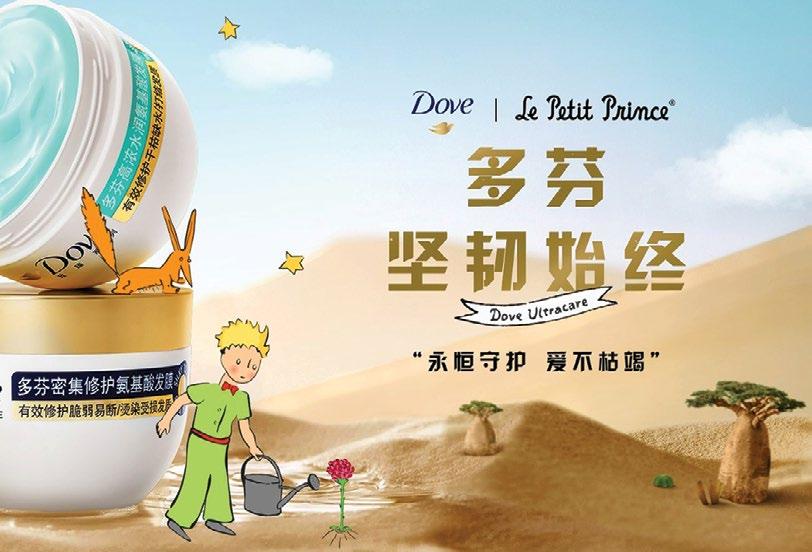
include a dedicated Hugo Boss collection created specifically for China, supported by large-scale mall activations and pop-up retail experiences. Other international brands have partnered with the property for China-focused programs, including Thermos, Logitech, Klorane, Dove and Lipton, which developed promotional campaigns and loyalty programs featuring the character.
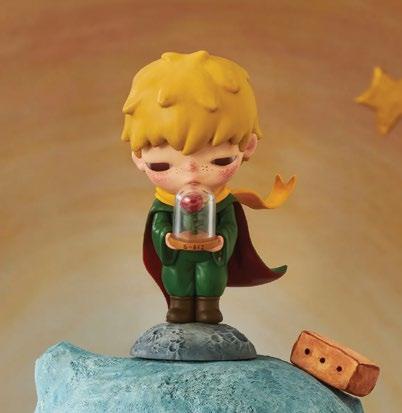
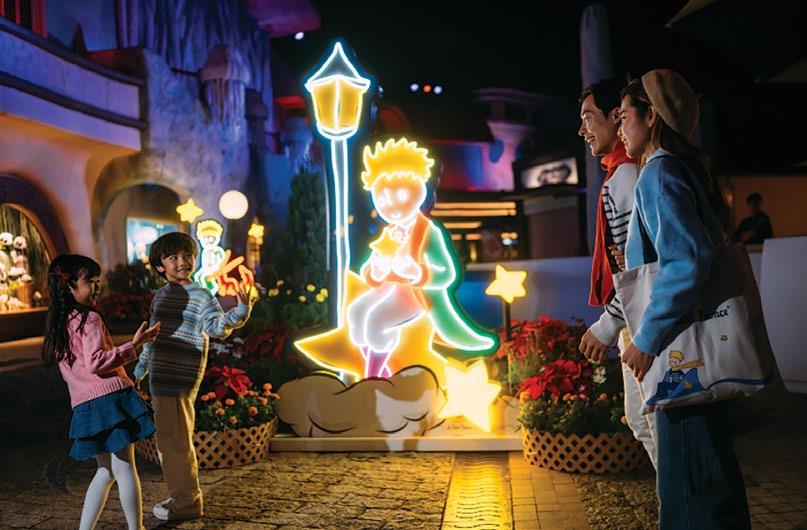
Experiential activations have also played a major role in strengthening the brand’s visibility. In 2023, a major themed installation dedicated to The Little Prince opened at Ocean Park Hong Kong, featuring immersive spaces and exclusive merchandise. The attraction welcomed millions of visitors and demonstrated the strong emotional connection Chinese audiences have with the story and its characters. China has also been the starting point for some highly successful global collaborations. One notable example is the partnership with collectible toy brand POP MART and its popular character Hirono. The Hirono x The Little Prince collection quickly became an international success, resonating strongly with collectors and younger audiences. The range demonstrated how the poetic world of The Little Prince can successfully connect with contemporary designer toy culture and global lifestyle trends.
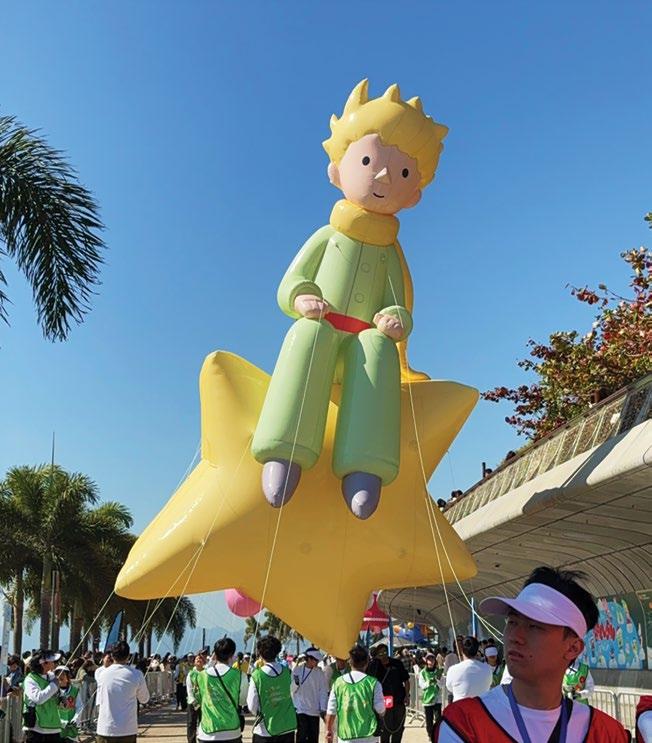
More recently, the character was also
featured among the international IPs represented at the Merry Balloon Hong Kong parade at the West Kowloon Cultural District, where giant helium balloons of popular characters— including The Little Prince—were presented along Victoria Harbour, further reinforcing the brand’s presence in major public cultural events.
Looking ahead, the brand’s visibility in Asia is expected to grow even further with a new animated feature currently in development. The project is being produced by El Pájaro Pictures, with acclaimed Chinese filmmaker Li Jihong attached as director. Scheduled for release in 2028, the film aims to bring a fresh visual interpretation of The Little Prince to a new generation of audiences while remaining faithful to the philosophical and poetic spirit of Saint-Exupéry’s timeless story.
Through its long-term partnership with Medialink and its strong network of local licensees, The Little Prince brand is well positioned to continue expanding across lifestyle, fashion, publishing and experiential entertainment in China, confirming the territory as one of the most vibrant markets for the brand worldwide.
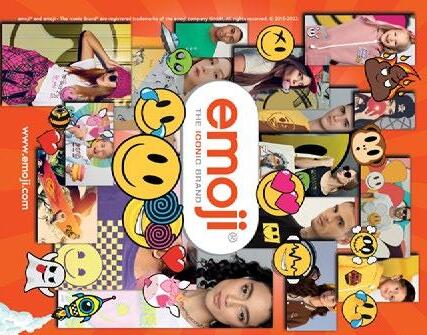
The emoji Company Launches New Creative Collaborations with Leading Brands in China
In recent months, emoji® – The Iconic Brand has introduced a series of creative collaborations across China, demonstrating how its globally recognized icons can be integrated into diverse brand experiences and design concepts. As the universal visual language of emotions, the emoji® Brand offers partners a dynamic creative platform that transforms simple symbols into engaging storytelling elements and narratives that connect with audiences.Working together with its agent Medialink Animation International Limited, the brand continues to expand its presence in the region through innovative partnerships that
connect visual identity with product design and consumer interaction.
Avatr X emoji® Brand: Creative Campaign for Chinese New Year
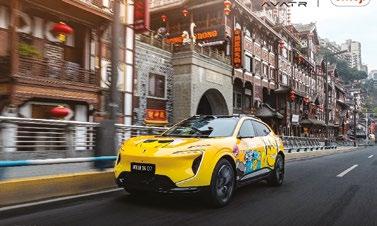
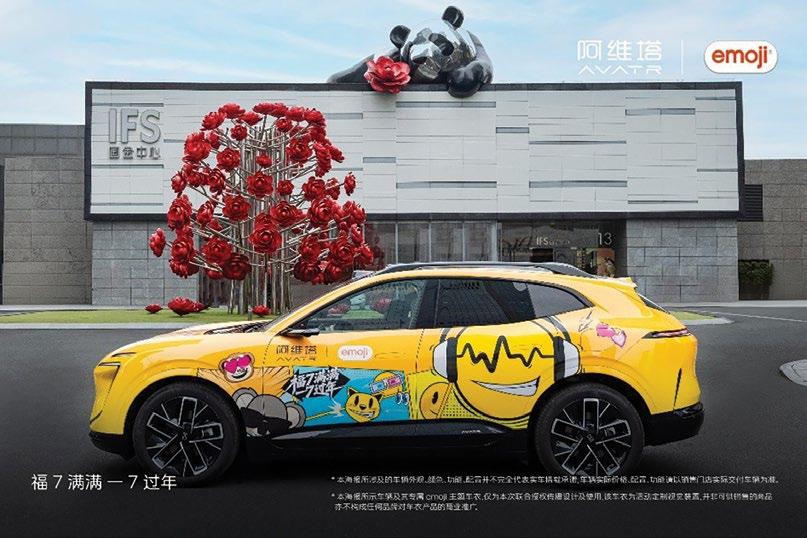
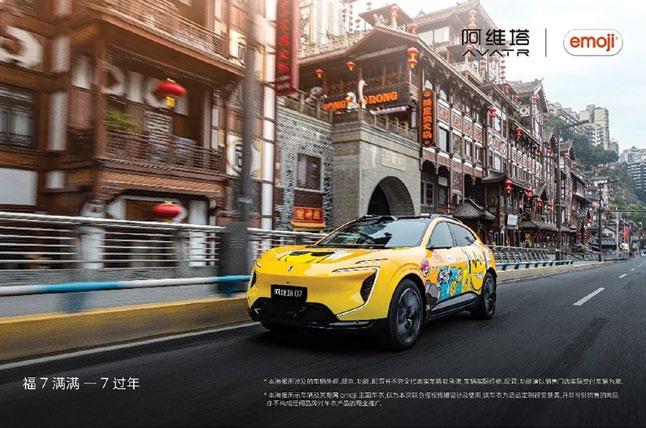
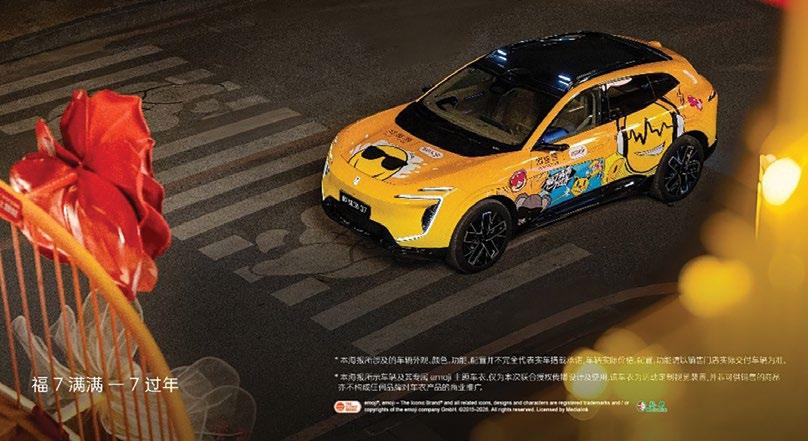
To celebrate the Chinese New Year, the emoji® Brand and Medialink partnered with Avatr to launch the campaign “Fortune ‘7’ Overflow,” highlighting the Avatr 07 smart premium urban SUV. The collaboration merges Avatr’s forward-looking vision of intelligent mobility with the playful visual language of the emoji® Brand, creating a festive and energetic creative concept.
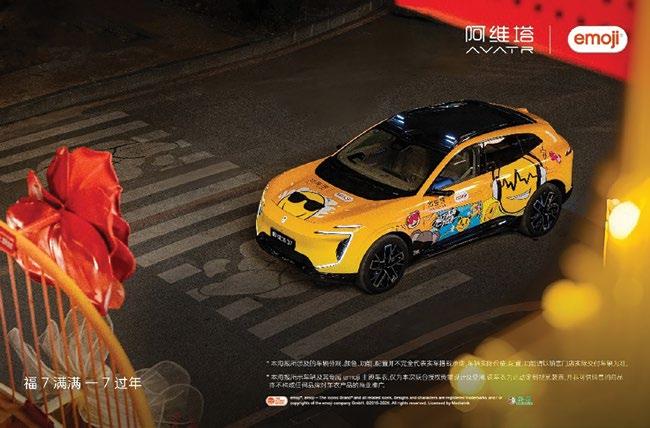
The collaboration showcased a specially designed vehicle wrap that incorporates classic emoji® Brand icons into the exterior of the Avatr 07.The bright emoji® Brand designs add a lively and expressive visual identity to the vehicle. In campaign visuals, the car appears
on streets decorated with Chinese New Year elements, where festive red decorations contrast with the vehicle’s yellow design, allowing both the emoji® Brand icons and the car itself to stand out more prominently. Through this creative presentation, the SUV becomes more than transportation—it becomes a moving expression of energy and emotion.
The design concept was further extended into digital interactions. Customized WeChat red packet covers and emoji® Brand sticker packs adopted the same visual elements, enabling users to share the playful design through everyday messaging. By connecting physical design with digital engagement, the collaboration brought the festive spirit of the season into daily social interactions.
M+ Mall X emoji® Brand: Creating an Immersive Creative Playground
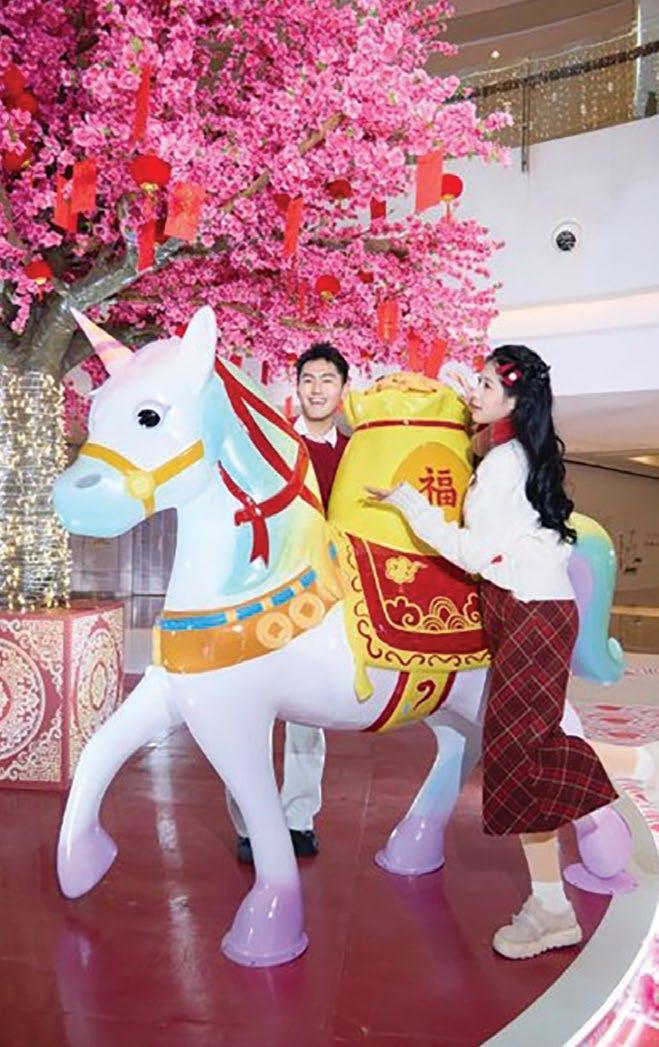
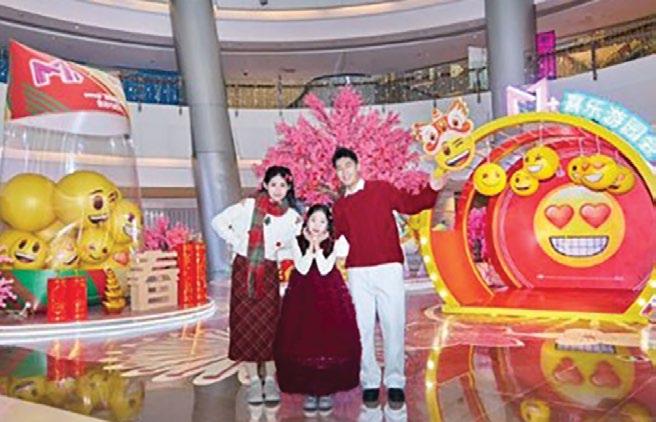
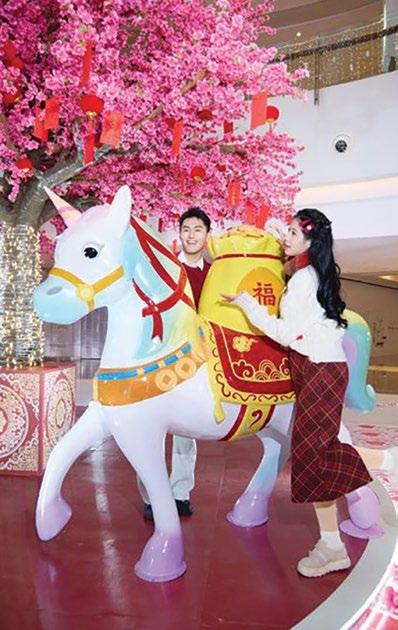
In the retail and experiential space, the emoji® Brand and Medialink teamed up with Wuhan M+ Mall to present the “emoji® Brand Sweet Carnival,” an event that transforms the mall into a playful and immersive destination. The collaboration demonstrates how emoji® Brand icons can be reimagined through spatial design to create engaging offline experiences.
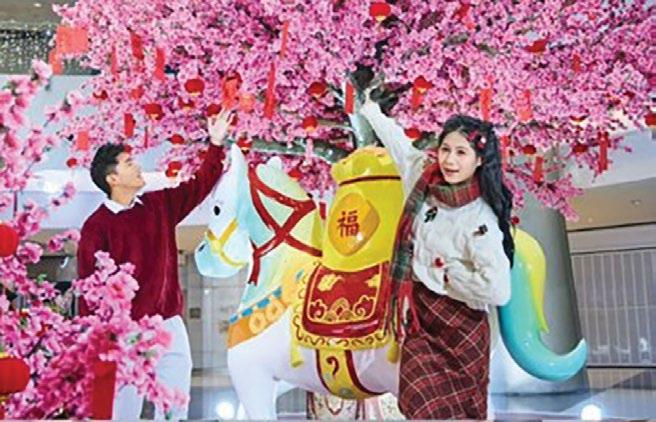
The creative concept focused on translating familiar emoji® Brand icons into large-scale installations. For example, the emoji® Brand unicorn was creatively reinterpreted with Chinese-inspired design elements and transformed into a horse-themed figure to reflect the Year of the Horse, becoming a visual centerpiece in the mall atrium.
Additional themed zones extended the emoji® Brand design language into interactive environments. Installations such as the “emoji® Brand Joyful Fortune Ball” and the
“emoji® Brand Sweet Blessings Bag” incorporated emoji® Brand icons into playful settings where visitors could explore, interact, and capture memorable moments.
Through festive visual design and playful reinterpretation, the installation brought emoji® Brand designs into the physical space, turning them into vibrant and engaging landmarks within the venue.
Semir X emoji® Brand: Creative Fashion for Everyday Expression
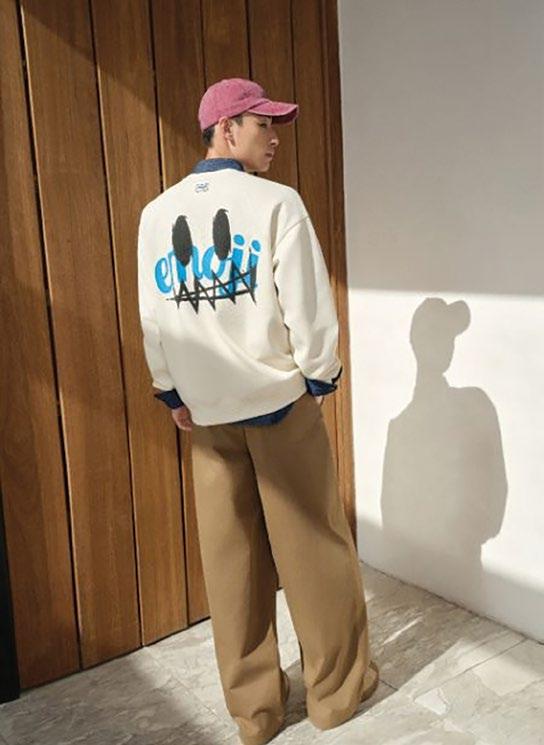
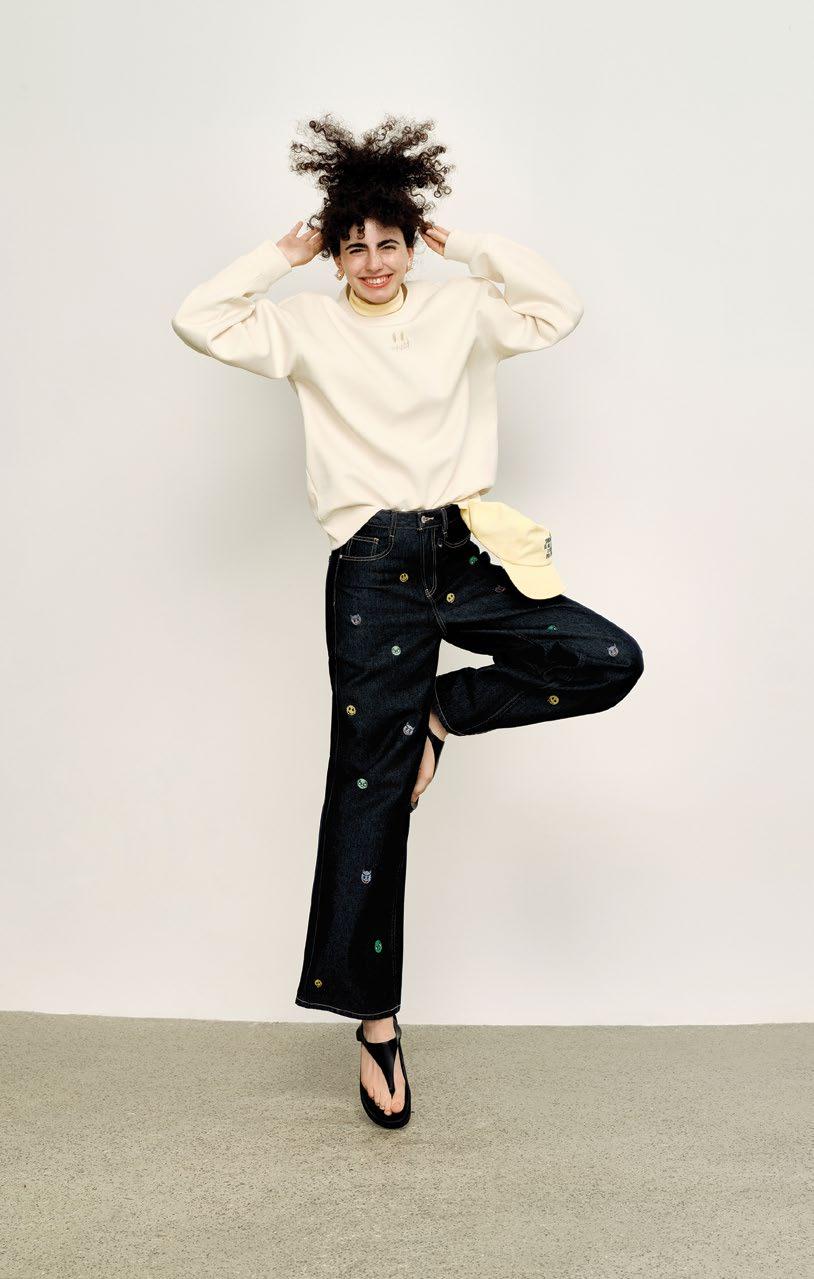
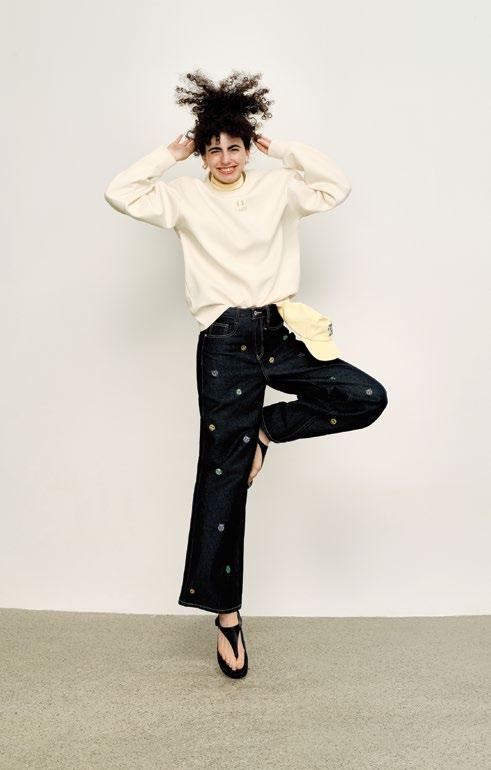
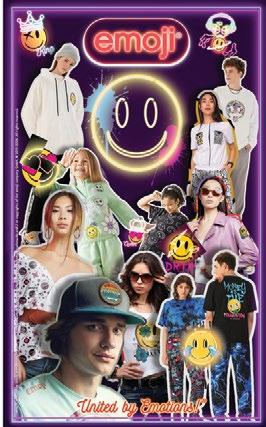
In the fashion sector, the emoji® Brand and Medialink worked with Chinese apparel brand Semir to launch a collaborative collection that brings emoji® Brand icons into contemporary apparel design. The collection transforms everyday apparel into a canvas for personal expression and creative styling. The design centers on integrating emoji® Brand expressions into bold graphic compositions across garments. Carefully selected emoji® Brand icons are arranged across chest or back panels, representing different moods and personalities. These expressive visuals turn each piece into a statement of individuality.
Bright color palettes and playful icon placements ensure that emoji® Brand
designs become the focal point of the designs. Combined with modern silhouettes and comfortable materials, the collection allows wearers to express positivity and individuality through everyday fashion.
Through these collaborations with Avatr, Wuhan M+ Mall, and Semir, the emoji® Brand continues to demonstrate how its iconic visual language can be creatively integrated across different industries and consumer touchpoints. From automotive campaigns and immersive retail experiences to contemporary fashion design, the brand’s expressive icons provide a versatile platform for storytelling and engagement. As the emoji® Brand further expands its partnerships in the region, it continues to bring moments of joy,
BYD, New Era, Tonie´s, Trolli, PUMA, L´Oreal, and Burger King. Celebrated as the 3rd most influential brand behind Lego and Coca-Cola by a leading industry publication and with a retail revenue of more than 3 billion US$ in the past 6 years the emoji company stands at the #78 position among the Top 150 Global Licensors, cementing its status as a universal lifestyle brand of unprecedented influence. For licensing inquiries: licensing@emoji.com Visit: www.emoji.com
About Medialink
Medialink Group Limited (Stock Code: 2230.HK) is a leading intellectual property (IP) management company headquartered in Hong Kong, with business in China, Japan and Southeast Asia, actively promoting cultural exchanges through its IP, bring high-quality entertainment to the whole of Asia.
creativity, and emotional connection to audiences across China.
About emoji® - The Iconic Brand
The emoji company is the owner of the emoji® brand, registered for a vast array of goods and services in over 150 countries. Its extensive rights portfolio encompasses over 1000 trademarks and over 25000 emoji® brand icons and designs. These are available for legal licensing and merchandising, including promotions, events, and marketing campaigns.
The emoji® brand, recognized globally, collaborates with over 1400 renowned license partners, including giants like Sony Pictures Animation, Pop Mart,
Founded in 1994, its business mainly focuses on content distribution and brand licensing, and is also involved in content production, distribution arrangements and animation product development. The Group invests and cooperates closely with media content licensors to distribute media content related to animation, variety shows, TV dramas, animated and live-action movies. At the same time, it also obtains copyright licensing from various brand licensors in the Asia-Pacific region, including merchandising rights and location-based entertainment rights and promotion rights.
The Group has its own animation brand, its various Ani-One® YouTube channels (including Ani-One® Asia which is Asia-focused, Ani-One® which is run in Chinese, and other South East Asia channels – Ani-One® Thailand, Ani-One® Philippines and Ani-One® Vietnam) have more than 10.5 million subscribers and more than 2.4 billion views. In addition, the Group also has its own e-commerce platform AniMall®, selling animation products and exclusive animé boutique items.
Contact: licensing@medialink.com.hk
How Licensing can become a Growth Engine for Automotive Brands
For decades, licensing in the automo tive world was treated as an admin istrative necessity: a way to manage contracts, collect royalties, and keep legal teams satisfied. It sat on the pe riphery of the business, far from the centre of brand and product strategy. That world has gone. Today, brand extensions and licensing have shifted from back‑office function to front‑line growth driver.
The most forward‑thinking automo tive companies now view licensing as a strategic discipline that can build au‑ diences, tell deeper brand stories, and unlock entirely new revenue streams.
Global Trademark Licensing (GTL) was founded in 2008 in early recog nition of this shift. Starting in Asia, at a time when few knew how to turn Western automotive trademarks into high‑quality products at scale, GTL pi oneered structured automotive brand licensing and has spent 18 years evolv ing that frontier into a global business programme spanning toys and collect
ibles, lifestyle, and digital extensions for many of the world’s most iconic OEMs.
From car‑maker to lifestyle brand
The car is no longer the only, or even primary, expression of an automotive brand.
Customers experience marques across a much wider landscape: prod ucts, collaborations, content, events, and digital environments. A modern brand relationship might begin with a game console, a limited‑edition jacket, a toy on a child’s bedroom shelf, or a collectible on a desk.
Executed correctly, licensing becomes the toolkit that connects all of these moments.
It can extend awareness and support new vehicle launches, strengthen loy alty by keeping the brand in custom‑ ers’ daily lives, create incremental rev enue, reinforce positioning, and reach
new communities through categories such as gaming, fashion, toys, and col lectibles.
At the same time, automotive and motorsport properties have never been more culturally prominent. F1’s expanded calendar and greater glob al visibility, with series like Netflix’s Drive to Survive, and films such as F1 and Gran Turismo are fuelling rising audiences and deeper passion for all things automotive, pushing more of these brands into mainstream culture.
Closing the execution gap
Yet automotive licensing as a category still under‑indexes versus character, entertainment, and corporate brands, with many OEMs delivering under whelming programmes. The question is why this surge in interest is not con sistently converting into retail sales. The answer often lies in how auto motive organisations are structured. Successful licensing demands capabili ties that most OEMs are not set up to provide deep category knowledge, a trusted global partner network, cre ative development, operational excel lence, and robust brand protection.
As brand owners, OEMs rightly want to maintain control, and many still manage licensing as a side responsibil ity within legal, finance, or marketing.
The result is frequently fragmented regional deals, inconsistent product quality, missed opportunities, and, in some cases, brand risk.
Traditional licensing agencies do not always solve the problem. Many lack
the specific understanding of automo tive needed to bridge the gap between licensees and the realities of OEM cli ents: the asset base, the attitude to brand risk, the demands of engineer ing and legal teams, and the structural challenges in creating smooth product development and approval processes. This is where GTL is different. Its senior management team has spent years working specifically with and for automotive brands, tailoring agency approaches, systems, and processes to the unique dynamics of the sector. In almost 20 years, GTL has built an automotive‑curated network of trust ed licensees that meet the industry’s rigorous demands, along with special‑ ist service providers offering bespoke solutions for legal services, trademark management, and brand protection. Perhaps the most exciting develop ment is how GTL is using new tech nology to improve licensing pro grammes. AI tools embedded in GTL’s GTX infrastructure allow the agency to harness proprietary industry data to improve decision‑making and cus tomise the client experience, giving brands better control and visibility over their programmes.
The proposition is clear: an expe rienced automotive team, a care fully curated global network, and a
names, such as Jaguar. As the brand moves into a new era of design and electrification, licensing programmes are being used to bridge past and fu ture—connecting heritage icons to new audiences through products and collaborations that feel modern, not nostalgic.
Gaming: where the next generation meets the brand Gaming has overtaken film and music to become the world’s largest enter tainment industry, reshaping how au tomotive brands show up in people’s lives. For many younger consumers, the first time they drive a perfor‑ mance car is not on asphalt, but on a screen.
technology‑enabled platform that to gether create a unique brand‑licensing solution for every client. This is what can finally close the execution gap for automotive brands.
Turning launches into cultural moments
One of the clearest demonstrations of licensing’s strategic power is its ability to turn a product launch into a cul tural event.
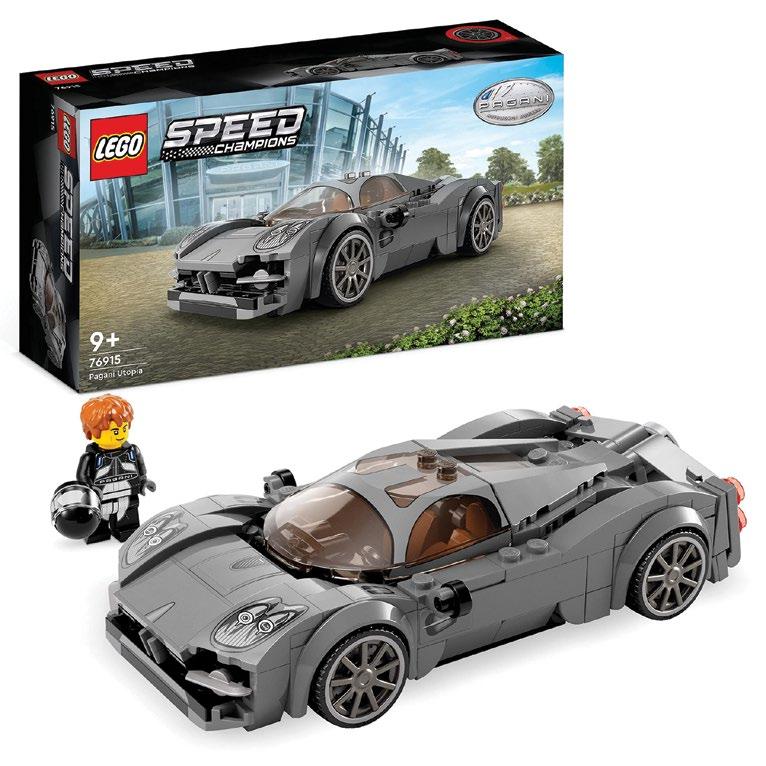
Pagani Automobili the hypercar manu facturer builds around 50 hand‑craft ed cars each year, yet its first LEGO Speed Champions model the Pagani Utopia opened the brand to millions who might never see one of its cars on the road, turning the LEGO set into a first point of contact with the world of Pagani.
These are the kinds of programmes GTL’s ecosystem and GTX infrastruc ture are built to scale. By matching brands with the right global partners and using live data to monitor perfor‑ mance, GTL can rapidly expand what works, whether that is a hero toy line, a fashion capsule, or a digital col lectible. While protecting quality and brand positioning.
GTL is applying the same thinking to some of the sector’s most storied
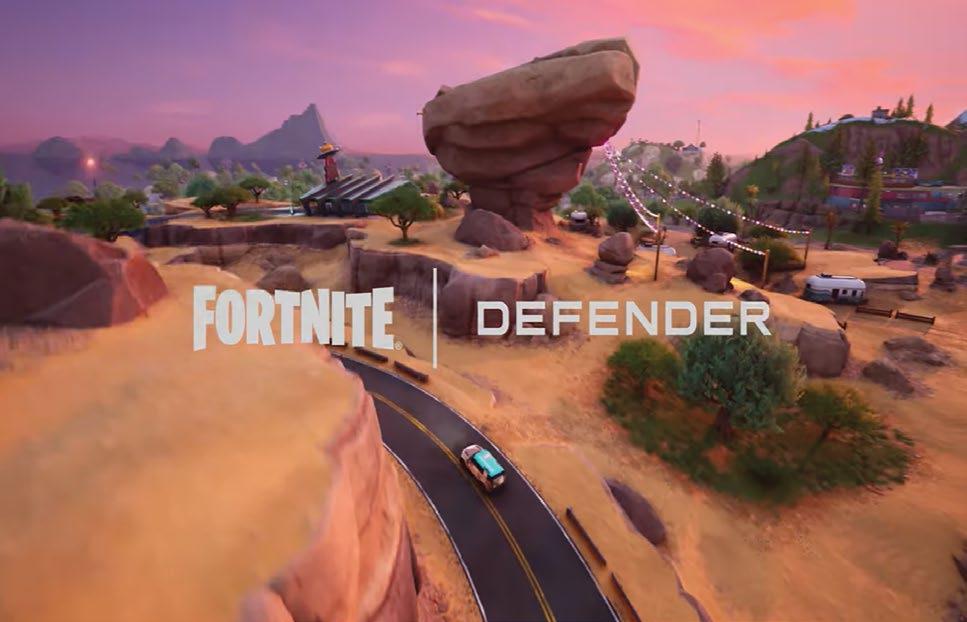
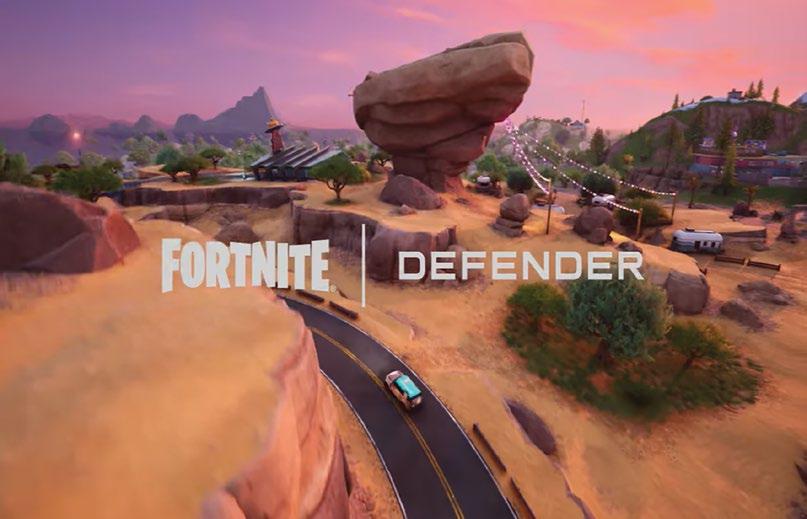
Recognising this, GTL has helped cli ents develop integrated gaming strate gies that extend beyond the tradition al racing game sector. For example, GTL successfully integrated Lotus Cars into PUBG Mobile, introducing the Lotus Emira and Lotus Emeya to great acclaim from both fans and gam ers. Meanwhile, the Defender Dakar D7XR was launched in Fortnite, a col laboration that generated significant buzz and anticipation across the gam ing community.
Mercedes has taken a similarly bold approach by bringing its vehicles into the colourful universe of Mario Kart, placing the marque in front of a vast, younger audience that might not oth erwise engage through traditional channels. Behind the scenes, pro grammes like these rely on exactly the kind of coordinated, cross‑platform management that GTX was built for,
For information, contact: inquiries@gtl-int.com
so that each appearance reinforces a consistent brand story rather than creating disconnected one‑offs. As in teractive environments evolve, brands that commit to thoughtful, long‑term gaming strategies, that are supported by data‑driven partner selection and approval workflows, will not just be displaying logos in virtual worlds; they will be shaping culture and building emotional connections that outlast any single campaign.
From fan enthusiasm to long‑term loyalty
At its best, licensing is a bridge from casual fandom to long‑term advocacy. GTL’s work across toys, collectibles, and interactive products shows how the right partnerships can turn admi ration into a relationship that spans years and even generations.
McLaren Racing’s collaboration with Bburago uses a full line of die‑cast Formula 1 models and remote‑con trolled cars to bring the excitement of the paddock into fans’ homes, often as a first step into a deeper McLaren universe.
By expanding Scania into toy trucks and driving simulators, GTL have cre ated ways for families to engage with the brand through everyday play so that the logo on the highway is already familiar and positive.
LEVC has used licensing to tackle
counterfeiting, developing an of ficial range of Lon don Taxi‑branded gifts that pro vide authentic, well‑designed al ternatives to un licensed products and reinforce both brand value and customer trust. In each case, the combination of curated partners, rigorous approv als and real‑time performance in sight means pro grammes can grow from initial interest to sustained loyal ty without sacrific ing brand control.
Keeping heritage alive and relevant
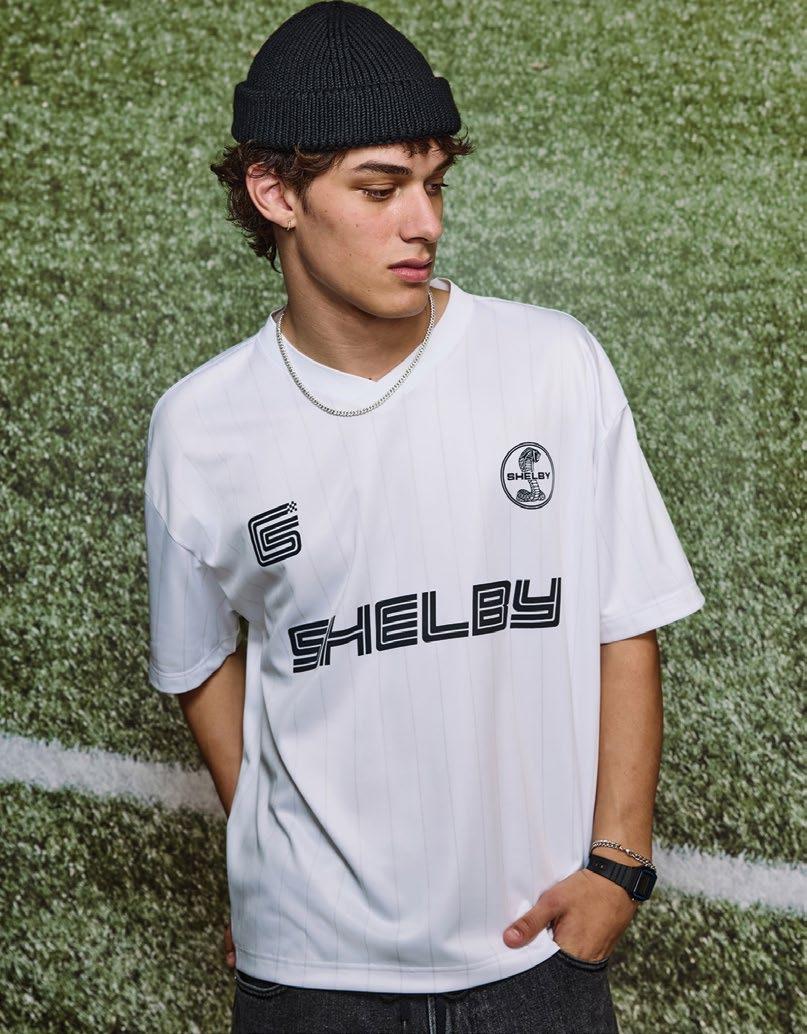
Heritage is the automotive sector’s greatest assets, but it can quickly be‑ come stale if it is not actively translat ed for new audiences. Licensing offers a way to keep iconic stories moving. Shelby’s partnership with Abercrom bie & Fitch channels classic American heritage identity into contemporary fashion, bringing the name into ward robes and spaces where traditional automotive marketing might never appear.
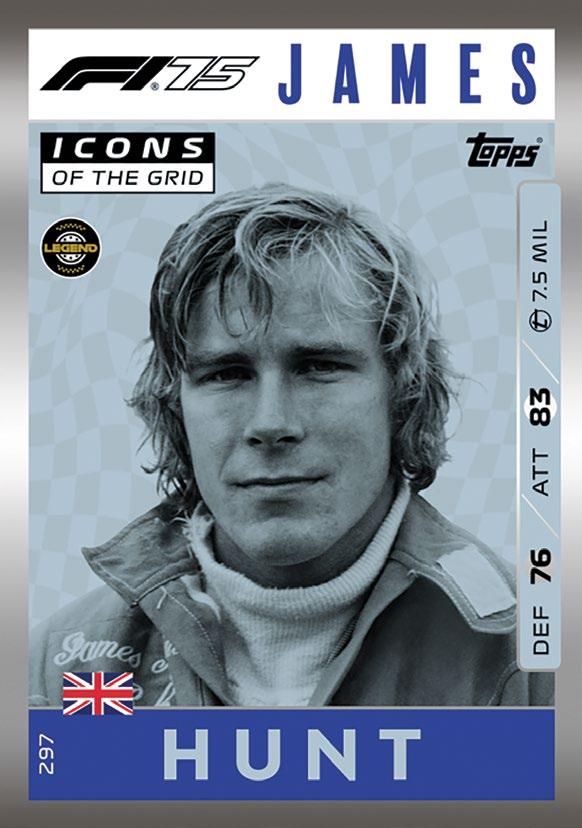
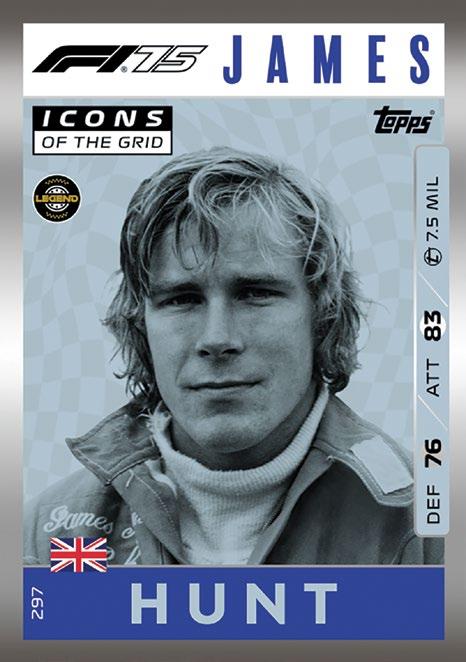
The 50th anniversary of James Hunt’s Formula 1 championship in 2026 will likewise use merchandise, experiences and collectibles to let long‑time fans and newcomers engage with the story of a racing legend.
Lambretta, the iconic scooter marque, is using licensing to fuel a modern re vival that repositions the brand for today’s design‑conscious, globally con‑ nected consumers. GTL’s senior team and wider ecosystem play a pivotal role: category choices, collaborators and creative direction are all filtered through an automotive lens, ensuring the brand’s heritage is thoughtfully re interpreted rather than diluted.
The road ahead
The automotive landscape is being rewritten by electrification, digitalisa tion, and shifting customer expecta tions. Performance is being redefined, ownership models are evolving, and younger audiences are questioning what a “car brand” should be. In this context, licensing is no longer a pe ripheral transaction but a catalyst—a way to connect timeless brand at tributes with new technologies, plat forms, and communities.
GTL’s combination of deep automo tive expertise, GTX‑powered execu tion, and a global, automotive‑curated ecosystem is designed precisely for this moment, turning brand equity into measurable revenue, stronger customer engagement, and long‑term brand value.
The ambition is not just to place logos on products, but to design journeys that drive growth, build communities, and embed brands into the cultural fabric of tomorrow. For brands willing to rethink what licensing can be—and to partner with a specialist agency capable of building programmes from the ground up—this is an opportunity to lead that future, not simply follow it
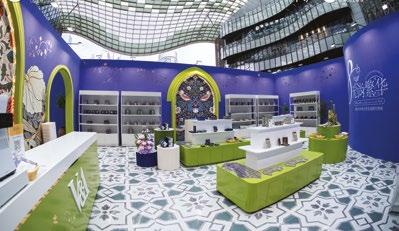
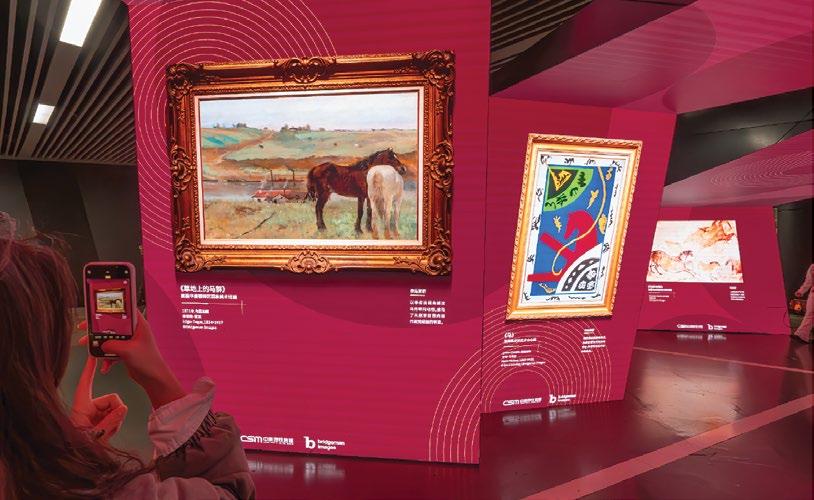
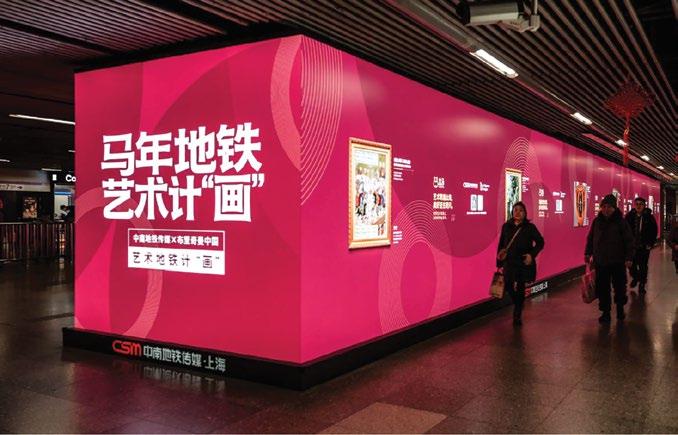
The V&A continues to share the creativity of its collections across East Asia.
The V&A (Victoria and Albert Museum) champions design and creativity in all its forms. Renowned for its extensive collections and influence on the world of design, the V&A’s award-winning brand licensing programme highlights its commitment to inspire design and innovation. It offers an almost infinite source of design inspiration for a multitude of product categories from home interiors, apparel and accessories to luxury jewellery, gifting and stationery.
Continuing to inspire global audiences through its ever-evolving collections, the V&A launched the William De Morgan range with Paradise Umbrella. Inspired by the exquisite craftsmanship of celebrated artist-potter, William De Morgan, Paradise Umbrella have infused 19th century design with modern technique. The latest drop joins
existing SKUs by another famous Arts and Crafts designer, William Morris. The work of these artists continue to captivate audiences across time, with the collaboration reimagining the classic Compton design and De Morgan’s vibrant 19th-century tile patterns, transforming designs from the museums’ archives into dynamic motifs that can be taken out into the world.
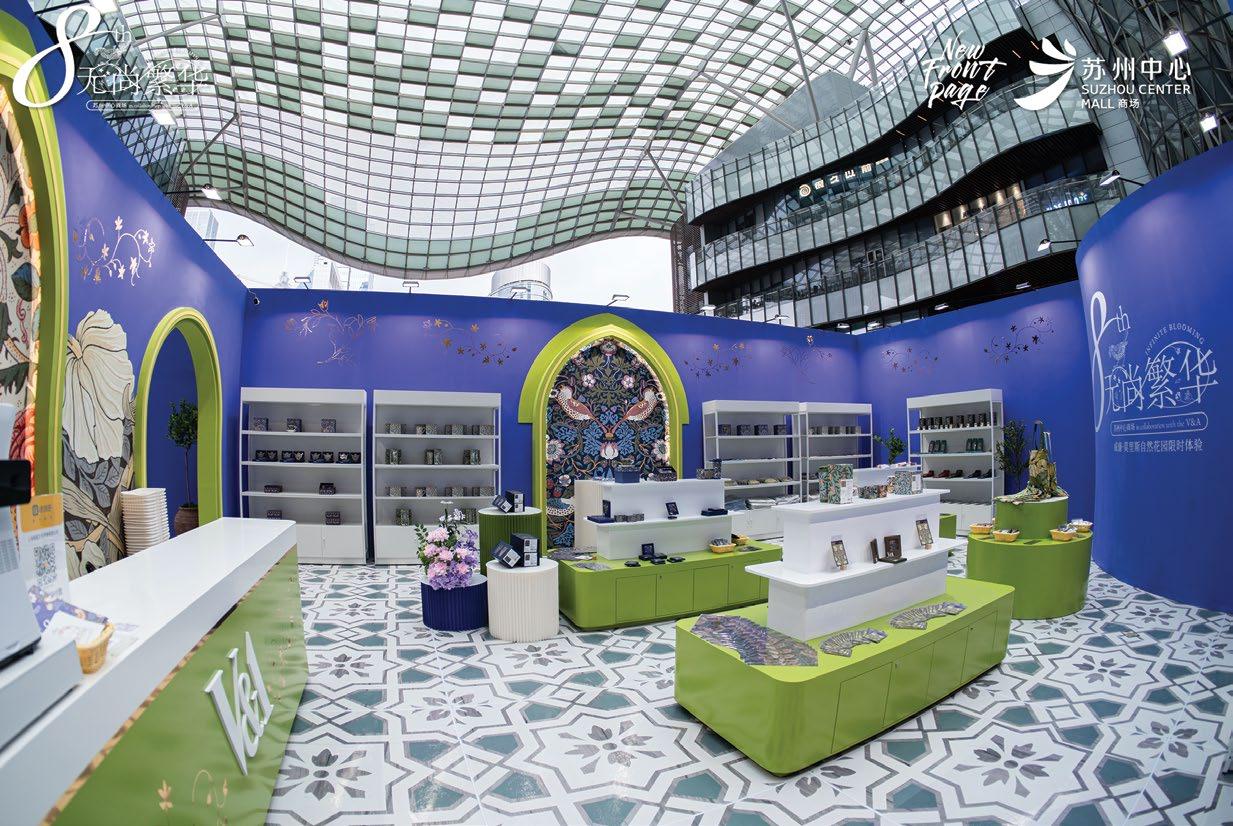
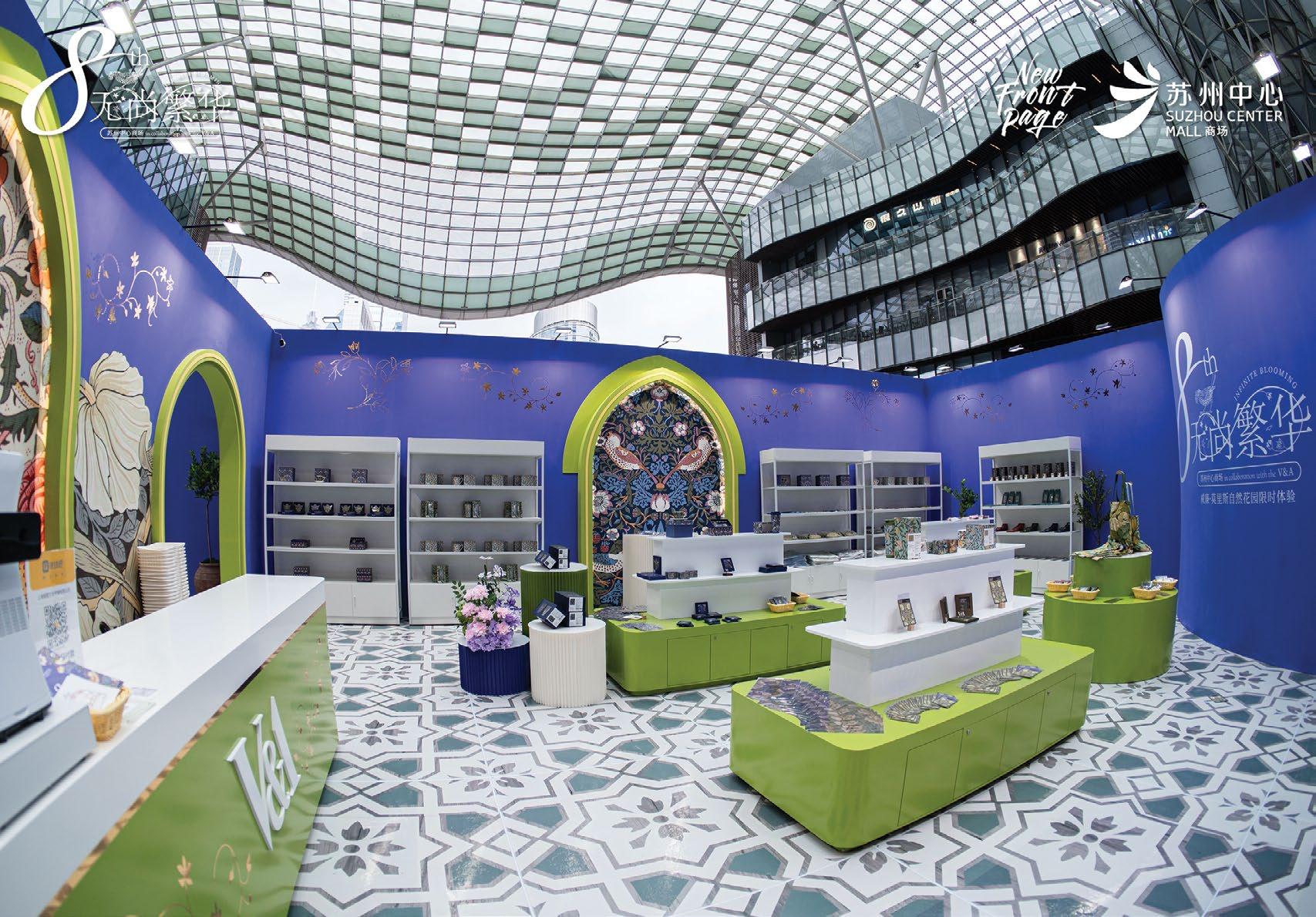
Further paying homage to the traditions of the Arts and Crafts movement, ‘Infinite Blooming – The William Morris Garden’ at Suzhou Center Mall marked a landmark collaboration between the V&A and one of China’s leading retail destinations. Created to celebrate the mall’s eighth anniversary, the month-long retail pop-up experience reimagined William Morris’ iconic designs through four immersive spaces. These included a British tea
party photo opportunity and a beautifully designed retail space. This was the first initiative of its kind at Suzhou. Over 30 days, the experience attracted 50,000 visitors. The V&A holds one of the most distinguished archives of William Morris’ work who enjoyed a
with CASETiFY
Infinite Blooming at The William Morris Garden, Souzhou Center Mall
Collaboration
close relationship with the museum during his lifetime.
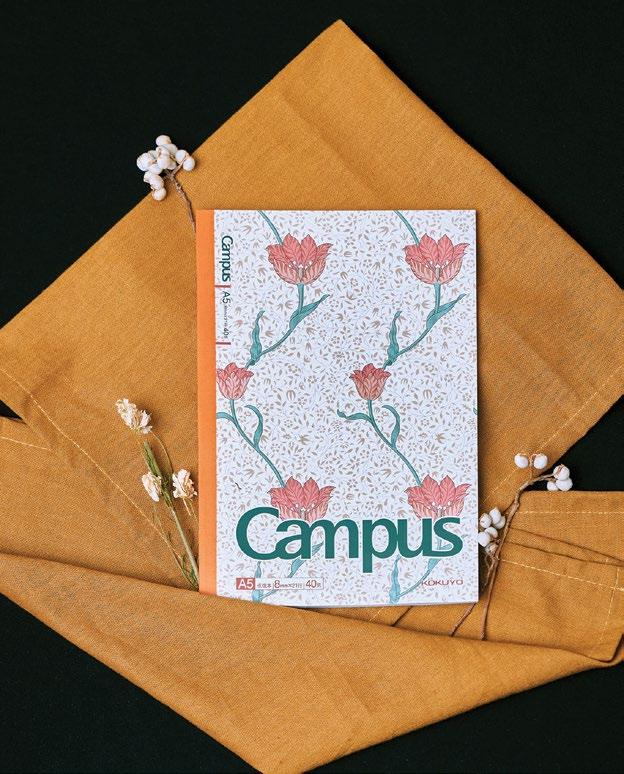
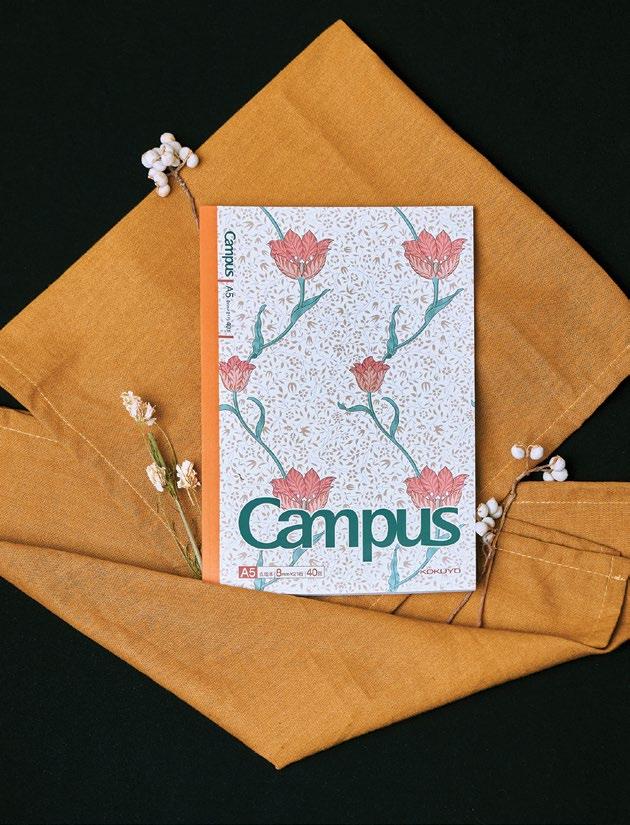
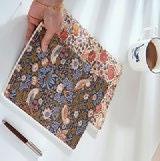
range features notebooks, tote bags, pencil cases and pens, all designed to bring creativity and colour to everyday objects. Drawing inspiration from the V&A’s rich archives, KOKUYU was influenced by floral patterns, evoking the ambiance of the natural world.
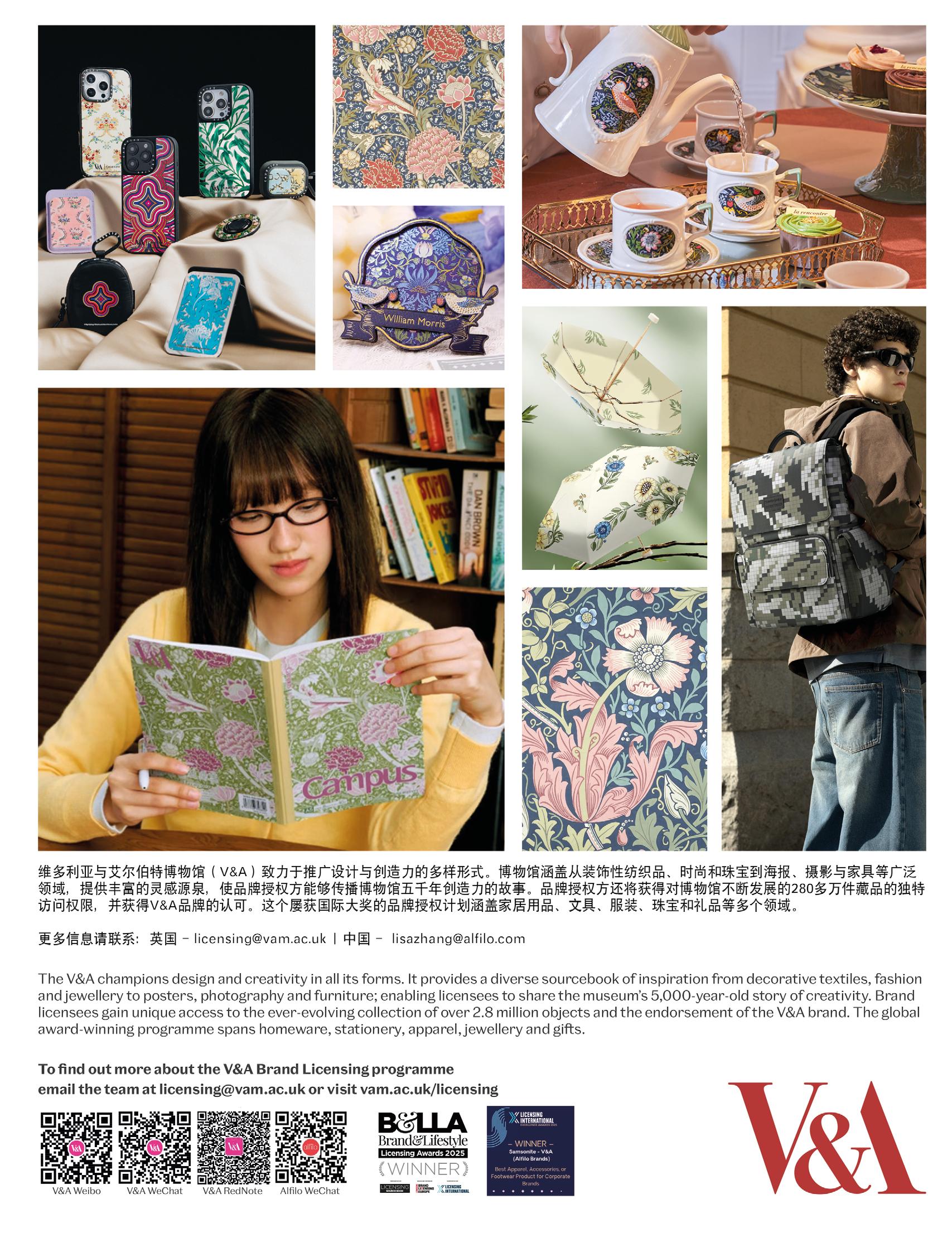
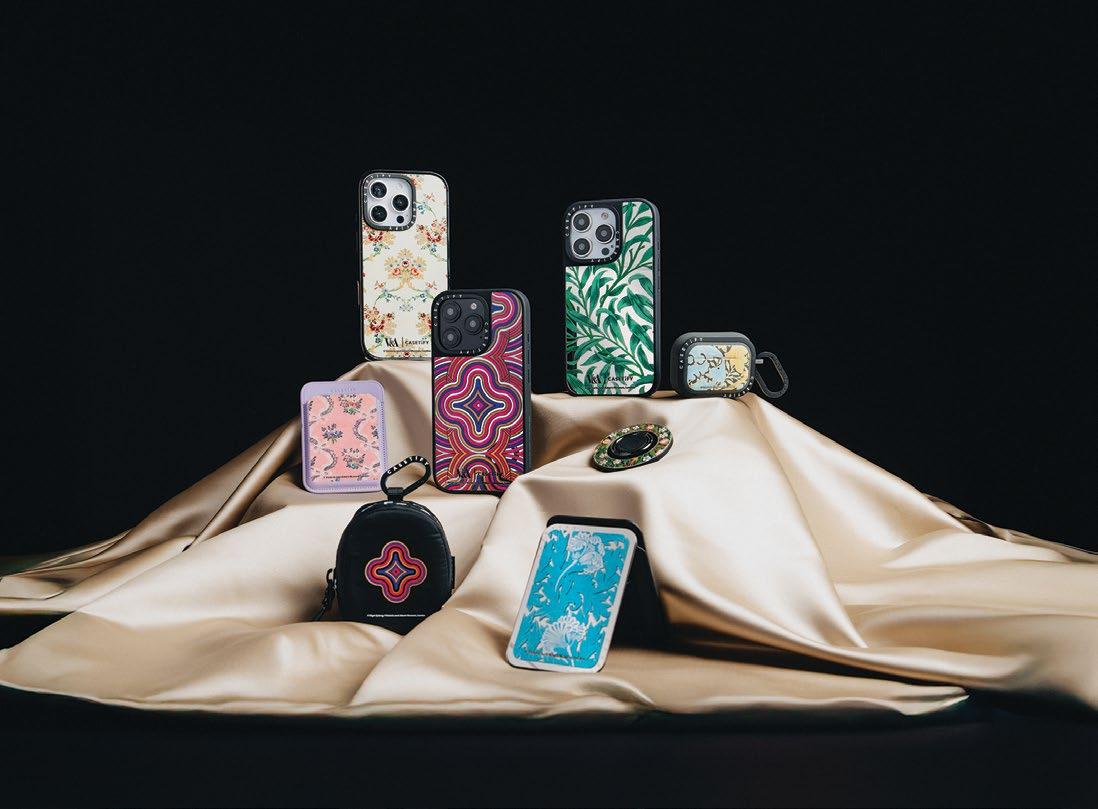
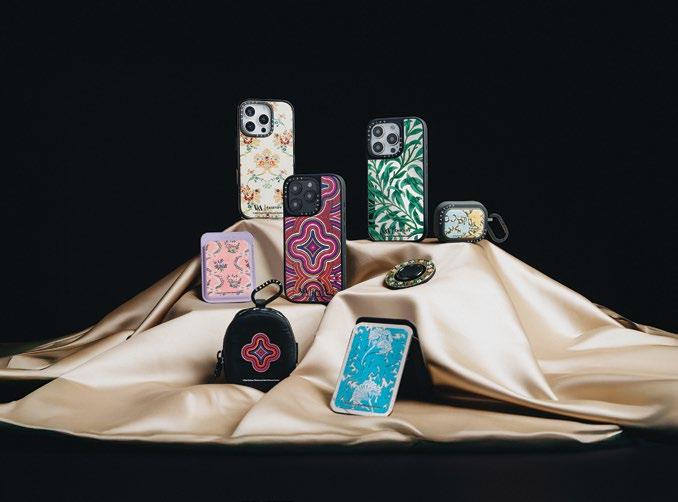
Blending timeless designs with everyday objects of incredible beauty, the V&A’s debut collaboration with global tech accessories brand, CASETiFY, reimagines iconic prints from the V&A’s collections.
These are organised into three design edits: Arts & Crafts, French Rococo silks and 1960s geometric patterns. Using exemplary designs by William Morris and J.H. Dearle alongside 18th century brocaded silks and psychedelic patterns from Nigel Quiney, the range is a diverse and exciting celebration of the V&A’s archives. The prints are available across CASETiFY’s phone case offerings, alongside matching tech accessories including AirPod and iPad cases, SnappyMagSafe wallets and wireless chargers.
tions. The graphic effect of the original pattern was achieved by arranging the leaf motifs in a coloured chart, which served as a guide for embroiderers working in the Berlin wool work technique – a style popular across Europe in the 19th century.
Recoloured in a palette of green tones, this versatile pattern feels contemporary and sophisticated, seamlessly blending a compelling story of craftsmanship with modern fashion trends.
This year brings exciting new opportunities for licensees globally as V&A East Museum is scheduled to open 18th April 2026. This landmark new venue celebrates making and creativity’s power to bring change. Created with young people and rooted in east London’s heritage, V&A East Museum explores what’s shaping our world with the voices that lead contemporary culture. In turn, this will provide new opportunities for licensees to respond through alternative asset selection and product styling.
To find out more about the V&A Brand Licensing programme, email the team at licensing@vam. ac.uk
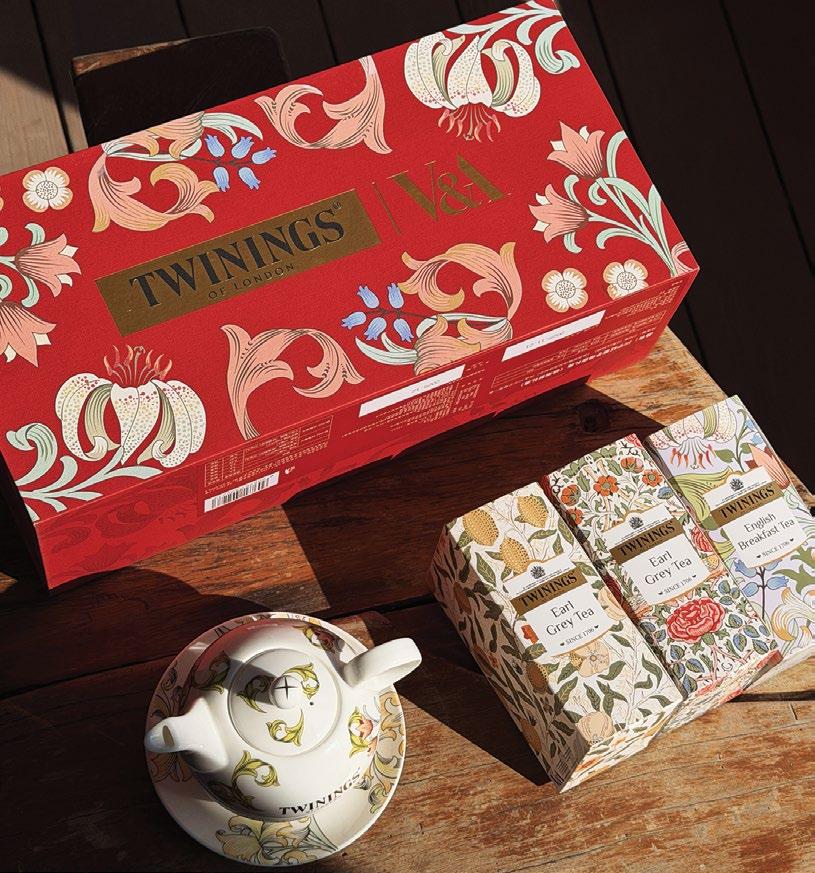
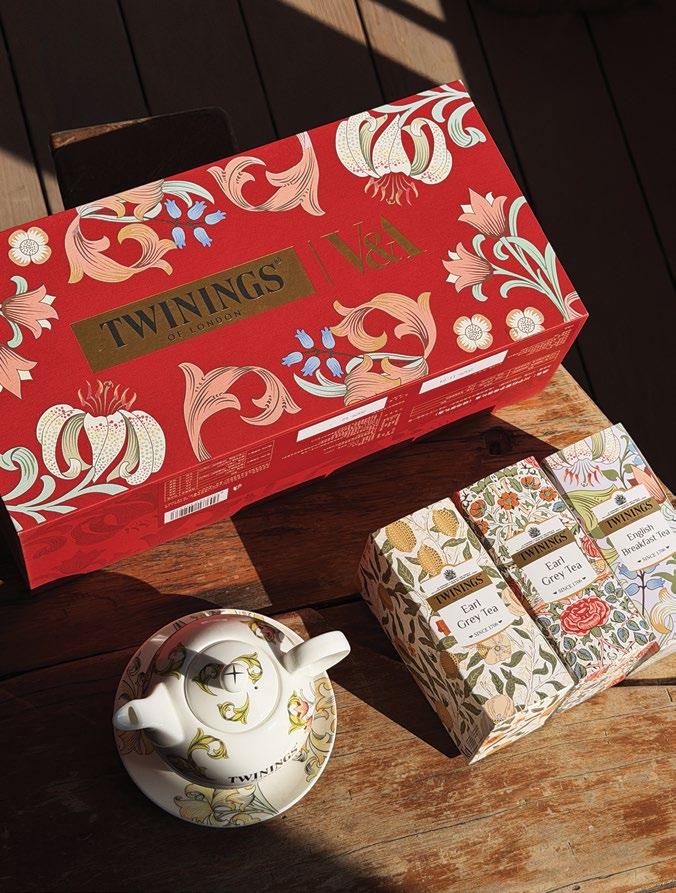
The V&A’s collaboration with Twinings also celebrates William Morris’ connection to the V&A and unites design and tradition through a shared love of tea. Featuring a nested teapot and three patterned boxes of Breakfast and Earl Grey tea, all encased in a beautifully designed box, the V&A Twinings gift set offers the opportunity to experience the elegance of the English tea ritual. William Morris was an advisor to the V&A and even designed the V&A South Kensington’s tearoom interior, which was groundbreaking at the time being the first museum in the world to feature its own cafe.
KOKUYO is a stationery manufacturer with a reputation for creating high quality notebooks, writing instruments and items for the home or office. The
Samsonite and the V&A collaborated to create a range of bags in three styles that feature a ‘pixelated’ foliage print inspired by a design for embroidery housed in the museums’ collec-
An important part of the V&A’s founding mission was, and still is, to make its world-class collections of decorative arts available to all, to champion the creative industries, spark imagination and inspire the next generation.
Through their work with Alfilo Brands in China and with Infiniss in South Korea and across Japan, Hong Kong and Malaysia, the licensing programme continues to bring the wonders of the V&A to audiences across East Asia.
The V&A’s touring exhibition, Beyond William Morris is currently open at its seventh and final venue, Anhui Museum (10th Feb - 10th May 2026), with the touring exhibition having welcomed over 2.5 million visitors to date. Consumers can expect to see many more exciting product ranges and retail experiences launching throughout 2026 and beyond, which encapsulate the rich themes, colours and textures of the V&A’s remarkable collections.
British Children’s TV programmes are a hit in China
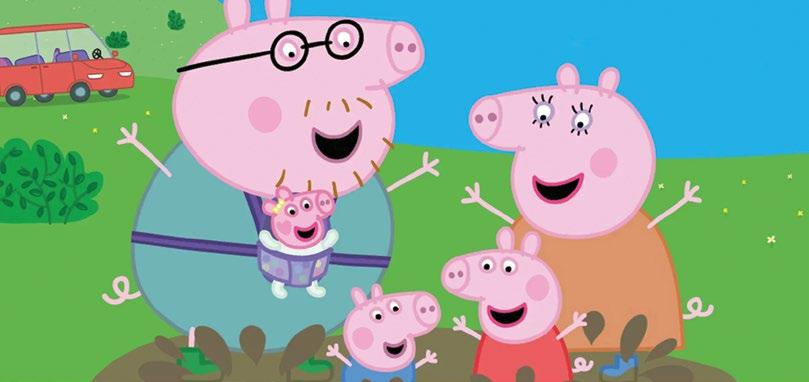
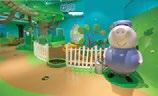
British children’s television has found an unexpectedly strong foothold in China, particularly in the preschool animation sector. Over the past two decades, several UK-produced shows have become widely popular with Chinese audiences, with one in particular—Peppa Pig—emerging as a cultural phenomenon that extends far beyond television.
Peppa Pig stands as the clearest example of British success in this space. While originally a modest preschool cartoon in the UK, it has achieved extraordinary reach in China, accumulating billions of views on streaming platforms such as Youku. Its appeal is especially strong among very young children, but its influence goes further, permeating consumer culture through toys, clothing, books, and educational materials.The brand has expanded into
films tailored specifically for Chinese audiences and even inspired themed attractions. At one point, it also became part of online meme culture, illustrating how deeply it had embedded itself in everyday digital life. In China, Peppa Pig is not simply a television programme but a fullscale commercial and cultural ecosystem.
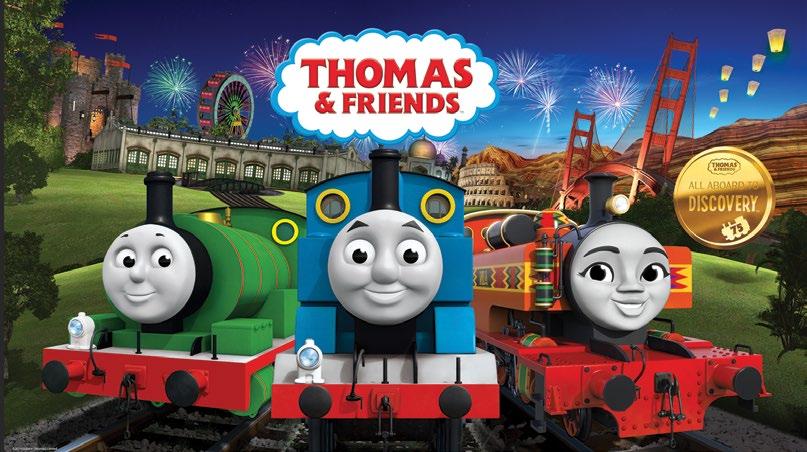
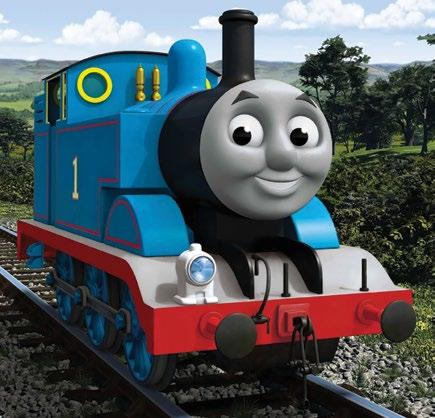
Other British children’s programmes have also found success, though on a smaller scale. Thomas & Friends was one of
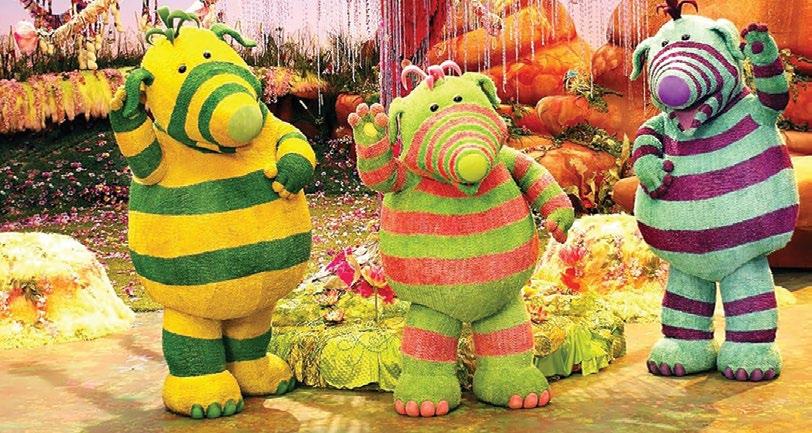
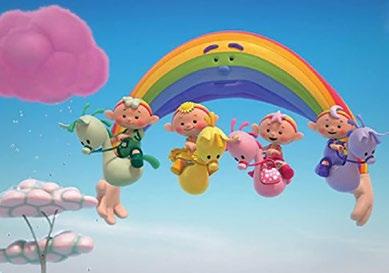
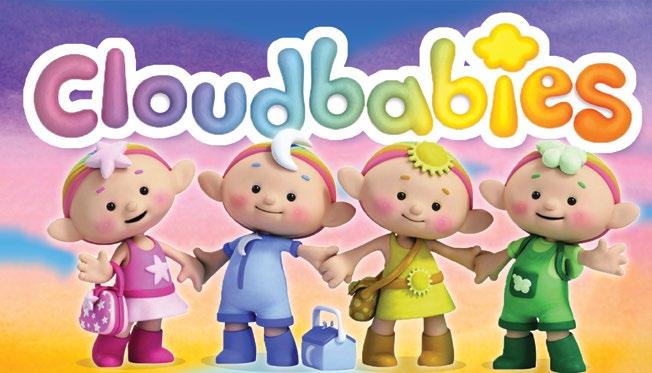
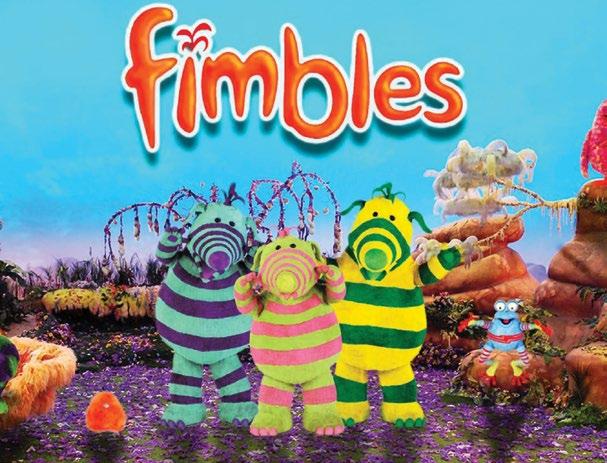
the earliest UK exports to gain traction in China and helped pave the way for later entries into the market. Shows like Fimbles, Everything’s Rosie, and Cloudbabies have been broadcast on Chinese television or distributed through local platforms, often dubbed into Mandarin and sometimes adapted in format or length to suit local viewing habits. These programmes demonstrate a broader pattern: British preschool content, when carefully localised, can travel effectively across cultural boundaries.
Several factors help explain why British children’s television performs well in China. One key element is the simplicity and universality of its storytelling. Many UK preschool shows focus on everyday experiences—family life, friendship, and small-scale adventures—which translate easily across cultures. This makes them accessible to young audiences regardless of language or background. Additionally, Chinese parents often perceive these programmes as educa-
tional, particularly in their potential to introduce basic English language exposure. This perceived developmental value enhances their appeal in a highly competitive educational environment. Another important factor is the strength of British companies in licensing and merchandising. UK producers have long experience in turning children’s characters into global brands, and China’s vast consumer market amplifies these opportunities.
Strategic partnerships with Chinese broadcasters and streamers such as Youku, iQIYI, and CCTV have also been crucial in scaling distribution and ensuring visibility.
Despite these successes, British children’s television operates within a crowded and competitive landscape. Domestic Chinese animations, such as Pleasant Goat and Big Big Wolf, command large audiences, while international imports from countries like Russia and the United States also vie for attention. British shows succeed not by dominating the market entirely but by carving out a strong niche, particularly in the preschool segment. Taken together, the success of British children’s television in China reflects both the global strength of the UK’s creative industries and the unique dynamics of the Chinese media market. It illustrates how relatively simple, well-crafted content can cross cultural boundaries and evolve into a powerful form of soft power, reaching audiences far beyond its country of origin.
Philippe Guinaudeau 先生(邮箱: philippe.guinaudeau@ brandtrends.ai)。
这些是中国最受欢迎的娱乐品牌
0 - 65. 十月 2025
Jin Tan Limited Leads the New Direction of the IP-themed Snack Industry
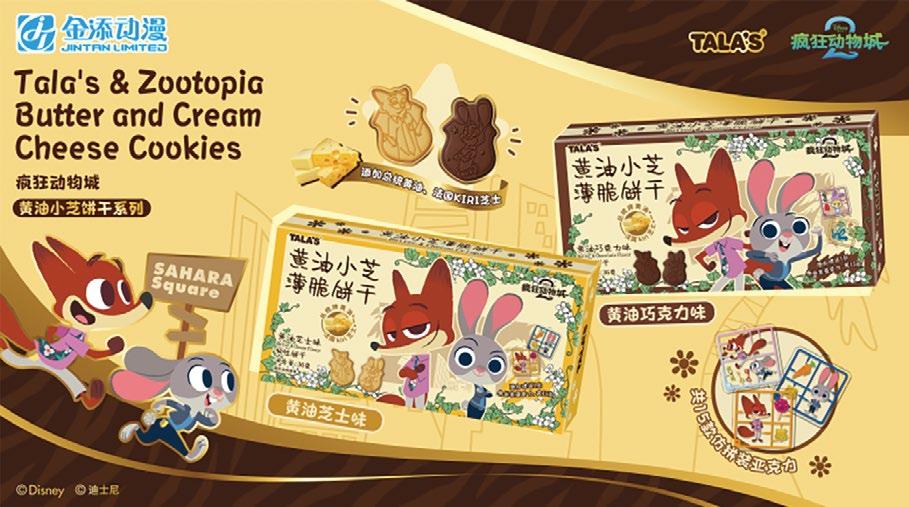
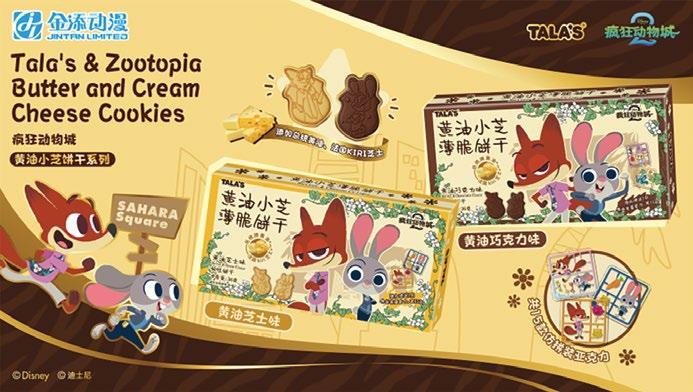
Zootopia 2 has become a huge hit online since its release at the end of 2025. Talas x Zootopia - Butter & Cream Cheese Cookies launched by Jin Tan Limited have ridden this wave of popularity and achieved strong sales right after launch. As a company deeply engaged in the IP-themed snack sector, Jin Tan Limited takes “snack+IP premium” dual-attribute products as the carrier, upgrading brand licensing into the core driving force of product experience. Taking the evergreen hit “Ultraman Egg” as an example, we deeply integrate the Ultraman IP into design: classic character packaging paired with plot-restored assembly toys not only meets children’s play
needs but also evokes nostalgia among adult consumers, achieving mutual empowerment of licensing value and product strength.
In 2025, Jin Tan Limited officially launched Zootopia—Butter & Cream Cheese Cookies. Made from highquality food ingredients, these cookies feature fun IP-themed shapes. Each product comes with an acrylic IP gift, bringing consumers extra playful surprises beyond great taste, and further expanding consumption scenarios
In licensing integration, they adhere to “scenario-based design”: for families, we launch healthy snacks with educational toys; for young collectors, we launch collectible fun snack toys, using
Catch! Teenieping Theme Exhibition
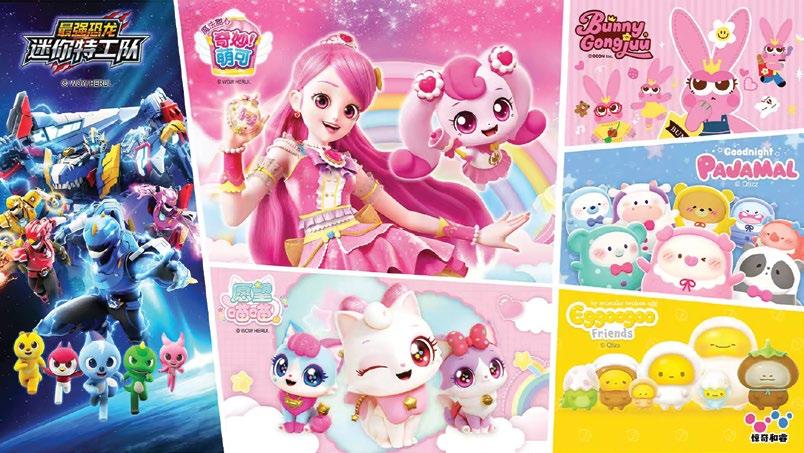
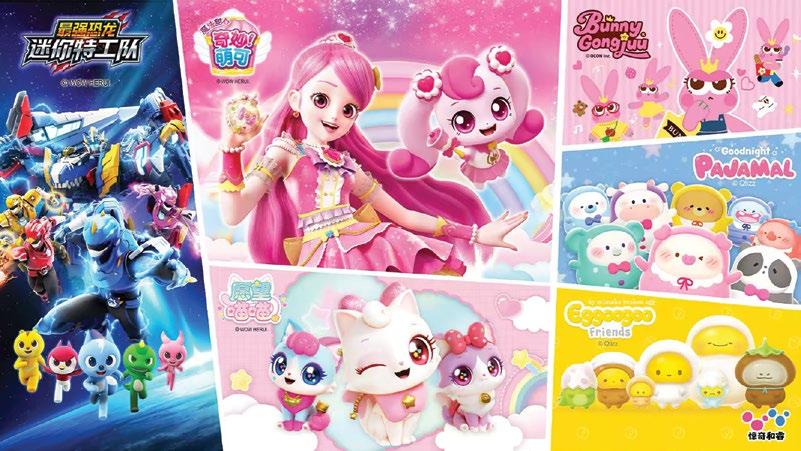
Wow Herui (Guangzhou) Culture Media Co., Ltd. is a fully integrated enterprise dedicated to the end-to-end value-chain management of children’s animation for age 3-9. Their core competencies encompass content development, animation production, distribution, IP licensing, and the development, merchandising, and sale of derivative toys.
At the beginning of 2026, CATCH! TEENIEPING exhibitions are igniting city-level landmarks, such as Aigean Sea Shopping Center in Jining, with ten thousand of people New Year’s Eve celebration, Nanjing Longwan Tianjie Shopping Center with immersive limited-time pop-up store, Times Starlight Square in Chongqing, breaking the shopping mall’s traffic record and
covering all kinds of the customers. It serves as a bond that conveys the emotional connection of the festiva, whose immersive scene deeply engages consumer interaction and deepening the value of the commercial space.
Multiple product categories have been developed simultaneously. KA YOU has launched its new cute plush accessories exclusively nationwide, including the plush bags and hair clips satisfied girls. The national brand HAERS is collaborating on thermal mug focus on children’s drinking health. The sports giant ANTA is developing cute children’s clothing and shoes with the result that various products will be launched this year.
The new project Wish Cats has been
IP scarcity to boost repurchase rates. Meanwhile, they integrate licensing compliance and product safety throughout R&D, strictly controlling safety standards to protect IP rights and earn consumer trust.
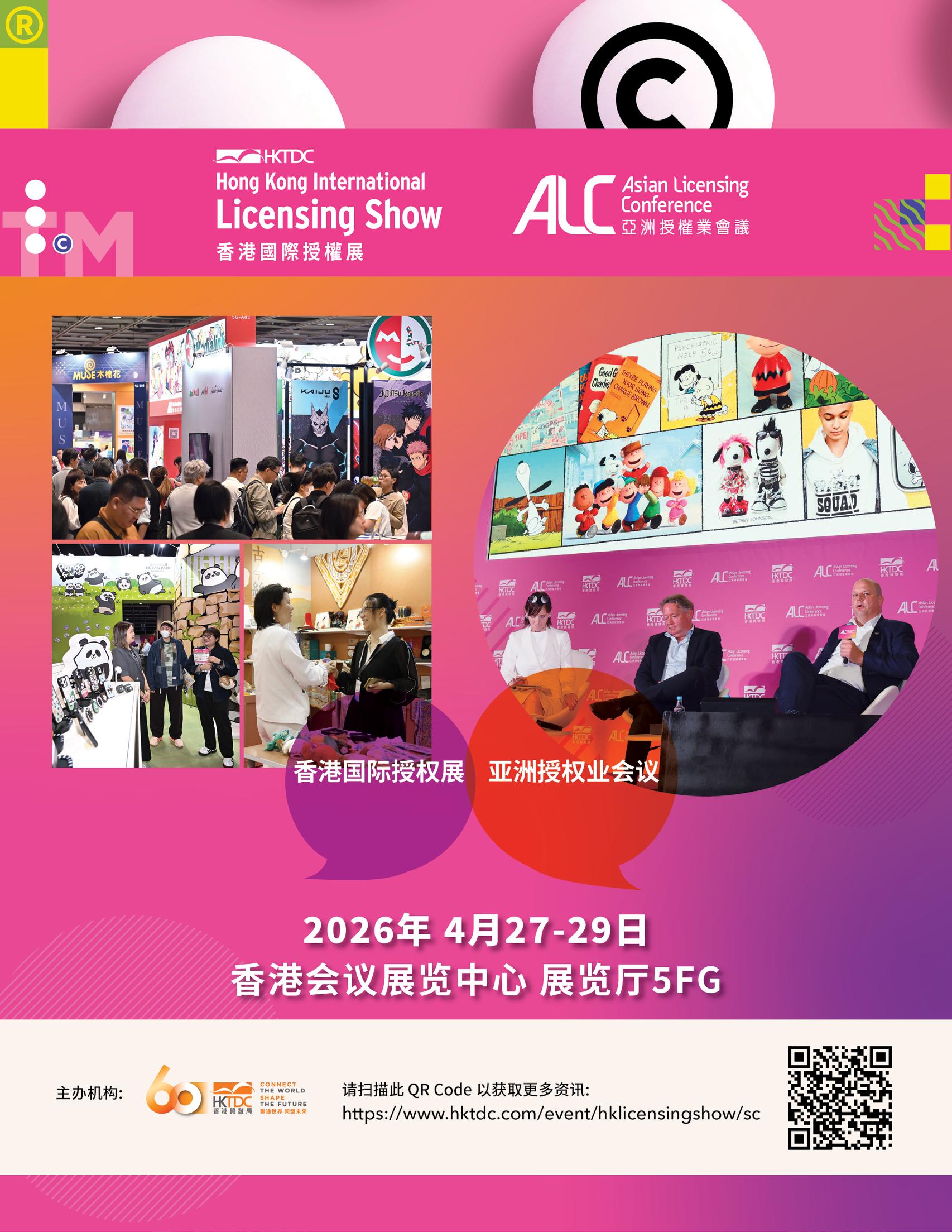
Visit Total Licensing at Booth 16T28, Hall 16
Licensing
China Shenzhen, 9 - 11 April 2026
launched for its first season and has received high praise from both the platform and the audience since 2025. It has entered the top 20 ranking list of viewership and has become the most promising children’s animation project of the year. Cross-referencing with different ages, Wow Herui have introduced the young project “Bunny Gongjuu”, presenting a relaxed attitude that can both fit into the subway and be a princess, providing unique value products in the new niche market. In the future,Wow Herui will keep progressing in children’s market with more innovative content, establishing strategic partnerships with professional attitude.
They will look to develop more interesting authorized products, bringing happy growth experience to every parent-child family.
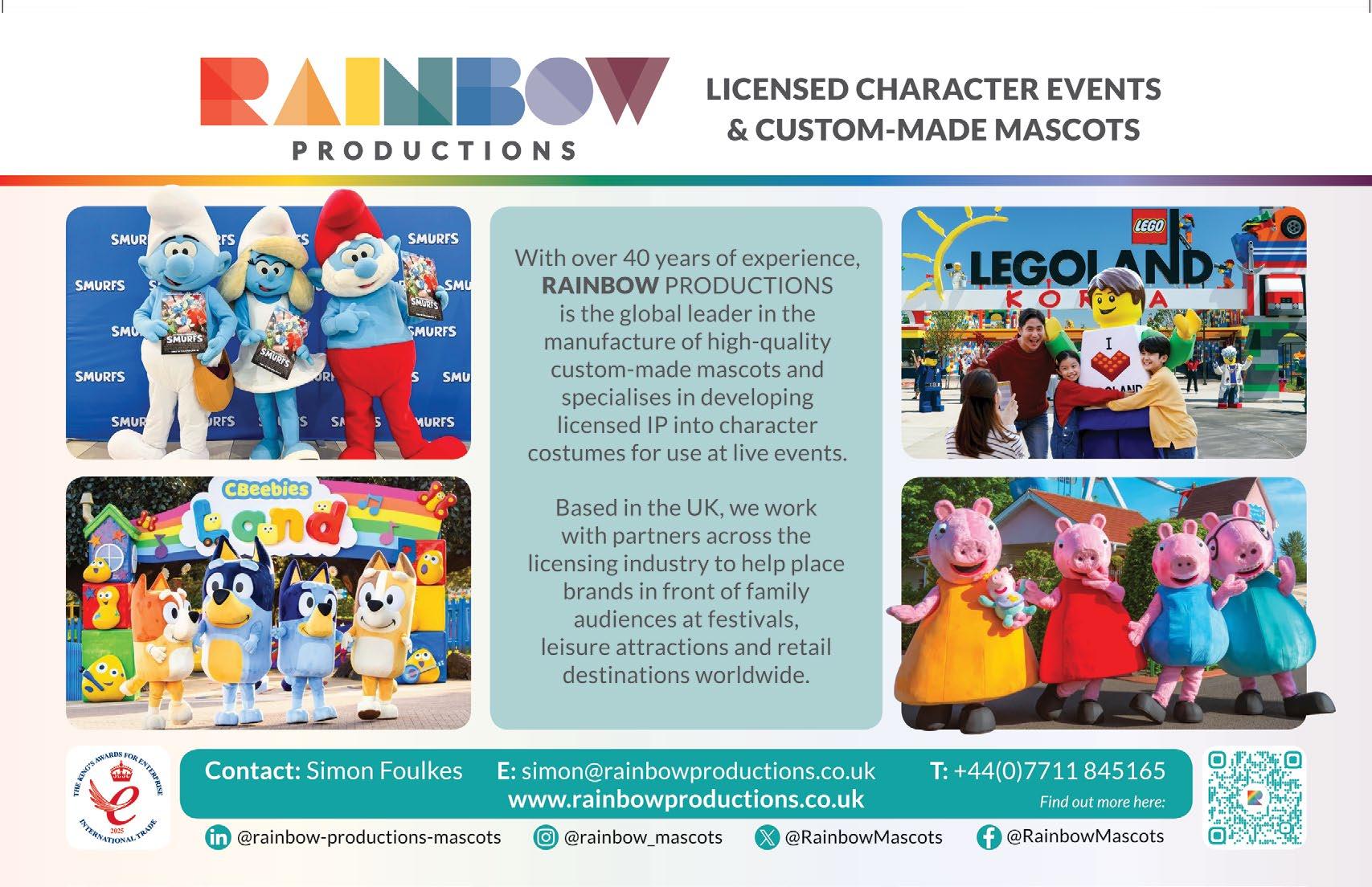
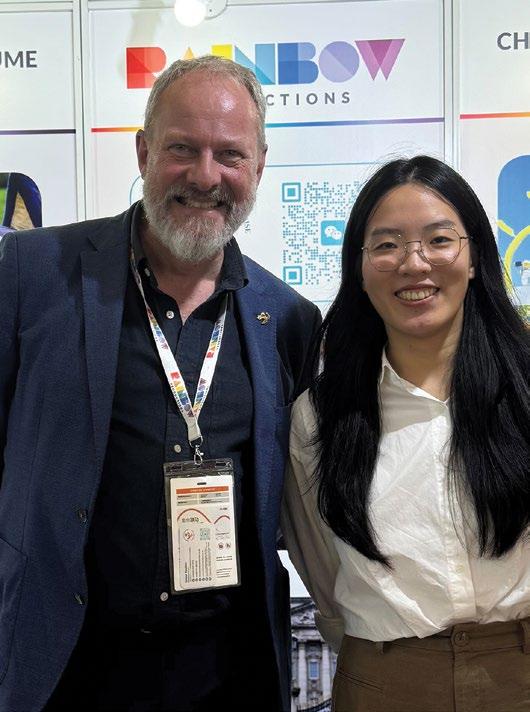
An interview with Simon Foulkes of UK-based Rainbow Productions on growing their business in China.
How does your company strategically identify potential licensing opportunities in China?
Growing Rainbow in the Chinese market seems a very organic corporate development for the company.
There is a widescale marketing understanding and acceptance of the importance of Costume Characters as they are wonderful mnemonics and a perfect solution for courting social media content.
This existing awareness gives Rainbow a platform and an opportunity to develop a cohesive growth strategy. Fundamentally licensing appeals to consumers in similar ways to the rest of the world but in China there are notable differences and exceptionally unique methods of engagement.
Our aim is simply to satisfy these requirements by employing our wellhoned sales and marketing skills and capitalising on the current consumer demand to connect emotionally with the brands we represent.
What criteria does your company use to evaluate potential Chinese licensing partners?
As we developed Rainbow in the UK many years ago, we targeted specific industries and one stone turned over led to so many more opportunities.
This blueprint worked well for us as we continued to grow in other emerging territories so the challenge ahead for us in China is simply to create a strong customer base.
By creating local customers and points of reference we have been able to expand into other sectors. Licensing is about trust, relationships and delivery and as we strive to find a live events licensing partner in China these qualities will be at the heart of decision making.
What types of support does your company offer to facilitate the successful execution of Chinese licensing agreements?
The sheer geographical scale of China creates logistical challenges for producing live events. Rainbow already has a network of like-minded costume character live event companies around the world and therefore we offer the same expertise and support to our Chinese partners as we do already in other parts of the world. Typically, this means that all licensed assets would be created and, that register of approved assets, held centrally, could be tapped into by any approved partner without having to create individual experiences for each event.
Can you share a particularly successful or memorable licensing project you’ve worked on in China?
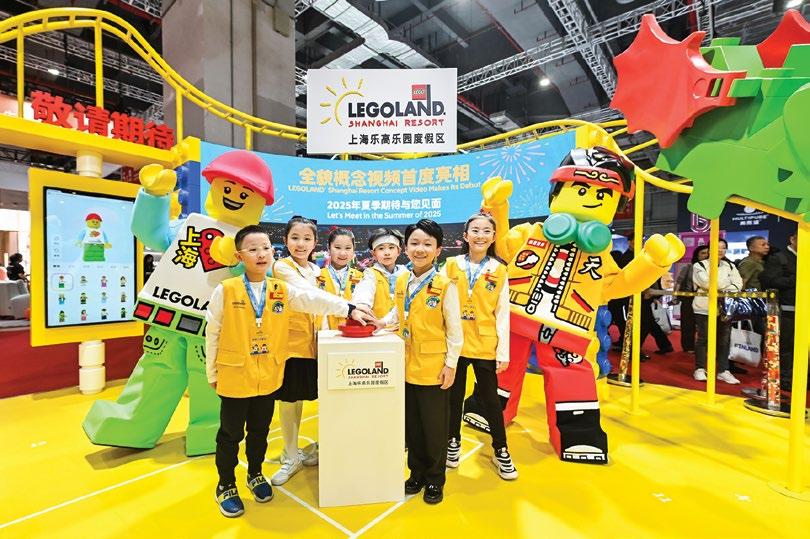
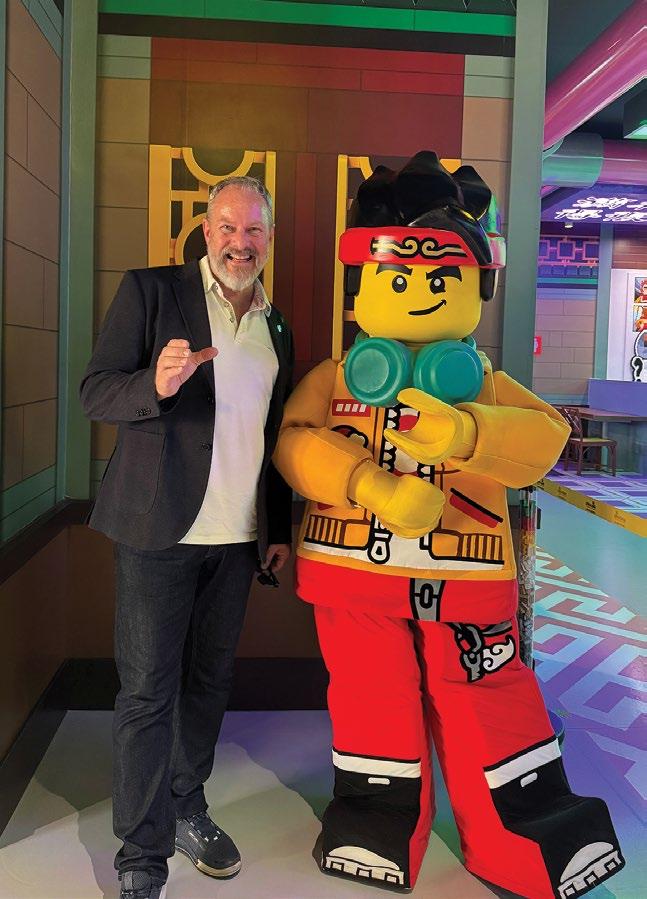
Without question the most rewarding and memorable project Rainbow have been involved with in China was the LEGOLAND Shanghai Resort which opened in 2025. The park reached the milestone of 1 million visitors in its first six months! The resort is an absolute joy, the staff are amazing and engage 100% with the brand and make each individual guest’s experience unique and memorable. The shows are spectacular, the activities fabulously
immersive and the atmosphere, meticulously created, is welcoming and awe inspiring. The costume character special appearances for meet and greets perfectly create unforgettable family memories and were a joy to witness on my last trip to see them.
What are the latest trends and innovations that you can see in the international licensing industry? How do you foresee these new trends influencing the Chinese licensing market?
Over the last few years the number of UK and European licensing companies looking to expand into the Chinese market has risen dramatically. The opportunities for non-Asian brands have never been so abundant.
Counterfeiting is still prevalent, as it is in every market, but the stigma of it being an overwhelming Chinese issue is outmoded. I have seen more and more brand collaborations over the last few years as trade relationships with other nations ameliorate. These collaborations are a win-win for all concerned as they enable brands to expand their reach, generate revenue streams, reinforce brand values and allow a far quicker market entry. Of course, as with any brand alliance or shared brand equity, the commercial risk is also spread and have the added benefit of driving awareness and sales without the cost of building new products or markets alone.
ONE OF THE MOST COMPLEX BRAND ECOSYSTEMS IN THE WORLD
BrandTrends consumer insights reveal how global franchises anime culture gaming IP and local storytelling define licensing strategies in China
Few markets illustrate the transformation of global brand licensing better than China. Rather than being dominated by a single cultural model, the Chinese licensing ecosystem is shaped by the simultaneous influence of Western entertainment franchises, Japanese anime, powerful domestic storytelling, and rapidly expanding gaming intellectual properties.
This convergence creates one of the most complex brand ecosystems in the world. Global icons can achieve massive reach, yet local characters remain deeply rooted in consumer culture.
BrandTrends Group’s global database, built on millions of consumer interviews across more than forty countries, offers a unique view of how brands resonate among Chinese consumers aged up to 65 years old. The data reveals a licensing landscape driven by strong emotional connections with characters, cross media
Most
entertainment ecosystems, and rapidly evolving retail dynamics. For licensors, licensees, agents, and retailers, understanding the structure of this ecosystem is essential to unlocking licensing opportunities in China.
A Licensing Market Shaped by Four Cultural Forces
BrandTrends insights show that the China licensing market operates as a hybrid ecosystem built around four powerful cultural influences.
• Western entertainment franchises remain fundamental pillars of the market. Brands from Disney, Marvel, and the Harry Potter universe maintain extremely high awareness and emotional engagement across generations despite China’s controlled media environment.
• Japanese anime represents a second dominant force. Franchises such as Doraemon, Ultraman, Detective Conan, and Pokemon have achieved deep cultural penetration. BrandTrends data shows that anime IP performs particularly well in collectibles, toys, fashion
collaborations, and the rapidly growing blind box retail segment.
• Domestic Chinese IPs forms the third pillar of the ecosystem. Stories rooted in Chinese mythology and local animation such as Nezha, Journey to the West, and Boonie Bears resonate strongly with families and younger audiences.
• The fourth driver is gaming IP. Titles such as Honor of Kings have evolved into vast entertainment ecosystems extending far beyond gaming, generating licensing opportunities in esports merchandise, apparel, technology accessories, and collectibles.
Together, these forces create one of the most diverse licensing environments in the global entertainment industry.
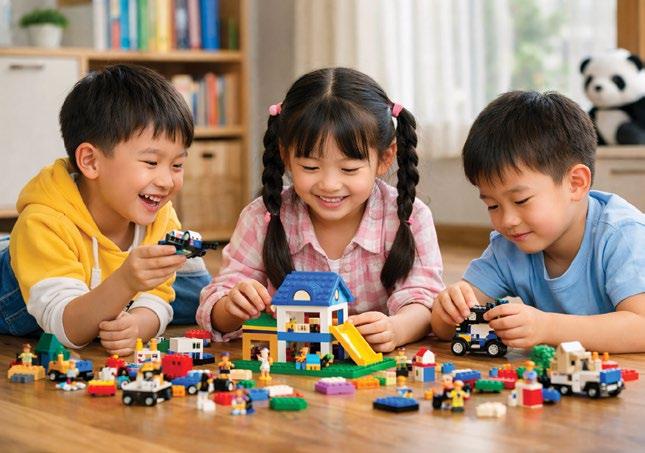
The Interesting Strength of LEGO
Among all brands measured in China, BrandTrends data reveals that LEGO achieves the highest reach. This is particularly striking because LEGO is not primarily a media franchise. Its performance demonstrates how prod-
Favorite Entertainment Brands in China
0 - 65 years old - Autumn 2025
ABOUT THE REPORT
The current report provides a detailed analysis of brand awareness, popularity, and purchase intent of the most important Entertainment brands within a country. The most crucial aspect is that it predicts product category purchasing intentions. The service reports on 11,500+ different Entertainment, Fashion, or Sports brands four times a year, and interviews 200,000+ people ranging in age from infants to seniors in 42 countries.
ABOUT BRANDTRENDS GROUP
BrandTrends Group is the global benchmark in brand and licensing intelligence, recognized as the gold standard in the industry. Specializing in brand equity, consumer behavior, and lifestyle trends-particularly among children, youth, and families-BrandTrends operates in up to 53 markets annually, providing consistent, in-depth insights into brand performance and consumer sentiment worldwide. What sets BrandTrends apart is its ability to turn complexity into clarity. Its team of expert analysts and data scientists uses proprietary tools like the Brand Popularity Index and Consumer Demand Gap to deliver actionable, strategic foresight. These insights help clients optimize retail activations, brand positioning, and product development. At the core of its methodology is the seamless integration of advanced technology and Al-enhancing every stage of the research process, from data collection to analysis and delivery, with speed, scale, and precision. Trusted by global corporations and smaller organizations alike, BrandTrends is committed to democratizing market intelligence and elevating the licensing ecosystem. If you would like more information about this topic, please contact Philippe GuinaudeauBrandTrends.AI at philippe.guinaudeau@ brandtrends.ai.
uct ecosystems and brand values can sometimes outperform traditional entertainment IP.
Several structural drivers explain this success. LEGO benefits from strong positioning around creativity and education, closely aligned with STEM learning. The brand has also built a significant retail presence across China, including immersive flagship stores and experiential brand environments. Its appeal also spans generations. LEGO engages children through play while attracting adult collectors and fan communities.
The result is a brand that transcends traditional licensing models and demonstrates the power of creativity driven brand ecosystems.
Animation Dominates the Licensing Landscape
Across the BrandTrends dataset, animated franchises consistently dominate consumer preferences in China. Characters such as SpongeBob SquarePants, Tom and Jerry, Doraemon, and Boonie Bears are among the most widely recognized and emotionally connected brands across age groups.
Animation offers several structural advantages. Animated characters transcend language barriers, travel easily across cultures, and adapt naturally into merchandise.
Toys, apparel, stationery, collectibles, and lifestyle products can all easily integrate animated characters. This flexibility gives animated IP longer licensing lifecycles than most live action franchises.
Nostalgia as a Market Force
BrandTrends research also highlights the importance of nostalgia in the Chinese licensing ecosystem. Many of the most influential brands in the market are decades old. Characters such as Tom and Jerry, Doraemon, and Ultraman have been present in consumer culture for generations.
This trend reflects the growing economic influence of Millennial consumers. Having grown up with these characters, they now represent a major purchasing force in collectibles, toys, lifestyle collaborations, and fashion.
Nostalgia driven licensing strategies therefore often perform strongly when heritage brands are reintroduced through modern collaborations and contemporary product design.
Gender Differences in Brand Engagement
BrandTrends data also reveals clear gender segmentation in brand engagement.
Male audiences tend to show stronger reach for action driven brands associated with competition and gaming culture. Marvel, Spider Man, Ultraman, Honor of Kings, and LEGO resonate particularly strongly with male consumers.
These brands often succeed in categories such as action figures, gaming accessories, collectibles, and esports merchandise.
Female audiences demonstrate stronger affinity with brands emphasizing storytelling and emotional connections.
Disney, Doraemon, and Harry Potter perform particularly well among female consumers and often extend successfully into lifestyle categories including fashion collaborations, cosmetics, stationery, and home decor.
A Character Driven Licensing Market
One structural characteristic clearly distinguishes the Chinese licensing market. Consumer engagement is strongly character driven.
Chinese audiences connect emotionally with specific characters rather than abstract brand identities. Characters such as Doraemon, Ultraman, SpongeBob, and Pikachu generate stronger engagement than simple logos.
According to Philippe Guinaudeau, CEO of BrandTrends Group: “China represents one of the most sophisticated licensing ecosystems in the world.
Global franchises, anime culture, gaming platforms, and domestic storytelling all interact to shape consumer preferences.
The brands that succeed are those that understand how consumers emotionally connect with characters.”
Cross Media Ecosystems Drive Brand Power
The most powerful intellectual properties in China rarely exist within a single media channel. Successful brands operate across interconnected entertainment ecosystems including films, television series, video games, toys, social media, and digital communities. Franchises such as Marvel, Pokemon, and Honor of Kings illustrate how cross media ecosystems generate continuous visibility that fuels licensing demand.
Structural Challenges in the China Licensing Market
Despite its enormous potential, the Chinese licensing market also presents structural challenges.
Market saturation has intensified competition between global franchises and rapidly emerging domestic IP. Economic fluctuations have also made consumers more selective in their spending. At the same time, retail transformation continues to reshape the licensing landscape.
E commerce platforms, social commerce, and experiential retail are redefining how consumers discover and engage with licensed products. These shifts make reliable consumer insights increasingly critical for navigating the market.
China is not a closed licensing market but one of the most culturally diverse brand ecosystems in the world. Western entertainment franchises, Japanese anime, Chinese mythology, and gaming culture coexist and compete within the same consumer landscape.
This complexity creates extraordinary opportunities for brands capable of understanding how Chinese consumers connect with characters, stories, and entertainment ecosystems.
As BrandTrends insights consistently demonstrate, success in China depends less on simply introducing a brand and more on understanding the cultural forces that shape consumer imagination. In a market where characters drive engagement and ecosystems drive visibility, data driven insights are the key to identifying the intellectual properties with the power to thrive.