
Art House Designs
Natural History Museum
MGL
Jewel Branding
Interlitho V&A
Natural History Museum
Art House Designs
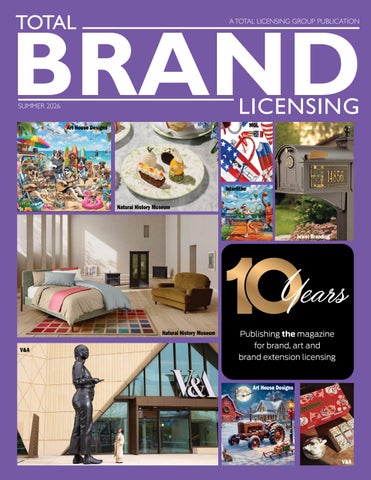
INTERLITHO LICENSING is an art licensing agency well established since 1955 and based in Cologne, Germany. We license to customers worldwide and have a portfolio with over 100.000 images and new artworks are added on a regular basis by our freelance artists and suppliers. INTERLITHO’s portfolio can easily be reviewed on our website and customers can easily select from the categorised website where you can search by keywords, artists and numbers. You can create a lightbox and save your selection, you can download it and you can share it with INTERLITHO for availability checking or for orders.
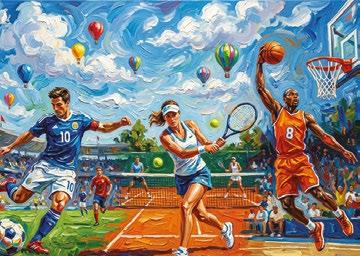
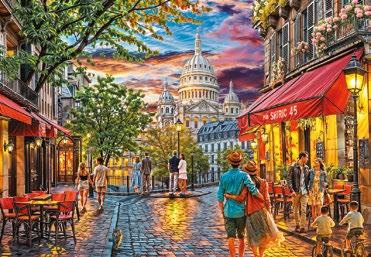
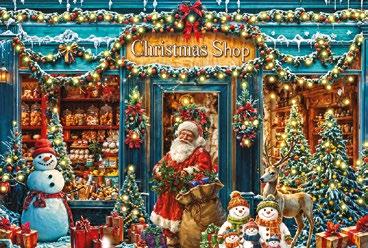
Our painted artworks cover all styles and are licensed around the world on products ranging from puzzles, crafts, greeting cards and stationery, calendars, giftware, prints on cnavas, and tableware and fabrics. They cover the whole range of traditional, contemporary, cute, whimsical, seasonal and everyday in American and European style.
INTERLITHO LICENSING develops the artworks in cooperation with our customers to suit their specific demands and needs. New images are immediately available as high resolution data and so permit fast and inexpensive adaptation to your particular products, sizes and specific product requirements. We also hold a large collection of photographic images!
The artworks are created in close cooperation with designers and artists worldwide. We work with them together from the concept to the sketch over the colour composition up to the finished commercial design. Thus, a continous flow of eye catching modern and advanced designs as well as of traditional designs can be assured.
We are present at a number of events throughout the year including Las Vegas Licensing Expo, Atlanta Gift Show and Christmasworld/Creativeworld as well as Ambiente in Frankfurt, the Nuremberg Toy Fair and the ISM in Cologne.
Please note that we can create taylor made artwork for you according to your briefing!
For more information please visit : www.interlitho.com or contact:
Anke and Andreas Klein at designs@interlitho.com +49-221-9405830 • +49-172-2492297 (cell) or let’s do a Teams/Zoom meeting!



CO-PUBLISHER
Francesca Ash francesca@totallicensing.com
CO-PUBLISHER
Jerry Wooldridge jerry@totallicensing.com
EDITORIAL DIRECTOR
Rebecca Ash Ffrench becky@totallicensing.com
OFFICE MANAGER
Helen Bowerman helen@totallicensing.com
EAST ASIA AGENT
Roger Berman, ZenWorks rmb@zenworks.jp
With thanks to all those who have contributed to this issue.
HEAD OFFICE
Total Licensing Ltd 43 Vinehall Business Centre, Vinehall Road, Robertsbridge, TN32 5JW, UK Tel: +44 (0) 1892 782220 www.totallicensing.com


The brand licensing sector continues to gather remarkable momentum—and if there was ever any doubt, the upcoming Licensing Expo in Las Vegas looks set to confirm it entirely. What was once a complementary category within the wider licensing landscape has evolved into one of its most dynamic engines of growth. This year’s show floor reflects that shift in no uncertain terms, with the “brand” section expanding at a pace that mirrors the industry’s broader transformation.
Increasingly, brands are no longer passive assets; they are fully realised storytelling platforms. From heritage institutions to contemporary lifestyle labels, the emphasis is on narrative, authenticity and cultural relevance. The sheer scale and diversity of exhibitors heading to Vegas underlines how far this segment has come—and how much further it can go.
That trajectory was also evident at the recent Brand and Lifestyle Licensing Awards, which provided a timely snapshot of the sector at its most innovative. The breadth of winners and nominees spoke volumes: from premium fashion collaborations to museum-led partnerships, and from food and beverage extensions to experiential activations. What stood out most was the confidence—confidence in the power of brands to travel across categories, territories and demographics without losing their core identity.
Agencies such as MGL Licensing and Jewel Branding & Licensing continue to play a pivotal role in shaping this landscape. Their ability to identify white space opportunities and align brands with the right partners is helping to elevate licensing beyond transactional deals into long-term strategic growth. Meanwhile, newer players and consultancies are entering the space with fresh perspectives, further energising the market.
Cultural institutions remain a cornerstone of the brand licensing boom. Organisations like the Natural History Museum, Victoria and Albert Museum, and the Van Gogh Museum have demonstrated how archives and collections can be transformed into commercially successful, globally resonant licensing programmes. Their approach—balancing educational integrity with contemporary design—has become a benchmark for others to follow. It is no surprise that they continue to attract strong retail partnerships and consumer engagement. Alongside heritage, there is a growing appetite for more disruptive, contemporary brand voices. Companies such as LMCA are pushing the boundaries of what brand licensing can look like, often blurring the lines between product, experience and entertainment.
One of the most notable developments is the continued rise of sports and celebrity-driven licensing. Athletes are no longer simply endorsers; they are brands in their own right, with global reach and highly engaged audiences. Likewise, celebrity-backed ventures are becoming more sophisticated, often built with long-term licensing strategies in mind from the outset. This convergence of entertainment, sport and lifestyle is opening up new avenues for partnerships—and new expectations in terms of authenticity and storytelling. Taken together, these developments point to a sector that is not only growing, but maturing. Brand licensing is no longer a secondary consideration—it is central to how organisations extend their reach, engage audiences and unlock new revenue streams. The expansion of the brand section in Las Vegas is therefore more than just a logistical detail; it is a reflection of a fundamental shift in mindset.
For those heading to Licensing Expo, the message is clear: the opportunity lies in thinking beyond categories and embracing brands as living, evolving ecosystems. Whether rooted in heritage, driven by personality, or built on contemporary culture, the most successful programmes will be those that connect meaningfully with consumers.
And if the energy surrounding both the Expo and the recent awards is any indication, the brand licensing story is only just getting started.
Rebecca Ash Ffrench Editorial Director

For decades, the licensing industry has been dominated by entertainment powerhouses - film, TV and gaming franchises driving fast-paced, trend-led collaborations. But a noticeable shift is underway. Cultural institutions, once considered niche players in the licensing space, are emerging as some of the most compelling and commercially effective brand owners in the market today. At the heart of this evolution is a change in consumer mindset. Audiences are increasingly seeking authenticity, depth and meaning from the brands they engage with. In this environment, cultural IP—rooted in heritage, storytelling and artistic legacy—offers something fundamentally different. It brings not just recognition, but substance. Few organisations exemplify this shift more clearly than the Van Gogh Museum.
Built on the life and work of one of history’s most influential artists, the Amsterdam-based institution has evolved far beyond its role as a museum. Today, it operates as a global cultural lifestyle brand, underpinned by one of the richest and most emotionally resonant stories in art history. Housing the largest collection of Vincent van Gogh’s works and serving as the leading knowledge institute on
his life, the Museum offers partners something unique: a narrative depth that translates powerfully across categories.
This focus on storytelling is central to its licensing strategy. Rather than pursuing volume, the Van Gogh Museum has prioritised carefully curated partnerships that respect and reinterpret its heritage. Each collaboration is designed not simply to extend the brand, but to express it—whether through design, narrative or educational value.
The result is a programme that feels both cohesive and contemporary.
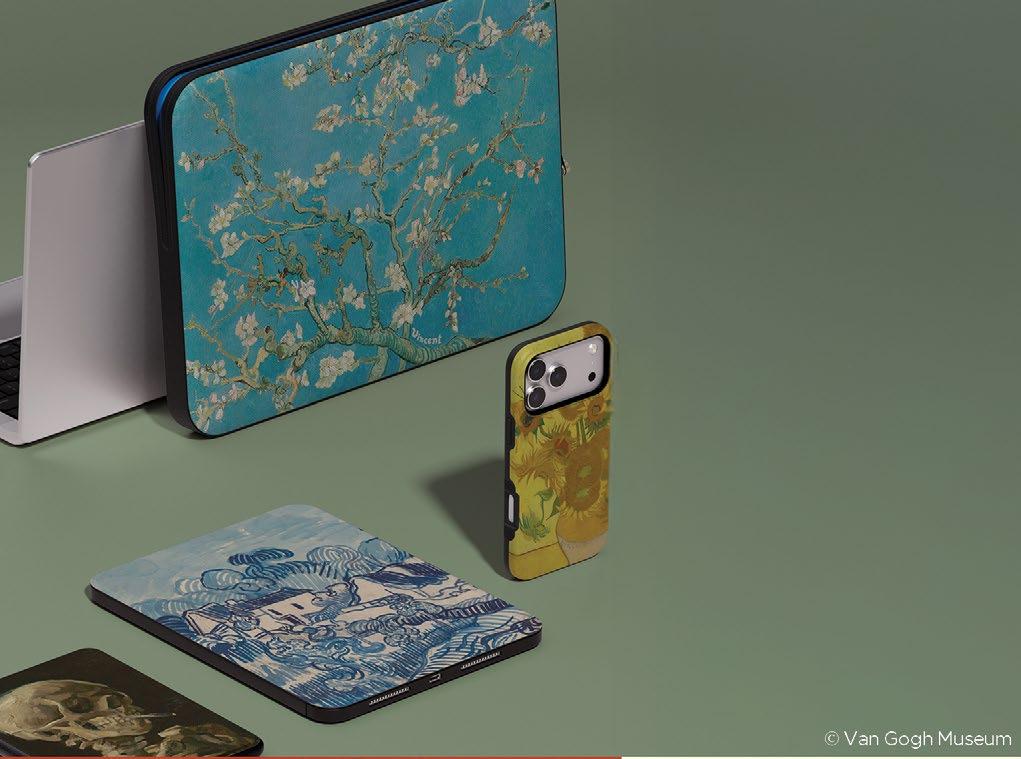
Recent collaborations highlight the breadth of this approach. In collectibles, the ongoing partnership with MEDICOM TOY has successfully positioned Van Gogh within global street culture through BE@RBRICK limited editions. Since 2019, multiple releases—ranging from Sunflowers to The Potato Eaters—have combined artistic integrity with strong commercial appeal, often selling out within days. The use of unique production techniques further enhances their collectability, demonstrating how cultural IP can thrive in premium, design-led formats. In the tech accessories space, Casely has taken a similarly thoughtful route. Since launching
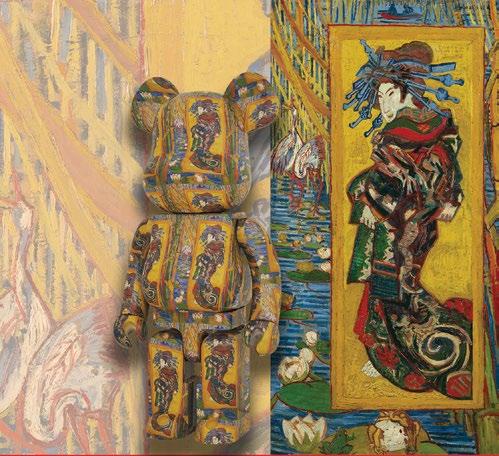
in 2022, the collaboration has expanded from phone cases into tablet covers, Kindle sleeves and laptop accessories. Crucially, the range avoids over-reliance on the most recognisable artworks, instead introducing a more curated selection that offers consumers a fresh perspective on Van Gogh’s oeuvre. This balance of design and storytelling has helped the partnership stand out in a crowded market. Fashion, too, has proven a natural fit. The 2025 collaboration with A BATHING APE® (BAPE®) demonstrated how seamlessly cultural heritage can integrate into contemporary streetwear. Drawing on six key works and incorporating excerpts from Van Gogh’s
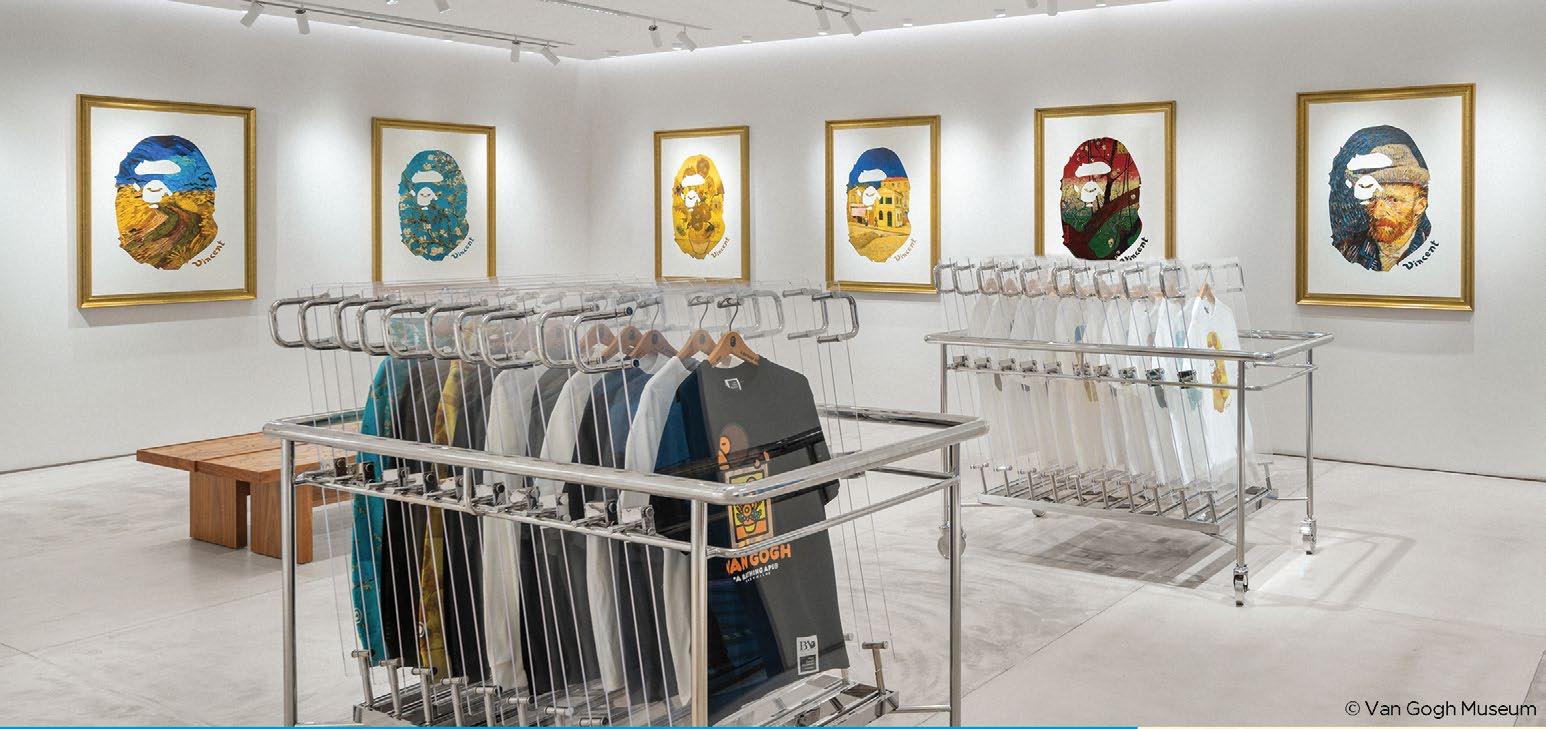
personal letters, the collection blended artistic narrative with BAPE®’s distinctive design language. Strong global distribution and sellthrough reinforced the demand for well-executed cultural collaborations, with a second drop already planned for 2026. Meanwhile, partnerships with POP MART are bringing Van Gogh into the fast-growing art toy sector. By reimagining iconic works such as Almond Blossom and Sunflowers through collectible characters like MOLLY
and SKULLPANDA, the collaboration successfully bridges fine art and contemporary pop culture—making heritage accessible to a younger, global audience.
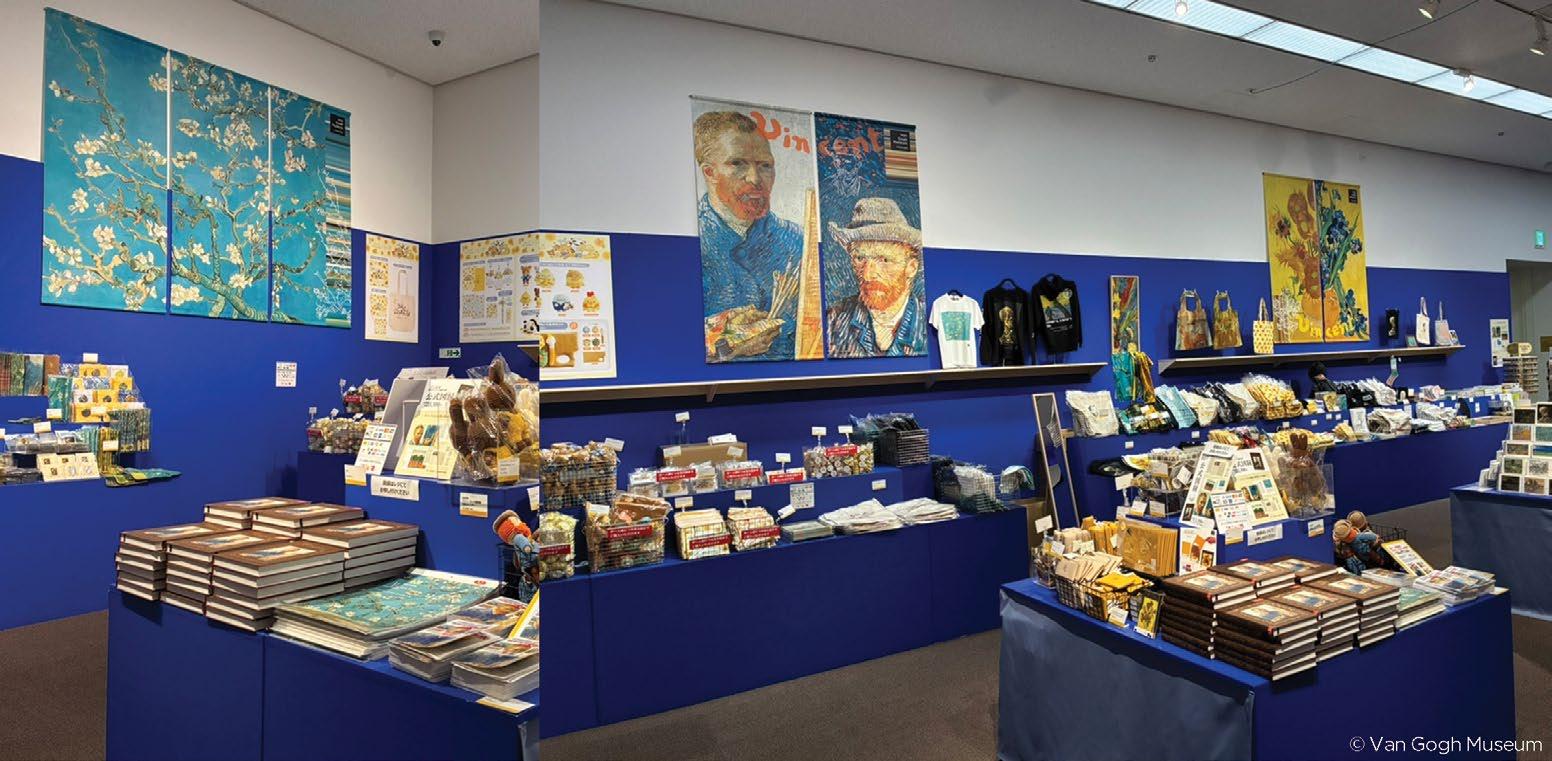
Beyond product, the Museum’s approach extends into experiential licensing. The recent three-city exhibition tour in Japan—spanning Osaka, Tokyo and Nagoya—demonstrated how storytelling can translate into both cultural impact and retail success. Attracting over one million visitors, the exhibition
combined 74 original works with a broader narrative of family legacy and preservation. Its accompanying merchandise programme, featuring over 400 products, showcased how exhibition-led retail can become a significant extension of the brand experience. What ties all of these initiatives together is a clear and consistent philosophy: authenticity first. Every partnership aligns with the Museum’s mission to inspire audiences through Van Gogh’s life and work, ensuring that commercial success never comes at the expense of cultural integrity.
Looking ahead, the appointment of WildBrain CPLG as global licensing agent from 2026 signals a new phase of growth. With a more unified international strategy, the Museum is well positioned to expand its reach while maintaining the careful curation that defines its programme.
For the wider licensing industry, the implications are clear. Cultural brands are no longer peripheral—they are central to the future of licensing. As consumers continue to prioritise meaning and connection, heritage-driven IP offers a powerful advantage.
The Van Gogh Museum demonstrates that when storytelling, authenticity and strategic partnerships come together, licensing becomes more than a commercial exercise. It becomes a platform for cultural relevance— one that resonates across generations, categories and global markets. n
Valero Enterprises, the fashion and lifestyle branding agency out of Calabasas, California has announced an array of exciting new licensing programs and categories to start off 2026.
Valero continues to be a premier boutique agency offering both licensees and property owners a unique and customized hands-on experience in broadening and expanding their brands and exponentially in increasing revenues.
One of the heights of the start of 2026 includes Valero renewing their incredibly successful exclusive partnership with Futurity and the Paul Frank brand. As one of the most popular evergreen lifestyle properties, Paul Frank with the guidance of Valero Enterprises, now boasts over 38 licensees and impressive direct to retail relationships with both Aéropostale and Tilly’s.
Susan Valero, owner and creator of the eponymous agency has commented about the exciting growth of the Paul Frank brand, stating, “I am so thrilled to have been part of this iconic brand for so many years. This year marks the first time we will have an online store presence, which will be an amazing op-
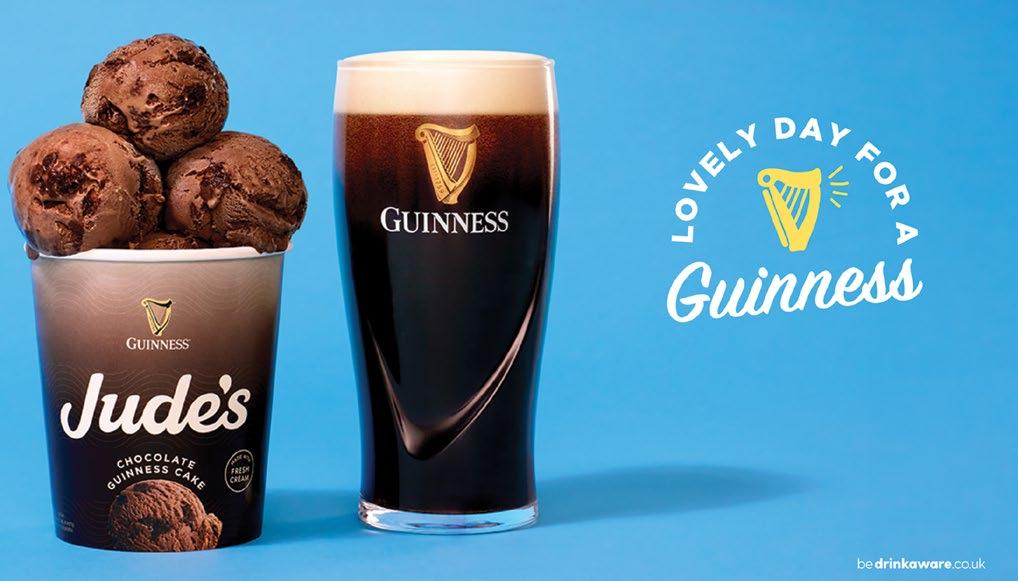
Jude’s has teamed up with Guinness to create Chocolate Guinness Cake ice cream, a rich, indulgent flavour inspired by the much loved Guinness cake.
Inspired by Guinness’s “Lovely Day” campaign, the collaboration offers a new way to
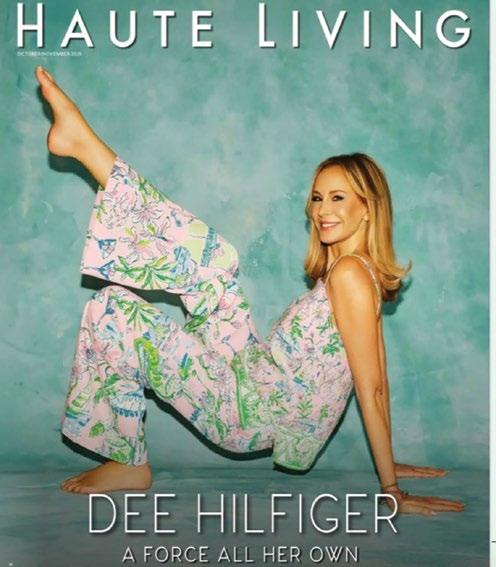
portunity for our licensing partners and fans alike. We are also very proud of our promotional partnerships with three Fortune 500 companies and five collaborations with top billion dollar fashion brands. 2026 into 2027 is going to be a very exciting time for the Paul Frank brand!” Valero Enterprises is also thrilled to be continuing its relationship with Dee Ocleppo Hilfiger’s brand DO. Valero has expanded this brand with several key premier licensees and looks forward to further expansion of the brand due to the success of Dee’s hit docuseries on Amazon Prime, “The CEO Club” which also stars Serena Williams and modeling sensation Winnie Harlow. Another continued massive success for Valero Enterprises is Nicole Richie’s House of Harlow, which continues to attract major retail and consumer attention. With 13 current licenses, Valero will be announcing multiple new signings and retail expansion in early fall of 2026.
Other exclusive brands signed with Valero Enterprises, Inc include Members Only, Nastya, Tailorbyrd, Smiley, Von Dutch, Romeo Hunte, Good Charlotte and Avril Lavigne. Valero also represents top manufacturers in
enjoy the unmistakable taste of Guinness for summer, reimagining the familiar flavour of Guinness cake in an ice cream.
This new ice cream is made in Hampshire in small batches using fresh cream, bringing together Jude’s ice cream expertise with Guin-
various categories inking impressive licensing agreements with major brands including Reel Tree, Coleman, Graco, Hasbro, Bobcat and many more.
Valero Enterprises has also expanded their representation into the area of unique intellectual properties, consumer product inventions and design patents. Stay tuned for exciting new developments in this new division of Valero in the upcoming months. n
ness’s legendary smooth stout. The result is a rich chocolate ice cream, subtly infused with Guinness and folded with chewy chocolate cake pieces.
“For us, ice cream is all about joy, indulgence and trying something different,” said Chow Mezger, Director at Jude’s Ice Cream.
“Working with Guinness gave us the chance to celebrate an iconic taste in a completely new way for summer. We’re obsessed with the craft of making truly superb ice cream, and we’ve loved bringing the distinctive flavour of Guinness into something that feels indulgent, unexpected and full of delight.”
Declan Hassett, Senior Licensing Manager at Diageo, added: “Guinness has always been about bringing people together to enjoy life’s simple pleasures, and this collaboration with Jude’s captures that perfectly. Chocolate Guinness Cake ice cream is a fresh, unexpected way to enjoy the flavour people love, and a delicious reminder that it’s always a lovely day for a Guinness.” n
Terry de Havilland is a legendary footwear brand, known for their high fashion rock-inspired platform shoes whose audience ranged from top models and socialites to creatives in the music and arts world.
Terry de Havilland plays with colour, shapes and towering heights, making his footwear works of art; this new collaboration with River Island takes full inspiration from their iconic works and fully immerses their style and artistic flair into this new ready to wear and accessories collection for River Island.
A trendsetter and a fearless designer, Terry de Havilland’s creative designs have made this River Island collaboration one for the senses.
Your next summer getaway will evoke golden sunsets, the warm summer breeze and will feel just like that first step onto soft sand.
The new collection will transport you to the island with evocative designs in a warm, sunkissed-summer colour palette.
Bold and flamboyant, the collection takes
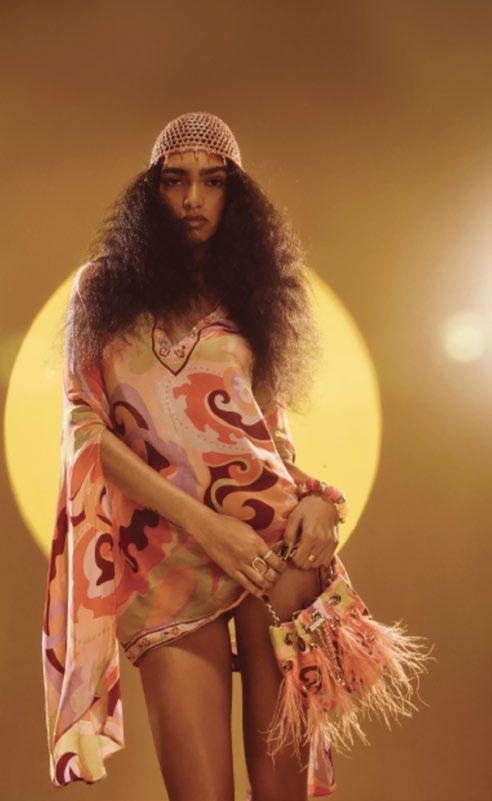
full inspiration from Terry de Havilland’s show-stopping designs, with all summer-essential pieces created with their vision and passion in mind. Think disco inspired prints, flowing and vibrant silhouettes and just the right amount of sparkle for moments on the beach or the dancefloor.
For poolside glamour, there is a full range of bikinis, swim dresses and cover ups; for beach days out, fringe sparkling tops, flowing trousers, maxi dresses and glittering accessories. Finally, for nights under the stars, the perfect finishing touches to the summer outfits of your choice; eye-catching embellished bags and stunning sandals and heels will keep you dancing all night long. n
Pick up your copy of Total Brand Licensing at Licensing Expo and check out our show dailies online!
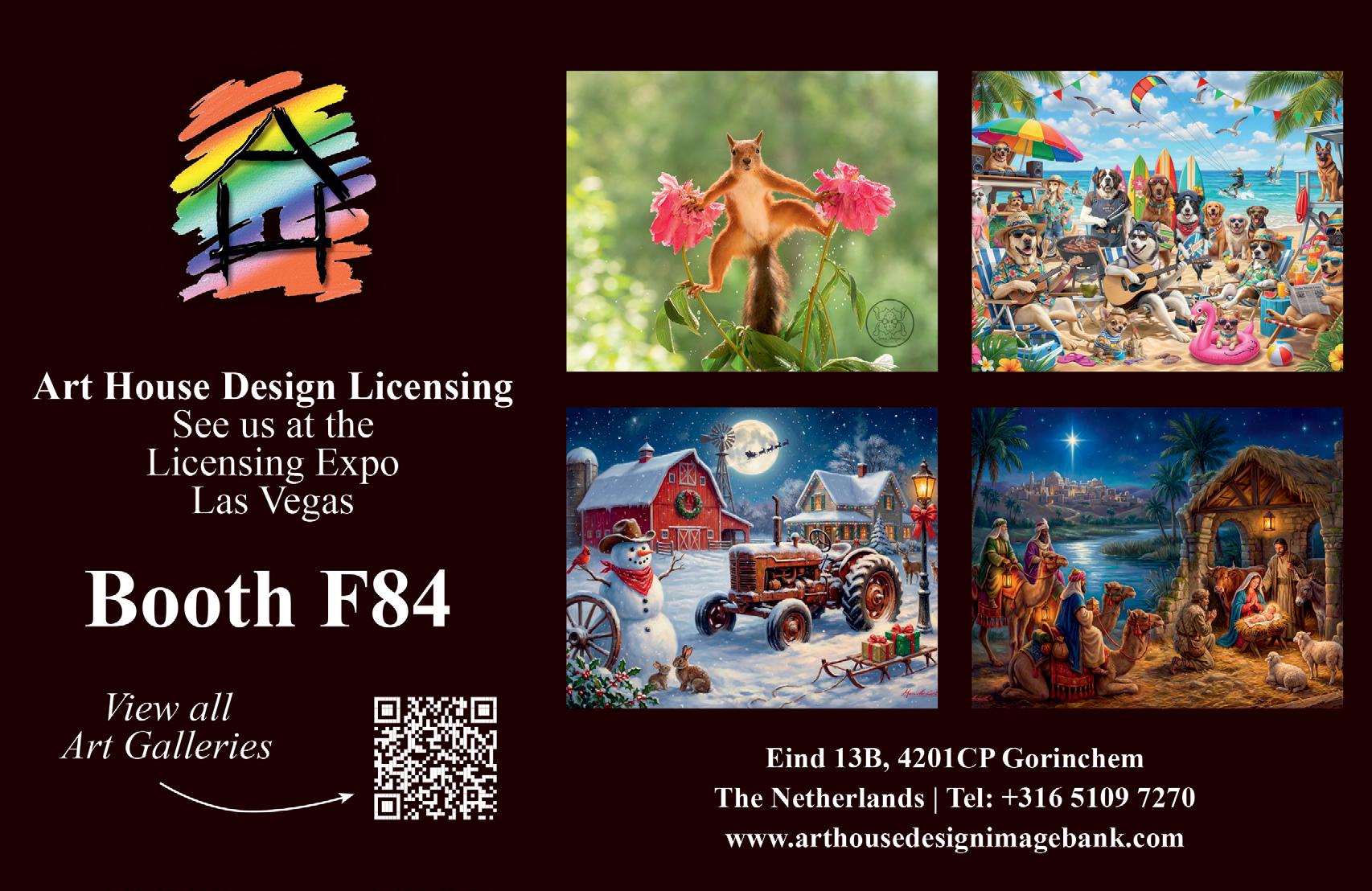
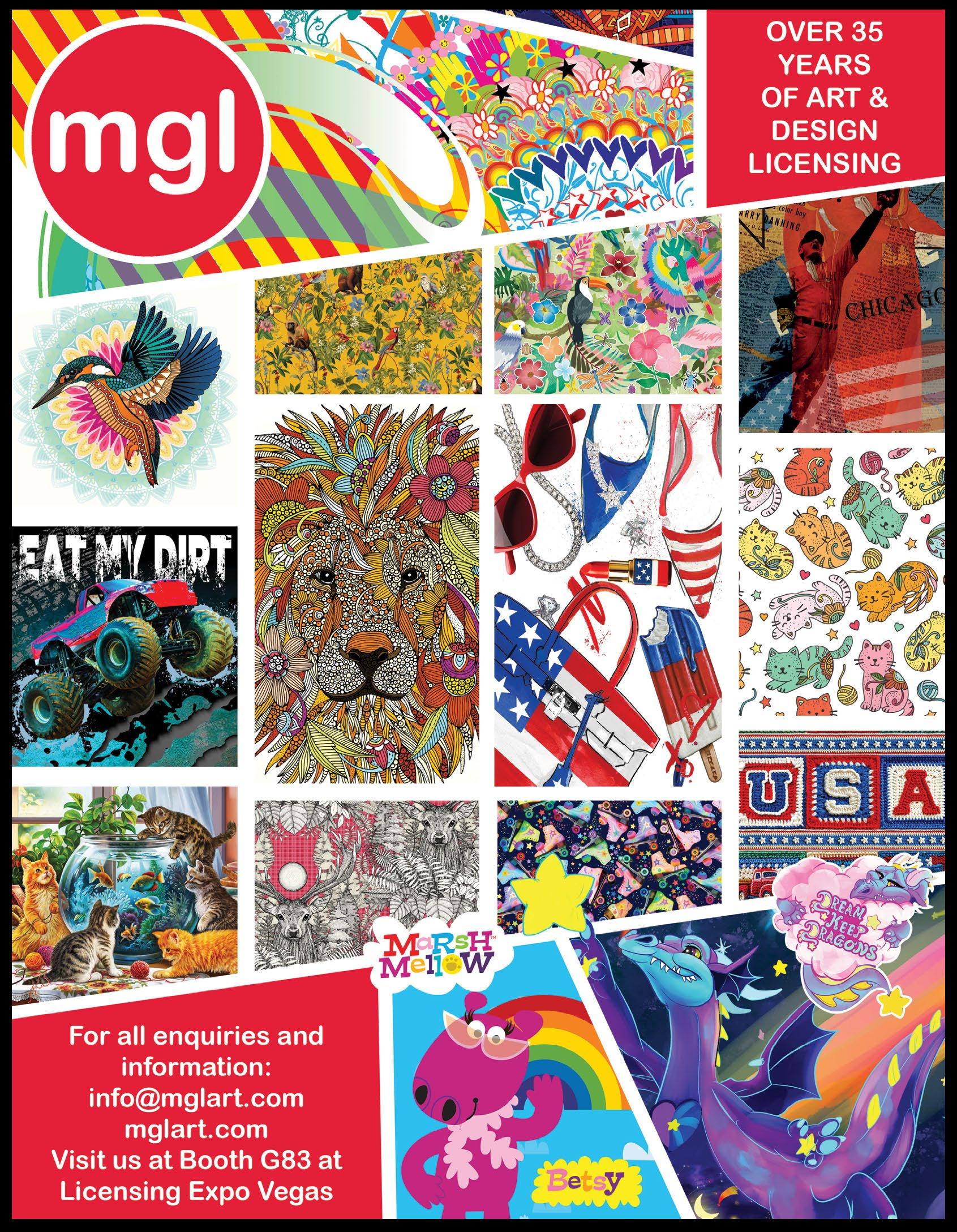
For 35 years, MGL Licensing has helped brands stay ahead of the curve with artwork shaped by the latest design trends.
From bold graphics to playful motifs, every piece is created to capture attention and spark conversation across products and collections. By anticipating what’s current and
what’s next, they deliver artwork that feels fresh, relevant, and alive.
MGL also offers fully bespoke customisation, adapting artwork for any market, region, or audience. Through thoughtful use of local colours, themes, and cultural cues, they help you create authentic connections with your
customers. From retail collections to global campaigns, the team partners with you to deliver distinctive, ready-to-launch artwork that makes an impression, creating something that is truly yours. Visit Booth G83 at Licensing Expo Vegas or get in touch at info@mglart.com. n
Licensing has traditionally focused on individual applications—prints for tabletop collections, repeats for textiles, or graphics adapted for wallcoverings. Increasingly, however, hospitality environments are shifting toward coordinated surface systems that operate across entire spaces rather than isolated products.
Surface pattern systems provide a flexible licensing framework in which a unified visual language can extend across multiple materials and spatial zones within an interior environment. Instead of treating each surface independently, coordinated pattern structures support continuity between wallcoverings,
upholstery textiles, carpeting, architectural panels, and tabletop elements. The result is a cohesive spatial identity that strengthens brand recognition while allowing variation in scale, tone, and material expression. In hospitality settings, this continuity plays an important role in shaping the guest experience. A lobby may introduce a signature motif through architectural wall panels that transitions into corridor wallcoverings and reappears in dining environments through upholstery or tabletop elements. These visual relationships create a sense of movement and coherence throughout the interior without relying on literal repetition.
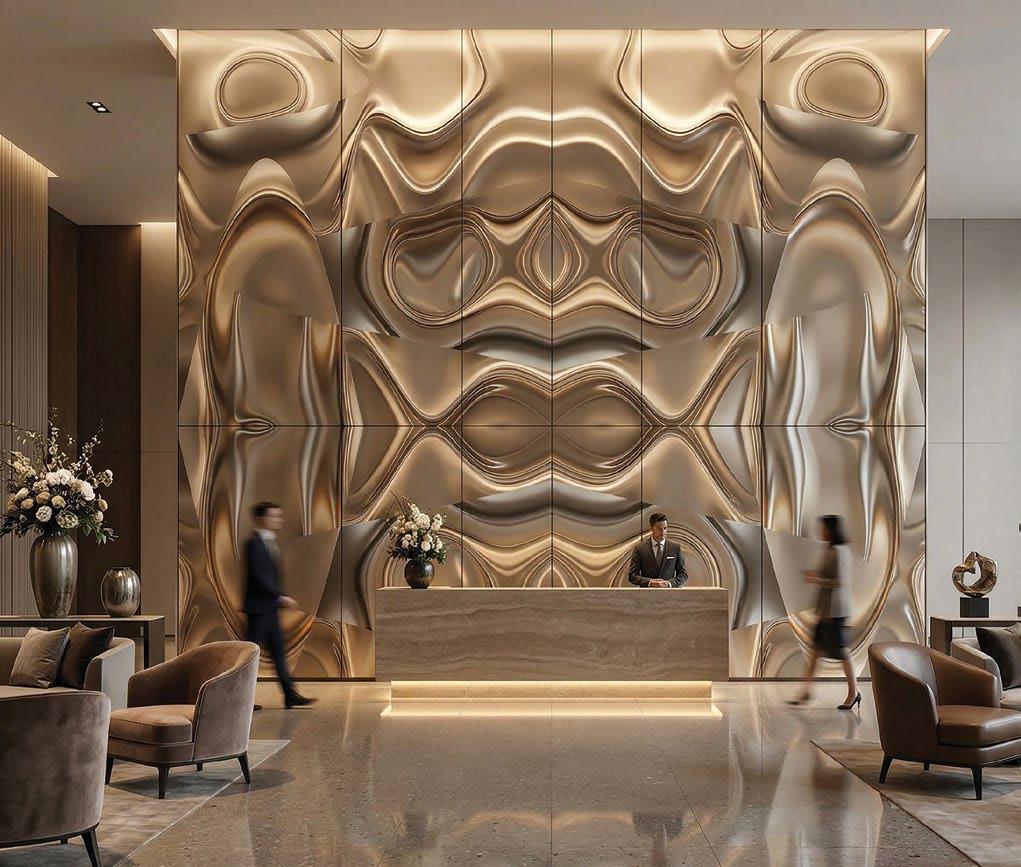
For licensors and manufacturers, surface pattern systems function as adaptable design assets that can scale across product categories and respond to regional preferences or brand requirements. A single coordinated system can support multiple implementations— from statement feature walls to subtle textile accents—while maintaining a unified visual structure. This approach allows manufacturers to develop coordinated collections rather than isolated SKUs, strengthening both product clarity and brand alignment.
As hospitality design continues to prioritize immersive and experience-driven environments, the role of surface pattern licensing is expanding accordingly. Hotels, cruise interiors, and destination dining spaces increasingly rely on layered visual identities that support storytelling across architecture and product applications. Coordinated surface systems provide designers with visual frameworks that move fluidly between these scales while maintaining consistency across the interior environment.
As licensing evolves beyond standalone motifs, surface pattern systems offer an approach closely aligned with the needs of contemporary hospitality interiors. By functioning as adaptable visual frameworks rather than fixed decorative elements, they create new opportunities for collaboration between designers, manufacturers, and brands operating across global markets.
Keith Alexander develops licensable surface pattern systems for hospitality interiors, architectural surfaces, and coordinated tabletop collections through KAB Designs, supporting manufacturers and brands seeking scalable visual continuity across interior environments. n
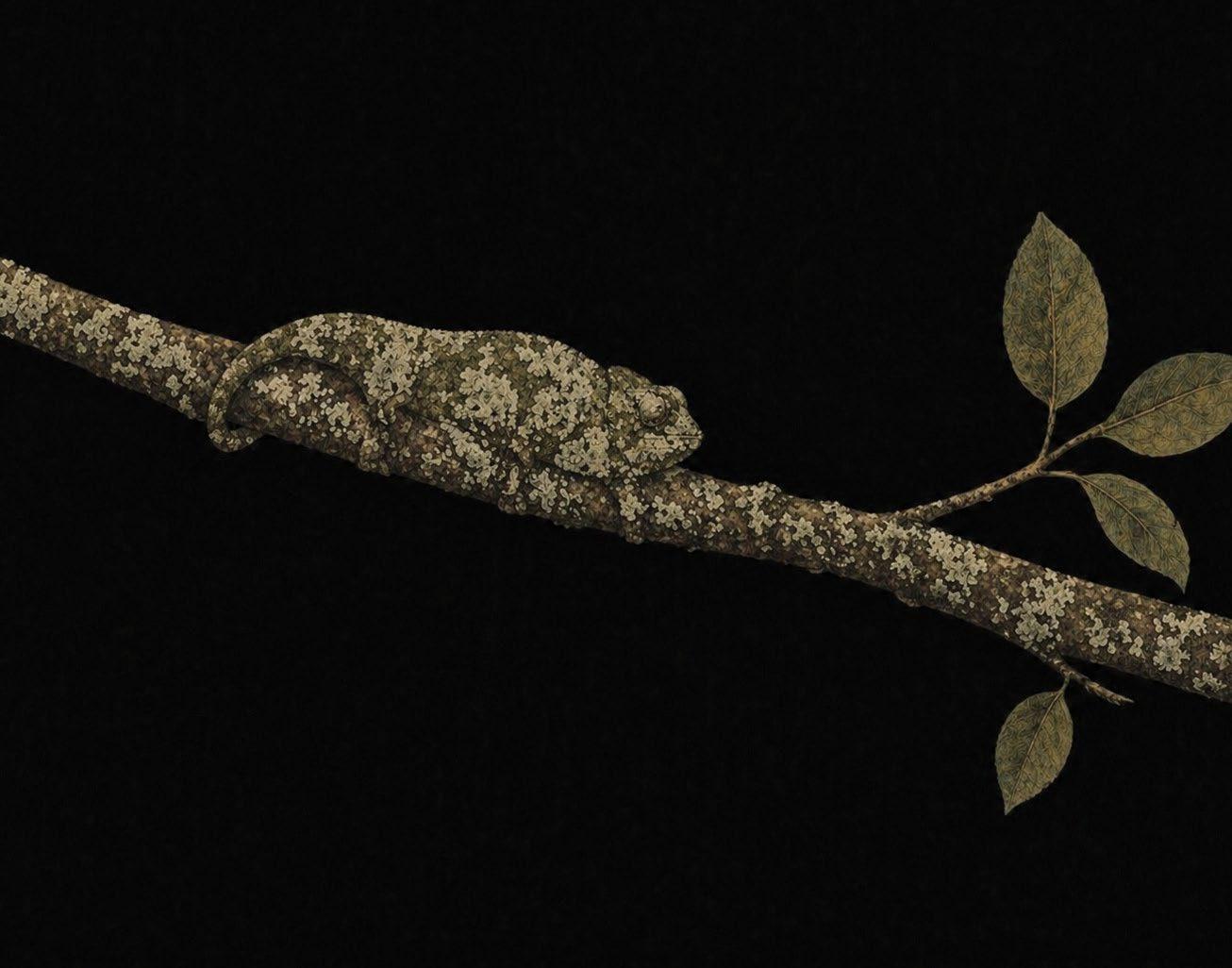
By Ashley Siler, VP of Sales & Marketing, LMCA
In licensing, creativity is usually easy to spot. It’s the character reimagined as a children’s storybook. The celebrity brand extended to a line of perfumes. The unexpected collaboration that turns into a Parisian runway moment. It’s visual, expressive, and immediate.
But most importantly? You can point to it. Corporate brand licensing doesn’t work like that.
The brands aren’t built on characters or storylines. The equity isn’t something you can redesign or reinterpret on the surface. The equity is something else entirely: trust, performance, authority, nostalgic familiarity.
Often intangible. Always hard-earned. Which means the creative challenge shifts. It’s not about asking, “What can we make?” It’s about asking, “What does this brand mean, and how far does that meaning actually go?”
Because most corporate brands already have products. Many of them.
The work is recognizing how the brand can show up beyond those products without losing the thing that made it valuable in the first place.
And when that’s done well, it doesn’t feel like licensing. It just feels like the brand is doing something
it could have been doing all along. That difference changes how you see the entire opportunity.
If you come from entertainment or celebrity-led licensing, this can feel like a different discipline altogether. Less about the immediate idea, more about the underlying logic. Less about visibility, more about fit. At a certain point, you start to ask a fair question: is this even licensing?
LMCA is celebrating its 40th year in this industry, and over a decade as a top 5 ranked global agency by License Global. We look different from the other names on the list. We are different.
We’re solving for something different. And, frankly, this realization led us to a slightly uncomfortable question...one that sits just beneath the surface whenever we gather with others in the industry.
If the work doesn’t look like licensing, isn’t driven by traditional licensing cues, and often isn’t even perceived as licensing when it succeeds… then what exactly are we doing? Is this even licensing?
Or is it something more?
Because the closer you get to the work, the more it starts to feel like the term itself doesn’t quite capture what’s happening. Not because “licensing” is wrong, but because it’s incomplete.
So rather than redefine the term, it might be more useful to expand it.
Plenty of people may approach this differently, but after 40 years working in this corner of licensing, a few things have become consistently true for us.
1. We Never Start with the
In most licensing conversations, the first question is, what category should this brand enter next? In corporate brand licensing, that’s usually the wrong place to start. We begin with the business objective. What is the company trying to achieve: market expansion, channel access, perception shift, geographic growth? Only then do we ask whether licensing is the right tool, and if it is, what form it should take.
Take HP: a global powerhouse whose rich history in computers and printers intertwines with its leadership in additive manufacturing. Additive manufacturing, colloquially known as 3D printing, is a prototyping and manufacturing technology that is more efficient and versatile than traditional manufacturing techniques.
LMCA has been the exclusive brand licensing agency for HP for nearly 10 years, and the

priority has always been clearly defined: identify partners whose capabilities enhance HP’s core business. HP wants licensees who strengthen its ecosystem and meaningfully amplify the power of its brand and technology.
The opportunity has never been to simply extend into an adjacent product category. It is to reinforce HP’s core business. This requires more than a category idea. It requires a partner with deep technical credibility and an existing foothold in their specialized ecosystem.
Creaform, meanwhile, is a leader in 3D digital scanning, known for engineering tools that capture physical objects with scientific accuracy. While HP and Creaform operate in distinct but closely connected parts of the same broader ecosystem, their capabilities are deeply complementary. HP leads in additive manufacturing, while Creaform specializes in 3D scanning and metrology. Often these two functions live side by side in the product development lifecycle. In LMCA’s search for a partner with leadership in an adjacent technology that would be accretive to HP’s existing strengths, Creaform quickly rose to the top of the stack. The ensuing result was the HP DesignScan handheld 3D scanner. The category followed the objective, not the other way around. And that distinction changes everything.
In many parts of the industry, licensing is the strategy: build a program, scale it, and maximize reach across categories. In corporate brand licensing, that framing doesn’t hold up. With corporate licensing, the equity isn’t a character or a storyline that can travel on its own: it’s trust, performance, and credibility. This kind of equity is contextual and earned over time; it doesn’t cleanly transfer across categories.
To best determine where the equity could be manifested, the strategy must always come first. Licensing then becomes one of the tools to execute against it.
Castrol is a great example of a global brand that uses its licensing program to amplify its core strategy. As one of LMCA’s global clients, Castrol, a world leader in lubricants,
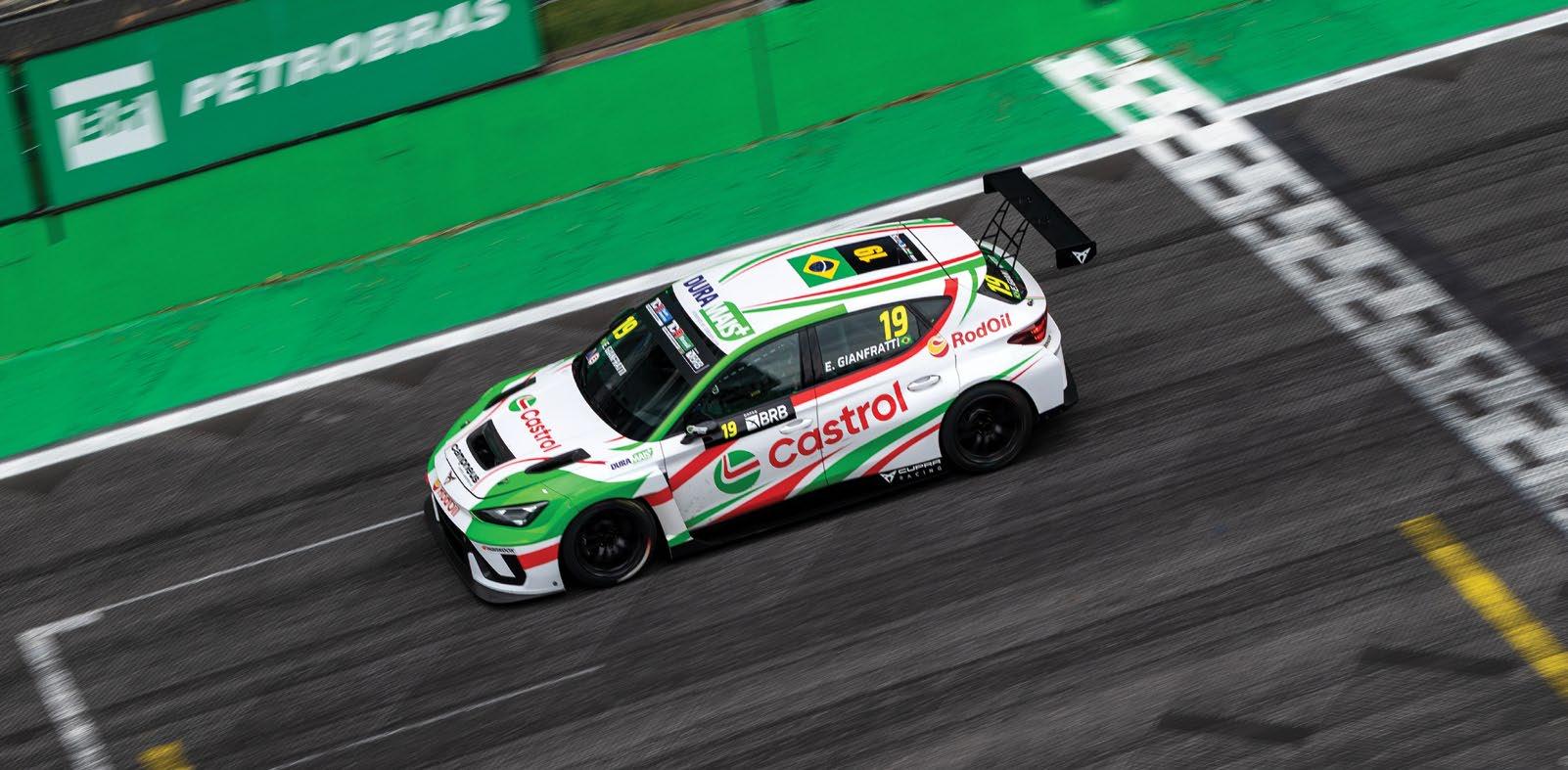
surface.
Different countries bring different regulatory environments. Distribution channels vary widely. Relationships matter, and they are rarely centralized.
If Castrol had determined to build this on its own, the burden would have been significant: setting up manufacturing or sourcing globally, establishing distribution market by market, navigating country-specific regulations, and building local commercial relationships. Each step would require time, capital, and capabilities outside the core business. And any misstep would be magnified at a global scale.
What appears straightforward on paper quickly becomes operationally complex in practice, especially when consistency is required across markets that behave very differently.
So the execution couldn’t be a single solution. It had to be a system.
Licensing became the preferred tool because it allowed LMCA to build Castrol a network of regional partners, each with deep market expertise, established distribution relationships, and the ability to operate within local constraints.
The result wasn’t one global license. It was a coordinated global program built through
itself. You can see it, label it, and immediately understand the connection.
And then there’s the kind that doesn’t.
Some of the most successful corporate brand licensing programs don’t register as licensing at all. They feel native. Embedded. As if the brand had always belonged there.
Frigidaire’s heating and cooling (HVAC) program is one of those examples. There’s no obvious jump, no unexpected category. Just a product that fits so naturally within the brand’s promise that it feels inevitable.
That’s exactly why it works.
For over 20 years, the Frigidaire HVAC program has operated not as an extension, but as an integrated expression of the brand.
Frigidaire has long stood for reliability, performance, and trust in the homeparticularly in appliances that people depend on every day. HVAC naturally sits within that same expectation set. It’s not a leap. It’s a continuation. And that’s what makes it powerful.
The program builds on what consumers already believe about the brand and reinforces it in a new, but entirely logical, context.
Over time, it hasn’t just leveraged Frigidaire’s credibility; it has deepened it.
And that’s the nuance.
When licensing is done at this level, it stops feeling like an extension and starts
defined place in the business. It was about products. Categories. Extensions. Today, it’s starting to show up in very different conversations.
Not just what should we make next? But how should we enter this market? How do we build capability without building it ourselves? How do we scale without taking on unnecessary risk? In other words, the questions are becoming more operational. More strategic. Sometimes even financial.
And licensing (quietly) is becoming one of the tools used to answer them.
Not always. Not everywhere. But more often than the industry tends to acknowledge. Which brings us back to the original question.
If the work doesn’t look like licensing… If it doesn’t behave like licensing… If it’s solving problems that licensing wasn’t originally designed to solve…
Then maybe the question isn’t whether to ditch licensing.
It’s whether we’ve been defining it too narrowly all along. n

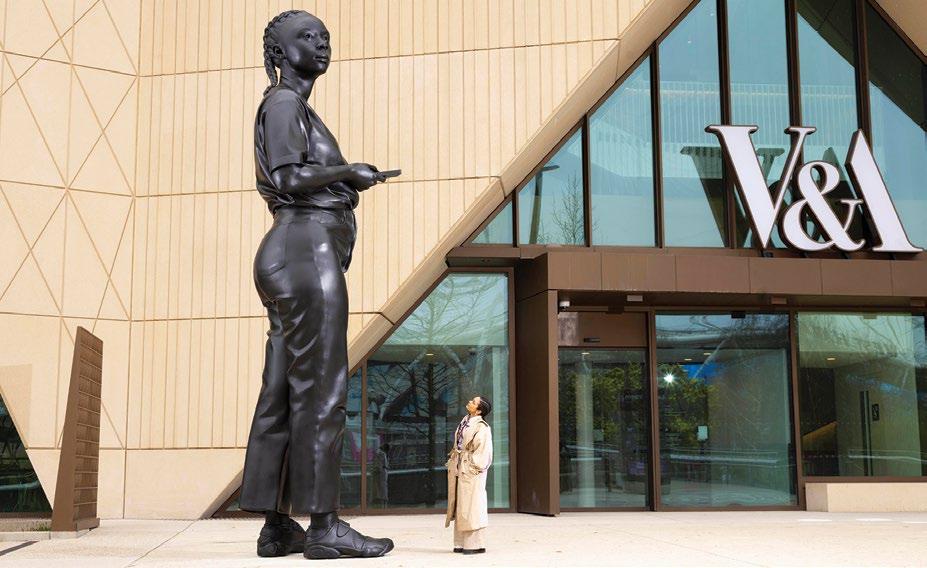
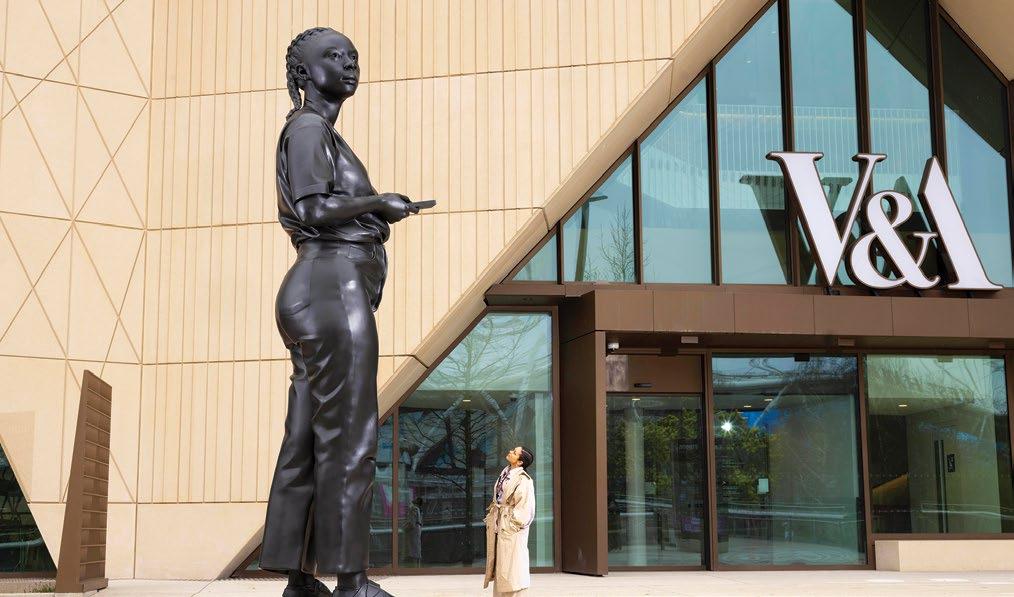
The V&A is a family of museums dedicated to the power of creativity—its capacity to entertain and move, to enrich lives, open minds and change the world. The brand has seen an exciting start to 2026, delighting audiences across various categories and markets through its brand licensing programme, as well as the launch of a new venue in east London. The latest member of the family, V&A East Museum, opened this month with its first exhibition, The Music is Black: A British Story. Sitting alongside V&A East Storehouse, which opened to visitors last year, this new cultural venue in the heart of east London celebrates making and creativity’s capacity to bring change. A site-specific commission by British artist Thomas J Price greets visitors arriving to the site, an 18-foot-tall bronze sculpture A Place Beyond (2026). Envisioned in partnership with young people and inspired by east London’s creative heritage, V&A East Museum brings the V&A collection to life in surprising and innovative ways.
To complement the opening of this latest
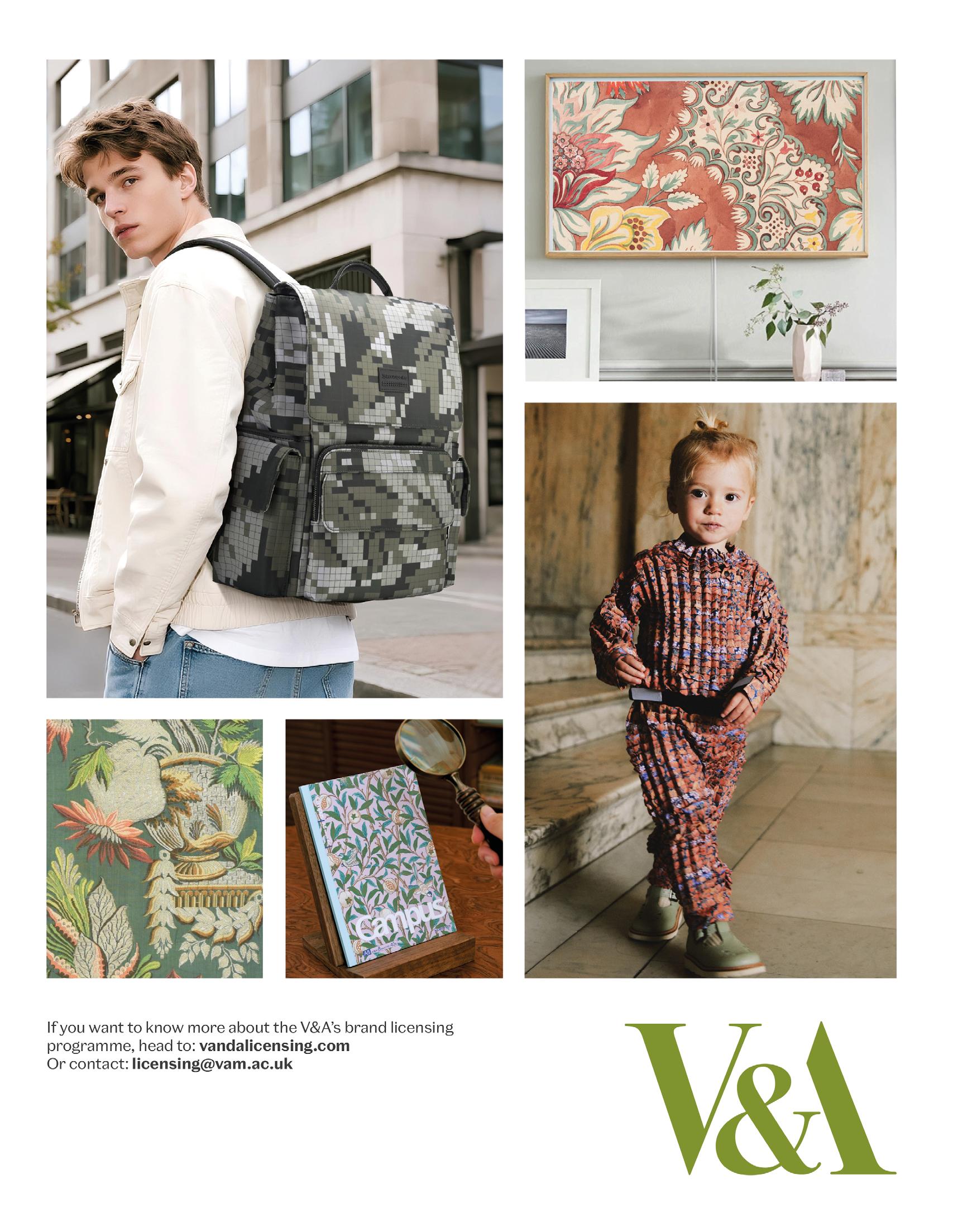
venue, a new collection of imagery, V&A Discoveries, is now available via Samsung’s Art Store for The Frame TV, to be enjoyed digitally at home. The collection adds to over 170 artworks already featured from within the museums’ archives on the Art Store platform. Objects from around the globe, spanning eras and disciplines, are brought together through their shared ability to spark conversation and inspire creativity. From works by celebrated artists to exquisite examples of design by those who are unknown, the curation showcases best-in-class craftsmanship across centuries of cultural exchange. Users of the Art Store can enhance their surroundings with this digital display of V&A images that form the perfect mix of art and history, offering an excellent proposition for wall and home.
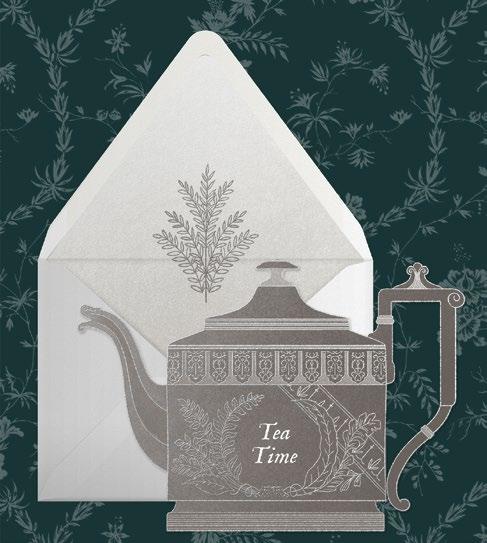
Bolstering the V&A’s presence in the digital products category, a collaboration with Paperless Post titled Objects of Entertaining, reimagined the museums’ world-renowned collections into nineteen contemporary, design-led digital invitations. A wide variety of
archive material was used for the collaboration – with many of the assets featuring on a licensed range for the very first time. One such item was a rare metal teapot - made by Reed & Barton from Massachusetts, USA in 1892 – that was previously in storage until being revisited and brought to life through this project.
In further alignment with broader V&A exhibition activity, the opening of Marie Antoinette Style at V&A South Kensington in September 2025, was marked with a limited-edition macaron gift box in collaboration with luxury French patisserie Maison Ladurée. A full-scale reconstruction of the pièce montée from Sofia Coppola’s film about Marie Antoinette, provided by Ladurée, featured within the exhibition.
Meanwhile to mark the opening of Young V&A’s Inside Aardman: Wallace & Gromit and Friends, a Saltdean sofa by Sofas & Stuff features within the immersive retail experience alongside the exhibition at the museum in
Bethnal Green. Upholstered in vibrant V&A fabric Ikat Mirage in Rouge, the sofa perfectly echoes the look and feel of Wallace & Gromit’s sofa and - accompanied by themed decorations and props - the experience represents a fun photo opportunity for exhibition goers.
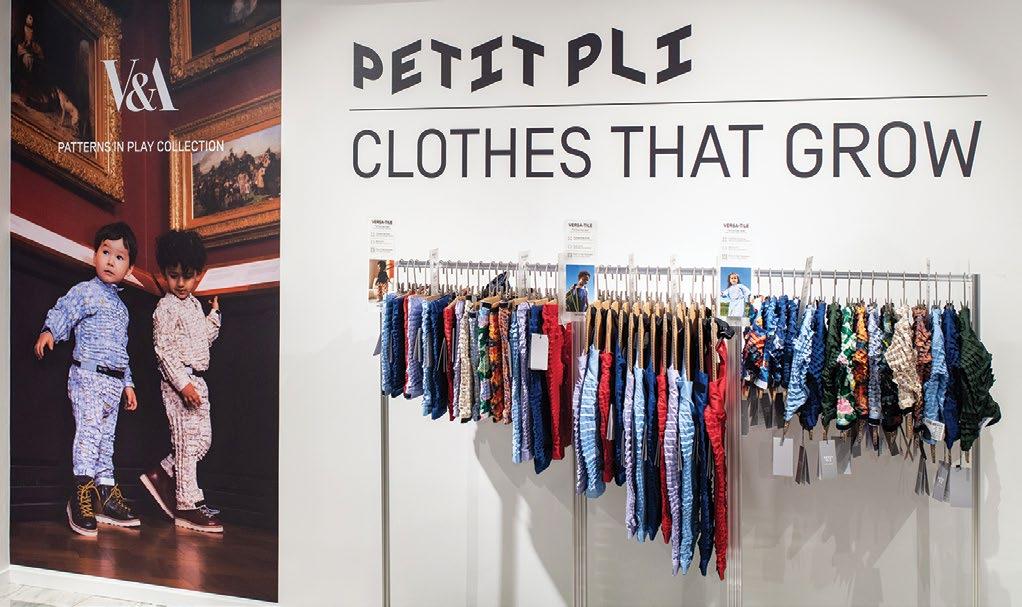
The V&A’s collaboration with innovative childrenswear brand Petit Pli, Patterns in Play, featured in a pop-up activation at Harrods department store in London during April 2026, highlighting the collection’s playful spirit and innovative design. With strong environmental credentials, Petit Pli’s pleated design means that one garment replaces up to seven traditional sizes, growing with the child, and epitomising the V&A’s core values of innovation and design excellence. Showcased within an elevated retail setting in one of the world’s most iconic luxury department stores, the installation offered unparalleled opportunities for visibility and engagement.
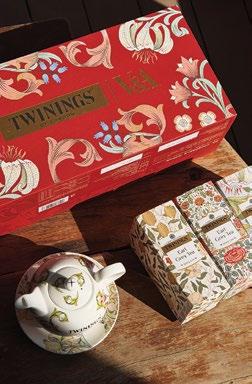
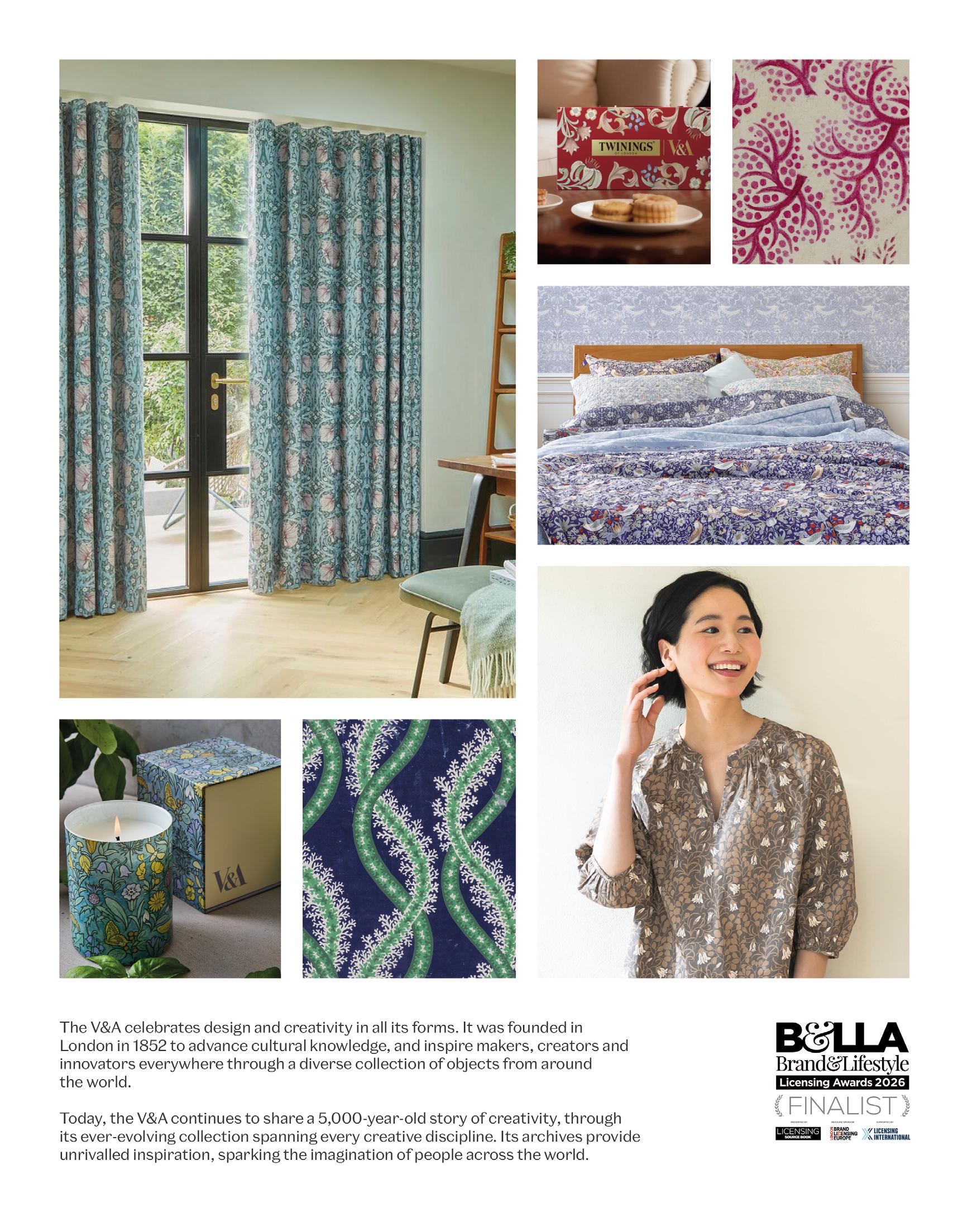
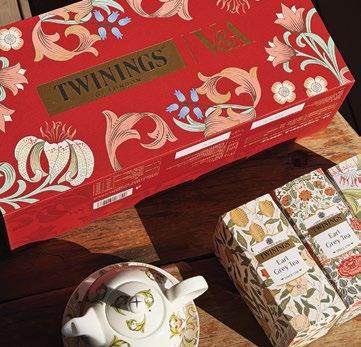
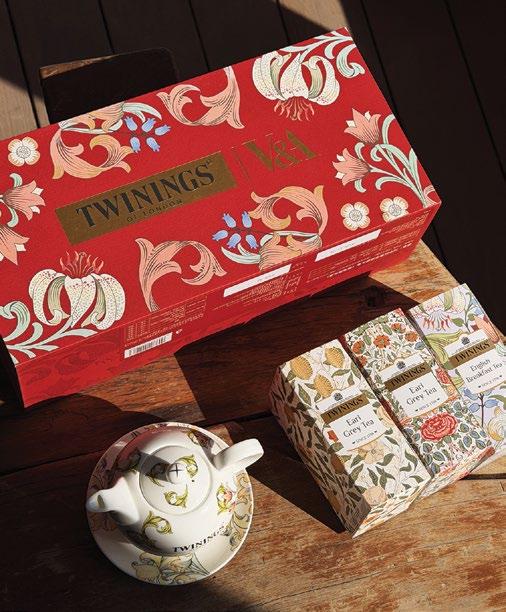
The V&A continues to share the creativity of its collections across the globe, with several notable launches in China. A collaboration with Twinings celebrates William Morris’ connection to the V&A through a tea gift set in a beautifully designed Arts and Crafts-inspired box. Morris was an advisor to the V&A and even designed the tearoom interior at South
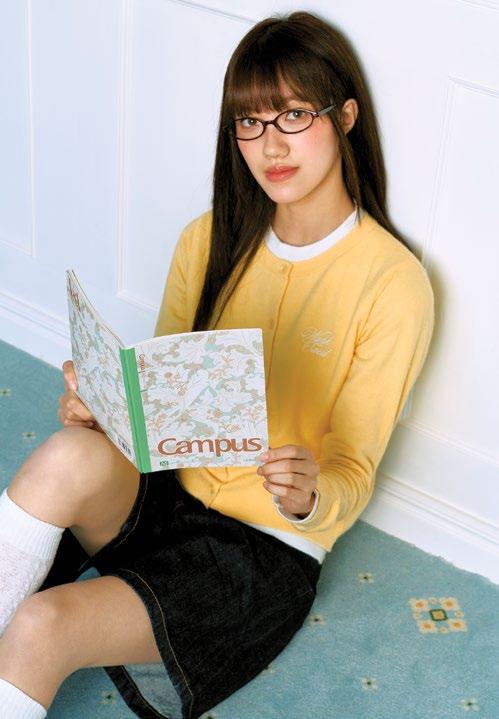
Kensington– the world’s first museum cafe. Featuring a nested teapot and three patterned boxes of Breakfast and Earl Grey tea, the V&A Twinings gift set offers the opportunity to experience the elegance of an English tea ritual. A collaboration with new licensee, stationery brand KOKUYO, features notebooks, tote bags, pencil cases and pens, all designed to bring creative spark and colour to everyday objects. Drawing inspiration from the V&A’s rich archives, KOKUYU was influenced by floral patterns, evoking the ambiance of the natural world.
A new pure gold range with Chow Sang Sang, a well-established jewellery company based in Hong Kong, takes inspiration from Queen Victoria’s sapphire and diamond coronet, designed for her by Prince Albert in 1840 - the royal couple’s wedding year. A longstanding licensee of the V&A since 2003, Chow Sang Sang brings a contemporary interpretation to this treasured object, creating an exclusive collection that will include rings, necklaces, earrings, as well as a bangle and bracelet. Each piece is crafted with their expert touch and precision to present an opulent texture and offer consumers an exquisite luxury product. The V&A shares a 5,000-year-old story of creativity through its ever-evolving collection spanning every creative discipline, from art, design, fashion, photography and furniture to theatre, performance, architecture, and ceramics. Through its licensing collaborations, the V&A brings its collections to life through
beautiful products. Each item reflects a commitment to considered design, exceptional production standards and expert craftsmanship. Spanning home interiors, apparel and accessories, as well as digital offerings, stationery and crafting, each collaboration draws on the V&A’s rich collections, drawing out distinctive themes, motifs and textures in ways that feel contemporary and enduring.
Thanks to the V&A’s continued work with licensees around the world, it further contributes to the brand’s mission to champion design and creativity in all its forms, advance cultural knowledge, and inspire makers, creators and innovators everywhere. To find out more about the V&A Brand Licensing programme, email the team at licensing@vam.ac.uk n
“Heritage licensing is one of the fastest-growing sectors, and we’ve seen that momentum across our own portfolio,” said Julie Newman, Founder and CEO of Jewel. “From art and architecture to nature and science, our brands deliver authentic stories that connect with consumers and drive strong retail performance.”
Heritage & Museum Brands
New York Botanical Garden (NYBG) is making a major statement in home with the debut of a sweeping new collaboration with GreenRow launching May 2026, spanning bedding, table linens, wallpaper, lighting, and tabletop. Internationally, the brand continues to gain ground across both retail and fashion — from a new giftware DTR with Thalia in Germany to a new women’s collection with emmi in Japan, adding to a growing roster of fashion partners across the UK, Korea, and global brands Reiss and Cotton On.
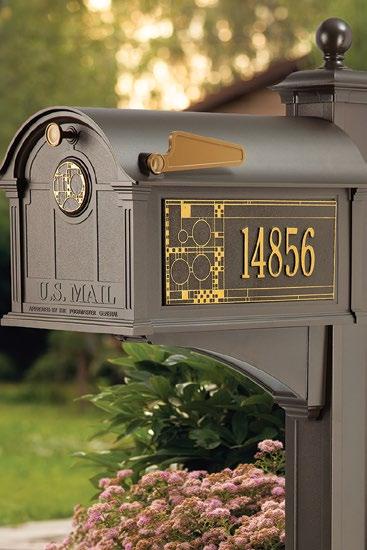
The Frank Lloyd Wright Foundation brings Wright’s enduring design principles to life through a growing roster of partnerships: a premium blanket and throw collection with Faribault Mill, a limited-edition capsule with The Tie Bar inspired by Midway Gardens, coordinated home and outdoor launches with Whitehall Products and DHome, and continued buzz around the limited-edition Airstream Usonian Travel Trailer. A new traveling exhibition with Storyland Locations and
Jewel Branding & Licensing returns to Licensing Expo (Booth #D124) with an impressive slate of new partnerships, product launches, and global expansions across its diverse portfolio of heritage brands and lifestyle properties.
Imagine will bring Wright’s legacy to global audiences through immersive, experiential formats.
The Museum of Fine Arts, Boston (MFA Boston) expands across fashion, accessories, and home with a new fashion bedding and textiles collaboration with Berkshire Blanket & Home, a Homer-inspired sock collection with MuseARTa, and new international agency representation in Germany with additional launches planned throughout 2026.
The Natural History Museum, London (NHM) is accelerating its global expansion with new representation in Japan, a new U.S. apparel partnership with Philcos, and the launch of Age of Dinosaurs — an immersive VR experience with Sandbox VR bringing natural history to audiences worldwide.
The National Wildlife Federation (NWF) continues growing its licensing program, highlighted by a new outdoor blanket and throw collection with Berkshire Blanket & Home, featuring North American wildlife imagery that reflects the Federation’s conservation mission.
Sanderson Design Group expands in the home category with the Country Woodland dinnerware collection in partnership with Williams Sonoma, while Morris & Co. grows its U.S. presence with a new peel-and-stick wallpaper line with WallPops, featuring eight iconic archival designs including Strawberry Thief and Willow Boughs.
Lifestyle Brands
Jewel’s lifestyle portfolio continues to drive strong multi-category performance across major retail channels.
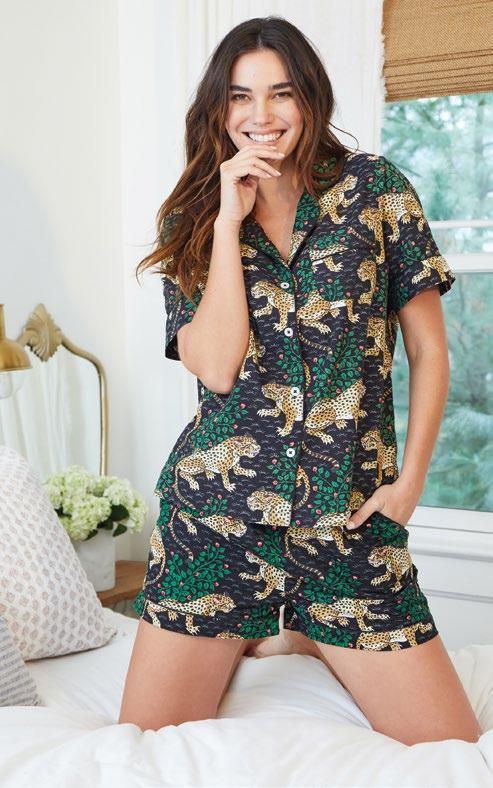
In a major new signing, Jewel is proud to announce it has been named the exclusive licensing agency for Printfresh, the beloved Philadelphia-based brand celebrated for its whimsical, art-driven sleepwear and apparel. With a richly distinctive portfolio of original print artwork, Printfresh is now expanding into new categories including home textiles, home furnishings, stationery, health & beauty, and fashion accessories.
Ceci New York expands across home with fashion bedding and throws from Berkshire Blanket & Home, a tabletop collection with Lifetime Brands, and a new dated goods assortment launching later this year.
Nikki Chu, acclaimed interior designer and influencer, continues her expansion across tile, rugs, wall décor, and home textiles, with strong retail performance through partnerships with The Tile Shop, LeftBank Art, and Home Essentials.
Simplified, Emily Ley’s bestselling organization brand, grows its licensing program with a new kitchen textiles collection from Home Essentials developed alongside Ley’s cookbook, with broad distribution at Walmart, Target, TJ Maxx, Marshalls, and HomeGoods.
Plum Pretty Sugar, the brand that pioneered the bridal “Getting Ready” category, continues its lifestyle evolution across kitchen and bath textiles, fashion bedding, rugs, beauty, stationery, and party goods, with strong sellthrough in off-price retail.
Visit Jewel Branding & Licensing at Booth #D124 at Licensing Expo to learn more. n
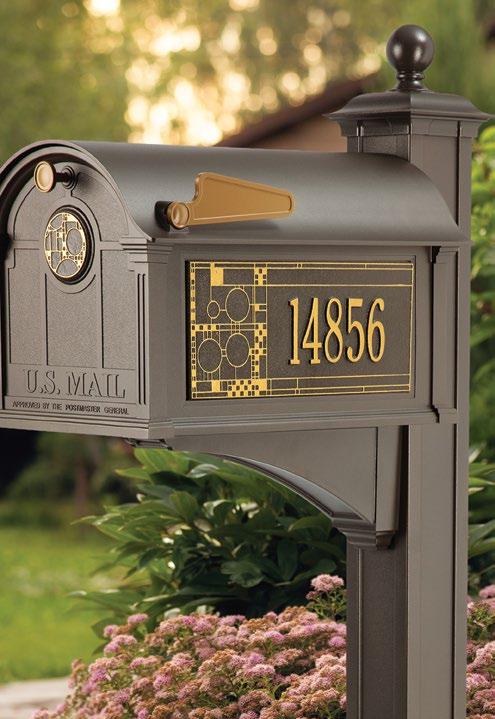
Total Brand Licensing sits down with Jasen Wright, V`P, North America, WildBrain CPLG, to discuss the growth of the agency’s Corporate & Lifestyle portfolio, recent collaborations, and the key trends shaping the category today
WildBrain CPLG’s Corporate & Lifestyle portfolio continues to expand. What’s driving this growth?
Jasen Wright; The growth we’re seeing is really a reflection of how brands are being reinterpreted by consumers. Corporate, cultural and lifestyle brands today are no longer static logos or heritage names – they’re living brands with meaning, values and stories that translate exceptionally well into product. We’re excited to have recently secured global licensing rights (excluding Benelux) for Amsterdam’s Van Gogh Museum. It’s an iconic cultural institution with enormous creative depth, and there’s huge scope to translate that into aspirational, design-led products. That same thinking underpins our new partnership with Casa Batlló in Barcelona – another world-renowned cultural landmark where art, architecture and imagination intersect. Alongside that, our collegiate portfolio continues to gain momentum. Representing universities such as Yale, Harvard, Columbia and Cambridge gives us access to brands that are not only globally recognised, but deeply embedded in culture, fashion and lifestyle. Beyond academia, we’re also expanding established corporate brands into new areas. Master Lock is a great example – it’s a brand with deep heritage and trust in North America, and we’re building a programme across home and security, outdoor and lifestyle categories.
Another exciting part of the portfolio is our global representation of PEUGEOT, where we’re focused on extending the brand into wider family life, with traction across Europe and emerging markets. Similarly, Kikkoman, which we represent in Europe, is another instantly recognisable brand and a category leader in its space. These kinds of brands extend naturally into products because they already have a strong presence in everyday life.
Can you share examples of how these brands are being brought to life through collaborations?
Jasen Wright: We’re seeing growing demand for collaborations that feel genuinely authentic, culturally resonant and confidently trend forward. Across our collegiate portfolio, this has translated into a series of standout collaborations on a global scale, including a premium collection of Harvard, Cambridge and Columbia bags and accessories with Cambridge Satchels.
Yale continues to build strong momentum at retail, fuelled by programmes including athleisure collaboration with Lululemon, and a dedicated Yale apparel collection with Italian fashion retailer Alcott, part of the Capri Group. Our ongoing partnership with Inditex has seen Zara roll out multiple collections worldwide for Harvard, Yale and Cambridge. The Cambridge range was notably inspired by the University’s rich creative heritage, bringing botanical artwork from Cambridge’s Fitzwilliam Museum to life across fashion. Meanwhile, Perfetti Van Melle’s powerhouse confectionery portfolio—including Chupa Chups, Mentos, Fruit-tella and Smint— continues to unlock playful collaborations that bring sweet brands into lifestyle spaces.
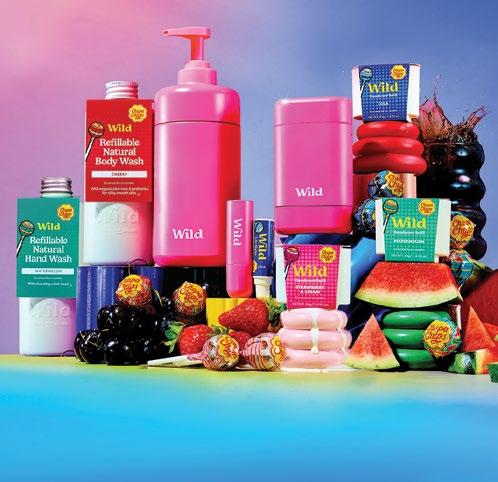
H&M unveiled a vibrant Chupa Chups inspired range spanning fashion, accessories, and health and beauty, generating strong engagement with Gen Z fans globally. Wild, part of Unilever, has also reimagined everyday essentials with a beautifully designed,

sustainable Chupa Chups collection of its refillable bodycare, while 7th Heaven launched a vibrant, limited-edition line of fruity face masks, each inspired by a classic Chupa Chups flavour.
What are the key trends currently shaping the Corporate & Lifestyle licensing sector? Jasen Wright: Beyond experiences designed to drive instant engagement, there’s a growing imperative to strike the right balance between long-term brand building and fast-moving partnerships. Consumer engagement today is driven heavily by social platforms, which means brands must remain agile while still protecting their long-term vision. Licensing partnerships are a powerful way to drive brand affinity with new audiences in a relatively short timeframe.
We’re also seeing continued growth in ‘mashup’ collaborations – partnerships that surprise and delight by bringing together brands from different worlds. These collaborations are particularly appealing to younger, social-first audiences who value creativity, remix culture and unexpected storytelling.
Food and beverage, as well as wider CPG, remains a major growth engine. These categories offer significant scope for innovation and brand cross-over. Health and fitness also continue to gain momentum and our recent Yale x Lululemon collaboration is a great example of how brands can come together in a way that feels highly relevant to modern consumers. n
This spring, the Natural History Museum was delighted to be recognised as the number one tourist destination in the UK, having welcomed over 7 million visitors in 2025. And as the Museum’s visitor numbers grow, so too does its licensing programme, with recent launches across homewares, apparel and LBE, as well as a slate of new licensee signings.
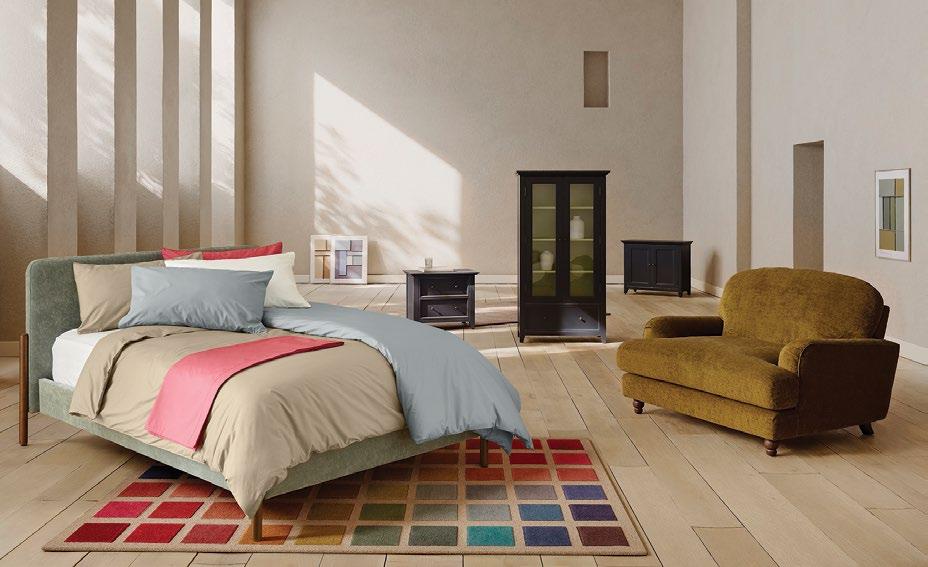
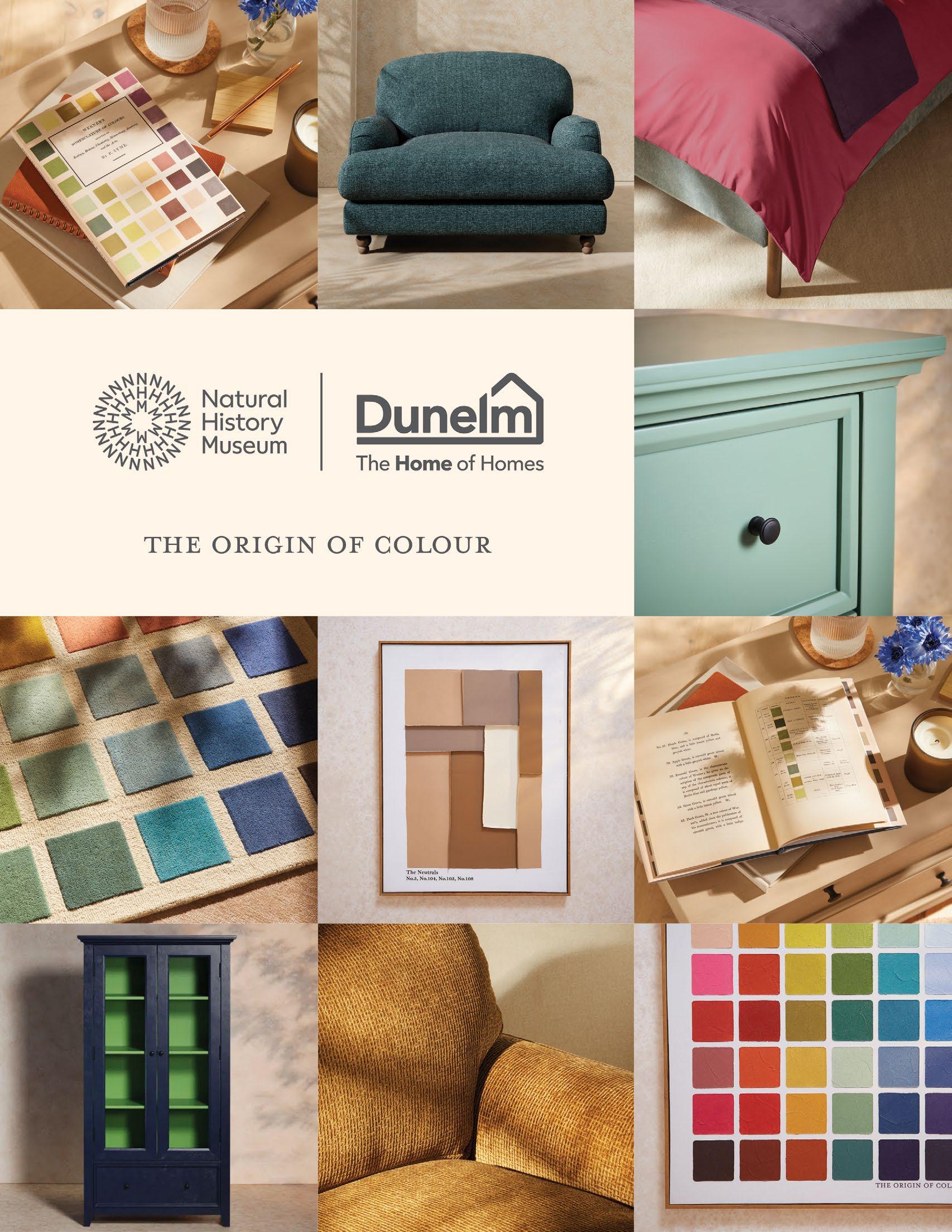
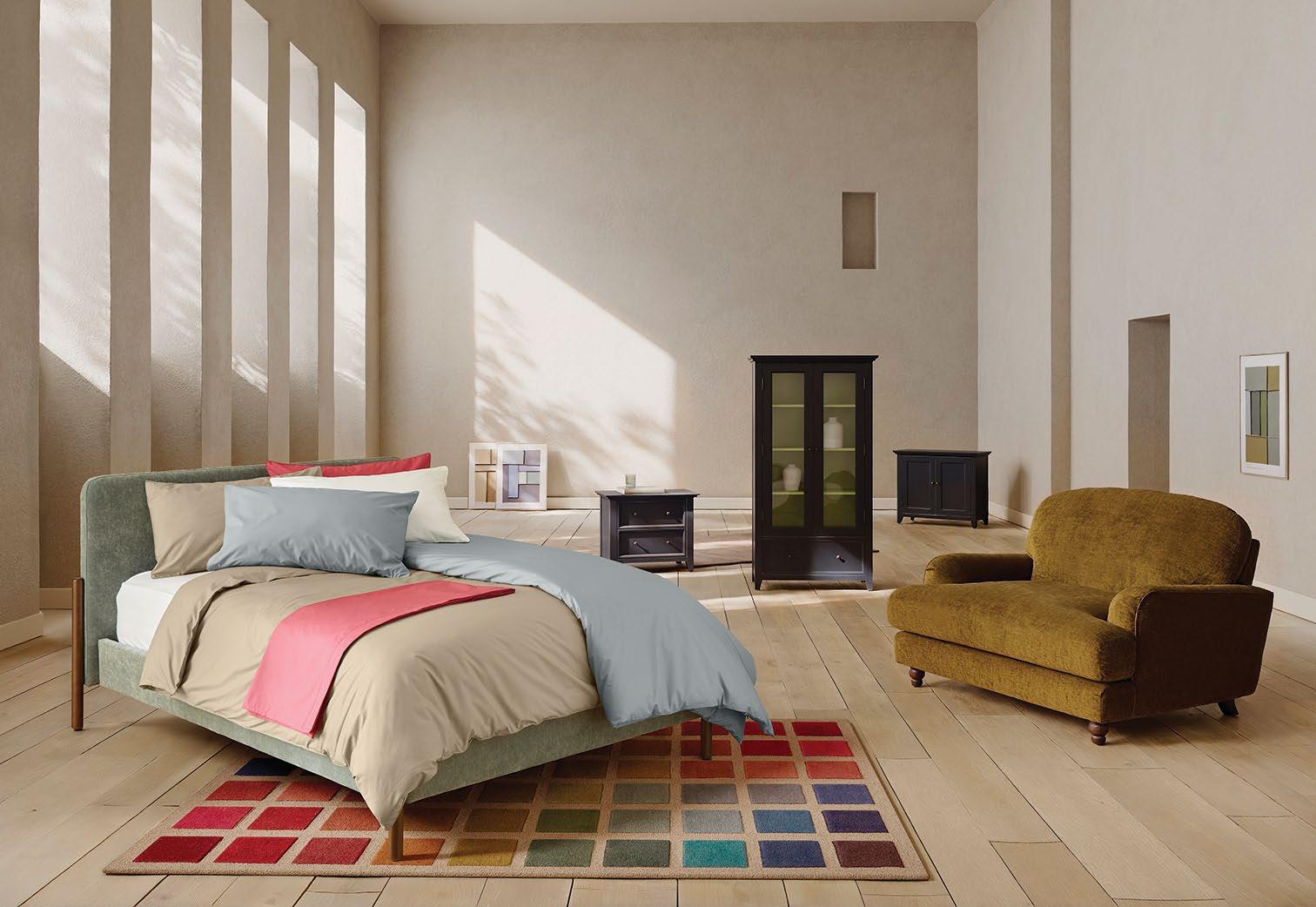
The Natural History Museum has extended its collaboration with homewares retailer Dunelm with its latest collection for SS26, The Origin of Colour. The collection is a reimagining of nature’s palette for the home, inspired by Werner’s 1814 book of colour charts Nomenclature of Colours, which forms part of the
Natural History Museum’s rare books collection. This was a pioneering work that visualised colour through references to the vibrancy of birds and butterflies, the shades of flowers and fruit and the tones of precious gems. It is the richness of both colour and language that has been cherished by naturalists for over two centuries and has inspired Dunelm to create their latest collection of bedding (across twelve core colourways) as well as wall art, rugs and furniture.
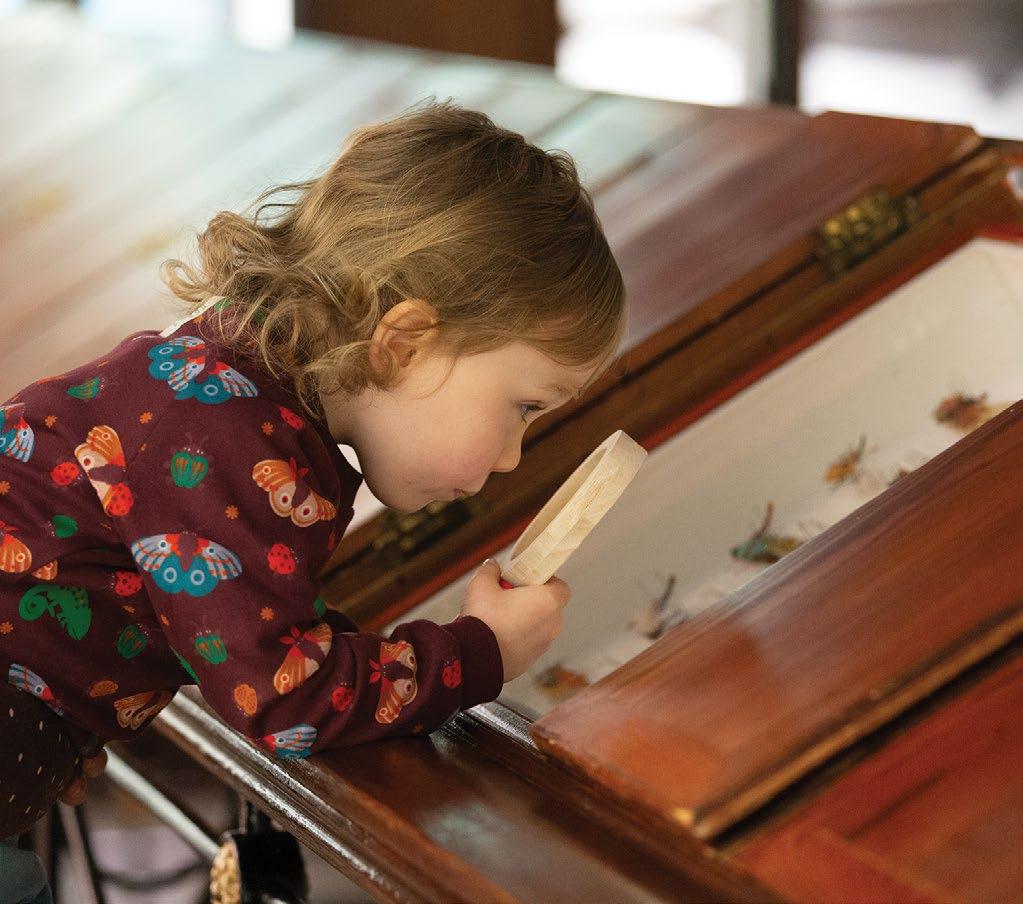
In the apparel category, the Museum has collaborated with organic children’s clothing brand Little Green Radicals on their new collection, Finding the Extraordinary, for
SS26. The 14-piece collection includes pyjamas, tops, leggings, a drawstring bag and two adaptive styles, because every child deserves to be part of the adventure. The designs take inspiration from some of the most beautifully vibrant creatures that young explorers might be surprised and delighted to discover living nearby in the UK, from vividly coloured bugs to brilliant birds like the mandarin duck. Created using Fairtrade organic cotton, it is planet-friendly playwear, and a Fix-it Kit containing embroidered patches is available as part of the collection to help prolong the life of little clothes taken on big days out.
When it comes to experiential licensing, Mark
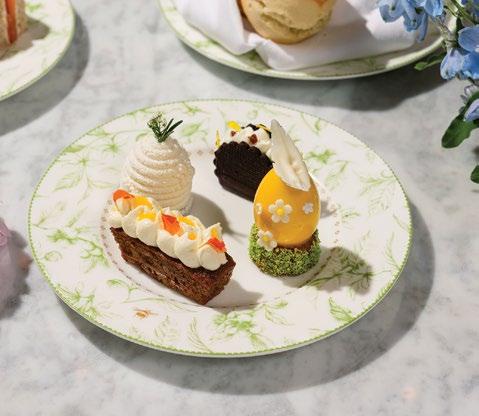
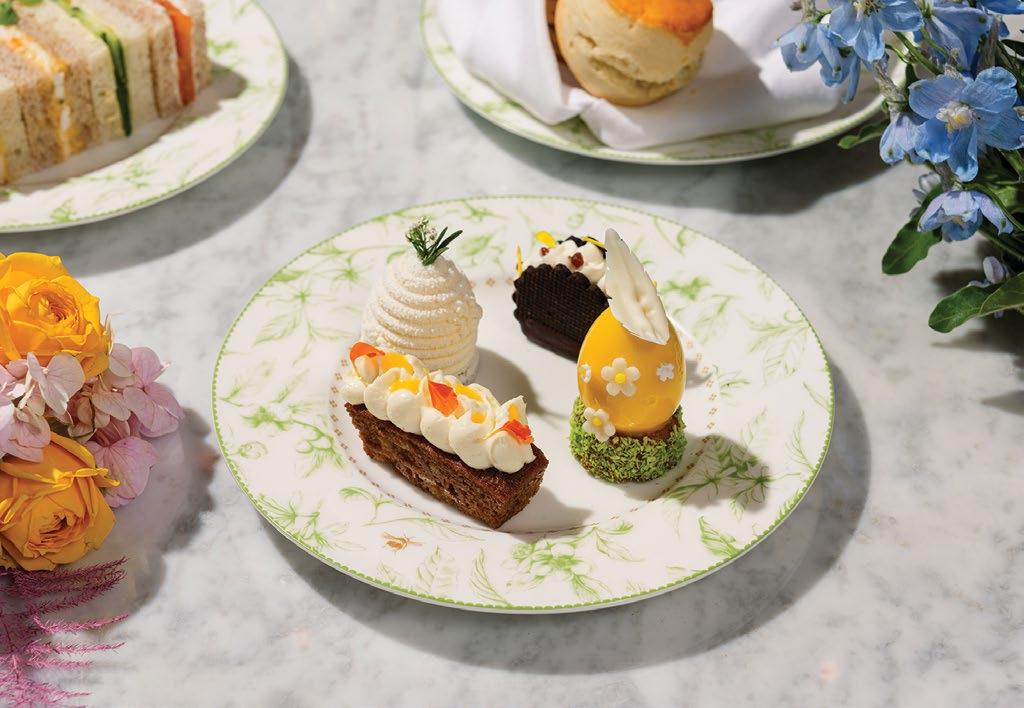
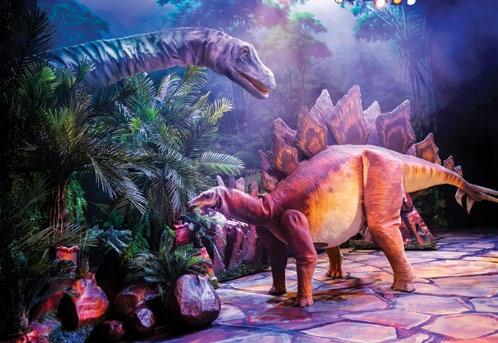
Thompson Productions’ Dinosaurs Live theatre show has kicked off a second year of UK show runs for 2026, following a brilliant first year. The Museum’s A Blooming British Afternoon Tea with Royal Lancaster London also continues to regularly refresh its mouthwatering menu, celebrating British flora and pollinators with its beautiful pastry creations for Valentines Day, Spring and Easter already this season.
Joining these fantastic experiences comes the new Age of Dinosaurs fully immersive VR experience from Sandbox VR which launched in April across Sandbox VR’s slate of international locations, including London and Birmingham in the UK. Age of Dinosaurs takes players on a breathtaking expedition to the heart of a prehistoric world to come face to face with dinosaurs to discover how they truly lived. Developed with scientific guidance from the Natural History Museum and renowned palaeontologist Dr. Darren Naish, every creature and environment reflects the latest research and discoveries.
Looking ahead, the Museum has had a strong start to the year for new signings. Firstly, gifting and collectables specialist Nemesis Now has been signed by the brand and will be launching its first NHM range later this year. Creators of beautiful paper-based products, East End Press have also come on board to create home decorations and partyware, drawing from the Museum’s collections and archives. Thirdly, Zipster is the latest of the brand’s apparel signings and will be developing and launching its first collection of baby, children and family bamboo clothing into the European market in 2026. Finally, creators of murder mystery case file games, Cryptic Killers, will be starting development on a new mystery in collaboration with the team at the Natural History Museum, ready for launch in early 2027.
At a time of exciting growth, the Museum’s licensing team still has an ambitious pipeline and target list for the coming year, targeting categories including health & beauty, food & beverage and homewares.
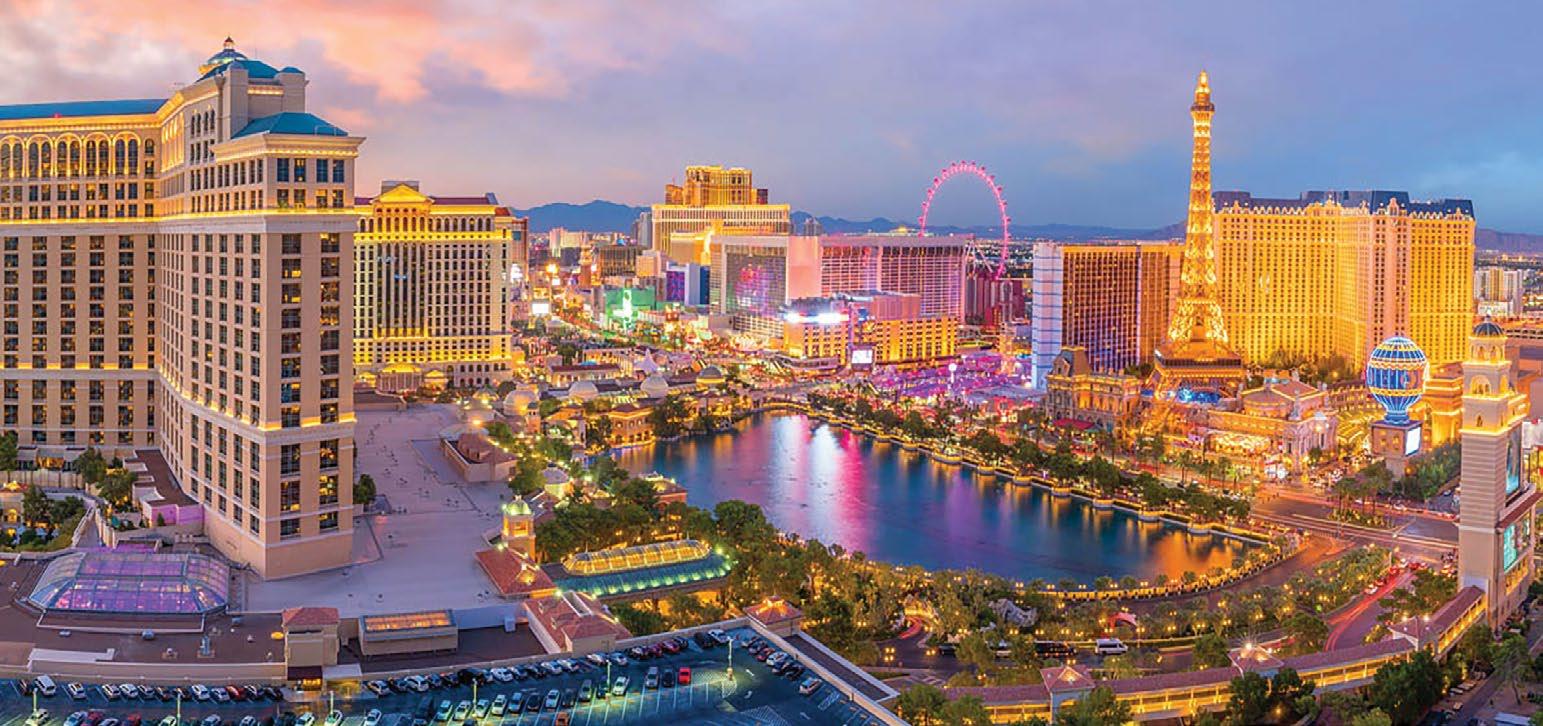
A quick look at just some of the brands that will be on show at Licensing Expo this year.
American Mensa, the high-IQ society, is one of the world’s most recognized brands. Partnering with Mensa reinforces customers’ confidence by signaling they’ve made a smart choice in engaging with a company. American Mensa looks forward to sharing brand and exploring collaboration opportunities.
Brandgenuity is a leading independent global brand licensing agency that expands iconic brands into products, services, and experiences that engage consumers, boost awareness, and drive revenue. Its client roster includes BMW, Church & Dwight, Nissan, Swiss Miss, Vlasic, KFC, Mike’s Hot Honey, Kona Ice, Purple, Sazerac (Fireball Whisky, Buffa-
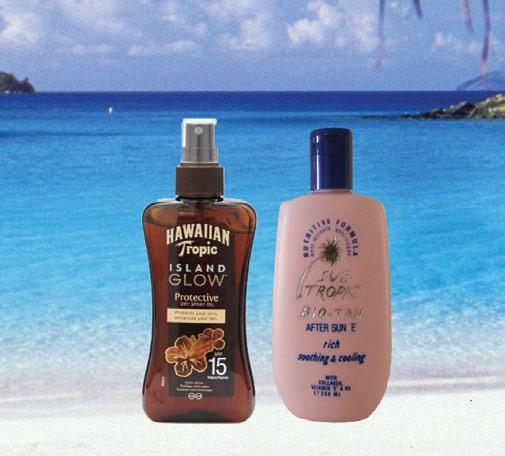
lo Trace, Southern Comfort), and Edgewell brands such as Hawaiian Tropic and Banana Boat. The agency has received numerous industry awards.
Global Icons is a premier full-service licensing agency focused on transforming iconic IP into impactful products and strategic partnerships. With a global presence and category-based expertise, the company delivers end-to-end solutions—from market analysis and white space identification to sourcing partners, negotiating deals, executing con-
tracts, and managing programs. The company represents a wide range of globally recognized brands, including America250, United States Postal Service, American Airlines, Fleischer Studios (Betty Boop), Lamborghini, Post-It, Hostess Brands, Michelin, Renault, Volkswagen, Omaha Steaks, Vespa, and Dbillions. Through these partnerships, Global Icons builds tailored licensing ecosystems that in-
crease revenue, expand relevance, and create meaningful consumer connections. Positioned at the crossroads of brand strategy, retail innovation, and execution, the agency helps partners unlock new growth while preserving brand integrity.
Since 1960, Hang Ten has represented California surf culture, growing from an innovative boardshort brand into a global lifestyle icon. While rooted in surf heritage, the brand now reflects a broader way of life, combining beach-inspired ease with contemporary trends. With a presence in 56 territories and over 10,000 points of distribution, Hang Ten offers products across fashion, footwear, home décor, health and beauty, and more. Its signature footprint logo—drawn from a classic surf maneuver—symbolizes the adventurous spirit that has defined the brand for more than 60 years. As both brand owner and li-

censor, Hang Ten continues expanding into new markets and categories, partnering with companies that value quality, innovation, and lifestyle branding. From apparel collaborations to home and wellness products, the brand remains grounded in authenticity and timeless appeal.
The Joester Loria Group (JLG) is a New York–based, full-service licensing and marketing agency. For more than 20 years, it has created award-winning programs that drive brand growth and consumer engagement worldwide. JLG represents a broad portfolio spanning entertainment, food and beverage, fashion, and lifestyle, including Constellation Brands beers (Corona Extra, Modelo Especial), Chiquita, Van Holten Pickles, Mars Snacking brands (Eggo, Cheez-It, Pop-Tarts, Pringles), Sparkling ICE, Post Holdings brands (Honey Bunches of Oats, Kibbles ’n Bits, 9Lives), Toyota, Lexus, Papyrus, The World of Eric Carle™ (The Very Hungry Caterpillar), Miffy, Dav Pilkey’s properties, and Wings of Fire.
ARTiSTORY will make a strong statement at Licensing Expo 2026, presenting a global portfolio of art and cultural IP designed to help brands, retailers and event companies create authentic, purpose-led products and experiences. Exhibiting at booth Q225-9, the company offers access to world-class museums, galleries, science centres and libraries, supported by curated style guides and readyto-use creative assets. ARTiSTORY’s portfolio includes Dunhuang Inspiration, Centre Pompidou, Tate, the British Library, the Shanghai Science & Technology Museum, the Shanghai Natural History Museum, the Shanghai Astronomy Museum, the Thyssen-Bornemisza National Museum, the Benaki Museum, Beautiful Science, the Forbidden City’s Mythical Creatures, The Amazing 24 Solar Terms in The Palace Museum and the Great Wall Society of China. At Expo, ARTiSTORY will showcase both international cultural institutions and Chinese heritage IP, offering opportunities across fashion, home, FMCG and experiential sectors. Its proposition is clear: transforming cultural storytelling into commercially relevant products and immersive brand experiences for global audiences.
Likeness Agency, a newly launched boutique licensing firm, will make its debut at Licensing Expo 2026 with a mission to expand commercial opportunities for underrepresented intellectual property across the global licensing market. Founded by licensing and consumer products executive Jasmin Francis-Bush, the agency focuses on
building structured licensing programmes for culturally driven brands, estates and talent. Its approach centres on translating cultural influence into scalable consumer products, retail partnerships and cross-category collaborations. Francis-Bush brings experience across sports, retail and consumer products, with previous roles at the NBA, Bloomingdale’s, Macy’s, Williams-Sonoma, Pottery Barn, Nintendo of America and collegiate licensing. At launch, Likeness Agency is introducing a roster of clients seeking licensing partnerships, including The Apollo Theater, The Althea Gibson Estate, 5001 Flavors and Yeza. The agency is targeting opportunities across all licensing categories, collaborations and experiential retail, while also welcoming new clients. At Licensing Expo, Likeness Agency will meet with licensees, retailers and brand partners to explore partnerships across categories and territories.
MHS Licensing + Consulting will debut new art brands and trending designs from its talented roster of art properties at the upcoming Licensing Expo booth (H90). The new art brands being introduced include Kris Jagers and Shelly Craig alongside a collection of innovative new designs from their highly sought-after and established artists. This showcase will provide attendees with an exclusive first look at the latest additions to their dynamic portfolios. Illustrator Kris Jagers incorporates charming characters, florals and hand-lettering, fashioning a vibrant style that is folksy and playful. Inspired by her Scandinavian heritage as well as mid-century design, Kris often blends motifs found in Norwegian folk art and figural shapes from a golden age in American printing. Deemed “Design Queen of Cute” by former col-
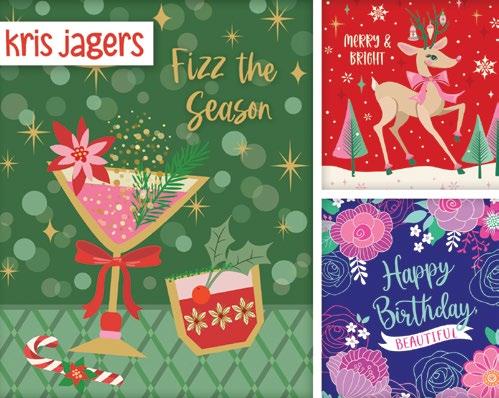
leagues, her portfolio is highly decorative and suitable on a wide array of product types. Shelly Craig is a Bonaire-based surface pattern designer and illustrator creating joyful, coastal-inspired artwork rooted in island living and ocean life. She combines hand-painted watercolor and ink with modern digital workflows to produce licensing-ready collections for fabric, wall art, home décor, tabletop, stationery, and lifestyle products. Known for her organized, collaborative approach, Shelly creates thoughtfully designed artwork that translates beautifully across product categories.
TreImage will be presenting the Jimmie McDaniel Legacy Foundation at Licensing Expo 2026 in Las Vegas and invites industry partners to visit their booth at G225 on the show floor. The team welcomes discussions with brands, retailers, and collaborators interested in developing licensing opportunities under the Love All platform. Jimmie McDaniel is widely regarded as one of the sport’s most influential figures, known not only for his achievements on the court but also for his lasting impact on the global growth and cultural significance of tennis. His legacy extends beyond competition—representing excellence, perseverance, and the unifying spirit of sport. Through this partnership, TreImage will work closely with the Foundation to expand the “Love All” brand, a platform inspired by McDaniel’s enduring philosophy of inclusivity, respect, and sportsmanship. The licensing program will focus on translating this legacy into meaningful, high-quality products and collaborations across a wide range of categories. TreImage is actively pursuing partnerships in Apparel and athletic lifestyle collections, Sporting goods and training equipment, Heritage-inspired collectibles and memorabilia, Educational and storytelling-driven products, Cross-category collaborations that celebrate tennis history and culture. This initiative represents a broader movement within the sports licensing industry—one that blends historical legacy with modern brand strategy to create timeless value. By integrating authentic storytelling and nostalgia into contemporary products, the Jimmie McDaniel program aims to
resonate with both long-time fans and new generations of athletes.
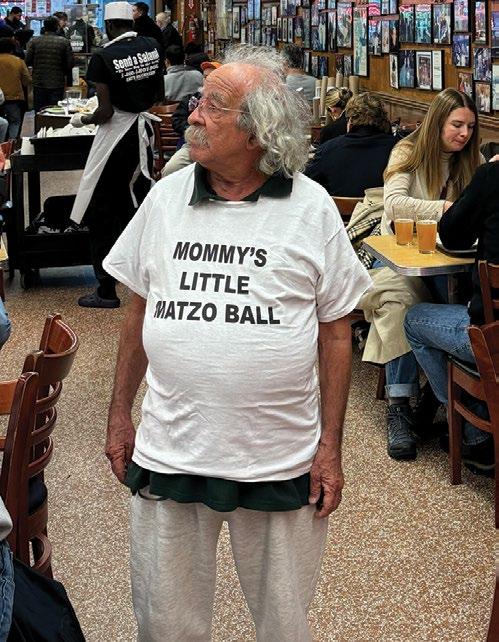
Brand Central, the Los Angeles-based branding and licensing agency, has signed Old Jewish Men (OJM), the viral New York City lifestyle brand. The cult lifestyle brand worn by Larry David, Selena Gomez, Mel Ottenberg, Benny Blanco, and more — beloved by fishmongers and pastrami slicers everywhere — expands its reach with the leading licensing agency. The partnership will expand OJM’s licensing footprint across new consumer product categories, bringing the brand’s singular blend of Jewish humor, nostalgia, and street credibility to a broader retail audience. Brand Central intends to extend the OJM brand beyond ecommerce, social media and publishing and into collaborations, food and beverage, lifestyle products, toys and collectibles, paper goods and so much more.
At Licensing Expo, Global Merchandising Services will showcase a multi-generational roster spanning legendary heavy metal pioneers, defining pop acts, and contemporary solo artists. The lineup includes Iron Maiden, Ozzy Osbourne, Oasis, Mötley Crüe, Mega-
deth, Backstreet Boys, and Zayn Malik, each supported by dynamic licensing programs and ongoing fan engagement through touring, collaborations, and cultural moments.
Iron Maiden is celebrating its 50th anniversary in 2025, marking a major milestone for one of music’s most powerful licensing brands.
Known for its fan-first, band-led approach, the program com bines authenticity with global scale, working with around 100 partners across apparel, collectibles, gaming, beverages, and lifestyle.
The brand generates significant global retail value and continues to ex pand through major initia tives, including a visual history book and a commemorative coin release.
oration and strong client service, CAA helps individuals and organizations that shape culture expand their impact. In February 2026, CAA Brand Management acquired Beanstalk, bringing together two industry leaders with shared values, complementary strengths, and a unified vision for the future of brand

Its licensing network spans leading collectibles, gaming, and apparel partners, with global retail distribution across major chains and fashion retailers. The band’s beverage portfolio continues to grow, alongside new collaborations that extend its reach into lifestyle categories.
CAA Brand Management is the licensing and consumer products arm of Creative Artists Agency, a leading global entertainment, sports, and brand agency. Known for collab-
For nearly a century, Pan Am has stood for quality, style, glamour, and innovation. Today, Pan American World Airways, LLC introduces a new golden age where the journey is as meaningful as the destination. Its licensing team is building partnerships that bring the legacy of the world’s most beloved airline to a new generation of global consumers. In recent years, Pan Am® has evolved from a heritage brand into a broad travel ecosystem, adding hotels, experiences, a full-service travel agency, luxury jet journeys, and branded charter flights. As the brand moves forward, it continues to honor its history while shaping the future of travel. Join us in 2027 as Pan Am celebrates 100 years.
The Tetris® brand is one of the leading and most distinctive video game brands and franchises in the world. Created in 1984, the brand continues to be loved globally by people of all ages and all cultures. Billions of Tetris games are played online every year, and over 520 million units have been sold worldwide. The Tetris brand’s global licensee network includes major video game publishers, including Nintendo and Sega, as well as many partners in electronics, toys and games, apparel, accessories, entertainment and more. Tetris Holding, LLC, is the owner of Tetris rights worldwide, and The Tetris Company, Inc. is its exclusive licensee.
By Kimberly Kociencki, Founder & CEO, Society of Product Licensors Committed to Excellence (SPLiCE)
Brands expand faster than governance, regulation shifts faster than playbooks, and one misstep in the wrong market can undo decades of building brand equity. Global licensing doesn’t fail because of ambition, it fails because of blind spots.
SPLiCE benchmarks internationally because protecting iconic trademarks requires more than growth strategies, it requires global intelligence. For more than two decades, SPLiCE has convened licensing leaders inside the world’s most respected companies to study what actually works at scale. Our commitment to educational focus revolves around how brands protect equity, enforce standards, and manage risk across borders. This responsibility is why SPLiCE is formally rebranding its international conference as SPLiCE ICON in 2026, a name that reflects both who is in the room and the obligation that comes with extending iconic brands through licensing.
SPLiCE International Benchmarking Licensing does not exist in a vacuum. Regulatory environments, consumer expectations, retail models, sustainability laws, enforcement mechanisms, and cultural nuances vary dra-
matically across regions. What works in one market can expose a brand to risk in another.
SPLiCE international benchmarking is designed to answer three essential questions for licensors:
1. How are bestinclass global brands protecting their trademarks while scaling through licensing?
2. Where are the gaps in legal, operational, or strategic thus creating unnecessary exposure?
3. What practices translate across markets, and which must remain marketspecific?
The value of benchmarking lies in context, candor, and community. Behind closed doors, peers share what actually works from governance structures and trademark enforcement to sustainability requirements and partner accountability, so others don’t have to learn the hard way. All SPLiCE benchmarking is conducted under a strict antitrust charter to ensure we focus on the process to protect, promote, and enhance brand equity within legal guidelines.
This work is reinforced year-round through the SPLiCE International Licensing Benchmark Committee, which fields annual surveys, develops tools, publishes case studies, and informs global educational programming.
Where We’ve Been: A Legacy of Learning from Iconic Brands
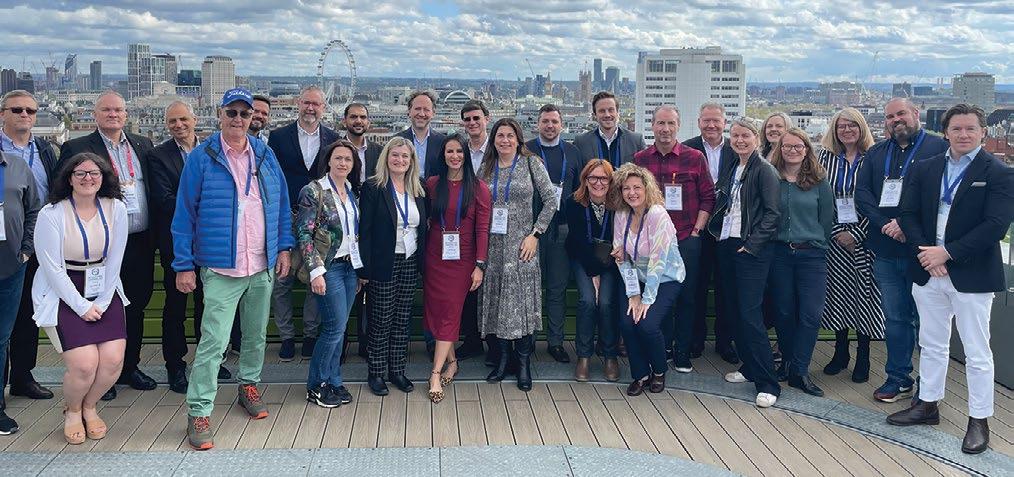
Our international benchmarking journey reflects the evolution of global licensing itself. Over the years, each host brand represents not just market leadership, but a willingness to open its playbook for the greater good of the licensing community.
Beginning in 2010 Unilever London Headquarters, formerly in the City of London, overlooking Blackfriars Bridge and the River Thames. These early benchmarks established foundational best practices in governance, sustainability, and global portfolio management, years before sustainability became a headline requirement.
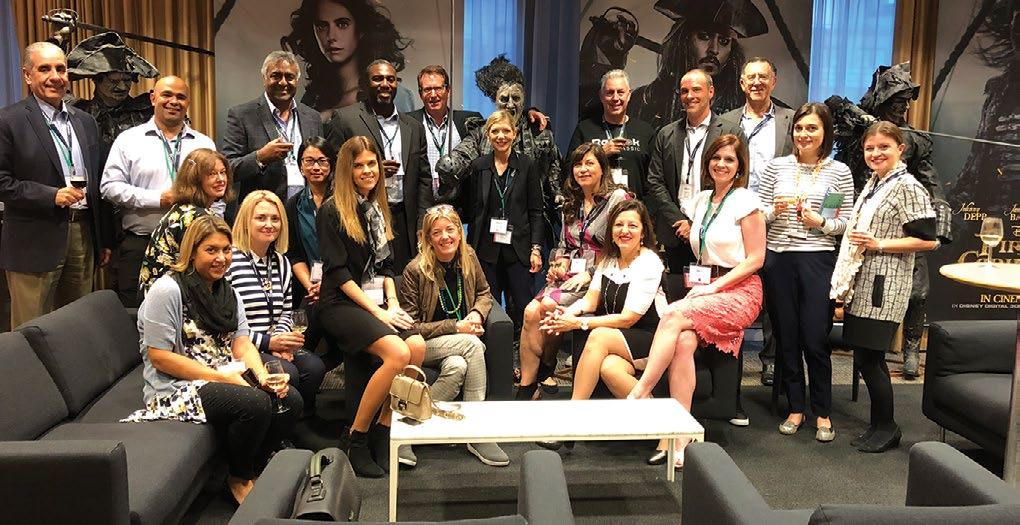
In 2018, SPLiCE Founding Member, The Walt Disney Company, hosted our meeting in Hammersmith, London. The focus sharpened on brand storytelling, franchise protection, and the balance between creative expansion and rigid brand standards in global markets.
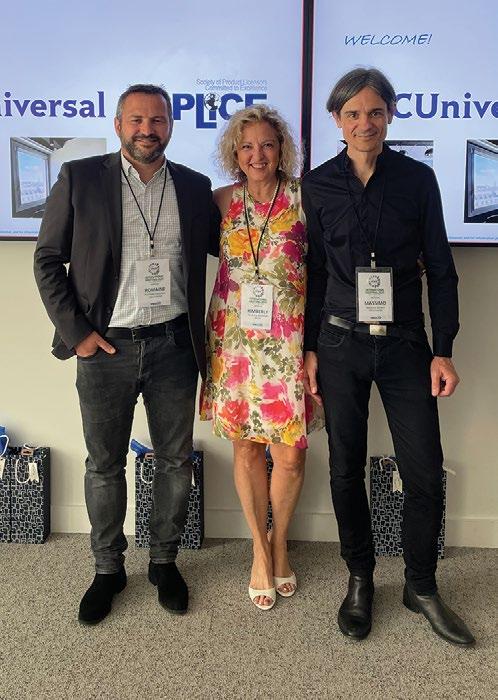
In 2024 & 2025, NBCUniversal hosted at their London and brand new Paris offices. Our focus lens was directed as IP ecosystems became more complex, discussions expanded into anticounterfeiting strategies, regional compliance, digitalfirst franchises, and the accelerating impact of Europespecific regulations.
For SPLiCE ICON 2026, SPLiCE Member host Philips, will invite us to their new Amsterdam Headquarters. Our focal point is the future of global licensing where innovation, sustainability, extended producer laws, top level domains, product safety, and brand protection intersect. SPLiCE Members, Affiliates, and VIP guests and licensees will convene to explore EU and global licensing topics ranging from trademark enforcement and sustainability laws to consumer impressions, and crossborder collaboration. We will ensure to build in numerous opportunities to network and build new networking portfolios.
As our benchmarking will hit the 25 year milestone in 2027 with a celebration at Diageo’s Guinness Storehouse, the SPLiCE body of work will continue to grow and impact our global delegates. The SPLiCE international conference is no longer simply an “international meeting”, it is an ICON by design.
SPLiCE ICON recognizes the iconic global trademarks that host and participate. The iconic responsibility licensors carry when ex-
tending brands through licensing. The iconic best practices that are shared not marketed, but earned.
ICON is where licensing leaders move beyond buzzwords to benchmarking. Beyond theory to execution. Beyond regional silos to global perspective.
Global licensing has entered a new era, regulatory scrutiny is increasing, and sustainability requirements are codified. Consumers are more informed and less forgiving. Against this backdrop, benchmarking is no longer optional; it is a riskmitigation strategy.
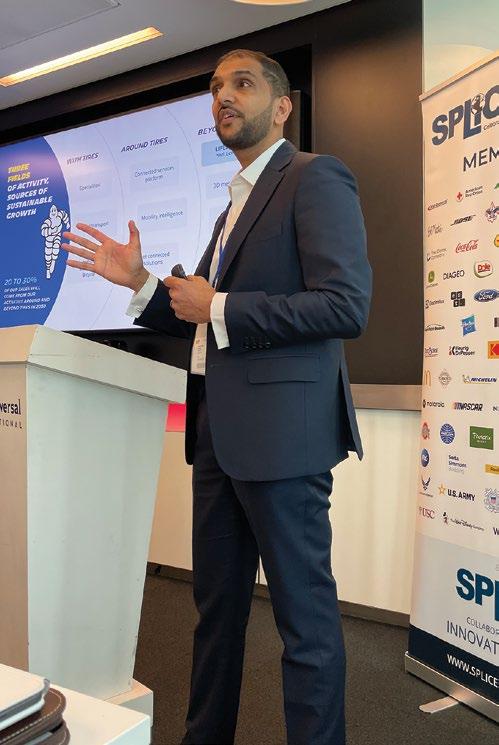
SPLiCE benchmarking equips members and impacts the licensing industry with:
• Realworld frameworks, not hypothetical models
• Peervalidated practices, not vendor promises
• Global insight grounded in brand stewardship
ICON is not about being the biggest conference; it is about being the most consequential. As SPLiCE reintroduces its international conference under the ICON banner, we reaffirm our founding belief of protecting iconic brands requires iconic collaboration. This work is collective, candid, and global, and has never been more important.

SPLiCE Members represent over 40 Industry Sectors: Aerospace, Amusement Parks, Appliances, Art, Automotive, Beverages (Soft Drinks), Beverages (Wineries and Distilleries), Business Equipment, Celebrity Estates, Cellular Technology, Children’s Products, Cleaning Supplies, Collegiate / University, Confections, Consumer Products, Construction, Dental Technology, Digital Imagery & Technology, Electronics, Entertainment & Character, Farm Products, Fashion, Food & Beverage, Footwear, Gifts & Novelties, Government, Health & Beauty, Household Goods & Housewares, Industrial & Commercial Equipment, Infant Products, Juvenile Products, Motorcycling, Music & Video, Nonprofit, Outdoor Lifestyle, Photographic Equipment and Supplies, Publishing, Racing, Rubber and Plastics, Spirits/ Alcohol, Sports, Sporting Goods, Stationary Goods, Telephony, Textile (Apparel Clothing), Textile (Apparel Footwear and Accessories), Tools (Commercial And Residential), Toys & Games, Trademark Brands, Transportation, Trucks and Other Vehicles, and Wellness.
By Jasmine Walters and Alex Sutcliffe from Reddie & Grose
Celebrities have long relied on trademark law to protect the commercial value of their personal brands, typically registering names, initials and logos. Classic examples include Rihanna’s “RIHANNA” mark for fashion and cosmetics, and Kylie Minogue’s “KYLIE” registration covering a broad range of goods. These traditional trademarks function as core brand identifiers, supporting licensing programmes and enforcement against unauthorised use.
However, the rapid development of artificial intelligence—particularly deepfake technology—has made it far easier to replicate a celebrity’s likeness, voice and behaviour. At the same time, celebrities are increasingly seeking to monetise not just their names, but their distinctive gestures and mannerisms. This has driven a shift towards more unconventional forms of trademark protection.
Sports personalities were among the first to recognise the commercial potential of their signature celebrations. Jamaican sprinter Usain Bolt successfully registered a silhouette of his iconic pose, while footballer Kylian Mbappé owns a trademark covering his well-known celebration. These registrations typically protect static images, functioning much like logos.
More recently, attention has turned to motion marks—trademarks that protect movement rather than a fixed design. English footballer Cole Palmer has explored this route by seeking protection for his “shivering” goal celebration. Motion marks remain relatively rare at the UK Intellectual Property Office and have historically been controversial, as trademark law has focused on words and images as the primary means by which consumers identify brands.
By definition, a motion mark consists of a movement or change in position. They are commonly used for animated logos, but can also capture distinctive physical actions. Despite their novelty, their practical enforceability remains uncertain. For example, it is unlikely that Palmer could prevent other
players from performing his celebration during a match, as this would not typically constitute “use in the course of trade.” Even in commercial contexts—such as advertising—he may struggle to prove that another performance is sufficiently similar to confuse consumers, particularly where the identity of the performer is obvious.
Similar issues arise in the context of digital media. If a video game featured a virtual version of Palmer performing his celebration without consent, UK law may offer limited recourse unless his broader likeness or branding were also used.
In the United States, Matthew McConaughey has taken this concept further by registering sound and motion trademarks for his signature phrases and delivery style, including his famous “alright, alright, alright.” These filings appear to be a response to the growing threat of AI-generated deepfakes, which can simulate endorsements or performances that never occurred.
“...the rapid development of artificial intelligence—particularly deepfake technology—has made it far easier to replicate a celebrity’s likeness, voice and behaviour...”

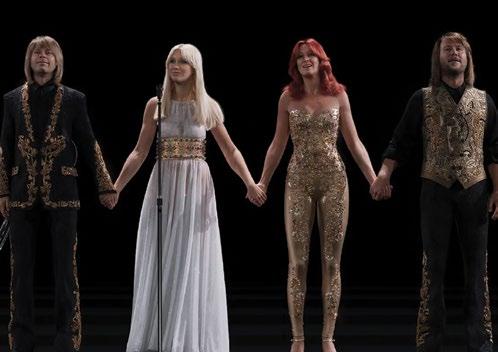
While these rights are narrowly defined— covering only the specific recordings submitted—they may still serve a strategic purpose. Even if difficult to enforce in court, they provide a basis for takedown requests on social media platforms, which often require proof of registered intellectual property rights. In this sense, trademarks are being used as a deterrent as much as a litigation tool.
The broader commercial landscape also points to growing interest in digital personas. Investment firm Pophouse Entertainment, known for its involvement in ABBA Voyage, has acquired the catalogue and name, image and likeness rights of Tina Turner. ABBA Voyage, which features digital avatars performing on stage, demonstrates the commercial viability of virtual performances—yet notably, such productions have not widely relied on motion or hologram trademarks in the UK.
At present, fewer than 250 motion or hologram marks are registered in the UK, suggesting limited adoption. This hesitation reflects uncertainty around enforcement and value in litigation. Nonetheless, as AI technologies continue to blur the line between authentic and synthetic performances, and as immersive digital experiences become more mainstream, these unconventional trademarks may gain traction.
Ultimately, while non-traditional trademarks remain experimental, they signal a broader evolution in how celebrities seek to protect— and monetise—the increasingly complex components of their personal brands. n www.reddie.co.uk

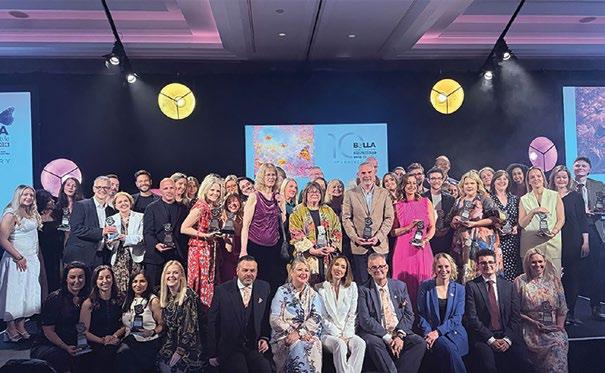
The winners of The B&LLAs 2026 were announcedat the end of April at a glittering awards event, held at the Royal Lancaster London. Organised by Max Publishing, the event celebrated its 10th anniversary this year. Here are the winners!
The B&LLAs UK Rising Star Award (sponsored by Licensing International)
Natasha Holford-Edwards
Best Brand Licensed Fashion Accessories or Lifestyle Range (sponsored by Lisle Licensing)
Coca-Cola Footwear Collection from Converse
Best Brand Licensed Food or Beverage Range (sponsored by Sanderson Design Group)
Guinness Slow-Cooked Steak & Guinness Pie from Higgidy
Best Brand Licensed Health, Beauty and Wellbeing Range (sponsored by Harper’s Bazaar)
Best Brand Licensed DIY, Electrical or Gardening Range (sponsored by Golden Goose)
Laura Ashley China Rose Collection from New Dawn Innovations
White Fox Beauty Collection for Boots from SLG Brands
Best Brand Licensed Adult Apparel Range (sponsored by Sara Miller London)
Crayola Apparel and Accessories from Sidemen Clothing
Best Brand Licensed Gifting Range (sponsored by National Trust)
Cath Kidston The Board Game Beauty Collection from Heathcote & Ivory
Best Brand Licensed Paper Products & Publishing Range (sponsored by Science Museum)
Natural History Museum Cards and Art Prints from Ohh Deer
Best Brand Licensed Tabletop and Kitchenware Range (sponsored by Natural History Museum)
Sanderson x National Trust Homewares Collection from Habitat
Best Brand Licensed Children’s Range (sponsored by Start Licensing)
McLaren Racing Kids Collection from M&S
Best Brand Licensed Home Décor Range (sponsored by Pink Key Licensing)
Sanderson Home Décor Collection from John Lewis
Inspired Innovation Brand Licensed Product or Range (sponsored by CAA Brand Management)
Van Gogh Museum Sunflowers Art Set from LEGO
Best Brand Licensed Sustainability Range (sponsored by Products of Change)
Cath Kidston Marble Ditsy Roll On Case from Wild
Best Fashion Retailer of Licensed Brands (sponsored by Authentic Brands Group)
Next
Best Department Store or Mixed Retailer of Licensed Brands (sponsored by Metrostar)
Boots
Best Supermarket of Licensed Brands (sponsored by Laura Ashley)
Sainsbury’s Tu
Best Specialist Retailer of Licensed Brands (sponsored by Brandgenuity) Dunelm
The Radar Award (sponsored by ZSL) Reiss
Best Brand Licensed Retail Marketing Initiative (sponsored by Food Brands Now)
White Fox Christmas 2025 Campaign with Boots
Best Licensed Heritage or Institution Brand (sponsored by Brand Licensing Europe)
Royal Horticultural Society (RHS)
Best Licensed Lifestyle Brand (sponsored by SLG Brands)
Smiley
Best Licensed Design-Led Lifestyle Brand (sponsored by Poetic Brands)
Laura Ashley
Best Licensed Food or Beverage Brand (sponsored by Blues Group)
Guinness
Best Licensed Fashion or Talent Brand (sponsored by Rainbow Productions)
Sara Miller London
The Brand Licensing Ambassador of the Year (sponsored by Octane 5)
Cathy Snow
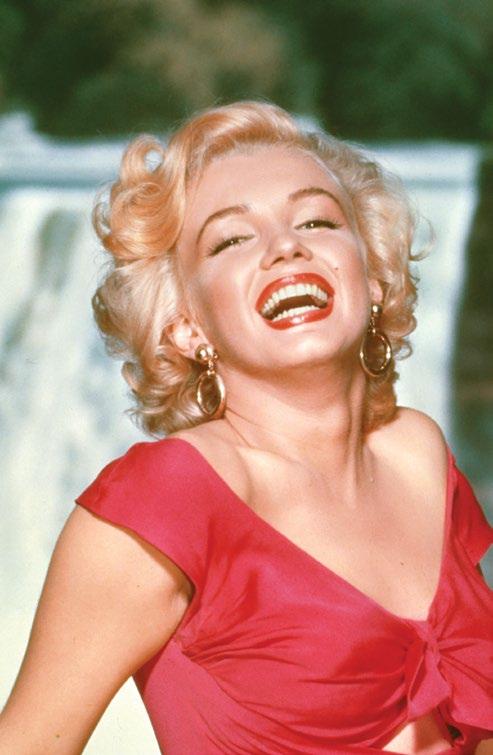
Elton John sang “Goodbye, Norma Jean,” in 1973, eleven years after her passing. But the truth is, we’ve never really said goodbye to Marilyn Monroe. She’s still with us, as an image and icon, as is her work both on screen and off, with its sly and effervescent variations on femininity, her fierce independence, and her powerful stance with the Hollywood studios, blazing a path for future generations to be inspired not just by her beauty, but by her boldness.
Norma Jeane Mortensen would have turned 100 on June 1st, 2026, and had already turned 20 before she adopted the name that she would ultimately make famous. But beneath the platinum blonde perfection she showcased so flawlessly, the vulnerability & intellect of the girl who would become Marilyn was never far from the surface. The tension between that internal depth and her bombshell exterior is the secret alchemy that animated her best performances, and which lies at the root of her enduring accessibility as an artist, a brand and a symbol. Since 2011, Monroe’s estate—including her name, image and likeness—has been owned, licensed and curated by Authentic Brands Group, and the company’s careful stewardship of that legacy has made it one of the crown jewels of Authentic’s celebrity holdings. Even among similar one-of-a-kind, gen-
eration defining icons like Elvis Presley and Muhammad Ali, Marilyn’s vitality as an icon is unmatched, as evidenced by the incredible depth and breadth of the consumer offerings coming to market in honor of her centenary. Unsurprisingly, a significant proportion of those products populate the beauty, apparel and fashion sectors, from the capsule collection of evening footwear with Nine West, the MM100 limited edition sunglasses from Dita to a branded lineup of glamour nail polish shades from Color Street, inclusive of a shade with 24k flecks, to Guess’ new collection of 21st century takes on some of Marilyn’s signature garments—halter-neck dresses, bustier tops, cropped jackets, capri pants. Her uniquely wholesome sexuality—a notion virtually alien to contemporary celebrity culture—has for years made her a popular brand attached to intimates and lingerie, a trend that continues this year with Australian design house Kat the Label releasing a limited-edition capsule collection, refracting Marilyn’s glamour-forward Hollywood aesthetic through their signature lace designs. Nor is her appeal as a brand limited to the female demographics; witness Brooks Brothers’ capsule featuring Oxford shirts, Polo shirts and cotton boxers embroidered with a playful red “kiss” from Marilyn, which sold out in its first week.
But the culture-wide tribute to Marilyn extends well beyond the expected clothes and makeup. Home goods retailers Noon & Moon and Shark Ninja offer a range of Marilyn-branded items from elegant bone china to an ice cream maker appointed in refined stone and gold tones. Fine jewelry house Aurate brings an elevated dimension to the centenary with a collection of classic pieces reimagined through lab-grown stones, recycled gold and freshwater pearls, a fitting tribute to a woman who understood that true glamour has both substance and soul. Caviar & Co. plays on Marilyn’s glamour and luxury with a signature caviar set and Piper Heidsieck continues their partnership with Marilyn with a new limited edition cuvée launching this year. Artwork, photos, movie memorabilia and personal effects populate a range of exhibitions across such elite institutions as the National Portrait Gallery in Lon-
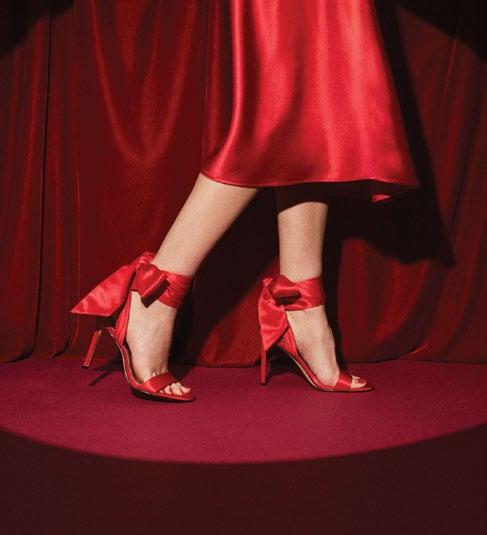
don, Cinémathèque Française in Paris and the Academy Museum of Motion Pictures in Los Angeles, while the visionary immersive experience Becoming Marilyn Monroe premiered in March at Lichthalle Maag in Zurich.
The mass outpouring of tribute and affection is no accident. Marilyn was more than a star; she was a pioneer. At a time when Hollywood treated its talent as property, she pushed back, founded her own production company, demanded creative control and redefined what it meant to be a woman with power in the entertainment industry. She has been gone for almost twice the time that she was with us, but that span has only amplified her reach, creating generations of fans she never knew and giving them a universal language to express their own sense of ambition, beauty and resilience. Her legacy is more than alive; it is expanding, a triumphant and ongoing testament to a woman who refused to be defined by anyone but herself. n
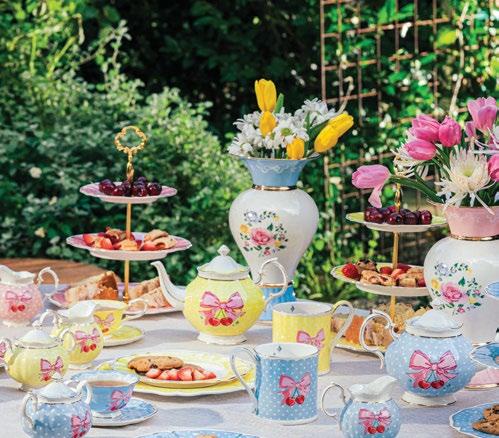
West Ham United and football streetwear brand NIVELCRACK have launched a bespoke fashion capsule collection as east London meets Seoul in a collaboration that champions football, culture and streetwear.
West Ham United, a Club steeped in history and one of world football’s most storied teams, becomes the first Premier League football team to launch a licensed fashion collaboration with the South Korean football-inspired streetwear brand.
NIVELCRACK is a Seoul-based brand and creative studio specialising in the intersection of football and fashion. They draw inspiration from football culture and interpret it through their own unique lens to create high-quality products and content.
As East End culture combines with Korean fashion, the range brings together West Ham United’s iconic crossed Hammers with NIVELCRACK’s monogram logo. The range is inspired by the Club’s industrial heritage and NIVELCRACK’s contemporary creative interpretation, while subtly connecting east London and Seoul, two cities shaped by industry, community and evolving cultural energy.
The capsule collection, which is available online globally site, includes tees, a sweatshirt, a scarf, socks, a cap and a bag, creating a range that accomplishes style for everyday wear, not just on matchday. To pay tribute to the Club’s hardworking east London spirit, the range includes a workwear jacket - a first for NIVELCRACK - celebrating West Ham United’s ironwork origins.
The range is available to order from, fol-
BoxLunch is officially leveling up the intersection of fandom and athletics with its new sports collection, designed for fans who want to rep their favorite characters in true game-day style.
The new assortment bridges the gap between fandom and sports, positioning BoxLunch as the go-to destination for fans looking to celebrate both passions at once. The collection features a wide range of baseball jerseys, basketball jerseys, and classic varsity-style jerseys, blending authentic athletic silhouettes with bold, character-driven designs. n
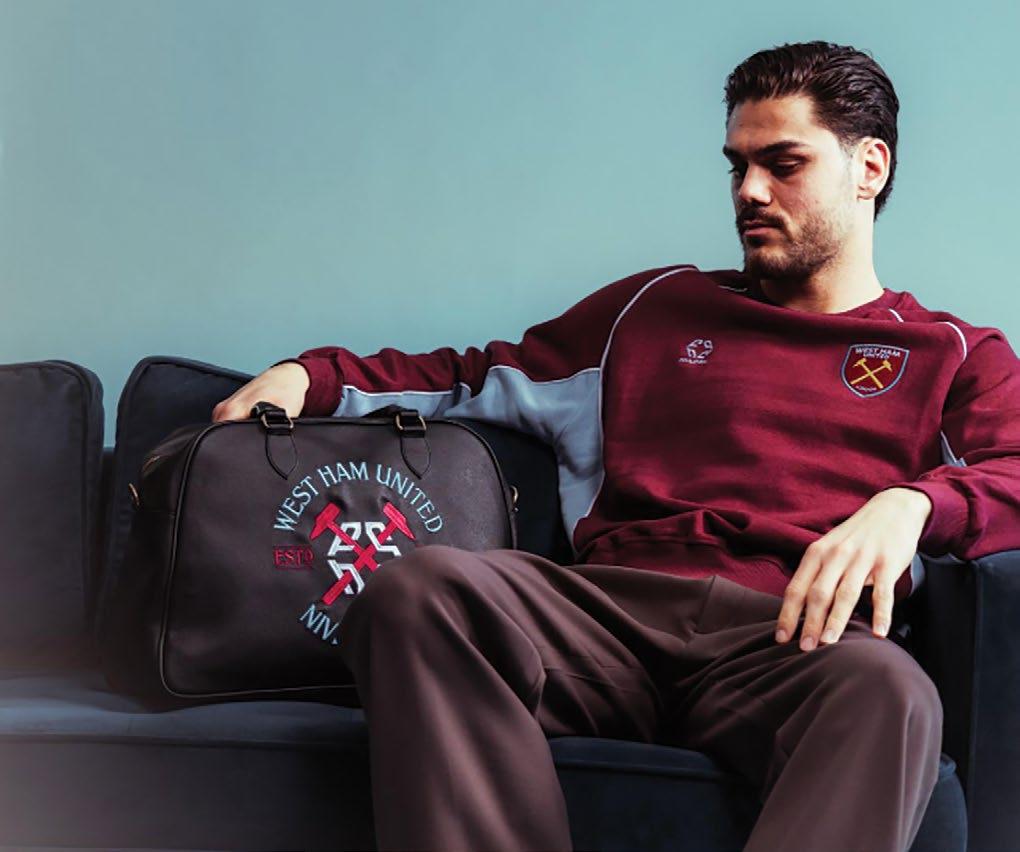
lowing an exclusive launch event recently in Seoul that was attended by more than 50 Korean Hammers, the Irons Official Supporters Club in South Korea.
West Ham United, Executive Director, Nathan Thompson said, “This landmark collaboration with NIVELCRACK marks West Ham United’s commitment to showcase our culture, heritage and history to a global audience. The apparel and fashion space has become synonymous with football culture around the world, so this collaboration marks a strong opportunity for West Ham United
to be at the forefront of the space to engage new supporters and our ever-growing global fan base.”
Shinjae Lee, Founder of NIVELCRACK, said, “NIVELCRACK is rooted in football culture, shaped by the fans who make the game what it is. Collaborating with West Ham United, a club defined by its passionate support, brings deeper meaning to this project. We set out to create lifestyle pieces that fans can wear on and off the pitch, celebrating their passion while introducing the club’s identity to a wider audience.” n
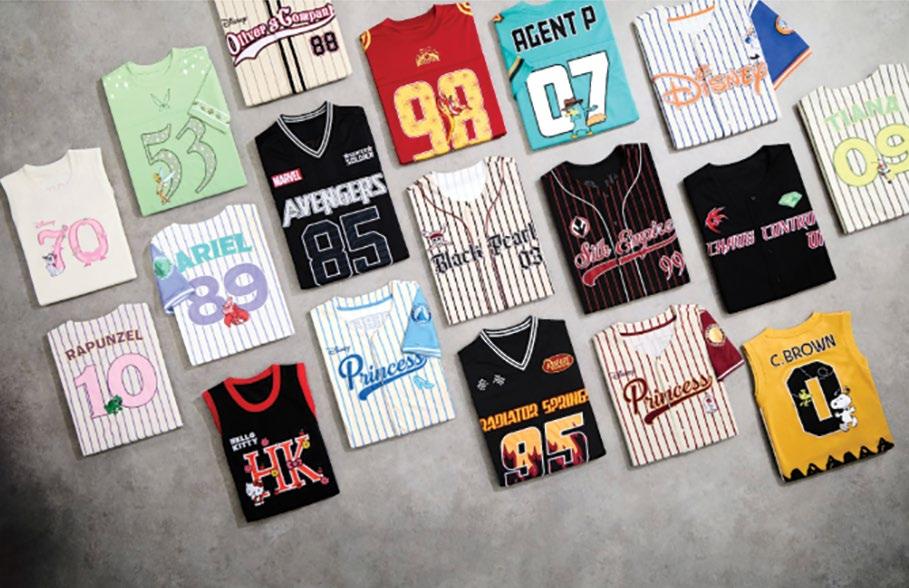
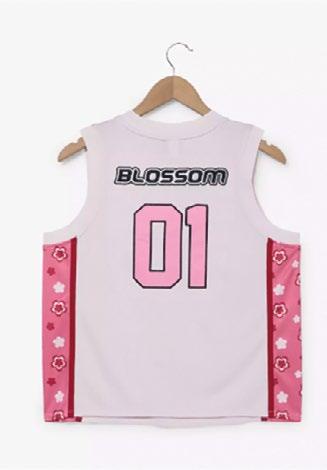

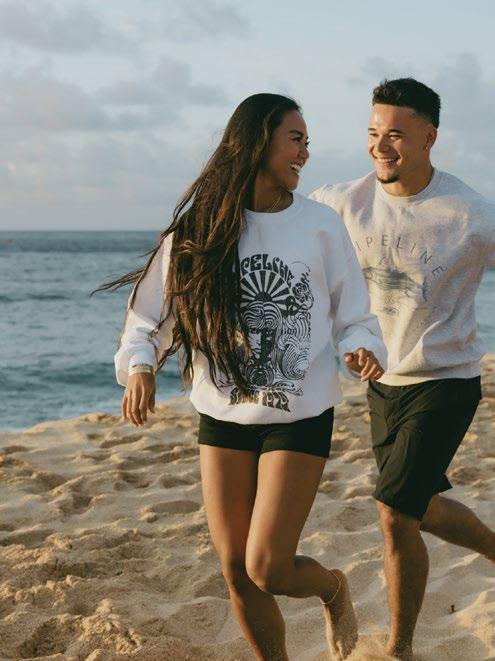
is evolving into a more holistic consumer experience.
Maintaining authenticity remains key. Billabong’s heritage and visual identity are woven throughout the collection, ensuring the extension feels credible and true to the brand’s roots while introducing it to a new, younger audience.
From Beach to Street
In apparel, surf brands are continuing to expand their reach through collaborations that bridge beachwear and everyday fashion.
Aéropostale’s partnership with Quiksilver and ROXY is a strong example, bringing together three brands connected by youth and surf culture.
Named after the iconic Pipeline wave on Oahu’s North Shore, the brand has long stood for performance, authenticity and coastal lifestyle. Today, it is expanding across categories including apparel, footwear, accessories, eyewear and outdoor products, with distribution spanning sporting goods retailers, department stores and e-commerce.
Strategic partnerships are helping to drive this growth, including recent moves into eyewear, demonstrating the brand’s ability to translate its identity into new product areas. At the core of the programme is a strong narrative rooted in the power and prestige of the Pipeline wave—ensuring consistency and authenticity across all licensed categories.
Surf culture continues to prove its strength as a driver of lifestyle licensing, with brands extending far beyond the beach into fashion, homeware and everyday consumer experiences. Rooted in authenticity, freedom and youth appeal, surf-inspired IP is increasingly being reinterpreted for new audiences and retail environments.
A clear example is the recent collaboration between Pottery Barn Teen and Billabong, which brings coastal style into the home category. The partnership blends Billabong’s laid-back, surf-inspired aesthetic with Pottery Barn Teen’s focus on quality and functionality, targeting Gen Z consumers heading into college and dorm living.
Inspired by vintage surf graphics, ocean landscapes and sun-washed colour palettes, the collection spans bedding, décor and practical accessories. Products include wave-patterned textiles, tropical prints, water-resistant backpacks and storage solutions designed for compact living spaces. Sustainability is also part of the story, with selected items made from responsibly sourced materials, aligning with growing consumer expectations. Beyond product, the collaboration demonstrates how retail services are becoming an integral part of licensing strategies. Pottery Barn Teen’s Dorm Concierge programme allows students to pre-order items and collect them near campus, simplifying the move-in process. This combination of lifestyle branding and convenience highlights how licensing
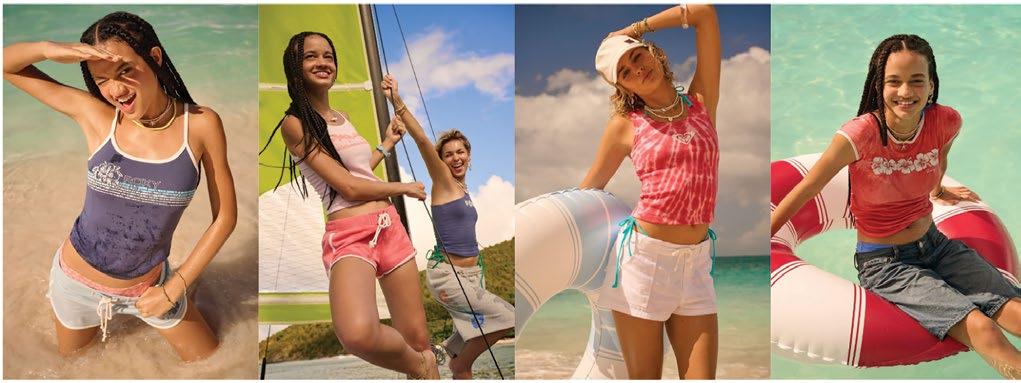
The spring capsule is designed around a “Next Stop: Summer” theme, featuring relaxed silhouettes, seasonal colours and bold graphics. The collection is positioned to work across multiple settings—from holiday getaways to casual city wear—demonstrating the versatility of surf-inspired design.
Collaborations like this allow heritage surf brands to tap into wider retail distribution while staying culturally relevant. Quiksilver leans into its classic surf identity with graphic-led pieces and laid-back essentials, while ROXY introduces a more lifestyle-focused, feminine perspective. Combined with Aéropostale’s accessibility, the partnership shows how surf IP can successfully adapt to different consumer segments.
Building a Global Platform
Alongside collaborations, long-established brands are also scaling their licensing programmes globally. PIPELINE® is a notable example, leveraging over 45 years of heritage to build a broad, multi-category presence.
These examples highlight the continued momentum of surf culture within licensing. Whether through home collaborations, fashion capsules or heritage-led expansion, surf brands are showing remarkable flexibility while retaining their core identity. For the industry, the appeal lies in the combination of aspirational lifestyle, strong visual branding and cultural credibility. As consumer demand for authentic, experience-driven products grows, surf-inspired licensing looks set to remain a dynamic force—proving that the influence of the ocean extends far beyond the shore. n
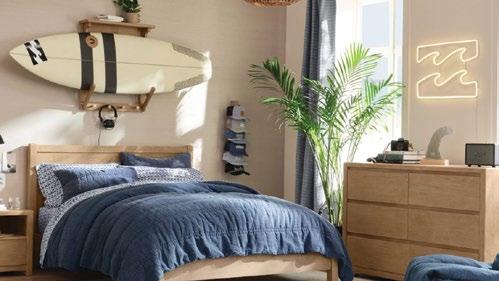
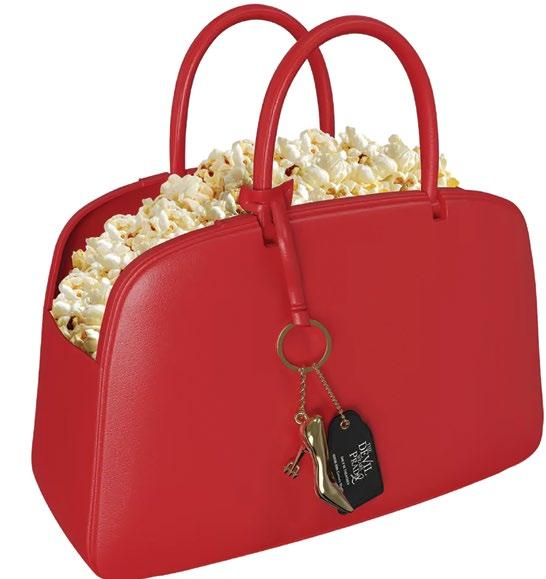
Luxury, Fandom and Narrative Scarcity
Luxury brands are increasingly competing not only on craftsmanship, but on their ability to plug into pop culture narratives and fandom economies. In this shift, collaboration becomes less about product extension and more about building culturally charged, collectible stories where scarcity amplifies meaning. Montegrappa pushes this logic through its The Shining limited edition, the first chapter of a trilogy dedicated to Stanley Kubrick. Inspired by The Shining, the pen is treated as a narrative object rather than an accessory: references to the Overlook Hotel and Room 237 turn it into a condensed piece of cinematic mythology. The strict limitation of 237 pieces reinforces this approach, where scarcity itself becomes part of the story and value system.
A similar dynamic is at play in the collaboration between Louis Erard and Astro Boy. Here, Astro Boy functions as a globally recognised cultural icon, allowing the brand to bridge heritage watchmaking with contemporary fandom and social media culture. Across both cases, luxury is clearly shifting towards a model where cultural relevance is borrowed from entertainment universes, and scarcity is used not just to limit access, but to intensify narrative value.
Brand Jam tracks and analyses over 300 innovative licensing collaborations and brand extension initiatives each quarter through its Collaborations Observatory. This issue highlights three emerging trends, each based on recent case studies that reflect how brands are reshaping consumer engagement through creativity, culture and storytelling
As entertainment IPs increasingly extend into physical retail and merch ecosystems, these two activations of The Devil Wears Prada 2 shows how cinema-driven branding now operates across two parallel strategies mass-market spectacle in the US and coded, insider culture in Italy.
In the US, the activazion unfolds through a “Butter Birkin” popcorn bucket, distributed across AMC Cinema, an object that transforms concession stand design into fashion-coded collectible. By referencing the silhouette of the Hermès Birkin bag, the popcorn bucket fuses luxury symbolism with mass accessibility, positioning itself as a social media artefact.
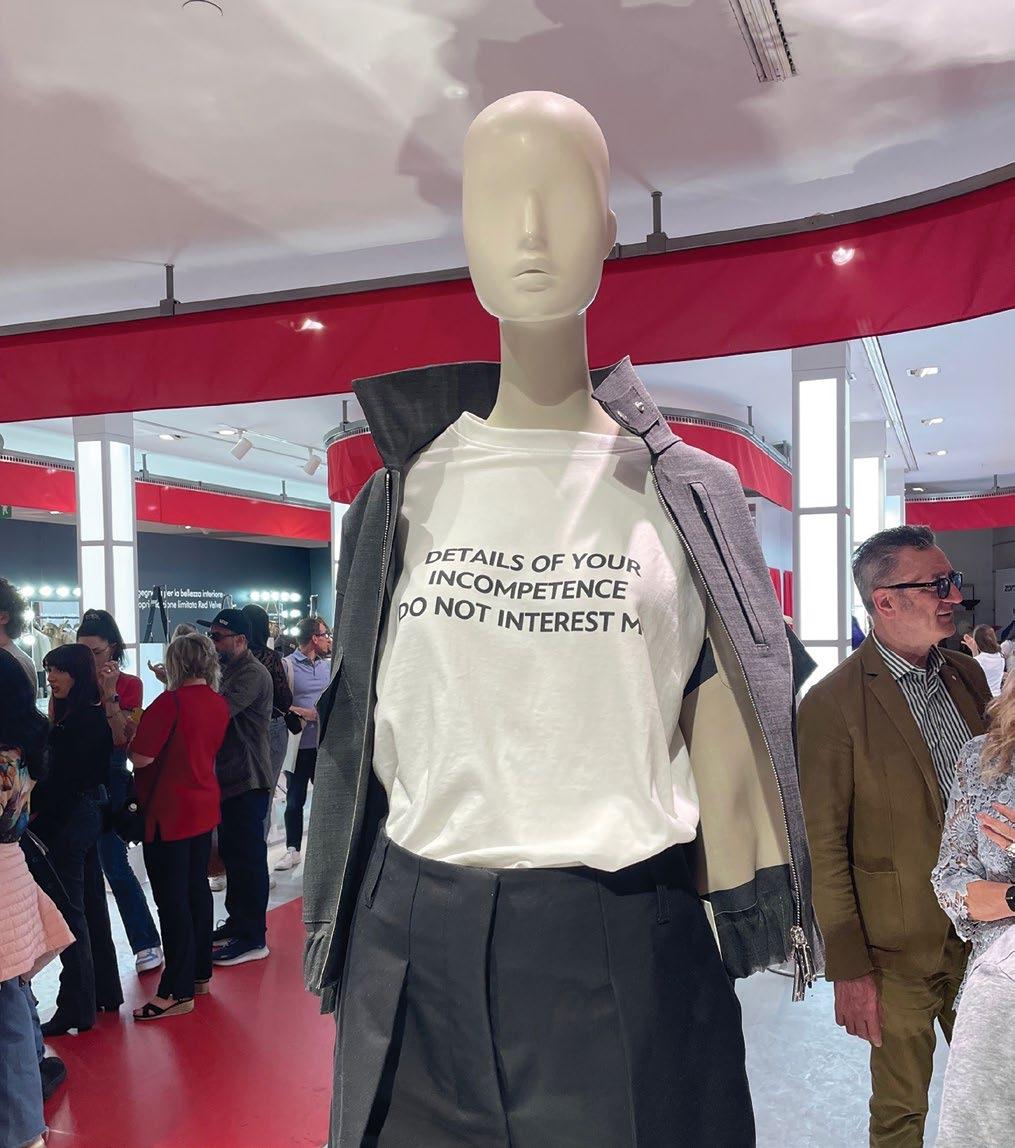
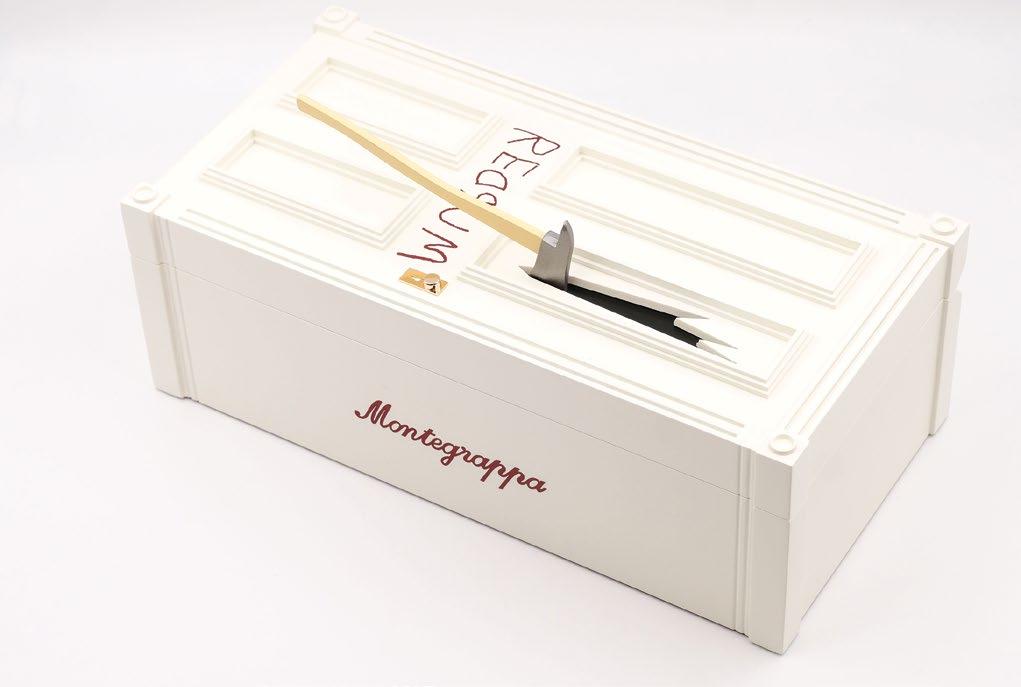
In Italy, the activation takes a more layered and self-referential form, with a pop-up staged at La Rinascente Duomo. Here, engagement is driven by coded belonging: photo opportunity for social media sharing, a beauty parlor and a series of blindboxed T-shirts featuring iconic quotes from the film operate as “if you know, you know” objects.
They are designed to be worn inside and
outside the cinematic experience, signalling membership in a cultural inside circle while maintaining standalone expressive value. Across both activations, the underlying shift is clear: cinema merch is evolving from souvenir to identity. Whether through overt pop-culture referencing in the US or subtle insider signalling in Italy, the product becomes a ticket into the narrative itself, and into the community that surrounds it.
A couple of collaborations spotted at Milan Design Week 2026 showed as most branded partnerships are defined by reinterpretation rather than simple co-branding, turning familiar objects into unexpected design statements.
The partnership between BIC and Seletti celebrates the 75th anniversary of the biro by transforming it into an oversized lamp object. The result elevates a mass-market writing tool into a collectible design piece, where familiarity becomes the starting point for functional reinvention.
Similar logic drives the collaboration between Alessi and C.P. Company. Here, industrial design and technical fashion exchange codes: Alessi classics adopt garment-dye-inspired finishes, while C.P. Company integrates industrial references into apparel design. Rather than co-branding, it is a mutual translation of design languages.
Across both cases, the common ground resides in a broader shift: collaborations are no longer about combining identities, but about reframing categories through design thinking, turning everyday objects into unexpected cultural statements. n
BrandJam.it/en paolo.lucci@brandjam.it