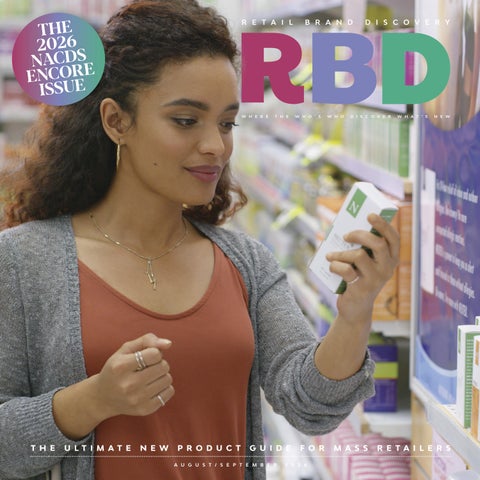
THE 2026 NACDS ENCORE ISSUE
R E T A I L
W H E R E
T H E
U LT I M A T E
N E W
P R O D U C T
T H E
G U I D E
A U G U S T / S E P T E M B E R
B R A N D
W H O ’ S
F O R
2 0 2 6
W H O
D I S C O V E R Y
D I S C O V E R
M A S S
W H A T ’ S
N E W
R E T A I L E R S 1
2
FROM THE EDITOR
Five Takeaways from the NACDS Total Store Expo THE NACDS TOTAL STORE EXPO BRINGS TOGETHER RETAILERS AND SUPPLIERS FROM ACROSS THE INDUSTRY. PHARMACY, TECHNOLOGY AND NACDS’ ADVOCACY ON BEHALF OF PHARMACY IN WASHINGTON REMAIN IMPORTANT PARTS OF ITS WORK. OUR FOCUS HERE, HOWEVER, IS ON THE FRONT-END, INCLUDING HBC, OTC AND VMS, AND THE OPPORTUNITIES TSE CREATES FOR INNOVATION AND DISCOVERY. Here are five things that stood out in Boston. 1. Quality over quantity TSE may not be the biggest trade show in terms of exhibitors or miles of aisles, but that is one of its strengths. There is a quality-over-quantity feeling that separates TSE from many other industry events. Suppliers are there with a purpose, retailers are engaged and conversations tend to be more focused. The value of a show is not how many booths you can walk past. It is who you meet, what you discover and whether those conversations lead somewhere. By that measure, TSE delivers. 2. Retailers come ready to connect and discover Walgreens, Walmart, Target, H-E-B, Wegmans, Kroger, Meijer and Sam’s Club were among the retailers represented in Boston,
along with many other national and regional chains. Their presence is important, but so is their level of participation. That was especially clear during Saturday’s Meet the Market session. Before the show floor opened, retailers met directly with suppliers in a series of 10-minute conversations. Retail executives were there to listen, ask questions and learn about new companies and products. They were not simply attending the event. They were there to engage with suppliers and discover what might be next for their stores and customers.
lished suppliers as well as smaller companies working to break through. Peptides, collagen, digestives and intimacy brands were well represented. Not every innovation needs to create an entirely new category. Sometimes it is a better format, clearer packaging, an improved ingredient or a product that addresses a consumer need in a smarter way. The products that stood out were not just different for the sake of being different. That doesn’t work anymore … if it ever did. They gave retailers a reason to stop, ask questions and take a closer look.
3. Discovery still happens face to face We can send decks, schedule video calls and visit websites throughout the year. Those tools make business more efficient, but there is still no substitute for picking up a product and talking directly with the people behind it. Some of the most interesting things I found at TSE came from simply walking the floor, stopping at booths both familiar and new asking questions. In a separate story, I list some of my favorite discoveries. Those unexpected conversations are part of what makes a show valuable. You do not always know what you are looking for until you see it.
5. NACDS knows how to execute It is easy to attend an event like TSE without thinking about everything required to make it work. NACDS brought together an impressive group of retailers, suppliers and industry leaders and made a complicated event feel seamless. From Meet the Market and the business programs to the scheduled meetings and show-floor activity, everything worked. That does not happen by accident. It comes from strong industry relationships, years of experience and an understanding of what retailers and suppliers need from an event. Once again, NACDS delivered.
4. Front-end innovation is coming from everywhere Innovation was evident among large, estab-
Chris Stanton Editor & Publisher chris@retailbranddiscovery.org
T H E U LT I M AT E N E W P R O D U C T G U I D E F O R M AS S R E TA I L E R S
3
WHAT’S INSIDE AUGUST/SEPTEMBER 2026
08 A Broader View of Diet and Nutrition
Mass and regional retailers are responding to changing consumer needs, and what it means for CPG brands.
10 Mass Retail Scales the Nutrition Opportunity Retailers are making innovation a priority across VMS, OTC and HBC and brands are answering the calL.
14 Regional Retailers Make Nutrition Personal A New Center of Consumer Health.
24 Merchant Reality Check
Overcoming the Four Structural Bottlenecks in Retail Discovery.
26 An Industry in Motion
The retail industry never stands still.
32 The Protein Powerhouse
A New Center of Consumer Health.
42 Women’s Health Reshapes Consumer Healthcare
Women’s health is no longer confined to a single category. Across OTC, vitamins and supplements, it has become one of the industry’s strongest drivers of innovation, with brands introducing increasingly targeted solutions for every stage of a woman’s health journey.
38 A Conversation with Michele Calhoun FOUNDER & PRESIDENT, NORTH POINT ADVISORY
THE EVOLUTION OF THE CONSUMER HEALTH JOURNEY: HOW AI, RETAIL, AND HUMAN BEHAVIOR ARE RESHAPING HEALTHCARE.
40 Sexual Wellness Continues to Expand Sexual wellness has evolved well beyond a limited assortment of family planning products.
CIRCANA: SIGNALS FROM THE SHELF 21 HEALTH & BEAUTY / 29 VITAMINS, DIET, & NUTRITION / 35 OVER THE COUNTER
Kimberly-Clark is a proud sponsor of the Retail Brand Discovery podcast. Kimberly-Clark is a global leader in personal care and health care. We thank you for your partnership Retail Brand Discovery is a publication of The Mosaic Group. Chris Stanton, Founder / Torquil Dewar, Creative Director / Shelley Lai, Art Director 4
R E TA I L B R A N D D I S COV E RY / VO LU M E 2 / AU G U ST/ S E PT E M B E R 2026
5
THE MACK ELEVATION GROWTH SUMMIT
The Mack Elevation Growth Summit The Mack Elevation Growth Summit has a different feel than a traditional trade events. It’s more intimate, more conversational and built around bringing people together. Here are a few of the people and moments that captured the spirit of this year’s event.
6
R E TA I L B R A N D D I S COV E RY / VO LU M E 2 / AU G U ST/ S E PT E M B E R 2026
NACDS TOTAL STORE EXPO
NACDS Total Store Expo The NACDS Total Store Expo is ultimately about people retailers, suppliers and the conversations that happen when they come together. Here’s a look at some of the activity, people and products that made this year’s TSE floor worth exploring. T H E U LT I M AT E N E W P R O D U C T G U I D E F O R M AS S R E TA I L E R S
7
A Broader View of Diet and Nutrition RBD EXAMINES HOW MASS AND REGIONAL RETAILERS ARE RESPONDING TO CHANGING CONSUMER NEEDS, AND WHAT IT MEANS FOR CPG BRANDS. BY CHRIS STANTON
8
DIET AND NUTRITION is no longer limited to weight loss, meal-replacement shakes or a single section of the store. Consumers are looking for support around protein, fiber, hydration, digestive health, energy, and weight management. GLP1 medications are accelerating the conversation, but the opportunity extends well beyond these medications. The RBD team, working with several of our respected freelance contributors, reviewed current consumer research, retailer initiatives, retailer comments and new CPG innovation. We looked separately at mass and regional retailers because each brings different strengths to the category. Mass retailers offer scale, product discovery, pharmacy services and value. Regional retailers bring strong community relationships, professional guidance and a more personal understanding of their shoppers. For CPG brands across HBC, OTC and VMS, both approaches create opportunity. But another gummy, powder, digestive remedy or fashionable ingredient will not be enough. Retailers want credible innovation and authenticity that fits their strategy and answers a real consumer need. Here is what we discovered.
R E TA I L B R A N D D I S COV E RY / VO LU M E 2 / AU G U ST/ S E PT E M B E R 2026
9
EDITORIAL
Mass Retailers Scale the Nutrition Opportunity RETAILERS ARE MAKING INNOVATION A PRIORITY ACROSS VMS, OTC AND HBC AND BRANDS ARE ANSWERING THE CALL. BY BROOK MILLER
DIET AND NUTRITION was traditionally a category built around losing weight. Today, consumers are also looking for products that support energy, muscle health, digestion, hydration, healthy aging and overall well-being. Mass retailers are responding by expanding beyond the traditional diet aisle. They are connecting vitamins and supplements, OTC digestive remedies, protein, hydration, personal care, pharmacy services and digital health resources. For CPG brands across VMS, OTC and HBC, this creates opportunities well beyond conventional weightmanagement products. Protein remains at the center of the movement. According to the International Food Information Council’s 2025 Food & Health Survey, 70% of Americans say they are trying to consume protein, up from 62% in 2021. Fiber increased from 56% to 64% over the same period. “Good source of protein” is now the leading characteristic consumers use to define a healthy food, ahead of “fresh” and “low in sugar.” IFIC Food & Health Survey It should be noted that IFIC is funded in part by food, beverage and consumer-product companies. Yet Circana identifies an interesting gap. Adults consume nearly twice the recommended amount of protein but less than half the recommended amount of fiber. This suggests 10
... consumers are eating less and seeking more protein, fiber and nutrient density. They may also need help managing hydration, digestive discomfort and nutritional gaps ... that the next successful products may need to offer more than a large protein number. Brands combining protein with fiber, digestive support, hydration or vitamins and minerals may have a more complete story. Convenience is equally important. Consumers want formats that fit easily into their lives—including gummies, powders, stick packs and ready-to-drink products—with benefits that can be understood quickly. Circana
R E TA I L B R A N D D I S COV E RY / VO LU M E 2 / AU G U ST/ S E PT E M B E R 2026
EDITORIAL
Established brands in fiber, digestive health, hydration and nutritional supplements can speak to these needs without placing GLP1 at the center of the package. Not every product needs to be labeled “GLP1 support.” Protein, fiber, hydration, digestive health and nutrient replenishment are relevant to all shoppers. Walmart Connects the Wellness Journey
GLP1 Expands the Opportunity
GLP1 medications are accelerating these changes. Circana estimates that households using the medications currently account for 23% of U.S. households and could represent 35% of food and beverage unit sales by 2030. These consumers are eating less and seeking more protein, fiber and nutrient density. They may also need help managing hydration, digestive discomfort and nutritional gaps associated with reduced food intake. That creates a much broader front-end opportunity: • VMS: Multivitamins, protein, fiber, electrolytes and supplements supporting energy, bone health and muscle maintenance. • OTC: Products addressing occasional constipation, nausea, heartburn and other digestive concerns. • HBC: Personal-care and wellness products that support consumers as their bodies and routines change.
Walmart is treating diet and nutrition as an interconnected consumer journey rather than one department. Its GLP1 support platform brings together protein, fiber, hydration, vitamins, supplements, OTC solutions, recipes, virtual care and prescription services. The retailer has also offered wellness-focused Rollbacks across protein bars and powders, vitamins, supplements and active-lifestyle products. Walmart’s emphasis on affordability—no surprise—is significant. Consumers may be interested in specialized ingredients and targeted benefits, but a product still needs to deliver understandable value to reach a mass audience. For established brands, Walmart provides enormous scale. For emerging brands, the challenge is showing what they add to an already crowded assortment. Another gummy, powder or digestive product is not enough. A new brand needs a distinctive format, credible functional benefit or clear solution for an underserved consumer. Walmart Target Leans Into Discovery
Target is emphasizing the discovery side of wellness. The retailer announced plans to increase its vitamin and nutrition assortment by approximately 20% chainwide in 2026. Its assortment reflects how consumers increasingly shop according to desired outcomes rather than traditional categories. Target is adding portable protein, supplements, gut-health products and functional beverages from brands including Bloom, FlavCity, Cymbiotika, Arrae, Lemme, Grüns and Seed.
T H E U LT I M AT E N E W P R O D U C T G U I D E F O R M AS S R E TA I L E R S
11
EDITORIAL
Recent introductions also demonstrate where innovation is heading. Pure Genius Protein delivers 23 grams of protein in a three-ounce shot, providing portability without requiring a full shake or bar. MOSH High Protein Bars combine 20 grams of protein with creatine and ingredients positioned around brain health. The product is not selling protein alone; it is connecting protein with another recognizable wellness goal. Target’s approach provides an opportunity for emerging VMS, HBC and wellness brands with a strong identity, contemporary packaging and clearly communicated benefits. The retailer’s interest in discovery means smaller brands can earn visibility, but they still need enough credibility and support to move beyond social-media attention. Target Walgreens Extends Pharmacy Into the Front End
Walgreens is approaching the opportunity from its position as a pharmacy and healthcare destination. Walgreens Weight Management gives eligible adults access to virtual visits with licensed healthcare professionals, FDA-approved weight-management medications and ongoing support without a monthly subscription. The retailer is also connecting treatment with front-end products that support protein, hydration, digestive health and possible nutritional gaps, while merging good health with convenience. “With the increasing demand for and accessibility of GLP1s for weight management, we know our customers are looking for support as they work on their health and wellbeing,” said Mike Wolf, Walgreens senior divisional merchandise manager for health and beauty. This gives Walgreens a relevant opportunity across all three RBD categories. VMS brands can support nutrition and supplementation. OTC brands can address common digestive concerns. HBC brands can provide personal-care and wellness products that become part of the consumer’s changing routine. Walgreens cannot offer the expansive grocery assortment 12
of Walmart or Target, but it can curate a more focused front-end selection around pharmacy-led health needs. Brands seeking placement must be credible enough to sit alongside healthcare services. Clear labeling, responsible claims, brand authenticity and useful consumer education will matter. Walgreens Sam’s Club Combines Products With Service
Sam’s Club, not generally associated with pharmacy, is connecting nutrition products with pharmacist education and member value. Its pharmacists speak with members about hydration, protein, nutrition, medication management and healthy habits. Members can also access digital resources offering GLP1 education and lifestyle guidance. “Members don’t just want the medication,” said Sam’s Club pharmacy manager Taylor Kravatz. “They want to
R E TA I L B R A N D D I S COV E RY / VO LU M E 2 / AU G U ST/ S E PT E M B E R 2026
EDITORIAL
What Mass Retailers Will Expect From Brands
The largest opportunity may not be another conventional diet product. It may be innovation that helps consumers manage nutrition, digestion, hydration and wellness as part of everyday life. Several areas deserve attention:
... retailers will have to separate meaningful innovation from products simply following a trend. Labeling matters. understand how to use it well.” For VMS, OTC and HBC brands, the club format offers considerable volume but demands a strong value proposition. A product must justify its pack size and shelf space, communicate its benefits quickly and give members a reason to make a larger commitment than they might in a conventional store. “Our best product is our service,” Kravatz said. “Taking time to counsel members builds trust, and trust leads to better outcomes.” Sam’s Club
• Protein products that also address fiber or digestive health • Vitamins and minerals designed for changing nutritional needs • Hydration and electrolyte products without excessive sugar • Creatine positioned for healthy aging and muscle maintenance • OTC digestive products with clear, approachable education • Women’s nutrition supporting strength, energy and healthy aging • Personal-care products that complement a broader wellness routine • Products supporting consumers before, during and after GLP1 use As more brands adopt popular nutrition-related claims, retailers will have to separate meaningful innovation from products simply following a trend. Labeling matters. A fashionable ingredient may earn an initial look. Longterm success will depend on credible benefits, convenience, responsible claims and value. Authenticity also plays an important role in the minds of consumers. Walmart brings scale and affordability. Target provides a platform for discovery. Walgreens connects pharmacy with the front end. Sam’s Club combines service with member value. Each mass retailer is approaching the opportunity differently. For CPG brands across HBC, OTC and VMS, the goal is to understand those differences and offer products that fit the retailer, its strategy and the consumers it serves.
T H E U LT I M AT E N E W P R O D U C T G U I D E F O R M AS S R E TA I L E R S
13
EDITORIAL
Regional Retailers Make Nutrition Personal HEB, HY-VEE AND WEGMANS ARE COMBINING FOOD AUTHORITY, PROFESSIONAL GUIDANCE AND CAREFULLY SELECTED CPG INNOVATION TO MEET CHANGING SHOPPER NEEDS. BY CHRIS STANTON
IT WOULD BE easy to look at HEB, Hy-Vee and Wegmans as smaller versions of the national chains. That would be a mistake. These retailers may not have the reach of Walmart, Target or Walgreens, but each has built an unusually strong relationship with its shoppers. They know their communities, understand how their customers eat and have earned considerable trust around food, health and wellness. That trust also influences what earns a place on their shelves. As consumers look for more protein, fiber, hydration, digestive health and weight-management support, regional retailers have an opportunity to discover and introduce CPG products that fit the particular needs of their shoppers. They can be more selective, provide context around new products and connect innovation with dietitians, pharmacists and practical guidance. For emerging brands, that makes regional retail more than a steppingstone to national distribution. The right regional retailer can help a product establish credibility, educate shoppers and demonstrate that it belongs in the mass market. 14
... consumers are eating less and seeking more protein, fiber and nutrient density. They may also need help managing hydration, digestive discomfort and nutritional gaps ... HEB: A Food-First Approach
HEB’s biggest advantage is that Texans already trust it when it comes to food. The retailer’s Healthy Living departments carry vitamins, supplements, sports-nutrition products, bulk foods and other wellness items. But the real story is how diet and nutrition extends throughout the store. HEB can connect fresh food, prepared meals, protein products,
R E TA I L B R A N D D I S COV E RY / VO LU M E 2 / AU G U ST/ S E PT E M B E R 2026
EDITORIAL
better-for-you private brands, pharmacy and professional nutrition services. Its “Live Well, Live Deliciously” online destination brings together low-carb, gluten-free, organic, plantbased, protein, sports-nutrition and GLP1-friendly products. HEB Dietitian Picks also show how individual products can work together as part of a meal. RBD thinks that last part is important. Most shoppers are not simply looking for a high-protein pasta or a better snack. They are trying to figure out what to put on the table for dinner or which snack should go in a purse of gym bag. HEB can show shoppers how to use the platform. HEB Wellness takes that relationship further by connecting primary care, registered dietitians, nutrition services and pharmacy. Its dietitians offer personalized consultations as well as virtual and in-store visits, built around what the retailer calls a science-based, food-first philosophy. HEB’s assortment demonstrates the range of CPG innovation moving into nutrition. Protein is appearing in shakes, bars, powders, snacks, pasta and other everyday foods. GLP1 support is bringing new attention to fiber, hydration, portion size and nutrient density. At the same time, HEB’s strong private brands challenge national and emerging brands to offer something truly distinctive, whether that is a better format, a credible functional benefit or a product particularly suited to Texas shoppers. HEB is not trying to become a diet company. It is using food, professional guidance and the trust it has built with Texas shoppers to become a more complete health-andwellness destination. HEB Wellness Hy-Vee: Putting Dietitians to Work
Hy-Vee may be doing more than any other regional retailer to put its dietitians directly into the business. In 2026, the retailer introduced the FoodHealth Score to its website and mobile app. The 1-to-100 scoring system helps shoppers compare the nutritional value of
foods. It also explains why a product received its score and suggests better-for-you alternatives. “With the implementation of the FoodHealth Score in our app, we want to make healthy food options more accessible and transparent,” said Hy-Vee president Aaron Wiese. He described the program as an extension of the retailer’s dietitian and pharmacy services and its broader “food is medicine” approach. It is a practical idea. Consumers see nutritional claims everywhere, but they do not always know how one product compares with another. Hy-Vee is trying to make that decision a little easier. Hy-Vee FoodHealth Score Hy-Vee has also introduced Dietitian Dishes, a line of more than 15 frozen, single-serve meals developed by its registered dietitians. The meals include heart-friendly and diabetes-friendly options and can be prepared in five minutes or less. “Dietitian Dishes make healthy eating easier, especially for individuals who are just learning how to navigate chronic conditions like diabetes or heart disease,” said Elisa Sloss, Hy-Vee assistant vice president of HealthMarkets and dietitians. This is a good example of a retailer turning its nutrition expertise into something shoppers can actually buy and use. The dietitian is no longer simply providing advice. The dietitian is helping create the product. Hy-Vee Dietitian Dishes Hy-Vee’s new Nothing But The Truth private brand takes a similar approach. Developed by the retailer’s dietitians, the line focuses on high-quality ingredients and better-for-you attributes including organic, plant-based, low-sugar and high-protein. The retailer has also launched a six-week GLP1 wellness program that includes personal check-ins with a registered dietitian. The program covers protein, fiber, hydration, smaller meals, side-effect management, muscle preservation and nutrient deficiencies. GLP1 prescriptions are not included. The focus is on helping people make better decisions while using the
T H E U LT I M AT E N E W P R O D U C T G U I D E F O R M AS S R E TA I L E R S
15
EDITORIAL
medication. That feels like a natural role for a retailer with pharmacies, dietitians and a full grocery store. Hy-Vee’s approach also has implications for suppliers. FoodHealth Scores, dietitian involvement and more transparent nutritional standards will place greater pressure on brands to support their claims and explain their ingredients. A compelling package may attract attention, but products will increasingly need to demonstrate nutrient density, convenience and a clear role in the shopper’s health journey.
good or fit easily into a meal. Wegmans Feel Your Best For brands, Wegmans offers an important reminder: Innovation must work as food. A functional ingredient or impressive nutritional claim may create interest, but taste, quality and the ability to fit into an enjoyable meal will determine whether the product earns repeat purchases. Brands that help Wegmans deliver practical meal solutions may have a stronger story than those built around a single fashionable claim.
Wegmans: Keep It Practical—and Enjoyable
HEB, Hy-Vee and Wegmans are not approaching diet and nutrition in the same way. HEB builds upon its connection with Texas shoppers and brings together food, Healthy Living, dietitians, pharmacy and primary care. Hy-Vee is putting its dietitians at the center of product development, education and personalized programs. Wegmans uses its food and culinary reputation to make healthier eating feel practical and enjoyable. What connects all three is trust. Consumers will continue to discover new ingredients, diets and products through TikTok, Instagram and other broad platforms. But social media cannot always explain which products are credible, how they should be used or where they belong in a person’s diet. Regional retailers can. For CPG brands, regional retailers should not be viewed simply as smaller distribution opportunities. HEB, Hy-Vee and Wegmans can provide something difficult to achieve through national distribution alone: credibility within a community and a clearer connection between product innovation and the way people actually eat. That creates opportunity, but it also raises the standard. New products must do more than follow a popular trend. They need a credible benefit, a clear reason for being on the shelf and a strong fit with the retailer’s shopper. Regional retailers can make nutrition more personal. The right CPG brands can help them make it more relevant, innovative and easier to discover.
Wegmans comes at nutrition from another direction. Its “Feel Your Best” philosophy is built around the idea that healthy eating should include balance, flexibility and enjoyment. It does not ask shoppers to eliminate entire food groups or follow a rigid diet. Instead, the retailer promotes a plant-forward eating pattern that can be adjusted to personal needs and preferences. One example is its “Half-Plate Healthy” message: Fill half the plate with fruits and vegetables and the other half with anything else. It is simple advice, but that may be exactly why it works. Consumers are surrounded by complicated nutritional rules. Wegmans gives them something they can understand and use at the next meal. Wegmans also provides information on protein, hydration, gut health, brain health, healthy aging, added sugars and ultra-processed foods. Its registered dietitian nutritionists support that information through videos, articles, recipes and meal suggestions. Wellness Keys on Wegmans-brand products help shoppers quickly identify products that are high in fiber, heart healthy, low in sodium, gluten free or suitable for other dietary needs. The retailer’s real advantage is its connection between nutrition and food people enjoy eating. Wegmans understands that even the healthiest product will not become part of someone’s routine if it does not taste 16
Three Retailers, Three Approaches
R E TA I L B R A N D D I S COV E RY / VO LU M E 2 / AU G U ST/ S E PT E M B E R 2026
DISOCVERED AT NACDS TSE
Discovered at NACDS TSE: Cadence OTC’s Morning After Pill gives retailers an affordable, accessible emergency-contraception option featuring levonorgestrel, the No. 1 doctor-recommended ingredient. The FSA/HSA-eligible product can be purchased in advance and taken as soon as possible—within 72 hours of unprotected sex. Its clear, approachable packaging helps retailers bring greater convenience and accessibility to an important women’s health category.
Discovered at NACDS TSE: SoapBox combines personal care with purpose. The brand offers thoughtfully formulated hair, body and skincare products while tying purchases to clean water initiatives around the world. Its accessible price points, appealing packaging and strong social mission give retailers a brand that can connect with consumers looking for products that deliver both everyday value and meaningful impact. www.soapboxsoaps.com T H E U LT I M AT E N E W P R O D U C T G U I D E F O R M AS S R E TA I L E R S
17
DISOCVERED AT NACDS TSE
Discovered at NACDS TSE: The new Naväge Portable Nose Cleaner brings the brand’s powered saline-rinse technology to a compact, collapsible device designed for travel and everyday use. Featuring four pressure modes, USB recharging and compatibility with both Naväge SaltPods and nasal-rinse packets, it delivers a controlled, drug-free saline flush to help clear congestion. At $39.99, the portable format gives retailers an accessible new entry point into the growing nasal-care and respiratorywellness category.
Discovered at NACDS TSE: SpaScriptions Collagen Moisturizer with Triple Peptides offers retailers an accessible, spa-inspired addition to the growing anti-aging skincare category. Formulated with collagen and a blend of three peptides, the nourishing daily moisturizer helps soften, plump and replenish skin for a smoother, more youthful-looking appearance. Its benefit-forward formula and approachable $11.99 retail price point bring prestige-inspired skincare to the mass-market consumer. 18
R E TA I L B R A N D D I S COV E RY / VO LU M E 2 / AU G U ST/ S E PT E M B E R 2026
DISOCVERED AT NACDS TSE
Discovered at NACDS TSE: MenoPulse by She Her Me is an intimate wellness device designed specifically to address common menopause-related symptoms. Four targeted modes support sleep, relaxation, natural moisture and blood circulation, helping maintain vaginal tissue health and reduce symptoms associated with menopause. App-connected and clinically tested, MenoPulse brings innovative, hormone-free support to the menopause journey.
Discovered at NACDS TSE: LOLA Organic Cotton Tampons give retailers a clean-label option in the growing feminine-care category, with tampons and strings made from 100% organic cotton. Free from synthetic fibers, fragrance, chlorine bleach, chemical additives and dyes, they feature a compact BPA-free applicator and 360-degree leak protection. Available in Light, Regular, Super and Super+ absorbencies, LOLA helps retailers meet demand for transparent, thoughtfully designed period-care products.
Click on any ad to find out more!
T H E U LT I M AT E N E W P R O D U C T G U I D E F O R M AS S R E TA I L E R S
19
20
H E A LT H & B E A U T Y : C I R C A N A
Signals from the Shelf SALES BASED ON 52 WEEKS ENDING JUNE 14, 2026 VS. SAME PERIOD THE PRIOR YEAR
TOP 3 FASTEST-GROWING SEGMENTS
FADE/ BLEACH (+26%)
FACE SERUMS (+12%)
DEPILATORIES (+10%)
RISING DEMAND FOR DARK SPOT
CATEGORY GROWTH IS FUELED BY
CATEGORY GROWTH IS DRIVEN BY
REDUCTION, RADIANCE, AND
RISING CONSUMER DEMAND FOR
DEMAND FOR CONVENIENT, COST-
HYPERPIGMENTATION SOLUTIONS
TARGETED HYDRATION, ANTI-AGING,
EFFECTIVE AT-HOME HAIR REMOVAL
IS DRIVING STRONG CATEGORY
AND SPOT-CORRECTION ROUTINES. KEY
DELIVERING SALON-LIKE RESULTS.
GROWTH. THIS MOMENTUM
DRIVERS INCLUDE DERMATOLOGIST-
MOMENTUM SPANS CREAMS, WAXES,
IS FURTHER PROPELLED BY
RECOMMENDED BRANDS, INGREDIENT-
AND INHIBITORS, WITH INNOVATION
INNOVATIVE SERUM FORMATS,
FOCUSED INNOVATIONS—LIKE RETINOL
PRIORITIZING SENSITIVE SKIN, FACIAL
DERMATOLOGIST-INSPIRED
AND NIACINAMIDE—AND ACCESSIBLE,
AND BODY-SPECIFIC TREATMENTS,
ROUTINES, AND PREMIUM
VALUE-ORIENTED OPTIONS ALONGSIDE
AND GROWING SELF-CARE TRENDS.
PRODUCTS DELIVERING VISIBLE
PREMIUM TREATMENTS.
RESULTS.
US MARKET SIZE ($ SALES, BILLIONS)
10.1 % GROWTH/ DECLINE VS. PRIOR YEAR
7%
TOP THREE SEGMENTS (BASED ON $ SALES, BILLIONS)
$2.9
$2.0
$1.9
FACIAL CLEANSERS
FACIAL MOISTURIZERS
FACIAL ANTI-AGING
T H E U LT I M AT E N E W P R O D U C T G U I D E F O R M AS S R E TA I L E R S
21
H E A LT H & B E A U T Y
Copper Fit Compression Socks are part of the brand’s broad collection of performance apparel and recovery products. The brand has established a strong presence in the compression category, with products available in multiple styles and compression levels for everyday wear, travel, work, and active lifestyles. copperfitusa.com, dustin@ideavillage.com
RoC Skincare introduces Retinol Correxion Line Smoothing Triple Serum, a first-of-its-kind formula combining RoC Retinol, Hyaluronic B5 Jelly and a 10,000-PPM PDRN complex. Unlike traditional PDRN commonly derived from salmon DNA, RoC’s next-generation PDRN is sourced from ginseng and formulated to help revive radiance while supporting smoother, younger-looking skin. The clinically tested serum addresses seven visible signs of aging, blending one of skincare’s hottest emerging ingredients with the proven science consumers expect from RoC. 22
R E TA I L B R A N D D I S COV E RY / VO LU M E 2 / AU G U ST/ S E PT E M B E R 2026
H E A LT H & B E A U T Y
Dr. Kellyann Multi Collagen Peptides is part of the brand’s growing portfolio of collagen and functional nutrition products. The unflavored powder features multiple collagen types and is designed for easy incorporation into everyday routines. The product expands the brand’s presence in the collagen category across food, drug, mass, and e-commerce channels. drkellyann.com Pdennehy@windmillvitamins.com
Click on any ad to find out more!
T H E U LT I M AT E N E W P R O D U C T G U I D E F O R M AS S R E TA I L E R S
23
EDITORIAL
The Merchant Reality Check: OVERCOMING THE FOUR STRUCTURAL BOTTLENECKS IN RETAIL DISCOVERY WAYNE BENNETT, SVP RETAIL, ECRM
FOR RETAIL MERCHANT leaders, driving growth is no longer just about trend forecasting; it is an operational optimization challenge. Modern brand discovery is frequently bottlenecked by legacy workflows that drain productivity and stall innovation. To maintain a competitive edge, leadership must address four critical structural vulnerabilities within their buying teams. First, inbound pipeline inefficiency. The digital front door is broken. The average buying desk juggles over 100 unstructured, blind brand pitches weekly. Without a standardized submission management framework, up to 90% of highly viable innovations are buried in inbox noise. Achieving operational clarity requires migrating from reactive inboxes to centralized, structured ingestion funnels. Second, the innovation cycle-time gap. While agile, digital-native brands launch and scale in weeks, traditional retail vetting cycles still average 6 to 9 months from initial contact to shelf placement. This misalignment means retailers frequently miss the peak of fast-moving micro-trends. Minimizing this time-to-evaluate window is essential to capturing true incrementality before consumer demand shifts. Third, multi-dimensional supplier complexity. Evaluating modern brands requires sophisticated data literacy, moving far beyond traditional cost and margin spread24
sheets. Today’s merchant leaders must assess social commerce reach, digital community metrics, and supply chain agility. Managing this complex, dynamic layer of data requires institutional analytics, not manual tracking. Fourth, institutional knowledge depletion. With annual retail buyer turnover hovering around 20%, desk rotations pose a severe operational risk. Without centralized data repositories, critical supplier context, historical sample evaluations, and vetting data disappear when a buyer exits. This lack of continuity forces incoming teams to constantly reinvent the wheel. Addressing these friction points requires a shift from tactical firefighting to strategic operational modernization, ensuring buying teams spend less time managing administrative drag and more time scaling high-margin innovation.
R E TA I L B R A N D D I S COV E RY / VO LU M E 2 / AU G U ST/ S E PT E M B E R 2026
T H E U LT I M AT E N E W P R O D U C T G U I D E F O R M AS S R E TA I L E R S
25
EDITORIAL
An Industry in Motion THE RETAIL INDUSTRY NEVER STANDS STILL. BY CHRIS STANTON
WHILE CONSUMERS EXPERIENCE change one shopping
trip at a time, those of us who work in the business often see something bigger unfolding. Every few years, there seems to be a moment when leadership changes, strategic shifts, acquisitions, retirements, and new opportunities all converge. It feels as though our industry is entering one of those moments again. Over the past year, we’ve seen a remarkable number of changes across our industry. Consider just a few. Kroger’s announced acquisition of Giant Eagle, following the unsuccessful Kroger-Albertsons merger, suggests retailers will continue to rethink how they grow and compete. At the same time, Target and Ulta Beauty have effectively gone their separate ways, with Target now focused on building its own beauty destination. Meanwhile, Hy-Vee continues its organic expansion by entering new markets. Together, these developments remind us that retail strategies are constantly evolving. Whether through acquisitions, partnerships, or organic growth, the industry continues to adapt to changing consumers, changing competition, and changing opportunities. Nowhere is that evolution more visible than in the people who have shaped our industry. Over the years, I’ve had the privilege of watching many of these leaders build remarkable careers, and one thing has become clear: while companies change, exceptional leadership leaves a lasting impact. Steve Anderson’s retirement from NACDS marks the conclusion of more than two decades of steady 26
leadership for one of the industry’s most influential organizations. Following Jim Whitman’s retirement in 2024, Steve Perlowski has taken on many of Jim’s longtime responsibilities. I’ve known Steve for many years, and like so many across our industry, I’ve seen firsthand the trust he has earned from retailers and suppliers. As NACDS enters its next chapter with a new CEO on the radar, NACDS is well served by Steve’s thoughtful leadership. At H-E-B, Lael Wilder’s retirement represents another remarkable career that helped shape one of America’s most respected retailers. CVS Health enters a new merchandising chapter following Musab Balbale’s departure, with Zach Dennett assuming merchandising leadership responsibilities. Across the globe, Annie Walker is now CEO of Walmart Chile, while Lauren Brindley as Chief Merchandising Officer continues shaping Ulta Beauty after leadership roles at Boots UK and Walgreens.
R E TA I L B R A N D D I S COV E RY / VO LU M E 2 / AU G U ST/ S E PT E M B E R 2026
EDITORIAL
Our goal is much simpler, to contribute another meaningful source of discovery for an industry that’s always looking for what’s next. I’ve always believed this industry is defined as much by its people as by its brands, and the supplier community is experiencing its own evolution. Herb Smith recently retired after an accomplished career but remains an active and familiar presence throughout the industry. Bayer also recently celebrated the retirement of longtime industry leader Mary Beth Goodman. Joe Mueller concluded a distinguished career with Kellanova before beginning a new chapter as Chief Retailer Partnership Officer at
Acosta. Natalie Gerchenstein now leads Haleon, Michael Gibbons was appointed Vice President of Sales at Boiron, and Abigail Buckwalter is now CEO of Ocean Spray after leading Nestlé Health Science. Kurt Laufer has begun an important new chapter, leading the customer organization integration of Kenvue into Kimberly-Clark, one of the most significant combinations in the consumer products industry. Denny Belcastro is also embarking on a new chapter after many years of leadership, mentoring and significant industry contributions. Both reflect a broader truth: careers in our industry rarely stand still, and experienced leaders continue to influence retail in new and meaningful ways. Others, including Tim Groskopf and Tony Giovanini, are beginning new professional chapters, reminding us that careers in retail are rarely linear. They continue to evolve, just as the industry itself does. But not every important story is announced in a press release. Some of our industry’s most meaningful contributions come from the leaders who quietly show up every day. They build teams. They mentor the next generation. They strengthen retailer and supplier relationships. They solve problems, earn trust, and make the people around them better. Their impact is felt across our industry every single day. Perhaps that’s the real story. Retail has always been an industry built on people. New leaders bring fresh ideas. Experienced leaders share wisdom earned over decades. Companies evolve. Strategies change. Relationships endure. As I walk the aisles at the NACDS Total Store Expo, I’m sure to be reminded that while products, companies, and strategies evolve, the relationships we’ve built over decades remain one of this industry’s greatest strengths. We’ll celebrate innovation, reconnect with colleagues, welcome new faces, congratulate friends and thank those whose leadership continues to make this industry stronger. Because while titles change, organizations evolve, and careers take new directions, one thing remains constant: Our industry moves forward because of its people.
T H E U LT I M AT E N E W P R O D U C T G U I D E F O R M AS S R E TA I L E R S
27
28
V I TA M I N , D I E T, & N U T R I T I O N : C I RC A N A
Signals from the Shelf SALES BASED ON 52 WEEKS ENDING JUNE 14, 2026 VS. SAME PERIOD THE PRIOR YEAR
TOP 3 FASTEST-GROWING SEGMENTS
ANTACID/ ANALGESIC COMBOS (+4%)
LAXATIVES (+3%)
ANTI DIARRHEAL (+2%)
CATEGORY GROWTH IS SUPPORTED
CONSUMER DEMAND FOR TRUSTED
CATEGORY GROWTH IS DRIVEN
BY RISING INTEREST IN GUT WELLNESS
DIGESTIVE HEALTH REMEDIES
BY DEMAND FOR MULTI-SYMPTOM
AND DAILY REGULARITY. GENTLE,
CONTINUES TO FUEL CATEGORY
REMEDIES COMBINING DIGESTIVE
PREVENTATIVE FIBER FORMATS—LIKE
GROWTH. CONVENIENCE-FOCUSED
AND PAIN RELIEF. STRONG
POWDERS, GUMMIES, AND PREBIOTICS—
FORMATS AND VALUE-ORIENTED
PREFERENCE FOR FAST-ACTING
ARE DRIVING TRACTION ALONGSIDE
ALTERNATIVES ARE RESONATING WITH
EFFERVESCENT FORMATS,
TRADITIONAL STOOL SOFTENERS
SHOPPERS, WHILE INNOVATION IN
ALONGSIDE PANTRY-LOADING
AND LAXATIVES FOR PERSONALIZED
DIGESTIVE SUPPORT SOLUTIONS IS
AND BULK-PACK PURCHASES,
DIGESTIVE CARE.
HELPING ATTRACT NEW USERS AND
CONTINUES TO BOOST SALES FROM
EXPAND CATEGORY RELEVANCE.
US MARKET SIZE ($ SALES, BILLIONS)
6.1 % GROWTH/ DECLINE VS. PRIOR YEAR
-1%
SHOPPERS SEEKING CONVENIENT, VERSATILE SOLUTIONS.
TOP THREE SEGMENTS (BASED ON $ SALES, BILLIONS)
$2.7
$2.5
$447M
ANTACIDS
LAXATIVES
STOMACH REMEDIES
T H E U LT I M AT E N E W P R O D U C T G U I D E F O R M AS S R E TA I L E R S
29
V I TA M I N , D I E T, & N U T R I T I O N
MaryRuth’s Liquid Morning Multivitamin remains one of the brand’s signature products and reflects the continued popularity of liquid nutritional supplements. Available in an easy-to-take liquid format for adults and families, the multivitamin is part of MaryRuth’s expanding portfolio of wellness products distributed through retail and e-commerce channels. maryruthorganics.com. sheiser@maryruths.com
Nature Wins has introduced Hydrate Complete, a hydration drink mix featuring a blend of vitamins, minerals, amino acids, and electrolytes. Available in a variety of flavors, the product expands the brand’s portfolio within the growing hydration category and offers retailers another option for consumers seeking convenient hydration products. jim@naturewins.com. naturewins.com 30
R E TA I L B R A N D D I S COV E RY / VO LU M E 2 / AU G U ST/ S E PT E M B E R 2026
V I TA M I N , D I E T, & N U T R I T I O N
Carmex brings its trusted lip-care expertise to a moisturizing formula with shea butter. Designed to soothe and hydrate dry lips, Shea Lip Balm combines everyday lip protection with the recognizable Carmex brand consumers already know. It’s an easy addition to the front-end, offering a familiar name, accessible price point and a simple solution to a common consumer need. www.mycarmex.com
vitafusion continues expanding its digestive wellness portfolio with Fiber Well Gummies, delivering 7.5 grams of fiber per serving in a convenient gummy designed to support digestive health and regularity. America’s No. 1 gummy vitamin brand offers consumers an enjoyable alternative to traditional fiber supplements while helping retailers meet growing demand for digestive wellness solutions. vitafusion.com, Beth Potere bpotere@pipingrock.com
Click on any ad to find out more!
T H E U LT I M AT E N E W P R O D U C T G U I D E F O R M AS S R E TA I L E R S
31
EDITORIAL
The Protein Powerhouse: A NEW CENTER OF CONSUMER HEALTH SANTIAGO ARBOLEDA, VP OF WELLNESS, CIRCANA
FOR DECADES, PROTEIN was just another brick in the food pyramid, a nutrient primarily associated with athletes and fitness enthusiasts. Today, that perception has fundamentally shifted. Protein has become one of the most powerful forces shaping consumer health behavior, influencing everything from grocery purchases and meal planning to weight management strategies and healthy aging routines. As a result, traditional boundaries between food, beverage, and supplement categories are rapidly disappearing. The numbers tell the story. Protein is a $13.3 billion market in the U.S., according to Circana, growing by 7% in 2025 – which is more than twice the rate of total edible products. Behaviorally, 41% of U.S. adults are actively trying to increase their protein intake, and 92% of households now purchase protein products, underscoring how deeply protein has become embedded in daily routines. Several factors are fueling protein demand, including satiety, metabolic health, weight management, and muscle growth and preservation. As a result, protein is expanding well beyond the supplemental status of traditional powders and shakes. High-protein claims are driving growth across a variety of foods and beverages, with protein beverages growing as much as 30%, far outpacing non-protein alternatives. From coffee to pasta, consumers increasingly expect everyday products to deliver functional health benefits that were once associated with supplements. This consumption behavior is particularly pronounced 32
among Millennials and Gen Z, who are embracing readyto-drink beverages, snacks, and other convenient formats. But adoption is broad-based, making protein one of the most universal health trends in today’s marketplace. For consumer healthcare brands, the implications are clear. Consumers who purchase vitamins, supplements, and weight management products also over-index in highprotein foods and beverages, creating the potential for behavioral substitution over time. Traditional supplement companies can no longer view protein as an adjacent category; increasingly, it is becoming a competing solution. To remain relevant, brands should position protein supplements as companions to protein-rich diets and deliver them in convenient, everyday formats that meet consumers where they are, whether at home, at work, or on the go. Connecting protein offerings to specific needs such as weight management, muscle preservation, and healthy aging can help strengthen their role within consumers’ broader health journeys. Protein is no longer simply a macronutrient. It has become a platform for wellness, a driver of purchase behavior, and a catalyst for category convergence. As food, beverage, and supplement categories continue to converge, the companies that succeed will be those that recognize protein’s new role, not as an ingredient, but as a daily health behavior. For both CPG and consumer healthcare leaders, adapting to that reality may determine who captures the next phase of growth in the wellness economy.
R E TA I L B R A N D D I S COV E RY / VO LU M E 2 / AU G U ST/ S E PT E M B E R 2026
For over 30 years, ANB Canada has been a trusted full-service partner and Canadian ally in the OverThe-Counter (OTC), Sports Nutrition, HABA, and RX industries. We provide comprehensive support in warehousing, distribution, sales, Health Canada compliance, marketing, advertising, and industry trade show representation, helping our partners succeed in the Canadian market. With coast-to-coast distribution across Canada, we serve a wide range of channels, including Drug Stores, Grocery & Convenience Stores, Health Food Stores, Food Service, Mass Market, E-commerce, and more. We see your potential. And, help you realize it. • Go To Market Strategies
• Drug Establishment License
Financial Services
• Promotion Planning and Execution
• Site License
• Vendor Payables
• Market Insights and Competitive Intelligence
• Medical Device License
• Invoice and Collections
• Trade Show Representation
• Segregated storage for specialized products
• Store Sales and Detailing
• Recall Management
• Receivables and Payables • IFRS Compliant
Our Brands Categories:
• Baby, Bath • Cough and Cold • Digestive • Ear, Nose, Throat • Eye Care • Family Planning • First Aid • Foot Care • Grocery • Hair Care • Health & Beauty • Household • Lip care • Oral Care • Pain Relief • Pet Care • Seasonal • Skin Care • Sleep Aid • Sports Nutrition • Vitamins and Supplements • Womens Health.
905-953-9777 customerservice@anbcanada.com www.anbcanada.com T H E U LT I M AT E N E W P R O D U C T G U I D E F O R M AS S R E TA I L E R S 2-53 Mobis Drive | Markham | Ontario | Canada | L6C 0Y3
33
34
OVER THE COUNTER : CIRCANA
Signals from the Shelf SALES BASED ON 52 WEEKS ENDING JUNE 14, 2026 VS. SAME PERIOD THE PRIOR YEAR
TOP 3 FASTEST-GROWING SEGMENTS
BABY NEEDS - OILS, LOTIONS, CREAMS, POWDERS, SHAMPOO (+2%)
BABY WIPES (+1%)
BY TRADE-DOWN BEHAVIOR AND
BABY CARE GROWTH IS BEING FUELED
DIAPERING. GROWTH IS DRIVEN BY
SHIFTING SPENDING PRIORITIES
BY DEMAND FOR TREATMENT-ORIENTED
INCREASED HYGIENE AWARENESS,
WITHIN A PRESSURED CONSUMER
SKINCARE AND PROTECTIVE PRODUCTS.
ESPECIALLY POST-PANDEMIC,
ENVIRONMENT. BOOSTER SEATS
BABY OINTMENTS AND CREAMS,
AND BROADER USE CASES SUCH
BABY BOOSTER SEATS (+15%) STRONG GROWTH OVER THE PAST YEAR IS LARGELY BEING DRIVEN
GROWING DUE TO ITS HIGHFREQUENCY, EVERYDAY USE AND EXPANDING ROLE BEYOND
ARE BENEFITING AS A DIRECT
PETROLEUM JELLY, AND BABY SHAMPOO
AS CLEANING HANDS, FACES,
TRADE-DOWN AND REPLACEMENT
ARE LEADING THE CATEGORY AS
AND SURFACES. ADDITIONALLY,
CHOICE FROM HIGH CHAIRS OR
PARENTS PRIORITIZE SKIN PROTECTION,
DEMAND IS SUPPORTED BY
CAR SEATS.
IRRITATION PREVENTION, AND GENTLE
CONVENIENCE AND PORTABILITY,
CLEANSING. THE TREND REFLECTS A
ALONG WITH INNOVATION IN
BROADER SHIFT TOWARD PREMIUM
GENTLE, HYPOALLERGENIC, AND
PRODUCTS THAT DELIVER MEANINGFUL
CLEAN-LABEL FORMULATIONS
HEALTH AND EFFICACY BENEFITS
THAT APPEAL TO PARENTS SEEKING
BEYOND BASIC CARE.
SAFE, MULTI-PURPOSE SOLUTIONS.
US MARKET SIZE ($ SALES, BILLIONS)
1.5 % GROWTH/ DECLINE VS. PRIOR YEAR
3%
TOP THREE SEGMENTS (BASED ON $ SALES, MILLIONS)
$954M $519M MULTIVITAMINS
MINERAL SUPPLEMENTS T H E U LT I M AT E N E W P R O D U C T G U I D E F O R M AS S R E TA I L E R S
$15M 1 & 2 LETTER VITAMINS 35
OVER THE COUNTER
Dude Wipes has expanded well beyond its original flushable wipes with a growing portfolio of personal care products for men. Best known for helping redefine the men’s hygiene category, the brand now includes wipes, body care, deodorants, and grooming essentials, with broad distribution across food, drug, mass, and club retailers. dudewipes.com
Karo Healthcare continues expanding its U.S. OTC portfolio with Lamisil Jock Itch & Athlete’s Foot Spray. The new spray complements the trusted Lamisil line of antifungal products and broadens the brand’s presence in the foot care category. The addition provides retailers with another treatment option in a convenient spray format. lamisil.com jasonh@emergechc.com 36
R E TA I L B R A N D D I S COV E RY / VO LU M E 2 / AU G U ST/ S E PT E M B E R 2026
OVER THE COUNTER
Neo-Synephrine Cold & Allergy is part of the brand’s longstanding portfolio of OTC congestion relief products. Available in multiple formulations, the line offers consumers options for addressing nasal congestion associated with colds and allergies. Neo-Synephrine continues to be a recognized brand throughout the cough, cold, and allergy category. neosynephrine.com
OCuSOFT offers a comprehensive portfolio of eye care products, including Lid Scrub for daily eyelid hygiene and Retaine preservative-free artificial tears for dry eye relief. Together, the products reflect the brand’s continued focus on everyday eye health and its growing presence within the OTC eye care category. ocusoft.com
Click on any ad to find out more!
T H E U LT I M AT E N E W P R O D U C T G U I D E F O R M AS S R E TA I L E R S
37
Q&A
A Conversation with Michele Calhoun FOUNDER & PRESIDENT, NORTH POINT ADVISORY
THE EVOLUTION OF THE CONSUMER HEALTH JOURNEY: HOW AI, RETAIL, AND HUMAN BEHAVIOR ARE RESHAPING HEALTHCARE
THE CONSUMER HEALTH JOURNEY HAS CHANGED DRAMATICALLY OVER THE LAST DECADE. WHAT’S FUNDAMENTALLY DIFFERENT TODAY?
The biggest shift is that healthcare has become much more consumer driven. It’s following the same path we saw in retail years ago. People expect convenience, personalization, transparency, and digital-first experiences. They don’t want to navigate healthcare differently than they navigate the rest of their lives. Health is now part of everyday decision-making. Consumers make choices every day about nutrition, sleep, exercise, and preventive care. As a result, retailers and brands need to rethink not just how they communicate with consumers, but where those conversations happen and what motivates decisions along the way. HOW HAS THIS CHANGED THE WAY BRANDS SHOULD THINK ABOUT THEIR CONSUMERS?
The path to a health decision is no longer linear. Consumers move easily between physicians, pharmacists, retailers, digital health platforms, AI assistants, caregivers, influencers, and online communities. Trust now comes from many different places. Because of that, brands and retailers need to think about how they are communicating with consumers across the entire experience. Every 38
R E TA I L B R A N D D I S COV E RY / VO LU M E 2 / AU G U ST/ S E PT E M B E R 2026
Q&A
interaction either builds trust or weakens it. Companies that deliver a consistent experience across that journey will earn more trust. YOU’VE SPENT YOUR CAREER AT THE INTERSECTION OF DIGITAL HEALTH, MEDIA, AND TECHNOLOGY. WHAT HAS SURPRISED YOU MOST?
One thing has stayed very consistent: understanding human behavior is more valuable than just collecting more data. We’ve all invested heavily in dashboards, analytics, and reporting and have become great at explaining what consumers did yesterday. But yesterday’s data doesn’t necessarily tell you what consumers will do tomorrow. We’re entering a time where AI can help companies simulate and anticipate human behavior before launching a product, campaign, or customer experience. Instead of asking, “What happened?” We can start asking, “What’s likely to happen?” This opens huge potential. Predictive behavioral intelligence can improve everything from product innovation and merchandising to marketing, pricing, and customer experience. WHAT DOES THIS SHIFT MEAN FOR RE-
One thing has stayed very consistent: understanding human behavior is more valuable than just collecting more data.
tests during a grocery run, visit retail clinics, shop for wellness products online, and increasingly rely on retailers as trusted sources of health information. The boundaries between healthcare, wellness, beauty, nutrition, and retail continue to blur. For retailers, that’s a tremendous opportunity. Health extends far beyond the pharmacy aisle. It influences purchasing decisions across grocery, beauty, personal care, household products, and more. The retailers that understand shoppers’ motivations, life stages, and health goals will create more relevant experiences, build stronger loyalty, and become more valuable partners for brands looking to reach increasingly health-conscious consumers.
TAILERS?
Retail has become one of the most important healthcare access points in people’s lives. Consumers get vaccines at pharmacies, buy diagnostic
AI IS ACCELERATING THIS TRANSFORMATION. HOW DO YOU SEE ITS ROLE EVOLVING?
Most AI conversations focus on effi-
ciency and productivity. Those benefits are real, but I think the bigger opportunity is helping retailers and brands make better decisions by developing a deeper understanding of consumer behavior. Traditionally, companies make big decisions relying on historical data. AI gives us the opportunity to test ideas, model likely consumer reactions, identify unmet needs, and refine strategies before making significant investments. That’s valuable across merchandising, product innovation, customer experience, retail media, and marketing. Rather than replacing human judgement, AI is helping humans make smarter, more informed decisions. WHAT SHOULD RETAILERS AND BRANDS BE DOING TODAY TO PREPARE FOR THE NEXT FIVE YEARS?
First, recognize that healthcare and retail are converging much faster than many realize. Second, the opportunity is to design a fluid and consistent experience across the entire journey. Health now influences purchasing decisions across every aspect of people’s lives. Finally, invest in understanding people, not just transactions. The companies that lead will understand people better than their competitors and translate those insights into experiences consumers genuinely value to build trust at every stage of the customer journey.
T H E U LT I M AT E N E W P R O D U C T G U I D E F O R M AS S R E TA I L E R S
39
CATEGORY SPOTLIGHT
Category in Motion LIFESTYLES – THE ESTABLISHED LEADER
Sexual Wellness Continues to Expand SEXUAL WELLNESS HAS EVOLVED WELL BEYOND A LIMITED ASSORTMENT OF FAMILY PLANNING PRODUCTS. TODAY, THE CATEGORY EXPANDS BEYOND CONDOMS, PERSONAL LUBRICANTS, ADDING EMERGENCY CONTRACEPTION, FERTILITY SUPPORT AND INTIMATE WELLNESS SOLUTIONS, REFLECTING A BROADER CONSUMER FOCUS ON SEXUAL HEALTH AND WELL-BEING.
One of the category’s best-known brands, Lifestyles continues to provide a broad portfolio of condoms and personal lubricants while serving as a trusted destination for sexual wellness. PLUSONE (BEACON WELLNESS BRANDS) – EXPANDING THE CATEGORY
Originally recognized for its sexual wellness portfolio, Beacon Wellness Brands is expanding PLUSONE into broader women’s health categories, reflecting the continued convergence of intimacy, wellness and self-care. GOOD CLEAN LOVE – INNOVATION TO WATCH
Good Clean Love has helped redefine intimate wellness with science-backed lubricants, vaginal health products and clean-ingredient formulations designed to support women’s overall well-being.
BROOK MILLER
AS CONSUMER ATTITUDES continue to evolve, retailers are expanding assortments while presenting the category in a more approachable, educational and solution-oriented way. Brands are responding with improved formulations, discreet packaging and products designed to meet the needs of a wider range of consumers and life stages. For retailers, sexual wellness represents more than an incremental category opportunity. It offers the potential to drive basket size, attract younger shoppers and reinforce the retailer’s role as a trusted destination for personal health. As innovation continues and consumer expectations evolve, sexual wellness is expected to remain one of the most active areas for both emerging brands and traditional category leaders 40
R E TA I L B R A N D D I S COV E RY / VO LU M E 2 / AU G U ST/ S E PT E M B E R 2026
Lifelab Health is Your Partner for Healthy and Innovative Products! USDA ORGANIC PSYLLIUM FIBER
PREBIOTIC FIBER
NATURAL GAS RELIEF USDA ORGANIC THROAT SPRAYS & COUGH SYRUP LifeLabHealth.com
More information regarding any of the products on this page Louis M. Machin: lmachin@lifelabhealth.com | (954) 801-7596
41
EDITORIAL
Women’s Health Reshapes Consumer Healthcare WOMEN’S HEALTH IS NO LONGER CONFINED TO A SINGLE CATEGORY. ACROSS OTC, VITAMINS AND SUPPLEMENTS, IT HAS BECOME ONE OF THE INDUSTRY’S STRONGEST DRIVERS OF INNOVATION, WITH BRANDS INTRODUCING INCREASINGLY TARGETED SOLUTIONS FOR EVERY STAGE OF A WOMAN’S HEALTH JOURNEY. BROOK MILLER
New Circana data highlights just how quickly consumer preferences are evolving. Liquid Vitamins & Minerals surged 83%, reflecting growing interest in convenient, lifestyle-friendly formats. From hydration and electrolytes to collagen and prenatal nutrition, consumers are gravitating toward products that are easy to incorporate into their daily routines. Mineral Supplements also gained momentum, increasing 12% as shoppers sought more personalized health solutions. Growth extends beyond traditional vitamins. Consumers are increasingly connecting digestive health with immune support, hormonal balance and overall wellness, while seeking products designed to address specific needs rather than one-size-fits-all solutions. As a result, women’s health is evolving into a collection of targeted categories spanning urinary health, prenatal nutrition, menopause support, intimate wellness and healthy aging. That evolution is increasingly evident on retail shelves, where established and emerging brands continue to reshape the category. AZO and Culturelle from i-Health remain important players in urinary health and probiotics, 42
while Garden of Life has built a strong presence in prenatal and women’s nutritional supplements. OLLY continues to attract younger wellness consumers with lifestyle-focused products, and emerging retail brand Bonafide has helped bring menopause support into the mainstream. Meanwhile, Venture Life Group’s acquisition of FemiClear underscores the growing strategic value companies see in women’s health. The next phase of women’s health won’t be defined by a single breakthrough product. It will be driven by brands that recognize women’s health is a lifelong journey, with consumers increasingly seeking targeted solutions supported by science, convenience and trust. If recent trends are any indication, much of that innovation will come from emerging brands identifying unmet consumer needs and bringing focused solutions to market.
R E TA I L B R A N D D I S COV E RY / VO LU M E 2 / AU G U ST/ S E PT E M B E R 2026
43
44