EXCEPTIONAL REAL ESTATE SERVICE, BROKERAGE*
Sales Representative
Bus: 416-497-9794 Direct: 416-268-7766 Fax: 416-497-5949
www.bedrosianhomes.com rbedrosian@trebnet.com 200 Consumers Rd , Suite 100 Toronto On M2J 4R4
Volume 9, No. 7 (103), MAY 2014 Toronto Armenian Community Newspaper
Â. î³ñÇ ÂÇõ 7 (103), زÚÆê 2014 Øß³ÏáõóÛÇÝ, ÀÝÏ»ñ³ÛÇÝ, ²Ûɳ½³Ý ä³ñµ»ñ³Ã»ñÃ
ÂáñáÝÃáÛÇ Ð³Û ¸³ïÇ Ú³ÝÓݳËáõÙµ
Ú³Ûï³ñ³ñáõÃÇõݪ ÂáñáÝÃáÛÇ Ù¿ç гÛÏ³Ï³Ý ò»Õ³ëå³Ýáõû³Ý Úáõß³ÏáÃáÕÇÝ Ø³ëÇÝ
2 ²åñÇÉ 2014-ÇÝ, ÂáñáÝÃáÛÇ ø³Õ³ù³å»ï³Ï³Ý ÅáÕáíÇ ÁÝóóùÇÝ, ËáñÑáõñ¹Ç ³Ý¹³Ùª Þ¿ÉÇ ¶³ñûÉ Ý»ñϳ۳óáõó Ý»ñϳ۳óáõó µ³Ý³Ó»õ ÙÁ, áñáí Ï'³é³ç³ñÏ¿ñ гÛáó ò»Õ³ëå³Ýáõû³Ý гñÇõñ³Ù»³ÏÇ ÝáõÇñáõ³Í Ûáõß³ñÓ³Ý ÙÁ ½»ï»Õ»É ÂáñáÝÃáÛÇ Ù¿ç: ´³Ý³Ó»õÁ »ñÏñáñ¹áõ»ó³õ ÷áË ù³Õ³ù³å»ïª ÜáñÙ ø¿ÉÇÇ ÏáÕÙ¿: ø³Õ³ù³å»ï³Ï³Ý ËáñÑáõñ¹Á, ë³Ï³ÛÝ, ³Ûë µ³Ý³Ó»õÁ ÷á˳Ýó»ó ÂáñáÝÃáÛÇ ø³Õ³ù³å»ï³Ï³Ý ËáñÑáõñ¹Ç ·áñͳ¹Çñ í³ñãáõû³Ý ³é Ç ùÝݳñÏáõÙ 23 ²åñÇÉÇ Çñ»Ýó Ñ»ñÃ³Ï³Ý ÝÇëïÇÝ: ÂáñáÝÃáÛÇ Ð³Û ¸³ïÇ Û³ÝÓݳËáõÙµÇ, ¶³Ý³ï³ÛÇ ºñÇï³ë³ñ¹³Ï³Ý ØÇáõû³Ý, ê³ñ³ øáñÝÇÝÏ ò»Õ³ëå³Ýáõû³Ý ¸³ëïdzñ³Ïáõû³Ý λ¹ñáÝÇ »õ Æëñ³Û¿ÉÇ »õ Ðñ»³Ï³Ý ¶áñͳéÝáõû³Ý λ¹ñáÝÇ Ý»ñϳ۳óáõóÇãÝ»ñ, ÇÝãå¿ë ݳ»õ ÂáñáÝÃáÛÇ Ð³Ýñ³ÛÇÝ ì³ñųñ³ÝÝ»ñáõ àõëáõÙÝ³Ï³Ý ÊáñÑáõñ¹Ç ³Ý¹³Ùª Ú³ñáõà سÝáõÏ»³Ý, úÝóñÇáÛÇ úñ¿Ýë¹Çñ سñÙÇÝÇ Ý³ËÏÇÝ ËûëݳϪ î¿ÛíÇï àõáñÝÁñ »õ ÂáñáÝÃáÑ³Û ·³ÕáõÃÇ »ñϳñ³Ù»³Û µ³ñ»Ï³Ùª ¶³Ý³ï³ÛÇ ËáñÑñ¹³ñ³ÝÇ Ý³ËÏÇÝ ³Ý¹³Ù »õ ÂáñáÝÃáÛÇ ù³Õ³ù³å»ï³Ï³Ý ËáñÑáõñ¹Ç ûÏݳÍáõª ÖÇÙ ø³ñÇ×dzÝÇë ϳ½Ù»óÇÝ å³ï·³Ù³õáñáõÃÇõÝ ÙÁ Ù³ëݳÏó»Éáõ ·áñͳ¹Çñ í³ñãáõû³Ý ÅáÕáíÇÝ, ³ñï³Û³Ûïáõ»Éáõ ѳٳñ Ç Ýå³ëï ÷á˳Ýóáõ³Í µ³Ý³Ó»õÇÝ: îñáõ³Í ÁÉɳÉáí áñ гÛáó ò»Õ³ëå³ÝáõÃÇõÝÁ ׳ݳãáõÙ ëï³ó³Í ¿ ¶³Ý³ï³ÛÇ »õ úÝóñÇáÛÇ Ï³é³í³ñáõÃÇõÝÝ»ñáõ, ÂáñáÝÃáÛÇ ù³Õ³ù³å»ïáõû³Ý »õ ò»Õ³ëå³Ýáõû³Ý ¸åñ³·¿ïÝ»ñáõ гٳß˳ñѳÛÇÝ ÀÝÏ»ñ³Ïóáõû³Ý ÏáÕÙ¿ (International Association of Genocide Scholars), Ù»ñ å³ï·³Ù³õáñÝ»ñÁ ³ñÑ»ëï³í³ñÅûñ¿Ý Ï»¹ñáݳó³Ý Ûáõß³ñÓ³ÝÇ Ï³ñ»õáñáõû³Ý íñ³Ûª ³å³·³Û ë»ñáõݹݻñ ¹³ëïdzñ³Ï»Éáõ, ó»Õ³ëå³ÝáõÃÇõÝÝ»ñ ϳÝ˳ñ·ÇÉ»Éáõ »õ ݳѳï³ÏÝ»ñÁ á·»Ïáã»Éáõ ǵñ ÙÇçáó, Ù¿çµ»ñ»Éáí гÛáó ò»Õ³ëå³ÝáõÃÇõÝÁ ÁݹáõÝ³Í Ãáõñù »õ ·³Ý³ï³óÇ Ùï³õáñ³Ï³ÝÝ»ñáõ Ëûëù»ñ¿Ý »õ Ýß»Éáí áñ ¶³Ý³ï³ÛÇ ³ÛÉ ù³Õ³ùÝ»ñáõ Ù¿ç гÛáó ò»Õ³ëå³Ýáõû³Ý ÝáõÇñáõ³Í Ûáõß³ñÓ³ÝÝ»ñ ½»ï»Õáõ³Í »Ý »õ ÿ ÂáñáÝÃáÛÇ Ù¿ç ½»ï»Õáõ³Í »Ý ³ÛÉ ó»Õ³ëå³ÝáõÃÇõÝÝ»ñáõ ÝáõÇñáõ³Í ÏáÃáÕÝ»ñ »õë: ß³ñ. ï»ë. ¿ç 4
*Each office is independently owned & operated
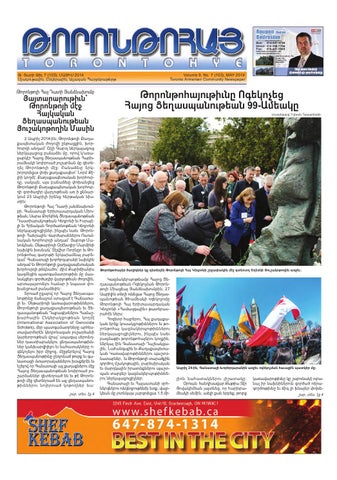
ÂáñáÝÃáѳÛáõÃÇõÝÁ à·»Ïáã»ó гÛáó ò»Õ³ëå³Ýáõû³Ý 99-²Ù»³ÏÁ Èáõë³ÝϳñÁª ÆßË³Ý Ô³½³ñ»³ÝÇ
ÂáñáÝÃáѳۻñ ͳÕÇÏÝ»ñ ÏÁ ½»ï»Õ»Ý ÂáñáÝÃáÛÇ Ð³Û Î»¹ñáÝÇ ßñç³÷³ÏÇÝ Ù¿ç ·ïÝáõáÕ ºÕ»éÝÇ Úáõß³ÏáÃáÕÇÝ ³éç»õ£
γ½Ù³Ï»ñåáõû³Ùµ гÛáó ò»Õ³ëå³Ýáõû³Ý à·»ÏáãÙ³Ý ÂáñáÝÃáÛÇ Ødzó»³É Ú³ÝÓݳËáõÙµÇÝ, 27 ²åñÇÉÇÝ ï»ÕÇ áõÝ»ó³õ гÛáó ò»Õ³ëå³Ýáõû³Ý 99-³Ù»³ÏÇ á·»ÏáãáõÙÁ ÂáñáÝÃáÛÇ Ð³Û ºñÇï³ë³ñ¹³Ï³Ý λ¹ñáÝÇ §Ð³Ù³½·³ÛÇݦ óï»ñ³ëñ³Ñ¿Ý Ý»ñë: Ðá·»õáñ ѳÛñ»ñáõ, Ð³Û ù³Õ³ù³Ï³Ý »ñ»ù Ïáõë³ÏóáõÃÇõÝÝ»ñáõ »õ ÃáñáÝÃáÑ³Û Ï³½Ù³Ï»ñåáõÃÇõÝÝ»ñáõ Ý»ñϳ۳óáõóÇãÝ»ñáõ, ÇÝãå¿ë ݳ»õ µ³½Ù³ÃÇõ ÃáñáÝÃáѳۻñáõ ÏáÕùÇÝ, Ý»ñÏ³Û ¿ÇÝ ¶³Ý³ï³ÛÇ ¸³ßݳÏó³ÛÇÝ, ܳѳݷ³ÛÇÝ »õ ø³Õ³ù³å»ï³Ï³Ý γé³í³ñáõÃÇõÝÝ»ñáõ å³ßïûݳï³ñÝ»ñ, »õ ÂáñáÝÃáÛÇ ï³ñ³ÍùÇÝ ·áñÍáÕ Ùß³ÏáõóÛÇÝ, µ³ñ»ëÇñ³Ï³Ý »õ Ù³ñ¹Ï³ÛÇÝ Çñ³õáõÝùÝ»ñáõ å³ßïå³Ý ï³ñµ»ñ ϳ½Ù³Ï»ñåáõÃÇõÝÝ»ñáõ Ý»ñϳ۳óáõóÇãÝ»ñ: ¶³Ý³ï³ÛÇ »õ г۳ëï³ÝÇ ûñÑÝ»ñ·Ý»ñáõ áõÝÏݹñáõÃ»Ý¿Ý »ïù, í³ÛñÏ»³Ý ÙÁ ÛáïÝϳÛë Û³ñ·áõ»ó³õ 1.5 ÙÇ-
²åñÇÉ 24-ÇÝ, ¶³Ý³ï³ÛÇ ÊáñÑñ¹³ñ³ÝÇÝ ³éç»õ á·»ÏáãÙ³Ý Ñ³õ³ù¿Ý å³ïÏ»ñ ÙÁ£
ÉÇáÝ Ý³Ñ³ï³ÏÝ»ñáõ ÛÇß³ï³ÏÁ: úñáõ³Ý ѳݹÇë³í³ñ ø³Ãdz î¿ñ Úáí³ÏÇÙ»³Ý Û³ÛïÝ»ó, áñ ѳñÇõñ³Ù»³ÏÇ ë»ÙÇÝ, ³õ»ÉÇ ù³Ý »ñµ»ù, Ãáõñù
ϳé³í³ñáõÃÇõÝÁ ÏÁ ß³ñáõݳϿ áõñ³Ý³É Çñ ݳËÝÇÝ»ñáõÝ ·áñÍ³Í á×ñ³·áñÍáõÃÇõÝÁ »õ ×Ç· ãÇ Ëݳۻñ ÷á˻߳ñ. ï»ë. ¿ç 4
2
زÚÆê 2014 Â. î²ðÆ, ÂÆô 103
вÚÎ²Î²Ü òºÔ²êä²ÜàôÂÆôÜ
زÚÆê 2014 Â. î²ðÆ, ÂÆô 103
3
2000 гۻñáõ гõ³ùÁ ÊáñÑñ¹³ñ³ÝÇÝ Þáõñç »õ ´áÕáùÁ úÃóáõ³ÛÇ ÂáõñùÇáÛ ¸»ëå³Ý³ï³Ý ¸ÇÙ³ó
²åñÇÉ 24-ÇÝ, ÂáñáÝÃáÛ¿Ý, ¶¿ÙåñÇ׿Ý, ȳõ³É¿Ý, ØáÝÃñ¿³É¿Ý, гÙÇÉÃÁÝ¿Ý, ê¿Ýà ø³ÃñÇݽ¿Ý úÃóáõ³ ųٳݻóÇÝ 2000 ѳÛáñ¹ÇÝ»ñ ÊáñÑñ¹³-ñ³ÝÇÝ »õ Ãñù³Ï³Ý ¹»ëå³Ý³ï³Ý ³éç»õ µáÕáù»Éáõ ѳٳñ ÂáõñùÇáÛ Ù»ñ-ÅáõÙÇ ù³Õ³ù³Ï³Ýáõû³Ý ¹¿Ù: Ð³Û ¸³ïÇ Û³ÝÓݳËáõÙµÇÝ ÏáÕÙ¿ ϳ½Ù³Ï»ñåáõ³Í ÅáÕáíñ¹³ÛÇÝ Ñ³õ³ùù³Ûɳñß³õÁ ³Ûë ï³ñÇ ÏÁ Ïñ¿ñ ï³ñµ»ñ µÝáÛÃ: úÃóáõ³ÛÇ áëïÇϳÝáõÃÇõÝÁ Ãáõñù ѳٳÛÝùÇ Ý»ñϳ۳óáõóÇãÝ»ñáõÝ ³ñïûݳ·Çñ ïáõ³Í ¿ñ ѳõ³ù ϳï³ñ»Éáõ ÊáñÑñ¹³ñ³ÝÇÝ ¹ÇÙ³óª ÙÇ»õÝáÛÝ å³ÑáõÝ, »ñµ ѳۻñÁ ÏÁ ϳï³ñ¿ÇÝ Ø»Í ºÕ»éÝÇ á·»ÏáãÙ³Ý ³Ù»Ý³Ù»³Û ³ñ³ñáÕáõÃÇõÝÁ: Ð³Û »õ Ãáõñù ÏáÕÙ»ñÁ Çñ³ñÙ¿ µ³ÅÝáõ³Í ¿ÇÝ Ù»ï³Õ»³Û å³ïÝ¿ßÝ»ñáí: ¶³Ý³ï³Ñ³Ûáó »ÙÇ ²é³çÝáñ¹ Ü³Ã³Ý ²ñù. ÚáíѳÝÝÇë»³Ý Ñ³õ³ùÇ µ³óáõÙÁ ϳï³ñ»ó Ûáñ¹áñ»Éáí Ý»ñÏ³Û Ñ³Ûáñ¹ÇÝ»ñáõÝ ï¿ñ ϳݷÝÇÉ Çñ»Ýó áõËïÇÝ: ²å³ Ý»ñϳݻñÁ Ùdzëݳµ³ñ ³ÕûûóÇÝ î¿ñáõÝ³Ï³Ý ²ÕûÃùÁ: úñáõ³Ý ѳݹÇë³í³ñ Üáñ³ ²ñáõß»³Ý Û³ÛïÝ»ó, ÿ Âáõñùdz áõñ³óÙ³Ý Çñ ù³Õ³ù³Ï³Ýáõû³Ùµ ÏÁ ß³ñáõݳϿ »õ ÏÁ ÏñÏÝ¿ ò»Õ³ëå³Ýáõû³Ý ·áñÍÁÝóóÁ: ²Ý ÛÇß»óáõó, áñ Âáõñùdz Ù»Í ¹»ñ³Ï³ï³ñáõÃÇõÝ áõÝ¿ñ Ù¿Ï ³ÙÇë ³é³ç ø»ë³åÇ ¹¿åù»ñáõÝ Ù¿ç: Êûëù ³é³õ ¶³Ý³ï³ÛÇ Ùûï г۳ëï³ÝÇ ¹»ëå³Ý ²ñÙ¿Ý º·³Ý»³Ý, áñ ÛÇß»óáõó, ÿ гÛÏ³Ï³Ý ò»Õ³ëå³Ýáõû³Ý ÏáÕùÇÝ, úëٳݻ³Ý ÂáõñùÇáÛ å»ïáõÃÇõÝÁ Íñ³·ñ³Í »õ ·áñͳ¹ñ³Í ¿ ³ëáñÇÝ»ñáõ »õ åáÝï³óÇ ÛáÛÝ»ñáõ ç³ñ¹»ñÁ: ²Ý ݳ»õ ѳñó ïáõ³õ, ÿ DZÝã ïñ³Ù³µ³Ýáõû³Ùµ ²Ý·³ñ³ Ï°³é³ç³ñÏ¿ 1915-Ç ºÕ»éÝÁ ùÝݳñÏáÕ å³ïÙ³-µ³ÝÝ»ñáõ Û³ÝÓݳÅáÕáí Û³é³ç³óÝ»É, »ñµ International Association of Genocide Scholars-Ç ÝÙ³Ý Ñ³Ù³ß˳ñѳÛÇÝ Ñ»ÕÇݳϳõáñ ϳ½Ù³Ï»ñåáõÃÇõÝ ÙÁ ³ñ¹¿Ý ÇëÏ Ñ³ëï³ï³Í ¿ гÛÏ³Ï³Ý ò»Õ³ëå³Ýáõû³Ý ÇñáÕáõÃÇõ-ÝÁ: ¸»ëå³Ý º·³Ý»³Ý ßÝáñѳϳÉáõÃÇõÝ Û³ÛïÝ»ó ݳ»õ ³ÝáÝó áñáÝù ¶³Ý³ï³ÛÇ Ø³ñ¹Ï³ÛÇÝ Æñ³õ³Ýó ³ݷ³ñ³ÝÇÝ Ù¿ç Û³ïáõÏ ï»Õ ïñ³Ù³¹ñ»-óÇÝ Ð³ÛÏ³Ï³Ý ò»Õ³ëå³Ýáõû³Ý: ä³Ñå³ÝáÕ³Ï³Ý Ïáõë³Ïóáõû³Ý ÏáÕÙ¿ Ëûëù ³é³õ ¶³Ý³ï³ÛÇ ËáñÑñ¹³ñ³ÝÇ ³Ý¹³Ù èáÛ³É Î³ÉÇ÷û, áñ Ãáõñù óáõó³ñ³ñÝ»ñáõÝ ³ÏݳñÏ»Éáí Û³ÛïÝ»ó, ÿ ³Ûë ï³ñÇ Ñ³Û óáõó³ñ³ñÝ»ñÁ §½ûñ³ÏÇó¦Ý»ñáõ µ³Ý³Ï ÙÁ áõÝÇÝ: ²Ý ÁÝûñó»ó ÁÝÏ»ñ³ÛÇÝ ½³ñ·³óÙ³Ý »õ µ³½Ù³Ùß³ÏáõóÛÇÝ Ñ³ñó»ñáõ ݳ˳ñ³ñ Ö¿ÛëÁÝ ø¿ÝÇÇ áõÕ»ñÓÁ, áõñ ݳ˳ñ³ñÁ ÏÁ ѳëï³ï¿, áñ гÛÏ³Ï³Ý ò»Õ³ëå³Ýáõû³Ý ÇñáÕáõÃÇõÝÁ »õ Ãñù³Ï³Ý å»ïáõû³Ý ÏáÕÙ¿ ³Û¹ ³ñ³ñùÇ å³ï³ë˳ݳïáõáõÃÇõÝÁ ëï³ÝÓݳÝÓÝ»Éáõ ³ÝÛ»ï³Ó·»ÉÇ ³ÝÑñ³Å»ßïáõÃÇõÝÁ: ¶³Ý³ï³ÛÇ ËáñÑñ¹³ñ³ÝÇ 25 ï³ñÇÝ»ñ ͳé³Û³Í ݳËÏÇÝ ³Ý¹³Ù ÖÇÙ ø³ñÇ×dzÝÇë Ý»ñϳݻñáõÝ ÛÇß»óáõó, áñ 20-ñ¹ ¹³ñáõ ëÏǽµÁ Ãáõñù»ñáõ ÏáÕÙ¿ ·áñͳ¹ñáõ³Í гÛÏ³Ï³Ý áõ äáÝï³Ï³Ý ó»Õ³ëå³ÝáõÃÇõÝÝ»ñáõ å³ï׳éáí ¿, áñ ³Ûëûñ î³ñýáõñÇ Ù¿ç ϳ٠³ÛÉáõñ ÏÁ ß³ñáõݳÏáõÇÝ ó»Õ³ëå³Ý³Ï³Ý ³ñ³ñùÝ»ñÁ: ²Ý ËûëùÁ áõÕÕ»Éáí Ãáõñù óáõó³ñ³ñÝ»ñáõÝ §³Ùûæ Áë³õ ³ÝáÝó, áñáÝù Çñ»Ýó ³Û¹ ³ñ³ñùáí í»ñëïÇÝ Ï°áõñ³Ý³Ý ѳۻñáõ, åáÝï³óÇ ÛáÛÝ»ñáõ »õ ³ÛÉ ³½·»ñáõ ¹¿Ù ·áñͳ¹ñáõ³Í Ãñù³Ï³Ý å»ï³Ï³Ý á×ÇñÝ»ñÁ: Ð³Û ¸³ïÇ Û³ÝÓݳËáõÙµÇ ³ï»Ý³å»ï ïáùÃ. ÄÇñ³Ûñ ä³ëÙ³×»³Ý ³Ý¹ñ³¹³ñÓ³õ ÂáõñùÇáÛ í³ñã³å»ï ¾ñïá-
²åñÇÉ 24-ÇÝ, ¶³Ý³ï³ÛÇ ÊáñÑñ¹³ñ³ÝÇÝ ³éç»õ, гÛÏ³Ï³Ý ò»Õ³ëå³Ýáõû³Ý 99-ñ¹ ³Ù»³ÏÇ ³éÇÃáí ßáõñç 2000 ·³Ý³ï³Ñ³Û»ñáõ á·»ÏáãÙ³Ý Ñ³õ³ù¿Ý ï»ë³ñ³Ý ÙÁ£
¸»ëå³Ý ²ñÙ¿Ý º·³Ý»³Ý
ºñ»ë÷áË³Ý ÖÇÙ ø³ñÇ×dzÝÇë
Õ³ÝÇ Ï³ï³ñ³Í Û³Ûï³ñ³ñáõû³Ý, Û³ÛïÝ»Éáí, áñ Ãáõñù ջϳí³ñÇÝ Ï³ï³ñ³ÍÁ áõñ³óÙ³Ý ùûÕ³ñÏáõ³Í Ù¿Ï ï³ñµ»ñ³ÏÝ ¿, áñ ÏÁ ÙÇïÇ ß÷áÃÇ Ù³ïÝ»É ÙÇç³½·³ÛÇÝ Ñ³ÝñáõÃÇõÝÝ áõ ù³Õ³ù³Ï³Ý ßñç³Ý³ÏÝ»ñÁ: гÛñ ¶»Õ³ñ¹ ìñ¹. øÇõëå¿Ï»³Ý Ïáã áõÕÕ»ó ѳÛáñ¹ÇÝ»ñáõÝ ½·ûÝ ÁÉɳÉáõ, íëï³Ñ»óÝ»Éáí, áñ Ãáõñù óáõó³ñ³ñÝ»ñáõ ϳï³ñ³ÍÁ, å³ñ½³å¿ë áõñ³óÙ³Ý Ûáõë³Ñ³ï³Ï³Ý ×Ç· ÙÁÝ ¿: Ð³Û ¸³ïÇ »ñϳñ³Ù»³Û å³ßïå³Ý, úÝóñÇáÛÇ Ý³Ñ³Ý·³ÛÇÝ ËáñÑñ¹³ñ³ÝÇ Ý³ËÏÇÝ ËûëÝ³Ï î¿ÛíÇï àõáñÝÁñ ËûëùÁ áõÕÕ»Éáí Ãáõñù óáõó³ñ³ñÝ»ñáõÝ, Û³Ûï³ñ³ñ»ó, ÿ ѳϳé³Ï Ãñù³Ï³Ý ÷áñÓ»ñáõÝ úÃóáõ³ÛÇ Ù¿ç ϳ۳óáÕ ³õ³Ý¹³Ï³Ý á·»ÏáãÙ³Ý Ñ³Ý¹ÇëáõÃÇõÝÁ Ó³ËáÕáõû³Ý Ù³ïÝ»Éáõ, ·³Ý³ï³Ñ³ÛáõÃÇõÝÁ Ïáõé ß³ñù»ñáí åÇïÇ ß³ñáõݳϿ Çñ å³Ñ³Ýç³ïÇñáõû³Ý áõ ³ñ¹³ñ ¹³ïÇ Çñ³·áñÍÙ³Ý Û³Õóñß³õÁ: Ê³Å³Ï ²ñù. Ú³Ïáµ»³Ý Çñ ·ûï»åݹÇã å³ï·³Ùáí Ïáã áõÕÕ»ó Û³é³çÇÏ³Û ï³ñÇÝ»ñáõÝ ³õ»ÉÇ ëïáõ³ñ ß³ñù»ñáí Ý»ñÏ³Û ÁÉÉ³É úÃóáõ³ÛÇ Ñ³Ý¹ÇëáõÃÇõÝÝ»ñáõÝ: ÊáñÑñ¹³ñ³ÝÇ ¹ÇÙ³ó ѳõ³ùÇ ³õ³ñï¿Ý »ïù, 2000 ѳÛáñ¹ÇÝ»ñ áõÕÕáõ»ó³Ý ¹¿åÇ Ãñù³Ï³Ý ¹»ëå³Ý³ïáõÝ, áõñ 300 Ãáõñù óáõó³ñ³ñÝ»ñÁ, Ñ³Ï³Ñ³Û å³ëï³éÝ»ñáí Ï³Ý·Ý³Í ¿ÇÝ: àëïÇÏ³Ý³Ï³Ý ëïáõ³ñ ÃÇõ ÙÁ »õ ³Ýó³ñ·»ÉÝ»ñ ÏÁ µ³ÅÝ¿ÇÝ óáõó³ñ³ñ ÏáÕÙ»ñÁ: Âñù³Ï³Ý ¹ñûßÝ»ñáõ ÏáÕùÇÝ å³ñ½áõ³Í ¿ÇÝ ²½ñå¿Û׳ÝÇ »õ âÇݳëï³ÝÇ
²åñÇÉ 24-Ç ³é³õûﻳÝ, г۳ëï³ÝÇ ¸»ëå³Ý³ï³Ý ³éç»õ
Ãñù³ó»Õ áõÕáõñÝ»ñáõ ¹ñûßÝ»ñÁ: гϳé³Ï Ãñù³Ï³Ý ÏáÕÙÇ ·ñ·éÇã ÷áñÓ»ñáõÝ, ѳÛÏ³Ï³Ý ÏáÕÙÁ ß³ñáõݳϻó ³ñ³ñáÕáõÃÇõÝÁ, ³ñѳٳñѳÝùáí ¹ÇÙ³õáñ»Éáí Ãáõñù óáõó³ñ³ñÝ»ñáõ ·ñ·éÇã µ³ó³·³ÝãáõÃÇõÝÝ»ñÁ: ´áÕáùÇ óáÛóÇ ÁÝóóùÇÝ ¶³Ý³ï³ÛÇ »ñÇï³ë³ñ¹³Ï³Ý ÙÇáõû³Ý (¶ºØ) ϳ½Ù³Ï»ñåáõû³Ùµ ï»ÕÇ áõÝ»ó³õ ·»Õ³ñáõ»ëï³Ï³Ý Û³Ûï³·Çñ, áñáõ ÁÝóóùÇÝ ÷á˳Ýóáõ»ó³Ý ݳ»õ ÐÚ¸ ¶ºØ-Ç »õ ÐÚ¸ §²ñÙ¿Ý ¶³ñû¦ àõë³ÝáÕ³Ï³Ý ÙÇáõû³Ý Ëûëù»ñÁ, áñáÝó Ù¿ç ÏÁ ѳëï³ïáõ¿ñ ÂáõñùÇ³Û¿Ý Ù»ñ å³Ñ³Ýç³-
Ý»ñÁ ß³ñáõݳϻÉáõ í×é³Ï³ÙáõÃÇõÝÁ: Üß»Ýù, áñ ³é³õûﻳÝ, г۳ëï³ÝÇ Ð³Ýñ³å»ïáõû³Ý ¹»ëå³ÝáõÃÇõÝ ³Ûó»É»óÇÝ ÐÚ¸ ¶³Ý³ï³ÛÇ ä³ï³Ý»Ï³Ý ØÇáõû³Ý ³Ý¹³ÙÝ»ñÁ, ¶³Ý³ï³ÛÇ Ð³Û ¸³ïÇ Û³ÝÓݳËáõÙµÁ, ÐÚ¸ ¶³Ý³ï³ÛÇ Î»¹ñáÝ³Ï³Ý ÏáÙÇï¿Ý »õ ѳÛÏ³Ï³Ý Ï³½Ù³Ï»ñåáõÃÇõÝÝ»ñáõ Ý»ñϳ۳óáõóÇãÝ»ñ, áñáÝù ²é³çÝáñ¹ ëñµ³½³Ý Ü³Ã³Ý ²ñù. ÚáíѳÝÝÇ뻳ÝÇ »õ ¹»ëå³Ý ²ñÙ¿Ý º·³Ý»³ÝÇ Ñ»ï, ¹»ëå³Ý³ï³Ý §Ú³õ»ñÅ³Ï³Ý Ð³Û³ëï³Ý¦ Ûáõß³ñÓ³ÝÇÝ Ùûï ³ÕûÃùáí á·»Ïáó»óÇÝ Ø»Í ºÕ»éÝÇ 99-³Ù»³ÏÁ:
4
вÚÎ²Î²Ü òºÔ²êä²ÜàôÂÆôÜ
زÚÆê 2014 Â. î²ðÆ, ÂÆô 103
ÂáñáÝÃáѳÛáõÃÇõÝÁ à·»Ïáã»ó ... Éáõ å³ïÙáõÃÇõÝÁ, ÙÇç³½·³ÛÇÝ Ñ³Ýñáõû³Ý Ý»ñϳ۳óÝ»Éáõ ÂáõñùÇáÛ Ç Ýå³ëï å³ïÏ»ñ ÙÁ: ²Ý¹ñ³¹³éݳÉáí ÂáõñùÇáÛ í³ñã³å»ï ¾ñïáÕ³ÝÇ ó³õ³Ïó³Ï³Ý Û³Ûï³ñ³ñáõû³Ý, ³Ý Û³ÛïÝ»ó, áñ ¾ñïáÕ³Ý ½áõñ ÷áñÓ»ñ ÏÁ ϳï³ñ¿ Ëáõë³÷»Éáõ гÛáó ò»Õ³ëå³Ýáõû³Ý å³ï³ë˳ݳïáõáõûݿÝ` ½³ÛÝ Ñ³õ³ë³ñ»óÝ»Éáí ëáíáñ³Ï³Ý »ñÏÏáÕÙ³ÝÇ í¿×Ç£ ²Ý Áë³õ, áñ ¾ñïáÕ³ÝÇ ³Ûë »ÉáÛÃÁ ½½áõ»ÉÇ áõ ³Ý³ËáñÅ ù³Õ³ù³Ï³Ý ѳßáõ³ñÏ ÙÁÝ ¿, áñ ÏÁ ÙÇïÇ Ãáõñù å»ïáõÃÇõÝÁ å³ßïå³Ý»É Çñ ÇëÏ ÅáÕáíáõñ¹¿Ý, áñ ûñ¿ ûñ ³õ»ÉÇ áõ ³õ»ÉÇ Ñ³ñó³Ï³ÝÇ ï³Ï Ï'³éÝ¿ ³Ýáñ ëáõï»ñÁ: ò»Õ³ëå³Ý ÂáõñùÇáÛ ³Ýå³ïÇÅ ÙݳÉáõ Ñ»ï»õ³ÝùÝ ¿ñ, áñ ï³Ï³õÇÝ ³ÙÇë ÙÁ ³é³ç ø»ë³åÁ µéݳ·ñ³õáõ»ó³õ »õ ù»ë³å³Ñ³ÛáõÃÇõÝÁ ï»Õ³Ñ³Ýáõ»ó³õ Çñ å³å»Ý³Ï³Ý ÑáÕ»ñ¿Ý, Ó»é³Ùµ ²É-ø³ÛÇï³ Ï³½Ù³Ï»ñåáõû³Ý, áñ ÏÁ í³Û»É¿ ÂáõñùÇáÛ Ñáí³Ý³õáñáõÃÇõÝÁ£ ²É-ù³ÛÇï³ÛÇ ûï³ñ ½ÇÝ»³ÉÝ»ñáõ ù»ë³å ÙáõïùÇ ÂáõñùÇáÛ ¹Çõñ³óÝáõÙÁª ³Ñ³õáñ »õ ¹³éÝ í»ñÛÇß»óáõÙ ÙÁÝ ¿ñ ѳÛáó ó»Õ³ëå³Ýáõû³Ý, Áë³õ ³Ý: гݹÇë³í³ñÁ ݳ»õ ßÝáñѳϳÉáõÃÇõÝ Û³ÛïÝ»ó ¶³Ý³ï³ÛÇ Î³é³í³ñáõû³Ý áñ 2006-ÇÝ, ׳Ýãó³õ гÛáó ò»Õ³ëå³ÝáõÃÇõÝÁª ¹³ßݳÏó³ÛÇÝ Ï³é³í³ñ³Ï³Ý ٳϳñ¹³ÏÇ íñ³Û, í»ñ ³éÝ»Éáí ÃáñáÝÃáѳÛáõû³Ý ³ÛÝ Ùï³Ñá·áõÃÇõÝÁ ÿ ׳ݳãÙ³Ý ³Û¹ ûñ¿Ý Ç í»ñ ì³ñã³å»ïÇ å³ï·³ÙÁ Ëáñ³å¿ë ³½¹áõ³Í ¿ ÂáõññùÇáÛ áõñ³óÙ³Ý ù³Õ³ù³Ï³Ýáõû³Ý ×ÝßáõÙ¿Ý: î¿ñ Úáí³ÏÇÙ»³Ý ûɳ¹ñ»ó, áñ ¶³Ý³ï³ÛÇ ³é³çݳѻñà ¹»ñÁ å¿ïù ¿ ÁÉÉ³Û ÂáõñùÇáÛ û·Ý»É, áñ ÁݹáõÝÇ Çñ ³Ýó»³ÉÁ£ ²å³ ³Ý ÷á˳Ýó»ó, áñ ¾ñïáÕ³ÝÇ ³Ýѻûà ۳Ûï³ñ³ñáõû³Ý ÝáÛÝ ûñÁ, Ãñù³Ï³Ý ϳ½Ù³Ï»ñå ³ß˳ï³ÝùÇÝ Çµñ ³ñ¹ÇõÝù, ÂáñáÝÃáÝ ³Ï³Ý³ï»ë »Õ³õ ù³Õ³ù³å»ï³Ï³Ý ·áñͳ¹Çñ ËáñÑáõñ¹Ç ÏáÕÙ¿ª ÂáñáÝÃáÛÇ Ù¿ç гÛáó ò»Õ³ëå³Ýáõû³Ý ÝáõÇñáõ³Í Ûáõß³ñÓ³ÝÇ ÙÁ ½»ï»ÕÙ³Ý ³é³ç³ñÏÇ Û»ï³Ó·áõÙÇÝ »õ ³Ýáñ ÷á˳ÝóáõÙÇݪ ÷ñáÃáùáÉÇ å³ï³ë˳ݳïáõÇÝ: ¿»õ ³Ýëå³ë»ÉÇ áõ íÇñ³õáñ³Ï³Ý ¿ñ ³Ûë å³ï³Ñ³ñÁ, ë³Ï³ÛÝ ³ß˳ï³ÝùÁ ã¿ ³õ³ñï³Í, »õ åÇïÇ ÁÝ»Ýù Ù»ñ ϳñ»ÉÇÝ, áñå¿ë½Ç ϳñ»Ý³Ýù ѳëÝÇÉ ³ñ¹³ñ ÉáõÍáõÙÇ: î¿ñ Úáí³ÏÇÙ»³Ý Çñ ËûëùÁ ³õ³ñï»ó Áë»Éáí. гñÇõñ³Ù»³ÏÇ ë»ÙÇÝ, ÏÁ Ûáõë³Ýù áñ ¶³Ý³ï³ÛÇ ¹ÇñùáñáßáõÙÁ ÁÉÉ³Û å³ïÙ³Ï³Ý ×ßÙ³ñïáõû³Ý ÏáÕùÇÝ »õ ³ß˳ïÇ ÂáõñùÇáÛ ÅáÕáíáõñ¹ÇÝ Ñ»ï, áñ ³Ûëûñ, ³õ»ÉÇ ù³Ý »ñµ»ù, ѳñó³Ï³ÝÇ ï³Ï Ï'³éÝ¿ Çñ ϳé³í³ñáõû³Ý ù³ñá½ãáõÃÇõÝÁ »õ ÏÁ Ó·ïÇ ·ÇïݳÉáõ Çñ³Ï³ÝáõÃÇõÝÁ: ²å³ Ëûëù ³é³õ ¶³Ý³ï³Ñ³Û ·³ÕáõÃÇ »ñϳñ³Ù»³Û µ³ñ»Ï³Ù, Ù³ñ¹-
Ú³Ûï³ñ³ñáõÃÇõÝ ...
ß³ñ. ². ¿ç¿Ý
ϳÛÇÝ Çñ³õáõÝùÝ»ñáõ å³ßïå³Ý, ³ß˳ï³ÝùÇ, ÁÝÏ»ñ³ÛÇÝ ½³ñ·³óáõÙÇ »õ µ³½Ù³Ùß³ÏáõóÛÇÝ Ñ³ñó»ñáõ ݳ˳ñ³ñª Ö¿ÛëÁÝ ø¿ÝÇ, áñ ¹³ï³å³ñï»ó ÂáõñùÇ³Ý Çñ áõñ³óÙ³Ý ù³Õ³ù³Ï³Ýáõû³Ý ѳٳñ »õ í»ñ³Ñ³ëï³ï»ó ¶³Ý³ï³ÛÇ Î³é³í³ñáõû³Ý гÛáó ò»Õ³ëå³Ýáõû³Ý ֳݳãáõÙÁ, Û³ÛïÝ»Éáí áñ ³Û¹ áñáßáõÙÁ ÏÁ ÙÝ³Û ³Ý÷á÷áË: ²å³ Û³çáñ¹³µ³ñ Ëûëù ³éÇÝ ¶³Ý³ï³ÛÇ ¹³ßݳÏó³ÛÇÝ ËáñÑñ¹³ñ³ÝÇ ³Ý¹³Ùª è³ÃÇù³ êÇÃë³å³Û¿½³Ý, áñ ÏÁ Ý»ñϳ۳óÝ¿ñ Áݹ¹ÇÙ³¹Çñ Üáñ ¸»ÙáÏñ³ï Ïáõë³Ïóáõû³Ý ջϳí³ñª ÂáÙ³ë ØáõÉù¿ñÁ, úÝóñÇáÛÇ ËáñÑñ¹³ñ³ÝÇ ³Ý¹³Ùª îáùÃ. пɿݳ Ö³½¿ù, áñ ÏÁ Ý»ñϳ۳óÝ¿ñ úÝóñÇáÛÇ Ü³Ñ³Ý·³å»ïª ø³ÃÉÇÝ àõÇÝÁ, úÝóñÇáÛÇ Ï³é³í³ñáõû³Ý Áݹ¹ÇÙ³¹Çñ, å³ÑåÝáÕ³Ï³Ý Ïáõë³Ïóáõû³Ý ջϳí³ñª ÂÇÙ Ðáõï³ù, Ð³Û ¸³ïÇ ç³ï³·áí, úÝóñÇáÛÇ ËáñÑñ¹³ñ³ÝÇ ³Ý¹³Ùª سÛùÁÉ öñáõ, áñ ÏÁ Ý»ñϳ۳óÝ¿ñ úÝóñÇáÛÇ Üáñ ¸»ÙáÏñ³ïÝ»ñáõ ջϳí³ñª ²Ýïñ¿³ Ðáñáõ³ÃÁ, ÂáñáÝÃáÛÇ ø³Õ³ù³å»ï³Ï³Ý ËáñÑáõñ¹Ç ³Ý¹³Ùª Þ¿ÉÇ ¶³ñûÉ, سñù³ÙÇ ø³Õ³ù³å»ï³Ï³Ý ÷á˳Ýáñ¹ª Ö³ù ÐÇÃ, ÂáñáÝÃáÛÇ Ð³Ýñ³ÛÇÝ ì³ñųñ³ÝÝ»ñáõ àõëáõÙÝ³Ï³Ý ÊáñÑáõñ¹Ç (TDSB) ³Ý¹³Ùª Ú³ñáõà سÝáõÏ»³Ý, áñ ݳ»õ ÏÁ Ý»ñϳ۳óÝ¿ñ ³ï»Ý³å»ïª øñÇë äáÉÃÁÝÁ, »õ ÂáñáÝÃáÛÇ ø³Õ³ù³å»ïÇ å³ßïûÝÇ Ã»ÏݳÍáõÝ»ñª ÖáÝ ÂáñÇ »õ î¿ÛíÇï êáùݳùÇ, áñáÝù ÝáÛÝå¿ë ¹³ï³å³ñï»óÇÝ ÂáõñùÇáÛ áõñ³óÙ³Ý ³ß˳ï³ÝùÝ»ñÁ »õ í»ñ³Ñ³ëï³ï»óÇÝ Çñ»Ýó µ³ñ»Ï³ÙáõÃÇõÝÝ áõ ½ûñ³óáõÃÇõÝÁª ·³Ý³ï³Ñ³Û áõ ÃáñáÝÃáÑ³Û ·³ÕáõÃÇÝ: ²é³çÇÝ å³ï·³Ù³µ»ñÝ ¿ñ §Ü³ßÁÝÁÉ öûëæ ûñ³Ã»ñÃÇ ËÙµ³·Çñ »õ Éñ³·ñáÕ ÖáÝ³Ã³Ý ø¿Û: Æñ ϳñ× µ³Ûó ѳٳå³ñ÷³Ï ËûëùÇÝ Ù¿ç, ³Ý ïáõ³õ ѳÏÇñ× ³ÏݳñÏ ÙÁ 20-ñ¹ ¹³ñáõ ï³ñµ»ñ ó»Õ³ëå³ÝáõÃÇõÝÝ»ñáõÝ Ù³ëÇÝ »õ Ï»¹ñáݳó³õ áõñ³óÙ³Ý Ñá·»µ³Ýáõû³Ý íñ³Û: ²õ³ñï»Éáí Çñ ËûëùÁ, ø¿Û Û³ÛïÝ»ó, áñ ÏÁ ½ûñ³ÏóÇ ³ÛÝ Âáõñù ÅáÕáíáõñ¹ÇÝ, áñ Çñ å»ïáõÃ»Ý¿Ý ÏÁ å³Ñ³Ýç¿ Çñ³Ï³ÝáõÃÇõÝÁ: ²å³ª Ñ³Û ·³ÕáõÃÇ ³ÝÏ»ÕÍ µ³ñ»Ï³Ù, ¶³Ý³ï³ÛÇ ÊáñÑñ¹³ñ³ÝÇ Ý³ËÏÇÝ ³Ý¹³Ù »õ ÂáñáÝÃáÛÇ ø³Õ³ù³å»ï³Ï³Ý ËáñÑáõñ¹Ç ûÏݳÍáõª ÖÇÙ ø³ñÇ×dzÝÇë Çñ ½ûñ³Ïó³Ï³Ý ѳñ³½³ï Ëûëù»ñáõ ÏáÕùÇÝ íëï³Ñ»óáõó ÃáñáÝÃáѳÛáõû³Ý áñ ×Ç· åÇïÇ ãËݳۿ, áñ ÂáñáÝÃáÛÇ Ù¿ç ³Ýå³ÛÙ³Ý Ð³Ûáó ò»Õ³ëå³Ýáõû³Ý 100-Ù»³ÏÇÝ ÝáõÇñáõ³Í Ûáõß³ÏáÃáÕÁ ½»ï»ÕáõÇ: ºñÏñáñ¹ å³ï·³Ù³µ»ñÝ ¿ñ Çñ³õ³µ³Ý, å³ïÙ³·¿ï, ¹Çõ³Ý³·¿ï »õ ¶³Ý³ï³ÛÇ Ùûï г۳ëï³ÝÇ Ð³Ýñ³å»ïáõû³Ý ݳËÏÇÝ ¹»ëå³Ýª ²-
ß³ñ. ². ¿ç¿Ý
¸Åµ³Ëï³µ³ñ ë³Ï³ÛÝ, ³Ûë µ³Ý³Ó»õÇ ¹¿Ù ³ñï³Û³ïáõáÕÝ»ñÁ µÍ³Ëݹñáõû³Ùµ »õ ÑÙïûñ¿Ý ë»ñï³Í áõ å³ïñ³ëï³Í ¿ÇÝ ËÇëï ½·³ó³Ï³Ý µ»Ù³¹ñáõÃÇõÝ ÙÁ »õ Û³çáÕ»ó³Ý µ³Ý³í¿×Ç ÝÇõÃÁ ßñç»É áõ Ï»¹ñáݳóÝ»É Ð³Ûáó ò»Õ³ëå³Ýáõû³Ý ÇñáÕáõû³Ý ùÝݳñÏÙ³Ý íñ³Û: ²ÝáÝó ·É˳õáñ ³é³ñÏáõÃÇõÝÝ»ñÝ ¿Çݪ гÛáó ò»Õ³ëå³Ýáõû³Ý ѳñóÇ Ñ³Ï³ë³Ï³Ý ÁÉɳÉÁ »õ ÂáñáÝÃáÛÇ Ñ³Ýñ³ÛÇÝ í³ñųñ³ÝÝ»ñ ۳׳ËáÕ Ãáõñù ³ß³Ï»ñïÝ»ñáõª ëå³éݳÉÇùÝ»ñáõ áõ ó»Ë³ñÓ³ÏáõÙÝ»ñáõ ½áÑ ¹³éݳÉÁ: ÂáñáÝÃáÛÇ ø³Õ³ù³å»ï³Ï³Ý
ÊáñÑáõñ¹Ç ·áñͳ¹Çñ í³ñãáõÃÇõÝÁ ï»ÕÇ ïáõ³õ ³Ûë ³Ýѻûà áõ ³ÝÑÇÙÝ ³é³ñÏáõÃÇõÝÝ»ñáõÝ »õ ǵñ»õ ÿ ·ïÝ»Éáí ÙÇçÇÝ »½ñ ÙÁª µ³Ý³Ó»õÁ ÷á˳Ýó»ó öñáÃáùáÉÇ ä³ï³ë˳ݳïáõÇÝ, áñå¿ë½Ç ³ß˳ïÇ Ñ³Û »õ Ãáõñù ·³ÕáõÃÝ»ñáõ Ý»ñϳ۳óáõóÇãÝ»ñáõÝ, ÇÝãå¿ë ݳ»õ ݳѳݷ³ÛÇÝ »õ ¹³ßݳÏó³ÛÇÝ Ï³é³í³ñáõÃÇõÝÝ»ñáõÝ Ñ»ï áõ ³ñ¹ÇõÝùÁ ÷á˳Ýó¿ ·áñͳ¹Çñ ËáñÑáõñ¹ÇÝ, ³é Ç í»ñçÝ³Ï³Ý í³õ»ñ³óáõÙ: Ø»ñ ³ß˳ï³ÝùÁ ï³Ï³õÇÝ ã¿ ³õ³ñï³Í, »õ ÙdzëÝ³Ï³Ý ×Ç·»ñáí åÇïÇ Ñ³ëÝÇÝù ³ñ¹³ñ ÉáõÍáõÙÇ:
ܳ˳ñ³ñ Ö¿ÛëÁÝ ø»ÝÇ
Èáõë³ÝϳñÝ»ñÁª ÆßË³Ý Ô³½³ñ»³ÝÇ
ñ³ ä³å»³Ý, áñ ë³ÑÇÏÝ»ñáõ óáõó³¹ñáõû³Ùµ Ý»ñϳ۳óáõó ÂáõñùÇáÛ ÏáÕÙ¿ µéݳ·ñ³õáõ³Í ѳÛÏ³Ï³Ý ÑáÕ»ñáõ ѳñóÁ »õ ÑáÕ³ÛÇÝ å³Ñ³Ýç³ïÇñáõû³Ý ûñÇÝ³Ï³Ý »ñ»ëÁ: ä³ßïûÝ³Ï³Ý µ³ÅÇÝÇ ³õ³ñïÇÝ, Ý»ñϳݻñÁ áõÕÕáõ»ó³Ý ¹¿åÇ ÂáñáÝÃáÛÇ Ð³Û Î»¹ñáÝÇ ò»Õ³ëå³Ýáõû³Ý Ûáõß³ÏáÃáÕ, áõñ Ð³Û ù³Õ³ù³Ï³Ý »ñ»ù Ïáõë³ÏóáõÃÇõÝÝ»ñáõ Ý»ñϳ۳óáõóÇãÝ»ñÁ, ÃáñáÝÃáÑ³Û ·³ÕáõÃÇ ³ÝáõÝáí, ͳÕÏ»åë³Ï ÙÁ ½»ï»Õ»óÇÝ ÇëÏ ÃáñáÝÃáÑ³Û Ñ³Ûñ»Ý³ÏÇóÝ»ñÁ ͳÕÇÏÝ»ñ ½»ï»Õ»óÇÝ ³Ý·»ñ»½Ù³Ý áõ ³ÝßÇñÇÙ Ù»ñ ݳѳï³ÏÝ»ñáõ í³é ÛÇß³ï³ÏÇÝ: Ðá·»õáñ ÑáíÇõÝ»ñáõ ³ÕûÃùáí ÷³Ïáõ»ó³õ á·»ÏáãÙ³Ý Ó»éݳñÏÁ: Ö³ÝÁÃÁÝ ø¿Û
вÚÎ²Î²Ü òºÔ²êä²ÜàôÂÆôÜ
زÚÆê 2014 Â. î²ðÆ, ÂÆô 103
5
ì³Ý·áõíÁñÇ Ø¿ç ´³óáõÙª гÛÏ³Ï³Ý ò»Õ³ëå³Ýáõû³Ý Úáõß³ÏáÃáÕÇÝ ²Ûë ï³ñÇ ²åñÇÉ»³Ý ºÕ»éÝÇ á·»ÏáãáõÙÁ Û³ïáõÏ ÇÙ³ëï áõÝ¿ñ í³Ý·áõíÁñ³Ñ³Ûáõû³Ý ѳٳñ£ ²ñ¹³ñ»õ, гÛÏ³Ï³Ý ò»Õ³ëå³Ýáõû³Ý гñÇõñ³Ù»³ÏÇ ¶³Ý³ï³ÛÇ Ø³ñÙÇÝÇ Ï³½Ù³Ï»ñåáõû³Ùµ, ì³Ý·áõíÁñÇ Ñ³ÛáõÃÇõÝÁ, ²åñÇÉ 27-ÇÝ, гÛÏ³Ï³Ý ò»Õ³ëå³Ýáõû³Ý 1.5 ÙÇÉÇáÝ ½áÑ»ñáõ ÛÇß³ï³ÏÇ á·»ÏáãÙ³Ý ÁÝóóùÇÝ Ï³ï³ñ»ó ݳ»õ гÛÏ³Ï³Ý ò»Õ³ëå³Ýáõû³Ý ½áÑ»ñáõ Ûáõß³ÏáÃáÕÇ µ³óáõÙÁ: ì³Ý·áõíÁñÇ Moutain View ·»ñ»½Ù³Ý³ï³Ý ßñç³÷³ÏÇÝ Ù¿ç ½»ï»Õáõ³Í Ûáõß³ÏáÃáÕÁ ÏÁ Ý»ñϳ۳óÝ¿ гÛÏ³Ï³Ý ò»Õ³ëå³Ýáõû³Ý ½áÑÇ ÙÁ Ù³ïݳѻïùÇ ù³Ý¹³ÏÁ: Úáõß³ÏáÃáÕÇÝ íñ³Û ·ñáõ³Í ¿, áñ ³Ý ÑáÝ ½»ï»Õáõ³Í ¿ Û³ñ·»Éáõ ѳٳñ ÛÇß³ï³ÏÁ 1915-ÇÝ úëٳݻ³Ý ÂáõñùÇáÛ ÏáÕÙ¿ ·áñͳ¹ñáõ³Í гÛÏ³Ï³Ý ò»Õ³ëå³Ýáõû³Ý 1.5 ÙÇÉÇáÝ ³ÝÙ»Õ ½áÑ»ñáõÝ: 350 ѳÛáñ¹ÇÝ»ñáõ Ý»ñϳÛáõû³Ùµ ϳ۳ó³Í Ûáõß³ñÓ³ÝÇ µ³óÙ³Ý ³ñ³ñáÕáõû³Ý ÁÝóóùÇÝ Ëûëù ³éÇÝ Ü³Ã³Ý ²ñù. ÚáíѳÝÝÇ뻳Ý- ²Ýáõß³õ³Ý »åë. ¸³ÝÇ¿É»³Ý, г۳ëï³ÝÇ ³ñï³Ï³ñ· »õ Édz½ûñ ¹»ëå³Ý ²ñÙ¿Ý º·³Ý»³Ý, äñÇÃÇß ¶áÉáÙådz Ý³Ñ³Ý·Ç ³ñ¹³ñáõû³Ý ݳ˳ñ³ñ êáõ-
ÐáɳÝï³
ì³Ý·áõíÁñÇ Ï»¹ñáÝ³Ï³Ý Ã³Õ³Ù³ë»ñ¿Ý Mountain View ·»ñ»½Ù³Ý³ï³Ý Ù¿ç ½»ï»Õáõ³Í гÛÏ³Ï³Ý ò»Õ³ëå³Ýáõû³Ý ½áÑÇ ÙÁ Ù³ïݳѻïùÁ ò»Õ³ëå³Ýáõû³Ý Ûáõß³ÏáÃáÕÇÝ µ³óÙ³Ý å³ÑÁ: Ý»ñϳ۳óÝáÕ Ûáõß³ÏáÃáÕÁ
½³Ý ²ÝÃáÝ, ¶³Ý³ï³ÛÇ ËáñÑñ¹³ñ³ÝÇ ³Ý¹³ÙÝ»ñ îáÝ î¿ÛíÇë »õ ijë÷Çñ ê³Ýïáõ, ݳѳݷ³ÛÇÝ »ñ»ë÷áË³Ý »õ äñÇÃÇß ¶áÉáÙådzÛÇ Üáñ ¸»ÙáÏñ³ï Ïáõë³Ïóáõû³Ý ջϳí³ñ ¾ïñÇÁÝ îÇùë, ì³Ý·áõíÁñÇ ù³Õ³ù³å»ï³Ï³Ý ËáñÑáõñ¹Ç ³Ý¹³ÙÝ»ñ ø¿ñÇ Ä³ÝÏ »õ è¿ÛÙáÝï ÈáõÇ, ÐÚ¸ ´ÇõñáÛÇ ³Ý¹³Ù Ú³Ïáµ î¿ñ ʳã³ïáõñ»³Ý, ÐÚ¸ ¶³Ý³ï³ÛÇ Î»¹ñáÝ³Ï³Ý ÏáÙÇï¿Ç Ý»ñϳ۳óáõóÇã ð³ýýÇ îûݳå»ï»³Ý »õ µ»Ù³¹ñÇã ²ïáÙ ¾ÏáÛ»³Ý, áñáÝù µáÉáñÝ ³É ß»ßï»óÇÝ Ãñù³Ï³Ý å»ïáõû³Ý ÏáÕÙ¿ гÛÏ³Ï³Ý ò»Õ³ëå³Ýáõû³Ý ׳ݳãÙ³Ý ³ÝÑñ³Å»ßïáõÃÇõÝÁ:
²Ûë ³éÃÇõ Çñ å³ï·³ÙÁ áõÕ³ñÏ³Í ¿ñ ݳ»õ ÁÝÏ»ñ³ÛÇÝ ½³ñ·³óÙ³Ý »õ µ³½Ù³Ùß³ÏáõóÛÇÝ Ñ³ñó»ñáõ ݳ˳ñ³ñ Ö¿ÛëÁÝ ø¿ÝÇ, ½áñ ÷á˳Ýó»ó ËáñÑñ¹³ñ³Ý³Ï³Ý ²Ýïñáõ ê³ùëÃÁÝ: ²ñ³ñáÕáõÃÇõÝÁ ѳݹÇë³í³ñ»óÇÝ Ú³Ïáµ î¿ñ Ú³Ïáµ»³Ý »õ ì³ñ¹û ÷³÷³½»³Ý: Úáõß³ÏáÃáÕÇ Ï³éáõóÙ³Ý å³ïٳϳÝÁ Ý»ñϳ۳óáõó Íñ³·ñÇ å³ï³ë˳ݳïáõ Öáñ× Þ³Ñݳ½³ñ»³Ý, áñ ½³ÛÝ Ýϳï»ó »ñϳñ ï³ñÇÝ»ñáõ Ñ»ï»õáÕ³Ï³Ý ³ß˳ï³ÝùÇ ³ñ¹ÇõÝùª ï»Õ³Ï³Ý »õ ݳѳݷ³ÛÇÝ Çß˳ÝáõÃÇõÝÝ»ñáõ Ñ»ï, ÇÝãå¿ë ݳ»õ Ý»ñùÇÝ ÇÙ³ëïáíª Ñ³Û Ñ³Ù³ÛÝùÇ ³Ý¹³ÙÝ»ñáõ ½û-
ñ³Ïóáõû³Ý »õ ·áñͳÏóáõû³Ý£ ²å³ Úáõß³ÏáÃáÕÇ Ù³ëÇÝ µ³ó³ïñáõÃÇõÝÝ»ñ ïáõ³õ Ûáõß³ÏáÃáÕÇ ·Í³·ñáÕ ³ñáõ»ëï³·¿ï سÃÇÉï³ ²ëÉǽ³ï¿Ý: ²Ý Áë³õ, ÿ Ûáõß³ñÓ³ÝÁ Çñ Ñáñǽ³Ý³Ï³Ý ¹Çñùáí ÏÁ Ñ³Ï³ë¿ ³õ³Ý¹³Ï³Ý áõÕճѳۻ³ó ϳéáõÛóÝ»ñáõÝ, áñáÝù å³ñï³¹ñáõ³Í »Ý Û³×³Ë ÇßËáÕÝ»ñáõ ÏáÕÙ¿, áñáÝù ÝáÛÝÇÝùÝ µñïáõÃÇõÝ ·áñÍáÕ áõÅÝ »Ý£ ²Ý Áë³õ, áñ Ù³ïݳѻïùÁ ÏÁ í»ñ³Ï³Ý·Ý¿ ³ÝÃÇõ ½áÑ»ñáõ Ãáõ³ù³Ý³ÏÇÝ Ù¿ç Ïáñëáõ³ÍÇÝ ³Ýѳï³Ï³ÝáõÃÇõÝÁ, áñ ÏÁ Ëï³Ý³Û ³Ýáñ Ù³ïݳѻïùÇÝ Ù¿ç£ Ò»éݳñÏÇÝ ÁÝóóùÇÝ ê»-
õ³Ý ø¿ûßÏ¿ñ»³Ý Çñ ·ñ³õÇã Ó³ÛÝáí Ù³ïáõó»ó §îÉ¿ º³Ù³Ý¦ »õ §ÎéáõÝϦ »ñ·»ñÁ£ ÆëÏ ì³Ý·áõíÁñÇ ·ñáÕ »õ µ³Ý³ëï»ÕÍ èÁÝ¿ ê³ñá×ÇÝÇ ê³ùÉÇù³ñ Ý»ñϳ۳óáõó ³Ûë ³éÇÃÇÝ Ñ³Ù³ñ ·ñ³Í Çñ µ³Ý³ëï»ÕÍáõÃÇõÝÁ §...»õ ²ñ³ñ³ï¿Ý ºïù¦£ ²Ýáñª ѳۻñ¿Ýáí ÁÝÏ»ñ³ó³Ý γñÇÝ ê³ÕïÁ×»³Ý, ÇëÏ »ñ³Åßïáõû³Ùµª ì³Ñ¿ Ú³Ïáµ»³Ý (ÏÇóé) »õ Ú³Ïáµ Ú³Ïáµ»³Ý (ïáõïáõÏ)£ Úáõß³ÏáÃáÕÇ Û³ÝÓݳËáõÙµÁ Û³ïáõÏ Ûáõß³Ýáõ¿ñÝ»ñáí å³ïáõ»ó ³ñáõ»ëï³·¿ï سÃÇÉï³ ²ëÉǽ³ï¿Ý, ßÇݳñ³ñ Ú³ëû ÆëÙ³Û¿É»³Ý »õ Mountain View ·»ñ»½Ù³Ý³ï³Ý å³ï³ë˳ݳïáõ ÎÉ¿Ý Ð³×Áë:
гÛÏ³Ï³Ý ò»Õ³ëå³Ýáõû³Ý 99-³Ù»³ÏÇ ÚÇß³ï³ÏáõÙ ºõ ´áÕáùÇ òáÛó»ñ ê÷ÇõéùÇ î³ñ³ÍùÇÝ
ÐáɳÝï³ÛÇ ²ÉÙ»Éû ѳ۳߳ï ù³Õ³ùÇÝ Ù¿ç ï»ÕÇ áõÝ»ó³õ гÛÏ³Ï³Ý ò»Õ³ëå³Ýáõû³Ý 99-³Ù»³ÏÁ á·»ÏáãáÕ Ó»éݳñÏÁ, áñáõÝ ÁÝóóùÇÝ µ³óáõÙÁ ϳï³ñáõ»ó³õ ò»Õ³ëå³Ýáõû³Ý ½áÑ»ñáõÝ ÛÇß³ï³ÏÁ ³ÝٳѳóÝáÕ Ûáõß³ÏáÃáÕÇÝ: Ò»éݳñÏÁ ѳٳϳ½Ù³Ï»ñåáõ³Í ¿ñ ²ÉÙ»ÉáÛÇ Ñ³Û ³é³ù»É³Ï³Ý »Ï»Õ»óõáÛ »õ ÐáɳÝï³ÛÇ Ð³Û ¸³ïÇ Û³ÝÓݳËáõÙµÇÝ ÏáÕÙ¿: Ü»ñÏ³Û ¿ÇÝ ßáõñç 2500 »õ ÐáɳÝï³ÛÇ ËáñÑñ¹³ñ³ÝÇ »ñ»ë÷á˳ÝÝ»ñ:
Èǵ³Ý³Ý
гÛÏ³Ï³Ý ò»Õ³ëå³Ýáõû³Ý 100³Ù»³ÏÇ Èǵ³Ý³ÝÇ »ñÇï³ë³ñ¹³Ï³Ý Ù³ñÙÇÝÇÝ Ï³½Ù³Ï»ñåáõû³Ùµ, Éǵ³Ý³Ý³Ñ³ÛáõÃÇõÝÁ ÙáÙ»ñáí ù³É»ó ¹¿åÇ ä¿ÛñáõÃÇ Ü³Ñ³ï³Ï³ó Ðñ³å³ñ³ÏÁ£ î³ëÝ»³Ï ѳ½³ñ³õáñ ѳÛáñ¹ÇÝ»ñáí áÕáÕáõ³Í ܳѳï³Ï³ó Ññ³å³ñ³ÏÇÝ íñ³Û »ñ»ÏáÛ»³Ý ųÙÁ 9ÇÝ ï»ÕÇ áõÝ»ó³õ á·»ÏáãÙ³Ý Ó»éݳñϪ Ý»ñϳÛáõû³Ùµ Éǵ³Ý³Ý»³Ý ù³Õ³ù³Ï³Ý, Ïáõë³Ïó³Ï³Ý Ù³ñÙÇÝÝ»ñáõ Ý»ñϳ۳óáõóÇãÝ»ñáõ, Ñá·»õáñ³Ï³ÝÝ»ñáõ: ²ÝÃÇÉdzëÇ Ù³Ûñ³í³ÝùÇÝ Ù¿ç ï»ÕÇ áõÝ»ó³õ ͳÕÏ»åë³ÏÝ»ñáõ ½»ï»ÕÙ³Ý ³ñ³ñáÕáõÃÇõÝ£
ÜÇõ ºáñù,Times Square
²ÝÃÇÉdzë, سÛñ³í³Ýù
Úáõݳëï³Ý
î»ÕÇ áõÝ»ó³õ µáÕáùÇ å³Ñ³Ýç³ïÇñ³Ï³Ý »ñÃÁ ¹¿åÇ ²Ã¿ÝùÇ Ãñù³Ï³Ý ¹»ëå³Ý³ïáõÝ, Ü¿³ ¼ÙÇéÝÇÇ Ð³ÛÏ³Ï³Ý ò»Õ³ëå³Ýáõû³Ý ½áÑ»ñáõ ÛÇß³ï³ÏÇÝ Ï³Ý·Ý»óáõ³Í Ûáõß³ñÓ³ÝÇÝ Ùûï Ñ᷻ѳݷÇëï¿Ý »ïù:
гñ³õ³ÛÇÝ ²Ù»ñÇϳ
гñ³õ³ÛÇÝ ²Ù»ñÇϳÛÇ ½³Ý³½³Ý ù³Õ³ùÝ»ñáõ Ù¿ç ï»ÕÇ áõÝ»ó³Ý µ³½Ù³Ñ³½³ñ ѳÛáñ¹ÇÝ»ñáõ µáÕáùÇ óáÛó»ñ »õ 99³Ù»³ÏÇ ÝßáõÙÝ»ñ:
ö³ñÇ½Ç ÜáÃñ î³ÙÇ Ù¿çª Ñ᷻ѳݷÇëï£
à·»ÏáãáõÙª ¶³ÙßÉÇÇ Ù¿ç
6
вÚÎ²Î²Ü òºÔ²êä²ÜàôÂÆôÜ
زÚÆê 2014 Â. î²ðÆ, ÂÆô 103
²åñÇÉ»³Ý ºÕ»éÝÇ à·»ÏáãáõÙÁ ºñ»õ³ÝÇ Ù¿ç
Èáõë³ÝϳñÁª ¶³µñÇ¿É ö³Ýá뻳ÝÇ
²åñÇÉ 24-ÇÝ Ð³Û³ëï³ÝÇ Ð³Ýñ³å»ïáõû³Ý µ³ñÓñ³·áÛÝ Õ»Ï³í³ñáõÃÇõÝÁ ÌÇÍ»éݳϳµ»ñ¹Ç Ûáõ߳ѳٳÉÇñÇÝ Ù¿ç Û³ñ·³ÝùÇ ïáõñù Ù³ïáõó»ó 1915 Ãáõ³Ï³ÝÇ úëٳݻ³Ý ÂáõñùÇáÛ Çñ³Ï³Ý³óáõó³Í á×ÇñÇÝ` гÛáó ò»Õ³ëå³Ýáõû³Ý ³ÝÙ»Õ ½áÑ»ñáõ ÛÇß³ï³ÏÇÝ: ²ÝÙ³ñ Ïñ³ÏÇÝ Ùûï ²Ù»Ý³ÛÝ Ð³Ûáó ¶³ñ»·ÇÝ ´. ϳÃáÕÇÏáëÇ Ñ³Ý¹Çë³å»ïáõû³Ùµ Ñ᷻ѳݷëï»³Ý å³ßïûÝ Ï³ï³ñ»ó Ñá·»õáñ ¹³ëÁ, µ³ñÓñ³ëïÇ×³Ý å³ßïûݳï³ñÝ»ñ ·ÉáõË ËáݳñÑ»óÇÝ »õ í³ÛñÏ»³Ý ÙÁ Ééáõû³Ùµ Û³ñ·»óÇÝ ëå³ÝÝáõ³Í 1,5 ÙÇÉÇáÝ Ñ³Û»ñáõ ÛÇß³ï³ÏÁ: ÌÇÍ»éݳϳµ»ñ¹Ç µ³ñÓáõÝù »Ï³Í ¿ÇÝ Ð³Û³ëï³ÝÇ Ð³Ýñ³å»ïáõû³Ý ݳ˳·³Ñ ê»ñÅ ê³ñ·ë»³Ý` ²é³çÇÝ ïÇÏÇÝ èÇó ê³ñ·ë»³ÝÇ Ñ»ï, г۳ëï³ÝÇ í³ñã³å»ï ÚáíÇÏ ²µñ³Ñ³Ù»³Ý, ûñ¿Ýë¹Çñ »õ ·áñͳ¹Çñ Ù³ñÙÇÝÝ»ñáõ Ý»ñϳ۳óáõóÇãÝ»ñ, ½ÇÝ»³É áõÅ»ñáõ µ³ñÓñ³·áÛÝ ëå³Û³Ï³½ÙÁ, ù³Õ³ù³Ï³Ý ·áñÍÇãÝ»ñ, Ùï³õáñ³Ï³ÝÝ»ñ, г۳ëï³ÝÇ Ù¿ç ѳõ³ï³ñÙ³·ñáõ³Í ¹Çõ³Ý³·Çï³Ï³Ý Ý»ñϳ۳óáõóãáõÃÇõÝÝ»ñáõ ջϳí³ñÝ»ñ, ѳÛñ»Ý³Ïó³Ï³Ý ÙÇáõÃÇõÝÝ»ñáõ, ѳë³ñ³Ï³Ï³Ý ϳ½Ù³Ï»ñåáõÃÇõÝÝ»ñáõ ³Ý¹³ÙÝ»ñ: ²é³õûï»³Ý Ï³ÝáõË Å³Ù»ñ¿Ý µÇõñ³õáñ ѳÛáñ¹ÇÝ»ñ ³Û¹ ûñÁ ³Ûó»É»óÇÝ ÌÇÍ»éݳϳµ»ñ¹` Çñ»Ýó Û³ñ·³ÝùÇ ïáõñùÁ Ù³ïáõó»Éáõ ³ÝÙ»Õ ½áÑ»ñáõ ÛÇß³ï³ÏÇÝ:
г۳ëï³ÝÇ Ù¿ç ÅáÕáíñ¹³ÛÇÝ »ñê ¹¿åÇ ÌÇÍ»éݳϳµ»ñ¹£
æ³Ñ»ñáí ²õ³Ý¹³Ï³Ý ºñÃ
23 ²åñÇÉÇÝ, ºñ»õ³ÝÇ ²½³ïáõû³Ý Ññ³å³ñ³Ï¿Ý ³õ³Ý¹³Ï³Ý ¹³ñÓ³Í ç³Ñ»ñáí »ñÃÁ ï»ÕÇ áõÝ»ó³õ ¹¿åÇ ÌÇÍ»éݳϳµ»ñ¹Ç µ³ñÓáõÝù: ÐÚ¸ Ð³Û ¹³ïÇ »õ ù³Õ³ù³Ï³Ý ѳñó»ñáõ ·ñ³ë»Ý»³ÏÇ å³ï³ë˳ݳïáõ ÎÇñû سÝáÛ»³Ý Ëûëù ³éÝ»Éáí Ýß»ó, áñ ÂáõñùÇáÛ í³ñã³å»ïÁ ϳï³ñ³Í ¿ Û³Ûï³ñ³ñáõÃÇõÝ ÙÁ` ó³õ³Ïó»Éáí Ñ³Û ÅáÕáíáõñ¹ÇÝ, µ³Ûó áã ÙdzÛÝ Ñ³Û ÅáÕáíáõñ¹ÇÝ: §ì³ËݳÉáí Ó»½Ù¿ »õ ³Ûëûñ ³ÛÉ ù³Õ³ùÝ»ñáõ Ù¿ç ï»ÕÇ áõÝ»óáÕ ³ÛëåÇëÇ »ñûñáõ Ù³ëݳÏÇó »ñÇï³ë³ñ¹Ý»ñ¿Ý, ÷áñÓ Ï³ï³ñáõ»ó³õ ˳µ»É Ù»½ »õ ³ß˳ñÑÁ: àã ÿ Ý»ñáÕáõÃÇõÝ ÏÁ Ëݹñ¿, Áݹ³Ù¿ÝÁ ÏÁ ó³õ³ÏóÇ, µ³Ûó áã ÿ Çñ å»ïáõû³Ý ÏáÕÙ¿ Çñ³Ï³Ý³óáõ³Í á×ÇñÇÝ Ñ³Ù³ñ, ³ÛÉ ÇÝã áñ ٳѻñáõ: γñÍ»ë ÿ` »ñÏñ³ß³ñÅ »Õ³Í ¿ »õ Ù³ñ¹ÇÏ
¾çÙdzÍÝ³Û Ûáõß³ÏáÃáÕÇÝ ³éç»õ
гÛëï³ÝÇ å»ï³Ï³Ý áõ ÏñûÝ³Ï³Ý ³õ³·³ÝÇÝ ²åñÇÉ»³Ý ½áÑ»ñáõ Û³ñ·³Ýù ÏÁ Ù³ïáõó¿ ÌÇÍ»éݳϳµ»ñ¹Ç Ù¿ç£
ٳѳó³Í »Ý: Ø»Ýù §á㦠ϰÁë»Ýù ÅËïáÕ³Ï³Ý ù³Õ³ù³Ï³Ýáõû³Ý »õ åÇïÇ ß³ñáõݳϻÝù å³Ûù³ñÁ: Ø»ñ å³Ñ³ÝçÝ ¿` ³ñ¹³ñáõÃÇõÝ, ѳïáõóáõÙ, ׳ݳãáõÙ¦, Áë³õ ³Ý: ºñÃÇ Ï³½Ù³Ï»ñåÇãÝ»ñ¿Ý ÐÚ¸ »ñÇï³ë³ñ¹³Ï³Ý Ý»ñϳ۳óáõóÇãÁ Ññ³å³ñ³Ï»ó µ³ó Ý³Ù³Ï ÙÁ` áõÕÕáõ³Í г۳ëï³ÝÇ Ý³Ë³·³ÑÇÝ: ²Ýáí
»ñÇï³ë³ñ¹Ý»ñÁ ÏÁ å³Ñ³Ýç¿ÇÝ »ï ϳÝã»É г۳ëï³ÝÇ ëïáñ³·ñáõÃÇõÝÁ` г۳ëï³Ý - Âáõñùdz ³ñӳݳ·ñáõÃÇõÝÝ»ñ¿Ý: ºñÃÇ ÁÝóóùÇÝ Ý³Ë³·³ÑÇ Ýëï³í³ÛñÇÝ Ùûï µ³ó ݳٳÏÁ Û³ÝÓÝáõ»ó³õ ݳ˳·³Ñdzß˳ï³Ï³½ÙÇ ³Ý¹³ÙÇÝ: æ³Ñ»ñáí »ñÃÇ Ù³ëݳÏÇóÝ»ñÁ, ѳëÝ»Éáí ÌÇÍ»éݳϳµ»ñ¹Ç Ûáõ߳ѳ-
Ù³ÉÇñ, ³ñï³ë³Ý»óÇÝ î¿ñáõÝ³Ï³Ý ³ÕûÃùÁ: ºñÃÇÝ Ù³ëݳÏóáÕ Ñá·»õáñ³Ï³ÝÝ»ñÁ Ø»Í ºÕ»éÝÇ 1.5 ÙÇÉÇáÝ ½áÑ»ñáõ ÛÇß³ï³ÏÇÝ Ñ᷻ѳݷÇëïÇ ³ñ³ñáÕáõÃÇõÝ Ï³ï³ñ»óÇÝ: ºñÇï³ë³ñ¹Ý»ñÁ ËáݳñÑ»óÇÝ ò»Õ³ëå³ÝáõÃÇõÝÁ ׳Ýãó³Í »ñÏÇñÝ»ñáõ å»ï³Ï³Ý ¹ñûßÝ»ñÁ »õ ³ÝÙ³ñ Ïñ³ÏÇÝ ßáõñç ͳÕÇÏÝ»ñ ½»ï»Õ»óÇÝ:
²åñÇÉ 24-Á ÆëóÝåáõÉÇ Ù¿ç §24 ²åñÇÉ Ð³ÛÏ³Ï³Ý ò»Õ³ëå³Ýáõû³Ý ÚÇß³ï³Ïáõû³Ý öɳÃýáñÙ¦ Ïáãáõ³Í ËÙµ³Ïóáõû³Ý ³Ý¹³ÙÝ»ñÁ, ²åñÇÉ 24-ÇÝ Ð³Ûáó ò»Õ³ëå³Ýáõû³Ý 99-³Ù»³ÏÇ ³éÇÃáí Ù¿Ïï»Õáõ»ó³Ý гÛï³ñ÷³ß³ÛÇ Ï³Û³ñ³ÝÇÝ Ùûï, áõñÏ¿ ³Û¹ Ãáõ³Ï³ÝÇÝ Ñ³Û Ùï³õáñ³Ï³ÝÝ»ñ ¹¿åÇ Ù³Ñ ×³Ùµ³Û ѳÝáõ³Í ¿ÇÝ£ ²Ýó»³É ï³ñÇ »õë ÝáÛÝ í³ÛñÇ Ù¿ç ÝÙ³Ý óáÛó ÙÁ ϳï³ñáõ³Í ¿ñ£ òáÛóÇ Ù³ëݳÏÇóÝ»ñÝ ¿ÇÝ Ð¿.î¿.ö¿ Îáõë³Ïóáõû³Ý λ¹ñáÝ³Ï³Ý ·áñͳ¹Çñ Ù³ñÙÝÇ ³Ý¹³Ùª γñû ö³ÛɳÝ, ·ñ³·¿ï ²Ûß¿ ä¿ñùóÛ, ³Ï³¹»Ù³Ï³Ý ü³ÃÙ³ÏÇõÉ ä¿ñùóÛ, ÆëóÝåáõÉÇ Ø³ñ¹áõ Æñ³õáõÝùÝ»ñáõ ØÇáõû³Ý ݳ˳·³Ñª ÆõÙÇï ¾ý¿, ÝáÛÝ ÙÇáõÃ»Ý¿Ý ½³Ý³½³Ý í³ñÇãÝ»ñ »õ ³ñï³ë³ÑÙ³Ý¿Ý á·»ÏáãÙ³Ý Ñ³Ù³ñ ÆëóÝåáõÉ Å³Ù³Ý³Í Ñ³Û»ñ »õ ٻͳÃÇõ ѳÛñ»Ý³ÏÇóÝ»ñ£ ²ÝáÝù ϳ۳ñ³ÝÇ ß¿ÝùÇÝ ³éç»õ ÏÁ å³ñ½¿ÇÝ ³Ý·É»ñ¿Ý »õ ѳۻñ¿Ý í»ñï³éáõÃÇõÝÝ»ñ, ·ñáõ³Í §Î°á·»Ïáã»Ýù гÛ-
Ï³Ï³Ý ò»Õ³ëå³Ýáõû³Ý ½áÑ»ñÁ»£
³ùëÇÙÇ Ù¿ç Ø»Í ºÕ»éÝÇ 99-ñ¹ ï³ñ»ÉÇóÇÝ ³éÃÇõ, ²åñÇÉ 23-ÇÝ µáÕáùÇ áõ á·»ÏáãÙ³Ý Ñ³õ³ùáÛà ÙÁ ϳ۳ó³õ ³ùëÇÙÇ Ù¿ç, ä¿ÛûÕÉáõÇ äáÕáï³ÛÇ ÙáõïùÇÝ£ §Ð³ÛÏ³Ï³Ý ò»Õ³ëå³ÝáõÃÇõÝÁ à·»Ïáã»Éáõ öɳÃýáñÙ¦ Ïáãáõ³Í ËÙµ³ÏÇ ÏáÕÙ¿ ϳ½Ù³Ï»ñåáõ³Í ѳÝñ³Ñ³õ³ùÇÝ Ù³ëݳÏó»ó³Ý Ùûï³õáñ³å¿ë 1000 ³ÝÓ»ñ, áñáÝó ÙÇç»õ ¿ÇÝ ð³ù¿É îÇÝù, ê»õ³Ï ä³ÉÁù×ÁÇ ÍÝáÕÝ»ñÁ ²ÝÇ áõ γñ³å»ï ä³ÉÁù×Á, Ññ³å³ñ³Ï³·Çñ úñ³É â³ÉÁßɳñ, »ñ³ÅÇßï ü¿ñѳï ÂáõÝã, г۳ëï³ÝÇ Ä³é³Ý·áõÃÇõÝ Ïáõ- гÛï³ñ÷³ß³ÛÇ Ù¿ç, Ñ³Û Ùï³õáñ³Ï³ÝÝ»ñáõ ÝϳñÝ»ñáõ ßáõñç ѳõ³ùáõ³Í á·»ÏáãáÕÝ»ñ: ë³Ïóáõû³Ý ջϳí³ñ ð³ýýÇ ÚáíѳÝÝ¿ë-»³Ý£ Ü»ñϳݻñáõ ϳñ·ÇÝ ¿ÇÝ é»óÇÝ áõ ·»ïÝÇÝ íñ³Û ÷éáõ³Í ½áÑ»- ñ¿Ý »ñ·»ñ »ñ·»Éáí á·»Ïáã»óÇÝ Ù»é»³Éê÷Çõéù¿Ý Å³Ù³Ý³Í Ùûï³õáñ³å¿ë 30 ñáõ å³ïÏ»ñÝ»ñáõÝ íñ³Û ٻ˳ÏÝ»ñ Ý»ñáõ ÛÇß³ï³ÏÁ£ Ø¿Ï ³é Ù¿Ï Ï³ñ¹³³ÝÓ»ñ£ ¹ñÇÝ£ ²ÛÝáõÑ»ï»õ ϳï³ñáõ»ó³õ Ù¿Ï ó-õ»ó³Ý 24 ²åñÇÉÇ ßñç³ÝÇÝ ³ùëáñáòáÛóÇÝ Ù³ëݳÏÇóÝ»ñÁ 24 ²åñÇÉÇ Å³Ùáõ³Ý Ýëï³óáÛó£ γñ· ÙÁ Ù³ëݳ- õ³Í áõ ëå³ÝÝáõ³Í Ñ³Û ·ñáÕÝ»ñáõ áõ ½áÑ»ñÁ á·»Ïáã»Éáõ ѳٳñ ÙáÙ»ñ í³- ÏÇóÝ»ñ, Éáõë³ÝϳñÝ»ñ Ç Ó»éÇÝ, ѳۻ- Ùï³õáñ³Ï³ÝÝ»ñáõ ³ÝáõÝÝ»ñÁ£
вÚÎ²Î²Ü òºÔ²êä²ÜàôÂÆôÜ
زÚÆê 2014 Â. î²ðÆ, ÂÆô 103
7
Ì»ñ³ÏáÛïÇ Ú³ÝÓݳËáõÙµÁ ì³õ»ñ³óáõó ò»Õ³ëå³Ýáõû³Ý ´³Ý³Ó»õÁ ²åñÇÉ 10-ÇÝ, Ødzó»³É ܳѳݷݻñáõ Ì»ñ³ÏáÛïÇ ³ñï³ùÇÝ Û³ñ³µ»ñáõÃÇõÝÝ»ñáõ Û³ÝÓݳËáõÙµÁ 5-Ç ¹¿Ù 12 ùáõ¿áí í³õ»ñ³óáõó³Í ¿ гÛáó ò»Õ³ëå³Ýáõû³Ý ׳ݳãáõÙÁ å³Ñ³ÝçáÕ Ýáñ µ³Ý³Ó»õ ÙÁ, áñ Ïáã Ï°áõÕÕ¿ Ì»ñ³ÏáÛïÇÝ` á·»Ïáã»Éáõ ò»Õ³ëå³Ýáõû³Ý ½áÑ»ñÁ: ØdzųٳݳÏ, µ³Ý³Ó»õÁ Ïáã Ï°áõÕÕ¿ Ødzó»³É ܳѳݷݻñáõ ݳ˳·³ÑÇÝ, áñ »ñ³ß˳õáñ¿ ³Ù»ñÇÏ»³Ý ³ÛÝåÇëÇ ³ñï³ùÇÝ ù³Õ³ù³Ï³ÝáõÃÇõÝ ÙÁ, áñ ³é³çÝáñ¹áõÇ ó³ñ¹ ³Ýå³ïÇÅ ÙݳóáÕ ò»Õ³ëå³Ýáõû³Ý Ù³ëÇÝ ³Ù»ñÇÏ»³Ý ³ñËÇõÝ»ñáõÝ Ù¿ç ·áÛáõÃÇõÝ áõÝ»óáÕ ¹³ë»ñáí: ì»ñçÇÝ ·ñ»Ã¿ ù³éáñ¹ ¹³ñáõÝ, Í»ñ³Ïáõï³Ï³Ý Û³ÝÓݳËáõÙµ ÙÁ ò»Õ³ëå³Ýáõû³Ý ׳ݳãÙ³Ý µ³Ý³Ó»õ ã¿ñ í³õ»ñ³óáõó³Í: Üß»Ýù, áñ ëáÛÝ µ³Ý³Ó»õÁ ß³µ³Ã ÙÁ ³é³ç Ý»ñϳ۳óáõ³Í ¿ñ Ì»ñ³ÏáÛïÇ ³ñï³ùÇÝ Û³ñ³µ»ñáõÃÇõÝÝ»ñáõ Û³ÝÓݳËáõÙµÇ ³ï»Ý³å»ï èáåÁñà ػݻÝï»ëÇ »õ Í»ñ³Ïáõï³Ï³Ý سñù øÁñùÇ ÏáÕÙ¿: ػݻÝï»ë øáÝÏñ»ëÇ ß¿ÝùÇÝ Ù¿ç 9 ²åñÇÉÇÝ Ï³Û³ó³Í ò»Õ³ëå³Ýáõû³Ý á·»ÏáãÙ³Ý Ó»éݳñÏÇÝ ÁÝóóùÇÝ Ëáëï³ó³Í ¿ñ µ³Ý³Ó»õÁ ùáõ¿³ñÏáõû³Ý ¹Ý»É` ³õ»ÉóÝ»Éáí. §ò»Õ³ëå³ÝáõÃÇõÝÁ ó»Õ³ëå³ÝáõÃÇõÝ ¿: ²Ýáñ áõñÇß ³ÝáõÝ Ï³ñ»ÉÇ ã¿ ï³É: ¶³É ï³ñÇ, »ñµ åÇïÇ Ýß»Ýù ûëٳݻ³Ý ÂáõñùÇáÛ ÏáÕÙ¿ ѳۻñáõ ç³ñ¹»ñáõÝ Ñ³ñÇõñ³Ù»³ÏÁ, ÙÇÝã í»ñ³åñáÕÝ»ñáõÝ Ù»Í Ù³ëÁ Ù»½Ç Ñ»ï åÇïÇ ãÁÉɳÛ, ÛáÛÅ
ϳñ»õáñ ¿, áñ Ù»Ýù ³é³çÝáñ¹áÕÇ ¹»ñ ëï³ÝÓÝ»Ýù ò»Õ³ëå³Ýáõû³Ý ׳ݳãÙ³Ý Ñ³Ù³ß˳ñѳÛÇÝ ³ñß³õÇÝ Ù¿ç¦: §²Ûëûñáõ³Ý áñáßáõÙÁ ÏÁ ѳëï³ï¿ Ødzó»³É ܳѳݷݻñáõ ÝáõÇñáõÙÁ å³ïÙ³Ï³Ý ×ßÙ³ñïáõÃÇõÝÝ»ñáõ »õ Éáõñç ѳñáõ³Í ÙÁ ÏÁ ѳëóÝ¿ ò»Õ³ëå³ÝáõÃÇõÝÁ áõñ³Ý³Éáõ ÂáõñùÇáÛ ³ñß³õÇÝ: ²ÝÇϳ ÙÇ³Å³Ù³Ý³Ï Ûëï³Ï å³ï·³Ù ÙÁÝ ¿ ݳ˳·³Ñ úå³Ù³ÛÇÝ, áñ å¿ïù ¿ í»ñç ¹Ý¿ ³Ûë á×ÇñÁ áõñ³Ý³Éáõ ·Íáí ²Ý·³ñ³ÛÇ Ù»Õë³ÏÇó ¹³éݳÉáõ Çñ ϳé³í³ñáõû³Ý ù³Õ³ù³Ï³Ýáõû³Ý: §ÞÝáñѳϳÉáõÃÇõÝ ÏÁ Û³ÛïÝ»Ýù ³ï»Ý³å»ï ػݻÝï»ëÇÝ, Çñ ³½¹áõ ³é³çÝáñ¹áÕÇ ¹»ñ³Ï³ï³ñáõû³Ý ѳٳñ, ÇÝãå¿ë ݳ»õ` Ù³ñ¹Ï³ÛÇÝ Çñ³õ³Ýó å³ßïå³Ýáõû³Ý Ýå³ëïáÕ ³Ûë µ³Ý³Ó»õÇÝ Ç Ýå³ëï ùáõ¿³ñÏ³Í µáÉáñ Í»ñ³Ïáõï³Ï³ÝÝ»ñáõݦ, Û³Ûï³ñ³ñ»ó ²Ù»ñÇϳÛÇ Ð³Û ¸³ïÇ Û³ÝÓݳËáõÙµÇ ·áñͳ¹Çñ í³ñÇã ²ñ³Ù гٵ³ñ»³Ý:
ºñ»õ³Ý ΰáÕçáõÝ¿ ´³Ý³Ó»õÁ
г۳ëï³ÝÇ ³ñï³ùÇÝ ·áñÍáó ݳ˳ñ³ñ ¾¹áõ³ñ¹ ܳɵ³Ý¹»³Ý Û³ÛïÝ»ó, áñ г۳ëï³Ý µ³ñÓñ ÏÁ ·Ý³Ñ³ï¿ Ì»ñ³ÏáÛïÇ ³ñï³ùÇÝ Û³ñ³µ»ñáõÃÇõÝÝ»ñáõ Û³ÝÓݳËáõÙµÇ Ý³Ë³·³Ñ èáå»ñà ػݻÝï»ëÇ »õ Û³ÝÓݳËáõÙµÇ` µ³Ý³Ó»õÇÝ ë³ï³ñ³Í ³Ý¹³Ù-
Ý»ñáõÝ ëϽµáõÝù³ÛÇÝ ¹ÇñùáñáßáõÙÁ: §Ð³Ûáó ó»Õ³ëå³Ýáõû³Ý 99-ñ¹ ï³ñ»ÉÇóÇ Ý³Ë³ß¿ÙÇÝ Ì»ñ³ÏáÛïÇ Û³ÝÓݳËáõÙµÇÝ ÏáÕÙ¿ ÃÇõ 410 µ³Ý³Ó»õÇÝ ÁݹáõÝáõÙÁ ϳñ»õáñ ù³ÛÉ ¿ å³ïÙ³Ï³Ý ×ßÙ³ñïáõû³Ý í»ñ³Ï³Ý·ÝÙ³Ý »õ Ù³ñ¹Ïáõû³Ý ¹¿Ù á×ÇñÝ»ñáõ ϳÝ˳ñ·ÇÉÙ³Ý ÑáÉáíáÛÃÇÝ Ù¿ç¦, Áëï ³ñï³ùÇÝ ·áñÍáó ݳ˳ñ³ñáõû³Ý Ù³ÙÉáÛ »õ ï»Õ»Ï³ïáõáõû³Ý í³ñãáõû³Ý ` Áݹ·Í»ó ܳɵ³Ý¹»³Ý:
ÂáõñùÇáÛ ²ñï³ùÇÝ ¶áñÍáó ܳ˳ñ³ñáõÃÇõÝÁ ÎÁ øÝݳ¹³ï¿
ÂáõñùÇáÛ ³ñï³ùÇÝ ·áñÍáó ݳ˳ñ³ñáõÃÇõÝÁ ùÝݳ¹³ï»ó µ³Ý³Ó»õ.ݳ˳ñ³ñáõÃÇõÝÁ µ³Ý³Ó»õÁ áñ³Ï³Í ¿ §ßï³å å³ïñ³ëïáõ³Í¦ »õ §áã Éáõñç¦: ÂáõñùÇáÛ ³ñï³ùÇÝ ·áñÍáó ݳ˳ñ³ñáõÃÇõÝÁ ³Ý·³Ù ÙÁ »õë Ýß³Í ¿ §1915-Ç áÕµ»ñ·³Ï³Ý Çñ³¹³ñÓáõÃÇõÝÝ»ñáõÝ Ù³ëÇݦ` Áݹ·Í»Éáí ³ñ¹³ñ ÛÇßáÕáõû³Ý »õ ³Ûë ѳñóÇÝ Ù¿ç Ãáõñù»ñáõ »õ ѳۻñáõ ÙÇç»õ »ñÏËûëáõû³Ý ³ÝÑñ³Å»ßïáõÃÇõÝÁ: ²ñï³ùÇÝ ·áñÍáó ݳ˳ñ³ñáõÃÇõÝÁ ¹³ñÓ»³É ÛÇß»óáõó³Í ¿ ѳÛ-Ãñù³Ï³Ý å³ïÙ³µ³ÝÝ»ñáõ Û³ÝÓݳËáõÙµ ëï»ÕÍ»Éáõ Çñ»Ýó ³é³ç³ñÏÁ` Áë»Éáí, áñ Û³ÝÓݳËáõÙµÇ ëï»ÕÍÙ³Ý Ñ³ñóÁ ÏÁ ß³ñáõݳϿ ÙÝ³É Çñ»Ýó ûñ³Ï³ñ·ÇÝ íñ³Û: ÂáõñùÇáÛ ³ñï³ùÇÝ ·áñÍáó ݳ˳-
¾ñïáÕ³Ý ²åñÇÉ 24-Ç ²éÇÃáí §Ð³ë³ñ³Ï³ó ò³õÁ¦ Þ»ßïáÕ Ú³Ûï³ñ³ñáõÃÇõÝ ØÁ Ðñ³å³ñ³Ï»ó ÂáõñùÇáÛ í³ñã³å»ï è»×»÷ ³ÛÇ÷ ¾ñïáÕ³Ý Ð³Ûáó ó»Õ³ëå³Ýáõû³Ý í»ñ³µ»ñ»³É Û³Ûï³ñ³ñáõÃÇõÝ ÙÁ Ññ³å³ñ³Ï»Éáí ÂáõñùÇáÛ å»ïáõû³Ý ³ÝáõÝáí ó³õ³ÏóáõÃÇõÝ Û³ÛïÝ»ó §20-ñ¹ ¹³ñáõ ëϽµÝ³õáñáõû³Ý¦ ëå³ÝÝáõ³Í Ñ³Û ½áÑ»ñáõÝ ÃáéÝ»ñáõÝ: ¾ñïáÕ³Ý Ýß»ó, áñ ²åñÇÉ 24-Á §Û³ïáõÏ Ý߳ݳÏáõÃÇõÝ áõÝÇ Ù»ñ Ñ³Û ù³Õ³ù³óÇÝ»ñáõÝ »õ ³ß˳ñÑÇ ï³ñ³ÍùÇÝ µáÉáñ ѳۻñáõÝ Ñ³Ù³ñ¦: äݹ»Éáí, áñ úëٳݻ³Ý ϳÛëñáõû³Ý í»ñçÇÝ ï³ñÇÝ»ñáõÝ µáÉáñ ÅáÕáíáõñ¹Ý»ñÁ ó³õáí É»óáõÝ ¹Åáõ³ñ ųٳݳÏÝ»ñ ³åñ»ó³Ý` ¾ñïáÕ³Ý Ïáã áõÕÕ»ó ³Û¹ ųٳݳϳßñç³ÝÇÝ ³å-
ñáõ³Í ó³õ»ñáõ ÝßÙ³Ý Ñ³Ù³ñ ³ñ¹³ñ, Ù³ñ¹Ï³ÛÝ³Ï³Ý »õ ËÕ׳ÙÇï Ï»óáõ³Íù áñ¹»·ñ»Éáõ: §Ð³Ù³ß˳ñѳÛÇÝ ². å³ï»ñ³½ÙÇ ¹¿åù»ñÁ Ù»ñ ѳë³ñ³Ï³ó ó³õÝ »Ý: ä³ïÙáõû³Ý ó³õ³ÉÇ ³Ûë ѳݷñáõ³ÝÁ ³ñ¹³ñ ÛÇßáÕáõû³Ý ï»ë³ÝÏÇõÝ¿Ý ·Ý³Ñ³ï»ÉÁ Ù³ñ¹Ï³ÛÝ³Ï³Ý »õ Ù³ëݳ·Çï³Ï³Ý å³ï³ë˳ݳïáõáõÃÇõÝ ÙÁÝ ¿¦, Áë³õ ³Ý: ¾ñïáÕ³Ý Çñ Û³Ûï³ñ³ñáõû³Ý Ù¿ç ݳ»õ å³ïÙáõû³Ý ѳñóáí ËûëùÇ ³½³ïáõÃÇõÝÁ áõ µ³½Ù³Ï³ñÍáõÃÇõÝÁ Û³ñ·»Éáõ ϳñ»õáñáõÃÇõÝÁ ß»ßï»ó: §ÂáõñùÇáÛ Ù¿ç 1915-Ç ¹¿åù»ñáõÝ í»ñ³µ»ñ»³É ï³ñµ»ñ ϳñÍÇùÝ»ñ áõ
·³Õ³÷³ñÝ»ñ ³ñï³Û³Ûï»ÉÁ µ³½Ù³Ï³ñÍ³Ï³Ý ï»ë³¹³ßïÇ ÙÁ, ÇÝãå¿ë ݳ»õ ÅáÕáíñ¹³í³ñáõû³Ý Ùß³ÏáÛÃÇ »õ ³ñ¹Ç³Ï³Ýáõû³Ý ѳٳñ Ï»Ýë³Ï³Ý ¿¦, Ýßáõ³Í ¿ Û³Ûï³ñ³ñáõû³Ý Ù¿ç: §²Ûë ÛáÛëáí »õ ѳõ³ïùáí ¿, áñ ùë³Ý»ñáñ¹ ¹³ñáõ ëÏǽµÁ Çñ»Ýó Ï»³Ýù»ñÁ ÏáñëÝóáõó³Í ѳۻñáõÝ Ñá·ÇÝ»ñáõÝ Ë³Õ³ÕáõÃÇõÝ ÏÁ Ù³ÕûÝù, »õ Ù»ñ ó³õ³ÏóáõÃÇõÝÝ»ñÁ ÏÁ Û³ÛïÝ»Ýù ³ÝáÝó ÃáéÝ»ñáõݦ, Áë³õ ¾ñïáÕ³Ý: Ú³Ûï³ñ³ñáõÃÇõÝÁ Ññ³å³ñ³Ïáõ³Í ¿ áõà ɻ½áõÝ»ñáí, Ý»ñ³é»³É` ³ñ»õÙï³Ñ³Û»ñ¿Ý »õ ³ñ»õ»É³Ñ³Û»ñ¿Ý:
ÂáõñùÇáÛ Ø³ñ¹Ï³ÛÇÝ Æñ³õ³Ýó ØÇáõÃÇõÝÁ àõñ³óÙ³Ý ì»ñç î³Éáõ Îáã ΰÁÝ¿ ÂáõñùÇáÛ Ù³ñ¹Ï³ÛÇÝ Çñ³õ³Ýó ÙÇáõÃÇõÝÁ гÛÏ³Ï³Ý ò»Õ³ëå³Ýáõû³Ý 99-ñ¹ ³Ù»³ÏÇÝ ³éÇÃáí Ññ³å³ñ³Ï³Í ¿ Û³Ûï³ñ³ñáõÃÇõÝ ÙÁ, áñáõÝ Ù¿ç ò»Õ³ëå³Ýáõû³Ý áõñ³óÙ³Ý ù³Õ³ù³Ï³Ýáõû³Ý í»ñç ï³Éáõ Ïáã ÏÁ ϳï³ñáõÇ ÂáõñùÇáÛ Çß˳ÝáõÃÇõÝÝ»ñáõÝ: Ú³Ûï³ñ³ñáõû³Ý Ù¿ç ÏÁ ÝßáõÇ, ÿ гٳß˳ñѳÛÇÝ ². å³ï»ñ³½ÙÇ Ý³Ëûñ»³ÏÇÝ, Ùûï³õáñ³å¿ë »ñÏáõ ÙÇÉÇáÝ Ñ³Û»ñ ÏÁ µÝ³Ï¿ÇÝ úëٳݻ³Ý ϳÛëñáõû³Ý Ù¿ç, ë³Ï³ÛÝ ò»Õ³ëå³ÝáõÃÇõÝÝ áõ ÂáõñùÇáÛ Ñ³Ýñ³å»ïáõû³Ý ßñç³ÝÇ ³é³çÇÝ ï³ñÇÝ»ñáõÝ Ç ·áñÍ ¹ñáõ³Í ù³Õ³ù³Ï³ÝáõÃÇõÝÁ å³ï×³é ¹³ñÓ³Í »Ý, áñ Ý»ñϳÛÇë ÂáõñùÇáÛ ï³ñ³ÍùÇÝ ³åñáÕ Ñ³Û»ñáõÝ ÃÇõÁ Ýáõ³½Ç 60,000-Ç: ÐáÝ Ý³»õ ÏÁ ¹³ï³å³ñïáõÇ Ñ³-
Û»ñáõÝ Ùß³ÏáÛÃÁ çÝç»Éáõ Ýå³ï³Ïáí ï³ñáõ³Í ³ß˳ï³ÝùÁ, ÇÝãå¿ë ݳ»õª ѳۻñáõ ѳñëïáõû³Ý Çõñ³óáõÙÁ: ÂáõñùÇáÛ Ø³ñ¹Ï³ÛÇÝ Çñ³õ³Ýó ÙÇáõÃÇõÝÁ ÏÁ ß»ßï¿, ÿ ÂáõñùÇáÛ Çß˳Ýáõû³Ýó áñ¹»·ñ³Í áõñ³óÙ³Ý ù³Õ³ù³Ï³Ýáõû³Ý ·É˳õáñ å³ï׳éÁª ³Ûë ·áÕáõû³Ý íݳëáõó ѳïáõóáõÙ¿Ý Ëáõë³÷ÇÉÝ ¿: Ú³ïϳå¿ë ÏÁ ùÝݳ¹³ïáõÇÝ Ãáõñù §Ùï³õáñ³Ï³Ý»Ý»ñáõ ³ÛÝ ³ÙûóÉǦ åݹáõÙÝ»ñÁ, ÿ ò»Õ³ëå³ÝáõÃÇõÝÁ ï»ÕÇ áõÝ»ó³Í ¿ª §áñáíÑ»ï»õ ѳۻñÁ ³ñųÝÇ ¿ÇÝ ³Ýáñ¦, »õ ÏÁ ß»ßïáõÇ, ÿ áõñ³óáõÙÁ ò»Õ³ëå³Ýáõû³Ý ß³ñáõݳÏáõÃÇõÝÝ ¿: §ò»Õ³ëå³ÝáõÃÇõÝÁ å¿ïù ã¿ ù³Õ³ù³Ï³Ý áõ ¹Çõ³Ý³·Çï³Ï³Ý µ³Ý³Ïóáõû³Ýó ÝÇõà ÁÉɳÉáõ ٳϳñ¹³ÏÇÝ
ÇçÝ¿ áõ ¹³éÝ³Û ÙÇç³½·³ÛÇÝ Û³ñ³µ»ñáõû³Ýó ѳٳñ ·áñͳÍáõáÕ ·áñÍÇù: ä¿ïù ã¿ ÙáéóáõÇ, áñ ò»Õ³ëå³ÝáõÃÇõÝÁ ³Ù¿Ý µ³Ý¿ ³é³ç Ù³ñ¹Ï³ÛÇÝ Çñ³õ³Ýó ɳÛݳͳõ³É áïݳÏáËáõÙ ÙÁÝ ¿, áñ ·áñͳ¹ñáõ³Í ¿ (ÂáõñùÇáÛ) å»ïáõû³Ý ÏáÕÙ¿: ²ÝÇϳ Ù³ñ¹Ïáõû³Ý ¹¿Ù á×Çñ ÙÁÝ ¿: àõñ³óáõÙÁ »õë Ù³ñ¹Ï³ÛÇÝ Çñ³õ³Ýó áïݳÏáËáõÙ ¿ áõ ÏñÝ³Û ¹³éÝ³É ³å³·³ÛÇ Ù³ñ¹Ï³ÛÇÝ Çñ³õ³Ýó áïݳÏáËáõÙÝ»ñáõ ³ÕµÇõñ: ÂáõñùÇáÛ å»ïáõÃÇõÝÁ å¿ïù ¿ ³Ýë³Û ò»Õ³ëå³ÝáõÃÇõÝÁ ׳ÝãݳÉáõ »õ íݳëáõó ѳïáõóáõÙ ïñ³Ù³¹ñ»Éáõ ϳå³Ïóáõû³Ùµ Çñ»Ýó å³å»Ý³Ï³Ý ÑáÕ»ñ¿Ý ³ñÙ³ï³ËÇÉ »Õ³Í ѳۻñáõ Ïáã»ñáõݦ, Ýßáõ³Í ¿ Û³Ûï³ñ³ñáõû³Ý Ù¿ç:
øáÝÏñ¿ëÙ¿Ý è³åÁñà ػݻÝï¿ë
ñ³ñ ²Ñٻà î³õáõÃûÕÉáõ Ñ»é³Ó³ÛÝ³Í ¿ Ødzó»³É ܳѳݷݻñáõ ³ñï³ùÇÝ ·áñÍáó ݳ˳ñ³ñ ÖáÝ ø»ññÇÇ: î³õáõÃûÕÉáõ ²Ý·³ñ³ÛÇ Ù¿ç Éñ³·ñáÕÝ»ñáõÝ Û³ÛïÝ³Í ¿, áñ Âáõñùdz §µ³ó³ë³Ï³Ý ³ÏÝϳÉÇù ãáõÝÇ µ³Ý³Ó»õ¿Ý¦: ²Ý Ýß³Í ¿, áñ ÂáõñùÇáÛ Ï³é³í³ñáõÃÇõÝÁ ù³ÛÉ»ñáõ ÏÁ Ó»éݳñÏ¿ ³ÛÝ Ý³Ë³Ó»éÝáõÃÇõÝÝ»ñáõÝ ¹¿Ù, áñáÝù Ï°³Ýѳݷëï³óÝ»Ý ÂáõñùdzÝ, »õ Çñ»Ýù ÛáÛëáí »Ý, áñ ³Ù»ñÇϳóÇÝ»ñÁ ÝÙ³Ý í»ñ³µ»ñÙáõÝù åÇïÇ ãóáõó³µ»ñ»Ý:
ÐÚ¸²Ù»ñÇϳÛÇ Ð³Û ¸³ïÇ Ú³ÝÓݳËáõÙµ.
¾ñïáÕ³Ý î³ñµ»ñ Ìñ³ñáõÙáí ÎÁ Ü»ñϳ۳óÝ¿ Ø»ñÅáõÙÁ
²ñ³Ù гٵ³ñ»³Ý
ÐÚ¸ ²Ù»ñÇϳÛÇ Ð³Û ¸³ïÇ Û³ÝÓݳËáõÙµÇ ·áñͳ¹Çñ ïÝûñ¿Ý ²ñ³Ù гٵ³ñ»³Ý ³ñÓ³·³Ý·»Éáí ÂáõñùÇáÛ í³ñã³å»ï è»×»÷ ³ÛÇ÷ ¾ñïáÕ³ÝÇ áõÕ»ñÓÇÝ, Áë³õ. §²Ý·³ñ³Ý ³õ»ÉÇ Û³×³Ë` ÙÇç³½·³ÛÇÝ Ù»Ïáõë³óÙ³Ý å³ÛÙ³ÝÝ»ñáõÝ Ù¿ç, ï³ñµ»ñ Ó»õ³Ï»ñåáõÙÝ»ñáí ÏÁ Ñ»ñù¿ гÛáó ò»Õ³ëå³ÝáõÃÇõÝÁ: Æñ ³Ûëûñáõ³Ý ËûëùÇÝ Ù¿ç í³ñã³å»ï ¾ñïáÕ³Ý ½áõñ ÷áñÓ»ñ ÏÁ ϳï³ñ¿` Ëáõë³÷»Éáõ гÛáó ò»Õ³ëå³Ýáõû³Ý å³ï³ë˳ݳïáõáõûݿÝ` ï³Ï³õÇÝ ³Ýå³ïÇÅ Ùݳó³Í ÙÇç³½·³ÛÇÝ É³Ûݳͳõ³É á×ÇñÁ ѳõ³ë³ñ»óÝ»Éáí ëáíáñ³Ï³Ý »ñÏÏáÕÙ³ÝÇ í¿×Ç: ö³ëïÁ ÏÁ ÙÝ³Û ÷³ëï, áñ ÂáõñùÇáÛ ³Ûë ³ÝëÇñï »õ ßÝ³Ï³Ý ¹ÇñùáñáßáõÙÁ ÏÁ Ýå³ëï¿ ×ßÙ³ñïáõû³Ý Ñ»ñùáõÙÇÝ »õ ÏÁ ËáãÁݹáï¿ ó»Õ³ëå³Ýáõû³Ý ׳ݳãÙ³Ý ÑáÉáíáÛÃÇݦ, Ýß»ó ²ñ³Ù гٵ³ñ»³Ý:
8
زÚÆê 2014 Â. î²ðÆ, ÂÆô 103
вÚÎ²Î²Ü òºÔ²êä²ÜàôÂÆôÜ
Æëɳٳóáõ³Í гۻñáõ ÂÇõÁ Ø¿Ï ØÇÉÇáÝÇ Þáõñç ¾. Ï°Áë¿ Æõ. øáõñà سñÙ³ñ³- Âñù³Ï³Ý ³ñ³ý ûñÃÁ ²åñÇÉ 21-Ç Çñ ÃÇõáí ÉÙ³Ý ¿ç ÙÁ Û³ïϳóáõó³Í ¿ñ гÛÏ³Ï³Ý ò»Õ³ëå³Ýáõû³Ý ÝÇõÃÇÝ£ Úû¹áõ³Í³·ÇñÁª ÂáõÕå³ Â»ù»ñÉ»ù, ³Ûë ÝÇõÃÇÝ ßáõñç ½ñáÛó ÙÁ áõÝ»ó³Í ¿ å³ïÙ³µ³Ý ÆõÙÇà øáõñÃÇ Ñ»ï£ Úû¹áõ³ÍÁ ³Ûëå¿ë ÏÁ ëÏëÇ. §99 ï³ñÇ ³é³ç ¿ñ£ 24 ²åñÇÉÇÝ, ³Ûë ÑáÕ»ñáõÝ íñ³Û ³åñáÕ ÅáÕáíáõñ¹ ÙÁ áãÝã³óÝ»Éáõ ѳٳñ Ù³Ñáõ³Ý ׳ٵáñ¹áõû³Ý ÙÁ Ó»éݳñÏáõ»ó³õ£ ²Ûë ׳ٵáñ¹áõû³Ý áñå¿ë Ñ»ï»õ³Ýù, ѳñÇõñ ѳ½³ñ³õáñ Ù³ñ¹ÇÏ Ù»é³Ý, ѳñÇõñ ѳ½³ñ³õáñÝ»ñ ³ñÙ³ï³ËÇÉ »Õ³Ý »õ ³ß˳ñÑÇ ãáñë ͳ·»ñáõÝ Ù¿ç óñáõ»ó³Ý£ ²Û¹ ÅáÕáíáõñ¹ÇÝ Ñ»ïù»ñÁ Ù»Í Ù³ë³Ùµ çÝçáõ»ó³Ý£ ´³Ûóª á°ã µáÉáñáíÇÝ£ ¿»õ гÛÏ³Ï³Ý ò»Õ³ëå³ÝáõÃ»Ý¿Ý »ñϳñ ï³ñÇÝ»ñ ³Ýó³Ý, µ³Ûó ³Ûë ÑáÕ»ñáõÝ íñ³Û Ñ³Û ùñÇëïáÝ»³Û ÇÝùÝáõÃ»Ý¿Ý Ññ³Å³ñ»Éáí ٳѿ ÷ñÏáõ³Í ³ÝÓ»ñ¿Ý Ýáñ ë»ñáõݹݻñ Íݳݣ ÎÁ ϳñÍáõÇ, áñ ³Û¹åÇëÇÝ»ñáõÝ ÃÇõÁ Ý»ñϳÛÇë Ù¿Ï ÙÇÉÇáÝ ¿£ ²Û¹ Ýáñ ë»ñáõݹݻñÁ Ñ»ï½Ñ»ï¿ ëÏë³Ý Çñ»Ýó Ï»³ÝùÇ å³ïÙáõÃÇõÝÝ»ñÁ å³ïÙ»Éáõ¦£ »ñÃÁ ³å³ ÏÁ ͳÝûóóÝ¿ å³ïÙ³µ³Ý øáõñÃÁ, áñ ³Ù»ñÇÏ»³Ý Clark ѳٳÉë³ñ³ÝÇÝ Ù¿ç ó»Õ³ëå³Ýáõû³Ý ¹áÏïáñ³Ï³Ý áõë³ÝáÕ ¿ »õ ÏÁ ½µ³ÕÇ ²ÛÝÿåÇ Ñ³Û»ñáí£ ²Ý Çëɳٳóáõ³Í ѳۻñáõ Ñ»ï µ»ñ³Ý³óÇ å³ïÙáõû³Ý ³ß˳ï³Ýù ï³ñ³Í ¿ »õ ·Çñù»ñ ·ñÇ ³é³Í ¿ å³ïÙ³µ³Ý ³ݻñ ²ùã³ÙÇ Ñ»ï£ øáõñà ÏÁ Û³ÛïÝ¿, ÿ ѳۻñáõ ÇëɳٳóáõÙÁ ëÏë³Í ¿ 19-ñ¹ ¹³ñáõ »ññáñ¹ ù³éáñ¹ÇÝ, ÇëÏ ò»Õ³ëå³Ýáõû³Ý ÁÝóóùÇÝ áñáß Ñ³Û»ñ, áñáÝù ï»ë³Í »Ý, ÿ ï»Õ³Ñ³ÝáõÃÇõÝÁ Ù³Ñ ÏÁ Ý߳ݳϿ, Ïñûݳ÷áË »Õ³Í »Ý: ²Ý ÏÁ ÛÇß»óÝ¿, áñ ³ɿ³Ã ÚáõÝÇë 22, 1915-ÇÝ Ññ³Ù³Ý³·Çñ ÙÁ ëïáñ³·ñ³Í ¿ñª Ññ³Ñ³Ý·»Éáí ãï»Õ³Ñ³Ý»É ³ÛÝ Ñ³Û»ñÁ, áñáÝù Ïñûݳ÷áË Ï°ÁÉɳݣ §ê³Ï³ÛÝ ³Ûë Ññ³Ù³Ý³·Çñ¿Ý »ñ»ù ß³µ³Ã »ïù ù³Õ³ù³Ï³ÝáõÃÇõÝÁ ÷áËáõ»ó³õ£ ³ɿ³Ã ÷³ß³ ÏñÏÇÝ Ññ³Ù³Ý³·Çñ ÙÁ ëïáñ³·ñ»óª Û³ÛïÝ»Éáí, ÿ ѳۻñ ï»Õ³Ñ³ÝáõÃ»Ý¿Ý ÷ñÏáõ»Éáõ ѳٳñ »ñ»õáõóå¿ë Ï°ÇëɳٳݳÝ, áõ ³Û¹ ÇëÏ å³ï׳éáí, Ññ³Ñ³Ý·»ó Ïñûݳ÷áË »ÕáÕÝ»ñÁ »õë ï»Õ³Ñ³Ý»É£ гñó³½ñáÛóÇ Ùݳó»³É Ù³ëÇÝ Ù¿ç øáõñà ÏÁ å³ïÙ¿, ÿ ѳۻñÁ ÇÝãå¿ë Ïñûݳ÷áË Ï°ÁÉɳÛÇÝ£ Ü³Ë Ïñûݳ÷áË ÁÉɳÉÁ ÁݹáõÝáÕ ³ÝÓÇÝ ÇëÉ³Ù³Ï³Ý ³ÝáõÝ ÙÁ ÏÁ ïñáõ¿ñ, ³ÝÏ¿ ÏÁ å³Ñ³Ýçá-
õ¿ñ, áñ »ñ¹áõÙ ÁÝ¿ áõ ³Õûÿ áñå¿ë Çëɳ٣ ²å³, Çëɳٳó³ÍÝ»ñÁ ß³ñáõÝ³Ï ³å³Ñáíáõû³Ý áõÅ»ñáõ ѳñó³ùÝÝáõû³Ý Ï°»ÝóñÏáõ¿ÇÝ áõ Ñ»ï³åݹáõÙÇ »ÝÃ³Ï³Û ¿ÇÝ: ²ÛÝ Ñ³ñóáõÙÇÝ, ÿ Ïñûݳ÷áË »Õ³Í ѳۻñáõ ³Ûëûñáõ³Ý ë»ñáõݹÁ ÇÝã忱ë Ï°ÇٳݳÛ, ÿ ³ï»Ýûù Ñ³Û »Õ³Í ¿ª å³ï³ë˳ÝÁ å³ñ½ ¿£ §àñáíÑ»ï»õ Ù³ÝÏáõÃ»Ý¿Ý Ç í»ñ ³ÝáÝó §Ï»³íáõñ¦ Ï°Áë¿ÇÝ£ àõëïÇ ÏÁ Ñ»ï³ùñùñáõ¿ÇÝ, ÿ áõñÏ¿± Ïáõ ·³ñ ³Ûë §Ï»³íáõñ¦ ³ÝáõÝÁ£ úñÇݳÏ, »Ã¿ Ù¿ÏÁ ½ÇÝáõáñ³Ï³Ý í³ñųñ³Ý ³ß³Ï»ñï»É áõ½¿ñ, ³Ýáñ ѳÛñÁ Ï°Áë¿ñ, áñ Ù»½ ½ÇÝáõáñ ã»Ý ÁÝ»ñ£ ÆÝãá±õ® »ñµ ù³ÝÇ ÙÁ ³Ý·³Ù ѳñóáõ¿ñ, ³ÛÝ ³ï»Ý ѳÛñÁ å³ï³ë˳ÝÁ Ïáõ ï³ñ¦, ÏÁ µ³ó³ïñ¿ ³Ý: Îñûݳ÷áË »Õ³Í ³Ûë Ù³ñ¹ÇÏÁ, Áëï øáõñÃǪ ÏÁ ѳßïáõ¿ÇÝ Çñ»Ýó ÇëÉ³Ù³Ï³Ý ÇÝùÝáõû³Ý Ñ»ï£ ÜáÛÝÇëÏ ³ÝáÝóÙ¿ áÙ³Ýù ÇÙ³ÙÇ å³ñï³Ï³ÝáõÃÇõÝ Ï³ï³ñ³Í »Ý£ §ÆëÏ ³Ûëûñ DZÝã ÏÁ ½·³Ý ³ÝáÝù. ÏÁ í³Ëݳ±Ý Çñ»Ýó ѳÛÏ³Ï³Ý ÇÝùÝáõûݿݦ ѳñóáõÙÇÝ, øáõñÃÇ å³ï³ë˳ÝÁ »Õ³õ. §²Ýßá¯õßï ÏÁ í³ËݳÝ, áñáíÑ»ï»õ ï³Ï³õÇÝ ÏÁ ß³ñáõݳÏáõÇ áõñ³óáõÙÇ ù³Õ³ù³Ï³ÝáõÃÇõÝÁ, ³Ûë Ù³ñ¹ÇÏÁ ï³Ï³õÇÝ ÏÁ ÝϳïáõÇÝ áã ÿ »ñÏñÇ Çñ³Ï³Ý ѳÛñ»Ý³ÏÇóÝ»ñÁ, ³Ûɪ å³ï³Ý¹Ý»ñ£ ²ÛëÇÝùݪ ³Õ³õÝÇÇ í³ËÏáïáõÃÇõÝ ÙÁ£ ØdzÛÝ Ðñ³Ý¹ îÇÝùÇ Û³ïáõÏ ã¿ñ ³ëÇϳ¦: Àëï øáõñÃǪ Ïñûݳ÷áË Ñ³Û»ñÁ ß³ï áõÅ»Õ ÷³÷³ù áõÝÇÝ Çñ»Ýó ³Ýó»³ÉÇÝ Ñ»ï »ñ»ë ³é »ñ»ë ·³Éáõ »õ »ñ»õ³Ý ѳݻÉáõ Çñ»Ýó ѳÛϳϳÝáõÃÇõÝÁ£ ²ÝáÝù ݳ»õ ÏÁ ÷³÷³ùÇÝ, áñ ³é³Ýó áñ»õ¿ Ëïñ³Ï³Ýáõû³Ý, ѳõ³ë³ñ ѳÛñ»Ý³ÏÇóÝ»ñ ÝϳïáõÇÝ ³ÛÉ»õë£ §²Ý³ïáÉáõÇ Çëɳٳó³Í ѳÛÏ³Ï³Ý µÝ³Ïãáõû³Ý ³Ûëù³Ý µ³ñÓñ ÃÇõ ÙÁ ϳ½Ù³Í ÁÉɳÉÁ DZÝã Ùï³Í»É å¿ïù ¿ ï³Û Çñ»Ýù ½Çñ»Ýù Ãáõñù ϳñÍáÕÝ»ñáõݦ ѳñóáõÙÇÝ, å³ïÙ³µ³ÝÁ ÏÁ å³ï³ë˳ݿ. §Ü³Ë, ³ëÇϳ å¿ïù ¿ Ùï³Í»É ï³Û, áñ «Ãáõñù ÇÝùÝáõÃÇõÝÁ µáÉáñáíÇÝ ßÇÝÍáõ ÇÝùÝáõÃÇõÝ ÙÁÝ ¿, áñ ·áÛáõÃÇõÝ áõÝÇ ÙÇõë ÇÝùÝáõÃÇõÝÝ»ñáõ ã·áÛáõû³Ý ßÝáñÑÇõ£ ²ÛëÇÝùݪ Ãñù³Ï³Ý ÇÝùÝáõÃÇõÝÁ Çñ ·áÛáõÃÇõÝÁ ÏÁ å³ñïÇ Ñ³Ûáõ, ÛáÛÝÇ, ³ëáñÇÇ ã·áÛáõû³Ý£ ²Ûëûñ, áõñÏ¿ ³É ݳÛÇù, Ùûï³õáñ³å¿ë Ù¿Ï ÙÇÉÇáÝ Çëɳٳó³Í ѳۻñáõ Ù³ëÇÝ ¿ ËûëùÁ£ лï»õ³µ³ñ, å¿ïù ã¿ ÙáéݳÝù, áñ »ñµ ²Ý³ïáÉáõ Ï°Áë»Ýù, ÏÁ ѳëÏݳÝù ³ß˳ñѳ·ñáõÃÇõÝ ÙÁ, ½áñ Ãñù³óáõó³Í »Ý¦£
ê÷Çõéù³Ñ³Û Øï³õáñ³Ï³ÝÝ»ñ ò»Õ³ëå³ÝáõÃÇõÝÁ Ö³ÝãݳÉáõ Îáã ΰÁÝ»Ý ÂáõñùÇáÛ ²åñÇÉ 24ÇÝ Áݹ³é³ç, ÂáõñùÇáÛ »ñÏÉ»½áõ (ѳۻñ¿Ý »õ Ãñù»ñ¿Ý) §²Ïûë¦ ß³µ³Ã³Ã»ñÃÇ Ý³Ë³Ó»éÝáõû³Ùµ, ë÷Çõéù³Ñ³Û Ùï³õáñ³Ï³ÝÝ»ñ ݳٳÏÝ»ñáí ¹ÇÙ³Í »Ý ÂáõñùÇáÛ »õ Ãáõñù ÅáÕáíáõñ¹ÇÝ: §²Ïûë¦Ç ¹ÇÙáõÙÇÝ å³ï³ëË³Ý³Í »Ý 16 Û³ÛïÝÇ ë÷Çõéù³Ñ³Û»ñ, áñáÝó å³å»ñáõ »õ ï³ïÇÏÝ»ñáõ ѳÛñ»ÝÇùÝ ¿ سñ³ßÁ, ²ïÁ»³Ù³ÝÁ, ²ñ³µÏÇñÁ, î»ñëÇÙÁ, îÇ·ñ³Ý³Ï»ñïÁ, ì³ÝÁ, êí³ëÁ, Ø»ñëÇÝÁ, øÇÉÇëÁ, ¾ñ½ñáõÙÁ, λë³ñdzÝ, ²ÛÝóåÁ »õ àõñý³Ý£ êï³óáõ³Í ݳٳÏÝ»ñáõ ѳëó¿Ý»ñÁ óáÛó Ïáõ ï³Ý, ÿ ǯÝã »Õ³Í ¿ ò»Õ³ëå³Ýáõû³Ý Ñ»ï»õ³ÝùÁ, áñáíÑ»ï»õ ³ÝáÝù Ïáõ ·³Ý ÂáñáÝÃáÛ¿Ý, êÃáùÑáÉÙ¿Ý, Èáë ²Ý×»ÉÁë¿Ý, ä¿ÛñáõÿÝ, سñë¿Û¿Ý, ÜÇõ ºáñù¿Ý, ö³ñǽ¿Ý, äáõ¿Ýáë ²Ûñ»ë¿Ý, øáõ¿ÛÃ¿Ý »õ гɿå¿Ý: ¸ÇÙáõÙÇÝ å³ï³ë˳ݳÍÝ»ñ¿Ý Ù¿ÏÝ ¿ñ ³ß˳ñѳÑéã³Ï »ñ·Çã ê»ñŠ³Ýù»³ÝÁ: ò»Õ³ëå³ÝáõÃ»Ý¿Ý ÷ñÏáõ³Í Ù»Í Ñûñ ÃáéÝÇÏÁ, áñ ä¿Ûñáõà ÍÝ³Í ¿, Ý»ñϳÛÇë гÛÏ³Ï³Ý ò»Õ³ëå³Ýáõû³Ý ׳ݳãÙ³Ý Ñ³ñóÇÝ ÏáÕùÇÝ å³Ûù³ñ ÏÁ ï³ÝÇ ³Ù»ñÇÏ»³Ý Çñ³õ³Ï³Ý ѳٳϳñ·ÇÝ Ù¿çª Ï»ÝëáÉáñïÇ å³ßïå³Ýáõû³Ý »õ ß³ñù ÙÁ ³ÛÉ Ñ³ñó»ñáõ Ç Ýå³ëï: ³Ýù»³Ý ݳ»õ Ï°³ç³ÏóÇ Ð³Û³ëï³ÝÇ Ù¿ç ÅáÕáíñ¹³í³ñáõû³Ý ϳéáõóÙ³Ý Ñ³Ù³ñ å³Ûù³ñáÕ ËáõÙµ»ñáõÝ£ §ÆÝÍÇ Ñ»ï Çñ»Ýó å³ïÙáõÃÇõÝÝ»ñÁ ÏÇë³Í »õ ³ÝáÝó ÙÇçáóáí Çñ³Ï³Ý ³ñ¹³ñáõû³Ý ѳٳñ ³ß˳ï»Éáõ áõÕÕáõû³Ùµ ÇÝÍÇ ÛáÛë Ý»ñßÝã³Í Ññ³ß³-
ÉÇ Ù³ñ¹Ï³Ýó ßÝáñѳϳÉáõÃÇõÝë Û³ÛïÝ»É Ï°áõ½»Ù£ ÎÁ ÷³÷³ùÇÙ, áñ Ãáõñù ÅáÕáíáõñ¹Á ϳñ»Ý³Û ·ïÝ»É Çñ ÇëÏ³Ï³Ý ÇÝùÝáõÃÇõÝÁ¦, ·ñ³Í ¿ ³Ýù»³Ý Çñ ݳٳÏÇÝ Ù¿ç£ ¶³Ý³ï³Ñ³Û ³ß˳ñѳÑéã³Ï µ»Ù³¹ñÇã ²ïáÙ ¾ÏáÛ»³Ý Çñ ݳٳÏÇÝ Ù¿ç ÏÁ ·ñ¿£ §Ò»ñ å»ïáõû³Ý ϳï³ÕÇ Ù»ñÅáõÙ¿Ý Ûá·Ý³Í »Ù: λ³ÝùÁ ß³ñáõÝ³Ï»É ãáõ½»É¿Ý Ûá·Ý³Í »Ù£ ê³Ï³ÛÝ »ñµ ³Ýáñ ¹ÇÙ³ó ÏÁ ï»ëݻ٠ݳ»õ ³ÛÉÁÝïñ³ÝùÁ, ³Û¹ Ûá·ÝáõÃÇõÝÁ ÁݹáõÝ»É¿Ý µ³óÇ ³ÛÉ »Éù ãÇ Ùݳñ¦, Ãáõñù»ñáõÝ ¹ÇÙ»Éáíª ·ñ³Í ¿ ³Ý£ Ø»ë»ãáõë»óÇ Ñ³Û Ñ³Ù³ÛÝù¿Ý Ý»ñë Ù»Íó³Í Ü»ÝëÇ ¶ñÇ·áñ»³Ý Çñ ݳٳÏÇÝ Ù¿ç Ï°Áë¿, ÿ Ý»ñáÕáõÃÇõÝ Éë»É ãÇ ó³Ýϳñ£ §Âáõñùdz µÝ³ÏáÕ ÅáÕáíáõñ¹¿Ý Ý»ñáÕáõÃÇõÝ Éë»É ã»Ù áõ½»ñ, µ³Ûó Ï°áõ½¿Ç, áñ å³ï³ë˳ݿÇÝ ³Ûë ѳñóáõÙÇÝ. §Ð³Û»ñÁ Û³ñ·³Ýù¿Ý, ѳõ³ë³ñáõû³Ý Çñ³õáõÝù¿Ý áõ ³ñ¹³ñáõÃ»Ý¿Ý ½ñÏ»ÉÁ Ç°Ýã Ýå³ï³Ï ÏÁ Ñ»ï³åݹ¿¦£ ÂáõñùÇáÛ Ý³Ù³Ï ·ñ³Í ³ÝáõÝÝ»ñáõ ß³ñùÇÝ »Ý ·ñáÕ, ÝϳñÇã, ¹»ñ³ë³Ý áõ µ»Ù³¹ñÇã ì³Ñ¿ ä¿ñå¿ñ»³Ý, µ»Ù³¹ñÇã êÇõ½³Ý ʳñï³É»³Ý, ³ñáõ»ëï³·¿ï ²ÝÇó ÂáõÃÇÏ»³Ý, ³Ï³¹»ÙÇÏáë ²ßáï ´³·ñ³ïáõÝÇ, µ»Ù³¹ñÇã èáå»ñ λïÇÏ»³Ý, ·ñáÕ ì³É»ñÇ Âáñ³Ý»³Ý, µ»Ù³¹ñÇã ¾ñÇù ܳ½³ñ»³Ý, ·ñáÕ ØÇßÉÇÝ ²Ñ³ñáÝ»³Ý-سñùÁÙ, ·ñáÕ ²õ»ïÇë г׻³Ý, µ³Ý³ëï»ÕÍ ²Ýdz γñ¿Ý г׻³Ý, ¹»ñ³ë³ÝáõÑÇ ²ñëÇÝ¿ ʳÝ×»³Ý »õ Âáñáë Âáñ³Ý»³Ý£
ÂàðàÜÂàвںð
زÚÆê 2014 Â. î²ðÆ, ÂÆô 103
9
îáùÃ. ì³Ñ¿ êí³×»³ÝÇ §ÈáÛë Ç ÈáõëáÛ¦ ¶ÇñùÇÝ ÞÝáñѳݹ¿ëÁ سï³Ã سÙáõñ»³Ý
γ½Ù³Ï»ñåáõû³Ùµ ê. ºññáñ¹áõÃÇõÝ ºÏ»Õ»óõáÛ ÌË³Ï³Ý ÊáñÑáõñ¹ÇÝ áõ äáÉë³Ñ³Û Øß³ÏáõóÛÇÝ ØÇáõû³Ý »õ ݳ˳·³Ñáõû³Ùµ »Ï»Õ»óõáÛ Ðá·»õáñ ÐáíÇõª î¿ñ ¼³ñ»Ñ ². øÑÝÛ. ¼³ñ·³ñ»³ÝÇ, ÃáñáÝÃáÑ³Û Í³Ýûà µÅÇßÏ îáùÃ. ì³Ñ¿ êí³×»³ÝÇ §ÈáÛë Ç ÈáõëáÛ¦ ·»Õ³ïÇå ѳïáñÇ ßÝáñѳݹ¿ëÁ, ï»ÕÇ áõÝ»ó³õ ²åñÇÉ 6-ÇÝ §Ø³Ï³ñáë ²ñÃÇÝ»³Ý¦ ëñ³ÑÇÝ Ù¿ç, Ý»ñϳÛáõû³Ùµ Ùß³Ïáõóë¿ñ áõ ·ñ³ë¿ñ ѳë³ñ³Ïáõû³Ý ÙÁ: гݹÇë³í³ñáõÑÇ ÂÇÉÇ Æßݳñ Û³ÝáõÝ ê. ºññáñ¹áõÃÇõÝ »Ï»Õ»óõáÛ ÌË³Ï³Ý ÊáñÑáõñ¹Ç »õ äáÉë³Ñ³Û Øß³ÏáõóÛÇÝ ØÇáõû³Ý, µ³ñÇ ·³Éáõëï Ù³Õûó µáÉáñÇÝ ³å³ ѳÏÇñ× Ï»Ýë³·ñ³Ï³ÝÁ ïáõ³õ îáùÃ. êí³×»³ÝÇ: ÌÝ³Í ¿ äáÉëáÛ ³ñáõ³ñÓ³ÝÝ»ñ¿Ý ¶³ïÁ ¶ÇõÕ. ݳ˳Ïñóñ³ÝÇ áõëáõÙÁ ëï³ó³Í ¿ ï»ÕõáÛÝ ²ñ³Ù»³Ý-àõÝ×»³Ý ²½·³ÛÇÝ í³ñųñ³Ý¿Ý Ý»ñë, ÇëÏ ÙÇçݳϳñ·Ç áõëáõÙÁ ê¿Ý Äû½¿ý üñ³Ýë³Ï³Ý í³ñųñ³Ý¿Ý: ì³ÃëáõÝ³Ï³Ý Ãáõ³Ï³ÝÝ»ñáõÝ ÁÝï³Ý»ûù ·³ÕÃ³Í ¿ ÂáñáÝÃû: 1968-ÇÝ íϳÛáõ³Í ¿ áñå¿ë äë³Ï³õáñ ¶Çïáõû³Ýó ÂáñáÝÃáÛÇ Ñ³Ù³Éë³ñ³Ý¿Ý, ³å³ Ñ»ï»õ³Í ¿ ´ÅßÏ³Ï³Ý ×ÇõÕÇÝ Ù³ëݳ·Çï³Ý³Éáí Ý»ñùÇÝ ÑÇõ³Ý¹áõû³Ýó áõ ëñï³µ³Ý³Ï³Ý Ù³ñ½»ñáõÝ Ù¿ç: ä³ßïûݳí³ñ³Í ¿ ÂáñáÝÃáÛÇ ê¿Ý Äû½¿ý »õ ê¿Ý سÛùÉ ÑÇõ³Ý¹³ÝáóÝ»ñ¿Ý Ý»ñë: ºûÃÁ ï³ñ»Ï³Ý¿Ý ëÏë»³É ÁÕ³Í ¿ ¹åÇñ ¶³ïÁ ¶ÇõÕÇ ê. ³·³õáñ ºÏ»Õ»óõáÛ Ù¿ç, Çñ ͳé³ÛáõÃÇõÝÝ»ñÁ ß³ñáõÝ³Ï³Í ¿ ÂáñáÝÃáÛÇ ê. ºññáñ¹áõÃÇõÝ »õ ê. ʳã гÛó. ²é³ù. ºÏ»Õ»óÇÝ»ñáõ Ù¿ç: Ò»é³Ùµ ²ñÇë ºåë. ÞÇñí³Ý»³ÝÇ ê³ñϳõ³· Ó»éݳ¹ñáõ³Í ¿ ê¿Ýà ¶³ÃñÇÝ½Ç ê. ¶ñÇ·áñ Èáõë³õáñÇã Ù¿ç: ¶áñÍûÝ Ù³ëݳÏóáõÃÇõÝ µ»ñ³Í ¿ ê. ʳ㠲½·. ²Ù»Ýûñ»³Û í³ñųñ³ÝÇ ÑÇÙݳ¹ñáõû³Ý ³ß˳ï³ÝùÝ»ñáõÝ áõ ßñç³Ý ÙÁÝ ³É »Õ³Í ¿ í³ñųñ³ÝÇ Ðá·³µ³ñÓáõû³Ý ³ï»Ý³å»ï£ гݹÇë³í³ñáõÑÇÝ Ññ³õÇñ»ó ·³ÕáõÃÇë ͳÝûà Ùï³õáñ³Ï³Ý ¹¿Ùù»ñ¿Ý áõ ÏñÃ³Ï³Ý Ù߳Ϫ ²Ý¹ñ³ÝÇÏ âÇÉÇÝ-
ÏÇñ»³ÝÁ Ý»ñϳ۳óÝ»Éáõ ѳٳñ ѳïáñÁ: âÇÉÇÝÏÇñ»³Ý Çñ ËûëùÁ ëÏë³õ Ñ»ï»õ»³É Ù¿çµ»ñáõÙáí §ÈáÛë ²ñ³ñÇã ÈáõëáÛ, ³é³çÇÝ ÉáÛë µÝ³Ï»³É¹ Ç ÉáÛë Û³ÝÙ³ïáÛó, ѳÛñ »ñÏݳõáñ Ç ¹³ëáõó Éáõë»ÕÇݳóÝ ûñÑÝ»³É, Ç Í³·»É ÉáõëáÛ ³é³õûïáõë, ͳ·Ç³ª Ç Ñá·Çë Ù»ñ ½ÉáÛë ùá ÇٳݳÉǦ, §ÈáÛë Ç ÈáõëáÛ¦ ·ÇñùÇÝ Ý³Ë³·ÇñÁ »õ ²ñ»õ³·³ÉÇ ¹ÇõÃ³Ï³Ý áõ Ñá·»·ñ³õ ß³ñ³Ï³Ý-³ÕûÃùÁ ³ñ¹¿Ý ÇëÏ ÁÝûñóáÕÁ ÏÁ ¹Ý»Ý Ø»Í ä³Ñáó Ñá·»õáñ ׳ݳå³ñÑáñ¹áõû³Ý Ñá·»Ãáí »õ Ë³Õ³Õ ÙÃÝáÉáñïÇÝ Ù¿ç: ²ß˳ïáõÃÇõÝÁ Ñ»ÕÇݳÏÁ ÓûÝ³Í ¿ Çñ ëÇñ»ÉÇ ÍÝáÕ³ó ÄÇñ³Ûñ »õ ÆëÏáõÑÇ êí³×»³ÝÝ»ñáõ »õ í³Õ³Ù»éÇÏ Çñ ÏáÕ³ÏÇó ²Ûï³ êí³×»³ÝÇ ³Ýóé³Ù ÛÇß³ï³ÏÇÝ: ¶ÇñùÇÝ Ñ³Ù³ñ Û³é³ç³µ³ÝÝ»ñ ·ñ³Í »Ý ´³·ñ³ï ê. ¶³Éëï³Ý»³Ý, È»õáÝ ¼¿ùÇ»³Ý »õ ì»ñ. öñáý. êáÉû ÜÇÏáÕá뻳Ý: âÇÉÇÝÏÇñ»³Ý Áë³õ. »Ã¿ Ñå³ÝóÇÏ ³ÏݳñÏ ÙÁ Ý»ï»Ýù §ÈáÛë Ç ÈáõëáÛ¦ ëïáõ³ñ³Í³õ³É ·ÇñùÇÝ íñ³Û, ÑáÝ åÇïÇ ï»ëÝ»Ýù 17 ·ÉáõËÝ»ñ, áñáÝóÙ¿ Çõñ³ù³ÝãÇõñÁ ¹³ë³Ëûëáõû³Ý ÙÁ ÝÇõÃÁ ÏñÝ³Û ÁÉɳÉ: ²ÛÝï»Õ ëïáõ³ÍáõÝãÁ Ñ»ÕÇݳÏÇÝ ËáÑáõÙÝ»ñáõÝ »õ ËáÑ»ñáõÝ ÑÇÙÝ³Ï³Ý ³ÕµÇõñÁ »Õ³Í ¿: ²Ý ÁݹɳÛÝ³Í ¿ áõëáõÙݳëÇñáõÃÇõÝÝ»ñáõ Çñ ÑáñǽáÝÁ, Áñ³Í ¿ ѳٻٳïáõÃÇõÝÝ»ñ ÅáÕáíáõñ¹Ý»ñáõ, Ùß³ÏáÛÃÝ»ñáõ ¹³õ³Ý³Í ×ßÙ³ñïáõû³Ý ѳëϳóáÕáõû³Ýó ÙÇç»õª Ù¿çµ»ñ»Éáí ³ÝáÝóÙ¿ å³ïáõÙÝ»ñ: ÜáÛÝÁ ϳï³ñ³Í ¿ Ù»Í ÏñûÝÝ»ñáõ »õ Ù³ñ¹Ïáõû³Ý Ù»Í ÙÇïù»ñáõÝ Ýϳïٳٵ ³É, ÇÝãå¿ë äáõï³Û³Ï³ÝáõÃÇõÝÁ, γÝïÇÝ, úÙ³ñ ʳ۳ÙÁ: лÕÇݳÏÁ ³ÏݳñÏ³Í ¿ ݳ»õ ÏñûÝùÝ»ñáõ ÙÇç»õ ÝÙ³ÝáõÃÇõÝÝ»ñáõ, ·Çïáõû³Ý, ³ëïÕ³·Çïáõû³Ý »õ³ÛÉ ÝÇõûñáõ Ù³ëÇÝ£ Ü»ñϳ۳óÙ³Ý ÁÝóóùÇÝ âÇÉÇÝÏÇñ»³Ý ϳñ¹³ó ûñÇݳÏÝ»ñ Ñ»ÕÇݳÏÇÝ Ñ³õ³ù³Í ³é³ÍÝ»ñ¿Ý, Ëñ³ïÝ»ñ¿Ý áõ ³ë³óáõ³ÍùÝ»ñ¿Ý: ²Ý Çñ Ëûëù»ñÁ ³õ³ñï»ó Ý»ñϳ۳óÝ»Éáí ù³ÝÇ ÙÁ ûñÇݳÏÝ»ñ Ñ»ÕÇݳÏÇ µ³Ý³ëï»ÕÍ³Ï³Ý Ý»ñßÝãáõÙÝ»ñ¿Ý: ¶»Õ»óÇÏ ëáíáñáõÃÇõÝ ¿ñ »ñµ Ù»ñ ѳõ³ï³ó»³É ÅáÕáíáõñ¹Á, ٳݳõ³Ý¹
¶ÇñùÇ ßÝáñѳݹ¿ëÇÝ å³ÑáõÝ. ²ñ³Ù Æßݳñ, ì³Ñ¿ êí³×»³Ý, ¼³ñ»Ñ ². øÑÝÛ. ¼³ñ·³ñ»³Ý »õ ²Ý¹ñ³ÝÇÏ âÇÉÇÝÏÇñ»³Ý:
·ÇõÕ³óÇÝ»ñÁ Çñ»Ýó ³Û·ÇÇÝ, å³ñ�ÇÝ, ¹³ßïÇÝ ÑáõÝÓùÇÝ »ñ³Ë³ÛñÇÝ ÏÁ ÝáõÇñ³µ»ñ¿ÇÝ »Ï»Õ»óõáÛ, »õ ³Ýáñ ϻݹ³ÝÇ Ù¿Ï ûñÇݳÏÝ ¿ áñ µ³ñ»µ³Ëï³µ³ñ ÙÇÝã»õ ³Ûëûñ ÏÁ ß³ñáõݳÏáõÇ ²ëïáõ³Í³ÍÝ³Û ïûÝÇÝ ûñÁ ˳ÕáÕÇ ÝáõÇñ³µ»ñáõÙáí: ʳÕáÕ¿Ý ·ÇÝÇÝ ÏÁ å³ïñ³ëïáõÇ, ÇëÏ ·ÇÝÇÝ ÏÁ Ý»ñϳ۳óÝ¿ øñÇëïáëÇ ³ñÇõÝÁ »õ ݳ»õ ³é³çÇÝ Ññ³ß³·áñÍáõÃÇõÝÁ ÚÇëáõëÇ, »ñµ γݳÛÇ Ñ³ñë³ÝÇùÇÝ çáõñÁ ·ÇÝÇÇ ÷áË»ó: ¶ÇÝ»ÓûÝÁ, ѳÛÏ³Ï³Ý ëÇñáõÝ »õ ÇÙ³ëï³ÉÇó ³ñ³ñáÕáõÃÇõÝ ÙÁÝ ¿, áõñ Ñ»ÕÇݳÏÇ ÙÁ Ññ³ï³ñ³Ï³Í ·ÇñùÇÝ ûñÇݳÏÁ Ï°ûÍáõÇ ·ÇÝÇáíª Ñá·»õáñ³Ï³ÝÇ ÙÁ ÏáÕÙ¿: î¿ñ ¼³ñ»Ñ ². ø³Ñ³Ý³Ý Ý³Ë Ðá·õáó ÙÁ ϳñ¹³ó Ñ»ÕÇݳÏÇ ÍÝáÕ³ó »õ ÏáÕ³ÏóÇÝ Ñá·ÇÝ»ñáõÝ Ç Ñ³Ý·Çëï »õ ³å³ ϳï³ñ»ó ·ÇÝ»ÓûÝÇ ³ñ³ñáÕáõÃÇõÝÁ Ù³ëݳÏóáõû³Ùµ Ñ»ÕÇݳÏÇÝ, âÇÉÇÝÏÇñ»³ÝÇ »õ ²ñ³Ù ÆßݳñÇ, ³å³ ßÝáñѳõáñ»ó îáùÃ. ì³Ñ¿ êí³×»³ÝÁ áõ µ³ñ»Ù³ÕóÝùÝ»ñáí í»ñç³óáõó Çñ
Ëûëù»ñÁ: îáùÃ. ì³Ñ¿ êí³×»³Ý ßÝáñѳϳÉáõÃÇõÝ Û³ÛïÝ»ó î¿ñ ¼³ñ»ÑÇÝ áñ µ³ñ»Ñ³×³Í ¿ñ ³Ûë ßÝáñѳݹ¿ëÁ ݳ˳·³Ñ»É »õ Ý»ñÏ³Û ·ïÝáõÇÉ: ÞÝáñѳϳÉáõÃÇõÝÝ»ñ Û³ÛïÝ»ó ê. ºññáñ¹áõÃÇõÝ »Ï»Õ»óõáÛ ÌË³Ï³Ý ÊáñÑáõñ¹ÇÝ »õ äáÉë³Ñ³Û Øß³Ï. ØÇáõû³Ý ì³ñãáõû³Ý, áñáÝù ϳ½Ù³Ï»ñå»óÇÝ ³Ûë Ó»éݳñÏÁ: Ú³ïáõÏ ßÝáñѳϳÉáõû³Ý Ëûëù áõÕÕ»ó âÇÉÇÝÏÇñ»³ÝÇÝ, áñ ·ÇñùÁ ϳñ¹³É¿ Û»ïáÛ ½³ÛÝ Ñ³Ýñáõû³Ý ͳÝûóóÝ»Éáõ ·³Õ³÷³ñÁ ÛÕ³ó³õ »õ Ëݳٻ³É ³ß˳ïáõû³Ùµ Ý»ñϳ۳óáõó: ÊûëùÇÝ ³õ³ñïÇÝ ³Ý Áë³õ, ÿ ÇÝù ³Ûë ·ÇñùÇ Ññ³ï³ñ³ÏáõÙáí Çñ³Ï³Ý³óáõó³Í ¿ Çñ áÕµ³ó»³É ïÇÏÝáç Ù³Ñáõ³Ý ëݳñÇÝ ÷³÷³ùÁ£ ²å³ Ñ»ÕÇݳÏÁ ·Çñù¿Ý ûñÇݳÏÝ»ñ ٳϳ·ñ»ó Ý»ñϳݻñáõÝ£ Àëï Ñ»ÕÇݳÏÇÝ ÷³÷³ùÇÝ, ëñï³µáõË ÝáõÇñ³ïáõáõÃÇõÝÝ»ñ¿Ý ·áÛ³ó³Í ·áõÙ³ñÁ ÷á˳Ýóáõ»ó³õ ê. ê³Ñ³Ï-ê.Ø»ëñáå ²½·³ÛÇÝ Þ³µ³Ãûñ»³Û ì³ñųñ³ÝÇÝ:
Îïáñ ØÁ гÛñ»ÝÇù ÂáñáÝÃáÛÇ ÐúØÇ ²Ù¿Ýûñ»³Û ì³ñųñ³ÝÇ áõëáõÙݳϳݫ ¹³ëïdzñ³Ïã³Ï³Ý« §Ð³Û³Ï»ñïٳݦ Íñ³·ñÇÝ Ù³ë ÏÁ ϳ½Ù¿ г۳ëï³Ý³·Ý³óáõÃÇõÝÁ£ ²Ù¿Ý ï³ñáõ³Û ·³ñݳݫ 10-ñ¹ ¹³ë³ñ³ÝÇ ³ß³Ï»ñïÝ»ñÁ« áõëáõóÇãÝ»ñáõ ÁÝÏ»ñ³Ïóáõû³Ùm ßáõñç »ñ»ù ß³µ³Ã« ѳÛñ»ÝÇùÇ Ñ³ñ³½³ï áõ ÑÇõñÁÝÏ³É »ñ¹ÇùÇÝ ï³Ï« å³ï»ÑáõÃÇõÝÁ ÏþáõÝ»Ý³Ý Í³ÝûóݳÉáõ« ß÷Ù³Ý Ù¿ç ÙïÝ»Éáõ ѳÛñ»ÝÇùÇ ßÝãáÕ Çñ³Ï³Ýáõû³Ý Ñ»ï« áõñ »ñ³½Á ÏÁ í»ñ³ÍáõÇ ËáñáõÝÏ ·áÑáõݳÏáõÃÇõÝ å³ñ·»õáÕ Çñ³Ï³Ýáõû³Ý£ ²Ûë Ï»Ýë³Ï³Ý »õ û·ï³ß³ï ݳ˳ӻéÝáõÃÇõÝÁ ï³ñÇÝ»ñ¿ Ç í»ñ« ³é³Ýó ÁݹѳïáõÙÇ ÏÁ ß³ñáõݳÏáõÇ£ г۳ëï³Ý³·Ý³óáõû³Ý ·³Õ³÷³ñÁ ÍÝáõݹ ³é³Í ¿« áñå¿ë½Ç ѳÛñ»ÝÇùÇ »ñ³½áí ëÝ³Í áõ Ù»ñ í³ñųñ³ÝÇ Ñ³Û³µáÛñ ÙÃÝáÉáñïÇÝ Ù¿ç ѳë³Ï Ý»ï³Í ³Ûë å³ñÙ³Ý-å³ñÙ³ÝáõÑÇÝ»ñÁ« Çñ»Ýó ¹³ë³·ñù»ñ¿Ý ëáñí³Í »õ í³ñ³ÏÇã ˳ݹ³í³éáõû³Ùm ÷á˳Ýóáõ³Í ѳÛñ»ÝÇùÇ áõ ³Ýáñ Ñá·»Ùï³õáñ ųé³Ý·Ç ͳÝûóóáõÙÁ ËáñÑáõñ¹ áõ »ñ³½ ãÙݳ۫ ³ÛÉ ¹³éÝ³Û ßûß³÷»ÉÇ Çñ³Ï³ÝáõÃÇõÝ« ѳÕáñ¹áõ»Éáíª Ù»ñ ¹³ñ³õáñ Ùß³ÏáÛÃÇ ËáñÑñ¹³ÝÇß»ñÁ »ÕáÕ Ù»ñ »-
ϻջóÇÝ»ñáõÝ« í³Ýù»ñáõÝ« ³ñÓ³ÝÝ»ñáõÝ áõ ÏáÃáÕÝ»ñáõÝ£ Ðå³ñï³Ý³Éáíª Éáõë³ßáÕ ºñ»õ³Ýáí« Ù³ëݳÏÇó ¹³éݳÉáíª Ñ³Ûñ»ÝÇùÇ ³éûñ»³ÛÇÝ« ß÷Ù³Ý Ù¿ç ÙïÝ»Éáí Çñ»Ýó ï³ñ»ÏÇó ³ß³Ï»ñïÝ»ñáõ Ñ»ï« áñáßáõ³Íª í³ñųñ³Ý¿ ÙÁ Ý»ñë£ 25 ö»ïñáõ³ñ¿Ý ÙÇÝã»õ13 سñï »ñϳñáÕ ³Ûë §áõËﳷݳóáõÃÇõÝÁ¦ ³é³õ»É³·áÛÝë ÇÙ³ëï³õáñ»Éáõ »õ ³ñ¹Çõݳõ¿ï ¹³ñÓÝ»Éáõ ѳٳñ« û·ïáõ»Éáí ݳ˳Ýó»³É ï³ñÇÝ»ñáõ ÷áñÓ³éáõûݿݫ ϳ½Ùáõ³Í ¿ñ û·ï³ß³ï« áõë³Ý»ÉÇ »õ Ñ»ï³ùñùñ³Ï³Ý Íñ³·Çñ ÙÁ« áñáõ ·áñͳ¹ñáõÃÇõÝÁ »Õ³õ ϳï³ñ»³É Û³çáÕáõÃÇõÝ ÙÁ£ سëݳÏóáÕ 24 ³ß³Ï»ñïÝ»ñÁ« Çñ»Ýó ÁÝÏ»ñ³ÏóáÕ áõëáõóÇãÝ»ñáõª ð³ýýÇ ê³ñ·Ç뻳ÝÇ »õ Ú³ëÙÇÏ ä³å»³ÝÇ Ñ»ï« ³åñ»ó³Ý ³ÝÙáé³Ý³ÉÇ å³Ñ»ñ« ³Ûó»É»Éáíª ÌÇÍ»éݳϳµ»ñ¹« ºé³µÉáõñ« ÎáÙÇï³ëÇ ²Û·Ç« ¶³éÝÇ« ¶»Õ³ñ¹« سï»Ý³¹³ñ³Ý« ê³ñ¹³ñ³å³ï« ¾çÙdzÍÇÝ« ¼áõ³ñÃÝáó« Êáñ ìÇñ³å« Üáñ³í³Ýù« ø³ñ³ÑáõÝã« ÊÝÓáñ»ëù« ¶áñÇë« Öáå³ÝáõÕÇáíª î³Ã»õ« êï»÷³Ý³Ï»ñï« ¶³ÝÓ³ë³ñ« îÇ·ñ³Ý³Ï»ñï« ÞáõßÇ« ºÕ»·Ý³Óáñ« ¸ÇÉÇç³Ý« ê»õ³Ý³Û ÈÇ׫ ¶áß³í³Ýù« ê³Ý³ÑÇÝ« гյ³ï« ̳Õ-
ÐúØÇ ³ß³Ï»ñïÝ»ñÁ »õ áõëáõóÇãÝ»ñÁ ¼ûñ³í³ñ ²Ý¹ñ³ÝÇÏÇ ßÇñÇÙÇÝ ßáõñç:
ϳÓáñ« ê³ÕÙáë³í³Ýù« ú߳ϳݫ ´Çõñ³Ï³ÝÇ ²ëïÕ³¹Çï³ñ³Ý« »õ ¹»é å³ïÙáõû³Ý óݷ³ñ³Ý« ä³ñáÛñ ê»õ³ÏÇ »õ ºÕÇß¿ â³ñ»ÝóÇ îáõÝ Ã³Ý·³ñ³ÝÝ»ñÁ« ¼ûñ³í³ñ ²Ý¹ñ³ÝÇÏÇ« ÜÇÏáÉ ¸áõÙ³ÝÇ« êï»÷³Ý³Ï»ñïÇ ¸³ßݳÏóáõû³Ý óݷ³ñ³ÝÝ»ñÁ« ¶É³Óáñ í³ñųñ³ÝÇ ³ß³Ï»ñïÝ»ñáõ Ñ»ï ѳݹÇåáõÙ« ¹³ë³ËûëáõÃÇõݪ Ð³Û ¸³ï«
µÝ³å³ÑáõÃÇõÝ »õ ѳÛñ»Ý³¹³ñÓáõÃÇõÝ Ã»Ù³Ûáí£ ì»ñáÛÇß»³É µáÉáñ ³Ûó»ÉáõÃÇõÝÝ»ñÁ »°õ ѳ׻ÉÇ »°õ ïå³õáñÇã ¹³ñÓ³Ý ßÝáñÑÇõ §î³Ã»õ¦ ׳ٵáñ¹áõû³Ý ÏáÕÙ¿ ïñ³Ù³¹ñáõ³Í ËáõÙµÇ ³é³çÝáñ¹ª γï³ñ ³ëɳù»³ÝÇÝ« áñ Çñ ËÇëï ß³Ñ»Ï³Ý »õ Ñ»ï³ùñùñ³Ï³Ý µ³ó³ïñáõÃÇõÝÝ»ñ ïáõ³õ åïáÛïÝ»-ñáõÝ ÁÝóóùÇÝ:
2014 вÚÎ²Î²Ü òºÔ²êä²ÜàôÂÆôÜ 10Â.زÚÆê î²ðÆ, ÂÆô 103 ø»ë³åÇ Ð³ñóáí سÙÉáÛ ²ëáõÉÇëª øáÝÏñ»ëÇ Þ¿ÝùÇÝ ²éç»õ
øáÝÏñ»ëÇ ß¿ÝùÇÝ ³éç»õ ²åñÇÉ 8ÇÝ ïñáõ³Í Ù³ÙÉáÛ ³ëáõÉÇëÇ ÙÁ ÁÝóóùÇÝ, ùáÝÏñ»ë³Ï³Ý ¾ïÁÙ ÞÇýÇ ³é³çÝáñ¹áõû³Ùµ ËáõÙµ ÙÁ ùáÝÏñ»ë³Ï³ÝÝ»ñ Ù³ÙÉáÛ ³ëáõÉÇë ÙÁ ïáõÇݪ ¹³ï³å³ñï»Éáí ø»ë³åÇ µéݳ·ñ³õáõÙÁ »õ ù»ë³å³Ñ³Ûáõû³Ý ï»Õ³Ñ³ÝáõÃÇõÝÁ, áñ ï»ÕÇ áõÝ»ó³õ ÂáõñùÇáÛ ³ç³ÏóáõÃÇõÝÁ í³Û»ÉáÕ ø³ÛÇï³ÛÇ ½ÇݳÏÇó Çëɳ٠ͳÛñ³Û»Õ³Ï³ÝÝ»ñáõ Ó»é³Ùµ: ²Ù»ñÇϳÛÇ Ð³Û ¸³ïÇ Û³ÝÓݳËáõÙµÁ ÏÁ ï»Õ»Ï³óÝ¿, ÿ Ù³ÙÉáÛ ³ëáõÉÇëÇÝ Ù³ëݳÏó³Í »Ý ݳ»õ øáÝÏñ»ëÇÝ Ù¿ç гÛÏ³Ï³Ý Ñ³Ù³ËÙµáõÙÇ Ñ³Ù³Ý³Ë³·³Ñ üñ»Ýù ö³ÉáÝ »õ ùáÝÏñ»ë³Ï³ÝÝ»ñ ÖáõïÇ âáõ, ÖÇÙ øáëó, ²Ýݳ ¾ßáõ »õ äñ»ï ÞÁñÙÁÝ, ÇÝãå¿ë ݳ»õ Û³ÝÓݳËáõÙµÇ ·áñͳ¹Çñ í³ñÇã ²ñ³Ù гٵ³ñ»³Ý: гٵ³ñ»³Ý ßÝáñѳϳÉáõÃÇõÝ Û³ÛïÝ»ó Ù³ÙÉáÛ ³ëáõÉÇëÇÝ Ù³ëݳÏó³Í ùáÝÏñ»ë³Ï³ÝÝ»ñáõÝ »õ Ïáã Áñ³õ øáÝÏñ»ëÇÝ, áñ Ñ»ï³åݹ¿ ø»ë³åÇ íñ³Û Û³ñÓ³ÏáõÙÇÝ Ù¿ç ÂáõñùÇáÛ Ù»Õë³ÏóáõÃÇõÝÁ: ÞÇý ß»ßï»ó, ÿ ø»ë³å¿Ý Ñ»é³óáõ³Í ù³Õ³ù³óÇÝ»ñ¿Ý ß³ï»ñÁ гÛÏ³Ï³Ý ò»Õ³ëå³Ýáõû³Ý ½áÑ»ñáõ ϳ٠í»ñ³åñáÕÝ»ñáõ ½³õ³ÏÝ»ñ »Ý, ÇÝã áñ ³ÝáÝó ï»Õ³Ñ³ÝáõÃÇõÝÁ ³õ»ÉÇ ó³õ³ÉÇ ÏÁ ¹³ñÓÝ¿: ²Ý ݳ»õ Ïáã Áñ³õ ³Ù»-
ñÇÏ»³Ý ϳé³í³ñáõû³Ý »õ زÎÇÝ, áñ Û³ïϳå¿ë êáõñÇáÛ ÷áùñ³Ù³ëÝáõû³Ýó áõÕÕ³ÏÇ ûųݹ³ÏáõÃÇõÝ ³å³Ñáí»Ýª ÝϳïÇ áõݻݳÉáí ³ÝáÝó ¹Åáõ³ñ ϳóáõÃÇõÝÁ: äÁñÙÁÝ å³Ñ³Ýç»ó Ødzó»³É ܳѳݷݻñáõ ³ñï³ùÇÝ ·áñÍáó ݳ˳ñ³ñáõûݿÝ, áñ ùáÝÏñ»ë³Ï³ÝÝ»ñáõÝ ïñ³Ù³¹ñ¿ ÂáõñùÇáÛ ¹»ñ³Ï³ï³ñáõû³Ý Ù³ëÇÝ ³ÛÝ µáÉáñ ï»Õ»ÏáõÃÇõÝÝ»ñÁ, ½áñë áõÝÇ Çñ ïñ³Ù³¹ñáõû³Ý ï³Ïª ß»ßï»Éáí, áñ ø»ë³åÇ íñ³Û Û³ñÓ³Ï³Í ½ÇÝ»³ÉÝ»ñÁ ø³ÛÇï³ÛÇ ½ÇݳÏÇóÝ»ñ »Ý: øáëó »õë ËÇëï Ùï³Ñá·Çã áñ³Ï»ó ³ÛÝ ï»Õ»ÏáõÃÇõÝÝ»ñÁ, ÿ ²Ý·³ñ³ áõÕÕ³ÏÇ ûųݹ³ÏáõÃÇõÝ ïñ³Ù³¹ñ³Í ¿ ø»ë³åÇ íñ³Û Û³ñÓ³Ï³Í ³Ñ³µ»ÏÇãÝ»ñáõÝ »õ øáÝÏñ»ëÇÝ å³ñï³Ï³ÝáõÃÇõÝÁ Ýϳï»ó ÂáõñùÇ³Ý ³Ûë ѳñóáí å³ï³ë˳ݳïáõáõû³Ý ϳÝã»É: Æñ ϳñ·ÇÝ, ¾ßáõ ß»ßï»ó, ÿ ø»ë³åÇ Ù¿ç ï»ÕÇ áõÝ»ó³ÍÁ ØÇçÇÝ ²ñ»õ»ÉùÇ Ù¿ç ùñÇëïáÝ»³Û ÷áùñ³Ù³ëÝáõû³Ýó ¹ÇÙ³·ñ³õ³Í áÕµ»ñ·áõû³Ýó »ñϳñ ß³ñùÇÝ ÏÁ å³ïϳÝǪ ³õ»ÉóÝ»Éáí, áñ ³Ûë å³ñ³·³ÛÇݪ ѳۻñ ¿ÇÝ Û³ñÓ³ÏáõÙÇÝ ÃÇñ³Ë ¹³ñÓáÕÝ»ñÁ, å³ñ½³å¿ëª ùñÇëïáÝ»³Û ÁÉɳÉÝáõÝ Ñ³Ù³ñ: ²Ý »õë ß»ßï»ó, ÿ гÛÏ³Ï³Ý ò»Õ³ëå³Ýáõû³Ý ѳñÇõñ³Ù»³ÏÇ ë»ÙÇÝ ï»-
øáÝÏñ¿ëÙ¿Ý ²ïÁÙ ÞÇý ÏÁ ËûëÇ ø»ë³åÇ ·ñ³õÙ³Ý Ù³ëÇÝ Capitol Hill-Ç ³éç»õ:
ÕÇ áõÝ»ó³Í ³Ûë Û³ñÓ³ÏáõÙÁ ¹³ñÓ»³É ÏÁ µ³Ý³Û ï³Ï³õÇÝ ãëådzó³Í í¿ñùÁ: âáõ ÝáÛÝå¿ë ¹³ï³å³ñï»ó ÂáõñùÇ³Û¿Ý ø»ë³å ³Ýó³Í Çëɳ٠ͳÛñ³Û»Õ³Ï³ÝÝ»ñáõ ³Ûë Û³ñÓ³ÏáõÙÁª ù»ë³å³Ñ³Ûáõû³Ý ï³ñ³å³ÝùÁ ϳå»Éáí ò»Õ³ëå³Ýáõû³Ý ûñ»ñáõÝ ï³ñ³·ñáõ³ÍÝ»ñáõ ó³õÇÝ »õ Ïáã ÁÝ»Éáí ø»ë³åÁ ³Ý·³Ù ÙÁ »õë ¹³ñÓÝ»Éáõ ³ÛÝ í³ÛñÁ, áñ »ñϳñ ï³ñÇÝ»ñáí ÛáÛëÇ ³ÕµÇõñ »Õ³Í ¿ñ ѳÛáõû³Ý:
Æñ ϳñ·ÇÝ, ö³ÉáÝ ß»ßï»ó, ÿ Ødzó»³É ܳѳݷݻñáõ Çß˳ÝáõÃÇõÝÝ»ñÁ ³õ»ÉÇ ³½¹áõ ÙÇçáó³éáõÙÝ»ñáõ å¿ïù ¿ ¹ÇÙ»Ý áã ÙdzÛÝ êáõñÇáÛ Ñ³Û»ñáõÝ, ³ÛÉ µáÉáñ ùñÇëïáÝ»³Ý»ñáõÝ ûųݹ³ÏáõÃÇõÝ Ñ³ëóÝ»Éáõ ѳٳñª ³õ»Éó»Éáí, ÿ ø»ë³åÇ Ñ³Ûáõû³Ý ¹ÇÙ³·ñ³õ³Í ï³ñ³å³ÝùÇÝ ÏáÕùÇÝ, êáõñÇáÛ ³ÛÉ í³Û»ñáõ Ù¿ç »õë ùñÇëïáÝ»³Ý»ñ áõ ѳۻñ ß³ï ¹Åáõ³ñ ϳóáõû³Ý Ù¿ç ÏÁ ·ïÝáõÇÝ:
ºõñáå³Ï³Ý ØÇáõû³Ý ÊáñÑñ¹³ñ³ÝÁ ÎÁ ¸³ï³å³ñï¿ ø»ë³åÇ ¸¿Ù Ú³ñÓ³ÏáõÙÁ ºõñáå³Ï³Ý ËáñÑñ¹³ñ³ÝÁ سÛÇë 2014-Ç Ï³Û³Ý³ÉÇù ÁÝïñáõÃÇõÝÝ»ñ¿Ý ³é³ç, Çñ ³Ûëûñáõ³Ý í»ñçÇÝ Édz·áõÙ³ñ ÝÇëïÇÝ ÁÝóóùÇÝ êáõñÇáÛ Ù³ëÇÝ µ³Ý³Ó»õ ÙÁ áñ¹»·ñ»ó, Ùï³Ñá·áõÃÇõÝ Û³ÛïÝ»Éáí »ñÏñÇÝ Ù¿ç ï»ÕÇ áõÝ»ó³Í í»ñçÇÝ ½³ñ·³óáõÙÝ»ñáõÝ, Û³ïϳå¿ëª ø»ë³åÇ »õ å³ï»ñ³½ÙÇÝ Ù¿ç ·ïÝáõ³Í Ëáó»ÉÇ Ñ³Ù³ÛÝùÝ»ñáõÝ Çñ³íÇ׳ÏÇÝ ßáõñç: ´³Ý³Ó»õÁ Û³ïϳå¿ë ÏÁ ¹³ï³å³ñï¿ Ñ³ÛÏ³Ï³Ï³Ý ø»ë³å ³õ³ÝÇÝ íñ³Û »Õ³Í Û³ñÓ³ÏáõÙÁ, Ýß»Éáíª §2014 سñïÇ í»ñç»ñáõÝ í³ñã³Ï³ñ·Ç áõÅ»ñáõÝ »õ ³åëï³ÙµÝ»ñáõÝ, Ý»ñ³é»³É ²É ø³Çï³ÛÇ ³éÝãáõ³Í ï³ññ»ñáõ, ÙÇç»õ ï»ÕÇ áõÝ»ó³Í Ù³ñï»ñÁ ÙÕ»óÇÝ êáõñÇáÛ »õ ÂáõñùÇáÛ ë³ÑÙ³ÝÇÝ ·ïÝáõáÕ ø»ë³å ѳÛÏ³Ï³Ý ³õ³ÝÇ Ë³Õ³Õ µÝ³Ïãáõû³Ý ٻͳٳëÝáõû³Ý ï»Õ³Ñ³Ýٳݦ: ´³Ý³Ó»õÇÝ Ù¿ç ݳ»õ Ýßáõ³Í ¿ ³½·³ÛÇÝ »õ ÏñûÝ³Ï³Ý Ñ³ñáõëï µ³½Ù³½³Ýáõû³Ý Ù³ëÇÝ, ß»ßï»Éáí, áñ Ýß»³É ѳٳÛÝùÝ»ñÁ ÙÇ ßï Ù³ë ϳ½Ù³Í »Ý êáõñÇáÛ ÁÝÏ»ñáõû³Ý, »õ ˳ճÉÇù ϳñ»õáñ ¹»ñ áõÝÇÝ êáõñÇáÛ ÅáÕáíñ¹³í³ñ³Ï³Ý³óÙ³Ý Ù¿ç, »õ å¿ïù ¿ Çñ»Ýó Ý»ñϳÛáõÃÇõÝÝ áõÝ»Ý³Ý ËáñÑñ¹³Ïóáõû³Ýóª ϳåáõ³Í »ñÏñÇ ³å³·³ÛÇÝ »õ ѳßï»óÙ³Ý ·áñÍÁÝóóÇÝ: ²Ûë ѳ-
Ù³ÛÝùÝ»ñÁ ÷áñÓ³Í ¿ÇÝ Ëáõë³÷ÇÉ Ñ³Ï³Ù³ñïáõû³Ý Ù¿ç ÏáÕÙ ÁÉɳɿ, ß³ï»ñ ·Çï³Ïó»Éáí, í³ñã³Ï³ñ·Ç ÷á÷áËáõû³Ý ³ÝÑñ³Å»ßïáõû³Ý, µ³Ûó ݳ»õ ÏÁ í³ËݳÝ, áñ »Ã¿ Çß˳ÝáõÃÇõÝÁ ï³å³ÉǪ åÇïÇ ÃÇñ³ËÁ ¹³éÝ³Ý ëÇõÝÝÇ ÅÇѳï³Ï³Ý ³åëï³ÙµÝ»ñáõ, áñáÝù ÇëÉ³Ù³Ï³Ý å»ïáõÃÇõÝ ÙÁ Ï áõ½»Ý ѳëï³ï»É: ºõñáËáñÑñ¹³ñ³ÝÁ ݳ»õ Ùï³Ñá· ¿ ²É ø³Çï³ÛÇ ³éÝãáõ³Í ²É Üáõëñ³ ׳ϳïáíª áñ ÂáõñùÇáÛ ë³ÑÙ³ÝÇÝ ·ïÝáõáÕ Ï³ñ· ÙÁ ùñÇëïáÝ»³Ï³Ý »õ ùñï³Ï³Ý ·ÇõÕ»ñ ·ñ³õ³Í ¿: ä³ëÃdz³Ý ä»Éï»ñ (²½³ïáõû³Ý »õ ÅáÕáíñ¹³í³ñáõû³Ý ºõñáå³, ÐáɳÝï³) ß»ßï»ó, áñ µ³Ý³Ó»õÁ ³ÙµáÕç³Ï³Ý åÇïÇ ãÁÉÉ³Û ³ÛÝù³Ý ³ï»Ý, áñ ø»ë³åÇ Ù³ëÇÝ ³ÙµáÕç³Ï³Ý Çñ³Ï³ÝáõÃÇõÝÁ ãµ³ó³Û³Ûï»ñ, гÛÏ³Ï³Ý ò»Õ³ëå³ÝáõÃ»Ý¿Ý »ïù, ³Ý·³Ù ÙÁ »õë ÂáõñùÇáÛ Ý»ñ·ñ³õáõ³Íáû³Ùµ, ßñç³ÝÇ Ñ³Û µÝ³ÏãáõÃÇõÝÁ ï»Õ³Ñ³Ýáõ³Í ¿. »õñá»ñ»ë÷áË³Ý ä»Éï»ñ ݳ»õ Ýß»ó, áñ ÂáõñùÇáÛ Ý»ñ·ñ³õáõ³Íáõû³Ý ßáõñç Ñ»ï³ùÝÝáõÃÇõÝ å¿ïù ¿ µ³óáõÇ ø»ë³åÇ ¹¿Ù ·áñÍáõ³Í Û³ñÓ³ÏáõÙÇÝ Ñ³Ù³ñ, áñ ²Ý·³ñ³ÛÇ ØÇçÇÝ ³ñ»õ»ÉùÇ Ïáñͳݳñ³ñ ù³Õ³ù³Ï³Ýáõû³Ý ß³ñáõݳÏáõÃÇõÝÝ ¿: ì»ñáÝÇù îÁ ø¿Û½»ñ (ÀÝÏ»ñí³ñ »õ ÅáÕáíñ¹³í³ñ Û³é³ç³¹¿Ù ¹³ßÇÝù, ÷áË Ý³Ë³·³Ñ, ä»É×Çù³) ¹³-
ºõñáËáñÑñ¹³ñ³ÝÁ
ï³å³ñï»ó ³Ñ³µ»ÏÇã ËÙµ³õáñáõÙÝ»ñáõ ÏáÕÙ¿ ø»ë³åÇ Ñ³Ûáõû³Ý ï»Õ³Ñ³ÝáõÙÁ: ºõñáå³Ï³Ý ÙÇáõû³Ý Û³ÝÓݳÅáÕáíÇ ÷áË Ý³Ë³·³Ñ Êá³ùÇÝ ²ÉÙáõÝdz ËÇëï Ùï³Ñá·áõ³Í ¿ ø»ë³åÇ ¹¿Ù ÅÇѳï³Ï³ÝÝ»ñáõ Û³ñÓ³ÏáõÙ¿Ý, ÇÝãå¿ë ݳ»õ êáõñÇáÛ ù³Õ³ù³óÇ³Ï³Ý å³ï»ñ³½ÙÇ ã³÷³½³Ýó ¹³Å³ÝáõûݿÝ, Ýß»Éáí, áñ ºõñáÙÇáõÃÇõÝÁ Ï û·Ý¿ Ëáó»ÉÇ Ñ³Ù³ÛÝùÝ»ñÁ »õ í»ñçÇÝ »ñ»ù ï³ñÇÝ»ñáõÝ ÁÝóóùÇÝ êáõñÇáÛ ï»Õ³Ñ³Ýáõ³ÍÝ»ñáõÝ:
ÐÚ¸ ºõñáå³ÛÇ Ð³Û ¸³ïÇ Û³ÝÓݳËáõÙµÇ ·ñ³ë»Ý»³ÏÇ Ý³Ë³·³Ñ ¶³ëå³ñ γñ³å»ï»³Ý ß»ßï»ó, áñ µ³Ý³Ó»õÁ Ù»ÕÙ ·ïÝáõ³Í ¿ ÂáõñùÇáÛ Ñ³Ý¹¿å, áñ Çñ ë³ÑÙ³ÝÁ µ³ó³Í ¿ ÅÇѳï³Ï³ÝÝ»ñáõݪ ø»ë³åÇ ¹¿Ù Û³ñÓ³ÏÙ³Ý Ñ³Ù³ñ, µ³Ûó ³ÛÝáõ³Ù»Ý³ÛÝÇõ, ÂáõñùÇ³Ý Û³Ýó³õáñ ÏÁ ÝÏ³ï¿ ë³ÑÙ³ÝÇÝ íñ³Û ·ïÝáõáÕ ùñÇëïáÝ»³Ï³Ý »õ ùñï³Ï³Ý ùëÕ³ùÝ»ñáõÝ íñ³Û Û³ñÓ³ÏáõÙÝ»ñáõÝ »õ Ù³ñ¹³ëÇñ³Ï³Ý û·Ýáõû³Ý ˳ݷ³ñáõÙÇÝ:
ø»ë³å. гݹÇåáõÙ` üñ³Ýë³ÛÇ ÊáñÑñ¹³ñ³ÝÇÝ Ø¿ç üñ³Ýë³Ñ³Û ѳٳÛÝùÇ å³ïáõÇñ³ÏáõÃÇõÝ ÙÁ, µ³Õϳó³Í` üñ³Ýë³Ñ³Û ϳ½Ù³Ï»ñåáõÃÇõÝÝ»ñáõ ѳٳ¹ñáÕ ËáñÑáõñ¹Ç ѳٳݳ˳·³Ñ ²ñ³ Âáñ³Ý»³Ý¿ »õ ÐÚ¸ ²ñ»õÙï»³Ý ºõñáå³ÛÇ Î»¹ñáÝ³Ï³Ý ÏáÙÇï¿Ç Ý»ñϳ۳óáõóÇã Ðñ³ã ì³ñųå»ï»³Ý¿, 16 ²åñÇÉÇÝ ø»ë³åÇ Ñ³ñóáí ѳݹÇåáõÙ áõÝ»ó³õ üñ³Ýë³ÛÇ ²½·³ÛÇÝ ÅáÕáíÇÝ Ù¿ç Áݹ¹ÇÙ³¹Çñ ³ç³ÏáÕÙ»³Ý (Æõ.¾Ù.ö¿.) Ïáõë³Ïóáõû³Ý ËáñÑñ¹³ñ³Ý³Ï³Ý ËÙµ³Ïóáõû³Ý ݳ˳·³Ñ, »ñ»ë÷áË³Ý øñÇëÃÇ³Ý Ä³ùáåÇ Ñ»ï, ËáñÑñ-
¹³ñ³ÝÇÝ Ù¿ç: Ü»ñÏ³Û ¿ÇÝ Ý³»õ ÝáÛÝ ËÙµ³Ïóáõû³Ý »ñ»ë÷á˳ÝÝ»ñ ì³É»ñÇ äáõ³Û¿ »õ üÇÉÇ÷ Ø¿ûÝÇ¿: гÛÏ³Ï³Ý å³ïáõÇñ³ÏáõÃÇõÝÁ ÷á˳Ýó»ó ø»ë³åÇ Ñ³Ûáõû³Ý ϳåáõ³Í Ýáñ³·áÛÝ Çñ³¹³ñÓáõÃÇõÝÝ»ñÁ: øÝݳñÏáõ»ó³õ ÁݹѳÝñ³å¿ë ØÇçÇÝ ²ñ»õ»ÉùÇ ÷áùñ³Ù³ëÝáõû³Ýó Çñ³íÇ׳ÏÁ »õ Û³ïϳå¿ë ëáõñdzѳÛáõû³Ý Çñ³íÇ׳ÏÁ: ä³ïáõÇñ³ÏáõÃÇõÝÁ Û³ïáõÏ Áݹ·Í»ó ø»ë³åÇ Ñ³ñóáí Ãñù³Ï³Ý ³½¹³ÏÁ »õ Ý»ñϳ۳óáõó Çñ ÑÇÙÝ³Ï³Ý å³Ñ³ÝçÁ` ýñ³Ýë³Ï³Ý Çß˳Ýáõû³Ýó
ÏáÕÙ¿ Ûëï³Ï Ï»óáõ³Íù »õ ×ÝßáõÙ` ÅÇѳï³Ï³Ý ³Ñ³µ»Ïã³Ï³Ý ËÙµ³ÏÝ»ñáõÝ íñ³Û, áñå¿ë½Ç ³ÝÙÇç³å¿ë Ñ»é³Ý³Ý ѳ۳õ³Ý¿Ý »õ Çñ³õ³ï¿ñ»ñÁ í»ñ³¹³éÝ³Ý Çñ»Ýó µÝûññ³ÝÝ áõ »ñ³ß˳õáñáõÇ ³ÝáÝó ³Ýíï³Ý·áõÃÇõÝÁ: ä³ï·³Ù³õáñ³Ï³Ý ËÙµ³ÏóáõÃÇõÝÁ Ëáëï³ó³õ ϳé³í³ñáõû³Ý ·ñ³õáñ ѳñóáõÙ áõÕÕ»É ²½·³ÛÇÝ ÅáÕáíÇ »õ Ì»ñ³ÏáÛïÇ Û³é³çÇÏ³Û Édz·áõÙ³ñ ÝÇëï»ñáõÝ, Û³çáñ¹³µ³ñ 23 »õ 28 ²åñÇÉÇÝ: ²õ»ÉǯÝ: ÊÙµ³ÏóáõÃÇõÝÁ ËáñÑñ¹³ñ³ÝÇ ½áÛ· å³É³ïÝ»ñáõ ÝÇëï»ñáõÝ ÁÝóó-
ùÇÝ ³ñï³ùÇÝ ·áñÍáó ݳ˳ñ³ñáõÃ»Ý¿Ý åÇïÇ å³Ñ³Ýç¿ Ý³»õ Û³ïáõÏ ¹ÇñùáñáßáõÙ áñ¹»·ñ»É ³Ûë ·Íáí »õ Ññ³å³ñ³Ï³õ ½³ÛÝ ³ñï³Û³Ûï»É ǵñ»õ ýñ³Ýë³Ï³Ý å»ïáõû³Ý å³ßïûÝ³Ï³Ý ù³Õ³ù³Ï³ÝáõÃÇõÝ, ³é³Ýó »ñϹÇÙÇ Ï³Ù »ñÏãáï Ëáõë³Ý³õáõÙÝ»ñáõ: ì»ñç³å¿ë, ËÙµ³ÏóáõÃÇõÝÁ ¹³ï³å³ñï»ó ݳ»õ ²ñ»õÙáõïùÇ ³ÝÑÇÙÝ áõ ³ÝѳëÏݳÉÇ ÉéáõÃÇõÝÁ Ç ï»ë ø»ë³åÇ Ýϳïٳٵ ·áñͳ¹ñáõáÕ íï³Ý·³õáñ áõ Û³ñÓ³ÏáÕ³å³ßï ù³Õ³ù³Ï³Ýáõû³Ý:
øºê²ä
زÚÆê 2014 Â. î²ðÆ, ÂÆô 103
¾ç»ñ гɿå³Ñ³Ûáõ ØÁ úñ³·ñ¿Ý سñáõß ºñ³Ù»³Ý
ê³ñë³÷»ÉÇ Ññ³ó³Ý³Ó·áõÃÇõÝ ¿ ÏñÏÇÝ: - ´³Ý ãϳÛ, ݳѳï³Ï ¿, ÏÁ ï³ÝÇÝ Ã³Õ»Éáõ, ãáñë ÏáÕÙ¿Ý Ï¯Áë»Ý Çñ³ñáõ »õ í³Ëó³Í ³Ýóáñ¹Ý»ñáõÝ: γñÍ»ë «Ý³Ñ³ï³Ï»-Á ëáíáñ³Ï³Ý »ñ»õáÛà ÁÉɳñ ù³Õ³ùÇë ³éûñ»³ÛÇÝ Ù¿ç® *** ÄÁÝ»õ »ñÏáõÝ åÇïÇ ëÏëÇ: ÄÁÝ»õ »ñÏáõÝ ëÏë³õ: ÄÁÝ»õ »ñÏáõÝ ³õ³ñïÇ Ñ³ë³õ: ´³Ûó ϳñÍ»ë áãÇÝã ÷áËáõ»ó³õ: ØdzÛÝ ÛáÛë»ñÁ ³Ý·³Ù ÙÁ »õë Ù»Í ß³é³ãáí ÷ßñáõ»ó³Ý` ͳÝñ ÉéáõÃÇõÝ Ó·»Éáí Çñ»Ýó »ïÇÝ: Þ³ï»ñ ϯÁë»Ý` ³õ»ÉÇ É³õ ¿ Ûáõë³É, ÿÏáõ½` ѳ½³ñ»ñáñ¹ ³Ý·³Ù Ûáõë³Ë³µ ÁÉɳÉáõ ·Ýáí: ²ëáÝù «Ý»ñëÇÝÝ»ñÝ» »Ý: «¸ñë»óÇÝ»ñÁ» Ï°Áë»Ý` ãDZ µ³õ»ñ áñù³Ý Ûáõë³Ë³µ »Õ³ù. ãëáñí»ó³±ù Ó»ñ ÛáÛë»ñÁ ³Ùáõñ ÑÇÙ»ñáõ íñ³Û ѳëï³ï»É: ÆëÏ Ï»³ÝùÁ ÏÁ Ëݹ³Û, ÉåÇñßûñ¿Ý Ù»ñ ûñ»ñÁ ÏÁ ·áÕÝ³Û Ù»½Ù¿ áõ ÏÁ Ñ»é³Ý³Û: *** â¿Ç ·Çï»ñ, áñ »ñÏÇñÝ»ñÝ ³É, ÏÝÇÏÝ»ñáõ å¿ë, Çñ³ñáõ ÏÁ ݳ˳ÝÓÇÝ, ½Çñ³ñ ÏÁ µ³Ùµ³ë»Ý »õ ëáõïÁ Çñ³õÇ å¿ë ÏÁ ѳõ³ï³óÝ»Ý: ä³ï»ñ³½ÙÝ»ñÁ Ùǯßï ³Ûëå¿ë ÏÁ ëÏëÇÝ: γñÍ»ë Ù»ñ å³ïÙáõû³Ý Ù¿ç ѳñÇõñ ï³ñáõ³Ý ßñç³Ý³Ï ÙÁ ϳÛ, áñ »ñµ ÷³ÏáõÇ, ÝáÛÝ ßñç³Ý³ÏÁ ëÏǽµ¿Ý ÏÁ ëÏëÇÝù ³åñÇÉ` ÝáÛÝ ï»ÕÁ ѳëÝ»Éáõ ѳٳñ, ѳëÝÇÉ í³Ûñ ÙÁ` ó³Ù³ù³Ù³ë, »ñÏÇñ ÿ ù³Õ³ù, ³åñÇÉ ½»ñû ³ëïÇ׳ÝÇ íñ³Û, ϳٳó-Ï³Ù³ó µ³ñÓñ³Ý³É, µ³ñ·³õ³×ÇÉ, ѳëÝÇÉ ßñç³Ý³ÏÇ ÷³ÏáõÙÇÝ, »õ ³Ù¿Ý µ³Ý Ó·³Í` Ñ»é³Ý³É, ÇÝãå¿ë áñ »Ï»ñ ¿ÇÝù, ½»ñû ٳϳñ¹³ÏÇ íñ³Û: ºõ Ýáñ ó³Ù³ù³Ù³ë»ñÏÇñ-ù³Õ³ùÇ ÙÁ Ù¿ç ëÏëÇÉ ÝáÛÝ ßñç³Ý³ÏÁ. Ðݹϳëï³Ý, Ȼѳëï³Ý, Èǵ³Ý³Ý »õ ÑÇÙ³` êáõñdz, Ãáõ»Éáõ ѳٳñ ù³ÝÇ ÙÁ ·É˳õáñ §ßñç³Ý³ÏÝ»ñ¦: Ø»ñ ÅáÕáíáõñ¹Á ã³ñÝ áõ ã³ñÇùÁ Ù³·ÝÇë³óÝ»Éáõ ϳñáÕáõÃDZõÝ áõÝÇ, ÿ± »Õ³ÍÁ ³Ý¿Íù ÙÁÝ ¿: à°ã ³Ûë »õ á°ã ³ÛÝ, å³ñ½³å¿ë ѳݹáõñÅ»ÉÇ ã»Ýù, »ñµ §ï»Õ ÙÁ¦ ÏÁ ѳëÝÇÝù, Ï»Ýë³Ó»õÇ áñáß Ù³Ï³ñ¹³Ï ÙÁ ÏÁ Ýáõ³×»Ýù: ²Ýßáõßï ³Û¹ ãѳݹáõñÅáÕÝ»ñÁ ÙÇßï ÏÁ ÙáéÝ³Ý Ï³Ù Ùáé³óáõû³Ý Ïáõ ï³Ý, áñ Ù»½ ѳëóÝáÕÁ µ³ËïÁ ã¿, ³ÛÉ` ³ß˳ï³ëÇñáõÃÇõÝÁ, Ï»³ÝùÇ ë¿ñÝ áõ ˳ݹÁ »õ ßÝáñÑùáí ³åñ»Éáõ ѳϳÙÇïáõÃÇõÝÁ: ÆÝã ³É áñ ÁëáõÇ, ÇñáÕáõÃÇõÝÁ ÏÁ ÙݳÛ. å³ñï³õáñ »Ýù ½»ñáÛ¿Ý ëÏëÇÉ ³Ù¿Ý ³Ý·³Ù, áñ Ù»ñ ßñç³Ý³ÏÁ ³ÙµáÕç³Ý³Û: ÐÇÙ³ ³Û¹ ½»ñáÛÇÝ íñ³Û »Ýù ϳñÍ»ë ÏñÏÇÝ: *** ´³ñ»Ï³Ù ÙÁ, áñ γճݹÁ Çñ ½³õÏÇÝ Ñ»ï ³ÝóÁÝ»Éáõ ѳٳñ ä¿Ûñáõà ·³ó³Í ¿ñ, í»ñ³¹³ñÓÇÝ å³ïÙ»ó Ùß³ÏáõóÛÇÝ Ó»éݳñÏÝ»ñáõÝ Ù³ëÇÝ, áñáÝó Ý»ñÏ³Û »Õ³Í ¿ñ` ·ÇñùÇ ßÝáñѳݹ¿ë, óáõó³Ñ³Ý¹¿ë, ųå³õ¿ÝÇ óáõó³¹ñáõÃÇõÝ »õ ³ÛÉ, »õ »½ñ³Ï³óáõó. - Ø»ñ ³¯Ûë å³ÛÙ³ÝÝ»ñáõÝ Ù¿ç, Ùß³ÏáõóÛÇÝ Ï»³ÝùÁ ß³ï ³õ»ÉÇ »é³Ý¹áõÝ ¿ Ñáë` гɿåÇ Ù¿ç, ù³Ý ÑáÝ` ä¿ÛñáõÃ: â»Ù ½³ñٳݳñ: ²ÏáõÙµ³ÛÇÝ Ï»³ÝùÁ, áñáõÝ Ùß³ÏáõóÛÇÝ µ³ÅÇÝÁ ÙÇßï »é³Ý¹áõÝ »Õ³Í ¿, ѳɿå³Ñ³Û»ñáõ Ï»³ÝùÇÝ ·É˳õáñ ѳ×áÛùÁ ÏÁ ϳ½Ù¿: ²Ûëå¿ë »Õ³Í ¿ ·³ÕáõÃÇ Ï»³ÝùÇÝ ³é³çÇÝ ûñ»ñ¿Ý, »ñµ í³ñ³·áÛñ ÙÁ ù³ß»Éáí óïñáÝ ÏÁ ë³ñùáõ¿ñ »õ §ì³ñ-
¹³Ý³Ýó¦ ÏÁ Ý»ñϳ۳óáõ¿ñ: î³ñ¿óÝ»ñÁ ¹»é »ñ³Ýáõû³Ùµ ÏÁ ÛÇß»Ý ³Û¹ ûñ»ñÁ` §ì³ëÝ Ñ³Ûñ»Ý»³°ó ÏÁ åáé³ñ Ù»ñ ÇÝÁ Ù³ïÝáó ²é³ù»ÉÁ »õ ÏÁ Ëá۳ݳñ µ»Ù¿Ý ¹áõñë` ÃßݳÙÇÝ»ñÁ ç³ñ¹»Éáõ. Æ°Ýã ûñ»ñ ¿ÇÝ®¦: ȳ¯õ áñ ¸ÇÙ³ï»ïñÁ Ï³Û Çñ µ³½Ù³ÃÇõ Éáõñ»ñáí, ٳݳõ³Ý¹` Éáõë³ÝϳñÝ»ñáí. ÿ áã Ù³ñ¹ÇÏ ÏñݳÛÇÝ Ã»ñ³Ñ³õ³ïáõû³Ùµ Éë»É å³ïÙáõ³ÍÁ: ²Ýßáõßï ³ëÇϳ ãÇ Ý߳ݳϻñ, áñ §µ³Ý ãϳۦ: ÆÝã áñ Ï°ÁÉɳÛ, ÝáõÇñáõÙáí »õ ½áÑáÕáõû³Ùµ Ï°ÁÉɳÛ, ٳݳõ³Ý¹ »ñµ íï³Ý·Ç ¹ñáõ³ÍÁ Çõñ³ù³ÝãÇõñÇÝ Ï»³ÝùÝ ¿: àã áù ÏñÝ³Û ³å³Ñáí ÁÉɳÉ, áñ ûñÁ ãí»ñç³ó³Í` Çñ ³É Ï»³ÝùÁ åÇïÇ ã³õ³ñïÇ: ´³Ûó DZÝã ÁÝ»É, ïáõÝ»ñáõ Ù¿ç ÷³Ïáõ³±Í ³åñÇÉ: àõñ»ÙÝ á±í åÇïÇ Ñá·³Û Í»ñ»ñÁ, áñµ»ñÁ, ³ß³Ï»ñïÝ»ñÁ, ϳñÇù³õáñ ÁÝï³ÝÇùÝ»ñÁ, á±í åÇïÇ Ï³½Ù³Ï»ñå¿ Ù»Í ÃÇõÁ ÝáõÇñ»³É »ñÇï³ë³ñ¹Ý»ñáõÝ, á±í åÇïÇ Ñ³ëÝÇ íÇñ³õáñÝ»ñÁ ÑÇõ³Ý¹³Ýáó ÷á˳¹ñ»Éáõ® ºõ »ñµ ³Ûë µáÉáñÁ Ï°ÁÝ»Ýù, Çñ³õáõÝù ãáõÝDZÝù Ûá·Ýáõûݿ »ïù »ÉáÛÃÇ ÙÁ ÷áñÓ»ñáõÝ »ñóÉáõ, ÁÝÏ»ñÝ»ñáí ѳõ³ùáõ»Éáõ ·³õ³Ã ÙÁ ëáõñ×Ç ßáõñç, ÏÉÏɳÏÇ ÙáõË»ñáõÝ Ù¿ç ûñáõ³Ý Ûá·ÝáõÃÇõÝÝ áõ Ï»³ÝùÇÝ ³ÝѻûÃÁ ÙáéݳÉáõ, ·áÝ¿` ÙáéÝ³É ÷áñÓ»Éáõ: ºõ ³Ûëå¿ë ¿, áñ гɿåÁ ÏÁ ß³ñáõݳϿ ³åñÇÉ, ÏÁ ß³ñáõݳϿ Ù»Í ×Ç·áí µ³ó å³Ñ»É §ßñç³Ý³ÏÁ¦, ÃáÛÉ ãï³É, áñ ³Ýáñ »ñÏáõ ÏáÕÙ»ñÁ Çñ³ñáõ ·³Ý` Ù»Í ½»ñû ÙÁ ·Í»Éáí: *** Æõñ³ù³ÝãÇõñë ëáñí»ó³õ ßñç³Ý³Ï ÙÁ ù³ß»É Çñ ßáõñç »õ ³Ýáñ Ù¿ç ³å³Ñáí ½·³É ÇÝù½ÇÝù, ÿ»õ «³å³Ñáí ½·³É» ³ñï³Û³ÛïáõÃÇõÝÁ ß³ï ѳٻٳï³Ï³Ý ¿, áñáíÑ»ï»õ гɿåÇ Ù¿ç ³å³Ñáí í³Ûñ ³¯É ãÙݳó: Ðñ³ë³Ý¹Ç éáõÙµ»ñÁ, Ù»ñ ù³Õ³ùÇ ÷áßÇÇÝ å¿ë (»ñÝ¿°Ï ÷áßÇÇ ³Û¹ ûñ»ñáõÝ) ÏñÝ³Ý ÙïÝ»É ³Ù¿Ý¿Ý ³å³Ñáí óջñÁ, ïáõÝ»ñ¿ Ý»ñë, ÙÇÝã»õ` »ï»õÇ ë»Ý»³ÏÝ»ñÁ, Ù³Ñ »õ ³õ»ñ ë÷é»Éáí: - ²Ù¿Ý µ³ÝÇ ÏÁ ¹ÇٳݳÝù,- ÏÁ ÏñÏÝ»Ýù,- ³Ýçáõñ, ³ÝÉáÛë ÏÁ ÙݳÝù, ÙdzÛÝ ë³ Ññ³ë³Ý¹»ñÁ ãÁÉɳÝ,- Ï°³ÕûûÝù: ºõ »ñµ ÏÁ ëïÇåáõÇÝù Ïïñ»É Ù»Ýù Ù»ñ ßáõñç ù³ß³Í «³å³Ñáíáõû³Ý» ·ÇÍÁ` áõñÇß ßñç³Ý ÙÁ »ñóÉáõ ѳٳñ, Ëáñ³å¿ë ÏÁ ﳷݳåÇÝù: ²Õçϳë ѳٳÉë³ñ³ÝÇ íϳ۳ϳÝÁ, ½áñ óñ·Ù³Ý»É ïáõÇ, å¿ïù ¿ í³õ»ñ³óÝ»É: - Ü³Ë «²åå³ë» ß¿Ýù Ï°»ñÃ³ë »õ ³é³çÇÝ ÷³ëï³µ³Ý¿Ý ÏÁ í³õ»ñ³óÝ»ë, Û»ïáÛ ³ñï³ùÇÝ ·áñÍáó ݳ˳ñ³ñáõû³Ý ·ñ³ë»Ý»³ÏÁ Ï°»ñÃ³ë »õ ÑáÝÏ¿ ³É ÏÁ® - Ø¿Ï í³ÛñÏ»³Ý,- ÁݹÙÇç»óÇ û·ï³Ï³ñ ¹³éÝ³É áõ½áÕ Ã³ñ·Ù³ÝÁ,- ³Û¹ «²åå³ë» ß¿ÝùÁ ѳëÝ»Éáõ ѳٳñ® ÑáÝ Ù³ñ¹áñë Ï³Û Ï°Áë»Ý® - ²Ûá°, ϳÛ,- ѳݹ³ñïûñ¿Ý å³ï³ë˳ݻó,- ·É˳õáñ åáÕáï³ÛÇÝ íñ³Û, µ³Ý ÙÁ ã¿, í³½»Éáí ÏÁ Ïïñ»ë áõ Ï°³ÝóÝÇë åáÕáï³Ý: - ¸áõÝ ã»±ë »ñóñ,- Ëݹñ»óÇ: - ΰ»ñóÛÇ. ´³Ûó Çõñ³ù³ÝãÇõñÁ ǯÝù å¿ïù ¿ Ý»ñϳ۳óÝ¿ Çñ ÃáõÕûñÁ: ²ÙµáÕç ù³çáõÃÇõÝë ѳõ³ù»óÇ »õ ׳ٵ³Û »É³Û: ΰ»ñ»õÇ Ùï³Ñá·áõÃÇõÝë µ³ó³Û³Ûï ¹¿ÙùÇë íñ³Û »õ ù³ÝÇ ÏÁ Ùûï»Ý³ÛÇ §²åå³ë¦ ß¿ÝùÇÝ, Ûëï³Ïûñ¿Ý Ï°³õ»Éݳñ: Ö³Ùµ³Ý Ù³ñ¹áóÙáí É»óáõÝ ¿, ÿ»õ áñ»õ¿ å³Ñáõ ÏñÝ³Û Ññ³ë³Ý¹Ç éáõÙµ ÙÁ ÇÛݳÉ, ÏñÝ³Û Ù³ñ¹áñëÁ ù»½ áñë³É »õ Ï»³Ýùǹ ûÉÁ, áñ ï³Ï³õÇÝ ÏÁ ù³ÏáõÇ (í»ñç»ñë Û³×³Ë ÏÁ ÛÇ߻٠§²åñßáõÙÇÝ ÏÍÇÏÁ¦. Ç°Ýã ɳõ ÁÝûñó³ñ³Ý
11
гɿåÇ í»ñçÇÝ éÙµ³ÏáÍáõÙÝ»ñáõÝ å³ï׳é³Í ù³Ý¹áõÙ¿Ý å³ïÏ»ñ ÙÁ
¿ñ Ù»ñ §ÞáճϳݦÁ), ÏñÝ³Û Û³ÝϳñÍ ÏïñáõÇÉ: - ƱÝã åÇïÇ ÁÝ»Ù, »Ã¿® ²ñ³· í»ñ³ï»ëáõû³Ý ÙÁ Ï°»Ýóñϻ٠ÁÝ»ÉÇùÝ»ñë »õ Áñ³ÍÝ»ñë. ß³ï µ³Ý ãáõÝÇÙ, ÏÁ ѳÙá½»Ù ÇÝù½ÇÝùë, ÇÝã áñ Ï°áõ½¿Ç ÁÝ»É ³ëÏ¿ »ïù, ³ÛÝù³Ý ³ÝÝß³Ý ÏÁ ÃáõÇ áñ® µ³Ûó Ï°áõ½¿Ç ÁÉÉ³É ³ÛÝù³Ý ɳõ Ù»Í Ù³Ù³ ÙÁ, áñù³Ý Ù³Ûñë »Õ³Í ¿ñ ½³õ³ÏÝ»ñáõë ѳٳñ: ØdzÛÝ ³ëÇϳ Ï°³ñÅ¿, áñ ½·áõß ÁÉɳÙ: ´³Ûó DZÝã ÏÁ Ý߳ݳϿ` §½·áõß ÁÉɳɦ, áñ ·ñ»Ã¿ ³Ù¿Ý ûñ ÏÁ Éë»Ù ÿ° ½³õ³ÏÝ»ñ¿ë, ÿ° Ñ»éáõ »õ ëÇñ»ÉÇ µ³ñ»Ï³Ùµ³ñ»Ï³ÙáõÑÇÝ»ñ¿ë: Ðñ³ë³Ý¹Ç éáõÙµÁ, ÷³Ù÷áõßïÁ, ³ñÏ»ñáõ µ»ñÏáñÝ»ñÁ Çñ»Ýù Ï°»ñ»õÇ å¿ïù ¿ ½·áõß ÁÉÉ³Ý Ù»½Ç ã¹åݳÉáõ ѳٳñ, ÏÁ Ùï³Í»Ù ïËñáõû³Ùµ: гë»ñ »Ù §²åå³ë¦ ß¿ÝùÇ åáÕáï³Ý: ÎÁ ϻݳÙ, ÏÁ ¹Çï»Ù ¹¿åÇ Ó³Ë, ¹¿åÇ §Þ¿ñ³Ãáݦ å³Ý¹áÏÁ. Ø»°Í ³Ù³ÛáõÃÇõÝ ÙÁ ÏÁ ïÇñ¿ ÑáÝ: ÎÁ ݳÛÇÙ ¹ÇÙ³ó¿Ý »ÏáÕ É³ã³Ï³õáñ ÏÝáç »õ Ó»éù¿Ý ϳËáõ³Í Ù³ÝãáõÏÇÝ, áñáÝù ѳݷÇëï ù³É»Éáí åáÕáï³Ý ÏÁ Ïïñ»Ý: ºë ÏÁ í³½»Ù: ¸ÇÙ³óÇ Ù³ÛÃÇÝ ÏñÏÇÝ ÏÁ ϻݳÙ: γñ»ÉDZ ¿ ½·áõß ÁÉÉ³É ® - àñá±õ ÃáõÕûñÝ »Ý,- ÏÁ ѳñóÝ¿ ûñÇáñ¹ å³ßïûÝ»³Ý: - ²Õçϳë. ï³±Ù ÁÝï³Ý»Ï³Ý ï»ïñ³ÏÁ: âÇ å³ï³ë˳ݻñ. ï³ëÝ»³Ï ÙÁ ÏÝÇù ÏÁ ¹Ý¿ Çõñ³ù³ÝãÇõñ ÃáõÕÃÇ íñ³Û
»õ ³é³Ýó ¹¿ÙùÇë ݳۻÉáõ` ÏÁ í»ñ³¹³ñÓÝ¿ ½³ÝáÝù: ²ñï³ùÇÝ ·áñÍáó ݳ˳ñ³ñáõû³Ý ·ñ³ë»Ý»³ÏÁ »ñóÉáõ ѳٳñ å¿ïù ¿ ³ÝóÝÇ٠гɿåÇ ÑÇÝ ûñ»ñáõ Ý߳ݳõáñ äáõÉí³ñ¿Ý` ßù»Õ³·áÛÝ åáÕáï³Ý, áñ³Ï³õáñ ˳ÝáõÃÝ»ñáí »õ ³ÛÝ ûñ»ñáõ ³ÝËáõë³÷»ÉÇ Ñ³Ýñ³Ï³éùáí: ÐÇÙ³` É»éݳÏáõï³Ï ³Õµ»ñ, ù³Ý¹áõ³Í ïáõÝ»ñ »õ ÷áÕáóÁ áï³µáåÇÏ Ë³ÕóáÕ »ñÏáõ Ù³ÝãáõÏÝ»ñ ÙdzÛÝ: Ì»ñáõÝÇ ÙÁ ³ñ»õáõÝ ï³Ï ÏÁ Ùñ³÷¿` ÏáÕùÇÝ Ñ³·áõëï óáõó³¹ñáÕ Ù³ÝÁù»ÝÝ»ñáõÝ ã³÷ ³Ýß³ñÅ Ýëï³Í: øÇã ÙÁ ³Ý¹ÇÝ ÏáÕù-ÏáÕùÇ ë»Õ³ÝÇÏÝ»ñ »Ý, Ù»Í Ù³ëÁ` áõï»ëï»Õ¿Ý ͳËáÕ: ¸ÇÙ³óÇ Ù³ÛÃÇÝ ý³É³ý»É ÏÁ ï³åÏ»Ý »õ ³ñ³·-³ñ³· ë»ÝïáõÇãÝ»ñ ÏÁ ÷³ÃÃ»Ý ËáõÙµ ÙÁ ëå³ëáÕ »ñÇï³ë³ñ¹Ý»ñáõ ѳٳñ: ÜáÛÝ ×áËáõÃÇõÝÝ ¿, áõï»ëï»Õ¿ÝÇ ÝáÛÝ ³é³ïáõÃÇõÝÁ, ÑÇÙ³ ë³Ï³ÛÝ` ³Õïáï ÷áÕáóÝ»ñáõÝ Ù¿ç »õ Ýáõ³½` Ù³ùñáõÃÇõÝÝ áõ ³éáÕç³å³Ñ³Ï³Ý å³ÛÙ³ÝÝ»ñÁ: лéáõ¿Ý Ãݹ³ÝûÃÁ ÏÁ ß³ñáõݳϿ áéݳÉ: ÎáÕù¿ë Ù»Í ËáõÙµ ÙÁ ϯ³ÝóÝÇ, Çõñ³ù³ÝãÇõñÁ` ׳ÙåñáõÏáí ÙÁ ϳ٠ͳÝñ ïáåñ³ÏÝ»ñáí µ»éݳõáñ. ÝáÛÝÇëÏ »ñ»Ë³Ý»ñÁ ïáåñ³ÏÝ»ñ ß³ÉÏ³Í »Ý: Úëï³Ï ¿, áñ Ïñ³ÏÝ»ñáõÝ ï³Ï¿Ý ÷³Ë³Í µÝ³ÏÇãÝ»ñ »Ý, ÑÇÙ³ ³ñ¹¿Ý ·³ÕÃ³Ï³Ý ¹³ñÓ³Í` Çñ»Ýó ÇëÏ ù³Õ³ùÇÝ Ù¿ç:
ÊÙµ³·ñáõû³Ý ÏáÕÙ¿ §ÂáñáÝÃáѳۦ å³ï³ë˳ݳïáõ ã¿ Çñ ¿ç»ñáõÝ Ù¿ç ÉáÛë ï»ë³Í ͳÝáõóáõÙÝ»ñáõ µáí³Ý¹³Ïáõû³Ý: Ø»½Ç ÛÕáõ³Í µáÉáñ ÃÕóÏóáõÃÇõÝÝ»ñÝ áõ ·ñáõÃÇõÝÝ»ñÁ »ÝÃ³Ï³Û »Ý áñáß ËÙµ³·ñáõÙÇ:
2014 12 Â.زÚÆê î²ðÆ, ÂÆô 103
øºê²ä
ä»ñ»×ÇÏ¿Ý ø»ë³å ´»ñáõ³Í ¼³Ý·³ÏÁ ¶¿áñ· Ú³Ïáµ×»³Ý
ø»ë³åÇ Ñ³Û³Ã³÷Ù³Ý ·áÛÅÁ »ñµ Éë»óÇ, ï»Õ³Ñ³ÝáõáÕ Ñ³Ûáñ¹ÇÝ»ñáõÝ ³åñ³Í ÙÕÓ³õ³ÝçÝ áõ ﳷݳåÁ å³ïÏ»ñ³óݻɿ áõ Ñá·»å¿ë ó³õ»É¿ »ïù, Ùï³å³ëï³éÇë íñ³Û áõñáõ³·Íáõ»ó³õ ø»ë³åÇ ³éÝãáõ³Í ³Ýëå³ë»ÉÇ å³ïÏ»ñ ÙÁ: ÎÁ ϳñÍ¿Ç, ÿ ÙÇïùë áõñÇß ï»ë³ñ³ÝÝ»ñ, ÛÇß³ï³ÏÝ»ñ, ³åñáõÙÝ»ñ, ¹¿Ùù»ñ áõ ¹¿åù»ñ åÇïÇ ·³ÛÇÝ: ÎÁ ϳñÍ¿Ç, ÿ ø»ë³åÇ Ññ³ß³·»Õ É»éݳßÕóݻñÁ åÇïÇ ïáÕ³Ýó¿ÇÝ ³ãùÇë ³éç»õ: ΰ»Ýó¹ñ¿Ç, áñ Ù»ñ ³Ù³éݳÛÇÝ ï³Ý Ù³ëÇÝ åÇïÇ Ùï³Ñá·áõ¿Ç áõ ÛÇß¿Ç ³Û¹ï»ÕÇ ÁÝï³Ý»Ï³Ý ç»ñÙ áõ ×áË Ñ³õ³ùÝ»ñÁ, ù»ëÝÇÏÇ áõ óñ٠ϳÃÇ Ï³Ù ³õ³Ý¹³Ï³Ý ׳߻ñáõ ë»Õ³ÝÝ»ñÁ: ÎÁ ϳñÍ¿Ç, ÿ Ñá·»å¿ë åÇïÇ ë³õ³éÝÇÙ ø»ë³åÇ Ï³Ë³ñ¹³Ï³Ý µÝáõû³Ý Ù¿ç, ϳݳã³å³ï ͳé»ñáõÝ µáõñÙáõÝùÁ åÇïÇ ßÝã»Ù, åÇïÇ í»ñÛÇ߻٠ÁÝÏ»ñ³ÛÇÝ áõ ٳݳõ³Ý¹ ÙÇáõÃ»Ý³Ï³Ý ³ÝÙáé³Ý³ÉÇ ÛÇß³ï³ÏÝ»ñÁ` µ³Ý³ÏáõÙÝ»ñÁ, åïáÛïÝ»ñÁ, ³ñϳͳËݹñáõÃÇõÝÝ»ñÁ, ù³Ûɳñß³õÝ»ñÁ, Íáí³·Ý³óáõÃÇõÝÝ»ñÁ, ¹»åÇ êÝïñ³Ý ϳ٠³÷³ë³ µ³ñÓñ³Ý³Éáõ É»éݳ·Ý³óáõÃÇõÝÝ»ñÁ, ê»õ ³ÕµÇõñÇ, îÇõ½³Õ³×Ç, ä³Õ׳ճëÇ ³ñß³õÝ»ñÁ, µ³Ý³ÏáõÙÝ»ñáõ ÁÝóóùÇÝ ·áñͳ¹ñáõ³Í ¹³ëïdzñ³Ïã³Ï³Ý áõ ¹³ßï³ÛÇÝ ·áñÍáõÝ¿áõÃÇõÝÝ»ñÁ, µ³½Ù³Ñ³ñÇõñ ѳݹÇë³ï»ëÝ»ñáõ ³éç»õ Ý»ñϳ۳óáõ³Í ˳ñáõϳѳݹ¿ëÝ»ñÁ, ·Çß»ñ³ÛÇÝ ·áñÍáõÝ¿áõÃÇõÝÝ»ñÁ, Û³ñÓ³ÏáõÙÝ»ñÁ, å³Ñ³ÏáõÃÇõÝÝ»ñÁ, µ³Ý³ÏáõÙÝ»ñáõ ³õ³ñïÇÝ »ñ·áõ³Í §à±í ÏñÝ³Û ÁÝÏ»ñ ÙÁ Ó·»É ³é³Ýó ³ñóáõÝ-
ùǦ »ñ·Á »õ ³ÛÉÝ: ÎÁ ϳñÍ¿Ç, ÿ åÇïÇ ÛÇ߻٠ê. ²ëïáõ³Í³ÍÝ³Û í»ñ³÷áËÙ³Ý ïûÝÇÝ ³éÃÇõ ³õ³Ý¹³Ï³Ý ¹³ñÓ³Í ÙÇçÙ³ëݳ×ÇõÕ³ÛÇÝ ïáÕ³ÝóùÝ»ñÁ, Ù³ï³ÕûñÑÝ¿ùÝ áõ ˳ÕáÕûñÑÝ¿ùÁ, ïûÝ³Ï³Ý áõ ѳ۳µáÛñ ÙÃÝáÉáñïÁ, ø»ë³åÇ Ññ³å³ñ³ÏÁ ѳٳËÙµáõ³Í »ñÇï³ë³ñ¹áõÃÇõÝÁ, »éáõ½»éÁ, Ë×áÕáõÙÁ, ø»ë³åÇ ·³ñݳݳÛÇÝ ½»÷ÇõéÁ, ÙññϳÍÇÝ ÓÙ»éÁ ϳ٠½áí ³Ù³éÁ, Ù¿°Ï Ëûëùáí` ø»ë³åÇ Ï»³ÝùÝ áõ ³Ýó»³ÉÁ Çñ ù³Õóñ áõ ³Ý÷á˳ñÇÝ»ÉÇ Ûáõß»ñáí: ¼³ñٳݳÉÇûñ¿Ý ³Ûë µáÉáñÁ ÙÇïùë ã»Ï³õ® ²ÝáÝó ÷á˳ñ¿Ý` ÙïùÇë Ù¿ç å³ïÏ»ñ ÙÁ »Ï³õ: ø»ë³åÇ ¶³É³ïáõñ³Ý ·ÇõÕÇ Ñ³ÛÏ³Ï³Ý »Ï»Õ»óõáÛ åáÕå³ï»³Û áõ ѳ۳ï³é ÷áñ³·ñáõû³Ùµ ½³Ý·Ý ¿ñ í»ñáÝß»³É µáÉáñ ÛÇß³ï³ÏÝ»ñáõÝ ï»ÕÁ ·ñ³õáÕÁ® ²Û¹ ½³Ý·Á »ñµ»ÙÝÇ Ñ³Û³µÝ³Ï ä»ñ»×ÇÏÇ »Ï»Õ»óÇÝ»ñ¿Ý Ù¿ÏáõÝ ½³Ý·Ý ¿: ò»Õ³ëå³Ýáõû³Ý ûñ»ñáõÝ ï»Õ³Ñ³Ýáõ³Í ³ñ»õÙï³Ñ³Ûáõû³Ý Ñ»ï ѳÙï»ë³Í ¿ ³ùëáñÇ ³ñѳõÇñùÁ, ³Ýó³Í ¿ ³Ý³å³ïÝ»ñ¿Ý áõ ѳÛáõ Ó»éù»ñáí ѳë³Í ¿ ø»ë³å® ä»ñ»×ÇÏóÇù ³ùëáñÇ ×³Ùµáõ ëáíÁ, ï³é³å³ÝùÁ, Ûá·ÝáõÃÇõÝÝ áõ ï³Ýç³ÝùÁ ³Ýï»ë³Í` Û³çáÕ³Í »Ý ³Ûë ͳÝñ ½³Ý·Á ÷á˳¹ñ»É áõ ÷ñÏ»É ÏáñͳÝáõÙ¿: ²Ûëûñáõ³Ý å¿ë ÏÁ ÛÇ߻٠½³Ý·ÇÝ Ñ»ï ³é³çÇÝ §Ñ³Ý¹ÇåáõÙë¦: ²Ù³éݳÛÇÝ å³Ûͳé ûñ ÙÁÝ ¿ñ, »ñµ ³Ûó»É»óÇ »Ï»Õ»óÇÝ: ØÇç»ñÏñ³Ï³ÝÇÝ ÑëÏáÕ Çñ ÇßË³Ý³Ï³Ý ¹ñáõ³Íùáí, ѳëï³ïáõÝ ëÇõÝ»ñáí ѳݷã³Í ¿ñ µÝáõû³Ý ·ÇñÏÁ` í»ÑáõÃÇõÝ áõ ³é³õ»É ßù»ÕáõÃÇõÝ ï³Éáí ¹³É³ñ³·»Õ µÝáõû³Ý:
ò³ñ¹ ø»ë³åÇ ØÇ³Ï ¼áÑÁª 23-³Ù»³Û ¶¿áñ· Öáõñ»³Ý
ø»ë³åÇ ·ñ³õÙ³Ý ûñ»ñáõÝ ·ÇõÕÇÝ ÙÇ³Ï ½áÑÁ ѳݹÇë³ó³Í ¿ 23-³Ù»³Û ¶¿áñ· Öáõñ»³Ýª ´³µ·¿Ý »õ Üáõ³ñ¹ æáõñ»³ÝÝ»ñáõ áñ¹ÇÝ£ ²Ý ëå³ÝÝáõ³Í ¿ ëáõñÇ³Ï³Ý ½ÇÝ»³É Áݹ¹ÇÙ³¹ÇñÝ»ñáõ ÏáÕÙ¿ª ø»ë³å Ùݳó³Í ѳۻñáõÝ Ùûï ½¿Ýù»ñ ÷Ýïé»Éáõ ·áñÍáÕáõû³Ý ÙÁ ÁÝóóùÇÝ: êå³ÝáõÃÇõÝÁ ï»ÕÇ áõÝ»ó³Í ¿ ø»ë³åÇ Ù¿ç, »ñµ ·É˳õáñ³µ³ñ ï³ñ»óÝ»ñ¿ µ³Õϳó³Í ËáõÙµÁ ÏÁ ï»Õ³Ñ³Ýáõ¿ñ ¹¿åÇ Âáõñùdz: ¼ÇÝ»³ÉÝ»ñÁ Ýϳï»Éáí áñ »ñÇï³ë³ñ¹Á ѳ·³Í ¿ ½ÇÝáõáñ³Ï³Ý ÏûßÇÏ Ï³ëÏ³Í³Í »Ý ³Ýáñ µ³Ý³Ï³ÛÇÝ ÁÉɳÉáõ íñ³Û£ Ðûñ µ³ó³ïñáõÃÇõÝÝ»ñÝ áõ ³Õ»ñë³ÝùÁ, ÿ Çñ ïÕ³Ý Ù¿Ï Ñ³ïÇÏ ¿ »õ Ñ»ï»õ³µ³ñ µ³Ý³Ï³ÛÇÝ ãÇ Ïñݳñ ÁÉɳÉ, ³ñ¹ÇõÝ ã»Ý ïáõ³Í£ ¶¿áñ· Öáõñ»³ÝÇ ÍÝáÕÝ»ñÁ, Ñûñ»Õµ³ÛñÝ»ñÁ »õ Ù»Í Ù³ÛñÁ, 21 Ñá·ÇÝáó ËáõÙµÇ ÙÁ Ñ»ï ѻﳷ³ÛÇÝ ï»Õ³÷áËáõ³Í »Ý ì³·Áýª Çñ»Ýó ½³õ³ÏÁ ·ÇõÕÇÝ Ù¿ç ·³Õïݳµ³ñ óջɿ »ïù:
¶³É³ïáõñ³ÝÇ Ð³Û ²õ»ï³ñ³Ý³Ï³Ý »Ï»Õ»óÇÝ
î³ñ»ó å³Ñ³ÏÇÝ ³ñïûÝáõû³Ùµ áõ ù³ç³É»ñ³Ýùáí µ³ñÓñ³ó³Û ½³Ý·³Ï³ïáõÝ: Øûï¿Ý ³õ»ÉÇ ·»Õ»óÇÏ áõ Ù»Í ¿ñ ½³Ý·Á: гõ³ùáõ³Í ÷áßÇÝ Ù³ùñ»É¿ »ïù ÷áñÓ»óÇ ÷áñ³·ñáõ³ÍÁ ϳñ¹³É: ºÃ¿ ÛÇßáÕáõÃÇõÝë ÇÝÍÇ ãÇ ¹³õ³×³Ý»ñ, ½³Ý·ÇÝ íñ³Û Ãáõ³Ï³Ý, ÝáõÇñ³ïáõÇÝ ³ÝáõÝÝ áõ ä»ñ»×ÇÏÇ »Ï»Õ»óõáÛ ³ÝáõÝÁ ÷áñ³·ñáõ³Í ¿ÇÝ: ä³Ñ ÙÁ å³ïÏ»ñ³óáõóÇ, ÿ ÇÝãåÇëDZ ¹Åáõ³ñáõÃÇõÝÝ»ñáí, Û³ÝÓݳñ³ñáõÃÇõÝÝ»ñáí áõ å³ï³ë˳ݳïáõáõû³Ùµ Ù³ñ¹ÇÏ Û³çáÕ³Í ¿ÇÝ ³Ûë ½³Ý·Á Çñ»Ýó Ñá·ÇÝ»ñáõ ÍÝݹ³í³Ûñ¿Ý` ÎÇÉÇÏ»³Ý ó·³õáñáõû³Ý Ù¿Ï ¹³ñµÝáóÁ ѳëóÝ»É áõ г۳ëï³Ý¿Ý ¹áõñë Ïïáñ ÙÁ г۳ëï³ÝÇ »-
ºÏ»Õ»óõáÛ ½³Ý·³ÏÁ
ϻջóÇÝ»ñ¿Ý Ù¿ÏáõÝ Ù¿ç µ³ñÓñ³óÝ»É: úñÇÝ, »ñµ ÏÁ ùÝÝ¿Ç ½³Ý·Á áõ ÑáÝÏ¿ ØÇç»ñÏñ³Ï³ÝÇ ÑáñǽáÝÁ ÏÁ ¹Çï¿Ç, Ûáõ½³Ï³Ý å³Ñ»ñ, ËáñÑñ¹³ÍáõÃÇõÝÝ»ñáõ »ñÏÙï³Ýù áõÝ»ó³Û: ØïáíÇÝ ÏÁ ѳñóÝ¿Ç. §ºÃ¿ ûñÇÝ Ù¿ÏÁ ѳÛÏ³Ï³Ý µéݳ·ñ³õáõ³Í ÑáÕ»ñÁ ³½³ï³·ñáõÇÝ, Ïñݳ±Û ÁÉɳÉ, áñ ä»ñ»×ÇÏÇ ½³Ý·Á ³½³ï³·ñáõ³Í г۳ëï³Ý ÷á˳¹ñáõÇ, ÿ áã ³Ûëï»Õ ³É »Ã¿ ÙݳÛ, å³Ñå³Ýáõ³Í áõ å³ßïå³Ýáõ³Í ÏÁ Ùݳۻ: Øï³Í»óÇ, áñ »ñÏáõ ï»Õ»ñÝ ³É ³å³Ñáí »Ý áõ å³ïٳϳÝ, ϳñ»õáñÁ ѳÛáõû³Ý ·áÛ³ï»õáõÙÝ ¿® Øïù¿ë ã³ÝóáõóÇ ë³Ï³ÛÝ, áñ ÇÝã忯ë ä»ñ»×ÇÏÇ Ù¿ç 1915ÇÝ, ³ÛÝå¿ë ݳ»õ ø»ë³åÇ Ù¿ç
2014-ÇÝ ÝáÛÝ ½³Ý·Á, ³Ý·³Ù ÙÁÝ ³É åÇïÇ íï³Ý·áõ¿ñ áõ ÕûÕ³Ýç»É¿ åÇïÇ ¹³¹ñ¿ñ® ò³õûù, ³Ûëûñ ½³Ý·Á ¹³¹ñ³Í ¿ Çñ ù³Õó³ñ³ÑÝãÇõÝ ÕûÕ³ÝçÝ»ñáí µÝáõû³Ý Ù¿ç Ù»Õ»¹ÇÝ»ñ ï³ñ³Í»É¿® ¼³Ý·Á Ãñù³µ³ñáÛ ³Ûɳﻳó áõ ·³½³Ý³ÛÇÝ ·³Õ³÷³ñ³µ³Ýáõû³Ùµ ëÝ³Ý³Í Ýáñûñ»³Û µ³ñµ³ñáëÝ»ñáõÝ ùٳѳ×áÛùÇÝ »ÝÃ³Ï³Û ¿®: ´³Ûó ³Ûë ½³Ý·Á å³ïÙáõÃÇõÝ áõ ÷á˳Ýó»ÉÇù å³ï·³Ù áõÝÇ®: ²Ýáñ Ù¿ç ѳÛáó Ýáñ³·áÛÝ å³ïÙáõÃÇõÝÁÏÁ Ëï³Ý³Û, ѳÛáó ѳëï³ï³Ï³ÙáõÃÇõÝÝ áõ ³½·³ÛÇÝ ³ñÅ¿ùÝ»ñáõ ѳݹ¿å ѳõ³ï³ñÙáõÃÇõÝÁ:²Ñ³ ÿ ÇÝãá¯õ ³Ûëûñ ù»ë³åóÇù Çß³ñ. ï»ë. ¿ç 13
ø»ë³å³Ñ³Û î³ñ»óÝ»ñÁ ²å³ëï³Ý ¶ï³Ý ì³·Áý ¶ÇõÕÁ ø»ë³å Ùݳó³Í 18 Í»ñáõÝÇ ù»ë³å³Ñ³Û»ñ Âáõñùdz ï³ñáõ»ó³Ý ³åëï³Ùµ êáõñÇ³Ï³Ý (³½³ï) µ³Ý³ÏÇ ÑëÏáÕáõû³Ý Ý»ñù»õ »õ ÂáõñùÇáÛ Ù¿ç ¹ÇÙ³õáñáõ»ó³Ý Ù³ñ¹³ëÇñ³Ï³Ý ½·³óáõÙÝ»ñáí£ ¼ÇÝ»³ÉÝ»ñÁ ø»ë³åÇ Ù¿ç Ùݳó³Í Í»ñáõÝÇ Ñ³Û»ñáõÝ ÁëÇÝ, ÿ ½Çñ»Ýù ȳóùdz åÇïÇ ï³ÝÇÝ, áñå¿ë½Ç ÷ñÏáõÇÝ, ÙÇÝã¹»é ½³ÝáÝù Âáõñùdz ³é³çÝáñ¹»óÇݪ ÷áË³Ý³Ï È³Ã³ùdz ï³Ý»Éáõ£ ´áÉáñÝ ³É ûñáõ³Ý ѳ·áõëïáí ¿ÇÝ£ ²ÝáÝù Âáõñùdz ·³É¿ »ïù Û³ÛïÝ»óÇÝ, áñ ä¿Ûñáõà »ñÃ³É Ï°áõ½»Ý£ ø»ë³åÇ ËݹÇñÇÝ Ù¿ç Ãáõñù Çß˳ÝáõÃÇõÝÝ»ñÁ Ý»Õ Ï³óáõû³Ý Ù³ïÝáõ»ó³Ý »õ ³ÝáÝù å¿ïù áõÝÇÝ ù»ë³åóÇ Ñ³Û»ñáõÝ ¹¿Ù Çñ»Ýó Ù³ñ¹³ëÇñáõÃÇõÝÁ óáÛó ïáõáÕ å³ïÙáõû³Ý ÙÁ£ ÆëÏ êáõñÇáÛ ³åëï³Ùµ µ³Ý³ÏÝ ³É å¿ïù áõÝ¿ñ ѳۻñ¿ å³ñåáõ³Í ø»ë³åÇ ÙÁ£ ²Ûë ϳñ·³¹ñáõû³Ùµ, Âáõñùdz ³ÙµáÕç ³ß˳ñÑÇÝ óáÛó Ïáõ ï³ñ, ÿ áñù³¯Ý Ù³ñ¹³ëÇñ³µ³ñ ÏÁ ß³ñÅÇ ø»ë³åóÇ Ñ³Û»ñáõÝ Ýϳïٳٵ»£ ØÇõë ÏáÕÙ¿, ì³·Áý ·ÇõÕÇ ê. ²ëïáõ³Í³ÍÇÝ »Ï»Õ»óõáÛ Â³Õ³ÛÇÝ ËáñÑáõñ¹Ç ³ï»Ý³å»ï Ö»Ù
18 ï³ñ»ó ù»ë³åóÇÝ»ñ ½ÇÝ»³ÉÝ»ñáõ û·Ýáõû³Ùµ ÏÁ ÷á˳¹ñáõÇÝ Âáõñùdz
â³÷³ñ Ýß³Í ¿, áñ ù»ë³å³Ñ³Û»ñÁª 21 Ñá·Ç, º³Ûɳï³Õ¿Ý µ»ñáõ³Í »Ý ì³·Áý, áõñ ß³ï ï³ùáõÏ »õ ç»ñÙ í»ñ³µ»ñáõÙÇ ³ñųݳó³Í »Ý: Ì»ñáõÝÇÝ»ñÁ ë³ñë³÷³Ñ³ñ, ³ÝËݳ٠íÇ×³Ï áõÝ¿ÇÝ »õ ͳÝñ ÛÇßáÕáõÃÇõÝÝ»ñáí Ñ»é³ó³Í ¿ÇÝ ø»ë³å¿Ý£ ²ÝáÝù ÏÁ å³ïÙ¿ÇÝ, ÿ ³é³Ýó áñ»õ¿ ¹ÇÙ³¹ñáõû³Ý Çñ»Ýó µ³Ý³ÉÇÝ»ñÁ ïáõ³Í ¿ÇÝ ½ÇÝ»³É ³Ñ³µ»ÏÇãÝ»ñáõÝ, áñáÝù Ã³É³Ý³Í ¿ÇÝ ïáõÝ»ñÁ, ³Ù¿Ý ÇÝã Ïáïñ³Í-ó÷³Í áõ ³å³ ÑñÏǽ³Í ¿ÇÝ ½³ÝáÝù£
²Ü¸ð²¸²ðÒ
³ÃáõÉ Ú³Ïáµ»³Ý
²é³çÇÏ³Û ûñ»ñÇÝ »õ ß³µ³ÃÝ»ñÇÝ ÇßËáÕ Ð³Ýñ³å»ï³Ï³Ý Ïáõë³ÏóáõÃÇõÝÝ áõ ê»ñÅ ê³ñ·ë»³ÝÁ ÏÁ Ó»õ³õáñ»Ý г۳ëï³ÝÇ Ýáñ ϳé³í³ñáõÃÇõÝÁ »õ ÏÁ Ýß³Ý³Ï»Ý Ýñ³ ջϳí³ñÇÝ` í³ñã³å»ïÇÝ: ì»ñÛÇß»Ýù, ÿ áíù»ñ »Ý »Õ»É г۳ëï³ÝÇ ²é³çÇÝ Ð³Ýñ³å»ïáõû³Ý (1918 Ã. سÛÇëÇ 28, 1920 Ã. ¸»Ïï»Ùµ»ñÇ 2), ÊáñÑñ¹³ÛÇÝ Ð³Û³ëï³ÝÇ (1920 Ã. ¸»Ïï»Ùµ»ñÇ 2- 1991 Ã. ê»åï»Ùµ»ñ 21) »õ ³ñ¹Ç г۳ëï³ÝÇ 29 í³ñã³å»ïÝ»ñÁ: ²é³çÇÝ Ñ³Ýñ³å»ïáõû³Ý »ñÏáõëáõÏ¿ë ï³ñÇÝ»ñÇÝ Ð³Û³ëï³ÝáõÙ ³Ù»Ý³µ³ñÓñ å³ßïûÝÁ Ñ¿Ýó í³ñã³å»ïÝ ¿ñ, ù³ÝÇ áñ ϳé³í³ñÙ³Ý Ñ³Ù³Ï³ñ·Á ËáñÑñ¹³ñ³Ý³Ï³Ý ¿ñ: ÊáñÑñ¹³ÛÇÝ Ð³Û³ëï³ÝáõÙ ³é³çÝáñ¹Á ÎáÙáõÝÇëï³Ï³Ý Ïáõë³Ïóáõû³Ý λÝïñáÝ³Ï³Ý ÏáÙÇï¿Ç ³é³çÇÝ ù³ñïáõÕ³ñÝ ¿ñ, áñÇÝ Û³çáñ¹áõÙ ¿ÇÝ ¶»ñ³·áÛÝ ËáñÑñ¹Ç ݳ˳·³Ñáõû³Ý ݳ˳·³ÑÁ, ³å³ ܳ˳ñ³ñÝ»ñÇ ËáñÑñ¹Ç ݳ˳·³ÑÁ` í³ñã³å»ïÁ: ÚáíѳÝÝ¿ë ø³ç³½ÝáõÝáõó ÙÇÝã»õ êÇÙáÝ ìñ³ó»³Ý г۳ëï³ÝÇ ²é³çÇÝ Ð³Ýñ³å»ïáõû³Ý ³é³çÇÝ í³ñã³å»ïÁ ÚáíѳÝÝ¿ë ø³ç³½ÝáõÝÇÝ ¿ñ (ÇëÏ³Ï³Ý ³½·³ÝáõÝÁ` Æ·ÇÃ˳ݻ³Ý): æ³õ³ËùáõÙ ÍÝáõ³Í ø³ç³½ÝáõÝáõ í³ñã³å»ïáõÃÇõÝÁ Ó·áõ»É ¿ ÙÇÝã»õ 1919-Ç û·áëïáë: ²Û¹ ï³ñáõ³Û ÷»ïñáõ³ñÇÝ ø³ç³½ÝáõÝÇÝ Ù»ÏÝ»ó Ødzó»³É ܳѳݷݻñ` ÉáõÍ»Éáõ ѳóÇ ËݹÇñÁ: ²Ýï³Ý»ÉÇ ÏÁ ÉÇÝ¿ñ Ñ³Û ÅáÕáíñ¹Ç íÇ׳ÏÁ, »Ã¿ ³Ù»ñÇÏ»³Ý ϳé³í³ñáõÃÇõÝÁ »õ ³Ù»ñÇϳóÇ µ³ñ»å³ßï ÅáÕáíáõñ¹Á г۳ëï³Ý ãáõÕ³ñÏ¿ñ ³õ»ÉÇ ù³Ý 1,3 ÙÇÉÇáÝ ÷áõà ³ÉÇõñ »õ ѳó³Ñ³ïÇÏ: ø³ç³½ÝáõÝáõ í³ñã³å»ïáõû³Ý ßñç³ÝÁ Ñ³Û ÅáÕáíñ¹Ç å³ïÙáõû³Ý ³Ù»Ý³¹Åݹ³Ï ųٳݳÏÝ»ñÇó ¿ñ: ìÇ׳ϳ·ñ³Ï³Ý ïáõ»³ÉÝ»ñÁ ë³ñë³÷³½¹áõ »Ý` 1918-1919 ÃÃ. ëáíÇó »õ µÍ³õáñ ïÇýÇó ٳѳó³õ г۳ëï³ÝÇ µÝ³Ïãáõû³Ý ³õ»ÉÇ ù³Ý 20 ïáÏáëÁ, ϳÙ` 200 ѳ½³ñ Ù³ñ¹, ³Û¹ ÃõáõÙ` Ý»ñùÇÝ ·áñÍ»ñÇ Ý³Ë³ñ³ñ ²ñ³Ù سÝáõÏ»³ÝÁ: ²é³çÇÝ Ñ³Ýñ³å»ïáõû³Ý ³ÝÏáõÙÇó Û»ïáÛ ø³ç³½ÝáõÝÇÝ Ñ³ëï³ïáõ»ó äáõùñ¿ßáõÙ, ë³Ï³ÛÝ 1924-ÇÝ í»ñ³¹³ñÓ³õ ѳÛñ»ÝÇù, 1937-ÇÝ Ó»ñµ³Ï³Éáõ»ó, ÇëÏ Ù¿Ï ï³ñÇ ³Ýó ٳѳó³õ µ³ÝïáõÙ: 1918 Ã. ѳÛ-Ãáõñù³Ï³Ý å³ï»ñ³½ÙÇ ûñ»ñÇÝ ëå³ÝÝáõ»É ¿ñ ø³ç³½ÝáõÝáõ áñ¹ÇÝ: ²Û¹ å³ï»ñ³½ÙÁ ËÉ»É ¿ñ ݳ»õ гÙû (гٳ½³ëå) úѳÝç³Ý»³ÝÇ áñ¹áõ Ï»³ÝùÁ, áñÁ í³ñã³å»ïáõû³Ý ³ÃáéÁ ½µ³Õ»óñ»ó 1920 Ã. سÛÇëÇó ÜáÛ»Ùµ»ñ: ØÇÝã úѳÝç³Ý»³ÝÁ` 1919-Ç ú·áëïáëÇó (÷³ëï³óÇ` ÷»ïñáõ³ñÇó, »ñµ ø³ç³½ÝáõÝÇÝ Ù»ÏÝ»ó ²Ù»ñÇϳ) ÙÇÝã»õ 1920 Ã. سÛÇë í³ñã³å»ïÇ å³ßïûÝÁ ½µ³Õ»óñ»É ¿ ²É»ùë³Ý¹ñ ʳïÇ뻳ÝÁ: ܳ »õë Ñ»é³ó³õ ÊáñÑñ¹³ÛÇÝ Ð³Û³ëï³ÝÇó »õ ٳѳó³õ 1945-ÇÝ, ö³ñǽáõÙ: ²é³çÇÝ Ñ³Ýñ³å»ïáõû³Ý µáÉáñ ãáñë í³ñã³å»ïÝ»ñÁ ÐÚ¸-³Ï³ÝÝ»ñ ¿ÇÝ: ì»ñçÇÝÁ` êÇÙáÝ ìñ³ó»³ÝÁ, г۳ëï³ÝÁ ϳé³í³ñ»ó Áݹ³Ù¿ÝÁ 8 ûñ` 1920-Ç ÜáÛ»Ùµ»ñÇ 23-Çó ¸»Ïï»Ùµ»ñÇ 2-Á: Üñ³ ûñûù г۳ëï³ÝÁ ËáñÑñ¹³Ûݳó³õ: 1921 Ãáõ³Ï³ÝÇ ö»ïñáõ³ñÇó, »ñµ ѳϳåáÉß»õÇÏ»³Ý Û»Õ³÷áËáõû³Ý ³ñ¹ÇõÝùáõÙ ëï»ÕÍáõ»ó гÛñ»ÝÇùÇ ÷ñÏáõû³Ý ÏáÙÇï¿Ý, ìñ³ó»³ÝÁ ջϳí³ñ»ó »ñÏÇñÁ ÙÇÝã»õ ÝáÛÝ Ãáõ³Ï³ÝÇ ³åñÇÉÇ 2-Á: ìñ³ó»³ÝÁ ٳѳó»É ¿ 1969-ÇÝ, ä¿ÛñáõÃáõÙ: ²É»ùë³Ý¹ñ ØdzëÝÇÏ»³ÝÇó ÙÇÝã»õ ìɳ¹ÇÙÇñ سñ·³ñ»³Ýó
زÚÆê 2014 Â. î²ðÆ, ÂÆô 103
13
г۳ëï³ÝÇ 29 ì³ñã³å»ïÝ»ñÁ
ÚáíѳÝÝ¿ë ø³ç³½ÝáõÝÇ
²É»ùë³Ý¹ñ ØdzëÝÇÏ»³Ý
´áÉáñ 28 í³ñã³å»ïÝ»ñÇó ³Ù»Ý³Ï³ñ× Ï»³ÝùÁ áõÝ»ó»É ¿ ÊáñÑñ¹³ÛÇÝ Ð³Û³ëï³ÝÇ ³é³çÇÝ í³ñã³å»ï ²É»ùë³Ý¹ñ ØdzëÝÇÏ»³ÝÁ (سñïáõÝÇ): ܳ Áݹ³Ù¿ÝÁ 39 ï³ñ»Ï³Ý ¿ñ, »ñµ 1925 Ã. û¹³ÛÇÝ ³Õ¿ïÇ ½áÑÁ ¹³ñÓ³õ ÂÇýÉÇëÇó êáËáõÙ Ãéã»Éáõ ÁÝóóùáõÙ: ØdzëÝÇÏ»³ÝÁ ÍÝáõ»É ¿ Üáñ ܳËÇç»õ³ÝáõÙ (îáÝÇ èáëïáí), å³ßïûݳí³ñ»É ¿ 1921-1922 ÃÃ: Üáñ ܳËÇç»õ³ÝáõÙ ¿ñ ÍÝáõ»É ݳ»õ ØdzëÝÇÏ»³ÝÇÝ Û³çáñ¹³Í ê³ñ·Çë ÈáõϳßÇÝÁ (êñ³åÇáÝ»³Ý), áñÁ å³ßïûݳí³ñ»É ¿ 1922-1925 ÃÃ.: ÈáõϳßÇÝÁ, ÇÝãå¿ë »õ ø³ç³½ÝáõÝÇÝ, ½áÑ ¹³ñÓ³õ ëï³ÉÇÝ»³Ý ï»éáñÇÝ: ܳ ·Ý¹³Ï³Ñ³ñáõ»ó 1937-ÇÝ: ÊáñÑñ¹³ÛÇÝ Ð³Û³ëï³ÝÇ Û³çáñ¹ »ñÏáõ í³ñã³å»ïÝ»ñÁ ÍÝáõ»É »Ý ÞáõßÇáõÙ: ê³ñ·Çë гٵ³ñÓáõÙ»³ÝÁ ϳé³í³ñáõÃÇõÝÁ ջϳí³ñ»É ¿ »ñ»ù ï³ñÇ` 1925-1928 ÃÃ: Þáõß»óÇ »ñÏñáñ¹ í³ñã³å»ïÁ` ê³Ñ³Ï î¿ñ ¶³µñÇ¿É»³ÝÁ, »ñÏÇñÁ ϳé³í³ñ»É ¿ »ûà ï³ñÇ: ܳ »õë ½áÑ ·Ý³ó ëï³ÉÇÝ»³Ý ï»éáñÇÝ 1937 Ã.: Æñ³ÝÇ ê³ÉÙ³ëïÇ ßñç³ÝáõÙ ÍÝáõ³Í ²µñ³Ñ³Ù ¶áõÉáÛ»³ÝÁ í³ñã³å»ïÇ ³ÃáéÁ ½µ³Õ»óñ»É ¿ ËáñÑñ¹³ÛÇÝ Ï³Ûëñáõû³Ý ³Ù»Ý³¹Åݹ³Ï ï³ñÇÝ»ñÇÝ` 1935-1937 ÃÃ., »õ ÇÝùÝ ¿É ½áÑ ·Ý³ó»É ëï³ÉÇÝ»³Ý ï»éáñÇÝ, 1938 Ã.: г۳ëï³ÝÇ ³Ù»Ý³áõë»³É í³ñã³å»ïÝ»ñÇó ¿ñ, ëáíáñ»É ¿ ¾çÙdzÍÝÇ ¶¿áñ·»³Ý ×»Ù³ñ³ÝáõÙ, ³ÛÝáõÑ»ï»õ` ØáëÏáõ³ÛÇ »õ ö»ÃñáÏñ³ïÇ Ñ³Ù³Éë³ñ³ÝÝ»ñáõÙ: ´áÉáñ 28 í³ñã³å»ïÝ»ñÇó ³Ù»Ý³»ñϳñ` 89 ï³ñáõ³Û Ï»³Ýù áõÝ»ó»É ¿ ²ñ³Ù öÇñáõ½»³ÝÁ, áñÁ ÍÝáõ»É ¿ ä³ùõáõÙ, ÇëÏ í³ñã³å»ïÇ å³ßïûÝÁ ½µ³Õ»óñ»É 1937-1943 ÃÃ: öÇñáõ½»³ÝÇÝ Û³çáñ¹»ó ºÕ¿·Ý³ÓáñáõÙ ÍÝáõ³Í ²Õ³ëÇ ê³ñ·ë»³ÝÁ (1943-1947 ÃÃ.): ²ñÙ³õÇñÇ Ù³ñ½áõÙ ÍÝáõ³Í ê³Ñ³Ï γñ³å»ï»³ÝÇ ûñûù (1947-1952) ï»ÕÇ áõÝ»ó³Ý »ñÏáõ Ý߳ݳϳÉÇ Çñ³¹³ñÓáõÃÇõÝÝ»ñ ÊáñÑñ¹³ÛÇÝ Ð³Û³ëï³ÝÇ Ï»³ÝùáõÙ: Üñ³ ûñûù ï»ÕÇ áõÝ»ó³õ ë÷Çõéù³Ñ³Û»ñÇ Ù»Í Ý»ñ·³ÕÃÁ: ´³Ûó ݳ»õ Ýñ³ ûñûù ¿ñ, áñ ï»ÕÇ áõÝ»ó³õ 1949 Ã. µéݳ·³ÕÃÁ, »ñµ ³õ»ÉÇ ù³Ý 10 ѳ½³ñ Ñ³Û ³ùëáñáõ»ó èáõë³ëï³ÝÇ ²ÉóÛÇ »ñÏñ³Ù³ë: ê³Ñ³Ï γñ³å»ï»³ÝÇÝ Û³çáñ¹»ó ²ÝïáÝ øáãÇÝ»³ÝÁ, áñÁ г۳ëï³ÝÇ í³ñã³å»ïÝ»ñÇó ÙdzÏÝ ¿ñ, áí ϳñ·ÇÝ ÏñÃáõÃÇõÝ ãáõÝ¿ñ: Àݹ³Ù¿ÝÁ ³õ³ñï»É ¿ñ ºñ»õ³ÝÇ ÎáÙáõÝÇëï³Ï³Ý ·ÇõÕ³ïÝï»ë³Ï³Ý ¹åñáóÁ: ê³Ï³ÛÝ ¹³ ãÇ Ë³Ý·³ñ»É, áñ Èáéáõ Ù³ñ½áõÙ ÍÝáõ³Í øáãÇÝ»³ÝÁ í³ñã³å»ïÇ å³ßïûÝÁ ½µ³Õ»óÝÇ ³Ù»Ý³»ñϳñÁ µáÉáñ 28 í³ñã³å»ïÝ»ñÇ Ù¿ç, ßáõñç` 13 ï³-
ì³½·¿Ý سÝáõÏ»³Ý
²Ý¹ñ³ÝÇÏ Ø³ñ·³ñ»³Ý
ñÇ, 1952- 1966 ÃÃ.: ì³ñã³å»ïáõÃÇõÝÇó Û»ïáÛ Ý³ ¹³ñÓ³õ ÊáñÑñ¹³ÛÇÝ Ð³Û³ëï³ÝÇ ÎáÙÏáõëÇ Ï»ÝïÏáÙÇ ³é³çÇÝ ù³ñïáõÕ³ñ »õ ѳÝñ³å»ïáõÃÇõÝÁ ջϳí³ñ»ó ÙÇÝã»õ 1974 Ã.: ²ñÙ³õÇñÇ Ù³ñ½áõÙ ¿ ÍÝáõ»É Û³çáñ¹ í³ñã³å»ïÁ` ´³¹³É Øáõñ³ï»³ÝÁ, áñÁ ϳé³í³ñáõÃÇõÝÁ ջϳí³ñ»É ¿ í»ó ï³ñÇ` 1966-1972 ÃÃ.: Øáõñ³ï»³ÝÇÝ Û³çáñ¹»ó êÇõÝÇùÇ ·ÇõÕ»ñÇó Ù¿ÏáõÙ ÍÝáõ³Í ¶ñÇ·áñ ²ñ½áõٳݻ³ÝÁ, áí í³ñã³å»ï »Õ³õ ãáñë ï³ñÇ` 1972-1976 ÃÃ.: ü³¹¿Û ê³ñ·ë»³ÝÁ, áí ÊáñÑñ¹³ÛÇÝ Ð³Û³ëï³ÝÇ 13 í³ñã³å»ïÝ»ñÇó ÙdzÏÝ ¿, áñ ÍÝáõ»É ¿ ºñ»õ³ÝáõÙ, ϳé³í³ñ»ó 12 ï³ñÇ` 1977-1989 ÃÃ.: ÊáñÑñ¹³ÛÇÝ Ð³Û³ëï³ÝÇ í»ñçÇÝ` 13ñ¹ í³ñã³å»ïÁ, èáõë³ëï³ÝÇ Ñ³Û³ß³ï øñ³ëÝáï³ñÇ »ñÏñ³Ù³ëáõÙ ÍÝáõ³Í »õ ØÇ˳ÛÇÉ Îáñå³ãáíÇ Ñ»ï ³ß˳ï³Í ìɳ¹ÇÙÇñ سñ·³ñ»³ÝóÁ ϳé³í³ñáõû³Ý ջϳí³ñ Ý߳ݳÏáõ»ó 1988 Ã. ³Õ¿ï³ÉÇ »ñÏñ³ß³ñÅÇó Ù¿Ï ³ÙÇë Û»ïáÛ, 1989 Ã. ÛáõÝáõ³ñÇÝ: ì³½·¿Ý سÝáõÏ»³ÝÇó ÙÇÝã»õ îÇ·ñ³Ý ê³ñ·ë»³Ý ºññáñ¹ ѳÝñ³å»ïáõû³Ý ³é³çÇÝ í³ñã³å»ïÁ ì³½·¿Ý سÝáõÏ»³ÝÝ ¿ñ, ÿ»õ å¿ïù ¿ Ýϳï»É, áñ 1990 Ã. ú·áëïáëÇÝ, »ñµ ݳ Ý߳ݳÏáõ»ó ϳé³í³ñáõû³Ý ջϳí³ñ, г۳ëï³ÝÁ ¹»é ³ÝϳËáõÃÇõÝ ã¿ñ Ñéã³Ï»É »õ ï¿ ÅÇõñ¿ ÊáñÑñ¹³ÛÇÝ ØÇáõû³Ý Ù³ë ¿ñ ϳ½ÙáõÙ: ¶³·ÇÏ Ú³ñáõÃÇõÝ»³ÝÁ ϳé³í³ñáõÃÇõÝÁ ·É˳õáñ»É ¿ Ùûï 10 ³ÙÇë` 1991-Ç ÑáÏï»Ùµ»ñÇó 1992-Ç ú·áëïáë` ÉÇÝ»Éáí í³ñã³å»ïÇ å³ßïûݳϳï³ñ, ù³ÝÇ áñ ݳ ݳ»õ »ñÏñÇ ÷áËݳ˳·³ÑÝ ¿ñ: 1991-Ç Ý³Ë³·³Ñ³Ï³Ý ÁÝïñáõÃÇõÝÝ»ñáõ٠ϳñ ÷áËݳ˳·³ÑÇ å³ßïûÝÁ, »õ È»õáÝ î¿ñ ä»ïñá뻳ÝÇ Ñ»ï áñå¿ë ÷áËݳ˳·³Ñ ÁÝïñáõ»ó Ú³ñáõÃÇõÝ»³ÝÁ: Êáëñáí Ú³ñáõÃÇõÝ»³ÝÁ ϳé³í³ñáõÃÇõÝÁ ջϳí³ñ»ó Ï¿ë ï³ñÇ` 1992Ç ú·áëïáëÇó ÙÇÝã»õ 1993-Ç ö»ïñáõ³ñ: Ðñ³Ýï ´³·ñ³ï»³ÝÁ í³ñã³å»ïÇ å³ßïûÝÁ ½µ³Õ»óñ»ó ³õ»ÉÇ ù³Ý »ñ»ù ï³ñÇ` 1993-1996 ÃÃ.: г۳ëï³ÝÇ
»ññáñ¹ ѳÝñ³å»ïáõû³Ý ³Ù»Ý³¹Åáõ³ñÇÝ Å³Ù³Ý³Ï³ßñç³ÝÝ ¿ñ` ²½ñå¿Û׳ÝÇ ÏáÕÙÇó å³ñï³¹ñáõ³Í ³ñó³Ë»³Ý å³ï»ñ³½Ù, ÂáõñùdzÛÇ ÏáÕÙÇó ßñç³÷³ÏáõÙ, ù³áë ìñ³ëï³ÝáõÙ, »ñÏñ³ß³ñÅÇó ïáõÅ³Í ï³ëÝ»³Ï ѳ½³ñ³õáñ ³Ýûûõ³ÝÝ»ñ, áñáÝó 1988-1990-³Ï³Ý ÃÃ. ³õ»É³ó»É ¿ÇÝ ²½ñå¿Û׳ÝáõÙ ïáõÝÁ »õ ϳÑϳñ³ëÇÝ Ïáñóñ³Í ï³ëÝ»³Ï ѳ½³ñ³õáñ ѳۻñ: ´³·ñ³ï»³ÝÇÝ Û³çáñ¹³Í ²ñÙ¿Ý ê³ñ·ë»³ÝÁ í³ñã³å»ïÇ ³ÃáéÁ ½µ³Õ»óñ»ó Ùûï í»ó ³ÙÇë (1996 Ã. ÑáÏï»Ùµ»ñÇó 1997 Ã. Ù³ñï): Üñ³Ý ÷á˳ñÇÝ»ó ²ñó³ËÇ Ý³Ë³·³Ñ èáµ»ñï øáã³ñ»³ÝÁ, áí Ù¿Ï ï³ñÇ (1997-1998 ÃÃ.) å³ßïûݳí³ñ»Éáõó Û»ïáÛ ¹³ñÓ³õ г۳ëï³ÝÇ Ý³Ë³·³Ñ: г۳ëï³ÝÇ 28 í³ñã³å»ïÝ»ñÇó ³Ù»Ý³»ñÇï³ë³ñ¹Á »Õ»É ¿ ²ñÙ¿Ý ¸³ñµÇÝ»³ÝÁ, áñÁ ϳé³í³ñáõû³Ý ջϳí³ñ ¿ Ý߳ݳÏáõ»É 33 ï³ñ»Ï³ÝáõÙ »õ å³ßïûݳí³ñ»É 14 ³ÙÇë` 19981999 Ã.: ¸³ñµÇÝ»³ÝÇÝ Û³çáñ¹»ó ì³½·¿Ý ê³ñ·ë»³ÝÁ, áñÁ ϳé³í³ñ»ó Áݹ³Ù¿ÝÁ ãáñëáõÏ¿ë ³ÙÇë »õ ëå³ÝÝáõ»ó 1999Ã. ÑáÏï»Ùµ»ñÇ 27-ÇÝ ËáñÑñ¹³ñ³Ýáõ٠ϳï³ñáõ³Í á×ñ³·áñÍáõû³Ý ÁÝóóùáõÙ: ê³ñ·ë»³ÝÇÝ ÷á˳ñÇÝ»ó »Õµ³ÛñÁ` ²ñ³Ù ê³ñ·ë»³ÝÁ, í³ñã³å»ïáõû³Ý å³ßïûÝáõÙ ÙݳÉáí Ùûï í»ó ³ÙÇë: ºññáñ¹ ѳÝñ³å»ïáõû³Ý ³Ù»Ý³»ñϳñ³Ï»³ó í³ñã³å»ïÁ ²Ý¹ñ³ÝÇÏ Ø³ñ·³ñ»³ÝÝ ¿ñ, áñÁ ϳé³í³ñáõû³Ý ջϳí³ñÇ å³ßïûÝÁ ½µ³Õ»óñ»ó »ûà ï³ñÇ` 2000-2007 ÃÃ.: 2007 Ã. سñïÇ í»ñç»ñÇÝ ëñïÇ Ï³Ãáõ³ÍÇó ٳѳó³Í سñ·³ñ»³ÝÇÝ ÷á˳ñÇÝ»ó ê»ñÅ ê³ñ·ë»³ÝÁ, áñÁ Ù¿Ï ï³ñÇ ³Ýó ¹³ñÓ³õ ݳ˳·³Ñ: îÇ·ñ³Ý ê³ñ·ë»³ÝÁ í³ñã³å»ïÇ ³ÃáéÁ ½µ³Õ»óñ»ó í»ó ï³ñÇ (20082014): г۳ëï³ÝÇ í³ñã³å»ïÝ»ñÇó ÙdzÛÝ »ñ»ùÇÝ` ²ÝïáÝ øáãÇÝ»³ÝÇÝ, èáå»ñà øáã³ñ»³ÝÇÝ »õ ê»ñÅ ê³ñ·ë»³ÝÇÝ ¿ Û³çáÕáõ»É ϳé³í³ñáõÃÇõÝÁ ջϳí³ñ»Éáõó Û»ïáÛ ¹³éÝ³É Ý³»õ »ñÏñÇ Õ»Ï³í³ñ:
ä»ñ»×ÇÏ¿Ý ø»ë³å ...
óݳÏÇ ³õ»ïÇëÁ: ¶³É³ïáõñ³ÝÇ Ù¿ç ³Ý·³¯Ù ÙÁÝ ³É ѳ۳í³Û»É Ï»³ÝùÁ åÇïÇ í»ñëÏëÇ áõ ½Ý·áóÇÝ ³ñÓ³·³Ý·Á åÇïÇ ï³ñ³Í¿ ø»ë³åÇ Ñ³Ûáõû³Ý ³Ýíï³Ý·áõû³Ý ÉáõñÁ: äÇïÇ ÕûÕ³Ýç¿ ä»ñ»×ÇÏ¿Ý ø»ë³å ѳë³Í ½³Ý·Á` Ç Ñ»×áõÏë ¿ñïáճݻ³Ý áïÝÓ·áõÃÇõÝÝ»ñáõÝ, åÇïÇ ÕûÕ³Ýç¿° ³é Ç Ñ³ëï³ïáõÙ` ѳÛáõ í×é³Ï³Ùáõû³Ý, ³ÝÏáïñáõ٠ϳÙùÇÝ áõ å³å»Ý³Ï³Ý ÑáÕÇ Ï³éã³Íáõû³Ý:
ß³ñ. ¿ç 12¿Ý ñ»Ýó Ñ»ï ãí»ñóáõóÇÝ ³Û¹ ½³Ý·Á áõ ãï³ñÇÝ È³Ã³ùdz: à¯ã ÿ áñáíÑ»ï»õ ϳñ»õáñ ã¿ ³ÝáÝó ѳٳñ, á¯ã ÿ áñáíÑ»ï»õ Å³Ù³Ý³Ï áõ ³éÇà ãáõÝ»ó³Ý ½³ÛÝ ÷á˳¹ñ»Éáõ, ³ÛÉ áñáíÑ»ï»õ ù»ë³åóÇù ù³¯ç ·Çï»Ý áõ íëï³Ñ »Ý, áñ ÏñÏÇÝ åÇïÇ í»ñ³¹³éÝ³Ý Çñ»Ýó µÝûññ³ÝÁ, áõ ½³Ý·Á åÇïÇ ÕûÕ³Ýç¿ Û³Õ-
2014 14 Â.زÚÆê î²ðÆ, ÂÆô 103
ØÞ²ÎàÚÂ
§²ñ»õ»É»³Ý ¶áñ·»ñáõ ¼³ñ¹³Ý³Ëß³ÛÇÝ ¶³ÝÓ³ñ³ÝÁ ÎÁ γ½Ù¿ гÛÏ³Ï³Ý ÆÝùÝáõû³Ý Ø¿Ï Ø³ëÁ, ºõ ²Û¹å¿ë ²É ä¿ïù ¾ ÀÙµéÝáõǦ. ì. γÝóÑáñÝ
Ú³ñáõÃÇõÝ Âáñá뻳Ý
ì»ñç³å¿ë® 21 ÜáÛ»Ùµ»ñ 2013-ÇÝ Ð³Û³ëï³ÝÇ Ð³Ýñ³å»ïáõû³Ý ݳ˳·³Ñ ê»ñÅ ê³ñ·ë»³Ý, Øáíë¿ë Êáñ»Ý³ójÇ µ³ñÓñ³·áÛÝ Ù»ï³Éáí å³ïáõ»ó §²ñ»õ»É»³Ý ùñÇëïáÝ»³Û ·áñ·Á¦Ç Ñ»ÕÇݳÏ, ·»ñٳݳóÇ ·ÇïݳϳÝ, ¹áÏï. ìáÉùÙ³ñ γÝóÑáñÝÁ, áñ 1987-ÇÝ áõëáõÙݳëÇñ³Í ¿ñ ѳÛÏ³Ï³Ý ·áñ·Á »õ Ý»ñϳ۳óáõó³Í ½³ÛÝ Çµñ»õ Çñ ¹áÏïáñ³Ï³Ý ÿ½Á` ¶»ñÙ³ÝÇáÛ ÂÇõåÇÝÏÁÝ ù³Õ³ùÇ Ñ³Ù³Éë³ñ³ÝÇ Øß³ÏáÛÃÝ»ñáõ àõëáõÙݳëÇñáõÃÇõÝ µ³ÅÝÇÝ Ù¿ç: ÜáÛÝ ï³ñÇÝ ³Ý Ññ³ï³ñ³Ï³Í ¿ Çñ ÿ½Á` §²ñ»õ»É»³Ý ùñÇëïáÝ»³Û ·áñ·Á¦, Ý³Ë ·»ñٳݻñ¿Ý, ³å³` ýñ³Ýë»ñ¿Ý »õ ³Ý·É»ñ¿Ý É»½áõÝ»ñáí: ºñµ Ù»ñ Ó»éùÇÝ ï³Ï áõÝ»ó³Ýù 2003-ÇÝ, ö³ñÇ½Ç Ù¿ç`
ëáÛÝ ³ß˳ïáõû³Ý ýñ³Ýë»ñ¿Ý Ññ³ï³ñ³ÏáõÃÇõÝÁ, ·ñ³Ëûë³Ï³Ý ÙÁ ·ñ»óÇÝù Ñ»ï»õ»³É Ëáñ³·ñáí. §ìáÉùÙ³ñ γÝóÑáñÝÇ ·ÇñùÁ ѳÛÏ³Ï³Ý ·áñ·³ßÇÝáõû³Ý µ»ñ³Í Ýå³ëïÇÝ Ù³ëÇݦ: ÎÁ ½³ñٳݳÛÇÝù, áñ г۳ëï³ÝÇ Ï³é³í³ñáõÃÇõÝÁ ³ñÓ³·³Ý· ã¿ñ ï³ñ` Ñ»ÕÇݳÏÁ г۳ëï³Ý Ññ³õÇñ»Éáí »õ å³ïáõ»Éáí ³ñųݳóÝ»É Ð³Û³ëï³ÝÇ µ³ñÓñ³·áÛÝ Ùñó³Ý³Ïáí: Æñ å³ñ·»õ³ïñÙ³Ý ³éÇÃáí Éñ³·ñáÕÝ»ñáõÝ Ñ»ï áõÝ»ó³Í ½ñáÛóÇÝ ÁÝóóùÇÝ ·»ñٳݳóÇ ³ñáõ»ëï³µ³ÝÁ Áë³õ, áñ ѳÛÏ³Ï³Ý ·áñ·³ñáõ»ëïÇ áõëáõÙݳëÇñáõû³Ý ÁÝóóùÇÝ ùÝÝ³Í ¿ ѳÛÏ³Ï³Ý ·áñ·³ñáõ»ëïÇ 2,5 ѳ½³ñ ï³ñáõ³Ý ѳñáõëï å³ïÙáõÃÇõÝÁ: §ÆÙ ·Çñùë ÝáõÇñáõ³Í ¿ ѳÛϳϳÝ
½³ñ¹³ñáõ»ëïÇÝ: ²½ÝÇõ å¿ïù ¿ ÁÉɳ٠áõ Áë»Ù, áñ ·ÇñùÇ å³ïñ³ëïáõÃÇõÝÁ å³ï³Ñ³Ï³Ýáõû³Ý ³ñ¹ÇõÝù ¿ñ: ºë ³ñáõ»ëïÇ å³ïÙáõû³Ý Ù³ëݳ·¿ï »Ù, ï³ñÇÝ»ñ ³é³ç ÇÝÍÇ ïáõ³Í ¿ÇÝ ·áñ· ÙÁ, áñáõÝ Í³·áõÙÁ å¿ïù ¿ µ³ó³Û³Ûï¿Ç¦, Áë³õ ³Ý: γÝóÑáñÝ ¹Çï»É ïáõ³õ, ÿ ÇÝã áñ ·ñ³Ï³ÝáõÃÇõÝ ÙÁ ·ñáõ³Í ¿ ³Ýå³ÛÙ³Ý ×Çß¹ ã¿: §Î°»Ýó¹ñ¿Ç, áñ ³Ûë ·áñ·Á ÇëÉ³Ù³Ï³Ý Í³·áõÙ áõÝÇ, ë³Ï³ÛÝ Ñ»ï³½ûïáõÃÇõÝÁ óáÛó ïáõ³õ, áñ ·áñ·Á ѳÛÏ³Ï³Ý ¿¦, ѳëï³ï»ó ³Ý: ²Ý ݳ»õ Ëáëïáí³Ý»ó³õ, áñ Ãáõñù»ñáõÝ Ñ»ï »ñµ»ÙÝ Ñ³ñó»ñ áõÝ»ó³Í ¿, ÿ»õ áõÝÇ Ù»Í ÃÇõáí Ãáõñù ·ÇïÝ³Ï³Ý ÁÝÏ»ñÝ»ñ: Üß»Ýù, áñ ìáÉùÙ³Ý Î³ÝóÑáñÝÁ г۳ëï³Ý ÏÁ ·ïÝáõ¿ñ
ܳ˳·³Ñ ê³ñ·ë»³Ý ÏÁ å³ñ·»õ³ïñ¿ ì. γÝóÑáñÝÁ
§Ð³ÛÏ³Ï³Ý Ñ³Ý·áÛó. ·áñ·³ñáõ»ëïÇ ³õ³Ý¹áõÃÇõÝÝ»ñÁ¦ Ëáñ³·Çñáí ºñ»õ³ÝÇ Ù¿ç ï»ÕÇ áõÝ»ó³Í ÙÇç³½·³ÛÇÝ ·Çï³ÅáÕáíÇÝ Ù³ëݳÏó»Éáõ,
ÇÝãå¿ë ݳ»õ Çñ ³ß˳ïáõû³Ý ѳۻñ¿Ý óñ·Ù³Ýáõû³Ý ßÝáñѳѳݹ¿ëÇÝ ³éÇÃáí: êïáñ»õ ·ñ³Ëûë³Ï³ÝÁ` ·ñáõ³Í 2003-ÇÝ.
ìáÉùÙ³ñ γÝóÑáñÝÇ ¶ÇñùÁ` гÛÏ³Ï³Ý ¶áñ·³ßÇÝáõû³Ý ´»ñ³Í Üå³ëïÇÝ Ø³ëÇÝ Ð³Û ÅáÕáíáõñ¹Ç µ³ñ»Ï³ÙÝ»ñáõ ó³ÝÏÇÝ íñ³Û Ï°³õ»ÉÝ³Û Ýáñ ³ÝáõÝ ÙÁ` ìáÉùÙ³ñ γÝóÑáñÝ (Volkmar Ganthorn) ·»ñٳݳóÇ ³ß˳ñѳÑéã³Ï ³ñáõ»ëï³µ³Ý, áñ Çñ ¹áÏïáñ³Ï³Ý ÿ½ÇÝ Ñ³Ù³ñ ÁÝïñ³Í ¿ ѳÛÏ³Ï³Ý ·áñ·³ñáõ»ëïÁ »õ ½³ÛÝ Ý»ñϳ۳óáõó³Í ÂÇõåÇÝÏÁÝ ù³Õ³ùÇ Ñ³Ù³Éë³ñ³ÝÇ §Øß³ÏáÛÃÝ»ñáõ áõëáõÙݳëÇñáõÃÇõݦ µ³ÅÝÇÝ Ù¿ç, 1987-ÇÝ: ÜáÛÝ ï³ñÇÝ ³Ý Ññ³ï³ñ³Ï³Í ¿ Çñ ÿ½Á` §²ñ»õ»É»³Ý ùñÇëïáÝ»³Û ·áñ·Á¦, Ý³Ë ·»ñٳݻñ¿Ý, ³å³ ýñ³Ýë»ñ¿Ý »õ ³Ý·É»ñ¿Ý É»½áõÝ»ñáí: ºÃ¿ ¹áÏïáñ È»÷ëÇõë ³ñ»õÙï»³Ý ³ß˳ñÑÇÝ Í³Ýûóóáõó³Í ¿ Ãáõñù»ñáõÝ ÏáÕÙ¿ ·áñÍáõáÕ ò»Õ³ëå³ÝáõÃÇõÝÁ, »Ã¿ ²ñÙÇÝ ì»ÏÝ»ñ Éáõë³Ýϳñ³Í ¿ ëáí³Ù³Ñ »ñ»Ë³Ý»ñÝ áõ Ù³Ûñ»ñÁ` ûñ ÙÁ ½³ÝáÝù ³ß˳ñÑÇ ËÕ×ÇÝ Ý»ñϳ۳óÝ»Éáõ, »Ã¿ سñÇ Ö»ùÁåëÁÝ Ñ³õ³ù³Í áõ ÷ñÏ³Í ¿ ѳ½³ñ³õáñ Ñ³Û áñµ»ñ »õ ܳÝë¿Ý ïáõ³Í ¿` ³Ý³å³ï¿Ý ÷ñÏáõ³ÍÝ»ñáõÝ, å³ïϳݻÉÇáõÃÇõÝ, ³å³ ìáÉùÙ³ñ γÝóÑáñÝ, Ùß³ÏáõóÛÇÝ ·»ïÝÇ íñ³Û, ÝáÛÝù³Ý ϳñ»õáñ ·áñÍ ÙÁ ϳï³ñ³Í ¿` Û³ÛïÝ»Éáí ³ß˳ñÑÇÝ, ÿ ·áñ·³ßÇÝáõÃÇõÝÁ ͳ·áõÙ ³é³Í ¿ г۳ëﳯÝÇ Ù¿ç, ½³ñ·³ó³Í »õ ׳鳷³ÛÃ³Í ³ß˳ñÑÇ ãáñë ͳ·»ñÁ: ÆëÏ ³Ûë Áë³ÍÁ ÷³ëï»Éáõ ѳٳñ ³ß˳ñÑÇ ï³ñ³ÍùÇÝ ·ïÝáõáÕ µáÉáñ óݷ³ñ³ÝÝ»ñáõ »õ ³ÝÓÝ³Ï³Ý Ñ³õ³ù³ÍáÝ»ñáõ ·áñÍ»ñÁ ùÝÝáõûݿ ³ÝóÁݻɿ »ïù ·Çï³Ï³Ýûñ¿Ý, ë»É×áõùÝ»ñáõ »õ Ãáõñù»ñáõ í»ñ³·ñáõ³Í ·áñ·»ñÁ ÏÁ í»ñ³¹³ñÓÝ¿ ³ÝáÝó µáõÝ ïÇñáç` Ñ³Û ÅáÕáíáõñ¹ÇÝ: гÛÏ³Ï³Ý ·áñ·»ñÁ »õ ³ÝáÝó ³½¹»óáõû³Ùµ ÑÇõëáõ³Í ·áñ·»ñÁ ÏÁ µ³ÅÝ¿ 12 ËáõÙµ»ñáõ, Áëï Çñ»Ýó Çõñ³Û³ïáõÏ Ë³ã³ÙáÃÇíÝ»ñáõÝ: ²Ñ³ ÿ ÇÝã ÏÁ ·ñ¿ ³Ý Çñ ·ÇñùÇ Û³é³ç³µ³ÝÇÝ Ù¿ç. §Ð»ÕÇݳÏÇÝ Ýå³ï³ÏÁ áã ÙdzÛÝ óáÛó ï³É ¿, ÿ ³ñ»õ»É»³Ý ·áñ·Á ßÇÝáõ³Í ã¿ ·»ïÇÝ ÷éáõ»Éáõ »õ ÏáËÏéïáõ»Éáõ §µ³ñµ³ñáë¦ »õñáå³óÇÝ»ñáõÝ ÏáÕÙ¿, áñáÝù »Õ³Í »Ý ³é³çÇÝÝ»ñ¿Ý` Çñ»Ýó ÏûßÇÏÝ»ñáí ½³ÛÝ ÷׳óÝáÕ: ÎÁ Ûáõë³Û, áñ Ù³ñ¹ÇÏ ÏÁ ·Çï³ÏóÇÝ Ç í»ñçáÛ, ÿ ѳõ³ï³ó»³É ùñÇëïáÝ»³Ý»ñáõ ѳٳñ ³ÝáÝù »Õ³Í »Ý ëñµ³ÝϳñÝ»ñ` áã å³ïÏ»ñ³õáñ, å³ßï³ÙáõÝùÇ ³é³ñϳݻñ ³ñ»õ»É»³Ý ùñÇëïáÝ»³Û »Ï»Õ»óÇÝ»ñáõÝ Ù¿ç: àõñÇß ³ÛÉ ÑÇõëáõ³Í»Õ¿ÝÝ»ñáõ ÏáÕùÇÝ, ·áñ·³ßÇÝáõÃÇõÝÁ ÏÁ ѳݹÇë³Ý³Û Ñ³Û ÅáÕá-
íáõñ¹ÇÝ Ù»Í³·áÛÝ Ýå³ëïÁ ³ÙµáÕç ³ß˳ñÑÇ ³ñáõ»ëïÇ å³ïÙáõû³Ý: ²Ûë ÇñáÕáõÃÇõÝÁ ÃáÕ ÝϳïáõÇ å½ïÇÏ ëñµ³·ñáõÃÇõÝ ÙÁ ÅáÕáíáõñ¹Ç ÙÁ Ýϳïٳٵ, áñ Çñ å³ïÙáõû³Ý ³õ»ÉÇ ù³Ý 2000-³Ù»³Û ßñç³ÝÇÝ ï³é³å³Í ¿, ³õ»ÉÇ ù³Ý áñ»õ¿ ÅáÕáíáõñ¹ Çñ ³ß˳ñѳ·ñ³Ï³Ý ¹ÇñùÇÝ å³ï׳éáí, áñáíÑ»ï»õ ³ÝÇϳ ÏÁ ·ïÝáõÇ ³ñ»õ»ÉùÇ »õ ³ñ»õÙáõïùÇ ÙÇç»õ: ²Ý µ³½Ù³ÃÇõ ³Ý·³ÙÝ»ñ »Õ³Í ¿ µ³Å³Ý µ³Å³Ý, ߳ѳ·áñÍáõ³Í, ÏáÕáåïáõ³Í, ѳñϳ¹ñáõ³Í ·³ÕûÉáõ, ѳɳÍáõ³Í, ³Ý³ñ·áõ³Í áõ ëå³ÝÝáõ³Í: Ú³ñÓ³ÏáÕÝ»ñÁ ÝáÛÝÇëÏ ïÇñ³ó³Í »Ý Çñ ³ñáõ»ëïÇ ·áñÍ»ñáõÝ: ²Ûë ·áñÍ»ñÁ í»ñ³·ñáõ³Í »Ý µéݳ·ñ³õáÕÝ»ñáõÝ, ÁÉÉ³Û Í³ÝûÃáõû³Ý å³Ï³ë¿Ý, ÁÉÉ³Û ½»Õͳñ³ñáõû³Ùµ: §²ñ»õ»É»³Ý ·áñ·»ñáõ ÙáÃÇíÝ»ñáõ ѳÛÏ³Ï³Ý å³ïϳݻÉÇáõÃÇõÝÁ ϳñ»õáñ ï³ññ ÙÁÝ ¿ ѳÛÏ³Ï³Ý ÇÝùÝáõû³Ý ѳٳñ, »õ å¿ïù ¿ ÁݹáõÝáõÇ áñå¿ë ³Û¹åÇëÇݦ: Üáñ ѳïáñÁ` Û³õ»Éáõ³Í »õ í»ñ³Ùß³Ïáõ³Í, Ññ³ï³ñ³Ïáõ³Í ¿ ýñ³Ýë»ñ¿Ý É»½áõáí, 1998-ÇÝ ¶»ñÙ³Ýdz, §Â³ßÁݦ Ññ³ï³ñ³Ïãáõû³Ý ÏáÕÙ¿, §²ñ»õ»É»³Ý ·áñ·Á¦ Ëáñ³·Çñáí, §¶áñ·³ßÇÝáõÃÇõÝÁ »õ Çñ ÑáÉáíáÛÃÁ ëÏǽµ¿Ý ÙÇÝã»õ 18-ñ¹ ¹³ñ¦: ÎÁ å³ñáõݳϿ 1000 ·áñ·»ñáõ, ·Í³·ñáõ³Í ÙáÃÇíÝ»ñáõ, Ù³Ýñ³ÝϳñÝ»ñáõ, ˳ãù³ñ»ñáõ Éáõë³ÝϳñÝ»ñ, 600-Á` ·áõݳõáñ, 400Á` ë»õ-×»ñÙ³Ï: ¶ÇñùÇ §ßÝáñѳϳÉáõÃÇõÝÝ»ñ¦ µ³ÅÝÇÝ Ù¿ç Ñ»ÕÇݳÏÁ ÏÁ ·ñ¿. §²ñ»õ»É»³Ý ùñÇëïáÝ»³Û ·áñ·Á ³ñ¹ÇõÝùÝ ¿ ÑÇÙÝ³Ï³Ý ÷ÝïéïáõùÝ»ñáõ, áñáÝù ï»õ»óÇÝ µ³½Ù³ÃÇõ ï³ëÝ»³Ï ï³ñÇÝ»ñ: êÏǽµÁ áã Ù¿Ï Í³ÝûÃáõÃÇõÝ ·áÛáõÃÇõÝ áõÝ¿ñ, áã ÇëÏ Ï³ëÏ³Í ÙÁ, áñ Ïñݳñ Ùï³Í»É ï³É ³Ýáñ ùñÇëïáÝ¿³Ï³Ý ͳ·áõÙÇÝ Ù³ëÇÝ: ì»ñç³óݻɿ ³é³ç ³Ûë ·ÇñùÇÝ Ó»é³·Çñ ËÙµ³·ñáõÃÇõÝÁ, Ñ»ÕÇݳÏÁ ÝáÛÝå¿ë Ýå³ï³Ï áõÝ¿ñ Ý»ñϳ۳óÝ»É ÇëÉ³Ù³Ï³Ý ³ñ»õ»É»³Ý ·áñ·Á: ê³Ï³ÛÝ, ¹Åµ³Ëï³µ³ñ, ß³ï ùÇã ·áñ·»ñ` ÑÇõëáõ³Í ÙÇÝã»õ 19-ñ¹ ¹³ñ, ÏñÝ³Ý ÝϳïáõÇÉ íëï³Ñûñ¿Ý, ÇëÉ³Ù³Ï³Ý ·áñͳÍáõû³Ý Ù¿ç: γñ»õáñ³·áÛÝÝ»ñÁ ³ÝáÝóÙ¿` ³Ûë ·ÇñùÇÝ Ù¿ç ï»Õ ·ï³Í »Ý` µ³Õ¹³ïáõû³Ý Ýå³ï³Ïáí ÙdzÛݦ: ¶ÇñùÇÝ Ù¿ç ϳñ»ÉÇ ¿ ï»ëÝ»É µ³½Ù³ÃÇõ Ý߳ݳõáñ ÝϳñÇãÝ»ñáõ ÇõÕ³ÝϳñÝ»ñ, áñáÝó Ù¿ç Ï³Ý Ñ³ÛÏ³Ï³Ý ·áñ·»ñ: ÚÇß»Ýù ³ÝáÝóÙ¿` ÐáÉå¿ÛÝÁ,
гÛÏ³Ï³Ý ·áñ·»ñáõ ÝÙáÛßÝ»ñ
Ø»ÙÉÇÝÏÁ »õ ÖÇáÃÃáÝ: îñáõ³Í »Ý г۳ëï³ÝÇ 4 ù³ñï¿ëÝ»ñ, ½³Ý³½³Ý ųٳݳϳßñç³ÝÝ»ñáõ ë³ÑÙ³ÝÝ»ñáí »õ ù³ñï¿ë ÙÁ, áñ óáÛó Ïáõ ï³Û ѳۻñáõ ·³ÕÃû׳ËÝ»ñÁ` ²ëÇ³Û¿Ý ÙÇÝã»õ ̳Ûñ³·áÛÝ ²ñ»õ»Éù, ÙÇÝã»õ Ðݹϳëï³Ý »õ âÇݳëï³Ý Ù¿Ï ÏáÕÙ¿, üñ³Ýë³, ²Ý·Édz, êå³Ýdz, äáÉáÝdz` ÙÇõë ÏáÕÙ¿: îáõ»³É »ñÏÇñÝ»ñáõ Ù¿ç, ÇÝãå¿ë º·Çåïáë, Âáõñùdz, ä³ñëϳëï³Ý, ²ñ»õ»É»³Ý ºõñáå³ »õ èáõëdz, ѳۻñÁ Çñ»Ýó Ñ»ï ï³ñ³Í »Ý ·áñ·³·áñÍáõû³Ý ³ñÑ»ëïÁ »õ ½³ñ·³óáõó³Í ½³ÛÝ: ä³ïÙ³Ï³Ý Ëáñ³å³ïÏ»ñÇ íñ³Û, ìáÉùÙ³ñ γÝóÑáñÝ ÷³ëï»ñ ÏÁ µ»ñ¿ Ê»Ã³Ï³Ý »õ àõñ³ñï³Ï³Ý ó·³õáñÝ»ñáõ ѳ·áõëïÝ»ñáõ ½³ñ¹³Ý³Ëß»ñ¿Ý, ´³½ÇñÇÏ ·áñ·¿Ý, áñ ÏÁ å³ïϳÝÇ ì³ÝÇ Ñ³ÛÏ³Ï³Ý Ã³·³õáñáõû³Ý (àõñ³ñïáõ) ßñç³ÝÇÝ, »õ áñ áõÝÇ ÝáÛÝ Ë³ã³Ó»õ ÙáÃÇíÁ »õ ÝáÛÝ ·áñÍáõ³ÍùÇ Ó»õÁ, áñ ѳݷáõó³õáñ Ó»õÝ ¿, ÇÝã áñ 1000 ï³ñÇ Û»ïáÛ ·áñÍáõ³Í ·áñ·Á: Ø»Í ³ñáõ»ëï³µ³ÝÁ ÏÁ ÛÇß³ï³Ï¿ سñùû öûÉáÛÇ ³Ûó»ÉáõÃÇõÝÁ ÎÇÉÇÏdz »õ Ñ³Û Ã³·³õáñÝ»ñáõ å³É³ïÝ»ñáõÝ Ù¿ç ï»ë³Í Ññ³ß³ÉÇ ·áñ·»ñÁ: ܳ»õ ÏÁ ÛÇß³ï³Ï¿ Ù¿Ï ³é Ù¿Ï ³ñ³µ å³ïÙÇãÝ»ñáõ ïáõ³Í ï»Õ»ÏáõÃÇõÝÝ»ñÁ ѳÛÏ³Ï³Ý ·áñ·»ñáõ Ù³ëÇÝ: âÇ Ùáéݳñ ÛÇß»Éáõ ѳÛáó` ³ñ³µÝ»ñáõÝ ïáõ³Í ïáõñù»ñáõ ß³ñùÁ,
ѳÛÏ³Ï³Ý Ù»ï³ùë¿ »õ µáõñ¹¿ ÑÇõëáõ³Í ·áñ·»ñÁ: ¶ÇñùÇÝ Ù¿ç ïåáõ³Í »Ý µ³½Ù³ÃÇõ ѳÛÏ³Ï³Ý Ù³Ýñ³Ýϳñã³Ï³Ý ·áñÍ»ñ, ˳ãù³ñ»ñ, ½³ñ¹³ù³Ý¹³ÏÝ»ñ, áñáÝó ÙáÃÇíÝ»ñÁ ½áõ·³Ñ»é³µ³ñ ϯÁÝÃ³Ý³Ý Ñ³ÛÏ³Ï³Ý ·áñ·»ñáõ ÙáÃÇíÝ»ñáõÝ Ñ»ï: ìáÉùÙ³ñ γÝóÑáñÝ µ³ó³ïñáõÃÇõÝÝ»ñ Ïáõ ï³Û ѳÛÏ³Ï³Ý ·áñ·»ñáõÝ íñ³Û ·ïÝáõáÕ Ñ³Û»ñ¿Ý ï³é»ñáõ Ù³ëÇÝ, ÇÝãå¿ë î:î¿ñ, ¾:¾áõÃÇõÝ »õ ³ÛÉÝ: ´³½Ù³ÃÇõ ÑÇÝ ·áñ·»ñáõ ÝÙáõßÝ»ñ, áñáÝù óáõó³¹ñáõ³Í »Ý äáÉëáÛ Ï³Ù ²Ý·³ñ³ÛÇ Ã³Ý·³ñ³ÝÝ»ñáõÝ Ù¿ç, §Âñù³Ï³Ý »õ ÇëÉ³Ù³Ï³Ý ÑÝáõÃÇõÝÝ»ñ¦ í»ñ³·ñáõÙáí, ùÝÝáõû³Ý ³éÝáõ³Í »Ý »õ ѳëï³ïáõ³Í, áñ ѳÛÏ³Ï³Ý »Ý: äÇïÇ ã½³ñٳݳÝù »Ã¿ ûñ ÙÁ ÂáõñùÇáÛ ï³ñ³ÍùÇÝ ·ïÝáõáÕ Ñ³ÛÏ³Ï³Ý »Ï»Õ»óÇÝ»ñÝ ³É Ý»ñϳ۳óáõÇÝ Çµñ»õ «Âñù³Ï³Ý »õ ÇëÉ³Ù³Ï³Ý ÑÝáõÃÇõÝÝ»ñ»: ¶ÇñùÁ ÏÁ ÷³ÏáõÇ 1041 ÃáõÇ ·»Õ»óÇÏ Ë³ãù³ñáí ÙÁ (ºÕ¿·Ý³Óáñ) »õ ѳۻñ¿Ý ï³é»ñáõ ³ÕÇõë³Ïáí ÙÁ: à»õ¿ Ñ³Û å¿ïù ¿ áõÝ»Ý³Û ³Ûë ·ÇñùÁ Çñ ï³Ý Ù¿ç, ÇÝãå¿ë åÇïÇ áõݻݳñ §Ê³ãù³ñ»ñáõ¦ ϳ٠§ºÏ»Õ»óÇÝ»ñáõ¦» ·Çñù»ñÁ: ¶»ñٳݳóÇ ³ñáõ»ëï³µ³ÝÁ ³õ»ÉÇ µ³Ý ·Çï¿ Ñ³Ûáó å³ïÙáõû³Ý »õ Ñ³Û ³ñáõ»ëïÇÝ Ù³ëÇÝ, ù³Ý ѳۻñë:
¶ð²ê¾ðܺðàô ¾æ
زÚÆê 2014 Â. î²ðÆ, ÂÆô 103
15
Øáõß»Õ Æß˳ÝÇ ÍÝݹ»³Ý ѳñÇõñ³Ù»³ÏÇÝ ³éÇÃáí ³ٳñ îûݳå»ï»³Ý ¶áõ½áõ»³Ý
سÝÏáõû³Ýë Û³ïϳÝß³Ï³Ý ÎÇñ³ÏÇÝ»ñ¿Ý Ù¿ÏÝ ¿ñ© ûñ ÙÁ« áñ óÙ³Ñ ¹ñáßÙáõ³Í åÇïÇ ÙÝ³Û ÛÇßáÕáõû³Ýë Ù¿ç£ Â»Ã»õ ³ÝÓñ»õÁ ÏÁ Ù³Õ¿ñ ä¿ÛñáõÃÇ ÐØÀØ-Ç ¹³ßïÇÝ íñ³Û© Ù»Ýùª ÐØÀØÇ ÙñçÝÇÏ« ù³ÛÉÇÏ« ³ñ»ÝáÛß« ëϳáõï áõ ϳÏáõÕ Ã³ÃÇÏ« Ï»ÝëáõÝ³Ï ÷³Õ³Ý· ÙÁ« ϳñ·³å³Ñûñ¿Ý Çñ³ñáõ »ï»õ ß³ñáõ³Í µ³ñ»õÇ Ï»ó³Í« ¹ñûß³ÏÇ ³ñ³ñáÕáõû³Ý ͳÛñ Ïáõ ï³ÛÇÝù« »ñµ Ñ»ï³ùñùñáõû³Ùµ« ѳۻ³óùë ¹¿åÇ ÙáõïùÇ ³ëïÇ׳ÝÝ»ñáõÝ í»ñÁ ѳõ³ùáõ³Í µ³½Ùáõû³Ý Ý»ï»óÇ£ ¸³ñÓ»³É ÑáÝ ¿ñ Ù³ñ¹Á© í»ñ³ñÏáõÝ áõ ·É˳ñÏÁ ѳ·Á« ûûõ ÅåÇï ÙÁ ¹¿ÙùÇÝ« ûõ»ñÁ »ï»õª ÏéݳÏÇÝ ï³ñ³Í« áõß³¹ñáõû³Ùµ Ù»½ ÏÁ ¹Çï¿ñ£ ÎÁ ï»ëÝ¿Ç ½ÇÝù ³Ù¿Ý ²ëïÍáÛ ÎÇñ³ÏÇÝ© µáÉáñ ÑáÝ Ñ³õ³ùáõáÕÝ»ñÁ ù³ÛÉÇÏ ÙÁ ϳÏáõÕ Ã³ÃÇÏ ÙÁ-»ñÏáõ Çñ»Ýó ûõ»ñáõÝ ï³Ï ³é³Í ³ñ³ñáÕáõÃ»Ý¿Ý Û»ïáÛ ÏÁ Ù»ÏÝ¿ÇÝ« ÇëÏ ÇÝùª Ó»éÝáõݳÛÝ« ÏéݳÏÁ ÏÁ ¹³ñÓÝ¿ñ Ù»½Ç áõ Ùï³ÍÏáï Ï'áõÕÕáõ¿ñ ¹¿åÇ ³ÏáõÙµÇ »ñϳû³Û ¹áõáÁ« ¹áõé¿Ý ¹áõñëª ¹¿åÇ Ó³Ë ÏÁ ûùáõ¿ñ áõ Ã³Õ¿Ý ¹¿åÇ í³ñ ÏÁ Ý»ï¿ñ ¹³Ý¹³Õ ù³ÛÉ»ñÁ£ ²Û¹ ûñ Ýϳï»óÇ áñ ѳÛñë ³É ÑáÝ ¿ñ£ êáíáñ³µ³ñ ã¿ñ ·³ñ© Ù»Ýù« ³ÛÉ ÙñçÝÇÏÝ»ñáõ Ñ»ï ÙdzëÇÝ ³½³ï-ѳٳñÓ³Ï ó³ïÏñï»Éáí ˳ճÉáí Ù»ñ ѳ۳µáÛñ óջñ¿Ý Ï'³ÝóÝ¿ÇÝù ¹¿åÇ ïáõÝ« ³Ýßáõßï ³Û¹ ûñ»ñáõÝ »ñµ éÙµ³ÏáÍáõÙÁ ¹³¹ñ³Í ÁÉɳñ£ ²Û¹ ûñ Ýϳï»óÇ« áñ ѳÛñë Ù³ñ¹áõÝ ùáíÁ Ï»ó³Í ÏÁ ½ñáõó¿ñ£ ²ñ³ñáÕáõÃ»Ý¿Ý Û»ïáÛ ÇÝùݳµ»ñ³µ³ñ ÙûïÁ í³½»óÇÝù »ë áõ ùáÛñë© ³Ýѳٵ»ñ` Ó»éùÁ í³ñ ù³ß»óÇ« Ù³ñÙÝáíë áïùÇÝ Ñå»ó³Û áõ ·É˳ñÏÇë ï³Ï¿Ýª- å³å³« á±í ¿ Ù³ñ¹Á« Ãé³õ µ»éÝ¿ë£ - س±ñ¹Á© Ó³·« ͳÝûóóݻ٫ åñÝ© Øáõß»ÕÝ ¿« Øáõß»Õ Æß˳ÝÁ« Ù»ñ Æß˳ÝÁ£ ÆÝã ÁëÇÝ Çñ³ñáõ ³ÝÏ¿ Û»ïáÛ ã»Ù ÛÇß»ñ - ѳõ³Ý³µ³ñ ³Û¹ù³Ý ³É ϳñ»õáñ ã¿ñ ÇÝÍÇ Ñ³Ù³ñ« áñáíÑ»ï»õ »ë µ»ñ³Ý³µ³ó« ³ãùë ¹áõñë ÇÝϳͫ ßßÙ³Í-Ùݳó³Í ¿Ç©©©©©ëó÷»ó³Û »ñµ ½·³óÇ Ó»éùÇÝ ç»ñÙáõÃÇõÝÁ£ Ò»éùÁ ï³ñ³õ ·É˳ñÏÇë« ßáÛ»ó ·ÉáõËë« áõ ÑáÝ ³é³çÇÝ ³Ý·³Ù ÁÉɳÉáí ׳߳ϻóÇ Ð³Û µ³Ý³ëï»ÕÍÇ ÙÁ ýǽÇù³Ï³Ý ·áÛáõÃÇõÝÁ©©© áñ ÇÝÍÇ Ñ³Ù³ñ ó·³õáñÝ»ñáõ áõ å³ñÇÏÝ»ñáõ ³ß˳ñÑ¿Ý µéóáõ³Í« Ññ³ßùÇ Ïïáñ ÙÁ »Õ³õ ϳñÍ»ë£ ²ÛÝáõÑ»ï»õ« ÏÁ ÝßÙ³ñ¿Ç ½ÇÝù гٳ½·³ÛÇÝÇ Üß³Ý ö³É³Ý×»³Ý Ö»Ù³ñ³ÝÇ Í³é»ñáõ Ñáí³ÝÇÇÝ Ý»ñù»õ« ³Ý¹Çݪ ù³ñ¿ Ýëï³ñ³ÝÇ ÙÁ íñ³Û« ì³ëåáõñ³Ï³Ý ëñ³Ñ¿Ý Ý»ñë« ¹áõñëÁª óÕÇÝ Ù¿ç« ÐØÀØ-Ç ³ÏáõÙµÇ ³ëïÇ׳ÝÝ»ñáõ ·ÉËáõÝ©©© гٳ½·³ÛÇÝÇ ì³Ñ¿ ê¿Ã»³Ý ïå³ñ³Ý¿Ý Ý»ñë« »ñµ Ï'»ñóÛÇ ã³ñ³××Çûñ¿Ý Ñûñë ·áñÍÁ ˳ݷ³ñ»Éáõ©©©£ г½³¯ñ »ñ³ÝÇ ³Û¹ ûñ»ñáõÝ©©© »õ ϳ٫ Øáõß»Õ ÆßË³Ý åÇïÇ Áë¿ñª ÙÝ³ë µ³ñáí ÇÙ ³ÝáÛß« ÇÙ ³ñÇ Ù³ÝÏáõÃÇõÝ©©©© *** Þ³µ³Ã« 26 ²åñÇÉÇ »ñ»ÏáÛ»³Ý« ÂáñáÝÃáÛÇ Ð³Û ºñÇï³ë³ñ¹³Ï³Ý λ¹ñáÝÇ §Ð³Ù³½·³ÛÇݦ óï»ñ³ëñ³ÑÇÝ Ù¿ç ·ñ³ë¿ñ ѳë³ñ³ÏáõÃÇõÝÁ »Ï³Í ¿ Çñ Û³ñ·³ÝùÇ ïáõñùÁ Ù³ïáõó»Éáõ Çñ ëÇñ»ÉÇ µ³Ý³ëï»ÕÍÇÝ« ¹³ëïdzñ³ÏÇÝ£ àÙ³Ýùª í»ñÛÇß»Éáõ áõ í»ñ³åñ»Éáõ ³ÛÝ ÛÇß³ï³Ï»ÉÇ å³Ñ»ñÁ áñ ³åñ³Í ¿ÇÝ Øáõß»Õ Æß˳ÝÇ Ý»ñϳÛáõû³Ý« Çñ ßáõÝãÇÝ ï³Ï« Çñ ѳÛñ³Ï³Ý Ñáí³ÝÇÇÝ Ý»ñùáÛ£ ´áõÝ ³ÝáõÝáíª Øáõß»Õ Ö¿Ýï»ñ¿×»³Ý« 1913-ÇÝ êÇíñÇÑÇë³ñÇ ÍÝáõݹ« áñµáõû³Ý ³ñѳõÇñùÁ ׳ÏïÇÝ Ïñ³Í« ³ùëáñÇ ¹³éÝ Ñ³ÙÁ ×³ß³Ï³Í Ù³ÝãáõÏÁ« ۻﳷ³ÛÇÝ åÇïÇ ¹³éݳñ ·ñ³Ï³Ý« áõëáõóã³Ï³Ý« Ññ³å³ñ³Ï³·ñ³Ï³Ý ÑëÏ³Û í³ëï³ÏÇ ï¿ñª ë÷Çõéù³Ñ³Û ·ñ³Ï³Ýáõû³Ý ³Ù»Ý¿Ý ÷³ÛÉáõÝ ³ëïÕ»ñ¿Ý« Ëáñ ѳٳÏñ³ÝùÇ áõ íë»Ù Û³ñ·³ÝùÇ ³ñųݳó³Í ¹³ëïdzñ³Ï« ·³-
Õ³÷³ñÇ ³ÝËáÝç ÝáõÇñ»³Éª Ù»ñ µáÉáñÇÝ ëÇñ»ÉÇ Øáõß»Õ Æß˳ÝÁ£ ºÕ»éÝÇ ¹³Å³Ý ûñ»ñáõÝ ÏÁ ÏáñëÝóÝ¿ ѳÛñÁ« ÏÁ µ³ÅÝáõÇ ÙûñÙ¿Ý« »ÕµûñÙ¿Ý áõ ѳë³Ï Ï'³éÝ¿ Ñûñ»Õµûñ ÏÝϳݪ §Ù³ÛñÇϦÇÝ ËݳÙùÇÝ ï³Ï©©©»ñ»ëáõÝ »ûÃÁ ï³ñÇÝ»ñáõ µ³Å³ÝáõÙ¿ Û»ïáÛ ¿ ÙdzÛÝ« áñ ÏÁ ѳݹÇåÇ Çñ ѳñ³½³ï ÙûñÁª §Ñ³×Ç Ù³Ù³¦ÛÇÝ£ 1915-ÇÝ ÁÝï³Ý»ûù ÏÁ µéÝ»Ý ³ùëáñÇ ×³Ùµ³Ý« ¹¿åÇ î¿ñ ¼ûñ áõ ³ÛÝáõÑ»ï»õ« »ñϳñ ó÷³éáõÙÝ»ñ¿ Û»ïáÛ Ï³Ý· Ï'³éÝ»Ý ¸³Ù³ëÏáë£ ²Ñ³ ÿ ÇÝã ÏÁ ·ñ¿ ÇÝù« Çñ ÇÝùݳϻÝë³·ñáõû³Ý ٿ穧سÝÏáõû³Ýë í»ñçÇÝ É³õ³·áÛÝ ï³ñÇÝ»ñÁ ³Ýó³Í »Ý ¸³Ù³ëÏáë: ìÏ³Û³Ï³Ý ëï³ó³Í »Ù гÛáó ³½·³ÛÇÝ í³ñųñ³Ý¿Ý 1928 Ãáõ³Ï³ÝÇÝ: ²ñÑ»ëï ëáñí»Éáõ Ó³Ëáñ¹ ÷áñÓ»ñ¿ »ïù« Û³çáÕ»ó³Û ÇÝù½ÇÝùë Ý»ï»É ÎÇåñáëÇ Ø»ÉùáÝ»³Ý í³ñųñ³ÝÁ« áõñ ÙݳóÇ ¹åñáó³Ï³Ý »ñÏáõ ï³ñ»ßñç³Ý` ³ß³Ï»ñï»Éáí Ú³Ïáµ ú߳ϳÝÇÝ: àõëáõóÇãÝ»ñ¿ë ÙdzÛÝ Çñ ³ÝáõÝÁ ÏÁ ÛÇß³ï³Ï»Ù« áñáíÑ»ï»õ Çñ ³ÝáõÝÇÝ ÑÙ³ÛùÝ ¿ñ ½Çë ÑáÝ ù³ßáÕÁ »õ Çñ ·ñ³Ï³Ý ÁÙµéÝáõÙÝ»ñÝ ³É ۻﳷ³ÛÇÝ Ëáñ ³½¹»óáõÃÇõÝ áõÝ»ó³Ý Ç٠ϳ½Ù³õáñÙ³Ýë Ù»ç: Ø»ÉùáÝ»³ÝÇ ÁÝóóùÁ ³é³Ýó ³õ³ñï»Éáõ« »ñµ ³ñÓ³Ïáõñ¹ »Ï³Û ä¿Ûñáõà 1930 Ãáõ³Ï³ÝÇÝ« ¹³ñÓ³Û ·Çß»ñûÃÇÏ ë³Ý Þ³ÝÃÇ ¨ ²Õµ³É»³ÝÇ Ýáñ µ³ó³Í Ð³Û ×»Ù³ñ³ÝÇݦ: Ö»Ù³ñ³ÝÁ ³õ³ñï»É¿ »ïù Øáõß»Õ ÆßË³Ý ÏÁ ¹³éÝ³Û áõëáõóÇã »õ ÏáãáõÙÇÝ Ñ³õ³ï³ñÇÙ ÏÁ ÙÝ³Û ÙÇÝã»õ Ù³Ñ: 1938-40-³Ï³Ý Ãáõ³Ï³ÝÝ»ñáõÝ ÏÁ Ù»ÏÝÇ ä»É×Çù³ »õ äñÇõùë¿ÉÇ Ñ³Ù³Éë³ñ³ÝÇÝ Ù¿ç ÏÁ Ñ»ï»õÇ Ù³Ýϳí³ñÅáõû³Ý »õ ·ñ³Ï³Ýáõû³Ý ¹³ëÁÝóóÝ»ñáõÝ£ гٳß˳ñѳÛÇÝ »ñÏñáñ¹ ä³ï»ñ³½ÙÇ å³ï׳éáí ÏÇë³ï ÏÁ Ó·¿ áõëáõÙÁ áõ ÏÁ í»ñ³¹³éÝ³Û ä¿Ûñáõà « áõ ×»Ù³ñ³ÝÇ Ù¿ç ÏÁ ß³ñáõݳϿ ¹³ë³õ³Ý¹»É Ñ³Û É»½áõ ¨ ·ñ³Ï³ÝáõÃÇõÝ« Ù³Ýϳí³ñÅáõÃÇõÝ ¨ Ñá·»µ³ÝáõÃÇõÝ£ Î'³ñÅ¿ Ýᯐ áñ Øáõß»Õ ÆßË³Ý Ý³»õ Ù³ëݳÏó³Í ¿ ÜÇÏáÕ³Ûáë ²¹áÝóÇ ÑÇÙݳ¹ñ³Í ѳ۳·Çï³Ï³Ý ³ÙµÇáÝÇ ¹³ëÁÝóóÝ»ñáõÝ« äñÇõùë¿ÉÇ Ñ³Ù³Éë³ñ³ÝÇ Ù¿ç© ³Ûë Ù³ëÇÝ ³Ý Ï'³Ý¹ñ³¹³éÝ³Û Çñ §ÆÙ áõëáõóÇãÝ»ñë¦ Ñ³ïáñÇÝ Ù¿ç£ 1941-51 ï³ëݳٻ³ÏÇÝ ÏÁ í³ñ¿ §²½¹³Ï¦Ç ËÙµ³·ñáõû³Ý å³ßïûÝÁ£ Øáõß»Õ ÆßË³Ý Ð³Ù³½·³ÛÇÝÇ Üß³Ý ö³É³Ý×»³Ý Ö»Ù³ñ³ÝÇÝ Ù¿ç áñå¿ë áõëáõóÇã ÏÁ ·áñÍ¿ ÙÇÝã»õ Çñ Ï»³ÝùÇ ³õ³ñïÁ£ Ö»Ù³ñ³ÝÇ Ù¿ç Çñ å³ßïûݳí³ñáõÃ»Ý¿Ý ³Ý¹ÇÝ« Øáõß»Õ ÆßË³Ý ÏÁ ¹³ë³õ³Ý¹¿ ÎÇÉÇÏÇáÛ Î³ÃáÕÇÏáëáõû³Ý ¸åñ»í³ÝùÇÝ Ù¿ç£ êñïÇ ï³·Ý³åÇ Ñ»ï»õ³Ýùáí« Çñ ³ãù»ñÁ ÏÁ ÷³Ï¿ 1990 ÚáõÝÇëÇÝ« Çñ ëÇñ»ÉÇ ×»Ù³ñ³ÝÇ ÏáÕùÇ Ã³ÕÇÝ« ÐØÀØ-Ç ¹³ßï¿Ý ѳ½Çõ ù³ÝÇ ÙÁ ù³ÛÉ í³ñ« ²ñ»õÙï»³Ý ä¿ÛñáõÃÇ Ù¿ç ·ïÝáõáÕ Çñ µÝ³Ï³ñ³Ý¿Ý Ý»ñë£ ÚáõÕ³ñϳõáñáõÃÇõÝÁ ï»ÕÇ Ï'áõÝ»Ý³Û êáõñµ Üß³Ý Ð³Ûó© ²é³ù© ºÏ»-
Õ»óõáÛ Ù¿ç ³å³ ¹³·³ÕÁ áõë³Ùµ³ñÓ ÏÁ ÷á˳¹ñáõÇ äáõñ× Ð³ÙáõïÇ Ùáõïù¿Ý ÙÇÝã»õ îáñ³« ³å³ Ï'³Ù÷á÷áõÇ Ð³Û Ú»Õ³÷áË³Ï³Ý ¸³ßݳÏóáõû³Ý å³ÝÿáÝÇÝ Ù¿ç£ Ò»éݳñÏÁ ͳÛñ Ï'³éÝ¿ µ³Ý³ëï»ÕÍÇÝ Ó³ÛÝáí« Ù»Í Ûáõ½áõÙ Û³é³ç³óÝ»Éáí ٳݳõ³Ý¹ª Çñ ³ß³Ï»ñïÝ»ñáõÝ áõ ½ÇÝù ³ÝÓ³Ùµ ׳ÝãóÝáÕÝ»ñáõÝ Ù¿ç© §êÇñï Ç٠˻ɳ·³ñ¦Á ÏÁ ÑÝã¿ Øáõß»Õ Æß˳ÝÇ ßáõñûñ¿Ý« ÙÇÝã Éáõë³ñÓ³ÏÁ Ï»¹ñáݳó³Í ¿ µ»ÙÇÝ Ï»¹ñáÝÁ ½»ï»Õáõ³Í Øáõß»Õ Æß˳ÝÇ ¹ÇÙ³ÝϳñÇÝ áõ ßáõñçÁ å³ïáÕ ³Ûµáõµ»ÝÇ ï³é»ñáõÝ íñ³Û£ ´»ÙÇ Û³ñ¹³ñáõÙÁ ëÇñ³Ûûųñ ·áñÍÝ ¿ ³ñáõ»ëï³·¿ï ²ñ³ î¿ñ Ú³ñáõÃÇõÝ»³ÝÇ£ øÇã ³Ýó« ëñ³ÑÇ Éáõë³õáñáõÙÁ ÏÁ µ³ó³Û³Ûï¿ Ó³ËÇÝ ½»ï»Õáõ³Í ¹³ßݳÙáõñÁ« ͳÕϳٳÝÇÝ Ù¿ç¿Ý ó³ÛïáÕ Ï³ñÙÇñ í³ñ¹»ñÁ áõ ϳݳãÝ»ñÁ© ´»ÙÇ Ï»¹ñáÝÁ µ³ñÓñ³ó³Í Øáõß»Õ Æß˳ÝÇ ¹ÇÙ³·ÇÍÇÝ Ý»ñù»õ Ï³Ý ·ñ³ë»Õ³Ý ÙÁ áõ ÑÇÝ· ³Ãáé£ ²çÇݪ ϳËÇãÇ ÙÁ íñ³Û ½»ï»Õáõ³Í ¿ ·É˳ñÏ ÙÁ áõ »ñϳñ í»ñ³ñÏáõ ÙÁ£ ´³óÙ³Ý Ëûëùáí ѳݹ¿ë Ïáõ ·³Û ³ٳñ îûݳå»ï»³Ý ¶áõ½áõ»³Ý© ³Ý Ý³Ë ÏÁ Ññ³õÇñ¿ Ý»ñϳݻñÁ í³ÛñÏ»³Ý ÙÁ ÛáïÝϳÛë Û³ñ·»Éáõ ÛÇß³ï³ÏÁ гÛáó ò»Õ³ëå³Ýáõû³Ý Ù¿Ï áõ Ï¿ë ÙÇÉÇáÝ áõ ³õ»ÉÇ ³ÝÙ»Õ ½áÑ»ñáõÝ ³å³ Ý»ñϳݻñáõÝ Ñ»ï ÏÁ µ³ÅÝ¿ ³ÛÝ Ï³Ë³ñ¹³Ï³Ý å³ÑÁ »ñµ ѳݹÇå»ó³õ Øáõß»Õ Æß˳ÝÇ (Ý»ñϳ۳óáõ³Í í»ñÁ)£ λÝë³·ñ³Ï³Ý ѳÏÇñ× Ý»ñϳ۳óáõÙ¿ »ïù Û³Ûï³·ÇñÁ ÏÁ ß³ñáõݳÏáõÇ« ػջ¹Ç ¶³ÉáõëﻳÝÇ §Ð³Û É»½áõÝ ïáõÝÝ ¿ ѳÛáõݦ ³ëÙáõÝùáí« áñáõÝ ËáñÑáõñ¹Á ³Ûëûñ ³õ»ÉÇ ù³Ý »ñµ»ù óñÙ áõ ѳñ³½³ï ÏÁ ÑÝã¿£ îå³õáñÇã »ñ»õáÛà ¿ñ Û³Ûï³·ñÇÝ Ù¿ç Øáõß»Õ Æß˳ÝÇ ³ß³Ï»ñïÝ»ñáõÝ Ù³ëݳÏóáõÃÇõÝÁ© Çñ»ñ³Û³çáñ¹ Ñ»ñóϳÝáõû³Ùµ µ»Ù ÏÁ µ³ñÓñ³Ý³Ý ì³½·¿Ý »ñ½»³Ý« èÇó Âáù³×»³Ý êñ³å»³Ý« ¼»÷Çõé î³ïáõñ»³Ý îáñݳ« Øáõß»Õ ¶³ñ³·³ß»³Ý£ §Øáõß»Õ ÆßË³Ý Ù³ñ¹Ý áõ ¹³ëïdzñ³ÏÁ Çñ ³ß³Ï»ñïÝ»ñáõ Ûáõß»ñáõÝ Áݹٿç¿Ý¦ ѳñó³½ñáÛóÁ Ñ»½³ë³Ñûñ¿Ý ÏÁ í³ñ¿ ì³ñ³· ä³å»³Ý© ÑáÝ ³ñͳñÍáõ³Í ÛÇß³ï³ÏÝ»ñÝ áõ Ùï³µ»ñáõÙÝ»ñÁ Ñá·»Ï³Ý Ûáõ½áõÙ áõ ·áÑáõݳÏáõÃÇõÝ ÏÁ å³ï׳é»Ý Ý»ñϳݻñáõÝ£ Ú»ïáÛ« å³ïß³×ûñ¿Ý §êÇñ»ÉÇ áõëáõóÇã¦Á Çñ Ññ³åáõñÇã Ó³ÛÝáí ÏÁ Ù»Ïݳµ³Ý¿ ·³ÕáõÃÇë ͳÝûà ³ñáõ»ëï³·¿ïª ð³ýýÇ î¿ñ äûÕá뻳ݫ ¹³ßݳÙáõñÇ ÁÝÏ»ñ³Ïóáõû³Ùµª سñÇÝ¿ î¿ñ äûÕá뻳ÝÇ£ Øáõß»Õ ÆßË³Ý µ³Ý³ëï»ÕÍÝ áõ ³ñӳϳ·ÇñÁ Ï»³ÝùÇ ÏÁ ÏáãáõÇ Øáõß»Õ ¶³ñ³·³ß»³ÝÇ ÏáÕÙ¿ Ù³ïáõóáõ³Í ѳٳå³ñ÷³Ï Ëûëùáí« áõñ Ý»ñϳݻñÁ ³éÇà Ï'áõÝ»Ý³Ý ßñç³·³Û»Éáõ Øáõß»Õ Æß˳ÝÇ ëï»Õͳ·áñÍáõÃÇõÝÝ»ñáõ ³Ý¹³ëï³ÝÇÝ Ù¿ç« Ñ³Ùï»ë»Éáí µ³Ý³ëï»ÕÍáõÃÇõÝÝ»ñ¿ áõ óïñ»ñ·áõÃÇõÝÝ»ñ¿ ù³Õáõ³Í ѳïáõ³ÍÝ»ñ£ Æñ Ñ»ÕÇݳ-
Ï³Í Ñ³ïáñÝ»ñ¿Ý »Ý Ñéã³Ï³õáñ §ØÝ³ë µ³ñáí Ù³ÝÏáõÃÇõݦÁ« §àëÏÇ ³ßáõݦ« §Ð³óÇ »õ ÉáÛëÇ Ñ³Ù³ñ¦« §Ð³óÇ »õ ëÇñáÛ Ñ³Ù³ñ¦« §ÆÙ áõëáõóÇãÝ»ñ릫 §ÆñÇÏݳÉáÛë éáõÙµ»ñáõ ï³Ï¦ »õ ³ÛÉ« ݳ»õ §²ñ¹Ç Ñ³Û ·ñ³Ï³ÝáõÃÇõݦ ¹³ë³·Çñù»ñáõ »é³Ñ³ïáñ ß³ñùÁ£ Øáõß»Õ Æß˳ÝÇ å³ñ½ É»½áõÝ áõ ùݳñ³Ï³Ý á×Á« ³é³ùÇÝÇ Ù³ñ¹áõ áõ í»Ñ ѳÛáõ Ñá·ÇÝ Ý»ñÏ³Û »Ý Çñ ïáÕ»ñáõÝ Ù¿ç£ Æñ Ý߳ݳõáñ µ³Ý³ëï»ÕÍáõÃÇõÝÝ»ñ¿Ýª §ºë سëÇëÁ ãï»ë³Û¦Ý Ï'³ëÙáõÝù¿ ²ñ»Ý Øݳó³Ï³Ý»³Ý© ÏÁ Û³çáñ¹¿ ï»ë³ÑáÉáí³ÏÇ Áݹٿç¿Ý íϳÛáõÃÇõÝÝ»ñáõ ß³ñù ÙÁ« êÇÉí³ Î³åáõïÇÏ»³ÝÇ« äûÕáë êݳ廳ÝÇ« Ú³Ïáµ ä³É»³ÝÇ« Þ³Ñ³Ý ¶³Ýï³Ñ³ñ»³ÝÇ áõ Þ³ÕÇÏ ØÏñïÇ㻳ÝÇ ÏáÕÙ¿ áõ Û»ïáÛ Çñ ³Ù»Ý¿Ý ëñï³×ÙÉÇÏ µ³Ý³ëï»ÕÍáõÃÇõÝÝ»ñ¿Ýª §ÚÇß»ó¿ù ½Çë¦Á Ï'³ëÙáõÝù¿ ³ٳñ îûݳå»ï»³Ý ¶áõ½áõ»³Ý« Ûáõ½áõÙÇ Ù³ïÝ»Éáí Ý»ñϳݻñÁ£ Ú³Ûï³·ñÇ í»ñçÇÝ µ³ÅÇÝÇÝ Ù¿ç §ÎÇÉÇÏÇáÛ ³ñù³Ý¦ óïñ»ñ·áõÃ»Ý¿Ý ïå³õáñÇã Ý»ñϳ۳óáõÙáí ѳݹ¿ë Ïáõ ·³Û ì³ñ³· ä³å»³Ý« Ûáõß »ñ»ÏáÝ Ñ³ëóÝ»Éáí Çñ ËáñÑñ¹³õáñ ³õ³ñïÇÝ£ î¿ñ ÎáÙÇï³ë ²õ³· ø³Ñ³Ý³Û ö³Ýá뻳ݫ ÇÝù ³É áñå¿ë ³ß³Ï»ñïÝ»ñ¿Ý Øáõß»Õ Æß˳ÝÇ« ëñïÇ Ñ³ÏÇñ× ËûëùÁ Ï'áõÕÕ¿ Ý»ñϳݻñáõÝ« í»ñÛÇß»Éáí Û³ïϳÝß³Ï³Ý å³ï·³ÙÝ»ñ Øáõß»Õ Æß˳ÝÇ ÏáÕÙ¿« Û³ïϳå¿ëª Çñ Ù³Ýϳí³ñÅ³Ï³Ý ÷áñÓ³éáõû³Ý íñ³Û ÑÇÙÝáõ³Í£ ÚÇß³ï³Ï»ÉÇ »ñ»ÏáÛ ÙÁ ³åñ»ó³Ýù© ³÷ëáë áñ ³é³çÝáñ¹ ï³ññ¿Ý ëÏë»³É ÙÇÝã»õ Ù»ñ ·³ÕáõÃÇ Í³Ûñ³ÍÇñ ˳õ»ñÁ« Ñ³Û ·ñ³Ï³ÝáõÃÇõÝÁ ù³ç³É»ñáÕÝ»ñáõ ÃÇõÁ »ñÃ³É¿Ý ÏÁ å³ÏëÇ© á±í åÇïÇ ÁÉÉ³Û ³Ûë ÑëÏ³Û Å³é³Ý·áõÃÇõÝÁ« ³Ûë Ïï³ÏÁ ëï³ÝÓÝáÕÝ áõ ÷á˳ÝóáÕÁ ³å³·³ÛÇÝ£ Øáõß»Õ ÆßË³Ý µ³ÝÇõ »õ ·áñÍáí ÝáõÇñ³µ»ñ»ó Çñ ³ÝÓÁ Ç ë¿ñ »õ Ç ËݹÇñ Ñ³Û ÅáÕáíáõñ¹Ç ·áÛ³ï»õٳݫ ³½³ï áõ ³ÝÏ³Ë Ñ³Ûñ»ÝÇùÇ Ï»ñïáõÙÇÝ áõ ³Ûëûñ Ù»Ýù Çñ ïáÕ»ñáõÝ Áݹٿç¿Ý« ÏÁ ÛÇß»Ýù ½ÇÝù« ǵñ å³ñ½ áõ ѳٻëï Ñá·Çáí« Ñ³Û»óÇ ßáõÝãáí ïá·áñáõ³Í î¿ñ ¼ûñÇ ×³Ùµ³Ý µéÝ³Í Ù³ÝãáõÏÁ áñ ³å³·³ÛÇÝ ¹³ñÓ³õ Ù»ñ Ù»ÍÝ Ùáõß»Õ Çß˳ÝÁ£ ²Ý ÙÇÝã Çñ Ù³ÑÁ ù³É»ó Ñ³Û ÅáÕáíáõñ¹ÇÝ Ñ»ï© ï³·Ý³å»ó³õ áõ å³Ûù³ñ»ó³õ ÓáõÉáõÙÇ Ñáë³ÝùÝ»ñáõÝ ¹¿Ù« »õ ³Ûë Ù¿ÏÁ µ³ó³Û³Ûï ¿ Çñ ëï»Õͳ·áñÍáõÃÇõÝÝ»ñáõÝ Ù¿ç£ ²ãùÁ µ³ó³õ áõ ï»ë³õ ³ñѳõÇñù« áñµáõÃÇõÝ©©© áõ Ï»³ÝùÇÝ í»ñçÇÝ ï³ñÇÝ»ñÁ ³Ýóáõó Éǵ³Ý³ÝÇ ù³Õ³ù³óÇ³Ï³Ý å³ï»ñ³½ÙÇ Å³ÝÇùÝ»ñáõÝ Ù¿ç£ ²åñ»ó³õ ³½³ï áõ ³ÝÏ³Ë Ð³Û³ëï³ÝÇ »ñ³½áí áõ Çñ »ïÇÝ Ó·»ó 17 ѳïáñÝ»ñáõ Ù¿ç ï³ñ³Íáõ³Í áõ ï³ëݳٻ³ÏÝ»ñ ß³ñáõÝ³Ï ¹åñáó³Ï³Ý ¹³ë³å³Ñ»ñáõ Ù¿ç Ëï³óáõ³Íª Éáõë³ÙÇï Ù³ñ¹áõ áõ ³Ý¹ñ¹áõ»ÉÇ Ñ³Ûáõ ³Ýí»ñç µ³µ³ËáõÝ ëÇñï áõ Ñá·Ç£
2014 16 Â.زÚÆê î²ðÆ, ÂÆô 103
¶ð²ê¾ðܺðàô ¾æ
γñ»ÉDZ ¾ Ø»éÝÇÉ Îáïñ³Í êÇñï¿ ´áõéÝ »õ ͳÛñ³Û»Õ ½·³óáõÙÝ»ñÁ ÏñÝ³Ý Ù³Ñ å³ï׳é»É£ î³ñÇÝ»ñ ß³ñáõÝ³Ï µÅÇßÏÝ»ñ ³ñѳٳñÑ³Í »Ý Ñá·»µ³Ýáõû³Ý »õ µÝ³Ëûëáõû³Ý ÙÇç»õ ³Ûë ϳåÁ: ²Ûëáõѳݹ»ñÓ, ï³ëݳٻ³ÏÝ»ñ¿ Ç í»ñ ·áÛáõÃÇõÝ áõÝÇÝ ³å³óáÛóÝ»ñ, áñáÝù ÏÁ ÷³ëï»Ý µáõéÝ ½·³óáõÙÝ»ñáõ Ý»ñ·áñÍáõÃÇõÝÁ áã ÙdzÛÝ Ù³ñ¹Ï³ÛÇÝ ëñïÇÝ íñ³Û, ³ÛÉ Ý³»õ` ³Ý³ëáõÝÝ»ñáõ: ì³ÛñÇ µÝ³ß˳ñÑÇ Ï»Ýë³µ³ÝÝ»ñÝ áõ ³Ý³ëݳµáõÅÝ»ñÝ ¿ÇÝ, áñáÝù ³é³çÇÝ ³Ý·³Ù Ýϳï³Í ¿ÇÝ, ÿ ͳÛñ³Û»Õ ½·³óáõÙÝ»ñÁ ÏñÝ³Ý ù³áë³ÛÇÝ íÇ׳ÏÇ Ù³ïÝ»É Ù³ñÙÝÇÝ µÝ³Ëûë³Ï³Ý ϳ½Ùáõ³ÍùÁ: 20-ñ¹ ¹³ñáõ Ï¿ë»ñáõÝ ¿ñ, áñ ³ÝáÝù Ýϳï³Í ¿ÇÝ, ÿ ï³ñûñÇÝ³Ï µ³Ý ÙÁ ï»ÕÇ Ï°áõݻݳÛ, »ñµ ³Ý³ëáõÝ ÙÁ Û³ÝϳñÍ Ï°³åñÇ Ï»³ÝùÇ »õ Ù³Ñáõ³Ý ÙÇç»õ óϳñ¹áõ³Í ÁÉɳÉáõ í³ËÁ: ²Ýáñ ³ñÇõÝÁ ³ÝÙÇç³å¿ë ÏÁ É»óáõÇ ³ïñ»Ý³ÉÇÝáí, »ñµ Û³ñÓ³ÏáÕÁ ÏÁ µéÝ¿ ½ÇÝù. ³ÛÝù³Ý, áñ ³ñÇõÝÁ ·ñ»Ã¿ ÏÁ ÃáõݳõáñáõÇ` ÷׳óÝ»Éáí ÙϳÝÝ»ñÁ, Ý»ñ³é»³É` ëÇñïÁ: ì³ÛñÇ µÝ³ß˳ñÑÇ Ï»Ýë³µ³ÝÝ»ñ ï³ñÇÝ»ñ¿ Ç í»ñ ·Çï»Ý, ÿ ǵñ»õ áñë µéÝáõ³Í ³Ý³ëáõÝÝ»ñ ÏñÝ³Ý Ù³Ñ³óáõ ³ëïÇ׳ÝÇ É³ñáõ³Í íÇ׳ÏÇ Ù³ïÝáõÇÉ: ²Ý³ëáõÝÝ»ñáõ íñ³Û ³Ûë Ý»ñ·áñÍáõÃÇõÝÁ 1974-ÇÝ ³ñ¹¿Ý ͳÝûà ÇñáÕáõÃÇõÝ ¿ñ ³Ý³ëݳµáõÅÝ»ñáõ ѳٳñ: ´ÅßÏáõû³Ý Ù¿ç »ñ»õáÛÃÁ ͳÝûà ¿ §ù³ñïÇáÙ³Ûá÷³ÛÃǦ »½ñáí: سÛá÷³ÃÇÇ Ñ³Ï³Ù¿ï »Ý ³Ù¿Ý¿Ý ³õ»ÉÇ ÷áùñ ëïݳõáñÝ»ñÁ, Ï×ճϳõáñ ³Ý³ëáõÝÝ»ñÝ áõ ÃéãáõÝÝ»ñÁ: ì³ËÁ ÎñÝ³Û Ø»éóÝ»É Ø³ñ¹áó íñ³Û 1990-Ç Ï¿ë»ñ¿Ý Ç í»ñ ϳï³ñáõ³Í áõëáõÙݳëÇñáõÃÇõÝÝ»ñ Ç
Û³Ûï µ»ñ³Í »Ý µÝ³Ëûë³Ï³Ý ѳñó»ñ` Ñá·»µ³Ý³Ï³Ý ë³ëïÇÏ É³ñáõ³Íáõû³Ý å³ï׳éáí: àõëáõÙݳëÇñáÕÝ»ñáõ ³ÛÉ ËáõÙµ ÙÁ ùÝÝ³Í ¿ñ 17ÚáõÝáõ³ñ 1994-ÇÝ Èáë ²Ý×»ÉÁëÇ Ù¿ç ëÇñïÇ ï³·Ý³åÇ å³ï׳éáí å³ï³Ñ³Í Ù³Ñáõ³Ý å³ñ³·³Ý»ñÁ: ²Û¹ ûñ 6.8 ³ëïÇ×³Ý »ñÏñ³ß³ñÅ ÙÁ å³ï³Ñ³Í ¿ñ ³é³õûï»³Ý Å³ÙÁ 4:31-ÇÝ: àõëáõÙݳëÇñáÕÝ»ñÁ §ÜÇõ ÆÝÏÉÁÝï ÖÁéÝÁÉ ³ý Ø»ïÇëÁݦ ûñÃÇÝ Ù¿ç ï»Õ»Ï³·ñ³Í ¿ÇÝ ³é³õûïáõÝ å³ï³-
Ñ³Í »ñÏñ³ß³ñÅ¿Ý »ïù ëñï³ÝûóÛÇÝ Ñ³ñó»ñáõ å³ï׳éáí å³ï³Ñ³Í Ù»Í ÃÇõáí ٳѻñáõ Ù³ëÇÝ, ÇÝã áñ Ñ»ï»õ³Ýù ¿ñ »ñÏñ³ß³ñÅÇÝ Û³çáñ¹³Í Ñá·»Ï³Ý É³ñáõ³Íáõû³Ý: ´Åßϳ·Çï³Ï³Ý ¶ñ³Ï³ÝáõÃÇõÝÁ ÎÁ ¼ÇçÇ Ö³÷áÝóÇ áõëáõÙݳëÇñáÕÝ»ñ 1990³Ï³Ý ï³ñÇÝ»ñáõÝ ëï»ÕÍ³Í ¿ÇÝ §Ã³ùáóáõåû ù³ñïÇáÙ³Ûá÷³ÃǦ »½ñÁ` Ýϳñ³·ñ»Éáõ ѳٳñ ɳñáõ³Íáõû³Ý å³ï׳éáí å³ï³Ñ³Í ëñïÇ ï³·-
ݳåÝ»ñÁ: ²Ûë ï»ë³ÏÇ Ù³Ñ»ñ ÏÁ å³ï³ÑÇÝ, »ñµ ëñïÇÝ Ó³Ë ËáéáãÁ Ï°áõéÇ: Ö³÷áÝóÇù ½³ÛÝ ÝÙ³Ýóáõó³Í »Ý ÓáõÏ áñë³Éáõ Û³ïáõÏ ³Ù³ÝÇ ÙÁ, áñ ÏÁ ÏáãáõÇ Ã³ùáóáõåû »õ ÏÁ ·áñͳÍáõÇ` Áݷճݻñ (ûùÃÁ÷Áë) áñë³Éáõ ѳٳñ: ¼·³ó³Ï³Ý ɳñáõ³Íáõû³Ý å³ï׳éáí ëñïÇ ï³·Ý³åÇ ÇñáÕáõÃÇõÝÁ ÁݹáõÝáõ³Í ¿ ÙdzÛÝ í»ñçÇÝ ï³ëݳٻ³ÏÇÝ: ê³Ï³ÛÝ 2005-ÇÝ ¿ñ, áñ µ³õ³ñ³ñ áõëáõÙݳëÇñáõÃÇõÝÝ»ñ Ç Û³Ûï »Ï³Ý µÅßϳ·Çï³Ï³Ý ·ñ³Ï³Ýáõû³Ý Ù¿ç, »õ µÅÇßÏÝ»ñ ëÏë³Ý ÝϳïÇ áõÝ»Ý³É »ñ»õáÛÃÁ: ²Û¹ ï³ñÇÝ É³ñáõ³Íáõû³Ý å³ï׳éáí ù³ñïÇáÙ³Ûá÷³ÃÇÇ ÇñáÕáõÃÇõÝÁ ³Ùáõñ Ï»ñåáí ѳëï³ïáõ»ó³õ µÅßϳ·Çï³Ï³Ý ·ñ³Ï³Ýáõû³Ý Ù¿ç, ÿ»õ µ³½Ù³ÃÇõ µÅÇßÏÝ»ñ ÏÁ ß³ñáõÝ³Ï»Ý ³Ýáñ ³ÏݳñÏ»É Çµñ»õ óùáóáõåû »õ »ñµ»ÙÝ ³É` ǵñ»õ §Ïáïñ³Í ëñïÇ ³Ëï³Ý߳ݦ: ¿»õ å³ÛÙ³Ý ã¿, áñ ïËñáõÃÇõÝÁ ϳ٠ٻñÅáõÙÁ µÝ³Ëûë³Ï³Ý Ý»ñ·áñÍáõÃÇõÝ áõÝ»Ý³Ý »õ íݳë å³ï׳é»Ý, ë³Ï³ÛÝ ³ÛÅÙ ³ñ¹¿Ý ϳëÏ³Í ãϳÛ, ÿ Ù»ñ áõÕ»ÕÝ áõ ½·³óáõÙÝ»ñÁ ÏñÝ³Ý áõÕÕ³ÏÇ Ý»ñ·áñÍáõÃÇõÝ áõÝ»Ý³É Ù»ñ Ù³ñÙÝÇÝ íñ³Û: ÆëÏ »ñµ Çñ»ñÁ ÏÁ í³ïóñ³Ý³Ý, ³ÝáÝù ÏñÝ³Ý ³Õ¿ï³ÉÇ Ñ»ï»õ³ÝùÝ»ñ áõݻݳÉ: гë³ñ³Ï³ó »½ñ»ñÁ Ù³ñ¹áõ »õ ϻݹ³ÝÇÇÝ µ³½Ù³ÃÇõ »Ý, ÇÝãå¿ë` å³ñ»Éáõ ϳñáÕáõÃÇõÝ, ÅáÕáíñ¹³í³ñ Ó»õáí ÇßË»É »õ ѳϳé³Ï ë»éÁ ³Ýáõß µáÛñ»ñáí Ý»ñ·ñ³õ»É: ²Ûë µáÉáñÁ ·áÛáõÃÇõÝ áõÝÇÝ Ù»ñ Ï»Ýë³µ³Ýáõû³Ý Ù¿ç: سñ¹ ³ñ³ñ³ÍÁ å³ñ½³å¿ë µ³ñ³Ï ×ÇõÕ³õáñáõÙ ÙÁÝ ¿ Ï»³ÝùÇ ÑëÏ³Û³Ï³Ý Í³éÇÝ íñ³Û:
§Î»ÕÍ øݳݳÉáõ¦ ¸ñ³Ï³Ý Ü»ñ·áñÍáõÃÇõÝÁ гñóÁ øݳóáÕ Ï³±Û ³Ûë ûñ»ñáõÝ: Ø»Ýù »õ ѳõ³Ý³µ³ñ Ù»½Ç ÝÙ³Ý ß³ï»ñ ³ÙµáÕç ûñÁ ëáõñ× Ï³Ù Ï³½¹áõñÇã ³ÛÉ µ³Ý»ñ ÏÁ ËÙ»Ýù ·áñÍÇ Å³Ù»ñáõÝ, áñå¿ë½Ç ϳñ»Ý³Ýù ǵñ ÿ ëó÷ íÇ×³Ï ÙÁ ù³ßùᯐ ÙÇÝã»õ ÇñÇÏáõÝ: ²å³ ïáõÝ ÏÁ í»ñ³¹³éݳÝù, ë³Ï³ÛÝ ÷áË³Ý³Ï Ï³ÝáõË ùݳݳÉáõ, ÏÁ ݳËÁÝïñ»Ýù ùÇã ÙÁ ³½³ï ßáõÝã ù³ß»É, áñáíÑ»ï»õ ³½³ï ßáõÝã ù³ß»Éáõ ³ÛÉ Å³Ù»ñ ãáõÝÇÝù: лï»õ³µ³ñ, »Ã¿ Ï°áõ½»Ýù »ñ»ù ų٠å³ïÏ»ñ³ë÷ÇõéÇ Û³Ûï³·Çñ ÙÁ ¹Çï»É, ã»Ýù í³ñ³ÝÇñ ·áѳóáõÙ ï³Éáõ Ù»ñ ÷³÷³ùÇÝ: »ñ»õë ³É ÏÁ ÷áñÓ»Ýù ϳÝáõË ùݳݳÉ, ë³Ï³ÛÝ ã»Ýù Ïñݳñ »õ ÏÁ ï³åÉïÏÇÝù ³ÝÏáÕÇÝÇÝ Ù¿ç, áñáíÑ»ï»õ ùݳݳÉÁ ¹Åáõ³ñ ¿. áñù³Ý ³õ»ÉÇ áõ½»Ýù ùݳݳÉ, ³ÛÝù³Ý ³õ»ÉÇ ÏÁ ¹Åáõ³ñ³Ý³Û ùáõÝÇ ³ÝóÝÇÉÁ: ê³Ï³ÛÝ, ûñ»õë ³ÛÝ ·Çï³ÏóáõÃÇõÝÁ, ÿ µ³õ³ñ³ñ ã»Ýù ùݳݳñ, å³ï׳é ÏÁ ¹³éݳÛ, áñ Û³çáñ¹ ûñáõ³Ý ³ÙµáÕç ÁÝóóùÇÝ Ã³Ï³ñ¹áõÇÝù ³ÝùÝáõû³Ý Ù»ñ íÇ׳ÏÇÝ Ù¿ç: »ñ»õë, »Ã¿ ù³Õóñ Ùáé³óáõû³Ùµ ÙÁ ³Ý·Çï³Ý³Ýù Ù»ñ ùݳݳÉáõ ³ÝϳñáÕáõÃÇõÝÁ, ß³ï ³õ»ÉÇ ³ßËáõÅ »õ ³ñ¹Çõݳõ¿ï åÇïÇ ³ß˳ïÇÝù ó»ñ»ÏÁ: ì»ñç»ñë §ÖÁéÝÁÉ ³ý ¾ùë÷»ñÇÙ»ÝÃÁÉ ê³ÛùáÉá×Ǧ ûñÃÇÝ Ù¿ç ÉáÛë ï»ë³Í áõëáõÙݳëÇñáõ-
ÃÇõÝ ÙÁ ùÝÝ³Í ¿ §Ï»ÕÍ ùݳݳÉáõ¦ (÷ɳë»åû) ¹ñ³Ï³Ý Ý»ñ·áñÍáõÃÇõÝÁ. ³ÛëÇÝùÝ` Ù»Ýù Ù»½ ѳÙá½»Éáí, ÿ ɳõ ùݳó³Í »Ýù: àõëáõÙݳëÇñáõÃÇõÝÁ øáÉáñ³ïû ùáÉ»×ÇÝ áõëáõÙݳëÇñáõû³Ý Ù³ëݳÏó³Í »Ý 164 áõë³ÝáÕ: àõëáõÙݳëÇñáÕÝ»ñÁ ³ÝáÝó ïáõ³Í »Ý ÑÇÝ· í³ÛñÏ»³Ý ï»õáÕáõû³Ùµ ¹³ë ÙÁ` ÇÙ³ó³Ï³Ý ·áñÍáõÝ¿áõû³Ý íñ³Û ùáõÝÇ Ý»ñ·áñÍáõû³Ý í»ñ³µ»ñ»³É »õ Û³ÛïÝ³Í »Ý, ÿ ³Ûë Ó»õáí å³ñ½³å¿ë ï»Õ»ÏáõÃÇõÝ ÙÁ ÏÁ ÷á˳Ýó»Ý áõëáõÙݳëÇñáõû³Ý Ù³ëÇÝ: ¸³ëÁ Ï°Áë¿ñ, ÿ ã³÷³Ñ³ëÝ»ñ Çñ»Ýó ùݳݳÉáõ ųٻñáõÝ 2025 ³é ѳñÇõñÁ Ï°³ÝóÁÝ»Ý ùáõÝÇ ³ÛÝ Ñ³Ý·ñáõ³ÝÝ»ñáõÝ Ù¿ç, »ñµ ³ãù»ñÁ ³ñ³· ÏÁ ß³ñÅÇÝ »õ »ñ³½Ý»ñÁ ³Ù¿Ý¿Ý ³õ»ÉÇ ó³ÛïáõÝ Ï»ñåáí Ï°³ñӳݳ·ñáõÇÝ, »õ ÿ` ³Ûë ѳݷñáõ³ÝÝ»ñáõÝ Ù¿ç Ýáõ³½ ѳٻٳïáõû³Ùµ ùݳݳÉÁ å³ï׳é ÏÁ ¹³éݳÛ, áñ ùÝÝáõÃÇõÝÝ»ñáõ Ù¿ç ïϳñ ³ñ¹ÇõÝùÝ»ñ ³ñӳݳ·ñ»Ýù: ¸³ëÁ ݳ»õ Ï°Áë¿ñ, ÿ ³ÝáÝù, áñáÝù Çñ»Ýó ùݳݳÉáõ ųٻñáõÝ 25 ³é ѳñÇõñÁ Ï°³ÝóÁÝ»Ý ³Ûë ѳݷñáõ³ÝÝ»ñáõÝ Ù¿ç, ëáíáñ³µ³ñ ³õ»ÉÇ É³õ ³ñ¹ÇõÝùÝ»ñ Ï°³ñӳݳ·ñ»Ý ÝÙ³Ý ùÝÝáõÃÇõÝÝ»ñáõ Ù¿ç: ²å³ Ù³ëݳÏóáÕÝ»ñáõÝ Ù³ñÙÇÝÁ ϳåáõ³Í ¿ Û³ïáõÏ ·áñÍÇùÇ ÙÁ: àõëáõÙݳëÇñáÕÝ»ñÁ Áë³Í »Ý, ÿ ³ÝÇϳ åÇ-
ïÇ ã³÷¿ñ Çñ»Ýó µ³½Ï»ñ³ÏÁ, ëÇñïÇ ½³ñÏ»ñáõ ѳٻٳïáõÃÇõÝÁ »õ áõÕ»Õ³ÛÇÝ ³ÉÇùÝ»ñÁ, ÿ»õ Çñ³Ï³Ýáõû³Ý Ù¿ç ·áñÍÇùÁ åÇïÇ ã³÷¿ñ ÙdzÛÝ ³Ûë í»ñçÇÝÁ: سëݳÏóáÕÝ»ñáõÝ Áëáõ³Í ¿, ÿ ³ñӳݳ·ñáõ³Í ã³÷»ñÁ ³éÇà åÇïÇ ï³ÛÇÝ áõëáõÙݳëÇñáÕÝ»ñáõÝ` ·ÇïݳÉáõ, ÿ ݳËáñ¹ ·Çß»ñ ù³Ýǯ ų٠ùݳó³Í ¿ÇÝ ùáõÝÇ ïáõ»³É ѳݷñáõ³ÝÝ»ñáõÝ Ù¿ç: ê³Ï³ÛÝ ³ëÇϳ ×Çß¹ ã¿ñ: àõëáõÙݳëÇñáÕÝ»ñ¿Ý Ù¿ÏÁ Ó»õ³óáõó³Í ¿, ÿ Çñ ѳßÇõÝ»ñáõÝ Ñ³Ù³Ó³ÛÝ, Çõñ³ù³ÝãÇõñ Ù³ëݳÏóáÕ Ý³Ëáñ¹ ·Çß»ñ 16.2 ϳ٠28.7 ³é ѳñÇõñ ѳٻٳïáõû³Ùµ ùݳó³Í ¿ ùáõÝÇ ïáõ»³É ѳݷñáõ³ÝÝ»ñáõÝ Ù¿ç: ²Ûë ï»Õ»ÏáõÃÇõÝÝ»ñÁ Éë»É¿ »ïù Ù³ëݳÏóáÕÝ»ñÁ ³Ýóáõó³Í »Ý ùÝÝáõÃÇõÝ ÙÁ, áñ ÏÁ ã³÷¿ñ Çñ»Ýó Éë»Éáõ Ï»¹ñáݳóáõÙÁ »õ Çñ»Ýó Éë³ÍÁ áõÕ»ÕÇÝ ·áñÍÁÝóóÝ»ñ¿Ý ³ÝóÁÝ»Éáõ ³ñ³·áõÃÇõÝÁ. ϳñáÕáõÃÇõÝÝ»ñ, áñáÝù ÏÁ Ïñ»Ý ³ÝùÝáõû³Ý Ý»ñ·áñÍáõÃÇõÝÁ£ ²ñ¹ÇõÝùÁ ²ÛÝ Ù³ëݳÏóáÕÝ»ñÁ, áñáÝó Áëáõ³Í ¿, ÿ ·Çß»ñÁ ɳõ ùݳó³Í »Ý, ÝáÛÝÇëÏ »ñµ ɳõ ã»Ý ùݳó³Í, ß³ï ³õ»ÉÇ É³õ ³ñ¹ÇõÝùÝ»ñ ³ñӳݳ·ñ³Í »Ý Ï»¹ñáݳóáõÙÁ »õ ÛÇßáÕáõÃÇõÝÁ ã³÷áÕ ùÝÝáõÃÇõÝÝ»ñáõÝ Ù¿ç, ù³Ý` ³ÝáÝù, áñáÝó Áëáõ³Í ¿, ÿ ·Çß»ñÁ ɳõ ã»Ý ùݳó³Í, ÝáÛ-
ÝÇëÏ, »ñµ ɳõ ùݳó³Í »Ý: ²Ý¹ñ³¹³ñÓÁ êáõïÁ Ù»Í Û³ÕÃ³Ý³Ï ÙÁ ï³ñ³Í ¿ ×ßÙ³ñïáõû³Ý íñ³Û: ²Ûë áõëáõÙݳëÇñáõÃÇõÝÁ óáÛó Ïáõ ï³Û, áñ »Ã¿ ϳñÍ»Ýù, ÿ ɳõ ùݳó³Í »Ýù, Ù»ñ áõÕ»ÕÁ ÏÁ ëÏëÇ ³õ»ÉÇ É³õ ·áñÍ»É` ³ÝÏ³Ë Ù»ñ ùݳݳÉáõ Çñ³Ï³Ý áñ³Ï¿Ý: ܳ»õ ѳϳé³ÏÁ ×Çß¹ ¿. áñù³Ý ÏñÏÝ»Ýù, ÿ Ûá·Ý³Í »Ýù, ÇÝãå¿ë Û³×³Ë ÏÁ ÏñÏÝ»Ýù, ³Ûë Ù¿ÏÁ Çñ ³Ý¹ñ³¹³ñÓÁ ϯáõÝ»Ý³Û Ù»ñ ³ß˳ï»Éáõ ϳñáÕáõû³Ý íñ³Û:
àõëáõÙݳëÇñáÕÝ»ñÁ Ï°Áë»Ý, ÿ §Ï»ÕÍ ùáõÝǦ ³Ûë Ý»ñ·áñÍáõÃÇõÝÁ ÏÁ ѳٳå³ï³ë˳ݿ µÅßϳ·Çïáõû³Ý Ù³ñ½ÇÝ Ù¿ç ÏÇñ³ñÏáõ³Í §Ï»ÕÍ ¹»Õ³Ñ³ï»ñáõ¦ (÷ɳë»åû) Ý»ñ·áñÍáõû³Ý£ ²ëÇϳ ÏÁ ѳëï³ï¿ ³ÛÝ, ÿ §Ùï³ÛÇÝ Ùûï»óáõÙÁ¦ ÏñÝ³Û Çñ ¹ñ³Ï³Ý ϳ٠ÅËï³Ï³Ý Ý»ñ·áñÍáõÃÇõÝÁ áõÝ»Ý³É ÇÙ³ó³Ï³Ý ϳñáÕáõû³Ý íñ³Û: Ø»Ýù ѳϳÏßÇé áõÝÇÝù Ù»ñ ³éáÕçáõû³Ý »õ ÇÙ³ó³Ï³Ý
زÚÆê 2014 Â. î²ðÆ, ÂÆô 103
17
2014 18 Â.زÚÆê î²ðÆ, ÂÆô 103
HomeLife / Vision
To advertise
in Ontario s only Armenian Monthly
647-890-0762 or 416-878-0764
Call
Realty Inc.-Realtor Member
Rimound Babaian A.Argiti Sales Representative
$539 539,,900
Vaughn 3+1 Free Hold Townhouse
Cell: 416-897-8261
Office: 416-383-1828
Independently owned and operated
$324,900
Yonge / Sheppard 1 Bedroom
زÚÆê 2014 Â. î²ðÆ, ÂÆô 103
19
Internship Opportunity With TorontoHye Newspaper For Spring/Fall Positions: Assistant to the Editor and Reporter Duties: Interns can be given a variety of assignments such as proofreading, translating, selecting and editing news items, and reporting on community activities. Requirements: A strong interest in journalism and writing is required. Applicants must have excellent writing skills in either Armenian or English (both would be preferable but not required). Compensation: Internships are not paid positions, but letters of reference and volunteer credits can be provided as required. For qualified candidates, the internship has the potential to become a permanent position as an assistant to the editor. How to Apply: Interested applicants must submit a relevant education and work resume as well as a cover letter of interests and qualifications. Please include samples of published work if applicable. Email applications to: torontohye@gmail.com Application Deadline: The positions will be open until filled For more information: Contact Karin Saghdejian (the editor): torontohye@gmail.com
2014 20Â.زÚÆê î²ðÆ, ÂÆô 103
AZ
¶Ç￱Çù ÿ ³ÕÙ³Ý Í³Ëë»ñÁ ·ñ»Ã¿ ÝáÛÝÝ »Ý »õ ϳ˻³Éª ÁÝï³ÝÇùÇ Ï³ï³ñ³Í ÁÝïñáõûݿÝ
´³ñ»õ« »ë ×áÝ ø¿ÛÝÝ »Ùª R.S.Kane Funeral Home-Ç Ý³Ë³·³ÑÁ: ºÃ¿ Û³õ»É»³É û·Ýáõû³Ý å¿ïù áõÝÇù« Ëݹñ»Ù ϳåáõ»ó¿ù Ù»½Ç Ñ»ï Ð»é© 416-221-1159 γ٠e-mail: info@rskane.ca
ARMENIAN GENOCIDE
زÚÆê 2014 Â. î²ðÆ, ÂÆô 103
21
Over 2000 Canadian Armenians Commemorate the 99th Anniversary of the Armenian Genocide in Ottawa Over 2000 Canadians from across the country gathered in Ottawa on April 24 to commemorate the 99th anniversary of the Armenian Genocide and demonstrate against Turkey s ongoing denial of the crime. 99 years have passed since the start of the Armenian Genocide- the first genocide of the 20th century. Through the denial efforts of the Turkish government, the crime has gone unpunished. The families of victims have not been compensated and Armenian homes and Christian churches remain confiscated for nearly a century. The demonstrators first held a commemoration ceremony at Parliament Hill, where they thanked Canada and the Canadian government for their ongoing recognition of the facts of 1915, but also called upon the Harper government to pressure its NATO ally, Turkey, to come to terms with its passed and put an end to its ongoing Genocide denial policy. The demonstrators then marched via Rideau St. to the Embassy of Turkey where they held a protest against Turkey s denial policies and human rights violations, demanding justice for the 1.5 million victims of the Armenian Genocide. Member of AYF Canada, Alin Ginbashian, in her opening remarks referenced the indisputable facts of the Armenian Genocide as confirmed by The United Nations Human
10-year-old Decile Saghdejian recites Armenian poetry during the protest in front of the Turkish embassy in Ottawa, April 24.
The protest of Canadian Armenians in front of the Turkish embassy in Ottawa, April 24.
Rights Commission, the International Association of Genocide Scholars (IAGS) and over 120 Holocaust Scholars worldwide have affirmed the incontestable fact of the Armenian Genocide. The Provinces of Ontario, BC and Quebec, the Canadian Parliament and government along with several countries around the world such as France, Russia, Switzerland and many more.
AYF Canada Central Executive Member, Levon Sarmazian explained why Armenians return to the Turkish Embassy every year: After 99 years, the Turkish government continues to deny the genocide of the Armenians by undermining historical fact with false rhetoric. Turkey's efforts to rewrite its history have become progressively more sophisticated as they engage in propaganda
Monument commemorating the 100th Anniversary of the Armenian Genocide
On April 2, 2014, Toronto City Councillor Shelley Carroll presented a motion, which was seconded by Deputy Mayor Norm Kelly, in support of a monument commemorating the 100th Anniversary of the Armenian Genocide. The motion stated that: City Council request the Director, Toronto Office of Partnerships and the Toronto Public Art Commission to work with representatives from the Armenian National Committee of Toronto to determine the resources needed and best location for a monument commemorating the 100th Anniversary of the Armenian Genocide City council referred the motion, MM50.5, to the Toronto City Council Executive Committee for discussion at their April 23rd meeting. Toronto-Armenian community members of all ages were present at the Executive Committee meeting which took place on the eve of Armenian Genocide Memorial Day. Representatives from the Armenian National Committee, Armenian Youth Federation, Sara Corning Centre for Genocide Education and Centre for Israel and Jewish Affairs as well as TDSB Trustee Harout Manougian, Former Speaker of the Ontario Legislature David Warner and former MP and current city council candidate Jim Karygiannis offered deputations in support of the motion. Given that the City of Toronto (2004 proclamation), the Province of Ontario (1980), the Canadian Parliament (2004), the
Government of Canada (2006), the international community at large and respected genocide scholars including the International Association of Genocide Scholars have all recognized the indisputable facts of the Armenian Genocide, those offering deputations in support of the monument focused their message on the importance of a genocide memorial dedicated to remembrance, commemoration and education. The deputants brought to light righteous Turkish scholars and organizations who recognize the genocide, Torontonian upstanders who aided relief efforts during the genocide and brought to the committees attention public memorials for the Holocaust and Pontian Genocide. Unfortunately, a carefully and strategically crafted set of emotionally fuelled deputations presented by the anti-monument deputants were able to shift the discussion to the facts of the genocide. The anti-monument deputants misrepresented the genocide as a two sided conflict and falsely presented themselves as the victims of bullying and aggression, whereas the the Armenians were the victims of genocide and continue to be victimized today through denial, the last stage of genocide. The executive committee members gave in to this false rhetoric and chose to take the middle route by referring the motion to the Chief of Protocol, with the request that she, and other divisions as appropriate, work with both Armenian and Turkish groups and the federal and provincial governments, and report back to the Executive Committee in early 2015. Despite this setback, we have already started to put in place the conditions necessary for Toronto to join Montreal, Vancouver and Laval on the list of Canadian cities with public monuments. Together we will work diligently to establish an Armenian Genocide monument in Toronto to not only commemorate the past, but educate future generations to ensure this dark chapter in human history never repeats itself. Armenian National Committee of Toronto
in an effort to absolve the perpetrator, blame the victims and erase the ethical meaning of Armenian history. The protestors at the Embassy of Turkey not only demanded justice, but also stood in solidarity with the brave citizens of Turkey who, on this day of remembrance, held Armenian Genocide demonstrations across major cities in their country.
From Remembrance to Action
Bared Maronian speaks after screening his film §Orphans of Genocide¦
The Sara Corning Centre for Genocide Education, in partnership with the Toronto District School Board and Facing History and Ourselves, held a half-day conference for students registered in the Grade 11 Genocide and Crimes Against Humanity course. 120 students from 6 schools attended the half-day conference, titled "From Remembrance to Action Student Conference: Exploring Upstanders Facing Difficult History and their Importance in Today s World." During the first half of the event, students had the opportunity to watch the documentary Orphans of the Genocide, which was followed by a presentation by director Bared Maronian. Orphans of the Genocide is a feature-length
documentary about the plight of Armenian Genocide orphans. The 7 minute short version of the film is a regional Emmy Award nominee in the category of Historical Documentary and a Telly Award Winner. During the second half of the event, presentations were given by Emery Rutagonya, Rwandan Genocide survivor and founder of the Rwandan Survivors' Foundation, and by Christopher Tuckwood, executive director and co-founder of the Sentinel Project, a Toronto-based NGO dedicated to assisting communities at risk of mass atrocities worldwide. The students then had the opportunity to ask questions to the three panelists.
¶ñ»ó¿ù Ù»½Ç §ÂáñáÝÃáѳۦ Çñ ÁÝûñóáÕÝ»ñ¿Ý ³ÝÓÝ³Ï³Ý ·ñáõÃÇõÝÝ»ñ, ÇÝãå¿ë ݳ»õ ËÙµ³·ñáõû³Ý áõÕÕáõ³Í ϳñÍÇùÝ»ñ ÏÁ ëï³Ý³Û Ù»ù»Ý³·ñáõ³Í »õ áõÕÕáõ³Í Ñ»ï»õ»³É »É»ÏïñáÝÇù ѳëó¿Çݪ
Email: torontohye@gmail.com
2014 22 Â.زÚÆê î²ðÆ, ÂÆô 103
ARMENIAN GENOCIDE
Sirvard Kurdian, Toronto s Armenian Genocide Survivor, Continues to Inspire
On August 14, 2012, Sirvard Kirishjian Kurdian, an Armenian Genocide survivor, celebrated her 100th birthday in the Greater Toronto Area, surrounded by family and close friends. She was awarded congratulatory letters by His Holiness Karekin II, Catholicos of All Armenians, Her Majesty Queen Elizabeth II of England, and His Excellency the Governor General of Canada. Still very much part of her family s life, Sirvard continues to inspire us with her quiet inner strength and to remind us where we come from, as well as the sacrifices that our parents and grandparents made in order to preserve our Armenian identity. Sirvard Kirishjian Kurdian was born in Erzerum, in August 1912 to Yeghishe Kirishjian, a textile merchant, and his wife Yeprakse. She was the youngest of six children. Three siblings had died of illness when the deportation of Armenians began. Her father and uncle, like other able men, were taken away and killed; while the women, children and the elderly were ordered to leave their homes. The Kirishjian women, children and grandfather started their forced journey on an ox cart. A few days later the Turks took away the cart. Sirvard and the family Singer sewing machine were loaded in a bag on one side of the ox, while her two paternal cousins were loaded in another bag on the other side. After a few days, grandfather Kirishjian was too exhausted to walk. A Turkish gendarme shot him in the head and ordered the family to move on. Later, it was Sirvard s five year old brother, Vahram, who started to feel frail, begging for water. According to my great grandmother, Yeprakse, whenever the Armenian caravan reached a source of water, the Turkish gendarmes would urinate in it to prevent the deportees from drinking. At some point, when they approached a Kurdish village, Yeprakse paid the locals for a cup of water. Alas, it was not enough to save Vahram. For the rest of her life, Yeprakse (who died in 1967) could never drink a glass of water without remembering her young Vahram, neither could she finish saying the Lord s Prayer, which
brought back scenes of death and horror from her tortured past. After six months of walking, the caravan reached Mosul, Iraq. Sirvard s little cousins died of exhaustion, thus bringing the number of surviving family members down to four: Sirvard, who had just turned three, her mother Yeprakse, sister Araksi who was twelve at the time, and her uncle s wife, Siranoush Kirishjian. Siranoush taught her niece Araksi how to sew on the Singer machine, and helped secure a very modest income for the family. Sirvard still owns that machine which, she claims, saved their lives. Recently, her daughter researched its manufacturing date which turned out to be January 1912, the same year in which Sirvard was born. The Kirishjians lived in Mosul for four years. During that period there was famine in the Middle East. When Sirvard s mother Yeprakse delivered the clothes sewn by her daughter and sister-in-law, she occasionally brought along her young daughter Sirvard, hoping that people would give her some food. One day, she made a delivery to the home of a Circassian photographer who lived with an Armenian woman, bringing along Sirvard. A British soldier stepped in at the same time. Seeing the young girl, he asked if he could be photographed with her, and rewarded her with a Mejidieh (one Ottoman pound). It was Sirvard s first picture ever dating back to 1918. In it, she is wearing a dress that her sister Araksi and aunt Siranoush made from the better parts of a worn-out military blanket. After the end of the war, Sirvard s mother moved her family to Aleppo hoping to find relatives. Sirvart was placed in several orphanages in order to survive. It was left to her sister Araksi to take her to an orphanage, pretending the two had lost their mother. In the first orphanage Sirvart contracted leprosy and came close to losing her sight. She was taken out, and after recovering was placed in a Catholic orphanage. There, the Orthodox children were not given Holy Communion, so she was converted to the Catholic faith. When her mother found out that the young girl had become a Catholic, she pulled her out again! Through the assistance of the newly formed association of Erzerum Armenians,
Genocide Survivor Sirvard Kurdian
Sirvard was able to attend the Guiligian School. Given her family s situation, she never owned books during her school years, but copied her classmates books in her copybooks. One day, during a cultural event, she recited Daniel Varoujan s The Red Earth with such intense emotion that she caught the attention of one of the school benefactors present there, Missak Azirian. Learning that she was a fatherless child, he offered to pay her tuition until her graduation at the age of fourteen. It was during that time that her sister Araksi died at the age of twenty three after being bedridden for six months. Sirvard remained Yeprakse s only surviving child. At age fifteen she married another orphan from Erzerum, Khachig Kurdian. Khachig had lost his entire family, and had grown up in four orphanages: in Mosul, Jerusalem, Beirut, and finally Aleppo. He had learned how to drive tractors with the intention of returning to the newly formed Republic of Armenia and working in the field of agriculture. But political and financial obstacles got in the way, and he worked as a truck driver in Syria, often traveling to the Syrian desert for weeks on end. The couple had four children. In the 1960 s they moved to Beirut, Lebanon. Khachig died in 1974. Sirvard now lives in the Greater Toronto Area. She has seven grandchildren and four great grandchildren. As a young mother, Sirvard complemented her husband s modest income by doing exquisite embroideries and crochet some
Sirvard with a British soldier in Mosul, Iraq, 1918.
of the finest in Aleppo. While in her 90 s she created several crochet covers for the altars and chalices of various Armenian churches in Toronto, Armenia and Kharapagh. Sirvard has also been an excellent cook, very well versed in traditional Armenian cuisine. Adored by her children, grandchildren and great grandchildren, Sirvard remains the strong central pillar of her family. Her selflessness, generosity, patience, and immense love and affection have inspired her family members to remain closely knit and supportive of each other. During her 90th birthday celebration, Sirvard announced, I have never owned any jewellery. My children, granchildren and great grandchildren are my jewellery. When Sirvard turned one hundred in 2012, our parish priest, Fr. Zareh Zargarian, paid her a visit and was very moved by her stories of survival. He finally asked her, if she were to be born again, what she would like to have in her life. Her response was, I would like to have
a childhood. I never had one. How did Sirvard survive the extremely harsh conditions of her youth? An Armenian poem that she had learned at school and which she loves to recite might summarize her philosophy that helped her to surmount the enormous challenges of her life: γÙù, ³ß˳ï³Ýù áõ Ïáñáí ºñ»ù ÓÇñù»ñ »Ý áñáí سñ¹ ÍáíÇ íñ³Û ÿ ÑáÕÇ, ²Ýå³ÛÙ³¯Ý ÏÁ Û³çáÕÇ:
ê³Ï³ÛÝ ÓÇñù Ù'³É Ï³Û ³¯ÛÝ ¿, ØÇõëÝ»ñáõÝ ã³÷ åÇï³ÝÇ. гٵ»ñáõÃÇõÝÝ ¿ áñ Ù»½ гñÿ ³Ù¿Ý ³ëå³ñ¿½: гٵ»ñáÕÝ ¿ ÇÙ³ëïáõÝ, ÎÁ ͳÕÏÇ Çñ ³ñïÝ áõ ïáõÝ: гٵ»ñáÕÇÝ ï³Ý ¹ñ³Ýª ²ëïáõ³Í ÇÝùÝ ¿ å³Ñ³å³Ý: As for the secret of her longevity? In Sirvard s own words: When I see all this love and affection around me, I don t want to go.
Your Most Reliable Transportation Partner To/From Armenia & Worldwide · Ocean, Air & Land · · · · ·
Int'l Transportation Door to Door Services Available 20', 40', LCL and Break-Bulk Insurance Coverage Export Documentation, Letters of Credit Handling and Banking Negotiations Dedicated Agency Network Worldwide
METRAS
SHIPPING & FORWARDING INC.
2175 Sheppard Ave. E. Suite 215 Toronto ON, M2J 1W8
Tel.: 416-497-0377 Fax: 416-497-0783 info@metrasshipping.com www.metrasshipping.com
Ara Graphics
by Araxie Altounian
ARMENIAN GENOCIDE
زÚÆê 2014 Â. î²ðÆ, ÂÆô 103
23
I am a Survivor As the Armenian Genocide centennial approaches, TorontoHye Newspaper is embarking on a new project that involves our entire community. It s a series of articles about Armenian Genocide survivors whose descendants are us- members of the Toronto Armenian Community. We have heard these stories of tragic but heroic survival in our homes as children from our grandparents, and as parents have even passed them on to our children. The aim is to collect these stories and to publish them not only as a way to remember and maintain our collective painful experience but as stories of endurance and perseverance. The idea came about when two young Toronto area siblings, Alexandre and Mathieu Sismanian Choquet, sent us their great grandparents stories hoping to publish them. We thank them and invite all our youth to take part in this project and to write the unique stories of their families as a way of preserving and celebrating their survival. I Am A Survivor column will be published every month. Here s our first story: by Alexandre & Mathieu Sismanian Choquet
M y n a m e i s A l e x a n d r e He worked hard as a machinist and later Sismanian Choquet and I am a opened up his own Machine Shop which he owned and operated for 25 years. My SURVIVOR. I will tell you the story of my grandfather Nisan Sismanoglu. Nisan is the son of Oskihan Bicakciyan who lived in Sivas (Sepastia), Turkey. Oskihan had a good life: he had 3 sons, a daughter, a wife, a home and sizeable wealth. All was taken away from him in the Genocide. We don t know how Oskihan was spared as he never talked about it; all we know is that he lived. Several years later, the people of the village asked him to marry Aghavni, a widow with 2 children who was from Bayburt. She too had lost her entire family to the Genocide and had escaped to Sivas. From this marriage was born my grandfather Nisan and my uncle Vahan. Oskihan passed away when my grandfather was only 5 years old, so my great grandmother Aghavni raised her 4 children by herself. At the age of 14, Nisan attended a trade school where he trained and then worked as a machinist before serving in the Turkish army for 3 years. Upon his return from the army, Nisan moved his sisters and mother to Istanbul. He spent 13 years working in Istanbul as a machinist, gradually working his way up to become a Foreman. Despite his success, in 1961, he decided to leave Turkey as he didn t want his future children to suffer the same persecution and discrimination he felt as an Armenian living in Turkey. After living and working several years in Switzerland, Germany and Austria, he came to Toronto in 1967, without knowing a word of English.
grandfather taught himself how to read and write Armenian so that he could send letters to his fiance Archalous whom he was introduced to in Montreal by a mutual friend.
My name is Mathieu Sismanian Choquet and I am a SURVIVOR. I will tell you the story of my grandmother Archalous. She is the daughter of Kourken Gostanian who was born in Kharpert, Turkey. Kourken s father was a tradesman who exported dried fruits and nuts. One day, while he was helping his father at the shop, the Turkish gendarmes came to their store. Kourken s father gave his son the store key and told him to go home and that he would be back soon That was the last time Kourken would see his father. His mother died shortly afterwards and his sisters were forced to marry Turks. He lived with one of his sisters and her husband for several years and worked on their farm. His sister s husband was a kind man and took good care of Kourken, but Kourken saw that his being there was making life difficult for the family, so he asked his sister s husband to help him leave Turkey. His sister s husband took him all the way to an Armenian Church in Syria where Kourken lived and apprenticed as a Barber. He then moved to Alexandria, Egypt where he married Mannig and had 4 children; the first born was my grandmother Archalous.
Alexandre and Mathieu with their grandparents Nisan and Archalous, October 2013.
Kourken eventually opened up his own Barber Shop and worked long hours to provide for his family. Archalous attended the local French school, but at the age of 13, she had to leave school to help her mother take care of her sister and brother as her mom had fallen ill and couldn t manage on her own. In the 1960s, when Nasr started his nationalization program, the family knew it was time for them to leave and sent my grandmother to Montreal, Canada to get established and bring over the rest of the family. She came to Canada at the age of
23 and took up a bachelor flat in the popular (then Armenian) immigrant neighbourhood of Parc-Extension and worked as a seamstress in Montreal s prospering garment industry. Her parents and siblings joined her in Montreal a few years later. Our grandparents and great grandparents SURVIVED, persevered, worked hard, and sacrificed and yet they never complained and always gave thanks for what they DID have. We can learn so much from their stories and this is an invaluable gift that has been passed down to us. We are SURVIVORS.
Only a Handful of Survivors Left as 100th Anniversary Approaches by Taleen Babayan On a recent warm spring afternoon, Azniv Guiragossian sat quietly in a wheelchair between her daughter Arpi and son Shahen in the living room of the New York Armenian Home in Flushing, Queens. Dressed in a patterned blouse and a long black skirt, her tinsel-colored hair tied back in a braid, Azniv turned to her son and graced his cheek with her red painted nails as she whispered, How lucky you are that you were raised by your mother. Although the words, spoken in Armenian, were made as an impromptu remark from a mother to a son, that simple phrase portrayed the she still ache feels as a genocide survivor, a pain that has lasted almost a century. Only one years old when she lost both of her parents, her father s death resulting from the shock of a death sentence and her mother s demise on the marches through Der Zor, Azniv was kidnapped by a Turkish family until her relatives were able to find her. Unable to care for her, however, they placed her and her sister in an orphanage in Aleppo, Syria. She never had her mother s love, said Arpi. She was starving for her love. She would always say how hungry and cold she was, added Shahen. Through an arranged marriage, Azniv married an Armenian choral director and teacher who later became a priest. Following a move to Beirut, the family of six settled in New York City in 1950.
My life was very bad, said Azniv, 99, who was born in Urfa. I was on the streets. But I stayed strong. Perouz Kalousdian is another Armenian Genocide survivor who was robbed of a childhood. She saw the destruction of her family at a young age when Turkish soldiers tied the males in her family two by two and threw them into the Euphrates River. They took my family, said Perouz, born in 1909 in Harput. They separated us and took them away. I never saw them again. Perouz, six years old at the time, recalls being carried on her mother s back during the death marches. Surviving the deportations, she and her mother reached Aleppo, where they stayed before leaving for the United States. There they reunited with her father, who had fled the genocide. A third survivor who resides at the Armenian Home is Arsalos Dadir, who was born in 1913 in Shabin Karahisar. Her father and uncle were killed by the Young Turks, along with others in their village who were tied up and shot. She remembers seeing hundreds of bodies piled on top of one another. Her family lost all of their wealth and land, but was able to settle in Constantinople where Arsalos married and raised two children, moving to the U.S. later in life. The New York Armenian Home, founded by Sarah Sanossian in 1948, has long served as a residence for survivors of the Armenian Genocide. An Armenian-only, private, nonfunded home for the elderly, led by Executive
Armenian Genocide survivors
Director Aggie Ellian, it provides around-theclock care for residents in a culturally rich setting. The Armenian Home is the annual setting for the Armenian Genocide Media Day, organized by the Knights of Vartan, where local Armenian and non-Armenian media interview and record survivors accounts and
testimonies from the genocide. Armenian Genocide survivors Perouz Kalousdian and Azniv Guiragossian, holding copies of The National Geographic Magazine on Armenia and Armenians 1915-1919, and Hasan Cemal s book 1915: Armenian Genocide.
2014 24 Â.زÚÆê î²ðÆ, ÂÆô 103
TORONTO ARMENIANS
Element Band Captivates Audiences in Toronto
FEATURE: Morality and Genocide by Talyn Terzian Gilmour W h i l e m o s t pa r e n ts a r e concerned with raising a moral child that can identify between right and wrong within the everyday context like sharing their toys, not hitting their siblings and caring for others, Armenian parents are charged with the extra burden of raising a child that understands that what occurred to an entire nation of peoples nearly a century ago is a demonstration of probably one of the darkest immoral acts of humankind: genocide. But at what age is it appropriate to pass along this burden and teach our children about the moralities surrounding genocide? Almost a century has passed since the Young Turk faction of the Ottoman Empire began its attempt to eradicate the Armenian people. Virtually all Armenians have been taught about this dark time in our history when more than 1.5 million Armenians were slaughtered, mutilated, massacred, tortured, and evicted from the homes which they had occupied for more than 3 millennia. It is hard to forget the imagery: photographs of emaciated children, bodies littered along the path of a forced march through the Syrian desert, notable Armenian leaders hung on makeshift gallows, pictures of maps with red circles sized according to the number of the slaughtered and murdered juxtaposed with maps delineating the historical lands of our people. Imageries of loss, injustice, and immorality. I recently came across an editorial recently published in the New York Times by Adam Grant entitled, Raising a Moral Child which starts with a simple question: What does it take to be a good parent? Grant states that the top priority for parents is to raise children who care, in essence children with good morals. Children learn about morality at a very young age: by age 2 they know right from wrong in a very simplistic way. Yet parents only have a fleeting window of time in which to cultivate their children. While children frequently forget some of the lessons they learn at around age 5, by the time they are 10 years old their identities have mostly been formed. Furthermore, tying generosity to character was most effective around age 8 or when students are entering Grade 3, and over the long term, children who associated generosity and morality as part of their own identities or character were significantly more likely to make moral and generous choices, rather than children who were simply praised for doing the right thing. Generosity is a large part of morality: being kind, showing empathy, and the ability to be the bigger person when the situation does not make it easy or when generosity doesn t seem like the obvious choice. Generosity is a trait better taught through action a challenge given the Turkish government continues to deny its guilt. Interestingly, and according to Grant s article, when guilt is experienced, children are more
likely to experience remorse, regret and empathy and aim to right their actions. Perhaps it is for this reason that the government of Turkey will not accept blame or teach its citizenry about the Genocide. Consequently, Armenian parents are faced with an additional layer of complexity: demonstrating generosity and being the bigger person in an equation that includes much hurt and anger, and which is void of resolution. Schools play a large role in teaching about morality sharing in the burden of genocide education. As a parent of two students that attend the ARS Armenian Private School in Toronto, I learned that children are exposed to aspects of the Genocide as early as Kindergarten. Every April, once the coloured eggs, bunny rabbits and baby chicks have been packed away, teachers begin laying the groundwork for learning about the Genocide. There, children are told simply that their forefathers had to leave their ancestral lands for reasons such as their refusal to convert from Christianity a clever tie-in considering the children just learned about Easter and the sacrifices made by Jesus for humankind. In elementary school, children learn about memorializing the perished: they place flowers at the base of a memorial statue and attend an annual assembly where the simpler facts around the Genocide are discussed again including the introduction to the concept of injustice resulting from denial. Mr. Armen Martirossian, Principal of the ARS School, stated that the topic of genocide does not get fully explored until Grade 11, when virtually every facet is discussed within an academic context and as part of the Toronto District School Board comparative genocide course. The goal at the high school as exemplified by both Ms. Ashkhen Malkhasian, Armenian History teacher, and Ms. Marci Drimer, the high school teacher responsible for teaching the genocide course, is to ensure that students are equipped not just with the emotions and sense of empathy necessary when learning about the Genocide, but also with the facts and with a higher sense of morality about what is right and wrong within the context of international history, law and universal human rights. In her Armenian history class, Ms. Malkhasian teaches students to move away from a victim mentality to one that leaves them with a sense of achievement in the strength, patience and endurance of the people. Armenian revolutionaries are discussed alongside the historical facts and she stresses to her students that as a nation, Armenians have a higher moral code; that as Armenians, we are creators not destroyers that our own value system would not allow us to do to others that which was done to us. Ms. Marci Drimer continues the hard work by teaching the school s Grade 11 genocide course, which is a comparative study of genocide, starting with the Armenian Genocide and including the subsequent
Holocaust, and Bosnian, Sudanese and Rwandan genocides. Students are taught about the definition of genocide as well as the various stages of genocide with the essential first step being a discussion of the concept of universal right and wrong an easy task, one would think, having been ingrained in children since they were toddlers. However, as Ms. Drimer stated, when the concept of justice is introduced, and certainly as children get older and become adults, situations appear less black-andwhite as reason, rationale, experience and circumstance interfere with our clarity. Justice is a concept of morality based on ethics, rationality, law, religion and fairness. Morality, on the other hand, refers to the distinction between right and wrong. So when a key tenet of Canadian society, justice, and consequently fairness, is taught to children, as students they are faced with a conflict as they struggle to be moral while reconciling with a past injustice. For example, as an exercise, Ms. Drimer asks her students if they would commit those same acts if they came face-to-face with one of the Genocide s perpetrators. While a younger student would almost certainly say no, for these older students, the concept of justice and an eye-for-an-eye can really come into play. The ideas of good and evil take on different meaning as we get older, changing our sense of morality. We see atrocities that make us angry, allowing our emotions to overpower rationality and perhaps make us ready to inflict more evil in the name of morality. And in today s world, unfortunately these behaviours are sometimes more readily rewarded and sensationalized by the media. The risk we run, however, is the risk of descending into vengeance and intolerance. Yes, teaching morality is a responsibility for any good parent. And teaching about the Armenian Genocide, while an important, complicated, difficult and heart wrenching element of the morality equation, is an imperative as it allows for the contradiction between moral and immoral, the dark where as a nation we were completely victimized and dehumanized, and the light where we are strong, have flourished, demand acceptance and fight to ensure that such an act never occurs again to anyone. As an Armenian-Canadian parent, married to a non-Armenian (or as I laughingly refer to him, a converted Armenian ), I accept this burden. Like Mr. Martirossian, Ms. Malkhasian and Ms. Drimer, I seek to educate those around me who are not aware of the Armenian Genocide and the injustices which my ancestors endured and which I continue to endure. I did not ask for this burden and would gladly wish that it not be mine but I will be strong and teach my children to be strong, to lift their heads high and be proud, moral, educated ArmenianCanadians.
By Chris Joly On March 29, to relive the magic of last year's show, Hamazkayin Klatsor chapter, and the Armenian Youth Federation (AYF) of Toronto organized a musical evening with the Element Band of Los Angeles. The show took place at the main hall of the Toronto Armenian Community Centre, which has, in the past year, received a facelift to accommodate the demands of such elegant performances. The Band was formed in 2005 in Los Angeles by Ara Dabandjian. Their goal is to take traditional music and reinvigorate it for the new generation and as the vocalist Soseh Keshishyan said: "so that people our age and younger will appreciate it and listen to it so we can keep it alive." The band incorporates traditional music with influences from a variety of cultures all over the world. Its nostalgic but lively music, combined with the graceful energy of their performance, brings us closer to our cultural roots. Element Band has grown to be an "unprecedented experience." Through the use of their many instruments, expert arrangements by Dabandjian, and the extraordinary chemistry between band members, they have been able to explore all forms of music and create enchanting songs for their listeners. Their first album, "Yev O Phe" was positively received by listeners and critics alike, and won them the 2006 Armenian Music Award's Best Newcomer Title award. Their second album, "Oo" became
one of their biggest hits attracting listeners from all generations, and exceeding all expectations. Today, Element Band continues to produce new music, most notably with their latest album, "Spirit of Christmas." Seated in a cosy atmosphere and while waiting for the event to begin, the audience were treated to finger foods, and Mediterranean spreads at each table. The Master of Ceremonies, Nairi Sharabkhanian, welcomed the audience and invited the band to stage. Before beginning, they gave a toast to the audience and revealed how they enjoyed being in Toronto last time. The band, with their many instruments, such as the drums, bass guitars, and the accordion, their talent, and majestic vocalist Soseh Keshishyan performed a variety of folk songs. Exceptional were Sareri Hovin Mernem , Bingyol , and Ailoughs . The entire audience was captivated by their unique performance. Near the end, young audience members came close to the stage, and danced to the music. There were a number of encores too.
Join us www.facebook/ Torontohye newspaper
ARMENIAN GENOCIDE
زÚÆê 2014 Â. î²ðÆ, ÂÆô 103
President Obama, Again, Fails to Recognize the Armenian Genocide
Prime Minister Stephen Harper s Letter to The Canadian Armenian Community
In his annual statement for April 24, President Obama, once again, failed to properly recognize the Armenian Genocide, instead using the classic euphemisms to characterize the events of 1915. President Obama continues to outsource his policy on the Armenian Genocide, effectively granting Turkey a veto over America s response to this crime against humanity, said Armenian National Committee of America Executive Director Aram Hamparian. It s a sad spectacle to see our President, who came into office having promised to recognize the Armenian Genocide, reduced to enforcing a foreign government s gag-rule on what our country can say about a genocide so very thoroughly documented in our own nation s archives, added Hamparian. The fact remains that any durable improvement in Armenian-Turkish relations will require that Ankara end its denials, accept its moral and material responsibilities, and agree to a truthful and just international resolution of this still unpunished crime against all humanity, stated Hamparian. While we do note that the President chose to join in today s national remembrance, we remain profoundly disappointed that he has, once again, retreated from his own promises and fallen short of the principled stand taken by previous presidents. For our part, we remain committed to aligning U.S. policy on the Armenian Genocide and all genocides with the core values and humanitarian spirit of the American people, concluded Hamparian. Below is the White House statement on Armenian Remembrance Day : Today we commemorate the Meds Yeghern and honor those who perished in one of the worst atrocities of the 20th century. We recall the horror of what happened ninety-nine years ago, when 1.5 million Armenians were massacred or marched to their deaths in the final days of the Ottoman Empire, and we grieve for the lives lost and the suffering endured by those men, women, and
25
children. We are joined in solemn commemoration by millions in the United States and across the world. In so doing, we remind ourselves of our shared commitment to ensure that such dark chapters of human history are never again repeated. I have consistently stated my own view of what occurred in 1915, and my view has not changed. A full, frank, and just acknowledgement of the facts is in all of our interests. Peoples and nations grow stronger, and build a foundation for a more just and tolerant future, by acknowledging and reckoning with painful elements of the past. We continue to learn this lesson in the United States, as we strive to reconcile some of the darkest moments in our own history. We recognize and commend the growing number of courageous Armenians and Turks who have already taken this path, and encourage more to do so, with the backing of their governments, and mine. And we recall with pride the humanitarian efforts undertaken by the American Committee for Syrian and Armenian Relief, funded by donations from Americans, which saved the lives of countless Armenians and others from vulnerable communities displaced in 1915. As we honor through remembrance those Armenian lives that were unjustly taken in 1915, we are inspired by the extraordinary courage and great resiliency of the Armenian people in the face of such tremendous adversity and suffering. I applaud the countless contributions that ArmenianAmericans have made to American society, culture, and communities. We share a common commitment to supporting the Armenian people as they work to build a democratic, peaceful, and prosperous nation. Today, our thoughts and prayers are with Armenians everywhere, as we recall the horror of the Meds Yeghern, honor the memory of those lost, and reaffirm our enduring commitment to the people of Armenia and to the principle that such atrocities must always be remembered if we are to prevent them from occurring ever again
Erdogan Issues Statement on Events of 1915 ANCA Call it Denial Repackaged (A.W.) Turkey s Prime Minister Recep Tayyip Erdogan issued a statement today on the events of 1915, a day before the 99th anniversary of the Armenian Genocide. Armenian National Committee of America (ANCA) executive director Aram Hamparian said the following about Turkish Prime Minister Erdogan s statement on the events of 1915 : Increasingly isolated internationally, Ankara is repackaging its genocide denials. Prime Minister Erdogan, in his statement today, attempts, in vain, to escape responsibility for the Armenian Genocide, by somehow downgrading this still unpunished international crime to the level of a simple, unresolved bilateral conflict. Neither the facts nor any of the world s commonly accepted codes of law or morality support this twisted view. The fact remains that, as this coldhearted and cynical ploy so plainly demonstrates, Turkey is, today, escalating its denial of truth and obstruction of justice for the Armenian Genocide. The statement comes in a period of intense pressure on Ankara, and is seen as an effort to preempt international recognition of the Armenian Genocide on the threshold of the centennial. Employing euphemisms and the age-old everyone suffered denialist refrain, Erdogan concludes his statement by wishing that the Armenians who lost their lives in the context of the early twentieth century rest in peace, and we convey our condolences to their grandchildren. Below is the full text of the statement, in English, as posted on the prime minister s
website. ( U N O F F I C I A L T R A N S L AT I O N ) The 24th of April carries a particular significance for our Armenian citizens and for all Armenians around the world, and provides a valuable opportunity to share opinions freely on a historical matter. It is indisputable that the last years of the Ottoman Empire were a difficult period, full of suffering for Turkish, Kurdish, Arab, Armenian and millions of other Ottoman citizens, regardless of their religion or ethnic origin. Any conscientious, fair and humanistic approach to these issues requires an understanding of all the sufferings endured in this period, without discriminating as to religion or ethnicity. Certainly, neither constructing hierarchies of pain nor comparing and contrasting suffering carries any meaning for those who experienced this pain themselves. As a Turkish proverb goes, fire burns the place where it falls. It is a duty of humanity to acknowledge that Armenians remember the suffering experienced in that period, just like every other citizen of the Ottoman Empire. In Turkey, expressing different opinions and thoughts freely on the events of 1915 is the requirement of a pluralistic perspective as well as of a culture of democracy and modernity. Some may perceive this climate of freedom in Turkey as an opportunity to express accusatory, offensive and even provocative assertions and allegations. Even so, if this will enable us to better
understand historical issues with their legal aspects and to transform resentment to friendship again, it is natural to approach different discourses with empathy and tolerance and expect a similar attitude from all sides. The Republic of Turkey will continue to approach every idea with dignity in line with the universal values of law. Nevertheless, using the events of 1915 as an excuse for hostility against Turkey and turning this issue into a matter of political conflict is inadmissible. The incidents of the First World War are our shared pain. To evaluate this painful period of history through a perspective of just memory is a humane and scholarly responsibility. Millions of people of all religions and ethnicities lost their lives in the First World War. Having experienced events which had inhumane consequences such as relocation during the First World War, should not prevent Turks and Armenians from establishing compassion and mutually humane attitudes among towards one another. In today s world, deriving enmity from history and creating new antagonisms are neither acceptable nor useful for building a common future. The spirit of the age necessitates dialogue despite differences, understanding by heeding others, evaluating means for compromise, denouncing hatred, and praising respect and tolerance. With this understanding, we, as the Turkish Republic, have called for the establishment of a joint historical commission in order to study the events of 1915 in a
scholarly manner. This call remains valid. Scholarly research to be carried out by Turkish, Armenian and international historians would play a significant role in shedding light on the events of 1915 and an accurate understanding of history. It is with this understanding that we have opened our archives to all researchers. Today, hundreds of thousands of documents in our archives are at the service of historians. Looking to the future with confidence, Turkey has always supported scholarly and comprehensive studies for an accurate understanding of history. The people of Anatolia, who lived together for centuries regardless of their different ethnic and religious origins, have established common values in every field from art to diplomacy, from state administration to commerce. Today they continue to have the same ability to create a new future. It is our hope and belief that the peoples of an ancient and unique geography, who share similar customs and manners will be able to talk to each other about the past with maturity and to remember together their losses in a decent manner. And it is with this hope and belief that we wish that the Armenians who lost their lives in the context of the early twentieth century rest in peace, and we convey our condolences to their grandchildren. Regardless of their ethnic or religious origins, we pay tribute, with compassion and respect, to all Ottoman citizens who lost their lives in the same period and under similar conditions.
26
ARMENIAN GENOCIDE
زÚÆê 2014 Â. î²ðÆ, ÂÆô 103
Turkey Rights Group Calls for End to Genocide Denial On the eve of World War I, around 2 million Armenians lived in the Ottoman Empire in 2,925 settlements including cities, towns, neighborhoods and villages all over the Asia Minor from West to East, North to South. They had 1,996 schools with 173,000 students, both boys and girls, and 2,538 churches and monasteries. The Genocide as well as the policies pursued by the Turkish government during the Republican period put an end to these communities. The villages and neighborhoods after the annihilation of their inhabitants were no longer Armenian settlements. Today s Armenian population in Turkey, estimated to be around 60,000, live dispersed mainly in three major cities, primarily Istanbul. The state did not only exterminate Armenians but erased their traces. You will not find any indication of Armenian life in places which were once Armenians hometowns. Churches were not only left to become ruins due to the forces of nature, but they were destroyed by cannon balls and dynamite. There is not a single Armenian school today all over the Anatolian peninsula. Armenians were not only killed en masse but also their whole civilization with their schools, churches, cemeteries, monasteries, businesses was wiped out. During this process other Christian peoples of the Asia Minor, Assyrians/Syriacs and Greeks also fell victims to the Genocide orchestrated by the central government. At the beginning of the 20th century every one out of five people, in other words 20 percent
of the total population in Asia Minor was nonMuslim. Now this ratio has fallen below 0.01. Under normal conditions, taking as basis the rate of increase in population, the Christian population in what is Turkey today would have been around 17 million. This simple mathematics is clear enough to conceive the magnitude of the annihilation. Genocide is not only unimaginable atrocities, mass murders, dead bodies floating on rivers, valleys filled with mutilated human bodies. Nor is it only the fatal march where death becomes a salvation, as compared to the horrors, robbery, rape, illness, or being forced to leave behind the dead bodies of your loved ones, the deep, incurable injury passed from one generation to the other, an indescribable, irreparable, unforgivable evil in action. Genocide is also an enormous robbery. And it is not only limited to the Armenians countless immovables seized by the state and the local notables, that are worth amounts beyond calculation. In addition to this well-known version of the plunder, the robbery also included confiscation of the Genocide victims money and jewelry deposited in Ottoman Bank branches across the country, totaling some 22 million dollars at 1915 rates. Furthermore, starting from the beginning of the 20th century American and French insurance companies had started to sell life insurance policies in Anatolian provinces to tens of thousands of Christians worth, again at 1915 rates, more
than 2O million dollars. The Ittihadists right after the Genocide tried to collect this money from the insurance companies, by writing numerous official letters and also trying to persuade the American Ambassador Morgenthau, saying the owners are dead with no heirs to make any claims, so this amount should be transferred to the Ottoman treasury. This immeasurable robbery is one of the major reasons for the denial of the Genocide for 99 years and today s corruption in Turkey has its roots in the Genocide theft. Denial is not just saying I didn t do it. Denial means to say we did it because they deserved it. The shameless denialists on TV channels, those reputable academics and intellectuals are legitimizing and justifying the Genocide. They are encouraged by the fact that the majority of the Turkish public are ready to believe them, even expect them to reinforce in this manner what they already believe in i.e. the official theses. Denial means to insult the victims, their memory and their descendants. Denial means criminalizing and antagonizing the descendants of the victims. Denial means the continuation of the Genocide, this biggest crime against humanity. What is worse, it means creating and winning the support of a society which chooses to be a bystander and keep silent. We, as human rights defenders, insist that the Genocide should not be reduced to a political and diplomatic agenda item of
negotiations, a tool to be used in international relations. It can t and it should never be forgotten that Genocide is before anything else and more than anything else a mass human rights violation committed by the state itself a crime against humanity . Denial is the most comprehensive, most effective and most widespread human rights violation, due to the simple fact that it becomes the source of, furthermore an encouragement for a wide variety of many more current and future human rights violations. The Turkish state should hear and respond to the demands, requests and wishes expressed by the Armenians who are uprooted from their homeland and dispersed throughout the world for the restitution of the incalculable losses their ancestors and they themselves have suffered and continue to suffer because of the Genocide and its denial. Denialism is also an obstacle to the process of restitution of losses, to any step for alleviating the continued sufferings and to the achievement of justice. Therefore we, on the 99th anniversary of the Genocide, on 24th April 2014 raise our demand from all the branches and representation offices of our Human Rights Association throughout the country at the same time of the day: That s enough! Put an end to denial of the Armenian Genocide for Justice and Truth! Human Rights Association of Turkey
Large crowd commemorate Armenian Genocide in Istanbul A large crowd gathered on Istanbul s central Istiklal Avenue on April 24 to commemorate the 1915 killings of Armenians, which Turkey refuses to recognize as genocide, the Hurriyet Daily News reported. Nearly 1,000 people, including renowned journalists, writers and activists, lit candles and held pictures of those who lost their lives in an event that was staged for the first time in Istanbul in 2010. Armenia s opposition Heritage Party Chairman, ex-presidential candidate Raffi Hovannisian was in Istanbul too to participate in the A r m e n i a n G e n o c i d e s 9 9 t h anniversary event. Raffi Hovannisian on Thursday
attended the commemoration event that was held at Istanbul s Haydarpasa railway station, from where 220 Armenian intellectuals were sent to their death on April 24, 1915. Rakel Dink, the wife of the murdered Turkish-Armenian journalist Hrant Dink, and the parents of Sevag '53ahin Bal '69kç '69, a young Armenian killed while performing his military duty on April 24, 2011, also attended this year s commemoration. The names of prominent Armenian public figures and community leaders who perished in 1915 were also read out during the event. Commemoration at Haydarpasha station in Istanbul from where Armenian intellectuals were taken to unknown destinations on April 24, 1915.
Hundreds Attend Easter Sunday Mass in Diyarbakir Church ÊÙµ³·ñáõû³Ý ÏáÕÙ¿ §ÂáñáÝÃáѳۦ å³ï³ë˳ݳïáõ ã¿ Çñ ¿ç»ñáõÝ Ù¿ç ÉáÛë ï»ë³Í ͳÝáõóáõÙÝ»ñáõ µáí³Ý¹³Ïáõû³Ý: Ø»½Ç ÛÕáõ³Í µáÉáñ ÃÕóÏóáõÃÇõÝÝ»ñÝ áõ ·ñáõÃÇõÝÝ»ñÁ »ÝÃ³Ï³Û »Ý áñáß ËÙµ³·ñáõÙÇ:
(A.W.) Hundreds turned out for Easter Sunday Mass at the Sourp Giragos Armenian Church in Diyarbakir today. Among the attendees were newly-elected Diyarbakir Metropolitan comayor F rat Anl and former mayor of the Diyarbakir Sur Municipality Abdullah Demirba . Der Kevork Ç naryan led the Mass at the largest Armenian church in the Middle East, which was renovated and opened for service three years ago. Last year, the Armenian Patriarchate in Istanbul had come under harsh criticism for not sending a member of the clergy to lead Easter
Mass at Sourp Giragos. Kenan Sarraf, a member of the Sourp Giragis Foundation, told the Weekly that he was gratified to witness close to 1,500 people attend the Easter celebration at the church. An Armenian girl, Amber Kaz, whose mother hails from Sassoun, was baptized after Easter Mass. Her family currently lives in Istanbul but wanted to see Amber Kaz baptized at Sourp Giragos. An exhibition, titled Bearing Witness to the Lost History of an Armenian Family Through the Lens of the Dildilian Brothers (18721923), opened after the Easter Mass.
ARTS AND CULTURE
زÚÆê 2014 Â. î²ðÆ, ÂÆô 103
27
An Interview with Artist Matilda Aslizadeh, designer of the Armenian Genocide Monument in Vancouver
The fingerprint is an evidence of absence and the design monumentalizes the reality of that absence .
Matilda Aslizadeh is a visual artist who works in a hybrid style between video, photography and animation and has an interest in (re) thinking narrative structures. Her work has been exhibited internationally in galleries and film festivals, most recently at Art Souterrain (Montreal, 2013) and the Foreman Art Gallery (Sherbrooke, 2012). She teaches courses in photography, critical theory and digital media at Emily Carr University of Art and Design and Kwantlen Polytechnic University in Vancouver BC. She is a member of the Board of Directors at VIVO Media Arts Centre in Vancouver. Her latest work is the design of the Armenian Genocide monument in Vancouver. Here s our interview with her. Interview by Karin Saghdejian Q. Matilda, first let s talk about you as an artist. You ve been showing your work nationally and internationally since 2000. For those who aren t familiar with your art, could you tell us what art forms do you create and exhibit? A. I primarily make videos that take an experimental approach to storytelling and have a layered appearance incorporating visual effects and animation. My most recent major video project, Hero of Our Time (2009) tells the story of a child soldier in a fictional and unmentioned country. In it, the fictional sequences are combined with video games, a miniature model city, an operatic aria, documentary images from the Internet, and footage of the location where the fictional sequences were shot, which happens to be the site of a residential school in Mission BC. This varied and layered approach attempts to turn the well-meaning documentary about unspeakable violence happening somewhere else in the third-world on its head. The Vancouver Armenian Genocide Monument is my first major three-dimensional work. Q. How do you understand art and how do you think it influences people? A. I think that contemporary visual art has very little influence over people s lives due to a combination of causes that range from the fact that it has become an esoteric, academic practise, to the fact that it is often categorized as a kind of entertainment and then out-performed by much more spectacular forms of the latter. Also, there is a hesitance on the part of most people to actively interpret contemporary art. I teach an art history course
in the adult Continuing Education program at Emily Carr University, and my students frequently express surprise when I ask them Well, what do you think? What ideas does it evoke for you? They almost always don t think they have the capability or mandate to make these interpretations; however, this is exactly what contemporary art demands. Speaking for myself, I think art should both move people on an emotional level and provoke thought, but I think many factors some completely outside the control of the artist - have to come together for this to happen. In this instance, I was very lucky to work on a project that already has a profound importance for an entire community. Q. On April 27, an Armenian Genocide monument was unveiled in Vancouver. As the designer of the monument, how did you come up with the design? A. The design is based on an archival fingerprint of an individual who experienced the genocide. The fingerprint pattern is magnified so that it begins to evoke a landscape, and the negative space of the pattern is cut through to create a lace-like appearance. The sculpture is raised from the ground and supported by 50 rods that line up with an invisible map of the geographical locations of the massacres. I arrived at the central motif of the fingerprint quite early on in the process, and it stubbornly fixed itself in my mind. When this happens, I usually see the idea through to the end. Q. The monument actually is an antithesis of the monument , in the sense that it s a fingerprint, raised slightly from the ground. Can you tell us what thoughts went into the conception of the structure and what, exactly, it represents? A. The fingerprint represents a broad range of ideas for me and I believe, allows space for viewers to arrive at their own ideas and interpretations. On the most fundamental level, the fingerprint is a trace, an imprint of a body that once existed and no longer exists. It is evidence of absence, the absence of so many lives stories and futures. It monumentalizes the reality of this absence. In this sense it is antithetical to the majority of monuments produced in the 20th century, which either glorify a particular individual or use a (usually) female body to stand in for an abstract concept. This monument is about the fact that the figure is no longer here, but not forgotten. Rather, the trace the figure left behind is magnified and celebrated.
Q. And fingerprint can also denote other things too... A. Yes, absolutely. Fingerprints have historically been used by governments to track and control people in their borders. This type of tracking and control can provide security but is also usually the first step in state perpetrated atrocities. Contemporary states are coding more and more biological information into nationally issued identifications, so for me there is a reminder here of how states control bodies in the present. Fingerprints are also unique to the individual and can stand in for the genetic code or DNA of the individual and their gender, race and ethnicity. In this sense, Matilda Aslizadeh
Archival fingerprint of an Armenian Genocide victim used as the design of the monument.
monumentalizing the fingerprint can denote the survival or perseverance of life and, by extension, culture.
validate the feelings held by people who have experienced trauma by giving them a shape that everyone can see.
Q. We are approaching the 100th anniversary of the Armenian Genocide. What do you think is the role of monuments in commemorating victims of tragedies, and in this case the 1.5 million Armenian victims of the first genocide of the 20th century? A. On one level, I think history and memory are extremely fragile things that constantly need to be retold and refashioned in order to remain a living part of people s experience, so monuments function as another instance of retelling. On another level, I think it is very powerful to see something that has so much internal, psychological resonance externalized into a physical object. In this sense, monuments
Q. What would be your next project? Do you think you will come back to the Armenian theme at some point again in your creative life? What do you think it might be? A. I am currently working on two video projects: a short animation project that will be shown in Montreal in September and a longer video project that will be shown in Toronto in next April. The concept behind both will revolve around borders boundaries and the desire to separate good from evil. I hope to return to an Armenian theme one day. I m particularly interested in the multiple family histories we all have as a diaspora culture and how these histories intersect with the larger political events in the lives of the nations we live in.
Memorial Forest Planted in Armenia by Rupen Janbazian Renowned 19th-century Armenian writer Raffi (Hagop Melik Hagopian) begins his 1880 classic Khentuh (The Fool)with the following simple, yet significant words: While the prudent stand and ponder, the fool has already crossed the river. The novel, which calls for a national awakening among Armenians, is just as relevant in its message today as it was nearly a century ago when it was written. While Raffi s fool struggled to escape the shackles of oppression and looked to form a national homeland for the Armenian people, today s fools try to sustain and develop that very same homeland envisioned in the book. Sosé Thomassian and Allen Yekikian were two such fools.
Born and raised in the United States, where the two were devoted members of the Armenian community, the young couple moved to Armenia in early 2013. While they had set out together to live their dream in the land of their ancestors, their lives were tragically cut short on May 10, 2013, in a fatal car accident on their way to Georgia. Sosé and Allen s passing sent shockwaves throughout Armenia and the Armenian Diaspora, prompting many to question how such a tragedy could occur to two such exemplary, loving people. But perhaps more importantly, their story inspired a generation to engage with Armenia, to actively try to be a part of its development and progress. Moreover, it motivated and encouraged a small, yet dedicated group of young men and
women to leave their diasporan realities and to make the move to Armenia to realize their dreams. Sosé and Allen were part of a new generation of fools who chose to cross the river and not to stand prudently idle. And today, that generation keeps Sosé and Allen s dream alive. On Sat., April 18, 2014, over a hundred volunteers, young and old, came together in the small Armenian village of Stepanavan to help preserve Sosé and Allen s memory and to continue their dream of a better Armenia. Organized by the Armenia Tree Project in collaboration with Sosé and Allen s Legacy Foundation, work began on a living, breathing memorial forest that will eventually contain some 50,000 trees. see page 32
2014 î²ðÆ, ÂÆô 103 28 Â.زÚÆê
TURKEY/ARMENIAN GENOCIDE
The Four Shades of Turkey, and the Armenians
By Raffi Bedrosyan Like a cell dividing itself into two, then each new cell further dividing into two, Turkey keeps being divided. Although divisions always existed, they remained mostly suppressed, until now. In this article, I will outline the old and new divisions in Turkey, and the Turks perception of us Armenians. Beginning in 1923 with the founding of the republic, Turkey was governed by a secular, Kemalist and nationalist ideology, with the single-minded objective of creating and maintaining a monolithic, single-nation state. Regardless of which party was in power, leftist or rightist, the deep state dominated by the armed forces, big business, big state bureaucracy, media, and academia directed all the affairs behind the scenes. The deep state leaders and their backers emerged as the elite of the society, aptly named the nationalist White Turks; they inherited and developed a state built on the economic foundations of plundered and confiscated Armenian and Greek wealth. The masses in Anatolia were mainly utilized as free bodies for the military elite or as cheap labor for the industrial elite, and remembered only at election time. White Turks looked down to pious Sunni Muslim majority and labeled them takunyali, or clog wearers. The disappearance of the Armenians and Greeks from these lands was fiercely denied. The existence of other ethnic people in Turkey, such as the Kurds, was also continuously denied. Turkey is only for Turks, was their motto. As the Armenians and Greeks were already wiped out, the other ethnic groups were told that they were now Turks, or else. The supremacy of the White Turks ended in 2003 with the election of Prime Minister Recep Tayyip Erdogan and his moderately Islamic party. Despite attempts by the deep state to topple him, Erdogan outmaneuvered the White Turks, thanks to the religious Sunni Muslims of Anatolia and the recent arrival of underprivileged masses from Anatolia to the big cities. The provincial and religious Turks quickly secured and strengthened their grip on power. The influential fundamentalist religious leader Fethullah Gulen, who had been forced to leave Turkey during the previous regimes, cooperated with Erdogan and his followers quickly filled the cadres of bureaucracy, including key posts in the police, security, judiciary, and academic fields. Hundreds of deep state leaders and elite White Turks in the military, media, and academia were arrested and jailed on charges of an attempted coup d état against the government. Many White Turks began to
leave the country. Although less intolerant toward minorities than the White Turks, the attitude of the new leaders toward minorities and the Kurds did not change much. The alliance between Erdogan and Gulen ended in late 2013, when Erdogan felt secure enough to discard Gulen, and shut down the numerous supplementary educational facilities he controlled. Many parents in Turkey depended on these facilities for the child s advancement, as the state education system is not sufficient to secure admission to the state universities. These facilities were used as a powerbase by Gulen; they were a major source of income and facilitated recruitment of new followers. Soon after Erdogan announced his intention to close these facilities, state prosecutors and police controlled by Gulen revealed they had uncovered a major corruption scandal involving four of Erdogan s ministers and hundreds of millions of dollars in bribes. The scandal was replete with juicy details of money-counting machines and millions stashed in shoeboxes in the ministers homes. Erdogan counter-attacked by swiftly removing, replacing, and firing thousands of state prosecutors, judges, and police officers deemed to be followers of the Gulen movement. In the last few weeks, at least 10 taped telephone conversations involving Erdogan himself have been leaked. In them, Erdogan directs his son to dispose of hundreds of millions of cash in euros and dollars from their homes; orders several businessmen to pay $100 million each toward buying a media empire that he wants controlled; demands another media owner to fire several journalists; and decides how much certain contractors must pay in return for large contracts. In the Western world, even a hint of attempted bribery or corruption is sufficient in bringing down governments. But in Turkey, Erdogan carries on, dismissing the evidence as plots hatched by his one-time ally (and now mortal enemy) Gulen, as well as other virtual enemies, such as parallel states within Turkey, and, predictably, external enemies such as Israel, the U.S., the European Union, and the interest lobby, all jealous of Turkey s fast growth. Erdogan s latest move is to try to win back the nationalists who were charged and jailed for attempting to topple his own government; as a result, most of the jailed deep state leaders have been released, including the former army chief of staff and other commanders; one of the masterminds of the Hrant Dink assassination; the racist lawyer who hounded Hrant Dink for insulting Turkishness ; the politician who was charged for stating The Armenian Genocide is a lie
Riot police use water cannons and teargas to disperse thousands of people trying to reach the city's main Taksim Square to celebrate May Day in Istanbul, Turkey, May 1, 2014. Photo: Emrah Gurel, AP.
in Switzerland, and with whom the European Court of Human Rights recently sided in the name of freedom of speech; an organized crime leader who arranged several contract killings of anti-nationalists and Kurds; the murderers of a German and two Turkish Protestant missionaries in Malatya; and several other ultra nationalist/racist intellectuals and journalists. While these divisions have emerged among the Turks of Turkey, the Kurds of Turkey have made major advances toward greater autonomy, language rights, and selfdetermination a struggle that began in the 1980 s as a guerilla movement and, more recently in the 2000s, has become a political movement. The imprisoned PKK leader Abdullah Ocalan imposed his will on Erdogan, who conceded to peace talks in exchange for a ceasefire. Even though the four major divisions within Turkey the deep state, the Erdogan people, the Gulen people, and the Kurds keep fighting and plotting against one another, they come together and close ranks when it comes to the Armenian issue, past and present. The Turks themselves categorize Armenians into three distinct groups (in a completely misguided manner): the Good, the Bad, and the Poor. The small Armenian community in Turkey is the Good, as it is easily controllable and no longer a threat, possessing neighborly memories of shared dolma or topik. They re Good, that is, as long as they don t ask much about the past or present, like Hrant Dink dared to. The Armenian Diaspora is the Bad, with its evil presence in every country poisoning locals
Atom Egoyan s call to the Turkish people In an open letter published by Armenian-Turkish Agos weekly, Canadian Armenian Film director Atom Egoyan tells the Turkish people he s exhausted by their government s vehement denial of the Armenian Genocide, exhausted by his inability to move on. The text of the letter is presented below: To the people of Turkey I m exhausted by my anger. I have always thought that if you understood all the things I know, you d feel the same way. You would think that it s enough, that it s time to move on. Yet it s impossible to move on. I have made a promise like so many other Armenians and it would haunt me to break this vow. I ve kept this vow as I ve seen populations exterminated in Cambodia, in the former Yugoslavia, in Rwanda in too many places after we said we would learn, where we swore we would never see Genocide happen again. I ve also seen members of your civil society stand up bravely to speak the truth. I have seen Hrant Dink murdered for remembering a legacy that every
Armenian has a duty to guard. Without some acknowledgment of the monstrous nature of the crime that continues to be perpetrated through denial and apathy we shall not rest. We have committed ourselves to remember, and yet the crime remains a raw wound on the very land it was committed upon. I m exhausted by your government s vehement denial, exhausted by my inability to move on. Yet there is little choice but to accept this exhaustion in the face of its alternative. Your government has imposed the denial of this crime upon your shoulders for a century. There will never be a commission to reveal the truth and we are not interested in seeing your open archives. We have the truth from too many witnesses, seen the archives of your closest wartime collaborators and heard the wise counsel of Genocide and Holocaust scholars from around the world. Today, I simply ask you to do your work, to question your government s motivations, and to rise to this extraordinary challenge.
against Turks and Turkey, and spreading lies about the alleged genocide of 1915. Finally, the Armenians who recently left Armenia to come to Turkey to find bread are the Poor. The Kurds, on the other hand, have more empathy toward the Armenians; however, it is mainly because the enemy of my enemy is my friend. Although Ocalan came close to acknowledging the genocide, he has empathy only for the Good Armenians in Turkey and continues to define the diaspora as part of the external lobby threat against both Turks and Kurds. While the Kurds (barring a few exceptions) acknowledge the sufferings of the Armenians in 1915, they cannot bring themselves to acknowledge the active role they played in the genocide, nor open the subject of returning the vast properties seized from the Armenians. Those Armenians who believe in meaningful dialogue with the peoples of Turkey now face the additional challenge of choosing one or more of these groups at the risk of alienating the others. The prospect of any productive result, however, becomes dimmer by the day. Nevertheless, dialogue does continue, with the involvement of civil society organizations and intellectuals, and more significantly through the emerging force of Islamized Armenians of Turkey. Dialogue must and will continue until all four groups start to see that all Armenians, whether in Turkey, the diaspora, or Armenia and whether good, bad, or poor were all equally impacted by the genocide and equally demand acknowledgment and restitution.
COMMENTARY
زÚÆê 2014 Â. î²ðÆ, ÂÆô 103
Commons Speaker Prey of Turkish Propaganda by Antranik Antourian During the recent Ankara visit of Andrew Scheer, the Speaker of the Canadian House of Commons, the Turkish parliament s Speaker Cemil Cicek, said: We did not have a criminal record until now. The biggest insult and the biggest disrespect that can be done to a society is accusing them [Turkey] of committing genocide, though it is not real. During a later meeting between the two speakers, Cicek added that Turkey is ready to accept the conclusions of a Joint History Commission with Armenia. Mr. Scheer replied that Turkey s call for a Joint History Commission with Armenia to address the 1915 events is positive. The Joint History Commission is a staple of Ankara s deceptive foreign policy to deny the Armenian Genocide and to divert world attention from Turkey s responsibility for one of the most heinous crimes against humanity in the 20th century. As usual, the Turkish government, its officials, and its cohorts are trying to deceive visiting dignitaries and the public with a battery of falsehoods, propaganda, and duplicity. This time its victim was the speaker of the Canadian House of Commons. Since 2006, when the Canadian government, under the leadership of the Right. Hon. Stephen Harper, made the Armenian Genocide recognition an important part of its policy, Turkey has been working feverishly to reverse the policy and make Canada one of the Turkey's denialist accomplices. The Turkish government uses every crass and unscrupulous means to achieve its goal in Canada. Inviting politicians and journalists to all-expense-paid junkets is one of the favorite means the Turkish government and its hired guns in Canada try to influence Canada s government to change its principled and ethical stand. One of the most devious and disingenuous Turkish government approaches to deny the Armenian Genocide is the socalled Joint Historians Commission to research the Genocide of Armenians. Considering a century of countless history books, government documents (British, French, United States, and even by the thenTurkish allies Germany and Austria), photographs by war correspondents, massive coverage by Western journalists, missionaries and NGOs, and documentary films, it is tad redundant to try to prove what has been proven irrefutably countless times. To top it off, the International Association of Genocide Scholars (IAGS), the world s number one expert on genocides, has repeatedly confirmed that Turkey committed genocide against Armenians. One wonders, after all, if anyone would demand that a historians commission be formed to question whether the Holocaust took place. To underline their concern in Turkey s continued denial of the undeniable, in a Nov. 3, 2009, the seven past-presidents of the IAGS (Helen Fein, Roger W. Smith, Frank Chalk, Joyce Apsel, Robert Melson, Israel Charny, and Gregory Stanton) sent a letter to Prime Minister Erdogan, stating: Outside of your government, there is no doubt about the facts of the Armenian Genocide, therefore our concern is that your demand for a historical commission is political sleight-of-hand designed to deny those facts. Turkey has, in fact, shown no willingness to accept impartial judgments made by outside commissions. Five years ago, the Turkish members of the Turkish Armenian Reconciliation Commission pulled out of the commission after the arbitrator, the International Center for Transitional Justice, rendered an assessment that the events of 1915 were genocide. And, Prime Minister Erdogan, you have repeatedly stated that even if a historical commission found that the Armenian case is genocide, Turkey would ignore the finding.
The IAGS former president s concluded their letter by saying: As William Schabas, the current president of the International Association of Genocide Scholars, said in his letter to you and President Sarkisian, acknowledgment of the Armenian Genocide must be the starting point of any impartial historical commission, not one of its possible conclusions.' Our previous letter lays out the consensus among historians as to the historical reality of the Armenian Genocide. We believe the integrity of scholarship and the ethics of historical memory are at stake. Caleb Lauer, Canadian freelance journalist based in Istanbul, wrote in in his Asia Times (Feb. 3, 2010) article, wrote: Roger W. Smith, a former president of the International Association of Genocide Scholars, wrote in a September 30, 2009 open letter to Armenian President Serzh Sarkisian that genocide scholars have no confidence that a politically organized commission would not compromise historical truth, especially considering the imbalanced power relations between Armenia and Turkey. He also argued such a commission would show how easily genocide can be relativized, especially by the powerful. Cengiz Aktar, a retired United Nations Turkish official and creator of an online I apologize proclamation addressed to Armenians and signed by more than 30,000 Turks, said such a commission would have so little credibility, and would be so dysfunctional, it would be simply impracticable. It is ridiculous to think for even a second that [such a] commission could even meet, let alone decide about anything [historical], said Aktar. Any equally weighted, government-run commission, Aktar imagines, would consist of one side of denialists and one side of genocide scholars. These guys are not capable of even shaking hands, he said. VolkanVural, retired Turkish ambassador to Moscow (in the final years of the Soviet Union), Germany, Spain, and the EU, in a September 8, 2008 interview with Turkish daily Taraf stated: A solution to this problem cannot be found via history alone, because a solution requires overcoming the psychological problems this issue has created among people. A solution requires the creation of a climate of trust in which the two peoples can draw closer with affection and respect and where they can talk to each other with ease. This is not a situation that historians can overcome. The Armenian question is a problem that needs to solved by politicians, not historians. History can only shed light on certain issues and play a role that facilitates a solution. That is all. Furthermore, numerous attempts have been made by the Armenian government and the Armenian Diaspora to engage in dialogue with the Turkish government. These attempts have failed because of the Turkey s intransigent and unreasonable conditions. The Turkish Armenian Reconciliation Commission (TARC) is a prime example. Turkish and Armenian members of TARC agreed to submit the arbitration of the Armenian Genocide issue to a third party the International Centre for Transitional Justice (ICTJ). When ICTJ s report concluded that what happened to the Armenians in Ottoman Turkey was a classic case of genocide and fulfilled four out of five conditions set by the UN Genocide Convention, the Turkish government pulled the plug on TARC by asking its Turkish members to withdraw from the commission. More recently, the Foreign Affairs Committee of Armenia s Parliament organized a conference in the Armenian Parliament on Turkish-Armenian relations. Among the invitees were Professors Yusuf Halacoglu (president of Turkish Historical Society), Sedat Laciner (director of Turkey's International
29
Speaker of Canadian House of Commons Andrew Scheer with his Turkish counterpart Cemil Cicek
Strategic Research Institute), former Turkish Ambassador Omer Engin Lutem (head of the Armenian Studies Institute of the Eurasian Strategic Research Center), Turkey s Foreign Minister Ali Babacan, and Dr. Can Paker (Turkey s special representative for relations with the European Union). None of the Turkish invitees attended the important and unique conference. The Turkish side missed a golden opportunity to meet Armenian politicians, historians and scholars to discuss relations between the two neighboring nations. The Speaker of the Armenian Parliament Tigran Torosian voiced his concern that Turkey s decision not to participate in the discussions would not contribute to the dialogue between the two nations. The last attempt by the Armenian government to reach out to the Turkish government took place when the Armenian President invited the Turkish President to watch a soccer qualifying game in Yerevan (September 6, 2008). Hence football diplomacy was launched with the culmination of the signing of two Protocols on October 10, 2009 to normalize the relationship between the two countries and open the border which was closed illegally by Turkey in 1992. Immediately after the signing of the Protocols, the Turkish government started setting preconditions and new demands to ratify the Protocols and open the border. It was very obvious that the Turkish government was not sincere in its efforts to normalize its relation with Armenia. Furthermore, the Turkish government s intention was to deceive the international community and stop the Armenian Genocide recognitions momentum. It was a ploy to discourage President Obama from using the word genocide in his annual commemoration statement, and to facilitate Turkey s admission to the European Union (EU), since open borders is one of the key prerequisites for EU membership. When the President of Armenia realized the underhanded intentions of the Turkish government, he froze the Protocol ratification process until the Turkish government acted in good faith and took confidence-building measures. In his statement, the President of Armenia stated: We have made clear to the whole world that our position is nothing but firmly constructive. We have stated that, if Turkey ratified the Protocols, as agreed, without preconditions and in a reasonable time frame, failure by the Armenian parliament to ratify them would be precluded. He further added that: For a whole year, Turkey s senior officials have not spared public statements in the language of preconditions. For a whole year, Turkey has done everything to protract time and fail the process We consider unacceptable the pointless efforts of making the dialogue between Armenia and Turkey an end in itself. David Phillips of the Program on Conflict Prevention and Peace building at American University, in an op-ed editorial in the Boston Globe (Feb. 11, 2010) wrote: The ball is in Turkey s court. Armenia s President Serge
Sarkisian announced yesterday that he would formally submit the protocols to the Armenian parliament for ratification despite Turkey s efforts to stonewall and distort the deal. In an op-ed piece (Feb. 5, 2010) in the Los Angeles Times, Henri J. Barkey, professor of international relations at Lehigh University and a visiting senior scholar at the Carnegie Endowment for International Peace, and Thomas de Waal, senior associate on the Caucasus at Carnegie Endowment, wrote: In January, Turkey showed signs of having cold feet Why is Turkey trying to backtrack? Its government agreed to the protocols, in part because it wanted to prevent the U.S. administration and Congress from passing a resolution describing the Armenian massacres as genocide. Howard Berman, US House Foreign Affairs Committee Chairman, in an April 13, 2010 letter to his House colleagues stated: The protocols have been gathering dust in the Turkish parliament since they were signed in October, and particularly in light of the preconditions established by the Turkish leadership, there is little likelihood that they will be ratified any time soon. The above quotations clearly show that the Turkish government s manipulative and insincere offer of dialogue with Armenians is akin to the neo-Nazis suggestion of an independent, objective historical commission to determine whether the Holocaust took place or the Flat Earth Society s offer to hold an academic dialogue with National Geographic about the true shape of the earth. If the Turkish government does not allow its citizens, historians and intellectuals to freely discuss the issue of the Armenian Genocide in Turkey, and prosecutes them under article 301 of the Turkish Penal Code, how can one take its offer of dialogue with Armenians and the creation of a historians commission seriously? The Canadian government and the members of the House of Commons should stand by their principles and moral convictions. They should continue to resist the Turkish government s blackmail and Joint History Commission charade, and make it clear that the recognition of the Armenian Genocide is here to stay and that under no circumstance would they abdicate their commitment to uphold justice and to protect universal human values. Furthermore, our executive and legislative leaders should not participate in propaganda trips organized by a government which is renowned as the prime abuser of the civil and human rights of its citizens and minorities. A government which has in jail more journalists than any other government in the world. Our leaders should not be pawns in Turkey s attempt to burnish its image by tarnishing that of Canada`s. Our leaders should make it clear to Turkey that unless it recognizes the genocides of the Armenians, Assyrians, Greek, and Kurds and repent, Canada will cease its bilateral cooperation with Ankara.
2014 î²ðÆ, ÂÆô 103 30Â.زÚÆê
ARMENIA
Armenia Aspires to Become Tech Industry Hub
(AFP) Once seen as a Silicon Valley of the Soviet Union, the tiny Caucasus nation of Armenia is hoping the launch of its first tablet computer and smartphone could kickstart a comeback for the country s tech sector. Designed and soon set to be constructed in Armenia, the ArmPhone and ArmTab devices are seen as a key steppingstone as the landlocked state seeks to overcome crippling trade blockades from its neighbors to become an industry hub. The high-tech sector in Armenia already has a long existence and now we need to take it back to an international level, Vahan Chakarian, president of the joint ArmenianUS company Minno behind the project, told AFP. By building an Armenian tablet computer we ll create a brand that will make Armenia more recognizable on the world market, Chakarian said. Compared to major international brands funding and production targets for the startup are modest. The firm is spending some $6.5 million over its first three years and aims to get manufacturing levels up to some 100,000 items annually. While the devices are designed by Armenian experts, up until now production has been taking place in Hong Kong and the US. But those behind the project hope that will change soon. We ve been spending a lot of funds sending our Armenian specialists to China to conduct quality tests where the tablets were being assembled, Chakarian said. Given the engineering capabilities in
Armenia we plan in the near future that all the work on the exterior and motherboard design and software implementation will take place exclusively in Armenia. The company already has a contract with Armenia s education ministry to supply all first graders in the country with a tablet computer by 2015. Strong heritage, unfriendly neighbors For many the resurgence of the high-tech sector in Armenia comes as no surprise. From computer systems in space ships to the electronics in submarines, Armenia was at the heart of the USSR technology sector. One third of military electronics was designed and produced in Armenia and there were several hundred thousand specialists worked on developing and manufacturing computer technology, says Karen Vardanyan, executive director at the Union of Information Technology Enterprises in Yerevan. Armenia though faces considerable challenges if it is to compete on the international level. Festering disputes with its two neighbours Turkey and Azerbaijan including over the disputed territory of Nagorny Karabakh mean that much of its borders are sealed off. Those in the IT sector remain bullish about the prospects for development and point to steady growth rates of over 20 percent despite Armenia s flagging overall economic performance. Our predictions show that by 2018 the IT sphere will become the dominant sector in the country s economy and will bring in around $1 billion, said Vardanyan. Huge intellectual potential
Video Game Convention Kicks Off in Yerevan
A video game developers competition and trade show kicked off in April in Yerevan, Armenia, for its fourth year in a row, attracting hundreds of spectators, competitors, and investors. Entitled Open Play, the event is a competition for developers of computer and mobile games and is organized by a tech industry advocacy group, Union of Information Technology Enterprises (UITE), and by Orange Armenia. The objective of the event is to develop the computer and mobile games market in Armenia, UITE says. The competition is a step in promoting a conducive business environment for game developers and for the tech industry in general, and to advance a Made in Armenia brand of software that will ultimately compete in the international scene. UITE also says it aims to help discover young talent in Armenia and to support and motivate developers to continue advancing in the field of video game development. In 2011, when we organized the championship for the first time, 25 projects participated in the competition. In 2012, the number of games reached 40; and in 2013, the number of participating projects was 50, said Karen Vardanyan, Executive Director of UITE. Fast Food the winning game in 2013 has been downloaded by 100,000 users so far. That goes to show that the championship is progressing and that we can set and fulfill more ambitious goals for 2014. Vardanyan added that the organizers of
the event anticipate a 30 percent increase in the number of participants in 2014. We are happy to be working with the UITE for the fourth consecutive year in bringing to life many new and interesting ideas and projects, said Orange Armenia s project manager for the event Lilith Martirosyan. The Open Play championship has already become a tradition, and the number of participants, which has increased year by year, proves that the market for computer and mobile games is indeed a dynamically developing one; one that has great potential in Armenia. Harutyun Hambardzumyan, General Director of SoftConstruct Co., which is a cosponsor of the event this year, said his company values the event and hopes that it will shed more light on the video game development industry in Armenia. Open Play will be comprised of four stages, in which developers will compete and improve their games with the help of a jury. After the last stage, final iterations of participants games will be presented to visitors during the event s Game Expo. Participating developers will compete for prizes in eight categories, including Best Game, Best Design, Most Popular, and Most Innovative. The total amount of prize money equals to 3 million dram ($7217). Open Play does not discriminate against participants on any basis of age, project type, or technical abilities.
Some 500 tech firms are now working in the country and international giants such as Microsoft have started getting involved. Our main task today is to maintain the current growth rates, increase the number of specialists and then make sure they have well paid work to stop them being attracted abroad, Vardanyan said. For its part Armenia s government has thrown its weight behind the industry by making it a priority economic sector and pledging that more help is on the way. At this stage we have accumulated a huge potential for development, but to move forward, we need to think and take new measures to help new companies compete, Prime Minister Tigran Sarkisian said at a
recent unveiling ceremony for the ArmTab and ArmPhone. Now the government is preparing amendments to the legislation that will mitigate tax conditions for Start-up companies, Sarkisian said. Despite the challenges, all this leaves those at the forefront sector optimistic for the future. In Armenia there is a huge intellectual potential and favourable legislation that can help develop this sphere, says tablet producer Chakharian. I am sure that in the next three to five years Armenia will become famous for its IT production and the ArmTab and ArmPhone will be the start of this.
Armenian Parliament Introduces Bill Threatening Online Anonymity (IWPR) A bill going before Armenia s parliament would introduce restrictions on anonymity on the internet, according to a report by the Institute for War & Peace Reporting. Supporters say it should curb defamatory language on the web, but free speech advocates warn that it might also constrain legitimate expression of opinion. The law will be debated on March 31. If passed, it will penalize media outlets that publish defamatory material from anonymous or fake sources. They will also be liable for online comments posted on their websites unless they identify the author. In the latter case, they will be able to avoid prosecution by removing the offending comment within 12 hours. The text of the law cites dissemination of defamatory information through false user accounts on social media as an increasing problem, and sets out to define who is legally liable when such material appears. You can remain incognito as much as you like. Write your posts, but if they end up in the media, then someone has to bear responsibility, Edmon Marukyan, one of those who drafted the bill, told IWPR. Marukyan said the proposed law drew on a ruling at the European Court of Human Rights which upheld an Estonian court s decision that an online news portal was legally liable for the user comments that appeared on its pages. Everyone has found out that sites bear responsibility for publishing defamatory comments, he said, explaining that the purpose of the bill was to clarify liability, not curb expression. What we are proposing is either to reveal the identity of these anonymous users, or just removing the content so that the website won t have to be liable, he said. Those likely to be affected by the planned regulations are worried nevertheless. Blogger Samvel Martirosyan set out his concerns in a piece on his website www.banman.am. I am sure that the authors of this law did not have dark aims. However, I think it could
be a very good weapon in the hands of those who wish to end freedom of speech on the internet, he wrote. Martirosyan pointed out a number of technical obstacles, such as the fact that social media sites like Facebook are based outside Armenian jurisdiction. In addition, he said, the concept of anonymous user was meaningless given that most social media sites did not insist that users register with their real names. Facebook and Linkedin were the exceptions, he wrote, but even in those cases it did not amount to a legal requirement. On other social networks, it is not a requirement. On many sites, the reverse principle applies, he wrote. What this means, according to Martirosyan, is that under the terms of this bill, we are all anonymous users . By contrast, lawyer Artur Grigoryan argues for some form of regulation. You shouldn t confuse freedom of the media with anarchy in the media, he told IWPR. In particular, Grigoryan said that media outlets should not repeat information from social networks unless they could confirm it themselves. If something is being discussed on Facebook, let it stay there, he added. Armenian media organizations are so concerned about the implications of the bill that a group of them have written to the drafting team asking for it to be withdrawn. They argue that Armenia s current legislation already addresses all the issues. These changes to the law would harm honest users of information sources, and force Armenia internet users to emigrate from the virtual space that comes under national jurisdiction, their letter said. R e p r e s e n ta t i v e s o f t h e m e d i a organizations that signed the statement met parliamentarians on March 17. Ashot Melikyan from the Committee for Protection of Freedom of Speech, said the discussions failed to produce an agreement, but that the bill s authors did agree to look at some of the wording again.
ARMENIA
زÚÆê 2014 Â. î²ðÆ, ÂÆô 103
31
Armenia as a Technology Hub? by Sassoon Grigorian (A.W)- Armenia with its highly educated population, an entrepreneurial spirit, a legacy of research and development during Soviet times, and high growth digital sector can become a technology hub or Silicon Mountain in the region. According to the Enterprise Incubator Foundation, in 2012, Armenia exported $120 million worth of IT software and services, mostly to the U.S., Canada, and the European Union. There were about 360 IT companies in Armenia, with an average annual growth of 23 percent. Revenues accounted for 3.3 percent of its national GDP, with the industry contributing 8 percent of total exports. About 1 in 10 of the companies had a turnover of more than $1 million. Armenia used to be a hub for the Soviet Union s scientific and research and development (R&D) activities, including industrial computing, electronics, and semiconductors. Since independence, the country s focus has been towards software development, outsourcing, and IT services.
Although Armenia has around 90 percent coverage of 3G network nationally, only around 40 percent access the network. That is why places like the Tumo Center are so important. Tumo is a new kind of afterschool learning environment where thousands of teenage students are put in charge of their own learning, in a place where there is access to the internet and technology. The Center teaches skills necessary to succeed in the digital industry, for example in animation, video game design, web development, and digital video and audio. Another organization helping prepare Armenia for digital future is Armtech, which promotes Armenia s high technology economy and encourages investment; allows for the networking among high tech professional worldwide; and organizes a leading Armenia tech conference every year. Then there have been the technology investments. In 2011, Microsoft Corporation established an Innovation Center in Yerevan, and in the same year India set up a joint Center for Excellence in Information Communication Technologies at Yerevan State
Twitter VP Visits Armenia
importance of creating cooperation and the exchange of knowledge with Armenian specialists. Raffi Krikorian said his meetings with a number of people and organizations in Armenia have been inspiring, as there are encouraging examples that show a promising future for the development of Information Technologies in Armenia. Krikorian will give a public lecture on Software Development Management about lessons learned while running engineering at Twitter.
Dr. Raffi Aynaciyan
D.D.S., M.Cl.D., F.R.C.D.(C)
Orthodontist Richmond Hill (Hillcrest Mall): 9350 Yonge Street, Suite 216 905-884-4161 North York: 3333 Bayview Avenue, Suite 203 416-221-0660 Downtown Toronto: 11 King Street West, Suite C115 416-363-3018
Ara Graphics
braces for children and adults
Perhaps it could appoint an Advisory Board (including diasporans) to work alongside these existing organizations to set and implement Armenia s digital plan, to not only develop the sector but identify new opportunities to leverage. Armenians are no strangers to the digital sector, with Avie Tevanian, a former senior vice president and former chief software technology officer at Apple; Alexis Ohanian, co-founder the social news website Reddit; Vahé Torossian, corporate vice president of Microsoft s Worldwide Small and Mid-market Solutions and Partners (SMS&P) organization; Katherine Safarian from Pixar, and an Oscar recipient; Zareh Nalbandian co '2dfounder and CEO of Animal Logic, one of the world s leaders in digital animation; and many others. The opportunities that are available are huge. For example, WhatsApp Messenger, a cross-platform mobile messaging app, was recently acquired by Facebook for $19 billion. Armenia s most valuable commodity is before us, we just need to open our eyes.
Yerevan to Host First Mobile App Expo
Twitter Vice President Raffi Krikorian takes a 'selfie' with Armenian President Serzh Sarkisian.
Twitter Vice President and Tumo board member Raffi Krikorian met with Armenia s President Serzh Sarkisian on April 17 after arriving in Yerevan at the invitation of Armenia s Tumo Center for Creative Technologies. Sarkisian welcomed the visit, which he said was an opportunity to learn more about Tumo s educational programs, support the development of education in computer programming, and discuss global trends in IT with Armenian specialists. Noting that the development of the IT sector is among the priorities of Armenia s economy, President Sarkisian stressed the
University. In response, the Armenian government opened an information and hightech office at the Plug and Play Center in Silicon Valley in December 2012. The latest accomplishment came in December 2013, when Technology and Science Dynamics Inc./Armtab Technologies Company, an American-Armenian jointventure, announced the first tablet and smartphone made in Armenia. A country that has made the most of its small land mass while leveraging the intellectual capacity of its population has been Israel. The percentage of Israelis engaged in scientific and technological inquiry, and the amount spent on research and development in relation to gross domestic product, is the highest in the world. A number of factors have contributed to this, including investing within the country to patent technologies and attracting foreign investment to build research and development centers. The Armenian government should consider these and other models to further enhance some its natural resources its people.
Armenia s IT Enterprises Union, a tech industry trade organization, announced that it will be hosting Armenia s first ever mobile app. exhibition show in Yerevan. Dubbed Mobile App Expo 2014, the event will take play on May 30. The IT Enterprises Union says the expo will serve as a place for people to become acquainted with new apps, products, technologies, and startups made in Armenia and the nearby region. The expo will over fifty businesses, whose products will cover business tools, games, entertainment, lifestyle and social apps. The aim of the event is to bring together
mobile app ecosystem key players including developers, mobile marketers, mobile operators, device manufacturers, serial entrepreneurs, industry professionals and showcase the apps developed in Armenia, Eastern Europe, and Central Asia. The IT Enterprises Union says interactive workshops, presentations, game contests, and entertainment will accompany the exhibition. The best startups will have an opportunity to pitch their ideas to Imperious Group Venture Fund from Ukraine and AppCampus mobile application accelerator program managed by Aalto University in Espoo, Finland.
2014 î²ðÆ, ÂÆô 103 32 Â.زÚÆê
ÎÜàæ²Î²Ü
î³ïÇÏÇ ÊáѳÝáó ¼²ð¼²ì²Âàì öȲô êáÝdz ³ß×»³Ý öÇɳõÁ ѳÛÏ³Ï³Ý ³õ³Ý¹³Ï³Ý ËáѳÝáóÇÝ Ù¿ç ³éûñÇ³Ï³Ý ¿. Û³×³Ë ³ÛÝ ÏÁ Ù³ïáõóáõÇ áñå¿ë ÑÇÙÝ³Ï³Ý Ï»ñ³Ïáõñ, ÏáÕùÇÝ ³é³ç³ñÏ»Éáí ³Õó³Ý ϳ٠ٳÍáõÝ, ÇëÏ ÓÙ»é³ÛÇÝ ûñ»ñáõÝ` ÃáõñßÇ: ê³ÛϳÛÝ Ý³»õ ëáíáñáõÃÇõÝ Ï³Û ³ÛÝ Ù³ïáõó»É áñå¿ë ÁÝÏ»ñ³ÏóáÕ Ï»ñ³Ïñ³ï»ë³Ï` çñ³ÉÇ »õ ÇõÕáï Ï»ñ³ÏáõñÝ»ñáõÝ ÏáÕùÇÝ, áñå¿ë ˳õ³ñï: öÇɳõÝ»ñáõ ï»ë³Ï³ÝÇÝ µ³½Ù³ÃÇõ ¿ »õ ³Ûɳ½³Ý. ë³Ï³ÛÝ ÝϳïÇ ³éÝ»Éáí ³ÛÝ Ñ³Ý·³Ù³ÝùÁ, áñ г۳ëï³ÝÇ ï³ñ³ÍùÇÝ Ù¿ç ÑÇÙÝ³Ï³Ý Ñ³ó³Ñ³ïÇÏÁ »Õ³Í ¿ óáñ»ÝÁ, ³å³ ÷ÇɳõÝ»ñáõ ·»ñ³ÏßéáÕ Ù³ëÁ ÏÁ å³ïñ³ëïáõÇ Ëáßáñ ÏáñÏáïáí. ë³Ï³ÛÝ ·É˳õáñ µ³Õ³¹ñÇã ÏÁ ѳݹÇë³Ý³Ý ݳ»õ µñÇÝÓÁ, áëåÁ, Ó³õ³ñÁ, ѳ׳ñÁ, ³ñÇßï³Ý, »ñµ»ÙÝ Ý³»õ ·³ñ»Ó³õ³ñÁ, ËáñÑñ¹³ÛÇÝ ßñç³Ý¿Ý ëÏ뻳É` Ñݹϳӳõ³ñÁ, »õ³ÛÉÝ. ÇëÏ »ñÏñáñ¹³Ï³Ý µ³Õ³¹ñÇã áñå¿ë Û³×³Ë Ï û·ï³ïáñÍáõÇ ³ÛÉ Ñ³ïÇϻտÝÝ»ñ, ÇÝãå¿ë ûñÇݳÏ` ѳïÇÏ ÉáõµÇ³, ëÇë»é, µ³ÏɳÛ: ÆëÏ µ³Ýç³ñ»Õ¿ÝÝ»ñ¿ÝÝ»ñáõ ·áñͳÍáõÙÁ ÷ÇɳõÝ»ñáõ Ù¿ç ß³ï ³Ûɳ½³Ý »Ý` ·»ïݳËÝÓáñ, ϳݳã ÉáõµÇ³, ëáË, ÉáÉÇÏ, åÕå»Õ, ¹¹ÙÇÏ, ëÙµáõÏ, »õ³ÛÉÝ....: ì³ÛñÇ Ï³Ù ó³ÝáíÇ Ï³Ý³ã»Õ¿ÝÝ»ñÝ »õë Ù³ë ÏÁ ϳ½Ù»Ý ÷ÇɳõÝ»ñáõ µ³Õ³¹ñÇãÝ»ñáõÝ: öÇɳõ ÏÁ å³ïñ³ëïáõÇ »õ áõïÇùÇ »õ å³ÑùÇ ûñ»ñáõÝ, Ñ»ï»õ³µ³ñ »õ ÇõÕáí »õ Ó¿Ãáí ϳñ»ÉÇ ¿ å³ïñ³ëï»É, ÇÝãå¿ë ݳ»õ ï³ñµ»ñ ϻݹ³ÝÝÇÝ»ñáõ ÙÇëáí »õ ³ñ·³Ý³Ïáí: îûÝ³Ï³Ý ûñ»ñáõÝ »õ ѳñë³ÝÇùÝ»ñáõÝ Ýå³ï³Ï³Û³ñÙ³ñ »Õ³Í ¿ å³ïñ³ëï»É Ù»Í ù³Ý³Ïáõû³Ùµ ÷Çɳõ, áñå¿ë½Ç µáÉáñÇÝ Ïßï³óÝÇ: úñÇݳÏ` سñ³ßÇ Ñ³ñë³Ý»Ï³Ý ׳߻ñáõ ·É˳õáñÁ ¹¹Ù³åáõñÝ ¿, áñÝ ³É ÏÁ Ù³ïáõó»Ý Ó³õ³ñáí áõ ùÇã ëÇë»éáí` íñ³Ý ï³åÏáõ³Í ѳóáí å³ïñ³ëïáõ³Í ÷ÇɳõÇ Ñ»ï: سñ³ßóÇÝ»ñáõ ËáѳÝáóÇÝ ³ÛÉ Ñ»ï³ùñùÇñ ÷ÇɳõÝ»ñ¿Ý ¿ §í³ñ³·áõñ³Í ÷Çɳõ¦-Á, ½áñë ËÙáñÇ Ù¿ç É»óáõ³Í ѳõÇ ÙÇëáí, ÁÝÏáõ½»Õ¿Ýáí áõ µñÇÝÓáí ÷Çɳõ ¿, áñ Ï »÷»Ý ÷áõéÇÝ Ù¿ç: Æ ¹¿å, سñ³ßÇ Ù¿ç Ï³Û µñÇÝÓ ó³Ý»Éáõ Ùß³ÏáÛÃÁ. ÇëÏ ²ñ»õ»É»³Ý г۳ëï³ÝáõÙ, ÙÇÝã»õ ËáñÑñ¹³ÛݳóáõÙÁ ²ñ³ñ³ï»³Ý ¹³ßï³í³ÛñÇ ×³Ñ׳ÛÇÝ ³ñï»ñáõÝ Ù¿ç ó³Ý³Í »Ý µñÇÝÓ: ÚÇß»Ýù ²ÛÝóåÇ ïûÝ³Ï³Ý ÷ÇɳõÁ ѳõÇ Ùëáí, ëÇë»éáí »õ µñÇÝÓáí,
áñáõÝ ÏáñÏáïáí ï³ñµ»ñ³ÏÁ Ï³Û Øáõë³É»ñ³Ý áõ ø»ë³åÇ ËáѳÝáóÇÝ Ù¿ç §×ï³åáõñ¦ ï³ñµ»ñ³Ïáí. ³Ûë »õ áñáß ³ÛÉ Ñ³ÛÏ³Ï³Ý ï³ñ³ÍùÝ»ñáõ Ù¿ç §³åáõñ¦ ³ÝáõÝÁ Ïáõ ï³Ý ÷ÇɳõÝ»ñáõÝ: ¼¿ÛÃáõÝÇ Ù¿ç Ï³Û §×ÇÏ»ñáí µáÕÉáõñ¦ ³ÝáõÝáí ÷ÇɳõÁ Édzñ¹áí, ϳñÙÇñ åÕå»Õáí áõ é»Ñ³Ýáí å³ïñ³ëïáõ³Í: Þ³ï ï³ñ³Íáõ³Í ¿ ïѳÉ-Õ³íáõñÙ³Ûáí áõ ѳ׳ñáí ÷ÇɳõÁ, áñáõÝ Ù¿Ï ï³ñµ»ñ³ÏÁ ëáõÝÏáí ÏÁ å³ïñ³ëïáõÇ, ÇëÏ ÙÇõë ï³ñµ»ñ³ÏÁ` ·»ïݳËÝÓáñáí: ¼³ïÇÏÇ ïûÝ³Ï³Ý ë»Õ³ÝÇ ÷ÇɳõÁ` µñÇÝÓáí ù³Õóñ ÷ÇɳõÝ ¿, ãÇñ»ñáí, ÁÝÏáõ½»Õ¿Ýáí »õ ɳõ³ßáí. áñáß ßñç³ÝÝ»ñáõ Ù¿ç ݳ»õ ã³ÙÇãáí áõ ³ñÇßï³Ûáí. ²ñó³Ëáõ٠ɳõ³ßÇ ÷á˳ñ¿Ý ϳÃë³ÛÇ ï³Ï ÏÁ É»óÝ»Ý ½³ñÝáõ³Í ѳõÏÇÃ, »õ Ù³ÍáõÝ: ²ñó³ËÇ ËáѳÝáóÇ §×Çï³åáõñÁ¦` Ëá½Ç ÙÇëáí áõ Ó³õ³ñáí »÷³Í ѳñÇë³Û³ÝÙ³Ý ÷Çɳõ ¿, ÇëÏ §Éáõµ³×³ß¦-Á ѳïÇÏ, ãáñ ÉáõµÇ³Ûáí »õ µñÇÝÓáí ÷Çɳõ ¿: êÇë»éáí, ³ñÇßï³Ûáí áõ ÏáñÏáïáí ÷ÇɳõÁ ·ñ»Ã¿ µáÉáñ ѳÛÏ³Ï³Ý Ý³Ñ³Ý·Ý»ñáõÝ Ù¿ç ϳñ»ÉÇ ¿ ѳݹÇåÇÉ: ÇëÏ Ê³ñµ»ñ¹Ç §Ëáñáõ¦-Ý ëáËáí áõ ÏáñÏáïáí å³Ñù³ÛÇÝ ÷Çɳõ ¿, Ó¿ÃÇ ÷á˳ñ¿Ý` µáí³Í ùáõÝçÇà ÏÁ É»óáõÇ Ù¿çÁ: ¼¿ÛÃáõÝÇ §Ñ³ïéáõ½¦-Á µñÇÝÓáí ÷ÇɳõÇ ï³ñµ»ñ³Ï ¿. ÇëÏ Ô³÷³ÝÇ ËÝÓáñáí ÷ÇɳõÁ ß³ï Çõñ³Û³ïáõÏ ¿` ·³ñݳݳÛÇÝ í³Õ³Ñ³ë ËÝÓáñ, ·»ïݳËÝÓáñ, ϳճٵ »õ ëáË` µñÇÝÓáí »÷³Í: î³ñ³Íáõ³Í ¿ ݳ»õ ·³ñݳݳÛÇÝ í³ÛñÇ µ³Ýç³ñÝ»ñáí ÷Çɳõ å³ïñ³ëï»Éáõ ëáíáñáõÃÇõÝÁ: Øáõë³É»ñ³Ý »õ ø»ë³åÇ ·ÇõÕ»ñáõÝ Ù¿ç ÏáñÏáïáí ÷ÇɳõÝ»ñÇ Ù»Í ï»ë³Ï³ÝÇ Ï³Û. ³é³ÍÇ Ï³ñ· ¿ ³Ýó»É Ñ»ï»õ»³É ³ñï³Û³ÛïáõÃÇõÝÁ.- §öÇɳõÁ ³åñáõëï ¿¦: îûÝ³Ï³Ý ÷ÇɳõÁ ѳõÇ ÙÇëáí, ÇëÏ ³éûñÇ³Ï³Ý ÷ÇɳõÝ»ñÁ` ëÇë»éáí, ß³ÑñÇÛáí, ÉÁíáõëáí (ë»õ³ãù ÉáõµÇ³), µ³ÏɳÛáí, ϳݳã ÉáõµÇ³Ûáí, ·»ïݳËÝÓáñáí, µ³Ýç³ñáí, ϳճٵáí, »õ³ÛÉÝ .... : Î³Û Û³ïϳÝß³Ï³Ý Ñ³Ùáí ÷Çɳõ ÙÁ` §ËáõñÁ óÝáõ¦, ½áñë ÏÁ å³ïñ³ëïáõÇ ëá˳é³ÍÇ íñ³Û É»óÝ»Éáí Ù³Ýñ³óí³Í ÉáÉÇÏ áõ åÕå»Õ, Û»ïáÛ` ÏáñÏáï: ê³Ï³ÛÝ ³Ù»Ý³Û³ïϳÝ߳ϳÝÁ »õ ÇõñûñÇݳÏÁ §½³ñ½³í³Ãáí¦ ÷ÇɳõÝ ¿, áñáõÝ ï³ñµ»ñ ·ÇõÕ»ñáõÝ Ù¿ç Û³×³Ë Ï ³Ýáõ³Ý»Ý §ËÁïñ³Ûáí¦ Ï³Ù §µáõëï³Ýáí¦:
Memorial Forest ... ´³Õ³¹ñáõÃÇõÝÁ 100 Ïñ³Ù ϳݳã ÉáõµÇ³ 1 åÕå»Õ 1 ·»ïݳËÝÓáñ 1 ¹¹ÙÇÏ 2 ÉáÉÇÏ 2 ëáË 1 ·³õ³Ã Ëáßáñ ÏáñÏáï 50 Ïñ³Ù ϳñ³· ϳ٠ÓÇóÇõÕ Ï³ñÙÇñ åÕå»Õ ùÇÙÇáÝ ³Õ
ä³ïñ³ëïáõÃÇõÝÁ سÝñ»É ÉáõµÇ³Ý »õ ùÇã çáõñáí »÷»É. Ñ»ñóµ³ñ ³õ»ÉóÁÝ»É Ù³Ýñáõ³Í åÕå»ÕÁ, ·»ïݳËÝÓáñÁ, ¹¹ÙÇÏÝ áõ ÉáÉÇÏÁ: ºñµ µ³Ýç³ñ»Õ»ÝÁ »÷áõ³Í ¿, É»óÝ»É Ñ³Ù»ÙáõÝùÝ áõ ÏáñÏáïÁ, »Ã¿ ϳñÇùÁ Ï³Û Ý³»õ çáõñ É»óÝ»É, ³ÛÝå¿ë áñ ͳÍÏáõÇ ÷ÇɳõÁ. »÷»É Ù³ñٳݹ Ïñ³Ïáí: ÀÝóóùÇÝ å³ïñ³ëï»É ëá˳é³Í »õ É»óÝ»É ÷ÇɳõÇ íñ³Û, »ñµ ¹»é çáõñÝ ³ÙµáÕçáõû³Ùµ ù³ßáõ³Í ã¿: Þ³ñáõÝ³Ï»É ù³ÝÇ ÙÁ í³ÛñÏ»³Ý »õë »÷»É: سïáõó»É Ù³ÍáõÝ-í³ñáõÝ·áí »õ ÃáõñßÇáí:
from page 27
The tree planting proved how much of an impact the couple had on people from all walks of life. From the group of young Birthright Armenia volunteers to locals from Stepanavan, Yerevan, Proshyan, and even as far away as Artsakh, Saturday s planting of the memorial forest was evidence that Sosé and Allen s dream is shared among all Armenians. Sosé and Allen s roots were deeply entrenched in Armenia, just as the trees planted in their memorial forest will be in the near future. And it is that very same forest that will help preserve their memory and inspire a new generation of fools in the years to come. Over a hundred volunteers, young and old, came together in the small Armenian village of Stepanavan to help preserve Sosé and Allen s legacy. Organized by the Armenia Tree Project in collaboration with Sosé and Allen s Legacy Foundation, work began on a living, breathing memorial forest that will eventually contain some 50,000 trees. The tree planting proved how much of an impact the couple had on people from all walks of life.
زÚÆê 2014 Â. î²ðÆ, ÂÆô 103
33
see answers reversed ûn this page
FOR RENT
Two bedroom apt. for rent Warden and Shepard
Please call: 905-472-5487 or 647-388-5487
Torontohye Newspaper Publisher Torontohye communications Inc. 45 Hallcrown Place Willowdale, ON M2J 4Y4 Email:torontohye@gmail.com Phone: (416) 491- 2900 ext. 3215 Fax: (416) 491- 2211
ÊÙµ³·Çñ
ì³ñã³Ï³Ý ä³ï³ë˳ݳïáõ
γñÇÝ ê³ÕïÁ×»³Ý
ÚáíÇÏ ê³ñ·Çë»³Ý Ð»é.ª 647-890-0762
²ß˳ï³ÏÇóÝ»ñ
DRIVING LESSONS TORONTO - RICHMOND HILL EXCELLENT RESULTS
99 % PASSING RATE 3 LESSONS&ROAD TEST-175$
FAST TEST BOOKING
G HIGHWAY TEST WITHOUT HWY
ANANIA HAKOBYAN
Call 647-860-6646 asuperdriving.com
Editor
Karin Saghdejian
Administrator
Hovig Sarkissian (647-890-0762)
²ñßû ¼³ù³ñ»³Ý ä»ÃÇ ö³Ýáë»³Ý Â³Ù³ñ îûݳå»ï»³Ý ø³Ãdz î¿ñ Úáí³ÏÇÙ»³Ý
̳ÝáõóáõÙÝ»ñ ê»õ³Ï Ú³ñáõÃÇõÝ»³Ý лé.ª 416-878-0746
Advertisements
¾ç³¹ñáõÙ
sales.torontohye@gmail.com
Design & Graphics:
²ñ³ î¿ñ Ú³ñáõÃÇõÝ»³Ý
Sevag Haroutunian (416- 878-0746) Ara Ter Haroutunian
2014 î²ðÆ, ÂÆô 103 34 Â.زÚÆê
OPENING
April
th 30
2014
at 9am
Monday to Sunday from 9am till 10pm.
زÚÆê 2014 Â. î²ðÆ, ÂÆô 103
AZ
35
2014 î²ðÆ, ÂÆô 103 36 Â.زÚÆê