[4] FROM THE GARDEN TBG Prepares for a Monumental Moment
[6] FOREST BATHING
Taking time outdoors can lower stress, improve sleep
[10] LIBRARY Botanical fiction proves popular
[12] WHAT’S IN BLOOM?
New TBG Garden Explorer website will help id plants
[14] WELCOME NEW TEAM MEMBERS
[15] TBG MAY PLANT
SALE Follow the guide for a smooth experience
[16] SAVE THE DATE
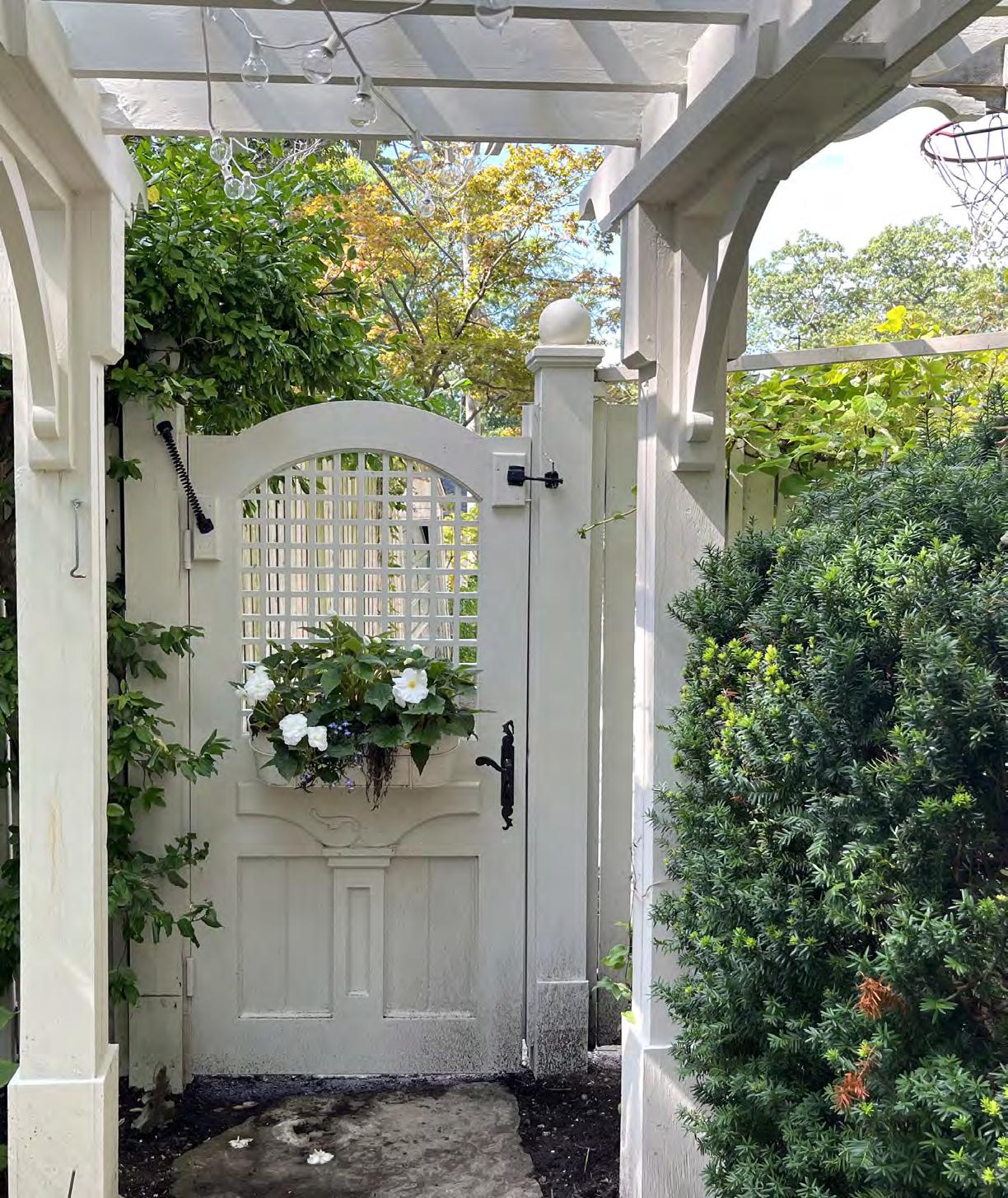
Through the Garden Gate June 13 & 14 in the Beaches
[22] VOLUNTEERING
New Partnership Connections
[24] SPRING CONTAINERS
Plant a mini landscape with bulbs and branches
[26] WELLNESS GARDEN
Connecting people to nature and each other [30] MINI FORESTS
Small scale, densely planted greenspaces bring biodiversity to cities and suburbs [34] CONNECTING WITH THE PAST
A land acknowledgement of sorts…
[36] LIVING ECOSYSTEMS
A garden can be ornamental and ecological [41] BOULEVARD GARDENS Planting in previously ignored spaces provides a multitude of benefits
[46] ESPELETTE PEPPERS French Basque Country’s special chili… which you can grow, too
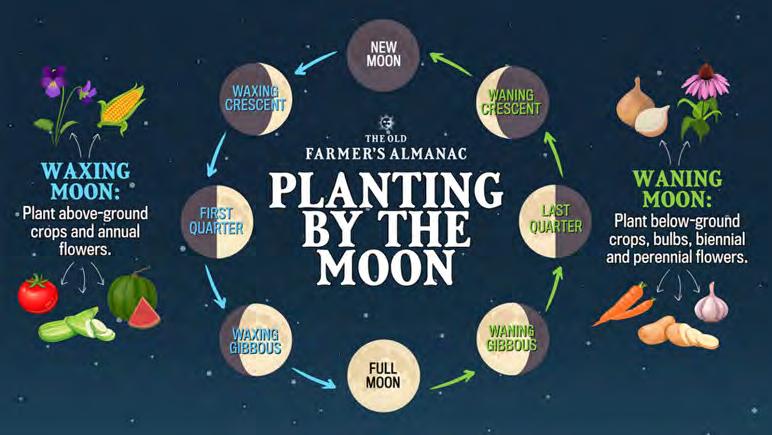
[50] AMERICAN GOLDFINCH Bright, bouncy songbirds often seen at backyard feeders [52] HISTORY OF GARDENING Agricultural Astrology stretches back to ancient civilizations
[54] BOOK SHELF
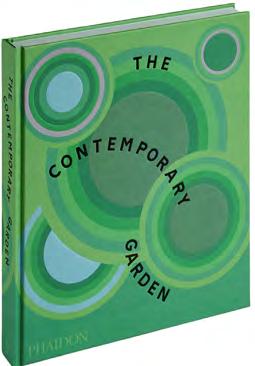
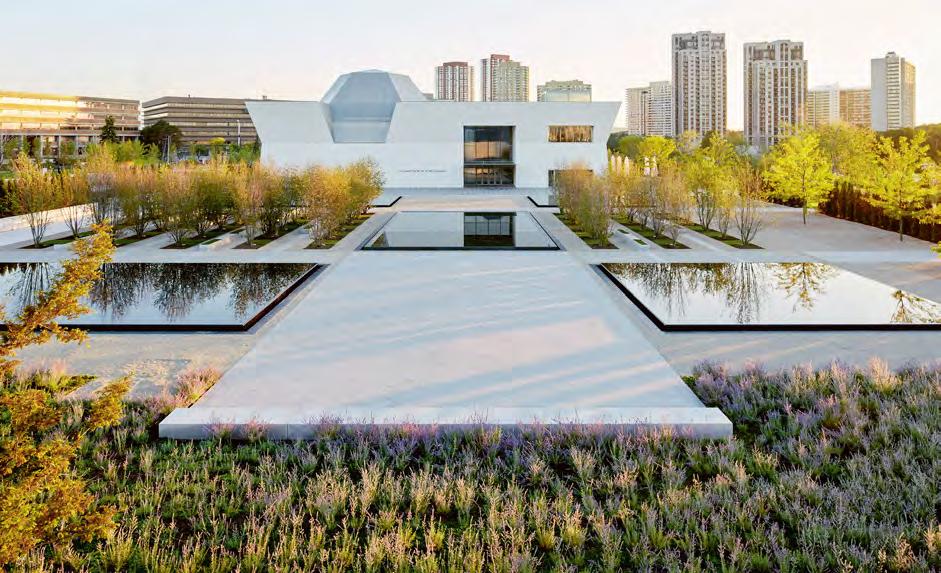
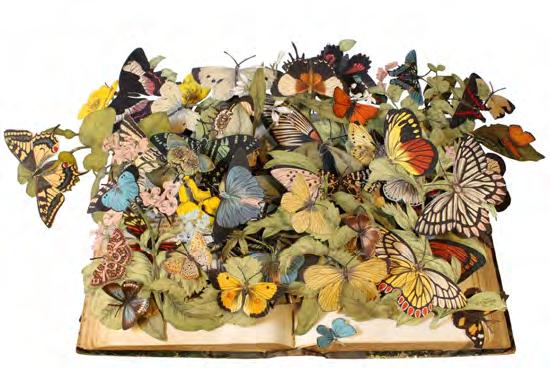
Three takes on contemporary gardens [57] PUZZLE PIECES
The Joy of Life
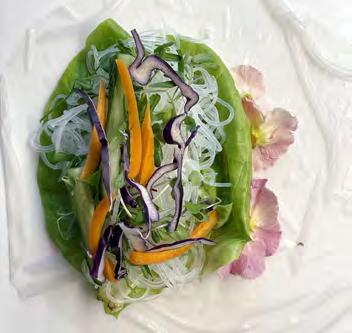
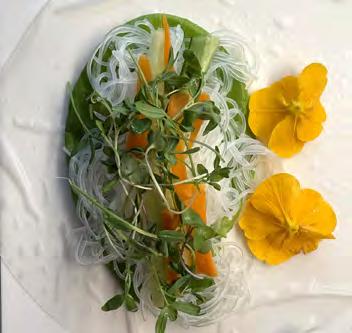
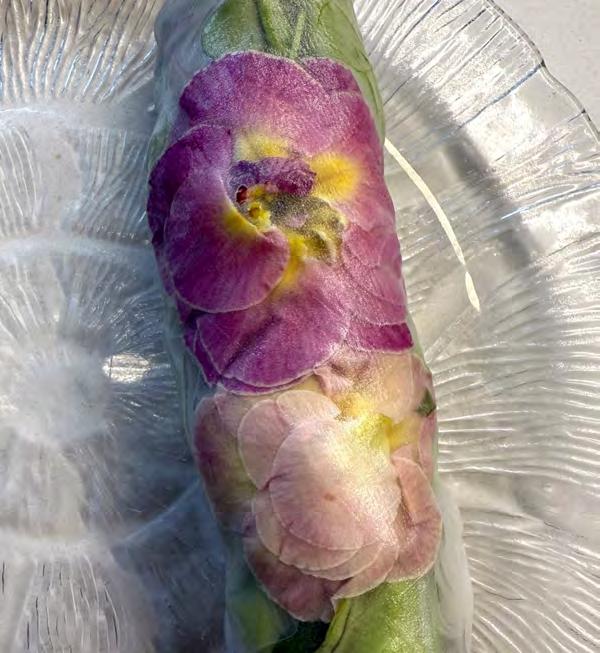
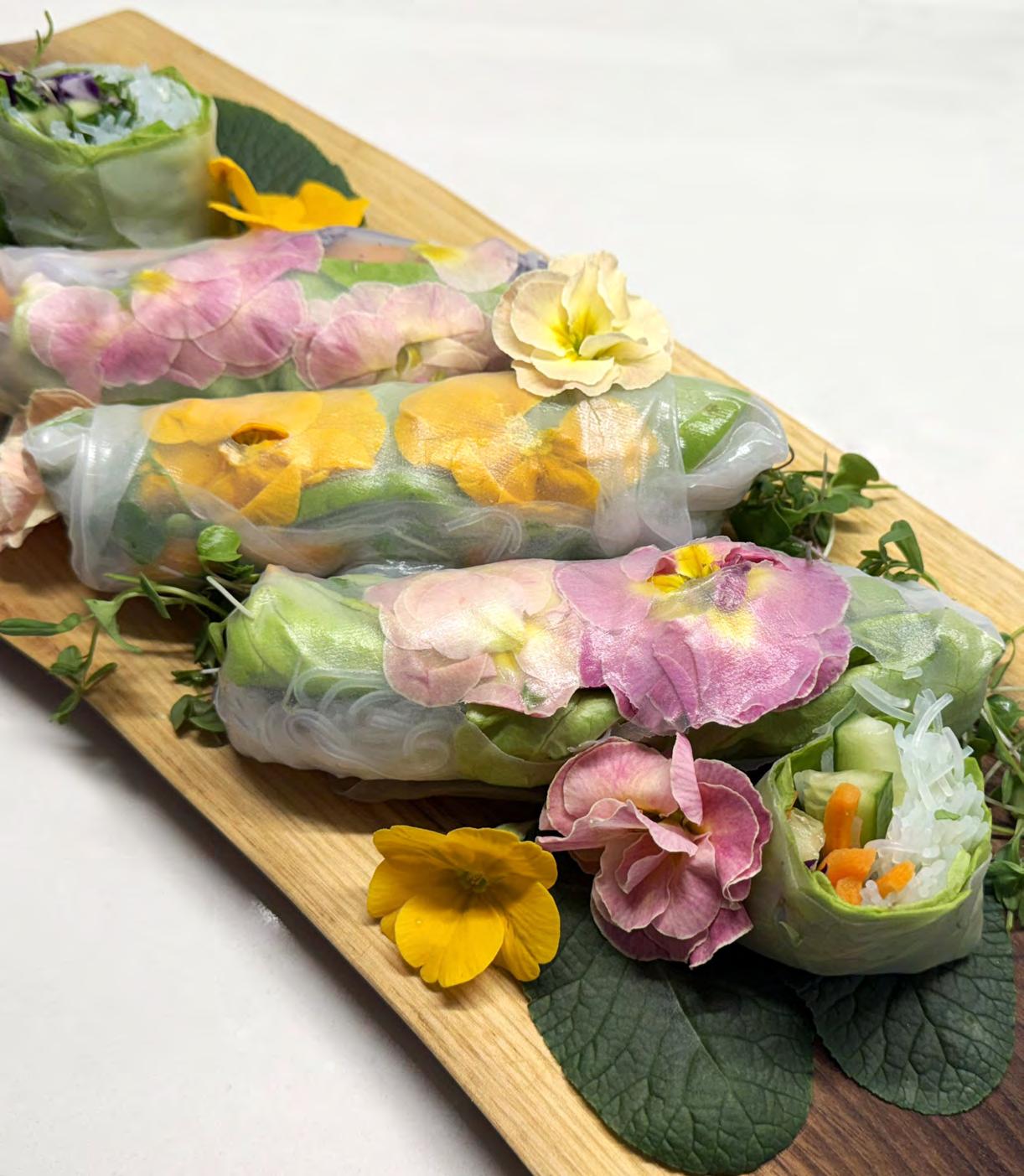
[58] DIY FLOWER GARDEN ROLLS
As lovely to look at as they are to eat [60] GOOD THINGS ARE HAPPENING
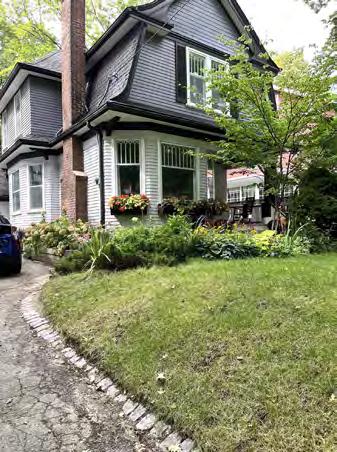
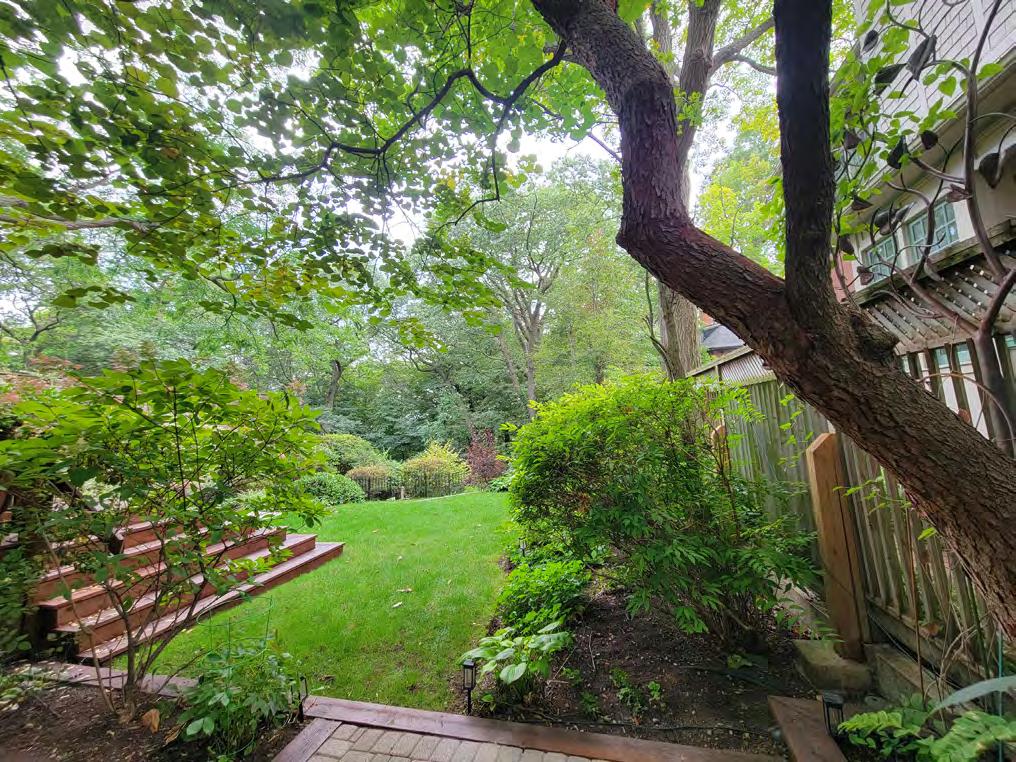
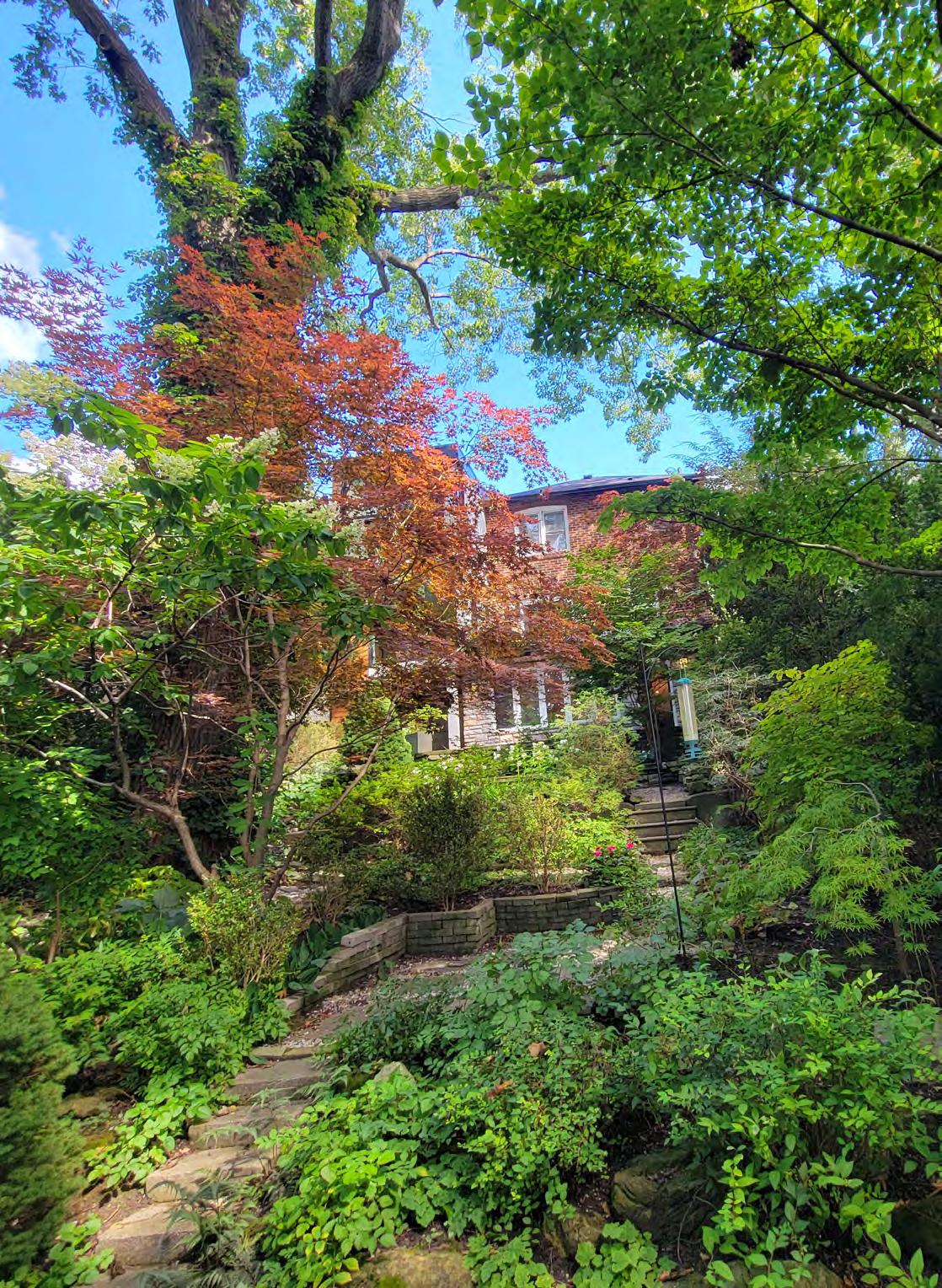
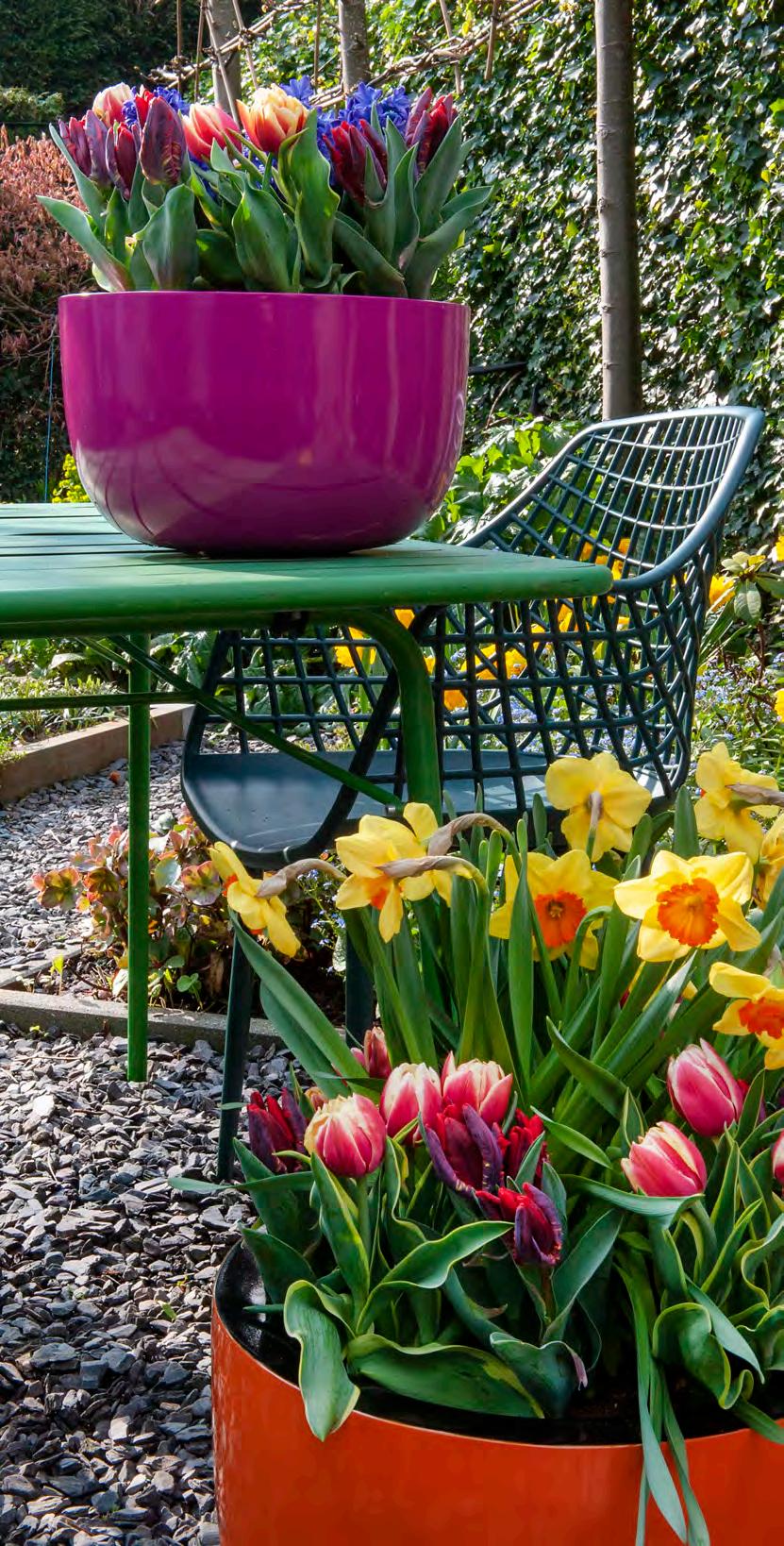
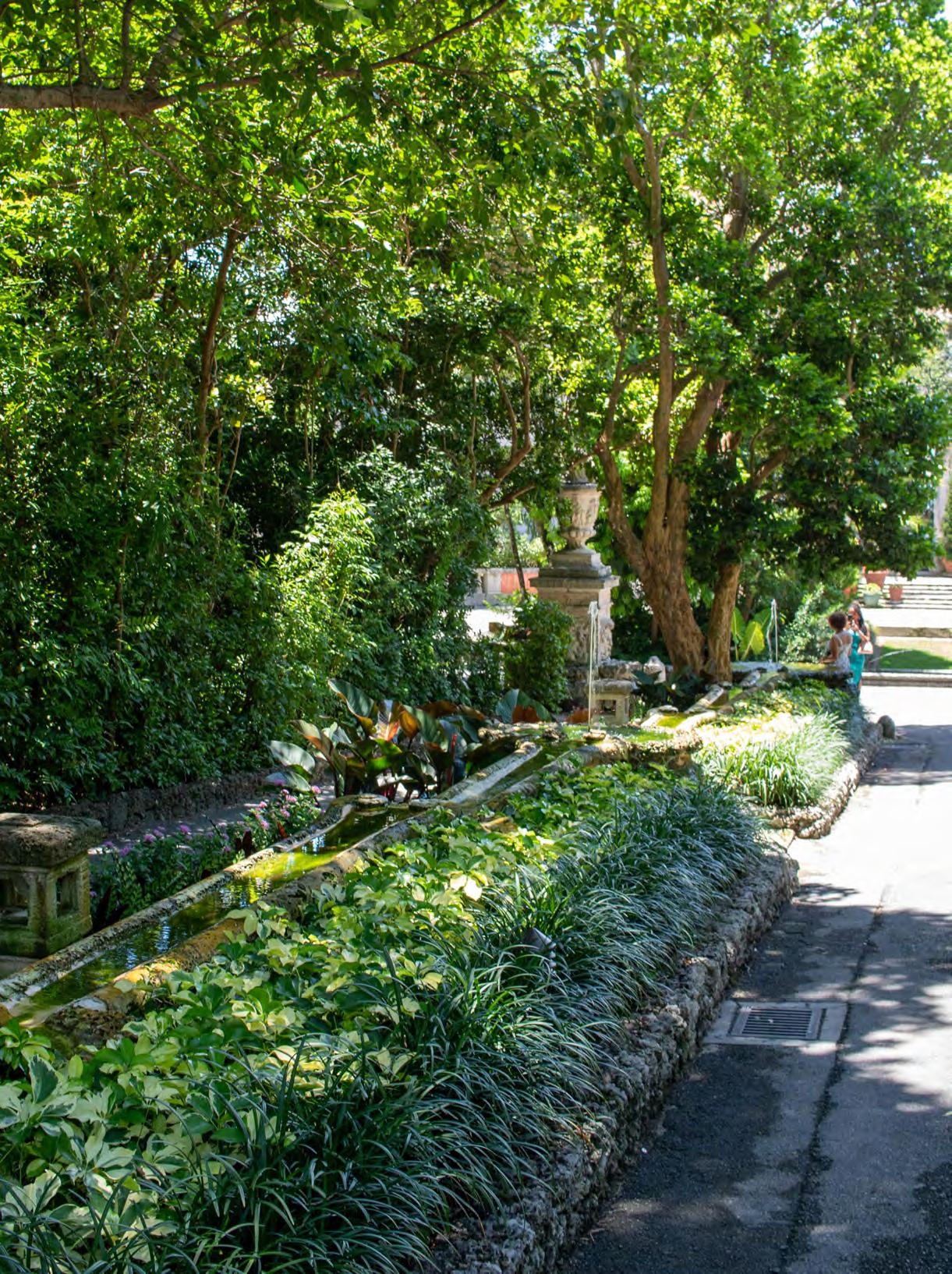
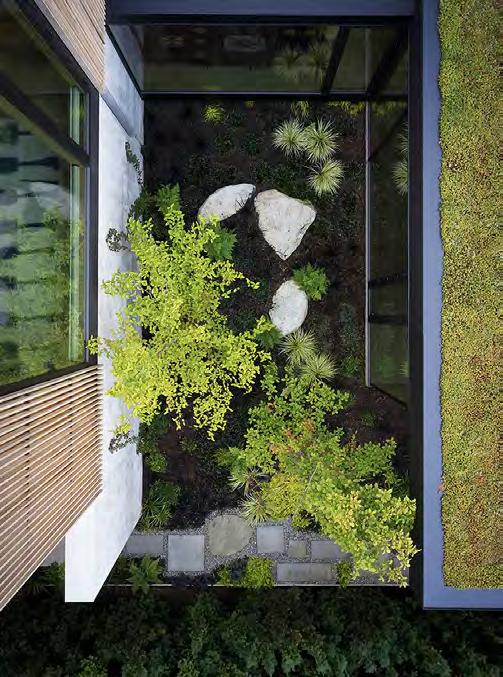
THIS PAGE: OUR GARDENS ARE LIVING ECOSYSTEMS. PHOTO: PATRICK SMYTH. SEE PAGE 36.
FROM the Garden
TBG PREPARES FOR A MONUMENTAL MOMENT
ONE OF THE unique experiences of leading an organization that activates green space is being at the forefront of what the space means to our community. Core to being a public garden is meeting the community nearby in natural and cultivated spaces. But there is so much more than connecting people and nature—it is about the individuals and groups that gather at TBG as their home for community connections, civic engagement, lifelong learning and embracing what our city has to offer.
Increasingly these layered purposes of being a public garden and meeting place happen in compressed time and space. Like a busy Sunday in early January when every gathering place in the building was occupied— from the Don Valley West New Year’s Levee hosted by MP Rob Oliphant and MPP Stephanie Bowman to two plant societies holding monthly membership meetings,
general visitors to the Garden and the TBG hosting a luncheon.
City Councillor Rachel Chernos Lin, who represents Don Valley West and regularly sees the community engaging with the Garden for these layered purposes said “It is easy to support the Garden—not only as a tremendous gem in our community but as a gathering space full of opportunity.”
On top of being at the forefront of what this space means to our community, I also have the great fortune to receive people’s wishes and dreams for how Toronto Botanical Garden can continue to deepen its bench and be of greater service to our community. While the word count on this column is too abbreviated to do the wishes and dreams justice, some of the frequently voiced visions include:
◗ expanded capacity for summer camps and community meeting spaces, as we are regularly needing to turn down requests (and our 2026 summer camps spots sold out in a matter of hours—with a long waiting list of hopeful attendees);
◗ to be a leading centre of horticultural innovation and prominence;
◗ to include expanded programming that creates community connections and reduces social isolation; to have increased self-led activities in our teaching garden;
◗ to be a place where marginalized and equity-seeking groups can gather;
◗ to continue to be a place where people can be with nature in a city that is becoming increasingly built up.
These dreams are not new dreams, but ones that we carry from the visionaries who have helped us reach this point in our history and from the collective voices that continue to build momentum for this extraordinary place.
Thank you for trusting in TBG to be that place where we can invest in the collective voices of our community.
As Councillor Chernos Lin said “it is a gathering space full of opportunity.”
Stephanie Jutila TBG CEO
TBG AGM June 23 Help celebrate the 70th anniversary of Edwards Gardens as a public park at the Toronto Botanical Garden Annual General Meeting at 6 p.m. on Tuesday, June 23 at the TBG.
TBG CEO Stephanie Jutila with MP Rob Oliphant and MPP Stephanie Bowman at the Don Valley West New Year’s Levee.
what’s on
Tafelmusik at the Garden: Table for Four
Sunday, March 29, 2 p.m.
presenting sponsor
A quartet of musicians offers a musical menu of baroque delights for oboe, violin, cello and harpsichord. Join us for an evening of music rich with playful dialogue and a soupçon of expressive beauty. General seating. Public $25, TBG Member or Tafelmusik Subscriber $23, Children $12.50
Toronto African Violet & Gesneriad Society Spring Show & Sale
Sunday, April 12, 9 a.m. to 4 p.m.
Explore rare and remarkable blooms among the TAVGS’s expert-grown selections. Admission $2 at the door.
presenting sponsor
Through the Garden Gate: The Beaches
June 13 & 14, 11 a.m. to 4 p.m..
One of Toronto’s largest tours of private gardens. Garden-goers will have the opportunity to visit beautiful residential gardens of varying sizes and themes in the unique neighbourhood of the Beaches. All proceeds support the Toronto Botanical Garden. One-Day Pass, Public $45, TBG Member $40, Two-Day Pass, Public $70, TBG Member $65, Student/Child Pass, $25
Forest Bathing
Taking time outdoors can lower stress, improve sleep and help our systems reset
By Natalie Harder Director of Learning
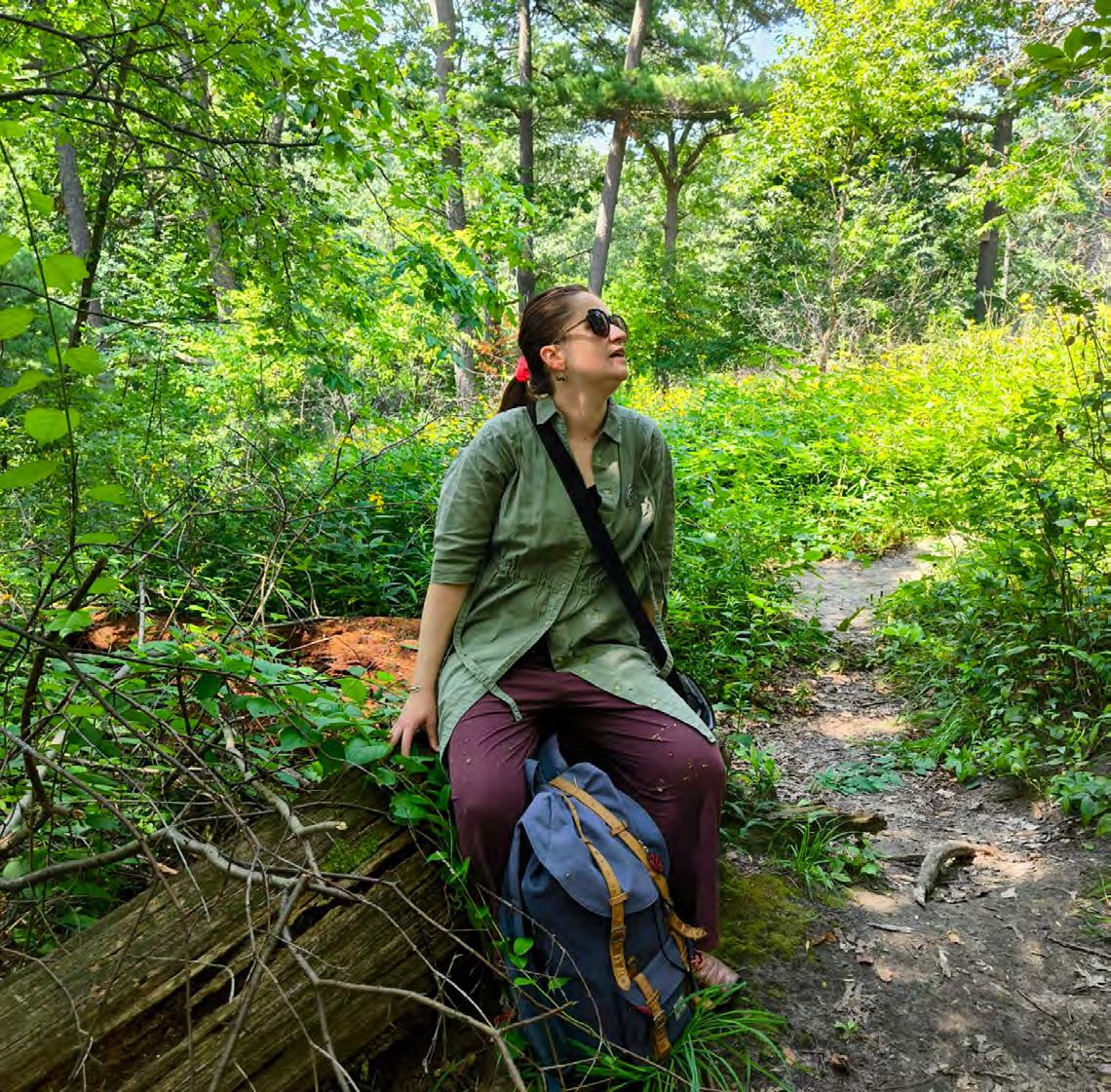
Blooming Caravan founder Emma Rooney at High Park
Most of us don’t need a peer-reviewed study to tell us that being in a garden feels good. We feel it when our shoulders drop, our breath deepens and we start noticing the sunlight scatter across the leaves. We know it when we suddenly remember what we were thinking about before our phone took over our brain.
Still, it turns out there is science behind all of this. Quite a lot of it, in fact.
As modern life gets louder, faster and more relentlessly productive, researchers are increasingly asking questions gardeners have quietly answered for centuries: Why does being outside help us think more clearly? Why does moving through green space calm the nervous system? And why does a short walk surrounded by plants feel more restorative than scrolling through “relaxing content” on a screen?
To explore what’s really happening in our brains and bodies when we spend time in nature, I spoke with Dr. Greg Wells, physiologist, best-selling author and long-time student of human performance and recovery. In this conversation, he breaks down how light, movement, visual patterns and time outdoors work together to lower stress, improve sleep and help our systems reset. Not in a mystical way (though it can feel that way), but through biology, neuroscience and some elegantly simple principles we tend to forget.
Dr. Wells ultimately gives us permission to step outside, to slow down and to stop feeling guilty about taking this time to restore ourselves. In the conversation that follows, he translates cutting-edge science into refreshingly simple ideas—many of which can be tested immediatesly, preferably somewhere with trees, moving air and a bench you didn’t plan to sit on for quite so long. It might even inspire you to swap one more stroll for a breath of fresh air.
REST REFOCUS RECHARGE
I N REST REFOCUS RECHARGE Dr. Greg Wells offers a science-backed roadmap for recovery in a world that rarely slows down. Drawing on decades of research in physiology, sleep science and human performance, the book reframes rest not as a luxury—but as a biological necessity for health, clarity and sustained energy. With practical tools and accessible insights, Dr. Wells explores how sleep, movement, light and time in nature help restore the systems that power our bodies and brains. His work reinforces a simple but powerful message: when we protect time for rest and reconnection—including time outdoors—we create the foundation for resilience, creativity and wellbeing.
TBG Forest Bathing Guide Laura Bincik in the Garden.
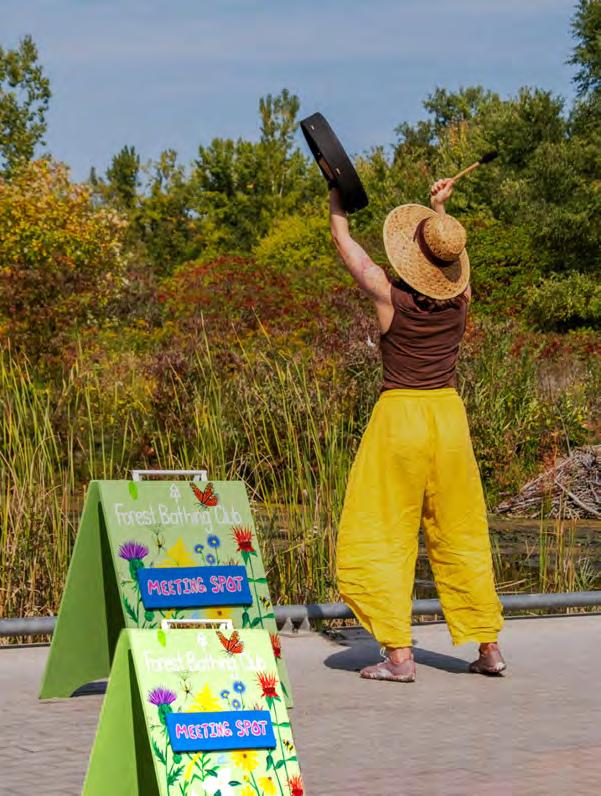
Forest Bathing Club guide Emily Pleasance at Evergreen Brick Works.
inter view
WITH DR GREG WELLS
Q: You’ve spent your career studying human health and performance. What is it about natural environments that gives our brains and bodies something they can’t quite get indoors?
Dr. Greg Wells: Natural settings deliver things that most indoor spaces are missing. Firstly, full-spectrum light. Morning sunlight helps sets your circadian clock, suppresses melatonin at the right time and helps you sleep better later. That’s hard to replicate under artificial lights inside. Secondly, visual complexity. Nature is packed with “fractals” and flowing, non-linear patterns that lower stress, calm the mind and spark gentle fascination. Even photos of natural scenes, especially those with water, can reduce blood pressure and calm the mind. Outside, cortisol, resting heart rate and blood pressure drop while moving in green space.
Q: We live in a world that celebrates productivity and constant improvement. As someone who coaches high performers, how do you talk about rest in a culture that sometimes treats slowing down as a failure?
Dr. Wells: Rest is not the opposite of work. It is a biological requirement that creates the possibility for health, wellness and each of us reaching our potential. Sleep runs in 90 to 120-minute cycles that include deep sleep for physical repair and brain “cleaning,” and REM for memory and
creativity. When we protect these cycles, we recover and come back recovered. Brad Stulberg and Steve Magness frame it as stress plus rest equals growth: apply a stimulus, then recover to adapt. Skip recovery and performance plateaus or breaks down. At the cellular level, chronic overwork, poor sleep and nature deficits damage mitochondria, the tiny power plants that drive your energy and cognition. So, by focusing on rest and recharging we set the stage for doing our best work.
Q: In your blog post The Power of Nature you describe stepping outside can help our bodies reset. Can you explain why it is that time in nature feels so restorative?
Dr. Wells: Natural environments recalibrate multiple systems at once.
Morning outdoor light gives your brain a strong time cue. Bright, broadspectrum sunlight within about 30 minutes of waking suppresses melatonin, sets your circadian rhythm, boosts daytime alertness and makes it easier to fall asleep that night.
Nature invites “soft fascination,” a gentle, effortless focus that lets directed attention recover. Research shows that simply viewing outdoor scenes has intrinsic benefits and images with water are especially restorative. Fractal patterns in leaves, waves and clouds deepen reflection and reduce mental fatigue.
“Green exercise” lowers cortisol, resting heart rate and blood pressure while improving mood and self-esteem. Populations with more green space show lower cardiovascular risk even after accounting for socioeconomic factors.
Modern “nature deficits” are listed among the stressors that damage mitochondria, the power plants of your cells. Moving your body, especially outside, sparks mitogenesis and mitoplasticity so your cells produce energy more efficiently.
Q: Do you think all time in nature is created equal? For example, is there a difference between a mindful moment
in a garden versus a rushed walk through the park on the way to work? Dr. Wells: Nature is powerful but different natural environments have different effects. I love thinking about exercising outside as accessing the green workout or the blue workout
The green workout is any movement done in natural, plant-rich environments like trails, parks or gardens. Outdoor movement tends to activate the parasympathetic nervous system and ease attentional fatigue, which lowers stress, improves mood and supports cardiovascular and metabolic health. Even short bouts help. Just 12 to 15 minutes of forest walking improves cardiovascular and psychological markers versus the same walk in an urban setting, and people often report lower effort while paradoxically moving faster outside. Green exercise includes hiking, trail running, gardening or even golf.
The blue workout is movement in or near natural water—think wild swimming in lakes or oceans, paddling, or simply walking by a river. Being close to water fosters “blue mind,” a calmer state linked to better sleep and lower stress and anxiety. Emerging research points to benefits for mindfulness and mental health, with case reports suggesting coldwater wild swimming may help in hard-to-treat depression, possibly via cold exposure physiology and the sense of mastery that comes with challenging conditions. Practically, blue exercise is simply “moving your body in natural bodies of water” or right beside them.
Q: Is there something surprising or counterintuitive you’ve learned in your research about how humans respond to nature; something that might challenge the way we think about rest and recovery?
Dr. Wells: I’m not sure that I’ve discovered anything surprising about being in nature other than how we all intrinsically know that time in nature is good for us and feels so great. This is a universal human truth.
Q: What is one small, science-backed habit you would recommend to someone who wants to feel better but is just getting started?
Dr. Wells: Walking. This is the easiest way to get started. Even three to five minutes can make a difference. I’d rather you do small things consistently than try to change your life all at once.
Q: How can gardens and public green spaces support community wellbeing?
Dr. Wells: Time in nature, especially when moving, reduces cortisol and lowers resting heart rate and blood pressure while improving markers of cardiovascular and metabolic health. Natural settings trigger “restoration,” a gentle fascination that lets attention recover. Even viewing nature scenes helps, and images with water are especially restorative. Immersion in nature improves mental, social, and physical outcomes, and communities with more green space show lower cardiovascular disease risk even after socioeconomic factors are considered. Low-intensity activities like gardening carry outsized benefits from better mood and self-esteem to lower depression risk and cortisol, and may even improve mental health.
As a community we can visit parks, tree-lined walking loops and benches within a five to10 minute walk of homes and workplaces so people can take short “green breaks” that restore attention and regulate stress during the day. We can support community gardens with raised beds, shared tools and beginner sessions. Gardening offers low-barrier movement plus mental health benefits and intergenerational connection. We can host led “green exercise” walks, outdoor yoga or family play hours. Movement in nature reliably improves mental wellbeing and self-esteem and can ease symptoms of depression.
FOREST BATHING IN THE GREATER TORONTO AREA
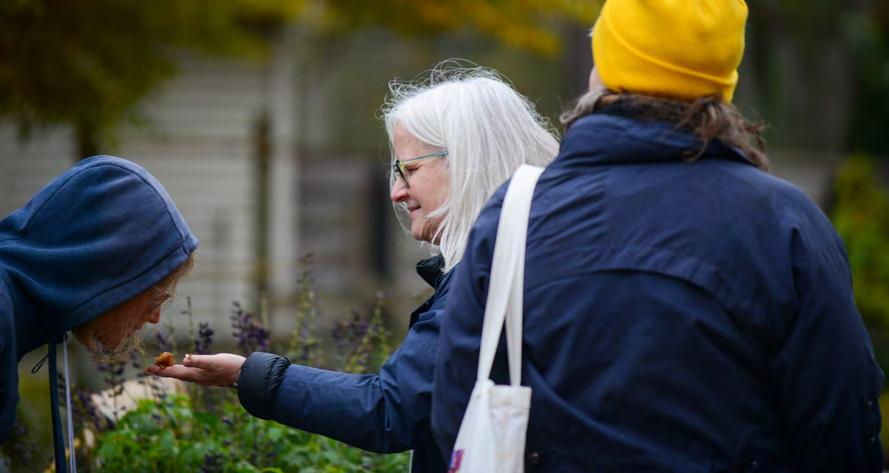
If Dr. Wells’ insights have you craving a dose of calm, city-wide Forest Bathing sessions offer guided ways to slow down, reconnect with nature and experience the restorative power of green space firsthand. Led by trained guides, these sessions encourage mindful walking, deep listening and sensory awareness—helping participants notice the sights, sounds and smells that often go overlooked in daily life. Whether you’re seeking a moment of stillness, a break from the hustle, or simply a way to feel more present, Forest Bathing provides a gentle, science-backed path to wellness right in the heart of the city.
Forest bathing (also known as shinrin-yoku) invites participants to slow down, engage their senses and cultivate a deeper relationship with the natural world. Across the GTA, experienced guides offer accessible ways to experience this restorative practice in urban green spaces.
• Toronto Botanical Garden
Toronto Botanical Garden offers forest bathing walks in all seasons, led by certified local guide Laura Bincik. These guided experiences invite participants to awaken their senses and intentionally connect with nature in the present moment, wandering through cultivated gardens and into the Wilket Creek ravine. Walks are designed to be gentle, reflective and welcoming to those new to the practice.Learn more and register: Programs, Talks, Walk & Workshophttps://www.toronto botanicalgarden.ca
• High Park
Blooming Caravan offers ongoing forest bathing experiences in High Park, including weekly Mindful Mornings and online sessions that support year-round nature connection. In addition to seasonal special walks, founder Emma Rooney collaborates with long-term care homes, community organizations and workplaces to offer nature-based well-being programs for older adults, people living with dementia, care partners and teams through employee wellness days. Learn more: https:// www.bloomingcaravan.ca/forestbathingstudio
• Evergreen Brick Works
The Forest Bathing Club operates primarily out of Evergreen Brick Works, offering a monthly Intro to Forest Bathing session for newcomers alongside Members Gatherings for returning participants looking to deepen their practice. Guided by Emily Pleasance, a climate-aware registered psychotherapist, sessions weave together forest therapy, climatefocused learning and group connection, creating space for meaningful relationship with self, others and the natural world. Learn more: https://www.forestbathingclub.com
Laura Bincik
Emma Rooney
Emily Pleasance
BOTANICAL FICTION PROVES POPULAR
By Lee Robbins Manager, Weston Family Library
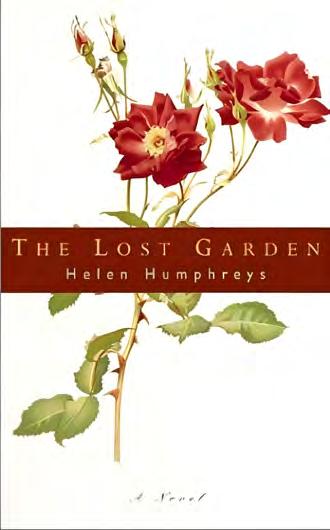
1. The Lost Garden by Helen Humphreys (FIC Humph)
A graceful, poetic novel of love and loss in England during World War II. A book to read again and again.
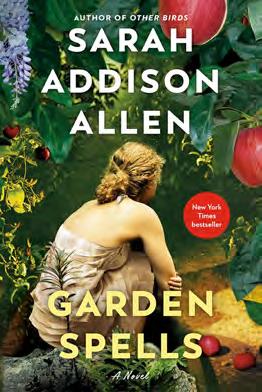
2. Garden Spells: A Novel by Sarah Addison Allen (FIC All)
1 2 4 3 5
Truly spellbinding, beautifully crafted and as bewitching as the title suggests. This is southern charm at its most beguiling, with characters you’ll take to your heart, a delicious love story, and a magical garden you’ll wish was in your own backyard.
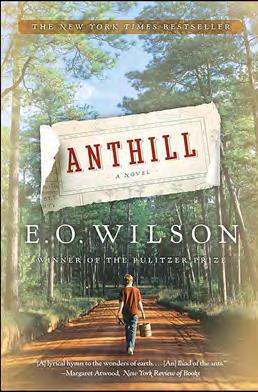
3. Anthill: A Novel by Edward O. Wilson (FIC Wil)
Inspirational and magical, this is the story of a boy who grows up determined to save the world from its most savage ecological predator: man himself.
Most Checked out Fiction Titles
These are the most checked out botanical fiction books from the Weston Family Library over the last few years.
4. The Overstory: A Novel by Richard Powers (FIC Pow)
A novel of activism and natural-world power presents interlocking fables about nine remarkable strangers who are summoned in different ways by trees for an ultimate, brutal stand to save the continent's few remaining acres of virgin forest.
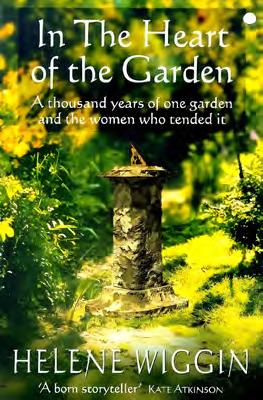
5. In the Heart of the Garden by Helene Wiggin (FIC Wiggi)
A story about life through the ages seen through the different people who owned a garden that grew over the ages. It starts with Saxons moving to a piece of land and evolves into modern times. A unique plot beautifully told.
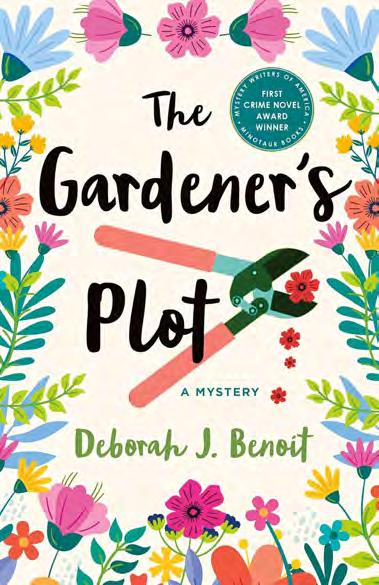
1. The Gardener's Plot: A Mystery by Deborah J. Benoit (FIC Ben 2024)
In her debut novel, the author seamlessly weaves gardening information into the plot with well-drawn characters.
“Cozy readers who garden will enjoy this descriptive debut mystery.” Library Journal
2. Greenwood by Michael Christie (FIC Chr)
A magnificent generational saga that charts a family’s rise and fall, its secrets and inherited crimes. A national bestseller from one of Canada’s most acclaimed novelists and one of CBC Books’ Best Canadian Fiction of the Year among many other accolades.
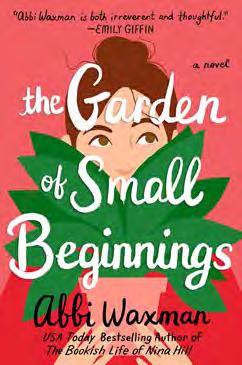
3. The Garden of Small Beginnings by Abbi Waxman (FIC Wax)
A grieving widow slowly rebuilds her life, finding healing, humor and unexpected connection through a community gardening class.
New Botanical Fiction Added to Collection
The Weston Family Library expanded its nature and botanical themed fiction collection over the last year. This fiction collection has proved very popular with new items being regularly checked out. Here is a highlight of some of the fiction books that the library recently acquired. 1 2 3 4 5
“Kudos to debut author Waxman for creating an endearing and realistic cast of main and supporting characters (including the children)” Library Journal
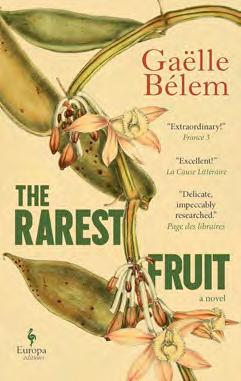
4. The Rarest Fruit by Gaëlle Bélem (FIC Belem}
An enslaved young boy, orphaned at an early age, and raised by a passionate botanist will defy the expectations of his time and, with his extraordinary natural talent for botany, revolutionize global culinary culture by discovering the secret life of vanilla orchids. Based on a true story, The Rarest Fruit is a captivating tale of resilience, discovery and the secret history of a beloved flavour. One of the New York Times ‘100 Notable Books of 2025’.
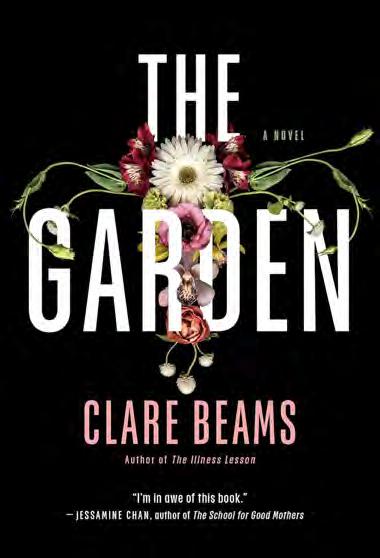
5. The Garden A Novel by Clare Beams (FIC Beams)
The Garden is a taut, tense, absorbing Gothic tale that deftly explores the complexity of women's inner lives. A best book of the year from Kirkus and Vanity Fair.
what’s in bloom?
New TBG Garden Explorer website will help visitors id plants
By Leslie Hockley TBG Lead Horticulturist
HAVE YOU EVER been walking through the Garden and come across an interesting plant and stopped to wonder what it is? Will it grow in my backyard?
New for 2026, the Toronto Botanical Garden has launched our own Garden Explorer website. This site pairs the functionality of our computer database with the useability of a website engine to allow any visitor to search publicly listed plants found in the TBG database. This website https:/torontobg.gardenexplorer.org/ can be accessed from any device with internet access. SIMPLY VISIT THIS LINK TO BEGIN.
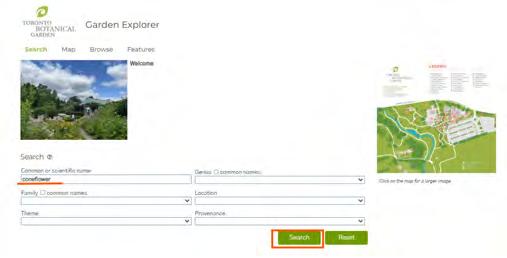
1. If you know the common or scientific name of the plant, or even just part of the name, you can type it into the first search box Common or Scientific name and from there the search engine will comb through TBG’s database for possible matches.
2. Hit Search to complete your query.
3. The engine will show you all possible matches.
NOT SURE WHAT THE NAME of the plant is? No problem. You can also search by in putting the name of the garden you are in, such as Pollinator, Show, Garden Hall Courtyard and so on.
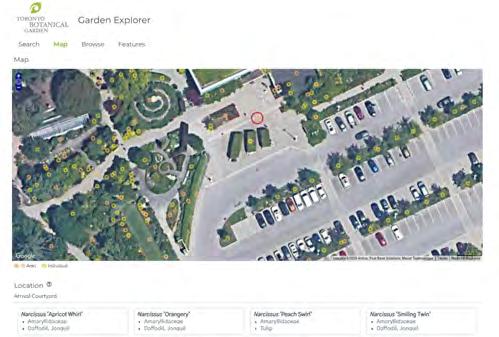
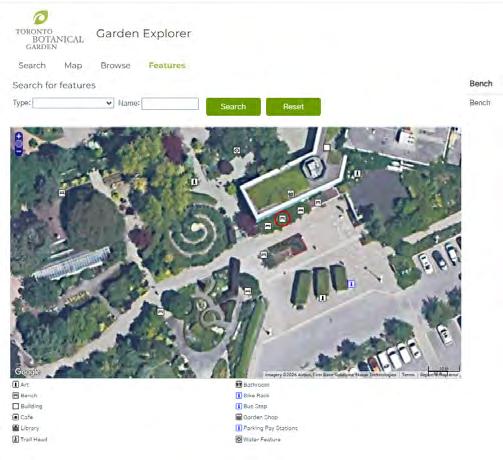
DO YOU WANT TO virtually scope out the site all at once? You can do that, too. Head to the Map tab to see an aerial view of the gardens. Here you can see where the garden locations are (orange dots) and the location of specific plants (yellow dots). If a plant has not yet been geographically referenced, simply click the orange dot (garden location) and that will pull a list of plants found in that space.
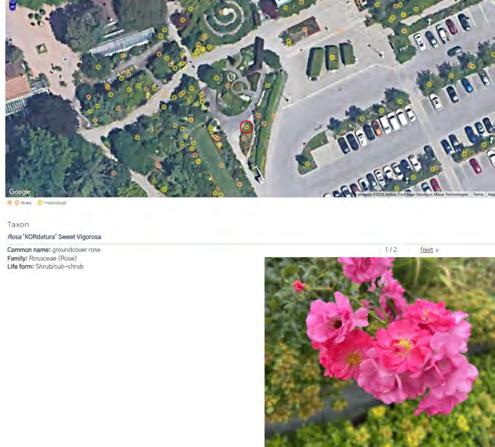
HERE I CLICKED ON THE ORANGE DOT found in the Terrace Garden. The search engine then listed all plants found in this area. Here is an example of a plant in that area with a photo reference.
• BONUS FEATURES •
THE TBG’S GARDEN EXPLORER is an asset that we will be continually working on: updating names, adding new plants in the garden, facts, photos and tours.
On this site you can search more than just plants. There is also a useful Features tab that showcases buildings on the site (Weston Family Library, Garden Shop, Dandelion Café), washrooms, water fountains, statues and much more.
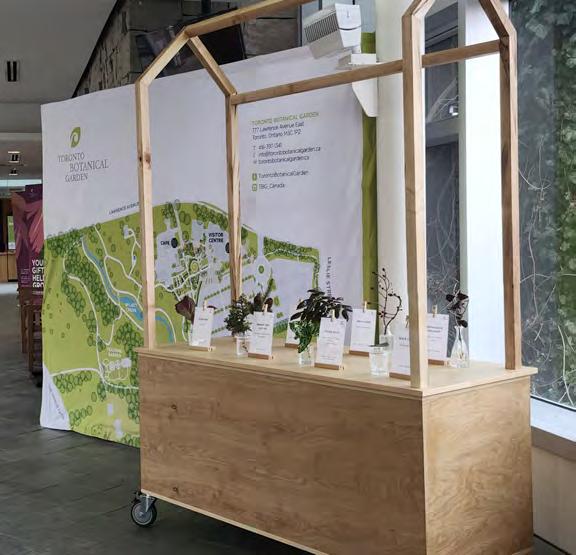
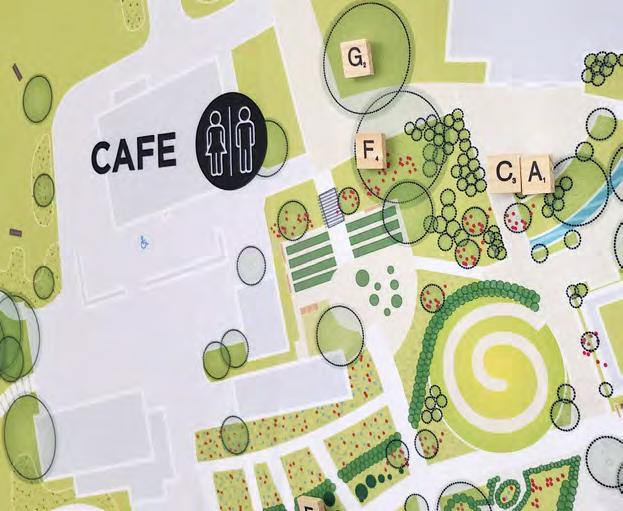
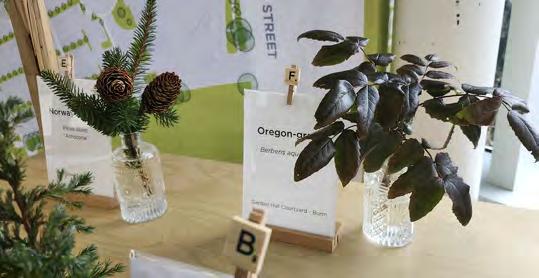
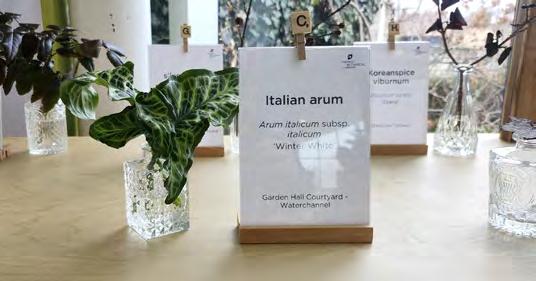
This Project was a grant from the Stanley Smith Horticultural Trust. The grant allowed us to purchase items such as plant labels, the website search feature and another exciting offering. New this year you can visit the TBG lobby in the Visitors’ Centre and find a What’s in Bloom display. Here, we will be showcasing interesting plants that can be found in the Garden and will also show you where to find them in the Garden. This feature will help educate visitors with a snapshot of what they can find and assist them in planning their route through the site.
What’s in Bloom lobby display.
YOUR GIFTS HELP US GROW
The Toronto Botanical Garden is a registered charity sustained annually by donors, sponsors, volunteers and community partners.
Give online today by clicking this link.
WELCOME NEW TEAM MEMBERS
◗ GEORGE STAVROPOULOS Interim Shop Manager
If you have visited TBG’s Garden Shop recently you may have caught Interim Shop Manager George Stavropoulos’ glowing smile between the gift displays. George’s extensive retail management and design background includes retailers such as Roots and Williams-Sonoma and plant-focused businesses like Sheridan Nurseries and Plant World. A longtime TBG supporter, George’s enthusiasm for the Garden and the Garden Shop shines through in gorgeous displays he has made and in the vibrant cheerfulness he will greet you with when you visit!
◗ NASTASIA PAPPAS-KEMPS Graphic Design Associate
Trellis readers may be familiar with Nastasia Pappas-Kemps ’ stunning photographs (including the cover of our Winter 2026 issue) and writing (did you catch her family recipe for dolmadakia in that same issue?), but did you know that Nastasia is Toronto Botanical Garden’s Graphic Design Associate? Nastasia comes to TBG with a wide variety of experience in events and marketing, creating media content for the Institute for Canadian Citizenship and workforce development platform Uvaro and coordinating events at Burdock Brewery. Check out some of her recent design work at TBG on the colourful banners on display in our Visitors’ Centre!
TBG MAY PLANT SALE
EVERY YEAR IN MAY
THE most anticipated Plant Sale at Toronto Botanical Garden takes place. This large event takes the collaboration of all departments at TBG to make it happen and make it special. From ordering the plants to the layout, the accoutrements and the staffing, TBG comes together to ensure customers can connect with plants and add to their gardens in a meaningful way, while also supporting their local communities. With a wide variety of plants to choose from, there is always something for everyone.
This 2026 sale is no different. This year’s TBG Plant Sale will take place the weekend of May 23 and 24, with the Members Presale Day on Friday, May 22.
To aid in your shopping experience we put together this guide to ensure that you have a smooth and enjoyable experience.
SOME SUGGESTED LIGHT READING
• Plant Sale Inventory List (Availabile online closer to the sale date.)
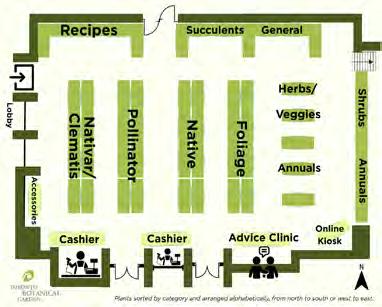
• Plant Sale floorplan (below right)
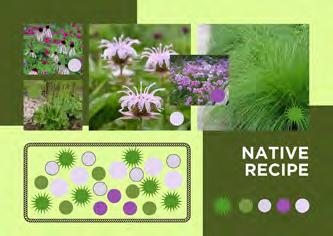
• Plant Sale Recipes (below) Trying to decide what to add to your garden? Looking for an interesting new plant to add to your personal collection? Check out our Plant Sale Inventory List. This is a detailed list of all the perennials and shrubs available at the sale,
Follow this guide for a smooth & enjoyable experience
By Leslie Hockley
TBG Lead Horticulturist
including information about light requirements, theme categorization and pot size. Other plant material will be available for sale during the sale but will not be included on the Inventory List. This includes annuals, vegetables and herbs, clematis and hanging baskets.
Similar to the plant sale in 2025, we are organizing the plants on the show floor by themes. This groups plants together by purpose rather than by light requirements. The themes can be found listed in the inventory list and on the Plant Sale floorplan for your shopping reference. The themes include Native, Pollinator Friendly, Succulents and General Garden plants.
Looking for plants for sun or for shade? Check out the Inventory List under the Light Conditions column or flag down one of our trained volunteers or staff members. The Plant Sale Recipes is a place where you can find inspiration for plant combinations, colour palettes, garden layouts and container mixes.
WHAT TO BRING TO THE SALE
• TBG Annual Plant Sale Brochureincludes floorplan
There will be a limited supply of shopping carts available for you to borrow during your shopping experience. So, to ensure a smooth shopping experience we encourage you to bring your own cart with you.
DURING THE SALE
• Trained Volunteers and Staff, to assist you
• Advice Clinic
• NEW Online Kiosk
At the sale, please find or flag one of our trained volunteers or staff members to help point you in the direction of your newest plant acquisition or to answer any of your plant or shopping questions. Staff members from our Horticulture department will be on the floor ready to help you.
Toronto Master Gardeners are ready and waiting at the Advice Clinic to answer all your plant questions.
Can’t find a plant on your shopping list? Check out our NEW Online Kiosk. Here you can purchase plants through our online storefront for delivery to your doorstep See http:// torontobg.gardenexplorer.org/
Note that plants sold at the May Plant Sale will only be sold in-person during the weekend.
The 2026 annual TBG Plant Sale will take place May 23-24, with the Members Presale Day on May 22.
SAVE DATEthe
Through the Garden Gate 2026 returns
June 13 & 14 in the
Beaches
By Lorraine Hunter
TORONTO BOTANICAL GARDEN’S annual Through the Garden Gate tour of local gardens takes place in the Beaches this year on the weekend of June 13 and 14. Known as either the Beach or the Beaches, this neighbourhood is a treasure trove of beautiful, unique and often whimsical gardens.
The two names have been used since the first homes were built in the 19th century. Both are derived from the area’s four beaches situated on Lake Ontario: Woodbine Beach to the west, Kew Beach and Scarboro Beach in the centre and Balmy Beach to the east. The correct name is the subject of a long-standing dispute. It all depends on who you ask. Some longtime residents claim that “the Beach” is the proper historical name, whereas others insist that “the Beaches” is more universally recognized. The City of Toronto officially calls it “the Beaches”.
there are stunning examples of how to plant a garden that honours the environment.
The streets are lined with semi-detached and largescaled Victorian, Edwardian and new-style houses as well as traditional cottage style dwellings and low-rise apartment buildings.
The gardens featured in this year’s Through the Garden Gate tour are full of takeaway ideas. As you stroll through them you will see many creative ways to use plants, seating, statuary and water features as well as lights and mirrors.
Some of these gardens are in almost full shade, planted within their own forests of maple, oak, spruce and other tall trees. Some have historical significance and in fact some streets have heritage designations.
Many homeowners have taken advantage of the rugged hilly conditions with gardens that are either tiered or built on steep slopes and ravines. A variety of different stonework has been used to build terraces, streams and ponds to deal with the challenging topography.
There are stunning examples of how to plant a garden that honours the environment and suits the land on which it sits. There are pollinator gardens brimming with native wildflowers providing nectar for birds, bees and butterflies. There are woodland gardens, ravine gardens, formal gardens, rose gardens, vegetable gardens and secret gardens.
The natural beauty of the waterfront combined with the rich history and lively atmosphere make “the Beach” or “the Beaches” a beloved destination for visitors and garden lovers.
The tour is self-guided enabling visitors to discover the gardens at their own pace by following a printed guide and map. Available online, a comprehensive digital guide includes full descriptions of the featured gardens, historical and touring tips, neighbourhood recommendations and more.
With our complimentary shuttle bus service, you can “hop on and hop off” along the route. Knowledgeable Toronto
Master Gardeners and/or gardening experts stationed in each garden will be happy to answer plant and garden design questions. All proceeds from the tour support the Toronto Botanical Garden. This is an outdoor event that can be enjoyed solo or with family and friends, strolling along the tree-lined streets, while skipping in and out of gardens. Come early or linger after the tour to shop or dine at one of the local restaurants in the area.
• TICKET INFORMATION:
One-Day Pass, Public $45, TBG Member $40
Two-Day Pass, Public $70, TBG Member $65 Student/Child Pass, $25
• PLEASE NOTE: Online Advance Sales commence in Spring 2026. Ticket sales are available online before the tour through our website and Eventbrite. Wristbands and maps may be picked up at the Toronto Botanical Garden two weeks in advance of the tour. You will be notified by email when they are available. The tour takes place rain or shine. Please dress for the weather.
• IN-PERSON SALES: Available two weeks before the tour at the Toronto Botanical Garden. Tickets will also be available for purchase at tour headquarters on the weekend of the event. For ticket information and questions email programsupport@torontobotanicalgarden.ca
Post secondary students bring vibrant energy to TBG’s big fundraisers
By Elvin Velasco Volunteer Services Coordinator
THIS YEAR WE are nurturing partnerships with several post-secondary school horticulture programs to support our two biggest fundraising initiatives, Through the Garden Gate: The Beaches and Spring Plant Sale at Toronto Botanical Garden. The intention is to bring a new generation of aspiring plant lovers into our community, to apply their theoretical knowledge through volunteer opportunities that support putting into action what they have learned in the classroom. The partnership will also provide opportunities for the students to connect with industry professionals who can further support their career aspirations in the vast spectrum of horticulture.
In early November, I did a virtual presentation to Seneca College’s Environmental Landscape Management program at their King Campus. I had been in conversation with Program Coordinator, April Cotroneo, about presenting to first and second year students, to emphasize how essential networking is for their professional growth while meeting their program requirement to volunteer at a community engagement in order to earn professional development credit.
During the Q+A portion, several students asked me about my career journey, and I shared that I once pursued a Special Events Management program at George Brown College, where I fell in love with volunteering and how
it helped strengthen my collaboration skills. I explained how volunteer opportunities offer the chance to expand their community and engage with likeminded individuals. The students were enthusiastic and seemed inspired to sign up for these volunteer opportunities to connect with other students and professionals in their industry.
Later that month I travelled to Humber College’s Landscape Technician program at their North Campus, where I presented to prospective volunteers in an actual classroom.
I was well received with many questions on how I landed myself in this role as Volunteer Services Coordinator. They also asked for tips and tricks on growing plants, which I could not answer as I am still learning myself.
Three students, in particular, showed their eagerness by diligently asking for next steps to sign up for our two events, while also sharing what they can do to support the TBG beyond these volunteer opportunities. They wanted to know what else Toronto Botanical Garden offers that can support their professional growth and community building.
I have also been engaging with Durham College’s Hospitality and Horticultural Science program to ensure that we have a wide array of post-secondary students supporting our two events. Cross-pollinating students with similar interests and intentions will further their career goals for growing their professional networks as well as widening TBG’s volunteer base.
SPRING CONTAINERS
How to plant a mini landscape with flowering bulbs and branches
By Wendy Downing
WINTER—MY LEAST FAVOURITE season of the year—is almost over and my thoughts are already looking forward to the garden. Since I moved into a condo, I find that my need to spend time with growing things has increased. In the house, the work seemed neverending but now I look forward to getting my hands dirty and creating something interesting for my limited space.
Urns or containers offer many options to bring colour and texture to my balcony. Large pots, raised planters and traditional urns all supply us with ways to enhance our little bit of paradise. Whichever you choose be sure your pots have drainage holes.
Right about now I am dreaming of the myriad of spring bulbs that will soon be available in pots at my neighbourhood garden centres.
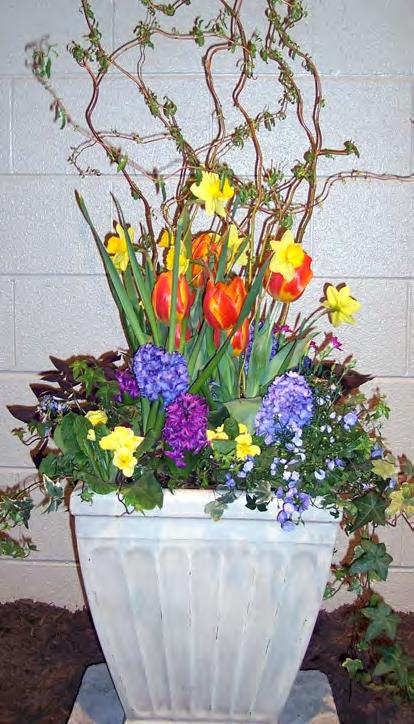
From about mid- to late-March, I like to start my mini-landscaping with a selection of pansies (Viola x wittrockiana), narcissus, pussy willows (Salix), primroses (Primula vera) and other spring bulbs. These all grow best in part sun to part shade and need consistent watering. Use a planting medium that drains well and feed with an all-purpose fertilizer, i.e. 7-7-7. A fertilizer with a higher percentage of nitrogen will give you leggy plants with lots of green but not a lot of blooms.
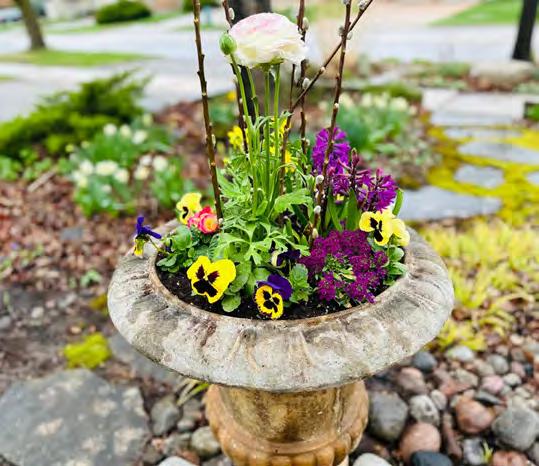
When planting your container, place the pussy willow branches close to the edge of the pot, bend them in toward the centre and fasten with covered wire jute twine. This provides your creation with height, necessary to provide rhythm, for moving your eyes throughout the design.
I usually plant the lower growing pansies close to the edge and then add primroses or other bulb flowers followed by the narcissus or ranunculus in the centre of the pot. Planting ivy (Hedera helix) where it can spill over
the edge will soften the appearance of the design and unify the container and plant material.
When the season becomes a little warmer, around Mother’s Day, you can switch out these plants with more heat-tolerant ones. Adding perennials to your planter gives you some additional choices when looking for colours in foliage to complement your flowering annuals. The perennials can be planted in the garden next fall to overwinter, or left in the container if it is to be moved to a more sheltered spot when the weather gets cold.
Planting in pots gives you lots of choice when designing this part of your garden. Using separate containers, you can group things by the growing conditions needed for success. For example, succulents can handle more sun and require less water.
You may choose to do a container entirely with foliage plants, including various types of lettuce as they enjoy cooler temperatures. Whichever route you choose in your selection of plant material, remember to consider contrast in colour, form and texture. You will have myriad options in shades of green, variegation, rough and smooth textures, round and spiky shapes as well as glossy and dull in appearance. Making use of these in your design takes it out of the ordinary and gives it the ‘wow’ we all look for after several months of cold, snow, slush and dirty snow and lifts our spirits as we look forward to the warmer weather ahead.
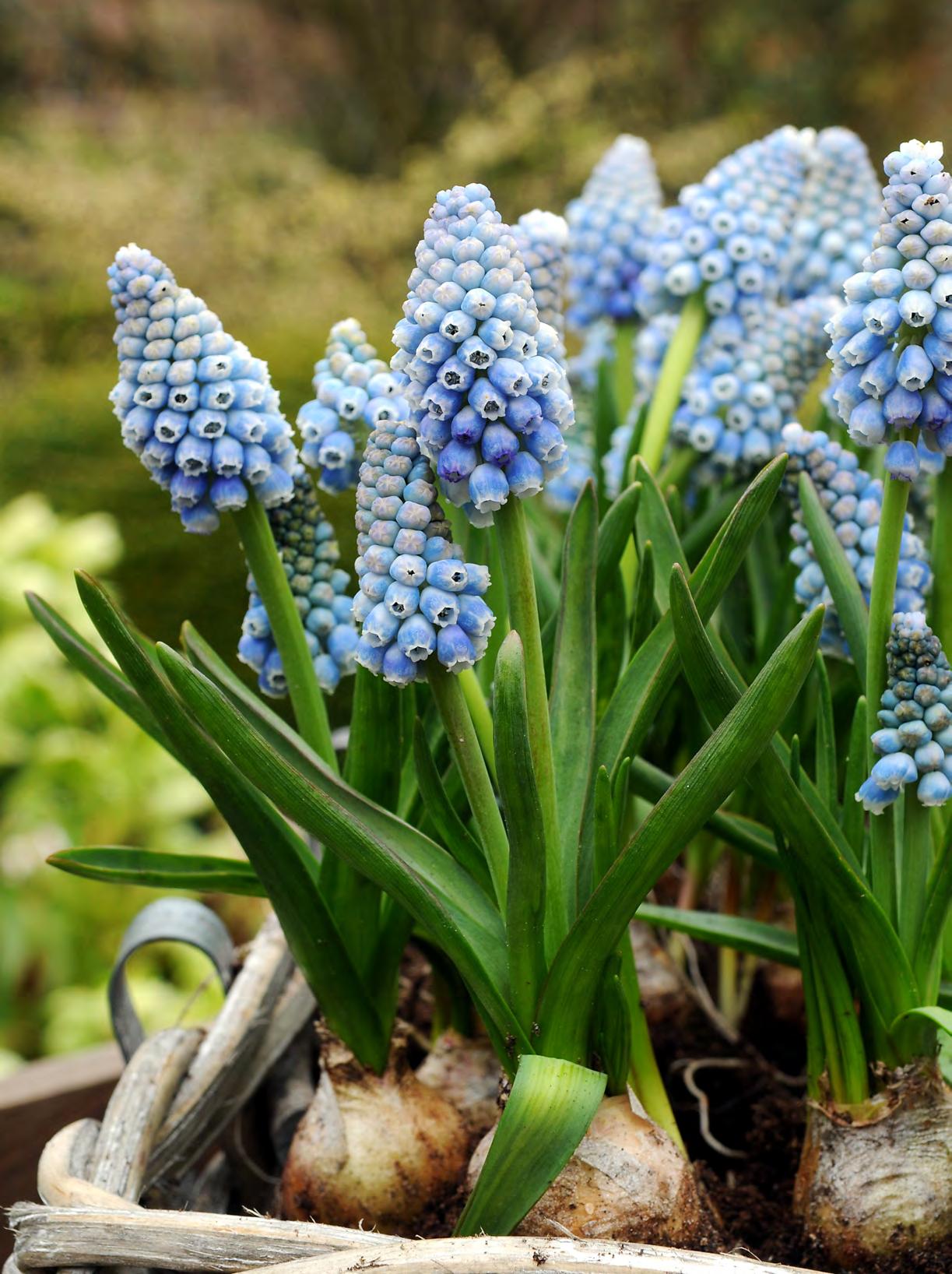
with assorted bulbs
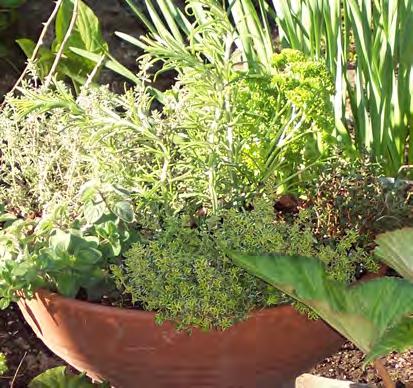
Herb Planter
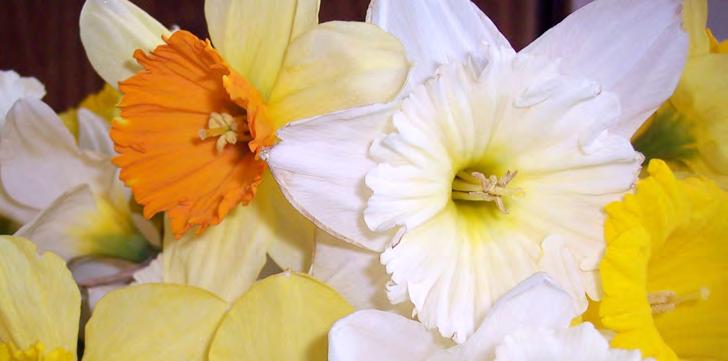
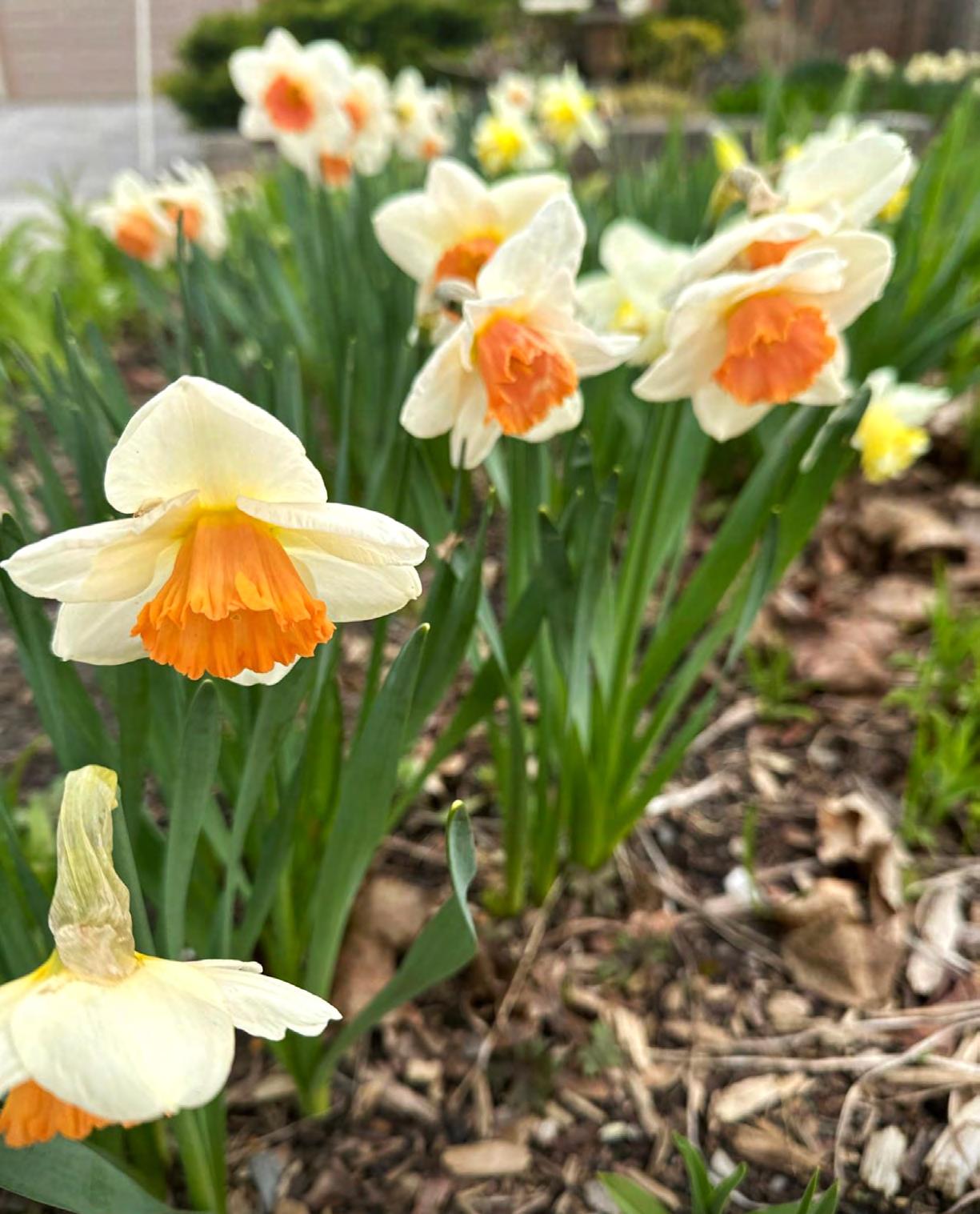
Assorted narcissus
Tulip, hyacinth and narcissus mixture
Potted tulips
Violas
G A R D E N W ELLNESS
Create a reflective space, a calm respite to reduce stress and anxiety
By Leanne Burkholder
YOU HAVE no doubt heard a lot about wellness (or healing) gardens in recent years. But what exactly is a wellness garden?
A wellness or healing garden is a special garden designed to foster a restorative, reflective space, creating a calm respite. Using gardening as a therapeutic tool, it provides opportunities for activity and community connections. The goal is to reduce stress and anxiety, supporting good mental health.
This is increasingly supported by evidence. You may have heard about ‘Green Social Prescribing,’ launched by the UK National Health Service in 2020, which is “a practice of supporting people to engage in nature-based interventions and activities to improve their mental and physical health.” The program, recommended by doctors, is based on scientific evidence. Activities include nature walks, community gardening and conservation tasks. Furthermore, this spring, the Royal Horticultural Society (RHS) will launch its blueprint for wellbeing gardens. The blueprint will provide guidelines, ideas for garden “ingredients”, scientific evidence information and case study
examples “to help people that support wellbeing – whether at home, in the community or in organizations”. Of interest, the blueprint is one of several UK wellbeing initiatives launching in 2026. These initiatives also link to biodiversity, sustainability and community efforts. All of these themes will be present at the 2026 Chelsea Flower Show from May 19 to 23.
Gardens have always played a role in supporting human health. Since ancient times, gardens have provided food, plants for medicinal purposes as well as water and shelter. Recent worldwide developments—including the COVID-19 pandemic, an increasing wish to unplug from digital devices, and a renewed enthusiasm for cultivating plants and food— have encouraged many of us to reconnect with the soothing benefits of the natural world.
The Toronto area features several wellness gardens, including the Royal Botanical Garden’s renewed healing garden (2021), Evergreen Brick Works’ Indigenous youth-designed mounds and Miinkikaan Gitigan, an Indigenous Healing Garden created in downtown Toronto, led by the University Health Network Indigenous Health Program in 2022.
Wellbeing Garden at RHS Wisley, UK
Cornflower, RBG Healing Garden
HOW TO CREATE A WELLNESS GARDEN
Creating a wellness garden takes some planning. The first step is to decide what you want from it: a place to reflect, an area to grow plants for nourishment or enjoyment, a spot to observe wildlife? All of the above?
Then look at the space available. Is it a whole garden? One garden bed? Containers on a balcony or sunny window area? All of these present opportunities to create a wellness space.
Once you have decided on your space, consider doing some basic measurements, and map out light conditions, soil and water availability.
THEN DETERMINE YOUR ELEMENTS which could include:
• Planting areas (flowering, vegetable).
• A quiet area to sit and take in a view.
• A water element (soothing sound to block noise, attract birds).
• Structures like arbours, pergolas or gazebos for shelter.
• Furniture (chairs, benches, lanterns).
• A meandering path that takes you through the different elements.
FOR PLANTING CHOICES, CONSIDER:
• Colour palette – calm colours include purples, whites and greens.
• Plants that appeal to the senses – sight, smell, sound, touch.
• Pollinator and wildlife support.
• Plants that can provide privacy, shade.
• Seasonality – something to look at all year.
If space is limited, think about combining elements. For instance, a quiet area could include a water element by some chairs, under a pergola or patio umbrella.
NOTE: Consult your doctor or health care provider before using herbs. Herbs may interact with prescribed medications, affect pregnancy, cause allergic reactions, or pose other health risks.
“The process of creating a wellness or healing garden can be of therapeutic value. At Evergreen Brickworks, Indigenous participation created three ecologically interconnected healing mounds, telling the story of ecological processes through native plants, restoring the earth and land, supporting biodiversity in difficult conditions, and in turn, helping to heal the creators.”
• If you are new to growing vegetables start as a hobby.
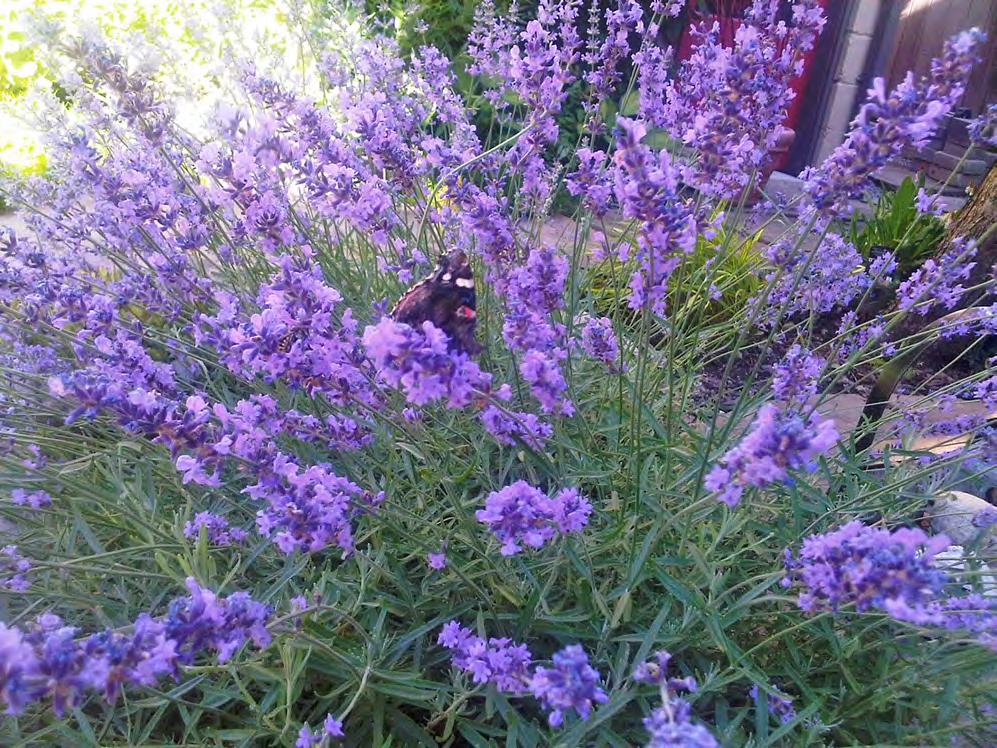
IF YOU LIKE A CHALLENGE, try lavender for its soothing scent, or rosemary to uplift. These plants may be easier to start by cuttings than seed; there is lots of how-to information available on gardening sites.
FOR OTHER PLANNING, start compiling a list of the materials you will need to create your garden; you may already have some of these items that can be repurposed:
• Soil.
• Walkway materials such as pavers, flagstone, crushed stone or mulch.
• Edging.
• Furniture for seating area.
• Water element.
• Containers
HAVING A PLAN can help you get ready to install in spring, whether you are doing the garden yourself, or if you want to hire professional help.
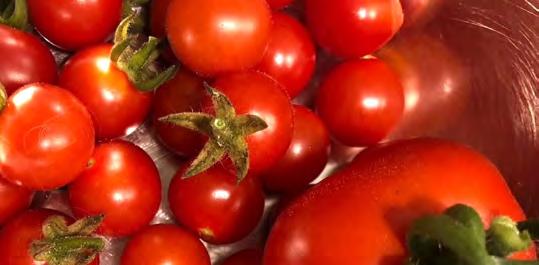
Tomatoes are easy to grow.
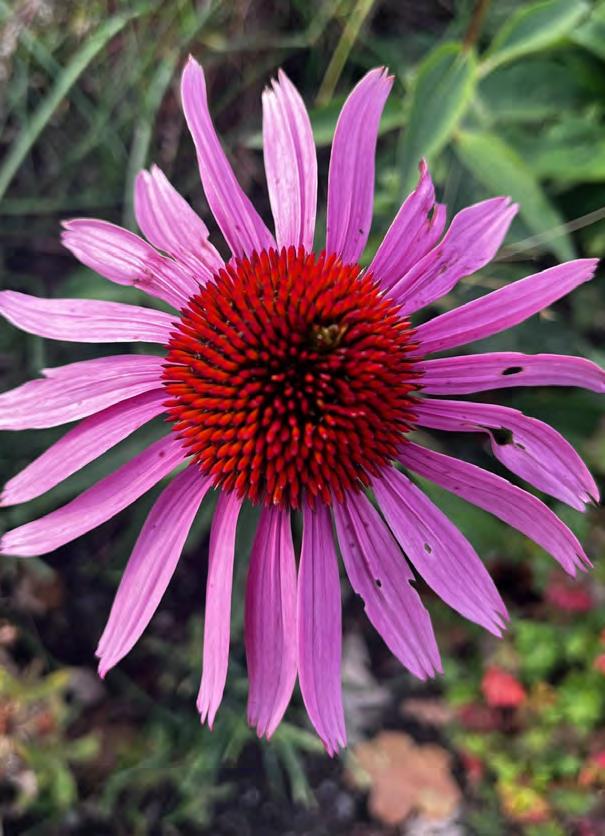
Echinacea provides pollinator support.
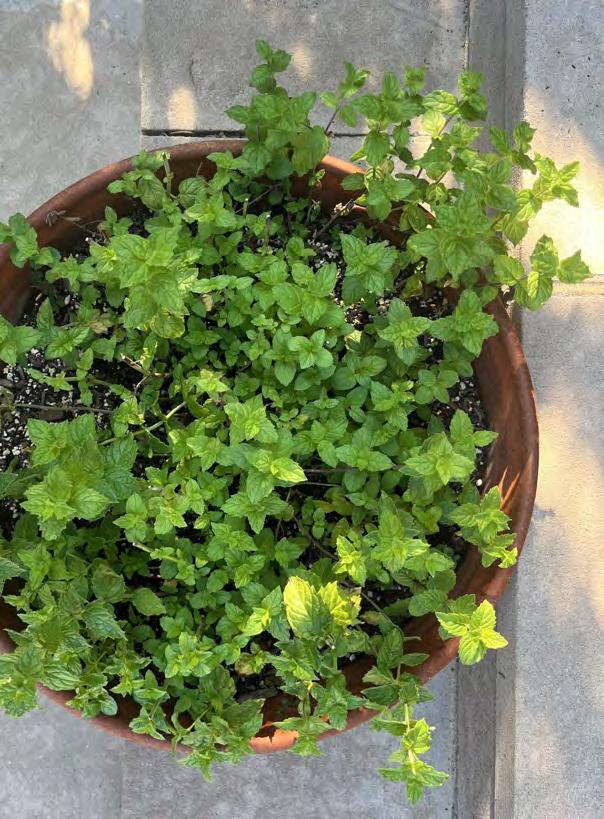
Mint can aid digestion.
“Royal
Botanical Garden’s Healing Garden may not have the manicured elegance of traditional landscapesits medicinal plants often appearing wild and weedy - but it draws guests in with quiet magnetism. Many often linger for extended periods of time, exploring interpretive signage to discover how each plant has been used to treat ailments across cultures and centuries. It’s a space for learning, reflection, and connection. RBG’s Healing Garden highlights the importance of green spaces for mental health. Botanical gardens can serve as more than just aesthetic destinations; they can be therapeutic spaces as well.
– JON PETER, Director of Horticulture at Royal Botanical Gardens
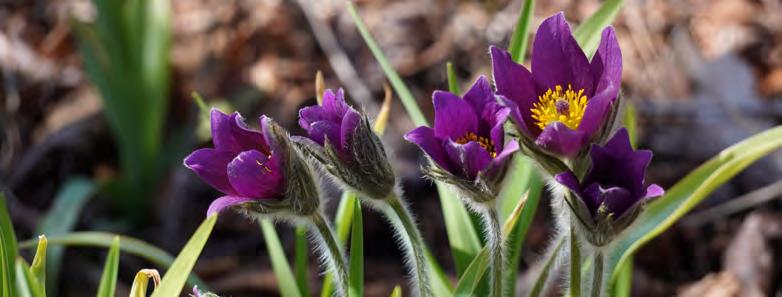
Purple, as in these pasque flowers, is a calming colour.
NEED INSPIRATION?
Check out these examples of wellness gardens:
1. The Royal Botanical Gardens, Hendrie Park Healing Garden
2. RBG’s New Healing Garden Evokes the First Botanical GardensRoyal Botanical Gardens
3. Michener Institute of Education/University Health Network
5. Brick Works Healing Garden https://www.evergreen.ca/evergreen-brick-work/activities/the-healing-gardens/
6. Centre for Addiction and Mental Health and Foodshare Sunshine Garden https://www.camh.ca/en/driving-change/about-camh/for-our-neighbours/ spaces-and-places/sunshine-garden-at-camh
7. Ajax and Pickering Hospital Indigenous Community and Healing Garden https://www.ajax.ca/en/play-and-discover/indigenous-community-healing-garden.aspx
And of course, while not healing gardens, the Toronto Botanical Garden, Edwards Gardens and surrounding ravines offer all of us a chance to unwind, enjoying the benefits of nature.
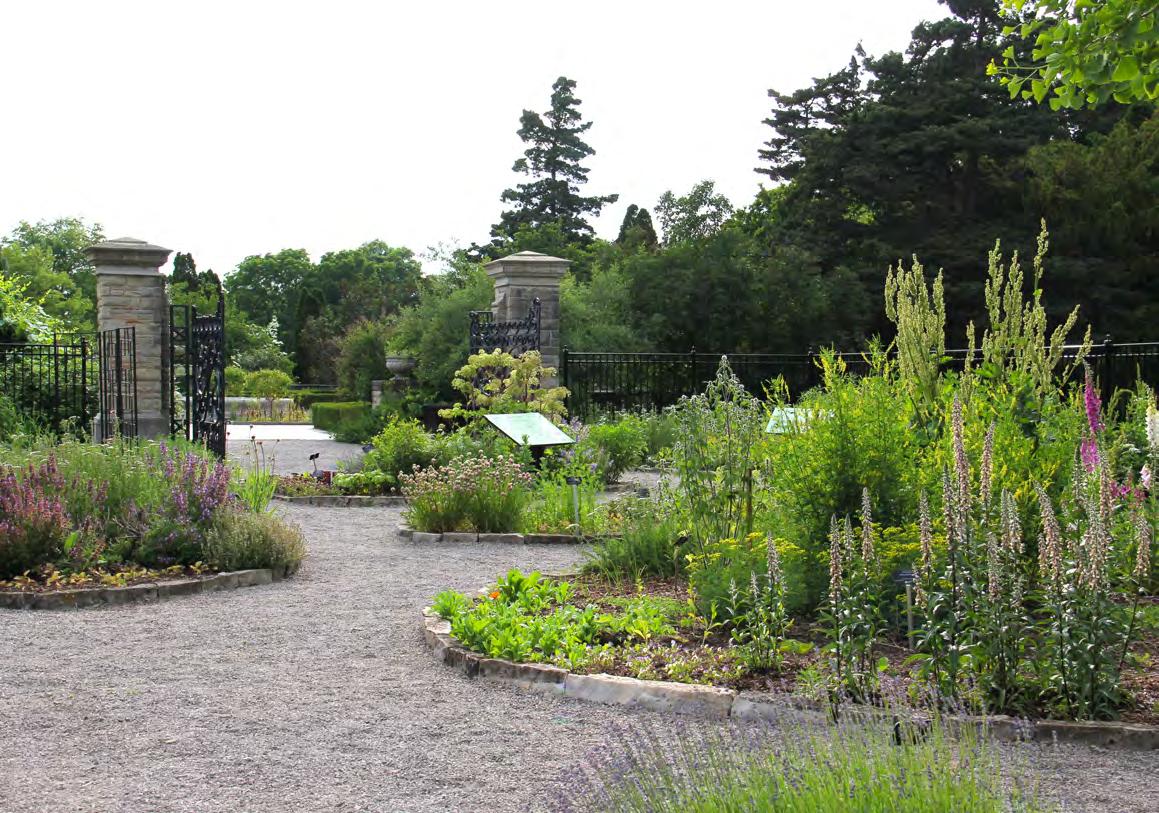
The Healing Garden at the Royal Botanical Gardens, Burlington, Ontario.
forests MINI
Small scale, densely planted greenspaces bring biodiversity to cities and suburbs
By Carol Gardner
SMALL BUT MIGHTY with big benefits, small scale forests are multiplying across Canada—and the world—with ad hoc neighbourhood groups and larger more formal organizations getting into the planting act every year.
The threat of major climate change is resulting in new alliances between non-profits, government, the private sector and community groups—and that’s nothing to sniff at! One significant project is The National Mini Forest Pilot Program, started in 2022 by Green Communities Canada (https://greencommunities.canada.org), and funded through the Government of Canada’s Two Billion Trees program (sadly, now cancelled), TD Bank and The Greenbelt Foundation. Since then, many other partners have joined the movement.
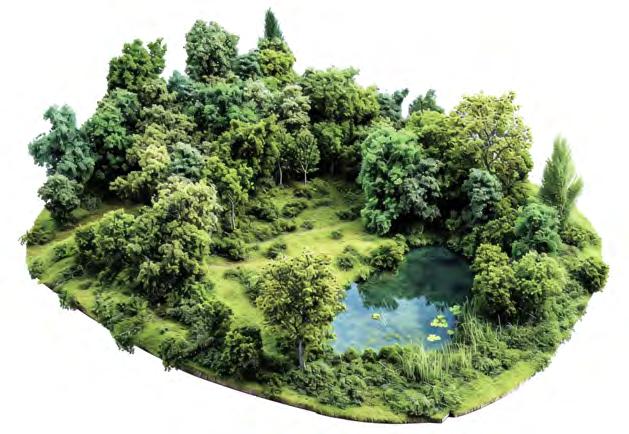
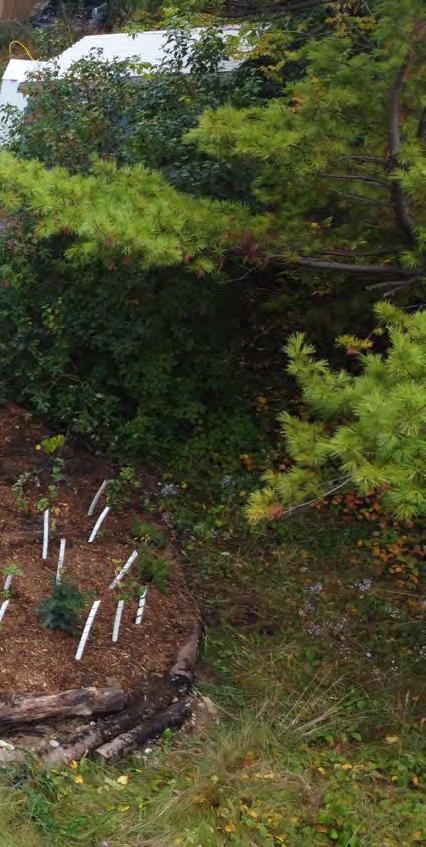
A mini forest is basically a small group of native trees, shrubs and groundcovers that can be planted just about anywhere—schoolyards, community spaces, abandoned lots, decommissioned landfill sites, roadsides and even cemeteries. The space they can take up can be as small as 16 square metres or as large as 500 square metres, although most sites average between 100 and 200 square metres. So—they’re small, but mighty. They enhance biodiversity, sequester carbon, lessen air pollution, provide habitat for wildlife, mitigate the urban heat
island effect, reduce runoff, prevent flooding and provide green spaces for people to enjoy.
The first thing needed to establish a mini forest is to find a piece of land and conduct horticultural sampling to see what enrichment the soil needs. Then stake out boundaries, suppress weed growth, enrich the soil and plant with locally native trees, shrubs and ground covers. These tiny forests are planted densely—three to four seedlings per square metre. Using this planting technique, mini forests are expected to accelerate the rate of establishment of a natural forest in just 25 years. For anyone interested in more details, there is an online training plan at (www.greenventure.ca).
Maintenance of mini forests is the responsibility of the owners of the land with the exception of cemetery residents who have, presumably, already done their bit for the environment. Otherwise, these forests are often put to creative use. Schools, for example, can use students to maintain their forests as a part of horticultural studies.
This isn’t a new idea. It all started in 1970, with Japanese botanist Akira Miyawaki, a specialist in natural vegetation restoration of degraded land. He was appalled to learn that only 0.06 per cent of Japanese forests were indigenous forests. He developed a way to restore native plants on degraded land, using seeds from native trees. At that time, he called them ‘pocket forests’ but, over time, they have
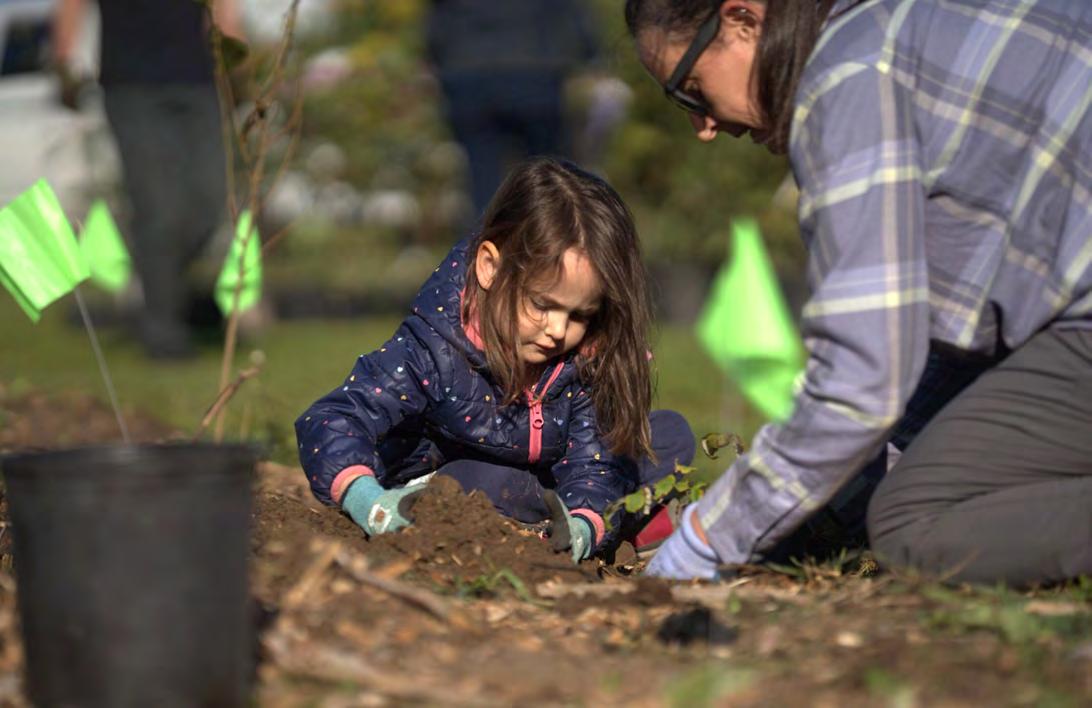
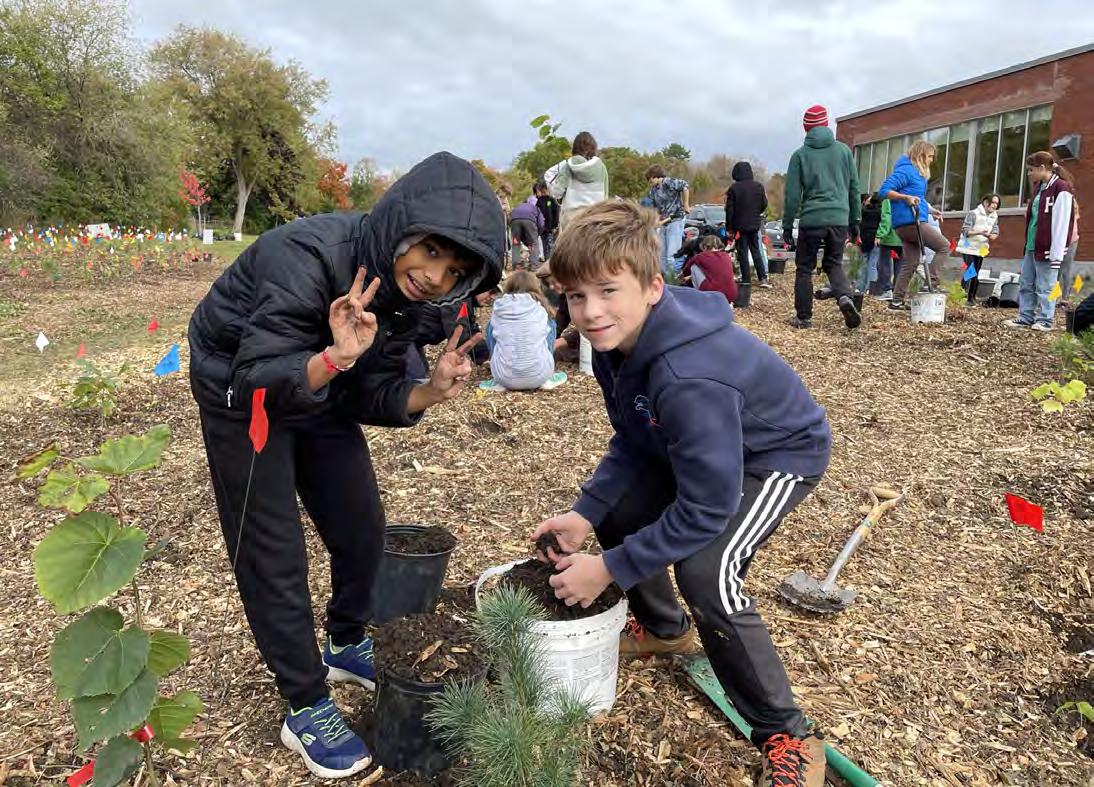
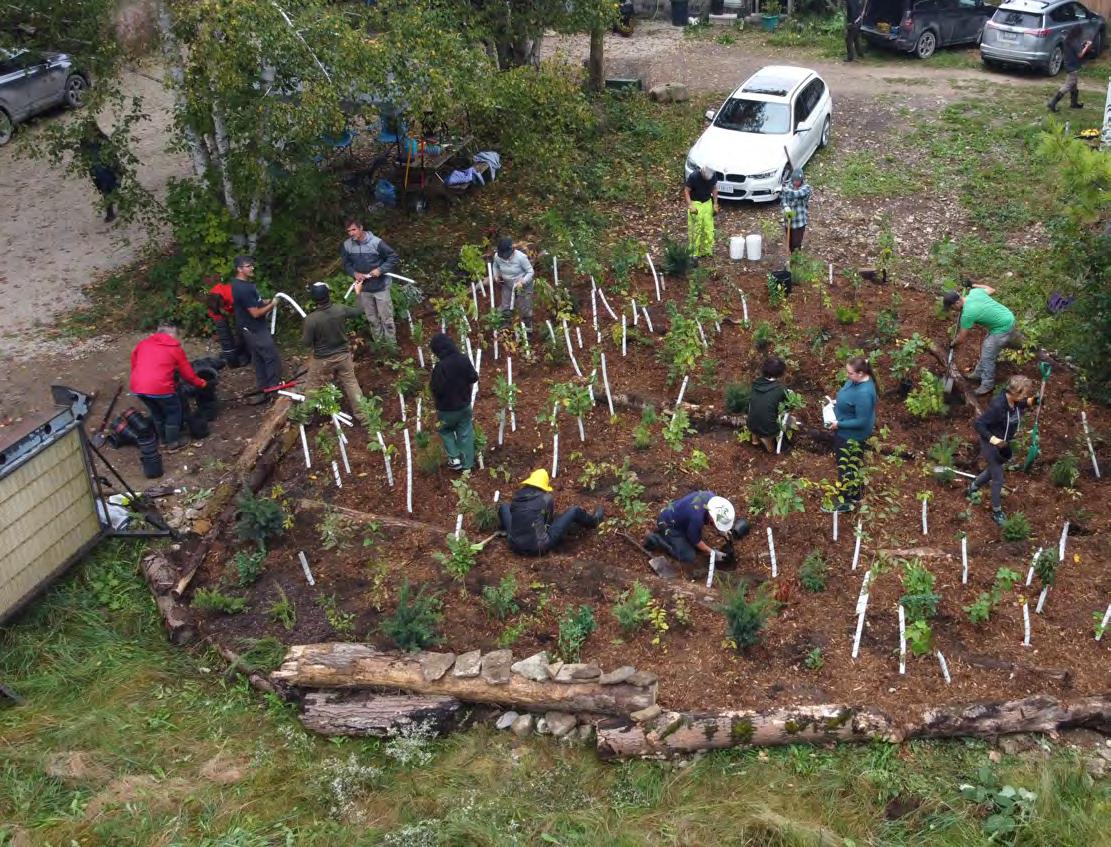
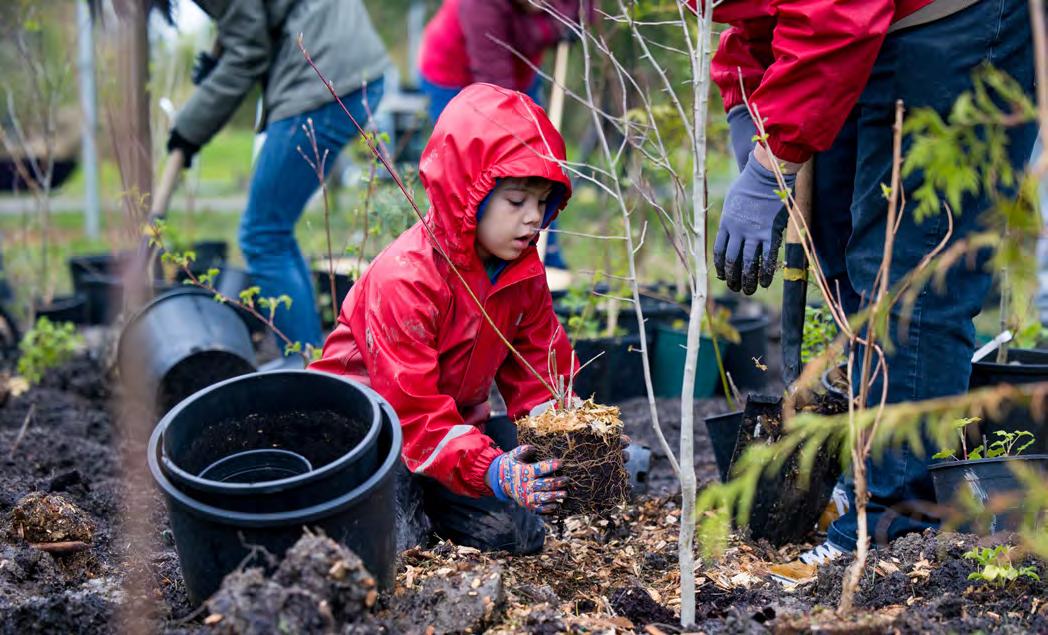
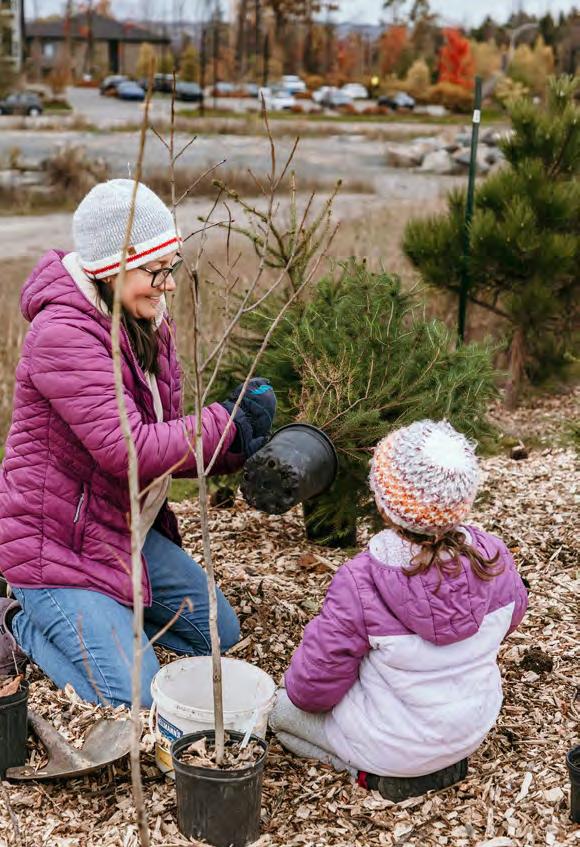
Youth Planting at Guelph Mini Forest
Little Forest planters, Kingston, ON.
Bagida‘waad Alliance, Georgian Bay, ON Mini Forest planting
Mini Forest planting in Richmond, BC
THEY ENHANCE BIODIVERSITY, SEQUESTER CARBON, LESSON AIR POLLUTION, PROVIDE HABITAT FOR WILDLIFE, REDUCE
RUNOFF AND MORE.
been called ‘Miyawaki Forests” or ‘mini forests’. His ideas have spread all over the world—spanning Europe, Africa, Asia, South America, Russia, the Middle East and India.
In 2022 the Canadian National Mini Forest Pilot program aimed to plant over 2,800 trees across five cities in Canada, including Richmond, Toronto, Markham, Hamilton and Guelph. They have now expanded into other provinces, planting 45 mini forests in all. (Green Communities estimates there are actually more than 75 mini forests across Canada.)
The first pilot was launched on Earth Day—April 22, 2023—at Terra Nova Rural Park in Richmond, B.C. One of the first local projects took place at the Toronto Zoo on October 4, 2022, when a team of 50 volunteers planted almost 900 native trees and shrubs in about five hours. The zoo has a permanent need for volunteers for this project as well as with their native meadow planting and invasive species pullouts. You can apply to help at www.torontozoo.com/cat.
To date, mini forests have been planted in Quebec, Ontario, New Brunswick and British Columbia, with
Toronto and the GTA having the largest number. It’s impossible to keep an accurate number beyond the ‘official’ plantings now, as so many municipalities are starting their own. As home doyenne Martha Stewart would say, “and that’s a very good thing”.
SOME GREEN COMMUNITY PROJECT PARTNERS
Network of Nature – networkofnature.org
• Dougan Ecology – www.dougan.ca
Tree Canada – comprehensive list of naturalized and introduced trees: treecanada.ca /resources/trees-of-Canada/ Greenbelt Foundation – greenbelt.ca
MY FAMILY AND I CAME TO THIS LAND ON FEBRUARY 11, 1996. IT WAS VERY COLD
.
BACK THEN, I had never seen squirrels before – and more importantly, I didn’t know the language. Also, and just as important, I didn’t know any Anishinaabeg, Haudenosaunee, Chippewa or Wendat peoples. I had never heard of Treaty 13 with the Mississaugas of the Credit, and I couldn’t tell you for the life of me, the meaning of words Inuit and Métis. But I grew up here, this land raised me and adopted my roots without question.
Little did I know, every time I would saunter through the ravines, any time I would encounter one of our feathered friends, I was actually connecting with past generations that had called this land home, who had
gathered by this very creek, who had been witness to the same symphonies of birdsong and migration messengers from the spirit realm.
The relationship that indigenous cultures foster with the land is rooted in their languages, where meaning and identity revolve around verbs –unlike English and Persian (my mother tongue) which are noun-based languages – they value their titles.
I’d like to believe that I am not a writer, I’m not a poet…I’m one who shares stories with people and papers. I’d like to believe that I am not a gardener, or horticulturist…I’m one who lends his hands to the earth, who nurtures plants, learns from them and strives to share those learnings.
There is a certain freedom to being defined by your actions in the moment, day by day, season after season. It is a roadmap to connection, a blueprint for mindfulness.
Nowadays, when I lead guided nature walks in our beloved Garden and Wilket Creek Ravine, I encourage participants to look beyond their binoculars, their cameras – to consider themselves more than just photographers and birders.
“First and foremost,” I tell them, “we are here to walk together. We’re here to sit with the trees, to open our hearts to the wind, to the birds…and in doing so, to everyone past and present who has found meaning this way.”
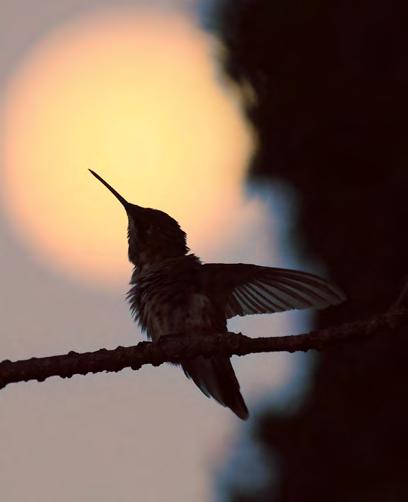
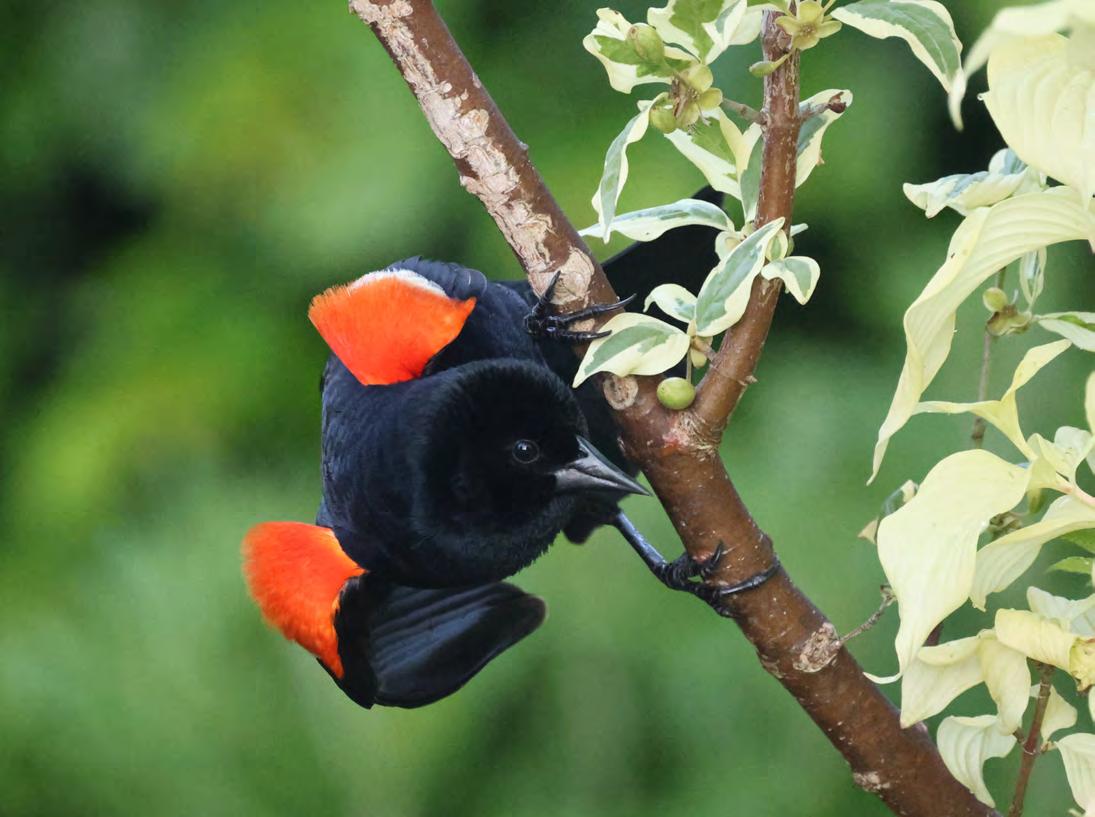
Red Winged Blackbird
“ “
a front lawn softened by shrubs— has its own ecology
we plan prune water and design
ecosystems living
A garden can be both ornamental and ecological
By Dorothy and Patrick Smyth
MOST GARDENERS think about plants when they think about their garden. We plan, prune, water, and design. We notice what blooms and what fails. But beneath those familiar tasks lies something we seldom talk about: our gardens are living ecosystems. Even a small city garden—a patch of soil behind a semidetached house, a courtyard of containers, or a front lawn softened by shrubs—has its own ecology. That word can sound abstract, but it simply means relationships: how living things interact with one another and with their environment. Every home garden, no matter how small, is a microcosm of that complexity.
◗ The Living Network Beneath Our Feet
A garden’s ecological story begins in the soil. We tend to see soil as inert ‘dirt’ but it is one of the most biologically active places on Earth. A handful of healthy garden soil can contain billions of bacteria, networks of fungal filaments, and countless tiny organisms—mites, nematodes and springtails—all involved in breaking down organic matter and recycling nutrients.
When you add compost or mulch, you are not just feeding plants; you are feeding this underground community. Worms pull leaves into the soil, microbes digest them, and the result is humus—improving both fertility and water retention. Plants, in turn, release sugars from their roots to support these microbes. It is a continuous exchange.
That sweet, earthy smell of good soil comes from actinomycete bacteria— microscopic partners in decomposition. It is, quite literally, the scent of ecology at work.
◗ Producers, Consumers and Decomposers
Every ecosystem runs on energy captured from the sun. Green plants are the producers, converting sunlight into food through photosynthesis and forming the base of the garden food web.
Next come the consumers: insects feeding on leaves and nectar, birds and bats feeding on insects, small mammals nibbling seeds or digging for grubs. Predators such as Asian lady beetles, lacewings and spiders quietly help keep populations in balance.
Finally, decomposers close the loop by breaking down what dies. Fungi, bacteria and invertebrates recycle fallen leaves, roots and organic debris into nutrients plants can use again. Without them, gardens would quickly smother under their own litter.
When gardeners intervene—with fertilizer or pesticides—these relationships can shift. Excess nitrogen may promote lush growth but reduce beneficial fungi. Broad-spectrum insecticides may remove pests along with the insects that naturally control them. Ecology reminds us that everything is connected.
◗ Microclimates and Mini-Habitats
Every garden contains its own microclimates—shaded corners, sunwarmed walls, damp hollows. These small variations support different kinds of life. Moss may thrive beneath dense shrubs, while thyme and sedum prefer dry edges. A pond or birdbath introduces an aquatic element, supporting insects, birds and amphibians.
Leaf litter left in autumn provides winter shelter for ground beetles and solitary bees. Even a stack of logs or an untidy corner becomes a miniature woodland floor. These features may seem minor, but together they sustain far more life than we usually notice.
◗ Human Role in the System
Ecology includes us. The gardener is part of the system—both participant and shaper.
When we compost kitchen scraps, we speed up nutrient cycles. When we collect rainwater, we mimic natural hydrology. When we plant a mix of species, we build resilience against pests, disease and drought. Diversity is not just decorative; it is ecological insurance.
Conversely, highly simplified landscapes—sterile mulch beds or heavily fertilized lawns—support fewer relationships and fewer species. Ecology invites a broader question: not only what we want to grow, but what interactions we want to encourage.
◗ A City of Interactions
Think of your garden as a city. Plants build the structure. Insects are the citizens. Birds link neighbourhoods. Soil organisms handle waste and recycling. Water moves everything along. And you, the gardener, set priorities—influential, but never fully in control.
This helps explain why no two gardens behave the same way. Even identical plantings can thrive in one yard and struggle in another because the unseen networks differ.
◗ From Control to Collaboration
Traditional gardening often emphasizes control: we weed, prune and tidy. Understanding garden ecology suggests collaboration instead— working with natural processes rather than against them.
Leaving some leaf litter insulates soil and shelters insects. Planting for continuous bloom supports pollinators through the season. Allowing clover or violets in a lawn feeds bees and fixes nitrogen naturally.
The goal is not to rewild every square metre, but to recognize that beauty and biodiversity are compatible. A garden can be both ornamental and ecological—a designed ecosystem that serves many lives.
◗ Every Garden Counts Research increasingly shows that residential gardens make up a substantial share of urban green space—in some cities, nearly half. In the Greater Toronto Area, private gardens cover thousands of hectares, collectively exceeding the area of public parks.
That means everyday decisions— about soil care, pesticide use and plant diversity—influence pollinator movement, storm-water quality and urban wildlife. What happens behind individual fences matters at the city scale.
◗ Seeing Anew
Shifting from seeing gardens as displays to seeing them as ecosystems is subtle but powerful. It changes how we interpret insects on leaves, moss between stones or the slow decay of fallen foliage. These are not signs of neglect; they are signs of life continuing.
The next time you walk through your garden, pause. Listen. There is activity beneath the mulch, a pollinator hovering, a root exchanging sugars with fungi. You are standing in the middle of an ecological drama— complex, ongoing and utterly local.
To garden with this awareness is to see beauty not only in flowers, but in the invisible relationships that make those flowers possible.
Dorothy and Patrick Smyth are both Toronto Master Gardeners who have been gardening in inner city Toronto for 45 years.
Intentional planting in previously ignored spaces provides a multitude of benefits
By Georgie Kennedy Boulevard Gardener
BOULEVARD GARDENS
THE GARDENING WORLD is undergoing a radical transformation; no longer do we judge success by the number of exotic or imported plants kept alive with pesticides and constant attention. We realize it is imperative for home and community gardeners to provide and nurture habitat for native pollinators and subterranean life forms. In the process, we are improving the quality of life in neighbourhoods and restoring balance to our ecosystem.
I can testify to that improvement. In 2004, with a design suggested by my artistic daughter, Sarah, and executed by a brilliant landscaper, Kevin, we transformed our Markham front yard from a wasteland to a garden with a Y-shaped flagstone pathway and large sitting rocks. As the landscaper was working away, he said, “It’s going to look weird with a grass boulevard. Why not continue the design to the street?”
Kevin’s suggestion has made all the difference. Now passing pedestrians and joggers stroll through a shady haven; many stop to ask questions about the plants or just to say how much they appreciate them. Some even take a short rest on the little sitting wall along the sidewalk.
In case you are wondering, yes, a bad-tempered neighbour with a perfectly manicured yard called the city on me within days of completion. However, the investigating officer deemed it a nuisance complaint and said he would recommend to council that everyone do the same. These days, I’m gradually removing any introduced ornamentals and replacing them with native perennials and grasses. It’s a small act but it is gratifying to witness the return of the butterflies and the bees.
Local governments support efforts to rewild dead zones
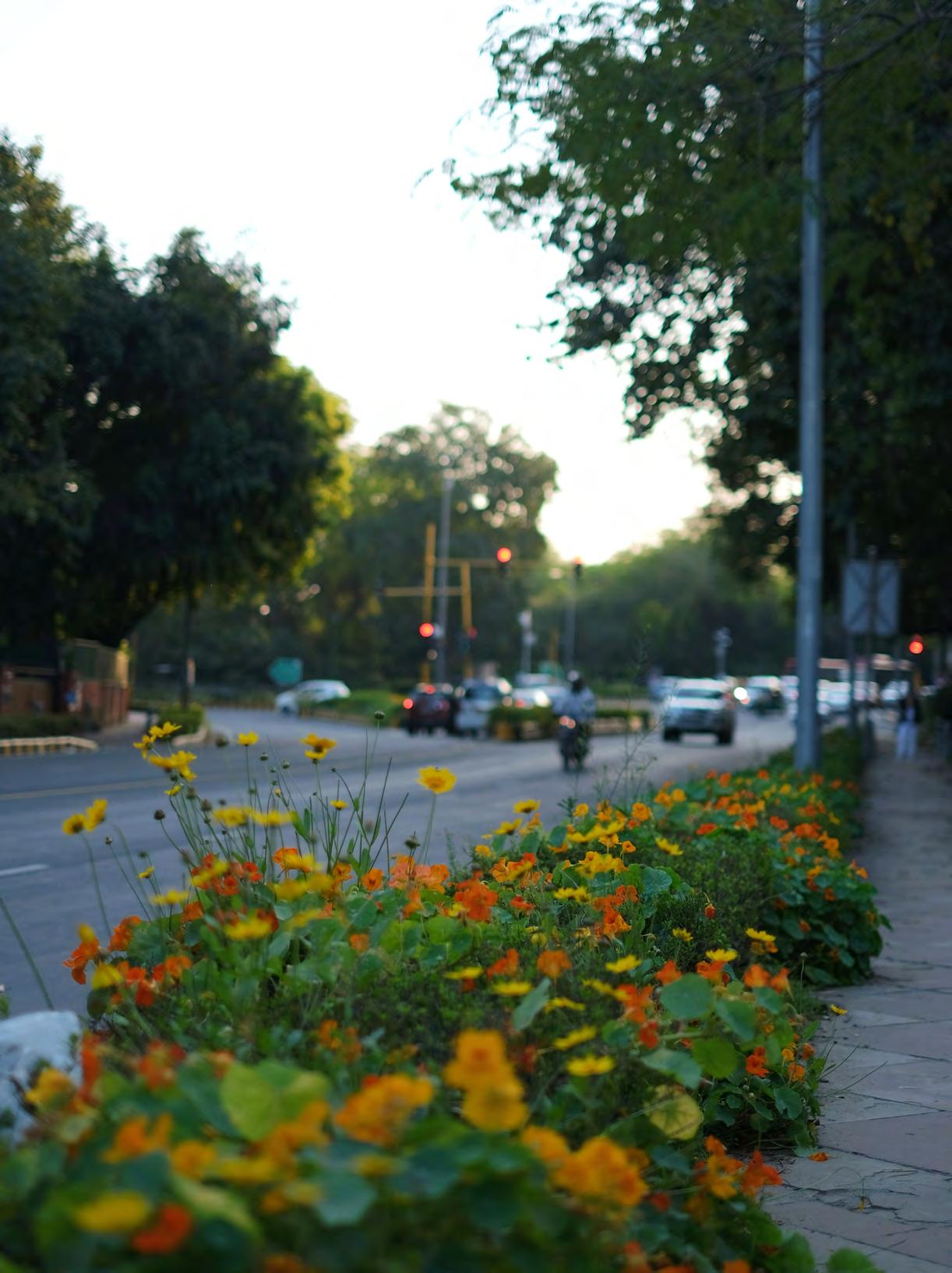
Are you tired of the monotony, the constant mowing, the watering and the environmental waste of your boulevard strip? Around the world, this narrow area between the sidewalk and the street goes by many names, including “verge” and “hellstrip”. Here’s good news: Toronto and most surrounding municipalities welcome and even offer support to individual and community efforts to rewild these dead zones.
Toronto Master Gardeners recently hosted a conference at the Toronto Botanical Garden titled: Changing Cities, One Garden at a Time. Robert Mays, Senior Landscape
Architect and Streetscape Design Specialist for the City of Toronto, spoke on how boulevard gardens help to create greener cities. Some of the concerns that caused city planners and environmentally minded gardeners to reimagine the use of land in residential areas include a rise in global temperatures, loss of species diversity, air and water pollution and the increasing difficulty in managing massive storm water runoff. Intentional planting in previously ignored spaces has a multitude of benefits:
• Beautification of pedestrian and parking areas
• Greener environment leading to improved mental health
• Capturing rainwater, mitigating floods
• Purification of the air from free floating pollutants
Bylaws
What are the rules around planting on the boulevard?
The Toronto Turfgrass & Prohibited Plants Bylaw (updated in 2022) says that turfgrass must be cut when growth exceeds 20 centimetres. Other grasses may have different height restrictions. Land must be kept free of prohibited plants (noxious and invasive species). Plants cannot obstruct sidewalks or roadways. Plants cannot restrict driver and pedestrian sight lines at intersections, driveways, sidewalks, walkways or visibility to all traffic control devices. The bylaw does not require an exemption to cultivate a naturalized garden. Toronto does not have enforcement officers driving around looking for issues. Action is on a complaint basis only.
Panelists, horticulturist Ingrid Janssen; City of Toronto Parks and Program Officer Patricia Landry and biologist Dr. Brendon Samuels, offered these key tips for home gardeners planning to convert a lawn or verge to a natural garden: 1. Use a planting design that groups a single species, to indicate it’s not random.
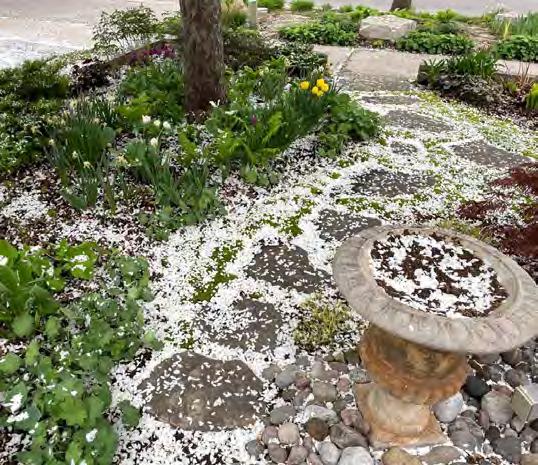
Spring urn on the author’s boulevard. Apple blossom petals cover the boulevard in spring.
INTENTIONAL PLANTINGS IN PREVIOUSLY IGNORED SPACES HAVE A MULTITUDE OF BENEFITS.
2. Depending on the size, mow a path through a planting to show it’s tended.
3. Put up signage to educate neighbours and passers-by about the garden; download and print from Ecological Design Lab, City of Toronto, among other organizations.
4. Inform your neighbours of your plans, and why.
5. If it comes to a Bylaw Enforcement visit and/or order, ask for a walk-around with the Enforcement Officer. Ask if you can tape the session. Ask the officer to point out the concerns articulated in the complaint and then discuss in a friendly manner. Ecological Design Lab has scripts you can use.
Choose plants that are:
• Native to your area of Ontario
• Hardy, disease resistant and tolerant of salt and sand
• Of a reasonable height
• Of a mix of seasonal interest
Avoid plants that are:
• Noxious and could be ingested by pets and/or children such as Giant Hogweed, Poison Ivy, Stinging Nettle, Wild parsnip (must be removed properly)
• Harmful or dangerous (for example, with nettles or barbs)
• Prohibited and/or invasive such as garlic mustard, dog-strangling vine, Japanese knotweed, goutweed, periwinkle, English ivy https://www.toronto.ca/home/311-toroto-at-your-service/ find-service-information/article/?kb=kA06g000001 cvdmCAA
• Edible and might be sensitive to or absorb salt, sand, gasoline fumes or dog urine.
Maintenance:
• Clean up fallen leaves and fruit
• In fall clean up, leave some of the stalks for nesting butterflies and moths
• Let your tree flares breathe
• Avoid messy and questionable mulch, especially the dyed variety
• Push snowplow markers into the ground before first frost.
Deciduous trees are ideal for boulevards, providing shade in summer and allowing light through their branches in summer. The City of Toronto’s Urban Forestry department’s brochure explains the process of requesting your preferred tree.
Resources:
Toronto Municipal Codes: https://www.toronto.ca/ legdocs/bylaws/lawmcode.htm
Urban Forestry Department: https://www.toronto.ca/ wp-content/uploads/2021/05/9765-Street-Tree-Brochure.pdf Ecological Design Lab: https://ecologicaldesignlab.ca/ Robert Mays, How Boulevard Gardens Create Greener Cities: https://www.youtube.com/watch?v=gED9zYXshwo
Georgie Kennedy is a Toronto Master Gardener and a boulevard gardener
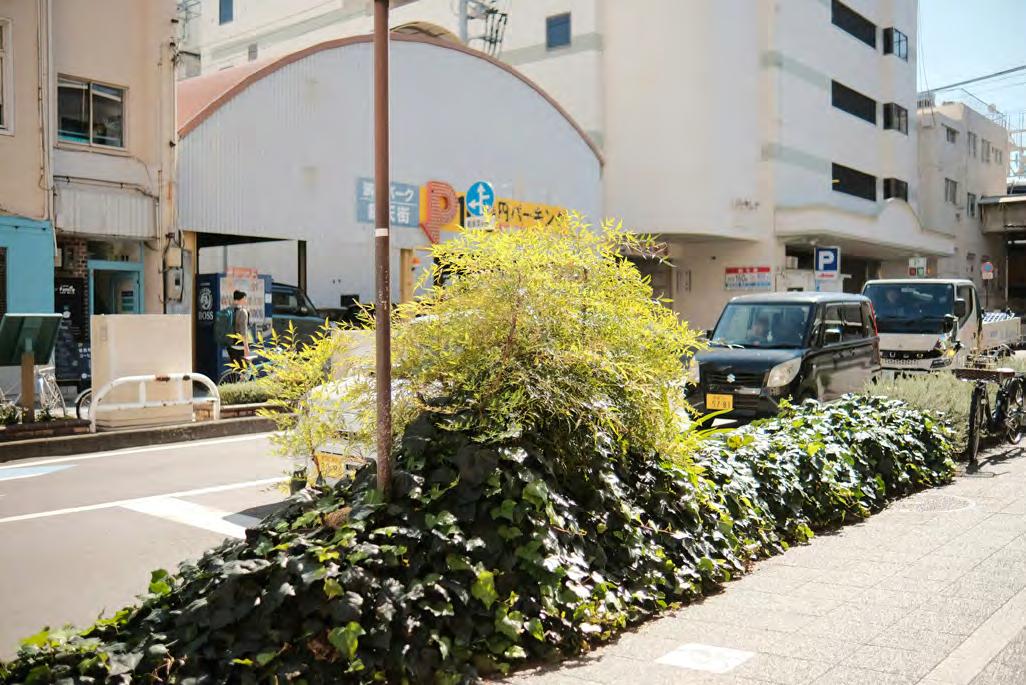
Planted boulevard in a commercial area.
A more elaborate boulevard beside a water feature.
THE NARROW AREA BETWEEN THE SIDEWALK AND THE STREET GOES BY MANY NAMES INCLUDING ‘VERGE’ AND ‘HELLSTRIP’.
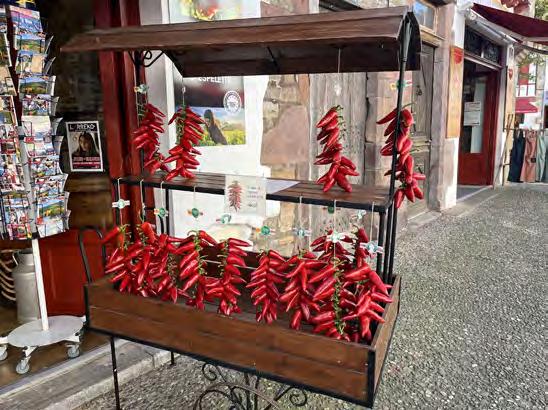
Windows and walls festooned with drying pepper garlands
RECIPE CORNER
| ESPELETTE PEPPERS |
The Basque Country’s Very Special Chili…which you can grow, too
By Veronica Sliva
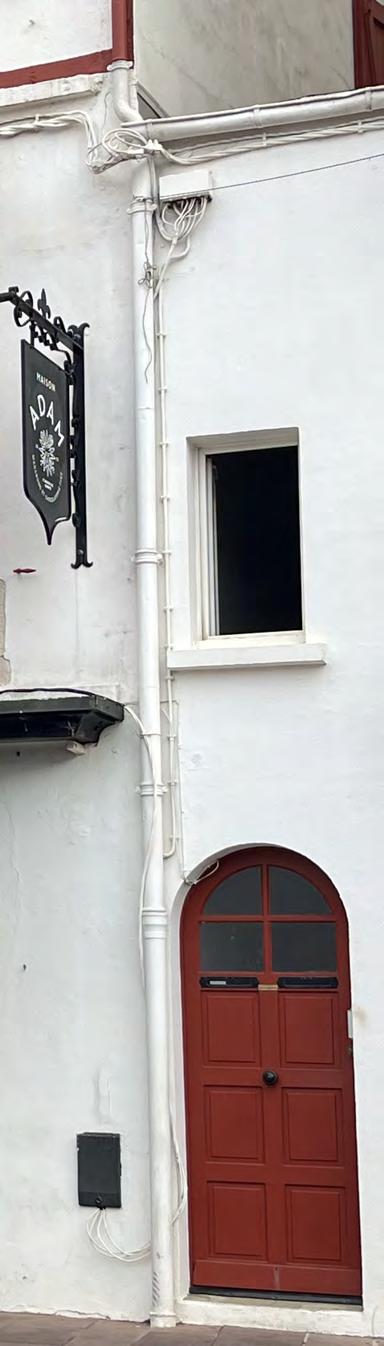
NESTLED BETWEEN the Pyrenees mountains and the Bay of Biscay, the Basque country is located in the southwest of France and northern Spain. Many people visit this area because it is so different from the rest of France. The Pyrenees mountains attract sporty types for hiking and cycling while the coastal town beaches are popular for surfing. The landscape is dotted with distinctive white farmhouses that make for dreamy sightseeing. Foodies come for the succulent and expertly prepared seafood, the Bayonne ham and a special sheep’s milk cheese called Ossau-Iraty.
I wasn’t there for any of that. I was there for the chili peppers… specifically the famous Piment d’Espelette (Espelette chili pepper).
I found myself in the village of the same name, in September when the harvest was almost complete. It was amazing to see the windows and walls of homes and businesses in Espelette festooned with garlands composed of 20 to100 peppers hanging out to dry. There were chilis strung up everywhere! Clearly the town’s existence and economy depends on this unique chili.
I headed for L’Atelier du Piment, a farm just 500 metres from the town centre and was just in time to take in a tour to learn about this special chili and its growing cycle. Instead of having to view an obligatory video as is the case in so many other types of tours I have taken, my introduction to the Espelette pepper took place outdoors in front of the growing fields and was given in
by a gardener who was intimately involved in cultivating the peppers from start to finish. Here’s what I learned:
The Pepper
The Espelette pepper is a variety of Capsicum annuum introduced from Central and South America in the 16th century, probably by explorers who transported it in the holds of their ships, though how it arrived around 1650 in Espelette is unknown. Originally used in medicines, the Espelette became popular as a condiment and gradually replaced black pepper. It is now a key ingredient in Basque cuisine.
Unique Characteristics
After generations of seed selection in the village’s kitchen gardens, an unusual hybrid of chili emerged. Rather than the searing heat chili peppers are typically known for, this one produced a gentle warmth, reaching only a maximum grade of 4,000 on the Scoville scale (a measurement that classifies the heat of a chili). Its character has been described as having a non-aggressive spiciness with a fruity, smoky flavour. As word spread, local farms began to cultivate them on a larger scale.
A Prestigious Award
In 2000 the Espelette was awarded the Protected Designation of Origin (PDO) and is the only spice in France to benefit from this protected status. This certification is granted by the European Union to products that are produced, processed and prepared in a specific geographical area using traditional methods that ensure the quality and characteristics of the product(s).
Examples of other French PDO designations include wine produced in Champagne and Bordeaux as well as the world-famous cheese from Roquefort.
Growing the Chilis
Visiting this farm felt a lot like dropping in to see a fellow gardener’s a personal plot, though on a larger scale. As with most home gardeners, everything is mainly done by hand with very little mechanism involved. (*You, too, can grow these exotic chili peppers. See sources for seeds in Canada.)
From seed to harvest takes about nine months. The seed is saved from the previous year’s harvest. In February it is sown in a greenhouse with germination taking about two weeks.
“A tinge of heat that is lightly fruity.”
When the seedlings are large enough to handle, they are transplanted into compost filled trays and grown on in the greenhouse for another couple of months.
In mid-May the seedlings are planted out into the fields and covered with a black plastic mulch that helps to prevent weeds and regulates humidity.
Seedlings are watered for only one month. After that no supplemental irrigation takes place. The only water the plants receive is what nature provides. Thanks to the proximity of the Pyrenees Mountains, the clouds trapped between its peaks create a microclimate of mild temperatures and provide ample rainfall of about 160 cm (63 inches) per year.
From mid-June and into July, the first white, star-shaped flowers begin to appear. By this time the plants are over 90 cm (3 feet) high and many have started to produce baby peppers.
The mature fruit is ready to be harvested at the end of the summer, usually in late August. At maturity the peppers are a deep, glossy red measuring about 7 to 14 cm (3 to 6 inches) without the stalk.
The most beautiful specimens are selected and threaded onto strings and hung up for about three to four weeks. The rest are laid out on racks to dry in a ventilated greenhouse. After about two weeks, they are de-stalked and dried once again in an oven for 24 hours and then ground into a fine powder.
In powdered form the Espelette pepper is used in everything from seasoning meats to finishing sauces. Because of its warming characteristic—a tinge of heat that is lightly fruity—it is the hallmark ingredient in Pipérade, a traditional dish of the French Basque region (See recipe next page). The local Jambon de Bayonne, a prosciutto-like ham, is often rubbed with Piment d’Espelette as a finishing touch. In their own kitchens Basque cooks use it to enhance dishes, such as chicken, sausage, seafood, meats and especially eggs.
The Tasting
The tour ended with a tasting that included a lot of things on crackers… jams, jellies and an onion confit. We were offered the Jambon de Bayonne seasoned with a vibrant salsa (Pipérade) and a honey confection. The savouries were followed with sweets in the form of a selection of chocolates and caramels infused with chili. To end the afternoon there was a swig of black cherry cream liqueur enhanced with the warmth of the Espelette chili.
After that it was off to the gift shop where everything that could possibly feature the Espelette chili pepper was for sale.
If you would like to grow Espelettes see below.
To grow Espelettes Here Are Some Canadian Seed Sources
PIPÉRADE, A TRADITIONAL RECIPE • From the Basque Region •
PIPÉRADE IS MADE with sweet peppers or bell peppers, onions, tomatoes and powdered Piment d’Espelette. It resembles a chunky salsa or a ratatouille type relish. Try it as a sauce served over eggs, a slice of ham or as an accompaniment to grilled fish or roasted chicken.
Ingredients
• 2 tbsp extra-virgin olive oil
• 1 red bell pepper, seeded and cut into very thin strips
• 1 green bell pepper, seeded and cut into very thin strips
• ½ cup finely chopped onion
• 2 garlic cloves, minced
• 1 (14.5-ounce) can diced tomatoes
• ¼ tsp piment d’espelette (available online or at local stores specializing in spices)
• Salt and freshly ground black pepper to taste
Substitutions for piment d’espelette:
Aleppo Pepper : Aleppo Pepper offers similar fruity qualities with a similar warmth. It is not exactly the same as piment d’Espelette but it is a good substitute. Use ¾ tsp Aleppo pepper for every tsp of piment d’Esplette called for.
Spanish Paprika and Cayenne Pepper:
Use ¾ tsp of a mild Spanish paprika and about 1/8 tsp of cayenne pepper for each teaspoon of piment d’Espelette called for. Again, this won’t be exactly the same, but similar.
Method
1. Heat the oil in a large skillet over medium heat.
2. Add bell peppers and onion and sauté until tender, about 8 to 10 minutes.
3. Add garlic and sauté another minute.
4. Add tomatoes (don’t drain them) and piment d’espelette.
5. Simmer until the piperade thickens.
6. Season to taste with salt and pepper. The pipérade will be chunky. Makes 2 ½ cups
CRITTERS IN THE GARDEN
AMERICAN GOLDFINCH
Bright, bouncy songbirds are often seen at backyard feeders
By Megan Blacquiere Horticulturist
PHOTO: SASAN BENI
◗ THE AMERICAN GOLDFINCH (Spinus tristis)
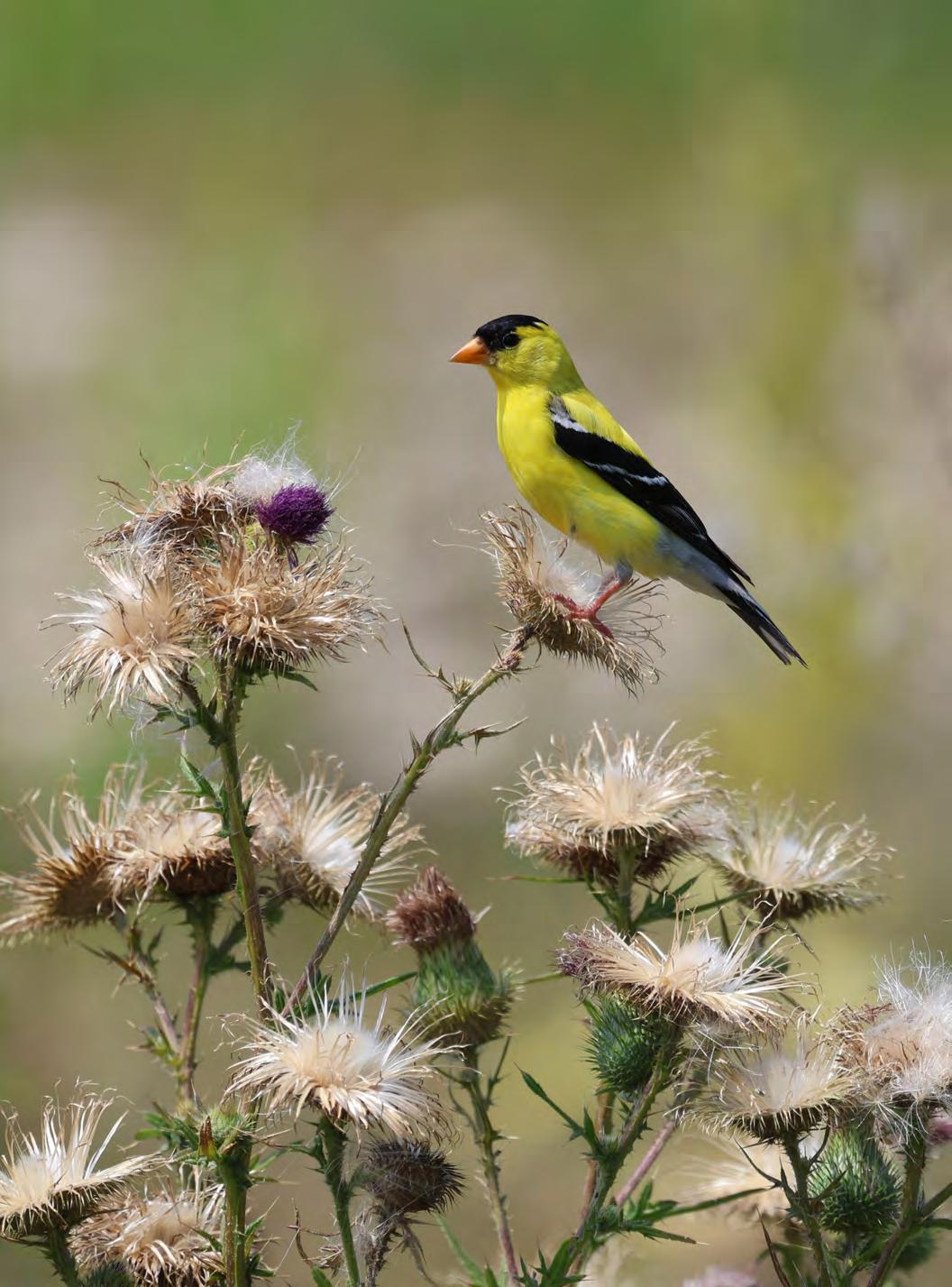
is found across North America from the southern edge of the boreal forest, south to northern Mexico. Northern populations are predominantly migratory, while southern populations are predominantly residential. In Canada, they breed in the south, from east to west, and are year-round residents of southern Ontario, including Toronto. Their habitat consists of weedy fields and floodplains where thistles, sunflowers and asters are commonly found. They can also be found in cultivated areas, roadsides, orchards, suburbs, parks, open woods, hedges and backyards and are commonly seen at bird feeders, especially in the winter. American Goldfinches have also been known to burrow under the snow to form a cozy sleeping cavity in which to keep warm on cold winter nights.
IDENTIFICATION
◗ These active and acrobatic birds are often seen clinging to weeds and seed heads or congregating in large numbers at feeders. Their familiar flight pattern is bouncy and undulating, and they are known to call while in flight with their signature “po-ta-to-chip” call. These small songbirds are 11 to 13 cm (4.3 to 5.1 in) in length with a wingspan of 19 to 22 cm (7.5 to 8.7 in) and weigh only 11 to 20 g (0.4 to 0.7 oz). They have short conical bills and a short-notched tail.
Male plumage in spring and early summer is bright yellow with a black forehead, black wings with white markings, and white patches above and beneath the tail. Females are a duller yellow beneath and olive above. Both males’ and females’ legs, feet and bills are a buffy yelloworange colour. In winter, the birds are dull, brown with blackish wings and two pale wing bars and white tail spots. Their legs, feet and bills are a dark grey-brown. American Goldfinches undergo a complete molt each spring and then molt again in the fall after nesting.
DIET
◗ The American Goldfinch forages in flocks except during breeding season. The majority of their diet consists of a variety of seeds with an occasional addition of insects in the summer. The seeds they consume are mainly from plants in the Asteraceae family, such as sunflowers, thistles, asters, etc. They will also eat seeds from grasses and trees such as alder, birch, western red cedar and elm, and will eat buds, bark of young twigs and maple sap. When eating at feeders, these birds prefer nyjer and sunflower seeds.
MATING
◗ Breeding season begins in mid to late summer when thistle seeds and down are readily available for nest building. During courtship displays, the male will perform a fluttering flight while singing. Once a pair is established, males and females work together to find a suitable nest site. The female builds the nest, usually in a deciduous shrub or sapling in an open area, and sometimes in conifers or dense weeds, typically built less than 9 metres (30 feet) above the ground. The cup type nest is made of plant fibres with a downy lining of fluffy “pappus” material from the seed heads of plants from which they would normally feed. It is secured to a branch using spider silk and is built over a period of six days. The completed nest is roughly 7.5 cm (3 in) across and 5 to 11 cm (2 to 4.5 in) high.
The clutch size can range from two to seven eggs, and there can be one or two broods per breeding season. Females lay pale, bluish white eggs with occasional faint brown spots around the larger end. After laying the eggs, the incubation period lasts 12-14 days, during which the male feeds the female while the female incubates the eggs. After the eggs have hatched, the babies are helpless with little wisps of greyish down and remain in the nest for 11 to 17 days before fledging. After fledging, the young are still dependent on their parents for at least three weeks.
Males and females will take turns feeding nestlings. Some veteran females will produce a second brood. To facilitate this possibility, the female will leave the male to care for the first brood while she goes out to find a new mate for a second nesting. In the populations of American Goldfinch, it is estimated that there are three males for every two females, which may be due to the fact that males tend to live longer than females.
HISTORY OF GARDENING
AGRICULTURAL ASTROLOGY STRETCHES BACK TO ANCIENT CIVILIZATIONS
By Lee Robbins Library Manager, Weston Family Library
YEARS AGO, when l was living in the rural mid-west of the United States, I had a friend whose family had a farm for many generations. Her mother would only plant potatoes on Good Friday. March or April, it didn’t matter according to her mom, as long as it was on Good Friday. So that got me wondering: where did that tradition come from? This inspired me to explore the topic further which was the genesis of this article.
For centuries, people have looked to the stars and planets to guide the rhythms of planting and harvesting, creating a fascinating tradition known as agricultural astrology. This practice, deeply tied to gardens and gardening, blends celestial observation with earthly labour. Planting potatoes on Good Friday is a tradition, especially in Ireland, rooted in folklore that says it promotes a better harvest. The tradition links lunar cycles to rebirth.
The roots of agricultural astrology stretch back to ancient civilizations globally such as in Babylon, ancient Egypt, China and the Americas, where the sky was seen as a cosmic calendar. Farmers observed the phases of the moon, the rising of constellations, and planetary movements to determine when to sow seeds or reap harvests. ln Mesopotamia, for example, the Babylonians aligned farming cycles with the stars,
“To everything there is a season, a time for every purpose under heaven” Book of Ecclesiastes
Potato crops, underground.
believing that celestial bodies influenced fertility and growth. Similarly, in the Andean mountains, the constellation Taurus was used as a marker for planting seasons. Gardens, often smaller and more personal than vast fields, became testing grounds for these astrological methods and offered a more intimate connection between humans and celestial rhythms.
Families would plant herbs, vegetables and flowers according to lunar cycles, ensuring that their household plots thrived. Herbs like basil or sage were often planted under specific signs to enhance their potency, while flowers were timed to bloom in harmony with lunar cycles.
PLANTING BY THE SIGNS
Agricultural astrology is sometimes called “planting by the signs”. ln Mesopotamia and ancient Greece this system relied on the zodiac (“circle of animals”) signs and moon phases to guide cultivation.
For instance:
• WATER SIGNS (Cancer, Scorpio, Pisces) were considered fertile, ideal for planting leafy crops and flowers.
• EARTH SIGNS (Taurus, Virgo, Capricorn) were linked to root crops and herbs.
• AIR SIGNS (Gemini, Libra, Aquarius) were thought to favour flowering plants and vines.
• FIRE SIGNS (Aries, Leo, Sagittarius) were often avoided for planting, as they were seen as barren.
Gardeners would consult almanacs or astrological charts to decide when to plant tomatoes, prune roses or harvest herbs. The waxing moon was believed to encourage upward growth, while the waning moon favoured root development and pruning.
ln medieval Europe, monastery gardens followed astrological calendars, blending spiritual symbolism with practical cultivation. These gardens were not only sources of food and
medicine but also living reflections of cosmic order.
With the rise of modern science and industrial farming, agricultural astrology was dismissed as pseudoscience. Chemical fertilizers, mechanization and standardized calendars replaced lunar charts and zodiac signs. Yet, the tradition never fully disappeared. Many communities continue to consult Farmer’s Almanacs, which often include lunar planting guides.
Modern gardeners increasingly explore astrology as a way to reconnect with nature. Urban gardening movements, permaculture enthusiasts and herbalists often incorporate lunar
calendars into their practices. Whether planting lavender under a waxing moon or harvesting root vegetables during Capricorn, these gardeners embrace astrology as both tradition and ritual. While modern science may question its efficacy, agricultural astrology continues to inspire gardeners who see their plots not just as food sources, but as cosmic reflections of the universe.
References
◗ Astrological Gardening: The Ancient Wisdom of Successful Planting & Harvesting by the Stars by Louise Riotte BF1729.G35 Rio 1995
◗ The Celestial Garden; Growing Herbs, Vegetables, and Flowers in Sync with the Moon and Zodiac by Jane Hawley Stevens 8F1729.G35 Ste 2023
◗ Planting by the Moon from the Old Farmer’s Almanac https://www.almanac.com/ planting-by-the-moon
◗ A 6th century mosaic zodiac wheel in a synagogue in Beit Alpha, Israel, incorporating Greek-Byzantine elements.
(Photo: Wikimedia Commons, Public domain)
https://mymodernmet.com/ history-of-astrology/
Plants growing above ground
Plants growing underground
BOOK SHELF
Three dissimilar takes on contemporary gardening
The Contemporary Garden
Reviewed by Lorraine Hunter
The Contemporary Garden features 300 gardens from around the world created between the mid1990s and now, many of which encompass modern water management systems, use innovative materials and create diverse habitats for wildlife.
With one picture and a short write-up on each garden, this is definitely a coffee table book offering lots of inspiration to gardeners and garden lovers but it also conveys a positive message about the future of gardening. Emphasizing current concerns including climate change and biodiversity as well as health and wellbeing plus the impact of technology, it also highlights positivity and hope.
From the smallest pocket park such as the Toronto Music Garden to iconic public spaces like New York City’s
Aga Khan Park, Toronto
High Line and China’s Mei Garden in Jinhua City these gardens have been chosen to demonstrate the transformation power of urban greenspace often by repurposing disused infrastructure.
There are four gardens featured from Canada, each with a completely different theme, all illustrating the power of gardens to shape a more sustainable future.
The Toronto Music Garden (page 152), for example, started with a note from famed cellist Yo-Yo Ma, asking whether you can make music into a garden. The answer, set on the waterfront of Canada’s largest city, is the masterwork of landscape designer Julie Moir Messervy, taking her cues from Ma’s interpretation of Bach’s first cello suite. She reshaped a sliver of land between a major road and a highway into three mounded hills and overlaid them with six free-flowing garden rooms, each evoking the tempo and spirit of a dance from Bach’s suite.
The ultramodern Blue Stick Garden (page 69), at Jardin de Métis/Reford Gardens at Grand-Métis, Quebec, designed by the late Claude Cormier was inspired by two key elements of the Métis garden created by Elsie Reford between 1926 and 1958: the Himalayan Blue Poppies and the mixed border of the Long Walk, created in the spirit of English plantswoman Gertrude Jekyll.
The Mountain & Trees, Waves & Pebbles (page 114), a green living wall project in Guildford, Surrey, British Columbia, created in 2014, transformed a busy overpass near Vancouver from a bleak slab of road infrastructure into a lush vertical garden. The largest green wall in North America incorporates more than 920 square metres (10,000 square feet) of vegetation including 120 plant species and over 50,000 plants, mostly native to BC. Built from recycled materials, the design features mountains and trees on one side; waves and pebbles on the other.
Toronto’s Aga Khan Park (pages 304 and 305), was designed by Lebanese landscape architect Vladimir Djurovic. Hired to design a contemporary Islamic garden to resonate in the present and provide a contemplative space to encourage reflection and engagement in a multi-ethnic population, Djurovic used white granite paving and gravel for the ground with five dramatic raised reflecting pools in black granite. This formal garden links two imposing contemporary buildings beside a busy highway (the Don Valley Parkway). Inspired by the clarity of traditional Persian gardens, it features eight rows of airy native serviceberry trees that contrast with the hard materials, a nod to the orchards that frequent traditional Islamic gardens.
These gardens, like most of those featured in the book, are completely different from each other, but as editors Victoria Clarke, Sorrel Everton and Rosie Pickles conclude in their preface “It celebrates the work of more than 200 leading designers around the world to demonstrate the power of gardens to shape a more sustainable and fulfilling future.”
Butterfly: Exploring the World of Lepidoptera
Reviewed by Veronica Sliva
Butterfly: Exploring the World of Lepidoptera by David G. James and Phaidon Editors, with more than 250 full colour large-scale images that include paintings, botanical illustrations, sculptures, nature photography, children’s books, textiles and jewelry, is a celebration of these beautiful, winged creatures. They are depicted in a wide variety of time periods and in many different genres including art, history, science and culture.
The book’s hot pink cover sleeve features a single stylized butterfly and drew me in right away. It hinted at what is contained within its pages which turned out to be a visual journey. Butterflies are depicted in all sorts of ways. For example, the Pears Soap advertisement on page 166 places a colourful butterfly on a white lily with the Pears Soap logo
appearing on the butterfly’s wings. It is so pretty the image makes me want to rush out and buy that famous glycerin soap. The underlying message, of course, is that the soap is as gentle on the skin as a butterfly is on a flower.
Then, at the other end of the spectrum on page 87, is the creepy poster for the 1991 movie, The Silence of the Lambs. It features a hawkmoth with a skull shaped head on it. If you are into horror movies, that image will speak to you.
Besides the visual image on each page, the accompanying text offers some history and explanation.
For me, this book is a treasure trove of inspiration. It isn’t a book that you ‘read’ from cover to cover in one go, but rather one to be savoured a little at a time and then to be revisited again and again.
It would make a great gift for anyone with a creative streak or for those who need a little inspiration to fuel some creativity.
Courtyard Homes
Reviewed by Carol Gardner
If you’re a fan of modern linear architectural design, you’ll likely love Courtyard Homes by Joann Plockova. The homes featured are very, very structural and showcase multiple interior, or partially interior, gardens. The photos, taken by a variety of professionals, are
the highlight of the book. The relationship between home and garden is perfectly explained by the author – “Functioning as additional rooms, they merge with the interior and extend the livable space”. The homes all feature masses of windows designed to both let in light and view the gardens, much as you would view a wall of paintings or a display of inert objects.
These are gardens designed to be viewed from the inside out, with very little anticipation of anyone using the gardens in more traditional ways. Many of the designers are quite brilliant in marrying inside and out, and gardeners can learn a lot by how they’ve used local plants and structural shapes to reflect the interior design. However, as a gardener, I must admit to being offended by gardens designed only to reflect architecture. There is no zest, no joy, no sense of celebration to these gardens; they just seem sad, like an ‘also ran’ at a beauty pageant.
The book, of course, is not primarily about gardens, but about courtyard homes. It’s very expensively put together (which no doubt accounts for the $75.00 price tag). There’s an interesting review of the history of courtyard homes. The featured homes span the globe–Australia, Japan, Mexico, Belgium, the U.S., England, Sweden, Vietnam, India, Spain and South Africa. All are situated in gorgeous parts of their countries and all are clearly wildly expensive. Courtyard Homes would be an excellent gift for someone interested in modern architecture or photography.
Casa Ederlezi, San Pedro Garza Garcia, Mexico
Courtyard residence, Seattle, WA
PIECES PUZZLE
JOY OF LIFE
Reviewed by Walter Sliva
This 1,000-piece puzzle is made by Weve Puzzle, a Canadian company, founded in Waterloo, Ontario. They have an exclusive collaboration with many international artists to produce premium quality puzzles. Weve Inc started out in 2019 as a toy store which quickly expanded into a department store, with products like toys and puzzles, camping and apparel essentials, lifestyle items, baby and children’s items. Joy of Life was designed in Canada by independent artist Mosla Greem and made in China.
Greem specializes in whimsical and colourful designs that can be found on t-shirts, posters and phone cases. Many of her works (including Joy of Life) include cartoon illustrations of plants, dogs and other animals, rather than sticking to realistic or photographic images. She fits in well with Weve Inc’s philosophy: to foster a creative sanctuary for talented artists and craftsmen, aiming to promote the beautiful, thoughtfully designed items that enhance and bring joy to our lives.
The Joy of Life puzzle is a dreamy collection of animals and flowers, peacefully floating across a background
of pink and green space. It’s a fun puzzle, not overly difficult, that promotes relaxation and a gentle reminder of life’s simple pleasures. Check out the TBG’s gift store for this and other products.
FLOWER GARDEN ROLLS
Beautiful, plant-based treats as lovely to look at as they are to eat
By Jenny Rhodenizer Director of Marketing and Audience Engagement
THESE FRESH GARDEN ROLLS
celebrate edible flowers as the stars of the show. Gather ingredients straight from your garden—crisp lettuce, fragrant herbs, tender sprouts, and colourful raw vegetables— to create a refreshing, plant-based dish that’s as beautiful as it is delicious. Wrapped in delicate rice paper and served with your favourite dipping sauce (peanut or tahini, both are yummy), these rolls are perfect for entertaining, picnics or a light seasonal meal.
YOU WILL NEED
Wrappers
8–10 large rice paper sheets (spring roll wrappers)
Flowers & Herbs
16–20 small edible flowers (such as nasturtiums, pansies, or violas)
1 cup fresh herbs (basil, cilantro, parsley, or a mix)
1 cup sprouts
Vegetables
1 carrot, julienned or cut into matchsticks
½ English cucumber, sliced into thin strips
½ cup shredded red cabbage
1 cup bibb lettuce leaves
Filling
4 oz vermicelli noodles, cooked and cooled
HOW TO
1. Prepare all vegetables, cutting them into thin, even strips. Cook the vermicelli noodles, and set aside to cool.
2. Fill a wide, shallow bowl, pie plate, or frying pan with warm water. Dip one rice paper sheet into the water for 10 to 20 seconds, until just pliable but not fully soft.
3. Lay the softened rice paper flat on a clean work surface (a wooden board or clean towel works well).
4. For a botanical look, place two or three edible flowers face down in the centre of the wrapper. Layer with lettuce, then add noodles, sprouts, carrots, cucumber, cabbage and herbs.
5. Fold the bottom edge of the wrapper over the filling, tucking it in snugly. Fold in the sides, then roll upward into a tight cylinder.
6. Serve immediately, or cover with a damp towel to prevent drying.
Tips for Success
• Soak rice paper only until barely soft—it will continue to soften as you assemble the rolls.
• Rolling tightly helps keep the filling neatly contained.
• Rolls can be made one to two hours in advance and stored in the fridge in an airtight container, separated by damp paper towels to prevent sticking.
Use what you love to grow and eat. In the off-season, edible flowers, herbs and sprouts can be found at specialty grocers or health food stores.
Good Things Are Happening
Celebrating the 70th anniversary of Edwards Gardens, from left: Geoffrey Dyer, Maria Bergagnini, Lorraine Hunter, MP Robert Oliphant, TBG CEO Stephanie Jutila, MPP Stephanie Bowman, Jenny Rhodenizer and Dennis Dametto, City of Toronto.
Celebrating Leadership, Legacy & 70 Years
MP Robert Oliphant and MPP Stephanie Bowman continued their cherished New Year’s Levee tradition at Edwards Gardens and Toronto Botanical Garden. This year’s Levee recognized the 70th anniversary of Edwards Gardens. In honour of this milestone, MP Oliphant and MPP Bowman highlighted seven pivotal leaders and moments that helped shape Edwards Gardens and Toronto Botanical Garden—celebrating vision, momentum and the community support behind the garden.
TBG Honorees include: The late Rupert Edwards and the Edwards Charitable Foundation, The Cullen Family with four generations connected to the land; Marisa Bergagnini, Garden Club of Toronto member who led the creation of the Teaching Garden; Dennis Dametto, City of Toronto Parks & Recreation champion and partner in
the public-private partnership with the TBG; Geoffrey Dyer, Board Chair during TBG’s transformation from Civic Garden Centre to Toronto Botanical Garden; Lorraine Hunter, Editor of Trellis Magazine and former Board member and Jenny Rhodenizer, Director of Marketing & Audience Engagement and TBG’s longestserving employee.
“We are deeply grateful to the honorees whose leadership and dedication have helped us reach 70 years as a public garden. With their contributions—alongside those of our volunteers, donors, staff and community— we truly have so much to celebrate,” commented TBG CEO Stephanie Jutila.
“The longstanding support of our local politicians, and the way they speak so thoughtfully about our history and our future, also means so much to our community.”
NEW Online Plant
Toronto Botanical Garden Hellebore Sale
Add this early-blooming perennial to your garden this spring. The TBG’s annual one-day Hellebores Sale takes place at 11 a.m., Saturday, March 28 when pre-orders and in-person sales may be picked up. What’s so special about hellebores? Hellebores, or Lenten Roses, as they are more commonly known, are a sought-after garden plant for many reasons. Highly hybridized, they boast beautiful flowers and evergreen foliage and are one of the earliest blooming perennials. Hellebores do well in the garden or in containers.
Kiosk Looking for a particular plant? Check out the TBG’s new Online Kiosk where you can purchase plants through the online storefront for delivery right to your doorstep.
Water bottle filling station
Get hydrated at TBG’s new water bottle filling station. It features an attached drinking fountain and a counter of “bottles saved”. You can find it in the Visitors’ Centre near the washrooms. A handy way to fill up your bottle before venturing out into the garden, the water bottle filling station is one step the TBG is taking toward a more sustainable world.
Get the Jump on Spring This year’s Get the Jump on Spring extravaganza, on Saturday, February 21, was another outstanding success bringing together gardening enthusiasts and plant lovers. With over 40 expert growers, horticultural societies and local eco-makers this event was a joyful, inspiration-packed kickoff to spring. Activities included free garden chats, early-season plants and seeds, free plant & seed swaps and family fun.
Southern Ontario Orchid Society Show & Sale
Some 2,500 visitors braved the cold to visit a tropical paradise on their doorstep for the Southern Ontario Orchid Society (SOOS) Show and Sale, February 14 and 15 at Toronto Botanical Garden. Setup took over 12 hours on Friday. Over 100 volunteers helped throughout the course of the weekend.
On Saturday morning, a total of 60 accredited judges, lay judges and clerks examined the orchids in the Exhibition Hall and awarded ribbons and trophies to the best blooms and exhibits.
Demos covered such topics as lighting, organic pest control and basic cultural care of orchids in the home setting. In the Exhibition Hall, besides the 24 beautiful orchid flower displays, there were three groups who focused on the Conservation of Orchids, an Art and Photography Exhibit and the popular ‘Regrow, Rebloom and Recycle your Orchids’ table where visitors could ask cultural questions.
The highlight for Show Committee Chair Cathy Dunn was overhearing a young girl tell her mother “This is fantastic” and that they would have to return the next day with her father so that he could enjoy it, too.
ORCHID PHOTOS: COURTESY OF SOOS
BOARD OF DIRECTORS
Tony DiGiovanni, Board Chair
Susan Grundy and Martin Ship, Vice Chairs
Doris Chee, Secretary; Claudia Alvarenga, Treasurer; Gordon Ashworth, Past Chair
Barb Anie, Dianne Azzarello, Nicholas Brearton, Michele Chandler, Adeline Cheng, Caprice Chow, Ben Cullen, Lucie Gauvin, Margareth Lobo Gualt, Mark Pratt, Haig Seferian Ex Officio: Justin Hanna, City of Toronto; Deborah Maw, Garden Club of Toronto; Pat Ware, Milne House Garden Club
TORONTO BOTANICAL GARDEN IS A GARDEN FOR ALL
Your support and engagement are essential in developing an inspired plant place, an engaging learning environment and a dynamic community hub. We invite you to grow with us.
MISSION
Toronto Botanical Garden connects people and plants, fostering sustainable communities and developing reciprocal relationships with nature through lifelong learning.
VISION
Toronto Botanical Garden is a garden for all; a diverse community that recognizes the life-giving role of nature, working together for a more sustainable world.
SIGN UP FOR GARDEN ENEWS!
Receive the latest horticultural news and information on events, workshops, lectures and other horticultural happenings. Free registration at https://torontobotanicalgarden.ca
REGULAR HOURS OF OPERATION
VISITOR CENTRE: Open daily, 9 a.m. to 4:30 p.m.
GARDEN SHOP: Open daily, 10:30 a.m. to 4:30 p.m.
WESTON FAMILY LIBRARY: Weekdays, 10:30 a.m. to 4:30 p.m. Weekends, 12 to 4 p.m.
PARKING: $4.00 per hour. $16.00 daily maximum. TBG Members, FREE.
DIRECTORY MASTHEAD
CEO Stephanie Jutila sjutila@torontobotanicalgarden.ca
WESTON FAMILY LIBRARY 416-397-1343 librarydesk@torontobotanicalgarden.ca
777 Lawrence Avenue East, Toronto Ontario M3C 1P2, Canada • 416-397-1341 fax: 416-397-1354 • info@torontobotanicalgarden.ca torontobotanicalgarden.ca • @TBG_Canada
By TTC
From Eglinton subway station take the 51, 54, 54A or 162 bus from Lawrence Subway Station to Lawrence Avenue East and Leslie Street. The TBG is on the southwest corner.
EDITOR
LORRAINE HUNTER
DESIGN
JUNE ANDERSON
VOLUNTEER
EDITORIAL COMMITTEE
LEANNE BURKHOLDER
GEORGIE KENNEDY
JENNY RHODENIZER
LEE ROBBINS
VERONICA SLIVA
VOLUNTEER
PROOFREADERS
JACKIE CAMPBELL
CAROL COWAN
LYN HICKEY
JEAN MCCLUSKEY
ADVERTISING marketing@toronto botanicalgarden.ca
Trellis is published as a members’ newsletter by the Toronto Botanical Garden at Edwards Gardens 777 Lawrence Avenue East, Toronto, Ontario, M3C 1P2, 416-397-1341
Trellis welcomes queries for story ideas, which should be submitted to the editor for consideration by the Trellis Committee at least four months in advance of publication dates.
Opinions expressed in Trellis do not necessarily reflect those of the TBG. Submissions may be edited for style and clarity.