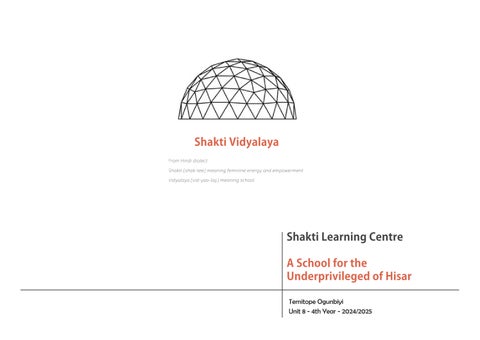

Shakti Vidyalaya
From Hindi dialect
Shakti (shak-tee) meaning feminine energy and empowerment
Vidyalaya (vid-yaa-lay) meaning school
Shakti Learning Centre
A School for the Underprivileged of Hisar
Temitope Ogunbiyi
Unit 8 - 4th Year - 2024/2025
Client Study
Paryatan Foundation
The Paryatan foundation, based in Hisar, India is a non-profit organisation, founded in 2018, and is dedicated to nurturing community empowerement and sustainable development. Aiming to enrich underprivileged communities, the foundation focuses on education, skill-building, and environmentally responsible methods to create a long lasting social impact.
Paryatan means “Leaving ones residence to travel for the sake of rest and for seeking knowledge.”
The foundation are on a mission to make learning fun. They truly believe that everyone deserves the opportunity to learn and gain knowledge, but unfortunately, common educational institutions have made it seem like a cumbersome task, especially for children.
“Ultimately, our goal is to reinvent education and learning, making it feel less like a burden and more of an instinctive activity for kids and learners alike. We believe that if we can create a positive and healthy learning experience for these kids, we can achieve our ultimate aim.”


Foundation Logo
Client Study
Unique features of Paryatan

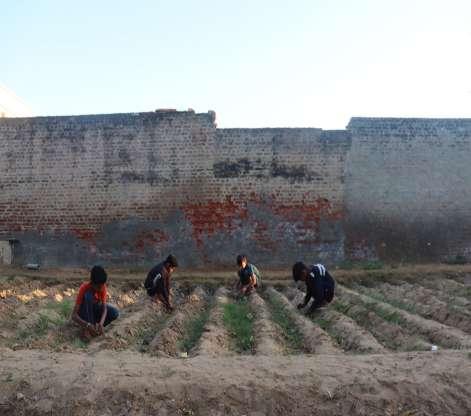
Development Programs
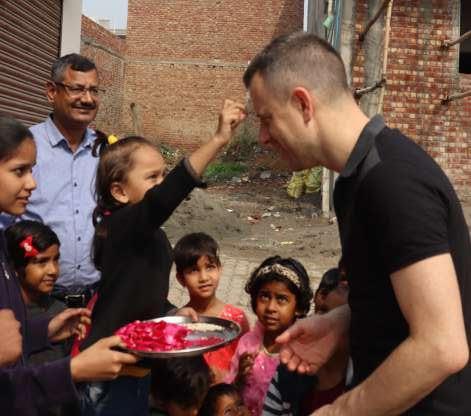
Paryatan NGO engages directly with local communities to understand thier needs and tailor its initiatives accordingly, ensuring a significant impact.
The NGO also offers skill development and training programs to empower local community members, helping them secure better employment opportunities.
Furthermore, they actively collaborate with other organizations, and private sector entities to leverage resources and expertise for more effective implementation.
Community-Driven Approach
Skill
Collaborative Partnerships
Client Study
Paryatan Community Activities
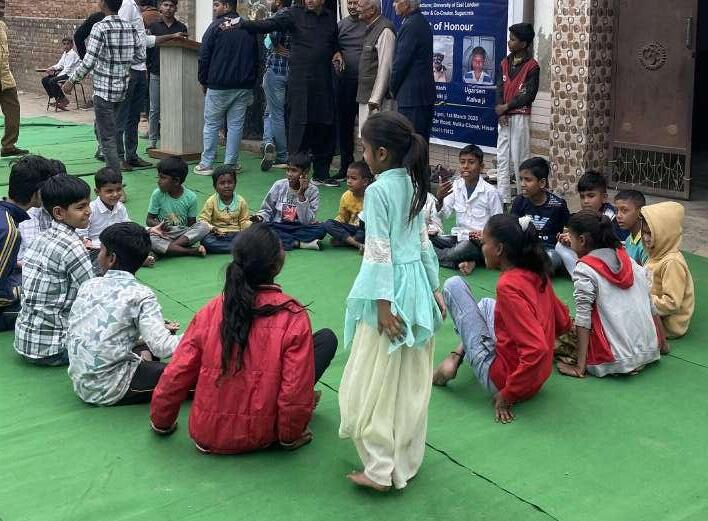
Activities are planned for the kids; Clay art, lipan art, textile art, crafting bags made from reissued cloths.

Festivals and holy days involve celebrations with dancing from the children.
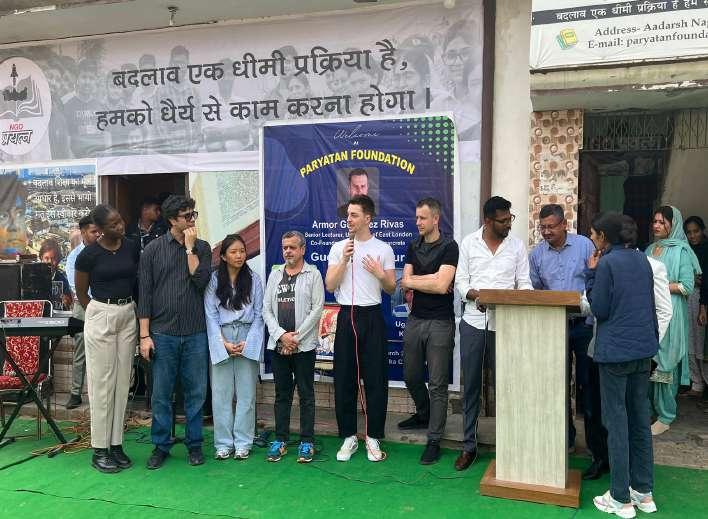
Welcoming activities for special guests involving the whole community. Dancing, speeches, presentations are all organised by the foundation.
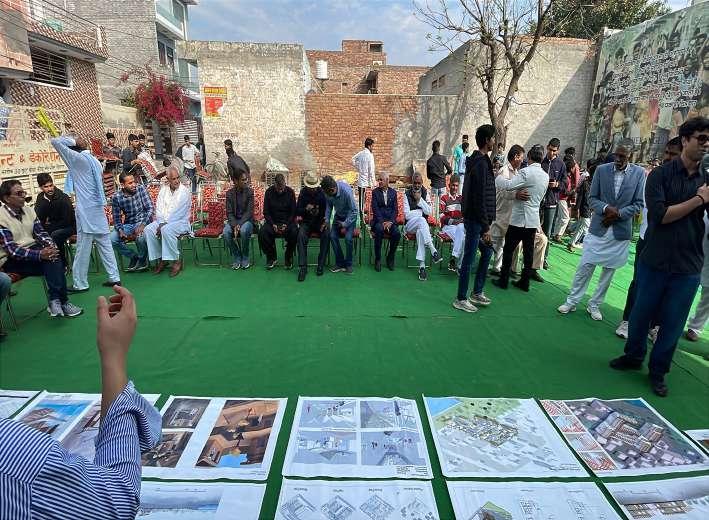
Sunday is fun day and also open doors, external people come to the organization to learn about their mission. Philanthropist bring their children to show the example the foundation is setting.
Client Study
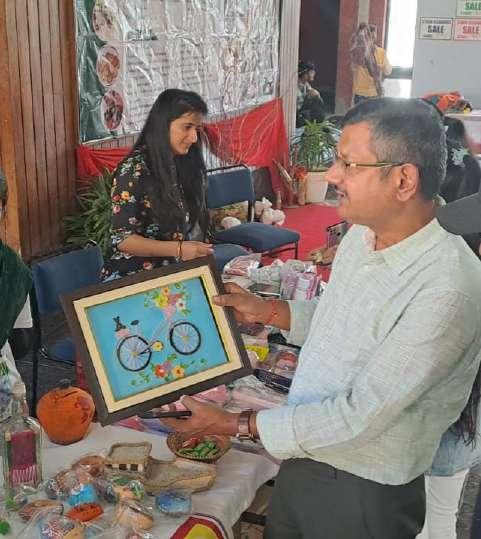
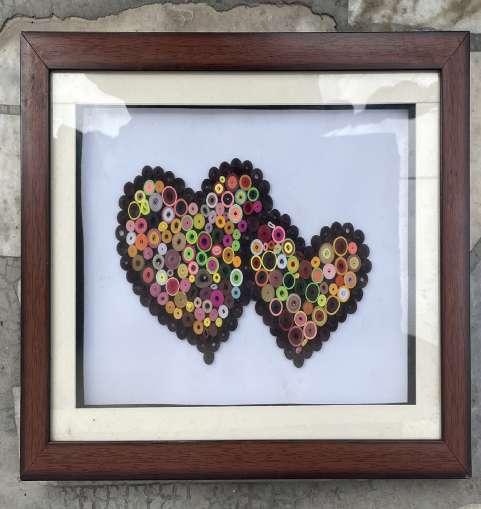
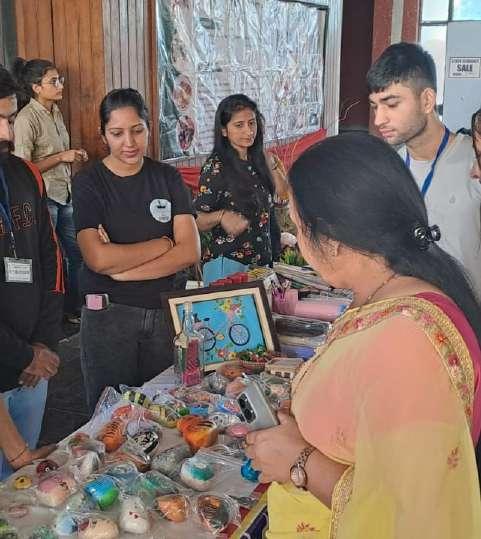
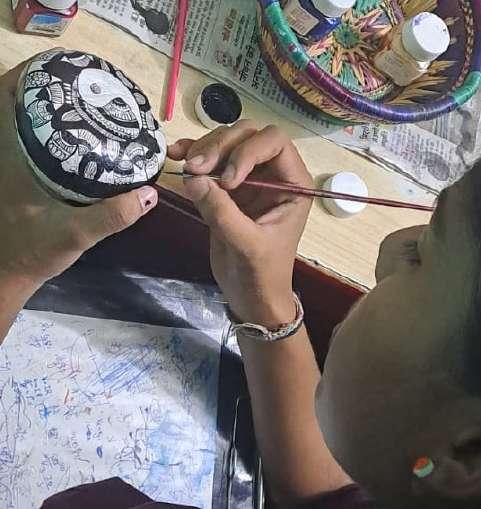
Charity shop initiative
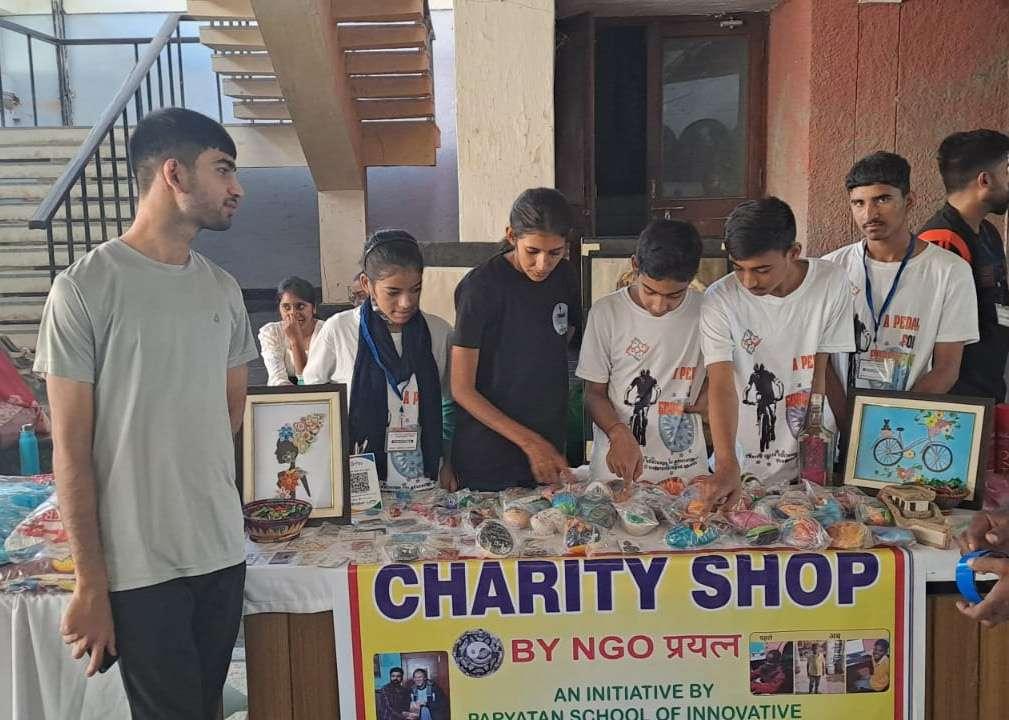
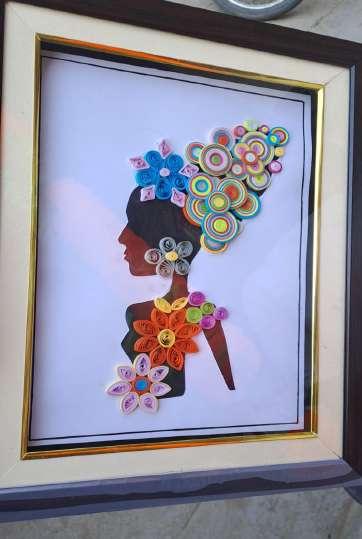
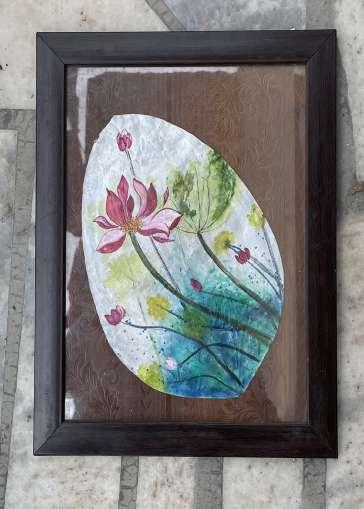
Students create various types of art, and several times a year, the NGO’s students set up stalls to sell these products and ea rn money from them.
Client Study
Achievements toward their mission
The foundation put a lot of time and effort into helping and supporting young children in poor and struggling families in Hisar.
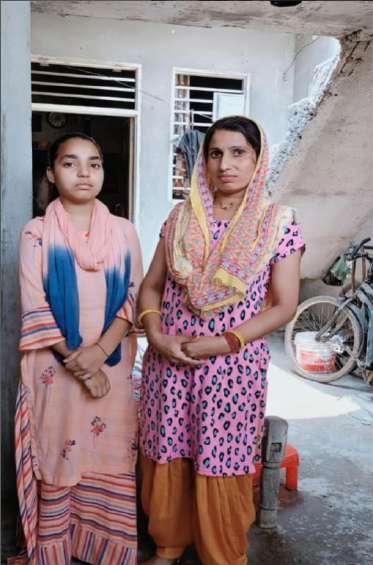
The Paryatan Foundation has profoundly impacted Yachana’s family, supporting them through immense challenges. After Yachana’s father abandoned the family, her mother courageously worked to provide a better future for her children. With financial and emotional aid from the foundation, Yachana and her siblings now have access to quality education and a nurturing environment, for which Yachanas mother remains deeply grateful.
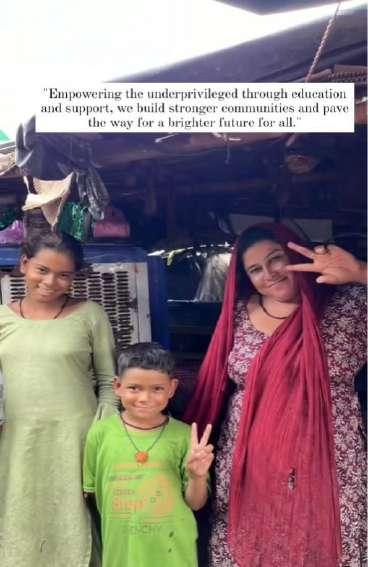
A group of interns from the foundation visited Kanha, a bright student living in the slums with his family. Despite battling financial instability, food scarcity, and Kanha’s diabetes, the family has seen remarkable changes thanks to Anil Sir’s guidance. His efforts have improved education, hygiene, and dignity in the community, transforming lives and offering hope to families like Kanha’s who endure daily hardships.
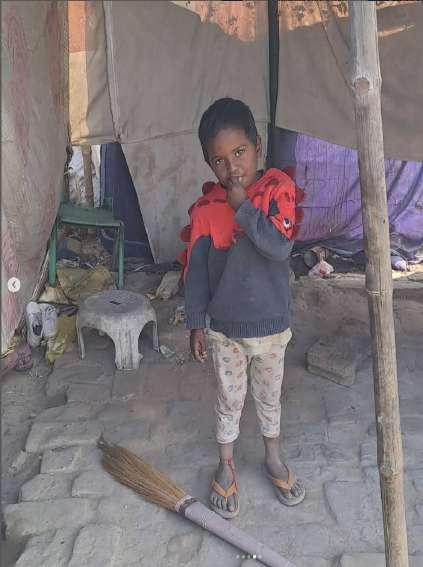
Jaanvi, once homeless and scavenging through trash, has transformed her life with the support of the foundation and now attends school. Her journey reflects the incredible sense of community within the NGO, where senior students teach, care for, and share food with their younger peers.

The foundations crafting sustainable and eco-friendly classrooms using bricks from sugarcane waste.
Their decision to build India’s first eco-friendly classroom aligns perfectly with their dual mission of fostering education and preserving the environment. By integrating sustainable practices into education infrastructure, they are paving the way for a greener future while providing essential learning spaces for those in need.
Their dedication to transform agricultural by-products into building materials showcases a commendable commitment to environmental sustainability and innovation.

The Pad Bank initiative is a community-driven program that aims to provide access to sanitary pads and promote menstrual hygiene among women in underserved commun ities. By ensuring affordable and reliable access to these essential products, the program empowe rs women to manage their periods with dignity and confidence, removing barriers to education, employme nt, and social participation.
My proposed health and hygiene clinic, open to the public, will have a dispenserie distributing sanitary pads
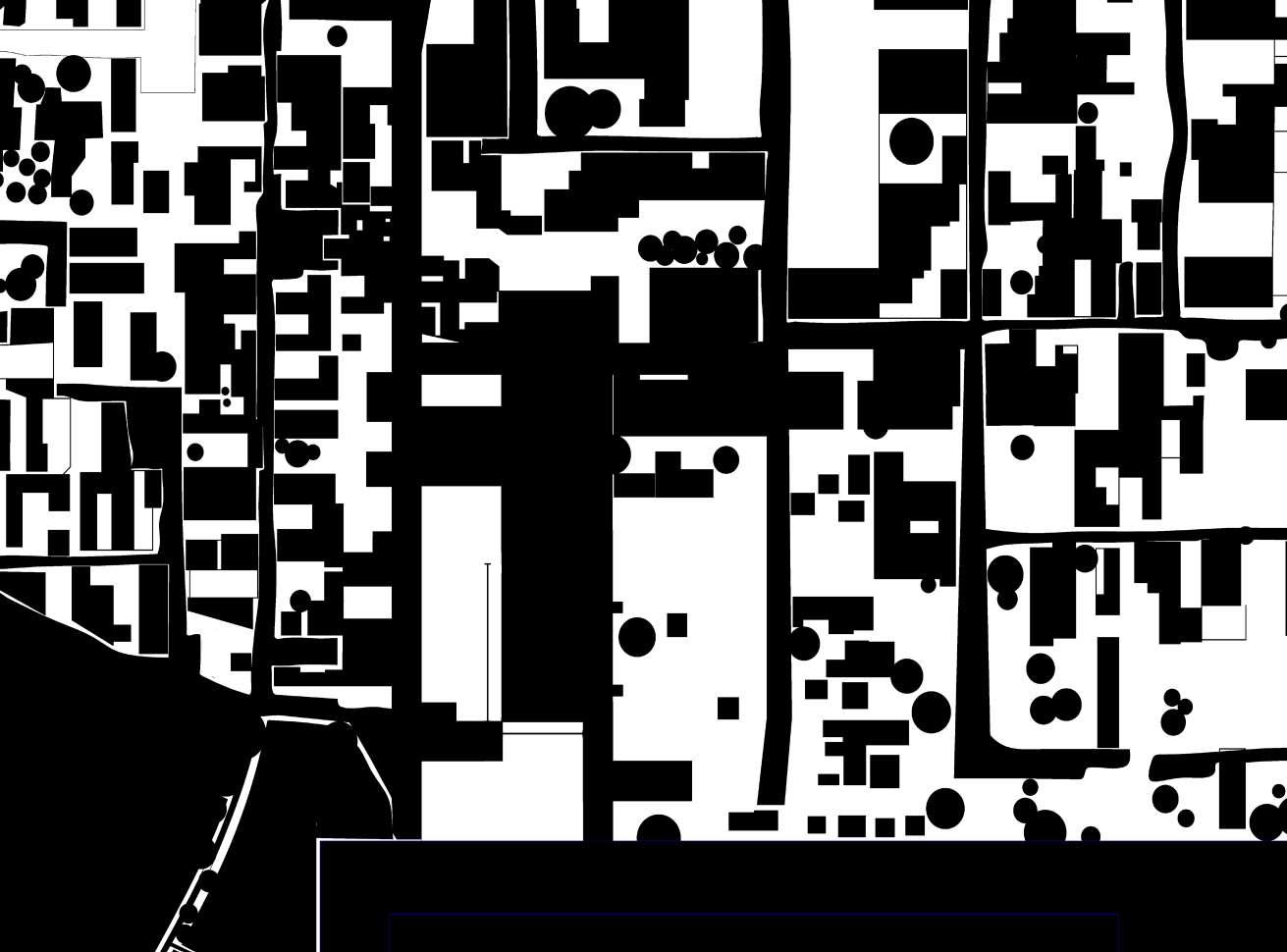
1 - Paryatan Foundation
2 - Playground
3 - Acquired site
4 - Informal Settlement
5 - Landfill waste disposal
6 - Sewage
7 - Water reservoir
8 - Agricultural fields


Project Brief
Civic and Learning Centre
For this project in Hisar, the foundation has asked us to create a civic and learning centre, designed to bring in more underprivileged girls into education.
They have given three site options to work within while accomodating 200-300 students.
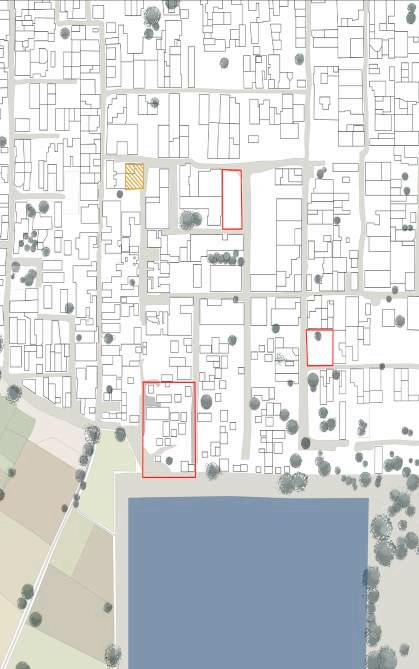
Site Options
Intended program
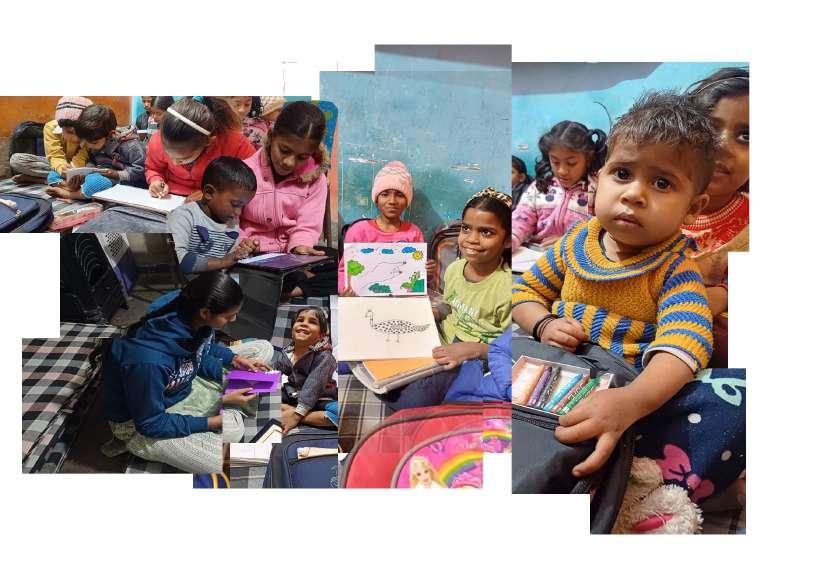
I want to build a school. Beyond the conventional curriculum students are to also learn, as stated by the foundation, vocational skills that align with the regional job market and community needs, such as:
Agricultural Skills, Basic IT and Computer Skills, Handicrafts and Textiles, Health and Hygiene.
Methods of learning could include but not limited to:
• Field trips
• Outdoor learning
• Group assignments Spaces needed for the school
• Classrooms
• Assembly area ( for students and community gatherings )
• Dining hall/Kitchen
• Toilets
• Courtyard/Outdoor learning area
• LIbrary
I aim for this school to be a duel primary and secondary school providing education for boys and girls aged 5 to 16.
Other users will include:
• Teachers
• Community members - They will also benefit from educational workshops, perhaps attending night schools.
• NGO Volunteers - Organising community give back opportunities, expanding our network and support long term goals.
• Underprivileged young girls - As stated by a representative of Paryatan, many girls in india are abused and forced into marriage, this school is to be a haven for such girls.
• Administrative Office
• Garden
• Workshops ( Art, Cooking etc )
• Dormatory ( for students and guests )
• Health and hygiene counselling ( sanitation, dental, pharmacutical etc. )
• Prayer room
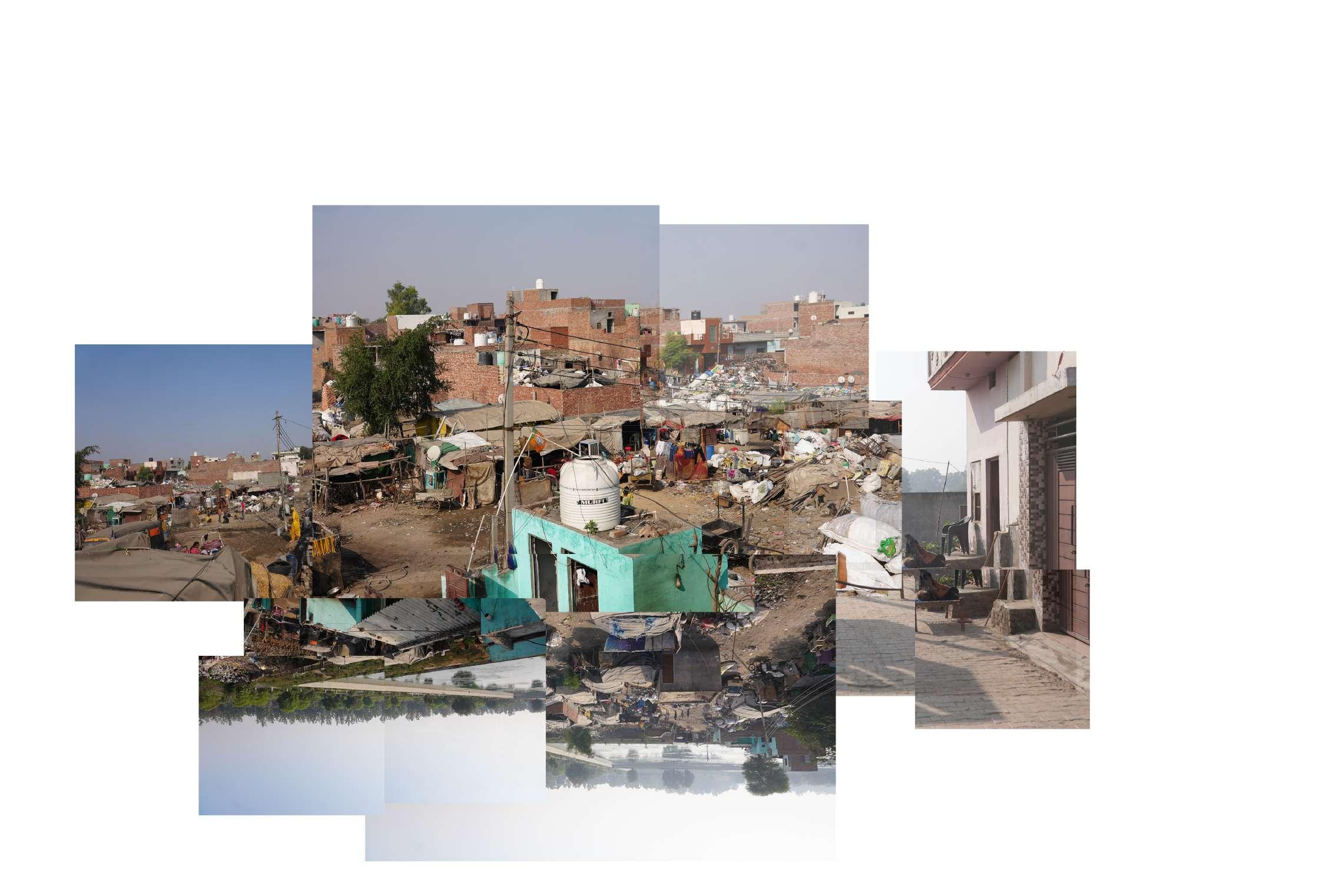
Site Analysis
Site Analysis
Site Location
City: Hisar, Haryana, India
Latitude: 29.2° N
Longitude: 75.7° N
Climate: Hot and dry; extreme summers, mild winters. Summers can be extremely hot, with temperatures often exceeding 40°C (104°F), while winters are relatively cool, with temperatures occasionally dropping below 7°C (44°F).
Rainfall: 429 mm annually, Primarily during monsoon (July–September)
Wind Patterns: Wind patterns are predominantly from the northwest during summer months, bringing hot and dry winds, while winter winds are cooler and often originate from the north and northeast.
Soil Conditions: coarse loamy and clay soils, which are suitable for agriculture and landscaping.

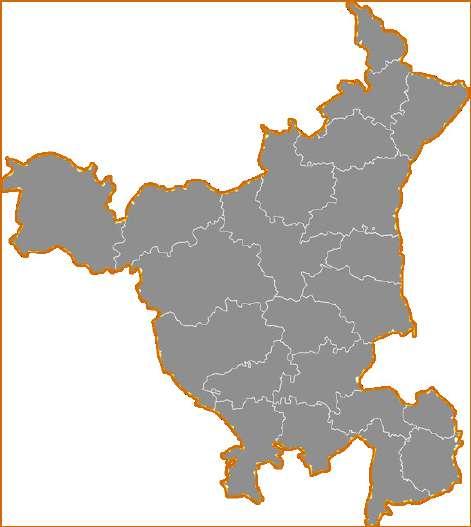

Hisar
Haryana
Site Analysis
Selected
site

The site I have chosen to build on is the largest piece of land available to us which currently measures at 15.2 x 32.9 m, howevever the foundation are in the midst of acquiring more land on this site. It benefits from being oppposite the water resevoir aswell as having a nearby agricultural field for farming. Any existing structures will have to be demolished prior to construction.







Key:

- Prevailing Winds ( NW )
- Noise Pollution
- Sun path ( position of the sun at midday, being 213 m high )
Local vegetation
Road access to the site for vehicle/ pedestrian circulation
Exisiting buildings
View out to water resevoir
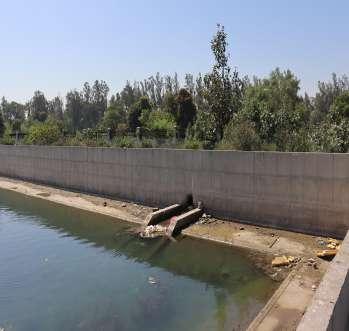

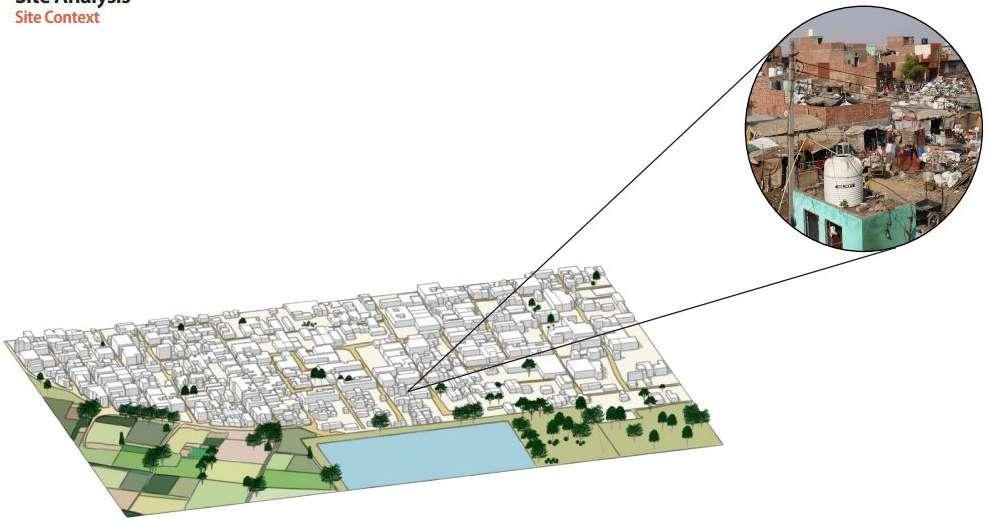
The location of the site is adjacent to a large water resevoir which can supply water to the school and perhaps act as a community water feature, aswell as provide hydroelectric power, a renewable energysource. Additionally, it aids in rainwater harvesting, as it collects and stores seasonal rain for irrigation and reuse. Additionally the nearby green area can be converted into a public park.
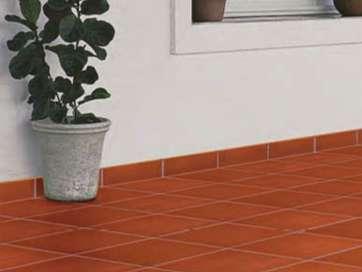
The site is accessible via road, with both 2-wheeler and 4-wheeler access around the surrounding colony. Hisar itself is well connected via road, with direct access from New Delhi, which would make the site easily reachable by people from the nearby regions as well. Currently pavements and roads are a mixture of interlocking tiles and dirt road. I propose that this be re developed using terracota tiled pedestrian walkways.
The surrounding area is currently undeveloped, as the entire area is still in the early stages of development. However, once development is completed, it is planned to become a residential colony. The surrounding properties are only partially built, with some temporary structures in place.Existing structures on site will be removed once development begins.
Site Analysis
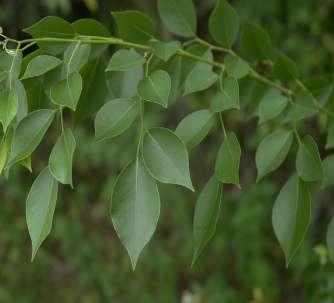
Trees present in the area
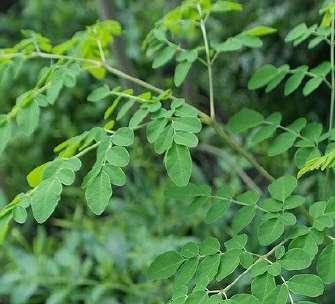
MORENGA
The wood from this tree is good for furniture.
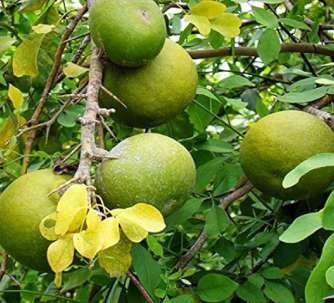
The fruit from this tree is good for hydration.
Oleifera tree, leaves are consumed as medicinal food and are good for diabetes and contain plenty of vitamin.
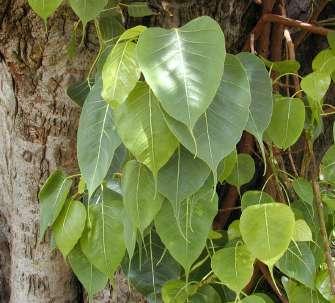
pollution.
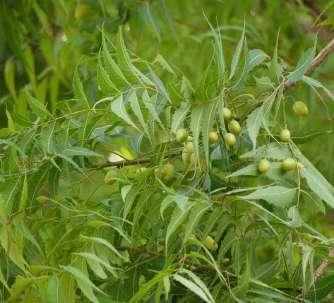
NEEM PLANT
Tree being used in children’s playgrounds. Good for brushing and mouth hygiene.
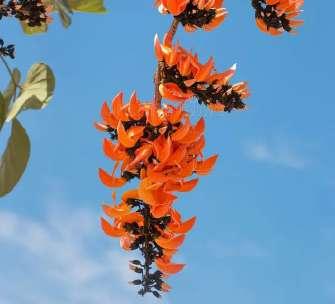
It is a tree with orange flowers used to make pigments for Holi
BAEL PATRA
FICUS (Peepal tree), High resistance to
DHAK TREE (Palash)
Festival.
SHEESHAM (Dalbergia sissoo)
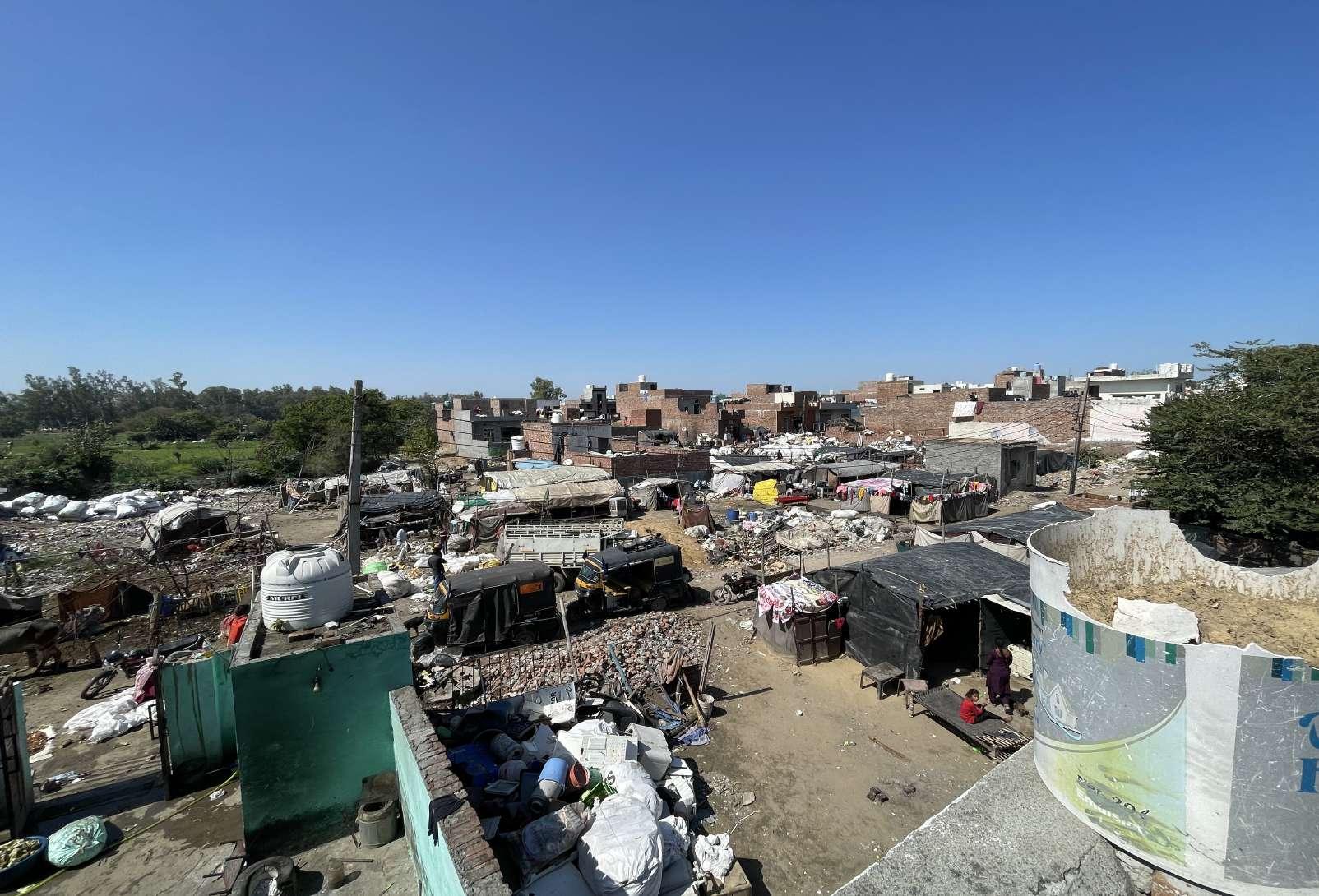
The extent of litter that surrounds the local neighbourhood. I propose that the NGO organises litter picking excavations with the young students as well as a neighbourhood clean up initiative. This is a benefit to the community and teaches the kids good values. All waste will be recycled in large bins I will install close to the school.
Site Analysis
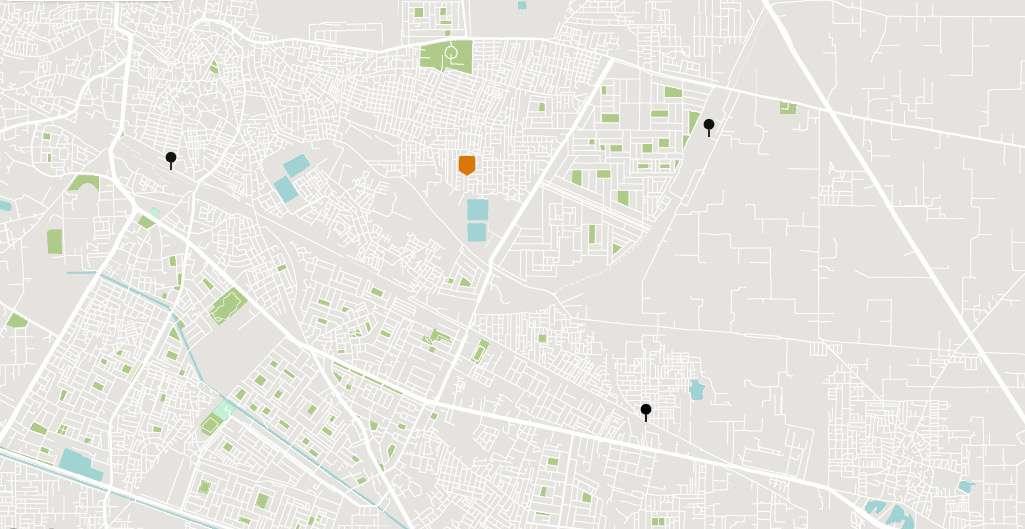
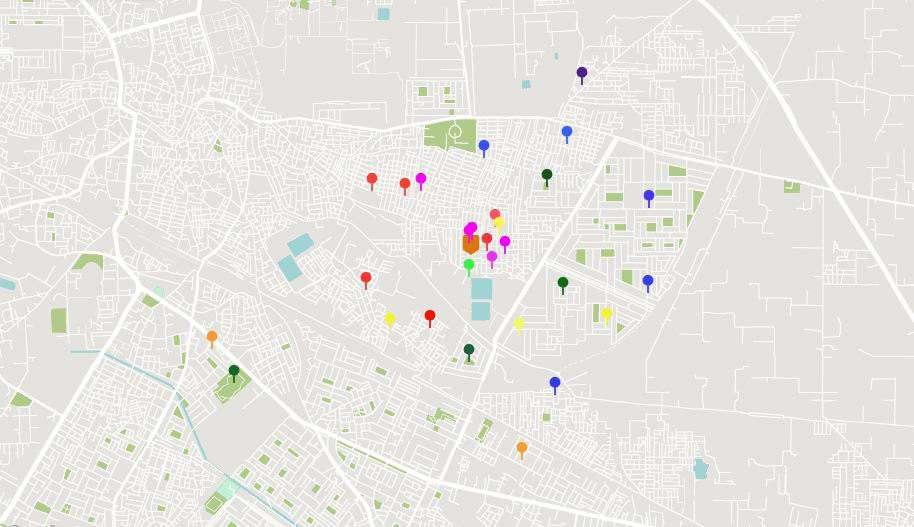
1 ) Hisar Junction - 16min drive/45min walk
2) Hisar Bypass Cabin - 12min drive/47 min walk
3) Raipur Haryana Junction - 9min drive/44min walk
Nearby Stations
Site Analysis
SWOT Assesment
Strengths
• Proximity to nearby green area.
• Proximity to water tank can provide many benefits.
• Soil is suitable for agricultural use.
• Large community can be employed for construction and become invested in the schools success.
• Local community can provide students a chance to give back and apply learned vocational skills.
Weaknesses
• High crime rate.
• Gender inequality.
• Undeveloped structures cluttering the site.
• Substantial rainfall during monsoons necessitates a robust drainage system to prevent waterlogging.
• Lack of basic infrastructure.
Opportunities
• Sustainable building solutions.
• Inclusion of vernacular building designs and traditions.
• Community based development.
• Locally sourced materials.
Threats
• High solar radiation means overheating of exposed surfaces.
• Dusty winds mean a need for protective openings and materials.
• Water scarcity means the importance of conservation and reuse.
• Cost management due to limited investment.
• Urbanization pressure.
Site Analysis
Cultural and Social Context
Haryana is a state in North West of Delhi. On one hand it got famous for steel and cotton industries and did a rapid process in education and industrial growth.
However, 63% live below the poverty line and the average of female literacy is between 40 and 50%. On the other hand Haryana is also one of the states where the gender equality is the worst. It ranks 15th in poverty and the infant mortality rate is still high at 48 per 1000 infants born, ranks it at 28 among Indian states.
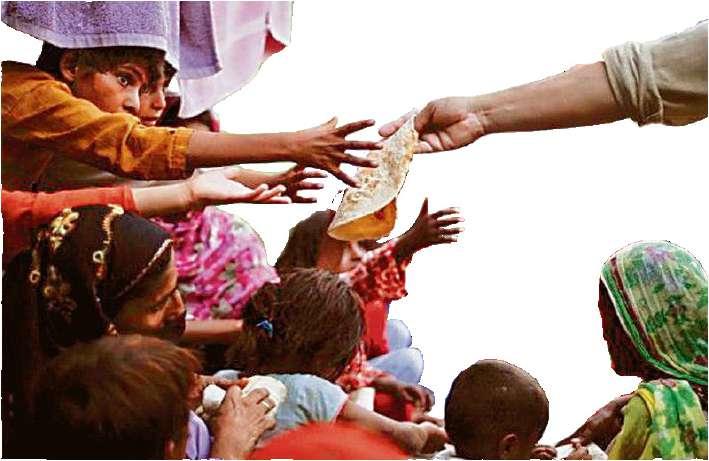
Rapes and buying, selling and reselling of women, as well as trafficking from other states, like West Bengal are usual. Atta Batta is a kind of “mafia” which is established because of that big gap of gender to arrange marriages even with under aged girls and kidnapped ones.
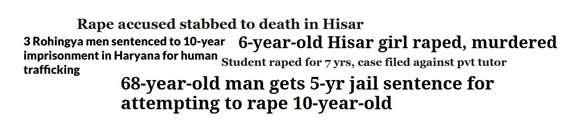
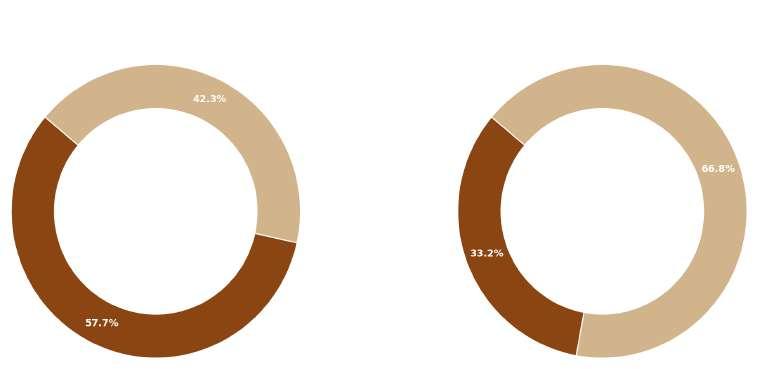
My school will not only bring these underprivileged and illiterate children into education, providing them with the knowledge and skills to better their lives, it will also act as a haven for such vulnerable and abused girls, escaping the risk of being sold and raped.
Case Study
Komera Leadership Centre, Rwanda
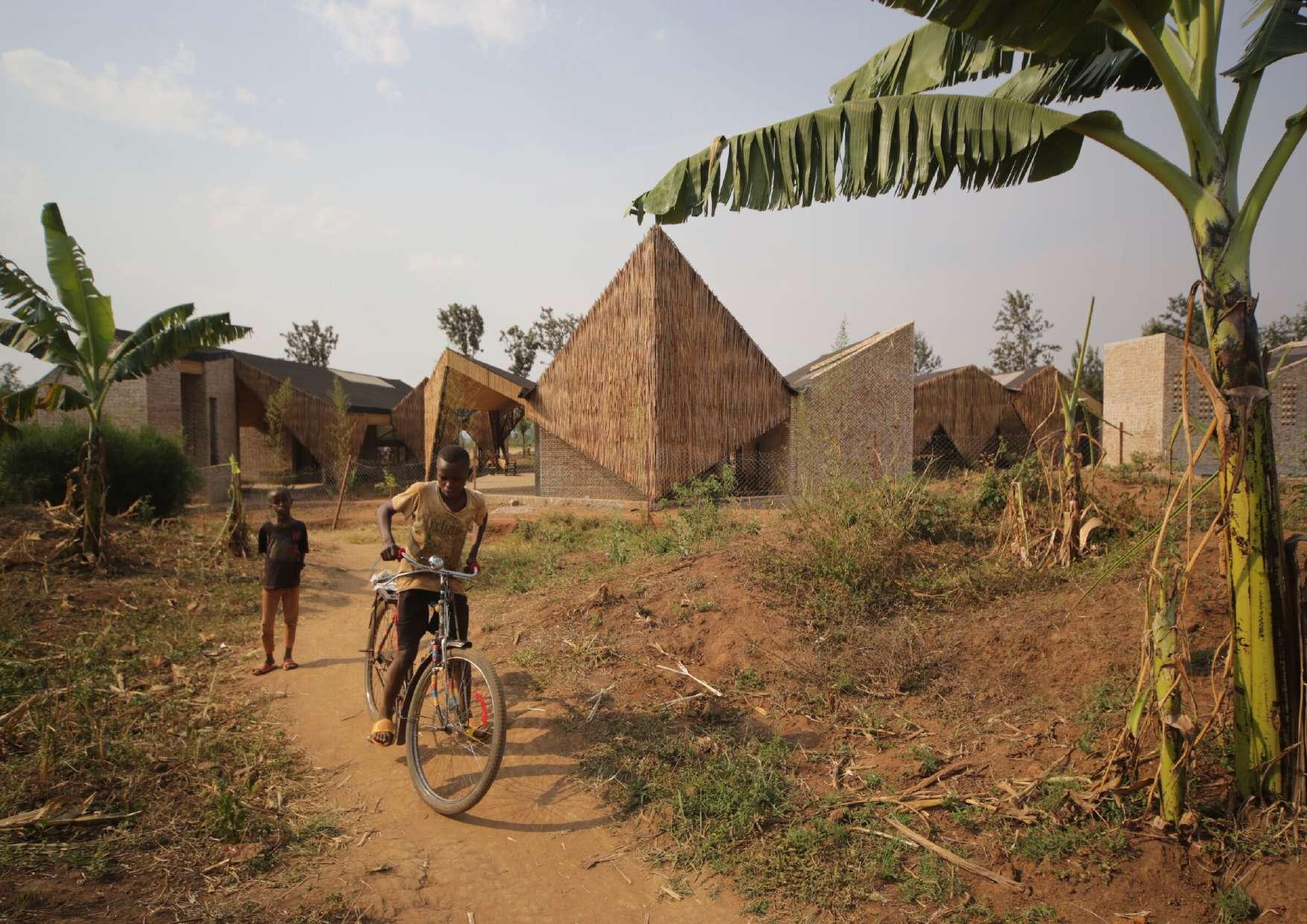
The Komera Leadership Center project, located in the Rwinkwavu sector of Rwanda’s Eastern Province, serves as a unique community and educational hub supporting young Rwandan women in their pursuit of leadership, education, and empowerment. Developed by the organization Komera, which means “be strong” in Kinyarwanda, the center aligns with Komera’s mission to promote girls’ education, build resilience, and create lasting opportunities for young women in rural Rwanda. This clearly alligns with my clients mission.
The architectural design embraces local building techniques, materials, and community involvement, creating an environmentally sustainable structure that reflects Rwandan culture and resourcefulness. By using locally sourced materials like compressed earth blocks and incorporating solar energy, rainwater harvesting, and natural ventilation, the project minimizes environmental impact while reducing operating costs. The center consists of classrooms, meeting spaces, and accommodation for both students and visiting mentors, fostering a learning environment that encourages collaboration and personal growth.
Beyond infrastructure, the Komera Leadership Center’s programming focuses on educational advancement, vocational training, and health services, enhancing women’s capabilities and socio-economic opportunities. The center serves not only as a space for Komera’s scholarship recipients but also as a community resource, supporting initiatives that benefit the wider population. The Komera Leadership Center symbolizes resilience and empowerment, offering women in the region the skills and support needed to lead their communities and achieve economic independence, aligning with Rwanda’s broader vision for gender equity and sustainable development.
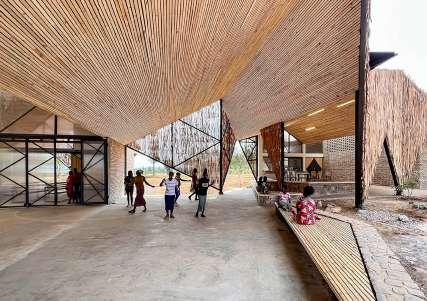
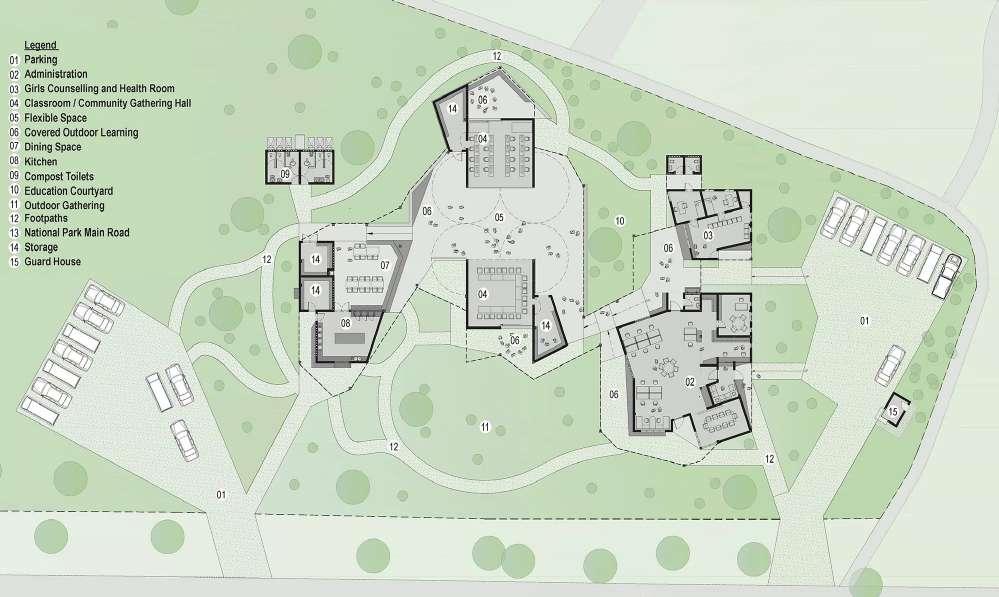
Courtyard Space
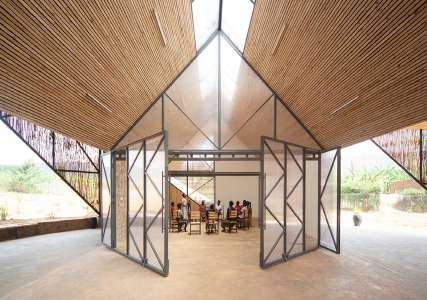
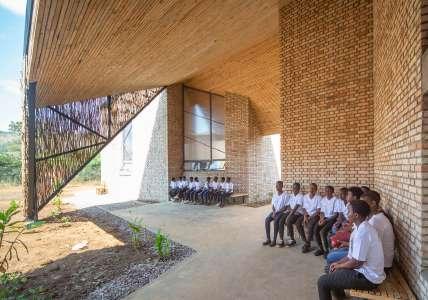
Covered Outdoor Learning
Programme
key photographs
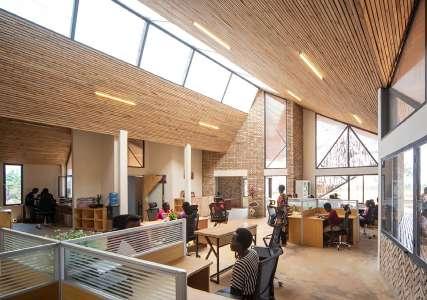
Administration
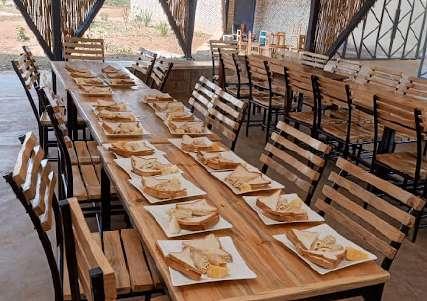

Flexible Space
Dining Hall
Classroom
Architectural Analysis
key takeways
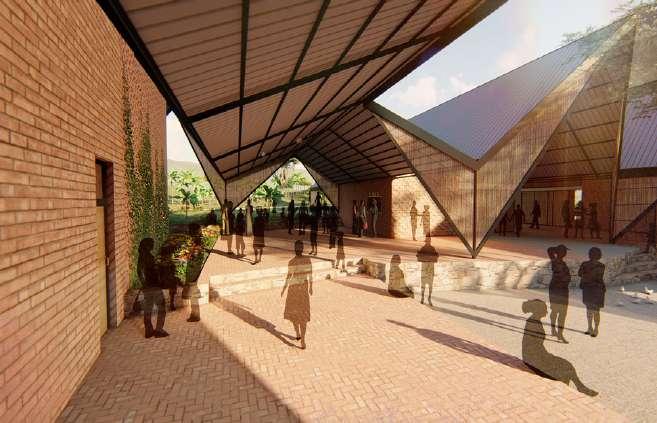

The center’s layout maximizes natural light and ventilation, critical in the tropical climate. Spaces are oriented to capture prevailing breezes, reducing dependence on mechanical cooling systems.
The central courtyard concept encourages community interaction and serves as a multifunctional outdoor area, providing an adaptable space for gatherings, workshops, and social engagement.
The building footprint is thoughtfully designed to complement the surrounding terrain, minimizing disruption to the natural landscape and this is an important consideration for me when developing stage 2.
The Komera Leadership Centre was constructed in collaboration with Rwanda Village Enterprises and a vast majority of materials utilised for construction were locally sourced. The local workforce was hired by BE_Design for the construction, from which an average of 40 per cent were women.
During the construction, BE_Design provided on-site skilled labour training and strived to provide the workers with good income and savings accounts, PPE and safety equipment, and construction skills. The firm worked and still maintains a close connection with the community since the architects believed that the involvement and contribution of the local people were vital for the construction of the Komera Leadership Centre and is key to its endurance.
Similar job opportunities can for sure be benefitial to the local people in Hisar and foster community investment in the success of the project.
Proposed perspective collage
Local community at work on the project
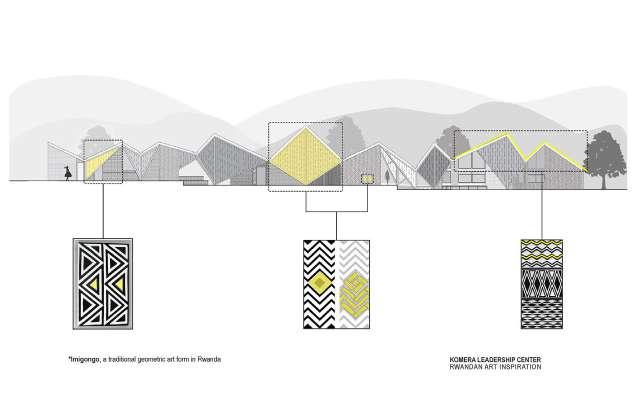
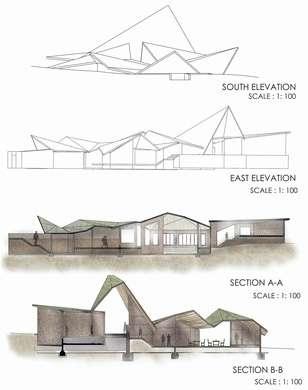
Elevations by BE_Design
The roof forms, woven eucalyptus screens, and brick patterns are inspired by traditional “Imigongo” art originating from the region, and carry an association with the Rwandan word “Komera”, meaning “to stand strong, and to have courage.” Many Imigongo patterns have symbolic meanings tied to Rwandan culture and history. Some designs represent fertility, prosperity, protection, or other cultural values.
The large roof connects the administration, health & counseling, classroom & gathering, and kitchen & dining spaces, creating an abundance of covered exterior spaces for break-out classes and informal meetings. The large eucalyptus screens provide shade and a sense of enclosure and privacy for the exterior spaces.
I would like to pay respect to the culture of india by incoporating designs inspired by cultural patterns and arts that hold signifance to the people in Hisar. For example, Jaali Screens.
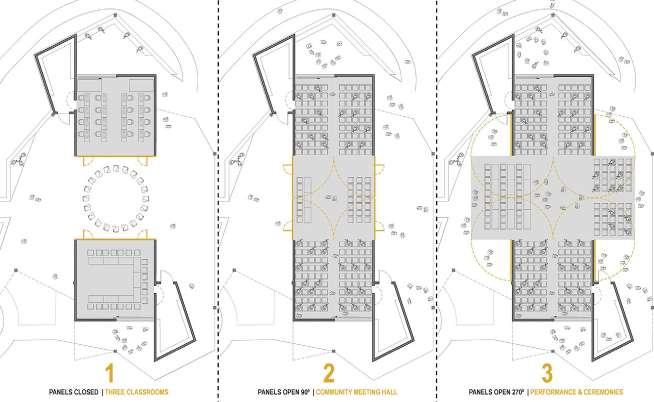
Wall Configuration
Large, hinging translucent panels transform the space, creating three classrooms when closed. When the panels are opened 90 degrees, they create a large meeting hall to accommodate the community. When fully opened to 270 degrees, the space can acco modate larger events such as performances and ceremonies.
The spaces used as classrooms and gathering centres feature movable walls that have given immense flexibility to the spaces. These walls are large, hinging translucent panels that can move and transform the space. This is an innovative and economical solution to give dynamism and multiple functions to a space.
I aim to create such similar adaptable spaces that change function throughout the day for different programmatic activites.
Axonometric Drawing
space
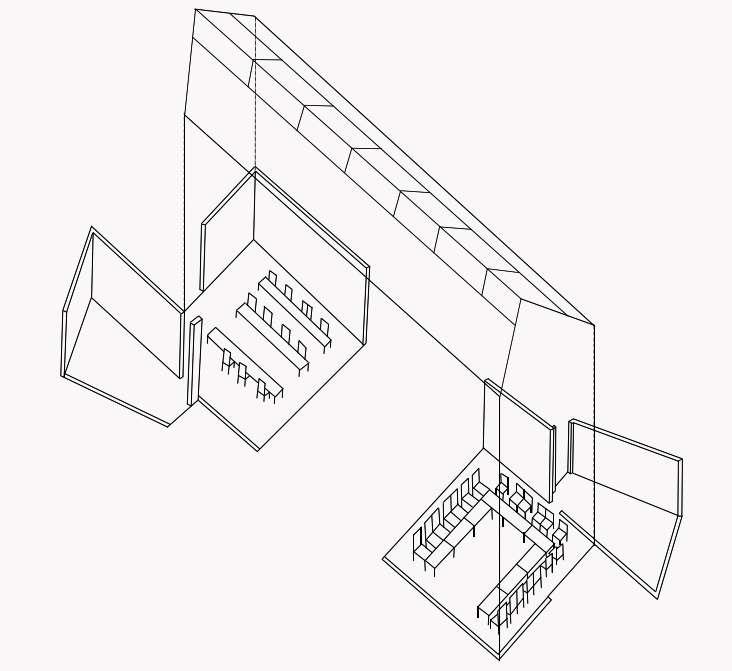
My axonometric of the ‘Flexible Space’ area of the building
Imposed Case Study onto site
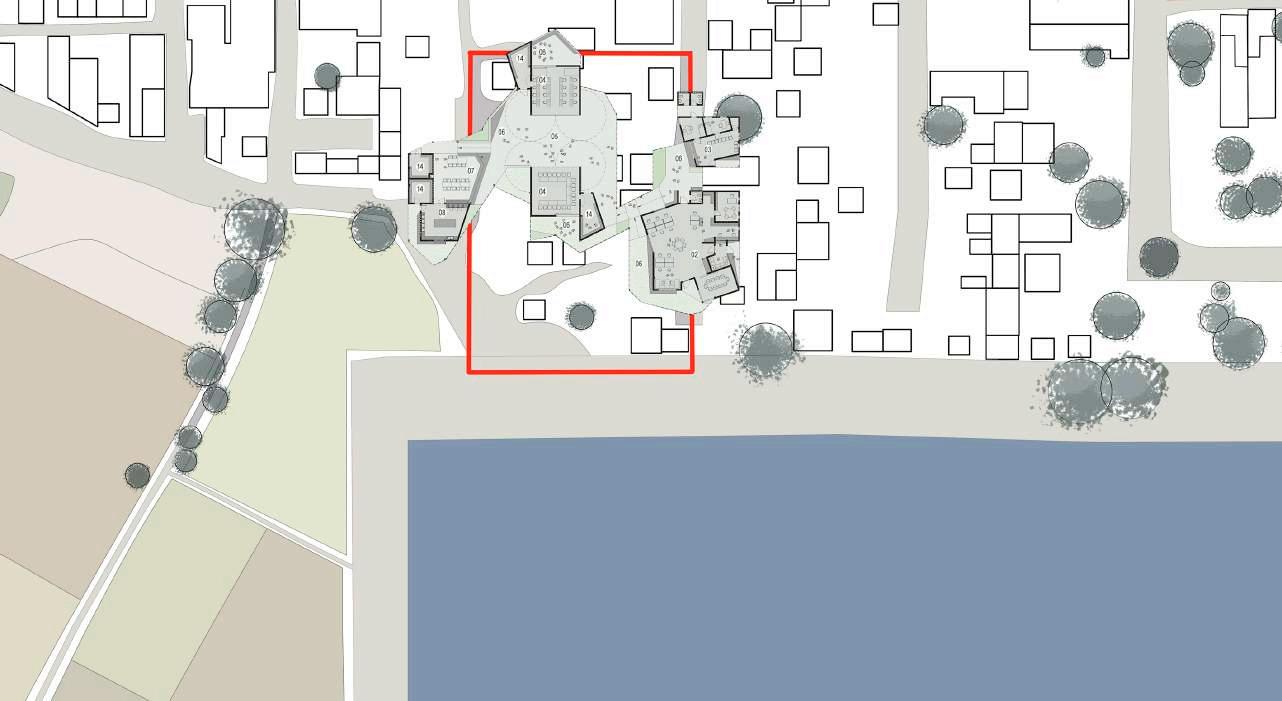
Here is the Komera leadership centre, placed onto the site in Hisar, to give an understanding of the scale and also how the building dimensions and placement sympathise with the context of the area
Case Study
The Earth House, India

The Earth House, located in Bengaluru, India, and designed by Chitra Vishwanath of Biome Environmental Solutions, is a landmark in sustainable architecture. This residence exemplifies ecological design, making extensive use of earth as its primary material to create a structure that integrates seamlessly with its environment while significantly reducing its carbon footprint.

Sustainability extends to water management, with rainwater harvesting systems and greywater recycling playing a vital role in making the house self-sufficient in water use. A green roof adds another layer of insulation while contributing to the local ecosystem by enhancing biodiversity and reducing heat.
The house is constructed using compressed stabilized earth blocks, crafted from soil excavated onsite. This material not only minimizes the environmental impact but also provides superior thermal insulation, keeping the interiors naturally cool in summer and warm in winter. The building employs passive cooling strategies, including high ceilings, cross-ventilation, and carefully shaded openings, ensuring comfort without the need for energy-intensive systems. Large windows and strategically placed skylights flood the interiors with natural light, reducing reliance on artificial lighting during the day.
Architectural Analysis
key takeways
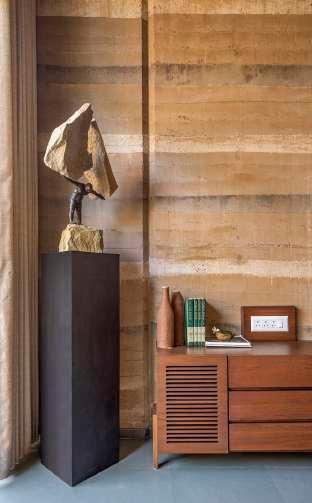
The Earth House is constructed using compressed stabilized earth blocks made from soil excavated on-site.
For my school, this approach can minimize construction costs, reduce environmental impact, and foster a connection between the building and its surroundings. Earthbased materials are particularly effective in Hisar’s semi-arid climate, providing natural insulation to maintain comfortable indoor temperatures.

Passive cooling strategies used in the Earth House are cross-ventilation, high ceilings and shaded openings.
This can inspire my designs for naturally comfortable classrooms. Large windows and skylights can optimize natural light, creating bright, welcoming spaces that reduce energy consumption.
Earth walls
Passive strategies
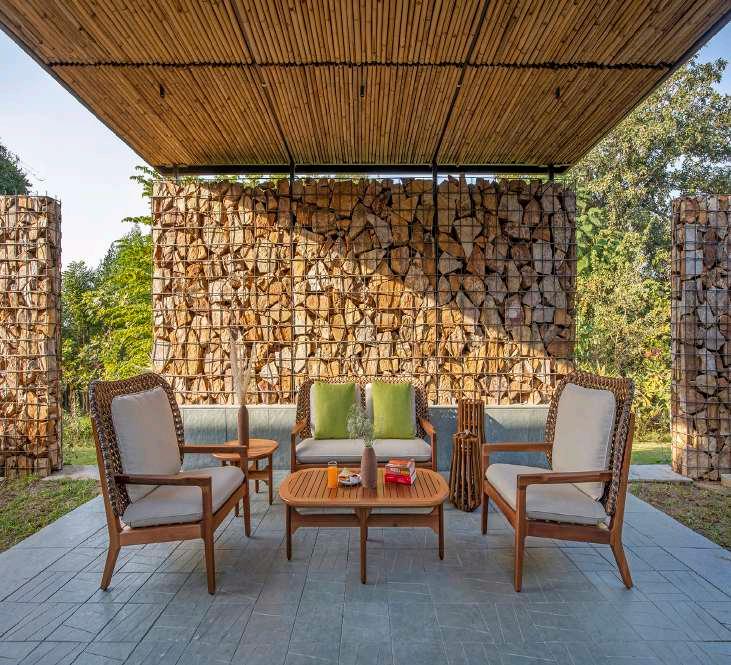
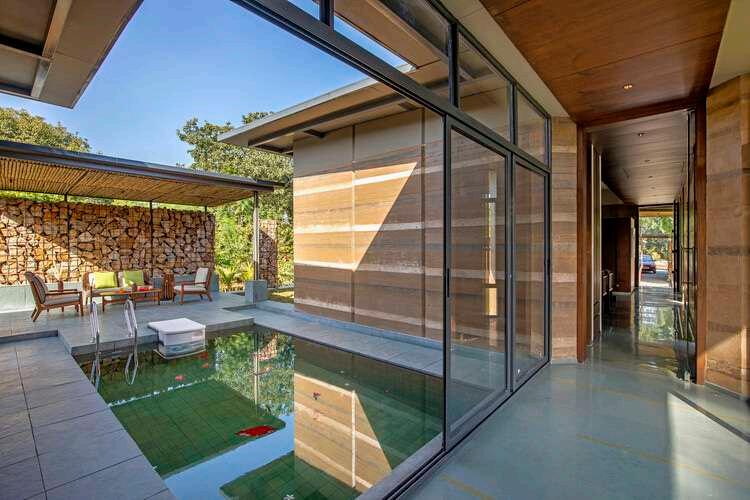
Adjacent to the house pool, is this Gazebo. Gabions have been used as screens to provide privacy, the large linear volume of the boxes and the earth colors of the rocks within complementing both landscape and built form. Far removed from their customary function as retaining walls, this reinterpretation of purpose has resulted in a dramatic presence in the design of the home.
This feature of the site is also enviromentally significant as it makes use of locally sourced matierials such as stone and bamboo.
Similar structures such as Pergolas could be very useful, incorporated into the school design, as protection from Hisars hot climate while also serving as a communal and/or learning areas for students. Furthermore, it would be benefitial during construction phase as demolition waste can be reused to fill these gabion walls.
Reciprical Bamboo Structures
Research
A reciprical roof, reciprocal grid or reciprocal frame is generally considered to be a structure that can be self supporting, where individual members recipricate support to neighbouring members through their interlinking. There are a wide variety of structures that might be considered as recipricating, in that the individual members interlink and support one another, however they can vary in how much they support one another, as well as in the way they are constructed.
These type of structures need temporary support for the first element (or beam) until the final piece is laid and interlinked to the previous thus locking the structure in place. Whilst it is clear that early humans made many versions of round shelters, it is not clear how many involved a reciprocal roof, though the structure fits well with the use of round wood timber which is likely to have been commonly used.
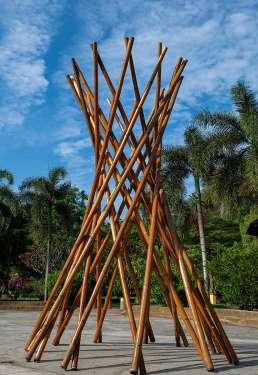

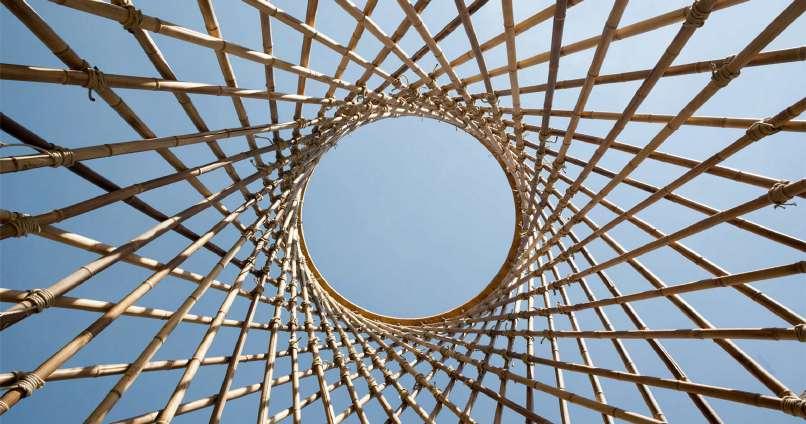

Varying reciprical frame structures
Reciprical Bamboo Structures
Fabrication Sequence and Circularity
Reciprical roof model 1:1
Group work
As a group research task we built a full-scale prototype. The team used 4 bamboo pieces to create a roof with an open skylight. Each bamboo member was filled with sugarcrete material and connected using 10mm bolts and rope, and a metal wire was used to maintain stability and its desired shape.
We also had a structural engineer from AKT II come in and assess what we had done, he was overall impressed however raised a few comments we could takeaway. This is annotated in the image on the right.
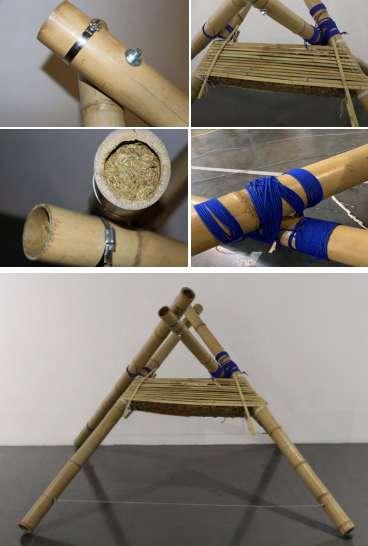
He told us that practically we’d need to have an element that would weigh the structure down as it could possibly be at risk of ‘flying away’ if weather conditions were bad.
He mentioned that because of the shape made to the skylight, we’d have to consider using a flexible covering material.
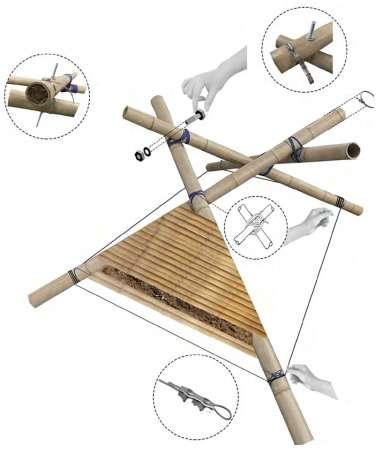
He also told us to consider how a roof like this, using wire in this way, can be joint to the wall of the building and other methods that can be used.
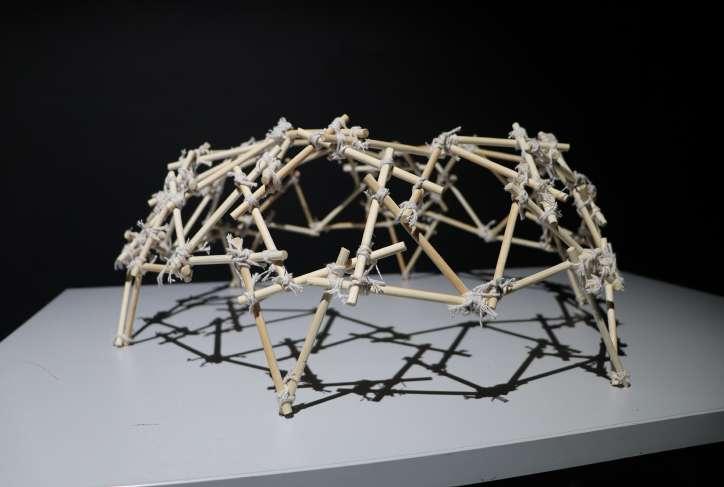
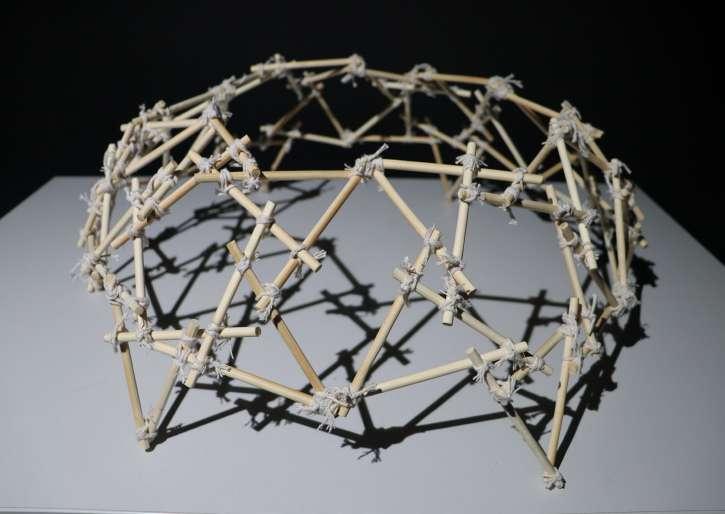
Working with the latter reciprical frame design, I made another 5 structures and joined them together to create a single dome structure at 10m high, which I have decided will be used in the design of the school.

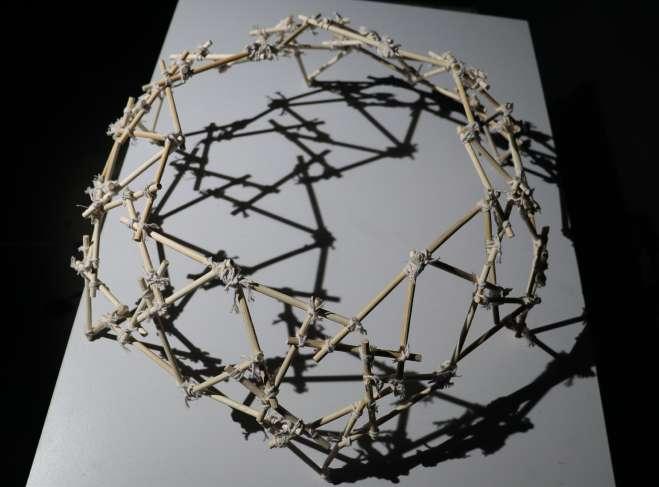
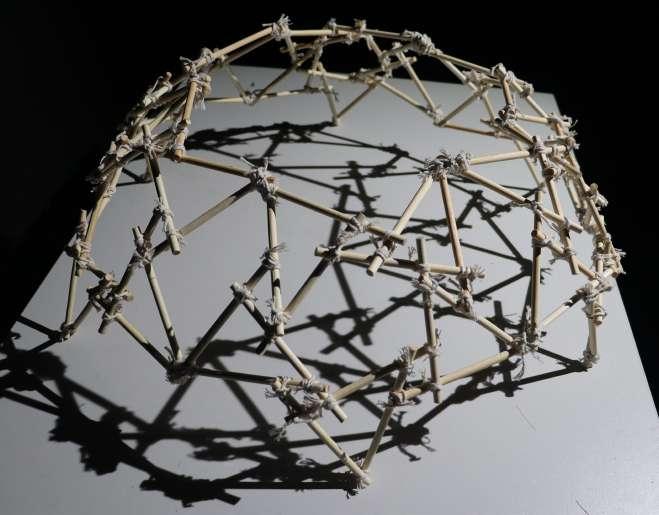
Reciprocal frame roof Development
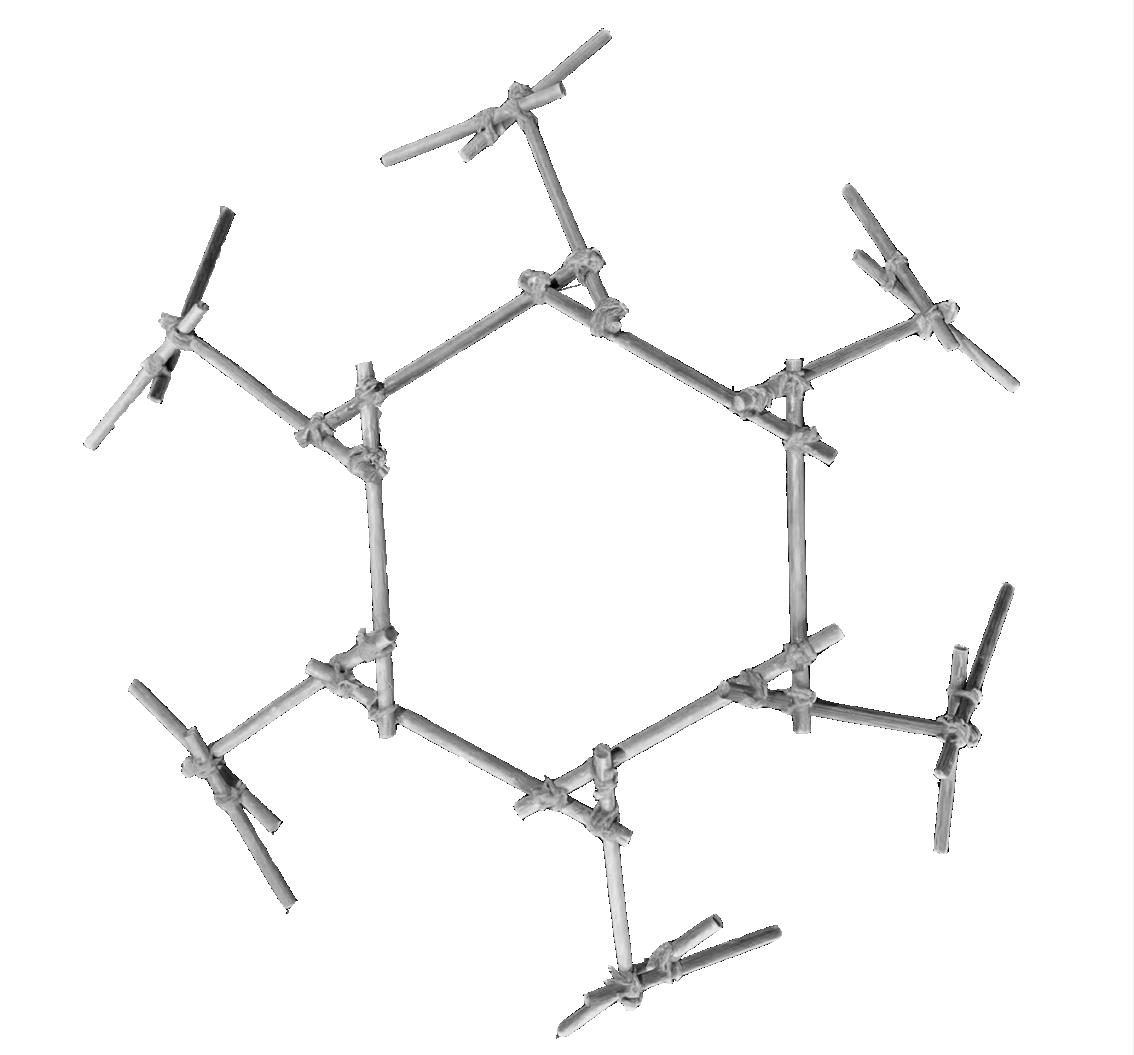
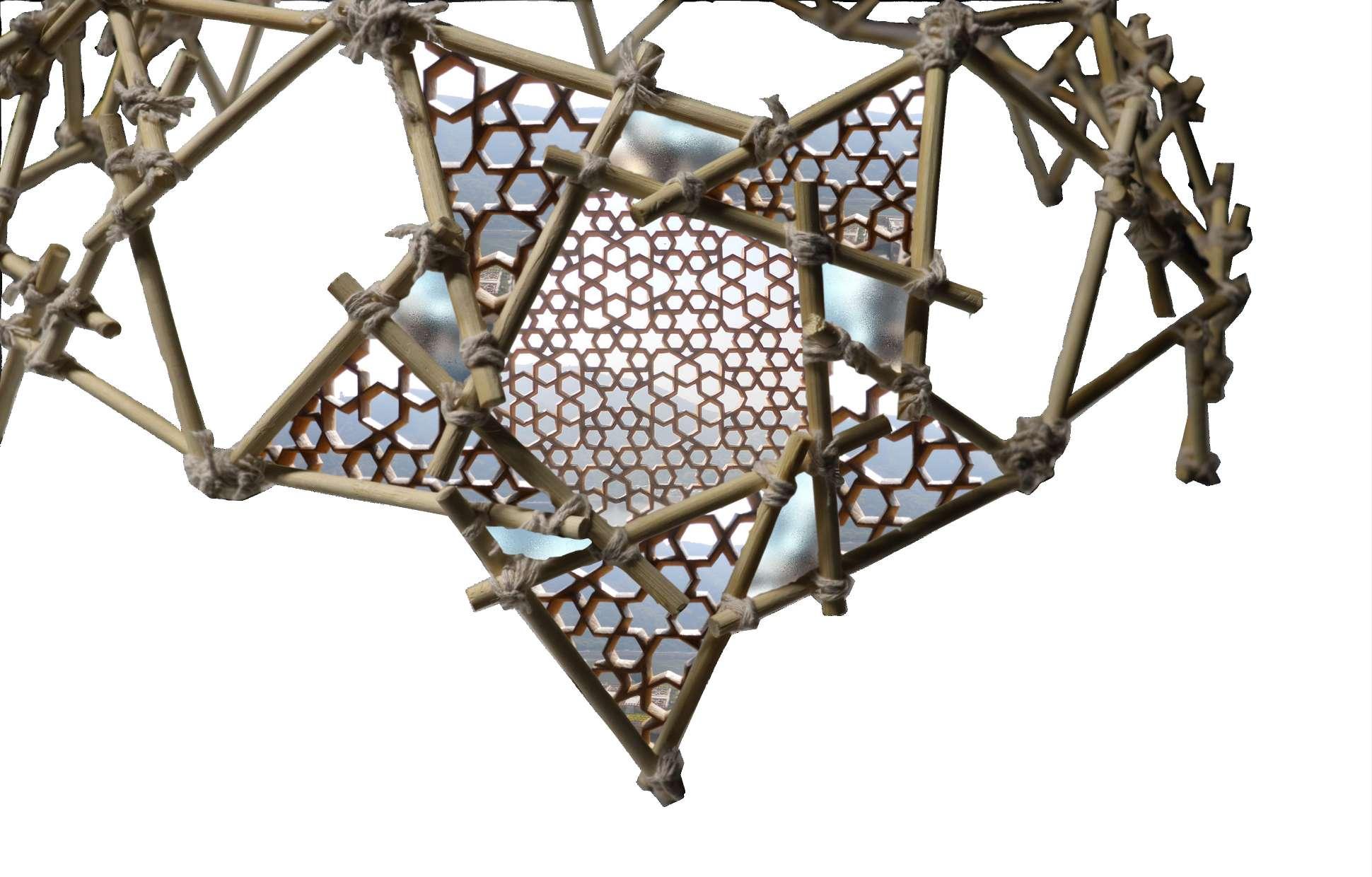
Here you see 1:20 variations on my intended reciprocal roof structure, with a central skylight.
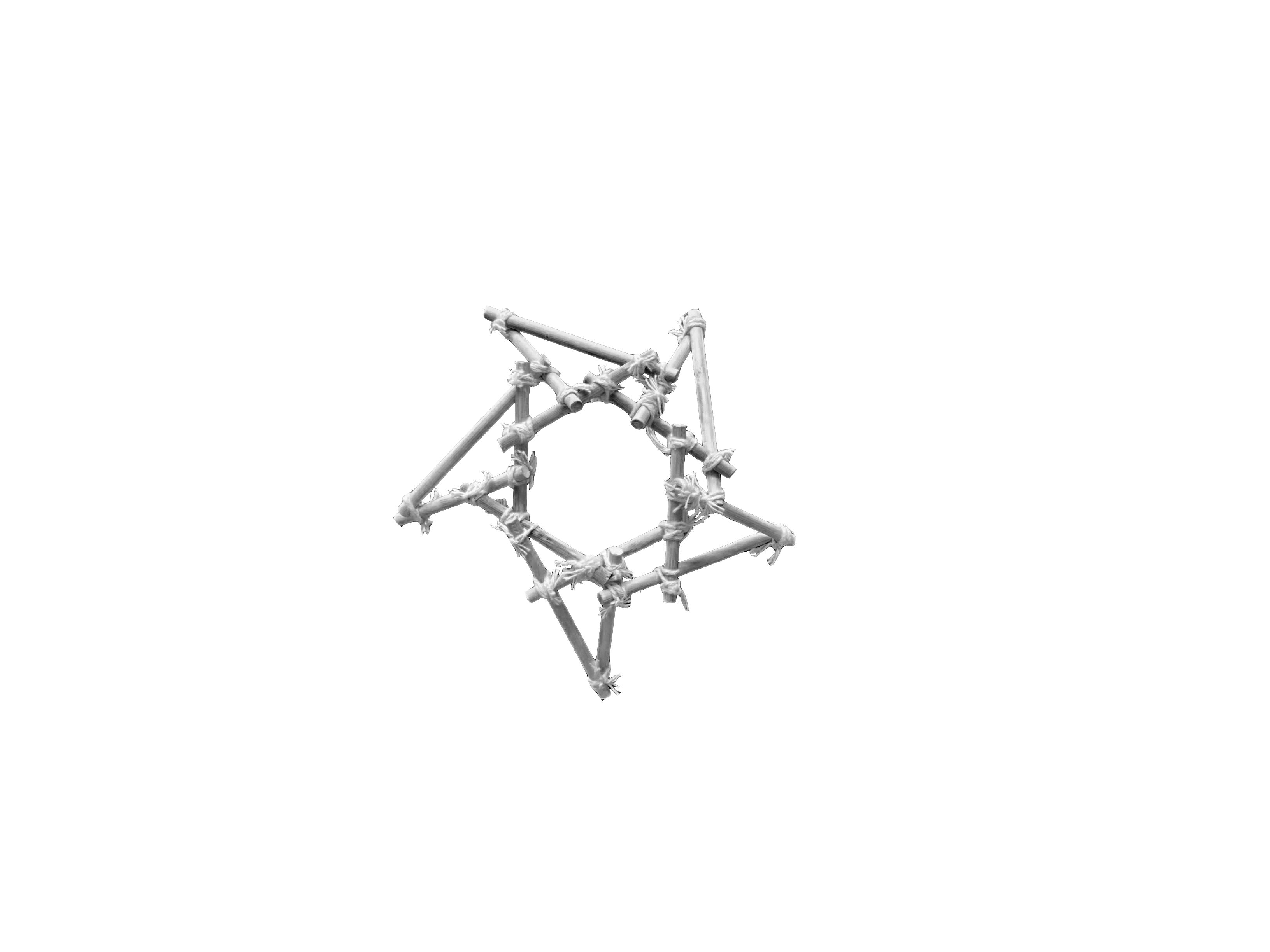
Here you see variations on my intended reciprocal roof structure, with a central skylight.
What I learned from my first variation is an understanding on the scale of my bamboo members, I used members 7-8 meters long which was not realistic as the bamboo used in construction would range from 4-6 meters. This variations form also wasnt very sturdy.
I then made a structure using shorter 4m members, added more members creating this 5 pointed star shape. I found it made the hexagonal skylight shape more precise and the structure itself a lot more sturdy and stable.
This variation kept the same form as the former, however I decided to make every member 6m long to make the void between each repirocal connection larger and created a pentagonal skylight design in order to make the shape more reminiscent of a star.


Programme
bubble diagram
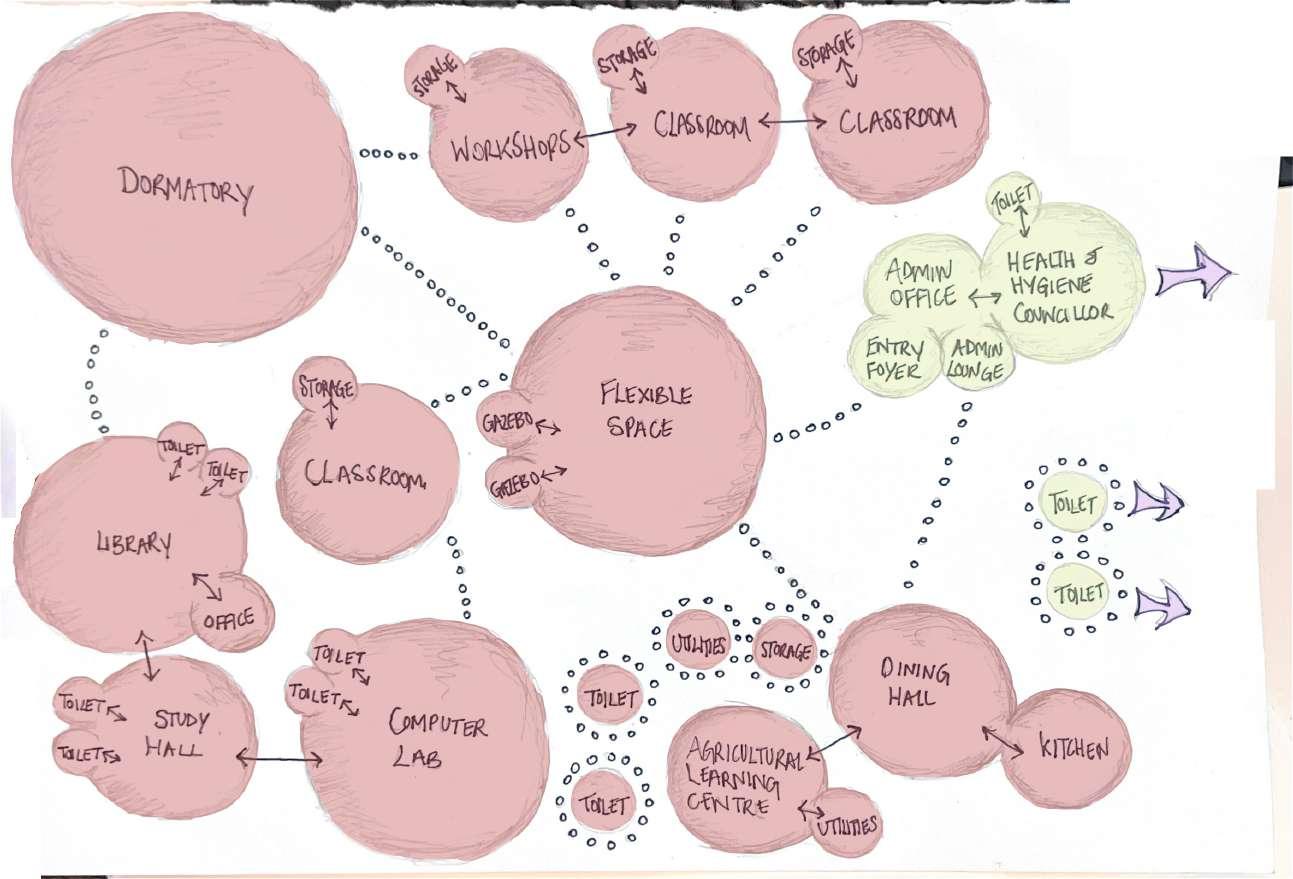

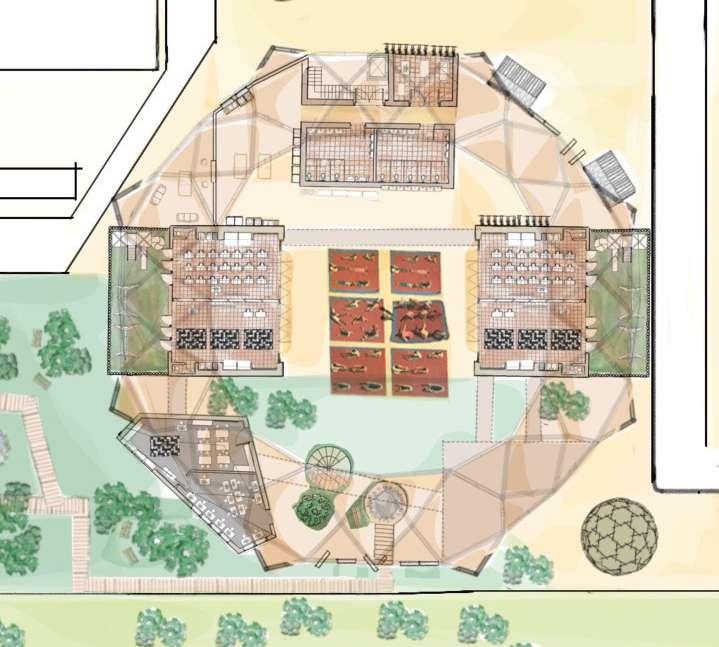
I started with a central flexible space of which use will change as different programmes fluctuate througout the day; Outdoor learning area during class time, Playground during break, Assembly hall and community gathering space.
I’ve decided that the health and hygiene councilling will be open to the local residents aswell as the students, so they can also benefit, likewise the toilet facilities.
Proposal
Initial Concepts Protruding
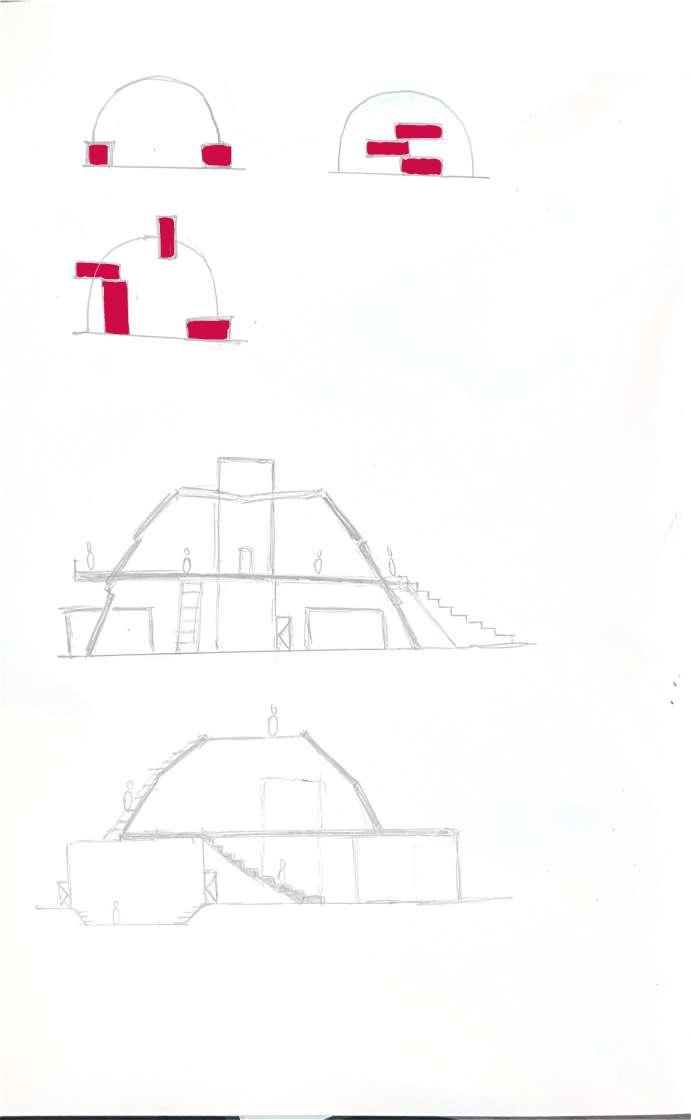
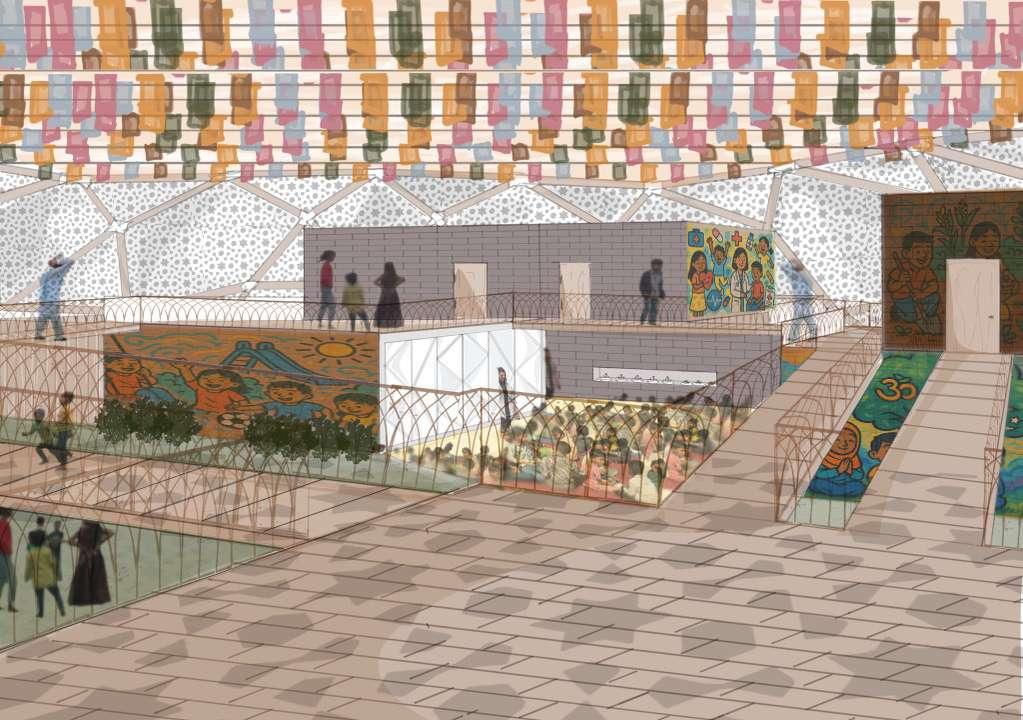
• The dome serves as a unifying structure, with certain buildings or architectural volumes protruding through or engaging with the surface of the dome.
• The intersecting volumes can vary in scale, either as smaller classrooms that partially pierce the dome or larger structures that fully extend beyond it.
• A south facing platfrom can make great use of a view out to the water.
• Walkways or bridges may connect the intersecting volumes within the dome.
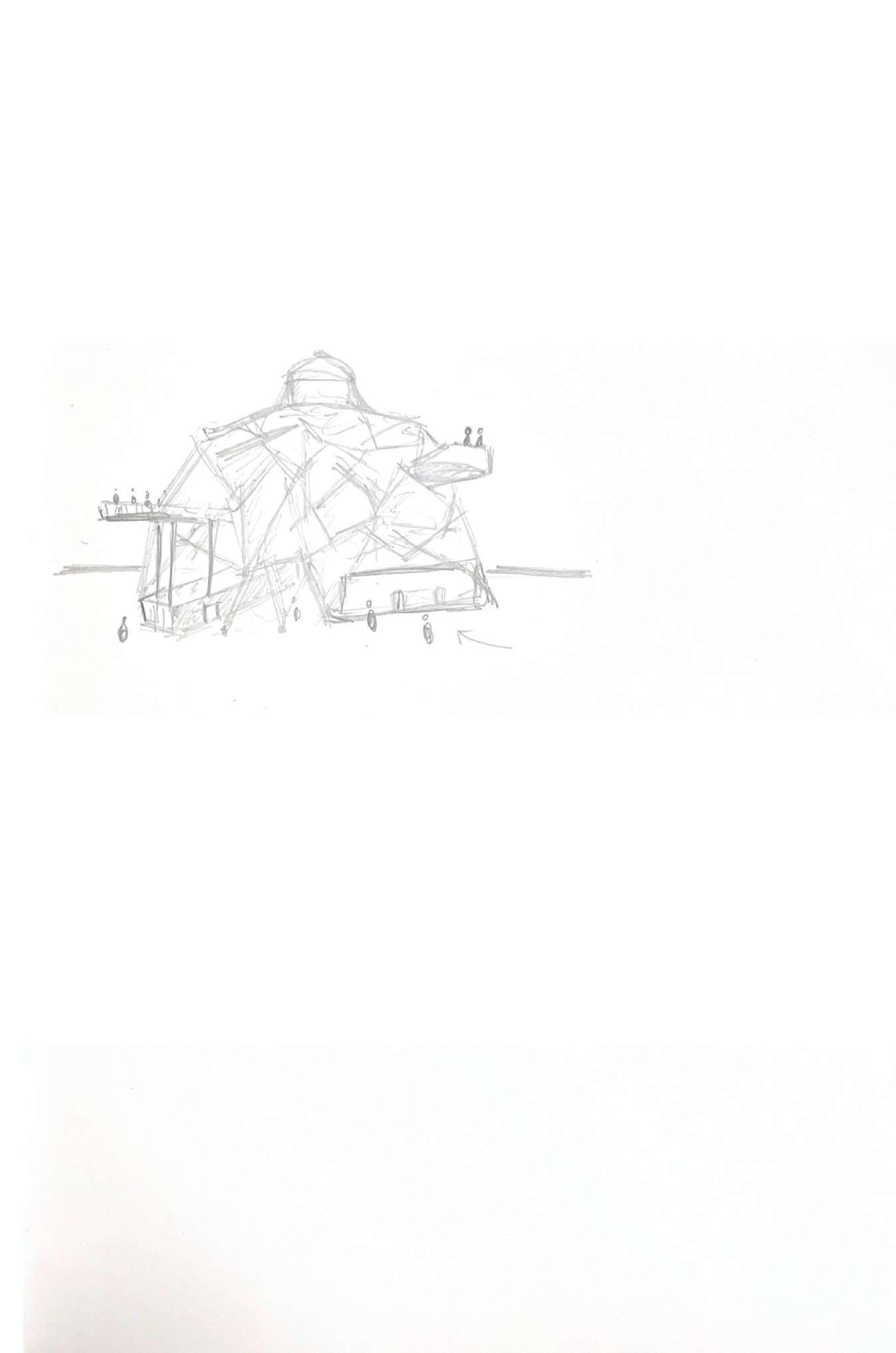
Working with the large dome structure, I considered different ways in which it can be used as a body. I decided to focus on my idea of the internal units protruding from the dome, allowing interaction between the inside and outside and emphasising the dome as an interesting architectural feature.
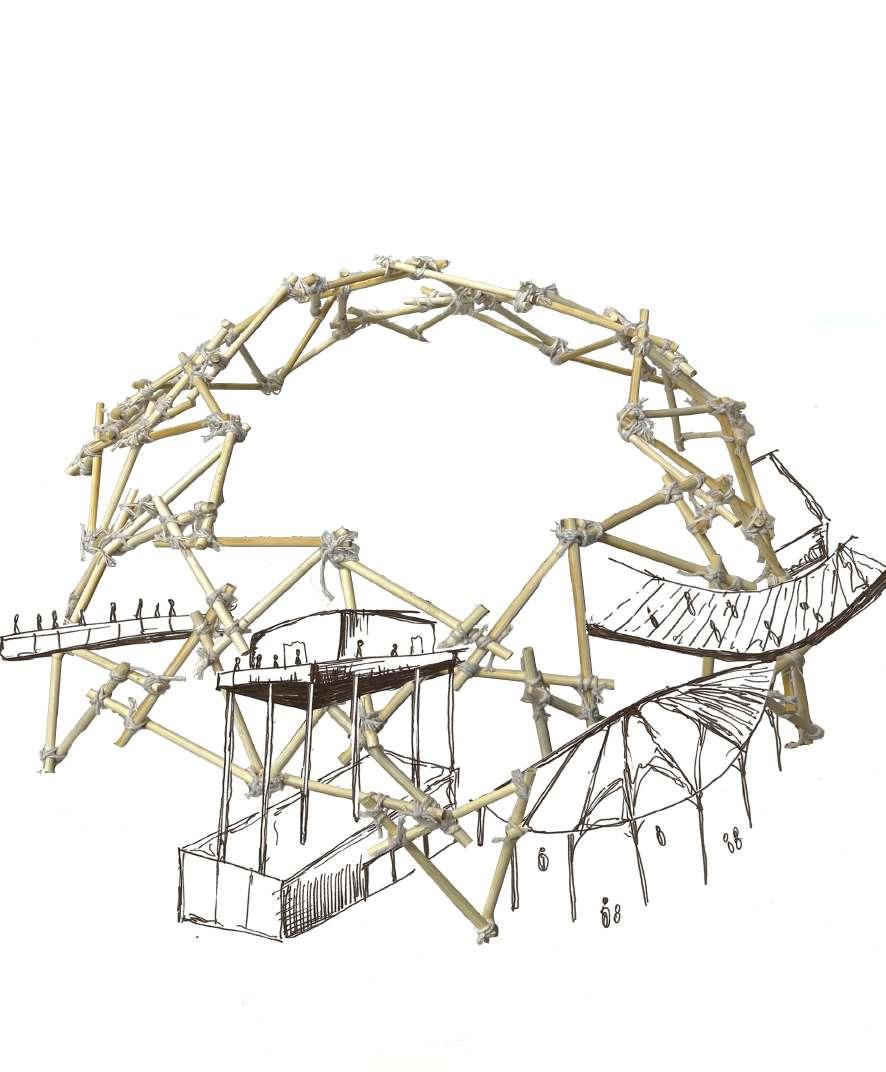
Viewing platforms
Veranda as entrance
Walkway as entrance and exit
Classrooms
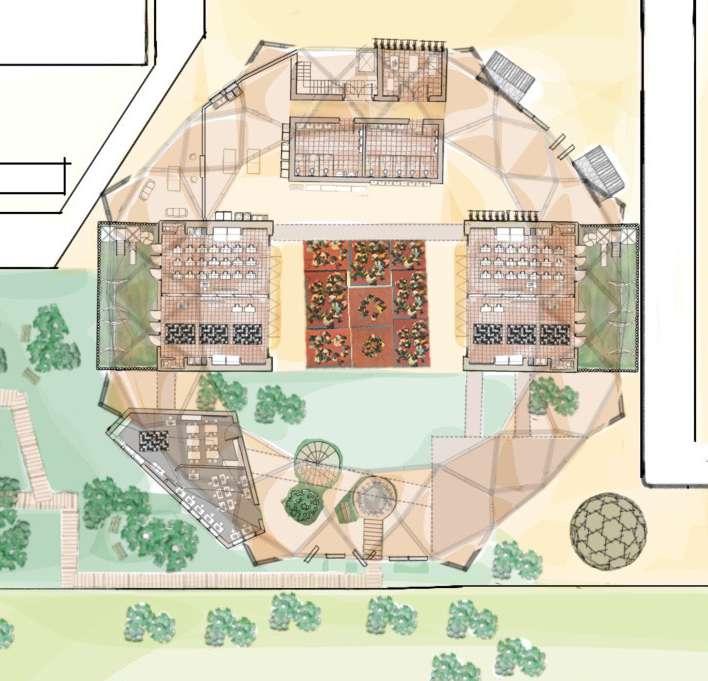
Proposal Design Development














I continued to produce some initial conceptual plans. I found several issues that needed to be addressed along the way:
1. The geometry of the north section of the school was too ‘random’, making the overall layout seem chaotic and non symmetrical. I sought to add more refinement to my next draft.
2. The toilet block, with one side accessible to students while the other accessible to the public, I felt added an unatractive facade to that side of the school.
3. Furthermore, I aim to close the gaps between units rather than leave them open. Perhaps with windows allowing view in and out, perhaps by extending the walls of the rooms to fill the void.












The following set of plans include my ammendments, however I found other issues which again needed to be addressed:
1. Having restructured the north section, the overall layout of the building seems less chaotic. I also included the kitchen I had missing from my previous plan. Doing this meant I have had to move the health clinic to the first floor level, accessible by a set of stairs.
2. The toilet block has now been redesigned to be more convenient and allow an exit out of the school to limit traffic through the administration office at the end of the school day. However the question of privacy and security is to be considered as people will have to enter school grounds and will mix with younger students.
3. Furthermore, I decided the placement of these buildings felt tight and congested and didnt allow the space to ‘breath’. That was another issue for me to tackle.
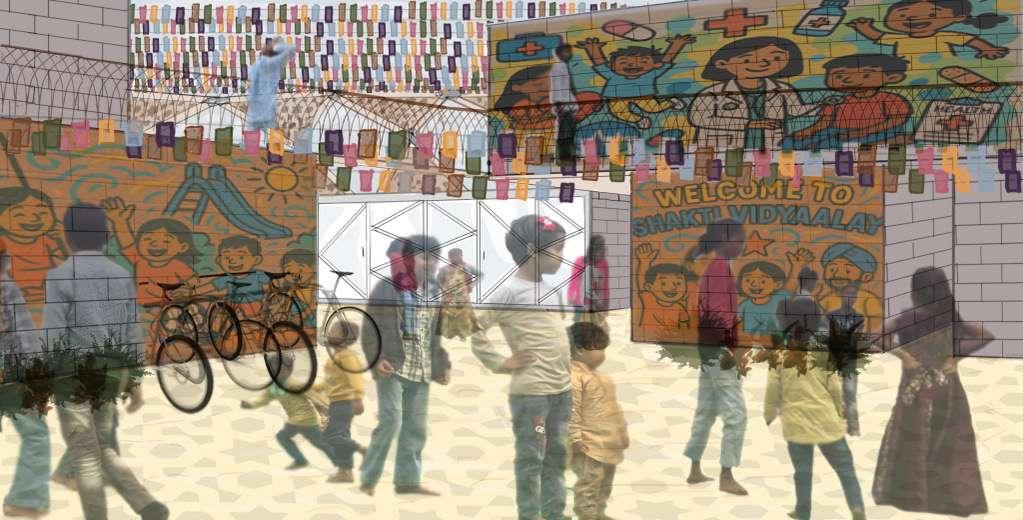
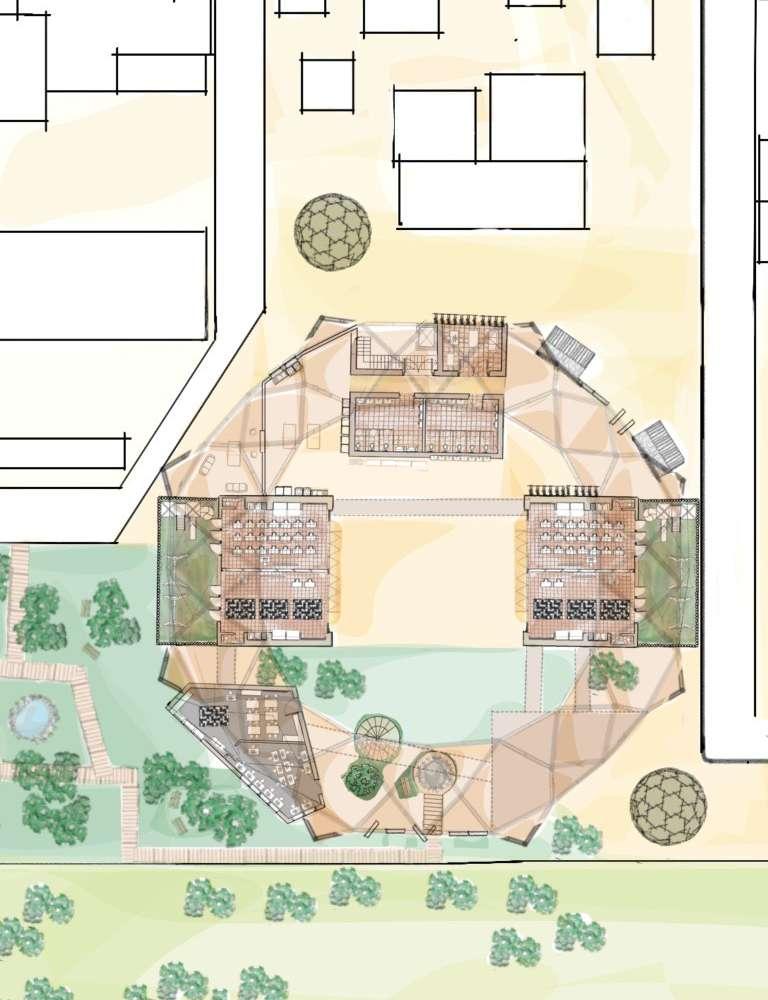



Proposal
Sections
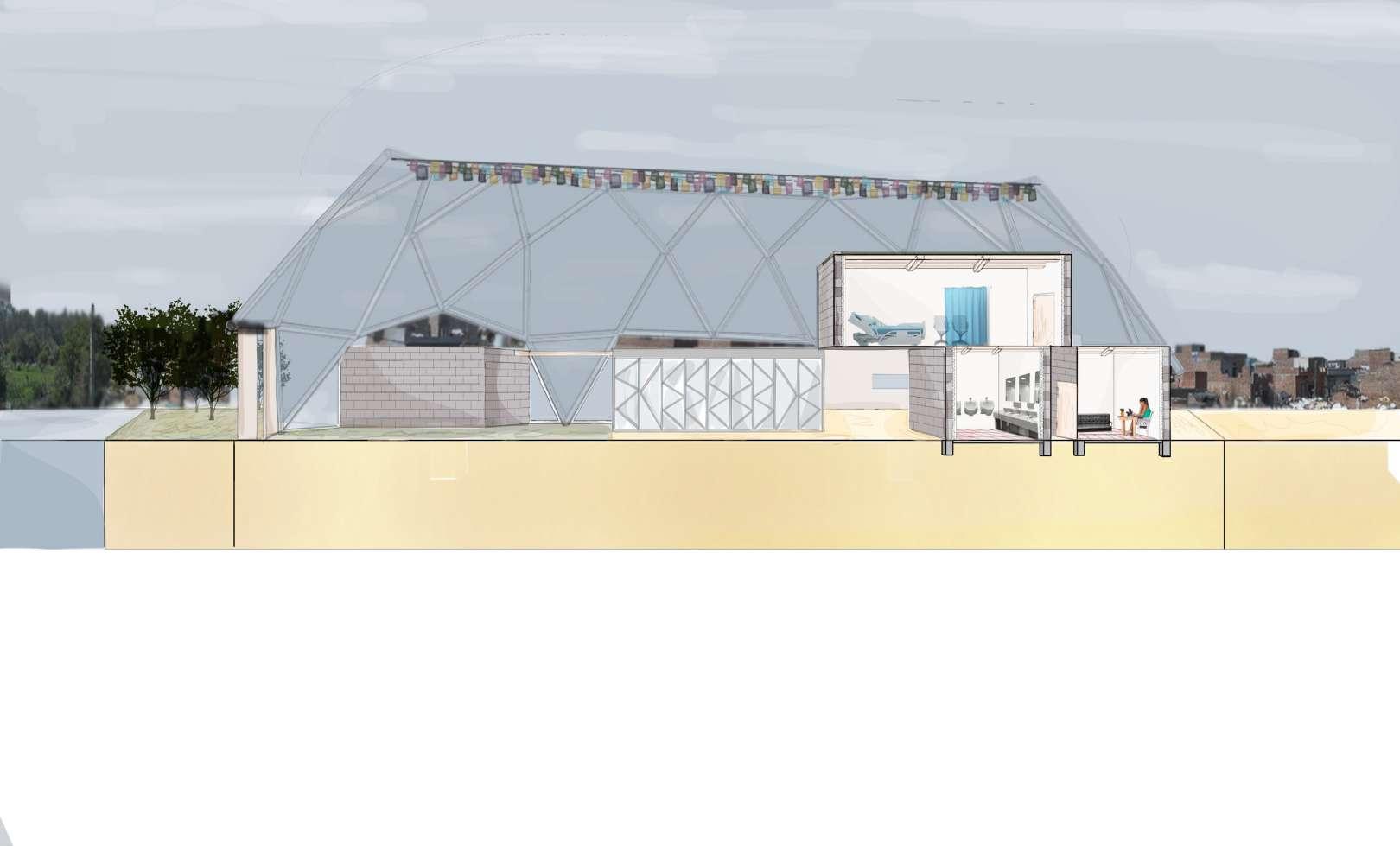
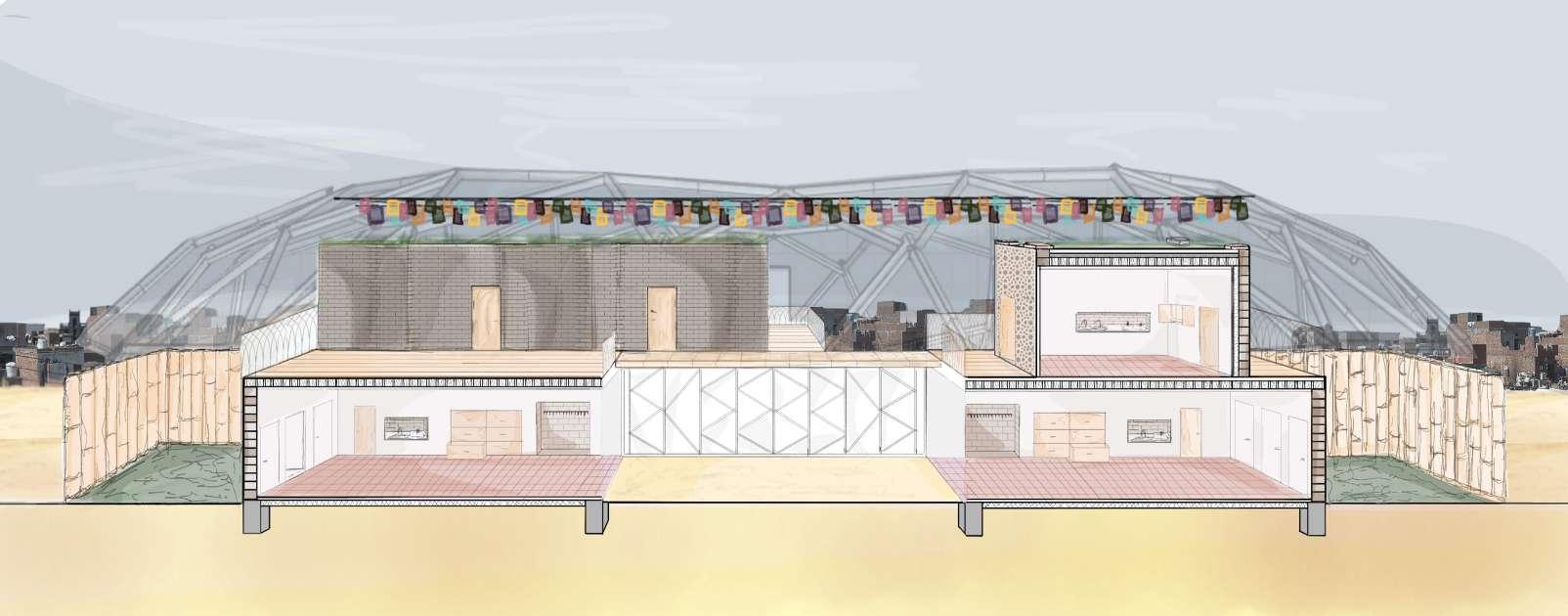
Flexible space open.
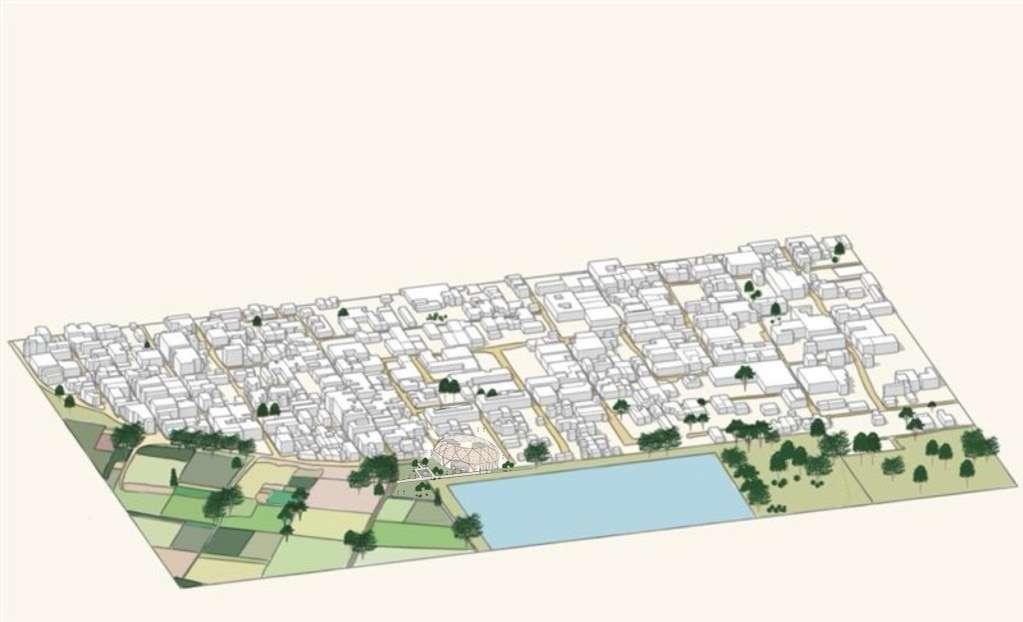
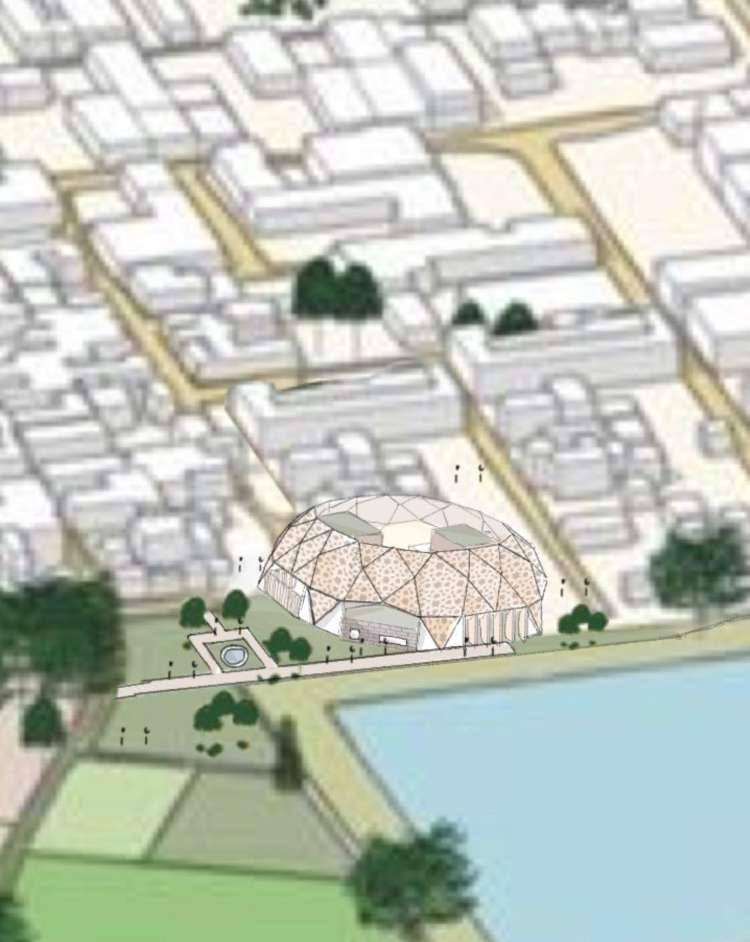
Proposal
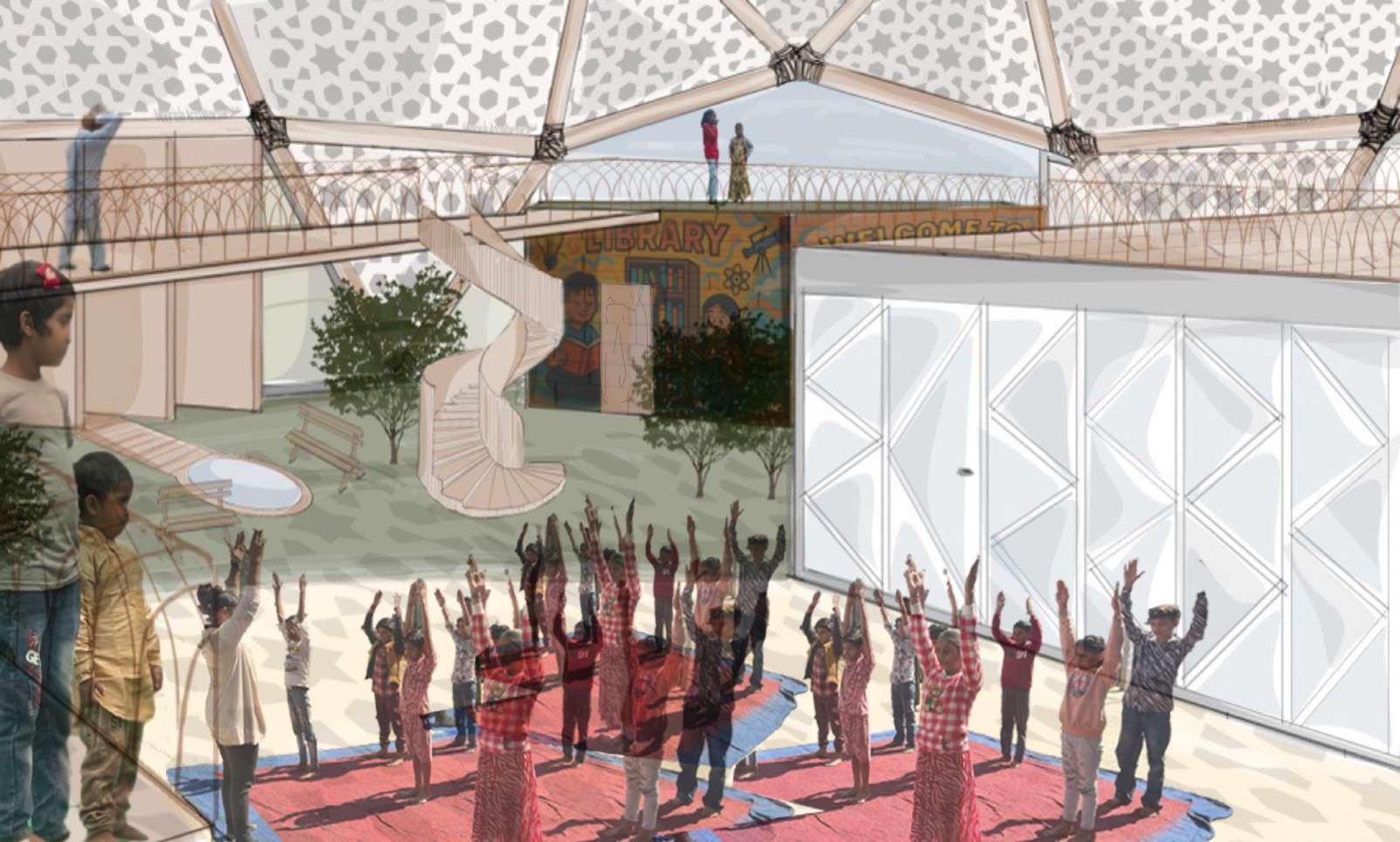
This flexible courtyard can be used for various programs such as:
• Playground
• Yoga/Excercise
• Outdoor learning
• Assembly hall
• Community gatherings
• Dance and music performances
• Workshops
Flexible Space
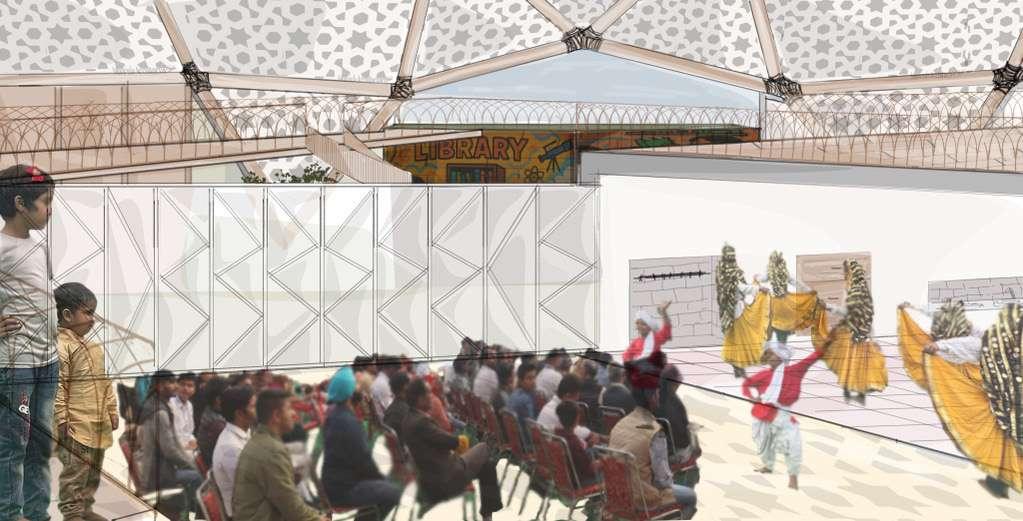
Performance organised for community guests, with the first floor balconies and walkways being used to view from above.
Lunch time, with students using Daris as seating.
Proposal
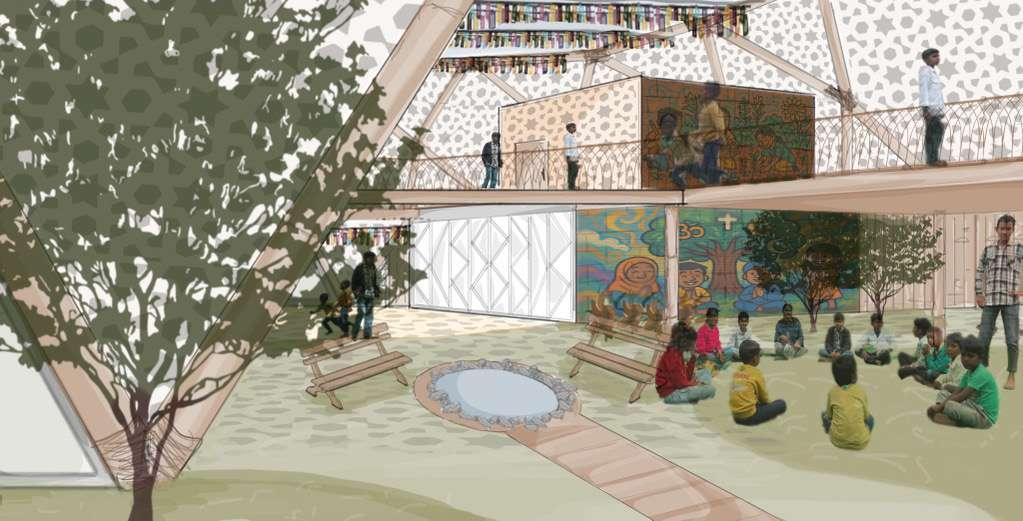
Afternoon prayers in progress.
This space is to be used for classes and workshops done outside, maximizing learning space. At certain times of the day, it is used by both students and staff for daily prayers.
Outdoor learning/ Meditation space
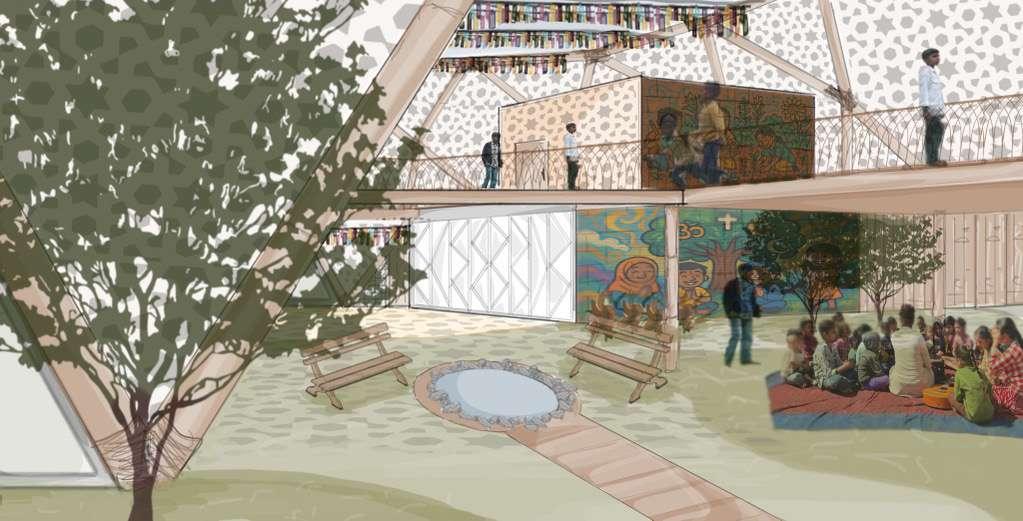
Outdoor lesson in progress.
Proposal
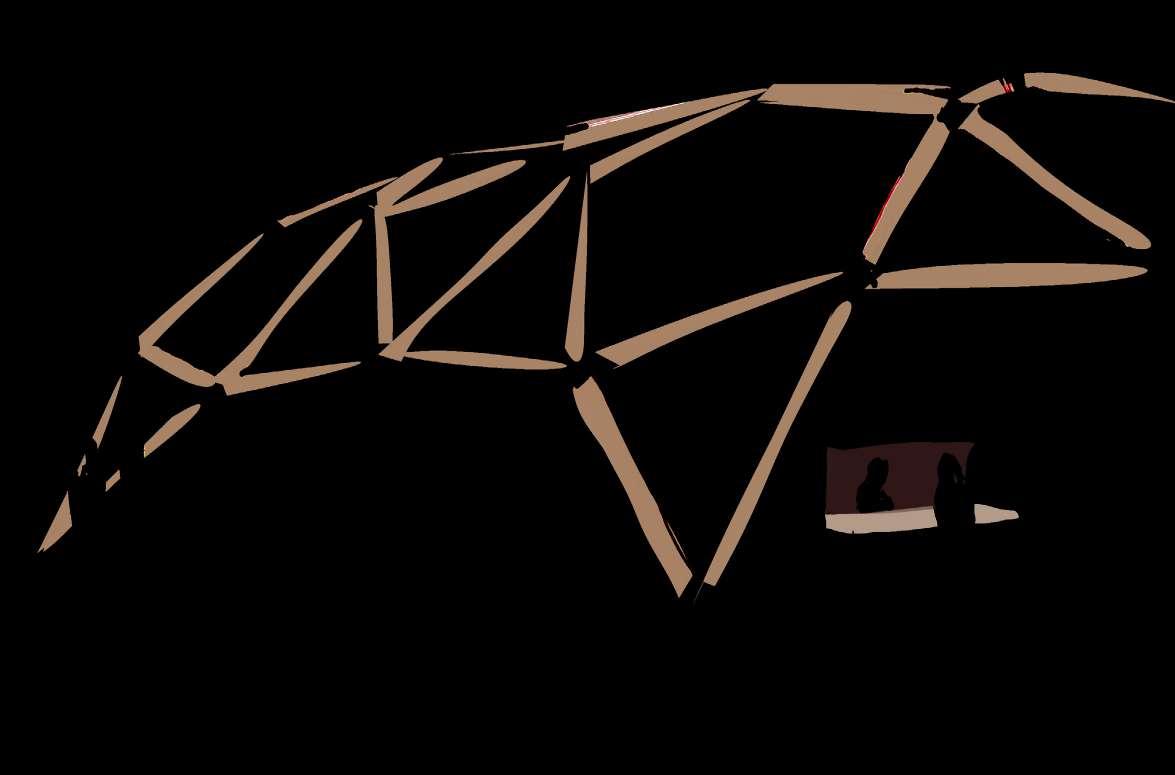
The school is to operate a free food bank. This is another initiative I wish to introduce. It will run in parallel with school lunch time.
Food Bank



This platform makes use of the view out towards the water resevoir and is available to all users.
Viewing Platform
Materiality
Primary Materials
Primary materials used in the construction of the school are to be locally sourced:
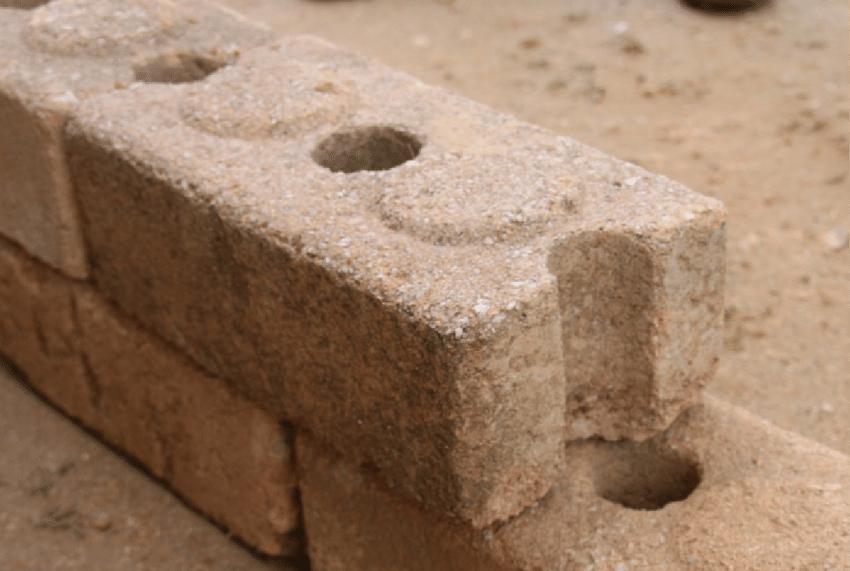

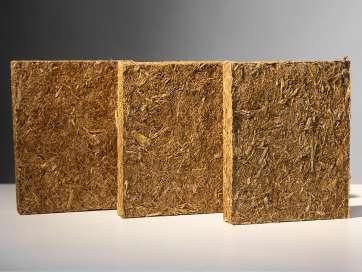

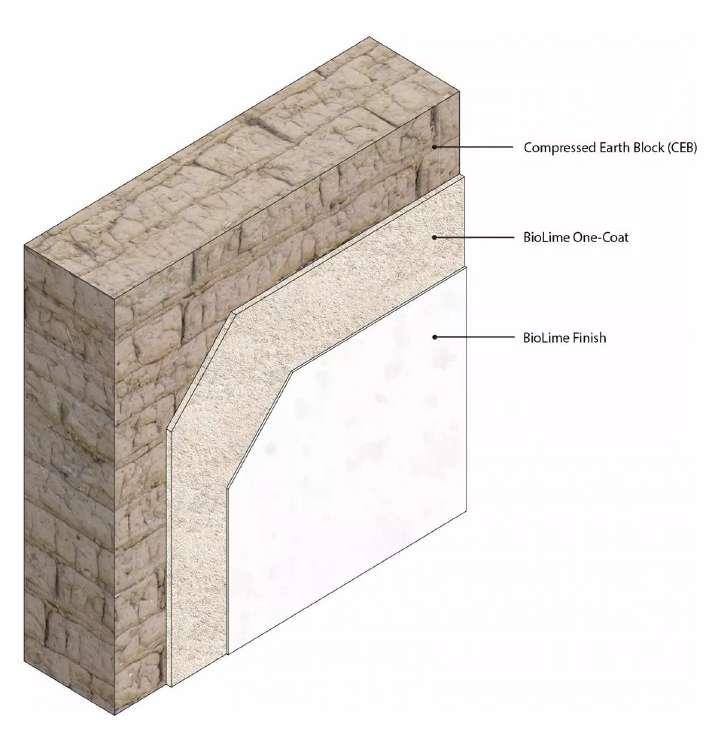
CSEB (Compressed Stabilized Earth Blocks)
Bamboo
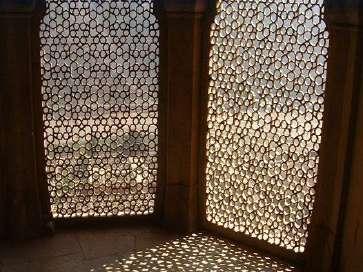
Jaali Screens
Terracotta tiles
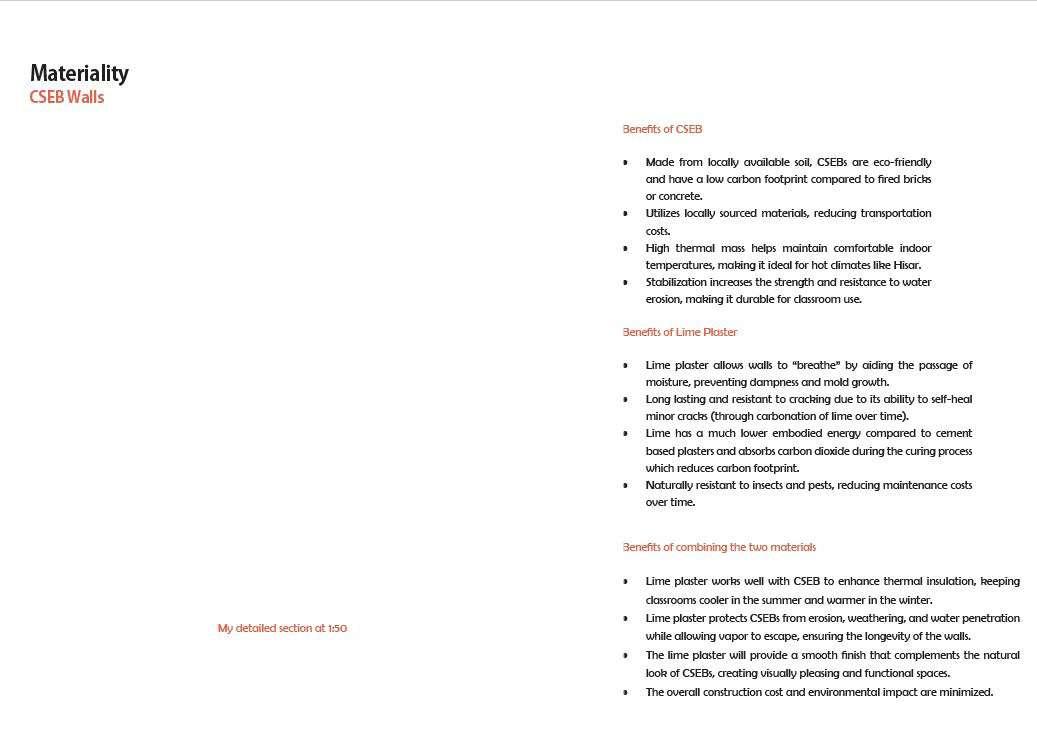
Limeplaster. To be used in conjunction with the CSEB walls
Sugarcrete
Materiality
Acoustic Panel
During the construction week organised by my university, my group worked with a woman from a lab, ‘Bagaceira project’, researching bagasse as a material for the built environment.
Our aim was to investigate sugarcane bagasse as a biomaterial for acoustic panel use and over two weeks we ran numerous tests including compressive strength, moisture buffer value and accoustic absorption. We then compiled a report of our findings.
Benefits
• They are made from sugarcane bagasse, a renewable byproduct, which ensures sustainability and low environmental impact.
• They effectively reduce echo and reverberation, improving speech clarity and overall acoustic comfort.
• Free of harmful chemicals, making it a safe choice for classrooms and other child-focused areas.
• It provides an affordable solution for improving acoustics without compromising quality.
• Natural texture and finish can be painted to match the decor of classrooms or other school spaces.
Applications to the school
• Can be installed on walls or ceilings of classrooms to enhance speech clarity and reduce noise distractions for students.
• Improves sound quality for events, assemblies, and community gatherings.
• Can also be installed in the administration room and Library to minimize sound from outside, allowing staff and student to work in a quieter space.

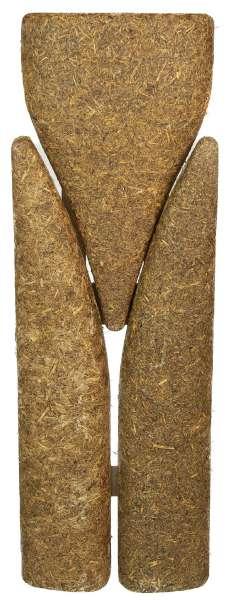

Our constructed Acoustic Panel
Materiality
Carbon Emissions Cycle

1 Sugarcane ha(India) 8tn sugar / 23tn bagasse/ 3tn molasses up to 70% fuel for boilers electricity for machinery
Materiality
Bamboo Benefits
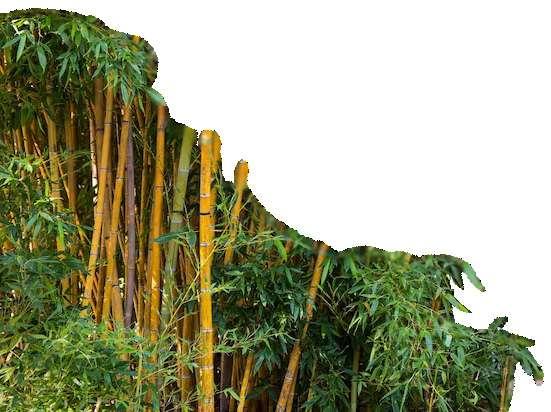
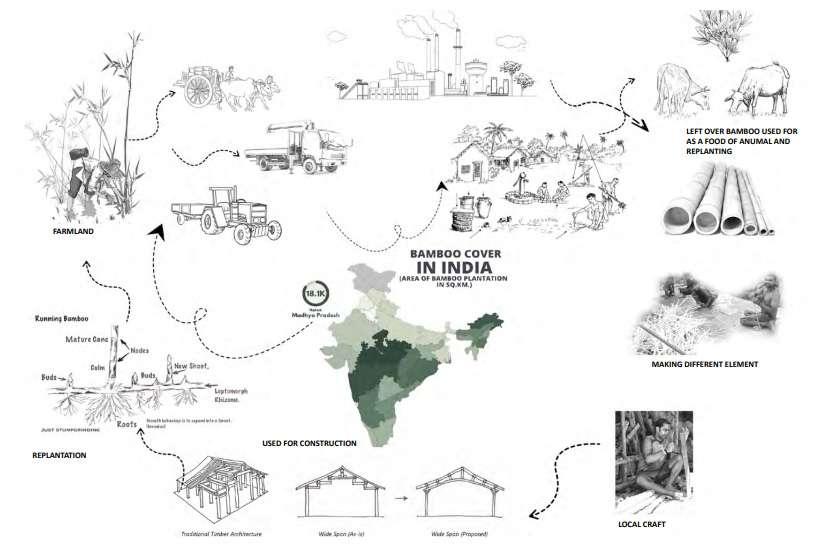
• Bamboo grows quickly and regenerates naturally, making it one of the most eco-friendly building materials.Utilizes locally sourced materials, reducing transportation costs.
• Despite its light weight, bamboo is incredibly durable and resilient, capable of withstanding heavy loads and impact.
• An affordable material and especially in India where bamboo is locally available.
• Naturally resistant to pests, fungi, and bacteria, enhancing its longevity and hygiene.
• Bamboo absorbs more carbon dioxide and produces more oxygen than other plants during its growth.
Applications to the school
• In the construction of the dome that encompasses the school.
• Used as shade for pergolas.
• Can be used to eco friendly room dividers.

Furthermore, the intricate patterns of Jaali screens can inspire creativity as students contribute to the designs used in the school.
Drawing from local craftsmanship, the incorporation of jaali screens also offers an opportunity to involve community artisans in the school’s construction, strengthening ties to the surrounding area.
In this way, the use of Jaali screens becomes more than an architectural feature, it becomes a tool for cultural preservation, environmental sustainability, and the creation of spaces that nurture confidence and collaboration among the students and local community.
This alignment of traditional design principles, with the clients mission of encouraging girls’ education, underscores my schools transformative power of architecture in social development.
My block print of a Jaali design
Materiality
Jaali Screens
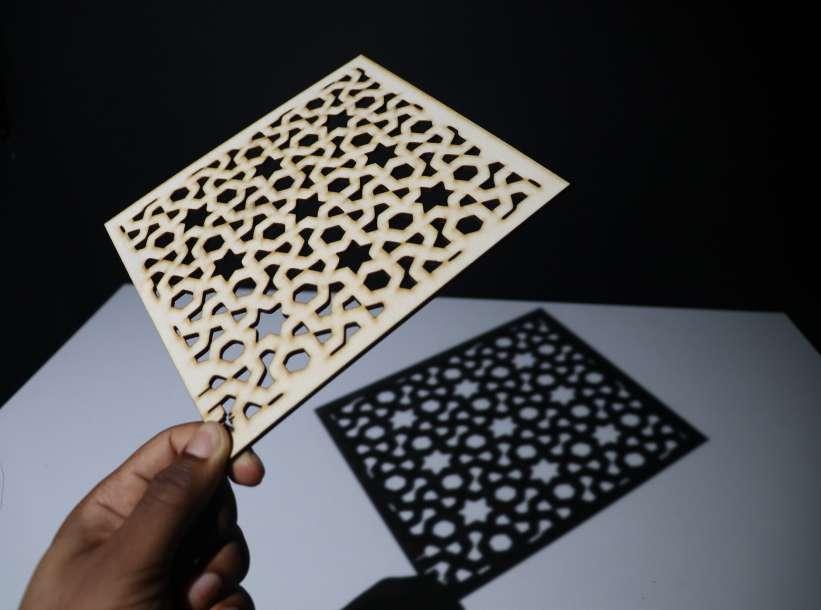
Jaali screens, an integral element of traditional Indian architecture, are intricately patterned perforated surfaces that serve both functional and aesthetic purposes. These screens are typically crafted from stone, wood, or terracotta, and their designs blend cultural heritage with environmental responsiveness.
Benefits
• By naturally diffusing harsh sunlight, they can keep students cool in the semi-arid climate, reducing energy consumption and creating comfortable learning environments.
• Their perforations can maintain visual connectivity with the outdoors, fostering a sense of openness while ensuring privacy, a culturally sensitive design consideration for the school’s female students.
• Can play a transformative role by addressing the dual needs of privacy and climate control.
Applications to the school
• Panelled roof coverings.
• Privacy screens for rooms such as the prayer room and health and hygiene clinic.
My laser cut carving of a Jaali design onto Plywood