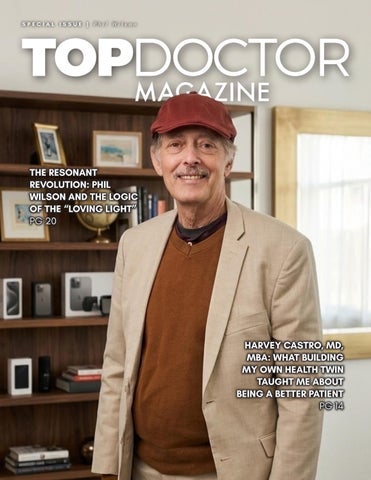
SPECIAL ISSUE | Phil Wilson
THE RESONANT REVOLUTION: PHIL WILSON AND THE LOGIC OF THE “LOVING LIGHT” PG 20
HARVEY CASTRO, MD, MBA: WHAT BUILDING MY OWN HEALTH TWIN TAUGHT ME ABOUT BEING A BETTER PATIENT PG 14
"Relax Saunas is the foundation of all frequency medicine. Whether it’s nutritional supplementation, hyperbaric oxygen, ozone, or PEMF, we make every other system work more effectively. We set the body up so those modalities can finally get the job done." -Phil Wilson, Founder of Relax Saunas
A LETTER FROM THE EDITOR Our mission and purpose at TopDoctor Magazine is to foster connections within the health and wellness community
and empower our readers to make well-informed healthcare and lifestyle decisions. We pride ourselves on being the ultimate resource for interviews with health and wellness leaders, trending medical news, and healthy living topics. We understand that choosing a healthcare provider is a crucial decision. Our in-depth interviews with esteemed doctors and medical professionals aim to bridge the gap between them and their clients. By providing our readers with personal insights, philosophies, and areas of expertise, we facilitate a deeper understanding of the individuals responsible for your health and well-being. We also strive to highlight our outstanding practitioners, showcasing their dedication to their patients and contributions to the medical community. The field of medicine is constantly evolving, with new practices, therapies, and technologies emerging at a rapid pace. At TopDoctor Magazine, we strive to keep you updated on the latest advancements in the medical world. Our comprehensive coverage of trending medical news equips both doctors and patients with the knowledge they need to make informed choices about healthcare options. Building strong connections within the medical community is essential for enhancing patient care and driving medical progress. Our magazine serves as a bridge, connecting medical companies with doctors and vice versa. By facilitating these connections, we aim to catalyze collaborations that can lead to innovative solutions and improved healthcare outcomes for everyone. It is our firm belief that well-informed individuals make better decisions about their health. By providing you with insights into established and emerging medical trends and technologies, we empower you to take an active role in your healthcare choices. Whether you are a healthcare professional seeking to stay updated on the latest advancements or a patient eager to make informed decisions about your well-being, TopDoctor Magazine is here to support you. In every issue, we strive to uphold the highest standards of journalistic integrity, accuracy, and relevance. Our dedicated team of writers, editors, and medical experts work tirelessly to bring you well-researched and compelling content that is both educational and engaging. Moreover, our graphic design team is committed to delivering an aesthetically pleasing reading experience where captivating design seamlessly merges with informative content, ensuring each issue becomes an engaging journey of discovery. As we embark on this mission to serve as your trusted source of medical information and insights, we encourage you to join us on this exciting journey. Your feedback and suggestions are invaluable to us, and we look forward to hearing from you. Thank you for being a part of the TopDoctor Magazine community. Together, let us embrace knowledge, forge connections, and make informed decisions to lead healthier lives. With warmest regards,
Hannah H. Editor in Chief TopDoctor Magazine
CONTRIBUTORS Publication Team Publisher: John Highland Editor in Chief: Hannah H. Editorial Assistant: Jillian Fast
Creative Department Senior Graphic Designer: Laura Poyner Graphic Dessigners: Dylan R-N
Expert Contributors Biohacking & Longevity Expert: Lindsey O'NiellO'Keefe Contributing Authors: Harvey Castro, MD, MBA, Riley George, Evelyn Flaharty
Executive Team Chief Digital Content Officer: David Lee Vice President of Development: Mark Carvalho Fractional Marketing Officer: Craig Handley Advisory Board: Dr. Arthur Katona, Dr. Francisco Cabal, Dr. Edmond Ng, Dr. Kianor Shah
TABLE OF CONTENTS 8 14 20 26 36
Take Your Zinc Before Flu Season This Year What Building My Own Health Twin Taught Me About Being a Better Patient The Resonant Revolution: Phil Wilson and the Logic of the “Loving Light” Everyday Spices That Can Transform Your Health The Power of Touch: Exploring the Benefits of Massage Therapy
8
Take Your Zinc Before Flu Season This Year! Written By: Riley George
A
s we see flu season on the horizon, the importance of maintaining a healthy immune system becomes increasingly apparent. Among the various minerals and nutrients essential for immune health, zinc stands out as a crucial element that can bolster our body’s defenses against seasonal illnesses like the flu! Its role in supporting immune function has been well-documented, making it a valuable addition to our health regimen both before and during flu season.
Zinc as a Preventative Measure Before the onset of flu season, providing your body with zinc can be an effective preventive measure. This essential mineral plays a pivotal role in numerous bodily functions, including immune response, cell division and wound healing. It acts as a catalyst for over 300 enzymes, contributing to the proper functioning of many biochemical processes in the body. Zinc is particularly renowned for its ability to enhance the activity of immune cells. It helps regulate the production and function of various immune cells, such as neutrophils and natural killer cells, which are essential for combating infections. Additionally, zinc assists in the production of antibodies, which are crucial for the body’s defense mechanism against pathogens like influenza viruses. Studies have indicated that maintaining adequate zinc levels can reduce the severity and duration of the common cold,
which shares symptoms with influenza. While not a direct cure for the flu, incorporating zinc into your diet or as a supplement before flu season may provide an added layer of defense against viral infections.
Alleviating Cold and Flu Symptoms During flu season, the benefits of zinc become even more pronounced. As the virus spreads more readily, reinforcing your immune system becomes crucial in warding off illness. Zinc supplementation during this period can help shorten the duration of flu symptoms and potentially reduce the likelihood of developing severe complications. Research suggests that zinc cough drops or syrup taken within 24 hours of the onset of flu symptoms may decrease the duration of the illness by interfering with the virus’s ability to multiply and spread in the body. It’s important to note that the effectiveness of zinc supplementation may vary depending on the formulation, dosage and individual factors, so consulting a healthcare professional should be a first step. Zinc’s anti-inflammatory properties can assist in alleviating symptoms commonly associated with the flu, such as sore throat and cough. By reducing inflammation and supporting the body’s immune response, zinc can contribute to a speedier recovery from flu-related discomfort.
Top Doctor Magazine / Phil Wilson / 9
Dietary and Supplemental Sources of Zinc You might be asking a necessary question: What is a good source of zinc? There are various ways you can have a higher intake of this mineral during this year’s cold and flu season. One of the easiest ways to get zinc is through seafood like oysters and crab or through red meat. These have the highest presence of zinc out of all the foods you could eat for a natural source of zinc. If you are not partial to seafood or are trying to avoid red meat, there are other foods that have a great source of zinc! Brown rice, legumes such as kidney beans, blueberries and even cheddar cheese are fantastic natural sources where zinc can be found. If you feel you are not getting enough zinc through your diet, there are also supplements you can take. This can be an easy way to ensure you are getting enough of this cold-fighting supplement during cold and flu season to help your immune system ward off any cold-related symptoms.
Striking a Balance However, it’s crucial to strike a balance with zinc intake, as excessive amounts can have adverse effects on health. Overconsumption of zinc may lead to gastrointestinal disturbances and interfere with the absorption of other essential minerals like copper and iron. Therefore, moderation
10
and adherence to recommended daily allowances are essential. Consult with a healthcare professional before incorporating zinc into your daily routine.
Conclusion Incorporating zinc into your health regimen before and during flu season can offer significant benefits for immune health. Whether through dietary sources like nuts, seeds, legumes and whole grains or as a supplement, maintaining optimal zinc levels can bolster the body’s defenses against seasonal illnesses like the flu. As always, it’s best to seek guidance from a healthcare professional to determine the appropriate dosage and form of zinc supplementation tailored to your individual needs.
Sources
https://www.nccih.nih.gov/health/tips/tips-naturalproducts-for-the-flu-and-colds-what-does-thescience-say#:~:text=There%20is%20currently%20 no%20strong,effects%20and%20interact%20with%20 medicines. https://ods.od.nih.gov/factsheets/ZincHealthProfessional/#:~:text=The%20richest%20 food%20sources%20of,also%20contain%20zinc%20 %5B3%5D.
Top Doctor Magazine / Phil Wilson / 11
What Building My Own Health Twin Taught Me About Being a Better Patient Written By: Harvey Castro, MD, MBA
The message arrived while I was packing for a trip. A personal AI system built around my health information had noticed a change in my recovery pattern and suggested that I reconsider traveling. Nobody had asked it anything. I was preparing to leave and doing what I suspect many busy physicians will recognize: treating the schedule as fixed and assuming my body would cooperate. So, I changed my plans. That decision deserves an explanation, but not the dramatic one a technology headline might suggest. The system didn’t diagnose an illness. I can’t say that staying home prevented a medical emergency, and there’s no counterfactual version of that trip for me to examine. What it did was more modest. It made me pause long enough to question the familiar argument I had with myself: that I could push through. As an emergency physician, I’m comfortable moving fast when a patient needs immediate attention. Paying closer attention to my own health has called for a different discipline: noticing a pattern before I’ve decided it’s inconvenient. That necessary shift is why I built what I call a personal health twin, because the most useful lesson has less to do with what artificial intelligence knows than with what I’m willing to notice. What I Mean by a Health Twin The term needs a boundary. My system isn’t a complete digital replica of my body, and I don’t present it as a clinically validated tool for predicting disease or simulating treatment. Recognizing these limits helps prevent over-reliance and ensures responsible use. I use it to organize selected health information, including sleep, activity, recovery, and wearable trends, while being mindful of privacy and data
14
security. Its job is to draw my attention to changes and help me weigh them in context. It doesn’t diagnose, prescribe treatment, or replace a physician. This distinction matters beyond my own project. A scoping review published September 30, 2025, examined 149 studies describing human digital twins and found that only 18 met the researchers’ application of the National Academies’ criteria, which emphasize personalization, dynamic updating, and predictive capabilities.1 The vocabulary is a moving target, and it’s moving faster than any agreement about what these systems actually do. For a physician sizing up any product with “twin” in its name, I’d start with ordinary questions. What information goes in? What happens when some of it is missing? What does the output claim to mean, and how was that claim tested? An impressive name can’t answer those questions. Neither can an attractive dashboard. The Difference Between a Measurement and a Decision In my presentations, I describe an isolated laboratory value as a photograph and a series of measurements as a film. The comparison holds up, but a film still needs someone to watch it critically. Consider a hypothetical patient whose wearable reports worsened recovery after several disrupted nights. Before drawing any medical conclusion, I’d want to know about symptoms, travel, training, medications, and how consistently the device was worn. I’d also want to separate the device’s raw measurements from its proprietary interpretation of them.
My standard for a useful summary is simple. Show what changed, over what period, and how much information is missing. Keep the observations apart from the suggested explanations and don’t let an uncertain pattern harden into a confident diagnosis. Physicians are already running into these questions. In a survey of 2,222 physicians across six countries, 97 percent reported reviewing wearable data in some capacity, yet no country reported integration rates above 6 percent. Workflow, reimbursement, trust, and liability remained important barriers.2 To me, that gap argues for making information easier to evaluate, not for asking clinicians to absorb an endless stream of it. A patient shouldn’t need to arrive with 40 screenshots, and a physician shouldn’t have to reconstruct the timeline during a short appointment. A better conversation is the real destination. The dashboard only gets you to the door. What Actually Changed for Me The travel decision is the clearest example from my own experience: instead of waving off a change in recovery, I reviewed it, rested, and adjusted my schedule accordingly. That’s a behavioral observation, not proof of a health outcome. I’m not presenting a controlled experiment, and I’m not claiming that this system lowered my cardiovascular risk, reversed my biological age, or added years to my life. Oddly enough, I think that restraint makes the story more useful to physicians. I can describe my own experience accurately without dressing it up as evidence for a product. What interested me was the gap between knowing that recovery matters and actually making room for it. The system didn’t supply a new medical principle. It pulled an existing concern back into view at the exact moment I was ready to shelve it. It also gave me a practical test for future alerts. Did this message help me understand something, or did it just make me anxious? Could I
Top Doctor Magazine / Phil Wilson / 15
name a sensible next step? Would I reach the same decision after reviewing the underlying numbers without the AI’s wording in front of me? Those questions now shape how I judge usefulness. Any emergency physician who has lived through alert fatigue knows that more alerts don’t automatically mean more benefit, and a persuasive explanation isn’t necessarily a more accurate one. A Framework for Using the Information I call my approach SCAN: See, Connect, Act, and Navigate. It’s a way to organize questions, not a validated clinical protocol or a substitute for individualized care. See the signals. Start with a specific question rather than a shopping list of measurements. What are you trying to understand, and what information would actually help? For me, the starting point is a pattern over time, not a contest to collect the most data. I wouldn’t turn this into a recommendation that everyone order broad laboratory panels or buy several devices. Testing should answer a clinical question, and a good system should admit when the available information cannot answer it. Connect the context. Ask what else was happening during the period being summarized. Was the schedule different? Were measurements missing? Did symptoms change? A useful summary makes it easy to inspect the observations before accepting anybody’s explanation of them. Keep the line between observation and inference visible. “These recorded values changed” is a very different statement from “This is why you feel unwell.” Act conservatively. In my travel example, the action was rest and a schedule change. I didn’t treat the alert as a reason to order an extensive workup or start another supplement.
16
Certain situations call for responses that fit the person and the concern. I wouldn’t use a consumer AI alert alone as the basis for a medication change, a diagnosis, or a decision to ignore symptoms. Navigate with a clinician. Bring organized information and a clear question to someone who can assess the full clinical picture. The system should support that relationship, not imply that a personalized summary has made it unnecessary. Emergencies sit outside this framework entirely. New or severe symptoms need prompt clinical assessment, and a reassuring score should never become permission to postpone urgent care. The Physician Still Has to Think Personal experience can make me enthusiastic about a tool. It can also make me less skeptical of its next answer, and that’s the part I watch. In a randomized study published April 23, 2026, 44 physicians who had completed AI-literacy training worked through clinical vignettes with access to either error-free AI recommendations or recommendations containing deliberate errors. Those exposed to the erroneous recommendations performed worse on diagnostic reasoning.3 The study used simulated cases rather than patient care, and it doesn’t tell me how often my personal system would be wrong. What I take from it is simple: Experience isn’t immunity. Knowing medicine, and knowing that AI makes mistakes, doesn’t remove the need to examine each answer on its merits. My own habit is to state the observation before I read the explanation. Then I ask what would make the proposed interpretation less likely, and whether the next step would still make sense if the explanation turned out to be wrong.
The same discipline applies when a patient brings me an AI-generated health summary. Rather than endorsing or dismissing the document wholesale, I start with the patient’s concern, check the relevant underlying information, and separate useful observations from unsupported conclusions. That approach leaves room for an engaged patient without granting the software authority it hasn’t earned. It also keeps any disagreement focused on the claim rather than on the person who brought it. Privacy Belongs in the First Conversation A personal health system becomes more revealing the more information it pulls together. Before recommending one, I’d want clear answers about where the data is stored, who can access it, whether it’s used to train models, and how it can be exported or deleted. Those are questions to investigate, not protections to assume. I’d also ask what happens when an account is compromised, a company changes ownership, or the user simply stops paying. Publishing a personal story works by the same rule. Sharing what I learned doesn’t require publishing my complete records, account details, or family information, and a good example discloses only what the reader needs. I’d rather explain a limited system accurately than describe an ambitious one whose data practices I couldn’t defend. Trust should rest on what can be checked. A Better Question Between Visits My interest in this work is ultimately about healthspan. In other words, I want to stay capable of doing the things that matter to me, and a score isn’t that goal any more than a more elaborate personal dashboard is.
The question I ask audiences in my METAL presentation is more personal: Who do you want to be capable of showing up for in 10 years? This question reminds me why paying attention matters in the first place, and no personal health twin will answer that for me. What I want from the system is narrower: Organize the information I can use, flag uncertainty openly, and leave room for the parts of a life that a sensor will never capture. My experience hasn’t convinced me that medicine should become a continuous stream of automated instructions. It has made me more interested in a quieter possibility: Using well-organized information to help a person pause, ask a better question, and make a considered decision. When that message arrived before my trip, the decision was still mine. What changed was that I stopped long enough to make it deliberately. About the Author Harvey Castro, MD, MBA, is a board-certified emergency physician, a five-time TEDx speaker, and the founder of DR GPT™. He has written over 45 books, including AI in Emergency Medicine, forthcoming from Wiley in October 2026. His work focuses on the practical, responsible use of artificial intelligence in healthcare. To learn more visit HarveyCastroMD.com | / HarveyCastroMD | #DrGPT Disclosure The author founded DR GPT™ and developed the personal health system described here. This article presents personal experience and professional perspective, not clinical validation of that system.
Top Doctor Magazine / Phil Wilson / 17
PRECISION STORAGE. BUILT AROUND YOUR ROUTINE. Dedicated temperature-controlled storage for vials and pens.
PRECISION TEMPERATURE CONTROL
Set and view your selected temperature directly on the display.
DEDICATED
PRECISION
PORTABLE
Organized storage
Temperature control
Built to move
A DEDICATED PLACE FOR WHAT MATTERS. At home, at work, or on the move.
CLINICAL PARTNERSHIPS Bring VIALYX into your clinic or professional network.
SCAN TO EXPLORE PARTNERSHIP OPPORTUNITIES
Always follow the storage instructions provided for your specific medication or product.
WWW.VIALYXOFFICIAL.COM
Enter to win a $599 Lumara red light therapy mask. Nominate a doctor for TopDoctor magazine through the QR code below.
To learn more about the VISO mask and wholesale opportunities for medical practices, visit LumaraSystems.com/VISO or contact Lumara Systems directly at (408) 872-4800.
The Resonant Revolution: Phil Wilson and the Logic of the “Loving Light” Written By: Riley George In the rapidly accelerating world of biohacking, where the “newest” often eclipses the “truest,” Phil Wilson stands as a guardian of a specific, invisible frequency. As the founder of Relax Saunas of Momentum, Wilson’s journey is one of mathematical precision merging with holistic intuition. It is a story that begins in the competitive world of statewide mathematics and culminates in a mission to “recharge” the human biological battery using 7- to 14-micron far infrared energy. “Our bodies are repositories for far infrared light,” Wilson said, his voice carrying the conviction of three decades of research and practice. “When you go out to the sun on a cold day, close your eyes, and feel that magic happen—that is far infrared light. It is the loving light of the sun.”
From Mathematics to Meditative Medicine Wilson’s path to wellness was not linear. A former child prodigy in mathematics who ranked second, third, and fourth in Indiana’s statewide exams, Wilson’s early life was defined by logic and problem-solving. However, a series of profound experiences during his graduate studies—including an out-of-body experience and an acute sensitivity to environmental toxins—shifted his focus from abstract equations to the bio-energetic equations of the human body. By 1973, Wilson was selling herbal vitamins; by the 1980s, he was known as a “king of massage tools.” But it wasn’t until he discovered the specific far infrared technology behind the Relax Sauna that he found what he calls the “granddaddy of all lights.” “My background is mathematics,” Wilson explained. “But when you’re dealing with holistic health, you’re dealing with being tuned into the body. I realized that purifying the body was vital. I became a monitor; I could take a product and see exactly where the effects were in my body.” The Science of the 9.4-Micron Match The core of Wilson’s philosophy is the science of bioresonance and rests on a single number: 9.4. This is the peak micron frequency at which the human body radiates energy. When an external source can precisely match this frequency, it creates a phenomenon known in biophysics as resonance. According to Wilson and his science team, most “infrared” products on the market are “simple heaters or gimmicks.” Near-infrared, while popular for skin health, only penetrates the body about 1/16th of an inch. Far infrared, specifically in the 7- to 14-micron range, reaches 2 to 5 inches and beyond, vibrating the water molecules that make up the vast majority of our physical form.
20
“The far infrared energy coming out of the Relax Sauna is increasing the structured water in your body by 50 to 200 percent in minutes,” Wilson noted. “It vibrates your water molecules, and magic happens. For example, detox processes accelerate, and the body releases increased amounts of unhealthy cellular gases, heavy metals, and plastics.” This is not merely heat; it is a “vibrational massage” at an atomic and cellular level. By matching the body’s own frequency, the energy is embraced rather than resisted, triggering the parasympathetic nervous system—a state Wilson affectionately compares to “a loving hug from your grandma.” The “Silver Tent” vs. The Wooden Box One of Wilson’s most provocative stances is his critique of the traditional wooden infrared sauna. While luxury wood saunas are the industry standard for aesthetics, Wilson argues they are a scientific “hallucination” when it comes to far infrared energy retention. Far infrared light is absorbed by almost everything—wood, glass, and plastic—except metal. “A wooden unit absorbs more than 95 percent of that infrared energy before it ever finds you,” Phil explained. “It’s like firing 10 bullets into a room where the walls are made of high-impact gel. They just get absorbed with no chance for ricochet.” The Relax Sauna, by contrast, uses a specialized ionized silver-lined tent. This acts as a reflective chamber, ensuring that nearly 100 percent of the far infrared photons bounce back into the user’s body.
“In an ionized silver chamber, there is no escaping,” Phil said. “It hits you and absorbs. You get hundreds of thousands more therapeutic units than you would in the most beautiful wooden sauna on earth.” 2026: The Year Science Merges with Experience As the calendar turns to Autumn 2026, Relax Saunas is pivoting from a hardware manufacturer into a pioneer of “Data-Driven Wellness.” For over two decades, Phil Wilson has relied on the profound testimonials to prove the efficacy of far infrared therapy. Now, he and his science team are fortifying those experiences with a massive technological infrastructure designed to quantify “the miracle of far infrared light.” The company is currently collaborating with respected AI engineers to synthesize and categorize tens of thousands of peer-reviewed studies on light therapy. This initiative, led by biophysics researcher, author, and materials specialist Ariel Miller, has created a proprietary knowledge base, a “digital library of light,” that Wilson and his team intend to offer to the global wellness community for free. According to Wilson, this “AI Education” initiative is a strategic move to transcend anecdotal evidence and silence the skepticism often directed toward holistic technology. By leveraging machine learning, Relax Saunas is distilling complex physiological data into actionable protocols that interface directly with the wearable telemetry already on users’ wrists. Whether it is an Oura ring, an Apple Watch, or a WHOOP strap, the goal is to create a closed-loop system in which the device monitors heart rate variability (HRV), core temperature, and sweat rates to determine the “perfect session” in real time. “The world is going to be educated by AI,” Miller asserted, highlighting that the era of guessing “how long is enough” is coming to a close. “We are writing the patient- and physician-facing AI so that your body can communicate in its native ‘far infrared language.’ The AI isn’t just a chatbot; it’s a biological translator. It will tell you exactly when your body has reached its optimal therapeutic dose, perhaps even signaling your phone to alert you the moment your detoxification pathways are fully engaged but before heat stress becomes counterproductive.”
Top Doctor Magazine / Phil Wilson / 21
Beyond simple timing, this integration aims to solve specific medical riddles, such as the timing of therapy for those with shingles or chronic autoimmune flare-ups. The AI is being trained to analyze data from countless users to establish precise timelines, noting, for instance, that a session on day 14 of a shingles outbreak may be vastly more effective than one on day four. By feeding this massive silo of information into their proprietary “Silo” AI model, Relax Saunas is building a roadmap for recovery protocols that can be individualized down to the day and the degree. Furthermore, this 2026 pivot includes a formal academic push. Relax Saunas is currently sponsoring the first true university-level course in light therapy, designed to offer three college credits and continuing education (CE) credits for doctors and nurses. By merging the rigorous data of AI with formal medical education, Wilson and his team are ensuring that far infrared is no longer the “ugly stepchild” of the wellness industry. Instead, it is being positioned as a primary support and “terrain adjusting” modality, supported by literally millions of data points and a technological backbone that finally speaks the language of modern science. A Foundation for Chronic Recovery The implications for chronic illness, specifically for those with MTHFR gene variants or environmental toxicities, are profound. For individuals who struggle to methylate or detoxify through traditional pathways, the Relax Sauna offers a “secondary channel” for offloading toxins via the skin, bypassing a sluggish liver or compromised gut.
22
Wilson sees his technology not as a competitor to other wellness tools but as the “Robin to their Batman.” By prepping the body with a 5 to 7-minute session, practitioners can increase nutrient absorption by 20 percent and open the heart and mind for deeper psychological or chiropractic work. In fact, the research on nutrient utilization and far infrared is becoming so powerful that Wilson recently signed an agreement with Dr. Earl Mindell, the noted author and “Father of Modern Nutrition.” Together they are going to begin educating the world on the interaction between nutrients and light. “We are the foundation of all frequency medicine,” Wilson said. “Whether it’s nutritional supplementation, hyperbaric oxygen, ozone, or PEMF, we make every other system work more effectively. We set the body up so those modalities can finally get the job done.” The “Grandmom” of Light: A Future Recharged Despite the high-level physics of semiconductor chips and the cutting-edge AI integration on the horizon, Phil Wilson’s core message remains one of simple, unconditional support. He describes the Relax Sauna not as a piece of gym equipment, but as an “energy medicine device,” emphasizing that its primary goal is to return the body to its natural state of homeostatic balance. By providing the exact frequency the body uses to heal itself, the device acts as a “biological battery charger” for a modern world that is increasingly depleted by chaotic electromagnetic frequencies and environmental stress.
“It’s the loving light of the sun because it’s the only frequency absorbed by our body, because it’s the frequency we are,” Wilson concluded. “We call it the granddaddy of all lights because of its power. But because it feels like a soft, safe hug that opens the heart, it’s the grandmommy of all lights, too.”
and Biohack Yourself—bringing far infrared education and technology to entirely new audiences. Furthermore, Relax Saunas is creating the first-ever far infrared superstore, including new products such as far infrared emissive, bio-resonant topicals from Raylieve and American-made far infrared-emitting graphene textiles from HexTex.
Looking toward the future, Wilson and his team see a shifting tide in the wellness industry. As the “overnight success” of a technology 28 years in the making finally reaches the mainstream, the focus is moving from general perspiration to precise, resonant absorption. With the launch of their free AI-driven protocols and university-level education, Relax Saunas is positioning itself as more than a manufacturer; it is becoming a research hub for the “vibration medicine” Tesla once prophesied.
For Wilson, the ultimate success isn’t measured in units sold but in the “miracles” reported by users, from the athlete recovering in half the time to the chronic illness sufferer finally finding “enhanced channels” for detoxification. In a world of complex medical interventions, Wilson’s legacy is a return to the foundational elements: earth, water, air, and most importantly, the pure, resonant fire of far infrared light.
In fact, BrainWave Wellness Institute, a national group of respected physicians and clinicians, recently selected Relax Sauna for far infrared validation studies after evaluating commercially available FIR technologies for performance, consistency, safety, reliability, and portability. Studies are now underway to measure physiological responses, including circulation, thermal response, perspiration, heart rate variability, and recovery. At the same time, Relax is dramatically expanding its reach through new partnerships with leading health and wellness information platforms, including Conquering Cancer
As Phil aptly put it, “You can live without a lot of things in this world, but you can’t live without far infrared. We’re just making sure you finally get enough of it.” To learn more about Phil Wilson or Relax Saunas, visit their website at relaxsaunas.com or contact vip@relaxsaunas.com. To reach Phil Wilson directly, contact phil@relaxsaunas. com. To reach Ariel Miller directly, contact ariel@relaxsaunas. com.
Top Doctor Magazine / Phil Wilson / 23
EVERYDAY
SPICES THAT CAN TRANSFORM YOUR HEALTH
26
BY EVELYN FLAHARTY
W
hen it comes to staying healthy, we often think about eating more vegetables, drinking water, or taking supplements. But what if one of the most powerful health upgrades is already sitting in your kitchen cabinet? Spices don’t just make food taste better. They can also play a significant role in how your body feels, heals, and functions every day. Five standout spices that I include daily in my diet are cinnamon, turmeric, ginger, garlic, and oregano. Of course, many other spices offer health benefits, but these five are my daily, non-negotiable, goto spices. These common ingredients have been used for centuries in traditional cooking and natural medicine, and for good reason. They support immunity, reduce inflammation, aid digestion, and protect the body from damage caused by stress, pollution, and aging. The best part? They’re inexpensive, easy to use, and incredibly effective when used consistently. You don’t need to be a gourmet chef to take advantage of their benefits, which is a good thing for me. Whether your goal is muscle growth, faster recovery, or general wellness, incorporating these spices into your daily meals can give you a natural edge. Let’s take a closer look at what makes each of these spices so powerful.
Top Doctor Magazine / Phil Wilson / 27
CINNAMON
Cinnamon is a familiar favorite for many people. Whether it’s added to baked goods or stirred into coffee, cinnamon adds a cozy flavor that feels like a warm hug. But beyond its taste, cinnamon also offers several important health benefits. One of the most notable is its ability to help regulate blood sugar levels. This is especially useful for people who experience energy crashes, sugar cravings, or mood swings throughout the day. Cinnamon contains natural compounds that help the body use insulin more effectively, which can lead to more balanced energy levels and less strain on the body over time. As a professional bodybuilder, blood sugar control is key when aiming to build lean muscle and reduce fat. Stable insulin levels can help limit fat storage and encourage better nutrient partitioning, meaning your body directs nutrients toward muscle growth rather than fat accumulation. This is why I add cinnamon to my oatmeal, yogurt, protein shakes, and sweet potatoes. Cinnamon is also rich in antioxidants, which help fight damage from free radicals—unstable molecules that contribute to aging and many chronic illnesses. Some research even suggests that cinnamon may support heart health by lowering cholesterol and blood pressure.
TURMERIC
If you’ve ever had curry or golden milk, you’ve tasted turmeric. It’s known for its bright golden yellow color and has long been used in Indian and Middle Eastern cuisines. This spice is just as valuable in your wellness routine as it is in your spice blend. The secret behind turmeric’s health power is curcumin, a compound known for its strong anti-inflammatory and antioxidant effects. Inflammation is your body’s way of dealing with injury or stress. However, when it becomes chronic (meaning it sticks around too long), it can contribute to joint pain, fatigue, and chronic diseases like arthritis or heart issues.
Curcumin helps calm this inflammation and protect your cells from damage. Why does this matter to me as a bodybuilder? Intense workouts cause tiny tears in muscle fibers, leading to inflammation during the repair process. While this is a natural part of muscle growth, too much inflammation can slow down recovery and contribute to chronic joint pain or overtraining symptoms. Curcumin helps reduce excessive inflammation, allowing for faster recovery, less soreness, and improved joint function. One thing to know is that the body doesn’t easily absorb turmeric on its own. That’s why it’s often paired with black pepper. Not sure how to incorporate turmeric into your diet? I like to add turmeric to my eggs, rice, vegetables, and detox smoothies. You can also make golden milk with turmeric, milk (or a plant-based alternative), cinnamon, ginger, and honey.
28
GINGER
Ginger is one of the most versatile and widely used spices in the world. Its bold, slightly spicy flavor can brighten up both sweet and savory dishes. But its benefits go far beyond flavor. Ginger is best known for its ability to ease nausea and support digestion. Whether you’re dealing with motion sickness, morning sickness, or an upset stomach, ginger can help calm things down. It promotes the production of digestive enzymes and helps food move through the digestive tract more smoothly. Ginger also supports the digestive process, which is often overlooked in bodybuilding nutrition. Proper digestion is essential to absorbing the nutrients from high-protein and high-calorie meals. If your digestive system isn’t functioning optimally, you may not be getting the full benefit of your nutrition plan. Ginger stimulates digestive enzymes, reduces bloating, and helps your body better process large meals.
GARLIC: NATURE’S IMMUNE BOOSTER
But ginger’s value goes well beyond digestive aid. For athletes, it offers several key advantages: reduced inflammation, lower muscle pain, and enhanced digestion and nutrient absorption. Like turmeric, ginger contains bioactive compounds (such as gingerol) that reduce inflammation and oxidative stress in the body. This makes it incredibly effective for reducing joint pain, easing postworkout soreness, and promoting faster muscle repair. All music to my ears, especially when training legs.
The key compound in garlic is allicin, which is released when garlic is chopped, crushed, or chewed. Allicin has strong antimicrobial properties, helping the body fight off bacteria, viruses, and even fungi. That’s why garlic is often recommended as a natural remedy for colds, coughs, and minor infections.
I use ginger the same way I use turmeric; both go into my detox smoothies. Looking for more ideas? Try adding fresh grated ginger to stir-fries and marinades. You can also make ginger tea by steeping fresh slices in hot water with lemon and honey, or sprinkle powdered ginger into oatmeal and baked goods.
Garlic is one of the oldest natural remedies on record, and it still holds up today. While it’s a flavor favorite in cuisines all over the world, garlic’s real strength lies in its powerful immune-boosting and heart-supporting properties.
From a cardiovascular perspective, garlic has been shown to reduce blood pressure and improve cholesterol profiles. For athletes and bodybuilders such as myself, healthy circulation means better oxygen delivery to muscles, improved endurance, and faster recovery. Some studies even suggest that garlic supplementation can increase peak exercise capacity and reduce fatigue. Garlic is also rich in antioxidants, protecting cells from damage and supporting the detoxification processes that help your body bounce back from intense training. It may even support detoxification by helping the liver process and eliminate toxins more effectively. My favorite way to enjoy my vegetables is to sauté them in garlic and olive oil. The aroma of the garlic roasting in the olive oil – delightful. For maximum benefit, let chopped garlic sit for 5–10 minutes before cooking—it allows the allicin to activate fully.
OREGANO
Oregano is more than just a topping for pizza or a garnish on pasta. It’s a potent antioxidant and antimicrobial herb that can help the body fight off infections, support gut health, and enhance recovery. It contains carvacrol and thymol, two natural substances with strong antibacterial, antifungal, and antiviral effects. These compounds make oregano an excellent supporter of immune health. During cold and flu season, oregano can help your body defend itself naturally. It may also support gut health by fighting off harmful bacteria and promoting a healthy balance of microbes in your digestive system. Oregano is also high in antioxidants, which help protect your body from cell damage and inflammation. While fresh oregano is great, dried oregano is even more concentrated and easier to keep on hand. For athletes, especially those in heavy training phases or during travel and competition seasons, oregano can act as a natural defense system. It may also help balance the gut microbiome—a critical factor in overall health, nutrient absorption, and even mood regulation. A healthy gut means better digestion, less inflammation, and a stronger immune response. Considering the physical demands placed on the body by intense training, maintaining immune health is non-negotiable. The less time you spend sick or rundown, the more consistent and productive your training will be. Oregano also acts as a natural preservative in foods, which is why it’s often used in meal prep and storage-friendly recipes. Sprinkle dried oregano on roasted vegetables, pasta, chicken, or soups. Fresh oregano can be chopped and added to salads or infused into oils for dressings.
30
HOW THESE SPICES SUPPORT WHOLE-BODY WELLNESS
One of the best things about these spices is how they complement one another—both in flavor and function. They each support different parts of the body, but many of their benefits overlap, creating a stronger effect when used together. For example: • Cinnamon and ginger can balance blood sugar and improve digestion, making them perfect for stabilizing energy throughout the day. • Turmeric and black pepper reduce inflammation and support joint health. • Garlic and oregano provide a powerful immune-boosting combo. • Ginger and turmeric soothe the stomach and help ease aches and pains. Now you understand why, as an athlete, these are my favorite spices. And you don’t need to use large amounts. Plus, they are perfect to mix together. Even small, consistent doses added to daily meals can gradually support your health and help prevent many common ailments.
SIMPLE WAYS TO USE THESE SPICES EVERY DAY Incorporating these spices into your routine doesn’t require a complete kitchen makeover. It’s easy to start with what you’re already eating and find creative ways to add extra flavor and nutrition. I’ve shared with you some of the ways I incorporate these spices into my daily diet. Here are a few more ideas:
• Breakfast: Add cinnamon and/or ginger to oatmeal, pancakes, smoothies, or tea. • Lunch: Use turmeric and black pepper in soups, rice bowls, or roasted vegetables. • Dinner: Cook with garlic and oregano in pasta dishes, grilled chicken, or stir-fries. • Snacks: Sip ginger tea or turmeric golden milk in the afternoon or evening. • Meal Prep: Season large batches of food with these spices to add flavor and long-lasting health benefits.
You don’t need to change your whole menu—just enhance what you’re already making with smart, flavorful additions.
WHY THIS MATTERS FOR EVERYONE
In today’s world, we’re all juggling busy lives, trying to stay healthy, and often feeling like we don’t have time to think about nutrition in detail. That’s what makes these five spices so helpful—they’re a simple, natural, and affordable way to support your health, no matter your age or lifestyle. They don’t require a prescription. They don’t come with a long list of side effects. They don’t even cost much. Yet they offer real, research-backed benefits for your immune system, your digestion, your heart, your joints, and your energy. And perhaps just as important, they make your meals more delicious, which makes eating healthy feel less like a chore and more like a joy.
FINAL THOUGHTS: SMALL ADDITIONS, BIG IMPACT
Cinnamon, turmeric, ginger, garlic, and oregano may seem like small additions to your meals, but their impact on your health can be surprisingly significant. These spices have stood the test of time in kitchens around the world, and for good reason. They help your body fight inflammation, stay energized, digest food more easily, and defend against illness. Best of all, they’re easy to use and enjoy. So, the next time you’re reaching for seasonings, remember: you’re not just adding flavor—you’re adding powerful support for your well-being. Spice by spice, meal by meal, you’re building a foundation for a healthier, more vibrant life.
32
PRIME FA M I LY
O F F I C E
THE PHYSICIAN EXIT REALITY
The offer says
$7.5 million. Your account may say
$2.5 million. An illustrative $7.5 million enterprise value can mean approximately $2.5 million in cash at closing. The rollover and earnout are not gone. They are consideration that arrives later, if the terms are met.
And you may still be in the exam room for up to four more years.
01
Build the multiple before the buyer arrives.
02
Position appreciation before value exists.
03
Architect capital before cash arrives.
W H AT Y O U R O F F E R L E AV E S O U T
Request a Private Physician Exit Architecture Review. www.primefamilyoffice.com principals@primefamilyoffice.com Illustrative only. Assumes $1.5 million adjusted EBITDA valued at 5.0x for $7.5 million enterprise value, less $0.75 million debt, 20% rollover, 15% earnout, 3% transaction costs, and 35% modeled tax on cash received at closing. Rollover and earnout are contingent or non-cash consideration and are not assumed lost. Actual valuation, deal terms, taxes, timing, and proceeds vary.
A New Era of Anti-Aging - Dr. Hinna Akhtar, DNP, FNP-C U.S. Army Veteran • Published Medical Author • Aesthetic & Wellness Expert
Photo: Jessica Schumacher
For Dr. Hinna, anti-aging goes far beyond aesthetics and how her patients look—it’s also about how they feel, function, and live each day. Her mission is to empower patients to take an active role in their health and approach aging with confidence. Drawing on her background in family practice, wellness, and aestheticsDr. Hinna integrates modern medicine, aesthetic treatments, nutrition, strategic fasting, physical activity, and a healthy mind and spirit to support wellness from the inside out. Her philosophy is simple:
Anti-aging begins with a healthier you.
Practicing at: BodyMD | Scottsdale, Arizona
g o l i c o a i lS B
th e
eesaw
Navigating Hormonal Harmony Through Seasonal Shifts By Riley George As the leaves turn or the first buds of spring emerge, most of us attribute our shifting moods to the simple beauty or gloom of the scenery. However, beneath the surface, our bodies are undergoing a complex chemical recalibration that rivals the complexity of the changing landscape. Transitions between seasons, particularly the shifts in light exposure and temperature, act as a biological reset button for our endocrine system. This internal machinery governs everything from the clarity of our morning thoughts to the depth of our midnight slumber. Understanding these transitions is the first step toward maintaining steady energy and a resilient mood year-round, moving beyond the idea that we are merely "weather-sensitive."
Light-Dark Connection: Melatonin and Cortisol The most significant driver of hormonal change during seasonal transitions is the photoperiod, or the duration of daylight. Our circadian rhythm, the internal clock that dictates our sleep-wake cycle, relies on light signals to regulate the production of melatonin and cortisol. During the transition into winter, the shortened days can cause the pineal gland to begin producing melatonin earlier in the evening and continue later into the morning. This often results in what researchers call winter hypersomnia, in which the body feels a persistent, heavy grogginess despite a full night's sleep. In contrast, the surge of light during the summer transition can suppress melatonin production to a degree that interferes with restorative rest. According to research summarized by the Sleep Foundation, these disruptions are a primary trigger
36
Top Doctor Magazine / Phil Wilson / 37
38
for Seasonal Affective Disorder (SAD).¹ The body struggles to sync its internal clock with the external environment, leading to a state of "social jetlag" where our biological timing is permanently at odds with the sun.
The Vitamin D "Hormone" and Mood Regulation Though commonly labeled a vitamin, vitamin D functions more like a pro-hormone with receptors located throughout the brain and body. It is a critical component in the synthesis of serotonin, the neurotransmitter responsible for mood stability and feelings of well-being. As we transition into autumn and winter, the angle of the sun changes, and UV exposure drops significantly, particularly in northern latitudes. A summary of studies from the Mayo Clinic indicates that lower vitamin D levels can lead to a significant dip in serotonin.² This chemical drought often manifests as irritability, intense carbohydrate cravings, and a lack of motivation. When you feel your mood plummeting in October, it is often a lag in your body’s ability to convert sunlight rather than a personal failing or a lack of willpower.
Thyroid and Metabolism: Adapting to the Cold Our thyroid gland is essentially the body's thermostat, responsible for regulating metabolic rate and heat production. As seasons shift toward colder temperatures, the thyroid must increase its production of T3 and T4 to stimulate thermogenesis. This metabolic ramp-up requires more fuel and micronutrients, which explains why many people experience a natural uptick in appetite during the transition to winter. According to Endocrine Web, supporting the thyroid through these shifts requires a delicate balance of iodine, selenium, and iron.³ If the thyroid cannot meet the increased demand for heat production, the result is often profound cold intolerance, brittle hair, and a sense of "brain fog" that persists regardless of caffeine intake.
Strategic Adaptation for Energy and Sleep To support hormonal health during these shifts, one must adopt a proactive approach to light management and nutrition. Within the first 30 minutes of waking, seeking out natural light is essential because it triggers an early cortisol spike. This "wake-up" hormone simultaneously sets the timer for melatonin production fourteen hours later. As evening light lingers in the summer months, using amber-tinted glasses or dimming indoor lights can signal to the brain that the day is ending. Nutritional support also plays a role; shifting toward complex carbohydrates like oats and sweet potatoes can help transport tryptophan to the brain, aiding serotonin production. Furthermore, magnesium serves as a vital tool for regulating the nervous system during hectic seasonal changes, as noted by Healthline, which cites its ability to improve sleep quality by regulating neurotransmitters and calming the adrenal glands.⁴ Top Doctor Magazine / Phil Wilson / 39
The Body as a Rhythmic System Ultimately, our hormones are not static measurements but a rhythmic response to the world around us. By acknowledging that your energy levels and sleep patterns are tied to the earth’s cycles, you can move away from fighting your biology and toward supporting it. Whether it is adjusting your bedroom temperature to facilitate the core cooling necessary for deep sleep or increasing your intake of healthy fats to support hormone synthesis in the winter, small shifts can mitigate the stress of seasonal transitions. Our bodies are designed to adapt, but in a world of artificial light and climate control, we must be intentional about providing the signals our endocrine system needs to stay in balance.
Seasonal Strategy Guide: Key Takeaways To make these hormonal transitions more manageable, here is a breakdown of the essential facts and actionable steps you can take: • Prioritize Morning Sunlight: Aim for 10–30 minutes of natural light shortly after waking to anchor your circadian rhythm and trigger essential cortisol release. • Monitor Vitamin D Levels: Since vitamin D acts as a precursor to serotonin, consider testing your levels during the autumn transition and supplementing if necessary to prevent the "serotonin dip." • Adjust Nutritional Fuel: Support your thyroid’s increased winter workload by consuming foods rich in selenium (such as Brazil nuts) and iodine (such as seaweed or iodized salt). • Manage Evening Blue Light: Use blue-light-blocking technology or dim your environment two hours before bed to protect melatonin production, especially during long summer days. • Cool Your Sleep Environment: Recognize that your body must drop its core temperature to sleep; use fans or specialized bedding to counteract summer heat that might spike cortisol at night. • Lean into Magnesium: Incorporate magnesium-rich foods like leafy greens and seeds, or consider a supplement to help stabilize the nervous system during high-stress seasonal shifts.
Working with the Seasons, Not Against Them As the world outside transforms, it is only natural that we feel a corresponding shift within ourselves. We are not meant to operate at the exact same frequency in the depths of January as we do in the peak of July. By viewing our energy, sleep, and mood through the lens of hormonal biology, we can replace frustration with a sense of informed adaptation. Whether it is by seeking out that vital morning light to anchor our circadian
40
Top Doctor Magazine / Phil Wilson / 41
42
rhythm or adjusting our nutrition to support a hardworking thyroid, these small, intentional acts of self-care bridge the gap between our modern lifestyles and our ancestral biology. Ultimately, seasonal transitions are an invitation to tune in and listen to what our bodies need most. When we honor these natural cycles rather than fighting them, we don't just survive the changing seasons; we learn to thrive alongside them.
Top Doctor Magazine / Phil Wilson / 43
Be Featured on
TOPDOCTOR CHANNEL SHOWCASE YOUR MEDICAL INNOVATIONS “Where medical expertise meets real human stories.”
A New Era in Healthcare Media TopDoctor Magazine is expanding to television! Introducing TopDoctor Channel, a 24/7 streaming, cable, and broadcast platform dedicated exclusively to healthcare. This visionary channel connects doctors and patients in a whole new way – faceto-face through inspiring medical documentaries and interviews. Backed by the acclaimed TopDoctor Magazine brand, TopDoctor Channel launches with immediate recognition and credibility in the medical community. Our mission is to bridge the gap between healthcare experts and the public, turning complex science into conversations built on trust and empathy.
Why Appear on TopDoctor Channel? • Global Reach & Diverse Audience: Share your story with everyone in the healthcare community and beyond. TopDoctor Channel delivers unparalleled insights to both medical professionals and the public alike. Whether it’s physicians, hospital executives, or engaged patients, our audience spans across the spectrum. As a multi-platform network (streaming on Amazon Fire TV, Roku, Apple TV, Android TV, mobile, and more), your innovations gain worldwide visibility. • Immediate Credibility & Scientific Storytelling: Align yourself with a platform that champions medical innovation with integrity. As an official partner of TopDoctor Magazine, we start with a legacy of excellence – ensuring your work is presented with authority and trust. Our content is evidence-based and expertly crafted to celebrate true breakthroughs in medicine. You’ve worked hard on your research and products; we’ll spotlight them in a professional, highly scientific narrative that resonates with peers and instills confidence in the public. • Cross-Promotional Power: Enjoy the benefits of our unique magazine–TV synergy. TopDoctor Channel works hand-in-hand with TopDoctor Magazine, creating a powerful cross-promotional platform for your innovations. An appearance on our channel can be featured in print and digital articles, social media, and more – amplifying your reach across multiple media. It’s a one-of-a-kind opportunity to boost your profile through multiple trusted channels.
What Can You Showcase? If you’re a doctor, researcher, or healthcare company with something new, we want to feature it. On TopDoctor Channel, you can present: • Breakthrough Treatments & Medications: Share new therapies, novel procedures, or groundbreaking medications that are poised to improve patient care. Demonstrate the efficacy of your latest clinical trial or the success of an innovative treatment protocol. • Advanced Medical Technologies: Demonstrate cutting-edge medical devices, diagnostics, AI health tech, or biotech solutions. We highlight transformative breakthroughs in medical devices and technology – and the visionary individuals and companies behind them. If you’ve developed a game-changing device or app, let us help you show how it works and why it matters.
Ready to Share Your Story, Invention, or Discovery? TopDoctor Channel is now booking interviews and feature segments for upcoming shows. Don’t miss the chance to be part of this groundbreaking platform that stands at the intersection of hope and truth, innovation and accountability. Join us in shaping the future of healthcare media – and let the world know about your cutting-edge contributions to medicine. Contact us today to schedule your feature. Visit our website at TopDoctorChannel. us for more information, or call our 24/7 team at 305-Topdoc (305-486-7362). Elevate your reach, educate the community, and let your medical innovations shine on TopDoctor Channel!
• State-of-the-Art Facilities & Services: Take viewers on a tour of your new hospital wing, research center, or specialized clinic. TopDoctor Channel can spotlight state-of-the-art healthcare facilities implementing futuristic techniques (imagine a field report from your operating room or lab). Showcase how your institution’s services and infrastructure are pushing the boundaries of patient care. • Research Results & Clinical Outcomes: Present significant research findings or patient outcome data. Whether it’s a breakthrough clinical trial result or compelling public health study, our programs dive into the data and discuss its impact. By sharing your results, you’ll educate a global audience and potentially attract collaborators, investors, or patients interested in your work. • Professional Achievements & Innovations: Highlight your personal achievements – from performing a landmark surgery to receiving a prestigious award. Appear in an expert interview segment to discuss your work and vision as a medical leader. This is your chance to cement your reputation as a pioneer in your field, inspiring colleagues and the next generation of healthcare professionals.
Top Doctor Magazine / Phil Wilson / 45
The Power of Touch Exploring the Benefits of Massage Therapy By Evelyn Flaharty In today’s fast-paced world, it’s easy to feel overwhelmed by the stresses of daily life. Our minds and bodies can become overworked and fatigued between work, family, and our never-ending to-do lists. One of the most effective ways to combat this stress is through the simple yet powerful act of getting a massage. Massages aren’t just a luxury; they’re a legit health boost! One of the most immediate benefits of massage is its ability to relieve muscle tension. Whether it's the result of poor posture, exercise, or stress, tight muscles can lead to discomfort and even pain. Massages work by targeting specific muscle groups, loosening knots, and reducing stiffness. This process helps to increase blood circulation, delivering oxygen and nutrients to muscles while promoting the removal of toxins. As a result, you feel lighter and more relaxed, with less muscle discomfort, unless you’re getting a deep tissue massage, which I will explain later. Furthermore, for those dealing with chronic pain conditions like back pain or fibromyalgia, massages can serve as an effective form of relief. The benefits of massage aren’t just physical. Regular massage therapy has been shown to have an effect on our mental health as well. One of the key mental benefits is its ability to reduce stress and anxiety. By activating the parasympathetic nervous system, massages lower cortisol levels, the body's stress hormone, while simultaneously boosting the production of serotonin and dopamine, chemicals that promote feelings of happiness and relaxation.
46
Top Doctor Magazine / Phil Wilson / 47
48
Massages play a crucial role in activating the parasympathetic nervous system, which is responsible for the body's "rest and digest" response. This activation helps counteract the effects of stress by lowering cortisol levels, a hormone that, when elevated, can lead to anxiety, high blood pressure, and sleep disturbances. During my training for bodybuilding competitions, my coach always said, “Enjoy your meal and don’t multi-task during this process.” The reasoning for this is to allow our parasympathetic system to engage fully. When you eat in a relaxed state, free from distractions, your body can efficiently activate the parasympathetic response. This leads to better digestion, improved nutrient absorption, and lower stress levels, which can prevent bloating and discomfort. At the same time, massages stimulate the release of serotonin and dopamine, neurotransmitters that enhance mood, reduce anxiety, and promote an overall sense of well-being. This natural change in the body's chemicals induces deep relaxation and supports mental clarity, emotional balance, and improved sleep quality. Regular massages help maintain this balance, making them a powerful tool for stress management and overall health. This hormone level shift can help alleviate life's daily pressures, leaving you feeling calm and rejuvenated. For many, the soothing touch of a massage offers a much-needed escape from the anxiety that often builds up in our busy lives. In addition to reducing stress, massages can also enhance sleep quality. I get the best night’s sleep after getting a great massage. The relaxation induced by massage therapy helps to quiet the mind and release physical tension, which is often a barrier to a good night’s sleep. Those who struggle with insomnia or frequent awakenings throughout the night may find regular massages help them fall asleep faster and experience deeper, more restorative sleep. A well-rested mind and body play a crucial role in overall well-being, influencing physical and mental performance. Quality rest allows the body to recover from daily stress and illness, reducing fatigue and tension while promoting muscle repair and circulation. Mentally, proper rest enhances emotional balance, leading to a more positive mood and reduced anxiety. Additionally, a refreshed mind supports better cognitive function, including sharper memory, quicker decision-making, and heightened concentration. This combination of benefits leads to increased energy, allowing individuals to approach the following day with greater productivity, mental clarity, and an overall sense of vitality. Massages also have long-term benefits for emotional well-being. Massage therapy fosters a deeper connection between your physical and emotional states by promoting mindfulness and encouraging you to focus on your body’s sensations. This awareness helps to release emotional blockages that may have built up over time, offering a sense of emotional release and renewal. The act of allowing yourself to relax and prioritize your well-being also promotes self-care, helping you cultivate a more balanced and positive approach to life’s challenges. Top Doctor Magazine / Phil Wilson / 49
Massages come in many forms, each offering unique benefits for relaxation, pain relief, and overall wellness. From the gentle, soothing strokes massage to the deep tissue massage, there’s a technique suited for every need. Those looking for a holistic approach may enjoy aromatherapy or reflexology, while athletes and active individuals often turn to sports massage for muscle recovery. Other types of traditional methods incorporate stretching and pressure point techniques to improve flexibility and energy flow. The bottom line is that no matter which style you prefer, massages provide a powerful way to relieve stress and enhance both physical and mental well-being. Let's explore each type of massage in greater detail to help you understand its benefits and how it can support your well-being.
Different Types of Massages Swedish Massage is a gentle and soothing form of massage therapy that focuses on reducing stress and promoting relaxation. It involves using long strokes and circular movements to target the superficial layers of muscles. The primary goal of a Swedish massage is to improve circulation, reduce muscle tension, and promote relaxation. Using lighter pressure helps to release stress and ease tightness in the muscles, making it an excellent option for those seeking to alleviate anxiety or simply unwind. This type of massage also helps to enhance flexibility, reduce pain, and improve range of motion, all while promoting a deep sense of calm and mental clarity. Swedish massage is ideal for those new to massage therapy due to its gentle and soothing approach.
Sports Massage is a specialized massage designed to prevent and treat injuries, enhance athletic performance, and promote recovery. This massage focuses on the muscles and soft tissues used during physical activity, applying techniques such as deep pressure, kneading, and stretching to target areas of tension and stiffness. The massage helps improve flexibility, reduce muscle soreness, increase blood circulation, and release built-up tension, which can enhance overall performance and reduce the risk of injury. As a professional bodybuilder, I find receiving sports massages regularly during my competition season highly beneficial. These massages help me manage muscle tension, enhance recovery, and maintain optimal performance throughout the intense demands of training and preparation. A sports massage is beneficial not only for professional athletes but also for individuals who participate in regular physical activity or recreational fitness, as it aids in maintaining muscle health and supports optimal recovery.
50
Top Doctor Magazine / Phil Wilson / 51
52
Deep Tissue Massage targets the deeper layers of muscle and connective tissue. Unlike the Swedish massage, a deep tissue massage uses more intense pressure and slower strokes to reach the underlying muscles and fascia, which are often the source of chronic tension and pain. This type of massage is particularly effective for individuals dealing with muscle stiffness, sports injuries, or ongoing discomfort caused by conditions like arthritis or fibromyalgia. By working deeper into the muscle fibers, deep tissue massage helps to release knots, reduce inflammation, and improve overall flexibility and mobility. As a bodybuilder, I've had my fair share of deep tissue massages to tackle muscle tension and boost flexibility. While it's not my favorite treatment due to the discomfort I experience during the session, the benefits make it worth it. The pain relief, reduced tension, and improved circulation often outweigh the initial soreness. For anyone dealing with chronic muscle pain, the long-term relief it provides can be a game-changer, making the temporary discomfort well worth it.
Hot Stone Massage involves using smooth, heated stones placed on specific points of the body to promote relaxation and relieve muscle tension. The stones are heated to a comfortable temperature and can be either placed on the body or used by the therapist to apply gentle pressure during the massage. The warmth from the stones helps to relax tight muscles, improve blood circulation, and ease stress while also providing a soothing and calming experience for the mind. This massage is a holistic approach to healing, combining the benefits of massage therapy with the therapeutic effects of heat to create a deeply relaxing and rejuvenating experience. Not sure you’re ready to commit to a hot stone massage for your body? No problem. You can request a hot stone massage for your legs during your next pedicure.
Reflexology Massage is a popular holistic practice that involves applying pressure to specific points on the feet, hands, and ears to promote overall wellness and balance in the body. Rooted in the belief that these areas correspond to different organs and systems, reflexology aims to stimulate energy flow, reduce tension, and support the body's natural healing processes. It is commonly used to provide relief from headaches, digestive issues, and muscle pain.
Aromatherapy Massage is another very popular holistic treatment for both the body and mind. It combines the benefits of massage therapy with the use of essential oils to enhance physical and emotional well-being, relieve muscle tension and anxiety, and boost mood. During the massage, essential oils are applied and absorbed through the skin, promoting relaxation, reducing stress, and improving circulation. Different oils offer various benefits; for example, lavender is known for its calming effects, while eucalyptus can help with respiratory issues. Soft music further enhances the aromatherapy massage experience by creating a serene
Top Doctor Magazine / Phil Wilson / 53
and tranquil atmosphere. Gentle melodies help calm the mind, ease stress, and encourage deep relaxation, allowing the body to fully absorb the therapeutic effects of the massage and essential oils. Combining soothing music and aromatherapy engages the senses, fostering mindfulness and emotional balance. Whether it's nature sounds, instrumental harmonies, or calming classical pieces, the right music sets the tone for a deeply restorative and rejuvenating experience, making the massage even more effective in relieving tension and promoting overall well-being. An aromatherapy massage is, without a doubt, my ultimate relaxation ritual, which is why I treat myself to one every three weeks. The perfect blend of soothing essential oils and skilled massage melts my stress away, leaving me in a state of pure bliss. Lavender is my go-to for its calming effect, though I sometimes mix things up with chamomile for an extra dose of tranquility. Eucalyptus is my secret weapon in the steam room; it creates a refreshing, invigorating sensation and works wonders for clearing my airways, especially when I’m under the weather. And since the beach is my happy place, I always request the sound of ocean waves during my sessions. There’s nothing quite like the rhythmic crashing of waves to transport me to a state of total relaxation. If this is your first time experiencing a massage, I highly recommend an aromatherapy massage. Trust me, you will be ready to book your next appointment after your first session.
Thai Massage is a traditional healing practice that combines stretching, deep pressure, and rhythmic movements. It’s designed to improve flexibility, release tension, and balance the body’s energy. Unlike typical massages, it’s often performed on the floor while you are fully clothed.
Shiatsu Massage is a Japanese technique that uses fingers, thumbs, and palms to apply pressure to specific points on the body. This massage aims to balance the body's energy, relieve tension, improve circulation, relieve stress, and improve overall health.
Is Massage Therapy for You? Getting a massage is more than just a treat; it’s a powerful tool for enhancing both physical and mental health. Massages offer a wide array of benefits that promote both physical and mental well-being, making them a valuable self-care practice for anyone seeking to improve their health. The benefits of massage are vast, from reducing muscle tension and relieving pain to improving sleep and lowering stress.
54
Top Doctor Magazine / Phil Wilson / 55
56
Massages offer a wide range of benefits, but choosing the right type and ensuring it's safe based on individual health needs is essential. By incorporating massage into your routine, you can create a healthier, more relaxed lifestyle that supports overall well-being. Whether seeking relief from physical discomfort or emotional stress or simply looking to unwind, a massage can be just what you need to feel rejuvenated and recharged. Massages can benefit most people, but they may not be suitable for everyone in all situations. While they are excellent for relaxation, stress relief, pain management, and improving circulation, certain individuals should consult a healthcare provider before getting a massage. People with conditions such as blood clotting disorders, severe osteoporosis, skin infections, open wounds, or recent surgeries may need to avoid or modify massage therapy. Pregnant individuals should seek a prenatal massage specialist to ensure safety, and those with chronic health conditions like heart disease or cancer should check with their doctor. So, go ahead, treat yourself to a massage and give your health the upgrade it deserves!
Top Doctor Magazine / Phil Wilson / 57
REFERENCES
AND
RESOURCES Take Your Zinc Before Flu Season This Year 1. 2.
NCCIH. “5 Tips: Natural Products for the Flu and Colds: What Does the Science Say?,” n.d. https://www.nccih.nih.gov/health/tips/tips-natural-products-for-the-flu-and-colds-what-does-thescience-say. National Institutes of Health Office of Dietary Supplements. “Zinc-Fact Sheet for Health Professionals,” n.d. https://ods.od.nih.gov/factsheets/Zinc- HealthProfessional/.
What Building My Own Health Twin Taught Me About Being a Better Patient To learn more visit HarveyCastroMD.com | /HarveyCastroMD | #DrGPT 1.
2. 3.
Tudor, Brant H., Ryan Shargo, Geoffrey M. Gray, Jamie L. Fierstein, Frederick H. Kuo, Robert Burton, Joyce T. Johnson, et al. “A scoping review of human digital twins in healthcare applications and usage patterns.” Npj Digital Medicine 8, no. 1 (n.d.): 587. https://doi.org/10.1038/s41746-02501910-w. American Medical Association and American Medical Association. “Wearable Data Adoption Stalled by System Barriers.” American Medical Association, July 8, 2026. https://www.ama-assn. org/press-center/ama-press-releases/wearable-data-adoption-stalled-system-barriers. Qazi, Ihsan Ayyub, Ayesha Ali, Asad Ullah Khawaja, Muhammad Junaid Akhtar, Ali Zafar Sheikh, and Muhammad Hamad Alizai. “Automation Bias in Large Language Model–Assisted Diagnostic Reasoning Among Physicians Trained in AI Literacy — a Randomized Clinical Trial.” NEJM AI 3, no. 5 (April 23, 2026). https://doi.org/10.1056/aioa2501001.
The Resonant Revolution: Phil Wilson and the Logic of the “Loving Light” 1.
To learn more about Phil Wilson or Relax Saunas, visit their website at relaxsaunas.com or contact vip@relaxsaunas.com.
Everyday Spices That Can Transform Your Health You can find more from Evelyn through her website or social media channels: 1. 2. 3. 4. 5. 6.
Website: EvelynFlaharty.com YouTube: Evelyn Flaharty YouTube: Workouts With Evelyn Flaharty Instagram: ffmusclesandcurves TikTok: @evelynifbbpro Facebook: Evelyn Flaharty
The Power of Touch: Exploring the Benefits of Massage Therapy 1.
Discover articles from Evelyn and other contributing authors by visiting our website at topdoctormagazine.com.
1 in 4 Americans experience serious mental illness. What if you had a product that was clinically proven to significantly benefit 25% of people who walked through your door?
Backed by 70+ independent medical journal articles, including multiple double-blind, placebo-controlled studies. Clinically proven to improve: Emotional Regulation & Mood Stability
Attention & Focus
Free staff training on product features and research
Research-backed protocols for specific applications
Stress & Resilience
HardyNutritionals.com 1-855-955-1110 info@hardynutritionals.com
Cognition & Sleep
Apply for
Wholesale
Pricing