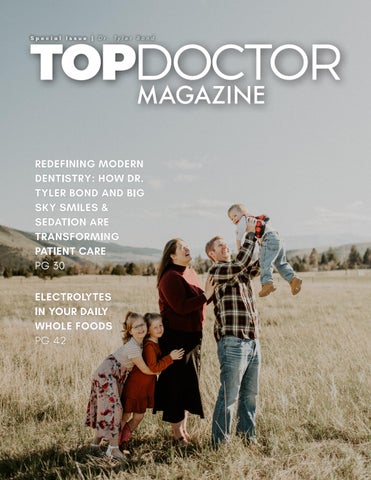
S p e c i a l I s s u e | D r . Ty l e r B o n d
REDEFINING MODERN DENTISTRY: HOW DR. TYLER BOND AND BIG SKY SMILES & SEDATION ARE TRANSFORMING PATIENT CARE PG 30 ELECTROLYTES IN YOUR DAILY WHOLE FOODS PG 42
For Dr. Bond, restoring smiles is ultimately about changing lives—one smile and one restored confidence at a time.
A Letter From The Editor Our mission and purpose at TopDoctor Magazine is to foster connections within the health and wellness community and empower our readers to make well-informed healthcare and lifestyle decisions. We pride ourselves on being the ultimate resource for interviews with health and wellness leaders, trending medical news, and healthy living topics. We understand that choosing a healthcare provider is a crucial decision. Our in-depth interviews with esteemed doctors and medical professionals aim to bridge the gap between them and their clients. By providing our readers with personal insights, philosophies, and areas of expertise, we facilitate a deeper understanding of the individuals responsible for your health and well-being. We also strive to highlight our outstanding practitioners, showcasing their dedication to their patients and contributions to the medical community. The field of medicine is constantly evolving, with new practices, therapies, and technologies emerging rapidly. At TopDoctor Magazine, we strive to keep you updated on the latest advancements in the medical world. Our comprehensive coverage of trending medical news equips both doctors and patients with the knowledge they need to make informed choices about healthcare options. Building strong connections within the medical community is essential for enhancing patient care and driving medical progress. Our magazine serves as a bridge, connecting medical companies with doctors and vice versa. By facilitating these connections, we aim to catalyze collaborations that can lead to innovative solutions and improved healthcare outcomes for everyone. It is our firm belief that well-informed individuals make better decisions about their health. By providing you with insights into established and emerging medical trends and technologies, we empower you to take an active role in your healthcare choices. Whether you are a healthcare professional seeking to stay updated on the latest advancements or a patient eager to make informed decisions about your well-being, TopDoctor Magazine is here to support you. In every issue, we strive to uphold the highest standards of journalistic integrity, accuracy, and relevance. Our dedicated team of writers, editors, and medical experts works tirelessly to bring you well-researched and compelling content that is both educational and engaging. Moreover, our graphic design team is committed to delivering an aesthetically pleasing reading experience where captivating design seamlessly merges with informative content, ensuring each issue becomes an engaging journey of discovery. As we embark on this mission to serve as your trusted source of medical information and insights, we encourage you to join us on this exciting journey. Your feedback and suggestions are invaluable to us, and we look forward to hearing from you. Thank you for being a part of the TopDoctor Magazine community. Together, let us embrace knowledge, forge connections, and make informed decisions to lead healthier lives. With warmest regards,
Hannah H.
Editor-in-Chief TopDoctor Magazine
Magazine Contributors Publication Team Publisher: John Hyland Editor-in-Chief: Hannah H. Editorial Assistant: Jillian Fast
Creative Department Senior Graphic Designer: Laura Poyner Graphic Designers: Kyleigh Holder, Dylan R-N
Expert Contributors Biohacking & Longevity Expert: Lindsay O’NeillO’Keefe Contributing Authors: Evelyn Flaharty, Riley George, Ashleigh Quint, Joshua Wheeler
Executive Team Chief Digital Content Officer: David Lee Vice President of Development: Mark Carvalho Fractional Marketing Officer: Craig Handley Advisory Board: Dr. Arthur Katona, Dr. Francisco Cabal, Dr. Edmond Ng, Dr. Kianor Shah
Table Of Contents
8
Consistency Is A Skill
16
Collagen For Health
30
Redefining Modern Dentistry: How Dr. Tyler and Big Sky Smiles & Sedation Are Transforming Patient Care
38
Tongue Scraping
42
Electrolytes In Your Daily Whole Foods
A shortage demanded a new manufacturer. TM BioWater answered.
An American RUO manufacturer built to strengthen domestic supply. tmbiowater.com For laboratory and research applications. Product availability subject to applicable regulations.
CONSISTENCY IS A SKILL NOT A PERSONALITY TRAIT Written by Ashleigh Quint, MIM, PICP-SCC Every January, the same narrative resurfaces: some people are “just disciplined,” while others simply lack motivation. By February, when gym attendance drops and nutrition plans fall apart, inconsistency is often framed as a personal failure. But this interpretation misses the science, and this misunderstanding has real consequences. When consistency is framed as a character flaw rather than a skill, individuals internalize failure rather than adjust the system around them. Over time, this erodes confidence, increases dropout rates, and reinforces the very patterns we are trying to change. Consistency is not a personality trait. It is a skill, one shaped by physiology, environment, stress load, and behavioral design. When we understand this distinction, adherence stops being a moral issue and becomes a solvable systems problem. What often goes unexamined is why consistency collapses, even in highly capable, intelligent individuals. The answer has far less to do with discipline and far more to do with how the body and brain respond to stress, recovery, and repeated demand.
Why Motivation Is the Wrong Metric Motivation is inherently unstable. It fluctuates with sleep quality, stress exposure, hormonal balance, and cognitive load. Research in behavioral psychology shows that reliance on motivation alone leads to short-term engagement but poor long-term adherence. This is especially true in high-stress populations, where decision fatigue and nervous system overload reduce follow-through. This pattern holds true across populations, including high performers. Athletes, often perceived as highly motivated, are not consistent because of willpower; they are consistent because of structure, accountability, and stability within coaching relationships. Scheduled training, external expectations, and consistent feedback create adherence first; motivation follows as a byproduct of continuity, not as its prerequisite. In both athletic and general populations, accountability functions as a stabilizing force, reducing decision fatigue, reinforcing behavior repetition, and sustaining consistency long after motivation naturally wanes. Consistency, by contrast, is built through repetition under supportive conditions. It is learned, reinforced, and sustained — not summoned on demand. When behaviors are repeated in environments that reduce friction 8
Top Doctor Magazine / Special Issue - Dr. Bond / 9
10
and cognitive load, they become neurologically efficient rather than effortful. Over time, this efficiency lowers resistance, increases follow-through, and allows adherence to persist even when motivation is low. In this way, consistency becomes a trained capacity, much like strength or endurance, developed through appropriate load, recovery, and support.
The Nervous System Drives Adherence One of the most overlooked factors in consistency is nervous system regulation. Chronic stress elevates cortisol, disrupts sleep, alters appetite regulation, and reduces cognitive flexibility. When the nervous system is overloaded, even simple routines feel overwhelming. In this state, missed workouts or dietary lapses are not failures of discipline; they are protective responses. The body prioritizes survival over self-improvement. Clinically, this explains why individuals under chronic stress often cycle between intense bursts of effort and complete disengagement. Without adequate recovery, consistency becomes physiologically unsustainable.
Consistency Thrives on Structure, Not Willpower Highly consistent individuals do not rely on willpower more than others; they rely on structure. Research in habit formation demonstrates that behaviors anchored to stable cues (time, location, routine) are significantly more likely to persist than those dependent on conscious decision-making. Try taking this approach: • Training at predictable times rather than ‘when you feel like it’ • Simplifying nutrition decisions through repetition • Reducing friction (access, preparation, complexity) The less cognitive effort a behavior requires, the more consistency occurs.
Load Management Matters More Than Intensity Another common reason consistency fails is excessive load — both physical and psychological. Programs that demand maximal effort, strict compliance, or constant novelty may work briefly, but may ultimately lead to burnout. Sustainable consistency requires load management: • Training intensity that matches recovery capacity • Nutrition strategies that stabilize blood sugar rather than restrict excessively • Expectations that align with life stress, not against it Progress does not require constant intensity. It requires continuity.
Identity Follows Behavior — Not the Other Way Around People often believe they must be consistent in order to act consistently. In reality, identity is shaped by behavioral repetition. Small, repeatable actions reinforce self-perception over time. When consistency is treated as a skill to be trained, rather than a trait to be judged, adherence improves. Missed days are viewed as feedback, not failure. Adjustments replace self-criticism. This shift is particularly important in medical and fitness settings, where shame-based narratives can undermine long-term outcomes. Top Doctor Magazine / Special Issue - Dr. Bond / 11
12
Clinical Implications for Health and Performance From a clinical perspective, reframing consistency as a skill, rather than a personality trait, fundamentally changes intervention design and outcome trajectories. When health and performance strategies are built around adherence capacity rather than compliance, patients and athletes demonstrate higher engagement, lower dropout rates, and improved long-term outcomes across training, nutrition, and rehabilitation. Programs that prioritize behavioral sustainability amplify their own effectiveness over time, creating a compounding effect in which small, repeatable actions lead to disproportionate gains in health markers, performance capacity, and injury resilience. In this model, outcomes improve not by increasing intensity or effort, but by increasing continuity, allowing physiological adaptations, neuromuscular efficiency, and metabolic regulation to accumulate predictably and with greater clinical reliability. For clinicians, coaches, and health professionals, reframing consistency has practical value. Patients and clients benefit when plans are designed around: • Nervous system capacity • Recovery availability • Behavior simplicity • Environmental support When adherence improves, outcomes follow, quite often without increasing effort. Consistency is not something people either have or lack. It is a trainable skill shaped by biology, structure, and support. When we stop asking patients to “try harder” and instead help them build sustainable systems, longterm health becomes achievable. For clinicians, this reframing matters. The consistency we bring — our steadiness, follow-through, and continued engagement — often becomes the bridge our patients need. When we remain consistent with them, especially when motivation fades, they are far more likely to internalize that stability and carry it forward themselves. In this way, consistency becomes shared, reinforced, and ultimately transformative.
Top Doctor Magazine / Special Issue - Dr. Bond / 13
HOPE LIVES HERE.
A science-based community of education, support, and connection for families navigating neurodevelopmental challenges. The Dr. Dr. Goodenowe GoodenoweNeuroSupport NeuroSupportProgram Programempowers empowersfamilies familiesthrough through “We truly believe they’re helping his education, education, community, community,structured structuredhealth healthtracking, tracking,and andnutritional nutritional plasmalogen plasmalogen support. support.Our Ourgoal goalisistotoprovide providethe thetools, tools,knowledge, knowledge,and and encouragement encouragementfamilies familiesneed needto tostay stayengaged engagedthroughout throughouttheir theirchild’s child’s journey—because journey—becausemeaningful meaningfulprogress progressbegins beginswith withunderstanding, understanding,and and no family family should shouldwalk walkthat thatjourney journeyalone. alone.
brain and body function at a higher level. Seeing these changes, especially in such a short time, has brought us a renewed sense of hope and excitement for what’s ahead.” -Karine -Karine H. H.
HOPE LIVES HERE.
NeuroSupport NeuroSupport isisan aneducation educationand andsupport supportprogram programand andisisnot nota substitute forfor medical care. OurOur goal is to a community centered a substitute medical care. goal is build to build a community on education, connection, and hope. and hope. centered on education, connection,
A science-based community of education, support, and connection for families navigating neurodevelopmental challenges. The Dr. Goodenowe NeuroSupport Program empowers families through education, community, structured health tracking, and nutritional plasmalogen support. Our goal is to provide the tools, knowledge, and encouragement families need to stay engaged throughout their child’s journey—because meaningful progress begins with understanding, and no family should walk that journey alone.
NeuroSupport is an education and support program and is not a substitute for medical care. Our goal is to build a community centered on education, connection, and hope.
HOPE LIVES HERE.
Join the NeuroSupport Community. Learn more and apply today. Call 1.951.228.2224 or visit communityhealth.drgoodenowe.com
Join the NeuroSupport Community. Learn more and apply today. visit communityhealth.drgoodenowe.com communityhealth.drgoodenowe.com Call 1.951.228.2224 or visit
A science-based community of education, support, and connection for families navigating neurodevelopmental challenges. The Dr. Goodenowe NeuroSupport Program empowers families through education, community, structured health tracking, and nutritional plasmalogen support. Our goal is to provide the tools, knowledge, and encouragement families need to stay engaged throughout their child’s journey—because meaningful progress begins with understanding, and no family should walk that journey alone.
NeuroSupport is an education and support program and is not a substitute for medical care. Our goal is to build a community centered on education, connection, and hope.
Join the NeuroSupport Community. Learn more and apply today. Call 1.951.228.2224 or visit communityhealth.drgoodenowe.com
“We truly believe they’re helping his brain and body function at a higher level. Seeing these changes, especially in such a short time, has brought us a renewed sense of hope and excitement for what’s ahead.” -Karine H.
“We truly believe they’re helping his brain and body function at a higher level. Seeing these changes, especially in such a short time, has brought us a renewed sense of hope and excitement for what’s ahead.” -Karine H.
16
Collagen for Healthy Younger Looking Skin By Evelyn Flaharty
H
ave you ever noticed that some women’s skin looks so radiant and youthful? Is this due to genetics? It could be, but not everyone is blessed with great genes. What other factors play a role in maintaining healthy, youthful skin as we age? Several key factors include diet, lifestyle, skin care regimen, and collagen. Genetics: Some individuals naturally produce and maintain collagen better than others. Healthy Diet: Eating collagen-rich foods, antioxidants, and healthy fats supports skin elasticity and hydration. Consistent Skin Routine: Regular use of moisturizers, serums, sunscreens, and anti-aging ingredients like retinol and vitamin C helps protect and repair skin. Hydration: Drinking plenty of water keeps skin plump and radiant. Sun Protection: Avoiding excessive sun exposure and using sunscreen prevents premature aging and collagen breakdown. Avoiding Harmful Habits: Not smoking and limiting sugar intake help preserve collagen and prevent skin damage. Top Doctor Magazine / Special Issue - Dr. Bond / 17
Collagen Supplementation: Some women take collagen supplements to support skin health and reduce wrinkles.
WHAT EXACTLY IS COLLAGEN? Collagen is the most abundant protein in the human body, playing a crucial role in maintaining the structural integrity of various tissues, including skin, bones, muscles, tendons, and ligaments. It acts as a scaffold, providing strength and elasticity to the body’s connective tissues. This natural protein type makes up more than 80% of the skin on our bodies. It is a compound made up of long chains of amino acids, just like all other proteins. The best way to understand collagen is to picture a Jell-O salad. Gelatin, the main ingredient in Jell-O, forms from cooking and drying collagen. You can imagine that it plays a similar role in our bodies as Jell-O, primarily providing our skin with plumpness and shine. Collagen consumption can increase skin elasticity and help your body’s skin repair process, encouraging your body to form new collagen. The body naturally produces collagen by breaking down dietary proteins into amino acids, which are then used to synthesize new collagen fibers. This process relies on key nutrients such as vitamin C, proline, glycine, and copper. Unfortunately, collagen declines with age, leading to visible signs of aging, such as wrinkles, sagging skin, and joint discomfort.
BENEFITS OF COLLAGEN How do we leverage these health benefits? It's all about recognizing what lifestyle choices benefit you versus damaging you. Things like age, too much sun, being overweight, and drugs or alcohol suppress some natural production of collagen in your body. On the other hand, eating a healthy, balanced diet, staying hydrated, and decreasing stress will only increase collagen production. When it comes to the benefits of collagen, most people immediately think of skin, hair, and nails, but the benefits cover so much more, including: Skin Health: Enhances elasticity, hydration, and overall appearance by reducing wrinkles and dryness, promoting a youthful complexion. Joint Support: Reduces joint pain and stiffness by improving cartilage integrity, potentially benefiting individuals with osteoarthritis or joint degeneration. Bone Strength: Helps maintain bone density and reduces the risk of osteoporosis, supporting overall skeletal health.
18
Top Doctor Magazine / Special Issue - Dr. Bond / 19
20
Muscle Mass: Supports muscle growth and recovery, particularly when combined with strength training, making it beneficial for aging adults and athletes. Gut Health: Aids in gut lining repair, potentially benefiting conditions like leaky gut syndrome and improving digestive health. Hair and Nail Health: Promotes stronger hair growth and reduces nail brittleness, contributing to overall aesthetic wellness. Heart Health: Some research suggests collagen may help support arterial structure and flexibility, reducing the risk of heart-related conditions.
FACTORS THAT DECREASE COLLAGEN LEVELS Unfortunately, when it comes to aging, there’s nothing we can do to combat that. That’s why having a handle on what we can control is so important. Several lifestyle and environmental factors can accelerate collagen breakdown in our bodies. Factors that decrease our collagen levels include: Aging: As we age, collagen production has a natural decline. Excessive Sun Exposure: Harmful UV rays damage collagen fibers. Smoking: Reduces collagen synthesis and leads to premature aging. High Sugar Intake: Excess sugar can cause glycation, which weakens collagen fibers.
WHAT ARE THE SOURCES OF COLLAGEN? Collagen can be obtained from both natural dietary sources and supplements. Consuming a diet rich in collagen components is a must, but how you go about that is up to you. The easiest way to boost your collagen naturally is to eat foods high in vitamin C and antioxidants like brightly colored fruits and vegetables. Let’s take a closer look at these sources. Animal-Based Sources: Bone broth, chicken skin, fish skin, beef, pork, and connective tissues. A word of caution regarding chicken skin: most of the fat in the chicken skin is unsaturated fat, which can be beneficial for heart health WHEN consumed in moderation. However, it also contains saturated fat, which, in excess, may contribute to higher cholesterol levels and an increased risk of heart disease. As a bodybuilder, I eat chicken almost daily without the skin. I also have issues with high cholesterol as a result of my thyroid cancer. My recommendation Top Doctor Magazine / Special Issue - Dr. Bond / 21
is to weigh the pros and cons. You certainly don’t want to address one issue (increase your collagen levels) at the expense of creating a different problem (high cholesterol). Eggs: Egg whites, especially, contain proline, a key amino acid for collagen synthesis. Dairy Products: While not direct collagen sources, they provide proteins and nutrients that support collagen production. Supplemental collagen is always an option. Collagen drinks and powders have been shown to have antioxidant properties, and antioxidants protect skin by limiting the production of free radicals, which can damage skin cells. It’s what gives essential power to tissues and organs, with the elastin supplying the stretching capabilities. Powdered collagen supplements can be easily added to smoothies and soups to give you that extra collagen boost. Every morning without fail, I add a scoop of collagen to my BCAAs. It’s that simple and doesn’t change the drink's flavor when you add the collagen supplement. Organic and grass-fed animals are recommended when searching for collagen supplements. Another option is collagen in capsule form. The body easily absorbs both options.
HOW TO BOOST COLLAGEN PRODUCTION We previously stated that our collagen levels decline as we age. You may see signs of aging or want to stay ahead of the decrease by boosting your collagen intake. To maintain healthy collagen levels, consider these strategies: Consume Collagen-Rich Foods: Include bone broth, fish, and eggs in your diet. Salmon is an excellent source of collagen. Eating salmon with the skin intact can help
22
Top Doctor Magazine / Special Issue - Dr. Bond / 23
boost collagen intake. Additionally, salmon contains omega-3 fatty acids, which support skin hydration and elasticity. Take Collagen Supplements: Hydrolyzed collagen is an effective way to boost your levels. Hydrolyzed collagen, also known as collagen peptides, is a form of collagen that has been broken down into smaller amino acid chains through a process called hydrolysis. This makes it easier for our body to absorb and use compared to regular collagen. Personally, I take a hydrolyzed collagen peptide. It’s important to note that non-hydrolyzed collagen supplements are less common and are primarily targeted toward joint health rather than skin or hair benefits. Take Collagen Supplements: Hydrolyzed collagen is an effective way to boost your levels. Increase Vitamin C Intake: Found in citrus fruits, bell peppers, and leafy greens, vitamin C is essential for collagen synthesis. You can also take a vitamin C supplement. Stay Hydrated: Water helps maintain skin elasticity and can reduce dryness and wrinkles. I drink a gallon of water, but am also highly active with strength training and daily cardio. You may not need to drink a gallon. Listen to your body and drink when you’re thirsty. Remember, drinking water has many benefits. Protect Your Skin: Use sunscreen to prevent UV-induced collagen breakdown. This is an important step that is often
24
overlooked. Why go through all the steps to boost your collagen levels if you don’t protect your skin from the sun's harmful rays?
EFFECTIVENESS OF COLLAGEN SUPPLEMENTS Higher Absorption Rate: Hydrolyzed collagen (also known as collagen peptide) is broken down into smaller amino acids, making it easier for the body to absorb and utilize. Presence of Vitamin C: Collagen synthesis requires vitamin C, so pairing supplements with vitamin C-rich foods enhances the effectiveness. Convenience: Supplements provide a concentrated source of collagen without the need for food preparation. Most studies show benefits after 8-12 weeks of regular use.
Top Doctor Magazine / Special Issue - Dr. Bond / 25
Specific Benefits: Some supplements are fortified with additional nutrients like vitamin C, hyaluronic acid, and zinc, enhancing collagen synthesis. Scientific Support: Studies suggest collagen supplements improve skin elasticity, hydration, joint health, and muscle recovery.
EFFECTIVENESS OF NATURAL SOURCES Whole Nutrients: Foods rich in collagen, such as bone broth, fish, and egg whites, provide additional nutrients that support overall health. Slower Absorption: Natural collagen requires digestion and breakdown before the body can use it for collagen synthesis. More Comprehensive Benefits: Consuming a collagen-rich diet often includes other essential vitamins, minerals, and proteins that promote overall well-being.
WHICH IS BETTER? Collagen supplementation and natural sources both contribute to collagen production, but they differ in effectiveness based on absorption, bioavailability, and overall health benefits. Therefore, when it comes to collagen sources, it’s not a question of one or the other; instead, you should be looking for a combination of both sources. • For faster results, collagen supplements are more effective due to higher bioavailability. • For long-term health, a balanced diet with natural collagen sources supports overall well-being and provides a broader range of nutrients.
26
WHO SHOULD TAKE COLLAGEN? Collagen supplements are generally safe for most people and can provide significant health benefits. However, they may not be necessary for everyone. Recommended for: • Individuals experiencing joint pain and reduced mobility. • Those looking to improve skin health and elasticity. • Athletes and individuals engaging in tense physical activity. • People recovering from injuries or surgeries involving connective tissues. Not Recommended for: • Individuals with allergies to collagen sources (e.g., fish, eggs, or beef) • Those with dietary restrictions that prohibit animalderived products. • People with specific medical conditions should consult a healthcare provider before supplementation is advised.
CONCLUSION Collagen is an essential protein that supports the body’s structure and overall health. While natural production declines with age, maintaining a healthy diet, using supplements, and adopting a collagen-friendly lifestyle can help preserve and boost collagen levels, promoting youthful skin, strong joints, and overall vitality. Collagen is generally safe and beneficial for most people, but it may not be necessary or recommended for everyone. Individuals with specific dietary restrictions, allergies (such as fish or egg allergies), or medical conditions should consult a healthcare provider before taking collagen supplements. Additionally, while collagen supports skin, joint, and bone health, those with balanced diets rich in protein and collagenboosting nutrients may not need additional supplementation.
Top Doctor Magazine / Special Issue - Dr. Bond / 27
Redefining Modern Dentistry:
How Dr. Tyler Bond and Big Sky Smiles & Sedation Are Transforming Patient Care Written by Riley George
30
In an era where dental visits are often met with apprehension, Dr. Tyler J. Bond is rewriting the script. As the founder of Big Sky Smiles & Sedation, Dr. Bond has built a practice that merges cuttingedge technology with profound clinical empathy. For patients who have avoided the dentist for decades or have been told their cases are hopeless, Big Sky Smiles & Sedation offers more than just clinical solutions; it offers a second chance at health, confidence, and quality of life.
From Organic Chemistry to Dental Innovation Dr. Bond’s journey into dentistry began during his undergraduate studies when a pre-medical shadow opportunity unexpectedly changed his trajectory. After a general dentist invited him to witness a complex surgery at the WhiteCap Institute in Heber City, Utah, Dr. Bond skipped his organic chemistry class to watch. “I’d never seen anything like it before,” Dr. Bond said. “Watching those dentists transform a patient’s smile in a single day was incredible. Until then, I thought dentistry was mostly exams and fillings. Seeing procedures like bilateral sinus
lifts and implants performed together opened my eyes to what was possible. I knew immediately that was the kind of dentistry I wanted to practice—the kind that could truly change someone’s life.” That defining moment sparked a dedication to advanced dental education, leading Dr. Bond to pursue extensive mentorship, including time with implant authorities at Implant Pathways. His commitment to mastery deepened during four years of service as a Navy dentist working alongside Marines. “One thing I’ve always admired about military doctors is their willingness to share their knowledge with anyone who’s genuinely committed to learning and becoming the best clinician they can be,” Dr. Bond said. “That was a major turning point for me because it helped me develop not just the technical skills, but an understanding of why things are done. In surgery, you often have to pivot, and without that deeper understanding, it’s easy to get lost.” Top Doctor Magazine / Special Issue - Dr. Bond / 31
A Comprehensive Approach: Saving Teeth and Restoring Smiles Guided by the fundamental principle of doing no harm, Dr. Bond emphasizes that comprehensive dentistry is not about pushing aggressive, one-size-fitsall procedures. Instead, it begins with an extensive diagnostic and interview process. “Some patients may ultimately choose dentures, while others decide implants are the right fit,” Dr. Bond explained. “That’s why every treatment plan begins with a thorough interview. Before I even walk into the room, our team has asked anywhere from a dozen to 20 questions to understand the patient’s goals, so our recommendations are tailored to what matters most to them.” This personalized philosophy allows Big Sky Smiles & Sedation to utilize advanced alternatives like the LAPIP and LANAP protocols, which treat periodontal disease around implants and teeth without traditional, invasive gum surgery. “The laser allows us to target brown and red pigments precisely, vaporizing affected tissue and eliminating bacteria around the teeth or implants,” Dr. Bond explained. “Not only does it help eradicate harmful bacteria, but it also promotes the regeneration of healthy supporting tissue around the teeth and implants.”
Cutting-Edge Technology for Predictable, Pain-Free Outcomes At Big Sky Smiles & Sedation, technology 32
serves a dual purpose: maximizing clinical precision and minimizing patient trauma. By integrating advanced tools like robotic-assisted implant placement and AI-powered diagnostic imaging, Dr. Bond achieves remarkable clinical consistency. “Our implant placements have a success rate of about 99%, while published literature generally reports success rates in the 90% to 95% range,” Dr. Bond noted. Furthermore, robotics and advanced protocols drastically reduce chair time and invasiveness. Procedures that traditionally required extensive, multihour surgeries with large flaps are streamlined, resulting in faster recoveries and far less discomfort. For patients grappling with severe dental anxiety, a cornerstone demographic at the practice, these technological advantages are paired with compassionate IV sedation methods designed to erase fear entirely. “For patients who are anxious about sedation, we can offer oral medication so they’re already relaxed before the IV is placed,” Dr. Bond explained. “By the time they’re ready for treatment, many don’t
remember the IV or the preparation at all. They simply come in, take the medication, begin to relax, and we’re able to proceed comfortably from there.”
find a solution for a patient. One of the biggest misconceptions is that something can’t be done when, in reality, the limitation may be the doctor’s experience or training. What’s impossible for one doctor may be possible for another. You just have to find the right doctor, with the right training and the right tools, to make it happen.” By leveraging advanced robotic navigation and decades of accumulated surgical expertise, Dr. Bond continually turns “impossible” prognoses into restored, functional realities for his patients.
Overcoming the “Impossible”: Debunking Dental Misconceptions One of the most persistent hurdles Dr. Bond encounters in his practice is the lingering psychological and diagnostic barrier faced by patients who have been turned away elsewhere. It is common for individuals to arrive at Big Sky Smiles & Sedation carrying the heavy burden of past rejections from other dental professionals. “One of the biggest concerns I hear from patients is that they’ve been told by a specialist or another dentist that they simply don’t have enough bone,” Dr. Bond explained.
Beyond Aesthetics: The Oral-Systemic Link The transformation experienced by patients at Big Sky Smiles & Sedation extends far beyond a beautiful smile or the ability to eat favorite foods again. Dr. Bond highlights the powerful connection between oral health and overall systemic well-being. “After I got this done, I just feel better,” Dr. Bond shared, echoing what he often hears from patients. “It’s not necessarily that they say, ‘My smile looks great’ or
Far from a permanent roadblock, Dr. Bond noted that this verdict is incorrect in the vast majority of cases. When I say that’s usually not true, I mean 90% to 95% of the time,” Dr. Bond emphasized. “It’s very rare that we can’t Top Doctor Magazine / Special Issue - Dr. Bond / 33
of care. On a larger scale, that means so many more people can get the help they need.” This spirit of service is woven into the fabric of Big Sky Smiles & Sedation, where the team regularly gives back through initiatives such as providing free dental implants to veterans on Veterans Day and performing surgical care for the state prison system. ‘Everything functions better.’ It’s that they simply feel better. Once we’re able to address the disease in the mouth, it can have an impact beyond oral health. We know there is an oral-systemic connection, where bacteria and chronic inflammation in the mouth can affect the rest of the body.” Despite being told by other providers that they lack sufficient bone structure or are ineligible for implants, over 90% of patients who visit Dr. Bond find a viable, life-changing solution.
Passing the Torch: Education, Mentorship, and Giving Back Dr. Bond’s dedication to excellence does not stop at his own clinic doors. In addition to treating patients, he spends up to 10 weeks a year teaching at Implant Pathways, sharing his expertise with fellow clinicians to expand access to advanced care on a broader scale. “There’s only so many of these surgeries I can perform myself,” Dr. Bond reflected. “But if I can teach another doctor what I’ve learned and empower them to do the same, we can multiply the number of patients who have access to this kind 34
Looking Forward: A Message on Oral Health As populations age and life expectancies extend, Dr. Bond believes that proactive, compassionate dental care is more critical than ever. His primary advice to readers hesitating to visit the dentist is simple: take ownership of your health, and find a provider who listens without judgment. “You need to find someone you can communicate with, have an honest conversation with, and who will be compassionate about the situation you’re in,” Dr. Bond advised. “Take responsibility for your oral health, and find a doctor who’s willing to work with you—not someone who’s simply going to berate you or tell you what to do.”
For Dr. Bond, changing teeth is ultimately about changing lives—one smile, and one restored confidence, at a time.
“A smile is the window to the soul, so it’s hard to see the soul if they can’t smile or they feel like they can’t smile,” Dr. Bond said. “Being able to change their confidence and being able to give them a semblance of what they used to have really brings out who they really are as a person, and it’s an honor to be able to do that.”
Ready to take the next step toward a healthier, more confident smile? Learn more about Dr. Bond’s approach and schedule a consultation with Big Sky Smiles & Sedation at www.bigskysmilesandsedation.com. Top Doctor Magazine / Special Issue - Dr. Bond / 35
Tongue Scraping: A Practice Rooted
in Ancient Wisdom Written By: Riley George
W
hile oral hygiene often revolves around brushing and flossing, a lesser-known but incredibly beneficial practice has gained attention in recent years: tongue scraping. Rooted in ancient Ayurvedic traditions, tongue scraping involves gently cleaning the tongue’s surface to remove accumulated bacteria, toxins, and debris. Beyond the immediate benefits for oral health, research and anecdotal evidence suggest that regular tongue scraping can contribute to overall well-being in unexpected ways.
The Science Behind Tongue Scraping
The tongue is a prime breeding ground for bacteria, dead cells, and toxins. Overnight, these substances accumulate on the tongue’s surface, leading to the notorious phenomenon known as morning breath. However, the benefits of tongue scraping extend far beyond combating bad breath.
Improved Oral Health
A 2005 study published in the Journal of Periodontology found that tongue scraping is more effective than tooth brushing alone in reducing the production of volatile sulfur compounds (VSCs) – the compounds responsible for bad breath.¹ By removing the bacteria that contribute to VSCs, tongue scraping plays a crucial role in enhancing overall oral hygiene.
Reduction of Bacteria and Toxins
Research has shown that the tongue harbors a significant amount of harmful bacteria that can contribute to various oral and systemic health issues. A 2017 study published in the Journal of Clinical and Diagnostic Research found that tongue scraping resulted in a significant reduction in the total bacterial count on the tongue’s surface, thereby minimizing the potential for oral infections.²
Enhanced Taste Perception
The tongue is responsible for detecting flavors, and a coated tongue can dull taste perception. By regularly scraping the tongue, individuals may experience an improvement in their ability to taste and enjoy food, as suggested by a study published in the Journal of Clinical and Experimental Dentistry in 2016.³ 38
Prevention of Systemic Health Issues
The oral cavity is a gateway to the rest of the body, and maintaining oral health is integral to overall well-being. Research published in the Journal of Oral Microbiology in 2012 suggests that oral bacteria and inflammation may contribute to systemic conditions such as cardiovascular disease and diabetes.⁴ Tongue scraping, by reducing the bacterial load in the mouth, may play a role in preventing these broader health issues.
Tips for Effective Tongue Scraping Choose the Right Tool
Various tongue-scraping tools are available, including metal and plastic scrapers. Choose one that feels comfortable in your hand and has a gentle, curved edge to prevent irritation.
Scrape from Back to Front
Gently scrape your tongue from the back to the front, ensuring that you cover the entire surface. Be mindful not to press too hard, as this can cause discomfort and may damage taste buds.
Incorporate into Daily Routine
Make tongue scraping a part of your daily oral hygiene routine, ideally in the morning before brushing your teeth. This helps remove accumulated debris from overnight and sets a fresh foundation for the day.
Maintain Consistency
Consistency is key for reaping the full benefits of tongue scraping. Incorporate it into your daily routine, and over time, you may notice improvements in oral health, breath freshness, and overall well-being. Incorporating the ancient practice of tongue scraping into your daily routine can be a small yet powerful step toward enhancing oral health and overall well-being. Backed by scientific research, this simple practice offers benefits beyond the prevention of bad breath, including the reduction of harmful bacteria, enhanced taste perception, and potential systemic health implications. As we delve into the wisdom of traditional practices, tongue scraping emerges as a valuable addition to modern oral hygiene, reminding us that maintaining health can often be found in the simplicity of time-honored rituals.
Top Doctor Magazine / Special Issue - Dr. Bond / 39
ELECTROLYTES 42
IN YOUR DAILY
Whole Foods By Joshua Wheeler Electrolytes are among the most essential factors in a healthy, hydrated lifestyle. There are multiple products out there that help you increase your electrolyte intake, but what are some natural, nutritious foods and liquids that will leave you feeling amazing? These five electrolyte sources are a healthy diet staple: watermelon, coconut water, nuts and seeds, lemons, and salt. Let’s take a deep dive into these nutrient-dense, hydrating foods.
Salt The most known form of electrolytes, salt contains magnesium, potassium and calcium. There are many sources of salt, but some of the best include Celtic Sea Salt and Himalayan Pink Salt. You can add Celtic Sea Salt to your water for an electrolyte boost before a run or a workout.
ermelon Wat
One of the most refreshing natural forms of hydration, watermelon is a go-to source of electrolytes that is low in calories (only 42 per cup) and very satisfying. Watermelon is made up of ninety-two percent water. The electrolytes watermelon consists of are potassium, magnesium, and sodium.¹ These are vital to electrolyte balance and will keep you hydrated for hours.
Top Doctor Magazine / Special Issue - Dr. Bond / 43
Nuts and Seeds These sources of healthy fats contain many of these electrolytes like magnesium and phosphorous.³ Grab a handful of almonds or even sunflower seeds for a healthy snack! Peanut butter or almond butter are also excellent sources if you want something more filling.
Coconut water This island fruit is a delicious way to restore those lost electrolytes after a challenging workout. The liquid contained in coconut is bristling with great electrolyte sources such as potassium, magnesium, sodium, and calcium.2 Pour a glass of coconut water to accompany your next meal, and you’ll be feeling great!
44
These foods are easy to acquire at your local grocery store and can be incorporated in many different ways. Don’t be afraid to get creative with how you add your daily electrolytes to your meals and snacks. Stay hydrated and healthy, and stay tuned for more health tips to be the best
Le m on
and healthiest version of yourself.
This sour fruit is a refreshing
additive to water
on a hot summer’s day.
Besides the delicious taste
of lemon, the electrolytes
in them can increase sodium, calcium, magnesium, and potassium.⁴ Add lemon to your water or squeeze it over one of your high-protein meals for a pleasant, zesty taste. Top Doctor Magazine / Special Issue - Dr. Bond / 45
A New Era of Anti-Aging - Dr. Hinna Akhtar, DNP, FNP-C U.S. Army Veteran • Published Medical Author • Aesthetic & Wellness Expert For Dr. Hinna, anti-aging goes far beyond aesthetics and how her patients look—it’s also about how they feel, function, and live each day. Her mission is to empower patients to take an active role in their health and approach aging with confidence. Drawing on her background in family practice, wellness, and aestheticsDr. Hinna integrates modern medicine, aesthetic treatments, nutrition, strategic fasting, physical activity, and a healthy mind and spirit to support wellness from the inside out.
Photo: Jessica Schumacher
Her philosophy is simple: Anti-aging begins with a healthier you.
Practicing at: BodyMD | Scottsdale, Arizona
References & Resources Consistency Is a Skill — Not a Personality Trait For inquiries regarding speaking engagements, health, wellness, and strength, please contact Ashleigh Quint at IG @up_lift_gym or via email at Ashleigh@uplift-gym.com. 1. Baumeister, Roy F., and John Tierney. Willpower: Rediscovering the Greatest Human Strength. New York: Penguin Press, 2011. 2. Hall, Kevin D. “Energy Balance and Its Components: Implications for Body Weight Regulation.” The American Journal of Clinical Nutrition 104, no. 3 (2016): 667–678. 3. Lally, Phillippa, Cornelia H. M. van Jaarsveld, Henry W. W. Potts, and Jane Wardle. “How Are Habits Formed: Modelling Habit Formation in the Real World.” European Journal of Social Psychology 40, no. 6 (2009): 998–1009. https://doi.org/10.1002/ejsp.674. 4. McEwen, Bruce S. “Physiology and Neurobiology of Stress and Adaptation: Central Role of the Brain.” Physiological Reviews 87, no. 3 (2007): 873–904. https://doi.org/10.1152/physrev.00041.2006. 5. Sapolsky, Robert M. Why Zebras Don’t Get Ulcers. New York: Henry Holt and Company, 2004.
Collagen for Healthy, Younger-Looking Skin You can find more from Evelyn through her website or social media channels: 1. Website: EvelynFlaharty.com 2. YouTube: Evelyn Flaharty 3. YouTube: Workouts With Evelyn Flaharty 4. Instagram: ffmusclesandcurves 5. TikTok: @evelynifbbpro 6. Facebook: Evelyn Flaharty
Redefining Modern Dentistry: How Dr. Tyler Bond and Big Sky Smiles & Sedation Are Transforming Patient Care 1. Ready to take the next step toward a healthier, more confident smile? Learn more about Dr. Bond’s approach and schedule a consultation with Big Sky Smiles & Sedation at www.bigskysmilesandsedation.com.
Tongue Scraping: A Practice Rooted in Ancient Tradition 1. Pedrazzi, V., et al. (2004). Tongue-cleaning methods: a comparative clinical trial employing a toothbrush and a tongue scraper. Journal of Periodontology, 75(7), 1009–1012. 2. Shetty, S. S., et al. (2017). Effectiveness of tongue scraping on morning bad breath—A randomized controlled trial. Journal of Clinical and Diagnostic Research, 11(9), ZC58–ZC61. 3. Rukmini, N., & Vijayalakshmi, R. (2016). Effect of tongue scraping on oral malodor. Journal of Clinical and Experimental Dentistry, 8(2), e131–e135. 4. Tonzetich, J., & Ng, S. K. (1976). Reduction of malodor by oral cleansing procedures. Oral Surgery, Oral Medicine, Oral Pathology, 42(2), 172–181. 5. Fine, D. H., et al. (2012). The use of systemic markers to determine the pathobiology of periodontal disease and the development of a new classification system. Journal of Oral Microbiology, 4(1), 1–9.
Electrolytes in Your Daily Whole Foods 1. Wempen, Kristi. “The Wonders of Watermelon.” Mayo Clinic Health System, July 27, 2021. https://www. mayoclinichealthsystem.org/hometown-health/speaking-of-health/the-wonders-of-watermelon. 2. Manaker, Lauren. “Skip the Sugary Sports Drinks—These 20 Electrolyte-Boosting Foods Can Help You Stay Hydrated.” Health, November 8, 2023. https://www.health.com/foods-with-electrolytes-8349000. 3. Leonard, Jayne. “Foods That Are High in Electrolytes.” www.medicalnewstoday.com, May 15, 2020. https:// www.medicalnewstoday.com/articles/electrolytes-food. 4. Cleveland Clinic Writing Team. “Rebalance, Replenish: 4 Sources of Electrolytes.” Cleveland Clinic, September 22, 2023. https://health.clevelandclinic.org/best-electrolyte-sources.
Elevated Comfort
Yomi + LANAP Technology
At Big Sky Smiles & Sedation, we combine advanced technology with a gentle, personalized approach—so you can feel confident in your care and your smile.
ADVANCED TECHNOLOGIES. BETTER CARE. We invest in leading-edge technology to deliver more precise treatment with greater comfort.
YOMI
LANAP
ROBOTIC-ASSISTED DENTAL IMPLANT SURGERY
LASER GUM TREATMENT
Personalized
Gentle
Precise
Comfortable
Minimally invasive
Faster healing
Advanced technology.
Care centered on you. 1001 SW Higgins Ave, STE 103, Missoula, MT 59803 bigskysmilesandsedation.com
Scan to
LEARN MORE
CALL NOW
(406) 926-0448