
Special Issue - Dr. Michael Roizen

Page 1


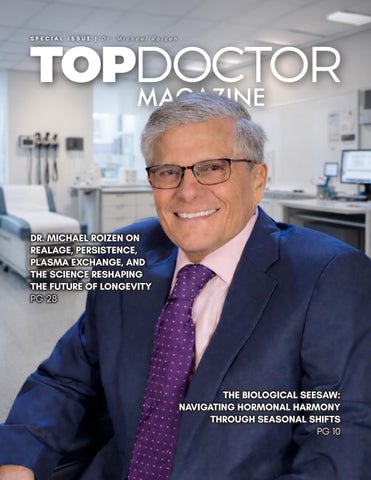
DR. MICHAEL ROIZEN ON REALAGE, PERSISTENCE, PLASMA EXCHANGE, AND THE SCIENCE RESHAPING THE FUTURE OF LONGEVITY

PG 28

THE BIOLOGICAL SEESAW: NAVIGATING HORMONAL HARMONY THROUGH SEASONAL SHIFTS

PG 10
OPTIMIZE YOUR WELLNESS WITH CARBON 60 (C60).

C60 has been characterized as the most powerful antioxidant known. It’s hundreds of times more powerful than conventional antioxidants.

Crossing the blood-brain barrier, C60 works at the cellular level to support mitochondrial function. C60 fights inflammation, lifts the oxidative burden, and neutralizes toxic free radicals.

Unlike conventional antioxidants, C60 won’t interfere with any other supplements, vitamins, or medications. It can reset itself, again and again. Take it before your other supplements to boost your morning routine supplement stack.

Most users note an increase in ENERGY and MENTAL CLARITY within 30 days when incorporating C60 Power into their morning routine. Many users note FASTER RECOVERY and IMPROVED PERFORMANCE within this same time frame.

“Your choices make much more of a difference than you think. You have more control than you realize.”
Dr. Michael Roizen

Publisher: John Highland

Editor In Chief: Hannah H.

Editorial Assistant: Jillian Fast

Graphic Designers: Laura Poyner, Dylan R-N

Contributing Authors: Riley George, Zenith Lundell, Ashleigh Quint

PUBLICATION TEAM EXECUTIVE TEAM

Vice President of Development: Mark Carvalho

Fractional Marketing Officer: Craig Handley Advisory Board: Dr. Arthur Katona, Dr. Francisco Cabal, Dr. Kianor Shah

CONTRIBUTORS MAGAZINE

A LETTER FROM THE EDITOR

Our mission and purpose at TopDoctor Magazine is to foster connections within the health and wellness community and empower our readers to make wellinformed healthcare and lifestyle decisions. We pride ourselves on being the ultimate resource for interviews with health and wellness leaders, trending medical news, and healthy living topics.

We understand that choosing a healthcare provider is a crucial decision. Our in-depth interviews with esteemed doctors and medical professionals aim to bridge the gap between them and their clients. By providing our readers with personal insights, philosophies, and areas of expertise, we facilitate a deeper understanding of the individuals responsible for your health and well- being. We also strive to highlight our outstanding practitioners, showcasing their dedication to their patients and contributions to the medical community.

The field of medicine is constantly evolving, with new practices, therapies, and technologies emerging at a rapid pace. At TopDoctor Magazine, we strive to keep you updated on the latest advancements in the medical world. Our comprehensive coverage of trending medical news equips both doctors and patients with the knowledge they need to make informed choices about healthcare options.

Building strong connections within the medical community is essential for enhancing patient care and driving medical progress. Our magazine serves as a bridge, connecting medical companies with doctors and vice versa. By facilitating these connections, we aim to catalyze collaborations that can lead to innovative solutions and improved healthcare outcomes for everyone.

It is our firm belief that well-informed individuals make better decisions about their health. By providing you with insights into established and emerging medical trends and technologies, we empower you to take an active role in your healthcare choices. Whether you are a healthcare professional seeking to stay updated on the latest advancements or a patient eager to make informed decisions about your well-being, TopDoctor Magazine is here to support you.

In every issue, we strive to uphold the highest standards of journalistic integrity, accuracy, and relevance. Our dedicated team of writers, editors, and medical experts work tirelessly to bring you well-researched and compelling content that is both educational and engaging. Moreover, our graphic design team is committed to delivering an aesthetically pleasing reading experience where captivating design seamlessly merges with informative content, ensuring each issue becomes an engaging journey of discovery.

As we embark on this mission to serve as your trusted source of medical information and insights, we encourage you to join us on this exciting journey. Your feedback and suggestions are invaluable to us, and we look forward to hearing from you.

Thank you for being a part of the TopDoctor Magazine community. Together, let us embrace knowledge, forge connections, and make informed decisions to lead healthier lives.

With warmest regards, Hannah

TABLE OF CONTENTS

10 20 28 38 48

THE BIOLOGICAL SEESAW: NAVIGATING HORMONAL HARMONY THROUGH SEASONAL SHIFTS

THE IMPORTANCE OF RESISTANCE TRAINING WHILE TAKING PEPTIDES

HE FEELS 40 AT 80. NOW HE WANTS TO CHANGE AGING FOR EVERYONE: DR. MICHAEL ROIZEN ON LIFESPAN EDGE, REALAGE, PERSISTENCE, PLASMA EXCHANGE, AND THE SCIENCE RESHAPING THE FUTURE OF LONGEVITY

THE SURPRISING BENEFITS OF GROUNDING

WHAT DOES THE ORGANIC LABEL MEAN?

Transform Mental Wellness

for Your Patients!

In the past five years, stress levels have skyrocketed, wreaking havoc on mental well-being worldwide.

Combat this rising stress epidemic with BrainTap, the revolutionary brainwave entrainment system!

Research demonstrates BrainTap's impact, showing a remarkable 28.1% increase in heart rate variability and 38.5% improvement on the stress index scale* after just one session, and with no effort on the part of the participant.

tBiologicalSeesaw he

Navigating Hormonal Harmony Through Seasonal Shifts

As the leaves turn or the first buds of spring emerge, most of us attribute our shifting moods to the simple beauty or gloom of the scenery. However, beneath the surface, our bodies are undergoing a complex chemical recalibration that rivals the complexity of the changing landscape. Transitions between seasons, particularly the shifts in light exposure and temperature, act as a biological reset button for our endocrine system.

This internal machinery governs everything from the clarity of our morning thoughts to the depth of our midnight slumber. Understanding these transitions is the first step toward maintaining steady energy and a resilient mood year-round, moving beyond the idea that we are merely "weather-sensitive."

Light-Dark Connection: Melatonin and Cortisol

The most significant driver of hormonal change during seasonal transitions is the photoperiod, or the duration of daylight. Our circadian rhythm, the internal clock that dictates our sleep-wake cycle, relies on light signals to regulate the production of melatonin and cortisol. During the transition into winter, the shortened days can cause the pineal gland to begin producing melatonin earlier in the evening and continue later into the morning. This often results in what researchers call winter hypersomnia, in which the body feels a persistent, heavy grogginess despite a full night's sleep.

In contrast, the surge of light during the summer transition can suppress melatonin production to a degree that interferes with restorative rest. According to research summarized by the Sleep Foundation, these disruptions are a primary trigger

for Seasonal Affective Disorder (SAD).¹ The body struggles to sync its internal clock with the external environment, leading to a state of "social jetlag" where our biological timing is permanently at odds with the sun.

The Vitamin D "Hormone" and Mood Regulation

Though commonly labeled a vitamin, vitamin D functions more like a pro-hormone with receptors located throughout the brain and body. It is a critical component in the synthesis of serotonin, the neurotransmitter responsible for mood stability and feelings of well-being. As we transition into autumn and winter, the angle of the sun changes, and UV exposure drops significantly, particularly in northern latitudes.

A summary of studies from the Mayo Clinic indicates that lower vitamin D levels can lead to a significant dip in serotonin.² This chemical drought often manifests as irritability, intense carbohydrate cravings, and a lack of motivation. When you feel your mood plummeting in October, it is often a lag in your body’s ability to convert sunlight rather than a personal failing or a lack of willpower.

Thyroid and Metabolism: Adapting to the Cold

Our thyroid gland is essentially the body's thermostat, responsible for regulating metabolic rate and heat production. As seasons shift toward colder temperatures, the thyroid must increase its production of T3 and T4 to stimulate thermogenesis.

This metabolic ramp-up requires more fuel and micronutrients, which explains why many people experience a natural uptick in appetite during the transition to winter. According to Endocrine Web, supporting the thyroid through these shifts requires a delicate balance of iodine, selenium, and iron.³ If the thyroid cannot meet the increased demand for heat production, the result is often profound cold intolerance, brittle hair, and a sense of "brain fog" that persists regardless of caffeine intake.

Strategic Adaptation for Energy and Sleep

To support hormonal health during these shifts, one must adopt a proactive approach to light management and nutrition. Within the first 30 minutes of waking, seeking out natural light is essential because it triggers an early cortisol spike. This "wake-up" hormone simultaneously sets the timer for melatonin production fourteen hours later.

As evening light lingers in the summer months, using amber-tinted glasses or dimming indoor lights can signal to the brain that the day is ending. Nutritional support also plays a role; shifting toward complex carbohydrates like oats and sweet potatoes can help transport tryptophan to the brain, aiding serotonin production. Furthermore, magnesium serves as a vital tool for regulating the nervous system during hectic seasonal changes, as noted by Healthline, which cites its ability to improve sleep quality by regulating neurotransmitters and calming the adrenal glands.⁴

The Body as a Rhythmic System

Ultimately, our hormones are not static measurements but a rhythmic response to the world around us. By acknowledging that your energy levels and sleep patterns are tied to the earth’s cycles, you can move away from fighting your biology and toward supporting it.

Whether it is adjusting your bedroom temperature to facilitate the core cooling necessary for deep sleep or increasing your intake of healthy fats to support hormone synthesis in the winter, small shifts can mitigate the stress of seasonal transitions. Our bodies are designed to adapt, but in a world of artificial light and climate control, we must be intentional about providing the signals our endocrine system needs to stay in balance.

Seasonal Strategy Guide: Key Takeaways

To make these hormonal transitions more manageable, here is a breakdown of the essential facts and actionable steps you can take:

• Prioritize Morning Sunlight: Aim for 10–30 minutes of natural light shortly after waking to anchor your circadian rhythm and trigger essential cortisol release.

• Monitor Vitamin D Levels: Since vitamin D acts as a precursor to serotonin, consider testing your levels during the autumn transition and supplementing if necessary to prevent the "serotonin dip."

• Adjust Nutritional Fuel: Support your thyroid’s increased winter workload by consuming foods rich in selenium (such as Brazil nuts) and iodine (such as seaweed or iodized salt).

• Manage Evening Blue Light: Use blue-light-blocking technology or dim your environment two hours before bed to protect melatonin production, especially during long summer days.

• Cool Your Sleep Environment: Recognize that your body must drop its core temperature to sleep; use fans or specialized bedding to counteract summer heat that might spike cortisol at night.

• Lean into Magnesium: Incorporate magnesium-rich foods like leafy greens and seeds, or consider a supplement to help stabilize the nervous system during high-stress seasonal shifts.

Working with the Seasons, Not Against Them

As the world outside transforms, it is only natural that we feel a corresponding shift within ourselves. We are not meant to operate at the exact same frequency in the depths of January as we do in the peak of July. By viewing our energy, sleep, and mood through the lens of hormonal biology, we can replace frustration with a sense of informed adaptation.

Whether it is by seeking out that vital morning light to anchor our circadian

rhythm or adjusting our nutrition to support a hardworking thyroid, these small, intentional acts of self-care bridge the gap between our modern lifestyles and our ancestral biology. Ultimately, seasonal transitions are an invitation to tune in and listen to what our bodies need most. When we honor these natural cycles rather than fighting them, we don't just survive the changing seasons; we learn to thrive alongside them.

Because Small Tails Don’t Tell Big Stories

Wild caught by hand. Delivered to your Wild caught by hand. Delivered to your door. Ready to steal the show. door. Ready to steal the show.

When it comes to dinner, subtlety has its place. When it comes to dinner, subtlety has its place.

This is not that place. This is not that place.

This is the kind of lobster tail that earns silence at the This is the kind of lobster tail that earns silence at the table—followed by applause. table followed by applause.

Caught by hand off the coast of the Nor th Atlantic.

Caught by hand off the coast of the Nor th Atlantic. Flash-frozen the day it's landed. Flash-frozen the day it's landed. We don’t

Be Featured on TOPDOCTOR

CHANNEL

SHOWCASE YOUR MEDICAL INNOVATIONS

“Where medical expertise meets real human stories.”

A New Era in Healthcare Media

TopDoctor Magazine is expanding to television! Introducing TopDoctor Channel, a 24/7 streaming, cable, and broadcast platform dedicated exclusively to healthcare. This visionary channel connects doctors and patients in a whole new way – faceto-face through inspiring medical documentaries and interviews. Backed by the acclaimed TopDoctor Magazine brand, TopDoctor Channel launches with immediate recognition and credibility in the medical community. Our mission is to bridge the gap between healthcare experts and the public, turning complex science into conversations built on trust and empathy.

Why Appear on TopDoctor Channel?

• Global Reach & Diverse Audience: Share your story with everyone in the healthcare community and beyond. TopDoctor Channel delivers unparalleled insights to both medical professionals and the public alike. Whether it’s physicians, hospital executives, or engaged patients, our audience spans across the spectrum. As a multi-platform network (streaming on Amazon Fire TV, Roku, Apple TV, Android TV, mobile, and more), your innovations gain worldwide visibility.

• Immediate Credibility & Scientific Storytelling: Align yourself with a platform that champions medical innovation with integrity. As an official partner of TopDoctor Magazine, we start with a legacy of excellence – ensuring your work is presented with authority and trust. Our content is evidence-based and expertly crafted to celebrate true breakthroughs in medicine. You’ve worked hard on your research and products; we’ll spotlight them in a professional, highly scientific narrative that resonates with peers and instills confidence in the public.

• Cross-Promotional Power: Enjoy the benefits of our unique magazine–TV synergy. TopDoctor Channel works hand-in-hand with TopDoctor Magazine, creating a powerful cross-promotional platform for your innovations. An appearance on our channel can be featured in print and digital articles, social media, and more – amplifying your reach across multiple media. It’s a one-of-a-kind opportunity to boost your profile through multiple trusted channels.

What Can You Showcase?

If you’re a doctor, researcher, or healthcare company with something new, we want to feature it. On TopDoctor Channel, you can present:

• Breakthrough Treatments & Medications: Share new therapies, novel procedures, or groundbreaking medications that are poised to improve patient care. Demonstrate the efficacy of your latest clinical trial or the success of an innovative treatment protocol.

• Advanced Medical Technologies: Demonstrate cutting-edge medical devices, diagnostics, AI health tech, or biotech solutions. We highlight transformative breakthroughs in medical devices and technology – and the visionary individuals and companies behind them. If you’ve developed a game-changing device or app, let us help you show how it works and why it matters.

• State-of-the-Art Facilities & Services: Take viewers on a tour of your new hospital wing, research center, or specialized clinic. TopDoctor Channel can spotlight state-of-the-art healthcare facilities implementing futuristic techniques (imagine a field report from your operating room or lab). Showcase how your institution’s services and infrastructure are pushing the boundaries of patient care.

• Research Results & Clinical Outcomes: Present significant research findings or patient outcome data. Whether it’s a breakthrough clinical trial result or compelling public health study, our programs dive into the data and discuss its impact. By sharing your results, you’ll educate a global audience and potentially attract collaborators, investors, or patients interested in your work.

• Professional Achievements & Innovations: Highlight your personal achievements – from performing a landmark surgery to receiving a prestigious award. Appear in an expert interview segment to discuss your work and vision as a medical leader. This is your chance to cement your reputation as a pioneer in your field, inspiring colleagues and the next generation of healthcare professionals.

Ready to Share Your Story, Invention, or Discovery?

TopDoctor Channel is now booking interviews and feature segments for upcoming shows. Don’t miss the chance to be part of this groundbreaking platform that stands at the intersection of hope and truth, innovation and accountability. Join us in shaping the future of healthcare media – and let the world know about your cutting-edge contributions to medicine. Contact us today to schedule your feature. Visit our website at TopDoctorChannel. us for more information, or call our 24/7 team at 305-Topdoc (305-486-7362). Elevate your reach, educate the community, and let your medical innovations shine on TopDoctor Channel!

THE IMPORTANCE OF RESISTANCE TRAINING WHEN TAKING PEPTIDES

MAXIMIZING EFFECTIVENESS THROUGH STRENGTH TRAINING

Peptides have gained significant popularity in recent years for their role in muscle growth, fat loss, and recovery. These short chains of amino acids act as signaling molecules in the body, often stimulating the production of growth factors, collagen, and other essential proteins. However, peptides alone are not a magic solution for muscle development or athletic performance. Without resistance training, their benefits are significantly diminished.

To fully harness the power of peptides, incorporating a structured weightlifting regimen is essential. This article explores the relationship between peptides and resistance training, the science behind their effectiveness, and why strength training is a non-negotiable factor when using peptides for body composition and performance improvements.

THE SCIENCE BEHIND PEPTIDES AND MUSCLE GROWTH

Peptides like Growth Hormone Releasing Peptides (GHRPs), CJC-1295, BPC-157, and IGF-1 are widely used because of their ability to enhance muscle recovery, promote fat loss, and improve overall physical performance. Many of these peptides work by increasing the release of growth hormone (GH) or stimulating protein synthesis, leading to potential muscle hypertrophy and improved tissue repair.

However, peptides do not create muscle mass or strength in isolation. They function as catalysts, enhancing the body’s natural ability to build and repair tissues—but only when a stimulus is present, such as resistance training.

JOURNAL EVIDENCE ON PEPTIDES AND TRAINING SYNERGY

A study published in the Journal of Clinical Endocrinology & Metabolism highlights the necessity of mechanical stress, such as weightlifting, for peptides like IGF-1 (Insulin-like Growth Factor 1) to exert their muscle-building effects.

Smith notes, “The anabolic effects of IGF-1 are significantly enhanced in individuals engaging in progressive resistance training. Without mechanical overload, IGF-1 expression remains insufficient to promote significant hypertrophic adaptation.” ¹

This study reinforces the idea that peptides act as enhancers, not replacements, for the physical stress required to stimulate muscle growth.

WHY PEPTIDES ARE INEFFECTIVE WITHOUT RESISTANCE TRAINING

1. Lack of Muscle Stimulation = No Growth

Peptides such as IGF-1 and CJC-1295 are most effective when an external stimulus, like weightlifting, signals muscle repair and growth. Without this stimulus:

• Muscle protein synthesis does not increase significantly.

• There is no mechanical breakdown of muscle fibers to initiate repair and hypertrophy.

• Peptides may primarily enhance recovery rather than actual muscle gain.

For example, BPC-157, a peptide known for its healing properties, is widely used for injury recovery. However, the peptide cannot properly maximize tissue repair or reinforce connective tissues if an athlete does not engage in rehabilitation exercises or strength training.

2. Fat Loss Effects Are Reduced Without Strength Training

Many peptides, particularly GH-releasing peptides (GHRPs) and CJC-1295, promote fat metabolism by increasing growth hormone levels. However, without resistance training:

• Fat oxidation is not as effective because muscle tissue is not actively demanding more energy.

• The metabolic benefits of peptides are not fully realized.

• Body composition changes remain minimal, as lean muscle mass is not being developed.

Strength training increases resting metabolic rate (RMR) and lean muscle mass, making fat-burning peptides more effective by promoting a calorie-burning environment.

3. Recovery Benefits Are Limited Without Physical Stress

One of the most touted benefits of peptides is enhanced recovery, particularly with compounds like TB500 and BPC-157. However, without training-induced muscle stress, these peptides may simply maintain existing tissue integrity rather than improve performance.

• Muscle repair and regeneration require initial tissue breakdown.

• Collagen-stimulating peptides are most beneficial when muscles and connective tissues undergo consistent loading and adaptation.

• Without training, these peptides might contribute to minor tissue healing but not structural enhancement.

THE ROLE OF RESISTANCE TRAINING IN MAXIMIZING PEPTIDE BENEFITS

1. Stimulating Growth Hormone (GH) Naturally

While peptides such as CJC-1295 and Ipamorelin stimulate growth hormone release, resistance training is a natural GH booster on its own. Heavy strength training—especially compound movements like squats, deadlifts, and bench presses—can elevate endogenous growth hormone and testosterone levels, complementing peptide supplementation.

• The combination of strength training and GH-boosting peptides creates a synergistic effect, leading to more pronounced muscle growth and fat loss.

2. Enhancing Muscle Protein Synthesis

When peptides such as IGF-1 and CJC-1295 are introduced into the body, they increase the rate of muscle protein synthesis (MPS). However, without the mechanical tension from weightlifting, MPS remains suboptimal, leading to little to no gains in muscle mass.

• Lifting weights activates the mTOR pathway, a key signaling mechanism for muscle growth.

• Peptides like IGF-1 enhance mTOR activation but require training-induced muscle damage for optimal adaptation.

3. Improving Strength and Performance Outcomes

Athletes using peptides for injury recovery, strength, or endurance gains must incorporate resistance training to see measurable improvements. Peptides like TB-500 and BPC-157 help heal soft tissue injuries, but physical therapy and progressive resistance training are essential for regaining strength and function.

• Adaptive strength increases occur when muscles are consistently challenged.

• Peptides facilitate the repair of microtears, but new muscle fibers are not being built without training.

PEPTIDES ARE ONLY AS EFFECTIVE AS THE TRAINING STIMULUS

Peptides offer tremendous potential in improving muscle recovery, growth, and performance—but only when combined with resistance training. Without strength training, the body lacks the necessary stimulus for peptides to exert their full anabolic and recovery benefits.

For anyone considering peptide supplementation, the focus should remain on progressive overload, structured strength training, and consistent physical activity. Peptides can amplify results but cannot replace the fundamental requirement of mechanical stress and muscle adaptation through resistance training.

HE FEELS 40 at 80

NOW HE WANTS TO CHANGE AGING FOR EVERYONE

Dr. Michael Roizen on Lifespan Edge, RealAge, Persistence, Plasma Exchange, and The Science Reshaping the Future of Longevity

For more than three decades, Dr. Michael Roizen has been asking a question most of medicine has ignored.

What if aging itself is the disease we should be treating?

At 80 years old, he moves with the energy and curiosity of someone decades younger. He still sees patients. He still reads medical journals for fun. He still builds new companies. And he still believes that most people are dramatically underestimating how much control they have over their future health.

His goal is not just to help people live longer, but to help them reach 90 while still feeling like they’re 40. And if he succeeds, the impact will reach beyond the medical industry, reshaping the economy, the workforce, and the way society thinks about retirement itself.

However, the story of how he got here isn’t as glamorous and begins with a sick child, a house call, and a moment that changed his life forever.

The Shot That Changed His Future

When Michael Roizen was nine years old, he remembers feeling terrible. He was exhausted, feverish, and miserable. He was, as he described it, “sicker than hell.” It was likely strep throat.

A pediatrician came to see him. He gave him a shot, and six hours later, everything had changed.

He felt normal again. The fever was gone. The fog had lifted. The pain had disappeared almost as quickly as it had arrived.

But what stayed with him was not just the relief. It was the realization.

“You can make people feel better as a doctor,” he remembered thinking. “And that’s what I wanted to do.”

It was not about prestige or titles. It was about impact. One

person helping another feel better. That moment set the direction for a career that would stretch across decades, cities, specialties, and eventually, an entirely new way of thinking about aging.

A Career Built on Big Questions

His path through medicine took him from Buffalo to San Francisco, and eventually to Cleveland. Along the way, he trained in anesthesia and internal medicine and found himself drawn to the most complex patients.

During his time in cardiac anesthesia at the University of California, San Francisco, he was studying surgical outcomes across the state. He expected to see that organ function mattered most. The strength of the heart. The condition of the lungs.

But the data told a different story.

Age was the biggest predictor of outcomes.

“Not organ function. Not anything else,” he said. “Age.”

That realization bothered him. It felt too fatalistic. Too passive.

“So I asked a different question,” he said. “How do we make someone 10 or 20 years younger physiologically, before surgery?”

He called the idea “prehabbing.” Not rehabilitation after something goes wrong. Prehabilitation. Strengthening the body in advance, reducing risk factors, and making the patient biologically younger, before the stress ever arrives.

That thinking led to the concept that would define his career: RealAge. The idea that your biological age, shaped by your daily habits, matters far more than your chronological age.

When he tried to publish the idea, 10 literary agents told him the same thing: no one would buy it, and it would never sell more than 10,000 copies.

He published it anyway.

“I never give up,” he said simply.

The book became a medical bestseller. Later, the series YOU would reach millions more readers around the world and become some of the most widely read health books of their time.

Almost Fired for Trying to Keep People Healthy

In 2007, the Cleveland Clinic created a new role: Chief Wellness Officer. No major health system had ever done it before.

Most hospitals were built around treating disease. Dr. Roizen wanted to prevent it.

“A huge amount of disability in the United States, about 80%, and roughly 60% of healthcare costs, are due to us not taking control of our own health,” he said.

He created an incentive-based wellness program for employees and their families that rewarded healthy behaviors and encouraged prevention.

It did not go well at first.

“For the first 10 quarters, I was almost fired,” he said. “People thought it wasn’t working.”

Despite this, he stayed with it. The Cleveland Clinic’s CEO, Toby Cosgrove, co-fathered it with him and supported it.

Over time, the data shifted. More than 40% of participants reached what he called the “six plus two normals.” A group of metrics strongly associated with lower disease risk and longer life.

The program ultimately helped the health system avoid more than a billion dollars in projected healthcare costs.

“It proved prevention works,” he said. “But you have to stick with it.”

Why 90 Could Be the New 40

Dr. Roizen talks about aging the way some people talk about the future of technology - not as a limit, but as a frontier.

“When we say 90 will be the new 40, it’s hard for people to grasp emotionally,” he said. “But imagine your parents having more energy than you. Better memory. A new career.”

In research models, scientists have already shown improvements in both physical performance and cognition with certain longevity interventions.

“If you delay aging,” he said, “you don’t just get more years. You get better years.”

And in his mind, the implications go far beyond medicine.

If people reach 90 and still feel like they are 40, they will not be forced into retirement by illness. They will keep working. Keep mentoring. Keep contributing.

That means lower healthcare costs. Stronger retirement systems. A more stable economy.

Longevity, in that world, is not a burden. It is an advantage.

That belief is no longer theoretical for him. It is the driving force behind his latest clinical venture, Lifespan Edge, built to translate emerging longevity science into real-world patient care.

The Habits That Matter Most

For all his work in advanced therapies, Dr. Roizen still believes the biggest changes come from daily behavior.

“The greatest ager of all is stress,” he said. “Purpose, Posse (relationships), and Play are critical.”

Food comes next. He recommends avoiding simple sugars, syrups, refined carbohydrates, red and processed red meats, and fried foods.

“Find foods you love that love you back,” he said.

Movement is the third pillar. Resistance training. Cardio. Impact activity.

“What doesn’t kill you makes you stronger,” he said. “Literally.”

A Doctor Who Lives the System He Built

At 80, Dr. Roizen follows almost every longevity practice he recommends.

He jokes that he completes 180 out of 181 of them, with sleep occasionally slipping when he has early patient mornings.

He meditates daily. He works out several times per week. He jumps lightly when stepping out of his car to stimulate bone strength. He parks far from his office to get more steps.

He also credits his personal life.

“I’ve been married 52 years to a sensational wife,” he said. “And I love watching the Cleveland Cavaliers.”

The Study That Would Not Let Him Go

In 2019, a scientific abstract from Spain stopped him in his tracks. The study, conducted alongside the Cleveland Clinic, suggested that therapeutic plasma exchange, or TPE, might reverse cognitive decline in early Alzheimer’s patients.

He read it once. Then again.

If this were real, it was not incremental. It was transformative.

He started making calls.

He contacted the head of the brain center. No one knew who was actually performing the treatments. He called section leaders. Department heads. More colleagues.

Still no answers.

After a week of searching, he finally tracked down the researcher through a public relations contact. He referred one of his own patients.

But there was another problem.

“They wouldn’t do it,” he said. “It wasn’t an approved indication.”

Most physicians would have stopped there. The paper existed, the data was interesting, but the system was not ready.

Dr. Roizen was not interested in waiting for the system.

He called the Mayo Clinic. No.

He called the University of Pittsburgh. No.

More calls. More resistance.

Finally, a clinic in Marin County, California, agreed to try it.

The patient’s condition was advanced.

“He couldn’t string two words together,” Dr. Roizen recalled. “After the third treatment, he was speaking in sentences. After the fourth, he wouldn’t stop talking.”

Another colleague later underwent the therapy and experienced dramatic improvement in severe arthritis symptoms.

Those moments confirmed what the abstract had suggested. There was something here. Not hype. Not theory. Something biologically meaningful.

TPE was already being used in conventional medicine for serious autoimmune, neurological, hematologic, and renal disorders, but its implications for aging were only beginning to surface.

That was the turning point.

If the therapy had this kind of potential, it needed to be accessible. It needed to be studied further. It needed to be integrated into a broader longevity strategy.

That is when Lifespan Edge was born.

Lifespan Edge is Dr. Roizen’s clinical platform built around therapeutic plasma exchange and precision longevity medicine. The goal was not simply to offer TPE, but to create a medically supervised, evidence-informed model where patients could access advanced therapies responsibly, with ongoing coaching and long-term monitoring.

Today, Lifespan Edge operates in highly accessible locations in the United States and has expanded to Dorado, Puerto Rico, bringing advanced longevity interventions to a broader patient population.

For Dr. Roizen, it was never about launching a company.

It was about refusing to let a breakthrough sit on a shelf.

It was about doing what he has always done.

Just do it.

Never give up.

Move science forward at the speed of human health.

An Oil Change for the Human Body

Therapeutic plasma exchange removes older plasma proteins from the bloodstream and replaces them with fresh fluids. The process stimulates the body to produce new, healthier proteins.

“It’s like an oil change,” he said. “But much more important, because these proteins send signals throughout your body.”

By clearing out dysfunctional signaling proteins, the body begins to behave more like it did decades earlier.

The therapy is already used for serious neurological, autoimmune, hematologic, and renal conditions. In longevity medicine, it is now being explored for early Alzheimer’s, long COVID, and age-related decline.

Through Lifespan-Edge, Dr. Roizen is helping build a model that integrates plasma exchange into a broader longevity strategy.

The Future He Sees

Dr. Roizen believes the next two decades will bring breakthroughs that fundamentally change the human experience.

“We will likely have gene editing processes that reduce or

eliminate predispositions to many age-related diseases,” he said.

In that future, people do not just live longer. They live stronger, clearer, and more productive lives.

“If people are healthy at 90 and feel like they’re 40, they won’t want to retire,” he says. “They’ll keep working, contributing their knowledge and experience. That reduces healthcare costs, increases productivity, and stabilizes retirement systems.”

The Message He Has Spent a Lifetime Repeating

After decades in medicine, research, and public health, his message remains simple:

“Your choices make much more difference than you think,” he said. “You have much more control than you realize.”

A world filled with healthy, vital older adults would not just transform medicine. It would transform the economy, the workforce, and the way society defines aging itself.

And for Dr. Michael Roizen, that future is not theoretical.

At 80 years old, it is something he lives every day.

To learn more about Dr. Roizen’s latest work, clinical innovations, and longevity insights: Explore Lifespan Edge (clinical longevity platform): lifespan-edge.com

Discover longevity-focused products and nutritional support: 4youngevity.com

Follow Dr. Roizen’s ongoing research and insights: michaelfroizenmd.substack.com

The SurprisingBenefits GROUNDING

Benefits of GROUNDING

In our fast-paced, modern world, where technology and urbanization dominate, it’s easy to lose touch with the natural world. A growing body of research suggests that reconnecting with the earth through a practice known as grounding, or earthing, can offer an array of health benefits!

Grounding involves direct physical contact with the earth, such as walking barefoot on grass, soil or sand, and has been associated with improved well-being across various aspects of physical and mental health.

Grounding is based on the principle that the earth carries a subtle electric charge, and direct contact with its surface can help balance the body’s electrical charge. This concept is rooted in the understanding that the earth’s surface is abundant in free electrons, which are negatively charged particles. When a person is in direct contact with the earth, these electrons can be transferred to the body, neutralizing positively charged free radicals and reducing inflammation.

Several studies have suggested that grounding may have antiinflammatory effects on the body. In a 2015 study published in the Journal of Inflammation Research, participants who grounded themselves showed a significant reduction in inflammatory markers, indicating that contact with the Earth may help modulate the body’s inflammatory response.¹

Grounding has been linked to better sleep quality and duration. A 2004 study published in the Journal of Alternative and Complementary Medicine found that participants who slept grounded experienced improvements in sleep efficiency, total sleep time, and decreased nighttime awakenings.² The balancing effect on cortisol, the stress hormone, may contribute to these positive sleep outcomes.³

Reduction

Grounding appears to have a calming effect on the nervous system, potentially reducing stress and anxiety. A small pilot study published in 2015 found that participants who practiced grounding techniques reported lower levels of stress and improved overall emotional wellbeing.⁴

Improved Blood Flow and Cardiovascular Health Pain Management

Is There Science Behind Grounding? Reduction in Inflammation Improved Sleep Stress

Preliminary research suggests that grounding may positively impact cardiovascular health. A study published in the Journal of Environmental and Public Health in 2012 found that grounding resulted in improved blood viscosity and flow, potentially contributing to better overall cardiovascular function.⁵

Grounding has shown promise as a complementary approach to pain management. A 2017 study found that grounding reduced the intensity of chronic musculoskeletal pain and improved participants’ overall quality of life.⁶ While more research is needed, these findings suggest that grounding could be a valuable addition to pain management strategies.

Practical Ways to Incorporate Grounding into Your Life: 1.

Barefoot Walking

Spend time walking barefoot on natural surfaces like grass, soil, or sand. This direct contact allows the transfer of electrons from the earth to your body.

2. Gardening

Engage in gardening activities where you come into direct contact with the soil. Planting, weeding, or simply sitting on the ground can provide grounding benefits.

3. Beach Time

Take advantage of the beach environment, where the combination of sand and water provides an excellent grounding experience. Walk barefoot along the shore or sit in the sand to enhance the connection.

4. Grounding Mats and Sheets

Grounding mats and sheets with conductive properties are designed to connect to the earth’s electric charge. Using these products while sleeping or sitting can offer the benefits of grounding indoors.

As we navigate the challenges of modern living, the simple act of connecting with the earth may hold profound health benefits. Grounding has the potential to reduce inflammation, improve sleep, alleviate stress, enhance cardiovascular health, and aid in pain management. While more research is needed to understand the mechanisms behind these effects fully, the existing evidence suggests that incorporating grounding practices into our daily lives could be a valuable component of a holistic approach to well-being. So, kick off your shoes, step onto the grass, and let the earth’s natural energy contribute to your overall health and vitality!

Sun Responsibly

Zero Toxic Chemicals Non-Comedogenic Mineral-Based

Medical Grade Non-Nano Zinc & Non-Nano Titanium Dioxide

No White Cast Ultra-Luxe Hydration

Skin First, Planet Always

REFERENCES AND RESOURCES

THE BIOLOGICAL SEESAW: NAVIGATING HORMONAL HARMONY THROUGH SEASONAL SHIFTS

1. Rd, Kerri-Ann Jennings Ms. “Does Magnesium Help You Sleep Better?” Healthline, April 30, 2017. https://www.healthline.com/nutrition/magnesium-and-sleep.

2. Sargis, Robert. “How Your Thyroid Works.” HealthCentral, October 21, 2019. https://www.healthcentral.com/condition/thyroid/how-your-thyroid-works?legacy=ew.

3. Mayo Clinic. “Seasonal Affective Disorder (SAD) - Symptoms & Causes - Mayo Clinic,” December 14, 2021. https://www.mayoclinic.org/diseases-conditions/seasonal-affective-disorder/symptoms-causes/syc-20364651.

4. Summer, Jay Vera. “Seasonal Affective Disorder: Sleep Tips to Beat the Winter Blues.” Sleep Foundation, July 23, 2025. https://www.sleepfoundation.org/circadian-rhythm/seasonal-affective-disorder.

THE IMPORTANCE OF RESISTANCE TRAINING WHILE TAKING PEPTIDES

For inquiries regarding speaking engagements, health, wellness, and strength, please contact Ashleigh Quint at IG @up_lift_gym or via email at Ashleigh@uplift-gym.com.

1. Smith, J. (2021). “The Role of IGF-1 in Skeletal Muscle Adaptation to Resistance Training.” Journal of Clinical Endocrinology & Metabolism, 106(5), 1285-1297.

2. Brown, L. (2020). “Growth Hormone and Exercise: Mechanisms of Muscle Hypertrophy and Fat Metabolism.” Sports Medicine Journal, 54(3), 198-214.

3. Miller, K. (2019). “Peptides in Sports Recovery and Injury Rehabilitation.” Journal of Sports Medicine and Physiology, 43(2), 65-78.

HE FEELS 40 AT 80. NOW HE WANTS TO CHANGE AGING FOR EVERYONE: DR. MICHAEL ROIZEN ON LIFESPAN EDGE, REALAGE, PERSISTENCE, PLASMA EXCHANGE, AND THE SCIENCE RESHAPING THE FUTURE OF LONGEVITY

To learn more about Dr. Roizen’s latest work, clinical innovations, and longevity insights:

1. Explore Lifespan Edge (clinical longevity platform): lifespan-edge.com

2. Discover longevity-focused products and nutritional support: 4youngevity.com

3. Follow Dr. Roizen’s ongoing research and insights: michaelfroizenmd.substack.com

4. Learn more about Lindsay and her mission to rewire the future of health by visiting wellnesseternal. com.

THE SURPRISING BENEFITS OF GROUNDING

1. Chevalier, G., et al. (2015). Earthing: Health Implications of Reconnecting the Human Body to the Earth’s Surface Electrons. Journal of Inflammation Research, 8, 83–96.

2. Ghaly, M., & Teplitz, D. (2004). The Biologic Effects of Grounding the Human Body During Sleep, as Measured by Cortisol Levels and Subjective Reporting of Sleep, Pain, and Stress. The Journal of Alternative and Complementary Medicine, 10(5), 767–776.

3. Ibid.

4. Oschman, J. L., Chevalier, G., & Brown, R. (2015). The Effects of Grounding (Earthing) on Bodyworkers’ Pain and Overall Quality of Life: A Randomized Controlled Trial. Explore, 11(4), 263–272.

5. Sokal, K., & Sokal, P. (2012). Earthing the Human Body Influences Physiologic Processes. Journal of Environmental and Public Health, 2012, 1–8.

6. Sinatra, S. T., et al. (2017). Integrative and Lifestyle Medicine Strategies Should Include Earthing (Grounding): Review of Research Evidence and Clinical Observations. The Journal of Alternative and Complementary Medicine, 23(5), 347–354.

WHAT DOES THE ORGANIC LABEL MEAN?

1. The Editors of Encyclopaedia Britannica, Melvyn C. Usselman, Richard O.C. Norman, and Carl R. Noller. “Organic Compound | Definition.” In Encyclopædia Britannica, March 7, 2019. https://www. britannica.com/science/organic-compound.

2. Organic Trade Association. “Organic Industry Survey | OTA.” ota.com. Accessed October 23, 2024. https://ota.com/market-analysis/organic-industry-survey/organic-industry-survey.

3. Usselman, Melvyn C., Richard O.C. Norman, Carl R. Noller, Steven S. Zumdahl, and The Editors of Encyclopaedia Britannica. “Chemical Compound.” In Encyclopaedia Britannica, 2019. https://www. britannica.com/science/chemical-compound.

4. ACS Chemistry for Life. “Organic Chemistry.” American Chemical Society, 2023. https://www.acs. org/careers/chemical-sciences/areas/organic-chemistry.html.

5. USDA. “USDA Organic.” Usda.gov, 2019. https://www.usda.gov/topics/organic.

6. Agricultural Marketing Service, Department of Agriculture. “What Is Organic?” U.S. Department of Agriculture, 2012. https://www.ams.usda.gov/sites/default/files/media/What%20is%20Organic.pdf.

7. Agricultural Marketing Service, Department of Agriculture. “The National List of Allowed and Prohibited Substances.” ecfr.gov, December 21, 2000. https://www.ecfr.gov/current/title-7/subtitle-B/ chapter-I/subchapter-M/part-205/subpart-G

8. Farm Aid. “Food Labels Explained.” farmaid.org. Accessed October 23, 2024. https://www.farmaid. org/food-labels-explained/.

9. Hansen, Joyanna. “Interpreting Food Labels: Natural versus Organic.” American Society for Nutrition, February 2, 2013. https://nutrition.org/interpreting-food-labels-natural-versus-organic/.

10. Agricultural Marketing Service, Department of Agriculture. “BE Frequently Asked QuestionsGeneral | Agricultural Marketing Service.” Usda.gov, 2019. https://www.ams.usda.gov/rules-regulations/be/faq/general.

11. USDA. “Organic Regulations | Agricultural Marketing Service.” Usda.gov, 2019. https://www.ams. usda.gov/rules-regulations/organic.

12. McEvoy, Miles. “Organic 101: Understanding the ‘Made with Organic***’ Label.” www.usda.gov, May 16, 2014. https://www.usda.gov/media/blog/2014/05/16/organic-101-understanding-made-organic-label.

13. McEvoy, Miles. “Organic 101: Five Steps to Organic Certification.” www.usda.gov, October 14, 2020. https://www.usda.gov/media/blog/2012/10/10/organic-101-five-steps-organic-certification.

14. Bialik, Kristen, and Kristi Walker. “Organic Farming Is on the Rise in the U.S.” Pew Research Center, January 10, 2019. https://www.pewresearch.org/short-reads/2019/01/10/organic-farming-ison-the-rise-in-the-u-s/.

15. Agricultural Marketing Service, Department of Agriculture. “USDA - National Agricultural Statistics Service - Organic Agriculture.” Usda.gov, 2012. https://www.nass.usda.gov/Surveys/Guide_to_ NASS_Surveys/Organic_Production/.

16. Commodity.com. “U.S. States with the Most Organic Farms.” Global Trade Magazine, January 26, 2022. https://www.globaltrademag.com/u-s-states-with-the-most-organic-farms/.

Turn static files into dynamic content formats.

Create a flipbook
Special Issue - Dr. Michael Roizen by topdoctormagazine - Issuu