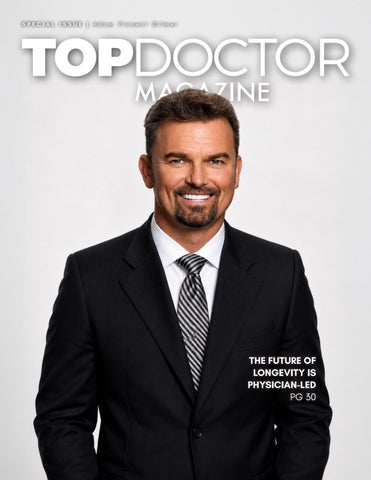
SPECIAL ISSUE | Adam Vincent Gilmer
THE FUTURE OF LONGEVITY IS PHYSICIAN-LED PG 30
Deco
ode Your DNA We’re a Biotechnology Company at the forefront of genetic, epigenetic, methylation, intracellular micronutrient testing, precision doctor-formulated nutraceuticals, and longevity science through immune cell banking, dedicated to helping individuals understand how their bodies are truly aging on a cellular level. Instead of relying on guesswork or generic health advice, we provide personalized insights that empower you to take control of your health and future.
A LETTER FROM THE EDITOR Our mission and purpose at TopDoctor Magazine is to foster connections within the health and wellness community
and empower our readers to make well-informed healthcare and lifestyle decisions. We pride ourselves on being the ultimate resource for interviews with health and wellness leaders, trending medical news, and healthy living topics. We understand that choosing a healthcare provider is a crucial decision. Our in-depth interviews with esteemed doctors and medical professionals aim to bridge the gap between them and their clients. By providing our readers with personal insights, philosophies, and areas of expertise, we facilitate a deeper understanding of the individuals responsible for your health and well-being. We also strive to highlight our outstanding practitioners, showcasing their dedication to their patients and contributions to the medical community. The field of medicine is constantly evolving, with new practices, therapies, and technologies emerging at a rapid pace. At TopDoctor Magazine, we strive to keep you updated on the latest advancements in the medical world. Our comprehensive coverage of trending medical news equips both doctors and patients with the knowledge they need to make informed choices about healthcare options. Building strong connections within the medical community is essential for enhancing patient care and driving medical progress. Our magazine serves as a bridge, connecting medical companies with doctors and vice versa. By facilitating these connections, we aim to catalyze collaborations that can lead to innovative solutions and improved healthcare outcomes for everyone. It is our firm belief that well-informed individuals make better decisions about their health. By providing you with insights into established and emerging medical trends and technologies, we empower you to take an active role in your healthcare choices. Whether you are a healthcare professional seeking to stay updated on the latest advancements or a patient eager to make informed decisions about your well-being, TopDoctor Magazine is here to support you. In every issue, we strive to uphold the highest standards of journalistic integrity, accuracy, and relevance. Our dedicated team of writers, editors, and medical experts work tirelessly to bring you well-researched and compelling content that is both educational and engaging. Moreover, our graphic design team is committed to delivering an aesthetically pleasing reading experience where captivating design seamlessly merges with informative content, ensuring each issue becomes an engaging journey of discovery. As we embark on this mission to serve as your trusted source of medical information and insights, we encourage you to join us on this exciting journey. Your feedback and suggestions are invaluable to us, and we look forward to hearing from you. Thank you for being a part of the TopDoctor Magazine community. Together, let us embrace knowledge, forge connections, and make informed decisions to lead healthier lives. With warmest regards,
Hannah H. Editor in Chief TopDoctor Magazine
CONTRIBUTORS Publication Team Publisher: John Highland Editor in Chief: Hannah H. Editorial Assistant: Jillian Fast
Creative Department Senior Graphic Designer: Laura Poyner Graphic Dessigners: Dylan R-N, Kyleigh Holder
Expert Contributors Biohacking & Longevity Expert: Lindsey O'NiellO'Keefe Contributing Authors: Jillian Fast, Evelyn Flaharty, Riley George
Executive Team Chief Digital Content Officer: David Lee Vice President of Development: Mark Carvalho Fractional Marketing Officer: Craig Handley Advisory Board: Dr. Arthur Katona, Dr. Francisco Cabal, Dr. Edmond Ng, Dr. Kianor Shah
TABLE OF CONTENTS 8 20 30 38 52
The Secret to Flawless Skin The Biological Seesaw: Navigating Hormonal Harmony Through Seasonal Shifts The Future of Longevity is Physician Led Building Muscle Over 60 The Herbal Medicine Cabinet
8
The Secret to Flawless Skin By Evelyn Flaharty
W
hen it comes to skincare, it’s easy to get lost in the multitude of products in the market, the trends, and the complicated routines. From serums to exfoliants to 10-step regimens, you may have seen influencers posting on social media, which can feel overwhelming. But the truth is, great skin doesn’t have to be complicated. In fact, the secret to healthy, glowing skin is more straightforward than you think; it’s all about nourishment, listening to what your skin needs, and consistency in your skincare routine. Skincare is more than just a routine. Skincare is an investment in your health, confidence, and overall well-being. Our skin is the body’s largest organ and serves as a protective barrier against the elements while also reflecting our inner health and lifestyle choices. From hydration and nutrition to the right products and daily habits, caring for your skin is a journey that evolves with time. Whether you are aiming for a radiant glow, maintaining youthful elasticity, or simply embracing self-care, a smart and effective skincare routine can make all the difference. Understanding what your skin needs and treating it with intention can unlock the secret to a healthy, ageless complexion. Your skin is constantly communicating with you. When it feels tight and flaky, it’s crying out for moisture. When it’s breaking out, it might be reacting to stress, diet, or an imbalance in your routine. It could be asking for more hydration, exfoliation, or a little extra sleep when it looks dull. The key is to pay attention and then take the appropriate action.
Top Doctor Magazine / Adam Vincent Gilmer / 9
Skincare at Home: Simple Steps for Healthy, Glowing Skin
Caring for your skin at home doesn’t have to be complicated or expensive. Maintaining a consistent at-home skincare routine is key to keeping your skin healthy, youthful, and radiant. You don’t need a bathroom full of fancy or expensive products; just a few basic steps to be consistent with your skincare routine. A skincare routine can be simple and effective without feeling overwhelming. Sticking to a few essential steps can make a huge difference in your skin’s health. The best place to start is with the basics.
Cleansing The first and most crucial step is cleansing. Washing your face is the foundation of skincare. Cleansing removes dirt, oil, sweat, makeup, and pollutants that can clog pores and cause breakouts. Use a gentle cleanser that suits your skin type, and avoid products that can strip your skin of its natural moisture and lead to dryness and irritation.
Moisturizing Hydration is key for all skin types. Even oily skin needs moisture to stay balanced. A good moisturizer helps lock in hydration and maintain your skin’s barrier. Moisturizer keeps your skin soft and smooth while protecting you from premature aging. This is where I would make an investment. Find a good moisturizer that works well for your skin type. Look for ingredients like hyaluronic acid for hydration or ceramides for barrier support.
Protection Sunscreen is often overlooked, but it is the most crucial step in preventing premature aging. Think of it as the most powerful anti-aging product you can use daily. UV exposure leads to premature fine lines and wrinkles, dark spots, loss of elasticity, and even more serious skin conditions. Apply an SPF of at least 30 every morning, even on cloudy days, to protect your skin from damage. Applying sunscreen is a must for all skin complexions.
Beyond the Basics
Once you have the essentials down, you can add a few extra steps to target specific skin concerns.
Exfoliation: Removing dead skin cells helps brighten your complexion and allows skincare products to work better. Use a gentle exfoliant 2-3 times weekly, like a mild chemical exfoliant or a soft scrub.
Serums: If you have concerns like dryness, wrinkles, or dark spots, serums with ingredients like vitamin C, retinol, or niacinamide can help. Serums penetrate deeper than moisturizers and deliver targeted benefits.
Face Masks: A great way to give your skin an extra boost. Hydrating masks, clay masks, or sheet masks can be used weekly to address different concerns like dryness, oiliness, or dullness.
10
Top Doctor Magazine / Adam Vincent Gilmer / 11
Facial Massages: A few minutes of gentle massage while applying products can boost circulation, reduce puffiness, and promote a natural glow. Despite all the hype around elaborate skincare routines, the fundamentals of healthy skin have always remained the same. A simple, consistent routine will always be more effective than an overloaded one.
Healthy Lifestyle for Glowing Skin
Skincare isn’t just about what you apply to your face; it’s also about how you take care of yourself. Your skin reflects your overall health, so the choices you make in your daily life can have a significant impact. While using the right skincare products is essential, what you put into your body matters just as much. Hydration and nutrition are crucial in maintaining healthy, glowing skin from the inside out. While skincare products help nourish and protect your skin externally, proper hydration and a nutrientrich diet provide the essential building blocks your skin needs to repair, regenerate, and maintain its natural glow. Water is essential for every cell in your body, including those that make up your skin. When your skin is well-hydrated, it looks plumper and more radiant. On the other hand, when your skin is dehydrated, it will appear dull, dry, and more prone to fine lines and wrinkles. Drinking enough water throughout the day helps flush out toxins, maintain elasticity, and support overall skin function. Your diet also plays an essential role in the health and appearance of your skin. Nutrient-rich foods provide the vitamins, minerals, and antioxidants necessary to fight inflammation, boost collagen production, and protect
12
against premature aging. Foods high in omega-3 fatty acids like salmon, walnuts, and flaxseeds help strengthen the skin barrier and reduce dryness. Vitamin C-rich foods like oranges, strawberries, and bell peppers promote collagen synthesis, keeping skin firm and youthful. Antioxidants found in leafy greens, berries, and green tea help combat free radical damage, which can contribute to wrinkles and dullness. On the other hand, excessive consumption of processed foods, refined sugars, and unhealthy fats can lead to inflammation and breakouts and give your complexion a dull, uneven appearance. Focusing on a balanced diet filled with whole, nutrient-dense foods can support your skin’s natural ability to heal and maintain a radiant glow. Your skin repairs itself while you sleep. During deep sleep, your body goes through a period of repair and regeneration, producing collagen, repairing damaged cells, and replenishing moisture levels. A lack of sleep can lead to increased cortisol levels, which can break down collagen and elastin, leading to premature aging, dullness, and even breakouts. Dark circles, puffiness, and a dull complexion are common signs that your skin isn’t getting a good night’s rest. This is why you should strive for 7-9 hours of quality sleep each night. Lack of sleep isn’t the only thing you need to worry about. Managing stress is just as crucial for your skin’s health. Chronic stress triggers inflammation and increases oil production, which can contribute to acne, redness, and sensitivity. High stress levels also weaken the skin’s barrier, making it more prone to dehydration and environmental damage. Finding ways to relax can help balance stress hormones and improve overall skin clarity. Relaxation techniques such as meditation, deep breathing, and yoga can help reduce stress and promote overall well-being. Additionally, activities like taking long walks, exercising, engaging in a hobby, or practicing mindfulness can positively impact both your mental health and the appearance of your skin. By prioritizing rest and stress management, you’re giving your skin the best environment to heal, restore, and maintain its natural radiance.
Consistency Is Key
Great skin doesn’t happen overnight; it’s the result of small, daily habits that add up over time. As with everything else, the key to seeing real results is consistency. Even the best products won’t work if they are only used occasionally. Sticking to a simple but effective daily routine will keep your skin looking and feeling its best. There are ways to enhance your at-home skincare routine. One option is to get a professional facial from a qualified esthetician who can assess your skin’s needs, provide expert care, and even recommend products specific to your skin type. Professional facials offer deep cleansing, exfoliation, and hydration that go beyond what everyday products can achieve. They can help address concerns like acne, dryness, or signs of aging while promoting overall skin health. Regular treatments, combined with a consistent daily routine, can keep your skin looking its best.
Top Doctor Magazine / Adam Vincent Gilmer / 13
Benefits of Professional Facials
For many, facials are seen as an occasional indulgence, something to treat yourself to before a big event or as part of a spa day. The truth is, professional facials are much more than just a luxury. A professional facial can offer deep, long-term benefits for your skin that go beyond what you can achieve with your at-home routine. It also complements the care you already give your skin, enhancing and supporting your efforts for even better results. Regular facials can help improve skin health, prevent aging, and enhance your overall well-being.
Deep Cleansing and Detoxification
Even with a consistent skincare routine, dirt, oil, and environmental pollutants can build up deep in your pores over time. Professional facials offer a deeper level of cleansing beyond what you can do at home, similar to how a professional dental cleaning provides a deeper clean than daily brushing and flossing. Estheticians use specialized products and techniques to remove impurities, unclog pores, and eliminate toxins, helping your skin breathe and function optimally. This deep cleansing process can prevent breakouts, reduce blackheads, and give your skin a fresher, healthier appearance.
Exfoliation for Radiant Skin
One of the most significant benefits of facials is professional exfoliation. Over time, dead skin cells build up on the surface of your skin, leading to a dull, uneven complexion. While athome exfoliators help, professional treatments use advanced techniques like chemical peels, microdermabrasion, or enzyme treatments to gently remove dead skin cells, revealing brighter, smoother skin underneath. Regular exfoliation also helps improve the effectiveness of your skincare products, allowing serums and moisturizers to penetrate more deeply.
Hydration and Nourishment
Keeping your skin hydrated enhances its appearance, strengthens its ability to withstand environmental damage, and slows down signs of aging. When your skin is hydrated, it looks youthful, plump, and radiant. During a facial, estheticians use high-quality masks, serums, and moisturizers tailored to your skin type to hydrate and replenish your skin deeply. Professional treatments can help restore moisture balance, especially for those with flaky or dehydrated skin. One popular type of facial is the HydraFacial. A HydraFacial is a non-invasive skincare treatment that deeply cleanses, exfoliates, hydrates, and nourishes the skin in one session. It uses a specialized device with a vacuum-like tip to remove dead skin cells, extract impurities, and infuse the skin with hydrating and antioxidant-rich serums. Alternating professional facials between anti-aging treatments and a HydraFacial for balanced skincare benefits is a great approach. In my experience, a 2-to-1 ratio works best for my oily, mature skin.
14
Anti-Aging Benefits
Facials can be an excellent tool for maintaining youthful skin and preventing premature aging. Many professional treatments incorporate anti-aging techniques such as collagenboosting massages, peptides, LED light therapy, or microcurrent stimulation, which help improve skin elasticity and reduce the appearance of fine lines and wrinkles. Additionally, regular facials stimulate blood circulation, promoting cell regeneration and keeping your skin fresh and firm over time.
Stress Relief and Relaxation
Skincare is not just about physical appearance; it’s also about well-being. The gentle massage techniques used during facials help relax facial muscles, release tension, and even promote lymphatic drainage, reducing puffiness and improving circulation. The experience itself is incredibly soothing, making facials a great way to relieve stress and practice self-care. Taking time for a facial can be a moment of relaxation in a busy world, benefiting your skin and mental health. You’ll feel refreshed and rejuvenated afterward. One of the best things about professional facials is that they are tailored to your specific skin concerns. Unlike store-bought products that take a one-size-fits-all approach, estheticians analyze your skin and customize treatments based on its unique needs, whether acne, dryness, sensitivity, or signs of aging. They can also provide expert advice on which products and routines will work best for your skin type, helping you build an effective at-home routine.
Top Doctor Magazine / Adam Vincent Gilmer / 15
16
The Long-Term Impact
While a single facial can leave your skin looking and feeling amazing, the real benefits come from consistency. Regular facials, ideally once a month, can help maintain skin health, prevent common issues like breakouts and dullness, and support long-term anti-aging efforts. Over time, you’ll notice improved texture, better hydration, and a more youthful glow. Professional facials aren’t just about pampering; they’re a powerful tool for maintaining healthy, glowing skin. From deep cleansing and exfoliation to hydration and anti-aging benefits, facials provide results that go beyond what you can achieve with at-home skincare alone. Plus, the relaxation and stress relief that come with a facial make it an investment in your skin and overall well-being. If you’re looking to take your skincare to the next level, regular professional facials are a worthwhile addition to your beauty routine. But skincare isn’t one-size-fits-all. Our skin changes over time due to age, environment, and lifestyle, meaning that what worked in the past may not be what your skin needs today. The key is tuning in, understanding what your skin craves, and giving it the love and attention it deserves. When you care for your skin, you’re not just enhancing your outer glow but investing in long-term health and confidence. Skincare isn’t just about looking good. It’s also about feeling good. Our skin works hard for us every single day, protecting us against the elements and reflecting our overall health and lifestyle. It also reflects what’s happening inside our bodies, from hydration levels to overall health and well-being. That’s why taking care of it isn’t just another step in your daily routine. It’s a way to invest in yourself! It’s self-love. Proper skincare habits can do more than just enhance your appearance. It can boost your confidence, promote relaxation, and even serve as a form of self-care. The right habits and products can make all the difference. Whether you are aiming for a radiant glow, trying to keep your skin youthful and healthy, or simply taking a few moments to pamper yourself, a thoughtful skincare routine makes all the difference. The secret to beautiful skin isn’t found in expensive treatments or endless products; it’s found in simple, consistent care and a little bit of self-love. There’s no one-size-fits-all approach, and your skin’s needs may change over time. The key is to stay patient, listen to your skin, and give it the care it deserves. When you focus on maintaining healthy habits, both inside and out, your skin will naturally reflect that effort. And remember, skincare isn’t about perfection; it’s about embracing and taking care of the skin you’re in.
Top Doctor Magazine / Adam Vincent Gilmer / 17
g o l i c o a i lS B
th e
eesaw
Navigating Hormonal Harmony Through Seasonal Shifts By Riley George As the leaves turn or the first buds of spring emerge, most of us attribute our shifting moods to the simple beauty or gloom of the scenery. However, beneath the surface, our bodies are undergoing a complex chemical recalibration that rivals the complexity of the changing landscape. Transitions between seasons, particularly the shifts in light exposure and temperature, act as a biological reset button for our endocrine system. This internal machinery governs everything from the clarity of our morning thoughts to the depth of our midnight slumber. Understanding these transitions is the first step toward maintaining steady energy and a resilient mood year-round, moving beyond the idea that we are merely "weather-sensitive."
Light-Dark Connection: Melatonin and Cortisol The most significant driver of hormonal change during seasonal transitions is the photoperiod, or the duration of daylight. Our circadian rhythm, the internal clock that dictates our sleep-wake cycle, relies on light signals to regulate the production of melatonin and cortisol. During the transition into winter, the shortened days can cause the pineal gland to begin producing melatonin earlier in the evening and continue later into the morning. This often results in what researchers call winter hypersomnia, in which the body feels a persistent, heavy grogginess despite a full night's sleep. In contrast, the surge of light during the summer transition can suppress melatonin production to a degree that interferes with restorative rest. According to research summarized by the Sleep Foundation, these disruptions are a primary trigger
20
Top Doctor Magazine / Adam Vincent Gilmer / 21
22
for Seasonal Affective Disorder (SAD).¹ The body struggles to sync its internal clock with the external environment, leading to a state of "social jetlag" where our biological timing is permanently at odds with the sun.
The Vitamin D "Hormone" and Mood Regulation Though commonly labeled a vitamin, vitamin D functions more like a pro-hormone with receptors located throughout the brain and body. It is a critical component in the synthesis of serotonin, the neurotransmitter responsible for mood stability and feelings of well-being. As we transition into autumn and winter, the angle of the sun changes, and UV exposure drops significantly, particularly in northern latitudes. A summary of studies from the Mayo Clinic indicates that lower vitamin D levels can lead to a significant dip in serotonin.² This chemical drought often manifests as irritability, intense carbohydrate cravings, and a lack of motivation. When you feel your mood plummeting in October, it is often a lag in your body’s ability to convert sunlight rather than a personal failing or a lack of willpower.
Thyroid and Metabolism: Adapting to the Cold Our thyroid gland is essentially the body's thermostat, responsible for regulating metabolic rate and heat production. As seasons shift toward colder temperatures, the thyroid must increase its production of T3 and T4 to stimulate thermogenesis. This metabolic ramp-up requires more fuel and micronutrients, which explains why many people experience a natural uptick in appetite during the transition to winter. According to Endocrine Web, supporting the thyroid through these shifts requires a delicate balance of iodine, selenium, and iron.³ If the thyroid cannot meet the increased demand for heat production, the result is often profound cold intolerance, brittle hair, and a sense of "brain fog" that persists regardless of caffeine intake.
Strategic Adaptation for Energy and Sleep To support hormonal health during these shifts, one must adopt a proactive approach to light management and nutrition. Within the first 30 minutes of waking, seeking out natural light is essential because it triggers an early cortisol spike. This "wake-up" hormone simultaneously sets the timer for melatonin production fourteen hours later. As evening light lingers in the summer months, using amber-tinted glasses or dimming indoor lights can signal to the brain that the day is ending. Nutritional support also plays a role; shifting toward complex carbohydrates like oats and sweet potatoes can help transport tryptophan to the brain, aiding serotonin production. Furthermore, magnesium serves as a vital tool for regulating the nervous system during hectic seasonal changes, as noted by Healthline, which cites its ability to improve sleep quality by regulating neurotransmitters and calming the adrenal glands.⁴ Top Doctor Magazine / Adam Vincent Gilmer / 23
The Body as a Rhythmic System Ultimately, our hormones are not static measurements but a rhythmic response to the world around us. By acknowledging that your energy levels and sleep patterns are tied to the earth’s cycles, you can move away from fighting your biology and toward supporting it. Whether it is adjusting your bedroom temperature to facilitate the core cooling necessary for deep sleep or increasing your intake of healthy fats to support hormone synthesis in the winter, small shifts can mitigate the stress of seasonal transitions. Our bodies are designed to adapt, but in a world of artificial light and climate control, we must be intentional about providing the signals our endocrine system needs to stay in balance.
Seasonal Strategy Guide: Key Takeaways To make these hormonal transitions more manageable, here is a breakdown of the essential facts and actionable steps you can take: • Prioritize Morning Sunlight: Aim for 10–30 minutes of natural light shortly after waking to anchor your circadian rhythm and trigger essential cortisol release. • Monitor Vitamin D Levels: Since vitamin D acts as a precursor to serotonin, consider testing your levels during the autumn transition and supplementing if necessary to prevent the "serotonin dip." • Adjust Nutritional Fuel: Support your thyroid’s increased winter workload by consuming foods rich in selenium (such as Brazil nuts) and iodine (such as seaweed or iodized salt). • Manage Evening Blue Light: Use blue-light-blocking technology or dim your environment two hours before bed to protect melatonin production, especially during long summer days. • Cool Your Sleep Environment: Recognize that your body must drop its core temperature to sleep; use fans or specialized bedding to counteract summer heat that might spike cortisol at night. • Lean into Magnesium: Incorporate magnesium-rich foods like leafy greens and seeds, or consider a supplement to help stabilize the nervous system during high-stress seasonal shifts.
Working with the Seasons, Not Against Them As the world outside transforms, it is only natural that we feel a corresponding shift within ourselves. We are not meant to operate at the exact same frequency in the depths of January as we do in the peak of July. By viewing our energy, sleep, and mood through the lens of hormonal biology, we can replace frustration with a sense of informed adaptation. Whether it is by seeking out that vital morning light to anchor our circadian
24
Top Doctor Magazine / Adam Vincent Gilmer / 25
26
rhythm or adjusting our nutrition to support a hardworking thyroid, these small, intentional acts of self-care bridge the gap between our modern lifestyles and our ancestral biology. Ultimately, seasonal transitions are an invitation to tune in and listen to what our bodies need most. When we honor these natural cycles rather than fighting them, we don't just survive the changing seasons; we learn to thrive alongside them.
Top Doctor Magazine / Adam Vincent Gilmer / 27
Enter to win a $599 Lumara red light therapy mask. Nominate a doctor for TopDoctor magazine through the QR code below.
To learn more about the VISO mask and wholesale opportunities for medical practices, visit LumaraSystems.com/VISO or contact Lumara Systems directly at (408) 872-4800.
THE FUTURE OF LONGEVITY IS PHYSICIAN-LED: How Adam Vincent Gilmer and Genetic LifeSpan Are Building a Data-Driven Framework to Help Practitioners Measure, Personalize, and Track the Biology of Aging Written By: Riley George The next evolution of longevity medicine may not begin with another therapy. It may begin with better measurement. Every practitioner knows the challenge. A patient returns after months of nutrition changes, exercise, supplementation, hormone optimization, peptide protocols, regenerative approaches, or other wellness interventions. The patient may feel different. Conventional laboratory values may have changed. But an important question remains: What has objectively changed biologically, and how should that information influence the next clinical decision? Adam Vincent Gilmer, Founder and CEO of Genetic LifeSpanTM, believes that question is becoming central to modern longevity and precision health. His goal is not to move the physician out of the decision-making process, but to give practitioners additional biological intelligence that can be considered alongside medical history, physical examination, conventional diagnostics, symptoms, medications, family history, and clinical judgment. Originally from Johannesburg, South Africa, Gilmer brings decades of experience building and scaling businesses across industries. Today, from Genetic LifeSpan’s headquarters in Incline Village, Nevada, he is applying that entrepreneurial background to longevity and precision health, building a biological intelligence platform designed to help shift healthcare from reactive treatment toward more predictive, data-driven decision-making. Gilmer was previously featured in Global Healthcare Magazine as one of the influential leaders shaping the biotech industry, highlighting his work to make complex genetic and epigenetic information more understandable and actionable. “Technology should never replace medical judgment. Its purpose is to strengthen it,” Gilmer said.
The Practitioner’s Problem: More Data, Not Always More Clarity Medicine is entering an era of unprecedented information. Physicians can now encounter genomic data, epigenetic measurements, advanced biomarkers, wearable data, imaging, conventional laboratory results, and increasingly sophisticated analytical tools. The challenge is no longer simply obtaining data. It is determining which information is meaningful, how it fits the individual patient, and whether it can be followed over time. For Gilmer, this is where longevity medicine must become more disciplined. Rather than chasing every new intervention, practitioners need a framework for establishing a baseline, applying appropriate clinical judgment, and then reassessing the patient with objective measurements. The question is not simply, “What can we do?” It is, “How will we know whether what we are doing is producing a meaningful change?”
30
AgeCode Premier: Building a More Complete Biological Baseline AgeCodeTM Premier was developed as Genetic LifeSpan’s biological intelligence platform, bringing together genomic analysis, DNA methylation measurements, and multi-system biomarker profiling. The purpose is to provide an additional layer of information about biological aging and health that a practitioner can interpret within the broader clinical picture. AgeCode Premier analyzes more than 1.8 million SNPs and up to 3 million CpG sites, bringing genetic predisposition and epigenetic information together within one assessment. Its reporting spans biological age and pace of aging, 11 major organ systems, immune function and resilience, stress and inflammation, nutrient and toxin-related information, hormonal and mitochondrial health, weight and metabolic factors, fitness potential, and genetic risk factors. The objective is not to diagnose disease, but to provide practitioners and patients with a broader biological baseline that can be considered alongside established clinical information. The platform is intended to help move the conversation beyond chronological age alone. Two patients of the same age can have very different genetics, environments, behaviors, metabolic profiles, inflammatory patterns, and health trajectories. Biological-age and related measurements seek to provide additional insight into those differences. For the practitioner, the value proposition is not simply another report. It is the possibility of establishing a more individualized baseline that can be revisited over time.
“Your date of birth tells us how long you have lived,” Gilmer said. “The opportunity is to give practitioners more information about how the individual may be aging biologically, and then let the practitioner put that information into the proper clinical context.”
AgeCode™ Premier: A comprehensive biological intelligence assessment combining genetics, epigenetics and DNA methylation analysis, and intracellular micronutrient testing to establish a personalized baseline of how your body is aging and functioning at the cellular level.
Top Doctor Magazine / Adam Vincent Gilmer / 31
From a One-Time Test to a Longitudinal Patient Journey A single assessment is a snapshot. Repeated measurements can begin to form a trajectory. That distinction is central to the model Genetic LifeSpan is building: establish a baseline, interpret the findings, develop an appropriate practitioner-led strategy, intervene when clinically appropriate, and reassess. Over time, that approach may allow physicians and patients to compare biological information across months and years rather than relying solely on a single point in time. It also creates a more structured conversation around adherence, lifestyle change, wellness strategies, and measurable outcomes. For a longevity, concierge, functional, integrative, regenerative, or preventive practice, this creates a potentially powerful framework for ongoing patient engagement: MEASURE. INTERPRET. PERSONALIZE. INTERVENE. REASSESS.
The Physician Is the Interpreter - Not the Algorithm Gilmer is emphatic that advanced testing and artificial intelligence should not be positioned as replacements for physicians. An algorithm can organize data. A laboratory can generate measurements. Artificial intelligence can identify patterns. But the practitioner understands the patient’s history, medications, symptoms, family history, goals, risk factors, and the clinical context in which every piece of information must be interpreted. “The future is not doctor versus technology,” Gilmer said. “It is the doctor empowered by better technology, better measurement, and better information.” That Genetic LifeSpan LifeSpanhas hasplaced placedpractitioner-guided practitioner-guidedcare careatatthe thecenter centerofofitsitsbroader broader That philosophy philosophy is is why why Genetic ecosystem. The objective is to help physicians use biological intelligence as another tool—not as a substitute ecosystem. The objective is to help physicians use biological intelligence as another tool, not as a substitute for for established diagnostics, standards of care, or professional judgment. established diagnostics, standards of care, or professional judgment.
The Genetic LifeSpan™ Ecosystem Geneticlongevity LifeSpan™ Ecosystem: AnThe integrated ecosystem bringing together advanced biological testing and health intelligence, precision nutraceuticals, immune An expanding precision-health platform bringing together biological-age assessment, cell banking, precision nutraceuticals, cell banking, precision peptide therapies, regenerative therapies, clinical laboratory services,immune personalized health solutions, a curated lonpractitioner education, clinical services, and emerging longevity technologies. gevity marketplace, and education, designed toother support a more proactive, personalized approach to health and aging,
22
32
That ecosystem extends beyond AgeCode. Genetic LifeSpan is developing complementary longevity platforms that approach health from different biological perspectives, including IMUN™ for immune cell banking, MyHeartCode™ for cardiovascular longevity, and LivinGene™, its precision nutraceutical line. Together, these offerings reflect a broader strategy: measure biology, identify areas that may warrant attention, support individualized approaches, and continue evaluating change over time.
Inviting Physicians to Challenge the Science The longevity industry is growing rapidly, and with that growth comes legitimate skepticism. Gilmer believes that skepticism should be welcomed. “I want the skeptical doctor in the room,” he said. “Ask us about methodology. Ask about reproducibility. Ask about validation. Ask about consecutive measurements. If we are going to put emerging technologies into physicians’ hands, those are exactly the questions that should be asked.” The scientific foundation informing this work includes a growing body of research examining DNA methylation, biological-aging clocks, genomics, multi-omic analysis, biomarkers, and organ-system aging. Gilmer is a co-author of the 2026 peer-reviewed review article “From Biological Age to Clinical Phenotype: State of the Science in DNA Methylation, Multi-Omic Clocks, and Translational Utility,” published in the American Journal of Biomedical Science & Research. The paper examines the analytical validity, clinical validity, and clinical utility of biological-age technologies while also identifying important remaining challenges, including reproducibility, standardization, validation across diverse populations, and regulatory readiness. For Gilmer, responsible adoption requires separating evidence supporting the underlying science from claims about any specific commercial application, and continuing to test, validate, publish, and improve. “If something does not hold up scientifically, we need to know,” he said. “Doctors should demand evidence. That makes the entire field better.”
Published Science: Adam Vincent Gilmer is a co-author of the 2026 review From Biological Age to Clinical Phenotype: State of the Science in DNA Methylation, Multi-Omic Clocks, and Translational Utility, examining the evolving science of DNA methylation, multi-omic biological-age models, and their potential clinical utility.
Top Doctor Magazine / Adam Vincent Gilmer / 33
What Age Code Premier Could Mean for the Modern Practice What AgeCode Premier Could Mean for the Modern Practice
Patients are already asking physicians about longevity. They are arriving with questions about biological age, Patients are already asking physicians about longevity. They are arriving with questions about biological age, genetics, supplements, peptides, hormones, regenerative medicine, nutrition, fitness, sleep, and emerging genetics, supplements, peptides, hormones, regenerative medicine, nutrition, fitness, sleep, and emerging techtechnologies. nologies. That creates createsboth bothan anopportunity opportunityand andaaresponsibility responsibilityfor forpractitioners. practitioners. That Rather than than allowing allowingpatients patientstotonavigate navigateananincreasingly increasinglycomplex complexlongevity longevitymarketplace marketplace alone, physicians Rather alone, physicians can can remain at the center—helping patients distinguish evidence from hype, understand risk, establish approremain at the center, helping patients distinguish evidence from hype, understand risk, establish appropriate priate baselines, and evaluate over time. baselines, and evaluate changechange over time. AgeCode Premier is designed to be considered as one option within that practitioner-led framework: an additionalPremier biological intelligence tool that mayas help individualized conversations, longitudinal moniAgeCode is designed to be considered onesupport option within that practitioner-led framework: an additoring, and patient engagement. tional biological intelligence tool that may help support individualized conversations, longitudinal monitoring, and patient engagement. The larger idea is simple: the test should serve the practitioner; the practitioner should serve the patient. The larger idea is simple: the test should serve the practitioner; the practitioner should serve the patient.
The Opportunity Is Not More Testing. It Is Better Decision-Making. Gilmer believes the future of longevity medicine will not be determined by the company with the most tests, the newest therapy, or the largest amount of data. It will be determined by whether emerging technologies help practitioners make better-informed decisions for individual patients. Genetics can provide information about inherited predispositions. Epigenetics can provide another window into biological aging. Biomarkers can help establish measurable baselines. Artificial intelligence can help organize increasingly complex information. Longitudinal testing can help reveal change over time. But the practitioner brings those pieces together. That is why Gilmer sees AgeCode Premier not simply as a consumer longevity product, but as a potential practice tool for physicians seeking to add another layer of measurable, personalized biological information to an existing standard of care.
A Challenge to the Longevity Practitioner The patients walking into medical and wellness practices today are more informed, more curious, and more interested in longevity than perhaps any generation before them. They are already experimenting. They are already spending. And they increasingly want to know whether their e!orts are working. Physicians have the opportunity to lead that conversation. For practitioners evaluating the next evolution of their practice, the question may no longer be whether biological-age and precision-health technologies will become part of the longevity conversation. The more useful question may be how to evaluate them responsibly and determine where they can add meaningful value.
24
34
“Give practitioners better biological intelligence. GiveGive patients a clearer understanding of themselves. Measure “Give practitioners better biological intelligence. patients a clearer understanding of themselves. Meawhat and keep demanding the evidence to prove to what works,” surechanges, what changes, and keep demanding the evidence prove whatGilmer works,”said. Gilmer said. Because thethe future of longevity medicine should not not be built on guessing. It should be built measurement, Because future of longevity medicine should be built on guessing. It should be on built on measureand led by practitioners. ment—and led by practitioners.
Practitioner Framework Baseline → Clinical Interpretation → Personalized Strategy → Appropriate Intervention → Retest → Longitudinal Review
IMUN™: Part of the broader Genetic LifeSpan™ ecosystem, IMUN™ extends the platform into immune cell banking, preserving an individual’s immune IMUN™: cells for potential future applications. Part of the broader Genetic LifeSpan™ ecosystem, IMUN™ extends the platform into immune cell banking, preserving an individual’s immune cells for potential future applications.
Learn More Learn More LifeSpan™ and its longevity ecosystem at geneticlifespan.com. Explore Genetic
AgeCode™ — agecode.bio Explore Genetic LifeSpan™ and its longevity ecosystem at geneticlifespan.com. IMUN™ — imun.bio AgeCode™ agecode.bio LivinGene™imun.bio — livingene.bio LivinGene™ IMUN™ livingene.bio Editorial note: AgeCode Premier is presented as an additional biological intelligence and wellness assessment tool. It MyHeartCode™ myheartcode.bio is not a replacement for medical diagnosis, conventional laboratory testing, established standards of care, or practitioner judgment. Biological-age science continues to evolve, and clinical interpretation should reflect the totality of the patient’s medical context.
Top Doctor Magazine / Adam Vincent Gilmer / 35
PRECISION STORAGE. BUILT AROUND YOUR ROUTINE. Dedicated temperature-controlled storage for vials and pens.
PRECISION TEMPERATURE CONTROL
Set and view your selected temperature directly on the display.
DEDICATED
PRECISION
PORTABLE
Organized storage
Temperature control
Built to move
A DEDICATED PLACE FOR WHAT MATTERS. At home, at work, or on the move.
CLINICAL PARTNERSHIPS Bring VIALYX into your clinic or professional network.
SCAN TO EXPLORE PARTNERSHIP OPPORTUNITIES
Always follow the storage instructions provided for your specific medication or product.
WWW.VIALYXOFFICIAL.COM
1 in 4 Americans experience serious mental illness. What if you had a product that was clinically proven to significantly benefit 25% of people who walked through your door?
Backed by 70+ independent medical journal articles, including multiple double-blind, placebo-controlled studies. Clinically proven to improve: Emotional Regulation & Mood Stability
Attention & Focus
Free staff training on product features and research
Research-backed protocols for specific applications
Stress & Resilience
HardyNutritionals.com 1-855-955-1110 info@hardynutritionals.com
Cognition & Sleep
Apply for
Wholesale
Pricing
B U I L D I N G M U S C L E OV E R 6 0 38
B U I L D I N G M U S C L E OV E R 6 0
BUILDING MUSCLE OV E R 6 0
B U I L D I N G M U S C L E OV E R 6 0
Top Doctor Magazine / Adam Vincent Gilmer / 39
40
By Evelyn Flaharty As we age, it’s normal to experience loss in muscle mass, strength, and flexibility. This process can begin as early as in your 30s and 40s. However, there are several things we can do to slow down this process and even build muscle as we age.
WHY IS IT ESSENTIAL TO MAINTAIN MUSCLE MASS? Maintaining muscle mass as we age is crucial for overall health, mobility, and independence. Muscle strength supports daily activities, such as walking, climbing stairs, and carrying groceries, which are essential for a good quality of life. It also helps protect against falls and injuries, which become more common with age due to decreased balance and bone density. As we age, we must consider how we want to live in our 70s, 80s, and even 90s. Personally, I want and plan to maintain my independence, which is why we all need to start as early as possible to take care of our health.
BONE DENSITY LOSS AS WE AGE Many people begin to experience bone loss after age 50. Bone density loss refers to a decrease in the mineral content of bones, called osteopenia. Osteopenia often develops silently, with no noticeable symptoms until a fracture occurs. Factors contributing to osteopenia include aging, a sedentary lifestyle, inadequate intake of calcium and vitamin D, smoking, excessive alcohol consumption, and certain medications or medical conditions. While it is not as severe as osteoporosis, osteopenia is a significant warning sign, highlighting the need to take proactive measures to improve bone health. Early detection through bone density tests can help manage osteopenia effectively and prevent its progression to osteoporosis. Therefore, this would be a good time to discuss getting a bone density baseline test with your healthcare provider. A bone density baseline test is a non-invasive procedure for assessing bone health. Establishing a baseline is particularly important for individuals at risk of osteoporosis, including postmenopausal women, older adults, and those with a family history of bone diseases. A bone density test is no different than establishing a baseline mammogram. The results provide a benchmark for future comparisons, enabling early detection of bone density loss and guiding preventive measures. A bone density test can help healthcare providers recommend interventions to maintain or improve bone strength and reduce the risk of fractures. Unfortunately, our health care system typically recommends you take your bone density baseline at 65. That’s 15 years after you begin to lose bone density. As a cancer survivor, I am a firm believer in advocating for my health. I had my baseline taken at 40 for my mammogram and 50 for my bone density. If something is not moving in the right direction, the sooner we know, the sooner we can take corrective action. Because of the possibility of early detection, it’s crucial that you establish a strong relationship with your healthcare provider and constantly advocate for your health. You can’t afford to outsource your health to someone else. Your body and health are your responsibility; no one else will ever be as invested in your wellbeing as you.
WHAT IS OSTEOPOROSIS? Osteoporosis is a severe condition in which bone density is significantly reduced. This condition makes bones weak and even brittle, increasing the risk of fractures. While osteoporosis is more common in older adults, especially postmenopausal women, it can affect anyone. Men need to be concerned about osteoporosis, even though it is often viewed as a condition primarily affecting women. While women are at higher risk due to hormonal changes after menopause, men are not immune to bone loss. Men typically experience a gradual decline in bone density as they age, with significant bone loss often beginning after age 70. Risk factors such as low testosterone levels, smoking, excessive alcohol consumption, poor diet, sedentary lifestyle, and certain medical conditions or medications can further increase their risk. Men are also more likely to remain undiagnosed until they suffer a fracture, as men are less frequently screened for osteoporosis.
CALCIUM AND VITAMIN D FOR STRONG BONES Maintaining strong, healthy bones is essential for overall well-being and mobility throughout our lives. Calcium and vitamin D play a crucial role in our bone health.
WHY CALCIUM IS ESSENTIAL Calcium is the primary mineral found in bones and is vital for maintaining their structure and density. Almost all of our bodies’ calcium is stored in our bones and teeth, providing the strength they need to withstand daily activities. Think back to when you were a small child, and your mother told you to drink your milk so you would have strong bones. Well, she was right. Calcium also supports vital functions such as muscle contraction, nerve transmission, and blood clotting. When dietary calcium is insufficient, the body draws from its calcium reserves in the bones, weakening them over time. Just before my cancer diagnosis, I noticed that my nails would constantly break or split down the middle. It was the first warning sign of my calcium deficiency. In addition to having my thyroid removed because of cancer, I also had two of my parathyroid glands removed, which led to me having ongoing issues with low calcium levels. Good sources of calcium include dairy products like milk, cheese, yogurt, leafy greens, almonds, fortified plantbased milk, and tofu. The recommended daily calcium intake for adults is about 1,000–1,200 mg, depending on age and sex. You can also take calcium in supplement form. However, be cautious, particularly if you don’t know your current calcium levels. I can tell you from personal experience that too much calcium is just as bad as a deficiency. As I am tested regularly, it’s easy to identify when my calcium levels are in excess from taking too much calcium, enabling my healthcare provider and I to take corrective action. Know your numbers! Always consult with your healthcare provider before taking any supplements.
THE ROLE OF VITAMIN D Vitamin D is just as critical as calcium for bone health because it facilitates calcium absorption from the digestive system into the bloodstream. Without sufficient vitamin D, the body cannot effectively utilize dietary calcium, no matter how much is consumed.
42
44
Vitamin D is unique because the body can synthesize it through exposure to sunlight. However, factors like limited sun exposure, aging, darker skin tones, and geographic location can hinder vitamin D production. In addition, we know that too much exposure to the sun can lead to skin cancer. Therefore, we must rely on other methods to obtain the appropriate amount of vitamin D our bodies require. Foods such as fatty fish (e.g., salmon, mackerel, and sardines), egg yolks, and fortified products can help provide vitamin D. Many individuals also benefit from supplements to meet the daily recommended intake of 600–800 IU for most adults. Again, know your numbers before taking any supplements.
VITAMIN D AND CALCIUM, YOU NEED BOTH Vitamin D and calcium work hand in hand to build and maintain bone density. Vitamin D ensures calcium is absorbed efficiently, while calcium provides the structural material for bone strength. A deficiency in either can lead to compromised bone health, increasing the risk of osteoporosis, fractures, and other complications. Vitamin D and calcium are the cornerstone of strong, healthy bones. By prioritizing these nutrients through diet, lifestyle, and supplementation when necessary, you can protect your skeletal system and reduce the risk of bone-related disorders. A proactive approach to bone health ensures greater strength, stability, and independence as you age.
TIPS FOR HEALTHY BONES - Consume a Balanced Diet: Include calcium-rich foods and those fortified with vitamin D to meet daily requirements. - Get Regular Sunlight: Spend 10–30 minutes outdoors in sunlight several times a week, depending on your skin tone and location. Make sure you apply sunscreen. - Exercise Regularly: Weight-bearing and resistance exercises stimulate bone formation and improve bone density. - Consider Supplements: If dietary intake or sun exposure is inadequate, consult a healthcare provider about taking calcium and vitamin D supplements. - Avoid Bone Depleters: Limit smoking, alcohol, and excessive caffeine, as these can negatively impact bone health.
STRENGTH TRAINING Strength training is a workout routine focusing on building muscle strength using light weights, resistance bands, or just your body weight. It’s a powerful tool in building bone density and muscle mass. It also strengthens the muscles around the bones, improving balance, posture, and stability, which reduces the risk of falls and fractures. Therefore, it is essential for both men and women to prioritize bone health through regular weight-bearing and strength-training exercises.
It’s also worth noting that muscle plays a vital role in metabolism, aiding in weight management and reducing the risk of chronic conditions like type 2 diabetes and heart disease. Preserving muscle mass can improve energy levels, enhance posture, and promote mental well-being, allowing older adults to stay active and engaged in their communities. Regular strength training and a protein-rich diet are key to maintaining muscle health as we age.
WEIGHT-BEARING EXERCISES Weight training strengthens muscles and stimulates bone growth, helping to counteract the natural decline in muscle mass and bone density that occurs with aging. Additionally, it supports joint health, improves metabolic function, and enhances cardiovascular health, contributing to a better quality of life. Before starting a weight training program, consult a healthcare provider or fitness professional to ensure safety and proper technique. Focus on exercises that target major muscle groups and use proper form to prevent injury. It is essential to begin gradually to minimize the risk of injury. Recovery from an injury as we age takes time. Start with light dumbbells or utilize your own body weight to perform exercises. As you build strength and confidence over time, you will be able to progress safely to heavier weights. Women should not hesitate to incorporate weight training into their fitness routines. Contrary to common misconceptions, lifting weights will not result in a masculine appearance. Women naturally have significantly lower levels of testosterone compared to men, and these levels tend to decrease further with age. As a professional bodybuilder, in my 70s, I can attest to the fact that lifting weights will not negatively transform your physique. To the contrary, weight training helps improve muscle tone, enhances strength, and promotes a leaner physique by increasing calorie expenditure during and after training. Embracing resistance exercises can lead to improved health, confidence, and overall well-being.
SAFE AND EFFECTIVE WEIGHT TRAINING EXERCISES Focus on exercises that target major muscle groups and use proper form to prevent injury. Below are a few suggestions. - Squats & Step-ups: Targets quadriceps, hamstrings, glutes - Pushups: Targets chest, shoulders, triceps - Seated Rows with bands: Targets back, shoulders, biceps - Overhead Shoulder Press: Targets shoulders, triceps - Planks: Targets core
TIPS FOR SUCCESS Start slowly: Start with light weights or resistance bands. When I first started lifting, I thought 5 lbs was heavy. That’s a bag of sugar. Remember, Rome wasn’t built in a day. Be patient. As you built strength, gradually increase the weight. Focus on form: This is so important and cannot be stressed enough. Proper form is key to avoiding injury and ensuring you are training the muscle correctly. Ever wonder why there are mirrors everywhere at the gym? Rest and recovery: Allow 48 hours between sessions targeting the same muscle group to promote recovery and growth. them to check your form. 46
48
CONCLUSION Building muscle after 60 is a vital component to maintaining health, mobility, and independence as we age. Strength training and a diet rich in protein, calcium, and vitamin D will help combat age-related muscle loss, enhance bone density, and support joint health. Starting training gradually and focusing on proper technique to ensure safety and effectiveness, while progressively increasing resistance builds strength over time. Regular weight training not only improves physical function but also boosts metabolism, enhances balance, and reduces the risk of falls and injuries. By committing to a consistent and well-rounded fitness routine, adults over 60 can enjoy greater vitality, resilience, and quality of life.
Be Featured on
TOPDOCTOR CHANNEL SHOWCASE YOUR MEDICAL INNOVATIONS “Where medical expertise meets real human stories.”
A New Era in Healthcare Media TopDoctor Magazine is expanding to television! Introducing TopDoctor Channel, a 24/7 streaming, cable, and broadcast platform dedicated exclusively to healthcare. This visionary channel connects doctors and patients in a whole new way – faceto-face through inspiring medical documentaries and interviews. Backed by the acclaimed TopDoctor Magazine brand, TopDoctor Channel launches with immediate recognition and credibility in the medical community. Our mission is to bridge the gap between healthcare experts and the public, turning complex science into conversations built on trust and empathy.
Why Appear on TopDoctor Channel? • Global Reach & Diverse Audience: Share your story with everyone in the healthcare community and beyond. TopDoctor Channel delivers unparalleled insights to both medical professionals and the public alike. Whether it’s physicians, hospital executives, or engaged patients, our audience spans across the spectrum. As a multi-platform network (streaming on Amazon Fire TV, Roku, Apple TV, Android TV, mobile, and more), your innovations gain worldwide visibility. • Immediate Credibility & Scientific Storytelling: Align yourself with a platform that champions medical innovation with integrity. As an official partner of TopDoctor Magazine, we start with a legacy of excellence – ensuring your work is presented with authority and trust. Our content is evidence-based and expertly crafted to celebrate true breakthroughs in medicine. You’ve worked hard on your research and products; we’ll spotlight them in a professional, highly scientific narrative that resonates with peers and instills confidence in the public. • Cross-Promotional Power: Enjoy the benefits of our unique magazine–TV synergy. TopDoctor Channel works hand-in-hand with TopDoctor Magazine, creating a powerful cross-promotional platform for your innovations. An appearance on our channel can be featured in print and digital articles, social media, and more – amplifying your reach across multiple media. It’s a one-of-a-kind opportunity to boost your profile through multiple trusted channels.
What Can You Showcase? If you’re a doctor, researcher, or healthcare company with something new, we want to feature it. On TopDoctor Channel, you can present: • Breakthrough Treatments & Medications: Share new therapies, novel procedures, or groundbreaking medications that are poised to improve patient care. Demonstrate the efficacy of your latest clinical trial or the success of an innovative treatment protocol. • Advanced Medical Technologies: Demonstrate cutting-edge medical devices, diagnostics, AI health tech, or biotech solutions. We highlight transformative breakthroughs in medical devices and technology – and the visionary individuals and companies behind them. If you’ve developed a game-changing device or app, let us help you show how it works and why it matters.
Ready to Share Your Story, Invention, or Discovery? TopDoctor Channel is now booking interviews and feature segments for upcoming shows. Don’t miss the chance to be part of this groundbreaking platform that stands at the intersection of hope and truth, innovation and accountability. Join us in shaping the future of healthcare media – and let the world know about your cutting-edge contributions to medicine. Contact us today to schedule your feature. Visit our website at TopDoctorChannel. us for more information, or call our 24/7 team at 305-Topdoc (305-486-7362). Elevate your reach, educate the community, and let your medical innovations shine on TopDoctor Channel!
• State-of-the-Art Facilities & Services: Take viewers on a tour of your new hospital wing, research center, or specialized clinic. TopDoctor Channel can spotlight state-of-the-art healthcare facilities implementing futuristic techniques (imagine a field report from your operating room or lab). Showcase how your institution’s services and infrastructure are pushing the boundaries of patient care. • Research Results & Clinical Outcomes: Present significant research findings or patient outcome data. Whether it’s a breakthrough clinical trial result or compelling public health study, our programs dive into the data and discuss its impact. By sharing your results, you’ll educate a global audience and potentially attract collaborators, investors, or patients interested in your work. • Professional Achievements & Innovations: Highlight your personal achievements – from performing a landmark surgery to receiving a prestigious award. Appear in an expert interview segment to discuss your work and vision as a medical leader. This is your chance to cement your reputation as a pioneer in your field, inspiring colleagues and the next generation of healthcare professionals.
Top Doctor Magazine / Adam Vincent Gilmer / 51
THE
Herbal
Medicine
Cabinet
NATURAL DEFENSES FOR FLU SEASON 52
WRITTEN BY: JILLIAN FAST As flu season approaches, it is not unexpected that people are eagerly getting ready to prevent sickness and boost their immunity. However it's crucial to understand exactly what we're employing to "protect" our bodies. Over-the-counter cold and flu medications, many of which are neon syrups and pills packed with artificial dyes, chemical fillers, and sweeteners, cost billions of dollars each flu season. Red 40, Blue 1, artificial flavorings, synthetic sweeteners, and other chemicals are frequently used purely for taste and appearance rather than for medicinal reasons. Yet, when their immune systems are weakest, individuals turn to and trust in these products. These common dyes and chemicals have been connected to sensitivity or inflammation in some people, which can put additional strain on the body while it is already attempting to heal. Instead of strengthening or fortifying your immune system, these products might worsen the situation by slowing the healing process and trapping you in a vicious loop of treating symptoms rather than promoting real healing.
HERBAL ALTERNATIVES A holistic approach provides a radically different worldview in this situation. Holistic wellness seeks to boost the immune system, lower systemic inflammation, and provide the body with the resources it needs to effectively and fully recover from illness rather than concentrating on muting symptoms.
ELDERBERRY Elderberry is an herb that should always be included in flu-season toolkits. Rich in antioxidants and flavonoids, elderberry has been widely studied for its ability to support immune response and help the body fight viral infections. Unlike most drugstore syrups, quality elderberry syrups or capsules are designed to support the immune system’s actual fight against the virus. Many people take elderberry at the first sign of symptoms, and some use it preventatively during high-exposure periods like travel or peak winter months.
OIL OF OREGANO Oil of oregano is often referred to in herbal and integrative medicine as a “natural antibiotic”, not because it behaves exactly like pharmaceutical antibiotics, but because it contains powerful antimicrobial compounds, especially carvacrol and thymol. These compounds have been studied for their ability to inhibit certain bacteria, viruses, and fungi. Unlike antibiotics that indiscriminately wipe out both good and bad gut bacteria, oil of oregano is typically used short-term to help the body control microbial overgrowth while the immune system does the deeper work of clearing the infection. It is commonly used at the first sign of a cold or flu, during sinus or throat infections, and during travel or high-exposure
Due to its extreme concentration, oil of oregano should be used carefully and for short durations, preferably in enteric-coated capsules or properly diluted formulas.
ECHINACEA Where many conventional medicines attempt to shut symptoms down, echinacea is traditionally used to activate immune response, especially in the early stages of illness. It is most effective when taken at the first hint of a sore throat, fatigue, or sniffles. Rather than overriding the body’s signals, echinacea helps the immune system respond faster and more decisively, which may reduce both the severity and duration of illness. It can be taken via tinctures, teas, or capsules (usually short-term at symptom onset).
GARLIC IN HONEY One of the most time-tested ways to use garlic medicinally is garlic infused in raw honey. This simple remedy combines two powerful natural medicines: Garlic provides antimicrobial and immune-stimulating compounds (especially allicin). Raw honey has natural antibacterial properties and acts as a soothing carrier for the throat while also helping preserve the garlic. Together, they create a potent, but gentle, remedy that is often used at the first sign of a sore throat or cold, during flu season for daily immune support, and to calm coughs and throat irritation while still supporting immune activity Unlike many commercial cough syrups, this combination contains no artificial dyes, flavors, or chemical suppressants and it doesn’t simply silence symptoms. It supports the body’s immune response while also soothing irritated tissues. A teaspoon of the infused honey (with or without a small piece of garlic) once or several times per day during illness or daily during high-risk periods is most effective.
ONION IN HONEY Onion syrup is similar classic, folk remedy. It has been used for generations to calm coughs and support respiratory health, as onions are known to contain sulfur compounds and quercetin, both known for their antimicrobial and anti-inflammatory properties. When in combination with honey, this syrup becomes a gentle and effective alternative to commercial cough syrups. Take a spoonful as needed to aid with coughing, chest congestion, or throat irritation.
THYME Thyme has long been used in herbal medicine for coughs, bronchitis, and upper respiratory infections. It contains thymol, a compound known for antimicrobial and antispasmodic effects on the respiratory tract. 54
56
Thyme is especially useful when coughs are tight, spasmodic, or lingering. Incorporate it into a tea, tincture, or infuse it into honey for a soothing cough remedy.
LICORICE ROOT Licorice root is one of the most effective herbs for soothing irritated mucous membranes in the throat and lungs. It is demulcent, a coating and soothing substance, and also has antiviral and anti-inflammatory properties. It is particularly helpful for dry, painful coughs or sore throats. It can be consumed as tea or in herbal blends (note: not for long-term daily use or for people with certain conditions like high blood pressure).
GINGER AND TURMERIC Ginger and turmeric are not just effective as kitchen spices, they are also potent antiinflammatory medicinal plants. Ginger aids in circulation support, helps soothe sore throats, eases nausea, and helps break up congestion. Turmeric, through its active compound curcumin, helps calm systemic inflammation and supports overall immune balance. Instead of relying on synthetic pain relievers that stress the liver and digestive system, these herbs offer whole-body, gentle support during illness. Teas, capsules, broths, or generously seasoned food are all effective methods of use.
THE BIGGER PICTURE: SUPPORTING REAL RECOVERY Fever, mucus, fatigue, and inflammation are not design flaws of the body, but part of the immune system’s strategy. Where many drugstore products aim to dry up, shut down, or override these processes, herbal remedies aim to support and optimize them. Herbal medicine does not promise you will never get sick, but rather aims to reduce severity, shorten duration, and support deeper recovery, without burdening the body with unnecessary chemicals, dyes, and fillers. In a culture fixated on quick fixes, herbal medicine offers something more sustainable: a way to build resilience, respect the body’s intelligence, and support healing from the inside out.
REFERENCES
AND
RESOURCES The Secret to Flawless Skin You can find more from Evelyn through her website or social media channels: Website: EvelynFlaharty.com 1. YouTube: Evelyn Flaharty 2. YouTube: Workouts With Evelyn Flaharty 3. Instagram: ffmusclesandcurves 4. TikTok: @evelynifbbpro 5. Facebook: Evelyn Flaharty
The Biological Seesaw: Navigating Hormonal Harmony Through Seasonal Shifts 1. 2. 3. 4.
Rd, Kerri-Ann Jennings Ms. “Does Magnesium Help You Sleep Better?” Healthline, April 30, 2017. https://www.healthline.com/nutrition/magnesium-and-sleep. Sargis, Robert. “How Your Thyroid Works.” HealthCentral, October 21, 2019. https://www.healthcentral.com/condition/thyroid/how-your-thyroid-works?legacy=ew. Mayo Clinic. “Seasonal Affective Disorder (SAD) - Symptoms & Causes - Mayo Clinic,” December 14, 2021. https://www.mayoclinic.org/diseases-conditions/seasonal-affective-disorder/symptoms-causes/syc-20364651. Summer, Jay Vera. “Seasonal Affective Disorder: Sleep Tips to Beat the Winter Blues.” Sleep Foundation, July 23, 2025. https://www.sleepfoundation.org/circadian-rhythm/seasonal-affective-disorder.
The Future of Longevity: Adam Gilmer and the Shift Toward Predictive, Personalized Health 1.
To learn more about Genetic LifeSpan and its approach to personalized health and longevity, visit www.geneticlifespan.com.
Building Muscle Over 60 1. 2. 3. 4. 5. 6.
Website: EvelynFlaharty.com YouTube: Evelyn Flaharty YouTube: Workouts With Evelyn Flaharty Instagram: ffmusclesandcurves TikTok: @evelynifbbpro Facebook: Evelyn Flaharty
The Herbal Medicine Cabinet 1.
2. 3. 4. 5. 6. 7. 8.
9.
Ansary, Johura, Tamara Yuliett Forbes-Hernández, Emilio Gil, Danila Cianciosi, Jiaojiao Zhang, Maria Elexpuru-Zabaleta, Jesus Simal-Gandara, Francesca Giampieri, and Maurizio Battino. “Potential Health Benefit of Garlic Based on Human Intervention Studies: A Brief Overview.” Antioxidants 9, no. 7 (July 15, 2020): 619. https://doi.org/10.3390/antiox9070619. Iftikhar, Noreen, MD. “What Are the Uses, Benefits, and Side Effects of Garlic and Honey?” Healthline, January 7, 2026. https://www.healthline.com/health/garlic-and-honey. Key, Alyson Powell. “Health Benefits of Thyme.” WebMD, October 28, 2024. https://www.webmd. com/diet/health-benefits-thyme. Masaudi, Saad & Albureikan, Mona. (2012). Antimicrobial Activity of Onion Juice (Allium cepa), Honey, And Onion-Honey Mixture on Some Sensitive and Multi-Resistant Microorganisms. Life Science Journal. 9. Morgan, Kendall K. “Oregano Oil: Is It Good for You?” WebMD, February 16, 2026. https://www. webmd.com/diet/oregano-oil-good-for-you. Rd, Rachael Ajmera Ms. “Can Echinacea Help You Fight the Common Cold?” Healthline, December 6, 2019. https://www.healthline.com/nutrition/echinacea-for-colds#effectiveness. ———. “Can Ginger and Turmeric Help Fight Pain and Sickness?” Healthline, February 26, 2026. https://www.healthline.com/nutrition/turmeric-and-ginger. Ren, Yulin, Gunnar Meyer, Andrew T. Anderson, Kaitlyn M. Lauber, Judith C. Gallucci, Gary Gao, and Alan Douglas Kinghorn. “Development of Potential Therapeutic Agents From Black Elderberries (the Fruits of Sambucus Nigra L.).” Molecules 29, no. 13 (June 22, 2024): 2971. https://doi. org/10.3390/molecules29132971. WebMD Editorial Contributor. “Health Benefits of Licorice Root.” WebMD, November 29, 2022. https://www.webmd.com/diet/health-benefits-licorice-root.