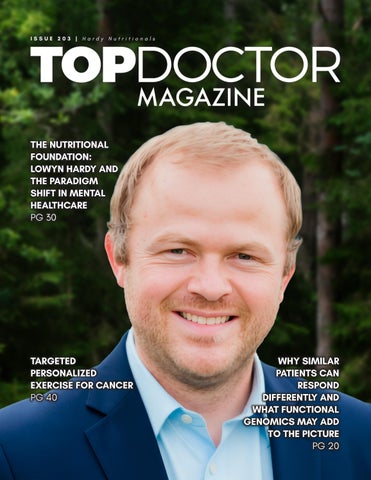
ISSUE 203 | Hardy Nutritionals
THE NUTRITIONAL FOUNDATION: LOWYN HARDY AND THE PARADIGM SHIFT IN MENTAL HEALTHCARE PG 30
TARGETED PERSONALIZED EXERCISE FOR CANCER PG 40
WHY SIMILAR PATIENTS CAN RESPOND DIFFERENTLY AND WHAT FUNCTIONAL GENOMICS MAY ADD TO THE PICTURE PG 20
“The first approach should be the simple approach. Give the body what it needs to be healthy, and in the majority of cases, it will heal.”
PUBLICATION TEAM Publisher: John Hyland Editor In Chief: Hannah H. Editorial Assistant: Jillian Fast
CREATIVE DEPARTMENT Senior Graphic Designer: Laura Poyner Graphic Designers: Dylan R-N, Kyleigh Holder
EXPERT CONTRIBUTORS
Biohacking & Longevity Expert: Lindsay O’Neill-O’Keefe Contributing Authors: Evelyn Flaharty, Riley George, Edmond Ng, Ashleigh Quint, Tracy Wood
EXECUTIVE TEAM
Chief Digital Content Officer: David Lee Vice President of Development: Mark Carvalho Fractional Marketing Officer: Craig Handley Advisory Board: Dr. Arthur Katona, Dr. Francisco Cabal, Dr. Edmond Ng, Dr. Kianor Shah
MAGAZINE CONTRIBUTORS
A LETTER FROM THE EDITOR Our mission and purpose at TopDoctor Magazine is to foster connections within the health and wellness community and empower our readers to make wellinformed healthcare and lifestyle decisions. We pride ourselves on being the ultimate resource for interviews with health and wellness leaders, trending medical news, and healthy living topics. We understand that choosing a healthcare provider is a crucial decision. Our in-depth interviews with esteemed doctors and medical professionals aim to bridge the gap between them and their clients. By providing our readers with personal insights, philosophies, and areas of expertise, we facilitate a deeper understanding of the individuals responsible for your health and well- being. We also strive to highlight our outstanding practitioners, showcasing their dedication to their patients and contributions to the medical community. The field of medicine is constantly evolving, with new practices, therapies, and technologies emerging at a rapid pace. At TopDoctor Magazine, we strive to keep you updated on the latest advancements in the medical world. Our comprehensive coverage of trending medical news equips both doctors and patients with the knowledge they need to make informed choices about healthcare options. Building strong connections within the medical community is essential for enhancing patient care and driving medical progress. Our magazine serves as a bridge, connecting medical companies with doctors and vice versa. By facilitating these connections, we aim to catalyze collaborations that can lead to innovative solutions and improved healthcare outcomes for everyone.
It is our firm belief that well-informed individuals make better decisions about their health. By providing you with insights into established and emerging medical trends and technologies, we empower you to take an active role in your healthcare choices. Whether you are a healthcare professional seeking to stay updated on the latest advancements or a patient eager to make informed decisions about your well-being, TopDoctor Magazine is here to support you. In every issue, we strive to uphold the highest standards of journalistic integrity, accuracy, and relevance. Our dedicated team of writers, editors, and medical experts work tirelessly to bring you well-researched and compelling content that is both educational and engaging. Moreover, our graphic design team is committed to delivering an aesthetically pleasing reading experience where captivating design seamlessly merges with informative content, ensuring each issue becomes an engaging journey of discovery. As we embark on this mission to serve as your trusted source of medical information and insights, we encourage you to join us on this exciting journey. Your feedback and suggestions are invaluable to us, and we look forward to hearing from you. Thank you for being a part of the TopDoctor Magazine community. Together, let us embrace knowledge, forge connections, and make informed decisions to lead healthier lives. With warmest regards, Hannah H.
TABLE OF
CONTENTS
10
BALANCE DICTATES HEALTHY AGING
20
WHY SIMILAR PATIENTS CAN RESPOND DIFFERENTLY AND WHAT FUNCTIONAL GENOMICS MAY ADD TO THE PICTURE
30
THE NUTRITIONAL FOUNDATION: LOWYN HARDY AND THE PARADIGM SHIFT IN MENTAL HEALTHCARE
40
TARGETED PERSONALIZED EXERCISE FOR CANCER
46
BRAINS BEFORE BODIES: THE NUTRITION BLUEPRINT FOR YOUNG ATHLETES (PART 2)
A New Era of Anti-Aging - Dr. Hinna Akhtar, DNP, FNP-C U.S. Army Veteran • Published Medical Author • Aesthetic & Wellness Expert
Photo: Jessica Schumacher
For Dr. Hinna, anti-aging goes far beyond aesthetics and how her patients look—it’s also about how they feel, function, and live each day. Her mission is to empower patients to take an active role in their health and approach aging with confidence. Drawing on her background in family practice, wellness, and aestheticsDr. Hinna integrates modern medicine, aesthetic treatments, nutrition, strategic fasting, physical activity, and a healthy mind and spirit to support wellness from the inside out. Her philosophy is simple:
Anti-aging begins with a healthier you.
Practicing at: BodyMD | Scottsdale, Arizona
HOPE LIVES HERE.
A science-based community of education, support, and connection for families navigating neurodevelopmental challenges. The Dr. Goodenowe NeuroSupport Program empowers families through education, community, structured health tracking, and nutritional plasmalogen support. Our goal is to provide the tools, knowledge, and encouragement families need to stay engaged throughout their child’s journey—because meaningful progress begins with understanding, and no family should walk that journey alone.
NeuroSupport is an education and support program and is not a substitute for medical care. Our goal is to build a community centered on education, connection, and hope.
Join the NeuroSupport Community. Learn more and apply today. Call 1.951.228.2224 or visit communityhealth.drgoodenowe.com
“We truly believe they’re helping his brain and body function at a higher level. Seeing these changes, especially in such a short time, has brought us a renewed sense of hope and excitement for what’s ahead.” -Karine H.
BALANCE DICTATES HEALTHY AGING WRITTEN BY: EVELYN FLAHARTY
10
W
hen we think about healthy aging, most of us immediately think about eating nutritious foods, staying active, maintaining a healthy weight, and keeping our minds sharp. While these are all important pieces of the puzzle, there is one aspect of health that often gets overlooked until it begins to decline: Balance. It isn’t something we normally think about because it quietly works in the background every moment of every day. It allows us to walk across a room without hesitation, step off a curb, climb a flight of stairs, carry groceries, work in the garden, or even stand on one foot while putting on a pair of pants. We rarely stop to appreciate it because, for most of our lives, balance simply happens. As I’ve recently learned, however, balance is far more than just the ability to stand upright. It is one of the greatest predictors of healthy aging. It influences our confidence, our independence, our mobility, and ultimately our quality of life. Without good balance, even the simplest daily activities become more difficult, and our world can gradually begin to shrink. I didn’t fully appreciate this until earlier this year. About five months ago, after a leg workout at the gym, I noticed a nagging discomfort deep in my right glute. At first, I didn’t think much of it. I’ve spent decades strength training, and aches and pains are occasionally part of an active lifestyle. I assumed it would disappear after a few days. It didn’t. The discomfort lingered for nearly six weeks. Eventually, I contacted my physician, who referred me to physical therapy, and after an evaluation, I learned I had developed Piriformis Syndrome. The piriformis is a small muscle located deep within the buttock. Although it isn’t a large muscle, it plays an important role in helping to stabilize the hip and rotate the leg. Because the sciatic nerve runs very close to the piriformis, and sometimes even through it, a tight or inflamed piriformis muscle can irritate the nerve, causing pain in the buttock and even discomfort that radiates down the leg. Thankfully, my condition was diagnosed early, and with proper treatment, stretching, and strengthening exercises, it was completely reversible. I attended physical therapy three times each week for nearly three months. My therapist focused on strengthening my gluteus medius, one of the primary muscles responsible for stabilizing the pelvis. We worked on exercises such as clamshells, side-lying leg lifts, mobility drills, stretching, and flexibility exercises designed to improve my range of motion while reducing the workload placed on the piriformis muscle. I expected physical therapy to help relieve my pain. What I didn’t expect was the lesson it would teach me about balance. During one session, my therapist asked me to stand on one leg. Simple enough, I thought. Except it wasn’t. I quickly realized I couldn’t maintain my balance for very long. Then she asked me to perform simple movements while balancing on one leg—bending forward to touch the floor, tossing a
Top Doctor Magazine / Issue 203 - Hardy Nutritionals / 11
W
hen we think about healthy aging, most of us immediately think about eating nutritious foods, staying active, maintaining a healthy weight, and keeping our minds sharp. While these are all important pieces of the puzzle, there is one aspect of health that often gets overlooked until it begins to decline: Balance. It isn’t something we normally think about because it quietly works in the background every moment of every day. It allows us to walk across a room without hesitation, step off a curb, climb a flight of stairs, carry groceries, work in the garden, or even stand on one foot while putting on a pair of pants. We rarely stop to appreciate it because, for most of our lives, balance simply happens. As I’ve recently learned, however, balance is far more than just the ability to stand upright. It is one of the greatest predictors of healthy aging. It influences our confidence, our independence, our mobility, and ultimately our quality of life. Without good balance, even the simplest daily activities become more difficult, and our world can gradually begin to shrink. I didn’t fully appreciate this until earlier this year. About five months ago, after a leg workout at the gym, I noticed a nagging discomfort deep in my right glute. At first, I didn’t think much of it. I’ve spent decades strength training, and aches and pains are occasionally part of an active lifestyle. I assumed it would disappear after a few days. It didn’t. The discomfort lingered for nearly six weeks. Eventually, I contacted my physician, who referred me to physical therapy, and after an evaluation, I learned I had developed Piriformis Syndrome. The piriformis is a small muscle located deep within the buttock. Although it isn’t a large muscle, it plays an important role in helping to stabilize the hip and rotate the leg. Because the sciatic nerve runs very close to the piriformis, and sometimes even through it, a tight or inflamed piriformis muscle can irritate the nerve, causing pain in the buttock and even discomfort that radiates down the leg. Thankfully, my condition was diagnosed early, and with proper treatment, stretching, and strengthening exercises, it was completely reversible.
I attended physical therapy three times each week for nearly three months. My therapist focused on strengthening my gluteus medius, one of the primary muscles responsible for stabilizing the pelvis. We worked on exercises such as clamshells, side-lying leg lifts, mobility drills, stretching, and flexibility exercises designed to improve my range of motion while reducing the workload placed on the piriformis muscle. I expected physical therapy to help relieve my pain. What I didn’t expect was the lesson it would teach me about balance. During one session, my therapist asked me to stand on one leg. Simple enough, I thought. Except it wasn’t. I quickly realized I couldn’t maintain my balance for very long. Then she asked me to perform simple movements while balancing on one leg—bending forward to touch the floor, tossing a ball, reaching in different directions—and I struggled with every one of them. I was honestly surprised. I’ve spent years in the gym; I’m an IFBB Professional bodybuilder, and I strength-train five to six days every week, dedicating much of my time to maintaining my health and fitness. I considered myself strong. Yet despite all of that, I had neglected one important component of physical fitness: Balance. It was a humbling realization. Like many people, I had assumed that because I was physically fit, my balance would naturally be good. But strength and balance are not the same thing. They work together, but one does not automatically guarantee the other. That experience changed the way I think about healthy aging. As we grow older, our bodies naturally undergo changes. We gradually lose muscle mass, our joints become less flexible, and our reaction time slows. The communication between our brain, muscles, joints, vision, and inner ear becomes less efficient. These changes may be a normal part of aging, but they don’t mean we have to surrender our independence. This is where balance becomes so important. Balance is our body’s built-in protection system. Every time we walk across an uneven sidewalk, step off a curb, reach for something on a high shelf, or catch
ourselves after tripping over the family dog, our bodies make hundreds of tiny adjustments without us ever realizing it. Our muscles contract, our core stabilizes us, our eyes help orient us, and our brain processes all of this information in fractions of a second. When this system is working well, we barely notice it. When it isn’t, the consequences can be life-changing. Falls remain one of the leading causes of injury among adults over the age of 65. A single fall can result in broken bones, traumatic brain injuries, lengthy hospital stays, and months of rehabilitation. Unfortunately, many older adults never fully regain the level of independence they once enjoyed after a serious fall. I’ve witnessed this firsthand. Several years ago, my mother-in-law stepped off a curb and lost her balance. What appeared to be a routine misstep resulted in a traumatic head injury. Watching her health decline afterward was heartbreaking. It wasn’t simply the injury itself that changed her life. It was everything that followed. Her confidence diminished. Her independence became more limited. Everyday activities that once seemed effortless suddenly required assistance. That experience stayed with me. At the time, I viewed it as an unfortunate accident. Today, I understand that balance plays a much larger role than I once realized. Perhaps the greatest gift good balance gives us is independence. Think about your daily routine. Getting out of bed. Stepping into the shower. Walking through a parking lot. Carrying groceries into the house. Climbing stairs. Reaching into the kitchen cabinets. Gardening. Traveling. Walking on the beach. Putting luggage into the overhead compartment on an airplane. None of these activities happen without balance. Because these movements are so automatic, we rarely stop to think about them. However, each one requires our body to constantly shift weight, stabilize itself, and react to changing surfaces and environments. When balance declines, even ordinary activities become challenging. People begin avoiding situations where they feel unsteady. They stop taking walks. They avoid hiking trails or crowded places. They hesitate to travel. They become more cautious getting in and out of the bathtub or climbing stairs. Over time, fear begins replacing confidence. Ironically, this creates a dangerous cycle. When people become afraid of falling, they naturally move less. As activity decreases, muscles weaken, reaction time slows further, and balance continues to deteriorate. The less they move, the greater their risk of falling becomes. It doesn’t have to be this way. One of the most encouraging things I learned during physical therapy is that balance is a skill. Like strength, flexibility, and endurance, it can be trained. In fact, our brains and bodies are remarkably adaptable. Every time we challenge our balance, we strengthen the communication between our brain and our muscles. We improve coordination. We sharpen our reaction time. We build confidence. The key is consistency.
14
Top Doctor Magazine / Issue 203 - Hardy Nutritionals / 15
Since completing physical therapy, I’ve intentionally incorporated balance into my everyday routine. Sometimes I’ll stand on one foot while brushing my teeth, washing dishes, or waiting for my morning coffee to brew. When I put on my pants, I challenge myself to remain standing instead of sitting down. This continues to be very challenging. Good thing nobody is watching me. These aren’t complicated exercises. They don’t require expensive equipment or a gym membership. They’re simply small opportunities to challenge my body throughout my day and regular routines. Those little moments add up. Of course, I continue to strength train because building and maintaining muscle remains one of the best investments we can make as we age. Strong muscles support our joints, improve bone health, and help us perform everyday tasks with greater ease. But I now understand that strength alone isn’t enough. For me personally, this has become one of the biggest reasons I continue exercising at 71 years old. Independence. I don’t train because I’m chasing a certain number on the scale or trying to look younger. I train because I want to remain physically capable in my 80s and 90s. I want to continue traveling, gardening, carrying my own groceries, hiking beautiful trails, and climbing stairs without hesitation. Most of all, I want to maintain the freedom to live life on my own terms. That, to me, is what healthy aging is really about. Research continues to reinforce the importance of balance as we age. Studies have shown that the ability to stand on one leg is closely associated with overall health, mobility, and longevity. While no single test can predict how long someone will live, maintaining good balance appears to reflect how well multiple systems within the body are working together. When I first learned about this research, it certainly caught my attention. Here I was thinking I was aging exceptionally well, only to discover there was one area of fitness I had unintentionally ignored. Instead of becoming discouraged, I chose to see it as an opportunity. The beauty of wellness is that we are always learning. No matter our age, there is always something we can improve. That’s one of the reasons I love sharing my experiences. If my journey encourages even one person to start practicing balance today instead of waiting until after a fall, then sharing my story has been worthwhile. Healthy aging isn’t about perfection. It’s about making intentional choices that allow us to continue enjoying life for as long as possible. Sometimes those choices involve preparing nutritious meals, lifting weights, or going for a walk with a friend. And sometimes they’re as simple as standing on one foot while brushing your teeth. The important thing is that we keep moving, keep challenging our bodies, keep investing in our future selves—because every healthy choice we make today is a gift to the person we hope to become tomorrow.
16
Balance may never receive the same attention as strength training or cardiovascular exercise, but it deserves a place alongside both. It quietly influences nearly every movement we make and plays an essential role in preserving the independence, confidence, and freedom we value so deeply. As I’ve learned this year, healthy aging isn’t simply about living longer. It’s about continuing to live well. It’s about remaining active enough to say “yes” to the experiences that bring us joy. It’s about having the confidence to travel, garden, exercise, play with grandchildren, and continue embracing life with enthusiasm. At 71, I still have goals, adventures I want to experience, places I want to visit, and memories I want to create. Taking care of my balance is now part of that journey, and I hope it becomes part of yours too.
Top Doctor Magazine / Issue 203 - Hardy Nutritionals / 17
WHY SIMILAR PATIENTS CAN RESPOND DIFFERENTLY AND
WHAT FUNCTIONAL GENOMICS MAY ADD TO THE PICTURE Written by: Tracy Wood The difficult cases often begin with a familiar contradiction: two patients follow comparable plans, yet their responses diverge. Lifestyle, environment, medical history, existing conditions, and adherence can all contribute. Even after practitioners account for those factors, they may still lack part of the explanation. Functional genomics offers another line of inquiry. Rather than treating each genetic variant as an isolated finding, it examines how groups of variants may influence connected biological pathways.
Functional genomics cannot replace clinical judgment. It may, however, give practitioners another way to investigate why comparable strategies produce different responses
The DNA Company, based in Corona, California, developed DNA360™ to turn that systemslevel view into an educational report for practitioners and consumers.
The Clinical Question Comes First Personalized care begins with the individual, but the available information does not always explain the individual response.
20
A patient may follow a nutrition or lifestyle plan carefully and still respond differently from someone with similar goals. Another may report little benefit from an approach that appears useful elsewhere. Those differences do not make genetics the answer. They make genetics another possible source of context. The practical question for a practitioner is not whether a gene determines an outcome. It is whether genetic information can reveal a pattern worth examining alongside the rest of the clinical picture.
From Variant Lists to Connected Systems
The DNA Company distinguishes DNA360 from reports that present isolated gene findings. Its systems-biology approach groups genetic associations across interconnected biological functions. That structure changes the emphasis. Rather than treating one variant as a verdict, the report groups multiple findings by the biological pathways they may influence.
22
For example, DNA360 can present genetic factors associated with nutrient metabolism alongside pathways involved in methylation and detoxification. A practitioner can then consider those findings together, rather than reading each result as a separate instruction. The report also covers areas associated with hormone processing, inflammatory response, neurotransmitter function, energy production, gut-related functions, and cellular maintenance. This wider view may help practitioners identify relationships that an isolated result would not show. It still requires them to compare the report with the patient’s history, current condition, and other available information.
What DNA360 Is Designed to Support
The company says DNA360 supports educational conversations about nutrition, lifestyle, supplementation and other wellness strategies. Tracy Wood, CEO of The DNA Company shared, “The practitioner clinics we support are already spending hours creating individualized protocols. Through our new DNA360, these same clinics are beginning every patient relationship already knowing how they detoxify, methylate, process hormones, regulate inflammation, respond to stress, metabolize nutrients, and where their greatest inherited vulnerabilities lie. It changes every clinical conversation, and improves the health of the patient in alignment with how they were made.” It also includes information about the genetic pathways involved in hormone metabolism and biological processes that may be relevant to discussions about hormone replacement therapy and peptide-based wellness approaches. For a practitioner, that information may help organize a conversation. It may prompt a closer review of a standard recommendation, clarify a patient’s questions, or identify an area that deserves further assessment. DNA360 is also designed to support patient education and practitioner workflows. Consumers can order DNA360, while practitioners can use it as part of a broader wellness discussion. The report’s usefulness therefore depends on interpretation. A list of associations alone cannot account for the patient’s condition, environment, medications, behavior, or professional assessment.
Information, Not a Treatment Decision
DNA360 does not recommend, prescribe, diagnose, or determine whether any medical therapy is appropriate for an individual. That limitation matters most when the report touches subjects such as hormones, peptides, supplements, or medications. Genetic information may inform a discussion, but it cannot establish safety, need, or likely response by itself. The company’s own compliance language places those decisions with the individual and a licensed healthcare professional. This boundary also protects the value of the report. When DNA360 stays within its educational role, practitioners can judge the information for what it is: one input among many.
Top Doctor Magazine / Issue 203 - Hardy Nutritionals / 23
When genetic associations are presented as certainty, they can obscure rather than improve clinical judgment. The responsible use of functional genomics depends on resisting that leap.
What Supports the Interpretation
The DNA Company says its interpretation methods draw on peer-reviewed literature on gene function, biochemical pathways, and associated traits. It also maintains an ongoing review of the literature. The company says it updates educational content and interpretive algorithms when emerging evidence materially changes an interpretation. “At The DNA Company, science is not static—and neither is our platform. Our educational content is continuously updated as new, scientifically vetted evidence becomes available. Our proprietary genomic interpretation algorithms integrate validated research across multiple biological pathways to convert complex DNA data into personalized, easy-to-understand reports with practical wellness insights that support more informed conversations and individualized health strategies,” said Wood. Practitioner feedback and usability testing serve a different purpose. They can show whether the report communicates clearly and fits a working practice. They do not establish that every interpretation produces a clinical benefit. The company also cites internal audits and case reviews. Those processes can check whether interpretations remain consistent, plausible, and aligned with the evidence the company uses. Laboratory controls belong in another category. Genetic assay validation measures the accuracy, precision, and reliability of the underlying test. It does not validate every conclusion drawn from the resulting data. Keeping those evidence categories separate helps practitioners understand what each one can support. Laboratory validation, literature review, internal quality checks, and practitioner experience answer different questions. The company also acknowledges that practitioner observations do not replace clinical validation studies.
Genetics as Context, Not Destiny
DNA360 is available to both consumers and practitioners. That reach increases the need for careful explanation, especially when users expect a genetic report to deliver a definitive answer. “Your genes are not diagnostic in a vacuum. They are not fatalistic,” Wood stated. That principle gives the report its proper scale. A genetic association may suggest a tendency or point to a biological pathway. It cannot describe the whole person. The larger picture still includes health history, environment, current symptoms, laboratory findings, medications, behavior, and professional assessment. For practitioners, the report may prove most useful when it sharpens the next question. It may help explain why an expected response did not occur or why a familiar approach deserves closer review. It should not close the inquiry. It should make the inquiry more informed.
24
Top Doctor Magazine / Issue 203 - Hardy Nutritionals / 25
26
Another Part of the Explanation
Functional genomics will not explain every unexpected response, and DNA360 does not replace clinical judgment. Its role is narrower: to organize genetic associations across connected pathways and provide another source of context for practitioners and patients. That context may reveal questions that an isolated result would miss. It may also help practitioners explain why a broadly useful strategy still requires individual judgment. The value lies not in promising a predetermined answer, but in helping the practitioner understand why the same plan may not produce the same result. To learn more about The DNA Company and their genetic testing products, visit thednacompany.com.
Top Doctor Magazine / Issue 203 - Hardy Nutritionals / 27
The Nutritional
Foundation Lowyn Hardy and the Paradigm Shift in Mental Healthcare By Riley George In the prevailing model of modern mental health, the standard “sick care” approach often feels like a closed loop. A patient enters a clinic with debilitating symptoms, receives a psychiatric prescription, and finds themselves managing those symptoms—and the subsequent side effects—for years, if not their lifetime. Yet a quiet revolution is taking place in academic research, clinical practice, and nutritional psychiatry, driven by a simple biological truth: the brain is an organ, and like every other organ in the human body, its function is influenced by the nutrients it receives. For more than two decades, Hardy Nutritionals® has helped advance this conversation through its commitment to broad-spectrum micronutrient research and mental wellness. Founded by David Hardy, the company has become recognized for its work exploring how broad-spectrum nutritional support may influence psychiatric and neurological health. Today, Managing Director Lowyn D. Hardy continues that mission, helping guide the company’s efforts in research, education, and advocacy. Under his leadership, Hardy Nutritionals® remains focused on the belief that micronutrient supplementation is not merely a complementary approach but an important consideration in supporting mental wellness.
A Legacy Born in the Field To understand the mission of Hardy Nutritionals®, one must look past the modern corporate branding to the foundational lessons learned decades ago. Hardy’s father, a trained high school biology teacher in the 1970s, found the constraints of the classroom insufficient to satisfy his entrepreneurial spirit. His career path took him into the agricultural industry of southern Alberta, Canada, where he spent two decades formulating feed supplements for livestock.
30
* Anthony Stephan (left) and Hardy Nutritionals’ Founder, David Hardy (right)
Top Doctor Magazine / Issue 203 - Hardy Nutritionals / 31
* Lowyn Hardy presenting at the 2026 Integrative Personalized Medicine Conference, London, UK
While the goal in agriculture—maximizing yields and health in cattle and hogs—may seem worlds away from human psychiatry, the biological mechanisms are strikingly similar. Through his work with livestock, Lowyn’s father discovered that specific nutrient deficiencies could lead to devastating consequences. For example, fatal grass tetany in cattle can result from a magnesium deficiency, and behavioral volatility in confined hogs can be due to a lack of essential minerals in their diets. By providing a precisely balanced, broad-spectrum array of vitamins and minerals, he found he could mitigate aggression, improve health outcomes, and increase resilience. In 1996, these lessons were thrust into the human context when Lowyn’s father met Anthony Stephan, whose family had been decimated by severe mental illness. “My dad didn’t have a lot of experience with mental illness in humans, but he did have this experience with animals, and he knew that nutrition was really important,” Lowyn explained. Lowyn’s father applied the same principles of incorporating a broad spectrum of minerals and vitamins into animal diets to two of Tony’s children who had been diagnosed with Bipolar Affective Disorder. The approach yielded highly transformative results. The situation became deeply personal a few years later, when two of Lowyn’s own siblings were diagnosed with serious psychiatric conditions. As Lowyn recalled, “For both myself and my dad, this was a turning point. It’s one thing to help other people in a professional setting, but applying it within your own home is where the rubber really meets the road.”
The “Dam” Analogy: Why Broad-Spectrum Matters One of the most persistent hurdles to changing public perception is the conventional belief that a single nutrient, such as magnesium or Vitamin D, is the “silver bullet” for complex brain disorders. Lowyn argued that this is fundamentally flawed. He frequently employs a poignant analogy to explain why: imagine a dam with dozens of holes. If a technician arrives and plugs only one or two of those holes, the structure remains critically compromised, and the water continues to breach. “The single nutrient strategy, where you’re only taking one or two nutrients to try to solve the problem, is at odds with human physiology. Optimal functioning requires the presence of a wide range of nutrients consumed in balance rather than one nutrient provided in high doses,” Lowyn stated. This is the bedrock of the company’s philosophy. Hardy Nutritionals® focuses on delivering a “broad-spectrum” of more than 40 essential nutrients. These aren’t random doses; they are carefully balanced ratios, such as the vital zinc-to-copper balance, designed to support the intricate, co-factor-dependent processes that keep the human brain stable. “Without this comprehensive foundation,” Lowyn explained, “the body simply lacks the building blocks to produce neurotransmitters or regulate mood effectively.”
The Gold Standard of Independent Validation In an industry often marred by proprietary research and conflicts of interest, Hardy Nutritionals® has taken a notably different, and arguably more difficult, path. From the beginning, the directive was clear: any academic research intended to validate their approach must be entirely independent. “We haven’t funded the research, nor have we paid any of the researchers conducting it,” Lowyn emphasized. “That independence is important because it means there is no financial conflict of interest with the researchers, universities performing the studies, or the ethics boards overseeing them.”
Top Doctor Magazine / Issue 203 - Hardy Nutritionals / 33
By donating only the placebo and active vitamin-mineral product to universities, the company allows scientists to maintain full autonomy over their trials. This approach has yielded over 70 peer-reviewed, independent publications in medical journals. Among these are nine double-blind, randomized controlled trials—the pinnacle of evidence-based medicine. Lowyn pointed to a multi-center study involving 135 children with ADHD across Canada and the United States as a definitive moment for the field. In this trial, children on the micronutrient regimen showed a 54% improvement in symptoms like inattention and anxiety, compared to just 18% in the placebo group—a three-fold difference. In addition, the study found that children on the micronutrient therapy experienced normal, healthy height growth. In fact, they were six millimeters taller, on average, than those children on placebo. This is a stark contrast to traditional stimulants, which are known to stunt growth due to appetite suppression. “The kids were way better off on the micronutrient therapy because their symptoms were much more under control,” Lowyn noted, citing research showing this approach costs less than 1% of the total expense of conventional pharmaceutical treatment.
The Global Reach: A Growing Movement in Nutritional Psychiatry The impact of this research is not confined to the laboratory or North American clinics; it reflects a burgeoning international interest in how nutritional status influences public health at the societal level. Recent systematic reviews and meta-analyses that synthesize data from dozens of independent trials have found that broadspectrum micronutrient interventions are among the safest and most feasible strategies for addressing aggression, antisocial behavior, and poor developmental outcomes in children and youth. This international movement is perhaps best exemplified by the NUTRIMUM study, a fully blinded, randomized, controlled trial conducted by researchers at the University of Canterbury in New Zealand and led by world-renowned Professor and Clinical Psychologist, Dr. Julia Rucklidge. The study’s findings, which demonstrated that micronutrient supplementation could significantly improve mental health outcomes for pregnant women and neonatal development in their infants, have garnered attention far beyond New Zealand’s borders. By outperforming traditional prenatal supplements and offering a safer alternative to pharmaceutical antidepressants, this research provides a blueprint for how healthcare systems worldwide might mitigate the long-term risks associated with antenatal depression. For Lowyn Hardy, these global insights reinforce a vital conclusion: good nutritional status is the cornerstone of both physical and mental well-being. As international researchers continue to document these therapeutic benefits, Hardy Nutritionals® finds itself at the center of a shift that views nutrition not as an alternative but as a primary, science-backed solution for enhancing global mental health and resilience.
Shifting the Healthcare Narrative “Despite the mounting clinical data, the transition from conventional psychiatry to integrative nutritional support has been a slow, methodical process,” Lowyn observed. However, that tide is turning. “There are a lot of open-minded health professionals,” he said. “They’ve seen too much ‘sick care,’ patients coming in the front door, continuing to be sick, and not really content with the way their life is going.”
34
* Independent Researchers (Left to Right): Julia Rucklidge, PhD (Mental Health and Nutrition Research Lab, University of Canterbury, NZ); Charles Popper, MD (McLean Hospital, Harvard Medical School); Bonnie Kaplan, PhD (Cumming School of Medicine, University of Calgary, AB)
* Lowyn D. Hardy, MScIB, MBA, Managing Director, Hardy Nutritionals
36
This change is moving into the mainstream. Recently, the American Psychiatric Association (APA) included a chapter on single- and broad-spectrum micronutrient treatments in one of its textbooks, authored by leading researchers who have specifically studied Lowyn’s micronutrient formulas: Dr. Charles Popper, Dr. Julia Rucklidge, and Dr. Bonnie Kaplan. For Lowyn, this is a significant leap forward, yet he believes the industry must go further. His goal is to “reverse the order of operations” in medicine. Rather than defaulting to pharmacological intervention at the first sign of distress, he advocates for the “rational” first step: stabilizing the body’s nutritional foundation.
A Future of Hope and Autonomy As Lowyn looks to the future, he is focused on a message of radical hope. “Mental illness is not a death sentence; it’s not a dead-end road,” he asserted. For families currently navigating the same crises his family faced years ago, he offered a clear, actionable perspective: by addressing the biology first, the brain gains the stability it needs to respond to other helpful interventions, such as cognitive behavioral therapy or counseling. Whether it is his work with pregnant women suffering from anxiety or his collaborations with integrative psychiatry institutes in Colorado, Lowyn is committed to bridging the gap between nutritional science and clinical practice. He envisions a world where the next generation is nourished from the start, where the reliance on symptom-suppressing chemicals is diminished, and where individuals are empowered to take ownership of their own mental health. “The first approach should be the simple approach,” Lowyn concluded. “Give the body what it needs to be healthy, and in the majority of cases, it will heal.” The future of mental wellness begins with a stronger nutritional foundation. Explore the research, discover the science, and learn how Hardy Nutritionals® is helping transform lives at hardynutritionals.com.
DELIVER MORE FOR YOUR CELLS FOR YOUR BODY FROM OTHER MODALITIES Whether the focus is on: • Wellness • Performance • Healthy aging • Recovery NanoVi® provides a unique way to improve your results. DELIVER MORE FOR YOUR CELLS IMPROVE PROTEIN ACTIVITIES
DELIVER MORE FOR YOUR BODY PERFORMANCE • WELLNESS • RECOVERY
Proteins do the work in the cell
NanoVi® supports protein function to promote energy production, cellular repair, recovery, resilience, and overall performance.
The impact of NanoVi is noticeable and measurable. More energy, faster recovery and less stress are some of the more apparent results.
Since proteins are fundamental to nearly every biological process, supporting their activity helps optimize across every system.
Independent studies confirm the benefits of NanoVi and include placebo-controlled research and published results.
DELIVER MORE FROM OTHER MODALITIES BETTER CELLULAR FUNCTION CAN IMPROVE ANYTHING ELSE YOU DO
Nutrition (Supplements)
Red Light Therapy
Hydrogen Therapy
Athletic Training
Brain Training (Neurofeedback)
Hyperberic (HBOT)
Ozone Therapy
Infusion Therapy
Cryo Therapy
Compression Therapy
Cell Therapies
PEMF Therapy
NanoVi® isn’t another competing modality, it’s the layer that helps support the biology beneath them all.
eng3.com info@eng3.com
+1 206 525-0227
These statements have not been evaluated by the FDA. This product is not intended to diagnose, treat, cure or prevent any specific disease. © Copyright 2026 by Eng3 Corporation. All rights reserved. M458-rev01
eng3.com | nanovi.de #1
Targeted Personalized
Exercise for Cancer Written by: Dr. Edmond Ng Exercise medicine is a relatively inexpensive cancer treatment that is highly effective, safe, and side-effect-free when prescribed correctly, according to Robert Newton AM, professor of exercise medicine at Edith Cowan University, in his book My Exercise Medicine for Cancer.¹ Exercise is the key to surviving cancer, according to Yale Cancer Center, NASA, and NHK World Japan. Exercise and fitness reduce the risk of 13 types of cancer—including colon, postmenopausal breast, and endometrial cancer—by up to 18 to 32%.² Exercise may even help reduce the risk of some cancers, such as breast cancer, from returning.³ In fact, physical inactivity is one of the four largest contributors to Australia’s cancer burden.⁴
What Do Astronauts and Cancer Patients Have in Common? NASA research challenges the traditional notion that you should rest during cancer treatment. Instead, NASA’s studies on exercise could hold the key to a long, healthy life after a cancer diagnosis. Dr. Jessica Scott began her career at NASA, where she spent seven years designing exercise programs for astronauts in outer space. Now, as the principal investigator at the worldleading Memorial Sloan Kettering Cancer Center, she is using her expertise in the fight against cancer. In her research, Dr. Scott discovered that vigorous exercise can help cancer patients and survivors. Vigorous exercise is activity that can be safely performed at 80% of maximum heart rate. How exercise fights cancer: » It reduces insulin and insulin-like growth factors that can encourage cancer cells to grow. » It helps move waste and cancer-causing toxins out of the body more quickly. » It lowers blood estrogen levels, which is important for reducing breast cancer risk. » The shear force of blood flow generated during vigorous exercise may kill circulating tumor cells. » It strengthens the immune system, helping to prevent cancer cells from growing. » It decreases muscle loss, which in turn supports immune and endocrine function. » It releases myokines that help suppress cancer. Cancer patients who maintain a regular exercise regimen have been shown to experience decreased muscle loss and increased survival rates. Dr. Rhonda Patrick, PhD, scientist and founder of FoundMyFitness Science podcast, says we now know that muscle tissue is a major
40
Top Doctor Magazine / Issue 203 - Hardy Nutritionals / 41
endocrine organ that releases myokines as signals to all the other tissues in the body. Precise exercise prescription drives endogenous medicine, benefiting every organ system in the body. Muscle tissue is also a major moderator of signaling to our immune system and modulating its effectiveness. Therefore, patients with low muscle mass likely have a dramatically compromised immune capacity, which can make it harder to fight their cancer. Exercise increases muscle mass, creating a more cancer-suppressive environment, enhancing the effectiveness of treatments, and reducing the side effects of cancer treatments. Dr. Melinda Irwin, PhD, MPH, associate dean of research and the Susan Dwight Bliss Professor of Epidemiology (Chronic Diseases) at the Yale School of Public Health, and deputy director of the Yale Cancer Center, is a leading authority on exercise, nutrition, and cancer. In her Colon Health and Life-Long Exercise Change, or CHALLENGE, trial, led by the Canadian Cancer Trials Group, 889 colon cancer patients were enrolled across 55 treatment centers. Patients were randomized to a health education control group or a three-year exercise intervention. After nearly eight years of follow-up, the results were striking: patients in the exercise group had an overall 37% reduction in mortality compared to those in the health education control group. The overall survival was 90.3% in the exercise group versus 83.2% in the group that received only educational materials alone.⁵ In conclusion, targeted exercise has been shown to improve quality of life and potentially extend life in cancer patients. It may increase the effectiveness of chemotherapy and radiation therapy and reduce their side effects, as well as support patients as they prepare for and recover from surgery. As a result, targeted exercise is increasingly being established as a first-line treatment and an essential component of overall cancer care. Professor Robert Newton AM, PhD, DSc, is a professor of exercise medicine at Edith Cowan University in Australia and has published My Exercise Medicine for Cancer and Personalizing Exercise for Your Cancer Care, and is a leading voice in exercise oncology research on the Cancer Patient Lab podcast. World-renowned, Professor Newton has consulted for Nike, the Chicago Bulls, England Rugby, Manchester United, the English and Australian Institutes of Sport, and Surfing Australia. He has received multiple awards for his research excellence and impact, including the Western Australian Premier’s Scientist of the Year in 2019 and a Higher Doctorate (DSc) from the University of Queensland in 2021. In 2026, Professor Robert Newton AM was awarded membership in the Order of Australia.
About Dr. Edmond Ng Health & Life Sciences | C-Suite Advisory | Catalyst for Innovation, Technology, Growth & Partnerships | xIBM Global Services | Medical Doctor, Auditor, Advisor, Author, Educator, Researcher & Reviewer Founder of SEEDD.Life, Biotechnology Advisors, Ikaria Clinic & Longevity Concierge LinkedIn: www.linkedin.com/in/dredmondng
42
Top Doctor Magazine / Issue 203 - Hardy Nutritionals / 43
46
THE NUTRITION BLUEPRINT 2 t r FOR YOUNG ATHLETES Pa Written By Ashleigh Quint, MIM, PICP-SCC
From Science to the Dinner Table Understanding how the brain develops is only valuable if we know how to nourish it. The foods children eat each day provide the raw materials needed to build the neural pathways, neurotransmitters, and tissues that support learning, movement, recovery, and long-term athletic performance. This is where foods such as eggs, steak, and high-quality beef become important. Eggs are one of the most practical brain-building foods for children because they provide complete protein, choline, B vitamins, selenium, and fat-soluble nutrients. Choline is especially important because it is involved in acetylcholine production, cell membrane structure, and neurological development. A review on choline and brain function notes that choline plays a role in neurological development and cognitive function. For a young athlete, this matters because performance is not only strength or speed. It is reaction time, focus, coordination,
Top Doctor Magazine / Issue 203 - Hardy Nutritionals / 47
emotional regulation, and the ability to learn movement patterns. Grass-fed steak and beef also deserve a place in the youth athlete conversation. Beef provides complete protein, heme iron, zinc, vitamin B12, creatine, and other nutrients that support oxygen transport, muscle development, recovery, and nervous system function. This is especially important for adolescent girls, who are at increased risk for iron deficiency due to menstruation, growth, and, in many cases, under-eating or avoiding red meat. The Cleveland Clinic notes that female athletes are at high risk for iron deficiency because of menstrual blood loss and dietary restriction, and that iron from animal sources is absorbed more efficiently than iron from plant sources.¹ The neuroscience is where this becomes fascinating. The brain is not separate from sports performance. The brain predicts, organizes, and coordinates movement. It determines how quickly an athlete sees a defender, processes space, changes direction, absorbs force, and makes a decision. A poorly fueled nervous system does not simply show up as fatigue. It can show up as poor focus, slower reaction time, emotional volatility, inconsistent coordination, decreased motivation, and impaired recovery. This is why ultra-processed food should not be discussed only as “junk food” or “empty calories.” The bigger issue is displacement. When ultra-processed foods replace eggs, beef, fish, fruit, vegetables, dairy, potatoes, rice, and wholefood meals, children lose the nutrients required to build the brain and body. A 2025 systematic review found that higher ultra-processed food consumption was consistently associated with poorer cognitive performance in children and adolescents.² A 2024 longitudinal study also found that children who consumed more ultra-processed foods at ages three and four showed greater hyperactivity and inattention symptoms during adolescence.³ These findings do not prove that one food causes one diagnosis, but they strongly support the idea that dietary patterns influence the developing brain. For youth athletes, this has major implications. We cannot expect children to perform like athletes while feeding them like convenience consumers. A child who skips breakfast, eats processed snacks, drinks sugary beverages, and relies on packaged foods may still look athletic, but the nervous system may be undernourished. The question is not simply, “Is this child gaining weight?” The better question is, “Is this child getting the raw materials needed to build a brain and body capable of high-level performance?” This is especially important when discussing boys between the ages of roughly seven and 11. Many athletic boys experience visible body changes before a major height spurt. Some may appear thicker through the midsection during growth and maturation. It is important not to immediately label this as poor discipline or obesity without looking at the full picture: height velocity, athletic frame, lean mass, family growth patterns, training load, sleep, and overall diet quality. Newer research has
48
challenged the traditional interpretation of childhood “adiposity rebound,” suggesting that increases in BMI during childhood can reflect lean growth and not simply fat gain. This matters because athletic children can be misread when adults rely only on BMI or appearance. Girls require a different conversation. Female athletes are not small male athletes. Puberty changes their hormonal environment, iron needs, bone-building demands, connective tissue behavior, and body composition. Girls naturally tend to gain more body fat during adolescence, while boys tend to gain more lean mass. After menarche, weight changes should not automatically be blamed on poor eating habits. Hormones, menstrual function, stress, sleep, under-fueling, insulin sensitivity, inflammation, and training load all matter. Research has shown that girls with higher total body fat can have differences in reproductive hormones and pubertal timing. This does not mean eating habits are irrelevant, but it does mean female weight gain must be evaluated through a hormonal and developmental lens. For girls, the nutrition goal should never be to become smaller. It should be to become stronger, more resilient, and better supported. Adolescent girls need adequate protein, iron, calcium, vitamin D, magnesium, omega-3 fats, and total energy. Underfueling can disrupt hormones, impair recovery, reduce bone density, and increase injury risk. In female athletes, especially those in sports like basketball, volleyball, soccer, track, and gymnastics, the cost of poor nutrition can show up as fatigue, stress fractures, poor recovery, menstrual irregularities, and increased vulnerability to soft tissue injury. The dinner table also shapes habits. Children do not simply learn nutrition from lectures. They learn it from repetition, environment, modeling, and family rhythm. A 2023 umbrella review found that more frequent family meals were associated with better diet quality, lower obesity risk, fewer risk behaviors, and better mental health and wellbeing in children and adolescents.4 This supports what many coaches and parents already know intuitively: habits are built at home before they are tested in sport. The solution is not perfection. It is consistency. A young athlete’s plate should regularly include high-quality protein, colorful plants, mineral-rich carbohydrates, healthy fats, and enough total food to support growth and training. Steak, eggs, Greek yogurt, fish, potatoes, rice, fruit, vegetables, avocado, olive oil, and quality dairy can do more for performance than most supplements marketed to children. Supplements may have a place, but they should never replace the foundation. The next evolution of youth nutrition must move beyond weight. We need to stop asking only whether children are thin enough and start asking whether they are nourished enough. Are they focused? Are they sleeping? Are they recovering? Are they building bone? Are they regulating mood? Are they learning movement? Are they resilient under stress? These are performance markers, and they begin with food.
50
A healthy child is not simply a child with a normal BMI. A healthy child has energy, focus, emotional regulation, strong bones, stable hormones, quality sleep, and a nervous system capable of learning and adapting. For young athletes, nutrition is not just fuel. It is neuroscience. It is recovery. It is injury prevention. It is performance development. The best athletes are not built only by harder training. They are built by better inputs. And for children, those inputs begin long before the game starts. Before asking why your child struggles to focus, recover, regulate emotions, or make healthy food choices, parents should first look at their own dinner plate. Neuroscience has consistently demonstrated that children learn through observation long before instruction. Through observational learning and modeling, developing brains continually mirror the behaviors, routines, and habits of the adults around them. Parents do not simply provide food; they shape the neurological blueprint for how their children will think about food for decades to come. Research in developmental psychology has repeatedly demonstrated that parental modeling is one of the strongest predictors of children’s dietary behaviors. Children are significantly more likely to consume fruits, vegetables, and whole foods when they regularly observe their parents eating those same foods. Likewise, frequent family meals are associated with healthier dietary patterns, improved emotional well-being, and reduced obesity risk. The most powerful nutrition lesson a child will ever receive is not delivered through a lecture. It is delivered every evening when the family sits down for dinner. The next generation of healthy children will not be created by better supplements or stricter diets. They will be created by parents who choose to lead by example. Because before performance begins on the field, it begins in the home. And before it begins in the home, it begins at the dinner table.
Top Doctor Magazine / Issue 203 - Hardy Nutritionals / 51
REFERENCES
AND
RESOURCES BALANCE DICTATES HEALTHY AGING You can find more from Evelyn through her website or social media channels:
1. Website: EvelynFlaharty.com 2. YouTube: Evelyn Flaharty 3. YouTube: Workouts With Evelyn Flaharty 4. Instagram: ffmusclesandcurves 5. TikTok: @evelynifbbpro 6. Facebook: Evelyn Flaharty
WHY SIMILAR PATIENTS CAN RESPOND DIFFERENTLY AND WHAT FUNCTIONAL GENOMICS MAY ADD TO THE PICTURE 1. To learn more about The DNA Company and their genetic testing products visit https://thednacompany.com/.
THE NUTRITIONAL FOUNDATION: LOWYN HARDY AND THE PARADIGM SHIFT IN MENTAL HEALTHCARE 1. Explore the research, discover the science, and learn how Hardy Nutritionals® is helping transform lives at hardynutritionals.com.
TARGETED PERSONALIZED EXERCISE FOR CANCER 1. Admin. “My Exercise Medicine for Cancer - a Book by Prof Rob Newton.” MyExerciseMedicine, n.d. https:// myexercisemedicine.net/mem-4-cancer-book/.
2. Ellis, Louisa, Roger L. Milne, Melissa M. Moore, Kieron J. Bigby, Craig Sinclair, Darren R. Brenner, Steven C. Moore, Charles E. Matthews, Julie K. Bassett, and Brigid M. Lynch. “Estimating Cancers Attributable to Physical Inactivity in Australia.” Journal of Science and Medicine in Sport 27, no. 3 (December 7, 2023): 149–53. https:// doi.org/10.1016/j.jsams.2023.12.002.
3. Eliassen AH, Hankinson SE, Rosner B, Holmes MD, Willett WC. Physical Activity and Risk of Breast Cancer Among Postmenopausal Women. Arch Intern Med. 2010;170(19):1758–1764. doi:10.1001/archinternmed.2010.363
4. Cancer Institute NSW. “Be More Active,” n.d. https://www.cancer.nsw.gov.au/prevention-and-screening/preventing-cancer/reduce-your-cancer-risk/be-more-active.
5. Courneya, Kerry S., Janette L. Vardy, Christopher J. O’Callaghan, Sharlene Gill, Christine M. Friedenreich, Rebecca K.S. Wong, Haryana M. Dhillon, et al. “Structured Exercise After Adjuvant Chemotherapy for Colon Cancer.” New England Journal of Medicine 393, no. 1 (June 1, 2025): 13–25. https://doi.org/10.1056/nejmoa2502760.
6. Cancer Patient Lab. “‘Personalizing Exercise for Your Cancer Care’ - Rob Newton, PhD, DSc,” October 26, 2025. https://www.youtube.com/watch?v=O4igTXFA7C4.
7. Clinic, Ikaria. “Personalizing Exercise for CANCER - Prof Robert Newton AM, Professor of Exercise Medicine Edith Cowan University - updated Aug 2026...” LinkedIn, February 28, 2026. https://www.linkedin.com/feed/ update/urn:li:activity:7433361743982059520/.
8. NHK WORLD-JAPAN. “Exercise Is the Key to Surviving Cancer - Medical Frontiers,” April 13, 2025. https:// www.youtube.com/watch?v=heQutiYP-Po.
9. Poitras, Colin. “How Exercise Increases Cancer Survival.” Yale School of Public Health, July 18, 2025. https:// ysph.yale.edu/news-article/how-exercise-increases-cancer-survival/.
10. ZOE. “Exercise and Cancer: Lessons From NASA Research | Dr. Jessica Scott,” July 4, 2024. https://www. youtube.com/watch?v=sgJEvW6fW9o.
BRAINS BEFORE BODIES: THE NUTRITION BLUEPRINT FOR YOUNG ATHLETES (PART 2) 1. Cleveland Clinic Consult QD. (2023, March 31). Iron Deficiency: An Under-Recognized Condition in Female Athletes: Risk increases due to dietary restrictions and menstruation.
2. Nguyen L, et al. Food for Thought: A Systematic Review and Meta-Analysis on the Effects of Ultra-Processed Foods on Cognition in Children and Adolescents. Food Frontiers. 2025. doi:10.1002/fft2.70064.
3. Ferreira RC, et al. Early Ultra-Processed Foods Consumption and Hyperactivity/Inattention in Adolescence. Revista de Saúde Pública. 2024;58:46. doi:10.11606/s1518-8787.2024058005974.
4. Dallacker, M., Hertwig, R., & Mata, J., et al. (2023). Family Mealtimes: A Systematic Umbrella Review of Characteristics, Correlates, Outcomes and Interventions. Nutrients, 15(13), 2841.
5. Derbyshire, E., & Obeid, R. (2020). Choline, Neurological Development and Brain Function: A Systematic Review Focusing on the First 1000 Days. Nutrients, 12(6), 1731.
6. Cotman CW, Berchtold NC. Exercise: A behavioral intervention to enhance brain health and plasticity. Trends in Neurosciences. 2002;25(6):295-301.
7. Meeusen R. Exercise, Nutrition and the Brain. Gatorade Sports Science Exchange. 2013;26(112). Available at: Gatorade Sports Science Institute – SSE #112
8. Melgar-Locatelli S, de Ceglia M, Mañas-Padilla MC, Rodriguez-Pérez C, Castilla-Ortega E, Castro-Zavala A, Rivera P. Nutrition and adult neurogenesis in the hippocampus: Does what you eat help you remember? Front Neurosci. 2023;17:1147269. doi:10.3389/fnins.2023.1147269.
9. Zhang L, Liu R, Song Z, Zhang X. Exercise, diet, and brain health: From the perspective of gut microbiota regulation. Nutrients. 2025;17(10):1686. doi:10.3390/nu17101686
1 in 4 Americans experience serious mental illness. What if you had a product that was clinically proven to significantly benefit 25% of people who walked through your door?
Backed by 70+ independent medical journal articles, including multiple double-blind, placebo-controlled studies. Clinically proven to improve: Emotional Regulation & Mood Stability
Attention & Focus
Free staff training on product features and research
Research-backed protocols for specific applications
Stress & Resilience
HardyNutritionals.com 1-855-955-1110 info@hardynutritionals.com
Cognition & Sleep
Apply for
Wholesale
Pricing