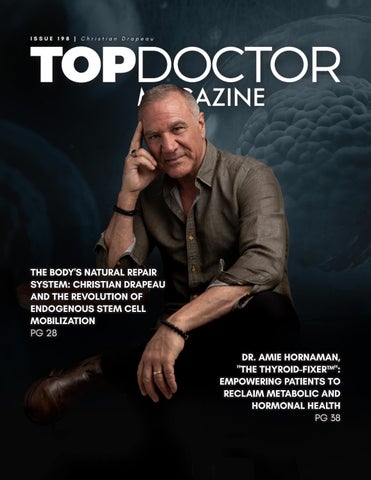
SYSTEM: CHRISTIAN DRAPEAU AND THE REVOLUTION OF ENDOGENOUS STEM CELL MOBILIZATION
PG 28
DR. AMIE HORNAMAN, "THE THYROID-FIXER™": EMPOWERING PATIENTS TO RECLAIM METABOLIC AND HORMONAL HEALTH
PG 38
Stemmed from nature. Empowered by science. Purposed to regenerate life.
STEMREGEN creates powerful supplements that unleash your regenerative potential by tapping into the power of your body’s innate repair system.
OPTIMIZE YOUR WELLNESS WITH CARBON 60 (C60).
C60 has been characterized as the most powerful antioxidant known. It’s hundreds of times more powerful than conventional antioxidants.
Crossing the blood-brain barrier, C60 works at the cellular level to support mitochondrial function. C60 fights inflammation, lifts the oxidative burden, and neutralizes toxic free radicals.
Unlike conventional antioxidants, C60 won’t interfere with any other supplements, vitamins, or medications. It can reset itself, again and again. Take it before your other supplements to boost your morning routine supplement stack.
Most users note an increase in ENERGY and MENTAL CLARITY within 30 days when incorporating C60 Power into their morning routine. Many users note FASTER RECOVERY and IMPROVED PERFORMANCE within this same time frame.
Advisory Board: Dr. Arthur Katona, Dr. Francisco Cabal, Dr. Kianor Shah
CONTRIBUTORS MAGAZINE
A LETTER FROM THE EDITOR
Our mission and purpose at TopDoctor Magazine is to foster connections within the health and wellness community and empower our readers to make wellinformed healthcare and lifestyle decisions. We pride ourselves on being the ultimate resource for interviews with health and wellness leaders, trending medical news, and healthy living topics.
We understand that choosing a healthcare provider is a crucial decision. Our in-depth interviews with esteemed doctors and medical professionals aim to bridge the gap between them and their clients. By providing our readers with personal insights, philosophies, and areas of expertise, we facilitate a deeper understanding of the individuals responsible for your health and well- being. We also strive to highlight our outstanding practitioners, showcasing their dedication to their patients and contributions to the medical community.
The field of medicine is constantly evolving, with new practices, therapies, and technologies emerging at a rapid pace. At TopDoctor Magazine, we strive to keep you updated on the latest advancements in the medical world. Our comprehensive coverage of trending medical news equips both doctors and patients with the knowledge they need to make informed choices about healthcare options.
Building strong connections within the medical community is essential for enhancing patient care and driving medical progress. Our magazine serves as a bridge, connecting medical companies with doctors and vice versa. By facilitating these connections, we aim to catalyze collaborations that can lead to innovative solutions and improved healthcare outcomes for everyone.
It is our firm belief that well-informed individuals make better decisions about their health. By providing you with insights into established and emerging medical trends and technologies, we empower you to take an active role in your healthcare choices. Whether you are a healthcare professional seeking to stay updated on the latest advancements or a patient eager to make informed decisions about your well-being, TopDoctor Magazine is here to support you.
In every issue, we strive to uphold the highest standards of journalistic integrity, accuracy, and relevance. Our dedicated team of writers, editors, and medical experts work tirelessly to bring you well-researched and compelling content that is both educational and engaging. Moreover, our graphic design team is committed to delivering an aesthetically pleasing reading experience where captivating design seamlessly merges with informative content, ensuring each issue becomes an engaging journey of discovery.
As we embark on this mission to serve as your trusted source of medical information and insights, we encourage you to join us on this exciting journey. Your feedback and suggestions are invaluable to us, and we look forward to hearing from you.
Thank you for being a part of the TopDoctor Magazine community. Together, let us embrace knowledge, forge connections, and make informed decisions to lead healthier lives.
With warmest regards, Hannah
H.
TABLE OF CONTENTS
10
THE BIOLOGICAL SEESAW: NAVIGATING HORMONAL HARMONY THROUGH SEASONAL SHIFTS
20 28 38 48
CONSISTENCY IS A SKILL - NOT A PERSONALITY TRAIT
THE BODY'S NATURAL REPAIR SYSTEM: CHRISTAIN DRAPEAU AND THE REVOLUTION OF ENDOGENOUS STEM CELL MOBILIZATION
DR. AMIE HORNAMAN, "THE THYROID-FIXER™": EMPOWERING PATIENTS TO RECLAIM METABOLIC AND HORMONAL HEALTH
THE BENEFITS OF USING A THERAGUN: A GAME CHANGER FOR MUSCLE RECOVERY AND WELLNESS
tBiologicalSeesaw he
Navigating Hormonal Harmony Through Seasonal Shifts
By Riley George
As the leaves turn or the first buds of spring emerge, most of us attribute our shifting moods to the simple beauty or gloom of the scenery. However, beneath the surface, our bodies are undergoing a complex chemical recalibration that rivals the complexity of the changing landscape. Transitions between seasons, particularly the shifts in light exposure and temperature, act as a biological reset button for our endocrine system.
This internal machinery governs everything from the clarity of our morning thoughts to the depth of our midnight slumber. Understanding these transitions is the first step toward maintaining steady energy and a resilient mood year-round, moving beyond the idea that we are merely "weather-sensitive."
Light-Dark Connection: Melatonin and Cortisol
The most significant driver of hormonal change during seasonal transitions is the photoperiod, or the duration of daylight. Our circadian rhythm, the internal clock that dictates our sleep-wake cycle, relies on light signals to regulate the production of melatonin and cortisol. During the transition into winter, the shortened days can cause the pineal gland to begin producing melatonin earlier in the evening and continue later into the morning. This often results in what researchers call winter hypersomnia, in which the body feels a persistent, heavy grogginess despite a full night's sleep.
In contrast, the surge of light during the summer transition can suppress melatonin production to a degree that interferes with restorative rest. According to research summarized by the Sleep Foundation, these disruptions are a primary trigger
for Seasonal Affective Disorder (SAD).¹ The body struggles to sync its internal clock with the external environment, leading to a state of "social jetlag" where our biological timing is permanently at odds with the sun.
The Vitamin D "Hormone" and Mood Regulation
Though commonly labeled a vitamin, vitamin D functions more like a pro-hormone with receptors located throughout the brain and body. It is a critical component in the synthesis of serotonin, the neurotransmitter responsible for mood stability and feelings of well-being. As we transition into autumn and winter, the angle of the sun changes, and UV exposure drops significantly, particularly in northern latitudes.
A summary of studies from the Mayo Clinic indicates that lower vitamin D levels can lead to a significant dip in serotonin.² This chemical drought often manifests as irritability, intense carbohydrate cravings, and a lack of motivation. When you feel your mood plummeting in October, it is often a lag in your body’s ability to convert sunlight rather than a personal failing or a lack of willpower.
Thyroid and Metabolism: Adapting to the Cold
Our thyroid gland is essentially the body's thermostat, responsible for regulating metabolic rate and heat production. As seasons shift toward colder temperatures, the thyroid must increase its production of T3 and T4 to stimulate thermogenesis.
This metabolic ramp-up requires more fuel and micronutrients, which explains why many people experience a natural uptick in appetite during the transition to winter. According to Endocrine Web, supporting the thyroid through these shifts requires a delicate balance of iodine, selenium, and iron.³ If the thyroid cannot meet the increased demand for heat production, the result is often profound cold intolerance, brittle hair, and a sense of "brain fog" that persists regardless of caffeine intake.
Strategic Adaptation for Energy and Sleep
To support hormonal health during these shifts, one must adopt a proactive approach to light management and nutrition. Within the first 30 minutes of waking, seeking out natural light is essential because it triggers an early cortisol spike. This "wake-up" hormone simultaneously sets the timer for melatonin production fourteen hours later.
As evening light lingers in the summer months, using amber-tinted glasses or dimming indoor lights can signal to the brain that the day is ending. Nutritional support also plays a role; shifting toward complex carbohydrates like oats and sweet potatoes can help transport tryptophan to the brain, aiding serotonin production. Furthermore, magnesium serves as a vital tool for regulating the nervous system during hectic seasonal changes, as noted by Healthline, which cites its ability to improve sleep quality by regulating neurotransmitters and calming the adrenal glands.⁴
The Body as a Rhythmic System
Ultimately, our hormones are not static measurements but a rhythmic response to the world around us. By acknowledging that your energy levels and sleep patterns are tied to the earth’s cycles, you can move away from fighting your biology and toward supporting it.
Whether it is adjusting your bedroom temperature to facilitate the core cooling necessary for deep sleep or increasing your intake of healthy fats to support hormone synthesis in the winter, small shifts can mitigate the stress of seasonal transitions. Our bodies are designed to adapt, but in a world of artificial light and climate control, we must be intentional about providing the signals our endocrine system needs to stay in balance.
Seasonal Strategy Guide: Key Takeaways
To make these hormonal transitions more manageable, here is a breakdown of the essential facts and actionable steps you can take:
• Prioritize Morning Sunlight: Aim for 10–30 minutes of natural light shortly after waking to anchor your circadian rhythm and trigger essential cortisol release.
• Monitor Vitamin D Levels: Since vitamin D acts as a precursor to serotonin, consider testing your levels during the autumn transition and supplementing if necessary to prevent the "serotonin dip."
• Adjust Nutritional Fuel: Support your thyroid’s increased winter workload by consuming foods rich in selenium (such as Brazil nuts) and iodine (such as seaweed or iodized salt).
• Manage Evening Blue Light: Use blue-light-blocking technology or dim your environment two hours before bed to protect melatonin production, especially during long summer days.
• Cool Your Sleep Environment: Recognize that your body must drop its core temperature to sleep; use fans or specialized bedding to counteract summer heat that might spike cortisol at night.
• Lean into Magnesium: Incorporate magnesium-rich foods like leafy greens and seeds, or consider a supplement to help stabilize the nervous system during high-stress seasonal shifts.
Working with the Seasons, Not Against Them
As the world outside transforms, it is only natural that we feel a corresponding shift within ourselves. We are not meant to operate at the exact same frequency in the depths of January as we do in the peak of July. By viewing our energy, sleep, and mood through the lens of hormonal biology, we can replace frustration with a sense of informed adaptation.
Whether it is by seeking out that vital morning light to anchor our circadian
rhythm or adjusting our nutrition to support a hardworking thyroid, these small, intentional acts of self-care bridge the gap between our modern lifestyles and our ancestral biology. Ultimately, seasonal transitions are an invitation to tune in and listen to what our bodies need most. When we honor these natural cycles rather than fighting them, we don't just survive the changing seasons; we learn to thrive alongside them.
Transform Mental Wellness
for Your Patients!
In the past five years, stress levels have skyrocketed, wreaking havoc on mental well-being worldwide.
Combat this rising stress epidemic with BrainTap, the revolutionary brainwave entrainment system!
Research demonstrates BrainTap's impact, showing a remarkable 28.1% increase in heart rate variability and 38.5% improvement on the stress index scale* after just one session, and with no effort on the part of the participant.
CONSISTENCY IS A SKILL NOT A PERSONALITY TRAIT
Written by Ashleigh Quint, MIM, PICP-SCC
Every January, the same narrative resurfaces: some people are “just disciplined,” while others simply lack motivation. By February, when gym attendance drops and nutrition plans fall apart, inconsistency is often framed as a personal failure. But this interpretation misses the science, and this misunderstanding has real consequences. When consistency is framed as a character flaw rather than a skill, individuals internalize failure rather than adjust the system around them. Over time, this erodes confidence, increases dropout rates, and reinforces the very patterns we are trying to change.
Consistency is not a personality trait. It is a skill, one shaped by physiology, environment, stress load, and behavioral design. When we understand this distinction, adherence stops being a moral issue and becomes a solvable systems problem. What often goes unexamined is why consistency collapses, even in highly capable, intelligent individuals. The answer has far less to do with discipline and far more to do with how the body and brain respond to stress, recovery, and repeated demand.
Why Motivation Is the Wrong Metric
Motivation is inherently unstable. It fluctuates with sleep quality, stress exposure, hormonal balance, and cognitive load. Research in behavioral psychology shows that reliance on motivation alone leads to short-term engagement but poor long-term adherence. This is especially true in high-stress populations, where decision fatigue and nervous system overload reduce follow-through. This pattern holds true across populations, including high performers. Athletes, often perceived as highly motivated, are not consistent because of willpower; they are consistent because of structure, accountability, and stability within coaching relationships. Scheduled training, external expectations, and consistent feedback create adherence first; motivation follows as a byproduct of continuity, not as its prerequisite. In both athletic and general populations, accountability functions as a stabilizing force, reducing decision fatigue, reinforcing behavior repetition, and sustaining consistency long after motivation naturally wanes.
Consistency, by contrast, is built through repetition under supportive conditions. It is learned, reinforced, and sustained — not summoned on demand. When behaviors are repeated in environments that reduce friction
and cognitive load, they become neurologically efficient rather than effortful. Over time, this efficiency lowers resistance, increases follow-through, and allows adherence to persist even when motivation is low. In this way, consistency becomes a trained capacity, much like strength or endurance, developed through appropriate load, recovery, and support.
The Nervous System Drives Adherence
One of the most overlooked factors in consistency is nervous system regulation. Chronic stress elevates cortisol, disrupts sleep, alters appetite regulation, and reduces cognitive flexibility. When the nervous system is overloaded, even simple routines feel overwhelming. In this state, missed workouts or dietary lapses are not failures of discipline; they are protective responses. The body prioritizes survival over self-improvement.
Clinically, this explains why individuals under chronic stress often cycle between intense bursts of effort and complete disengagement. Without adequate recovery, consistency becomes physiologically unsustainable.
Consistency Thrives on Structure, Not Willpower
Highly consistent individuals do not rely on willpower more than others; they rely on structure. Research in habit formation demonstrates that behaviors anchored to stable cues (time, location, routine) are significantly more likely to persist than those dependent on conscious decision-making.
Try taking this approach:
• Training at predictable times rather than ‘when you feel like it’
• Simplifying nutrition decisions through repetition
The less cognitive effort a behavior requires, the more consistency occurs.
Load Management Matters More Than Intensity
Another common reason consistency fails is excessive load — both physical and psychological. Programs that demand maximal effort, strict compliance, or constant novelty may work briefly, but may ultimately lead to burnout.
Sustainable consistency requires load management:
• Training intensity that matches recovery capacity
• Nutrition strategies that stabilize blood sugar rather than restrict excessively
• Expectations that align with life stress, not against it
Progress does not require constant intensity. It requires continuity.
Identity Follows Behavior — Not the Other Way Around
People often believe they must be consistent in order to act consistently. In reality, identity is shaped by behavioral repetition. Small, repeatable actions reinforce self-perception over time. When consistency is treated as a skill to be trained, rather than a trait to be judged, adherence improves. Missed days are viewed as feedback, not failure. Adjustments replace self-criticism. This shift is particularly important in medical and fitness settings, where shame-based narratives can undermine long-term outcomes.
Clinical Implications for Health and Performance
From a clinical perspective, reframing consistency as a skill, rather than a personality trait, fundamentally changes intervention design and outcome trajectories. When health and performance strategies are built around adherence capacity rather than compliance, patients and athletes demonstrate higher engagement, lower dropout rates, and improved long-term outcomes across training, nutrition, and rehabilitation.
Programs that prioritize behavioral sustainability amplify their own effectiveness over time, creating a compounding effect in which small, repeatable actions lead to disproportionate gains in health markers, performance capacity, and injury resilience. In this model, outcomes improve not by increasing intensity or effort, but by increasing continuity, allowing physiological adaptations, neuromuscular efficiency, and metabolic regulation to accumulate predictably and with greater clinical reliability.
For clinicians, coaches, and health professionals, reframing consistency has practical value. Patients and clients benefit when plans are designed around:
• Nervous system capacity
• Recovery availability
• Behavior simplicity
• Environmental support
When adherence improves, outcomes follow, quite often without increasing effort.
Consistency is not something people either have or lack. It is a trainable skill shaped by biology, structure, and support. When we stop asking patients to “try harder” and instead help them build sustainable systems, longterm health becomes achievable.
For clinicians, this reframing matters. The consistency we bring — our steadiness, follow-through, and continued engagement — often becomes the bridge our patients need. When we remain consistent with them, especially when motivation fades, they are far more likely to internalize that stability and carry it forward themselves. In this way, consistency becomes shared, reinforced, and ultimately transformative.
THE BODY’S NATURAL REPAIR SYSTEM
Christian Drapeau and the Revolution of Endogenous Stem Cell Mobilization
Written by: Riley George
Christian Drapeau is not looking to change how medicine treats disease; he is looking to change how the human body maintains health. As a stem cell scientist, neurophysiologist, and the founder of STEMREGEN®, Drapeau has spent the better part of three decades pioneering a field of science that many once dismissed: the idea that the body’s own bone marrow stem cells are the primary repair system for every organ and tissue in the human body.
In an era where "stem cell therapy" is often synonymous with expensive, invasive injections, Drapeau is championing a different path – one that focuses on "endogenous repair," or the ability to stimulate the release of one’s own stem cells through plant-based supplementation.
The McGill Origins and the Algae Epiphany
Drapeau’s journey began in the world of brain research. Educated at McGill University and the Montreal Neurological Institute, his early work focused on the intricate mechanisms of learning and memory. However, his career took a pivotal turn in 1995 when an American company hired him to research a specific type of blue-green algae being sold as a dietary supplement.
"I was hired in 1995 to document the mechanisms of action of this plant in order to support any of the marketing claims that would be made," Drapeau said. "But as I was doing this work, I also came across people reversing multiple sclerosis, insulin-dependent diabetes, heart disease, Parkinson’s, and liver failure – conditions that medicine deems incurable."
At the time, the medical community lacked a framework to explain how a simple botanical extract could lead to such diverse and profound health improvements. It wasn't until the turn of the millennium that the scientific pieces began to fall into place.
“In early 2001, I came across the first scientific papers showing that stem cells from bone marrow – long understood as precursors to blood cells – could also become cells of other tissues,” Drapeau explained. “Given my background in brain research, the finding that these cells could become neurons was especially fascinating.”
A New Hypothesis: Stem Cells as the Repair System
In 2002, Drapeau published a groundbreaking article in the journal Medical Hypotheses where he proposed a radical idea: stem cells were not just for making blood; they were the body’s universal repair system.
"The human body has a repair process. Everybody has had a broken bone, a cut, or a bruise, and we all see that the human body can repair them," Drapeau said. "We clearly know today that this is fundamentally a stem cell-based repair process."
This realization became the "turning point" of his career. To test the theory, Drapeau manufactured 200 bottles of this algae extract and sent them to a naturopathic doctor who treated "last resort" patients. The results, he noted, were "quite spectacular," ranging from improvements in Parkinson’s to spinal cord injuries.
"If you have any revelation through this exchange, it’s to really realize that the body’s innate capacity to heal is remarkable," he said. "And it happens by releasing your own stem cells. Everything I have done for the past 25 years has been to try to bring this message of endogenous repair to medicine and into the world."
The STEMREGEN® Protocol: Release, Mobilize, and Signal
Today, Drapeau’s research has culminated in STEMREGEN®, a company dedicated to optimizing the body’s innate repair system through daily stem cell support. The approach is three-pronged, utilizing three distinct products designed to support the
body’s natural stem cell decline with age and address the obstacles that prevent stem cells from doing their job.
The flagship product, STEMREGEN Release, is a blend of five plants documented to trigger the release of stem cells from the bone marrow.
"Two capsules will put an average of 10 million additional stem cells into circulation," Drapeau said. "On average, a 50-year-old has about 10 to 12 million stem cells in circulation. So, we are roughly doubling that number."
However, Drapeau discovered that simply releasing stem cells wasn't always enough. In many patients, the stem cells couldn't reach the site of injury due to poor circulation or "lost" signaling from systemic inflammation.
To address this, he developed STEMREGEN® Mobilize, which focuses on enhancing microcirculation.
“We need to reopen this microvasculature, so stem cells can gain access to all the areas of the body where they’re needed,” he noted.
The third component, STEMREGEN® Signal, addresses systemic inflammation. Drapeau explained that inflammation in the body is meant to act as a specific signal that directs stem cells to sites of repair; when inflammation becomes systemic, that signaling breaks down.
“The signal that should be localized is becoming systemic,” Drapeau said. “It’s as if stem cells have lost their GPS tracking capability and are no longer able to identify where repair is needed in the body.”
Challenging the "Injection-Only" Misconception
One of Drapeau’s most significant challenges is overcoming the medical community's perception of stem cells. He argues that the public and many doctors view stem cells solely as a "one-time treatment" or an expensive injection.
"The first misconception is that stem cells are just a treatment," Drapeau said. "Stem cells are the repair system of the body; they have been there during the entire lifespan of any living human being. If you ran out of stem cells, you would not live more than a few months."
He advised those considering stem cell injections to view endogenous stem cell mobilization as a necessary partner to the procedure.
"The data that we have so far says that essentially, if you can afford a stem cell injection, you would be foolish not to couple this with endogenous mobilization," he said. "If you cannot afford a stem cell injection, then enhancing the release of the ones you already have can still give you excellent results."
2023: The Turning Point in Public Acceptance
For over two decades, Drapeau felt he was facing a wall when trying to share his research. However, he noted a massive shift in 2023. He attributed this to several factors, including the publication of Tony Robbins’ book Life Force, which helped "democratize" the concept of stem cell therapy.
"Before, I often encountered questions from people who believed stem cells were essentially ‘baby parts’ or
some form of Frankenstein-style medicine," Drapeau said. "In 2023, it seemed that people were suddenly much more open to stem cells."
He also believes the post-COVID era has changed how people view their own health.
"Generally speaking, it left people with this understanding that the medical system was not really there for them," he observed. "They started to take their health into their own hands, searching for alternative methods to optimize their well-being, relying less and less on modern medicine for traditional allopathic treatments. Like it or not, the people lost trust in the system, and the result has been a much more personalized and empowered approach to health.”
The Future: Clinical Trials and a New Vision for Aging
As 2026 unfolds, STEMREGEN® is doubling down on clinical research. The company is currently conducting trials on heart failure, Parkinson’s disease, and COPD (Chronic Obstructive Pulmonary Disease).
In a recent heart failure study, Drapeau noted that the first 10 participants, all of whom had stable, chronic congestive heart failure, returned to "normal heart function" after six months of boosting their endogenous repair capacity.
Beyond the lab, Drapeau is working on a new book that redefines the very nature of disease formation. He argues that we shouldn't view illness as a sudden "onset" of degeneration, but rather as the tipping point at which we don’t have enough stem cells to keep up, and the organ fails.
"Disease formation is not about degeneration," Drapeau said. "Our ability to repair declines dramatically as we age. So, the development of various problems is actually caused by the failure of endogenous repair."
By focusing on maintaining the number and functionality of circulating stem cells, Drapeau believes we can fundamentally change the trajectory of aging.
"The main difference between a 70-year-old who is healthy and a 70-year-old who has developed a slew of health issues is that the healthy one has more stem cells in circulation," Drapeau concluded. "How many stem cells you have in your blood will dictate what your quality of life is going to be in the decades to come. No question in my mind, it will be the biomarker that predicts healthspan and lifespan."
A Paradigm Shift in Personal Health
As the medical landscape continues to evolve, Christian Drapeau’s work stands at the vanguard of a significant paradigm shift. By shifting the focus from just treating symptoms to enhancing the body’s innate ability to heal itself, STEMREGEN is offering a new narrative for the aging process. It is a vision where "getting older" does not have to be synonymous with "breaking down," but can instead be a period of sustained vitality supported by a robust internal repair system.
For Drapeau, the mission remains as clear today as it was when he first began his research in the 1990s: to empower individuals with the knowledge and tools to take charge of their biological destiny. Whether through the launch of his upcoming book, the expansion of clinical trials, or the development of new stem cell support systems, his goal is to make the power of stem cells accessible to everyone.
Ultimately, the STEMREGEN® philosophy suggests that the most sophisticated pharmacy in the world isn’t found on a shelf, but within our own bone marrow. As Drapeau continues to unlock the secrets of endogenous repair, he isn't just offering a supplement; he is offering a roadmap for a longer, healthier, and more resilient life.
To learn more about STEMREGEN and Christian Drapeau, visit stemregen.co.
Because Small Tails Don’t Tell Big Stories
Wild caught by hand. Delivered to your Wild caught by hand. Delivered to your door. Ready to steal the show. door. Ready to steal the show.
When it comes to dinner, subtlety has its place. When it comes to dinner, subtlety has its place.
This is not that place. This is not that place.
This is the kind of lobster tail that earns silence at the This is the kind of lobster tail that earns silence at the table—followed by applause. table followed by applause.
Caught by hand off the coast of the Nor th Atlantic.
Caught by hand off the coast of the Nor th Atlantic. Flash-frozen the day it's landed. Flash-frozen the day it's landed. We don’t
AGELESS TIMELESS AND THE THYROID-FIXER™
Dr. Amie Hornaman
Empowering Patients to Reclaim Metabolic and Hormonal Health
BY MICHELE HUGHES
CEO OF AGELESS AND TIMELESS AND HOST OF THE AGELESS AND TIMELESS PODCAST
Known globally as Amie Hornaman, Dr. Amie Hornaman has built a reputation as one of the most trusted voices in thyroid and hormone optimization. As host of the toprated podcast The Thyroid Fixer™, founder of The Better Thyroid and Hormone Institute, and creator of the Fixxr™ supplement line, Dr. Amie has transformed how both patients and clinicians understand and treat thyroid dysfunction. Licensed to prescribe thyroid and bioidentical hormone replacement therapy in all 50 U.S. states and most of Canada, her work bridges conventional medicine and functional optimization—always with the patient at the center.
Dr. Amie’s passion for thyroid health is deeply personal. During her years competing in NPC figure competitions, she experienced severe symptoms, repeated misdiagnoses, and ineffective treatments. That journey through medical dismissal and confusion became the catalyst for her mission: to ensure no one else feels unheard, unseen, or mislabeled when their body is clearly signaling an imbalance.
What follows is an in-depth conversation with Dr. Amie Hornaman, exploring the clinical blind spots, metabolic truths, and patient-first principles that define her approach to thyroid and hormone care.
What do you think is the most misunderstood symptom in thyroid and hormone dysfunction—and why do so many clinicians miss it?
Fatigue is the most misunderstood symptom, followed closely by weight gain. These symptoms often appear long before thyroid labs fall outside conventional ranges. They are missed because so many factors can contribute to fatigue and weight changes—and because clinicians are often overbooked and unable to investigate root causes. Too often, patients are told to “eat less and exercise more” or that their symptoms are simply part of aging. This medical gaslighting leads patients to dismiss their own experience while the underlying dysfunction quietly worsens. Early fatigue and weight gain are frequently signs of impaired T4-to-T3 conversion, yet they are rarely investigated.
You’re known for teaching that thyroid and hormone optimization cannot be separated. Why must they be addressed together?
Hormones operate as an integrated system. Estrogen, progesterone, testosterone, cortisol, and insulin all directly affect thyroid hormone production, conversion, and cellular activity. Elevated cortisol increases reverse T3. Estrogen imbalance alters thyroid binding. Low testosterone reduces metabolic rate. Optimizing the thyroid without addressing these factors leaves patients stuck. The body does not separate these pathways, and effective treatment cannot either.
If you could rewrite the standard thyroid testing panel, what would it include?
I would eliminate the TSH-only model and require a comprehensive thyroid panel: TSH, Free T4, Free T3, Reverse T3, TPO antibodies, and Thyroglobulin antibodies. This allows us to assess production, conversion, cellular blocking, and autoimmunity simultaneously. Anything less is incomplete and leads to missed or delayed diagnoses.
How can clinicians recognize early metabolic slowdown before full hypothyroidism develops?
By paying attention to symptom clusters and trends—not just single lab values. Fatigue, brain fog, constipation, cold intolerance, mood changes, and especially unexplained weight gain are early warning signs. One of the earliest red flags is a downward trend in Free T3, even if it remains within the “normal” range. Catching these patterns early allows intervention before years of metabolic damage occur.
What separates patients who finally break free from fatigue and weight struggles from those who remain stuck?
True optimization. When Free T3 is in the optimal range and reverse T3 is controlled, metabolism moves again. Patients stay stuck when clinicians treat reference ranges rather than the individual, or when thyroid care is separated from hormone and insulin regulation.
Why do you believe lab literacy should be a standard part of modern healthcare?
Lab literacy protects patients. When individuals understand their labs, they cannot be dismissed with “everything looks normal” when their body clearly says otherwise. Teaching patients how to interpret a full thyroid panel turns them into informed partners in care and shields them from medical gaslighting. You cannot fix what you cannot see.
What are the biggest misconceptions patients have about thyroid medication?
The most damaging myth is that T3 is dangerous. T3 is the active hormone the body actually uses. When dosed correctly, it is safe and often life-changing. Another misconception is that increasing T4 alone will solve everything. Many patients do not convert T4 effectively—especially under stress, inflammation, or hormonal imbalance.
What practical adjustments can clinicians make to better support patients who feel dismissed?
Run complete labs. Listen to symptoms. Treat the person, not just the number. Too many clinicians default to antidepressants or symptom-suppressing medications instead of addressing root causes. Asking one simple question—“How do you feel?”—can change outcomes entirely.
You have a book coming out that many call The Thyroid Bible. What drove you to write it?
I wrote it because I lived the experience of being medically gaslit. Women are not getting real answers or real treatment. This book provides the roadmap I never had—how to interpret labs, which medications may actually help, how to dose safely, and how to integrate hormones, insulin, and lifestyle into a complete protocol. My goal is to elevate the standard of care and help women reclaim their health.
With the rise of GLP-1 medications, where does thyroid optimization fit into sustainable fat loss?
GLP-1s can improve appetite control and insulin stability, but they cannot correct low T3 or blocked conversion. When thyroid function is optimized alongside GLP-1 therapy, patients lose fat more efficiently and maintain results. The women who struggle most on GLP-1s are often those with underperforming thyroid function that was never addressed.
Which lifestyle interventions do you wish more providers would emphasize?
Morning sunlight, resistance training, adequate protein intake, blood-sugar stabilization, and consistent sleep rhythms. These foundational practices profoundly impact mitochondrial health, inflammation, and metabolic resilience.
Many midlife women are told their symptoms are ‘normal for their age.’ What should change in that first conversation?
We must stop normalizing suffering. If a woman feels unwell, that is not aging—it is a signal to investigate thyroid health, hormones, insulin, and inflammation. Dismissal is not good medicine.
Why does the misconception around natural desiccated thyroid persist?
It stems from outdated beliefs that NDT is unstable or unsafe. In reality, NDT can be highly effective for the right patient. The issue is not the medication—it is a lack of training in individualized dosing. When properly tailored, NDT works beautifully.
You often call the thyroid the ‘master regulator.’ How does it connect to longevity?
Thyroid hormones drive mitochondrial activity, oxygen consumption, cognitive function, and metabolic stability. Optimizing Free T3 is one of the most powerful longevity interventions available. When thyroid function improves, the brain, heart, and metabolism all benefit.
What impact do you hope your work—and your new book—has on both sides of the exam room?
I want clinicians to have a practical, science-backed framework they can actually use. I want patients to feel seen, informed, and empowered. When both sides share the same understanding, care improves immediately.
Dr. Amie Hornaman’s work represents a paradigm shift in thyroid and hormone medicine—one rooted in data, driven by compassion, and unapologetically patientfirst. By treating individuals rather than lab values, she is restoring not only metabolic health, but trust in the medical process itself.
About Michele Hughes
Michele Hughes is the visionary founder of Ageless and Timeless and the dynamic host of the Ageless and Timeless podcast. As a monthly contributor to TopDoctor Magazine, she offers powerful insights on wellness, longevity, and living fully at every stage of life. With a deep passion for health and vitality, and serving as a role model for timeless elegance, Michele empowers audiences to embrace their highest potential and live with purpose and grace. Michele’s podcast, Ageless and Timeless, was one of 20 Inaugural Podcasts selected for the Muscle and Fitness Plus platform that began in 2023.
For more information, please reach out to express interest in being a potential guest on the Ageless and Timeless podcast or to be featured in the TopDoctor Magazine Ageless and Timeless column with Michele Hughes. For podcast collaborations or to have Michele Hughes on your show, please contact her at:
Ageless and Timeless podcast, on YouTube, iTunes, Spotify, and wherever podcasts are available.
Sun Responsibly
Zero Toxic Chemicals Non-Comedogenic Mineral-Based
Medical Grade Non-Nano Zinc & Non-Nano Titanium Dioxide
No White Cast Ultra-Luxe Hydration
Skin First, Planet Always
The Benefits of Using a Theragun
A GAME CHANGER FOR MUSCLE RECOVERY AND WELLNESS
ByEvelynFlaharty
If you’ve ever experienced sore muscles after a tough workout, long workday, or even just sleeping in an awkward position, you know how frustrating that stiffness can be. That’s where the Theragun, one of the most popular percussive therapy devices on the market, comes in. Once a secret weapon of professional athletes and physical therapists, the Theragun has now made its way into homes everywhere, helping people of all ages and fitness levels recover faster, feel better, and move with greater ease.
The Theragun isn’t just a gadget; it’s a tool designed to make self-care and recovery more accessible. Whether you’re an athlete such as myself, a fitness enthusiast, or someone simply looking for relief from muscle tension, the benefits of using a Theragun go far beyond what you might expect.
WHAT IS A THERAGUN?
The Theragun is a percussive therapy device that delivers rapid bursts of pressure into the muscle tissue, a process sometimes described as a “deep tissue massage at home.” It’s shaped a bit like a power drill, but instead of a bit, it has a soft attachment that pulses into your muscles at different speeds and intensities.
This technique stimulates blood flow, helps release muscle knots, and reduces tension, all without needing an appointment with a massage therapist. The device was developed by Dr. Jason Wersland, a chiropractor who wanted to find an effective way to manage his own pain after a motorcycle accident. His innovation sparked what is now a global recovery trend used by everyone, from elite athletes to office workers.
HOW IT WORKS
The Theragun works through a form of therapy called percussive or vibration therapy. The device rapidly moves back and forth, targeting specific muscle groups. This repeated pressure helps “wake up” the muscles, loosen tight fascia (the connective tissue around muscles), and encourage circulation.
Think of it like this: when your muscles are sore or tight, they’re often restricted and not getting enough oxygen and nutrients. The gentle hammering motion of the Theragun helps to stimulate blood flow, which delivers those nutrients and removes metabolic waste, the byproducts that can cause soreness or stiffness.
It’s the same principle as a deep tissue massage, but with more precision and control, and you can use it exactly when and where you need it most.
THE BENEFITS OF USING A THERAGUN
1. Speeds Up Muscle Recovery
One of the biggest reasons athletes and fitness enthusiasts swear by the Theragun is that it helps muscles recover faster after intense exercise. After a workout, your muscles experience small tears that need to be repaired and rebuilt. That’s how you grow stronger, but along with that process comes inflammation and soreness.
Using the Theragun after a workout can help increase circulation, reduce the buildup of lactic acid, and minimize muscle fatigue. This means you can get back to training sooner without feeling weighed down by soreness. Many users report that just a few minutes with the Theragun after exercise makes a noticeable difference in how their body feels the next day.
This is why I use my Theragun after every workout, especially when I train legs. The Theragun is amazing on my glutes and quads, helping me to recover quicker. While you can use the Theragun on yourself, it can be difficult to massage your own back effectively. That’s when having someone assist you can be especially helpful. I usually have my coach use the Theragun on me after we finish training back, but otherwise I just use it on my own.
2. Relieves Muscle Tension and Knots
Even if you’re not an athlete, chances are you’ve felt those stubborn knots in your shoulders, neck, or lower back. These are areas where muscles have tightened up, often due to stress, poor posture, or repetitive movements.
The Theragun can be a lifesaver here. The rhythmic, percussive motion helps release tight muscles, improve
flexibility, and provide almost instant relief. It’s especially helpful for people who sit at desks for long hours or those who carry tension in their neck and shoulders.
You can use it for just a few minutes on sore spots, and you’ll often feel the tightness melt away. It’s like bringing a professional massage therapist into your home, without needing an appointment or paying for multiple sessions.
3. Improves Flexibility and Range of Motion
When muscles are tight, your joints can’t move as freely, which limits flexibility and range of motion. Over time, this can affect your posture, workout performance, and even everyday activities.
Using the Theragun regularly can help keep muscles
loose, allowing you to move more freely and efficiently. Many physical therapists recommend percussive therapy as part of a warm-up routine because it “wakes up” muscles before movement, reducing the risk of strains or injuries.
Whether you’re an athlete doing heavy lifts, a dancer needing greater mobility, or simply someone who wants to move more comfortably, using a Theragun can help keep your body in balance.
4. Reduces Stress and Promotes Relaxation
The benefits of the Theragun aren’t just physical; they're also mental. Just like a massage, the device's rhythmic tapping can help calm the nervous system and reduce stress. When you use the Theragun, your body releases endorphins, those feel-good hormones that naturally help lower stress and improve your mood. Many people enjoy using their Theragun at night as part of a relaxing bedtime routine, helping release tension built up throughout the day and signaling the body that it’s time to unwind.
For those who experience anxiety or stress-related muscle tightness, using the Theragun can be an effective way to calm both the body and the mind.
5. Helps with Chronic Pain and Stiffness
People who deal with chronic pain, arthritis, or general stiffness often find that the Theragun provides relief that traditional methods can’t always deliver.
The deep percussive action can help reduce muscle pain and improve mobility, especially in areas that tend to stiffen over time, like the lower back, hips, or shoulders. It also encourages better blood circulation, which can help manage inflammation and promote healing.
Of course, it’s always best to check with your healthcare provider before using a percussive device if you have a medical condition. However, many individuals with chronic pain find that adding the Theragun to their wellness routine helps them move with less discomfort and enjoy a greater quality of life.
6. Boosts Circulation and Lymphatic Flow
Good circulation is key to keeping your body functioning at its best. The Theragun helps improve blood flow to your muscles, but it also benefits your lymphatic system, which plays a role in removing toxins and waste from the body.
By using the Theragun on different areas, you can stimulate the lymphatic system and help reduce fluid retention and swelling. This is particularly beneficial after long flights, strenuous workouts, or even periods of standing for extended hours.
Better circulation means your body can deliver more oxygen and nutrients to tissues, which not only supports recovery but also supports overall health and vitality.
7. Enhances Athletic Performance
It’s no surprise that the Theragun has become a favorite among professional athletes. From NBA players to Olympic competitors, many rely on percussive therapy to keep their bodies performing at peak levels.
Using the Theragun before a workout helps activate muscles, increase blood flow, and improve flexibility, which can lead to better performance. Post-workout, it helps reduce soreness and promotes faster recovery, allowing athletes to train more consistently and effectively.
Even if you’re not competing professionally, the same principles apply. Using a Theragun can help your body move better, recover faster, and perform at a higher level, no matter your fitness goals.
WHO SHOULD USE A THERAGUN?
The beauty of the Theragun is that it’s for everyone , not just athletes or gym-goers. Here are some groups of people who can benefit from it:
• Athletes and Bodybuilders: To enhance muscle recovery, reduce soreness, and prepare muscles for performance.
• Fitness Enthusiasts: To improve flexibility, prevent injuries, and recover faster after workouts.
• Older Adults: To ease stiffness, improve circulation, and maintain mobility without needing deep, manual massage.
• Office Workers: To relieve tension caused by sitting at a desk all day or working on computers.
• Individuals with Chronic Pain: To manage discomfort, improve movement, and support overall pain relief efforts.
• Everyday Users: For anyone who simply wants to feel more relaxed, sleep better, or enjoy the sensation of muscle release.
The Theragun offers an easy, customizable way to care for your muscles. You can adjust the speed and pressure to suit your comfort level, making it safe and effective for just about anyone.
HOW TO USE A THERAGUN PROPERLY
Using a Theragun is simple, but there are a few key tips to get the most out of it.
Start by turning on the device and choosing your desired intensity. Gently place the attachment on the target muscle area. Don't press too hard; let the Theragun do the work. Move it slowly over the area in small, controlled motions, spending about 15–30 seconds on smaller muscles or up to two minutes on larger ones.
You can use it:
• Before a workout , to help warm up your muscles and increase circulation.
• After a workout, to help with recovery and reduce soreness.
• Any time during the day when you feel tension or discomfort.
The key is consistency. Just a few minutes a day can make a noticeable difference in how your body feels.
REAL-LIFE BENEFITS: WHY PEOPLE LOVE THEIR THERAGUN
One of the most exciting things about the Theragun is how versatile it is. Professional athletes use it as part of their recovery protocol, while everyday people use it to relieve neck pain, loosen tight calves, or even ease lower back tension after gardening or housework.
For some, it’s become part of a daily wellness ritual , a few minutes in the morning to energize the body and a few more at night to relax before bed. For others, it’s their go-to solution for post-exercise soreness or even travel fatigue.
People often describe the experience as both invigorating
and soothing. The sound and rhythm of the Theragun can almost lull you into a relaxed state while delivering a deep, therapeutic massage that leaves your body feeling lighter and more flexible.
WHY THE THERAGUN IS WORTH THE INVESTMENT
At first glance, a Theragun might seem like a luxury, but many who use it see it as an investment in their health and wellbeing. Think about the cost of regular massages or physical therapy sessions; those add up quickly. With a Theragun, you get on-demand muscle relief anytime you need it.
It’s durable, portable, and easy to use, which means you can take care of your body from home, at the gym, or even while traveling. For anyone serious about recovery, wellness, or simply maintaining mobility as they age, the Theragun offers long-term benefits that go beyond just comfort; it supports a more active, pain-free lifestyle.
FINAL THOUGHTS
The Theragun isn’t just another fitness gadget; it’s a powerful tool for recovery, relaxation, and overall well-being. Whether you’re a professional athlete, a weekend warrior, or someone just looking to ease everyday aches, using a Theragun can help you move better, feel better, and live better.
Incorporating it into your daily or weekly routine is like giving your body the care it deserves. You don’t have to wait for soreness to strike or pain to flare up; you can use it proactively to keep your muscles healthy, flexible, and strong.
Recovery isn’t just about resting. It’s about taking action to help your body heal and thrive. With the Theragun, that process becomes simple, effective, and even enjoyable. Once you experience the difference it makes – the improved mobility, reduced soreness, and deep sense of relaxation –you’ll understand why so many people, including myself, call it their secret weapon for staying at their best.
Be Featured on TOPDOCTOR
CHANNEL
SHOWCASE YOUR MEDICAL INNOVATIONS
“Where medical expertise meets real human stories.”
A New Era in Healthcare Media
TopDoctor Magazine is expanding to television! Introducing TopDoctor Channel, a 24/7 streaming, cable, and broadcast platform dedicated exclusively to healthcare. This visionary channel connects doctors and patients in a whole new way – faceto-face through inspiring medical documentaries and interviews. Backed by the acclaimed TopDoctor Magazine brand, TopDoctor Channel launches with immediate recognition and credibility in the medical community. Our mission is to bridge the gap between healthcare experts and the public, turning complex science into conversations built on trust and empathy.
Why Appear on TopDoctor Channel?
• Global Reach & Diverse Audience: Share your story with everyone in the healthcare community and beyond. TopDoctor Channel delivers unparalleled insights to both medical professionals and the public alike. Whether it’s physicians, hospital executives, or engaged patients, our audience spans across the spectrum. As a multi-platform network (streaming on Amazon Fire TV, Roku, Apple TV, Android TV, mobile, and more), your innovations gain worldwide visibility.
• Immediate Credibility & Scientific Storytelling: Align yourself with a platform that champions medical innovation with integrity. As an official partner of TopDoctor Magazine, we start with a legacy of excellence – ensuring your work is presented with authority and trust. Our content is evidence-based and expertly crafted to celebrate true breakthroughs in medicine. You’ve worked hard on your research and products; we’ll spotlight them in a professional, highly scientific narrative that resonates with peers and instills confidence in the public.
• Cross-Promotional Power: Enjoy the benefits of our unique magazine–TV synergy. TopDoctor Channel works hand-in-hand with TopDoctor Magazine, creating a powerful cross-promotional platform for your innovations. An appearance on our channel can be featured in print and digital articles, social media, and more – amplifying your reach across multiple media. It’s a one-of-a-kind opportunity to boost your profile through multiple trusted channels.
What Can You Showcase?
If you’re a doctor, researcher, or healthcare company with something new, we want to feature it. On TopDoctor Channel, you can present:
• Breakthrough Treatments & Medications: Share new therapies, novel procedures, or groundbreaking medications that are poised to improve patient care. Demonstrate the efficacy of your latest clinical trial or the success of an innovative treatment protocol.
• Advanced Medical Technologies: Demonstrate cutting-edge medical devices, diagnostics, AI health tech, or biotech solutions. We highlight transformative breakthroughs in medical devices and technology – and the visionary individuals and companies behind them. If you’ve developed a game-changing device or app, let us help you show how it works and why it matters.
• State-of-the-Art Facilities & Services: Take viewers on a tour of your new hospital wing, research center, or specialized clinic. TopDoctor Channel can spotlight state-of-the-art healthcare facilities implementing futuristic techniques (imagine a field report from your operating room or lab). Showcase how your institution’s services and infrastructure are pushing the boundaries of patient care.
• Research Results & Clinical Outcomes: Present significant research findings or patient outcome data. Whether it’s a breakthrough clinical trial result or compelling public health study, our programs dive into the data and discuss its impact. By sharing your results, you’ll educate a global audience and potentially attract collaborators, investors, or patients interested in your work.
• Professional Achievements & Innovations: Highlight your personal achievements – from performing a landmark surgery to receiving a prestigious award. Appear in an expert interview segment to discuss your work and vision as a medical leader. This is your chance to cement your reputation as a pioneer in your field, inspiring colleagues and the next generation of healthcare professionals.
Ready to Share Your Story, Invention, or Discovery?
TopDoctor Channel is now booking interviews and feature segments for upcoming shows. Don’t miss the chance to be part of this groundbreaking platform that stands at the intersection of hope and truth, innovation and accountability. Join us in shaping the future of healthcare media – and let the world know about your cutting-edge contributions to medicine. Contact us today to schedule your feature. Visit our website at TopDoctorChannel. us for more information, or call our 24/7 team at 305-Topdoc (305-486-7362). Elevate your reach, educate the community, and let your medical innovations shine on TopDoctor Channel!
REFERENCES AND RESOURCES
THE BIOLOGICAL SEESAW: NAVIGATING HORMONAL HARMONY THROUGH SEASONAL SHIFTS
1. Rd, Kerri-Ann Jennings Ms. “Does Magnesium Help You Sleep Better?” Healthline, April 30, 2017. https://www.healthline.com/nutrition/magnesium-and-sleep.
2. Sargis, Robert. “How Your Thyroid Works.” HealthCentral, October 21, 2019. https://www.healthcentral.com/condition/thyroid/how-your-thyroid-works?legacy=ew.
3. Mayo Clinic. “Seasonal Affective Disorder (SAD) - Symptoms & Causes - Mayo Clinic,” December 14, 2021. https://www.mayoclinic.org/diseases-conditions/seasonal-affective-disorder/symptoms-causes/syc-20364651.
4. Summer, Jay Vera. “Seasonal Affective Disorder: Sleep Tips to Beat the Winter Blues.” Sleep Foundation, July 23, 2025. https://www.sleepfoundation.org/circadian-rhythm/seasonal-affective-disorder.
CONSISTENCY IS A SKILL — NOT A PERSONALITY TRAIT
For inquiries regarding speaking engagements, health, wellness, and strength, please contact Ashleigh Quint at IG @up_lift_gym or via email at Ashleigh@uplift-gym.com.
1. Baumeister, Roy F., and John Tierney. Willpower: Rediscovering the Greatest Human Strength. New
York: Penguin Press, 2011.
2. Hall, Kevin D. “Energy Balance and Its Components: Implications for Body Weight Regulation.” The American Journal of Clinical Nutrition 104, no. 3 (2016): 667–678.
3. Lally, Phillippa, Cornelia H. M. van Jaarsveld, Henry W. W. Potts, and Jane Wardle. “How Are Habits Formed: Modelling Habit Formation in the Real World.” European Journal of Social Psychology 40, no. 6 (2009): 998–1009. https://doi.org/10.1002/ejsp.674.
4. McEwen, Bruce S. “Physiology and Neurobiology of Stress and Adaptation: Central Role of the Brain.” Physiological Reviews 87, no. 3 (2007): 873–904. https://doi.org/10.1152/physrev.00041.2006.
5. Sapolsky, Robert M. Why Zebras Don’t Get Ulcers. New York: Henry Holt and Company, 2004.
THE BODY’S NATURAL REPAIR SYSTEM: CHRISTIAN DRAPEAU AND THE REVOLUTION OF ENDOGENOUS STEM CELL MOBILIZATION
1. To learn more about STEMREGEN and Christian Drapeau, visit stemregen.co.
DR. AMIE HORNAMAN, “THE THYROID-FIXER™”: EMPOWERING PATIENTS TO RECLAIM METABOLIC AND HORMONAL HEALTH
From top-rated podcast host to creator of the Fixxr™ supplement line — explore the science behind Dr. Amie Hornaman’s approach to thyroid and hormone health.
1. Visit dramie.com to learn more.
For more information, please reach out to express interest in being a potential guest on the Ageless and Timeless podcast or to be featured in the Top Doctor Magazine Ageless and Timeless column with Michele Hughes. For podcast collaborations or to have Michele Hughes on your show, please contact her at: