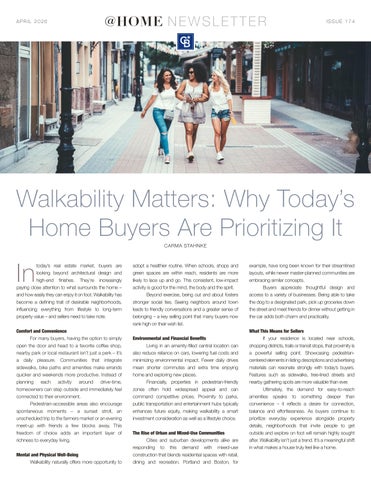

Walkability Matters: Why Today’s Home Buyers Are Prioritizing It
CARMA STAHNKE
Intoday’s real estate market, buyers are looking beyond architectural design and high-end finishes. They’re increasingly paying close attention to what surrounds the home –and how easily they can enjoy it on foot. Walkability has become a defining trait of desirable neighborhoods, influencing everything from lifestyle to long-term property value – and sellers need to take note.
Comfort and Convenience
For many buyers, having the option to simply open the door and head to a favorite coffee shop, nearby park or local restaurant isn’t just a perk – it’s a daily pleasure. Communities that integrate sidewalks, bike paths and amenities make errands quicker and weekends more productive. Instead of planning each activity around drive-time, homeowners can step outside and immediately feel connected to their environment.
Pedestrian-accessible areas also encourage spontaneous moments – a sunset stroll, an unscheduled trip to the farmers market or an evening meet-up with friends a few blocks away. This freedom of choice adds an important layer of richness to everyday living.
Mental and Physical Well-Being
Walkability naturally offers more opportunity to
adopt a healthier routine. When schools, shops and green spaces are within reach, residents are more likely to lace up and go. This consistent, low-impact activity is good for the mind, the body and the spirit.
Beyond exercise, being out and about fosters stronger social ties. Seeing neighbors around town leads to friendly conversations and a greater sense of belonging – a key selling point that many buyers now rank high on their wish list.
Environmental and Financial Benefits
Living in an amenity-filled central location can also reduce reliance on cars, lowering fuel costs and minimizing environmental impact. Fewer daily drives mean shorter commutes and extra time enjoying home and exploring new places.
Financially, properties in pedestrian-friendly zones often hold widespread appeal and can command competitive prices. Proximity to parks, public transportation and entertainment hubs typically enhances future equity, making walkability a smart investment consideration as well as a lifestyle choice.
The Rise of Urban and Mixed-Use Communities
Cities and suburban developments alike are responding to this demand with mixed-use construction that blends residential spaces with retail, dining and recreation. Portland and Boston, for
example, have long been known for their streamlined layouts, while newer master-planned communities are embracing similar concepts.
Buyers appreciate thoughtful design and access to a variety of businesses. Being able to take the dog to a designated park, pick up groceries down the street and meet friends for dinner without getting in the car adds both charm and practicality.
What This Means for Sellers
If your residence is located near schools, shoppingdistricts,trailsortransitstops,thatproximityis a powerful selling point. Showcasing pedestriancenteredelementsinlistingdescriptionsandadvertising materials can resonate strongly with today’s buyers. Features such as sidewalks, tree-lined streets and nearby gathering spots are more valuable than ever. Ultimately, the demand for easy-to-reach amenities speaks to something deeper than convenience – it reflects a desire for connection, balance and effortlessness. As buyers continue to prioritize everyday experience alongside property details, neighborhoods that invite people to get outside and explore on foot will remain highly sought after. Walkability isn’t just a trend. It’s a meaningful shift in what makes a house truly feel like a home.

The Ultimate Spring Cleaning Checklist
CARMA STAHNKE
Spring cleaning isn’t just about dusting and decluttering – it’s a yearly refresh for your entire residence. As the days get longer and brighter, now is the perfect time to assess your space, clear out what no longer serves you and start the season feeling organized and ready. You may even enjoy the process if you divvy up the tasks and take a step-by-step approach.
Whole-Home Reset
Before tackling individual rooms, begin by focusing on air quality and overall flow. This will breathe new life into your home and help boost your motivation and momentum.
• Open windows to enhance circulation
• Replace HVAC filters
• Dust ceiling fans, light fixtures and vents
• Wash windows, screens and window tracks
• Wipe baseboards, doors and door frames
• Sort through closets; donate unused items
• Vacuum and mop all floors
Kitchen
The kitchen is one of the hardest-working rooms under your roof, making it a top priority for a spring recharge. You’ll be surprised by how much a healthy scrub here will improve daily efficiency – not to mention your state of mind.
• Empty and wipe down the refrigerator
• Clean oven, stovetop and range hood
• Polish countertops and backsplash
• Organize pantry and cabinets
• Wash small appliances (coffee maker, microwave)
• Sanitize sink and garbage disposal
• Sweep and mop floors
Living Room and Common Areas
High-traffic zones collect dirt and clutter much faster than other rooms. Before you get started on this step, put misplaced items where they belong and donate unwanted objects. This will make these shared spaces instantly feel larger and more inviting.
• Dust furniture, shelves, lampshades, electronics
• Vacuumsofasandchairs(includingundercushions)
• Wash throw blankets and pillow covers
• Tidy books, magazines and accent pieces
• Spot-clean walls and light-switch plates
Bedrooms
There’s no better time than spring to transform your bedroom into a peaceful sanctuary. A neat, thoughtfully arranged space leads to restful nights and a sense of calm that carries into every day.
• Wash all bedding, including comforters
• Flip or rotate mattresses
• Declutter nightstands and dressers
• Organize closets and drawers
• Dust furniture and décor
• Vacuum under the bed
Bathrooms
Bathrooms benefit greatly from a spring cleaning that goes beyond daily maintenance. Focusing on sanitation, order and utility – as well as décor – will leave these areas feeling rejuvenated and spa-like.
• Scrub showers, tubs, sinks and toilets
• Disinfect grout and tile
• Wash bath mats and shower curtains
• Polish countertops and cabinetry
• Toss old toiletries and expired products
• Streamline shelves and drawers
Laundry Room
The laundry room often gets overlooked, but spring cleaning here can make routine chores much more efficient. A quick reset also ensures your machines run smoothly.
• Dust off washing machine and dryer
• Empty lint trap and dryer vent
• Wipe down shelves and storage bins
• Coordinate detergents and supplies
• Mop floors
When gearing up for a spring refresh, remember that staying motivated is key. To avoid becoming overwhelmed, break tasks into manageable chunks, turn on your favorite playlist and enjoy the satisfaction of a bright and welcoming home you’ll be proud to show off!

NOTES
Enjoy Shawarma Pizza Frittata with Crispy Kale - a fusion of Mediterranean and Italian flavors in one flavorful and nutritious dish!
Shawarma Pizza Frittata with Crispy Kale
INGREDIENTS
• 10 large eggs
• 1 1/2 cups whole milk fresh ricotta
• 1/2 cup grated Parmigiano-Reggiano
• 2 tbsp Shawarma seasoning
• 1/4 cup chopped fresh parsley
• 2 garlic cloves, minced
INSTRUCTIONS
• 2 tbsp olive oil
• 2 cups chopped kale
• 1/4 tsp red pepper flakes
• 1 tbsp lemon juice
• 1 cup shredded mozzarella
• salt and pepper to taste
1. Preheat an oven to 425 degrees. Spray an ovenproof skillet with non-stick cooking spray and set aside.
2. In a large bowl combine eggs, ricotta, parm, shawarma seasoning, parsley, garlic, salt and pepper. Once everything is combined pour the mixture into the prepared skillet. Place the skillet into the oven and bake the frittata for about 20 minutes or until set.
3. While the frittata bakes, cook the kale. In a medium skillet preheated to medium-high heat add the olive oil. Next, add the kale, red pepper flakes, lemon juice, salt and pepper. Saute the kale until wilted about two minutes. Set skillet aside.
4. Next, top the frittata with the crispy kale and mozzarella. Place back into the oven until the cheese is bubbly and golden brown. Remove from oven and serve.
HOME TRENDS: SPRING MOOD HOMES, DESIGNING SPACES
THAT FEEL AS GOOD AS THEY LOOK
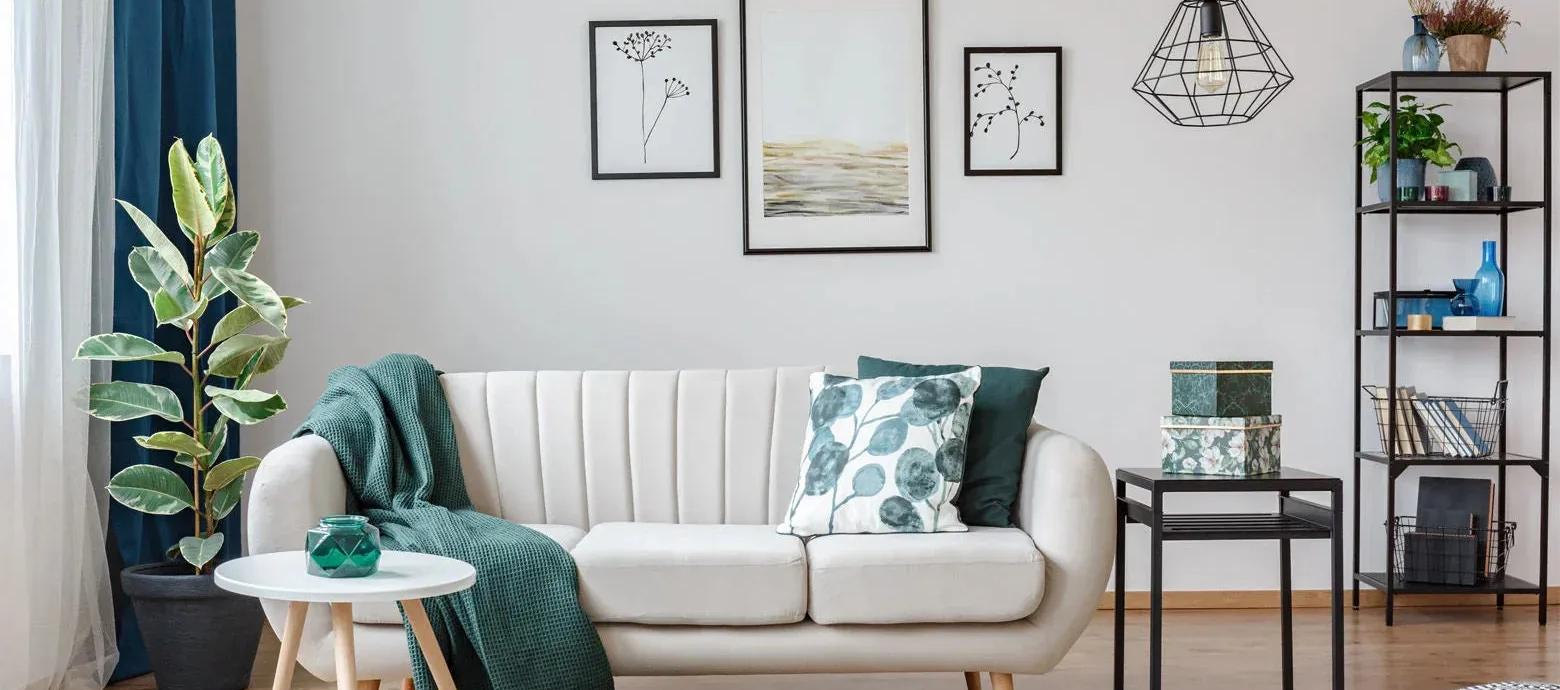
As spring arrives, home design is shifting beyond aesthetics and into something more meaningful— how a space feels. The concept of “mood homes” is gaining traction in 2026, with homeowners and buyers alike prioritizing environments that support comfort, calm, and everyday well-being. It’s no longer just about what looks good in photos—it’s about how a home enhances daily life.
One of the biggest drivers of this trend is
natural light. Bright, sun-filled spaces instantly boost mood and energy, making rooms feel more open and inviting. Homeowners are embracing sheer window treatments, lighter paint colors, and strategically placed mirrors to maximize light throughout the day. Color psychology is also playing a key role. Soft greens, warm neutrals, and muted blues are being used to create a sense of calm and balance. These tones feel fresh for spring while promoting
relaxation—something buyers are increasingly drawn to during home tours.
Texture adds another layer to the experience. Linen fabrics, natural wood finishes, and woven elements bring warmth and softness to a space. Rather than overdecorating, the focus is on thoughtful, tactile pieces that make a home feel comfortable and lived-in.
Scent and sound are becoming part of the design conversation as well. Subtle fragrances like citrus or eucalyptus and the addition of calming background elements—like water features or soft music—help create a more immersive environment. For sellers, leaning into the “mood home” concept can make a lasting impression. A home that feels peaceful, bright, and welcoming stands out in a competitive spring market. By designing with the senses in mind, homeowners can create spaces that not only look beautiful—but truly feel like home.
$716,282 1,081 884 21 98 $415,000 $545,000 450 254 1,120 681
Market Insights
Spokane Countyexperienced a slight increase in the average sale price, raising to $459,195 marking a 3.6% increase compared to March 2025. The median sales price saw a slight decrease of 0.7%, settling at $415,000. The current inventory rose in a big way to 1,081 listings, an notable increase of 25.0% from the previous year. This represents a 2.3-month supply, an increase from March 2025, still indicating a seller's market. Residential closed sales increased by 4.4%, totaling 450 transactions. Additionally, the median days on the market increased to 21 days. Annual residential sales is up from year’s level, up 2.2%, totaling 1,120 sales.
In similar fashion, Kootenai Countyshowed increased price performance, with the average sale price raising to $716,282 reflecting a 15.2% increase from the previous year. The median sales price had an increase of 0.9%, reaching $545,000. Inventory in the area decreased by 13.5% to 884 listings. Residential closed sales saw an increase of 5.0%, with 254 transactions recorded. The average days on the market iwas even at 98 days. Annual residential sales in Kootenai County are up 1.9%, totaling 681 transactions so far this year.
As interest rates fluctuate and the market anticipates changes throughout the year, it's crucial to consult with your