SAMPLE
• Green highlights denote aish species featured in an appendix of thumbnail photos and brief bios in the backmatter of the book
• bold words are recommended for inclusion in a glossary
1. A MODERN VIEW OF FISH
When someone mentions “aish,” chances are they are referring either to a hot meal or a hobby. But there’s another side to these aquatic animals. With 400 million years of evolution under their belts, aish have developed some pretty neat ways of living in their watery worlds. Until recently, their lives were mostly a mystery to us, and we dismissed them as thoughtless things. But with the invention of SCUBA (SelfContained Underwater Breathing Apparatus) and underwater cameras, scientists can now watch and study aish in their own neighborhoods. And what we’re uncovering reveals just how wrong we’ve been about these wondrous animals.
For example, did you know that some aish can recognize people’s faces? Nobody knew that for certain until scientists (and a few cooperative archeraishes) proved it in 2016. Or did you know there are aish who communicate using electricity, and others who use gestures? Or that there are sharks who must reach the age of about 150 years before they’re even old enough to breed? Or that some aish seek out a massage to relieve stress? This book invites you to enter aishes’ secret world, and to 14
discover the amazing things that modern science is revealing about their lives. Oh, and yes, herring really do fart (see page xx). 2.

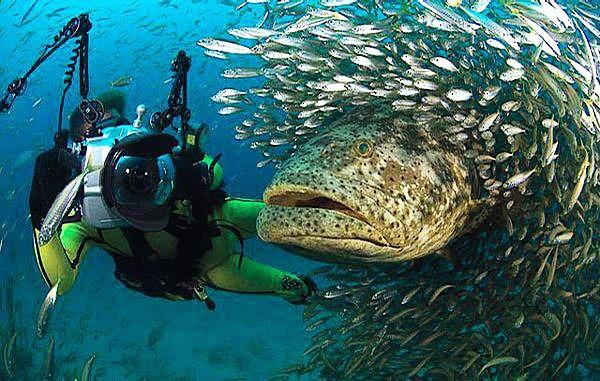
2. ONE FISH, TWO FISH, RED FISH, NEW FISH
Fish have been around for a long time. The so-called Age of Fishes—when aish were the dominant life-form on Earth, happened during the Devonian Period, 416 to 358 million years ago. Since that time, nature has molded many new life forms— including amphibians, reptiles, birds, and mammals—descendants of aish who mostly live on land and breathe air. Even so, aish continue to be the most diverse group of vertebrate animals on our planet, numbering more kinds than all the other vertebrate groups combined.
Today there are about 33,427 described aish species living on planet Earth. To get a better feel for how many that is, check out this graphic from illustrator Tom LaBaff.
[illustration by Tom LaBaff]
By the time you are reading this, the number of known aish species in the world will be higher. Scientists are discovering dozens of new aishes every year. For example, between 1997 and 2007, 279 previously undiscovered species were found living in China’s Mekong River basin alone. Elsewhere, four new sharks were identiaied in 2011.
Here is a sample of recently discovered aishes: [name, location, year discovered, and pix of several of these, with scale for size]
It seems we may have a lot more discovering to do. A friend of mine who is an ichthyologist (ick-thee-o-lo-jist), a scientist who studies aish (ichthy = aish, ologist = one who studies) told me he thinks there may be as many as 40,000 kinds of aish living on planet Earth today.
With that much diversity, it takes some creativity to name them. You’ve probably heard of some of the familiar ones, like bass, salmon, tuna, eel, and shark. But have you ever heard of a hairy-jawed sackmouth? (Do not ever call any of your grandparents that.) Or how about a sarcastic fringehead? (Probably also not a good idea.) Those are both names of deep-sea angleraishes (more on them soon). One may 16
hope that they have more agreeable names for each other than the ones we assigned them. Then we have one of the longest animal names. While it’s commonly referred as the Hawaiian reef triggeraish, the indigenous Hawaiian peoples call it the Humuhumunukunukuapua’a. That’s a long name for a aish that grows to only about a foot long. It’s not hard to memorize if you break it into parts: humu-humu nukunuku apu a-a. Hawaiian translation: the aish that sews with a needle and grunts like a pig!
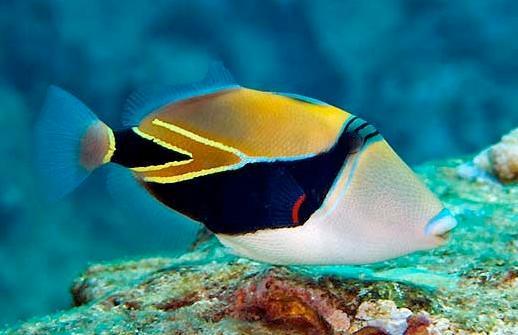
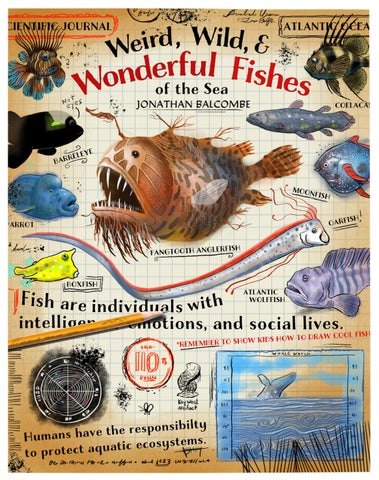
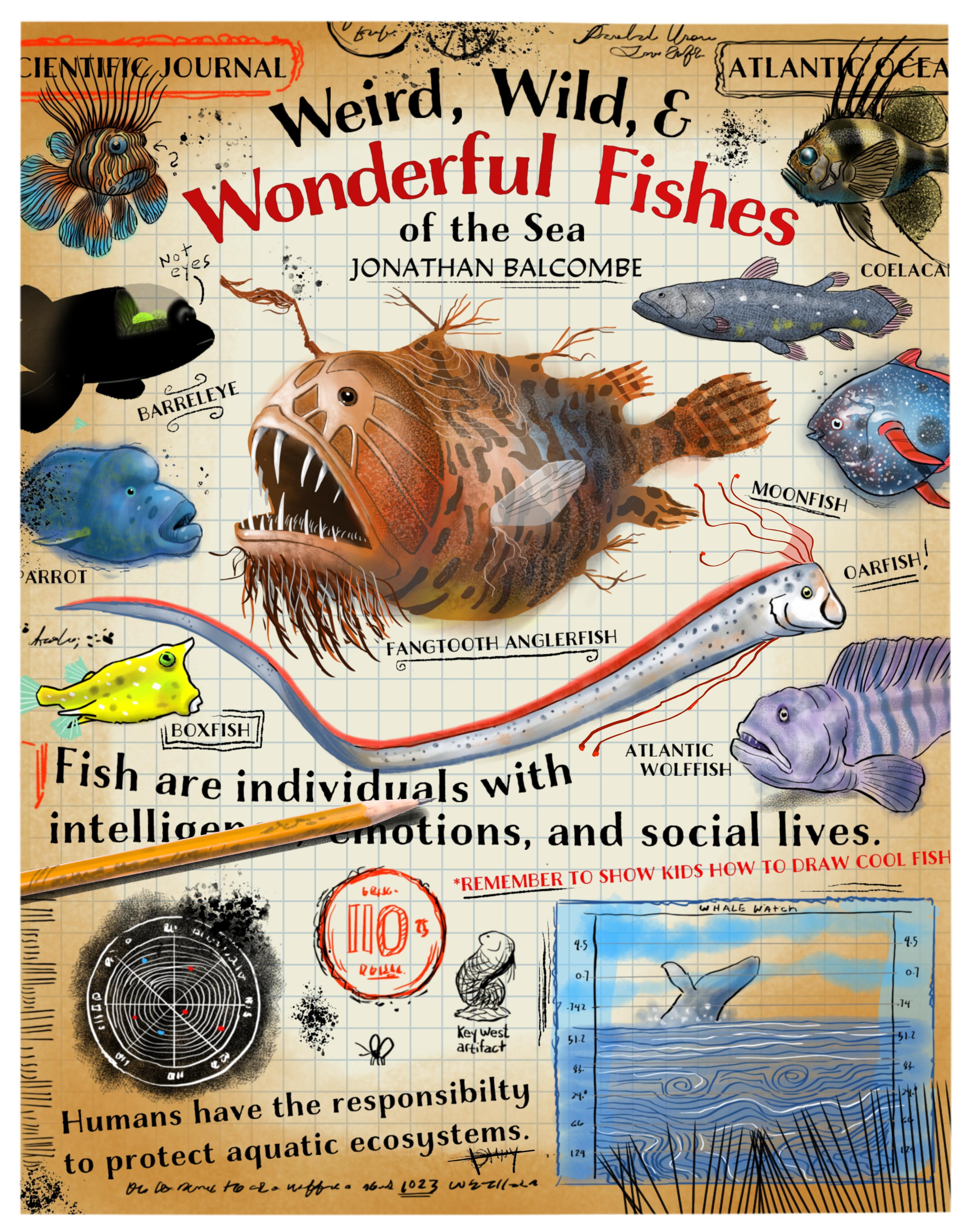
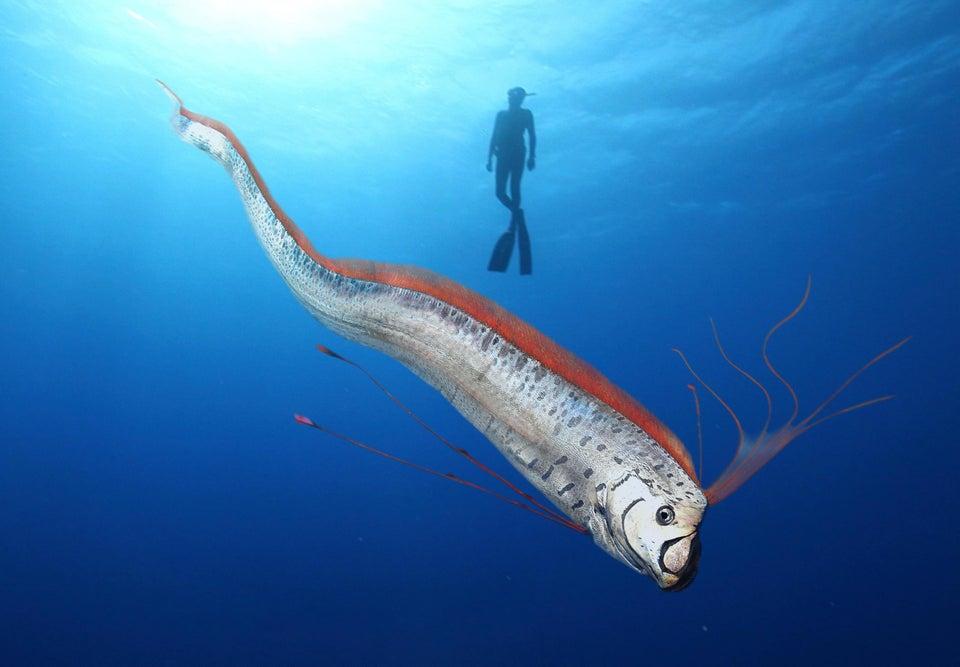
And talk about pretty! The same goes for the oaraish, a rarely seen ribbon-shaped dweller of deeper waters, with a mirror-like silvery body and a fancy crown. This time we have a short name describing a long aish. Some oaraish reach 26 feet.
Another ocean giant, the ocean sunaish, grows to ten feet, but with a circular shape. Its scientiaic name, Mola mola, refers to its vague resemblance to a millstone. This aish is a record-holder for weight, at up to 1,500 pounds (682 kilos).
From its beginnings as an egg to a century-old adult, an ocean sunaish can increase in weight by sixty million (60,000,000) times, another aish record. If you grew that much from birth, you’d end up the size of New York’s Empire State Building. [I still need to do the math for this one]
4. LOVE BITES [NB. See Tom LaBaff’s illustrated sample in separate aile.]
Ocean sunaish swim near the surface. Way down deeper, in the dark abyss, live those deep-sea angleraish mentioned earlier. And if you think an ocean sunaish or an oaraish is weird, consider the looks and the lifestyles of the angleraish.
Let’s start with the mating game. Do you know what a male deep-sea angleraish does when he ainds a suitable mate? He bites her. And he doesn’t let go. Ever. It doesn’t matter (at least, not to him) where he bites. It could be her belly (see the much smaller male hanging from the female in the picture below) or her head.
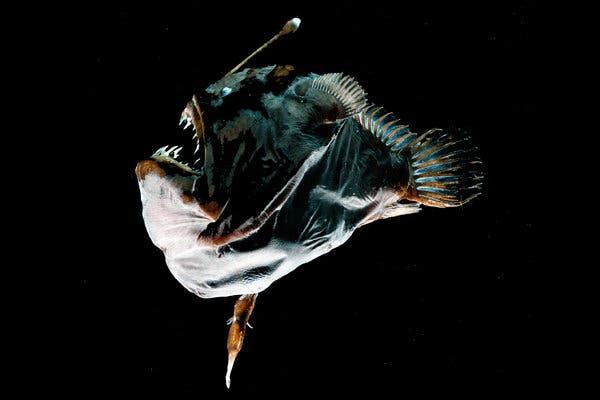
Then it gets really spooky. As days and weeks pass, the little male’s face gradually becomes fused into her alesh and he shares her bloodstream. After a few months, the tiny fellow resembles a long ain with eyes. There are over 160 known kinds of angleraish, and some females have been found with three or more males attached.
Scientists call this sexual parasitism, because the attached male is a free-loader. He lives off the female’s tissues and doesn’t do any of the hard work. He doesn’t do the dishes or the laundry. He doesn’t even take out the garbage. He also doesn’t have to aind food, because he gets nourished by the female intravenously. He can even fertilize her eggs through their shared bloodstream. In fairness to the little fellow, that’s an important service, since the female needs a mate if she’s to have any babies.
You might be wondering why a aish would end up with such a weird way to make a living. It comes down to reproduction, and habitat. The deep-sea is the biggest livable space on Earth, and it’s pitch dark 24-7. That’s not the easiest place to aind a date! Potential mates are spaced far apart. If you ailled a football stadium with deepsea water you’d have about one suitable partner swimming in it. This is probably why male angleraish have big nostrils to smell with (the biggest of any aish), and large eyes.
5. YOU BRIGHTEN UP MY DAY
Wait a minute. Did I say “see”? How can a deep-sea aish see anything when it’s permanently dark?
The answer is that while their habitat is dark, the aishes are not. Deep-sea angleraishes have symbiotic bacteria living in them. The bacteria are clustered in useful parts of the aishes’ bodies, like their heads or their dorsal ains. In exchange for
a safe place to stay, the bacteria produce light, also known as bioluminescence. So what those big-nosed, sharp-eyed angleraish males are looking for is the light signal made by a female of his kind. It’s a aish version of the alashes of light used by airealies to aind suitable mates.
Blue-green light travels farthest through seawater, which may explain why most bioluminescence in the deep ocean is a blue-green color called aquamarine. But there are exceptions. The stoplight loosejaw aish, for example, has specialized
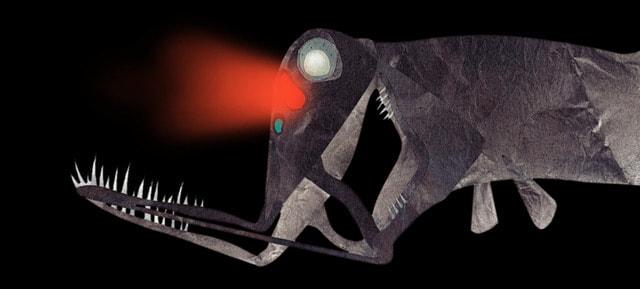
tissues that produce red light. Since most aish cannot see red light, and the stoplight aish can, this deep-sea hunter can sneak up on prey without being detected. It is a huge advantage—the undersea answer to night-vision goggles.

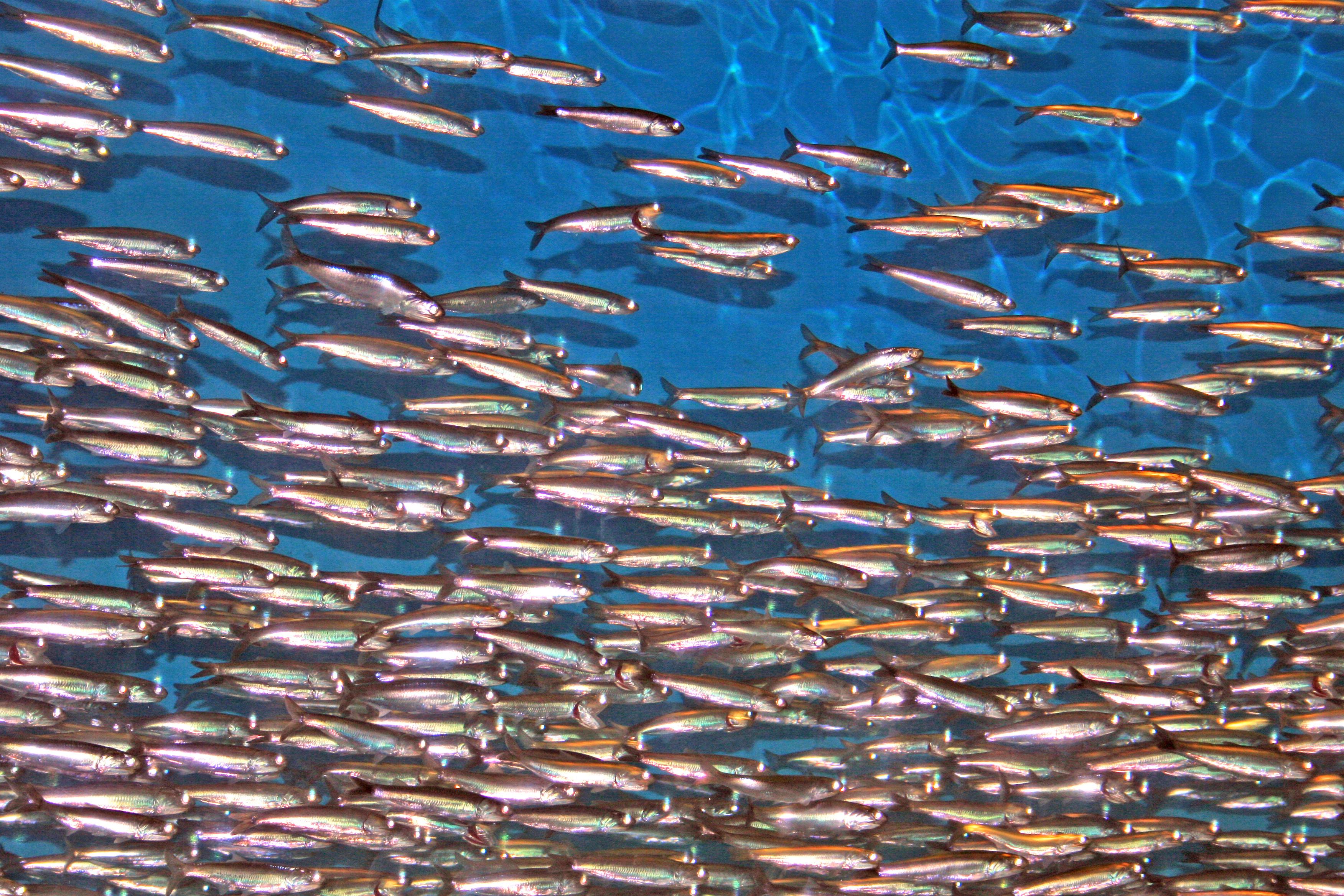
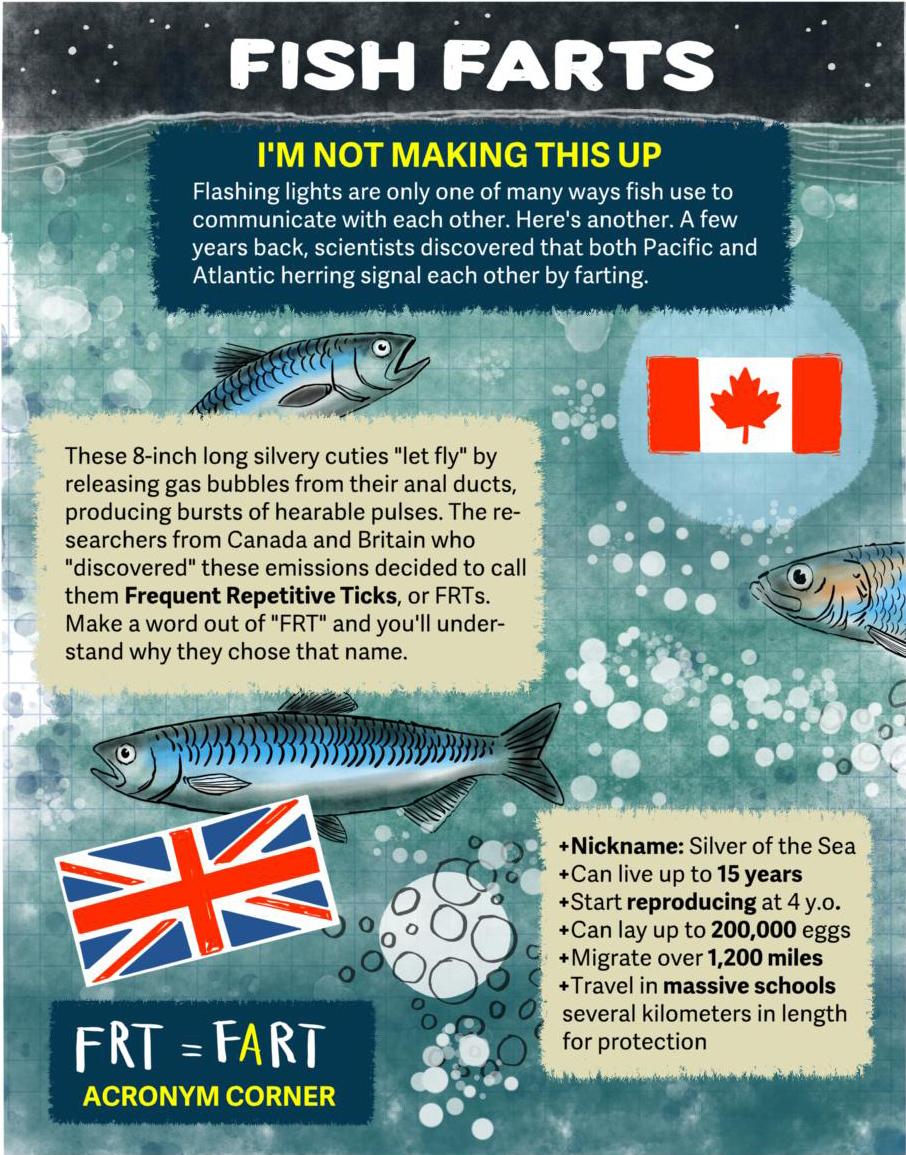
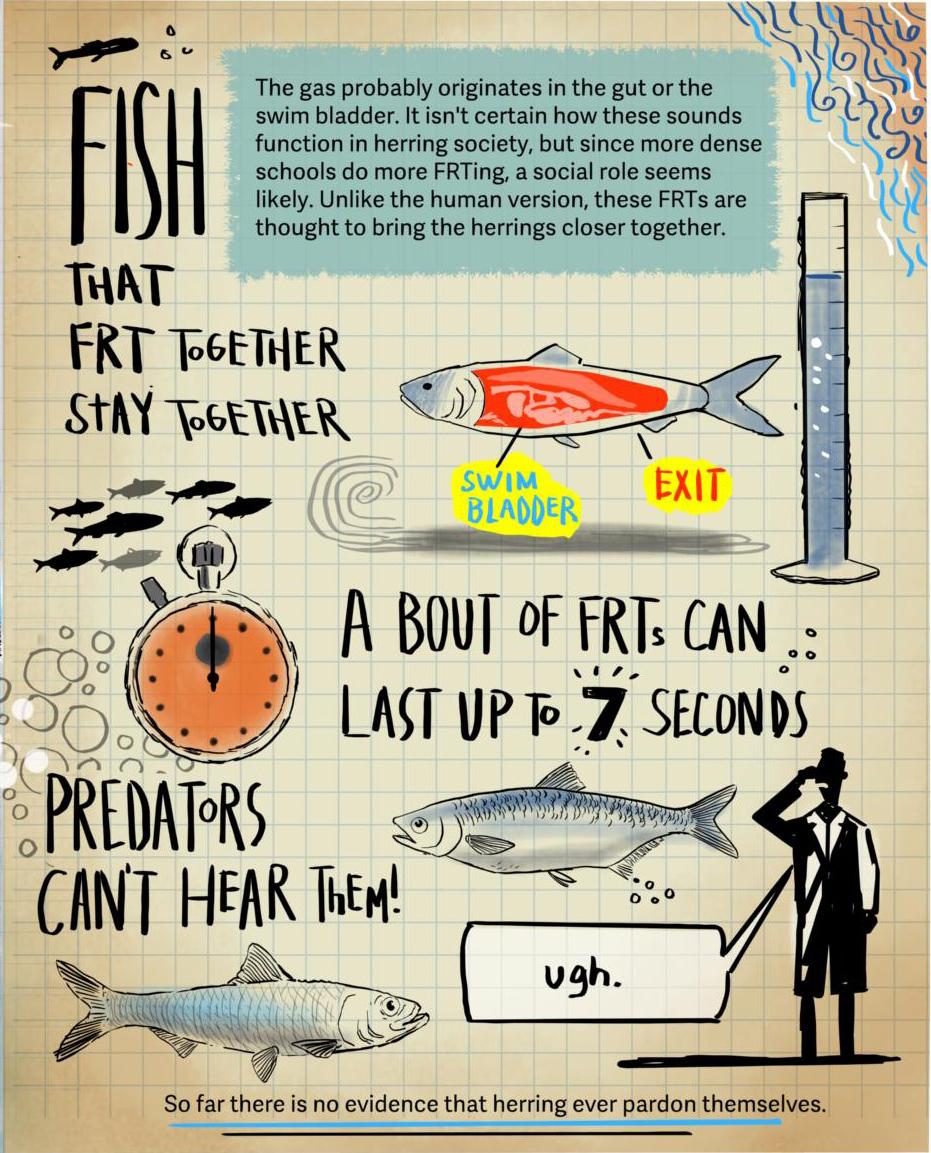
Flashing lights are only one of many ways aish use to communicate with each other. Here’s another. A few years back, scientists discovered that both Paciaic and Atlantic herring signal to each other by farting. I’m not making this up. These 8-inch long silvery cuties “let aly” by releasing gas bubbles from their anal ducts, producing bursts of hearable pulses. The researchers from Canada and Britain who “discovered” these emissions (the herring discovered them way earlier) decided to call them Frequent Repetitive Ticks, or FRTs for short. Make a word out of “FRT” and you’ll understand why they chose that name. (Note: scientists do have a sense of humor.) A bout of FRTs can last up to seven seconds. Try that at home! these sounds function in herring society, but since more dense schools do more FRTing, a social role seems likely. Unlike the human version, these FRTs are thought
to bring the herrings closer together. They mainly produce them at night, so it may be a way to stay with the crowd in the dark without giving their position away to predators, most of which cannot hear at the FRT frequencies
So far there is no evidence that herring ever pardon themselves.
7. OUCH!
I don’t know if any scientist has tried to aind out whether herring farts smell, but the same cannot be said of whether aish can feel pain. Many people have been taught to believe that aish don’t feel anything, pain included. But that isn’t what we should expect, since aish are vertebrate animals, all of which have a well-developed brain and a complex nervous system. But rather than just dismissing this question, let’s let science do the talking.
When scientists deeply anesthetized trout , they found three different types of nerve receptors on the aishes’ faces that responded to three kinds of painful sources: mechanical (for example, a cut or a collision), heat, and chemical. Our bodies, too, have these same three types of pain receptors, or nociceptors.
But having pain receptors isn’t enough to prove that an animal can feel pain. If an animal is not conscious, then she doesn’t actually experience pain, even though her body reacts to it. Thanks to anesthetics, which make us temporarily unconscious, a
surgeon may cut open our bodies, reset broken bones, etc., without us feeling any pain (until after we’ve woken up!)
When scientists injected an acid (or bee venom) into the lips of unanesthetized trout (ouch!), the trout stopped swimming around, and they stopped eating for several hours. Some of them rubbed their sore lips against the glass walls of their tank, or on the gravel below. Other trout, injected with a relatively painless saline solution, behaved like normal trout do: they swam about, and they ate food that was presented to them.
In another study of aish pain, about thirty zebraaish were kept in an aquarium with two chambers. One chamber was dimly lit, with rocks and plants where little aish may hide. The other chamber was brightly lit with no hiding spots. Not surprisingly, these aish avoided the bright chamber, preferring the safety of the dim one.
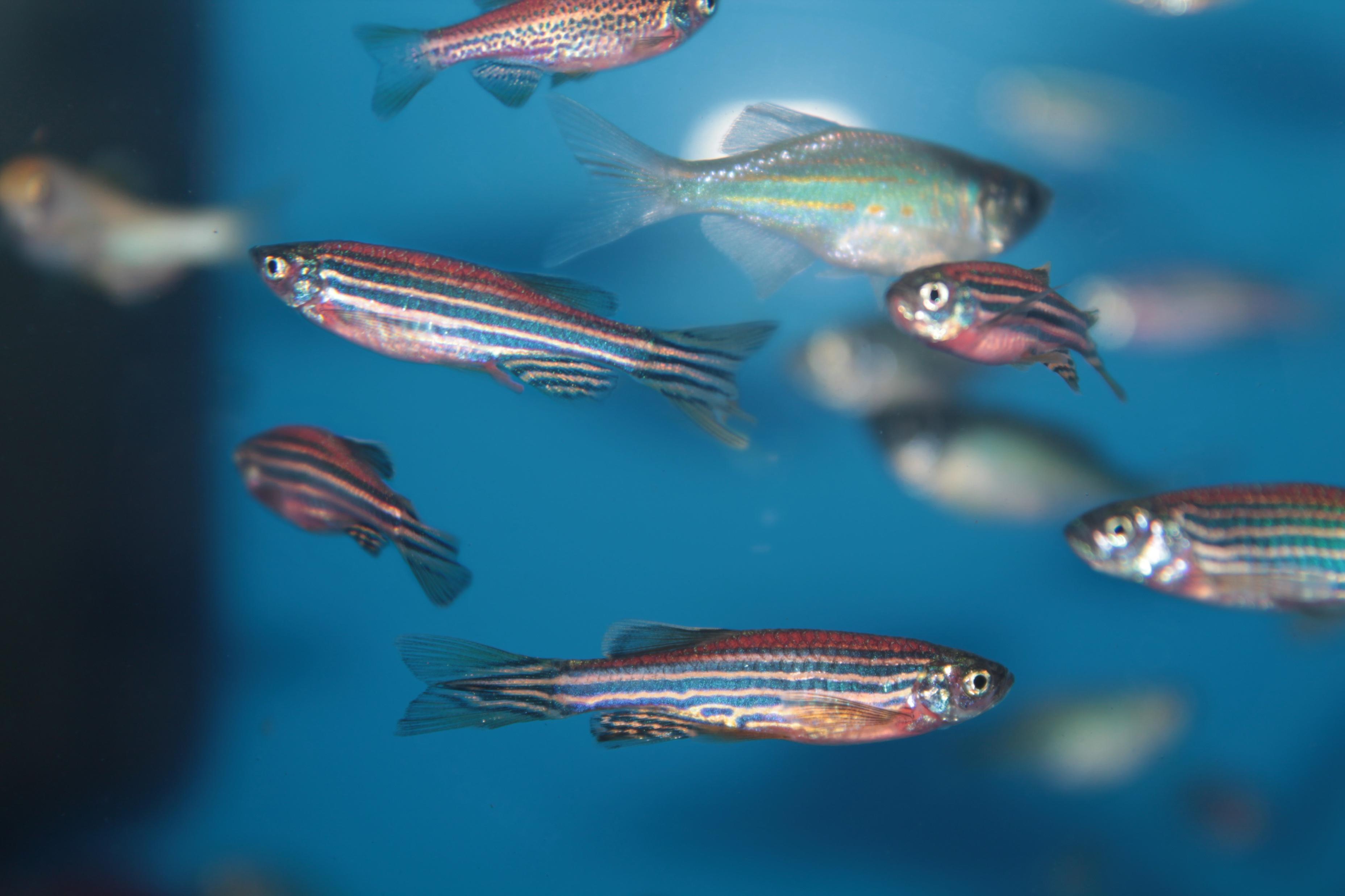
the metallic dark blue stripes running along their silvery sides. They are widely used in laboratory research.]
Next, the scientists injected some of the zebraaish with saline and the others with acid. All of them continued to stay in the “safe” zone.
But guess what happened when the scientists dissolved a painkiller (Lidocaine) into the bright, “unsafe” chamber? Some of the aish swam over to that chamber. And it was only the acid-injected aish! The saline-injected ones stayed in the “safe” zone.
Unlike the acid aish, they didn’t need pain-relief.
Moving somewhere else to get pain relief is pretty smart, and moving to where you normally don’t want to be shows that a aish really wants to stop the pain.
8. AVOIDING A LEAP OF FAITH
Here’s another little aish that will go somewhere else when staying put gets tough. Meet the frill-ain goby, a aive-inch resident of the Atlantic coastline, with a mottled brown coat, slightly puffy cheeks and a fantastic memory.
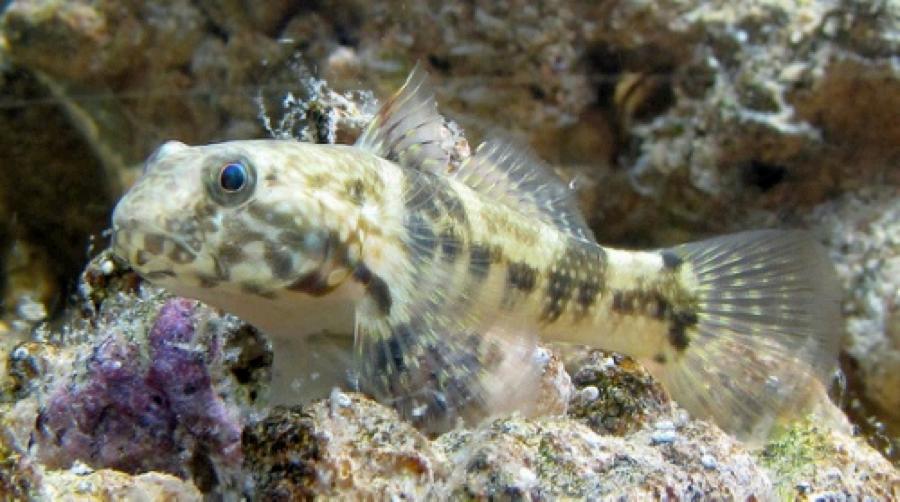

waterline at high tide and the waterline at low tide. At low tide, these gobies hang out in rock-pools. If danger lurks, such as a hungry octopus or a peckish heron, a goby can escape by leaping from one tide-pool to another.
So, how do they know which way to jump, and how far? How does a goby avoid making a leap of faith and ending up stranded on the rocks?
The frill-ain gobies’ trick is as simple as it is ingenious. They memorize the rock-pool zone by exploring it at high tide. When the water comes in, they swim over and among the submerged rocks and they memorize all the nooks and crannies where each rock-pool will be when the water level drops a few hours later.
Scientists call this making a “mental map.” If you were sitting in your living room and someone blindfolded you and told you to go fetch your toothbrush, you could probably aind it, right? (Hopefully you’d avoid knocking over a aloor lamp or tripping on a napping dog.) You’d be using a mental map.
9. BLIND METHUSELAH
Like most small aish, frill-ain gobies typically only live a few years. But some live much, much longer. For example, spiny dogaish sharks don’t reach breeding age until they are about 35 years old.
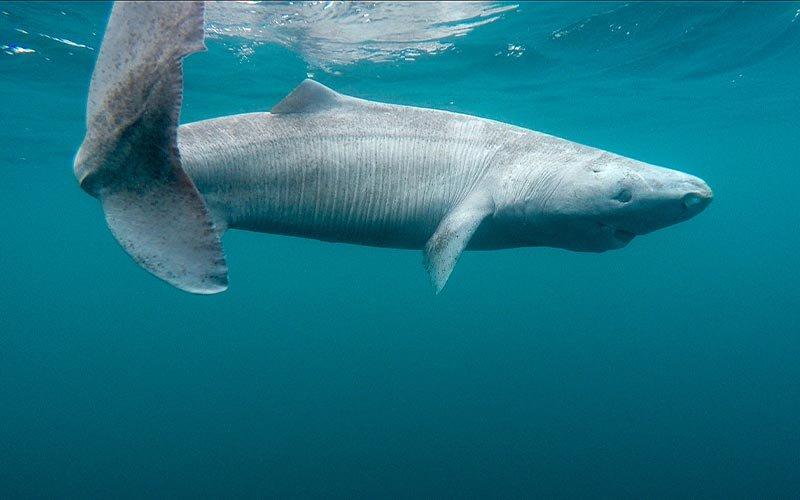
Recently, scientists have discovered that another shark can live for centuries. The researchers used various methods to estimate the ages of 28 Greenland sharks, including counting corneal layers in the eye (like growth rings of a tree), radiocarbon dating, and growth-rate data. The oldest shark in the sample, a female, was estimated to be between 272 and 512 years old when she was caught, apparently still healthy, in a commercial aishing net. That means she was born sometime between 1504 and 1744. That’s up to 250 years before the United States became a country [or if you prefer: “… 350 years before Canada became a country”]!
It’s sad to think that these wise old sharks were killed by us. It also might be hard for populations of such long-lived, scarce animals to recover. As featured in a February 2021 Jeopardy question, these slow-swimming Methuselahs of Arctic waters have to live about 150 years before they even reach puberty.
Curiously, despite having eyeballs about the size of an orange, most Greenland sharks are nearly or completely blind. This is due to a species of large copepod that attaches to the shark’s eyes, causing a cloudy layer to form over the eye. The sharks don’t seem bothered and with their excellent senses of smell, hearing, and motiondetection they are able to aind and catch squid, aish, and an occasional seal. And because the Earth’s Arctic regions experience several months of darkness in wintertime, vision isn’t much use anyway.
10. WATCH AND LEARN
I wonder how much knowledge and wisdom might accumulate in a 500-year-old mind. Your average aish doesn’t start out knowing everything they need to know to get by in the world. Becoming a skilled adult requires learning. Learning by doing, or practicing, is the most basic form of learning, and it’s probably the most common. Think of throwing a baseball, or ainding your school locker. With personal experience, a young aish gets better at such things as ainding food, avoiding enemies, and securing a mate.
Another way to learn is by watching others. Scientists call this observational learning, and it’s something an archeraish can do.
Archeraish are named for a hunting technique they use to catch insects alying above the water or perching on overhanging vegetation. By pressing their tongue against a groove in the upper jaw and quickly compressing the throat and mouth, they can squirt a narrow jet of water up to ten feet.


manmade target moving just half an inch per second, let alone a moth zipping by 40 times faster.
But give him a chance to watch another archeraish who has had time to hone her skill, and he’s on his way to becoming a Robin Hood of the river. After watching a thousand attempts—successful and unsuccessful—by another archeraish to hit moving targets, an onlooker was able to make successful shots at rapidly moving targets without any practice. That’s like learning to shoot three-pointers simply by watching an experienced basketball player do it.
11. FINTASTIC TOOLS
Water-squirting by archeraish is more than learning. It’s also tool use. In this case, water is the tool. Archeraish use water as a projectile. What’s more, they control the squirt to make it the most effective for the target. If a heavy beetle is alying about a foot away, the jet of water is shaped to provide maximum impact at that distance.
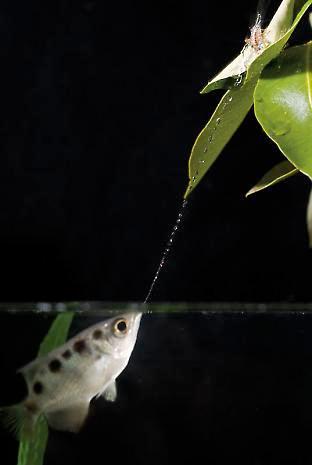
These scaly archers also use different airing techniques based on how high the target is alying. For more distant targets like our beetle, the aish aims like a quarterback, squirting water ahead of the target to intercept it. For a closer target (say, a damselaly 6 inches away), the aish performs a turn-and-shoot maneuver, aiming directly at the insect while rotating her body to match the target’s alight speed. A third option is good old-fashioned leaping, which they will sometimes do to pluck an insect off a leaf or twig.
There’s at least one other bit of ballistics brilliance that archeraish perform to nab an insect. If the target is perched on a leaf too far out of reach for a leap, the archer uses his water jet. But instead of aiming directly at the unsuspecting bug, our marine marksman aims just below, hoping to whack the leaf and dislodge it. Aiming directly at the bug risks knocking it further away onto land and out of reach.
Remaining Chapters [completed]
19. STRESS-RELIEF SURGEONFISH STYLE
20. SAD SALMON
21. I’VE GOT YOUR BACK
22. FEEDING THE BASS
23. SQUIRTING AT FACES
24. IS THAT ME?
25. YES, IT’S ME!
26. I LOVE YOU
27. DAYCARE DADS
28. DEVOTED
29. THE SAND IS MY CANVAS
30. STRANGE BEDFELLOWS
31. YOU ELECTRIFY ME
32. I REMEMBER
33. DO YOU SEE WHAT I SEE?
34. OPTICAL ILLUSIONS
35. NOISY FISHES
36. SONATA IN E MINOR FOR CARP