Custom Storm Doors Built To Last
BILL’S LONG REACH SERVICE SHAPES PONDS WITH PRECISION & PATIENCE Country View Window and Door

Custom Storm Doors Built To Last
BILL’S LONG REACH SERVICE SHAPES PONDS WITH PRECISION & PATIENCE Country View Window and Door





















Avian influenza, known as bird flu, is a virus that can infect birds, other animals, and sometimes humans. The risk of humans becoming infected with avian influenza is low. The Indiana Department of Natural Resources (DNR), Indiana State Board of Animal Health (BOAH) and the Indiana Department of Health (IDOH) are working together to monitor for avian influenza and the overall risk to the public.
People can become infected when the avian influenza virus is inhaled or gets into a person’s eyes, nose or mouth. People who have close contact with sick birds have the highest risk of becoming infected with an avian influenza virus.
• Avoid Contact with Wild Birds
·Do not touch sick or dead waterfowl


·Observe wild birds and other animals from a distance. Avoid touching or feeding wild birds, even if they don’t look sick
·Avoid coming into contact with bird droppings or surfaces that may contain bird droppings
·If you keep birdfeeders and birdbaths on your property, clean them regularly with a 10% bleach and hot water solution, rinse thoroughly, and then allow them to completely dry before refilling. Clean up birdseed that has fallen below birdfeeders.
·Do not feed wild birds, especially waterfowl, near domestic flocks. If you come in contact with any bird that appears unhealthy, wash your hands with soap and water and change clothing and shoes before coming in contact with a domestic flock or captive birds.
• Backyard Flock Guidance
·Hobby poultry owners are encouraged to be aware of the signs of avian influenza and report illness and/or death to the USDA Healthy Birds Hotline: 866-536-7593. Callers will be routed to a state or federal veterinarian in Indiana for a case assessment. Dead birds should be double-bagged and refrigerated for possible testing. Keep dedicated boots/ footwear in the chicken coop and don't wear them other places.
• Report Sick or Dead Birds
·Report any cases of sick or dead wild birds to the DNR at on.in.gov/avian-flu.
• Practice Good Hygiene
·Wash hands thoroughly with soap and water after any contact with birds or their droppings
·Avoid touching your face with unwashed hands
·If wild birds must be handled, protective equipment such as safety goggles, disposable gloves, and an N95 mask should be worn
• Keep Pets Away
·Keep domestic animals, especially poultry and cats, away from wild birds and areas where wild birds congregate
• Avian influenza does not present a food safety risk
·Cooked poultry and eggs and pasteurized dairy products are safe to eat. Pasteurization and cooking kills avian flu viruses.
If you experience u-like symptoms, such as fever, chills, cough, sore throat, or conjunctivitis after handling birds, contact your healthcare provider for guidance and inform them about your contact with birds.
Online Resources:
• Indiana Department of Health - Avian Influenza: https://www.in.gov/health/idepd/respiratory-disease/influen za/avian-influenza/#How_are_avian_influenza_viruses_spread_
• DNR - Avian Flu (Bird Flu): https://www.in.gov/dnr/fish-and-wildlife/wildlife-resources/wildlife-diseases-in-indiana/avian-flu-bird-flu/
• Updates are available from BOAH at: https://www.in.gov/boah/species-information/avianbirds/highly-pathogenic-avian-influenza/
Mudsock Leather Turns a

LEWANDOWSKI john@townepost.com mandi@townepost.com (574) 249-9217
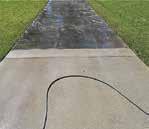
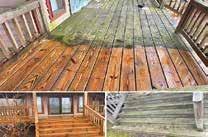
Brings New Life to Concrete Floors
tom@townepost.com (317) 496-3599
Camera Legacy




Writer / Amy Beaucham
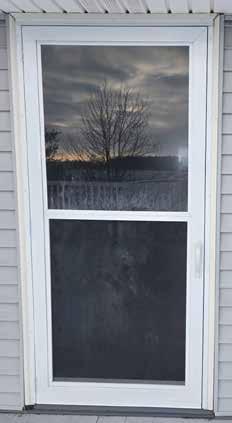
A winter wind can find its way through the smallest gap. It slips under an exterior door, curls around a loose frame, and reminds a homeowner that comfort is often decided by details many people never notice until they fail. In northern Indiana, those details matter. A storm door is not simply an accessory. It is a layer of protection, a buffer against the weather, and the last gentle transition before you step into the day.
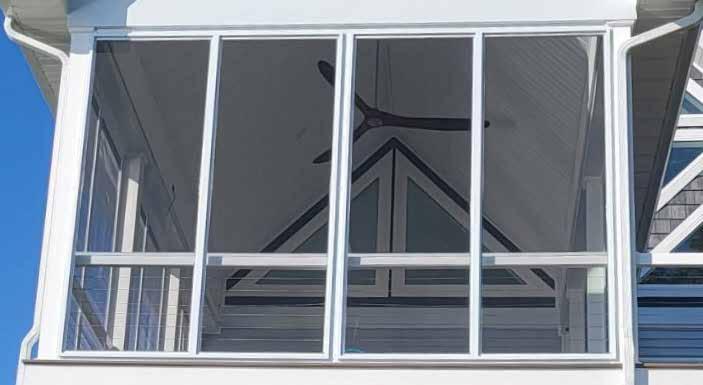
At Country View Window and Door in Ligonier, that practical protection is exactly what the work is about. James Miller has owned the business since early 2024, and while he mainly focuses on storm doors, his days also include storm windows, screened-in porches, repairs, and custom work made for specific openings and special requests. Requests range from double-pane glass replacements and cut-to-size glass to plexiglass and screen material, as well as specialty projects such as serving windows
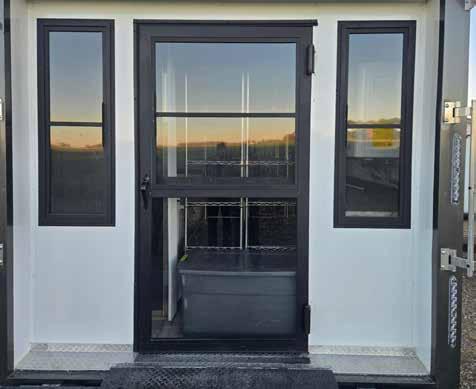


and glass display cubes. The steady demand makes sense, since, as Miller puts it, “there’s always something that needs repaired.”
Before James owned the business, it belonged to Glenn Harshberger, who decided to sell as his focus shifted to other manufacturing work. The opportunity appealed to James because he was looking for something that could move him toward working from home and spending more time with his wife and family. At the time, he was a schoolteacher, so he trained in the afternoons with Harshberger, who took time to show him the craft and the standards behind it.
“I didn’t know much about it until I got the training from him, but then I liked it,” he says, adding that the learning was “really fun.” Two years of steady projects have done what practice always does. James now moves through measuring, building, and finishing with confidence that comes from doing the work day after day.
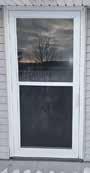
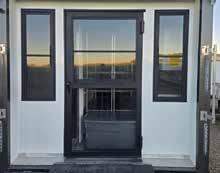
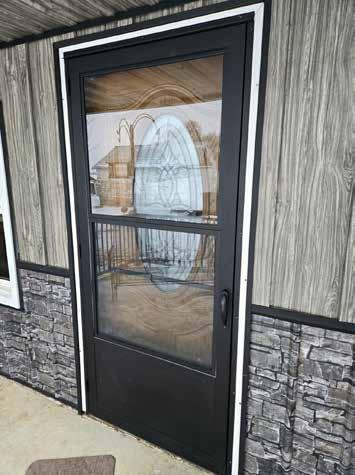
That confidence shows up in the way he talks about custom work. The goal is not to force a home into a standard size, but to build what fits the opening in front of him. He puts it simply: “going to a certain size somebody wants.” He stays open to unusual requests, too.
“Pretty much whatever people want, I try to make sure I can supply what they’re looking for,” he says.
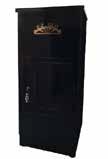
For storm doors, the process starts with measuring and a quote, followed by fabrication and finishing. He cuts everything down, gets the fit right, and sends the door to the powder shop for finishing. That finishing step can take the longest, but “about three weeks is normal” from build to finish.
The result is built for everyday living, not just good looks. Miller explains that the doors he makes are built with dies, and that influences how the surface looks and cleans.
“The face of it is flat. There are no hard grooves to clean. It’s just flat and easy to clean,” he says.
Practical protection is the point, and James talks about it plainly.
“If you have an exterior door, it should be protected by a storm door,” he says. Without that protection, “there’s more of a chance you’re going to have to replace it.”
Repair work keeps the calendar full as well, especially when it comes to double-pane glass. James has seen how quickly a simple accident becomes a replacement job. One need came from a school.
“They were playing softball, and the ball went through the window,” he says.
Other times, the glass is intact, but the view turns cloudy. When a double-pane window looks fogged, he explains the cause in plain terms: “the seal is broken.” Once that seal

fails, “condensation gets between the panes, and that makes it fog up.”
Replace the sealed unit, and the clarity returns.
Country View also provides vinyl windows when requested, including an energy-efficient option called Energy X window systems. Installation depends on the homeowner. James says that “many Amish homeowners and other homeowners install it by themselves” because the products are “pretty selfexplanatory to install.” If someone prefers help, however, he is happy to install the system.
The business is based on James’ property, with an insulated shop where he does the building and prep work. His wife helps with behind-the-scenes support, including cleaning doors before powder coating and cleaning glass before it goes to a homeowner. Help also comes from
his uncle, Marion Miller.
“My uncle’s my main driver,” James says, crediting him with assisting with deliveries and quotes.
James is still balancing multiple responsibilities, including part-time work at an RV factory. His goal is clear: more time at home, more growth in the shop, and new capabilities.
“I’d like to add welding, too,” he says, hoping to offer “some aluminum and steel welding” as the business expands.
Ask James what is most satisfying about the work, and he returns to a steady, personal theme.
“The main thing is just being able to help somebody with what they need,” he says, along with “happy customers.”
In northern Indiana, weather has a way
• Building Materials
• Fence Boards
• Privacy Fence Boards
• Trailer Decking
• Wagon Beds
• Live Edge Slabs
of testing every latch, seal, and frame. Country View meets that test with practical craftsmanship and made-to-fit work that respects the home it is built for, whether the need is a storm door that seals tight or glass that turns clear again. Miller is drawn to Scripture about workmanship that pleases God, and he aims to let that standard guide what leaves his shop.
For homeowners, the result is simple and satisfying: a clearer view through the glass, a door that closes cleanly, a room that holds its warmth, and the elements staying outside where they belong.
Country View Window and Door 6141 W. 650 N. Ligonier, IN. Call 260215-6404, ext. 1 or email countryviewwindow@plainconnect.com for more information.










BILL’S LONG REACH SERVICE SHAPES PONDS WITH PRECISION & PATIENCE
On a calm morning just north of Shipshewana, the water tells the truth.
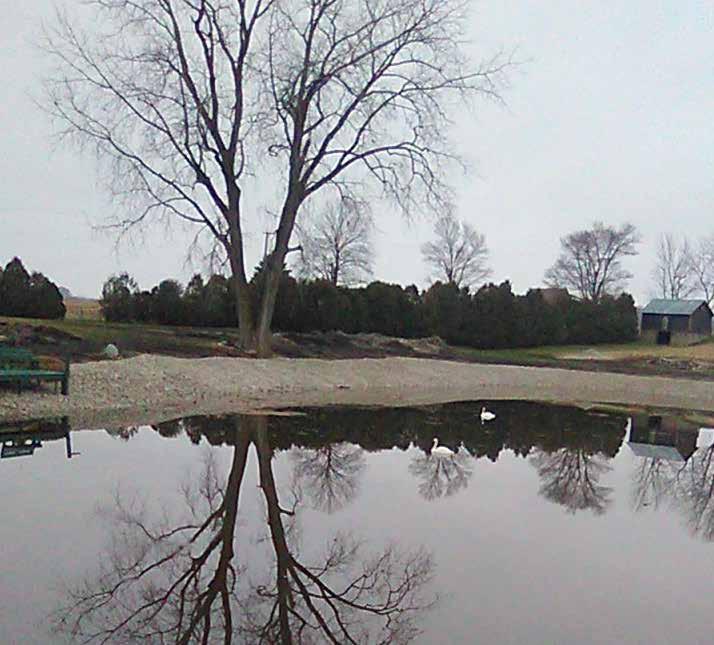
A pond’s surface might look still, even generous. Still, underneath the surface, the story is more complicated. Depth matters. Soil shifts. Banks erode slowly, then all at once. What holds today may not hold next season.
Bill Miller knows this because he has spent years listening to land most people only glance at. He doesn’t describe his work in lofty terms, and yet he doesn’t need to. When you spend your days shaping ponds, stabilizing shorelines, and working in water you can’t see through, precision becomes habit. Patience becomes instinct. Integrity becomes nonnegotiable.
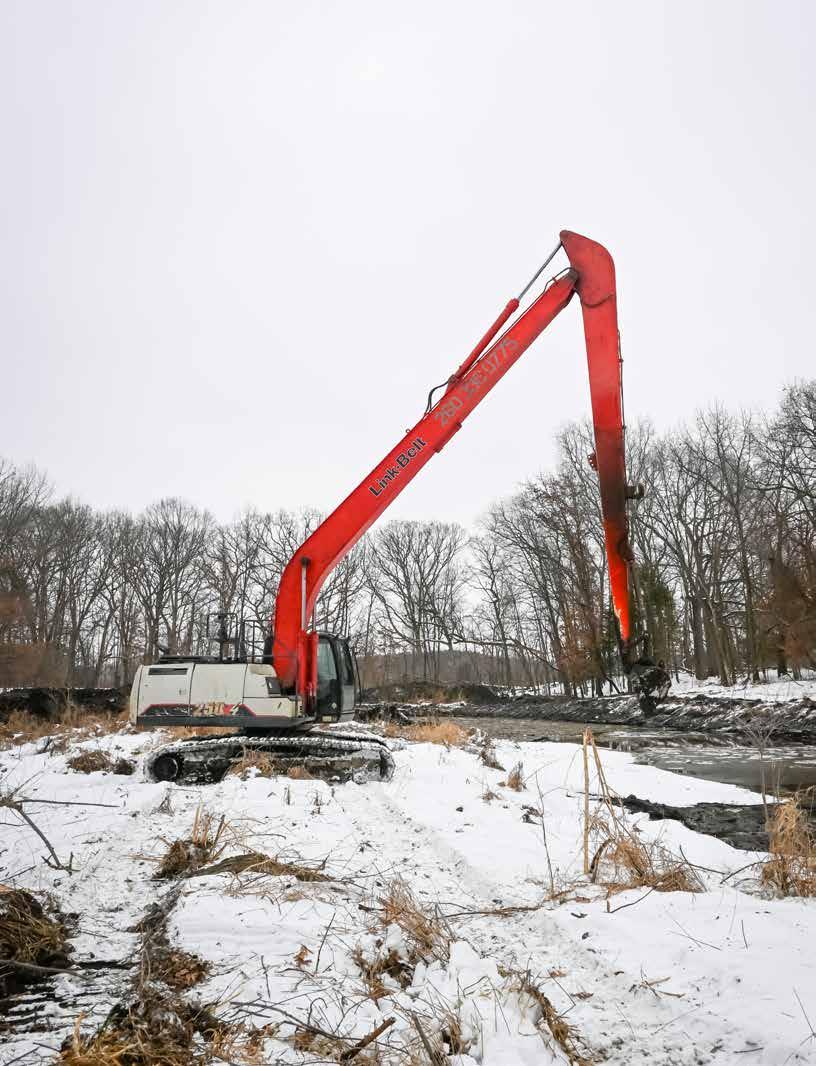
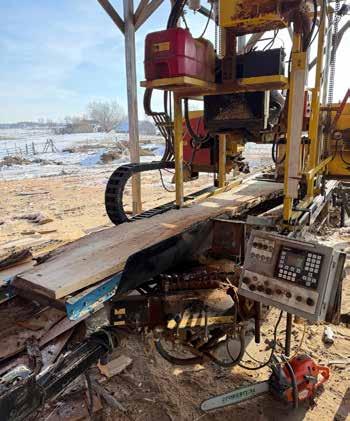
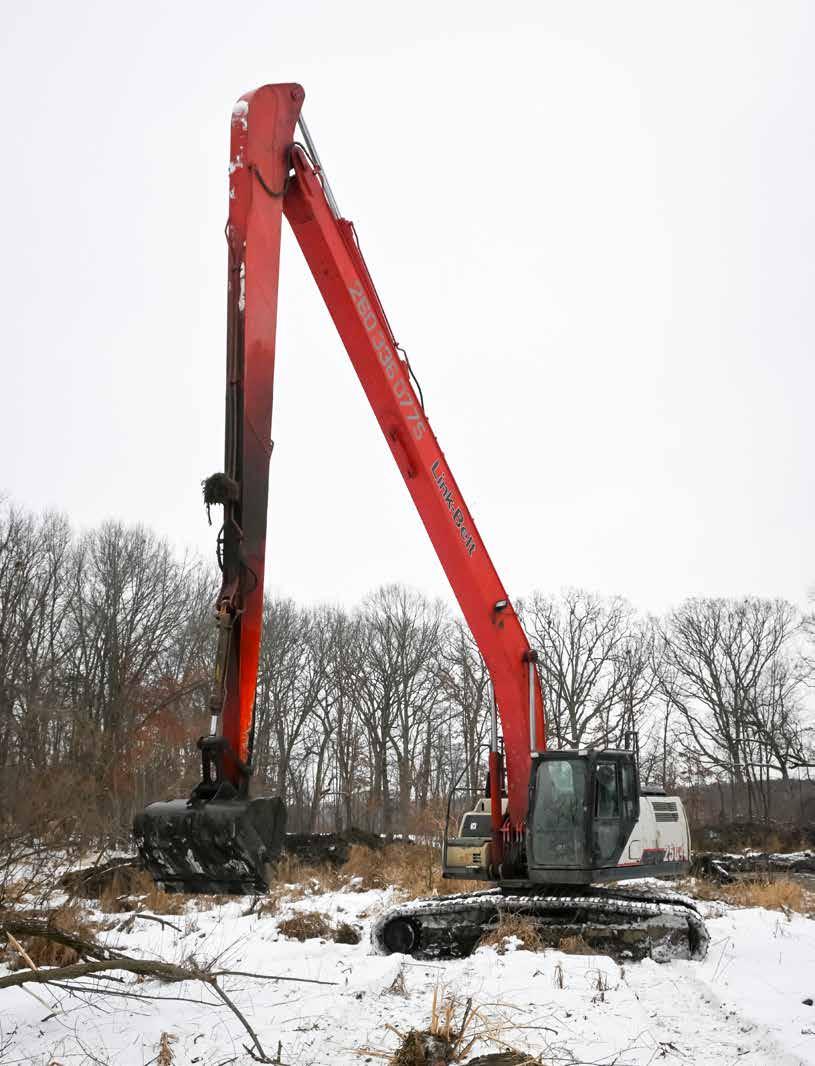
Bill is the owner and operator of Bill’s Long Reach Service, a Shipshewana-based excavation business specializing in pond and small-lake construction, maintenance, and repair. With a 60-foot long-reach excavator and years of hands-on experience, he takes on jobs that demand trust, because once the first scoop of earth is moved, there’s no undoing it.
Bill grew up in Middlebury, Indiana, next door to an excavator. That proximity left an impression. As a teenager, he spent time helping, learning what machines could do while being guided by someone who respected them and the land beneath them.
Life took him elsewhere for a while. Like




many in the region, Bill spent years working in the RV industry. Then came 2020, when the pandemic paused one world and another opened.
The fall before, Bill had purchased an excavator to work on his own pond. When shutdowns kept people home, neighbors started asking for help. One job turned into a handful of phone calls from people he hadn’t met yet. By the time work resumed elsewhere, Bill realized something important had happened.
“I probably wouldn’t have had the nerve otherwise,” he says. “But it all came at once.”
The timing wasn’t planned, but the fit for the new line of work was immediate.
Pond work is deceptively complex. Yes, anyone can dig, but not everyone can dig correctly, especially in water.




Bill’s long-reach excavator allows him to shape bodies of water with steadiness and accuracy. A standard excavator can only reach so far before the operator runs out of room. That’s when depth becomes uneven, slopes become unstable, and future maintenance turns costly.
“With a short reach, you might get it deep in one spot,” Bill says. “But then you can’t reach far enough to keep it that way.”
Depth, width, soil type, and slope all work together. Get one wrong, and erosion or collapse follows. Bill has seen it happen when well-meaning property owners try to do the work themselves.
“I always tell them, you can work on it, just don’t make it too wide,” he says. “Otherwise, when I get there, I won’t be able to reach it.”
It’s not about taking over. It’s about finishing right.

• Long Reach Excavator and Dozer Service
• 60 ft Reach
• Digging or Cleaning of Ponds, Small Lakes, and Ditches
• We have Mats to use Across Difficult Terrain
• Stop Bank Erosion & Maintenance. See us about Installing Rocks

Working in water introduces another challenge: You can’t see the bottom. You feel it.
Experience teaches the difference between reaching depth and holding it. A pond that looks right today can fill itself back in within months if the slopes aren’t designed to support the surrounding soil.
“That’s where people get disappointed,” Bill says. “They’ll say, ‘It’s not as deep as you said.’ But sometimes the only way to keep depth is to make it wider first.”
That kind of judgment can’t be rushed. It’s also why Bill is cautious about sending others into that environment. Some jobs require crane mats to stabilize soft ground. Others demand careful reading of soil that changes by the foot.
He once worked at a site where those mats likely saved both machine and operator.





“That was a rude awakening,” he says.
Bank erosion is one of the most common and overlooked problems pond owners face. Over time, water eats away at the shoreline, vegetation takes over, and property lines quietly shrink.
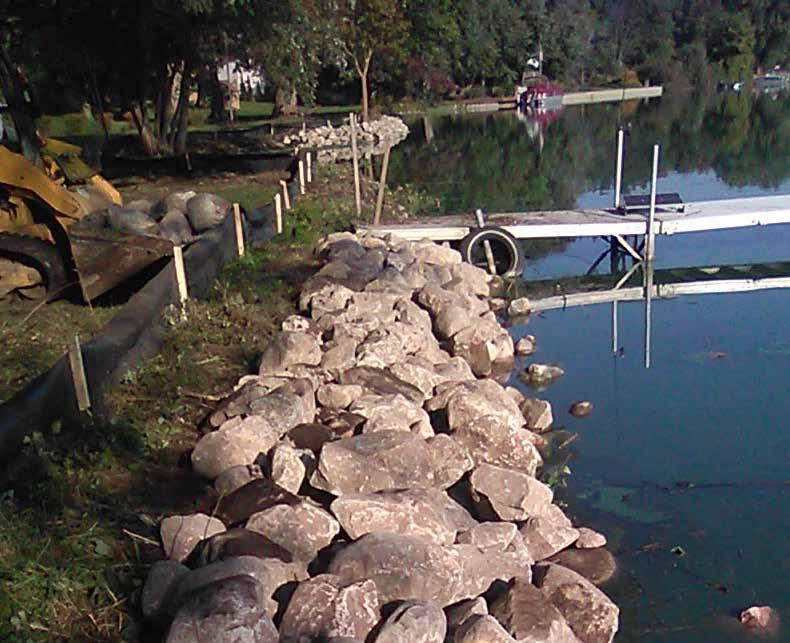
Bill has steadily focused on rock installation to stabilize banks and reduce long-term maintenance. On public waterways, that work requires permits through the Indiana Department of Natural Resources, and it’s a slow process.
“You don’t just go,” he says. “You wait.”
On Shipshewana Lake, Bill recently completed a project using glacier stone to protect a property that had nearly disappeared beneath overgrowth. The work called for careful cleanup, selective tree preservation, and compliance with DNR specifications.
The result wasn’t flashy, but it was solid, and it will last.
Bill doesn’t market aggressively, and he doesn’t need to. In five years, he hasn’t had a customer refuse to pay. Occasionally, someone may forget, but a reminder usually solves that.
He attributes that to something deeper than contracts.
“I was reading a devotion once about how fishermen tend to have integrity,” he says. “I think pond owners are that way, too.”
That belief guides how he works. He turns down jobs that don’t feel right. He won’t cut corners or skip permits. And he won’t promise something the land can’t support.
The result is word of mouth that carries weight.
Bill works mostly alone. Occasionally, his son or son-in-law helps with larger projects. Expansion and notoriety, however, aren’t his primary goals.
“I like having my own schedule,” he says. “I don’t toot my horn, and I want to keep doing the work I enjoy and maybe someday still take a vacation to Florida in the winter.”
There’s satisfaction in driving past a finished pond, knowing it will still be there years from now, quietly doing work that matters, then moving on to the next piece of land that needs listening.
For more information, contact Bill Miller of Bill’s Long Reach Service to discuss pond, lake, or shoreline projects at 260-336-0775.


Writer / Darcie Dodds Schott
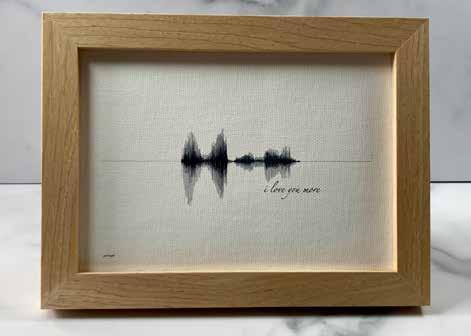
Words are powerful. Sounds evoke memories. When words and sound combine to be translated from vocal to visual, the artistic result creates an emotionally moving experience. A treasured message from a loved one can linger for years, and thanks to an inspired business called The Soundwave Booth, any words you want can be captured in the visual art of soundwaves.
Owned and run by Joel and Cindy Pendl, The Soundwave Booth translates a favorite phrase, a celebrated quote or a custom sound into the vertical lines that represent the soundwaves of that particular audible. Before you tap into your fear of hearing your own voice, the Pendls have created a line of products that are premade and ready for purchase.
Joel assures, “You don’t have to use your own voice. We do all the recording inhouse.”
The phrases are spoken and then printed in the complex pattern of lines that make up the final visual art. These products have been recorded by the Pendls and translated into a printed version of the soundwaves using high-tech engineering software. With a background in radio and television, Joel uses his technical talent to



morph engineering with art. The result is a carefully curated blend of popular phrases and custom prints to capture a moment in time or personal statement.
The Soundwave Booth offers one-of-akind artwork based on printed words and phrases, from original messages to wellknown favorites within the public domain. This line of artwork and accessories is
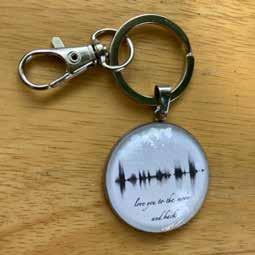


available for purchase “off the shelf,” including phrases like “It is well with my soul,” “Love you to the moon and back,” and “And so together they built a life they loved,” to name a few.
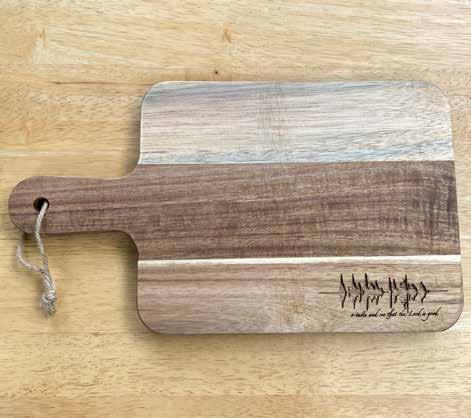
Products laser engraved with this artwork include coasters, cutting boards, baseball caps, keychains, newborn baby beanies with phrases like “You are my sunshine” engraved onto a leather patch, and more. To explore the complete product line of prints and accessories, visit thesoundwavebooth.com.
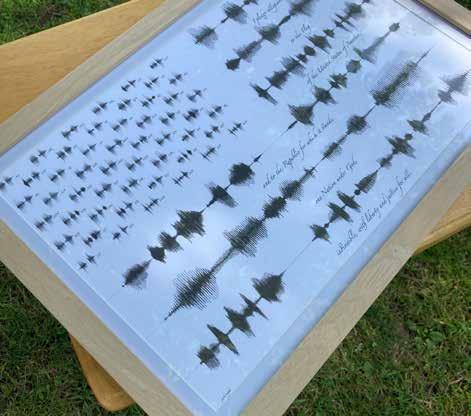
The Soundwave Booth’s American Flag series offers a selection of patriotic songs and documents displayed as a collection of soundwaves in the pattern of the stars and stripes. Each state abbreviation has been spoken to create the stars, and customers can choose from the Pledge of Allegiance, the Second Amendment, the StarSpangled Banner and more that make up the stripes of this American Flag artwork.




In addition to preprinted and engraved items, The Soundwave Booth offers custom products. From unique words or sounds that capture moments such as a baby’s first heartbeat, a pet’s bark or meow, or a final voicemail from a loved one, the Pendls can take any audio a customer has and create a keepsake that will last a lifetime. A QR code can even be added so customers can hear a loved one’s voice any time. One option is a Memorial Card — a metal plate with the custom soundwave and QR code containing the audio clip that can be adhered to a gravesite headstone.
The ordering process is simple, and the product line offers a variety of style choices. Customers choose a print, framed option or accessory for their custom soundwave. All products are created, printed, framed or engraved by the husband-and-wife team.
As unique as each piece of artwork, so
is the lifestyle the Pendls have chosen. Living entirely on the road in their camper-turned-home-on-wheelsturned-classroom, they have raised and homeschooled their children, who are now


in their teens. Over the years, the couple has traveled to art shows from Florida to California — and many stops in between — creating an educational experience for their children, who have been to all 48 of

the lower United States.
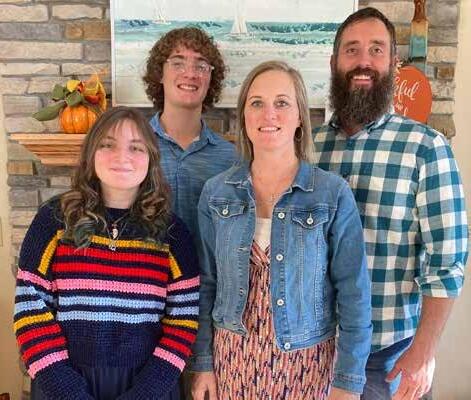
Together the Pendls, along with their 15-year-old son, Kaden, and 14-year-old daughter, Avril, call Bass Lake home for much of the summer. All the tools and techniques for their business are portable and travel with the family — from audio engineering software to everything required to do all of their own printing, product assembly, photography, website management and social media. The couple does everything themselves so they can literally live anywhere.
They enjoy going back on the road to southern states during the winter, where they enjoy the warmer weather while still running their business from home. In fact, they joke that “no one in our family owns winter clothes, because as the weather changes, so does our location!”
They plan to attend a select number of art and craft shows to continue feeding their





nomadic nature, and now that the holidays are over, they will spend a few months in a mid-Atlantic beach community that has sports facilities their son longs for while traveling. He plans to take a detour from the family travel plan once he turns 18 and attend college, living on campus for the social and sports aspects of student life. Avril, on the other hand, has expressed a desire to continue traveling once she finishes high school.
The Pendls are committed to creating beautiful artwork made of quality materials while maintaining reasonable prices ($16–$30) so that owning a unique, inspiring soundwave print can be accessible to anyone. Also a priority for the Pendls is creating uplifting artwork that doesn’t profess negativity — something customers notice.
“We come as a breath of fresh air to many customers, and that is something we are proud of,” notes Cindy.


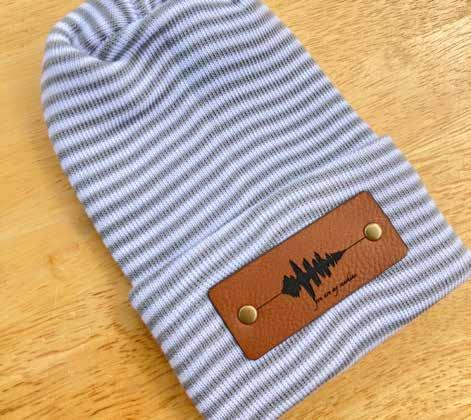



Beginning in 2025, the Pendls transformed their traveling art show business into a fully online enterprise. They are in the process of building their online presence and helping people understand how the custom side of their business works — using a customer’s audio of a loved one or beloved pet, etc. — while making sure customers know they have a full line of products available and ready to ship.
If you are looking for a unique gift this Christmas season — or any time of year — visit thesoundwavebooth.com. The “Custom Soundwaves” tab on the website guides customers through ordering. As a husband-and-wife team, the Pendls are personally available to answer any questions.
Find out more by emailing thesoundwavebooth@gmail.com.



Writer / Darcie Dodds Schott Photographer / Jubilee Edgell
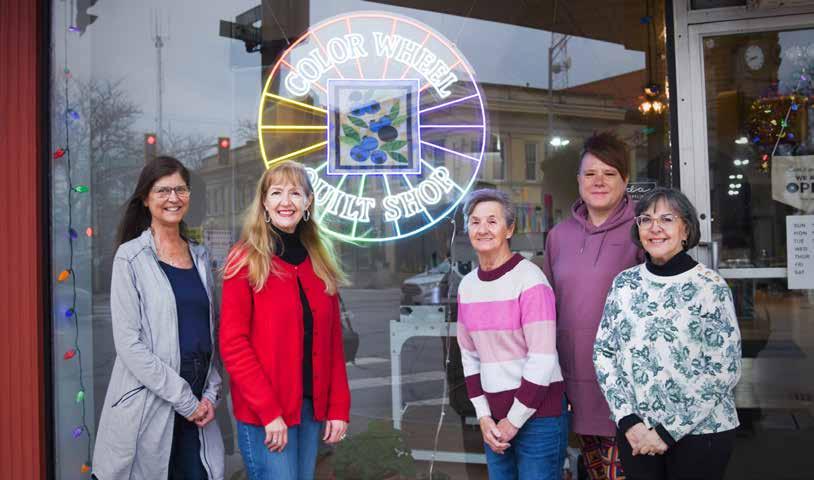
When Joann Fabrics in Plymouth closed its doors, it was time for another door to open, thought Mary Jo Finley, owner of the new Color Wheel Quilt Shop at 200 N. Michigan St. in Plymouth. “Plymouth has needed a quilt shop for a long time,” Finley acknowledges, “and the time was now.”
Finley emphasizes the importance of being
able to shop for fabric in person.
“Sewists who buy fabric want to feel the quality, see the scale of the design, see how tight or loose the weave is, and most importantly see the color,” she says. “On a computer or phone screen, the color might appear very differently in person from what you thought you were getting.”
• Commercial & Residential
• New Construction/Ponds



Another factor Finley attributes to the Color Wheel Quilt Shop’s success is its location.
“We’re in the middle of a fabric desert,” she adds.
According to Finley, the closest fabric or quilt shops where one can get fine-quality quilting cottons like the ones she carries are 25 miles


north, 35 miles south, 27 miles east and 52 miles west.
Color Wheel Quilt Shop’s slogan is: “Fabric you desire and service you deserve™.”
“When we meet with fabric manufacturers’ representatives and are deciding what fabrics we will carry, we don’t think, ‘What fabric will sell?’ We think, ‘What fabrics do our customers desire?’ Our mission in everything we do is to provide customers with the fabric they desire and to do it with the service they think they deserve,” Finley says. “When you come to the Color Wheel Quilt Shop, we want you to feel valued and special, because to us, you are special. We are honored that you have come into our shop.”
Finley speaks proudly of her staff of five employees, describing them as very capable and experienced, working very hard to make sure that when customers leave the shop, they feel like they have been helped as much as possible. Eager to help customers bring

Hours:
Monday-11am-7pm
Tuesday-11am-7pm, Prime Rib Special 4pm-7pm
Wednesday-11am-7pm
Thursday-11am-7pm
Friday-11am-7pm
Saturday-11am-7pm
574-336-6143
their quilt dreams into reality are Catina King, creative manager, Angie Beyler, business manager, Tammi Green, embroidery manager, Phyllis Pier, fabric manager, and Darlene Derifield, sewing manager.
King plays a major role in selecting fabric, notions and patterns for the store and teaches classes on how to make bags, how to freemotion quilt and others, all while helping quilters and sewists tap into their inner creativity.
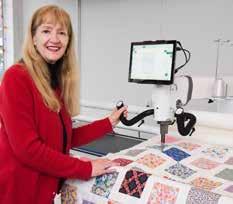
Beyler assists the shop with anything to do with the computer and general business operations. Green helps customers select which embroidery machine will suit them best and then teaches buyers how to use their embroidery machine.
“Our machines arrive in boxes, but we unpack them so that you have the opportunity to try before you buy,” Finley says. Pier is in charge of displaying the fabric and making sure there is at least one fat quarter



creameryonmain.com/14th-street-barbeque
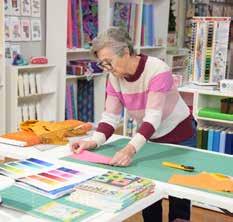
of every bolt of fabric in the shop, and assembles kits of cut and selected fabric that make it easier for customers to start a project. Derifield makes sure quilt top samples are on display and works with Pier to assemble kits to make it easier to achieve similar results. She also teaches beginning sewing and how to use a serger.
In addition to teaching appliqué and beginning quilting, Finley also cleans and




services sewing machines, pointing out that “a good cleaning can make a world of difference in how your machine sews.”
Some of the fabric lines that Color Wheel Quilt Shop carries include Free Spirit (Tula Pink, Kaffe Fassett, Anna Maria Horner), Moda, Tilda, Liberty of London, Riley Blake Designs, QT Fabrics, Northcott, P&B, Andover, Hoffman, FIGO, In the Beginning, Timeless Treasures, Michael Miller, Allison Glass, Henry Glass, Studio E, Blank, AE Nathan, Windham, Anthology and more.
“Moda makes a Grunge blender that is very popular with quilters. We are receiving approximately 48 bolts of Grunge a month until we have all 241 colors. By the end of March, we should have them all,” Finley says.
The shop has done the same thing, creating a collection with white and cream tone-ontones, batiks and Free Spirit solids. In addition to fabric and notions, Color Wheel Quilt Shop is an authorized dealer for
Italian-designed Necchi sewing, serger and embroidery machines. Necchi sells 12 models in the United States, and Color Wheel Quilt Shop carries all of them.
The Color Wheel Quilt Shop’s line of Necchi machines has been received very positively by customers. Tammi Green, shop embroidery manager, who has considerable machine embroidery expertise, evaluated the Necchi embroidery machines with high remarks, and she has produced beautiful results with the Necchi machines.
Finley shared a bit of local Necchi trivia. Quilter Tom Treat recently visited the Color Wheel Quilt Shop. (His parents, Budd and Ajean Treat, founded the wellknown Treat’s menswear store in downtown Plymouth.) Tom told Finley that in 1953, when his dad was in the Navy, stationed in the Mediterranean, he bought a Necchi sewing machine in Italy and carried it back to the United States as a gift for his wife. The machine was used for many years to alter and
tailor in their shop.
A block south of Treat’s on Michigan Street, Finley named her store the Color Wheel Quilt Shop because of the influence the color wheel has had on her quilting.
“When you purchase fabric for a quilt, it’s a big investment, and you want to be confident that it will look good when it is finished,” she says. “Using the color wheel is a good way to achieve that goal.”

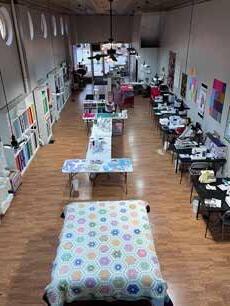
Quilt Shop, Finley’s began using a color wheel 30 years ago, when she collected discarded scraps of fabric and eventually organized them into small color-coordinating bags. The shop sells color wheels just like the one Finley first used.
“Color wheels are game changers,” she says. When Finley decided to make appliqué quilts for her granddaughters, she needed 50-weight
cotton thread in a bunch of different colors. With a local store carrying this type of thread no longer open, Finley began to search for the needed thread.
“With appliqué, the thread shows and needs to match the fabric as closely as possible in order for the quilt to look nice,” she says.
She traveled to five quilt shops in two states without success in finding the needed thread. Finley committed to making sure the Color Wheel Quilt Shop would solve this need, and it does, carrying 80 colors of 50-weight cotton.
Finley also offers quilter activities at the shop. One such upcoming event is the Super Bowl Bed Turning, noon to 4 p.m. Sunday, Feb. 8. A bed turning is a community-focused event rooted in history, when women gathered to hear about a woman’s collection of quilts. Quilters can register to participate in the February event to view and listen as Finley talks about a stack of quilts she, along with her


grandmother Aunt Tony (not an aunt, and her name is not Tony) and others made.
Registration is $50 in advance and includes fabric the participant may select after registering. Quilters may bring their own sewing machine from home, use one of the Color Wheel Quilt Shop’s Italian-designed floor models. Super Bowl refreshments will be included.
Capacity is limited, so if interested, stop by Color Wheel Quilt Shop to register soon. Finley hopes others have quilt collections they would like to bring in and describe so that Color Wheel Quilt Shop bed turnings might become a monthly event.
Color Wheel Quilt Shop is located at 200 N. Michigan St. in Plymouth. Quilters can see the thread display and everything else the shop has to offer from 11:30 a.m. to 7:30 p.m. Monday through Friday and 11:30 a.m. to 3:30 p.m. Saturday and Sunday.


•
•
•
•
•
•
•
•

•
•
•
•
•
•
•
•
•
•





















Writer / Amy Beaucham
Owner Ashlynne Gingerich

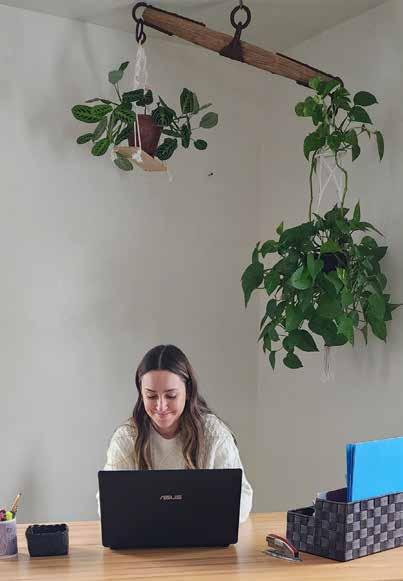
Ashlynne Gingerich is the wholistic wellness counselor behind The Flourished Root, and her message is direct from the start. On her website, one sentence reads like a steady hand on one’s shoulder: “You were not designed to feel depleted.” It is simple language, but it lands like relief — a reminder that brain fog, bloating, anxious mornings, painful cycles and that wired-but-worn-out feeling do not have to be brushed off as “just life.”
She chose the name The Flourished Root intentionally. A plant’s root system comes first. It anchors, absorbs and feeds what will eventually bloom above the surface. Gingerich’s work follows that same idea, strengthening what is underneath so a woman can flourish again.
At home, that “rooted” picture looks less like perfection and more like real life in motion. Gingerich and her husband, Sean, are raising two little boys: SJ (short for Sean Jr.), who turned 4 in January, and Asher, who is 2. She is homeschooling her oldest right now, building a business inside the same schedule most of her clients recognize — snacks, lessons, laundry and the steady hum of being needed.
The story of The Flourished Root did not begin with a business plan. It began with a young woman who could not understand why she felt so run down when she was “supposed” to feel fine.
“I didn’t have the energy that I thought I should as a 19-20-year-old girl,” Ashlynne says.
She was doing what she thought she was supposed to do.
Gingerich grew up in Indiana, spending most of her childhood in Bristol. Her parents now live in Middlebury. In high school,

she was active and athletic. She played lacrosse, loved the gym and eventually earned her certification as a personal trainer. She took nutrition classes in college, tried to “do it right,” and still kept hearing the same quiet refrain underneath it all: surely this should be working.
Instead, the symptoms kept stacking up.
“More than just feeling exhausted, I had strong sugar cravings, headaches, bloating, dizziness, anxiety and seasonal sadness,” Ashlynne says.
Pregnancy became the moment that sharpened everything. It was not an easy, picture-perfect season. It was an “I’ve had enough” moment, she says.
Gingerich says she wanted to feel better not only for herself, but so she could be the best version of herself for her husband and kids.
Her story stays relatable because she does not package it as an instant turnaround.
“Don’t get me wrong,” Ashlynne says. “I didn’t all of a sudden change everything in my life and all my symptoms went away, and I became the best mom ever. I still struggle,


and I still strive to become better and better for my family.”
What changed, she says, is that improvements began to show up — enough to keep going. She has seen progress in her mood, energy and digestive issues, and that progress fuels what she does now.
After high school, Gingerich worked in a chiropractic office and kept leaning toward alternative health. She also earned a degree in marketing while she was still figuring out how, exactly, her health passion would take shape as a career. Gingerich holds both a naturopathy certification and her HTMA professional certification. She is currently studying for her Wholistic Wellness Counselor Diploma.

Faith also threads through her perspective and her community.
Raised Catholic, Gingerich and Sean now attend Maple City Chapel.
When Gingerich talks about her work, she often sums it up as minerals, motility and the nervous system, with a mission aimed squarely at women who feel exhausted, foggy and off balance. She also has a phrase that shows up repeatedly in her teaching: God is in the details.
She is clear about what “root cause” means. High cortisol, inflammation, dysregulated hormones and leaky gut are not root causes, she explains. They are signals. Her job is to look underneath, figure out what the body is trying to communicate, then support the foundation so the symptoms can begin to calm.
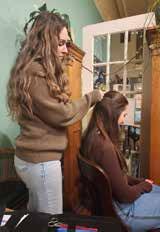
A central tool in Gingerich’s practice is Hair Tissue Mineral Analysis, usually shortened to HTMA. She describes it as the missing piece that helped her move beyond generalized advice and into individualized care. The hair sample is taken in a discreet way that does not leave a visible patch. In her words, HTMA provided “a piece of personalization to each client,” and it gave her the confidence to say she is not simply



guessing at what might help.
Part of why she chose HTMA is that it is noninvasive and captures patterns over time. Hair Tissue Mineral Analysis measures key minerals and toxic metals stored in the hair.
Gingerich explains that bloodwork often shows what is happening in the moment, while hair can reflect a longerterm snapshot.
Motility is another piece she watches closely. Digestion is not only about what you eat. It is also about movement — the coordinated process that mixes, breaks down and moves food through the digestive tract. When the nervous system stays stuck in stress mode, the body tends to prioritize survival over digestion. That is why Gingerich often includes practical nervous system support.
Supplements are not the first step in her approach. Gingerich says she prefers food-first, especially in the beginning, and

she is careful not to steer clients toward any product for personal gain.
It also matters to her to be clear about what her work is and is not. Within her scope of practice, Ashlynne says she cannot treat or diagnose disease. She positions her services for people commonly dealing with fatigue, digestive issues, painful periods and a desire for guidance and better daily health.
“This is the part I want women to understand before they assume they are too far gone or too busy to start,” she says. “I always start by listening to what a mom is walking through — her symptoms, her season of life and how much support she feels she needs.
“For women who want deeper guidance, accountability and someone to walk closely with them through the changes, oneon-one coaching is often the right fit,” Ashlynne adds. “My goal is never to push someone into a program, but to help her choose the starting point that feels doable, supportive and aligned with where she is right now.”
Gingerich also created Be Balanced for women who want a lower-cost way to keep learning and receiving steady support.

10055 Pretty Lake Trail Plymouth, IN 46563 Pretty Lake Golf Club 574-540-2682
Authentic Mexican Food Steaks, Seafood, Burgers, Wings/ Chicken, Salads, Desserts, Margaritas, Cocktails Reserve Your Holiday Parties Here Seating up up 200 people
Catering Trivia Every Thursday 6:30 PM Specials Posted on Facebook

Inside Be Balanced, members receive bite-sized guidance meant to fit real life. Root-cause lessons help women understand what may be behind fatigue, bloating, anxiety or hormone imbalance so they can stop guessing. Nourishment guides include real-food meal plans, mineral-rich recipes and grocery swaps for women who do not have hours to meal prep.
In the next year, Gingerich’s hope for The Flourished Root is to continue reaching women locally and in many states, providing virtual and in-person wellness coaching that aligns with their values and feels doable.
Ultimately, her vision is to see more women restored, more households steadied and more families thriving because a woman finally got the care she deserved.
The Flourished Root’s approach offers a calm, back-to-basics step forward in a world that often makes wellness feel loud and complicated.
For more information, visit them online at theflourishedroot.com. Clients can visit my office location at 6356 West 1150 North Milford, IN 46542 inside Purely Wholesome, where you can also check out various wellness products.









1.
32. Palindromic turkey
33. Feature of some lions
34. Part of T.G.I.F.
35. Japanese bread?
36. Game played standing 37. Gas, to a Brit 39. Mention 40. Shade
41. Tied up
Bad driver’s shout
Mah-jongg piece
Time to look ahead
Bump from office
Abu Dhabi leader
Fall from grace
Pluck
To-do
Snaky
1. Chinese gemstone 2. Aware of
Least shaky
4. Pie baker’s utensil
5. Went nowhere 6. Poetic contraction 7. Took the tiller 8. Tough 9. “That’s it!” 10. “___ so fast!”
11. Anil or woad
19. Bit of sweat 21. Doze 24. It may be heightened 25. Advanced 26. Understands
Radar screen image 28. Liturgy 29. Seek a seat 32. Strikes out 33. Better half 35. “___ rang?”
36. Sidetrack
38. Butler at Tara
39. Cuban singer Cruz
42. Like some grins 43. Disavow
44. Flight delayer, perhaps 45. Jointly owned, maybe 46. Industrial injury
48. Babysitter’s handful

• Uses a Rechargeable Power Pack (included)
• Stainless Steel Zipper
• 2 Side Zipper Pockets, 1 Inner Pocket for Battery





A&L Storage Barnsof Kendalville 901 W North St Kendallville, IN 46755
Mon–Fri: 11:00 AM–4:00 PM (260) 242-7608
A&L Storage Barns of Benton Harbor 2535 M-139 Benton Harbor, MI 49022
Mon–Fri: 1:00 PM-6:00 PM
Saturday: Closed Sunday: 2:00 PM-5:00PM (269) 921-5727
A&L Storage Barns of Kokomo 2312 N Plate St Kokomo, IN 46901
Monday & Friday: 10:00 AM–4:00 PM
Tuesday & Thursday: 10:00 AM-5:00PM
Wednesday: Closed Saturday: 10:00 AM-1:00PM Sunday: Closed Lot open for browsing 24/7 (765) 461-2286
Angola Travel Stop Angola, IN 46703 260-463-2975 X 1 ALSB@IBYFAX.COM
Maple Lane Metals 13428 Springfield Center Rd Grabill, IN 46741 260-627-5000
J&D Woodworking 27951 Wasepi Rd Centerville, MI 49022 269-432-2788
JDWoodworking@IBYFAX.com
Wormans Outdoor Solutions 5597 W. IN 24 Logansport, IN 574-601-1629
Wormansoutdoorsolutions@gmail.com

Maple Valley Garden Center 2552 E State Rd 2 Rolling Prairie, IN 46371 219-575-0139
Abom1983@gmail.com
EJ Flooring
20 W. 100 N. Winamac, IN 574-946-0111
Ejsflooring@hotmail.com
Rabers Patio 815 N VanBuren St. Shipshewana, IN 260-336-1978
Merl@raberpatios.com
Riverside Tire 14777 St Rd 49 Antwerp, OH 43518 419-258-1917
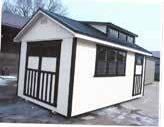

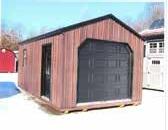
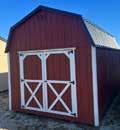
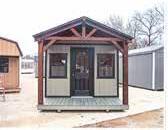
A & L storage barns is your source for high quality Amish
Renewed Marketplace 809 E. Vistula St. Bristol, IN 574-612-0367
Yoderzach4@gmail.com
Oakes Enterprise 1912 US Hwy 12 Galien, MI 269-545-9020
Greg@oakerenterprises.com
BID Jackson 3150 Page Ave. Jackson, MI 269-217-5420
Greg2401@yahoo.com




You step outside and the morning air is crisp, frost still clings to spots in your yard, and you can smell the coming rain in the air like a light perfume made by nature itself.
The birds are singing their songs and merriment at the shifting seasons, telling the world it’s time to rise and start another day. Spring time is just around the corner and aren’t we glad for it. There
is joy with every season that comes and goes, there’s no denying the excitement at the start of a brand new season though. By the time spring rolls around most of us are ready to say goodbye to the snow and hello to green grass and trees once again.
Ready to see the sun greeting us everyday even if accompanied by a heavy spring rain. Why stop at letting the change happen outside though, why not bring it
in your home to give you a sunny greeting everyday?
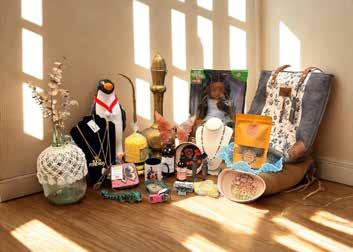
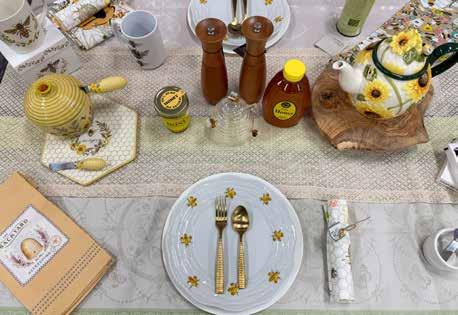
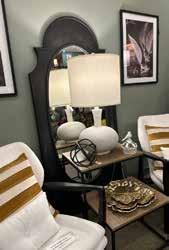
Setting your table for spring is a small act that can put a smile on your face daily, seeing little pops of yellow, florals, and some honey bees. It’s the little things in life after all that can make the biggest difference sometimes. Pictured with our article is just an example of a table setting we have in store as inspiration to do just that.

Serving as the base for the light and cheery table setting, features a GarnierThiebaut tablecloth. These tableclothes feature exquisite french craftsmanship with timeless elegance, beautiful patterns, and durability to last a lifetime. If you get the chance to see them in person, you’ll see the thought in every detail right down to the edges of the tablecloth. All throughout the table setting there are various kitchen and tea towels all with a design bent towards bees, but the best part about all of the linens is they are all 100% cotton. Beautiful and sustainable, what a perfect combination.
You may notice in the center of the table is a salt and pepper grinder set that stands out, made from a gorgeous natural wood and right here in the USA, those are none other than Fletchers Mill grinders. So beautiful in design they need no other adornments. Beside them is featured a tea pot covered in sunflowers that provide

real texture and some honey bees spotted throughout. The buzz-worthy teapot is settled on a Lipper olivewood server. The olivewood brings another aspect of nature’s natural design into the setting, as it surely would into your home as well. With proper care, the Lipper olivewood footed server would last a lifetime and never lose its elegance with all the natural whorls and swirls in the wood.
Surely not to be looked over, the hammered gold flatware from Fortessa to add a pop of shine. Switching out metals in your home from silvers to golds is such an easy way to add warmth and shine to your space while still having items that are stainless and durable for all your everyday needs.
There is so much more to this setting, and if we tried to go into all the details this article would surely be longer than what’s reasonable. From thoughtfully made napkins, mud pie trays, spreaders, and more, the best way to take it all in is to stop into the store and see it for yourself.
No photo could ever do it justice and the feeling simply can’t be conveyed into words.
With the thought of spring on the mind, if you’re looking for a local honey to help with seasonal allergies and just to support small, we’re a source for you. Carrying a variety of sizes and offering both regular and creamed honey, we’re proud to offer honey from our very own
Shipshewana area! If you’ve never tried creamed honey, then this one is a must have. Take the natural sweet flavor profile of honey but give it texture. Make it thicker and creamier, just perfect to spread on crackers, pancakes, or eat it by the spoonful!
The store has so much to offer and we can’t wait to see any one of you who decides to stop in and see it for yourself. We’re open
Monday through Saturday 9 a.m.-6 p.m. EST time.
Stay tuned for when our local farmers market starts up again, every Thursday coming soon!
If you have any questions feel free to contact the store at 574-586-2745 with any questions!















OUR HAY PELLETS ARE MADE WITH SELECT CHOICE, TOP QUALITY HAY IN OUR TOPEKA, IN FACILITY

• HAY PELLETED FOR BETTER DIGESTIBILITY
RESEARCH PROVEN & TESTED
• PELLETING INCREASES DIGESTIBILITY BY UP TO 80% AND AN INCREASE IN WEIGHT GAIN OF 10% TO 30%
• LESS WASTE
• BETTER ABSORPTION
• LESS HAY USAGE


















Writer / Jeff Kenney
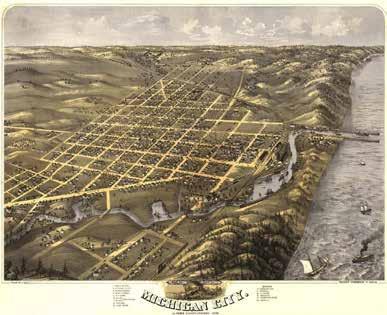
An 1860s “birds eye” view map of Michigan City, Indiana, the last stop and destination of the Michigan Road since its conception in the 1820s. The diagonal Michigan Road can be seen in the lower portion of the map.
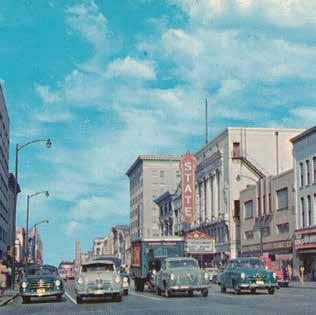
Michigan Street in downtown South Bend was also part of the Michigan Road before it turned west towards its final destination of Michigan City. Bypass highways today route traffic around the city towards such western destinations.
If you’re driving one of several stretches of area roadway, it might not be obvious that you’re driving on what was once Indiana’s first “superhighway,” or that what is today a fairly inauspicious roadway has such a critical history. But it might be interesting to look for signs. For instance, if you’re in one of the Lakes-area towns — like Plymouth or Argos (or farther up the road, South Bend) — with a “Michigan Street” running through its middle, that’s a hint. So, too, is the fact that many of the oldest houses in northern Indiana can be found along or near its path, which hints at the interesting history of people migrating through the Hoosier State.
This month marks 199 years (as of March 2) since the U.S. Congress approved an act establishing a roadway between Lake Michigan and the Ohio River “by way of Indianapolis,” utilizing a right-of-way secured via treaty with the Potawatomi people in October 1826. That makes sense, since what became known as the Michigan Road was essentially built upon longstanding “Indian trails” running north to south across the state.
It is difficult to convey how monumental the creation of the Michigan Road would become. Even if, by today’s standards, the two-lane, somewhat meandering roadway — broken up as it is by small towns and cities along its path — seems painstakingly slow compared with interstate highways or even today’s U.S. 31, in its day the Michigan Road became the pathway linking two important waterways, Lake Michigan and the Ohio River, to and within Indiana. In doing so, it opened up all of northern Indiana to travel, settlement and commerce in ways that would never have been possible without it,


including linking the new but bustling capital city of Indianapolis to economically critical ports in the northern portion of the state.
The creation of numerous counties in the Lakes area and beyond was the direct result of the Michigan Road facilitating travel by wagon and horseback to areas that had been wilderness, largely unsettled by


those of European descent.
If one finds such things interesting, paying attention to architectural and other landmarks throughout Indiana helps illustrate the story. A similar history can be seen near the Ohio River. The first Europeans traveling west from early settlements on the East Coast typically




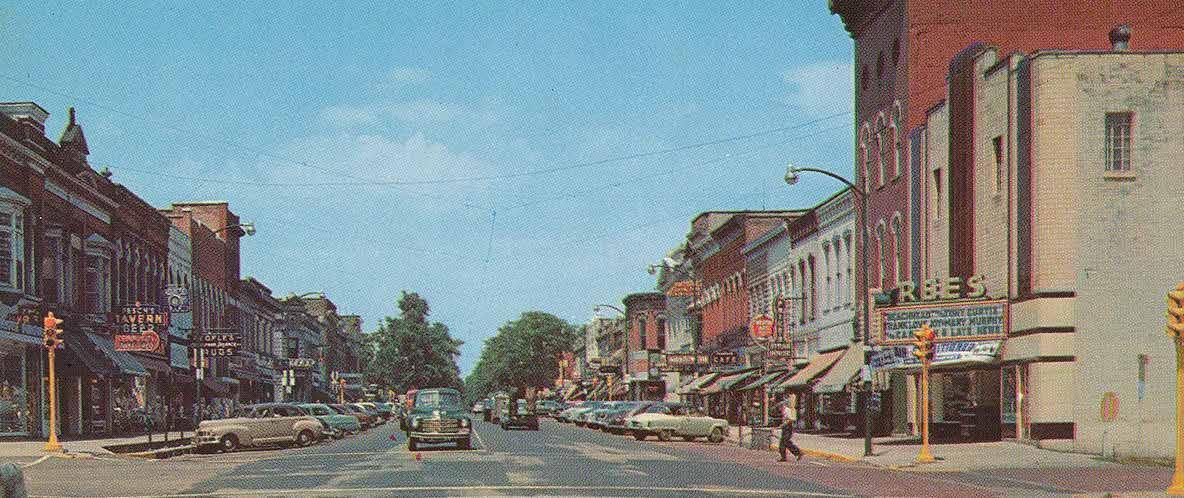
made their way by boat along that river, which forms Indiana’s southern border. If you visit areas near the river today, you’ll find some of the oldest houses and other manmade structures in the state, fanning northward as settlements grew up from the river into what had been designated as Indian Territory — all reflecting the movement of people groups gradually northward.
The presence of rivers or the Great Lakes tells a similar tale in our own area, which is why towns and cities closer to Lake Michigan or major waterways like the St. Joseph or St. Marys rivers often show
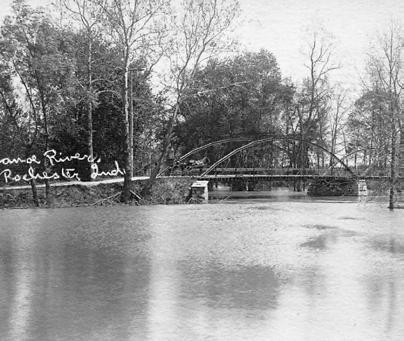
signs of much earlier settlement and history, including very old buildings.
The Michigan Road was not the first of its kind in the nation. In fact, the National Road, which would become known as the “Main Street of America,” was the first large-scale, federally funded highway when it was authorized in 1806. Over the next four decades, the road grew from Maryland through Ohio, Indiana and Illinois.


Endeavors like the national canal system — conceived as a crosscountry waterway — and the much more successful railroad system eventually supplanted grand efforts like the National Road, though the project had done much to enhance economic growth and promote settlement across the country.
Closer to home, the original Potawatomi treaty forming the Michigan Road allowed for a 100-foot-wide piece of land between Madison, Indiana, on the Ohio River, and Michigan City, Indiana,




on Lake Michigan. Ironically, the Potawatomi were forced away on part of that very road in the fall of 1838 during the infamous Trail of Death, starting south of Plymouth and moving through Rochester and Logansport. On a more positive note, the road was also used at times by enslaved people escaping north.
After an initial commission was formed to map out the road in 1828, it was surveyed the following year and construction began in 1830. A more direct route to Lake Michigan proved impossible due to the vast Grand Kankakee Marsh, which stretched southwest from near South Bend toward Illinois and made road construction through the swamp virtually impossible. Instead, the new road made its way to the south bend of the St. Joseph River — today’s city of South Bend — avoiding the marsh before heading west to Michigan City.
Along the way, it passed through approximately 270 miles of counties including Jefferson, Ripley, Decatur, Shelby, Marion, Hamilton, Boone, Clinton, Carroll, Cass, Fulton, Marshall, St. Joseph and La Porte, as well as towns and cities such as Logansport, Metea, Rochester, Argos, Plymouth, LaPaz, Lakeville, South Bend and New Carlisle, before reaching Michigan City. As previously mentioned, communities like Argos, South Bend and Plymouth retain nomenclature tied to the road, with their main thoroughfares named Michigan Street.

If the term “Michigan Road” conjures images of the nicely paved roadway that still exists today — in some areas known as “Old 31” or “Old Route 31,” which we’ll get to shortly — such was not the experience of our ancestors during the road’s first many decades.
Most of Indiana’s roads in the 19th century were narrow, muddy affairs rife with ruts and other challenges, and the Michigan Road was largely no better, even if its very existence was crucial to travel between central and northern Indiana.
One stretch of the road in Carroll County became famous as a former section of “corduroy road” — a roadway, usually in lowlying or swampy areas, “improved” by placing logs perpendicular to the direction of travel. The legendary section known as Sycamore Row was long lined with sycamore trees on both sides of the road, said to have grown from the logs used to form the corduroy surface. Despite the presence of a state historical marker, the legend connecting the trees directly to the corduroy road has more recently been questioned as historically dubious.
Still, the story illustrates the difficult conditions of 19th-century roadways, including the Michigan Road, and helps explain why more reliable railroad travel rose to prominence in the latter half of the century.
This was despite the fact that in 1836 — the same year the first pioneer families of European descent arrived from southern Indiana to the Marshall County area via the Michigan Road — Indiana’s General Assembly passed the Mammoth Internal Improvement Act, which provided funding to pave the entire road. The Panic of 1837 and other factors, however, left the state partially bankrupt, and responsibility for the road was eventually turned over to individual counties. Paving would still be many years away.
Eventually, the Michigan Road was paved, though by then dramatic changes in transportation were already underway across the state and the nation.
The influx of mass-produced automobiles, combined with widespread paving projects, brought about the end of the railroad era by the 1920s. Roads at the city, county and state levels transitioned to paved or improved gravel status almost overnight. Travel from Indianapolis to the Lakes area still took several hours, but it was worlds away from the arduous, multi-day journey of the dirt-only Michigan Road era.
As new state and national road systems crisscrossed Indiana, sections of the Michigan Road were incorporated into highways with new names. Today, following State Road 25 from Logansport to Rochester places travelers on the former Michigan Road. From there, Old U.S. 31 through Rochester into Argos and Plymouth, all the way to South Bend, traces the same path used by earlier travelers. State
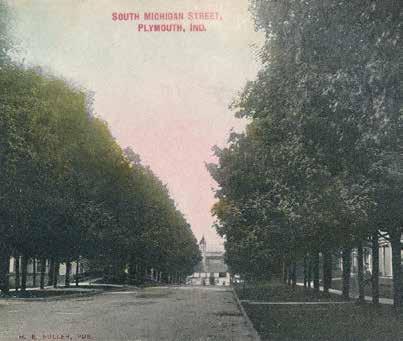
Traveling north on Rochester’s Main Street toward Argos on Old U.S. 31 leads to a bronze historical marker where the road crosses the Tippecanoe River, commemorating the Michigan Road. Nearby are remnants of an iconic one-lane bridge that spanned the river for decades. Similar historical markers trace the road’s path through counties across Indiana.
By the 20th century, portions of the Michigan Road had become Indiana State Road 1, which was renamed U.S. 31 in 1926 and connected to a north-south highway spanning much of the country. For decades into the 1960s, U.S. 31 remained a two-lane highway, bringing heavy traffic through the business districts of towns like Rochester and Plymouth.
Eventually, demands for speed and efficiency led to change. A four-lane bypass of U.S. 31 diverted traffic away from most communities along the old Michigan Road, permanently altering traffic flow after more than 150 years. By the 2000s, even that bypass required another, and today traffic speeds past what were once familiar roadside landmarks.
Driving along portions of the old Michigan Road — designated a State Byway in 2011 — now feels slow-paced and quaint, yet intriguing for history-minded explorers. For those interested, the website jimgrey.net offers an in-depth look at many facets of the road, past and present, revealing remnants of the single roadway that shaped so much of northern Indiana.
Jeff Kenney serves as museum and archives manager for Culver Academies in Culver, Indiana, and is a board member of the Culver Historical Society. He frequently speaks and writes on topics of local and regional history.

• 1 box white cake mix
• 2 large eggs
• 1/3 cup vegetable oil
• 1/4 teaspoon Kelly green gel food coloring
• 3 tablespoons granulated sugar
• 6 tablespoons powdered sugar
1. In a large bowl, mix together the cake mix, eggs, and oil until a sticky dough forms.
2. Add the green food coloring and stir until evenly mixed.
3. Cover the bowl and refrigerate for 30 minutes.
4. Preheat the oven to 350°F and line a baking sheet with parchment paper.
5. Place granulated sugar in one small bowl and powdered sugar in another.
6. Use a 1-tablespoon scoop or spoon to portion out the dough. Roll each ball in granulated sugar, then powdered sugar.
7. Arrange the dough balls on the prepared baking sheet, spacing them 2 inches apart.
8. Bake for 9-12 minutes, or until the cookies have spread and the tops have a crackled appearance.
9. Let the cookies cool on the baking sheet for 5 minutes, then Enjoy!

















Writer / Ashley Watters
Longtime Topeka resident Anthony Miller has always loved cowboys. Fascinated by the image of the Western rider and ranch hand, he spent his childhood dreaming of how to bring that wonderment to life in northern Indiana, a place with little cowboy culture to speak of. At age 9, he attended a nearby event with horses and noticed a whip maker selling his wares. Miller was immediately hooked.
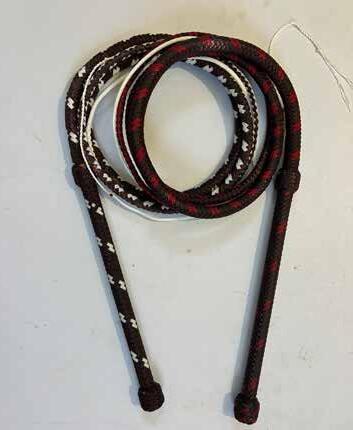
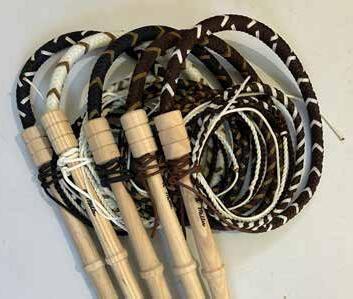
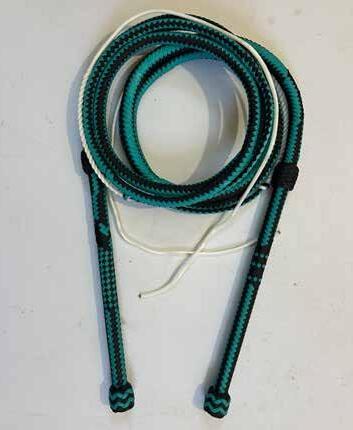
He spent his adolescent years learning to braid whips and, at age 29, operates Mudsock Leather, making handmade leather, rawhide and paracord goods.
“Around here in Indiana, we don’t have a lot of cowboys, so I was tossing around what I could do to feed my spirit. I noticed a whip maker and that got me thinking that I could do some braiding,” Miller recalls.
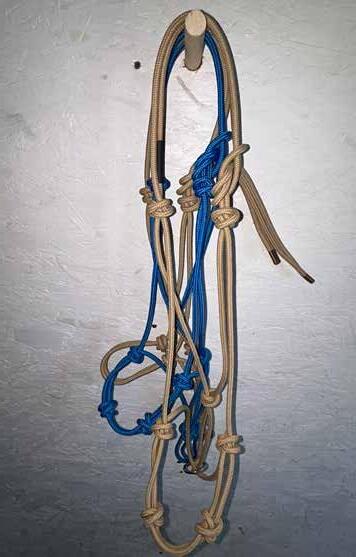
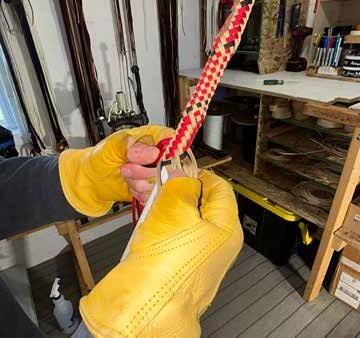

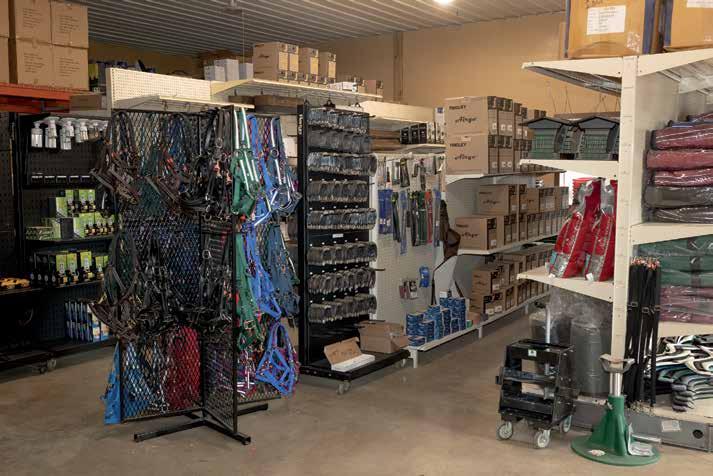
Around the time Miller turned 17, his dad introduced him to leatherwork, and he began creating a variety of bullwhips. His passion only continued, and he started Mudsock Leather in 2019. Located between Millersburg and Topeka, Mudsock Leather now offers a variety of cowboy riding tack, including rope halters, whips and hackamores, a specialized bitless bridle that guides a horse without putting pressure on the mouth.
Miller hopes surrounding and Western states will soon be calling or mailing in with their orders. He offers whips made with leather, rawhide or paracord, and he also accepts custom and large orders of any inventory. His custom orders can be made to specific sizes, coloring and applications.
“Paracord whips are by far the best investment,” Miller says. “They require little maintenance and last longer than leather. Leather whips are also a great choice, but they require more maintenance and wear out more quickly.”
Miller operates Mudsock Leather as a sole owner, but he regularly pulls in other community members to help support orders as needed. Rest assured, if you buy from Mudsock, you’re getting a quality item.
“A lot of people start a business with just a little experience, maybe a







couple of years. I started braiding when I was 9 years old, and I’m still doing it 20 years later,” he says. “I think that experience speaks volumes and gives Mudsock Leather a little bit of an edge.”
Mudsock Leather stocks regular inventory for those in the area but also accepts custom orders by mail at 6400 S. 1000 W, Topeka, or by phone at 260-593-2253, ext. 2.

Cut the Cord. Not the Content. Only $69.99 a Month – No Contracts, No Hassles.
Stop overpaying for TV. CUE gives you access to hundreds of live channels, including nationwide local channels, toptier movie channels, sports, news, and a huge library of on-demand content, all with no contracts or hidden fees, and no hassle. Whether you’re a family, a binge-watcher, or just tired of cable, enjoy endless entertainment at a price that makes sense.
Start Streaming Today
















When Gary and Kevin Schlabach launched Supreme Coatings in 2020, they were stepping away from stable work in the RV industry and into something unfamiliar. At the time, the RV business was booming, but the brothers wanted
a different pace — one that would allow flexibility, a chance to serve their neighbors, and room to build something their own way.
“Owning this business has allowed us to


step away from the fast-paced RV world while creating our own schedule and serving the community at the same time,” Gary says. “Our biggest reward is seeing our customers’ faces light up after they see their old concrete floor restored.


Getting to know our customers is really the highlight for Kevin and me.”
Supreme Coatings has become a go-to provider of high-quality concrete finishes throughout the greater South Bend area. The company offers a broad range of coatings that transform standard concrete into surfaces that look polished and stand up to years of wear.
Concrete, whether in a garage, basement, patio or pool deck, is porous and can be damaged by moisture, stains and abrasion. Coatings protect the surface, extending its life and giving it a polished finish that improves both appearance and durability.
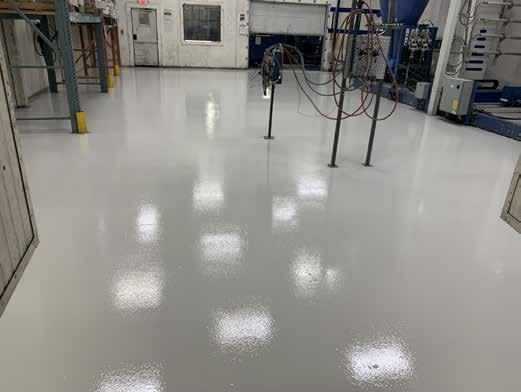
Supreme Coatings uses a polyurea polyaspartic floor covering, which cures



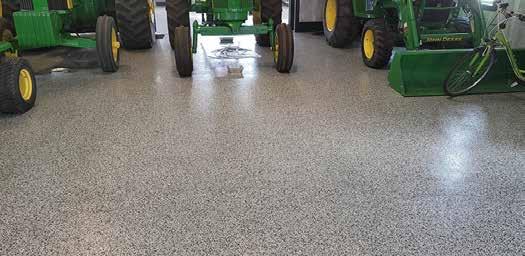
quickly and delivers protection up to five times greater than a conventional chip-and-seal epoxy. Customers can walk on floors within 24 hours and drive on them in 48 hours. This system also resists cracking, chipping and peeling over time.
Most epoxy coatings are created through a chemical reaction between an epoxide resin and a hardener, forming a rigid layer that bonds to concrete. Epoxy is durable and abrasion-resistant, making it suitable for basements or workshops. Traditional epoxy can have longer cure times and may yellow or crack under UV exposure.
Polyurea and polyaspartic coatings offer faster cure times, improved flexibility, and greater chemical and UV resistance. Polyurea coatings cure quickly and remain flexible, while polyaspartic coatings provide strength and UV stability, making them suitable for both indoor and outdoor use.




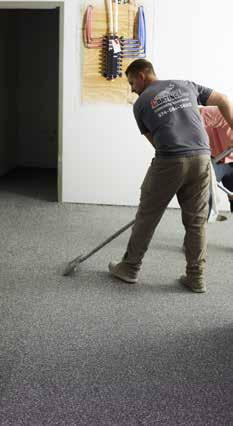
“Our polyurea polyaspartic system allows us to work faster while still delivering a finish that lasts,” Gary says. “Customers get durable floors without the long wait times that come with traditional coatings.”
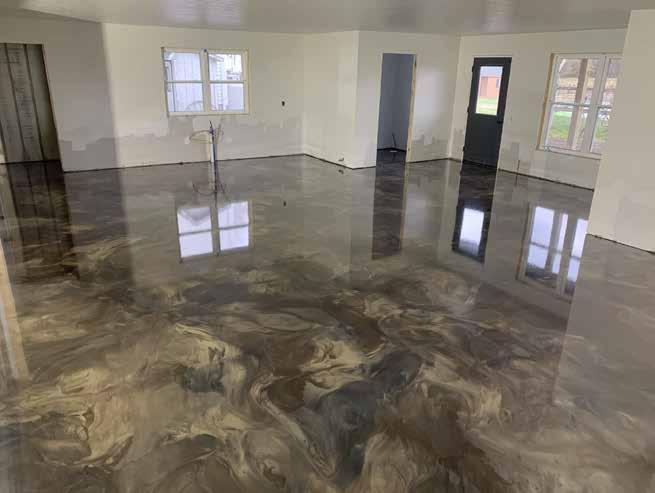
Supreme Coatings offers residential floor coatings, concrete coatings for patios and pool decks, basement and industrial floors, and commercial spaces including showrooms, gyms and factory floors. Their metallic flooring system mixes epoxy with metallic powders chosen by the client to produce custom, one-of-akind surfaces. While this product takes four to five days to fully cure, it’s ideal for spaces where design matters.
“We also offer epoxy solid-color flooring that is perfect for commercial warehousing or workspaces, and concrete polishing or grind and seal for those who want to keep that concrete look,” Gary says.




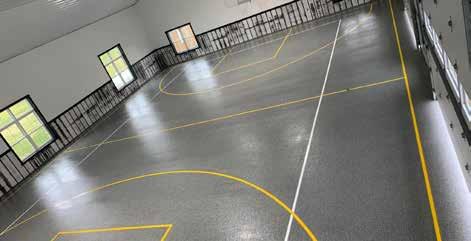
Supreme Coatings’ Facebook page highlights completed projects, showing before-and-after transformations, including black-and-white metallic finishes and custom acid stain work. These posts illustrate the company’s ability to tailor results to the client’s preferences.
Surface preparation is crucial. The team evaluates moisture levels and prepares concrete through grinding or shot blasting to ensure coatings adhere properly. Cracks and pitting are repaired before any finish
is applied, which helps the surface remain durable over time.
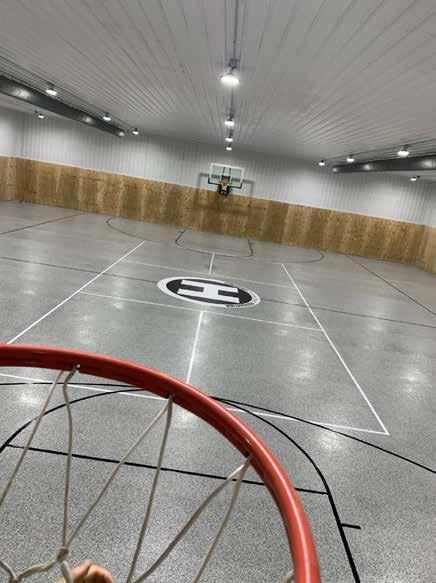
Supreme Coatings recently added acrylic sports flooring to its product line. It can be applied on concrete or asphalt, indoors or outdoors, providing traction for surfaces such as pickleball, tennis or basketball courts.
The company prioritizes both performance and aesthetics. Whether a homeowner wants a garage floor that
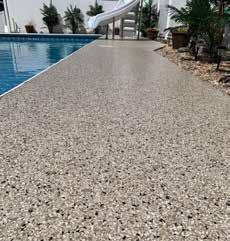
resists oil stains or a business needs a durable commercial surface, Supreme Coatings delivers solutions that combine beauty and utility.
“We’ve had customers tell us our work transformed their space,” Gary says. “That kind of feedback means everything.”
Customer reviews echo that sentiment, praising both the durability of the coatings and the team’s professionalism.





Tues-Friday 9-5 Sat 9-2
Closed Sunday and Monday

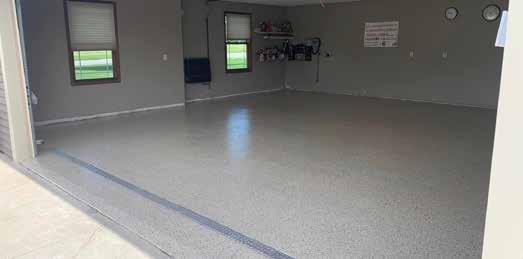
Polyurea and polyaspartic coatings represent the latest approach to concrete finishing, offering fast application, stronger chemical resistance and UV stability compared with traditional epoxy. This makes them a practical option for both high-traffic residential and commercial areas.
For any coating project, Supreme Coatings provides free, no-obligation quotes. The team brings samples, color options and textures to review before work begins. Call 574-584-5660 to schedule a visit, or visit their Facebook (@supremecoatingsLLC) page to see a gallery of projects and customer stories.
Leaving the RV industry was a calculated risk, but the Schlabach brothers have built a business on quality and customer focus. Supreme Coatings continues to bring new life to greater South Bend-area floors, making concrete stronger, more attractive and longer-lasting.
Ph:
Fax:
schwanproducts@gmail.com





• Handmade Leather Harness
• Leather Repair
• Leather Dip Tank
•
• Saddle Repairs
• Purse Repairs
•

Writer / Ashley Watters
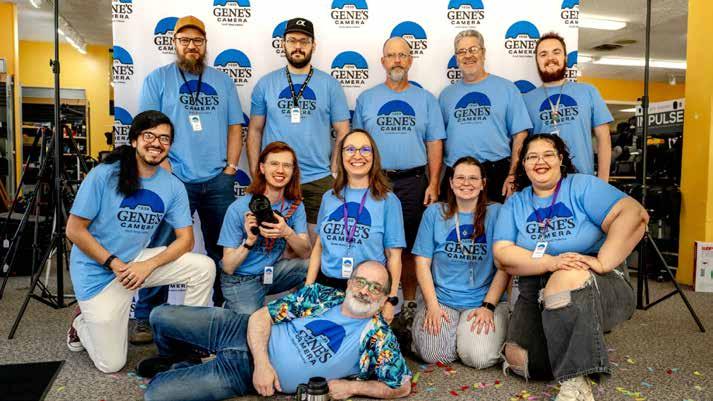
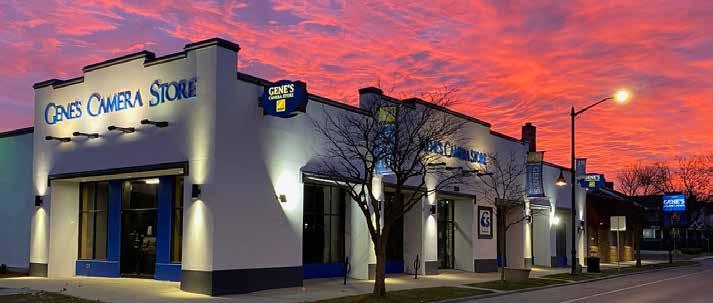
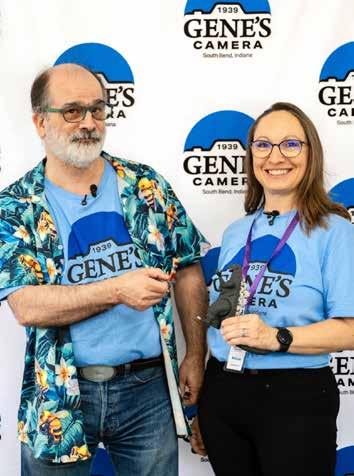
If you’re a hobbyist, amateur or professional photographer in South Bend or the surrounding areas, you’ve likely perused the aisles at Gene’s Camera. A mainstay since 1939, the local camera shop started as Picture Equipment Company. The popular store was later renamed to include Gene’s name and, after several iterations, is now Gene’s Camera. Fast-forward to today, and new owners Jon Gilchrist and Melaney Miller are continuing to make
A photographer, enthusiast and artist, Gilchrist was a familiar face at Gene’s Camera. Most days, he could be found roaming the shelves or dropping off film for developing. As a frequent visitor, his employment seemed inevitable, and one day it simply became




a reality. He was often called in to answer some of the more technical questions due to his product knowledge and expertise.
Even more naturally, he was the logical choice to take over when it was time for new ownership. After 43 years running Gene’s Camera, Barbara and Jack St. Pierre tapped Gilchrist to acquire their beloved store. His answer? No. But after a little soul-searching, Gilchrist found it was an offer he simply couldn’t refuse.
“We are professional and life partners, and taking ownership of Gene’s Camera has been a dream fulfilled. It took us a long time to figure out this was the perfect fit for us, but once we did, it seemed like it was always inevitable,” says Miller, vice president and coowner.
The new owners recently celebrated their one-year anniversary and are incredibly proud of the upgrades they’ve accomplished in a single year.
Notable updates include a new point-of-sale system to better track inventory and speed up customer fulfillment, customer service and sales training for all employees, free photo walks, photography classes, and a refreshed logo to mark the positive changes.
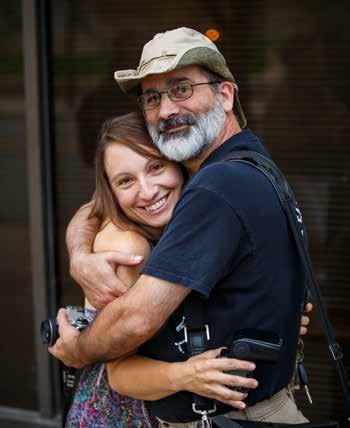



“We really want to build a community. It’s important to us that we are trusted to have everything a photographer might need in a pinch. And we want to be the go-to experts for any and every question. That’s why every member of our sales staff is involved with photography, whether as a hobbyist, amateur or professional,” Miller says.
Gilchrist and Miller hope to make even more positive changes as they head into year two. They’re hoping to reduce in-store wait times, improve order notifications, and find even more ways to engage photographers through photo contests and a customer gallery.
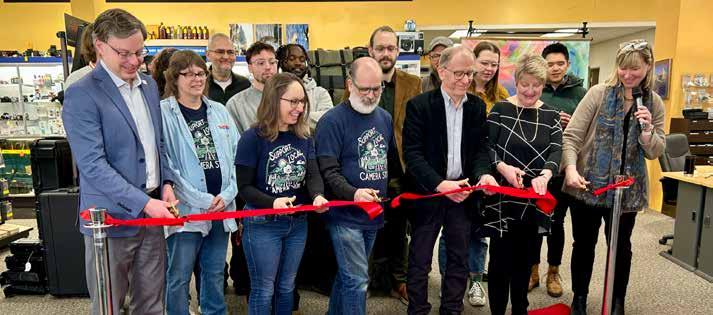


Miller also wants customers to know about improved product options, including better lighting and memory selections, as well as a partnership with a service for digitizing old movies and images. The service transfers movie reels and cleans old film to remove scratches, dirt and imperfections using a wet-gate process.
“We’re a full-service camera store. If you’ve ever taken or loved
a picture or video, we have something for you. And we’re now proud to be a destination location. As the only camera store within 68 miles, we’re honored to be a resource for the community and beyond,” Miller says.
Gene’s Camera also offers full-service printing and a robust online store. Visit genescamera.com for more information.











Writer / Amy Beaucham


574-821-1518 Freda Miller Middlebury, IN 46540


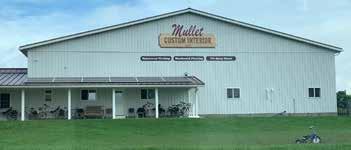
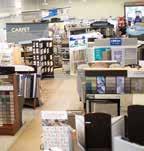
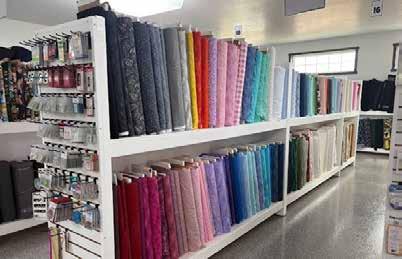
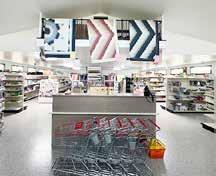
Natural light sets the tone, pouring in through purposely placed four-foot-square skylights and abundant windows. The daylight settles across rows of fabric, allowing color to show itself clearly to the eye, making it easy for customers to make choices with clarity and confidence. A gentle quiet pairs with the store’s appealing brightness, creating an environment that feels unhurried, where shoppers can think, compare, imagine and decide without feeling
This is Fabric Depot, a Middlebury-area business built for makers and for anyone who loves seeing a project come together, stitch by stitch, with books, gifts, toys and household goods available as well.
Books
Housewares
Clothing
Mon.-Fri. 8:00 - 4:30 Sat. 8:00 - 12:00
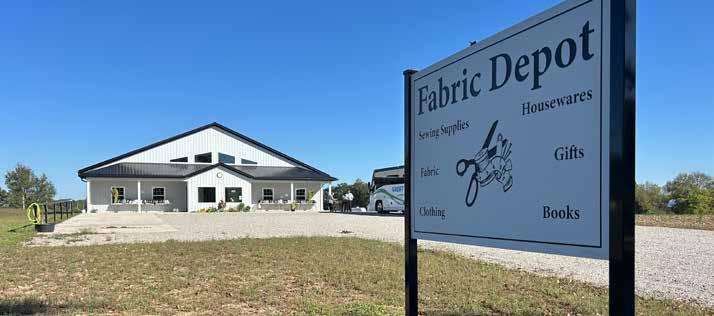
Fabric Depot sits in a rural pocket about three miles northeast of Middlebury, where Joas Miller says about 75% of the neighborhood families are of the Amish faith. The setting fits a store devoted to everyday making: cloth chosen with purpose, notions gathered with intention, a place where shopping feels less like rushing and more like selecting what will become useful in your own hands.
Long before Fabric Depot had skylights and wide aisles, the Millers already understood what a store like this meant to their community. Joas Miller and his wife, Freda Miller, grew up with the fabric store that served their area for decades, Laura’s Fabrics. For years, locals and travelers came for fabric and for the kind of variety that supports daily life — sewing needs, household items, small essentials and simple goods that save an extra stop elsewhere. When the owner decided to sell after many years serving the community, Gift
the Millers recognized an opportunity to keep that familiar resource close to home.
Rather than moving into the old space, they built new.
Construction started in November 2024 on their own property, land Joas says is part of the farm where he grew up. Their 4,800-square-foot building was completed in March 2025. The Millers moved the inventory, added more and opened the doors of Fabric Depot on April 14, 2025.
The building feels spacious and thoughtfully planned. Wide aisles make it easy to browse, even when the store is busy, and accessibility matters to the Millers in a personal way. Their daughter, Kathy, used a wheelchair for several years and died in 2023 at age 19. The Millers speak of her with tenderness, and her life — and what the family learned while caring for her — shaped practical details throughout the store: level entry, open space and aisles wide enough for easy movement, allowing people to browse without having to squeeze or sidestep.
Just inside the entrance, shoppers will notice that Fabric Depot is more than fabric. The front area includes toys, books, housewares and practical clothing pieces like socks and gloves. The back half shifts fully into fabric, with bolt after bolt arranged for browsing


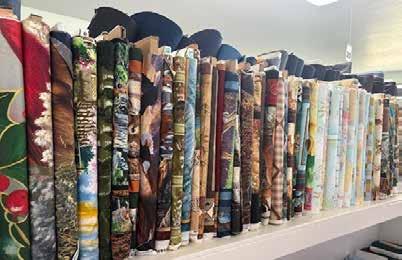
and for serious decision-making. A shopper can come in for one spool of thread and leave with yardage for a dress, a quilt plan and a few useful additions for home.
Susan W. Mosey, a reviewer, describes Fabric Depot as “much more than a fabric store. More like half fabric store, half Amish general store.” She praises the “wonderful new building — big and roomy, wide aisles, well lit, well organized,” adding that it offers “lots to see for locals and tourists alike, especially quilters.” Mosey also notes locally made quilts and original acrylic paintings by local Amish artists.



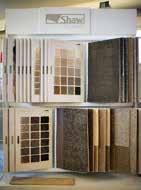
That variety becomes clear the deeper you browse. The Millers aim to stock options for a wide range of tastes and traditions, which means shoppers looking for plain, solid fabrics can browse right alongside those who prefer texture, pattern and print. Floral prints are a frequent request, and Freda keeps a number of these on hand.
Some shoppers arrive with a plan and a purpose. Others feel a spark when the right bolt catches their eye, and the project becomes easy to picture.
Certain materials have become repeat favorites. Flannel is one of the most asked-for items, especially for cozy, warm projects. Freda has also learned to keep a selection of Minky on hand, adding, “Minky is expensive, but it is very, very soft.” Panel prints draw quilters and gift-makers, too — those one-yard designs that can anchor a wall hanging, lap quilt or special present without requiring a complicated pattern. Coat linings, dress fabrics and a deep range of polyester options add to the store’s reputation for a wide selection that serves real needs, not only what happens to be popular in the moment.
Fabric Depot does not offer classes, but beginners still find help here. Freda enjoys guiding someone through a simple first project, pairing a panel with backing, offering ideas for trims and pointing out patterns that can be purchased. Questions are welcome in

person, and many orders happen by phone as well. Joas says they ship fabric and supplies as far as the West Coast and East Coast for customers who call with specific needs, sometimes requesting fabric along with coordinating items like thread and buttons.
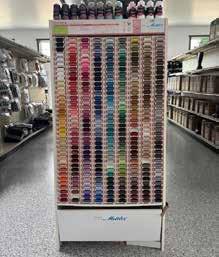
Notions matter because they are often the difference between a project that stalls and a project that gets finished. Alongside fabric, customers can find basics like thread, needles, zippers, elastic, snaps, lace, ribbon, buttons and more specialized items, too. Freda mentions fusible interfacing as a useful add-on for structure and stability in garments and craft projects. Joas also notes items that can be hard to keep in stock.
“Thread is probably the number one,” he says, with books also


moving quickly — including children’s books, coloring books, preschool workbooks, devotional books and inspirational stories.
The store’s season is shaped by its community. A one-room Amish school sits between the Millers’ house and the road, close enough that Joas says a softball sometimes flies into the parking lot. The Christmas season has been especially busy so far, along with the stretch before school starts.
Brides also play an important role in the year’s flow. Joas says Amish brides come in to select fabrics for wedding dresses and coordinated outfits, often planning color schemes well in advance. Fabric Depot offers a 10% discount for brides, and the store cuts small samples so families can take colors home and decide with confidence. Samples are not only for weddings, either. Shoppers comparing shades for any project can request small cuts to help them choose well at home. That practical service turns a big decision into a steadier one, especially when several shades need to work together.
Word of mouth has helped carry the store’s name. When shoppers leave pleased, they talk, and those conversations travel quickly through families, church districts, friend circles and quilting connections. Tour buses add another stream of introductions. A guide in Shipshewana connected with the Millers, and groups

now arrive from far beyond northern Indiana to learn more about Amish country and culture and to bring home something tangible. Even small purchases matter when a busload steps in, and the visits spread the word about a store that does not rely on heavy advertising. People also find the store through online searches, even though the Millers do not operate a full website or social media presence.
The business remains, at its heart, a family effort. Joas and Freda’s children help out as well. Two are grown: Lily, 25, teaches at a school about seven miles away, as does her brother Aaron, 24, who enjoys being an instructor there as well. Aaron recently married

Amy, and the two of them — like Lily — live close to the school. Seven children are still at home: Ina, 20; Jesse, 18; John, 16; Jane, 14; Benjamin, 12; Jacob, 8; and Caleb, 7. After school, the children help wherever they are needed, with hands that can shift from home responsibilities to the store as the afternoon picks up.
Behind the scenes, running a fabric store is its own kind of stitching — equal parts creativity and careful counting. Joas says one of the biggest challenges is deciding how much inventory to bring in each month, without years of sales patterns to consult. Freda names a different challenge that many parents recognize immediately: being needed in two places at once, with a store to help run and a home still full of children and responsibilities. Even so, the Millers describe the reward of family working together — counting inventory, serving customers and seeing the relief in someone’s face when the right material appears on the shelf.
One customer story, shared by Joas, captures that heart. An older woman who had stopped quilting after a deep loss came into the store with a friend, lonely and unsure she could return to what she once loved. Conversation opened a door. She left with what she needed to begin again — batting, backing, supplies — and now, each time she returns, the question is gentle and familiar: “How’s the quilt coming along?”

In the end, Fabric Depot feels like the kind of place that grew from a steady belief: build carefully, serve well, stay grounded. When asked what might sum up their approach, Joas shared a line of scripture from Psalm 127:1: “Except the Lord build the house, they labor in vain that build it.”
For shoppers across the Lakes West area — quilters, garmentmakers, crafters, gift-hunters and the simply curious — Fabric Depot offers something increasingly rare: daylight that helps you choose true color, space to think clearly and the quiet satisfaction of selecting cloth with purpose and notions with intention, knowing what you carry home is meant to become useful in your own hands.
Fabric Depot is located at 54524 County Road 43 in Middlebury. For more information, call 574-821-1518.










FOR UPDATES REGARDING EVENTS PLEASE CHECK THE LAKE ASSOCIATION’S/ ORGANIZATIONS FACEBOOK PAGES/WEBSITES.
Note, ALL Times listed are EASTERN.
7
9am – 3pm – 2026 Elkhart County Garden Expo at the Faith United Methodist Church located at 22945 County Road 18, Goshen, IN. The Expo will feature well-known speakers, educational workshops, and opportunities to shop from a variety of vendors throughout the day. Lunch and coffee available for purchase.
14
10a – 1p – The Sap Run & Syrup Stroll at the Maple Wood Nature Center located at 4550 E 100 S, LaGrange, IN. Packet pick-up starts at 9:15am and the race starts at 10am. Come enjoy an early spring walk or run through the maple woods! Syrup season will be in full swing so we hope the sap will be running along with us. All ages and abilities are welcome.
28
9am – 3pm – Ship-Chic Spring Craft Show at the Shipshewana Flea Market Grounds located at 345 S Van Buren St, Shipshewana, IN. Old stuff, new stuff and awesome stuff all picked with quality in mind. Come shop authentic products and meet the folks who are selling them. $5 per person at the door, kids 14 and under are free.
4
9:30a – 11a – Nature Nuts: Teeth. Preschoolers will investigate how and what animals eat. Explorations will include skulls, a story, craft, and snack. $4 per child. Ox Bow Park located at 23033 C.R. 45, Goshen, IN.
13
1p – 3p – Books & Boots Each meeting will include a book discussion followed by a park-led activity exploring one of the book’s environmental themes. Activities could include hikes, live animals, and more. Ox Bow County Park located at 23033 CR 45, Elkhart, IN.
17
4p – 7p – St. Patrick’s Day Scavenger Hunt. There will be a creative family hunt and a clue challenge hunt. Both are photo challenges, so bring your camera. Complete rules can be found at elkhartcountyparks.org. Meet at Ox Bow Haus Shelter in Ox Bow Park located at 23033 C.R. 45, Goshen, IN.
27
7:30p – 8:30p – Sandhill Crane Hike. See a hundred or more of these magnificent creatures as they use this nature preserve as a spring stopover on their way north. Please come dressed for the weather and a hike. Please bring binoculars if you have them. Located at Book Lake Nature Preserve 51430 Co Rd 3, Elkhart, IN.





MARCH - Village Madness. Shop the Village this march for your chance to win a Village gift basket valued at $1,000. To enter, pick up a Village Madness Passport at any of our shops or eateries and start shipping to collect passport stamps. 700 Park Ave, Winona Lake, IN.
14
12p – 4p – The Groovy Market will be selling funky, vintage, and groovy themed products. There will be 90s Photo ops, groovy drinks and food, old school music, vintage clothing and crafts. This will be held at the Kosciusko County Fairgrounds located at 1400 E Smith St, Warsaw, IN.
14
6p – 11p – St. Patrick’s Day Brew and Stew in Kendallville.
21
Hubie Ashcraft Band Fundraiser. Black Pine Animal Sanctuary event at Sylvan Cellars & Event Center in Rome City. Tickets are $20 and limited to 200, so don’t wait. Have a great night with friends and help captive-raised exotic animals have a safe and healthy environment for the rest of their lives.
14
9a – 5p – Growing Summit 2026. Come for a day of free classes on topics like cooking, nutrition, native plants and animals, nature, gardening and more. Located at the St. Joseph County Public Library and Community Learning Center 304 S Main St. South Bend, IN.
19
5:30p – 7:30p – 2026 Mom Son Dance. Sons and their mothers or mother figures are invited for a fun night out with a live DJ, giveaways, treats, photo ops, and so much more located at Palais Royale 105 W Colfax Ave, South Bend, IN.
28 & 29
9a – 2026 South Bend Auto Show $10 at the door. Explot the region’s top musle cars, vintage classics, race cars, custom builds, and bikes all under one roof. Concessons will be available for purchase. Located at the Century Center Convention Center 120 South Dr. Martin Luther King Jr Blvd, South Bend, IN
30
5p – 8p – Fondue Night at IRONHAND wine bar. Joind us for a cozy evening filled with delicious melted cheese and wine. Time slots are 5p, 6p, 7p, and 8p. Tickets required $35 per person.
Apartment