
















john@townepost.com
mandi@townepost.com (574) 249-9217
tom@townepost.com (317) 496-3599
JEANNE BRITT jeanne@townepost.com (317) 810-0011








john@townepost.com
mandi@townepost.com (574) 249-9217
tom@townepost.com (317) 496-3599
JEANNE BRITT jeanne@townepost.com (317) 810-0011

Writer / Meredith Baker
On the quiet backroads outside Nappanee, where tidy porches and agricultural landscape still signal pride in the everyday, one small business has become a surprising lifeline for families, seniors, business professionals, and anyone who’s ever stared down an overflowing mountain of laundry with a sense of dread. Sud’s Laundry Service, LLC, owned and operated by Cheryl Miller, has turned one of the most unglamorous parts of home life into
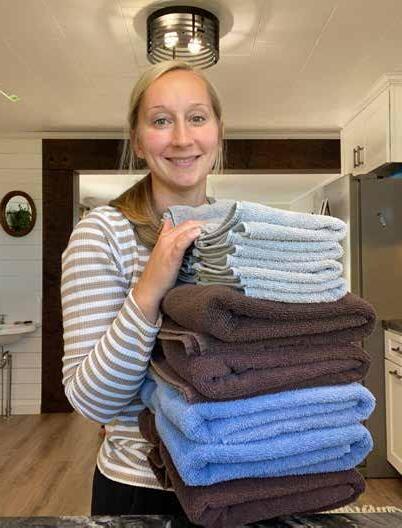
something that feels like a luxurious fivestar treatment.
And it began with nothing more revolutionary than virtual inspiration from internet research.
Miller remembers that moment well. As a mom with two kids, she stopped mid-video of an influencer discussing side hustles, which included washing other people’s laundry. Then she thought about it a little longer. “People are juggling a lot,” she
says. “If there’s one thing I’m good at, it’s getting laundry done right.” What started as a lightbulb moment snowballed into a full-fledged business that now serves households across Elkhart County and beyond.
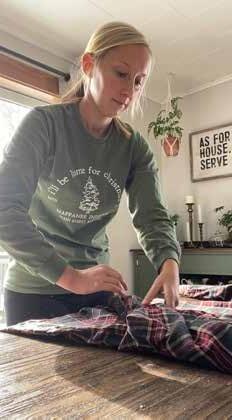
The idea behind Sud’s Laundry Service is straightforward: Cheryl picks up your laundry in a 13-gallon trash bag, washes, dries and folds it neatly, lets you know that

24 to


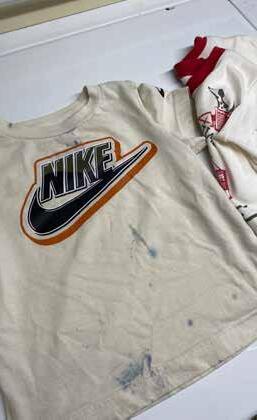
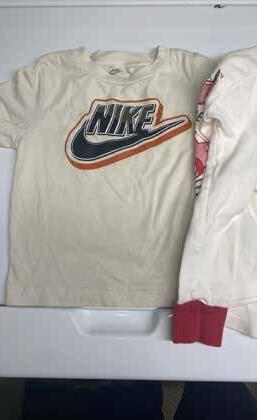
your service is complete, and delivers it right back to your door. Clients can choose one-time pickups or sign up for weekly or monthly programs. She even supplies the detergent and light stain removal as needed; ironing services are also available for anyone who still wants crisp shirts without wrestling with an ironing board.
Miller treats every job with the level of detail and concern usually reserved for bakers or woodworkers.
“Every load belongs to a real person, not just a pile of fabric,” she says. She sorts every item carefully, checks pockets like a seasoned detective, and pays attention to fabric types the way a mechanic listens for engine sounds. “Care matters,” she adds. “People trust me with the things they wear. I don’t take that lightly.”
Clients — especially those balancing long workdays, school pickups, elderly parents, traveling professionals and endless




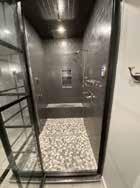

schedules — say the service offers more than convenience. Some describe it as a weekly reset button, the
and a
Miller has built her customer base mostly through word of mouth. Neighbors mention it to neighbors. Teachers tell other teachers. A nurse shares her relief that clean scrubs magically reappear on her porch, neatly piled.
“When something helps you breathe easier, you tend to talk about it,” she says.
Over the years, she’s learned that the small details make a big difference — folding kids’ outfits together so they can grab clothing faster in the morning, or calling ahead if a newly discovered mosaic of wrinkles the week before a big event requires a skillful hand.
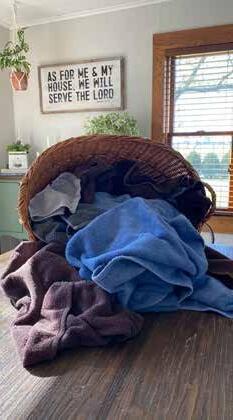




Most clients never see the behind-thescenes — the steady hum of washers or the soft percussion of towels being folded into neat, picture-worthy squares. But they feel the effects. A widower who recently lost his wife taped a thank-you note to his laundry bag as he copes with managing chores amidst the loss of a lifetime partner.
“It’s humbling,” Miller says. “Laundry is personal. People let you into their real lives, the messy parts and even the meaningful ones.”
Sud’s Laundry Service fits naturally into the fabric of Nappanee, a town built on resourcefulness, steady work and the idea that helping one another isn’t complicated. Miller’s business may be small, but its impact stretches far beyond the baskets she carries.
Her hope is to continue serving more households, especially during busy seasons like holidays, harvest time and
back-to-school months, when chores tend to pile up faster than anyone plans.
“If I can give somebody a couple of hours back in their week, that matters,” she says. “Time is one thing you can’t wash, dry or fold.”
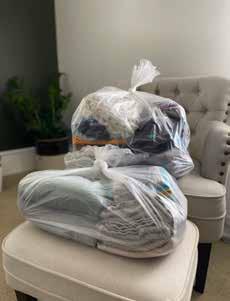



Laundry service provides pickup and delivery throughout the greater Nappanee community. To get started, call or text 574-354-7584. You can also follow Sud’s Laundry Service, LLC, on Facebook or Instagram for updates, service details and helpful reminders.

















When Gary and Kevin Schlabach launched Supreme Coatings in 2020, they were stepping away from stable work in the RV industry and into something unfamiliar. At the time, the RV business was booming, but the brothers wanted


a different pace — one that would allow flexibility, a chance to serve their neighbors, and room to build something their own way.
“Owning this business has allowed us to
step away from the fast-paced RV world while creating our own schedule and serving the community at the same time,” Gary says. “Our biggest reward is seeing our customers’ faces light up after they see their old concrete floor restored.





Getting to know our customers is really the highlight for Kevin and me.”
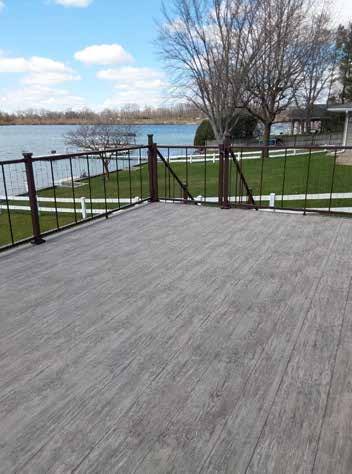
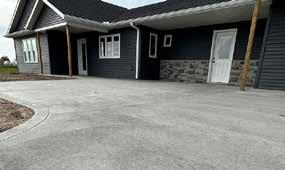
Supreme Coatings has become a go-to provider of high-quality concrete finishes throughout the greater South Bend area. The company offers a broad range of coatings that transform standard concrete
into surfaces that look polished and stand up to years of wear.
Concrete, whether in a garage, basement, patio or pool deck, is porous and can be damaged by moisture, stains and abrasion. Coatings protect the surface, extending its life and giving it a polished




finish that improves both appearance and durability.
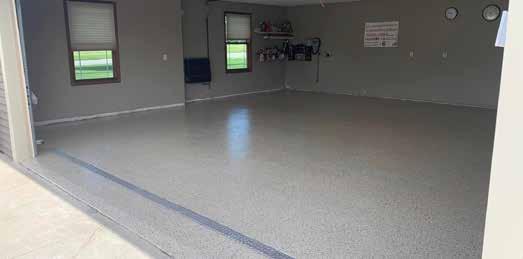
Supreme Coatings uses a polyurea polyaspartic floor covering, which cures quickly and delivers protection up to five times greater than a conventional chip-and-seal epoxy. Customers can walk on floors within 24 hours and drive on them in 48 hours. This system also resists cracking, chipping and peeling over time.
Most epoxy coatings are created through a chemical reaction between an epoxide resin and a hardener, forming a rigid layer that bonds to concrete. Epoxy is durable and abrasion-resistant, making it suitable for basements or workshops. Traditional epoxy can have longer cure times and may yellow or crack under UV exposure.
Polyurea and polyaspartic coatings offer faster cure times, improved flexibility, and greater chemical and UV resistance. Polyurea coatings cure quickly and remain flexible, while polyaspartic



• Breakfast Stack • Brunch • Thrasher Dinner • Chicken Dinner • Haystack Dinner • Pies

coatings provide strength and UV stability, making them suitable for both indoor and outdoor use.
“Our polyurea polyaspartic system allows us to work faster while still delivering a finish that lasts,” Gary says. “Customers get durable floors without the long wait times that come with traditional coatings.”
Supreme Coatings offers residential floor coatings, concrete coatings for patios and pool decks, basement and industrial floors, and commercial spaces including showrooms, gyms and factory floors. Their metallic flooring system mixes epoxy with metallic powders chosen by the client to produce custom, one-of-akind surfaces. While this product takes four to five days to fully cure, it’s ideal for spaces where design matters.
“We also offer epoxy solid-color flooring that is perfect for commercial




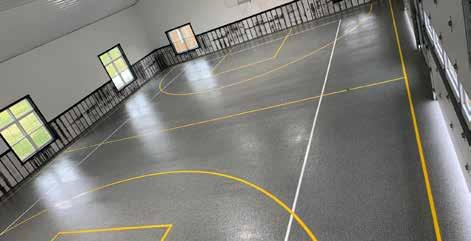


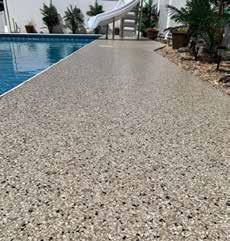
warehousing or workspaces, and concrete polishing or grind and seal for those who want to keep that concrete look,” Gary says.
Supreme Coatings’ Facebook page highlights completed projects, showing before-and-after transformations, including black-and-white metallic finishes and custom acid stain work. These posts illustrate the company’s ability to tailor results to the client’s preferences.
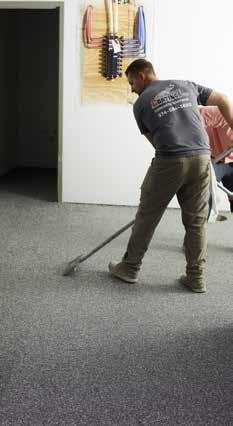
Surface preparation is crucial. The team evaluates moisture levels and prepares concrete through grinding or shot blasting to ensure coatings adhere properly. Cracks and pitting are repaired before any finish is applied, which helps the surface remain durable over time.
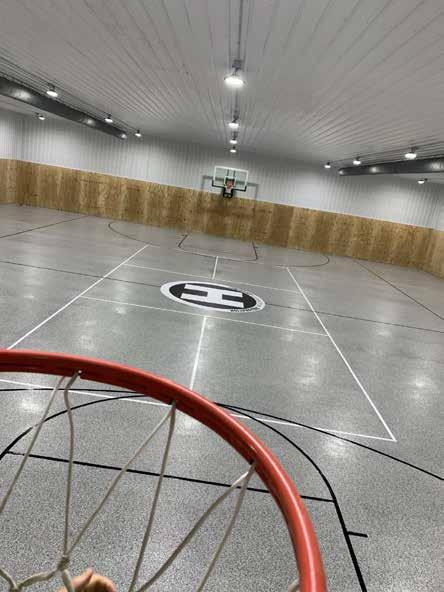
Supreme Coatings recently added acrylic sports flooring to its product line. It can be applied on concrete or asphalt, indoors or outdoors, providing traction for surfaces such as pickleball, tennis or basketball courts.
The company prioritizes both performance and aesthetics. Whether a homeowner wants a garage floor that resists oil stains or a business needs a durable commercial surface, Supreme Coatings delivers solutions that combine beauty and utility.
“We’ve had customers tell us our work transformed their space,” Gary says. “That kind of feedback means everything.”
Customer reviews echo that sentiment, praising both the durability of the coatings and the team’s professionalism.
Polyurea and polyaspartic coatings represent the latest approach to concrete finishing, offering fast application, stronger chemical resistance and UV stability compared with traditional epoxy. This makes them a practical option for both high-traffic residential and commercial areas.
For any coating project, Supreme Coatings provides free, no-obligation quotes. The team brings samples, color options and textures to review before work begins. Call 574-584-5660 to schedule a visit, or visit their Facebook (@supremecoatingsLLC) page to see a gallery of projects and customer stories.
Leaving the RV industry was a calculated risk, but the Schlabach brothers have built a business on quality and customer focus. Supreme Coatings continues to bring new life to greater South Bend-area floors, making concrete stronger, more attractive and longer-lasting.









AKA Polish Mistakes, Sausage Snacks, (and some other less appropriate names for print, haha)
INGREDIENTS
• 1 lb. ground beef
• 1 lb. ground hot sausage
• 1 lb. Velveeta
• 1 teaspoon Worcestershire sauce
• 1 teaspoon oregano
• ½ teaspoon garlic salt
• ½ teaspoon salt
• 1 loaf party rye bread
• Chopped parsley (optional)
INSTRUCTIONS
1. Place the ground beef and ground hot sausage in a large skillet over medium heat.Cook until browned and cooked through, breaking the meat up as it cooks.
2. Cut the Velveeta into cubes.
3. Once the meat is cooked, drain off the grease.
4. Add the Velveeta, and continue to cook until the Velveeta is melted.
5. Stir in the Worcestershire sauce, oregano, garlic salt, and regular salt.
6. Preheat broiler to high.
7. Line a baking sheet with slices of rye bread.
8. Place a 2-tablespoon-sized scoop of the cheese and meat mixture onto each slice of bread, spread out to cover most of the bread slice.
9. Broil the appetizers until hot and bubbly, about 2–3 minutes. Watch carefully so they don’t burn! Note: If you don’t want to use a broiler, bake for 15–18 minutes at 350°F.
10. If desired, sprinkle with fresh or dried chopped parsley after baking and Enjoy!












Writer / Amy Beaucham


Ashlynne Gingerich is the wholistic wellness counselor behind The Flourished Root, and her message is direct from the start. On her website, one sentence reads like a steady hand on one’s shoulder: “You were not designed to feel depleted.” It is simple language, but it lands like relief — a reminder that brain fog, bloating, anxious mornings, painful cycles and that wired-but-worn-out feeling do not have to be brushed off as “just life.”
She chose the name The Flourished Root intentionally. A plant’s root system comes first. It anchors, absorbs and feeds what will eventually bloom above the surface. Gingerich’s work follows that same idea, strengthening what is underneath so a woman can flourish again.
At home, that “rooted” picture looks less like perfection and more like real life in motion. Gingerich and her husband, Sean, are raising two little boys: SJ (short for Sean Jr.), who turned 4 in January, and Asher, who is 2. She is homeschooling her oldest right now, building a business inside the same schedule most of her clients recognize — snacks, lessons, laundry and the steady hum of being needed.
The story of The Flourished Root did not begin with a business plan. It began with a young woman who could not understand why she felt so run down when she was “supposed” to feel fine.
“I didn’t have the energy that I thought I should as a 19-20-year-old girl,” Ashlynne says.
She was doing what she thought she was supposed to do.
Gingerich grew up in Indiana, spending most of her childhood in Bristol. Her parents now live in Middlebury. In high school, she was active and athletic. She played lacrosse, loved the gym and eventually earned her certification as a personal trainer. She took nutrition classes in college, tried to “do it right,” and still kept hearing the same quiet refrain underneath it all: surely this should be working.
Instead, the symptoms kept stacking up.
“More than just feeling exhausted, I had strong sugar cravings, headaches, bloating, dizziness, anxiety and seasonal sadness,” Ashlynne says.
Pregnancy became the moment that sharpened everything. It was not an easy, picture-perfect season. It was an “I’ve had enough” moment, she says.
Gingerich says she wanted to feel better not only for herself, but so she could be the best version of herself for her husband and kids.
Her story stays relatable because she does not package it as an instant turnaround.
“Don’t get me wrong,” Ashlynne says. “I didn’t all of a sudden change everything in my life and all my symptoms went away, and I became the best mom ever. I still struggle, and I still strive to become better and better for my family.”
What changed, she says, is that improvements began to show up — enough to keep going. She has seen progress in her mood, energy and digestive issues, and that progress fuels what she does now.
After high school, Gingerich worked in a chiropractic office and kept leaning toward alternative health. She also earned a degree in marketing while she was still figuring out how, exactly, her health passion would take shape as a career.

• Boat Covers
• Boat Enclosures
• Boat Lift Covers
• Custom Trucker Tie Down Straps
• Rollease Shade Systems
• Overhead Door Screens
• Trampoline Mats
• Bimini Tops




Gingerich holds both a naturopathy certification and her HTMA professional certification. She is currently studying for her Wholistic Wellness Counselor Diploma.
Faith also threads through her perspective and her community.
Raised Catholic, Gingerich and Sean now attend Maple City Chapel.
When Gingerich talks about her work, she often sums it up as minerals, motility and the nervous system, with a mission aimed squarely at women who feel exhausted, foggy and off balance. She also has a phrase that shows up repeatedly in her teaching: God is in the details.

She is clear about what “root cause” means. High cortisol, inflammation, dysregulated hormones and leaky gut are not root causes, she explains. They are signals. Her job is to look underneath, figure out what the body is trying to communicate, then support the foundation so the symptoms can begin to calm.
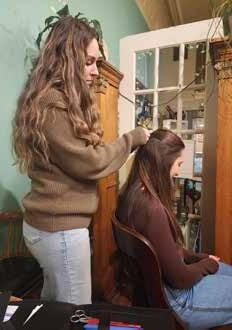
A central tool in Gingerich’s practice is Hair Tissue Mineral Analysis, usually shortened to HTMA. She describes it as the missing piece that helped her move beyond generalized advice and into individualized care. The hair sample is taken in a discreet way that does not leave a visible patch. In her words, HTMA provided “a piece of personalization to each client,” and it gave her the confidence to say she is not simply guessing at what might help.
Part of why she chose HTMA is that it is noninvasive and captures patterns over time. Hair Tissue Mineral Analysis measures key minerals and toxic metals stored in the hair.
Gingerich explains that bloodwork often shows what is happening in the moment, while hair can reflect a longer-term snapshot.
Motility is another piece she watches closely. Digestion is not
only about what you eat. It is also about movement — the coordinated process that mixes, breaks down and moves food through the digestive tract. When the nervous system stays stuck in stress mode, the body tends to prioritize survival over digestion. That is why Gingerich often includes practical nervous system support.
Supplements are not the first step in her approach. Gingerich says she prefers food-first, especially in the beginning, and she is careful not to steer clients toward any product for personal gain.





It also matters to her to be clear about what her work is and is not. Within her scope of practice, Ashlynne says she cannot treat or diagnose disease. She positions her services for people commonly dealing with fatigue, digestive issues, painful periods and a desire for guidance and better daily health.
“This is the part I want women to understand before they assume they are too far gone or too busy to start,” she says. “I always start by listening to what a mom is walking through — her symptoms, her season of life and how much support she feels she needs.
“For women who want deeper guidance, accountability and someone to walk closely with them through the changes, oneon-one coaching is often the right fit,” Ashlynne adds. “My goal is never to push someone into a program, but to help her choose the starting point that feels doable, supportive and aligned with where she is right now.”
Gingerich also created Be Balanced for women who want a lower-cost way to keep learning and receiving steady support.
Inside Be Balanced, members receive bite-sized guidance meant to fit real life. Root-cause lessons help women understand what may be behind fatigue, bloating, anxiety or hormone imbalance


so they can stop guessing. Nourishment guides include real-food meal plans, mineralrich recipes and grocery swaps for women who do not have hours to meal prep.

In the next year, Gingerich’s hope for The Flourished Root is to continue reaching women locally and in many states, providing virtual and in-person wellness coaching that aligns with their values and feels doable.
Ultimately, her vision is to see more women restored, more households steadied and more families thriving because a woman finally got the care she deserved.
The Flourished Root’s approach offers a calm, back-to-basics step forward in a world that often makes wellness feel loud and complicated.
For more information, visit them online at theflourishedroot.com. Clients can visit my office location at 6356 West 1150 North Milford, IN 46542 and Purely Wholesome, where you can also check out various wellness products.










very year there comes a time in late spring when the air gets warmer and the days get longer, and plans point to spending time on the water again. What better way to beat the winter blues than to start preparing to hit the water for family fun, fishing and more.
Wyland’s Marine in Elkhart and Mishawaka is the one-stop shop to answer those nautical needs. From new and preowned watercraft sales, service and even financing, Wyland’s Marine is a comprehensive company serving water activity enthusiasts for 85 years.
Wyland’s Marine has been family owned and operated since 1941. Earl Wyland first opened Wyland’s Marine on U.S. 33 in Elkhart, selling Evinrude outboards along with hunting and fishing gear. In 1983, the Wyland family acquired Bulldog Marina on Jackson St. in Elkhart along the St. Joseph River, where the original store still stands today. San Pan and Aqua Patio pontoons were the main seller in those days.
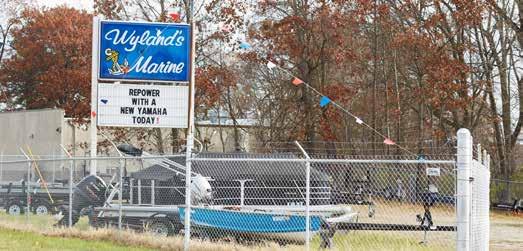
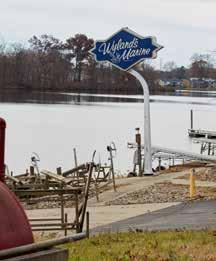
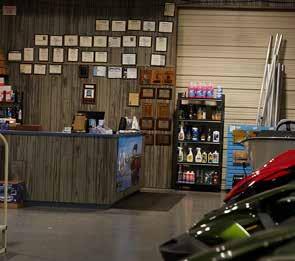










A decade later, in 1993, a second location opened in Mishawaka, also along the St. Joseph River, and both stores are still in operation today, with plans to open a third location in southern Michigan soon.
Today, this impressive full-service marine business is helmed by Owner Steve Wyland, and run by General Manager Tim Buzalski, Office Manager Taylor Wyland and Sales Manager Abe Buzalski.
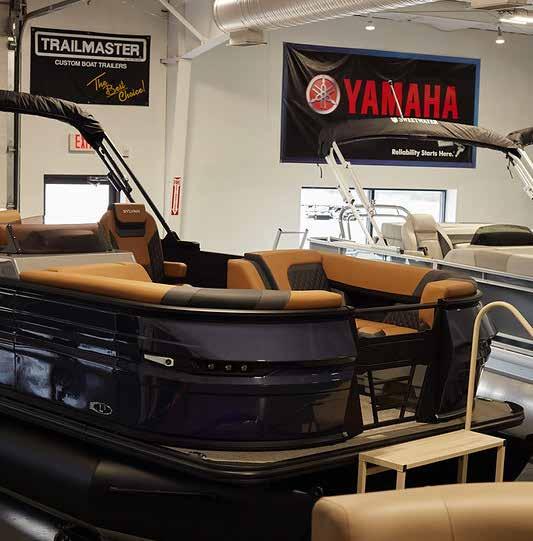
Wyland’s Marine sells a variety of watercraft and equipment. Watercraft lines include Bennington, Godfrey, Evotti and Sylvan pontoons, as well as Hurricane deck boats, Yamaha outboards and Kawasaki jet skis. Boats can be customized with items such as the Lillipad Ladders and diving boards, which they sell. Customers can also find RGC boat lifts and docks, and Trailmaster trailers at Wyland’s.
In addition to watercraft and equipment

Hours:
Monday-11am-7pm
Tuesday-11am-7pm, Prime Rib Special 4pm-7pm
Wednesday-11am-7pm
Thursday-11am-7pm
Friday-11am-7pm
Saturday-11am-7pm





sales, Wyland’s offers full boat and engine service with their factory-trained technicians and service personnel. Additional services include repowering older boats with new motors, installing electric bimini tops, and new boat covers and canvas.
“We are always looking for younger folks interested in becoming mechanics,” Buzalski says.
And if all this doesn’t make the argument for Wyland’s Marine being a one-stop shop for all things water activity, add to the list annual watercraft maintenance such as detailing and algae build-up removal, boat lift and dock installation, winterization service and inside boat storage. In fact, Wyland’s Marine has the capacity to store over 800 boats inside their clean, metal storage buildings for the winter. Pickup and delivery are available with or without a personal trailer.
Rental needs are covered on Wyland’s menu of services as well, with over 70 slips available


A&L Storage Barnsof Kendalville 901 W North St Kendallville, IN 46755
Mon–Fri: 11:00 AM–4:00 PM (260) 242-7608
A&L Storage Barns of Benton Harbor
2535 M-139 Benton Harbor, MI 49022
Mon–Fri: 1:00 PM-6:00 PM Saturday: Closed Sunday: 2:00 PM-5:00PM (269) 921-5727
A&L Storage Barns of Kokomo 2312 N Plate St Kokomo, IN 46901
Monday & Friday: 10:00 AM–4:00 PM
Tuesday & Thursday: 10:00 AM-5:00PM Wednesday: Closed Saturday: 10:00 AM-1:00PM Sunday: Closed Lot open for browsing 24/7 (765) 461-2286

Angola Travel Stop Angola, IN 46703 260-463-2975 X 1 ALSB@IBYFAX.COM
Maple Lane Metals 13428 Springfield Center Rd Grabill, IN 46741 260-627-5000
J&D Woodworking 27951 Wasepi Rd Centerville, MI 49022 269-432-2788 JDWoodworking@IBYFAX.com
Wormans Outdoor Solutions 5597 W. IN 24 Logansport, IN 574-601-1629 Wormansoutdoorsolutions@gmail.com
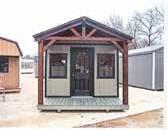
Cabins
Maple Valley Garden Center 2552 E State Rd 2 Rolling Prairie, IN 46371 219-575-0139
Abom1983@gmail.com
EJ Flooring 20 W. 100 N. Winamac, IN 574-946-0111 Ejsflooring@hotmail.com
Rabers Patio 815 N VanBuren St. Shipshewana, IN 260-336-1978 Merl@raberpatios.com
Riverside Tire 14777 St Rd 49 Antwerp, OH 43518 419-258-1917
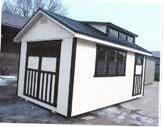
Cottage

Renewed Marketplace 809 E. Vistula St. Bristol, IN 574-612-0367
Yoderzach4@gmail.com
Oakes Enterprise 1912 US Hwy 12 Galien, MI 269-545-9020
Greg@oakerenterprises.com
BID Jackson 3150 Page Ave. Jackson, MI 269-217-5420
Greg2401@yahoo.com

to rent between both store locations. Freedom Boat Club is onsite to answer Wyland’s customers’ boat rental requests.
Wyland’s stays current on watercraft innovations and connected to customers by participating in the annual Discover Boating Chicago Boat Show for more than 40 years. This year’s Chicago show is scheduled to take place January 28 – February 1, 2026. They also participate in South Bend’s Michiana Boat & Sports Show, this year taking place January 23-25, 2026. Wyland’s also holds their own in-house show in February.
For more information about Wyland’s product lines and services, visit wylandsmarine.com. Wyland’s Marine has two locations, one in Mishawaka at 13100 Jefferson Blvd. You can call them at 574-259-1510. You can visit the Elkhart Store at 3931-A East Jackson Blvd and call 574-295-7632.
They are closed for the season until May.








•
•
•
•














Writer / Meredith Baker

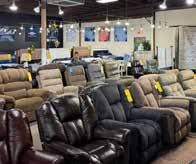
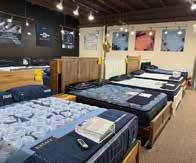
When customers walk into Manasses Henry Furniture, a stillness settles in. It’s not silence, but a calm you only find where real hand-sanded edges, the scent of walnut, and the unmistakable craftsmanship practiced by someone who cares deeply about the result. For owner Bill Yoder, that hum of creation became the heartbeat of his life’s work.
Manasses Henry Furniture has been part of the Middlebury landscape since 1986. However, the story people see today really

began when Yoder took ownership in 2015. It was a quiet rebrand that was grounded in values that trace back long before he ever considered running a furniture business.
Yoder didn’t inherit the business the way people assume. What he did have, though, was a grandfather with a tiny woodworking shop and incredible patience, teaching a young boy how to build barstools and birdhouses. Those early hours in the shop left a lifelong imprint.





That spark followed him into adulthood, and in 2012, just before his wedding, his fiancée asked him to build a corner hutch. It was a simple request that changed his future. “That was my first real piece,” he says. “That’s what kicked off the furniture building.”
This gesture of love turned into a steady stream of requests from friends and, eventually, customers searching for something they couldn’t find in a catalog. Word spread, and then, operating under its original owners, they took notice. That’s when the opportunity to purchase the company arose, and Yoder stepped into the role with clarity and conviction.
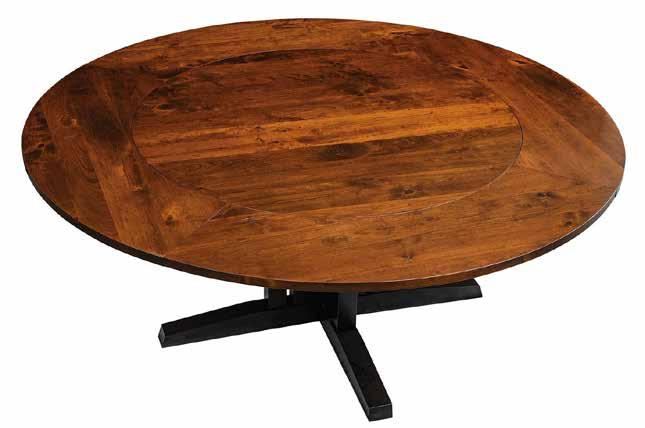
Today, Manasses Henry Furniture is known for its unmistakable approach to custom woodworking: solid hardwood construction, traditional joinery, no particle board, and no shortcuts. Yoder describes the work plainly and with the undercurrent of pride of someone who builds trust.
“We try to create something you can’t find anywhere else,” he says.
The custom process begins with listening. Some customers come in with sketches. Sometimes the job requires visiting their home to understand scale and character; other times it means mailing blocks of stains and finishing samples to customers hundreds of miles away.




Once the vision is clear, Yoder drafts up a drawing for approval. Eight to 12 weeks later, or longer for intricate work, the finished piece is ready for pickup or delivery. Many customers choose hardwoods like cherry, walnut or oak, all of which Yoder enjoys working with for their beauty and durability. And while the business offers more modern painted finishes as well, the shop’s original DNA remains ingrained in traditional craftsmanship.
The shop has created everything from dining sets to bedroom furniture, small tables to large heirloom pieces designed to be handed down through generations. Yoder’s own home now features a bedroom set he designed and built himself, one of those rare moments when a craftsperson gets to keep something they make.
And customers come back, sometimes years later, because the furniture really does last. One client recently returned to order a matching table and chair set for her children as she prepared to pass down her own. Stories like that affirm what Yoder believes: custom furniture is an investment, not a purchase.
Asked what advice he’d give the next generation should the business ever pass on, Yoder is quick to answer: stay small. Not small in ambition, but small in spirit — small enough to stay personal, to










look customers in the eye, to honor their stories, their budgets, their homes.
In a world racing toward speed and convenience, custom woodworking asks for something different: time, communication and patience. And in return, it offers something Amazon can’t deliver tomorrow — meaningful craftsmanship.
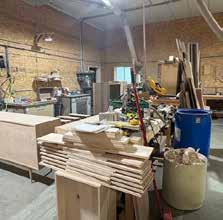
Standing inside the showroom, surrounded by pieces made to last longer than most trends, Yoder feels the same satisfaction he felt with that very first hutch.
“In the end, you have something you helped create — something you just can’t get anywhere else,” he says.
Manasses Henry Furniture is located at 53692 County Road 37 in Middlebury. To schedule a consultation or inquire about custom work, call 574-825-1185.

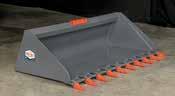
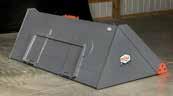
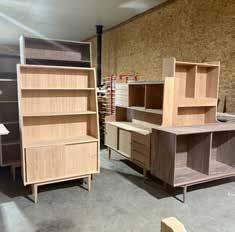
Replaceable AR235 Cutting Edge
• Interchangeable Side Cutting Edges
• Round One-Piece Contoured interior to help material flow
• ½” Reinforcement Plates to support quick attachment Solid Double Wall Rear Reinforcement Plate ½” Steel Side Plates
• HD Grab Hooks
• Anti-slip Tread Grip
• Available Widths: 60”, 66”, 72”, 78”, 84”
• Dimensions: 37” D x 22” H Materials: Heavy Gauge Steel Construction






33. Academic’s achievement
Any boat
Celebrity, briefly
Alphabetizes, e.g.
Fragrant wood
Grant
Loser to Lewis
Domestic
Foreign dignitary
Medal contender
Adolescent development
Cartoonist’s supplies
Pro
___ to riches
Function
Hardly extroverted




Pricing word
What borrowers do
Gymnastics ideal
Hopper
Takes in
Danger signal
Drive forward
Keynoter’s spot 10. It’s picked from pockets
Lodge fellows
Live in the past?
Wears out
Miffed 22. Make-up artist? 24. Emulated Jack Horner
Evening hour 28. Angler’s attachment 29. Liberal pursuits
Top 32. “___ not!” 34. Romance, e.g.
Copper finish 39. Hearts
40. Military standings 42. Eye drop?
43. Pantomimed disco title 44. Do a number 46. Halloween purchase
In shape
49. Possibilities
50. Mi, fah, ___, lah 51. Really test
• Uses a Rechargeable Power Pack (included)
• Stainless Steel Zipper
• 2 Side Zipper Pockets, 1 Inner Pocket for Battery



Writer / Miranda Medeiros
There is more than just one type of love. There’s the love you feel for someone romantically, the undying love for a child, loyal love for family, fond love for close friends, and grateful love for others in your life who maybe fall into multiple categories. February gets a bad rap sometimes, because it essentially is the month of love. All around us stores will advertise a little cherub pointing its heart tipped arrow at someone hoping to hit its mark.
Valentine’s Day doesn’t need to only be a romantic love. There are plenty of people we love aside from our significant other, and if anything, February should be about spreading the love and romanticizing the things in our life that are small, but we love daily.
Maybe for some people, it’s their daily cup of tea. Imagine showing a little selflove and getting a tea that’s out of the ordinary. Something perhaps that begins with a zesty zing of cinnamon but finishes with a deep romantic flavor of ripe plum. This tea is no other than the Republic of Tea Cinnamon Plum, a premium black tea full of life and flavor and packaged in unbleached tea bags. This is only one of more than150 teas that we carry. So whether you wanna show love to yourself, or someone else, we’re sure to have a flavor that will fit the bill.
Not to mention that we also have a tea loyalty program, nothing says self-care like getting a tea for you and someone else while also earning $10 off a tea purchase after filling your new tea card. We also offer the same loyalty program for our coffee lovers, except rather than $10 off of a bag of coffee, it’s a whole free bag. As a store that cares deeply for the

community we’ve called home from the very beginning, we LOVE to show love to our customers. Offering these loyalty programs is just one way we do that.
It’s our mission to make sure that everyone who walks through our doors, immediately feels welcomed and safe. Seeing our customers come through our doors is like greeting a friend, because often times we really do recognize the faces that come in and we’re genuinely happy to see you. We show love to our customers and community by always offering free coffee samples, because nothing feels more comforting than a warm cup in your hands as you have
friendly conversation and take your time strolling through the aisle ways.
Another way we show love to our community is by offering high end kitchen items at a reasonable price. All items are tested before being brought into the store by the owner and heart of the store, Phyllis Willie, herself. No one cares more deeply about this store and customers than her and she ensures the quality of the items we carry are up to her standards while also keeping the prices as low as she can so our customers can have access to quality items without feeling like they’re being ripped off price wise. From Swedish made Ankarsrum mixers, Moca
Master coffee pots, Italian Hestan pans, and Indiana made Whetstone wooden utensils, we carry a massive variety of wonderfully made kitchen items to show love to you, and to anyone you feel like gifting.
We get customers who come in for the first time not realizing we were right in Walkerton, and the biggest comment we receive is, “Why is a store like this in a location like this?” Walkerton is small, sweet, and a crossroads for travels coming to and from larger cities.
But the honest answer here is why not Walkerton?
Walkerton embodies everything the New Kitchen Store values. Local people, community, small business, and a friendly neighborhood. This town is where the roots of this store were planted, and when you plant something you have to take care of not only the plant but its environment

























WE ARE CURRENTLY BUYING / SELLING THE FOLLOWING ITEMS:
• Gold Jewelry
• Sterling Silver Jewelry
• Platinum Jewelry
• Turquoise Jewelry
• Dental Gold
• Service Pins
• Pocket Watches
• Sterling Silver Flatware
• Dimes - 1964 & Before
• Quarters - 1964 & Before
• Halves - 1970 & Before
• Dollars - 1935 & Before
• Proof & Mint Sets
• Old Paper Money
• Old U.S. Coins
• Foreign Coins
• Gold & Silver Coins
• Gold & Silver Bullion
• Pennies - 1958 & Before
• Nickels - 1938 & Before
• Nickels - 1942-1945







At A Reasonable


Writer / Jeff Kenney
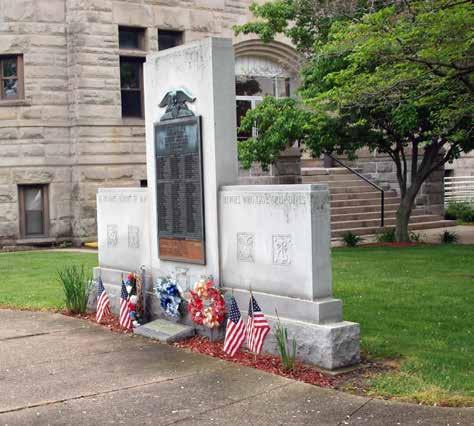
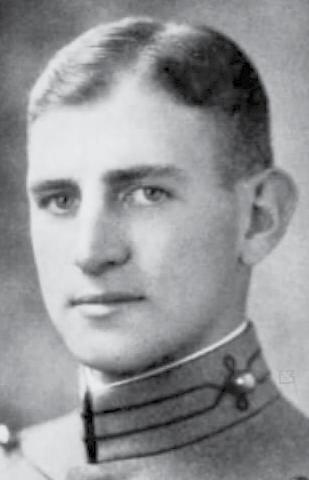
If one pauses on the lawn of the Pulaski County Courthouse to read the names on the county Honor Roll Memorial monument — which is dedicated to those from the Lakes-area county who gave their lives in the various wars of the past century-plus — it would be easy enough to overlook the name of Richard S. Freeman, situated as it is among three rows of names of those who lost their lives in service to their country in World War II.
And while every loss is momentous, Freeman’s life and service were remarkably impactful beyond his native county and are all too little-known today.
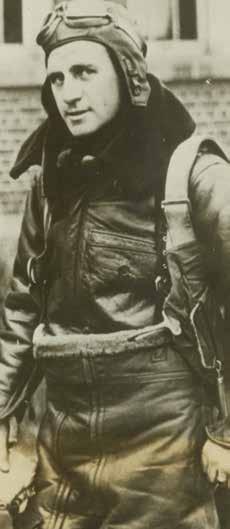
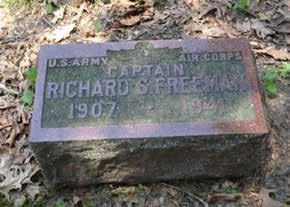
A West Point graduate known for his decorated humanitarian missions and whose name would be attached in memoriam to a Hoosier-based Army Air Forces training school, Freeman lost his life 85 years ago this month, on Feb. 6, 1941.
Born in Winamac in 1907, Freeman attended the University of Notre Dame in South Bend before entering the United States Military Academy at West Point, from which he graduated in 1930.
• Commercial & Residential
• New Construction/Ponds



After attaining qualification as a pilot, in 1934 he became part of an air mail delivery program under the auspices of the Air Corps, making him one of the pioneers of the Army Air Mail Service.
That same year, the Air Corps tested its new all-metal monoplane bomber, the Martin B-10, by way of a mass flight to Alaska, and Freeman piloted one of several planes under the command of Lt. Col. H.H. Arnold. Weeks of flights from Bolling Field near Washington, D.C., to Fairbanks included aerial photography missions covering thousands of miles of uncharted wilderness.
Much of the recognition Freeman would receive, however, was for his humanitarian endeavors as a pilot. Among these was his part in a goodwill mass flight of B-17 Flying Fortress bomber planes carrying medical supplies to Buenos Aires, Argentina, in February 1938, which was followed by another such flight that year from Langley Field to Bogota, Colombia.
Exactly two years to the day before his untimely death, on Feb. 6, 1939, Freeman flew to Santiago, Chile, on a super-bomber Boeing XB-15, also full of medical supplies, as part of a crew aiding


victims of the 8.3-magnitude Chilean earthquake that killed more than 30,000 people. Freeman and the crew were awarded by the National Aeronautic Association, in conjunction with the Army, with the Clarence H. Mackay Trophy, which is presented annually for “the most meritorious flight of the year.” Interestingly, the trophy had been awarded in 1934 for the Alaskan flights in which Freeman participated, though the award was given specifically to commanding officer Arnold.
Freeman also led a mercy mission to the leper colony near the island of Molokai in the Pacific.
In 1938, Freeman played a role in the filming of the Spencer Tracy and Clark Gable movie “Test Pilot,” in which he was part of the crew flying a B-17 bomber in the hit film.
That same year, the U.S. Army acquired


Hours: Monday - Friday 7:30 am - 5:00 Saturday 7:30 am - 3:30 pm Closed Sunday




land at Fairbanks, Alaska, with plans to utilize the base it built there for coldweather testing of aircraft and equipment. Named Ladd Field in 1939 for Air Corps pilot Arthur K. Ladd, who had died five years earlier in a plane crash, Richard Freeman was appointed the founding commander of the base, which was located on today’s Fort Wainwright.
Ironically, for all of the contributions Freeman’s efforts made toward critical services and planes used in World War II, he lost his young life just months before the United States officially entered the war after the bombing of Pearl Harbor on Dec. 7, 1941.
Freeman was engaged in an experimental flight exercise on Feb. 6, 1941, when the U.S. Army Air Corps B-17B Flying Fortress No. 38-216 he was piloting struck the west slope of the Trinity Mountain Range, 12 miles west of Lovelock, Nevada.





In addition to the 33-year-old Freeman, other Army fliers who lost their lives in the accident included 1st Lt. Edward W.
Ketcham, T/Sgt. Kay H. Gilreath, Sgt. Everett R. Crabb, Sgt. Joseph P. Davies Jr., Sgt. Elmer S. Trainer, Sgt. Frank C. Whidden and Pfc. Charles E. Applegate.
The plane had been equipped with the then-top-secret Norden bombsight, and authorities suspected, but never proved, sabotage as the cause of the crash.
Freeman’s body was returned to Winamac for burial, and he posthumously received the Distinguished Flying Cross for his service.
Recounting his service, the 1942 West Point yearbook wrote: “In addition to his rating as command pilot, navigator, pilot of multi-engined planes, he was also considered to be an expert bombardier. He had 6,000 hours of flying time.”
Freeman’s legacy carried on when, two years later, the War Department announced in General Order No. 10,



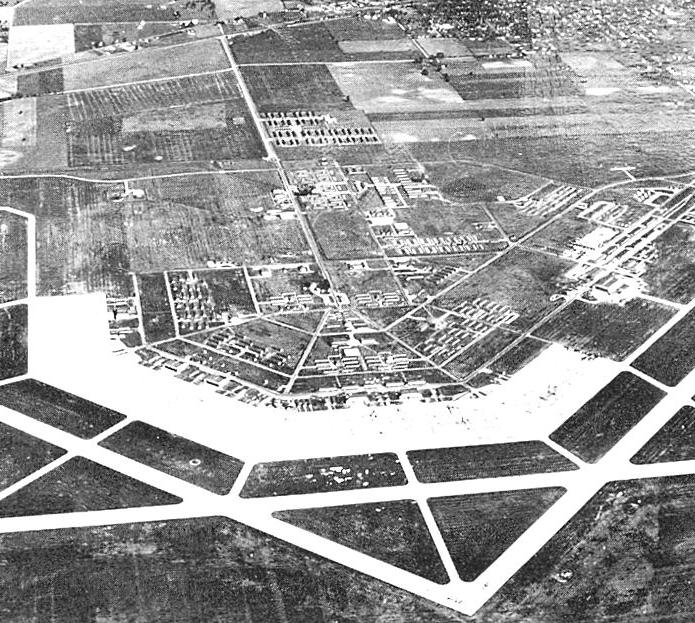
dated March 3, 1943, that the advanced flying school southwest of Seymour, Indiana, in Jackson County — which had been established in 1942 — would be named Freeman Army Air Field in honor of the memory of Capt. Richard Shafle Freeman.
The state-of-the-art facility included 413 buildings and four 5,500-foot runways on 2,560 acres. Many of its 4,245 graduating pilots — prior to its last graduation in February 1945 — flew B-17 and B-24 bombers in World War II.
The facility gained notoriety for another reason as well. Among those training at Freeman Field were Black aviators, including a group of the famed Tuskegee Airmen.
Some 1,300 Black airmen were training at the base in the spring of 1945 when three Black aviator officers tried to enter one of the officers’ clubs on the base, which were segregated in spite of Army



regulations against segregation. The three were arrested and confined to quarters before an additional 58 Black officers attempted to enter the same club, leading to a violent altercation and more than 60 arrests.
The following investigation reaffirmed segregation at officers’ club facilities on the base, though more than 100 Black officers refused to sign the regulation and were arrested and forced to remain in their quarters. They were transferred to another base to await court-martial, while training of their unit at Freeman was brought to a stop. Later that month, under public pressure, charges were dropped against all except the original three. Only one was ever actually tried and was fined $150 for assaulting an MP.
The incident, which made headlines around the country, played a role in national discussion of race-based segregation in the military, contributing to its eventual end.
In January 1946, Freeman Field was declared surplus and was finally deactivated in November 1948. Just more than 2,000 acres were reallocated for a municipal airport for the town of Seymour; more than 240 acres for agricultural training in Seymour Community Schools, and an industrial park was developed via the Seymour Industrial Association with 60 acres of the land.
Today, a handful of the buildings, as well as the runways, are still standing, and a unit of the Indiana National Guard has an armory there. Freeman Army Air Field Museum is also located near the airport office.
Visitors to the Freeman Field site today will find a bronze marker placed by the Indiana Historical Bureau, telling the story not only of the base but of Richard



Freeman as well — a brief testament to the contributions of a little-known aviation hero of the Lakes area.
Jeff Kenney serves as museum and archives manager for Culver Academies and is on the board of the Culver Historical Society in Culver, Indiana, where he is a frequent speaker and writer on local and regional history.




Writer / Amy Beaucham
A full freezer says something about a home. Wrapped parcels tucked neatly into organized stacks invite thoughts of Sunday roasts, weeknight meals and the comfort of knowing good food is ready when you need it. Families across the Lakes West area often begin that journey at Four Woods Custom Butchering in Topeka, where the story
behind the meat is as important as the flavor on the plate.
Four Woods is owned by Joseph Bontrager, who brings 13 years of experience from working side by side with a seasoned butcher before stepping into ownership himself. His start came at a time when he and his wife were running a small, reputable dog-breeding business that did not provide
the return they expected. When her uncle mentioned that a local butcher shop was coming up for sale, the idea took root. Joseph sat down with his wife to talk it through, then reached out to Richard, a trusted relative whose years of experience in professional butchering and willingness to walk alongside them made the idea feel possible.

They presented their plan to the bank and received approval in two days. Joseph still remembers that moment clearly, describing it as a blessing he did not expect but knew to follow.
From the beginning, the business stayed busy. Only two quiet weeks fell between July and mid-summer. The rest of the year brought a steady stream of customers through word of mouth alone. Four Woods
processes beef, hogs, deer and sheep, with goats likely to be added as demand grows. Many customers bring animals they raised themselves, while others work with trusted local farmers.
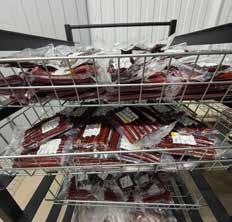
A typical week at Four Woods follows a system Joseph has refined through years of practice. Customers drop off their livestock in advance so everything can be scheduled properly. Fridays are kill days, when animals are harvested humanely and moved into the cooler to chill. Once they have rested, the sides move along the rail system into the cutting room. There, Joseph and his crew divide each animal into the cuts selected by the customer. Every package is wrapped, labeled and placed in the freezer. When an order is complete, a card goes on Joseph’s desk, and he promptly calls the customer to arrange pickup.
Many families are new to custom butchering. Joseph’s explanations help

them understand what to expect and how to plan. He uses detailed cut sheets that list every option clearly so customers can make choices with confidence.


Conversations often turn to how each family cooks. A busy household may prefer more stew meat and ground beef. Another family that enjoys grilling might opt for more steaks and kabob cuts. Joseph brings these ideas together in a way that allows families to imagine their meals and select cuts that match their style while limiting waste.
Custom smoking has become another part of the shop’s rhythm.
Four Woods smokes hams, bacon and other cuts, along with popular deer products during hunting season. Joseph’s house recipe for ring bologna has developed a strong following. He also makes pork burgers with a custom seasoning blend and offers summer sausage in both traditional and honey barbecue varieties. Some seasonings come from trusted suppliers, while others are blends Joseph is developing himself. He pays attention to customer requests
and expands his offerings based on what consistently sells.
Alongside the processing area, Four Woods also has a small retail store that offers ready-to-purchase meats. The space currently features a selection of grain-fed beef and pork from a nearby farm where calves are raised and fed with grain grown right on the property. Joseph hopes to expand this store in the near future. More room, additional coolers and a wider variety of cuts are all part of his long-term plan. He envisions a place where people can stop in at any time and leave with quality local meat, even if they have not scheduled a custom order.
Joseph believes strongly in the value of knowing where meat comes from. He explains that locally processed meat has a softer texture and fuller flavor. Storebought products often include additives that cause them to fry away in the pan. Families appreciate understanding how

their animals were raised and handled, and Joseph treats that responsibility seriously. He focuses on returning as much usable meat as possible from every animal and encourages clear communication with customers. While he prefers to discuss details in person at drop-off, he works by phone when needed.
The work is long and physical, but Joseph finds meaning in it. He enjoys hearing that a family filled their freezer or discovered a new favorite cut he suggested. Those
Accent your kitchen with a beautiful metal range hood. Fully customized to your specs and style.

moments remind him why small processors matter. His goal is simple: satisfied customers who trust the work behind every package they bring home.
Four Woods Custom Butchering offers more than a service. It offers connection. When meat is processed or purchased locally, the food on a family’s table can be tied back to a nearby pasture, a farmer who cared for the animal and a butcher who understands his craft. Families appreciate knowing their meals come from work done with honesty, skill and respect.
Joseph is committed to maintaining that standard, giving customers the confidence that what they bring home is wholesome, thoughtfully prepared and truly local.
Four Woods Custom Butchering is located at 4665 S. State Road 5 in Topeka. For more information, call 219-741-0972.

















Writer / Amy Beaucham
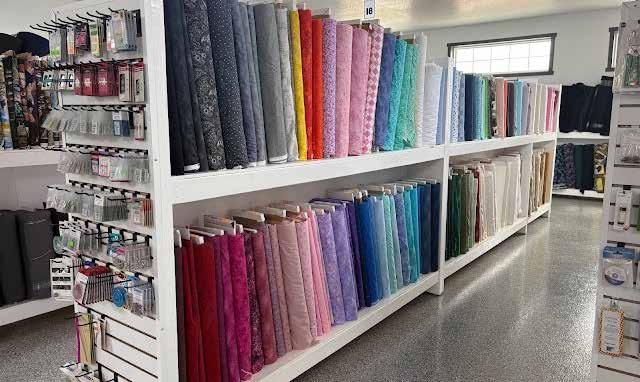
Natural light sets the tone, pouring in through purposely placed four-foot-square skylights and abundant windows. The daylight settles across rows of fabric, allowing color to show itself clearly to the eye, making it easy for customers to make choices with clarity and confidence. A gentle quiet pairs with the store’s appealing brightness, creating an environment that feels unhurried, where shoppers can think, compare, imagine and decide without feeling rushed.
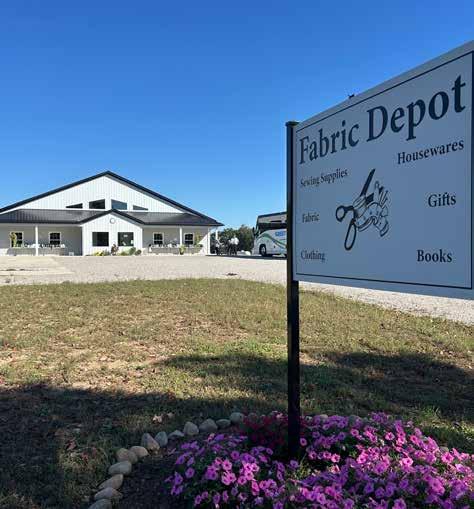
This is Fabric Depot, a Middlebury-area business built for makers and for anyone who loves seeing a project come together, stitch by stitch, with books, gifts, toys and household goods available as well.
Fabric Depot sits in a rural pocket about three miles northeast of Middlebury, where Joas Miller says about 75% of the neighborhood families are of the Amish faith. The setting fits a store devoted to everyday making: cloth chosen with purpose, notions gathered with intention, a place where shopping feels less like rushing and more like selecting what will become useful in your own hands.
Long before Fabric Depot had skylights and wide aisles, the Millers already understood






what a store like this meant to their community. Joas Miller and his wife, Freda Miller, grew up with the fabric store that served their area for decades, Laura’s Fabrics. For years, locals and travelers came for fabric and for the kind of variety that supports daily life — sewing needs, household items, small essentials and simple goods that save an extra stop elsewhere. When the owner decided to sell after many years serving the community, the Millers recognized an opportunity to keep that familiar resource close to home.
Rather than moving into the old space, they built new.
Construction started in November 2024 on their own property, land Joas says is part of the farm where he grew up. Their 4,800-square-foot building was completed in March 2025. The Millers moved the inventory, added more and opened the doors of Fabric Depot on April 14, 2025.

The building feels spacious and thoughtfully planned. Wide aisles make it easy to browse, even when the store is busy, and accessibility matters to the Millers in a personal way. Their daughter, Kathy, used a wheelchair for several years and died in 2023 at age 19. The Millers speak of her with tenderness, and her life — and what the family learned while caring for her — shaped practical details throughout the store: level entry, open space and aisles wide enough for easy movement, allowing people to browse without having to squeeze or sidestep.
Just inside the entrance, shoppers will notice that Fabric Depot is more than fabric. The front area includes toys, books, housewares and practical clothing pieces like socks and gloves. The back half shifts fully into fabric, with bolt after bolt arranged for browsing and for serious decision-making. A shopper can come in for one spool of thread and leave with yardage for a dress, a quilt plan and a few useful additions for home.

Susan W. Mosey, a reviewer, describes Fabric Depot as “much more than a fabric store. More like half fabric store, half Amish general store.” She praises the “wonderful new building — big and roomy, wide aisles, well lit, well organized,” adding that it offers “lots to see for locals and tourists alike, especially quilters.” Mosey also notes locally made quilts and original acrylic paintings by local Amish artists.
That variety becomes clear the deeper you browse. The Millers aim to stock options for







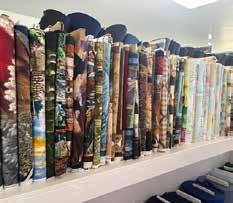
a wide range of tastes and traditions, which means shoppers looking for plain, solid fabrics can browse right alongside those who prefer texture, pattern and print. Floral prints are a frequent request, and Freda keeps a number of these on hand.
Some shoppers arrive with a plan and a purpose. Others feel a spark when the right bolt catches their eye, and the project becomes easy to picture.
Certain materials have become repeat

favorites. Flannel is one of the most askedfor items, especially for cozy, warm projects. Freda has also learned to keep a selection of Minky on hand, adding, “Minky is expensive, but it is very, very soft.” Panel prints draw quilters and gift-makers, too — those oneyard designs that can anchor a wall hanging, lap quilt or special present without requiring a complicated pattern. Coat linings, dress fabrics and a deep range of polyester options add to the store’s reputation for a wide selection that serves real needs, not only what happens to be popular in the moment.
Fabric Depot does not offer classes, but beginners still find help here. Freda enjoys guiding someone through a simple first project, pairing a panel with backing, offering ideas for trims and pointing out patterns that can be purchased. Questions are welcome in person, and many orders happen by phone as well. Joas says they ship fabric and supplies as far as the West Coast and East Coast for customers who call with specific needs, sometimes requesting fabric along with
coordinating items like thread and buttons.
Notions matter because they are often the difference between a project that stalls and a project that gets finished. Alongside fabric, customers can find basics like thread, needles, zippers, elastic, snaps, lace, ribbon, buttons and more specialized items, too. Freda mentions fusible interfacing as a useful addon for structure and stability in garments and craft projects. Joas also notes items that can be hard to keep in stock.
“Thread is probably the number one,” he says, with books also moving quickly — including children’s books, coloring books, preschool workbooks, devotional books and inspirational stories.
The store’s season is shaped by its community. A one-room Amish school sits between the Millers’ house and the road, close enough that Joas says a softball sometimes flies into the parking lot. The Christmas season has been especially busy so far, along with the stretch


before school starts.
Brides also play an important role in the year’s flow. Joas says Amish brides come in to select fabrics for wedding dresses and coordinated outfits, often planning color schemes well in advance. Fabric Depot offers a 10% discount for brides, and the store cuts small samples so families can take colors home and decide with confidence. Samples are not only for weddings, either. Shoppers comparing shades for any project can request small cuts to help them choose well at home. That practical service turns a big decision into a steadier one, especially when several shades need to work together.
Word of mouth has helped carry the store’s name. When shoppers leave pleased, they talk, and those conversations travel quickly through families, church districts, friend circles and quilting connections. Tour buses add another stream of introductions. A guide in Shipshewana connected with the Millers, and groups now arrive from far beyond
northern Indiana to learn more about Amish country and culture and to bring home something tangible. Even small purchases matter when a busload steps in, and the visits spread the word about a store that does not rely on heavy advertising. People also find the store through online searches, even though the Millers do not operate a full website or
social media presence.
The business remains, at its heart, a family effort. Joas and Freda’s children help out as well. Two are grown: Lily, 25, teaches at a school about seven miles away, as does her brother Aaron, 24, who enjoys being an instructor there as well. Aaron recently
• Long Reach Excavator and Dozer Service
• 60 ft Reach
• Digging or Cleaning of Ponds, Small Lakes, and Ditches
• We have Mats to use Across Difficult Terrain
• Stop Bank Erosion & Maintenance. See us about Installing Rocks


married Amy, and the two of them — like Lily — live close to the school. Seven children are still at home: Ina, 20; Jesse, 18; John, 16; Jane, 14; Benjamin, 12; Jacob, 8; and Caleb, 7. After school, the children help wherever they are needed, with hands that can shift from home responsibilities to the store as the afternoon picks up.
Behind the scenes, running a fabric store

is its own kind of stitching — equal parts creativity and careful counting. Joas says one of the biggest challenges is deciding how much inventory to bring in each month, without years of sales patterns to consult. Freda names a different challenge that many parents recognize immediately: being needed in two places at once, with a store to help run and a home still full of children and responsibilities. Even so, the Millers describe the reward of family working together — counting inventory, serving customers and seeing the relief in someone’s face when the right material appears on the shelf.
One customer story, shared by Joas, captures that heart. An older woman who had stopped quilting after a deep loss came into the store with a friend, lonely and unsure she could return to what she once loved. Conversation opened a door. She left with what she needed to begin again — batting, backing, supplies — and now, each time she returns, the question is gentle and


familiar: “How’s the quilt coming along?”
In the end, Fabric Depot feels like the kind of place that grew from a steady belief: build carefully, serve well, stay grounded. When asked what might sum up their approach, Joas shared a line of scripture from Psalm 127:1: “Except the Lord build the house, they labor in vain that build it.”
For shoppers across the Lakes West area — quilters, garment-makers, crafters, gift-hunters and the simply curious — Fabric Depot offers something increasingly rare: daylight that helps you choose true color, space to think clearly and the quiet satisfaction of selecting cloth with purpose and notions with intention, knowing what you carry home is meant to become useful in your own hands.
Fabric Depot is located at 54524 County Road 43 in Middlebury. For more information, call 574-821-1518.


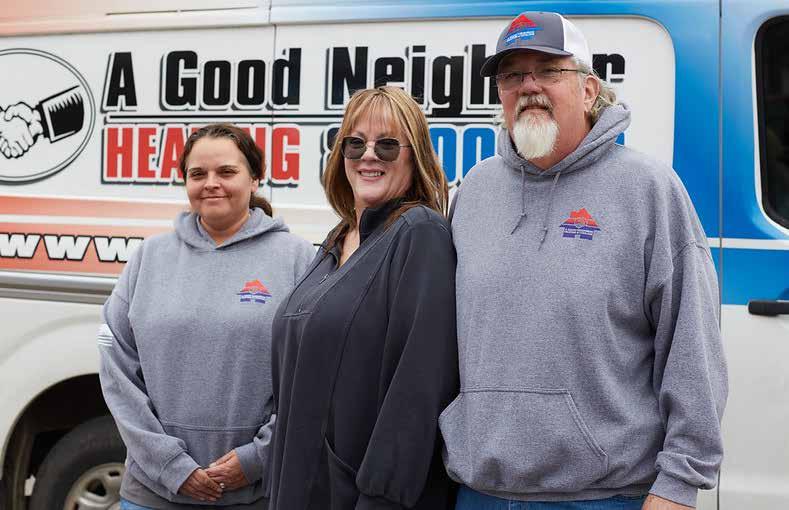
On a January night in the Lakes region, the wind cuts across open fields and lake ice forms in the dark. Inside, life feels much better when the furnace runs steadily and the air in each room feels clean and comfortable. For many families around Middlebury, Elkhart, Goshen, and the surrounding lake communities, that steady comfort comes from A Good Neighbor Heating & Cooling.
Owner Bob Dwyer likes to say he was “born into it.” His grandfather launched the family’s heating business in Chicago.
“It started originally in 1919,” Bob says. His father later stepped in, and Bob grew up in an apartment behind the heating shop.
“We had a heating shop in the front and an apartment there in the back so we lived behind the heating shop,” he explains. “I was just sort of raised in the business.”
School days meant walking through the shop to get home, cleaning sheet metal, and learning how things worked. By about 12 years old, he was already installing


equipment. Someone with a driver’s license would take him to job sites so he could work, long before he could legally drive himself.
Bob remembers his father with deep respect.
“He just looked at his job as helping people. He was a good man,” he says.
Apartment
Those long winter calls to help families with no heat left a mark. When Bob eventually took over the Chicago business, that quiet example of service guided him. Over the

years in Chicago, he not only carried on the family’s heating and cooling work, but also tried his hand at other small ventures, drawing on that same willingness to work hard and serve people.
In time, though, city life no longer felt like the right place to raise his children. During a visit with friends who camped near Middlebury, he saw something very different from the inner city where he had grown up. Amish buggies shared the road with cars. Produce sat out in boxes in front of farmhouses. People waved to one another.
“I just fell in love with Middlebury,” he says. When a real estate agent wrote down what
Bob’s Chicago house might sell for, Bob laughed and told him to go ahead if he could get that price. About an hour later, the agent called back to say someone had written a check for the house. Bob sold his Chicago heating and cooling company, along with the other ventures he had built, and the family moved to Indiana in 1999.
At first, Bob worked out of his home. “I stuck a little sign in the front yard that said ‘A Good Neighbor Heating’ on it,” he recalls. Within days, the first customer called with a problem no one else had solved. That single service call became the first of several thousand.
A Good Neighbor later moved into a small storefront on Main Street. Then, about 12 years ago, it settled into its current building at 524 South Main Street in Middlebury. The move turned out to be one of Bob’s best decisions. Customers now visit not only for service, but also to step into the HVAC room and see how modern systems sound and

operate. They can sit down with Bob over a cup of coffee, ask questions, and get clear explanations in everyday language.
The building itself reflects his willingness to notice what his neighbors need. In addition to heating and cooling, the shop has become a local stop for items like grills, spices, pool water testing, barbecue tank fills, and even knife sharpening. Bob laughs that it makes them “a kind of strange company,” yet that variety means people have a reason to walk through the door even when their furnace is working just fine. An industry leader who visited from out of state once told him he had never seen anything quite like the combination of services in a heating and cooling business.
Bob’s wife, Brenda, assists in the office and brings her own gifts to the business. During the economic downturn from 2007 to 2009, when the local newspaper closed and the RV industry slump hit Middlebury and nearby LaGrange County especially hard, she wrote


and produced a monthly Christian-based “good news” paper that reached thousands of homes. It gave local businesses a place to advertise and gave neighbors something encouraging to open in the mail. That creative effort helped the company weather a difficult season and even drew national attention in the HVAC industry.
Family continues to be woven through the company. Bob’s son, Robert, works in the business and will one day take it over. His daughter-in-law, Anita, plays a central role in the office. Other relatives are involved as well. Bob notes that they are the last heating company in Middlebury still owned by the original owner.
While many competitors in the region have been purchased by large investment groups, Bob has no desire to sell or chase aggressive expansion. His hope is simpler: that the company “continues the same way it always has.”
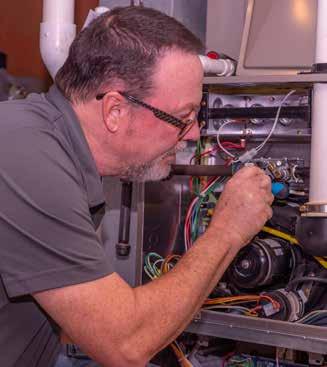
That steady approach shows in the services A Good Neighbor offers. Core work includes furnace and air conditioner repair, replacement, and new installations. The team also installs heat pumps and ductless mini-split systems for homes that need flexible zoning or for older houses that never had central air. Easy-to-see thermostats with large numbers and a clear optional cover are available for anyone with impaired vision. Those same models also help customers who live with arthritis because the straightforward controls do not require repeated, precise finger movements on tiny buttons.
Indoor air quality is a major focus. Bob’s crew can measure particle counts in a home and identify problems that most people cannot see. Often the issue is simple: “not enough fresh air coming in the building,” as Bob explains. The team may recommend better filtration, sealing leaky ductwork, or adding equipment that brings in filtered outdoor air while exhausting stale indoor


air. For families with young children or older adults, this can make a real difference in everyday life.
Duct cleaning is another important service. Over time, dust and germs collect deep inside ductwork where a standard vacuum cannot reach. A Good Neighbor’s duct cleaning helps remove those irritants and stubborn odors. Dryer vent cleaning is an additional often overlooked service that the business takes seriously. Clearing built-up lint from the vent shortens drying times, protects clothes, improves energy use, and lowers the risks of house fires.
Once the air is cleaner and the equipment



can “breathe” the way it should, comfort also depends on moisture in the air. Humidity control makes homes far more comfortable. Humidifiers and dehumidifiers help keep houses in the “comfort zone,” protecting furniture, calming static electricity, and making cold-weather breathing easier during long winters.
Education is one of Bob’s favorite parts of the job. He loves helping homeowners fully understand how their equipment works and what they can do themselves. That education often starts with something as simple as a furnace filter. Many shoppers buy the thickest, most expensive filter on the store shelf, assuming it must be the best. Bob explains to the client that putting a dense filter into a standard furnace can

choke airflow, raise internal temperatures, and shorten the life of the system. For most customers without significant medical issues, he recommends a basic filter that allows plenty of air to move.
“It’s sort of like if you’re trying to breathe and somebody’s choking you,” he says of high-resistance filters in the wrong systems.
His goal is to help people protect both their indoor air and the equipment that conditions it.
For those who want extra peace of mind, A Good Neighbor offers a maintenance program with several levels. Homeowners can choose the plan that fits best, from basic furnace and air conditioning checkups to packages that also include water heater checks and dryer vent cleaning. Bob sums up the purpose clearly. He firmly believes that knowing your equipment is safe ranks first, running efficiently comes next (which keeps utility bills lower), and longevity follows close behind, so systems do not need to be
replaced as quickly.
Financing is available for new systems, including 0% options for set periods. Bob is frank with customers about how those plans work behind the scenes and walks them through several choices so they can understand the trade-offs. He wants people to spread the cost of a needed upgrade rather than face a single large bill, and his straightforward approach carries through to the way customers describe their experiences.
Customer reviews give a window into what that care looks like in real homes.
Betty Berkey shared that A Good Neighbor installed a complete heating and air system for her family in just two days. She described the crew as “so polite and professional” and appreciated that they made sure she understood how the system worked before they left. She calls it “great service and product” and encourages anyone who needs a unit or service to give them a call.
Garrett Cupp wrote about a service visit, saying, “Bobby came out and inspected

my whole system.” In his review, he explained that Bob walked him through the steps he could take to better maintain his air conditioner. After Garrett followed those directions, his AC was running again in less than an hour and a half. “Definitely recommend these guys!” he added.
Heather Brunswick contacted A Good Neighbor to install a mini-split AC unit. She noted how quickly Bob came out to give a quote, how smoothly the installation went, and how clean the crew left everything. Her family was “very pleased with the entire process” and plans to use the company again.
Bob thinks a lot about the future, not only for his own company but also for homeowners who may feel overwhelmed when comparing quotes. He has even imagined a retirement role where he would serve as a neutral consultant, simply helping people read through their furnace and air conditioning proposals and understand what they are being offered. The idea fits his nature and principles. He would share what he has learned over
a lifetime in the industry, guide people patiently, and leave the final decision up to them.
That dream of guiding future customers matches the way he already cares for current ones. Behind these stories is a way of doing business that Bob hopes never changes. He wants people to see who they are as a company, understand what they do, and feel at ease inviting them into their homes. When someone faces the classic question of whether to repair an older furnace or air conditioner or replace it, Bob gives honest information about age, condition, and expected lifespan, then lets the homeowner decide.
“It’s not about selling them expensive equipment,” he says. “It’s about just being honest.”
He wants customers to know that the decision about what to do with their system will always remain in their hands.
Today, A Good Neighbor Heating & Cooling serves a wide range of


communities: Middlebury, Elkhart, Goshen, Nappanee, Shipshewana, Syracuse, South Bend, and many smaller lake towns. Whether your concern is staying warm through a long winter, keeping the house cool and comfortable through July humidity, or breathing cleaner air all year, Bob and his familyrun team are ready to help you live and function in a home that truly feels like a haven.
A Good Neighbor Heating & Cooling is located at 524 S. Main Street in Middlebury. For more information, give them a call at 574-825-1677 or visit them online at AGoodNeighborOnline.com.

package

Writer / Amy Beaucham
On a quiet stretch of County Road 35 outside Goshen, the day starts long before sunrise. Porch lights glow, coffee brews, and the first furry guests arrive at Greet & Treat Dog Grooming with sleepy eyes and wagging tails.
Greet & Treat is very much a family story.
“Joas and I have been married for eight years and have been blessed with three wonderful children, Jeslyn, Brendon and Allayah. They
• Delivery & Set up of Rental
• Tents for any occasion
• Max Size: 60 ft. x 190 ft.
• Tables & Chairs


keep us on our toes and fill our home with lots of joy and energy,” says Owner Karen Miller.
The grooming space sits just steps away from the house, so the children often peek in to say hello and admire the freshly fluffed dogs.
The Millers’ path to professional grooming began in 2019, when they started raising dogs and decided to handle the haircuts themselves. Karen remembers using an old set of garage-sale clippers at first, then investing in better equipment and realizing that grooming was something they genuinely loved doing together.

In the fall of 2022, when local RV factories slowed down and life shifted for many families in the area, the Millers leaned into that new passion.
“That’s when we decided to run an ad for grooming services with a delivery option for our Amish community,” she says. “It was a big hit.”
Word spread, and the garage transformed into a well-equipped grooming salon that now serves dogs from Goshen and the surrounding lake communities.
Today, Greet & Treat welcomes big dogs, little dogs, curly coats and smooth coats alike. Karen and Joas see plenty of doodles, Maltese, Shih Tzus and Yorkies on their three main grooming days of Tuesday, Wednesday and Thursday, when appointments begin bright and early at 5 a.m. The early hours work well for families heading to work and for neighbors in farming communities who are already starting their day.
Ask Karen which breeds she loves to work with, and she does not hesitate.
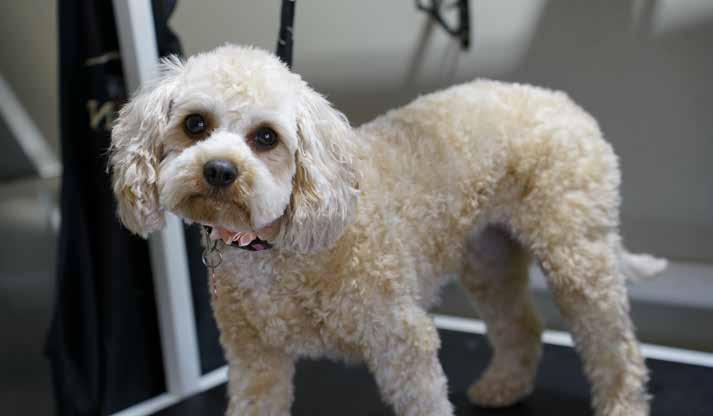
“Cavapoos and Goldendoodles are my favorite to groom,” she says. “Their coats are soft, wavy and easy to work with. Yorkies can have more temperamental personalities, but I’ve learned how






to work with them too.”
Every dog, no matter the size or attitude, leaves with a treat and a kind word.
Keeping dogs calm is a shared priority for the Millers. The atmosphere is quiet and unrushed, with only a few pups in the salon at a time.
“We use hammocks for trimming paws and legs, grooming arms for stability, and we always call the dogs by their name,” Karen says. “That familiarity helps them relax.”
Greet & Treat’s full-groom appointments cover the whole dog from nose to tail. Each visit includes a bath in gentle shampoo, conditioner, blow-dry, ear cleaning, tooth brushing, nail care and a haircut tailored to the dog’s breed and lifestyle. Add-on services such as de-shedding treatments, flea and tick baths, hot-spot soaks, maintenance trims and anal gland expression are available for pups who need a bit of extra attention.
Karen is generous with tips that help pet owners keep their dogs comfortable between grooms.
“Groom your dog every 6 to 8 weeks,” she says. “Brush them after they get wet, paying attention to areas like the armpits that mat easily. Use
a slicker brush and a finisher comb, and don’t bathe them more than once a week to avoid drying out their skin. For hot spots, I recommend using a shampoo with chlorhexidine.”
Regular brushing, she says, is one of the simplest ways owners can help.
Puppies get special attention at Greet & Treat, with short, positive first visits that set the tone for a lifetime of grooming.
“For puppies, early exposure is key,” Karen says. “Bathe and blow-dry them at home before their first professional groom. Take them in before mats form so their first grooming experience is pleasant. Handle their paws often so they’re used to being touched there.”
Karen also encourages pet owners to stay on a consistent schedule. When asked what helps the most, she is clear: “Stick to a regular grooming schedule. It keeps your dog comfortable and makes our job easier, which means a better experience for everyone.”
Local dog owners have taken notice of the care and consistency.
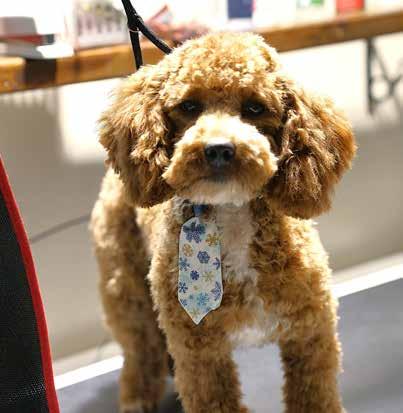
Regular client Eva Lambright shares, “I have been taking my toy poodle to Greet & Treat Grooming Services for almost a year and I have always left feeling so happy with her haircut! In my opinion, they have such a great price point considering all that a full groom includes. You will not be disappointed with Greet & Treat!”





Alicia McLeod appreciates the way the Millers work with anxious pets, saying, “Greet & Treat Dog Grooming did an excellent job with my dog. He has some anxiety and they did a great job working with him!”
Those reviews echo what the Millers hope every guest will feel.
“For us, it’s never just about the haircut,” Karen says. “It’s about building trust with every dog that comes through our door, and making their owners feel confident and cared for too. Every wagging tail, every happy client and every pup that leaves looking and feeling their best, that’s what makes it worth it. Grooming is our craft, but at Greet & Treat, it’s also our way of showing love, one dog at a time.”
For local families, that combination of skill, kindness and practicality makes Greet & Treat Dog Grooming a reassuring choice. Whether you share your home with a tiny Yorkie, a galloping doodle or a senior dog who needs a gentle touch, Karen and Joas are ready with warm voices, steady hands and a treat at the end of each visit.
Greet & Treat Dog Grooming is located at 64217 County Road 35 in Goshen. For more information, give them a call at 574-501-4080 or visit them online at greettreatgroom.com.









FOR UPDATES REGARDING EVENTS PLEASE CHECK THE LAKE ASSOCIATION’S/ ORGANIZATIONS FACEBOOK PAGES/WEBSITES. NOTE, ALL TIMES LISTED ARE EASTERN.
13-14
Midwest Home and Yard Show at the Michiana Event Center in Shipshewana. 120 local vendors are getting together, with unique finds for your home, garden, and outdoor spaces!
19-21
FAE Midwest Sportsmen’s Classic located at the Michiana Event Center in Shipshewana. This annual event designed for outdoor enthusiasts, featuring a wide range of activities and exhibitors related to hunting, fishing, boating, and other outdoor sports.
3
9:30-11 a.m. – Nature Nuts: Animal Tracks. Preschoolers are invited to investigate clues left behind by an animal, such as tracks and scat. We will learn through stories, games, and a hike into the woods.3-5, $4 per child. Ox Bow Park located at 23033 C.R. 45, Goshen, IN.
6
5-6 p.m. – Bat House Workshop at Ox Bow County Park located at 23033 CR 45, Elkhart, IN. Supplies will be provided to build your own bat house, and tips will be given on how and where to place it. Ages 10+, $17 per house.
14
8 a.m. – Frosty Five Run at Studebaker Park located at 1004 McDonald St. Elkhart, IN. Options of 5k or 5 mile. Register at runsignup.com/Race/IN/Elkhart/ Frosty5KRun.

21
9-11 a.m. – Backyard Maple Sugaring at the Bonneyville Mill County Park in Bristol. Learn the art of turning maple sap into sweet golden maple syrup, then enjoy the syrup on some pancakes. $7 per person.
2
5-7 p.m. – Kids Craft Night. The first Monday evening of the month at the Warsaw Community Public Library. All supplies will be provided.
7
10 a.m.-4 p.m. – Galentine’s Day at the 3863 Venue in Pierceton. Gather your girls for a day of shipping, fundraisers, and giveaways!
2-7
All day – Groundhog Craft at the Kendallville Public Library. Stop in and pick up the supplies to make a groundhog craft while supplies last.
16-21
All day – Heart Wreath at the Kendallville Public Library. Stop in and pick up supplies to make a cute heart wreath.
19
1-2 p.m. – Make it with Bethany False Flower Arranging at the Kendallville Public Library. This program is intended for adults.
23-28
All day – Shaggy Dog Craft at the Kendallville Public Library. Stop in and pick up the supplies to make a cute shaggy dog while supplied last.
4
1:30 – 3 p.m. – 57 Years of Sunny Days – How PBS and Seame Steet Changed the Word. At the History Museum and Oliver Mansion located at 808 W. Washington St. South Bend, IN. $3 per person, $1 for members.
5
4p – 5p – Paws and Pages with the Saint Joseph County Humane Society. Party with a Pomeranian and the St. Joe County Humane Society! Learn about fear free training, read a book with us and meet our friend Maude, a small fluffy dog. At the Center Township Branch’s large meeting room.
19
6:30–8 p.m. – The Impromptu Society – An Improv Group. Join an improvisational club for learning, sharing, and performing improv. Club activities include fun, participatory games or all improv experience levels. Beginners are welcome. At the St. Joseph County Public Library locates at 737 Beale St. South Bend, IN.
20
6–8 p.m. – Winter Glow O located at Hurwich Shelter at 50651 Laurel Road, South Bend, IN. $5 per person. Call 574-654-3155 to register and pay.


Owner: Seth Martin




February 16th 2026