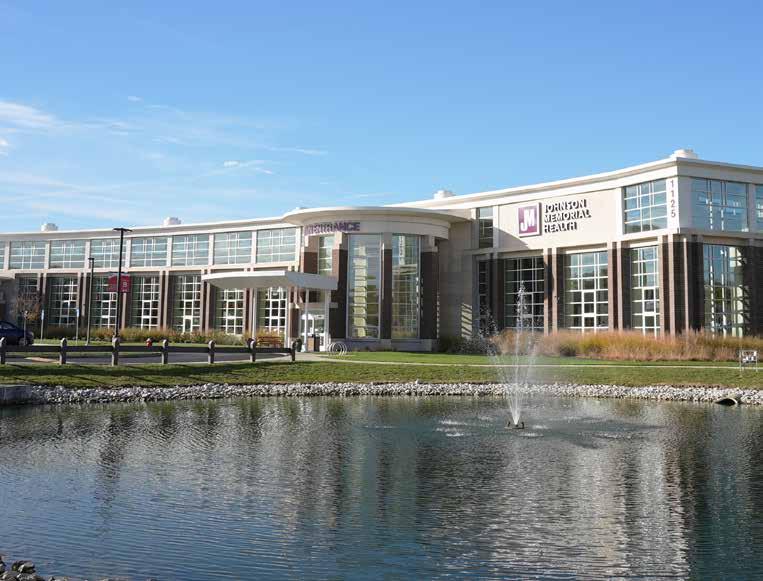
When you choose Johnson Memorial Health, you’re choosing care that’s been nationally recognized for both quality and safety, two things that matter most when your health on the line.
Our 5-Star Quality Rating from CMS and “A” Safety Grade from The Leapfrog Group means you can feel confident you’re getting exceptional care, right here in Johnson County.
16 CONNECTED COMMUNITIES
Leadership Johnson County Cultivates Leaders
Festival Country Indiana Celebrates 10 Years of Building Community Through Tourism & Innovation
Clark-Pleasant Education Foundation Supports Students Through Partnership & Purpose 20
amy@townepost.com (317) 412-4652
HOMETOWN HERO Holly Johnston
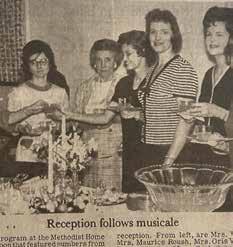
Franklin Matinee Musicale Celebrates America’s 250th Anniversary With Special Concert 22
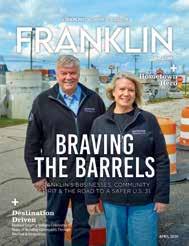
Franklin’s Businesses, Community Spirit & the Road to a Safer U.S. 31
THE POWER OF LEADERSHIP
LEADERSHIP JOHNSON COUNTY CULTIVATES LEADERS
Writer / Christina Cochran
For more than three decades, Leadership Johnson County (LJC) has helped shape the future of Johnson County by cultivating informed, engaged citizens ready to lead. Since graduating its first Signature Program class in 1995, the organization has played a quiet but powerful role in developing community leaders who understand the needs, opportunities and challenges facing the county.
At the heart of Leadership Johnson County is its Signature Program, a nine-month leadership experience that blends leadership development with community awareness. Each September, participants begin their journey with a two-day retreat before diving into monthly sessions that run from October through May.
During the program, class members explore key aspects of the community — from local government and economic development to education, health care and nonprofit service — while building lasting connections with fellow participants. More than 900 graduates have completed the program since its inception, many of whom now serve in leadership roles across Johnson County.
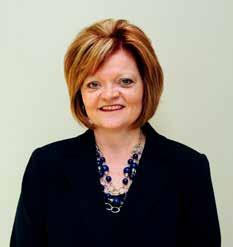
“Leadership isn’t just about skills,” says Executive Director Tandy Shuck. “It’s about understanding your community and recognizing where those skills are needed most.”
Shuck knows firsthand how transformative the program can be. In 2001, while working at Franklin College as assistant director of counseling, she found herself wanting to become more involved in the community.
“My life was work and home,” she recalls. “I realized I wanted something more. I wanted to connect with the community in a deeper way.”
After completing the Signature Program,
Shuck was invited to join the organization as its first full-time staff member. Six years later, she stepped into the role of executive director. The experience, she says, changed the course of her life.
“Leadership Johnson County gave me purpose, relationships and a deep understanding of how our community works,” she says.
Under Shuck’s leadership, the organization has expanded its programming to reach leaders at multiple stages of life and career. Seven years ago, LJC introduced Select Workshops — half- and full-day leadership sessions open to the public. These programs offer practical training in areas such as communication, leadership strategy and team development.
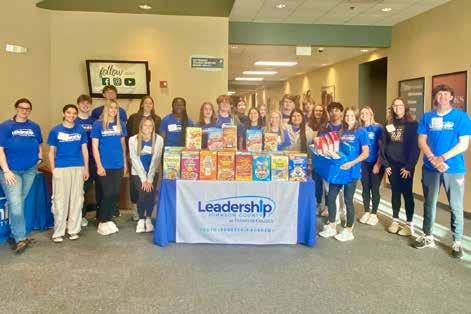
Soon after, the organization launched the Youth Leadership Academy, designed for high school juniors and seniors. Modeled after the adult Signature Program, the academy introduces students to leadership while encouraging them to engage in service projects that address local needs.
Participants recently partnered with Servants at Work (SAWs) to build four accessibility ramps and collected cereal for Good Cheer baskets distributed during the holidays. Through these experiences, students learn how collaboration and initiative can create real change within their community.
Leadership Johnson County also partners with businesses through Leadership to Your Door, a program that brings customized leadership training directly into the workplace.
“We tailor the curriculum to meet the specific needs of each organization,” Shuck explains. “Every workplace is different, and our goal is to provide leadership training that fits their culture and challenges.”
Many LJC projects have left a lasting impact on the community. One notable initiative began when a Signature Program class recognized a gap in the county’s tourism infrastructure. At the time, Johnson County lacked both a tourism bureau and an innkeeper’s tax.
Participants created Journey Johnson County,
a grassroots effort designed to promote local attractions and advocate for tourism development. Their work eventually helped lead to the creation of Festival Country Indiana, which now serves as the county’s official tourism organization.
“Projects like that show what can happen when people learn about their community and feel empowered to act,” Shuck says.
Collaboration remains central to LJC’s mission. The organization frequently partners with local nonprofits to address community needs through hands-on service projects.
One of the Signature Program projects this spring is the Winters Farmers Market, held at Indian Creek Middle School, providing local farmers and artisans an event to feature their goods during a time when farmers markets are not typically offered.
“When leaders, businesses and organizations work together, the impact can be tremendous,” Shuck says.
As Leadership Johnson County celebrates more than 30 years of service, the organization has also reached an important milestone — becoming an independent 501(c)(3) nonprofit. The change opens the door to expanded programming and new opportunities for community partnerships.
“Becoming independent allows us to think bigger about what leadership development can look like in Johnson County,” Shuck says.
One of the organization’s newest initiatives reflects that vision.
In recent years, Leadership Johnson County introduced Bold Academy, a summer leadership experience designed specifically for middle school students. The program was created to spark confidence, curiosity and community awareness at an early age.
“Leadership doesn’t start when you’re an adult,” Shuck says. “If we want strong communities in the future, we need to start nurturing leadership much earlier.”
Held each summer, Bold Academy introduces students to leadership concepts through hands-on activities, team challenges and service projects. Past initiatives have included assembling birthday celebration boxes for families served by local nonprofits and creating “Sunshine Bags” for residents at Greenwood Village South.
Students also explore STEM-based problem-solving and teamwork, gaining exposure to how innovation and leadership intersect in today’s world.
Through partnerships with community organizations such as Endress+Hauser, participants get a glimpse of leadership in action within local industries.
With the addition of Bold Academy, Leadership Johnson County now offers a leadership pathway that begins in middle
school, continues through high school with the Youth Leadership Academy, and extends into adulthood with the Signature Program and professional workshops.
“Our vision is to build leaders at every stage of life,” Shuck says. “When people grow up understanding their community and their role in it, they’re better prepared to help shape its future.”
For those considering getting involved, Shuck offers simple advice.
“Just do it,” she says. “It’s an investment in yourself and in the future of our community.”
To learn more about Leadership Johnson County’s programs and initiatives, visit: leadershipjohnsoncounty.org.
DESTINATION DRIVEN
FESTIVAL COUNTRY INDIANA CELEBRATES 10 YEARS OF BUILDING COMMUNITY THROUGH TOURISM & INNOVATION
Writer / Mackenzie Steagall
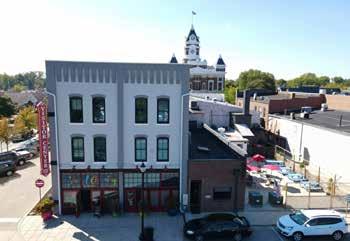
You don’t have to walk far in downtown Franklin to find something unique that Festival Country Indiana helped bring to life.
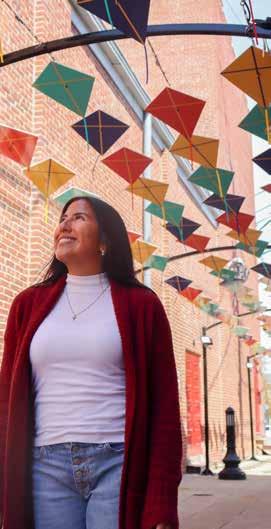
An alley with nearly 200 colorful, overhead kites floating in midair. A concert series that gets families singing and dancing to their favorite songs.
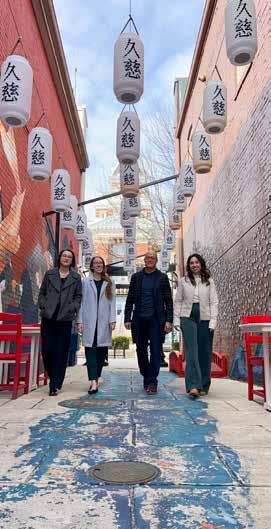
Alleys that pay tribute to veterans and Franklin’s sister city, Kuji, Japan.
Even a play space near the courthouse where people can enjoy cornhole, foosball, checkers and other games.
For 10 years, Festival Country has been an integral part of Franklin and the rest of the county.
“We have two goals: build attractions and advertise,” says Executive Director Kenneth Kosky. “If we identify something
that residents and visitors will enjoy, then we will be the leader that makes it happen and the storyteller that convinces people to come and experience it firsthand.”
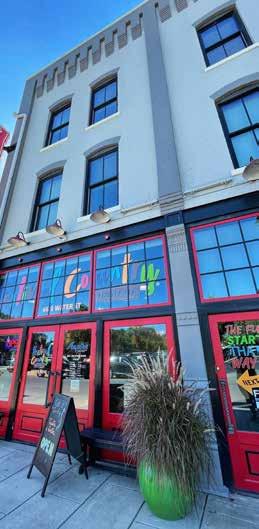
At Festival Country’s visitor center, kids come in to explore the inside of an 11-foot-tall apple, race down the indoor slide or virtually drive a go-kart. Guests commemorate their visit to the area with a series of silly faces in the free photo booth and by smashing a penny in the penny press machine.
Visitors and residents alike come to enjoy everything. Smiling high school seniors pose with their caps and gowns in the colorful alleys and share their photos on social media. Military service members reverently pass through Veterans Alley, awed by the backlit metal vignettes depicting familiar moments caught in time. Exchange students visit Kuji Alley to walk under the swaying lanterns and take selfies by the swimming koi fish mural.
Festival Country is dedicated to enhancing all the surrounding communities with attractions that residents and visitors will enjoy. In 2025, Festival Country awarded nearly $360,000 in grants to support new festivals and the construction of Trafalgar’s amphitheater, Edinburgh’s downtown plaza, and the Fun Plaza with all the outdoor games. They also spread the word about the more than 2,500 events that happen each year in the county.
“Festival Country showcases everything Johnson County has to offer,” says Festival Country Board President Jason Belk.
Belk, who serves as corporate director of sales for Sprague Hotel Developers, says Festival Country provides hotel staff, visitors and residents the full story about what makes the communities special. More than 9 million travelers can easily see the bright red billboards on I-65 encouraging them to visit the incredible downtowns. Festival Country’s active social media platforms share the stories of all the businesses and restaurants in the area and repost guests’ candid photos they take while making a bouquet at a U-pick farm or posing for a family portrait in front of an animal mural.
Before the county had an official tourism agency, the economic impact of tourism was declining 0.6% annually. Now, the economic impact has increased 5% to 8% annually, due to targeted marketing, new attractions and vital partnerships with local organizations and county leadership.
“Without our support, there are many events that would never have gotten off the ground,” Kosky says. “Now, they are self-sustaining and will be enjoyed by people for years to come.”
Each year, the summer concert series at all of the local amphitheaters hosts a variety of entertainers, from a class act like The Eagles Project to the ever-popular Absolute Queen, due to Festival Country’s sponsorships and desire to bring fun bands that will get people excited and singing along.
Festival Country also advertises and financially supports Discover Downtown Franklin’s First Fridays, a monthly shopping event when
stores are open late and local musicians play around town. Last year, 38,700 people came to walk through the beautiful downtown streets, shop at locally owned stores and experience the homeyness of Franklin, some for the first time.
With Festival Country’s help, the county will continue on the path forward to becoming a renowned destination with inventive and interactive attractions, extraordinary public art and inviting community spaces. It is well on its way to becoming a fun place that people want to experience for a weekend or a full week.
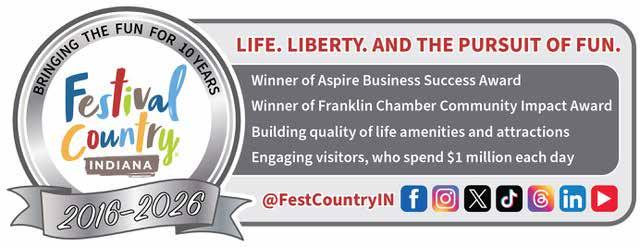
In the last few years, Festival Country has been the recipient of the Franklin Chamber Community Impact Award and the Aspire Business Success Award because of its innovations and contributions.
While savoring a decade of success, Kosky has big plans in the process. He looks forward to Festival Country helping to build more attractions, including a permanent ice-skating rink and other additions.
“In the next 10 years, with Festival Country’s help, we want our destination to be a top place to visit in the Midwest,” Kosky says. “We will continue to bring the fun to all the communities with exciting new attractions.”
Festival Country Indiana’s visitor center is located at 66 S. Water St. in Franklin. For more information, visit festivalcountryindiana.com.
HOMETOWN HERO
Holly Johnston
Writer / Teena Catt
If you have attended a concert or event at Franklin’s DriveHubler.com Amphitheatre at Youngs Creek Park, chances are you have seen Holly Johnston. Johnston, who is Franklin Parks and Recreation events and programs director, announces the concerts from the stage with her ever-present bubbly personality.
Johnston grew up in the small town of Orleans, Indiana, and came to Franklin College to study education with a plan to teach Spanish. Her sophomore year, she changed her major to recreation and physical education. She fell in love with Franklin and decided to stay. She started her career with Franklin Boys and Girls Club as program director. After a few years, she started dating her boss, Chris Johnston, and he told her she needed to find a new job elsewhere.
In April 1997, she began her career with the City of Franklin. Johnston says she absolutely loves her job and the way the staff works so well together. Johnston says that the teamwork of the staff is unique. She describes lunchtime brainstorming with fellow staff members.
“Chip Orner (current parks director) is a great part of this teamwork; he is a genius figuring out how to make things work,” Johnston says.
She also credits the support of the City Council and mayors who value what they have done and continue to do in creating one of the most successful parks departments in the state. Many parks departments do not have the local government support Franklin has, making funding available.
Johnston says it is funny that she has always worked on or near the same street. From the Boys and Girls Club to Franklin Parks and Recreation, she also worked some time at Franklin College as well as the Public Works Department.
Johnston reminisced on the Movies in the Park experience, now held at the amphitheater. When Movies in the Park first began, it was held at Province Park’s Rose Garden.
“We hung a sheet up and used a projector to show the movie. Attendance was around 20 people,” Johnston says.
Last year, four films were shown at the amphitheater with attendance of around 5,000 people. Amphitheater attendance has steadily increased since 2024 at the concerts. Independence Day festivities reached a record 22,000 people in 2025. That number includes people sitting not only in the amphitheater area but also the perimeters.
Along with the amphitheater events, Johnston has overseen Kick a Poo summer camp for kids in the past. She also is involved with Arts at the Amp, Halloween Town, Fall Festival and the Angel Store host for the United Way toy drive. Her job sounds very busy, and she says she loves that part.
“I get my energy from people, watching them enjoy what we create,” Johnston says.
Johnston’s family — husband Chris, son Dane and daughter Delaney — have served as a great support system for her, helping wherever needed.
Johnston says her children have dressed up as the Easter Bunny and Dora the Explorer in the past. Her bosses were always agreeable in allowing her to have tagalong children on the job.
Halloween Town is one of her favorite events. It started 10 years ago with 10 trunks involved in the first year she began overseeing the event. This past year, there were 43 trunks, and the line was more than two hours. That does not deter people, though. A few years ago, Trick the Town was added to
Halloween Town’s events. Local businesses offer treats to kids who stop by their business.
Aside from her career, Johnston has remained active in Franklin College. She served six years on the alumni council. Franklin College is like “home” to her family. She and Chris were married at the chapel. She was a Pi Beta Phi at FC and is active in Tri Kappa in Franklin. When the American Cancer Society held Relay for Life in Franklin, she was active for years in that annual fundraiser. Family vacations have remained a top love of hers, as well as spending time with her kids and their sporting events. Johnston is looking forward to her son’s upcoming wedding on Aug. 1.
Johnston credits her mother, Helen, for her love of community. She learned about the behind-the-scenes work, and Johnston says she learned a lot about how to work without recognition from her mother. Johnston says her mother gave her the skill of a planner. Even in college, Johnston was dubbed by her classmates as “the area coordinator.” That title served to foreshadow her career and lifestyle.
“One of these days, I am going to enjoy it. I will sit back and relax,” Johnston says while referring to all the events she assists with today.
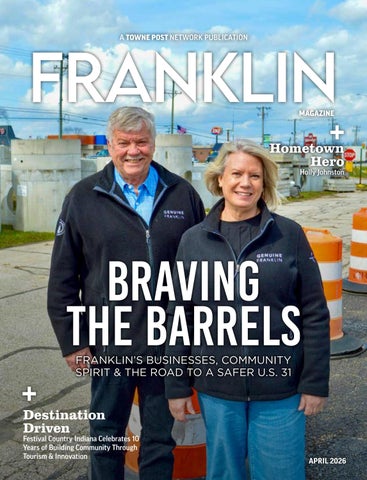
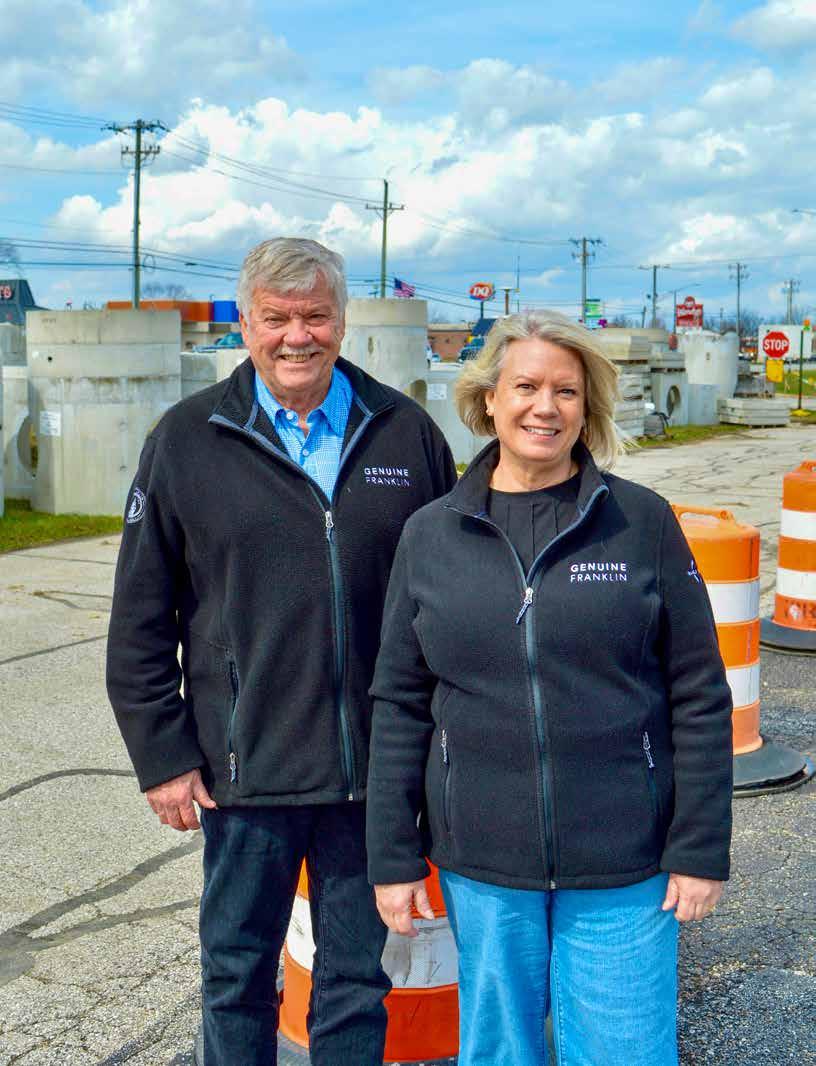
BRAVING THE BARRELS
FRANKLIN’S BUSINESSES, COMMUNITY SPIRIT & THE ROAD TO A SAFER U.S. 31
Writer & Photographer / Christina Cochran
In Franklin, progress has never come without a little patience.
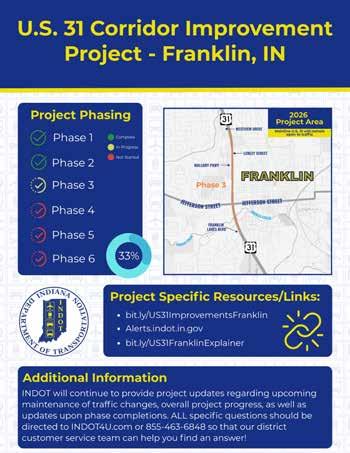
For decades, U.S. Highway 31 has served as one of the city’s busiest corridors — a roadway carrying commuters to work, families to dinner and visitors passing through Johnson County. Today, that same stretch of highway is undergoing one of the most significant infrastructure improvements in the city’s recent history.
Orange barrels line the roadway. Traffic patterns shift. Entrances sometimes require a second look. Yet behind the temporary inconvenience lies a larger vision — one focused on safety, connectivity and the long-term health of Franklin’s local economy.
And right now, the people working hardest to keep that vision moving forward are not only construction crews and engineers. They are the local business owners who continue to unlock their doors every morning along the U.S. Highway 31 corridor.
The Franklin Chamber of Commerce and the City of Franklin have joined forces to ensure those businesses remain visible, supported and thriving during the project. Their initiative, called Support 31, is more than a campaign — it is a reminder of the strong sense of community that has always defined Franklin.
Understanding the Construction
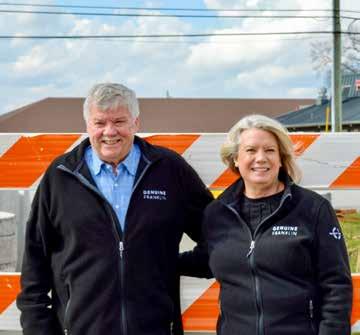
The current U.S. Highway 31 project, led by the Indiana Department of Transportation (INDOT), is being completed in several stages. According to Rosie Chambers, president of the Franklin Chamber of Commerce, the corridor improvements are part of a six-phase effort designed to modernize one of the community’s most heavily traveled roadways.
“Phase Three is underway right now,” Chambers says. “It spans from Hospital Road to Lemley Street — roughly from Walgreens to McDonald’s — and includes many restaurants, retail shops and professional services.”
This phase began earlier this year and is expected to wrap up in August 2026. Additional phases will continue through 2027, with the final stage projected to be completed in late fall of 2028.
For the more than 150 businesses located along the U.S. Highway 31 corridor, that timeline means navigating a multiyear construction process. Traffic patterns may change, entrances may temporarily shift
and the once-familiar drive past storefronts now requires a bit more attention from drivers.
But Chambers emphasizes that every business remains open and ready to serve.
“It is important to note that all businesses are still open and operating during construction,” she says. “While traffic patterns may look different and entrances may not be as immediately visible from the roadway, every business intends to remain open and continue serving customers.”
In many cases, accessing those businesses simply means turning a little earlier, following posted access signs or using a side drive.
“Parking is available, doors are open and staff are ready to welcome customers,” Chambers says.
Supporting the Businesses That Support Franklin
For many residents, local restaurants and shops along U.S. 31 are woven into everyday life.
They are the places where families celebrate birthdays, where teenagers gather after school and where neighbors run into each other over coffee or frozen treats on a summer evening.
But construction can slow more than traffic.
Location analytics from Placer.ai show that customer traffic along the corridor declined about 8% over the past year compared to similar periods before construction began.
It may sound like a small number, but for small businesses operating on tight margins, even a modest drop in customers can make a difference.
That is why the Chamber and the City created the Support 31 initiative, a two-part campaign designed to keep the community informed while encouraging residents to continue shopping and dining along the corridor.
“The first part of the campaign focuses on information and awareness,” Chambers says. “We want to help businesses, residents and visitors learn more about the project timeline, where to find updates and how to ask questions.”
The Chamber has distributed informational brochures to businesses along the corridor and created a dedicated webpage with updates and resources for the community.
The second part of the campaign is about visibility.
“Our goal is to remind the community how important it is to support local businesses during construction,” Chambers says. “When traffic slows, commerce slows — and that ripple effect impacts all of Franklin.”
To keep the message positive, the Chamber even created a mascot for the campaign.
Meet Barry the Orange Barrel
With an orange slice for a smile, Barry appears in printed materials, window clings and social media posts, delivering updates while adding a bit of humor to the construction zone.
The playful symbol carries a serious message: brave the barrels and keep Franklin’s businesses strong.
A Stretch of Local Favorites
The stretch of U.S. Highway 31 currently under construction includes a wide range of establishments that many residents know well — from restaurants and coffee shops to retail stores and service providers.
For decades, families have stopped along this corridor for a quick meal after a long day or a sweet treat during summer evenings.
Places like Dairy Queen, Ritter’s Frozen Custard and Pana Donuts are just a few of the businesses experiencing the day-to-day reality of the construction.
At Dairy Queen, owner Joe Napier says the road work has certainly been noticeable.
“We have seen a decline in customer counts due to lane closures and
MEET BARRY
Barry the Orange Barrel is here to share information about the phases of construction on U.S. 31 through Franklin and help keep you connected to the businesses impacted. Your support matters as these local businesses navigate the challenges of road work.
SCAN FOR UPDATES
congestion,” Napier says. “But we are hopeful that when it’s all sorted out, this will become the busiest stretch of U.S. 31 — not the most dangerous.”
Napier says the restaurant remains committed to serving the community despite the temporary challenges.
“I’m praying for those involved in all aspects of this road project and for our restaurant to thrive as it always has in Franklin,” he says. “The Napier family loves Franklin and we are happy to wait this process out to serve our customers the best we can.”
The restaurant has deep roots in the community. The Napier family has operated Dairy Queen in Franklin for 55 years, continuing a tradition of welcoming generations of families through its doors.
“Like the old DQ slogan says,” Napier adds with a smile, “We treat you right.”
A short drive down the corridor, Arron Sok, owner of Pana Donuts, says the construction has also made access a little more complicated at times — but the shop remains open and grateful for its loyal customers. “Construction on U.S. 31 has definitely made access a little more challenging at times, but we’re still open and excited to welcome the community,” Sok says.
“At Pana Donuts in Franklin, we truly appreciate the support from local residents and customers who continue to visit small businesses during this time. We want everyone to know we’re here every day from 5 a.m. to 6 p.m., and we’re working hard to serve fresh donuts, coffee and boba tea.”
Sok says that community support makes a meaningful difference during periods like this.
“Supporting local businesses during construction really makes a difference for shops like ours, and we’re grateful for the community’s encouragement,” he says.
Each of these businesses — along with dozens of others — continues
to welcome customers despite the shifting traffic patterns outside their doors.
And while entrances may sometimes require a little extra attention, the experience inside remains exactly what customers expect: familiar smiles, warm service and the sense of community that defines local businesses.
Safety at the Center of the Project
While construction often feels disruptive at the moment, the improvements being made along U.S. Highway 31 are designed to address long-standing safety concerns while preparing Franklin for future growth.
One of the key features being added is a series of reduced conflict intersections (RCIs). These intersections are designed to improve traffic flow while reducing the number of potential collision points between vehicles.
Studies show RCIs can significantly reduce crashes and create more predictable traffic patterns — an important benefit along a busy corridor used by commuters, delivery vehicles and local drivers alike.
Equally important are the improvements being made for pedestrians. The project includes the construction of new sidewalks, crosswalks and
a well-lit walking path, creating a safer and more accessible corridor for residents who want to explore the area on foot.
For families and students near nearby schools, these enhancements represent an important investment in safety.
Better lighting, improved crossings and dedicated pedestrian pathways will allow residents to move through the area more comfortably — whether they are walking to nearby businesses, exercising along the trail or simply enjoying the community.
Over time, these features will help transform the corridor from a highway people simply pass through into a space where people stop, walk and connect.
A Vision for Franklin’s Future
While the construction may feel like a challenge today, city leaders believe the improvements will ultimately strengthen Franklin’s economy and community identity.
Mayor Steve Barnett emphasized the long-term value of the project in a statement shared with Franklin Magazine:
“We encourage our residents to continue traveling U.S. Highway 31 as they always have, while showing a little extra patience as we work through the current road construction. Temporary inconvenience is never easy, but we are confident that the strong support for our local businesses will outweigh the frustration that can come with projects like this.
When completed, this project will provide meaningful improvements not only for vehicle traffic, but also for pedestrian access through the addition of a new trail system. We believe this trail will create the same kind of foot traffic opportunities for businesses along U.S. Highway 31 that our downtown businesses currently enjoy. In the long run, these enhancements will strengthen connectivity, accessibility and economic vitality throughout our community.”
In other words, the same sense of walkability and community that makes Franklin’s historic district so vibrant could eventually extend along the U.S. 31 corridor.
That means more opportunities for businesses, more convenient access for residents and a stronger connection between different parts of the city.
The Power of Showing Up
Infrastructure projects can reshape roads, but communities are shaped by people.
And in Franklin, support often looks simple: choosing to stop for dinner, picking up donuts on a Saturday morning or making a quick detour for frozen custard on a summer night.
“The Franklin Chamber and City of Franklin encourage you to brave the barrels and support local,” Chambers says. “These businesses add to our quality of place and employ our friends and neighbors. We want to ensure they remain strong during and after construction.”
Behind every storefront along U.S. Highway 31 is a team of employees, a family investment or a dream built through years of dedication.
And while orange barrels may temporarily reshape the road, they cannot change the spirit of a community that continues to show up for one another.
In the end, the message for Franklin residents is simple.
The road may look different right now. The drive might take an extra minute or two. But the businesses you love are still there.
The lights are on.
The doors are open.
And with the community’s continued support, they will still be there long after the last barrel is gone.
Those choices matter.
CONNECTED COMMUNITIES
CLARK-PLEASANT EDUCATION FOUNDATION SUPPORTS STUDENTS THROUGH PARTNERSHIP & PURPOSE
Writer / Katie Hosea
For Jenny Zahm, the connection between Franklin and Clark-Pleasant schools is both personal and professional. A graduate of Franklin Community Schools, Zahm now serves as executive director of the ClarkPleasant Education Foundation (CPEF) while also working as communications coordinator for the Clark-Pleasant Community School Corporation. Her story reflects the close ties between neighboring school districts whose students, neighborhoods and families often overlap.
Zahm attended Franklin College as a Pulliam Scholar, initially studying journalism before switching to English education. After graduating, she stayed home with her young children and gradually became involved in their classrooms through volunteering and PTO leadership. Living in the Knollwood Farms neighborhood, which is split between Franklin and Clark-Pleasant district boundaries, her family ultimately became part of the Clark-Pleasant school community. Zahm served as PTO president at Whiteland Elementary for
nearly nine years before being invited to assist with fundraising events for the Clark-Pleasant Education Foundation. Nearly eight years later, she now leads the organization as its executive director.
“My first event with the foundation was a Harlem Wizards basketball game,” Zahm says. “That’s really how I got introduced to the foundation and the work they were doing.”
The Clark-Pleasant Education Foundation is a nonprofit, volunteer-driven organization dedicated to supporting public education throughout the district. The school corporation serves a wide region that includes Whiteland, New Whiteland, Bargersville, Greenwood, the southern tip of Indianapolis, and hundreds of addresses within Franklin itself.
“Our communities overlap quite a bit,” Zahm says. “Right now we have nearly 400 students in Clark-Pleasant schools who actually have Franklin addresses.”
Over the past two decades, Clark-Pleasant
schools have experienced significant growth in size and diversity. The district now serves a diverse student population, including many first-generation families and a large Punjabi community. “It’s definitely been a learning process,” Zahm says.
“We’ve made a conscious effort to connect with families and understand their culture.” Zahm recognizes that to best serve the Clark-Pleasant schools, expanding their reach to diverse communities is essential.
The foundation plays a critical role in supporting both students and educators within the district. Through fundraising and community partnerships, CPEF provides classroom innovation grants, scholarships, staff recognition programs and student engagement initiatives. In the 2024-2025 school year alone, the foundation awarded nearly $38,000 in grants to teachers and classrooms, raised more than $54,000 through major events, and distributed $34,000 in scholarships to graduating seniors.
“We try to support students no matter what path they choose,” Zahm says. “Some scholarships are for specific areas like agriculture, nursing or special education, while others are more general. We also support students attending trade schools and two-year programs.”
Community partnerships play a major role in making those efforts possible. Local businesses and organizations sponsor events, recognition programs and initiatives that directly benefit ClarkPleasant students and staff.
Sponsors help fund teacher grants, student programs and scholarships while also participating in unique partnerships with the foundation. For example, local businesses help sponsor employee recognition initiatives where staff members are nominated by their peers for going above and beyond in their work with students.
CPEF’s reach extends well beyond fundraising events. With more than 1,800 followers and over 21,000 monthly views on its Facebook page, the foundation also provides sponsors with opportunities to showcase their support for public education and connect with the broader community. “We really try to work closely with our community partners,” Zahm says. “Their support allows us to give back directly to the students and staff in our schools.”
Among the foundation’s biggest events each year is the Blue Jean Ball, an annual fundraiser designed to bring the community together in a relaxed, celebratory environment.
“This will be our eighth annual Blue Jean Ball,” Zahm says. “It started because we realized a traditional black-tie gala wouldn’t really appeal to our community … so the idea was to create a casual fundraiser where people could wear jeans
and still have a great time.”
The event will take place April 17 at The Garment Factory and will feature dinner, silent auctions, raffles, and entertainment, including live music from Grace Scott Band and line dancing instruction from Amy Skirvin. Along with the entertainment, the evening includes a presentation highlighting how donations and sponsorships have impacted local classrooms throughout the year. For Zahm, those results are the most meaningful part of the work.
“My kids went through these schools,” she says. “It definitely makes it a passion project. I knew many of the students personally because they were neighbors or friends of my kids. When we raise money for teacher grants, I know the teachers and the classrooms being impacted. It’s very personal.”
PATRIOTIC MELODIES
FRANKLIN MATINEE MUSICALE CELEBRATES AMERICA’S 250TH ANNIVERSARY WITH SPECIAL CONCERT
Writer / Teena Catt
America is celebrating its Semiquincentennial this year. That is a mouthful to describe the 250th anniversary of the signing of the Declaration of Independence. While the America250 Commission and other organizations reflect on the nation’s past, present and future, celebrations will include large-scale events in Philadelphia and other activities across the country.
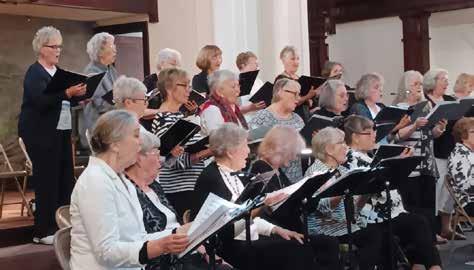
Franklin’s Matinee Musicale is gearing up to celebrate with patriotic flair with its performance titled “Happy Birthday, America!”
Performances will be held May 2 at 7 p.m. and again May 3 at 2 p.m. at the Johnson County Museum of History in Franklin. Tickets are available for $8 at the door.
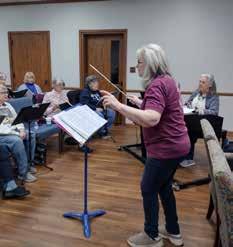
The concert will include a variety of patriotic tunes led by director Janis Poynter. Member Beverly Hollandbeck will provide a patriotic reading, with guest Gary Phelps and patron member John Whitaker participating as well.
Additional performances will take place at various senior living facilities throughout the county.
Franklin Matinee Musicale has a long history as an organization in Franklin. In 1891, the group was founded as the “Married Ladies Matinee Musicale.” With 135 years now in existence, and the “married ladies” title dropped, the group has accumulated an interesting history that has been well documented and stored with the Johnson County Historical Society.
Looking back through the documents revealed charter membership with well-known names in Franklin’s history, including Overstreet, LaGrange, Ragsdale, Whitesides, Mullendore and Banta. The group’s aim was noted in
the first minutes of the first meeting: “The cultivation of vocal and instrumental music.”
Today the group consists of 27 women and is actively seeking new members. Active membership is limited to 35 members. The group performs two concerts each year, in May and in December. Members meet on the first Wednesday of each month from February through May and again from September through December. Dues are $20 per year.
Patron memberships include professional
musicians in the community whose positions and employment prevent them from belonging, but whose advice and performance are beneficial to the club.
A portion of the dues is applied to yearly scholarships awarded to high school students majoring in music in college.
To learn more about Franklin Matinee Musicale, contact Janis Poynter at jpoynter@ hotmail.com or 317-502-8232.
BOUND TOGETHER BOOK CLUB
THE ANXIOUS GENERATION BY JONATHAN HAIDT
Writer / Christina Cochran
For April, Bound Together Book Club is turning its attention to a timely and thought-provoking read: The Anxious Generation by Jonathan Haidt.
At first glance, the title alone may feel heavy. After all, no parent, grandparent, teacher, or neighbor wants to believe the children in their lives are growing up under a cloud of anxiety. Yet Haidt’s work doesn’t aim to scold or sensationalize. Rather, it gently and thoroughly examines how childhood has changed over the past decade — and how those changes have quietly reshaped the emotional landscape for kids and teens.
Today’s young people are growing up in a world more connected than ever before. They can FaceTime friends, submit homework online, track their sports schedules through apps, and scroll endlessly through curated snapshots of everyone else’s lives. Technology itself is not the villain of this story. In many ways, it’s remarkable. But Haidt invites us to consider what happens when screens begin to replace face-to-face friendships, outdoor adventures, boredom, and the small risks that once helped children build confidence.
Previous generations remember riding bikes until the streetlights flickered on, resolving playground conflicts without adult mediation, and navigating awkward
middle school moments without a digital audience. Mistakes faded with time. Embarrassment was temporary. Social circles, though sometimes challenging, were limited to classrooms and neighborhoods.
Now, the pressure is constant. A group chat can buzz long after bedtime. The line between school life and home life has blurred. Even downtime isn’t always restful when notifications continue to light up the screen.
The Anxious Generation is not a book about fear—it’s a book about awareness and responsibility. Haidt carefully lays out research linking the rise of smartphonebased childhood to increases in anxiety, depression, and loneliness, particularly among adolescents. But rather than leaving readers discouraged, he offers something far more empowering: the idea that adults still have agency.
We cannot rewind time, nor should we wish away innovation. But we can ask thoughtful questions. Are we demonstrating healthy screen habits for our youth?
Perhaps most importantly, this book reminds us that children need communities that move together— schools that align with families, parents who support one another’s decisions, and neighborhoods that value childhood as something to be protected, not hurried.
There is something hopeful about reading this book together as a community. When conversations happen in living rooms, libraries, and coffee shops, change begins to feel possible. No one family can shift a culture on its own. But a community can.
May we, as readers, approach The Anxious Generation with curiosity and courage. Our children are watching us—learning how to handle pressure by observing how we handle it. And perhaps the greatest gift we can offer them is a steady, attentive presence within their daily lives.
Let’s read thoughtfully. Let’s talk honestly. And let’s remember that protecting childhood is a shared responsibility—one that binds us together.