
UTAS...SCANDAL?
InekaLeffler,TogatusEditor-In-Chief
Information released under Right to Information laws revealed that UTAS has lobbied the state government in regards to the UTAS STEM project and Sandy Bay land. Here is a brief overview of the ABC’s investigation to get you up to speed.
*all information found below has been sourced by the ABC in an investigation. Please see the article ‘University of Tasmania lobbied for land law change, but it may not solve funding problems’ in the ABC for more detail.
For context, UTAS’ STEM project is expected to cost $500 million. UTAS is seeking $400 million from the Federal Government (which the government has not guaranteed nor made a priority), and $100 million from selling off Sandy Bay land.
Timeline:
1.February 2024: The Liberal party proposed Parliamentary Approval laws during the election campaign. Laws would mean that both houses of parliament would have to approve before UTAS can sell any of its land in Sandy Bay.
2.UTAS Chancellor Ms Alison Watkins, wrote to Madeleine Ogilvie and Jo Palmer (MPs) disapproving of the proposed legislation, saying that it would (in a gist) negatively impact UTAS’ prospects of selling the land to development partners and that it would reduce how much the land is worth. Ms Ogilvie responded to Ms Watkins and maintained support for the bill.
3.2 days later Watkins followed up in an email, writing that the Premier's office contacted the Vice Chancellor noting the concerns she initially mentioned, and that there should be a meeting between the Premier and the VC.
4.UTAS Council endorsed a plan for “strategic discussions with the state government” over the Sandy Bay campus. There were multiple meetings with ministers, including Premier Jeremy Rockliff.
5.August 2024: UTAS engaged with former Premier Will Hodgman to specifically handle Sandy Bay land issues, including to create a new STEM business case for the uni. Hodgman’s work lobbying cost $20,000.
During this time UTAS organised a meeting between a senior staff member at the Department of Premier and Cabinet, and Hodgman.
6.The bill was set to be amended to allow UTAS to rezone land above Churchill Avenue, without approval of both houses. The initial bill proposed that all land being sold be approved by both houses.
7.October 2024; Vice Chancellor, Dr Rufus Black wrote to Premier Rockliff promising the new STEM business case, and requested that the Tasmanian government keep it as a funding priority with the federal government. Premier Rockliff then wrote a letter to Infrastructure Australia.
So, even though UTAS can now sell off part of the land in Sandy Bay thanks to these lobbying efforts, funding for the entire STEM project is still up in the air. What are your thoughts?
ENGI LANEWAY RETURNED...
Event recap from the exec.
Thank you all for coming to Engi Laneway ’26. We are proud to keep the flickering flame of on-campus social events at UTAS alive for another year. For us, Laneway was a blur of safety fences, paperwork and emails, but it was absolutely worth it to see you all have so much fun – and, we are happy to report that this was the first Laneway without injury. A massive thank you to everyone who helped behind the scenes and on the day to make it such a success.
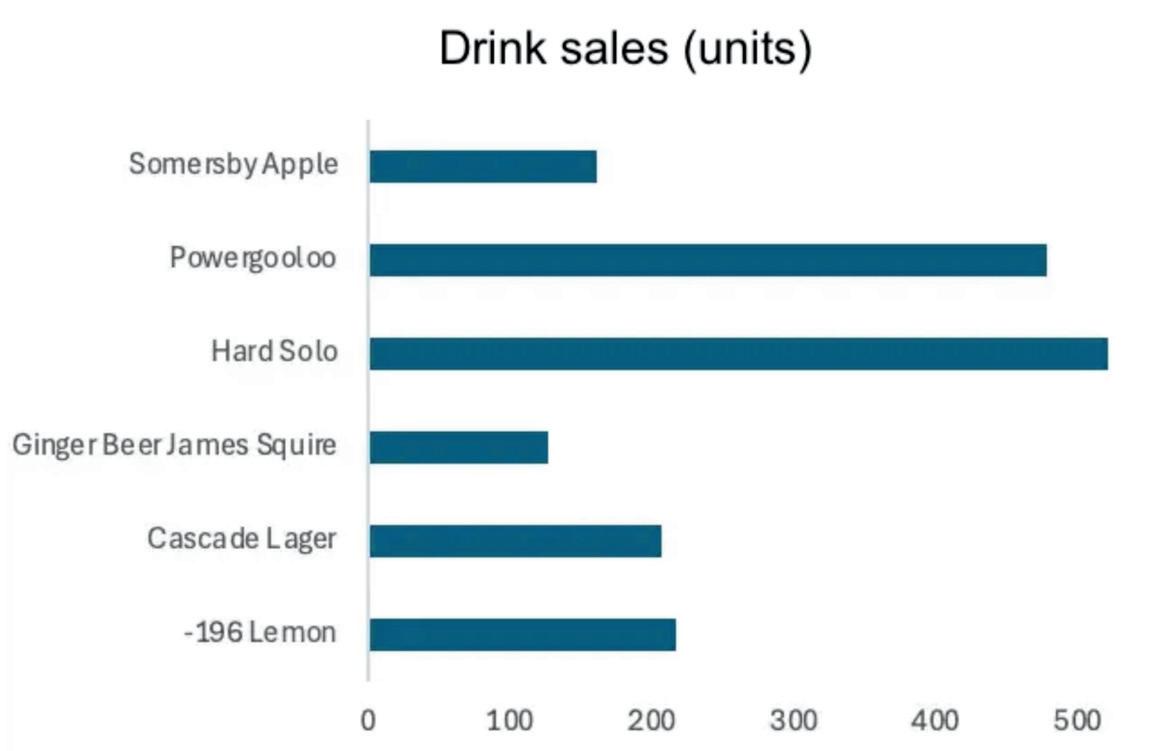
In true engineering fashion, we have some drinks stats; Hard Solo took the crown for most unit sales this year, with our iconic Powergooloo coming in second.
We will see you next year! In the meantime, stay tuned……...
Cheers - Engi Exec
ATHLETE SPOTLIGHT!
Rowing Through Uni Life
Oliva Yeates
I’m Olivia Yeates, second-year Bachelor of Arts student majoring in Media and Communication, and when I’m not on campus, you’ll probably find me on the water.
As an elite rowing athlete with the University of Tasmania, the early mornings, cold air and Tassie rivers are all part of the routine. Right now, the focus is locked on one of the biggest events in Australian rowing: the Australian Rowing Championships, at Lake Barrington from 23–29 March.
I row for the Tasmanian University Boat Club, with training split between Hobart and the HuonValley. Some sessions start on the Derwent at NewTown Bay, where the city slowly wakes up around us. Others take place further south at Huon Rowing Club in Franklin, on the wide, quiet stretch of the Huon River.Different water, same goal.
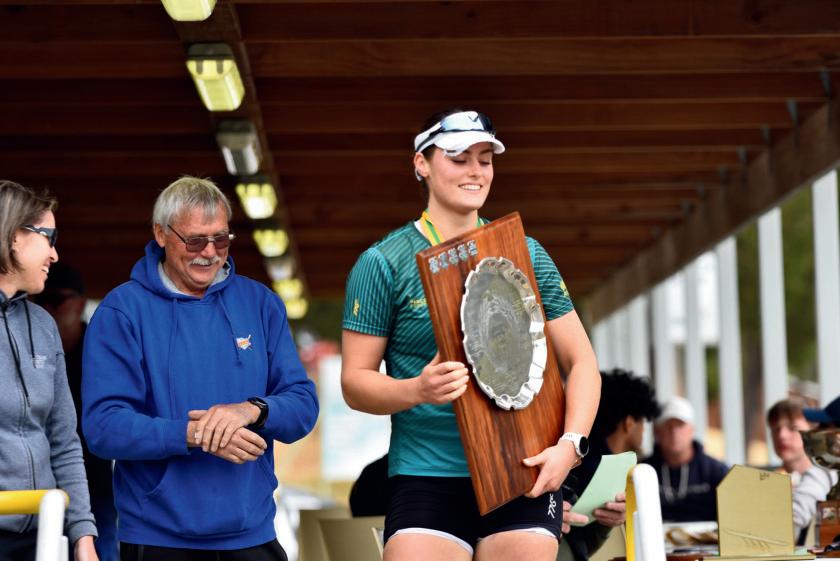
The season has already delivered some highlights. At the Tasmanian State Rowing Championships, I took out the Under-23 single scull, a moment that made all those early alarms feel worth it. Not long after, I travelled to Penrith to compete at the New South Wales State Rowing Championships, racing as a Tasmanian Institute of Sport athlete and representing the university. Against a stacked field, I finished eighth in the U23Women’s Single Scull.
Now it’s full steam ahead toward nationals – one week, one course, and some of the best rowers in the country lining up at the start.
No pressure… just a lot of kilometres and a pretty good view from the boat.
SUITS OFF: LESS LAW, MORE CAMP
On Saturday the 14th of March, the first-year law students had the opportunity to head up to Gumleaves on the East Coast for a weekend of activities.We started our day by picking our cabins, before sharing some lunch and partaking in speed dating and games, the first of many opportunities to get to know our cohort and those leading the camp. Across the afternoon, we shared our most embarrassing stories, played flags and ran an impossibly difficult game of Amazing Race, amongst other activities.
To the TULS team, there’s no way there were really 9 white claw cans in those bushes (if you know you know).The night brought a sausage sizzle, a hilarious and heated round of jeopardy, the most entertaining lip sync competition with some ‘single ladies’ and, of course, a well-stocked open bar to complement.We spent the evening through to the next morning laughing with new people, and I can confidently say that everyone who attended came out with new friends. It was the best opportunity to engage with both our cohort and the older students, who are fantastic mentors and lead the camp so wonderfully.Thank you!
Hannah Sciberras
TULS FirstYear Representatives 2026
WHAT ARE WE SAYING ABOUT THE FOREST?
First Year Perspective, Hazel Jennings
As a first-year student whose only classes are in The Forest, it is hard to speak about what things used to be like, but I have to say The Forest impressed me. My favourite thing has got to be the sheer amount of charging points and cosy nooks; I really feel like a 'proper' uni student whenever I walk in the door. I love all the plants and appreciate that it's not some horrible, sterile, black-and-white building. Though, if any UTAS higher-ups are reading, I think we would all love some blankets to make things cosier. I can't speak on the parking as of now… but I am dreading it based on what my peers have told me.
Third Year Perspective, Anonymous
The first time I was in the building I was very impressed with the architecture. The building itself is spectacular; it does feel like I am studying in a state-of-the-art facility. The classrooms are well equipped with the necessary technology and all of the study stations have a more than satisfactory amount of power points. The kitchenette, which I use every day, is convenient and the appliances are easy to use. All of that positivity said, there are a few opportunities that I would like to highlight. The open plan design can be quite distracting and overwhelming. I am very aware of everyone in the space and also of the distraction I am to others as I move around. The different kinds of study spaces and locations are also limited. There aren't many places that
have big tables and are also hidden away out of sight. Although there is a plethora of flora around, I still feel so far away from nature. I miss sitting on the lawn in Sandy Bay, running my hands along the grass and feeling the sunshine on my face. Every time I think of taking a break and getting a bit of fresh air, I walk out to buildings, cars, hustle and bustle which is characteristic of the city we have been nestled into.Bring back real nature, this is #depressing.
Do you have any thoughts? Email us or send us a message on Instagram!! Open to ALL opinions xoxo
UNISPORT INDIGENOUS NATIONALS
UTAS Sport & Riawanna Between Culture and Competition.
Uni life looks different for everyone. For some, it’s lectures and late nights in the library. For others, it’s early starts, team training, and representing something bigger than themselves.
The UniSport Indigenous Nationals is more than just a week of competition. It’s a space where sport, culture and community come together; where students from across the country connect, compete, and celebrate identity.
In 2026, the event will be held at the University of Newcastle from 29 June to 3 July, bringing together Indigenous student-athletes from universities all over Australia. But beyond the fixtures and results, it’s the moments in between that matter just as much; the friendships formed, the stories shared, and the pride that comes with representing community.
For students at the University of Tasmania, the opportunity to be part of this experience is something special.Whether you’re a seasoned athlete or just keen to get involved, Indigenous Nationals offers a unique chance to step onto a national stage, and into a strong, supportive network.
It’s not just about performance. It’s about connection. It’s about showing up for your mob, your culture, and yourself.
Right now, preparations are underway, and expressions of interest are open. Because sometimes, sport is more than a game.Sometimes, it’s a way to belong.
MARCH FOR THE FOREST
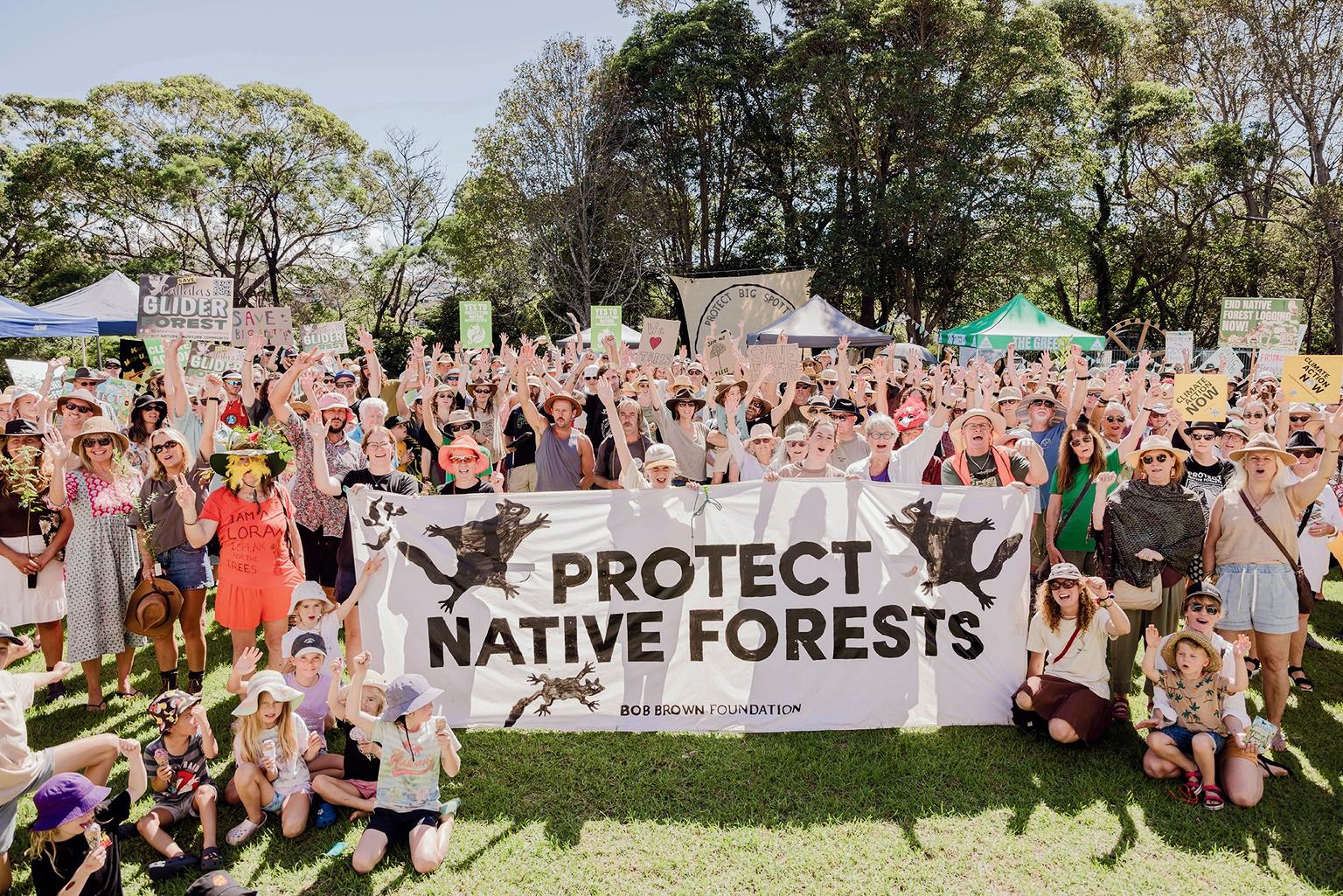
On March 22 2026, The Bob Brown Foundation held their annual national March in March. These rallies were held across the country calling for an end to all native forest logging across so-called Australia. This year over 15,000 people from around the country took to the streets calling for environmental reform, First Nations Justice, Land Back, and for the protection of our forests.
The Environment Society had members attend the march in Nipaluna/Hobart where they joined the calls to end native forest logging in Lutruwita/Tasmania. We were lucky enough to hear from speakers such as Dr Bob Brown, Peg Putt, Audrey Rowe, Gurridyula Burragubba, Adrian Burragubba, Jenny Weber, Teresa Sainty and Denni, while Environment Society members Owen Fitzgerald and Will Redding headed the chants as the march moved through the city. Native forests are critical carbon sinks, and as such are critical in combatting the climate crisis.
They also hold significant cultural meaning to Aboriginal Communities across Lutruwita and so-called Australia. Native forests are also home to many native and endangered species, such as the swift parrot here in Lutruwita.
If we are serious about the protection of our planet and its native species, then the first step is saving our native forests and returning land. To join actions organised by the Bob Brown Foundation, you can find all the necessary sources via:https://bobbrown.org.au/about/.
The Environment Society works closely with organisations such as The Bob Brown Foundation and many others. We have many upcoming events and opportunities all relating to the environment and environmental movements across Lutruwita/Tasmania.You can join The Environment Society and find out about our events via social media.
Owen Fitzgerald, UTAS
Environment Society Secretary
Image: Bob Brown Foundation Website
WHAT IS LIBERALSIM?
Jason Dale, Secretary of the UTAS Liberal Club
Liberalism. It is a vague and ill-defined term, especially in Australia where the word “liberal” can mean very different things depending on context. For those encountering it for the first time, it’s helpful to strip it back to its core: liberalism is a political philosophy centred on aspiration, individual freedom and enterprise, limited government, the rule of law, and equality of opportunity.
At its heart is a simple idea, people should be as free as possible to live their own lives, so long as they do not harm others. This includes freedom of speech, freedom of association, freedom of belief, freedom of religion, the right to disagree, and the right to pursue one’s own ambitions. Government has an important role, but it is a constrained one: to protect these freedoms and rights, uphold institutions, and ensure a fair playing field.
In the Australian context, two prime ministers, Malcolm Fraser and Robert Menzies, offer useful examples of how liberalism has been interpreted and applied in an Australian context. Menzies, who founded the Liberal Party in 1944, believed deeply in individual enterprise and personal responsibility, but also in strong institutions and a stable democratic order.
His vision of liberalism was not about unchecked markets or radical change, but about balance:a society where individuals could thrive within a framework of laws and institutions that provided security and opportunity. Menzies believed that the individual, you, have intrinsic value, rights, freedoms and dignity as a person.This is the foundation of liberal thought. He also warned of the dangers of social ideologies which elevate the allpowerful State and make the rights of the individual, not matters of inherent dignity, but matters merely of concession by the State and, ultimately, dismantle the rights of the individual. Fascism and Communism have this characteristic akin.
Fraser, often seen as more progressive within the Liberal tradition, emphasised human rights, international responsibility, and social justice. His government took strong stances on issues like apartheid and refugee protection, reflecting a belief that liberalism extends beyond economics into moral responsibility. Fraser’s interpretation of liberalism shows that supporting individual freedom can go hand-in-hand with compassion and a commitment to fairness.
Keep reading Jason’s piece on our Website!
Lots of love from the 2026 Togatus Editorial Team:
Ineka Leffler, Editor-in-Chief
Ella Vanderzwan, Deputy Editor-in-Chief
Amalie Cox, Creative Director
Anaya Shepherd, Digital Editor
Jasmine Jones, Content & Copy Editor
Erin Coull, Content & Copy Editor
The opinions expressed herein are not those of the editors, the publishers, the University of Tasmania, or the Tasmanian University Student Association. Reasonable care is taken to ensure that the content and information included is as up-to-date and accurate as possible at the time of publication, but no responsibility can be taken towards Togatus for any errors or omissions.
If you have concerns or questions about anything that has been published, contact the Editor-In-Chief, Ineka Leffler, by email.
Email (and to submit articles): togatusmagazine@gmail.com Instagram: @togatus_
To receive this content digitally subscribe here:


Togatus is printed on stolen land. We pay our respects to all Elders past, present and emerging.
