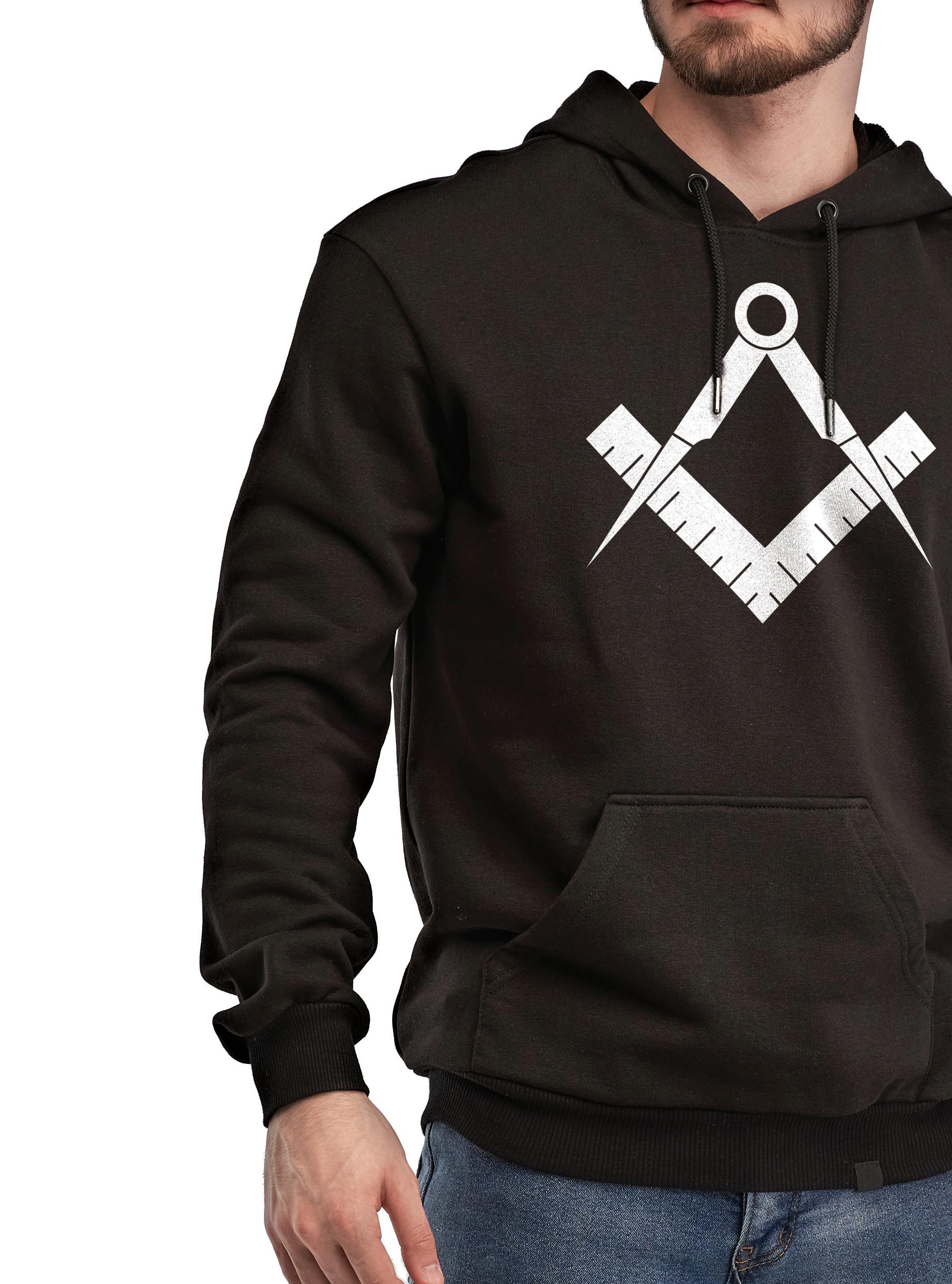
Designed for Brothers who like their style sharp and their layers warm. Classic mark. Clean look. Winter-ready.
Splendid Hall and Quarters: Depictions of Fraternal Meeting Places
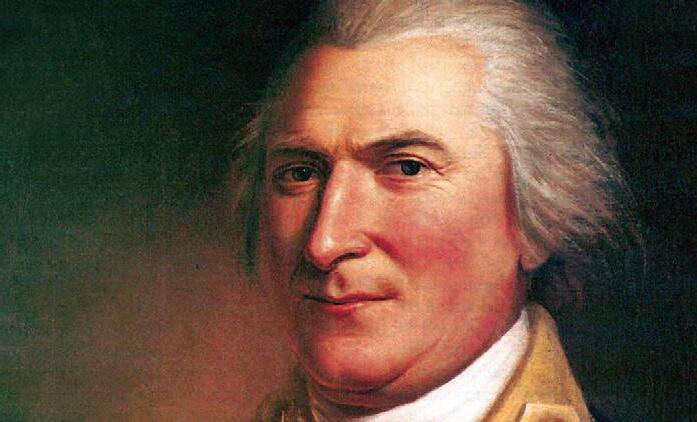
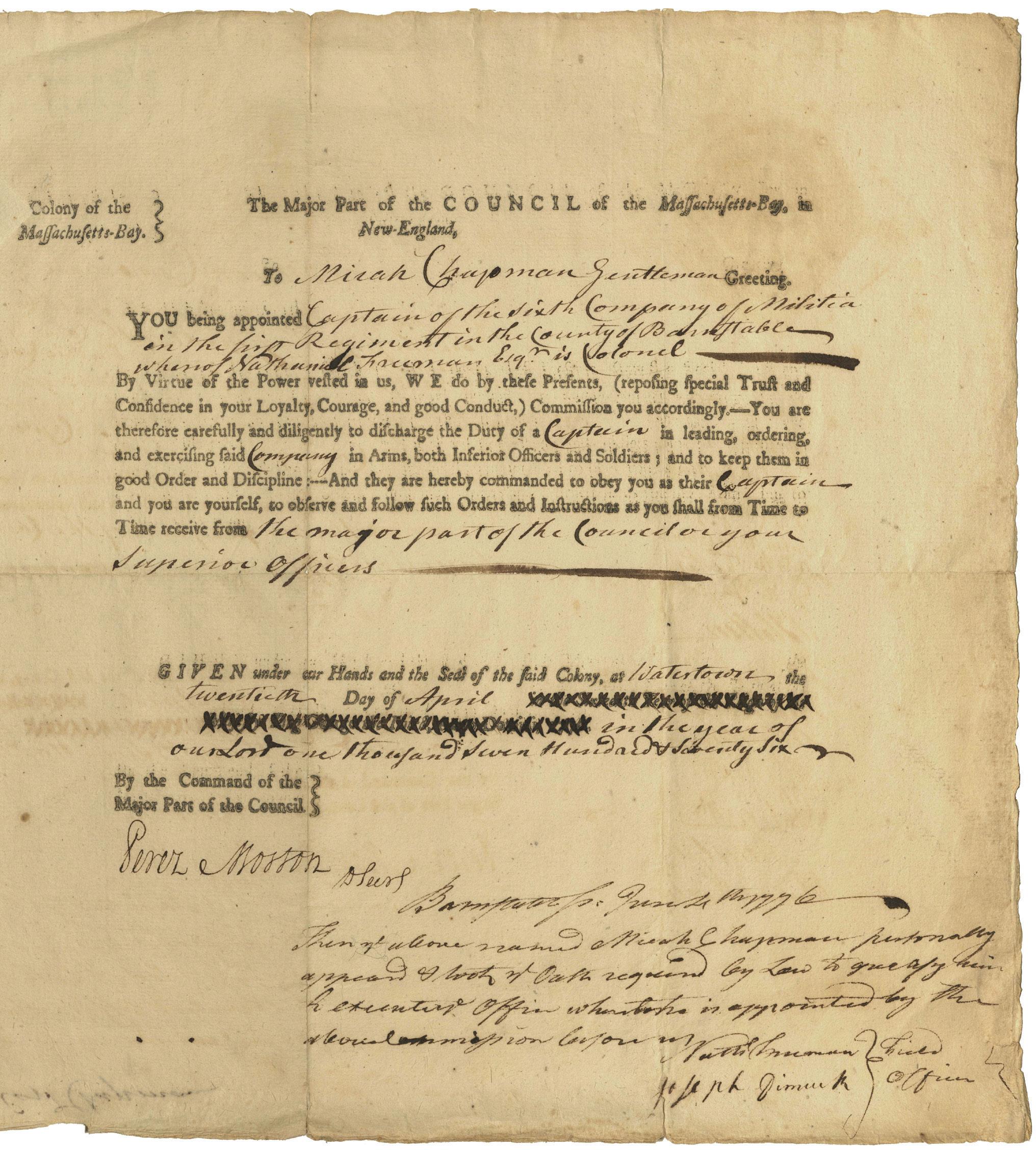
1776 Military Appointment of Micah Chapman
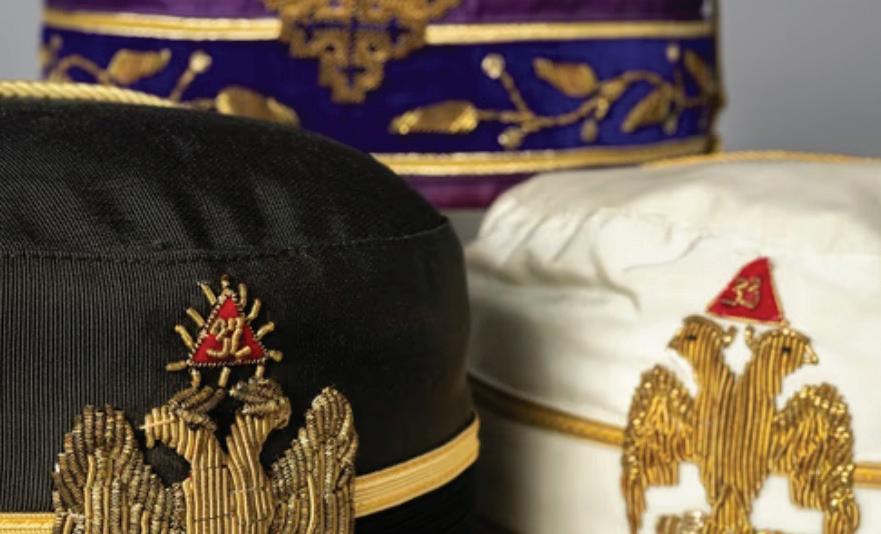

Last year, the Sovereign Grand Commander traveled the Northern Masonic Jurisdiction with one goal in mind: to listen to you. You shared the things you loved about the Rite, and you offered suggestions for how to make it better. The good news is that you were heard. Your valuable feedback is informing the decisions that impact the NMJ, your Valley, and most importantly, your Scottish Rite Experience.
Read the Commander’s message on page 4 for more information.
Also, be sure to check out the story of our record-breaking Night of Charity on page 28. We hope you enjoy this issue of The Northern Light.

My Brothers,
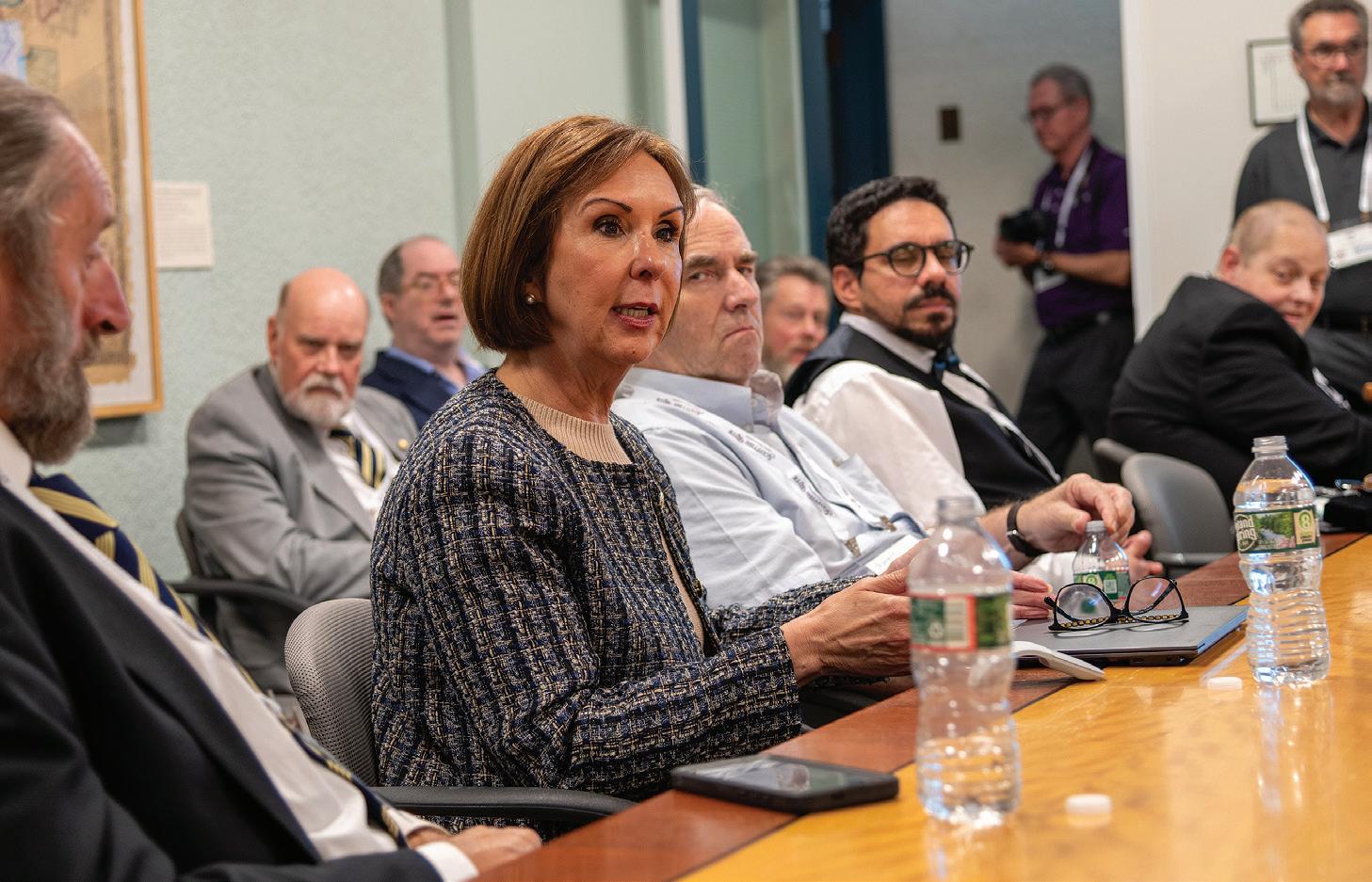
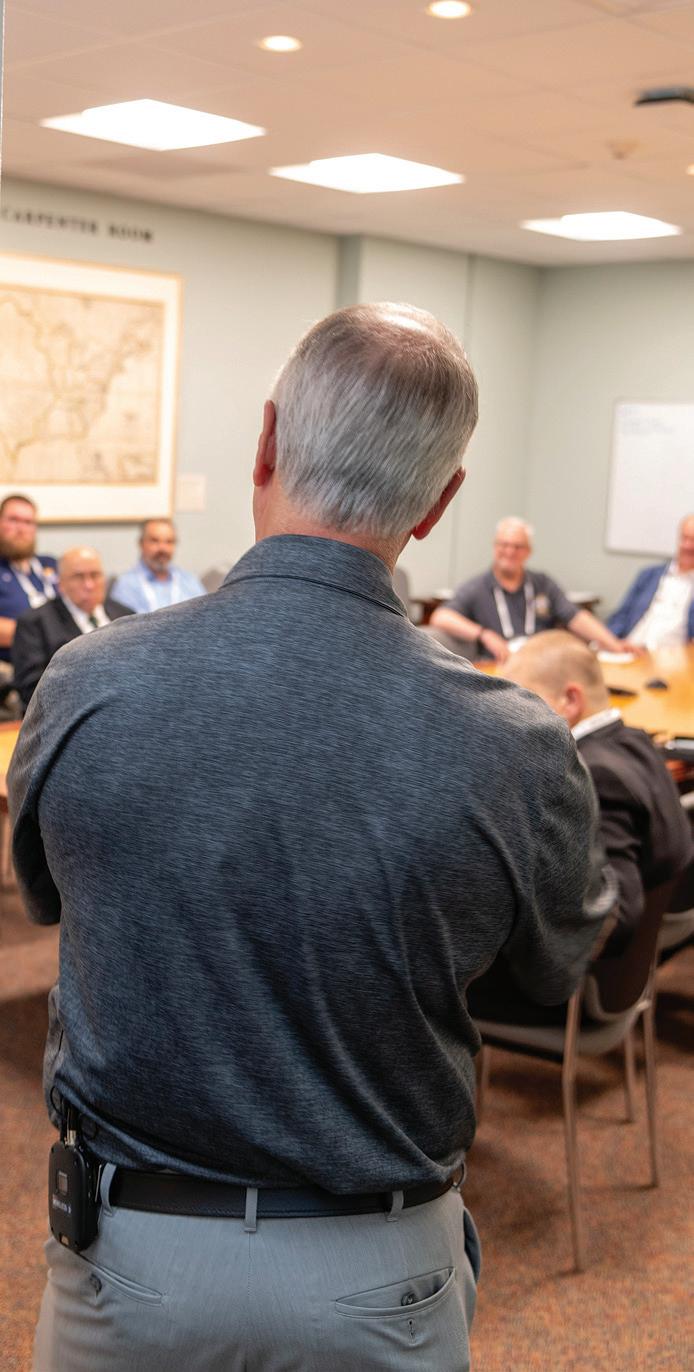
In the months since completing our Listening Tour, I have carried your words with me – on the road, in quiet moments of reflection, and in every conversation about the future of our Scottish Rite. Meeting with Brothers across the Northern Masonic Jurisdiction was both humbling and energizing. You spoke with candor. You shared your hopes, your concerns, your frustrations, and your aspirations. Most importantly, you affirmed something essential about our Fraternity: We grow stronger when we listen to one another.
by Walter F. Wheeler, 33˚ Sovereign Grand Commander
Your feedback has not been placed on a shelf. It is already shaping tangible action. Today, I am pleased to share several improvements that exist because of you – because you cared enough to speak, and because we are committed to responding with clarity, transparency, and follow-through.
Thursday Night at the Rite: On-Demand and Enhanced
One of the most consistent themes from the Listening Tour was the need for greater flexibility in accessing degrees. Brothers told us they love Thursday Night at the Rite, but schedules don’t always cooperate. We heard you.
Your feedback has not been placed on a shelf. It is already shaping tangible action.
Season Seven of Thursday Night at the Rite returned in January, and for the first time, the entire season is available on demand through April 15, 2026. Whether you have lodge on Thursday nights or simply want to revisit a degree for deeper reflection, the choice is now yours.
As a holiday gift of appreciation, Season Six was also available on demand from December 22 through January 2. We hope this offering added light and inspiration to your member experience.
Masters of the Rite (MOTR): Back and Better than Ever
You asked for continued education that deepens meaning and

engagement, and you want a seamless user experience for accessing these resources. We listened.
Season Seven of Thursday Night at the Rite returned in January, and for the first time, the entire season is available on demand through April 15, 2026.
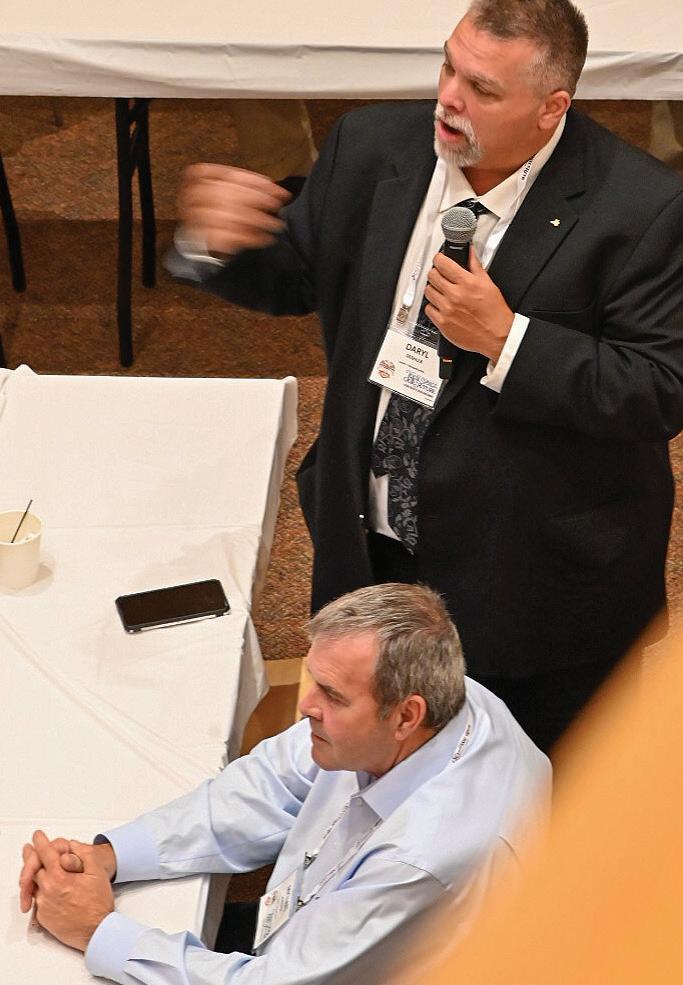
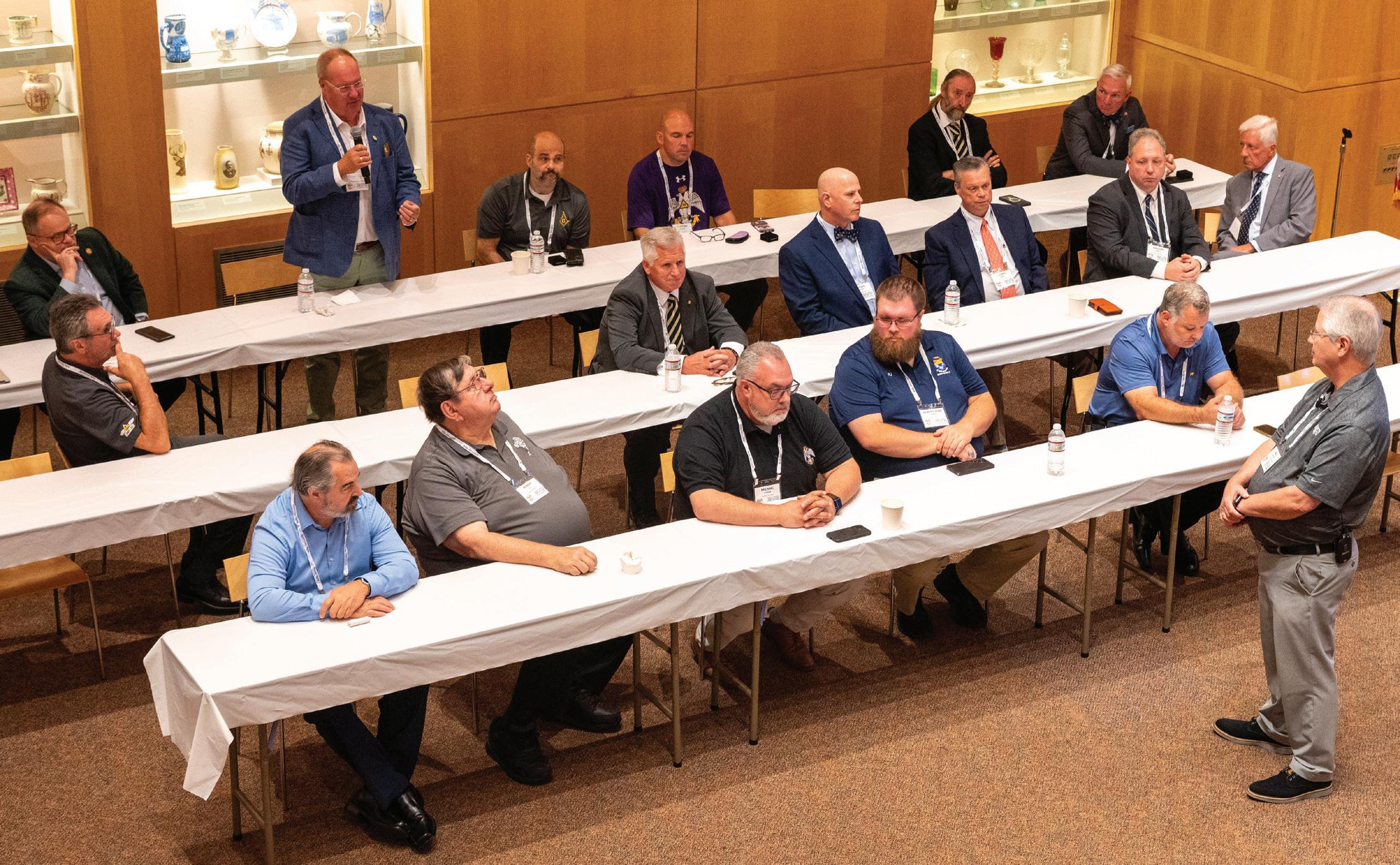
Masters of the Rite, our live, interactive educational supplement to Thursday Night at the Rite, returned this year. Illustrious Brother Sandy Karstens continues to lead these workshops that expand our understanding of the symbolism, lessons, and Core Values that anchor our Craft.
We developed a more intuitive platform for accessing MOTR, with
access directly within your Member Center account and easier ways to join the conversation – improvements guided directly by your feedback.
The Listening Tour reaffirmed a timeless truth: Our strength lies in unity, transparency, and our shared willingness to grow.
Many Brothers shared how much they value the Scottish Rite, NMJ blog as
an accessible source of learning and reflection. We intend to build on that strength. Our blog will continue to expand as a hub of insight – featuring history, leadership perspectives, and new avenues for personal growth and inspiration.
You also told us that communication must be more consistent and timelier. To support our Valley leaders and ensure alignment across the jurisdiction, monthly Valley Secretary calls have been reinstated. These sessions are already helping us share
updates, ask questions, and learn from one another more effectively.
The actions above are only the beginning. We are now developing short-, mid-, and long-term strategies shaped directly by your input. As these plans move from design to implementation, you will see additional updates and, most importantly, continued accountability.
You also told us that communication must be more consistent and timelier.
The Listening Tour reaffirmed a timeless truth: Our strength lies in unity, transparency, and our shared willingness to grow. Thank you for your honesty, your engagement, and your unwavering commitment to our Scottish Rite.
The work continues, and your voice is guiding our future.
Journey On!
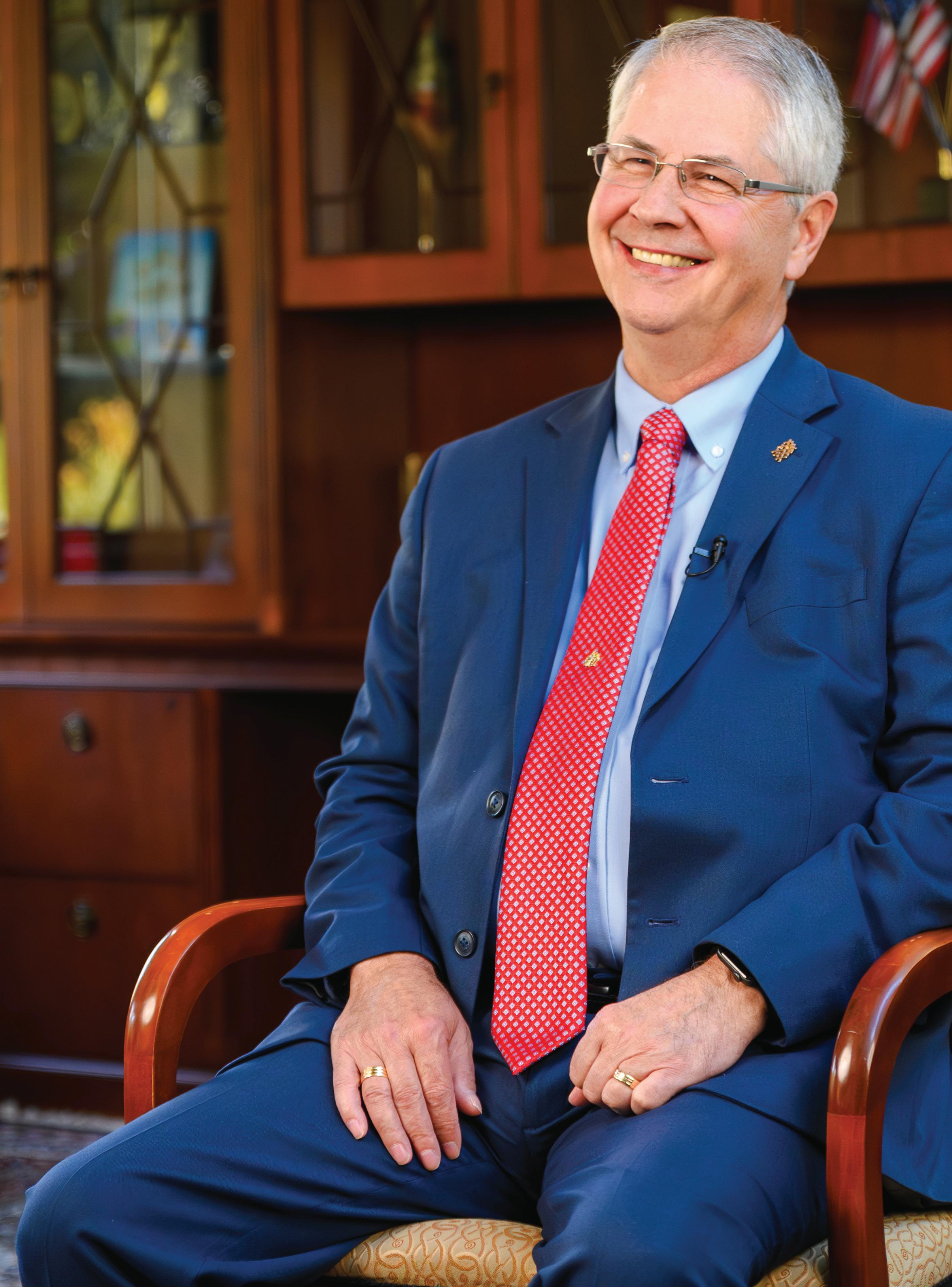
As this issue of The Northern Light arrives in mailboxes, the Olympic Winter Games Milano Cortina 2026 are drawing to a close. Most of us, I suspect, tuned into at least a few hours of coverage. Why are we captivated by athletes coming from all corners of the globe to compete in their chosen disciplines?
Badness you can get easily, in quantity; the road is smooth, and it lies close by. But in front of excellence, the immortal gods have put sweat, and long and steep is the way to it.
—Hesiod
Is it because they are average at what they do? Is it because they go out and give 50 percent? If every four years, unexceptional part-time athletes from across the globe gathered to put just a little bit of effort (not enough to break a sweat, mind you) into being passable, would anyone even take notice? Of course not.
It is as if a part of your soul has stolen a glimpse into the eternal and will never be the same.
The Olympics are just one example I can use. Poetry, art, music – all are more fully enjoyed when they are done well. Sure, you can enjoy music when your child is in the elementary band. You can enjoy art when she brings home something for you to display proudly on the refrigerator. These you enjoy because they have a personal connection, but otherwise, we expect greatness.
Effective poetry, for example, is said to be such a pure use of language that either adding or subtracting a single word would diminish the poem. When you experience the work of a master – truly examine the capturing of light by Rembrandt or listen to Mahler’s Resurrection Symphony performed by
a world-class orchestra and choir – you are forever changed. It is as if a part of your soul has stolen a glimpse into the eternal and will never be the same.
Part of the reason that we can be so changed or affected by the truly
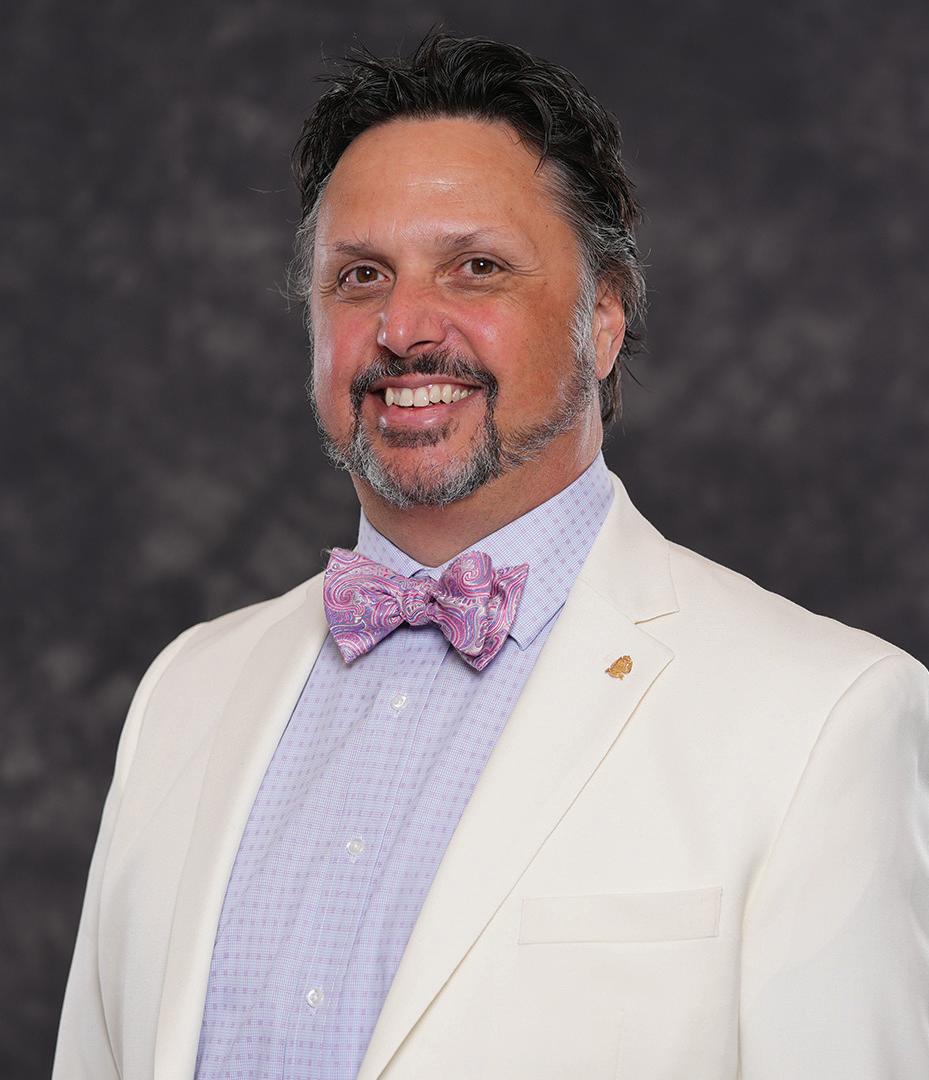
by PJ Roup, 33˚, Editor, Active for Pennsylvania
magnificent is that true magnificence is so rare. Generational talents come along – well, once in a generation after all.
Superior has been superseded by standard.
Since perfection is such a scarce commodity, we, as a society, have begun to accept that almost perfect is the same thing as perfect. I would submit to you, however, that almost perfect is the antithesis of perfect. Society grades on a curve, rewards fitting in, and even scorns achievers to spare the feelings of those who succeed at a lower level. Superior has been superseded by standard. In short, mediocrity has become the new awesome.
The problem with this paradigm is that a man’s soul wants more. Deep within us, we want perfection; we want to be part of something grand, glorious, and larger than ourselves. We want to be perfect stones in God’s Great Temple. Stones that are nearly square or almost square won’t do.
It’s easy to be complacent when you’ve conferred your 100th degree or played the same role for the last decade.
Freemasonry understands this.
Study after study confirms that there are men who, deep in their hearts, feel the longing to become better versions – no, the best versions – of themselves. They yearn for a tribe and a way to give something back to their fellow man.
Many of those same men have no idea that Freemasonry already does that.
It can be easy to take for granted the gift we have in Freemasonry. New men knock on our door in breathless anticipation, and we need to meet them with that same energy. We need to remain excited. It’s easy to be complacent when you’ve served on the same committee or played the same role for the last decade. But we must remember that what we do (and how enthusiastically we do it) is a candidate’s first impression of our Fraternity. When we give our all to the task before us, our candidates –our Brothers – will know they have found their home.
Why are we captivated by athletes coming from all corners of the globe to compete in their chosen disciplines?
Let’s spend 2026 inspiring each other to greatness by settling for nothing less than our very best and inspiring the best in others. Let our endeavors be Olympic in that we bring our best selves to all we do in Freemasonry. Brother Norman Vincent Peale said, “There is a real magic in enthusiasm. It spells the difference between mediocrity and accomplishment.” You are part of the greatest Fraternity the world has ever known. You’re not just a man. You’re a Mason. And there is nothing mediocre about that.
A magazine of 32˚ Scottish Rite Freemasonry Winter 2026 | Vol. 56 | No.4
SOVEREIGN GRAND COMMANDER
Walter F. Wheeler, 33°
EXECUTIVE EDITOR
Linda R. Patch
EDITOR PJ Roup, 33°
CREATIVE DIRECTOR
Rodney E. Boyce, 33°
CONTENT MANAGER
Joann Williams-Hoxha
DIRECTOR OF DESIGN
Matt Blaisdell, 32°
COMMUNICATIONS COMMITTEE
Richard J. Powell, 33°, Chairman Donald M. Moran, 33° PJ Roup, 33° William E. Tienken, 33° Howard D. Turner, 33°
SUPREME COUNCIL, 33° Ancient Accepted Scottish Rite, Northern Masonic Jurisdiction, U.S.A.
THE NORTHERN LIGHT (ISSN 1088-4416) is published quarterly in the Spring, Summer, Fall, and Winter by the Supreme Council, 33°, Ancient Accepted Scottish Rite, Northern Masonic Jurisdiction, U.S.A., as the official publication. Printed in U.S.A. Periodicals postage paid at Boston, MA, and at additional mailing offices.
POSTMASTER Send address changes to The Northern Light 33 Marrett Road, Lexington, MA 02421-5703
MAILING ADDRESS/EDITORIAL OFFICE The Northern Light 33 Marrett Road, Lexington, MA 02421-5703 phone: 781-862-4410 email: editor@srnmj.org
WEBSITE: www.ScottishRiteNMJ.org @TNLMagazine
Copyright ©2026 by Trustees of the Supreme Council of the Ancient Accepted Scottish Rite of Freemasonry for the Northern Masonic Jurisdiction, U.S.A.
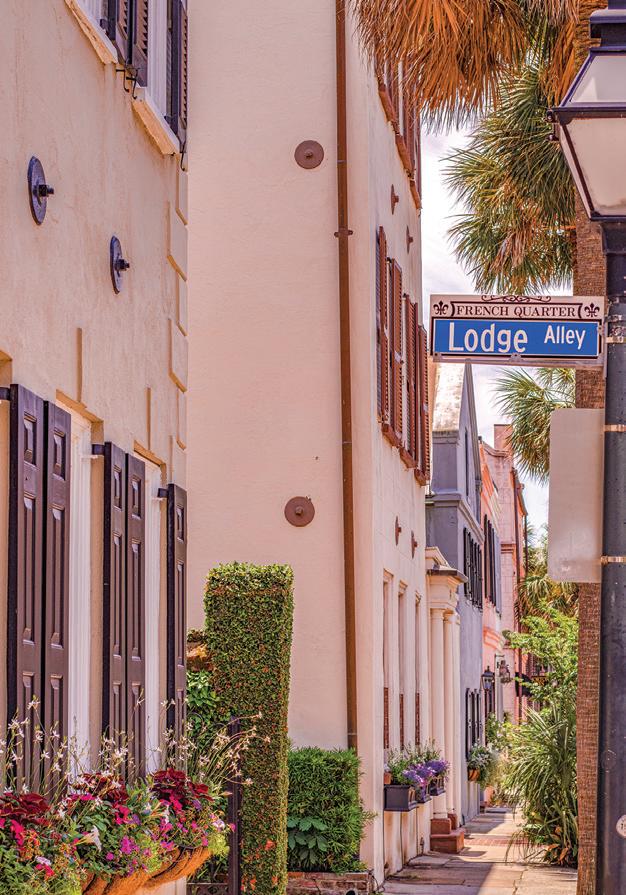
When people talk about southern charm , Charleston, S.C., is likely what they are envisioning. It is a beautiful and fascinating port city, and its people have a way about them that made me feel at home as soon as I got to town. I toured the Masonic sites of Charleston, including the corner of Broad and Church Streets. Today there is a bank, in front of which sits a marker noting that here once stood the legendary Shepheard’s Tavern, where the Supreme Council first met in 1801.
As I left the city and walked into Charleston International airport,
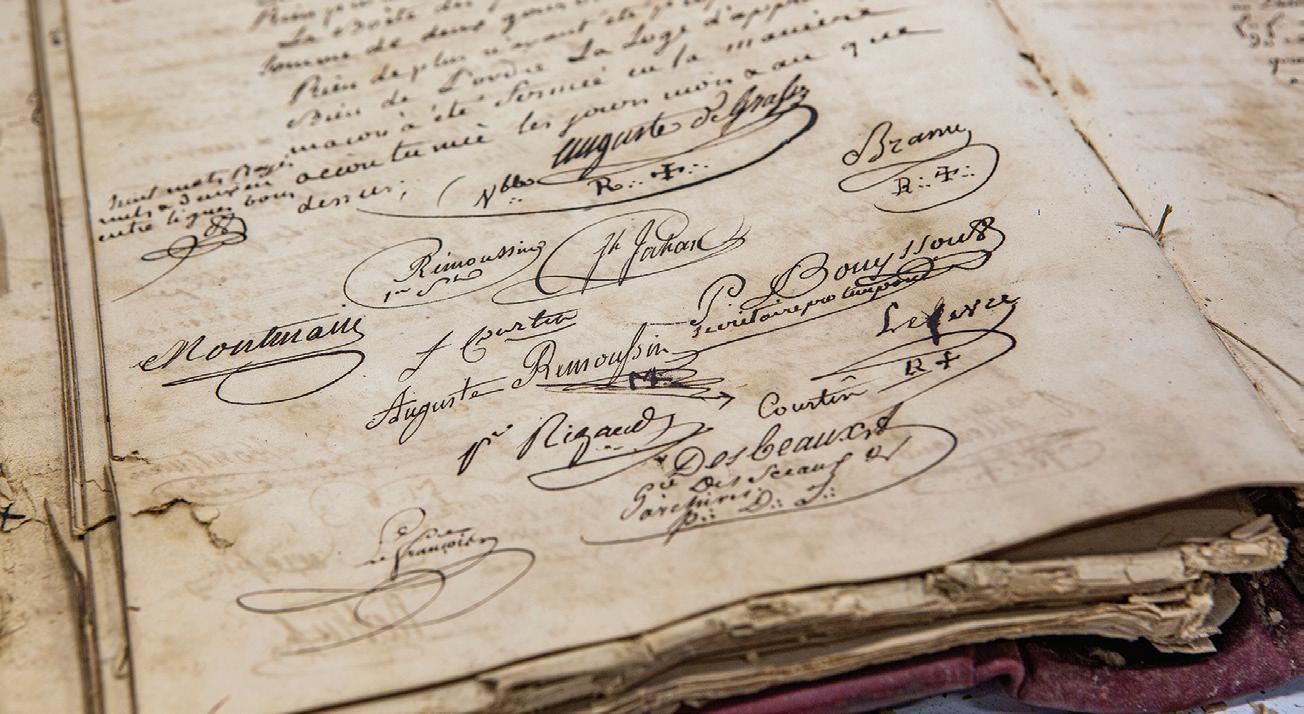
I clutched tightly a box containing a 209-year-old minutes book from a Charleston Masonic lodge that could very well provide the answers to several key questions and mysteries surrounding the early history of the Supreme Council and the “Eleven Gentleman of Charleston” who founded it.
In the many published histories of the Scottish Rite, La Candeur lodge is little more than a glorified footnote; it earns only a few paragraphs, which tend to focus on the fact that two of the Eleven Gentlemen were founding members of the lodge. Yet there are many unanswered questions about the formation of the Southern Jurisdiction Scottish Rite, Mother Council of the World, to which this lodge’s first minutes book—that
I had brought from Charleston to the Scottish Rite Temple in Washington, D.C.—could hold the answers.
Using the La Candeur Minutes Book as an important source, a new documentary we are releasing, The Eleven Gentlemen, details the biographies of these men from various faiths, socio-economic backgrounds, and even countries of origin who came together to give birth to one of the most important fraternal organizations in history. This is one of the many ways we will be celebrating the 225th anniversary in 2025 of the Charleston founding of the Ancient and Accepted Scottish Rite of Freemasonry, S.J., U.S.A.
—Maynard Edwards, 33º, Associate Director of Membership Services
Want to read more of the Journal? Find it online at https://scottishrite.org, under the Education & Media tab.
In the spirit of transparency and our shared commitment to a stronger Fraternity, Supreme Council has completed an update to our Strategic Plan – one guided in part by the honest conversations shared across our jurisdiction.
This update is about more than our vision, mission, and values. It is about ensuring that our fraternity remains relevant, vibrant, and trustworthy for Brothers like you and for the generations who will follow us.
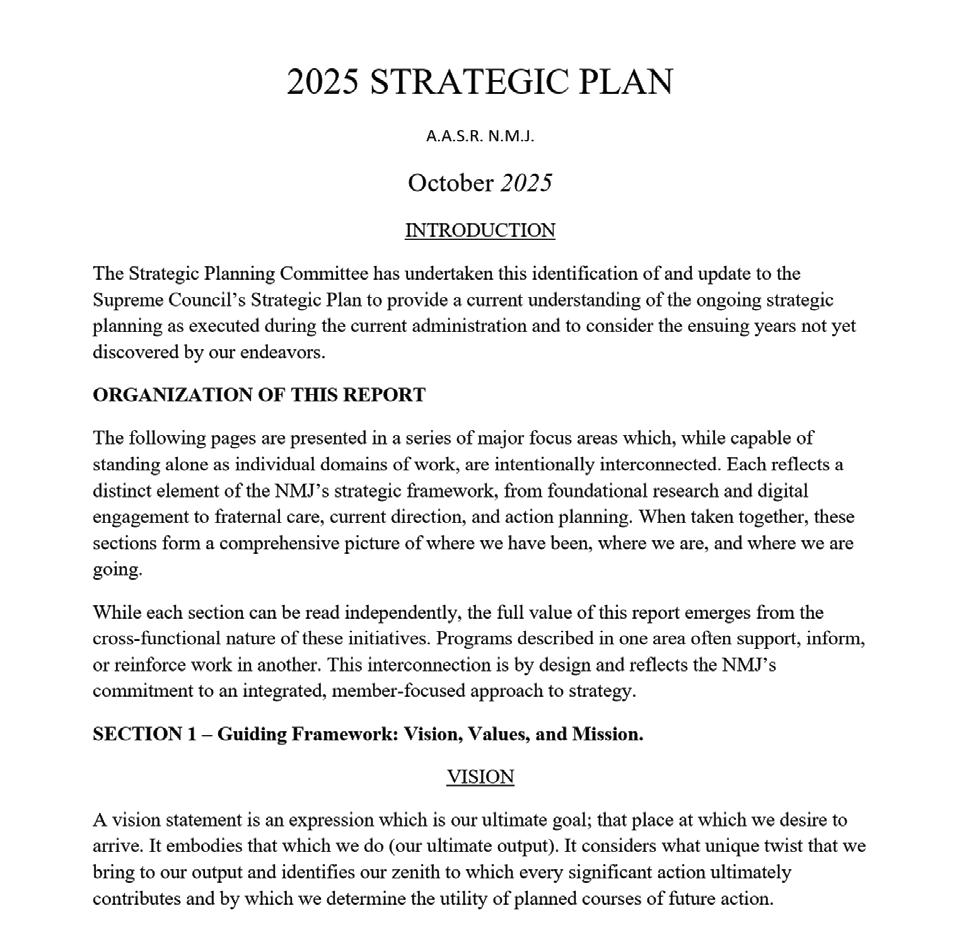
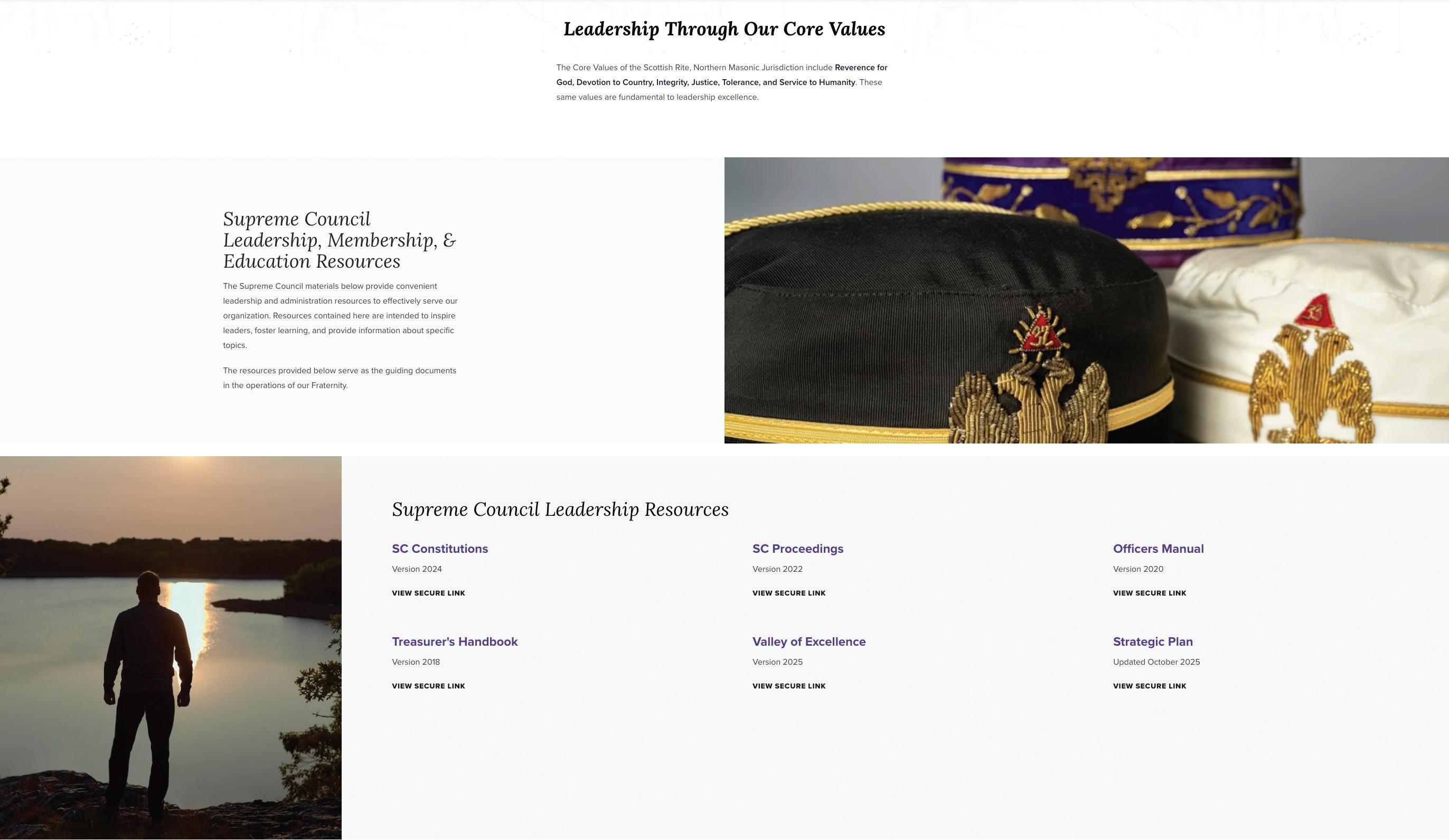
The evolving Strategic Plan is accessible in the Leadership Resource Center on our website.
For over two centuries, Masonic and fraternal organizations have sought to serve their members and to make a lasting mark on their communities with building projects. Several objects in the collection of the Scottish Rite Masonic Museum & Library illustrate the long association between Masonic and other fraternal organizations with building projects and meeting places. These objects also show some of the ways groups have expressed pride in the structures they created, used, and cared for. This pride has, on occasion, taken the shape of commemorative objects and souvenirs bearing depictions of the meeting places or structures that fraternal organizations erected.
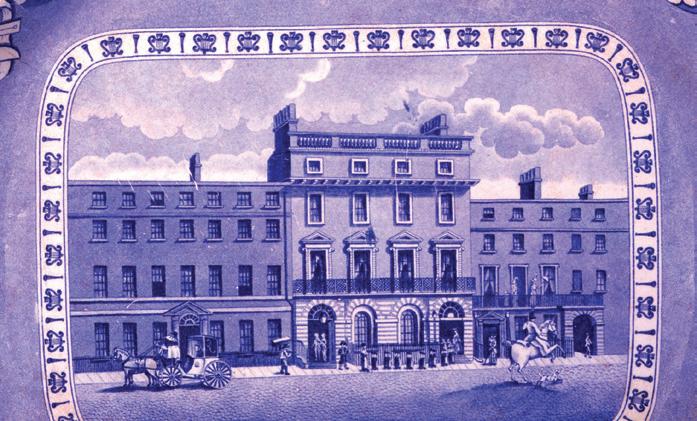
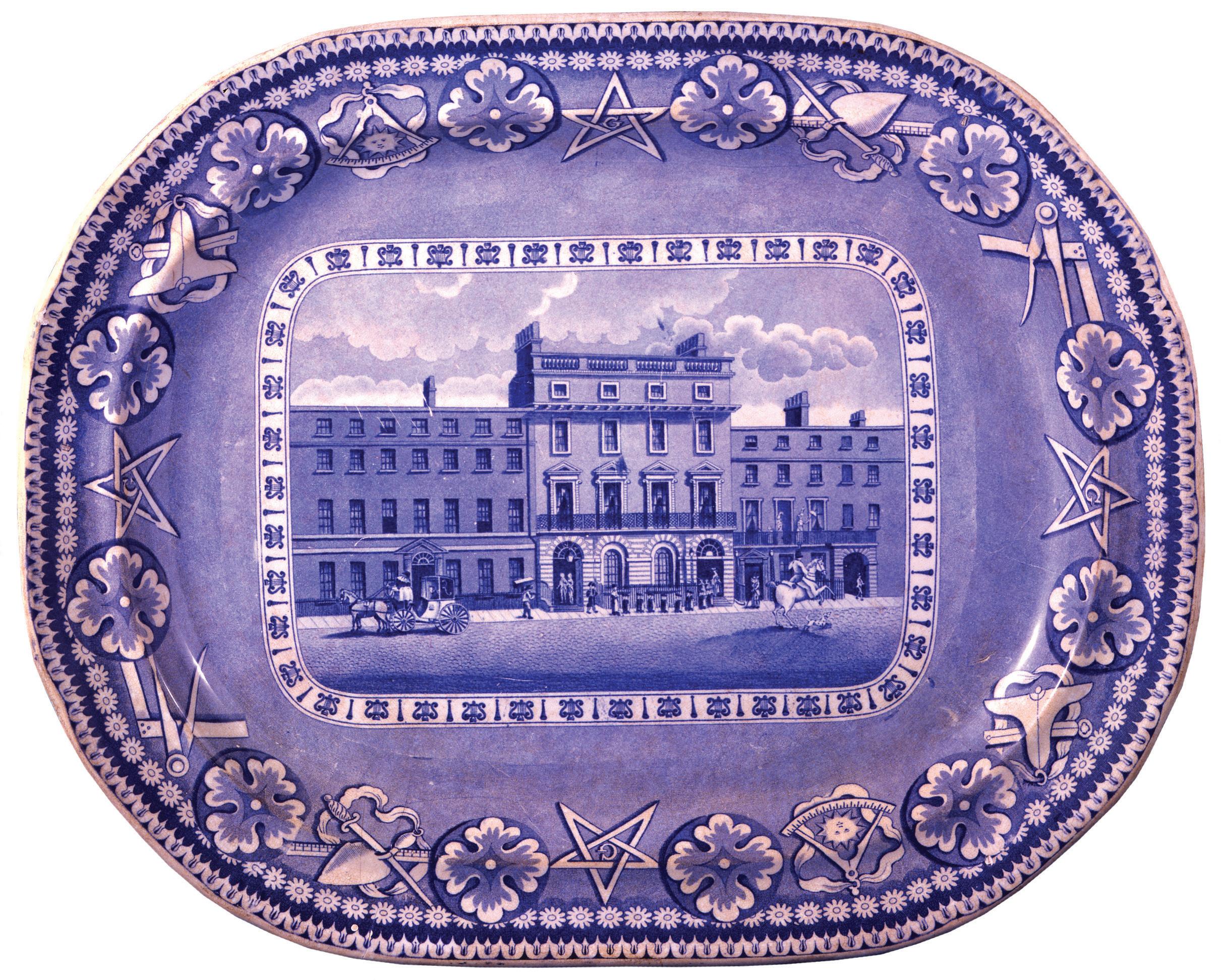
Platter, 1820-1840. Staffordshire, England. Special Acquisitions Fund, 77.27.1.
English potters first developed the technology for producing ceramic objects decorated with printed designs in the second half of the 1700s. Commemorative and household items ornamented with transfer-prints became wildly popular in England and beyond. John Jackson Cuff, the innkeeper at Freemasons’ Tavern in London, is thought to have taken advantage of this technology. He is credited with ordering a dinner service
by Hilary Anderson Stelling, Director of Collections and Exhibitions, Scottish Rite Masonic Museum & Library
symbols and an image of the tavern. Located in a building managed by the Grand Lodge of England, the tavern specialized in catering to Masons. A neighboring business, owned by John Burns, sold pottery. Cuff and Burns’ names, printed on the back of this platter, suggest they both had a hand in its creation.
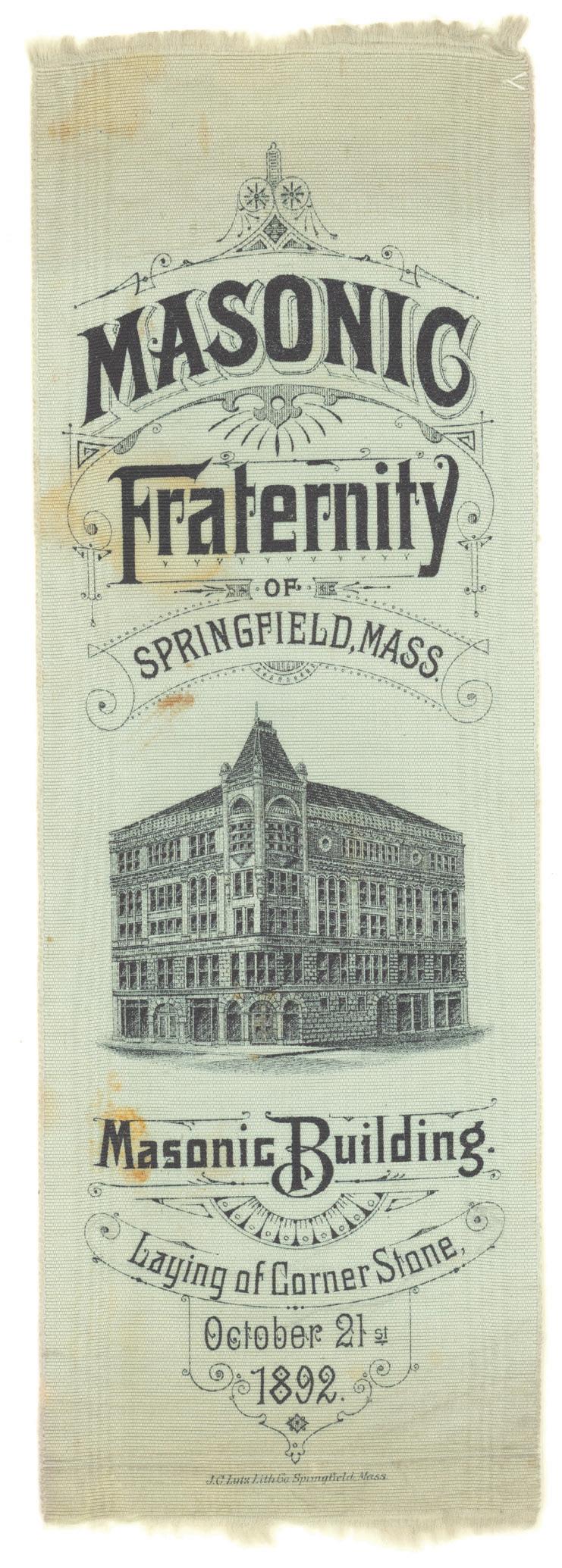
Jacob Charles Lutz, a lithographer and a member of Hampden Lodge in Springfield, Massachusetts, printed this ribbon in 1892. Men who attended the cornerstone laying for the new Masonic building in Springfield likely wore the ribbons Lutz produced. The event predated the completion of the building, so the ribbons featured an image of the handsome brick building based on an architect’s or builder’s rendering. Rentable retail areas formed the ground floor. The upper floors were intended for Masonic business and social activities. Workers completed the building in 1893, and it served the Masonic community in Springfield until the 1920s, when area Freemasons erected a new structure.
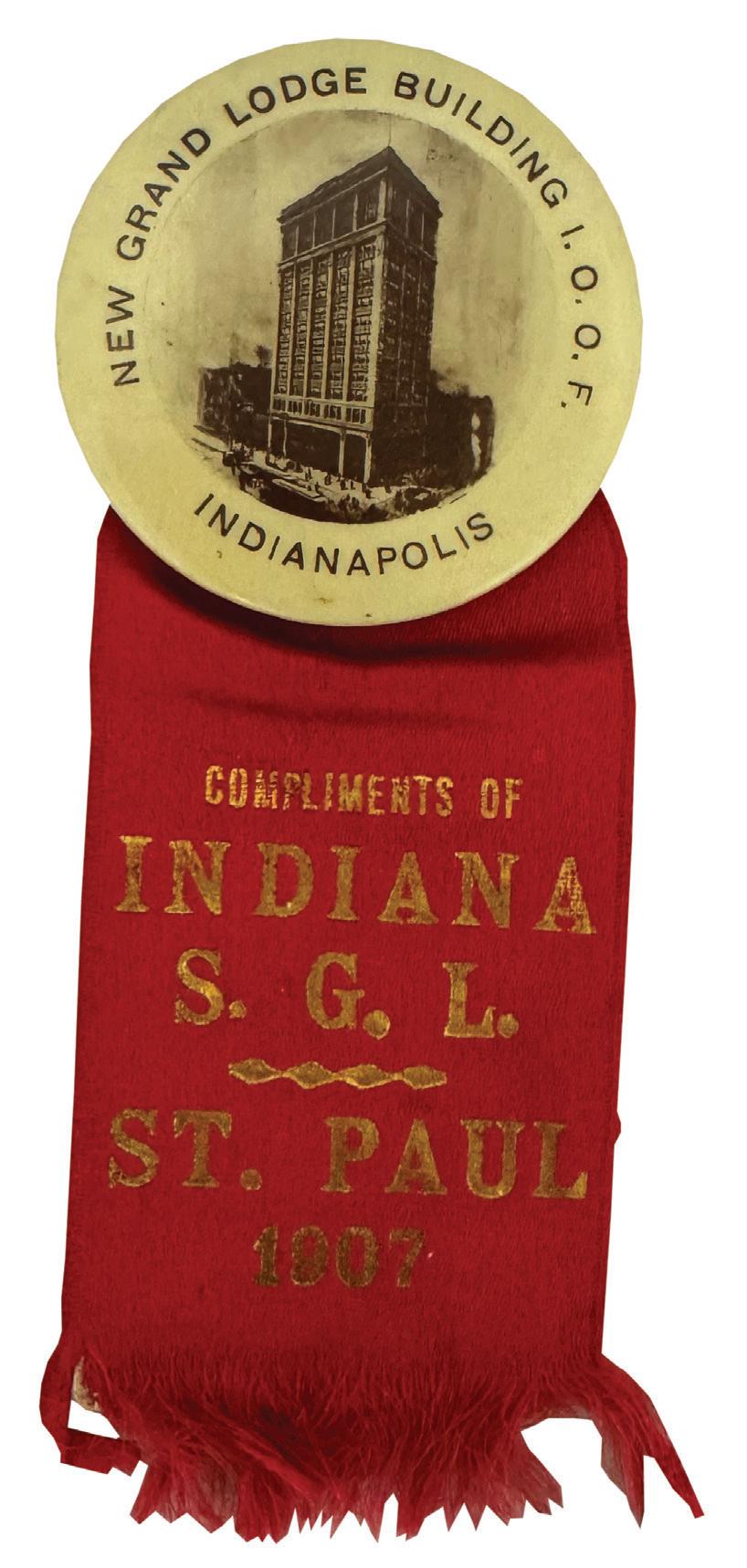
In 1906, the Odd Fellows of Indiana agreed to erect a new Grand Lodge building. An Indianapolis newspaper described the planned structure as “a new and modern skyscraper,” fourteen stories high, fireproof, and able to accommodate 1,300 men in one of the meeting rooms. The hundreds of members who voted to approve the project were buoyed by “great gains in revenues and membership” and supported by the “unprecedented prosperity” of the organization at the time. In 1907, representatives of the Odd Fellows Sovereign Grand Lodge
in Indiana gave out ribbons decorated with an image of the planned structure at an Odd Fellows meeting in St. Paul, Minnesota. The following year, they dedicated the new building.
Odd Fellows are charged, among other obligations and responsibilities, to care for the orphans and widows of fellow members. In the early 1900s, the Odd Fellows of Kansas purchased a defunct business, Eureka Lake Resort, for $14,200. Located on 134 acres outside Manhattan, Kansas, the land and existing buildings were to serve as the Rebekah-Odd Fellows Home. The group dedicated the home in 1906. It opened with space and staff to accommodate 30 adults and 60 children. The image on this sunflower-
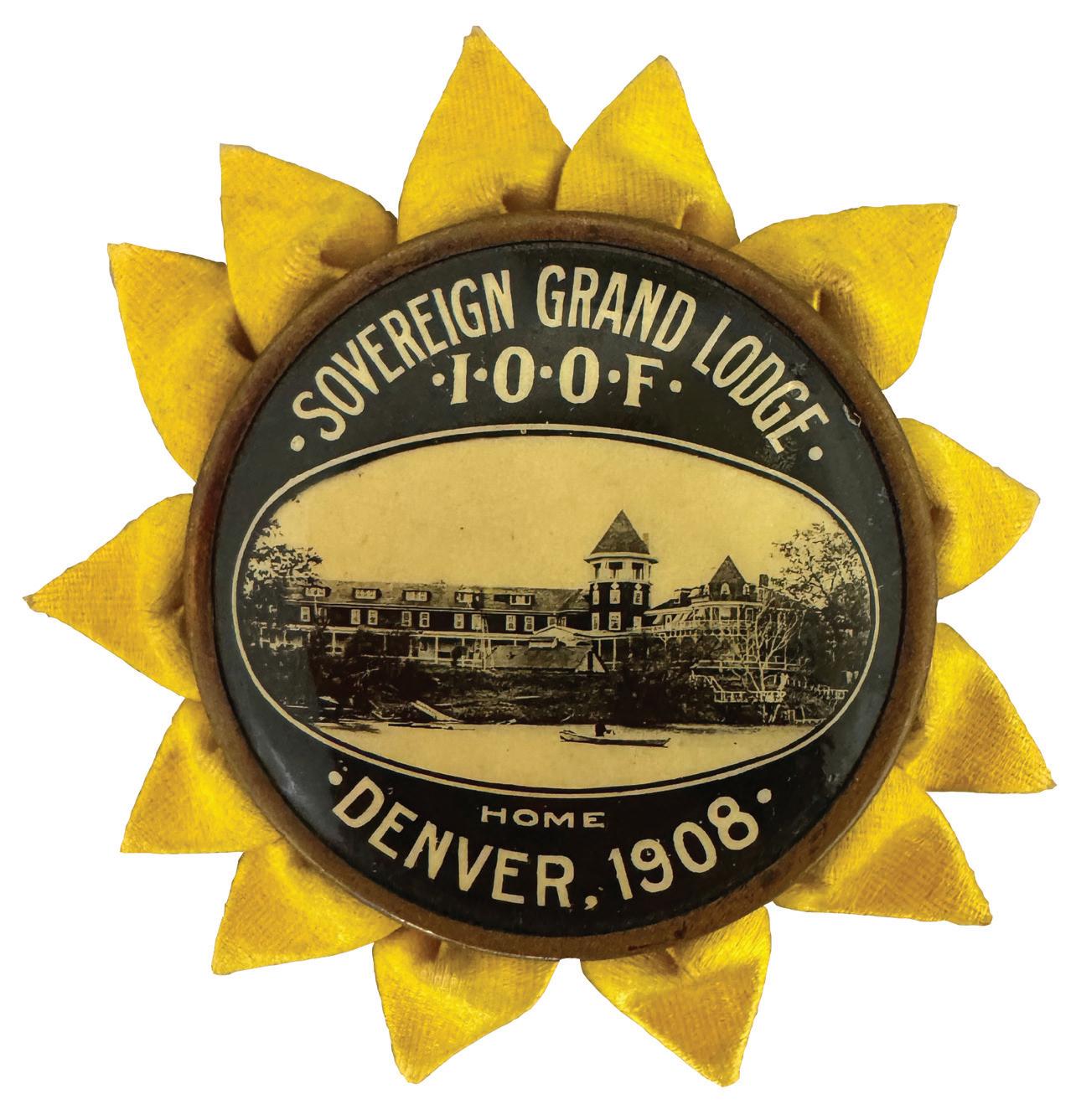
shaped badge features a photograph of the lakeside resort structures that became the home. It was a souvenir shared by members of the Kansas delegation who traveled to a meeting of Odd Fellows from across the United States held in Denver, Colorado, in 1908.
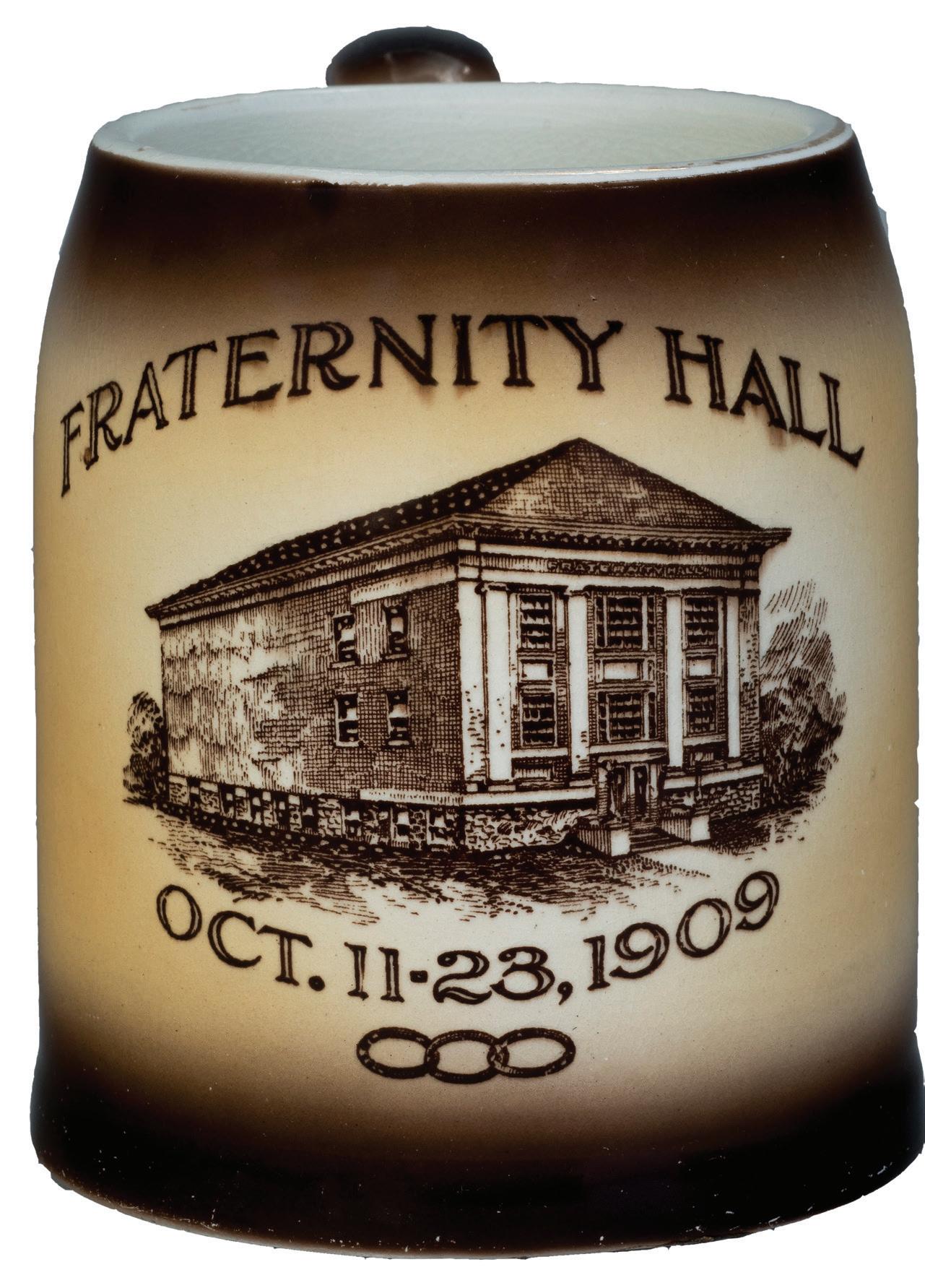
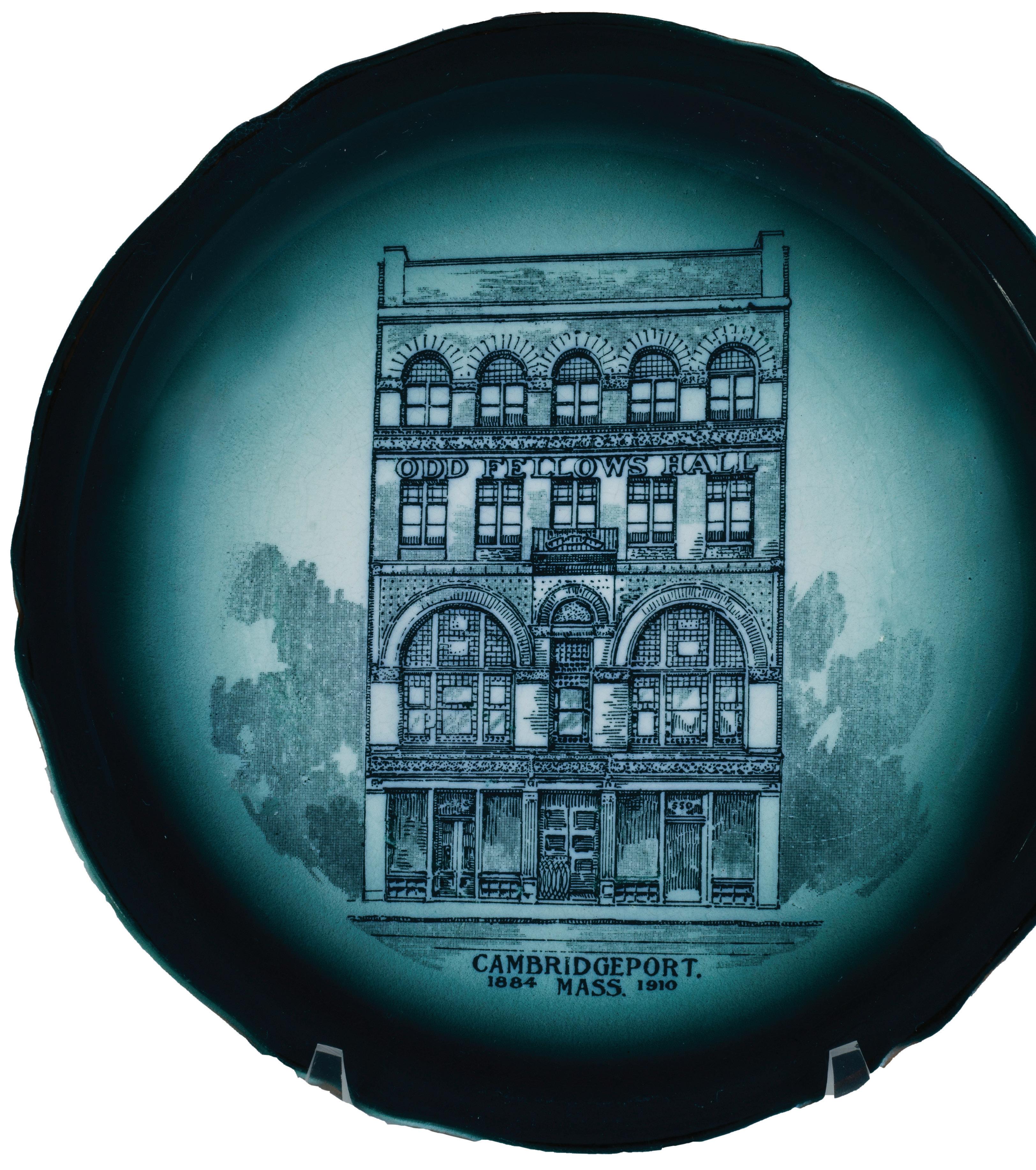
In 1901, the Larkin Soap Company of Buffalo, New York, created a separate business, Buffalo Pottery, to produce attractive customer premiums designed to entice consumers to purchase Larkin products. Buffalo Pottery soon branched out. It began to manufacture commemorative ceramic mugs and plates, many for fraternal organizations. Organizers commissioned this mug to mark a two-week-long “Fraternity Hall Carnival.” Four area Odd Fellows lodges used this opportunity to celebrate the opening of a new shared building, the structure depicted on the mug. Buffalo Pottery created this plate featuring a
picture of the Odd Fellows Hall in Cambridgeport, Massachusetts, in 1910. Built in 1884 in a commercial district, this stylish structure had retail space on the ground floor and, on the upper floor, a hall used by Odd Fellows, as well as members of other fraternal groups. The spacious hall also served as a venue for dances, performances, and parties.
Interested in learning more about the Scottish Rite Masonic Museum & Library’s collections and exhibitions? Please visit srmml.org to discover more. ?
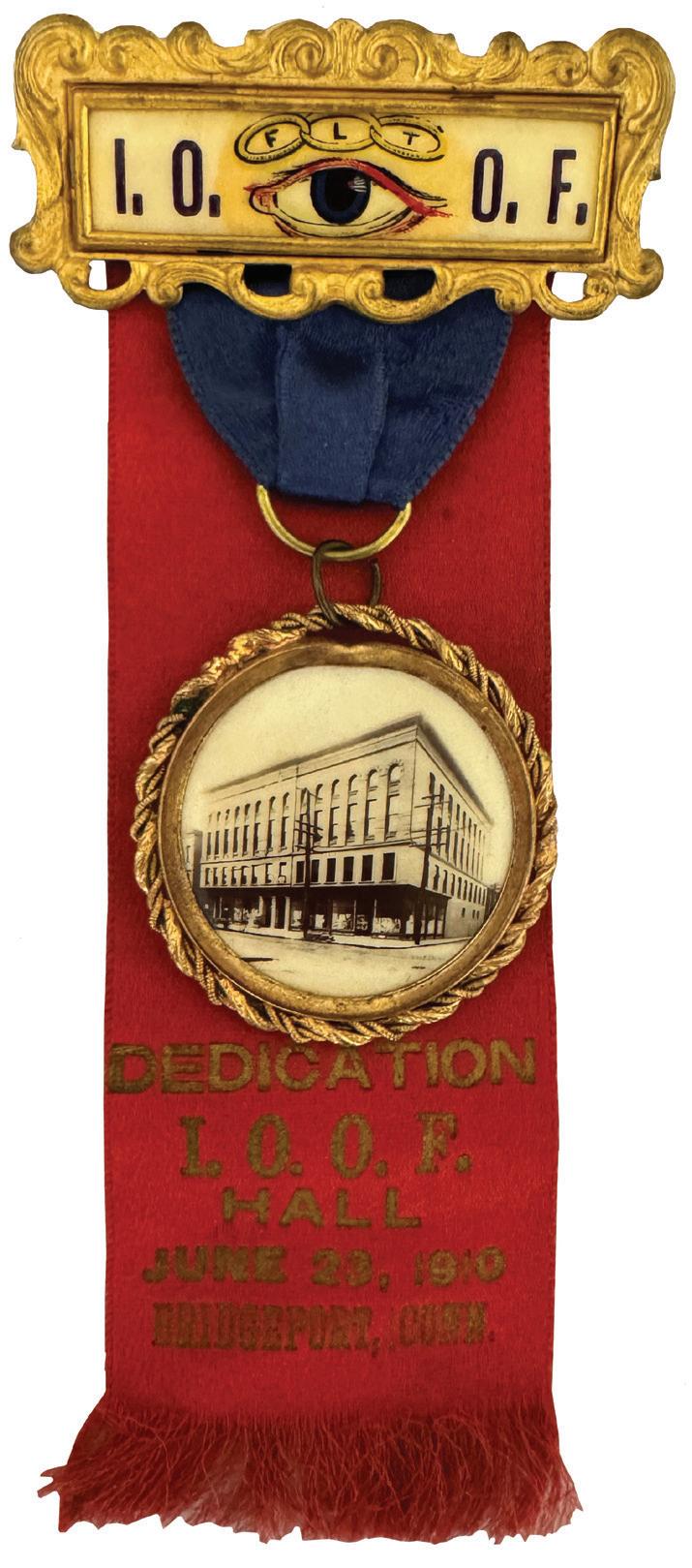
In June of 1910, over 1,800 Odd Fellows from the Bridgeport, Connecticut, area marched from the old Odd Fellows hall to escort special guests to a new structure built cooperatively by four lodges that met in the city. There, the Odd Fellows, according to a newspaper account, “dedicated the new rooms in accordance with the ritual of the order.” The reporter described the modern facility, pictured in a photograph on this souvenir ribbon, as a “splendid hall and quarters.” The writer deemed the building project as the “most important step taken by the organization since 1843,” the year Odd Fellows first formed a lodge in the town. One thousand people shared in the banquet celebrating the building’s dedication.
In the first two decades of the 1900s, Thomas Maddock’s Sons created hundreds of commemorative pitchers, plates, and vessels for Masonic organizations. This was, in some ways, a side business for the company. It was originally founded to produce affordable sanitary ware –primarily toilets – for the American market. The commemorative items produced by the
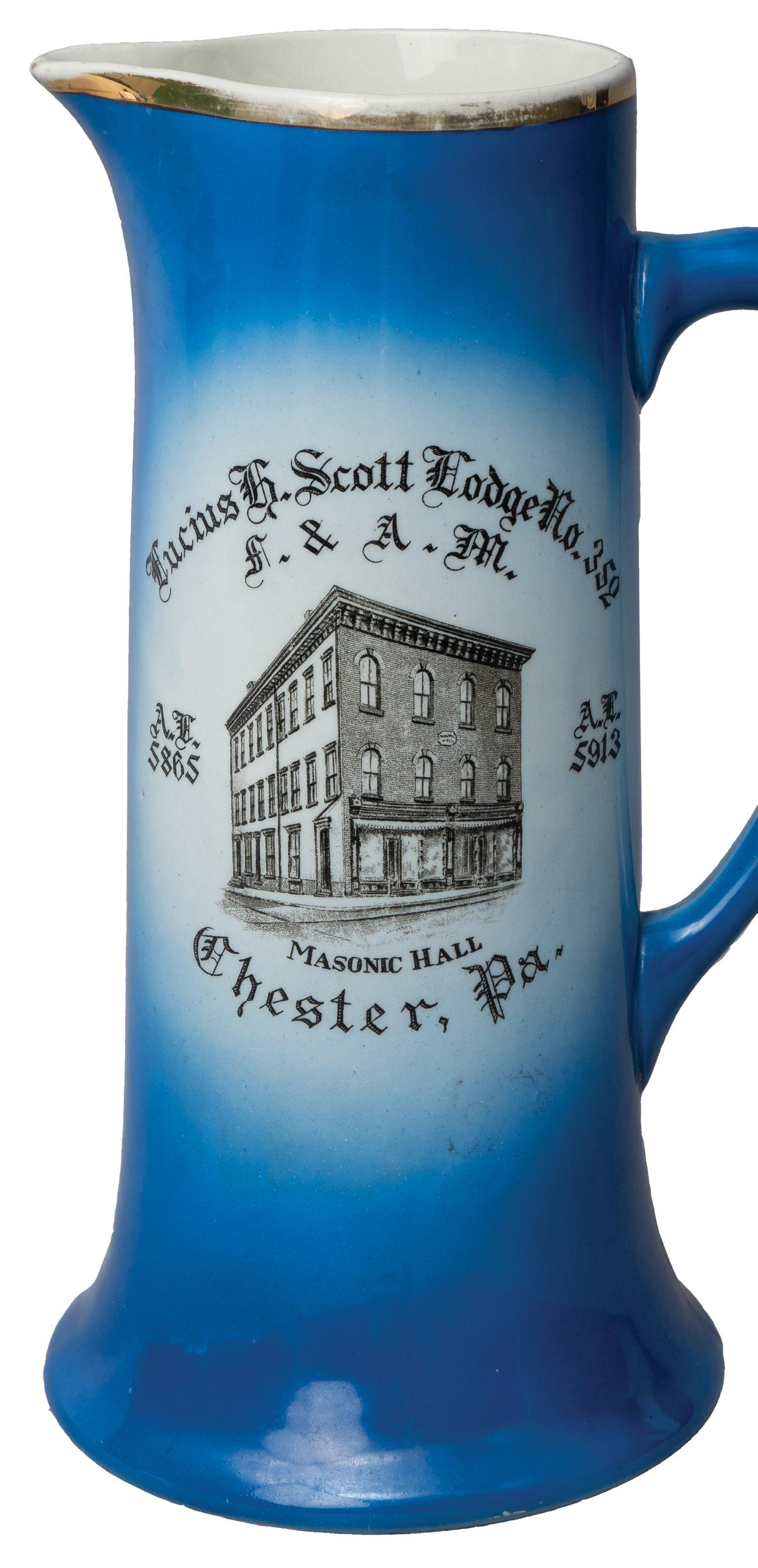

company are sturdy, formed in plain, unadorned shapes, and often glazed in bright colors. This tall pitcher, made to mark William D. Pullen, Jr.’s term as
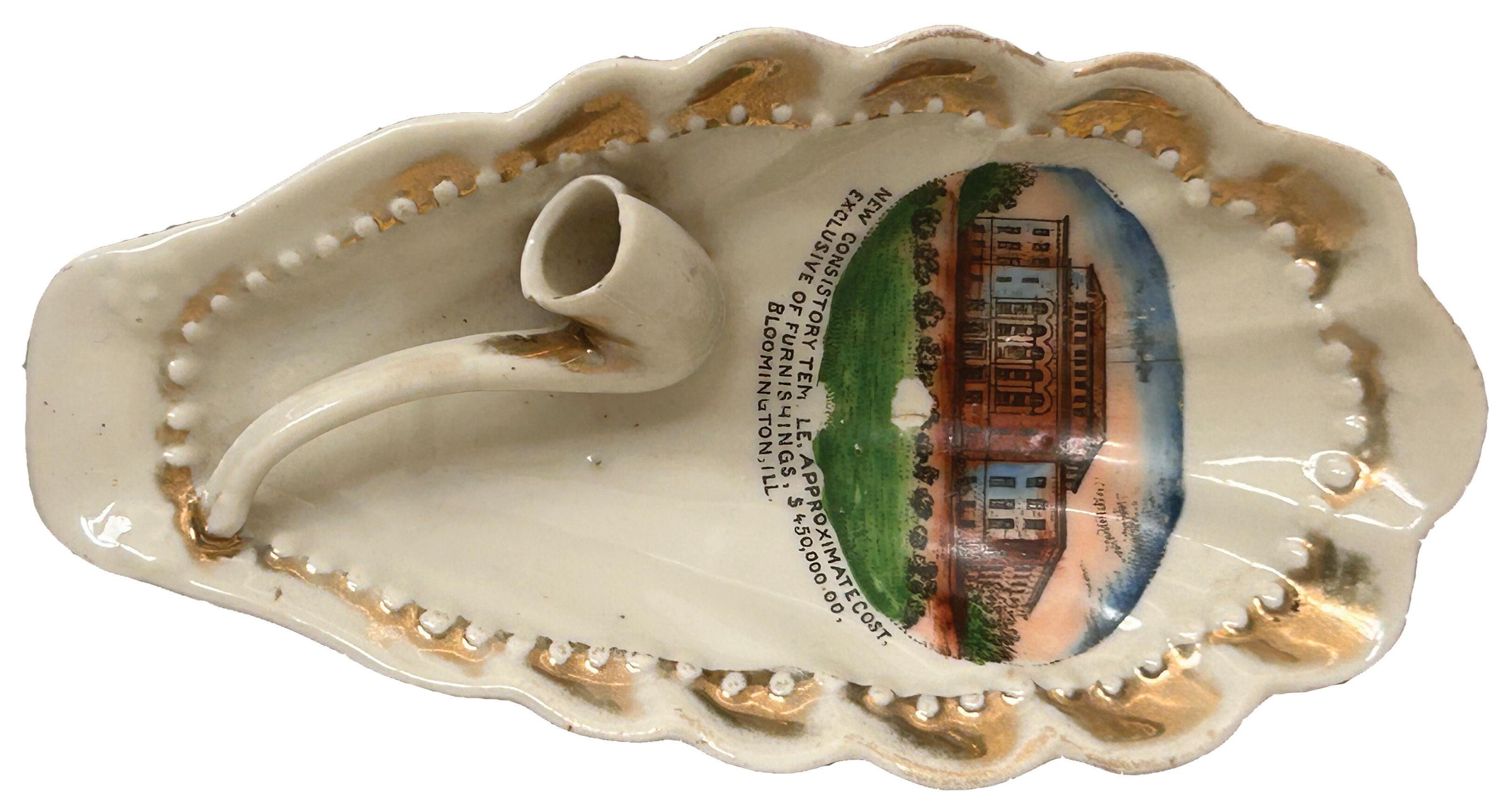
newspaper, planned to be “one of the most complete and elaborate in all its appointments of any consistory building in the United States.” The paper reported that “practically every
expenses brought the total for erecting and furnishing the building to $700,000. Observers lauded the result. The local paper, which had tracked the course of this project for years, admired the building’s grand lobby, enormous stage, lavish banquet facilities, and numerous club rooms, noting that it was “one of the most magnificent Masonic buildings in the country.”
Thinking about donating an object to the Scottish Rite Masonic Museum & Library? Please contact us at info@srmml.org.
by Jeffrey Croteau, Director of Library & Archives, Scottish Rite Masonic Museum & Library
Thisyear marks the 250th anniversary of the signing of the Declaration of Independence, an audacious announcement that the thirteen British colonies in North America no longer considered themselves under the rule of King George III. The American Revolutionary War, the military conflict that facilitated this political break, began over a year earlier, with the Battles of Lexington and Concord on April 19, 1775.
The war would last over eight years, finally concluding with the signing of the Treaty of Paris on September 3, 1783. This spring, starting on April 6, the Scottish Rite Masonic Museum & Library’s Van Gorden-Williams Library & Archives’ reading room exhibition will feature a small selection of documents and books created during – and about – the American Revolutionary War. In addition to objects connected to well-known figures from the war, the exhibition also includes documents linked to more ordinary Americans. This 1776 military appointment will be on view.
On the first day of the American Revolution, April 19, 1775, Micah Chapman (1735-1792) was a 39-yearold Captain of a militia company in Yarmouth, Massachusetts. This group mustered and marched to Plymouth, Massachusetts, to join other militia. Chapman’s hometown, Yarmouth, is on Cape Cod, almost one hundred miles away from the action at Lexington
and Concord. The militia gathered in Plymouth had their sights set on Marshfield, a town about 30 miles south of Boston. This community was known for its Loyalist sympathies. In January 1775, British General Thomas Gage stationed over 100 British troops in the town to protect the Loyalists there. On April 21, the militias, including Chapman’s company, marched on Marshfield. Before the militias arrived, the British soldiers, along with some Loyalist families, evacuated by sea.
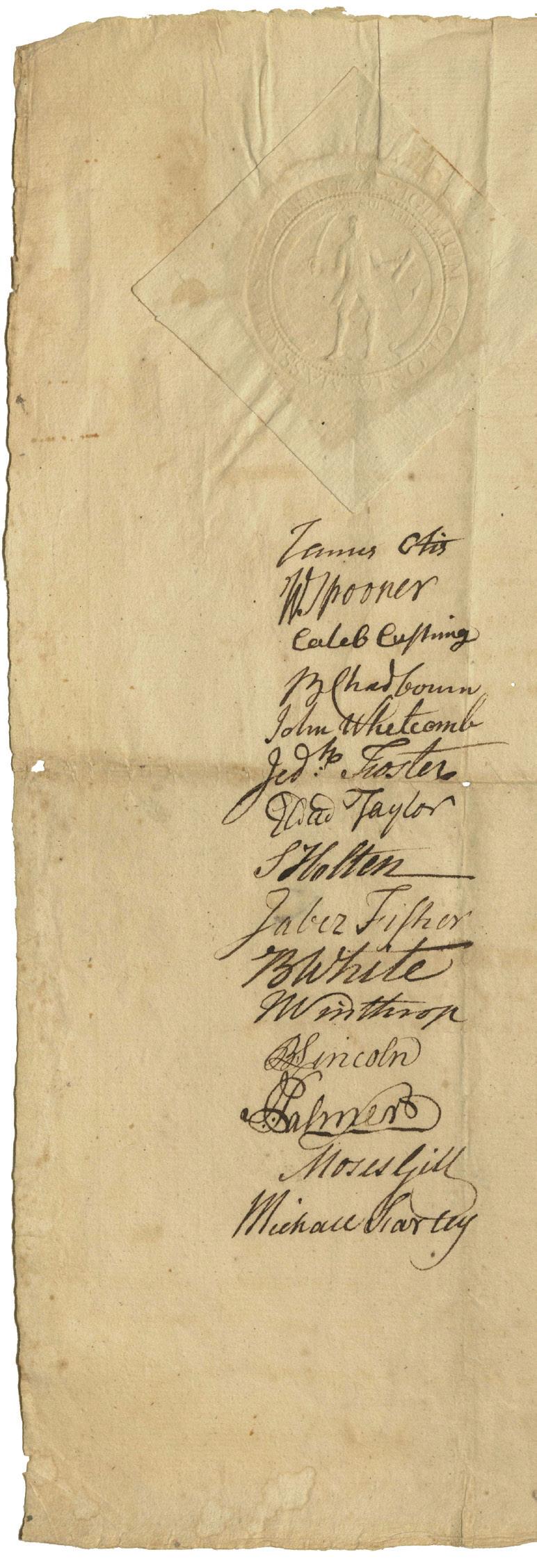
Chapman continued to serve during the war. Issued on April 20, 1776, a year after his march onto Marshfield, this document noted Chapman’s appointment as a captain in the Sixth Company of Militia, First Regiment, for Barnstable County, Massachusetts. Issued by a group that served as the de facto governor of Massachusetts from 1775 until 1780, and with the inelegant title of the Major Part of the Council of the Massachusetts Bay, in NewEngland, signatures on this document include Perez Morton, the Deputy Secretary of the group. A lawyer and a prominent Massachusetts Mason, Perez Morton (1751-1837), had, less than two weeks before this document was issued, delivered the eulogy at the funeral of his friend Dr. Joseph Warren, Grand Master of the Grand Lodge of Massachusetts. Warren had been killed at the Battle of Bunker Hill in June 1775. His body had been retrieved from a battlefield grave after British troops left Boston in March 1776.
This military appointment is one of three surviving appointments issued to Micah Chapman. The other two,
The Van Gorden-Williams Library & Archives is located in Lexington, Massachusetts, at the Scottish Rite Masonic Museum & Library and is open to the public.
dated 1775 and 1781, show Chapman’s participation throughout the war. All were donated to the museum in
1983 and form part of the Scottish Rite Masonic Museum and Library’s American history collection.
?
Have questions? Drop us a line at library@srmml.org or give us a call at 781-457-4109.
“‘Nothing short of Independence’: Selections from the Library & Archives” will be on view in the Van GordenWilliams Library & Archives’ reading room from April 6 to October 9, 2026.
Military
Appointment of Micah Chapman, 1776. Gift of Whitfield Johnson, A1983-011-003.
by Fredric Kengetter
The fourth degree, Builder, marks a Master Mason’s first steps on his Scottish Rite journey, guiding him toward deeper spiritual and moral understanding. This degree teaches that a Mason must seek divine guidance and uphold his relationships with God, family, country, and Freemasonry.
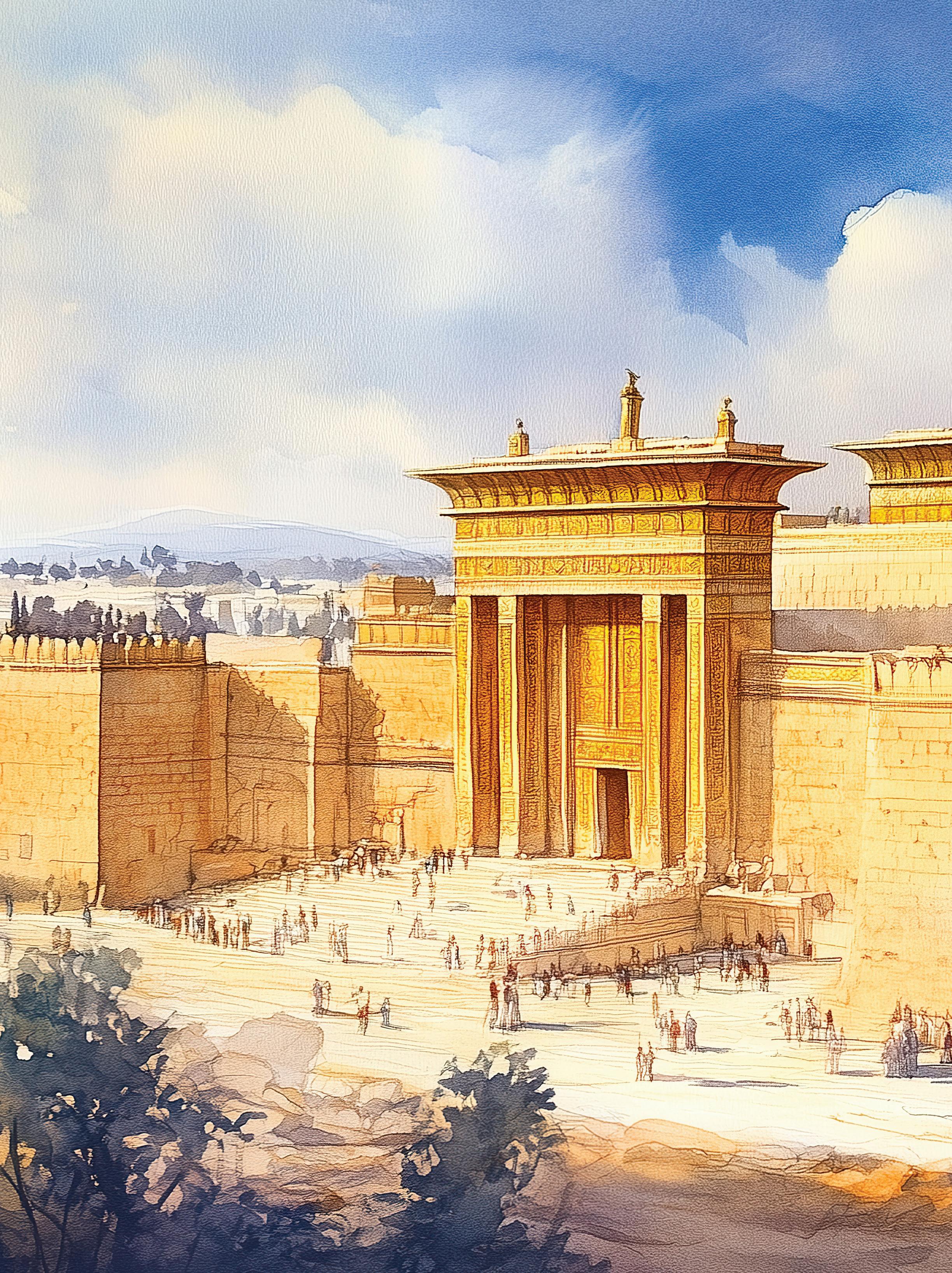
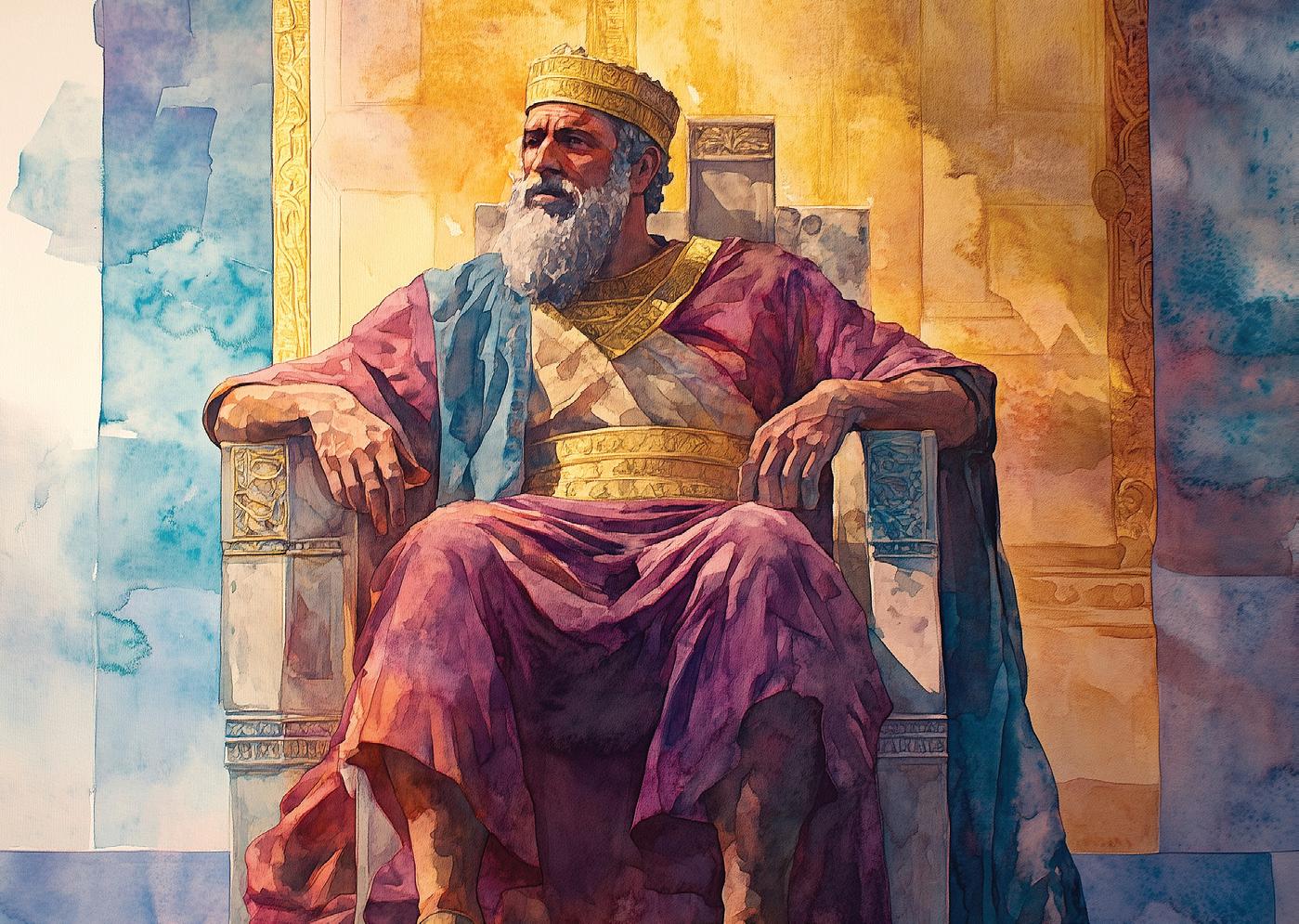
Throughthe allegory of Hiram Abiff and the construction of the Holy of Holies, we learn that building a spiritual temple is not a solitary task, but a collective effort strengthened by Brotherhood. The Builder degree emphasizes that, just as no great edifice is constructed by one man alone, no Mason walks his path without the support of his Brethren.
The philosophy of the fourth degree is simple yet profound: Brothers grow together in Scottish Rite. This growth is grounded in the Core Values of Reverence for God, Integrity, and Service to Humanity. Reverence for God is central to the Masonic journey, as Hiram Abiff demonstrates through his devotion and prayers for guidance. Integrity is reflected in the unwavering commitment to duty, even in the face of hardship. Finally, Service to Humanity is embodied in the work of the builders, whose labor is not for personal gain but for the glory of God and the benefit of all.
The degree unfolds through a dramatic portrayal of Hiram Abiff overseeing the construction of the Holy of Holies. His workers, Samuel, Raham, and Joabert, question how one man can possibly envision and execute such a massive undertaking. Hiram humbly acknowledges that no man builds alone. True progress is achieved through unity, trust, and collective effort. His realization, spoken with conviction, that he does not work alone, but rather with the support of countless Brothers, is a powerful lesson.
The philosophy of the fourth degree is simple yet profound: Brothers grow together in Scottish Rite.
This moment encapsulates the essence of the Scottish Rite journey. Just as Hiram relied on his fellow craftsmen, we, as Masons, must lean on our Brethren for guidance, support, and
encouragement. The construction of the temple mirrors the personal and spiritual work each Mason undertakes, reminding us that we are builders not only of physical structures but of moral and spiritual temples within ourselves.
This lesson is especially relevant in a world filled with challenges and uncertainties.
The Builder degree also highlights the challenges inherent in any great endeavor. Hiram expresses doubt and frustration, wondering how he can make the temple truly worthy of God’s presence. His struggle reflects the journey of every Mason who must navigate uncertainty, seek wisdom, and remain steadfast in his work. Additionally, the unrest among the Fellowcraft Masons, who grow impatient for the Master’s secrets, serves as a cautionary reminder: impatience and ambition can lead to discord, but faith and perseverance lead to enlightenment.
The lessons of the fourth degree extend beyond the lodge. Within Freemasonry, the degree teaches that our journey is not solitary; we grow and improve through the bonds of Brotherhood. Just as the temple required the cooperation of many skilled hands, so too does the Scottish Rite require its members to support one another in their moral
To learn more about HGA and sign up for the waitlist, visit ScottishRiteNMJ.org/ hauts-grades-academy !
and spiritual development. Outside of Freemasonry, this degree reminds us that great accomplishments are rarely achieved alone. Whether in our careers, families, or communities, we must recognize the value of teamwork, humility, and service.
True progress is achieved through unity, trust, and collective effort.
Additionally, the degree reinforces the importance of seeking divine guidance. Hiram’s prayer for wisdom reflects the Mason’s duty to look beyond himself, trusting in the guidance of the Great Architect of the Universe. This lesson is especially relevant in a world filled with challenges and uncertainties. By maintaining faith and integrity, we can navigate even the most daunting tasks.
Builder serves as the foundation of the Scottish Rite journey, reinforcing the importance of Brotherhood, faith, and perseverance. It teaches that no man builds alone, whether constructing a temple of stone or one of moral and spiritual virtue. Hiram Abiff’s realization that he is not merely one man but part of a greater whole is a lesson that resonates deeply with every Mason. As I continue my journey, I will carry these teachings forward, ensuring that my work – both within and beyond Freemasonry –reflects the Core Values of Reverence for God, Integrity, and Service to Humanity.
Through unity, faith, and dedication, we, as Builders, construct something greater than ourselves: a legacy of virtue, wisdom, and Brotherly Love



by PJ Roup, 33˚, Editor, Active for Pennsylvania
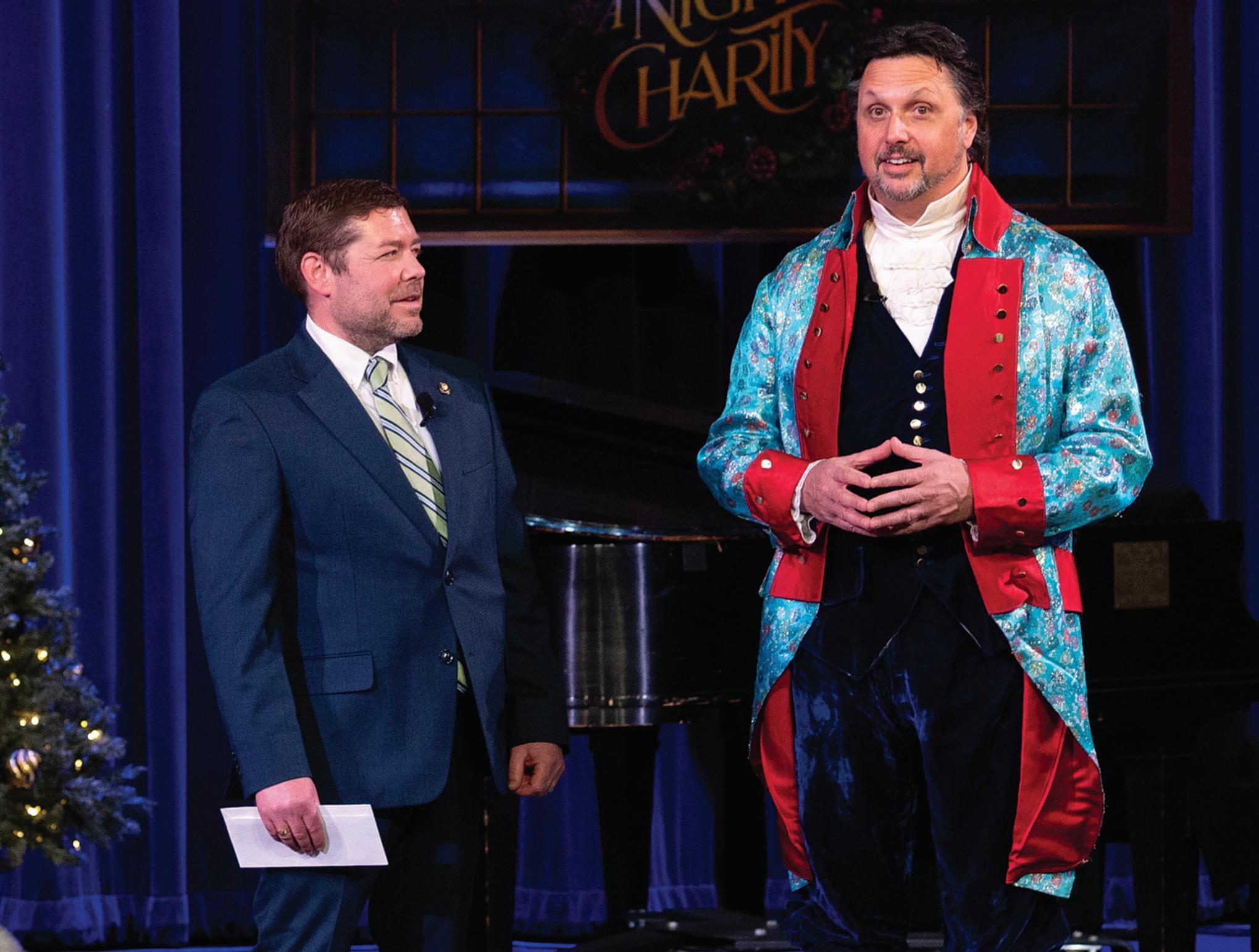
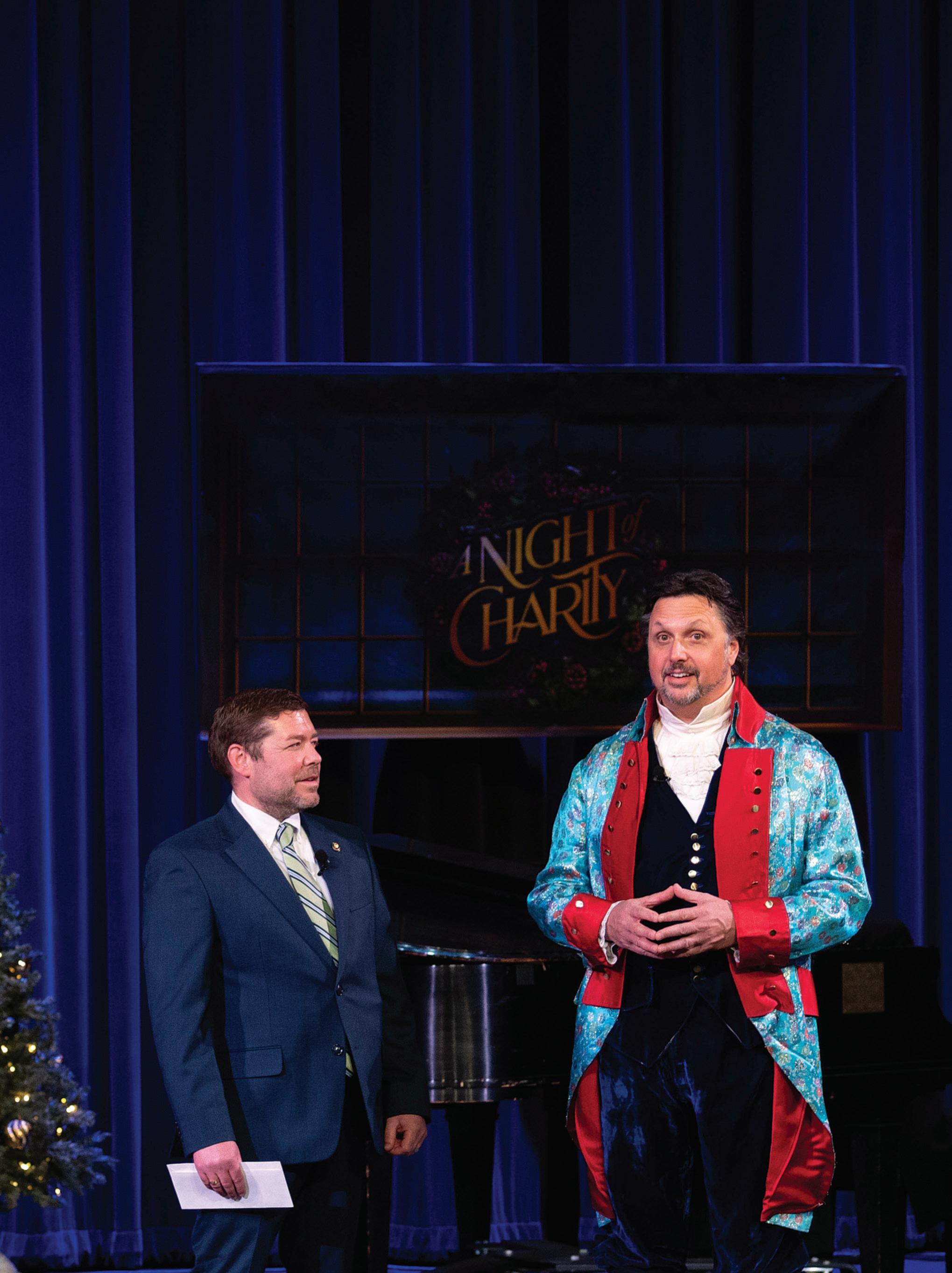
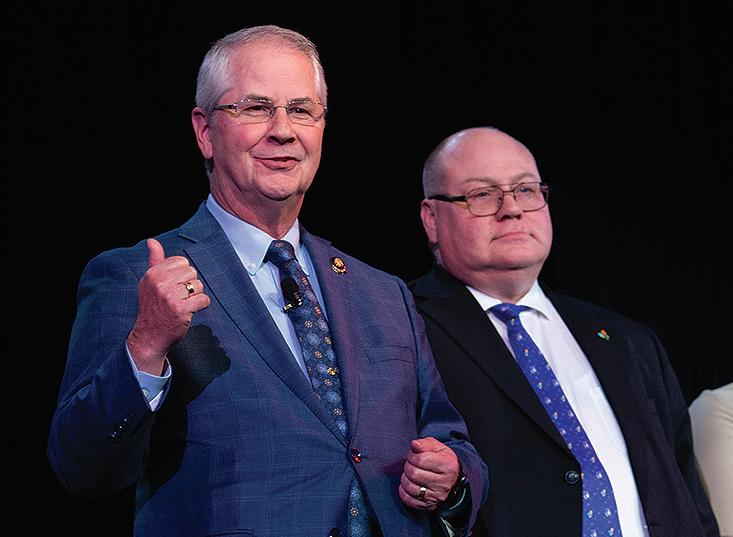
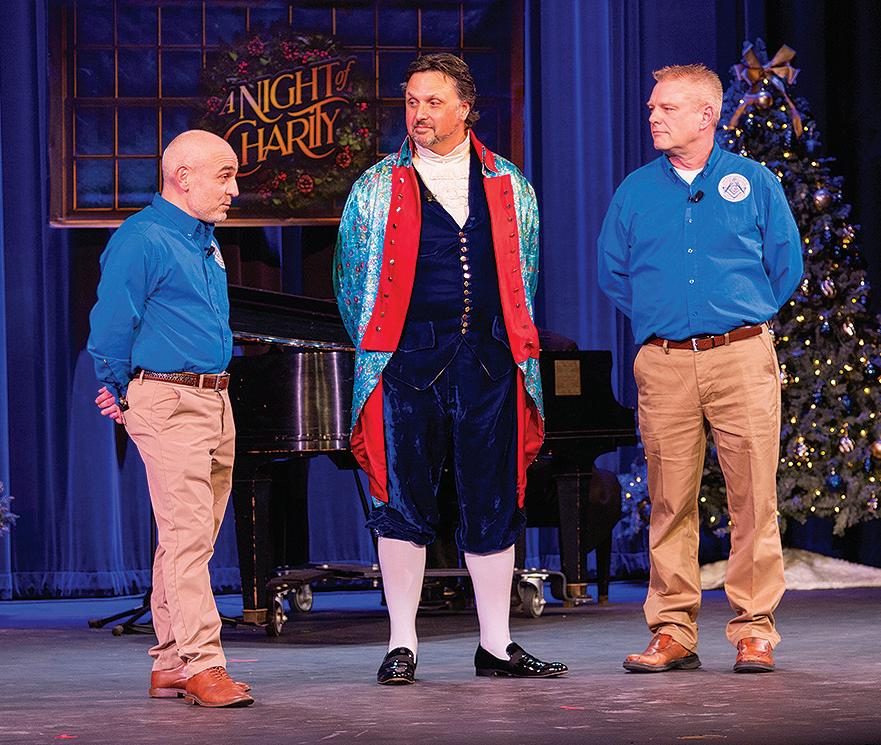
On December 2, 2025, the Scottish Rite, NMJ hosted its annual A Night of Charity, a signature Giving Tuesday celebration that brought together Brothers, their families, and communities from across the jurisdiction. Broadcast live from Supreme Council headquarters in Lexington, Massachusetts, the evening spotlighted the life-changing work of Scottish Rite Charities.
Thanks to generous support from our most generous Valleys, in-person attendees, and online viewers, this year’s event raised $1,050,278 in donations and pledges, ensuring
continued support for the Children’s Dyslexia Centers, the Leon M. Abbott Scholarship Program, the Grand Almoner’s Fund, the Scottish Rite Masonic Museum & Library, and the Membership Education Fund.
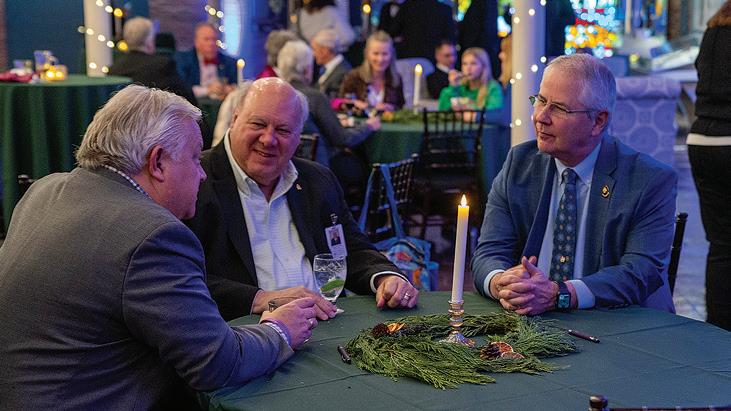
A Night of Charity is the Supreme Council’s centerpiece Giving Tuesday event. It’s an opportunity to highlight the real, human impact of Scottish Rite Charities and inspire renewed commitment to our Masonic obligation of caring for others. The 2025 celebration brought members together at Supreme Council headquarters in Lexington, MA, for a reception, Museum tour, and live broadcast experience. More viewers from across the jurisdiction joined online, creating a shared moment of unity.
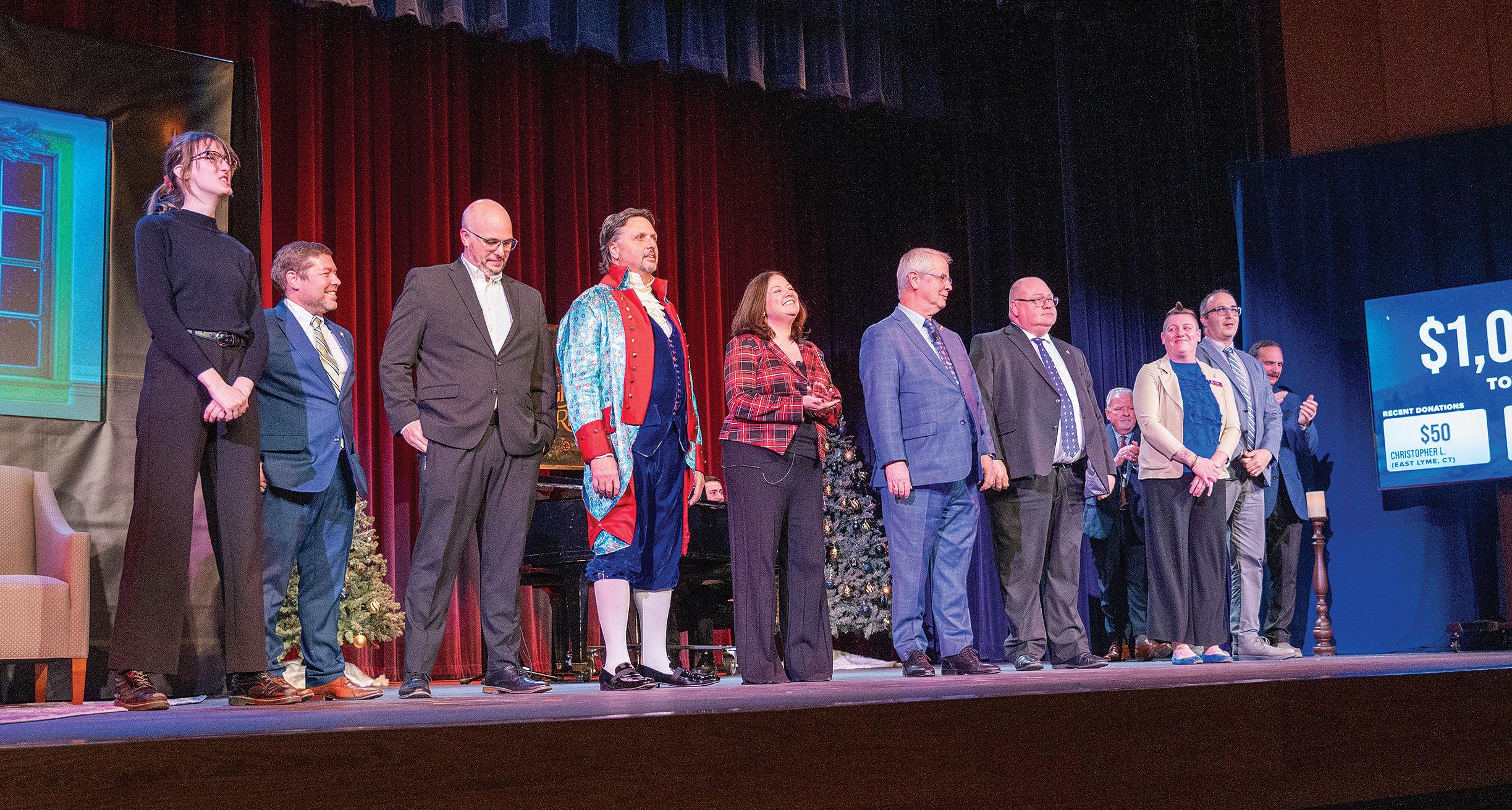
The goal of the evening was simple:
• Highlight the impact of our charitable programs
• Share authentic stories from charity recipients
• Strengthen the spirit of giving this holiday season
• Expand the reach of the Scottish Rite, NMJ’s charitable work
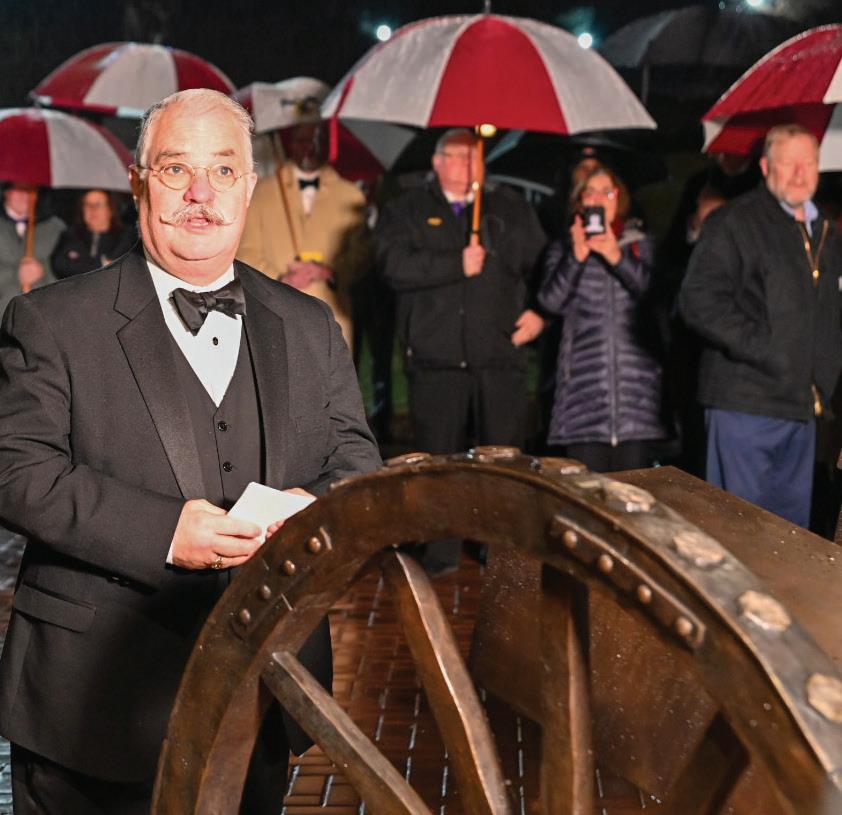
The livestream featured powerful testimonials from children, families, students, and Brothers whose lives have been changed by Scottish Rite Charities.
Several Abbott Scholars spoke about how the Leon M. Abbott Scholarship Program helped them pursue their educational goals by relieving financial pressure and providing much-needed stability.
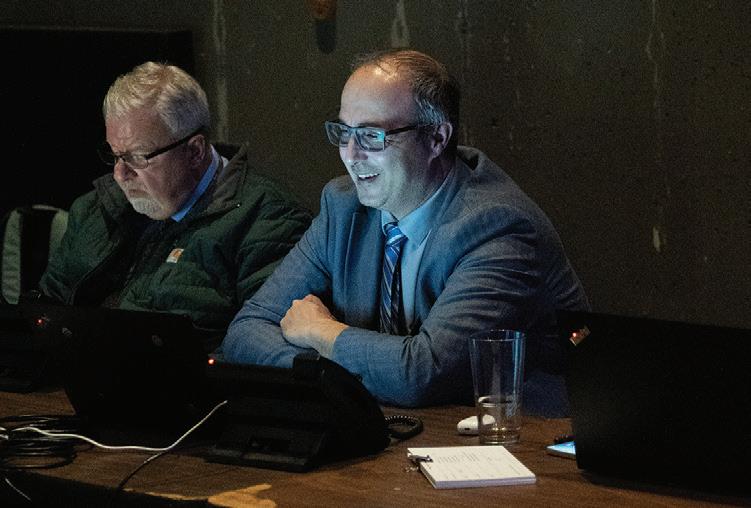
Students pursuing engineering, education, medicine, and public service reflected on how the Scottish Rite’s support allowed them to choose meaningful academic paths without the weight of overwhelming debt.
One scholar shared, “The Abbott Scholarship has made it possible for me to follow my dreams.”
Their stories reinforced the longterm value of investing in the next generation.
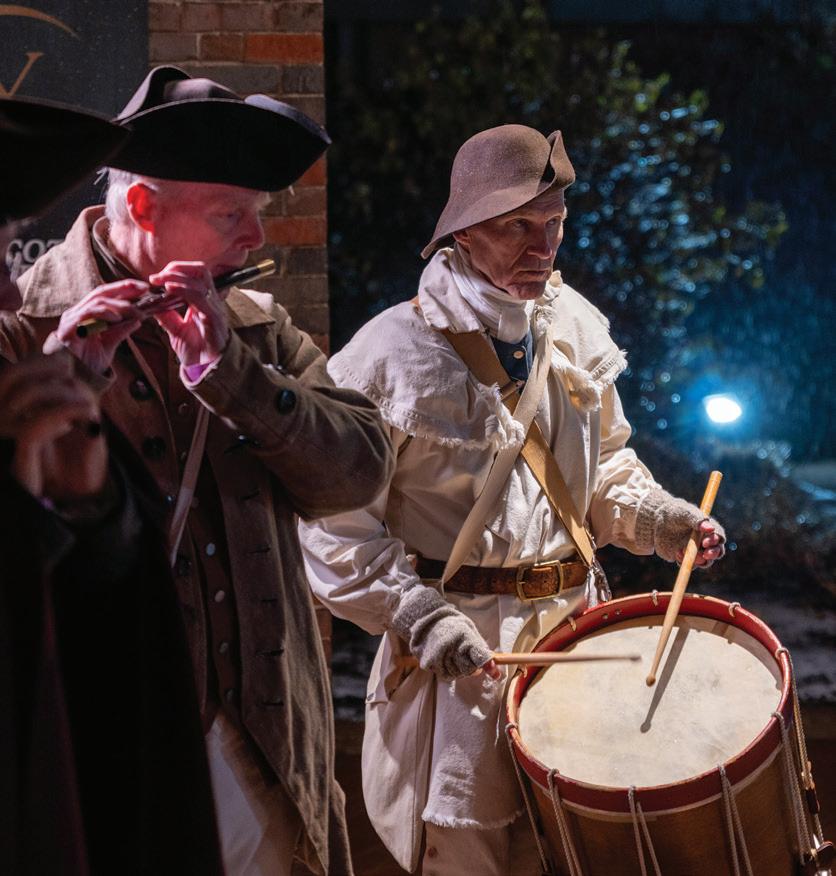
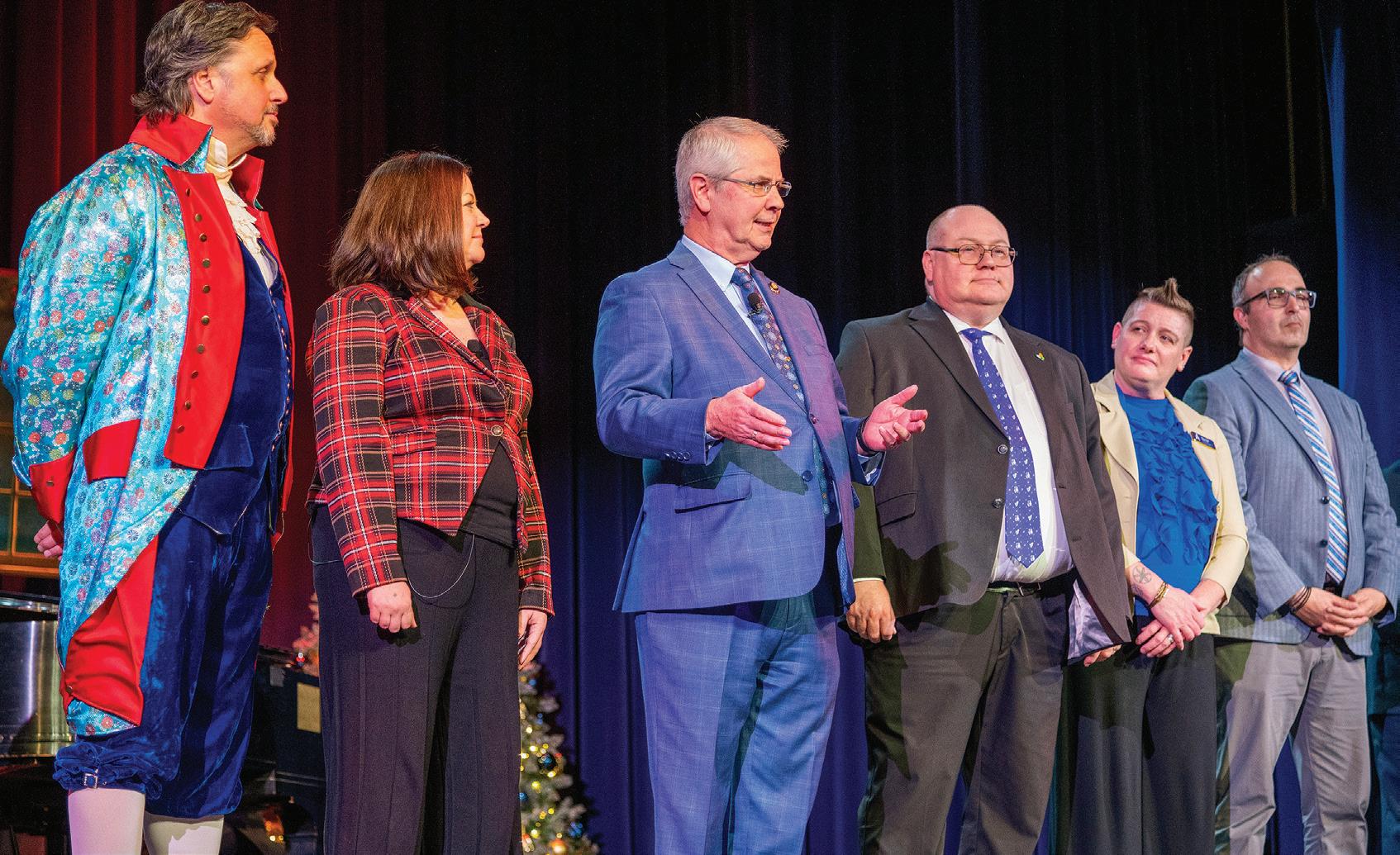
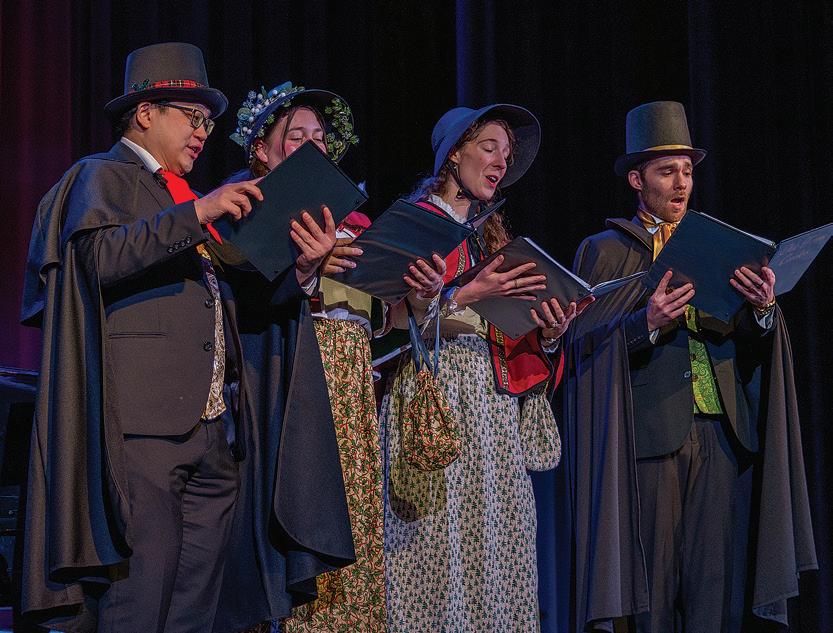
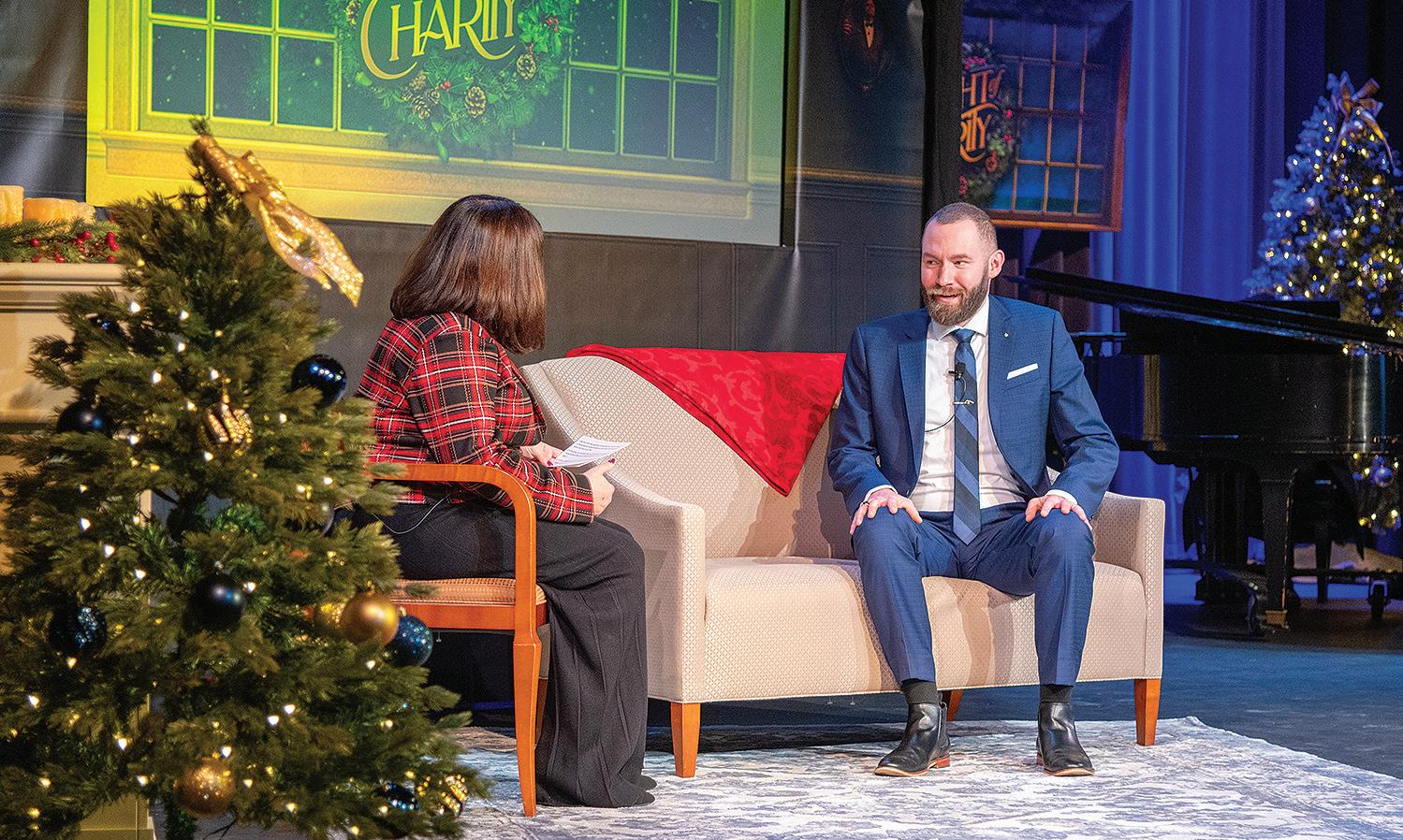
The broadcast also featured a powerful message from Brother Brady Sprague, who spoke about the help he received from the Grand Almoner’s Fund during his cancer treatment. When he faced overwhelming medical and financial challenges, Scottish Rite Brothers stepped forward to ensure he wasn’t alone.
“It was such a weight off my shoulders when the Craft stepped up to help me in my moment of greatest need.”
Support from the Fund allowed Brother Sprague to pursue advanced testing that led to a new treatment option, and gave his family a sense of stability during a difficult time. His story captured the true meaning of our Masonic obligation to care for one another.
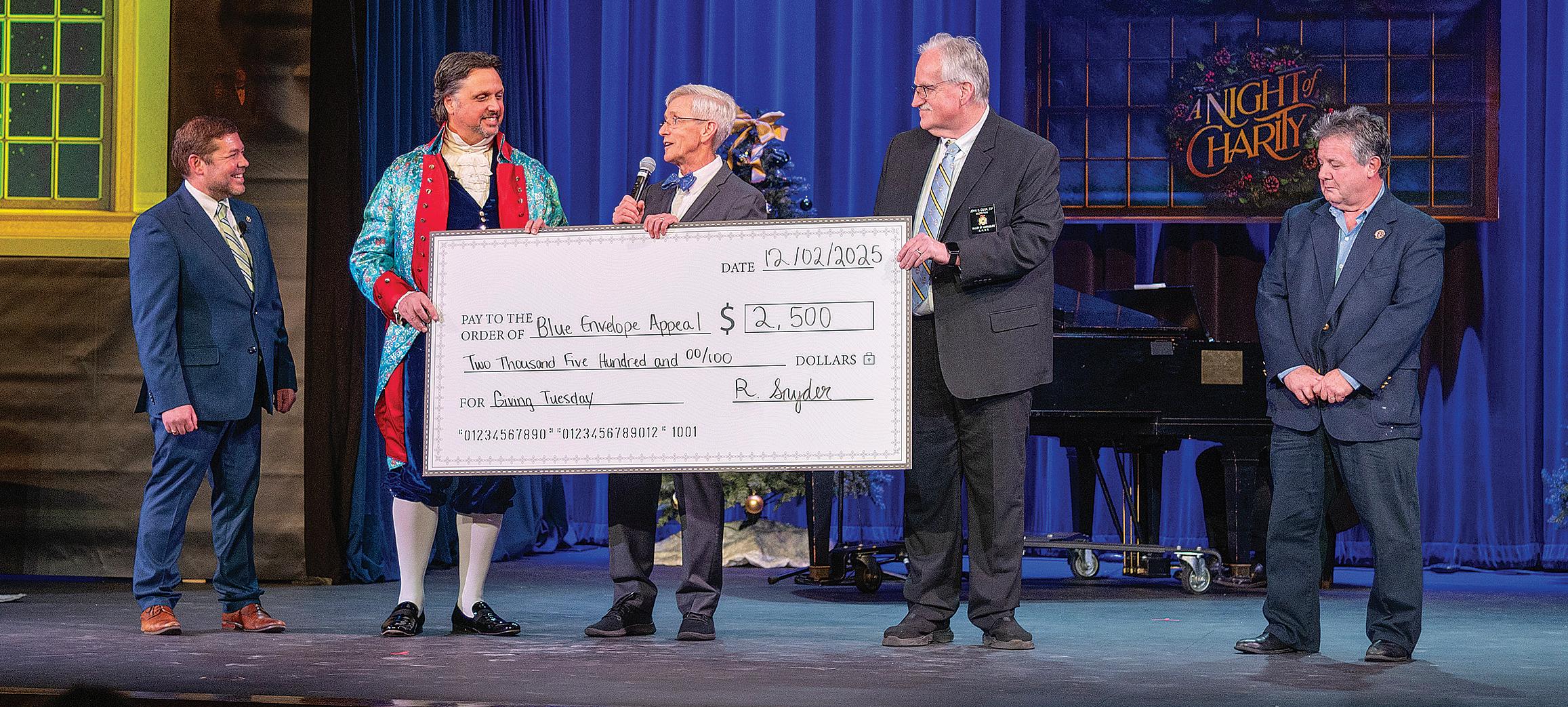
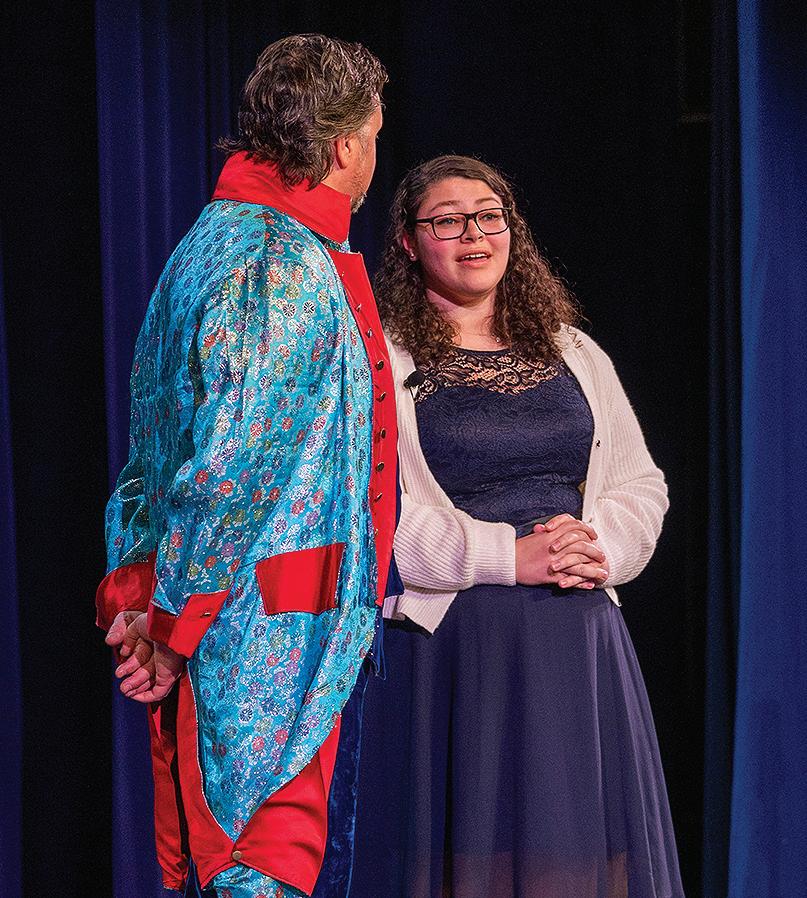
The evening spotlighted the lifechanging work of Scottish Rite Charities.
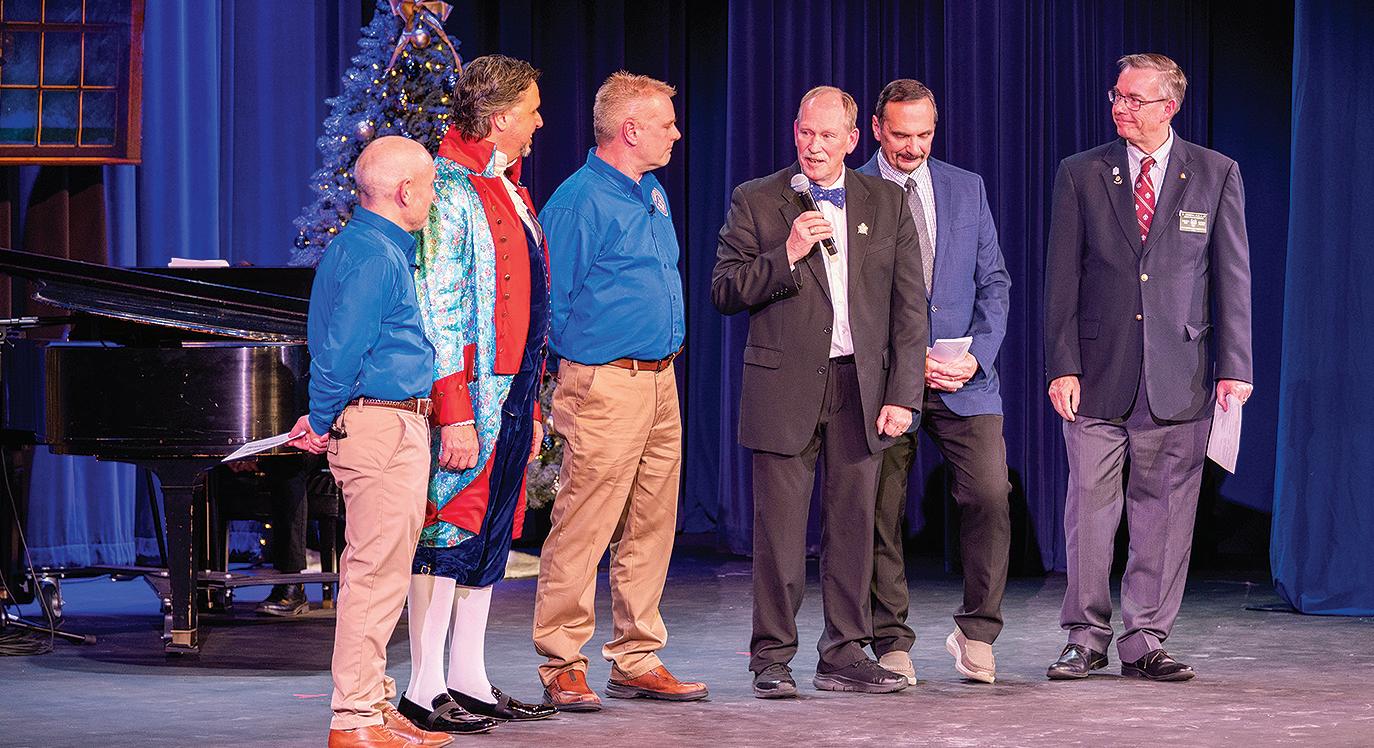
The 2025 broadcast included a special look at the 50th anniversary of the Scottish Rite Masonic Museum & Library, highlighting its mission to preserve and share the history of American Freemasonry. Leadership reflected on the Museum’s founding vision, its growth over five decades, and the vital role it plays in safeguarding Masonic heritage. During the segment, Assistant Curator, Stacey Fraser, described a new anniversary exhibition designed to honor the institution’s origins. She explained:
“We’ve highlighted a selection of objects from the founding collection and more recent acquisitions in an exhibition that tells the story of the Museum & Library’s origins.”
This exhibition, along with ongoing research, education, and preservation initiatives, showcases how the Museum & Library continues its work of documenting and interpreting the stories that shaped Freemasonry and American history.
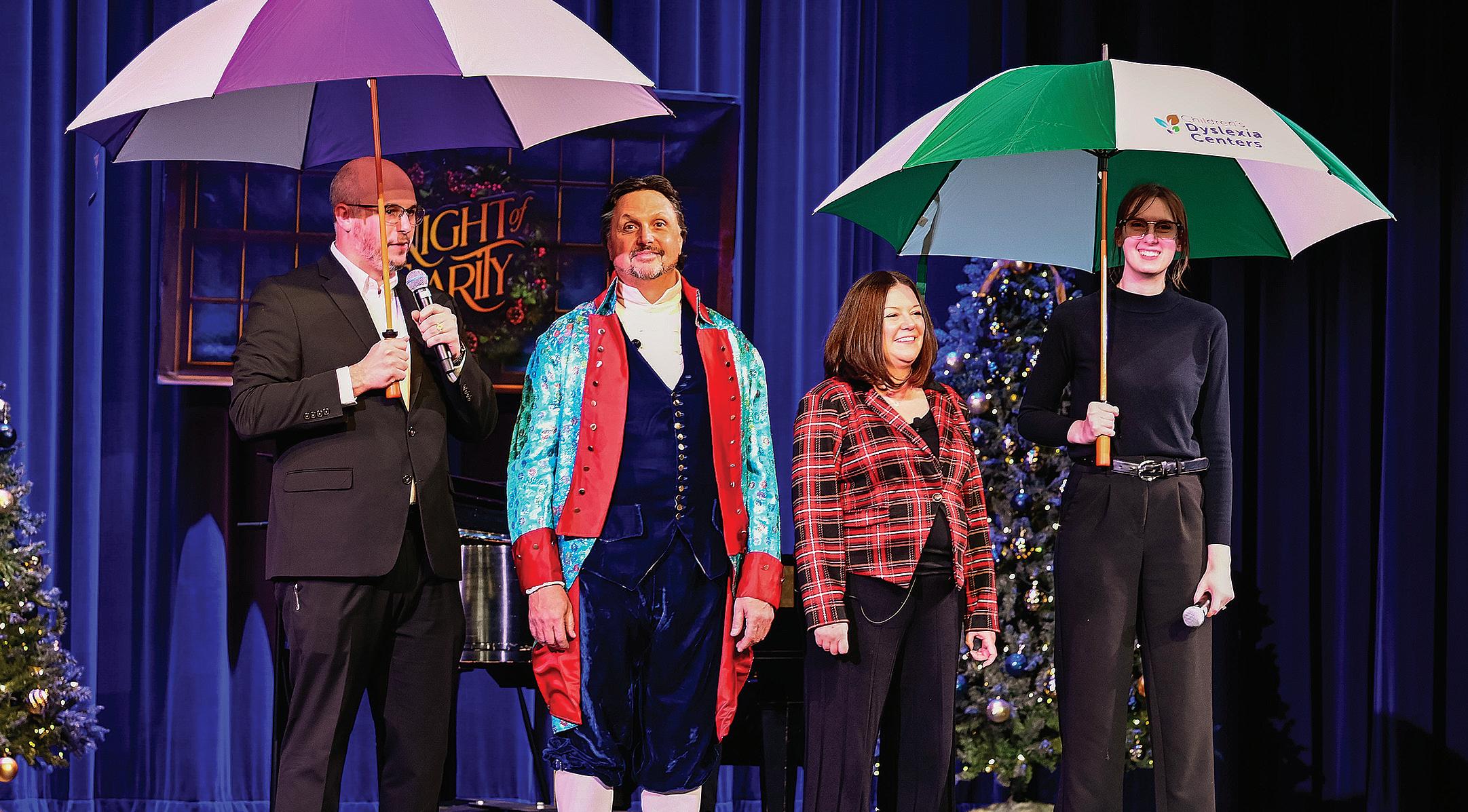
During the closing remarks, the Membership Education Fund was highlighted as a vital part of Scottish Rite Charities. This fund supports leadership development, educational tools, and programs that help Brothers deepen their understanding of Freemasonry. These initiatives include:
• Thursday Night at the Rite
• Masters of the Rite
• Hauts Grades Academy
• Pathfinder
• and more!
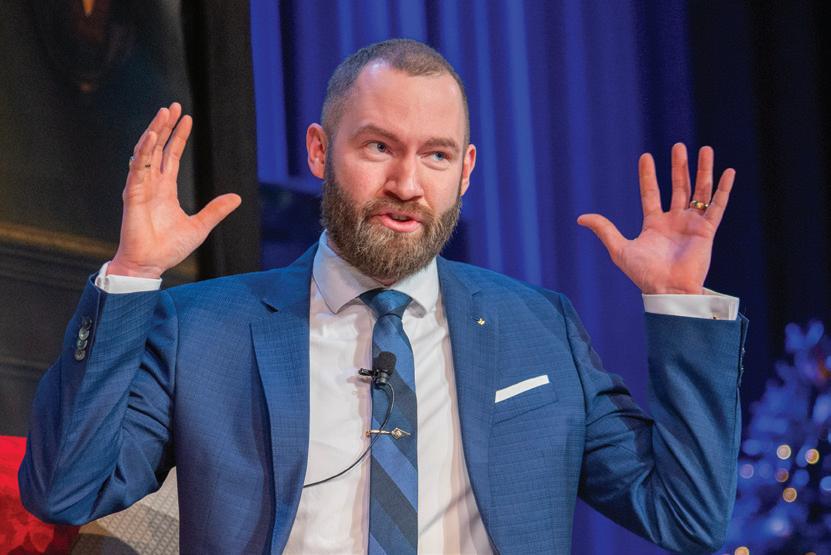
Its work ensures that education, mentorship, and Brotherhood remain at the core of the Scottish Rite experience.
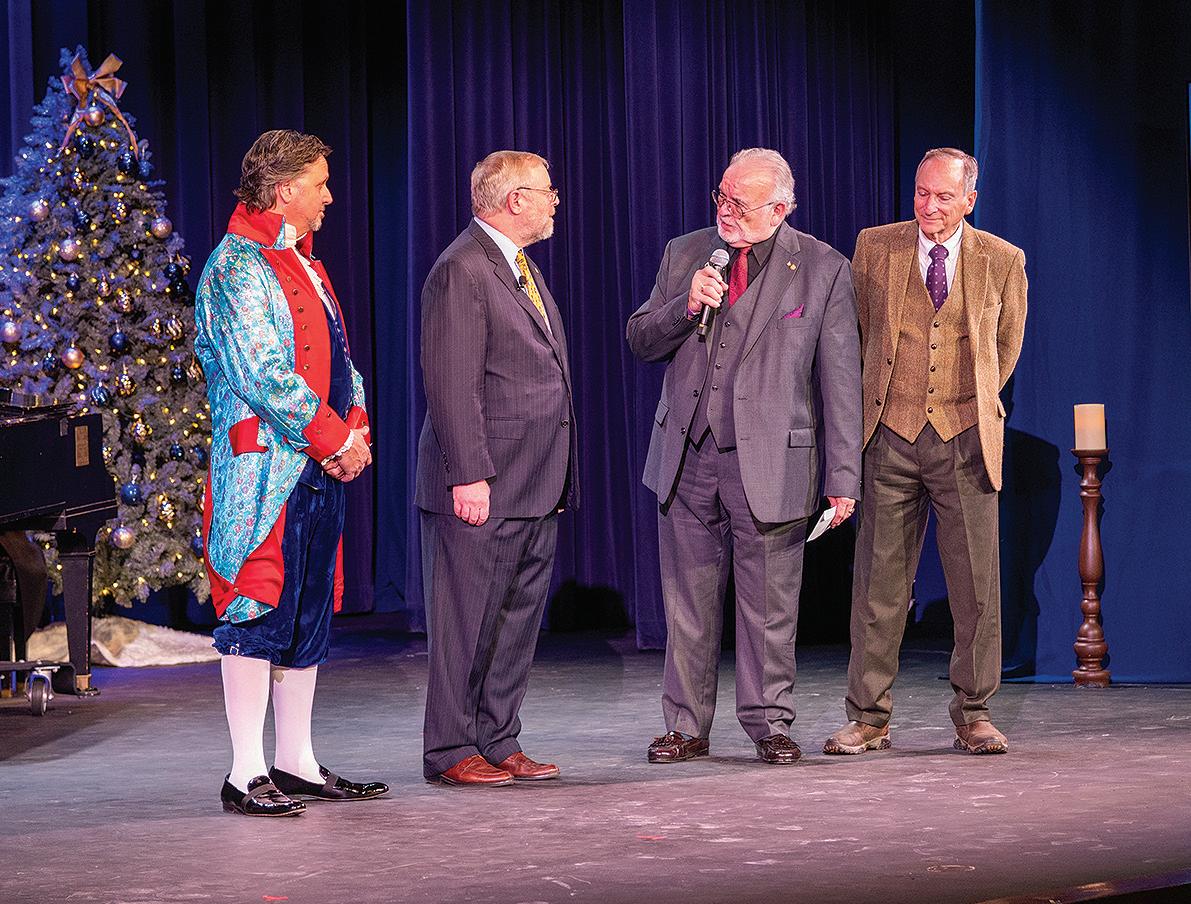
Throughout the evening, Valleys across the NMJ announced gifts to support local Dyslexia Centers, Abbott Scholars, the Grand Almoner’s Fund, the Scottish Rite Masonic Museum & Library, and the Membership Education Fund. Donors were recognized from Maine, Michigan, New York, Pennsylvania, New Hampshire, and beyond.
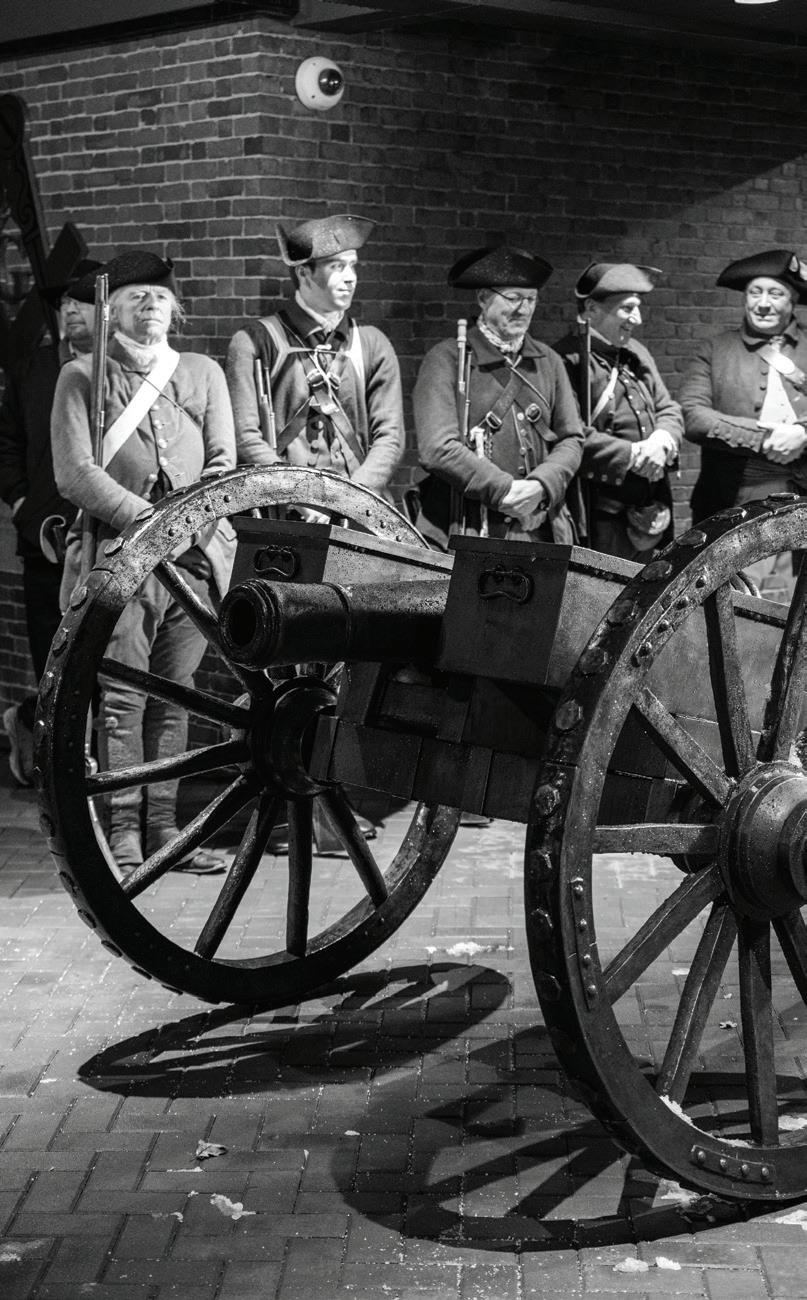
By the close of the broadcast, Scottish Rite Masons and supporters had contributed $1,050,278 – a remarkable testament to the compassion and unity of our Brotherhood.
It was a milestone year for A Night of Charity and a testament to the generosity and unity of Scottish Rite Masons. Thank you to everyone who participated and who continues to support our charitable efforts!
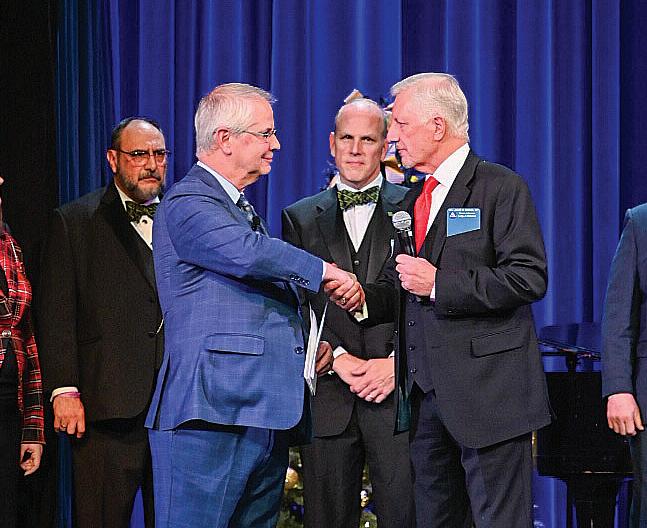
The 2025 broadcast included a special look at the 50th anniversary of the Scottish Rite Masonic Museum & Library.
I was once told you should never invite more than one attorney to a dinner party because they’ll spend the entire evening talking law. After nearly a quarter century in our gentle Craft, I’ve come to realize that Freemasons are often guilty of the same habit. When two or three of us gather, the topic of the Fraternity inevitably arises. So it was during a recent meal shared with several Brothers from four different Scottish Rite Valleys.
Asoften happens, we were solving all the problems facing our organizations between bites of steak and sips of wine. Familiar themes surfaced: the age-old frustrations with politics, the challenges posed
by outsized egos, concerns over shrinking membership, and the alltoo-common situation of men being thrust into leadership roles without the preparation or soft skills necessary to handle the responsibility. It was the
by
kind of evening that leaves you with more questions than answers, in the best possible way.
“
The mistake we make is assuming the only meaningful contribution we can offer is leadership.
Driving home, I reflected on those points and on the challenges facing my own Valley, Lodge, and other Masonic bodies. My thoughts drifted to a conversation a month earlier with a Brother who lamented that others weren’t stepping up to meet his
expectations after he had advanced to a higher office. I told him, candidly, “Brother, many of us are active not because the work excites us, but because you excite us. We want to support you and see you succeed. When you step away from the day-today, we lose the energy you bring.”
The heart of my realization lies at the intersection of those two conversations. We spend a great deal of time reflecting on what it means to be a good leader. But when was the last time we asked ourselves if we are good followers? And what does that even mean?
“All of us can stand
to spend a little more time practicing the art of being a better follower.
”Many of us, including myself, preside over an organization and then step back for a year or two to recover from burnout. We disconnect, often justifiably. Yet the organization doesn’t stop needing us; in fact, it may need us more. The mistake we make is assuming the only meaningful contribution we can offer is leadership. In truth, we must also learn how to be followers again.
That is not an easy skill to relearn. When you’re accustomed to chairing the committee or driving the project, it can feel unnatural to say, “I’m happy to help at the Reunion, but I can’t
be in charge.” But that is a perfectly valid commitment. That is good followership, supporting the work without needing to hold the reins.
“ It was the kind of evening that leaves you with more questions than answers, in the best possible way.
”
In my own fraternal life, I belong to more organizations than I can possibly serve at the level each would prefer. So I divide them into broad categories: those in which I am a leader now, those I may want to lead in the future, and those in which I’m content to be a follower. For the latter, I try to be the best follower I can. Maybe I can only attend a few events, serve on a committee, or make a contribution that empowers someone else to pursue the work that energizes them. As Brothers, that is what we are called to do. We should help each other find the part of Freemasonry that brings fulfillment and
support one another in pursuing it. That, too, is part of being a good follower.
You don’t need to be the Director of Work or preside as Thrice Potent Master to make a meaningful impact. Playing a nonspeaking role onstage at a reunion, volunteering at a dyslexia center, or checking in on shut-in Brothers is every bit as valuable as the work of the Commander-in-Chief.
Leadership training is easy to find. But all of us can stand to spend a little more time practicing the art of being a better follower.
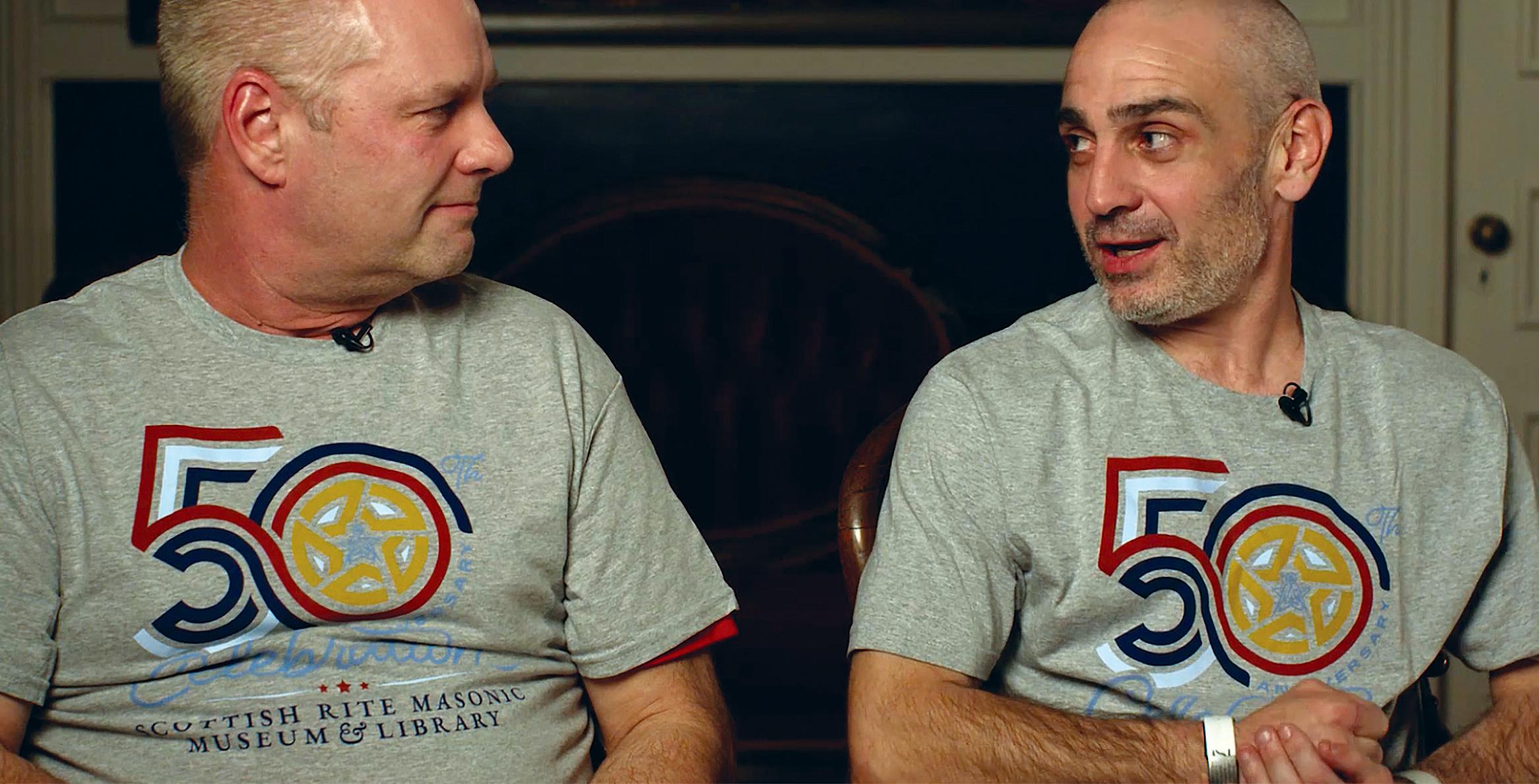
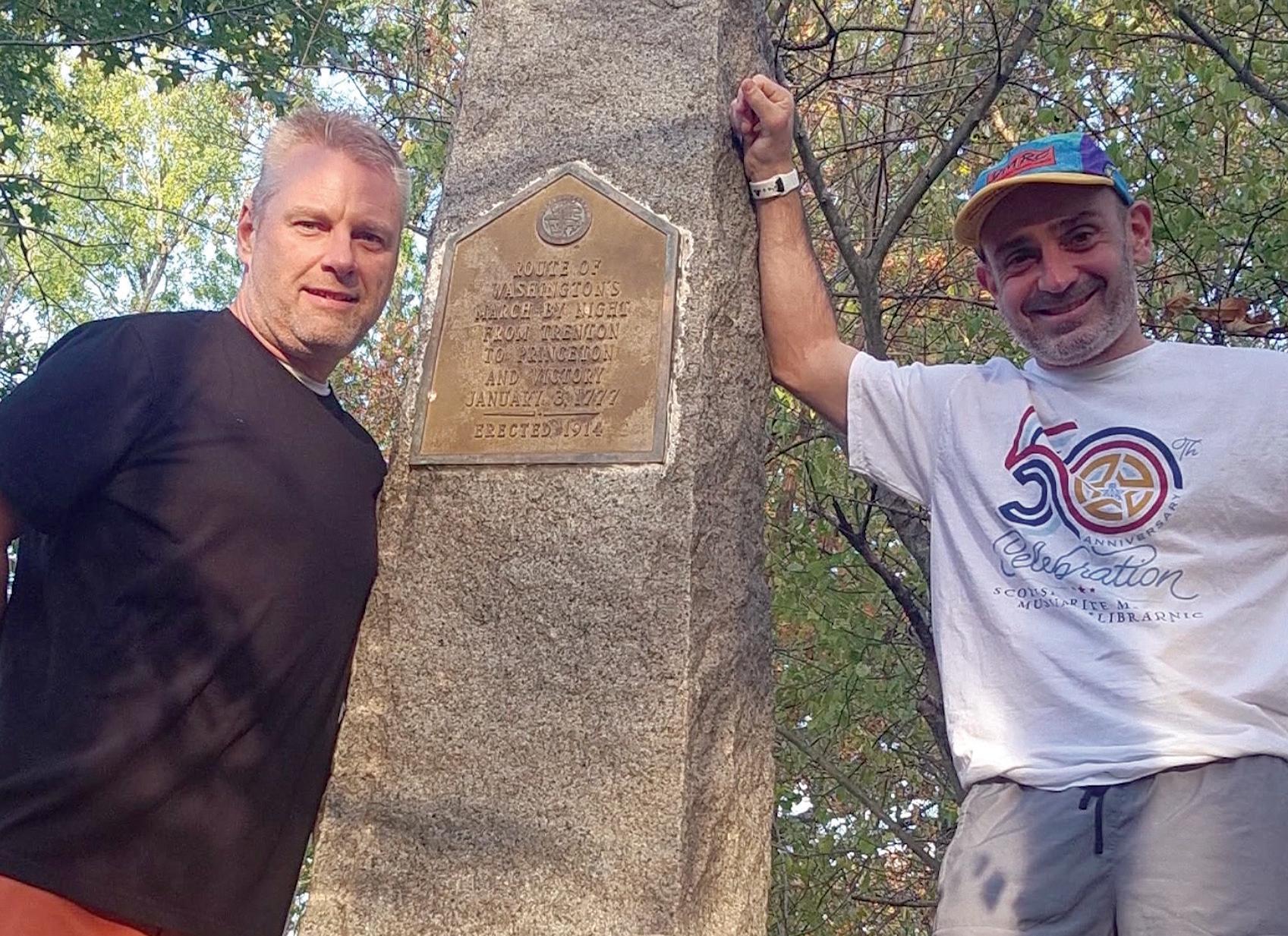
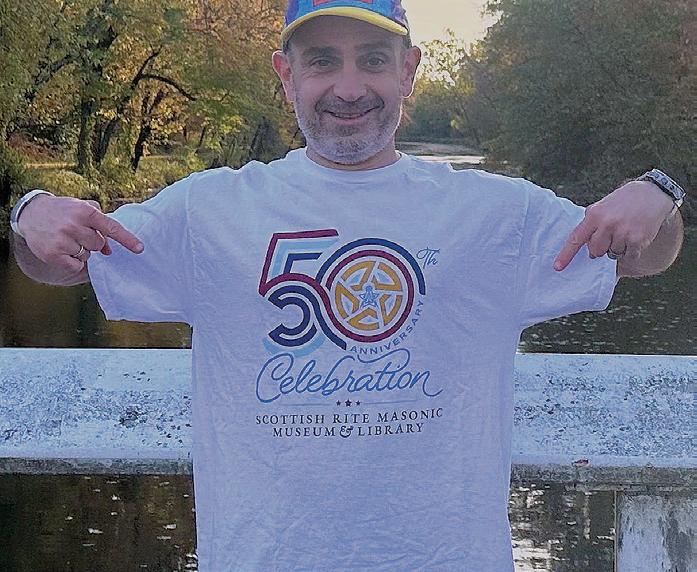
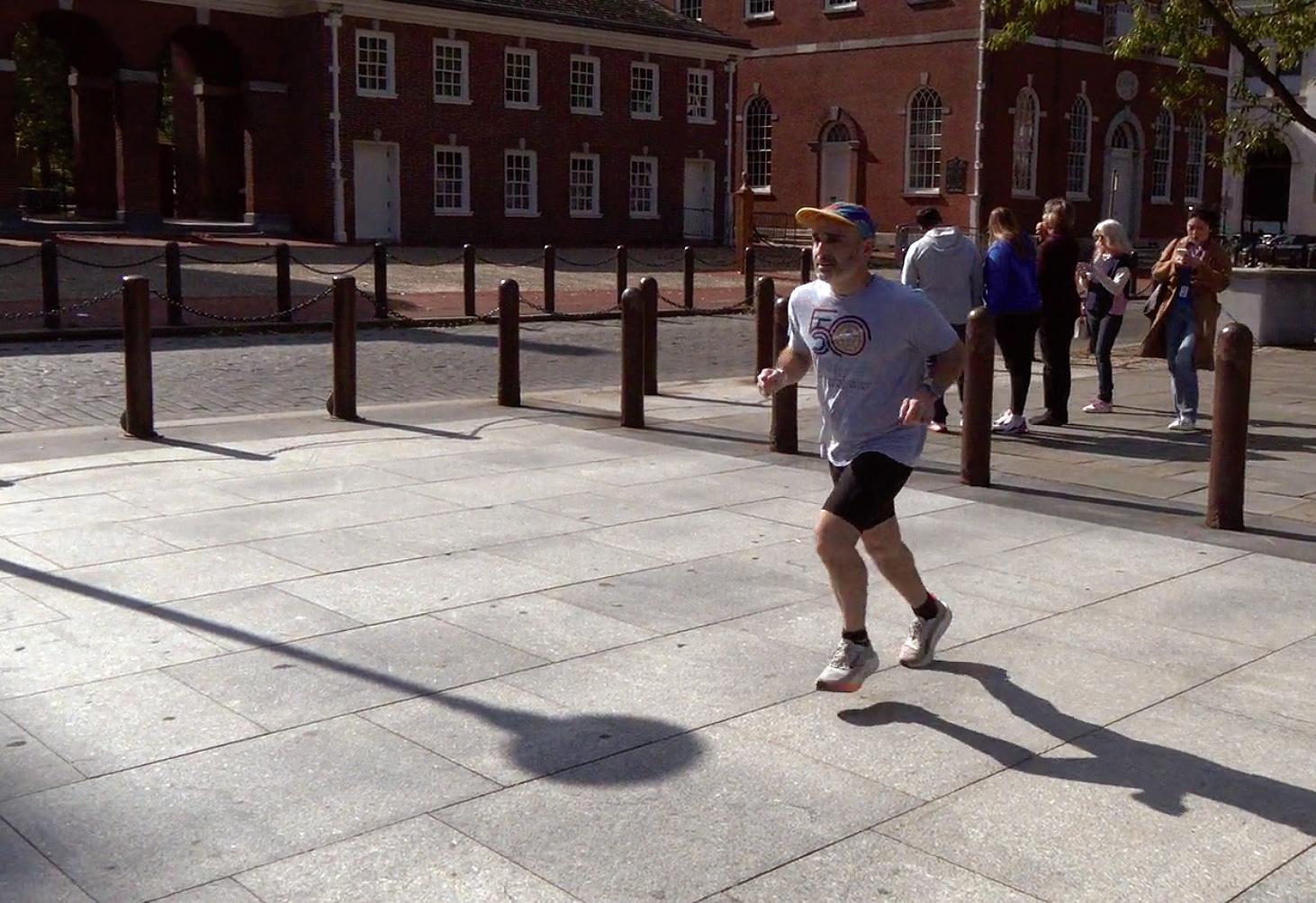
Recently, The Northern Light had a chance to sit down with Brothers Patrick Atkinson, 32°, and Jamie Fields, 32°, of the Valley of Wilmington to talk about their upcoming Revolutionary Run to support the Scottish Rite Masonic Museum & Library.
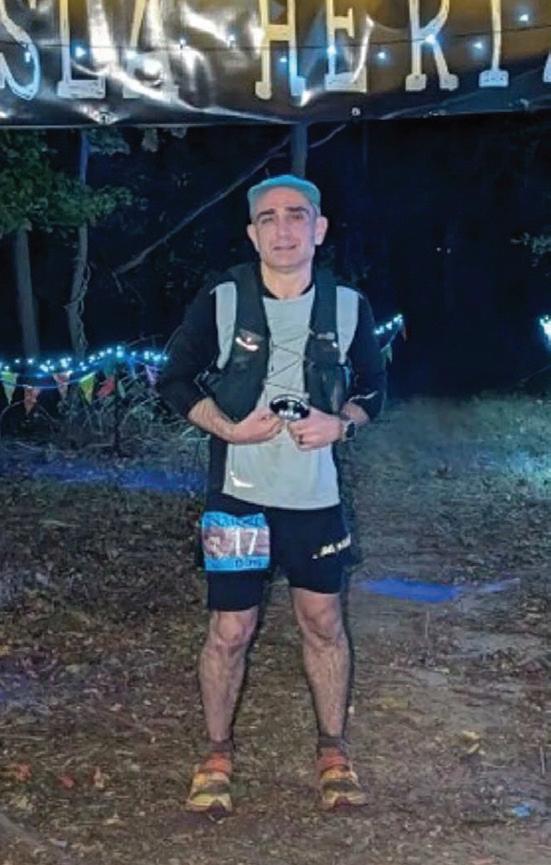
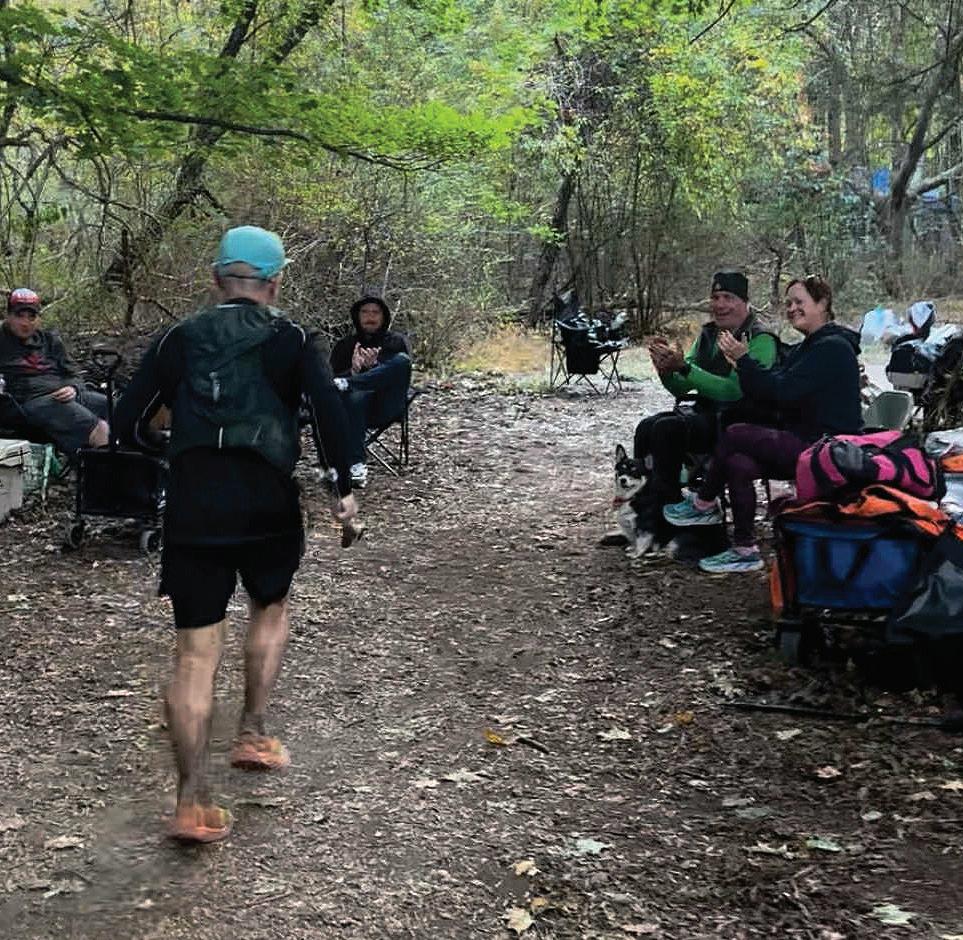
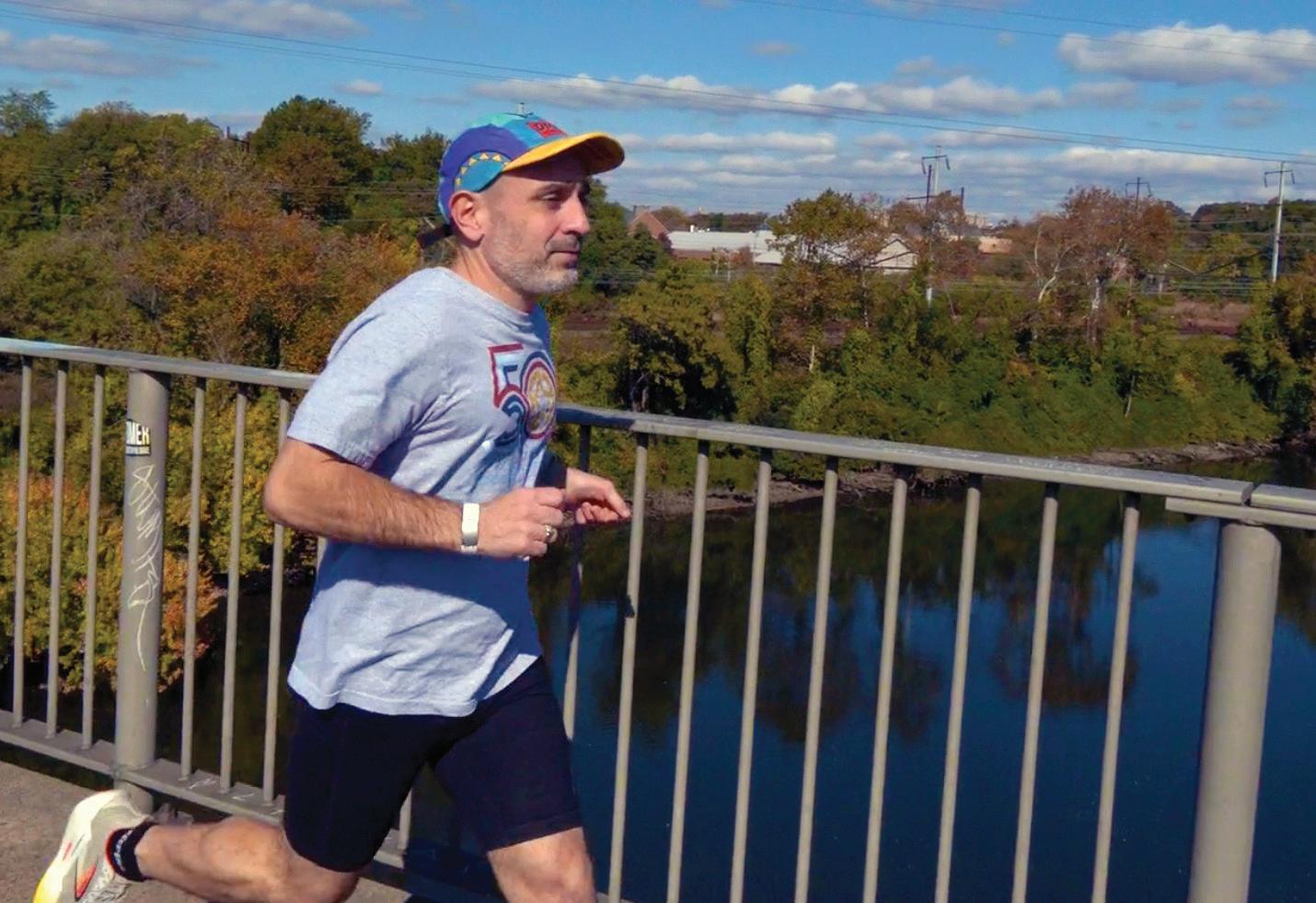
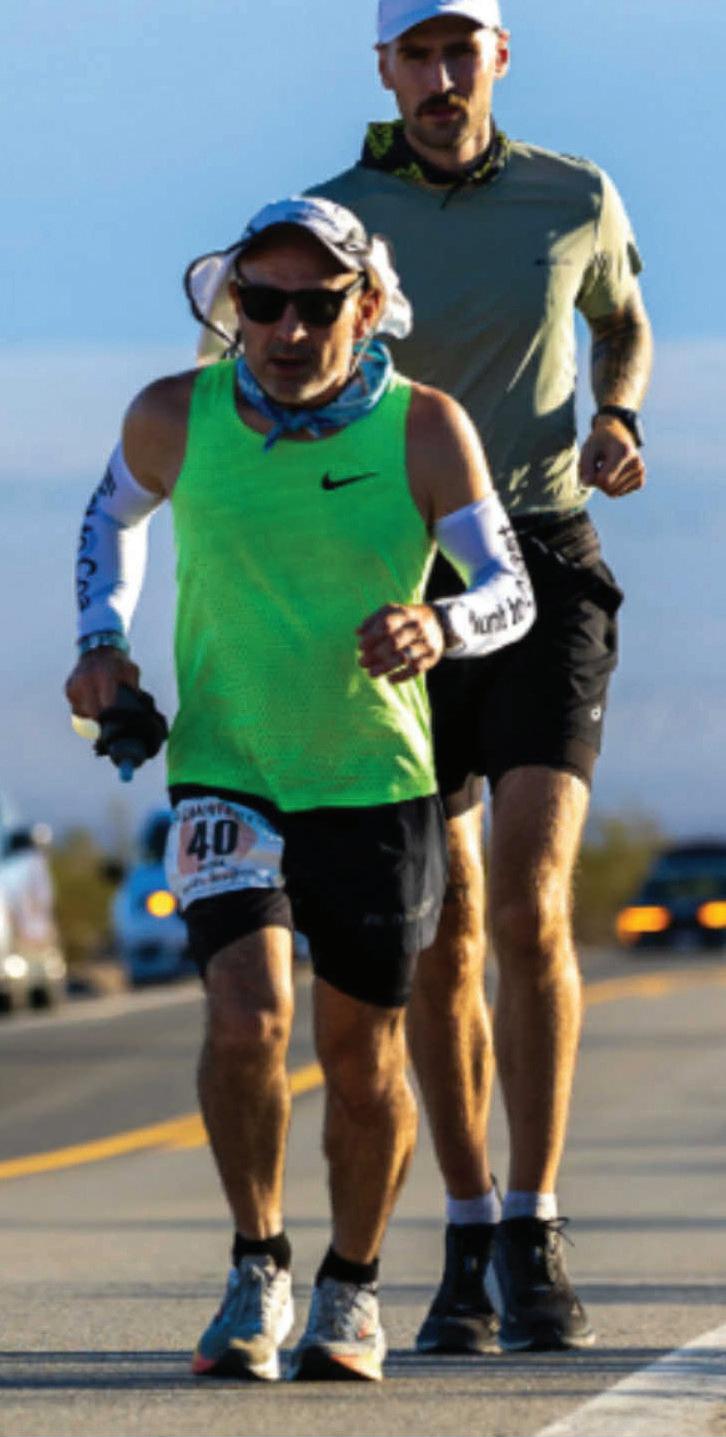
Patrick, 40, is a vo-tech teacher, restaurateur, real estate investor, and ultramarathon runner. Jamie, 54, is the Operations Excellence Manager for Delaware City Refinery. The two of them met at their Blue Lodge, Jackson Lodge No. 19, in Delaware City, and became fast friends. Patrick will be doing the running, and
planning – jobs each is ideally suited for. Their story is one of preparation, perseverance, and providence.
TNL: What is the Revolutionary Run?
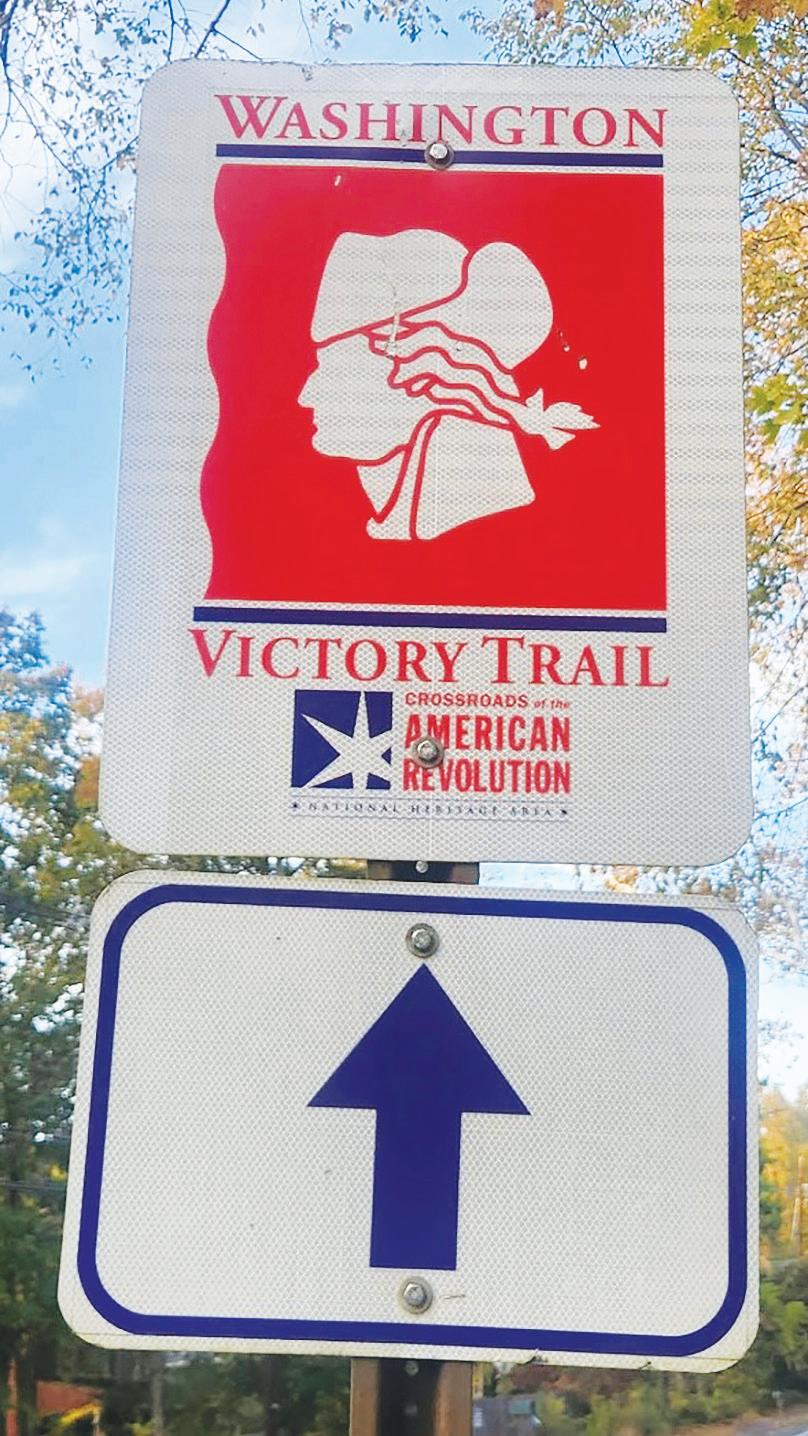
Patrick: The Revolutionary Run is a 333-mile journey that will be completed on foot from Wilmington, Delaware, at 818 Market Street, all the way to Lexington, Massachusetts, to bring
by PJ Roup, 33˚, Editor, Active for Pennsylvania
awareness and raise money for the Scottish Rite Masonic Museum & Library.
“We’re going to complete it one way or the other because of how much support we have and how much more support is out there.
”TNL: What about the Museum & Library’s mission speaks to you personally?
Patrick: I choose to run to support the museum, because it represents a lot of my values, my upbringing, and my family heritage. My father
is Herbert J. Atkinson, 33°, the only current Delaware Emeritus member. The values that shape my father and me are Masonic values: Brotherhood, faith, and belief in one another. Those are values that I was brought up around. And they shaped my family. My biggest
inspiration to take on this task is the values and habits that we hold ourselves to, the highest standards of morality that we share with one another.
TNL: Tell me a little bit about ultrarunning and how you got into that.
Patrick: An ultramarathon is technically anything over a full marathon, which is 26.2 miles. And I started to get into that just because I always take on more and more. I did a half-marathon and then went from a half-marathon to a full marathon, and then jumped up to a 50, and just kind of saw different possibilities with being able to go around the country and run beautiful places on foot. And it gives me an opportunity to focus on one thing and just be immersed in nature. And I feel like that’s where the best qualities in me come out.
TNL: What parts of the journey are you looking forward to the most in the 333 miles?
Patrick: I’m looking forward to being able to run to the different Grand Lodges. [The place] I’m most excited to run is in New Jersey, where Washington took troops to battle in Princeton, carrying the same values that we carry today.
TNL: What will completing the run mean to you?
Patrick: When we get to the museum in Lexington, it will symbolize the completion of a project where people came on just to support the same beliefs that we have. There’s no sure thing that this is going to get done. There’s hope, there’s planning, there’s practice, there’s preparation. But we’re going to complete it one way or the other because of how much support we have and how much more support is out there.
TNL: Jamie, how did you come to be involved in this project with Patrick?
Jamie: He approached me about being involved in The Revolutionary Run about 18 months ago, and of course, I said yes right away. We worked together for many months trying to plan the route. We’re putting the route together, and we just keep working at it. We’ve taken a trip to start the process of mapping out the route in a vehicle, to verify that what we have on paper is going to work.
“He had this vision from the beginning of raising money for the museum – bringing all the bodies under the Masonic umbrella together to help support this.
”TNL: Tell me about the preparation.
Jamie: It’s a tremendous amount of work, but I have the easy job. You know, [Patrick’s] the muscle in this. There’s no question about it. He’s the talent. I’m surfing the internet looking for spots to stop. Planning stops every three-ish miles as we go along this route. Where do we get gas? Where are we sleeping? All that stuff? That’s on me to do because he has one job, and that is to run 333 miles, and that’s enough.
TNL: How does what you see on Google Maps and what you see in the car translate?
Jamie: So we know we’re on the right route when we drive it (or sometimes
run it), and Patrick feels confident in what we’re seeing. If we’re seeing a lot of rough terrain, we may look at a different route. He runs on everything. So we’re lucky there. He can run cross-country. He can run on concrete. He can run on blacktop. It doesn’t matter. But we look for the best surfaces for him to run on and the surfaces that have the least amount of obstructions.
TNL: How do you see this run supporting the Museum & Library?
Jamie: I rely on Patrick for that part of it. His motivation is unbelievable. He had this vision from the beginning of raising money for the museum – bringing all the bodies under the Masonic umbrella together to help support this. And that is ultimately the goal. It’s not a Scottish Rite thing. It’s not a Blue Lodge thing. It’s not a Shrine thing. It’s not a York Rite thing. It’s a Masonic event that we want our Brothers
and even Sisters from the Eastern Star to get involved with. We would like to see people all along the route who are all connected by that bond.
TNL: So this next question I’m going to ask each of you. Patrick, what does it mean to have Jamie doing this all for you?
Patrick: Jamie is the best man for the job, for planning all this out. He just wants me to run. That’s a good relationship for me. And anyone who just wants me to run, I want to be in that relationship. And the fact that that’s all I have to do, he thinks, is the harder job, but I’m really excited to do it.
TNL: Jamie, what is it about Patrick?
Jamie: Patrick is kind of a kid brother, so to speak. Patrick is relatively new in Masonry, and from the moment I met him in lodge, we just developed this bond. And I was intrigued by the

ultrarunning thing. To be honest, I think he’s a little crazy. He knows I feel that he’s a little crazy, but yet I’m right there with him for the ride.
The reason I took this task on? I could sit here and say it’s to raise money for the Masonic Museum & Library, which is an amazing thing, right? It’s preserving our Brothers’ history. It’s going to, at some point, preserve our history. That’s an amazing thing in itself. I could say it’s the camaraderie that

we’re going to build with Brothers all along this path.
But at the end of the day, the reason I’m doing it is because my Brother asked me to.
Brother Patrick will begin The Revolutionary Run on April 4 in Wilmington, Delaware. If everything goes according to plan, he will arrive in Lexington on April 11. He runs to preserve our history. He runs to promote our Fraternity. He runs for us all.
To follow Patrick’s progress or donate to the Revolutionary Run, scan the QR code or visit: Run.SRMML.org !
by Michael Pettinato, 32°, MSA, Valley of Rochester
Over the past few months, I have been lucky enough to work with several Valleys across Western New York to plan a joint Western Regional Reunion, which will take place in Utica on April 27. Building on both my experience planning this event and my attendance at past multi-Valley reunions, I wanted to share my thoughts on why these multi-Valley reunions seem so promising for the future of the Scottish Rite.
First, though, what do we mean when we talk of “regional reunions?” Essentially, as it sounds, it is when different Valleys come together to put on work they otherwise could not do on their own. The key distinction
from other reunions is that Valleys are not just participating as guests watching the degrees, but taking joint ownership of the event.
Why is this so beneficial to the Craft
and the Scottish Rite in general? I would argue there are multiple lenses through which to examine that question.
First, let us look at it purely in terms of the program’s quality. Every Valley is going to, of course, have limits to its resources, both in personnel and economics, and pooling those resources allows for a grander event. To give a concrete example of what I mean, the upcoming Western Regional Reunion I have been helping to plan has taken the approach of gathering together six Valleys and asking each of them to put on their

“signature” degree. We found that most Valleys will have at least one degree that they are particularly proud of or perhaps have a cast that has worked together for many years to perfect. This reunion is taking the opportunity to perform six of those signature degrees in one place for Brothers who might otherwise never be able to see them live.
The key distinction from other reunions is that Valleys are not just participating as guests watching the degrees, but taking joint ownership of the event.
In other situations, joint reunions might offer the opportunity to combine cast pools to do a live degree that a smaller Valley could not do on its own, have a larger budget to make the event special, or (as was the case with the recent Eastern Regional Reunion in NY) bring in noteworthy supplemental speakers to expand upon the degrees being shown.
Finally, resources aside, coming together for these joint reunions strengthens the leadership of the Scottish Rite by forging connections. Speaking from personal experience, planning our Western Regional Reunion has connected me to Brothers from a half dozen other Valleys. These connections and bonds will, of course, last beyond this event and help strengthen our Brotherhood and collaboration in all future endeavors.
These reunions are also a great boon for the individual Scottish Rite Mason.
Again and again, when we survey our membership, they praise the lessons of our degrees and show a desire to connect to Brothers beyond their Blue Lodge. These joint reunions fulfill both of those objectives. They bring high-quality live degrees that many Brothers would not otherwise have an opportunity to witness. Also, attending offers an opportunity for Brothers to connect across Valleys. Forging friendships at a joint reunion is not only rewarding in and of itself, but it also helps build comfort for Brothers to travel and visit other jurisdictions. Personally, I feel much more comfortable showing up to a distant lodge or Scottish Rite Valley if I know a familiar Brother is waiting to meet me there.


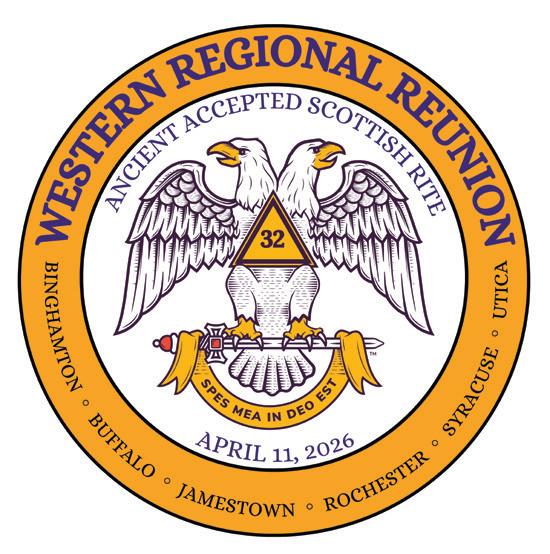

These joint reunions present a unique opportunity to think big, spread enthusiasm for the Scottish Rite, and forge connections across Valleys. I would encourage all Valleys to consider hosting them and all Brothers to consider attending them. I even hope to see a few of you at our Western Regional Reunion on April 27.





Finally, and perhaps most importantly, we are creating something special for the new Brothers joining the Scottish Rite at these events. Becoming a 32nd degree Mason is always going to be special. Still, there is something unique about having that experience with hundreds of Brothers from across a state in a truly exceptional setting.
To register use the QR code below:

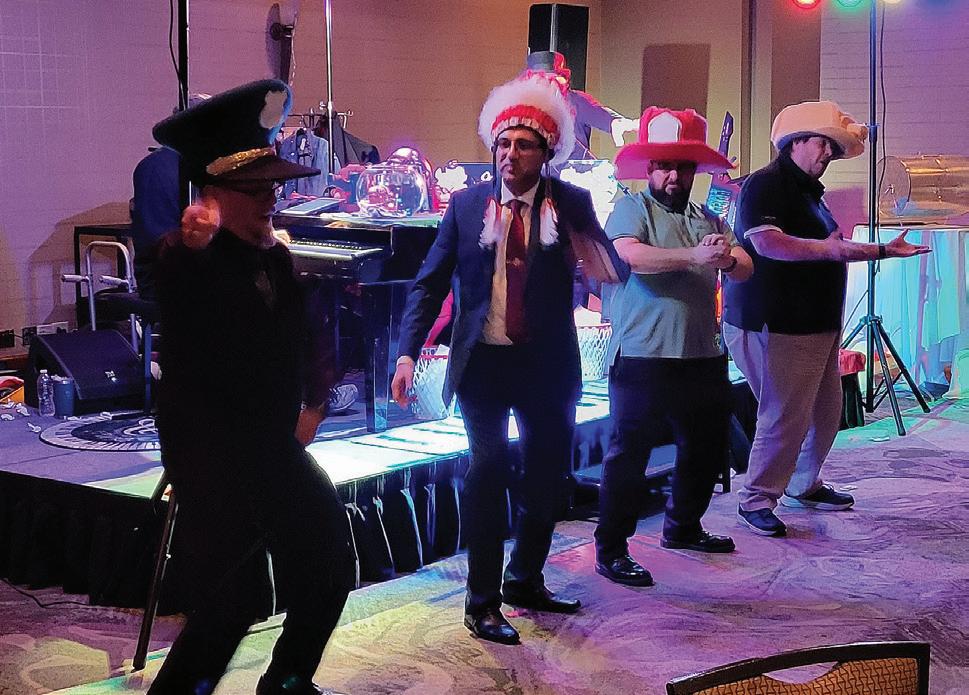
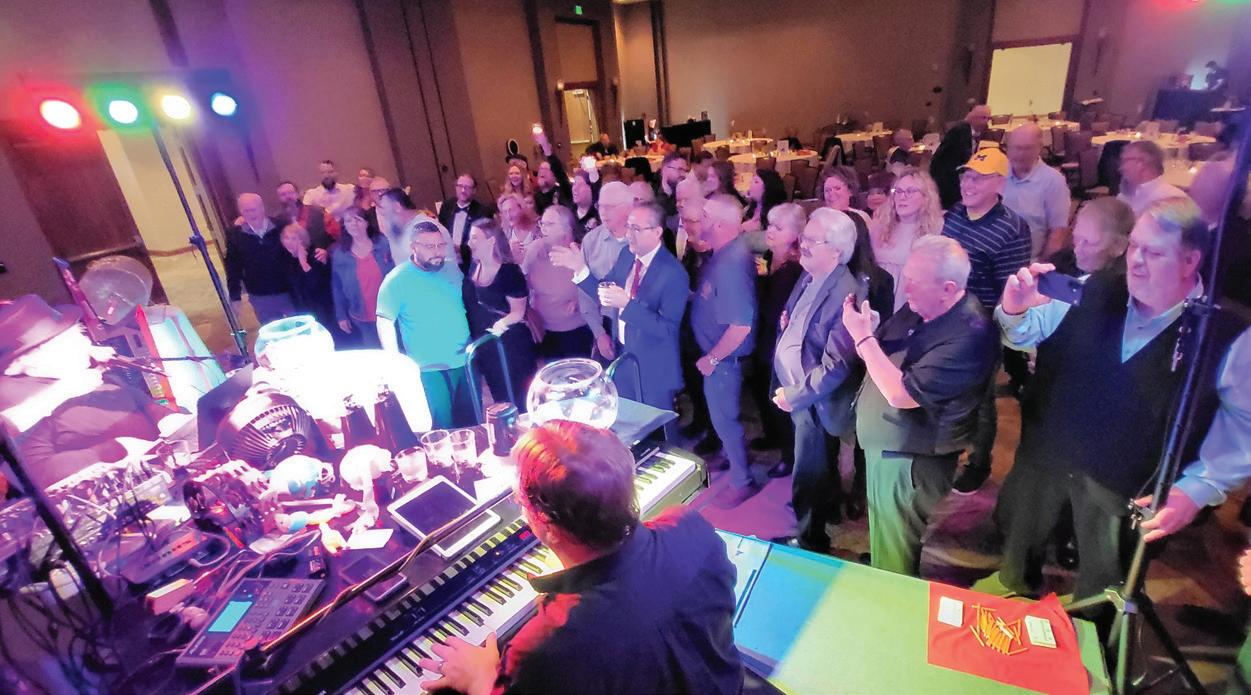
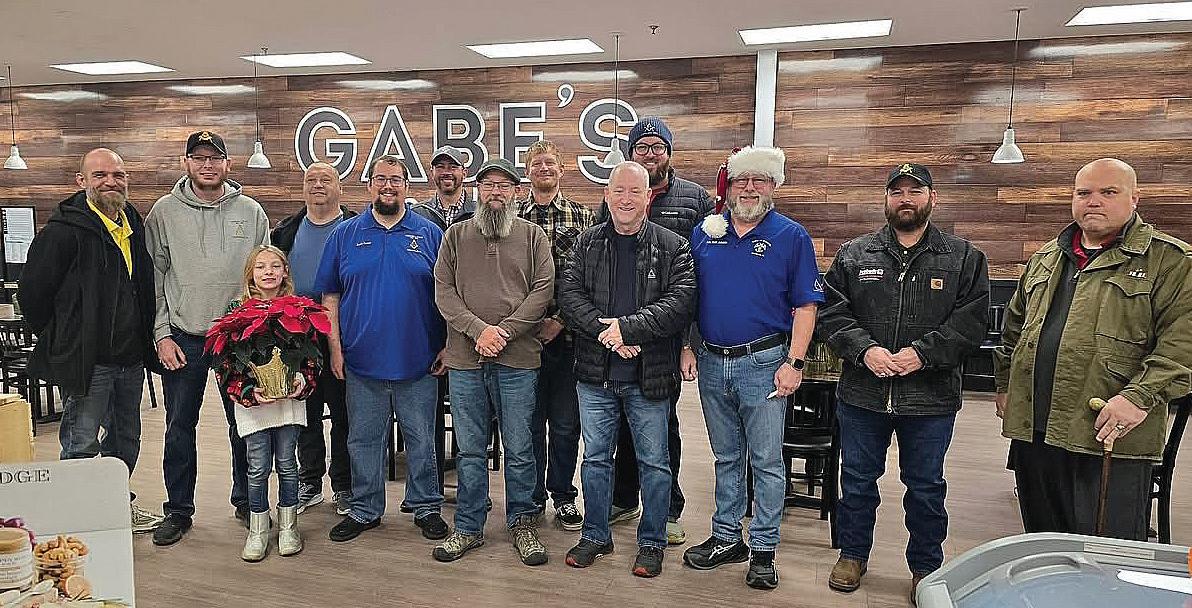
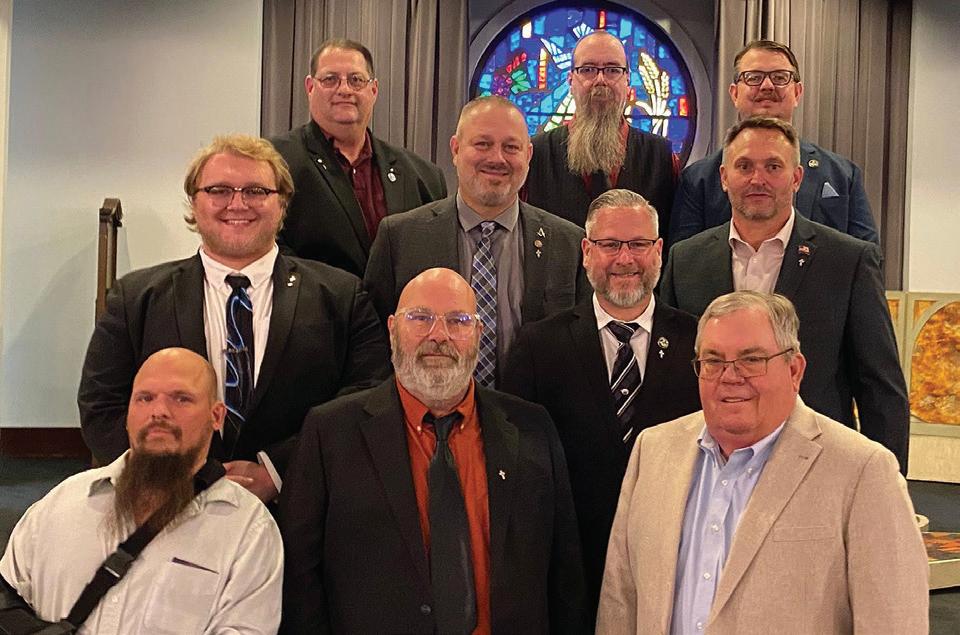
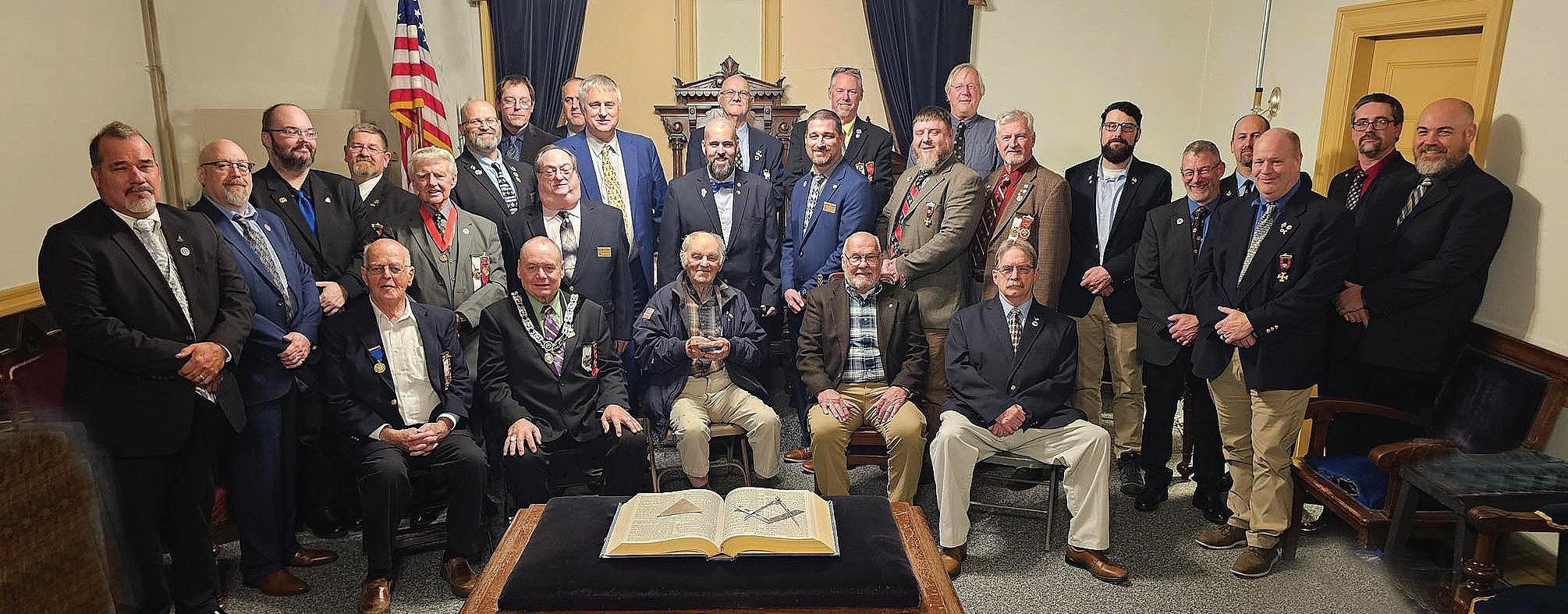
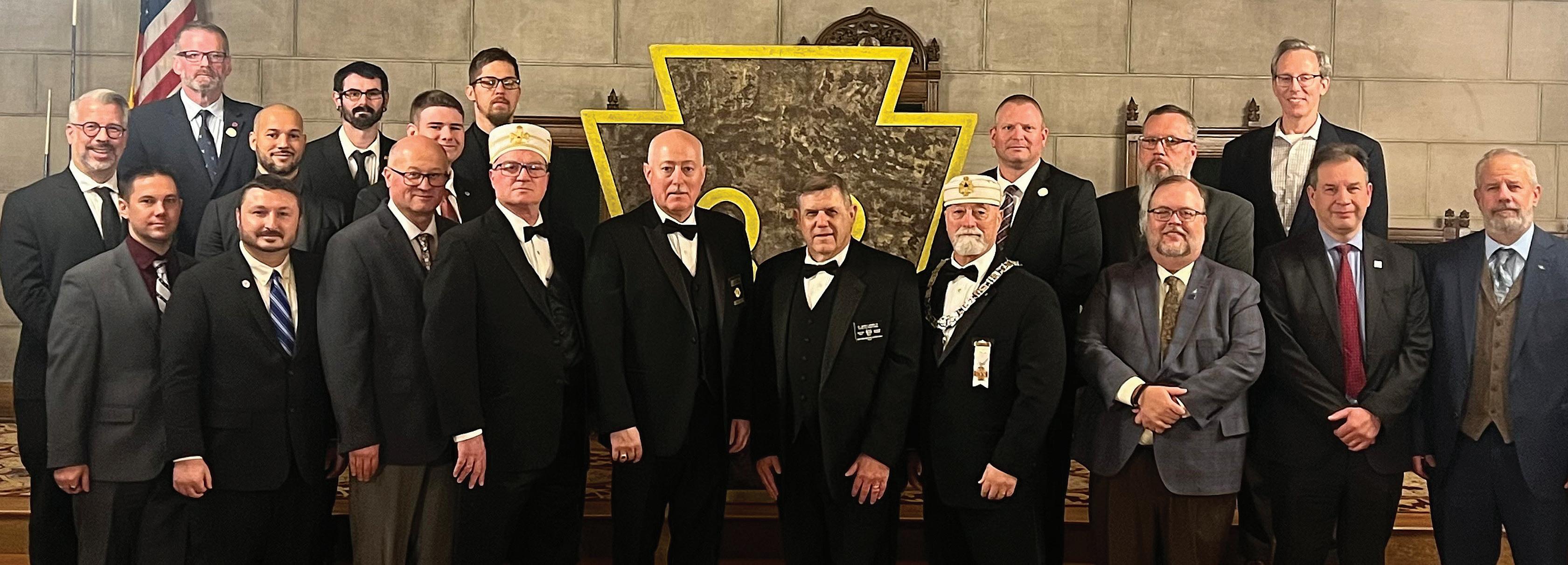
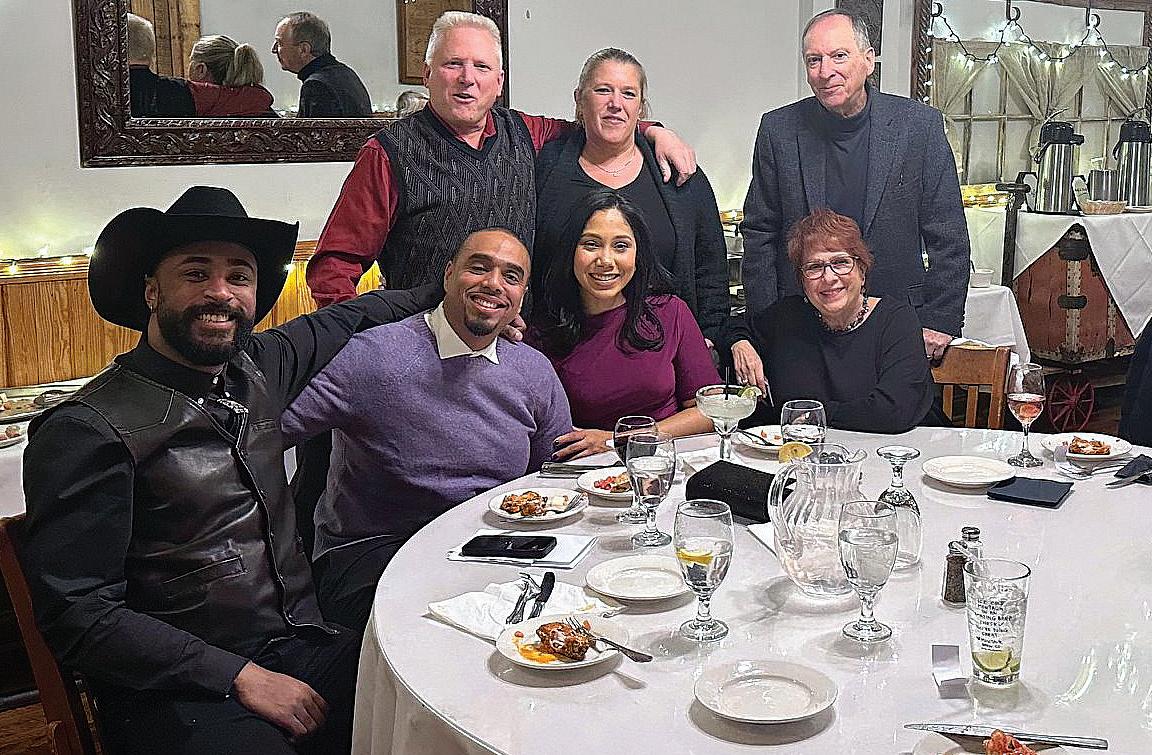
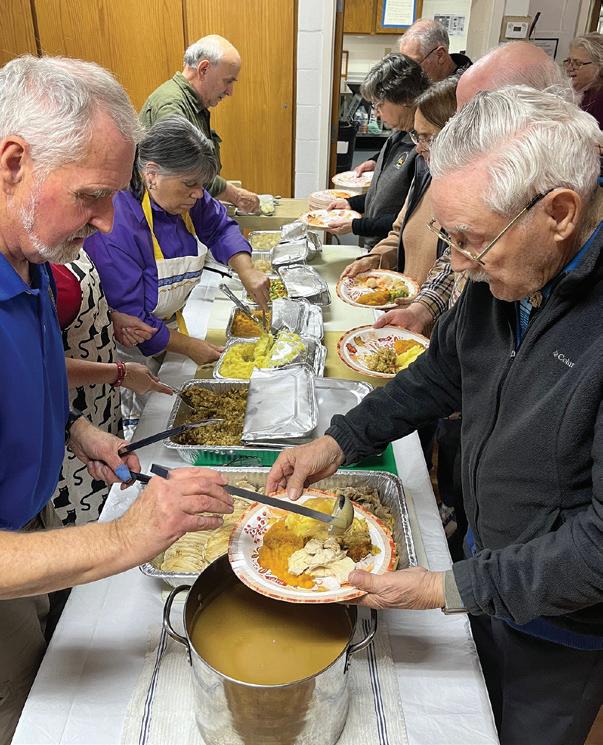
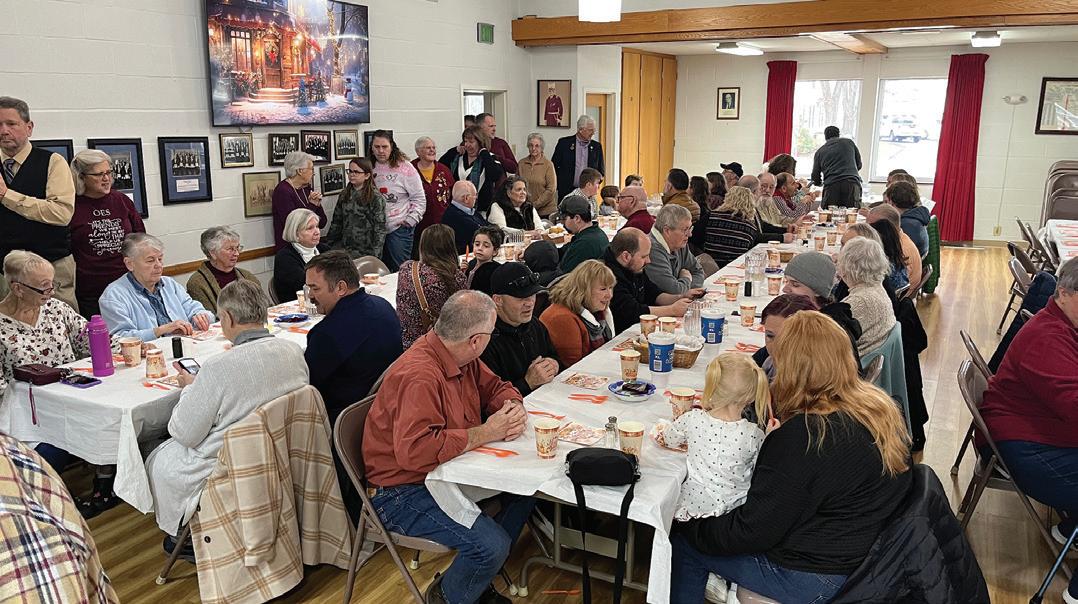
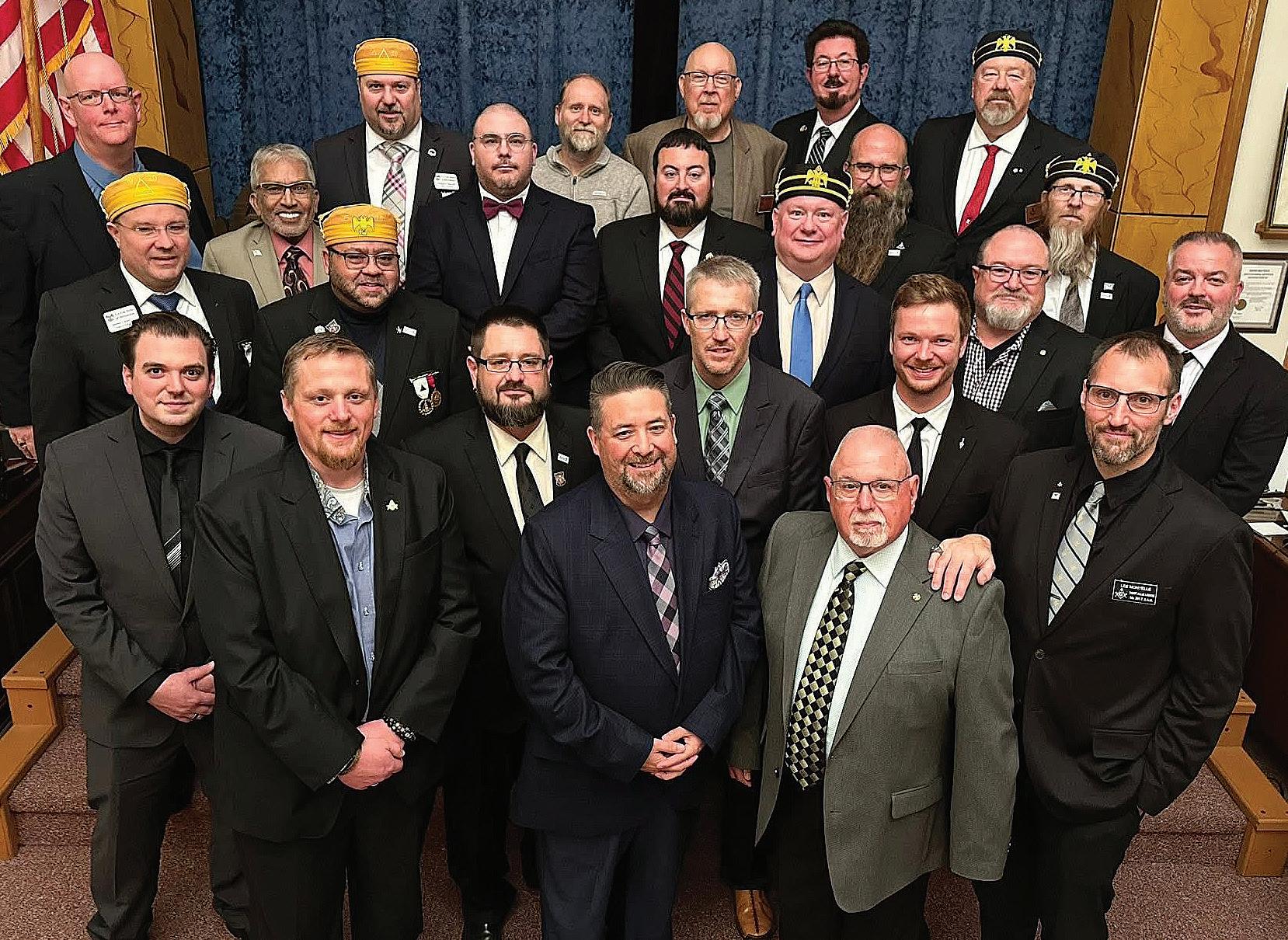
In November, the Valley of Concord Annual Thanksgiving Dinner. Eighty members and their families gathered at the table to enjoy turkey, stuffing, and all the fixings along with a sizeable portion of good fellowship.
continued
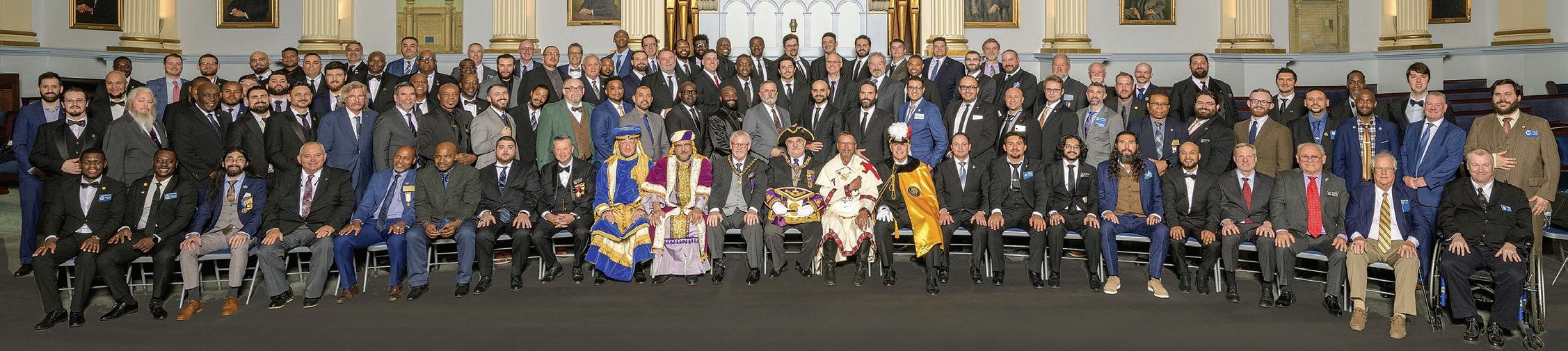
The Valley of Boston’s One Day Fall Reunion honored Brother George Hamilton, Grand Master and Active Member for Massachusetts.
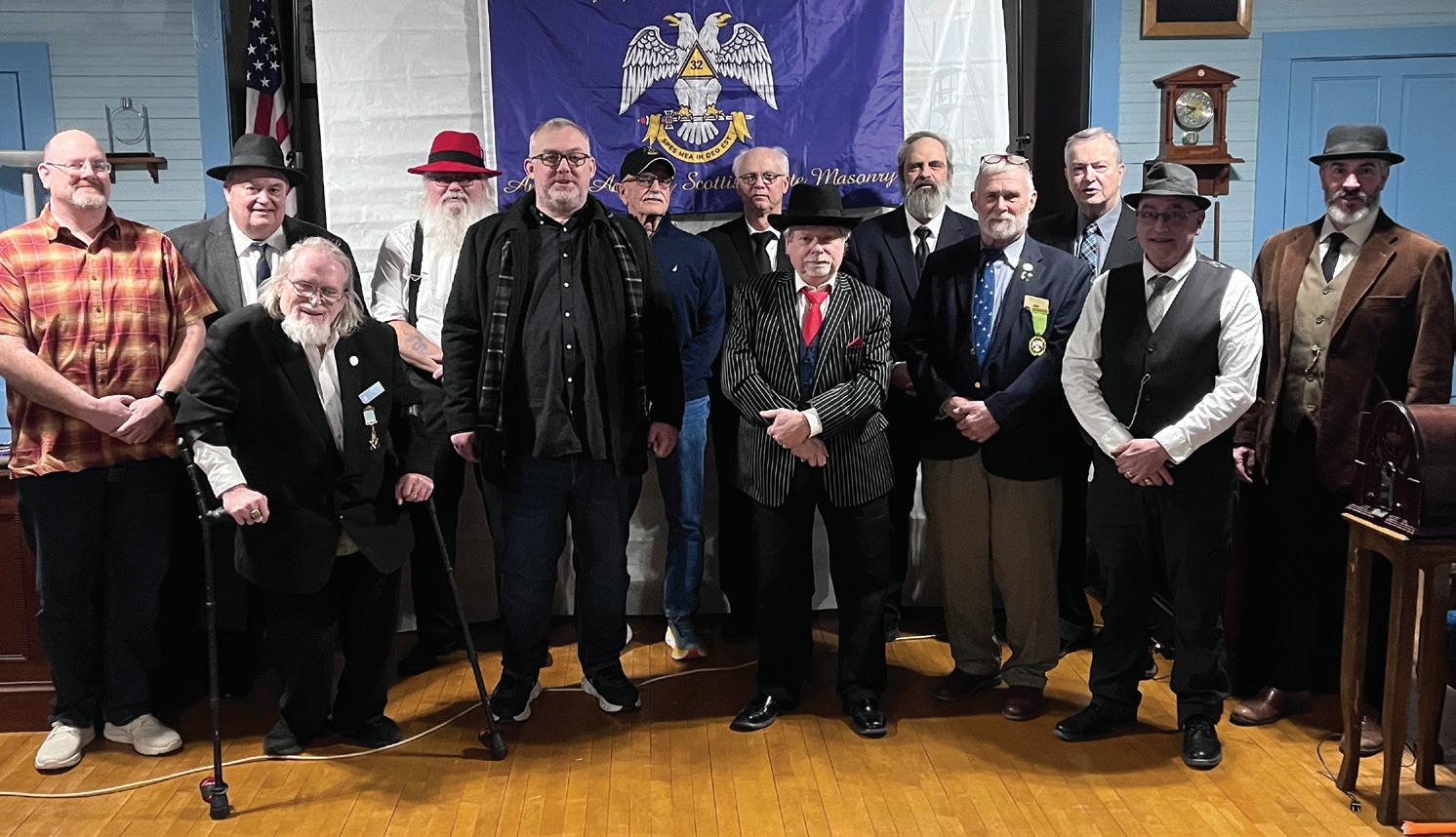
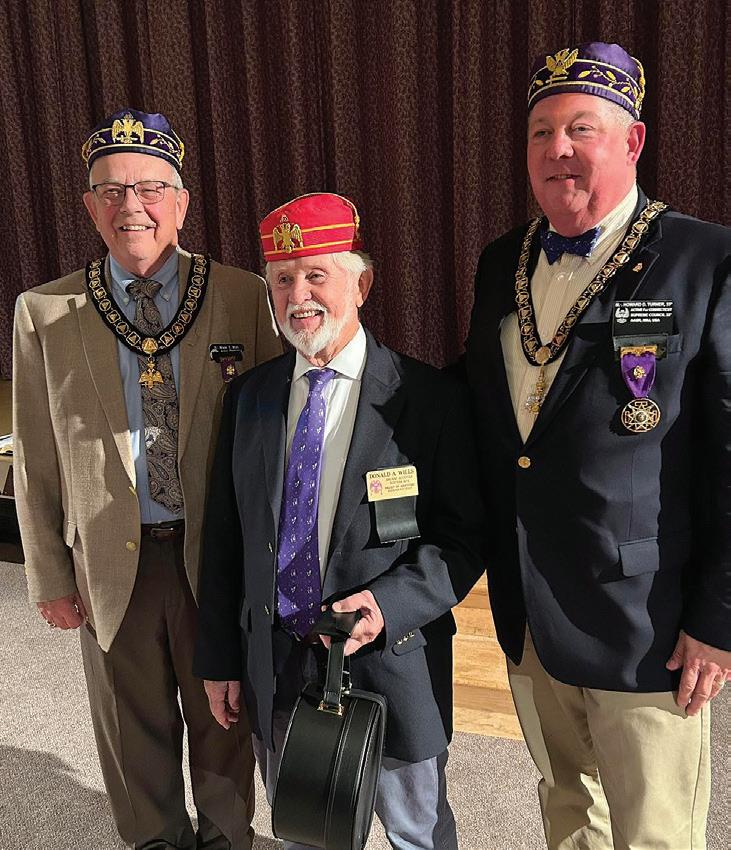
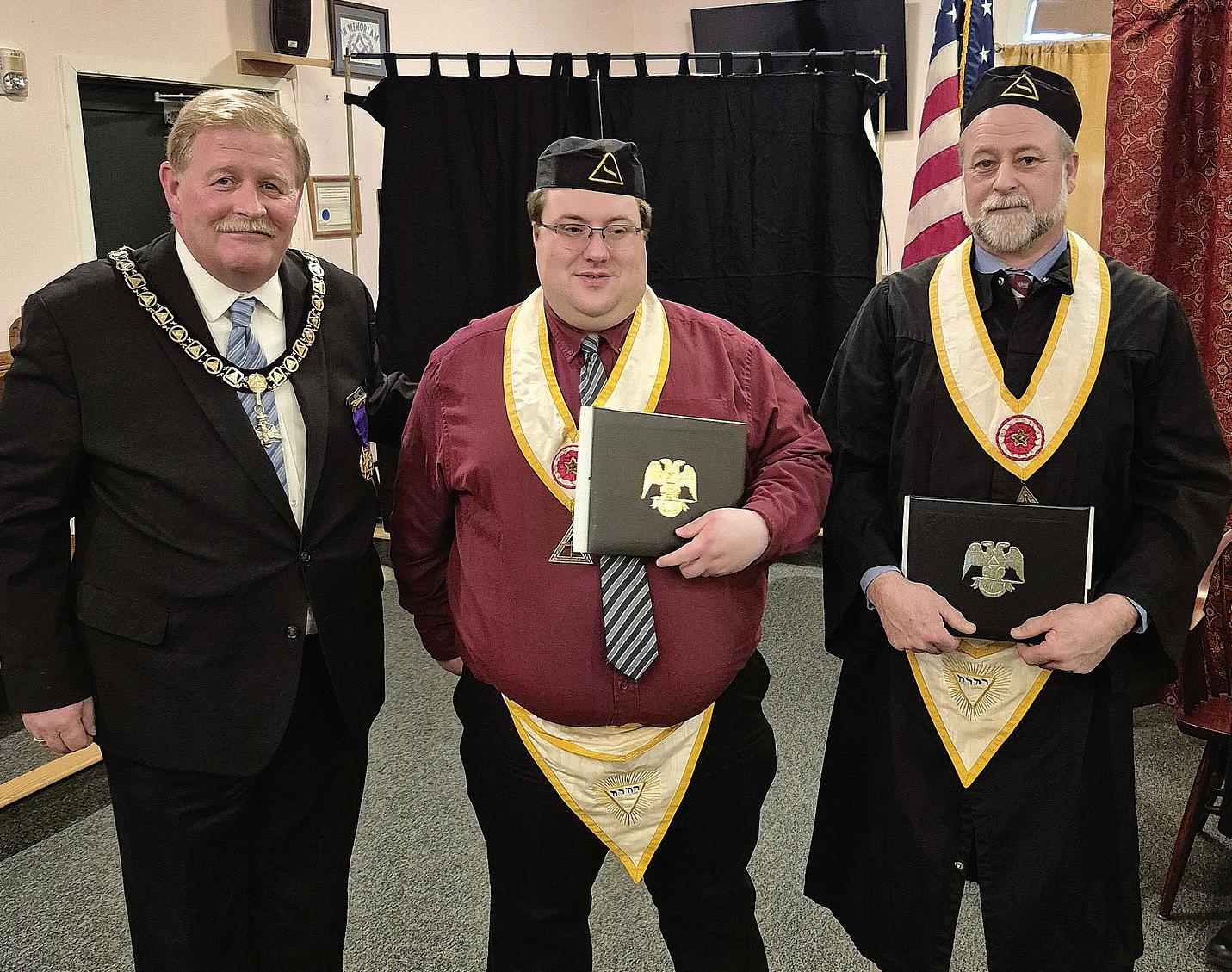
The Valley of Portsmouth-Dover welcomed a new member to Scottish Rite using a unique Rite on the Road format. The 4th degree was exemplified using an old-school radio broadcast approach. Members met at a local Lodge, dressed in old fashioned garb, ready to man the radio microphones. Feedback was that this approach was not only unique, but highly enjoyable for both the candidate and members.
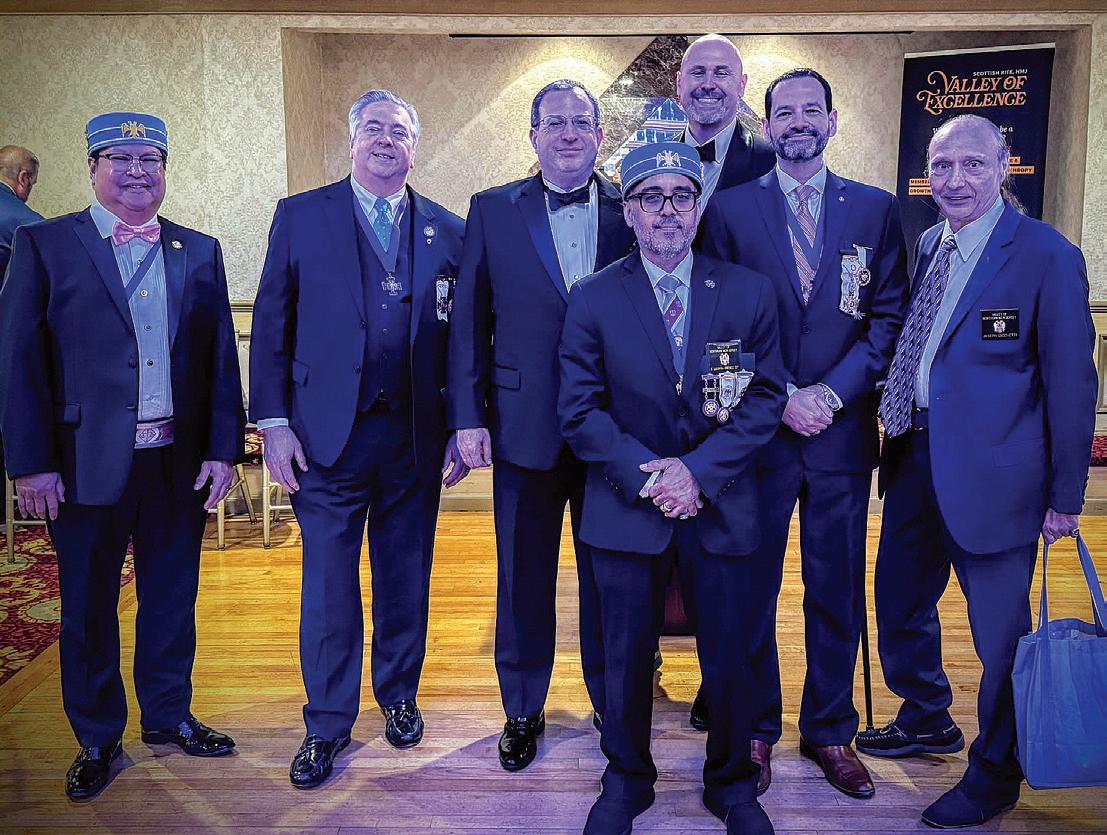
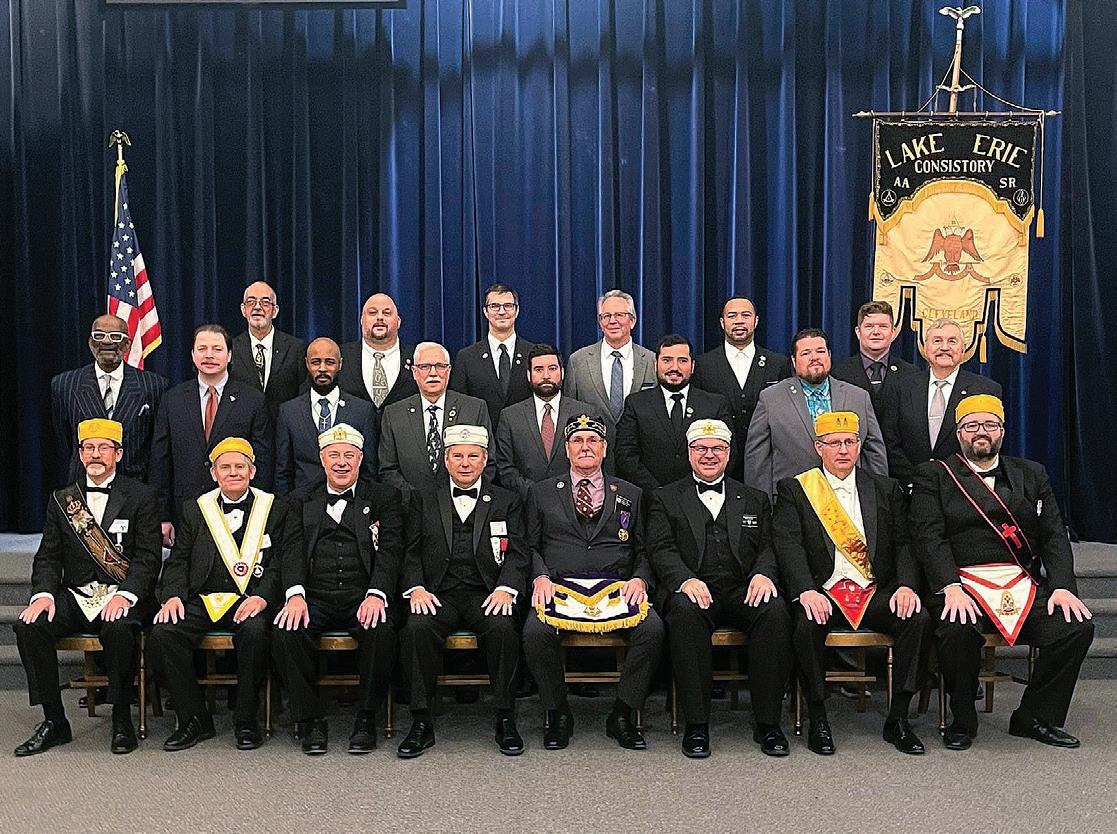
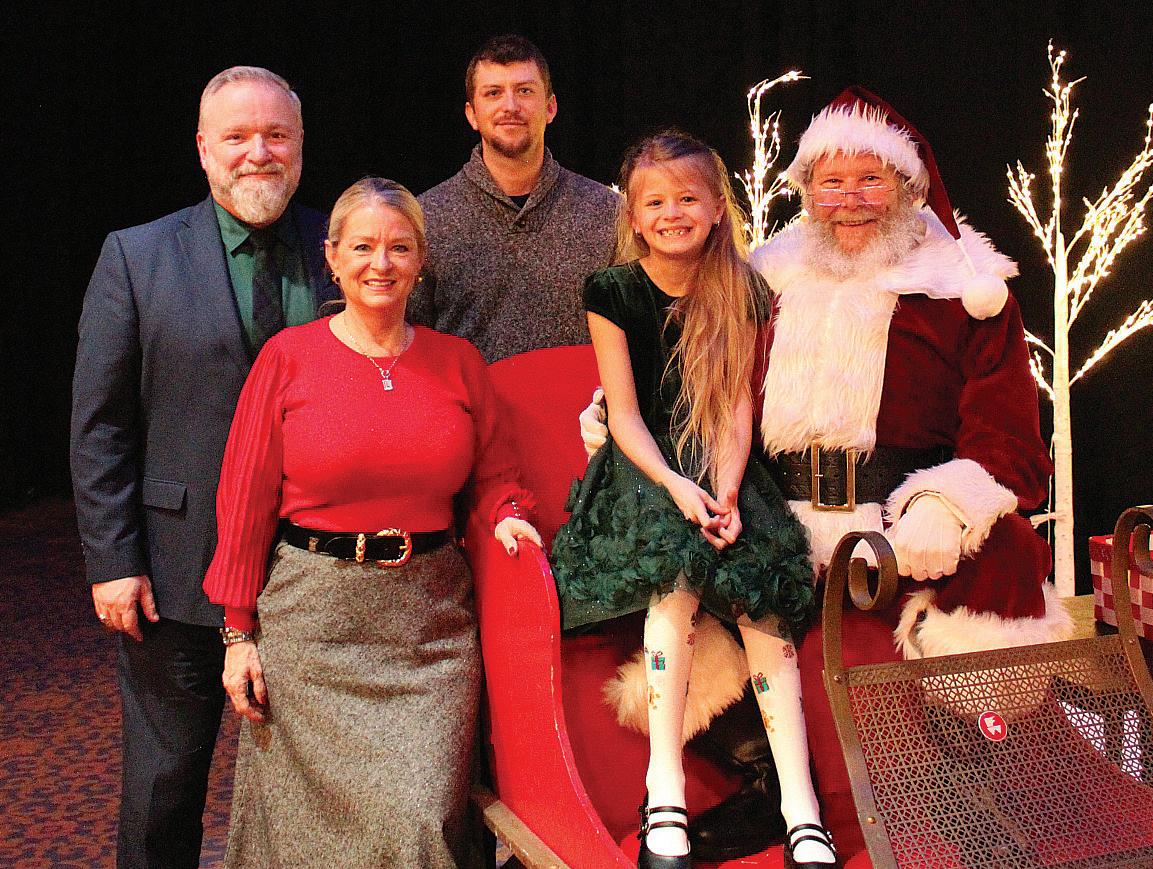
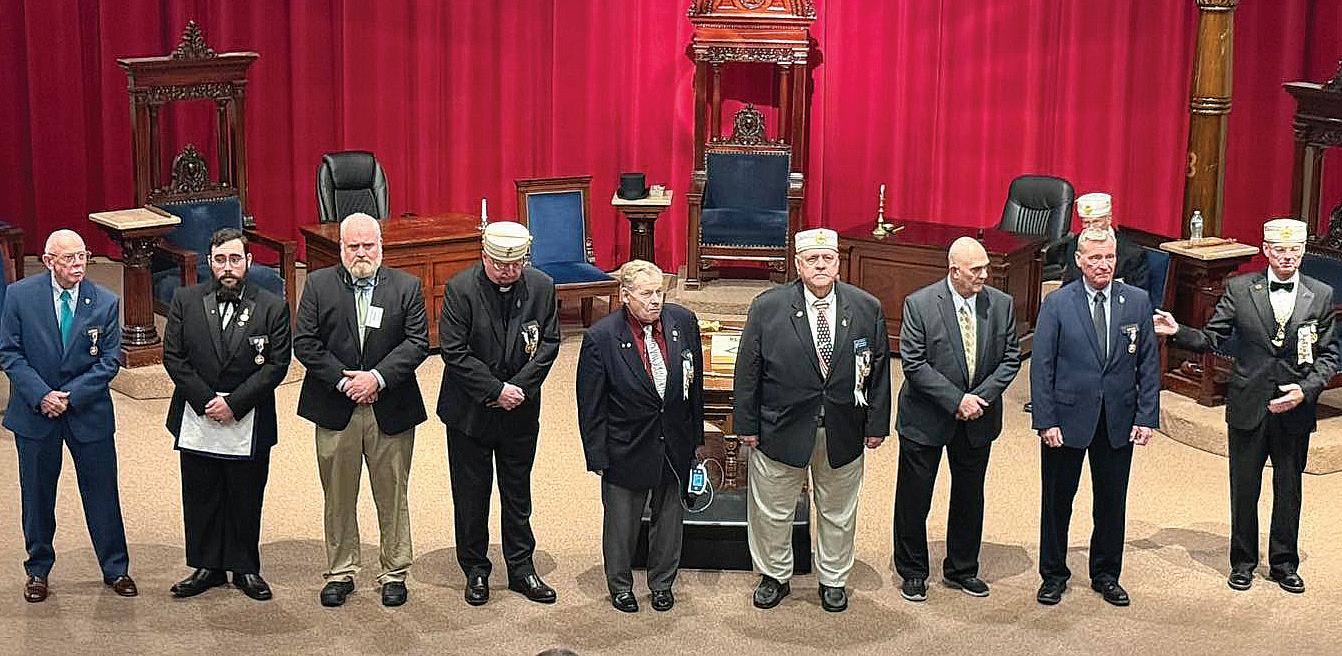
If you would like to have your Valley featured in Around the Jurisdiction, be sure to submit photographs and descriptions to Communications@SRNMJ.org
by Roger W.
The May 2021 issue of The Northern Light included an article by Ymelda Rivera Laxton titled “Masonic Presidents.” In it, she featured 14 U.S. Presidents who were Freemasons. They served under the United States Constitution.
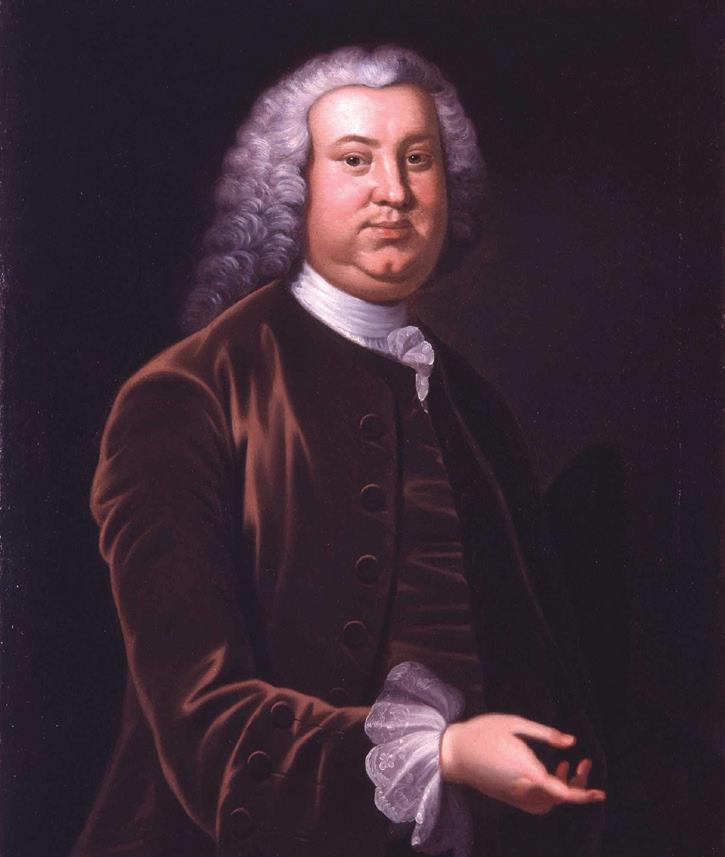
1st President - September 5 to October 22, 1774 (resigned)
3rd President - May 10 to October 22, 1775 (death)
BROTHER RANDOLPH served as Provincial Grand Master of Virginia in 1774, while also serving as President of the First Continental Congress, and died in Philadelphia on October 22, 1775. He was the last Provincial Grand Master of Virginia.
Notable accomplishments during his presidency include (1) identifying those rights that Great Britain had violated and (2) establishing the Continental Association that called for a boycott of British goods.
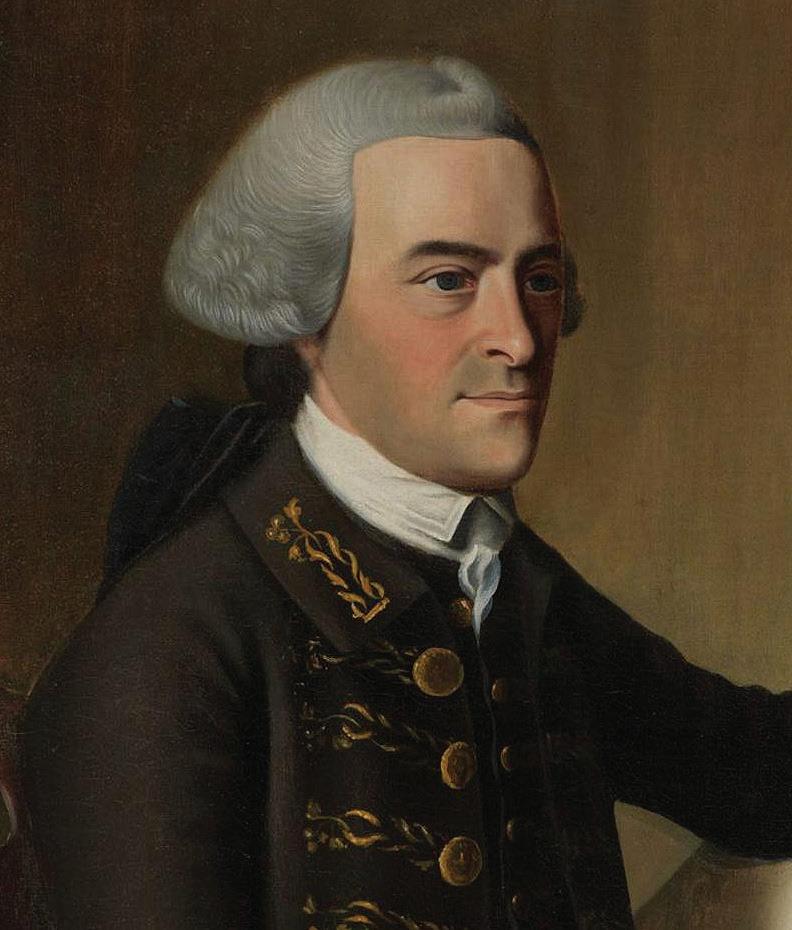
4th President - May 24, 1775 to October 1777
13th President - November 23, 1785 to May 29, 1786 (resigned due to illness)
JOHN HANCOCK was a member of Merchants Lodge No. 277 in Quebec in 1762 and affiliated with St. Andrews Lodge in Boston on October 14, 1762.
Notable accomplishments during his presidency include the Continental Congress (1) receiving word that the Americans took Fort Ticonderoga, (2) selecting George Washington to be Commander-in-Chief, (3) sending The Olive Branch Petition to Lord Dartmouth in London, and (4) approving the Declaration of Independence.
As the United States of America begins its Semiquincentennial celebration this year, let’s take a look at some of the Masonic presidents who served before the Constitution was ratified.
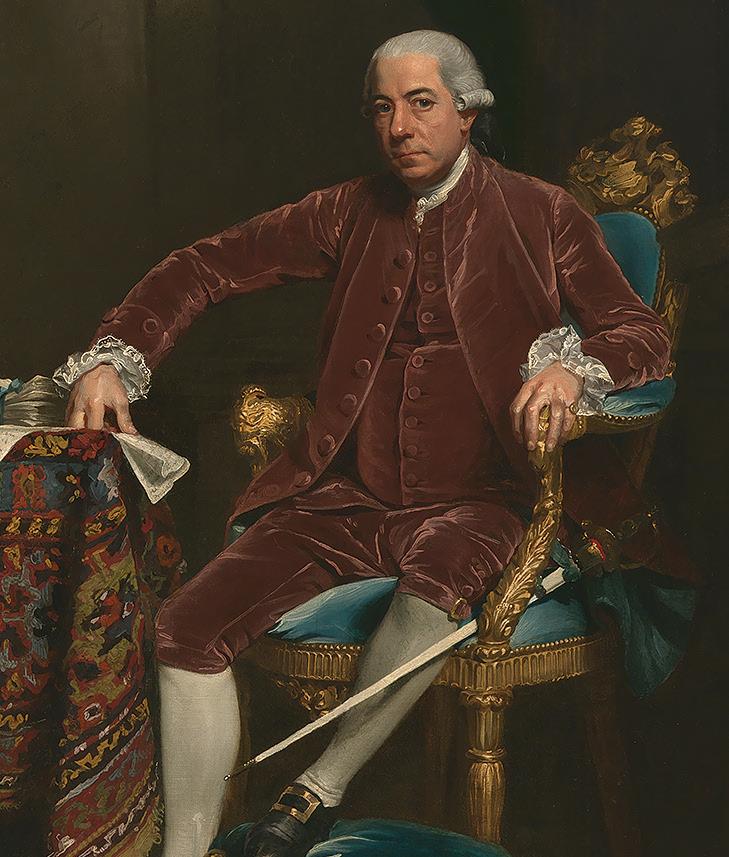
5th President - November 1777 to December 1778
HENRY LAURENS was a member of Solomon’s Lodge No. 1 in Charleston, South Carolina, and served as Treasurer in 1755.
Notable accomplishments during his presidency include (1) Congress adopting the Articles of Confederation and sending it to States for ratification, (2) United States and France signing a formal alliance, (3) President Henry Laurens leading the other delegates back to Philadelphia after British General Henry Clinton withdrew from the capital, (4) the French fleet arriving in Delaware Bay, and (5) Congress financing the War by issuing $20 million in Continental currency while diplomats sought loans from European allies.
The Continental Congress met from 1774 to 1789 and also elected Presidents. Six of the 16 Presidents (four of 14 if you exclude multiple elections) were Freemasons.
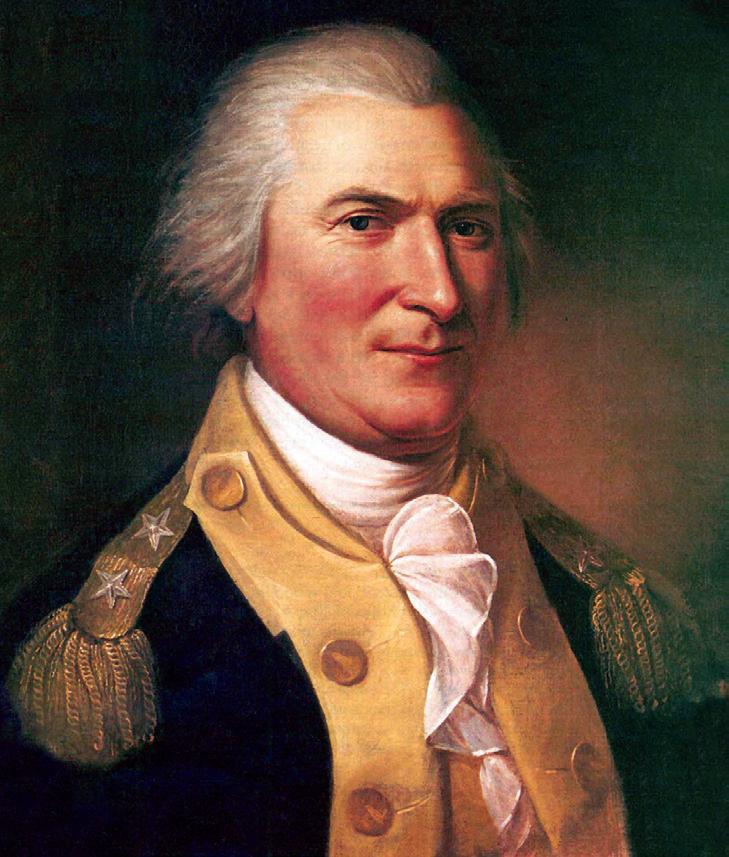
15th President - February 1787 to November 1787
ARTHUR ST. CLAIR was a charter member of Nova Caesarea Lodge No. 10 (now Nova Caesarea Harmony Lodge No. 2) at Cincinnati. This lodge was chartered by the Grand Lodge of New Jersey on September 8, 1791, and predated the admission of Ohio into the Union.
Notable accomplishments during his presidency include Congress (1) passing the Post Office ordinance, which authorized the Postmaster General to contract for mail delivery, and (2) debating the location of the nation’s permanent capital.
Primary References
Thomas Patrick Chorlton, The First American Republic 1774-1789: The First Fourteen American Presidents Before Washington, (AuthorHouse, Bloomington, Indiana, 2012)
Ronald E. Heaton, Masonic Membership of the Founding Fathers, (The Masonic Service Association, Silver Spring, Maryland, 1997)
Peter Perkins Pitchlynn and William Potter Ross were two remarkable Masons in the nineteenth century. According to historian William Denslow, “These two Freemasons did their utmost to put into practice those principles of temperance, justice, and prudence which they had received at the Masonic altar.”
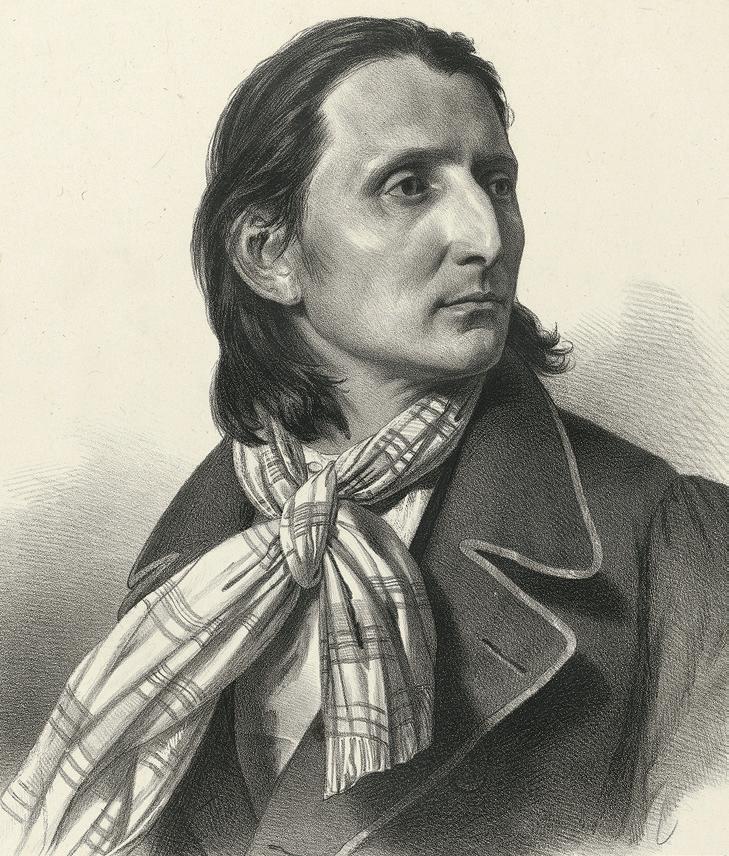
P.P. Pitchlynn, Speaker of the National Council of the Choctaw Nation and Choctaw Delegate to the Government of the United States..., 1842. Washington, D.C., Charles Fenderich (engraver), Peter Duval (printer). Library of Congress.
Peter Perkins Pitchlynn/Hatchootucknee (1806-1881)
BORN in Hushookwa, Mississippi, PETER PERKINS PITCHLYNN/HATCHOOTUCKNEE, to a Choctaw mother and a Scottish father. In 1824, he joined the “lighthorse force,” a military group that enforced the law within Choctaw lands. He served in this unit until his death in 1881, reaching the rank of Colonel. Pitchlynn attended Choctaw and American schools, graduating from the University of Nashville in 1828. In the 1830s, he joined the Choctaw people on their forced removal to Indian Territory.
Pitchlynn met Charles Dickens during Dickens’ American tour in 1842. Dickens wrote about Pitchlynn in American Notes, calling him “as stately and complete a gentleman of Nature’s making, as ever I beheld.” Three years later, Pitchlynn served as the Choctaw Delegate to Washington, D. C., when the Choctaw Nation was proposing recognition as a territory by Congress. His
blue lodge is unknown, but was probably in D.C. He was knighted in Washington Commandery No. 1 in 1854. Pitchlynn was a Scottish Rite Mason, receiving his 32nd degree from Albert Pike in 1860.
During the Civil War, Pitchlynn personally held Union sympathies, but the Choctaw Nation allied with the Confederates. As Principal Chief of the Choctaw Nation from 1864 to 1866, he surrendered to the Union on the Nation’s behalf. After the war, Pitchlynn returned to D.C. to try to regain Choctaw lands sold to the United States under pressure in the 1830s, with variable success.
Peter Perkins Pitchlynn died in Washington, D.C., on January 17, 1881. Pike presided over his Masonic burial in the Congressional Cemetery. The Choctaw Nation erected a monument over his grave in recognition of his service to his people.
by Stacey Fraser, Assistant Curator Scottish Rite Masonic Museum & Library
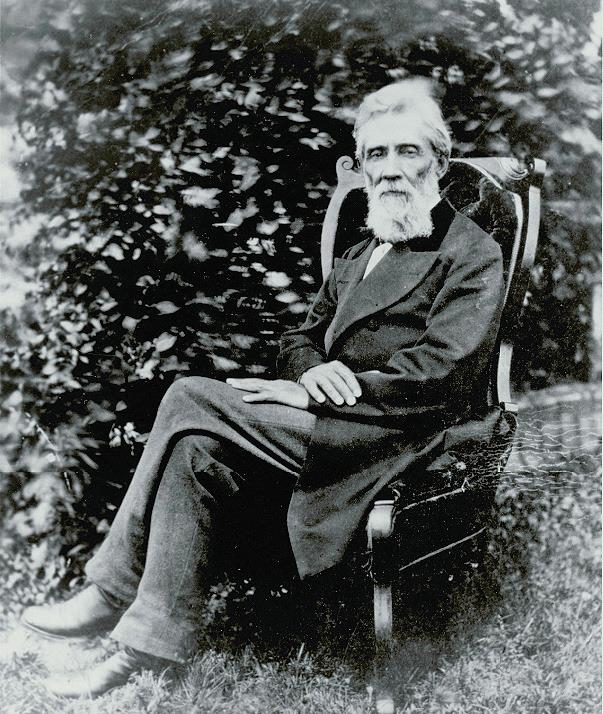
William Potter Ross (1820-1891)
BORN at Lookout Mountain, Tennessee, WILLIAM POTTER ROSS had a mother with Cherokee ancestry and a father with Scottish ancestry. In 1843, while attending Princeton University, Ross became clerk of the Cherokee Senate. He graduated first in his class from Princeton the following year.
In 1844, Ross founded and edited the Cherokee Advocate, published weekly in Cherokee and English. He was raised in Federal Lodge No. 1, Washington, D. C., in 1848, and was briefly a member of Columbia Chapter No. 15, also in D. C. In 1851, Ross served as Master of Cherokee Lodge No. 21 at Tahlequah. It was the first Masonic lodge in Indian Territory. He also held the role of Treasurer of the Cherokee Nation beginning in 1860.
Like Pitchylynn, Ross supported the Union in the Civil War. The Cherokee Nation entered the war on
the Confederate side. He joined the 1st Cherokee Mounted Rifles. Appointed a lieutenant colonel, he did not see combat. He was Principal Chief of the Cherokee Nation from 1866 to 1867 and 1872 to 1875, helping rebuild the Nation after the Civil War.
After 1875, Ross retired to Fort Gibson in what was then Indian Territory – now Oklahoma – where he edited three local Cherokee newspapers. An attorney, he practiced law and was a judge of a court on citizenship claims. William Potter Ross died at Fort Gibson on July 20, 1891. According to an 1898 biography of indigenous leaders, he was laid to rest in the Cherokee National Cemetery by “the hands of his kin, his neighbors, his Presbyterian friends and his Masonic brothers from Tahlequah, Fort Gibson and Muskogee.”
Ill. Walter F. Wheeler, 33°, Sovereign Grand Commander, along with mem bers of the Supreme Council staff, will take to the skies for our annual Commander’s Tour, bringing updates, fellowship, and a vision for the future of the Scottish Rite.

03 / 24 / 2026 | THE VILLAGES
8:30 AM BREAKFAST • THE WATERFRONT INN 1105 Lake Shore Drive, The Villages, FL
03 / 27 / 2026 - SARASOTA
11:30 AM LUNCHEON • PALM AIRE COUNTRY CLUB 5601 Country Club Way, Sarasota, FL
03 / 28 / 2026 - BONITA SPRINGS
11:30 AM LUNCHEON • SPANISH WELLS COUNTRY CLUB 9801 Treasure Cay Lane, Bonita Springs, FL
REGISTER TO ATTEND
Ready to reconnect? Visit ScottishRiteNMJ.org/ Florida for full details and to reserve your spot. We can’t wait to see you!
SPACE IS LIMITED, SO REGISTER TODAY TO SAVE YOUR SEAT AT THE 2026 COMMANDER'S TOUR

03 / 30 / 2026 - TAMPA
11:30 AM LUNCHEON • THE RUSTY PELICAN 2425 N Rocky Point Drive, Tampa, FL
04 / 01 / 2026 | NORTH PALM BEACH
11:30 AM LUNCHEON • NORTH PALM BEACH COUNTRY CLUB 951 U.S. Route 1, North Palm Beach

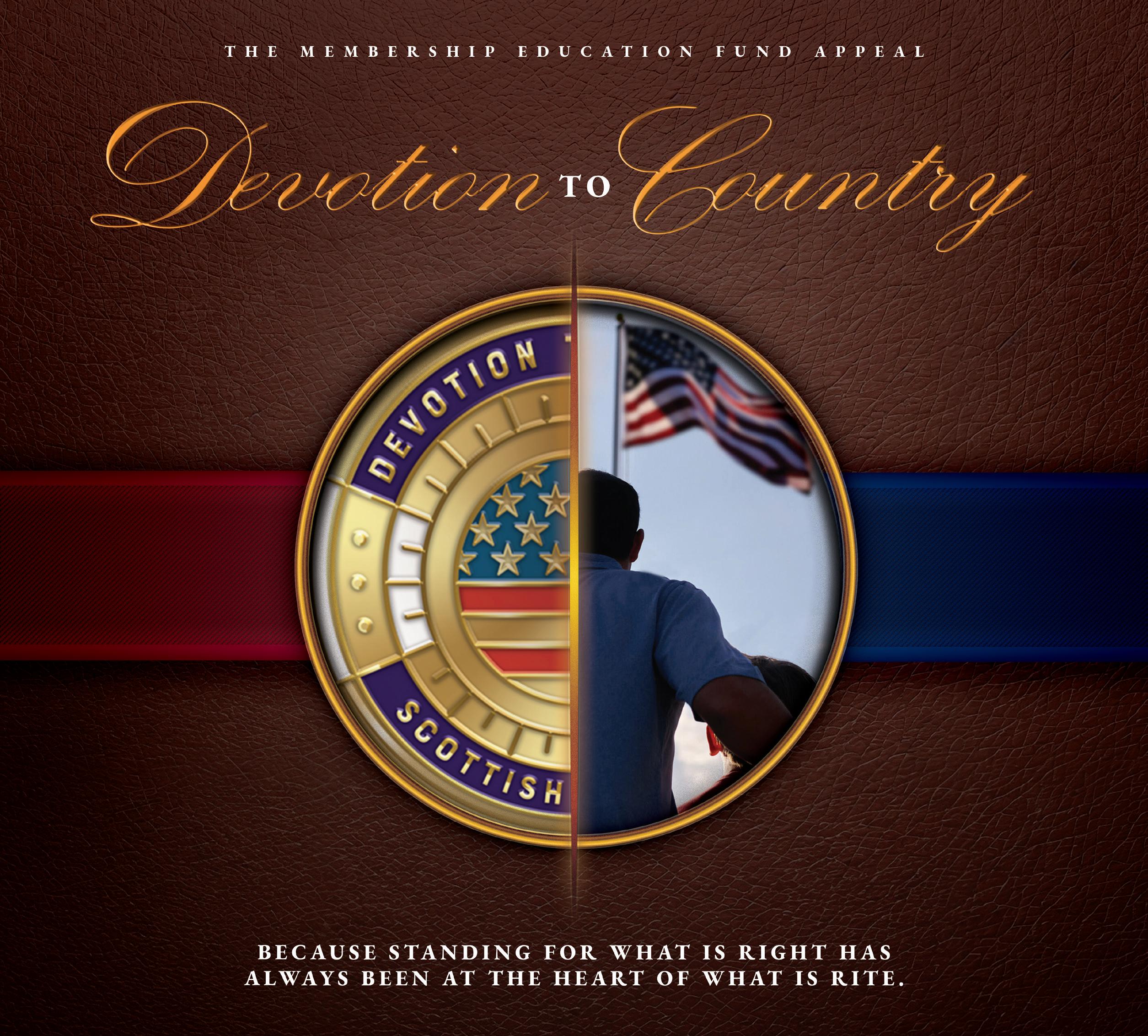
DON'T MISS YOUR OPPORTUNITY TO BUILD YOUR COLLECTION OF THIS LIMITED-EDITION SET OF COINS!
For a gift of $50 or more to the Scottish Rite Membership Education Fund, you will receive the sixth and final in our series of collectible coins based on our Core Values. This year's coin features the Scottish Rite Core Value of Devotion to Country, a reminder of our commitment to understanding and unity.
Look for an appeal in your mailbox or visit DonateRite.org to give a gift today!
MISSED ANY OF THE FIRST FIVE CORE VALUE COINS? Make a donation and add to your collection by visiting ScottishRiteNMJ.org/MEF-Coins
Programs made possible by your support:
THURSDAY NIGHT AT THE RITE
A VIRTUAL DEGREE PROGRAM THAT CONNECTS BROTHERS. MASTERS OF THE RITE A DEEPER LOOK INTO OUR DEGREES.
PATHFINDER
A STRUCTURED JOURNEY OF PERSONAL DEVELOPMENT IN THE SCOTTISH RITE. HAUTS GRADES ACADEMY AN ACADEMIC STUDY OF OUR DEGREES & VALUES.