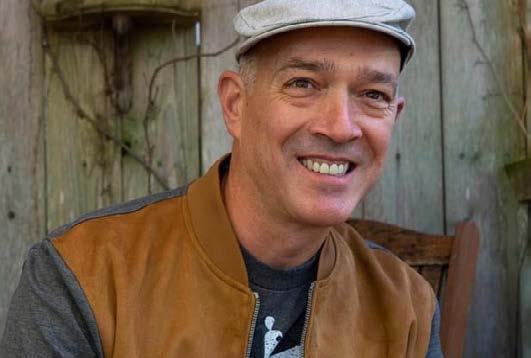
Munazzeel Riasat FINANCE DIRECTOR 437.371.5342 finance@tma149.ca
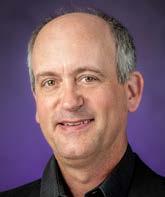
Jay Boehmer
MUSIC PERFORMANCE TRUST FUND (MPTF) ADMINISTRATOR 437.371.2282 trustfund@tma149.ca
Here at TMA149 we acknowledge the land we are meeting on is the traditional territory of many nations including the Mississaugas of the Credit, the Anishnabeg, the Chippewa, the Haudenosaunee and the Wendat peoples and is now home to many diverse First Nations, Inuit and Métis peoples. We also acknowledge that Toronto is covered by Treaty 13 with the Mississaugas of the Credit.
President’s Message
President’s Message
This issue is dear to my heart: I’ve spent the majority of my career in the pits, having had the good fortune to play in theatres across the city, the continent and beyond. Even as a child, I spent many summer evenings in the pit of the Charlottetown Festival, sitting on a high stool on the podium next to Music Director Fen Watkin (my father was the concertmaster). I guess I’d found my place, although I didn’t realize it until looking back decades later.
Theatre brings this city to life and expresses its creativity and diversity. As one of North America’s major theatre hubs, Toronto offers everything from large-scale commercial productions to experimental fringe performances. I was interested to learn that our first dedicated theatre, established in 1840, was built not far from today’s entertainment district, at King and York Streets. From that time up to the present, Toronto’s musicians have been bringing productions to life; and for the last 125 of those years, Local 149 has been there to support them. Beyond the larger companies like Mirvish Productions and Stratford Festival, the TMA has been broadening its reach into the smaller scene, negotiating agreements with Canadian Stage, Soulpepper, and more. We are striving to make work in theatre a better prospect for our members.
Toronto’s theatre scene is dynamic, inclusive and always evolving, just like the musicians who work there. It balances commercial success with artistic risk, tradition with innovation, and local storytelling with global influence. That’s why Toronto is not just a place to enjoy theatre, but a city where theatre truly lives.
There are hundreds of musicians employed in our theatres - we counted! In this issue, we feature just a few of their many stories. I hope you enjoy them.
In solidarity, Les Allt
Les Allt President, TMA
Dusty Kelly Executive Director, TMA
Dear Members,
Director’s Report
2026 will be a significant year for our theatre sector with four of our collective agreements up for renegotiation – Mirvish, Soulpepper, Stratford Festival, and The Second City. We are in early stages of consultation with the musicians who work under these agreements. We will be looking to commence Mirvish and Soulpepper negotiations late Spring, followed by Stratford and The Second City in Autumn.
I am pleased to report that we are seeing a sustained increase in theatre production levels. Except for Stratford and Musical Stage Company (which were down) - 2025 production levels were up across the board over 2024. Audience’s appetite for live theatre is not showing signs of waning.
We continue to monitor the use of musician replacement technologies. Presently all shows travelling outside of Broadway to Toronto are not using Keycomp. Its use is still limited to specific Disney productions, and none of those are on deck.
However, one area that has begun to create an ongoing concern, not just here but in other cities is the increasing use of so-called “Actor/Musicians.” Musicians in Toronto have been hired as actors under a Canadian Actors Equity Association (CAEA) agreement when they are primarily performing as musicians and should be under one of our agreements.
The Canadian Artist & Producers Professional Relations Tribunal May 7, 1996, letter outlines the jurisdiction for performance work as follows:
(b) an actor and/or provides relating acting service (s) CAEA jurisdiction
Specific Terms
1. Actors who are also required to play musical instruments as a secondary part of the roles they are playing – CAEA jurisdiction;
2. Pit and/or on-stage musicians who are required to do choreography and/ or deliver lines as a secondary party of their duties as musicians – AFM jurisdiction;
3. Featured singers without instrumental responsibilities – CAEA jurisdiction;
4. Singers who are part of an established, self-contained musical group – AFM jurisdiction;
6. Members of choirs, on-stage, off-stage or in the pit with no instrumental responsibilities – CAEA jurisdiction. Musicians accompanying such choirs –AFM jurisdiction;
7. In circumstances where an artist is required to perform more or less equally and simultaneously as both an actor and instrumental musician, jurisdiction will be determined and agreed to on a case-by-case basis with consideration given to what would be of most benefit to the artist. This could include the possibility of being represented by and /or simultaneously under the jurisdiction of both AFM and CAEA.
It ultimately comes down to money; producers want to pay less for double or even triple work. TMA has served notice that we will not permit the replacement of musicians by actor/musicians.
In the spirit of cooperation, we met recently at Equity’s offices to share our concerns. To be fair, neither TMA nor Equity are provided with any advanced information from producers as to the makeup of cast and nature of those performances. We both receive production notices when rehearsals are well underway and agree that at the end of the day performers need to be compensated fully for their work. We have opened the lines of communications to ensure that the right contract is applied to theatrical musical performances in TMA jurisdiction.
And here is my request to you – we need your help protecting our jurisdiction and to ensure that when playing musicians have spoken lines and/or onstage movements they are compensated correctly and fairly for their work. It is not the producer’s decision to decide which contract musicians should be working under– those terms have been outlined by the Canadian Artist & Producers Professional Relations Tribunal. You can reach out to Business Rep Dennis Passley @ dpassley@tma149.ca for more information or to report a concern.
In solidarity, Dusty Kelly
Reflecting on Our Past, Building Our Future Together
By Olivia Esther, Vice President, Theatre Musicians Toronto Chapter
Sir Francis Bacon once said, “Knowledge may be power”, however understanding is the key to informing our next steps. This became so apparent upon attending the Theatre Association Players Conference as a delegate in Cleveland this past August.
Many of our members may not be aware that there is a players’ conference in the AFM dedicated to Theatre Musicians. It is affectionately known as the “other TMA,” the Theatre Association.
When I was preparing my report to give at the conference - the first in a long, long while, I did a bit of digging into Toronto’s past involvement with the Theatre Association. I soon discovered that there had been a void in the landscape for many years. It is well known and respected amongst our Theatrical peers that Toronto is the largest producer of Theatre outside of Broadway-New York in North America and we had been absent from the Conversation for 26 years.
Understanding the historical place Toronto once held in the TMA (Theatre) helped me understand the significance, and the gravitas of reinstating the Toronto Chapter.
History and the Re-statement of the Toronto Chapter
The TMA (Theatre) began organizing around the dissatisfaction of the AFM’s Pamphlet B negotiations of 1991 and its impact on the Rule 61 Locals with theatre agreements aka “Rule 61 cities” of which Toronto was included.
In those negotiations, the AFM agreed to changes in the Rule 61 Local minimums.
The following is an excerpt from the History of TMA from 1991-1997 compiled by Gordan Messick, History of TMA Committee.
On April 1, 1991, Rule 61 of the AFM’s Pamphlet B Touring Theatrical Musicals Agreement was changed by The Federation as follows:
Rule 61 prior to April 1, 1991
“The Employer agrees to adhere to the minimum number of musician requirements in those theatres where there is an existing contract between a Local Union and the theatre where the performances are to take place. The Employer also agrees, prior to any tour, to notify the President’s Office of the Federation of the minimum number of Local musicians that will be employed throughout the tour in those theatres where there is no contract between the Local Union and the theatre, providing for a minimum number of musicians.”
After April 1, 1991
“On expiration of those local agreements in effect on January 19, 1991, where there are existing minimum number of musicians contained therein, the local union may continue to set minimums in collective bargaining, which shall not exceed sixteen (16) local union musicians for Pamphlet B Touring Theatrical Musicals. Up to four (4) musicians traveling under this agreement may be counted against the local minimum on engagements which do not exceed four (4) weeks. On those engagements which shall exceed four (4) weeks, the full complement of collectively
Olivia Esther, VP Toronto Chapter
Reflecting on Our Past, Building Our Future Together
bargaining local minimum musicians shall continue to apply (from the first performance of the engagements). Continue Reading
The first cities to be involved in the organization of the TMA were those who had joined the TMA conference steering committee which included Toronto. Toronto was, and continues to be, the highest producer of theatre outside of New York in North America. When reading about the founding years of the TMA, what should be noted is that Toronto had been a leader from the beginning.
Although the TMA was recognized officially in 1992 as a Player Conference, the first International TMA conference did not take place until 1996 when Local 6, San Francisco hosted.
The first three Chapters were officially recognized by the TMA Board: Chicago Area (July 23), Toronto (November 22), and Northern California (November 22). Toronto’s involvement in the TMA, with Stephen Green at the helm, lasted until 1999. The next two years Toronto’s seat was marked vacant and was ultimately dissolved March 22, 2002.
So why did Toronto leave the Theatre Association?
There is no explanation offered by the Theatre Association as to why the Toronto Chapter dissolved. The Toronto theatre scene was vibrant and busy. TMA Local 149 has historically led negotiations and the Toronto Chapter members felt confident in the Local’s ability to represent them accordingly. The Toronto Chapter lost steam when Stephen Green stepped away from leadership and there was no one to take up the mantle.
Where do we go from here, and what’s in it for us?
Although the Toronto Musicians Association continues to represent theatre musicians with conviction and passion, it is the Musicians, the Members in the pit bands and orchestras that are on the ground, that live the reality of performing 8 shows a week.
Since reinstatement, the Toronto Chapter has established a Board of Directors and attends monthly meetings with the Theatre Executive Board. This is only the beginning we have a lot more work to do - especially with major theatre negotiations upcoming.
Local 149, once again is seated at the table elevating the Theatre Association as an international body of united members. Toronto is a contributing partner that recognizes we are not siloed “up here” in Canada but are connected to a vibrant, passionate network of musicians who are working together for the same thingsfair pay, real musicians in pits, and safe, respectful workplaces.
Meet the Board of L149 Theatre
Musicians Association Chapter
Adam Sakiyama is a Dora award-winning music director & composer with a particular passion for new work development. Selected theatre credits include Alice in Wonderland (Bad Hats), The Last Timbit (Tim Hortons), Dixon Road (Musical Stage Co.), Divorce Lunch (Musical Stage Co.), Sunday in the Park with George (Eclipse Theatre), Mr. Burns: A PostElectric Play (Theatre Sheridan), UnCovered: Dolly Parton (Musical Stage Co.), Stupidhead! (Outside the March), Next to Normal (Musical Stage Co. / Mirvish), Billy Elliot (Stratford). Composing credits include Macbeth (Ballet Kelowna), Make Me A Song (Musical Stage Co.), Quench (Axon Interactive) and in between (National Ballet of Canada). Songwriter & Arranger for Super Simple Songs, one of the most watched educational channels on YouTube. Adam is a proud alumnus of the BMI Lehman Engel Musical Theatre Workshop.
Olivia Esther, is a sought after performer, recording artist, producer, and educator having worked with many of Canada’s finest arts organizations, theatres, including Mirvish, Theatre Aquarius, and Drayton. Olivia’s latest projects include the artistic collaboration and debut solo album with CBC producer emeritus and composer, David Jaeger, and leading the Canadian-Brazilian chamber jazz ensemble, Oná which has toured Brazil, Central Canada and released two albums. Olivia is a member of the brass faculty at The Royal Conservatory of Music in Toronto, Canada.
Dennis Kwok is a Toronto-based multi-instrumentalist, composer, and arranger. As a versatile woodwind doubler, Dennis has performed as a musician-in-residence at the Banff Centre for Arts and Creativity, an oboe soloist with the Oakville Chamber Orchestra, and a theatre musician on productions of Follies (Royal Conservatory of Music); Escape to Margaritaville (Theatre Calgary); Dirty Rotten Scoundrels, La Cage Aux Folles (Stratford Festival); and Mean Girls (Mirvish).
Dennis Passley is a Toronto-based saxophonist, bandleader, and arts advocate whose work bridges creative practice and cultural labour. As a performing musician, Passley is best known for leading Northern Soul Horns, a powerhouse horn ensemble that has collaborated with artists across soul, funk, reggae, jazz, and indie music, earning a reputation for bold arrangements and a cinematic approach to sound. In his role as Business Rep, he represents professional musicians working across theatre, live performance, and commercial engagements. His work includes negotiating contracts, resolving workplace grievances, advising on budgets and scale rates, and advocating for fair pay and working conditions in a rapidly changing music economy.
President, Adam Sakiyama
Vice President, Olivia Esther
Member-at-Large, Dennis Kwok
Member-at-Large, Dennis Passley Treasurer: Vacant & Secretary: Vacant
Director Spotlight: Dennis Kwok
TMA: What do you see as the biggest challenges facing theatre musicians over the next few bargaining cycles?
DK: As we approach several major negotiations in the coming year, I think that many of the ongoing challenges in maintaining minimum musician numbers, protection of local musicians, and use of technology to reduce operating costs will be a major part of these talks. One of the recurring themes is longevity and fairness especially as the collective of theatre musicians observes a slow changing of the guard since the COVID-19 lockdowns.
TMA: How does the association ensure that short-term concessions don’t undermine the long-term viability of the profession?
DK: One of the things that come to mind is how does the association and our bargaining terms continue to stay modern and relevant? As the music industry changes, some of the language of past agreements is going to be more or less relevant over the years. However, it is important that we maintain fairness of pay, good work conditions, and unity with other associations across North America. These are the sorts of important topics that I think will help maintain a high level of professionalism in theatre work and attract musicians to this line of work. As success rides on the responsibility of both the musicians and producing organizations, conversations about concessions are held in good faith that parties are not looking to take advantage of each other, and also held to non-precedent setting agreements.
TMA: Do you feel existing language adequately reflects the creative and economic challenges of Key Comp?
DK: As stated in a document by AFM Local 77, “Utilizing KeyComp allows musicians to perform large orchestrations using fewer players. For example, a 19-pc orchestration can be played as originally intended without reorchestrating the score and employing as few as 8 live musicians.” The instances that I have heard of KeyComp being used include productions of, The Lion King, Aladdin, Back To The Future, and Frozen. These cases involve a drastic reduction of the planned number of musicians compared to what appeared on the production or tour. My personal opinion is that, although KeyComp is a very impressive development in music technology, it is currently being used in a way that is taking away work from multiple musicians in high profile productions that can afford the cost of hiring more people. Therefore, in its current usage, I believe that the economic value of KeyComp does not benefit musicians.
TMA: How is the association addressing the growing use of digital keyboards, software instruments, and playback systems in theatre pits?
DK: This is going to be one of the topics of upcoming negotiations in creating clear language that both helps protect musicians from being replaced by
TMA sat down with Dennis Kwok to chat about the theatre sector in Toronto.
Director Spotlight: Dennis Kwok
technology and also maintaining unity with associations across North America to discourage some of these technologies as the new industry standard.
TMA: How do we ensure younger musicians see theatre work as a viable and respected career path?
DK: There’s no doubt that today, there are less working opportunities in the musical theatre industry for musicians than there were in generations past. What I believe we can do to ensure the longevity and viability of this line of work includes: continuing to fight for larger minimum orchestra sizes, continuing to maintain the minimum amount of local musicians for touring productions, bringing more public awareness to the work of theatre musicians, maintaining a high standard of music excellence within the pit, and also creating opportunities for younger musicians or students to observe that there are these sorts of career paths available. We need to protect what we currently have, while also bringing in more new faces to this industry.
How to join the Toronto Chapter
Are you a theatre pit musician interested in joining the TMA - Toronto Chapter?
Membership is from January 1 – December 31.
Your membership dues help provide necessary funds to keep our international organization running and working for you! Membership supports a musician-led effort to protect, inform, and connect our now international community in the rapidly changing landscape of Musical Theatre.
Annual Dues are $60 CDN ($30 for 6 months)
Membership subscribes you to The Pit Bulletin, the official newsletter of the Theatre Musicians’ Association (three Issues annually), and receive monthly updates from the Toronto Chapter.
For more information on becoming a member of the Toronto Chapter, email Dennis Passley, dpassley@tma149.ca
Member Spotlight: Franklin Brasz
“...art works best with hearts beating in sync through every musical phrase, of every performance, of every production.”
Engaging in a conversation with Franklin Brasz, one of Canada’s most esteemed Music Directors, it becomes clear why he holds such deep respect from his peers and colleagues nationwide. His compassionate leadership, unwavering artistic integrity, and a genuine curiosity for crafting meaningful work within his community are truly inspiring. Entering his 17th season at the Stratford Festival, Franklin embodies what it means to make a positive impact through music and collaboration.
TMA: Many of your peers and colleagues know you as a music director, particularly in Theatre; however, your accomplishments are deep, particularly as a pianist. What sparked your journey into music and how did it unfold?
FB: My start in music began with piano lessons at the age of seven in my hometown of St. Catharines, Ontario.
I added clarinet, bassoon, cello and pipe organ studies over the years and played in my high school’s concert band, jazz band, orchestra, and woodwind quintet. I accompanied all the school choirs, church choirs and several school musicals and I was a member of the Niagara Youth Orchestra for five years. But my primary joy was classical piano. I received a BA in piano performance from Calvin University.
TMA: When did you first step into a leadership role, and
how did those experiences influence your journey into theatre?
FB: I discovered that I had a passion for vocal accompaniment and collaborative piano which led me to the wonderful John Wustman at the University of Illinois for graduate studies.
TMA: What sparked the connection between conducting and your love for the stage?
FB: After graduate school, I returned home to Canada to begin my career. I quickly connected with the Toronto music theatre scene and was hired on for Hal Prince’s landmark production of Show Boat; first as a keyboardist, then as music director. The original company of Ragtime was my second gig, then The Lion King, Mamma Mia!, Hairspray and many others. The theatre community felt like my creative home. I loved the explosion of ideas that talented writers, composers, actors, designers, and musicians could synthesise into a cohesive piece of theatre.
TMA: When we consider a musician’s career, especially one like yourself, joining the Musicians’ Union stands out as a pivotal part of the journey. How has the Union influenced and impacted your career and growth as an artist?
FB: Right out of school, I was fortunate to land a great theatre gig and subsequently joined the TMA (Toronto Musicians’ Association). As a young musician, I worked diligently to develop my artistry and hone my craft. I represented the union well and equally, I felt supported by them. The union membership affords appropriate pay, stability within an uncertain industry and pension benefits.
TMA: That support is invaluable, especially for those who are young and developing their craft. The Union is not merely a transactional organization; it is a community built on mutual respect and shared purpose, providing access to fair pay, safe and healthy working conditions, and the stability we all need during uncertain times. Diversity, equity, and inclusion have prompted passionate discussions in the Arts.
While people may hold differing perspectives, it is important to approach the topic of fair and equal representation—both on stage and behind the scenes— with respect and understanding, recognizing that these conversations stem from a desire for a more inclusive and
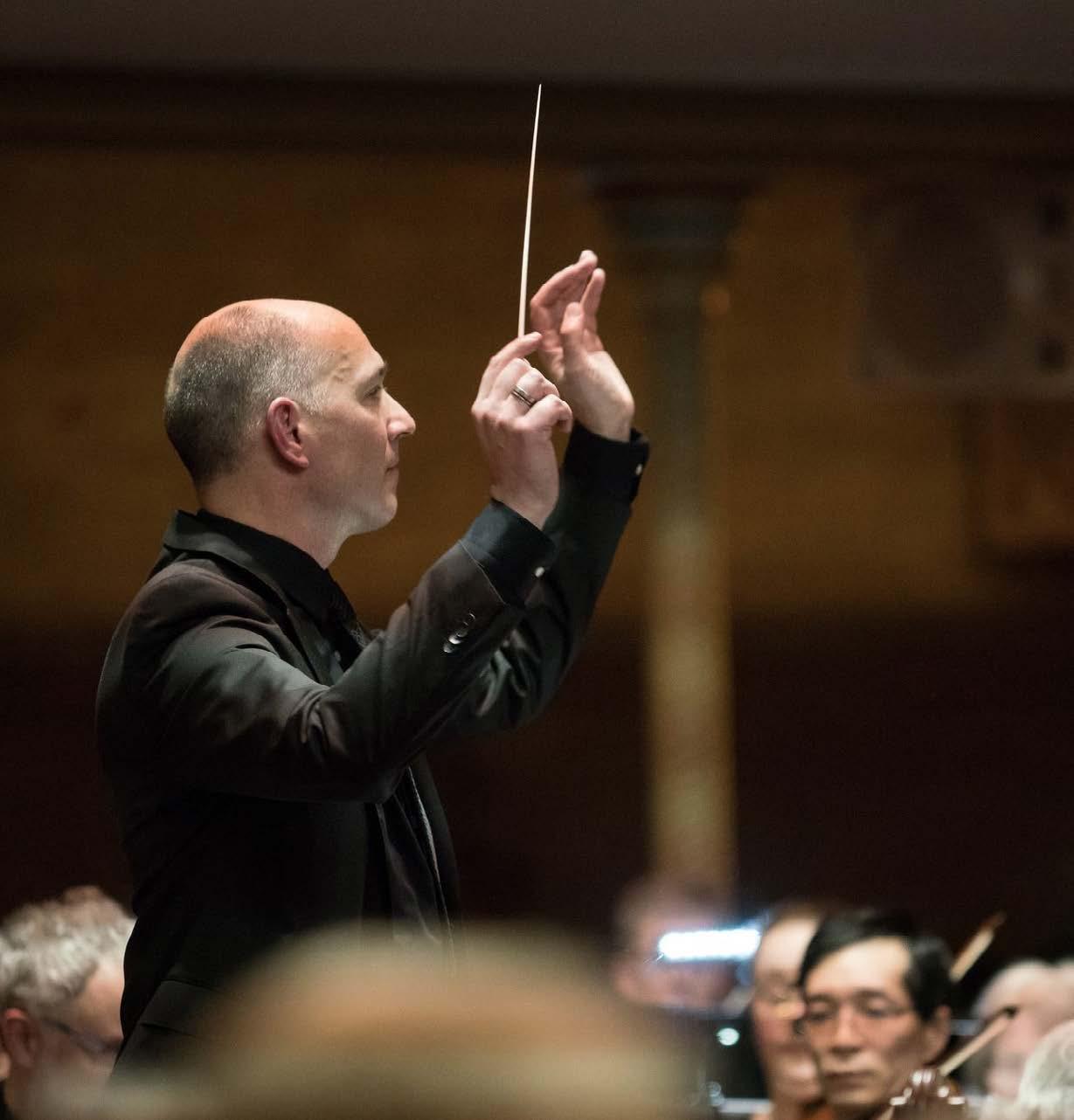
Franklin Brasz, Music Director
Member Spotlight: Franklin Brasz
vibrant community.
FB: Each season, I make every effort to assemble the best musicians that meet the needs of the score as well as the festival’s values around Diversity, Equity, and Inclusion. My own values - formed long before DEI initiatives became codified into our workspace - are completely aligned with the Festival’s because I personally live in a world of diversities and take note when a workspace does not include diversity of gender, age, race, and sexual orientation.
TMA: We are part of an ever-evolving industry and as such, instrument replacement technologies are a reality of modern theatre productions. How has this affected your experience and leadership as a Music Director?
FB: Art is connection. As musicians, we connect with tradition and composer intent. In performance, musicians connect with each other on the stage, in the recording studio or in the orchestra pit. In theatre, we extend our connections to our colleagues on the stage to express unified stories to our audience. Instrument replacement technologies are seductive to those responsible for managing the costs to produce theatre but art works best with hearts beating in sync through every musical phrase, of every performance, of every production.
TMA: Franklin, you have had such a diverse and rich career, which doesn’t happen without drawing from the Well of inspiration and curiosity! Who inspires you and why?
FB: I am inspired by the composers whose work I interpret. Often, as I dig into a new score, I discover things - a particularly delightful orchestration or melodic variationthat will illuminate something deeper about the character onstage. It might be subtle but it’s thoughtful and contributes to a unified theatrical story.
On any podium, I am always deeply inspired by the assembled musicians in front of me. Each is an expert of their instrument and a passionate musician. Collectively, their excellence elevates each section - strings, reeds, brass, and rhythm. I give an upbeat, they deliver brilliance!
TMA: Thank you for sharing a bit of yourself with us today, Franklin. Congratulations on seventeen (17) incredible seasons with the Stratford Festival as Musical Director. Can you give us a sneak peak at what’s next for you and
the Stratford Orchestra?
FB: I’ve just started rehearsals for this season’s production of Guys and Dolls - a classic musical with a fantastic score! We have a 19-piece orchestra so that will be thrilling. I’m also excited by a few upcoming workshops of musicals the festival has in development. Nothing would make me happier than to see new Canadian musicals added to our playbill! For contrast, I love switching from the demands of big theatrical productions to the joy of sharing a small stage with a great singer and Steinway grand.
More about Franklin Brasz
Franklin Brasz is the Director of Music for the Stratford Festival providing artistic, administrative, and strategic leadership for all music related activities. Now in his 17th season, Franklin supervises all Festival musicals and has arranged and re-orchestrated many Festival productions. As music director and conductor, his Stratford credits include Dirty Rotten Scoundrels, La Cage aux Folles, Rent, Chicago, Billy Elliot, The Music Man, HMS Pinafore, A Little Night Music, Carousel, Man of La Mancha, Pirates of Penzance, Kiss Me, Kate and A Funny Thing Happened on the Way to the Forum. In concert, Franklin served as pianist and music director on The Fantasticks, Passion, Next to Normal, Why We Tell the Story. For STRATFEST@HOME, Franklin was music director for the digital series Up Close and Musical. Toronto commercial theatre credits include Show Boat, Ragtime, The Lion King, Mamma Mia!, Hairspray, Andrew Lloyd Webber’s The Wizard of Oz, The Sound of Music, Billy Elliot, Irving Berlin’s White Christmas, The Lord of the Rings. Franklin was guest conductor for London Symphonia’s Enchanting Broadway, vocal coach for the Birmingham Conservatory and worked at the American Boychoir School for five seasons. Franklin studied Vocal Coaching and Accompanying with the renowned John Wustman at the University of Illinois at Urbana-Champaign before beginning his conducting and theatre career.
Theatre’s Hidden Talent
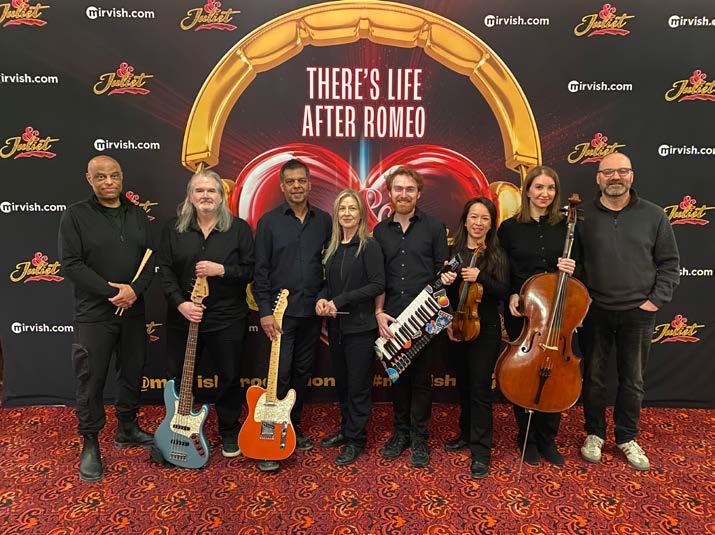
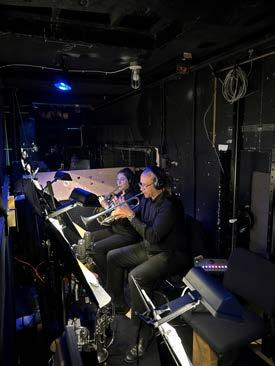
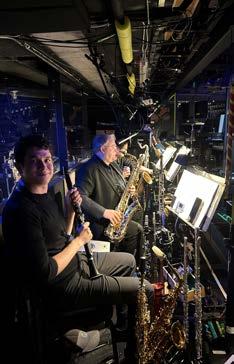
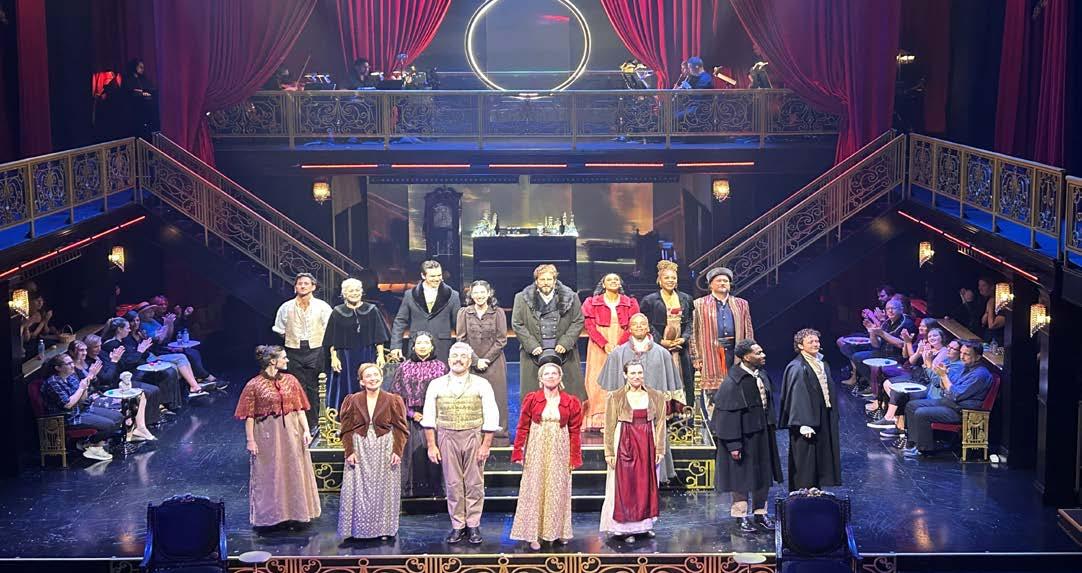
&Juliet - Mirvish
Pictured: Wilson Laurencin, Pat Kilbride, Justin Abedin, Elizabeth Baird, David Atkinson, Valerie Li, Rachel Pomedli, Jason Jestadt
&Juliet - Mirvish
Pictured: Wilson Laurencin, Pat Kilbride, Justin Abedin, Elizabeth Baird, David Atkinson, Valerie Li, Rachel Pomedli Cast of &Juliet
Theatre Pit Photo Spread
Hidden Talent
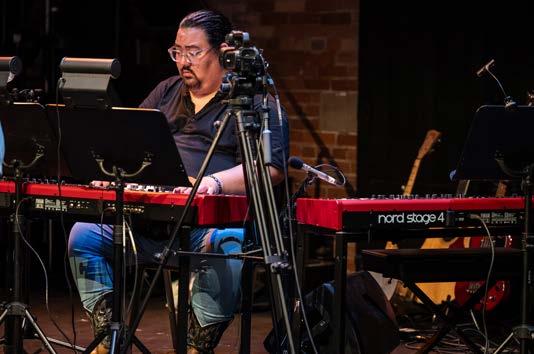
The Cowboy Tempest - Musical Stage Company
Pictured: Chris Tsujiuchi
Photo Credit: Dahlia Katz
Uncovered - Musical Stage Company
Pictured: Ross MacIntyre (with Kevin Wong and Suzy Wilde in the background)
Photo Credit: Dahlia Katz
After the Rain - Musical Stage Company
Pictured: Suzy Wilde and Ben Kunder
Photo Credit: Dahlia Katz
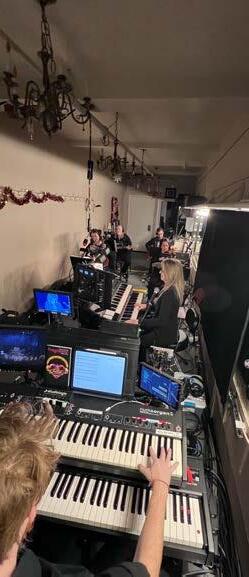
& Juliet - Mirvish
Pictured: David Atkinson, Elizabeth Baird, Valerie Li, Rachel Pomedli, Pat Kilbride, Justin Abedin
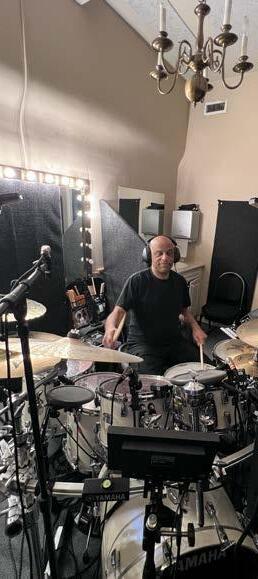
& Juliet - Mirvish
Pictured: Wilson Laurencin
Theatre’s Hidden Talent
Annie - Stratford Festival
Photo credit: Terry Manzo
Dirty Rotten Scoundrels - Stratford Festival
Photo credit: Terry Manzo
Dirty Rotten Scoundrels - Stratford Festival
Pictured: Erik Larson, Garrett Hack, Philip Seguin, Paul Otway Sitting: Marie-Sonja Cotineau , Janice Owens
Dirty Rotten Scoundrels - Stratford Festival
Pictured: Marie-Sonja Cotineau, Paul Otway
Dirty Rotten Scoundrels - Stratford Festival
Pictured: Garrett Hack, Peter Voisey
Natasha, Pierre, and the Great Comet of 1812 - Mirvish
Member Spotlight: Levon Ichkhanian
Levon’s first experience with music contracting began in kindergarten, when he organized a toy-instrument band for his graduation ceremony. Today, he is the founder and artistic director of Global Village Creative, an international multidisciplinary production company that supports theatre, recording, and touring projects across North America and abroad. Born into a musical family spanning three generations and eleven professional musicians, Levon has built a career as a professional guitarist, composer, music contractor, coordinator, and director. He is currently a PhD candidate and was recently appointed a Chevalier of the Order of St. George.
Recently Levon sat down with us to discuss working on a theatre production.
TMA: How do you typically hire musicians for a theatre production?
LI: Every production has its own musical personality, so I look for musicians whose style, technique, and instincts genuinely fit the score. It’s about orchestrating the right musical chemistry for the show.
TMA: Are hires usually made through auditions, recommendations, previous working relationships, or a mix?
LI: It’s a blend. Long-standing professional relationships matter, as do trusted recommendations, and auditions play an important role, especially when a production has very specific musical or stylistic needs. The mix shifts depending on the project.
TMA: At what stage of a production are hiring decisions usually made?
LI: Hiring usually is made once a production is officially confirmed for the season. That timing keeps everything aligned with planning, budgeting, and the artistic direction of the show.
Levon Ichkhanian
Member Spotlight: Levon Ichkhanian
TMA: For someone seeking work on your productions, what is the most effective way to be considered?
LI: A direct introduction goes a long way. My company, Global Village Creative, also keeps an internal roster of musicians, managed by a dedicated team member, so we can track new talent and match people to future opportunities.
TMA: What materials or experience matter most when making hiring decisions (credits, auditions, union standing, references)?
LI: Union membership in good standing is essential. Beyond that, I look at credits, references and audition performance, but the weight of each depends on what the production needs. Sometimes a particular sound or skill set that are unique and original could matter most.
TMA: Are there opportunities for emerging musicians to enter your hiring ecosystem?
LI: Absolutely. As the industry is constantly evolving, there is always room for emerging talent across performance, music direction, composition, orchestration, copying, technical support, and more. Reaching out, being visible with your unique narrative, and demonstrating genuine interest in the work are the most effective ways to get on our radar.
TMA: What is the typical rehearsal and performance schedule?
LI: For local sit-down productions, the process usually includes orchestra note rehearsals, a sitzprobe or wandelprobe, tech rehearsals, an invited dress, previews, opening night, and then an eight-show-per-week run settling into a weekly schedule of five evening shows and three matinees, with Mondays off.
For touring productions, the first day is often a whirlwind: starting with the orchestra note rehearsal, seating and soundcheck, and then straight into the first performance. After that, it’s the continuation of the eight-show-perweek performance schedule.
TMA: Are there barriers to entry in theatre that the industry should address?
LI: The industry would benefit from sustained efforts to broaden outreach to underrepresented communities and emerging musicians, particularly by raising awareness of musical theatre as a viable professional pathway. Early engagement within educational institutions is especially
important, enabling instructors and program directors to introduce musical theatre as a legitimate and sustainable career option within the broader musical profession.
TMA: What advice would you give to someone seeking a long-term career in theatre?
LI: Always show up prepared, stay adaptable, understand and respect your role and place within the orchestra and the company. Given the physical and mental demands of performing eight shows per week for a few weeks or months on end, consistency, reliability, and sustained focus are essential professional competencies.
TMA: What contributes to a theatre contract running smoothly from your perspective?
LI: It starts with creating a collective and cohesive working environment, built on collaboration and respect. Musicians spend a lot of time together in close quarters, so interpersonal awareness matters just as much as musical skill. Clear communication, accessible systems, collaborative and respectful discourse with all departments that reflect a “we’re all in this together” mindset are key to help keep everything running smoothly.
TMA: Is there anything musicians should understand about how theatre hiring operates behind the scenes?
LI: Historically, theatre hiring practices were often insular and dependent on informal professional networks. While such dynamics persist to some degree, the field is actively evolving toward greater inclusivity and diversity. Music has always reflected the society we live in; it’s time for musicians to have the opportunity themselves to reflect society as well.
Interview with Heather Boehm
Heather Boehm is an in-demand violinist/violist, and contractor based in Chicago where she is a member of Local 10-208. She was elected president of the Theatre Musicians’ Association Players Conference in 2016 and successfully re-elected since. Through the conference and various negotiation committees, she actively advocates for the rights of theatre musicians, ensuring fair pay and benefits, tackling musician replacement technologies, and other applicable issues impacting the working lives of theatre musicians.
TMA: Tell us a little about your background. How did you get started in music?
HB: I began playing violin at three and a half years old, although I had been asking to start lessons for quite a while before that. I come from a family of musicians, and I always knew that this was what I wanted to do with my life. I think music is a transcendent and endlessly engaging craft. I also think musicians are the most interesting, smart, empathetic, and funniest people to spend one’s time with.
TMA: Let’s talk Theatre work. When did you start and why Theatre?
HB: After attending DePaul University, I began playing in regional orchestras and freelancing in Chicago which led to playing and subbing for shows. I participated in a production of Sondheim’s Passion that had a big impact on me as I was completely unfamiliar with the piece going in and had just gone through my first heartbreak.
I remember it as a gorgeous and unusual piece, through-composed, and the production was presented in a style that was very “Chicago Theatre” at that time - an incredible array of Chicago actors in a very strippeddown production. Sondheim actually attended! On the other end of the spectrum, I was hired as concertmaster, a ringer position for a suburban community theatre production of Pirates of Penzance with a local dentist as the Major General. I think their casting was based on how much people donated to the company. The orchestra was upstage of the actors behind a scrim with zero sightlines between the conductor and the actors. While that run will not go down as my most professional moments, I don’t think I’ve ever laughed so hard in my life. This is why I continue to make it [Theatre] my life’s work to serve a community that I feel very privileged to be a part of.
TMA: Why join the musicians’ union? What impact has the union had on your own career?
HB: Musicians give so much of themselves to others through performance and devotion to the art form, and our jobs are difficult. What an audience experiences is the tip of the iceberg. I think the one thing every musician needs and deserves is for somebody to have their back and be in their corner. That’s what the Union does, we stand up for artists and do everything we can to ensure the community we serve is respected and can work, live, and retire in dignity. That advocacy is needed more than ever as those values become scarcer in society. As far as a contractor perspective, I think separating contractors from side people isn’t how our business works anymore if it ever did. We’ve got very fluid bargaining units where people work as side people one day and lead the next, it just depends on the gig--that’s been Theatre Musicians Association’s perspective on contractors going back to the founding of the player conference. In any community of people, you’ll have people who are outstanding and people who are kind of a pain, contractors are just musicians who have the desire or the ability to get the right player to the right place at the right time and do the payroll correctly and on time.
TMA: Who inspires you?
HB: These days it’s Frances Perkins, Dorothy Day, and Gustav Mahler.
TMA: We will want to hear more about those inspirations! Perhaps we can catch up at the next Players Conference. Where is the next Theatre Musicians Association Players Conference to be held?
HB: The Theatre Musicians Association Players Conference
Heather Boehm, President of Theatre Musicians Association Players Conference
Interview with Heather Boehm
coincides with the Regional Orchestra Players Association (ROPA) who assists in offsetting some of the costs of running a conference. Our relationship with ROPA is very good and has been historically supportive of the Theatre Musicians Association. ROPA will be hosted in Dallas/ Fort Worth, and the TMA Players Conference will be there this year.
Heather has kindly provided us permission to reprint her November International Musician article on musicals featuring musicians onstage.
When Musicians Leave the Pit for the Stage by Heather Boehm, Theatre Musicians Association President and Member
of Local 10-208
(Chicago, IL)
It’s increasingly common for musicals to feature musicians onstage— payment precedents vary widely due to factors ranging from where the theater is located, where the show workshopped, the AFM local negotiating the collective bargaining agreement (CBA), venue capacity, and commercial versus nonprofit, among others. Many AFM theater contracts contain small weekly payments or no additional payment premiums for performing onstage in “standard attire” (e.g., all black or tuxedo/equivalent formal attire).
Once a design team commits to an onstage band, asking musicians to memorize music or perform choreography is a common next step to further integrate AFM members into the onstage action. Musicians onstage are prevalent in touring and regional theater productions—adding style, dimension, and realism to shows. We help give audiences a sense of a crowd onstage—especially if cast members or ensemble tracks were trimmed due to budgetary concerns.
Some AFM theater contracts are based on terms used by traveling big bands in the 1950s. Many people believe that musicians onstage is a win for all: an opportunity to increase awareness of the AFM’s workforce—increasingly invisible to the ticket-buying public—at the employer’s expense. Sound designers are keen to incorporate live onstage elements into their design concepts as music styles evolve.
Below are ways to approach defining and negotiating onstage show work when the scope is changing, along with points to keep in mind when playing and subbing on these shows.
• Achieve a Percentage for This Additional Work: Using percentage-based amounts is better than fixed dollar amounts (e.g., 10% of gross wages versus a flat fee of $10 per week), because the check amount increases as wages go up. With the rising cost of living, fixed dollar amounts often lose value for workers by the end of the term.
• Heads Up! Don’t underestimate the amount of scrutiny the musicians will face—particularly if the committee or local has a symphonic background, where performing onstage is expected. Evaluating and scrutinizing all elements of the show is what the design team is paid to do. “People hear with their eyes” may elicit eye rolls amongst musicians. Still, when
Interview with Heather Boehm
AFM members perform as chairholders or substitutes, it’s best to expect that conclusions will be drawn on both their musical performance and execution of the onstage component.
• Costumes and Fittings: Clearly, costumes should be at the employer’s expense, with additional consideration for makeup, wig/hair, and body paint. It’s important to ensure musicians are compensated for attending these fittings and that fittings are scheduled on a day the musicians are already called to the theater. Count on two fittings per person. Don’t forget to contemplate how fittings will be handled for substitute/alternate musicians who join the process later. Also, if musicians must meet with dressers prior to the show or during intermission, the extra time this requires should be properly compensated.
• Changing Areas: There are many reasons why any musician would benefit from having a private dressing room to change into a costume, beyond the shared “locker room” that some CBAs require.
• Consider All Elements: How much performance involves directed movement or choreography? How many lines are there? How much material needs to be memorized? Are there safety concerns? Will musicians perform at a great height or interact with moving elements of the set? Will musicians be called for staging rehearsals? Are they playing all of their show book doubles or performing on keyboards/EMDs? How will substitute musicians be integrated into the production? Will they receive a brush-up, a continuity call, or a put-in rehearsal? Will b-roll or electronic media be captured to promote the show in commercials, online, or lobby videos?
While it’s an exciting way to further integrate musicians into onstage action, featuring musicians in view of the audience, often in costume, begs consideration and discussion of how this extra work can be compensated appropriately for all musicians.
Theatre Musicians Association is here to support you! You may contact the TMA executive board at any point during your negotiation to get the latest contract language from chapters across the AFM with theaters similar to the employer you’re negotiating with.
TMA: We encourage TMA members to reach out to us directly: businessreps@tma149.ca
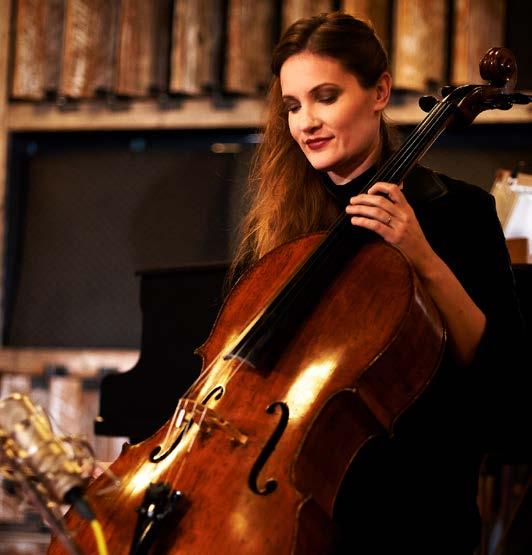
Member Spotlight: Liza McLellan
Women in Music – Highlighting Canadian cellist Liza McLellan. With more than 25 years in the music industry, Liza exemplifies the spirit of Canadian artistry, consistently breaking new ground as a performer and entrepreneur. Her unique voice, warmth, and creativity shine through in every project and performance.
TMA: Liza, music has been a guiding force throughout your remarkable life and career—one that carried you from your early days in Saskatchewan to stages and audiences around the world. Could you share with us how your journey in music first began?
LM: I started playing cello when I was four (4) years old. I come from a musical family, who have musical friends. My first teacher, Barb Fitzpatrick, happened to have a cello that was the right size at that time, and asked my folks if I might like to try it. Apparently I loved it! Fast forwarding to when I was 14 or 15, I nearly quit the cello because I got into bass and jazz (my dad is a bassist) but he actually talked me out of it, by virtue of missing the opportunity to play more melodies, which is true. I still love the bass though.
TMA: Working in Theatre seems so apropos to your creativity and lean toward storytelling with the projects you have pursued in your career. When did you begin playing in pit bands and orchestras?
LM: I actually got into theatre work through a friend and colleague, Amy Laing, who needed a cello sub for Dear Evan Hansen here in Toronto. At that time, I’d begun to scale back my touring career in order to be home more for my family. I’d been performing and traveling for nearly ten years with Quartetto Gelato, so getting into theatre work provided not only local performance opportunities, but also the variety of musical styles and genres that I love so much.
TMA: Joining the Musicians’ Union is often seen as an important milestone in a musician’s career. What inspired you to become a member, and how do you see the union supporting and advocating for musicians, particularly women, today?
LM: I joined the Musicians’ Union when I was 18 years old - when I won my first audition for the Regina Symphonyand I was a longstanding member there until switching to the TMA, Local 149.
I have always valued the Union as a crucial part of our
industry – providing support or backup for simple things like creating guidelines for rehearsal schedules so no one feels taken advantage of, to providing a plethora of resources like contracts or industry contacts. Thankfully the union deals with more large-scale issues like protecting jobs and ensuring our pensions are handled properly so that we can just focus on making music.
I’ve recently been seeing a broad change in even how simple things like dress code, or how musicians are spoken to during rehearsal are now handled versus how it used to be. Largely in part due to the #MeToo movement, unions everywhere have been making efforts towards bettering inclusiveness and safety for all genders in the music workplace. I find these changes refreshing, but there’s still a long road ahead. Another interesting development has been in seeing how our union has been pushing for a safer way to report harassment of any kind - particularly towards women. Since these mechanisms are quite new, I think many people don’t yet know about them and it would be great to make these avenues even more visible.
Liza McLellan, Cellist
Member Spotlight: Liza McLellan
TMA: The conversations around these issues, particularly involving harassment in the workplace, has certainly been accelerated by more women coming forward. The AFM recently rolled out the NotMe app for members to report safely and anonymously. Every report is handled with respect and investigated fully. This is the kind of commitment from the Union is what we should expect and be proud of.
How important is it for there to be representation in your orchestras? Can you talk a bit about Diversity, Equity, and Inclusion and being a woman in an industry?
LM: In the arts community, I believe it is extremely important for every voice to be heard. Speaking for female cellists, we were lucky to have had Jaqueline du Pré as the major “female trailblazer” for our instrument. Then there were also a few Canadian names I grew up knowing like Ofra Harnoy and Shauna Rolston. When I was a little girl, it seemed to me that it was mostly boys who played the cello – especially the famous ones – but I have seen this change gradually over time, to the point where at least for cello, there seems to be a fairly even gender distribution amongst players. Nothing is perfect in any industry right now, but I am seeing a lot of positive change and we are having the right conversations.
TMA: Performing in a Theatre Pit takes mental and artistic stamina. How do you keep the music feeling fresh and emotionally resonant when performing the same score eight times a week?
LM: I have a kind of “gamified” method to get me through longer runs (and to be honest, I’ve never played an 8-show per week run that was longer than three months. Some musicians have done this for a year or more!) Rule one: I always seek the beauty in every line I play. I make it my challenge to play every note the best I can, and to find as many different ways to phrase each moment as I can. So it is never the same even though it is the “same notes.” One of my favourite things about playing something over and over is you can discover new things in the score every time you play. Rule two: remember to move. I don’t like to just sit in my chair, especially during breaks. Sometimes you have to groove along with the band, even if you aren’t playing!
TMA: Creative expression and performance are often enriched by influences beyond the music—whether they come from people, other art forms, or personal passions.
Who or what inspires you, and how do those influences shape your work?
LM: Usually the other musicians around me that I am working with – I get to work with some of the best musicians in town and you can learn a lot if you pay attention to what they are doing too. Another major inspiration is my family – cellists are often called upon to deliver beautiful soulful or sad melodies because of the nature of the instrument. The love for my family and everything we have gone through is often channelled through what I am playing. Or at least I try! ;)
TMA: Thank you, Liza! What is next for you?
LM: I’m finishing up this lovely run of Kimberly Akimbo Feb 8th. Then after a bit of a March break, I will be doing Moulin Rouge in the spring and The Outsiders in June as well as completing a suite I’ve composed for a chamber orchestra inspired by star signs, hopefully to be premiered this summer!
Canada’s Theatre Museum
Musicians, be they live or recorded, play a vital role in essentially every theatre performance in Canada. This has always been true. For those who love the power of theatre or are curious about Canadian culture, Canada’s Theatre Museum is where champions of Canadian storytelling celebrate the magic of creative performance—past, present, and future.
The Museum was founded as a charity by a group of dedicated theatre artists and historians in 1991. Led for many years by Herbert Whittaker, the designer and director best known for his role as theatre critic and columnist for The Globe and Mail, the museum has built a track record mounting temporary exhibitions and vital online programming. An early and stalwart champion of the museum was volunteer board member Jim Biros who made so many important contributions to the arts in Canada.
A New Home
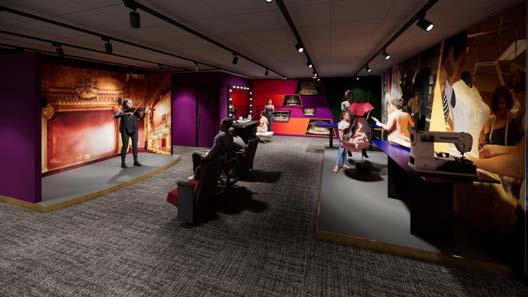
Without one of its own for many years, the museum is delighted to have found a home within The Elgin & Winter Garden Theatres. What was office space will be transformed into public museum space for dynamic exhibits, presentations and educational programming. Planning and design work is underway now with the Toronto-based international multidisciplinary design firm Reich&Petch
Even before renovations begin, the museum has expanded its public activities there with pop-up exhibitions, play readings, and celebrations. What has been clear is that the community values these events tremendously. The core audience includes you practitioners: it’s your unique heritage, work, and stories that the museum is exploring, celebrating, and preserving for future generations.
TheatreMuseum.ca
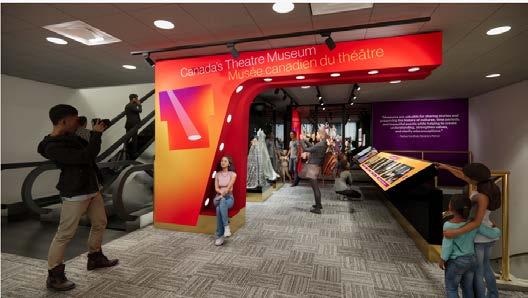
The museum is getting close to opening their doors on a regular basis at The Elgin & Winter Garden Theatres, creating a welcoming home for exhibitions, school tours, workshops, and experiences that bring to life Canadian theatre in all its forms. You can help bring this next chapter to life and ensure that Canadians of all ages can discover and celebrate our performing arts stories. Please check out
Canada’s Theatre Museum
to find out more.
Stay in the Know
Stay tuned for more information as work continues towards creating a truly unique space to celebrate Canadian theatre and performance. Sign up today for the newsletter – with regular news about the many happenings, and eventually being open to the public on a regular basis.
TheatreMuseum.ca
CGI rendering of future museum
CGI rendering of future museum
MPTF Report
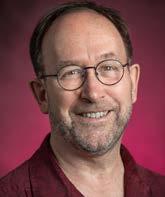
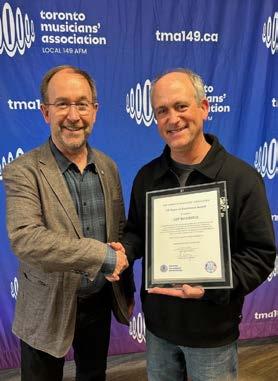
Jay Boehmer MPTF Administer, TMA
The current allocation for L149 Toronto, is $204,400 for the year ending April 30, 2026. To date, we have allocated $154,000 over 212 performances with $50,400 remaining. There are many projects in the works, and I’m sure that all our funds will be allocated by the end of April. There are usually excess funds available from MPTF for March and April performances. I will request additional funding, as usual.
The TMA has bookmarked some funds at 100% for various special projects including Black History Month, International Women’s Day and Jazz Appreciation Month in April. Members have already been contacting me about possible funding for JAM; I hope to accommodate all these requests. MPTF usually shares their allocation for the new fiscal year (starting May 1st) with all locals toward the end of March. Stay tuned…
MPTF Performances
Date
2026-02-05
2026-02-06
2026-02-08
2026-02-12
2026-02-12
2026-02-16
2026-02-18
2026-02-18
2026-02-18
2026-02-25
2026-02-27
2026-02-27
2026-02-27
2026-03-05
2026-03-12
2026-03-18
2026-03-21
2026-03-30
2026-03-30
Leader (No. of Musicians)
Aidan Mason (2)
Meghan Parnell (2)
Joy Lapps-Lewis (6)
Glenn Marais (4)
Susan Wesson (2)
Dave Pell (29)
Glenn Marais (4)
Waleed Abdulhamid (4)
Waleed Abdulhamid (2)
Nurhan Arman (14)
Jamie Kruspe (2)
Natalie Wong (2)
Tina Shapero
Jose Shapero
Jose Shapero
Marta Solek (4)
Alana Cline (2)
James Brown (3)
Kelly Zimba (2)
CMSM = Chamber Music Society of Mississauga
CIC = Concerts In Care - Ontario
Jay Boehmer, MPTF Administer, TMA
Co-Sponsor/Venue
Castle Peak Retirement Residence
Toronto Blues Society (The Study Academy)
Harbourfront Centre
Keswick High School
Bickle Centre
Hannaford Street Silver Band (Metropolitan United Church)
Toronto Blues Society (Newroads Performing Arts Centre)
CMSM (Hazel McCallion Central Library)
CMSM (Port Credit Library)
Sinfonia Toronto (John English Jr. Middle School)
CIC (Kensington Gardens LTC)
CIC (Ashley Oaks Retirement Res.)
Oscar Peterson Public School
Osprey Woods Public School
Osprey Woods Public School
CMSM (Hazel McCallion Central Library)
Richmond Hill Public Library
Sutton District High School
University of Women’s Club of Toronto (U of T)
Pins & New Life Members
25 Year Pins
John Kanakis
Davide A. Direnzo
Maury Lafoy
Laura L Thomas
Michael Herring
Eric Lee
50 Year Pins
Laura Czegledi Cesar
Life Members
Robert Buttarazzi
Shelley P Brown
Michael Dimoulas
Dianne Elisabeth Aitken
Richard Underhill
Clarke R Williams
Andy R. Lapointe
Trichy Sankaran
Grant Slater
In Memoriam
Admitted: January 6th, 1977
Died: November 19th, 2025
Gerry Norman
Admitted: April 11th, 1969
Died: November 24th, 2025
Les Allt Presenting 25 Years of Excellence Award to MPTF Administrator Jay Boehmer
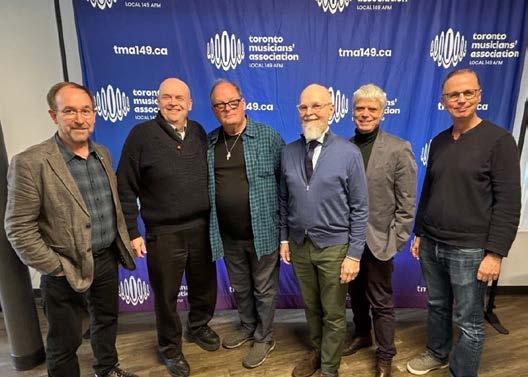
Newly Awarded Life Members — October 2025 General Meeting
Pictured: Max Christie, Neil Spaulding, Tom G Wade West, Ernest L. Mee, President Les Allt and Secretary Charlie Gray