Issue 17; 2026 All Markets













ITA Executive Committee


Directors



Martin Pike
ITA President President ATI Specialty Materials

Sam Stiller ITA Vice President VP Commercial Howmet Engineered Structures

David Beddome
ITA Director Chief Executive Officer STS Metals

Steve Chavez
ITA Director CEO
All-Met Recycling

Jeffrey Easto ITA Director Vice President Purchasing TIMET, Titanium Metals Corporation
ABOUT THE ITA: ITA (https://titanium.org/) is a membership-based international trade association dedicated to the titanium metal industry. Established in 1984, the ITA’s main mission is to connect the public interested in using titanium with specialists from across the globe who may offer sales and technical assistance. Working through its extensive membership resources, the ITA seeks to expand the knowledge base for the metal, providing technical literature and sponsoring seminars and conferences.
Brett Paddock
ITA Secretary / Treasurer President & C E O Titanium Industries Inc
Markus Holz ITA Past President Professor, ITA Academic Member Academic Individual Member
Olivier Maillard
ITA Director Vice President Metallic Raw Material, Forgings & Castings and Fasteners Procurement - PMM
Airbus SAS (France)
Frank Perryman ITA Director President, Chief Executive Officer Perryman Company


John Scherzer ITA Director Vice President – Medical Markets Carpenter Technology Corporation
Jennifer Simpson
Executive Director Ex-Officio Member of the Board International Titanium Association
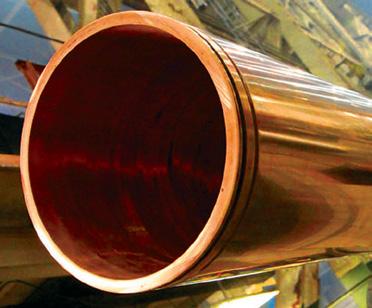
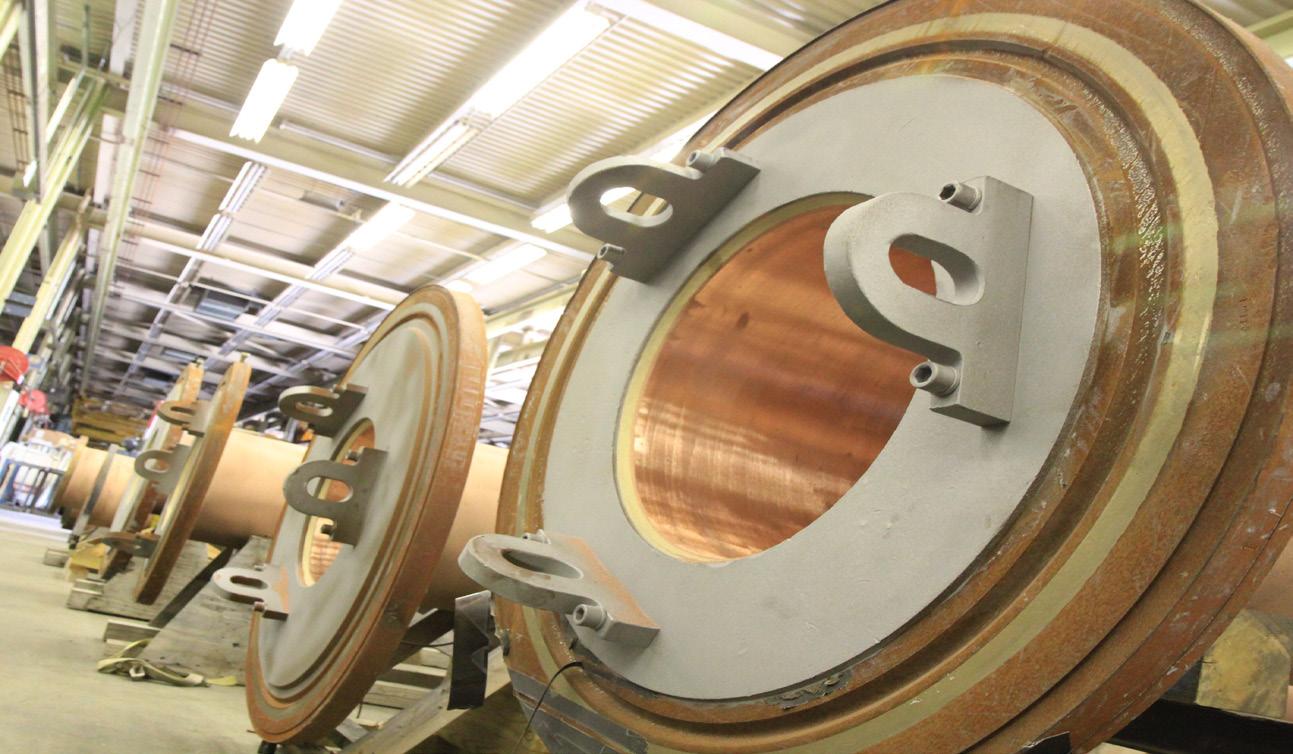
That’s why when it comes to the design and manufacture or the repair and reconditioning of crucibles, molds, and hearths for your ESR, VAR, EBM, or PAM installations, we draw on our more than 135 years of design, engineering and manufacturing excellence to ensure that your copper-based melting equipment is operating at peak efficiency.
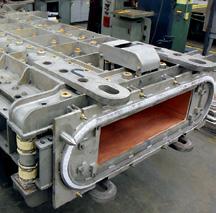
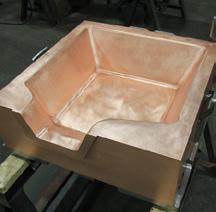
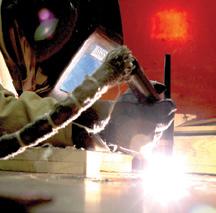
Quality vessel repair services to keep you running at high production levels.
A reputation for quality work and on-time delivery. Our staff of expert millwrights, welders and machinists can tear down, assess, repair and test your valuable melting equipment.
Additionally, our manufacturing capabilities are fully supported by our staff of over 50+ engineers.
Our services include:
• Machining, welding, straightening, and sizing of stainless steel, copper, nickel, aluminum, bronze, and carbon steel
• Preventative maintenance, including cleaning, re-sizing, straightening and seal replacement
• Crucible diameter and size modifications
• New crucibles, molds, base assemblies, water jackets, etc.
To learn more about our rebuilding and manufacturing services,call (330) 337-0000, visit www.ButechBliss.com or email cu@butech.com.



Medical Technology
Dr. Colin McCracken
Product Manager, Biomedical, Titanium Oerlikon Metco (Canada) Inc
Colin McCracken gained his B Sc , M Phil and Ph D in Metallurgy from Brunel University of West London, UK in 1992 . Colin then joined AVX Ltd - Tantalum Division working on capacitor grade tantalum powders and left in 2005 as Head of R&D Colin then moved to the USA to join Reading Alloys Inc . as Development Manager - Powder Products and in 2011 Colin was appointed to Director of Product and Market Development at Ametek SMP - Reading Alloys In 2013 Colin relocated to Ontario Canada to work with H C Starck Canada Inc and then later joined Tekna Advanced Materials before finally joining Oerlikon Metco Canada Inc in 2017 as a Product Manager for Biomedical and Titanium products In 2016 Colin was awarded a Fellow from the UK Institute of Materials, Minerals and Mining

Nate Fairfield Director, Key Accounts Titanium Industries
Nate Fairchild is responsible for all large long-term sales agreements and contracts for the company Titanium Industries is a global leader in specialty metals & titanium supply for the Aerospace, Defense, Industrial, Medical and Oil & Gas markets, with a network of service centers strategically positioned around the world to support these industries .

Safety Education
Robert Lee President Accushape™ Inc
Robert G Lee is the President and Owner of Accushape™ Inc Mr Lee is Chair of the ITA Safety and Compliance Committee During the past 50 years, Robert Lee has been directly involved in the processing of titanium and other special metals in many forms including, machining, welding, forging casting, screening, pressing and sintering of titanium powder Accushape™ was started in 1987 by Robert Lee for the purpose of scaling up the production of knife handles for Buck Knives made by pressing and sintering (P/S) of titanium sponge granules (titanium powder) (TSG) to produce a net shape finished knife handle Accushape has produced over 500,000 titanium P/S parts including knife handles, golf club inserts, hex nuts and washers Accushape™ has processed and screened 100’s of thousands of pounds of titanium sponge fines to customer’s special requirements More recently, Mr Lee has been issued 7 patents for a new titanium based material system TiCarbonite® and the ODAK™ tile system TiCarbonite® is a light weight, extremely hard and tough material finding applications for ballistics armor ODAK™ tiles create many types of systems with no increase in thickness and no through gap, making possible flexible material systems that can fit contours

ITA Contributor Michael Gabriele is an independent freelance writer on behalf of the International Titanium Association (ITA)
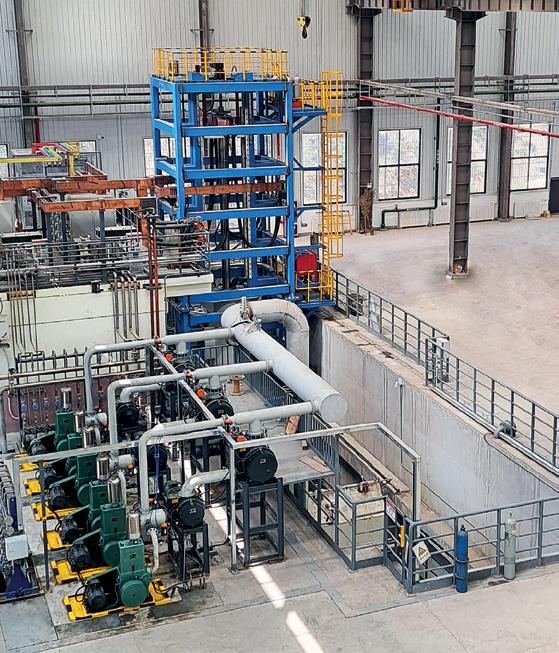
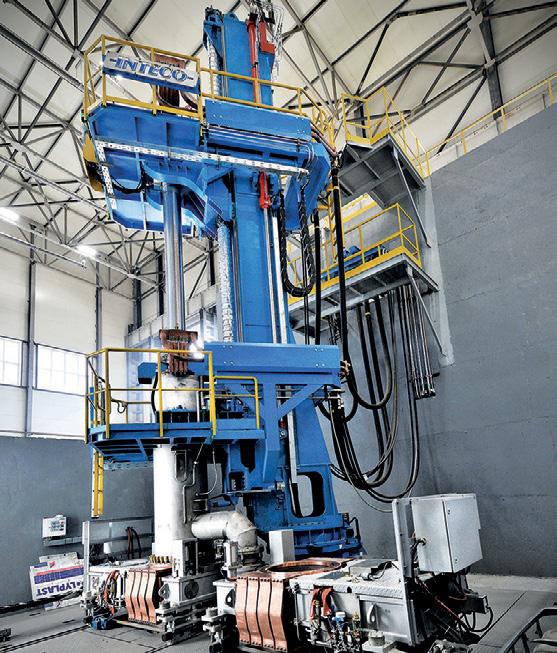
Are you aiming to increase the recycling rates in your titanium production shop?
INTECO´s new innovative vacuum arc cold hearth skull melting and casting furnace
› can achieve recycling rates of up to 100% by feeding virgin and scrap material (e.g. compacted chips) between melting & casting cycles
› can achieve an improved energy ef ciency compared to other cold hearth technologies
› allows static casting of ingots and slabs as well as dynamic casting of complex investment cast parts
› can achieve pouring weights from 250kg up to 3.000kg in one cast
Why team up with INTECO?
› More than 20 years of experience as a premium supplier in the titanium industry
› Supply of melting and casting equipment for titanium including auxiliaries
› Engineering studies, project- and technology consulting for entire titanium production lines
› Know-how transfer, from selections of raw material up to aerospace certi cation
› Customized process and production management systems (IMAS) for titanium production lines






















The titanium industry stands at a pivotal crossroads. As global demand for titanium advances across aerospace, defense, medical, and energy sectors, our industry faces a shared, critical challenge: securing the next generation of skilled talent. We compete daily with broader manufacturing sectors for a limited pool of talented machinists, welders, maintenance technicians, metallurgical experts, and operators.
Too often, technical students and early-career workers overlook our sector simply because they do not see the rich diversity of roles available or the clear paths to upward mobility. To bridge this gap, the International Titanium Association (ITA) is proud to announce a comprehensive new workforce promotion and industry awareness initiative. Through targeted national campaigns, executive mentorship spotlights, and strategic organizational changes, the ITA is building a robust talent pipeline to secure our industry’s operational future.
corporate programs and formalizing new employer training commitments.
To ensure participation requires a light lift but yields high impact, the ITA is developing a unified digital toolkit. This resource will provide member companies with pre-written social media scripts, photo guidelines, universal hashtags, and customizable short-form video templates.
Rather than building an awareness infrastructure from the ground up, the ITA will strategically integrate titanium-specific messaging into established national workforce and manufacturing milestones. This approach allows us to insert highimpact content, plant tours, and student activities directly into active national conversations.
Moving forward, the ITA and its member companies will anchor yearly outreach around four key dates:
National Skilled Trades Day (May): Launching a targeted “day in the life” video series to pull back the curtain on the daily achievements of our shop-floor machinists, welders, and operators.
World Youth Skills Day (July 15):
Highlighting distinct training pathways, available internships, and accessible entry points tailored specifically for younger demographics.
Manufacturing Day / MFG Day (October): Coordinating synchronized member plant tours, when possible, in conjunction with the annual convention, school field trips, and live demonstration days to demystify high-tech titanium production.
National Apprenticeship Week: Spotlighting successful internal
A recurring barrier within manufacturing corporations is that critical workforce and recruiting content remains siloed inside Human Resources departments, disconnected from operational engineering or sales leadership. To dismantle these silos, the ITA is convening corporate HR leaders to share operational best practices and co-create crosscompatible recruiting assets.
We are officially forming the ITA Workforce Development Subcommittee. This specialized body will unite representatives from HR, shop-floor leadership, technical training departments, and regional trade schools or community colleges. Meeting quarterly online— with an annual in-person session at our flagship ITA event—this subcommittee is charged with delivering high-utility resources. Key deliverables for this year include a centralized “Titanium Careers” microsite, a standardized plant-tour
Titanium Mill Products:
Sheet, Plate, Bar,Pipe,Tube,Fittings, Fasteners, Expanded Sheet & Ti Clad Copper or Steel.
Titanium Forgings and Billet:
Staged intermediate ingot & billet to deliver swift supply of high quality forgings in all forms and sizes including: rounds, shafts, bars, sleeves, rings, discs, custom shapes, and rectangular blocks.
Titanium, Zirconium, Tantalum & High-Alloy Fabrication & Field Repair Services: Vessels, Columns, Heat Exchangers, Piping, Anodes, Custom Fabrications, Field & In-House Reactive-Metal Welding & Equipment Repair Services Available 24/7.
Plate Heat Exchangers:
Plate Heat Exchangers to ASME VIII Div 1 Design, Ports from 1” through 20” with Stainless Steel, Titanium and Special Metals, Plate Heat Exchanger Refurbishing Services & Spare Parts.
Two Service Centers & Fabrication Facilities in Ohio & Texas with Capabilities in: Waterjet, Welding, Machining, Sawing, Plasma Cutting & Forming.
Serving a Wide Variety of Industries: Chemical Processing, Mining, Pulp & Paper, Plating, Aerospace, Power and others.
Tricor Metals, Ohio Division 3225 W. Old Lincoln Way Wooster, Ohio 44691
Phone: 330-264-3299
Fax: 330-264-1181
Tricor Metals, Texas Division 3517 North Loop 336 West Conroe, Texas 77304
Phone: 936-273-2661
Fax: 936-273-2669
Tricor Metals, Michigan Division 44696 Helm St. Plymouth, MI 48170
Phone: 734-454-3485
Fax: 734-454-7110
Astrolite Alloys California Division 201 Bernoulli Circle, Units B & C Oxnard, CA 93030
Phone: 805-487-7131 Fax: 805-487-9694

playbook for educators, and a rotating spotlight highlighting specific technical trades.
“Started on the Floor”: Celebrating Real Paths to Leadership
Students and career changers respond powerfully to visible, proven stories of career advancement. To show the profound upward mobility inherent to our field, the ITA is launching the “Started on the Floor” Executive and Manager Spotlight Series.
This campaign will profile 12 to 20 organizational leaders across our membership who began their careers in entry-level production, maintenance, or quality assurance roles. Through a uniform, 8-question interview format, these leaders will share how they navigated their journeys from the shop floor into plant supervision, operations management, engineering, and executive suites. Each profile will feature clear, actionable “next steps” links—directing readers to local trade schools, active apprenticeship registries, and transparent career ladders.
These workforce initiatives will serve as the editorial backbone for upcoming issues of Titanium Today, pairing print storytelling
with immediate digital extensions. Our readers can look forward to a comprehensive new content package:
• Themed Feature Openers: Indepth coverage focusing on modern shops, cutting-edge technologies, and safe working environments.
• “I am Titanium” Profiles: Fast-paced, 250-word snapshots detailing a worker’s typical day, required tools, and personal advice to technical students.
• Deep-Dive Career Trajectories: Multi-page features tracing the specific operational steps taken to rise from machinist to plant manager, or welder to nondestructive testing (NDT) lead.
• Practical Resource Sidebars: Clear directories outlining necessary certifications, participating community colleges, and immediate entry-level openings.
Additionally, the ITA is embracing short-form video to reach younger audiences on modern platforms. Concepts like “60 Seconds in Titanium” will show one trade, one tool, and one complex finished component to strip away the mystique of heavy manufacturing and capture the clean, precise nature of modern Titanium work.
The implementation timeline is already underway. Following initial working group sessions, the summer months will focus on intensive HR outreach, profile compilation, and asset gathering. This autumn, coinciding with our preparation for the annual conference in Las Vegas, the ITA will officially publish the Titanium Today workforce package, launch the digital #TitaniumCareers campaign, and open participation for the new subcommittee.
Ultimately, the success of this initiative relies on the active participation of our membership. We measure our progress not just in social media impressions, but in the number of member companies contributing content, the quantity of school tour requests generated, and the volume of concrete apprenticeship inquiries received. By pulling together, showcasing our people, and opening our doors, we can ensure the titanium industry remains a premier destination for toptier technical talent.
To learn how your company can contribute worker profiles, participate in the upcoming video challenge, or join the new Workforce Development Subcommittee, please complete the online application here. n

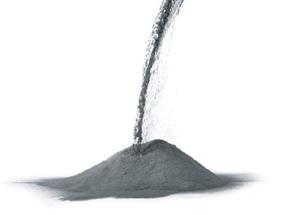
Established in France (Lyon), the stockist Acnis Group is one of the world leaders in the distribution of metal alloys especially in TITANIUM, in all forms : sheets, bars, tubes and powder for 3D printing.
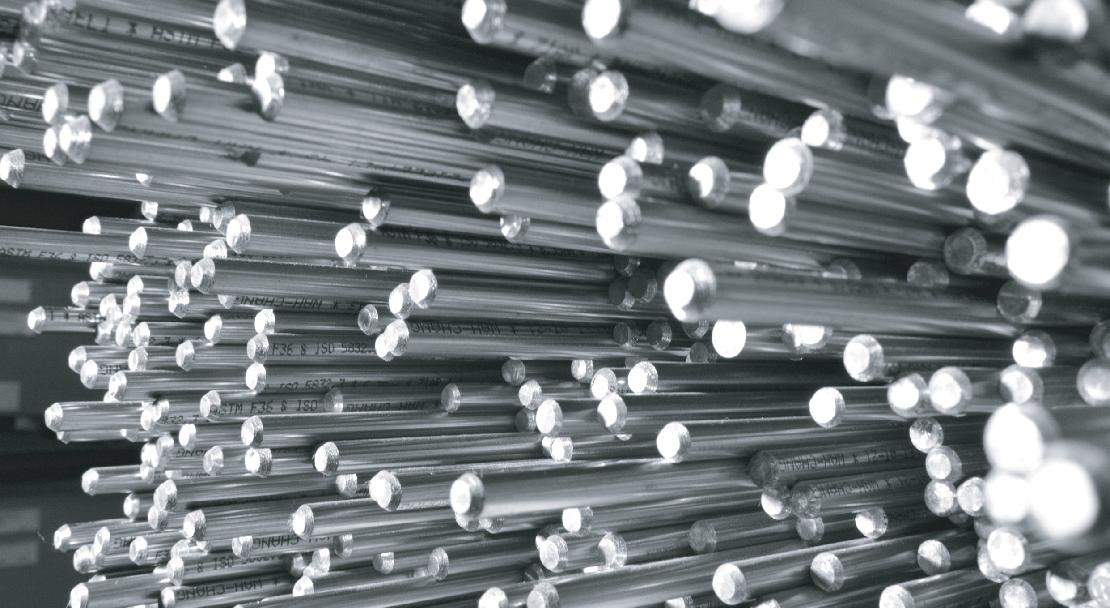
ISO 13485 certified since 15 years , the family business has specialized in the medical field since its creation in 1991, to meet the demand of orthopedic manufacturers and dental implants, as well as surgical instruments.


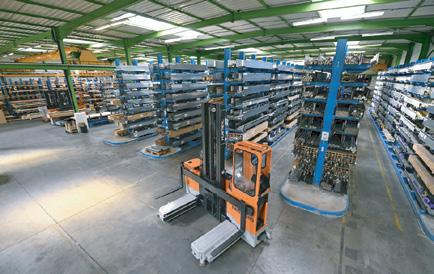
ACNIS Group acts as a buffer between producers and users, thanks to its 600 to 700 tons rotating stock and 1,300 references of different origins. Our unique cut-to-size service center (15 machines: waterjet, high-definition waterjet, plate sawing, bar sawing, shearing, machining, chamfering) allows us to reduce your costs by optimizing scrap rates.
As a result, the company is able to deliver very quickly its customers, in barely a week , no matter the ordered quantity. Major implant manufacturers among the main American and European OEMs themselves call on ACNIS Group to source their metal alloys.
The last creation of ACNIS USA stock in 2023 in Chicago has changed the game. Acnis Group is now the only distributor that can stock and deliver any quantity in North America (ACNIS TITANIUM & ALLOYS USA-Chicago), South America (ACNIS DO BRAZIL-Sao Paulo), Europe (ACNIS FRANCE-Lyon), South Asia (ACNIS CHINAShanghai) for global worldwide contracts.
Acnis is your one-stop shop for all TITANIUM grades, stainless steel (316L, 420B, cobalt chrome, 17/4 PH, high nitrogen alloy, Custom 455, Custom 465…) and polymers
Our dental subsidiary BCS , a European leading distributor of CAD CAM products for additive manufacturing, is registered with the FDA for titanium powder & discs, and cobalt chromium powder.
ACNIS TITANIUM & ALLOYS
1940 E Devon Elk Grove Village 60007 - IL - USA
dfreitag@acnis-titanium.com
kragan@acnis-titanium.com
224-550-2422



By Michael C. Gabriele
TITANIUM EUROPE 2026, the conference and exhibition organized and hosted by the International Titanium Association (ITA) was held April 14-16 in Toulouse, France, and featured a tour of the Airbus aerospace production facility. The gathering attracted nearly 400 attendees.

Dr Markus Holz
Dr. Markus Holz, past president of the ITA and this year’s conference chair, served as moderator of the World Titanium Industry Demand Trends session. Dr. Holz provided a concise summary of near-term business trends in the global titanium industry. The global titanium industry should enjoy a “positive, stable business outlook and a good growth rate during the next five years,” a forecast that was echoed by the Demand Trends panelists’ presentations, Holz said. The titanium industry has broadly diversified products in many industries and applications. The primary drivers for business will be commercial aerospace, new jet engines, defense industries and industrial applications.
However, Holz added that, like most industries, titanium can expect challenges and headwinds in the years ahead due to “geopolitical uncertainties” (such as the military conflicts in Iran and Ukraine), as well as conditions hindering the exchange of goods throughout supply chains, such as tariffs and trade barriers.
In particular, Holz focused his observations on the positive business activities in China as a reason for an optimistic outlook for the overall titanium industry. Titanium’s compounded annual growth rate (CAGR) in China is 8.8 percent, which he described as “astonishing. Half of global titanium demand will be triggered by China.” He said China is making significant investments in nuclear power plants, while 50 percent of China’s milled titanium products are going into chemical processing industries, with 20 percent of milled products dedicated for aerospace, all of which are “remarkable points.” China has become a net exporter of titanium sponge, but still falls short on sponge for aerospace.
Looking at the big picture of global commercial aerospace, he observed that wide-body jets, produced with high titanium content, are showing good demand.
The global titanium industry should enjoy a positive, stable business outlook and a good growth rate during the next five years. The titanium industry has broadly diversified products in many industries and applications. The primary drivers for business will be commercial aerospace, new jet engines, defense industries and industrial applications.
—Markus Holz, Ph.D., past president of the ITA
Passenger remains high. Next-generation commercial aerospace engines, which are using new fuels, “are a primary case for new titanium demand.” Holz stated that global aerospace will be the main driver of titanium demand over the next five years, with a 5 percent CAGR by volume. Separately, demand from defense industries, particularly in Germany, France, Italy and the United States, will boost titanium demand, especially with the cross-Atlantic transfer of forged, rolled and extruded parts.
As posted on its website (https://www.airbus.com/en), Airbus designs, manufactures, supports and prepares the future of civil and military aircraft (planes and helicopters), unmanned aerial systems and satellites. Airbus has more than 56,000 employees in France and contributes to the leading sectoral contribution to the trade balance with €29
billion in 2024 for the aeronautics and space sector.
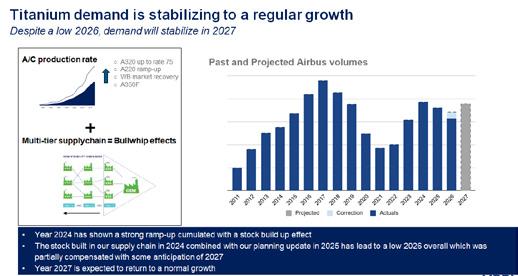
Olivier Maillard, Airbus vice president, metallic material procurement, provided a “Titanium Demand Forecast.” According to an Airbus bar chart, despite low titanium demand in 2026, the projection is that demand will “stabilize” in 2027 and return to “normal” growth. The stock built in the Airbus supply chain in 2024, combined with planning updates in 2025, led to low demand in 2026, which was partially compensated with some anticipation of 2027, as spelled out in the bar chart’s note.
mills. Get prepared for Airbus to investigate on new technological means to secure traceability and authenticity. This is an industry topic and we will require your support.”

“Airbus titanium demand has recovered 2019 volumes in 2024 and, despite adjustments in 2025 and 2026, is set for further growth according to our target rates,” he said. “Airbus leadership and strong order backlog is calling for a robust production ramp-up to the highest rates in the Aerospace history until 2030 and beyond. Global air traffic strong rebound and continued growth are projected to nearly double the in-service fleet by 2044, driving demand for 43,420 new aircraft deliveries, with a strong emphasis on more fuel-efficient, new-generation aircraft and expanded network opportunities.”
“This robust demand is an opportunity but will call for ‘Anticipation and Resilience,’” he continued. “Long term planning is key, especially in a geopolitically unstable environment. Circularity and sustainability are also a priority.”
Maillard said that “turning raw material and energy inflation risks into investment opportunities in circularity approaches and sustainable energy sources remains also a priority.” Regarding the European aerospace giant’s “Titanium Revert Loop program,” he said Airbus “is shifting from a linear economy to a circular economy approach for titanium, with the objective to ensure that scrap generated throughout its industrial system is recovered and reverted to support Airbus programs and Airbus sustainability objectives. All Airbus plants are already feeding the Titanium Revert Loop.” He said the objective to ensure that more than 50 percent of scrap generated by Airbus programs is reverted back to Airbus. “Additional revert opportunities are initiated with material from end-of-life aircraft. First parts have been recovered and remelted for Airbus applications.”
Regarding ongoing concerns over counterfeit titanium, he said Airbus is engaged in strengthening the integrity of its supply chain. “We will now ask all raw material consumers to systematically check authenticity with
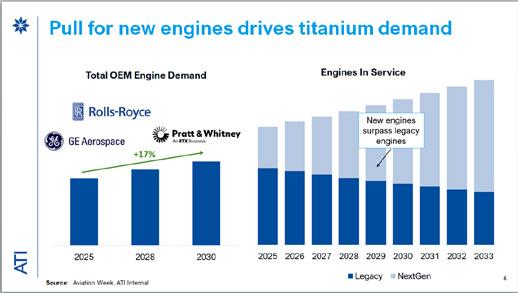
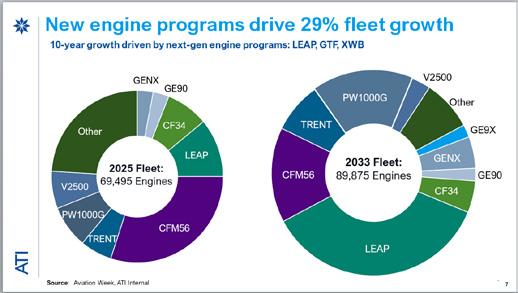
An ATI representative shared thoughts on “Commercial Aero-Engine Trends and Demands.” PowerPoint slides illustrated that the “pull for new aerospace engines” is driving titanium demand, and that new engine programs are driving fleet growth. Titanium demand will grow and stay robust and the engine fleet is expanding.
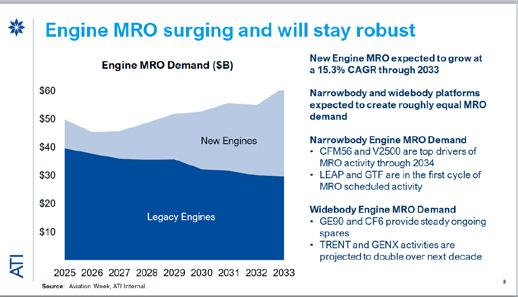
Engine maintenance, repair and overall (MRO) levels are surging and will stay robust. New engine MRO is expected to grow at a 15.3 percent compound annual growth rate (CAGR) through 2033. Narrow-body and wide-body platforms are expected to create roughly equal MRO demand. Engine MRO is surging with lasting


strength as legacy programs with defined titanium content will see consistent demand. The learning cycle of new programs is driving near-term MRO demand as future engine designs enter service in 2030s. Titanium remains “mission critical” to new applications.
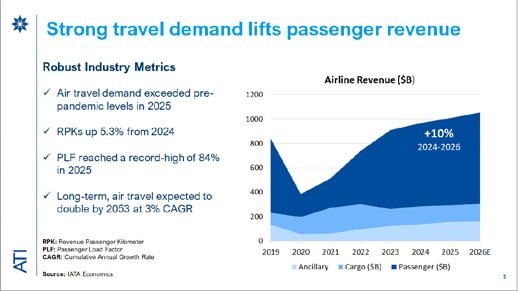
Strong travel demand will lift passenger revenue as air travel demand exceeded pre-pandemic levels in 2025. Long-term, air travel expected to double by 2053 at a 3 percent CAGR.
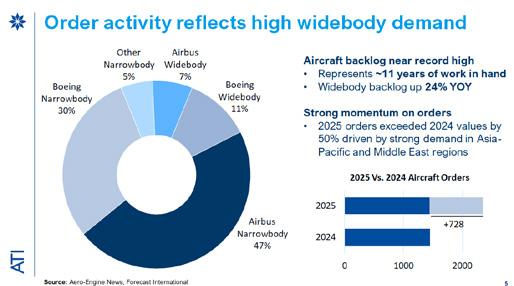
Airline profits remain stable, but fragile as profitability continues. Year-over-year revenues (1.3 percent) are rising faster than expenses (1 percent). Asia Pacific region sees largest improvement. The primary driver for expenses is jet fuel prices. Order activity reflects high wide-body demand, with wide-body backlog up 24 percent, year over years. Strong momentum is building as 2025 orders exceeded 2024 values by 50 percent, driven by strong demand in Asia-Pacific and Middle East regions
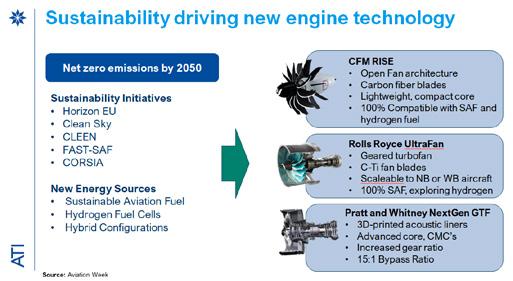
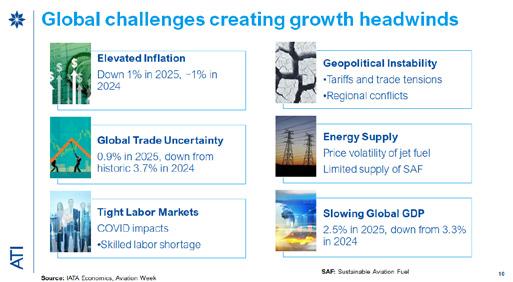
The ATI presentation stressed that the titanium industry must align capacity with rising engine production. Expand and balance titanium melt, mill and finishing capacity to reduce risk of supply constraints. The industry must plan for sustained MRO demand and support longlife legacy platforms with predictable titanium content and recurring replacement needs: Anticipate elevated near-term MRO demand driven by new-program learning curves, and prioritize premium-quality titanium supply. Engage early on in next-generation engine programs and integrate titanium suppliers early in the 2030s in engine designs where material choices are locked in for decades. Maintain titanium as a mission-critical material in future propulsion architectures across the supply base. Proactive capacity planning, quality investment, and early program engagement are essential to support the next decade of aerospace engine growth.
efficiency
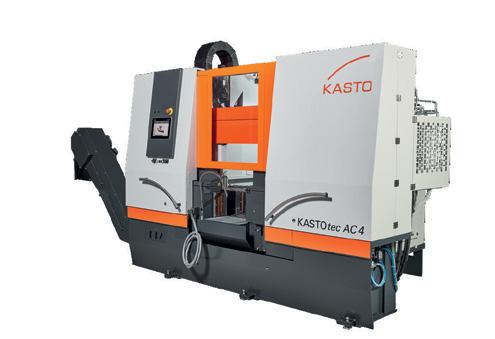
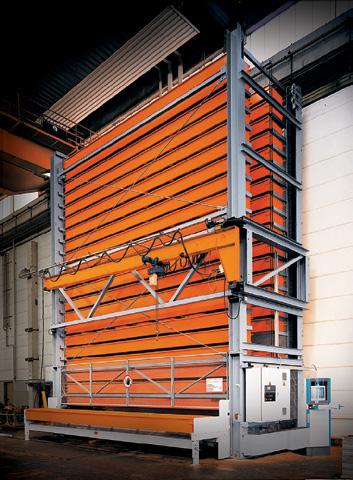
More reliability: Built robust, with high precision as the benchmark Innovation and reliability for your success: The KASTOtec
More innovation: Intelligent control and user friendly operation


Smarter storage for maximum space efficiency: UNITOWER More space
More efficiency: Save time with direct access—no additional lifting equipment needed
More flexibility: Modular, heightadjustable supports for up to 3 loading heights
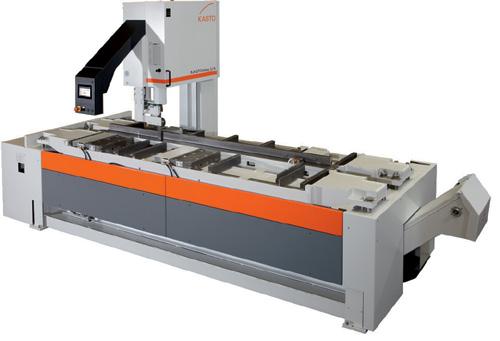
Low in price, high in performance: KASTObloc
More precision: excellent performance for smaller block dimensions or lower plate weights
More safety: perfect for cutting remnant pieces


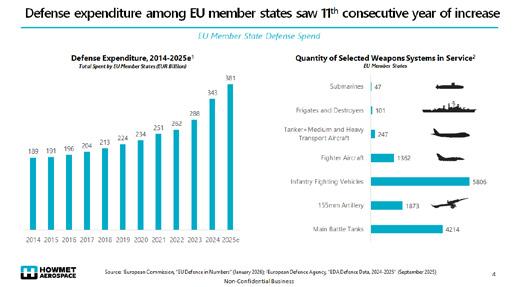
Gina Govojdean, Howmet Engineered Structures, a division of Howmet Aerospace Inc., reviewed “Titanium Demand Trends in Defense Aerostructures.” She began by focusing on how defense expenditure among European Union (EU) members saw the 11th consecutive year of increase. “European companies play key role in defense market, with revenue up 13 percent, year over year, to $151 billion.”
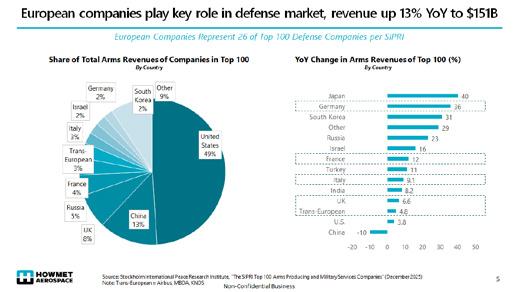
Govojdean said spending commitments will drive opportunities for European and U.S. suppliers. “All NATO Europe members hit 2 percent of GDP in 2025 (vs. only two in 2014).” There is a 5-percent GDP defense spending commitment slated for 2035 with 3.5 percent on defense and 1.5 percent on infrastructure, industrial base, and civil preparedness. EU members are pursuing relaxed budget rules, a “Buy European” industrial strategy, and identifying critical raw material and component dependencies. Robust trade between Europe and the American defense sector will remain, and there will be continuing strategic partnership between NATO and the United States. U.S. foreign military sales to European allies in 2024 reached $68 billion.
Europe, she said, can unlock over €800 billion ($939 billion) to surge defense expenditures. European banks can expand financing to security and defense, and will support the defense industry through aggregated demand and
collaborative procurement.
Govojdean listed critical capability gaps for Europe in defense investment:
• Air and missile defense
• Drones and anti-drone systems
• Strategic enablers (airlift, air-to-air refueling)
• Munitions, missiles, and artillery
• Ground combat capabilities
• Maritime (subs, frigates, amphibious ships)
• Comprehensive space capabilities
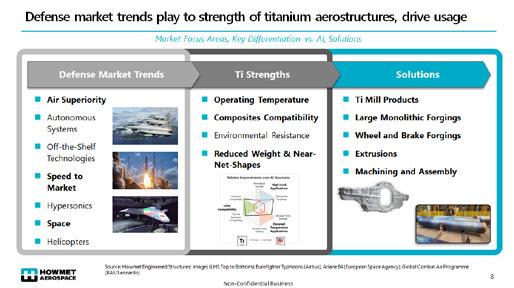
She said that defense market trends continue to play to strengths of titanium aerostructures and will drive usage.
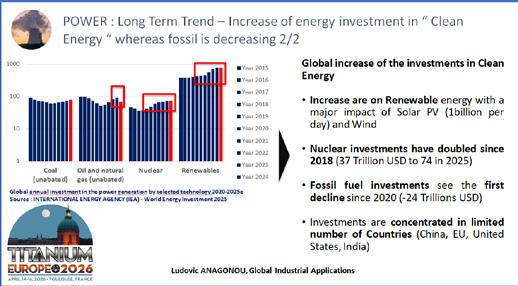
Ludovic Anagonou, group operations director of Neotiss, discussed “Global Industrial Applications Trends.” Anagonou began by reviewing the 2025 power sector, saying that “despite crisis and uncertainty, the share of energy consumption by source remains stable.”
Fossil fuels still dominate (85–86 percent), while oil (33 percent), coal (27 percent), and natural gas (25 percent) remain the primary energy sources worldwide. Low-carbon energy remains limited (14–15 percent). Renewables and nuclear are still a minority in total energy consumption, but renewables are growing, driven mainly by solar and wind expansion, but not yet enough to offset rising demand. Nuclear energy contributes 4–5 percent.
Global energy demand continues to increase (11 percent). “This slows down the relative decline of fossil fuels despite clean energy growth. Electricity is decarbonizing faster than total energy. Renewables account for 30–35 percent of global electricity generation.”
As for the long term trend, there will be an increase of energy investment in “clean energy” (renewables). Global power generation decarbonizes by 2050. Based on the current trajectory in power generation, renewables will increase by at least 15 percent, nuclear and hydropower will remain stable at around 5 percent, and for fossil energy, oil is projected to decrease by 15 percent, and coal by 12




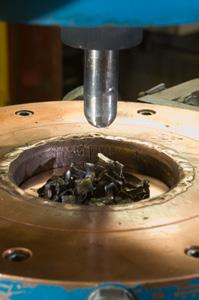
Fe, Ni, Co, & Cu Alloys
600 Pound Capacity
6" Rounds or 6” x 11” Slabs


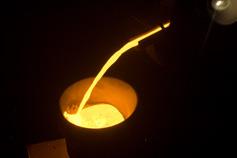

Vacuum Arc Remelting
Reactive and Non-Reactive Alloys
6”–20” Crucible Diameters
100–5000 Pound Ingots
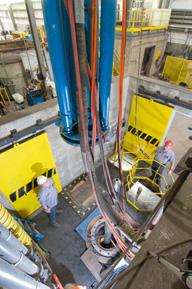
R&D Melting
300


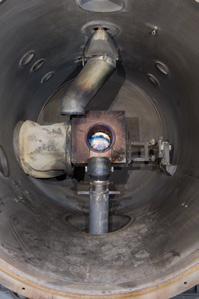

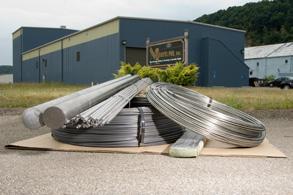

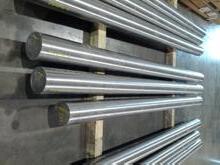

Bar Peeling - 0.5" - 6" Diameter

Bar Polishing - 0.5" - 8" Diameter
Lathe Turning - up to 17" Diameter
Saw Cutting - up to 30" Diameter x 5,000 Pounds



percent.
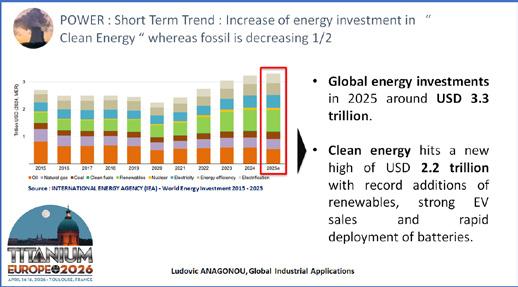
The long term trend will see a global increase of the investments in clean energy, whereas fossil is decreasing, according to a chart provided by Anagonou.
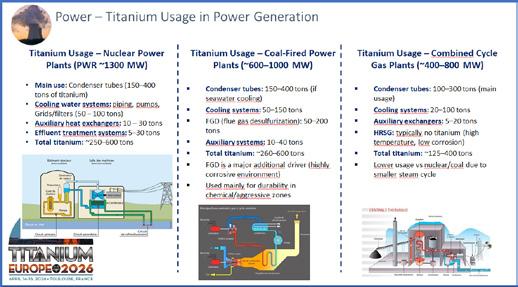
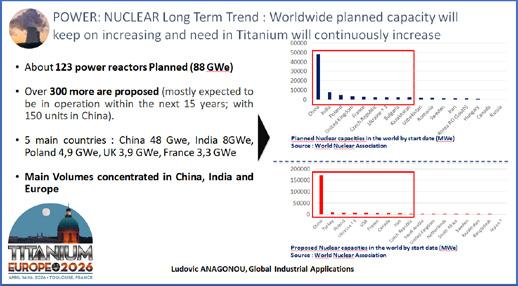
Anagonou provided charts that outlined titanium usage in nuclear power plants, coal-fired power plants and gas plants, which identified the need for condenser tubes, water cooling systems, heat exchangers, all of which will require large volumes of titanium
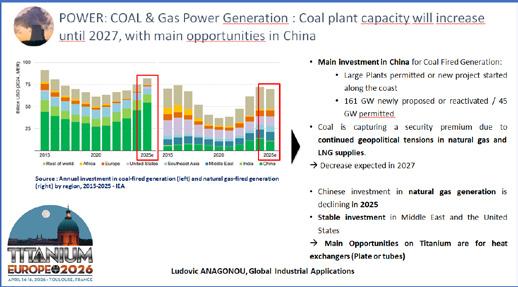
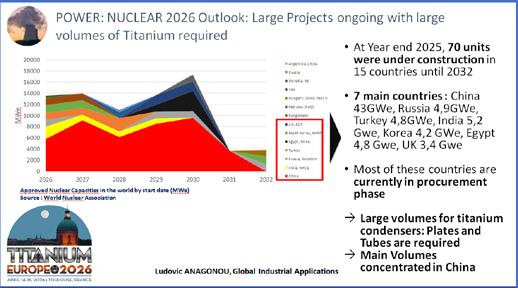
As for the outlook for nuclear power projects, large volumes of titanium will be required. At the end of 2025, there were 70 units were under construction in 15 countries, including China, Russia, Turkey, South Korea, Egypt, and the United Kingdom. Most of these countries are currently in procurement phase and will require titanium condensers, plates and tubes. As a long-term trend, worldwide planned capacity will keep on increasing and need titanium. About 123 power reactors planned and over 300 more are proposed; most expected to be in operation within the next 15 years; with 150 units in China. Most of the planned reactors will use titanium condensers
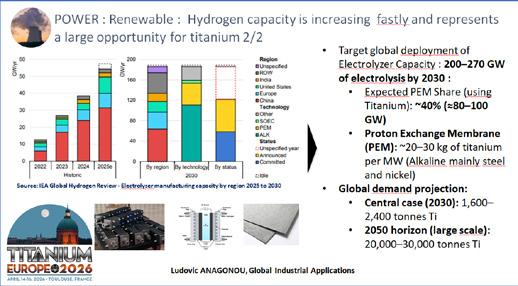
Anagonou pointed out that renewable hydrogen capacity is increasing as an energy source and represents a major business opportunity for titanium. Since 2022 investments are rapidly growing on hydrogen electrolysis for industry/refining and H2 based fuels.



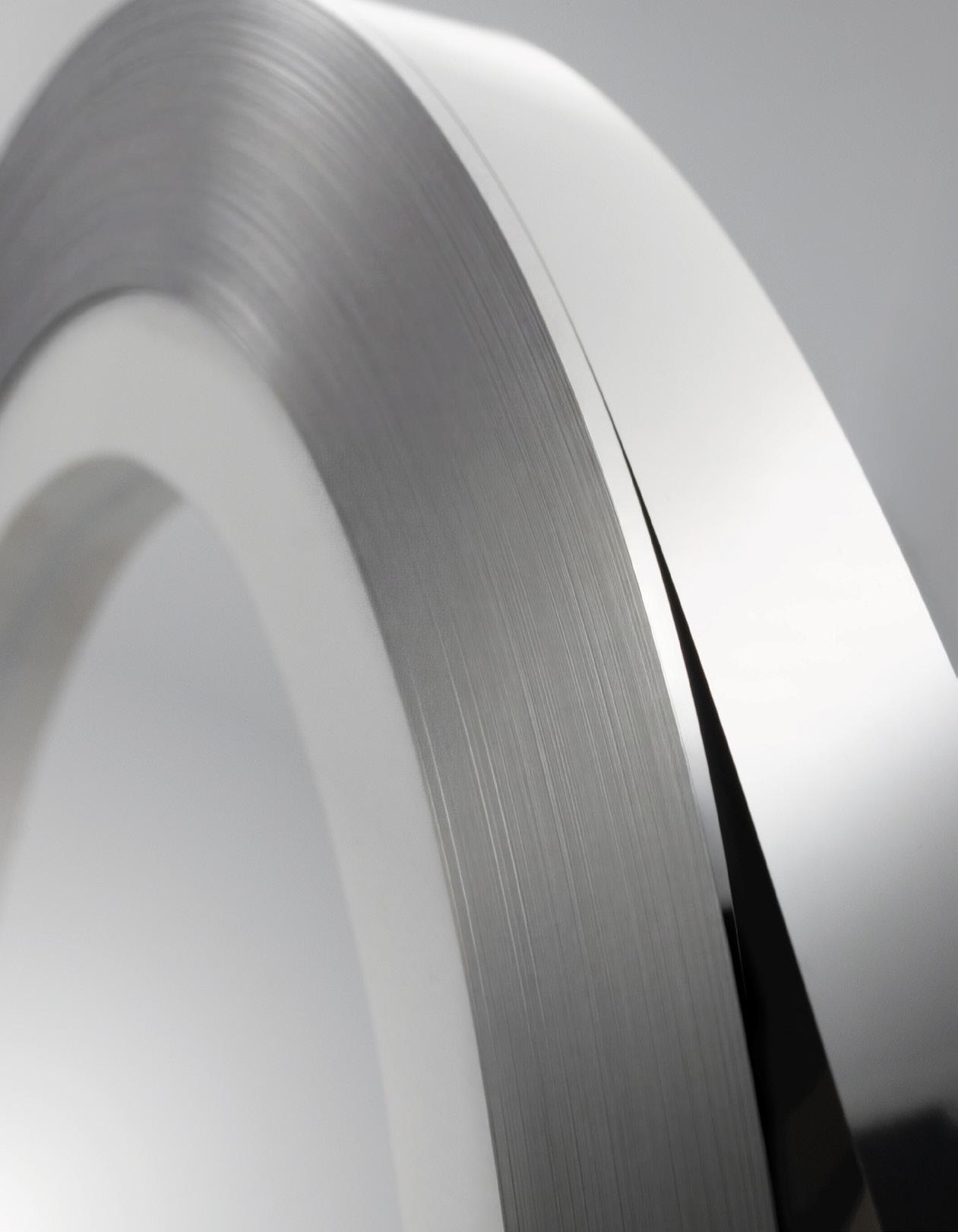
We begin with the cleanest, highest-purity titanium available and roll it to your exact specifications—because performance starts at the source.

Our tight thickness tolerance control and exceptional surface quality, with customizable finishes, ensure your material performs exactly as engineered.



TITANIUM GRADE 1 UNS R50250
TITANIUM GRADE 2 UNS R50400
TITANIUM GRADE 4 UNS R50700
TITANIUM GRADE 7 UNS R52400
TITANIUM GRADE 9 (3AL-2.5V) UNS R56320
TITANIUM GRADE 11 UNS R52250
TITANIUM BETA 21S UNS R58210

From R&D through full-scale production, we deliver consistent, repeatable results supported by rigorous inspection and testing. Our highly accredited facilities offer complementary rolling capabilities designed to meet our customers’ most demanding requirements.


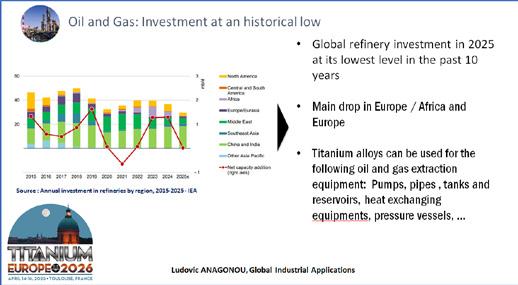
Oil and gas investments are at a historic low. Titanium alloys can be used for oil and gas extraction equipment: pumps, pipes, tanks and reservoirs, heat exchanging equipment, and pressure vessels,
Michael Zhao, board member, executive deputy general manager with Chaoyang Jinda Titanium Co. Ltd., presented an outlook on the “Global Titanium Sponge and Mill Products Market.” Zhao began by giving an overall outlook for global titanium mill products, citing resilient demand, moderate growth and declining inventories. “Recovery expected in 2027, paced by macroeconomics and air passenger traffic.” He identified a “structural shift” for industrial titanium, saying that there’s weak demand and slow growth in traditional market sectors such as the chemical industry. “Emerging sectors such as high-end manufacturing, electronics and energy production will optimize industrial structures.”
Zhao offered his outlook for global aerospace titanium mill product demand. “In 2025, global demand for aerospace titanium remained stable and slightly decreased in the short term due to ongoing inventory adjustments. Looking ahead, long-term demand recovery is expected on the back of accumulated OEM orders and improved stability in delivery capabilities. China’s rapid aerospace growth since 2019 has boosted domestic aerospace-grade titanium sponge in both capacity and
quality, strengthening the high-end supply chain. China’s aerospace titanium mills: 4.8 percent CAGR projected (2025–2030). COMAC C919 (2026–2030): estimated 300480 aircraft deliveries within five years. This ramp-up is projected to create a new growth for Chinese aerospace titanium demand.
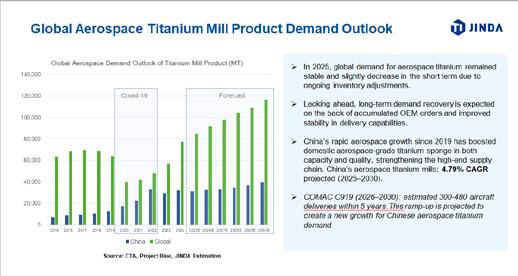
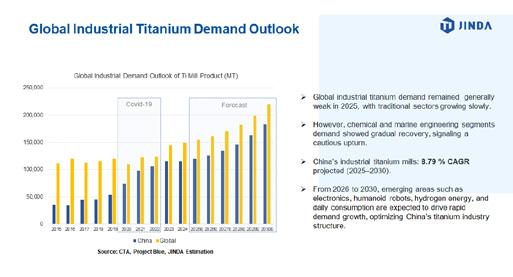
As for Zhao’s global industrial titanium demand outlook, he said demand was relative weak in 2025, with traditional sectors growing slowly.
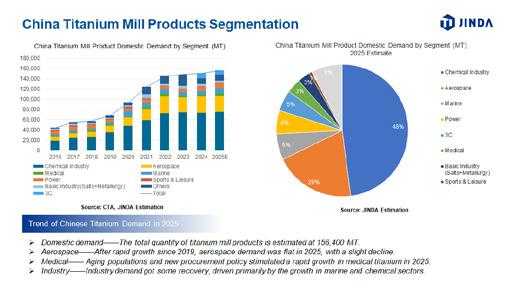
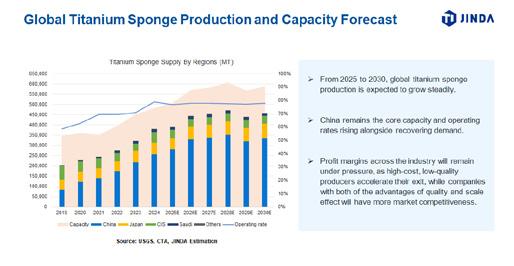
He then addressed global titanium sponge supply, capacity and utilization. “From 2025 to 2030, global titanium sponge and titanium products capacity will expand modestly. China’s capacity will rise slightly and operating rates will rebound. Industry profit margins are under pressure due to intense competition. In the aviation segment, particularly for titanium sponge, Japan still holds the main market share, while Chinese technology


and products will make progress continuously. The industrial segment will be mainly driven by the Chinese market, reinforced by costs advantages and scale effects. Chinese sponge supply chain will experience restructuring. In the medium term, supply remains sufficiently, with profitability under pressure. In the long term, as international aviation demand recovers, supply and demand will gradually rebalance. China’s titanium sponge and mill products’ export will increase, with an expanding share of aviation-grade products.”
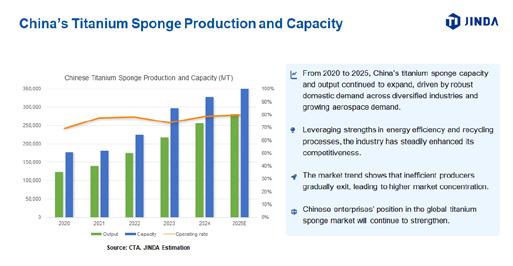
From 2020 to 2025, China’s titanium sponge capacity and output continued to expand, driven by robust domestic demand across diversified industries and growing aerospace demand. Leveraging strengths in energy efficiency and recycling processes, the industry has steadily enhanced its competitiveness. “The market trend shows that inefficient producers gradually will exit, leading to higher market concentration,” Zhao said. “Chinese enterprises’ position in the global titanium sponge market will continue to strengthen.”
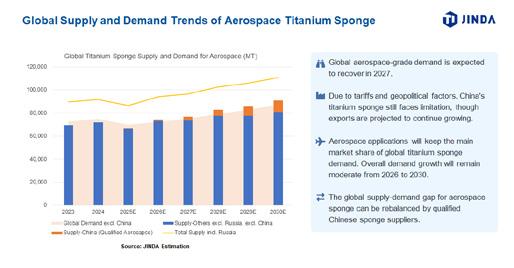
Global aerospace-grade sponge is expected to recover by 2027, according to Zhao. “Aerospace applications will keep the main market share of global titanium sponge demand. Overall demand growth will remain moderate from 2026 to 2030.”
Humberto Castillo-Pinto, applications and development engineer, K-Tube Technologies, discussed “Advances in Titanium (Ti) and Titanium Alloy Miniature Tubing Fabrication and Applications.” Castillo-Pinto explained that K-Tube, based in San Diego, has expertise in the laser welding of miniature tubing.
“Precision-engineered raw material comprised various metals and alloys, with an outer diameter less than 6.35 mm and as low as 0.127 mm and a wall thickness as thin as 5 micrometers, tightly controlled dimensional and engineered mechanical properties, that acts as an enabling technology for high performance industrial, medical, and aerospace applications. We can take strip, form it into a tube, and weld the material without the use of filler. Additionally, we do not need to shave down any weld bead. The images on the right offer some examples of what a quality weld looks like visually. Additionally, where this carries value is the ability to weld near final dimension tubing without major material loss.”
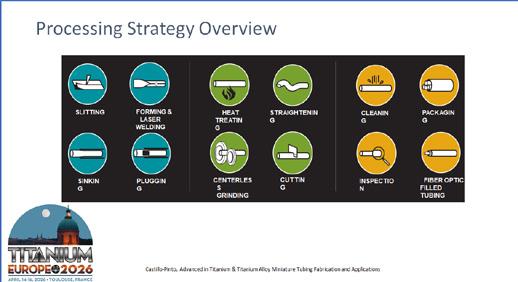
Material in strip form is formed and laser welded. It can be reduced using two different methods, plugging and sinking, and along the way or after completion the material
can be annealed. After reduction the material can be heat treated to increase strength, straightened, and/or centerless grinded and then have a number of post-production unit operations performed.
Global demand for titanium tubes is projected to expand at 8–10 percent CAGR through 2030, and this growth is fueled by four key drivers, identified by CastilloPinto: the aerospace sector’s ongoing push for decreasing system weight and fuel efficiency; the nuclear sector’s shift toward small modular reactor systems; the rapid push for desalination capacity; and the medical metal tubing market set to expand at a CAGR of 7.4 percent from 2025–2034. “Titanium tubing is set for expanded use, in particular for next-generation applications. Titanium is uniquely equipped to handle those next-gen applications.”
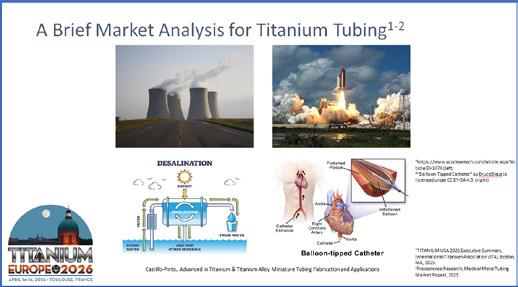
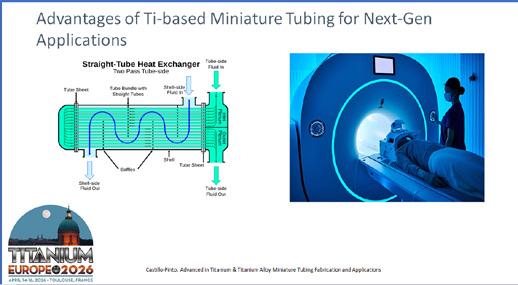
“High temperature strength, oxidation resistance and creep resistance enables titanium tubing to be utilized in next-generation heat exchangers, where the use of miniature tube dramatically increases the surface area available for thermal transfer.”
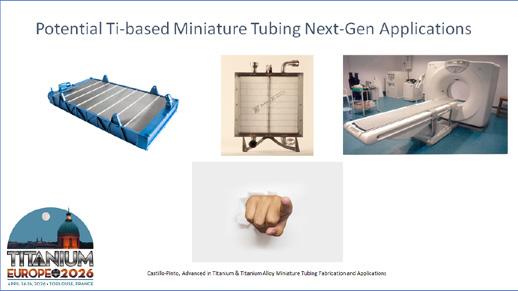
“I want to emphasize that, although K-Tube has a product, we need collaborators to bring applications to us so we can innovate, disrupt, and design the solutions that will impact tomorrow.” He listed several potential applications:
• Next-Generation heat exchangers for aircraft or other thermal management systems
• Implantable medical devices or MRI compatible tools
• Desalination systems or other high pressure-high temperature environments
• Nuclear Reactors or other radioactive systems.
Castillo-Pinto concluded by saying that titanium tubing can be laser welded and continuously drawn/ annealed. “Laser welding and continuous draw/anneal exhibits potential for decreased costs. Next-generation heat exchangers, desalination tubes, and MRI compatible catheters offer examples of areas that titanium tubing can be applied.”
José L. Neves, LKR Light Metals Technologies, and Thomas Klein, AIT Austrian Institute of Technology, presented a paper on “Wire-Arc Directed Energy Deposition of High-Performance Titanium Alloys.” The characteristics of wire-arc directed energy deposition (WA-DED) are: near-net shape (components with medium complexity); high deposition rates (material efficient); and component size unlimited (not for titanium)
At Kymera International, we’re at the forefront of advanced titanium solutions for the aerospace industry, delivering precision-engineered materials that power the future of flight. Our titanium powders, master alloys, and fully integrated titanium metallurgical products are trusted by leading aerospace manufacturers worldwide to meet the most demanding performance standards.
• Superior Strength & Lightweight Performance – Ideal for critical aerospace applications
• Unmatched Purity & Consistency – High-quality titanium powders and alloys
• Global Manufacturing & Supply Chain Strength – Delivering reliability at scale From high-performance jet engines to structural airframe components, Kymera International is the trusted partner for aerospace engineers and manufacturers looking for cutting-edge titanium solutions.
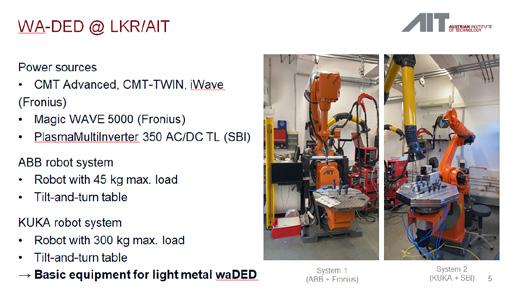
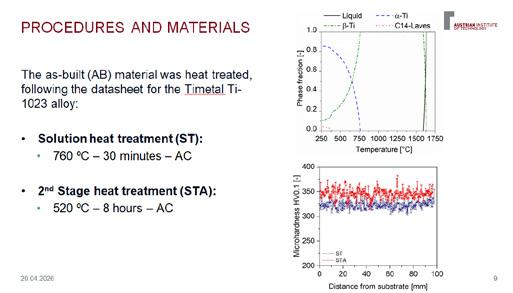
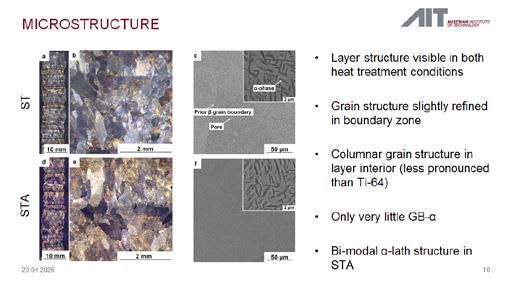
They concluded by saying that Ti-1023, Ti-15333, and Ti-6242 are processed by waDED. The microstructure is characterized by a coarse primary structure and different variations of the α phase microstructure depending on alloy and heat treatment. The mechanical properties are close to standards of wrought alloys suggesting potential applicability in the future. Next steps involve the fabrication of demonstration objects and the hybrid combination of different manufacturing technologies
Terry Huang, Tipro International director, reviewed “Challenges in Titanium Alloy Wire for Wire-base Additive Manufacturing (AM).” Huang said wire arc additive manufacturing (WAAM) “is a key technology for manufacturing large aerospace components, due to its low
cost, high speed, simple equipment and ability to produce large parts. Its application depends on high-quality metal wire.”
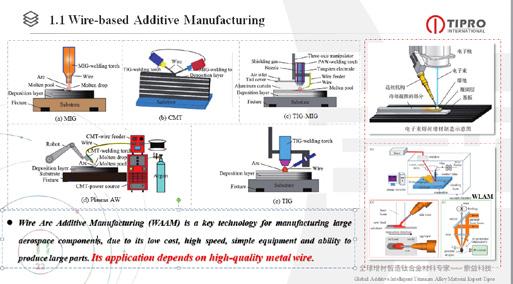
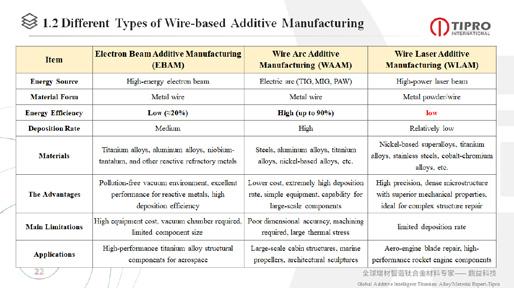
As for issues that may lead to printing problems, Huang said that low-quality wire typically is one of the causes of defects.
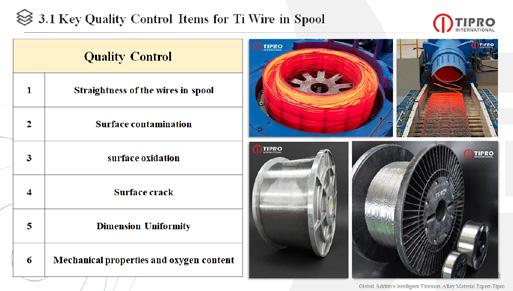
“Bad straightness causes irregular friction and resistance in the wire tube and print head, leading to unstable feeding speed and production stop. In WAAM, the heat source and wire tip must be precisely aligned. Bent wire deviates from the focus, disrupting stable arc melting and droplet transfer. Good wire straightness keeps the tip at the heat source center, ensuring stable deposition and high-quality forming. Poor wire straightness causes deviation from the heat source center, leading to inaccurate deposition, profile deviation, and even geometric
IperionX is a leading American titanium metal and critical materials company - using patented metal technologies to produce high performance titanium alloys, from titanium minerals or scrap titanium, at lower energy, cost and carbon emissions.

Led by Aerospace Demand, Titanium Europe Speakers See Business Stability in Near Term (continued) distortion.”
Oxygen has an inherent and significant solid-solution strengthening effect, he explained. “With increasing oxygen content, the strength of the material increases while the elongation decreases.
Variations in wire dimensional accuracy lead to inconsistent melting rates during feeding, resulting in unstable droplets. This causes irregular deposition beads and poor surface roughness. Large droplets may form protrusions while small ones cause depressions, which can even lead to deposition layer collapse in
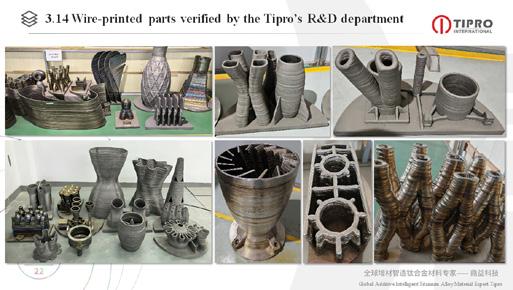
Huang listed future and technical directions. “Development of new high-performance titanium alloy wires for AM via multi-element synergistic alloying based on Ti-6Al-4V; preparation of titanium alloy wires based on heterogeneous structure design; preparation technology of ultra-fine titanium alloy wires; surface precision optimization of WAAM-fabricated components; Uniformity of high-weight (400kg) special wires for additive manufacturing.
Diffusion Treatments
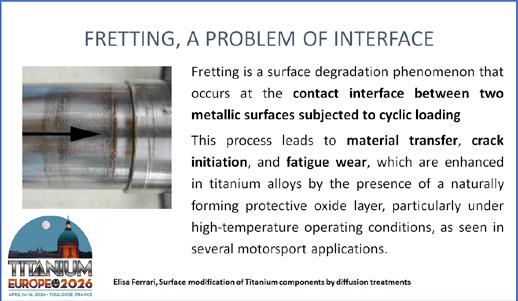
Elisa Ferrari of Veca SpA, University of Modena e Reggio Emilia, spoke on “Surface Modification of Titanium Components by Diffusion Treatments.” Ferrari pointed out that “fretting” is a surface degradation phenomenon “that occurs at the contact interface between two metallic surfaces subjected to cyclic loading. This process leads to material transfer, crack initiation, and fatigue wear, which are enhanced in titanium alloys by the presence of a naturally forming protective oxide layer, particularly under high-temperature operating conditions, as seen in several motorsport applications.”
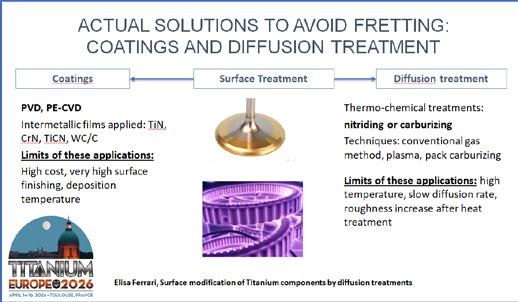
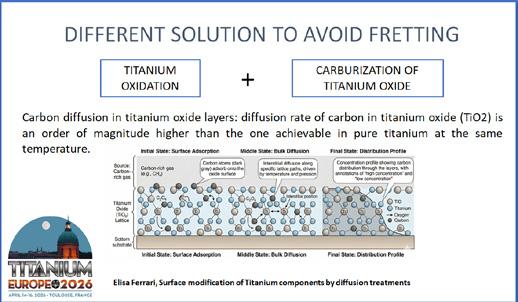
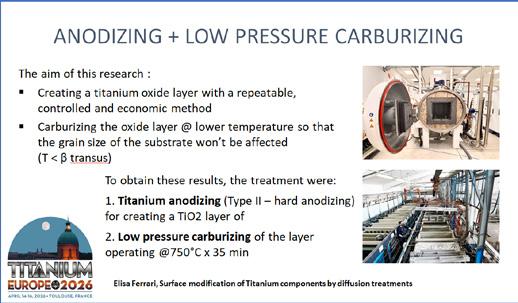
Two distinct titanium alloy specimens were selected for testing: Titanium Grade 2 (Commercially Pure), chosen for its high ductility and corrosion resistance; and Titanium Grade 5 (Ti6Al4V), selected due to its








widespread industrial applications, superior mechanical properties, and increased strength. In the previous studies presented, a characterization techniques was employed, to understand the behaviors of the treatment. Testing involved: crystallographic analysis, to identify phase composition; morphological analysis, to investigate the surface properties; and mechanical analysis, to understand the behaviors of the treatment.
Ferrari said that after the process parameter optimization regarding the anodizing treatment, the oxide layer seems to be adherent to the substrate only in Grade 5. Both oxygen and carbon were found in the layer of both samples. The carburizing treatment performed better on Grade 5 than on Grade 2. At high temperature (600°C x2h; 1112°F), Grade 2 doesn’t work after 300m. At high temperature (600°C x2h), Grade 5 performs better than Grade 5 at room temperature. “This behavior will allow us to suppose that probably the coating, at this temperature, is still changing. Other trials for carburizing treatment need to be done, extending the dwell time and optimize process parameters.”
Future research work will examine XRD analysis on the sample after two hours at 600°C; new trials with the aim to optimize carburizing parameters; tests on “Pin on Disks,” both at room temperature and high temperature; and other tribological tests like fretting both at room temperature and high temperature. “The final scope of the research is to apply this treatment on real motorsport or aerospace components and test these parts on dyno benches to evaluate the real benefits in terms of fretting reduction.”
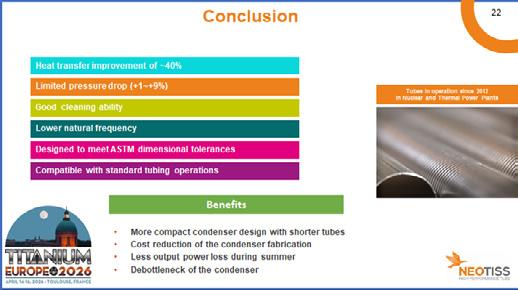
Julien Burgue, sales and marketing vice president for Neotiss, provided an overview on “Titanium Helix™ Tubes for High-Efficiency Condensers.” Burgue presented slides that offered context for Nuclear and Power Generation.
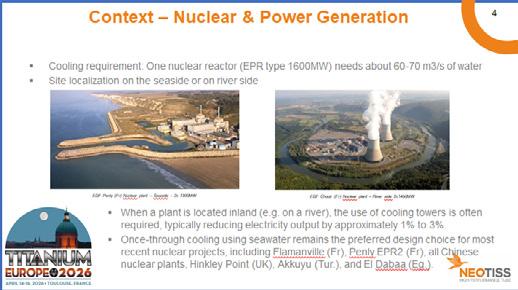
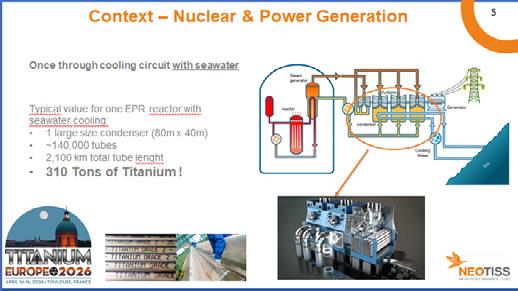
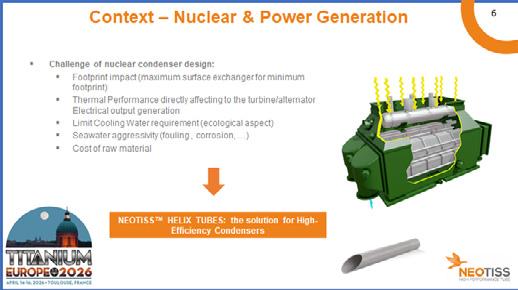
He then discussed the design of heat exchangers, the design of Helix™ tubes and performance and behavior.
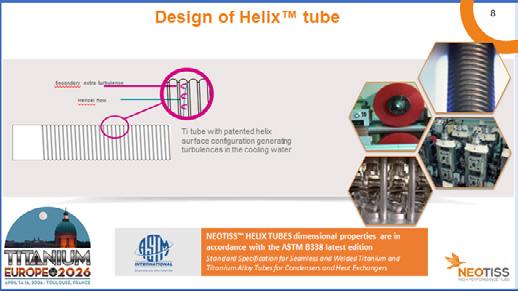
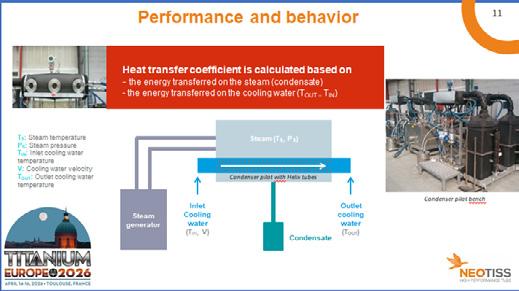
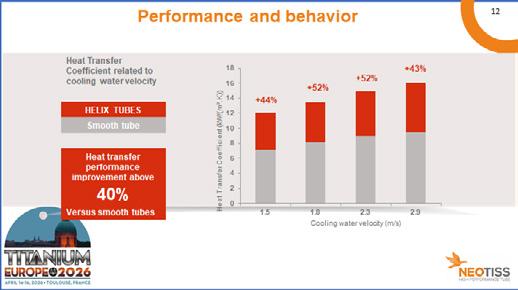
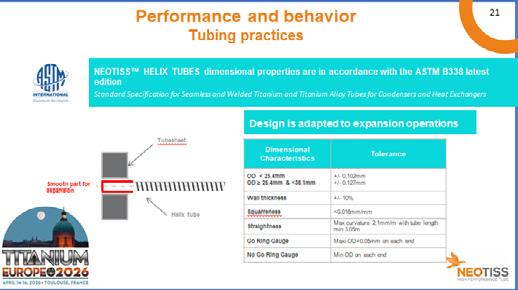
The dimensional properties of Neotiss HELIX™ tubes are in accordance with the ASTM B338 latest edition, he confirmed, with standard specifications for seamless and welded titanium and titanium alloy tubes for condensers and heat exchangers.
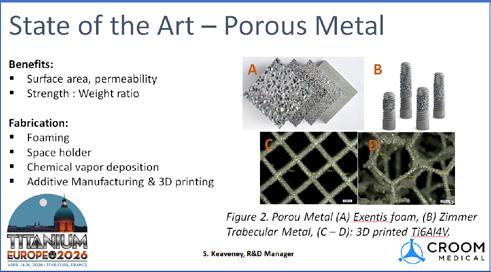
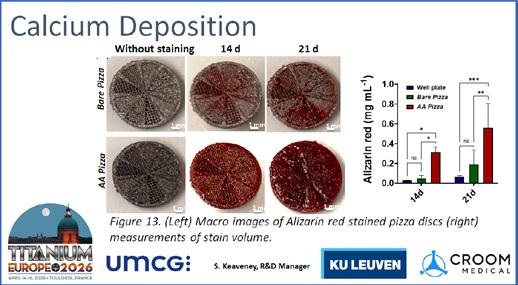
Dr. Shane Keaveney, research and development manager for Croom Medical, addressed “3D Printing Titanium Implants for Enhanced Osseointegration” He began his talk with a slide that illustrated the state of the art for porous metal.
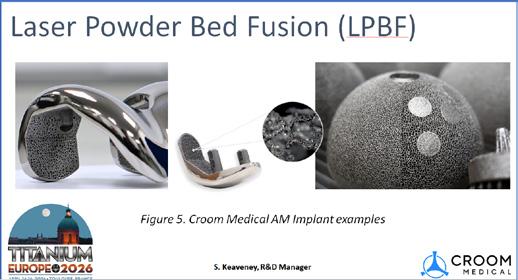
Keaveney discussed Croom’s “NOMAD Project,” which is focused on 43 percent that developed soft tissue peri-implant mucositis and 22 percent that developed periimplantitis affecting bone. The targeted outcomes include promoting stable soft-tissue seal, reduction of biofilm formation, enhancement of osseointegration or reduce time, and anti-biofilm functionality for titanium fixtures.
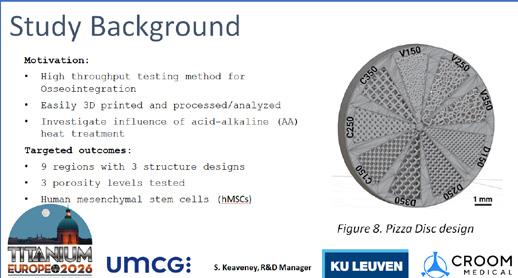

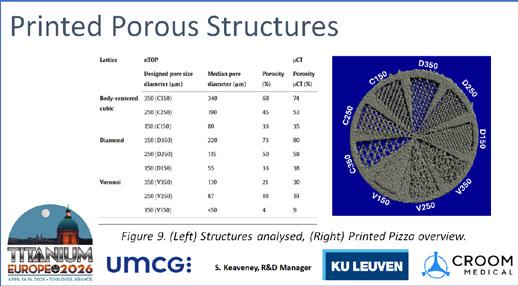
He displayed two slides on cell adhesion.
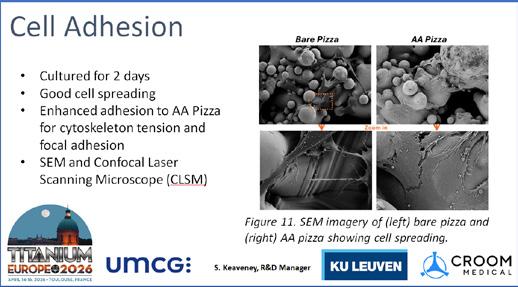
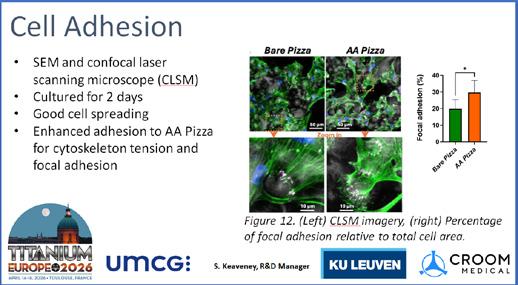
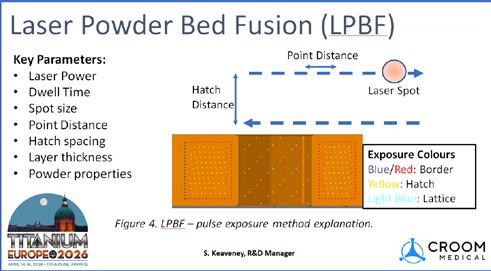
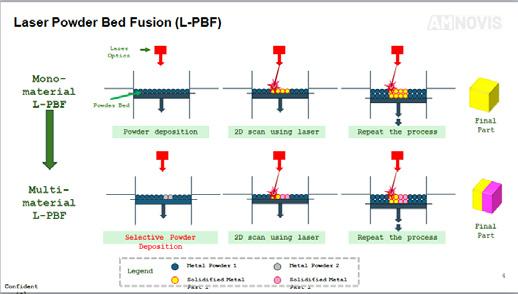
Aman Gupta, materials engineer with AMNovis, discussed “Multi-Metal 3D Printing of CP (Commercially Pure) Titanium and Titanium-6Al-4V: Tailored Mechanical Properties for Medical Devices.” He began by showing two slides that illustrated laser powder bed fusion.
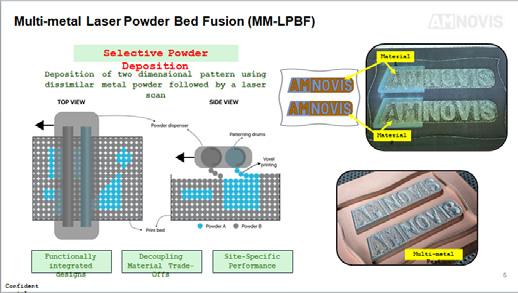
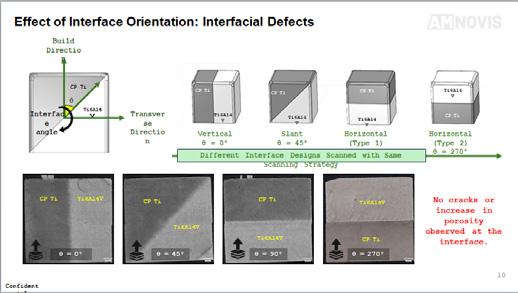
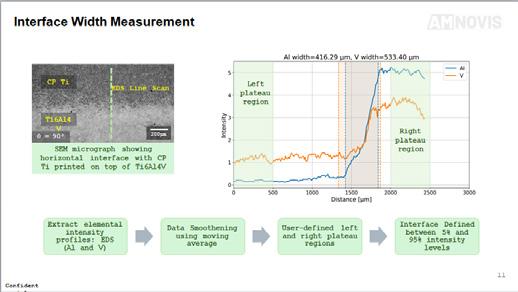
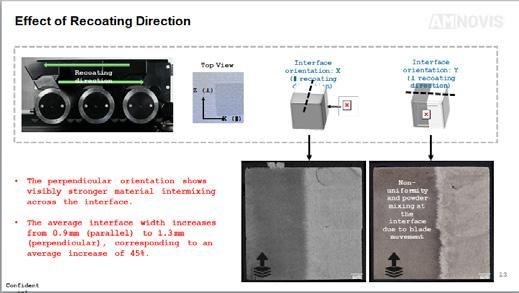
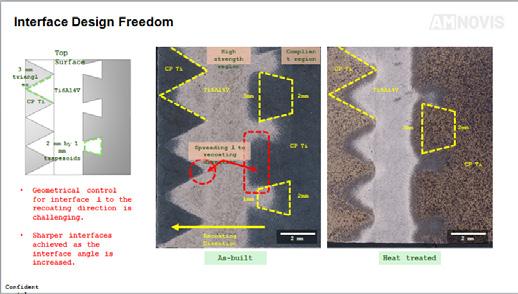
Gupta then examined CP titanium/Ti6Al4V multimetal interface and the effect of processing conditions on defects and interface width.
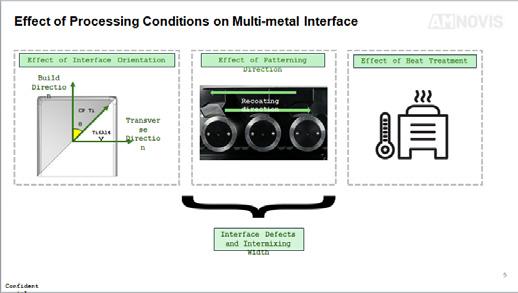

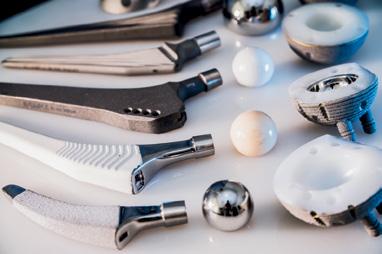

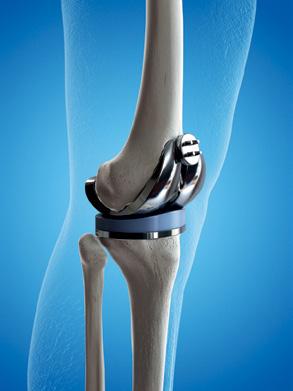




Heat treatment is required to reduced hardness in both CP Ti and Ti6Al4V but the hardness drop is larger in CP titanium than in Ti6Al4V. Microstructure of CP Ti was changed from α’ martensitic grains to large equiaxed α grains which explains the larger decrease in hardness. Microstructure of Ti6Al4V is coarser but still with acicular grains and thus the hardness change is also smaller for Ti6Al4V. CP titanium is more heat-treatment-sensitive than Ti64.
Gupta considered interface engineering, testing technological limits.
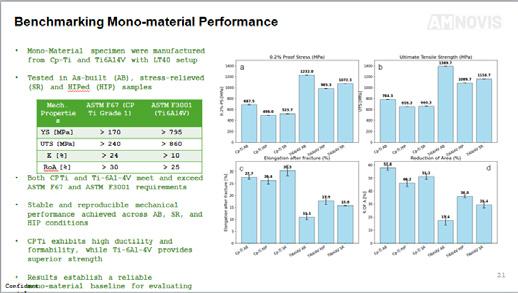
Tensile specimens were manufactured according to a miniature dogbone geometry, as shown, and extracted from printed material. Mechanical testing was performed using uniaxial tensile loading at room temperature. Yield strength (0.2-percent proof stress), ultimate tensile strength, elongation after fracture, and reduction of area were determined from the stress–strain response. Testing was conducted for asbuilt (AB), stressrelieved (SR), and HIPed conditions to assess the effect of postprocessing.
Gupta offered the following conclusions:
• Crackfree, highdensity CP Ti / Ti6Al4V multimetal parts were successfully produced by MMLPBF.
• Interface orientation and recoating direction strongly control interface sharpness and intermixing.


• Interface orientation and recoating direction strongly control interface sharpness and intermixing.
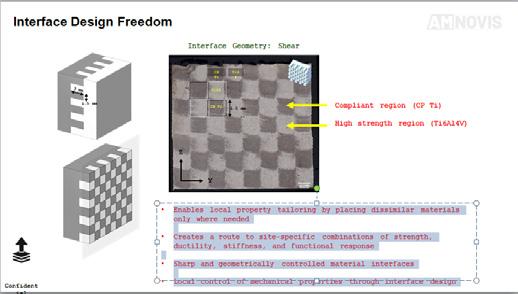
• Interface strength exceeds CP titanium, enabling reliable load transfer across the multimetal region.
• Functionally tailored implants are achievable, enabling sitespecific combinations of strength and compliance
François Ory, the CEO Forécreu, presented information on the “Manufacture of Cannulated Titanium Bars for Use as Sonotrodes.” Forécreu designs and produces bars with holes, cannulated bars and solid bars in steel alloys and for medical, tooling and industrial applications. A sonotrode is a mechanical resonator, which vibrates at its resonant frequency (20 kHz, 35 kHz, 40 kHz). The natural frequency depends directly on geometry (length, diameter), density of the material, and Young’s module (E).
According to information posted online, titanium medical sonotrodes (also known as ultrasonic horns) are high-precision acoustic tools designed to transmit high-frequency mechanical vibrations into biological titanium or fluids for therapeutic and surgical applications. Made typically from the titanium alloy TiAl6V4, these components are favored in medical settings for their biocompatibility, high fatigue strength, and low acoustic damping, allowing them to vibrate quickly and efficiently at frequencies between 20 kHz and 40 kHz.
Common medical applications include surgical Tools used in procedures such as ultrasonic bone cutting or cataract surgery, where precision and minimal collateral damage are required; ultrasonic homogenizers employed in laboratory settings to disrupt cells, disperse nanoparticles, or homogenize biological samples; medical device manufacturing used to weld thermoplastic components for medical equipment (e.g., breathing masks) where high cleanliness is mandatory; and dental applications.
Ory showed a slide that illustrated steps in the manufacturing process.
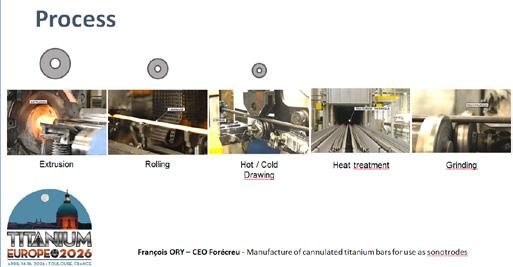
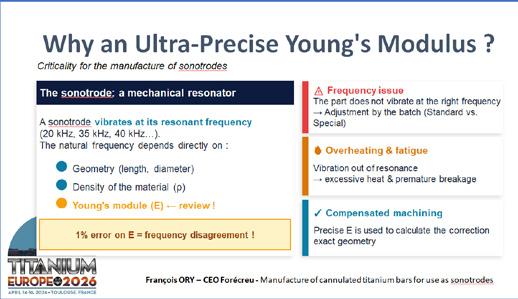
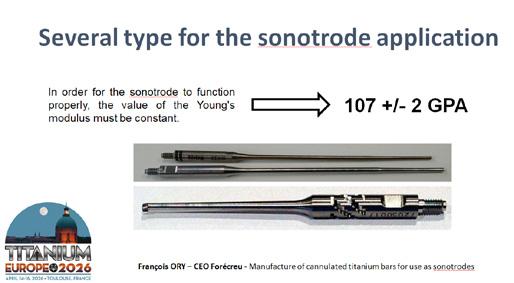
Forécreu provides small diameter and long hole capable of long sonotrodes. Forécreu delivers a fully annealed Ti64 A2-A3 in accordance with ASTM F136 after relaxation of the stresses installed by the different stages of the transformation range (Ø100 to Ø6.5x1.4 mm). Customers can immediately mill/turn bars into long sonotrodes since the Young Module is at 107 Gpa, and provide surgeons with a large number of compliant tools.
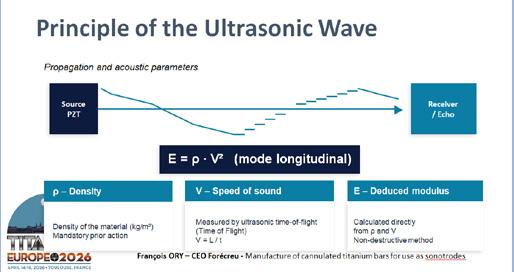

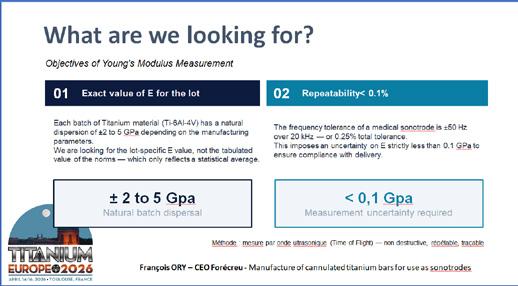
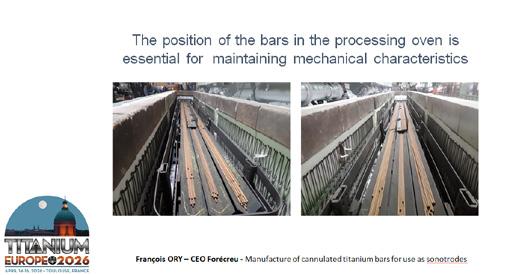
Ory said FORÉCREU masters the entire value chain for the manufacture of Ti6Al-4V ELI cannulated bars for medical sonotrodes. “Our unique expertise combines hot transformation, qualified heat treatments and precision ultrasonic measurement of the Young’s Module.”
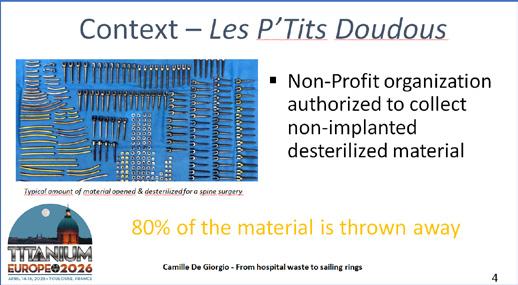
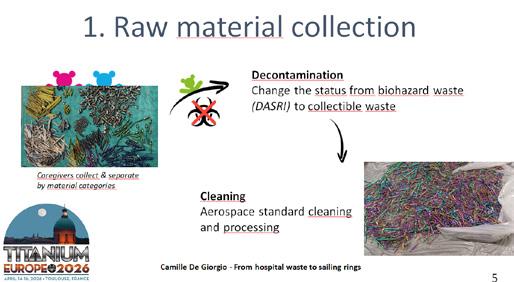
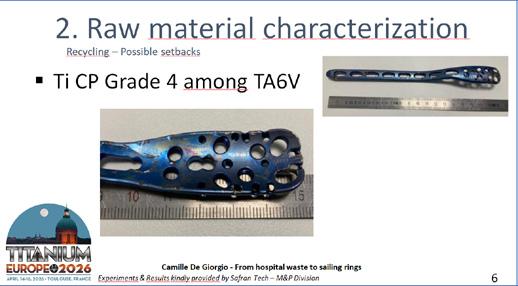
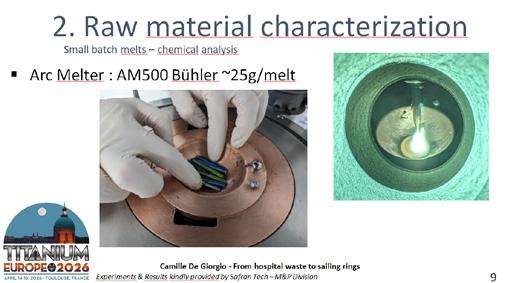
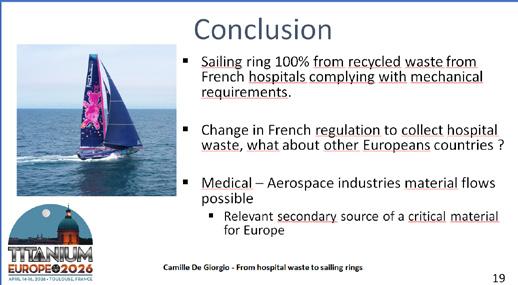
Camille De Giorgio, research and development engineer, outlined “From Hospital Waste to Sailing Rings—Collecting, Characterizing and Recycling Desterilized and Uncontaminated Hospital Waste.” The content of De Giorgio’s presentation came from a collaboration with the NGO Les P’Tis Doudous, Safran and Aubert and Duval. The study benefited from co-funding by the French government via the Plan d’Investments d’Avenir (PIA) and the National Agency of Research (ANR).
De Giorgio offered slides that explained the procedures in raw material collection and characterization.

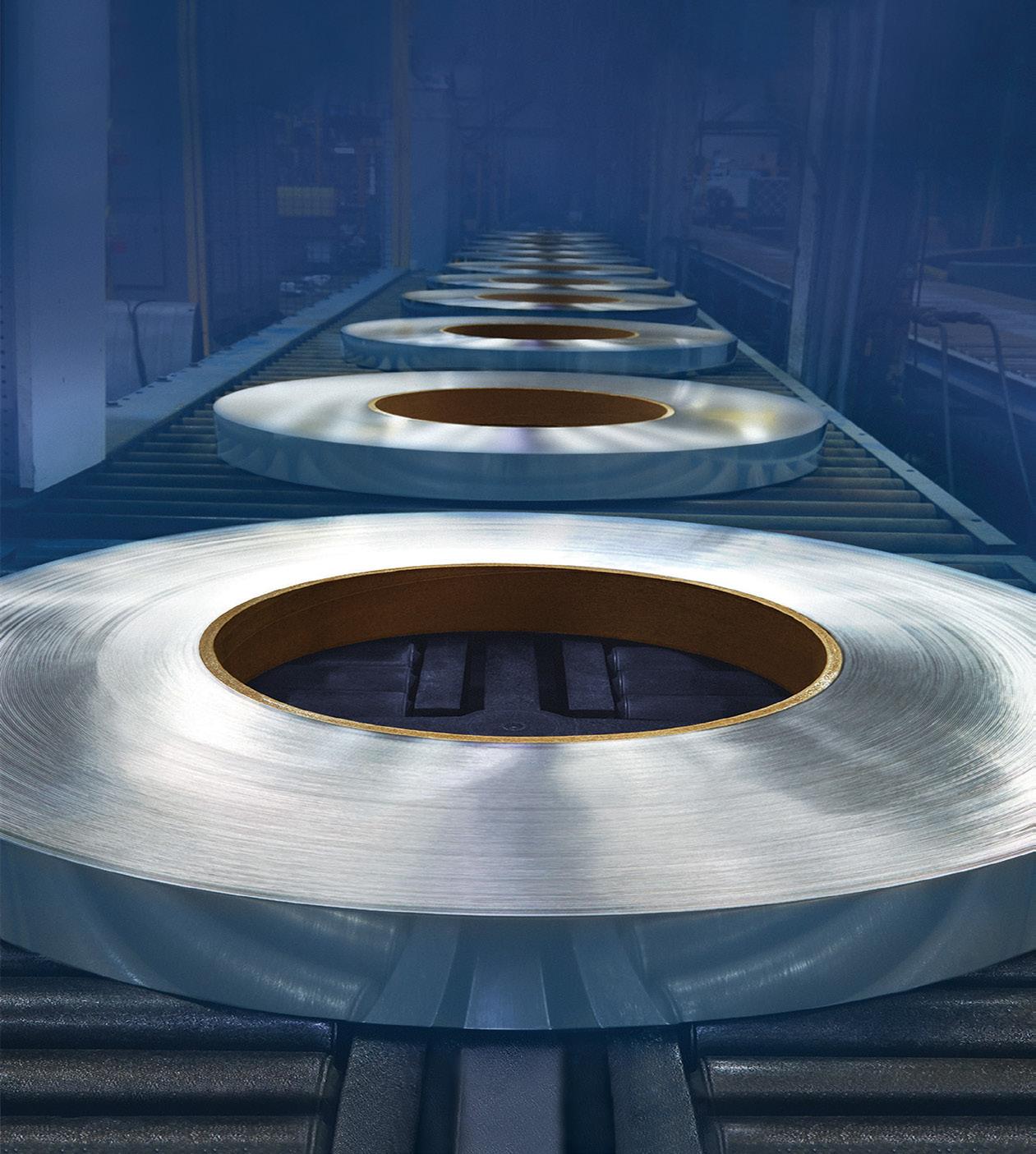
From the narrowest to the widest widths, our light-gauge titanium strip delivers the precision demanded by the world’s most challenging applications. Ulbrich’s metallurgical expertise provides custom-engineered mechanical properties, while exceptional flatness and tight tolerances guarantee consistency. With global supply chain support, we o er reliable titanium solutions where and when performance matters most.
COMMERCIALLY
COMMERCIALLY PURE TI GR 1-4
TI-35A UNS R50250
TI-40A UNS R50400
TI-55A UNS R50550
TI-70A UNS R50700
TI-6AL-4V
ALPHA-BETA ALLOY
UNS R56400
ASTM B265
TI-3AL-2.5V
ALPHA-BETA ALLOY
UNS R56320
ASTM B265





TITANIUM 15-3-3-3
TIMETAL® 15-3
BETA ALLOY UNS R58153 AMS 4914
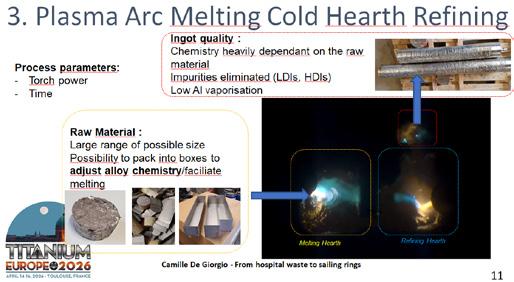
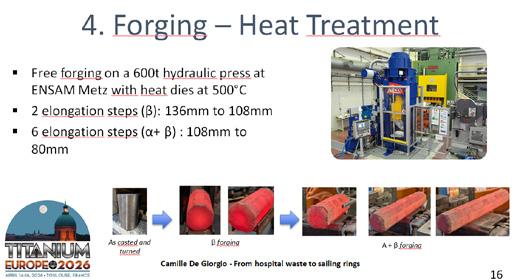
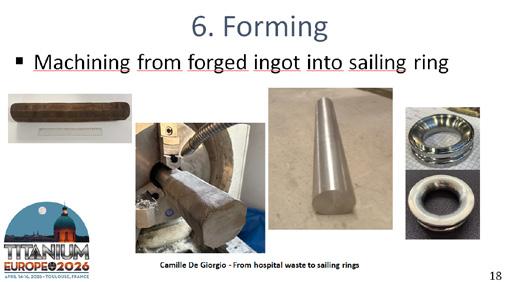
De Giorgio concluded his presentation, saying that nautical sailing rings can be made from 100 percent recycled waste from French hospitals complying with mechanical requirements.
Paul Notom and Théo Armaid, representing BRGM and OFREMI, weighed an “Assessment of the Criticality of Titanium,” a presentation of the methodology that has been developed by BRGM/OFREMI to examine the criticality of raw materials based on titanium’s example. All thresholds and indicator weights will not be shared. OFREMI is the French Mineral Intelligence Centre, a public/private partnership.
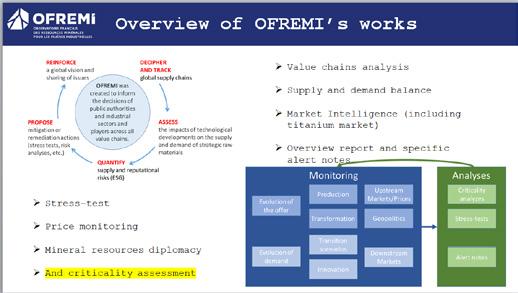
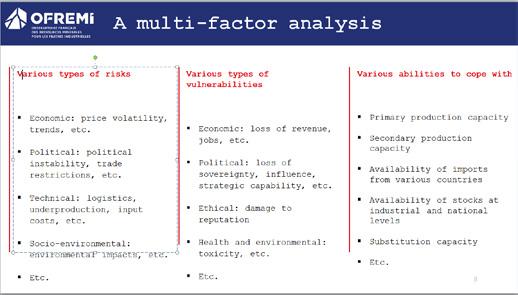
They explained that criticality is a risk, determined by: the probability of a supply disruption in a system («supply/risk»); the vulnerability of this system in the event of a supply disruption («impact of supply restriction»). Evaluation can help decision makers in the understanding of the main vulnerabilities. Assess criticality of raw materials with more granularities:
• World / national level
• Focus on specific forms of a substance
• Impact on the criticality of a form on another one
• Indicators and aggregation :
• Various indicators :
• Calculated (HHI)
• Expert opinion (Evolution of the market demand)
• Rated from 1 (not critical) to 5 (very critical)
• three dimensions :
• Supply risk
• Vulnerability
ARIES Manufacturing is dedicated to the supply of complex airframe structure components, in both titanium and aluminum alloys, to leading manufacturers in the aerospace industry.
ARIES Manufacturing is part of the ARIES Alliance, a group of companies focused on developing innovative technology that creates value for the aerospace industry.
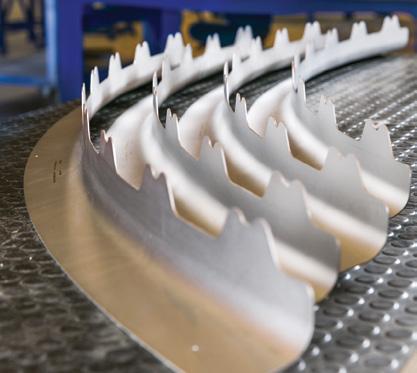
Panel mechanical pocket milling, drilling and trimming
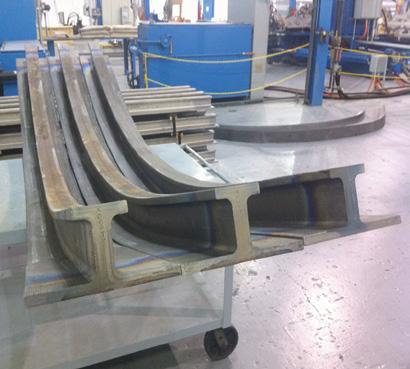
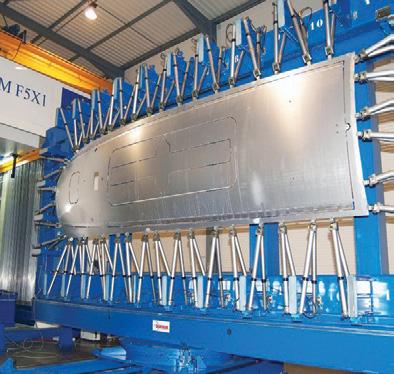
Superplastic Forming and Hot Forming for titanium airplane structural and engine components
HSF® process technology for titanium airframe components
• Ability to cope with
• + ESG impacts assessed separately, to emphasize and not “dilute” the impacts in a dimension
They indicated that titanium is not critical: 90 percent of titanium concentrates are used for pigment industry, a market with over capacities and low demand. Titanium metal is critical: 70 percent of the capacity production is located in one unique country. Some uses of titanium metal are strategic for medical, industrial or energy sectors. Titanium metal aerospace grade is very critical: the number of producer qualified for aero grade is really limited around the world. The capacity is closed to the demand. The use of this quality of titanium is essential for aeronautic, defence and space. There is a methodology that can be adapted to different geographical or economic contexts (World vs France). The criticality of titanium sponge is different between World and France because France doesn’t use a lot of sponge in its economy (directly) compared to the worldwide titanium industry. The commercial risk in France is higher than in the World because France depends exclusively on importations from countries with higher risks than the average world level.
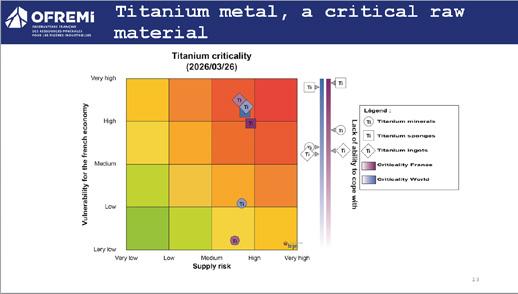
They found that criticality of transformed forms is often more important than the one of concentrates. The work on the weights and thresholds is necessary. “Once this criticality has been assessed, let’s work on solutions to secure supplies.”
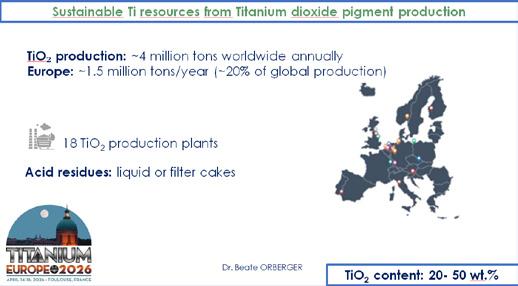
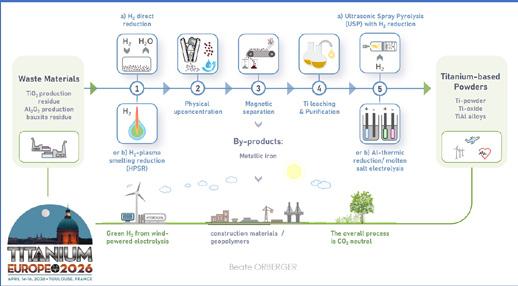
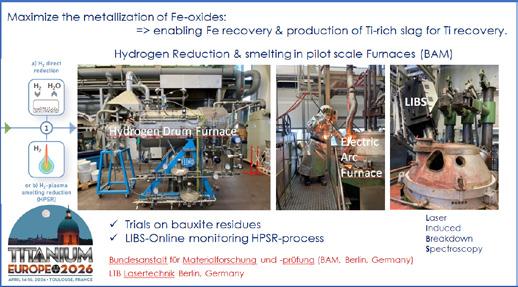
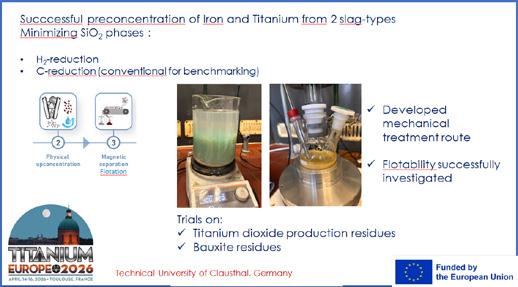
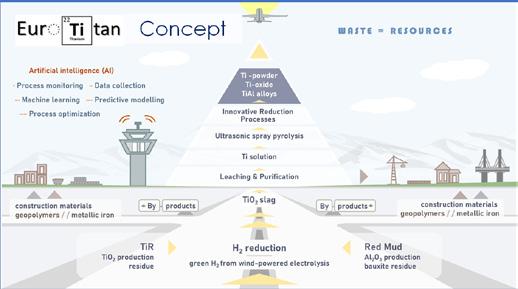
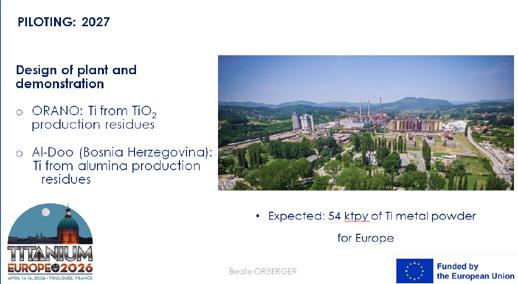
Dr. Beate Orberger, Géosciences Conseils, CATURA Geoprojects, shared insights on “Sustainable Titanium Production from Industrial Waste: Strengthening Europe’s Independence,” a presentation funded by the European Union and EuroTitan. “Titanium is strategically important to all countries in both civil and defense sectors,” Orberger declared. “The absence of titanium sponge and metal production for aerospace, energy and medical sectors in Europe will result in significant dependency and associated risks in the current geopolitical context. Titanium is a critical material for the European Union, the United States, and Australia.”
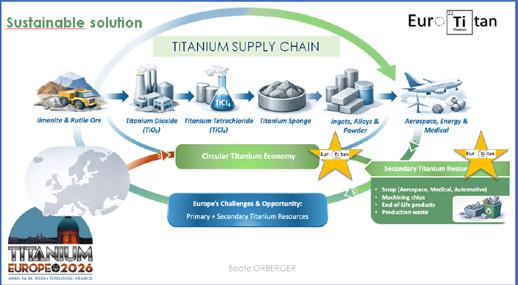
EuroTitan’s vision is to strengthen Europe’s sustainable titanium supply chain for an independent future by producing high-quality titanium powders, Orberger said. The mission is to develop eco-friendly technologies for titanium extraction and recycling, and to minimize the carbon footprint of metallurgical waste.
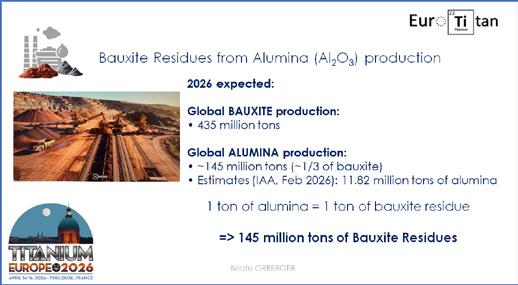
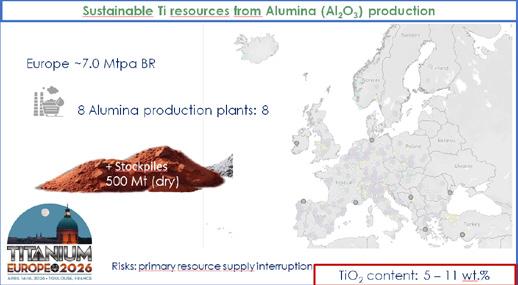
Decarbonized process technologies

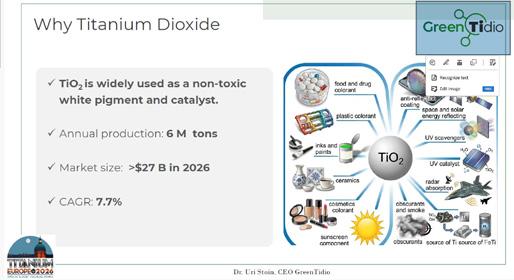
Dr. Uri Stoin, CEO of GreenTidio, offered thoughts on “Environmentally Friendly and Green Manufacturing of Titanium and Titanium Dioxide.” He noted that titanium dioxide is widely used as a non-toxic white pigment and


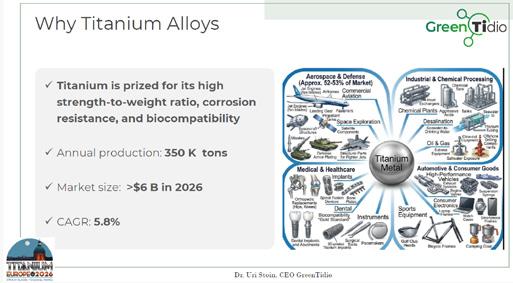
catalyst, with an annual production level of 6 million tones, with a market size of nearly $27 billion in 2026. Titanium metal alloys are prized for high strength-to-weight ratio, corrosion resistance, and biocompatibility, with an annual production of 350,000 tons and a market size of almost $6 billion in 2026.
However, in terms of environmental impacts, Stoin said the problem is that titanium dioxide is produced through energy-intensive and CO2-emitting processes. “There is growing interest in sustainable practices and lower-cost processes. The decrease of carbon footprint in raw material production is already a regulatory requirement.”
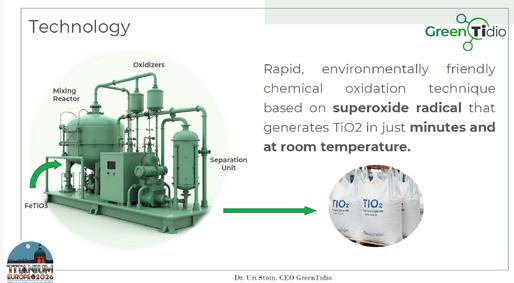
He pointed to a solution to this problem: a rapid, environmentally friendly chemical oxidation technique based on superoxide radical that generates titanium dioxide in just minutes and at room temperature.
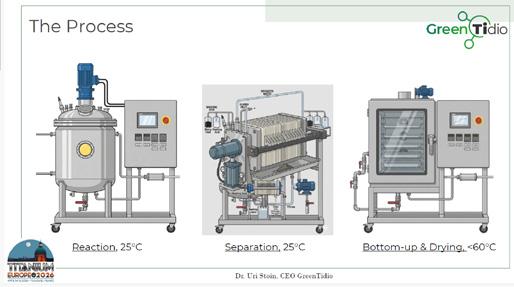
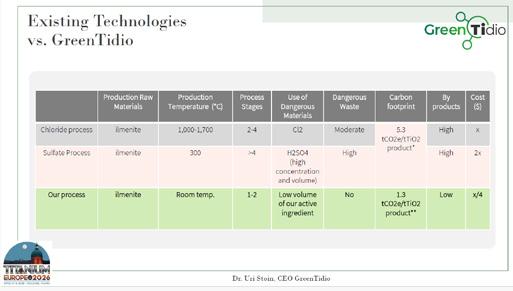
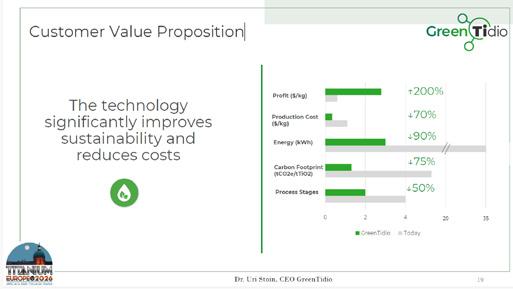
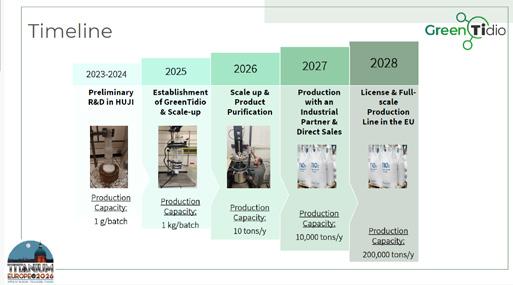
Stoin ended his presentation with a slide that offered a timeline for ramping up Green Tidio’s “green” technology.

Our continued investment and expansion has us in the right place to meet your needs.
Our capacities and resources are aligned. We are prepared and well positioned to supply a full range of products including ingot, centerless ground bar, precision coil, additive wire, premium fine wire and shapes – all at competitive lead-times.
We are expertly equipped to address the growing demands of the aerospace, medical, recreation, infrastructure, and industrial markets worldwide. We understand the ever-changing factors of the industries we serve and are committed to supporting the growth of your business.
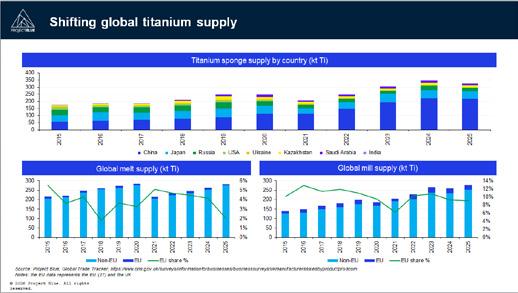
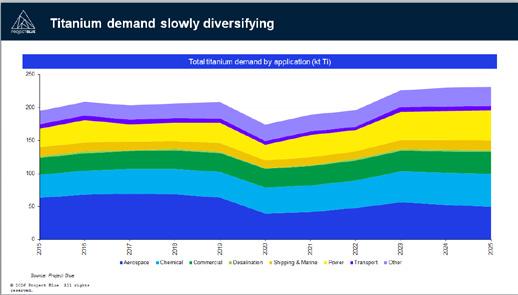
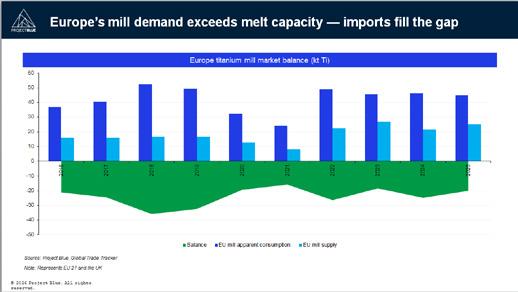
Fiona Macdonald, senior analyst, Project Blue of, London, discussed “Securing feedstock: Sourcing Titanium and Alloying Elements for Ti64 in Europe.” Macdonald first identified the “real supply risks” for titanium
• Global titanium supply landscape
• EU focus of mill vs melt
• Global titanium demand landscape
• Europe’s mill product market balance
• Ecosystem of titanium in Europe
• Imports of sponge, mill and melt
• Feedstock inputs: sponge vs scrap
• Master Alloys (Ti6Al-4V focus)
• Analysis of the supply chains of the alloying elements (vanadium and aluminum)
• Analysis of Ti6Al-4V in the aerospace sector
Vanadium master alloys dominate titanium production, Macdonald explained. “Master alloys are pre-alloyed materials containing key elements (such as aluminum and vanadium) in controlled ratios. These alloys can be binary, ternary or multi-component alloys used to efficiently and effectively allow the melting of titanium alloys. (The alloys are) used as inputs in titanium ingot production (VAR/melt stage). More than 40 master alloys are used in the titanium industry, including master alloys of Co, Cu, Cr, Nb, Ni, Si, Sn, and Zr. Aerospace master alloys require high-purity raw materials that meet aerospace quality standards.”
She displayed slides that depicted the volatility of vanadium and aluminum supply for titanium alloys. Ti6Al-4V demand tracks aircraft and engine production
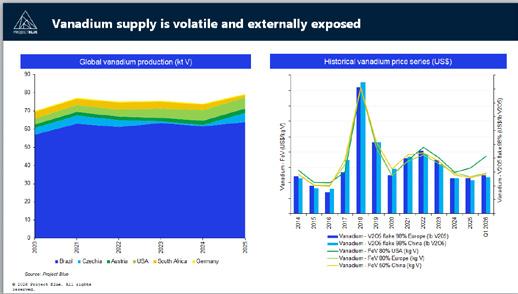
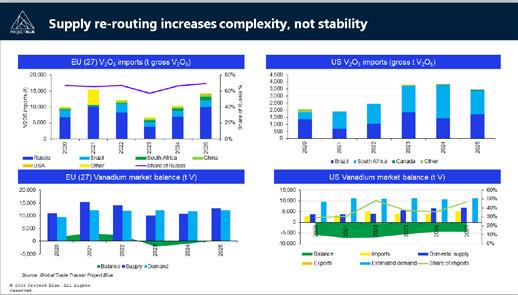
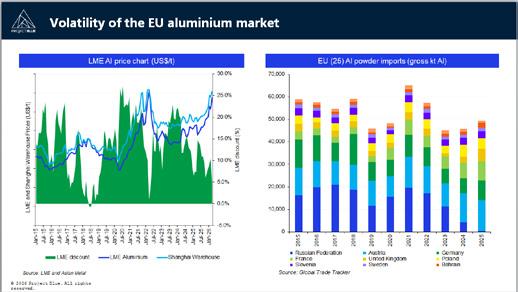
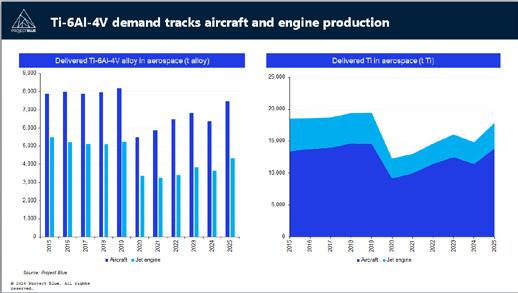
Macdonald concluded that, for Europe, the supply risk has shifted upstream, from titanium to alloying inputs. “The constraint is no longer just titanium; it’s the inputs into Ti-6Al-4V. In summary, she listed overview points:
• Decoupling achieved, not de-risked; Russian supply replaced, but reliance on external suppliers remains.
• Europe is structurally short of titanium; EU accounts for 2–5 percent of global melt supply vs 9–10 percent of mill demand; persistent deficit in mill production, with its reliance on imports remaining structural; limited domestic sponge capacity, so upstream vulnerability will persist.
• Scrap is now a strategic feedstock (not optional); scrap accounts for 60–70 percent of melt feed in the European Union and the United States; increasing revert ratios are only a scalable near-term solution; Scrap availability is tied to the industrial cycle, not demand.
• Master alloys and alloying elements are the bottleneck; 80 percent of titanium master alloys are vanadium-based; vanadium is essential for Ti6Al4V production
• Cost risk is shifting upstream; vanadium supply chain is being rerouted with exposure to price volatility; aluminum supply is becoming increasingly policy-driven, with carbon footprint becoming a procurement constraint.
• Aerospace demand remains the anchor; Ti6Al-4V demand is tightly linked to aircraft deliveries and engine production.
Las Vegas, Nevada USA
The 2026 TITANIUM USA conference and exhibition, sponsored and organized by the International Titanium Association (ITA) (website: www.TitaniumUSA.org will be held in Las Vegas, October 4-6, 2026. Guest room block ends and Late registration starts on September 2nd so REGISTER TODAY!
The ITA is a membership-based, international trade association dedicated to the titanium metal industry. Established in 1984, the ITA’s main mission is to connect the public interested in using titanium with specialists from across the globe who may offer sales and technical assistance. Working through its extensive membership resources, the ITA seeks to expand the knowledge base for titanium, providing technical literature and sponsoring seminars and conferences.
For 42 years, the ITA has instructed thousands of professionals in all aspects of titanium usage. The organization looks to educate engineers, designers and business executives on titanium’s superior properties and explain how those properties can be exploited to enhance products and services. The ITA also strives to advance ideas in research, design, metallurgy and engineering, and serve as the leading forum to cultivate the exchange of ideas and support a diverse, dynamic, global industry. Current ITA membership is comprised of more than 140 organizations and over 1,500 individual members worldwide. Each year the organization’s signature industry events are TITANIUM conferences and exhibitions.
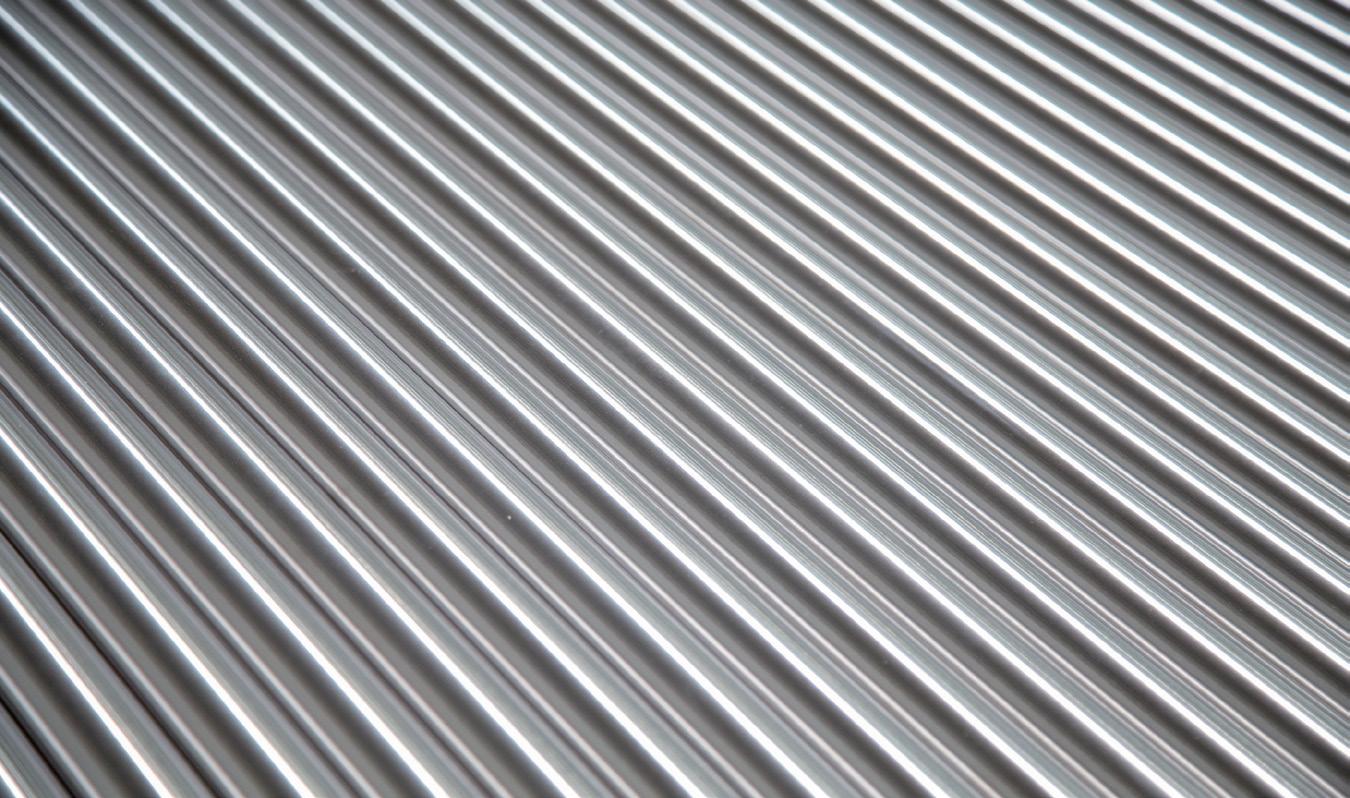
Premium Quality, Stability and Reliability.
One-Stop titanium alloy production and service.
A dozen years of titanium alloy production and research experience, with more than 100 patents and achievements to its credit, mastering a number of core technologies; Accredited with Nadcap non-destructive testing certificate and AS9100D, ISO14001, ISO 45001 and other certifications;
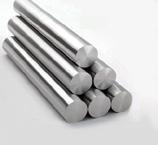
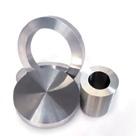
Titanium bar/billet
Size range: Φ15-500mm
Grade: Ti6Al4V, Ti-6242, Ti-6246, Ti-38644, Ti-15333, etc.
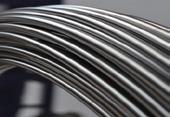
Titanium wire rod coil
Size range: Φ1.0-20.0mm
Grade: Ti6Al4V, Ti6Al4V ELI, Ti-38644, Ti-6242, Ti-6246, Ti-15333, Ti-422, etc.
Titanium forging
Size range: customized, disc, bar, ring, etc.
L(max):14m, W(max):4m, H(max):4m.
Grade: Ti6Al4V, Ti6246, Ti6242, Ti662, Ti38644, Ti15333, Ti1023, Ti422, etc.
more information, please visit www.tcae.com/en/


The TITANIUM USA 2026 Conference presents a comprehensive program that brings together many of the world’s leading titanium producers, aerospace manufacturers, researchers, equipment suppliers, and end users The agenda balances executive-level market intelligence with technical presentations, providing attendees with valuable insights into global demand, manufacturing innovation, supply chain resiliency, emerging technologies, and expanding industrial applications
October 4-6 • Caesar’s Palace Las Vegas, Nevada USA
Over three days, the conference features executives from leading organizations including ATI, TIMET, Howmet Aerospace, Airbus, Boeing, Neotiss, Zimmer Biomet, Titanium Industries, Hitachi High-Tech, Westinghouse, Toho Titanium, Glencore, Project Blue, Dust Identity, and numerous universities and research laboratories Collectively, these speakers represent every major segment of the global titanium value chain
Monday, October 5
The conference opens with an executive market outlook moderated by Sam Stiller (Howmet Aerospace) This session examines worldwide titanium demand across aerospace, defense, industrial, and emerging markets
Featured industry presentations include:
• Marty Pike (ATI) – Engines
• Jeff Easto (TIMET) – Aerostructures
• Ben Squires (Howmet Aerospace) – Defense
• Ricardo Silva (Neotiss) – Industrial markets
• Ryosaku Kadowaki (Japan Titanium Society) – Outlook on Current Titanium Trends in Japan
One of the conference highlights is a moderated discussion led by Peter Zimm (Charles Edwards Management Consulting) featuring:
• Olivier Maillard – Airbus
• Lindsay Stotz – Boeing Commercial Airplanes
This executive discussion provides firsthand perspectives from the world’s two largest commercial aircraft manufacturers regarding aircraft production rates, titanium demand forecasts, supply chain challenges, and future material requirements
Monday Afternoon Technical Sessions
Moderated by Colin McCracken (Oerlikon Metco), this track explores advances in biomedical titanium applications
Featured speakers include:
• Les Kalman (Western University) – Titanium applications in dentistry and healthcare
• Erik Manatt (Zimmer Biomet) – Additive manufacturing for orthopedic implants
This technical session examines improvements in titanium production processes
Presentations include:
• Thomas Ferguson (University of British Columbia)
• Roger Lumley (AW Bell Pty Ltd )
• Yaping Wang (Shaanxi Tian Cheng Aerospace)
• Saad Ebied (Michigan State University)
Topics include sponge production, casting, scaling manufacturing processes, and process optimization
Moderated by Nate Fairfield (Titanium Industries, Inc ), speakers demonstrate how titanium continues expanding beyond aerospace Presentations include:
• Alex Wigle (HATCH) – Titanium Usage in Pressure Oxidation Circuits in Enriched Oxygen Environments
• Kelly Rowles (Legov Systems Group) – Design and Characterization of a Continuous Rotary Nitinol Thermal Energy Harvester
• Dr. George Qiao (MOGAS / Flowserve) – ML-381 Gen II Titanium Hardfacing: In-Situ Nitriding for Improved Wear Resistance in Autoclave Valve Service
• Dr. Lorenz Brumner (Swiss Watch Industry) – Titanium in the Luxury Watch Industry
Researchers from Michigan State University and Woodward present the latest developments in alloy design, microstructure optimization, composite materials, and mechanical performance
Featured presenters include:
• Carl Boehlert
• Xiaolu Yin
• Navid Zarrinfar
• Teddy Mageto
The day begins with motivational keynote speaker Anthony Robles, whose message of perseverance, leadership, and overcoming adversity sets an inspirational tone before transitioning into technical programming.
Moderated by Brett Paddock (Titanium Industries, Inc.), this executive panel addresses one of the industry’s most important strategic initiatives—traceability throughout the titanium supply chain.
Panel participants include representatives from:
• Dust Identity
• Boeing
• Airbus
• Rolls-Royce
The discussion focuses on material authentication, digital traceability, quality assurance, supplier transparency, and regulatory requirements.
Moderated by Phani Gudipati (SSG Global Consulting), this session highlights technologies improving manufacturing efficiency and supply chain performance.
Featured speakers include:
• Dr. Neeraj Saxena (Messer LLC) – Global Helium Supply chain - Implications for Titanium Manufacturing, Safety and Applications
• Kurt Faller (Charles Edwards Management Consulting) – A Titanium Supply Chain Evolution is in the Works
• Amy Cooper (Yunnan National Titanium / LB Group) – Building Strategic Capability from Sponge to Certified Flight Hardware
• J. Kurtz (Hitachi High-Tech America) – Improve testing volumes and quality with easy on-site analysis by OES and XRF
• Dave Krauth (KCF Technologies) – Predictive maintenance and industrial monitoring
Wednesday, October 7
Moderated by Andy Bayne (TIMET), this session examines every major titanium feedstock and raw material source.
Industry experts include:
• David McCoy (TZMI) – Titanium feedstocks
• Peter Baumeister (AMG) – Master alloys
• Tom Toplak (Glencore) – Vanadium outlook
• David Schumer (AmeriTi) – Titanium scrap and recycling .
• Rich Kushner (Westinghouse) – Zirconium and hafnium
• Nomoto Nobutoshi (Toho Titanium) – Titanium sponge production.
Collectively, these presentations provide a complete overview of raw material availability and future supply.
This technical track explores next-generation manufacturing technologies.
Presenters include:
• Accolade Motlhabane (Project Blue) – The growing role of additive manufacturing in aerospace titanium supply chains
• Ahu Celebi (University of Toledo) – Binder Jet Additive Manufacturing and Characterization of NiTiCu Shape Memory Alloys for Elastocaloric Cooling Applications
• Terry Huang (Tipro International) – The Position of Titanium Wire Quality in Arc Additive Manufacturing
• Aniruddha Malakar (Pacific Northwest National Laboratory) – Emerging Route for Recycling Ti-64 Machining Scrap using Shear Assisted Processing and Extrusion (ShAPE)
The conference concludes with an in-depth Fundamentals of Titanium Workshop, providing attendees with practical education covering titanium metallurgy, processing, applications, and manufacturing fundamentals. The day also provides dedicated opportunities for private business meetings, reinforcing the conference’s reputation as the premier networking event for the global titanium industry. The TITANIUM USA 2026 program reflects the industry’s most significant priorities:
• Commercial aerospace demand recovery and future production forecasts
• Global titanium supply and raw material security
• Supply chain transparency and traceability
• Advances in additive manufacturing and powder metallurgy
• Titanium production, processing, and recycling technologies
• Medical and industrial market expansion
• New alloy development and materials research
• Digital manufacturing and enabling technologies
The speaker roster combines C-suite executives, senior technical leaders, university researchers, and subject matter experts from every major segment of the titanium industry. TITANIUM USA 2026 delivers both strategic business intelligence and practical technical knowledge, making it an essential event for executives, engineers, manufacturers, suppliers, and researchers seeking to understand the future direction of the global titanium market.
The discounted guest room block at Caesars Palace closes September 2nd. | Register Today at www.TitaniumUSA.org

BRIAN JOSEPH MALLOY President and CEO Carpenter Technology Corporation
THE PASSING OF BRIAN MALLOY
Tony Thene to Return to CEO Role Effective Immediately
PHILADELPHIA, July 27, 2026 (GLOBE NEWSWIRE)
– Carpenter Technology Corporation (NYSE: CRS) announced today that Brian Malloy, the Company’s President and Chief Executive Officer, passed away suddenly and unexpectedly on Friday, July 24. The Carpenter Technology team extends its sincere condolences to his family, friends, and colleagues.
The Board of Directors issued the following statement:
“We are deeply saddened by Brian’s passing. Over the past decade, Brian made significant contributions to Carpenter Technology and was a respected leader with a strong commitment to performance, operational excellence, and the Company’s long-term success. We extend our deepest sympathies to Brian’s family and loved ones during this difficult time.”
Tony Thene, the Company’s Executive Chairman, has been appointed by the Board of Directors to return in his capacity as Chief Executive Officer effective immediately. Mr. Thene previously held the position of CEO of Carpenter Technology from 2015 through June 2026. Mr. Thene will also continue as Chairman.
A service will be held on Thursday, August 13, 2026. Visitation will be from 10:00am-12:00pm, followed by a Catholic Mass at 12:00pm.
The family appreciates the love, support, and prayers received during this difficult time. Brian will be deeply missed and forever remembered by all who knew and loved him.
In lieu of flowers, contributions to the Alzheimer’s Association in memory of his mother, Chizuko Malloy, would be greatly appreciated.

Visitation
Thursday August 13, 2026
10:00 AM to 11:45 AM
St. Patrick’s Malvern 104 Channing Avenue Malvern, PA 19355
Funeral Mass
Thursday August 13, 2026
12:00 PM
St. Patrick’s Malvern 104 Channing Avenue Malvern, PA 19355
THOMAS ZUCCARINI
Global Key Account Manager, Autocam Medical
After three wonderful years with Vested Metals, helping grow our presence in the specialty steel industry, I am excited to share that I have accepted a new role as Global Key Account Manager with Autocam Medical.
I am grateful for the relationship, experiences, and opportunities that shaped my time at Vested Metals and contributed to my professional growth.
I look forward to joining Autocam Medical, a global contract manufacturer serving the medical device industry, and supporting its mission of making lives better through innovation, collaboration, and strong partnerships with OEMs.
Excited for this next chapter and the opportunities ahead!
ATI NAMES ROB RENGEL VICE PRESIDENT, INVESTOR RELATIONS
Seasoned investor relations and finance leader succeeds retiring David Weston
“ATI’s differentiated portfolion, strong positions in aerospace and defense, and growing opportunities in specialty energy create a compelling investment porposition… I am excited to join the ATI team.”


Hempel Special Metals has appointed Paul Brock as Director of Group Aerospace and Felipe Augusto as Head of Commercial Development (UK), supporting continued growth in aerospace and high-performance materials.
Paul Brock brings extensive experience in aerospace supply chains and programme-critical environments. He will lead the development of Hempel’s aerospace strategy, supporting customers requiring compliant and traceable titanium and highperformance alloy solutions.
Felipe Augusto joins with a strong commercial background across international supply chains and engineering programmes. He will support the development of customer partnerships and drive commercial growth across key markets.
Ben Wood, CEO of Hempel Special Metals UK, commented:
“These appointments strengthen both our technical and commercial capability as demand continues to grow for high-performance materials, including titanium, across aerospace and advanced engineering sectors.”
Hempel Special Metals supplies titanium, nickel alloys and aerospace steels through its international servicecentre network, supporting time-critical and compliancedriven applications.
ALD Vacuum Technologies
VACUUM SYSTEMS AND TECHNOLOGIES FOR METALLURGY AND HEAT TREATMENT

VAR � ESR
� EB Melting � PA Melting
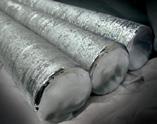

VIM-IC
VAR Skull Melting HOT ISOTHERMAL FORGING (HIF)
� EIGA: Ceramicfree Metal Powder Production
Electron Beam Physical Vapour Deposition (EB-PVD) of Thermal Barrier Coatings (TBC)
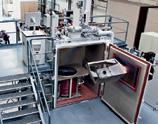
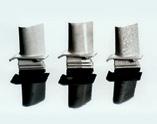
� VIGA: Inert Gas Atomization Equipment
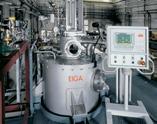

High Tech is our Business www.ald-vt.com www.ald-usa.com
TREATMENT SYSTEMS
SYNCROTHERM® Total Integration of Heat Treatment into Component Manufacturing CASTING SYSTEMS
Chemical Vapor Deposition for non metallurgy applications


Axel Johnson Inc. (AJI) and Fort Wayne Metals Research Products, LLC today announced the successful closing of their previously announced ownership transition. Under the terms of the agreement, AJI has acquired 100% ownership of Fort Wayne Metals Research Products, LLC (collectively, with its subsidiaries, “Fort Wayne Metals”) from the Glaze family.
Founded in 1970, Fort Wayne Metals is a leading manufacturer of precision materials used in life-changing medical devices and other critical applications. Built on a reputation for innovation, quality, and deep customer partnerships, the company’s products help enable millions of medical procedures each year and play a critical role in advancing healthcare around the world.
AJI initially invested in Fort Wayne Metals in 2021 and has worked closely with the company over the past several years. With the transaction now complete, Fort Wayne Metals begins its next phase with AJI as its full owner, reinforcing a shared commitment to the company’s employees, customers, and communities. The transaction expands AJI’s presence within the Healthcare & Life Sciences sector, guided by a shared belief that business should be a force for good, creating lasting value and meaningful societal impact.
“Today marks the beginning of an exciting new chapter for Fort Wayne Metals and AJI,” said Sara Greenstein, Chief Executive Officer of Axel Johnson Inc. “Over the past several years, we’ve come to know this business well and have developed a deep appreciation for its talented people, strong customer relationships, and commitment to innovation. What excites us most are the opportunities ahead. Together, we will continue investing in the capabilities, products, and people that have made Fort Wayne Metals a recognized industry leader while building on its extraordinary legacy of improving lives around the world.”
Jeremy Rohrs, Chief Executive Officer of Fort Wayne Metals, added, “This milestone represents an exciting opportunity for our employees, customers, and partners. AJI has been a valued partner since 2021, and throughout that time they have consistently demonstrated a longterm mindset, respect for our culture, and confidence in our team. As we look ahead, we are well positioned to accelerate our growth, continue innovating for our customers, and build on our legacy of enabling solutions that improve lives and advance innovation around the world.”

















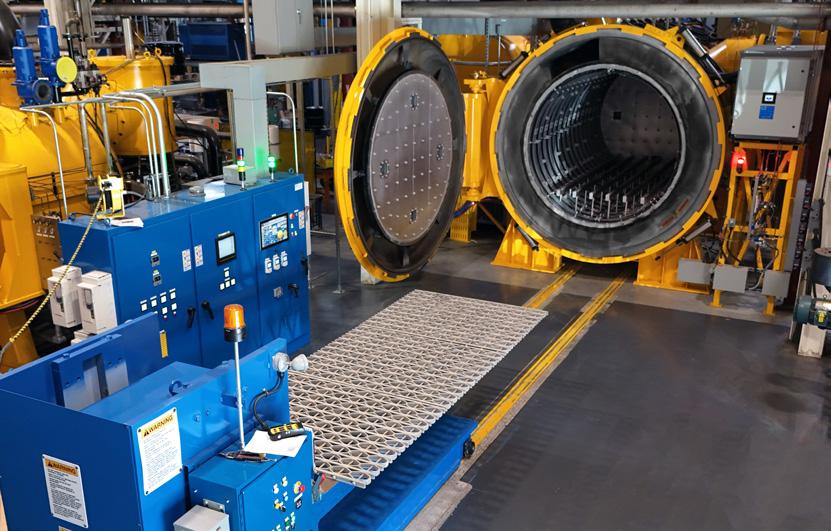
June 1, 2026, Souderton, PA – Solar Atmospheres
Eastern PA facility recently commissioned a new 12’ horizontal vacuum furnace. The furnace was designed primarily for Hydriding and Dehydriding (HDH) of titanium. The furnace can also perform the standard gamut of heat-treating processes typical of Solar’s extensive customer base. The furnace features a working zone of 54” x 54” x 144”. It is equipped with a 15,000-pound conventional load car arrangement. Other features include a 300HP external forced cooling system with VFD control, Solar Manufacturing’s Polaris control system, and dual mechanical pumping systems.
“This new furnace adds much-needed capacity to
support growing HDH demands” states Mike Moyer, Vice President of Sales. “With dual mechanical pumping systems, we are able to more efficiently process larger degas loads and improve our delivery metrics”. “The new 12-foot furnace is also well equipped for all the standard vacuum heat treating process that we currently employ. From annealing and stress relieving to solution treating and aging, the new furnace adds considerable capacity to meet customers’ growing demands.”
For additional information, contact Mike Moyer, VP of Sales, Solar Atmospheres at 215-721-1502 x1207, or mikem@solaratm.com, and visit www.solaratm.com.




Advantages
•
•
•
•

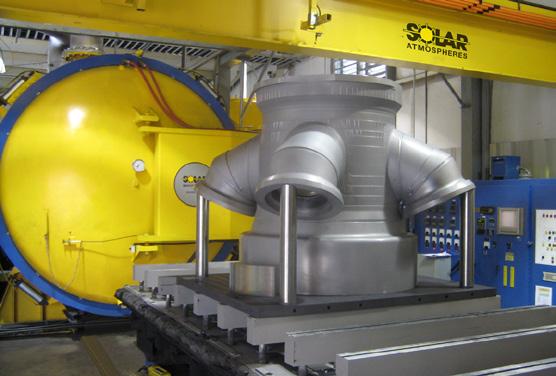
3M Abrasive Systems Division
A. W. Bell
A.M. Castle & Co.
Accushape Inc.
ACNIS ® International
Advanced Metal Industries CO (AMIC)
Aerolloy Technologies Limited - A PTC Industries Company
Aeropro Industries
Airbus SAS France
ALD
Alleima Tube AB
All-Met Recycling
Alta Alloys
AMC Alloy Metals Co.
AMETEK Specialty Metal Products
AMG Titanium, GfE
Argus Media Inc.
Aries Manufacturing
ATI
Bahco
Baoji Hongsen Titanium Metal Manufactory Co.,Ltd
Baoji Sino-Swiss Titanium Co.,Ltd
Baoji Titanium Industry Co., Ltd
Beijing Shougang Machinery and Electric Co., Ltd.
Bodycote
BRAMI SUPERALLIAGES
Butech Bliss
Carpenter Technology Corporation
CCMA, LLC
CHAOYANG JINDA TITANIUM CO., LTD.
CKOE
Consarc Corporation
Coogee Titanium PTY LTD
CSM Tech Co., Ltd.
DONALD MCARTHY TRADING PTE LTD
Dr. Markus Holz, Academic Member
Duferco SA
DUST IDENTITY
Element Materials Technology
ELG Utica Alloys, Inc.
Elgiloy Specialty Metals
ERNST KREBS KG
eXtralloys
FE Mottram OÜ
Fort Wayne Metals
FRIGGI N.A. Inc.
Goldman Titanium
Grand Valley Mfg.
Grandis Titanium
Greystone Alloys, LLC
heatTek
Hempel Special Metals AG
Hermith Advanced Technologies GmbH
Hitachi High-Tech America, Inc.
HORIE Corporation
Howmet Aerospace
Hunan Xiangtou Goldsky Titanium Metal Co., Ltd.
ICD Alloys & Metals, LLC
Independent Forgings & Alloys Ltd
Industrial Metals Limited IML
Inteco Melting & Casting Technologies
IperionX Limited
Jezhiang Shenji
Jiangsu Hongbao High-Precise Pipe & Tube Co., Ltd.
KASTO Inc.
Keywell Metals LLC
KineTic Engineering
Kings Mountain International (KMI)
Kittyhawk
Kymera International
Laboratory Testing Inc.
Largo Inc.

LB Group
Leybold USA Inc
Lockheed Martin Corporation
Luoyang Sunrui Wanji Titanium Industry Co Ltd.
M3 Metals
Macrodyne Technologies Inc.
Medart Processing Technologies
Messer LLC
Metalswerks, Inc.
Mistras Group, Inc.
Monico Alloys, Inc.
MPS Technology Sp. Z o.o.
Neotiss
NOTZ Metall AG
NSL Analytical
Nu-Tech Precision Metals
Oerlikon Metco (Canada) Inc.
Osaka Titanium technologies CO., Ltd.
Paris Saint-Denis Aero
Perryman Company
Plaxys Inc.
Plymouth Engineered Shapes
Precision Abrasives
President Titanium Co., Inc.
Product Evaluations Systems, Inc (PES)
Quaker Houghton
RENTON COIL SPRING CO. INC.
Retech Systems LLC
Rex Heat Treat
Rolled Alloys Inc
ROMEMET
Ross Precision Manufacturing
S+D Metals / Bibus Metals
SAN-EKI, Ltd.
Schaffer Grinding Co Inc.
Service Steel Aerospace
SES, LLC
Shaanxi Lasting Titanium Industry Co. Ltd
Shaanxi Tian Cheng Aerospace Co., Ltd.
Simple Life Recycling
Solar Atmospheres
Specialty Metals Company
Specialty Metals Processing Company
Star Group, India
State Nuclear Baoti
STS Metals
Sumitomo Corporation of Americas
TiFast Srl
TIMET, Titanium Metals Corporation
TiPro International Co., Ltd.
Tirus US
TITAN Metal Fabricators, Inc.
Titanium Consulting & Trading S.r.l.
Titanium Engineers
Titanium Fabrication Corporation
Titanium Industries, Incorporated
Titanium International Group SRL
Titanium Processing Center
Toho Titanium America Co., Ltd.
Tricor Metals
TW Metals LLC
Uhr Corp.
Ulbrich Stainless Steels & Special Metals
United Alloys & Metals Inc
United Performance Metals (UPM)
United Titanium
Universal Alloy Corporation
US Vanadium
Vested Metals International, LLC
Vulcan Specialty Products
Weiler Abrasives Group
Wellmet International Inc.
WST Western Superconducting Technologies Co., Ltd.
Xi’an Metals & Minerals Import & Export
XI’AN XRUN NEW MATERIAL
COMING SOON:
NUTEC Bickley
SKP MERCHANTS PVT LTD
SlipNaxos US LLC
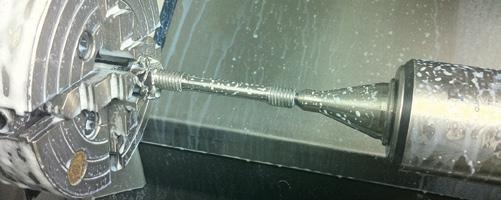
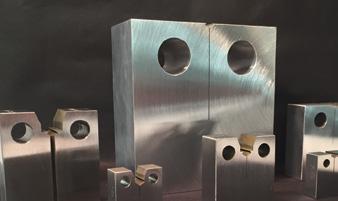

Product Evaluation Systems, Inc. (PES) is a fully accredited, independent leader in titanium materials testing for aerospace and other applications.
With a dedicated, experienced staff and state-of-the-art testing facilities, we offer full-service capabilities for all of your titanium testing needs, including:
• Mechanical Testing
• Metallurgical Analysis
• Chemical Analysis
PES responds to your needs promptly with personal service, customized solutions and expedient turnaround. We work with clients throughout the United States and Europe on projects of all types and sizes.
To request a free quote for your titanium testing needs and to see a full list of capabilities, please visit our website at www.PES-Testing.com or call 724-834-8848.
Messer, the leading privately held provider of industrial gas solutions, is proud to support the growth of the U.S. titanium industry by offering:
• Unmatched Supply Security
As the operator of a robust argon and industrial gas supply network and leader in the industrial gas sector with the largest domestically held helium reserve, we offer supply reliability.
• Tailored Gas Solutions

Whether you require high pressure, high flow rates, or precise purity, our specialized delivery systems are designed to meet your critical process needs.
• Experienced Technical Team
Our experienced team understands the intricacies of high-tech operations. From plasma arcs to vacuum furnaces, we help you choose the right gas to improve efficiency and reduce costs.
• Responsive to Your Critical Business Needs
We recognize the cost of downtime and the importance of uninterrupted gas supply, and we work closely with you to help safeguard your demanding production schedules.
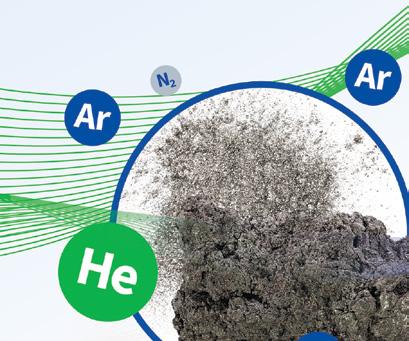

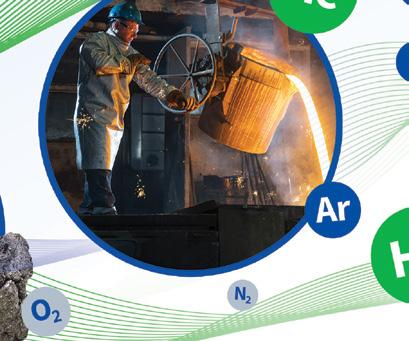
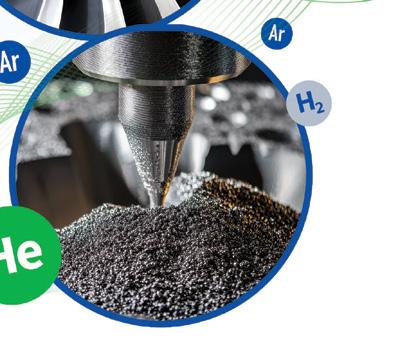
Scan to learn how Messer supports growth for Titanium manufacturers